

Submitted:
22 December 2023
Posted:
26 December 2023
You are already at the latest version
Abstract
The Vaal Dam catchment, which is the source of potable water for Gauteng province, holds various human activities including mining, urbanization, agricultural and industrial activities coupled with high fluxes of nutrients from different areas within the catchment. This situation led to an enhancement of Harmful Algal Blooms (HABs) in the dam reservoir. Phosphorus and Nitrogen are the limiting nutrients for HABs in many eutrophic aquatic systems when their concentrations are raised in such waters. In this study, multi-time-series plot types and scutter plots were analysed to reveal the relationship between HABs proxy chlorophyll-a (Chl-a) and the potential nutrients. Also (Chl-a) data extracted from landsat-8 satellite images were visualised to show the spatial distribution of HABs in the reservoir. The results showed that the Vaal Dam HABs productivity is a function of the total phosphorus (TP) and the organic nitrogen (KJEL_N) levels, which were positively correlated with chlorophyll-a (Chl-a) concentration. The long-term analysis of Chl-a in-situ data (1986 – 2022) measured at one point within the reservoir showed an average of 11.25μg/l but at some stochastic dates, the Chl-a concentration jumped to very high values reaching the maximum value of 452.8μg/l. Such high values are associated with high records of TP and KJEL_N concentrations at the same dates which clearly reveals their effect on the productivity levels. The decadal time series and its trend analysis showed that the average productivity level of Chl-a increased during the studded period from 4.75μg/l in the first decade (1990 – 2000) to 10.51μg/l in the second decade (2000 – 2010) reaching 16.7 during the last decade (2010 – 2020). The increasing averages of the decadal values are associated with the increasing decadal average of its driving factors, TP from 0.1043 to 0.1096 to 0.1119mg/l for the three decades, respectively and KJEL_N from 0.80mg/l in the first decade to 1.14mg/l in the last decade. The decadal average of temperature showed no significant increase, 17.9 °C in the first decade and 18 °C in the last decade which suggests that temperature is not the only enhancing factor of the HABs productivity in the Vaal Dam. The satellite data analysis during the last decade revealed that the HABs spatial dynamics is a function of the dam geometry and the levels of the discharges from its two feeding rivers. Higher concentrations were observed where the reservoir is meandering and within the areas of restricted water circulation.
Keywords:
Vaal Dam
; Time Series
; Chlorophyll-a
; Harmful Algal Blooms
1. Introduction
Globally, freshwater resources have been put under increasing pressure due to the rapid increase of the world population and their improvement of living standards [1]. It was indicated that an estimation of more than 83% of land surfaces that are surrounding freshwater systems have been significantly influenced by the footprint of humanbeing as a response to anthropogenic activities [1,2]. Contaminants from ineffective waste management, pesticides and fertilizers from agricultural areas, pollution from urban, industrial and domestic wastewater can often released to ground and surface water [3], and even the landfills or slag heap disposals may release pollutants seeping into nearby water resources [4,5]. The inland freshwater bodies are more vulnerable to such problems of pollution and contamination [6] resulting in the decline of quality and availability [7]. Among the loaded pollutants, some serve as nutrients for the enhancing growth of algae. Such nutrients can be loaded from point or non-point sources, point sources, for example, wastewater treatment plants can easily be recognized and given more attention [8,9]. Non-point sources including urban areas, cultivated lands, natural forests and pastures are more difficult to be recognized and attention should be given to them according to the amounts of nutrients they can potentially release. For example, it was found that the estimated loads of nitrogen, phosphorus, and suspended sediments from urban areas and cultivated land are 10 to 100 times greater than idle and forested lands in the great lakes catchments of USA and Canada [10].
Eutrophication is a serious freshwater problem caused by the excessive growth of harmful algal blooms (HABs). In recent years, the factors enhancing such blooms have become interesting research subjects. Many studies have been conducted in this field, and most of them were related to the HABs to the loading of nutrients such as nitrogen and phosphorus into the water bodies [11,12].
In Africa, societies are highly dependent on their natural inland freshwater resources creating more pressure on them resulting in significant changes in their water quality [13]. South Africa has over 4000 freshwater storage dams, among which around 700 are public dams controlled and managed by the governments used for domestic, irrigation and industrial water supply [14], they are underpinning the economic and social development of the country. Despite of such a huge number of dams, South Africa is water stressed and scarce country facing critical challenges due to poor water management practices, inadequate infrastructure, and a relentless surge in water demands [15]. Owing to the fact that most South African dams are located downstream of metropolitan and urban areas, they have become more enriched with nutrients [4,16]. The climatic conditions of South Africa associated with nutrient loads resulted in extensive and widespread eutrophication and cyanobacterial blooms in the inland freshwater bodies [17,18]. This will continue to increase the cost of using these valuable resources. Nitrogen and phosphorus are considered as the leading factors in accelerating the lakes’ and reservoirs' eutrophication [19]. The Water Act of 1956, section 21(1) (a) and the Department of Water Affairs in 1980 set exceptional standards of the phosphate concentration for effluent discharged to some mentioned rivers or their tributaries, it promulgated that the phosphate concentration should not be higher than 1 mg/l [15,20]. An investigation was conducted by CSIR and the Department of Water Affairs from 1985 to 1988 to predict the impact of the phosphorus standard (1mg/l). Based on their findings, the eutrophication control aim was set to maintain the mean concentration of chlorophyll-a within receiving water bodies at the level that no conditions of severe nuisance would occur in more than 20% of the time. To achieve this aim it requires to keep the phosphorus concentration level in the reservoirs water less than 0.14 mg/l [21].
Vaal Dam is one of multiple water bodies affected by eutrophication and cyanobacterial blooms in South Africa. It was constructed by the Department of Irrigation of the national government and functionally completed in October 1936 at 20 km downstream of the confluence of Vaal and Wilge rivers [22]. It is the second biggest dam by surface area in South Africa (about 320 Km2). The dam has undergone several rises to increase its storage capacity which ended up with the total capacity of approximately 2.603 × 10⁶ m3 [22]. The dam catchment area is approximately 38000 km2 holding various human activities including major agricultural activities (crop cultivation and cattle grazing), mining and some industrial activities [23,24] as well as many formal and informal settlements. In many areas within the Vaal Dam catchment, mine dewatering and urban/industrial treated effluent discharges find their way to the streams causing serious water quality issues [23]. Such activities have direct or indirect effects on the dam water quality in terms of nutrient loading which enhances the growth of HABs. A study in 2013 stated that the Vaal Dam Reservoir was classified as a mesotrophic water body according to the South African Department of Water Affairs Classification System, the mean concentration of chlorophyll-a was 14.8 μg/l, mean total phosphorus concentration was 0.077 mg/l and the time percentage where chlorophyll-a exceeds 30 μg/l was found 17% [25].
Harmful Algal Blooms (HABs) have major effects on water quality and their aquatic system function, therefore, monitoring of their distribution in space and time is very important for water resources managers to address the issues related to it. Moreover, it is very important to address the question of which factors enhance and control the HABs in the Vaal Dam Reservoir. Historically, many studies were conducted to assess different methods of detecting HABs and cyanobacteria in Vaal Dam Reservoir, for example, an attempt was made to help the managers of the drinking water treatment facility with advanced prediction of Microcystis sp. concentration in the Vaal Dam water, by building a model using physical, chemical, and biological water quality records between 2000 and 2012. The model showed a promising result of estimating Microcystis sp. in 7-days in advance [25]. Other studies were conducted using remote sensing to estimate the spatial distributions of HABs in the dam reservoir using satellite imageries, different algorithms and band ratios have been tested for Lndsat-8 and Sentinel-2 data. These have successfully revealed HABs predicting indices with strong correlations to the in-situ data [26-28]. The latest remote sensing based published article in the Vaal Dam (Obaid et al., 2021) applied to high resolution sensors that successfully used both the blue-green and red-infrared OC algorithms in estimating Chl-a concentrations [16,29]. As known, the blue-green algorithms are usually used to retrieve Chl-a concentration in Case I water [30,31]. In Case II waters, various constituents absorb light in the blue region which might create uncertainty when using it to detect chlorophyll-a concentration in such productive waters [32-34]. The successful use of blue-green OC algorithm may be because of the strong signal of HABs from the high biomass concentration in the reservoir water column. However, all above mentioned studies were focused on developing ways to detect HABs and cyanobacterial blooms in the reservoir, none of them tried to reveal the factors enhancing such blooms in terms of nutrient loading and environmental factors.
This study aims to investigate the relationship between HABs, and the potential nutrients and environmental processes during the times of peak blooms within the last few decades using historical water quality records from the dam reservoir, this can be obtained by comparing the records of nutrients with the Chl-a concentrations measured in the dam to identify which nutrients enhancing algal blooms. Moreover, the study tries to conduct spatial distribution of HABs using Landsat-8 and Sentinel-2 satellite images captured in late summer (April) between 2013 to 2023, which will help to identify the frequently and most affected parts of the dam reservoir. The Remote sensing approach is useful in this aspect by giving a synoptic view of HABs spatial and temporal distribution and improving our understanding of its dynamic variations. It has the potential to allow effective monitoring of HABs with high resolution data for more precise studies.
2. The Study Area
The Vaal Dam holds water used to supply potable water to the Gauteng metropolitans and its surrounding areas. The Vaal Dam Catchment extends within Free State, Mpumalanga, and Gauteng provinces and drains by Vaal and Wilge river systems, (Figure 1). The main rivers consist of many tributaries draining different areas in terms of land use land cover types and human activities. For example,
The Waterval River contributes approximately 111 × 106 m3 of water annually to the Vaal River. It drains very active areas holding intense human activities such as agriculture, industry, mining, urban and rural settlements, mainly in the upper reach of the Waterval River, these activities have been shown to be responsible for the deterioration of the water quality and ecological integrity of the river system [35]. Another active area with mining and industrial activities within the Vaal River site is Grootdraai Dam catchment, it’s found that the greatest area of concern was the region’s closeness to the downstream of the urban, industrial, mining and cultivated lands cover [36]. These two active areas in terms of land use activities put the Vaal River under more concern about its water quality issues.
The Wilge River system drains areas dominated by agriculture and grasslands, it contributes a great deal of water to the dam from its catchment and from the Lesotho Highland Water Project [37]. The Tugela-Vaal Water Project also contribute a good portion of water to Vaal Dam via the Wilge and Nuwejaarspruit Rivers [22].
3. Materials and Methods
3.1. The Water Quality Data
The historical water quality database is available on the website of the Department of Water and Sanitation (http://www.dwa.gov.za/iwqs/wms/data/WMA08_reg_WMS_nobor.htm), accessed on January 2, 2023. It contains chemical and physicochemical water quality parameters covering most of the streams, dams and water treatment works within different catchment areas in South Africa including one point (C83 90604) at the Vaal Dam Reservoir located in the Vaal River near the dam bank at Latitude of -26.88340 and Longitude of 28.11670. At this point chlorophyll-a (Chl-a) has been measured along with the chemical and physicochemical water quality parameters. Daily water quality data including Chl-a, Total Phosphorus (TP), Dissolved Oxygen (DO), KJEL Nitrogen (KJEL_N), Ammonia Nitrogen (NH4_N), Nitrate and Nitrite Nitrogen (NO3NO2_N) and water Temperature (Temp.) have been downloaded. Some gaps of data missing existed in some chosen parameters, the records were poor with a big gap noticed between 2000 and 2010 for all-targeted water quality parameters except Chl-a and TP, a good record only found for the period between 2010 to 2019. The continuous DO records are only available from 2010 to 2019. Thus, the distribution, time series, and decadal trend plots as well as regressions between the variables were generated using the available data only.
3.2. The Satellite Data
Landsat-8 OLI, Level 1 data were downloaded from the USGS Earth Explorer website (https://earthexplorer.usgs.gov/), accessed on March 1, 2023. One image was acquired for each summer season in a year, a total of 11 images were downloaded covering the period between 2013 - 2023 to understand the spatial dynamics of HABs in the reservoir, specifically the images acquired in April if available otherwise any summer month. Cloud free or minimal cloud cover images were downloaded when available. The images were processed using level−2 generator (l2gen) of the NASA SeaDAS software version 8.3, it is the standard ocean color processing software of NASA. Option -8 (the multi-scattering with fixed aerosol optical thickness) was chosen in l2gen to perform atmospheric correction, as well as retrieve remote sensing reflectance (𝑅𝑟𝑠) and to drive normalized water-leaving radiance (𝑛𝐿𝑤), the taua was kept in the default value (0.3). It’s one of the methods recommended in the Earth forum for Landsat-8 OLI data processing when using the default values of l2gen. All necessary masks have been applied using SeaDAS standard masking to retrieve only the open water body images.
3.3. Data Analysis
Historical in-situ water quality data has been analyzed using R v4.3. The long-term average for any single variable was calculated from the whole available data. Multiplot types including frequency scatter plots, time series plots and decadal trend plots have been generated. The erratic high values have been excluded from the frequency distribution plots to explore the most frequent values while all data have been included in long term time series (1986 to 2022), decadal time series, and decadal trend plots. The analysis was performed to understand the changes of the studied parameters. The correlation between these variables has also been evaluated, scatter plots of Chl-a against temperature and the potential nutrients, and between the variables that well-correlated with Chl-a were plotted to reveal the relationship between such variables. From the perusal of the graph, the extremely high values which show excessive HABs conditions were chosen for detailed analysis alongside their concurrent nutrient concentrations. As the data were collected over only one point within this large dam reservoir, more understanding of the spatial distribution of HABs was conducted using satellite remote sensing data to explore the spatial change of the productivity levels. A simple two-band ratio of blue-green based ocean color algorithm was applied [38] for Vaal Dam water modeling productivity.
4. Results
4.1. Time Series of Targeted Parameters
Time series of the Chl-a, TP, DO, KJEL_N, NH4_N, NO3NO2_N and temperature have been plotted from 1986 to 2022. The analysis of the data shows that the concentration levels for the targeted water quality parameters in the Vaal Dam ranged from very low values to extremely high recorded values on some stochastic dates. Table 1 summarises the availability of the data coverage periods and their minimum and maximum recorded values as well as their averages which are calculated from the whole available data. The averages tend to lower values which explains that the extremely high values do not always occur.
The frequency distribution plots (Figure 2) show that most of the Chl-a data is centered near the low range values, below its average. A similar situation for HN4_N and TP which most of the values fall below 0.1mg/l and 0.15mg/l respectively. Temperature and NO3NO2_N values are distributed stochastically with the most values falling below 20°C and 0.5mg/l, respectively. KJEL_N and DO data values have relatively followed the normal distribution and most of the data centered around their averages.
The time series of the temperature showed seasonal variations which have a strong influence on DO levels, the DO concentrations are decreasing during summer months when the temperature and Chl-a are relatively high (Figure 3 and Figure 4c). The Chl-a concentration time series recorded many peak values (Figure 3) on some erratic dates. The time series plots of the TP and KJEL_N also show some recorded high values corresponding to the same dates of Chl-a high values, reaching up to 1.15 mg/l and 18 mg/l for TP and KJEL_N respectively, mainly during the period between 2015 and 2017 (Figure 4c) and between 2004 and 2008 for phosphorus where it jumped up to 0.75 mg/l (Figure 4b). DO, NO3NO2_N and NH4_N did not show a clear correlation with Chl-a time series. But in general, the time series of NO3NO2_N showed low values during the high levels of Chl-a concentrations, and it appears to show a periodic cycle (1.5-year) during the last decade (Figure 3 and Figure 4c).
Figure 4 shows the decadal time series for the targeted parameters. In the period between 1990 to 2000, there were very poor records (Figure 4a) which show relatively low values of chlorophyll-a concentrations except in specific dates. TP and KJEL_N show some high values between 1993 and 1995 but there are no correlated peaks with Chl-a during this period due to the poorness of the records and no matchup in their measuring dates. Between 2000 and 2010 only records for Chl-a and TP were available, some high values were recorded on specific dates (Figure 4b). The best records were found between 2010 and 2018 which covered all targeted parameters (Figure 4c), extremely high values were noticed for some of the targeted parameters during this decade. There are increasing decadal averages of Chl-a, TP and KJEL_N, while there were decreasing decadal averages of NO3NO2_N and no significant change in the NH4_N decadal average (Table 2).
From the decadal trend analysis (Figure 5a, b & c), Chl-a show a decreasing trend during the first decade from 1990 to 2000 with low trend average values ranging from ~5.5 to ~4 μg/l and it remains constant during the second decade from 2000 to 2010 with higher mean trend average value, then it showed an upward trend during the last decade from 2010 to 2020, which raised from ~7 to 30 μg/l. TP average trend levels showed the same pattern as Chl-a, it showed a downward trend from around 0.137 mg/l to around 0.075 mg/l during the first decade and showed nearly constant trend during the second decade with a trend average value of ~0.11 mg/l before it started showing an upward trend during the last decade, where thetrend average value increased from around 0.11 to 0.125 mg/l. KJEL_N and NH4_N followed the same pattern of Chl-a and TP, they showed a downward trend during the first decade from ~0.95 mg/l to ~0.65 mg/l and from around 0.053 mg/l to 0.025 mg/l respectively, and they showed an upward trend during the last decade, KJEL_N from 0.75 to 1.75 mg/l and NH4_N from ~0.028 to 0.06 mg/l. DO showed a decreasing trend during the last decade which decreased from ~9 to ~7 mg/l. The NO3NO2_N concentration showed an upward average trend during the first decade from ~0.22 to ~0.26 mg/l while remaining nearly constant with an average trend value of around 0.225 mg/l in the last decade. The average trend of temperature shows a slight decrease from ~20 to ~17 °C from 1990 to 2000 and a nearly constant average trend value of ~18 °C from 2010 to 2020.
The regression analysis between the chosen variables showed positive correlations between Chl-a and TP; Chl-a and temperature; Chl-a and KJEL_N, also showed positive correlations between KJEL_N and TP, and KJEL_N and temperature (Figure 6) while s showing negative correlations between Chl-a and DO, Chl-a and NO3NO2_N and between KJEL_N and DO but no correlation between Chl-a and NH4_N (Figure 6).
The satellite-based time series analysis showed the spatial and temporal variability and the HABs dynamics across the dam. The satellite data were normalized to compare the variation between those mentioned in different dates. In general, the images showed high levels of Chl-a concentration which is linked to the summer blooms and the load of nutrients to the system with the summer storm runoff, for example, the image dated Feb 7, 2016, was captured 10 days after a very high record of Chl-a concentration at the measuring point (452μg/l). Generally high productivities were seen near the Vaal and Wilge rivers discharge areas in most of the images, also high productivity levels were seen where the reservoir is shallow and meandering (Figure 7).
5. Discussion
The data were explored to uncover the important water quality properties and the perusal of the graphs reveals some extremely high values as well as some trends and seasonality in temperature and dissolved oxygen values. The distribution frequency plot of chlorophyll-a (Figure 2) after excluding the outliers (very high values), shows that most of the data centered near the low range values, below 10μg/l. This reveals that most of the time, the chlorophyll-a concentration in this measurement point remains in its lower concentrations.This might be because of the location of the measuring point which lies in the Vaal River near the dam wall where the water runs towards the discharge gates, in such situation the algae might be mixed and washed out comparing to other parts of the reservoir where the conditions are ideal for algal growth. The distribution of TP, NH4_N and KJEL_N are also showing the measures are centered relatively near the lower values after removing some stochastically high values. These indicate that their concentration in the reservoir water is, most times, within their low limits with some periods of extremely high to very high values which probably indicate that some types of pollution ended up reaching the reservoir by increasing the nutrient concentrations which apparently increases the capacity of the reservoir water to support high rates of biomass productivity during such high nutrient load times.
The productivity in the open water systems is a function of multi biophysical factors, such as light, temperature, nutrients, etc. In many aquatic systems, some limiting nutrients mainly TP and N are considered the main drivers of HABs [39,40]. However, the time series plot (Figure 3) showed that the TP levels between 1990 and 2022 are relatively low except on some specific dates, a corresponding increase in Chl-a and KJEL_N concentrations at such specific dates were detected, which jumped to extremely high values. These ar clearer when we look closely at the decadal time series plots in Figure 4b,c. Thus, this explains that the dam water HABs productivity is primarily driven by TP and KJEL_N when their concentrations suddenly jumped to high values. The water temperature time series in Figure 3 and Figure 4a and 4c show no significant change and its decadal trends show a slightly decreasing trend for the first decade (1990 to 2000), see Figure 5a while showing no increasing or decreasing trend during the last decade (2010 – 2020) in Figure 5c, the average temperature for the first and last decade was 17.94 and 18.04 °C, respectively which suggest a slight increase in the average water temperature during the last decade.
Chl-a decadal trends (Figure 5a–c) showed a slight decrease in the first decade (1990 to 2000) and remained constant within the second decade (2000 to 2010) before it increased noticeably during the last decade (2010 to 2020). The average decadal concentrations were 4.75, 10.51 and 16.7 μg/l respectively, with a significant increase throughout the last three decades. The low concentration of Chl-a between 1990 and 2000 may be because of the implementation of the bioremediation project between (the late 1980’s to the early 1990’s) which reduced the Chl-a levels effectively [41].
In general, except for the first decade, the mean Chl-a concentration is above the threshold for eutrophic systems (7 μg/l) [16]. This situation of increasing the decadal average of Chl-a during the study period while the temperature remains with no significant change suggests that the productivity in the Vaal Dam is not limited to the changes in the temperature during the study period.
TP, KJEL_N and NH4_N decadal trends followed the same trend behavior of the Chl-a in the first and last decades, they were associated with general upward and downward trends of Chl-a. The average decadal concentrations of TP were 0.1043, 0.1096 and 0.1119 for the first, second and third decade respectively. These concentrations show that the TP concentrations were low except on the above mentioned individual dates where it jumps to high levels greater than the hypertrophic TP threshold level which is 0.25 mg/l [16]. For KJEL_N, the decadal average concentrations were 0.8033 and 1.1417 mg/l for the first and last decade, respectively, and NH4_N were 0.0397 and 0.0431 mg/l, respectively. However, the corresponding behavior of the Chl-a, TP and KJEL_N decadal trends alongside the erratic high Chl-a values recorded at the same individual dates of very high TP and KJEL_N records, explain that they are the driving factors of the algal blooms within the Vaal Dam.
On the other hand, the NO3NO2_N concentrations showed a negative trend compared to the Chl-a decadal trends during the first and last decade and DO also show a negative trend during the last decade. The NO3NO2 average decadal concentrations were 0.2455 and 0.2248 mg/l respectively with the average concentration of DO 7.928 mg/l. The trend of the DO is well understandable because dissolved oxygen is usually consumed during excessive algal blooms which have been known through last few decades [42], but this situation might not be applicable to the behavior of NO3NO2_N trends. The analysis of the results suggests that it has no direct relation with the Chl-a trend, but a paper [43] focused on sources and forms of most important nitrogen substrate for blooms in eutrophic Lake Erie suggested that, the NO3ˉ was the most important source of N except in late blooming stages where phytoplankton relays on recycled N derived from dissolved organic nitrogen. Their study further showed that the NO3ˉ depletion was related to the consumption by phytoplankton during its blooms showing a negative relationship. In this study NO3NO2_N also showed a negative correlation with Chl-a, but the assumption of consumption by the HABs needs more detailed investigations. The regression between the targeted WQ parameters showed a strong correlation between Chl-a and TP, Chl-a and KJEL_N in great agreement with the trend analysis. It also showed a positive correlation between Chl-a and temperature while there was no correlation between Chl-a and NH4_N which explains that NH4_N is not a driving factor for HABs blooms in the Vaal Dam. Like the decadal trend plots, the regression showed a negative correlation between the Chl-a and DO & NO3NO2_N.
The distribution of HABs in the reservoir area was analyzed by the interpretation of Chl-a concentrations derived from satellite data, some extreme concentrations have clearly been seen in 2015 and following images where the concentration of Chl-a was much more than those in summer 2013 and 2014. This change is strongly correlated with some high in-situ measured values of Chl-a, TP and KJEL_N during April and May 2015, and January 2016. High productivity was also noticed in images of 2019, 2021, 2022 and 2023. These high productivities may relate to the periods where TP and KJEL_N levels increase due to the increase of human activities such as discharge of partially treated or untreated wastewater, or through runoff from urban areas around the dam, and agricultural areas. The satellite data show high productivity in the Vaal Dam for the period from 2019 up to 2023 while there are no historical records available on the website during this time which put some warnings of increasing nutrient loads on the dam reservoir recently. The geometry of the Dam and the fluxes of the Vaal and Wilge rivers draining into it are directly linked to HABs spatial dynamics.
Within the past decade (2010 – 2020), the media reported some waste found its way to the reservoir. For example, on July 23rd 2015 a report mentioned that an uncontrolled sewage discharge was overwhelmed the Deneysville town which is located on the Vaal Dam bank, just next to the dams wall (https://mg.co.za/article/2015-07-23-sewage-in-gautengs-drinking-water/), accessed March 7, 2023.
6. Conclusions
This study revealed that the Vaal Dam productivity levels are a function of TP and KJEL_N levels. The analyzed data between 1986 and 2018 showed a positive correlation of TP and KJEL_N with chlorophyll-a, a proxy for HABs. They are the HABs drivers alongside the seasonal effect of surface water temperatures which enhances the productivity levels. When TP and KJEL_N levels are low, the Chl-a concentrations are usually below the threshold level of the eutrophic conditions of 7 μg/l. Chlorophyll-a retrieved from Landsat data shows the temporal and spatial dynamics of HABs over the past decade. Time series analysis of the data has shown the effect of sudden rises of the driving parameters on productivity levels, the productivity increases with an increased flux of TP and KJEL_N. The relatively high concentrations were observed where the reservoir is shallow and meandering and where restricted water circulation occurs due to the low level of mixing and near Vaal and Wilge rivers discharge points. According to the location of the in-situ measurement point which is in the Vaal River stream near the dam wall, the measured Chl-a concentration might be much less than the concentrations on many other parts of the dam reservoir because the HABs can be washed out by high flow speed. With reference to the Chl-a distribution from the satellite data, this huge reservoir needs more than monitoring points distributed through areas of potential nutrient loadings. The results obtained from this time series analysis revealed a very high level of anthropogenic impacts on the Vaal Dam which is being used to provide drinking water for the Gauteng province, and for agricultural and industrial uses in the region. The periodic deterioration of the quality of the dam water over some stochastic dates was aggravated by the discharge of nutrient-rich, poor-quality effluents from the wastewater treatment works in the dam catchment.
Author Contributions
Conceptualization, Altayeb Obaid; Data curation, Altayeb Obaid; Formal analysis, Altayeb Obaid; Investigation, Altayeb Obaid; Methodology, Altayeb Obaid; Resources, Altayeb Obaid; Software, Altayeb Obaid; Supervision, Elhadi Adam, Khalid Adem Ali and Tamiru Abiye; Validation, Altayeb Obaid, Elhadi Adam, Khalid Adem Ali and Tamiru Abiye; Visualization, Altayeb Obaid, Elhadi Adam, Khalid Adem Ali and Tamiru Abiye; Writing – original draft, Altayeb Obaid; Writing – review & editing, Altayeb Obaid, Elhadi Adam, Khalid Adem Ali and Tamiru Abiye.
Funding
This research received no external funding.
Institutional Review Board Statement
Not applicable.
Informed Consent Statement
Not applicable.
Data Availability Statement
The data will be available upon request.
Acknowledgments
The authors would like to show their acknowledge and appreciation to the reviewers and the editor for their valuable comments and suggestions.
Conflicts of Interest
The authors declare no conflict of interest.
References
- Makarigakis, A.K.; Jimenez-Cisneros, B.E. UNESCO’s contribution to face global water challenges. Water 2019, 11, 388. [Google Scholar] [CrossRef]
- Sanderson, E.W.; Jaiteh, M.; Levy, M.A.; Redford, K.H.; Wannebo, A.V.; Woolmer, G. The human footprint and the last of the wild: the human footprint is a global map of human influence on the land surface, which suggests that human beings are stewards of nature, whether we like it or not. BioScience 2002, 52, 891–904. [Google Scholar] [CrossRef]
- Taheri Tizro, A.; Ghashghaie, M.; Georgiou, P.; Voudouris, K. Time series analysis of water quality parameters. Journal of Applied Research in Water and Wastewater 2014, 1, 40–50. [Google Scholar]
- Oberholster, P.J.; Ashton, P.J. State of the nation report: An overview of the current status of water quality and eutrophication in South African rivers and reservoirs. Parliamentary Grant Deliverable. Pretoria: Council for Scientific and Industrial Research (CSIR) 2008, 2006. [Google Scholar]
- Oberholster, P.; Botha, A.-M.; Cloete, T. Biological and chemical evaluation of sewage water pollution in the Rietvlei nature reserve wetland area, South Africa. Environmental Pollution 2008, 156, 184–192. [Google Scholar] [CrossRef]
- Ho, L.T.; Goethals, P.L. Opportunities and challenges for the sustainability of lakes and reservoirs in relation to the Sustainable Development Goals (SDGs). Water 2019, 11, 1462. [Google Scholar] [CrossRef]
- Makarigakis, A.K.; Jimenez-Cisneros, B.E. UNESCO’s Contribution to Face Global Water Challenges. Water, MDPI 2019. [Google Scholar] [CrossRef]
- Adu, J.T.; Kumarasamy, M.V. Assessing Non-Point Source Pollution Models: a Review. Polish Journal of Environmental Studies 2018, 27. [Google Scholar] [CrossRef] [PubMed]
- Carey, R.O.; Migliaccio, K.W. Contribution of wastewater treatment plant effluents to nutrient dynamics in aquatic systems: a review. Environmental management 2009, 44, 205–217. [Google Scholar] [CrossRef]
- Sonzogni, W.C.; Chesters, G.; Coote, D.; Jeffs, D.; Konrad, J.; Ostry, R.; Robinson, J. Pollution from land runoff. Environmental Science & Technology 1980, 14, 148–153. [Google Scholar]
- Chaffin, J.D.; Bratton, J.F.; Verhamme, E.M.; Bair, H.B.; Beecher, A.A.; Binding, C.E.; Birbeck, J.A.; Bridgeman, T.B.; Chang, X.; Crossman, J. The Lake Erie HABs Grab: A binational collaboration to characterize the western basin cyanobacterial harmful algal blooms at an unprecedented high-resolution spatial scale. Harmful Algae 2021, 108, 102080. [Google Scholar] [CrossRef]
- Glibert, P.M.; Maranger, R.; Sobota, D.J.; Bouwman, L. The Haber Bosch–harmful algal bloom (HB–HAB) link. Environmental Research Letters 2014, 9, 105001. [Google Scholar] [CrossRef]
- Robarts, R.D.; Zohary, T. Limnology and the future of African inland waters. Inland Waters 2018, 8, 399–412. [Google Scholar] [CrossRef]
- Hara, M.M.; Backeberg, G.R. An institutional approach for developing South African inland freshwater fisheries for improved food security and rural livelihoods. Water SA 2014, 40, 277–286. [Google Scholar] [CrossRef]
- Ewerts, H. Effectiveness of purification processes in removing algae from Vaal Dam water at the Rand Water Zuikerbosch treatment plant in Vereeniging. Citeseer. 2010. [Google Scholar]
- Ali, K.; Abiye, T.; Adam, E. Integrating In Situ and Current Generation Satellite Data for Temporal and Spatial Analysis of Harmful Algal Blooms in the Hartbeespoort Dam, Crocodile River Basin, South Africa. Remote Sensing 2022, 14, 4277. [Google Scholar] [CrossRef]
- Matthews, M.W.; Bernard, S. Eutrophication and cyanobacteria in South Africa's standing water bodies: A view from space. South African journal of science 2015, 111, 1–8. [Google Scholar] [CrossRef]
- Mudaly, L.; Van der Laan, M. Interactions between irrigated agriculture and surface water quality with a focus on phosphate and nitrate in the middle olifants catchment, South Africa. Sustainability 2020, 12, 4370. [Google Scholar] [CrossRef]
- Beaulac, M.N.; Reckhow, K.H. AN EXAMINATION OF LAND USE-NUTRIENT EXPORT RELATIONSHIPS 1. JAWRA Journal of the American Water Resources Association 1982, 18, 1013–1024. [Google Scholar] [CrossRef]
- Walmsley, R. A review and discussion document: Perspectives on eutrophication of surface waters: Policy or Research Needs in South Africa. 2002. [Google Scholar]
- Van Ginkel, C. Eutrophication: Present reality and future challenges for South Africa. Water SA 2011, 37, 693–702. [Google Scholar] [CrossRef]
- Haarhoff, J.; Tempelhoff, J. Water supply to the Witwatersrand (Gauteng) 1924-2003. Journal for Contemporary History 2007, 32, 95–114. [Google Scholar]
- Obaid, A.; Adam, E.; Ali, K.A. Land Use and Land Cover Change in the Vaal Dam Catchment, South Africa: A Study Based on Remote Sensing and Time Series Analysis. Geomatics 2023, 3, 205–220. [Google Scholar] [CrossRef]
- Du Plessis, A. Freshwater Challenges of South Africa and Its Upper Vaal River. Springer, 2017. [Google Scholar]
- Swanepoel, A.; Barnard, S.; Recknagel, F.; Cao, H. Evaluation of models generated via hybrid evolutionary algorithms for the prediction of Microcystis concentrations in the Vaal Dam, South Africa. Water SA 2016, 42, 243–252. [Google Scholar] [CrossRef]
- Sakuno, Y.; Yajima, H.; Yoshioka, Y.; Sugahara, S.; Abd Elbasit, M.A.; Adam, E.; Chirima, J.G. Evaluation of unified algorithms for remote sensing of chlorophyll-a and turbidity in Lake Shinji and Lake Nakaumi of Japan and the Vaal Dam Reservoir of South Africa under eutrophic and ultra-turbid conditions. Water 2018, 10, 618. [Google Scholar] [CrossRef]
- Malahlela, O.E.; Oliphant, T.; Tsoeleng, L.T.; Mhangara, P. Mapping chlorophyll-a concentrations in a cyanobacteria-and algae-impacted Vaal Dam using Landsat 8 OLI data. South African Journal of Science 2018, 114, 1–9. [Google Scholar] [CrossRef] [PubMed]
- Bande, P.; Adam, E.; Elbasit, M.; Adelabu, S. Comparing Landsat 8 and Sentinel-2 in mapping water quality at Vaal dam. In Proceedings of the 2018 IEEE International geoscience and remote sensing symposium; 2018; pp. 9280–9283. [Google Scholar]
- Obaid, A.; Ali, K.; Abiye, T.; Adam, E. Assessing the utility of using current generation high-resolution satellites (Sentinel 2 and Landsat 8) to monitor large water supply dam in South Africa. Remote Sensing Applications: Society and Environment 2021, 22, 100521. [Google Scholar] [CrossRef]
- Ali, K.A.; Ortiz, J.; Bonini, N.; Shuman, M.; Sydow, C. Application of Aqua MODIS sensor data for estimating chlorophyll a in the turbid Case 2 waters of Lake Erie using bio-optical models. GIScience & Remote Sensing 2016, 53, 483–505. [Google Scholar]
- Hieronymi, M.; Krasemann, H.; Müller, D.; Brockmann, C.; Ruescas, A.; Stelzer, K.; Nechad, B.; Ruddick, K.; Simis, S.; Tilstone, G. Ocean colour remote sensing of extreme case-2 waters. spectrum 2016, 2, 56. [Google Scholar]
- Franz, B.A.; Bailey, S.W.; Kuring, N.; Werdell, P.J. Ocean color measurements from Landsat-8 OLI using SeaDAS. 2014. [Google Scholar]
- Gons, H.J. Optical teledetection of chlorophyll a in turbid inland waters. Environmental science & technology 1999, 33, 1127–1132. [Google Scholar]
- Gitelson, A.A.; Schalles, J.F.; Hladik, C.M. Remote chlorophyll-a retrieval in turbid, productive estuaries: Chesapeake Bay case study. Remote Sensing of Environment 2007, 109, 464–472. [Google Scholar] [CrossRef]
- Gyedu-Ababio, T.; Van Wyk, F. Effects of human activities on the waterval river, Vaal river catchment, South Africa. African Journal of Aquatic Science 2004, 29, 75–81. [Google Scholar] [CrossRef]
- du Plessis, A.; Harmse, T.; Ahmed, F. Predicting water quality associated with land cover change in the Grootdraai Dam catchment, South Africa. Water International 2015, 40, 647–663. [Google Scholar] [CrossRef]
- Matete, M.; Hassan, R. Integrated ecological economics accounting approach to evaluation of inter-basin water transfers: An application to the Lesotho Highlands Water Project. Ecological Economics 2006, 60, 246–259. [Google Scholar] [CrossRef]
- O'Reilly, J.E.; Werdell, P.J. Chlorophyll algorithms for ocean color sensors-OC4, OC5 & OC6. Remote sensing of environment 2019, 229, 32–47. [Google Scholar] [PubMed]
- Welch, E.B.; Cooke, G.D. Internal phosphorus loading in shallow lakes: importance and control. Lake and reservoir management 2005, 21, 209–217. [Google Scholar] [CrossRef]
- Gholizadeh, M.H.; Melesse, A.M.; Reddi, L. A comprehensive review on water quality parameters estimation using remote sensing techniques. Sensors 2016, 16, 1298. [Google Scholar] [CrossRef] [PubMed]
- Auchterlonie, J.; Eden, C.-L.; Sheridan, C. The phytoremediation potential of water hyacinth: A case study from Hartbeespoort Dam, South Africa. South African Journal of Chemical Engineering 2021, 37, 31–36. [Google Scholar] [CrossRef]
- Welch, E.B. Factors initiating phytoplankton blooms and resulting effects on dissolved oxygen in Duwamish River estuary, Seattle, Washington. US Govt. Print. Off., 1969. [Google Scholar]
- Kharbush, J.J.; Robinson, R.S.; Carter, S.J. Patterns in sources and forms of nitrogen in a large eutrophic lake during a cyanobacterial harmful algal bloom. Limnology and Oceanography 2023, 68, 803–815. [Google Scholar] [CrossRef]
Figure 1.
The location map of the Vaal Dam.
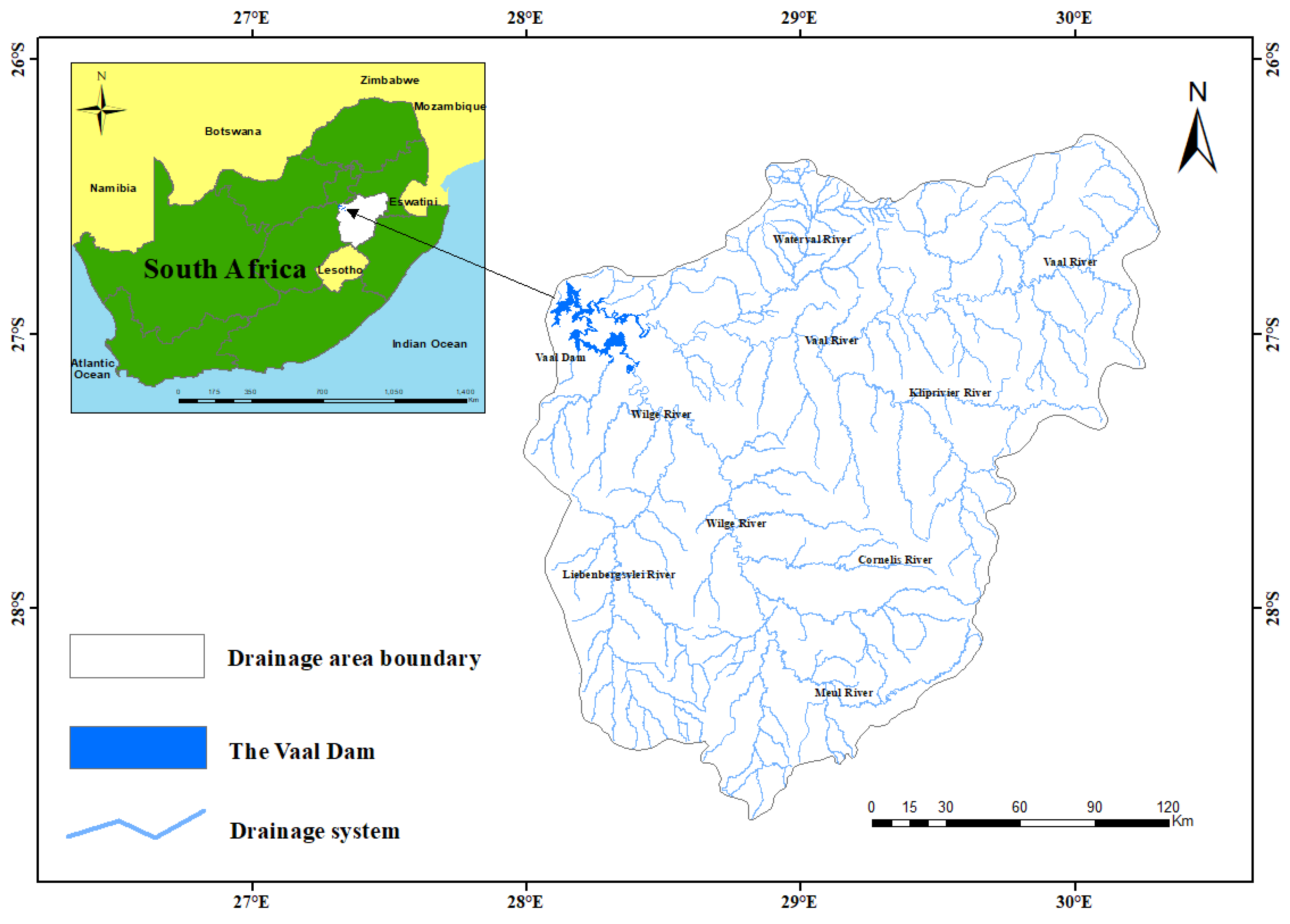
Figure 2.
Frequency distribution plots of targeted water quality parameters in the Vaal Dam: (a) Temperature; (b) Dissolved oxygen; (c) Chlorophyll-a; (d) Total phosphorus; (e) Organic nitrogen; (f) Ammonia; and (g) Nitrate & Nitrite.
Figure 2.
Frequency distribution plots of targeted water quality parameters in the Vaal Dam: (a) Temperature; (b) Dissolved oxygen; (c) Chlorophyll-a; (d) Total phosphorus; (e) Organic nitrogen; (f) Ammonia; and (g) Nitrate & Nitrite.
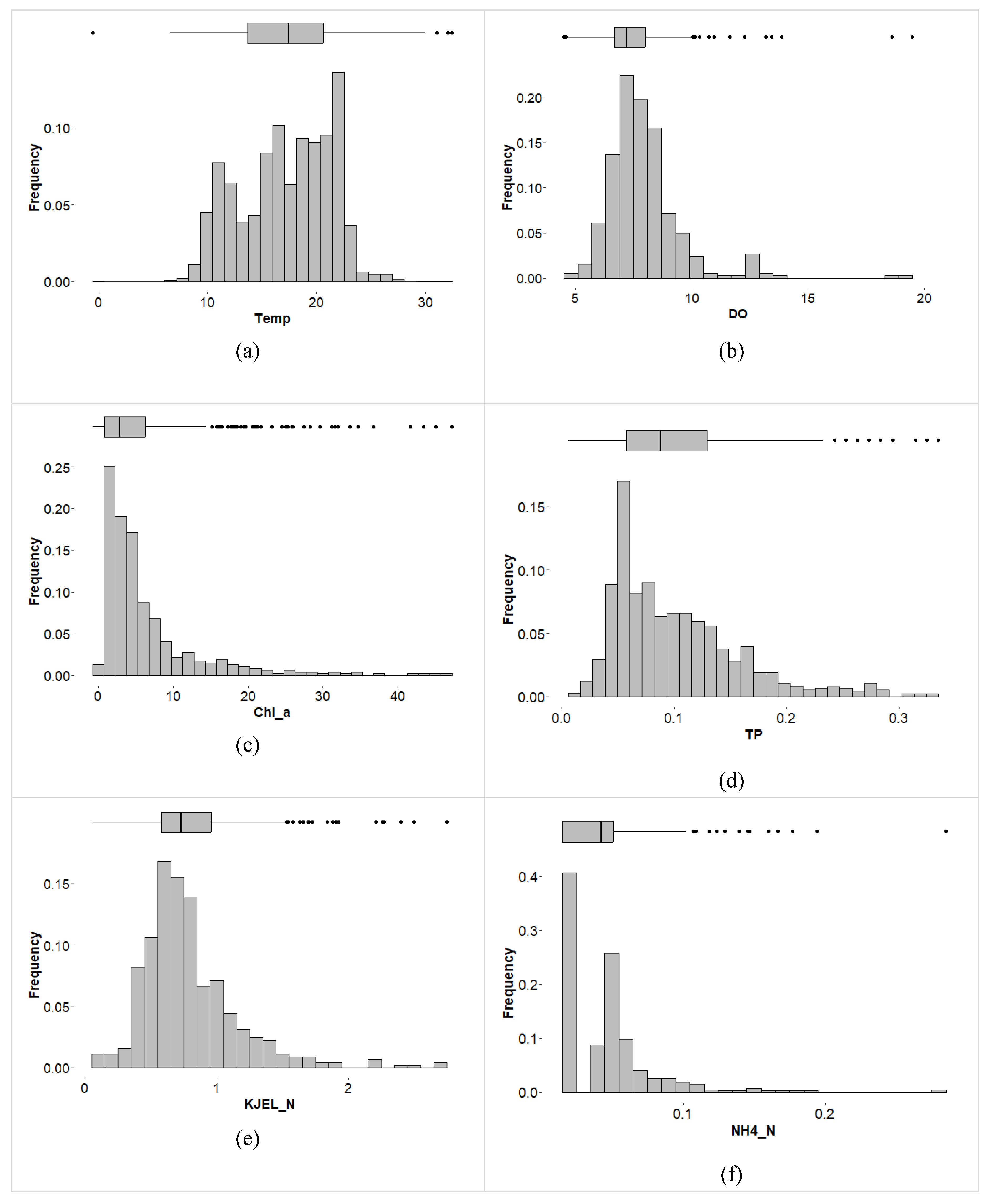
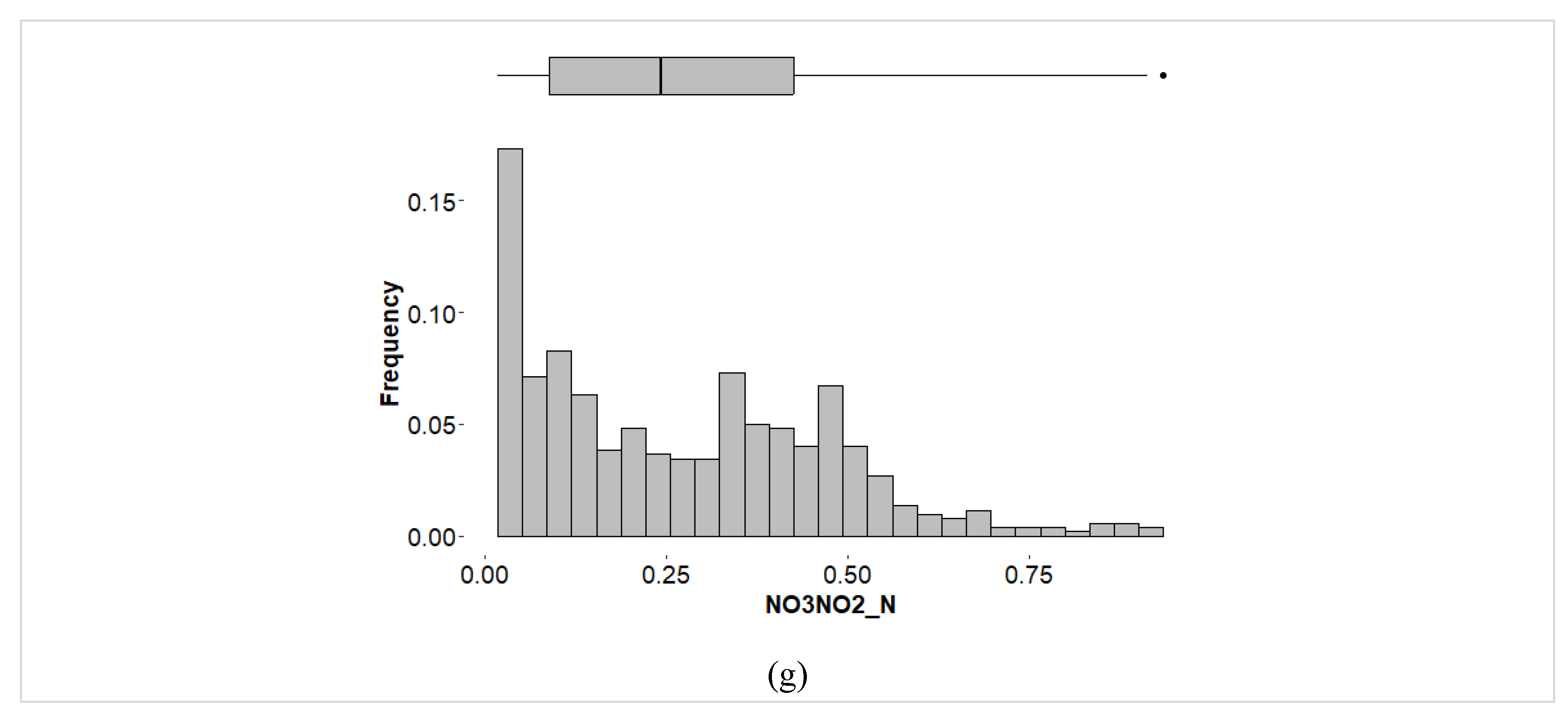
Figure 3.
Time series of the targeted water quality parameters in the Vaal Dam.
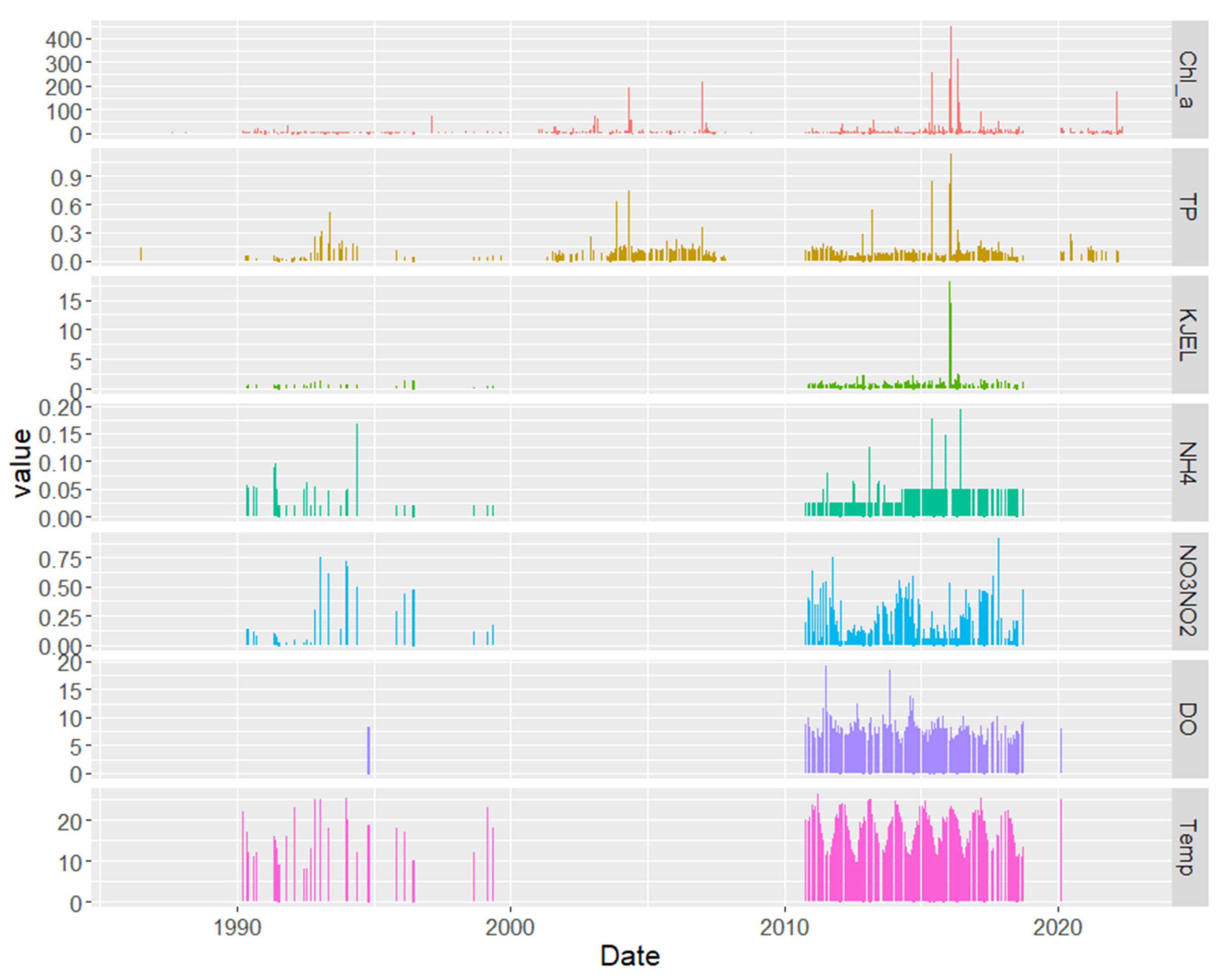
Figure 4.
Decadal time series of the targeted water quality parameters in the Vaal Dam (a) first decade 1990 – 2000, (b) second decade 2000 – 2010 and (c) third decade 210 – 2020.
Figure 4.
Decadal time series of the targeted water quality parameters in the Vaal Dam (a) first decade 1990 – 2000, (b) second decade 2000 – 2010 and (c) third decade 210 – 2020.
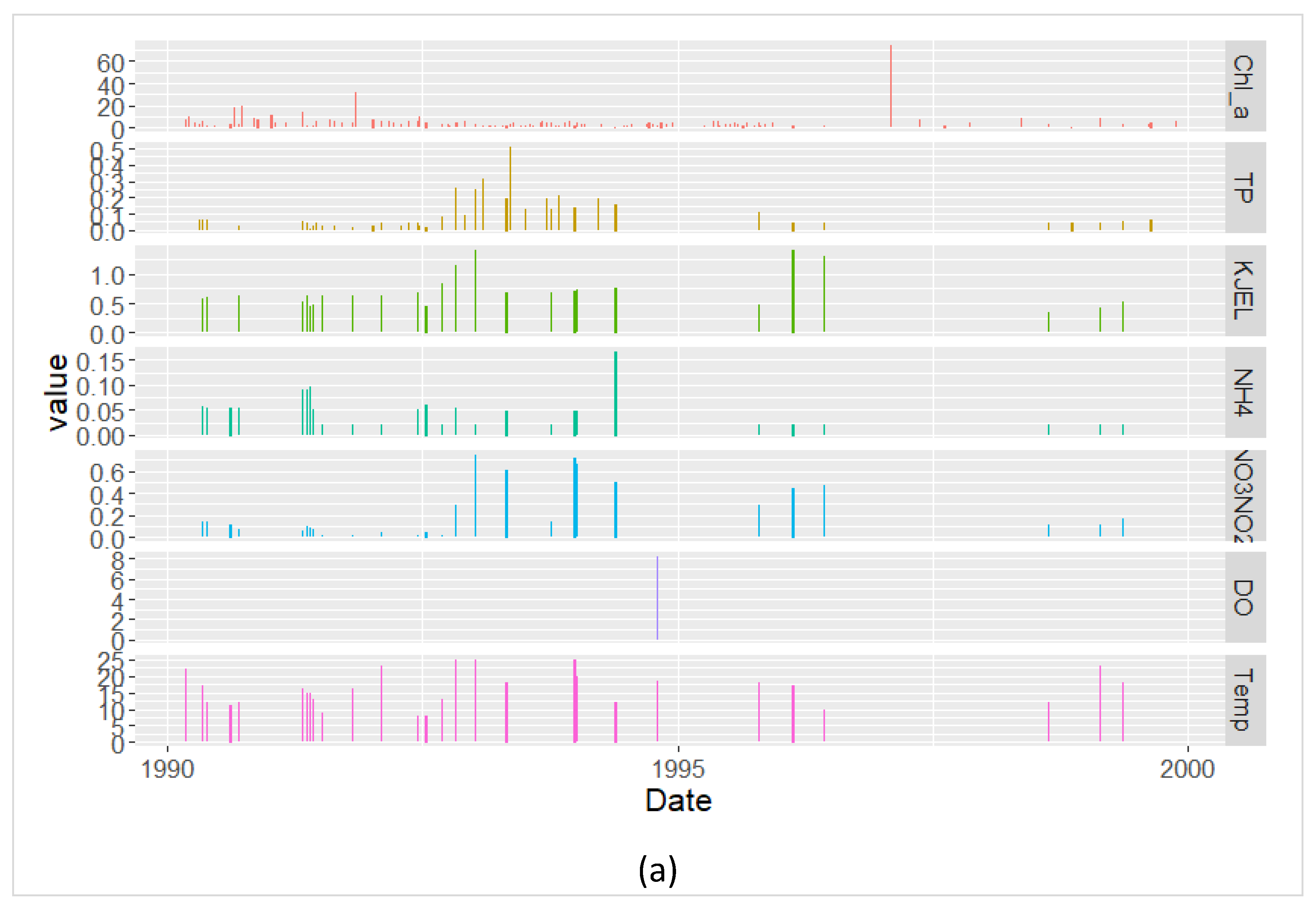
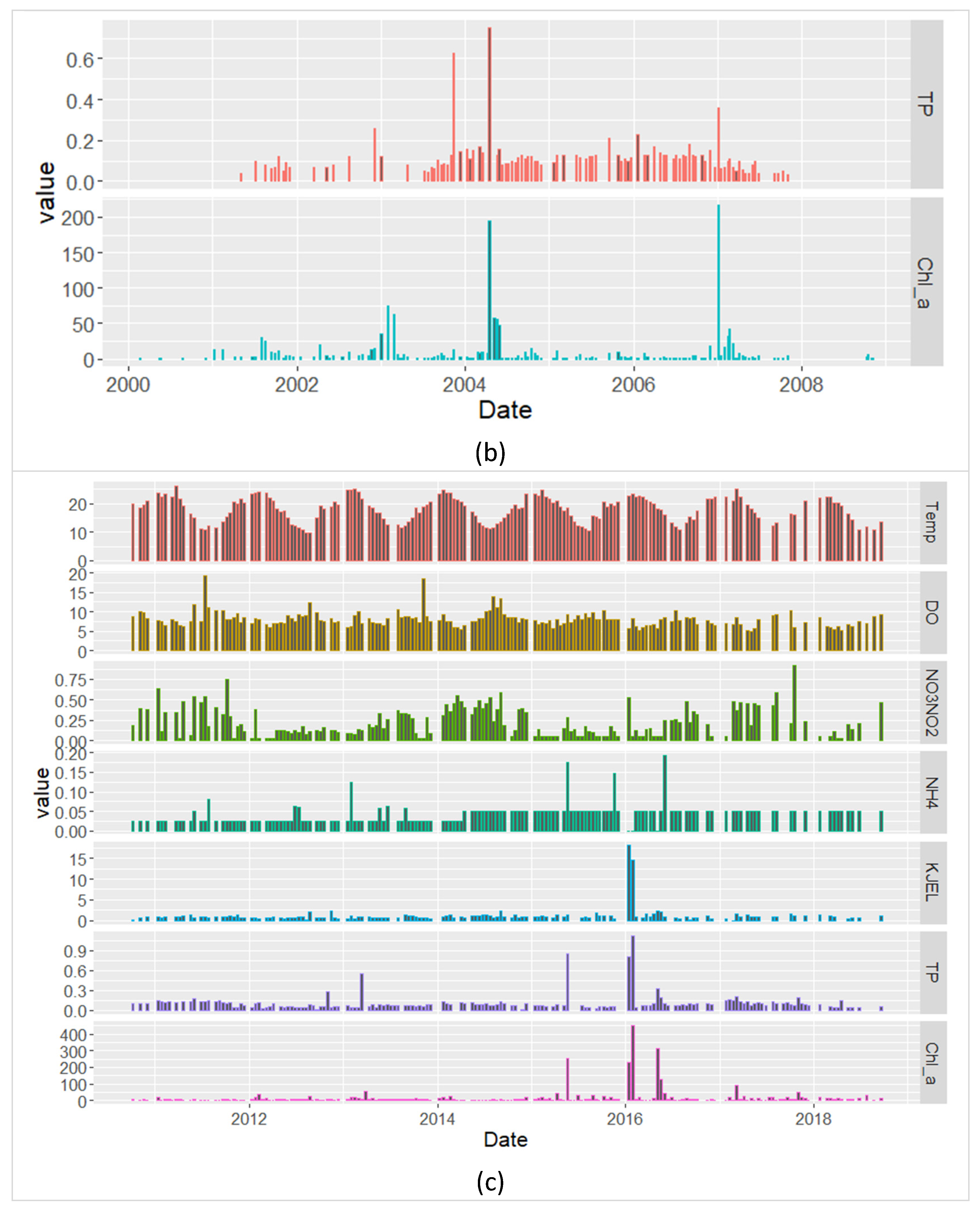
Figure 5.
Decadal trends of Chl-a, TP, DO, NO3NO2_N, NH4_N, KJEL_N and Temperature in the Vaal Dam.
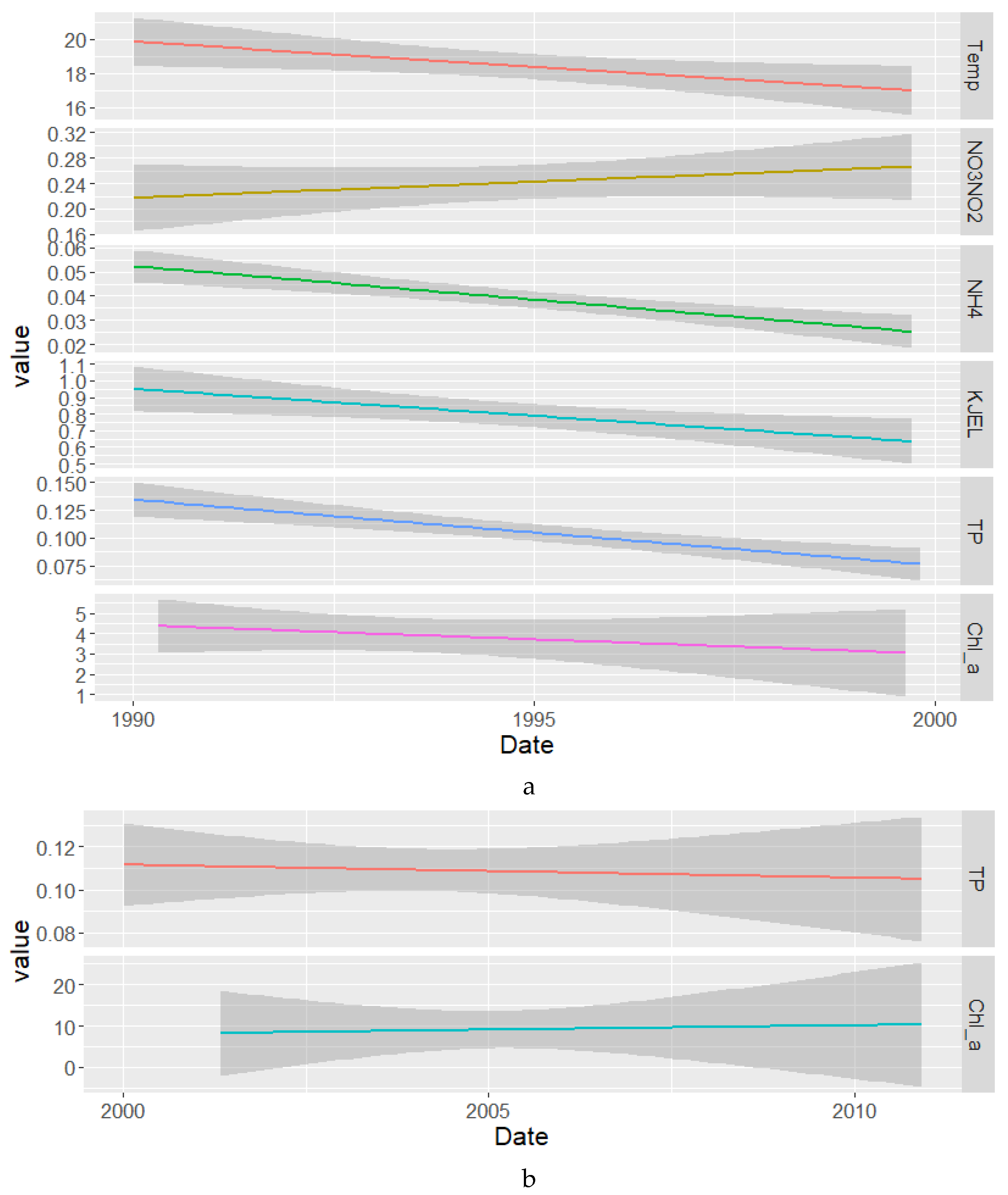
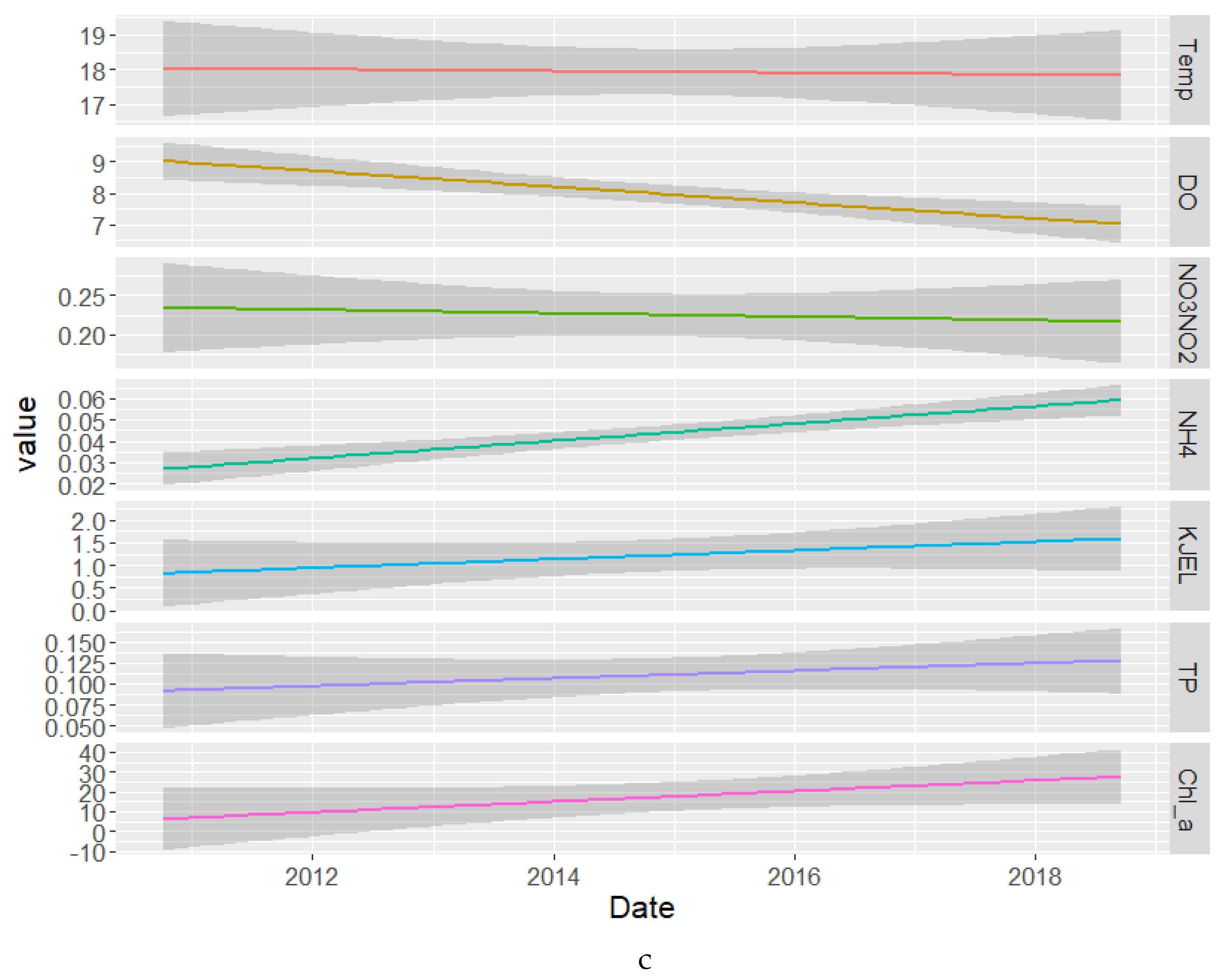
Figure 6.
Scatter plots between Chl-a and various water quality parameters; (a) Chl-a vs TP; (b) Chl-a vs KJEL_N; (c) Chl-a vs temperature; (d) Chl-a vs DO; (e) Chl-a vs NO3NO2; and (f) Chl-a vs NH4.
Figure 6.
Scatter plots between Chl-a and various water quality parameters; (a) Chl-a vs TP; (b) Chl-a vs KJEL_N; (c) Chl-a vs temperature; (d) Chl-a vs DO; (e) Chl-a vs NO3NO2; and (f) Chl-a vs NH4.


Figure 7.
Productivity in the Vaal Dam between 2013 and 2023 from Landsat.
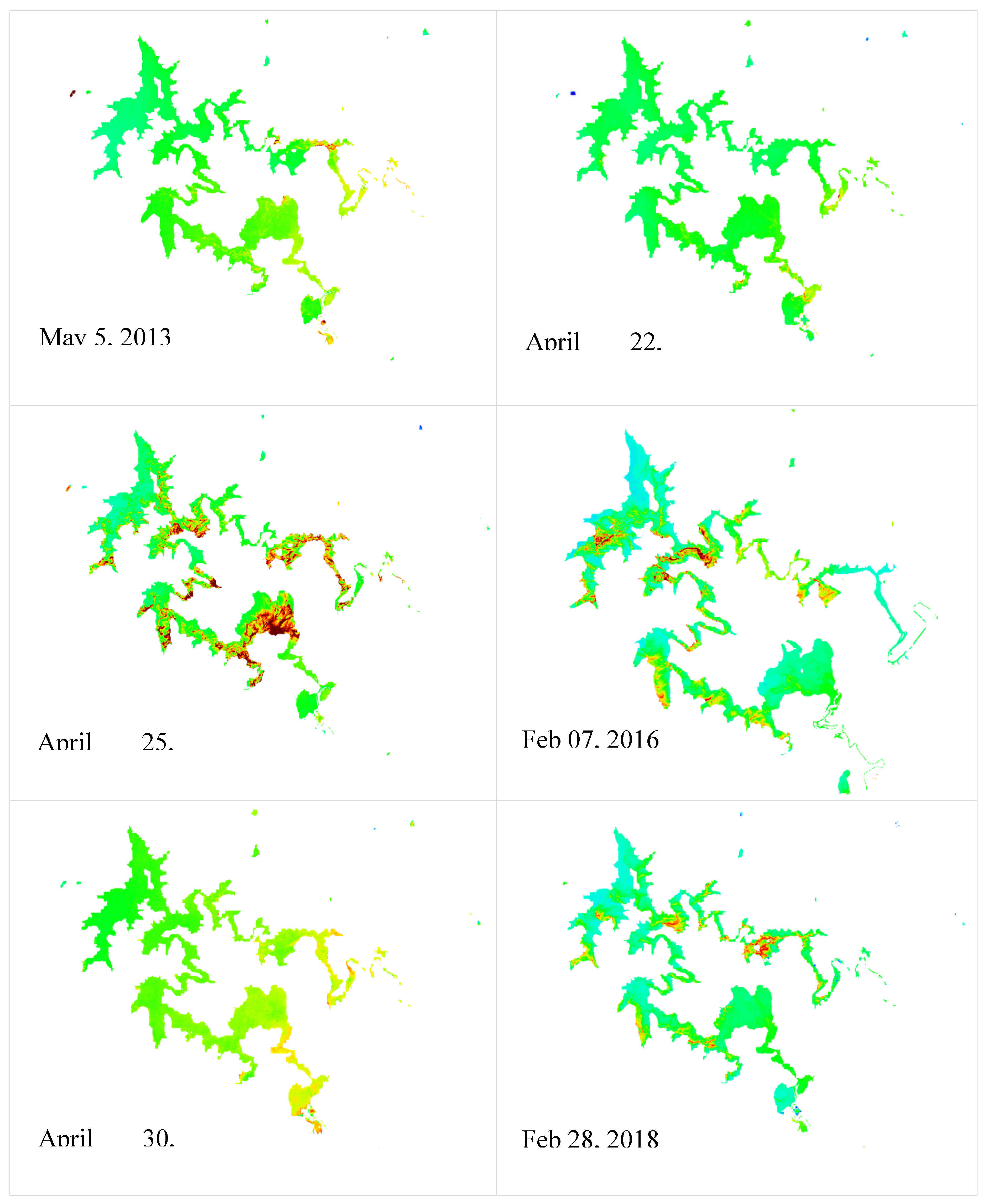
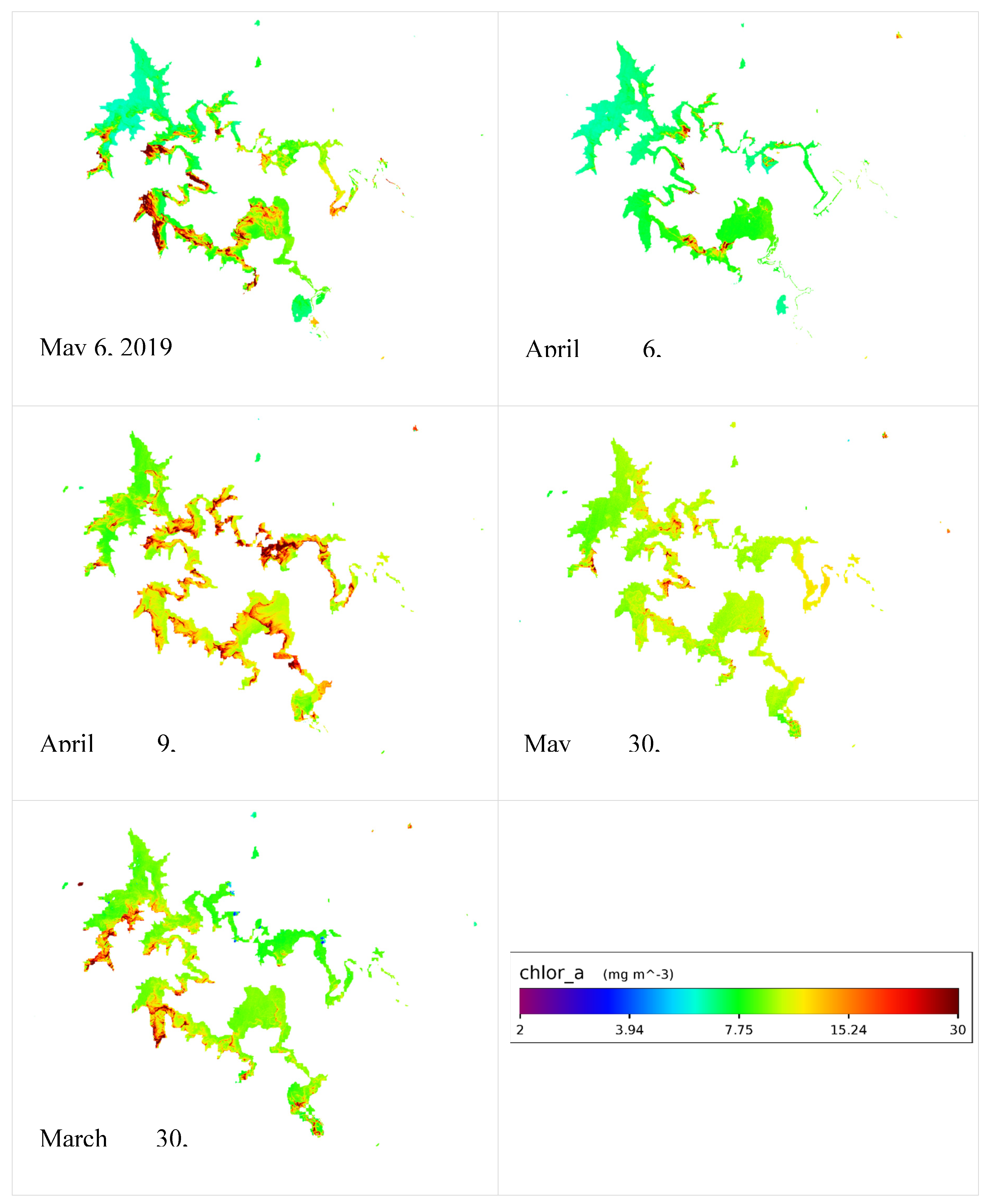

Table 1.
Summary of the availability periods and the characteristics of the targeted WQ parameters.
| Parameter | Data Availability | Minimum Value | Maximum Value | Average |
|---|---|---|---|---|
| Chl-a | 1986 – 2022 | 0.5 μg/l | 452.8 μg/l | 11.25 μg/l |
| TP | 1986 – 2022 | 0.01 mg/l | 1.4 mg/l | 0.113 mg/l |
| DO | 2010 – 2018 | 4.98 mg/l | 19.31 mg/l | 7.9 mg/l |
| KJEL_N | 1986 – 2018 | 0.05 mg/l | 18.058 mg/l | 0.94 mg/l |
| NH4_N | 1977 – 2018 | 0.02 mg/l | 0.28 mg/l | 0.046 mg/l |
| NO3NO2_N | 1968 – 2018 | 0.02 mg/l | 0.921 mg/l | 0.27 mg/l |
| Temperature | 1968 – 2018 | 18°C |
Table 2.
The decadal averages of the studded water quality parameters.
| Decades WQ Parameter |
1st Decade (1990-2000) |
2nd Decade (2000-2010) |
3rd Decade (2010-2020) |
|---|---|---|---|
| Chl-a (μg/l) | 4.75 | 10.51 | 16.7 |
| TP (mg/l) | 0.1043 | 0.1096 | 0.1119 |
| KJEL_N (mg/l) | 0.8 | - | 1.14 |
| NO3NO2_N (mg/l) | 0.246 | - | 0.225 |
| NH4_N (mg/l) | 0.04 | - | 0.043 |
| DO (mg/l) | - | - | 7.93 |
| Temp. (˚C) | 17.9 | - | 18 |
Disclaimer/Publisher’s Note: The statements, opinions and data contained in all publications are solely those of the individual author(s) and contributor(s) and not of MDPI and/or the editor(s). MDPI and/or the editor(s) disclaim responsibility for any injury to people or property resulting from any ideas, methods, instructions or products referred to in the content. |
© 2023 by the authors. Licensee MDPI, Basel, Switzerland. This article is an open access article distributed under the terms and conditions of the Creative Commons Attribution (CC BY) license (http://creativecommons.org/licenses/by/4.0/).
Copyright: This open access article is published under a Creative Commons CC BY 4.0 license, which permit the free download, distribution, and reuse, provided that the author and preprint are cited in any reuse.


