

Submitted:
20 December 2023
Posted:
20 December 2023
You are already at the latest version
Abstract
The indole nucleus is an important element of many natural and synthetic molecules with significant biological activity. Nonetheless, the co-presence of transitional metals in organic scaffold may represent an important factor in the development of effective medicinal agents. This review covers some of the relevant and recent achievements in the biological, chemical and pharmacological activity of important indole-based metal complexes in the area of drug discovery.
Keywords:
Indole
; metal complexes
; medicinal applications
; biological activity
1. Introduction
Structurally, indole is a planar bicyclic molecule in which a benzene ring is fused to the 2,3-positions of a pyrrole ring (Figure 1). According to Huckel's rule, indole is aromatic in nature [1]. In 1866, indole was synthesized for the first time by Adolf von Baeyer from the oxidation of indigo [2]. Since then, a variety of synthetic strategies have been developed for the preparation of the indole nucleus [3,4,5,6], including the Bischler-Möhlau [7], Fischer [8], Hemetsberger [9], and Julia synthesis [10]. In addition, various indole derivatives can be synthesized by substituting the indole ring at the N-1, C-2 to C-6, or C-7 positions with the ultimate goal of improving its characteristics [11].
The indole scaffold is known to be a key structural component of some classes of FDA-approved drugs such as the vinca alkaloids vinblastine and vincristine and the related semi-synthetic derivatives vindesine and vinorelbine (for the treatment of various types of cancer), physostigmine (for the treatment of Alzheimer’s disease and glaucoma), and alkaloids of the Rauvolfia species including ajmaline (1-A anti-arrhythmic agent), ajmalicine and reserpine (antihypertensive drugs) [12,13,14]. Furthermore, the presence of the pyrrole ring in the structure of indole makes the latter an electron-rich aromatic scaffold with distinctive binding properties, many of which occur with target-receptors belonging to the class of integral membrane G-protein coupled receptors (GPCRs) via complementary interactions with conserved binding pockets [15,16]. Like other heterocycles, indole is regarded as a main constituent of biomolecules and natural products endowed with outstanding properties. Tryptophan (Trp), an essential amino acid, is one example of them whose structure possesses an indole nucleus near the active site of metalloenzymes involved in electron-transfer pathways [17,18]. Other important examples include the phytohormone of the auxin class indole-3-acetic acid (IAA) and the metabolites/nutrients indole-3-carbinol (I3C) and 3,3’-diindolylmethane (DIM) which derive from the breakdown of the glucosinolate glucobrassicin present in high levels in vegetables of the Brassicaceae family (Figure 2).
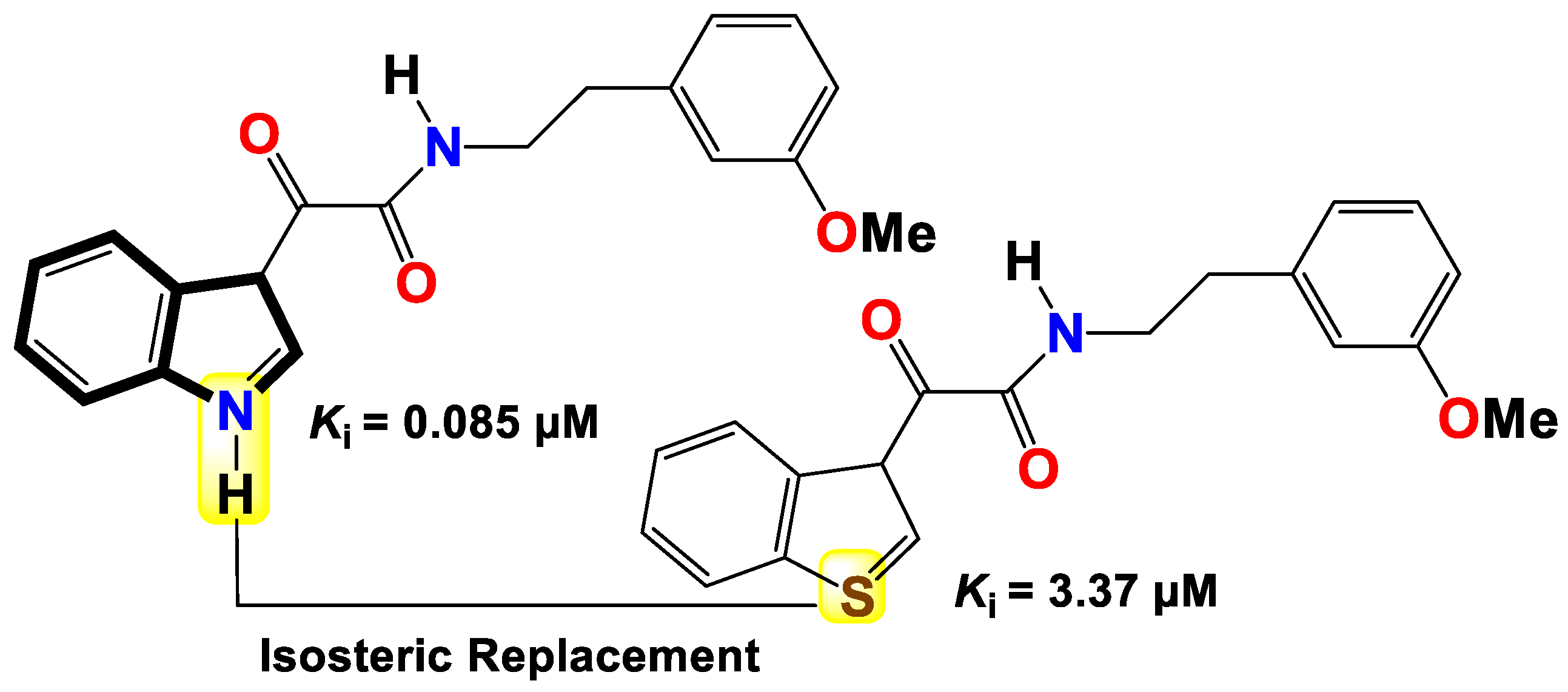
Additionally, indole is regarded as a privileged molecular scaffold due to its presence in a wide range of pharmacologically active molecules and its ability to interact efficiently with multiple receptors besides GPCRs [19]. This wide range of biological activities of the indole scaffold includes antibacterial [20], anti-tubercular [21], α-amylase and monooxime inhibition [22], antiprotozoal [23], and anti-tumor activity [24]. Therefore, attempts to exploit this unique scaffold have attracted great attention from scientists. For instance, A. M. Bianucci et al. reported the key role of the indole N-H group in the interaction with specific receptors. Indeed, the isosteric replacement of the indole scaffold with a benzothiophene or benzofuran in a series of glyoxylylamine derivatives resulted in a decrease of the affinity for benzodiazepine receptors (Figure 3) [25].
The indole scaffold has also been successfully employed for the preparation of macrocyclic structures which turned out to be effective as antimicrobial and anticancer agents [26,27,28,29,30,31,32]. Indole has been extensively studied in the context of the catalytic asymmetric synthesis for the development of indole-based chiral heterocycles, another important class of compounds that can be found in numerous pharmaceuticals, natural products, functional materials, chiral catalysts and ligands [33]. Nevertheless, indole derivatives have gained importance in the design and development of drugs to treat a variety of neurodegenerative disorders since the discovery of the indole derivative NC008-1 [34,35,36,37].
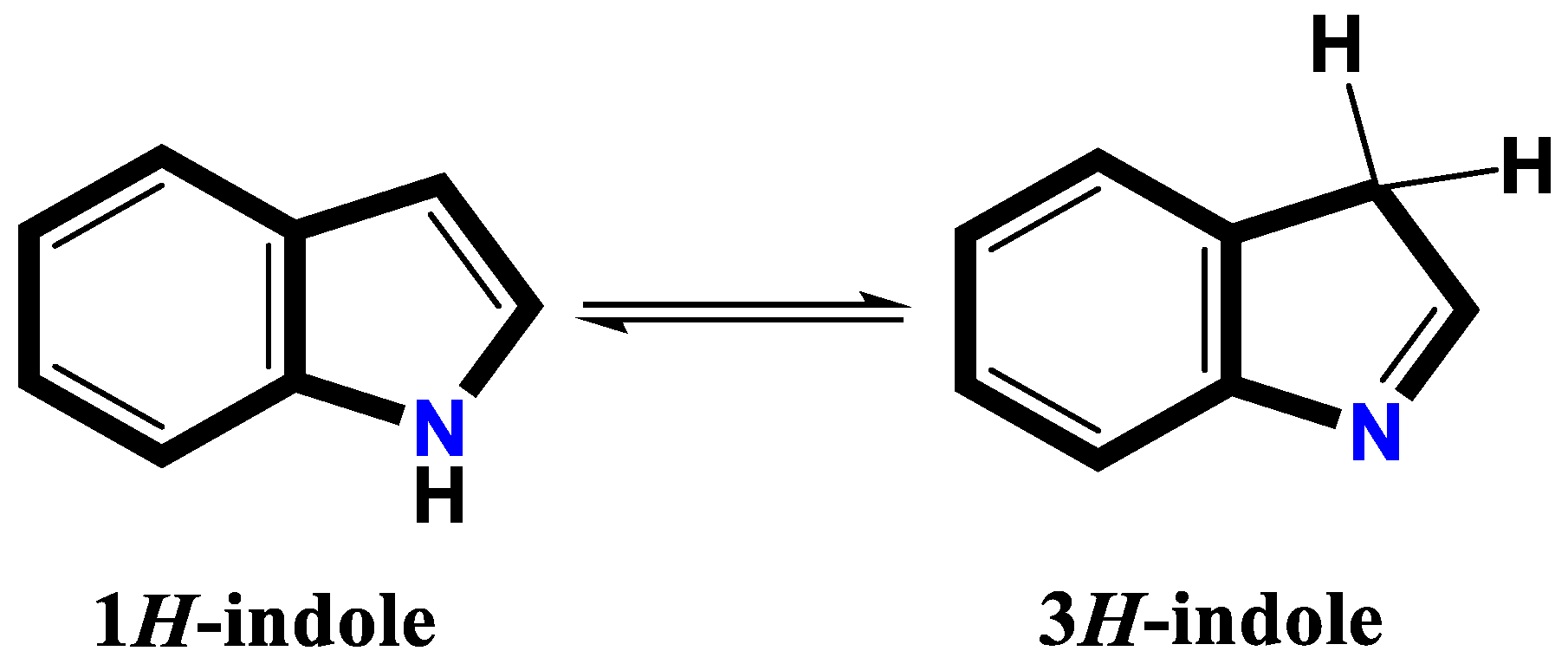
The pharmacological properties of these heterocyclic compounds can be considerably improved by increasing their solubility and bioavailability which can be accomplished through the formation of complexes with a variety of transition metal cations [38,39]. Indeed, the coordination behavior of indole derivatives with transition metal ions has recently attracted the attention of researchers, and myriad publications using these compounds as ligands have been reported [40,41,42,43]. Koji Yamamoto et al. [44] reported different patterns of coordination of the indole rings with metal centers. They hold an opinion that pure σ-complexes are not always formed in indole–metal complexes; there is also the possibility of σ/π-intermediates (B) and π-modes (C or D) (Scheme 1). As a matter of fact, indole can exists in two tautomeric forms, 1H- and 3H-indole (Figure 4) [45]. 3H- and 1H-indole behave differently toward metal ions since (N(1)) in the former, which is considered as an imine nitrogen, has the coordinating ability, while the pyrrole moiety of 1H-indole is capable of forming salts with alkali metal ions by deprotonation. The different types of bonding of the indole ring with transition metal ions have been reported. For instance, a σ-bond between Pd(II) and the pyridine-like nitrogen of the 3H-indole tautomer was stated for the first time [46]. Apart from this, a number of noncovalent interactions of indole rings with other molecules has been observed via hydrogen bonding, π–π stacking and cation–π interactions [45].
Starting from these premises, we focused this review article on synthesis, description of structural features and biological activity of indole-based metal complexes.
2. Monodentate ligands
2.1. N-donor
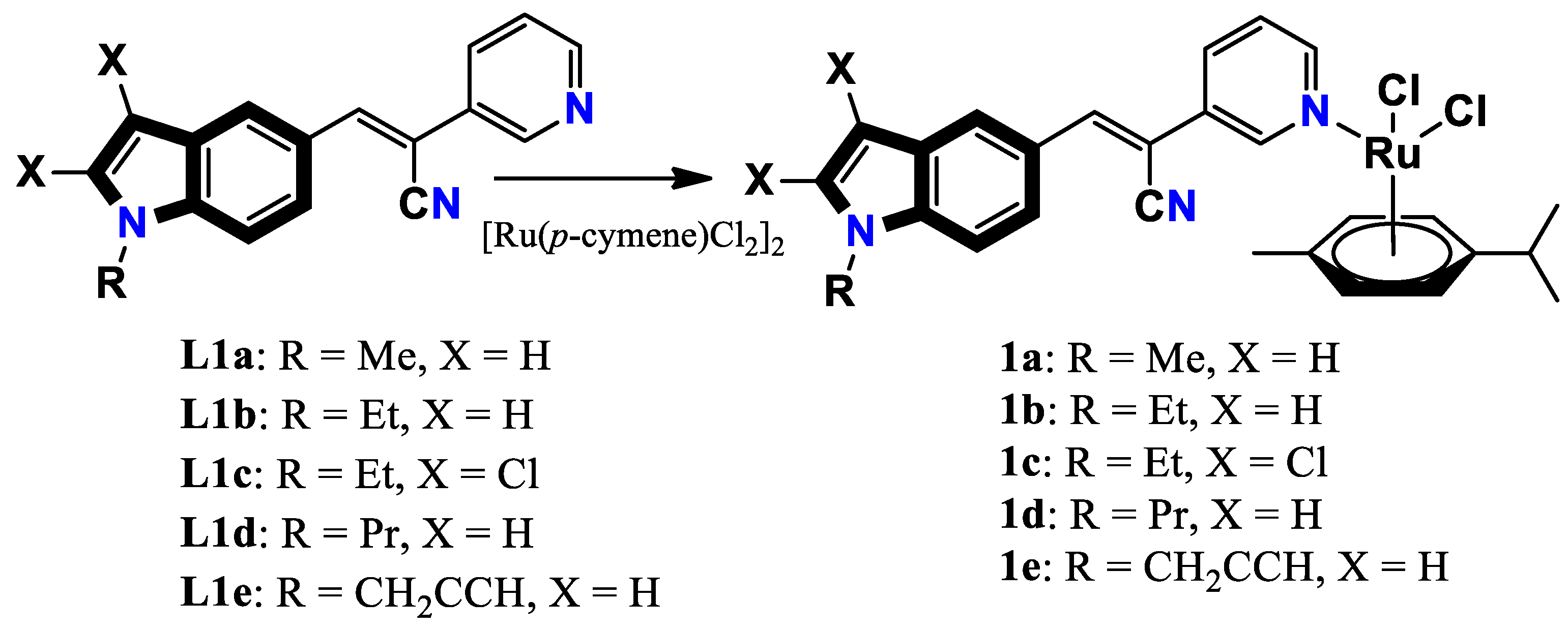
Novel ligands, namely N-alkylindole-substituted 2-(pyrid-3-yl)-acrylonitriles (L1a-L1e; Scheme 2), were recently used for the preparation of (p-cymene)Ru(II) piano-stool complexes (i.e. 1a-1e; Scheme 2) [47]. The synthesis of these compounds was achieved through the replacement of the isovanillyl and veratryl moieties of known anticancer tyrphostin derivatives with the indole scaffold, with the aim of enhancing their biological activity profile. The in vitro cytotoxicity of the ligands and related complexes against HCT-116 colorectal carcinoma (both p53-wildtype and p53-knockout cells) and MCF-7 breast cancer cell lines was investigated by MTT assay. Among the ligands, L1a and L1b turned out to be the most potent derivatives against MCF-7 cells (IC50 in the low-micromolar range) and the two HCT-116 cell lines (IC50 in the sub-micromolar range), respectively. The anticancer activity of the complex 1a was higher than its ligand and the reference drugs sorafenib, gefitinib, and NAMI-A. Additionally, the authors studied the interaction between the most active compounds L1a, L1b and 1a with DNA using the ethidium bromide intercalation assay, demonstrating high binding affinity for the complex 1a and no DNA binding for the ligands L1a and L1b. Additionally, a number of other experiments have been carried out, including the investigation of drug mechanisms in HCT-116 p53-knockout colon cancer cells, colony formation assays, experiments with tumor spheroids and molecular docking. Overall, these studies underlined that indole scaffold was essential for the high antiproliferative activity [47].
2.2. S-donor
In 2018, Ashiq Khan et al. [48] prepared and characterized Cu(I) and Ag(I) complexes by condensation of copper(I) or silver(I) halides with indole-3-thiosemicarbazone (Hintsc, L2) or 5-methoxy indole-3-thiosemicarbazone (5-MeOHintsc, L4) or 5-methoxy indole-N1-methyl-3-thiosemicarbazone (5-MeOHintsc-N1-Me, L5) (Scheme 3). According to the obtained characterization results, the complexes showed a monomeric tetrahedral structure [MX(HL)(Ph3P)2] (in case of M = Cu, L2, X = I, 2; Br, 3; Cl, 4; L4, X = I, 5; Br, 6; Cl, 7; L5, X = I, 8; Br, 9; Cl, 10 and in case of M = Ag, L2, X = Cl, 14; Br, 15; L3, X = Cl, 16, Br, 17; L4, X = Cl, 18, Br, 19). Furthermore, the reaction of copper(I) halides with indole-N1-methyl-3-thiosemicarbazone (HIntsc-N1-Me, L3) resulted in the formation of dinuclear complexes; [Cu2(μ-X)2(η1-S-H3L)2(Ph3P)2] (X = I, 11; Br, 12; Cl, 13). The characterization of L3, 4, 8, 9, 11, 12 and 14 was carried out by means of single-crystal X-ray diffraction (Figure 5), indicating that the metal ions in the complexes 4, 8, 9 and 14 were occupied by one halogen atom, two phosphorous atoms from two triphenylphosphine molecules and a thione sulfur atom from the thiosemicarbazone ligand. However, a halogen bridge connected two copper atoms in complexes 11 and 12, forming a (Cu2(μ2-X)2Cu X = I, 11; Br, 12) core. A sulfur atom from the thiosemicarbazone ligand and a phosphorous atom of the triphenylphosphine molecule also coordinated to each copper atom in a trans-position. The authors reported the evaluation of the anti- M. tuberculosis activity of ligands (L2-L5) and their metal complexes (2–19) against M. tuberculosis H37RV strain ATCC 27294 in which they obtained significant outcomes (MIC = 1.6 µg/ml; much higher than first and second lines drugs employed as positive controls) for the ligand L4, Cu(I) complexes 2 and 3, and Ag(I) complex 14 [48].
3. Bidentate ligands
3.1. O, O-donor
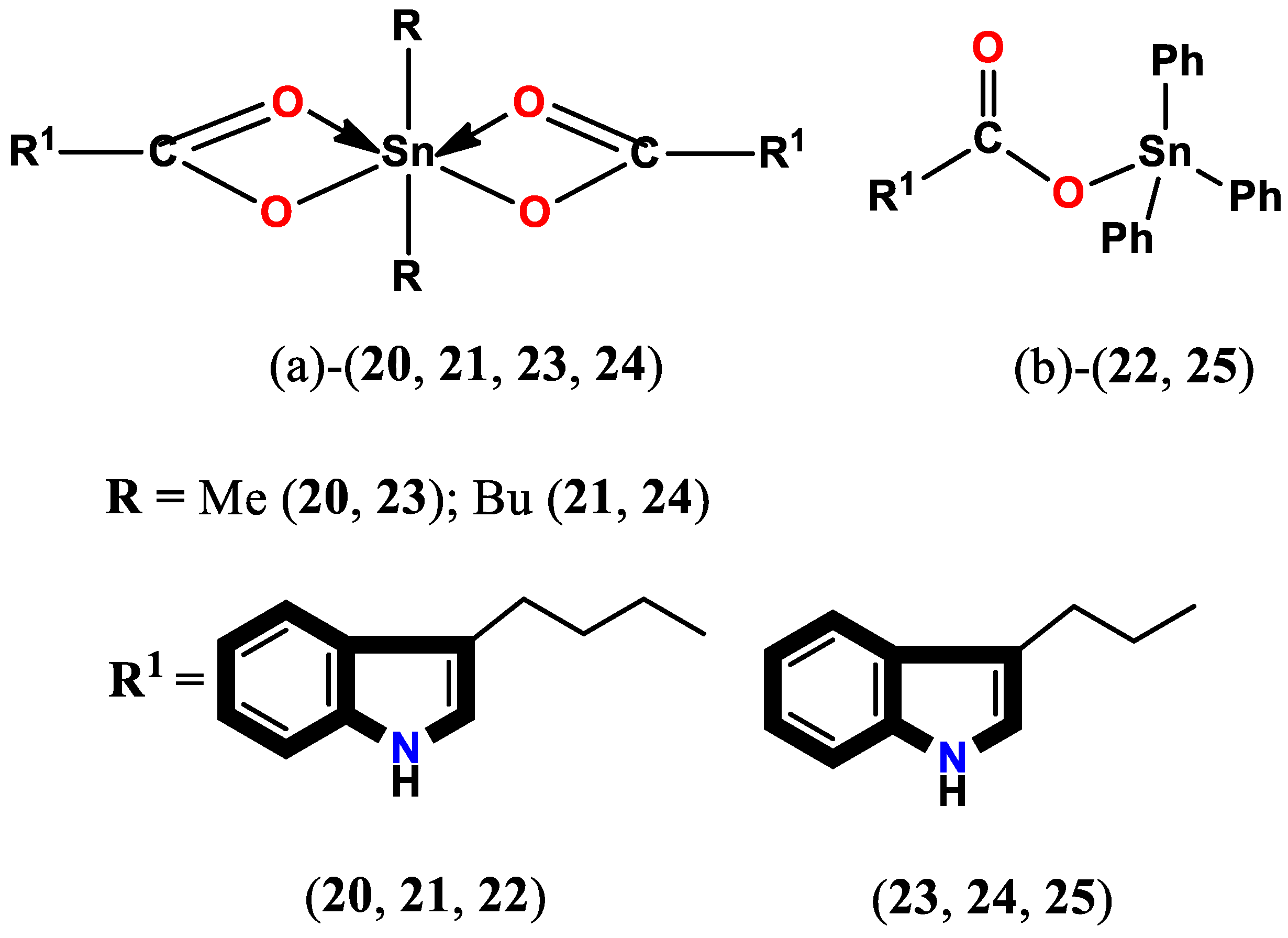
In 2014, Asha Chilwal and co-workers synthesized six organotin(IV) complexes of Me2SnL2, Bu2SnL2, and Ph3SnL [where L = indole-3-butyric acid (IBH; i.e. 20, 21 and 22 in Figure 6) or indole-3-propionic acid (IPH; i.e. 23, 24 and 25 in Figure 6)] by reaction of the corresponding di-organotin(IV) oxide and triphenyltin(IV) hydroxide IBH or IPH in the desired molar ratios of 1:2/1:1 [49]. The characterization of all compounds has been carried out by means of elemental analysis, thermogravimetry (TG) technique, IR, 1H NMR, 13C NMR, and 119Sn NMR spectroscopy. The structures of the complexes were suggested based on the magnitudes of the coupling constants 1J(119Sn–13C), namely a tetrahedral geometry around the tin atom in solution for the tri-organotin complexes (22 and 25) and an octahedral geometry in solution as well as in the solid state for the di-organotin(IV) complexes (20, 21, 23, and 24) (Figure 6). In addition, the authors studied the effects of the metal complexes on three gram-positive (Staphylococcus aureus, Staphylococcus epidermidis, and Micrococcus luteus) and three gram-negative (Escherichia coli, Pseudomonas aeruginosa, and Enterobacter aerogenes) bacteria using the minimum inhibition concentration (MIC) method. Several important results have been achieved: 1) the synthesized compounds were more active against gram-positive than gram-negative bacteria; 2) upon complexation, the antimicrobial activity was remarkably enhanced realistically due to enhanced lipophilicity; 3) the synthesized compounds exhibited greater antibacterial activity as compared to the reference drug (chloramphenicol).
3.2. N, N-donor
The reaction of the 2-imino-indole derivatives L6-L11 (which were in turn synthetized by condensation of one equivalent of the appropriate aniline with one equivalent of 3-chloro-1H-indole-2-carboxaldehyde) with trans-chloro(1-naphtyl)bis(triphenylphosphine)nickel(II) [C10H7NiCl(PPh3)2] led to a series of neutral nickel complexes (i.e. 26-31; Scheme 4) [50]. The X-ray study of the complex 31 revealed that the nickel atom adopts a square-planar coordination geometry wherein the 2,4,6-trimethylanil and naphthyl group occupy the position trans to the triphenylphosphine ligand (with a P1–Ni1–N2 angle of 174.56(12)°) and to N1 (with an N1–Ni1–C34 angle of 168.6(3)°), respectively (Figure 7). The cytostatic activity of the complexes was investigated for ethylene oligomerization with no additional activator, displaying significant activity (up to 2.05 × 10⁴ g ethylene mol-1 h-1) for each of them according to following order: 30 > 28 > 27 > 29 > 31 > 26 [50].
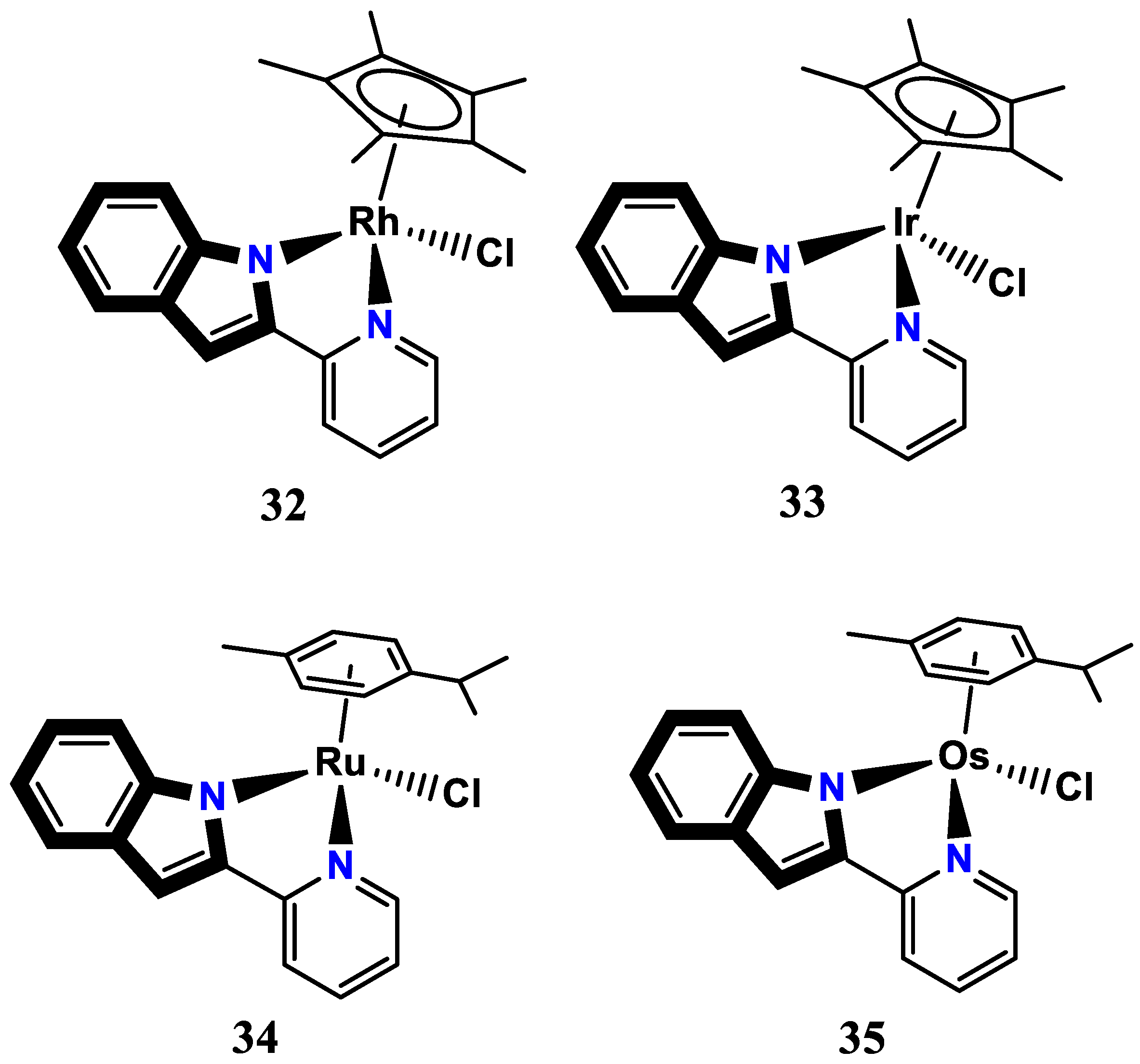
Joan J. Soldevila-Barreda and co-workers proposed four half-sandwich complexes containing the 2-(2-pyridinyl)-1H-indole (ind-py) moiety as a ligand (i.e. 32–35; Figure 8) [51], which were characterized by 1H and 13C-NMR spectroscopy and high-resolution ESI-MS. To evaluate their antiproliferative activity the authors performed the MTT assay by using two ovarian cancer cell lines (cisplatin sensitive A2780 and cisplatin resistant A2780cisR) and one normal prostate cell line (PNT2). This assay evidenced that the cytotoxicity of the complexes was overall lower than that of the reference drug cisplatin (range 13.0–62.8 µM). Noteworthy, the cytotoxic activity of the Rh(III) (32) and Os(II) (35) complexes was 2–3 folds higher towards A2780 with respect to normal cells. In addition to this, the authors investigated the catalytic activity of the compounds for reduction/oxidation of nicotinamide adenine dinucleotide coenzymes (NAD) through NMR spectroscopy. Based on the results obtained, the reduction of NAD+ occurred with all complexes and in the presence of sodium formate with turnover frequencies comparable to those of previously reported catalytic metallodrug candidates. They also employed the co-incubation method with sodium formate and N-acetyl cysteine to study the in-cells catalytic activity of the complexes, concluding that only the Ir(III) (33) and Rh(III) (32) complexes are able to generate oxidative stress [51].
Six Zn(II) complexes (i.e. 36-41; Scheme 5) with formula [Zn(InR-Im)2Cl2], where InIm is 3-((1H-imidazol-1-yl)methyl)-1H-indole, were designed and synthesized from their corresponding ligands (L7-L12; Scheme 5) by K. Babijczuk and co-workers [52]. The investigation of their structures was accomplished through NMR, FT–IR and ESI–MS spectrometry, elemental analysis and single-crystal X-ray diffraction. According to the data obtained, complexes 36, 37, 38, 39 and 40 are composed of a zinc ion coordinated by two imidazole nitrogen atoms of two indole–imidazole hybrid ligands and two chloride ions in a distorted tetrahedral environment. The crystal structure of complex 39 is shown in Figure 9 as an example of the determined similar structures. The comparison between the structure of the complex 38 and its uncoordinated ligand L9 revealed that the absolute values of the torsion angles along the C–C (φ1) and C–N (φ2) bonds formed by the methylene bridge increases and decreases upon complexation, whereas these conformational changes are not significant in the case of the complex 40. Hemolytic activity assays showed that only the complexes with electron-withdrawing groups in the imidazole ring (i.e. 40 and 41) are notably cytotoxic (> 5%) as compared to the free ligands. On the contrary, the complexes containing either an unsubstituted or electron-donor-substituted ligand at the same nucleus showed no toxicity. The cytoprotective activity of the complexes against AAPH-induced hemolysis was also studied indicating that this activity increases upon complexation with ZnCl2 following the order 36 > 39 > 37 > 40 > 41 > 38. Furthermore, these complexes turned out to be effective as antibacterial (in particular 36 against Micrococcus luteus; growth inhibition zone = 10.6 mm) and antifungal (in particular 41 against fungi of the genus Trichoderma) agents [52].
A series of luminescent rhenium(I) diimine indole complexes (i.e. 42a-45b; Figure 10) and their indole-free counterparts (42c-45c; Figure 10) were obtained by K. Kam-Wing Lo et al. in 2005 by using py-3-CONHC2H4-indole, py-3-CONHC5H10CONHC2H4-indole, or py-3-CONH-Et ligands as N donor in combination with diamine ligands, i.e. Me4-phen, phen, Me2-phen and Ph2-phen [53]. According to X-ray analysis, in the crystal structure of 44a the Re(I) center adopted a distorted octahedral geometry and coordinated with two carbonyl groups in a facial orientation, while a dihedral angle of ca. 7.29° was formed from the indole unit and the Me2-phen ligand of the same molecule (Figure 11). In this complex no stacking interactions were observed between the diimine ligand and the indole moiety of adjacent molecules. All newly synthesized complexes showed green to orange-yellow luminescence upon visible-light excitation. The indole-containing complexes’ spectra recorded in the ultraviolet region produced an additional emission band due to the indole moiety. The lower luminescence intensity of the complex compared to free indole is probably due to strong absorbance of rhenium(I)-diimine units at the excitation wavelength or resonance energy transfer from the indole to the luminophore. To gain insight into the quenching mechanism, Stern-Volmer studies on the indole-free complexes in the presence of indole as a quencher were performed. These additional studies confirmed the self-quenching of the indole-containing complexes which stem from the intermolecular electron transfer. Moreover, the emission titration technique was employed to evaluate the bovine serum albumin (BSA)-binding of the diamine-indole complexes. This binding study clearly indicated that the indole moiety is responsible for the protein-complex formation since no binding to BSA was observed in the indole-free complexes. This set of rhenium(I) diamine-indole complexes was also investigated for their ability to inhibit the bacterial enzyme Tryptophanase (TPase). Also in this case, the binding of the complexes to the enzymatic protein (and the consequent inactivation) occurs due to the presence of the indole moiety [53].
Synthesis and study of the anticancer activity of novel indole-fused latonduine derivatives and their RuII and OsII complexes (i.e. L13-L14 and 46-49, respectively; Figure 12) were reported by Christopher Wittmann et al. in 2022 [54]. All complexes were found to be chiral at the metal center and as a racemic mixture when in solution. The single-crystal structure of 46 was determined by X-ray diffraction method and revealed that the complex adopted the three-leg piano-stool geometry in which the ruthenium(II) was coordinated to the two N-atoms of the ligand L13, one chloride ion and a p-cymene group (Figure 13). Furthermore, the obtained data displayed that the complex crystallizes as a racemate in the orthorhombic space group Pna21 with three-leg piano-stool geometry wherein the bidentate ligand L13 and a chloride ion act as legs while the p-cymene group was as the piano’s stool. Both ligands and complexes were evaluated for their anticancer activity against MDA-MB-231, LM3 and U-87 MG cell lines. The Ru(II) and Os(II) complexes showed a lower efficacy (IC50 = 57–250 µM) compared to indole-based ligands (IC50 = 1.4–10 µM) and the reference drugs cisplatin, sorafenib and paclitaxel [54].
A comprehensive study on metal complexes that have an indole derivative as a bidentate ligand has been conducted by Yareeb J. Sahar et al. [55]. By using (E)-2-(1H-indol-3yl)diazenyl)thiazole (HIDAT) ligand (i.e. L15; Figure 14) as a starting material, four novel complexes (cobalt, nickel, copper and palladium derivatives) (i.e. 50-53; Figure 14) were obtained and characterized by means of different techniques. Based on the obtained data, the metal ions in the complexes exhibited an octahedral geometry except for Pd(II) which was square-planar. The Pd(II) complex 50 showed significant anticancer activity against the human leukemia cell line HL-60 (IC50 = 27.02 μg/mL) and moderate tumor selectivity evaluated towards HdFn healthy cells (IC50 = 83.69 μg/mL). Docking studies were performed to evaluate the interaction between this Pd(II) complex and the tyrosine-protein kinase ABL1 receptor, which is related to the emergence of leukemia according to recent studies [56]. In Figure 15 are displayed in 2D the main interactions 50-target. The data obtained from these computational studies pertaining the Pd(II) complex and the activity-related reference antineoplastic drug Nelarabine indicated that 50 possesses promising anti-leukemic activity. The high propensity of the complex to bind to the receptor may be due to the presence of the nitrogen and sulfur atoms of the heterocyclic indole and thiazole rings, respectively, in the structure of the complex [55].
The 3-methoxy-indole-hydrazone glyoxime ligand L16 (Figure 16) was used for the preparation of the related Ni(II), Cu(II), and Co(II) complexes (54-56; Figure 16) and also its BF2+-bridged transition metal complexes (57-59; Figure 16) by Babahan I. et al. [57]. The latter were synthesized through the addition of boron trifluoride etherate complex to the solution of [M(L)2]. The Co(II) complex 56 showed an octahedral geometry with water molecules as axial ligands while a square planar environment was suggested for the Ni(II) and Cu(II) complexes (54 and 55, respectively), highlighting the effect of metal ions on the complexes’ structures. Based on the spectral studies, the ligand acted as a neutral bidentate N, O-donor through the azomethine nitrogen atom and the imine oxime group. The antitumor potential of these complexes was evaluated against MCF-7 and PC-3 cell lines. Additionally, the Hoechst/propidium iodide double staining method was employed to determine their apoptotic or necrotic effects towards cells. From these biological assessments emerged that all compounds were effective against both tumor cell lines in the range of 5–40 μM suggesting apoptotic mechanisms. More importantly, it turned out that their cytotoxic activity was higher than that of the already approved anticancer drug paclitaxel used as a positive control [57].
3.3. N, O-donor
Novel Ni(II) (60 and 62; Figure 17) and Cu(II) complexes (61 and 63; Figure 17) have been prepared from the Schiff base ligand L17 ((E)–2–(((5H–[1,2,4]triazino[5,6–b]indol–3–yl)imino)methyl)phenol), which was in turn synthesized by condensation of 5H-[1,2,4]triazino[5,6-b]indol-3-amine and a salicylaldehyde unit [58]. The Ni(II) center in 60 and 62 adopted a square planar geometry, unlike 61 and 63 in which an octahedral geometry was observed around the Cu(II) center. Electronic absorption titrations and fluorescence spectral studies displayed an interaction of the complexes with DNA, probably by electrostatic surface binding mode along with partial intercalation in the minor groove mode. Kb values evidenced that the complexes containing phen 62 (1.9 ×10⁴ M-1) and 63 (4.8 ×10⁴ M-1) possess a greater CT-DNA binding capacity than the complexes with bpy 60 and 61. The two phen derivatives showed also superior HAS-binding capacity compared to the bpy derivatives [58].
Two Co(II) and Zn(II) complexes containing an indole ring (i.e. 64 and 65; Figure 18) with a bidentate ligand has been proposed by Youssef Ghufran Shakir et al.[59]. The reaction of the combined ligand (i.e. L18; Figure 18), which was in turn synthetized by condensation of the diazonium salt of 4-aminoantipyrine and indole in basic conditions, with CoCl2·6H2O and ZnCl2 led to these complexes. 1H-NMR, IR, mass spectrometry, UV-Vis, powdered XRD, molar conductivity and magnetic susceptibility technique were utilized to determine the structure and properties of the ligand and its complexes. The cytostatic activity of the ligand and its complexes was investigated against MCF-7 tumor cell line and HdFn healthy cell line. All the examined compounds displayed higher cytotoxicity against MCF-7 cells than HdFn cells. Particularly, L18 was more effective against MCF-7 cells as compared to the zinc complex 65. Additionally, well diffusion method was employed to investigate the antimicrobial activity of the compounds against Staphylococcus aureus and Escherichia coli bacteria, revealing higher inhibitory properties of the complexes than that of the ligand [59].
R. Reshma and et al. [60] developed a series of Mn/Fe/Co/Ni/Cu/Zn(II)-(indal-L-his) complexes starting from the ligand L19 (i.e. 66-71; Figure 19) [60]. The indole-based ligand was obtained in turn by reaction of the indole-3-carboxaldehyde (indal) with L-histidine (L-his). The structure of all complexes was determined using elemental analysis, molar conductivity, magnetic, IR, UV–Vis, 1H NMR, mass and ESR spectroscopy, powder XRD and thermal gravimetric analysis (TGA). Interestingly, Mn(II) and Fe(II) complexes (66 and 67, respectively) adopted an octahedral geometry, [M(II)-(indal-L-his)2(H2O)2], whilst Co(II) and Zn(II) complexes (68 and 71, respectively) with [M(II)-(indal-L-his)2] formula possessed a tetrahedral geometry. A square planar environment was observed for Ni(II) and Cu(II) complexes (69 and 70, respectively), [M(II)-(indal-L-his)2]. Based on the results of the antimicrobial tests, all metal complexes exhibited higher activity than the indal-L-his ligand L19 against several Gram-positive and Gram-negative bacteria. The copper derivative 70 ([Cu(II)-(indal-L-his)2]) displayed the most significant activity amongst all complexes. The antimicrobial activity of this copper complex was superior to that of the reference drug ciprofloxacin [60].
Synthesis and characterization of a series of Cu(II), Co(II), Ni(II) and Zn(II) complexes (i.e. 72-79; Figure 20) containing amino acid-derived Schiff base ligands with general formula [ML2] (72-75) and [ML(1,10-phen)2]Cl (76-79) have been achieved by Arunadevi A. & Raman N. [61]. The preparation of the ligand (L20) has been carried out by condensation of the 4-chloro-3-nitrobenzaldehyde and 2-amino-3-(1H-indol-3-yl)propanoic acid. This series of complexes were assessed for their antimicrobial (antibacterial and antifungal) activity and binding properties towards biological targets (DNA and BSA). Overall these studies highlighted the higher efficacy of the metal complexes compared to free ligand [61]. L20 and the whole panel of metal complexes underwent also exhaustive computational studies which highlighted their drug-likeness profile for oral administration and the binding with DNA [62].
Synthesis and characterization of mononuclear rhenium(I) complexes (i.e. 80-84, Figure 21) with bidentate indole-pyrazoline based ligands (i.e. L21-L25, Figure 21) derived from α,β unsaturated enons and benzhydrazide have been reported by Reena R. Varma et al. [63]. The DNA-binding, in vivo and in vitro cytotoxicity as well as the antimicrobial activity of the complexes and ligands have been investigated. The results suggested DNA groove binding mode for all compounds with affinity in the order 84 > 80 > 83 > 81 > 82 > L25 > L21 > L22 > L23 > L24. All complexes also exhibited good antiproliferative activity against MCF-7, HCT 116, and A549 tumor cell lines. In particular, complex 84 showed the highest cytotoxicity (higher also than that of the anticancer drugs carboplatin and oxaliplatin used as positive controls [63].
Further advancements in the development of metal complexes endowed with indole rings in the structure of the ligand and containing manganese(II) as a transition metal were reported by S. Sharma et al. in 2016 [64]. In this research work, four bidentate ligands were synthesized, namely L26 [2-(5-fluoro-2-dihydro-2-oxo-1H-indol-3-ylidene)hydrazinecarboxamide], L27 [2-(5-fluoro-2-dihydro-2-oxo-1H-indol-3-ylidene)hydrazinecarbothioamide], L28 [2-(5-bromo-2-dihydro-2-oxo-1H-indol-3-ylidene)hydrazinecarboxamide] and L29 [2-(5-bromo-2-dihydro-2-oxo-1H-indol-3-ylidene)hydrazinecarbothioamide] (Figure 22). Their complexation with MnCl2·4H2O led to Mn(II) complexes (i.e. 85-92; Figure 22) which, based on the spectral data, showed a tetrahedral geometry. Both the ligands and complexes showed acceptable toxicity against bacteria (Escherichia coli and Staphylococcus aureus) and fungi (Fusarium semitectum and Aspergillus flavus), with the complexes being more active than the ligands. Coordination of metal ions correlates with enhancement of DNA-cleavage activity by the complexes, as demonstrated by gel electrophoresis experiments. Specifically, thiosemicarbazone complexes 86 and 90 exhibited better DNA-cleavage activity than the corresponding semicarbazone derivatives 85 and 89 [64].
Co(II) and Ni(II) complexes (i.e. 93-94; Figure 23) were obtained by I. I. Seifullina and co-workers in 2020 via the reaction of M(CH3COO)2 with 2-(7-bromo-2-oxo-5-phenyl-3H-1,4-benzodiazepin-1-yl)acetohydrazide (Hydr) and an indole derivative, i.e. 1H-indole-2,3-dione (НIz). The structure of the complexes was investigated using elemental analysis, thermogravimetry, IR spectroscopy, mass spectrometry and X-ray absorption spectroscopy. The results suggested an octahedral geometry surrounding the cobalt and nickel ions and composed of six oxygen and nitrogen atoms [65].
The tridentate Schiff base ligands L30–L33 (Figure 24), which were obtained by reaction of indole-3-butyric hydrazide with variously substituted salicylaldehydes, were used for the preparation of diorganotin (IV) complexes, R2SnL (i.e. 95-110; Figure 24). The structure of the complexes was determined by using UV–Vis, FT-IR, NMR (1H, 13C, 119Sn), mass spectrometry and TGA which showed that the metal ions of the dialkyl/diaryltin (IV) moieties were coordinated to two oxygen and one nitrogen atoms of the ligand in a pentacoordinated geometry [66].
3.4. N, N-donor
In order to investigate photophysical and electrochemical properties of indole-based metal complexes, Jason Shing-Yip Lau et al. have synthetized luminescent cyclometalated iridium(III) polypyridine derivatives with general formula ([Ir(N∧C)2(N∧N)](PF6) (i.e. 111-113; Figure 25) by reaction of [Ir2(N∧C)4Cl2] (HN∧C ) Hppy, Hbzq, or Hpq with 2 equivalents of ligand bpy-ind or bpy-C6-ind (Figure 25) [67]. The complexes have been characterized by means of IR and NMR spectroscopy. Moreover, the electrostatic interaction of the complexes with the indole-binding protein BSA was assessed using emission titrations. According to the obtained data, emission and lifetime extension of the complexes have enhanced upon binding to BSA, due to the increased hydrophobicity and rigidity of the local environments of the complexes. The cytotoxicity of these complexes towards HeLa cells was investigated by flow cytometry and laser-scanning confocal microscopy. These studies highlighted efficient uptake of the complex 113a by HeLa cells [67].
3.5. N, S-donor
In the research work of Jebiti Haribabu et al., the DNA-binding of the metal complexes has been explored using absorption spectroscopic and ethidium bromide (EB) competitive binding studies [68]. Using indole-based thiosemicarbazone ligands (L34-L37; Figure 26) as starting materials, a small set of Ni(II) complexes [Ni{C10H9N2NHCSNH(R)}2] where R = hydrogen (114), 4-methyl (115), 4-phenyl (116) and 4-cyclohexyl (117); Figure 26) were obtained and characterized by elemental analyses, UV–Vis, FT-IR, 1H and 13C NMR and mass spectroscopic techniques. The molecular structure of the ligands L36 and L37 and complexes 115, 116 and 117 has also been confirmed through X-ray diffraction analysis (Figure 27). The investigation of their biological activity revealed the intercalative interaction of the complexes with CT-DNA. Furthermore, based on obtained data by UV–Vis, fluorescence and synchronous fluorescence spectroscopic methods, the compounds displayed strong BSA-interaction. All Ni(II) complexes displayed high antioxidant activity (assessed by DPPH method) and antihaemolytic activity. They also showed moderate to remarkable anticancer activity against lung cancer (A549), human breast cancer (MCF7) and mouse embryonic fibroblasts (L929) cell lines. Complex 117 possessed the highest cytotoxicity assessed using the Hoechst 33258 staining method to analyze the mode of cell death [68].
PdII complexes of indole-3-carbaldehyde thiosemicarbazones ([PdCl(L)(PPh3)] (118-122) and [Pd(L)2] (123 and 124; Figure 28), were synthesized from ligands L38-L42 (Figure 28) by the same authors [69]. The structure of the ligand (L40) and complexes (119-122 and 123) were determined by X-ray analysis which revealed distorted square planar geometries for the complexes in which the thiosemicarbazone moiety acts as a monobasic bidentate (NS−) ligand and is coordinated to the PdII ion in such a way that a five membered ring was formed and the remaining sites were occupied by one chlorine and one triphenylphosphine (Figure 29). On the contrary, complex 123 adopted a square-planar geometry, forming two five-membered rings in which two indole-bound thiosemicarbazone ligands are coordinated to the PdII ion in a trans fashion. The complexes bound efficiently to CT-DNA via intercalative binding mode and cleaved significantly the DNA (pUC19 and pBR322) with no presence of co-oxidant at pH 7.2 and temperature 37 °C. Their DNA-binding affinity followed the order 121 > 122 > 120 > 118 > 119. The higher binding propensity of the complexes 121 and 122 which might be due to the presence of bulky cyclohexyl and phenyl groups in the N-terminal position, respectively. Additionally, the antiproliferative activity of the complexes against HepG-2, A549 and MCF7 cancer cells and one normal cell line (L929) was evaluated. All complexes exhibited acceptable cytotoxicity only against HepG-2 cells. In particular, complexes 121 and 122 containing the triphenylphosphine group showed the highest activity with IC50 value of 22.8 and 67.1 μM, respectively. Furthermore, complex 121 exhibited an activity almost equivalent to that of cisplatin. Noteworthy, the toxicity of all the complexes towards the normal cell line was lower than that found towards the tumor cell lines [69].
More recently, the research group of Jebiti Haribabu carried out a study on a water-soluble binuclear organometallic Ru(II)-p-cymene complex ([Ru(η6-p-cymene)(η2-L)]2, (125; Figure 30) prepared from the reaction of (E)-2-((1H-indol-3-yl)methylene)-N-phenylhydrazine-1-carbothioamide (L43) with [RuCl2(p-cymene)]2 and its structure was analyzed by UV–Vis, FT-IR, NMR and mass spectroscopic analyses [69]. In addition, the structure of the binuclear complex was determined by X-ray crystallography (Figure 31). Based on the data obtained, a pseudo-octahedral geometry has been hypothesized for the Ru(II) complex with the auxiliary ligand p-cymene and a (N,S) TSC chelating ligand located around each Ru(II) ion which, in turn, is connected by two-bridged sulfur atoms of the TSC ligands. The antiproliferative assay (MTT method) performed for both the ligand its related complex 125 against A549-lung, MCF-7-breast, HeLa-cervical, HepG-2-liver, T24-urinary bladder and EA.hy926-endothelial cancer cells, and Vero-kidney epithelial normal cells highlighted significant activity for the complex against A549, HeLa and T24 cancer cells, with IC50 values lower than that of cisplatin (e.g. complex → IC50 = 7.70 μM vs. cisplatin → IC50 = 18.0 μM in A549), (complex → IC50 = 11.2 μM vs. cisplatin → IC50 = 22.4 μM in HeLa cells) and (complex → IC50 = 5.05 μM vs. cisplatin → IC50 = >50 μM in T24 cells). Moreover, the authors carried out in silico molecular docking studies which suggested that the two compounds might be investigated as antiviral agents since they showed potential binding to the spike protein and main protease of SARS-CoV-2. [68].
Ru(II) complexes 126-129 were synthesized from O-R-1H-indole-2-carbothioate ligands L48–L51 (which were obtained in turn from ligands L44-L47; Figure 32) and characterized using 1H and 13C NMR spectroscopy, and high-resolution ESI-MS. Moreover, ligand L47, complexes 127, 128 and 129 were analyzed by single-crystal X-ray diffraction (Figure 33) which revealed that the complexes adopt pseudo-octahedral structures in which there are a η6-p-cymene ring, a N,S-chelated indole and chloride ion to make 18-electron complexes with “piano-stool” geometry. All complexes were tested as antibiotic agents against Mycobacterium abscessus NCTC 13031, Escherichia coli ATCC 11775, I469 ESBL, J53 2138E, J53 2140E, Staphylococcus aureus ATCC 29213, Acinetobacter baumannii NCTC 12156, Salmonella enterica serovar typhi and Mycobacterium tuberculosis H37Rv. The antimicrobial assays showed that complex 128 was the most effective derivative as it inhibited nine out of the twelve organisms tested; to follow, the most active derivative was found to be complex 127. This outcome might be ascribed the steric hindrance of the R alkyl group on the indole ring which in turn may have an effect on aquation rate and degree of diffusion across biological barriers. Additionally, complexes 126, 127 and 128 exhibited moderate cytotoxicity against A2780 and A2780cisR cancer cell lines (assessed by MTT assay) and even lower activity (~ 2-3 folds) towards normal prostate epithelial cells PNT2 [70].
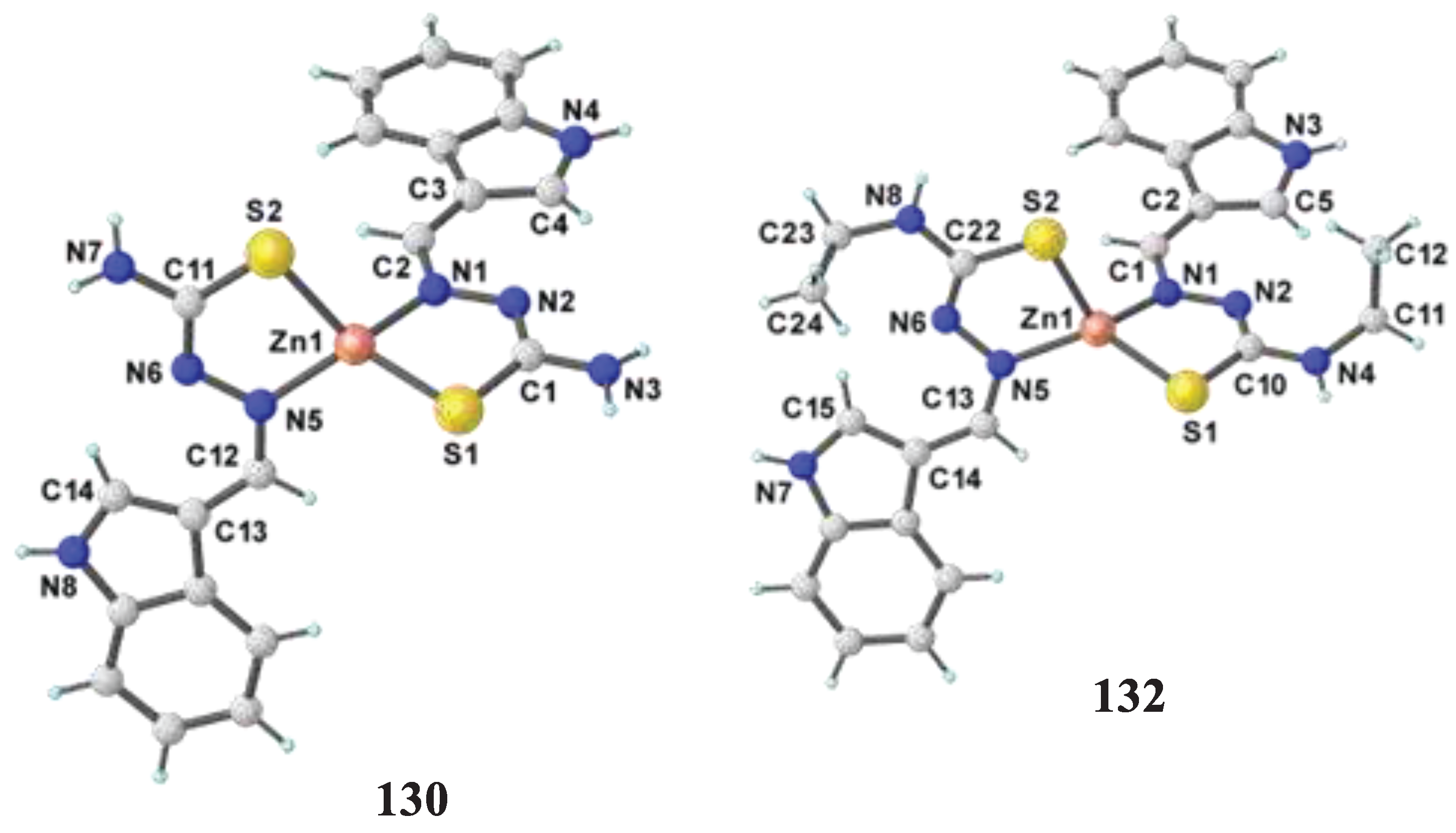
Four Zn(II) complexes (i.e. 130-133; Figure 34) composing of the zinc ion coordinated by two indole-based thiosemicarbazone ligands (i.e. L52-L55; Figure 34) were designed and synthesized by N. Balakrishnan et al. [71]. They were characterized by spectroscopic techniques such as UV–Vis, FT-IR, 1H NMR, 13C NMR and MS. The structures of 130 and 132 were determined by X-ray diffraction methods and showed that in both of them Zn2+, in a distorted tetrahedral environment, was coordinated to the azomethine N and thiocarbonyl S atoms. The indole-thiosemicarbazone ligand acted as a bidentate ligand, with two of them coordinate with the Zn(II) ion (Figure 35). Moreover, the investigation of the binding affinity of the complexes with DNA was carried out by UV–Vis spectroscopy and viscosity measurements which indicated that complex 133 had the strongest DNA binding ability although they all preferred a DNA intercalation mechanism. These complexes showed also efficient BSA-binding through static quenching mechanism; complex 133, however, bound more strongly than the other complexes. The cytotoxicity studies, evaluated by MTT method using two human cancer cell lines (A549 and MCF7), two human non-tumorigenic (MCF-10A and HEK-293) and one non-cancerous mouse fibroblasts (L929) cell line, revealed that complex 133 was the most effective derivative against A549 and MCF7 cells with IC50 = 37.9 and 60.3 µM, respectively. Its cytotoxicity was comparable to that of cisplatin and, more importantly, complex 132 and 133 showed remarkable tumor selectivity [70].
4. Conclusions
Indole-based metal complexes have showed to be able to successfully enhance selectivity and therapeutic efficiency. Their potential use in medicine has been demonstrated to be considerable, including anti-cancer, anti-tubercular, antiviral, and antibacterial applications. Coordination with various transition metals, such us Pd(II), Zn(II), Mn(II), Sn(IV), Co(II), Fe(II), Ni(II), Cu(I), Cu(II), Ir(II), Rh(II), Ag(I) and Ru(I) resulted in a considerable increase in the efficacy, as highlighted by several in vitro studies on different types of biological experiments (cell-based and enzymatic). In many cases the IC50 values were found to be lower than those of standard reference drugs. Both the presence of the indole scaffold and transition metal correlate with increased activity of the resulting complexes as evidenced also by computational studies. Characterization studies highlighted the impact of the presence of these two chemical features on the overall geometry of the complexes which in turn play a key role in the binding with biological targets. Furthermore, coordination with transition metals often determines a significant increase in the solubility of the complexes, thus leading to a better ADME profile and a consequent superior therapeutic potential.
The development of indole-based metal complexes and their enhanced activity may constitute a concrete opportunity to support the standard of care on various therapeutic approaches.
Funding
This research received no external funding. The APC was not applied as the article was written by Editor’s invitation.
Institutional Review Board Statement
Not applicable.
Informed Consent Statement
Not applicable.
Data Availability Statement
Data sharing is not applicable to this article.
Conflicts of Interest
The authors declare no conflict of interest.
References
- Lakhdar, S.; Westermaier, M.; Terrier, F.; Goumont, R.; Boubaker, T.; Ofial, A. R.; Mayr, H. Nucleophilic reactivities of indoles. The Journal of organic chemistry 2006, 71, 9088–9095. [Google Scholar] [CrossRef] [PubMed]
- Ma, Q.; Zhang, X.; Qu, Y. Biodegradation and biotransformation of indole: advances and perspectives. Frontiers in microbiology 2018, 9, 2625. [Google Scholar] [CrossRef] [PubMed]
- Mondal, D.; Kalar, P. L.; Kori, S.; Gayen, S.; Das, K. Recent developments on synthesis of indole derivatives through green approaches and their pharmaceutical applications. Current Organic Chemistry 2020, 24, 2665–2693. [Google Scholar] [CrossRef]
- Heravi, M. M.; Amiri, Z.; Kafshdarzadeh, K.; Zadsirjan, V. Synthesis of indole derivatives as prevalent moieties present in selected alkaloids. RSC advances 2021, 11, 33540–33612. [Google Scholar] [CrossRef] [PubMed]
- Sarkar, D.; Amin, A.; Qadir, T.; Sharma, P. K. Synthesis of medicinally important indole derivatives: A Review. The Open Medicinal Chemistry Journal 2021, 15. [Google Scholar] [CrossRef]
- Chen, L.; Zou, Y.-X. Recent progress in the synthesis of phosphorus-containing indole derivatives. Organic & Biomolecular Chemistry 2018, 16, 7544–7556. [Google Scholar] [CrossRef]
- Bischler, A. Ueber die entstehung einiger substituirter indole. Berichte der deutschen chemischen Gesellschaft 1892, 25, 2860–2879. [Google Scholar] [CrossRef]
- Fischer, E.; Jourdan, F. Ueber die hydrazine der brenztraubensäure. Berichte der deutschen chemischen Gesellschaft 1883, 16, 2241–2245. [Google Scholar] [CrossRef]
- Hemetsberger, H.; Knittel, D. Synthesis and thermolysis of α-azidoacrylates (ene-azides, IV) Enazide, 4. Mitt. Monatshefte für Chemie/Chemical Monthly 1972, 103, 194–204. [Google Scholar] [CrossRef]
- Baudin, J.-B.; Julia, S. A. Synthesis of indoles from N-aryl-1-alkenylsulphinamides. Tetrahedron letters 1986, 27, 837–840. [Google Scholar] [CrossRef]
- Dorababu, A. Indole–a promising pharmacophore in recent antiviral drug discovery. RSC Medicinal Chemistry 2020, 11, 1335–1353. [Google Scholar] [CrossRef]
- Al Awadh, A. A. Biomedical applications of selective metal complexes of Indole, Benzimidazole, Benzothiazole and Benzoxazole: A review (From 2015 to 2022). Saudi Pharmaceutical Journal 2023, 101698. [Google Scholar] [CrossRef]
- Zhang, M.-Z.; Chen, Q.; Yang, G.-F. A review on recent developments of indole-containing antiviral agents. European journal of medicinal chemistry 2015, 89, 421–441. [Google Scholar] [CrossRef]
- Chadha, N.; Silakari, O. Indoles as therapeutics of interest in medicinal chemistry: Bird's eye view. European Journal of Medicinal Chemistry 2017, 134, 159–184. [Google Scholar] [CrossRef] [PubMed]
- de Sa Alves, F. R.; Barreiro, E. J.; Manssour Fraga, C. A. From nature to drug discovery: the indole scaffold as a ‘privileged structure’. Mini reviews in medicinal chemistry 2009, 9, 782–793. [Google Scholar] [CrossRef] [PubMed]
- Kumar, D.; Kumar, N. M.; Tantak, M. P.; Ogura, M.; Kusaka, E.; Ito, T. Synthesis and identification of α-cyano bis (indolyl) chalcones as novel anticancer agents. Bioorganic & medicinal chemistry letters 2014, 24, 5170–5174. [Google Scholar] [CrossRef]
- Shimazaki, Y.; Yajima, T.; Takani, M.; Yamauchi, O. Metal complexes involving indole rings: Structures and effects of metal–indole interactions. Coordination Chemistry Reviews 2009, 253, 479–492. [Google Scholar] [CrossRef]
- Zhang, M.-Z.; Mulholland, N.; Beattie, D.; Irwin, D.; Gu, Y.-C.; Chen, Q.; Yang, G.-F.; Clough, J. Synthesis and antifungal activity of 3-(1, 3, 4-oxadiazol-5-yl)-indoles and 3-(1, 3, 4-oxadiazol-5-yl) methyl-indoles. European Journal of Medicinal Chemistry 2013, 63, 22–32. [Google Scholar] [CrossRef] [PubMed]
- Lal, S.; J Snape, T. 2-Arylindoles: a privileged molecular scaffold with potent, broad-ranging pharmacological activity. Current medicinal chemistry 2012, 19, 4828–4837. [Google Scholar] [CrossRef] [PubMed]
- Wang, M.; Rakesh, K.; Leng, J.; Fang, W.-Y.; Ravindar, L.; Gowda, D. C.; Qin, H.-L. Amino acids/peptides conjugated heterocycles: A tool for the recent development of novel therapeutic agents. Bioorganic chemistry 2018, 76, 113–129. [Google Scholar] [CrossRef] [PubMed]
- Bajad, N. G.; Singh, S. K.; Singh, S. K.; Singh, T. D.; Singh, M. Indole: A promising scaffold for the discovery and development of potential anti-tubercular agents. Current Research in Pharmacology and Drug Discovery 2022, 100119. [Google Scholar] [CrossRef] [PubMed]
- Fang, W.-Y.; Ravindar, L.; Rakesh, K.; Manukumar, H.; Shantharam, C.; Alharbi, N. S.; Qin, H.-L. Synthetic approaches and pharmaceutical applications of chloro-containing molecules for drug discovery: A critical review. European journal of medicinal chemistry 2019, 173, 117–153. [Google Scholar] [CrossRef] [PubMed]
- Pacheco, P. A.; Santos, M. M. Recent progress in the development of indole-based compounds active against malaria, trypanosomiasis and leishmaniasis. Molecules 2022, 27, 319. [Google Scholar] [CrossRef] [PubMed]
- Moku, B.; Ravindar, L.; Rakesh, K.; Qin, H.-L. The significance of N-methylpicolinamides in the development of anticancer therapeutics: Synthesis and structure-activity relationship (SAR) studies. Bioorganic Chemistry 2019, 86, 513–537. [Google Scholar] [CrossRef]
- Bianucci, A. M.; Da Settimo, A.; Da Settimo, F.; Primofiore, G.; Martini, C.; Giannaccini, G.; Lucacchini, A. Benzodiazepine receptor affinity and interaction of some N-(indol-3-ylglyoxylyl) amine derivatives. Journal of medicinal chemistry 1992, 35, 2214–2220. [Google Scholar] [CrossRef]
- Singh, D.; Grover, V.; Kumar, K.; Jain, K. Metal ion prompted macrocyclic complexes derived from indole-2, 3-dione (isatin) and O-phenylenediamine with their spectroscopic and antibacterial studies. Acta Chimica Slovenica 2010, 57, 775–780. [Google Scholar] [PubMed]
- Vendeville, S.; Lin, T.-I.; Hu, L.; Tahri, A.; McGowan, D.; Cummings, M. D.; Amssoms, K.; Canard, M.; Last, S.; Van den Steen, I. Finger loop inhibitors of the HCV NS5b polymerase. Part II. Optimization of tetracyclic indole-based macrocycle leading to the discovery of TMC647055. Bioorganic & medicinal chemistry letters 2012, 22, 4437–4443. [Google Scholar] [CrossRef]
- Au, V. S.; Bremner, J. B.; Coates, J.; Keller, P. A.; Pyne, S. G. Synthesis of some cyclic indolic peptoids as potential antibacterials. Tetrahedron 2006, 62, 9373–9382. [Google Scholar] [CrossRef]
- Álvarez, R.; López, V.; Mateo, C.; Medarde, M.; Peláez, R. New para–para stilbenophanes: Synthesis by McMurry coupling, conformational analysis and inhibition of tubulin polymerisation. Chemistry–A European Journal 2011, 17, 3406–3419. [Google Scholar] [CrossRef]
- Neochoritis, C. G.; Miraki, M. K.; Abdelraheem, E. M.; Surmiak, E.; Zarganes-Tzitzikas, T.; Łabuzek, B.; Holak, T. A.; Dömling, A. Design of indole-and MCR-based macrocycles as p53-MDM2 antagonists. Beilstein Journal of Organic Chemistry 2019, 15, 513–520. [Google Scholar] [CrossRef] [PubMed]
- Chen, R. Synthesis of novel Indole-based Macrocycles. UNSW Sydney, 2012.
- Cheekatla, S. R.; Barik, D.; Anand, G.; Mol KM, R.; Porel, M. Indole-Based Macrocyclization by Metal-Catalyzed Approaches. Organics 2023, 4, 333–363. [Google Scholar] [CrossRef]
- Zhang, Y.-C.; Jiang, F.; Shi, F. Organocatalytic asymmetric synthesis of indole-based chiral heterocycles: strategies, reactions, and outreach. Accounts of chemical research 2019, 53, 425–446. [Google Scholar] [CrossRef]
- Lin, C.-H.; Wu, Y.-R.; Kung, P.-J.; Chen, W.-L.; Lee, L.-C.; Lin, T.-H.; Chao, C.-Y.; Chen, C.-M.; Chang, K.-H.; Janreddy, D. The potential of indole and a synthetic derivative for polyQ aggregation reduction by enhancement of the chaperone and autophagy systems. ACS Chemical Neuroscience 2014, 5, 1063–1074. [Google Scholar] [CrossRef] [PubMed]
- Kung, P.-J.; Tao, Y.-C.; Hsu, H.-C.; Chen, W.-L.; Lin, T.-H.; Janreddy, D.; Yao, C.-F.; Chang, K.-H.; Lin, J.-Y.; Su, M.-T. Indole and synthetic derivative activate chaperone expression to reduce polyQ aggregation in SCA17 neuronal cell and slice culture models. Drug design, development and therapy 2014, 1929–1939. [Google Scholar]
- Chen, C.-M.; Chen, W.-L.; Hung, C.-T.; Lin, T.-H.; Chao, C.-Y.; Lin, C.-H.; Wu, Y.-R.; Chang, K.-H.; Yao, C.-F.; Lee-Chen, G.-J. The indole compound NC009-1 inhibits aggregation and promotes neurite outgrowth through enhancement of HSPB1 in SCA17 cells and ameliorates the behavioral deficits in SCA17 mice. Neurotoxicology 2018, 67, 259–269. [Google Scholar] [CrossRef]
- Wei, P.-C.; Lee-Chen, G.-J.; Chen, C.-M.; Wu, Y.-R.; Chen, Y.-J.; Lin, J.-L.; Lo, Y.-S.; Yao, C.-F.; Chang, K.-H. Neuroprotection of indole-derivative compound NC001-8 by the regulation of the NRF2 pathway in Parkinson’s disease cell models. Oxidative medicine and cellular longevity 2019, 2019. [Google Scholar] [CrossRef] [PubMed]
- Afanas’eva, I. B.; Ostrakhovitch, E. A.; Mikhal’chik, E. V.; Ibragimova, G. A.; Korkina, L. G. Enhancement of antioxidant and anti-inflammatory activities of bioflavonoid rutin by complexation with transition metals. Biochemical pharmacology 2001, 61, 677–684. [Google Scholar] [CrossRef]
- Ejidike, I. P.; Ajibade, P. A. Synthesis, characterization and biological studies of metal (II) complexes of (3 E)-3-[(2-{(E)-[1-(2, 4-dihydroxyphenyl) ethylidene] amino} ethyl) imino]-1-phenylbutan-1-one Schiff base. Molecules 2015, 20, 9788–9802. [Google Scholar] [CrossRef]
- Zhu, X.; Li, Y.; Wei, Y.; Wang, S.; Zhou, S.; Zhang, L. Reactivity of 3-imino-functionalized indoles with rare-earth-metal amides: Unexpected substituent effects on C–H activation pathways and assembly of rare-earth-metal complexes. Organometallics 2016, 35, 1838–1846. [Google Scholar] [CrossRef]
- Abdulghani, A. J.; Hussain, R. K. Synthesis and Characterization of Schiff Base Metal Complexes Derived from Cefotaxime with 1H-indole-2, 3-dione (Isatin) and 4-N, N-dimethyl-aminobenzaldehyde. Open Journal of Inorganic Chemistry 2015, 5, 83. [Google Scholar] [CrossRef]
- EL-Gammal, O. A.; Alshater, H.; El-Boraey, H. A. Schiff base metal complexes of 4-methyl-1H-indol-3-carbaldehyde derivative as a series of potential antioxidants and antimicrobial: Synthesis, spectroscopic characterization and 3D molecular modeling. Journal of Molecular Structure 2019, 1195, 220–230. [Google Scholar] [CrossRef]
- Deng, X.-j.; Yu, Q.; Bian, H.-D.; Ju, H.-D.; Wang, B.-L. Syntheses, structures and properties of complexes of indole-3-propionic acid. Transition Metal Chemistry 2016, 41, 591–598. [Google Scholar] [CrossRef]
- Yamamoto, K.; Kimura, S.; Murahashi, T. σ–π Continuum in indole–Palladium (II) complexes. Angewandte Chemie International Edition 2016, 55, 5322–5326. [Google Scholar] [CrossRef]
- Shimazaki, Y.; Yajima, T.; Yamauchi, O. Properties of the indole ring in metal complexes. A comparison with the phenol ring. Journal of Inorganic Biochemistry 2015, 148, 105–115. [Google Scholar] [CrossRef]
- Yamauchi, O.; Takani, M.; Toyoda, K.; Masuda, H. Indole nitrogen-palladium (II) bonding. Chemical and structural characterization of palladium (II) complexes of alkylindoles and intermediacy of the 3H-indole ring. Inorganic Chemistry 1990, 29, 1856–1860. [Google Scholar] [CrossRef]
- Oberhuber, N.; Ghosh, H.; Nitzsche, B.; Dandawate, P.; Höpfner, M.; Schobert, R.; Biersack, B. Synthesis and Anticancer Evaluation of New Indole-Based Tyrphostin Derivatives and Their (p-Cymene) dichloridoruthenium (II) Complexes. International Journal of Molecular Sciences 2023, 24, 854. [Google Scholar] [CrossRef]
- Khan, A.; Jasinski, J. P.; Smolenski, V. A.; Hotchkiss, E. P.; Kelley, P. T.; Shalit, Z. A.; Kaur, M.; Paul, K.; Sharma, R. Enhancement in anti-tubercular activity of indole based thiosemicarbazones on complexation with copper (I) and silver (I) halides: structure elucidation, evaluation and molecular modelling. Bioorganic Chemistry 2018, 80, 303–318. [Google Scholar] [CrossRef] [PubMed]
- Chilwal, A.; Malhotra, P.; Narula, A. Synthesis, characterization, thermal, and antibacterial studies of organotin (IV) complexes of indole-3-butyric acid and indole-3-propionic acid. Phosphorus, Sulfur, and Silicon and the Related Elements 2014, 189, 410–421. [Google Scholar] [CrossRef]
- Li, J.; Gao, T.; Zhang, W.; Sun, W.-H. Synthesis and characterization of 2-imino-indole nickel complexes and their ethylene oligomerization study. Inorganic Chemistry Communications 2003, 6, 1372–1374. [Google Scholar] [CrossRef]
- Soldevila-Barreda, J. J.; Fawibe, K. B.; Azmanova, M.; Rafols, L.; Pitto-Barry, A.; Eke, U. B.; Barry, N. P. Synthesis, characterisation and in vitro anticancer activity of catalytically active indole-based half-sandwich complexes. Molecules 2020, 25, 4540. [Google Scholar] [CrossRef]
- Babijczuk, K.; Warżajtis, B.; Starzyk, J.; Mrówczyńska, L.; Jasiewicz, B.; Rychlewska, U. Synthesis, Structure and Biological Activity of Indole–Imidazole Complexes with ZnCl2: Can Coordination Enhance the Functionality of Bioactive Ligands? Molecules 2023, 28, 4132. [Google Scholar] [CrossRef] [PubMed]
- Lo, K. K.-W.; Tsang, K. H.-K.; Hui, W.-K.; Zhu, N. Synthesis, characterization, crystal structure, and electrochemical, photophysical, and protein-binding properties of luminescent rhenium (I) diimine indole complexes. Inorganic chemistry 2005, 44, 6100–6110. [Google Scholar] [CrossRef] [PubMed]
- Wittmann, C.; Sivchenko, A. S.; Bacher, F.; Tong, K. K.; Guru, N.; Wilson, T.; Gonzales, J.; Rauch, H.; Kossatz, S.; Reiner, T. Inhibition of microtubule dynamics in cancer cells by indole-modified latonduine derivatives and their metal complexes. Inorganic Chemistry 2022, 61, 1456–1470. [Google Scholar] [CrossRef] [PubMed]
- Sahar, Y. J.; Mohammed, H.; Al-Abady, Z. N. Synthesis and characterization of new metal complexes containing azo-indole moiety and anti-leukemia human (HL-60) study of its palladium (II) complex. Results in Chemistry 2023, 5, 100847. [Google Scholar] [CrossRef]
- Bhanumathy, K.K.; Balagopal, A.; Vizeacoumar, F. S.; Vizeacoumar, F. J.; Freywald, A.; Giambra, V. Protein tyrosine kinases: their roles and their targeting in leukemia. Cancers 2021, 13, 184. [Google Scholar] [CrossRef]
- Babahan, I.; Özmen, A.; Aksel, M.; Bilgin, M. D.; Gumusada, R.; Gunay, M. E.; Eyduran, F. A novel bidentate ligand containing oxime, hydrazone and indole moieties and its BF2+ bridged transition metal complexes and their efficiency against prostate and breast cancer cells. Applied Organometallic Chemistry 2020, 34, e5632. [Google Scholar] [CrossRef]
- Alanazi, R. L.; Zaki, M.; Bawazir, W. A. Synthesis and characterization of new metal complexes containing Triazino [5, 6–b] indole moiety: In vitro DNA and HSA binding studies. Journal of Molecular Structure 2021, 1246, 131203. [Google Scholar] [CrossRef]
- Shakir, Y. G.; Shamran, M. H. Synthesis and characterization of indole azo metal complexes and study of their biological activity. Res. J. Chem. Environ. 2022, 2022, 12. [Google Scholar]
- Tümer, M. Synthesis and spectral characterization of metal complexes containing tetra-and pentadentate Schiff base ligands. Sythesis and Reactivity in Inorganic and Matel-Organic Chemistry 2000, 30, 1139–1158. [Google Scholar]
- Arunadevi, A.; Raman, N. Indole-derived water-soluble N, O bi-dentate ligand-based mononuclear transition metal complexes: in silico and in vitro biological screening, molecular docking and macromolecule interaction studies. Journal of Biomolecular Structure and Dynamics 2019. [Google Scholar] [CrossRef]
- Daina, A.; Michielin, O.; Zoete, V. SwissADME: a free web tool to evaluate pharmacokinetics, drug-likeness and medicinal chemistry friendliness of small molecules. Scientific reports 2017, 7, 42717. [Google Scholar] [CrossRef] [PubMed]
- Varma, R. R.; Pandya, J. G.; Vaidya, F. U.; Pathak, C.; Bhatt, B. S.; Patel, M. N. Biological activities of pyrazoline-indole based Re (I) carbonyls: DNA interaction, antibacterial, anticancer, ROS production, lipid peroxidation, in vivo and in vitro cytotoxicity studies. Chemico-Biological Interactions 2020, 330, 109231. [Google Scholar] [CrossRef]
- Sharma, S.; Meena, R.; Satyawana, Y.; Fahmi, N. Manganese (II) complexes of biological relevance: Synthesis and spectroscopic characterization of novel manganese (II) complexes with monobasic bidentate ligands derived from halo-substituted 1 H-indole-2, 3-diones. Russian Journal of General Chemistry 2016, 86, 2807–2816. [Google Scholar] [CrossRef]
- Seifullina, I.; Skorokhod, L.; Pulya, A.; Vlasenko, V.; Trigub, A.; Rakipow, I. Synthesis, Structure, and Properties of Co 2+ and Ni 2+ Complexes with the Product of Condensation of 2-(7-Bromo-2-oxo-5-phenyl-3 H-1, 4-benzodiazepin-1-yl) acetohydrazide and 1 H-Indole-2, 3-dione. Russian Journal of General Chemistry 2020, 90, 1298–1303. [Google Scholar] [CrossRef]
- Devi, J.; Yadav, J.; Kumar, D.; Jindal, D. K.; Basu, B. Synthesis, spectral analysis and in vitro cytotoxicity of diorganotin (IV) complexes derived from indole-3-butyric hydrazide. Applied Organometallic Chemistry 2020, 34, e5815. [Google Scholar] [CrossRef]
- Lau, J. S.-Y.; Lee, P.-K.; Tsang, K. H.-K.; Ng, C. H.-C.; Lam, Y.-W.; Cheng, S.-H.; Lo, K. K.-W. Luminescent cyclometalated iridium (III) polypyridine indole complexes synthesis, photophysics, electrochemistry, protein-binding properties, cytotoxicity, and cellular uptake. Inorganic Chemistry 2009, 48, 708–718. [Google Scholar] [CrossRef] [PubMed]
- Haribabu, J.; Jeyalakshmi, K.; Arun, Y.; Bhuvanesh, N. S.; Perumal, P. T.; Karvembu, R. Synthesis of Ni (II) complexes bearing indole-based thiosemicarbazone ligands for interaction with biomolecules and some biological applications. JBIC Journal of Biological Inorganic Chemistry 2017, 22, 461–480. [Google Scholar] [CrossRef]
- Haribabu, J.; Tamizh, M. M.; Balachandran, C.; Arun, Y.; Bhuvanesh, N. S.; Endo, A.; Karvembu, R. Synthesis, structures and mechanistic pathways of anticancer activity of palladium (II) complexes with indole-3-carbaldehyde thiosemicarbazones. New Journal of Chemistry 2018, 42, 10818–10832. [Google Scholar] [CrossRef]
- Nolan, V. C.; Rafols, L.; Harrison, J.; Soldevila-Barreda, J. J.; Crosatti, M.; Garton, N. J.; Wegrzyn, M.; Timms, D. L.; Seaton, C. C.; Sendron, H. Indole-containing arene-ruthenium complexes with broad spectrum activity against antibiotic-resistant bacteria. Current research in microbial sciences 2022, 3, 100099. [Google Scholar] [CrossRef]
- Balakrishnan, N.; Haribabu, J.; Krishnan, D. A.; Swaminathan, S.; Mahendiran, D.; Bhuvanesh, N. S.; Karvembu, R. Zinc (II) complexes of indole thiosemicarbazones: DNA/protein binding, molecular docking and in vitro cytotoxicity studies. Polyhedron 2019, 170, 188–201. [Google Scholar] [CrossRef]
Figure 1.
Illustration of the structure of the indole nucleus with relative numbering.
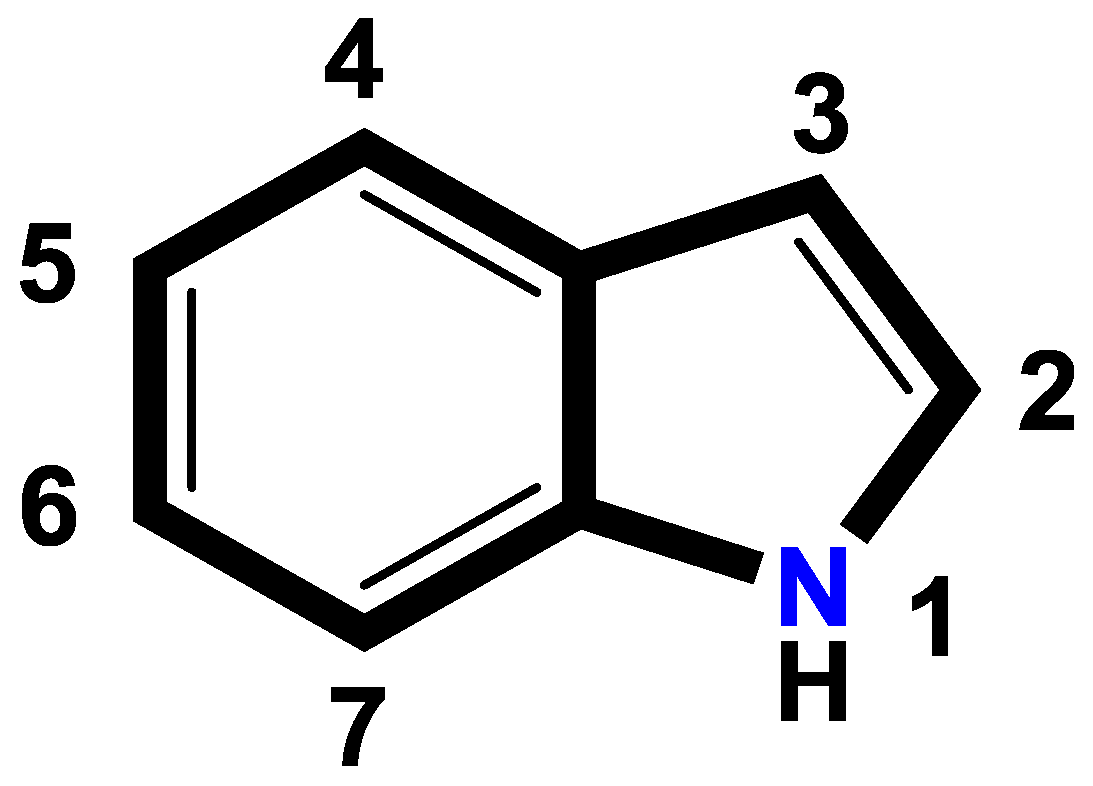
Figure 2.
Examples of indole-containing natural products and drugs.
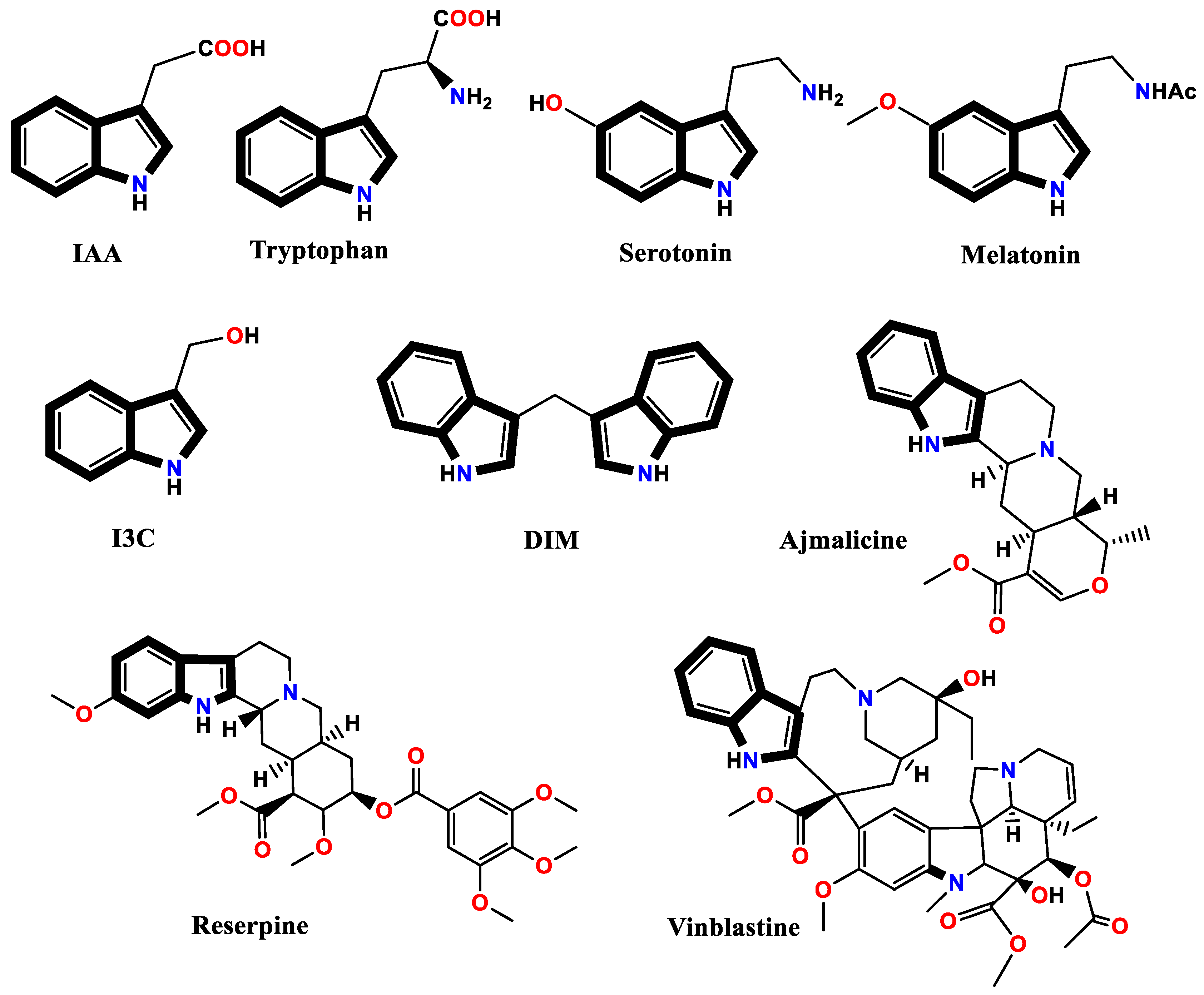
Figure 3.
Example of effective isosteric replacement involving the indole scaffold towards binding affinity for benzodiazepine receptors. .
Figure 3.
Example of effective isosteric replacement involving the indole scaffold towards binding affinity for benzodiazepine receptors. .
Scheme 1.
Different patterns of coordination of the indole rings with metal centers.
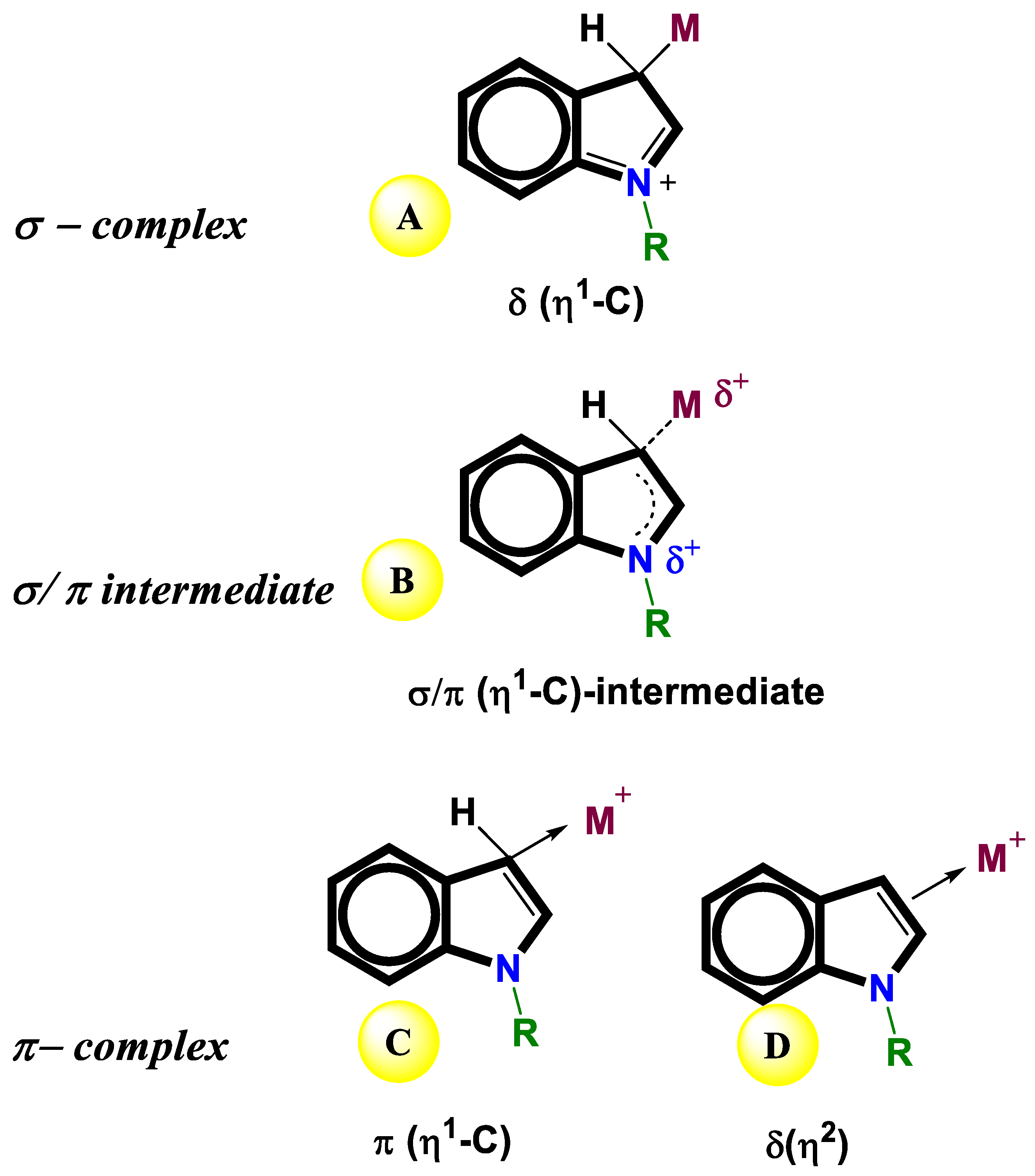
Figure 4.
Tautomeric forms of indole.
Scheme 2.
Synthesis of (p-cymene)Ru(II) piano-stool complexes 1a-1e.
Scheme 3.
Synthesis of the indole complexes of Cu(I) and Ag(I) 2-19 from ligands L2-L5.
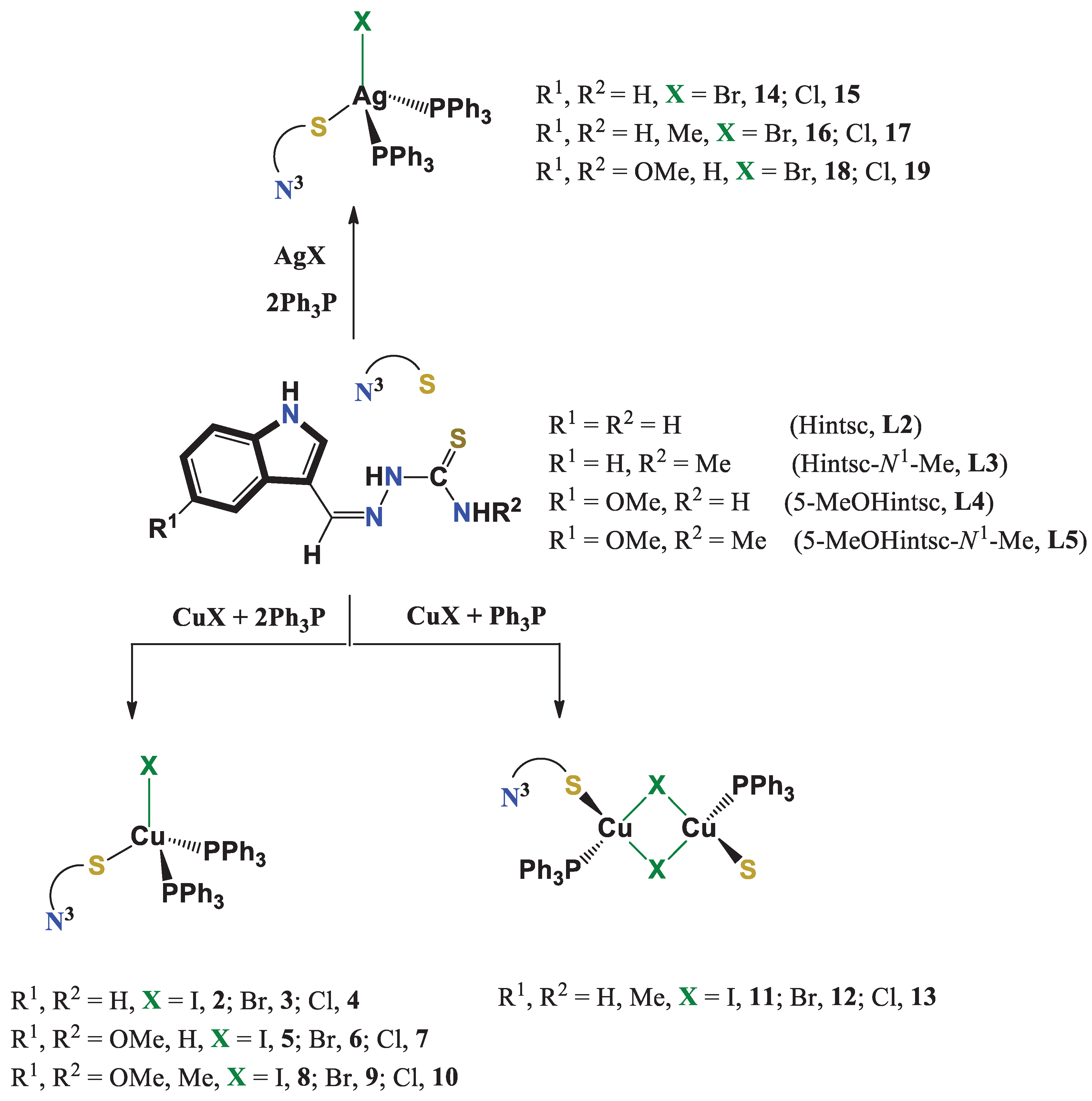
Figure 5.
Crystal structure of the ligand L3 and complexes 4, 9 and 12.
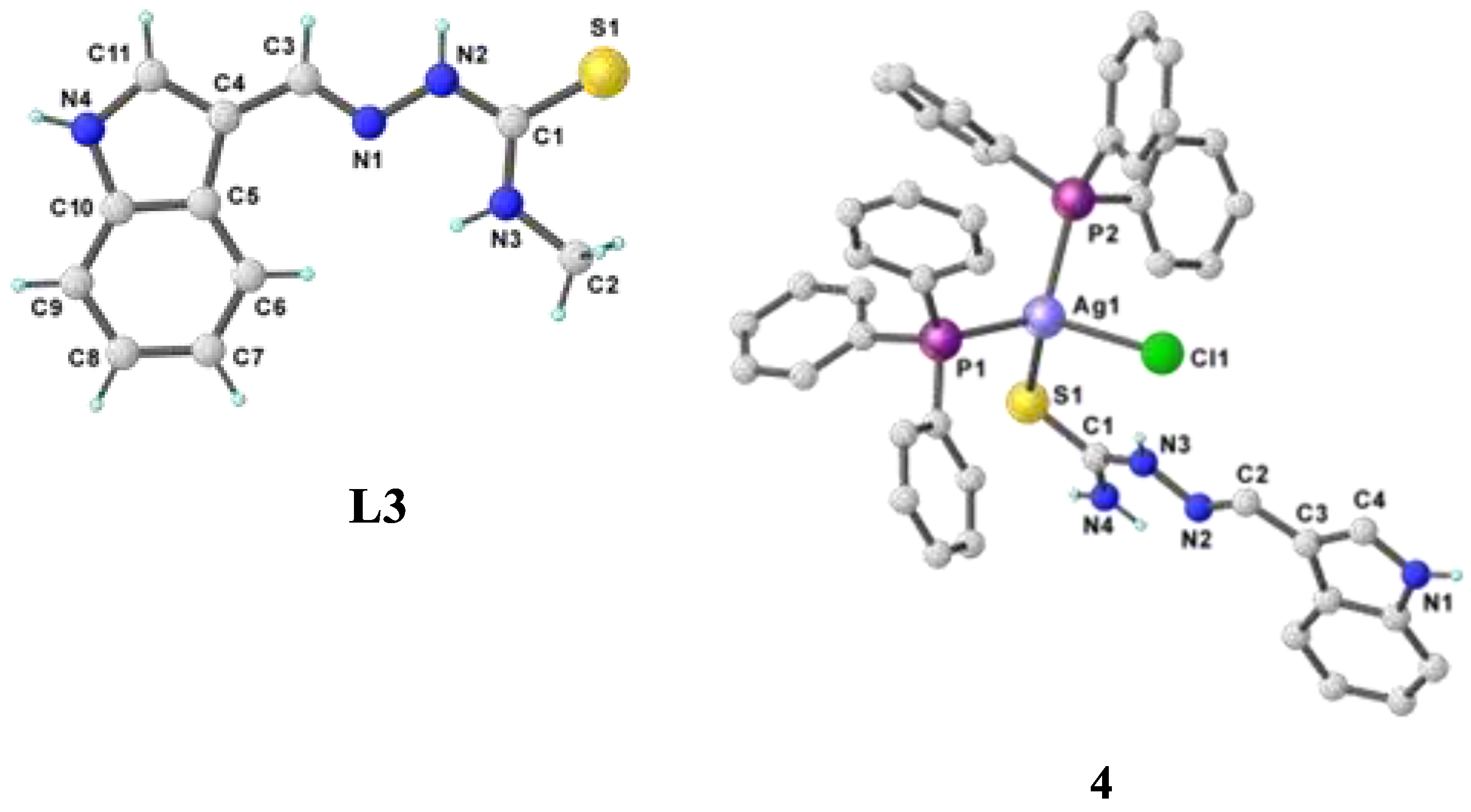
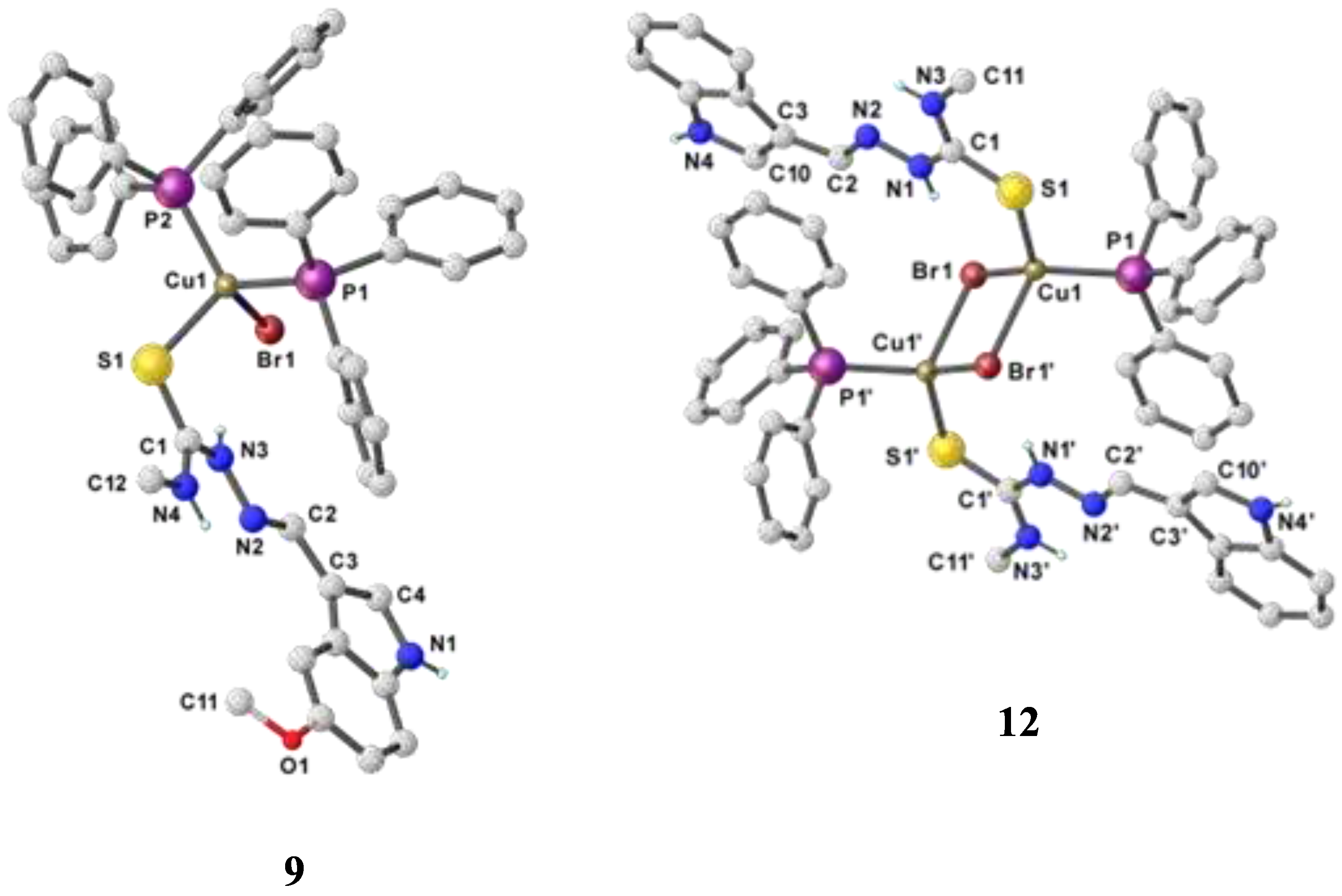
Figure 6.
Suggested chemical structure of the complexes 20–25: (a) octahedral geometry; (b) tetrahedral geometry.
Figure 6.
Suggested chemical structure of the complexes 20–25: (a) octahedral geometry; (b) tetrahedral geometry.
Scheme 4.
Synthesis of the Ni(II) complexes 26-31 from ligands L6-L11.
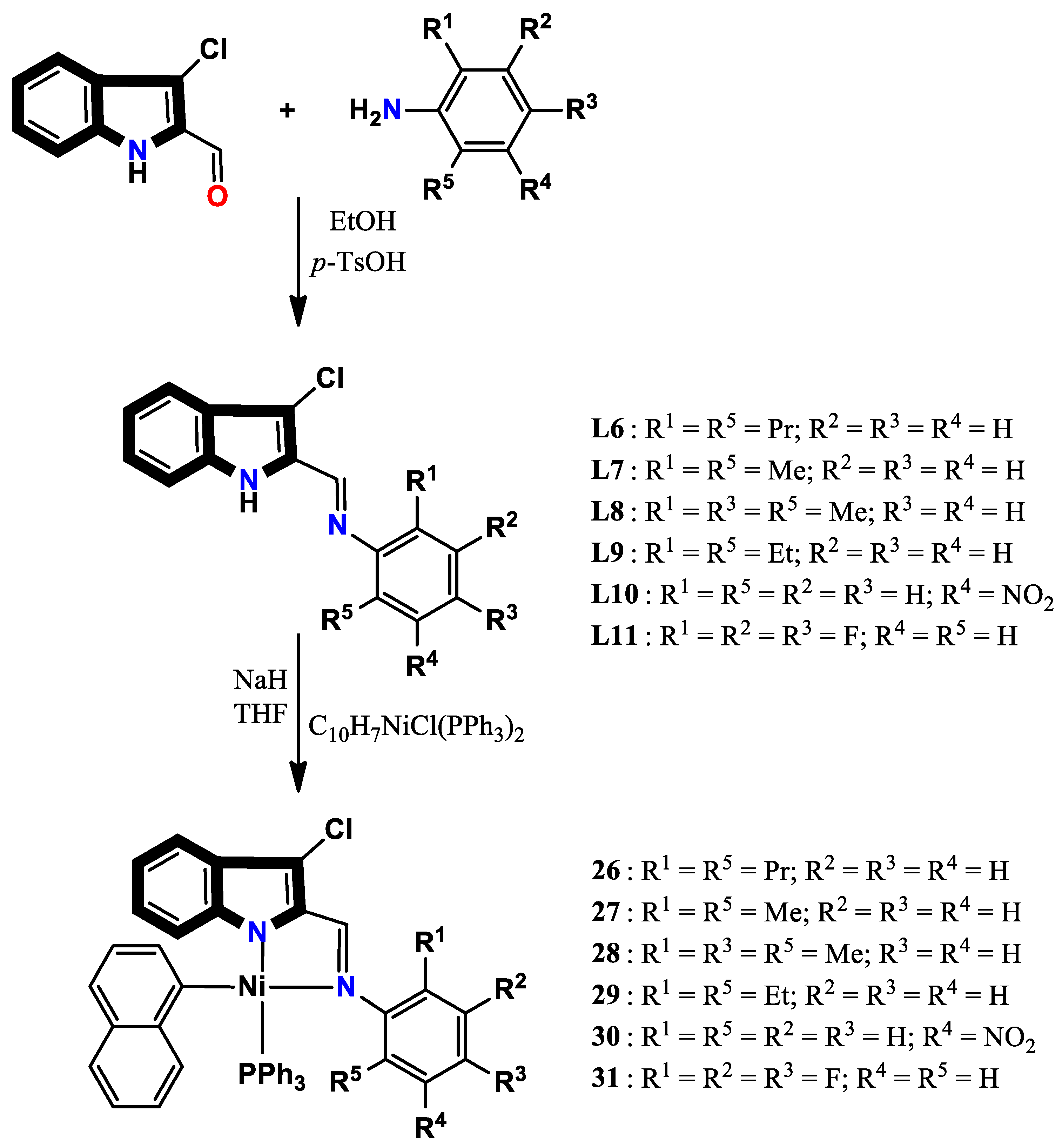
Figure 7.
Crystal structure of the complex 28.
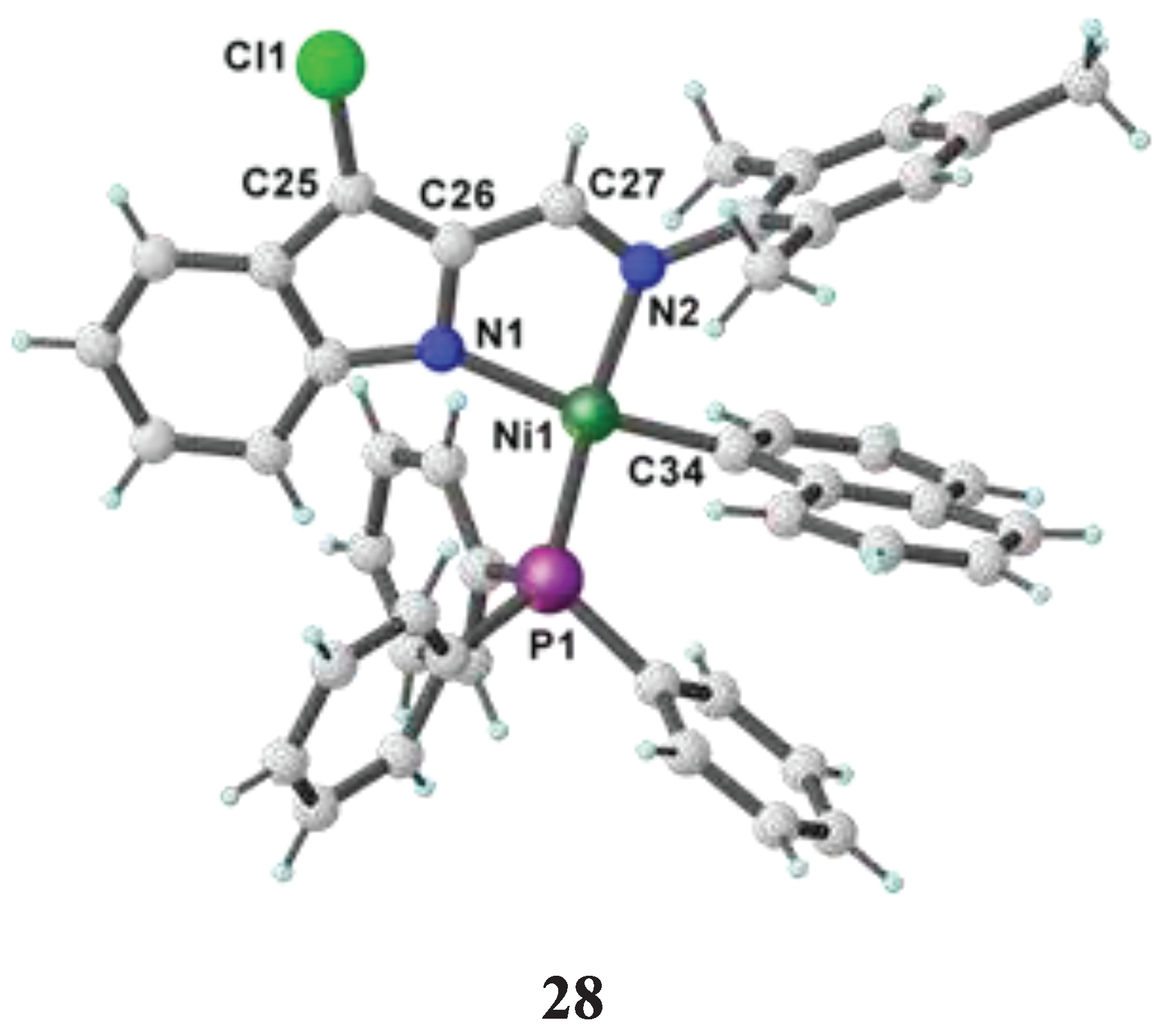
Figure 8.
Chemical structure of the complexes 32–35.
Scheme 5.
Synthesis of the complexes 36–41 from ligands L7–L12.
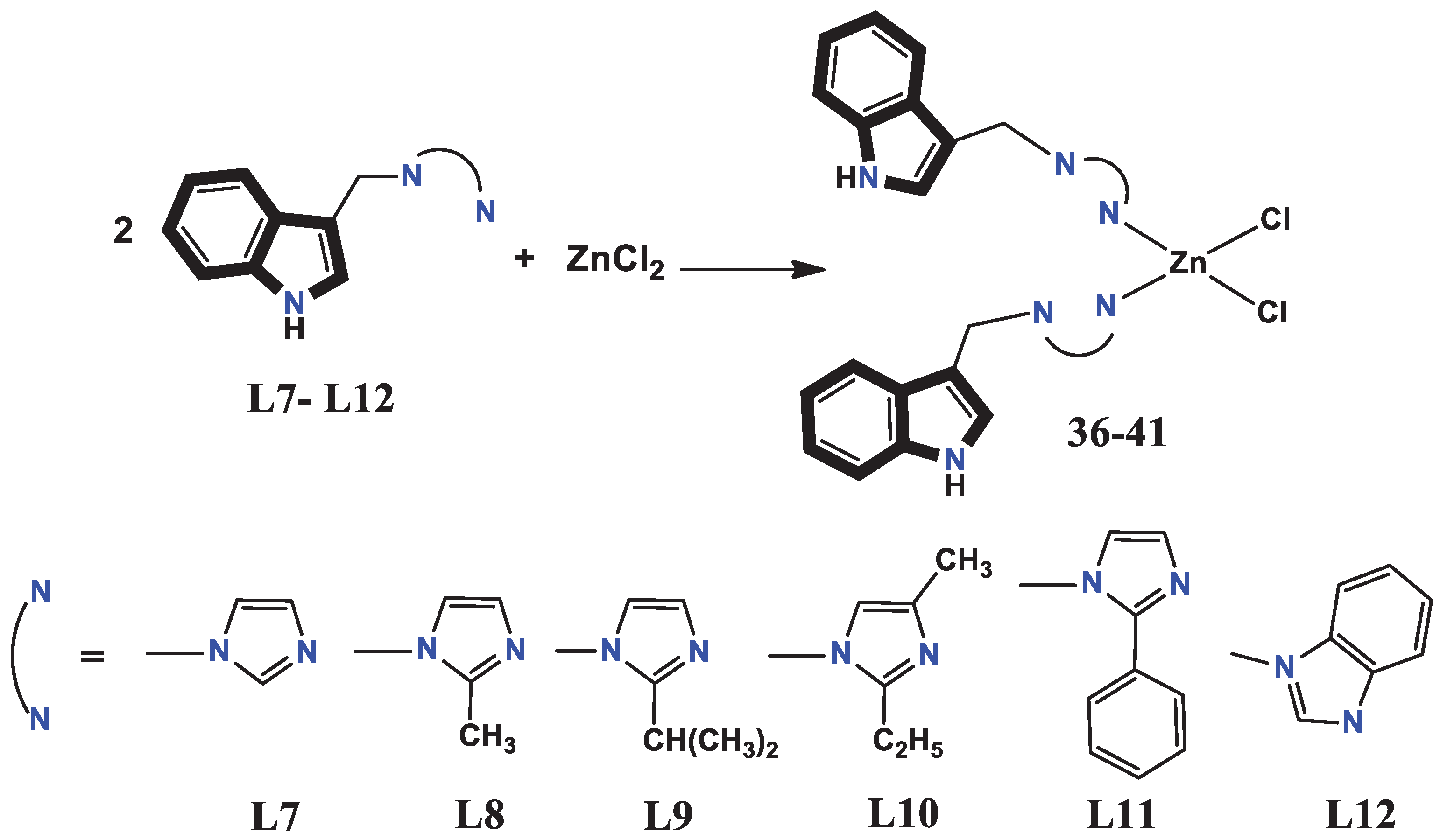
Figure 9.
Crystal structure of the complex 39.
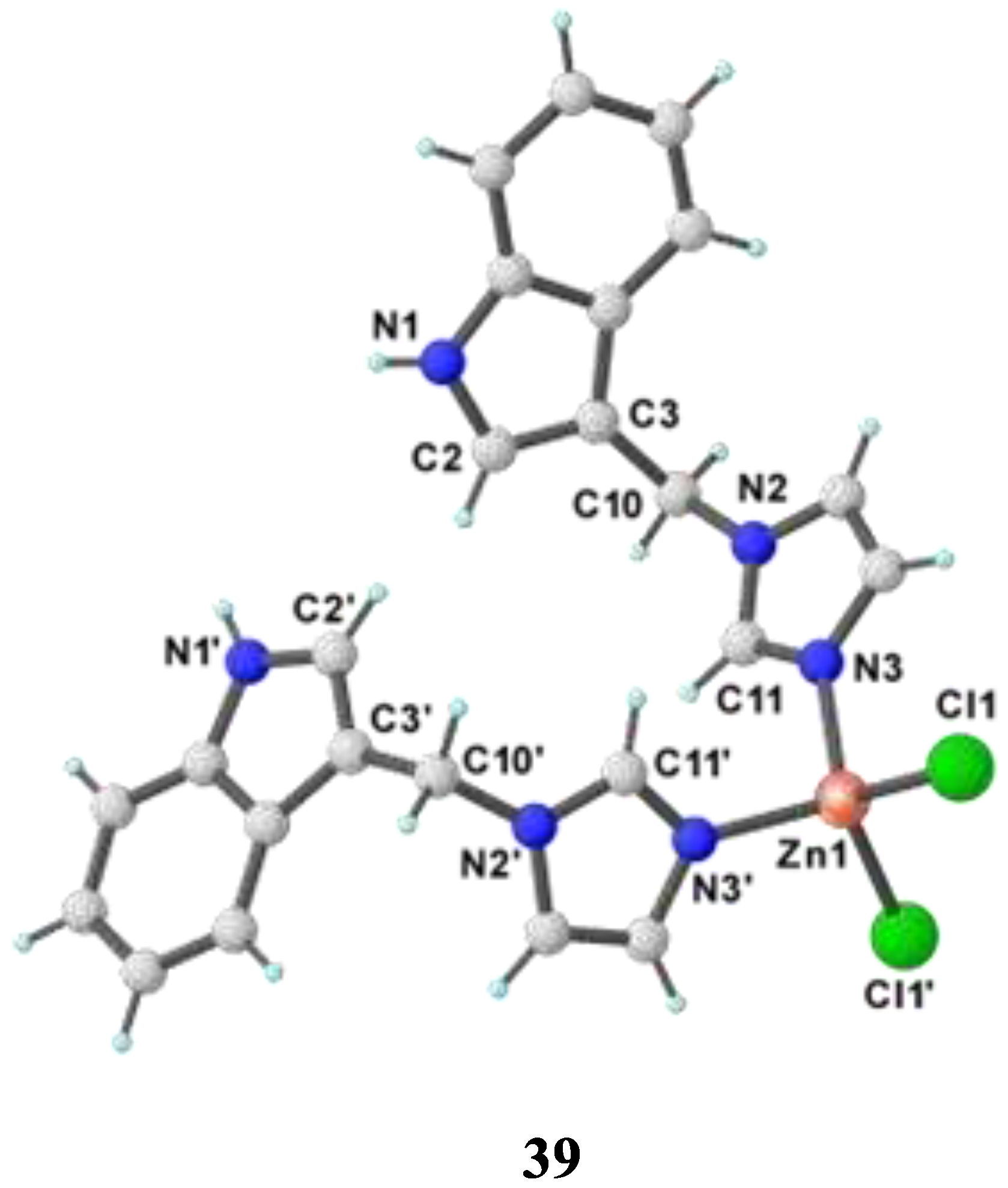
Figure 10.
Chemical structure of the rhenium(I) diimine indole complexes 42a−45c and their ligands.
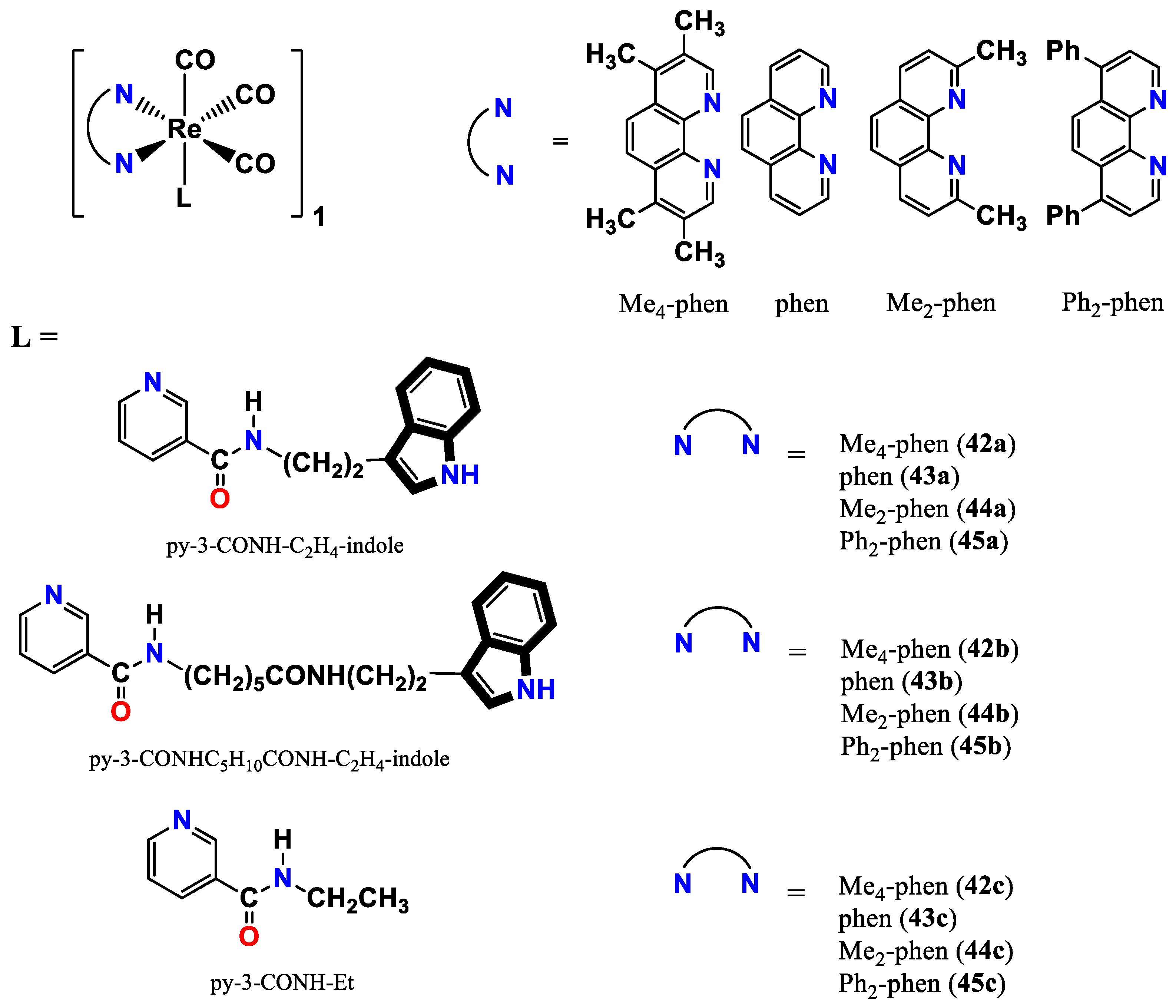
Figure 11.
Crystal structure of the complex 44a.
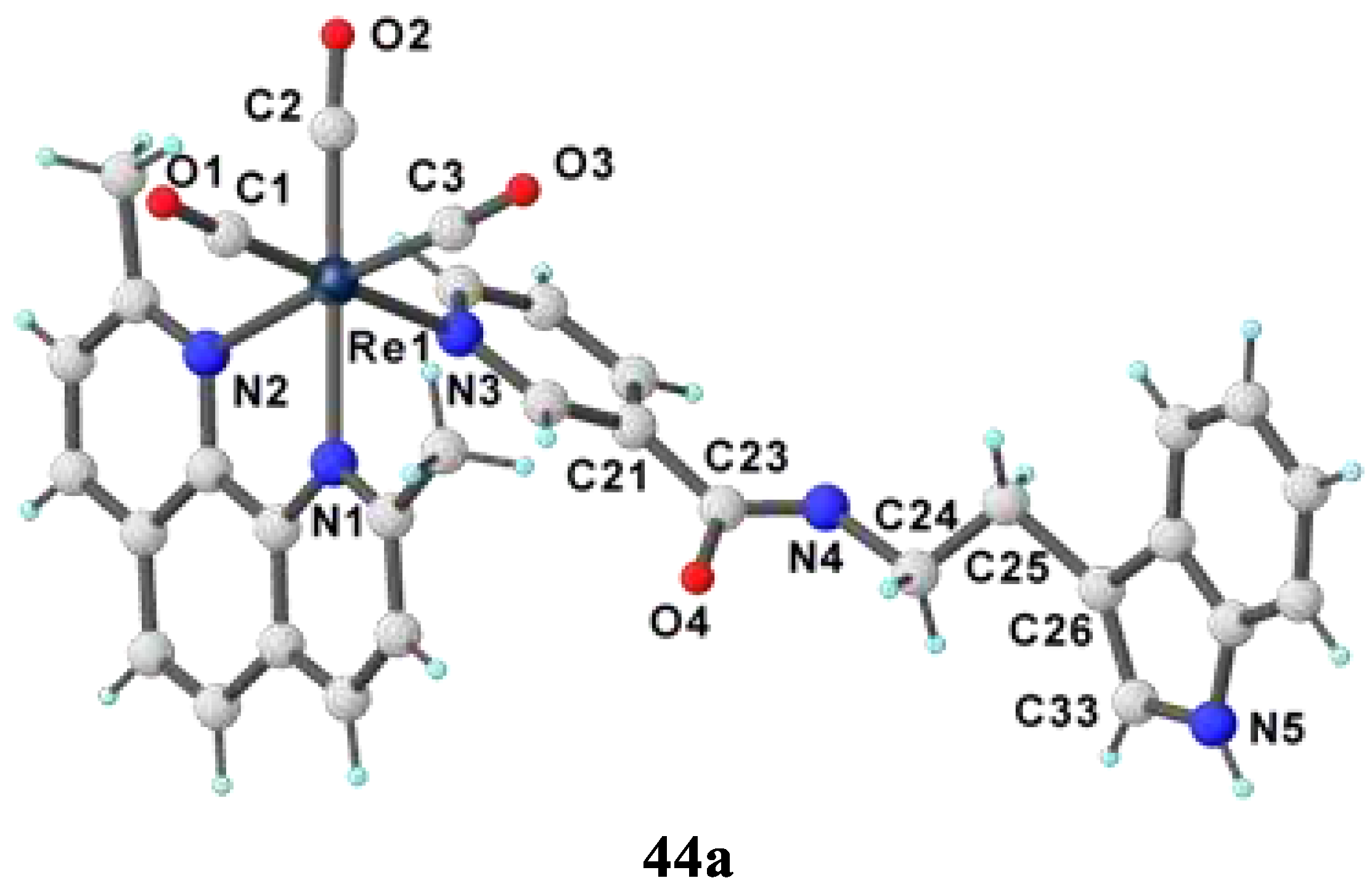
Figure 12.
Chemical structure of the ligands L13−L14 and complexes 46−49.
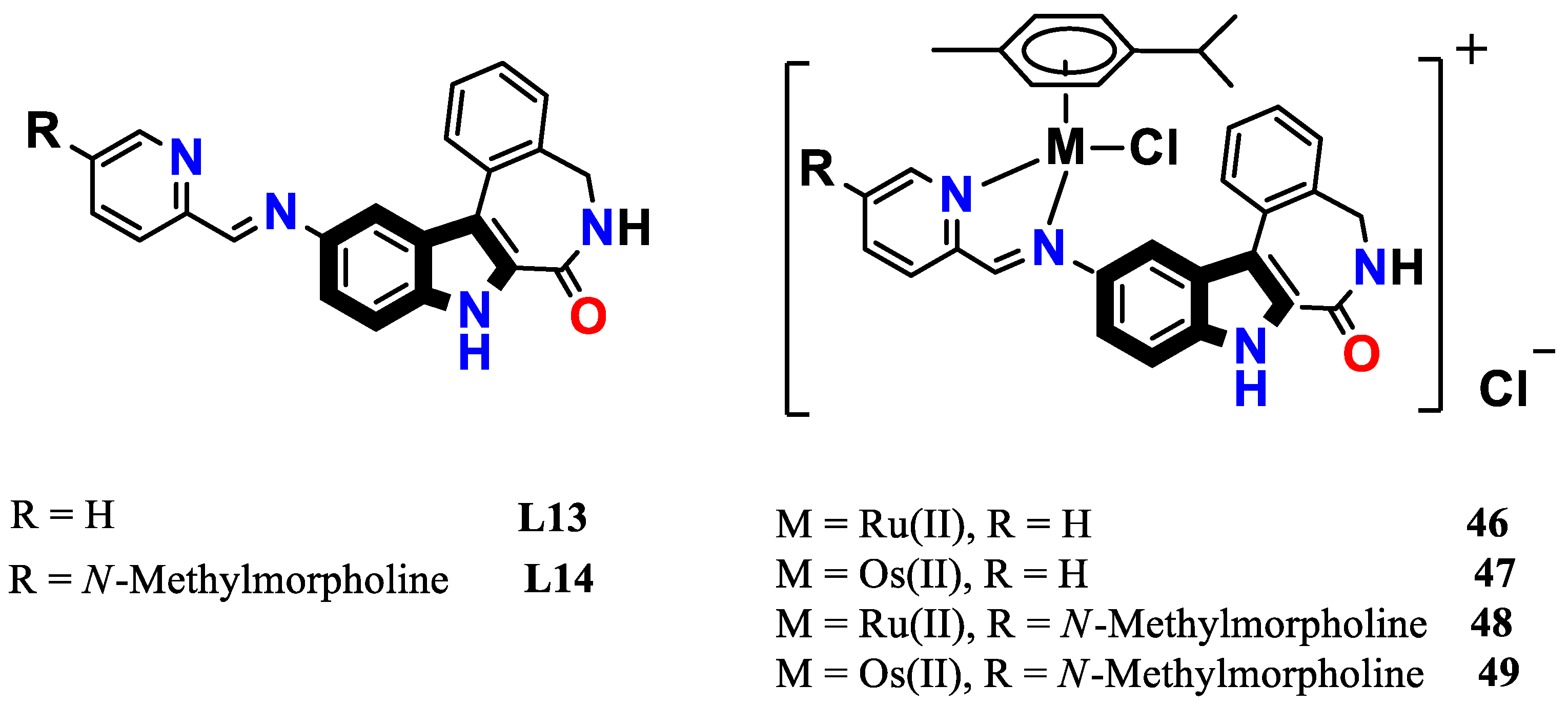
Figure 13.
Crystal structure of the complex 49.
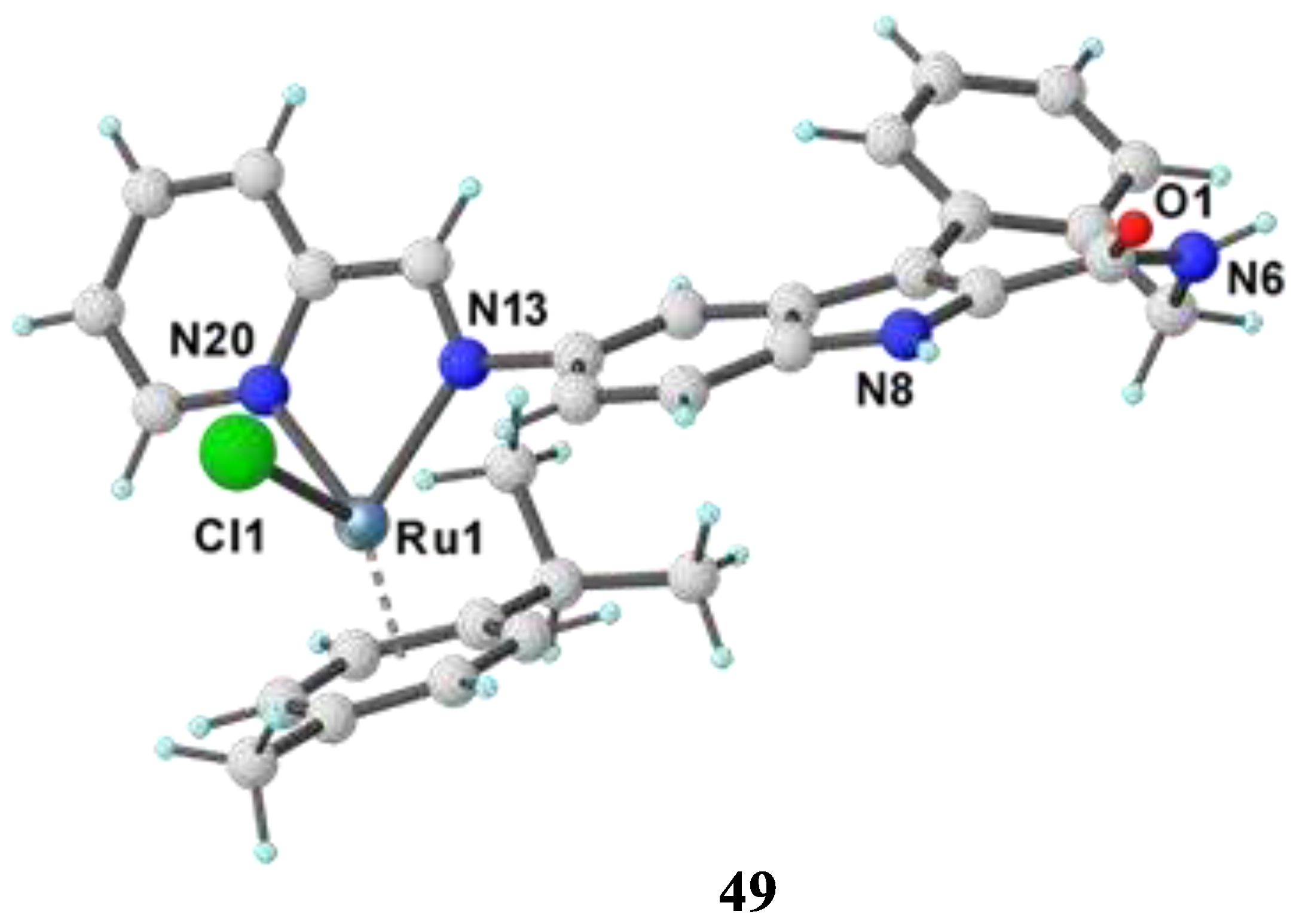
Figure 14.
Chemical structure of the ligand L15 and complexes 50-53.
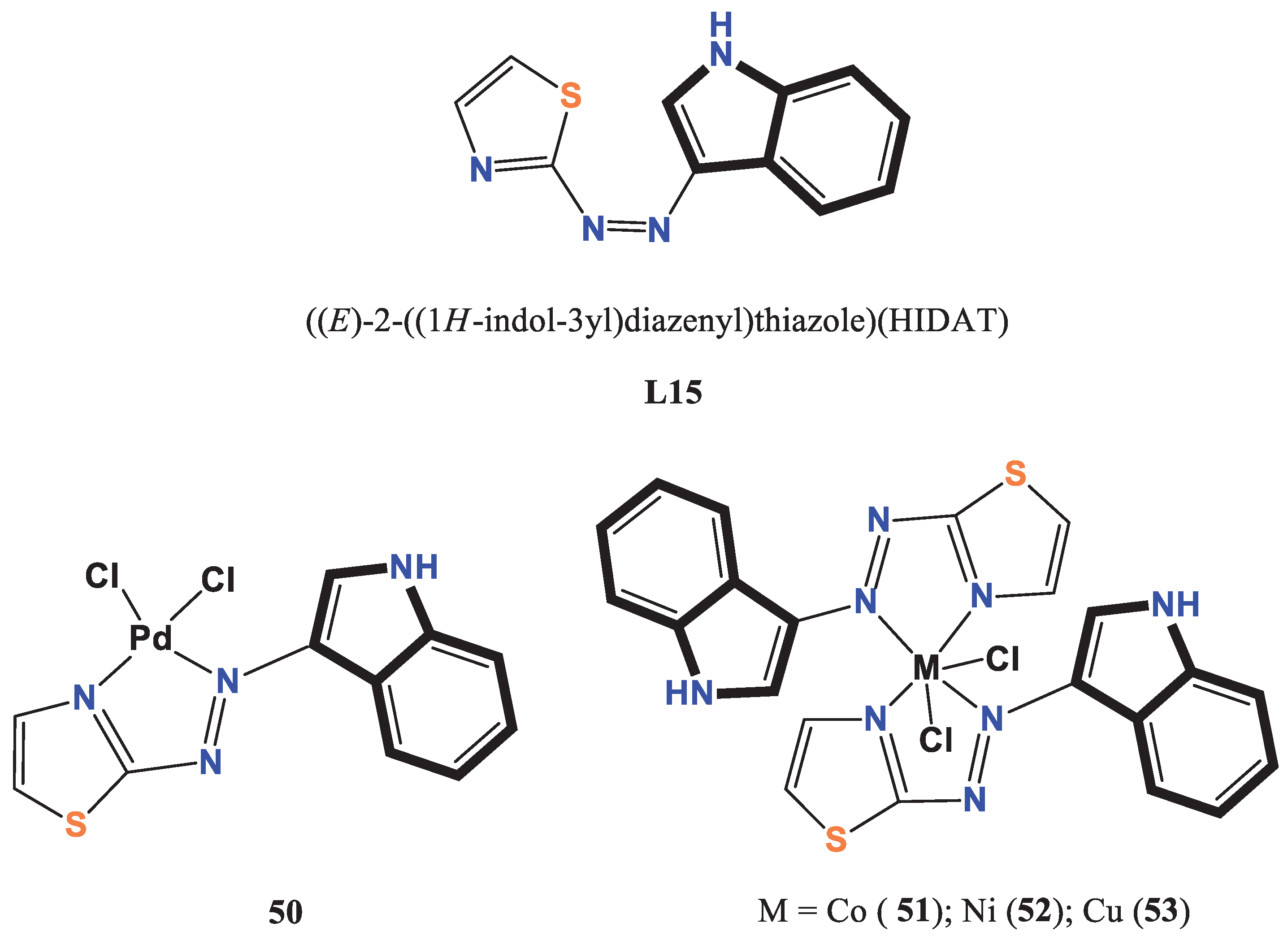
Figure 15.
2D interactions between the Pd(II)-HIDAT complex (50) and tyrosine-protein kinase ABL1 receptor.
Figure 15.
2D interactions between the Pd(II)-HIDAT complex (50) and tyrosine-protein kinase ABL1 receptor.
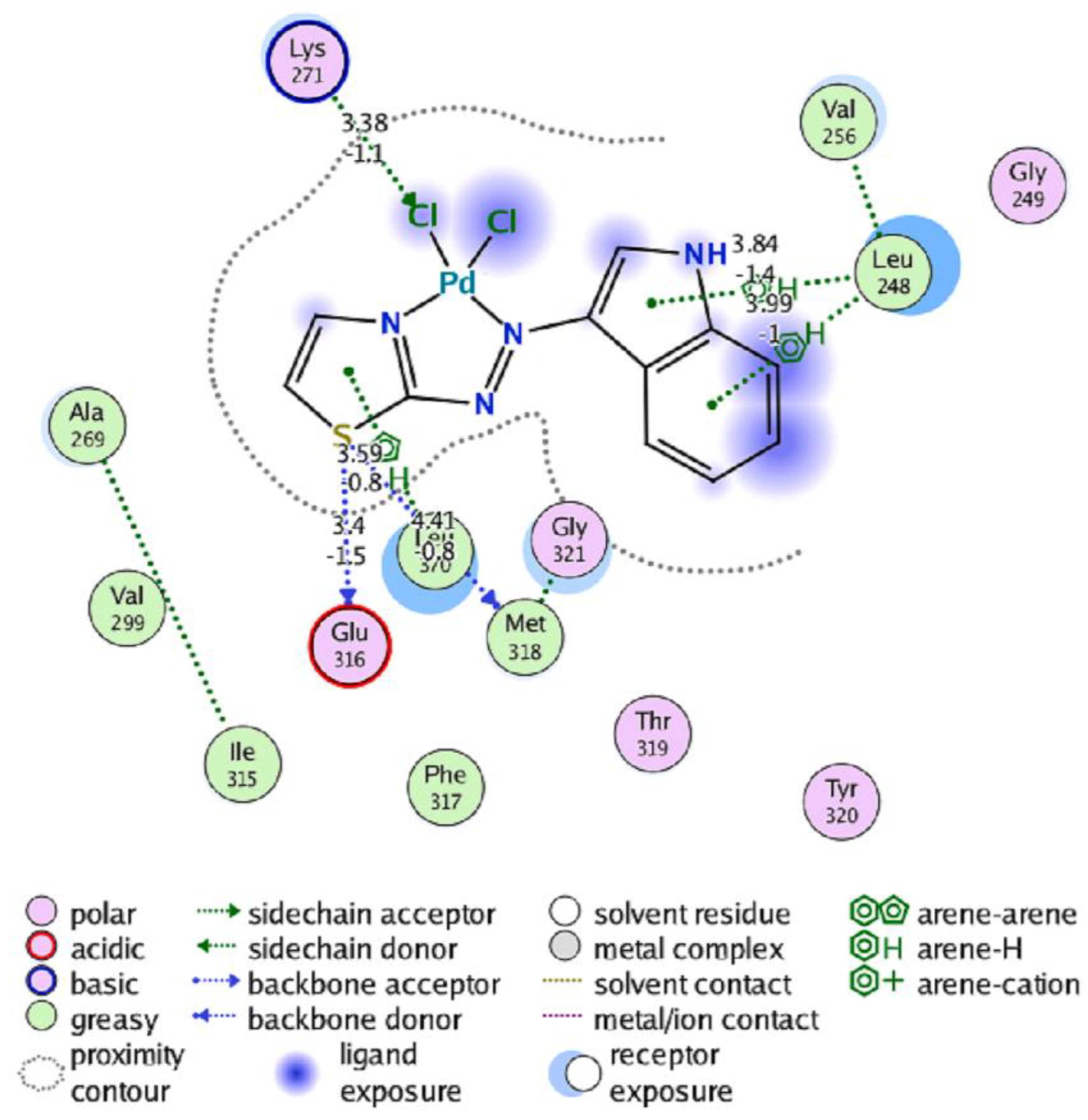
Figure 16.
Chemical structure of the ligand L16 and complexes 54-59.
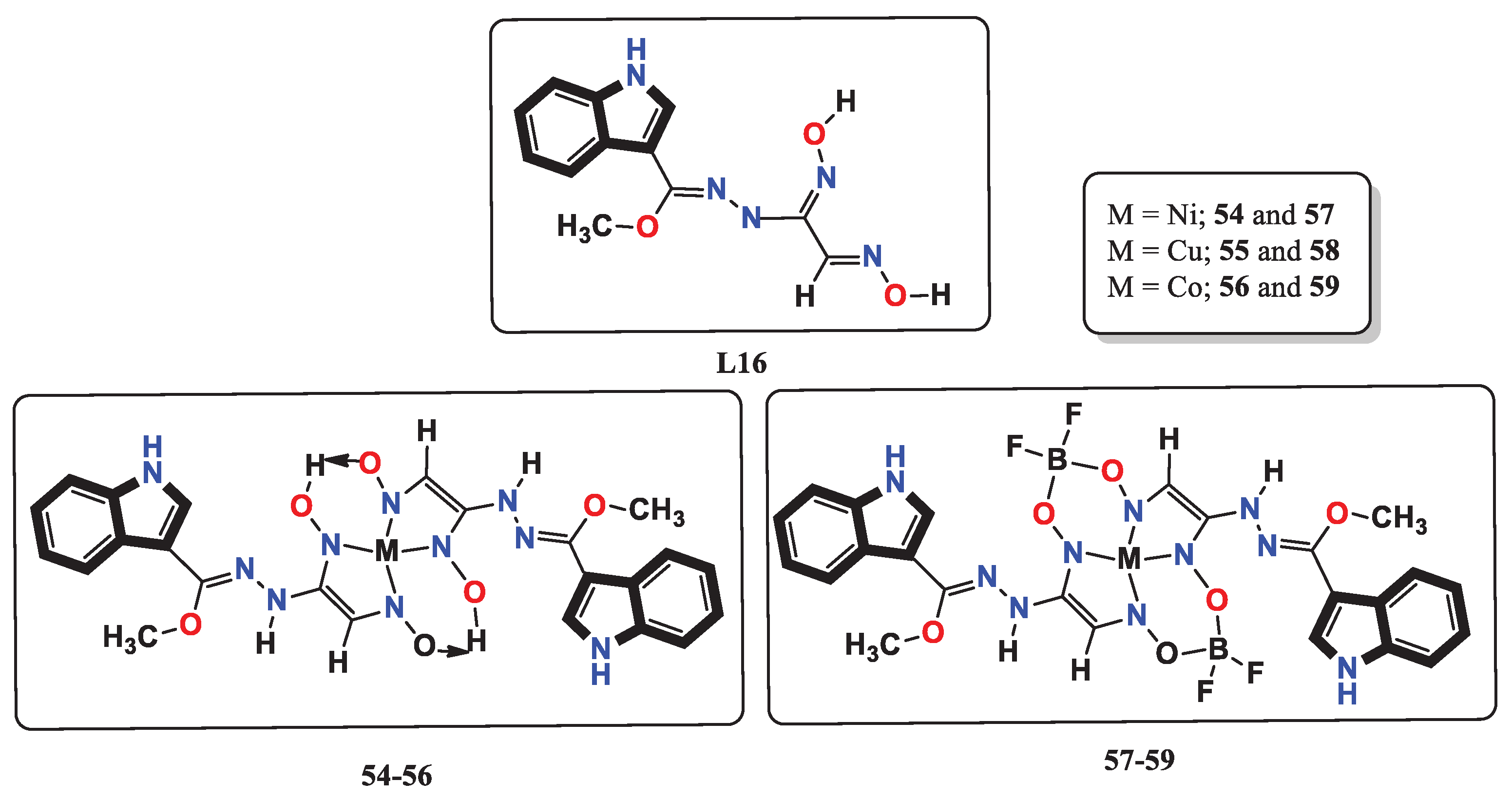
Figure 17.
Synthesis of the complexes 60-63 from ligand L17.
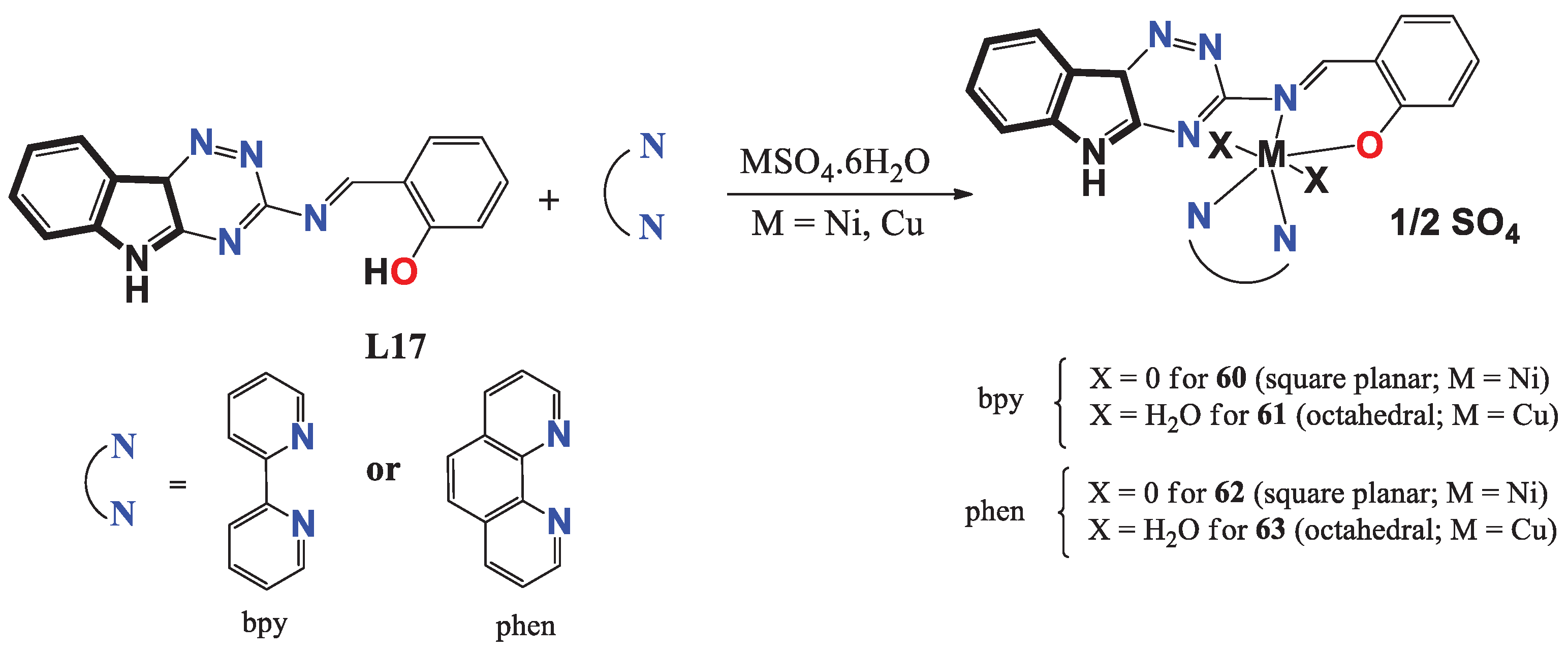
Figure 18.
Synthesis of the complexes 64 and 65 from ligand L18.
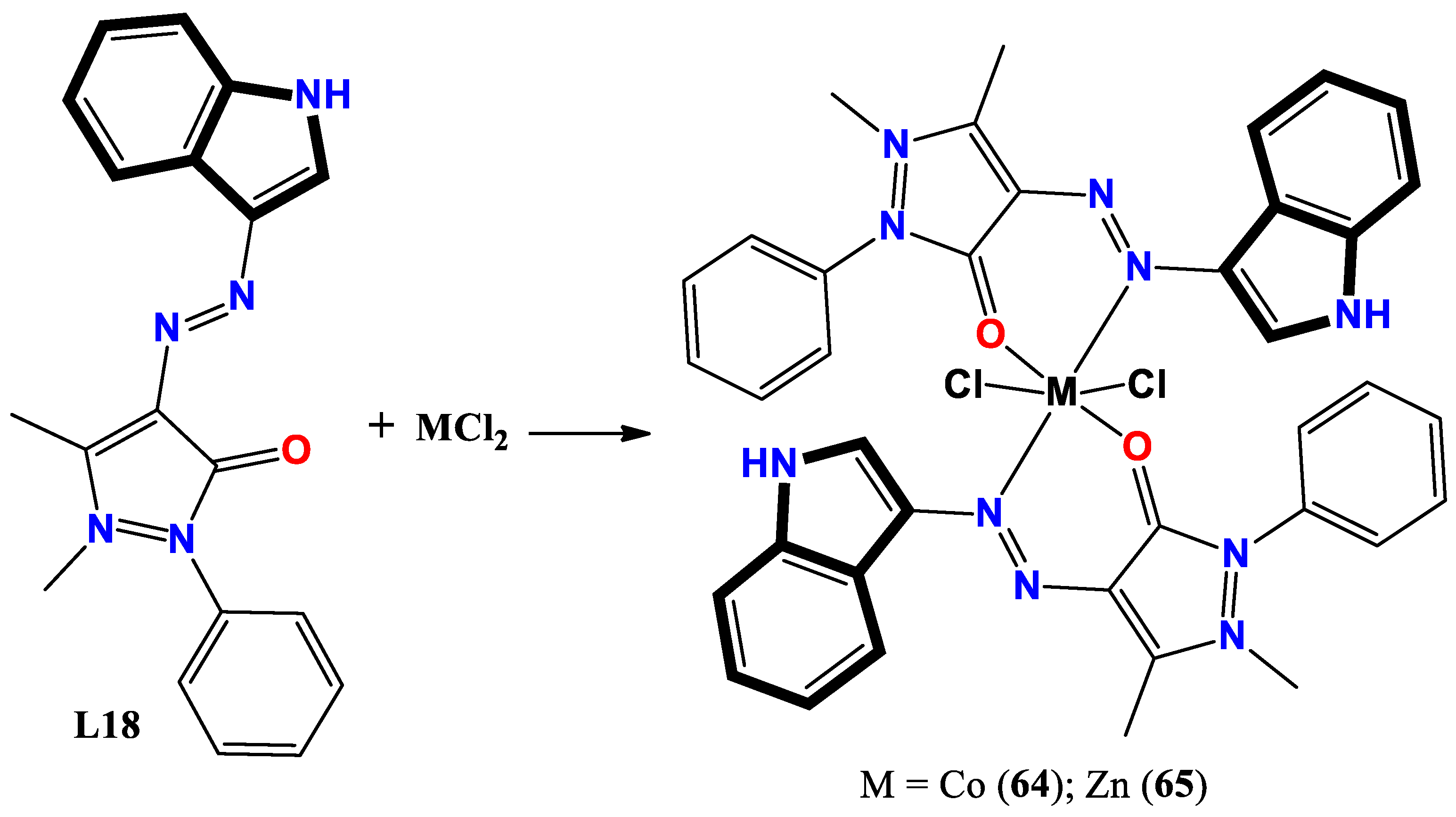
Figure 19.
Chemical structure of the ligand L19 and complexes 66-71.
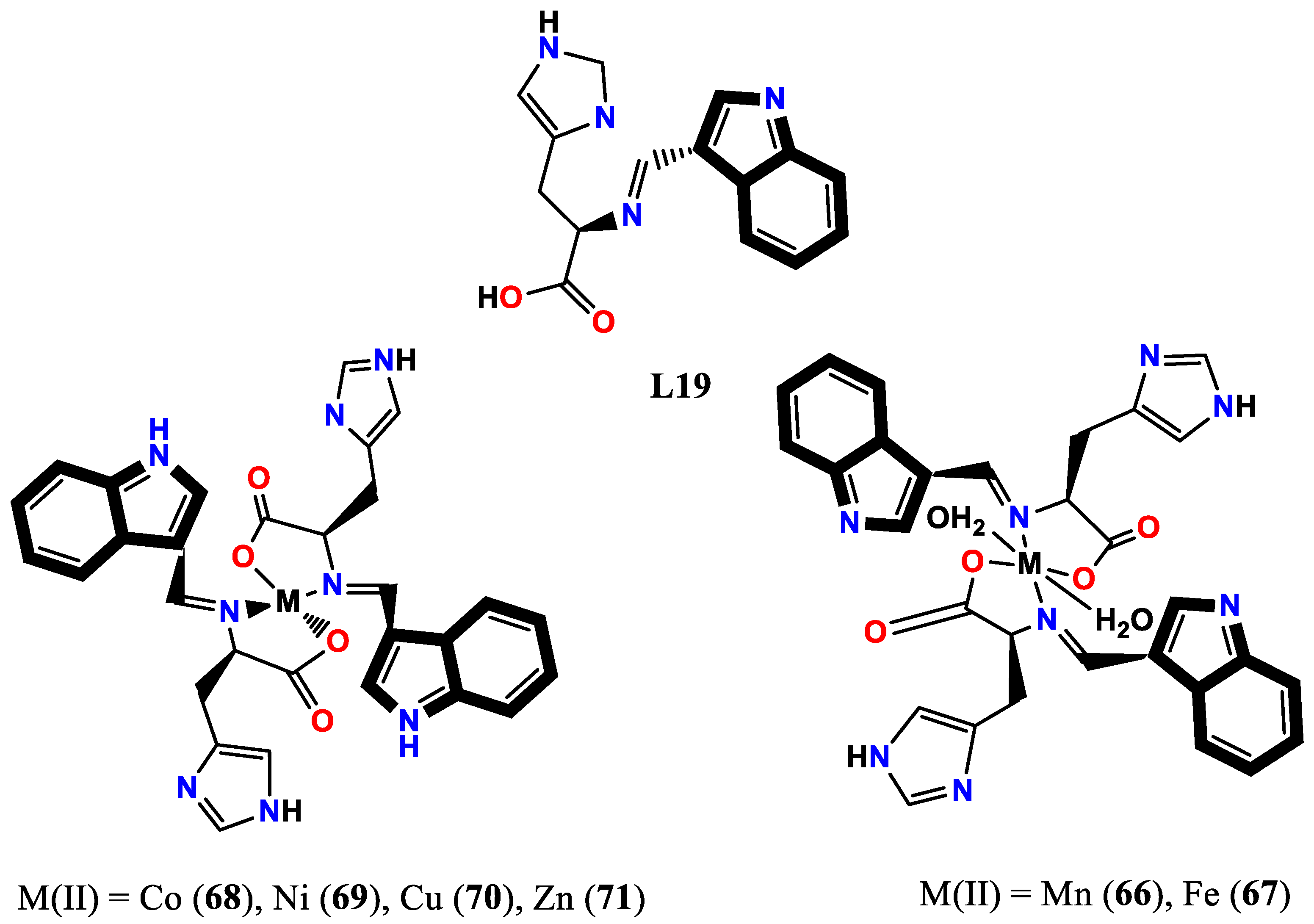
Figure 20.
Synthesis of the complexes 72-79 from ligand L20.
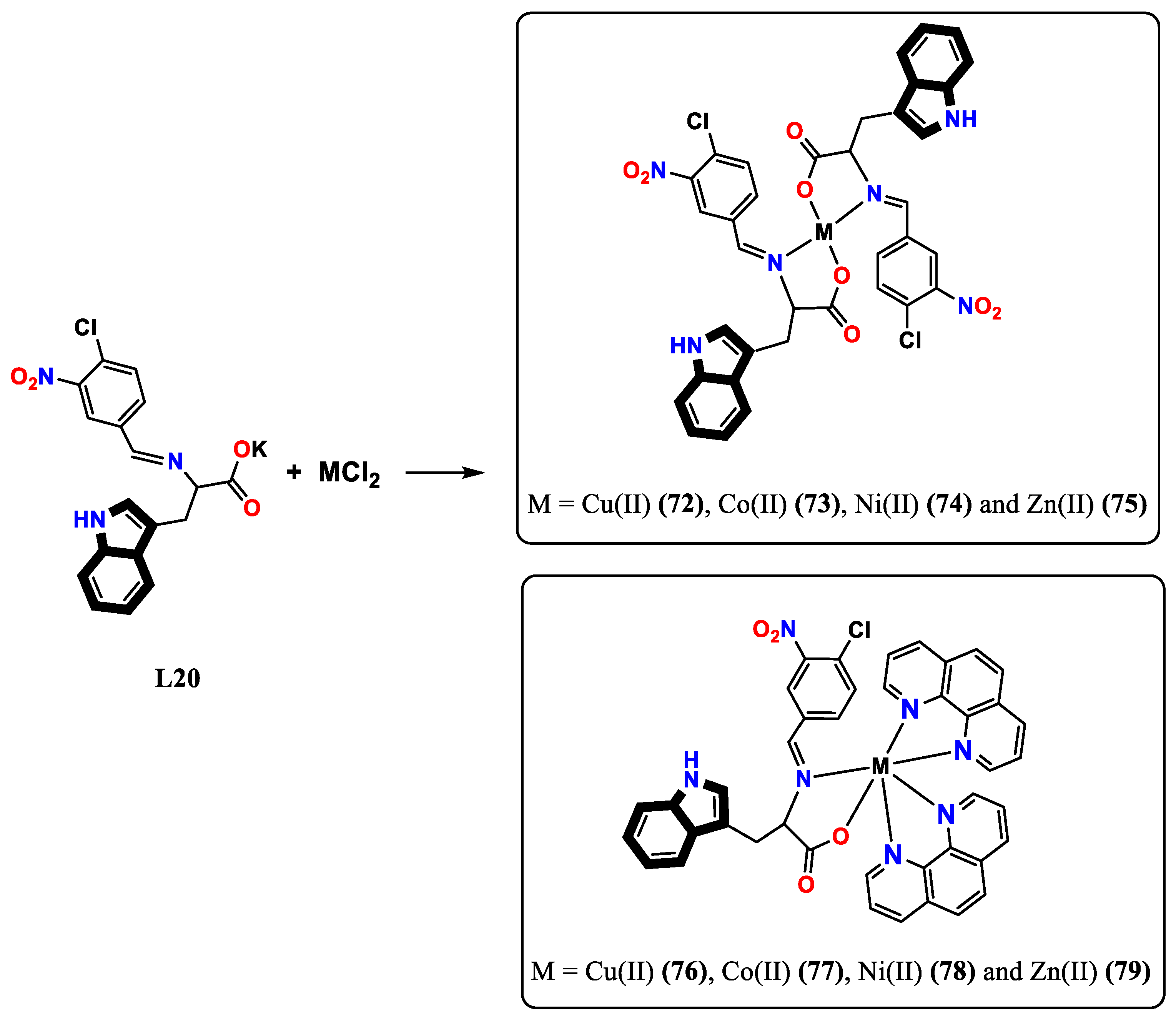
Figure 21.
Synthesis of the complexes 80-84 from ligands L21-L25.
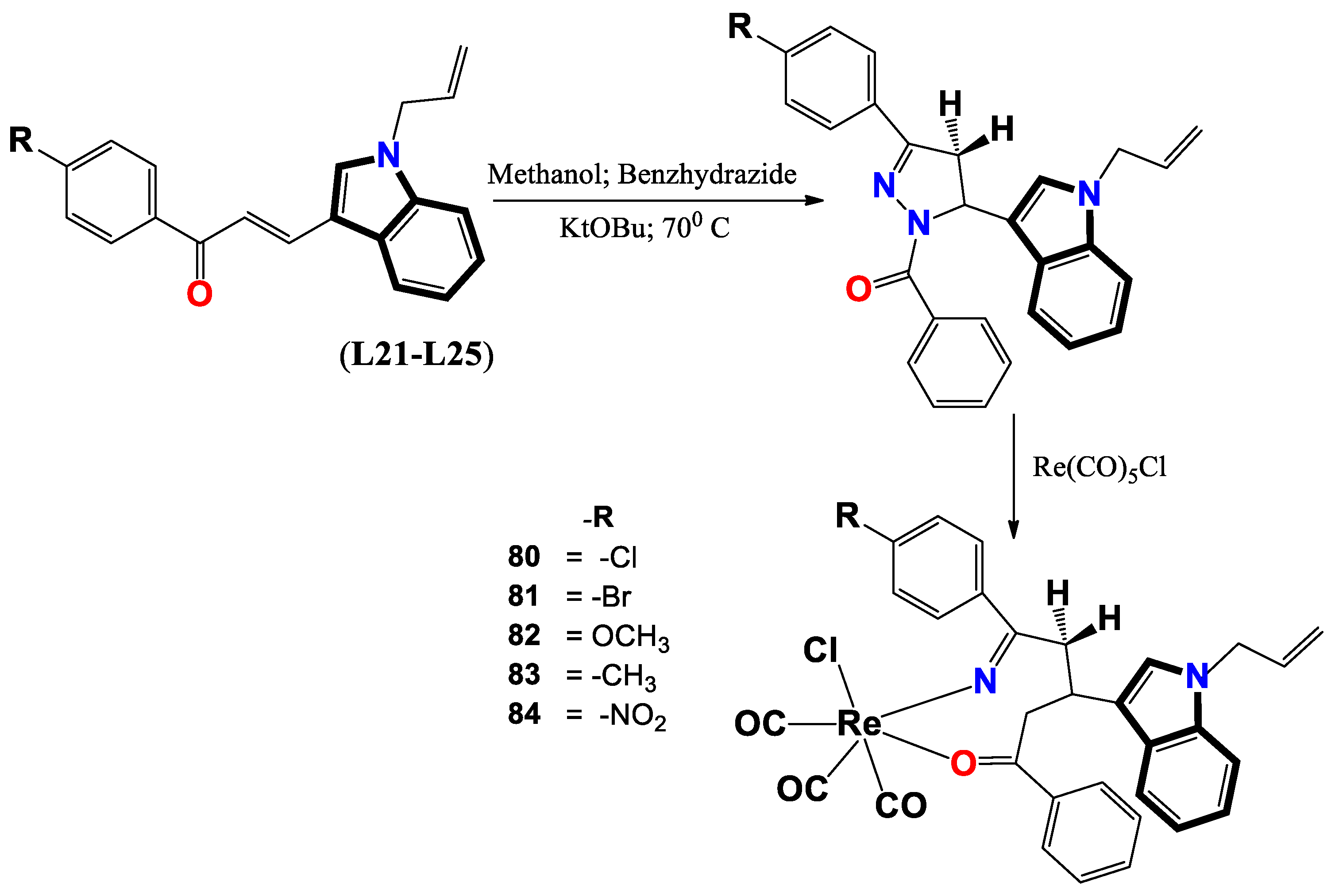
Figure 22.
Synthesis of the complexes 85-92 from ligands L26-L29.
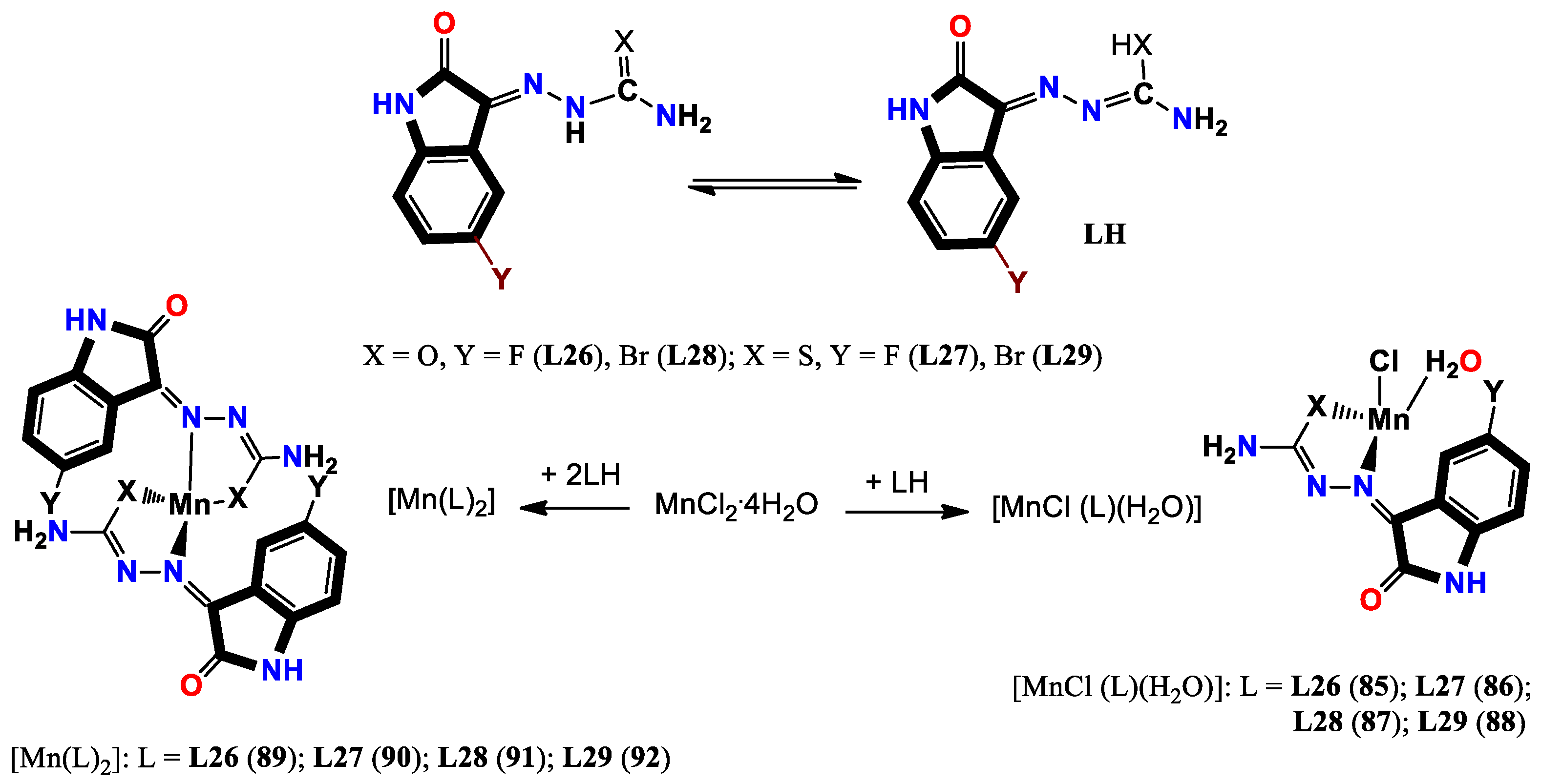
Figure 23.
Synthesis of the complexes 93 and 94.
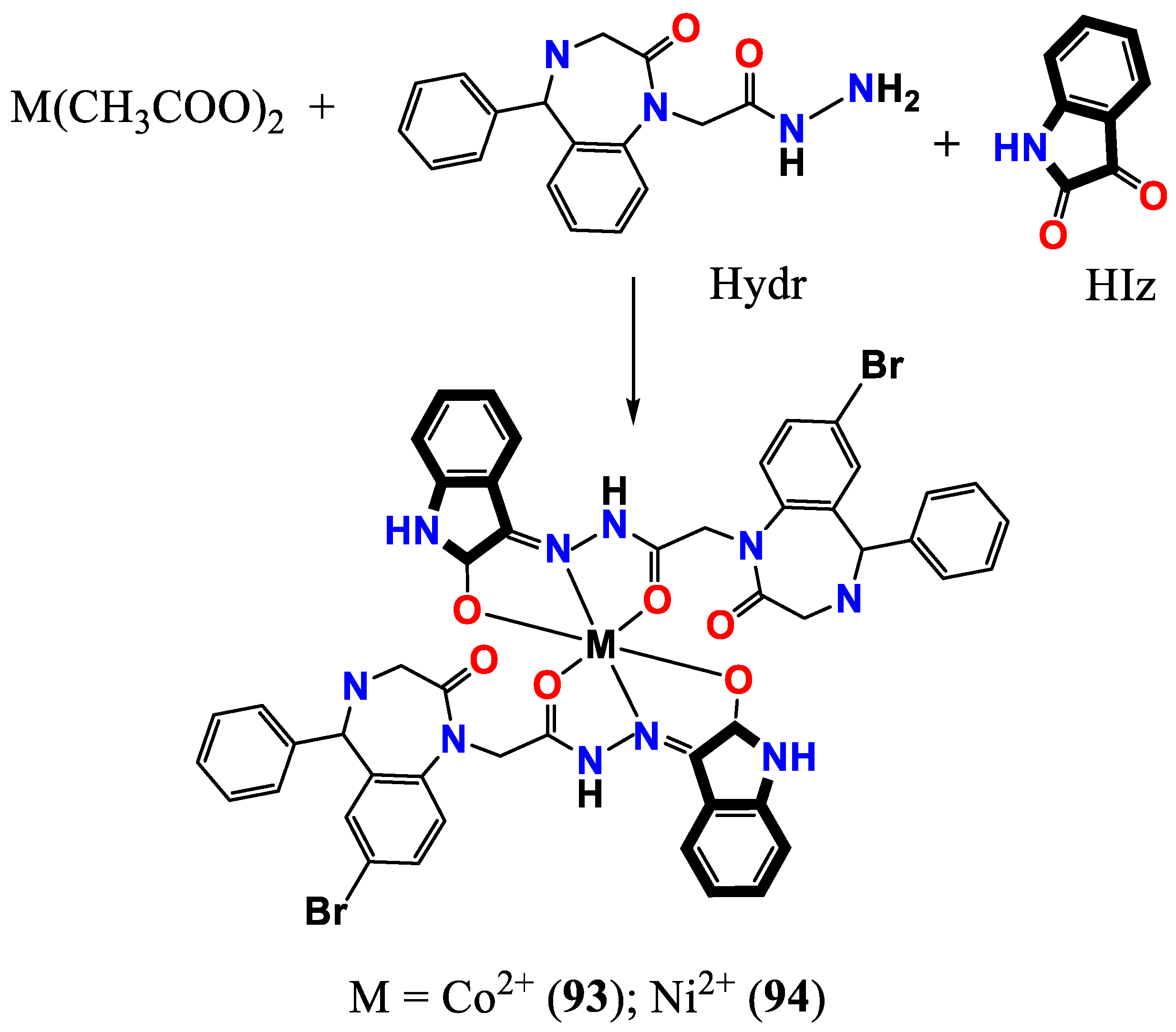
Figure 24.
Synthesis of the complexes 98-113 from ligands L30-L33.
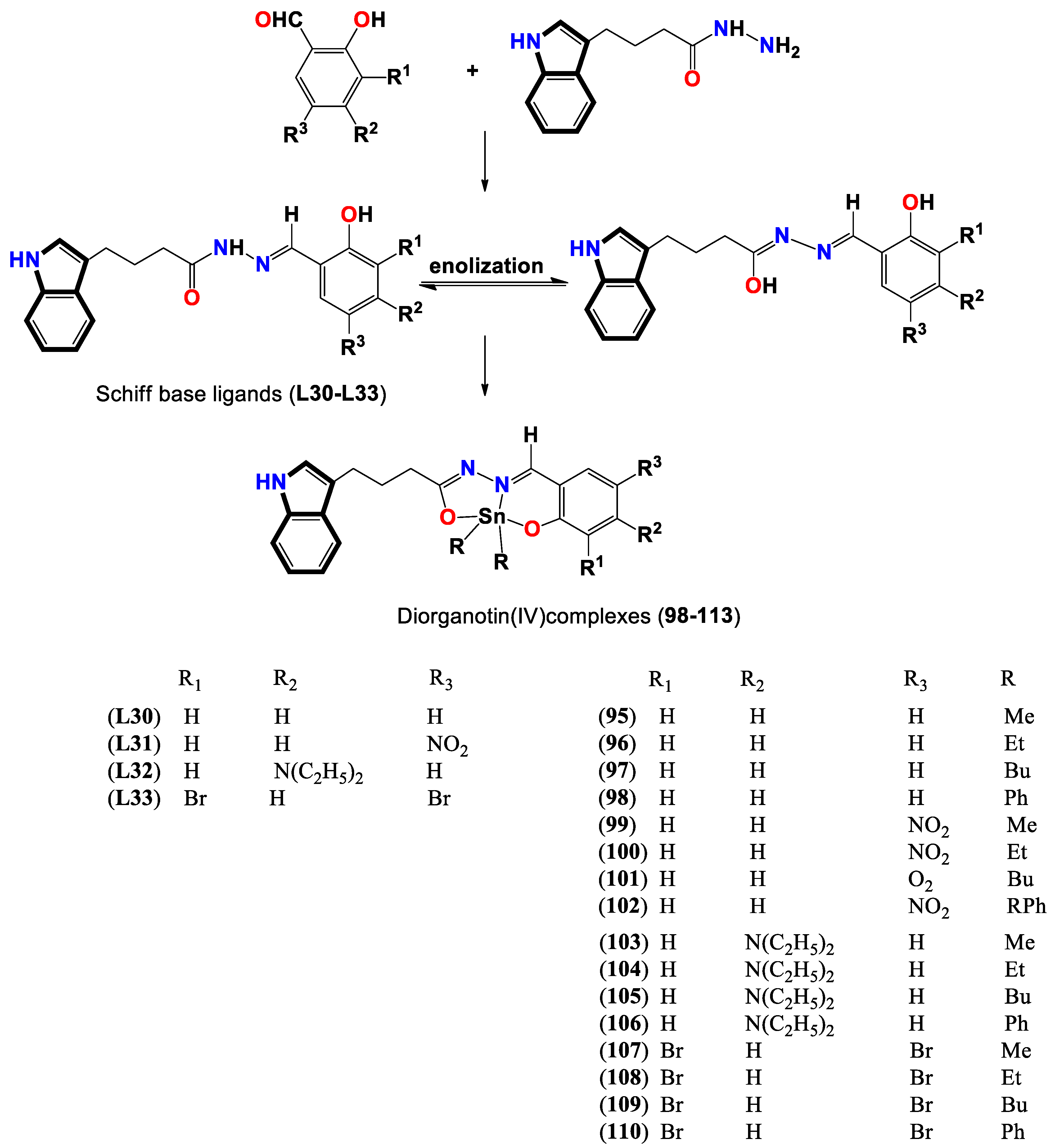
Figure 25.
Chemical structure of the complexes 111a-113b and related ligands.
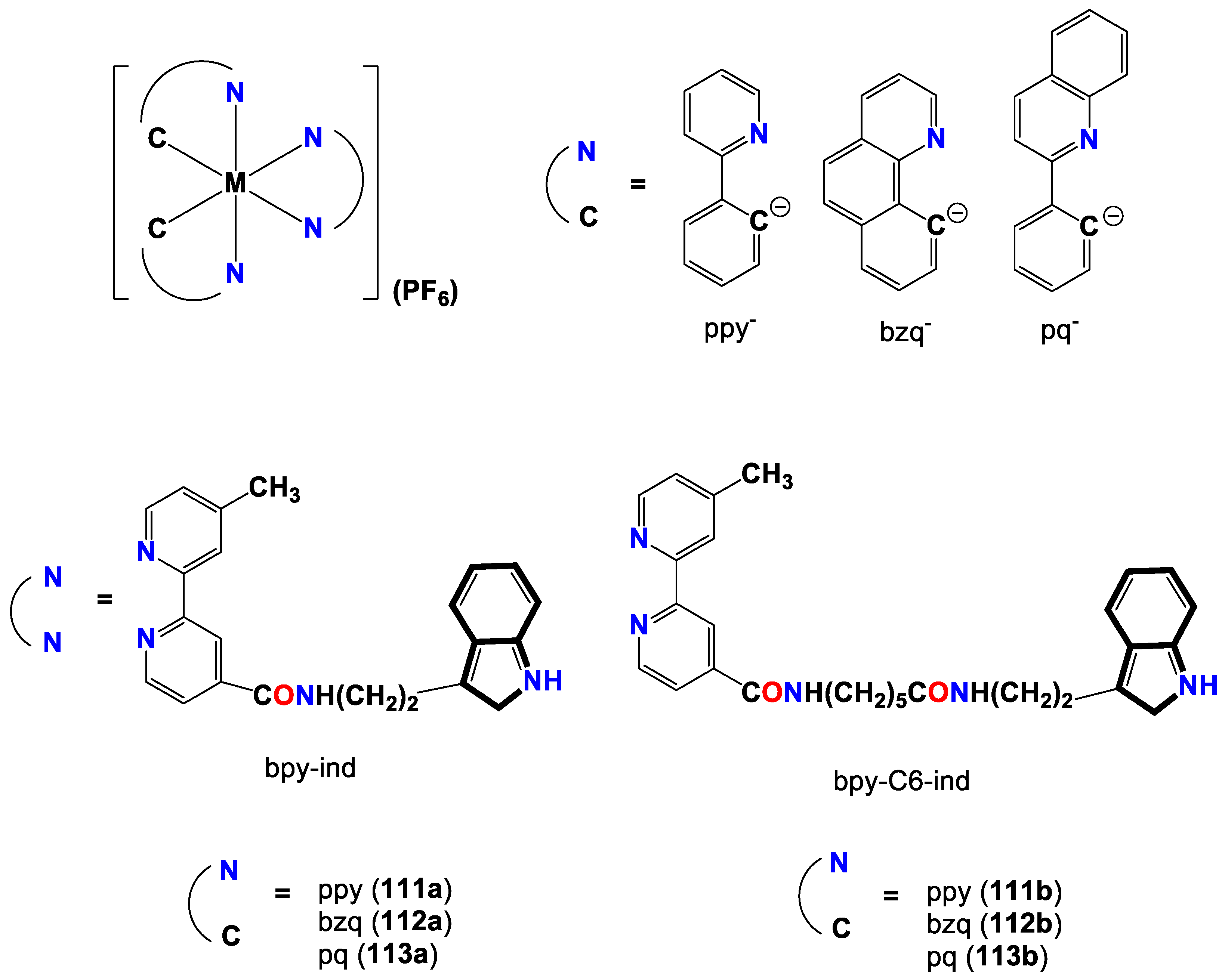
Figure 26.
Synthesis of the complexes 114-117 from ligands L34-L37.
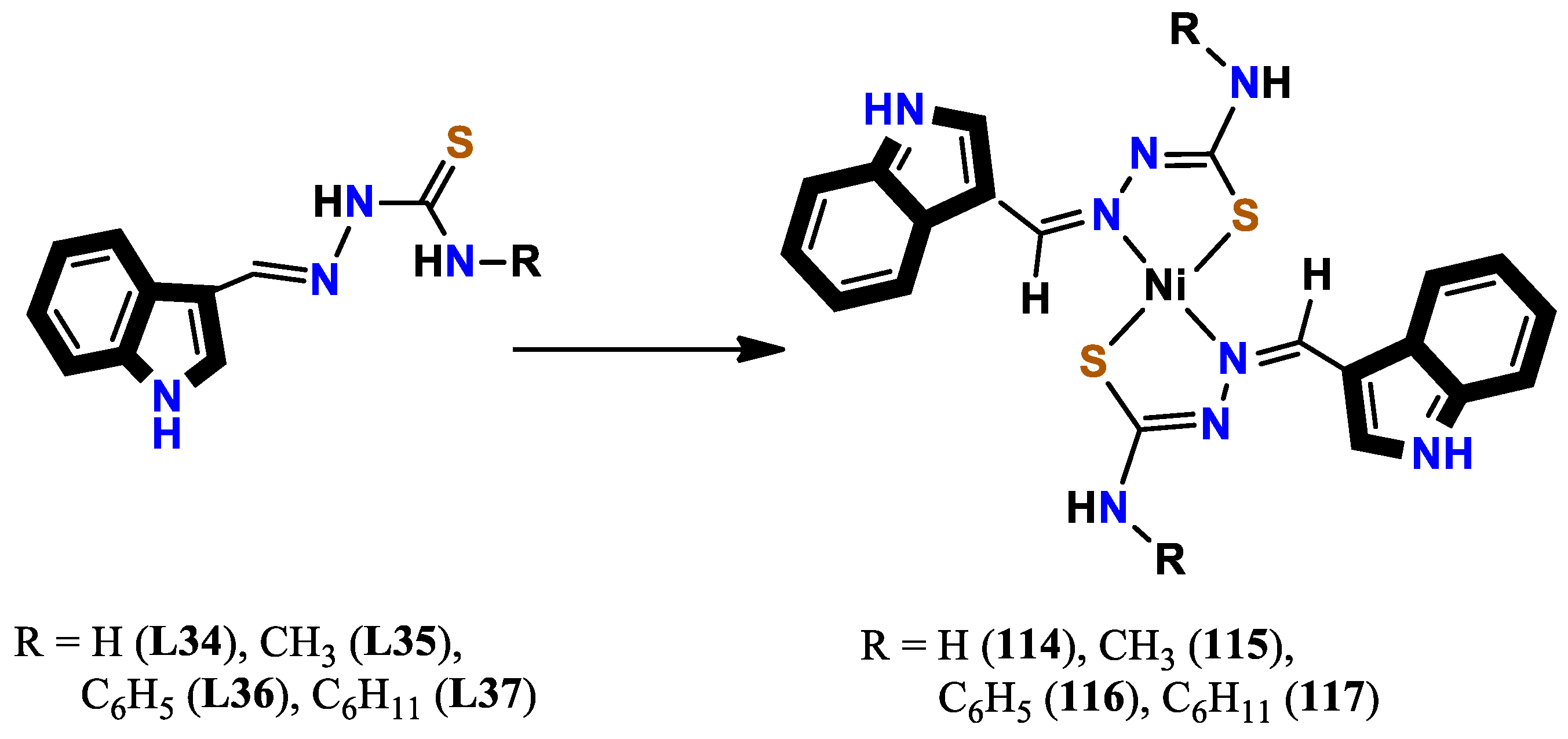
Figure 27.
Crystal structure of the complexes 115, 116 and 117.
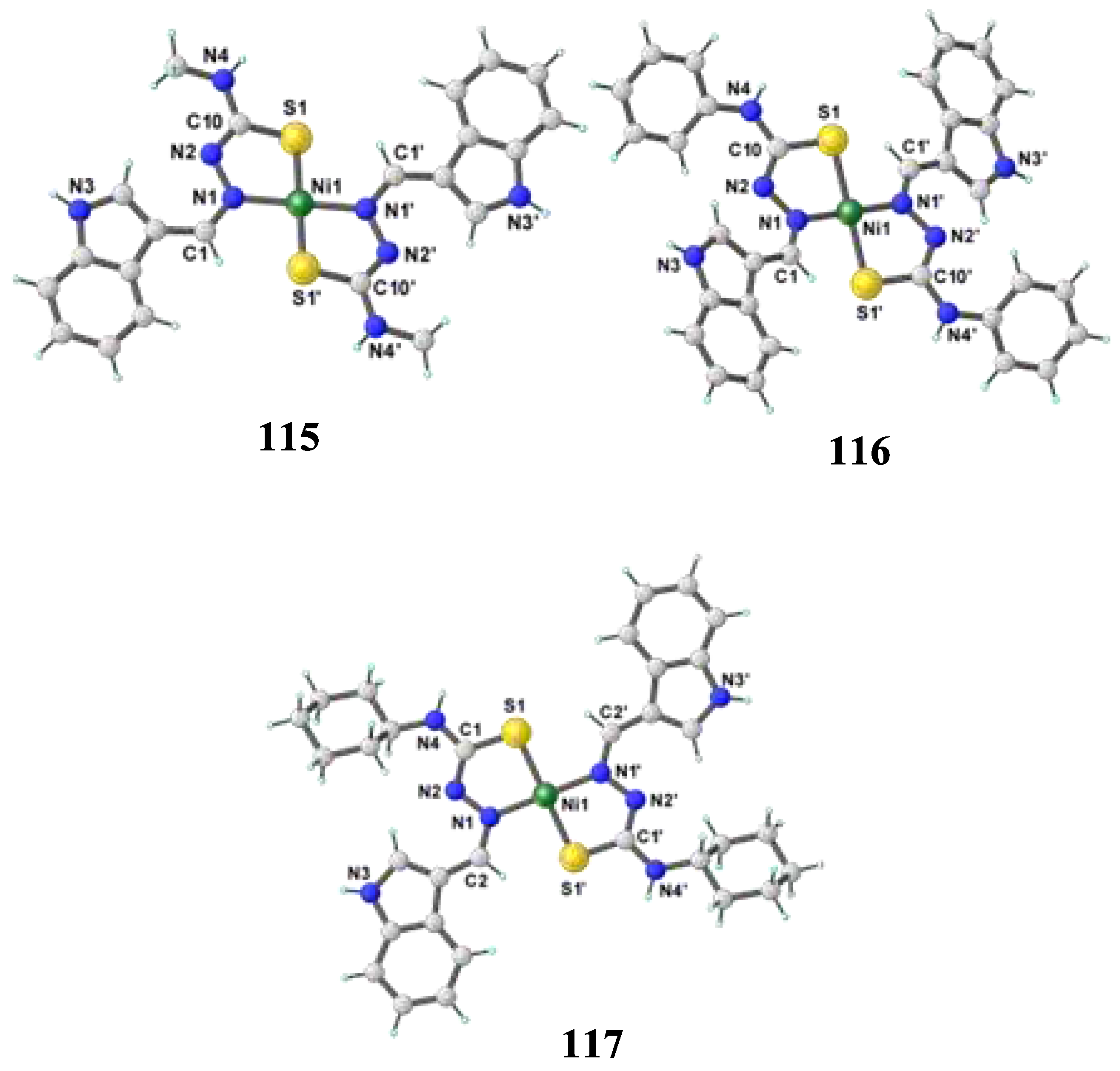
Figure 28.
Synthesis of the complexes 118-124 from ligands L38-L42.
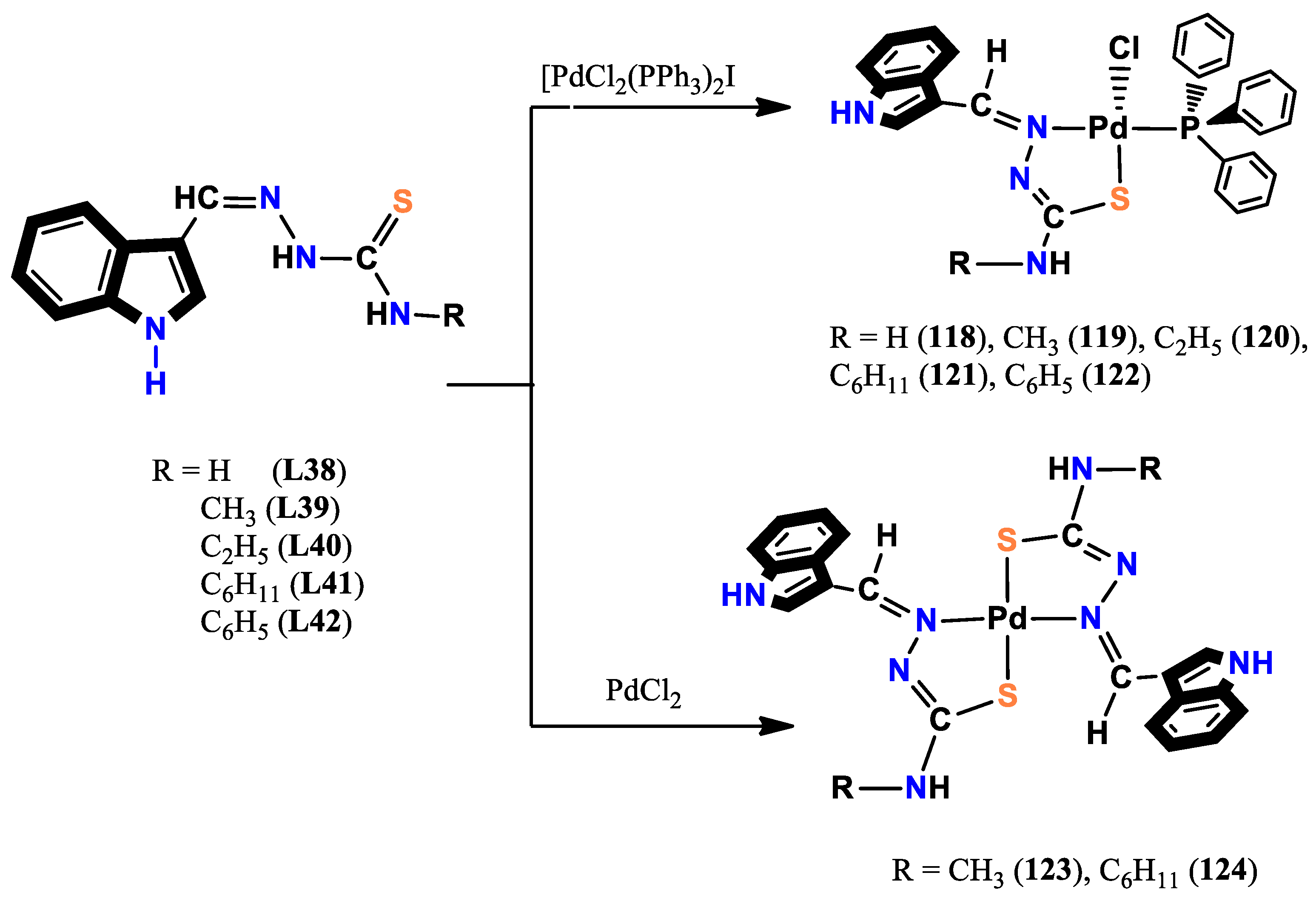
Figure 29.
Crystal structure of the complexes 119 and 123.
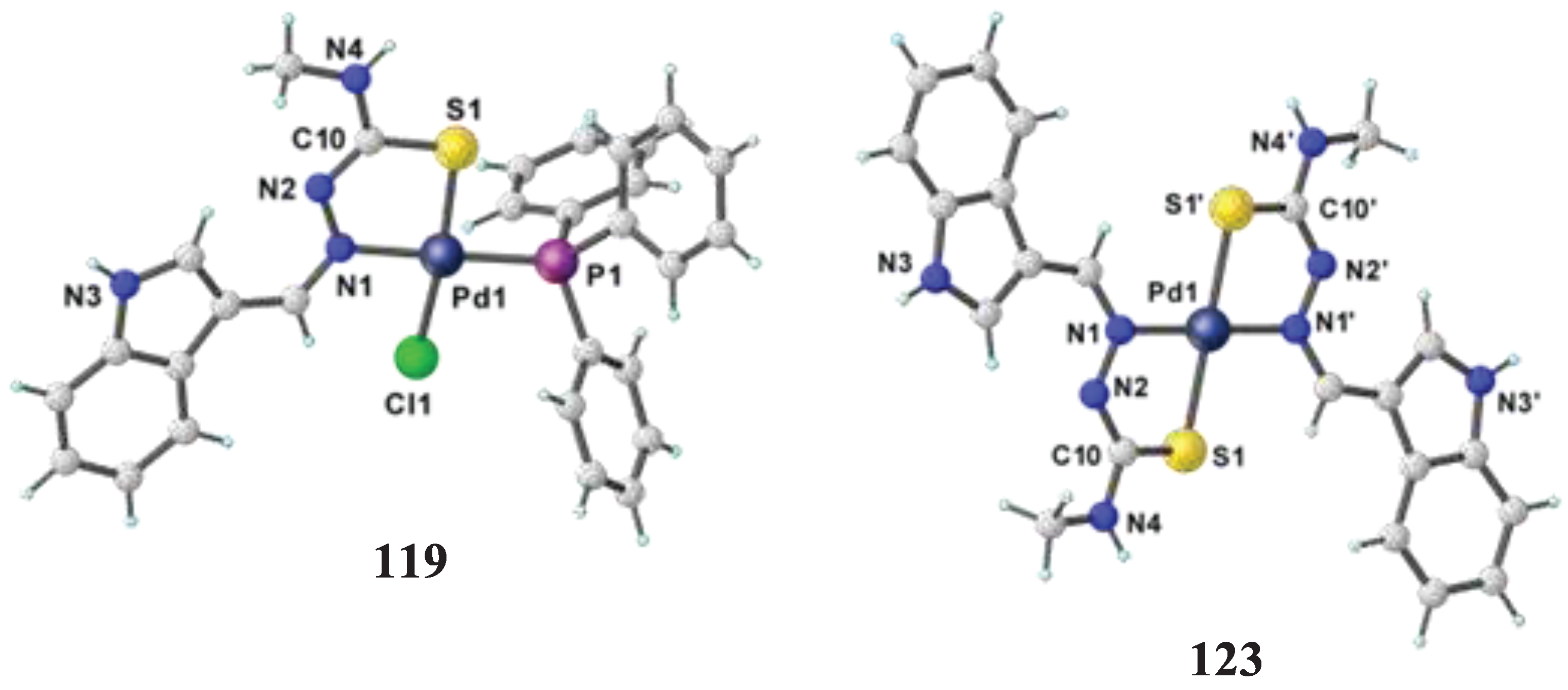
Figure 30.
Synthesis of the complex 125 from ligand L43.
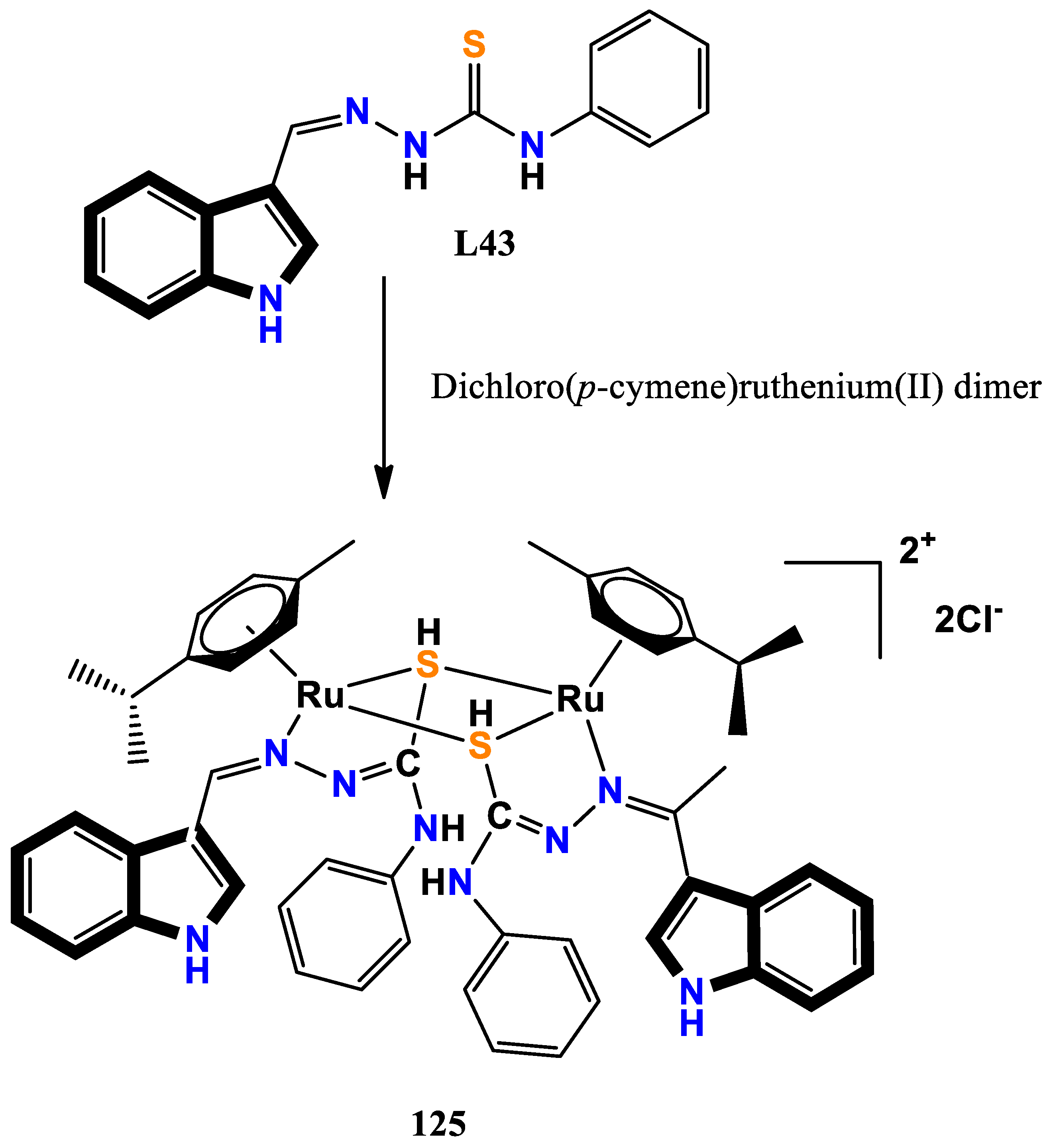
Figure 31.
Crystal structure of the complex 125.
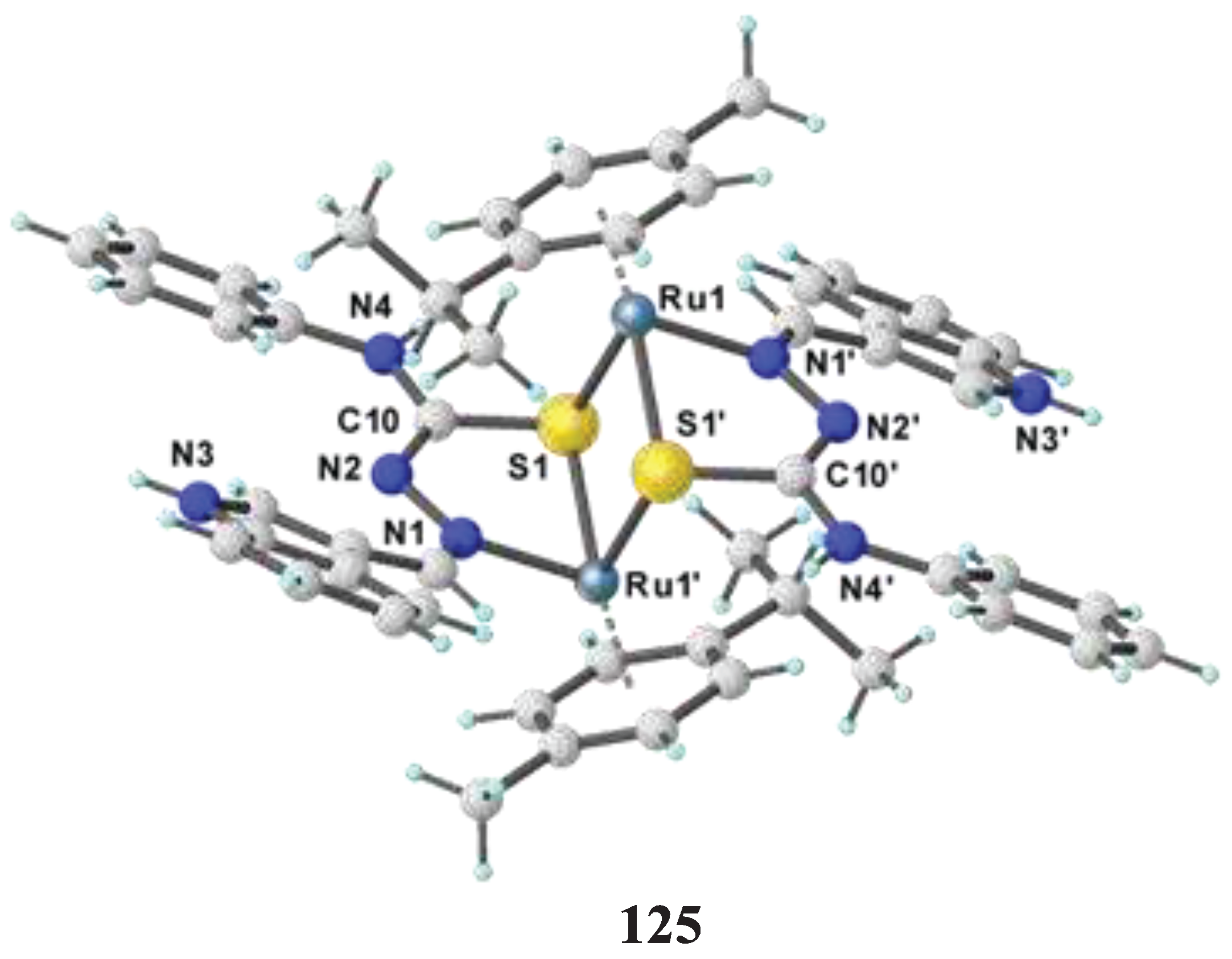
Figure 32.
Synthesis of the complexes 126-129 from ligands L44-L51.
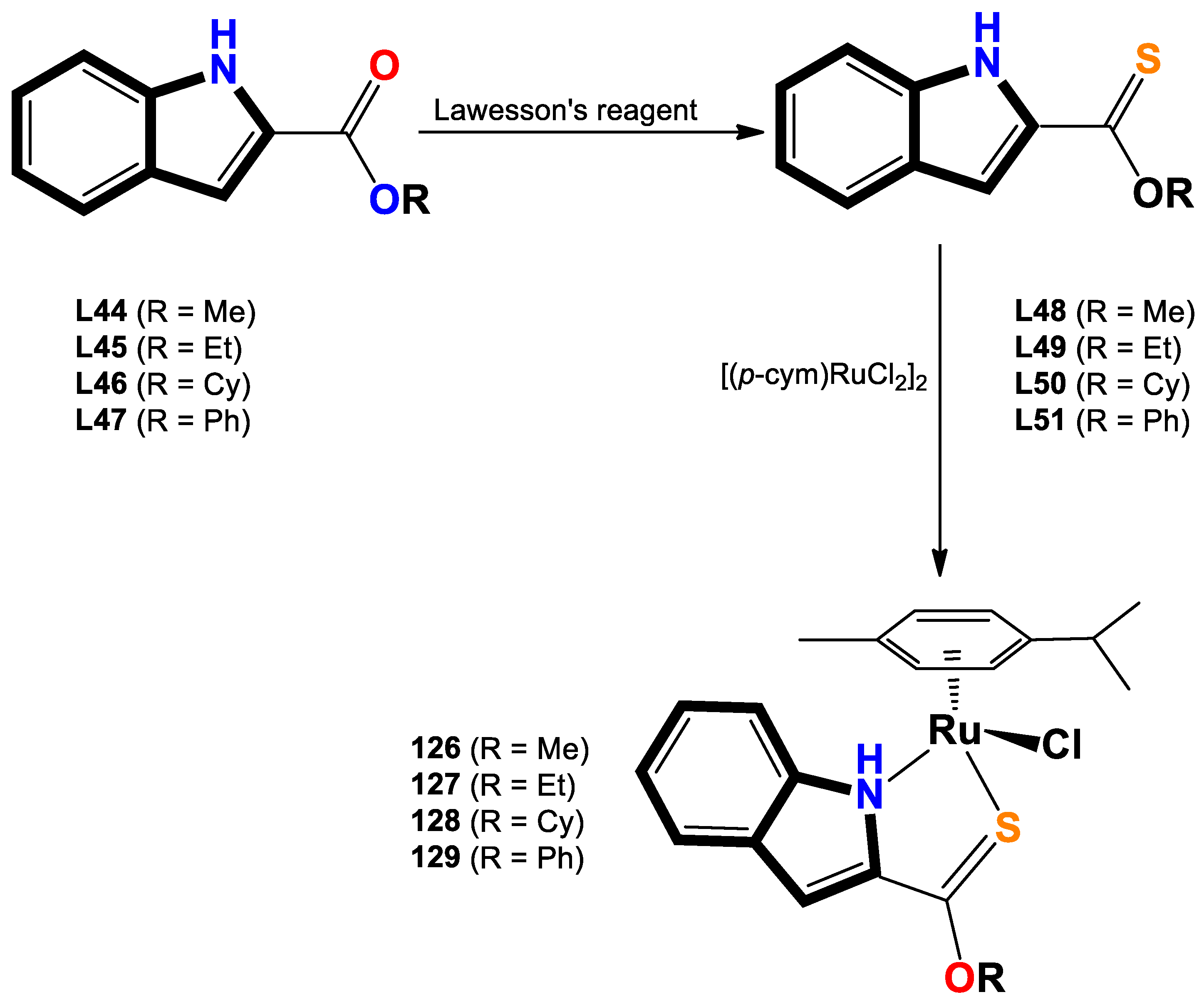
Figure 33.
Crystal structure of the ligand L51 and complex 129.
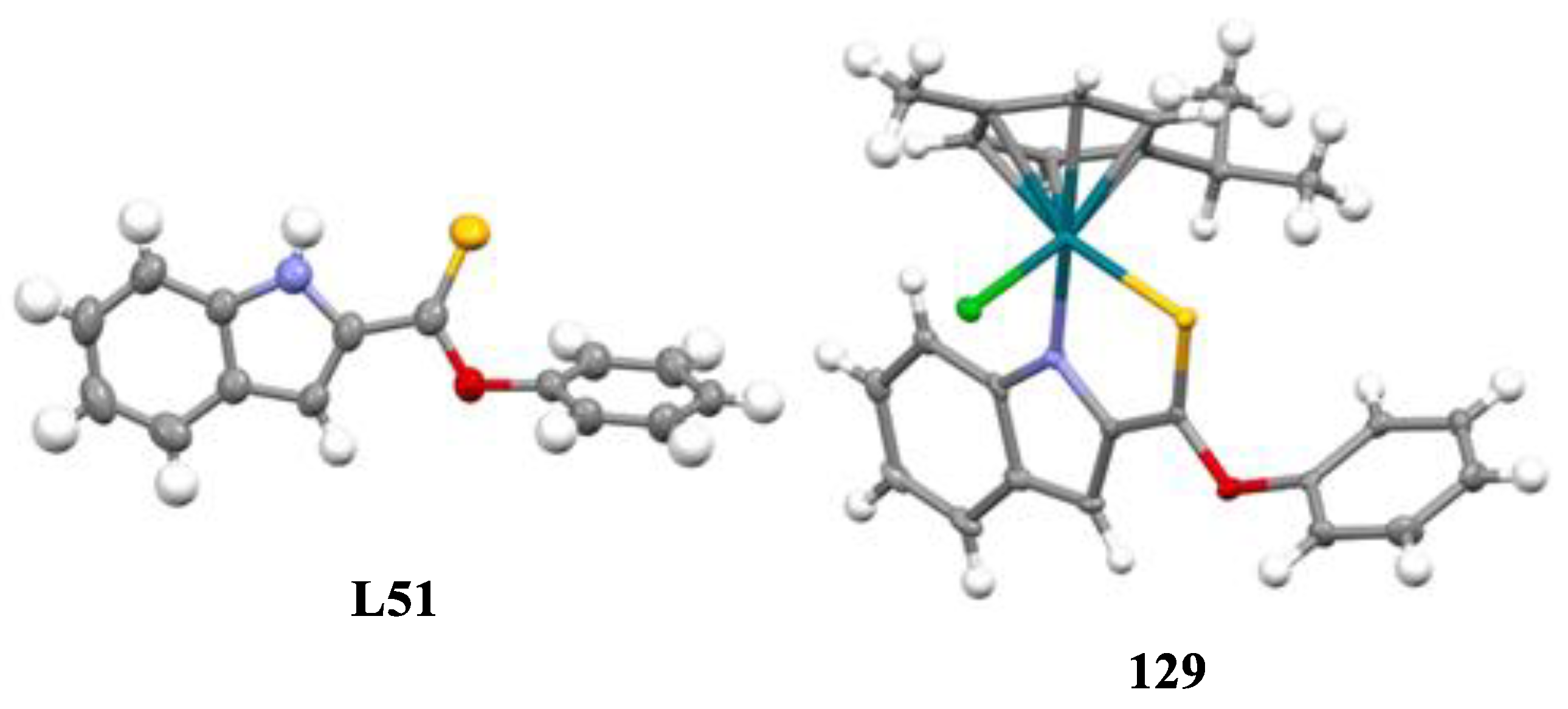
Figure 34.
Synthesis of the complexes 130-133 from ligands L52-L55.
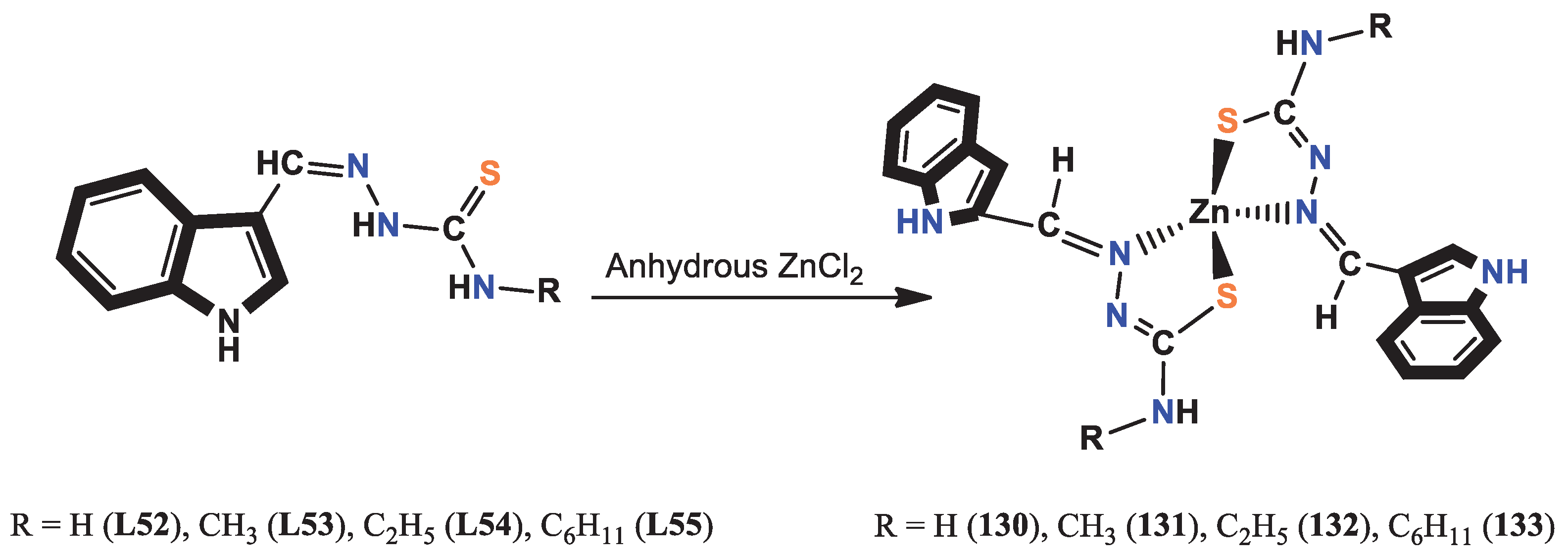
Figure 35.
Crystal structure of the Zn(II) complexes 130 and 132.
Disclaimer/Publisher’s Note: The statements, opinions and data contained in all publications are solely those of the individual author(s) and contributor(s) and not of MDPI and/or the editor(s). MDPI and/or the editor(s) disclaim responsibility for any injury to people or property resulting from any ideas, methods, instructions or products referred to in the content. |
© 2023 by the authors. Licensee MDPI, Basel, Switzerland. This article is an open access article distributed under the terms and conditions of the Creative Commons Attribution (CC BY) license (http://creativecommons.org/licenses/by/4.0/).
Copyright: This open access article is published under a Creative Commons CC BY 4.0 license, which permit the free download, distribution, and reuse, provided that the author and preprint are cited in any reuse.