

Submitted:
19 December 2023
Posted:
20 December 2023
You are already at the latest version
Abstract
The present study focused on the development of gel-based capsules from sodium alginate and different berries fresh juice: chokeberry, sea buckthorn, and blueberry. Obtained through extrusion method, the macrocapsules were added into yoghurt, a well-known and consumed dairy product. In order to establish the changes that can occur into the food product, the samples were tested during 7, respectively 15 days storage in refrigeration conditions. According to the results, the antioxidant activity increased during storage and gels can represent a good option for bioactive substances’ encapsulation. Sensorial analysis performed indicated that consumers are open to consuming yoghurt berries capsules and, according to the results observed into scientific literature, they no longer rejected the product due to bitterness and sourness of sea buckthorn or aronia.
Keywords:
chokeberry
; sea buckthorn
; blueberry
; yoghurt
; sodium alginate
1. Introduction
The dairy products are among the most consumed food items worldwide, by all consumers. The diverse range of options caters to consumers of all ages and social categories. Yogurts are considered functional dairy products due to their content of prebiotics and probiotics naturally found in the product. The benefits of consuming yogurts have not been overlooked by consumers, especially by the food industry, which has constantly sought ways to either improve the already existing functional properties or introduce new ones. As a result, fortified products containing various other bioactive substances have emerged, which have the property of improving nutritional and sensory characteristics, aiming to increase overall acceptability. Due to the dairy products’ natural fermentation process during storage, as well as the sensitive characteristics of bioactive substances, efforts have been made to increase their durability and efficiency through encapsulation.
Encapsulation is a method of incorporating a bioactive or sensitive substance, susceptible to the influence of external factors, into a coating that serves to protect the contents. The materials used for encapsulation must be food-grade in order to be safe for consumption if the goal is to incorporate the capsules into food products. Alternatively, they should be biodegradable to align with sustainability goals. Furthermore, it is very important for the coating to effectively shield the contents from the impact of external factors [1]. Due to their excellent properties and regenerative nature, edible biopolymers have been used as materials for encapsulating bioactive substances.
Among the most widely used encapsulation materials are polysaccharides, and among them, sodium alginate has the ability to efficiently and easily encapsulate various types of substances: colorants, flavorings, probiotic strains, phenolic compounds, antimicrobial or antioxidant substances, enzymes, essential oils, vitamins, minerals, or other functional ingredients [2,3,4,5,6,7]. To fortify dairy products, various substances have been encapsulated in biopolymeric matrices. In their study, Silva et al., highlighted that encapsulating guarana seeds and Lacticaseibacillus paracasei BGP-1 promoted the stability of probiotics (7 log cfu g-1/ 7°C/ 28 days storage) and phenolic compounds to an extent of approximately 88%. This process prevented post-fermentation and eliminated the bitter taste of guarana seed extract [8]. Other studies highlighted the positive effect of natural substances encapsulated added into the dairy products, such as increased stability of pH and acidity during the storage period, reduced syneresis, and improved texture [9,10,11,12]. Encapsulation enhanced polyphenols stability and gives better biodigestibility when dairy products have been fortified with anthocyanins [13], rutin [14], or tamarillo [15]. Anthocyanins encapsulated in biopolymeric materials maintain their bioavailability for a more extended period of time than non-encapsulated products. The encapsulation may be a good strategy to respond to authorities concerning regarding the use of red synthetic colorants in food products. For example, the European Union and United States restricted the use of these colorants due to their health harmful effect. The European Food Safety Authority limited the use of these dark colorants and Chilean Food Health Regulation restricted their use in products for children under 3 years [16]. Nowadays, the use of gels to encapsulate natural products that can be use as natural colorants or preserves is the best solution, mot only for consumer health, but for food industry as well.
In order to ensure sustainability and contribute to a circular economy, even by-products from the food industry have been incorporated into dairy products. Thus, yoghurt with encapsulated carrot waste extract have a higher antioxidant activity than the control sample and can ensure a part of β-carotene recommended daily intake after consumption [17]. Same increased carotenoid and polyphenols retention have been observed when pepper waste capsules have been added to yoghurt. Furthermore, the sensorial acceptability was higher than that of control sample and the lactic acid bacteria preservation was higher during storage [18].
According to research studies in recent years, consumers have refined their choices and focused their attention on functional foods with significant health benefits. Fruits such as aronia berries, blueberries, or sea buckthorn are recognized for their high antioxidant content and their beneficial effects on the microbiota.
Black chokeberry or aronia (Aronia melanocarpa) is a plant from Rosaceae family and possess high biological activity, being one of the richest plants in antioxidants, polyphenols, anthocyanins, with beneficial effects in frequent and modern pathologies such as dyslipidemia, hypertension or other cardiovascular disorders, diabetes or glucose metabolism disorders, obesity, and pro-inflammatory conditions. In vivo studies presented the beneficial effects of chokeberry in disorders and diseases associated with oxidative stress. Due to their high quantity of procyanidins, anthocyanins and phenolic acids in the composition, aronia products may be useful as functional food for this type of pathologies [19]. Prevention of toxic effects of various substances, improving ulcerative colitis conditions by decreasing concentrations of IL-6 and TNF-α, preventing and treating influenza and treating urinary tract infections are other main important effects of aronia [20,21,22]. Clinical trials evidenced the effect of daily supplementation with chokeberry in reducing blood pressure and cholesterol. Thus, 2-3 months of daily supplementation with aronia significantly reduces systolic blood pressure and total cholesterol, with larger effects on adults over the age of 50 years [23]. The black chokeberry has a high influence in reducing cancer cell proliferation. When tested on cancer cell lines (Caco-2 and Ht-29), 250 ppm of black aronia presented cancer cell growth inhibitory activity by 24.7%, mainly due to its greatest level of total polyphenols, antioxidant activity, and individual phenolic acids. In contrast, red and purple chokeberry favored cell proliferation by 23.2, respectively 27.2% [24]. The higher content in antimicrobial substances promote Aronia melanocarpa as natural derived additive for maintaining the safety of food products against Gram-positive bacteria pathogens, such as Bacillus cereus, Pseudomonas aeruginosa or Staphylococcus aureus. A preliminary study made by Hyeon-Kim et al. evidenced the capacity of aronia to inhibit and to avoid bacterial cells proliferation in yoghurt and other dairy products [25].
Their high content in polyphenols attributes a bitter taste. From this reason, it is barely consumed as juices, syrups, wines, or as addition substances in food products [26].
As well as other health supplement, consideration regarding the dose of Aronia melanocarpa must be taken into account. The adverse effects are related to its diuretic and laxative effects due to its high content in potassium and sorbitol. Lon-term use of chokeberry can cause anemia due to anthocyanins’ capacity to chelate the iron, can cause superficial stanning of teeth and produce hypersensitivity [19].
Sea buckthorn (Hippophae rhamnoides L.) is a plant with high content in biologic active substances, such as vitamins, minerals, polyphenols, carotenoids, phytosterols, amino acids and fatty acids [27,28,29,30]. Used as medicinal plant since ancient times, today it is consumed primarily for its beneficial properties on the cardiovascular system, microbiota, liver or skin. Many research studies presented its antioxidant, antiviral, antimicrobial, anticancer, anti-inflammatory, anti-obesity, anti-hyperlipidemic, dermatological, and neuroprotective health benefits [31,32,33,34]. Due to its high content in flavonoids, 28 g of sea buckthorn for 90 days was a great candidate against cardiovascular diseases, with protective effects in prevention and treatment of dyslipidemia, atherosclerosis, platelet aggregation, reduction of LDL and serum glucose levels [35]. Tested on Zucker diabetic fatty rats, a suitable animal model for monitoring diabetic complications, sea buckthorn consumption during 3 months reduced hyperglycemia, insulin in blood, water intake, and sorbitol levels in the lens of eyes. The results were better than those obtained after metformin treatment, well-known active substances frequently use by diabetic patients [36].
As food ingredient, it is widely used in preparation of many products, such as juices, yoghurt, jams, beverages, tea, bread or other products. Sea buckthorn puree added into fermented drinks increased the antioxidant properties and acidity of food products. Sea buckthorn fruits added in cheese improved the sensorial properties, especially by promoting the development of specific taste due to its capacity to protect the microorganisms culture starter and to promote the beneficial probiotic strains’ growth [37].
Despite the nutritional and benefits offered by sea buckthorn, the consumption is not so popular at should be because of its unpalatable taste. The high content in total acid, malic acid and low sugar content the products are sourness and astringently [38].
Blueberries (Vaccinium ashei) are recognized for their health benefits, such as high antioxidant and anticarcinogenesis activity, reduction in cardiovascular diseases, treatment of urinary tract disorders, microbiota modulation or memory enhancement [39,40,41,42,43]. On a pilot study developed on 8-10 years old children, a blueberry-based drink (200 g fruits, 100 mL semi-skimmed milk and 8 g of sucrose for palatability) produced significant improvements in the delayed recall of a previously learned list of words, but with no effects regarding attention or visuospatial memory [44].
Their high content in anthocyanins promoted their use in food, medicine, pharmacological, and cosmetic industries. Anthocyanins in blueberries, besides their strong antioxidant effect, improve vision, reduce blood pressure, with benefits in preventing and alienating diabetes mellitus, obesity, and neuroprotective effects. Unfortunately, their bioavailability is affected by environmental factors such as temperature, pH, exposure to light or oxygen [45]. After ingestion, they are rapidly absorbed by stomach and small intestine and, due to enzymes and intestinal flora, some of them are directly transformed into esters, glycosides and polymers and are not absorbed by small intestine [46]. The encapsulation proved to be a better method to protect and to enhance the anthocyanins bioavailability. Thus, these substances entrapped into biopolymers formulation presented improved stability in storage conditions and prevented their release into the stomach [47]. Compared with freeze-dried juice, blueberry encapsulation presented better results in terms of release properties, ease of production and potential applications [48]. Encapsulation proved to be efficiency in prolonging the shelf-life of anthocyanin extracted from blueberry, which maintains their properties even 115 days after development [49]. Encapsulation was a better method to preserve the antitumor properties. Tested in vitro, blueberries capsules improved the cell growth repression kinetics for the A549 cell line compared to the fresh fruits [50].
Blueberries’ fermentation or their addition in fermented products enhance the bioavailability of anthocyanins. During fermentation, the blueberries’ physico-chemical changed and contributed to improved organoleptic quality, extended shelf-life, and enhanced health promoting benefits [51], [52]. Alkaline conditions (pH > 8) have a negative effect and promoted the degradation due to presence of quinoid base in the solution [53].
Based on all these scientific results, the present study focused on the development of biopolymer-based macrogels with aronia, sea buckthorn, and blueberries fresh juice encapsulated and their addition into a common dairy product. Thus, yoghurt with capsules was developed and storage for 15 days into refrigerate conditions. The tests – physico-chemical evaluation and sensorial analysis were performed in day 1, 8, and 15.
2. Results and Discussion
After development, the capsules and yoghurt samples have been evaluated and the results are presented in Table 1 and Table 2.
The luminosity of sea buckthorn capsules is higher than those of chokeberry and blueberry capsules due to the high content in carotenes and dark color of aronia, blueberry respectively. The diameter of the samples presented low variations and the standard deviations are small (SD = 0.25/0.33). According to these results, the use of extrusion methos and Caviar box are good options for gel-capsules development.
Results presented in Table 2 presents the yoghurt stability during storage and low variations in pH, syneresis and water hold capacity. According to the results, the control sample was the most unstable and the yoghurt with sea buckthorn presented the lowest pH variation (0.03 units) and the sample P3, with blueberries capsules into composition – the lowest variation of water hold capacity (5.29 units). For all samples, the acidity has increased due to the continuous fermentation of the product. The higher reduction of pH was observed for yoghurt with aronia capsules into composition. A slight decrease was observed at P2 sample, with sea buckthorn. Same results were observed by Tifrea et al. [54] and Guneac et al., [55] when developed yoghurt with sea buckthorn. The acidity of all samples was in normal range, results presented by Brodziak et al., in their paper [56].
The luminosity of the yoghurt sample was different, according to the capsules added. Thus, no matter the storage period, the highest luminosity can be observed at control sample, followed by P2- yoghurt with sea buckthorn into composition. P1 and P3, with dark capsules added, presented lower values of luminosity. During 8, respectively 15 days, the luminosity slightly decreased, and a* and b* parameters increased. The same result was observed by Najgebauer-Lejko et al., when tested yoghurt with sea buckthorn puree into composition [57].
After storage, sample P1 exhibited a light purple color, even though the beads remained colored. The results indicate the transfer of color, implicitly anthocyanins, between the capsule and the product. This result is highlighted by the increase in antioxidant activity of P1 sample during storage (Figure 1).
The differences observed between samples and control are lower in case of P2. According to ΔEt values, we can observe that the most notable difference was recorded for first storage period (day1-8), for samples P1, P2, and control. P3, with blueberries into composition presented the lowest difference. The result evidenced the stability of blueberries capsules during storage period.
The most
Antioxidant Activity of yogurt samples
The antioxidant activity of microcapsule-enriched yogurts was assessed using the DPPH radical scavenging assay, a widely employed method for assessing the ability of compounds to counteract free radicals and provide hydrogen [58]. Chokeberry, sea buckthorn, and blueberry, which were used in the microcapsules, contain diverse chemical compounds known for their antioxidant properties [59]. Additionally, yogurt itself is recognized as a rich source of bioactive peptides with inherent antioxidant activity, particularly those generated during the fermentation process [60].
Figure 1 illustrates a temporal evolution in the antioxidant activity of microcapsule-enriched yogurt, with values recorded at 15-day storage period showing a higher inhibition percentage compared to the first or eighth day of storage. The evaluation of antioxidant capacity in enriched yogurt samples took into account both the microcapsules (m) and the yogurt (y) to observe the release kinetics of the capsules and assess the stability of the encapsulated components. As anticipated, the fermentative activity of yogurt (Cy) positively influenced the antioxidant activity of microcapsule-enriched samples over time (P1y, P2y, and P3y). This enhancement was evident in the antioxidant capacity of the microcapsules, particularly in the sample enriched with chokeberry.
Contrastingly, minimal variations were observed in the controls (C1, C2, C3), suggesting that their antioxidant capacity remained relatively stable over time. This implies sustained antioxidant stability in the control samples, further highlighting the potential impact of the microcapsules in enhancing the overall antioxidant profile of the enriched yogurt.
According to Figure 1, the highest antioxidant effect can be observed at samples with aronia into composition. Accorging to experimental results obtained by Zhu et al., Aronia melanocarpa anthocyanin has strong hydrogen supply capacity and strong DPPH radical scavenging efect [61].
In contrast with our results, Hwang et al. obtained a better antioxidant effect when compared the activity of pure Aronia melanocarpa and that of bluberries. According to their results, the DPPH radical scavenging activity is higher in case of chokeberry - almost 10% for 10-50 µg/mL concentration and almost 50% at 500 µg/mL concentration. At highes concentration tested (500 µg/mL) the DPPH radical scavenging activity of aronia was with almost 15% lower than that of ascorbic acid. The same pattern was observed and after testing antioxidant activity through ABTS, FRAP or reducing power assays [62].
The yoghurt with aronia capsules presented a higher antioxidant activity than jams with aronia non-encapsulated. Wojdyio et al., after comparing the antioxdiant activity of jams with and without aronia into composition, stated that DPPA radical scaveging activity of product with aronia was 32.42%, compared with control sample, with 20.49, even the product was pasturized at 90° for 10 minutes. The results obtained after 6-month storage (4°C) indicates a higher reducing of antioxidant activity of product with aronia compared with control sample. Thus, the DPPH activity of jams with aronia decreased until 23.60 and that of control samples was higher with 0.03 units [63].
When sea buckthorn puree was added in yoghurt formulation, the antioxidant activity decreased durin 15 days storage period [57]. In present study, due to encapsulation, the antioxidant activity of sea buckthorn macrocapsules presented very low fluctuation, with inhibition values higher than those observed by Gani et al. in their study. Thus, according to their results, the antioxidant activity of sodium-slginate encapsulated sea buckthorn was lower than that of free fruits – 31.3%, respectively 29.19%. They concluded that calcium-alginate beads protects better the compounds and prevents a good measure of antioxidant activity [64].
The rheological properties of yogurt samples characterization
Regardless of the specific type of natural juice introduced into yogurt in the form of microcapsules, all yogurt samples exhibited non-Newtonian thixotropic behavior during flow. The thixotropic characteristics of the samples are evident from the graphical representation of flow curves (Figure 2), highlighting variations between the ascending and descending curves, indicative of gel breakage. These differences can be quantified by measuring the area between the flow curves: a larger area corresponds to a more pronounced thixotropic effect, reflecting greater gel breakage. The analysis indicates that there were no significant differences among samples with various microcapsule additions. However, while examining yogurts with additional microcapsules in comparison to the control sample, a distinct trend emerges, characterized by the manifestation of discernible nonlinearities attributed to the rupture of microcapsules and the subsequent diffusion of the encapsulated juice within the yogurt volume.
Figure 3 illustrates the temporal progression of viscosity in the samples at first day of storage, at a constant shear rate of 100 s-1. Both initially and after undergoing a 10-minute analysis, the samples exhibited consistent proportional relationships in terms of viscosity values. Consequently, the yogurt sample enriched with microcapsules containing seabuckthorn juice demonstrated the highest viscosity, succeeded by the yogurt sample incorporating microcapsules with blueberry juice, and subsequently, the yogurt sample with microcapsules infused with chokeberry juice, with the control sample of plain yogurt exhibiting the lowest viscosity. Furthermore, upon scrutinizing the viscosity curves depicted in Figure 3, a diminishing trend in viscosity is discernible relative to the duration of exposure to a shear rate of 100 s-1, marked by fluctuations in all samples correlating with the moment of microcapsule rupture. The yogurt sample featuring seabuckthorn microcapsules stands out, showcasing an initial uptrend in viscosity within the first minute, indicative of a harder microcapsule breakage. Subsequently, viscosity values fluctuate at levels significantly higher than those observed in yogurt samples with chokeberry or blueberry capsules - a phenomenon attributable to the elevated lipid content of sea buckthorn.
Figure 4, Figure 5, Figure 6 and Figure 7 depict the temporal variation of sample viscosity in relation to the duration of storage at refrigeration temperature. Three pivotal time points were considered: the initial day post-preparation, the 8th day of refrigeration, and the 15th day of refrigeration.
Upon analyzing the graphs illustrated in the figures, it is evident that all samples, both the control and those with the addition of microcapsules, exhibited the highest viscosity on the 8th day of storage. The exception to this trend is observed in the yogurt sample enriched with sea buckthorn microcapsules, where the highest viscosity was noted on the 15th day of storage.
The mechanical spectra for the examined samples are shown in Figure 8. It can be observed that the consistency module values (G′) are slightly higher than the firmness module values (G″), and for both types of modules, they are decreasing in the following order: yogurt with sea buckthorn microcapsules > yogurt with blueberry microcapsules > yogurt with chokeberry microcapsules > plain yogurt.
Moreover, upon scrutinizing the progression of the elastic modulus (G') and the viscous modulus (G'') for each sample, considering their dynamics throughout the storage period, the following observations emerge: in the case of the control sample (plain yogurt), both modules exhibit their peak values on the initial day of storage and reach their nadir on the final day of the 15-day storage period (refer to Figure 9). Conversely, for the yogurt sample containing chokeberry capsules, their progression follows an inverse pattern, with the highest values observed on the 15th day of storage and the lowest values recorded on the first day of storage (see Figure 10). In contrast, the yogurt samples featuring sea buckthorn microcapsules and those with blueberry microcapsules demonstrate their highest viscoelastic property values on the 15th day of storage, with the lowest values occurring in the middle of the storage period, specifically on the 8th day (refer to Figure 11 and Figure 12).
Sensory evaluation
Criteria Priorities. After inputting all questionnaire data from our 22 respondents and before proceeding to the aggregation of the judgments, the individual judgments made by each of the experts were checked for coherence. It was concluded that two of the experts were too inconsistent (consistency ratio > 0.20) and therefore, the final analysis was performed on the remaining 20-member group.
We further used the Spice Logic Analytic Hierarchy Process Software Group Decisions functionality for AIJ (Aggregation of Individual Judgements) to compile the aggregated results from our panelists. Table 4 shows the pairwise comparisons, scoring weights and relative priority of the criteria used for this study, with an overall consistency ratio from the aggregated results being satisfactory at 0.025. The Consistency Ratio (CR) calculated ensures that the judgments are reliable.
Figure 13 highlights the weight of the importance of each sensory criterion in the total score awarded. The results obtained from AHP method supports the standard sensory analysis model, where taste (39.79%) and texture (27.57%) are the most important sensory properties, followed by smell (18.07%). While taste and texture are obviously the main characteristics that influence the consumer's decision on which yogurt they prefer, the criteria Aggregation of 20 Individual Judgements show that color and aspect are the least prioritized sensory characterics when evaluating yogurt quality and will not influence the choice of the preferred yogurt.
Derive Overall Priorities of the Alternatives. The Analytical Hierarchy Process (AHP) steps were implemented using Spice Logic Software to compute the criteria weights, criteria priority and the overall priority for yogurt alternatives presented in this study. Based on the highest overall priority, the Analytical Hierarchy Process indicates that the best yogurt sample is P3 - blueberry (63.50%), followed by P1 – chokeberry (22.80%) and P2 – sea buckthorn (12.60%).
Figure 14 and Table 5 summarizes the ranking of the analyzed alternatives and the structure of the criteria behind the decision to rank the yogurt samples taken by the tasters. Each column in the Figure shows the proportion of each criteria within the structure, that were the basis behind the decision to rank the yogurt samples by the experts. The highest score was obtained by P3 (yogurt with blueberry capsules), followed by P1 (yogurt with chokeberry capsules), while P2 (yogurt with sea buckthorn capsules) obtained the lowest score for all sensory criteria analyzed. This ranking of yogurt samples confirm the results obtained through the standard sensory analysis method.
The sensitivity analysis showed the panelists marked all variables as insensitive. Therefore, the panelists did not show any variability that could drastically change the order of the yogurt samples prioritization, not even when the two closest criteria. In their stduy, Hyung Kim et al. examined the sensorial atributes (taste, color, flavor, texture and overall acceptance) of yoghurt, milk and kefir with chockeberry addition. According to their results, the milk with aronia received the lowest score, no matter the proportion of fruit added into the product. The highest score were received by yoghurt and kefir with 1% Aronia melanocarpa, with no differeces when compared with control sample, without chockeberry, which emphasis the possibility of using this plant into fermentative dairy products. The yoghurt with higher content of aronia (1,5%, 2%) into composition did not receive a good score. The main reason that could be taken into account is the astringent taste. According to authors, a dairy product with more than 3% Aronia melanocarpa addition will be refused by almost all consumers [65].
The taste of yoghurt with sea buckthorn presented the lowest value. Same results were observed by Laaksonen et al., when tested the consumer acceptance of some berry fruits. According to 357 panelists, sea buckthorn was described as sour, bitter and strong, but the acceptance could be positively influenced by their bright yellow color [66].
In present study the taste and texture were analyzed side by side, and the results are presented in Figure 15:
Using AHP in the sensorial analysis of yogurt samples we provided a structured and systematic approach to decision-making, taking into account the subjective preferences of experts or consumers. The highest score was obtained by P3 (yogurt with bluberries capsules), followed by P1 (yogurt with chokeberries capsules), while P2 (yogurt with sea buckthorn capsules) obtained the lowest score for all sensory criteria analyzed. The results obtained from AHP method supports the standard sensory analysis model, where taste (39.79%) and texture (27.57%) are the most important sensory properties, followed by smell (18.07%), color (7.88%) and aspect (6.69%). The Consistency Ratio (CR) calculated at 0.025 ensures that the judgments analyzed in this study are reliable, with insensitive variables.
3. Conclusions and Future Perspectives
The present paper evaluated the possibility of encapsulation berry fresh juices into biopolymers and incorporation into a well-known dairy product. Yoghurt is one of the most consumed food products and the development of a new functional product is a win situation for consumer and producer. Chokeberries, sea buckthorn and blueberries have an important biologic activity and their bioavailability it is very important. Despite their nutritional value, these fruits and juices are less consumed because of their bitter taste. The encapsulation using sodium alginate through extrusion method was a success in macrocapsules development. According to our results, capsules and yoghurt with capsules maintained their antioxidant activity for a longer storage time. Sensorial evaluation classified the product in the following range: P3 (yogurt with blueberry capsules), followed by P1 (yogurt with chokeberry capsules), while P2 (yogurt with sea buckthorn capsules) obtained the lowest score for all sensory criteria analyzed. The sensitivity analysis showed the panelists marked all variables as insensitive and are open to consume the products. Future perspectives involve the testing in simulated gastrointestinal fluids for evaluate the bioavailability of yoghurt with macrocapsules and their control release.
4. Materials and Methods
Materials
For capsule development reagents such as sodium alginate, DPPH, and calcium chloride solution were purchased from Sigma Aldrich Company, Romanian branch. Natural juice from organically certified aronia were provided by SC Andy Star SRL. Juice from organically sea buckthorn was provided by SC. SUC DE CATINA SRL and that from blueberries was obtain in our laboratory by fresh-fruits cold-pressing.
For yoghurt preparation we used fresh raw cow milk with 3.5% fat, 3% protein and 4.5% carbohydrates content, from our local producers. Lactic bacteria such as Lactobacillus bulgaricus and Streptococcus thermophilus were provided from SC Enzyme & Derivates SA Romania.
Development of gels macrocapsules and yoghurt
5% sodium alginate capsules were develop using fresh juice as liquid phase. Thus, aronia, sea buckthorn, and blueberries and sodium alginate were heat at 60 ± 3°C for 20 minutes, under stirring conditions (550 rpm). Macrocapsules were obtained through extrusion method, using a Caviar box. The capsules were released into 2% calcium chloride solution, maintained for 3 minutes for coating development and rinsed in fresh water in order to eliminate the excess solution. Immediately after development, the capsules were used for yoghurt preparation. The yogurt was prepared according to the technological scheme used in the industry: milk pasteurization (70 ± 5°C/ 15 minutes), followed by cooling until 40°C and adding the strains of microorganisms. In this step we added 10% capsules, as well. According to our previous study [67], the time of capsules’ adding in yoghurt preparation does not influence the final properties of food products. The mixtures were homogenized, dosed in 100 mL glass jars and incubated at the same temperature until pH 4.6. After that, the yoghurt was cooled and stored at 4°C for further evaluation. Yoghurt without capsules represent the control sample.
Color evaluation
Color was evaluated through CIELAB system, using a Konica Minolta CR 400 colorimeter, taking into account the parameters such as L*, a*, and b*. The results were noted as average of 5 readings in different areas of food products. White plate parameters are L*=94.39, a*=-0.31, b*=4.13.
The color variations between control sample and yoghurt with chokeberry capsules (P1), sea buckthorn capsules (P2), and blueberries capsules (P3) were evaluated using formula 1:
where ΔEs represents the total color differences between the sample color parameters and control samples. ΔEt represent the total color differences of samples tested in first day and after storage - 7, respectively 15 days.
Capsules diameter
Capsules size was evaluated using an Yato electronic micrometer (Shanghai, China), with a precision of 0.002 mm. The result was expressed as average of at least 10 readings of capsules.
Yoghurt syneresis(S) of yoghurt samples were tested in day 1, 7, and 15. For syneresis, 100 ml sample was placed into a funnel and filtered for 6 hours. After that, the volume from funnel was noted and use to calculate, according to the following formulas:
where V1 is the volume of the whey collected after drainage and V2 the volume of yogurt sample.
Water holding capacity (WHC) was tested by centrifugation of 5 g yoghurt at 4500 x g for 15 minutes and 4 °C. The parameter was calculated according to the formula 3, where W1 is the whey mass after centrifugation and W2 the mass of initial sample (5 g).
The pH was evaluated using a Metter Toledo pH-meter (Carl Roth, Germany) and the result was noted as average of at least 5 readings in different areas of product.
Evaluation of the Antioxidant Activity by DPPH Assay
The DPPH free radical scavenging assay was used for the measurement of antioxidant activity of the yoghurt with biopolymer-based capsules. 100 μg sample (yogurt/capsules) and 1400 μL of 0.094 mM 2,2-diphenyl-1-picrylhydrazyl (DPPH) previously dissolved in methanol were incubated in the dark at room temperature for 30 minutes. The sample were centrifuged for 5 minutes at 5000 rpm before measuring the absorbance at 517 nm. Finally, the radical scavenging activity was expressed as the percentage of free radical inhibition by the sample and was calculated by the following formula:
where AC is the absorbance of the control sample and AS is the absorbance recorded in the presence of the sample extracts. The control sample constated of 100 μL distilled water mixed with 1400 μL of DPPH reagent.
Assessment of the rheological properties of yogurt samples
The rheological attributes of yogurt samples were assessed using a state-of-the-art Modular Advanced Rheometer System (Thermo Haake Mars, Germany) equipped with a measuring system featuring a titanium geometry plate (40 mm in diameter, with a 1 mm gap). The measurements were conducted at a temperature of 8°C, following a 10-minute resting period for the samples. Varied shear stresses were applied to the samples to observe their tension and viscosity parameters. To construct flow curves, shear rates ranging from 0.02 to 100 s-1 and from 100 to 0.02 s-1 were applied. The analysis also encompassed evaluating the fluctuation in sample viscosity in relation to shear rate within the same interval. Distinct models were fitted to the viscosity curve of each sample to identify the most fitting model that captures the rheological characteristics. Furthermore, the viscosity of the samples was monitored over a 10-minute period at a constant shear rate of 100 s-1, yielding 40 data points. Oscillatory rheological properties were examined through frequency dependency tests across a frequency range from 0.1 to 10 Hz. All parameter calculations were executed using RheoWin 4 Data Manager software (version 4.20, Haake). Each sample underwent three determinations for every rheological test [68,69].
Sensory evaluation
Sensory evaluation is a widely used method in the food industry to evaluate yogurt samples and estimate overall acceptability. However, the application of sophisticated decision-making tools, such as the Analytical Hierarchy Process (AHP), in the sensory analysis of food and beverage industry remains relatively unexplored [70,71]. In the context of sensorial analysis of yogurt samples, Analytical Hierarchy Process (AHP) model can be employed to systematically evaluate and prioritize the sensory attributes of different yogurt samples based on the preferences of experts or consumers.
Determine Matrix Criteria. For this AHP model, we first created a decision hierarchy that represents the main components of the problem. The sensory criteria were selected based on the industry standard for yogurt sensory analysis. In the context of this specific yogurt sensorial analysis, our Matrix Criteria included:
- Goal: Evaluate the overall sensorial quality of yogurt samples.
- Criteria: Different sensory attributes such as aspect, color, texture, smell and taste.
- Alternatives: 3 yogurt samples being analyzed P1 (aronia), P2 (sea buckthorn) and P3 (chokeberries).
Pairwise Comparisons of Criteria. The next step in AHP methodology is to establish pairwise comparisons for each pair of elements in the hierarchy. This involves determining the relative importance or preference of one element over another. Experts or consumers can provide their judgments on the importance of each criterion concerning the others. A scale like Saaty's scale (1-9) is commonly used for this purpose [72,73].
We asked a group of 22 expert panelists to taste our yogurt samples with a total of 3 samples per tasting: P1 (aronia), P2 (sea buckthorn), P3 (bluberries). The panel consisted of 11 men and 11 women. Samples were presented to the tasters in random order and were coded through a blind-test. Each of the group members was given a questionnaire to perform the pairwise comparisons required by the AHP method. Two sets of comparisons were made, those between tasting attributes and those between the yogurt samples.
Each criterion is evaluated separately. For example, to evaluate the quality of a yogurt, in the first line of the table the panelist chooses whether the taste of the yogurt is much more important than its aspect. The data obtained through questionnaires was later introduced in the Spice Logic Analytic Hierarchy Process Software version 4.2.6 for Windows Desktop [74]. This AHP software uses a straightforward and intuitive user experience to ascertain the pairwise comparison, as seen below:
Figure 17.
Alternatives Pairwise Comparison example using Analytic Hierarchy Process Software 4.2.6 for Windows Desktop.
Figure 17.
Alternatives Pairwise Comparison example using Analytic Hierarchy Process Software 4.2.6 for Windows Desktop.

Institutional Review Board Statement
Not applicable.
Informed Consent Statement
Not applicable.
Acknowledgments
This work was supported by the project titled “The analysis of interrelationship between gut microbiota and the host with applications in the prevention and control of type 2 diabetes” co-financed by European Regional Development Fund through Competitiveness Operational Program under the contract number 120/16.09.2016.
Conflicts of Interest
The authors declare no conflict of interest.
References
- Nedovic, V.; Kalusevic, A.; Manojlovic, V.; Levic, S.; Bugarski, B. An overview of encapsulation technologies for food applications. Procedia Food Sci 2011, 1, 1806–1815. [Google Scholar] [CrossRef]
- Puscaselu, R.G.; Lobiuc, A.; Dimian, M.; Covasa, M. Alginate: From food industry to biomedical applications and management of metabolic disorders. Polymers 2020, 12, 1–30. [Google Scholar] [CrossRef]
- Adinepour, F.; Pouramin, S.; Rashidinejad, A.; Jafari, S.M. Fortification/enrichment of milk and dairy products by encapsulated bioactive ingredients. Food Res. Int. 2022, 157, 111212. [Google Scholar] [CrossRef] [PubMed]
- Ephrem, E.; Najjar, A.; Charcosset, C.; Greige-Gerges, H. Encapsulation of natural active compounds, enzymes, and probiotics for fruit juice fortification, preservation, and processing: An overview. J Funct Foods 2018, 48, 65–84. [Google Scholar] [CrossRef]
- Kaur, R.; Kaur, L. Encapsulated natural antimicrobials: A promising way to reduce microbial growth in different food systems. Food Control 2021, 123, 107678. [Google Scholar] [CrossRef]
- de Boer, F.Y.; Imhof, A.; Velikov, K.P. Encapsulation of colorants by natural polymers for food applications. Color. Technol. 2019, 135, 183–194. [Google Scholar] [CrossRef]
- Li, H.; Zhang, T.; Li, C.; Zheng, S.; Li, H.; Yu, J. Development of a microencapsulated synbiotic product and its application in yoghurt. LWT 2020, 122, 109033. [Google Scholar] [CrossRef]
- Silva, M.P.; da S, M.; Fernanda, F.T.; Thomazini, M.; Favaro-Trindade, C.S. Fortification of yoghurt drink with microcapsules loaded with Lacticaseibacillus paracasei BGP-1 and guaraná seed extract. Int Dairy J 2022, 125, 105230. [Google Scholar] [CrossRef]
- Khair, A.G.A.-E.; Soliman, T.N.; Hashim, A.F. Development of composite nanoemulsion gels as carriers for co-delivery of wheat germ oil and probiotics and their incorporation in yoghurt. Food Biosci 2023, 55, 103001. [Google Scholar] [CrossRef]
- El-Kholy, W.M.; et al. Evaluation of date palm pollen (Phoenix dactylifera L.) encapsulation, impact on the nutritional and functional properties of fortified yoghurt. PLoS ONE, 2019; 14. [Google Scholar] [CrossRef]
- Akgün, D.; et al. Stirred-type yoghurt incorporated with sour cherry extract in chitosan-coated liposomes. Food Hydrocoll 2020, 101, 105532. [Google Scholar] [CrossRef]
- Popescu, L.; et al. The Effect of Aromatic Plant Extracts Encapsulated in Alginate on the Bioactivity, Textural Characteristics and Shelf Life of Yogurt. Antioxidants 2023, 12, 893. [Google Scholar] [CrossRef]
- de F, F.J.; Clemente, H.A.; Santana, A.L.B.D.; da S, M.A. Stability of encapsulated and non-encapsulated anthocyanin in yogurt produced with natural dye obtained from Solanum melongena L. Bark. Bark. Rev Bras Frutic 2020. 42, e-137. [CrossRef]
- Acevedo-Fani, A.; Ochoa-Grimaldo, A.; Loveday, S.M.; Singh, H. Digestive dynamics of yoghurt structure impacting the release and bioaccessibility of the flavonoid rutin. Food Hydrocoll 2021, 111, 106215. [Google Scholar] [CrossRef]
- Diep, T.T.; Yoo, M.J.Y.; Rush, E. Tamarillo Polyphenols Encapsulated-Cubosome: Formation, Characterization, Stability during Digestion and Application in Yoghurt. Antioxidants 2022, 11, 520. [Google Scholar] [CrossRef] [PubMed]
- Robert, P.; Fredes, C. The Encapsulation of Anthocyanins from Berry-Type Fruits. Trends in Foods. Trends in Foods. Molecules 2015 20, 5875–5888. [CrossRef]
- Šeregelj, V.; et al. New concept of fortified yogurt formulation with encapsulated carrot waste extract. LWT 2021, 138, 110732. [Google Scholar] [CrossRef]
- Šeregelj, V.; et al. Application of encapsulated natural bioactive compounds from red pepper waste in yogurt. J Microencapsul 2019, 36, 704–714. [Google Scholar] [CrossRef] [PubMed]
- Chrubasik, C.; Li, G.; Chrubasik, S. The clinical effectiveness of chokeberry: A systematic review. Phytother. Res. 2010, 24, 1107–1114. [Google Scholar] [CrossRef] [PubMed]
- Sidor, A.; Drożdżyńska, A.; Gramza-Michałowska, A. Black chokeberry (Aronia melanocarpa) and its products as potential health-promoting factors - An overview. Trends Food Sci Technol 2019, 89, 45–60. [Google Scholar] [CrossRef]
- Zhang, Y.; et al. Chokeberry (Aronia melanocarpa) as a new functional food relationship with health: An overview. J. Future Foods 2021, 1, 168–178. [Google Scholar] [CrossRef]
- Thi, N.D.; Hwang, E.S. Effects of drying methods on contents of bioactive compounds and antioxidant activities of black chokeberries (Aronia melanocarpa). Food Sci Biotechnol 2016, 25, 55–61. [Google Scholar] [CrossRef] [PubMed]
- Hawkins, J.; Hires, C.; Baker, C.; Keenan, L.; Bush, M. Daily supplementation with aronia melanocarpa (chokeberry) reduces blood pressure and cholesterol: A meta analysis of controlled clinical trials. J Diet Suppl 2021, 18, 517–530. [Google Scholar] [CrossRef] [PubMed]
- Gill, N.K.; et al. Anticancer Effects of Extracts from Three Different Chokeberry Species. Nutr Cancer, 2021. [Google Scholar] [CrossRef]
- Kim, D.-H.; et al. Antibacterial Activity of Crude Aronia melanocarpa (Black Chokeberry) Extracts against Bacillus cereus, Staphylococcus aureus, Cronobacter sakazakii, and Salmonella Enteritidis in Various Dairy Foods: Preliminary Study. J Dairy Sci Biotechnol 2018, 36, 155–163. [Google Scholar] [CrossRef]
- Sidor, A.; Gramza-Michałowska, A. Black Chokeberry Aronia Melanocarpa L.—A Qualitative Composition, Phenolic Profile and Antioxidant Potential. Molecules 2019, 24, 3710. [Google Scholar] [CrossRef] [PubMed]
- Dong, K.; Fernando, W.M.A.D.B.; Durham, R.; Stockmann, R.; Jayasena, V. Nutritional Value, Health-promoting Benefits and Food Application of Sea Buckthorn. Food Rev. Int. 2023, 39, 2122–2137. [Google Scholar] [CrossRef]
- Tereshchuk, L.V.; Starovoitova, K.V.; Vyushinsky, P.A.; Zagorodnikov, K.A. The Use of Sea Buckthorn Processing Products in the Creation of a Functional Biologically Active Food Emulsion. Foods 2022, 11, 2226. [Google Scholar] [CrossRef] [PubMed]
- Feng, K.; et al. Development of a food preservative from sea buckthorn together with chitosan: Application in and characterization of fresh-cut lettuce storage. Front Microbiol 2023, 14, 1080365. [Google Scholar] [CrossRef] [PubMed]
- Michel, T.; Destandau, E.; Le Floch, G.; Lucchesi, M.E.; Elfakir, C. Antimicrobial, antioxidant and phytochemical investigations of sea buckthorn (Hippophaë rhamnoides L.) leaf, stem, root and seed. Food Chem 2012, 131, 754–760. [Google Scholar] [CrossRef]
- Wang, Z.; Zhao, F.; Wei, P.; Chai, X.; Hou, G.; Meng, Q. Phytochemistry, health benefits, and food applications of sea buckthorn (Hippophae rhamnoides L.): A comprehensive review. Front Nutr 2022, 9, 1036295. [Google Scholar] [CrossRef]
- Wani, T.A.; Wani, S.M.; Ahmad, M.; Ahmad, M.; Gani, A.; Masoodi, F.A. Bioactive profile, health benefits and safety evaluation of sea buckthorn (Hippophae rhamnoides L.): A review. Cogent Food Agric 2016, 2. [Google Scholar] [CrossRef]
- Wang, K.; Xu, Z.; Liao, X. Bioactive compounds, health benefits and functional food products of sea buckthorn: A review. Crit Rev Food Sci Nutr 2022, 62, 6761–6782. [Google Scholar] [CrossRef]
- Tereshchuk, L.V.; Starovoitova, K.V.; Vyushinsky, P.A.; Zagorodnikov, K.A. The Use of Sea Buckthorn Processing Products in the Creation of a Functional Biologically Active Food Emulsion. Foods 2022, 11, 2226. [Google Scholar] [CrossRef]
- Xu, Y.J.; Kaur, M.; Dhillon, R.S.; Tappia, P.S.; Dhalla, N.S. Health benefits of sea buckthorn for the prevention of cardiovascular diseases. J Funct Foods 2011, 3, 2–12. [Google Scholar] [CrossRef]
- Dupak, R.; et al. The consumption of sea buckthorn (Hippophae rhamnoides L.) effectively alleviates type 2 diabetes symptoms in spontaneous diabetic rats. Res Vet Sci 2022, 152, 261–269. [Google Scholar] [CrossRef] [PubMed]
- Gâtlan, A.M.; Gutt, G. Sea Buckthorn in Plant Based Diets. An Analytical Approach of Sea Buckthorn Fruits Composition: Nutritional Value, Applications, and Health Benefits. Int. J. Environ. Res. Public Health 2021, 18, 8986. [Google Scholar] [CrossRef]
- Schubertová, S.; Krepsová, Z.; Janotková, L.; Potočňáková, M.; Kreps, F. Exploitation of Sea Buckthorn Fruit for Novel Fermented Foods Production: A Review. Processes 2021, 9, 749. [Google Scholar] [CrossRef]
- Sun, L.Q.; et al. Antioxidant anthocyanins screening through spectrum–effect relationships and DPPH-HPLC-DAD analysis on nine cultivars of introduced rabbiteye blueberry in China. Food Chem 2012, 132, 759–765. [Google Scholar] [CrossRef]
- Pap, N.; et al. Berry polyphenols and human health: Evidence of antioxidant, anti-inflammatory, microbiota modulation, and cell-protecting effects. Curr Opin Food Sci 2021, 42, 167–186. [Google Scholar] [CrossRef]
- Popović, T.; et al. Potential health benefits of blueberry and raspberry pomace as functional food ingredients: Dietetic intervention study on healthy women volunteers. Front Nutr 2022, 9, 969996. [Google Scholar] [CrossRef]
- Zhou, L.; Xie, M.; Yang, F.; Liu, J. Antioxidant activity of high purity blueberry anthocyanins and the effects on human intestinal microbiota. LWT 2020, 117, 108621. [Google Scholar] [CrossRef]
- Jiao, X.; et al. Blueberry polyphenols extract as a potential prebiotic with anti-obesity effects on C57BL/6 J mice by modulating the gut microbiota. J Nutr Biochem 2019, 64, 88–100. [Google Scholar] [CrossRef] [PubMed]
- Whyte, A.R.; Williams, C.M. Effects of a single dose of a flavonoid-rich blueberry drink on memory in 8 to 10 y old children. Nutrition 2015, 31, 531–534. [Google Scholar] [CrossRef] [PubMed]
- Tran, P.H.L.; Tran, T.T.D. Blueberry Supplementation in Neuronal Health and Protective Technologies for Efficient Delivery of Blueberry Anthocyanins. Biomolecules 2021 11, 102. [CrossRef]
- Wu, Y.; Han, T.; Yang, H.; Lyu, L.; Li, W.; Wu, W. Known and potential health benefits and mechanisms of blueberry anthocyanins: A review. Food Biosci 2023, 55, 103050. [Google Scholar] [CrossRef]
- Herrera-Balandrano, D.D.; Chai, Z.; Beta, T.; Feng, J.; Huang, W. Blueberry anthocyanins: An updated review on approaches to enhancing their bioavailability. Trends Food Sci Technol 2021, 118, 808–821. [Google Scholar] [CrossRef]
- Flores, F.P.; Singh, R.K.; Kerr, W.L.; Phillips, D.R.; Kong, F. In vitro release properties of encapsulated blueberry (Vaccinium ashei) extracts. Food Chem 2015, 168, 225–232. [Google Scholar] [CrossRef] [PubMed]
- da Rosa, J.R.; et al. Microencapsulation of anthocyanin compounds extracted from blueberry (Vaccinium spp.) by spray drying: Characterization, stability and simulated gastrointestinal conditions. Food Hydrocoll 2019, 89, 742–748. [Google Scholar] [CrossRef]
- Kazan, A.; Sevimli-Gur, C.; Yesil-Celiktas, O.; Dunford, N.T. In vitro tumor suppression properties of blueberry extracts in liquid and encapsulated forms. Eur. Food Res. Technol. 2017, 243, 1057–1063. [Google Scholar] [CrossRef]
- Sivapragasam, N.; Neelakandan, N.; Rupasinghe, H.P.V. Potential health benefits of fermented blueberry: A review of current scientific evidence. Trends Food Sci Technol 2023, 132, 103–120. [Google Scholar] [CrossRef]
- Yan, Y.; Zhang, F.; Chai, Z.; Liu, M.; Battino, M.; Meng, X. Mixed fermentation of blueberry pomace with L. rhamnosus GG and L. plantarum-1: Enhance the active ingredient, antioxidant activity and health-promoting benefits. Food Chem. Toxicol. 2019, 131, 110541. [Google Scholar] [CrossRef]
- Neuenfeldt, N.H.; de Moraes, D.P.; de Deus, C.; Barcia, M.T.; de Menezes, C.R. Blueberry Phenolic Composition and Improved Stability by Microencapsulation. Food Bioprocess Technol. 2021, 15, 750–767. [Google Scholar] [CrossRef]
- Tifrea, A.; Tiţa, O.; Máthé, E.; Ketney, O. Physicochemical parameters of probiotic yoghurt with bioactive natural products from sea buckthorn. Acta Univ. Cibiniensis - Ser. E: Food Technol. 2013, 17, 27–38. [Google Scholar] [CrossRef]
- Gunenc, A.; Khoury, C.; Legault, C.; Mirrashed, H.; Rijke, J.; Hosseinian, F. Seabuckthorn as a novel prebiotic source improves probiotic viability in yogurt. LWT - Food Sci. Technol. 2016, 66, 490–495. [Google Scholar] [CrossRef]
- Brodziak, A.; et al. Effect of Sea Buckthorn (Hippophae rhamnoides L.) Mousse on Properties of Probiotic Yoghurt. Appl. Sci. 2021, 11, 545. [Google Scholar] [CrossRef]
- Najgebauer-Lejko, D.; Liszka, K.; Tabaszewska, M.; Domagała, J. Probiotic Yoghurts with Sea Buckthorn, Elderberry, and Sloe Fruit Purees. Molecules 2021, 26, 2345. [Google Scholar] [CrossRef] [PubMed]
- Bidchol, A.M.; Wilfred, A.; Abhijna, P.; Harish, R. Free Radical Scavenging Activity of Aqueous and Ethanolic Extract of Brassica oleracea L. var. italica. Food Bioproc Tech 2011, 4, 1137–1143. [Google Scholar] [CrossRef]
- Olas, B. Berry phenolic antioxidants - implications for human health? Front Pharmacol 2018, 9, 320038. [Google Scholar] [CrossRef] [PubMed]
- Muniandy, P.; Shori, A.B.; Baba, A.S. Influence of green, white and black tea addition on the antioxidant activity of probiotic yogurt during refrigerated storage. Food Packag Shelf Life 2016, 8, 1–8. [Google Scholar] [CrossRef]
- Zhu, F.; Li, J.; Ma, Z.; Li, J.; Du, B. Structural identification and in vitro antioxidant activities of anthocyanins in black chokeberry (Aronia melanocarpa lliot). eFood 2021, 2, 201–208. [Google Scholar] [CrossRef]
- Hwang, S.J.; Yoon, W.B.; Lee, O.H.; Cha, S.J.; Kim, J.D. Radical-scavenging-linked antioxidant activities of extracts from black chokeberry and blueberry cultivated in Korea. Food Chem 2014, 146, 71–77. [Google Scholar] [CrossRef]
- Wojdyło, A.; Oszmiański, J.; Bober, I. The effect of addition of chokeberry, flowering quince fruits and rhubarb juice to strawberry jams on their polyphenol content, antioxidant activity and colour. Eur. Food Res. Technol. 2008, 227, 1043–1051. [Google Scholar] [CrossRef]
- Gani, A.; Jan, R.; Ashwar, B.A.; Ashraf, Z.U.; Shah, A.; Gani, A. Encapsulation of saffron and sea buckthorn bioactives: Its utilization for development of low glycemic baked product for growing diabetic population of the world. LWT 2021, 142, 111035. [Google Scholar] [CrossRef]
- Kim, S.-H.; Chon, J.-W.; Song, K.-Y.; Jeong, D.; Seo, K.-H. Sensory Attributes of Market Milk, Yogurt, and Kefir Supplemented with Various Concentrations of Aronia melanocarpa (black chokeberry) Powder: A Preliminary Study. J Dairy Sci Biotechnol 2019, 37, 108–114. [Google Scholar] [CrossRef]
- Laaksonen, O.; Knaapila, A.; Niva, T.; Deegan, K.C.; Sandell, M. Sensory properties and consumer characteristics contributing to liking of berries. Food Qual Prefer 2016, 53, 117–126. [Google Scholar] [CrossRef]
- “Articol Bacau”.
- DABIJA, A.; CODINĂ, G.G.; GÂTLAN, A.-M.; SĂNDULEAC, E.T.; RUSU, L. EFFECTS OF SOME VEGETABLE PROTEINS ADDITION ON YOGURT QUALITY. Sci. Study Res. : Chem. Chem. Eng. Biotechnol. Food Ind. 2018, 19, 181–192. [Google Scholar]
- Sidor, A.M.; Gutt, G.; Dabija, A.; Sanduleac, E.T.; Sidor, V. The effect of yogurt enrichment with sea buckthorn powder on its sensory acceptance, rheological, textural and physicochemical properties. Int. Multidiscip. Sci. GeoConference Surv. Geol. Min. Ecol. Manag. 2017, 17, 1117–1128. [Google Scholar] [CrossRef]
- Dabija, D.D. Research on the use of the AHP method in the sensory analysis of buckwheat and sorghum beer. Sci. Study; Research. Chem. ; Chem. Eng. Biotechnol. Food Ind. 2023, 24, 291–300. [Google Scholar]
- Baviera-Puig, A.; García-Melón, M.; López-Cortés, I.; Ortolá, M.D. Combining sensory panels with Analytic Hierarchy Process (AHP) to assess nectarine and peach quality. Cogent Food Agric 2023, 9. [Google Scholar] [CrossRef]
- Gurmeric, V.E.; Dogan, M.; Toker, O.S.; Senyigit, E.; Ersoz, N.B. Application of Different Multi-criteria Decision Techniques to Determine Optimum Flavour of Prebiotic Pudding Based on Sensory Analyses. Food Bioproc Tech 2013, 6, 2844–2859. [Google Scholar] [CrossRef]
- de J, E.; et al. Analytic hierarchy process as an alternative for the selection of vocabularies for sensory characterization and consumer preference. Analytic hierarchy process as an alternative for the selection of vocabularies for sensory characterization and consumer preference. J Sens Stud 2020. 35, e12547. [CrossRef]
- Mogbojur, A.O.; Olanrewaju, O.A.; Ogunleye, T.O. Evaluation of inventory management practice in food processing industries in Lagos: Analytical hierarchy process approach. Niger. J. Technol. 2022, 41, 236–246. [Google Scholar] [CrossRef]
Figure 1.
Evolution of antioxidant activity in time in control and macrocapsules-enriched yogurt samples: P1y – yogurt enriched with chokeberry capsules; P1m –macrocapsules from yogurt with chokeberry; P2y – yogurt enriched with sea buckthorn capsules; P2m – macrocapsules from yogurt with sea buckthorn; P3y – yogurt enriched with blueberry capsules; P3m – macrocapsules from yogurt with blueberry; C1 - macrocapsules with chokeberry; C2 - macrocapsules with sea buckthorn; C3 - macrocapsules with blueberry; Cy – control sample.
Figure 1.
Evolution of antioxidant activity in time in control and macrocapsules-enriched yogurt samples: P1y – yogurt enriched with chokeberry capsules; P1m –macrocapsules from yogurt with chokeberry; P2y – yogurt enriched with sea buckthorn capsules; P2m – macrocapsules from yogurt with sea buckthorn; P3y – yogurt enriched with blueberry capsules; P3m – macrocapsules from yogurt with blueberry; C1 - macrocapsules with chokeberry; C2 - macrocapsules with sea buckthorn; C3 - macrocapsules with blueberry; Cy – control sample.
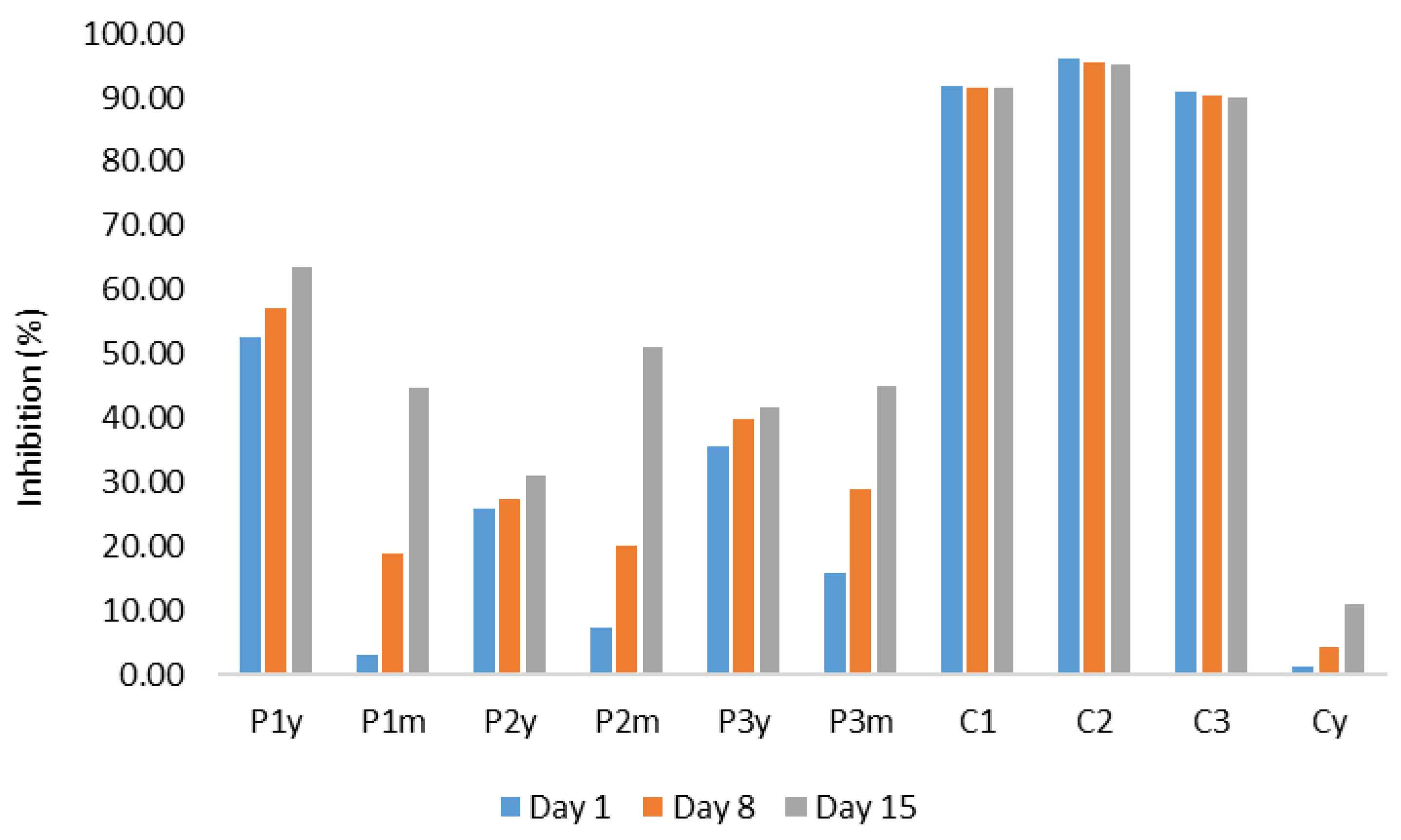
Figure 2.
Flow curves of yogurt samples.
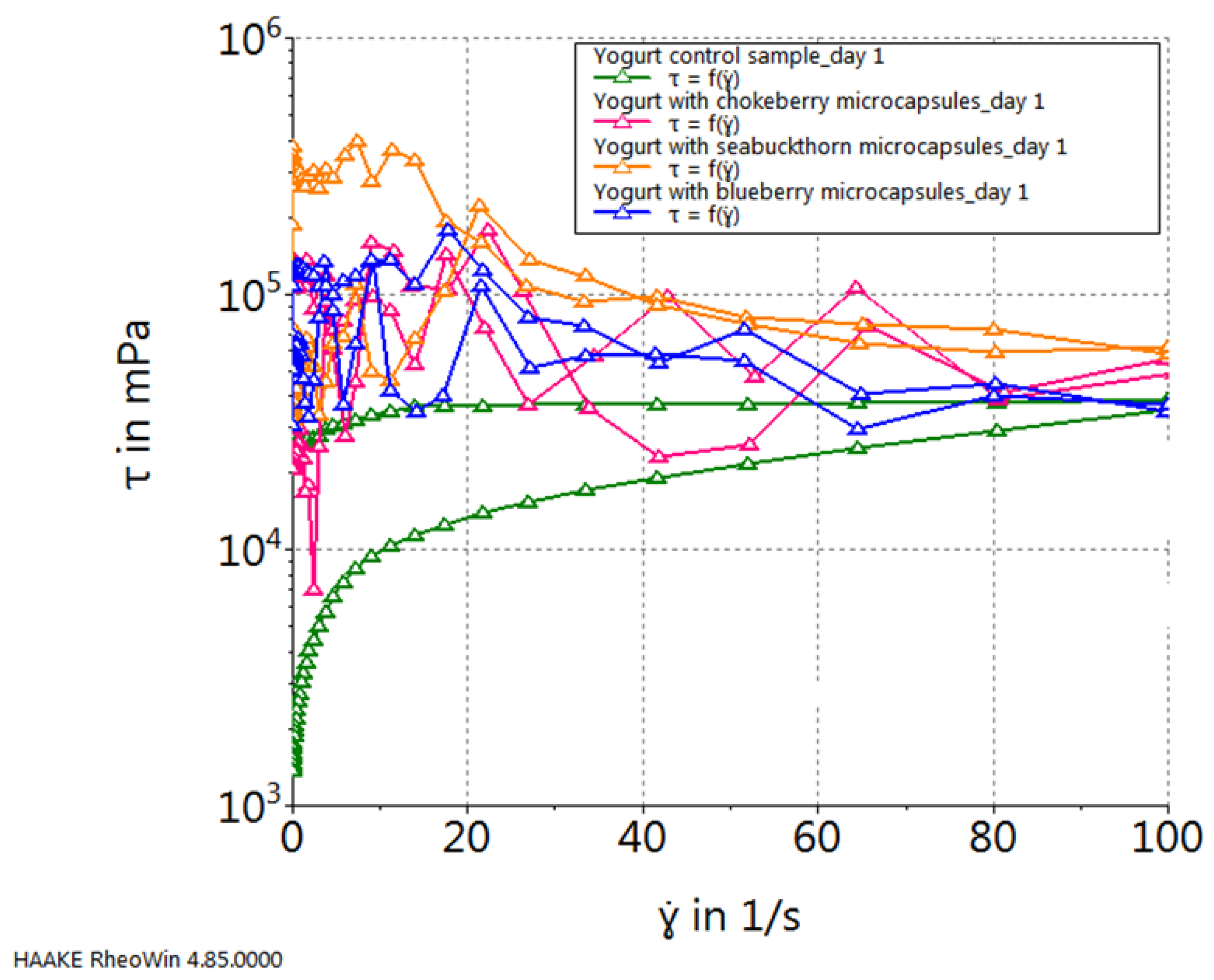
Figure 3.
Viscosity curves of yogurt samples (day 1 of storage).
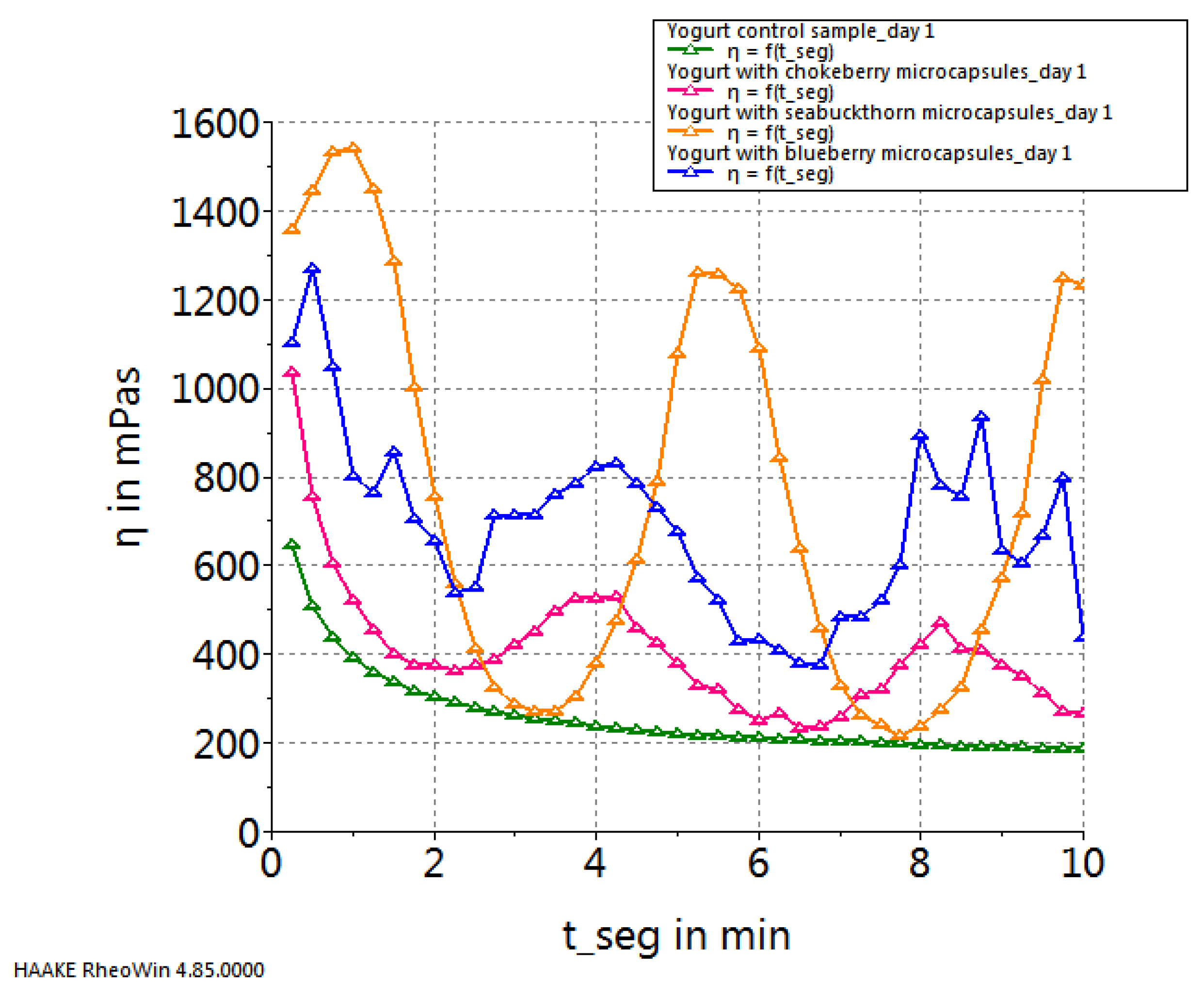
Figure 4.
Variation of viscosity curves of control sample during storage.
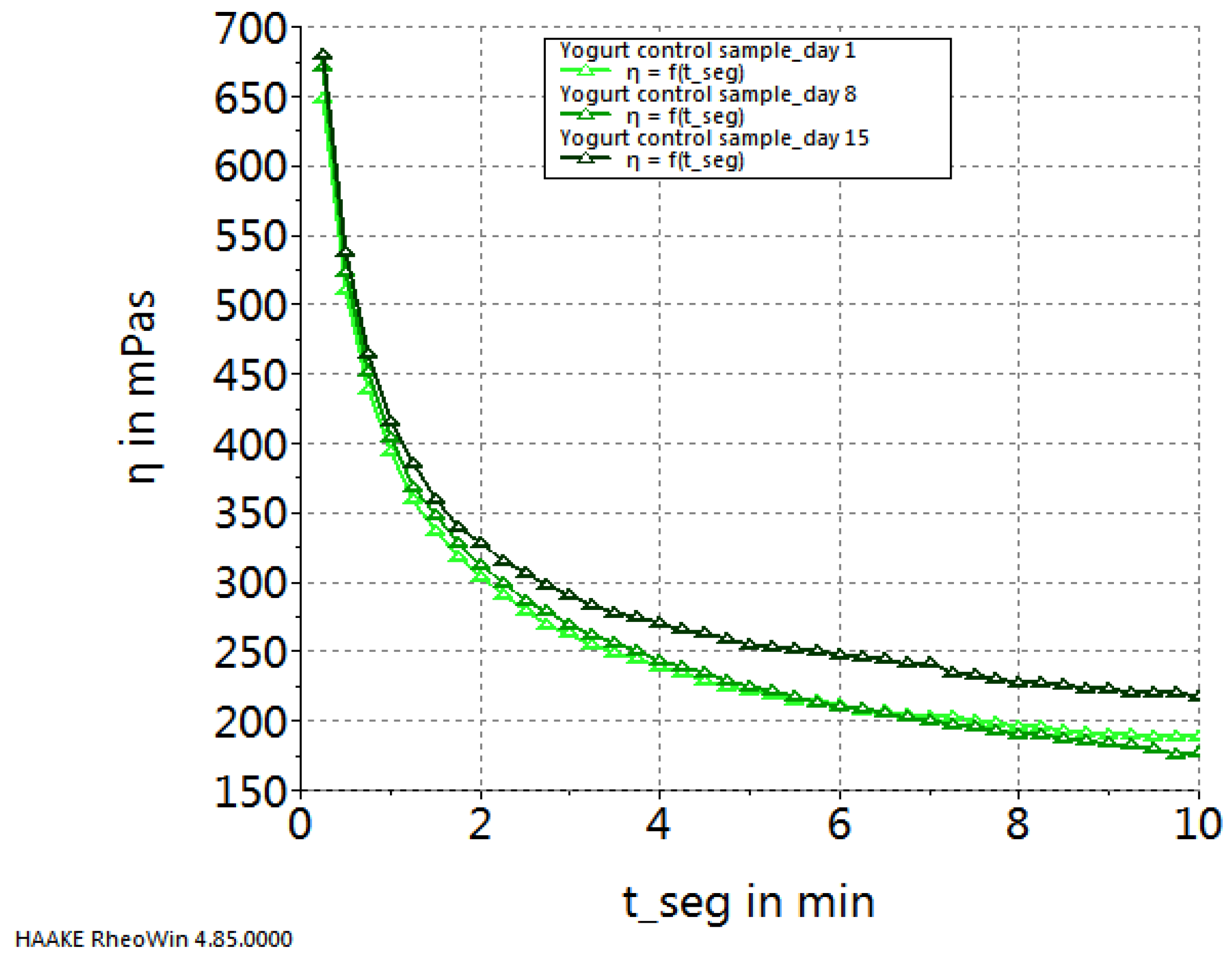
Figure 5.
Variation of viscosity curves of yogurt with chokeberry capsules during storage.
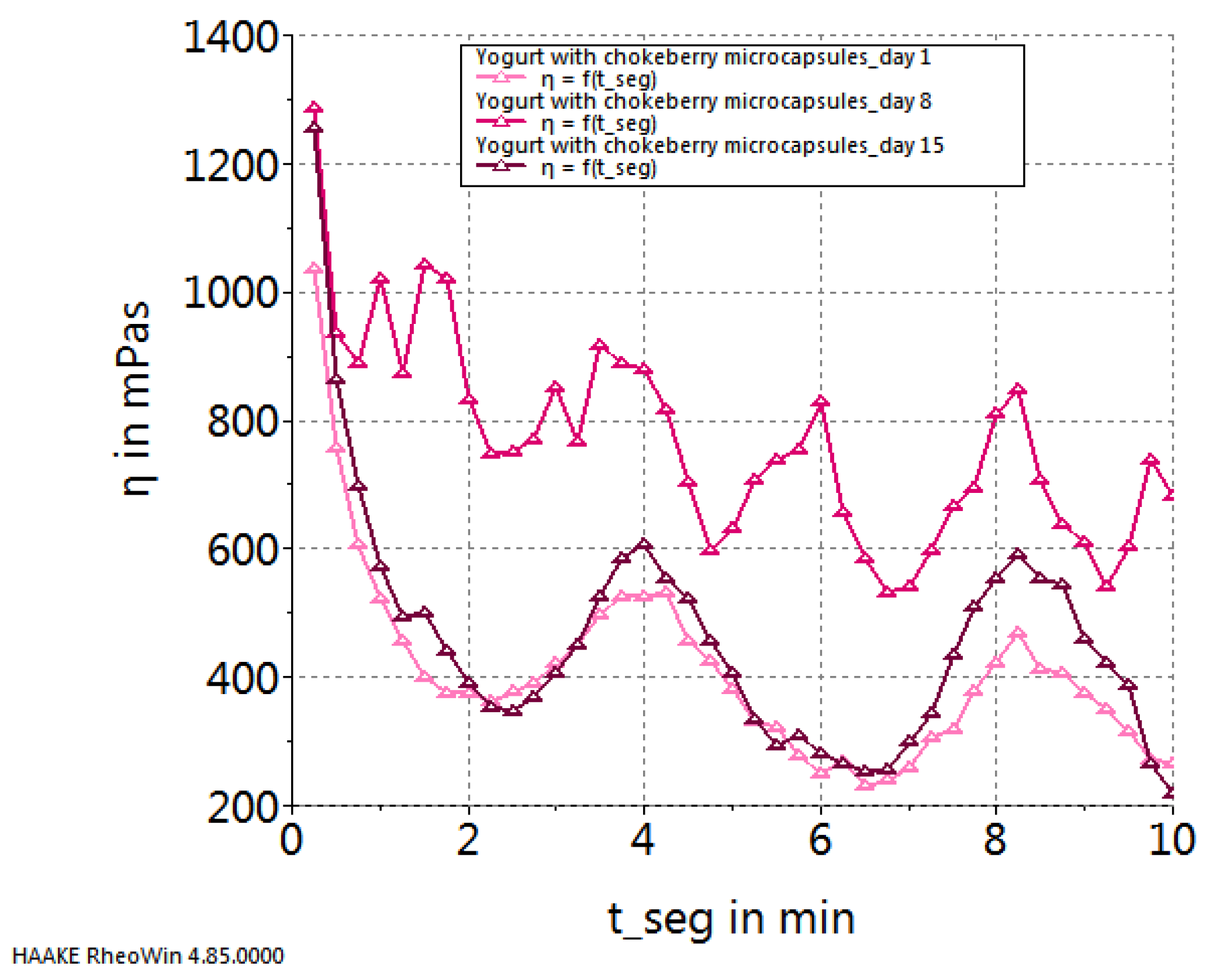
Figure 6.
Variation of viscosity curves of yogurt with sea buckthorn capsules during storage.
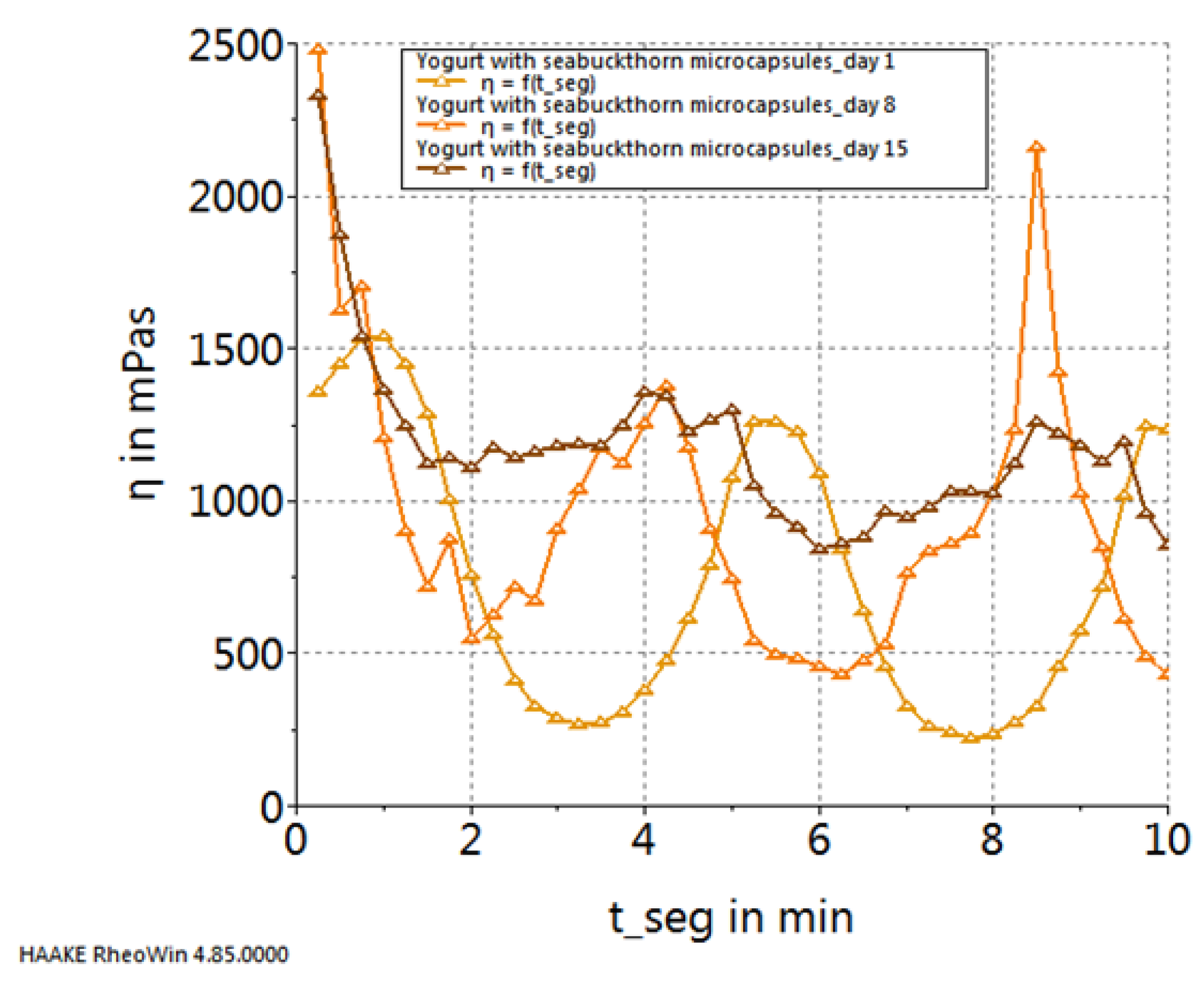
Figure 7.
Variation of viscosity curves of yogurt with blueberry capsules during storage.
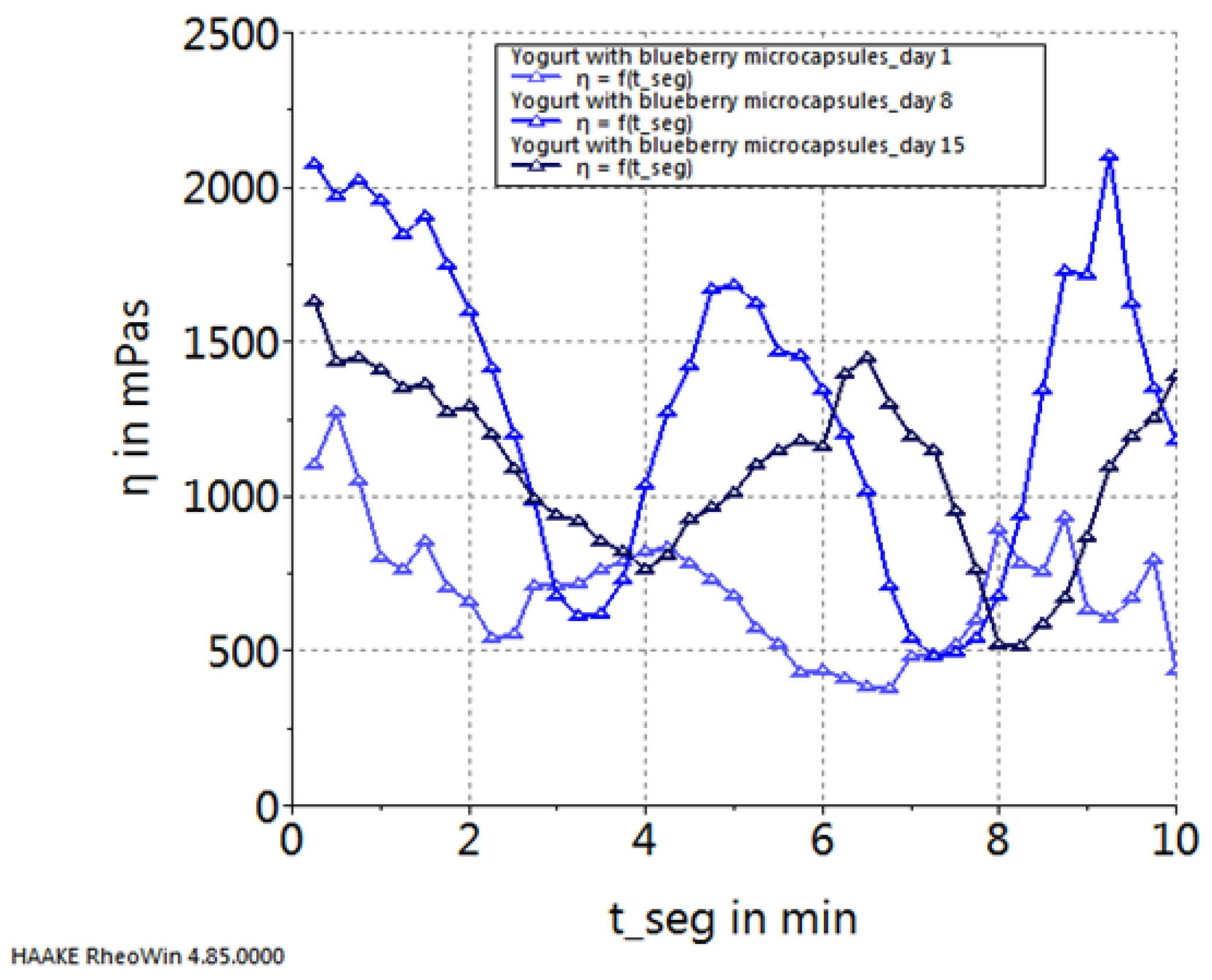
Figure 8.
Viscoelastic properties of yogurt samples.

Figure 9.
Viscoelastic properties of yogurt control sample during storage.
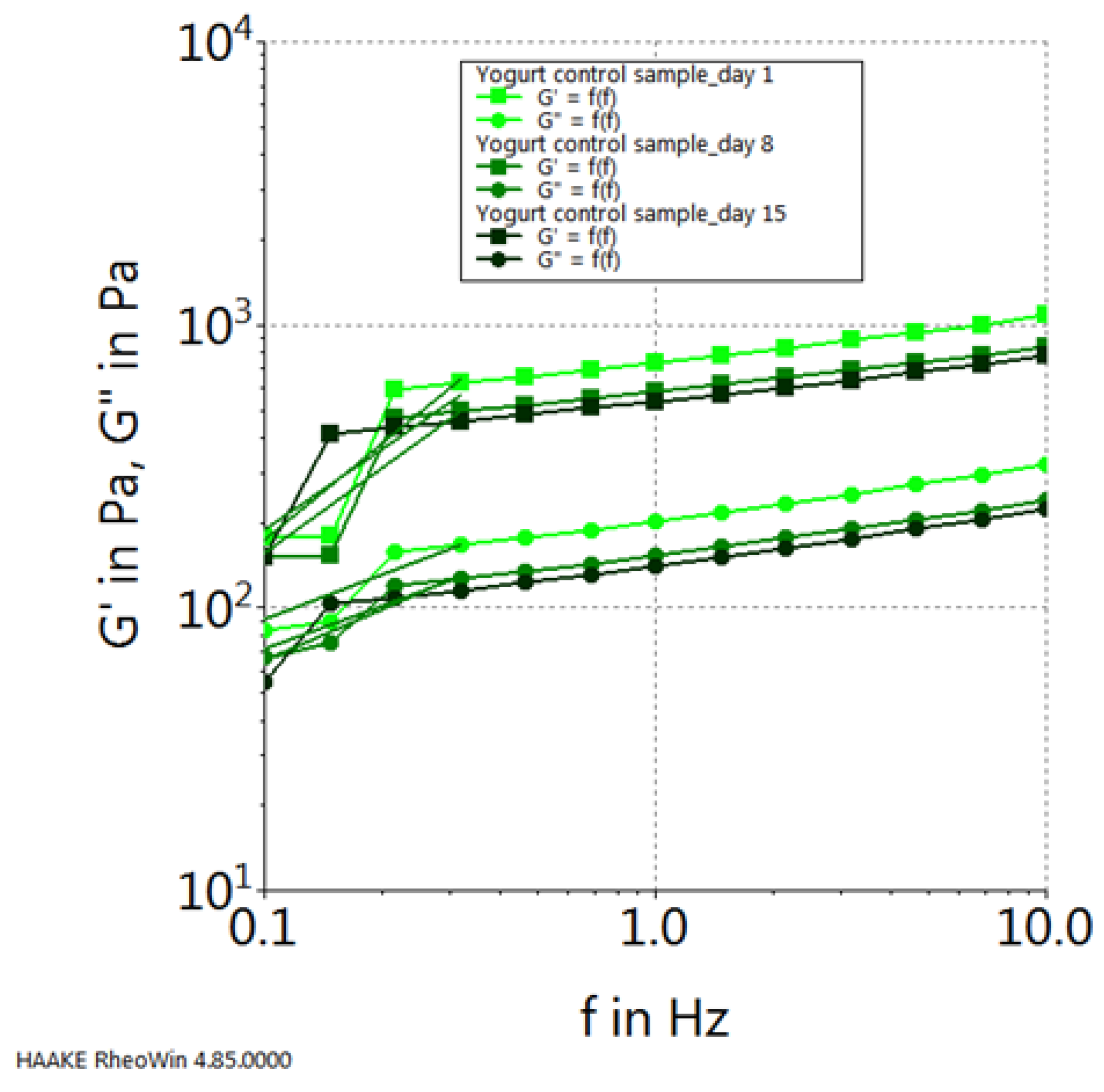
Figure 10.
Viscoelastic properties of yogurt with chokeberry capsules during storage.
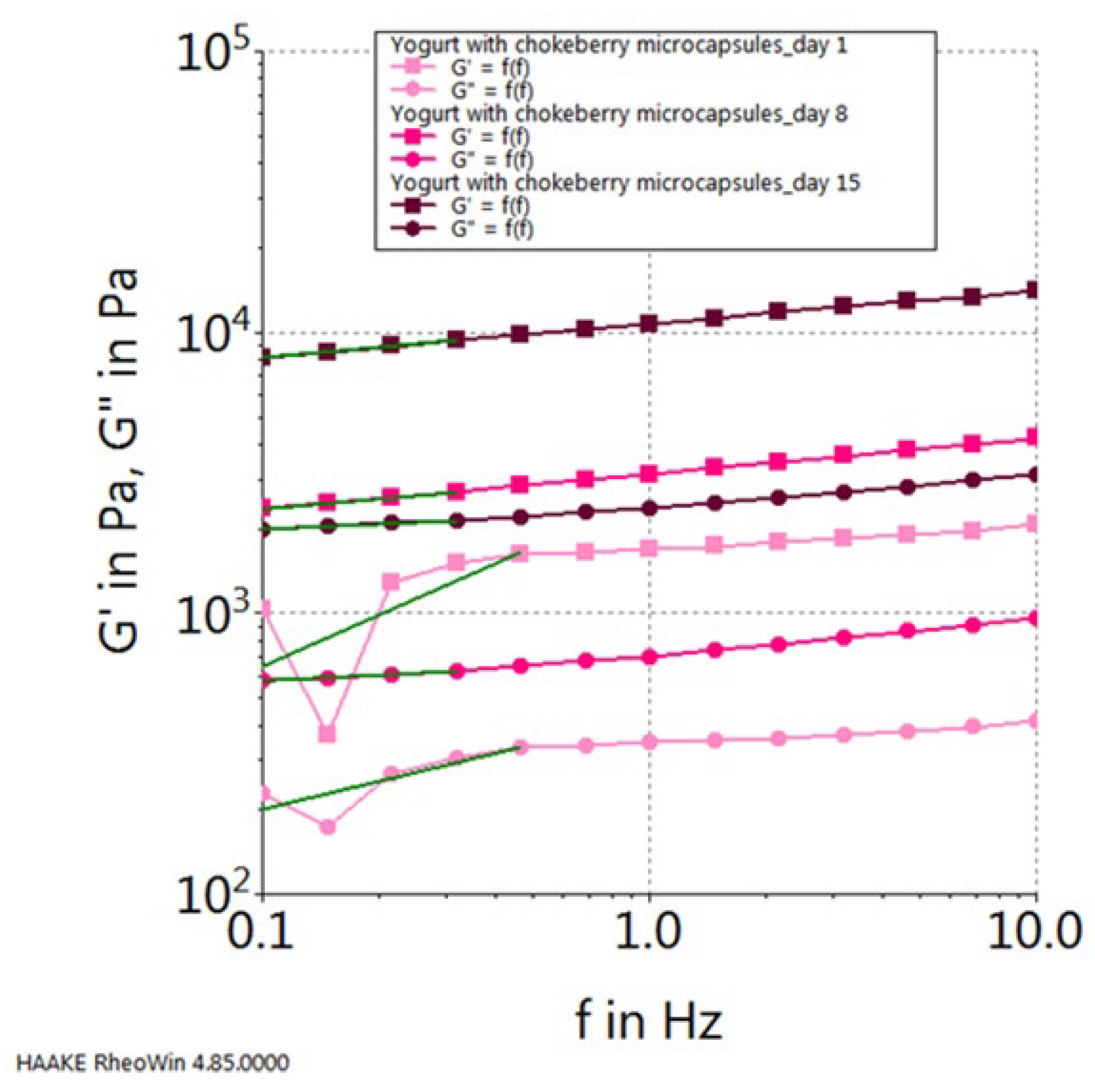
Figure 11.
Viscoelastic properties of yogurt with sea buckthorn capsules during storage.
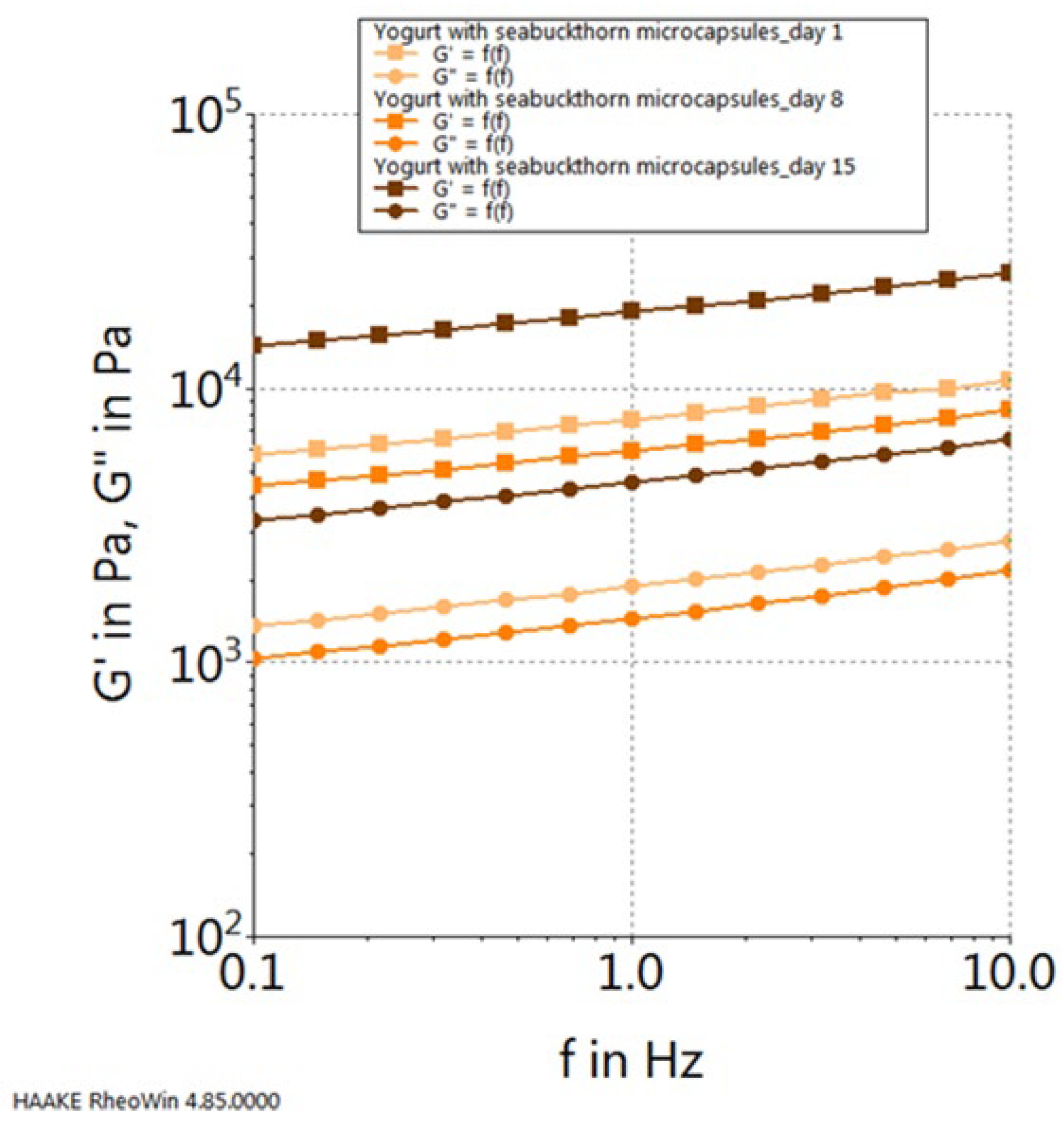
Figure 12.
Viscoelastic properties of yogurt with blueberry capsules during storage.
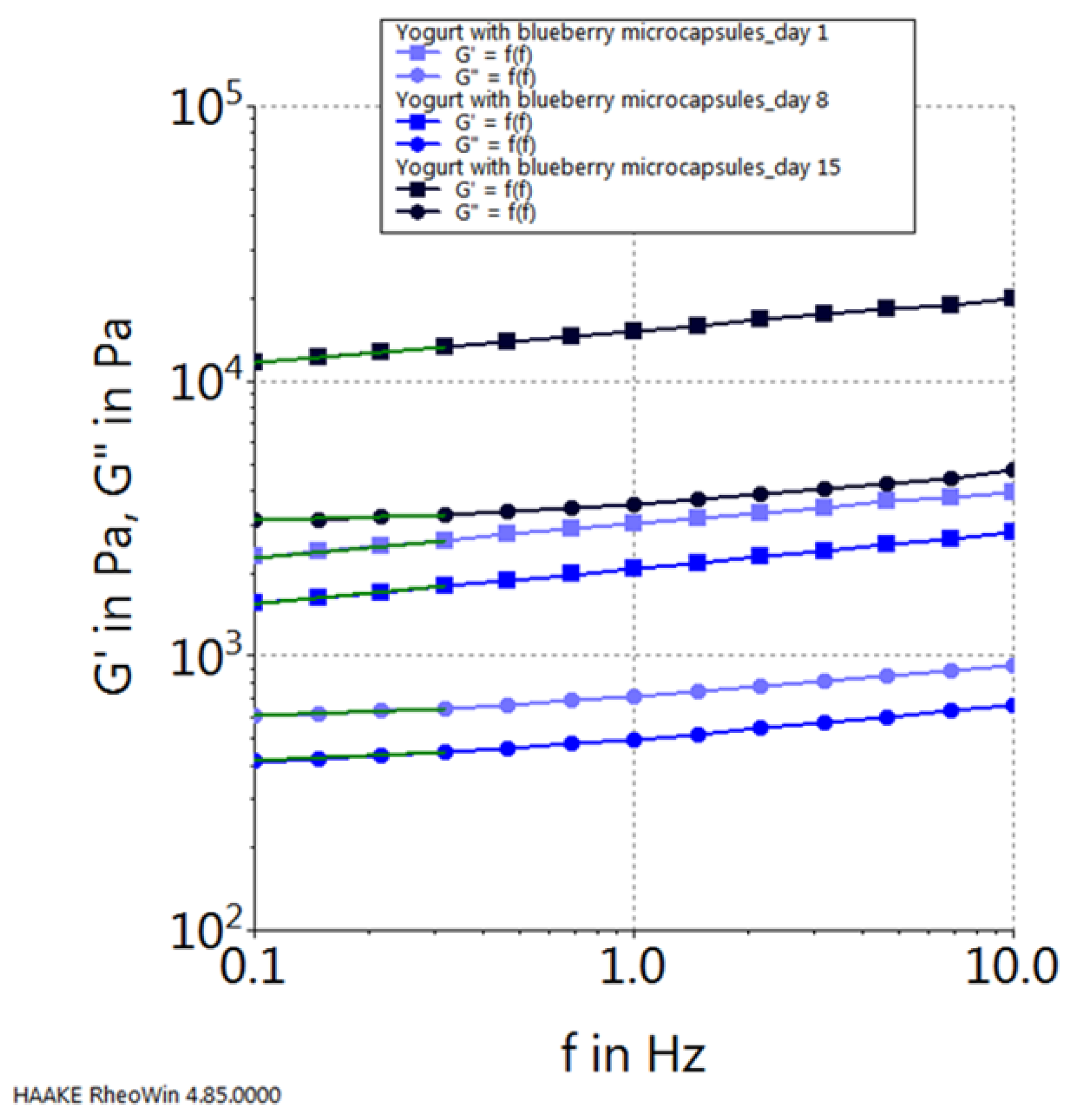
Figure 13.
The importance of the criteria in ranking the yogurt samples taken in the study.
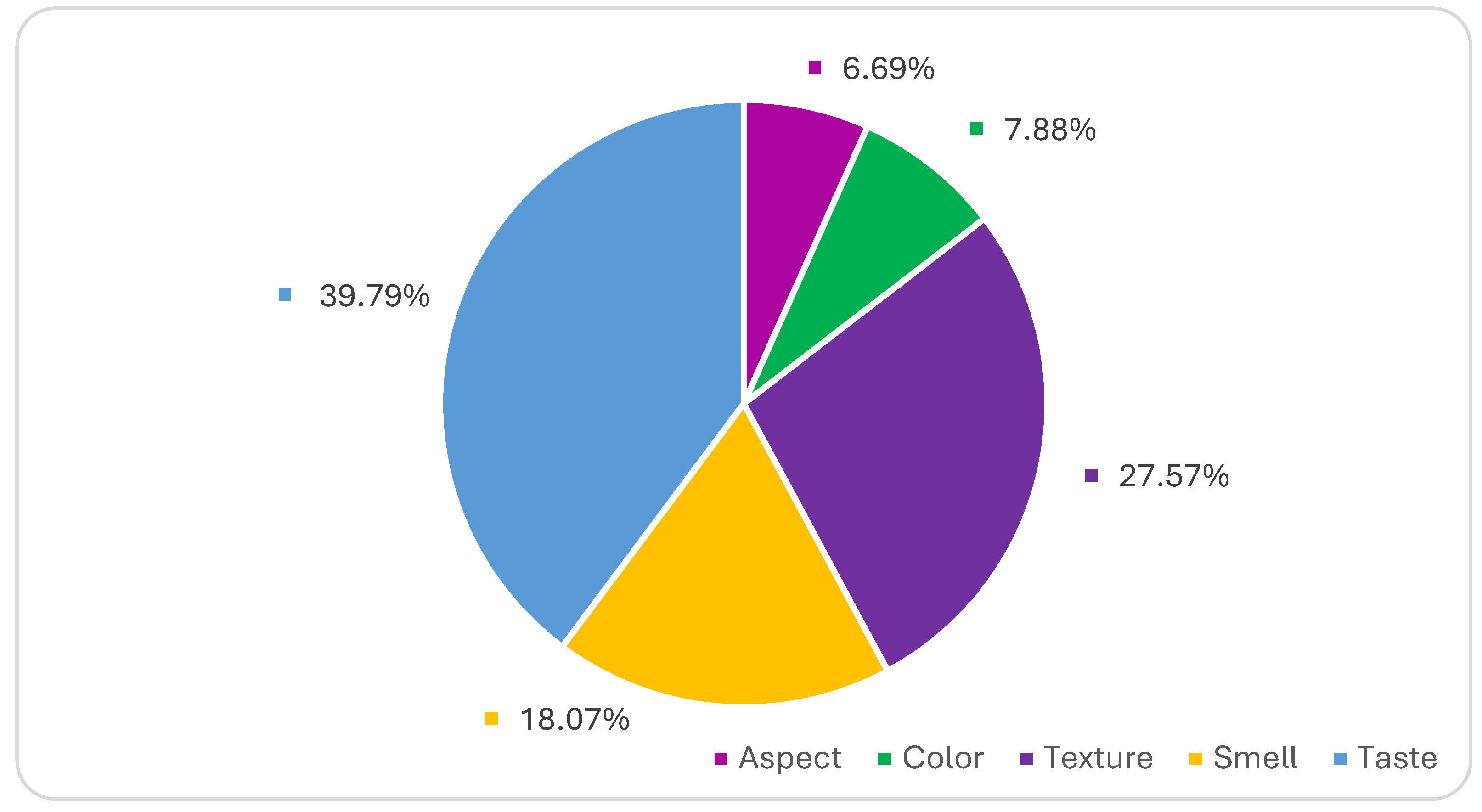
Figure 14.
Classification of yogurt samples following sensory analysis using the AHP method.
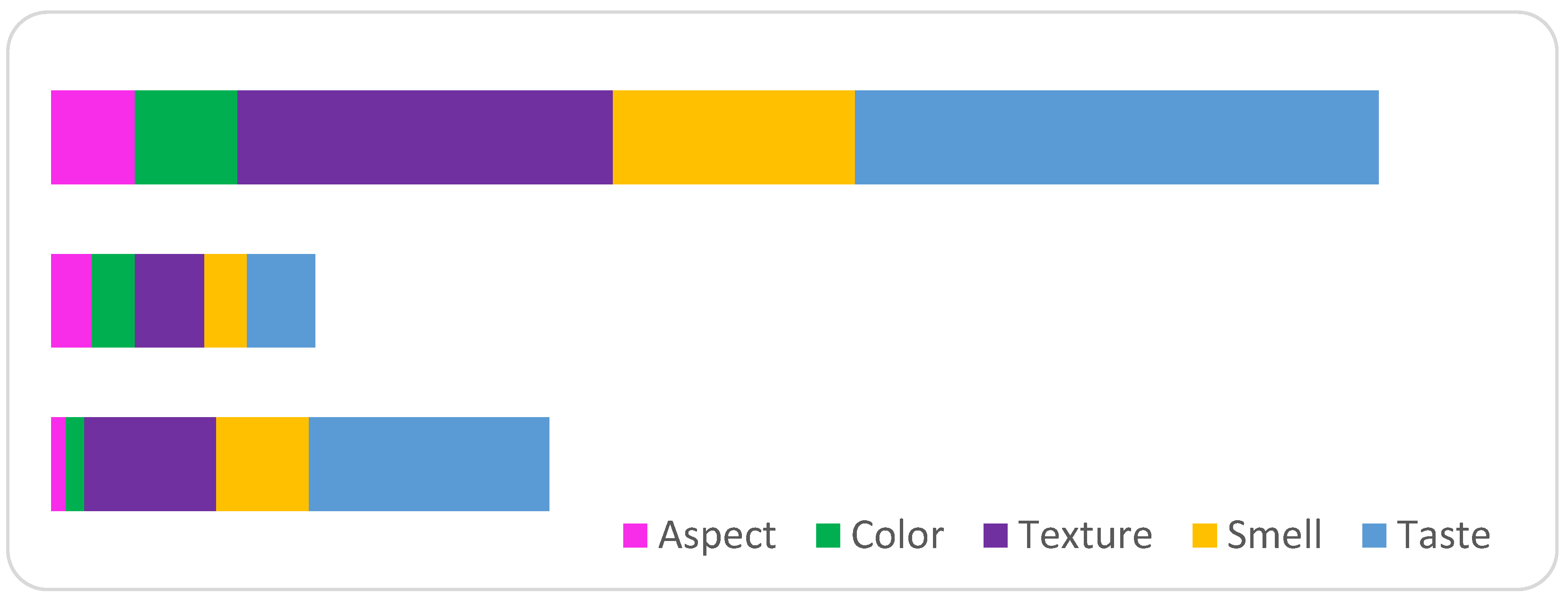
Figure 15.
Criteria Texture/Taste sensitivity analysis.
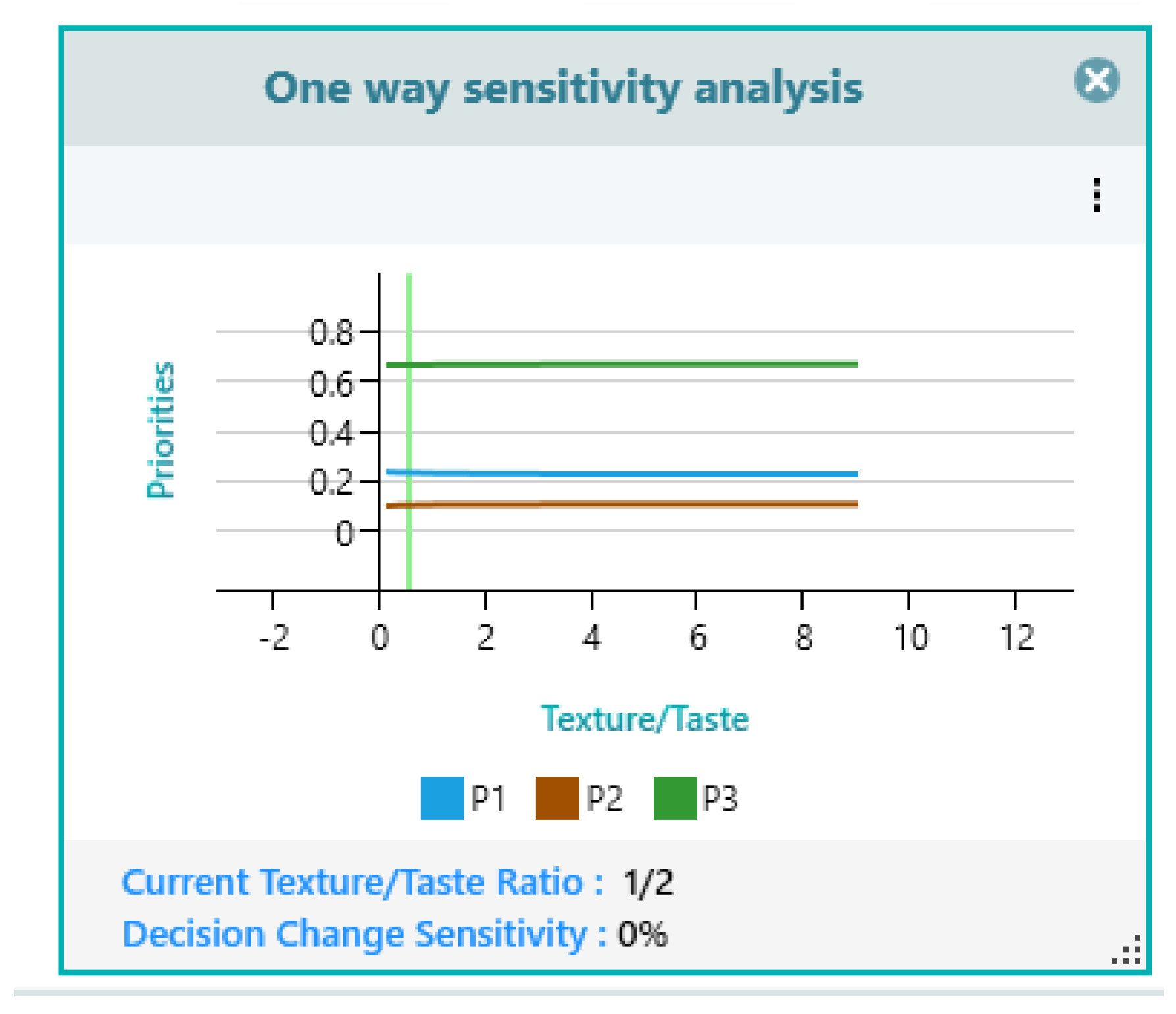
Figure 16.
Criteria Pairwise Comparison example using Analytic Hierarchy Process Software 4.2.6 for Windows Desktop.
Figure 16.
Criteria Pairwise Comparison example using Analytic Hierarchy Process Software 4.2.6 for Windows Desktop.
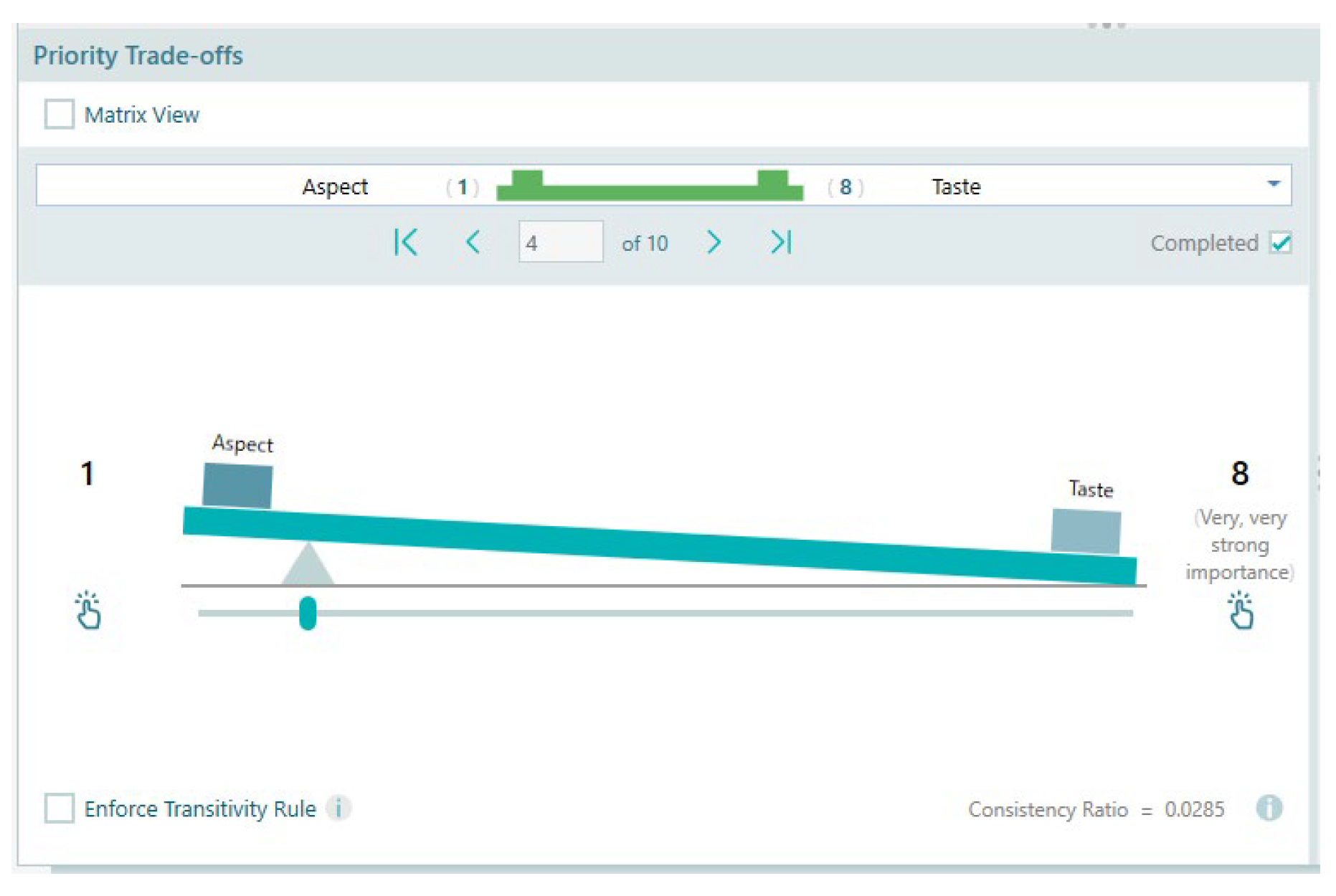

Table 1.
Evaluation of macrocapsules.
| Chokeberry Capsules | Sea Buckthorn Capsules | Blueberry Capsules | |
|---|---|---|---|
| Color Evaluation | |||
| L* | 28.89 ± 0.31 | 54.44 ± 0.32 | 28.65 ± 0.29 |
| a* | 1.53 ± 0.03 | 13.17 ± 0.08 | 1.21 ± 0.22 |
| b* | 0.82 ± 0.06 | 0.79 ± 0.14 | 0.78 ± 0.05 |
| Diameter, mm | 3.12 ± 0.33 | 3.27 ± 0.25 | 3.08 ± 0.03 |
Table 2.
Yoghurt evaluation during 2 weeks storage period.
| P1 | P2 | P3 | C | |
|---|---|---|---|---|
| pH | ||||
| Day 1 | 4.56 ± 0.02 | 4.52 ± 0.02 | 4.41 ± 0.02 | 4.34 ± 0.01 |
| Day 8 | 4.52 ± 0.01 | 4.50 ± 0.01 | 4.40 ± 0.01 | 4.32 ± 0.01 |
| Day 15 | 4.45 ± 0.01 | 4.49 ± 0.01 | 4.37 ± 0.01 | 4.31 ± 0.01 |
| Syneresis, % | ||||
| Day 1 | 47.00 ± 0.01 | 50.00 ± 0.01 | 53.50 ± 0.01 | 52.00 ± 0.01 |
| Day 8 | 45.00 ± 0.01 | 50.80 ± 0.01 | 51.30 ± 0.01 | 46.00 ± 0.01 |
| Day 15 | 44.00 ± 0.01 | 53.00 ± 0.01 | 50.50 ± 0.01 | 40.00 ± 0.01 |
| Water hold capacity, % | ||||
| Day 1 | 31.14 ± 0.01 | 38.17 ± 0.01 | 33.75 ± 0.01 | 35.84 ± 0.01 |
| Day 8 | 35.17 ± 0.01 | 41.12 ± 0.01 | 31.19 ± 0.01 | 34.12 ± 0.01 |
| Day 15 | 38.84 ± 0.01 | 44.76 ± 0.01 | 39.04 ± 0.01 | 30.86 ± 0.01 |
P1- yoghurt with chokeberry capsules; P2- yoghurt with sea buckthorn capsules; P3 – yoghurt with blueberry capsules; C- control sample.
Table 3.
Color variations between samples during storage period.
| P1 | P2 | P3 | C | |
|---|---|---|---|---|
| L* | ||||
| Day 1 | 71.92 ± 1.93 | 77.94 ± 0.64 | 74.70 ± 0.76 | 79.71 ± 0.08 |
| Day 8 | 72.49 ± 0.29 | 78.47 ± 0.24 | 74.85 ± 0.46 | 78.74 ± 0.21 |
| Day 15 | 73.22 ± 0.06 | 78.62 ± 0.29 | 74.04 ± 0.40 | 79.17 ± 0.47 |
| a* | ||||
| Day 1 | 3.13 ± 0.24 | 1.47 ± 0.02 | 0.49 ± 0.09 | -2.45 ± 0.03 |
| Day 8 | 3.32 ± 0.13 | 1.50 ± 0.01 | 0.91 ± 0.04 | -2.51 ± 0.02 |
| Day 15 | 3.84 ± 0.02 | 1.54 ± 0.01 | 1.29 ± 0.19 | - 2.52 ± 0.02 |
| b* | ||||
| Day 1 | 2.45 ± 0.19 | 8.22 ± 0.10 | 4.79 ± 0.39 | 8.68 ± 0.02 |
| Day 8 | 3.81 ± 0.07 | 8.24 ± 0.02 | 4.73 ± 0.02 | 8.64 ± 0.02 |
| Day 15 | 4.20 ± 0.02 | 8.29 ± 0.03 | 4.68 ± 0.41 | 8.56 ± 0.08 |
| ΔEs | ||||
| Day 1 | 9.99 | 2.07 | 6.63 | - |
| Day 8 | 7.94 | 1.11 | 5.74 | - |
| Day 15 | 7.49 | 1.15 | 3.12 | - |
| ΔEt | ||||
| Day 8-Day 1 | 1.48 | 0.53 | 0.45 | 0.99 |
| Day 15-Day 8 | 0.83 | 0.16 | 0.89 | 0.43 |
| Day 15- Day 1 | 2.58 | 0.71 | 1.04 | 0.55 |
ΔEs – color difference between yoghurt with capsules and control sample; ΔEt – color differences between yoghurt during storage period.
Table 4.
Pairwise comparation between main sensorial parameters of samples.
| Aspect | Color | Texture | Smell | Taste | Priorities | |
|---|---|---|---|---|---|---|
| Aspect | 1 | 0.607 | 0.252 | 0.339 | 0.226 | 0.0669 |
| Color | 1.65 | 1 | 0.24 | 0.322 | 0.21 | 0.0788 |
| Texture | 3.97 | 4.16 | 1 | 2.04 | 0.473 | 0.2757 |
| Smell | 2.79 | 3.11 | 0.49 | 1 | 0.441 | 0.1807 |
| Taste | 4.43 | 4.77 | 2.11 | 2.27 | 1 | 0.3979 |
| Consistency Ratio calculated as | 0.025 | |||||
Table 5.
Classification of yogurt samples following sensory analysis using the AHP method.
| Option | Aspect | Color | Texture | Smell | Taste |
|---|---|---|---|---|---|
| P1 | 0.0072 | 0.0089 | 0.0631 | 0.0444 | 0.1146 |
| P2 | 0.0195 | 0.0207 | 0.0332 | 0.0203 | 0.0325 |
| P3 | 0.0402 | 0.0492 | 0.1794 | 0.1159 | 0.2508 |
Table 6.
Example of questions received by each taster for evaluation of sensory properties.
| From your point of view, which attribute is more important and to what extent to evaluate the QUALITY of a yogurt? | ||||||||||
|---|---|---|---|---|---|---|---|---|---|---|
| EX | MF | F | MO | = | MO | F | MF | EX | ||
| C1 Aspect | 9 | 7 | 5 | 3 | 1 | 3 | 5 | 7 | 9 | C2 Color |
| C1 Aspect | 9 | 7 | 5 | 3 | 1 | 3 | 5 | 7 | 9 | C3 Texture |
| C1 Aspect | 9 | 7 | 5 | 3 | 1 | 3 | 5 | 7 | 9 | C4 Smell |
| C1 Aspect | 9 | 7 | 5 | 3 | 1 | 3 | 5 | 7 | 9 | C5 Taste |
| C2 Color | 9 | 7 | 5 | 3 | 1 | 3 | 5 | 7 | 9 | C3 Texture |
| C2 Color | 9 | 7 | 5 | 3 | 1 | 3 | 5 | 7 | 9 | C4 Smell |
| C2 Color | 9 | 7 | 5 | 3 | 1 | 3 | 5 | 7 | 9 | C5 Taste |
| C3 Texture | 9 | 7 | 5 | 3 | 1 | 3 | 5 | 7 | 9 | C4 Smell |
| C3 Texture | 9 | 7 | 5 | 3 | 1 | 3 | 5 | 7 | 9 | C5 Taste |
| C4 Smell | 9 | 7 | 5 | 3 | 1 | 3 | 5 | 7 | 9 | C5 Taste |
Disclaimer/Publisher’s Note: The statements, opinions and data contained in all publications are solely those of the individual author(s) and contributor(s) and not of MDPI and/or the editor(s). MDPI and/or the editor(s) disclaim responsibility for any injury to people or property resulting from any ideas, methods, instructions or products referred to in the content. |
© 2023 by the authors. Licensee MDPI, Basel, Switzerland. This article is an open access article distributed under the terms and conditions of the Creative Commons Attribution (CC BY) license (http://creativecommons.org/licenses/by/4.0/).
Copyright: This open access article is published under a Creative Commons CC BY 4.0 license, which permit the free download, distribution, and reuse, provided that the author and preprint are cited in any reuse.


