
Submitted:
14 December 2023
Posted:
15 December 2023
Read the latest preprint version here
Abstract
Transforming Small-Scale LNG Business, Enhancing Efficiency and Resilience in an Evolving Supply Chain In various industries, innovative systems have proven their value due to their efficiency and adaptability. A prime example of this lies in the rapid growth of the liquefied natural gas (LNG) market. LNG, a fuel derived from natural gas, has gained significant traction in recent years. In light of this, we aim to explore optimal strategies for small-scale LNG businesses, with a focus on revolutionizing their supply chain to ensure adaptability and sustainability. Our objective is to enhance efficiency and sturdiness in this evolving sector. By devising innovative methods and implementing cutting-edge technologies, we aim to revolutionize the small-scale LNG market, paving the way for a more optimized and resilient supply chain. Through this transformation, we strive to create a sustainable and adaptable framework that will drive the growth and success of a small-scale LNG businesses.LNG' ability to be transported and stored more cost-effectively in its reduced volume compared to natural gas in its original state is a significant advantage. The distribution network for LNG starts at numerous supply terminals and extends to a diverse range of consumption centers, each with varying tank capacities. In the broader economic context, the establishment of efficient routes for LNG Truck tank plays a critical role.To tackle the challenge of selecting a pickup location and determining optimal destinations with specific unloading volumes for liquefied natural gas (LNG), this research presents an innovative solution utilizing state-of-the-art machine learning techniques. The proposed approach combines the power of reinforcement learning, recurrent neural networks, online learning, and graph theory. By leveraging these cutting-edge techniques, we aim to develop an intelligent system that can effectively determine the most efficient pickup location and sequence of destinations for LNG delivery. This system will take into account various factors such as transportation costs tank capacity, and demand fluctuations. Through the integration of reinforcement learning, the system will continuously learn and improve its decision-making process in real-time. The recurrent neural networks will allow for the analysis of historical aim to model and optimize the complex network of pickup and delivery routes, considering factors such as distance, capacity constraints, and operational efficiencies. With this innovative approach, we strive to revolutionize the selection and planning process for LNG pickup and delivery, ultimately enhancing efficiency and reducing cost within the LNG supply chain.Improving the distribution network offers several financial benefits, including cost reduction, faster delivery times, more affordable distribution, and enhanced efficiency in the utilization of tanker trucks for LNG transportation. By optimizing the distribution network, transit costs associated with LNG transportation can be significantly lowered. This can be achieved through intelligent route planning, taking into account factors such as distance, traffic conditions, and fuel consumption. Minimizing transit costs contributes to overall savings for businesses operating in the LNG market. Faster delivery times are another advantage of an enhanced distribution network. By designing efficient routes and eliminating unnecessary detours or delays, the time taken for LNG to reach its intended destinations can be reduced. This not only improves customer satisfaction but also allows for more frequent deliveries and better coordination of supply and demand. Cheaper distribution is a direct outcome of an optimized distribution network. By strategically planning pickup locations, destinations, and intermediate stops, the costs associated with transferring LNG between terminals and consumption centres can be minimized. This leads to savings in transportation expenses, ultimately benefiting both businesses and end-users. Efficient utilization of tanker trucks is crucial for maximizing profitability in the LNG industry. An improved distribution network enables better allocation of resources, ensuring that tanker trucks are utilized optimally. This includes reducing empty or underutilized trips, maximizing load capacities, and minimizing idle time. Such efficiency improvements translate to cost savings and increased revenue for businesses involved in LNG transportation. Overall, the financial gains from improving the distribution network are substantial. Lower transit costs, faster delivery times, cheaper distribution, and more efficient use of tanker trucks contribute to increased profitability, competitiveness, and sustainability in the LNG market.
Keywords:
liquified natural gas
; distribution system
; artificial intelligence
; reinforcement learning
; economic development
Introduction
In today's world, we rely more and more on innovative systems to simplify our daily lives. This trend can be observed across various industries, as AI technology becomes increasingly prevalent (Burggraaf et al., 2018). The reason behind this is that AI-powered systems enhance our understanding of complex processes by using specialized human knowledge to define rules. Additionally, they reduce the need for manual labor and its associated expenses by automating repetitive tasks.
Moreover, AI techniques are not only improving established procedures but also learning from past mistakes to enhance their effectiveness. For instance, AI is being applied to enhance process planning, control, and work scheduling (Burggräf et al., 2018). Traditional methods of identifying optimal solutions to problems often face challenges and errors due to the increasing complexity of systems and the uncertainty surrounding their characteristics in real-world applications (Li et al., 2013).
AI-based methods offer an alternative to traditional approaches when it comes to modeling and controlling complex systems (Shteimberg et al., 2012). Artificial intelligence (AI) is a specialized field within computer science that addresses problems traditionally believed to require human intelligence for their solution (Shteimberg et al., 2012). Within this field, there exist methods that can either support or completely replace human involvement in solving intricate problems. These methods aim to provide efficient and effective solutions to complex issues.
the aim of this field is to bridge the gap between humans and machines by equipping machines with human-like capabilities. One crucial characteristic is learning, which involves improving performance by integrating previously acquired information (Burggräf et al., 2018). By integrating AI techniques with real-world data, we can enable machines to learn from their experiences and make informed decisions based on that knowledge. This combination of AI and data is key to unlocking the potential of intelligent systems and enhancing their understanding and problem-solving abilities.
"Given the rapid growth of the global LNG industry, it is highly relevant to explore the application of resilient and effective artificial intelligence (AI) techniques in the evolving distribution system of a large-scale LNG company" (Halvorsen-Weare 2013)
To convert natural gas into a liquid form called LNG (Liquified Natural Gas), it undergoes a cooling process to approximately -162 degrees Celsius (Alvarez et al., 2019). The transportation and storage of LNG are more cost-effective due to its significantly smaller volume, around 600 times less than that of natural gas (Bittante et al., 2018).
Even though pipelines are the standard method for transporting natural gas today, delivering gas to certain clients in outlying locations is too expensive to be worthwhile (Halvorsen-Weare&Fagerholt, 2013). Within the increasingly popular framework of painted size LNG distribution, LNG is transported by trucks between giant supply terminals and smaller regasification facilities (Jokinen et al., 2015). Villages without access to gas distribution networks, as well as end-users themselves, are common places to find such regasification terminals (industrial customers).
There are a lot of studies written on the evolution of the LNG supply chain, but the vast majority of them focus on enterprises of a certain size (Jokinen et al., 2015). The distribution of LNG, particularly in the form of painted size, is a largely uncharted territory, as is the question of its distribution system's development. Papers on the growth of the painted size LNG supply chain exist, but they, like (Jokinen et al., 2015) and (Alvarez et al., 2019), primarily focus on determining the optimum structure for the supply chain, which includes the optimal number of satellite terminals, ships/trucks, and storage capacities. However, from an economic standpoint, the development of LNG truck tanks paths is an important factor in the growth of a business as a whole if the supply chain in a given region is already defined and there are multiple pickup points (with varying LNG specifications) and multiple destination points (with varying tank capacities and LNG demand). The optimal sequence of LNG unloading locations and the total volume of LNG dumped at each location must be determined dynamically. The research presented here aimed to find a way to fix this specific kind of issue.
This sort of issue is widely known in the literature and is frequently used in LNG business studies; mathematically speaking, it is a Vehicle Routing Problem (VRP). Large-scale LNG ship routing and scheduling is addressed by (Halvorsen-Weare&Fagerholt, 2013), whereas maritime transportation of LNG between supply ports and a number of receiving ports with specified needs is addressed by (Bittante et al., 2018). The classic Vehicle Routing Problem (VRP) is planning routes for delivering goods where all vehicles are identical in size, speed, and other relevant qualities, and there is only one distribution hub from which goods may be picked up (Breakers et al., 2016). The Vehicle Routing Problem (VRP) comes in a variety of forms based on the quantity of vehicles and storage facilities involved, the rate at which demand is met (immediately or gradually), and other considerations.
According to (Braekers et al., 2016), the issue addressed in this research combines elements of the following classes:
- Vehicle Capacity Variation Management (HFVRP):
- Among the many types of VRPs are: • Multi-Depot VRP (MDVRP), in which a number of depots are located in different areas;
- With VRPPD, things are picked up from one site and delivered to another (due to varying quality of the LNG among the pickup points),
- Periodic VRP (PVRP), whereby planning is done over a certain time period and it is acceptable to not meet the demand entirely at any one visit.
In summary, the VRP issue of large-scale LNG company is a multiple-depot, multiple-vehicle problem with partial demand fulfillment and flexible demand-satisfaction periods (so the demand not necessarily has to be satisfied after hitting some point, but rather it should be satisfied with increasing likeliness depending on its size).
This report introduces a fresh strategy for growing the painted size LNG market by emphasizing an original distribution setup. Graph theory and cutting-edge machine learning techniques including reinforcement learning, recursive neural networks, and online learning form the basis of the suggested solution. The following part provides a high-level summary of the techniques and theoretical underpinnings of the solution development process. The next section includes a comprehensive statement of the issue and a precise explanation of the suggested solution, followed by a discussion of the solution and some last thoughts.
The United Nations Sustainable Development Goals (SDGs) provide a comprehensive framework for addressing various global challenges, including those related to the topic of LNG distribution and supply chain management.
Here are some SDGs that are particularly relevant to this Research
- Goal 7: Affordable and Clean Energy - The efficient distribution of LNG contributes to the goal of ensuring access to affordable, reliable, sustainable, and modern energy for all.
- Goal 9: Industry, Innovation, and Infrastructure - Enhancing the efficiency and resilience of LNG distribution networks aligns with the objective of promoting sustainable industrialization and fostering innovation in infrastructure.
- Goal 11: Sustainable Cities and Communities - Optimizing LNG distribution can help cities and communities transition to sustainable energy sources, reducing emissions and promoting cleaner air quality.
- Goal 13: Climate Action - By improving the efficiency of LNG distribution, the industry can contribute to reducing greenhouse gas emissions and mitigating the impacts of climate change.
- Goal 17: partnerships for the Goals - Collaboration among stakeholders, including governments, businesses, and civil society, is essential for achieving sustainable LNG distribution.
Partnerships can drive innovation, knowledge sharing, and resource mobilization. By aligning efforts in LNG distribution with the UN SDGs, the industry can contribute to addressing global challenges and advancing sustainable development. This includes ensuring access to clean energy, fostering innovation, promoting sustainable cities, combating climate change and fostering partnership for a sustainable future
Methodology
Our proposed strategy for enhancing the supply chain in the LNG industry is based on the core principles of reinforcement learning. Reinforcement learning, alongside supervised and unsupervised learning, represents one of the three fundamental paradigms in machine learn.
Training with reinforcement
Reinforcement learning is based on the idea of a learning agent that observes and interacts with its environment. The agent receives feedback on the quality of its actions and adjusts its behavior accordingly. This feedback helps the agent to refine its decision-making process and improve its performance. By following this approach, the agent learns a near-optimal policy, which enables it to make the best possible response to new inputs during the learning process.
In our challenge scenario, we have a complete distribution system comprising multiple pickup and destination sites. Each site differs in the quality of the LNG it delivers, which is reflected in the varying tank capacities. The algorithm takes as input the current state of the system, including the fill levels of the tanks, capacities of the tank trucks, and their respective locations. This information helps the algorithm make informed decisions to optimize the distribution process.
The algorithm generates a route for the tank truck, which can be seen as a sequence of stops. It provides recommendations for the order of stops and estimates the amount of LNG to be unloaded at each stop. The primary focus of the evaluation is to minimize the distance traveled by the truck, aiming for shorter routes. However, other factors are also considered, such as destinations with challenging access or limited tank truck load ensuring equal axle load. These additional constraints help optimize the overall efficiency and safety of the distribution process
Reinforcement learning is indeed a suitable method when the optimal solutions for training set situations are unknown, but the algorithm's responses can be evaluated. This approach is particularly useful when dealing with dynamic environments where conditions, such as destination points, may change over time. In such cases, it is challenging to have known optimum solutions for all possible states of the environment. However, by evaluating the solutions provided by the algorithm, we can assess their effectiveness and make adjustments accordingly. This adaptive nature of reinforcement learning makes it well-suited for addressing the complexities of dynamic environments
Visualization of the issue as a graph
In our problem's setting, we represent the scenario as a graph. A graph is composed of nodes (vertices) connected by lines (edges). In this case, the edges are undirected, meaning there is no specific direction of travel. The connections between nodes are weighted to represent the distance or cost of traveling between them. However, in our proposed method, we store coordinates in the vertices and leave the edges unweighted. This choice is made based on how the policy is implemented in our approach
Graphs and graph theory indeed have various applications in computer science, particularly in solving routing problems. In our network, the pickup and drop-off sites are represented by the nodes and edges, respectively. The vertices that represent the final destination points also store the current tank level information. By utilizing the Cartesian coordinates of each location, we can calculate the distances between any two points. Figure 1 provides an illustrative graph that represents the specific issue at hand
Carrying out the Policy
In our neural network architecture, there are hidden layers positioned between the input and output layers. The input neurons receive data from the external world, while the output neurons provide the processed data as output. The transmission of information from one layer to the next occurs through the multiplication of values in neurons by the weights at synapses. This process allows the information to flow through the network. The objective of learning in a neural system is to adjust the synaptic weights, aiming to produce an output that closely matches the desired or ideal output. By iteratively fine-tuning these weights, the neural network learns to improve its performance.
Sequential models are an extension of neural networks; they perform the function of mapping one sequence to another. They are typically made up of an encoder and a decoder, which are both Recurrent Neural Systems (Nazari et al., 2018). A recurrent neural network (RNN) is a dynamic neural system with a memory state (over the subsequent elements of input sequence, which is fed to the system one element at the time). Since the challenge at hand is independent of the order of the input sequence (final resting places), the simple encoder in the proposed approach makes use of a Convolutional Neural System instead of an encoder RNN. The concept of functioning of a Convolutional Neural System is similar to that of the basic neural system discussed before (layers are densely connected – each neuron of particular layer is connected with all the neurons from the next layer).
The attention mechanism is another key notion in the policy, and it is used to zero down on certain subsets of information based on what has come before and what is being input at the moment. This method aids in accelerating the convergence of the solution to the optimum one (Nazari et al., 2018). To put it another way, at each stage, just the immediate neighborhood is examined rather than the whole graph.
Beam Search is an additional method. After each policy assessment, the neural system outputs a set of potential subsequent points, each of which has a unique probability distribution. They choose a set of them with the greatest probability instead of just picking the most likely one and moving on from there. It enables for better outcomes to be achieved at a minimal computational cost (Nazari et al., 2018).
Online education
Offline (batch) learning and online (incremental) learning are two methods used in machine learning (and neural networks in particular). Training and verification are the two main parts of offline learning. This is done in advance of putting the system into use. Neural networks are often trained using labeled data, or pairings of input and output values for a particular set of input values, so that the system may learn to correctly respond to a given set of input values. To ensure that the system retains its newly gained knowledge, it is placed into service immediately upon completion of the learning process (Jain et al., 2014).
In contrast, online education is built to adapt to changing circumstances. Learning is iterative and occurs when the technology is used. However, this method isn't without its drawbacks; operational data isn't tagged, for example (so correct answer to the problem is not known). Because reinforcement learning does not need labeled data, this is not an issue. Beyond adaptability to change, another benefit of online learning is that the model evolves and becomes better over time.
The system is pre-trained before to going live, and then it uses online learning throughout the live operation to enhance additional answers. Our proposed solution makes advantage of both of these methods.
Results
In this study, the researchers aim to tackle the following problem: finding a solution for efficiently managing tanker collection points (depots) with a specific tanker capacity, along with a set of required locations. The study also incorporates data on the current LNG (liquefied natural gas) market in each location. By addressing this problem statement, the researchers intend to develop strategies and optimize the allocation of tankers to meet the demand and market conditions effectively.
To begin, the encoder will convert the inputs (coordinates and demand information) into a high-dimensional vector representation. This can be achieved using a one-dimensional convolutional system, which is designed to capture important features from the input data.
Next, the decoder comes into play. It is a recurrent neural system that takes the static input (coordinates) and generates a sequence of outputs based on the encoded information. The decoder helps in interpreting and generating meaningful responses or actions based on the given inputs.
Finally, we have the attention mechanism. This technique focuses on specific parts of the input data, based on the output of the decoder RNN and the dynamic component of the encoding (demand information). It helps the model to assign more importance or attention to certain parts of the input, allowing it to make more informed decisions or predictions.
Beam search is a commonly used technique in natural language processing and other problem-solving scenarios. In the succeeding phases of processing information, beam search is employed to explore and evaluate multiple likely pathways. During beam search, the system generates multiple potential solutions by considering different sequences of actions or decisions. These potential solutions are assessed based on certain criteria, such as their likelihood or fitness given the input data and model's predictions. As the beam search progresses, the system keeps track of a fixed number of top-scoring solutions, commonly referred to as the "beam width." This allows the system to consider a diverse set of possibilities while also maintaining computational efficiency. In the final stage, the system selects the solution that is deemed the most likely or the highest scoring among the options explored during beam search. This solution is typically chosen based on the evaluation criteria, such as maximizing a specific objective or minimizing a cost function. Beam search is a powerful technique that helps find high-quality solutions in complex problem domains.
Constructing a graph based on the coordinates of collection and destination places, along with demand information and tank truck capacities, is a great approach. It allows the neural network to learn from both historical and new data, enabling it to make informed decisions. Based on your description, Figure 3 likely provides an illustrative representation of the entire system schema, showcasing the different components and their interactions. This visual aid can be valuable for understanding how the system functions and the flow of information
Discussion
The proposed system aims to enhance the management of LNG tanker routes between local regasification facilities and individual clients. By utilizing reinforcement learning, the system can dynamically adjust routes in response to rapid changes in demand. This flexibility is particularly beneficial when dealing with LNG regasification micro-installations and mobile regasification terminals. Moreover, additional constraints, such as terminals with poor access that a fully loaded tanker cannot reach, can also be considered in the optimization process. This comprehensive approach ensures efficient and effective delivery of LNG to various destinations while accommodating specification constraints and adapting to changing conditions.
"Including the minimum acceptable weight for tankers, which addresses concerns related to axle load, into the proposed solution can be considered. Implementing the recommendations suggested in this study may bring several advantages to the economy, as outlined below:
- Lowering the expenses associated with transporting LNG to terminals where it can be processed into usable forms.
- Reducing the time required for delivering LNG.
- Decreasing the costs involved in the distribution services.
- Minimizing the wear and tear on tanker trucks or increasing the number of clients served per vehicle.
- Enhancing the competitiveness of LNG providers in the market.
Optimizing the size of the painted LNG business offers additional benefits to the distribution firm's bottom line without incurring extra costs. In addition, it brings about positive public relations advantages, including:
- Enhancing the company's environmental image by reducing transportation-related emissions and promoting sustainability.
- Demonstrating the firm's commitment to efficient and responsible energy distribution.
- Improving customer satisfaction by offering faster and more cost-effective LNG delivery.
- Enhancing the firm's reputation as an industry leader in providing reliable and innovative energy solutions.
- Attracting potential clients who prioritize environmentally-friendly practices and efficient distribution services
- Strengthening relationships with existing clients by meeting their increasing demands for improved logistics and reduced costs.
- Positioning the company as a key player in the market, thereby boosting its industry influence and competitiveness. These public relations advantages can lead to increased customer loyalty, expanded market reach, and a positive impact on the firm's overall performance and reputation.
The utilization and application of these figures to help understand their significance in the context of small-scale LNG business and supply chain
Figure 5: Offshore Platform This figure represents an offshore platform, which is a crucial component in the small-scale LNG supply chain. Offshore platforms are used for the extraction and processing of natural gas, which is then liquefied for transportation.
Figure 6: LNG Mini Terminal Port Model The LNG Mini Terminal Port Model depicted in this figure showcases a port specially designed for handling small-scale LNG shipments. It represents a dedicated facility equipped with the necessary infrastructure to receive, store, and distribute LNG to various end-users.
Figure 7: Schematic Design of Mini Model LNG Plant This figure demonstrates the overall layout and design of a mini model LNG plant. It showcases the different process units and equipment involved in the liquefaction and storage of natural gas. The schematic design helps researchers and industry professionals visualize the functioning of a small-scale LNG plant.
Figure 8: Mini LNG Design Terminal In this figure, you'll find a detailed illustration of a mini LNG design terminal. It highlights the infrastructure required for the efficient loading, unloading, and storage of LNG. This terminal is specifically designed to accommodate the needs of small-scale LNG operations.
Figure 9: An Overview of Mini LNG Design Terminal Plant As the name suggests, this figure provides an overview of a mini LNG design terminal plant. It showcases the various components, such as storage tanks, loading and unloading facilities, and vaporizers, that make up a small-scale LNG terminal. This overview helps researchers understand the layout and functionality of such a facility. These figures play a vital role in research papers by visually representing the infrastructure and processes involved in small-scale LNG operations. They aid in understanding the concepts, optimizing supply chain strategies, and exploring innovative approaches to adapt and sustain the small-scale LNG business.
Figure 10: Schematic Diagram of LNG Plant This figure provides a detailed schematic diagram showcasing the layout and processes involved in an LNG plant. It demonstrates the different stages of liquefaction, storage, and distribution within a larger-scale LNG facility
Figure 11: LNG 1 Future Fuels In this figure, you'll find a representation of LNG 1 Future Fuels. This could refer to a specific project or initiative aimed at promoting the use of LNG as a sustainable fuel for various applications, such as transportation or power generation.
Figure 12: LNG 1 Fuelled Vessel Design Training This figure highlights the training and design aspect of LNG-fueled vessel operations. It illustrate a training program or curriculum focused on the design considerations, safety measures, and operational procedures specific to LNG-fueled vessels.
Figure 13: LNG Gas Supply System Arrangement This figure showcases the arrangement and configuration of a gas supply system specifically designed for LNG. It represents the infrastructure, pipelines, and equipment required to deliver LNG from the storage facility to end-users or other points of distribution.
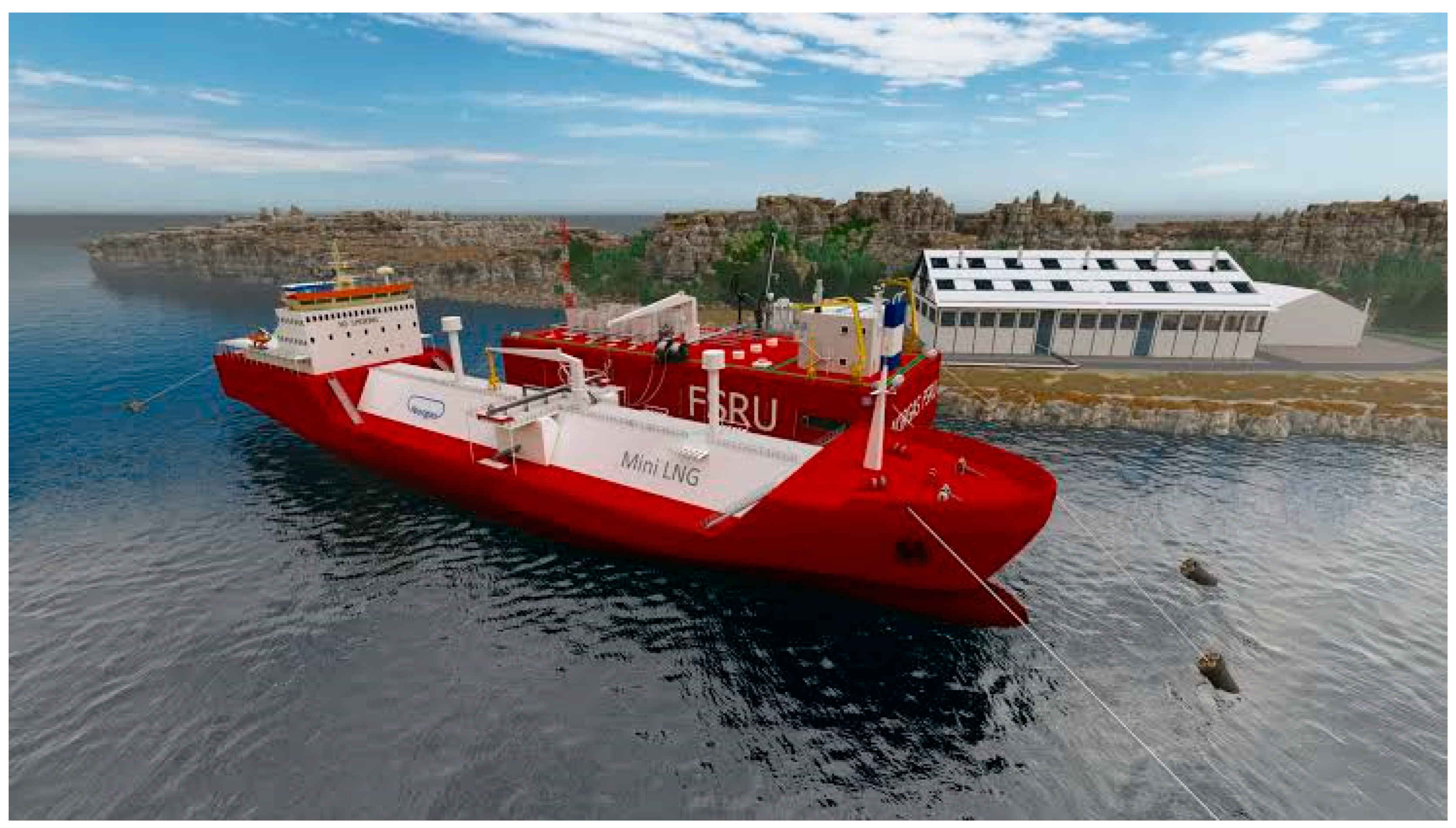
Figure 14: Small-Scale LNG Vessel This figure depicts a small-scale LNG vessel, which is designed for the transportation of LNG in smaller quantities. These vessels are crucial in ensuring the efficient and reliable delivery of LNG to remote locations or areas without access to pipeline infrastructure. These figures contribute to the understanding and advancement of small-scale LNG business and supply chains by providing visual representations of key components, processes, and concepts. They help researchers, industry professionals, and readers grasp the complexities and possibilities within the small-scale LNG industry.
Conclusion
In conclusion, this study aimed to develop an innovative and economical LNG distribution system tailored for smaller vessels. The research presented here focused on dynamically optimizing the routes of LNG truck tanks, encompassing the selection of an optimal pickup point and a sequence of destination sites with specific LNG unloading volumes. These objectives were pursued within the context of a predetermined supply chain in a specific geographical area. By leveraging advanced techniques and methodologies, this research aimed to revolutionize the current practices in LNG distribution, ensuring cost-effectiveness and operational efficiency. The proposed solution offers the potential to significantly reduce transportation costs, optimize delivery timelines, and enhance the utilization of resources. Through the utilization of cutting-edge technology such as machine learning, reinforcement learning, and graph theory, we strived to devise a dynamic and adaptable system that can continuously optimize the routes taken by LNG truck tanks. This approach enables the identification of the most efficient pickup point and the most optimal sequence of destination sites, taking into account factors such as distance, tank capacity, and demand fluctuations. The outcomes of this study have the potential to revolutionize the LNG distribution landscape for smaller vessels. By providing a cost-effective and dynamic solution, this research contributes to improving the overall efficiency and sustainability of LNG supply chains in a specific area. The findings presented here pave the way for further advancements in optimizing LNG distribution systems, benefiting businesses consumers and the environment alike.
Mathematically, the problem at hand can be classified as a Vehicle Routing Problem (VRP) with partial demand fulfillment and time window flexibility. It entails the optimization of routes for multiple vehicles operating from several depots, with the objective of efficiently delivering LNG to various destinations. In the VRP framework, the main challenge lies in determining the optimal allocation of deliveries to vehicles, considering factors such as capacity limitations, time windows for delivery, and the need to fulfill only a portion of the demand at each destination. The inclusion of time window flexibility allows for adjustments in the delivery schedule, accommodating variations in customer demand or unforeseen circumstances. This flexibility ensures that deliveries can be made within specified time slots, while still maintaining efficiency in the overall routing plan. With multiple depots and various vehicles involved, the problem becomes more complex as it requires finding the most efficient routes for each vehicle, considering constraints such as vehicle capacity, geographical distance, and minimizing transportation costs. By approaching the issue as a VRP with partial demand fulfillment and time window flexibility, mathematical models and optimization algorithms can be employed to determine the best allocation of deliveries to vehicles, the sequencing of stops, and the overall routing plan. These methods help minimize transportation costs, reduce delivery times, and enhance the overall efficiency of the LNG distribution system. In summary, the problem can be mathematically categorized as a VRP with partial demand fulfillment and time window flexibility, and addressing it through mathematical modeling and optimization techniques allows for the development of efficient and effective routing plans for the distribution of LNG.
In this study, we present a groundbreaking strategy for the advancement of small-scale LNG businesses through the integration of graph theory and state-of-the-art machine learning techniques. By combining the power of graph theory with cutting-edge methodologies such as reinforcement learning, recursive neural networks, and online learning, we aim to revolutionize the development and growth of painted-size LNG businesses. Graph theory provides a powerful framework for modeling and optimizing complex networks, which is particularly relevant in the context of LNG distribution and supply chains. By leveraging graph theory, we can effectively analyze and enhance the connectivity, efficiency, and resilience of the painted-size LNG distribution network. Additionally, by incorporating machine learning techniques, we introduce intelligent decision-making capabilities to the system. Reinforcement learning allows the system to learn and improve its strategies over time, adapting to changing market dynamics and optimizing the allocation of resources. Recursive neural networks enable the analysis of intricate patterns and relationships within the data, providing insights for better decision-making in the painted-size LNG business domain. Online learning ensures that the system can continuously adapt and improve its performance based on real-time information, allowing for dynamic adjustments in response to evolving market conditions. By combining these methodologies, our proposed strategy seeks to transform painted-size LNG businesses into more efficient, adaptive, and sustainable entities. This innovative approach opens up possibilities for cost optimization, improved operational efficiency, enhanced decision-making, and ultimately, the growth and success of painted-size LNG businesses. In summary, this study introduces a revolutionary strategy that merges graph theory with cutting-edge machine learning techniques to propel the development of painted-size LNG businesses. Through this approach, we aim to unlock new opportunities and propel the industry forward into a more efficient and sustainable future
The solution presented in this paper offers significant benefits in terms of the efficient management of LNG tank truck routes to local regasification terminals and individual customers. It enables dynamic route adjustments in response to sudden changes in demand and the ability to incorporate additional restrictions as needed. Moreover, acting upon the findings of this research may lead to financial gains and improved public relations. As for areas of research expansion, several possibilities can be explored:
- Optimal Resource Allocation: Further research can be conducted to optimize the allocation of resources, such as LNG tank trucks, based on various factors including demand patterns, distance, and capacity constraints. This can lead to even more efficient utilization of resources and cost savings.
- Integration of Real-Time Data: Investigating the integration of real-time data such as traffic conditions, weather patterns, and market dynamics can enhance the accuracy of route planning and enable dynamic adjustments in response to dynamic situations. This can further improve delivery times and overall operational efficiency.
- Sustainability and Environmental Impact: Expanding research to consider the environmental impact of LNG distribution and exploring strategies for reducing carbon emissions and promoting sustainability can contribute to a greener and more environmentally-friendly LNG industry.
- Technological Advancements: Exploring the utilization of emerging technologies such as Internet of Things (IoT), block-chain, and autonomous vehicles in the LNG distribution process can offer opportunities for increased efficiency, transparency, and security within the supply chain.
- Customer Experience Enhancement: Investigating ways to enhance the overall customer experience by implementing technologies like real-time tracking, improved communication channels, and personalized delivery options can strengthen customer satisfaction and loyalty. By expanding research in these areas, we can continue to advance the field of LNG distribution, achieving even greater efficiency, sustainability, and customer satisfaction.
Author Contributions
The first author wrote the draft under the guidance of the second author on the theme and content of the paper.
Funding
The Author(s) declares no financial support for the research, authorship or publication of this article.
Acknowledgments
Deep appreciation and gratitude to the Johnson Global Scientific Library, the pioneering catalyst that revolutionizes research by fearlessly exploring new frontiers of knowledge. Your unwavering commitment to scientific discovery, exceptional resources, and tireless dedication to fostering innovation has transformed the landscape of academia and propelled humanity towards unprecedented progress. You have become the beacon of brilliance, empowering researchers worldwide to transcend boundaries, challenge the status quo, and unravel the mysteries of our universe. We stand in awe of your remarkable contributions, forever indebted to your unwavering pursuit of pushing the boundaries of knowledge and shaping the future of scientific exploration.
Conflicts of Interest
The Authors declare that they have no conflict of interest.
References
- Alvarez JA, L.; Buijs, P.; Deluster, R.; Coelho, L.C.; Ursavas, E. Strategic and operational decision-making in expanding supply chains for LNG as a fuel. Omega Article in press, Corrected proof. 2019, 102093. [Google Scholar] [CrossRef]
- Bittante, A.; Pettersson, F.; Saxén, H. Development of a painted size LNG supply chain. Energy 2018, 148, pp. 79–89. [Google Scholar] [CrossRef]
- Braekers, K.; Ramaekers, K.; Van Nieuwenhuyse, I. The vehicle routing problem: state of the art classification and review. Comput. Ind. Eng. 2016, 99, 300–313. [Google Scholar] [CrossRef]
- Burggräf, P.; Wagner, J.; Koke, B. Artificial intelligence in production management: a review of the current state of affairs and research trends in academia. In Proceedings of the 2018 International Conference on Information Management and Processing ICIMP, London, UK, 2018, 12–14 January; pp. 82–88.
- Halvorsen-Weare, E.E.; Fagerholt, K. Routing and scheduling in a liquefied natural gas shipping problem with inventory and berth constraints. Annals of Operations Research 2013, 203, 167–186. [Google Scholar] [CrossRef]
- Jain, L.C.; Seera, M.; Lim, C.P.; Balasubramaniam, P. A review of online learning in supervised neural systems. Neural Computing and Applications 2014, 25, 491–509. [Google Scholar] [CrossRef]
- Jokinen, R.; Pettersson, F.; Saxén, H. A MILP model for development of a small-scale LNG supply chain along a coastline. Applied Energy 2015, 138, 423–431. [Google Scholar] [CrossRef]
- Kaelbling, L.; Littman, M.; Moore, A. Reinforcement learning: a survey. Journal of Artificial Intelligence Research 1996, 4, 237–285. [Google Scholar] [CrossRef]
- Li, W.; Li, Y.W.; Wu, Q.S. Modeling and control of complex industrial processes using artificial intelligence techniques. In Proceedings of the 2013 International Conference on Machine Learning and Cybernetics, 14-Tianjin, China, 17 July 2013; pp. 1341–1345. [Google Scholar]
- Nazari, M.; Oroojlooy, A.; Snyder, L.; Takáč, M. Reinforcement learning for solving the vehicle routing problem. In Advances in Neural Information Processing Systems NIPS 2018, 3-8 December, Neural Information Processing Systems Foundation, Montreal, Canada; Bengio, S., Wallach, H., Larochelle, H., Grauman, K., Cesa-Bianchi, N., Garnett, R., Eds.; 2018; pp. 9839–9849. [Google Scholar]
- Riaz, F.; Ali, K.M. Applications of graph theory in computer science. In Proceedings of the Third International Conference on Computational Intelligence, Communication Systems and Systems, Bali, Indonesia, 26–28 July 2011; pp. 142–145. [Google Scholar]
- Shteimberg, E.; Kravits, M.; Ellenbogen, A.; Arad, M.; Kadmon, Y. Artificial intelligence in nonlinear process control based on fuzzy logic. In Proceedings of the 27th Convention of Electrical and Electronics Engineers in Israel, Eilat, Israel, 14–17 November 2012; p. 15. [Google Scholar]
Figure 1.
LNG Supply Chain.
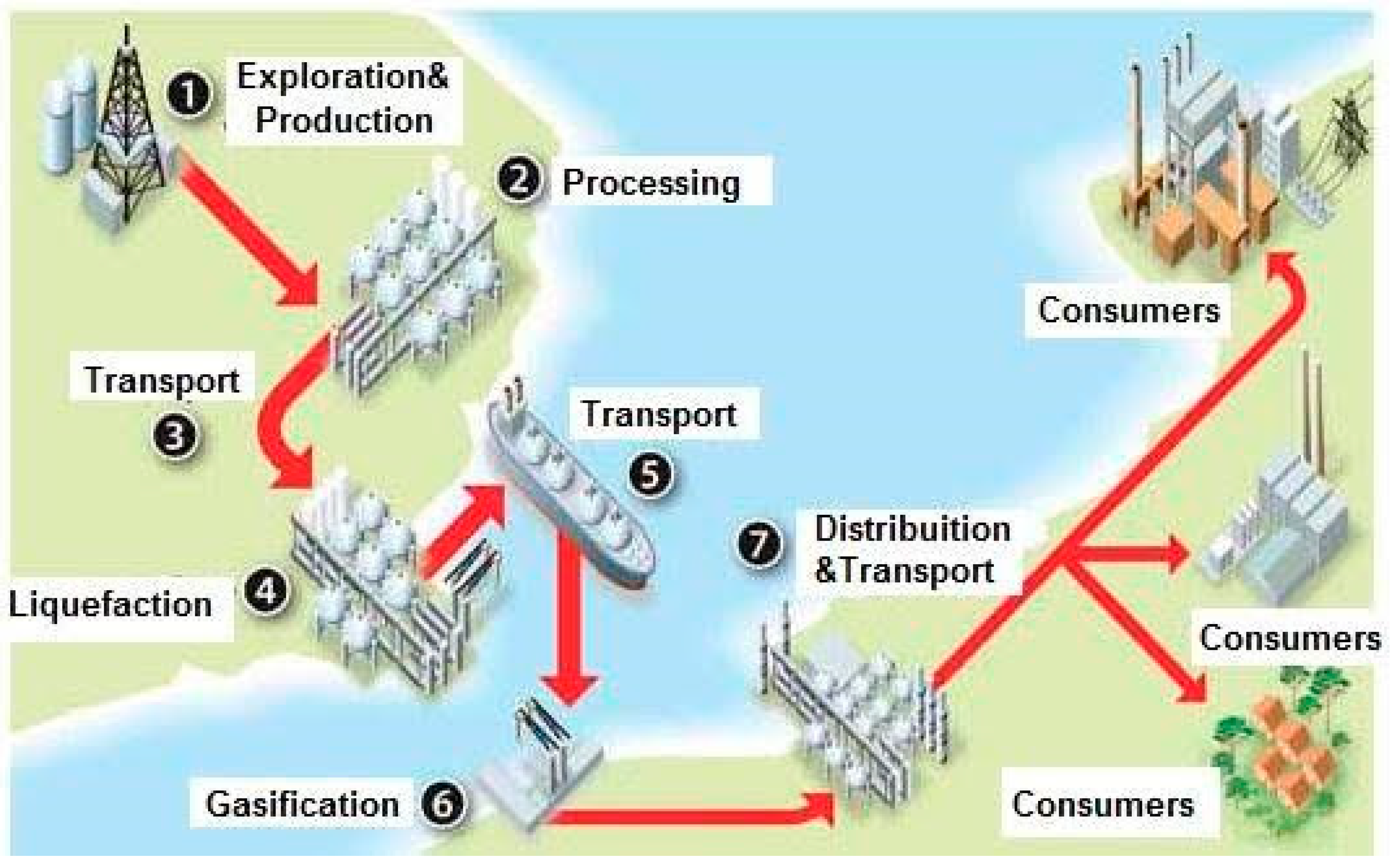
Figure 2.
Illustration of a Problem in Graph Form.
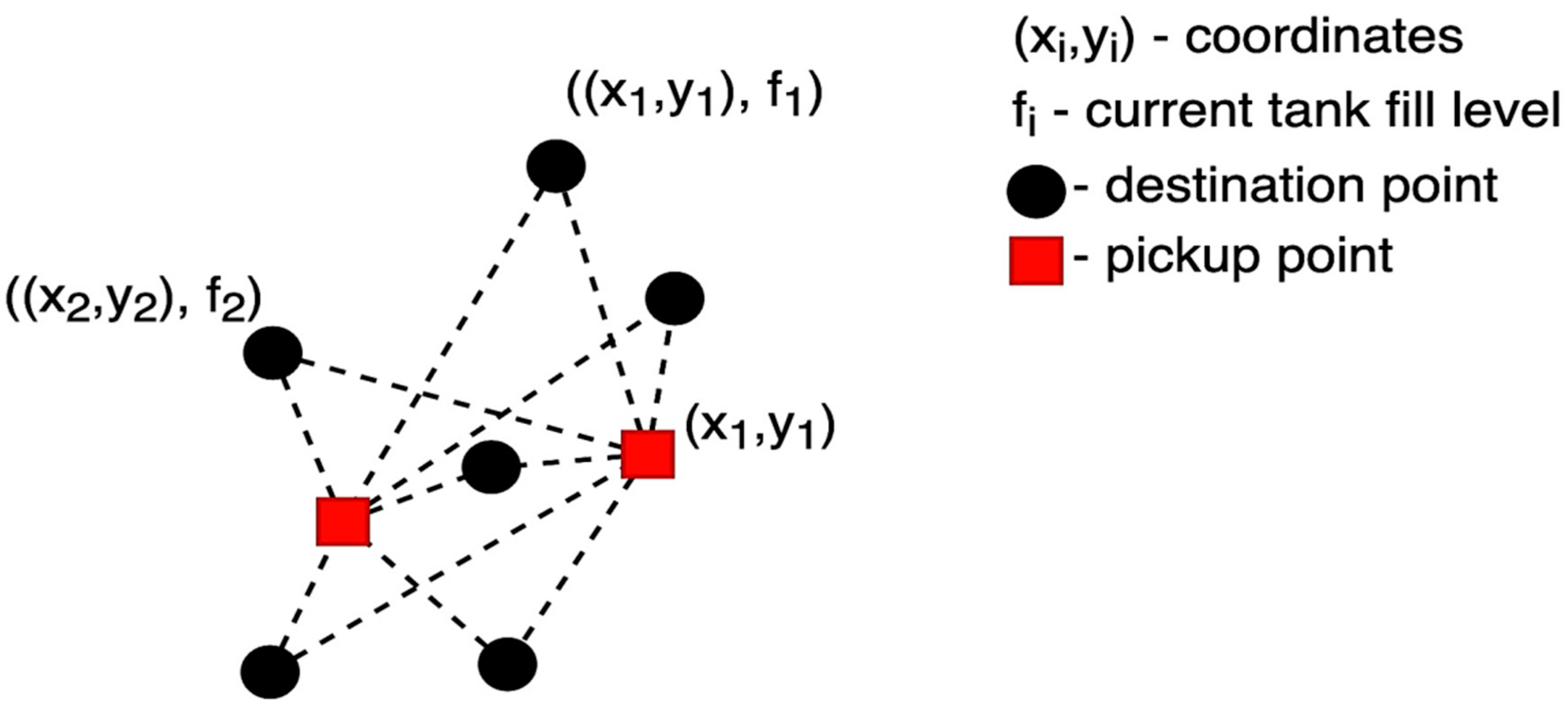
Figure 3.
illustrates the plan outlined in the study conducted by Nazari et al. (2018). The embedding layer plays a crucial role in converting point coordinates and demand data into high-dimensional vectors. The right RNN (Recurrent Neural Network) receives the encoded static input. Additionally, the attention layer, which is designed to respond to the encoded RNN input and output, also plays a key role in the process. This figure visually represents the architectural components and their interactions in the proposed approach described in the mentioned research.
Figure 3.
illustrates the plan outlined in the study conducted by Nazari et al. (2018). The embedding layer plays a crucial role in converting point coordinates and demand data into high-dimensional vectors. The right RNN (Recurrent Neural Network) receives the encoded static input. Additionally, the attention layer, which is designed to respond to the encoded RNN input and output, also plays a key role in the process. This figure visually represents the architectural components and their interactions in the proposed approach described in the mentioned research.
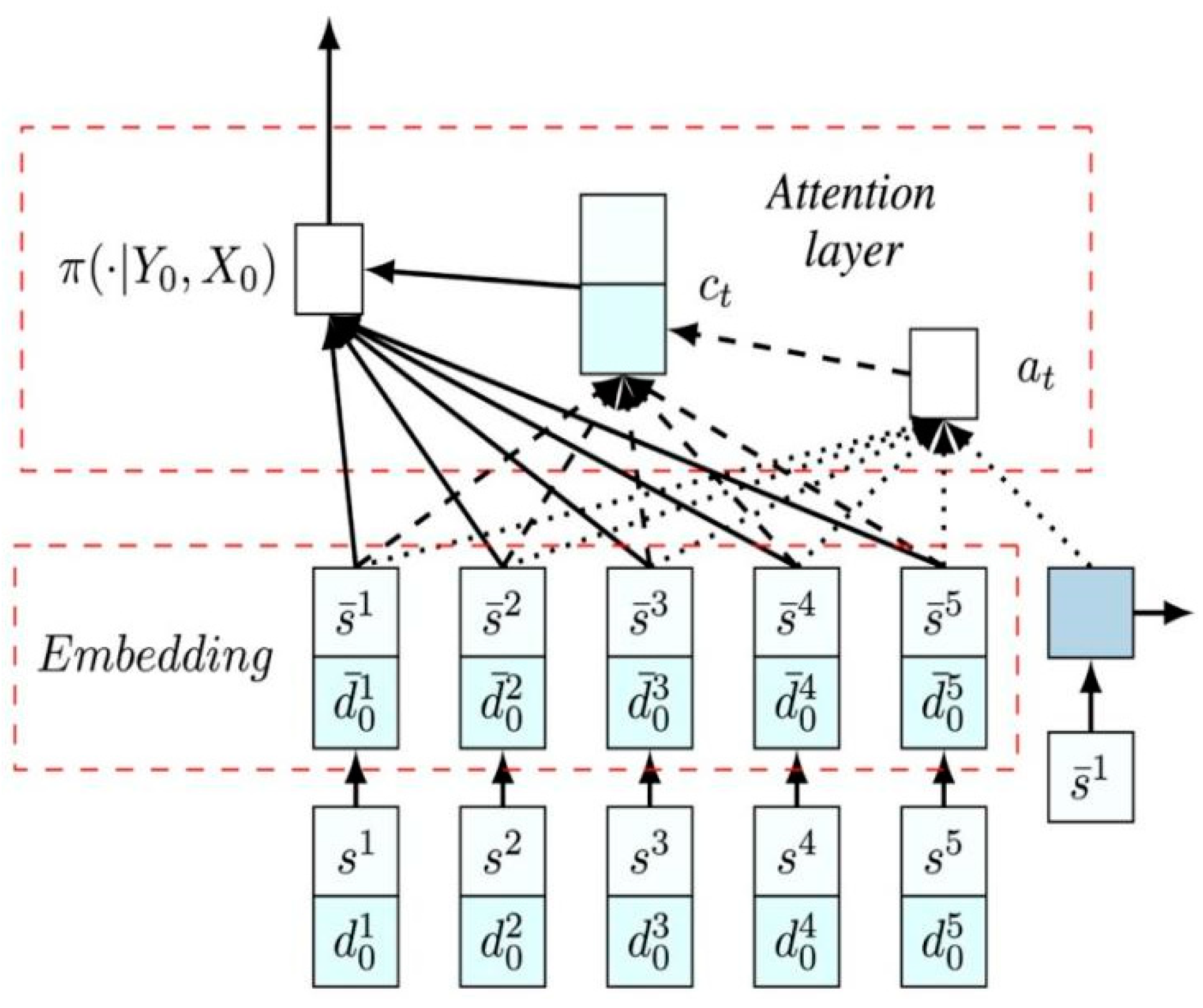
Figure 4.
Schematic of the Proposed System.
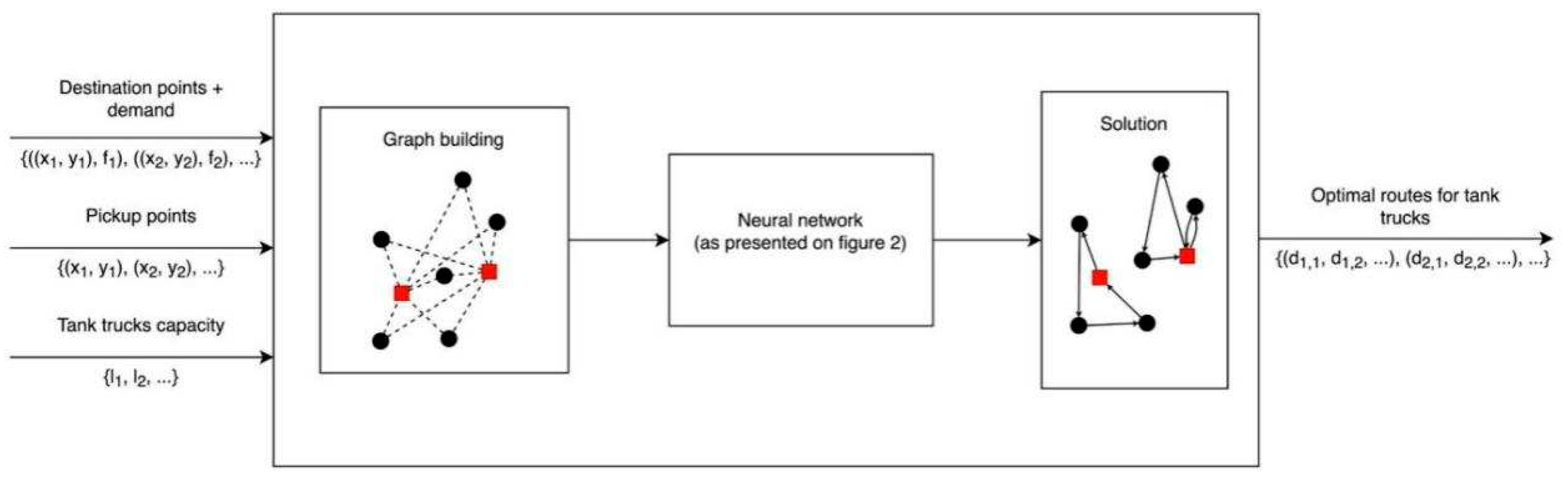
Figure 5.
Offshore Platform.
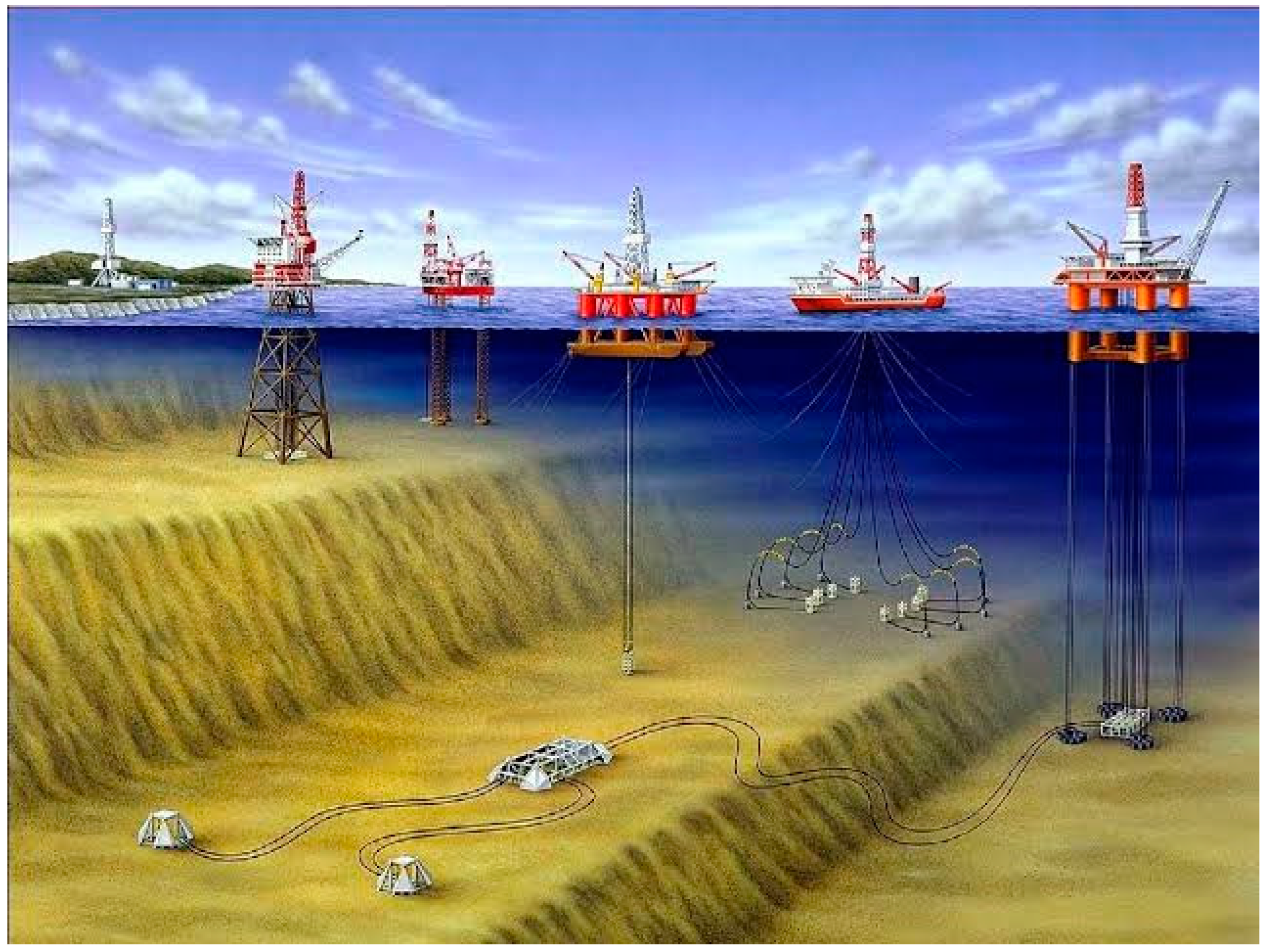
Figure 6.
LNG Mini Terminal Port Model.
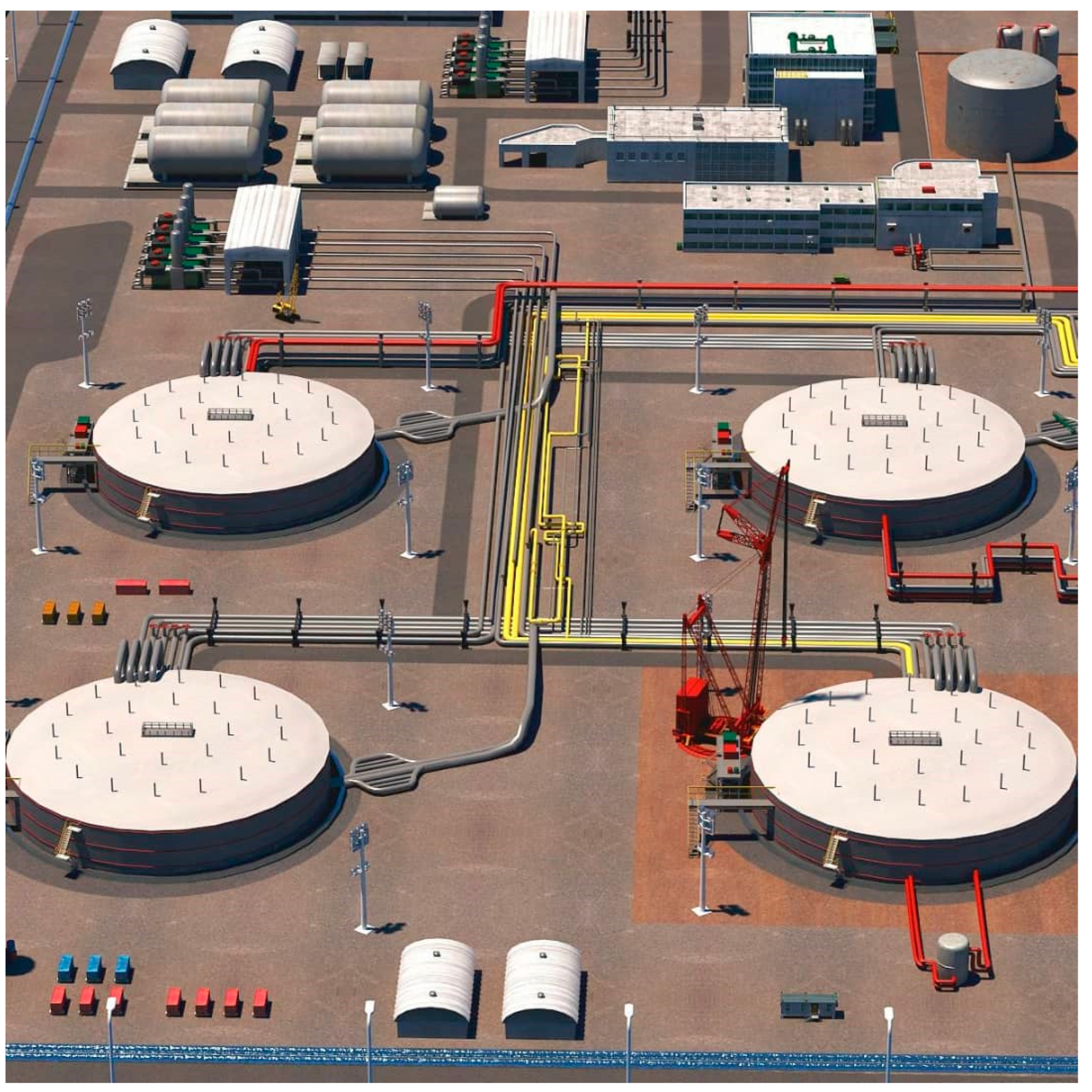
Figure 7.
schematic Design of Mini Model LNG Plan.
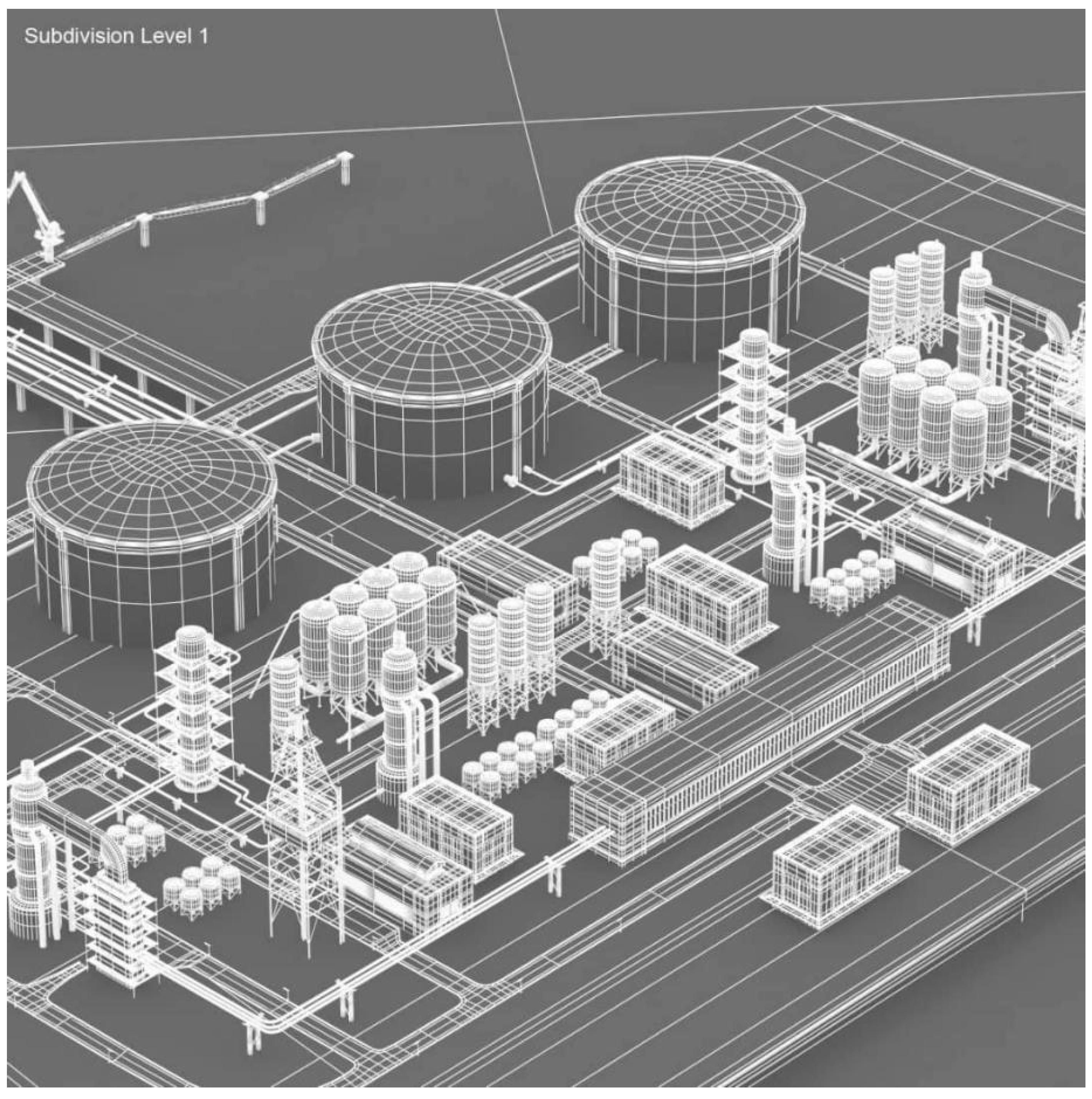
Figure 8.
Mini LNG Design Terminal.
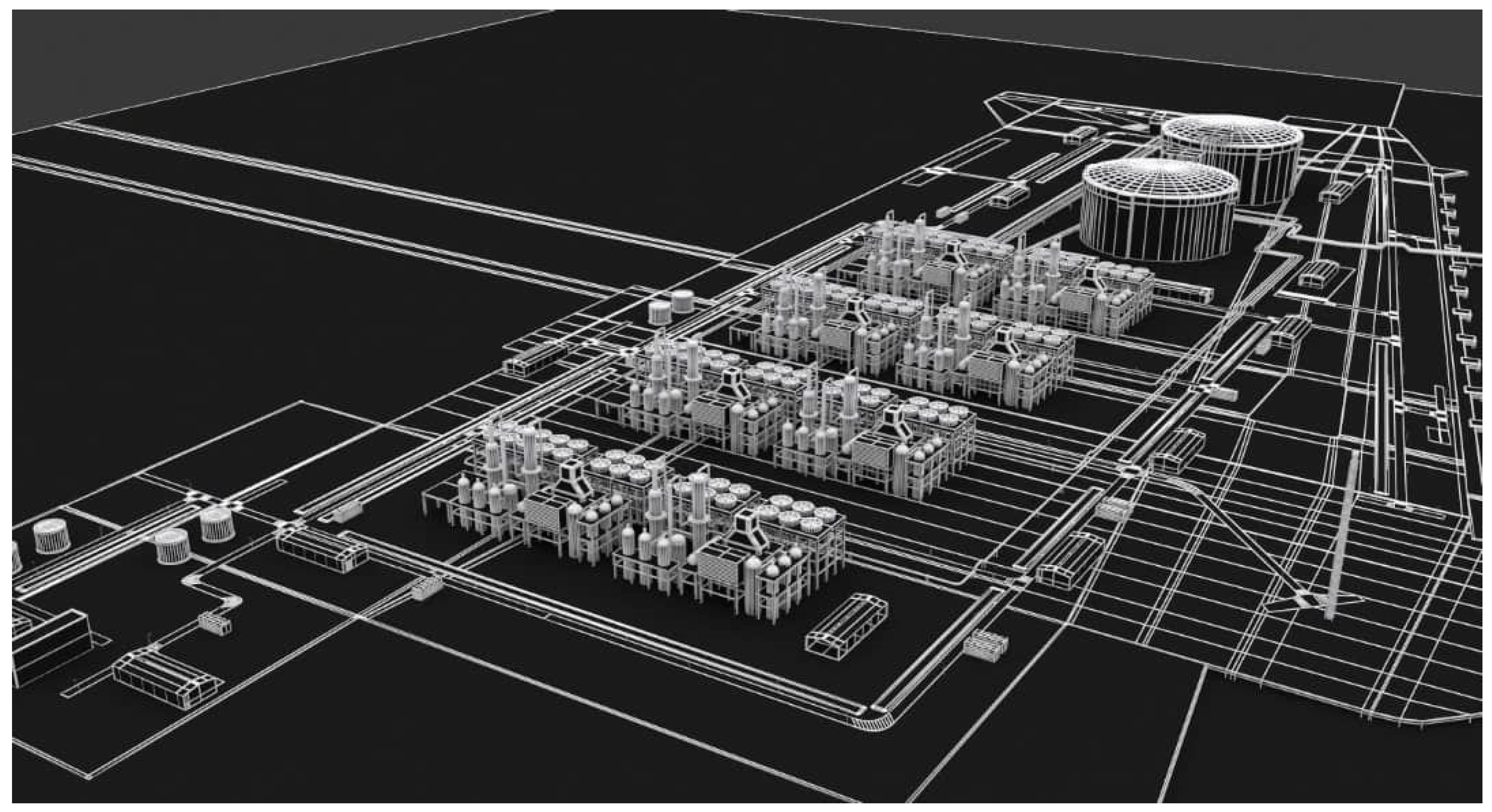
Figure 9.
An Over View of Mini LNG Design Terminal Plant.
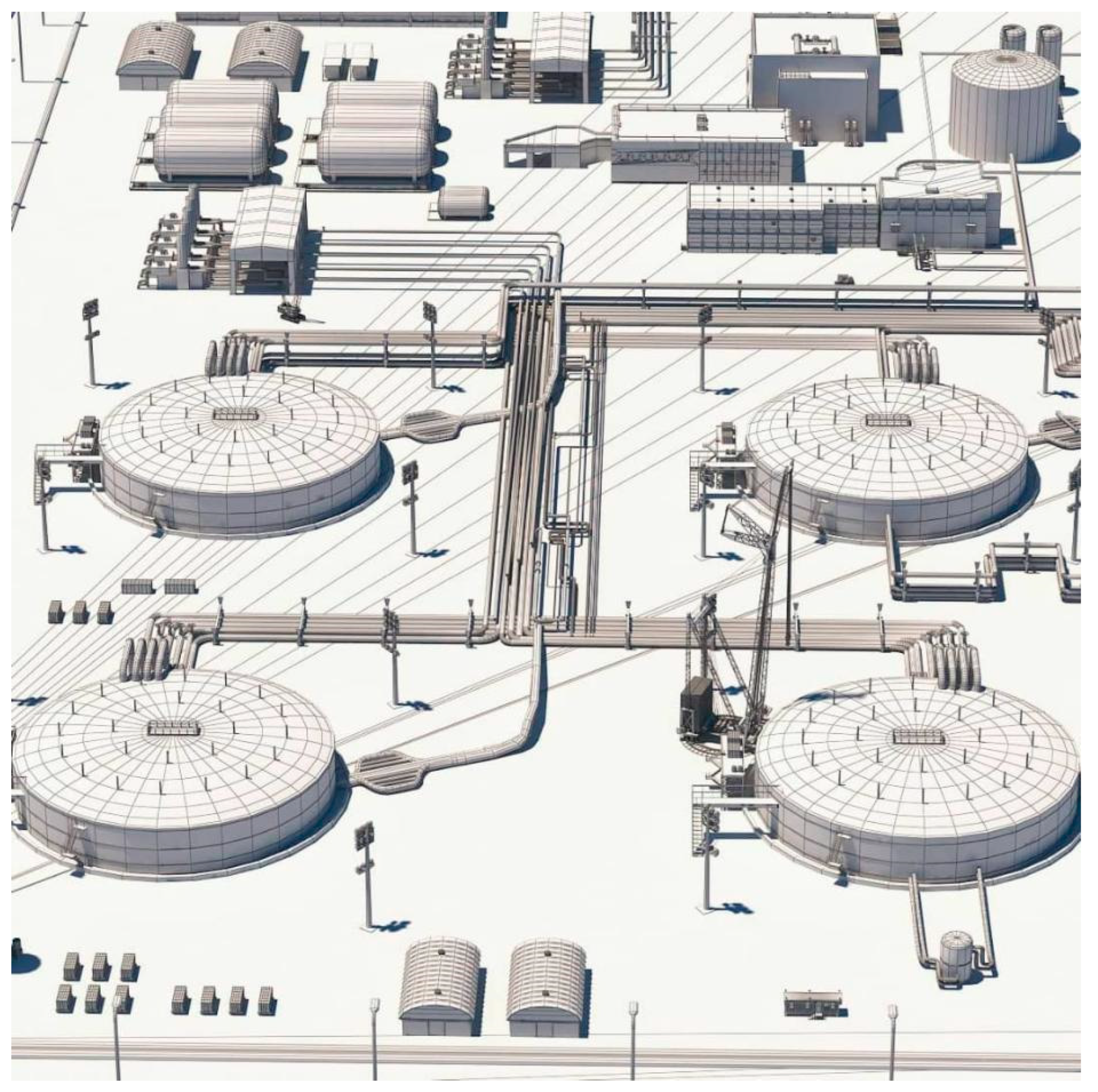
Figure 10.
Schematic Diagram of LNG Plant.
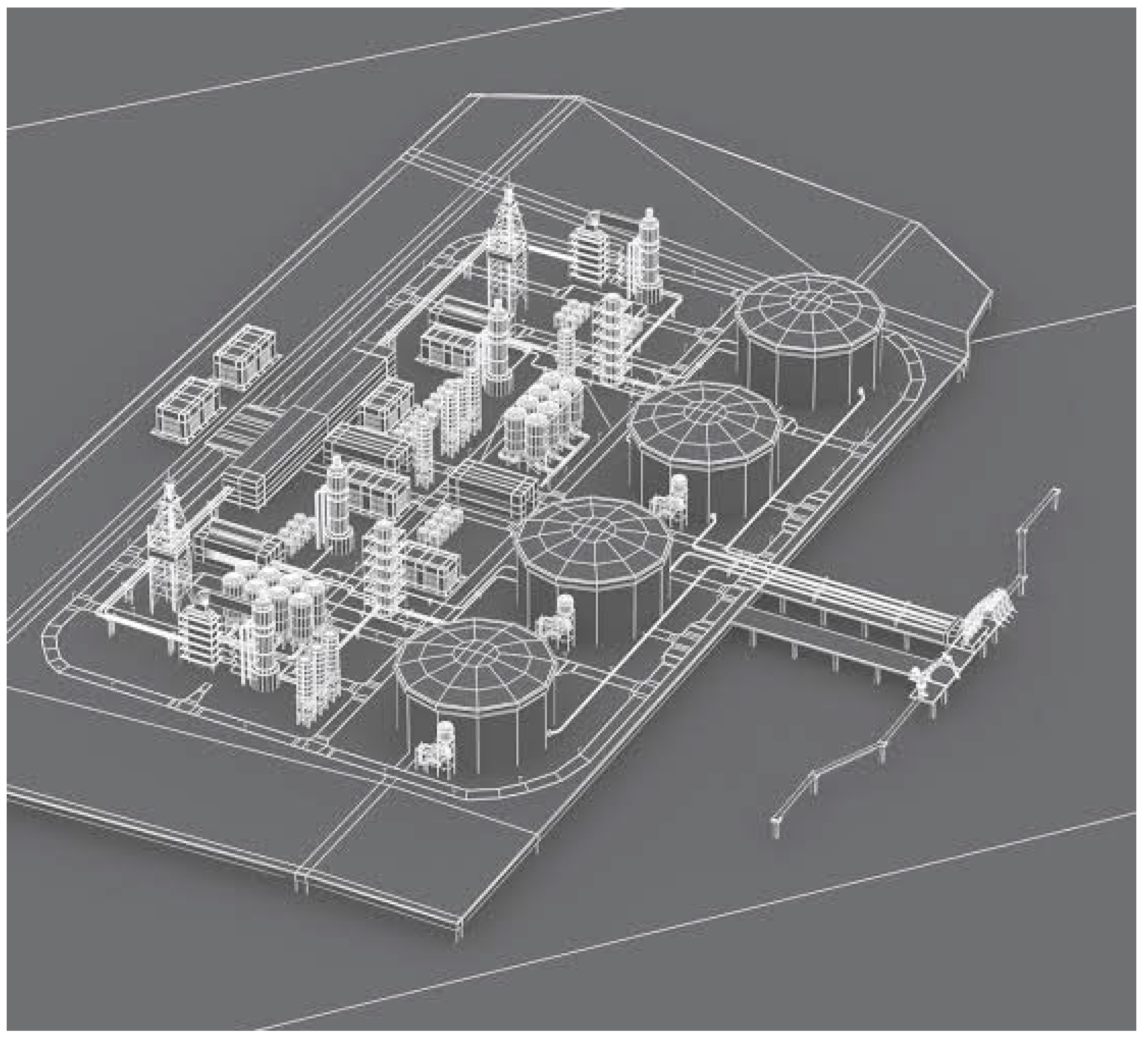
Figure 11.
LNG 1 Future Fuels.
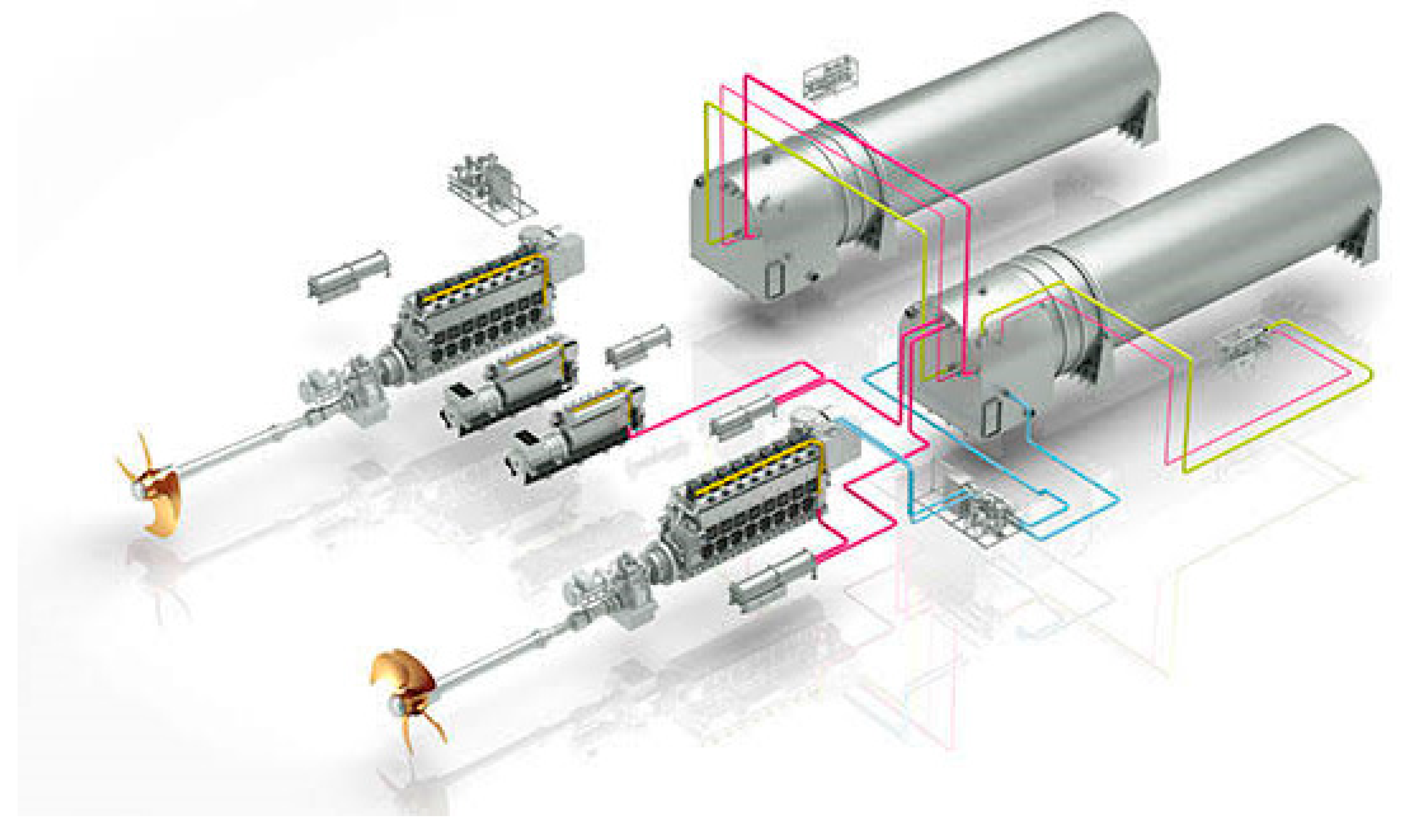
Figure 12.
LNG 1 fuelled vessel Design Training.
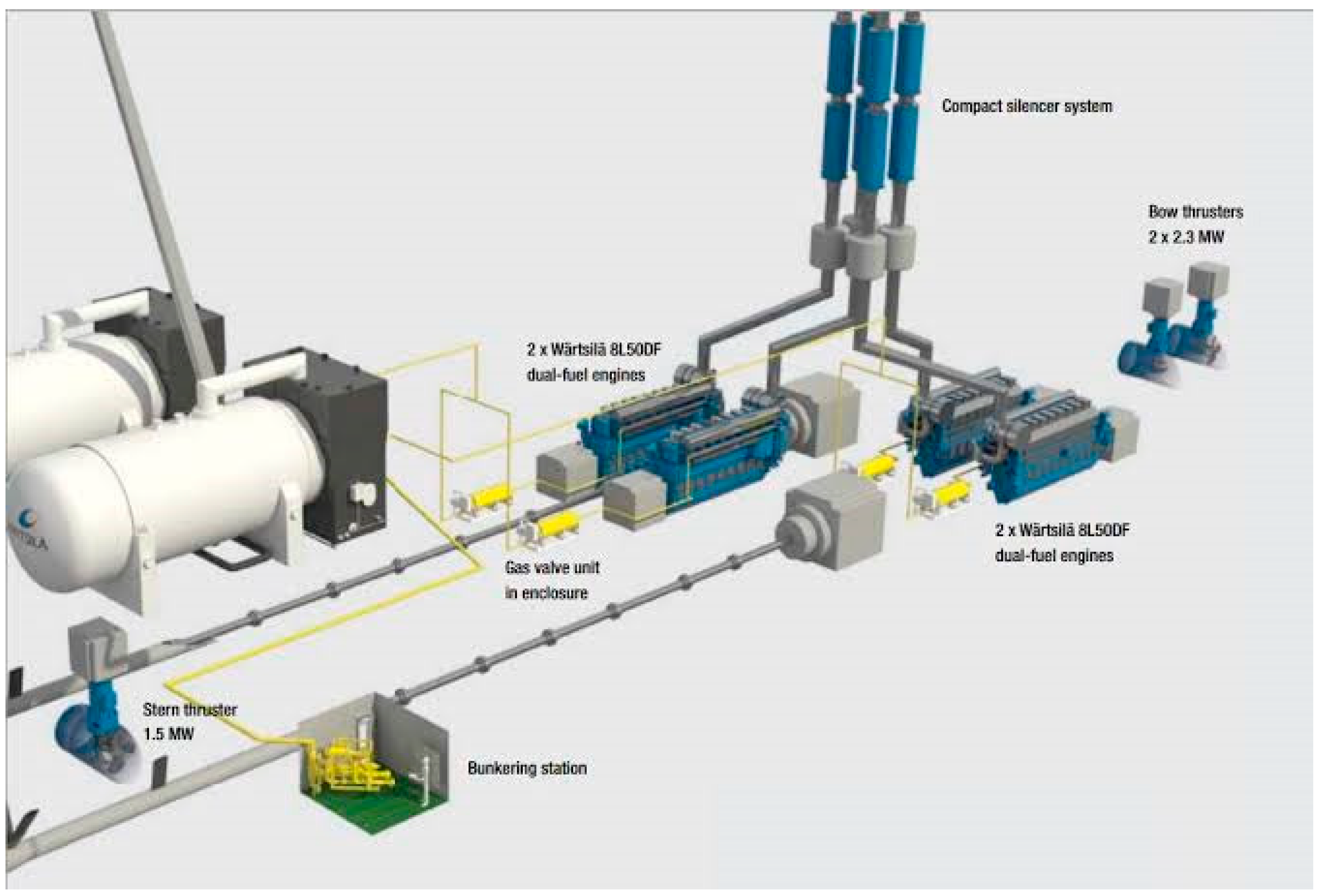
Figure 13.
LNG Gas Supply System arrangement.
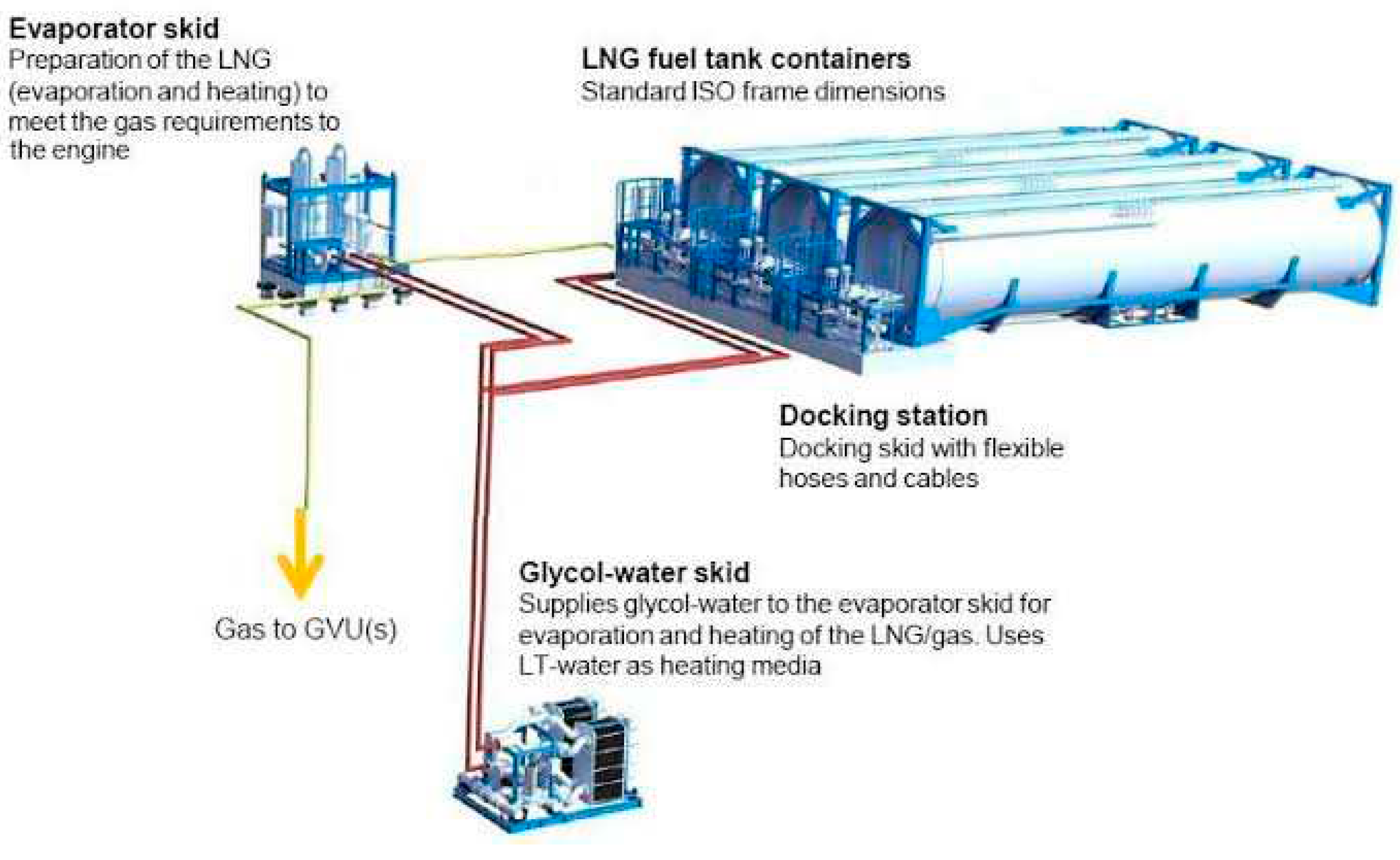
Figure 14.
Small Scale LNG Vessel.
Disclaimer/Publisher’s Note: The statements, opinions and data contained in all publications are solely those of the individual author(s) and contributor(s) and not of MDPI and/or the editor(s). MDPI and/or the editor(s) disclaim responsibility for any injury to people or property resulting from any ideas, methods, instructions or products referred to in the content. |
© 2023 by the authors. Licensee MDPI, Basel, Switzerland. This article is an open access article distributed under the terms and conditions of the Creative Commons Attribution (CC BY) license (http://creativecommons.org/licenses/by/4.0/).
Copyright: This open access article is published under a Creative Commons CC BY 4.0 license, which permit the free download, distribution, and reuse, provided that the author and preprint are cited in any reuse.


