

Submitted:
13 December 2023
Posted:
14 December 2023
You are already at the latest version
Abstract
Microplastics have been detected as widespread in an aquatic environment at the microscale, also known as plastic debris. They have continuously increased due to the increase in population, production of synthetic plastics and poor waste management. They are ubiquitous and slowly degrade in soil and water. They are emerging contaminants that have received attention from research communities and public audiences over the last few years. They have high stability and can absorb several other pollutants like heavy metals, pesticides, etc. After entering the environment, they can accumulate and persist for a long time. They can create a serious threat to freshwater ecosystems and human health. These particles can cause physical damage to freshwater organisms. Raman spectroscopy, Fourier-transform infrared spectroscopy, visual identification, density separation, microscopic method, chemical method, thermos-analytical method and hyperspectral imaging method are the commonly known approaches for identification and quantification of microplastics. The noticed concentration of microplastics depends on the analysis method, sampling location and technique. The authors reviewed the sources, health impact, transport and treatment of microplastics in freshwater environments in detail. This study will provide the baseline data for the researchers to do more research on microplastic pollution in the future.
Keywords:
Plastics
; Microplastics
; Freshwater environment
; Human health
; Raman spectroscopy
; Fourier-transform infrared spectroscopy
1. Introduction
Plastics are made up of long polymer chains (Cera et al. 2020). Polymers are designed by the polymerization and condensation reaction, such as polyethylene is designed by the reaction of polymerization, while the reaction of condensation designs Nylon. Plastics can be flexible, inexpensive, lightweight, robust and waterproof and act as insulators. They are not biodegradable, but some are biodegradable and can be decomposed by hydrolysis or by the action of microbes or in the occurrence of ultraviolet (UV) light (Bhardwaj and Sharma 2021; Bhardwaj 2022a). They are not usually demolished but are converted from one form to another. They can be classified as mini-microplastics (1×10⁻⁶ m to < 1×10⁻³ m), microplastics (MPs) (1×10⁻³ m to < 5×10⁻³ m), mesoplastics (5×10⁻³ m to < 25×10-3 m), and macroplastics (≥ 25×10-3 m) (Figure 1) (Lee et al. 2013).
The use of plastic is increasing with the increase in the population. Plastics are regularly used in different types of industries like packaging, electrical, sports, automotive, construction, cosmetics, etc. They are used in film filters of water treatment plants. They are of two types: thermoset plastics and thermoplastics. Thermoset plastics have permanent chemical bonds between the polymers and at the time of heating, they are not softened. It means they cannot be recycled. For example, polyurethane (used in pillows, insulating foams, building insulation, etc.); some polyesters; epoxy resins and some acrylic resins. Thermoplastics get softened at the time of heating while hardening after freezing. It means they can be recycled. For example, polypropylene (used in auto parts, snack wrappers, food packaging, bottle caps, etc.); polyethylene (made up of long ethylene monomer units and is used in several products such as shampoo bottles, toys, plastic bags, pipes, milk bottles, bottle caps, etc.) (Miloloza et al. 2021); polyvinyl chloride (used in frames, pipes, cable insulation, etc.); polyethylene terephthalate (used in water bottles); polystyrene (used in building insulation, eyeglasses, etc.); polycarbonates and polyamides.
Worldwide manufacture of plastics has amplified since 1950 and reached 381×109 kg in 2015 (Ritchie and Roser 2019). Plastic manufacture has increased from 322 to 348×109 kg from 2015 to 2017 (Europe 2019). The global production of plastics with fibers was estimated to be 381×109 kg in 2015 and with additives, it was 407×109 kg (Geyer et al. (2017). Between 1950 to 2015, 6,300×109 kg of plastic waste was generated while 4,900×109 kg ended up in landfills and the environment. India is one of the major plastic consumers of the world with the generation of 5.6×10⁹ kg of plastic annually (Laskar and Kumar 2019). Ocean and sea serve as the final basins for the world’s plastic waste.
Some plastics comprise pro-oxidants that encourage fragmentation and have the potential to form microplastics (Kershaw 2015). Tiny plastic pieces are called microplastics. The term plastic debris was used by Hartmann et al. (2019) for the first time for microplastics. Microplastics are naturally hydrophobic and can go into the freshwater environment via treated and untreated sewage effluent, surface run-off, air deposition, industrial effluent and tainted plastic trash. They are in synthetic clothing, cosmetics and even plastic shopping bags. They've been discovered in places you wouldn't expect, including food, air, beer and tap water. They have been pervasive in the environment for an extensive time and can be swallowed by biota due to their utility, stability, disability and degradation resistance (Peiponen et al. 2019; Bhardwaj 2023).
They can enter tap and bottled water from the water distribution systems. They are present in dust particles and may be a source of air pollution (Bhardwaj and Vikram 2023; Bhardwaj et al. 2023). They differ in size, type, color and density and their physical appearances are strongly related to their fate, toxicity and source (Bhutto and You 2022). The length of these particles is smaller than 5×10⁻³ m (0.0051 m). If the length is less than 1×10⁻⁶ m then they are termed nanoplastics. They have been categorized into six groups: fragments, pellets, microbeads, fibers, films and foam (Table 1 and Figure 2) (Anderson et al. 2017).
Microplastics are classified as primary and secondary microplastics based on surface texture and morphology (Bhardwaj 2022b). Primary microplastics are manufactured at the microscale and include plastic fibers, plastic pellets and microbeads. Plastic fibers are used in the textile industry, plastic pellets are used in the industry and microbeads are used in particular care products. Primary microplastics originate from leakage during the production of plastics and micro-cleansing elements in particular care items (Anderson et al. 2017). Primary microplastics enter the atmosphere through abrasion during washing, unintentional loss from falls during transport or manufacturing and the presence of personal care products in the effluent of households. While secondary microplastics are formed from the bigger plastics products after fragmentation (e.g. bottles, clothes, marine litter, bags, tyres, industrial and agricultural sources, etc.) and this fragmentation occur when larger plastics get exposed to waves, wind and UV radiation (Choudhury et al. 2022). Zhao et al. (2015) described that secondary microplastics are formed by the destruction of bigger plastic particles through photolysis, mechanical forces, thermo-oxidation, thermo-degradation and biodegradation processes.
The existence of microplastics in the freshwater environment is an emerging risk that can affect the capability of persons to preserve biodiversity (Auta et al. (2017a). Several researchers reported the occurrence of different types of microplastics in aquatic environments in different countries and focused on their toxic impact on biota (Triebskorn et al. 2019; Fu and Wang 2019). Koelmans et al. (2019) reported microplastic particles in the range from 0 to 103×103 particles/m3 in the freshwater environment. W. Wang et al. (2017) reported the major types of microplastics such as polyethylene terephthalate and polypropylene in the range between 1660.0 ± 639.1 to 8925 ± 1591 numbers/m3 from the inland freshwater of Wuhan, China. Zhang et al. (2021) reported the polypropylene and polyethylene types of microplastics from the Lijiang River, China. Yang et al. (2021) reported the microplastic particles (30.3 ± 15.9 items/kg) from the Ciwalengke River, China. However, the information related to the microplastics in the freshwater environment is still in its initial state as compared to the marine environment. The authors considered approximately 130 to 135 research/review articles for this review and searched these articles from Google Scholar and Research Gate after inputting keywords like plastics, microplastics, freshwater environment, Fourier-transform infrared spectroscopy and Raman spectroscopy. Most of the articles were written from 2000 to 2023. This review article aims to focus on the sources, health impact, transport, and treatment of microplastics in freshwater environments.
2. Health Impacts of Microplastics
The use of plastics is a major threat to the freshwater environment (Sarijan et al. 2021) and the existence of microplastics in drinking water is harmful to the health of humans. This threat exists in three forms: microbiological, chemical and physical. The health impacts, fate and transport of microplastics are not being studied thoroughly yet. However, the presence of microplastics in bottled water, tap water, human tissues, stool and the digestive system of the various invertebrates of freshwater have been reported (Kosuth et al. 2018; Mintenig et al. 2019). Microplastics with low masses (< 1.0×10³ kg/m3) keep floating on the water surface and are consumed by filter-feeding invertebrates (e.g. Daphnia Magna) and carnivorous fish (e.g. Culter Dabryi and Culter Alburnus) (Zhu et al. 2022) while microplastics with high masses (>1.0×10³ kg/m3) are settled down and consumed by omnivorous fish (e.g. Sinibrama Wui) (Zhang et al. 2017).
After exposure to polyvinylchloride or polyethylene, the immune system of fish can be destroyed due to oxidative stress in the leukocytes (Espinosa et al. 2018). Local human activities are the major causes of the accumulation of microplastics in the muscles of fish (Akhbarizadeh et al. 2018). Reduced growth, variation in oxygen consumption, a limited feeding capability, a decreased lifespan and amplified antioxidant-related enzyme action have been reported after the ingestion of microplastics (Windsor et al. 2019). Due to the low feeding capacity of food, less energy is produced to carry out life functions resulting in reproductive and neurological toxicity. Microplastics affect aquatic organisms for several generations due to their slow degradation and stability and also affect the photodegradation of organic mixtures and the poisonousness of metal ions. More than 60 countries have banned single-use plastics and microbeads (UNEP 2018). In 2015, the United States of America (USA) approved an act “Microbead-Free Water Act” which prohibited the manufacture and distribution of cosmetic goods that contain plastic microbeads (Kershaw 2015).
2.1. Physical Hazard
It exists in the form of elements and the harmfulness depends on the shape, size, surface area and surface characteristics. Microplastics greater than 150×10−6 m are not absorbed in the body of humans while the absorption of minor elements may be limited. The distribution and absorption of very minor elements of microplastics may be higher. Lu et al. (2016) studied the exposure properties of polystyrene in Zebrafish and confirmed that the poisonousness of microplastics depends on their size. Au et al. (2015) stated that fibers of polypropylene are more poisonous than the spherical elements of polyethylene for the lake’s amphipod, Hyalella Azteca. Li et al. (2020) stated that fibers are the major type of microplastics in freshwater.
2.2. Chemical Hazard
It exists in the form of polymers such as vinyl chloride, 1,3-butadiene and ethylene oxide. Tetrabromobisphenol A (TBBPA), polybrominated diphenyl ether (PBDEs) and phthalate esters exist in microplastics while they are not bound to the polymer. This chemical threat can simply travel into the atmosphere and the migration rate depends upon the molecular weight of the mixtures. Larger molecular weight particles travel at a slower rate than the smaller particles. Toxic chemicals such as PBDEs, bisphenol A and phthalates get stuck on the microplastics and may encourage their noxious effects after absorption by living organisms (Padervand et al. 2020). These chemicals are endocrinal disruptors and may exhibit their toxic effects on release. After interaction with different types of heavy metals, microplastics can give rise to a serious issue in the freshwater environment (Vedolin et al. 2018). Volatile complexes such as methylene chloride, ethylbenzene, benzene and toluene are released from plastics and can also contribute to long-lasting health effects (Andrady 2017). Microplastics can act as a contaminant transporter for toxic chemicals such as hexachlorobenzene and dichlorodiphenyltrichloroethane (DDT) (Laskar and Kumar 2019; Bhardwaj et al. 2019; Bhardwaj and Jindal 2020; Bhardwaj and Jindal 2022).
2.3. Microbiological Hazard
It's present in the form of biofilm. Biofilm is developed in the water supply when microorganisms start to colonize on the surfaces of microplastics (He et al. 2023). These microbes are harmless and stick to hydrophobic nonpolar surfaces more quickly than they do to hydrophilic ones.
3. Sources and Transport of Microplastics
Polymeric elements from cleaning and cosmetic goods, feedstocks used in the production of plastic goods and plastic powders used for air blasting are the principal sources of microplastics (Jiang 2018). According to Eriksen et al. (2014), microplastics are mostly produced by breaking bigger plastics. Atmospheric deposition, drinking water production, fragmentation, degradation of macroplastics, run-off from land-based sources, wastewater effluent, industrial effluent, combined sewer overflows and human activities such as tourism, sewage treatment plants and distribution are the different major sources of microplastics in freshwater (Cesa et al. 2017).
In addition to this, diverse elements have emerged from diverse foundations like road superficial marking made up of thermoplastic paints, packaging materials, trash of plastic bottles and fibers resulting from textiles (Horton et al. 2017a). The color of microplastics confirms the numerous sources of microplastics and indicates that microplastics originated from synthetic (Yu et al. 2016; Rezania et al. 2018). Floating macroplastics play the chief source of microplastics in the marine atmosphere.
3.1. Wastewater Effluent
It is a vital collection point of microplastics that are free in daily life and is an extensively recognized cause of microplastics in freshwater (Horton 2017). Microbeads from cosmetic products and synthetic fibers from clothes are the main local inputs into sewage systems. A wastewater treatment plant (WWTP) could act as a pathway for microplastics. There are two paths, direct and indirect by which the microplastics are out from the WWTPs. By the direct pathway, microplastics are released directly through the effluent of WWTPs and carry high numbers of microplastics. While by the indirect pathway, microplastics are released from the WWTPs into sludge (Gatidou et al. 2019) and this sludge is used as a fertilizer in agricultural lands (Sun et al. 2019). Murphy et al. (2016) reported that 65 million particles of microplastic were out each day from the effluent of WWTPs.
3.2. Run-off from Land-based Sources
Microplastics can create from terrestrial practices, infrastructure, road run-off and tyre debris (Verschoor et al. 2016). City dust is the finest example of a land-based cause of microplastics (Boucher and Friot 2017). Rainstorms and agricultural run-off or farming activities have been recognized as potential causes of microplastics in the freshwater environment (Horton 2017b).
3.3. Combined Sewer Overflows
Horton (2017) described that the barrier of wastewater treatment is temporarily bypassed through heavy rainfall and it is the straight source of microplastics in freshwater.
3.4. Atmospheric Deposition
It has been recognized as an extra possible supplier of microplastics in the freshwater environment through run-off, wet and dry deposition and precipitation (Wright and Kelly 2017). Microplastics that are created from industrial and urban dust can enter in freshwater ecosystems from the atmosphere (Abbasi et al. 2019) and it is an indirect source of microplastics in freshwater. The airborne microplastics originate from waste incineration, buildings, industrial emissions, landfills, fertilizer usage and traffic. These microplastics are a direct health threat to children and building workers through daily ingestion or inhalation (Dehghani et al. 2017). Microplastics in street dust are rich in heavy metals and have a toxic effect on the freshwater environment.
3.5. Industrial Effluent
The involvement of effluents from industries for microplastics in wastewater has yet to be examined (Kooi et al. 2018). However, industrial microplastics have been conveyed in freshwater. Eerkes-Medrano et al. (2015) described the microplastic pollution near the Great Lakes, USA which is situated near the industrial area. Fibers that are out from the textile industries due to tear and washing of clothes can be another important source of microplastics (Henry et al. 2019).
3.6. Drinking-Water Production and Distribution
The treatment of drinking water delivers a wall to microplastics. Some constituents of the treatment plants are fabricated by plastics and their deprivation formed the microplastic particles in drinking water (Mintenig et al. 2019). The bottles and their caps are other sources of microplastic particles in drinking water (Oßmann et al. 2018).
3.7. Fragmentation and Degradation of Macroplastics
After the destruction, macroplastic debris also becomes an important source of microplastics (Morritt et al. 2014) and can enter the freshwater system. Very little research is available on macroplastic disintegration and deprivation in the freshwater ecosystem. Andrady (2007) and Dai et al. (2023) studied the disintegration and deprivation process of macroplastic debris in the aquatic environment. They stated that in the existence of high temperatures and UV light, macroplastics fragmented into microplastics. Zbyszewski and Corcoran (2011) described the degradation of microplastics in freshwater systems by using a microscopic technique. Microplastics can further be split into nanoplastics. The environmental stages of nanoplastics are yet to be measured (Alimi et al. 2018).
The transport pathway of microplastic pollution in the air is not known yet (Horton and Dixon 2018) and the pathway is not separate from terrestrial and aquatic pollution. The route of exposure to microplastics for animals and humans is food (Wright and Kelly 2017). Lau and Wong (2000) reported the presence of polystyrene residual and epoxy resins in food materials having the possibility to enter the human body through food. The diagrammatic representation of the sources, transformation and transport of microplastics is shown in Figure 3.
4. Analysis of Microplastics
It involves three steps: sampling; extraction and isolation; and identification and characterization (Figure 4).
4.1. Sampling
The samples are collected by using the trawl net (300×10−6 m) from the surface of the water.
4.2. Extraction and Isolation
The samples are purified through the filtration technique and then extracted by the density separation method in which the samples are diversified with a liquid of known density. The particles of microplastic float on the surface while other heavy particles sink after that the microplastic particles are collected from the supernatant.
4.3. Identification and Characterization of Microplastics
There are several methods for the identification and characterization of microplastics such as microscopic observation, visual identification, density separation, spectroscopic method, thermo-analytical method, chemical method, hyperspectral imaging (HIS) method and combined method. Microscopic observation is not suitable for the confirmation of plastic particles. Stolte et al. (2015) stated that the identification of secondary microplastics is tough due to the large diversity of pathways and sources.
4.3.1. Visual Identification
This method is obligatory for the parting of microplastics from additional inorganic and organic materials in the residues of samples. The visual estimation can help in the identification of microplastics that originate from laboratory contamination and field samples (Mathalon and Hill 2014). Large microplastics can be detected by this method (Doyle et al. 2011) and particles lesser than 1×10⁻³ m cannot be recognized (Lee et al. 2013). Transparent particles of size 20×10−6 m can be identified by this method (Mintenig et al. 2017).
4.3.2. Density Separation
The polymers are split by the differences in their mass. This method is convenient for marine microplastics due to their high density.
4.3.3. Spectroscopic Method
This method is reliable and well-established and is used to recognize the structure of polymers. In this method, the emission or absorption spectra of the particles are matched with reference spectra. If the biofilm is not removed from the surface of the microplastics then it can interfere in the identification and detection of microplastics.
- 4.3.3.1. Raman Spectroscopy
It is an appropriate method for the identification of microplastics in the aquatic atmosphere (Lenz et al. 2015). Very small plastic particles of size < 1×10⁻⁶ m can also be measured by this method. By using micro-Raman spectroscopy, small particles of size <20×10−6 m have been detected (Schymanski et al. 2018). The sample (500×10−9 m to 800×10−9 m) is irradiated with a monochromatic wavelength and the result is compared with polymer spectra libraries to identify the plastic particles (Young and Elliott 2016).
- 4.3.3.2. Fourier Transform Infrared Spectroscopy (FTIR)
Microplastics of size 10-20×10-6 m can be identified using a combination of microscopy and FTIR. It is a dependable and inexpensive method for identifying microplastics (Lusher et al. 2014). It depends on the material, configuration and wavelength. Microplastics can be detected by stimulating molecular vibrations with infrared radiation. Van der Hal et al. (2017) studied the presence of microplastics in aquatic environments and stated that microplastics can be detected at a particular unique infrared spectrum. Löder and Gerdts (2015) used micro-FTIR spectroscopy for the identification of microplastics of size < 500×10−6 m.
4.4. Thermo-analytical Method
In this method, the sample is pyrolyzed under an inert condition and the decomposed product of the individual polymer can be analyzed. This method is used to identify polymer types and requires larger mass particles compared to the spectroscopic method. Hence this method is not suggested for handling huge sample sizes. Gas chromatography-mass spectrometry (GC-MS) is used for the identification of polymers and one particle is analyzed in a single run (Nuelle et al. 2014).
4.5. Chemical Method
It is used for the detection of specific fragments of polymers by inductively coupled plasma mass spectrometry (ICP-MS) (Braun 2018).
4.6. Hyperspectral Imaging (HSI) Method
It is a fast, consistent and non-destructive method for the chemical classification and quantification of microplastics. It was developed by Serranti et al. (2018). There is no need of sample preparation in this method.
4.7. Combined Method
Both spectroscopic and microscopic methods are used to analyze a large quantity of microplastics in water samples. First, spectroscopy is applied for the identification of microplastics and then the stereo microscope is used to count the microplastic particles (Song et al. 2015). A combined method can improve the identification of microplastics in freshwater because the investigation of microplastics is difficult by using a single method (J. Li et al. 2018). Collard et al. (2015) used a new method for the identification of microplastics and it was based on the digestion of hypochlorite. First, the separation of microplastics from the film was done by sonication after that the analysis was done by Raman spectroscopy.
5. Treatment of Microplastics
There are several methods for the removal/degradation of microplastics such as sorption and filtration methods, chemical methods and biological methods (Figure 5). Electron microscopy (EM), scanning electron microscopy (SEM) and FTIR are used for the study of morphological and structural changes during the degradation of microplastics.
5.1. Sorption and Filtration Methods:
5.1.1. By Adsorption on Green Algae
Microplastic fragments show the devotion behavior on the surface of edible algae and seaweed (Sundbaek et al. 2018). Alginate is a gelatinous substance that is released from the cell walls of the seaweed. Alginate is responsible for the devotion behavior of polystyrene fragments on the surface of seaweed (Martins et al. 2013) and ~ 94.5 % of microplastics are adsorbed by the alginate. The sorption of microplastic particles on the surface of algae differs from the surface charge of particles. Positively charged microplastic particles are more effectively adsorbed on the algae than negative charge microplastic particles (Nolte et al. 2017).
5.1.2. By Using Membrane Technology
Microplastic removal efficiency depends on membrane durability, concentration and the size of the microplastics. L. Li et al. (2018) used membrane technology for the removal of microplastics from polluted water. Horton and Dixon (2018) obtained the filtrate of microplastics within 1200 s by decreasing the turbidity of effluent. Ward (2015) designed a device based on polymer coverings as an extended mesh screen for the removal of microplastics. Membrane bioreactors are suitable for the exclusion of microplastics and these bioreactors can eliminate ~ 99.9 % of microplastic particles per m3 (Lares et al. 2018).
5.2. Chemical Methods
Several researchers used different chemical methods for the elimination of microplastics and stated that the efficiency of the microplastic removal and degradation depends on pH, concentration, composition of media and type of coagulant. Shirasaki et al. (2016) used coagulation and agglomeration methods for the elimination of microplastics from wastewater. Ariza-Tarazona et al. (2019) used iron and aluminum salt coagulants for the elimination of polyethylene particles and stated that high aluminum doses can increase the elimination efficiency of microplastics. Perren et al. (2018) used the electrocoagulation method for the removal of polyethylene particles from a stirred-tank batch reactor and stated that it is a cost-effective method.
Akbal and Camcl (2011) used metal hydroxide coagulants for the removal of microplastics and reported that these coagulants destroy the colloids and then stabilize the floating microparticles. Polyethylene and polystyrene were degraded by a photocatalyst based on TiO2 (Wang et al. 2019). The aging of polystyrene and polyethylene was investigated by Liu et al. (2019) while chemical structure degradation of polyethylene and polypropylene was investigated by Brandon et al. (2016). The photocatalytic destruction of low-density polyethylene with the help of ZnO nanoparticles was investigated by Tofa et al. (2019) in aquatic environments.
5.3. Biological Methods
There are several popular biological approaches for the removal and degradation of microplastics from aquatic environments such as by marine organisms, by bacteria and by ingestion. Microorganisms such as fungi, zooplankton and bacteria were found suitable for the removal of microplastics at minimal concentrations. However, the mechanism of the removal and degradation of microplastics through microorganisms is not well understood yet and needs to be explored further.
5.3.1. By Marine Organisms
Due to their small size and lightweight, microplastics are quickly distributed over the ocean surface after traveling a long distance by wind. Ahmed et al. (2018) studied the degradation of natural and artificial microplastics by marine organisms. Dawson et al. (2018) investigated the fragmentation of polyethylene by Antarctic Krill (Euphausiasuperba) in Australia. Cocca et al. (2020) described the harvesting of high-density polyethylene with the help of two marine communities such as Agios and the Souda consortium. Fungi and algae catalyze the reactions of the degradation of microplastics (Urbanek et al. 2018). Zalerion maritimum is a naturally occurring fungus that uses microplastics as a nutrient source (Paço et al. 2017).
5.3.2. By Bacteria
Auta et al. (2017b) studied the degradation of polystyrene, polypropylene, polyethylene and polyethylene terephthalate by using bacterial strains such as Bacillus gottheilii and Bacillus cereus. They reported that Bacillus gottheilii is a better microplastic degrader.
5.3.3. By Ingestion
Hall et al. (2015) studied the consumption of microplastic particles in the scleractinian corals and reported polypropylene particles in their gut cavity. They stated that the ingesting rate was 50×10−6 m plastic 3600×104 m-2/s-1. Arossa et al. (2019) studied the ingestion of microplastics in the Red Sea giant clam and reported that larger clams ingest higher concentrations of microplastics.
6. Conclusions and Recommendations
Microplastic pollution is a life-threatening environmental problem. The presence of microplastics threatens the entire freshwater environment. From the previous literature, it can be concluded that different types of microplastics have been detected in freshwater environments by using different methods such as electron microscopy, Raman spectroscopy, Fourier-transform infrared spectroscopy, etc. There is limited study available on the presence of microplastics in aquatic environments. The intensity of microplastic pollution was excessive due to the activity of the inhabitants and industries situated near the freshwater environment. Regarding color transparency, white and blue microplastics were dominant, while polypropylene, polyethylene and fibers were the chief microplastics. Microplastic particles whose size was less than 100×10-6 m proved to be most hazardous for the health of humans.
Establishing the standards to determine the ecological risk posed by microplastics is very significant. Researchers believe that the issue of microplastic pollution can be solved through the combined efforts of community enrolment, legislation, and biotechnological and engineering tools. The government and non-government organizations can play an important role in minimizing microplastic pollution by encouraging the recycling of plastics, to use of biodegradable bags and non-plastic resources and to conduct of awareness programs of plastic pollution. In future research, continuous monitoring of the microplastics should be done in regions from where less data has been published like Africa, Asia, and South America. There is a need to develop new cost-effective analytical techniques for the detection and elimination of microplastics from the aquatic environment. New policies should be made worldwide by the authorities for the regular monitoring of plastic pollution in freshwater environment. Industries, non-governmental bodies (NGOs) and government bodies can work together for the reduction/elimination of microplastics from the freshwater environment. People who use items made from plastic waste should be encouraged. Awareness programs like conferences and field activities related to plastic pollution should be conducted by government bodies in a large scale.
Author Contributions
Both authors have equal contributions.
Funding
This study was not supported by any funding agency.
Data Availability Statement
Not applicable
Acknowledgments
The author is deeply grateful to Amity University, Noida for giving the platform and support to carry out this study.
Conflicts of Interest
Not applicable
References
- Abbasi, S.; Keshavarzi, B.; Moore, F.; Turner, A.; Kelly, F.J.; Dominguez, A.O.; Jaafarzadeh, N. Distribution and potential health impacts of microplastics and microrubbers in air and street dusts from Asaluyeh County, Iran. Environ. Pollut. 2018, 244, 153–164. [Google Scholar] [CrossRef]
- Abidli, S.; Toumi, H.; Lahbib, Y.; El Menif, N.T. The first evaluation of microplastics in sediments from the complex lagoon-channel of bizerte (Northern Tunisia). Water Air Soil Pollut. 2017, 228, 262. [Google Scholar] [CrossRef]
- Ahmed, T.; Shahid, M.; Azeem, F.; Rasul, I.; Shah, A.A.; Noman, M.; Hameed, A.; Manzoor, N.; Manzoor, I.; Muhammad, S. Biodegradation of plastics: current scenario and future prospects for environmental safety. Environ. Sci. Pollut. Res. 2018, 25, 7287–7298. [Google Scholar] [CrossRef] [PubMed]
- Akbal, F.; Camcı, S. Copper, chromium and nickel removal from metal plating wastewater by electrocoagulation. Desalination 2011, 269, 214–222. [Google Scholar] [CrossRef]
- Akhbarizadeh, R.; Moore, F.; Keshavarzi, B. Investigating a probable relationship between microplastics and potentially toxic elements in fish muscles from northeast of Persian Gulf. Environ. Pollut. 2018, 232, 154–163. [Google Scholar] [CrossRef] [PubMed]
- Alimi, O.S.; Farner Budarz, J.; Hernandez, L.M.; Tufenkji, N. Microplastics and nanoplastics in aquatic environments: Aggregation, deposition, and enhanced contaminant transport. Environ. Sci. Technol. 2018, 52, 1704–1724. [Google Scholar] [CrossRef]
- Anderson, P.J.; Warrack, S.; Langen, V.; Challis, J.K.; Hanson, M.L.; Rennie, M.D. Microplastic contamination in Lake Winnipeg, Canada. Environ. Pollut. 2017, 225, 223–231. [Google Scholar] [CrossRef]
- Andrady, A.L. (2007). Biodegradability of polymers. In Physical properties of polymers handbook, 951-964. Springer, New York, NY.
- Andrady, A.L. The plastic in microplastics: A review. Mar. Pollut. Bull. 2017, 119, 12–22. [Google Scholar] [CrossRef]
- Ariza-Tarazona, M.C., Villarreal-Chiu, J.F., Barbieri, V., Siligardi, C., & Cedillo-González, E.I. (2019). New strategy for microplastic degradation: Green photocatalysis using a protein-based porous N-TiO2 semiconductor. Ceramics International, 45(7), 9618-9624. [CrossRef]
- Arossa, S.; Martin, C.; Rossbach, S.; Duarte, C.M. Microplastic removal by Red Sea giant clam (Tridacna maxima). Environ. Pollut. 2019, 252, 1257–1266. [Google Scholar] [CrossRef]
- Au, S.Y.; Bruce, T.F.; Bridges, W.C.; Klaine, S.J. Responses of Hyalella azteca to acute and chronic microplastic exposures. Environ. Toxicol. Chem. 2015, 34, 2564–2572. [Google Scholar] [CrossRef]
- Auta, H.; Emenike, C.; Fauziah, S. Distribution and importance of microplastics in the marine environment: A review of the sources, fate, effects, and potential solutions. Environ. Int. 2017, 102, 165–176. [Google Scholar] [CrossRef] [PubMed]
- Auta, H.; Emenike, C.; Fauziah, S. Screening of Bacillus strains isolated from mangrove ecosystems in Peninsular Malaysia for microplastic degradation. Environ. Pollut. 2017, 231, 1552–1559. [Google Scholar] [CrossRef] [PubMed]
- Bhardwaj, L.K. Evaluation of Bis (2-ethylhexyl) Phthalate (DEHP) in the PET Bottled Mineral Water of Different Brands and Impact of Heat by GC–MS/MS. Chem. Afr. 2022, 5, 929–942. [Google Scholar] [CrossRef]
- Bhardwaj, L.K.; Sharma, A. Estimation of Physico-Chemical, Trace Metals, Microbiological and Phthalate in PET Bottled Water. Chem. Afr. 2021, 4, 981–991. [Google Scholar] [CrossRef]
- Bhardwaj, L.K. (2022b). Microplastics (MPs) in Drinking Water: Uses, Sources & Transport. Futuristic Trends in Agriculture Engineering & Food Science, IIP Proceedings, Volume 2, Book 9, Part 1. ISBN: 978-93-95632-65-2.
- Bhardwaj, L.K.; Jindal, T. Persistent organic pollutants in Lakes of Grovnes Peninsula at Larsemann Hill Area, East Antarctica. Earth Syst. Environ. 2020, 4, 349–358. [Google Scholar] [CrossRef]
- Bhardwaj, L.; Sharma, S.; Ranjan, A.; Jindal, T. Persistent organic pollutants in lakes of Broknes peninsula at Larsemann Hills area, East Antarctica. Ecotoxicology 2019, 28, 589–596. [Google Scholar] [CrossRef]
- Bhardwaj, L.K., & Jindal, T. (2022). Polar Ecotoxicology: Sources and Toxic Effects of Pollutants. New Frontiers in Environmental Toxicology, 9-14.
- Bhardwaj, L. K., & Vikram, V. (2023). Air Pollution and Its Effect on Human Health. [CrossRef]
- Bhardwaj, L.K. Occurrence of microplastics (MPs) in Antarctica and its impact on the health of organisms. Marit. Technol. Res. 2023, 6, 265418–265418. [Google Scholar] [CrossRef]
- Bhardwaj, L. K., Singh, V. V., Dwivedi, K., & Rai, S. (2023). A Comprehensive Review on Sources, Types, Impact and Challenges of Air Pollution. [CrossRef]
- Bhutto, S.U.A.; You, X. Spatial distribution of microplastics in Chinese freshwater ecosystem and impacts on food webs. Environ. Pollut. 2021, 293, 118494. [Google Scholar] [CrossRef]
- Boucher, J., & Friot, D. (2017). Primary microplastics in the oceans: a global evaluation of sources (Vol. 10). Gland, Switzerland: Iucn.
- Brandon, J.; Goldstein, M.; Ohman, M.D. Long-term aging and degradation of microplastic particles: Comparing in situ oceanic and experimental weathering patterns. Mar. Pollut. Bull. 2016, 110, 299–308. [Google Scholar] [CrossRef]
- Braun, U. (2018). Sampling, preparation and detection methods. Discussion paper, microplastics analytics, eds. Stein U, Schritt H. Berlin: German Federal Ministry of Education and Research (https://bmbf-plastik. de/en/publication/discussion-papermicroplastics-analytics, accessed 26 June 2019). 26 June.
- Cera, A., Cesarini, G., & Scalici, M. (2020). Microplastics in freshwater: what is the news from the world? Diversity, 12(7), 276.
- Cesa, F.S.; Turra, A.; Baruque-Ramos, J. Synthetic fibers as microplastics in the marine environment: A review from textile perspective with a focus on domestic washings. Sci. Total. Environ. 2017, 598, 1116–1129. [Google Scholar] [CrossRef]
- Choudhury, M., Sharma, A., Pervez, A., Upadhyay, P., & Dutta, J. (2022). Growing Menace of Microplastics in and Around the Coastal Ecosystem. In Coastal Ecosystems, 117-137. Springer, Cham. [CrossRef]
- Cocca, M., Di Pace, E., Errico, M.E., Gentile, G., Montarsolo, A., Mossotti, R., & Avella, M. (2020). Proceedings of the 2nd International Conference on Microplastic Pollution in the Mediterranean Sea. Springer Nature.
- Collard, F.; Gilbert, B.; Eppe, G.; Parmentier, E.; Das, K. Detection of anthropogenic particles in fish stomachs: An isolation method adapted to identification by raman spectroscopy. Arch. Environ. Contam. Toxicol. 2015, 69, 331–339. [Google Scholar] [CrossRef] [PubMed]
- Dai, J.; Liu, P.; Wang, C.; Li, H.; Qiang, H.; Yang, Z.; Guo, X.; Gao, S. Which factors mainly drive the photoaging of microplastics in freshwater? Sci. Total. Environ. 2023, 858, 159845. [Google Scholar] [CrossRef]
- Dawson, A.L.; Kawaguchi, S.; King, C.K.; Townsend, K.A.; King, R.; Huston, W.M.; Nash, S.M.B. Turning microplastics into nanoplastics through digestive fragmentation by Antarctic krill. Nat. Commun. 2018, 9, 1–8. [Google Scholar] [CrossRef] [PubMed]
- Dehghani, S.; Moore, F.; Akhbarizadeh, R. Microplastic pollution in deposited urban dust, Tehran metropolis, Iran. Environ. Sci. Pollut. Res. 2017, 24, 20360–20371. [Google Scholar] [CrossRef]
- Di, M.; Liu, X.; Wang, W.; Wang, J. Manuscript prepared for submission to environmental toxicology and pharmacology pollution in drinking water source areas: Microplastics in the Danjiangkou Reservoir, China. Environ. Toxicol. Pharmacol. 2018, 65, 82–89. [Google Scholar] [CrossRef] [PubMed]
- Di, M.; Wang, J. Microplastics in surface waters and sediments of the Three Gorges Reservoir, China. Sci. Total Environ. 2018, 616–617, 1620–1627. [Google Scholar] [CrossRef] [PubMed]
- Doyle, M.J.; Watson, W.; Bowlin, N.M.; Sheavly, S.B. Plastic particles in coastal pelagic ecosystems of the Northeast Pacific ocean. Mar. Environ. Res. 2011, 71, 41–52. [Google Scholar] [CrossRef]
- Eerkes-Medrano, D.; Thompson, R.C.; Aldridge, D.C. Microplastics in freshwater systems: A review of the emerging threats, identification of knowledge gaps and prioritisation of research needs. Water Res. 2015, 75, 63–82. [Google Scholar] [CrossRef]
- Eriksen, M. , Lebreton, L.C.M., Carson, H.S., Thiel, M., Moore, C.J., Borerro, J.C., Galgani, F., Ryan, P.G., & Reisser, J. (2014), Plastic pollution in the world's oceans: more than 5 trillion plastic pieces weighing over 250,000 tons afloat at sea. PloS one, 9(12), e111913. [CrossRef]
- Eriksen, M.; Mason, S.; Wilson, S.; Box, C.; Zellers, A.; Edwards, W.; Farley, H.; Amato, S. Microplastic pollution in the surface waters of the Laurentian Great Lakes. Mar. Pollut. Bull. 2013, 77, 177–182. [Google Scholar] [CrossRef]
- Espinosa, C.; Beltrán, J.M.G.; Esteban, M.A.; Cuesta, A. In vitro effects of virgin microplastics on fish head-kidney leucocyte activities. Environ. Pollut. 2018, 235, 30–38. [Google Scholar] [CrossRef]
- Europe, P. (2019). Plastics–the facts: an analysis of European plastics production, demand and waste data. Plastics Europe, Brussels https://www.plasticseurope.org/download_file/force/2367/181. Accessed, 11.
- Fok, L.; Cheung, P. Hong Kong at the Pearl River Estuary: A hotspot of microplastic pollution. Mar. Pollut. Bull. 2015, 99, 112–118. [Google Scholar] [CrossRef]
- Free, C.M.; Jensen, O.P.; Mason, S.A.; Eriksen, M.; Williamson, N.J.; Boldgiv, B. High-levels of microplastic pollution in a large, remote, mountain lake. Mar. Pollut. Bull. 2014, 85, 156–163. [Google Scholar] [CrossRef] [PubMed]
- Fu, Z.; Wang, J. Current practices and future perspectives of microplastic pollution in freshwater ecosystems in China. Sci. Total. Environ. 2019, 691, 697–712. [Google Scholar] [CrossRef] [PubMed]
- Gatidou, G.; Arvaniti, O.S.; Stasinakis, A.S. Review on the occurrence and fate of microplastics in Sewage Treatment Plants. J. Hazard. Mater. 2018, 367, 504–512. [Google Scholar] [CrossRef]
- Geyer, R.; Jambeck, J.R.; Law, K.L. Production, use, and fate of all plastics ever made. Sci. Adv. 2017, 3, e1700782. [Google Scholar] [CrossRef] [PubMed]
- Gray, A.D.; Wertz, H.; Leads, R.R.; Weinstein, J.E. Microplastic in two South Carolina Estuaries: Occurrence, distribution, and composition. Mar. Pollut. Bull. 2018, 128, 223–233. [Google Scholar] [CrossRef] [PubMed]
- Hall, N.M.; Berry, K.L.E.; Rintoul, L.; Hoogenboom, M.O. Microplastic ingestion by scleractinian corals. Mar. Biol. 2015, 162, 725–732. [Google Scholar] [CrossRef]
- Hartmann, N.B., Huffer, T., Thompson, R.C., Hassellöv, M., Verschoor, A., Daugaard, A.E., Rist, S., Karlsson, T., Brennholt, N., Cole, M., Herrling, M.P., Hess, M.C., lvleva, N.P., Lusher, A.L., & Wagner, M. (2019). Are we speaking the same language? Recommendations for a definition and categorization framework for plastic debris.
- He, S.; Tong, J.; Xiong, W.; Xiang, Y.; Peng, H.; Wang, W.; Yang, Y.; Ye, Y.; Hu, M.; Yang, Z.; et al. Microplastics influence the fate of antibiotics in freshwater environments: Biofilm formation and its effect on adsorption behavior. J. Hazard. Mater. 2023, 442, 130078. [Google Scholar] [CrossRef]
- Henry, B.; Laitala, K.; Klepp, I.G. Microfibres from apparel and home textiles: Prospects for including microplastics in environmental sustainability assessment. Sci. Total. Environ. 2018, 652, 483–494. [Google Scholar] [CrossRef]
- Horton, A. (2017). Microplastics in the Freshwater Environment. A Review of Current Knowledge. FRR0027. Foundation for Water Research, Marlow, UK.
- Horton, A.A.; Dixon, S.J. Microplastics: An introduction to environmental transport processes. WIREs Water 2017, 5. [Google Scholar] [CrossRef]
- Horton, A.A.; Svendsen, C.; Williams, R.J.; Spurgeon, D.J.; Lahive, E. Large microplastic particles in sediments of tributaries of the River Thames, UK – Abundance, sources and methods for effective quantification. Mar. Pollut. Bull. 2017, 114, 218–226. [Google Scholar] [CrossRef] [PubMed]
- Horton, A.A.; Walton, A.; Spurgeon, D.J.; Lahive, E.; Svendsen, C. Microplastics in freshwater and terrestrial environments: Evaluating the current understanding to identify the knowledge gaps and future research priorities. Sci. Total. Environ. 2017, 586, 127–141. [Google Scholar] [CrossRef] [PubMed]
- Jiang, J.-Q. Occurrence of microplastics and its pollution in the environment: A review. Sustain. Prod. Consum. 2018, 13, 16–23. [Google Scholar] [CrossRef]
- Kershaw, P.J. (2015). Biodegradable Plastics and Marine Litter: Misconceptions. Concerns and Impacts on Marine Environments.
- Koelmans, A.A.; Nor, N.H.M.; Hermsen, E.; Kooi, M.; Mintenig, S.M.; De France, J. Microplastics in freshwaters and drinking water: Critical review and assessment of data quality. Water Res. 2019, 155, 410–422. [Google Scholar] [CrossRef] [PubMed]
- Kooi, M., Besseling, E., Kroeze, C., Van Wezel, A.P., & Koelmans, A.A. (2018). Modeling the fate and transport of plastic debris in freshwaters: review and guidance. Freshwater microplastics, 125-152.
- Kosuth, M.; Mason, S.A.; Wattenberg, E.V. Anthropogenic contamination of tap water, beer, and sea salt. PLOS ONE 2018, 13, e0194970. [Google Scholar] [CrossRef] [PubMed]
- Lares, M., Ncibi, M.C., Sillanpää, M., & Sillanpää, M. (2018). Occurrence, identification and removal of microplastic particles and fibers in conventional activated sludge process and advanced MBR technology. Water research, 133, 236-246. [CrossRef]
- Laskar, N.; Kumar, U. Plastics and microplastics: A threat to environment. Environ. Technol. Innov. 2019, 14, 100352. [Google Scholar] [CrossRef]
- Lau, O.-W.; Wong, S.-K. Contamination in food from packaging material. J. Chromatogr. A 2000, 882, 255–270. [Google Scholar] [CrossRef]
- Lee, J.; Hong, S.; Song, Y.K.; Hong, S.H.; Jang, Y.C.; Jang, M.; Heo, N.W.; Han, G.M.; Lee, M.J.; Kang, D.; et al. Relationships among the abundances of plastic debris in different size classes on beaches in South Korea. Mar. Pollut. Bull. 2013, 77, 349–354. [Google Scholar] [CrossRef]
- Lenz, R.; Enders, K.; Stedmon, C.A.; Mackenzie, D.M.; Nielsen, T.G. A critical assessment of visual identification of marine microplastic using Raman spectroscopy for analysis improvement. Mar. Pollut. Bull. 2015, 100, 82–91. [Google Scholar] [CrossRef]
- Li, C.; Busquets, R.; Campos, L.C. Assessment of microplastics in freshwater systems: A review. Sci. Total. Environ. 2019, 707, 135578. [Google Scholar] [CrossRef]
- Li, J.; Liu, H.; Chen, J.P. Microplastics in freshwater systems: A review on occurrence, environmental effects, and methods for microplastics detection. Water Res. 2018, 137, 362–374. [Google Scholar] [CrossRef]
- Li, L.; Xu, G.; Yu, H.; Xing, J. Dynamic membrane for micro-particle removal in wastewater treatment: Performance and influencing factors. Sci. Total. Environ. 2018, 627, 332–340. [Google Scholar] [CrossRef]
- Liu, P.; Qian, L.; Wang, H.; Zhan, X.; Lu, K.; Gu, C.; Gao, S. New insights into the aging behavior of microplastics accelerated by advanced oxidation processes. Environ. Sci. Technol. 2019, 53, 3579–3588. [Google Scholar] [CrossRef] [PubMed]
- Löder, M.G.J.; Gerdts, G. Methodology used for the detection and identification of microplastics—A critical appraisal. Mar. Anthropog. Litter 2015, 201–227. [Google Scholar] [CrossRef]
- Lu, Y.; Zhang, Y.; Deng, Y.; Jiang, W.; Zhao, Y.; Geng, J.; Ding, L.; Ren, H.-Q. Uptake and accumulation of polystyrene microplastics in Zebrafish (Danio rerio) and toxic effects in liver. Environ. Sci. Technol. 2016, 50, 4054–4060. [Google Scholar] [CrossRef] [PubMed]
- Luo, W.; Su, L.; Craig, N.J.; Du, F.; Wu, C.; Shi, H. Comparison of microplastic pollution in different water bodies from urban creeks to coastal waters. Environ. Pollut. 2018, 246, 174–182. [Google Scholar] [CrossRef]
- Lusher, A.L.; Burke, A.; O’connor, I.; Officer, R. Microplastic pollution in the Northeast Atlantic Ocean: Validated and opportunistic sampling. Mar. Pollut. Bull. 2014, 88, 325–333. [Google Scholar] [CrossRef] [PubMed]
- Martins, M.J.F.; Mota, C.F.; A Pearson, G. Sex-biased gene expression in the brown alga Fucus vesiculosus. BMC Genom. 2013, 14, 294–294. [Google Scholar] [CrossRef]
- Mathalon, A.; Hill, P. Microplastic fibers in the intertidal ecosystem surrounding Halifax Harbor, Nova Scotia. Mar. Pollut. Bull. 2014, 81, 69–79. [Google Scholar] [CrossRef]
- Matsuguma, Y.; Takada, H.; Kumata, H.; Kanke, H.; Sakurai, S.; Suzuki, T.; Itoh, M.; Okazaki, Y.; Boonyatumanond, R.; Zakaria, M.P.; et al. Microplastics in sediment cores from Asia and Africa as indicators of temporal trends in plastic pollution. Arch. Environ. Contam. Toxicol. 2017, 73, 230–239. [Google Scholar] [CrossRef]
- Miller, R.Z.; Watts, A.J.; Winslow, B.O.; Galloway, T.S.; Barrows, A.P. Mountains to the sea: River study of plastic and non-plastic microfiber pollution in the northeast USA. Mar. Pollut. Bull. 2017, 124, 245–251. [Google Scholar] [CrossRef]
- Miloloža, M.; Grgić, D.K.; Bolanča, T.; Ukić. ; Cvetnić, M.; Bulatović, V.O.; Dionysiou, D.D.; Kušić, H. Ecotoxicological assessment of microplastics in freshwater sources—A review. Water 2020, 13, 56. [Google Scholar] [CrossRef]
- Mintenig, S.M., Int-Veen, I., Löder, M.G., Primpke, S., & Gerdts, G. (2017). Identification of microplastic in effluents of wastewater treatment plants using focal plane array-based micro-Fourier-transform infrared imaging. Water research, 108, 365-372. [CrossRef]
- Mintenig, S.M.; Löder, M.G.J.; Primpke, S.; Gerdts, G. Low numbers of microplastics detected in drinking water from ground water sources. Sci. Total. Environ. 2019, 648, 631–635. [Google Scholar] [CrossRef]
- Morritt, D.; Stefanoudis, P.V.; Pearce, D.; Crimmen, O.A.; Clark, P.F. Plastic in the Thames: A river runs through it. Mar. Pollut. Bull. 2014, 78, 196–200. [Google Scholar] [CrossRef]
- Murphy, F.; Ewins, C.; Carbonnier, F.; Quinn, B. Wastewater treatment works (WwTW) as a source of microplastics in the aquatic environment. Environ. Sci. Technol. 2016, 50, 5800–5808. [Google Scholar] [CrossRef]
- Nolte, T.M.; Hartmann, N.B.; Kleijn, J.M.; Garnæs, J.; van de Meent, D.; Hendriks, A.J.; Baun, A. The toxicity of plastic nanoparticles to green algae as influenced by surface modification, medium hardness and cellular adsorption. Aquat. Toxicol. 2017, 183, 11–20. [Google Scholar] [CrossRef] [PubMed]
- Nuelle, M.-T.; Dekiff, J.H.; Remy, D.; Fries, E. A new analytical approach for monitoring microplastics in marine sediments. Environ. Pollut. 2014, 184, 161–169. [Google Scholar] [CrossRef] [PubMed]
- Oßmann, B.E.; Sarau, G.; Holtmannspötter, H.; Pischetsrieder, M.; Christiansen, S.H.; Dicke, W. Small-sized microplastics and pigmented particles in bottled mineral water. Water Res. 2018, 141, 307–316. [Google Scholar] [CrossRef] [PubMed]
- Paço, A.; Duarte, K.; da Costa, J.P.; Santos, P.S.; Pereira, R.; Pereira, M.; Freitas, A.C.; Duarte, A.C.; Rocha-Santos, T.A. Biodegradation of polyethylene microplastics by the marine fungus Zalerion maritimum. Sci. Total. Environ. 2017, 586, 10–15. [Google Scholar] [CrossRef] [PubMed]
- Padervand, M.; Lichtfouse, E.; Robert, D.; Wang, C. Removal of microplastics from the environment. A review. Environ. Chem. Lett. 2020, 18, 807–828. [Google Scholar] [CrossRef]
- Peiponen, K.-E.; Räty, J.; Ishaq, U.; Pélisset, S.; Ali, R. Outlook on optical identification of micro- and nanoplastics in aquatic environments. Chemosphere 2018, 214, 424–429. [Google Scholar] [CrossRef] [PubMed]
- Peng, G.; Xu, P.; Zhu, B.; Bai, M.; Li, D. Microplastics in freshwater river sediments in Shanghai, China: A case study of risk assessment in mega-cities. Environ. Pollut. 2018, 234, 448–456. [Google Scholar] [CrossRef] [PubMed]
- Perren, W.; Wojtasik, A.; Cai, Q. Removal of microbeads from wastewater using electrocoagulation. ACS Omega 2018, 3, 3357–3364. [Google Scholar] [CrossRef]
- Rezania, S.; Park, J.; Din, M.F.M.; Taib, S.M.; Talaiekhozani, A.; Yadav, K.K.; Kamyab, H. Microplastics pollution in different aquatic environments and biota: A review of recent studies. Mar. Pollut. Bull. 2018, 133, 191–208. [Google Scholar] [CrossRef]
- Ritchie, H., & Roser, M. (2019). Our World in Data. 2019. Mental Health URL: https://ourworldindata. org/mental-health [accessed 2019-08-15].
- Sadri, S.S.; Thompson, R.C. On the quantity and composition of floating plastic debris entering and leaving the Tamar Estuary, Southwest England. Mar. Pollut. Bull. 2014, 81, 55–60. [Google Scholar] [CrossRef]
- Sarijan, S.; Azman, S.; Said, M.I.M.; Jamal, M.H. Microplastics in freshwater ecosystems: a recent review of occurrence, analysis, potential impacts, and research needs. Environ. Sci. Pollut. Res. 2020, 28, 1341–1356. [Google Scholar] [CrossRef]
- Schymanski, D.; Goldbeck, C.; Humpf, H.-U.; Fürst, P. Analysis of microplastics in water by micro-Raman spectroscopy: Release of plastic particles from different packaging into mineral water. Water Res. 2017, 129, 154–162. [Google Scholar] [CrossRef]
- Serranti, S.; Palmieri, R.; Bonifazi, G.; Cózar, A. Characterization of microplastic litter from oceans by an innovative approach based on hyperspectral imaging. Waste Manag. 2018, 76, 117–125. [Google Scholar] [CrossRef]
- Shirasaki, N.; Matsushita, T.; Matsui, Y.; Marubayashi, T. Effect of aluminum hydrolyte species on human enterovirus removal from water during the coagulation process. Chem. Eng. J. 2015, 284, 786–793. [Google Scholar] [CrossRef]
- Sighicelli, M.; Pietrelli, L.; Lecce, F.; Iannilli, V.; Falconieri, M.; Coscia, L.; Di Vito, S.; Nuglio, S.; Zampetti, G. Microplastic pollution in the surface waters of Italian Subalpine Lakes. Environ. Pollut. 2018, 236, 645–651. [Google Scholar] [CrossRef] [PubMed]
- Song, Y.K.; Hong, S.H.; Jang, M.; Han, G.M.; Rani, M.; Lee, J.; Shim, W.J. A comparison of microscopic and spectroscopic identification methods for analysis of microplastics in environmental samples. Mar. Pollut. Bull. 2015, 93, 202–209. [Google Scholar] [CrossRef] [PubMed]
- Sruthy, S.; Ramasamy, E. Microplastic pollution in Vembanad Lake, Kerala, India: The first report of microplastics in lake and estuarine sediments in India. Environ. Pollut. 2017, 222, 315–322. [Google Scholar] [CrossRef] [PubMed]
- Stolte, A.; Forster, S.; Gerdts, G.; Schubert, H. Microplastic concentrations in beach sediments along the German Baltic coast. Mar. Pollut. Bull. 2015, 99, 216–229. [Google Scholar] [CrossRef]
- Su, L.; Xue, Y.; Li, L.; Yang, D.; Kolandhasamy, P.; Li, D.; Shi, H. Microplastics in Taihu Lake, China. Environ. Pollut. 2016, 216, 711–719. [Google Scholar] [CrossRef]
- Sun, J.; Dai, X.; Wang, Q.; van Loosdrecht, M.C.; Ni, B.-J. Microplastics in wastewater treatment plants: Detection, occurrence and removal. Water Res. 2019, 152, 21–37. [Google Scholar] [CrossRef] [PubMed]
- Sundbæk, K.B.; Koch, I.D.W.; Villaro, C.G.; Rasmussen, N.S.; Holdt, S.L.; Hartmann, N.B. Sorption of fluorescent polystyrene microplastic particles to edible seaweed Fucus vesiculosus. J. Appl. Phycol. 2018, 30, 2923–2927. [Google Scholar] [CrossRef]
- Tan, X.; Yu, X.; Cai, L.; Wang, J.; Peng, J. Microplastics and associated PAHs in surface water from the Feilaixia Reservoir in the Beijiang River, China. Chemosphere 2019, 221, 834–840. [Google Scholar] [CrossRef]
- Tofa, T.S.; Kunjali, K.L.; Paul, S.; Dutta, J. Visible light photocatalytic degradation of microplastic residues with zinc oxide nanorods. Environ. Chem. Lett. 2019, 17, 1341–1346. [Google Scholar] [CrossRef]
- Triebskorn, R.; Braunbeck, T.; Grummt, T.; Hanslik, L.; Huppertsberg, S.; Jekel, M.; Knepper, T.P.; Krais, S.; Müller, Y.K.; Pittroff, M.; et al. Relevance of nano- and microplastics for freshwater ecosystems: A critical review. TrAC Trends Anal. Chem. 2018, 110, 375–392. [Google Scholar] [CrossRef]
- UNEP, U. (2018). Single-use plastics: a roadmap for sustainability. Plásticos De Un Solo Uso: Una hoja de ruta para la sostenibilidad.
- Urbanek, A.K.; Rymowicz, W.; Mirończuk, A.M. Degradation of plastics and plastic-degrading bacteria in cold marine habitats. Appl. Microbiol. Biotechnol. 2018, 102, 7669–7678. [Google Scholar] [CrossRef]
- van der Hal, N.; Ariel, A.; Angel, D.L. Exceptionally high abundances of microplastics in the oligotrophic Israeli Mediterranean coastal waters. Mar. Pollut. Bull. 2017, 116, 151–155. [Google Scholar] [CrossRef]
- Vedolin, M.; Teophilo, C.; Turra, A.; Figueira, R. Spatial variability in the concentrations of metals in beached microplastics. Mar. Pollut. Bull. 2018, 129, 487–493. [Google Scholar] [CrossRef]
- Verschoor, A., De Poorter, L., Dröge, R., Kuenen, J., & de Valk, E. (2016). Emission of microplastics and potential mitigation measures: Abrasive cleaning agents, paints and tyre wear.
- Wang, J.; Peng, J.; Tan, Z.; Gao, Y.; Zhan, Z.; Chen, Q.; Cai, L. Microplastics in the surface sediments from the Beijiang River littoral zone: Composition, abundance, surface textures and interaction with heavy metals. Chemosphere 2017, 171, 248–258. [Google Scholar] [CrossRef] [PubMed]
- Wang, L.; Kaeppler, A.; Fischer, D.; Simmchen, J. Photocatalytic TiO2 micromotors for removal of microplastics and suspended matter. ACS Appl. Mater. Interfaces 2019, 11, 32937–32944. [Google Scholar] [CrossRef] [PubMed]
- Wang, T.; Zou, X.; Li, B.; Yao, Y.; Li, J.; Hui, H.; Yu, W.; Wang, C. Microplastics in a wind farm area: A case study at the Rudong Offshore Wind Farm, Yellow Sea, China. Mar. Pollut. Bull. 2018, 128, 466–474. [Google Scholar] [CrossRef] [PubMed]
- Wang, W.; Ndungu, A.W.; Li, Z.; Wang, J. Microplastics pollution in inland freshwaters of China: A case study in urban surface waters of Wuhan, China. Sci. Total. Environ. 2017, 575, 1369–1374. [Google Scholar] [CrossRef]
- Ward, M. (2015). Marine microplastic removal tool (U.S. Patent No. 8,944,253). Water Witch: World Leaders in Waterway Cleanup. (n.d.). Water Witch. Retrieved , 2020, from https://waterwitch.com/. 18 February.
- Windsor, F.M.; Tilley, R.M.; Tyler, C.R.; Ormerod, S.J. Microplastic ingestion by riverine macroinvertebrates. Sci. Total. Environ. 2018, 646, 68–74. [Google Scholar] [CrossRef] [PubMed]
- Wright, S.L., & Kelly, F.J. (2017). Plastic and human health: a micro issue? Environmental science & technology 51(12):6634-6647. [CrossRef]
- Xiong, X.; Wu, C.; Elser, J.J.; Mei, Z.; Hao, Y. Occurrence and fate of microplastic debris in middle and lower reaches of the Yangtze River – From inland to the sea. Sci. Total. Environ. 2018, 659, 66–73. [Google Scholar] [CrossRef] [PubMed]
- Yan, M.; Nie, H.; Xu, K.; He, Y.; Hu, Y.; Huang, Y.; Wang, J. Microplastic abundance, distribution and composition in the Pearl River along Guangzhou city and Pearl River estuary, China. Chemosphere 2018, 217, 879–886. [Google Scholar] [CrossRef]
- Yang, L.; Zhang, Y.; Kang, S.; Wang, Z.; Wu, C. Microplastics in freshwater sediment: A review on methods, occurrence, and sources. Sci. Total. Environ. 2020, 754, 141948. [Google Scholar] [CrossRef]
- Young, A.M.; Elliott, J.A. Characterization of microplastic and mesoplastic debris in sediments from Kamilo Beach and Kahuku Beach, Hawai'i. Mar. Pollut. Bull. 2016, 113, 477–482. [Google Scholar] [CrossRef]
- Yu, X.; Peng, J.; Wang, J.; Wang, K.; Bao, S. Occurrence of microplastics in the beach sand of the Chinese inner sea: the Bohai Sea. Environ. Pollut. 2016, 214, 722–730. [Google Scholar] [CrossRef]
- Yuan, W., Liu, X., Wang, W., Di, M., & Wang, J. (2019). Microplastic abundance, distribution and composition in water, sediments, and wild fish from Poyang Lake, China. Ecotoxicology and environmental safety, 170, 180-187. [CrossRef]
- Zbyszewski, M.; Corcoran, P.L. Distribution and degradation of fresh water plastic particles along the beaches of Lake Huron, Canada. Water Air Soil Pollut. 2011, 220, 365–372. [Google Scholar] [CrossRef]
- Zhang, K.; Su, J.; Xiong, X.; Wu, X.; Wu, C.; Liu, J. Microplastic pollution of lakeshore sediments from remote lakes in Tibet plateau, China. Environ. Pollut. 2016, 219, 450–455. [Google Scholar] [CrossRef]
- Zhang, K.; Xiong, X.; Hu, H.; Wu, C.; Bi, Y.; Wu, Y.; Zhou, B.; Lam, P.K.S.; Liu, J. Occurrence and characteristics of microplastic pollution in Xiangxi Bay of Three Gorges Reservoir, China. Environ. Sci. Technol. 2017, 51, 3794–3801. [Google Scholar] [CrossRef] [PubMed]
- Zhang, L.; Xie, Y.; Zhong, S.; Liu, J.; Qin, Y.; Gao, P. Microplastics in freshwater and wild fishes from Lijiang River in Guangxi, Southwest China. Sci. Total. Environ. 2020, 755, 142428. [Google Scholar] [CrossRef]
- Zhang, X., Leng, Y., Liu, X., Huang, K., & Wang, J. (2020). Microplastics’ pollution and risk assessment in an urban river: A case study in the Yongjiang River, Nanning City, South China. Exposure and Health, 12(2), 141-151. [CrossRef]
- Zhao, S.; Zhu, L.; Li, D. Microplastic in three urban estuaries, China. Environ. Pollut. 2015, 206, 597–604. [Google Scholar] [CrossRef]
- Zhao, S.; Zhu, L.; Wang, T.; Li, D. Suspended microplastics in the surface water of the Yangtze Estuary System, China: First observations on occurrence, distribution. Mar. Pollut. Bull. 2014, 86, 562–568. [Google Scholar] [CrossRef] [PubMed]
- Zhu, C.; Zhang, T.; Liu, X.; Gu, X.; Li, D.; Yin, J.; Jiang, Q.; Zhang, W. Changes in life-history traits, antioxidant defense, energy metabolism and molecular outcomes in the cladoceran Daphnia pulex after exposure to polystyrene microplastics. Chemosphere 2022, 308, 136066. [Google Scholar] [CrossRef]
Figure 1.
The Size of the Different Types of Microplastics.
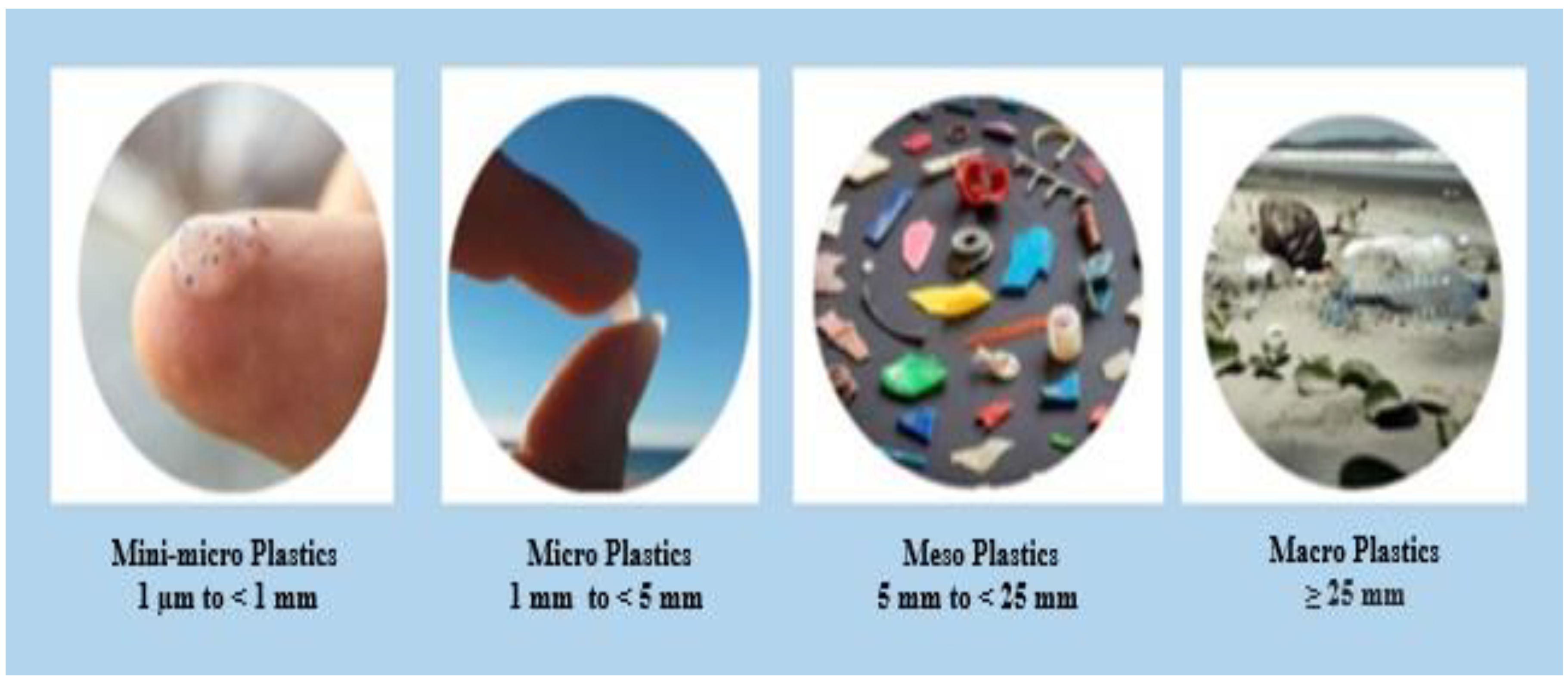
Figure 2.
Types of Microplastics.
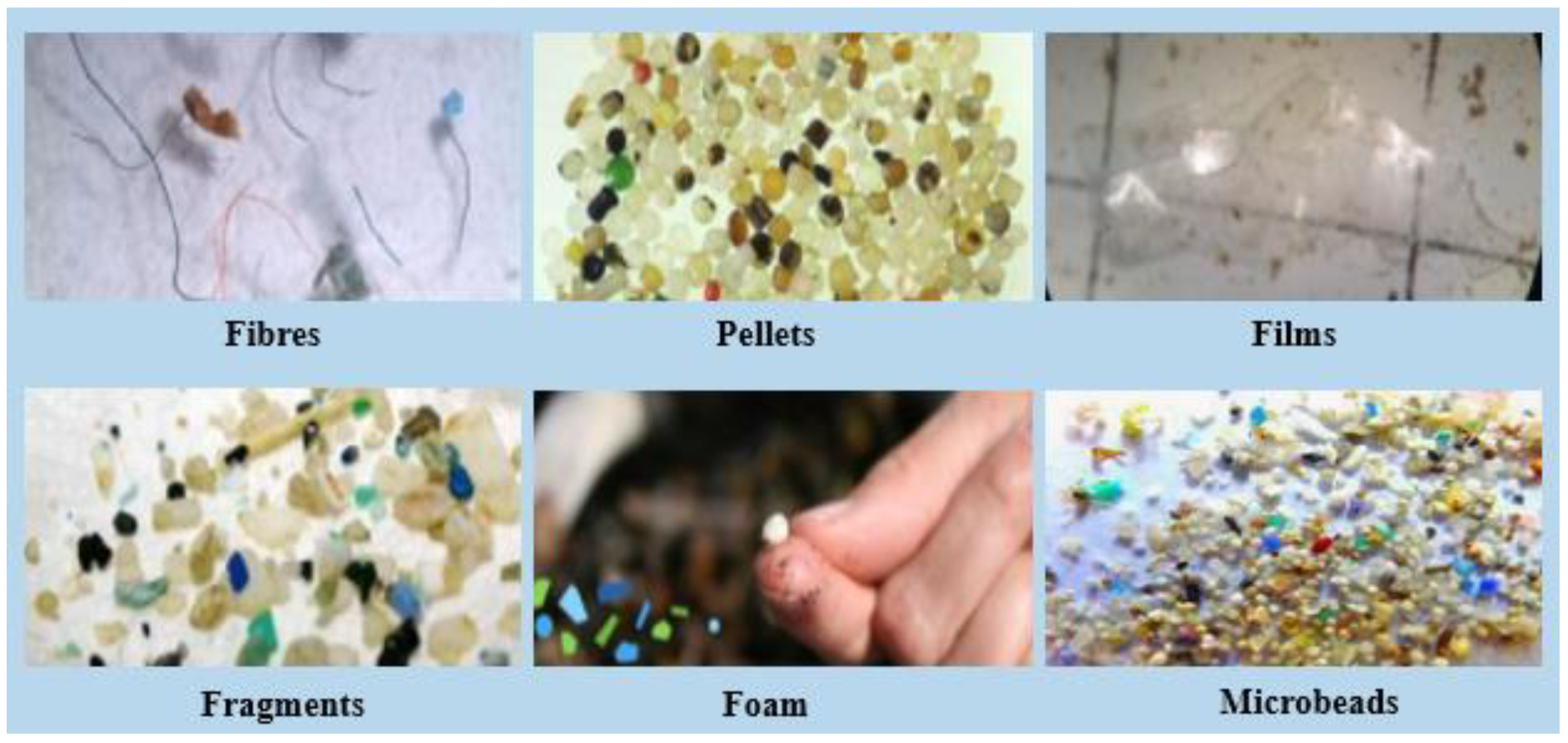
Figure 3.
Sources, Transformation and Transport of Microplastics.
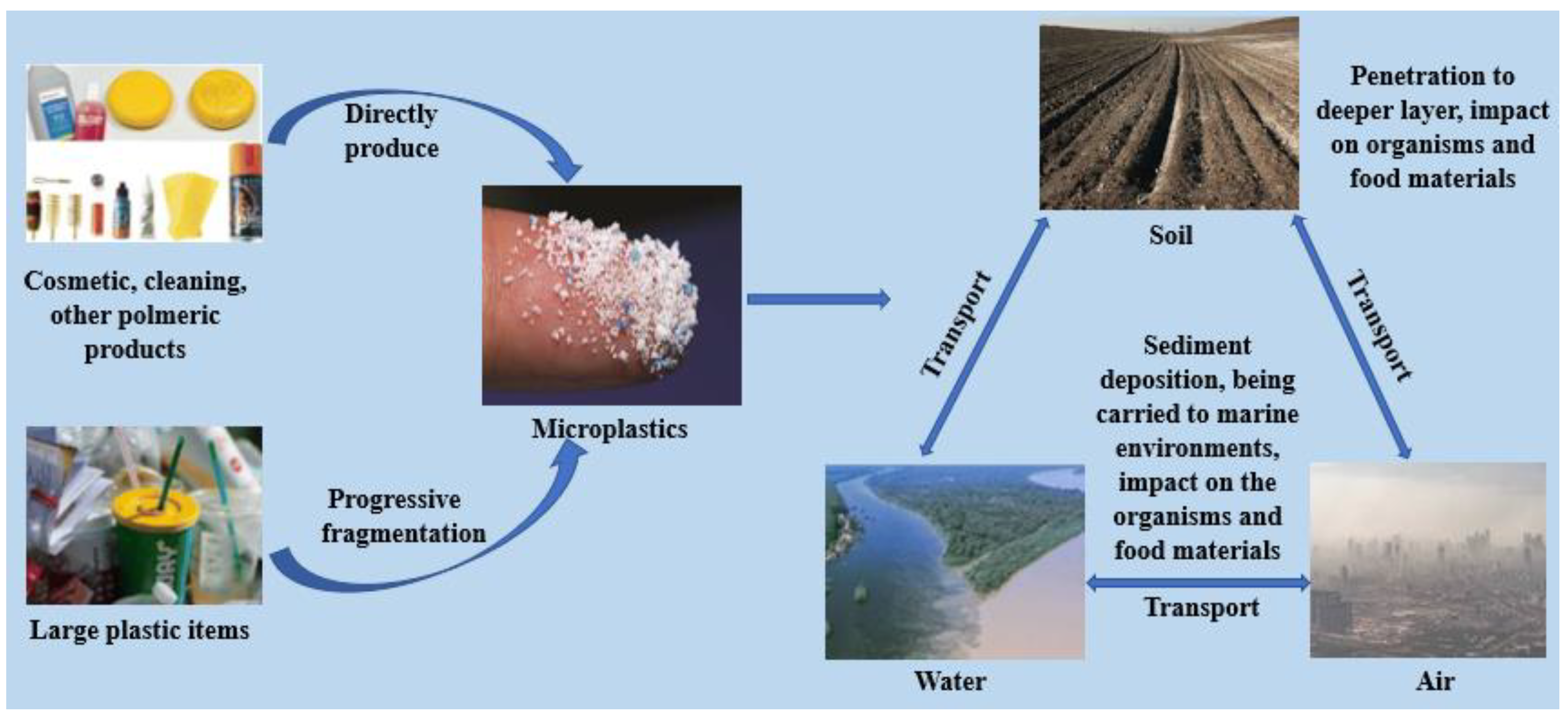
Figure 4.
Diagrammatic Representation of the Different Methods for the Analysis of Microplastics.

Figure 5.
Different Methods for the Treatment of Microplastics.
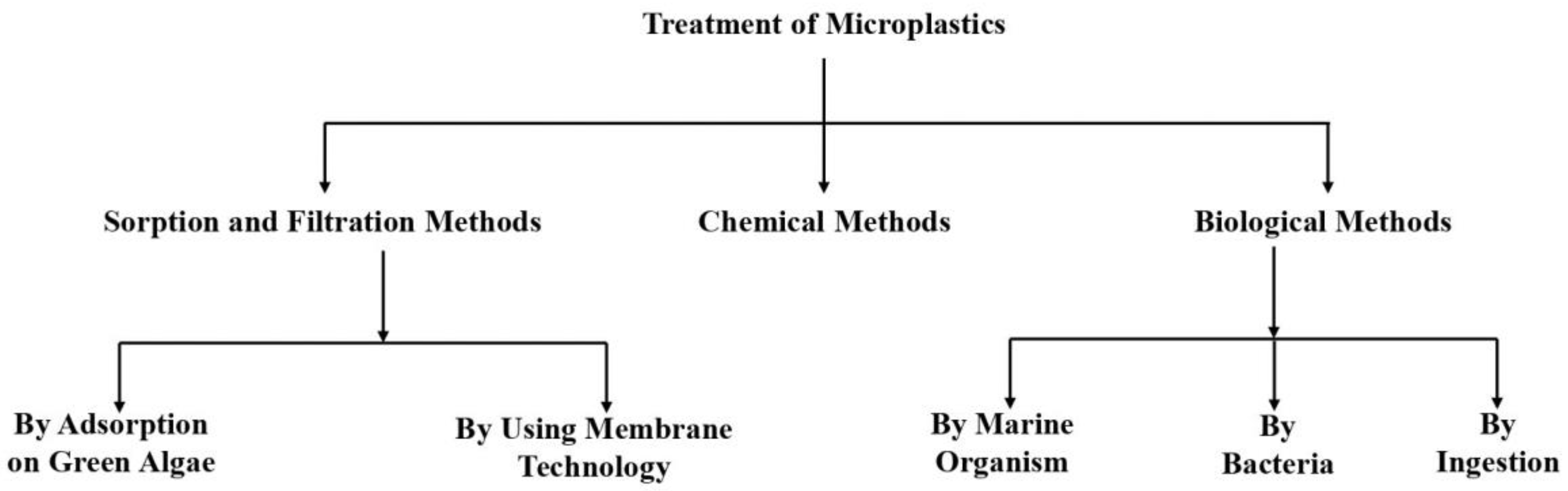

Table 1.
Occurrence of Different Types of Microplastics in Freshwater Environment.
| S. No. | Sample Types | Locations | Detection Methods | Microplastic’s Concentration | Type/Color/Size of Microplastics | References |
|---|---|---|---|---|---|---|
| 1 | Microbeads from customer products | Great Lakes, USA | EDS and SEM | 0.043 particles/m3 | Blue, white and gold; <1×10⁻³ m | Eriksen et al. 2013 |
| 2 | 82 % of the fragments and debris, 25 % PE and 19 % PP |
Tamar Estuary, Southwest England | Sieving and FTIR spectroscopy | 0.028 particles/m3 | Yellow and black; 1–5×10⁻³ m PP and < 1 or 1-3×10⁻³ m nylon | Sadri and Thompson 2014 |
| 3 | Fragments and films | Lake Hovsgol, Mongolia | Sieving and light microscopy | 0.20 particles/m3 | White and blue | Free et al. 2014 |
| 4 | Microfibers |
Yangtze Estuary System, China | Floatation and stereomicroscope | 4137.3 ± 2461.5 and 0.167 ± 0.138 numbers/m3 | Transparent, white and black | Zhao et al. 2014 |
| 5 | Expanded PS |
Pearl River Estuary, Hong Kong | Visual sorting and sieve | Highest 2098 ± 1705, Median 520 ± 688 and lowest 94 ± 44 items/m2 | Fok and Cheung 2015 | |
| 6 | PP and PE | Urban estuaries, China | Micro-Raman spectroscopy, filtration and agitation | Ranged from 10.6 -119.8 % |
Transparent, black and white | Zhao et al. 2015 |
| 7 | PS, PP, polyvinyl chloride and PE | Tibet Plateau Lake, China | SEM and Raman spectroscopy | 8 ± 14 to 563 ± 1219 items/m2 |
Blue, yellow, white and transparent | Zhang et al. 2016 |
| 8 | Cellophane, PE, PS and PP | Taihu Lake, China | Micro-FTIR spectroscopy and SEM/EDS |
11.0–234.6 items/kg in sediment and 3.4–25.8×10³ items/m3 in surface water | White (29 %) and transparent (44 %) | Su et al. 2016 |
| 9 | Fragments and fibers without plastic pellets | Lagoon-Channel of Bizerte, Northern Tunisia | Stereomicroscopy | 3000–18,000 items/kg, dry sediment |
Red, white, black, green and blue |
Abidli et al. 2017 |
|
10 |
22 % PET, 7 % PP, 22 % fluoro-polymer/Teflon, microfibers (43 % cotton) and 7 % nitrocellulose | Hudson River, USA |
FTIR spectroscopy |
0.625 to 2.45×10³ fibers/m3 |
Blue, black, transparent and red |
Miller et al. 2017 |
| 11 | Secondary microplastics (91 % fragments) | River Thames, UK | Sieving, visual inspection and Raman spectroscopy | 33.2 ± 16.1×10³ particles/100 kg sediment | Yellow and red |
Horton et al. 2017a |
| 12 | PE and PP |
Surface water of the urban area, Wuhan, China | Stereoscopic microscopy, SEM and FTIR spectroscopy | 1660.0 ± 639.1 to 8925 ± 1591 numbers/m3 |
50.4 % to 86.9 % transparent | W. Wang et al. 2017 |
| 13 | PP and PE | Beijiang River, China |
Flotation, SEM and FTIR spectroscopy | 178 ± 69 to 544 ± 107 items/kg sediment | Blue and brown | J. Wang et al. 2017 |
|
14 |
Low-density PE | Vembanad Lake, Kerala, India | Raman spectroscopy and wet peroxide oxidation | 252.80 ± 25.76 particles/m2 | White and transparent |
Sruthy and Ramasamy 2017 |
| 15 | Polyamides, PVC, acrylics, PS, PET, PP and PE | South Africa, Thailand, Japan and Malaysia | Density separation and FTIR spectroscopy |
100 to 1900 pieces/kg dry sediment | Black (14 %), brown (17 %) and white (57 %) | Matsuguma et al. 2017 |
| 16 | PP (29.4 %), PE (21 %) and PS (38.5 %) |
Three Gorges Reservoir, China |
Raman spectroscopy and FTIR spectroscopy |
25 to 300 numbers/kg wet weight in the sediments and 1597 to 12,611 numbers/m3 in surface water | Transparent | Di and Wang 2018 |
| 17 | 77.5 % fragments in Winyah Bay and 76.2 % fragments in Charleston Harbor | South Carolina Estuaries, USA |
Sieving, H2O2 treatment, SEM and FTIR spectroscopy |
221.0 ± 25.6 in sediment samples of Winyah Bay and 413.8 ± 76.7 particles/m2 in sediment samples of Charleston Harbor |
White, green, grey, blue, black, colorless and red |
Gray et al. 2018 |
| 18 | 75.3 % fibers in water and 68.7 % fibers in sediment |
Wind Farm, Yellow Sea, China |
Sieving, micro-FTIR spectroscopy and density separation |
2.58 ± 1.14×10³ items/kg in the sediment and 0.330 ± 0.278 items/m3 in the surface water |
Black and transparent |
Wang et al. 2018 |
| 19 | PP (15 %), PS (18 %) and PE (45 %) | Italian Subalpine Lakes, Italy | FTIR spectroscopy | 4000 to 57,000 particles/km2 | Sighicelli et al. 2018 | |
| 20 | PP |
Shanghai, China |
Density separation, microscopy and micro-FTIR spectroscopy | 80.2 ± 59.4×10³ items/100 kg dry weight |
Red, white, transparent and blue |
Peng et al. 2018 |
| 21 | PA (26.2 %) and cellophane (23.1 %) | Pearl River, China | Micro-Raman spectroscopy | 19.86×10³ microplastic/m3 for urban and 8.90×10³ microplastic/m3 for the estuary | Film, fiber and fragment | Yan et al. 2019 |
| 22 | PP (37 %) and PE (30 %) | Poyang Lake, China | Micro-Raman spectroscopy | 5 to 34×103 microplastic/m3 for surface water and 54 to 506 microplastic/kg for sediments | Fiber | Yuan et al. 2019 |
| 23 | PP and PE | Yong River, China | Raman spectroscopy | 0.5 to 7.7×10³ microplastic/m3 for surface water and 54 to 506 microplastic/kg for sediments | Fiber | Zhang et al. 2020 |
| 24 | PP | Danjiangkou Reservoir, China | micro-Raman spectroscopy | 0.47 to 15.02×10³ microplastic/m3 in surface water and 15 to 40 microplastic/kg in wastewater | Fiber | Di et al. 2019 |
| 25 | PS (27.7 %) | Suzhou River and Huangpu River, China | micro-FTIR spectroscopy | 0.08 to 7.4×10³ microplastic/m3 | Fiber | Luo et al. 2019 |
| 26 | PP | Yangtze River, China | Raman spectroscopy | 4.92 ×10⁵ microplastic/km2 | Fragment | Xiong et al. 2019 |
| 27 | PP (52.31 %) and PE (27.39 %) | Feilaixia Reservoir, China | micro-FTIR spectroscopy | 0.56 microplastic/m3 | Films | Tan et al. 2019 |
* PE = polyethylene; PP = polypropylene; PET = polyethylene terephthalate; PS = polystyrene; PVC = polyvinylchloride; PA = polyamides; PC = polycarbonates; FTIR = fourier transform infrared; SEM = scanning electron microscope; EDS = energy dispersive x-ray spectroscopy; USA = United States of America; UK = United Kingdom.
Disclaimer/Publisher’s Note: The statements, opinions and data contained in all publications are solely those of the individual author(s) and contributor(s) and not of MDPI and/or the editor(s). MDPI and/or the editor(s) disclaim responsibility for any injury to people or property resulting from any ideas, methods, instructions or products referred to in the content. |
© 2023 by the authors. Licensee MDPI, Basel, Switzerland. This article is an open access article distributed under the terms and conditions of the Creative Commons Attribution (CC BY) license (http://creativecommons.org/licenses/by/4.0/).
Copyright: This open access article is published under a Creative Commons CC BY 4.0 license, which permit the free download, distribution, and reuse, provided that the author and preprint are cited in any reuse.


