

Submitted:
23 November 2023
Posted:
24 November 2023
You are already at the latest version
Abstract
Renewable energy sources are increasingly crucial for meeting global energy demands in an eco-friendly manner, particularly as the world shifts away from fossil fuels and faces higher volatility of the market prices. Portugal, a country with limited fossil fuel reserves and high energy dependency, has heavily invested in renewables in recent years. However, renewables like sunlight, wind, and water are inherently unsteady due to climate influences, resulting in energy production fluctuations. To mitigate this issue, energy storage systems are being deployed to stabilize renewable energy supply during production lulls. This project aims to assess an energy storage system and define technical specification in order to maximize profitability at the Finerge-owned Alto Douro wind farm. To achieve this, we've conducted an energy demand analysis, followed by simulations to assess system performance in relation to energy use and profit, while varying parameters such as power and efficiency. We've also compared commercial proposals from different battery manufacturers utilizing various technologies. Our findings suggest that high-power, quick charge-discharge lithium-ion batteries are the most suitable solution, given their efficiency and modularity. These attributes are vital for achieving current and future profitability.
Keywords:
battery
; curtailment
; price arbitrage and wholesale electricity market.
1. Introduction
The transition to renewable energy sources has been a prominent topic in global energy policies in recent decades. Portugal, as a country with low fossil fuel reserves, has significantly invested in renewable energy sources. In 2022, electricity production in Portugal from these sources accounted for 56.3% of the total, according to the APREN (Portuguese Association of Renewable Energies) yearbook for 2023 [1]. Wind and solar energy, in addition to playing a crucial role in decarbonization and climate change mitigation, also contribute to the diversification of the energy matrix, making it more resilient [2,3]. However, even with the increased capacity for renewable energy generation, the variability in wind and solar production poses challenges to the stability and reliability of the electrical grid due to the inherent intermittence of these energy sources. This leads to uncertainties in production forecasts and the need for measures to address low and high production situations [2,3].
This project was developed as part of a real project for the company Finerge. Finerge, S.A. is an IPP (Independent Power Producer) with over 25 years of experience and is currently the second largest renewable energy producer in Portugal. Finerge operates 80 wind farms and 17 solar power plants in more than 58 municipalities in Portugal and 5 provinces in Spain, managing over 850 wind turbines and thousands of photovoltaic modules. The company has an installed capacity of 1,892 MW, producing 3.850 GWh of electricity annually. Finerge project is focuses on the evaluation of an energy storage system for the Alto Douro wind farm, including wind upgrades, solar hybridization, and subsequent model with the goal to power selection considering market offers from several manufacturers.
A promising technological solution to address these challenges is the integration of energy storage systems into the infrastructure of wind and solar power plants. This thesis aims to conduct a comprehensive technical and financial analysis of one such energy storage system, focusing on the Alto Douro wind farm. The introduction of this system can not only mitigate the impact of wind and solar variability on the grid but also create opportunities for greater integration of renewable energy sources and improve the overall system efficiency [2,3]. The choice of this topic is relevant in the context of Portugal’s sustainability goals and international commitments (such as the Paris Agreement and EU Carbon neutrality) which aim to reduce carbon emissions and contributes to the transition to a cleaner and more sustainable energy matrix [4,5]. Furthermore, the technical and financial analysis presented in this thesis contributes to the development of investment strategies in renewable energy and energy storage in Portugal.
The main objective of this work is to develop a project for Finerge, which involves analyzing both the technical and financial aspects of an energy storage system. This includes the definition of its characteristics, mode of use, and technology to maximize profitability for use in the Alto Douro wind farm. Subsequently, this project will be compared with existing projects. To achieve this, the first step is to gather information on similar national and international projects and their characteristics for comparison with the results of the Finerge project. Regarding Finerge project itself, it will be necessary to determine the total energy to be produced and then simulate the use of the energy storage system to determine the better characteristics within the range defined by Finerge.
This document is divided into 6 chapters. In the first chapter, the project’s context in relation to the current state of affairs is outlined, objectives are defined, and the content is described. The second chapter defines what an energy storage system is, discusses its advantages and types of technology, and describes current applications. The third chapter characterizes the wind farm studied in this project, while the fourth chapter describes the equipment upgrades, hybridization, and their respective production results. The fifth chapter describes the process for evaluation curtailment (energy produced above the export limit) through two different scenarios. It also includes a price arbitrage study, sensitivity analysis, and a study on the evolution of curtailment and its consequences for similar future projects. Finally, in the last chapter, the conclusions drawn throughout the thesis are presented, along with suggestions for future work complementary to this research.
2. State of the Art
In this chapter, the concept of energy storage systems, their advantages, various technology types, and existing cases are defined.
2.1. Energy Storage Systems
An energy storage system is an installation that allows the capture and storage of energy when it is generated or when electricity demand is low, which can be then supplied when needed.
2.1.1. Advantages
Energy storage systems play a crucial role in the optimisation of hybrid power plants (wind and solar) especially when the installed power is grater thin grid capacity. Some of their advantages include:
- Minimize the variability of energy production.
- Enhances the reliability of energy supply.
- Maximizes the utilization of wind and solar resources.
- Contributes for grid stability.
- Creates opportunities for additional revenue.
- Reduces operational and maintenance costs.
- Contributes to sustainability goals.
The primary advantage is mitigating the variability of wind and solar resources due to fluctuating wind speeds and changing solar radiation. This is achieved by storing excess energy when production is high and supplying it when production is insufficient, resulting in a more stable and reliable energy supply and overall plant efficiency.
Energy storage systems also improve energy supply reliability, ensuring power during low-wind or low-sun conditions or scheduled maintenance. This prevents disruptions and ensures consistent service to the grid [6].
These systems play a significant role in grid stability by providing ancillary services like frequency regulation and voltage support, enhancing the overall stability and reliability of the grid. In addition to their technical benefits, energy storage systems can generate additional revenue by participating in ancillary service markets and price arbitrage.
Another advantage is the ability to reduce operational and maintenance costs. They provide more flexibility in power plant operation and maintenance planning, optimizing resource utilization and reducing internal losses
2.1.2. Types of Energy Storage Systems
Various types of energy storage systems exist, each with its own advantages and disadvantages. These systems can be categorized as mechanical, electrical, chemical, thermal, and electrochemical.
Mechanical Energy Storage
Mechanical energy storage involves storing energy by applying force to a suitable medium. It primarily stores and recovers kinetic and potential energy. Common types include:
- Pumped hydro storage: Using water reservoirs at different elevations to store potential energy. During excess energy periods, water is pumped from a lower reservoir to an upper one. When energy is needed, water is released from the upper reservoir, passing through turbines to generate electricity [8,9,10].
Advantages of pumped hydro storage include high energy conversion efficiency, large energy storage capacity, quick response time to meet energy demands, long lifespan, and minimal capacity degradation over time. However, it requires suitable terrain and water resources, limiting its geographic applicability, and entails significant infrastructure costs.
- Flywheels: Flywheel energy storage systems use the inertia of a rotating mass to store kinetic energy. During surplus energy periods, energy is used to accelerate the flywheel, storing kinetic energy. When power is needed, the flywheel’s kinetic energy is converted back into electricity using a turbine and generator.
Flywheels offer fast response times for applications requiring rapid energy delivery. They have long lifespans with minimal degradation over time. However, they may suffer from friction losses leading to energy decay and have limited energy storage capacity compared to other systems.
- Compressed air energy storage: Compressed air energy storage uses compressed air to store energy. During surplus energy periods, air is compressed and stored in reservoirs. When energy is needed, the compressed air is released, expanding through a turbine to generate electricity.
Advantages of compressed air energy storage include large energy storage capacity, unlimited cycles without capacity degradation, and the potential for underground storage. However, it relies on suitable geological conditions for underground storage, limiting its applicability in some regions, and involves complex and costly technology.
Electrical Energy Storage
Electrical energy storage systems store electricity in electric fields and electromagnetics with minimal energy loss. The main types are supercapacitors and magnetic superconductors. These systems are suitable for high-power applications with short discharge times (seconds to minutes) and are known for their high efficiency and long lifespan. However, they are associated with high costs due to their complexity [11].
Chemical Energy Storage
Chemical energy storage refers to storing energy in the form of chemical fuels that can be converted into mechanical, thermal, or electrical energy when needed. A prominent example is hydrogen produced by electrolysis of water, stored in special tanks, and later converted into electricity using fuel cells. One of the primary benefits of this type of storage is its ability to store energy for extended periods. However, there are drawbacks, including lower energy conversion efficiency, high flammability of hydrogen, and challenges related to transportation and storage [12].
Thermal Energy Storage
Thermal energy storage systems store energy as heat (or cold), which can be released for later use. A common example is using molten salts in concentrated solar power plants to store heat that drives turbines and generates electricity. Molten salts have advantages such as high heat storage capacity, the ability to operate at high temperatures, and long-term energy retention. However, they require significant initial investment and substantial storage space and have relatively low energy density [13].
Electrochemical Energy Storage
Electrochemical energy storage refers to batteries, which consist of electrochemical cells with three main components: an anode (negative terminal), a cathode (positive terminal), and an electrolyte. During charging, chemical reactions store energy in the form of chemical compounds in the anodes and cathodes. During discharge, these chemical compounds react, releasing stored chemical energy as electricity.
Various battery types include lead-acid, nickel, sodium-sulphur, flow, lithium, and sodium batteries, each with distinct characteristics.
Common advantages of electrochemical storage systems are energy conversion efficiency, rapid response to energy demand fluctuations, scalability for large-scale storage, and long lifespans. Nevertheless, they may have limitations in terms of capacity and lifespan and face potential issues like degradation or pollution [14,15,16].
Comparison
Among the various battery technologies, lithium-ion batteries are considered ideal for installation in a hybrid wind and solar power plant due to their superior performance and overall cost-effectiveness. This choice is justified by several factors:
- Energy conversion efficiency
- Reliability, extensive market use, and manufacturer experience
- Discharge time compatibility with more lucrative price arbitrage
- Affordability due to the high demand for electric vehicle industry what allow to improve technology performances and reduce manufacturing costs by a factor of approximately 10 from 2010 to 2020;
Experience gained by manufacturers and financiers is making lithium-ion technology the preferred option, reducing risk, and gaining credibility among financial institutions. Flexibility concerning discharge time compared to other chemical storage technologies, as lithium-ion batteries can be designed for a wide range of discharge times, optimizing for price arbitrage on various markets [17,18,19,20,21,22,23,24,25].
2.2 Cases
The following are some examples of energy storage system projects in renewable energy hybrid power plants:
- Hornsdale Power Reserve (South Australia): This project, developed by Neoen, uses a massive lithium-ion battery system supplied by Tesla. It provides grid stability and backup power, helping balance the region’s energy supply. This project gained global recognition for its rapid response time in stabilizing the grid, such as during sudden drops in power supply. It showcases the benefits of lithium-ion battery technology for grid stabilization and highlights its versatility in managing renewable energy fluctuations.
- Noor Complex (Morocco): The Noor Complex is one of the world’s largest solar power projects with integrated thermal storage. It uses parabolic troughs to concentrate solar energy, generating both electricity and thermal energy. The excess thermal energy is stored in molten salt tanks and can be used to generate electricity during the night or on cloudy days. This project illustrates the role of thermal energy storage in improving the reliability of renewable energy systems.
- Yandin Wind Farm (Australia): Yandin Wind Farm is the largest wind farm in Western Australia and incorporates a large-scale lithium-ion battery energy storage system. The battery system helps to stabilize the grid by absorbing excess energy during windy periods and releasing it when demand is high, but wind power is low. This project highlights the advantages of integrating battery energy storage with wind farms to enhance grid reliability and maximize renewable energy utilization.
- Nant de Drance (Switzerland): Nant de Drance is a pumped hydro storage project located in the Swiss Alps. It involves two artificial reservoirs at different elevations connected by underground tunnels. During periods of excess electricity generation, water is pumped from the lower reservoir to the upper one. When energy demand is high, the stored potential energy is converted back into electricity by releasing the water through turbines. This project demonstrates the importance of pumped hydro storage in providing grid stability and balancing intermittent renewable energy sources.
These case studies show the diverse applications of energy storage systems in renewable energy projects, including lithium-ion batteries, thermal storage, and pumped hydro storage. They highlight the advantages of each technology in different contexts and provide valuable insights into the successful integration of energy storage in hybrid power plants.
3. Case Study
This chapter outlines the origins of the project, its methodology, and objectives. It also provides an overview of Alto Douro wind farm at the time of the thesis.
The project emerged from a prior initiative by Finerge aimed at increasing the installed capacity of Alto Douro wind farm through the addition of more wind turbines and hybridization. The hybridization component consists of the installation offline photovoltaic modules to complement wind generation. The goal was to reduce variability in energy production, as solar resources, in the area of this project, would typically be available when wind speeds were lower, mitigating wind’s unpredictability. Both the wind turbines and hybridization would utilize Finerge’s existing infrastructure.
As the installed capacity increased, it was expected an excess of energy produced, known as “curtailment”, due to the fact that exceed the maximum power accepted by the public grid. Without storage, this excess of energy “would go to waste”. Internally the “excess of energy” will also improve the fatigue of transmission lines and others growing energy losses. The primary focus of this project was to assess the economic feasibility of installing an energy storage system, specifically batteries, to harness curtailed energy and lowering internal losses. The project aimed to determine the optimal technical characteristics of the battery system for the Alto Douro wind farm. For the case study were used Data Base from 2015 to 2018, to achieve a comprehensive dataset. The primary objectives included quantifying the energy to be used and simulating battery usage.
At the same time, the Data Base help in the identification of the technical characteristics of the battery.
The project had two main phases: quantifying the energy to be used and simulating battery usage. Energy quantification was vital for establishing the range of values the battery would work with, allowing for a simulation of its usage. This quantification involved the calculation of the total production that would exceed the export limit, which was achieved by summing existing production values with the additional production from additional wind turbines and hybridization. The simulation computed in Excel accounted several variables, including battery power, efficiency, capacity, autonomy, losses, and electricity prices, to determine the ideal battery specifications for the project (see Figure 1).
3.1. Characterization of the Alto Douro Wind Farm
Alto Douro wind farm is located in Viseu district in northern Portugal, consisting of seven sub-parks divided into three branches connected to a high voltage substation. The wind farm’s total installed capacity and maximum interconnection capacity with the public grid is 253.2 MW (National Transmission Network (RNT)) at 220 kV in São Martinho substation (see Figure 2). The data for production from 2015 to 2018 was provided by Finerge and used to calculate curtailment.
The plant’s production data base consists of a 15 minutes periods from 2015, to 2018, in kWh. The losses through connections having already been discounted. A sample of the data provided is represented in Figure 3.
3.2. São Martinho Substation
São Martinho substation serves as the central hub for all sub-parks and manages the total production of Alto Douro wind farm. It includes 60-220 kV transformers that higher electricity tenson from the internal grid to the 220 kV public grid. The substation is equipped with a Gas Insulated Switchgear (GIS) and backup batteries for power outages [26].
This sub-chapter discusses the background, methodology, and objectives of the project in question. It originates from a Finerge project aiming to expand the Alto Douro wind farm’s capacity through additional wind turbines and hybridization with photovoltaic modules. The project investigates the feasibility of installing an energy storage system, particularly batteries, to capture excess energy. The main goals are to determine the ideal technical characteristics of the battery and simulate its usage. The Alto Douro wind farm has a total capacity of 253.2 MW, with data from 2015 to 2018 used for the analysis. The São Martinho substation plays a central role in managing the wind farm’s electricity production (see Figure 4).
4. Energy Quantification
This chapter details the methods used to quantify the total energy available for the project, addressing both the additional wind equipment and the hybridization aspects.
4.1. Characterization of the Additional Wind Equipment
For the calculation of the additional wind equipment’s production, wind speed data at a height of 80 meters in Serra de Montemuro were provided by Finerge. The data, recorded in 15-minute intervals from 2015 to 2018, were presented in m/s (see Figure 5) [27,28,29].
The total power specified by Finerge for the additional equipment is 43 MW, complying with prevailing legislation (20% of the total installed power).
Two turbine models were considered: Vestas V150–4.5 MW 50/60 Hz and GE 5.8-158 - 50/60Hz. Power tables for these models, based on wind speed and low turbulence, were used to calculate power corresponding to wind speed and density. Density was determined using the ideal gas law and the barometric formula [27,28,29].
Following this, a turbine model was selected based on power and efficiency, leading to the choice of the GE model. The specific costs for both models were not provided, so the decision was primarily and based on the lower number of turbines needed for the GE model to achieve the specified power. It was decided to use 8 GE turbines, each limited to 5.3 MW.
4.2. Characterization of hybridization
For the calculation of energy produced by the photovoltaic modules installed as part of the hybridization, Finerge provided data for direct and diffuse irradiance. The total power defined for the hybridization was 180 MWp, and a solar model was used for its efficiency and peak power.
The calculation of energy produced by each photovoltaic module in Wh was based on a formula incorporating irradiance, global efficiency, module area, and module efficiency. Global efficiency was determined by considering various losses. This resulted in an energy production figure for the hybridization for each hour, which was then converted to 15-minute intervals (see Figure 6) [27,28,29].
Total energy produced by the hybridization for each year from 2015 to 2018 was then computed. A comparison between the irradiance data provided by Finerge and data obtained from NASA indicated similar results, supporting the reliability of the data from Finerge.
4.3. Total Production
Finally, by summing the production values for the existing sub-parks, additional wind equipment, and hybridization, the total energy production for Alto Douro wind farm was calculated for each year in 15-minute intervals from 2015 to 2018. The annual average was approximately 919 GWh, equivalent to the energy needs of approximately 280,000 Portuguese households. Figure 7, Figure 8 and Figure 9 illustrate the individual wind and solar productions and the total production for 2015 [28].
The solar energy trends have usually interval of hour period, so an interpolation has been necessary to compatibilizer trends.
This chapter provides comprehensive insight into how the energy available for the project was quantified, including specific details regarding additional wind equipment and hybridization.
5. Storage simulation
This chapter involves a simulation of energy storage using Excel, considering two distinct scenarios based on various variables and an analysis of the Portuguese daily electricity market. It also includes a sensitivity analysis and examines the future of curtailment and its impact on electricity prices [30].
5.1. Daily Market Prices
5.1.1. Daily Market
The Portuguese daily electricity market is a crucial component of the country’s electric sector, enabling the buying and selling of electricity to meet daily demand. The operation of this market is regulated and managed by the Regulatory Entity for Energy Services (ERSE) and the Operator of the Iberian Electricity Market (OMIE), in coordination with the Spanish market [30].
5.1.1. Market Participants
The daily electricity market involves various stakeholders, each with specific responsibilities, including energy producers, traders, consumers, and network operators. Each plays a vital role in the dynamics of this market [30].
5.1.2. Demand Forecasting
Before the market opens, distribution companies and network operators forecast demand for the following day. These forecasts are essential for determining the amount of electricity needed to meet consumer needs, considering factors like historical data, weather conditions, and seasonal events [30].
5.1.3. Daily Auction
The heart of the daily electricity market is the daily auction conducted by OMIE. In this auction, producers and traders offer energy blocks for purchase or sale based on different criteria, such as production costs, resource availability, and market strategies. The electricity price for the next day is determined based on supply and demand, ensuring market efficiency and competitiveness [30].
5.1.4. Generation Scheduling
Based on the auction results, energy producers plan electricity generation for the following day. This involves coordinating various energy sources, including thermal, hydro, solar, wind, and others, to ensure supply meets the forecasted demand [30].
5.1.5. Price Formation
Electricity prices in the daily market are determined by supply and demand. During periods of high demand and/or resource scarcity, prices tend to rise, incentivizing additional electricity generation. In periods of low demand and/or resource abundance, prices may decrease [30].
5.1.6. Real-Time Operation
During the day, real-time operations are managed by the System Operator, REN (National Energy Grids) for Portugal. This entity continuously monitors the balance between electricity production and consumption, making instant adjustments to ensure grid stability [30].
5.1.7. Iberian Integration
Portugal is part of the Iberian Electricity Market (MIBEL), which also includes Spain. This integration allows the interconnection of electrical systems and cross-border electricity trading, enhancing market stability and competitiveness [30].
5.1.8. Regulation
ERSE plays a fundamental role in regulating the daily electricity market, establishing rules and tariffs to ensure competition and fairness in the sector [30].
5.1.9. Prices
For this project, daily electricity market prices were obtained from REN’s website, measured in €/MWh, on an hourly basis for the years 2015 to 2019. These five years were chosen because four of them correspond to the project’s study period, and their prices were not affected by the current energy crisis, making them more likely to represent future years [30].
To simplify the simulation calculation, hourly averages were computed for each month in each year. This involved averaging prices for each hour within a specific month (e.g., January 2015) and then calculating the average of these monthly averages. This approach was taken to obtain hourly prices representing future years more closely and simplify the simulation’s Excel calculations. The average prices can be seen in Figure 10.
5.2. Curtailment
As previously mentioned, the primary use of the energy storage system is for curtailment, which refers to excess energy production beyond the export limit, energy that would otherwise go unused. Through the use of batteries, this excess energy can be stored for later sale to the grid when the plant’s production does not exceed the export limit.
5.2.1. Effective Curtailment Calculation
The effective calculation of curtailment, measured in kW, considered the export limit of 253,200 kW. This calculation was performed in 15-minute intervals for the years 2015, 2016, 2017, and 2018 by determining the difference between total production and this export limit. An average of 19 GWh of curtailment per year was obtained for these years, with a high-frequency occurrence (See Figure 11).
Two different scenarios (Scenario A and Scenario B) were considered for the use of curtailment energy in combination with the battery storage system. These scenarios depend on five variables: storage time (in hours), power (in kW), charging and discharging losses (percentage), and maximum battery capacity (in kWh).
5.2.2. Scenario A
Scenario A is the most optimistic scenario, representing an idealized approach without considering daily cycle limits. This scenario focuses on discharging the stored energy as soon as possible. The method involves discharging the battery whenever the energy storage allows, given that the total production of the plant remains below the export limit.
Profit calculations for Scenario A were based on the predetermined base variable values. The total profit was calculated for each year (2015, 2016, 2017, and 2018), and the average profit across these years was €42,158 for an energy total of 887,252 kWh.
5.2.3. Scenario B
Scenario B is more realistic and assumes that the battery charges to its full capacity before discharging. This scenario adheres to the daily cycle limits of the battery storage system, which are crucial for maintaining the battery’s life [31].
Profit calculations for Scenario B were based on the predetermined base variable values. The total profit was calculated for each year (2015, 2016, 2017, and 2018), and the average profit across these years was €35,463 for an energy total of 710,347 kWh. This scenario has slightly lower profit potential than Scenario A, given the constraints of daily cycle limits.
5.2.4. Decision
In this project, it was decided to use scenario B, due to this scenario involving a more realistic calculation process and having obtained more cautious values. However, scenario A is still important, especially at a company level, to be able to define the maximum possible profit to be obtained and is also a basis for comparing to other scenarios that involve calculating the maximum realistic profit to be obtained. of the battery [32,33,34,35].
5.3. Price Arbitrage in Battery Storage: An Overview
This sub-chapter discusses price arbitrage as a secondary use of energy storage batteries alongside their primary function of curtailing excess energy. Price arbitrage involves buying electricity when prices are low and selling it when prices are high. The primary goal remains curtailing excess energy to capitalize on zero-cost energy storage. The text outlines a three-step simulation for price arbitrage.
In the first step, battery efficiency is assessed based on market prices to determine the feasibility of price arbitrage. In the second step, profits are calculated exclusively from price arbitrage for two different battery autonomy periods, 2 and 4 hours. Lastly, the study combines price arbitrage with curtailing energy, with curtailing being the priority [32,33,34,35].
5.3.1. Battery with 4 hours of autonomy
For a 4-hour autonomy battery, the analysis demonstrates that certain months are profitable for price arbitrage with a 90% efficiency rate. The results show that June and July would not be financially viable for price arbitrage, while other months would yield profit. After averaging profits for the years 2015-2018, the conclusion is that a 4-hour autonomy battery with 90% efficiency would result in €44,994 when used exclusively for price arbitrage, as opposed to €23,422 when used solely for curtailing (See Figure 12).
5.3.2. Battery with 2 hours of autonomy
A similar analysis for a 2-hour autonomy battery indicates that all months would be profitable for price arbitrage, and profits would be higher, averaging €33,913 for exclusive price arbitrage and €61,731 when combined with curtailing (See Figure 13).
5.3.3. Decision
Table 4 represents the comparison of profits between the use of a battery with a battery life of 4 hours and one with a battery life of 2 hours, with both having an overall efficiency of 90% and a maximum energy storage capacity of 10 MWh.
5.3.4. Sensitivity Analysis
To identify the most critical aspects of the project, a sensitivity analysis was conducted by varying the following variables: central production, battery efficiency, and export limit. The changes were applied to a battery with a 2-hour charge and discharge time, 5 MW of power, and a 10 MWh energy storage capacity. Table 1 illustrates the profit variations for curtailing combined with price arbitrage resulting from a 5% change in these variables.
We can conclude that battery efficiency plays a crucial role in determining its profitability, making it a primary factor to consider when making purchasing decisions.
5.3.5. Future Curtailment
Despite electricity prices remaining relatively stable and declining by approximately €13 per MWh until 2050, which might suggest reduced profitability for this project, the volatility experienced by the electricity market currently and in the future, including significant price fluctuations between high and low prices, due to decreased electricity consumption and increased wind energy production, which reduces the reliance on thermal power plants, especially natural gas-fired combined cycle plants, will provide higher profit potential for projects involving price arbitrage. Additionally, government incentives are expected to be introduced shortly.
5.3.6. Conclusions
Comparing these two cases, it’s concluded that a battery with lower autonomy, but higher power capacity would be more profitable, assuming equal efficiency and storage capacity.
This work further conducts a sensitivity analysis, finding that battery efficiency significantly affects profitability. A 5% increase in efficiency results in higher profits. The importance of battery efficiency is highlighted for purchasing decisions.
This work anticipates future energy market conditions, considering price stability, decreasing prices over the years, and increased arbitrage opportunities due to market volatility and government incentives.
In summary, the text explores the concept of price arbitrage in energy storage batteries and the key factors affecting its profitability, such as battery autonomy, efficiency, and market conditions, providing valuable insights for decision-makers in this field.
6. Conclusions
In this work, a study was conducted on the technical characteristics of an energy storage system to be installed in a hybrid power plant to maximize profit through curtailment and price arbitrage. Throughout the course of this study, eight databases were utilized, leading to important conclusions about the operation of such a system.
The first conclusion drawn is that currently, the most suitable technology for storing excess energy produced by wind and/or solar power plants is lithium-ion batteries. This choice is due to their capacity to store large amounts of energy, long lifespan, and modularity. This is further confirmed by the fact that many similar existing projects also take advantage of the benefits of using lithium-ion batteries.
Another conclusion is that the energy produced by the power plant exceeds the export limit relatively few times per year, with an average curtailment rate of 2% of the total energy produced.
Another significant finding from this project is that among batteries with the same maximum energy storage capacity, higher profits are obtained from batteries that operate with higher power capacity and shorter autonomy time, assuming the same number of daily charge and discharge cycles between the two batteries. This is because the power plant produces energy above the export limit relatively infrequently, and the surplus energy is generated in large quantities, making it suitable for a battery with high power capacity and short charge/discharge times.
An additional conclusion is that the efficiency of the selected battery is of utmost importance. This is not only because the viability of price arbitrage is affected by this factor, but also because the profit obtained depends greatly on battery efficiency, making it one of the most sensitive variables in the project.
In conclusion, it was found that projects of this type will benefit from the volatility of the electricity market and high curtailment levels, which is expected to continue in the coming years. Therefore, investing in such solutions will become increasingly profitable, considering their modularity for future expansions.
7. Future Work
The results obtained in this thesis were subsequently used in a study conducted by the company DNV (Det Norske Veritas) based on a proposal from Finerge to determine the feasibility of using batteries in the secondary electricity market and electricity services. It was concluded that using batteries for this purpose would result in higher profits.
As such, it would be appropriate to conduct a detailed financial study on the use of this type of energy storage system for the secondary electricity market and electricity services. This study could include a potential follow-up involving the implementation of a hydrogen fuel cell system or supercapacitors.
Supercapacitors (SCs) are energy storage devices that bridge the gap between batteries and conventional capacitors. They can store more energy than capacitors and supply it at higher power outputs than batteries. These features, combined with high cyclability and long-term stability, make SCs attractive devices for energy storage. SCs are already present in many applications, either in combination with other energy storage devices (mainly batteries), or as autonomous energy sources. Porous carbons are presently used in the electrodes of commercial SCs due to their high surface area and their good conductivity.
The advancement of an efficient energy storage system holds paramount importance in preserving energy sources, particularly renewable ones, which have experienced exponential growth over the past decade. Among various energy storage systems, supercapacitors (SCs) have garnered significant interest among researchers due to their remarkable attributes, such as rapid charging and discharging, higher power density, and environmental friendliness. Nevertheless, the energy density falls short of expectations. The development of effective electrode materials offers a potential solution to this challenge. Metallic chalcogenides have exhibited promising outcomes in diverse applications, including energy conversion and storage devices.
It’s worth noting that factors such as battery configuration, the capacity of the existing electrical grid, the relevant legislation for such projects, and the location of the battery considering the constituent clusters of the Alto Douro power plant may also be considered in future projects.
Author Contributions
Conceptualization, C.F.; formal analysis and validation, C.X.; investigation, A.M.; writing—original draft preparation, F.P.; writing—review and editing, C.F. and A.A.S. All authors have read and agreed to the published version of the manuscript.
Funding
Not applicable.
Informed Consent Statement
Not applicable.
Data Availability Statement
Not applicable.
Conflicts of Interest
The authors declare no conflict of interest.
References
- “APREN - Anuário APREN 2023,” www.apren.pt. https://www.apren.pt/pt/publicacoes/apren/anuario-apren-2023.
- J. K. Kaldellis and D. Zafirakis, “Optimum energy storage techniques for the improvement of renewable energy sources-based electricity generation economic efficiency,” Energy, vol. 32, no. 12, pp. 2295–2305, Dec. 2007. [CrossRef]
- G. R. Timilsina, “Are renewable energy technologies cost competitive for electricity generation?,” Renewable Energy, vol. 180, pp. 658–672, Dec. 2021. [CrossRef]
- Conselho Europeu Conselho da União Europeia. Acordo de Paris sobre alterações climáticas URL: https://www.consilium.europa.eu/pt/policies/climate-change/paris-agreement/.
- Filipe Pereira, Nídia S. Caetano, Carlos Felgueiras, Increasing energy efficiency with a smart farm—An economic evaluation, Energy Reports, Volume 8, Supplement 3, 2022, Pages 454-461, ISSN 2352-4847. [CrossRef]
- F Pereira, M Oliveira - Porto: Publindústria, 2011. Pereira, Filipe. (2011). Curso técnico instalador de energia solar fotovoltaica. F Pereira, M Oliveira - Porto: Publindústria, 2011.
- P. E. Bett and H. E. Thornton, “The climatological relationships between wind and solar energy supply in Britain,” Renewable Energy, vol. 87, pp. 96–110, Mar. 2016. [CrossRef]
- H. Ibrahim, A. Ilinca, and J. Perron, “Energy storage systems—Characteristics and comparisons,” Renewable and Sustainable Energy Reviews, vol. 12, no. 5, pp. 1221–1250, Jun. 2008. [CrossRef]
- M. S. Guney and Y. Tepe, “Classification and assessment of energy storage systems,” Renewable and Sustainable Energy Reviews, vol. 75, pp. 1187–1197, Aug. 2017. [CrossRef]
- S. Ould Amrouche, D. Rekioua, T. Rekioua, and S. Bacha, “Overview of energy storage in renewable energy systems,” International Journal of Hydrogen Energy, vol. 41, no. 45, pp. 20914–20927, Dec. 2016. [CrossRef]
- S. Rehman, L. M. Al-Hadhrami, and Md. M. Alam, “Pumped hydro energy storage system: A technological review,” Renewable and Sustainable Energy Reviews, vol. 44, pp. 586–598, Apr. 2015. [CrossRef]
- A. G. Olabi, T. Wilberforce, M. Ramadan, M. A. Abdelkareem, and A. H. Alami, “Compressed air energy storage systems: Components and operating parameters – A review,” Journal of Energy Storage, vol. 34, p. 102000, Feb. 2021. [CrossRef]
- B. B. Adetokun, O. Oghorada, and S. J. Abubakar, “Superconducting magnetic energy storage systems: Prospects and challenges for renewable energy applications,” Journal of Energy Storage, vol. 55, p. 105663, Nov. 2022. [CrossRef]
- J. O. Abe, A. P. I. Popoola, E. Ajenifuja, and O. M. Popoola, “Hydrogen energy, economy and storage: Review and recommendation,” International Journal of Hydrogen Energy, vol. 44, no. 29, pp. 15072–15086, Jun. 2019. [CrossRef]
- A. Caraballo, S. Galán-Casado, Á. Caballero, and S. Serena, “Molten Salts for Sensible Thermal Energy Storage: A Review and an Energy Performance Analysis,” Energies, vol. 14, no. 4, p. 1197, Feb. 2021. [CrossRef]
- A. R. Dehghani-Sanij, E. Tharumalingam, M. B. Dusseault, and R. Fraser, “Study of energy storage systems and environmental challenges of batteries,” Renewable and Sustainable Energy Reviews, vol. 104, pp. 192–208, Apr. 2019. [CrossRef]
- C. Zhang, Y.-L. Wei, P.-F. Cao, and M.-C. Lin, “Energy storage system: Current studies on batteries and power condition system,” Renewable and Sustainable Energy Reviews, vol. 82, pp. 3091–3106, Feb. 2018. [CrossRef]
- D. A. J. Rand and P. T. Moseley, “Energy Storage with Lead–Acid Batteries,” Electrochemical Energy Storage for Renewable Sources and Grid Balancing, pp. 201–222, 2015. [CrossRef]
- C. Parker, “Lead-acid battery energy-storage systems for electricity supply networks,” Journal of Power Sources, vol. 100, no. 1–2, pp. 18–28, Nov. 2001. [CrossRef]
- P. Bernard and M. Lippert, “Nickel–Cadmium and Nickel–Metal Hydride Battery Energy Storage,” Elsevier eBooks, pp. 223–251, Jan. 2015. [CrossRef]
- Z. Wen, J. Cao, Z. Gu, X. Xu, F. Zhang, and Z. Lin, “Research on sodium sulfur battery for energy storage,” Solid State Ionics, vol. 179, no. 27–32, pp. 1697–1701, Sep. 2008. [CrossRef]
- T. Nguyen and R. F. Savinell, “Flow Batteries,” The Electrochemical Society Interface, vol. 19, no. 3, pp. 54–56, 2010. [CrossRef]
- T. Chen et al., “Applications of Lithium-Ion Batteries in Grid-Scale Energy Storage Systems,” Transactions of Tianjin University, Feb. 2020. [CrossRef]
- B. L. Ellis and L. F. Nazar, “Sodium and sodium-ion energy storage batteries,” Current Opinion in Solid State and Materials Science, vol. 16, no. 4, pp. 168–177, Aug. 2012. [CrossRef]
- B. Diouf and R. Pode, “Potential of lithium-ion batteries in renewable energy,” Renewable Energy, vol. 76, pp. 375–380, Apr. 2015. [CrossRef]
- A. K. Kim, “RECENT DEVELOPMENT IN FIRE SUPPRESSION SYSTEMS,” Fire Safety Science, vol. 5, pp. 12–27, Jan. 2001.
- G. Lente and K. Ősz, “Barometric formulas: various derivations and comparisons to environmentally relevant observations,” ChemTexts, vol. 6, no. 2, Apr. 2020. [CrossRef]
- “IPMA - Mapas,” www.ipma.pt. https://www.ipma.pt/pt/oclima/monitorizacao/index.jsp?selTipo=m&selVar=tt&selAna=me&selAno=-1.
- B. Liu et al., “Estimating hub-height wind speed based on a machine learning algorithm: implications for wind energy assessment,” Atmospheric Chemistry and Physics, vol. 23, no. 5, pp. 3181–3193, Mar. 2023. [CrossRef]
- REN, "Preços Mercado Spot - Portugal e Espanha," www.mercado.ren.pt/PT https://mercado.ren.pt/PT/Electr/InfoMercado/InfOp/MercOmel/paginas/precos.aspx.
- C. Curry, “Lithium-ion Battery Costs and Market Squeezed margins seek technology improvements & new business models,” 2017. Available: https://enerjiye.com/wp-content/uploads/2021/07/battery-market.pdf.
- Park, W.-H.; Abunima, H.; Glick, M.B.; Kim, Y.-S. Energy Curtailment Scheduling MILP Formulation for an Islanded Microgrid with High Penetration of Renewable Energy. Energies 2021, 14, 6038. [Google Scholar] [CrossRef]
- Lim, S.; Baek, S.-M.; Park, J.-W. Selection of Inertial and Power Curtailment Control Methods for Wind Power Plants to Enhance Frequency Stability. Energies 2022, 15, 2630. [Google Scholar] [CrossRef]
- Kies, A.; Schyska, B.U.; Von Bremen, L. Curtailment in a Highly Renewable Power System and Its Effect on Capacity Factors. Energies 2016, 9, 510. [Google Scholar] [CrossRef]
- “Preço diário da eletricidade em Portugal volta a recuar, atinge mínimo de quase dois anos e terá várias horas a custo zero,” Expresso, Dec. 30, 2022. https://expresso.pt/economia/2022-12-30-Preco-diario-da-eletricidade-em-Portugal-volta-a-recuar-atinge-minimo-de-quase-dois-anos-e-tera-varias-horas-a-custo-zero-8924825a.
- “Governo promete concurso para apoiar investimento em baterias ainda este ano,” Expresso, Oct. 12, 2023. https://expresso.pt/economia/economia_energia/2023-10-12-Governo-promete-concurso-para-apoiar-investimento-em-baterias-ainda-este-ano-647d812d.
- Matthew, D. Campos-Gaona, A. Stock, and M. Nedd, “A Critical Review of Current and Future Options for Wind Farm Participation in Ancillary Service Provision,” Energies, vol. 16, no. 3, pp. 1324–1324, Jan. 2023. [CrossRef]
Figure 1.
Schematic presentation of the Project.
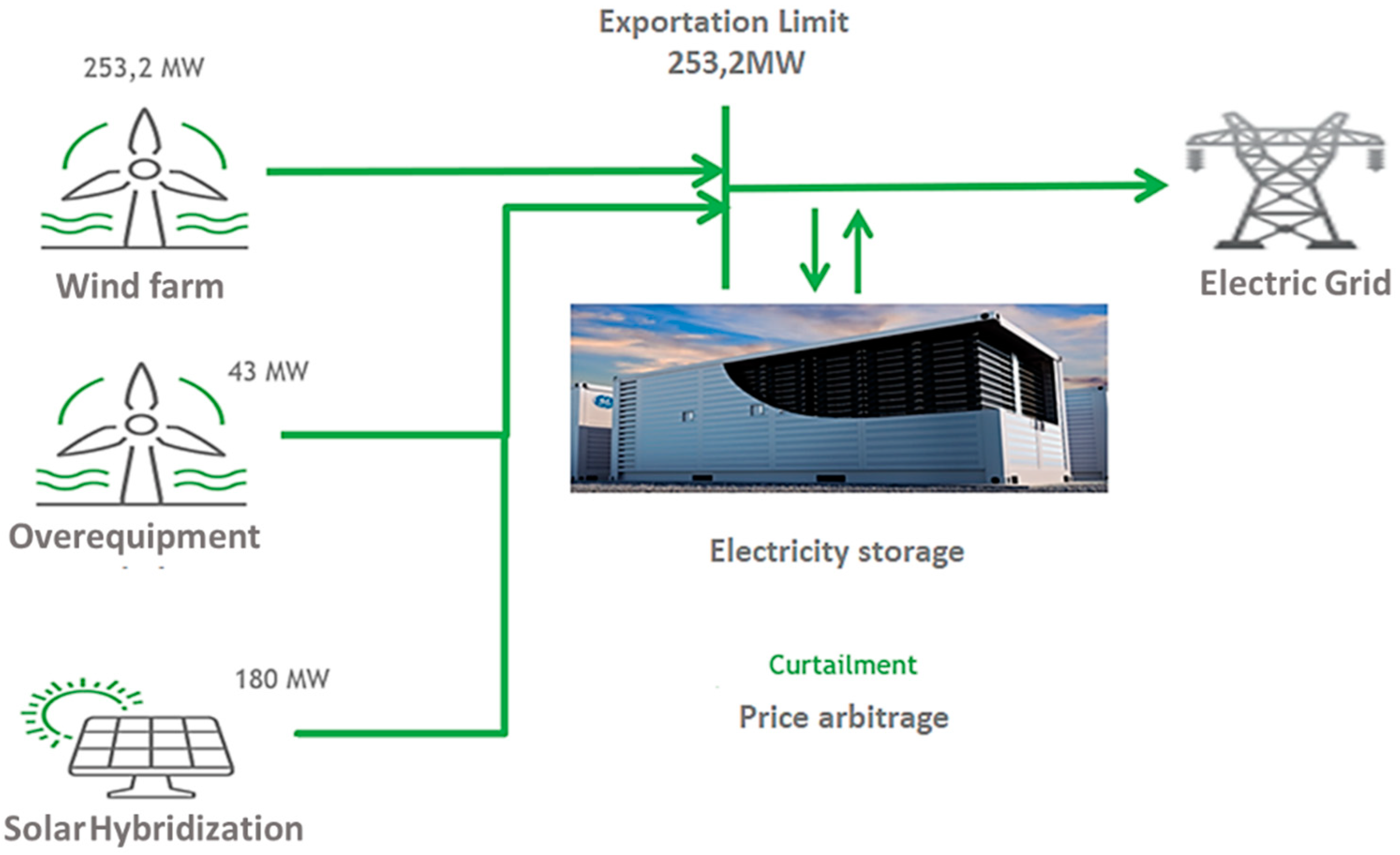
Figure 2.
Location of the Alto Douro wind farm.
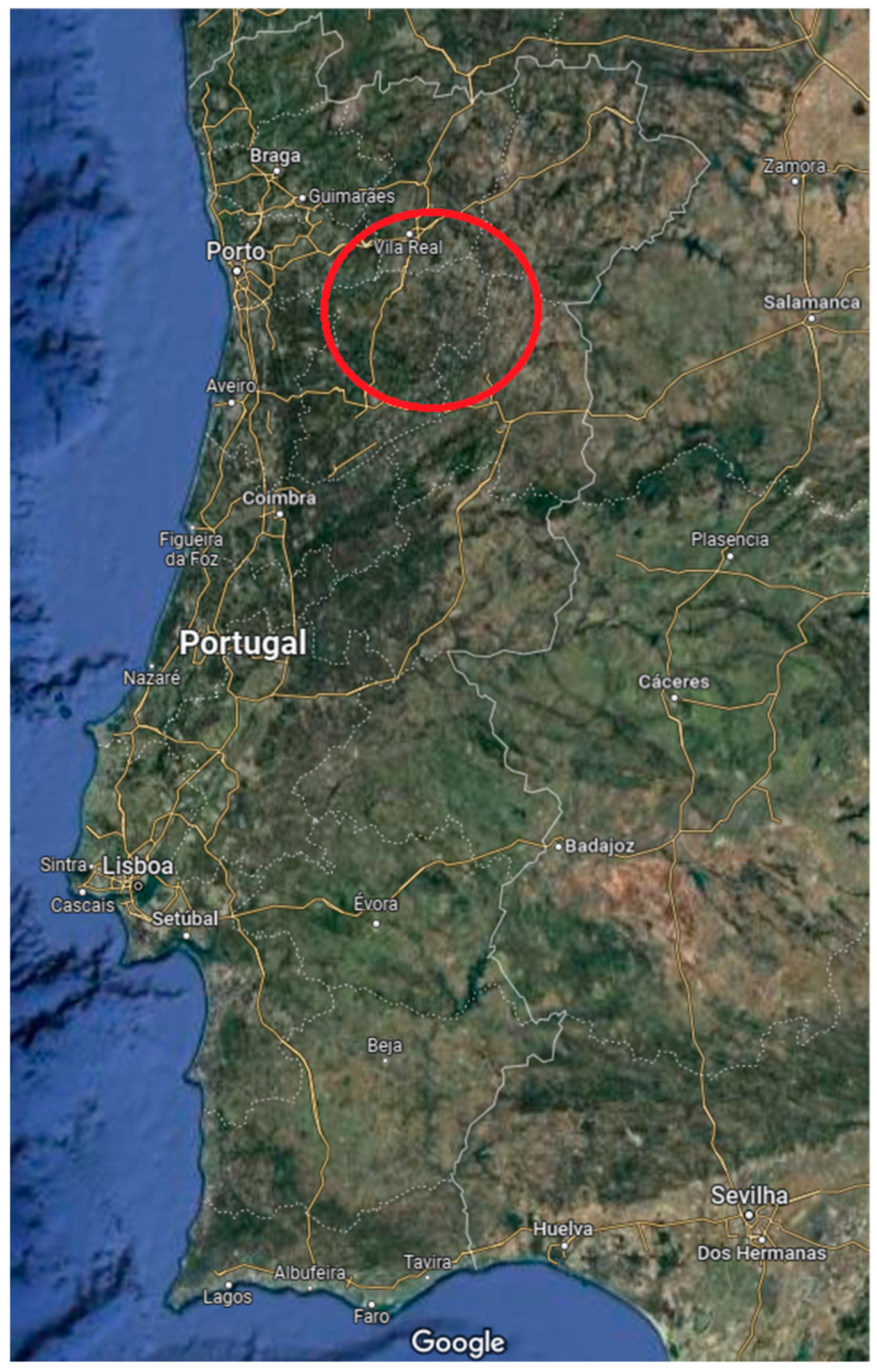
Figure 3.
Sample production data provided.
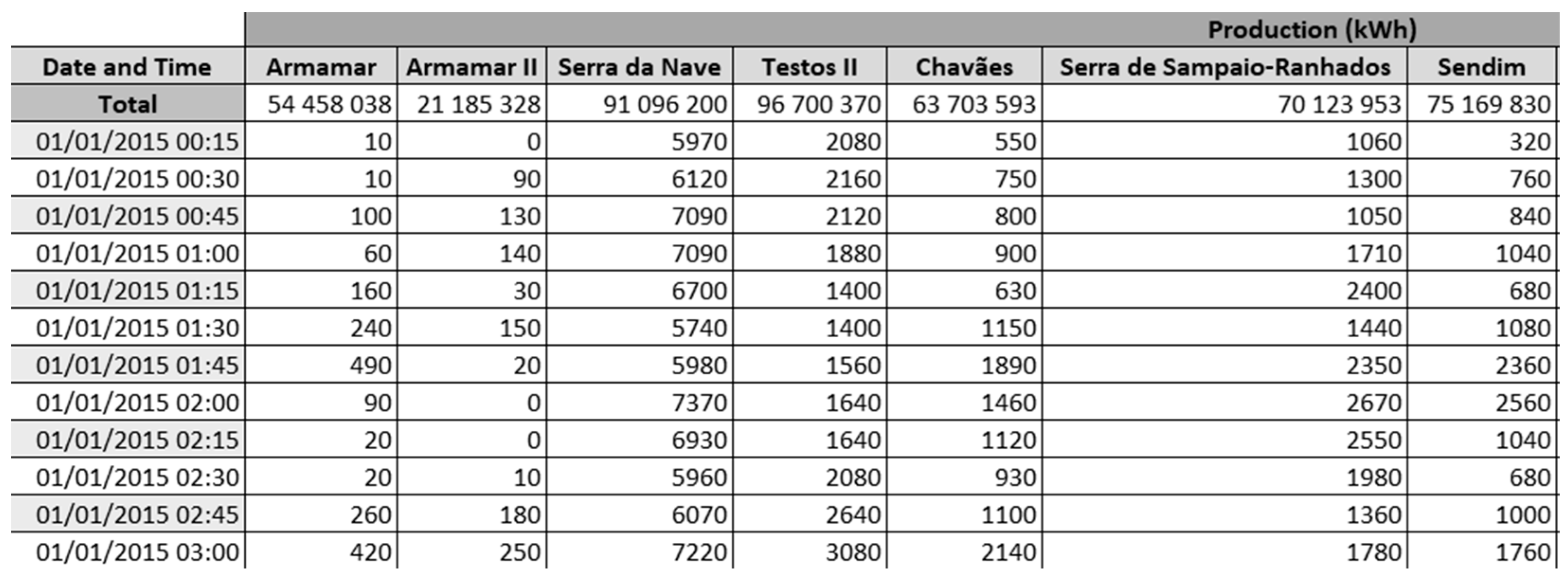
Figure 4.
São Martinho Substation.
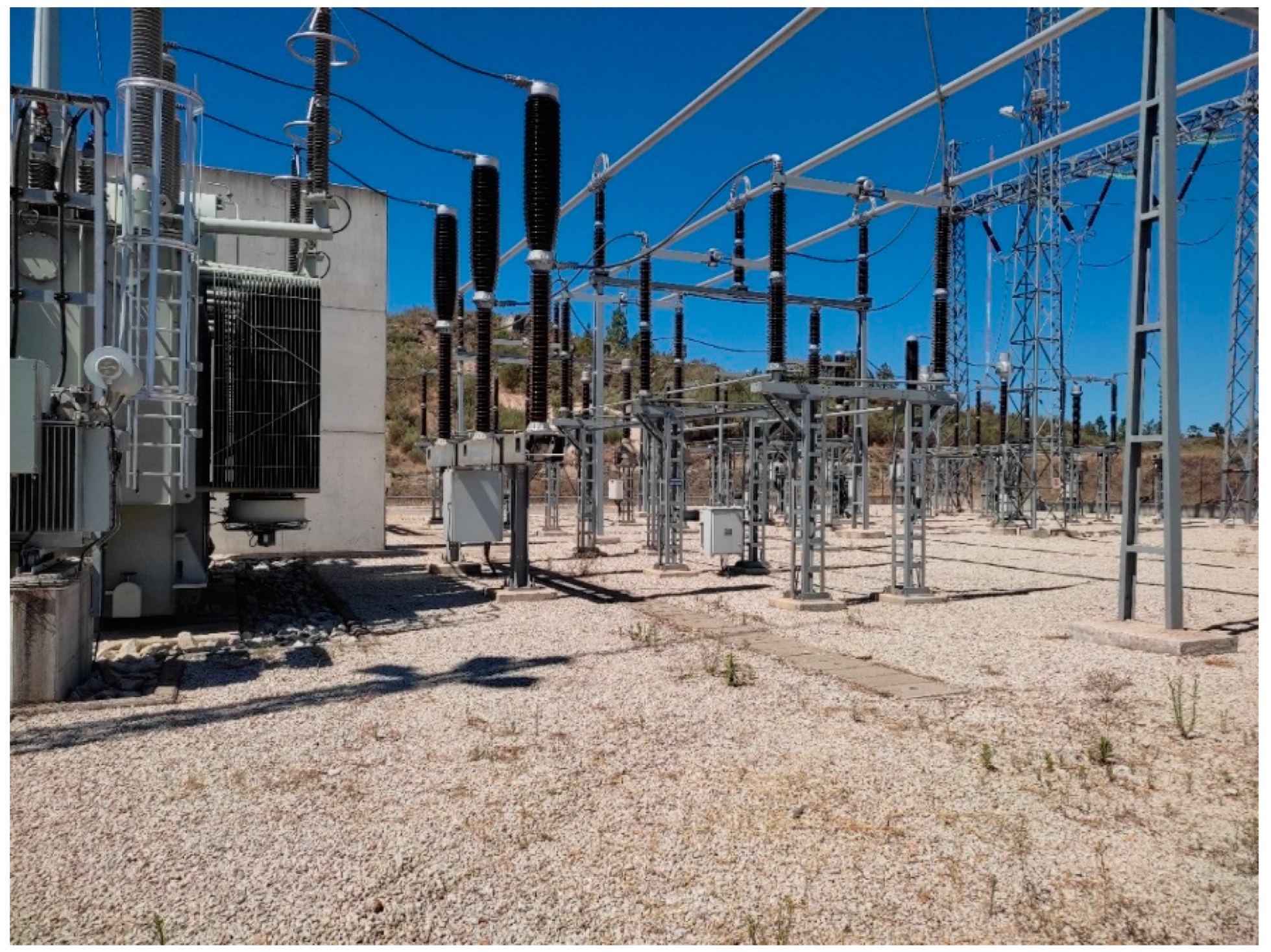
Figure 5.
Sample wind speed data.
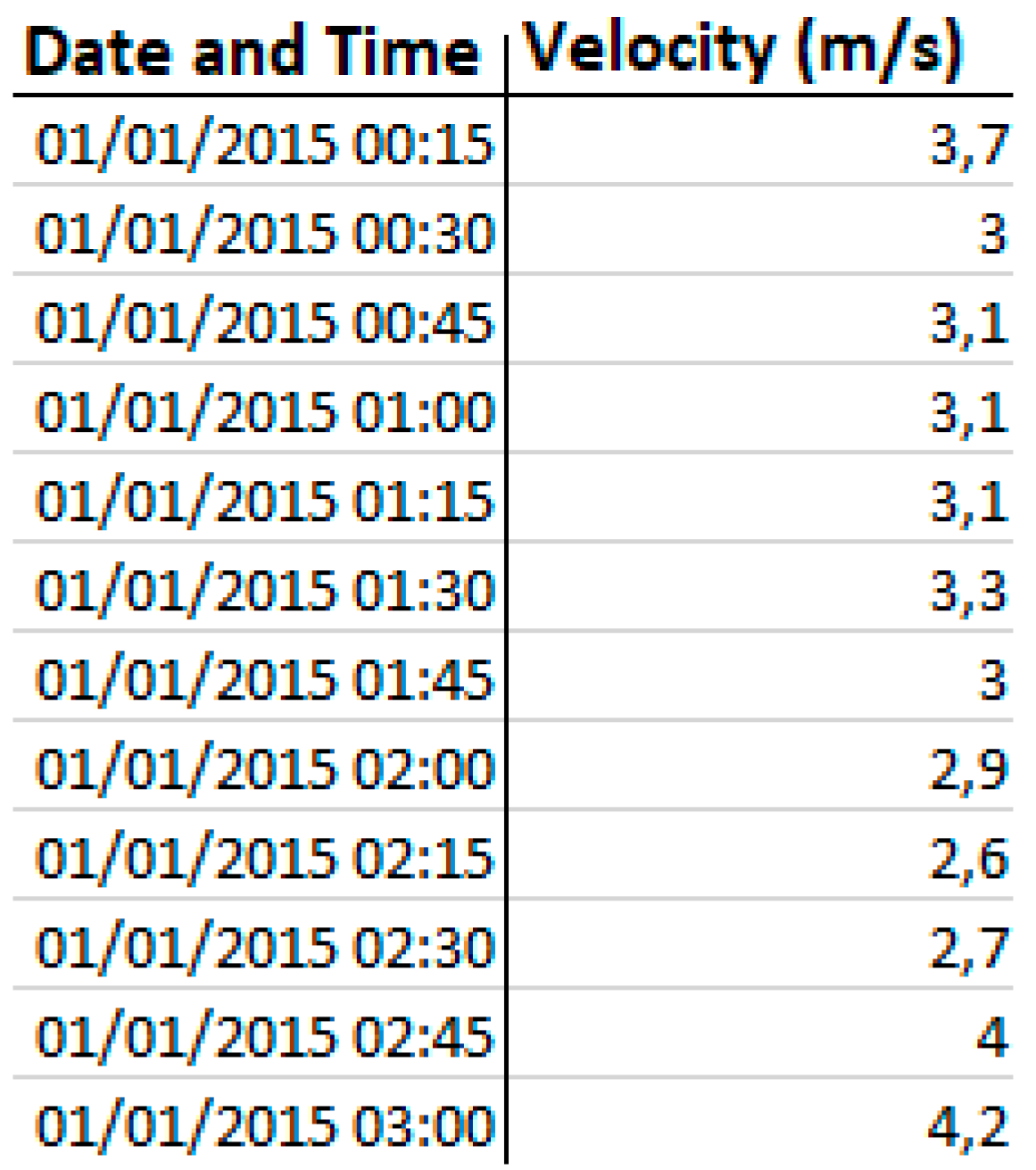
Figure 6.
Sample irradiation data.
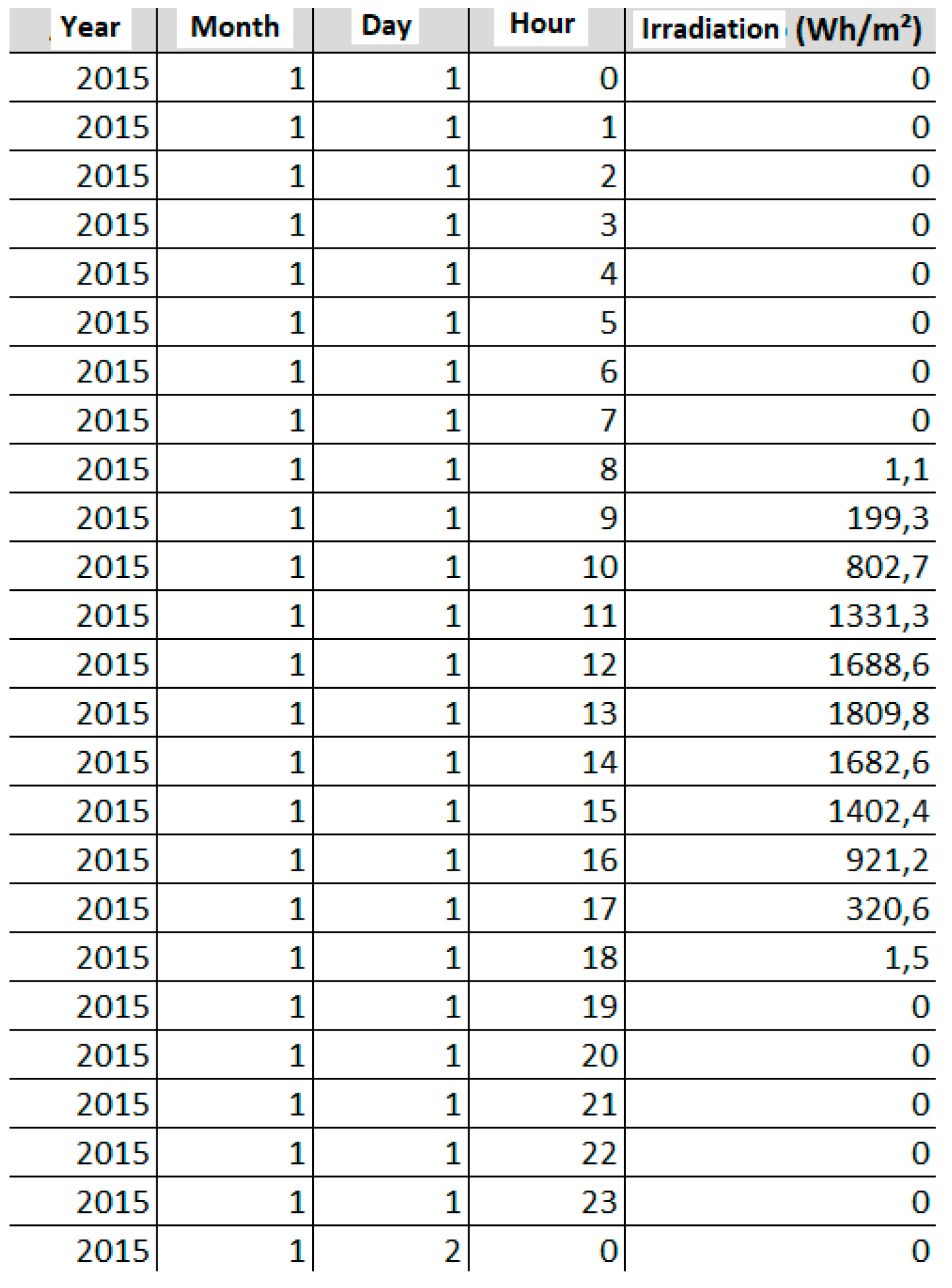
Figure 7.
Wind production (existing more about equipment) of the Alto Douro plant for 2015.
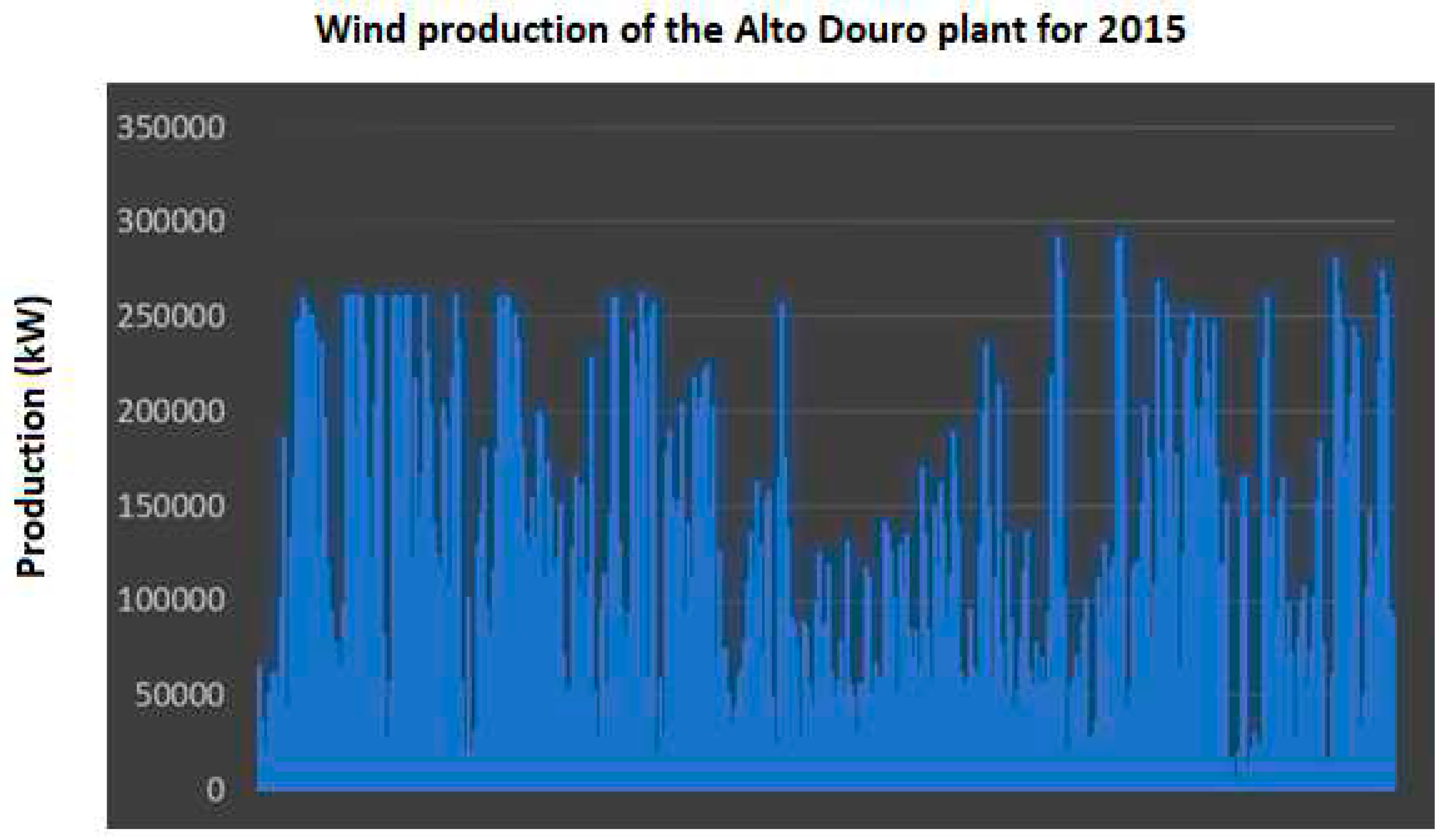
Figure 8.
Hybridization production of the Alto Douro plant for 2015.
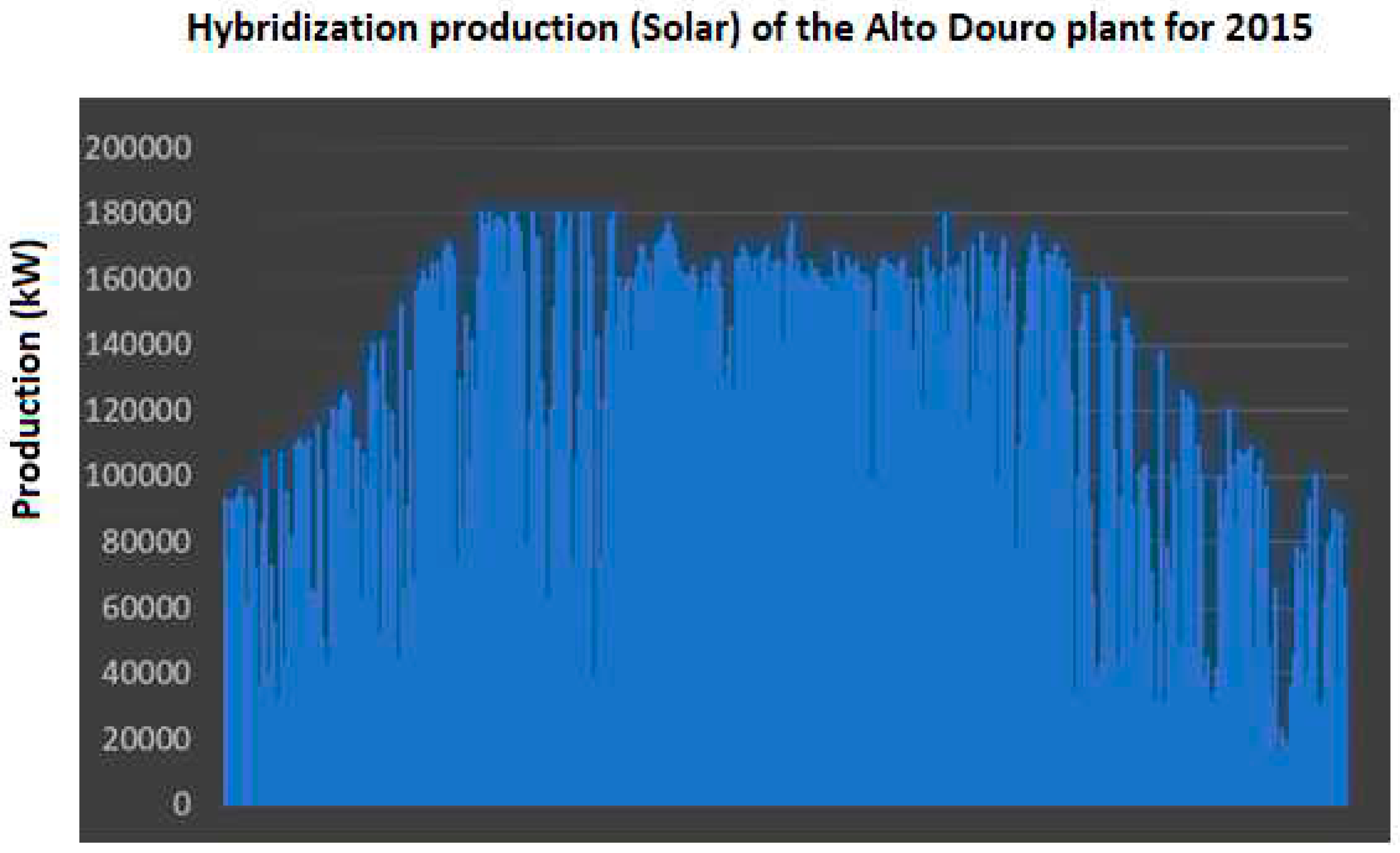
Figure 9.
Total production of the Alto Douro plant for 2015.
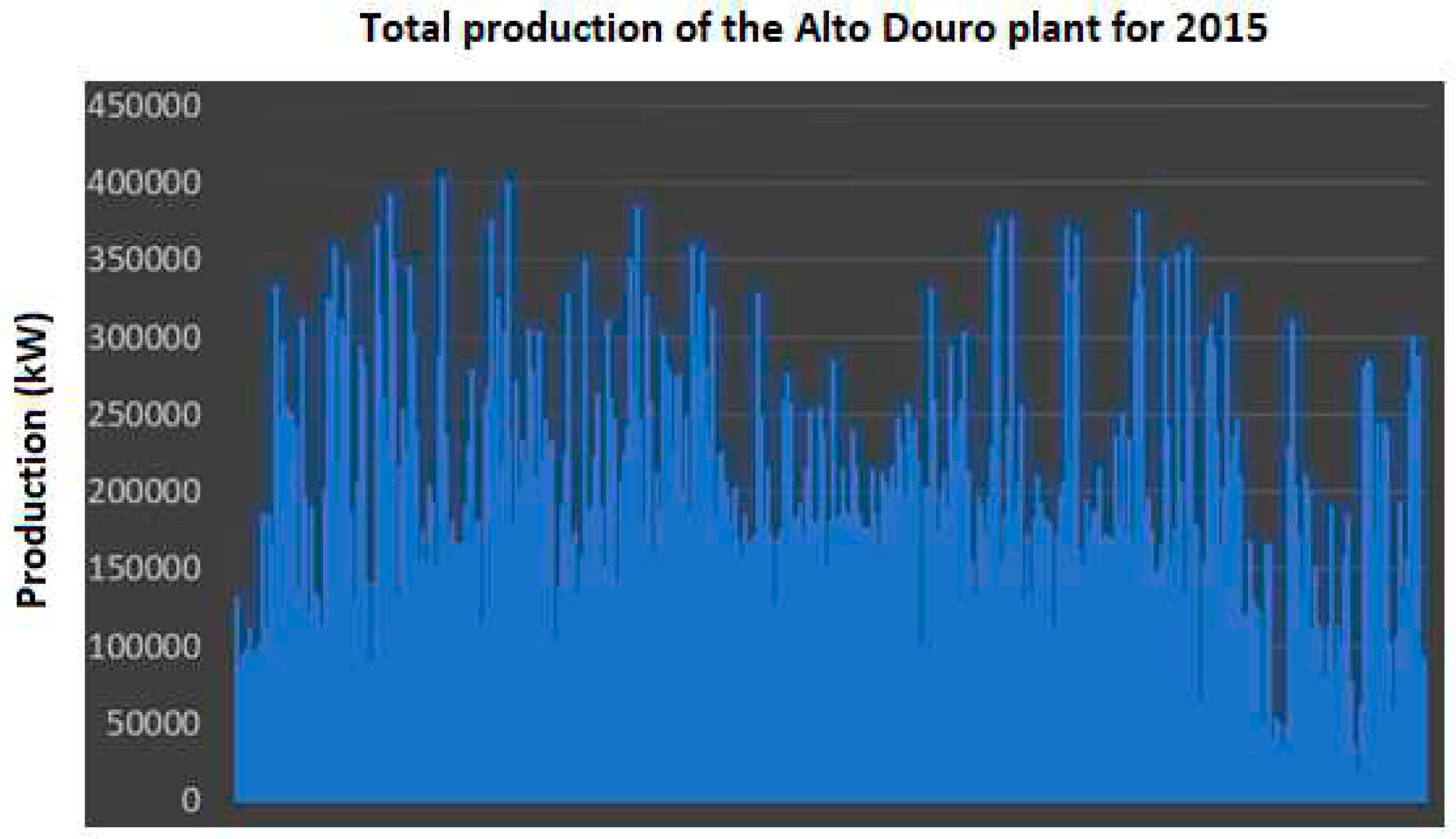
Figure 10.
Average price of electricity in Portugal for 2015, 2016, 2017, 2018 and 2019.
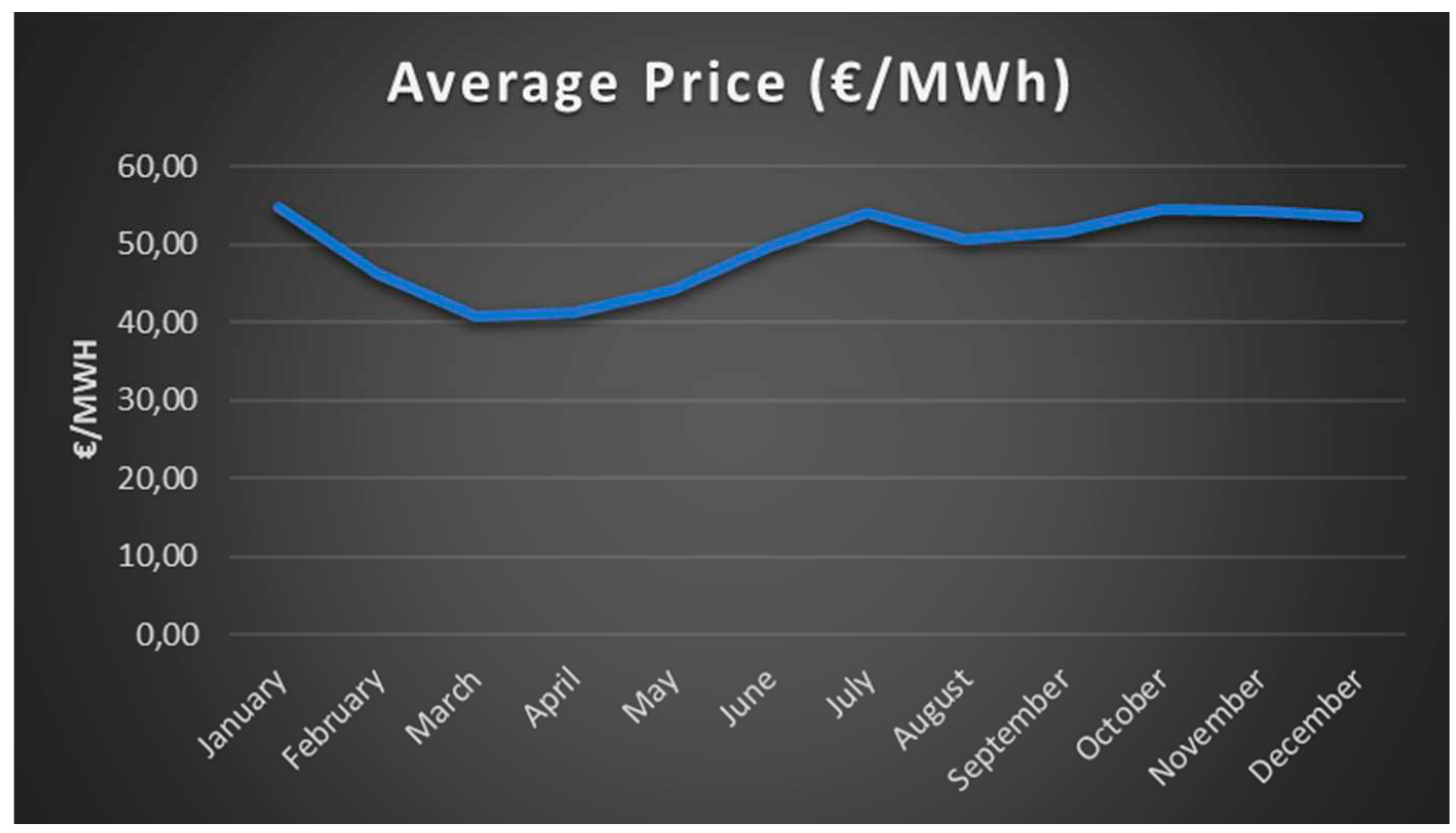
Figure 11.
Curtailment of the Alto Douro power station throughout 2015.
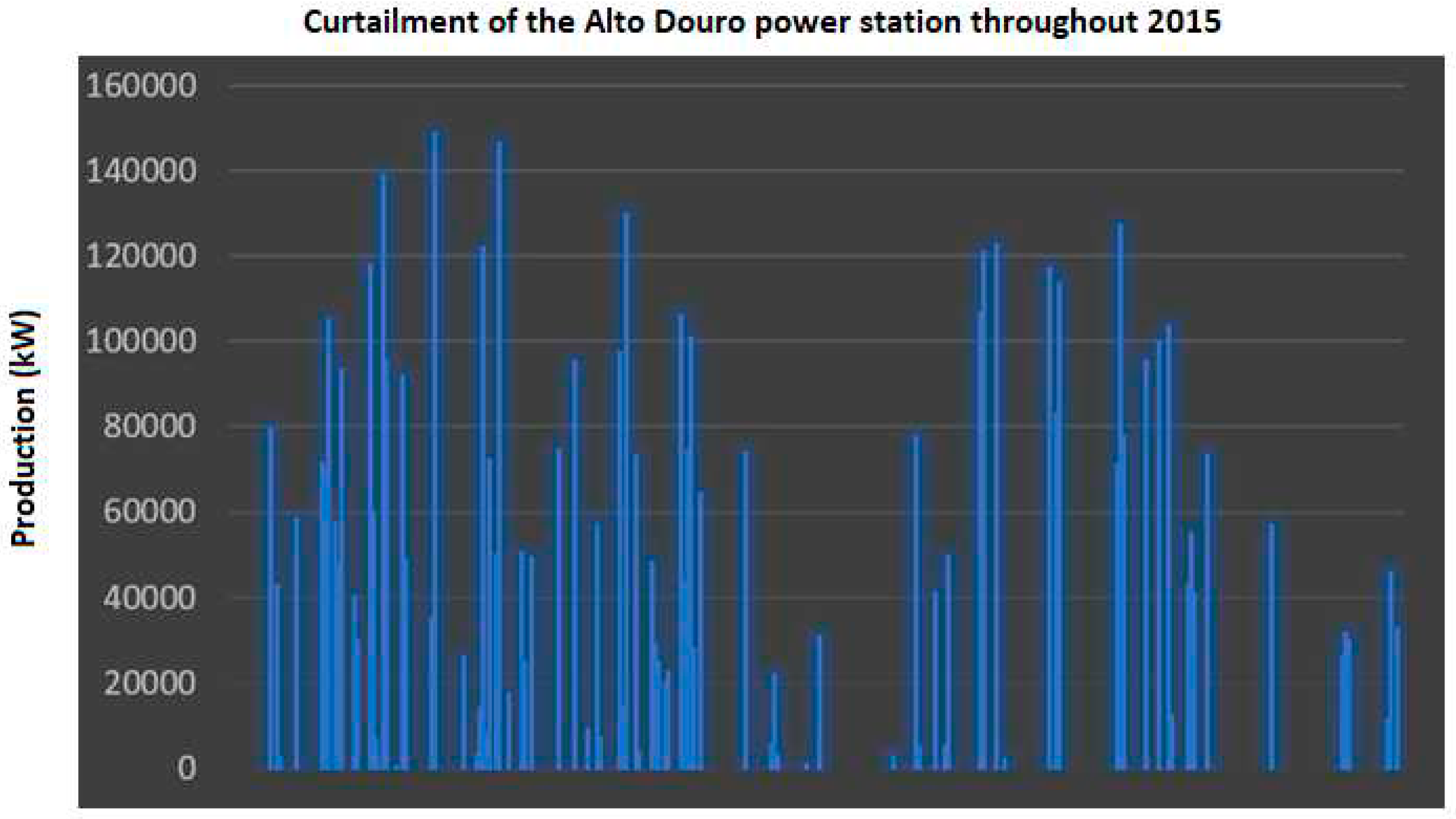
Figure 12.
Price arbitration battery 4 hours of autonomy (Power: 5 MW; Storage capacity: 10 MWh; Overall efficiency: 90%).
Figure 12.
Price arbitration battery 4 hours of autonomy (Power: 5 MW; Storage capacity: 10 MWh; Overall efficiency: 90%).
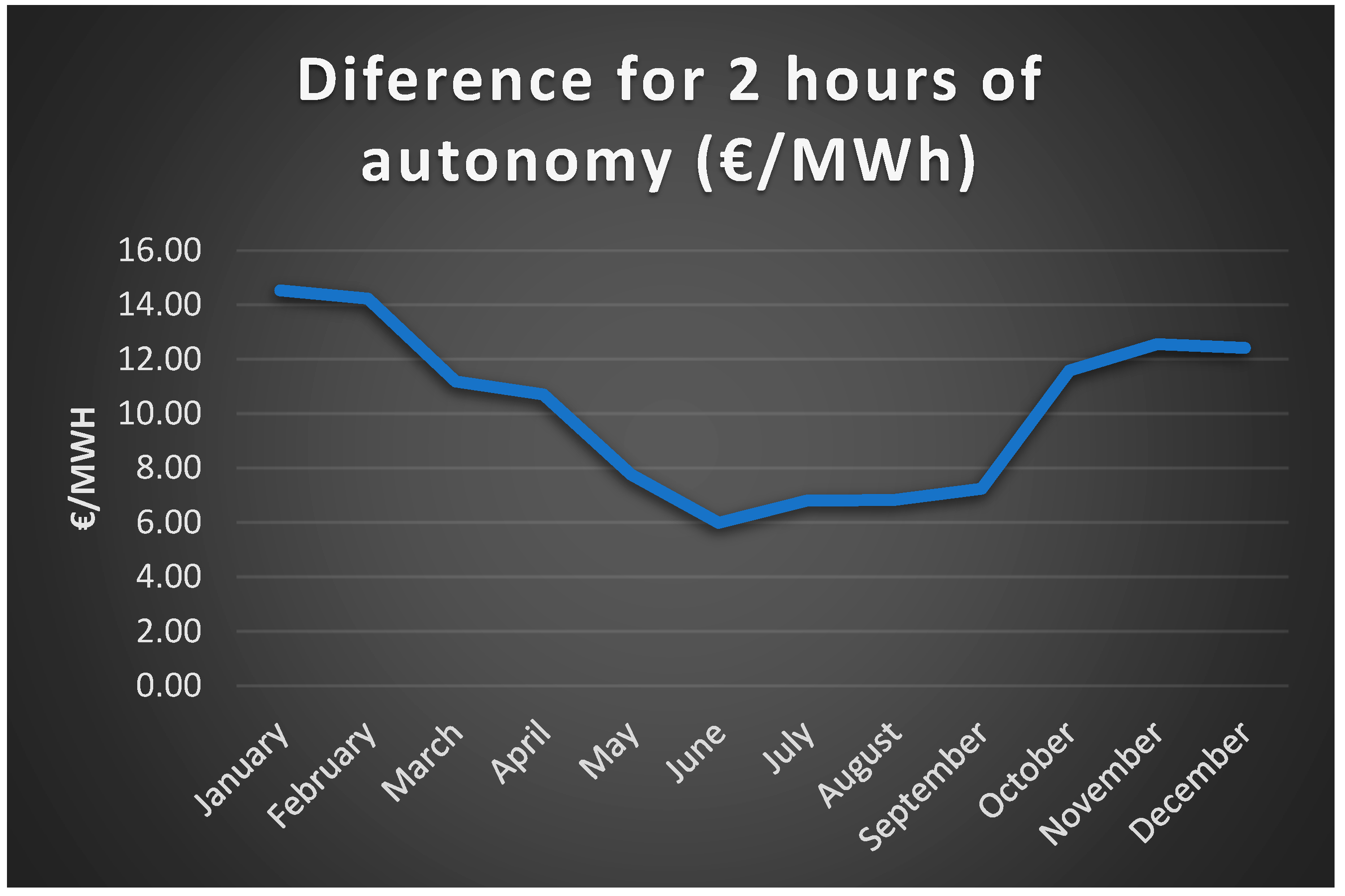
Figure 13.
Price arbitration battery 4 hours of autonomy (Power: 2.5 MW; Storage capacity: 10 MWh; Overall efficiency: 90%).
Figure 13.
Price arbitration battery 4 hours of autonomy (Power: 2.5 MW; Storage capacity: 10 MWh; Overall efficiency: 90%).
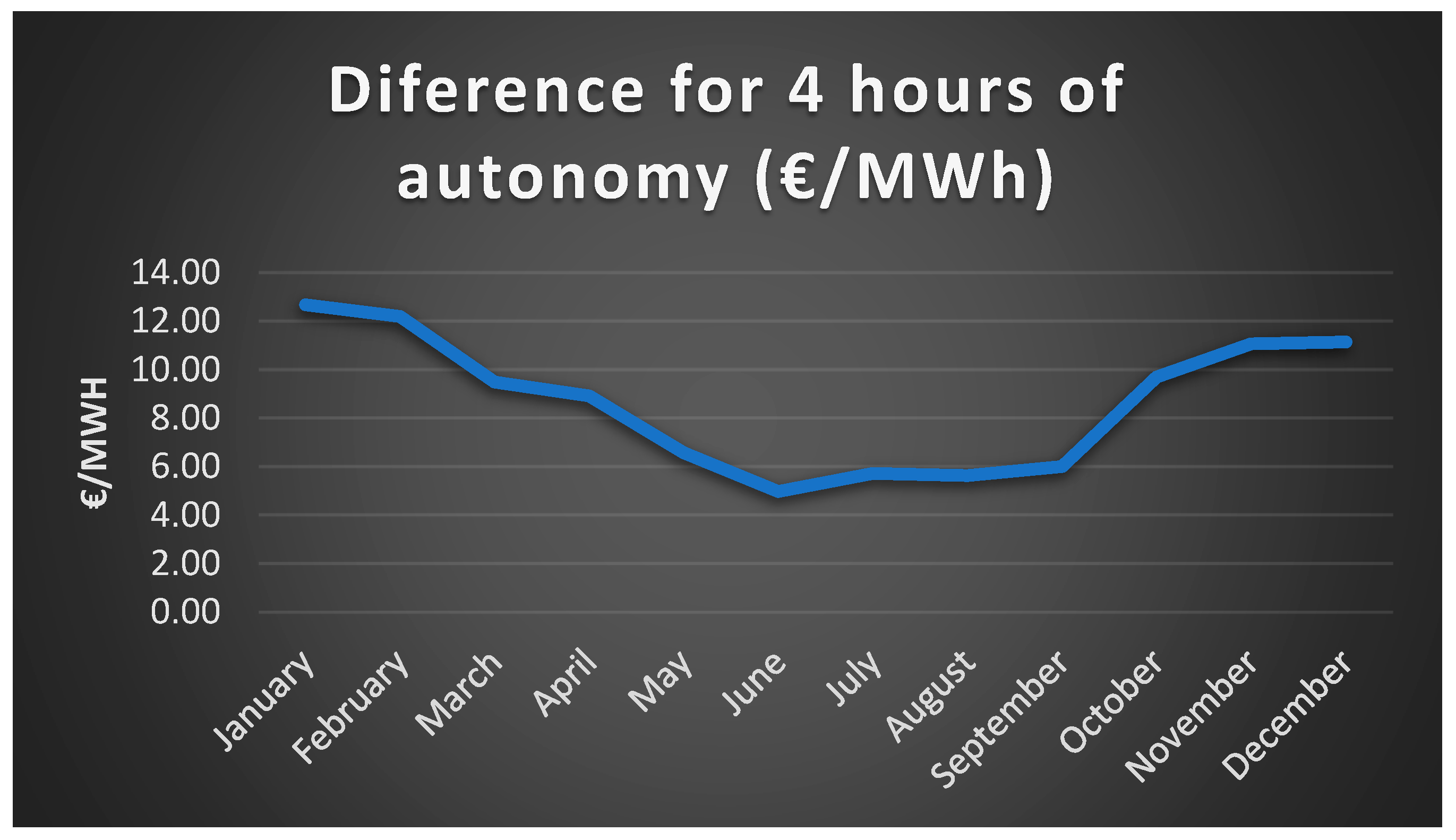
Figure 14.
Comparison between batteries with different autonomy times and equal efficiencies and maximum energy storage capacities.
Figure 14.
Comparison between batteries with different autonomy times and equal efficiencies and maximum energy storage capacities.
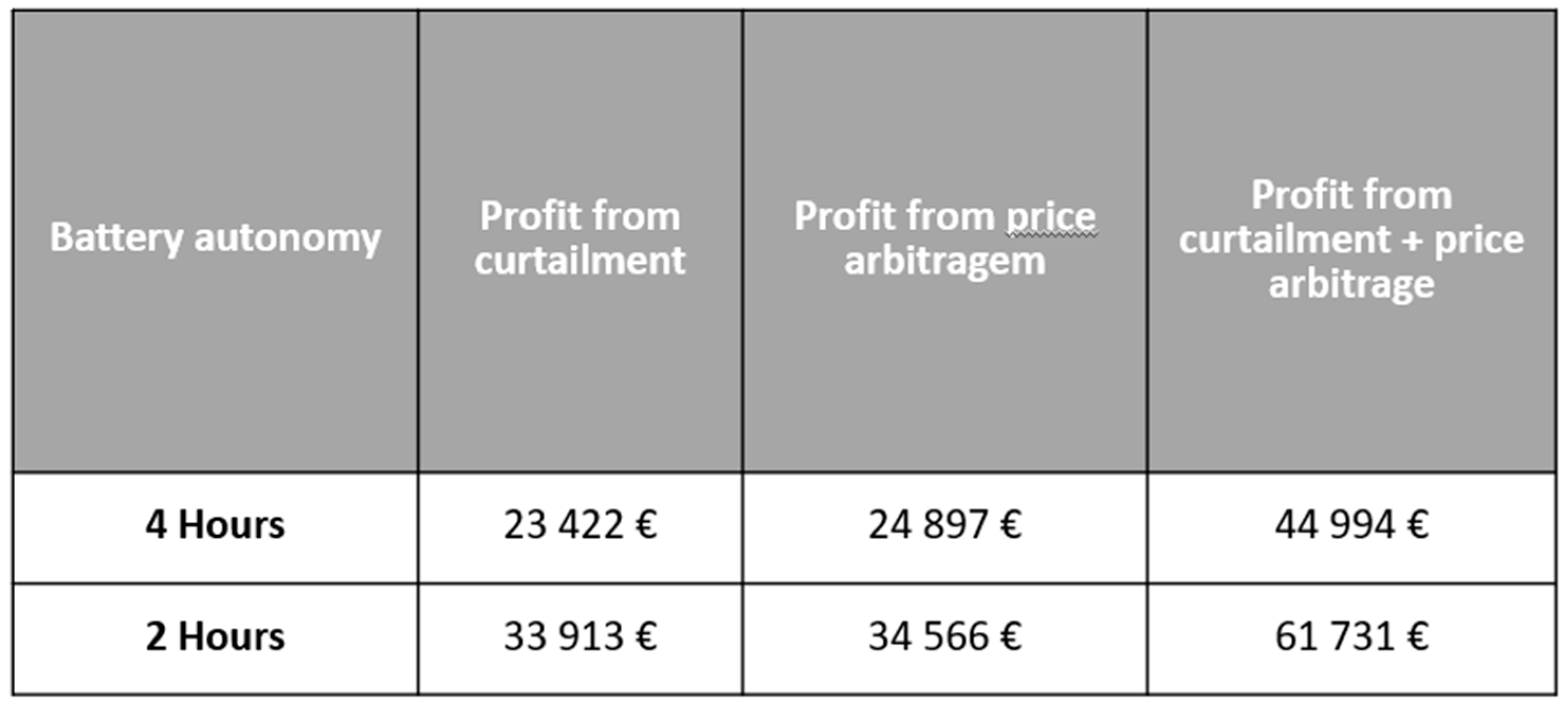

Table 1.
Sensitivity Analysis for a 2-hour autonomy battery.
| +5% Plant Production | +5% Battery efficiency |
+5% Curtailment (-5% Exportation Limit) |
|---|---|---|
| 68 042 € | 76 431 € | 68 764 € |
Disclaimer/Publisher’s Note: The statements, opinions and data contained in all publications are solely those of the individual author(s) and contributor(s) and not of MDPI and/or the editor(s). MDPI and/or the editor(s) disclaim responsibility for any injury to people or property resulting from any ideas, methods, instructions or products referred to in the content. |
© 2023 by the authors. Licensee MDPI, Basel, Switzerland. This article is an open access article distributed under the terms and conditions of the Creative Commons Attribution (CC BY) license (http://creativecommons.org/licenses/by/4.0/).
Copyright: This open access article is published under a Creative Commons CC BY 4.0 license, which permit the free download, distribution, and reuse, provided that the author and preprint are cited in any reuse.