

Submitted:
21 November 2023
Posted:
23 November 2023
You are already at the latest version
Abstract
Broomrape (Orobanche cumana), root parasitic weed, negatively affects sunflower, thereby causing severe yield losses and required controls on O. cumana infestation. Brassinosteroids (BRs) plays key roles in plant growth and provides resilience to weed infection. This designed study evaluated the mechanisms by which BRs ameliorates O. cumana infection in sunflower (Helianthus annuus). The pretreatment of sunflower seeds with various concentrations of BRs (1, 10, and 100 nM) were applied with and without O. cumana infestation. Under O. cumana infection, a significant reduction in plant height (38.61%), fresh/dry biomass, photosynthesis and regulation in plant defense (POX, GST), BRs signaling (BAK1, BSK1 to BSK4) and synthesis (BRI1, BR6OX2) associated genes. Moreover, O. cumana elevated the levels of MDA, OH‒, H2O2 and O2•‒ in leaves/roots by 77%/112%, 62%/104%, 57%/98% and 55%/89.4% and caused ultrastructural damages in leaves/roots, suggesting the severe oxidative or cellular damages in sunflower. In response, plants activate activities of SOD and POD enzymes as well as reduced or oxidized glutathione, but unable to stimulate APX and CAT activities. Addition of BRs, especially at 10 nM notably lowered the production of oxidative stress, activated the enzymatic and non-enzymatic antioxidants. The downregulation in the reported genes by BRs attributed to the increased resilience of sunflower (via susceptible reaction). In nutshell, the pretreatment of BRs enhanced the sunflower resistance to O. cumana infection by improving the planta growth and biomass, photosynthesis, activating the antioxidant defense system, lowering the oxidative stress, cellular damages and modulating the expression of BR synthesis and signaling genes.
Keywords:
Brassinosteroids
; Orobanche cumana
; Reactive oxygen species
; Sunflower
; Antioxidants defense
1. Introduction
Sunflower (Helianthus annuus L.) is a popular oilseed crop grown all over the world as a major contributor to livestock feed. Sunflower cultivation is more competitive in some countries, such as Asia and South Africa, than other crops i.e. maize, soybeans, and sorghum [1]. The requirement for obtaining sunflower seeds (edible oil) and by-products has grown due to the continual expansion in human population. To meet demand, it is necessary to step up efforts to increase sunflower production. Sunflower, along with soybean and rapeseed, are the three most major oilseed crops farmed today. It has long been recognized as a key source of high-quality edible oil [2].
Broomrape species (Orobanche and Phelipanche spp., Orobanchaceae) are particularly harmful to agricultural crops, including tobacco, tomato, and sunflower. These weeds drastically reduced the crops quality and production [3]. Broomrape (Orobanche cumana), root parasitic weed, is a significant barrier to sunflowers cultivation mainly in Middle East, Southeast Europe, and Asia [4]. The invasion of O. cumana have potential to reduce the sunflower yield up to 80% [5]. The basic infection mechanism is that O. cumana interferes with planta metabolism, restricts the uptake of essential mineral nutrients, impairs the photosynthetic performance, extra generation of reactive oxygen species, lipids peroxidation, imposes the ultrastructural cellular damages and synchronizes the antioxidants defense system [6,7,8]. Various approaches have been utilized for the management of root parasitic plant (O. cumana). For instance, some herbicides such as imazamox and glyphosate displayed herbicidal effects on O. cumana [9]. But, sometimes they cause adverse effects on the crop productivity [10]. Therefore, effective management of O. cumana infection is required. Recent investigations have documented the involvement of different plant hormones in plant growth promotion and management of O. cumana infestation [7,11]. Brassinosteroids (BRs), plant steroid hormone, are typically linked with plant developmental process and facilitates planta immunity to biotic stresses [12]. Being a signaling hormone, BRs induces the hypersensitive response, the expression of genes associated to pathogenesis, and ensured systemic resistance acquired by plants [13]. However, it is rarely known how BRs improve the plant tolerance to O. cumana invasion in sunflower plants. Hence, our main objective was to evaluate the protective roles of BRs against O. cumana invasion by targeting the plant growth traits, photosynthetic machinery, oxidative stress, antioxidants defense, expression of different genes and cellular ultrastructural changes in sunflower seedlings.
2. Results
2.1. Exogenous BR Improved the Plant Phenotype and Growth Attributes against O. cumana Infection
To asses the protective roles of BRs in controlling the O. cumana infestation, we checked the impacts of different levels of BR on the plant phenotype, plant height, fresh biomass, dry biomass and number of O. cumana spikes in sunflower roots under O. cumana infection (Figure 1A‒H). A clear phytotoxic effects in the form of chlorosis of leaves, yellow color of leaves, plant growth inhibition (Figure 1A) and higher number of O. cumana (Figure 1B) facilitated by O. cumana infection were observed. While, BRs treatments minimized these visual toxic symptoms as noticed by the better plant growth performance and less number of O. cumana attached with sunflower roots (Figure 1A and B). The alone application of O. cumana significantly declined the stem fresh weight (SFW) (34.36%), stem dry weight (SDW) (32.24%), root fresh weight (RFW) (34.02%), root dry weight (RDW)(53.33%) and plant height (PH) (38.61%) and number of O. cumana spikes when compared with relative controls. In contrast, the exogenous applications of BR reversed the O. cumana infection and notably improved the SFW (30.66%), SDW (29.66%), RFW (19.37%), RDW (28.57%), PH (42.49%) and reduced the O. cumana spikes attached with roots as compared to alone O. cumana infection (Figure 1C‒H).
These findings verified that supplementation of BR (especially at 10 nM) was more effective than BR (100 nM) in attenuating the O. cumana-induced toxic effects on sunflower growth performance. While, the BRs mediated reduction in O. cumana spikes in sunflower roots indicated the involvement of BRs in planta defense responses.
2.2. Exogenous BRs Improved the Chlorophyll Contents and Photosynthetic Apparatus against O. cumana Infection
The potential effects of exogenously applied BRs on chlorophyll’s and gas exchange parameters (stomatal conductance, net photosynthetic rate, transpiration rate and intercellular CO2 concentration) were noticed in the leaves of sunflower plants under O. cumana infection (Figure 2A‒G). The alone applications of O. cumana greatly reduced the levels of Chl a (33.53%), Chl b (35.82%), carotenoids (43%), stomatal conductance (32.92%), net photosynthetic rate (37.91%), transpiration rate (33.61%), and intercellular CO2 concentration (39.41%). In contrarily, applications of BR (particularly at 10 nM) effectively improved the photosynthetic attributes including stomatal conductance (30.77%),
net photosynthetic rate (decreased 35.38%), transpiration rate (28.74%), intercellular CO2 concentration (25.61%), Chl a (24.71%), Chl b (21.03) and carotenoids (28.57%) under O. cumana infection (Figure 2A‒G). These findings suggested the protective roles of BR in alleviating the O.cumana indulged photosynthetic inhibition in sunflower.
2.3. Exogenous BRs Reduce the Oxidative Damages Induced by O. cumana Infection
Under alone infection of O. cumana, MDA, OH‒, H2O2 and O2•‒ levels were dramatically increased in leaves/roots by 77.22%/112.76%, 62.46%/104.41%, 57.56%/98.31% and 55.02%/89.44%, respectively when compared with untreated control treatments (Figure 3A‒F). Comparatively higher MDA, OH‒, H2O2 and O2•‒ levels were observed in roots than leaves which indicated that O. cumana induced more oxidative stress in roots than leaves. In responding to alone O. cumana exposure, the treatments of BR (1, 10 and 100 nM) notably the reduce the accumulation of MDA, H2O2 and O2•‒ both in leaf and root cells. Markedly, the supplementation of BR (10 nM) enormously restricted the extra accumulation of MDA (24.14%/34.11%), OH‒ (30.28%/35.43%), H2O2 (31.08%/34.18%) and O2•‒ (28.04%/36.53%) levels in leaves/roots against O. cumana infection (Figure 3A‒F). To further confirm the O. cumana induced lipids peroxidation and oxidative stress via extra generation of MDA, H2O2 and O2•‒, and their alleviation effects by BR, sunflower leaves were treated with 3,3-diaminobenzidine (DAB) and nitro-blue tetrazolium (NBT), respectively (Figure 3G,H). The DAB staining showed dark brown color (indicator of H2O2) and NBT staining displayed dark blue (indicator of O2•‒) in leaf tissues at the exposure of O. cumana infection as compared to bright leaves in control treatments. In response, the exogenous supplementation of BR substantially minimized the intensity of dark brown and dark blue colors, indicating the reduction in oxidative stress induced by H2O2 and O2•‒. These findings verified that BRs greatly minimized the O. cumana-induced lipids peroxidation and oxidative stress in leaf and root tissues of sunflower seedlings.
2.4. Influence of BR on GSH, GSSG and GSH/GSSG Ratio against O. cumana Infection
In comparison to untreated controls, O. cumana infection caused a dramatic upsurge in the contents of GSSG (82/65%), GSH (109/97%), GSH/GSSG ratio (65/57%) in leaves/roots of sunflower (Figure 4A‒F). The addition of BRs (especially at 10 nM) improved the GSH, GSSG and GSH/GSSG levels by 33/29%, 19/23% and 96/82% in leaves/roots, respectively under O. cumana infection. While, GSSG displayed in decreasing trends in leaves or roots accumulation when compared with untreated control plants. However, further increase in BRs (100 nM) reduced the GSH contents and increase the GSSG. This increase GSSG/GSH ratio indicated the generation of oxidative stress. These findings revealed that BRs (at 10 nM) was found most effective in enhancing the GSH/GSSG ratio and GSH levels in the leaves and roots of sunflower plants against O. cumana induced infection.
2.5. Exogenous BR Activate the Antioxidant Defence System against O. cumana Infection
Under alone O. cumana treatment, the potential effects of different levels of BR on the activity of the antioxidant enzymes (SOD, POD, CAT, and APX) in sunflower plants were assessed (Figure 5A‒D). The activities of SOD, POD, were elevated by 26.84%/32.77%, 38.72%/41.03%, while CAT and APX were decreased by 27.56/31.72% and 32.04%/36.28% in leaves/roots, respectively by O. cumana infection alone when compared to the corresponding controls. Under the supplementation of BR at different concentrations (1, 10 and 100 nM), it was observed that the activities of SOD, POD were increased to maximum level at the exposure of BRs from 1 to 10 nM, and then displayed decreasing trends upon the 10 to 100 nM BRs treatments. In parallel to this, the CAT and APX activities were substantially decreased and maximum decrease were recorded under 10 nM BR by 31.19%/30.33% and 40.55%/45.41, respectively and then starts increasing at the exposure of 100 nM BRs (Figure 5C,D). These observations indicated that SOD and POD activity participate in plant defense system to manage the O. cumana infection. While, the decreasing trends in CAT and APX activities illustrated the excessive oxidative stress indulged by O. cumana infection which severely hampered the sunflower defense system.
2.6. Influence of BR in Regulating Different Transcript Levels against O. cumana Infection
The expression profiles of different antioxidant defense (POX, GST), BRs signaling (BAK1, BSK1, BSK2, BSK3 and BSK4) and synthesis (BRI1, BR6OX2) genes were analyzed in sunflower leaves exposed and not-exposed to O. cumana infection (Figure 6). In response to O. cumana infection alone treatment, transcript levels of antioxidants defense, signaling and synthesis genes were downregulated, except POX, GST and BSK3 as compared to non-stressed controls. Alone supply of BRs significantly enhanced the expression profile of GST, BR6OX2 and BSK1, indicating the crucial involvement of these genes in planta defense, and BRs signaling and synthesis. The co-tretaments of BRs and O. cumana further escalated the expression profiles of most of the above-reported genes. This suggested the involvement of BRs in plant defense, and signaling transduction and endogenous BR synthesis to control the O. cumana infection (Figure 6).
2.7. Effects of BRs and O. cumana on Lignin, Phenolics and Endogenous BRs Contents
The lignin contents exhibited a significant increase in response to O.cumana infection alone, in comparison to uninfected control (Figure 7A,B). Furthermore, O. cumana-infected sunflower plants treated with BRs seed treatment had higher lignin contents. The levels of phenolics in the leaf and roots of sunflower increased under O. cumana stress when compared to the control (Figure 7C,D). Notably, the application of BRs (10 nM) significantly increased the phenolic contents irrespective of the O.cumana infection. Quantitative analysis revealed that O.cumana infection significantly decreased the endogenous levels BRs. However, the application of BRs seed treatment led to an increased in the contents of endogenous BRs with or without infection of O.cumana, as compared to their corresponding control (Figure 7E,F).
2.8. Exogenous BRs Minimize the O. cumana Induced Cellular Ultrastructural Damages
TEM images showed severe damages to sub-cellular structures by O. cumana infection and their cellular protection by BRs in the leaves and roots of sunflower plants (Figure 8A,B). All the observed cellular organs were well developed and structured under control treatments. Leaf mesophyll cell contained eminent cell wall, cell membrane, healthy mitochondria, numerous starch grains, regular arrangement of thylakoid nuclear membrane in chloroplast and plastoglubuli within cytoplasm (Figure 8A). At the exposure of O. cumana infection, visible toxic symptoms such as scattered cell wall, immature plastoglubuli, less size starch grains, swollen thylakoid membrane, cracked cell membrane and broken nuclear membrane were observed. The treatments of BR greatly rescued the sunflower cells from O. cumana infection and induced cellular damages as noticed by the recovered and developed cell wall, cell membrane, nuclear membrane, plastoglubuli, thylakoid membrane and higher number of starch grains (Figure 8A). TEM micrograph of root tip cells of sunflower under control treatments showed well-sized nucleus with clear nucleoli as well as nuclear membrane (Figure 8B). Under O. cumana infection, TEM micrograph displayed dispersion in nucleus, nucleoli, broken cell wall as well as mitochondria and unclear nuclear membrane. These damages to leaf and root cells were effectively recovered by BRs specially at 10 nM. These observations verified that BRs displayed efficacy to minimize the O. cumana induced cellular ultra-structural damages in sunflower tissues.
3. Discussion
Our study purpose was to evaluate the protective effectiveness of BR in reducing the toxic effects of O. cumana infection on sunflower plants by focusing on the plant growth traits, photosynthetic apparatus, alterations in cellular ultrastructures, oxidative stress, and antioxidant defense system. Up to now, there are rare studies on the interactions of BRs with O. cumana in sunflower. Our research has shown that O. cumana infection caused detrimental impacts on plant growth, and fresh and dry biomasses that may be interlinked to protein inhibition and chlorophyll degradation [25] (Figure 1). In contrast, the harmful effects of O. cumana on these growth traits were greatly diminished by the supplementation of BRs. In accordance with our results, [26] reported that BR recovers the deficiency of protein synthesis and boost chlorophylls, ultimately helps to promote the plant growth attributes. Previous investigations have also shown that the exogenous applications of BRs mitigated the biotic and abiotic toxicity by enhancing the growth and biomass production in Leymus chinensis [27], Zea mays [28]. The number of O. cumana attached spikes with host sunflower roots were significantly increased at the exposure of alone O. cumana infection. While, exogenous treatments of BRs reduced the number of O. cumana spikes in sunflower roots. It was obvious that BRs may delays the formation of O. cumana tubercles and restricts O. cumana attachment with sunflower roots. Similarly, a recent study reported that salicylic and indole acetic acid treatments retarded the development of tubercles of O. crenata on Vicia faba roots [29]. This indicated the particular defense response of these hormones. Alone treatments of O. cumana limited the functionality of photosynthetic machinery (Figure 2A‒G) as noticed in earlier studies [7,8]. There is strong possiblity that O. cumana infection degraded the photosynthetic pigments which may results in impairment of electron transport chain and photochemical efficiency (PS I and PS II) [7]. In current study, BR significantly reduced the deterioration of chlorophylls caused by O. cumana and enhanced the planta ability to photosynthesize under both control and O. cumana infection (Figure 2). Former studies demonstrated that BRs significantly increased the photosynthetic efficiency and suppressed the chlorophylls degradation in cucumis sativus [30] and cereal crops [31]. Leaf gas exchange parameters were significantly decreased at the exposure of O. cumana infection. While, BRs notably recovered these photosynthetic damages (Figure 2A–D). The inhibitory effects of O. cumana on these gas exchange parameters were directly correlated with the reduction in photosynthetic pigments. It seems that O. cumana compromised the efficiency of carbon assimilation and reduces the chlorophyll synthesis under severe environmental conditions. While, BRs may reinforce the respiration intensity and photosynthetic rates that helps in the improvement of photosynthetic pigments [31,32]. A significant generation of MDA, H2O2, O2•– and OH– levels by O. cumana infection caused lipids peroxidation and oxidative stress. While, BRs notably repaired the oxidative and cellular membrane damages (Figure 3A–F). The overproduction of these oxidative stress markers could be the reason behind the growth retardation of sunflower plants under O. cumana infection as observed by [33] in tomato. The extra generation of ROS has been associated with growth reduction and lower crop yields at the exposure to environmental constraints [34]. Given the involvement of ROS in acclimatization pathways in response to plant stress, we suggested the role of ROS signaling from leaves to roots that limits the induction of MDA and ROS (H2O2, O2•– and OH–) in leaves as compared to roots. This can be associated with the role of ROS in influencing the expression of genes involved in systematic signaling and antioxidants defense responses (Figure 6) as reporter in earlier study [35]. To control the extra accumulation of ROS and their induced cellular damages, sunflower plants activated their antioxidants defense system in the form of enzyme activities (mainly SOD and POD) (Figure 4A,B). In accordance with current study, a pronounced upsurge in the activities of antioxidant enzymes were observed under O. cumana infection. Generally, the activation in antioxidants signals the extra production of oxidative stress. The exogenous supply of BRs escalated the activities of SOD and POD enzymes as compared to O. cumana infection which displayed that BRs had effectively reduced the ROS production. While, BRs decreased the CAT and APX as compared to O. cumana infection (Figure 5A–D) suggested that O. cumana desynchronized the antioxidant defense and limits their involvements in plant defense system. Similar antioxidants resistance mechanisms were observed under O. cumana and O. ramosa infestation by ALA and SA in sunflower [7] and tomato [33] plants. Thus, BR has the potential to act as a signaling molecule, facilitating enhancement of the antioxidant defense system and reducing the oxidative damages caused by O. cumana. On the other hand, plants enhance their non-enzymatic free-radical scavengers (GSH and GSSG) to tackle the extra generation of ROS. In current study, the elevated levels of GSH and GSSH in planta leaves and roots against O. cumana infection (Figure 4A–F) cause a reduction in ascorbic acid levels which indicated the induction of oxidative stress. The higher production of GSH and GSSH under co-exposure of BRs and O. cumana infection might be due to the involvement of BRs in redox homeostasis and sunflower tolerance mechanisms to O. cumana infection. It was noticed that BRs regulated the antioxidant defense (POX, GST), BRs signaling (BAK1, BSK1, BSK2, BSK3 and BSK4) and synthesis (BRI1, BR6OX2) related genes under O. cumana infection (Figure 6). Alone exposure to O. cumana infection caused the downregulation in the expression levels of most of the genes associated with plant defense, infection signaling or BRs synthesis. While, alone BRs applications significantly enhanced the expression profiles. The co-treatments of BRs and O. cumana further escalated the expression levels of most of the above-reported genes. This indicated the crucial participation of BRs in plant defense, synthesis of endogenous BRs in plant tissues and signaling due to O. cumana infection. Alike the current outcomes, earlier studies have documented that defense associated genes such as GST and POX greatly detoxify the oxidative stress [35]. In our study, higher GST and POX levels indicated the induction of detoxification that leads to better plant growth. The induction of BRs synthesis genes under alone BRs or combined treatment (BRs + O. cumana infection), relatively higher synthesis, indicating higher BRs production might be connected to sunflower against O. cumana invasion. While, the induction in BRs-responsive genes under O. cumana and further escalation under co-treatments of BRs and O. cumana revealed the BRs related upsurge in the defense responses of sunflower plants against O. cumana infection. The current investigations revealed that exogenous supply of BRs enhanced the lignin accumulation in O.cumana-infected sunflower seedlings (Figure 7A,B). These findings suggested that BRs helps in reducing the attachment of O. cumana to sunflower tissues via lignification as reported in earlier findings [36]. They found that SA enhance the resistance of host plants by inducing the roots lignification during the interaction of O. minor infection and red clove. These outcomes revealed that BRs mediated lignification to host resistance by serving as a mechanical barrier that strengthens the plant cell wall. Phenylalanine ammonia lyase (PAL) is a crucial enzyme in the synthesis of phenolic compounds. The induction in phenolic contents O.cumana-treated sunflower plants and further escalation by BRs treatment suggested the up-regulation in the transcript levels of PAL synthesis genes which is directly correlated with the endogenous BRs synthesis (Figure 7C–F). These results indicated that the acquired resistence by BRs may be partially participated in BRs-mediated synthesis or activation of PAL genes. Earlier study also noticed the induction of PAL genes in grape berry by salicylic acid [37]. In present study, the cellular ultrastructural changes against O. cumana infection and protective roles of BRs were observed. When compared with controls, the severe structural damages in planta cells were noticed under O. cumana infection (Figure 8A,B). These cellular damages were directly correlated with the excessive production of ROS and indulged oxidative damages. Importantly, BRs supply alleviated the damages to cellular components and provide cellular protection to O. cumana infection (Figure 8A,B). These cellular changes suggested that proper concentration of exogenous BRs can recover the leaf mesophyll cellular structures in response to O. cumana exposure. Earlier studies illustrated that the exogenous supplementation of phytohormones (ALA) and herbicide (imazapic) could diminished the sunflower infection to O. cumana induced cellular damages and enhance the plant tolerance [7,38]. However, more deeper cellular and molecular investigations are required to further validate the protective roles of BRs in improving the sunflower tolerance to O. cumana, pathogen infectation.
4. Materials and Methods
4.1. Experiment Design and Growth Conditions
The seeds of sunflower (cv. TK0409) and O. cumana (race G) were acquired from Inner Mongolia Academy of Agricultural and Animal Husbandry Sciences (Hohhot, China). Before treatment, seeds sterilization was carried out with 1% KMnO4 for 2 min, then 95% ethanol was applied for 1 min, followed by distilled water washing. The sterilized seeds were allowed to germinate in dark for two to three days in Petri dishes containing filter paper. The sprouted seeds (having uniform length) were shifted into pots consisting of peat and vermiculite in 1:1 v/v as substrate. For inoculation, 0.1 g of O. cumana seeds were added with 0.5 kg substrate. The conditions were maintained as follows: 14/10 h photoperiod, relative humidity as 65% and 200 μM m−2s−1 light intensity. A factorial design was employed to create a total of eight treatment groups, consisting of four levels of BRs (0, 1, 10, and 100 nM) combined with two levels of O. cumana (with and without). Each treatment group consisted of at least three replicates. After four-weeks of post-inoculation stage, sunflower plants (leaves and roots) were individually separated and harvested to carried out the morphological, physio-biochemical, cellular alterations and transcription profiling.
4.2. Measurement of Agronomic Parameters and Photosynthesis Traits
Immediately following harvesting, the number of O. cumana, fresh biomass of stem and roots, and plant height were measured manually. After oven-drying the samples 70 °C until constant weight and dry analysis was performed. Chlorophyll a as Chl a, chlorophyll b as Chl b, and carotenoids were estimated according to earlier protocols [14]. To record the gas exchange parameters, net photosynthetic rate (Pn), transpiration rate (Tr), intercellular CO2 concentration (Ci), and stomatal conductance (gs) was determined from the fully-stretched leaves by using LiCor-6400 portable photosynthesis system during periods of maximum light intensity (between 10:00 and 12:00 am).
4.3. Estimation of Lipids Peroxidation and Reactive Oxygen Species
Lipids peroxidation denoted as MDA was estimated by 2-thiobarbituric (TBA) method as reported in earlier study [7]. Superoxide (O2•−) was estimated by following the method performed by [15] with slight changes. Fresh plant samples (0.5 g) were intermixed in 3 mL of 70 mM potassium phosphate buffer (PBS) (pH 7.8), followed by centrifugation for 10 min at 5000 g in iced-cold conditions. Then, 1 mL supernatant was mixed with 0.9 mL of 70 mM PBS and 0.1 mL of 10mM hydroxylaminde hydrochloride. Right after 24 h of incubation under 25°C, 1 mL of 17 mM sulphanilamide and 1 ml of 7 mM α-naphthylamine were mixed with 1ml solution for 20 min at 25°C. After this, same volume of n-butanol was affixed and centrifuged at 15000 g for 5 min. A standard curve determined the O•−2 generation and absorbance was measured 530 nm. For the determination of H2O2 contents in leaves and roots, the established method was used [16]. In addition, the accumulation of H2O2 and O•−2 was confirmed by leaf staining with NBT (nitroblue tetrazolium) and DAB (diaminobenzidine tetrahydrochloride) dyes, respectively.
4.4. Determination of Antioxidant and Non-enzymatic Antioxidants
0.5g fresh leaf and root samples were separately intermixed in 50 mM PBS (8 mL) of pH 7.8 at iced-cold conditions. To evaluate the enzyme activities, homogenized supernatant was undergone centrifugation for 15 min at 10,000 g under 4°C. Following the method of [17], catalase (CAT) activity was determined by estimating the degradation of H2O2 (extinction coefficient of 39.4 mM‒1 cm‒1) for 1 min at 240 nm. Superoxide dismutase (SOD) activity was established as nitro blue tetrazolium (NBT) mediated photochemical inhibition [18]. For estimation of peroxidase (POD) activity, guaiacol mediated variation in absorbance were measured at 470 nm as reported previously [19]. Ascorbate peroxidase (APX) was estimated by following the earlier established method [49]. Regarding the non-enzymatic antioxidants, the measurements of reduced glutathione (GSH) and oxidized glutathione (GSSG) were carried out by following the previous methods [20].
4.5. Gene Expression Analysis
Total RNA was extracted from 0.1 g of leaf and root samples (each) using Plant RNA extraction Kit (TakaRa MiniBEST). A total 200 ng of RNA was reversed transcripted utilizing TaKaRa PrimeScriptTM RT Master Mix reagent kit with gDNA eraser. The CFX96TM Real-Time System was utilized to conduct polymerase chain reactions (PCRs) using SYBR Premix Ex Taq II (Ti RNaseH Plus, TakaRa) reagent. To confirm the relative expression of particular genes, the designed primers were listed (Table 1). For the analysis of relative gene expression, Ct method with four replicates was performed [21] and EF-1a gene was taken as a reference gene.
4.6. Determination of Phenolics, Lignin and Endogenous Brassinosteroids (BRs) Levels
Total phenolic content was determined using the methodology of [22]. At a wavelength of 725 nm, phenolic concentrations were measured and determined by using p-coumaric acid as a standard. Lignin content was quantified according to the [23] method, which involved by measuring the absorbance of lignin-like thioglycolic acid (LTGA) derivatives at wavelength of 280 nm. The content of different BRs was determined through their extraction, purification, and subsequent analysis using ultra-high performance liquid chromatography (UHPLC) followed by mass spectrometry. This analytical approach was conducted following the methodology established by [24].
4.7. Transmission Electron Microscopy (TEM)
Healthy and matured leaves of sunflower plants were selected to observe the cellular changes induced by O. cumana and BRs (Figure 7 A,B). For that, leaf fragments in 1 mm2 without veins were placed in 2.5% (v/v) glutaraldehyde in 0.1 M PBS (pH 7.4), followed by washing (three-times) with same earlier used buffer. Afterwards, samples were fixed with 1% osmium tetraoxide (for 1 h) in PBS solution and washed again with 0.1 M PBS (pH 7.4) for 15 min. Later on, samples were dehydrated twice with 30, 50, 70, 80, 90, 95, and 100 % ethanol concentrations for 15-20 min and finally washed with acetone for 20 min. Right after performing overnight embedding in pure resin, samples were heated at 70°C for 8 h and ultra-thin sections were observed under transmission electron microscopy (TEM, JOEL-30EX instrument Ltd. Tokoyo, Japan) [7].
4.8. Statistical Analysis
The statistical tool SPSS version 20.0 (SPSS, Chicago, IL, USA) was employed to analyze the data. Two-way analysis of variance (ANOVA) was performed. Fisher’s least significant test (LSD) was used for multiple comparison to calculate the significant difference (P 0.05) between individuals. All reported values in results are the mean of at least three replicates ± standard error.
5. Conclusions
Taken together, our findings revealed that exogenous supplementation of BRs provides tolerance to sunflower plants against O. cumana infection as explained in schematic diagram (Figure. 9). In details, alone exposure to O. cumana drastically inhibited the plant growth traits, fresh or dry biomass production, photosynthesis-related parameters, induced the oxidative or cellular damages and desynchronized the overall antioxidant defense system in sunflower tissues. In response, BRs treatments (especially at 10 nM) significantly minimized the photosynthetic inhibition, plant growth retardation, and cellular damages due to oxidative stress by up-regulating the enzymes related or not-related antioxidants defense system. Moreover, BRs recovered the O. cumana mediated damages to cellular ultra-structures (leaf mesophyll cells) and activated the genes linked to plant defence, and BRs signaling or synthesis indicates high response to planta immunity. These observations provide novel approaches to minimize the O. cumana infestation on sunflower or other agricultural crops.
Author Contributions
Conceptualization, N.Z., S.A., Z.U., B.A., C.Y. and W.J.; methodology, software, investigation, and visualization N.Z., S.A., Z.U., K.Z., W.C. and Q.H.; writing—original draft preparation, N.Z., S.A., W.C., S.A., Z.U. and W.Z.; review and editing, project administration, S.A., B.A., Z.U., Q.H., and W.Z.; funding acquisition, W.Z. All authors have read and agreed to the published version of the manuscript.
Funding
This work was supported by the Scientific Innovation 2030 Project (2022ZD0400801), Collaborative Innovation Center for Modern Crop Production co-sponsored by Province and Ministry (CIC-MCP), the National Natural Science Foundation of China (32172429) and the Agriculture and Rural Affairs Department of Zhejiang Province (2022SNJF010).
Acknowledgments
We acknowledge the Ministry of Agriculture and Rural Affairs Key Laboratory of Spectroscopy Sensing, Rui Sun and Weizhen Hu from Agricultural Experiment Station of Zhejiang University for their assistance.
Conflicts of Interest
The authors declare that the research was conducted in the absence of any commercial or financial relationships that could be construed as a potential conflict of interest.
References
- Adeleke, B.S.; Babalola, O.O. Oilseed crop sunflower (Helianthus annuus) as a source of food: Nutritional and health benefits. Food Sci. Nutr. 2020, 8, 4666–4684. [Google Scholar] [CrossRef]
- Taher, M.; Javanİ, M.; Beyaz, R.; & Yİldİz, M. A new environmental friendly production method in sunflower for high seed and crude oil yields. Fresenius Environ. Bullet. 2017, 26, 4004–4010.
- Sisou, D.; Tadmor, Y.; Plakhine, D.; Ziadna, H.; Hübner, S.; Eizenberg, H. Biological and Transcriptomic Characterization of Pre-Haustorial Resistance to Sunflower Broomrape (Orobanche cumana W.) in Sunflowers (Helianthus annuus). Plants 2021, 10, 1810. [Google Scholar] [CrossRef] [PubMed]
- Parker, C. The parasitic weeds of the Orobanchaceae. In: Parasitic Orobanchaceae. Springer, Berlin, Heidelberg 2013, 313–344.
- Duca, M. Historical aspects of sunflower researches in the republic of moldova. Helia. 2015, 38, 79–92. [Google Scholar] [CrossRef]
- Louarn, J.; Boniface, M.C.; Pouilly, N.; Velasco, L.; Pérez-Vich, B.; Vincourt, P.; Muños, S. Sunflower resistance to broomrape (Orobanche cumana) is controlled by specific QTLs for different parasitism stages. Front. Plant Sci. 2016, 7, 590. [Google Scholar] [CrossRef] [PubMed]
- Li, J.; Yang, C.; Liu, H.; Cao, M.; Yan, G.; Si, P.; Zhou, W.; & Xu, L. 5-Aminolevolinic acid enhances sunflower resistance to Orobanche cumana (broomrape). Ind. Crops Prod. 2019, 140, 111467.
- Yang, C.; Fu, F.; Zhang, N.; Wang, J.; Hu, L.; Islam, F.; Bai, Q.; Yun, X.; & Zhou, W.J. Transcriptional profiling of underground interaction of two contrasting sunflower cultivars with the root parasitic weed Orobanche cumana. Plant and Soil 2020, 450, 303–321.
- Nadler-Hassar, T.; Shaner, D.L.; Nissen, S.; Westra, P.; & Rubin, B. Are herbicide-resistant crops the answer to controlling Cuscuta? Pest Manag. Sci.: formerly Pesticide Science 2009, 65, 811–816.
- Hosni, T.; Abbes, Z.; Abaza, L.; Medimagh, S.; Ben, S.H.; Kharrat, M. Effect of broomrape (Orobanche cumana) on some aggro-morphological and biochemical traits of Tunisian and some reference sunflower (Helianthus annuus L.) accessions. J. Plant Diseases Protect. 2020, 127, 831–841. [Google Scholar] [CrossRef]
- Yoneyama, K.; Xie, X.; Yoneyama, K.; Nomura, T.; Takahashi, I.; Asami, T.; Mori, N.; Akiyama, K.; Kusajima, M.; Nakashita, H. Regulation of biosynthesis, perception, and functions of strigolactones for promoting arbuscular mycorrhizal symbiosis and managing root parasitic weeds. Pest Manag. Sci. 2019, 75, 2353–2359. [Google Scholar] [CrossRef]
- Jiang, Y.P.; Huang, L.F.; Cheng, F.; Zhou, Y.H.; Xia, X.J.; Mao, W.H.; Shi, K.; Yu, J.Q. Brassinosteroids accelerate recovery of the photosynthetic apparatus from cold stress by balancing electron partitioning, carboxylation, and redox homeostasis in cucumber. Physiol. Plant. 2013, 24, 1399–3054. [Google Scholar] [CrossRef]
- Loake, G.; Grant, M. Salicylic acid in plant defence the players and protagonists. Current Opin. Plant Biol. 2007, 10, 466–472. [Google Scholar]
- Lichtenthaler, H.K. Chlorophylls and carotenoids: pigments of photosynthetic biomemranes. Methods Enzymol. 1987, 148, 350–382. [Google Scholar]
- Jiang, M.; Zhang, J. Effect of abscisic acid on active oxygen species, antioxidative defence system and oxidative damage in leaves of maize seedlings. Plant Cell Physiol. 2001, 42, 1265–1273. [Google Scholar] [CrossRef]
- Velikova, V., Yordanov, I., Edreva, A., 2000. Oxidative stress and some antioxidant systems in acid rain-treated bean plants. Plant Sci. 151, 59–66.
- Aebi, H. Catalase in vitro. Methods Enzymol. 1984, 105, 121–126. [Google Scholar]
- Zhang, W.F.; Zhang, F.; Raziuddin, R.; Gong, H.J.; Yang, Z.M.; Lu, L.;... & Zhou, W.J. Effects of 5-aminolevulinic acid on oilseed rape seedling growth under herbicide toxicity stress. Plant Growth Regul. 2008, 27, 159–169.
- Zhou, W.; Leul, M. Uniconazole-induced tolerance of rape plants to heat stress in relation to changes in hormonal levels, enzyme activities and lipid peroxidation. Plant Growth Regul. 1999, 27, 99–104. [Google Scholar] [CrossRef]
- Hasanuzzaman, M.; Hossain, M.A.; Fujita, M. Nitric oxide modulates antioxidant defense and the methylglyoxal detoxification system and reduces salinity-induced damage of wheat seedlings. Plant Biotech. Rep. 2011, 5, 353–365. [Google Scholar] [CrossRef]
- Livak, K.J., Schmittgen, T.D. Analysis of relative gene expression data using real-time quantitative PCR and the 2− ΔΔCT method. methods 2001, 25, 402–408. [CrossRef]
- Kofalvi, S.A. Nassuth A. Influence of wheat streak mosaic virus infection on phenylpropanoid metabolism and the accumulation of phenolics and lignin in wheat. Physiological and Molecular Plant Pathology 1995, 47, 365–377. [CrossRef]
- Cahill, D.M.; McComb, J.A. A comparison of changes in phenylalanine ammonia-lyase activity, lignin and phenolic synthesis in the roots of Eucalyptus calophylla (field resistant) and E. marginata (susceptible) when infected with Phytophthora cinnamomi. Physiological and Molecular Plant Pathology 1992, 40, 315–332. [Google Scholar] [CrossRef]
- Tarkowská, D.; Strnad, M. ; Protocol for Extraction and Isolation of Brassinosteroids from Plant Tissues. Methods Mol Biol. 2017, 1564, 1–7. [Google Scholar]
- Yang, C.; L. Y. Hu.; B. Ali.; F. Islam.; Q. J. Bai.; X. P. Yun.; K. Yoneyama.; and W. J. Zhou. "Seed treatment with salicylic acid invokes defence mechanism of Helianthus annuus against Orobanche cumana." Ann. Appl. Bio. 2016, 169, 40–422.
- Kaya, C.; Ashraf, M.; Wijaya, L.; Ahmad, P. The putative role of endogenous nitric oxide in brassinosteroid-induced antioxidant defence system in pepper (Capsicum annuum L.) plants under water stress. Plant Physiol. Biochem. 2019, 143, 119–128. [Google Scholar] [CrossRef] [PubMed]
- Yang, A.J.; Anjum, S.A.; Wang, L.; Song, J.X.; Zong, X.F.; Lv,J.; Zohaib, A.; Ali, I.; Yan, R.; Zhang, Y.; Wang, S.G. Effect of foliar application of brassinolide on photosynthesis and chlorophyll fluorescence traits of Leymus chinensis under varying levels of shade. Photosyn. 2018, 56, 873–883.
- Anjum, S.A.; Wang, L.C.; Farooq, M.; Hussain, M.; Xue, L.L.; Zou, C.M. Brassinosteroids application improves the drought tolerance in maize through modulation of enzymatic antioxidants and leaf gas exchange. J. Agro. Crop Sci. 2011, 197, 177–185. [Google Scholar] [CrossRef]
- Briache, F.Z.; Ennami, M.; Mbasani-Mansi, J.; Lozzi, A.; Abousalim, A.; El Rodeny, W.; Amri, M.; Triqui, Z.E.A.; Mentag, R. Effects of salicylic acid and indole acetic acid exogenous applications on induction of faba bean resistance against Orobanche crenata. Plant Pathol. J. 2020, 36, 476. [Google Scholar] [CrossRef] [PubMed]
- Xia, X.J.; Huang, Y.Y.; Wang, L.; Huang, L.F.; Yu, Y.L.; Zhou, Y.H.; & Yu, J.Q. Pesticides-induced depression of photosynthesis was alleviated by 24-epibrassinolide pretreatment in Cucumis sativus L. Pesticide Biochem. Physiol. 2006, 86, 42–48.
- Kothari, A.; Lachowiec, J. Roles of brassinosteroids in mitigating heat stress damage in cereal crops. Int. J. Mol. Sci. 2021, 22, 2706. [Google Scholar] [CrossRef] [PubMed]
- Ennami, M.; Mbasani-mansi, J.; Briache, F.Z.; Oussible, N.; Gaboun, F.; Ghaouti, L.; Belqadi, L.; Ghanem, M.E.; Aberkani, K.; Westwood, J.; Mentag, R. Growth-defense tradeoffs and source-sink relationship during both faba bean and lentil interactions with Orobanche crenata Forsk. Crop Prot. 2022, 127, 104924. [Google Scholar] [CrossRef]
- Madany, M.M.; Zinta, G.; Abuelsoud, W.; Hozzein, W.N.; Selim, S.; Asard, H.; Abd Elgawad, H. Hormonal seed-priming improves tomato resistance against broomrape infection. J. Plant Physiol. 2020, 250, 153184. [Google Scholar] [CrossRef]
- Gill, S.S.; Tuteja, N. Reactive oxygen species and antioxidant machinery in abiotic stress tolerance in crop plants. Plant Physiol. Biochem. 2010, 48, 909–930. [Google Scholar] [CrossRef] [PubMed]
- Vieira, D.S.C.; Delavault, P.; Letousey, P.; Thalouarn, P. Identification by suppression subtractive hybridization and expression analysis of Arabidopsis thaliana putative defence genes during Orobanche ramosa infection. Physiol. Mol. Plant Pathol. 2003, 62, 297–303. [Google Scholar] [CrossRef]
- Kusumoto, D.; Goldwasser, Y.; Xie, X;, Yoneyama, K.,; Takeuchi, Y.; Yoneyama, K. Resistance of red clover (Trifolium pratense) to the root parasitic plant Orobanche minor is activated by salicylate but not by jasmonate. Ann. Bot. 2007, 100, 537–544. [CrossRef]
- Wen, P.F.; Chen,J.Y.; Kong, W.F.; Pan, Q.H.; Wan, S.B.; Huang, W.D. Salicylic acid induced the expression of phenylalanine ammonia-lyase gene in grape berry. Plant Sci. 2005, 169, 928–934. [CrossRef]
- Pincovici, S.; Cochavi, A.; Karnieli, A.; Ephrath, J.; Rachmilevitch, S. Source-sink relations of sunflower plants as affected by a parasite modifies carbon allocations and leaf traits. Plant Sci. 2018, 271, 100–107. [Google Scholar] [CrossRef] [PubMed]
Figure 1.
Effects of different concentrations of BR (1, 10, 100 nM) and O. cumana infection on (A) plant biomass (B) visual appearance of roots (T1 represent the control, T4 represent O. cumana while T1, T2 represent O. cumana + BR 10 nM and O. cumana + BR 100 nM) (C, D) stem fresh/dry weight (E, F) root fresh/dry weights, (G) plant height (cm) and (H) number of O. cumana spikes in sunflower.
Figure 1.
Effects of different concentrations of BR (1, 10, 100 nM) and O. cumana infection on (A) plant biomass (B) visual appearance of roots (T1 represent the control, T4 represent O. cumana while T1, T2 represent O. cumana + BR 10 nM and O. cumana + BR 100 nM) (C, D) stem fresh/dry weight (E, F) root fresh/dry weights, (G) plant height (cm) and (H) number of O. cumana spikes in sunflower.
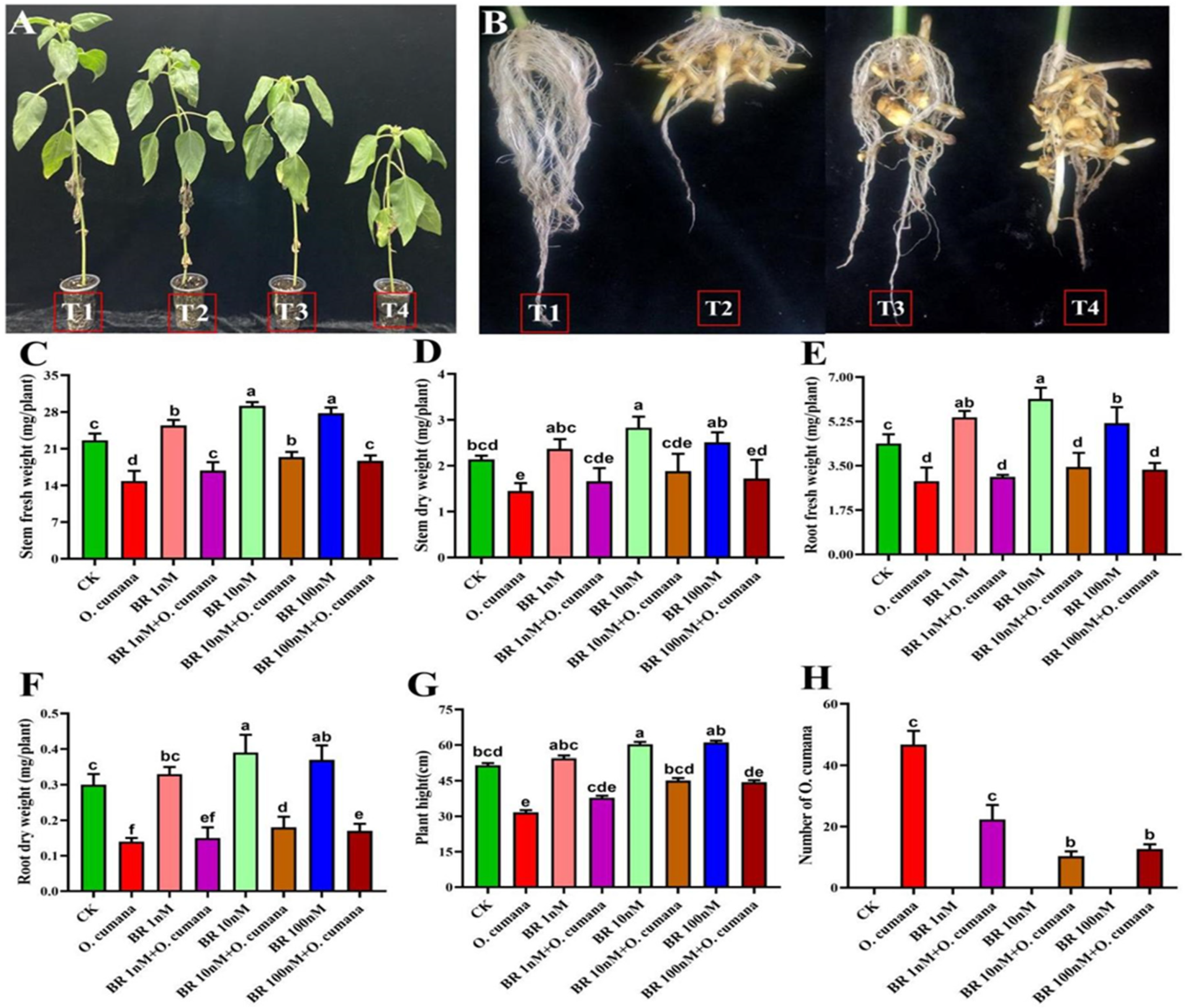
Figure 2.
Effects of different concentrations of BR (1, 10, 100 nM) and O. cumana infection on the photosynthetic traits including (A) net photosynthetic rate (B) stomatal conductance (C) intercellular CO2 concentrations (D) transpiration rate and chlorophyll content (E) Chl a (F) Chl b (G) carotenoids in sunflower.
Figure 2.
Effects of different concentrations of BR (1, 10, 100 nM) and O. cumana infection on the photosynthetic traits including (A) net photosynthetic rate (B) stomatal conductance (C) intercellular CO2 concentrations (D) transpiration rate and chlorophyll content (E) Chl a (F) Chl b (G) carotenoids in sunflower.
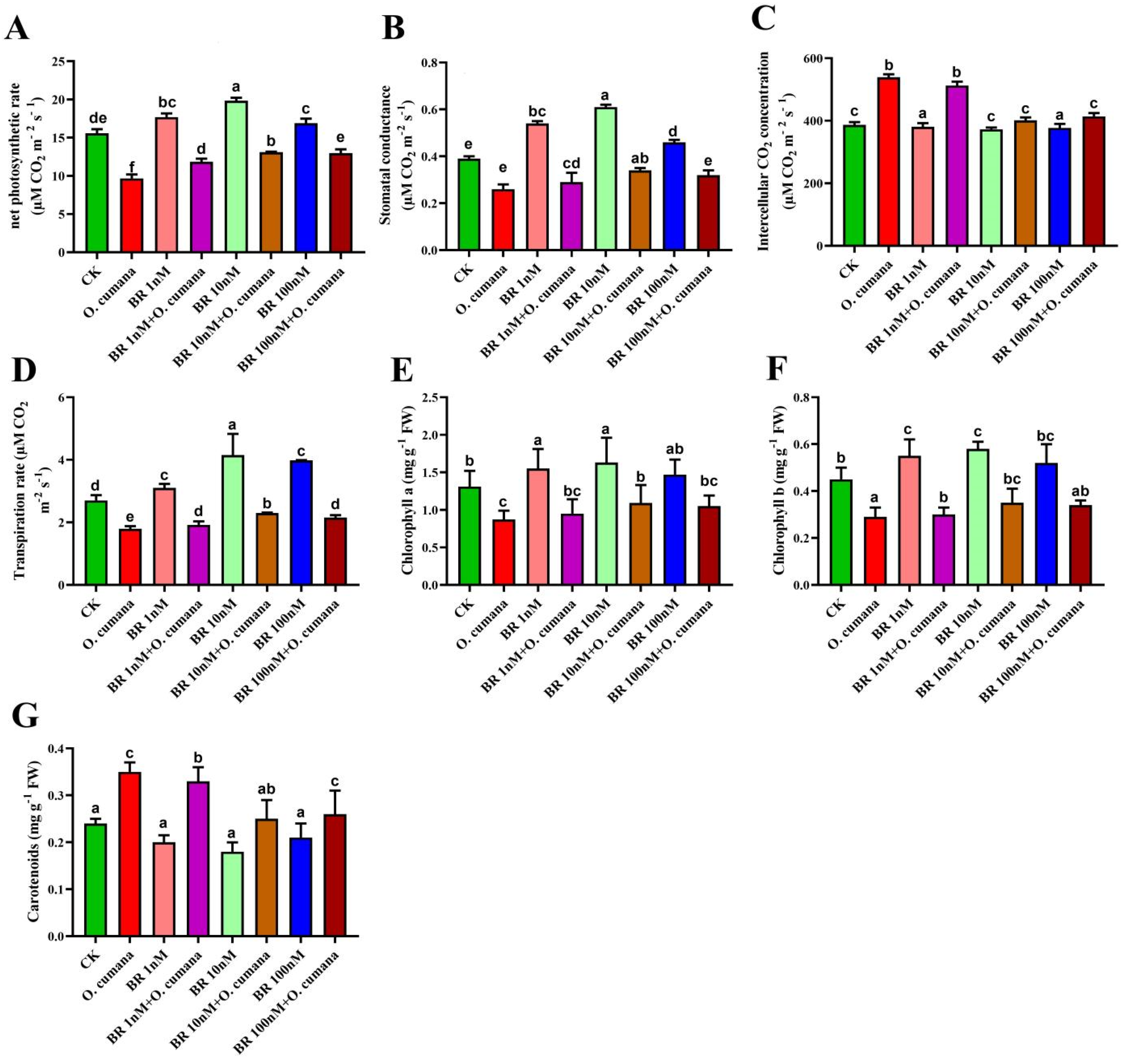
Figure 3.
Effects of different concentrations of BR (1, 10, 100 nM) and O. cumana infection on (A, B) melondialdehyde (MDA) (C, D) hydrogen peroxide (H2O2) (E, F) superoxide radicle (O2•–) (G, H) hydroxide ion (OH–) content in leaves and roots and (I) leaf staining with nitro-blue tetrazole (NBT) and (J) 3,3-diaminobenzidine (DAB) in leaf and roots of sunflower of sunflower.
Figure 3.
Effects of different concentrations of BR (1, 10, 100 nM) and O. cumana infection on (A, B) melondialdehyde (MDA) (C, D) hydrogen peroxide (H2O2) (E, F) superoxide radicle (O2•–) (G, H) hydroxide ion (OH–) content in leaves and roots and (I) leaf staining with nitro-blue tetrazole (NBT) and (J) 3,3-diaminobenzidine (DAB) in leaf and roots of sunflower of sunflower.
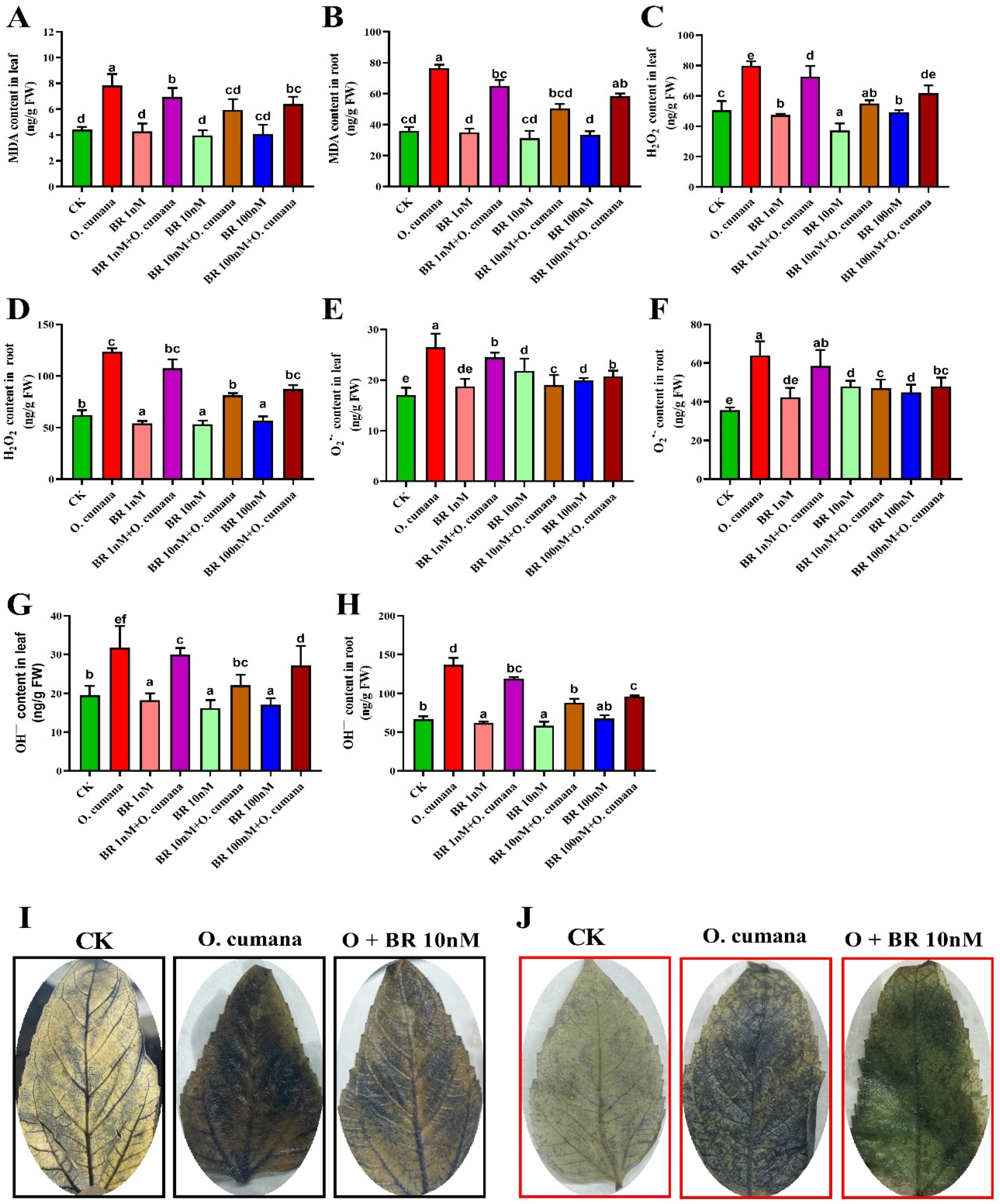
Figure 4.
Effects of different concentrations of BR (1, 10, 100 nM) and O. cumana infection on the (A, B) reduced glutathione (GSH) (C, D) oxidized glutathione (GSSG) (E, F) the ratio of reduced glutathione/oxidized glutathione (GSH/GSSG) content in leaf and roots of sunflower.
Figure 4.
Effects of different concentrations of BR (1, 10, 100 nM) and O. cumana infection on the (A, B) reduced glutathione (GSH) (C, D) oxidized glutathione (GSSG) (E, F) the ratio of reduced glutathione/oxidized glutathione (GSH/GSSG) content in leaf and roots of sunflower.
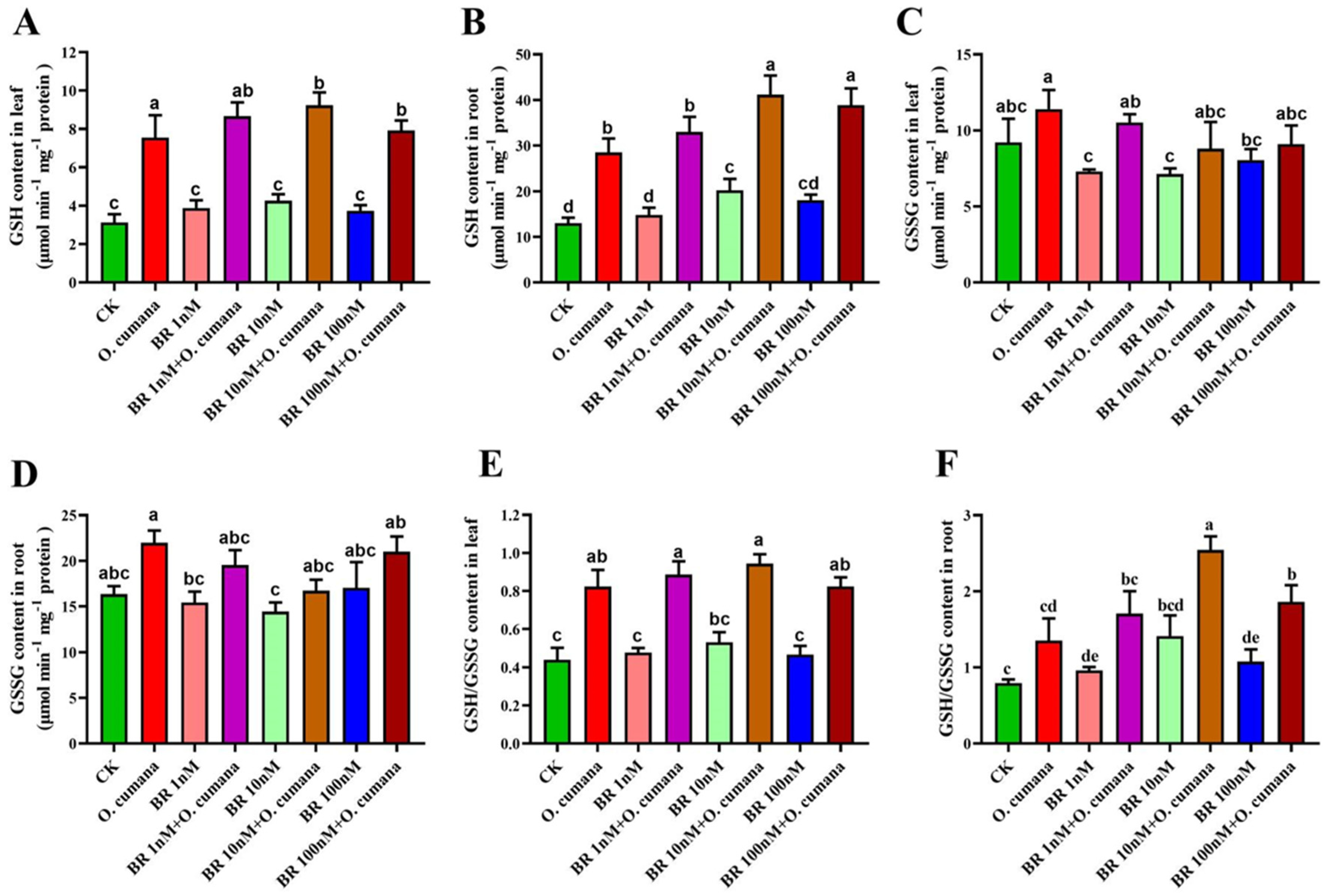
Figure 5.
Effects of different concentrations of BR (1, 10, 100 nM) and O. cumana infection on the activity (A) superoxide dismutase (SOD) (B) peroxidase (POD) (C) catalase (CAT) (D) ascorbate peroxidase (APX) in the leaf and roots of sunflower.
Figure 5.
Effects of different concentrations of BR (1, 10, 100 nM) and O. cumana infection on the activity (A) superoxide dismutase (SOD) (B) peroxidase (POD) (C) catalase (CAT) (D) ascorbate peroxidase (APX) in the leaf and roots of sunflower.
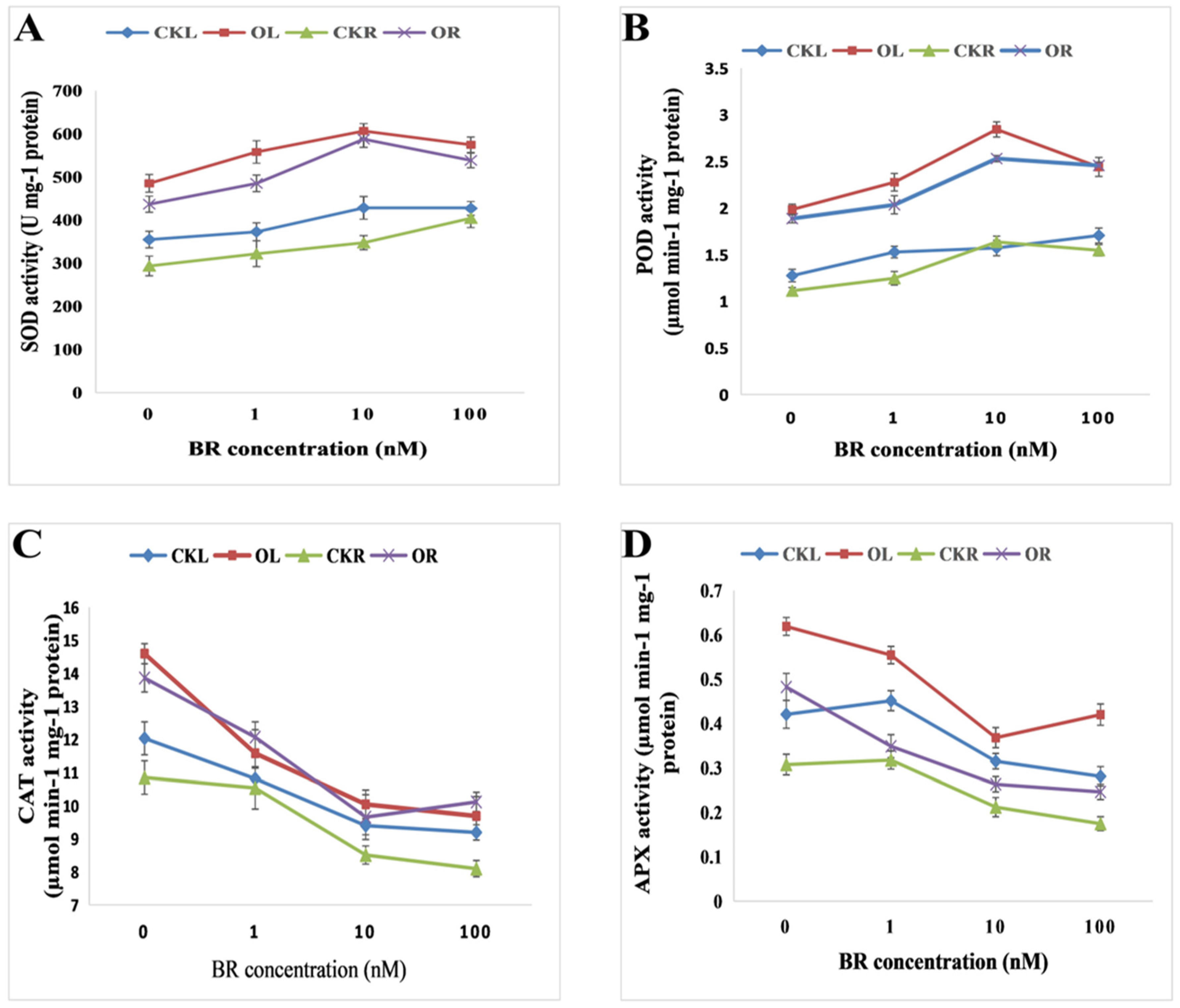
Figure 6.
Effects of different concentrations of BR (1, 10, 100 nM) and O. cumana infection on the expression of antioxidant, signaling or synthesis related genes in the leaves of sunflower.
Figure 6.
Effects of different concentrations of BR (1, 10, 100 nM) and O. cumana infection on the expression of antioxidant, signaling or synthesis related genes in the leaves of sunflower.
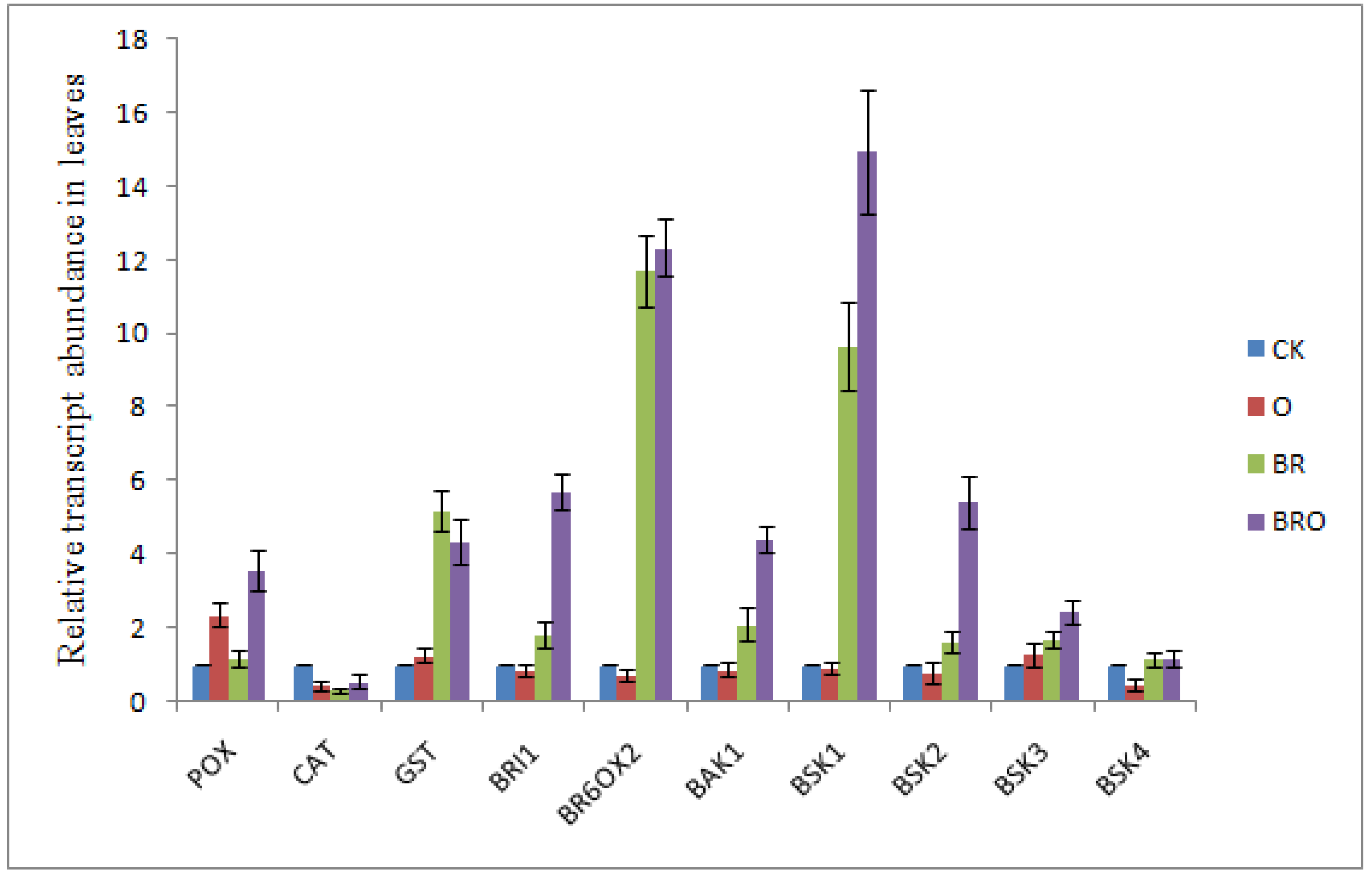
Figure 7.
Effects of different concentration of BR (1, 10, 100 nM) and O. cumana infection on the lignin, phenolics and endogenous BR contents in the leaf and roots of sunflower.
Figure 7.
Effects of different concentration of BR (1, 10, 100 nM) and O. cumana infection on the lignin, phenolics and endogenous BR contents in the leaf and roots of sunflower.
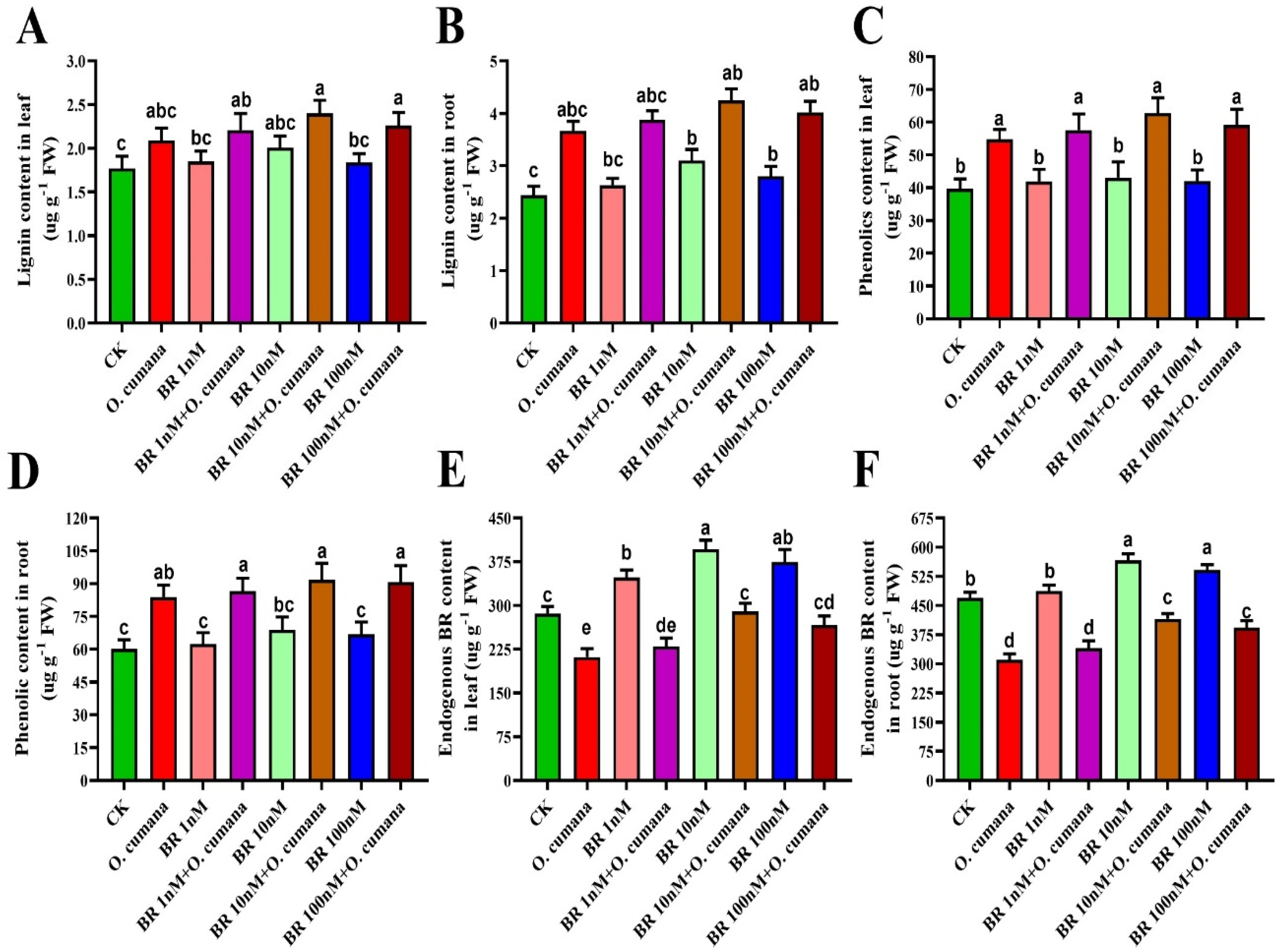
Figure 8.
Transmission electron microscopic analysis revealed the toxic effects of O. cumana and protective roles of brassinosteroids BR (1, 10, 100 nM) in the leaves and roots of mature sunflower. The TEM micrographs of leaf mesophyll cells displayed well-developed thylakoid membrane (Thy) chloroplast (Chl), and a number of plastoglobuli (PG) under control conditions. the TEM micrographs of leaf mesophyll cells showed clustering of plastoglobuli (P), scattered nucleus (N) with nucleoli (Nue), unclear cell wall (CW) and severe nuclear membrane (NM) damage. TEM micrograph of root tip cells of sunflower under control (A) shows larged-size nucleus (N) with clear nucleoli (Nue) and clear nuclear membrane (NM). TEM micrograph under O. cumana stress (B) shows broken cell wall (CW), scattered Nucleus (N), nucleoli (Nue) and broken mitochondria (M) and unclear nuclear membrane. Interestingly BR decrease the toxic effects of O. cumana on the ultra-structure of roots and leaf mesophyll. The combined application of O. cumana and BR levels reverse the toxic effects of O. cumana in the cell ultra-structure such as normal shape chloroplast, clear cell wall, well developed plastoglubuli and clear nucleus.
Figure 8.
Transmission electron microscopic analysis revealed the toxic effects of O. cumana and protective roles of brassinosteroids BR (1, 10, 100 nM) in the leaves and roots of mature sunflower. The TEM micrographs of leaf mesophyll cells displayed well-developed thylakoid membrane (Thy) chloroplast (Chl), and a number of plastoglobuli (PG) under control conditions. the TEM micrographs of leaf mesophyll cells showed clustering of plastoglobuli (P), scattered nucleus (N) with nucleoli (Nue), unclear cell wall (CW) and severe nuclear membrane (NM) damage. TEM micrograph of root tip cells of sunflower under control (A) shows larged-size nucleus (N) with clear nucleoli (Nue) and clear nuclear membrane (NM). TEM micrograph under O. cumana stress (B) shows broken cell wall (CW), scattered Nucleus (N), nucleoli (Nue) and broken mitochondria (M) and unclear nuclear membrane. Interestingly BR decrease the toxic effects of O. cumana on the ultra-structure of roots and leaf mesophyll. The combined application of O. cumana and BR levels reverse the toxic effects of O. cumana in the cell ultra-structure such as normal shape chloroplast, clear cell wall, well developed plastoglubuli and clear nucleus.
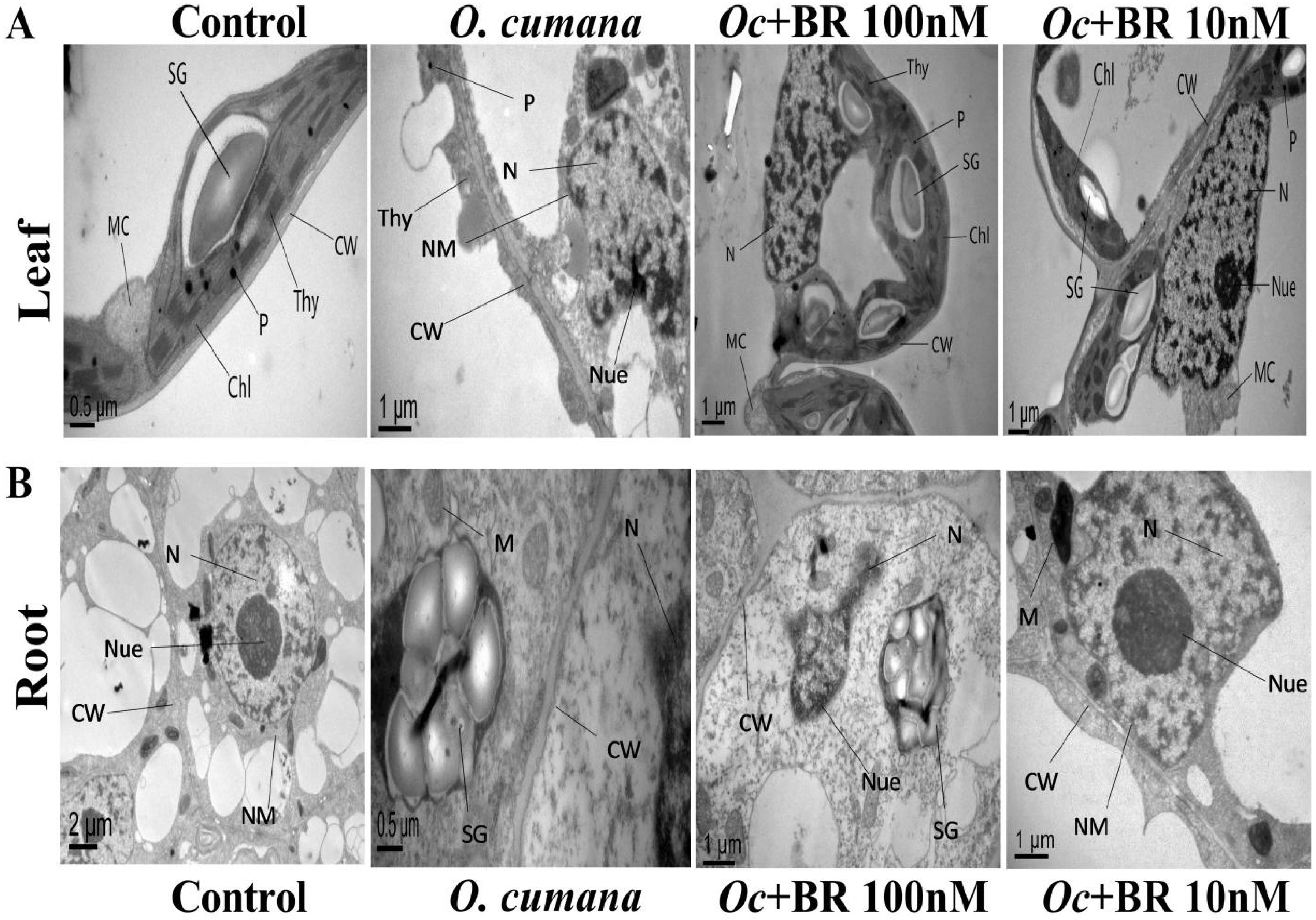
Figure 9.
Protective roles of BRs in inducing the sunflower resistance to O. cumana indulged infection.
Figure 9.
Protective roles of BRs in inducing the sunflower resistance to O. cumana indulged infection.
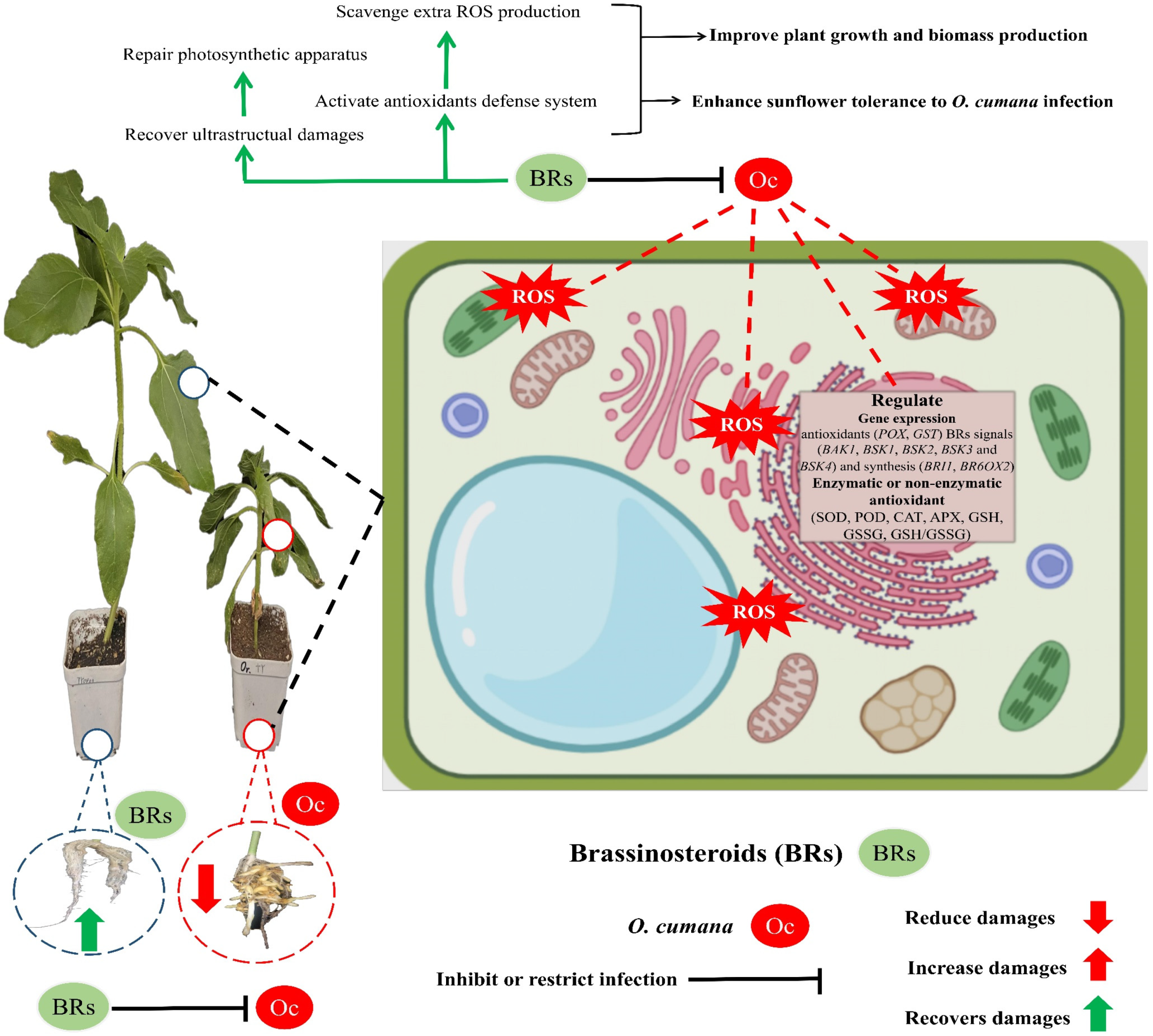

Table 1.
Oligonucleotide primers used in the present study.
| Gene ID | Gene Name | Forward | Reverse |
|---|---|---|---|
| EF-1α | Elongation factor-1 alpha (reference gene) | GGATACAACCCCGACAAA | CCTGAAGTGGGAGACGAA |
| POX | Peroxidase | GGACCGTAAGACTTGGAG | ATAAGGCGACCATTTCTC |
| CAT | Catalase | CGTCTTGGACCGAACTATT | CAAACCACCCACAACTCTG |
| GST | Glutathione | GCATTCCCGCATTATTC | ACTTACTGCCTTTCACTTTC |
| BRI1 | Brassinosteroid homeostasis | GTGAAACTAAACTGGTCCACAC | GTTGAACACCTGAAACTTTGGT |
| BR6OX2 | Cytochrome p450 enzyme | GGGAGTTTCTTCAAGTCTCACA | GCAACAAGTCCTTTCGATTCAT |
| BAK1 | BRI1-associated receptor kinase | ACTTCTTTGATGTACCAGCTGA | CAACTTGTAGTTCACGCAATGA |
| BSK1 | BR-signaling kinase 1 | GATTTCAAAACAGCCATCGACT | AGTAAGTAGCATAGACTTCGCC |
| BSK2 | BR-signaling kinase 2 | AATACTACTCCAAGTTGGTGGG | TCATTAAGTAGGAGAAAGCCCG |
| BSK3 | BR-signaling kinase 3 | TGATGAAGAATAGTCGGGATGG | TCACTATCAGAAAACTGCCCAT |
| BSK4 | BR-signaling kinase 4 | GATCTTTCGTTTATGTGGAC | AGACTGGAGATACAATGCA |
Disclaimer/Publisher’s Note: The statements, opinions and data contained in all publications are solely those of the individual author(s) and contributor(s) and not of MDPI and/or the editor(s). MDPI and/or the editor(s) disclaim responsibility for any injury to people or property resulting from any ideas, methods, instructions or products referred to in the content. |
© 2023 by the authors. Licensee MDPI, Basel, Switzerland. This article is an open access article distributed under the terms and conditions of the Creative Commons Attribution (CC BY) license (http://creativecommons.org/licenses/by/4.0/).
Copyright: This open access article is published under a Creative Commons CC BY 4.0 license, which permit the free download, distribution, and reuse, provided that the author and preprint are cited in any reuse.


