

Submitted:
21 November 2023
Posted:
22 November 2023
You are already at the latest version
Abstract
Cissus populnea Guill. & Perr. (Vitaceae) is used in traditional medicine to treat microbial infec-tions, venereal diseases, and infertility, among others. The aim of the research is to isolate and characterize the antimicrobial constituent(s) from the stem of C. populnea. The n-butanol fraction of C. populnea being most active was subjected to silica gel column chromatography which led to the isolation of a white solid and white crystalline substances coded compounds C1 and C4C5, respectively. Spectral analysis (1D & 2D-NMR) of the isolated compounds and comparison with literature data indicated C1 to be Bis-(2-ethyloctyl)-phthalate and C4C5 to be a mixture of stig-masterol and β-sitosterol; C4C5 exhibited zone of inhibition ranging from 24 – 29 mm against the test organisms with Candida albicans being the most sensitive organism while Trichophyton rubrum was the least sensitive organism. The standard drugs, Ciprofloxacin had 27 – 37 mm while Flu-conazole and Fulcin exhibited zone of inhibition ranging from 34 mm and 29 – 32 mm, respec-tively. The MIC and MBC/MFC values for C4C5 ranges from 12.5 – 25.0 µg/cm3 and 25.0 – 50.0 µg/cm3 against MRSA, S. aureus, E. coli, C. albicans, T. rubrum, and T. mentagrophyte, respectively. In conclusion, three bioactive compounds were identified for the first time from the stem of C. populnea
Keywords:
Cissus populnea
; steroids
; phthalates
; antimicrobial
; stigmasterol
; β-sitosterol
1. Introduction
Antimicrobial resistance (AMR) is a global threat that occurs when microorganisms such as fungi, bacteria, parasites and viruses change over the course of time and tends to no longer respond to antimicrobial agents [1,2]. AMR is a public health problem with at least 1.27 million mortality worldwide and it has the potential of affecting people at any stage of life [3]. Complications due to AMR infections that require the use of second and third-line treatments can lead to serious health conditions such as organ failure as well as prolong care and recovery time which can last for months [2]. The cause of this threat has been linked to the lack of safe and clean water, misuse and overuse of antimicrobial agents, inadequate infection control which can encourage the spread of microorganisms that can develop resistance to antimicrobial agents [3]. AMR has substantial economic impact, aside from death and disability, prolong hospital stays which increase reliance on costly medications and financial challenges for those impacted [4]. Thus, the need to search for more effective, less expensive and readily available alternative treatments from natural sources because of their availability, and lesser side effects [5].
C. populnea (Figure 1a) belonging to the Vitaceae family is locally known in Nigeria as Okoho by the Idoma and Igala tribes, Daafaara or Latutuwa by the Hausas and Ogbolo or Ajara by the Yorubas [6]. The plant is distributed across West Africa from the coast to the Sudan and Sahelian woodlands. Its geographical area spans Senegal, North and South Nigeria, to Sudan, Uganda and Mozambique [7]. The plant is a woody climbing shrub, 8-10 cm long and 7.5 cm in diameter with a perennial root stock with jointed stems (Figure 1b) often with watery juice. The stock is often an annual rod drying during the dry season, covering the tree on which it is hung. The bark is cream and smooth when young, then gray and scaly, flaking by a fibrous shell on the old foot. The leaves are alternate, oval, 15-18 cm wide with slightly pointed apex. The fruit is usually ovoid in shape, smooth and dark purple at maturity. The stems are succulent, sharply quadrangular with sides 6-15 mm wide, constricted at the nodes [8].
C. populnea has been used traditionally for its nutritional value, and its stem has been consumed as food. In recent years, researchers have begun to explore the nutritional value of this plant to better understand its potential contributions to human nutrition. Macronutrient Composition: A study conducted by Achikanu and Ani [9] revealed that the stem bark of C. populnea is a good source of macronutrients. It contains approximately 1.5 % protein, 13.0 % fat and 56.0 % carbohydrate, making it a good source of energy. C. populnea stem bark have also been found to contain a range of vitamins such as vitamins A, B1, B2, B9, C, D, E, K and B-carotene that are important for human health. C. populnea stem have been found to be a good source of dietary fiber (22.2 %), which is important for maintaining healthy digestion and reducing the risk of chronic diseases such as Type 2 diabetes and heart disease. C. populnea is used in Niger, Kogi, Benue, Adamawa, Plateau and Kwara states of Nigeria for making vegetable soup for the postnatal stoppage of bleeding [10]. The aqueous extract of the stem bark is used as a fertility enhancer in males in southern Nigeria [11]. A decoction of the stem with native natron is used in northern Nigeria to treat venereal diseases. Preparations from the root are used as an antidote for arrow poisoning and also as a cure for sore breast [12]. In Benin republic, it is used as a diuretic and in Ghana it is used as a post-harvest ethnobotanic protectant [13]. Extracts from the root of the plant have been used for the management of skin diseases, boils, infected wounds [14] and for treating urinary tract infection [11].
Phytochemically, Aguoru et al. [15] reported that the stem, root and leaves of the plants contain variable amounts of alkaloids, tannins, anthraquinones, flavonoids and saponins. However, the alkaloid content of the stem was highest with 51.84 %, saponin was highest in the leaf (44.46%) and flavonoid was highest in the root of the plant (43.48 %); thus, agreeing with Soladoye and Chukwuma [16] who also reported that saponin was highest in the leaf of C. populnea. The stem bark was reported to contain alkaloids, tannins, saponins, flavonoids and terpenoids. Saponin was found to be highest in the stem bark [16]. Bergenin, daucosterol, stigmasterol and β-sitosterol have been isolated from the root of C. populnea [17]. Also, Danladi et al. [8] reported the isolation of β-sitosterol from the leaf of C. populnea (Figure 2). Essential oil from the stem powder have been reported to have antimicrobial properties [18]. Aqueous extract of the stem bark was reported to possess antioxidant activities [19] and also improves spermatogenesis [11]. The root of C. populnea was reported to have anti-sickling [20], anthelminthic [21] and antimicrobial [17] activities. In this paper, we report the isolation and characterization of Bis-(2-ethyloctyl)-phthalate, stigmasterol and β-sitosterol and the evaluation of their antimicrobial activity against some selected microorganisms.
2. Results
2.1. Isolation and Characterization of Compounds
2.1.1. Compound C1
Compound C1 was isolated as a white solid compound with a mass of 6.0 mg from fraction B6B7 obtained from silica gel column chromatography of the n-butanol fraction, and it was found to be soluble in chloroform. The identity of the compound was confirmed by comparing its NMR data with literature as summarized in Table 1.
2.1.1. Compound C4C5
Compound C4C5 was obtained as a white crystalline substance with a total mass of 38.0 mg from purification of fraction B6B7 obtained from silica gel column chromatography of the n-butanol fraction and the compound was found to be soluble in chloroform with an uncorrected melting point ranging between 135 – 136 oC. The structure of the compound was confirmed by comparing its NMR data with literature as summarized in Table 2.
2.2. Antimicrobial activity of C4C5
2.2.1. Susceptibility test of C4C5
2.2.2. Zone of Inhibition of C4C5
Compound C4C5 exhibited zone of inhibition ranging from 24 – 29 mm against the test organisms with Candida albicans being the most sensitive organism while Trichophyton rubrum was the least sensitive organism. Ciprofloxacin had 27 – 37 mm while Fluconazole and Fulcin exhibited zone of inhibition ranging from 34 mm and 29 – 32 mm, respectively (Table 4).
2.2.3. MIC of C4C5 against the Test Organisms
The MIC value for compound C4C5 ranges from 12.5 – 25.0 µg/cm3 against MRSA, S. aureus, E. coli, C. albicans, T. rubrum, and T. mentagrophyte (Table 5).
2.2.4. MBC/MFC of C4C5 against the Test Organisms
The MBC/MFC value for compound C4C5 ranges from 25.0 – 50.0 µg/cm3 against MRSA, S. aureus, E. coli, C. albicans, T. rubrum, and T. mentagrophyte (Table 6).
3. Discussion
Compound C1 was isolated as a white solid compound with a mass of 6.0 mg from fraction B6B7 obtained from silica gel column chromatography of the n-butanol fraction, and it was found to be soluble in chloroform. The 1H-NMR spectrum of C1 indicated the presence of aromatic signals at δH 7.72 and 7.54 at position 13 and 14 respectively which is indicative of a substituted aromatic ring [22]. The signal at δH 4.23 (H-8) was assigned to the methylene group attached to an electron withdrawing group (ester alcohol) while the signal at δH 2.37 was assigned to the methine proton at position 7 (H-7). The spectra further revealed a cluster of multiplet signals upfield from δH 1.00 – 1.63 which were assigned to methylene groups at positions 2, 3, 4, 5, 6, and 8 respectively. Two upfield signals at δH 0.82 and δH 0.84 were due to terminal methyl groups at positions 1 and 11, respectively. These chemical shift values were similar to those reported for bis-(2-ethyl hexyl) phthalate [22]. The 13C-NMR and DEPT experiment of C1 indicated the presence of 14 carbon resonances which are in consistent with the proton NMR; major resonances observed include δC 14.3(C-1), 21.6(C-2), 45.6(C-3), 24.9(c-4), 22.9(C-5), 29.2(C-6), 32.7 (C-71), 27.3 (C-10), 20.9 (C-11), 68.4 (C-8), 178.7 (C-9), 131.9 (C-12), 129.1(C-13), 132.7 (C-14). The DEPT-135 revealed the multiplicities of the carbons as two methyl (CH3), seven methylene (CH2), three methane (CH) and two quaternary (C) carbons.
The result of the 2D-NMR (H-H-COSY, HSQC and HMBC) confirmed the relationship between the various protons and carbons in the molecule. The HSCQ experiment was used to attached each proton to their respective carbons. The proton at δH 7.54 correlated with δC 132.7, δH 7.72 correlated with δC 129.1, δH 4.23 correlated with δC 68.4 among others (Table 1). The H-H COSY experiment established the correlations between the protons at H8 (4.23) # H6 (1.63), H7 (2.37) # H6 (1.63), H6 (1.63) # H5 (1.28) and H11 (0.84), H10 (1.61) # H11 (0.84), H2 (1.30) # H1 (0.82) and H5 (1.28) # H4 (1.00), which confirmed the assignment of protons within the oxygenated aliphatic side chain in the molecule (Figure 3a).
The correct assignment of protons, carbons and their linkages in the molecule was confirmed through cross peaks detected on the HMBC spectrum (Figure 3b). Some of the major corrections observed include; the long-range correlation between the δH 4.23 (H-8) with the carbons at C-5, C-7, C-9 and C-10 confirmed the attachment of the octyl moiety to the phthalate nucleus as well as the attachment of the ethyl substituent at C7. Similarly, the attachment of the octyl and ethyl moieties to the phthalate nucleus was further confirmed via the long-range correlations between the δH 1.63 (H-6) and C4. The correct assignment of the protons and carbons within the octyl side chain was confirmed via the corrections between δH 1.28 (H-5) and C-4, C-5, C-6, C-7 and C-10 and δH 1.16 (H-3) which correlated with C-3, C-5, C-6 and C-10 among others; Correlation observed between δH 0.84 (H-11) and C-5 and C7 further confirmed the attachment of the ethyl side chain at C7. The attachment of the ethyl-octyl moiety to the phthalate nucleus was further substantiated via the correlation observed between δH 4.23 (H-8) and C-7 (Table 1). Based on the 1D- and 2D-NMR data of C1 and comparison with related data in the existing literature [22], a tentative structure of C1 was proposed as Bis-(2-ethyloctyl)-phthalate (Figure 4).
Compound C4C5 was obtained as a white crystalline substance with a total mass of 38.0 mg from purification of fraction B6B7 obtained from silica gel column chromatography of the n-butanol fraction and the compound was found to be soluble in chloroform with an uncorrected melting point ranging between 135 – 136 oC which indicates its purity. The 1H-NMR of C4C5 indicated the presence of a proton atom an oxygenated carbon at δH 3.55 and a cluster of resonances upfield between δH 2.28 and 0.70, thus suggesting a steroidal nucleus [23,24,25]. The spectrum showed a doublet at δH 5.37, indicative of a proton at position six (H-6). The spectra further revealed signals at δH 0.70 and 1.03 which were assignable to the two tertiary methyl protons at C-18 and C-19, respectively. Two upfield signals at δH 0.83 and 1.17 were due to the two methyl groups at C-26 and C-28, respectively. The doublet at δH 1.00 was demonstrative of the methyl group at C-21; while the other upfield signal at δH 0.81 was due to the methyl group at C-29. Two olefinic protons were clearly observed at δH 5.16 and 5.08 which were assigned to C-22 and C-23, respectively suggesting the compound to be stigmasterol (Yusuf et al., 2015); however, the overlapping signals and presence of two methylene signals at δH 1.31 and 1.09 at C-22 and C-23 respectively also suggests the presence of β-sitosterol [8]. The carbon-13 and DEPT experiments of C4C5 indicated the presence of 29 carbon signals which include six methyl (CH3), 9 methylene (CH2), 11 methine (CH) and 3 quaternary (C) carbons. The downfield signals at δC 140.77 and 121.72 were assigned to the unsaturated carbons at C-5 and C-6, respectively; and the signals at δC 138.31 and 129.3 were also due to olefinic carbons at C-22 and C-23, respectively. The signals at δC 12.05 and 21.09 correspond to the angular methyl carbon atoms at δC C-18 and C-19, respectively while the signal at δC 71.83 was due to the presence of an electronegative oxygen atom at C-3 [23,24]. Based on the 1D-NMR data and comparison with related data in the literature (Table 2), the structure of compound C4C5 was confirmed to be a mixture of stigmasterol and β-sitosterol (Figure 6).
Compound C4C5 was subjected to antimicrobial screening using agar well and broth dilution techniques; and the findings indicated that, the compound exhibited good antimicrobial activity against the test microbes with favorable MIC and MBC/MFC values. Thus, the compound can be said to have a good broad spectrum of activity considering the mean zone of inhibition diameter greater than 18 [26,27].. Compounds with MIC values < 100 µg/mL are regarded as good antimicrobial agents [28,29]. Thus, the findings of this studies were in close agreement to those reported for the antimicrobial activity of stigmasterol and β-sitosterol from the roots of C. populnea [17] and β-sitosterol from the leaves of the plant, C. populnea [8]. Even though, there is limited information on the mechanism of antimicrobial activity of stigmasterol and β-sitosterol, some studies have shown that, the compounds have broad spectrum of antibacterial and antifungal properties [30,31]. Stigmasterol has been reported to inhibit the growth of C. albicans, virusei and tropicalis at low concentrations [32]. Studies revealed that, the compound may act by inhibiting the activity of sortase which participate in the pathways involve in the secretion and cell wall anchoring of bacterial virulence factors [31] In addition, Karim et al. [33] and Pratiwi et al. [34] also reported that, stigmasterol may act via oxidative stress-induced apoptosis via the Sirtuin family. MRSA, is a type of bacteria that is resistant to several antibiotics [1]; It is can cause serious health problems such as sepsis, pneumonia, and death. Also S. aureus, a Gram-positive bacterium can cause superficial skin leisons, localized abscesses and other infections such as pneumonia, sepsis, and toxic shock syndrome [35]. E. coli, is a causative agent for stomach cramps, bloody diarrhea and vomiting [1]. Likewise, C. albicans can cause candidiasis [36]; compound C4C5 has demonstrated good activity against these pathogens and thus could be studied further for development as antimicrobial agents.
4. Materials and Methods
4.1. Collection, Identification and Preparation of Plant Material
The plant material of C. populnea stem was collected from Ejinya-Eheche in Kogi state, Nigeria. It was identified via taxonomic means at the Herbarium section, Department of Biological Sciences, Usmanu Danfodiyo University, Sokoto by Mal. A. Salihu and a voucher specimen number UDUH/ANS/0841 was prepared and deposited. The stems were washed, air dried, ground to fine powder and stored at room temperature for use.
4.2. Extraction and Partitioning of Plant Material
The powdered stem (1.2 kg) was extracted exhaustively by successive maceration using 15 L of 90 % methanol for 7 days with constant agitation, and the extract obtained was freed from the solvent by evaporation under pressure with the aid of a rotary evaporator at 40 ˚C to yield a reddish-brown residue (98.0 g), subsequently referred to as the methanol stem extract (MSE). Some part of the methanol stem extract (90.0 g) was found to be insoluble in water and thus was successively washed with n-hexane (1.5 L), chloroform (1 L), ethylacetate (1 L), n-butanol (2 L) and methanol (2L) to afford n-hexane (HFS), chloroform (CFS), ethyl acetate (EFS), n-butanol (BFS) and methanol fraction (MFS), respectively.
4.3. Chromatographic studies
The extract and fractions of C. populnea were screened for their antimicrobial activity [37]. BFS being the most active extract was subjected to chromatographic studies. The procedure described by Yusuf et al. [24] was adopted for column chromatography. In this method, the n-butanol fraction BFS (3.2 g) was gradiently eluted in a silica gel packed column (5x75 cm) using different solvent combinations starting with chloroform 100%, mixtures of chloroform: ethylacetate (8:2, 1:1, 2:8), ethylacetate (100%) to mixtures of ethylacetate: methanol (8:2). Twenty-five (25) cm3 each of a total of 231 fractions were collected and combined based on their TLC profiles to give 14 major fractions coded B1- B14. Fractions B6 and B7 were further combined to give B6B7 (0.11 g) based on their TLC profile, which was subjected to further purification with silica gel; mobile phase employed include: n- hexane (100%), mixtures of hexane: ethylacetate (9:1, 8:2 to 3:7), ethylacetate (100%), ethylacetate: methanol (9:1). Twenty (20) cm3 each of a total of 70 collections were made and combined based on their TLC profiles to afford 6 major fractions C1-C6. C1 was found to be a pure compound; C4 and C5 were combined and washed with n-hexane, which afforded compound C4C5. Physicochemical properties, solubility test, spectroscopic analysis and antimicrobial activity of C4C5 was evaluated.
4.4. Antimicrobial activity of C4C5
4.4.1. Microbial species
The test microorganisms were obtained from stock cultures of the Department of Medical Microbiology, Ahmadu Bello University Teaching Hospital, Zaria. They included Methicillin-resistant Staphylococcus aureus, Staphylococcus aureus, Vancomycin-resistant enterococcus, Escherichia coli, Bacillus subtilis, Pseudomonas aeruginosa, Candida albicans, Aspergillus niger, Trichophyton rubrum and Trichophyton mentagrophyte. The cultures were maintained on nutrient agar slants for the bacteria species and dextrose agar slants for the fungal species. They were sub cultured in nutrient broth 24 hours prior to testing.
4.4.2. Susceptibility test
Antimicrobial activity of C4C5 was determined using agar well diffusion method as described by Yusuf et al. [30]. A quantity (0.001 mg) of C4C5 was weighed and dissolved in 10 cm3 of DMSO to obtain a concentration of 100µg/cm3 each. This was the initial concentration used to determine the antimicrobial activity of the compound. Mueller Hinton agar and sabouraud dextrose agar was used as the growth media for the bacteria and fungi, respectively. The media were prepared according to the manufacturer’s instructions, it was sterilized at 121 ºC for 15 mins, poured into the sterile petri dishes and were allowed to cool and solidify. The solidified medium was seeded with 0.1 cm3 of standard inoculum of the test microbe; the inoculum was spread evenly over the surface of the medium by the use of a sterile swab. Standard sterile cork-borer of 6 mm in diameter was used to bore a well at the center of each inoculated medium. The wells were filled with 0.1 cm3 of the solution of the compound and allowed to diffuse for 1 hour. Incubation of the inoculated medium was made at 37 °C for 24 hours for bacteria and at 30 °C for 1-7 days for fungi. Ciprofloxacin, fulcin and fluconazole discs were used as reference antimicrobials. The tests were conducted in duplicates and the zone of inhibition around the wells were measured in millimeter and used as an assessment of antimicrobial activity.
4.4.3. Minimum inhibitory concentration (MIC)
The MIC for each microbial sample was determined by broth dilution technique [30,38]. Mueller Hinton broth and Sabouraud dextrose broth were prepared according to the manufacturer’s instruction; the medium was dispensed in screw-capped test tubes and sterilized at 121 °C for 15 minutes and allowed to cool. Mc-Farland’s standard turbidity scale number 0.5 was prepared by adding 0.05 cm3 of barium chloride dehydrate (BaCl2.2H2O) to 9.95 cm3 of 1 % sulphuric acid (H2SO4). Normal saline was prepared, 10 cm3 was dispensed into sterile test tube and the test microbe was inoculated and incubated at 37 oC for 6 h. Dilution of the organism suspension was done continuously using sterile normal saline until turbidity matched that of Mc-Farland’s scale by visual comparison. Two-fold serial dilution of the extract was done in the sterile broth to obtain concentrations of 6.25, 12.5, 25.0. 50.0 and 100 µg/cm3 for the compound. Having obtained the different concentrations of the samples in the sterile broth, 0.1 cm3 of the test microbe in the normal saline was then inoculated into the different samples. Incubation was made at 37 oC for 24 h for the bacteria and at 30 oC for 48 hours for fungi. The test tubes containing the inoculated broth were observed for turbidity (growth) the lowest concentration of the compound in the sterile broth which shows no turbidity was recorded as the minimum inhibition concentration.
4.4.4. Minimum bactericidal/ fungicidal concentration (MBC/MFC)
The MBC/MFC was carried out to determine whether the test microbes were killed or only their growth was inhibited [30,38]. Mueller Hinton agar and Sabouraud dextrose agar were prepared, sterilized at 121 °C for 15 minutes and transferred into sterile petri dishes to cool and solidify. The contents of the MIC in the serial dilutions were sub-cultured into the prepared media and incubated at 37 °C for 24 h and at 30 °C, for 72 h for the bacteria and fungi respectively. The plates were observed for colony growth; the MBC/MFC was the plates with the lowest concentration of the compound in serial dilution without colony growth.
5. Conclusions
Chromatographic separation n-butanol fraction of C. populnea led to the isolation and characterization of three compounds; Bis-(-(2-ethyloctyl)-phthalate), stigmasterol and β-sitosterol. The compounds, stigmasterol and β-sitosterol exhibited good antimicrobial activity against the test organisms. Thus, the findings of this study, reported the isolation and characterization of these compounds from the stem of plant for the first time.
Author Contributions
Conceptualization, A-S. A.; methodology, A-S. A.; software, AJY; formal analysis, All authors; investigation, A-S. A.; writing—original draft preparation, A-S. A.; writing—review and editing, All authors; supervision, A.U., U.A.B., A.J.Y. All authors have read and agreed to the published version of the manuscript.
Funding
This research received no external funding.
Institutional Review Board Statement
Not applicable.
Informed Consent Statement
Not applicable.
Data Availability Statement
Not applicable.
Acknowledgments
We acknowledged the efforts of Mr. Tanko Yohanna of Pharmaceutical Microbiology Laboratory, Faculty of Pharmaceutical Sciences, Usmanu Danfodiyo University, Sokoto and his team for their assistance in conducting the antimicrobial investigations; Dr. Hussaini Ungo-kore for proving the nutrient agar and Prof. Patricia Rijo of Universidade Lusofona de Humanidades e Tecnologias, Lisbon, Portugal for her assistance with the NMR analysis.
Conflicts of Interest
The authors declare no conflict of interest.
References
- Center for Disease Control (CDC). Methicillin Resistant Staph Aureus. https://www.cdc.gov/mrsa/community/index.html. [Date Accessed June 26th 2019].
- Centers for Disease Control and Prevention (CDC). About Antimicrobial Resistance. https://www.cdc.gov/drugresistance/about.html. [Date Accessed, 5th October, 2022].
- World Health Organization (WHO). Antimicrobial Resistance. https://www.who.int/health-topics/antimicrobial-resistance. [Date Accessed 17th November, 2021].
- World Health Organization (WHO). Antibiotic Resistance. https://www.who.int/news-room/fact-sheets/detail/antibiotic-resistance. [Date Accessed 27th October, 2023].
- Yusuf, A.J.; Abdullahi, M.I.; Aleku, G.A.; Ibrahim, I.A.A.; Alebiosu, C.O.; Yahaya, M. et al. Antimicrobial activity of stigmasterol from the stem bark of Neocarya macrophylla. Journal of Medicinal Plants for Economic Development 2018, 2: a38. 1-5. [CrossRef]
- Chukwu, A.C.O. Primary evaluation of C. populnea gum as binder in sodium sachylate tablet formulation. Drug Development Industry Pharm. 1989, 15, 325—330.
- Hutchinson, J.; Dalziel, J.M. Flora of West Tropical Africa. Second edition part 2. Mdibert London. Crown agents for oversea Government and Admin, 1958, pp 672-683.
- Danladi, A.H; Ushie, O.A.; Egwaikhide, P.A. β-Sitosterol isolated from Ethylacetate extract of Cissus populnea and the Antimicrobial activity. J. Chem. Soc. Nigeria, 2023, 48, 257 – 269.
- Achikanu, C.; Ani, O. Nutritional and Phytochemical Content of Cissus populnea (Okoho) Stem Bark. Asian Journal of Research in Biochemistry, 2020, 8-15. [CrossRef]
- Soladoye, M.O.; Chukwuma, E.C. Phytochemical analysis of the stem and root of C. populnea (Vitaceae) - an important medicinal plant in Central Nigeria. Phytologia Balcanica, 2012a, 18, 149-153.
- Ojekale, A.B.; Lawal, O.A.; Lasisi, A.K.; Adeleke, T.I. Phytochemistry and spermatogenic potentials of aqueous extract of Cissus populnea (Guill. and Per) stem bark. The Scientific World Journal, 2006, 6, 2140 – 2146. [CrossRef]
- Burkill, H.M. The Useful Plants of West Tropical Africa. Vol. 2, Royal Botanical Garden, University Press of Virginia, Charlottesville, 2000, p636.
- Belmain, S.R.; Golo, P.; Andan, H.F.; Atarigiya, H.; Chare, F.A.; Carr, P. Toxicity and repellency of ethnobaotanicals used in Ghana as post-harvest protectants, in Abstracts of presentations on selected topics at the XIVth International Plant Protection Congress (IPPC). Phytoparasitica, 2000, 28, 87 – 90.
- Kone, W.M.; Atindehou, K.K.; Terreaux, C.; Hosetettman, K.; Traore, D.; Dosso, M. Traditional medicine in north Cote-d’Ivoire: screening of 50 medicinal plants for antibacterial activity. Ethnopharmacol Bul, 2004, 93, 43 – 49. [CrossRef]
- Aguoru, C.U.; Ameh, S.J.; Olasan, O. Comparative phytochemical studies on the presence and quantification of various bioactive compounds in three major organs of okoho plant (Cissus populnea Guill and Perr) in Benue State North-Central Nigeria, Western Africa. European journal of advanced research in Biological and Life Sciences 2014, 2, 28-29.
- Soladoye, M.O.; Chukwuma, E.C. Quantitative phytochemical profile of the leaves of C. populnea Guill. & Perr. (Vitaceae)- an important medicinal plant in central Nigeria. Archives of Applied Science Research, 2012b, 4, 200 - 206.
- Nyemb, J.N.; Djankou, M.T.; Talla, E.; Tchinda, A.T.; Ngoudjou, D.T.; Iqbal, J.; Mbafor, J.I. Antimicrobial, glucosidase and alkaline phosphate activities of Bergenin, the major constituent of Cissus populnea roots. Medchem (Los Angeles) 2018, 8, 426-430. [CrossRef]
- Osibote, E.A.S.; Ogunlesi, M.; Okiu, W.; Asekun, T.; Familoni, O.B. Assessment of the antimicrobial activity of the essential oil of the stem powder of Cissus populnea and SeIsamum radiatum, Herbal medications for male infertility factor. Research Journal of Medicinal Plants, 2010, 4, 14-20.
- Akomolafe, S.F.; Oboh, G.; Akindahunsi, A.A.; Akinyemi, A.J.; Tade, A.G. Inhibitory Effect of Aqueous Extract of Stem Bark of Cissus populnea on Ferrous Sulphate- and Sodium Nitroprusside-Induced Oxidative Stress in Rat’s Testes In Vitro", International Scholarly Research Notices, 2013, 2013, Article ID 130989, 7 pages. [CrossRef]
- Adebayo, E.M.; Adeyemi, A.A.; Omolade, O.O.; Fashola, F.A.; Ajayi, T.O.; Attah, F.A.; Moody, J.O. Antisickling activity of the fresh and dried roots of Cissus populnea Guill. Et Perr (Vitaceae) Nigerian Journal of Nat. Prod. and Med., 2015, 19:134-138. [CrossRef]
- Nyemb, J.N.; Djankou, M.T.; Talla, E.; Tchinda, A.T.; Ngoudjou, D.T.; Iqbal, J.; Mbafor, J.I. DPPH antiradical scavenging, anthelmintic and phytochemical studies of Cissus populnea rhizomes. Asian Pacific Journal of Tropical Medicine, 2018, 11, 280-284.
- Halilu, M.E.; Yahaya, M.; Dangoggo, S.M.; Umar, K.J.; Ibrahim, G.; Abdullahi, M.I.; Uba, Baburo, S.I.B.; Garba, M.A.; Yusuf, A.J. Isolation and Characterization of Di-(2-ethylhexyl) Phthalate from the Leaves of Combretum micranthum (Altum) Combretceae. International Journal of Science for Global Sustainability, 2016, 2, 15-20. https://fugus-ijsgs.com.ng/index.php/ijsgs/article/view/251.
- Pateh, U.U.; Haruna, A.K.; Garba, M.; Iliya, I.; Sule, I.M.; Abubakar, M.S.; Ambi, A.A. Isolation of Stigmasterol, Beta-Sitosterol and 2-hydroxyhexadecamic acid methyl ester from the Rhizomes of Stylochiton lancifolius Pyer and Kotchy (Araceae). Nigerian Journal of Pharmaceutical Sciences, 2009, 8, 19-25.
- Yusuf, A.J.; Abdullahi, M.I.; Haruna, A.K.; Idris, A.Y.; Musa AM. Isolation and Characterization of Stigmasterol and Bis-(5,7-diacetyl-catechin-4’-α-rhamnopyranoside) from the Stem bark of Neocarya macrophylla (Sabine) Prance (Chrysobalanaceae). Nigerian Journal of Basic and Applied Science, 2015, 21, 15-22. http://www.ajol.info/index.php/njbas/index.
- Okoro, S.I.; Tor-Anyiin, A.T.; Ogbaji I.J.; Siwe, N. X.; Werner, M.K.R. Isolation and Characterisation of Stigmasterol and β–Sitosterol from Anthocleista Djalonensis A. Chev. AJOCS, 2018, 3, 1-5.
- Alves, T. M.; Silva, A. F.; Brandão, M.; Grandi, T. S.; Smânia, E.; Smânia Júnior, A.; Zani, C. L. Biological screening of Brazilian medicinal plants. Memorias do Instituto Oswaldo Cruz, 2000, 95, 367–373. [CrossRef]
- Abdullahi, M.I.; Uba, A.; Alebiosu, C.O.; Alhassan, A.M.; Mode, S.; Umar, A.; Nasir, I.; Bello, S.S.; Ibrahim, Z.Y.Y.; Yunusa, A.; Yusuf, A.J. Antimicrobial properties of the methanol leaf extract of Vernonia glaberrima Welw. Ex O. Hoffm (Asteraceae). African Journal of Pharmacy and Pharmacology, 2015, 9, 914-918. [CrossRef]
- Mahmoud, A.G.; Louis B.R. Antifungal agents: mode of action, mechanisms of resistance, and correlation of these mechanisms with bacterial resistance. Clinical Microbiology Reviews, 1996, 12, 501– 51.
- Tang, T.; Bremner, P.; Kortenkamp, A.; et al. Biflavonoids with cytotoxic and antibacterial activity from Ochna macrocalyx. Planta Med., 2005, 69, 247–253. [CrossRef]
- Yusuf A. J.; Abdullahi M. I.; Aleku G. A.; Ibrahim I. A. A.; Alebiosu C. O.; Yahaya M; et al. Antimicrobial activity of stigmasterol from the stem bark of Neocarya macrophylla. Journal of Medicinal Plants for Economic Development, 2018, 2, 1-5. [CrossRef]
- Alawode, T.T.; Lajide, L.; Olaleye, M.; Et al. Stigmasterol and β-Sitosterol: Antimicrobial Compounds in the Leaves of Icacina trichantha identified by GC–MS. Beni-Suef Univ J Basic Appl Sci, 2021, 10, 80. [CrossRef]
- Bakrim, S.; Benkhaira, N.; Bourais, I.; Benali, T.; Lee, L.H.; El Omari, N.; Sheikh, R.A.; Goh, K.W.; Ming, L.C.; Bouyahya, A. Health Benefits and Pharmacological Properties of Stigmasterol. Antioxidants (Basel), 2022, 11, 1912. PMID: 36290632; PMCID: PMC9598710. [CrossRef]
- Karim, N.; Khan, I.; Abdelhalim, A.; Halim, S. A.; Khan, A.; Al-Harrasi, A. Stigmasterol can be new steroidal drug for neurological disorders: Evidence of the GABAergic mechanism via receptor modulation. Phytomedicine: International Journal of Phytotherapy and Phytopharmacology, 2021, 90, 153646. [CrossRef]
- Pratiwi, R.; Nantasenamat, C.; Ruankham, W.; Suwanjang, W.; Prachayasittikul, V.; Prachayasittikul, S.; Phopin. K. Mechanisms and Neuroprotective Activities of Stigmasterol Against Oxidative Stress-Induced Neuronal Cell Death via Sirtuin Family. Front Nutr. 2021, 8, 648995. PMID: 34055852. [CrossRef]
- Foster, T. Staphylococcus. In: Baron S, editor. Medical Microbiology. 4th edition. Galveston (TX): University of Texas Medical Branch at Galveston. Chapter 12. 1996, Available from: https://www.ncbi.nlm.nih.gov/books/NBK8448/.
- Mayer, F.L.; Wilson, D.; Hube, B. Candida albicans pathogenicity mechanisms. Virulence, 2013, 4, 119-28. Epub 2013 Jan 9. PMID: 23302789; PMCID: PMC3654610.
- Alex-Asaolu, A. Isolation and Characterization of Antimicrobial Constituent(s) from the stem of Cissus populnea Guill & Perr. MSc., Usmanu Danfodiyo University, Sokoto, Nigeria. 2023. [accessed on 29th October, 2023]. [CrossRef]
- Yusuf, A.J.; Abdullahi, M.I.; Musa, A.M.; Haruna, A.K.; Mzozoyana, V.; Biambo, A.A.; Abubakar, H. A bioactive flavan-3-ol from the stem bark of Neocarya macrophylla. Scientific African 2020, 7, e00273. [CrossRef]
Figure 1.
(a) Leaves and ripened fruit of C. populnea; (b) Cross section of C. populnea stem. (Source: West African plants: A photo guide).
Figure 1.
(a) Leaves and ripened fruit of C. populnea; (b) Cross section of C. populnea stem. (Source: West African plants: A photo guide).
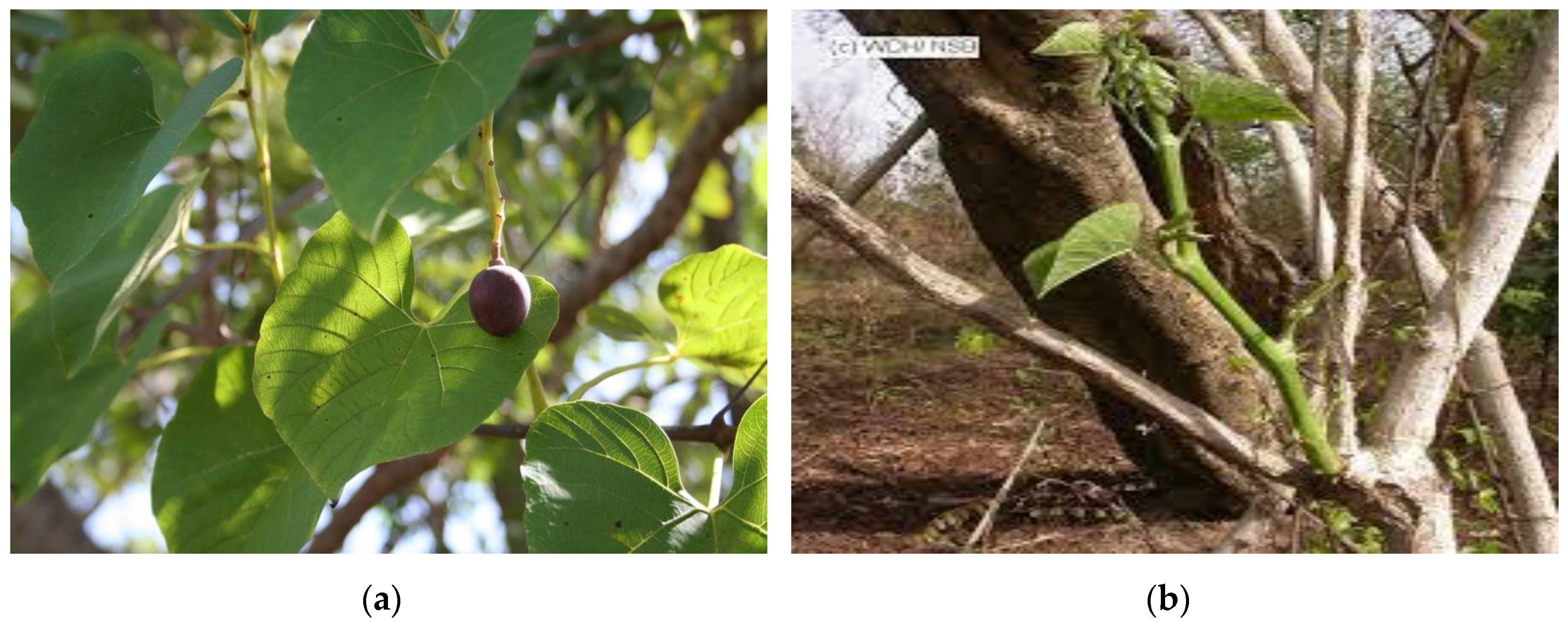
Figure 2.
Chemical Structures of Compounds isolated from leaves and roots of C. populnea; (a) Bergenin; (b) daucosterol; (c) stigmasterol (d) β-sitosterol. (Source: Authors, drawn using ChemDraw Version 12.0).
Figure 2.
Chemical Structures of Compounds isolated from leaves and roots of C. populnea; (a) Bergenin; (b) daucosterol; (c) stigmasterol (d) β-sitosterol. (Source: Authors, drawn using ChemDraw Version 12.0).
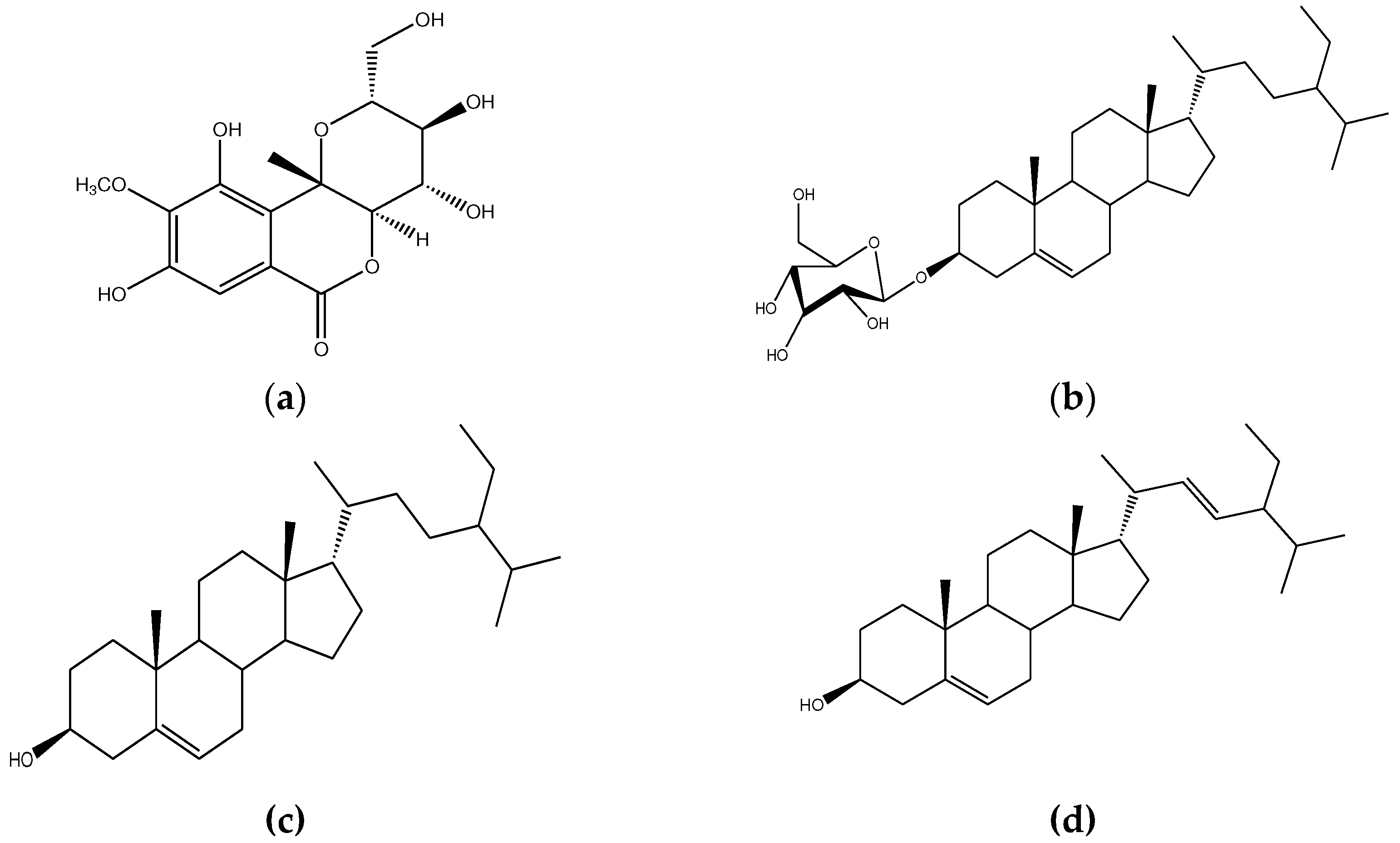
Figure 3.
Some Major (a) COSY and (b) HMBC Correlations of C1.
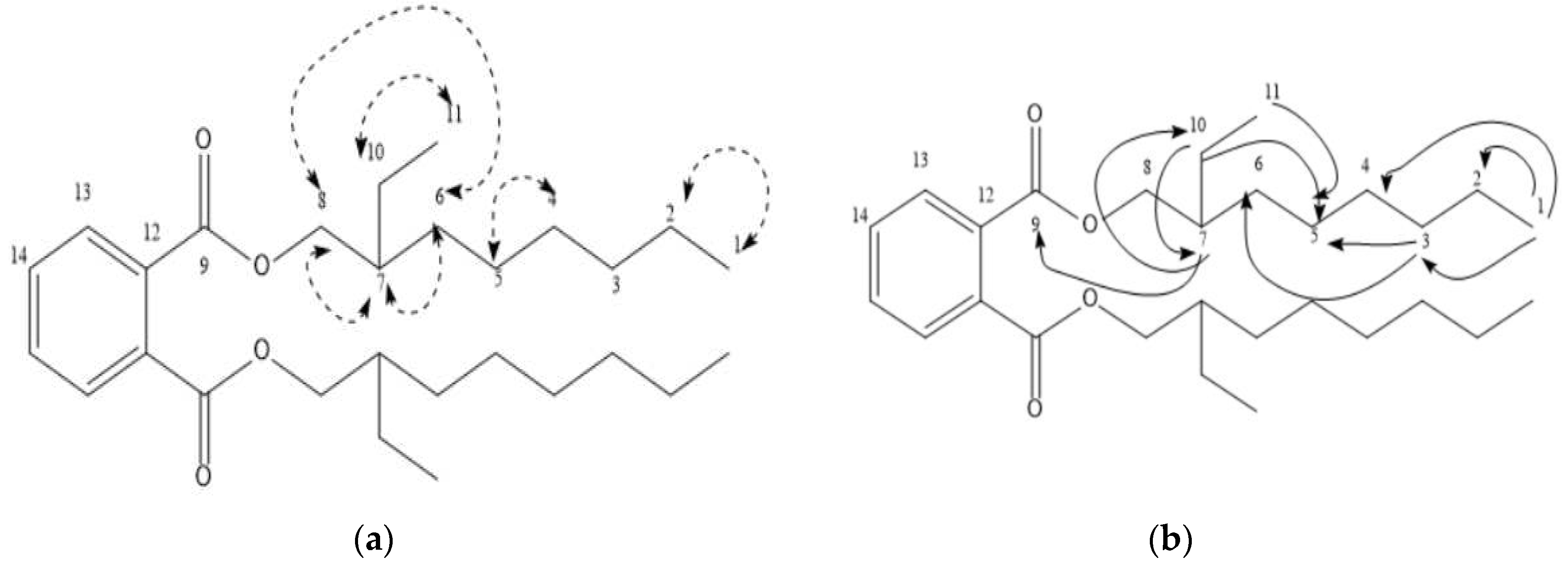
Figure 5.
Chemical Structure of C1 (Bis-(2-ethyloctyl)-phthalate).
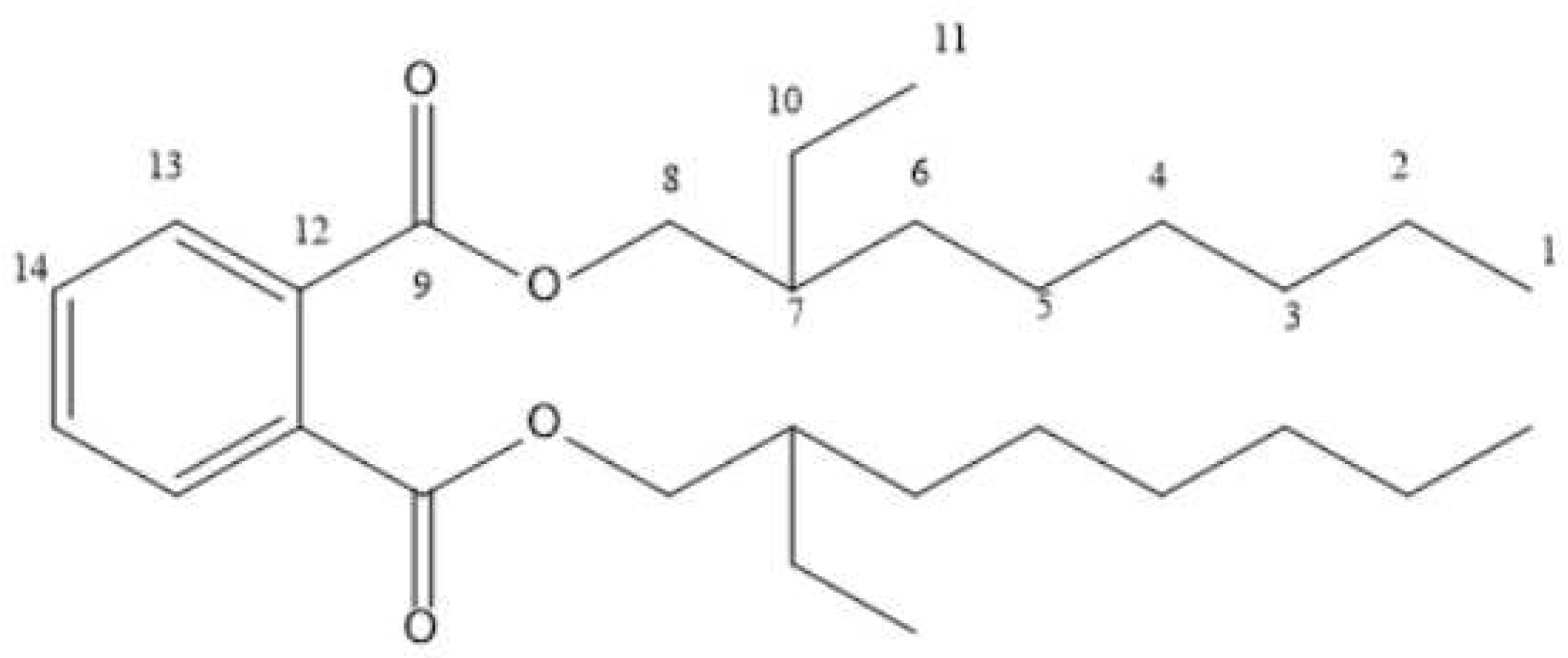
Figure 6.
Chemical Structure of C4C5 (Stigmasterol and β-sitosterol).
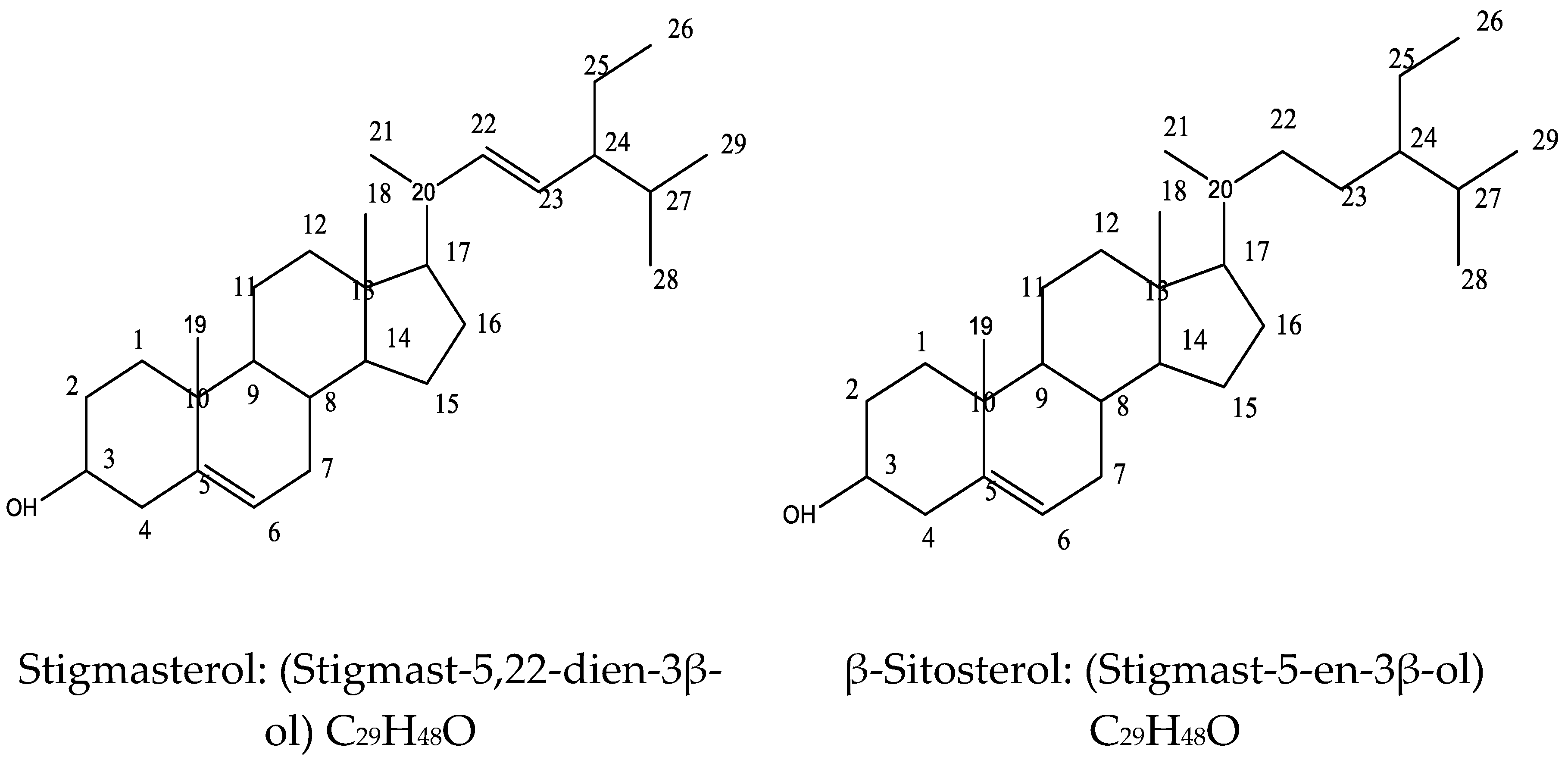

Table 1.
Summary of 1D- and 2D-NMR Data of C1 in CDCl3.
| Position | 1H-NMR | 13C-NMR | DEPT | COSY | HMBC |
|---|---|---|---|---|---|
| 1 | 0.82 | 14.3 | CH3 | H-2 | C-3, C-4, C-5, C-2 |
| 2 | 1.30 | 21.6 | CH2 | H-1 | - |
| 3 | 1.16 | 45.6 | CH2 | - | C-3, C-6, C-10, C-5 |
| 4 | 1.00 | 24.9 | CH2 | H-5 | C-3, C-5 |
| 5 | 1.28 | 22.9 | CH2 | H-4 | C-6, C-7, C-10, C-4, C-5 |
| 6 | 1.63 | 29.2 | CH2 | H-7, H-8, H-5, H-11 | C-9, C-7, C-10, C-4, C-5 |
| 7 | 2.37 | 32.2 | CH | H-6 | C-9, C-5, C-7, C-10 |
| 8 | 4.23 | 68.4 | CH2 | H-6 | C-7 |
| 9 | - | 178.7 | C | - | - |
| 10 | 1.61 | 27.3 | CH2 | H-11 | - |
| 11 | 0.84 | 20.9 | CH3 | H-10 | C-7, C-5 |
| 12 | - | 131.9 | C | - | - |
| 13 | 7.72 | 129.1 | CH | - | - |
| 14 | 7.54 | 132.7 | CH | - | - |
Table 2.
Comparison of 1D-NMR Data of C4C5 with reported literature.
| Position | 1H-NMR C4C5 | 1H-NMR* | 13C-NMR C4C5 | 13C-NMR* | DEPT C4C5 |
|---|---|---|---|---|---|
| 1 2 |
1.85 1.46 |
1.85 1.46 |
37.27 31.67 |
37.26 31.67 |
CH2 CH2 |
| 3 | 3.55 | 3.52 | 71.83 | 71.81 | CH |
| 4 | 2.28 | 2.27 | 42.31 | 42.31 | CH2 |
| 5 | - | - | 140.77 | 140.76 | C |
| 6 | 5.37 | 5.35 | 121.72 | 121.71 | CH |
| 7 | 1.97 | 1.96 | 31.92 | 31.90 | CH2 |
| 8 | 1.49 | 1.48 | - | 31.90 | CH |
| 9 | 0.93 | 0.93 | 50.15 | 50.16 | CH |
| 10 | - | - | 36.52 | 36.51 | C |
| 11 | 1.50 | 1.49 | 21.22 | 21.21 | CH2 |
| 12 | 1.16 | 1.16 | 39.70 | 39.68 | CH2 |
| 13 | - | - | 42.23 | 42.22 | C |
| 14 | 1.05 | 1.05 | 56.88 | 56.87 | CH |
| 15 | 1.56 | 1.56 | 24.37 | 24.36 | CH2 |
| 16 | 1.71 | 1.70 | 28.92 | 28.92 | CH2 |
| 17 | 1.14 | 1.13 | 55.98 | 55.96 | CH |
| 18 | 0.70 | 0.69 | 12.05 | 12.05 | CH3 |
| 19 | 1.03 | 1.03 | 21.09 | 21.08 | CH3 |
| 20 | 2.02 | 2.02 | 40.49 | 40.49 | CH |
| 21 | 1.00 | 1.02 | 23.09 | 23.07 | CH3 |
| 22 | 5.16 | 5.10 | 138.31 | 138.31 | CH |
| 23 | 5.08 | 5.03 | 129.3 | 129.28 | CH |
| 24 | 1.54 | 1.53 | 51.25 | 51.24 | CH |
| 25 | 1.65 | 1.65 | 29.18 | 29.15 | CH2 |
| 26 | 0.83 | 0.82 | 18.99 | 18.98 | CH3 |
| 27 | 0.79 | 0.78 | 19.4 | 19.40 | CH |
| 28 | 1.17 | 1.15 | 25.40 | 25.40 | CH3 |
| 29 | 0.81 | 0.80 | 12.24 | 12.25 | CH3 |
*Yusuf et al. (2015).
Table 3.
Susceptibility Test of C4C5 and Control.
| Test Organism | C4C5 | Ciprofloxacin | Fluconazole | Fulcin |
|---|---|---|---|---|
| Methicillin Resistant Staph aureus | S | R | R | R |
| Staphylococcus aureus | S | R | R | R |
| Vancomycin resistant enterococci | R | S | R | R |
| Escherichia coli | S | S | R | R |
| Bacillus subtilis | R | R | R | R |
| Pseudomonas aeruginosa | R | S | R | R |
| Candida albicans | S | R | S | R |
| Aspergillus niger | R | R | R | S |
| Trichophyton rubrum | S | R | R | S |
| Trichophyton mentagrophyte | S | R | R | S |
KEY: S=Sensitive R= resistant.
Table 4.
Zone of Inhibition of C4C5 and Control against the Test Organism.
| Test Organism | C4C5 | Ciprofloxacin | Fluconazole | Fulcin |
|---|---|---|---|---|
| Methicillin Resistant Staph aureus | 27 | 0 | 0 | 0 |
| Staphylococcus aureus | 25 | 0 | 0 | 0 |
| Vancomycin resistant enterococci | 0 | 29 | 0 | 0 |
| Escherichia coli | 28 | 37 | 0 | 0 |
| Bacillus subtilis | 0 | 0 | 0 | 0 |
| Pseudomonas aeruginosa | 0 | 27 | 0 | 0 |
| Candida albicans | 29 | 0 | 34 | 0 |
| Aspergillus niger | 0 | 0 | 0 | 29 |
| Trichophyton rubrum | 24 | 0 | 0 | 32 |
| Trichophyton mentagrophyte | 26 | 0 | 0 | 30 |
Table 5.
MIC of C4C5 against the Test Organism.
| Test Organism | Concentration (µg/cm3) | ||||
|---|---|---|---|---|---|
| 100 | 50 | 25 | 12.5 | 6.25 | |
| MRSA | - | - | - | 0* | + |
| Staphylococcus aureus | - | - | 0* | + | ++ |
| Escherichia coli | - | - | - | 0* | + |
| Candida albicans | - | - | - | 0* | + |
| Trichophyton rubrum | - | - | 0* | + | ++ |
| Trichophyton mentagrophyte | - | - | 0* | + | ++ |
KEY=> - => No turbidity (no growth); 0*=>MIC; +=> turbid (light growth); ++ => moderate turbidity; +++ => high turbidity. MRSA = Methicillin Resistant Staph aureus.
Table 6.
MBC/MFC of C4C5 against the Test Organism.
| Test Organism | Concentration (µg/cm3) | ||||
|---|---|---|---|---|---|
| 100 | 50 | 25 | 12.5 | 6.25 | |
| MRSA | - | 0* | + | + | ++ |
| Staphylococcus aureus | - | 0* | + | + | ++ |
| Escherichia coli | - | - | 0* | + | ++ |
| Candida albicans | - | - | 0* | + | ++ |
| Trichophyton rubrum | - | 0* | + | + | ++ |
| Trichophyton mentagrophyte | - | 0* | + | + | ++ |
KEY: - =>No Colony Growth; 0* => MBC/MFC; + =>Scanty colonies growth; ++ => Moderate colonies growth; +++ => Heavy colonies growth. MRSA = Methicillin Resistant Staph aureus.
Disclaimer/Publisher’s Note: The statements, opinions and data contained in all publications are solely those of the individual author(s) and contributor(s) and not of MDPI and/or the editor(s). MDPI and/or the editor(s) disclaim responsibility for any injury to people or property resulting from any ideas, methods, instructions or products referred to in the content. |
© 2023 by the authors. Licensee MDPI, Basel, Switzerland. This article is an open access article distributed under the terms and conditions of the Creative Commons Attribution (CC BY) license (http://creativecommons.org/licenses/by/4.0/).
Copyright: This open access article is published under a Creative Commons CC BY 4.0 license, which permit the free download, distribution, and reuse, provided that the author and preprint are cited in any reuse.


