

Submitted:
07 November 2023
Posted:
08 November 2023
You are already at the latest version
Abstract
There are four categories of medical waste that cannot be mixed as this will cause serious problems such as environmental pollution or infection. In the past, the classification of medical waste often involved a lot of human and material resources to process, with workers at risk of exposure to infectious substances. Therefore, an augmented reality (AR) and artificial intelligence (AI) medical waste classification system and method were developed. This innovative medical waste classification system and method combines AR and AI identification technology to reduce the risk of manual judgment errors by clinical staff when handling medical waste.
Keywords:
medical waste
; classified environmental protection signs
; augmented reality
; artificial intelligence identification technology
1. Introduction
The public health consequences of the COVID-19 pandemic highlight the risk of recycling and managing medical waste, hindering the realization of the United Nations Sustainable Development Goals (SDG) [1]. Poor medical waste management will not only cause serious public health consequences such as injuries and infections but also cause damage to the environment and indirectly affect human health [2,3]. Medical waste consists of materials such as used needles and syringes, body parts, medications, diagnostic samples, blood, synthetic substances, medical equipment, radioactive materials, and surgical masks [4]. The Resource Recycling Administration of Taiwan’s Ministry of Environment estimated that there were 20.23 million metric tons of general industrial waste (92.19%) and 1.72 million metric tons (7.81%) of hazardous industrial waste in the 110 years of the Republic of China, including complex and diverse medical waste. Waste is generated in hospitals, other medical facilities, laboratories, research centers, morgues, autopsy centers, blood banks, and nursing homes, of which, 85% is classified as general non-hazardous, while around 15% may be infectious, toxic, or radioactive [2]. Moreover, medical workers involved in waste handling, treatment, and removal are at risk of exposure to physical, chemical, or microbiological hazards [5]. Indeed, if the waste is not managed appropriately, there may be considerable social costs and damage to human health and the environment [2,6,7].
Referring to the Basel Convention and the WHO definition of medical waste [8], it was found that China only regulates infectious biomedical waste in medical waste and there are other non-regulated hazardous waste, such as genotoxic waste, toxic industrial waste, and dissolved toxic industrial waste. However, the composition of medical waste is complex and it often contains genotoxic or cytotoxic (anti-cancer drugs) waste items that are problematic for medical institutions and related units [2]. Currently, medical facilities use the traditional manual classification method of multiple trash bins when processing medical waste [9].
In recent years, artificial intelligence (AI) and augmented reality (AR) technology have become more mature and stable. Furthermore, the AI neural network and expert system can be combined with AR technology to solve the aforementioned medical waste classification problem. A neural network comprises three layers: the input layer, the hidden layer, and the output layer. Learning data consists of input data and corresponding correct answers, for example, in image recognition, the image learning data must first be divided into pixel data, and then each pixel value is input into the input layer for AI to understand a neural network-like model. The input layer that receives the data multiplies the pixel value. After adding the weight, it is sent to the neurons in the hidden layer which accumulates the value received by the previous layer, multiplies the result by the weight, and transmits it to the subsequent neurons. Finally, the prediction results of image recognition can be obtained through the output of the neurons in the output layer [10].
The expert system is a branch of AI and is divided into two categories: case-based expert systems and rule-based expert systems. The case-based expert system is used to find and compare similar cases in the past as a basis, make appropriate modifications or directly access them as the answer to this query, and store this modification as a new case back to the case-based knowledge Library [11]. Augmented reality superimposes computer-generated virtual objects, scenes, and information with natural scenes: enhanced to increase and strengthen understanding and reality is a definition of real and existing things. It differs from the fully immersive effect achieved by virtual reality and the product is the fusion of virtual information and natural scenes [12]. Image recognition technology identifies objects in images and uses computer technology to simulate human senses to complete the image recognition and understanding process [13]. It is more discriminative and robust through the underlying feature extraction and feature encoding. The feature expression of the entire image is obtained through the feature set aggregation operation [14].
Medical staff must rely on their judgment and experience to classify waste and errors can lead to environmental pollution and human harm. Effective waste sorting and management has a positive economic impact through reduced waste disposal costs and job creation, as well as added benefits from a human health and environmental perspective. Therefore, this article reports the development of an AR and AI medical waste classification system and method. This innovative medical waste classification system and method combines AR and AI identification technology to avoid the severe problem of incorrect classification and processing of medical waste, improve the risk of manual judgment errors faced by staff when handling medical waste, and reduce the opportunities for environmental pollution to achieve ecological protection and sustainable environmental management.
2. Materials and Methods
2.1. Creative Description
This innovative technology is the first to be used for the disposal of medical waste. Medical staff only need to ask the system to recognize the environmental protection signs on the medical waste, then the system will dispose of the item according to its ecological protection classification category. This system is combined with the government’s medical and environmental protection policies and requires manufacturers to display environmental protection signs for waste classification before products leave the factory. However, if the medical waste is damaged, twisted, and deformed after use, this may cause difficulties in identification and lead to significant problems in the waste classification. Therefore, a deep neural network and expert system detection method were used to overcome this problem (Figure 1).
2.2. Introduction to System Functions
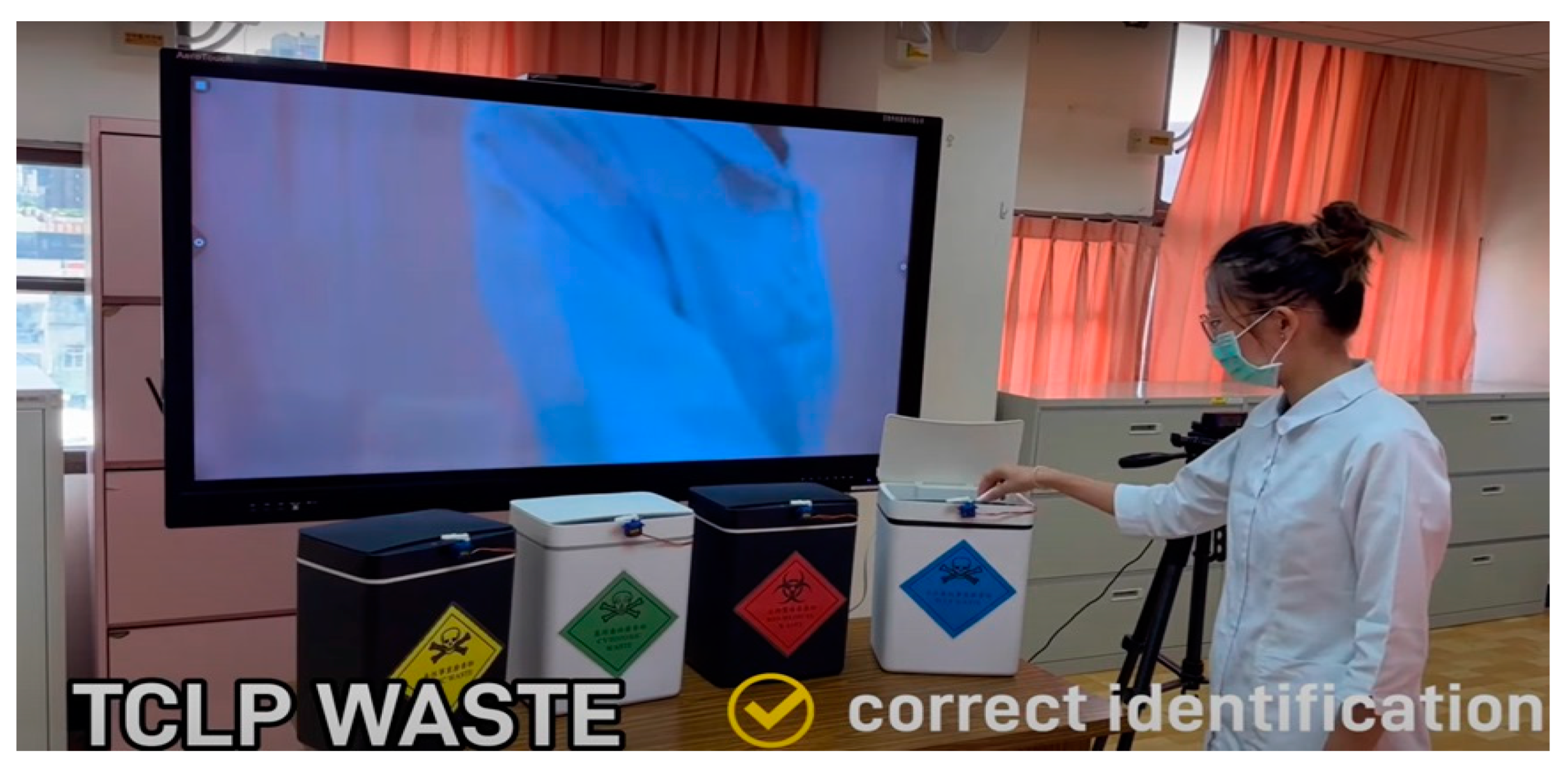
When the medical waste needs to be discarded, its symbol is placed in front of the AR sensing lens (Figure 2). After successful recognition, it will be supplemented by voice and dynamic or static icons (Figure 3). The synchronization system will open the lid of the corresponding category and automatically close after the waste is placed inside (Figure 4). Illustrated instructions for use are shown in Figure 5, Figure 6 and Figure 7. System operation process video links: https://youtu.be/NKdA4W4PqBE accessed on 23 September 2023.
3. Results
3.1. System Features
This system is the first to adopt the AR intelligent medical environmental protection classification system for medical waste classification and environmental protection labels. This innovative technology can be applied to various damaged, twisted, and damaged signs printed on packaging bags, bottles, medical equipment, and instruments. The deformed medical waste classification environmental protection signs allow for more accurate identification, reducing the load and pressure on medical staff in handling medical waste. In addition, it also avoids serious problems such as contamination and infection caused by inaccurate classification. The AR intelligent classification system and the electromechanical interactive interface device technology recognize the environmental protection signs for medical waste classification. It will supplement it with voice and dynamic or static icons and use the electromechanical interactive interface device to control the opening of the correct medical waste trash can, the lid of which automatically closes after the waste is placed inside. This system can also be expanded for systematic classification and disposal of various types of garbage that require environmentally friendly treatment or recycling (for example, plastics, metals, chemicals, glass, etc. that need environmentally friendly classification or recycling).
3.2. System Development Tools and Technologies
First, combined with the government’s medical environmental protection policy, manufacturers must display various levels of medical waste classification environmental protection signs before products leave the factory. The logo can be placed on the packaging bag, bottle, device, or any conspicuous location for AR scanning. When medical waste needs to be discarded, this sign is placed in front of the sensing lens and the system will display the medical waste category on the screen, supplemented by voice and dynamic or static icons, and open the correct trash can. Medical staff only need to throw waste into the opened medical waste trash can. Human judgment and selection are not required, thereby reducing the risk of environmental pollution or careless infectious problems such as needle sticks. Damaged, twisted, and deformed medical waste may cause identification difficulties, therefore a deep neural network and expert system identification technology were proposed to overcome this problem. The detection method of deep neural network and expert system in this work is described below:
- Create a basic identification library.
- Use image distortions and defects to increase the identification sample library, and use distorted or defective images as training samples. The training samples include normal and faulty images.
- The deep neural network includes an input layer, a convolution layer, a pooling layer, and a connection layer. The input layer is a medical waste image, the convolution layer is for extracting features of distorted or damaged photos, and the pooling layer performs a function on the convolution layer. Take samples. Finally, the obtained features are input to the connection layer and classified using a classifier.
- This system combines an AI identification method with an expert system for images that cannot be effectively trained and classified. It establishes a database to assist in identifying distorted and defective images, thereby achieving accurate identification.
4. Discussion
This innovative AR and AI medical waste classification system and method can systematically classify and process various types of waste that require environmental treatment or recycling (for example, plastics, metals, chemicals, glass, and other debris that need to be environmentally classified or recyclable). If it can cooperate with implementing national environmental protection policies, hospitals and medical facilities nationwide can set up “medical waste environmentally friendly classification trash cans”. This patented technology can be used to set up various types of resource recycling or waste disposal trash cans across the country in conjunction with the new generation of environmental protection policies (public policy that all products are printed with recycling signs before leaving the factory) to improve the current domestic environmental protection. This improved processing efficiency can be promoted to the world with Taiwan as the center, becoming an indispensable daily necessity for the future progressive society. This system can also be expanded and promoted for systematic classification and disposal of various types of garbage that require environmental treatment or recycling, such as community garbage, medical waste treatment, large garbage disposal sites, etc.
Managing increasingly complex medical waste is essential for environmental protection, as improper treatment will pollute the environment and may endanger human health [2,3,6,7]. In today’s society, the issue of environmental pollution is a global concern. In 2015, the United Nations announced the “2030 Sustainable Development Goals” to reduce environmental damage [15]. This new combined AR and AI medical waste classification system can achieve SDG3 Good health and well-being, reducing the risk of people contracting diseases from handling waste. Effective waste classification and processing can reduce infectious diseases and environmental pollution that threaten public health and well-being [7]. SDG6 Clean water and sanitation, through effective waste classification, can improve water quality, maintain ecological sanitation, and ensure that people have access to good water resources and the environment so that society can have a cleaner and healthier environment [16]. SDG7 Affordable clean energy, through the effective management of waste through this system, a large amount of waste can be recycled and converted into valuable energy to meet global energy demands [17,18]. It can also reduce energy consumption and the burden on water purification, environmental protection, and medical care caused by environmental pollution and personnel infection caused by improper waste disposal. SDG9 Industry, innovation, and infrastructure, the use of AR and AI technology in this system increases the health protection of medical staff at work, reduces the occurrence of error rates, increases human resource management, and improves environmental sanitation, creating a community that helps diversity development and the improvement of the added value of medical products to promote high-quality, reliable and sustainable development, thereby achieving sustainable industry and infrastructure. SDG15, this product can judge the environmental protection classification of waste through AR, and reduce the risk of environmental pollution for ecological protection and sustainable environmental management.
5. Conclusions
This technology can also be promoted to all parts of the country to achieve environmental protection classification of garbage and waste. In the future, with the implementation of medical regulations, manufacturers will be required to print environmental protection signs for waste classification on products before they leave the factory. The classification environmental protection signs are recognized by the system for correct disposal, thereby ensuring the accuracy of waste classification, saving time and effort, with a zero risk of errors. This system combines AR and AI recognition technology to identify various types of waste and reduce environmental pollution. This technology can also be promoted to medical institutions, laboratories, schools, and communities worldwide, and even worldwide, to protect the ecology and sustainable environment, thereby improving people’s quality of life, health, and well-being.
6. Patents
The name of the invention patent of the Taiwan (Republic of China): Medical waste classification system and method [Patent number: I768841].
Supplementary Materials
Augmented Reality and Artificial Intelligence medical waste classification system Video Links: https://youtu.be/NKdA4W4PqBE.
Author Contributions
Conceptualization, P.-J.C. and W.-K.L.; methodology, P.-J.C. and W.-K.L.; validation, W.-K.L.; formal analysis, P.-J.C.; resources, P.-J.C. and W.-K.L.; data curation, P.-J.C.; writing—original draft preparation, P.-J.C. and W.-K.L.; writing—review and editing, P.-J.C. and W.-K.L.; project administration, P.-J.C.; funding acquisition, P.-J.C. All authors have read and agreed to the published version of the manuscript.
Funding
This research received no specific funding.
Institutional Review Board Statement
We did not submit a human trial review to the Research Ethics Review Committee. We have only used the developed teaching aids as a precursor test.
Informed Consent Statement
Individual written informed consent was waived because of a retrospective data analysis.
Data Availability Statement
The data presented in this study are available from the author upon request.
Acknowledgments
The authors would like to thank the nursing student participants in this study for their time and patience.
Conflicts of Interest
The authors declare no conflict of interest.
References
- Sharma, H.B.; Vanapalli, K.R.; Samal, B.; Cheela, V.S.; Dubey, B.K.; Bhattacharya, J. Circular conomy approach in solid waste management system to achieve UN-SDGs: Solutions for post-COVID recovery. Sci. Total Environ. 2021, 800, 149605. [Google Scholar] [CrossRef] [PubMed]
- Borowy, I. Medical waste: The dark side of healthcare. História Ciências Saúde-Manguinhos 2020, 27, 231–251. [Google Scholar] [CrossRef] [PubMed]
- Kumar, M.; Kumar, S.; Singh, S. Waste management by waste to energy initiatives in India. Int. J. Sustain. Energy Environ. Res. 2021, 10, 58–68. [Google Scholar] [CrossRef]
- Mazzei, H.G.; Specchia, S. Latest insights on technologies for the treatment of solid medical waste: A review. J. Environ. Chem. Eng. 2023, 109309. [Google Scholar] [CrossRef]
- Shareefdeen, Z.M. Medical waste management and control. J. Environ. Prot. 2012, 3, 1625. [Google Scholar] [CrossRef]
- Krivokuća, M. Medical waste management. Serbian J. Eng. Manag. 2021, 6, 30–36. [Google Scholar] [CrossRef]
- Singh, N.; Ogunseitan, O.A.; Tang, Y. Medical waste: Current challenges and future opportunities for sustainable management. Crit. Rev. Environ. Sci. Technol. 2022, 52, 2000–2022. [Google Scholar] [CrossRef]
- Kirby, R.A. The Basel Convention and the Need for United States Implementation. Ga. J. Int’l Comp. L. 1994, 24, 281. [Google Scholar]
- Rakesh, U.; Ramya, V.; Murugan, V.S. Classification, Collection, and Notification of Medical Waste Using IoT-Based Smart Dust Bins. Ingénierie Des Systèmes D’information 2023, 28. [Google Scholar] [CrossRef]
- McCulloch, W.S.; Pitts, W. A logical calculus of the ideas immanent in nervous activity. Bull. Math. Biophys. 1943, 5, 115–133. [Google Scholar] [CrossRef]
- Jackson, P. Introduction to Expert Systems, 3rd ed.Addison-Wesley Longman Publishing Co., Inc.: Boston, MA, USA,, 1998. [Google Scholar]
- Cheng, Q.; Zhang, S.; Bo, S.; Chen, D.; Zhang, H. Augmented reality dynamic image recognition technology based on a deep learning algorithm. IEEE Access 2020, 8, 137370–137384. [Google Scholar] [CrossRef]
- Saritha, R.R.; Paul, V.; Kumar, P.G. Content-based image retrieval using deep learning process. Clust. Comput. 2019, 22, 4187–4200. [Google Scholar] [CrossRef]
- Yasaka, K.; Akai, H.; Kunimatsu Kiryu, S.; Abe, O. Deep learning with convolutional neural network in radiology. Jpn. J. Radiol. 2018, 36, 257–272. [Google Scholar] [CrossRef] [PubMed]
- WHO. Health in 2015: From MDGs to SDGs. Available online: https://www.who.int/data/gho/data/themes/world-health-statistics (accessed on 21 October 2023).
- Utama, W.T.; Sukohar, A.; Miswar, D.; Bakri, S.; Setiawan, A.; Tugiyono, T. Study of sustainable development goals (SDGS) on zero waste management of household infectious waste in the era of the Covid-19 pandemic. Int. J. Multicult. Multireligious Underst. 2022, 9, 188–199. [Google Scholar] [CrossRef]
- Awogbemi, O.; Von Kallon, D.V. Achieving affordable and clean energy through conversion of waste plastic to liquid fuel. J. Energy Inst. 2022, 101154. [Google Scholar] [CrossRef]
- Kothari, R.; Tyagi, V.V.; Pathak, A. Waste-to-energy: A way from renewable energy sources to sustainable development. Renew. Sustain. Energy Rev. 2010, 14, 3164–3170. [Google Scholar] [CrossRef]
Figure 1.
AR Identification Technology Medical Waste Environmentally Friendly Classification Trash Can Sample.
Figure 1.
AR Identification Technology Medical Waste Environmentally Friendly Classification Trash Can Sample.
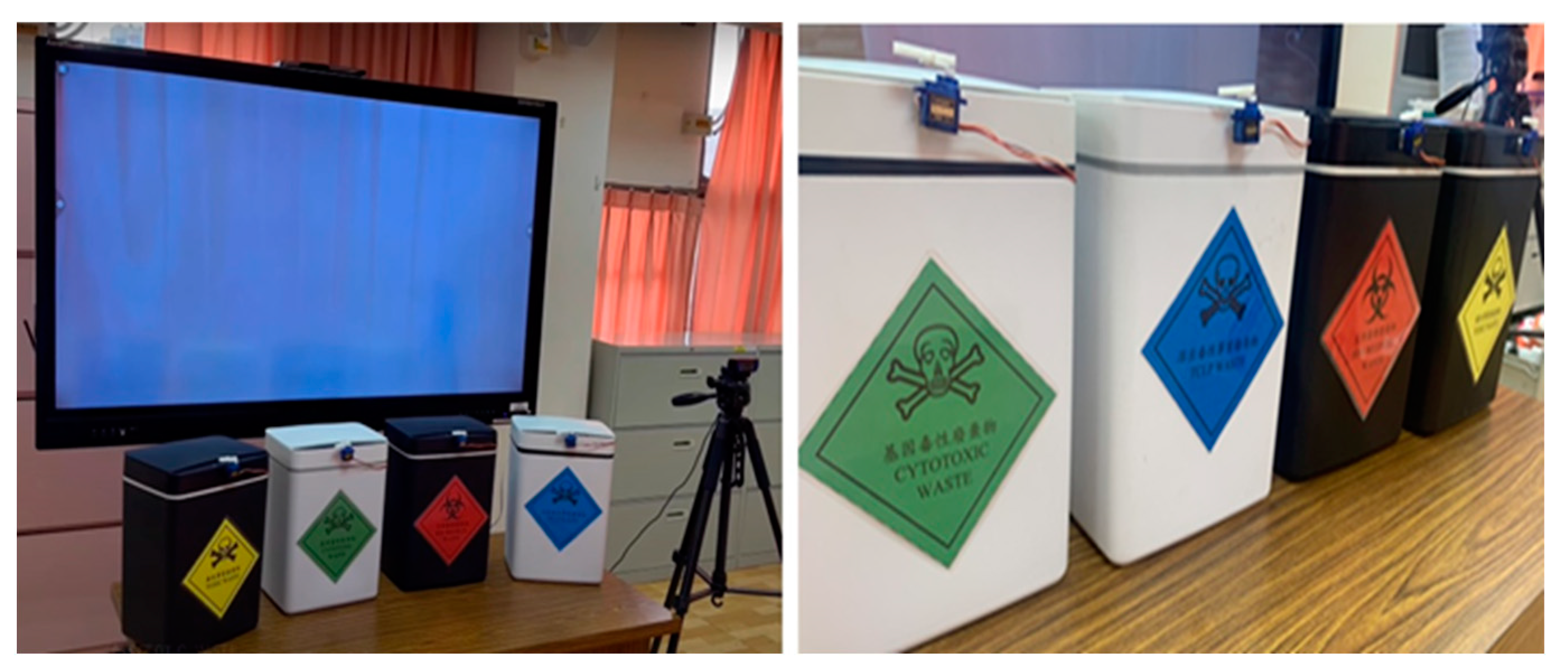
Figure 2.
When the medical waste needs to be discarded, place the sign in front of the AR sensing lens.
Figure 2.
When the medical waste needs to be discarded, place the sign in front of the AR sensing lens.
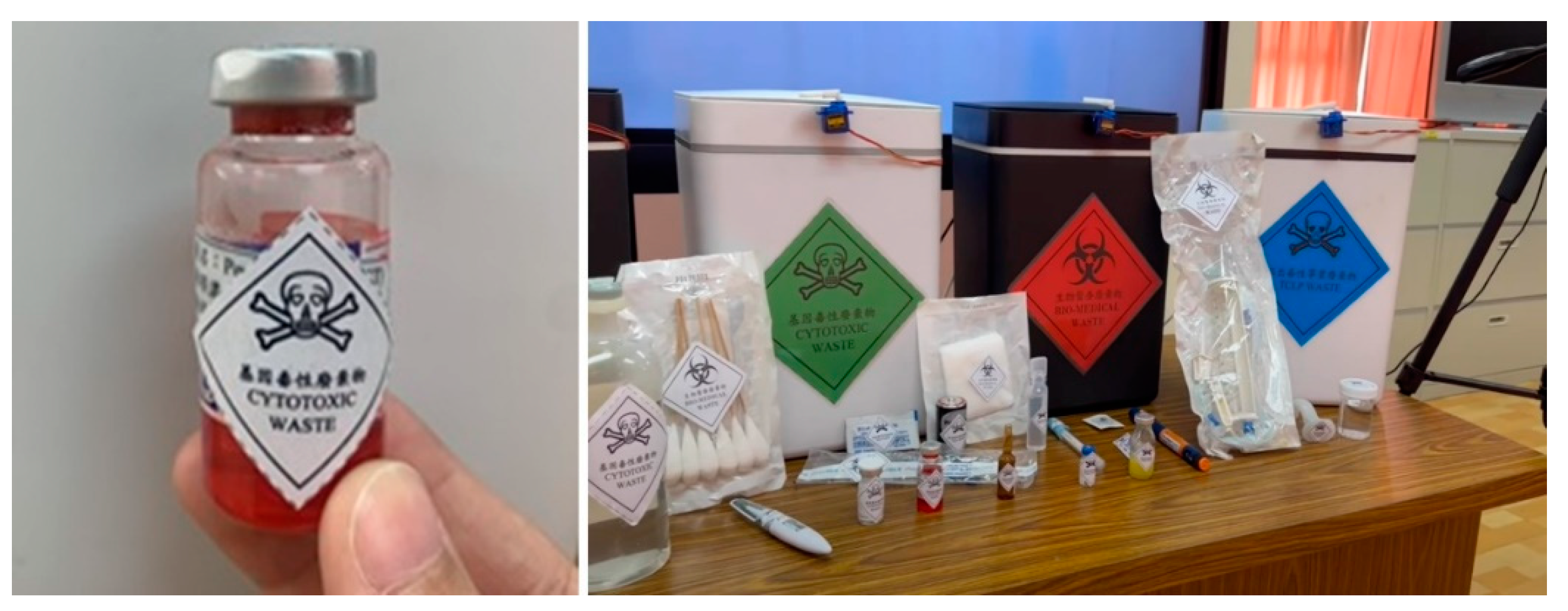
Figure 3.
After successful recognition, it will be supplemented by voice and dynamic or static icons.
Figure 3.
After successful recognition, it will be supplemented by voice and dynamic or static icons.
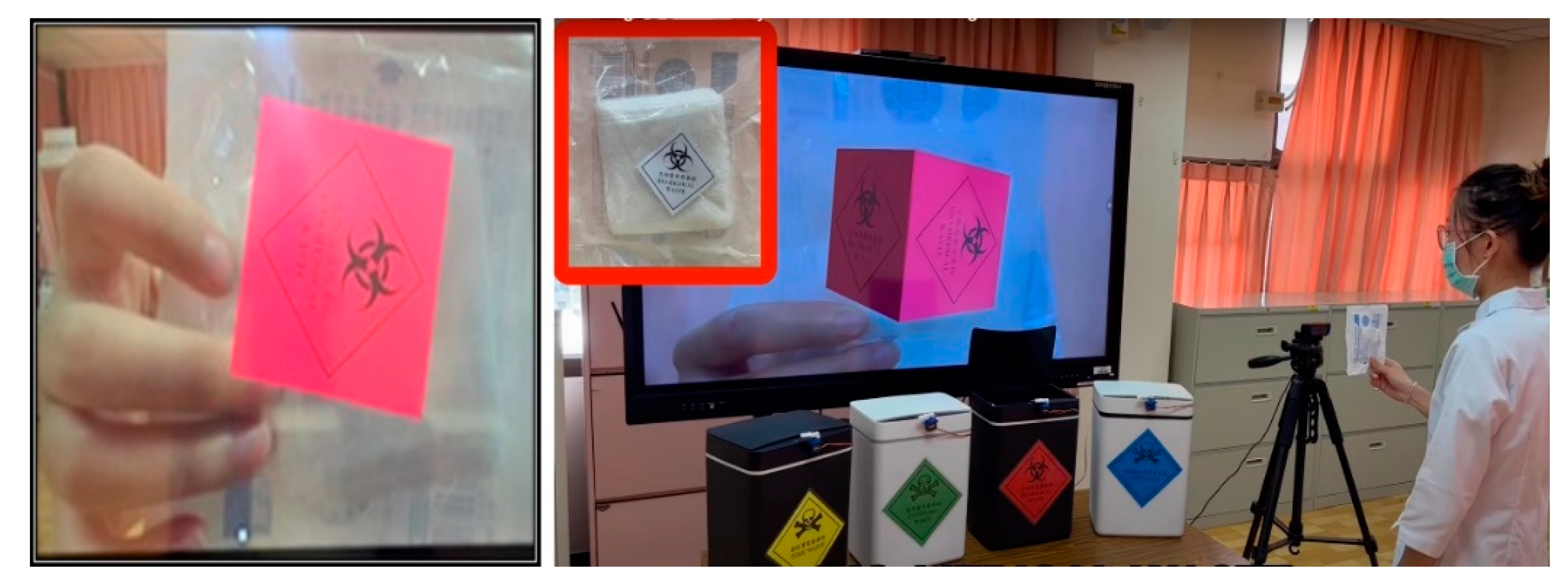
Figure 4.
The synchronous system opens the lid of the correct trash and closes once the waste is placed inside. .
Figure 4.
The synchronous system opens the lid of the correct trash and closes once the waste is placed inside. .
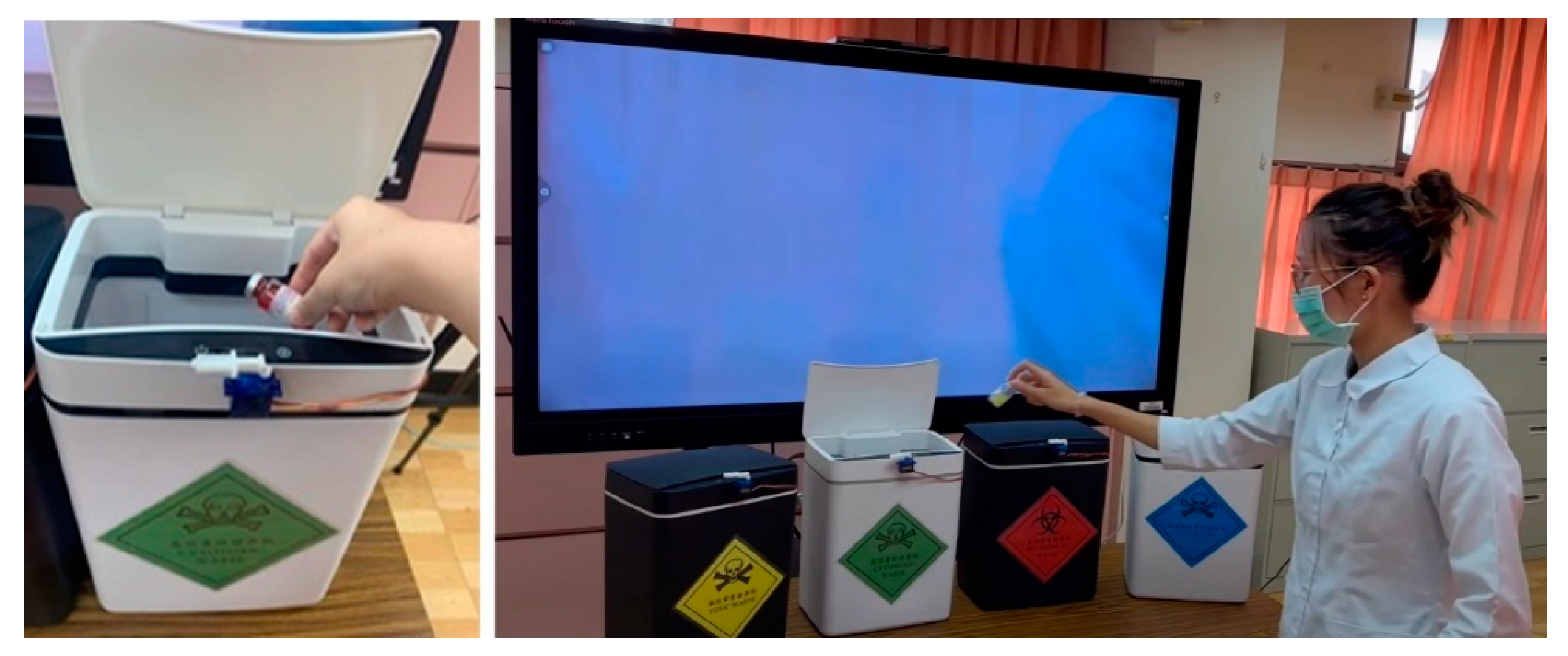
Figure 5.
Medical staff hold the medical waste to the scanning camera to scan the classification marks on the medical waste.
Figure 5.
Medical staff hold the medical waste to the scanning camera to scan the classification marks on the medical waste.
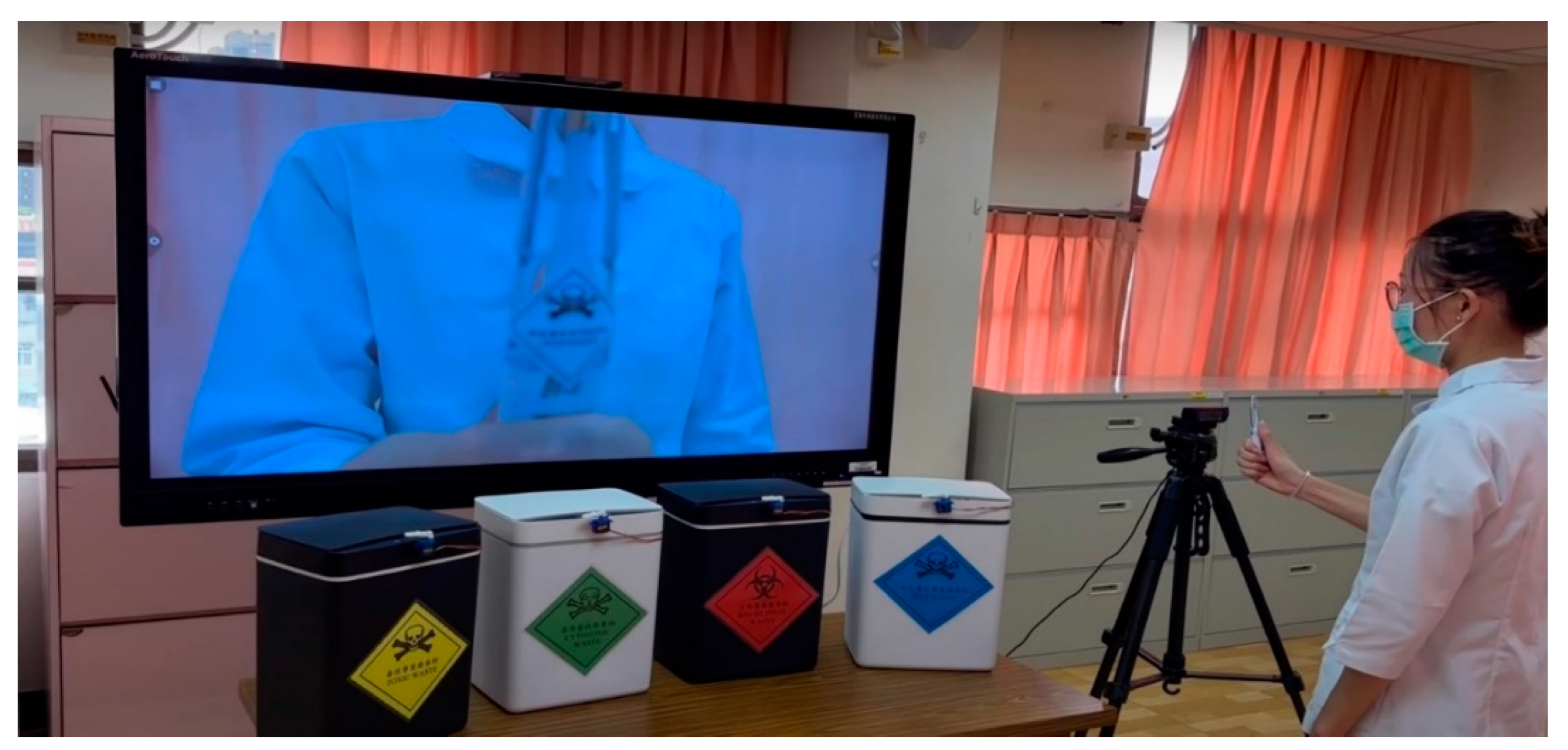
Figure 6.
Scan the medical waste classification mark on the medical waste. After the identification is completed, the correct trash can lid of the classified medical waste (this diagram shows biomedical waste) will automatically open.
Figure 6.
Scan the medical waste classification mark on the medical waste. After the identification is completed, the correct trash can lid of the classified medical waste (this diagram shows biomedical waste) will automatically open.
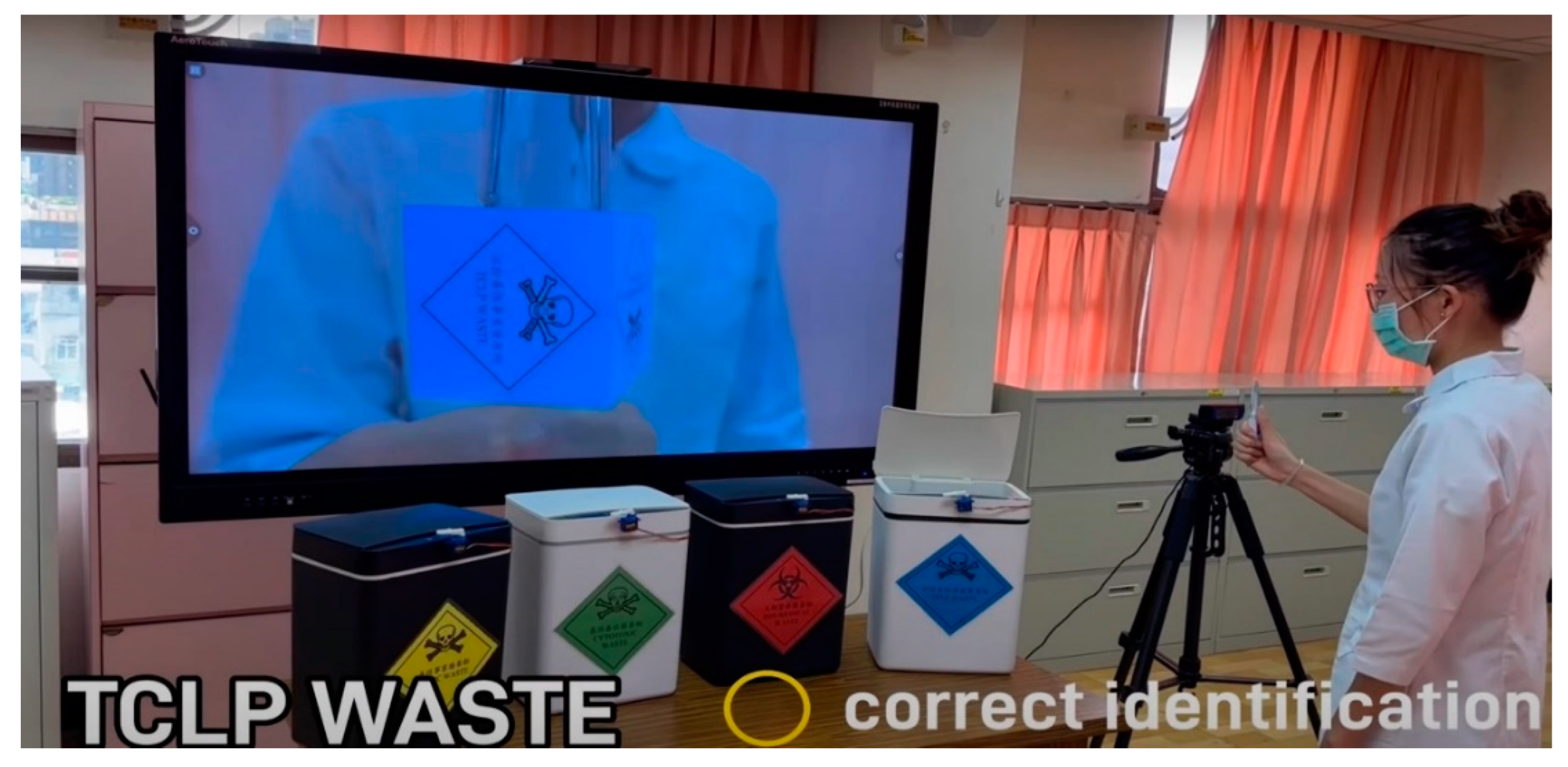
Figure 7.
Medical staff throw medical waste into the trash can with the lid automatically opening.
Disclaimer/Publisher’s Note: The statements, opinions and data contained in all publications are solely those of the individual author(s) and contributor(s) and not of MDPI and/or the editor(s). MDPI and/or the editor(s) disclaim responsibility for any injury to people or property resulting from any ideas, methods, instructions or products referred to in the content. |
© 2023 by the authors. Licensee MDPI, Basel, Switzerland. This article is an open access article distributed under the terms and conditions of the Creative Commons Attribution (CC BY) license (http://creativecommons.org/licenses/by/4.0/).
Copyright: This open access article is published under a Creative Commons CC BY 4.0 license, which permit the free download, distribution, and reuse, provided that the author and preprint are cited in any reuse.


