

Submitted:
27 October 2023
Posted:
31 October 2023
Read the latest preprint version here
Abstract
The concept of Emotional Intelligence (EI) has gained prominence due to its substantial impact on a range of life outcomes, including academic performance. The present study aims to examine the relationship between Emotional Intelligence and academic accomplishment in the context of a school environment. Analyzing students' emotional skills and competencies makes it possible to uncover the potential of emotional intelligence (EI) in predicting their academic achievement. Additionally, the study emphasizes the importance of integrating emotional intelligence (EI) training within the educational curriculum. Developing students' emotional awareness, empathy, self-regulation, and social skills can yield notable academic benefits, cultivating an environment more favorable to learning. This systematic review examines the relationship between emotional intelligence and its impact on children and teachers by synthesizing several relevant research studies. This study encompasses a comprehensive review conducted from 2016 to 2023. A total of 64 publications were examined in this study, specifically chosen based on their relevance to the review's parameters. These articles were sourced from reputable academic databases, including Scopus, PsycINFO, PubMed, and WoS. The study revealed a correlation between the five dimensions of personality and emotional intelligence, creativity, resilience, the educational framework, and specific experimental programs about its education. The results mentioned above are of great significance, as they demonstrate that emotional intelligence (EI) is not solely a non-essential skill but a vital factor in education that can provide significant perspectives for students, educators, and politicians.
Keywords:
Emotional Intelligence
; Academic Achievement
; Creativity
; Emotional Awareness
; School Setting
; Prisma Methodology
1. Introduction
The term of Emotional Intelligence (EI) holds considerable importance in shaping the overall functionality and effectiveness of a school setting. Emotional intelligence (EI) refers to an individual's capacity to effectively notice, comprehend, regulate, and harness emotions in both one and others in a constructive and beneficial manner. In educational environments, it serves to enhance the personal growth of both students and teachers, fostering a conducive and efficacious learning environment (Chandel & Chopra, 2017; Hansenne & Legrand, 2012; Luque et al., 2022; Thapar et al., 2019).
The recognition of this particular facet of psychological well-being is progressively growing as a pivotal determinant for comprehensive scholastic accomplishment and interpersonal dynamics within educational institutions (Moreno, 2018). By placing emphasis on the development of emotional intelligence, educational institutions have the potential to foster enhanced communication, heightened problem-solving abilities, augmented capacity to cope with stress, as well as more empathic and productive interactions between the student body and faculty (Novesar, 2020).
The role of emotional intelligence (EI) is crucial in fostering a loving, supporting, and productive educational atmosphere, including teachers' capacity to comprehend and address their students' emotional requirements, as well as children's aptitude to navigate their own emotional terrain and demonstrate empathy towards their peers (Rozo-Rico & Sandoval, 2020; Sahar & Tariq, 2011).
This paper aims to provide a comprehensive analysis of the correlations between Emotional Intelligence and individuals in the context of children, adolescents, and instructors in a typical school environment (Wang, 2022). It will examine the impact of these links on educational experiences, interpersonal connections, and the overall culture of the school. The incorporation of emotional intelligence into education is becoming increasingly evident, with possible implications for the transformation of educational institutions into more empathetic, adaptable, and prosperous entities.
This study examines the effect of emotional intelligence on many aspects of children's performance. However, it is seen valuable to commence by providing a concise explanation of the subject matter. Emotional intelligence is thus characterized as the capacity of humans to perceive, analyze, and comprehend their own emotions as well as the emotions of others. It additionally pertains to their capacity to engage in daily activities guided by these emotional states, and more broadly, to confront challenging circumstances by employing suitable emotional responses. This review addresses the impact of emotional intelligence on different dimensions of children and adolescents' daily lives, including their academic responsibilities, the school environment's atmosphere, and the personality traits exhibited by young individuals (e.g., Big Five personality traits, shyness, internalized behavior) (Elia et al., 2022; Garg et al., 2016; Jung et al., 2023; Nasti et al., 2023). However, the examination of this component, namely origin and social and demographic characteristics, is also a subject of study in various countries and cultures, underscoring its significance. Furthermore, it has been observed that emotional intelligence experiences substantial growth within the school setting, facilitated by the endeavors of educators (Geraci et al., 2023). Additionally, the introduction of various educational programs in recent years has further demonstrated their efficacy in enhancing emotional intelligence, as evidenced by numerous conducted studies (Ulutas & Omeroglu, 2007; Yuksel & Geban, 2014; Zirak & Ahmadian, 2015). Regarding teachers, it is crucial to recognize that their emotional intelligence directly influences that of young individuals and ultimately molds it. This is because students, in response to the emotional and cognitive interactions they encounter with their teachers, also cultivate their own emotional intelligence.
2. Literature Review
The role of Emotional Intelligence (EI) is of utmost importance in educational settings. Emotional intelligence (EI) encompasses the capacity to recognize, regulate, and assess emotions within oneself and others and employ this knowledge to inform cognitive processes and actions effectively. The importance of general well-being and achievement, particularly in educational environments, is increasingly acknowledged (Gyanesh, 2016). The following are several associations between emotional intelligence and individuals inside the school environment, specifically children, adolescents, and teachers.
The correlation between emotional intelligence and enhanced academic achievement, as well as increased interpersonal connections, has been established in the context of children. The incorporation of emotional intelligence education aids in developing children's comprehension and regulation of their emotions, including prevalent feelings such as irritation, anger, or disappointment, within the context of an educational setting. Additionally, it facilitates the development of empathy for others, thereby fostering constructive social relationships. It is well acknowledged that children can cultivate emotional intelligence during their early developmental stages, enhancing their resilience and ability to cope with various challenges (Jenaabadi, 2014; Lim, 2023).
Adolescents frequently encounter a multifaceted array of emotions and social circumstances. Acquiring emotional intelligence can be particularly advantageous for adolescents, as it facilitates their ability to navigate and manage the various problems they encounter effectively (Plexousakis et al., 2020). Adolescents exhibiting elevated emotional intelligence (EI) frequently have enhanced proficiency in effectively maneuvering social contexts, comprehending, and regulating their emotions, and coping with academic challenges (Mara & Mara, 2010). This could reduce behavioral issues, improve interpersonal connections, and enhance academic performance.
Emotional intelligence holds similar, if not greater, significance for educators. Educators possessing elevated emotional intelligence (EI) are more adept at comprehending and addressing the emotional requirements of their students, hence fostering a more favorable milieu for learning. Educators demonstrate enhanced proficiency in classroom management techniques and the establishment of nurturing student connections (Wang, 2022). Moreover, educators who possess a high level of emotional intelligence are more adept at effectively regulating their emotions, mitigating the likelihood of experiencing burnout and enhancing their overall job contentment.
Emotional intelligence has the potential to foster a conducive and constructive culture within the broader educational setting, characterized by enhanced positivity, support, and productivity. Educational institutions that place a higher emphasis on emotional intelligence (EI) have been seen to encounter a reduction in behavioral issues, enhanced teacher-student rapport, and elevated academic achievement (Chis & Rusu, 2016). The implementation of inclusive strategies, such as integrating social-emotional learning (SEL) curricula, has the potential to cultivate emotional intelligence throughout the educational setting, yielding advantages for students, educators, and the broader school community.
In summary, cultivating emotional intelligence within the educational setting, encompassing students and teachers at all institutional levels, can yield many advantages (Dash, 2021). As mentioned above, the phenomenon can result in improved scholastic achievements, enhanced interpersonal connections, and the establishment of a nurturing and stimulating educational milieu.
Extensive research has been conducted on the topic of emotional intelligence in educational settings, with a particular focus on programs designed to enhance its development. For instance, a recent study conducted by Pauletto et al. (2022) investigated the impact of school-based programs on the enhancement of emotional intelligence skills in pre-adolescents. The findings of this study revealed a positive association between participation in such programs and the improvement of emotional intelligence abilities in this age group. Another study also highlights the significance of emotional intelligence in everyday life, specifically in relation to the literature consumed by young children. Another study conducted by Jiamin Xu (2023) examines the phenomenon of emotional intelligence development in young children, with a specific focus on the influence of both pre-existing literature and self-generated narratives. The study conducted by Navas-Martínez et al. (2023) reaffirms the significance of the environmental factors that shape a child's upbringing and their potential impact on their emotional intelligence. In a more specific context, the researcher investigates and discloses that children who are raised in households with parents who engage in abusive behaviors exhibit not just challenges related to attachment and diminished resilience but also have a notable decrease in emotional intelligence (Afridi, 2019). The scope of research is extensive and cannot be fully encompassed within the confines of this systematic review. Nevertheless, it is evident from the aforementioned analysis that experts consistently emphasize the significance of fostering emotional intelligence during early stages of life. This aspect warrants due consideration.
Furthermore, the significance of Emotional Intelligence (EI) and leadership skills concerning academic achievement is progressively acknowledged (Antonopoulou et al., 2021a, 2021b; Gkintoni et al., 2022). These qualities characterize individuals who possess exceptional problem-solving ability, effective stress management strategies, highly developed interpersonal skills, and a solid capacity to persevere in the face of scholastic difficulties.
The complex interplay between emotional intelligence (EI), leadership, and academic performance becomes apparent upon carefully examining the data. The findings indicate that strong leadership skills, which are further bolstered by high emotional intelligence (EI), favorably impact individual academic achievements, group productivity, and the overall dynamics within a classroom setting. Leaders that possess a high level of emotional intelligence (EI) have been seen to cultivate a learning atmosphere that is both productive and empathic, hence resulting in improved academic performance (Antonopoulou, 2020).
Research highlights the necessity of including emotional intelligence (EI) and leadership training in educational curricula. By prioritizing cultivating students' emotional awareness, empathy, self-regulation, and leadership skills, it is possible to create a conducive environment for enhanced academic achievement. Additionally, this emphasizes the significance of providing educators with the necessary training to identify and foster emotional intelligence (EI) and leadership attributes, enabling them to adapt their instructional approaches accordingly.
In summary, it may be argued that emotional intelligence (EI) and leadership skills are not only supplementary abilities but rather fundamental components that contribute significantly to academic success. Implementing these strategies can greatly enhance students' educational experiences and outcomes. Additional investigation is warranted to examine the implementation of comprehensive emotional intelligence (EI) and leadership programs inside educational institutions, focusing on evaluating their enduring impact on academic performance and the holistic growth of students (Antonopoulou et al., 2022b).
Another aspect that is correlated to emotional intelligence and is crucial and predictive factor in academic performance, is personality. There is a growing interest in literature upon the study of personality and its contribution to academic achievement.
In a more specific context, the investigation conducted by Dong et al. (2022) sought to explore the influence of individual personality traits on academic achievement. Furthermore, the primary objective of this study was to examine the impact of virtual experience and emotional intelligence on students' personality traits and academic performance. The results indicate a significant relationship between personality traits and academic performance, with personality traits as robust predictors of higher academic achievement. Nevertheless, it is essential to note that numerous personality traits do not significantly influence academic achievement. The research findings additionally demonstrated a positive correlation between emotional competence and virtual experience among students, indicating a higher likelihood of academic success. Hence, personality traits substantially role (79%) in positively impacting a student's academic performance.
Additionally, there is a relationship between the virtual experience of emotional intelligence and academic performance, although it is mediated. Simultaneously, this article provides evidence supporting the notion that students' educational attainment and productivity are influenced by their individual personality traits and emotional intelligence capacities. Moreover, extroversion is a crucial determinant of academic success, whereas pursuing pleasure motivates students. In conclusion, the author posits that integrating virtual experiences and emotional stability can facilitate expeditious learning and seamless adaptation to the digital realm among students.
In a recent investigation conducted by Othman et al. (2020), an endeavor was made to evaluate the influence of personality traits on emotional intelligence and decision-making within the context of medical students enrolled in Lebanese Universities. Additionally, the study aimed to examine the potential mediating role of emotional intelligence in the relationship between personality traits and decision-making styles among this population. Research findings indicate that individuals with higher levels of extraversion tend to exhibit a lower propensity for rational decision-making. Conversely, individuals with higher levels of Agreeableness and conscientiousness tend to demonstrate a greater inclination toward rational decision-making. A significant positive correlation existed between extraversion and openness to experience and a higher inclination towards an intuitive decision-making style.
Conversely, higher levels of Agreeableness and conscientiousness were significantly associated with a lower inclination towards an intuitive decision-making style and a higher inclination towards a dependent one. There was a significant correlation between heightened receptiveness to new experiences and a decreased tendency to rely on others when making decisions. A significant correlation existed between higher levels of Agreeableness, conscientiousness, and neuroticism and a tendency towards a less spontaneous decision-making style. There was no significant association found between any of the personality characteristics and the avoidant decision-making style, which was found to be negatively influenced by emotional intelligence. The relationship between conscientiousness and intuitive decision-making style is fully mediated by emotional intelligence, while the relationship between extroversion and openness to experience with intuitive decision-making style is partially mediated by emotional intelligence. The study's findings suggest that emotional intelligence has a notable and favorable impact on the intuitive decision-making style while exhibiting an unfavorable influence on the avoidant and dependent decision-making styles. Additionally, the research emphasized the significance of emotional intelligence in mediating the relationship between personality traits and decision-making styles.
Cuartero and Tur (2021) conducted a study to examine the association between perceived academic efficacy and several psychological factors, including neuroticism, extraversion, emotional intelligence, and resilience. The study specifically focused on nursing students and aimed to determine the relative importance of each factor in influencing perceived academic efficacy. The findings indicated that the students exhibited a notable level of perception regarding their academic self-efficacy, emotional intelligence, and resilience, as evidenced by scores surpassing the average values. The findings indicated statistically significant variations in emotional instability and problem-solving capacity across different age groups. The prevalence of emotional instability tends to decline as individuals grow older, whereas their problem-solving capacity typically improves. No significant differences were observed in the other variables analyzed concerning age.
Moreover, a strong correlation exists between the perception of non-academic efficacy and the global trait of emotional intelligence and social support. Concerning personality factors, it can be observed that emotional instability negatively correlates with emotional intelligence factors and resilience. A negative association exists between emotional instability and variables such as gender, age, and extraversion, albeit with relatively weak correlations observed in these instances. A positive association exists between extraversion and well-being, while the overarching construct of emotional intelligence is positively linked to social support. Emotional instability declines as individuals grow older, whereas their problem-solving capabilities tend to improve. Thus, concerning the initial hypothesis positing a positive correlation between emotional instability and age, the findings indicate a negative association.
Nevertheless, the findings do not indicate any statistically significant disparities in extraversion levels between the age mentioned above cohorts. In conjunction with emotional volatility, notable disparities in problem-solving proficiency were observed, with age as a facilitator for developing more effective problem-solving approaches. A positive correlation exists between the global trait of emotional intelligence and the perception of academic efficacy. In essence, individuals who possess proficiency in managing their emotions and those of others are more likely to possess sufficient resources to cope with challenging circumstances effectively.
In a separate investigation, López-Cassà et al. (2022) conducted a study that explored the role of personality and emotional intelligence. The researchers aimed to propose significant modifications to the educational system to foster the holistic development of skills, enhance educational standards, address societal needs, and prioritize emotional education as a mandatory subject in primary and secondary schooling. The findings indicated a stronger association between emotional intelligence and Agreeableness, while a weaker association was observed with Extraversion. Additionally, it was disclosed that the five dimensions of emotional intelligence exhibited a stronger correlation with brain plasticity than stability. In contrast, concerning the association between Emotional Intelligence (EI) and the personality model, the findings indicated that two traits, Agreeableness and neuroticism, emerged as significant predictors of EI. Ultimately, it is plausible that emotional intelligence operates as an independent facet of personality among adults, exhibiting dissimilar patterns compared to its manifestation in children.
Existing research has demonstrated a positive correlation between emotional intelligence and many aspects that contribute to its cultivation, particularly in the context of children's development into emotionally empathetic and emotionally regulated adults. The present study reveals a noteworthy association between emotional intelligence and many personality traits, namely extraversion, agreeableness, conscientiousness, emotional stability, and autonomy. Moreover, the Big Five variables, namely Neuroticism, Conscientiousness, Extraversion, Receptiveness, and Open-mindedness, served as predictors for emotional intelligence. The variable that exhibited the highest predictive power for emotional intelligence was neuroticism, with conscientiousness, extraversion, openness, and receptiveness following in descending order. Moreover, the five dimensions of personality were shown to have a significant correlation with instances of bullying behavior, and it was seen that emotional intelligence had a mediating role in the association between these two constructs. This finding indicates that there is a negative correlation between emotional intelligence and the likelihood of engaging in cyberbullying, as well as with the personality traits of openness, conscientiousness, and agreeableness. In a research investigation, a cohort of individuals ranging from 9 to 13 years of age were administered questionnaires, revealing a discernible association between two important personality components, denoted as b2, and a primary personality factor, referred to as b1, concerning emotional intelligence. However, it is noteworthy that the influence of the big five personality factors (b5) on emotional intelligence is not substantial, except for two factors, namely agreeableness, and neuroticism, which have been found to have predictive value. It is widely believed that the remaining three personality factors develop as individuals mature and are not fully formed during childhood. Concerning the B2 personality qualities, research has indicated that emotional intelligence is mostly linked to plasticity rather than stability. Furthermore, it has been observed that B1 can reasonably predict emotional intelligence.
Additionally, an investigation was conducted to see if emotional intelligence plays a moderating role in the association between children's shyness and internalizing habits (Jung, 2023). Based on the findings, it can be observed that emotional intelligence has a moderating role in the association between shyness and internalizing activities. In the context of this study, it was observed that shyness exhibited a positive correlation with internalizing behaviors among children characterized by poor emotional intelligence. However, no significant association was found between shyness and internalizing behaviors among children with high emotional intelligence. The findings of this study indicate that the possession of emotional intelligence may serve as a protective factor against the development of internalizing tendencies among a subset of shy children during middle childhood.
The assessment of emotional intelligence was additionally conducted by evaluating the qualities of emotional attentiveness, clarity, and healing. The survey results indicate a lower score on the emotional recovery dimension, suggesting that students may have a limited capacity to effectively regulate the significance of their emotions. Previous studies have indicated a lack of association between social desirability and the comprehension and examination of emotions, which falls within the domain of emotional intelligence. A modest association was seen between age and the perception and evaluation of emotions, as well as the comprehension and examination of emotions. Previous studies have endeavored to establish a connection between creativity and emotional intelligence (Andreani, 2012; Costa & Faria; 2020; Joulaei et al., 2022. Creativity has been identified as a significant predictor of a child's academic achievement, although emotional intelligence does not exhibit a significant relationship with the prediction of said performance. The effective management of emotions that serve as catalysts for creativity is a significant factor in achieving success within a creative endeavor (Agnoli et al., 2022).
Additionally, the domains of neuropsychology and emotional intelligence (EI) significantly impact academic performance. This study aims to examine the relationship between neuropsychological variables and Emotional Intelligence in relation to academic accomplishment in the school environment (Billings et al., 2014).
Current research has emphasized the significance of incorporating neuropsychology and emotional intelligence (EI) into educational approaches. The cultivation of mental health, emotional awareness, and social skills among student populations can create an educational setting that supports academic achievement (Gkintoni et al., 2023; Gkintoni & Dimakos, 2022). Gaining insight into the neurological foundations of emotions and learning can assist educators in formulating instructional approaches that accommodate a wide range of emotional and cognitive requirements.
The discoveries mentioned above contribute substantially to the expanding corpus of literature that emphasizes the significance of neuropsychology and emotional intelligence (EI) within education. The authors suggest that cognitive health and emotional intelligence (EI) are significant in determining academic achievement, emphasizing their central rather than peripheral importance. Subsequent investigations aim to elucidate the neuropsychological dimensions of Emotional Intelligence to a greater extent while also delving into potential interventions (Stamatiou et al., 2022; Yang, 2022) that might be employed to augment these facets within the educational environment.
Through the present study it is also presented a review of the correlations between neuropsychological testing, psychometric emotional intelligence measures, and academic performance metrics in a varied sample of students. It is highlighted that there is a positive correlation between neuropsychological solid functioning and high levels of Emotional Intelligence among kids, which is associated with academic success. These individuals demonstrate heightened cognitive capacities, proficient emotion regulation, exceptional problem-solving skills, and perseverance in the face of stress - all crucial for achieving academic success (Gkintoni et al., 2021). Upon examining the data, it becomes evident that a robust association exists between cognitive well-being, emotional intelligence (EI), and scholastic achievement. The involvement of brain regions associated with emotional processing, namely the prefrontal cortex and limbic system, is of considerable importance in emotional intelligence (EI) and cognitive functioning (Gkintoni et al., 2023a). Hence, maintaining good brain health plays a significant role in enhancing Emotional Intelligence, thereby aiding the process of effective learning and academic attainment (Sortwell et al., 2023).
2. Materials and Methods
This study presents a comprehensive examination of the existing literature conducted in the English language. The task involved conducting a literature search on the topic of emotional intelligence. The inclusion criteria for articles in the study were as follows: 1) Articles had to be written in the English language, 2) Articles had to be produced between the years 2016 and 2023, 3) Articles had to be relevant to the subject of psychology and education, and 4) Articles had to be at the final stage of publishing. 5) Verification that the content is highly pertinent to the subject. The study encompassed articles pertaining to emotional intelligence in relation to students, teachers, and the broader educational context. Following an extensive search of databases and the application of relevant filters, a total of 462 articles were identified. Subsequently, 204 articles underwent screening based on their titles, resulting in the distinction of 85 articles. Finally, after careful consideration, 64 papers were included for further analysis (Figure 1).
To fulfill this objective, a comprehensive search was conducted in Scopus, PsycINFO, PubMed, and WoS databases. The search used the following keywords: emotional intelligence, student/teacher, academic performance, and school setting. The present study incorporated various types of studies (Table 1), which were classified into three primary categories: (a) Randomized Controlled Trial (RCT), b) Longitudinal, c) Review and Metanalysis (Figure 2).
The following section presents a concise overview of five research questions formulated by analyzing keywords, grouping, and identifying relevant studies in the current systematic review. These research questions pertain to the relationship between emotional intelligence and optimal academic performance, focusing on critical factors such as engagement, motivation, personality, and behavior:
[RQ1] What is the relationship between emotional intelligence and academic achievement?
[RQ2] How does emotional intelligence affect student engagement in the classroom?
[RQ3] How does emotional intelligence affect student performance on standardized tests?
[RQ4] How does emotional intelligence affect student behavior in the classroom?
[RQ5] How does emotional intelligence affect student motivation to learn?
3. Results
Through the present systematic analysis, an attempt was made to answer the five research questions posed from the beginning:
[RQ1] What is the relationship between emotional intelligence and academic achievement?
The correlation between emotional intelligence and academic achievement has garnered significant attention in numerous academic studies. Emotional intelligence pertains to the capacity to identify, comprehend, and regulate one's emotions in addition to the emotions exhibited by others. Conversely, academic achievement pertains to the degree of accomplishment a student achieves in their scholarly endeavors. Several studies have indicated that there is a positive relationship between emotional intelligence and academic achievement. MacCann et al., (2019), found that emotional intelligence is associated with academic performance, with ability emotional intelligence being a stronger predictor than self-rated or mixed emotional intelligence. More specifically, the relationship between emotional intelligence and academic achievement is positive, with an overall effect of ρ = .20. Ability in emotional intelligence was found to be a stronger predictor of performance in humanities than science, and self-rated EI was a stronger predictor of grades than standardized test scores. Also, mechanisms were proposed to explain the link between emotional intelligence and academic performance: regulating academic emotions, building social relationships at school, and academic content overlap with EI.
Sánchez-Álvarez (2020) also found a significant effect of emotional intelligence on academic performance, with ability emotional intelligence having a higher average association with academic performance than self-report or mixed emotional intelligence. The relationship between emotional intelligence and academic achievement is significant, with higher average association between emotional intelligence and academic performance when emotional intelligence is measured as an ability. Other researchers (Camacho-Morles et al., 2021) demonstrate that the relationship between emotional intelligence and academic achievement is positive for enjoyment of learning (ρ = .27), negative for anger (ρ = − .35) and boredom (ρ = − .25), and near 0 for frustration (ρ = − .02). Other studies (Pekrun et al., 2017) indicated that the relationship between emotional intelligence and academic achievement is reciprocal, with positive emotions positively predicting subsequent achievement and achievement positively predicting positive emotions, and negative emotions negatively predicting achievement and achievement negatively predicting negative emotions. Furthermore, the relationship between emotional intelligence and academic achievement is positive for positive high arousal (PHA) and positive low arousal (PLA) emotions, and negative for negative high arousal (NHA) and negative low arousal (NLA) emotions as indicated by Lei & Cui, (2016). In another study the role of gender is indicated and found that the relationship between emotional intelligence and academic achievement is moderate to large, with stronger effects for female, collectivistic culture, and final grades as language measures (Wang & Liu, 2023).
Additionally, some other numerous empirical investigations have demonstrated a significant correlation between emotional intelligence and scholastic attainment. An investigation conducted by Chew et al. (2013) within the medical student population revealed a significant correlation between emotional intelligence and academic achievement. The research findings indicate that emotional intelligence significantly enhances an individual's cognitive performance, surpassing the influence of general intelligence.
A study by Suleman et al. (2019) discovered a positive correlation between emotional intelligence and academic achievement among undergraduate students. The research underscored the significance of emotional intelligence in augmenting students' scholastic achievement. The study by Mohzan et al. (2013) examined the impact of emotional intelligence on academic performance and identified a statistically significant correlation between these two factors. The research posited that there exists a correlation between emotional intelligence and the academic achievement of students. Additionally, a scholarly investigation conducted by Mistry and Parmar (2023) explored the correlation between emotional intelligence and academic performance within the context of undergraduate students. The research revealed a significant positive relationship between emotional intelligence and academic attainment, suggesting that individuals with higher emotional intelligence typically demonstrate higher academic performance.
Conversely, certain studies have presented inconclusive results or failed to establish a significant correlation between emotional intelligence and academic performance. In a study conducted by Farhan and Alfin (2019), it was determined that there was no statistically significant relationship between emotional intelligence and academic achievement in student populations. Similarly, Nia (2018) found no statistically significant correlation between emotional intelligence and academic performance in a sample of university students. Also, Kwon (2018), found that negative emotionality and poor emotion regulation can negatively impact academic achievement. The relationship between emotional intelligence and academic achievement is bidirectional, with negative emotionality and emotion regulation having a significant directional effect on achievement, and academic engagement mediating the link from negative emotionality and emotion regulation to achievement. Camacho-Morles et al., (2021), found that enjoyment of learning is positively related to academic performance, while anger and boredom are negatively related. The relationship between emotional intelligence and academic achievement is positive for enjoyment of learning (ρ = .27), negative for anger (ρ = − .35) and boredom (ρ = − .25), and near 0 for frustration (ρ = − .02).
Also some other studies (Lichtenfeld et al., 2023), found that the relationship between emotional intelligence and academic achievement is reciprocal, with enjoyment positively predicting subsequent achievement, and achievement positively predicting subsequent enjoyment. Boredom and anxiety negatively predicted subsequent achievement, and achievement negatively predicted subsequent boredom and anxiety. Moreover, researchers like (Nasvytienė & Lazdauskas, 2021) indicated that the relationship between emotional intelligence and academic achievement is positive for effortful control and inverse for negative affectivity, with no apparent trend of surgency.
It is crucial to acknowledge that the correlation between emotional intelligence and academic attainment can be impacted by many factors, including but not limited to cultural disparities, educational environments, and personal attributes. The findings may also be influenced by the specific components of emotional intelligence and the assessment tools employed to measure it.
In summary, the available evidence indicates a positive correlation between emotional intelligence and academic performance; however, it is essential to note that the characteristics and strength of this correlation may differ among various research studies. The impact of emotional intelligence on students' academic performance is positive. However, additional investigation is required to gain a more comprehensive understanding of the underlying mechanisms and contextual variables that shape this association.
[RQ2] How does emotional intelligence affect student engagement in the classroom?
The correlation between emotional intelligence and student engagement within the classroom has garnered significant attention in educational research. Student engagement, conversely, pertains to the degree of participation, curiosity, and drive students to exhibit in their educational endeavors. Numerous academic studies have examined the influence of emotional intelligence on student engagement within the educational setting.
The papers that were included in systematic analysis suggest that emotional intelligence is positively related to student engagement in the classroom. Zhoc 2020 found that emotional intelligence positively predicted all dimensions of student engagement and promoted key learning outcomes, generic learning outcomes, and students' satisfaction with the university experience. Manwaring et al., (2017) found that emotional engagement is cyclical and influenced by student control appraisals, value appraisals, achievement goals, and the classroom environment. The effect of emotional intelligence on student engagement in the classroom is influenced by course design and student perception variables, student control appraisals, value appraisals, achievement goals, and the classroom environment, as well as student multitasking and the importance of the activity.
Ulmanen (2016) found that emotional engagement remained stable over time and that emotional engagement in teacher-student relationships associated with emotional engagement in peer relations and explained the perceived peer-group relations over time. However, Wang (2021) found that teachers' emotional labor and perceived student engagement did not have a predictive relationship.
Sofeia, (2023) indicated that the effect of emotional intelligence on student engagement in the classroom is mediated by self-efficacy and emotional value expectations, which are influenced by perceived teacher student and peer interaction.
Martin & Collie, (2019) demonstrated that the effect of emotional intelligence on student engagement in the classroom is that an increase in the number of positive relationships with teachers predicts greater school engagement, while an increase in the number of negative relationships with teachers does not lead to a decline in engagement. There is also a cumulative engagement yield through increasing the number of positive teacher–student relationships across students’ school subjects.
In another study conducted by Mega et al. (2014), it was discovered that the emotional state of students significantly impacts their ability to self-regulate their learning and maintain motivation, ultimately influencing their academic performance. This implies that emotional intelligence significantly impacts fostering student engagement and achieving academic success. The study conducted by Trigueros et al. (2019) examined the impact of emotional intelligence on the emotional well-being of adolescents in the context of physical education sessions. The research revealed that emotional intelligence exerted a positive influence on the emotional well-being of students, suggesting that a higher level of emotional intelligence could potentially enhance student engagement within the educational setting. In their study, Tang and He (2023) investigated the correlation between emotional intelligence and learning motivation among college students amidst the COVID-19 pandemic. The research findings indicate a positive correlation between emotional intelligence and learning motivation, increasing student engagement within the virtual classroom setting.
Moreover, the study conducted by Iqbal et al. (2022) investigated the effects of emotional intelligence on students' study habits within the context of blended learning environments. The research revealed that the association between study habits and cognitive engagement was mediated by emotional intelligence, suggesting that emotional intelligence could potentially enhance student engagement in online learning environments. Furthermore, a recent study by Thomas and Heath (2022) examined the emotional intelligence profiles of university students and revealed a significant correlation between emotional intelligence and various domains of engagement. The research emphasized the significance of considering the influence of emotional intelligence on various dimensions of student engagement. Furthermore, the study conducted by Havik and Westergård (2019) aimed to investigate the correlations between students' subjective evaluations of classroom interactions and their levels of emotional and behavioral engagement. The research revealed a significant correlation between positive classroom interactions and increased emotional and behavioral engagement levels. This implies that the emotional intelligence of both students and teachers can impact student engagement within the educational setting. In general, the research findings indicate that emotional intelligence benefits student engagement within the educational setting. Enhanced emotional intelligence has the potential to positively influence various aspects of academic performance, such as self-regulated learning, motivation, positive emotional state, and effective classroom interactions. These factors play a crucial role in fostering student engagement within educational settings. Nevertheless, it is crucial to acknowledge that the correlation between emotional intelligence and student engagement can be impacted by many factors, including but not limited to cultural disparities, educational environments, and individual traits.
[RQ3] How does emotional intelligence affect student performance on standardized tests?
The correlation between emotional intelligence and academic achievement on standardized assessments has been a focal point of investigation within educational research. Standardized assessments are extensively employed to evaluate students' comprehension and proficiency across diverse academic disciplines. Numerous academic studies have delved into the implications of emotional intelligence on the academic achievements of students in the context of standardized tests. The papers from the current systematic analysis suggest that emotional intelligence is positively associated with academic performance, including standardized test scores (MacCann 2019). Additionally, emotional intelligence is linked to students' emotions towards school and academic achievement (Costa 2023). Emotional intelligence can also influence study stress, burnout, and performance of students in online classes (Alam 2021). Additionally, a meta-analysis found a moderate-to-large positive relationship between emotional intelligence and second/foreign language learning achievement (Wang 2023).
Muhtadi et al., ( 2022) demonstrated that the effect of emotional intelligence on student performance on standardized tests is a large effect size with a combined effect size value of (M = 0.65) and a standard error of (SEM = 0.07). Other researchers, (Linden et al., 2017) indicated that the effect of emotional intelligence on student performance on standardized tests is a positive, but more moderate, correlation with ability EI (r ≈ .28). Also, research conducted by Alam et al., (2021) found that the effect of emotional intelligence on student performance on standardized tests is significant, as it can influence study stress, burnout, and performance of students. Furthermore, Lozano-Blasco et al., (2022) highlight that the effect of emotional intelligence on student performance on standardized tests is a positive and moderate relationship (r = 0.367; p < 0.001), with the explanatory models on age or sex not being significant.
The study conducted by Chew et al. (2013) examined the correlation between emotional intelligence and academic performance among medical students. The research findings indicate a positive relationship between emotional intelligence and cognitive-based performance at the individual level, which goes beyond the influence of general intelligence. This suggests that there may be a positive correlation between emotional intelligence and students' performance on standardized tests. In their cross-sectional study, Suleman et al. (2019) examined the relationship between emotional intelligence and academic achievement among undergraduate students, revealing a positive correlation. While the present study did not specifically center on standardized tests, it is worth noting that academic achievement is frequently evaluated using a range of assessments, which may include standardized tests. Elevated emotional intelligence could potentially enhance one's performance on standardized assessments.
In addition, Maul (2012) conducted a study to assess the validity of the Mayer-Salovey-Caruso Emotional Intelligence Test (MSCEIT) in gauging emotional intelligence. Although the present study did not explicitly examine the correlation between emotional intelligence and performance on standardized tests, it underscored the significance of employing reliable assessment tools to gauge emotional intelligence accurately. Using reliable indicators of emotional intelligence can offer a more precise comprehension of its influence on diverse outcomes, such as performance levels on standardized assessments. It is imperative to acknowledge that emotional intelligence is a complex concept, and numerous factors can affect its influence on performance in standardized tests. An empirical study by Kaliappan and Amran (2023) revealed a significant positive correlation between emotional intelligence and motivation in primary school students. Motivation plays a pivotal role in students' engagement and effort, thereby exerting a potential impact on their performance in standardized assessments.
Furthermore, Wu (2011) conducted a study to examine the correlation between emotional intelligence and job performance within the finance industry. Although the primary focus of this study did not revolve around students or standardized tests, it effectively underscored the advantageous influence of emotional intelligence on job performance. This implies that academic performance, including performance on standardized tests, is positively affected by emotional intelligence. In summary, although there exists a scarcity of direct research explicitly investigating the correlation between emotional intelligence and students' performance on standardized tests, the existing body of evidence indicates a potential positive influence of emotional intelligence on academic achievement. Emotional intelligence plays a significant role in enhancing an individual's cognitive-based performance, surpassing the influence of general intelligence, and is closely linked to achieving academic success. Hence, an elevated level of emotional intelligence could potentially enhance one's performance on standardized assessments. However, additional research focused on investigating the correlation between emotional intelligence and standardized test performance is necessary to establish more definitive findings.
[RQ4] How does emotional intelligence affect student behavior in the classroom?
The correlation between emotional intelligence and student behavior within the classroom setting has garnered considerable attention in this educational research field. Students' behavior within the classroom encompasses a range of dimensions, including their level of engagement, active participation, cooperative interactions, and adherence to established classroom regulations. Numerous academic studies have examined the influence of emotional intelligence on student conduct within the educational setting.
The effect of emotional intelligence on student behavior in the classroom is influenced by course design and student perception variables, student control appraisals, value appraisals, achievement goals, and the classroom environment, as well as student multitasking and the importance of the activity. The results indicate that emotional and cognitive engagement are highly correlated, and that emotional engagement can lead to higher levels of cognitive engagement. The effect of emotional intelligence on student engagement in the classroom is significant, as evidenced by the differences found between the pre and post measurements of BarOn's ICE emotional intelligence inventory (Quiroz, 2020). In another research (Zhoc et al., 2020), the effect of emotional intelligence on student engagement in the classroom is positive, and that it promotes key learning outcomes such as generic learning outcomes, and students' satisfaction with the university experience.
The study conducted by Fteiha and Awwad (2020) aimed to explore the correlation between emotional intelligence and stress-coping strategies in a sample of students. The present study elucidated the potential impact of emotional intelligence on stress management, thereby indirectly influencing behavioral responses. The study conducted by Fabio and Kenny (2012) aimed to investigate the impact of emotional intelligence on decision-making styles within the context of high school students.
The study posited that emotional intelligence influences decision-making styles, potentially affecting student behavior. The study conducted by Fuentes et al. (2019) investigated the correlation between family functioning, emotional intelligence, values, and aggressive behavior among adolescents. The present study elucidated the inverse correlation between aggression and emotional intelligence. Emotional intelligence can facilitate the cultivation of prosocial behavior and the regulation of negative emotions, thereby impacting classroom conduct. The study by Alam and Ahmad (2018) examined the impact of teachers' emotional intelligence on improving student academic performance. The primary focus of this study was to highlight the potential impact of teachers' emotional intelligence on establishing a conducive classroom atmosphere. The establishment of a positive classroom environment has the potential to cultivate favorable student behavior, including heightened levels of engagement and collaboration. In their study, Imran et al. (2013) investigated the correlation between emotional intelligence, empathy, and several factors among medical students. The potential influence of emotional intelligence on the cultivation of empathy and its effects on student conduct toward peers and teachers warrants consideration.
In addition, the study conducted by Xiang et al. (2022) examined the impact of student-teacher relationships on the empathy of children in the school-age group while also considering emotional intelligence as a mediating variable. The research emphasized the significance of emotional intelligence in moderating the association between student-teacher relationships and empathy. The potential influence of emotional intelligence on student behavior and the cultivation of empathy is worth considering. In their study, Wan et al. (2023) investigated the correlation between the teacher-student relationship and emotional intelligence in adolescents. The research discovered a significant positive association between the degree of closeness and supportiveness exhibited in the teacher-student relationship and the level of emotional intelligence demonstrated by students. The presence of emotional intelligence has the potential to foster favorable student conduct, including but not limited to traits such as receptiveness, compassion, and self-control. Furthermore, González-Alonso et al., (2020) indicated that the effect of emotional intelligence on student behavior in the classroom is that the development of communicative competence in students has a significant impact on their level of coexistence with other classmates, although the results suggested the need for longitudinal implementation of the programme in order to improve school coexistence and social skills of students from the early stages of education. Additionally, Taylor et al., (2017) demonstrated that the effect of emotional intelligence on student behavior in the classroom is that it can promote positive youth development, social emotional skills, attitudes, and indicators of well-being, and can improve critical aspects of students' developmental trajectories.
Maamari & Majdalani, (2019) indicated that the effect of emotional intelligence on student engagement in the classroom is that it increases students' emotional intelligence and satisfaction, and that class interactions are the primary factor in increasing students' emotional intelligence. The study recommends that universities hire emotionally intelligent teachers to increase students' emotional intelligence and satisfaction. Also, Li and Xu, (2019) underlined that the effect of emotional intelligence on student behavior in the classroom is positive, as the intervention was effective in improving emotional intelligence, boosting more positive classroom emotions and alleviating negative classroom emotions.
Furthermore, the study conducted by Wang et al. (2016) examined the impact of emotional intelligence and self-leadership on the ability of students to manage and adapt to stressful situations. The study posited a potential relationship between emotional intelligence and the coping strategies employed by students, potentially affecting their behavior and overall well-being within the educational setting. In general, the research findings indicate a potential relationship between emotional intelligence and student behavior within the educational setting. Emotional intelligence can positively impact various aspects of human functioning, such as stress management, decision-making processes, empathetic responses, and the cultivation of constructive behaviors. Nevertheless, it is crucial to acknowledge that multiple variables influence student behavior, encompassing individual dissimilarities, the classroom milieu, and interpersonal exchanges. Additional investigation is required to gain a more comprehensive understanding of the precise mechanisms by which emotional intelligence influences student behavior within the educational setting.
[RQ5] How does emotional intelligence affect student motivation to learn?
The relationship between emotional intelligence and student motivation to acquire knowledge has been a focal point of investigation within educational research. Student motivation to learn encompasses the intrinsic factors that drive, stimulate interest, and generate enthusiasm among students concerning their educational endeavors. The papers that were analyzed in the present study, suggest that emotional intelligence is positively related to student motivation to learn. Quílez-Robres et al., (2021) found that emotional factors, including emotional intelligence, had a small positive effect size on academic achievement in children aged 6-12 years. The relationship between emotional intelligence and academic achievement is positive and small, with a moderate positive effect size for motivational and social factors. More specifically, the effect of emotional intelligence on student motivation to learn is small but positive.
Alam (2021) found that emotional intelligence influenced study stress, burnout, and performance of Pakistani students. Wang (2022) found that emotional intelligence was negatively correlated with burnout among foreign language teachers. Costa and Faria (2023) found that implicit theories of emotional intelligence were related to emotional and academic outcomes in secondary school students. These findings suggest that emotional intelligence is an important factor in student motivation to learn. The relationship between emotional intelligence and academic achievement is mediated by ability and trait emotional intelligence, and that fostering more dynamic trait emotional intelligence among students can enhance emotional and academic outcomes.
The mediating role of self-efficacy and social support was observed in the relationship between emotional intelligence and learning motivation. Moreover, the study conducted by Trigueros et al. (2019) examined the impact of emotional intelligence, motivation, and resilience on academic achievement and the adoption of healthy lifestyle behaviors in the adolescent population. The research underscored the significance of positive emotions concerning student engagement and motivation. The presence of positive emotions has been observed to have a positive impact on student's motivation and learning outcomes. The study conducted by Iqbal et al. (2022) examined the effects of emotional intelligence on students' study habits within the context of blended learning environments. The research revealed significant and positive associations between emotional intelligence and study habits, with cognitive engagement as a mediator variable. Students' cognitive engagement is influenced by emotional intelligence, which in turn impacts their motivation to engage in learning activities.
Additionally, a study was conducted by Farhan and Rofi'Ulmuiz (2021) to examine the influence of emotional intelligence and religiosity on the academic performance of Muslim students. The research revealed a significant positive correlation between emotional intelligence and student learning motivation. The presence of emotional intelligence was found to have a positive impact on students' level of motivation to participate in their educational endeavors actively. Furthermore, Arias et al. (2022) investigated the correlation between emotional intelligence and academic motivation among elementary school students. The research revealed a positive correlation between emotional intelligence and intrinsic motivations, specifically the desire to acquire new knowledge and pleasure from engaging in various activities. Their emotional intelligence influences students' motivation to participate in their academic endeavors. In general, the study's findings indicate that emotional intelligence benefits students' motivation to engage in the learning process. A positive correlation exists between students' elevated levels of emotional intelligence and their inclination to participate in educational endeavors actively. Emotional intelligence's impact on students' academic experience, such as self-regulated learning, stress-coping mechanisms, decision-making abilities, and positive emotional states, plays a significant role in shaping their overall learning motivation. Nevertheless, it is imperative to acknowledge that multiple factors influence student motivation, encompassing individual variances, the ambiance within the classroom, and the pedagogical approaches employed. Additional investigation is required to gain a more comprehensive understanding of the precise mechanisms by which emotional intelligence influences students' motivation in their learning endeavors.
4. Discussion
The significance of emotional intelligence is paramount when it comes to successfully executing a creative endeavor, since it involves effectively navigating the emotional dynamics that arise throughout the process, particularly when these dynamics are unfavorable. There is a positive relationship between emotional intelligence and creative self-efficacy, and it seems that self-esteem may have an impact on emotional intelligence (Ali, 2020; Al-Qadri & Zhao, 2021).
Overall, the observed disparity in emotional intelligence between males and females did not reach a level of statistical significance. In a more particular manner, it was shown that girls had greater scores than boys in terms of emotional attentiveness. The cultivation of resilience has been found to have a beneficial impact on the enhancement of emotional intelligence, particularly among male individuals. This is evident through the identification of notable statistical disparities in emotional intelligence performance among boys, specifically in domains such as problem-solving, happiness, impulse control, self-awareness, optimism, and self-focus. Conversely, the female participants analyzed in the study primarily experience a notable impact in terms of optimism, although in all other aspects, the statistical disparity compared to their male counterparts remains significant. A significant association persists between gender and the perception, appraisal, interpretation, and analysis of emotions. Ultimately, gender appears to play a significant effect primarily in the domain of self-esteem, with a discernible beneficial impact on boys, while its influence on girls remains comparatively less pronounced.
The efficacy of educational interventions is still influenced by the emotional intelligence of children. Nevertheless, it is plausible that implementing an educational intervention targeting the enhancement of cognitive and metacognitive aspects of children's creativity may yield greater advantages for individuals with limited emotional intelligence. Ultimately, the findings of the analysis indicated that the training had a positive impact on the capacity of children with low and medium levels of emotional intelligence to generate original material. The present study demonstrates the relationship between school atmosphere and emotional intelligence (Akbarilakeh et al., 2018). There is no significant association between gender and nation with regards to the correlation between school climate and measures of emotional intelligence. Moreover, there exists a significant correlation between the comprehension and examination of emotions and academic achievement, particularly in relation to literacy and grammatical difficulties.
Previous studies have examined the potential impact of various programs and activities related to emotional intelligence on subsequent levels of attainment. One of the conducted investigations observed that the experimental group, which engaged in a conventional game program, had a statistically significant enhancement in specific aspects of emotional intelligence, specifically self-awareness and relationship management, in comparison to the control group. This study investigates the impact of emotional intelligence training on the development of emotional intelligence in children. In this study, half of the participants are assigned to engage in activities related to emotional intelligence majors, while the remaining half are designated as the control group, enabling the examination of subsequent outcomes. The findings of the study indicated that the children in the experimental group had elevated levels of emotional intelligence, which is consistent with prior research conducted in this particular domain (Antonopoulou et al., 2022a).
One of the research projects conducted was to examine the potential mitigating impact of elevated levels of self-concept and emotional intelligence on individuals, particularly teachers, in relation to the negative consequences associated with remote learning and the COVID-19 pandemic. The findings of the study indicated that during the COVID-19 pandemic, educators had heightened levels of burnout and diminished self-esteem as a consequence of engaging in remote instructional practices. The impact of COVID-19 varied based on individuals' levels of emotional intelligence. Teachers who possess greater levels of emotional intelligence are more adept at effectively managing the negative consequences associated with these impacts.
The aforementioned findings unequivocally demonstrate the efficacy of emotional intelligence in the lives of adolescents, specifically in relation to academic matters that pertain to them. To delve into greater detail, commencing with the facet of personality and its fundamental attributes, it is imperative to underscore that neuroticism holds considerable prominence as a detrimental predictor of Trait Emotional Intelligence (Trait E.I.). Nevertheless, some studies conducted in developing nations, including Nigeria, Saudi Arabia, and Malaysia, have failed to observe a statistically significant association between neuroticism and Trait Emotional Intelligence (Trait E.I.). The potential reasons for this variation could be attributed to cultural influences, individual values, environmental circumstances, or the utilization of alternative psychometric instruments in addition to the emotional intelligence measurement tool developed by Petrides. The results of the study suggest a strong association between the Big Five personality traits and Trait Emotional Intelligence (Trait E.I.). Nevertheless, the correlation between these two variables is a gradual process, as the five components collectively exert a greater influence than the four factors of Trait E.I. In relation to the B2 and B1 personality factors, it can be asserted that there is a potential association between emotional intelligence and stability and plasticity. However, it is important to note that this assertion lacks empirical evidence from previous research. Conversely, the comprehensive impact of factor B1 has been acknowledged and supported by existing scholarly literature. The aforementioned evidence highlights the imperative nature of incorporating social and emotional development initiatives in the early stages of schooling in order to cultivate youngsters who possess adaptability and versatility in social contexts.
Limited research has been conducted on the influence of social-cognitive variables, namely emotional intelligence, as a moderating factor in the relationship between shyness and internalizing behavior. Children who exhibit shyness and possess a comparatively elevated level of emotional intelligence may demonstrate enhanced abilities to effectively manage negative emotions, such as dread. This may serve as a protective factor against the development of internalizing habits. Moreover, it has been shown that introverted children who possess elevated levels of emotional intelligence demonstrate an enhanced ability to comprehend the emotional states of their peers. This heightened understanding of emotions can significantly contribute to the cultivation and establishment of social connections. Collectively, these associations serve as a safeguard against the development of internalizing tendencies, such as social anxiety, in children who exhibit shyness. Moreover, scholarly research has underscored the malleability of emotional intelligence in early life as a means to mitigate the risk of children internalizing maladaptive behaviors. Potential areas for further investigation may involve exploring the direct associations between specific subcategories of shyness and emotional intelligence, as well as their impact on the relationship between various subcategories of shyness and internalizing difficulties.
In this study, the relationship between emotional intelligence and emotional recovery is examined, with a specific emphasis on the connection between gender and emotional intelligence, as well as emotional attention. The findings indicate that there exists a correlation between gender and emotional intelligence, as girls tend to exhibit higher scores compared to boys. However, it is also observed that gender and country do not have a significant impact on the association between school climate and various dimensions of emotional intelligence. Previous studies have indicated a noteworthy association between gender and the perception, appraisal, interpretation, and analysis of emotions. The aforementioned findings have been subject to further examination, yielding comparable outcomes. This observation is linked to the age of the children, indicating that at this specific developmental stage, there is a greater capacity for comprehending and analyzing emotions rather than more specialized aspects of emotional intelligence. Based on the aforementioned results, there appears to be no significant interdependence between emotional intelligence and creativity. However, previous studies have consistently demonstrated a strong correlation between emotional intelligence and academic performance, particularly among student populations. This may elucidate the present findings, as the observed lack of a strong association can be attributed to the incomplete development of emotional intelligence and maturity during this stage of life. This highlights the necessity of implementing programs aimed at fostering emotional intelligence in children of this age group, an approach that has already been used by certain studies and has yielded favorable outcomes.
The findings pertaining to the potential impact of gender on emotional intelligence have generated conflicting perspectives. There is a body of research that highlights the notable enhancement of emotional intelligence in females, who tend to possess a more advanced emotional and empathic capacity compared to boys. Conversely, alternative perspectives emphasize certain dimensions of emotional intelligence that appear to be more advantageous for boys, such as resilience. These findings suggest that there is a need to provide additional support and encouragement for girls in some areas. Moreover, the aforementioned phenomenon may be influenced by various elements, including the socio-environmental context in which children have been raised, the stimuli they have been exposed to, and their subsequent educational experiences. Hence, further investigation is warranted to elucidate the underlying causes and their impact on emotional intelligence with respect to gender.
Emotional intelligence in the context of creativity has emerged as a subject of considerable interest among researchers. The inclusion of emotions, namely emotional intelligence, should be regarded as an essential component of creative thinking. Not only do they exert impact on the creative process, but they also play a vital role in its formation. Furthermore, the implementation of educational interventions has the potential to facilitate the development of self-confidence in youngsters exhibiting a low emotional intelligence score, particularly in relation to their creative aptitudes. Moreover, the inclusion of programs into the children's daily schedule poses a significant concern in relation to the educational process. The development of emotional intelligence has been considerably influenced by programs, such as games. In particular, these interventions facilitate the development of emotional recognition and regulation skills, foster positive peer interactions, and enhance self-esteem among children. One of the programs used in this study demonstrated the impact of cultivating emotional intelligence, as supported by prior studies. In this study, it is shown that emotional intelligence programs not only have an impact on individuals, but also on students' academic achievement. Nevertheless, it is worth noting that these programs and the cultivation of emotional intelligence from infancy can have a significant impact on individuals as they transition into adulthood. The aforementioned concerns may serve as a subject of future electronic study to ascertain the extent to which the regular cultivation of children's emotional intelligence within their everyday environment influences its progression, as well as to determine the enduring effects of such programs on the lives of subsequent generations.
Recent research undertaken in the aftermath of the COVID-19 epidemic has revealed the significant role that emotional intelligence plays in effectively navigating difficult circumstances. In relation to the educational process and the role of teachers, it is crucial that they possess a well-developed personality dimension in order to exert a positive influence on children and effectively navigate the various challenging and demanding situations that may arise. These situations can vary in severity, ranging from minor to highly significant. It is important to note that teachers lacking mature emotional intelligence are susceptible to becoming immobilized, thereby potentially impacting the well-being of the children under their care
Limitations
Notwithstanding their fundamental discoveries, the aforementioned research are characterized by several limitations. One notable limitation commonly observed in numerous scholarly studies pertains to the absence of generalizability of findings, as they frequently pertain solely to certain populations and specific groups of individuals. Therefore, in the absence of more research, it is unfeasible to ascertain if comparable outcomes would arise in scenarios involving distinct populations, such as varying cultures, nationalities, socio-economic groups, and so forth. Another notable constraint is the lack of a control group in numerous articles, which diminishes the credibility of the findings. Moreover, it is crucial to address the significant constraint of the lack of long-term outcomes. The true impact of these investigations can only be determined by studying their effects over an extended period.
5. Conclusions
In conclusion, the review presented a thorough examination of the significant importance of Emotional Intelligence within the broader context of the educational setting. The findings of the study provide evidence that emotional intelligence (EI) has a substantial impact on academic achievements, interpersonal connections, and the general environment within educational institutions. These results emphasize the crucial role of fostering and acknowledging EI within the education system. The appropriate comprehension, regulation, and utilization of emotions have been found to contribute to the cultivation of healthier interpersonal connections, enhanced conflict resolution abilities, and increased academic achievements among student populations. This technology facilitates the more efficient management of classrooms by instructors, allowing them to better understand and address the emotional needs of children while also improving their ability to cope with personal pressures. As a result, it enhances job satisfaction and mitigates the risk of burnout.
In light of the multifaceted nature of educational institutions, the significance of emotional intelligence is heightened, since schools serve as more than mere centers for academic instruction. These settings serve as platforms for individuals to acquire skills in managing the social and emotional dimensions of life. Therefore, the incorporation of emotional intelligence within the educational environment is both desirable and imperative. The educational framework presented provides a comprehensive approach that acknowledges and nurtures the emotional well-being of all those involved.
Furthermore, educational institutions that place emphasis on the development of emotional intelligence tend to foster a more favorable and efficient environment that supports the process of acquiring knowledge. It is probable that individuals may encounter a reduced occurrence of behavioral challenges, enhanced rapport between students and teachers, and increased levels of academic attainment.
In the pursuit of fostering the development of future generations, placing a heightened emphasis on emotional intelligence could prove to be a very efficacious approach in augmenting the entire educational milieu, ultimately culminating in a society that is more attuned to emotions, empathic, and resilient. The significance of emotional intelligence within the educational setting is of great magnitude, and its impact on fostering a more empathetic and caring global society is substantial.
Additional research is necessary to explore the potential effectiveness of comprehensive emotional intelligence (EI) programs applied in educational institutions and their long-lasting impact on students' academic results that transcend beyond the boundaries of the educational environment.
Author Contributions
Conceptualization, E.G.; methodology, E.G., C.H. and I.D.; formal analysis, E.G.; investigation, E.G. and C.H.; resources, E.G., C.H. and I.D.; data curation, E.G., C.H. and I.D.; writing—original draft preparation, E.G., C.H. and I.D.; writing—review and editing, E.G., C.H. and I.D.; visualization, E.G. and C.H.; supervision, C.H. and I.D.; project administration, E.G., C.H. and I.D. All authors have read and agreed to the published version of the manuscript.
Funding
The publication fees of this manuscript will be financed by the Research Council of the University of Patras, Greece.
Data Availability Statement
N/A.
Conflicts of Interest
The authors declare that there is no conflict of interests regarding the publication of this manuscript. In addition, the ethical issues, including plagiarism, informed consent, misconduct, data fabrication and/or falsification, double publication and/or submission, and redundancies have been completely observed by the authors. The authors declare no conflict of interest.
References
- Afridi, I., & Ali, A. (2019). The Relationship of Emotional Intelligence with the Academic Achievement of Students. Global Social Sciences Review, IV(III), 257–263. [CrossRef]
- Agnoli, S., Pozzoli, T., Mancini, G., Franchin, L., Mastria, S., Corazza, G. E. (2022). This Is My Fairy Tale: How Emotional Intelligence Interacts With a Training Intervention In Enhancing Children's Creative Potential. Journal of Creative Behavior, 3(56), 465-482. [CrossRef]
- AkbariLakeh, M., Naderi, A., & Arbabisarjou, A. (2018). Critical Thinking and Emotional Intelligence Skills and Relationship with Students’ Academic Achievement. La Prensa Medica, 104(2). [CrossRef]
- Alam, A. and Ahmad, M. (2018). The role of teachers’ emotional intelligence in enhancing student achievement. Journal of Asia Business Studies, 12(1), 31-43. [CrossRef]
- Alam, F., Yang, Q., Bhutto, M. Y., & Akhtar, N. (2021). The Influence of E-Learning and Emotional Intelligence on Psychological Intentions: Study of Stranded Pakistani Students. Frontiers in Psychology, 12. [CrossRef]
- Ali, A. (2020). Emotional Intelligence and Academic Achievement of university students. Pakistan Journal of Education, 36(3). [CrossRef]
- AL-Qadri, A. H., & Zhao, W. (2021). EMOTIONAL INTELLIGENCE AND STUDENTS’ ACADEMIC ACHIEVEMENT. Problems of Education in the 21st Century, 79(3), 360–380. Internet Archive. [CrossRef]
- Amirian, M.R., Hajebi, M.Z., & Hosseini, H.M. (2020). Effectiveness of Cognitive Rehabilitation on Academic Achievement with the Moderating Role of Emotion Regulation in Earthquake-stricken Adolescents with Post-traumatic Stress Disorder in Kermanshah. Journal of Rescue and Relief, 135–143. Internet Archive. [CrossRef]
- Andreani, W. (2012). Emotional Intelligence, Self-Esteem and Academic Achievement: A Case Study, English Department Students. Humaniora, 3(1), 98. [CrossRef]
- Antonopoulou, H., Giannoulis, A., Theodorakopoulos, L., & Halkiopoulos, C. (2022a). Socio-Cognitive Awareness of Inmates through an Encrypted Innovative Educational Platform. International Journal of Learning, Teaching and Educational Research, 21(9), 52-75.
- Antonopoulou, H., Halkiopoulos, C., Barlou, O., & Beligiannis, G. N. (2021a). Transformational Leadership and Digital Skills in Higher Education Institutes: During the COVID-19 Pandemic. Emerging Science Journal, 5(1), pp.1–15. [CrossRef]
- Antonopoulou, H., Halkiopoulos, C., Barlou, O., & Beligiannis, G. N. (2021b). Associations between Traditional and Digital Leadership in Academic Environment: During the COVID-19 Pandemic. Emerging Science Journal, 5(4), pp.405–428. [CrossRef]
- Antonopoulou, H., Halkiopoulos, C., Barlou, O., Beligiannis, G. (2020). Leadership Types and Digital Leadership in Higher Education: Behavioural Data Analysis from University of Patras in Greece. International Journal of Learning, Teaching and Educational Research, 19 (4), pp.110-129. [CrossRef]
- Antonopoulou, H., Halkiopoulos, C., Gkintoni, E., Katsibelis, A. (2022b). Application of Gamification Tools for Identification of Neurocognitive and Social Function in Distance Learning Education. International Journal of Learning, Teaching and Educational Research, 21(5), 367–400. [CrossRef]
- Arias, J. I., Soto-Carballo, J., & Juste, M. R. P. (2022). Emotional intelligence and academic motivation in primary school students. Psicologia: Reflexão E Crítica, 35(1). [CrossRef]
- Bakadorova, O., & Raufelder, D. (2017). The Interplay of Students’ School Engagement, School Self-Concept and Motivational Relations during Adolescence. Frontiers in Psychology, 8. [CrossRef]
- Billings, C. E. W., Downey, L. A., Lomas, J. E., Lloyd, J., & Stough, C. (2014). Emotional Intelligence and scholastic achievement in pre-adolescent children. Personality and Individual Differences, 65, 14–18. [CrossRef]
- Camacho-Morles, J., Slemp, G. R., Pekrun, R., Loderer, K., Hou, H., & Oades, L. G. (2021). Activity Achievement Emotions and Academic Performance: A Meta-analysis. Educational Psychology Review, 33(3), 1051–1095. [CrossRef]
- Chandel, N., & Chopra, S. (2017). EMOTIONAL INTELLIGENCE AND ACADEMIC ACHIEVEMENT OF ADOLESCENTS WITH REFERENCE TO GENDER. Scholarly Research Journal for Humanity Science & English Language, 4(24). [CrossRef]
- Chew, B. H., Zain, A. M., & Hassan, F. (2013). Emotional intelligence and academic performance in first and final year medical students: a cross-sectional study. BMC Medical Education, 13(1). [CrossRef]
- Chis, A., & Rusu, A. S. (2016). Connecting Emotional Intelligence and Academic Achievement in Adolescence: A Systematic Review. European Proceedings of Social & Behavioural Sciences. [CrossRef]
- Cortés Pascual, A., Moyano Muñoz, N., & Quílez Robres, A. (2019). The Relationship Between Executive Functions and Academic Performance in Primary Education: Review and Meta-Analysis. Frontiers in Psychology, 10. [CrossRef]
- Costa, A., & Faria, L. (2020). Implicit Theories of Emotional Intelligence, Ability and Trait-Emotional Intelligence and Academic Achievement. Psihologijske Teme, 29(1), 43–61. [CrossRef]
- Costa, A., & Faria, L. (2023). Implicit Theories of Emotional Intelligence and Students’ Emotional and Academic Outcomes. Psychological Reports, 003329412311833. [CrossRef]
- Cuartero, N., & Tur, A. M. (2021). Emotional intelligence, resilience and personality traits neuroticism and extraversion: predictive capacity in perceived academic efficacy. Nurse Education Today, 102, 104933. [CrossRef]
- D'Amico, A., & Geraci, A. (2022). Sex differences in emotional and meta-emotional intelligence in pre-adolescents and adolescents. Acta Psychologica, 227 doi:10.1016/j.actpsy.2022.103594.
- Dash, Dr. L., & Bairiganjan, C. (2021). Emotional Intelligence and Academic Achievement of Adolescents. IARJSET, 8(8). [CrossRef]
- Dong, X., Kalugina, O. A., Vasbieva, D. G., & Rafi, A. (2022). Emotional intelligence and personality traits based on academic performance. Frontiers in Psychology, 13 doi:10.3389/fpsyg.2022.894570.
- El Othman, R., El Othman, R., Hallit, R., Obeid, S., & Hallit, S. (2020). Personality traits, emotional intelligence and decision-making styles in lebanese universities medical students. BMC Psychology, 8(1). [CrossRef]
- Èlia Ló López-Cassà, È., Pérez-Escoda, N., & Alegre, A. (2022). The Relationship between Children’s Trait Emotional Intelligence and the Big Five, Big Two and Big One Personality Traits. Education Sciences, 12(7), 491. [CrossRef]
- Fabio, A. D. and Kenny, M. E. (2012). The contribution of emotional intelligence to decisional styles among italian high school students. Journal of Career Assessment, 20(4), 404-414. [CrossRef]
- Farhan, F. and Rofi’ulmuiz, M. A. (2021). Religiosity and emotional intelligence on muslim student learning achievement. International Journal of Evaluation and Research in Education (IJERE), 10(2), 404. [CrossRef]
- Farhan, M. and Alfin, E. (2019). The effect of emotional intelligence and self effycacy towards students achievement. JIPM (Jurnal Ilmiah Pendidikan Matematika), 8(1), 37. [CrossRef]
- Forsblom, L., Pekrun, R., Loderer, K., & Peixoto, F. (2022). Cognitive appraisals, achievement emotions, and students’ math achievement: A longitudinal analysis. Journal of Educational Psychology, 114(2), 346–367. [CrossRef]
- Frenzel, A. C., Becker-Kurz, B., Pekrun, R., Goetz, T., & Lüdtke, O. (2018). Emotion transmission in the classroom revisited: A reciprocal effects model of teacher and student enjoyment. Journal of Educational Psychology, 110(5), 628–639. [CrossRef]
- Fteiha, M. A. and Awwad, N. (2020). Emotional intelligence and its relationship with stress coping style. Health Psychology Open, 7(2), 205510292097041. [CrossRef]
- Fuentes, M. d. C. P., Jurado, M. d. M. M., Martín, A. B. B., & Linares, J. J. G. (2019). Family functioning, emotional intelligence, and values: analysis of the relationship with aggressive behavior in adolescents. International Journal of Environmental Research and Public Health, 16(3), 478. [CrossRef]
- Garg, R., Levin, E., & Tremblay, L. (2016). Emotional intelligence: impact on post-secondary academic achievement. Social Psychology of Education, 19(3), 627–642. [CrossRef]
- Garon-Carrier, G., Boivin, M., Guay, F., Kovas, Y., Dionne, G., Lemelin, J., Séguin, J. R., Vitaro, F., & Tremblay, R. E. (2016). Intrinsic Motivation and Achievement in Mathematics in Elementary School: A Longitudinal Investigation of Their Association. Child Development, 87(1), 165–175. Portico. [CrossRef]
- Geraci, A., Di Domenico, L., Inguglia, C., & D’Amico, A. (2023). Teachers’ Emotional Intelligence, Burnout, Work Engagement, and Self-Efficacy during COVID-19 Lockdown. Behavioral Sciences, 13(4), 296. [CrossRef]
- Gkintoni, E., Dimakos, I., Halkiopoulos, C., & Antonopoulou, H. (2023b). Contributions of Neuroscience to Educational Praxis: A Systematic Review. Emerging Science Journal, 7, 146–158. [CrossRef]
- Gkintoni, E., Halkiopoulos, C., Antonopoulou, H. (2022). Neuroleadership an Asset in Educational Settings: An Overview. Emerging Science Journal. Emerging Science Journal, 6(4), 893–904. [CrossRef]
- Gkintoni, E., Kakoleres, G., Telonis, G., Halkiopoulos, C., & Boutsinas, B. (2023a). A Conceptual Framework for Applying Social Signal Processing to Neuro-Tourism. Springer Proceedings in Business and Economics, 323–335. [CrossRef]
- Gkintoni, E., Meintani, P.M., Dimakos, I. (2021). Neurocognitive and Emotional Parameters in Learning and Education Process. 14th Annual International Conference of Education, Research and Innovation, 8th- 10th November, Seville, Spain. [CrossRef]
- González-Alonso, F., Guillén-Gámez, F. D., & de Castro-Hernández, R. M. (2020). Methodological Analysis of the Effect of an Anti-Bullying Programme in Secondary Education through Communicative Competence: A Pre-Test–Post-Test Study with a Control-Experimental Group. International Journal of Environmental Research and Public Health, 17(9), 3047. [CrossRef]
- Gustavsen, A. M. (2017). Longitudinal relationship between social skills and academic achievement in a gender perspective. Cogent Education, 4(1), 1411035. [CrossRef]
- Gyanesh Kumar Tiwari. (2016). Mediating Role of Emotional Intelligence in Academic Achievement of the Graduate Students. International Journal of Indian Psychology, 4(1). [CrossRef]
- Hansenne, M. and Legrand, J. (2012). Creativity, Emotional Intelligence, and School Performance In Children. International Journal of Educational Research, (53), 264-268. [CrossRef]
- Havik, T. and Westergård, E. (2019). Do teachers matter? students’ perceptions of classroom interactions and student engagement. Scandinavian Journal of Educational Research, 64(4), 488-507. [CrossRef]
- Hong, W., Zhen, R., Liu, R.-D., Wang, M.-T., Ding, Y., & Wang, J. (2020). The longitudinal linkages among Chinese children’s behavioural, cognitive, and emotional engagement within a mathematics context. Educational Psychology, 40(6), 666–680. [CrossRef]
- Imran, N., Aftab, A., Haider, I., & Farhat, A. (2013). Educating tomorrow’s doctors: a cross sectional survey of emotional intelligence and empathy in medical students of lahore. Pakistan Journal of Medical Sciences, 29(3). [CrossRef]
- Iqbal, J., Asghar, M. Z., Ashraf, M. A., & Xie, Y. (2022). The impacts of emotional intelligence on students’ study habits in blended learning environments: the mediating role of cognitive engagement during covid-19. Behavioral Sciences, 12(1), 14. [CrossRef]
- Jenaabadi, H. (2014). Studying the Relation Between Emotional Intelligence and Self Esteem with Academic Achievement. Procedia - Social and Behavioral Sciences, 114, 203–206. [CrossRef]
- Joulaei, H., Fathi, F., Rakhshani, T., Nazari, M., Hosseinkhani, Z., Fatemi, M., & Foroozanfar, Z. (2022). Gender Differences in the Effect of Resilience Training on Emotional Intelligence in At-Risk Students in Shiraz, Iran. International Journal of High Risk Behaviors and Addiction, 11(2). [CrossRef]
- Jung, S., Poole, K. L., Schmidt, L. A. (2023). Children's Shyness, Emotional Intelligence, and Internalizing Behaviors. Personality and Individual Differences, (211), 112242. [CrossRef]
- Kaliappan, K. and Amran, M. (2023). Relationship between emotional intelligence and motivation among primary pupils in manjung district. International Journal of Academic Research in Progressive Education and Development, 12(1). [CrossRef]
- Kumar, V. V., & Tankha, G. (2023). Association Between the Big Five and Trait Emotional Intelligence Among College Students. Psychology Research and Behavior Management, Volume 16, 915–925. [CrossRef]
- Kwon, K., Kupzyk, K., & Benton, A. (2018). Negative emotionality, emotion regulation, and achievement: Cross-lagged relations and mediation of academic engagement. Learning and Individual Differences, 67, 33–40. [CrossRef]
- Lang, J. (2018). The Efficacy of Emotional Intelligence Training for the Emotion Regulation of Bullying Students: A Randomized Controlled Trial. NeuroQuantology, 16(2). [CrossRef]
- Lei, H., & Cui, Y. (2016). Effects of Academic Emotions on Achievement Among Mainland Chinese Students: A Meta-Analysis. Social Behavior and Personality: An International Journal, 44(9), 1541–1553. [CrossRef]
- Lei, H., Cui, Y., & Zhou, W. (2018). Relationships between student engagement and academic achievement: A meta-analysis. Social Behavior and Personality: An International Journal, 46(3), 517–528. [CrossRef]
- Li, C., & Xu, J. (2019). Trait Emotional Intelligence and Classroom Emotions: A Positive Psychology Investigation and Intervention Among Chinese EFL Learners. Frontiers in Psychology, 10. [CrossRef]
- Li, J., Li, Z., Lei, X., Yang, J., Yu, X., & Liu, H. (2022). Longitudinal Association Between Child Psychological Abuse and Neglect and Academic Achievement in Chinese Primary School Children: A Moderated Mediation Model. Frontiers in Psychology, 13. [CrossRef]
- Lichtenfeld, S., Pekrun, R., Marsh, H. W., Nett, U. E., & Reiss, K. (2023). Achievement emotions and elementary school children’s academic performance: Longitudinal models of developmental ordering. Journal of Educational Psychology, 115(4), 552–570. [CrossRef]
- Lim, H.-S. (2023). Short Research Report: The effect of traditional play on the emotional intelligence, social ability, and self-esteem of children in Korean child welfare centers: A mixed-methods study. International Journal of Emotional Education, 15(1), 152–159. [CrossRef]
- Linden, D.V., Pekaar, K. A., Bakker, A. B., Schermer, J. A., Vernon, P. A., Dunkel, C. S., & Petrides, K. V. (2017). Overlap between the general factor of personality and emotional intelligence: A meta-analysis. Psychological Bulletin, 143(1), 36–52. [CrossRef]
- López-Cassà, È., Pérez-Escoda, N., & Alegre, A. (2022). The relationship between Children’s trait emotional intelligence and the big five, big two and big one personality traits. Education Sciences, 12(7). [CrossRef]
- López-Núñez, M. I., Rubio-Valdehita, S., & Díaz-Ramiro, E. M. (2022). The role of individual variables as antecedents of entrepreneurship processes: Emotional intelligence and self-efficacy. Frontiers in Psychology, 13 doi:10.3389/fpsyg.2022.978313.
- Lozano-Blasco, R., Quílez-Robres, A., Usán, P., Salavera, C., & Casanovas-López, R. (2022). Types of Intelligence and Academic Performance: A Systematic Review and Meta-Analysis. Journal of Intelligence, 10(4), 123. [CrossRef]
- Luque González, R., Romera, E., Gómez-Ortiz, O., Wiza, A., Laudańska-Krzemińska, I., Antypas, K., & Muller, S. (2022). Emotional intelligence and school climate in primary school children in Spain, Norway, and Poland. Psychology, Society & Education, 14(3), 29–37. [CrossRef]
- Maamari, B. E., & Majdalani, J. F. (2019). The effect of highly emotionally intelligent teachers on their students’ satisfaction. International Journal of Educational Management, 33(1), 179–193. [CrossRef]
- Maamari, B. E., & Salloum, Y. N. (2023). The effect of high emotionally intelligent teachers on their teaching effectiveness at universities: the moderating effect of personality traits. International Journal of Educational Management, 37(3), 575–590. [CrossRef]
- MacCann, C., Jiang, Y., Brown, L. E. R., Double, K. S., Bucich, M., & Minbashian, A. (2020). Emotional intelligence predicts academic performance: A meta-analysis. Psychological Bulletin, 146(2), 150–186. [CrossRef]
- Mahmud, A. (2020). A context-specific social and emotional learning programme to support adolescents following the transition to secondary school. Pastoral Care in Education, 39(4), 329–347. [CrossRef]
- Manwaring, K. C., Larsen, R., Graham, C. R., Henrie, C. R., & Halverson, L. R. (2017). Investigating student engagement in blended learning settings using experience sampling and structural equation modeling. The Internet and Higher Education, 35, 21–33. [CrossRef]
- Mara, D., & Mara, E.-L. (2010). Aspects concerning the manifestation of the students’ emotional intelligence. Procedia - Social and Behavioral Sciences, 5, 2379–2384. [CrossRef]
- Martin, A. J., & Collie, R. J. (2019). Teacher–student relationships and students’ engagement in high school: Does the number of negative and positive relationships with teachers matter? Journal of Educational Psychology, 111(5), 861–876. [CrossRef]
- Maul, A. (2012). The validity of the mayer–salovey–caruso emotional intelligence test (msceit) as a measure of emotional intelligence. Emotion Review, 4(4), 394-402. [CrossRef]
- Mega, C., Ronconi, L., & Béni, R. D. (2014). What makes a good student? how emotions, self-regulated learning, and motivation contribute to academic achievement. Journal of Educational Psychology, 106(1), 121-131. [CrossRef]
- Mendo-Lázaro, S., León-del-Barco, B., Felipe-Castaño, E., Polo-del-Río, M.-I., & Iglesias-Gallego, D. (2018). Cooperative Team Learning and the Development of Social Skills in Higher Education: The Variables Involved. Frontiers in Psychology, 9. [CrossRef]
- Mistry, S. and Parmar, D. (2023). “a study on emotional intelligence among the university graduating students through emotional intelligence scale (eis) with reference to surat city”. International Journal of Management, Public Policy and Research, 2(1), 49-57. [CrossRef]
- Mohzan, M. A. M., Hassan, N., & Halil, N. A. (2013). The influence of emotional intelligence on academic achievement. Procedia - Social and Behavioral Sciences, 90, 303-312. [CrossRef]
- Moreno, L. A. S. R. (2018). Emotional Intelligence and Academic Achievement. Liceo Journal of Higher Education Research, 13(2). [CrossRef]
- Muhtadi, A., Pujiriyanto, P., Kaliky, S., Hukom, J., & Samal, D. (2022). A Meta-Analysis: Emotional Intelligence and its Effect on Mathematics Achievement. International Journal of Instruction, 15(4), 745–762. [CrossRef]
- Nasti, C., Sangiuliano Intra, F., Palmiero, M., & Brighi, A. (2023). The relationship between personality and bullying among primary school children: the mediation role of trait emotion intelligence and empathy. International Journal of Clinical and Health Psychology, 23(2), 100359. [CrossRef]
- Nasvytienė, D., & Lazdauskas, T. (2021). Temperament and Academic Achievement in Children: A Meta-Analysis. European Journal of Investigation in Health, Psychology and Education, 11(3), 736–757. [CrossRef]
- Nia, R. G. (2018). Investigate the relationship between academic achievement and emotional intelligence and quality of life in bam university of medical sciences-2015. Women's Health, 7(2). [CrossRef]
- Novesar, M. R. (2020). Students Emotional Intelligence as Catalisator for Academic Achievement. Management and Sustainable Development Journal, 2(2), 53–68. [CrossRef]
- Olderbak, S., Semmler, M., & Doebler, P. (2018). Four-Branch Model of Ability Emotional Intelligence With Fluid and Crystallized Intelligence: A Meta-Analysis of Relations. Emotion Review, 11(2), 166–183. [CrossRef]
- Pekrun, R., Lichtenfeld, S., Marsh, H. W., Murayama, K., & Goetz, T. (2017). Achievement Emotions and Academic Performance: Longitudinal Models of Reciprocal Effects. Child Development, 88(5), 1653–1670. Portico. [CrossRef]
- Plexousakis, S., Georgiadi, M., Halkiopoulos, C., Gkintoni, E., Kourkoutas, E., Roumeliotou, V. (2020). Enhancing Sexual Awareness in Children with Autism Spectrum Disorder. Cases on Teaching Sexuality Education to Individuals with Autism. Chapter Book in IGI Global Disseminator of Knowledge (Idea Group Inc). [CrossRef]
- Pozo-Rico, T., & Sandoval, I. (2020). Can Academic Achievement in Primary School Students Be Improved Through Teacher Training on Emotional Intelligence as a Key Academic Competency? Frontiers in Psychology, 10. [CrossRef]
- Pozo-Rico, T., Poveda, R., Gutiérrez-Fresneda, R., Castejón, J.-L., & Gilar-Corbi, R. (2023). Revamping Teacher Training for Challenging Times: Teachers’ Well-Being, Resilience, Emotional Intelligence, and Innovative Methodologies as Key Teaching Competencies. Psychology Research and Behavior Management, Volume 16, 1–18. [CrossRef]
- Quílez-Robres, A., Moyano, N., & Cortés-Pascual, A. (2021). Motivational, Emotional, and Social Factors Explain Academic Achievement in Children Aged 6–12 Years: A Meta-Analysis. Education Sciences, 11(9), 513. [CrossRef]
- Quiroz, F. J. R. (2020). Effects of a program for the development of emotional skills in university students. International Journal of Early Childhood Special Education, 12(1), 552–564. [CrossRef]
- Sahar, N., & Tariq, S. (2011). 72 Relationship of Emotional Intelligence with Optimism and Academic Achievement among High School Students. Asian Journal of Psychiatry, 4, S66. [CrossRef]
- Salmela-Aro, K., Tang, X., Symonds, J., & Upadyaya, K. (2021). Student Engagement in Adolescence: A Scoping Review of Longitudinal Studies 2010–2020. Journal of Research on Adolescence, 31(2), 256–272. Portico. [CrossRef]
- Sánchez-Álvarez, N., Berrios Martos, M. P., & Extremera, N. (2020). A Meta-Analysis of the Relationship Between Emotional Intelligence and Academic Performance in Secondary Education: A Multi-Stream Comparison. Frontiers in Psychology, 11. [CrossRef]
- Sánchez-Álvarez, N., Extremera, N., & Fernández-Berrocal, P. (2016). The relation between emotional intelligence and subjective well-being: A meta-analytic investigation. The Journal of Positive Psychology, 11(3), 276–285. [CrossRef]
- Sofeia, N. (2023). Deepening Self-Efficacy and Emotional Expectation in Learning through Interpersonal Interaction: An IEEP Perspective. Journal of Education and Literacy Studies (JELS), 2(1), 1–10. [CrossRef]
- Sortwell, A., Evgenia , G., Zagarella, S., Granacher , U., Forte, P., Ferraz , R., Ramirez-Campillo, R., Carter-Thuillier, B., Konukman, F., Nouri , A., Bentley, B., Marandi, P. and Jemni , M. (2023) “Making neuroscience a priority in Initial Teacher Education curricula: a call for bridging the gap between research and future practices in the classroom”, Neuroscience Research Notes, 6(4), pp. 266.1–266.7. [CrossRef]
- Stamatiou, Y. C., Halkiopoulos, C., Giannoulis, A., & Antonopoulou, H. (2022). Utilizing a Restricted Access e-Learning Platform for Reform, Equity, and Self-development in Correctional Facilities. Emerging Science Journal, 6, 241–252. [CrossRef]
- Suleman, Q., Hussain, I., Syed, M. A., Parveen, R., Lodhi, I. S., & Mahmood, Z. (2019). Association between emotional intelligence and academic success among undergraduates: a cross-sectional study in kust, pakistan. Plos One, 14(7), e0219468. [CrossRef]
- Tang, Y. and He, W. (2023). Relationship between emotional intelligence and learning motivation among college students during the covid-19 pandemic: a serial mediation model. Frontiers in Psychology, 14. [CrossRef]
- Tang, Y., & He, W. (2023). Meta-analysis of the relationship between university students’ anxiety and academic performance during the coronavirus disease 2019 pandemic. Frontiers in Psychology, 14. [CrossRef]
- Tartakovsky, E., & Vorobiova, Y. (2022). Exposure to Terror Attacks and Traumatization Among Immigrants From the Former Soviet Union to Israel: The Positive Effects of Bicultural Identity and Bicultural Social Support. Journal of Interpersonal Violence, 38(3–4), 2630–2653. [CrossRef]
- Taylor, R. D., Oberle, E., Durlak, J. A., & Weissberg, R. P. (2017). Promoting Positive Youth Development Through School-Based Social and Emotional Learning Interventions: A Meta-Analysis of Follow-Up Effects. Child Development, 88(4), 1156–1171. Portico. [CrossRef]
- Thapar, R., Oberoi, S., & Binda, S. (2019). Factors of Emotional Intelligence Determining the Academic Achievement of the College Going Students. SSRN Electronic Journal. [CrossRef]
- Thomas, C. L. and Heath, J. A. (2022). Using latent profile analysis to investigate emotional intelligence profiles in a sample of american university students. Psychology in the Schools, 59(9), 1802-1824. [CrossRef]
- Thornberg, R., Forsberg, C., Hammar Chiriac, E., & Bjereld, Y. (2020). Teacher–Student Relationship Quality and Student Engagement: A Sequential Explanatory Mixed-Methods Study. Research Papers in Education, 37(6), 840–859. [CrossRef]
- Trigueros, R., Cangas, A. J., Bermejo, R., García, C. F., & Liria, R. L. (2019). Influence of emotional intelligence, motivation and resilience on academic performance and the adoption of healthy lifestyle habits among adolescents. International Journal of Environmental Research and Public Health, 16(16), 2810. [CrossRef]
- Ulmanen, S., Soini, T., Pietarinen, J., & Pyhältö, K. (2016). Students’ experiences of the development of emotional engagement. International Journal of Educational Research, 79, 86–96. [CrossRef]
- Ulutaş, İl., & Ömeroğlu, E. (2007). THE EFFECTS OF AN EMOTIONAL INTELLIGENCE EDUCATION PROGRAM ON THE EMOTIONAL INTELLIGENCE OF CHILDREN. Social Behavior and Personality: An International Journal, 35(10), 1365–1372. [CrossRef]
- Wakde, H. N. (2021). EFFECT OF ACADEMIC ACHIEVEMENT OF UNDER-GRADUATE STUDENTS ON THEIR EMOTIONAL INTELLIGENCE. SCHOLARLY RESEARCH JOURNAL FOR INTERDISCIPLINARY STUDIES, 9(68), 16115–16122. [CrossRef]
- Walker, S. A., Double, K. S., Kunst, H., Zhang, M., & MacCann, C. (2022). Emotional intelligence and attachment in adulthood: A meta-analysis. Personality and Individual Differences, 184, 111174. [CrossRef]
- Wang, H., Hall, N. C., & King, R. B. (2021). A longitudinal investigation of teachers’ emotional labor, well-being, and perceived student engagement. Educational Psychology, 41(10), 1319–1336. [CrossRef]
- Wang, H., Hall, N. C., Goetz, T., & Frenzel, A. C. (2016). Teachers’ goal orientations: Effects on classroom goal structures and emotions. British Journal of Educational Psychology, 87(1), 90–107. Portico. [CrossRef]
- Wang, L. (2022). Exploring the Relationship Among Teacher Emotional Intelligence, Work Engagement, Teacher Self-Efficacy, and Student Academic Achievement: A Moderated Mediation Model. Frontiers in Psychology, 12. [CrossRef]
- Wang, Y., & Liu, F. (2023). Emotional intelligence and second/foreign language achievement: A meta-analytic review. Language Teaching Research, 136216882311526. [CrossRef]
- Wang, Y., & Wang, Y. (2022). The Interrelationship Between Emotional Intelligence, Self-Efficacy, and Burnout Among Foreign Language Teachers: A Meta-Analytic Review. Frontiers in Psychology, 13. [CrossRef]
- Wang, Y., Xie, G., & Cui, X. (2016). Effects of emotional intelligence and selfleadership on students' coping with stress. Social Behavior and Personality: An International Journal, 44(5), 853-864. [CrossRef]
- Wu, Y. (2011). Job stress and job performance among employees in the taiwanese finance sector: the role of emotional intelligence. Social Behavior and Personality: An International Journal, 39(1), 21-31. [CrossRef]
- Xiang, D., Qin, G., & Zheng, X. (2022). The influence of student-teacher relationship on school-age children’s empathy: the mediating role of emotional intelligence. Psychology Research and Behavior Management, Volume 15, 2735-2744. [CrossRef]
- Xu, X., Liu, W., & Pang, W. (2019). Are Emotionally Intelligent People More Creative? A Meta-Analysis of the Emotional Intelligence–Creativity Link. Sustainability, 11(21), 6123. [CrossRef]
- Xu, X., Pang, W., & Xia, M. (2020). Are emotionally intelligent people happier? A meta-analysis of the relationship between emotional intelligence and subjective well-being using Chinese samples. Asian Journal of Social Psychology, 24(4), 477–498. Portico. [CrossRef]
- Yang, Q. (2022). An Analysis on EFL learners’ Emotional Intelligence, Academic Emotions and EFL Learning Achievement. IRA International Journal of Education and Multidisciplinary Studies, 18(4), 59. [CrossRef]
- Yüksel, M., & Geban, Ö. (2014). The Relationship between Emotional Intelligence Levels and Academic Achievement. International Online Journal of Educational Sciences. [CrossRef]
- Zee, M., & Koomen, H. (2019). Engaging Children in the Upper Elementary Grades: Unique Contributions of Teacher Self-Efficacy, Autonomy Support, and Student-Teacher Relationships. Journal of Research in Childhood Education, 34(4), 477–495. [CrossRef]
- Zhen, R., Liu, R., Wang, M., Ding, Y., Jiang, R., Fu, X., & Sun, Y. (2019). Trajectory patterns of academic engagement among elementary school students: The implicit theory of intelligence and academic self-efficacy matters. British Journal of Educational Psychology, 90(3), 618–634. Portico. [CrossRef]
- Zhoc, K. C. H., King, R. B., Chung, T. S. H., & Chen, J. (2020). Emotionally intelligent students are more engaged and successful: examining the role of emotional intelligence in higher education. European Journal of Psychology of Education, 35(4), 839–863. [CrossRef]
- Zirak, M., & Ahmadian, E. (2015). Relationship between Emotional Intelligence & Academic Achievement Emphasizing on Creative Thinking. Mediterranean Journal of Social Sciences. [CrossRef]
Figure 1.
Flowchart of Prisma Methodology.
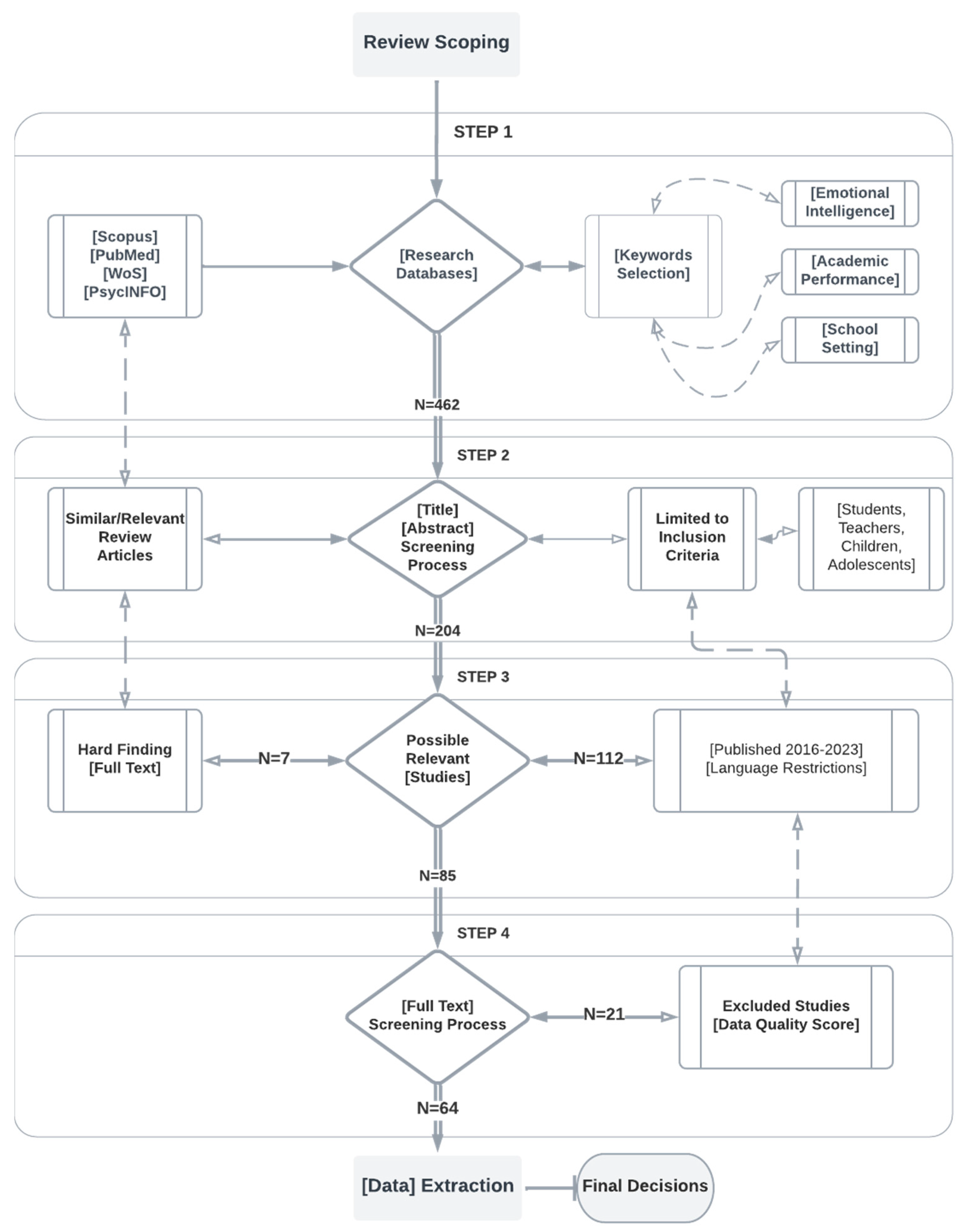
Figure 2.
Classification of Research Design Types.
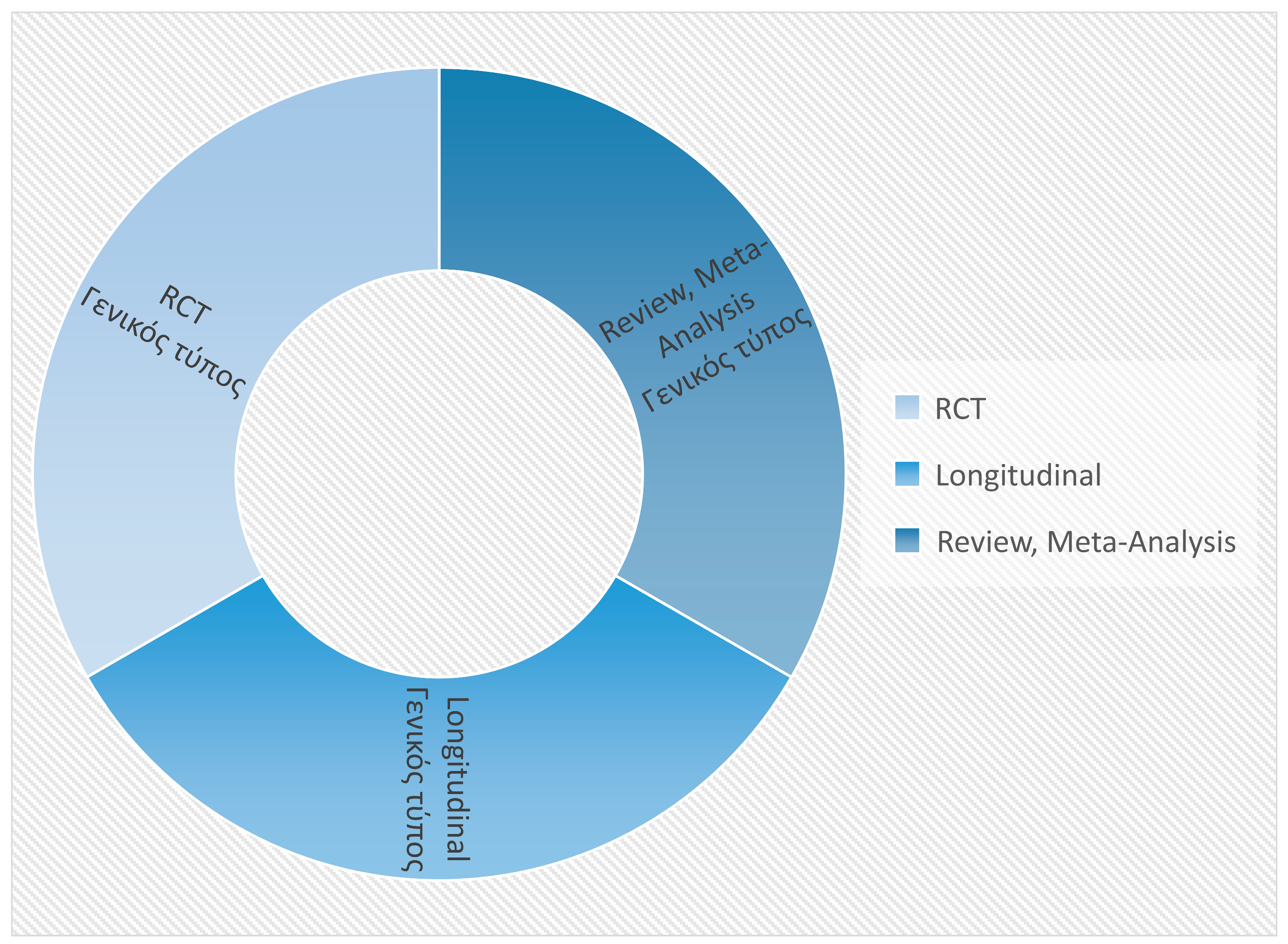

Table 1.
Main Results and Study Characteristics.
| Authors | Research Design | Sample | Outcomes Measured | Main Findings |
|---|---|---|---|---|
| Agnoli et al., 2022 | RCT | 448 children |
|
|
| Alam et al., 2021 | RCT | 387 students |
|
|
| Amirian et al., 2020 | RCT | 48 students |
|
|
| Bakadorova & Raufelder, 2017 | Longitudinal | 1088 students & 845 students |
|
|
| Camacho-Morles et al., 2021 | Review, Meta-Analysis | 68, 31,868, 11,153, 1,418, 28,410, children/students |
|
|
| Chen and Cheng, 2023 | RCT | 231 students |
|
|
| Cortés Pascual et al., 2019 | Review, Meta-Analysis | 7,947 children |
|
|
| Costa & Faria, 2023 | Longitudinal | 222 students |
|
|
| Èlia et al., 2022 | RCT | 259 students |
|
|
| Forsblom et al., 2022 | Longitudinal | 1,716 students |
|
|
| Frenzel et al., 2018 | Longitudinal | 69 teachers & 1,643 students |
|
|
| Garon-Carrier et al., 2016 | Longitudinal | 1,478 students |
|
|
| Geraci et al., 2023 | RCT | 65 early childhoods to secondary teachers |
|
|
| González et al., 2022 | RCT | 1,104 students |
|
|
| González-Alonso et al., 2020 | Longitudinal | 55 students |
|
|
| Gustavsen, 2017 | Longitudinal | 2,266 teachers |
|
|
| Hong et al., 2020 | Longitudinal | 789 students/teachers |
|
|
| Joulaei et al., 2022 | RCT | 191 students |
|
|
| Jung et al., 2023 | RCT | 115 school-aged children (8-9 years old) and their parents |
|
|
| Kumar & Tankha, 2023 | RCT | 342 students |
|
|
| Kwon et al., 2018 | Longitudinal | 199 children |
|
|
| Lang, 2018 | RCT | 40 students |
|
|
| Lei & Cui, 2016 | Meta-Analysis | 17,548 students |
|
|
| Lei et al., 2018 | Meta-Analysis | 196,473 students |
|
|
| Li & Xu, 2019 | RCT | 1,718 students |
|
|
| Li et al., 2022 | Longitudinal | 271 children |
|
|
| Lichtenfeld et al., 2023 | Longitudinal | 670 students |
|
|
| Lim, 2023 | RCT | 48 children |
|
|
| Linden et al., 2017 | Meta-Analysis | 36,268 students |
|
|
| Lozano-Blasco et al., 2022 | Meta-Analysis, Systematic Review | 42,061 students |
|
|
| Maamari & Majdalani, 2019 | RCT | 283 students & 10 teachers |
|
|
| Maamari & Salloum, 2023 | RCT | 410 students & 32 teachers |
|
|
| MacCann et al., 2020 | Meta-Analysis | 42,529 students |
|
|
| Mahmud, 2020 | RCT | 60 students |
|
|
| Manwaring et al., 2017 | Review, Longitudinal | 68 students |
|
|
| Martin, & Collie, 2019 | Longitudinal | 2,079 students/teachers |
|
|
| Mendo-Lázaro et al., 2018 | RCT | 346 students |
|
|
| Muhtadi et al., 2022 | Meta-Analysis | 2474 students |
|
|
| Nasti et al., 2023 | RCT | 199 children |
|
|
| Nasvytienė & Lazdauskas, 2021 | Meta-Analysis | 79,913 students |
|
|
| Olderbak et al., 2018 | Meta-Analysis | 15,333 students |
|
|
| Pekrun et al., 2017 | Longitudinal | 3,425 students |
|
|
| Pozo-Rico et al., 2023 | RCT | 141 teachers |
|
|
| Quílez-Robres et al., 2021 | Meta-Analysis | 15,777 children |
|
|
| Quiroz, 2020 | RCT | 382 students |
|
|
| Salmela-Aro et al., 2021 | Review, Longitudinal | 104,304 students |
|
|
| Sánchez-Álvarez et al., 2016 | Meta-Analysis | 8520 students/teachers |
|
|
| Sánchez-Álvarez et al., 2020 | Meta-Analysis | 19,861 students |
|
|
| Sofeia, 2023 | RCT | 265 teachers/students |
|
|
| Tang & He, 2023 | Meta-Analysis | 1,205 students |
|
|
| Tartakovsky & Vorobiova, 2022 | RCT | 601 students |
|
|
| Taylor et al., 2017 | Meta-Analysis | 97,406 students |
|
|
| Thornberg et al., 2020 | Longitudinal | 234 students & 120 teachers |
|
|
| Ulmanen et al., 2016 | Longitudinal | 170 students |
|
|
| Walker et al., 2022 | Meta-Analysis | 6914 students |
|
|
| Wang & Liu, 2023 | Review, Meta-Analysis | 6,571 students |
|
|
| Wang & Wang, 2022 | Review, Meta-Analysis | 5,665 teachers |
|
|
| Wang et al., 2016 | Longitudinal | 495 teachers |
|
|
| Wang et al., 2021 | Longitudinal | 1,086 teachers |
|
|
| Xu et al., 2019 | Meta-Analysis | 18,130 teachers |
|
|
| Xu et al., 2020 | Meta-Analysis | 29,922 teachers |
|
|
| Zee & Koomen, 2019 | Longitudinal | 472 students & 63 teachers |
|
|
| Zhen et al., 2020 | Longitudinal | 532, 450, and 415 students |
|
|
| Zhoc et al., 2020 | Longitudinal | 560 students |
|
|
Disclaimer/Publisher’s Note: The statements, opinions and data contained in all publications are solely those of the individual author(s) and contributor(s) and not of MDPI and/or the editor(s). MDPI and/or the editor(s) disclaim responsibility for any injury to people or property resulting from any ideas, methods, instructions or products referred to in the content. |
© 2023 by the authors. Licensee MDPI, Basel, Switzerland. This article is an open access article distributed under the terms and conditions of the Creative Commons Attribution (CC BY) license (http://creativecommons.org/licenses/by/4.0/).
Copyright: This open access article is published under a Creative Commons CC BY 4.0 license, which permit the free download, distribution, and reuse, provided that the author and preprint are cited in any reuse.