

Submitted:
31 October 2023
Posted:
31 October 2023
You are already at the latest version
Abstract
Background: Garlic primarily reproduces through vegetative propagation using seed cloves due to infrequent sexual reproduction by true seeds. Growers encounter challenges with pathogens due to the larger size and vegetative nature of seed cloves, as well as the storage conditions conducive to fungal growth. Some Phyto-pathogenic fungi, previously unrecognized as garlic infections, can remain latent within bulb tissues long after harvest. Although outwardly healthy, these infected bulbs may develop rot under specific conditions.
Aim of Review: Planting diseased seed cloves can contaminate field soil, with some fungal and bacterial infections persisting for extended periods. The substantial size of seed cloves makes complete eradication of deeply ingrained infections difficult, despite the use of systemic fungicides during pre-planting and post-harvest phases. Additionally, viruses, resistant to fungicides, persist in vegetative material. They are prevalent in much of the garlic used for planting and their host vectors are difficult to eliminate. To address these challenges, tissue culture techniques are increasingly employed to produce disease-free planting stock.
Key Scientific Concepts of Review: This review delves into crucial scientific aspects related to garlic propagation and health. Garlic primarily reproduces through vegetative propagation using seed cloves, facing challenges due to their large size and susceptibility to fungal infections. Some fungal pathogens, recently identified as garlic threats, remain dormant within bulbs long after harvest, potentially causing rot under specific conditions. Planting infected seed cloves can introduce pathogens into the soil, where they may persist. Deeply ingrained infections can be challenging to eradicate due to the size of seed cloves. Additionally, viruses persist in garlic seeds and spread through their carrier vectors, unaffected by fungicides. To address these issues, tissue culture techniques offer a promising approach to produce disease-free garlic planting material. This review explores these concepts, emphasizing the importance of producing disease-free garlic seeds and strategies for mitigation.
Keywords:
Allium
; fungal diseases
; plant pathogens
; nematodes
; Tissues culture
1. Introduction
The cycle of garlic production depends heavily on seed garlic germination. For optimum crop development, production, and yield, high-quality seed stock is necessary. Growers may build a solid foundation for productive garlic growing by starting with healthy and disease-free garlic seed. The production and financial success of garlic farms are directly impacted by the quality of the seed garlic. Breeders value the ability of some cultivars of Allium sativum L. to reproduce from genuine seed [1]. U.S. Patent 5746024 covers the method of making genuine seed from garlic [2]. The utilization of clonal propagules, such as seed cloves [3] or, in rare circumstances, inflorescence bulbils [4], is the most common technique for growing garlic. Our primary concern in this review is the control of infections that harm to seed cloves or are spread by them.
Garlic cloves are typically obtained from plants that have been harvested in the late summer (e.g., in the Pacific Northwest region of the United States, from early July to mid-September) and then stored for planting in the autumn (mid-September to November) or, for some varieties, in the early spring (March) [5,6]. In order to prevent sprouting during storage and ensure quick germination and development after planting, storage conditions with a temperature range of around 12–14 °C and relative humidity of 55% are used [7]. Since storing the garlic bulbs at temperatures close to 5 °C for lengthy periods of time increases the danger of sprouting, or lower storage temperature of roughly 10 °C [8]. Although some cultivars may be susceptible to such low temperatures, cloves meant for planting in spring have been effectively preserved at 0 °C or −3 °C[9,10].
2. Garlic Seed Cloves as Habitat Pathogens
In order to maintain the development of healthy seed stock, effective disease management is essential in the seed garlic industry. Garlic plants are susceptible to from diseases, which can lead to decreased yields, poor bulb quality, and greater susceptibility to secondary infections. Growers may lessen the effects of infections and preserve the health and vigor of the seed garlic crop by implementing good disease control practices into action. By limiting the transmission of diseases to succeeding harvests, disease control also protects the long-term viability of garlic production systems. Garlic cloves are larger than the true seeds of the majority of other field crops, and because they are stored at temperatures between 10 °C and 14 °C, disease control can be challenging. As a result of their size, even systemic fungicide treatment during pre-planting or post-harvest dips is insufficient to entirely eliminate deeply entrenched diseases [11]. The application of fungicidal dips therefore does not ensure a considerable reduction in inoculum inside the planting stock, unlike with the majority of genuine seeds. Although systemic fungicides are authorized for use against Fusarium and Penicillium-caused bulb rots in ornamental flowers as well as Allium species, fungicidal dips primarily target recently established infections that are relatively superficial [12,13].
Additionally, infestations of the wheat curl mite (Eriophyes tulipae Keifer) and bulb mites (Tyrophagus spp. and Rhizoglyphus spp.) during storage might promote the development of garlic rot. According to [2], the same storage conditions that encourage fungal development also support mite populations. Histiostoma onioni Eraky, Rhizoglyphus robini Claparède and Tyrophagus putrescentiae Shrank have been demonstrated as capable vectors of A. ochraceus Wilhelm, Aspergillus niger Van Tieghem, Gibberella fujikuroi (Sawada) Ito, Penicillium spp., and other fungi [14]. Even with the use of chemical agents, mite control is difficult. There is a detailed manual on garlic diseases and pests [15].
2.1. Fungal Pathogens
Production of garlic seed is significantly vulnerable by fungus infections. Multiple diseases, including bulb rots and leaf spots, can be brought on by pathogens including Fusarium species, Penicillium species, and Alternaria species. These infections can remain latent and grow in storage environments, infecting garlic bulbs either before planting or while being stored. Effective disease management techniques depend on having a thorough understanding of the symptoms and harm that fungi-based infections produce. Fusarium oxysporum Schlechtend.:Fr. f. sp. cepae H.N. Hans. W.C. Snyder & H.N. Hans. (Foc), Embellisia allii (Campanile) Simmons, Aspergillus ochraceus and Aspergillus niger are the main fungi that attack garlic bulbs while they are being stored. Penicillium hirsutum Dierckx and F. proliferatum (Matsushima) Nirenberg are two examples [16].
There have also been reports of Fusarium verticillioides (Sacc.) Nirenberg and Botrytis porri Buchw. causing rot [16]. It is important to remember, though, that not every isolate with these names necessarily displays aggressive pathogenic behavior. Compared to other pathogenic species, some isolates of A. ochraceus, A. niger, and E. allii, for instance, have demonstrated less aggression (although E. allii has proved to be predominantly harmful in damp field circumstances) [12]. Furthermore, it appears that some isolates of the highly aggressive Fusarium oxysporum f. sp. cepae and F. proliferatum, which are also found in onions, are less aggressive in garlic, especially after the garlic bulbs have undergone post-harvest ageing or “hardening” [17]. It is still completely unclear how long some of these infections may remain latent or quiescent in tissues, as was the case with Velásquez-Valle, et al. [18] comments on Fusarium culmorum (Wm. G. Sm.) Sacc.
Dugan, Hellier and Lupien [16] identified three or more of these pathogenic species from each of the seven lots examined, including six lots from diverse locations in the USA and one lot from mainland China, in a study of commercially available asymptomatic seed garlic. Buslyk, et al. [19] reported molecular-genetic techniques for the identification and classification of mycotoxin-producing fungus found in garlic. Penicillium species, which has recently been the focus of debates surrounding its proper name, is one of the most active fungal infections responsible for the rot in garlic. Prior to its synonym, P. hirsutum, being more often used, the term P. corymbiferum (P. verrucosum var. corymbiferum (Westling) Samson, Stolk & Hadlok), was also frequently used [20]. Penicillium species that cause rot in garlic have been referred to by a variety of names [21]. Only isolates identified as Penicillium allii Vincent & Pitt were shown to be extremely harmful to garlic by Salinas and Cavagnaro [22], whereas isolates classified as P. hirsutum were less aggressive.
Gálvez and Palmero [23] used the name P. allii to refer to pathogenic isolates, while [20] utilized the name P. hirsutum. Dugan [2] accredited these varying preferences but broadly applied the name P. hirsutum to all isolates pathogenic to garlic in his study, as some of them produced a deeply coloured exudate characteristic of that species [24]. Prior to the discovery of P. allii, several species in the Corymbifera section, notably P. hirsutum var. allii (Vincent & Pitt) Fisvad [25], were thought to be variations of P. hirsutum. While the type material for P. hirsutum is a neotype isolated from aphids, the viable type material (strictly speaking, ex-type) for P. allii comes from garlic [26]. Because of the serious threat posed by Sclerotium cepivorum Berk., the cause of white rot, to garlic farming, certain regions now have quarantine laws for seed cloves [27]. Although total eradication may not be possible, hot water treatments can be successful in controlling S. cepivorum in planting stock [28,29].

Table 1.
Fungal pathogens in garlic seed.
| Fungal Pathogen | Common Name | Disease Symptoms | References |
|---|---|---|---|
| Penicillium spp. | Blue Mold | Decay of seed cloves during storage | [30,31] |
| Botrytis spp. | Gray Mold | Gray mold on garlic bulbs | [32,33] |
| Fusarium spp. | Basal Rot | Basal rot and vascular wilt in plants | [12,34] |
| Sclerotium spp. | White Rot | White rot in garlic bulbs | [35] |
| Rhizoctonia spp. | Root Rot | Damping-off, root rot, and basal plate rot | [36,37] |
| Alternaria spp. | Leaf Blight | Leaf blight and bulb rot | [38] |
| Pythium spp. | Damping-off | Damping-off and root rot in seedlings | [39] |
| Sclerotinia spp. | White Mold | White mold on garlic bulbs | [40] |
| Colletotrichum spp. | Anthracnose | Anthracnose with sunken lesions | [41] |
| Myrothecium spp. | Bulb Rot | Bulb rot and leaf blight | [42] |
2.2. Fungal Pathogens in Soil
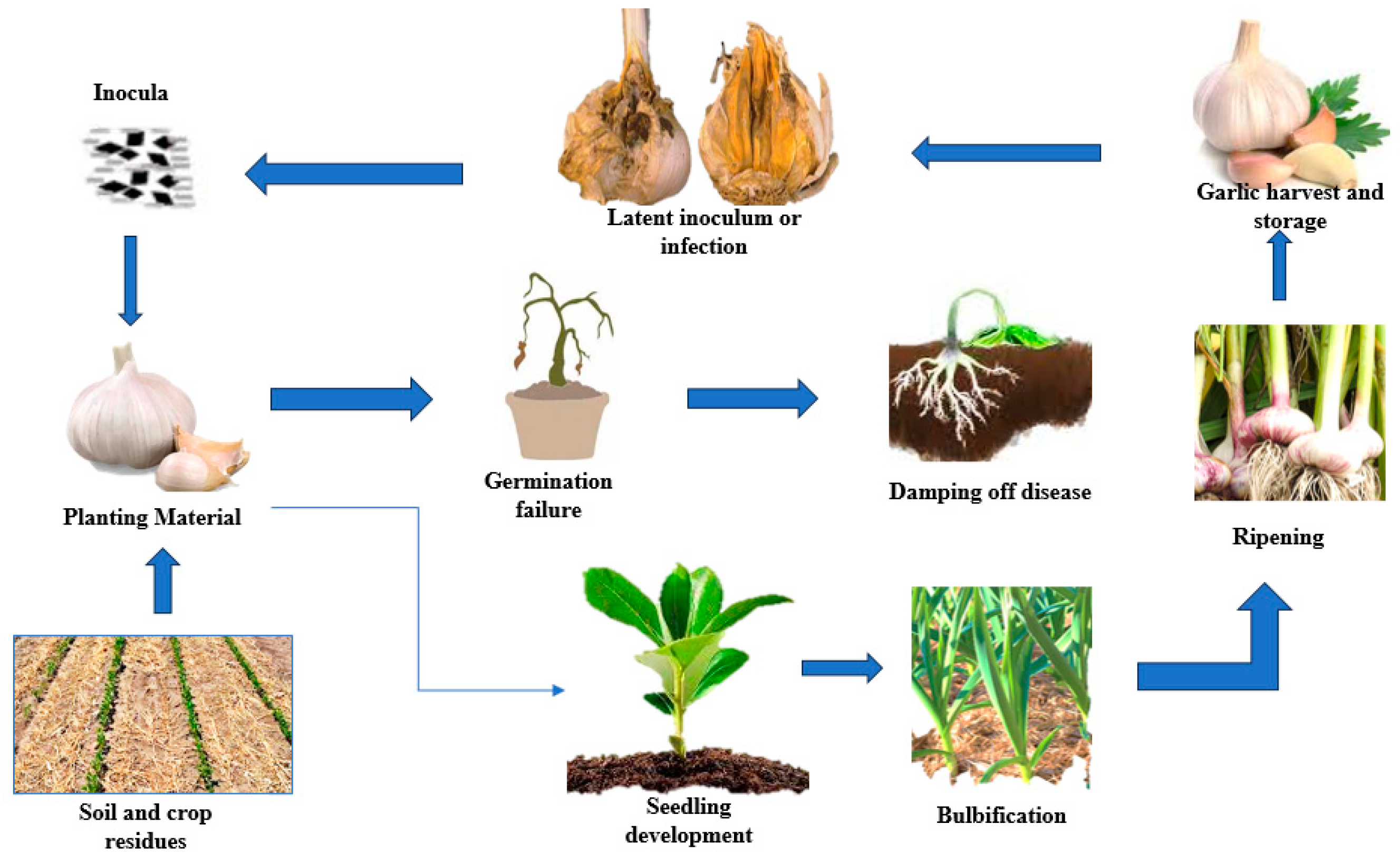
A pathogen that also affects onions, Fusarium oxysporum f. sp. cepae, forms chlamydospores and has the capacity for long-term survival [43]. Unlike F. proliferatum, which does not form chlamydospores [44], it may survive in soil for a long time if it is present with agricultural wastes [45]. In simulated winter conditions in field soil, [16] found that both F. proliferatum and F. oxysporum survived prolonged freezing. The potential of Fusarium verticillioides to thrive in agricultural settings is also well documented [46]. A. ochraceus and Botrytis porri both have the ability to create sclerotia, and both can do so in a sizeable amount [47]. Sclerotium cepivorum, as its name implies, also generates sclerotia, which may survive for years without the host plant [48]. To reduce the occurrence of S. cepivorum sclerotia, many management techniques have been devised, such as the use of substances that stimulate germination by imitating Allium root exudates [49]. Penicillium hirsutum, on the other hand, it does not show long-term persistence in soil [50].
Figure 1.
Cycle of fusarium dry rot in garlic.
2.3. Mycotoxin
While the emphasis of this analysis is focused on seed garlic, it is important to recognise that a number of fungi have the capacity to create poisons that might be substantial in table garlic. F. proliferatum, which was first discovered in market garlic in Germany by [51], has now been found in North American garlic fields [52]. Despite the fact that F. verticillioides was just recently identified as a pathogen that causes garlic to rot [2], the organism has been extensively studied for its capacity to produce mycotoxin [12]. Fumonisins are most frequently produced by F. proliferatum and F. verticillioides, and F. proliferatum also produces other mycotoxins [53]. Research has been done on F. proliferatum isolates found in Allium species regarding mycotoxin production [54].
3. Bacteria and Virus
Pseudomonas fluorescens in France, a disease termed “maladie café au lait” is caused by a pathogen called Migula, which affects garlic [55]. On at least one pest list for garlic, Burkholderia cepacia (Palleroni and Holmes) is designated as a controlled organism [56]. Additionally, E. chrysanthemi, Erwinia carotovora ssp. carotovora (Jones), Enterobacter cloacae (Jordan) Hormaeche and Edwards, Pseudomonas gladioli Severini, and Burkholder are known to induce soft rot in onions and garlic, however they are more harmful for onions than for garlic [57].
Table 2.
Bacterial species causing diseases in garlic seed.
| Bacterial Pathogen | Common Name | Disease Symptoms | References |
|---|---|---|---|
| Xanthomonas spp. | Bacterial Leaf Spot | Water-soaked lesions on leaves and bulbs | [58] |
| Pseudomonas spp. | Soft Rot | Softening and decay of bulbs | [59] |
| Erwinia spp. | Bacterial Bulb Decay | Slimy rotting of bulbs | [60] |
| Pantoea ananatis | Center Rot | Rotting and discoloration of bulb centers | [61] |
| Clavibacter spp. | Bacterial Canker | Raised, corky cankers on leaves and stems | [62] |
| Burkholderia cepacia | Bulb Rot | Rotting and foul odor in bulbs | [63] |
| Enterobacter cloacae | Basal Plate Rot | Rotting at the base of bulbs | [64] |
| Dickeya spp. | Blackleg | Blackened and soft rotting of stems | [65] |
| Agrobacterium tumefaciens | Crown Gall | Tumor-like growths on stems and roots | [66] |
Another significant issue in the development of seed garlic is viral infections. The common viruses that affect garlic are the Onion Yellow Dwarf Virus (OYDV), Leek Yellow Stripe Virus (LYSV), Garlic Common Latent Virus (GCLV), and Shallot Latent Virus (SLV). Viral infections can result in slowed development, smaller bulbs, and generally less healthy plants. The efforts to control diseases are made more difficult by the non-persistent transmission of these viruses by aphids and other vectors.
Table 3.
Viruses affecting garlic seed and their vectors.
| Virus | Common Name | Symptoms and Effects | Vectors | References |
|---|---|---|---|---|
| Garlic common latent virus (GCLV) | Common Latent Virus | No visible symptoms, latent infection in garlic plants | Unknown | [67] |
| Garlic mosaic virus (GarMV) | Garlic Mosaic Virus | Mosaic patterns on leaves, stunted growth, reduced yield | Aphids (Myzus persicae) | [68] |
| Leek yellow stripe virus (LYSV) | Leek Yellow Stripe Virus | Yellow stripes on leaves, stunted growth, bulb deformities | Onion thrips (Thrips tabaci) | [69] |
| Shallot latent virus (SLV) | Shallot Latent Virus | No visible symptoms, latent infection in shallots | Unknown | [70] |
| Onion yellow dwarf virus (OYDV) | Onion Yellow Dwarf Virus | Stunted growth, yellowing of leaves, bulb size reduction | Onion thrips (Thrips tabaci) | [71] |
| Iris yellow spot virus (IYSV) | Iris Yellow Spot Virus | Yellow spots on leaves, necrotic streaks, bulb damage | Onion thrips (Thrips tabaci) | [72] |
| Cucumber mosaic virus (CMV) | Cucumber Mosaic Virus | Mosaic patterns, leaf curling, plant stunting | Aphids (various species) | [73]t |
| Tobacco rattle virus (TRV) | Tobacco Rattle Virus | Stunted growth, yellowing, necrosis, bulb deformities | Soil-borne nematodes (Trichodorus spp.) | [74] |
| Shallot virus X (ShVX) | Shallot Virus X | Yellowing, stunted growth, distorted bulbs | Unknown | [75] |
| Garlic latent virus (GarLV) | Garlic Latent Virus | No visible symptoms, latent infection in garlic plants | Unknown | [76] |
The development of garlic germplasm is significantly disadvantaged by viral infections, both because of the decreased yield and quality and because minor virus signs might be misconstrued for varietal variations in garlic germplasm. Garlic is commonly infected by a number of viruses, including the onion yellow dwarf virus (OYDV), which is spread by aphids like Myzus persicae and a number of other aphid species in a non-persistent way; Leek yellow stripe virus (LYSV), that is also aphid-transmitted in a temporary manner by various aphid species; Garlic common latent virus (GCLV), transmitted through mechanical inoculation and aphids; and Shallot latent virus (SLV), transmitted non-persistently by Myzus ascolonicus (Sciamyzus) and possibly Aphis fabae [77]. Garlic is infected by the tobacco rattle virus (TRV), which is transmitted by nematodes of the Trichodoridae family [78]. An developing issue in onion, leek, and to a lesser extent, garlic is the iris yellow spot virus (IYSV), which is spread by thrips (Thrips tabaci) [79]. There is ambiguity around the names of viruses that cause mosaic symptoms in garlic, such as the Garlic Mosaic Virus.
Many studies, most notably [80], have documented yield losses brought on by viral infections, particularly the prevalent OYDV. Numerous viruses can coexist in a single illness, which is known as a mixed infection [81]. Several mite-borne viruses that infect Allium species are included in the relatively new genus Allexivirus in the family Flexiviridae, in addition to the viruses already described. These include the garlic mite-borne filamentous virus (GarMbFV), garlic virus A (Gar V-A), garlic virus B (Gar V-B), garlic virus C (Gar V-C), garlic virus D (Gar V-D), garlic virus E (Gar V-E), and garlic virus X (Gar V-X) [82].
4. Nematodes
Nematode infections, in particular Ditylenchus dipsaci, pose considerable problems to the growth of seed garlic. These tiny roundworms invade the roots, bulbs, and leaves of the garlic plant, resulting in stunted development, deformed bulbs, and decreased harvests. Seed garlic contaminated with nematodes can hasten the spread of nematodes in succeeding harvests, escalating the harm. For a healthy seed supply to be maintained, effective nematode management is essential. Several Allium species in temperate climates are negatively impacted by the pest Ditylenchus dipsaci (Kühn) Filipjev [83,84,85]. Nematode numbers in garlic seed have been effectively managed by hot water treatments. This method efficiently kills nematodes without doing much harm to the garlic by dipping seed cloves or bulbs in hot water for certain amounts of time and temperature. Nematode populations can be reduced by hot water treatments, which also help to stop the transmission of nematode-borne illnesses to future crops. The nematode can be controlled with hot water treatments, especially when they are followed by a long soak in cold water [86,87]. The adaptability of different garlic cultivars to greater temperatures without suffering damage varies, thus care should be used. Finding temperatures that are high enough to kill the worm without seriously harming the garlic plants is essential. Conducting lengthy investigations may be difficult due of the restricted availability of germplasm in significant numbers for testing. However, hot water treatments can be helpful when there is a plentiful supply of a specific garlic species.
Table 4.
Nematodes affecting garlic seed.
| Nematode Pest | Common Name | Damage Symptoms | References |
|---|---|---|---|
| Ditylenchus dipsaci | Stem and Bulb Nematode | Stunted growth, leaf yellowing, bulb rot, and reduced yield | [88] |
| Meloidogyne spp. | Root-Knot Nematode | Galls on roots, stunted growth, nutrient deficiency | [89] |
| Pratylenchus spp. | Lesion Nematode | Lesions on roots, reduced root system, poor nutrient uptake | [90] |
| Tylenchulus semipenetrans | Citrus Nematode | Feeding damage on roots, decline in plant health | [91] |
| Heterodera spp. | Cyst Nematode | Formation of cysts on roots, stunted growth, yield loss | [92] |
| Xiphinema spp. | Dagger Nematode | Feeding damage on roots, yellowing, wilting | [89] |
| Longidorus spp. | Needle Nematode | Stunted growth, root damage, nutrient deficiency | [89] |
| Trichodorus spp. | Sting Nematode | Feeding damage on roots, reduced root system | [93] |
| Pratylenchoides spp. | False Root-Knot Nematode | Root galling, stunted growth, reduced yield | [94] |
| Radopholus similis | Burrowing Nematode | Tunneling in roots, stunting, wilted leaves | [95] |
5. Disease Free Planting Stock
Garlic that is free of disease may now be produced by utilizing tissue culture methods, particularly meristem culture employing one or two leaf primordia. Researchers can get rid of viruses and grow clean, virus-free garlic plants by cultivating tiny pieces of plant tissue in a controlled lab setting. Tissue culture makes it possible to quickly multiply disease-free planting stock, enabling the production of healthy seed garlic. Since garlic cloves are vegetative propagules, viruses continue to infect garlic plants, whether they are cultivated for the table or as seed stock. Although most seed garlic contains viruses, not all of them are obviously harmful [96]. Alternative management approaches are preferred since chemical treatment of numerous viral vectors (aphids, nematodes, and thrips) is challenging and expensive [97].
Figure 2.
Virus free garlic seed production.
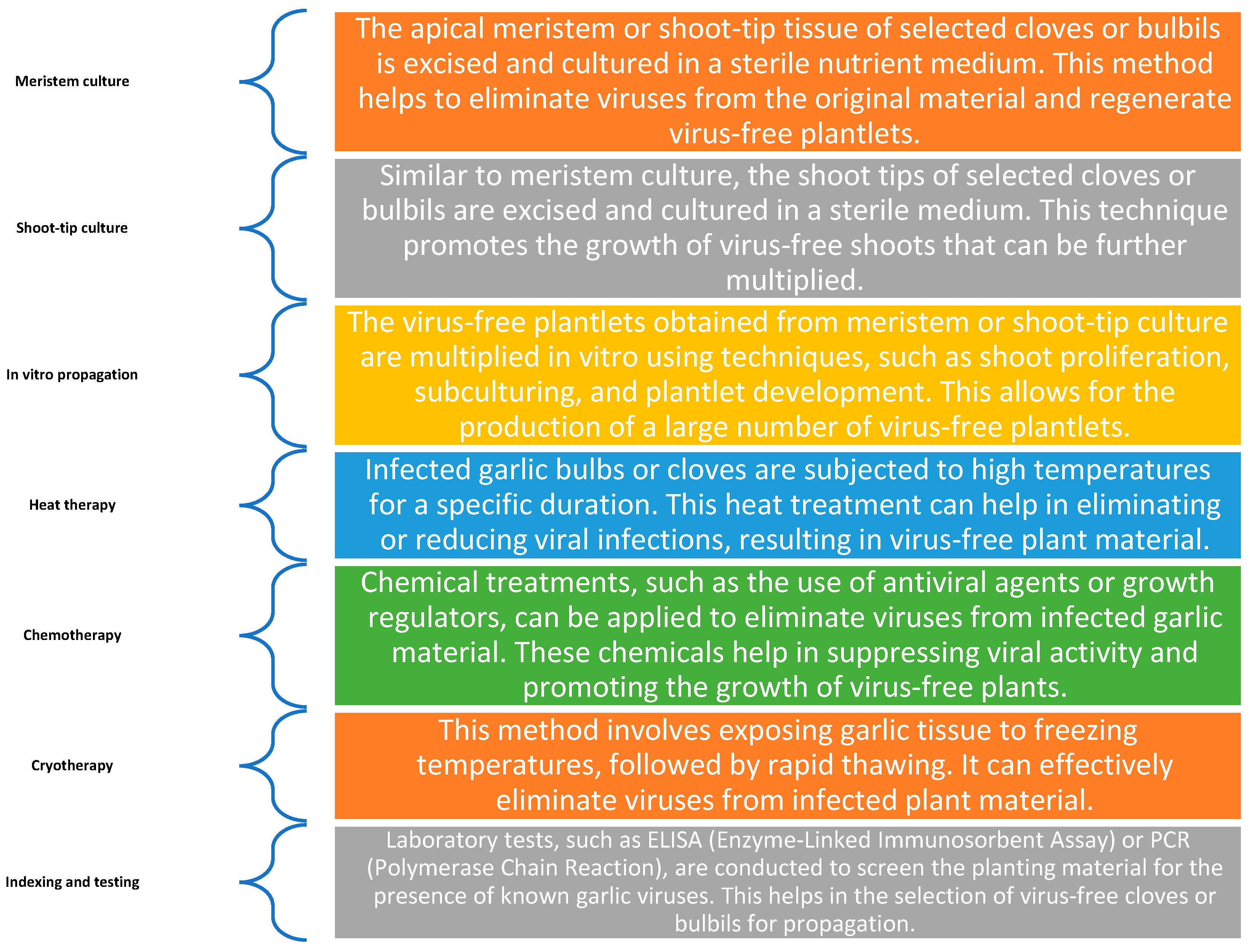
The creation of virus-free garlic plants via tissue culture, specifically meristem culture using one or two leaf primordia, has become possible. According to study [98], clones grown by tissue culture that are virus-free have better yields and profitability than clones that are infected. Improvements in methods, such as the use of inflorescence bulbil primordia, have enhanced success rates even if successive cultivation of meristems from shoot tips does not always ensure total viral eradication. In vegetatively grown Allium cepa var. ascalonicum (shallots), viral infections have been eradicated using comparable tissue culture techniques [99]. Garlic has been successfully cryopreserved, and the stocks are frequently virus-free. Nevertheless, the efficiency of cryopreservation may differ depending on the tissues (bulbils vs cloves) and varieties of garlic (hard-neck versus soft-neck). In places like California, Australia, and Canada [100], tissue culture techniques are currently used to produce disease-free commercial planting stock. It is crucial to keep in mind that producers that engage in large-scale production may most easily afford this equipment.
5.1. Resistant Cultivars
The management of viral and fungal infections in garlic has been investigated as prospective techniques including resistance and/or tolerance. Observing the absence of viral symptoms or the inability to detect viruses in particular cultivars has been the focus of some reports (e.g., [1,98]), whereas other studies have gone through extensive testing to determine garlic’s resistance to the viruses Leek yellow stripe virus (LYSV) and Onion yellow dwarf virus (OYDV) [101]. There are also reports describing resistance to a number of fungi that attack garlic, including Alternaria porri (Ellis) Cif. [102], Fusarium oxysporum f. sp. cepae [103], Penicillium hirsutum [104,105], Pyrenochaeta terrestris (H.N. Although certain white-skinned varieties also show resistance, red-skinned garlic types often show stronger resistance to Embellisia allii than white-skinned cultivars [106]. However, there are other accounts of attempts to find resistance that were unsuccessful, such as those with Sclerotium cepivorum [107], Puccinia allii F. Rudolphi [108], and Penicillium hirsutum [109]. The complicated processes and difficulties involved in detecting resistance in germplasm are shown by the divergent findings from numerous studies on the same diseases.
5.2. Genetic Modification
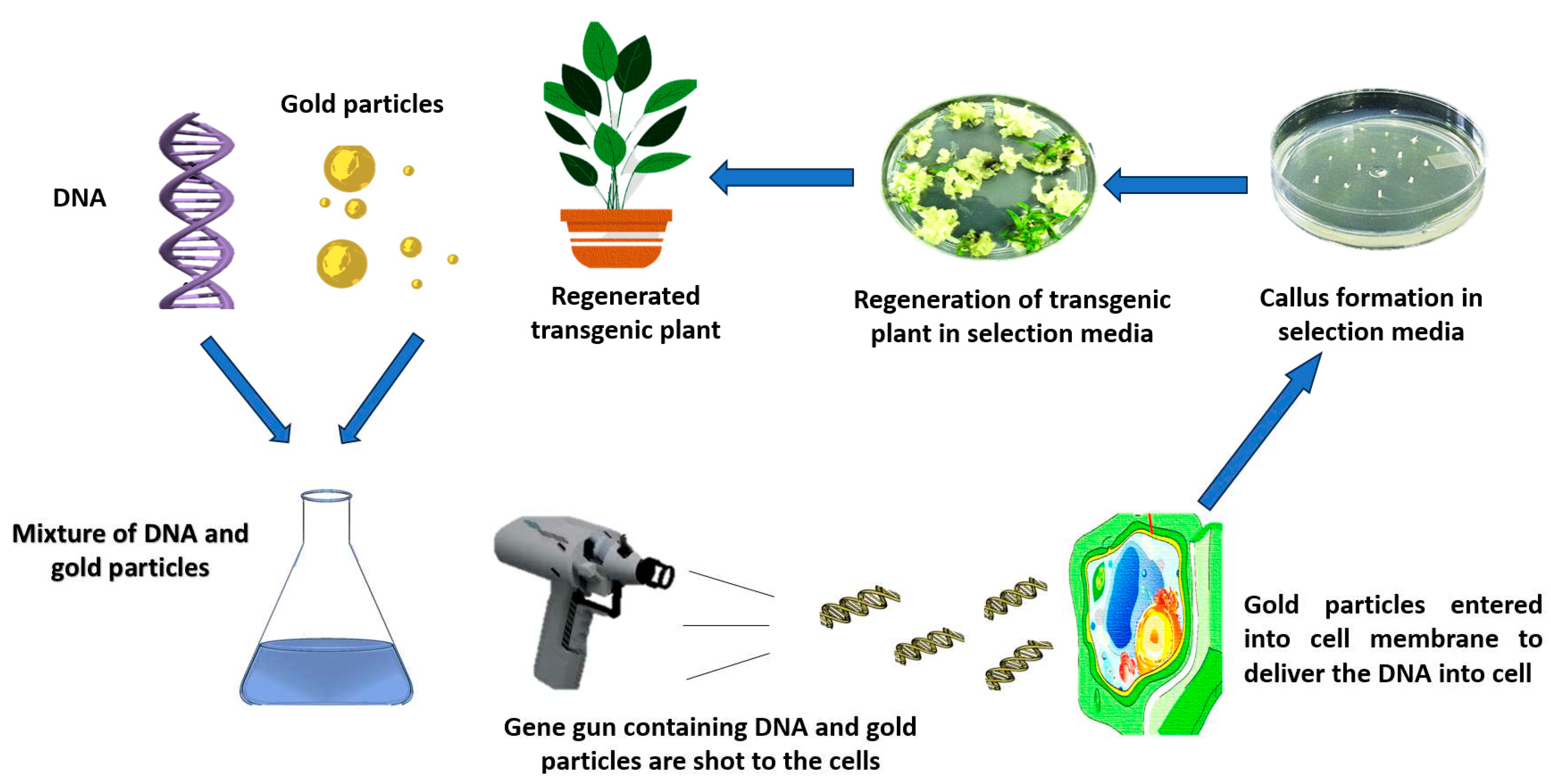
Particle bombardment, often referred to as biolistic transformation, can change garlic using plasmid DNA [20,110]. Significant consequences for the transmission of resistance genes in garlic result from this method. Additionally, it has been suggested that gamma radiation can be used to induce mutations in garlic in order to produce mutants that are resistant to infection [111].
Figure 3.
Particle bombardment for genetic transformation.
6. Challenges
Due to the involvement of several small farmers and gardeners, garlic production is not only of horticultural importance but also has societal value. Numerous cities in North America, Europe, and the UK have annual garlic fairs and festivals. Bulb garlic is frequently exchanged or sold as seed and eaten for culinary purposes. The internet has given garlic aficionados, especially those with modest financial means but plenty of zeal and knowledge, a forum for enhanced communication and germplasm exchange. While there are numerous advantages to this, there are also hazards related to the transfer of infections along with the genetic material. Even if the majority of garlic infections are common, there is always a risk of spreading novel diseases or more aggressive genotypes into fields that had not previously been impacted. The early identification of infections in seed garlic has improved because to developments in diagnostic technology. Affordably priced viral detection kits may provide rapid and accurate testing, enabling producers to recognize affected plants and implement the proper disease control strategies. Additionally, introducing disease-resistant cultivars created via conventional breeding or genetic alteration has the potential to improve disease control in seed garlic production. For both their personal use and the market, growers with more financial means are progressively able to use tissue culture programs to produce disease-free planting material. It is predicted that the establishment of cooperatives or other methods would make tissue culture accessible to smaller producers as well. Both big and small farmers can benefit from improvements in diagnostic technologies, including readily available and reasonably priced viral testing and disease-resistant cultivars.
Author Contributions
All authors contributed equally in the article.
Conflicts of Interest
All financial, commercial or other relationships that might be perceived by the academic community as representing a potential conflict of interest must be disclosed. If no such relationship exists, authors will be asked to confirm the following statement: The authors declare that the research was conducted in the absence of any commercial or financial relationships that could be construed as a potential conflict of interest.
References
- Shemesh-Mayer, E.; Kamenetsky-Goldstein, R. Traditional and novel approaches in garlic (Allium sativum L.) breeding. Advances in Plant Breeding Strategies: Vegetable Crops: Volume 8: Bulbs, Roots and Tubers 2021, 3–49. [Google Scholar]
- Dugan, F.M. Diseases and disease management in seed garlic: Problems and prospects. Am. J. Plant Sci. Biotechnol 2007, 1, 47–51. [Google Scholar]
- Marodin, J.C.; Resende, F.V.; Gabriel, A.; Souza, R.J.d.; Resende, J.T.V.d.; Camargo, C.K.; Zeist, A.R. Agronomic performance of both virus-infected and virus-free garlic with different seed bulbs and clove sizes. Pesquisa Agropecuária Brasileira 2019, 54. [Google Scholar] [CrossRef]
- Bhusal, H.; Shemesh-Mayer, E.; Forer, I.; Kryukov, L.; Peters, R.; Kamenetsky-Goldstein, R. Bulbils in garlic inflorescence: development and virus translocation. Scientia Horticulturae 2021, 285, 110146. [Google Scholar] [CrossRef]
- El-Shabasi, M.; Osman, Y.; Rizk, S. Effect of planting date and some pre-planting treatments on growth and yield of garlic. Journal of Plant Production 2018, 9, 1091–1096. [Google Scholar] [CrossRef]
- Desta, B.; Woldetsadik, K.; M Ali, W. Effect of harvesting time, curing and storage methods on storability of garlic bulbs. The Open Biotechnology Journal 2021, 15. [Google Scholar] [CrossRef]
- Madhu, B.; Mudgal, V.D.; Champawat, P.S. Storage of garlic bulbs (Allium sativum L.): A review. Journal of Food Process Engineering 2019, 42, e13177. [Google Scholar] [CrossRef]
- Wu, C.; Wang, M.; Dong, Y.; Cheng, Z.; Meng, H. Growth, bolting and yield of garlic (Allium sativum L.) in response to clove chilling treatment. Scientia Horticulturae 2015, 194, 43–52. [Google Scholar] [CrossRef]
- Marcuzzo, L.; Xavier, A. Effect of temperature and photoperiod on the mycelial development of Stromatinia cepivora, the causal agent of white rot of garlic and onion. Summa Phytopathologica 2017, 43, 68–69. [Google Scholar] [CrossRef]
- Khokhar, K.M. Bulb development in garlic–a review. The Journal of Horticultural Science and Biotechnology 2022, 1–11. [Google Scholar] [CrossRef]
- Nikitin, D.A.; Ivanova, E.A.; Semenov, M.V.; Zhelezova, A.D.; Ksenofontova, N.A.; Tkhakakhova, A.K.; Kholodov, V.A. Diversity, Ecological Characteristics and Identification of Some Problematic Phytopathogenic Fusarium in Soil: A Review. Diversity 2023, 15, 49. [Google Scholar] [CrossRef]
- Gálvez, L.; Palmero, D. Fusarium dry rot of garlic bulbs caused by Fusarium proliferatum: A review. Horticulturae 2022, 8, 628. [Google Scholar] [CrossRef]
- Elshahid, M.; Tony, H.S.; Isamail, M.E.; Galal, A.A. Effects of certain fungicide alternatives on garlic yield, storage ability and postharvest rot infection. New Valley Journal of Agricultural Science 2022, 2, 357–371. [Google Scholar] [CrossRef]
- Hofstetter, R.; Moser, J. The role of mites in insect-fungus associations. Annual review of entomology 2014, 59, 537–557. [Google Scholar] [CrossRef]
- Jeffers, A.; Chong, J.H. Biological control strategies in integrated pest management (IPM) programs. Clemson University Cooperative, Land-Grant Press by Clemson Extension, LGP 2021, 1111, 1–9. [Google Scholar]
- Dugan, F.; Hellier, B.; Lupien, S. Pathogenic fungi in garlic seed cloves from the United States and China, and efficacy of fungicides against pathogens in garlic germplasm in Washington State. Journal of Phytopathology 2007, 155, 437–445. [Google Scholar] [CrossRef]
- CHOIRUDDIN, M.R.; FATAWI, Z.D.; HADIWIYONO, H. Virulence and genetic diversity of Fusarium oxysporum f. sp. cepae as the cause of root rot in garlic. Asian Journal of Tropical Biotechnology 2019, 16. [Google Scholar]
- Velásquez-Valle, R.; Macias-Valdez, L.M.; Reveles-Hernández, M. Common pathogens of garlic seed in Aguascalientes and Zacatecas, Mexico. Revista mexicana de ciencias agrícolas 2017, 8, 1881–1885. [Google Scholar]
- Buslyk, T.; Rosalovsky, V.; Salyha, Y. PCR-based detection and quantification of mycotoxin-producing fungi. Cytology and Genetics 2022, 56, 16–30. [Google Scholar] [CrossRef]
- Khar, A.; Hirata, S.; Abdelrahman, M.; Shigyo, M.; Singh, H. Breeding and genomic approaches for climate-resilient garlic. Genomic Designing of Climate-Smart Vegetable Crops 2020, 359–383. [Google Scholar]
- Aysan, Y.; Horuz, S. Commercially Important Vegetable Crop Diseases. In Handbook of Vegetable Preservation and Processing; CRC Press, 2015; pp. 137–156. [Google Scholar]
- Salinas, M.C.; Cavagnaro, P.F. In vivo and in vitro screening for resistance against Penicillium allii in garlic accessions. European Journal of Plant Pathology 2020, 156, 173–187. [Google Scholar] [CrossRef]
- Gálvez, L.; Palmero, D. Incidence and etiology of postharvest fungal diseases associated with bulb rot in garlic (Alllium sativum) in Spain. Foods 2021, 10, 1063. [Google Scholar] [CrossRef] [PubMed]
- Khan, I.H.; Javaid, A. Penicillium echinulatum causing blue mold on tomato in Pakistan. Journal of Plant Pathology 2022, 104, 1143–1143. [Google Scholar] [CrossRef]
- Visagie, C.; Houbraken, J.; Frisvad, J.C.; Hong, S.-B.; Klaassen, C.; Perrone, G.; Seifert, K.; Varga, J.; Yaguchi, T.; Samson, R. Identification and nomenclature of the genus Penicillium. Studies in mycology 2014, 78, 343–371. [Google Scholar] [CrossRef]
- Houbraken, J.; Kocsubé, S.; Visagie, C.M.; Yilmaz, N.; Wang, X.-C.; Meijer, M.; Kraak, B.; Hubka, V.; Bensch, K.; Samson, R. Classification of Aspergillus, Penicillium, Talaromyces and related genera (Eurotiales): An overview of families, genera, subgenera, sections, series and species. Studies in mycology 2020, 95, 5–169. [Google Scholar] [CrossRef]
- Yimer, O. Different mulch material on growth, performance and yield of garlic: A review. Int. J. Food Sci. Agric 2020, 4, 38–42. [Google Scholar] [CrossRef]
- Kamenetsky, R. Garlic: botany and horticulture. HORTICULTURAL REVIEWS-WESTPORT THEN NEW YORK- 2007, 33, 123. [Google Scholar]
- Kumar, V.; Iqbal, N. Post-harvest pathogens and disease management of horticultural crop: A brief review. Plant Arch 2020, 20, 2054–2058. [Google Scholar]
- Al-Askar, A.A.; Rashad, E.M.; Ghoneem, K.M.; Mostafa, A.A.; Al-Otibi, F.O.; Saber, W.I. Discovering Penicillium polonicum with high-lytic capacity on Helianthus tuberosus tubers: Oil-based preservation for mold management. Plants 2021, 10, 413. [Google Scholar] [CrossRef]
- Abba, J.F. Preliminary Studies on Fungus Associated with Storage Disease of Garlic (Allium Sativum L.) in Nigeria.
- Chen, J.; Yan, R.; Hu, Y.; Zhang, N.; Hu, H. Compositional shifts in the fungal diversity of garlic scapes during postharvest transportation and cold storage. Lwt 2019, 115, 108453. [Google Scholar] [CrossRef]
- Rawat, S.; Sharma, G.; Sharma, K. Major Diseases of Garlic (Allium Sativum L.) and Their Management. Diseases of Horticultural Crops: Diagnosis and Management: Volume 2: Vegetable Crops 2022, 225. [Google Scholar]
- Le, D.; Audenaert, K.; Haesaert, G. Fusarium basal rot: profile of an increasingly important disease in Allium spp. Tropical Plant Pathology 2021, 46, 241–253. [Google Scholar] [CrossRef]
- Cavalcanti, V.P.; Araújo, N.A.; Schwanestrada, K.R.; Pasqual, M.; Dória, J. Athelia (Sclerotium) rolfsii in Allium sativum: potential biocontrol agents and their effects on plant metabolites. Anais da Academia Brasileira de Ciências 2018, 90, 3949–3962. [Google Scholar] [CrossRef] [PubMed]
- Chohan, S.; Perveen, R.; Abid, M.; Naqvi, A.H.; Naz, S. Management of seed borne fungal diseases of tomato: a review. Pakistan Journal of Phytopathology 2017, 29, 193–200. [Google Scholar] [CrossRef]
- Khan, I.; Hussain, H.; Shah, B.; Ullah, W.; Naeem, A.; Ali, W.; Khan, N.; Adnan, M.; Junaid, K.; Shah, S.R.A. Evaluation of phytobiocides and different culture media for growth, isolation and control of Rhizoctonia solani in vitro. Journal of Entomology and Zoology Studies 2016, 4, 417–420. [Google Scholar]
- Bisht, I.; Agrawal, R. Susceptibility to purple blotch (Alternaria porri) in garlic (Allium sativum). Annals of applied biology 1993, 122, 31–38. [Google Scholar] [CrossRef]
- Zhang, B.; Zhang, Y.; Ma, L.; Qi, K.; Wang, P.; Li, C.; Qi, J. Identification of Pythium species as pathogens of garlic root rot. Journal of Plant Pathology 2021, 103, 259–267. [Google Scholar] [CrossRef]
- Cavalcanti, V.P.; Araújo, N.A.F.; Machado, N.B.; Júnior, P.S.P.C.; Pasqual, M.; Alves, E.; Schwan-Estrada, K.R.F.; Doria, J. Yeasts and Bacillus spp. as potential biocontrol agents of Sclerotinia sclerotiorum in garlic. Scientia Horticulturae 2020, 261, 108931. [Google Scholar] [CrossRef]
- Dutta, R.; K, J.; Nadig, S.M.; Manjunathagowda, D.C.; Gurav, V.S.; Singh, M. Anthracnose of onion (Allium cepa L.): A twister disease. Pathogens 2022, 11, 884. [Google Scholar] [CrossRef]
- van Bruggen, A.H.; Gamliel, A.; Finckh, M.R. Plant disease management in organic farming systems. Pest Management Science 2016, 72, 30–44. [Google Scholar] [CrossRef]
- Sidharthan, V.K.; Aggarwal, R.; Shanmugam, V. Fusarium wilt of crop plants: disease development and management. Wilt Diseases of Crops and their Management 2019, 519–533. [Google Scholar]
- De la Lastra, E.; Camacho, M.; Capote, N. Soil bacteria as potential biological control agents of Fusarium species associated with asparagus decline syndrome. Applied Sciences 2021, 11, 8356. [Google Scholar] [CrossRef]
- Jambhulkar, P.P.; Raja, M.; Singh, B.; Katoch, S.; Kumar, S.; Sharma, P. Potential native Trichoderma strains against Fusarium verticillioides causing post flowering stalk rot in winter maize. Crop Protection 2022, 152, 105838. [Google Scholar] [CrossRef]
- Leslie, J.; Summerell, B. Fusarium laboratory workshops—A recent history. Mycotoxin Research 2006, 22, 73–74. [Google Scholar] [CrossRef]
- 오지연; 김기덕. Control strategies for fungal pathogens on stored onion (Allium cepa) and garlic (Allium sativum): A Review. 생명자원연구 2016, 24, 31–40. [Google Scholar]
- Rivera-Mendez, W.; Obregon, M.; Moran-Diez, M.E.; Hermosa, R.; Monte, E. Trichoderma asperellum biocontrol activity and induction of systemic defenses against Sclerotium cepivorum in onion plants under tropical climate conditions. Biological Control 2020, 141, 104145. [Google Scholar] [CrossRef]
- Qian, Y.L.; Hua, G.K.H.; Scott, J.C.; Dung, J.K.; Qian, M.C. Evaluation of Sulfur-Based Biostimulants for the Germination of Sclerotium cepivorum Sclerotia and Their Interaction with Soil. Journal of Agricultural and Food Chemistry 2022, 70, 15038–15045. [Google Scholar] [CrossRef]
- Gillis-Madden, R.; Rehmen, S.; Hildebrand, P. GARLIC STORAGE, POST-HARVEST DISEASES, AND PLANTING STOCK CONSIDERATIONS. FACT SHEET 2020. [Google Scholar]
- Seefelder, W.; Gossmann, M.; Humpf, H.-U. Analysis of fumonisin B1 in Fusarium proliferatum-infected asparagus spears and garlic bulbs from Germany by liquid chromatography− electrospray ionization mass spectrometry. Journal of Agricultural and Food Chemistry 2002, 50, 2778–2781. [Google Scholar] [CrossRef]
- Anisimova, O.K.; Seredin, T.M.; Danilova, O.A.; Filyushin, M.A. First report of Fusarium proliferatum causing garlic clove rot in Russian Federation. Plant Disease 2021, 105, 3308. [Google Scholar] [CrossRef]
- Desjardins, A.E. Fusarium mycotoxins: chemistry, genetics, and biology; American Phytopathological Society (APS Press), 2006. [Google Scholar]
- Stankovic, S.; Levic, J.; Petrovic, T.; Logrieco, A.; Moretti, A. Pathogenicity and mycotoxin production by Fusarium proliferatum isolated from onion and garlic in Serbia. European Journal of Plant Pathology 2007, 118, 165–172. [Google Scholar] [CrossRef]
- Jacques, M.-A.; Luçon, N.; Houdault, S. Clove-transmissibility of Pseudomonas salomonii, the causal agent of ‘Café au lait’disease of garlic. European journal of plant pathology 2009, 124, 695–700. [Google Scholar] [CrossRef]
- Wallock-Richards, D.; Doherty, C.J.; Doherty, L.; Clarke, D.J.; Place, M.; Govan, J.R.; Campopiano, D.J. Garlic revisited: antimicrobial activity of allicin-containing garlic extracts against Burkholderia cepacia complex. PLoS One 2014, 9, e112726. [Google Scholar] [CrossRef]
- Akar, A.A.; Abbas, E.E.; Tohamy, M.; El-Said, H. EFFECTIVE FACTORS ON ONION BACTERIAL SOFT ROT DISEASE INCIDENCE DURING STORAGE. Zagazig Journal of Agricultural Research 2019, 46, 1039–1052. [Google Scholar] [CrossRef]
- Roumagnac, P.; Gagnevin, L.; Gardan, L.; Sutra, L.; Manceau, C.; Dickstein, E.; Jones, J.B.; Rott, P.; Pruvost, O. Polyphasic characterization of xanthomonads isolated from onion, garlic and Welsh onion (Allium spp.) and their relatedness to different Xanthomonas species. International Journal of Systematic and Evolutionary Microbiology 2004, 54, 15–24. [Google Scholar] [CrossRef]
- Gardan, L.; Bella, P.; Meyer, J.-M.; Christen, R.; Rott, P.; Achouak, W.; Samson, R. Pseudomonas salomonii sp. nov., pathogenic on garlic, and Pseudomonas palleroniana sp. nov., isolated from rice. International Journal of Systematic and Evolutionary Microbiology 2002, 52, 2065–2074. [Google Scholar]
- Sawada, H.; Horita, H.; Nishimura, F.; Mori, M. Pseudomonas salomonii, another causal agent of garlic spring rot in Japan. Journal of general plant pathology 2020, 86, 180–192. [Google Scholar] [CrossRef]
- Nurjanah, N.; Joko, T.; Subandiyah, S. Characterization of Pantoea ananatis isolated from garlic and shallot. Jurnal Perlindungan Tanaman Indonesia 2017, 21, 120–126. [Google Scholar] [CrossRef]
- Koike, S.T.; Gladders, P.; Paulus, A.O. Vegetable diseases: a color handbook; Gulf Professional Publishing, 2007. [Google Scholar]
- Júnior, P.S.P.C.; Cardoso, F.P.; Martins, A.D.; Buttrós, V.H.T.; Pasqual, M.; Dias, D.R.; Schwan, R.F.; Dória, J. Endophytic bacteria of garlic roots promote growth of micropropagated meristems. Microbiological research 2020, 241, 126585. [Google Scholar] [CrossRef]
- Li, E.; Tian, X.; Zhao, R.; Wang, Y.; Wang, G. First Report of Enterobacter cloacae Causing Bulb Decay on Garlic in China. Plant Disease 2022, 106, 310. [Google Scholar] [CrossRef] [PubMed]
- van der Wolf, J.M.; Acuña, I.; De Boer, S.H.; Brurberg, M.B.; Cahill, G.; Charkowski, A.O.; Coutinho, T.; Davey, T.; Dees, M.W.; Degefu, Y. Diseases caused by Pectobacterium and Dickeya species around the world. Plant diseases caused by Dickeya and Pectobacterium species 2021, 215–261. [Google Scholar]
- Eady, C.; Davis, S.; Catanach, A.; Kenel, F.; Hunger, S. Agrobacterium tumefaciens-mediated transformation of leek (Allium porrum) and garlic (Allium sativum). Plant Cell Reports 2005, 24, 209–215. [Google Scholar] [CrossRef]
- Bellardi, M.; Marani, F.; Betti, L.; Rabiti, A. Detection of garlic common latent virus (GCLV) in Allium sativum L. in Italy. Phytopathologia Mediterranea 1995, 34, 58–61. [Google Scholar]
- Yong-Jian, F.; Chu-Hua, W.; Zhen-Xiao, L.; Zheng, X. Molecular Cloning and Nucleotide Sequence of the Coat Protein Gene from Garlic Mosaic Virus. Virologica Sinica 2015, 9, 333. [Google Scholar]
- Lunello, P.; Di Rienzo, J.; Conci, V.C. Yield loss in garlic caused by Leek yellow stripe virus Argentinean isolate. Plant disease 2007, 91, 153–158. [Google Scholar] [CrossRef]
- Majumder, S.; Baranwal, V.; Joshi, S. Simultaneous detection of Onion yellow dwarf virus and Shallot latent virus in infected leaves and cloves of garlic by duplex RT-PCR. Journal of Plant Pathology 2008, 371–374. [Google Scholar]
- Lot, H.; Chovelon, V.; Souche, S.; Delecolle, B. Effects of onion yellow dwarf and leek yellow stripe viruses on symptomatology and yield loss of three French garlic cultivars. Plant disease 1998, 82, 1381–1385. [Google Scholar] [CrossRef]
- Bag, S.; Schwartz, H.F.; Cramer, C.S.; Havey, M.J.; Pappu, H.R. Iris yellow spot virus (T ospovirus: B unyaviridae): from obscurity to research priority. Molecular plant pathology 2015, 16, 224–237. [Google Scholar] [CrossRef]
- Stefanac, Z. Cucumber mosaic virus in garlic. Acta Botanica Croatica 1980, 39, 21M26. [Google Scholar]
- Koenig, R.; Lesemann, D.-E.; Pleij, C. Tobacco rattle virus genome alterations in the Hosta hybrid ‘Green Fountain’and other plants: reassortments, recombinations and deletions. Archives of virology 2012, 157, 2005–2008. [Google Scholar] [CrossRef]
- Song, S.I.; Song, J.T.; Kim, C.H.; Lee, J.S.; Choi, Y.D. Molecular characterization of the garlic virus X genome. Journal of General Virology 1998, 79, 155–159. [Google Scholar] [CrossRef]
- Majumder, S.; Baranwal, V. First report of Garlic common latent virus in garlic from India. Plant Disease 2009, 93, 106–106. [Google Scholar] [CrossRef]
- Amin, H.M.; Majeed, A.J. Effect of growing seasons, plant extracts with various rates on Black Bean Aphid, Aphis Fabae (Aphididae: Homoptera). Kurdistan Journal of Applied Research 2018, 3, 22–26. [Google Scholar] [CrossRef]
- Goswami, B.; Archana, M.; Sharma, S. Nematode vectors of plant diseases and its perspectives. Advances in Nematology 2003, 37. [Google Scholar]
- Gharekhani, G.; Ghorbansyahi, S.; Saber, M.; Bagheri, M. Influence of the colour and height of sticky traps in attraction of Thrips tabaci (Lindeman)(Thysanoptera, Thripidae) and predatory thrips of family Aeolothripidae on garlic, onion and tomato crops. Archives of Phytopathology and Plant Protection 2014, 47, 2270–2275. [Google Scholar] [CrossRef]
- Lee, E.T.; Koo, B.J.; Jung, J.H.; Chang, M.U.; Kang, S.G. Detection of allexiviruses in the garlic plants in Korea. The Plant Pathology Journal 2007, 23, 266–271. [Google Scholar] [CrossRef]
- Lunello, P.; Mansilla, C.; Sánchez, F.; Ponz, F. A developmentally linked, dramatic, and transient loss of virus from roots of Arabidopsis thaliana plants infected by either of two RNA viruses. Molecular Plant-Microbe Interactions 2007, 20, 1589–1595. [Google Scholar] [CrossRef] [PubMed]
- Mavrič, I.; Ravnikar, M. A carlavirus serologically closely related to Carnation latent virus in Slovenian garlic. Acta Agriculturae Slovenica 2005, 85, 343–349. [Google Scholar] [CrossRef]
- Yu, Q.; Ye, W.; Badiss, A.; Sun, F. Description of Ditylenchus dipsaci (Kuhn, 1857) Filipjev, 1936 (Nematoda: Anguinidae) infesting garlic in Ontario, Canada. International journal of Nematology 2010, 20, 185–192. [Google Scholar]
- Yu, Q.; Zaida, M.; Hughes, B.; Celetti, M. Discovery of potato rot nematode, Ditylenchus destructor, infesting garlic in Ontario, Canada. Plant disease 2012, 96, 297–297. [Google Scholar] [CrossRef] [PubMed]
- Guiñez, S. Control of the stem and bulb nematode Ditylenchus dipsaci,(Kuhn) Filipjev on garlic crops (Allium sativum L.). Agricultura Técnica (Santiago) 1992, 51, 233–236. [Google Scholar]
- DRAGHICI, D.; MIHUT, A.; HANGANU, M.; VIRTEIU, A.M.; GROZEA, I. EVALUATION AND KEEPING UNDER CONTROL THE PEST POPULATIONS OF GARLIC CULTIVATED IN AN ORGANIC SYSTEM. Research Journal of Agricultural Science 2022, 54. [Google Scholar]
- El-Saadony, M.T.; Abuljadayel, D.A.; Shafi, M.E.; Albaqami, N.M.; Desoky, E.-S.M.; El-Tahan, A.M.; Mesiha, P.K.; Elnahal, A.S.; Almakas, A.; Taha, A.E. Control of foliar phytoparasitic nematodes through sustainable natural materials: Current progress and challenges. Saudi Journal of Biological Sciences 2021, 28, 7314–7326. [Google Scholar] [CrossRef]
- Mollov, D.; Subbotin, S.; Rosen, C. First report of Ditylenchus dipsaci on garlic in Minnesota. Plant disease 2012, 96, 1707–1707. [Google Scholar] [CrossRef] [PubMed]
- Ravindra, H.; Sehgal, M.; Narasimhamurthy, H.; Soumya, D. First Report of Root-Knot Nematode (Meloidogyne spp.) on Garlic in India. Indian Journal of Nematology 2015, 45, 121–122. [Google Scholar]
- Mani, A.; Al Hinai, M.S.; Handoo, Z. Occurrence, population density, and distribution of root-lesion nematodes, Pratylenchus spp., in the Sultanate of Oman. Nematropica 1997, 209–219. [Google Scholar]
- Amin, A.; Youssef, M. Population dynamics of the citrus nematode, Tylenchulus semipenetrans, on navel orange as affected by some plant residues, an organic manure and a biocide. Archives of Phytopathology and Plant Protection 2014, 47, 2233–2241. [Google Scholar] [CrossRef]
- Creech, J.E.; Johnson, W.G. Survey of broadleaf winter weeds in Indiana production fields infested with soybean cyst nematode (Heterodera glycines). Weed technology 2006, 20, 1066–1075. [Google Scholar] [CrossRef]
- Anupriya, P.; Anita, B.; Kalaiarasan, P.; Karthikeyan, G. Population dynamics and community analysis of plant parasitic nematodes associated with carrot, potato and garlic in the Nilgiris district, Tamil Nadu. Journal of Entomology and Zoology Studies 2019, 7, 627–630. [Google Scholar]
- Yavuzaslanoglu, E.; Sonmezoglu, O.A.; Genc, N.; Akar, Z.M.; Ocal, A.; Karaca, M.S.; Elekcioglu, I.H.; Ozsoy, V.S.; Aydogdu, M. Occurrence and abundance of nematodes on onion in Turkey and their relationship with soil physicochemical properties. Nematology 2019, 21, 1063–1079. [Google Scholar] [CrossRef]
- Milne, D.; Keetch, D. Other Contributions: Some Observations on the Host Plant Relationships of Radopholus similis in Natal. Nematropica 1976, 13–17. [Google Scholar]
- Loyola-Vargas, V.M.; Ochoa-Alejo, N. An introduction to plant cell culture: the future ahead. Plant cell culture protocols 2012, 1–8. [Google Scholar]
- Tegen, H.; Mohammed, W. The role of plant tissue culture to supply disease free planting materials of major horticultural crops in Ethiopia. Journal of Biology, Agriculture and Healthcare 2016, 6, 122–129. [Google Scholar]
- Bikis, D. Review on the application of biotechnology in garlic (Allium sativum) improvement. International Journal of Research Studies in Agricultural Sciences 2018, 4, 23–33. [Google Scholar]
- Twaij, B.M.; Jazar, Z.H.; Hasan, M.N. Trends in the use of tissue culture, applications and future aspects. International Journal of plant biology 2020, 11, 8385. [Google Scholar] [CrossRef]
- Hussain, A.; Qarshi, I.A.; Nazir, H.; Ullah, I. Plant tissue culture: current status and opportunities. Recent advances in plant in vitro culture 2012, 6, 1–28. [Google Scholar]
- Bagi, F.; Stojscaron, V.; Budakov, D.; El Swaeh, S.M.A.; Gvozdanovi-Varga, J. Effect of onion yellow dwarf virus (OYDV) on yield components of fall garlic (Allium sativum L.) in Serbia. African Journal of Agricultural Research 2012, 7, 2386–2390. [Google Scholar]
- Mehra, R.; Batra, V. Evaluation of garlic varieties against purple blotch disease and yield. Journal of Medicinal and Aromatic Plant Sciences 2005, 27, 7–9. [Google Scholar]
- Afzal, M.M.; Sahi, S.T.; Habib, A.; Ashraf, W.; Zeshan, M.A.; Raheel, M.; Shakeel, Q. Management of Fusarium basal rot of onion caused by Fusarium oxysporum f. sp. cepae through desert plants extracts. Sarhad Journal of Agriculture 2021, 37, 1377–1383. [Google Scholar] [CrossRef]
- Valdez, J.G.; Makuch, M.A.; Ordovini, A.F.; Frisvad, J.C.; Overy, D.P.; Masuelli, R.W.; Piccolo, R.J. Identification, pathogenicity and distribution of Penicillium spp. isolated from garlic in two regions in Argentina. Plant pathology 2009, 58, 352–361. [Google Scholar] [CrossRef]
- Valdez, J.G.; Makuch, M.A.; Ordovini, A.F.; Masuelli, R.W.; Overy, D.P.; Piccolo, R. First report of Penicillium allii as a field pathogen of garlic (Allium sativum). 2006. [Google Scholar] [CrossRef]
- Dugan, F.; Crowe, F. Embellisia skin blotch and bulb canker of garlic. Compendium of Onion and Garlic Diseases and Pests, 2nd Edn. HF Schwartz and SK Mohan, eds. American Phytopathological Society, St. Paul, MN 2008, 17-18.
- Martínez, F.L.; Noyola, P.P. Caracterización molecular de aislados de Sclerotium cepivorum mediante análisis del polimorfismo de los fragmentos amplificados al azar. Acta Universitaria 2001, 11, 44–60. [Google Scholar] [CrossRef]
- Koike, S.; Smith, R. First report of rust caused by Puccinia allii on wild garlic in California. Plant Disease 2001, 85, 1290–1290. [Google Scholar] [CrossRef] [PubMed]
- Bertolini, P.; Tian, S.P. Low-temperature biology and pathogenicity of Penicillium hirsutum on garlic in storage. Postharvest Biology and Technology 1996, 7, 83–89. [Google Scholar] [CrossRef]
- Parreño, R.; Rodríguez-Alcocer, E.; Martínez-Guardiola, C.; Carrasco, L.; Castillo, P.; Arbona, V.; Jover-Gil, S.; Candela, H. Turning Garlic into a Modern Crop: State of the Art and Perspectives. Plants 2023, 12, 1212. [Google Scholar] [CrossRef]
- Gultom, T.; Simbolon, D.L.; Nainggolan, W.S. Effect of gamma rays on phenotypic of garlic cultivar doulu. In Proceedings of the IOP Conference Series: Materials Science and Engineering; 2020; p. 012081. [Google Scholar]
Disclaimer/Publisher’s Note: The statements, opinions and data contained in all publications are solely those of the individual author(s) and contributor(s) and not of MDPI and/or the editor(s). MDPI and/or the editor(s) disclaim responsibility for any injury to people or property resulting from any ideas, methods, instructions or products referred to in the content. |
© 2023 by the authors. Licensee MDPI, Basel, Switzerland. This article is an open access article distributed under the terms and conditions of the Creative Commons Attribution (CC BY) license (http://creativecommons.org/licenses/by/4.0/).
Copyright: This open access article is published under a Creative Commons CC BY 4.0 license, which permit the free download, distribution, and reuse, provided that the author and preprint are cited in any reuse.


