

Submitted:
30 October 2023
Posted:
30 October 2023
You are already at the latest version
Abstract
The digital economy, driven by information and communication technologies (ICT), has profoundly transformed in recent decades. The digitalization of society has given rise to an economic environment in which information, connectivity, and innovation play fundamental roles. In this context, a technology that has emerged as a fundamental pillar of the digital economy is the chain of blocks, commonly known as blockchain.
Blockchain is a technology that has revolutionized the way online data and transactions are managed and shared. Through its ability to create secure, transparent, and decentralized ledgers, blockchain has paved the way for the digital economy, facilitating trust in digital transactions and enabling various applications ranging from cryptocurrencies to supply chain management and intellectual property.
This study will delve into blockchain and its influence on the digital economy. It will explore how this technology has reshaped how companies interact, how consumers access services, and how new business models are developed in a constantly evolving digital environment. Additionally, the challenges and opportunities that blockchain presents in the context of the digital economy will be analyzed, and how it is helping to shape the future of business and society in general.
As the exploration of blockchain and its impact on the digital economy progresses, it becomes evident how these two forces converge, generating a promising digital landscape full of significant opportunities and transformations. This phenomenon is consistently supported by a growing body of research and analysis, which underlines the growing influence of blockchain on the global economy (Smith, 2020; Johnson, 2019).
The dynamic interplay between these two spheres, blockchain and the digital economy, constantly evolves and offers an exciting glimpse into the future regarding innovation and disruption across various sectors (Jones, 2021; Brown, 2018).
As a result, significant opportunities are looming for those seeking to understand and capitalize on these emerging trends (García, 2022).
Throughout this study, the current trends and most intriguing perspectives that shape this landscape will be broken down, offering a deeper insight into how blockchain and the digital economy are shaping an extraordinary digital future
Keywords:
Blockchain
; blockchain architecture
; digital economy
; emerging technologies
; online transactions
1. Introduction
The global economy has undergone a profound transformation driven by significant technological advances in an increasingly digitalized world. One of the most prominent catalysts of this economic revolution is blockchain technology. As Don Tapscott, author of the book “Blockchain Revolution,” notes, this technology has become “a trusted platform” that is fundamentally redefining how transactions are carried out and digital assets are managed in today’s digital economy [1].
Blockchain, originated by the Bitcoin cryptocurrency in 2009, has transcended its initial application and has become a driving force in the digital economy. By offering a distributed, transparent, and tamper-resistant ledger, blockchain has enabled greater trust in online transactions, creating new business models and driving innovation in various sectors. A study by McKinsey & Company (2018) highlights how blockchain transforms supply chain, asset management, and financial operations while improving efficiency and reducing costs. Additionally, blockchain technology has enabled the creation of digital tokens and non-fungible assets (NFTs), revolutionizing how digital assets and intellectual property rights are owned and traded.
The digital economy is distinguished by the constant growth of economic transactions and operations that are carried out online. In the words of Erik Brynjolfsson and Andrew McAfee, authors of the book “ The Second Machine Age,” this new economic era is characterized by an “explosion of digital innovations” that are transforming the way we interact with the business and economic world (Brynjolfsson and McAfee, 2014).
With the emergence of e-commerce platforms, streaming services, digital banking, and various online applications and services, the digital economy has experienced exponential growth in recent decades. This digital revolution has redefined how businesses and consumers relate to each other and has generated new business opportunities on a global scale.
In this context of constant evolution, blockchain technology has stood out as a cornerstone that supports and enhances the digital economy. As this technology continues to mature and develop, its impact on the online economy becomes increasingly evident. On the other hand, consensus algorithms are also constantly evolving to adapt to the changing needs of the digital economy, such as scalability, energy efficiency, and interoperability between different blockchain networks. In addition, they are driving innovation in business models and creating entirely new economic opportunities, such as DeFi (Decentralized Finance) and NFT (Non-Fungible Tokens).
This study will set the stage to explore further the impact of blockchain architectures on the digital economy, examining the many facets of this symbiotic relationship, from how blockchain is revolutionizing digital asset management and intellectual property to how it is driving innovation in business models and the creation of new economic paradigms. Through this analysis, we seek to shed light on the opportunities and challenges this convergence between the digital economy and blockchain architectures poses for the present and future of technology.
2. Fundamentals of Blockchain Architectures
Blockchain is a data structure that enables the secure storage and management of digital records on a distributed network. One of the most influential documents introducing the blockchain concept is Satoshi Nakamoto’s article, “Bitcoin: A Peer-to-Peer Electronic Cash System “ [2]. In this article, Nakamoto proposed creating a completely decentralized and trustworthy digital cash system.
Blockchain is based on its ability to maintain an immutable and transparent record of transactions, making it a unique technology. Its operation is similar to a chain of blocks, where each block contains a set of verified transactions. These blocks are interconnected by cryptographic functions that guarantee the integrity and sequence of the data. This blockchain structure ensures the reliability of transactions and their resistance to any manipulation attempt.
In the blockchain process, various actors play crucial roles in ensuring efficient and secure operation:
- Nodes: are active participants in the blockchain network. Its principal function is to validate, record, and maintain transactions on the blockchain. Each node owns a complete copy of the blockchain ledger and participates in verifying transactions.
- Miners: These are particular nodes that play a central role in the security and integrity of the blockchain. They compete with each other to add a new block to the chain. To achieve this, they solve complex cryptographic problems depending on the specific consensus algorithm of the blockchain they are using.
- Users: These are the entities that carry out transactions on the blockchain. These users can be individuals and corporate entities actively participating in the digital economy.
Together, these actors work harmoniously to ensure blockchain operates efficiently and securely, making it an essential technology in today’s digital economy. Decentralization in blockchain is a fundamental principle. Unlike traditional centralized systems like banks, blockchain operates on a distributed node network, eliminating the need for a central trusted entity. This decentralized approach provides greater security by avoiding single points of failure and censorship.
Security in the blockchain is based on robust cryptographic techniques. Cryptographic algorithms protect information stored in blocks, making altering or falsifying the data virtually impossible. This guarantees the reliability of transactions and the integrity of digital assets. Immutability, another essential pillar of blockchain, means that once information is recorded in a block, it cannot be modified without the consensus of the majority of nodes in the network. This scenario creates a reliable and auditable historical record in various applications, from cryptocurrencies to smart contracts.
Blockchain architectures form a distinctive and fundamental aspect of this constantly evolving technology. Over time, several architectures have emerged, each with its own characteristics and specific applications. The most prominent architectures are public, private, consortium, and hybrid blockchains, each designed to address particular needs and challenges in different contexts.
- Public Blockchain: In this type of blockchain, the network is open to anyone who wants to join. There are no restrictions on participation, and anyone can read, write, and validate transactions. Public blockchains are entirely transparent and are generally used in applications such as cryptocurrencies, where accessibility and decentralization are essential.
- Private Blockchain: Unlike public blockchains, these restrict access to a select group of participants. Only authorized nodes can participate and validate transactions. This architecture is used in enterprise applications requiring control and privacy, such as supply chain tracking systems, electronic medical records, etc.
- Consortium Blockchain: They are a hybrid between public and private. A group of predefined actors operates the network and shares the authority to validate transactions. This architecture suits companies and organizations that want to collaborate in a trusted environment, such as shared records management in the financial sector.
- Hybrid Blockchain: Hybrid blockchains combine elements of several architectures to take advantage of the advantages of each. For example, a hybrid network may use a public blockchain for certain transactions and a private blockchain for others. This flexibility allows us to adapt to various needs and use cases.
3. Evolution of Blockchain Architectures
The history of blockchain architecture begins with the creation of Bitcoin in 2008 by Satoshi Nakamoto, who presented the first implementation of blockchain as a solution to trust issues in online transactions. Bitcoin introduced the concept of a decentralized cryptocurrency and public ledger, allowing people to conduct peer-to-peer transactions without intermediaries.
Blockchain stores considerable data, and its size increases as information is added. Therefore, it is essential to have a mechanism that allows efficient queries, making it possible to perform queries without downloading all of the stored information. A Merkle Hash Tree is used in the Bitcoin blockchain to address this challenge, allowing different information pieces to be organized and stored independently. The main advantage of this type of structure lies in its ability to consult some aspects without requiring the download of all the tree’s information. In [3], there is a detailed description and efficient implementation of this type of tree.
Figure 1 shows the information contained in each block of the Bitcoin blockchain; in the header, there are:
- A hash value of the previous block: This value allows the sequential linking of the blocks, thus forming an immutable chain.
- Timestamp: The timestamp allows identifying when the block was created.
- Nonce: This value is found by brute force during the mining process.
- Root hash: This root hash serves as a reference for all the information in the block. It allows efficient and secure queries about the content of the block.
Moreover, in the other part of the block is:
- Information: It is additional information, which, in the case of Bitcoin, is the transactions made with the cryptocurrency. Additionally, one of these transactions rewards the miner who created the block. This reward decreases by half every 210,000 blocks, equivalent to approximately four years. In 2009, the reward was 50 bitcoins, currently at approximately 12.5 bitcoins.
As Bitcoin gained popularity, its success inspired others to explore the possibilities of blockchain technology in different applications beyond cryptocurrencies. One of the first notable evolutions was the introduction of Ethereum in 2015 by Vitalik Buterin and other collaborators. Ethereum took blockchain technology a step further by enabling the creation of smart contracts, which are autonomous programs that run on the blockchain and can automate agreements and business processes.
Vitalik Buterin recognized as the creator of Ethereum and co-founder of the Ethereum Foundation, conceived of Ethereum as a decentralized computing platform with the ability to allow any individual to create, store, and run decentralized applications, known as DApps, based on smart contracts.
To better understand how Ethereum works, it is essential to analyze its underlying structure. An Ethereum blockchain network is a decentralized Peer-to-peer (P2P) network comprising multiple Ethereum clients representing network nodes. Each Ethereum client is a node capable of verifying new transactions, executing smart contracts, and processing the creation of new blocks on the chain. These Ethereum clients are distributed across thousands of computers or devices connected to the Internet, forming a decentralized network through which the platform’s operations are managed.
It is important to highlight that the essential component of this decentralized network is the Ethereum Virtual Machine (EVM) and its execution environment, which is deployed on the P2P network for the execution of smart contracts. At its core, the EVM is an execution engine that allows smart contracts to operate consistently and securely on the Ethereum network. The following visual representation shows how this P2P network is organized. In this structure, each node in the P2P network owns a complete copy of the Ethereum ledger and plays a critical role in validating and processing transactions within the platform. This distributed and decentralized design is one of the key features that makes Ethereum a unique and powerful platform in blockchain technology.
With the rise of Ethereum, new doors have opened for blockchain innovation. Numerous alternative projects and blockchains were created to address specific scalability, privacy, and functionality limitations. Some notable examples include Ripple (XRP) for cross-border payments and Hyperledger for enterprise applications.
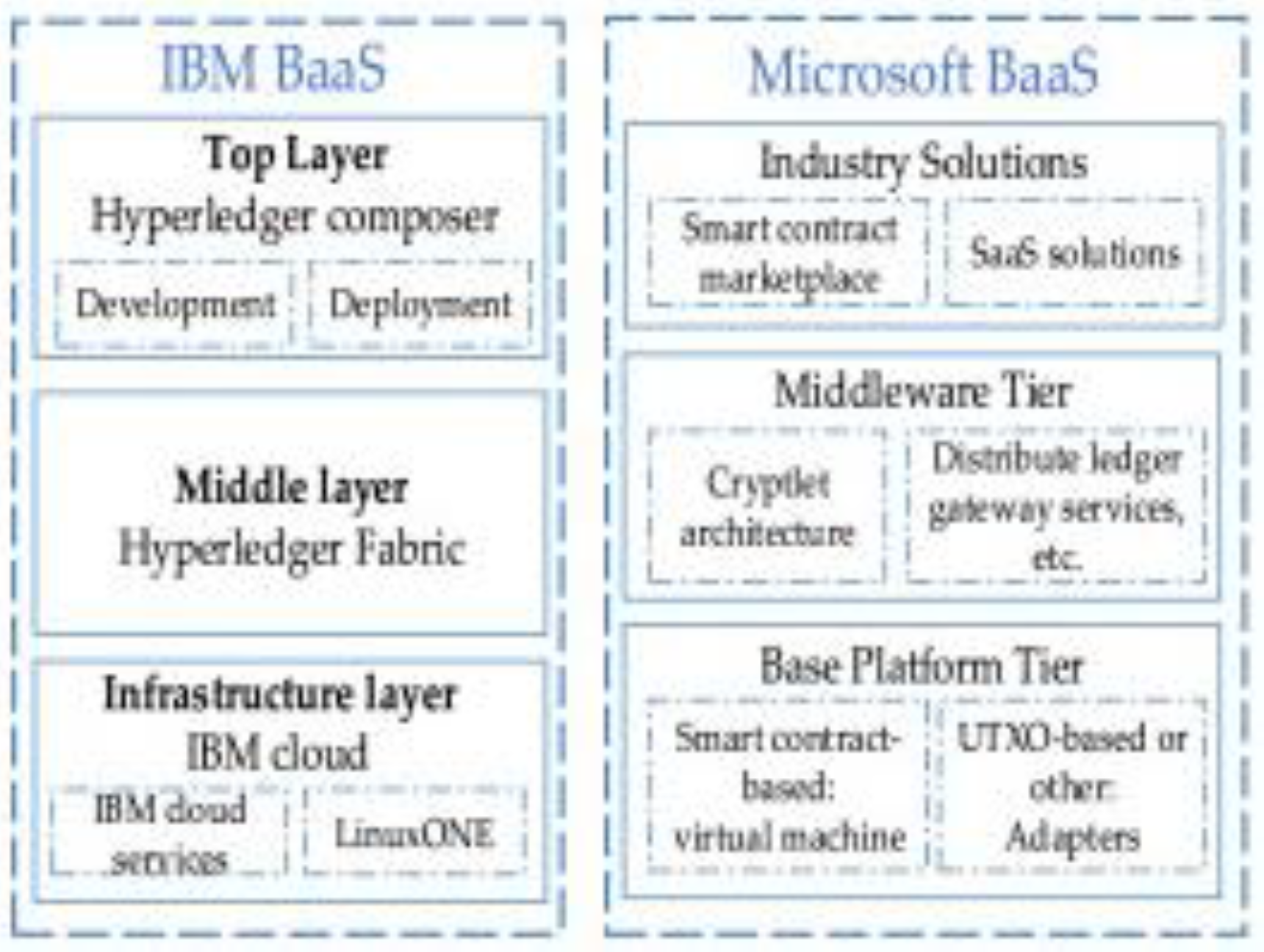
In the business world, enterprise blockchain architectures began to take shape by introducing solutions such as IBM Blockchain and Microsoft BaaS. These platforms provided companies with tools and services to develop personalized blockchain applications adapted to their needs.
Figure 3.
IBM BaaS & Microsoft BaaS Architecture. Taken from Taken from [5].
Figure 3.
IBM BaaS & Microsoft BaaS Architecture. Taken from Taken from [5].
The evolution of blockchain architectures also includes the emergence of public, private, and consortium blockchains. Public blockchains, such as Bitcoin and Ethereum, are accessible to anyone and are primarily used in financial and investment applications.
On the other hand, private blockchains restrict access and are used in enterprise environments to ensure privacy and confidentiality. Consortium blockchains are an intermediate-term where a select group of participants maintain the blockchain and share control.
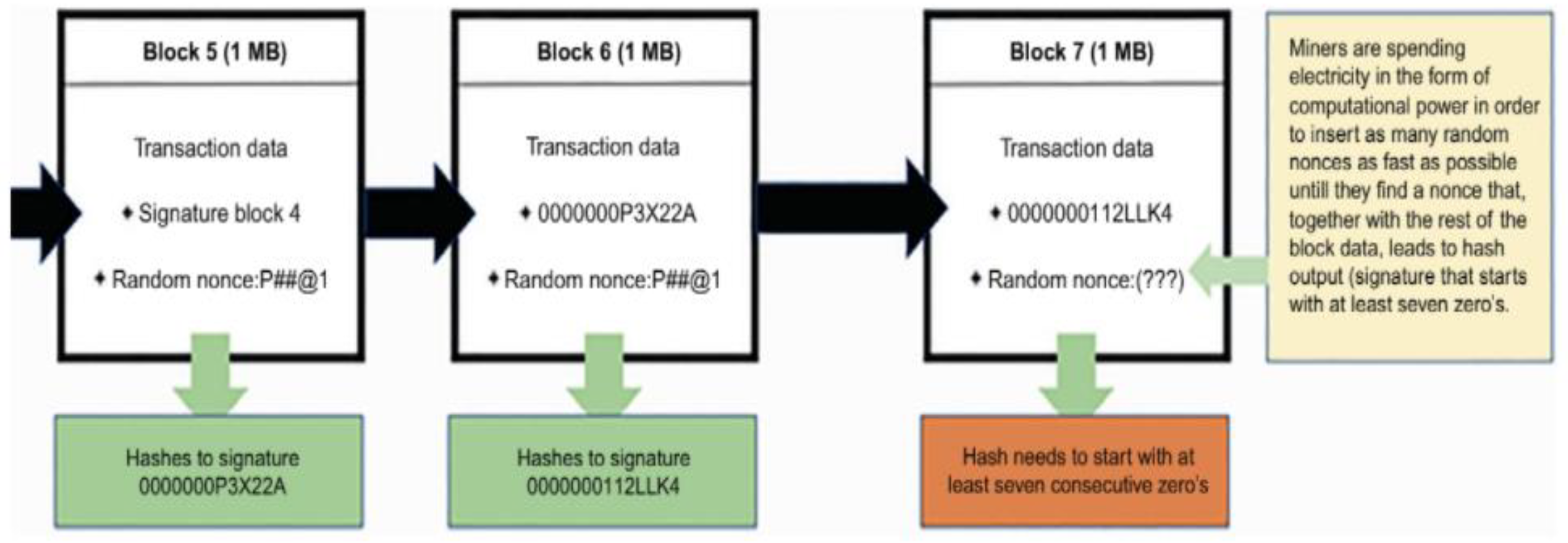
[6], defines the blockchain architecture under exceptional characteristics such as irreversibility, decentralization, persistence, and anonymity, describing the functioning and structure of blockchain in the real world, focusing on the mining process during validation and verification on the network.
Figure 4.
Source: Taken from [6].
Figure 4.
Source: Taken from [6].
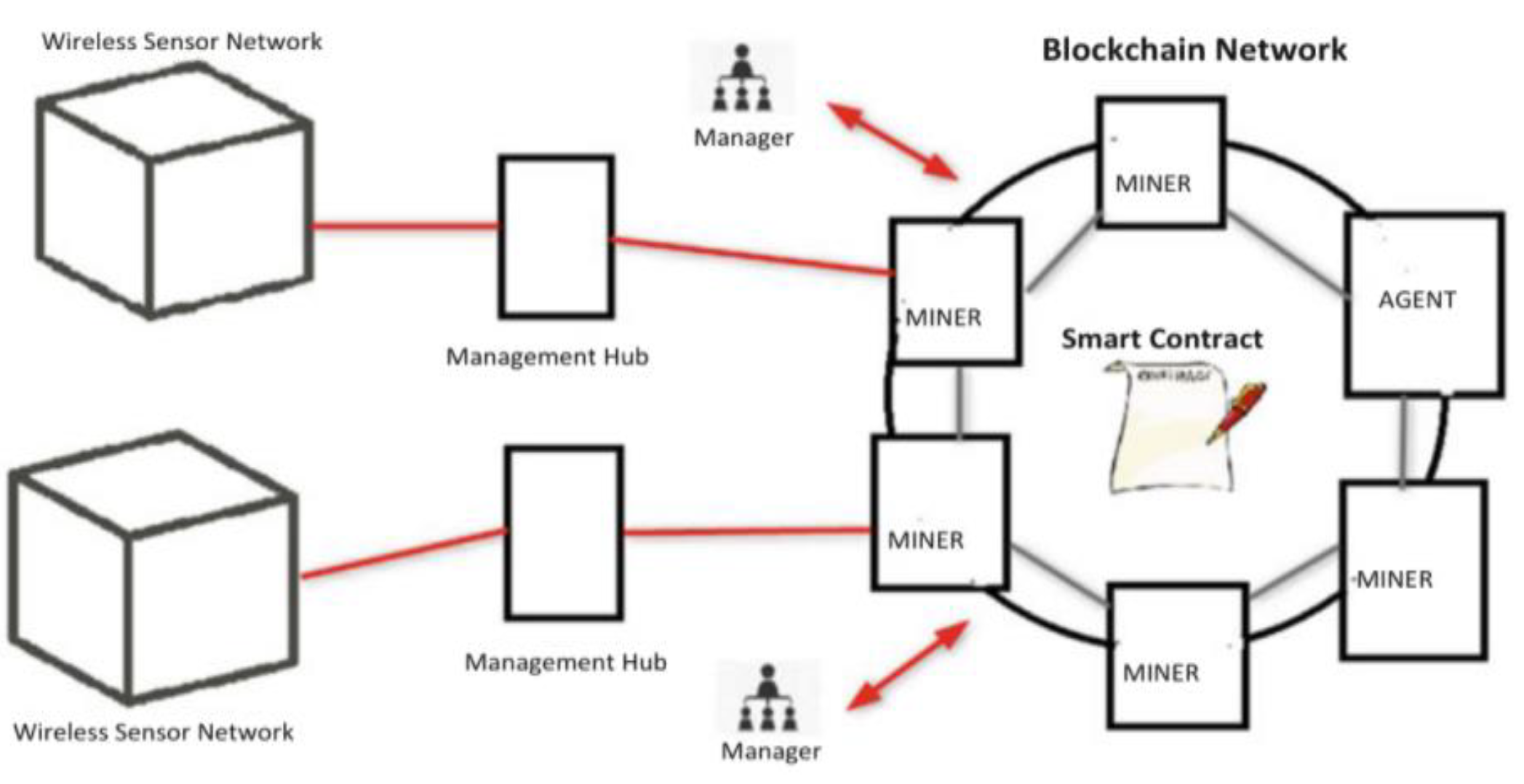
Authors such as [7] classify blockchain architectures into three main categories: public, private, and consortium. In public architecture, information and access are always available to anyone. In the private architecture, information is only available to users of the same entity or company.
Finally, consortium architecture brings together a set of companies that operate in the same industry and require common ground to conduct transactions or share information.
Figure 5.
Source: Taken from [7].
Figure 5.
Source: Taken from [7].
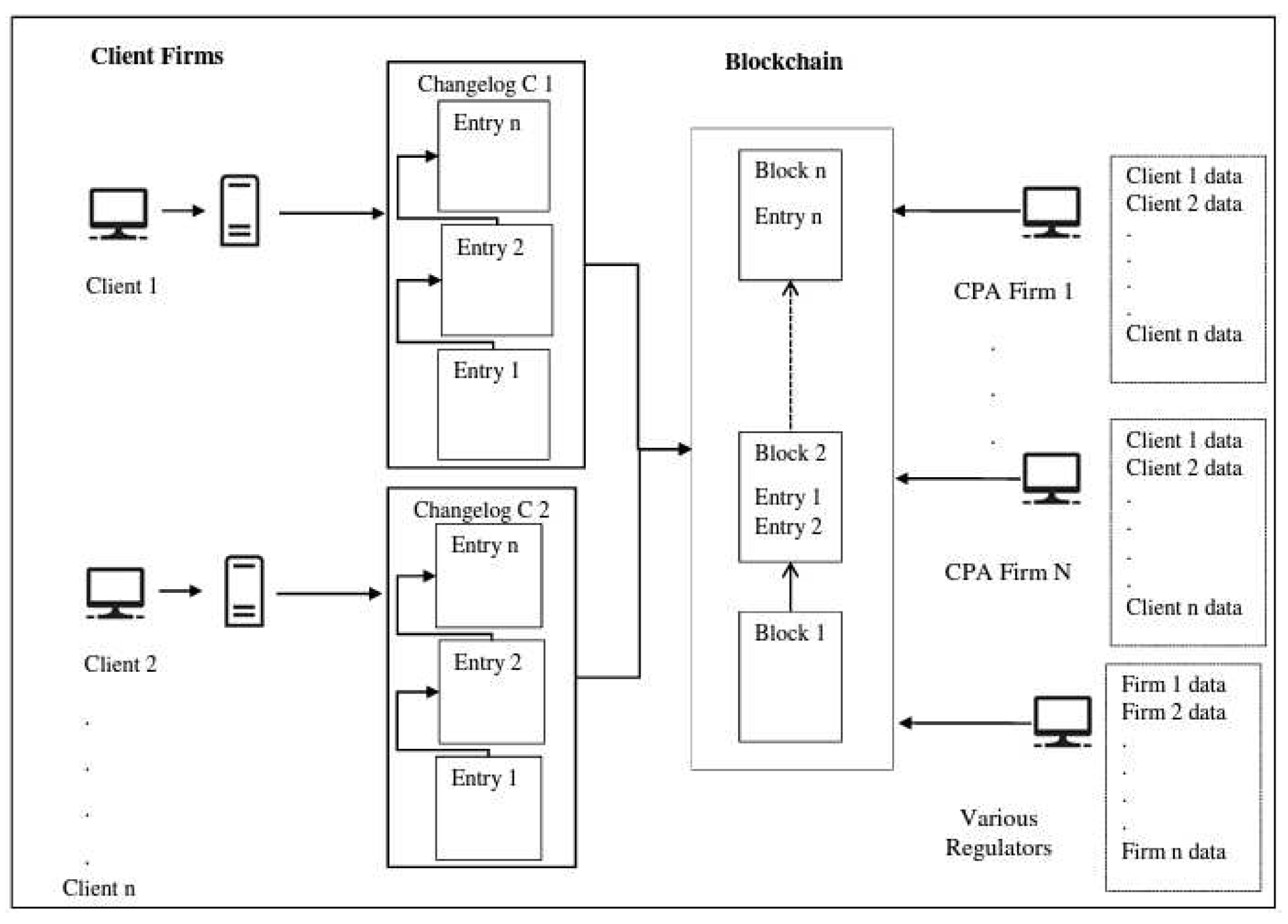
[8], proposed a blockchain architecture design for organizations, addressing security and confidentiality issues, providing audit services, and facilitating the connectivity of any company to a blockchain.
Figure 6.
Source: Taken from [8].
Figure 6.
Source: Taken from [8].
In Figure 7, [9], [10] and [11] show a reference architecture for a software system where the blockchain is one of the main components, explaining that as a component, blockchain has unique properties and limitations, providing data storage, computing services and communication services at the same time.
On the other hand, Ochoa and others propose an architecture through which it is possible to identify fake news on social networks, alert readers, punish those who dissolve false information, and reward those who publish truthful information. In this architecture, they consider each block as an object (Figure 8), so each transaction generated is considered a block, and within each of them, the metadata extracted from the published news is stored.
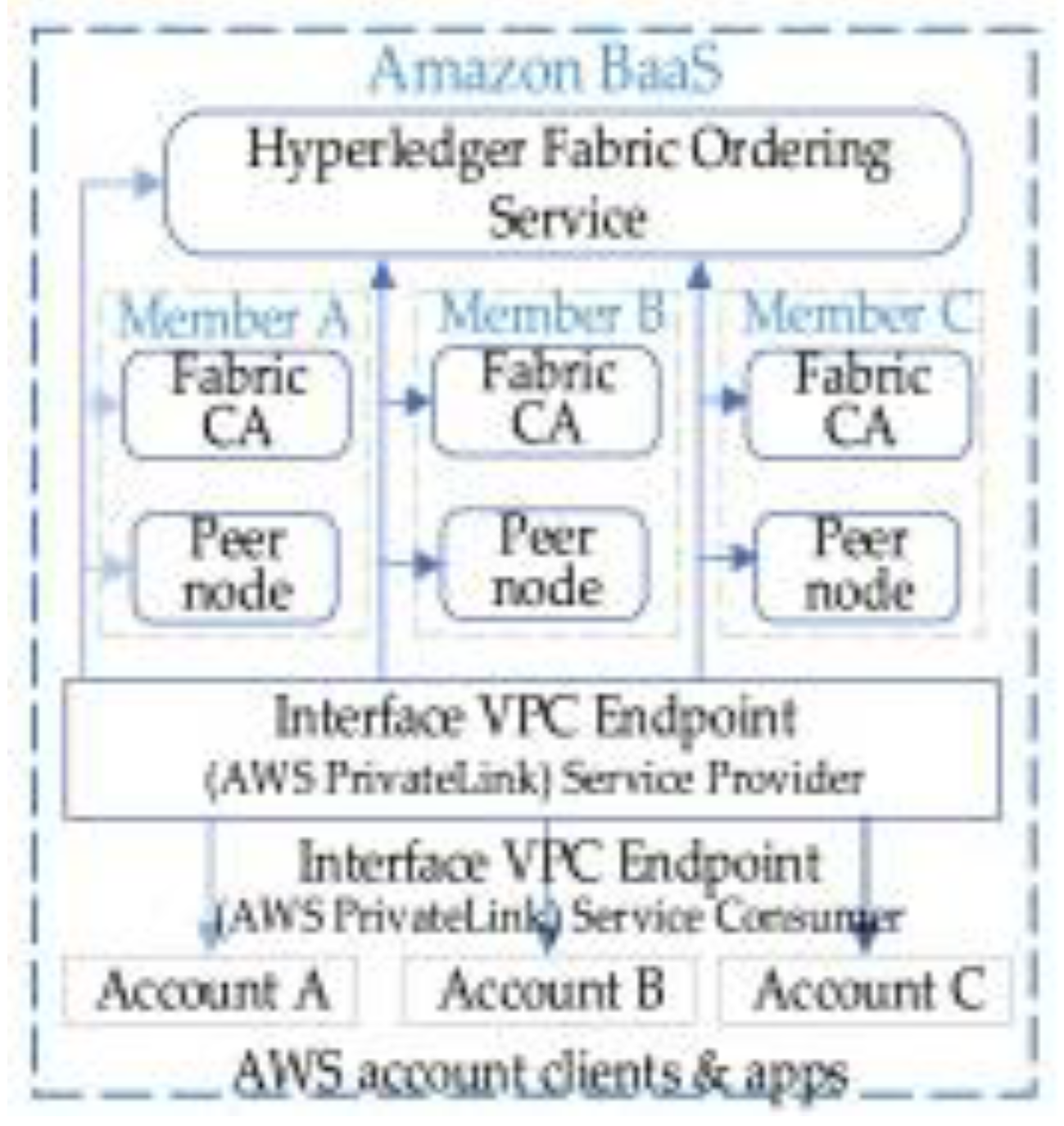
Amazon has adopted a component-based architecture to implement its blockchain network, which uses the service provided by Hyperledger and runs on the Amazon Web Services (AWS) infrastructure. In this configuration, the blockchain network remains operational as long as active members are deactivated only when the last member decides to leave the network. Each node owned by a user on this network owns a local copy of the blockchain ledger, which contains a record of all transactions and maintains a global network state for the specific channels in which that node participates. It should be noted that this global state is constantly updated as new transactions are made on the network.
This component-based architecture approach, coupled with the utilization of Hyperledger services and AWS infrastructure, allows Amazon to manage its blockchain network efficiently and efficiently, ensuring a secure and up-to-date record of all transactions made on the blockchain platform. This type of architecture is fundamental in successfully implementing blockchain-based solutions in the business environment and contributes to transparency and reliability in business operations.
Today, blockchain architectures continue evolving with the development of scalability, interoperability, and governance solutions. Use cases are being explored in a wide variety of industries, from supply chain and healthcare to digital rights management and electronic voting.
4. Current trends in Blockchain Architectures
The most recent trends in blockchain architectures show this technology’s constant evolution and increasing adoption in various industries. In this context, significant trends and developments have been observed in recent years that have changed how blockchain networks are used and understood. Below are some of the most recent trends and developments in this area:
- Business Blockchain: One of the most notable trends is the growing adoption of blockchain in companies and organizations. Authors such as Tapscott and Tapscott (2016) have argued that blockchain has the potential to revolutionize the way transactions and contracts are carried out in the business environment. Specific blockchain architectures are being developed for enterprise applications that offer greater privacy, scalability, and efficiency.
- Interoperability: Interoperability between different blockchain networks is a significant trend. The projects are working on solutions that allow different blockchains to communicate and share information more seamlessly, facilitating collaboration and the transfer of assets between different platforms. Authors such as Zamani, Movahedi, and Raykova (2018) have investigated solutions enabling fluid and secure communication between blockchains. Interoperability is considered crucial for the future of blockchain in the digital economy.
- Blockchain in the Cloud: Cloud service providers, such as AWS, Azure, and Google Cloud, offer managed blockchain services that simplify the implementation and management of blockchain networks. Simplifying the implementation makes the technology more accessible to businesses that want to take advantage of its benefits without the complexity of infrastructure management.
- Hybrid and Consortium Blockchains: Hybrid blockchain networks combine public and private blockchain elements and are gaining popularity. Authors such as Mougayar (2016) have pointed out that these architectures allow organizations to maintain control over certain aspects of their network while taking advantage of the security and decentralization of public blockchains.
- Smart Contracts and Defi Blockchain: Smart contract programming has become fundamental to many blockchains. Authors such as Szabo (1997) coined the term “smart contract,” and they are now used in a variety of applications, from decentralized financial services (DeFi) to identity management and more. Blockchain architectures must support the secure and efficient execution of these contracts. The DeFi ecosystem continues to grow and experiment with new blockchain-based financial applications. This scenario includes lending, decentralized exchanges, staking, and much more. DeFi has become an area of high growth and experimentation in cryptocurrencies.
- Blockchain and Non-Fungible Tokens (NFTs): The emergence of non-fungible tokens, representing unique and scarce digital assets, has given rise to new blockchain architectures and applications. Authors such as Chevet (2018) have explored how blockchain is used to support the ownership and authenticity of NFTs.
- Sustainability: Sustainability has become an important topic in the blockchain world due to the high energy consumption associated with some blockchains, such as Bitcoin. Trends are leaning towards adopting cleaner energy sources and more efficient consensus solutions regarding energy consumption.
- Digital Identity: Digital identity management is another area where blockchain impacts. Decentralized identity systems allow people greater control over personal information and reduce identity theft risk.
- Blockchain as a Service (BaaS): BaaS offerings continue to expand, allowing businesses to take advantage of the benefits of blockchain without the need to build and maintain their infrastructure. This facilitates the adoption of blockchain in a variety of applications.
- Government and Regulation: As blockchain matures, governments and regulatory agencies are developing laws and regulations to address security, privacy, and taxes related to cryptocurrencies and blockchain networks. Authors such as Larimer (2014) have discussed decentralized governance models for making decisions about updates and changes to the network.
5. Application Opportunities in the Digital Economy
Blockchain architectures have emerged as a disruptive technology with the potential to significantly impact the digital economy and generate opportunities in various sectors. This discussion explores how these architectures can be applied in the digital economy and what opportunities they offer based on contributions from experts in the field:
- (1)
- Transformation of the financial industry: [1] point out that blockchain architectures have transformed the financial sector by enabling fast and secure transactions without intermediaries. As the first blockchain-based cryptocurrency, Bitcoin has challenged the traditional financial system by enabling the transfer of value directly from person to person.
- (2)
- Supply chain digitization: In the opinion of [13], blockchain architectures have the potential to revolutionize the supply chain by providing complete and transparent visibility of all processes. This scenario can lead to greater efficiency, product authentication, and reduced supply chain fraud.
- (3)
- Digital asset management: [14] notes that blockchain architectures allow asset tokenization, meaning physical and digital assets can be represented as digital tokens. This opens up opportunities for investing in and trading digital assets, such as art, real estate, and more, in a more accessible and efficient way.
- (4)
- Smart contracts and automation: [15] introduced the concept of smart contracts, self-executing programs that operate on a blockchain. These contracts offer opportunities to automate a wide range of processes, from legal agreements to complex business processes, which can save time and costs.
- (5)
- Digital identity: Digital identity management is a growing field that benefits from blockchain architectures. Authors such as [13] suggest blockchains can provide a more secure and user-controlled digital identity system by allowing people to control their identity information.
Applying blockchain architectures to the digital economy can improve digital transactions’ security, efficiency, and transparency, driving more robust economic growth and greater trust in digital systems.
6. Challenges and obstacles to overcome
Despite their advantages and promises, Blockchain architectures face a series of challenges and obstacles in their application in the digital economy, as various experts in the field have noted.
One of the key challenges highlighted by authors such as [14] is scalability in public blockchains. As the number of users and transactions on a blockchain network increases, the speed and costs of operation can become problematic. Solving this problem is critical to enabling blockchains to be efficient in large-scale digital economy environments.
Another challenge raised by the same author is the need for standards and the difficulty in achieving interoperability between different blockchains: the digital economy requires blockchains to communicate effectively, and this lack of standardization can hinder integration.
Likewise, [14] emphasizes that more understanding and knowledge about blockchains can be a significant obstacle since education and promotion are essential to drive the adoption of this technology in the digital economy.
On the other hand, there is energy consumption, as noted by [1], especially in blockchains based on proof of work (PoW), such as Bitcoin. The energy required to maintain grid security raises environmental concerns and long-term sustainability. Furthermore, according to these authors, the high initial cost of development and configuration, especially for companies, can be an obstacle to adoption.
Concerns about data privacy and regulations, as mentioned by [13], are also significant challenges. Despite the inherent transparency of blockchains, it is essential to address the need for privacy in certain contexts and navigate varying regulations worldwide.
Finally, cybersecurity is an important aspect, as [14] points out. Although blockchain technology is secure, malicious actors can look for weaknesses in the blockchain ecosystem to exploit.
These challenges and obstacles represent critical areas that must be addressed so that blockchain architectures can realize their full potential in the digital economy.
7. Relevant Case Studies
In the digital economy, various blockchain architectures are being used in specific applications, and below are some concrete examples of how blockchain technology is being used in the digital economy:
- (1)
- Cross-Border Payments and Transfers: Companies like Ripple use blockchain technology to facilitate faster and cheaper international payments. This is especially useful in global e-commerce and remittances.
- (2)
- Cryptocurrencies: Cryptocurrencies like Bitcoin and Ethereum are critical examples of how blockchain is used as digital money. Users can make online purchases, investments, and value transfers without intermediaries.
- (3)
- Decentralized Finance (DeFi): DeFi platforms such as Aave, Compound, and MakerDAO use blockchain-based smart contracts to offer decentralized financial services, such as loans, exchanges, and interest generation.
- (4)
- Asset Tokenization: Blockchain is used to tokenize physical assets, such as real estate and art. This allows investors to buy fractions of expensive assets and trade them online.
- (5)
- Secure Electronic Voting: Some countries and organizations have explored blockchain-based electronic voting to improve security and transparency in elections.
- (6)
- Digital Identity Management: Blockchain ensures the security of people’s digital identity. Users can control their personal information and share only necessary information online.
- (7)
- Product Authentication: In the luxury goods industry, blockchain is used to authenticate the authenticity of products, which helps prevent counterfeiting.
- (8)
- Transparent Supply Chains: Large companies, like Walmart, track products throughout their supply chains using blockchain. This provides transparency and faster response to quality or safety issues.
- (9)
- Online Games and Digital Collectibles: Some online games use blockchain to allow ownership and trading of in-game objects and characters as digital assets.
- (10)
- Internet of Things (IoT): Blockchain is used in IoT applications to ensure secure communication and transactions between connected devices, such as smart meters and industrial sensors.
The examples above demonstrate how blockchain has become a versatile technology with numerous applications in the digital economy, from finance and e-commerce to product authentication and identity management. Its ability to provide security, transparency, and efficiency makes it an attractive solution in various sectors. Below are some specific applications of Blockchain and the Digital Economy:
Bitcoin (Public Blockchain):
- Transfer of Value: Bitcoin is the most well-known cryptocurrency and is used to transfer value online without the need for intermediaries. People can buy goods and services online, invest, and transfer funds globally.
Ethereum (Public Blockchain):
- Smart Contracts: Ethereum allows the creation and execution of smart contracts, which are self-executing programs that automate agreements and transactions. They are used in various applications, from decentralized finance (DeFi) to online gaming and electronic voting.
Hyperledger Fabric (Consortium Blockchain):
- Supply Chain Management: Companies like IBM use Hyperledger Fabric to track and verify the product supply chain, increasing transparency and reducing fraud.
Corda (Consortium Blockchain):
- Financial markets: Corda is used in financial market applications, where financial assets can be traded and settled more efficiently and securely.
Quorum (Consortium Blockchain):
- Banking and Finance: Quorum has been used in banking applications, including cross-border payments and bond issuance.
Binance Smart Chain (BSC, Public Blockchain):
- Decentralized Finance (DeFi): BSC has become a popular platform for DeFi applications, including decentralized exchanges, lending, and cryptocurrency staking.
Cardano (Public Blockchain):
- Education and Electronic Voting: Cardano has been used to create electronic voting systems and provide verifiable academic certifications.
Algorand (Public Blockchain):
- Asset Tokenization: Algorand has been used to tokenize physical and digital assets, such as real estate and art.
VeChain (Public and Consortium Blockchain):
- Authentication and Traceability: VeChain is used in product authentication and tracking applications, such as luxury product authenticity and food traceability.
IOTA (Tangle, a blockchain-like technology):
- Internet of Things (IoT): IOTA focuses on the machine economy and facilitates transactions and communication between IoT devices.
8. Perspectives and Future of Blockchain Architectures
The future of blockchain architecture in the digital economy is promising and full of opportunities. As this technology continues to evolve, key developments are likely to be seen: One of the current challenges of public blockchains is their ability to scale and handle large numbers of transactions. In the future, solutions will likely be implemented for greater performance and scalability without compromising security.
As blockchains become more user-friendly and integrated into everyday applications and services, greater adoption will be seen in both the consumer and enterprise arenas. This could include everyday blockchain-based payment systems and secure voting applications.
Likewise, we will see greater tokenization of traditional assets, such as real estate, stocks, and bonds. This will allow investors to buy and trade a wide range of assets more accessible and efficiently.
Blockchain is expected to continue playing an important role in improving efficiency and transparency in supply chain management and logistics, as well as the development and adoption of DApps will continue to grow in areas such as gaming, finance, and social media, giving users greater control over their data and assets.
The blockchain community will continue to innovate and develop new technologies and standards. This could include security, energy efficiency, and smart contract programmability advances.
9. Ethical and Safety Considerations
The ethical implications of blockchain architectures in the digital economy are a topic of growing interest and debate in the academic and professional community. Blockchains are transparent by nature, meaning that all transactions are visible to network participants. This can raise ethical privacy concerns, especially in applications that involve personal or financial data. People have the right to privacy, and blockchain solutions must address these concerns by implementing appropriate measures to protect sensitive data. The inherent transparency of blockchains, which allows visibility of all transactions, raises ethical privacy concerns. As David Birch points out in his book “ Before Babylon, Beyond Bitcoin” (2017), a balance between the transparency necessary for trust and user privacy must be found.
Permanent data storage or immutability of data on the blockchain means that recorded information cannot be easily deleted or modified. This can be problematic if incorrect or harmful data is recorded. Ethics dictate that mechanisms must be established to correct errors and remove harmful information without compromising the integrity of the blockchain.
Regarding smart contracts, they are understood to be self-executing computer programs that operate on the blockchain, but if a smart contract has a bug or performs harmful actions, who is responsible? Establishing responsibility and ethics in the creation and execution of smart contracts is a significant challenge. Self-executing smart contracts can be misleading or contain errors. Nick Szabo, who coined the term “smart contract” in the 1990s, highlights the importance of clarity and security in smart contract programming to avoid unethical outcomes.
Blockchain-based applications must be equitable and accessible to everyone, regardless of geographic location or technical skill level. Digital exclusion is an ethical concern that needs to be addressed, and several academics, such as Primavera De Filippi and Aaron Wright, in their book “Blockchain and the Law “ (2018), highlight the need to ensure that blockchains are accessible to everyone.
(PoW)-based blockchains consume large amounts of energy. This raises ethical concerns about the environmental impact and sustainability of the technology. Exploring greener solutions, such as proof-of-stake (PoS)-based blockchains, is an important ethical consideration. In an IEEE Spectrum article, Morgan Peck points out ethical concerns about environmental impact and the need to consider more sustainable alternatives.
10. Conclusions
- (1)
- Recent trends and developments in blockchain architectures drive their adoption in various sectors and applications. These advances address key challenges, such as scalability and interoperability, while driving new business and smart contracts. The continued evolution of blockchain is critical to its role in the digital economy and the transformation of numerous industries.
- (2)
- Blockchain architectures represent a disruptive innovation that significantly impacts the digital economy. As these technologies continue to evolve, exciting opportunities present themselves for a variety of sectors, from finance to logistics to healthcare. The most recent trends in blockchain architectures reflect their growing adoption and ability to address challenges in the digital economy.
- (3)
- Blockchain architectures open new perspectives in the digital economy by offering innovative and secure solutions in various sectors. Experts in the field have identified these opportunities and are exploring how to make the most of this technology to drive growth and efficiency in the digital economy.
- (4)
- The application of blockchain in the digital economy has proven to be a promising solution for creating immutable records, securing transactions, and eliminating costly intermediaries. Concrete examples, such as transparent supply chains and asset tokenization, illustrate how these architectures can generate efficiency and trust in various sectors.
- (5)
- Ultimately, the future of blockchain architectures in the digital economy looks promising, potentially transforming business processes and providing new opportunities. Informed and ethical adoption of this technology will be vital to maximizing its benefits and overcoming the challenges that arise along the way. As advances and research in this field continue, it is important to stay up to date and be prepared to adapt to an ever-changing environment.
Author Contributions
Conceptualization, Magda Pineda; Data curation, Magda Pineda; Formal analysis, Magda Pineda, Daladier Jabba and Wilson Nieto-Bernal; Funding acquisition, Magda Pineda, Daladier Jabba and Wilson Nieto-Bernal; Investigation, Magda Pineda, Daladier Jabba and Wilson Nieto-Bernal; Methodology, Magda Pineda; Project administration, Magda Pineda, Daladier Jabba and Wilson Nieto-Bernal; Resources, Magda Pineda; Supervision, Magda Pineda, Daladier Jabba and Wilson Nieto-Bernal; Writing—original draft, Magda Pineda; Writing—review & editing, Daladier Jabba and Wilson Nieto-Bernal.
Funding
This research received no external funding.
Institutional Review Board Statement
Not applicable
Informed Consent Statement
Not applicable.
Data Availability Statement
Not applicable.
Acknowledgments
We thank all the participants involved in the project for their contribution to our research. At the same time, we thank the editors and reviewers for their valuable comments.
Conflicts of Interest
The authors declare no conflict of interest.
References
- Tapscott, D., & Tapscott, A. (2016). Blockchain Revolution: How the Technology Behind Bitcoin Is Changing Money, Business, and the World. New York: Penguin Random House.
- Nakamoto, S. (2008). Bitcoin: A peer-to-peer electronic cash system. Available at: https://bitcoin.org/bitcoin.pdf.
- Munoz, J. L. , Forne, J., Esparza, O., & Soriano, M. (). Certificate revocation system implementation based on the Merkle hash tree. International Journal of Information Security 2004, 2, 110–124. [Google Scholar]
- Zhang, W., & Anand, T. (2022). Ethereum architecture and overview. In Blockchain and Ethereum Smart Contract Solution Development: Dapp Programming with Solidity (pp. 209-244). Berkeley, CA: Apress.
- Jie, S. O., Zhang, P., Alkubati, M., Yubin, B. A., & Ge, Y. U. (2021). Research advances on blockchain-as-a-service: architectures, applications and challenges. Digital Communications and Networks.
- Aggarwal, S., & Kumar, N. (2021). Architecture of blockchain. In Advances in Computers (Vol. 121, pp. 171-192). Elsevier.
- Chhabra, S., Mor, P., Mahdi, H. F., & Choudhury, T. (2021). Block Chain and IoT Architecture. In Blockchain Applications in IoT Ecosystem (pp. 15-27). Cham: Springer International Publishing.
- Vincent, N. E., Skjellum, A., & Medury, S. (2020). Blockchain architecture: A design that helps CPA firms leverage the technology. International Journal of Accounting Information Systems, 38, 10046.
- Xu, X., Weber, I., & Staples, M. (2019). Architecture for blockchain applications (pp. 1-307). Cham: Springer.
- Saghiri, A. M. (2020). Blockchain architecture. Advanced applications of blockchain technology, 161-176.
- Xu, X., Pautasso, C., Zhu, L., Lu, Q., & Weber, I. (2018, July). A pattern collection for blockchain-based applications. In Proceedings of the 23rd European Conference on Pattern Languages of Programs (pp. 1-20).
- Ochoa, I. S., de Mello, G., Silva, L. A., Gomes, A. J., Fernandes, A. M., & Leithardt, V. R. (2019, September). Fakechain: A blockchain architecture to ensure trust in social media networks. International conference on the quality of information and communications technology (págs. 105-118). Springer.
- Mougayar, W. (2016). The business blockchain: promise, practice, and application of the next Internet technology. John Wiley & Sons.
- Swan, M. (2015). Blockchain: Blueprint for a new economy. “ O’Reilly Media, Inc.”.
- Szabo, N. (1994). Contratos inteligentes. Recuperado de https://www. fon. hum. uva. nl/rob/Courses/InformationInSpeech/CDROM/Literature/LOT winterschool2006/szabo. best. vwh. net/smart. contracts. html.
- Brown, R. (2016). Introducing R3 Corda™: A Distributed Ledger Designed for Financial Services. Available at: http://www.r3cev.com/blog/2016/4/4/introducing-r3-corda-a-distributed-ledger-designed-for-financial-services Buterin, V. (2015). On Public and Private Blockchains. Available at: https://blog.Ethereum. org/2015/08/07/onpublic-and-private-blockchains/.
- Aini, Q., Manongga, D., Rahardja, U., Sembiring, I., Elmanda, V., Faturahman, A., & Santoso, N. P. L. (2022). Security level significance in dapps blockchain-based document authentication. Aptisi Transactions on Technopreneurship (ATT), 4(3), 292-305.
- Aponte, F., Gutierrez, L., Pineda, M., Merino, I., Salazar, A., & Wightman, P. (2021). Cluster-based classification of blockchain consensus algorithms. IEEE Latin America Transactions, 19(4), 688-696.
- Attia, O., Khoufi, I., Laouiti, A., & Adjih, C. (2019, June). An IoT-blockchain architecture based on hyperledger framework for health care monitoring application. In NTMS 2019-10th IFIP International Conference on New Technologies, Mobility and Security (pp. 1-5). IEEE Computer Society.
- Besançon, L., Da Silva, C. F., Ghodous, P., & Gelas, J. P. (2022). A blockchain ontology for DApps development. IEEE Access, 10, 49905-49933.
- Bhutta, M. N. M., Khwaja, A. A., Nadeem, A., Ahmad, H. F., Khan, M. K., Hanif, M. A., ... & Cao, Y. (2021). A survey on blockchain technology: Evolution, architecture and security. Ieee Access, 9, 61048-61073.
- Birch, D. (2017). Before Babylon, Beyond Bitcoin: From money that we understand to money that understands Us. London Publishing Partnership.
- Chang, L., & Hsieh, M. Y. (2022). Five ways to create customer values with blockchain. International Journal of Organizational Innovation, 14(4), 1-19.
- Charles, W., Marler, N., Long, L., & Manion, S. (2019). Blockchain compliance by design: Regulatory considerations for blockchain in clinical research. Frontiers in Blockchain, 2, 18.
- Chen, C., Zhang, L., Li, Y., Liao, T., Zhao, S., Zheng, Z., ... & Wu, J. (2022). When digital economy meets web 3.0: Applications and challenges. IEEE Open Journal of the Computer Society.
- Chevet, S. (2018). Blockchain technology and non-fungible tokens: Reshaping value chains in creative industries. Available at SSRN 3212662.
- Condon, F., Franco, P., Martínez, J. M., Eltamaly, A. M., Kim, Y. C., & Ahmed, M. A. (2023). EnergyAuction: IoT-Blockchain Architecture for Local Peer-to-Peer Energy Trading in a Microgrid. Sustainability, 15(17), 13203.
- IO, E. (2017). EOS. IO technical white paper. EOS. IO (accessed 18 December 2017) https://github. com/EOSIO/Documentation, 9.
- Grigg, I. (2017). Eos-an introduction. White paper. https://whitepaperdatabase. com/eos-whitepaper.
- Larimer, D. (2014). Delegated proof-of-stake (dpos). Bitshare whitepaper, 81, 85.
- Larimer, D., Hoskinson, C., & Larimer, S. (2017). Bitshares: a peer to-peer polymorphic digital asset exchange. BitShares% 20A% 20Peer-to-Peer% 20Polymorphic% 20Digital% 20Asset% 20Exchange. pdf.
- De Filippi, P., & Wright, A. (2018). Blockchain and the law: The rule of code. Harvard University Press.
- Brynjolfsson, E., & McAfee, A. (2014). The second machine age: Work, progress, and prosperity in a time of brilliant technologies. WW Norton & Company.
- Elghaish, F., Hosseini, M. R., Kocaturk, T., Arashpour, M., & Ledari, M. B. (2023). Digitalised circular construction supply chain: An integrated BIM-Blockchain solution. Automation in Construction, 148, 104746.
- ElMessiry, M., ElMessiry, A., & ElMessiry, M. (2019). Dual Token Blockchain Economy Framework: The Garment Use Case. In Blockchain–ICBC 2019: Second International Conference, Held as Part of the Services Conference Federation, SCF 2019, San Diego, CA, USA, June 25–30, 2019, Proceedings 2 (pp. 157-170). Springer International Publishing.
- Ertz, M., & Boily, É. (2019). The rise of the digital economy: Thoughts on blockchain technology and cryptocurrencies for the collaborative economy. International Journal of Innovation Studies, 3(4), 84-93.
- Fernandes, A., Rocha, V., Da Conceicao, A. F., & Horita, F. (2020, March). Scalable Architecture for sharing EHR using the Hyperledger Blockchain. In 2020 IEEE International Conference on Software Architecture Companion (ICSA-C) (pp. 130-138). IEEE.
- Firdayati, D., Ranggadara, I., Afrianto, I., & Kurnianda, N. R. (2021). Designing architecture blockchain of hyperledger fabric for purchasing strategy. Int. J, 10(2).
- Hardjono, T., & Smith, N. (2021). Towards an attestation architecture for blockchain networks. World Wide Web, 24(5), 1587-1615.
- Huang, J., Lei, K., Du, M., Zhao, H., Liu, H., Liu, J., & Qi, Z. (2019). Survey on blockchain incentive mechanism. In Data Science: 5th International Conference of Pioneering Computer Scientists, Engineers and Educators, ICPCSEE 2019, Guilin, China, September 20–23, 2019, Proceedings, Part I 5 (pp. 386-395). Springer Singapore.
- Ismail, L., & Materwala, H. (2019). A review of blockchain architecture and consensus protocols: Use cases, challenges, and solutions. Symmetry, 11(10), 1198.
- Jie, S. O., Zhang, P., Alkubati, M., Yubin, B. A., & Ge, Y. U. (2021). Research advances on blockchain-as-a-service: architectures, applications and challenges. Digital Communications and Networks.
- Kolehmainen, T., Laatikainen, G., Kultanen, J., Kazan, E., & Abrahamsson, P. (2020, November). Using blockchain in digitalizing enterprise legacy systems: An experience report. In International Conference on Software Business (pp. 70-85). Cham: Springer International Publishing.
- Kučera, J., & Bruckner, T. (2019). Blockchain and ethics: A brief overview of the emerging initiatives. In BIR Workshops (Vol. 2443, pp. 129-139).
- Lao, L., Li, Z., Hou, S., Xiao, B., Guo, S., & Yang, Y. (2020). A survey of IoT applications in blockchain systems: Architecture, consensus, and traffic modeling. ACM Computing Surveys (CSUR), 53(1), 1-32.
- Li, X., Zheng, Z., & Dai, H. N. (2021). When services computing meets blockchain: Challenges and opportunities. Journal of Parallel and Distributed Computing, 150, 1-14.
- Liu, J., Zhang, H., & Zhen, L. (2023). Blockchain technology in maritime supply chains: Applications, architecture and challenges. International Journal of Production Research, 61(11), 3547-3563.
- MOHANTY, P., & BEHERA, S. K. PEER-TO-PEER ELECTRONIC CASH SYSTEM IN BITCOIN TECHNOLOGY.
- Moudoud, H., Cherkaoui, S., & Khoukhi, L. (2019, September). An IoT blockchain architecture using oracles and smart contracts: the use-case of a food supply chain. In 2019 IEEE 30th Annual International Symposium on Personal, Indoor and Mobile Radio Communications (PIMRC) (pp. 1-6). IEEE.
- Liu, X., Peng, D., & Wen, Y. (2018). Analysis of R & D Capability of China’s Blockchain Technologies. Theoretical Economics Letters, 8(10), 1889.
- Murthy, C. V. B., Shri, M. L., Kadry, S., & Lim, S. (2020). Blockchain based cloud computing: Architecture and research challenges. IEEE access, 8, 205190-205205.
- Paul, T., Islam, N., Mondal, S., & Rakshit, S. (2022). RFID-integrated blockchain-driven circular supply chain management: A system architecture for B2B tea industry. Industrial Marketing Management, 101, 238-257.
- Peck, M. E. (2017). Blockchains: How they work and why they’ll change the world. IEEE spectrum, 54(10), 26-35.
- Pennino, D., Pizzonia, M., Vitaletti, A., & Zecchini, M. (2022). Blockchain as IoT Economy enabler: A review of architectural aspects. Journal of Sensor and Actuator Networks, 11(2), 20.
- Ramadoss, R. (2022). Blockchain technology: An overview. IEEE Potentials, 41(6), 6-12.
- Ray, P. P., Dash, D., Salah, K., & Kumar, N. (2020). Blockchain for IoT-based healthcare: background, consensus, platforms, and use cases. IEEE Systems Journal, 15(1), 85-94.
- Reghunadhan, R. (2020). Ethical considerations and issues of blockchain technology-based systems in war zones: a case study approach. In Handbook of research on blockchain technology (pp. 1-34). Academic Press.
- Shaikh, Z. A., Khan, A. A., Baitenova, L., Zambinova, G., Yegina, N., Ivolgina, N., ... & Barykin, S. E. (2022). Blockchain hyperledger with non-linear machine learning: A novel and secure educational accreditation registration and distributed ledger preservation architecture. Applied Sciences, 12(5), 2534.
- Shrimali, B., & Patel, H. B. (2022). Blockchain state-of-the-art: architecture, use cases, consensus, challenges and opportunities. Journal of King Saud University-Computer and Information Sciences, 34(9), 6793-6807.
- Sigley, G., & Powell, W. (2023). Governing the digital economy: An exploration of blockchains with Chinese characteristics. Journal of Contemporary Asia, 53(4), 648-667.
- Singh, P., Elmi, Z., Lau, Y. Y., Borowska-Stefańska, M., Wiśniewski, S., & Dulebenets, M. A. (2022). Blockchain and AI technology convergence: Applications in transportation systems. Vehicular Communications, 100521.
- Seffinga, J., Lyons, L., & Bachman, A. (2017). The Blockchain (R) evolution–The Swiss Perspective. Deloitte, Feb.
- Sutriyan, H., Sunaryadi, A., & Sinambela, M. (2022, December). Blockchain-Based Multiple Server Database System Prototype on BMKG Automatic Weather Station (AWS) Center Architecture. In 2022 Seventh International Conference on Informatics and Computing (ICIC) (pp. 1-6). IEEE.
- Viriyasitavat, W., Da Xu, L., Bi, Z., & Pungpapong, V. (2019). Blockchain and internet of things for modern business process in digital economy—the state of the art. IEEE transactions on computational social systems, 6(6), 1420-1432.
- Wang, B., Luo, W., Zhang, A., Tian, Z., & Li, Z. (2020). Blockchain-enabled circular supply chain management: A system architecture for fast fashion. Computers in Industry, 123, 103324.
- Wang, S., Ouyang, L., Yuan, Y., Ni, X., Han, X., & Wang, F. Y. (2019). Blockchain-enabled smart contracts: architecture, applications, and future trends. IEEE Transactions on Systems, Man, and Cybernetics: Systems, 49(11), 2266-2277.
- Wu, K., Ma, Y., Huang, G., & Liu, X. (2021). A first look at blockchain-based decentralized applications. Software: Practice and Experience, 51(10), 2033-2050.
- Zamani, M., Movahedi, M., & Raykova, M. (2018, October). Rapidchain: Scaling blockchain via full sharding. In Proceedings of the 2018 ACM SIGSAC conference on computer and communications security (pp. 931-948).
- Zhang, A., Zhong, R. Y., Farooque, M., Kang, K., & Venkatesh, V. G. (2020). Blockchain-based life cycle assessment: An implementation framework and system architecture. Resources, Conservation and Recycling, 152, 104512.
- Zheng, Z., Xie, S., Dai, H., Chen, X., & Wang, H. (2017, June). An overview of blockchain technology: Architecture, consensus, and future trends. In 2017 IEEE international congress on big data (BigData congress) (pp. 557-564). Ieee.
Figure 1.
Bitcoin Blockchain Architecture. Own elaboration.
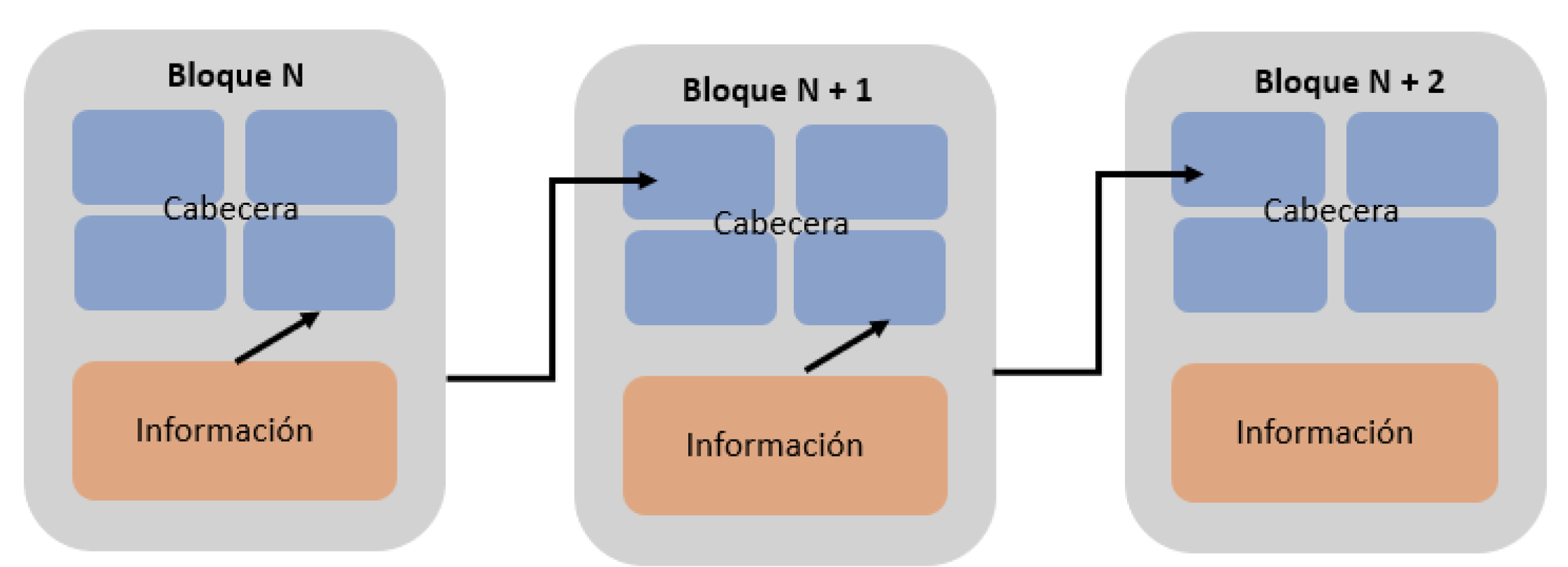
Figure 2.
Ethereum Blockchain Architecture. Taken from [4].
Figure 2.
Ethereum Blockchain Architecture. Taken from [4].
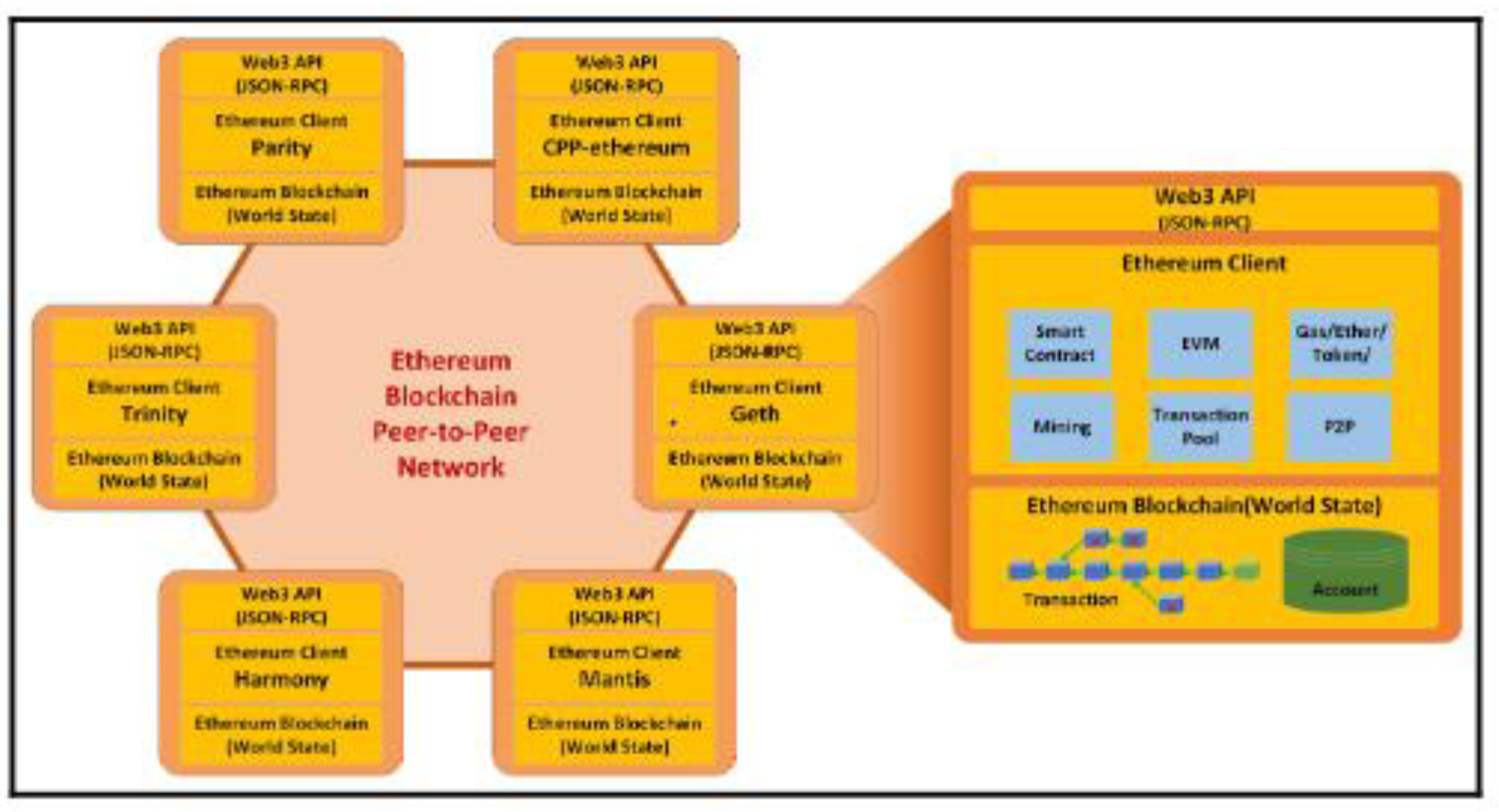
Figure 7.
Source: Taken from [9].
Figure 7.
Source: Taken from [9].
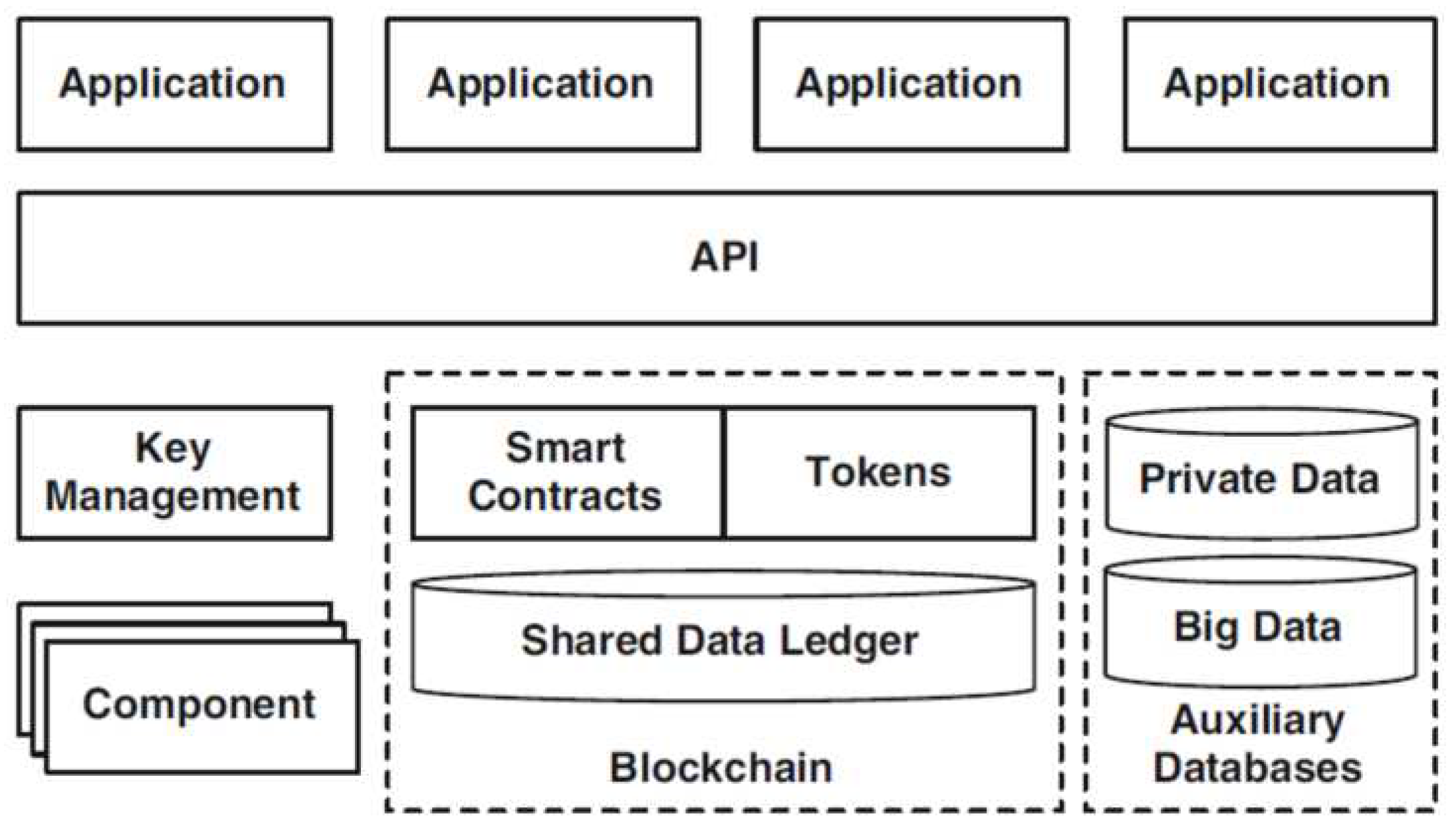
Figure 8.
Source: Taken from [12].
Figure 8.
Source: Taken from [12].
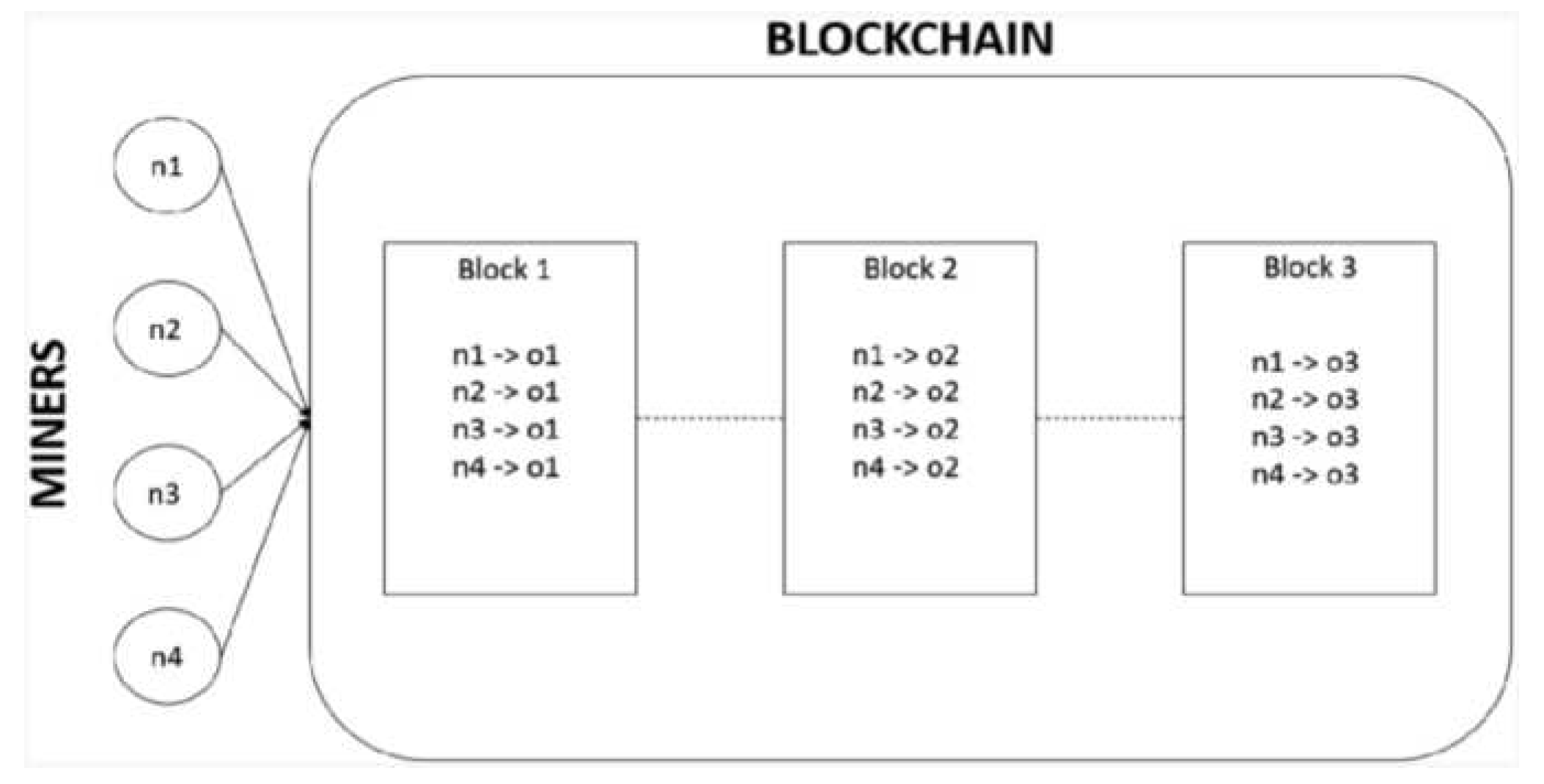
Figure 9.
AWS architecture. Source: Taken from [5].
Figure 9.
AWS architecture. Source: Taken from [5].
Disclaimer/Publisher’s Note: The statements, opinions and data contained in all publications are solely those of the individual author(s) and contributor(s) and not of MDPI and/or the editor(s). MDPI and/or the editor(s) disclaim responsibility for any injury to people or property resulting from any ideas, methods, instructions or products referred to in the content. |
© 2023 by the authors. Licensee MDPI, Basel, Switzerland. This article is an open access article distributed under the terms and conditions of the Creative Commons Attribution (CC BY) license (http://creativecommons.org/licenses/by/4.0/).
Copyright: This open access article is published under a Creative Commons CC BY 4.0 license, which permit the free download, distribution, and reuse, provided that the author and preprint are cited in any reuse.


