
Submitted:
29 October 2023
Posted:
30 October 2023
You are already at the latest version
Abstract
This review paper explores the innovative realm of transparent solar panels, investigating their properties, applications, challenges, and recent advancements. Transparent solar panels, designed to harvest solar energy while allowing visible light to pass through, have gained significant attention due to their potential to revolutionize renewable energy technologies. The paper delves into the working mechanisms of various types of transparent solar panels, including Organic Photovoltaic (OPV) panels, Dye-Sensitized Solar Cells (DSSC), Perovskite Solar Cells, and Transparent Thin-Film Silicon Solar Cells. It discusses their integration into diverse applications, such as building-integrated photovoltaics, consumer electronics, the automotive industry, and aerospace. The review identifies challenges, including low efficiency, durability concerns, production costs, and integration hurdles, that currently hinder their widespread adoption. Moreover, the paper emphasizes the transformative potential of transparent solar panels in shaping the future of renewable energy, not only as energy generators but also as aesthetically pleasing and multifunctional components of our built environment. Finally, the paper underscores the need for continued research and development efforts to enhance efficiency, improve stability, and address integration challenges, paving the way for transparent solar panels to play a central role in the transition toward a more sustainable and energy-efficient future.
Keywords:
transparent solar panels
; renewable energy
; OPV
; DSSC
; Perovskite Solar Cells
; Thin-Film Silicon
; building-integrated photovoltaics
; production costs
; integration hurdles.
1. Introduction
1.1. Definition and Importance of Transparent Solar Panels:
Transparent solar panels, also known as see-through solar panels or clear solar cells, are innovative photovoltaic devices designed to harvest solar energy while allowing visible light to pass through. Unlike traditional solar panels, which are opaque and hinder light penetration, transparent solar panels have the unique ability to be integrated into various surfaces, such as windows, facades, and even electronic devices, without obstructing the view. This characteristic makes them highly versatile and suitable for applications where aesthetics and functionality are crucial. The importance of transparent solar panels lies in their ability to transform everyday surfaces into energy-generating assets, thus expanding the possibilities for renewable energy utilization [1,2].
1.2. Historical Background and Evolution of Transparent Solar Technologies:
The concept of transparent solar panels dates back several decades, with early research focused on creating solar cells with transparent conductive coatings. Over time, advancements in materials science, nanotechnology, and photovoltaic technologies have driven the evolution of transparent solar panels. Key milestones include the development of organic photovoltaic cells in the 1980s, followed by the emergence of dye-sensitized solar cells (DSSC) in the 1990s. In recent years, perovskite solar cells and transparent thin-film silicon solar cells have gained prominence due to their high efficiency and potential for large-scale production. The historical background showcases a timeline of discoveries and innovations that have paved the way for modern transparent solar technologies [3,4].
1.3. Significance in Renewable Energy and Sustainable Architecture:
Transparent solar panels seamlessly integrated into architectural designs enable indoor energy harvesting, reducing buildings’ reliance on fossil fuels and lowering carbon footprints. This innovative approach enhances aesthetic appeal, promotes energy-efficient smart buildings, and signifies a significant stride toward sustainable, environmentally friendly construction practices [5,6,7].
1.3.1. Harvesting Solar Energy Indoors:
Transparent solar panels enable the collection of solar energy indoors, allowing buildings to generate electricity even in spaces with limited access to sunlight. This indoor energy harvesting capability is particularly valuable for urban environments where buildings often cast shadows on each other.
1.3.2. Architectural Integration:
Transparent solar panels can be seamlessly integrated into architectural designs, serving as windows, skylights, and building facades. This integration not only generates clean energy but also enhances the aesthetic appeal of buildings. The ability to blend renewable energy generation with architectural design is a significant advancement in sustainable construction [8].
1.3.3. Reduced Carbon Footprint:
By harnessing solar energy through transparent panels, buildings can reduce their reliance on fossil fuels, thereby lowering their carbon footprint. Sustainable architecture, coupled with transparent solar technologies, contributes to mitigating climate change and promoting environmentally friendly practices in the construction industry.
1.3.4. Energy-Efficient Smart Buildings:
Transparent solar panels can be incorporated into smart building systems, enabling the generation of on-site renewable energy for various applications, including lighting, heating, and cooling. This integration enhances the overall energy efficiency of buildings, making them self-sustainable and less dependent on external power sources [9].
2. Working Principles
2.1. Explanation of the Photovoltaic Effect in Transparent Solar Panels:
The photovoltaic effect is the fundamental process by which transparent solar panels generate electricity from sunlight. In transparent solar cells, this effect occurs through a series of steps:
2.1.1. Light Absorption:
When photons (light particles) from sunlight strike the transparent solar panel, they transfer their energy to electrons in the solar panel material. This energy absorption process occurs in a semiconductor material within the panel.
2.1.2. Generation of Electron-Hole Pairs:
The absorbed energy excites electrons, allowing them to break free from their positions within the atoms of the semiconductor material. This creates electron-hole pairs, where electrons are negatively charged and holes (the vacancies left by the excited electrons) are positively charged.
2.1.3. Separation of Charges:
Due to the internal electric field within the semiconductor material, the negatively charged electrons and positively charged holes are separated, creating a potential difference or voltage between the two sides of the solar cell.
2.1.4. Electric Current:
When an external circuit is connected to the transparent solar panel, the separated electrons and holes flow in opposite directions, creating an electric current. This flow of electrons is what we harness as electricity for various applications.
2.2. Comparison with Traditional Opaque Solar Panels:
2.2.1. Transparency vs. Opacity:
The primary distinction between transparent and opaque solar panels is their transparency. Transparent solar panels allow visible light to pass through, making them suitable for applications where aesthetics and visibility are important, such as in windows and facades. Opaque solar panels, on the other hand, are not see-through and are commonly used on rooftops and solar farms.
2.2.2. Aesthetics and Integration:
Transparent solar panels offer greater flexibility in architectural integration. They can be seamlessly incorporated into building designs, serving dual purposes as energy generators and architectural elements. Opaque panels, while efficient, are limited in terms of design integration due to their opacity.
2.2.3. Efficiency and Energy Output:
Traditional opaque solar panels have been historically more efficient in converting sunlight into electricity. However, advancements in transparent solar technologies are closing this efficiency gap, making transparent panels increasingly viable for practical applications.
2.3. Overview of Materials Used in Transparent Solar Technologies:
2.3.1. Organic Photovoltaic (OPV) Materials:
OPV cells use organic polymers as semiconductors. These materials can be engineered to be transparent and flexible, allowing for their use in various applications.
2.3.2. Dye-Sensitized Solar Cells (DSSC):
DSSC utilizes organic dyes adsorbed on semiconductor nanoparticles. These dyes absorb light across a range of wavelengths, including visible light, and are a key component of transparent solar panels [10].
2.3.3. Perovskite Solar Cells:
Perovskite materials have gained significant attention due to their high efficiency and low-cost potential. Transparent perovskite solar cells can be fabricated, enabling their integration into windows and other transparent surfaces[9].
2.3.4. Transparent Thin-Film Silicon Solar Cells:
Thin-film silicon technology involves depositing thin layers of silicon on transparent substrates. These cells can be made transparent and are being developed for various applications where transparency is required [11].
3. Types of Transparent Solar Panels
3.1. Organic Photovoltaic (OPV) Panels:
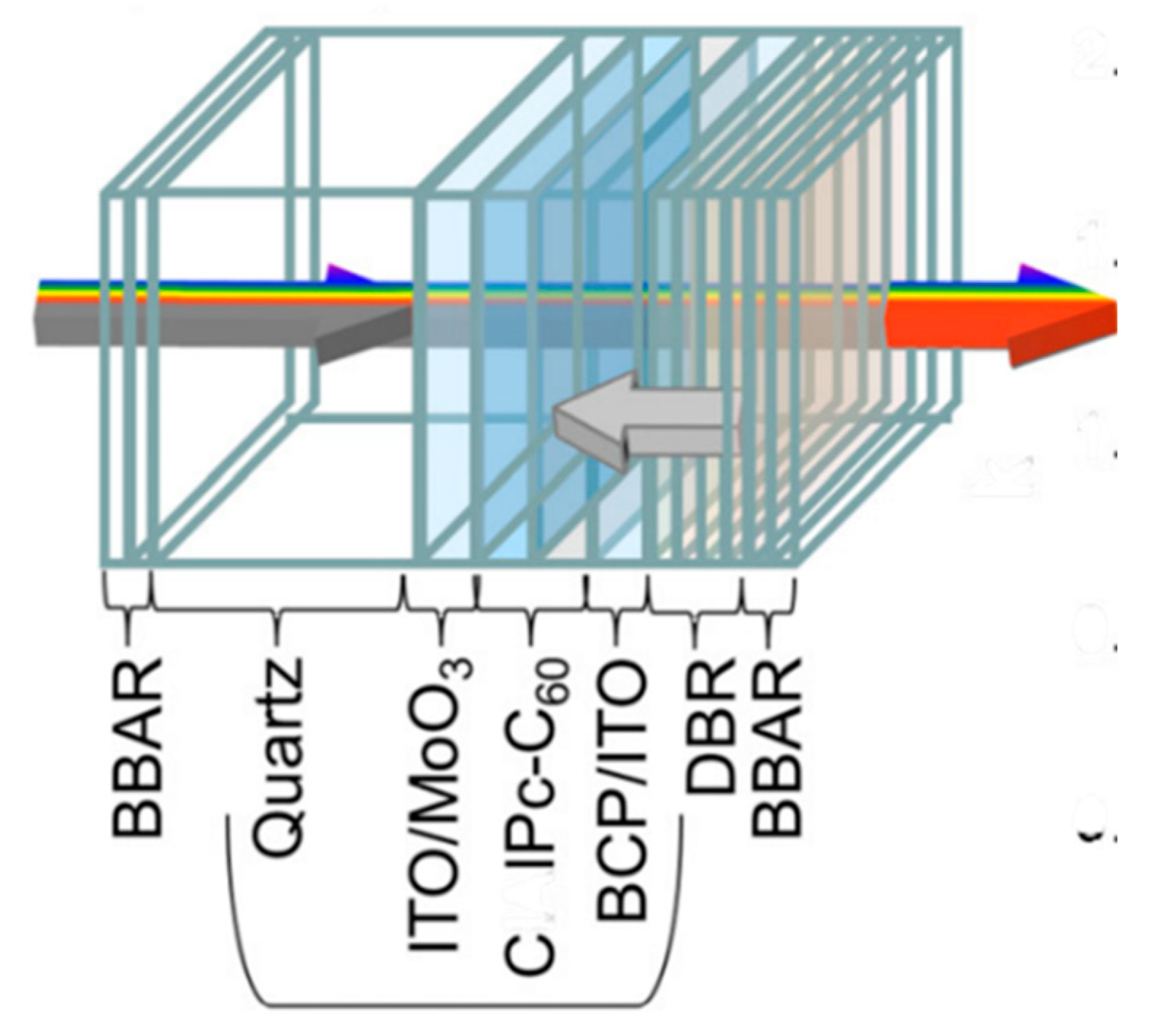
Organic Photovoltaic (OPV) panels are characterized by their transparency, flexibility, and low-cost manufacturing. These panels can be engineered to be transparent, enabling visible light to pass through, making them ideal for applications where aesthetics and light transmission are important. They are also lightweight and flexible, allowing integration into various surfaces, including curved or flexible structures. One of the significant advantages of OPV panels lies in their low-cost manufacturing potential, utilizing techniques like printing, which could reduce production costs significantly. The working mechanism of OPV panels involves the absorption of photons by the organic semiconductor material, creating excitons or electron-hole pairs. These excitons diffuse through the material, leading to charge separation at the donor-acceptor interface, generating an electric current that can be used as electricity for various applications [12].
Figure 1.
Layers of a Organic Photovoltaic Panel [13].
Figure 1.
Layers of a Organic Photovoltaic Panel [13].
3.2. Dye-Sensitized Solar Cells (DSSC):
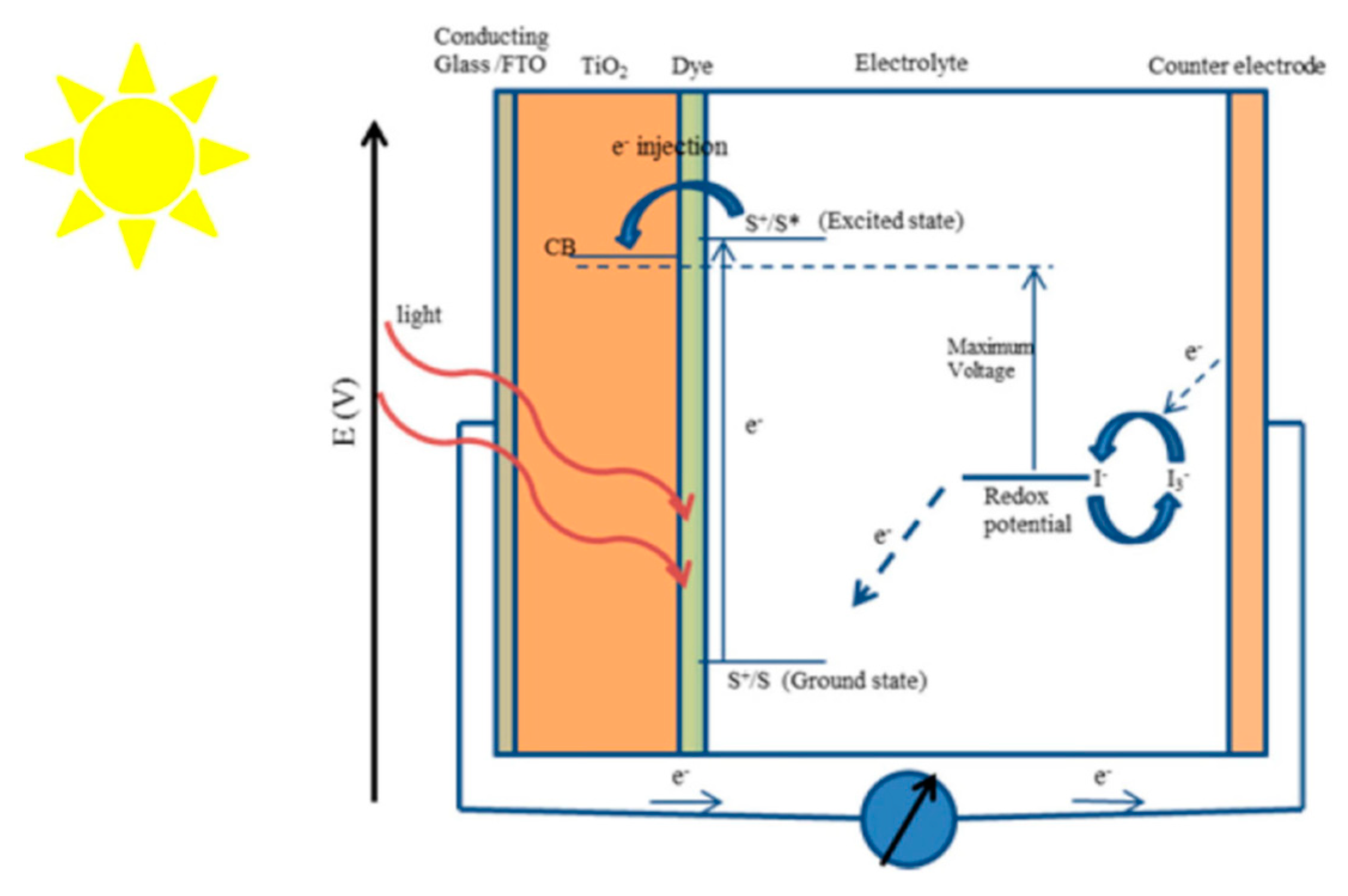
Dye-Sensitized Solar Cells (DSSC) are characterized by their partial transparency and versatility. DSSCs can be made semi-transparent, allowing partial transmission of visible light while absorbing photons for energy conversion. The working principle of DSSCs involves a photosensitive dye that absorbs photons, creating excited electrons. These electrons are injected into a semiconductor material, generating an electric current. DSSCs consist of several layers, including a transparent conductive substrate, a layer of porous titanium dioxide coated with the photosensitive dye, an electrolyte, and a counter electrode. Their versatility allows their integration into various surfaces, making them suitable for applications where both transparency and energy generation are desired [14].
Figure 2.
Working of a Dye-Sensitized Solar Cell.
3.3. Perovskite Solar Cells:
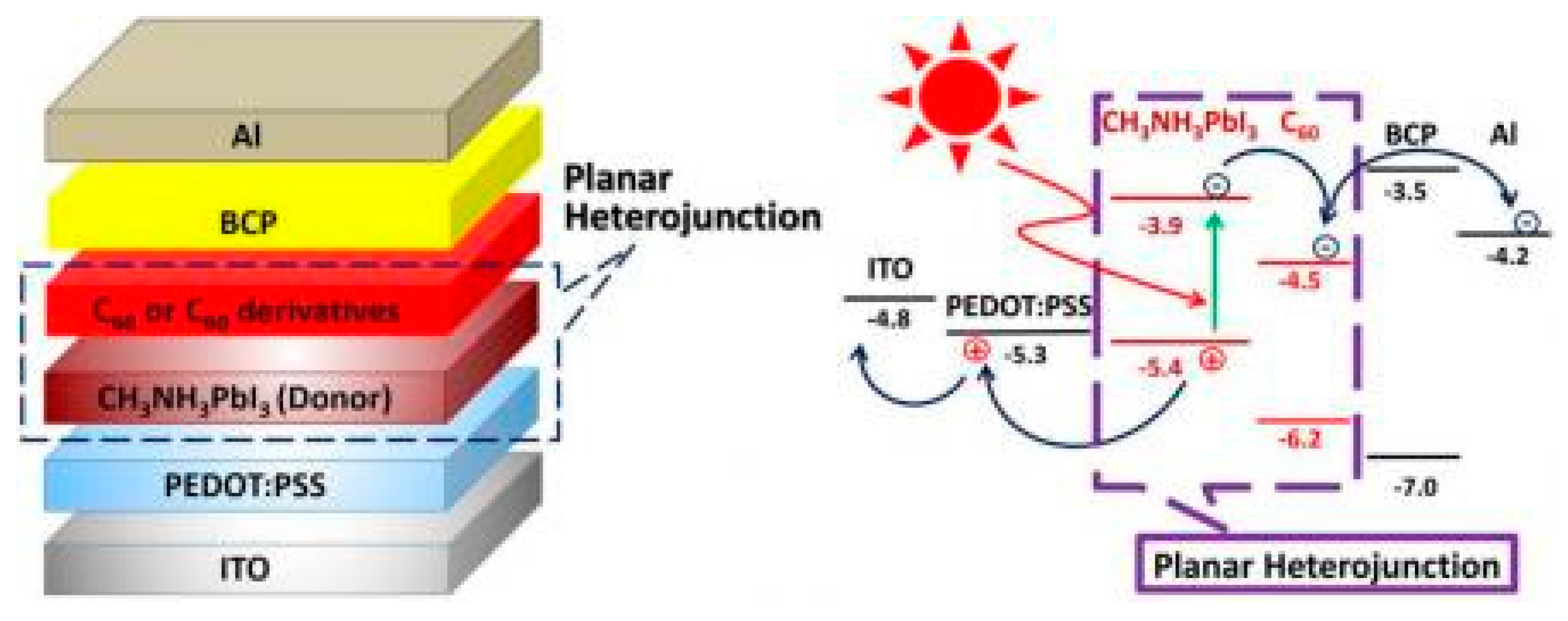
Perovskite solar cells are known for their high efficiency and potential for transparency. These cells can be made transparent, enabling their integration into windows and other transparent surfaces. Perovskite materials have garnered attention due to their rapid efficiency improvements, approaching levels comparable to traditional silicon solar cells. However, challenges such as stability, especially when exposed to moisture and oxygen, remain a focus of research. The working mechanism involves the absorption of photons by perovskite materials, creating electron-hole pairs, which contribute to the generation of an electric current. Ongoing research aims to enhance their stability and reduce environmental concerns related to the use of lead-based perovskite materials [15,16].
Figure 3.
Components of a Perovskite Solar Cell.
3.4. Transparent Thin-Film Silicon Solar Cells:
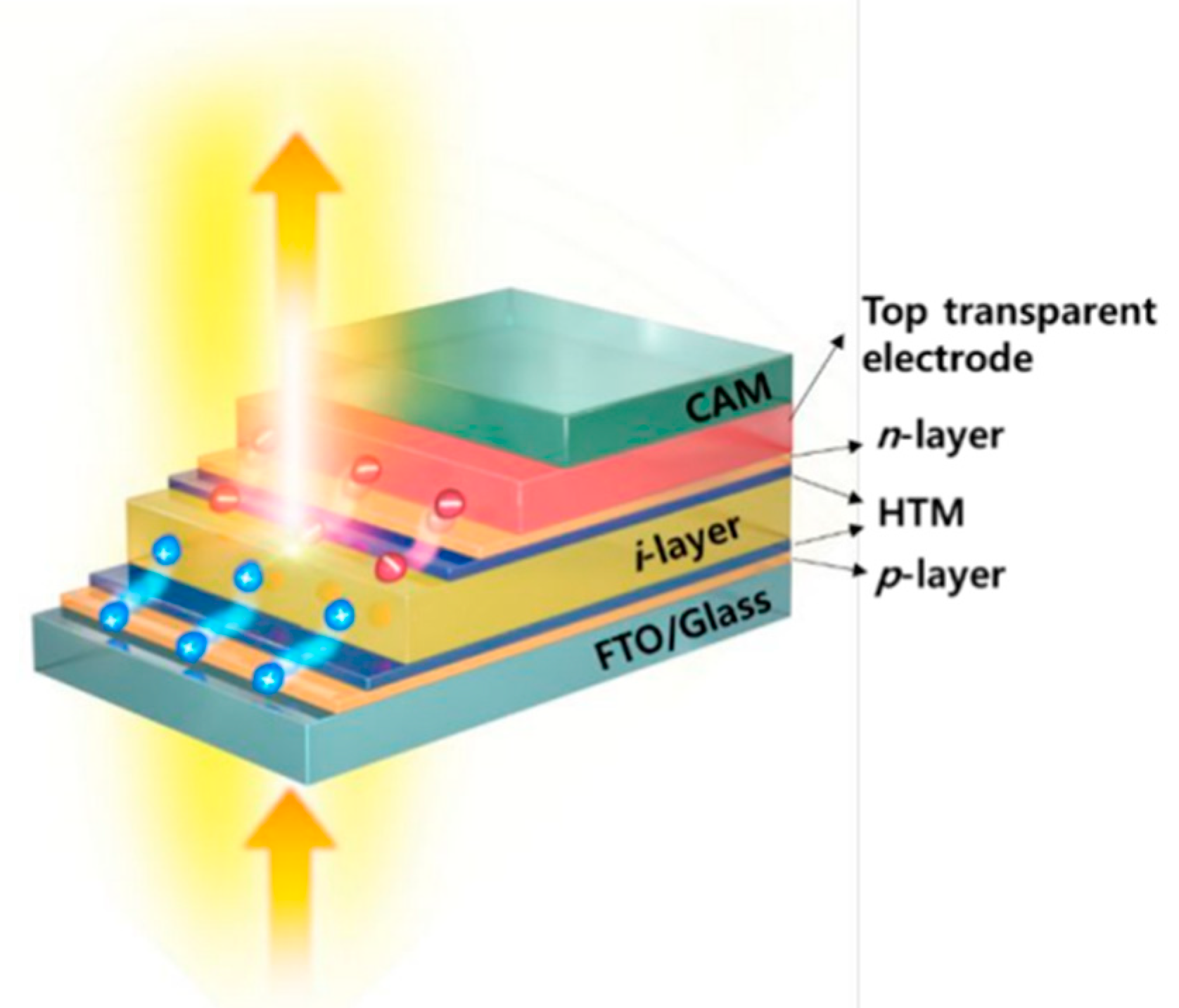
Transparent Thin-Film Silicon Solar Cells are notable for their transparency and scalability. These cells can be fabricated to be transparent, allowing them to be integrated into windows and transparent surfaces. Thin-film silicon technologies offer the potential for large-scale production, making them suitable for commercial applications. The working mechanism involves depositing thin layers of silicon on transparent substrates. While transparent, these cells often have lower efficiency compared to traditional silicon solar cells. The production processes can be complex and require precise control, impacting production costs and scalability. Ongoing research focuses on improving both efficiency and production techniques to enhance their viability for widespread adoption [17].
Figure 4.
Layers of Transparent Thin-Film Silicon Solar Cell.
4. Advancements in Transparent Solar Technologies
4.1. Efficiency Improvements:
Efficiency improvements have been a focal point in the development of transparent solar panels. Researchers and engineers have made significant strides in enhancing the efficiency of transparent photovoltaic technologies. These advancements involve optimizing materials, improving light absorption, and minimizing energy losses during the conversion process. Efforts have been directed towards increasing the quantum efficiency of solar cells, capturing a broader spectrum of sunlight, including infrared and ultraviolet wavelengths. Moreover, innovations in the design of transparent conductive coatings have minimized reflection and absorption losses, leading to more efficient energy conversion. Through continuous research and development, transparent solar panels have seen notable efficiency gains, bringing them closer to the efficiency levels of traditional opaque solar panels.
4.2. Flexible and Lightweight Designs:
Flexible and lightweight designs represent a crucial advancement in transparent solar panel technology, allowing for their integration into a wider range of applications. Traditional solar panels are rigid and heavy, limiting their versatility. Transparent solar panels, on the other hand, can be engineered to be flexible and lightweight, enabling their use in unconventional settings. This flexibility means that these panels can be bent or curved to fit various surfaces, including irregular or curved architectural elements. Additionally, the lightweight nature of these panels makes them suitable for applications where weight is a concern, such as in portable electronics, wearables, or lightweight structures like solar-powered tents. The ability to conform to diverse surfaces and reduce weight opens up new possibilities for incorporating transparent solar panels into innovative and creative designs.
4.3. Tandem Solar Cells:
Tandem solar cells represent a significant advancement in transparent solar panel technology, aiming to enhance efficiency by combining multiple layers of different photovoltaic materials. In tandem solar cells, two or more layers of solar cells with complementary absorption spectra are stacked on top of each other. Each layer absorbs specific wavelengths of light, maximizing the utilization of sunlight and improving overall energy conversion efficiency. Typically, the top layer absorbs high-energy photons (short wavelengths), while the bottom layer absorbs low-energy photons (long wavelengths). By utilizing a combination of materials, tandem solar cells can achieve higher efficiencies than single-junction cells. This approach allows transparent solar panels to capture a broader spectrum of light and convert it into electricity, making them more efficient and viable for various applications.
4.4. Nanostructured Materials:
The integration of nanostructured materials is a cutting-edge development in transparent solar panel technology. Nanostructures, such as nanowires, quantum dots, and nanostructured thin films, have unique electronic and optical properties that can be harnessed to enhance light absorption and energy conversion. By incorporating nanostructured materials into transparent solar panels, researchers can manipulate the behaviour of light and electrons at the nanoscale, leading to improved efficiency and light-trapping capabilities. Nanostructures can be engineered to capture specific wavelengths of light, increasing the overall absorption of sunlight. Additionally, these materials facilitate efficient charge separation and transport, minimizing energy losses and enhancing the overall performance of transparent solar panels. The utilization of nanostructured materials represents a promising avenue for further improving the efficiency and functionality of transparent solar technologies.
5. Applications and Case Studies
5.1. Building-Integrated Photovoltaics (BIPV):
Building-Integrated Photovoltaics (BIPV) revolutionize the way we generate solar power by seamlessly integrating transparent solar panels into architectural elements such as windows, facades, and roofs. By incorporating transparent solar panels into these building components, structures can harness solar energy without compromising aesthetics. Transparent solar windows, for instance, allow natural light to enter buildings while simultaneously generating electricity. Facades adorned with transparent solar panels not only enhance the visual appeal of buildings but also contribute to sustainable energy generation. This integration aligns with the green building movement, promoting energy efficiency and reducing reliance on traditional energy sources.
5.2. Consumer Electronics:
Transparent solar panels have found their way into consumer electronics, transforming the way we power our gadgets, wearables, and displays. Transparent solar panels integrated into smartphones, tablets, and other handheld devices offer a sustainable solution to extend battery life. Additionally, wearable technology like smartwatches and fitness trackers equipped with transparent solar panels can be charged by ambient light, reducing the need for frequent charging. Transparent solar panels can also be incorporated into displays, providing a continuous source of energy for electronic billboards and information kiosks, making them self-sustaining and environmentally friendly.
5.3. Automotive Industry:
The automotive industry has embraced transparent solar panels as a key innovation, especially in the realm of electric vehicles (EVs) and charging stations. Transparent solar panels integrated into the roof or windows of electric vehicles capture sunlight to supplement the vehicle’s battery, extending driving range and reducing dependency on charging stations. Moreover, transparent solar panels are utilized in solar-powered EV charging stations, providing clean energy for recharging electric vehicles. This integration promotes sustainable transportation solutions, reducing carbon emissions and contributing to a greener future for the automotive sector.
5.4. Aerospace and Marine Applications:
Transparent solar panels have made significant inroads in aerospace and marine applications, enhancing the efficiency and sustainability of aircraft, boats, and satellites. In aircraft, transparent solar panels integrated into windows or wings can generate auxiliary power, contributing to the overall energy needs of the aircraft systems. Similarly, boats and ships can utilize transparent solar panels integrated into their surfaces to harness solar energy for onboard electrical systems, reducing the reliance on traditional fuel-based generators. In satellites and spacecraft, transparent solar panels provide a lightweight and efficient power source for mission-critical systems, enabling extended missions and enhancing the spacecraft’s overall performance in space. This integration underscores the potential of transparent solar panels in revolutionizing energy supply in both terrestrial and extraterrestrial environments.
6. Challenges and Limitations
6.1. Efficiency Challenges:
One of the primary challenges faced by transparent solar panels is their relatively low efficiency when compared to traditional opaque solar panels. Transparent solar technologies, while innovative, have historically lagged behind in terms of energy conversion efficiency. This lower efficiency poses a challenge when attempting to generate a significant amount of electricity, particularly in large-scale applications [18].
6.2. Durability and Stability:
Durability and stability are critical concerns in the development of transparent solar panels. These panels are exposed to various environmental factors, including moisture, UV radiation, and temperature fluctuations, which can lead to degradation over time. Understanding the degradation mechanisms and finding ways to improve the long-term stability of transparent solar materials is vital. Researchers focus on developing protective coatings and encapsulation techniques to shield the panels from environmental stressors and extend their operational lifespan [19].
6.3. Cost Considerations:
Reducing production costs is a significant hurdle in the widespread adoption of transparent solar panels. The materials and manufacturing processes involved in creating transparent solar technologies can be expensive, making them less competitive in the energy market. Efforts are ongoing to develop cost-effective production methods, such as roll-to-roll manufacturing and scalable deposition techniques, to make transparent solar panels more economically viable for commercial applications.
6.4. Technological Hurdles:
Scaling up production and integration of transparent solar panels present considerable technological challenges. Achieving large-scale production without compromising quality and efficiency requires advancements in manufacturing processes and automation. Integrating transparent solar panels seamlessly into various surfaces, such as windows, facades, and electronic devices, demands precision and innovation. Researchers are actively exploring novel techniques to overcome these integration challenges, ensuring that transparent solar panels can be easily and effectively incorporated into diverse applications.
7. Future Prospects and Research Directions
7.1. Emerging Technologies:
The landscape of transparent solar technologies continues to evolve, with ongoing research focusing on innovative approaches to improve efficiency, stability, and integration. Emerging transparent solar technologies include advancements in perovskite solar cells, which have demonstrated remarkable efficiency gains and are being actively studied to enhance stability for practical applications. Quantum dot-based transparent solar panels are also gaining attention for their ability to absorb specific wavelengths of light, potentially maximizing energy conversion. Additionally, research is exploring novel materials, such as transparent conductive oxides and organic-inorganic hybrid materials, to create next-generation transparent solar panels that are not only efficient but also durable and cost-effective.
7.2. Policy and Market Trends:
Government policies and market trends play a pivotal role in shaping the adoption of transparent solar panels. Various countries have introduced incentives, subsidies, and feed-in tariffs to promote the integration of renewable energy technologies, including transparent solar panels. Policy frameworks that incentivize research and development in the field of transparent solar technologies foster innovation and accelerate commercialization. Moreover, market trends, such as the increasing focus on sustainable construction and smart buildings, are driving the demand for building-integrated photovoltaics, including transparent solar panels. The rise of green certifications and eco-friendly building standards further amplifies the market demand for transparent solar solutions [20,21].
7.3. Environmental Impact:
The environmental impact of transparent solar panels is a crucial aspect to consider in the context of sustainable energy solutions. Transparent solar technologies offer significant environmental benefits by reducing the reliance on fossil fuels and mitigating greenhouse gas emissions. By converting sunlight into electricity, transparent solar panels contribute to clean energy generation without emitting pollutants. Furthermore, the integration of transparent solar panels in buildings reduces the need for energy-intensive cooling systems, decreasing overall energy consumption. Additionally, the materials used in transparent solar panels are becoming more environmentally friendly, with a focus on recyclability and reduced toxic elements. As transparent solar technologies continue to mature, their positive environmental impact becomes increasingly evident, making them an essential component in the global transition toward a greener and more sustainable future.
8. Conclusion
In conclusion, this review has provided an in-depth exploration of transparent solar panels, covering their properties, working mechanisms, applications, challenges, and advancements. Key findings indicate that transparent solar panels, despite facing challenges such as lower efficiency and production costs, hold immense potential in revolutionizing the renewable energy landscape. By seamlessly integrating into various surfaces, from buildings to consumer electronics, and even in aerospace applications, transparent solar panels offer a promising pathway to sustainable energy generation while maintaining aesthetics and functionality.
The potential of transparent solar panels lies not only in their ability to generate clean energy but also in their transformative impact on architecture, consumer electronics, transportation, and more. Their seamless integration into everyday structures and devices showcases the innovative intersection of technology and design, paving the way for a future where renewable energy is an inherent part of our surroundings. The aesthetic appeal and versatility of transparent solar panels make them a cornerstone in sustainable architecture and energy-efficient smart technologies, aligning with the global shift toward greener practices [22].
As we move forward, it is imperative to invest in further research and development efforts to address the challenges hindering the widespread adoption of transparent solar panels. Researchers and industry professionals should focus on enhancing the efficiency of these panels through advanced materials and innovative designs. Additionally, continued efforts are needed to improve the stability and durability of transparent solar technologies, ensuring their long-term viability in various environmental conditions. Collaborative initiatives between academia, industry, and policymakers can facilitate the development of standardized protocols, supporting the seamless integration of transparent solar panels into existing infrastructures.
In conclusion, transparent solar panels stand at the forefront of the renewable energy revolution. With strategic investments, interdisciplinary collaborations, and a commitment to innovation, transparent solar technologies have the potential to not only meet our energy needs sustainably but also redefine the way we interact with energy in our daily lives. By focusing on these strategies, we can usher in a future where transparent solar panels play a central role in shaping a cleaner, greener, and more energy-efficient world.
Author Contributions
Conceptualization, R.M.; methodology, R.M.; validation, R.M., G.B. and H.P.; formal analysis, A.S.; and S.K.; resources, P.B.; data curation, R.M.; and P.B.; writing—original draft preparation, R.M.; writing—review and editing, S.K.; project administration, P.B.; All authors have read and agreed to the published version of the manuscript.
Funding
This research received no external funding.
Data Availability Statement
The data supporting the review and further study about Transparent Solar Panels can be done at freely available publications of Google Scholar and also solar magazines. The solar magazines can be used as a medium to keep a check on the new inventions in the field.
Conflicts of Interest
The authors declare no conflict of interest.
References
- Transparent Solar Panels: [The Complete Guide]. Available Online: https://solartechadvisor.com/transparent-solar-panels/.
- Transparent Solar Panels: Reforming Future Energy Supply. Available Online: https://solarmagazine.com/solar-panels/transparent-solar-panels/.
- Pulli, E., Rozzi, E., & Bella, F. (2020). Transparent photovoltaic technologies: Current trends towards upscaling. Energy Conversion and Management, 219, 112982. [CrossRef]
- Ellmer, K. (2012). Past achievements and future challenges in the development of optically transparent electrodes. Nature Photonics, 6(12), 809-817. [CrossRef]
- Klepacka, A. M. (2019). Significance of renewable energy sources in sustainable development. Annals of the Polish Association of Agricultural and Agrobusiness Economists, 21(1).
- Hegger, M., Fuchs, M., Stark, T., & Zeumer, M. (2012). Energy manual: sustainable architecture. Walter de Gruyter.
- Zhang, C., Cui, C., Zhang, Y., Yuan, J., Luo, Y., & Gang, W. (2019). A review of renewable energy assessment methods in green building and green neighborhood rating systems. Energy and buildings, 195, 68-81. [CrossRef]
- The Elegance of Solar Integration: Architectural Innovations. Available Online: https://trongth.com/2023/09/27/the-elegance-of-solar-integration-architectural-innovations/.
- Bati, A.S.R., Zhong, Y.L., Burn, P.L. et al. Next-generation applications for integrated perovskite solar cells. Commun Mater 4, 2 (2023). [CrossRef]
- Shiyani, T. (2023). Transparent Solar PV Panels.
- Choi, SW., Park, JH., Seo, JW. et al. Flexible and transparent thin-film light-scattering photovoltaics about fabrication and optimization for bifacial operation. npj Flex Electron 7, 17 (2023). [CrossRef]
- Solar Panels Working Principle. Available Online: https://www.inverter.com/solar-panel-working-principle.
- Lunt, R. R., & Bulovic, V. (2011). Transparent, near-infrared organic photovoltaic solar cells for window and energy-scavenging applications. Applied Physics Letters, 98(11). (IMAGE).
- Sharma, K., Sharma, V. & Sharma, S.S. Dye-Sensitized Solar Cells: Fundamentals and Current Status. Nanoscale Res Lett 13, 381 (2018). https://doi.org/10.1186/s11671-018-2760-6. [CrossRef]
- Perovskite Solar. Available Online: https://www.perovskite-info.com/perovskite-solar.
- Solak, E. K., & Irmak, E. (2023). Advances in organic photovoltaic cells: a comprehensive review of materials, technologies, and performance. RSC advances, 13(18), 12244-12269. [CrossRef]
- Kim, G., Lim, J. W., Kim, J., Yun, S. J., & Park, M. A. (2020). Transparent thin-film silicon solar cells for indoor light harvesting with conversion efficiencies of 36% without photodegradation. ACS applied materials & interfaces, 12(24), 27122-27130. [CrossRef]
- Hanafi, W.H.H. Bio-algae: a study of an interactive facade for commercial buildings in populated cities. J. Eng. Appl. Sci. 68, 37 (2021). [CrossRef]
- Shaker, L.M., Alamiery, A., Isahak, W.N.R.W. et al. Corrosion in solar cells: challenges and solutions for enhanced performance and durability. J Opt (2023). [CrossRef]
- Transistors explained—what they are and what they do. Available Online: https://www.nanowerk.com/transistors-explained.php.
- EUR-Lex—52023PC0574—EN—EUR-Lex. Available Online: https://eur-lex.europa.eu/legal-content/EN/TXT/?uri=COM:2023:0574:FIN.
- Mozafari, M., & Soroush, M. (2021). Surface functionalization of MXenes. Materials Advances, 2(22), 7277-7307. [CrossRef]
Disclaimer/Publisher’s Note: The statements, opinions and data contained in all publications are solely those of the individual author(s) and contributor(s) and not of MDPI and/or the editor(s). MDPI and/or the editor(s) disclaim responsibility for any injury to people or property resulting from any ideas, methods, instructions or products referred to in the content. |
© 2023 by the authors. Licensee MDPI, Basel, Switzerland. This article is an open access article distributed under the terms and conditions of the Creative Commons Attribution (CC BY) license (http://creativecommons.org/licenses/by/4.0/).
Copyright: This open access article is published under a Creative Commons CC BY 4.0 license, which permit the free download, distribution, and reuse, provided that the author and preprint are cited in any reuse.


