
Submitted:
10 March 2025
Posted:
12 March 2025
You are already at the latest version
Abstract
The Theory of Differences between Elements explains the reasons for the differences in physical concepts between different elements, such as quantum physics and the Theory of General Relativity, which are explained by an excess of observations. Thus, it is possible to conclude from the observations that the differences are motivated by the reactions between the specific elements, by the composition of the specific elements and by the intensity of the specific physical concept that promote losses and gains of characteristics. Therefore, there is no general similarity between quantum physics and the Theory of General Relativity. The study aims to understand the elements and their physical concepts that make up the Universe.
Keywords:
feature losses
; feature gains
; quantum physics
; and general relativity theory
1. Introduction
Theory helps to understand the differences in the physical concepts of the elements that make up the Universe, so it is necessary to be aware that there are many differences between the elements and their physical concepts in the Universe, such as the differences between quantum physics and the Theory of General Relativity, observations show that the specific reaction, the composition of the specific elements and the intensity of the specific physical concept change the reality of the element. Therefore, the physical concepts of quantum physics are different from the Theory of General Relativity, in addition, the general similarities of the physical concepts between different elements are difficult. Thus, the study, in order to be understood, needs to be aware of three ideas:
- 1
- reaction between elements
- 2
- Composition of elements
- 3
- intensity of the specific physical concept
The reactions of specific elements cause the final element to gain or lose characteristics, altering the reality of the elements. The composition of specific elements presents characteristics that differ from other specific elements, and the intensity of the specific physical concept has its influences. Therefore, the laws of quantum physics present numerous differences with the Theory of General Relativity.
2. Reactions Between Elements
A chemical reaction is when a material undergoes a transformation in which its composition changes, that is, forming new substances. Chemical reactions are initial substances that are called reactants and final products, and the reactions are represented by chemical equations, which follow the following general structure:
REAGENTS → PRODUCTS
Chemical reactions are present in numerous situations, such as: Digestion, Food preparation, Vehicle combustion, Rust formation, Medicine manufacturing, Photographic recording, Fire extinguishing, Explosion and acid rain. To understand how reactions occur, it is worth mentioning three examples, such as the formation of acid rain, rust formation and water.
- A.
- example of acid rain
Figure 1.
Formation of acid rain. Source: freepik.
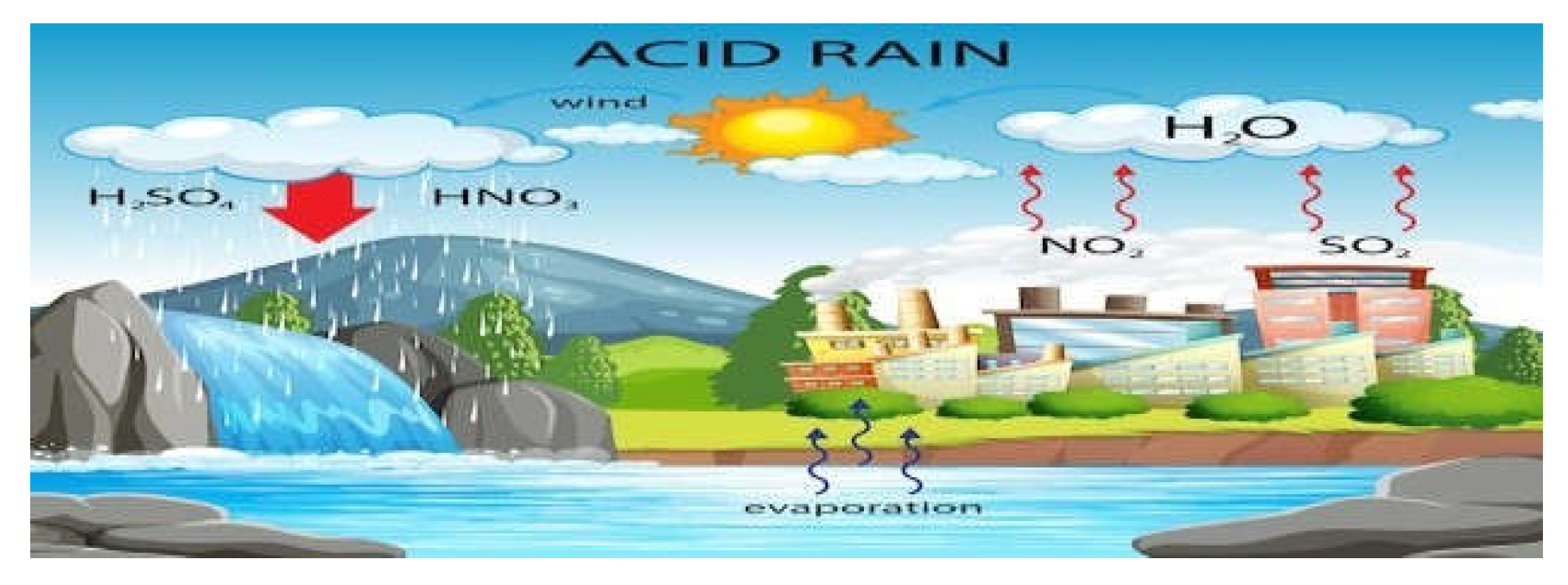
so3 + h2o → h2so4 is the reaction of sulfur dioxide with water giving rise to sulfuric acid, known as acid rain. Water (H2O) has some characteristics, such as: regulating body temperature, detoxifying the body, and aiding in the absorption of nutrients. But when water interacts with sulfur dioxide (so3), the characteristics change; that is, the new element sulfuric acid (h2so4) has different characteristics from water, promoted by the reaction.
- B.
- example of rust
Figure 2.
Formation of rust. Source: freepik.
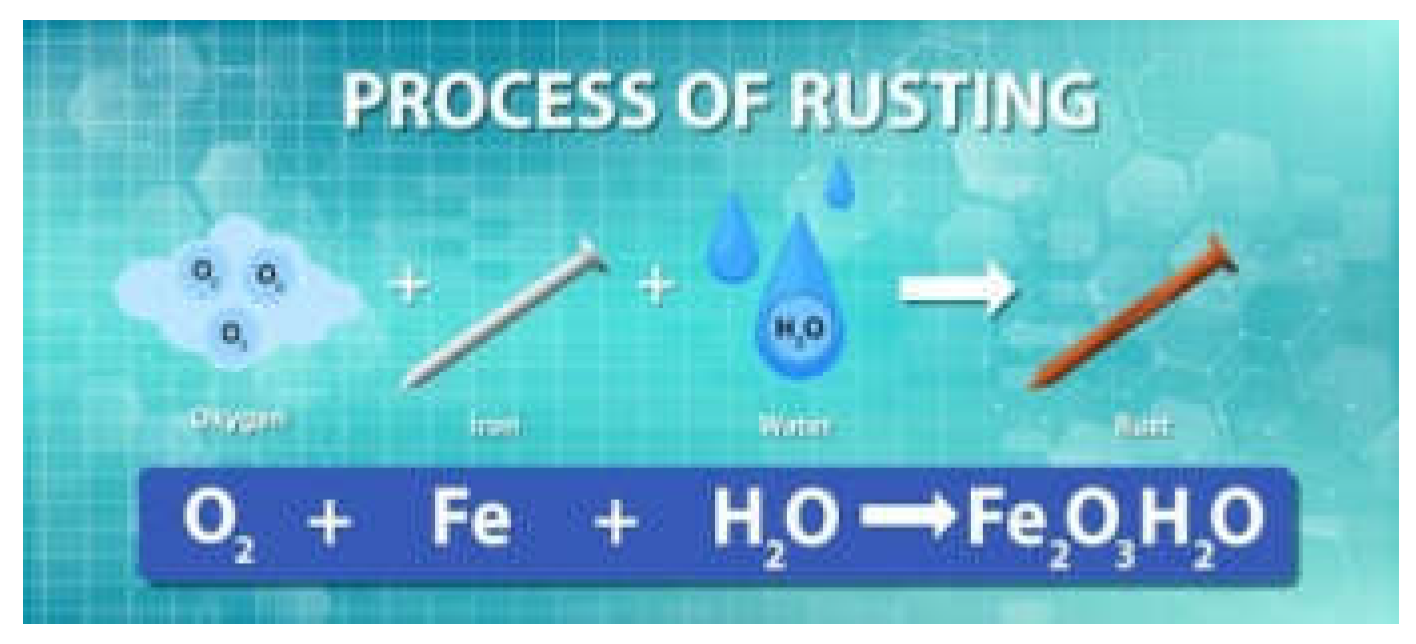
2 Fe + o2 + 2 h2o → 2 Fe(oH)2 is the general equation that describes rust, which occurs when iron (Fe) comes into contact with water (h2o) or oxygen (o2). In the beginning, iron had characteristics that allowed its use in the formation of metallic alloys, in the production of automobiles and metallic structures of buildings. But when iron comes into contact with water or oxygen, the iron does not retain its characteristics, as the developed rust promotes damage to the iron.
- c.
- example of water
2 H2 + O2 → 2 H2O It is an occurrence of hydrogen and oxygen reacting to form water. The hydrogen and oxygen reactants have different physical concepts than the product (water), since the reactants are in a gaseous physical state after entering the liquid state, which is water. Furthermore, other losses and gains occur in the physical concept of reactant and product.
Several types of chemical reactions follow the same line of reasoning to give rise to another element with different characteristics, such as:
- 1)
- synthesis reaction A + B → AB is when the reactants combine to form the single element
- 2)
- analysis reaction AB → A + B is when the reagents decompose giving rise to simple elements
- 3)
- The single exchange reaction A + BC → AC + B is when a simple substance reacts with a compound forming a new simple substance and another compound.
- 4)
-
double substitution reaction AB + CD → AD + CB is when compound substances react with another compound substance giving rise to two compound substances.The conditions for chemical reaction are contact between reactants and chemical affinity.In this sense, chemical reactions are capable of altering physical concepts by comparing the before and after of the chemical reaction. It is worth mentioning that it is possible to observe this pattern within chemistry.
3. Intensity of the Specific Physical Concept
Influences promoted by the intensity of the specific physical concept on elements or facts are motivated by the temperature, position, force, size and other intensities of the specific physical concept. It is possible to change the element or fact by the actions of the intensity of the specific physical concept.
The intensity of the specific physical concept is placed as a separate factor from the specific elemental composition and the specific elemental reaction, because the specific elemental composition may have more influence from the intensity of the specific physical concept at the previous moment of composition than at the current moment of composition.
In addition, the variety of specific reactions implies variety of element or fact, that is, the specific type of reaction has more direct power. However, the intensities of the specific physical concept have their influences.
4. Composition of Elements
Chemical elements are a group of atoms with the same atomic number, that is, they have the same number of protons in the nucleus. This characteristic defines a chemical element, differentiates it from other elements and determines its properties. To try to organize the countless elements according to their characteristics, the periodic table was developed to meet this need.
Figure 3.
Periodic table. Source: freepik.
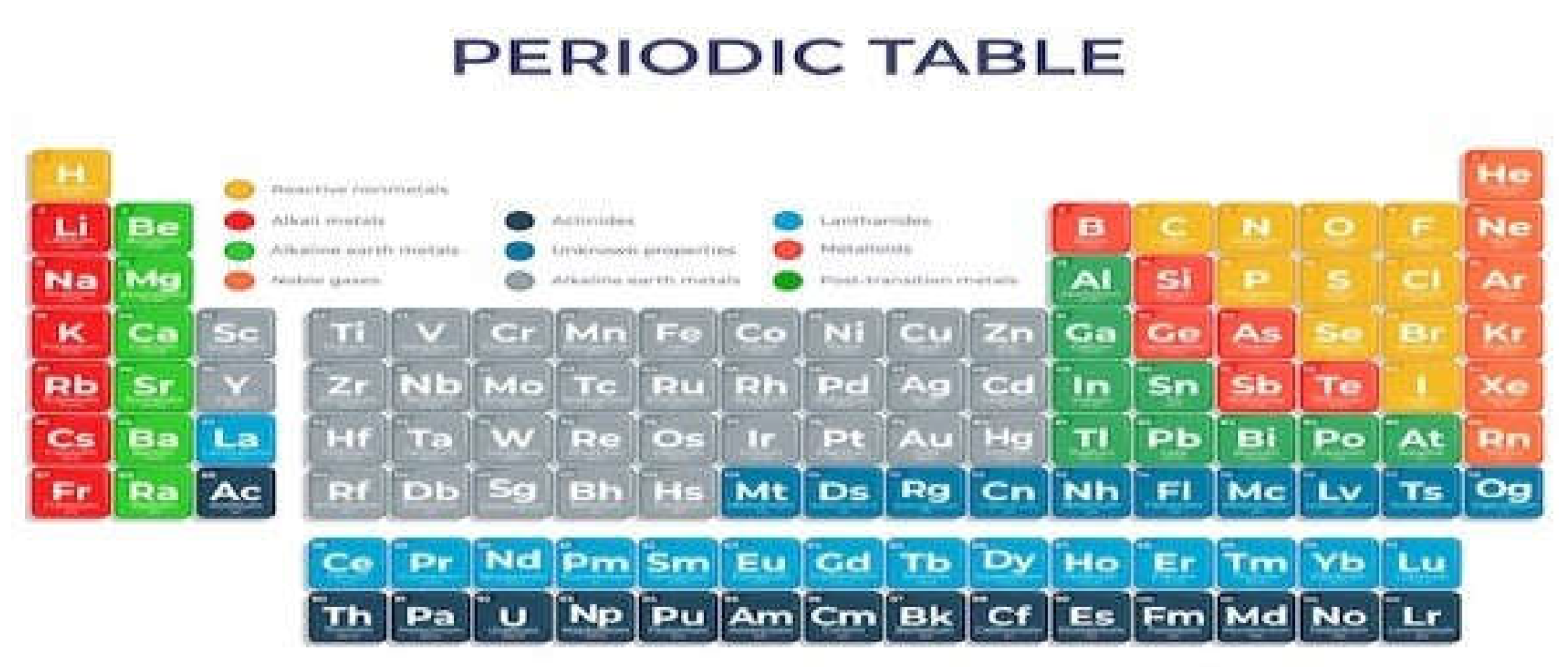
The periodic table is composed of 118 chemical elements, arranged by atomic number, in ascending order from left to right. The families or groups of the periodic tableare the vertical lines, which are numbered from 1 to 18. The chemical elements of the same family have similar chemical properties, they are the following groups or families:
-
Metals: Metals make up most of the elements on the Periodic Table. Some examples are gold, silver, copper, zinc, iron, platinum, aluminum, sodium, potassium, among others. Elements belonging to this group have the following main properties:
- -
- - to have shine
- -
- They are solid
- -
- -conducts electric current
- -
- conducts heat
- -
- They are malleable
- -
- They are ductile
-
Non-metals: They are composed of 11 elements carbon, nitrogen, phosphorus, oxygen, sulfur, selenium, fluorine, chlorine, bromine, iodine and astatine that have different properties than metals:
- -
- don't shine
- -
- Does not conduct electricity
- -
- Does not conduct heat
- -
- fragmentation occurs
-
Semimetals: They are composed of 7 elements boron, silicon, germanium, arsenic, antimony, tellurium and polonium that have intermediate properties to metals and non-metals:
- -
- They have shine
- -
- poor conduction of electricity
- -
-
Separation occurs.
- Noble gases: They are the elements of family 18 of the Periodic Table. They are helium, neon, argon, krypton, xenon and radon.
- hydrogen: Hydrogen is different from any other chemical element, as it does not fit into any of the groups presented.
In the periodic table, the horizontal lines are the periods that have elements in order of increasing atomic number.
Any natural element of any physical states in comparison with other elements has distinctive characteristics. As per the following examples:
- A)
- Mercury (hg) and bromine (br): both are liquid at room temperature, but have different characteristics. Mercury has characteristics that allow its use in the manufacture of mirrors and thermometers. Bromine has characteristics that allow its use in firefighting.
- B)
- Carbon (c), phosphorus (p), sulfur (s)...: both are solid, but have different characteristics. Carbon has characteristics that allow its use in the production of energy and in the manufacture of jewelry. Phosphorus has characteristics that make it used in the manufacture of matchboxes. Sulfur has characteristics that allow its use in the production of fertilizers and paper.
- C)
- Oxygen (o), nitrogen (n) both gases, but with different characteristics. Oxygen is used in the respiration of many living things. Nitrogen has characteristics that make it used in dyes and explosives.
Thus, it is possible to observe in the periodic table that each specific composition implies a specific element or fact that expresses different physical concepts from the other specific compositions.
5. Relationship of Uses of Elements with Physical Concepts
If elements x have different uses than element y, it is because the physical concepts are different, thus, the reactions between the elements, the composition of the elements and the intensity of the specific physical concept about the elements change the uses of the elements, that is, they change the physical concepts.
6. The Physics Between Different Elements
The atomic radius number is a characteristic that varies between elements, considering that the atomic radius is half the distance between two nuclei of neighboring atoms and the greater the number of energy levels of the atom, the greater the radius.
Density is a characteristic that occurs differently among elements, as density is the ratio of their mass to their volume.
Boiling is another characteristic that differs from the elements, as it is characterized as a transformation from liquid to gas.
Other physics concepts is the same idea of differences between elements. [1]
- I.
- LEVELS OF ORGANIZATION AND THEIR COMPARISONS
Figure 4.
Set of particles that give rise to the atom. Source: freepik.
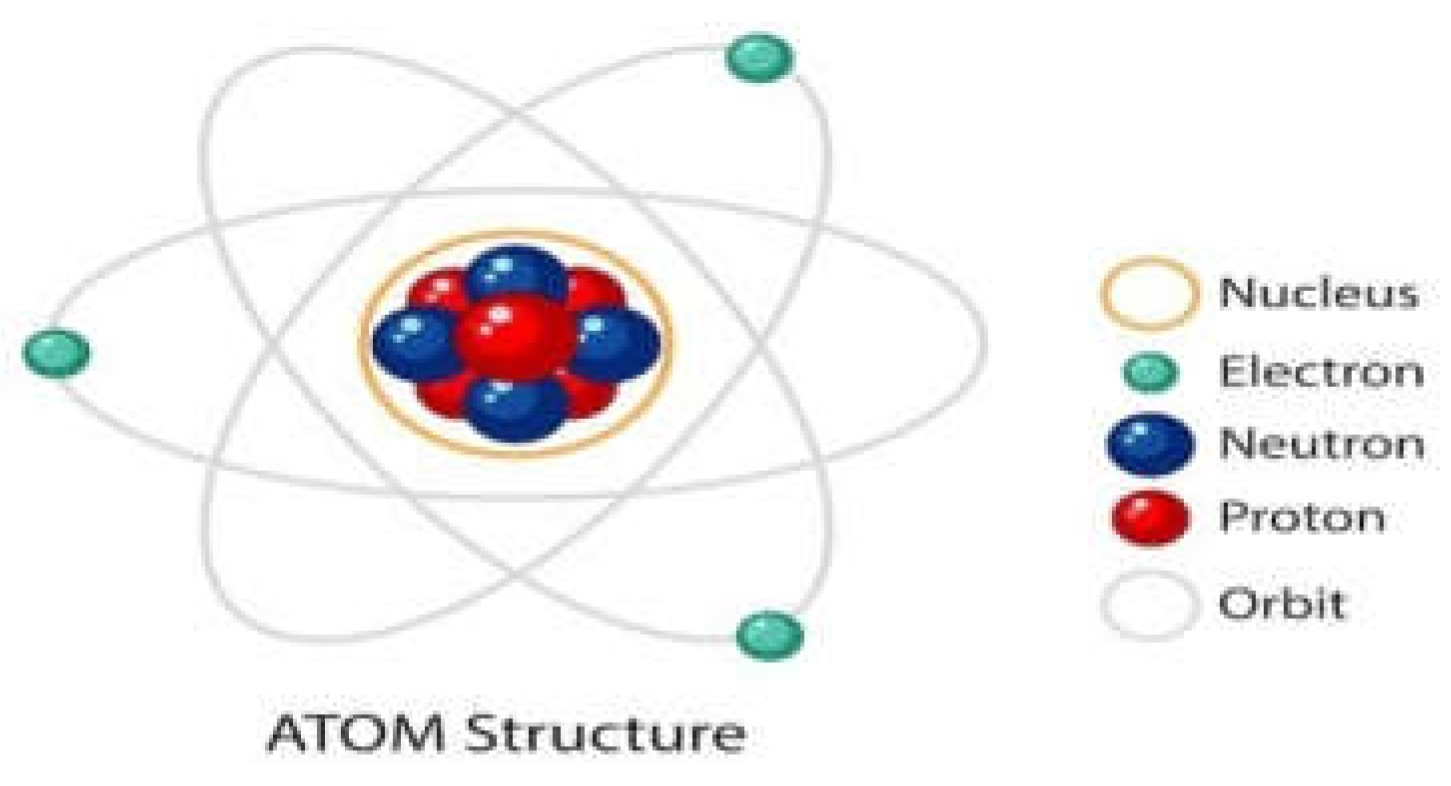
A group of particles forms an atom, and a group of atoms forms a molecule, and a group of molecules forms a substance has certain characteristics, which a group of atoms that forms a molecule does not have.
In this way, the interaction of particles with other particles gives rise to the element with characteristics different from the particles, that is, on a scale that goes from quantum physics to the Theory of general relativity, there are losses and gains of characteristics, in this way, there is no way quantum physics and the Theory of relativity have similar general characteristics. An example is the levels of organization of living beings [5]:
Figure 5.
Levels of organization of living beings. Source: BrasilEscola.
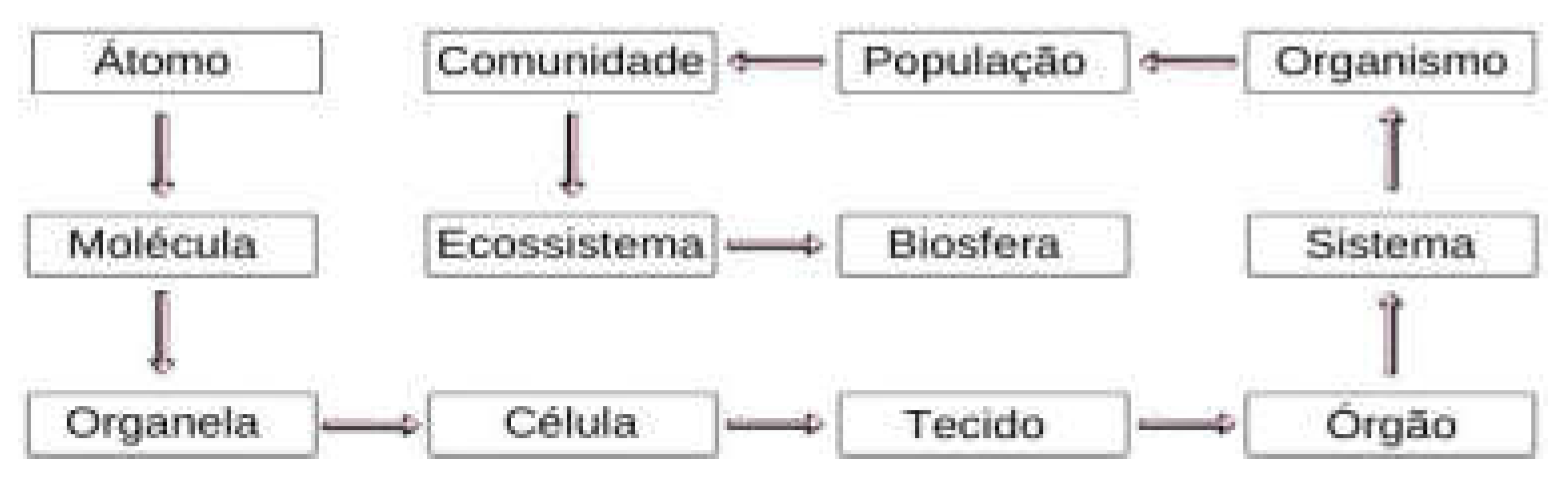
Observing the levels of organization of beings, it is understood that the levels of each one have different characteristics from the previous and subsequent ones, for example the tissue has different characteristics from the cell and the organ, in addition, within each level there are differences between them, as is the case of organs where there are differences between them, for example the heart has different characteristics from the kidney. Having thus, different types of cells, organelles, organs, tissues and among others.
7. Examples that Reinforce the Theory
- A)
- Balls of different elemental compositions with the same shape tend to move differently.
- B)
- Styrofoam and iron of the same shape and size have different masses.
- C)
- an increase in the same chemical element causes changes in physical concepts, such as the amount of carbon. an example is the differences between methane (CH4) and pentane (C5H12), which are the same chemical elements in different quantities. Methane can be found in its physical gaseous state, while pentane can be found in its liquid state. Furthermore, the melting and boiling points are different between methane and pentane.
8. Knowing Planet Earth
Given the many different elements on planet Earth, it is possible to deduce that there were numerous chemical reactions and specific physical intensity to create the current reality of planet Earth. After all, it is necessary to question the reasons why the elements vary between planets; it is not coherent to consider this variety without a plausible explanation. [2]
9. Quantum Physics
It is the area of study that analyzes and describes the behavior of physical systems of reduced measurements, close to the sizes of particles, atoms and molecules.
Quantum Physics has no specific laws, but it does have its principles:
Heisenberg uncertainty: it is not possible to determine the energy of a quantum particle and the moment when a certain energy occurs. Furthermore, it is not possible to determine the position and momentum of the particles.
Planck's Theory: energy is absorbed or emitted in the form of packets of energy called quanta. Duality of light behavior: light behaves both as a wave and as a particle.[6]
10. General Theory of Relativity
The general Theory was put forward by Einstein, the Theory says that the presence of matter warps space-time. Thus, the greater the mass of the body, the more it will curve space time around it. time is influenced by gravitational fields. The more intense the field, the slower time would pass.[7]
11. Quantum Physics and General Theory of Relativity
is understood, therefore, from the information presented in the text that quantum physics and the Theory of General Relativity present distinct phenomena. A general similarity of all physical concepts is impossible. This information is observable by the intense pattern in nature of specific compositions that determine the specific element, a specific composition never implies any variety of element or fact when concluding observations by the periodic table and compound particles. The specific reaction has the power to change from before to after, being observable by the chemical knowledge of the reaction. Furthermore, the intensity of the specific physical concept has its influences better explained by the articles "Theory of Obligatory Necessity" and "Equations and Their Effects" by Carlos Eduardo Ramos Cardoso. [4]
12. Theory of Everything
There is an attempt by many scientists to unify the phenomena of quantum physics and the Theory of relativity in a single scientific theory, however, quantum physics and the general Theory of relativity present descriptions of different phenomena.
13. Representation and Its Relations
- RE X → EF X ∨ IC X → EF X ∨ CO X → EFX ∨ RE X + IC X + CO X → EF X ≠ RE Y → EF Y ∨ IC Y → EF Y ∨ CO Y → EF Y ∨ RE Y + IC Y + CO Y → EF Y ∴ EF X ≠ EF Y
- RE X = REACTION OF THE X
- ELEMENTS IC X = INTENSITY OF THE
- SPECIFIC PHYSICAL CONCEPT X
- CO X= COMPOSITION OF
- ELEMENT X EF X = ELEMENT OR
- FACT X
- RE Y = REACTION OF Y
- ELEMENTS IC Y = INTENSITY OF
- THE SPECIFIC PHYSICAL
- CONCEPT Y
- CO F = COMPOSITION OF
- ELEMENT Y EF Y = ELEMENT OR
- FACT Y
According to the information presented, it can be concluded that the differences between elements are caused by the specific elemental composition, which can be observed by comparing it with other specific compositions. Chemical reactions have the power to change from before to after, and the intensity of the specific physical concept is also an important factor for the specific element or fact. If there is a change in the specific elemental composition, chemical reaction, and influence (intensity of specific physical concepts), it is possible to develop an element or fact that expresses new physical concepts. It is worth noting that the small particles and the macroscopic level that provide different physical concepts, such as strong nuclear force, weak nuclear force, electromagnetic force, and gravity, are influenced by the theory of differences between elements. In other words, at the microscopic or macroscopic level, any variety is explained by the theory.
14. Observing the specific elemental composition
COx → EFx ≠ COy → EFy
Thus, it is possible to observe that Cox influences efx and Coy influences efy (it is not possible that Cox influences efy nor that Coy influences efx), so to explain it is necessary to use a choice of any specific composition in nature as an example:
COx = composition protons
COy = composition neutron
EFx = the general information that protons
EFy = the general information of the neutron
Composition Protons → general information of protons ≠ composition neutrons → general information of the neutron
It is not possible for the composition of the proton to influence the general information of the neutron, nor for the composition of the neutron to influence the general information of the proton. There are many cases where the specific composition determines the specific element or fact. Thus, the specific composition is an observable factor that makes it possible to understand the differences in physical concepts between elements. Therefore, based on the behavior of elements in the periodic table and particle compositions, it is possible to use these behaviors to understand the differences between quantum physics at the macroscopic level.
15. Observing the Specific Reaction
Rex → EFx ≠ Rey → EFy
Thus, it is possible to observe that Rex influences efx and Rey influences efy, with losses and gains of characteristics occurring before and after the reaction (furthermore, it is not possible for Rex to influence efy and neither for Rey to influence efx), therefore, it is necessary to use any specific reaction in nature as an example:
REx = water reaction
REy = photosynthesis reaction
EFx = general information about water
EFy = general information about photosynthesis
Water reaction → general information about water ≠ Photosynthesis reaction → general information about photosynthesis
Given the information presented, the power of reactions relative to the physical concepts of before and after the reaction is observable and there are numerous cases where the specific reaction determines the specific element or fact. Thus, the behavior of reactions in nature, which has countless possible examples, can be used to understand the differences between quantum physics and the theory of general relativity.
16. Observing the Intensity of the Specific Physical Concept
ICx → EFx ≠ ICy → EFy
Thus, it is possible to observe that ICx influences efx and ICy influences efy. (It is not possible that ICx influences efy nor that ICy influences efx). In this way, it is possible to apply examples of intensity of the specific physical concept in nature as:
ICx = high temperature
ICy = low temperature
EFx = general information about the gaseous state of water
EFy = general information about the liquid state of water
High temperature → general information about the gaseous state of water ≠ Low temperature → general information about the liquid state of water
In this sense, it is not possible for high temperature to imply general information about the liquid state of water, nor for low temperature to imply general information about the gaseous state of water, since there are cases in which the intensity of the physical concept determines the specific element or fact. These behaviors present in nature related to the intensity of the specific physical concept may be one of the possible factors for understanding the differences between quantum physics and the theory of general relativity.
17. The Case of the Electron
Although the electron does not have a traditional composition, that is, the electron is a fundamental particle. Even so, it is possible to use the logic of specific composition, because if you imagine including compositions in the electron, changes occur in its general information. In order for the electron to maintain its functions, it is necessary to not have any random composition.
18. Using the Example of Reaction, Composition and intensity of the specific physical concept
Quantum physics and the theory of general relativity are issues at the microscopic and macroscopic levels, so for quantum physics to move from the microscopic level to the theory of general relativity, reactions are necessary: a set of atoms forms molecules, a set of molecules forms substances. Thus, it involves reactions or actions. In addition, as composition (example of the periodic table) and intensities of the specific physical concept, these are relevant factors of change, it is possible to have a relationship with microscopic and macroscopic physical concepts.
19. Elements in the Universe and Their Physical Concepts
If the elements of planet Earth are different outside of Earth, the facts tend to be different, that is, when the elements are different, the physical concepts change. An example is gravity, which tends to be different on each planet, since the planets are elements of different masses. In addition, it is necessary to observe the factors that interfere with the elements, such as the intensity of the specific physical concept, which is the case of the sun, where there are planets close to and far from the sun. An ideal example of elements in the Universe is the Milky Way. In addition, it is possible to reflect on the beginning of the Universe up to the present moment, that is, if at the beginning of the Universe there were elements, reactions between elements and intensity of the specific physical concept different from the present moment, there is the possibility that the physical concepts present at the beginning of the Universe have disappeared, new ones have emerged, and continue, therefore, the initial and current universes tend not to have a general similarity of physical concepts. [3]
20. Conclusions
The Theory of Differences between Elements, which promotes the understanding of the differences in physical concepts between different elements as a prime example of quantum physics and the Theory of Relativity, is a coherent theory, observations confirm that specific elementary reactions, specific elemental composition and the intensity of the specific physical concept influence the specific elements or facts, therefore, the elements tend to be different due to the factors that provide these differences.
In addition, the Theory helps in understanding the formation of the elements that make up the planets, such as planet Earth, which possibly had numerous chemical reactions and intensity of the specific physical concept about the elements, which, in this way, explains the richness of elements on planet Earth.
References
- Stephen Hawking. A Brief History of Time. Intrinsic, rio de janeiro, 256 p. January 2015.
- Hawking, Stephen. The Universe in a nutshell. Arx, Sao Paulo, 216 p. April 2004.
- LAZKOZ, Ruth.How much time has passed since the Big Bang and how is it measured.Science - BBC News Brazil.June 20, 2022.
- String Theory: How to Understand the Universe with the Mathematics of Pythagoras' Music.Science - BBC News Brazil.October 26, 2021.
- SANTOS, Vanessa Sardinha dos. "Levels of Organization in Biology"; Brazil School. Available at: https://brasilescola.uol.com.br/biologia/niveis-organizacao-biologia.htm. Accessed on February 9, 2023.
- What is quantum physics and what is it for?Science - BBC News Brazil.June 30, 2020.
- Costa, Camilla, Pais, Ana. What is Einstein's Theory of general relativity?.Science - BBC News Brazil.May 24, 2019.
- Wilson, Alastair.What was the Universe like before the Big Bang?Science - BBC News Brazil.January 6, 2022.
Disclaimer/Publisher’s Note: The statements, opinions and data contained in all publications are solely those of the individual author(s) and contributor(s) and not of MDPI and/or the editor(s). MDPI and/or the editor(s) disclaim responsibility for any injury to people or property resulting from any ideas, methods, instructions or products referred to in the content. |
© 2025 by the authors. Licensee MDPI, Basel, Switzerland. This article is an open access article distributed under the terms and conditions of the Creative Commons Attribution (CC BY) license (http://creativecommons.org/licenses/by/4.0/).
Copyright: This open access article is published under a Creative Commons CC BY 4.0 license, which permit the free download, distribution, and reuse, provided that the author and preprint are cited in any reuse.