
Submitted:
23 October 2023
Posted:
24 October 2023
You are already at the latest version
Abstract
The aim of this study was to investigate the effect of laser irradiation to computer-aided de-sign/computer-aided fabrication (CAD/CAM) resin blocks coated with a silane coupling agent on the bond strength between the resin blocks and composite resin. The CAD/CAM resin blocks used in this study were Cerasmart 300 (GC) and Vita Enamic (Vita); they were cut into plates and then subjected to a series of treatments. After processing with a silane coupling agent, treatment with a semiconductor laser was performed at 3.0, 5.0, and 7.0 W, followed by the bonding procedures. The control group included those exposed to silane and bonded without laser application. After bonding, a mold with a simulated cavity was formed on the specimen and filled with flowable composite resin, and they were stored for 24 h or stressed by thermal cycling for subsequent testing that assessed the shear bond strength (n = 10). The results revealed that the bond strength was significantly enhanced by laser irradiation after applying a silane coupling agent, whereas significant effect was not detected between the materials. Particularly, 7 W laser irradiation had a significant effect on the bond strength between the composite resin and Cerasmart block after thermal cycling.
Keywords:
CAD/CAM resin blocks
; silane heat treatment
; shear bond strength
; semiconductor laser
1. Introduction
Recently, crown and inlay restorations using computer-aided designed/computer-aided manufactured (CAD/CAM) resin blocks have been employed in clinical practice [1,2,3]. Restorations fabricated with CAD/CAM resin blocks may be damaged by excessive load in occlusal or other directions [4]. Depending on the degree of damage, a composite resin repair is performed to reduce the number of treatments and diminish the burden associated with laboratory procedures. To obtain a good long-term outcome, the composite resin should form a strong bond with the CAD/CAM resin block. Sandblasting and hydrofluoric acid treatment are the main procedures for this purpose. Although the former is used in the laboratory and yields excellent outcomes in improving bond strength, the treatment at some restoration sites may be difficult in the clinical setting because the powder used in the former may be scattered in the oral cavity causing patient discomfort. Furthermore, adhesive treatment with hydrofluoric acid is contraindicated in the oral cavity. [5].
Several studies have examined the surface treatment of CAD/CAM materials considering the properties of lasers; however, most of them have focused on utilizing surface roughness caused by the high absorption of water in the material surface with subsequent micro-explosion using high-power lasers such as Er:YAG and CO₂ [6,7,8,9,10]. An exothermic action is also one of the main properties of lasers; however, few previous studies have investigated it for the surface treatment of CAD/CAM materials. Therefore, we focused on the activation of silane coupling agents by heat treatment resulting from laser irradiation to obtain sufficient bond strength between CAD/CAM resin blocks and composite resins.
The methoxy groups of the silane coupling agent ɣ-MPTS are hydrolyzed during silane coupling forming silanol groups, which bond to siloxane groups on the filler’s surface in the composite resin, and the chemical bond of ɣ-MPTS to a resin monomer with methacryloyl groups is formed [11]. Heating ɣ-MPTS is effective in accelerating this series of reactions. Studies have reported that silane coupling agents activated by heating improve bond strength, whereas the values of heating temperatures required for this are unclear, and heating methods using dryers or ovens are not applicable in the oral cavity [12,13]. Conversely, heating treatment derived from laser irradiation can be done in the oral cavity. Although several studies have assessed the effect of heating treatment of silane coupling agents with lasers on the bond strength between various restorative materials and composite resin in the laboratory [14,15,16,17], many points are ambiguous regarding the type of laser, output power, or heating temperature.
Thus, this study aimed to evaluate the efficacy of heat treatment of silane coupling agents by laser irradiation in enhancing the bond strength between resin blocks and composite resins. The null hypothesis is that heating of the silane coupling agent using a semiconductor laser does not influence the bond strength between CAD/CAM resin blocks and composite resin.
2. Materials and Methods
2.1. Experimental materials
The materials used in this experiment are shown in Table 1. In this study, two types of CAD/CAM blocks, namely, hybrid resin block, Cerasmart 300 (CS, GC, Tokyo, Japan), and hybrid ceramic (polymer infiltrated ceramic network) block, Vita Enamic (EN, Vita Zahnfabrik, Bad Sackingen, Germany), were used. Clearfil Majesty ES Flow (Kuraray Noritake Dental, Tokyo, Japan), Clearfil Ceramic Primer Plus (Kuraray Noritake Dental), and Clearfil Universal Bond Quick ER (Kuraray Noritake Dental) were selected as a flowable composite resin, silane coupling agent, and bonding agent, respectively.
2.2. Plate preparation
The CAD/CAM resin block was divided into 3.0 mm thick plates with a low-speed precision cutting machine (Isomet Low Speed, Buehler, Lake Bluff, IL, USA). The surfaces of the prepared plates were wet polished with #600 emery paper for 1 min under water irrigation and then ultrasonically cleaned for 5 min to provide the adherend surface. The total number of samples in the plate was 120.
2.3. Specimen preparation
The adhesive treatments for each experimental group are summarized in Table 2.
Control group: After applying Clearfil Ceramic Primer Plus (Kuraray Noritake Dental) to the surface of a plate using a micro-brush, medium-pressure air blowing was immediately performed for 3 s. Then, the plate was treated with the Clearfil Universal Bond Quick ER (Kuraray Noritake Dental), followed by medium-pressure air blowing for 10 s to ensure ceased movement of the liquid surface and light irradiation for 5 s at 2.0 W using a light-curing unit (Pencure 2000, Morita, Tokyo, Japan).
Laser irradiation group: After applying ceramic primer and air blowing, as mentioned above, the plate surface was exposed to semiconductor laser irradiation (wavelength 810 nm, P2 Dental Laser System, Pioon Laser Technology Inc, Wuhan, China), and the irradiation method was as follows. The laser handpiece with an irradiation tip (8.0 mm in diameter) was mounted on a flexible arm of a fixed table. The plate surface applied with the silane coupling agent was irradiated at 3.0, 5.0, and 7.0 W for 60 s. The distance between the plate surface and the irradiation tip, denoted as the laser irradiation distance, was 1.0 mm. The subsequent bonding procedure was the same as in the control group. The experimental groups with CS and 3.0, 5.0, and 7.0 W laser irradiation were coded as CSC, CS3, CS5, and CS7, respectively, and those with EN and 3.0, 5.0, and 7.0 W laser irradiation were labeled ENC, EN3, EN5, and EN7, respectively (n = 10).
A cylindrically simulated cavity was formed within a mold (diameter, 2.0 mm; height, 3.0 mm) that was fabricated with a silicone rubber impression material (Examix Fine Injection Type, GC). The obtained silicone mold was positioned and fixed in the center of the block surface and subjected to each adhesive method. The simulated cavity was filled with two layers of flowable resin in layers of 1.5 mm each and photocured for 10 s each with Pencure 2000 (Morita), followed by the removal of the silicon mold.
2.4. Shear bond strength (SBS) test
Adhesive specimens were preserved in a constant temperature and humidity chamber (37.0℃, 95% relative humidity) for 24 h before the SBS test. A specimen was placed in the center of a specimen fixation ring so that the adhesive surface of the specimen protruded slightly from it and was parallel to the edge of the ring made from autopolymerizing resin. After attaining sufficient polymerization, SBS tests were done with a tabletop testing machine (EZ Test 500N, Shimadzu) at a crosshead speed of 1.0 mm/min.
The obtained data were statistically analyzed by the two-way analysis of variance (ANOVA), with the material type and laser irradiation power as main factors, followed by the Tukey post hoc test to compare the values of the studied parameter among the experimental groups (α = 0.05). The Bell Curve® for Excel version 3.20 (Social Survey Research Information, Tokyo, Japan) was employed for descriptive statistics.
2.5. SBS test after the thermal cycling load test
The irradiation output with the highest adhesion strength was selected from the outcomes of the first SBS test and was used to prepare adhesive specimens for the SBS test after the thermal cycling load test. The CS and EN in the laser-treated group were obtained using the selected irradiation power, and those for the control group were also received (n = 10). Thermal cycling load tests were conducted on them using a long-term durability tester (Thermal Cycling K178, Tokyo Giken). One thermal cycle consisted of 5°C for 30 s, transfer for 10 s, 55°C for 30 s, and another for 10 s. These processes were repeated 10,000 times within 10 days. After the thermal cycling load test, the SBS test was conducted as described above. Moreover, t- or Mann–Whitney U tests were used for the analysis of variables according to the equal variances for each material (α = 0.05). Descriptive statistics was outlined using Bell Curve® for Excel version 3.20 (Social Survey Research Information, Tokyo, Japan).
2.6. Failure mode analysis
Failure modes after SBS test were evaluated using a stereomicroscope (SZX7, Olympus) at 20×. Failure modes were defined as adhesive failure (AF; failure restricted within the adhesive area), mixed failure (MF; failure extending from the adhesive to either the composite resin or plate area), and cohesive failure (CF, failure limited by the composite resin or plate area).
2.7. Scanning electron microscopy (SEM) observation
Some representative specimens were chosen from each of the experimental groups to observe the micromorphology of adhesive surfaces after SBS test. After sputter-coating the fractured surfaces of the plate sites with palladium and platinum, they were assessed via SEM (TM4000Plus Miniscope, Hitachi, Tokyo, Japan) at a voltage of 5 kV.
2.8. Measurement of plate surface temperatures after laser irradiation
Each surface of the plates was subjected to semiconductor laser irradiation at 3.0, 5.0, and 7.0 W, and the surface temperature of each plate was measured immediately thereafter with an infrared radiation thermometer (Testo 830-T2, Azwan, Osaka, Japan). The laser irradiation time and distance were 60 s and 1.0 mm, respectively. The measurements were observed 10 times, and the average value was introduced as the plate surface temperature at each irradiation power.
3. Results
3.1. SBS
The SBS values of the studied groups after 24 h of storage are demonstrated in Figure 1. The mean (SD) of the bond strength (MPa) of each experimental group was as follows: CSC, 16.8 (2.92); CS3, 16.8 (3.06); CS5, 16.6 (2.05); CS7, 20.5 (2.33); ENC, 16.2 (2.21); EN3, 16.9 (2.38); EN5, 17.7 (3.53); and EN7, 19.0 (2.95).
Owing to the equal distribution of data proved by Rubin’s test, a two-way ANOVA was performed. The results of the two-way ANOVA are shown in Table 3. The types of materials used did not differ significantly (p = 0.723), whereas an opposite trend was observed for laser power (p = 0.003). No interaction effect was found between the indicated two factors (p = 0.514). Therefore, further statistical analysis was carried out only in the laser power subgroups. The results showed significant differences between the 7 W and control (without laser irradiation group) (p = 0.004), 3 W (p = 0.012), and 5 W (p = 0.029) groups; however, no significant difference was detected between the 3 W and 5 W groups (p = 0.987). Therefore, the results of this statistical analysis imply that the bond between the composite resin and the CAD/CAM hybrid resin blocks was significantly strengthened by 7 W laser irradiation to ceramic primer-applied surfaces; however, the effect did not significantly differ between the two CAD/CAM blocks used in this study.
The highest average SBS values after 24 h of storage were noted for both CS and EN (CS7 and EN7) in the 7 W group. Hence, specimens for the groups that received this dose and the control group were newly prepared to investigate bond strength after being subjected to thermal cycle stress. According to the material, the resulting four experimental groups were coded as sCSC, sCN7, sENC, and sEN7 after loading thermal cyclic stress. The SBS values of the experimental groups that were identified after the test are reflected in Figure 2. The mean (SD) of the bond strength (MPa) of each experimental group was as follows: sCSC, 6.69 (1.39); sCS7, 9.07 (1.99); sENC, 8.55 (1.36); and sEN7, 8.29 (2.82). The results of the t-test for the comparison of sCSC and sCS7, revealing equal variances, also demonstrated significant differences between them (p = 0.009). Meanwhile, the results of the Mann–Whitney U test for the comparison of values between sENC and sEN7, which did not show equal variances, demonstrated no significant differences between them (p = 0.853).
3.2. Results of the analysis of failure modes
Figure 3 shows the failure modes of the samples that were subjected to SBS tests after 24 h of storage. The failure modes of all CS groups were judged as AF. The failure modes of ENC, EN3, EN5, and EN7 were judged as 20% AF + 60% MF + 20% CF, 70% AF + 30% MF, and 50% AF + 50% MF, respectively. In addition, the failure modes of all specimens subjected to loaded thermal cycle stresses were judged as AF.
3.3. SEM images of specimens representing each failure mode
SEM images of representative specimens for AF, MF, and CF are displayed in Figure 4.
On the SEM image of the specimen identified as AF, adhesion fractures nearly occurred at the adhesive interface between the block and the composite resin (Figure 4a). The SEM image of the specimen judged as MF demonstrates approximately 50% of the bond surface covered by adhesion fractures between the block and the composite resin and 50% of the block surface containing cohesive fracture (Figure 4b). On the other SEM image of the specimen marked as CF, CF in the block was found on approximately 70% of the total adhesion surface (Figure 4c).
3.4. Surface temperature of the plates estimated immediately after laser irradiation
The mean (SD) of the plate surface temperature (°C) immediately after laser irradiation for CS3, CS5, CS7, EN3, EN5, and EN7 were 38.4 (0.6), 45.5 (0.6), 51.1 (0.9), 35.3 (0.4), 40.1 (0.5), and 43.2 (0.3), respectively. The surface temperature of the control group (CSC and ENC) was 29.0°C.
Given the equal distribution of data by Rubin’s test, a two-way ANOVA was performed, and the results are summarized in Table 4. Because significant differences were detected in the material type, laser power, and interaction between these factors (p < 0.001), a simple main effect test was performed to estimate the role of each factor. The outcomes showed a significant difference between CS and EN at all laser powers (p < 0.001), with CS exhibiting significantly higher surface temperature than EN immediately after laser irradiation. Significant differences were also identified among the laser powers for both materials (p < 0.001), showing a positive correlation between higher power and higher surface temperatures immediately after laser irradiation.
4. Discussion
The main objective of this study was to determine the effect of heat treatment of silane coupling agents by semiconductor laser irradiation on the bond strength between CAD/CAM resin blocks and composite resins. Statistical analysis revealed that heat treatment by 7W laser irradiation to the resin block surface coated with the silane coupling agent significantly improved the bond strength between the CAD/CAM resin block and the composite resin. Therefore, the null hypothesis that heat treatment of silane coupling agents with a semiconductor laser does not affect the bond strength between CAD/CAM resin blocks and composite resin was rejected.
Heat treatment by laser irradiation can remove alcohol, water, and other by-products from resin block surface applied with a silane coupling agent; however, it has been reported to accelerate the processes in silane condensation [12,14,15,16,17], where the formation of siloxane bonds is promoted, thus elevating bond strength. The semiconductor laser used in this study appeared to be suitable for heat treatment of the resin block applied with a silane coupling agent because its application did not deteriorate the structure of resin block surface and hindered the evaporation of the silane coupling agent, even when the laser power was increased. On the contrary, processing of surfaces with Er:YAG or CO₂ lasers can induce minute cracks on the resin block surface at the time of heating, depending on the output power [7,10]. In addition, the silane coupling agent applied on the resin block surface may evaporate when irradiated with an Er:YAG or CO₂ laser because these types are characterized by the high absorption of water, which is a component of silane coupling agents. Hence, irradiation by Er:YAG or CO₂ lasers is unsuitable for heat treatment of resin blocks treated with silane coupling agents.
From the findings of this study, only the CS7 group that was subjected to irradiation showed significantly higher adhesive strength than the control group, and the mean temperature of the surfaces of the CS7 specimens was 51.1℃ after 1 min of treatment. Therefore, heat treatment at more than 50℃ may be necessary to activate silane coupling agents. A previous study reported that heat treatment at approximately 50℃ was equally or even more effective in activating silane coupling agents than that of 100℃ [12,18]. This report overall supports the results of this study. Another study reported that heat treatment at approximately 38℃ was effective in activating silane coupling agents [13]. However, the present study demonstrated that high adhesive strengths did not result from heat treatment at approximately 38℃.
Among blocks commonly utilized for CAD/CAM, CS and EN are classified as hybrid resins in terms of material type. However, their structures are different. That is, EN has a structure of polymer infiltrated in a ceramic network, whereas CS has that of glass nanofillers scattered in a matrix resin, like a composite resin for dental restorations. The amount of inorganic material supposed to be involved in silane coupling treatment is higher in EN (86%) than in CS (71%). Thus, the bond-enhancing effect of silane coupling treatment on EN was speculated to be stronger than that on CS, whereas the findings highlighted no statistically significant difference between the two materials for all laser irradiation conditions. This may suggest that the bond strength between the matrix resin in the block and the composite resin monomer is higher than that between the filler in the former and the latter. On the contrary, the heating effect yielded following laser irradiation was higher for CS than for EN. This is presumably because the increase in the surface temperature caused by laser irradiation was more pronounced for CS than for EN, and the silane coupling agent was more active because of heating.
The experimental groups of both CS and EN, whose silane coupling agent-treated surfaces were irradiated with 7 W power, exhibited the highest bond strength after 24 h of storage; hence, thermal cycle loading tests were conducted on these experimental groups and the control group. The results of this experiment revealed that EN showed no significant difference in bond strength between the study and control group, whereas that of the CS group differed significantly. This result suggests that heat treatment of silane coupling agents applied at more than 50℃ to block surfaces can potentially improve the long-term adhesive durability of CAD/CAM resin blocks and composite resin.
The most concerning adverse event of semiconductor laser irradiation is heat generation in dental pulp, and several studies have outlined this complication [19,20,21]. These studies have revealed that pulp necrosis can occur when the temperature in the pulp chamber rises above 5.5℃ following laser irradiation, whereas temperature increases between 3.3℃ and 5.5℃ are considered to cause only reversible inflammation. In a previous study, a semiconductor laser with a wavelength of 809 nm and a beam diameter of 0.6 mm was used to irradiate extracted third molars at an output power of 7 W, irradiation distance of 5 mm, irradiation time of 15 s, pulse of 16 Hz, and energy density of 74 J/cm² to estimate the temperature in the pulp cavity. As a result, the observed temperature increase was 5.25 ± 0.55℃ [22]. Therefore, it is possible to irradiate the pulp with a laser power as high as 7 W without affecting the pulp by properly adjusting the irradiation time, distance, and irradiation mode. In addition, studies that have measured pulp cavity temperatures in response to such laser irradiation have mainly used untreated human extracted and bovine teeth [21,22,23,24]. However, when conducting dental restoration in vivo, a laser beam penetrates resinous or ceramic materials as well as the tooth substance until it reaches the pulp. Speculatively, the heat effects of laser irradiation may be less likely to reach the pulp with lasers used in dental restorations because resinous and ceramic materials are less thermally conductive than the tooth substance.
Previous studies have reported that when CS and EN are treated with silane coupling agents after sandblasting, the SBS of the composite resin to CS and EN were approximately 34 and 38 MPa, respectively. [25,26,27,28]. In the present study, when blocks applied with a silane coupling agent were irradiated using a semiconductor laser with a power output of 7 W, the SBS was approximately 20 MPa for CS7 and 19 MPa for EN7. Compared with the bond strengths reported in these studies, ours were approximately one-half to two-thirds; however, the bond strength of approximately 20 MPa appears clinically sufficient for the bond strength of the composite resin used in the repair of CAD/CAM restorations [29,30,31,32]. Moreover, sandblasting is not practical in the oral cavity because complete suctioning of the flying alumina oxide powder is challenging. Therefore, as an alternative to the technique, semiconductor laser irradiation after silane coupling agent application is recommended as an effective treatment in enhancing bond strength. Furthermore, within laboratory settings, the bond strength of CAD/CAM crowns may be increased by irradiating them with a semiconductor laser after sandblasting and silane coupling treatment.
In this study, only composite resin-based CAD/CAM blocks were subjected to bonding tests. In the future, other CAD/CAM blocks such as zirconia and lithium disilicate glass ceramics should be also evaluated. Moreover, examining the bond strength using other silane coupling agents and CAD/CAM resin blocks with various compositions may be necessary. Further studies using semiconductor lasers with different wavelengths are needed to estimate the optimal laser irradiation parameters for the heat treatment of silane coupling agents.
5. Conclusions
The SBS of the composite resin to CAD/CAM resin blocks was significantly enhanced by laser irradiation after silane coupling agent application; however, a significant effect was not detected between the included CAD/CAM materials. Particularly, laser irradiation at 7 W positively correlated with the bond strength between the composite resin and CAD/CAM blocks with comparable structures to composite resins after thermal cycling.
Author Contributions
Conceptualization, H.O. and K.S.; methodology, M.S.; software, H.O.; validation, H.O., M.S. and K.S.; formal analysis, H.O.; investigation, H.O.; resources, H.O. and M.S.; data curation, H.O.; writing—original draft preparation, H.O.; writing—review and editing, M.S. and K.S.; visualization, H.O.; supervision, M.S. and K.S.; project administration, K.S.; funding acquisition, M.S. All authors have read and agreed to the published version of the manuscript.
Funding
This research was funded by a Grant-in-Aid for Scientific Research (C), Grant Number JP21K09880 from the Japan Society for the Promotion of Science (JSPS KAKENHI) and The APC was funded by JP21K09880.
Institutional Review Board Statement
Not applicable.
Informed Consent Statement
Not applicable.
Data Availability Statement
The data presented in this study are available on request from the corresponding author.
Conflicts of Interest
The authors declare no conflict of interest.
References
- Fasbinder, D.J.; Dennison, J.B.; Heys, D.R.; Lampe, K. The clinical performance of CAD/CAM-generated composite inlays. J Am Dent Assoc 2005, 136, 1714–1723. [Google Scholar] [CrossRef]
- Tunac, A.T.; Celik, E.U.; Yasa, B. Two-year performance of CAD/CAM fabricated resin composite inlay restorations: A randomized controlled clinical trial. J Esthet Restor Dent 2019, 31, 627–638. [Google Scholar] [CrossRef]
- Fathy, H.; Hamama, H.H.; El-Wassefy, N.; Mahmoud, S.H. Clinical performance of resin-matrix ceramic partial coverage restorations: a systematic. review. Clin Oral Investig 2022, 26, 3807–3822. [Google Scholar] [CrossRef]
- Spitznagel, F.A.; Scholz, K.J.; Strub, J.R.; Vach, K.; Gierthmuehlen, P.C. Polymer-infiltrated ceramic CAD/CAM inlays and partial coverage restorations: 3-year results of a prospective clinical study over 5 years. Clin Oral Investig 2018, 22, 1973–1983. [Google Scholar] [CrossRef] [PubMed]
- McKee, D.; Achilleas, T.; Bailey, K.; Fish, J. A review of hydrofluoric acid burn management. Plast Surg 2014, 22, 95–98. [Google Scholar] [CrossRef]
- Bayraktar, Y.; Arslan, M.; Demirtag, Z. Repair bond strength and surface topography of resin-ceramic and ceramic restorative blocks treated by laser and conventional surface treatments. Microsc Res Tech 2021, 84, 1145–1154. [Google Scholar] [CrossRef] [PubMed]
- Samil Akyil, M.; Yilmaz, A.; Karaalioğlu, O.F.; Duymus, Z.Y. Shear bond strength of repair composite resin to an acid-etched and a laser-irradiated feldspathic ceramic surface. Photomed Laser Surg. 2010, 28, 539–545. [Google Scholar] [CrossRef] [PubMed]
- Yavuz, T.; Dilber, E.; Kara, H.B.; Tuncdemir, A.R.; Nilgun Ozturk, A. Effects of different surface treatments on shear bond strength in two different ceramic systems. Lasers Med Sci 2013, 28, 1233–1239. [Google Scholar] [CrossRef] [PubMed]
- Moretto, S.G.; de Freitas, P.M.; Inca, H.E.C.; Cesar, P.F.; Bello-Silva, M.S.; de Paula Eduardo, C. Influence of Er:YAG laser surface treatment on flexural and bond strengths to glass-infiltrated zirconia-reinforced ceramic. Lasers Med Sci 2021, 36, 1487–1495. [Google Scholar] [CrossRef] [PubMed]
- El-Damanhoury, H.M.; A Elsahn, N.; Sheela, S.; Gaintantzopoulou, M.D. Adhesive luting to hybrid ceramic and resin composite CAD/CAM Blocks: Er:YAG Laser versus chemical etching and micro-abrasion pretreatment. J Prosthodont Res 2021, 65, 225–234. [Google Scholar] [CrossRef] [PubMed]
- Matinlinna, J.P.; Lung, C.Y.K.; Tsoi, J.K.H. Silane adhesion mechanism in dental applications and surface treatments: a review. Dent Mater 2018, 34, 13–28. [Google Scholar] [CrossRef]
- Shen, C.; Oh, W.S.; Williams, J.R. Effect of post-silanization drying on the bond strength of composite to ceramic. J Prosthet Dent 2004, 91, 453–458. [Google Scholar] [CrossRef] [PubMed]
- Monticelli, F.; Toledano, M.; Osorio, R.; Ferrari, M. Effect of temperature on the silane coupling agents when bonding core resin to quartz fiber posts. Dent Mater 2006, 22, 1024–1028. [Google Scholar] [CrossRef] [PubMed]
- Shafiei, F.; Saadat, M.; Jowkar, Z. Effect of laser heat treatment on pull-out bond strength of fiber posts treated with different silanes. J Clin Exp Dent 2018, 10, e413–e418. [Google Scholar]
- Ergun-Kunt, G.; Sasany, R.; Koca, M.F.; Özcan, M. Comparison of Silane heat treatment by laser and various surface treatments on microtensile bond strength of composite resin/lithium disilicate. Materials (Basel) 2021, 14, 7808. [Google Scholar] [CrossRef]
- Hakimaneh, S.M.R.; Shayegh, S.S.; Ghavami-Lahiji, M.; Chokr, A.; Moraditalab, A. Effect of Silane heat treatment by laser on the bond strength of a repair composite to feldspathic porcelain. J Prosthodont 2020, 29, 49–55. [Google Scholar] [CrossRef] [PubMed]
- Deger, C.; Oglakci, B.; Ozduman, Z.C.; Eliguzeloglu Dalkilic, E.E. Repair bond strength to hybrid CAD/CAM materials after Silane heat treatment with laser. J Adhes Dent 2023, 25, 63–70. [Google Scholar]
- Hooshmand, T.; van Noort, R.; Keshvad, A. Bond durability of the resin-bonded and silane treated ceramic surface. Dent Mater 2002, 18, 179–188. [Google Scholar] [CrossRef]
- Zach, L.; Cohen, G. Pulp response to externally applied heat. Oral Surg Oral Med Oral Pathol 1965, 19, 515–530. [Google Scholar] [CrossRef]
- Nyborg, H.; Brännström, M. Pulp reaction to heat. J Prosthet Dent 1968, 19, 605–612. [Google Scholar] [CrossRef]
- Carrara de Oliveira, C.R.A.; Zanin, F.; Cassoni, A.; Rodrigues, J.A.; Silveira, L., Jr.; Pacheco, M.T.; Junior, A.B. Analysis of human tooth pulp chamber temperature after 670-nm laser irradiation: in vitro study. Photomed Laser Surg. 2017, 35, 515–519. [Google Scholar] [CrossRef]
- González-Rodríguez, A.; de Dios López-González, J.; de Dios Luna del Castillo, J.; Villalba-Moreno, J. Comparison of effects of diode laser and CO2 laser on human teeth and their usefulness in topical fluoridation. Lasers Med Sci 2011, 26, 317–324. [Google Scholar] [CrossRef] [PubMed]
- Sari, T.; Celik, G.; Usumez, A. Temperature rise in pulp and gel during laser-activated bleaching: in vitro. Lasers Med Sci 2015, 30, 577–582. [Google Scholar] [CrossRef] [PubMed]
- de Alencar Mollo, M.; Frigo, L.; Favero, G.M.; Lopes-Martins, R.A.B.; Junior, A.B. In vitro analysis of human tooth pulp chamber temperature after low-intensity laser therapy at different power outputs. Las in Med sci 2011, 26, 143–147. [Google Scholar] [CrossRef] [PubMed]
- Fouquet, V.; Lachard, F.; Abdel-Gawad, S.; Dursun, E.; Attal, J.-P.; François, P. Shear bond strength of a direct resin composite to CAD-CAM composite blocks: relative contribution of micromechanical and chemical block surface treatment. Materials (Basel) 2022, 15, 5018. [Google Scholar] [CrossRef] [PubMed]
- Sarahneh, O.; Günal-Abduljalil, B. The effect of silane and universal adhesives on the micro-shear bond strength of current resin-matrix ceramics. J Adv Prosthodont 2021, 13, 292–303. [Google Scholar] [CrossRef]
- Asakura, M.; Aimu, K.; Hayashi, T.; Matsubara, M.; Mieki, A.; Ban, S.; Kawai, T. Bonding characteristics of Silane coupling agent and MMA-containing primer to various composite CAD/CAM blocks. MDPI Polym 2023, 15, 3396. [Google Scholar] [CrossRef] [PubMed]
- Takahashi, N.; Yabuki, C.; Kurokawa, H.; Takamizawa, T.; Kasahara, Y.; Saegusa, M.; Suzuki, M.; Miyazaki, M. Influence of surface treatment on bonding of resin luting cement to CAD/CAM composite blocks. Dent Mater J 2020, 39, 834–843. [Google Scholar] [CrossRef]
- Ghavam, M.; Naeemi, M.; Hashemikamangar, S.-S.; Ebrahimi, H.; Kharazifard, M.-J. Repair bond strength of composite: effect of surface treatment and type of composite. J Clin Exp Dent 2018, 10, e520–e527. [Google Scholar] [CrossRef]
- Kiomarsi, N.; Saburian, P.; Chiniforush, N.; Karazifard, M.J.; Hashemikamangar, S.S. Effect of thermocycling and surface treatment on repair bond strength of composite. J Clin Exp Dent 2017, 9, e945–e951. [Google Scholar] [CrossRef]
- Oglakci, B.; Arhun, N. The shear bond strength of repaired high-viscosity bulk-fill resin composites with different adhesive systems and resin composite types. J Adhes Sci Technol 2019, 33, 1584–1597. [Google Scholar] [CrossRef]
Figure 1.
Shear bond strength values after 24 h of storage.
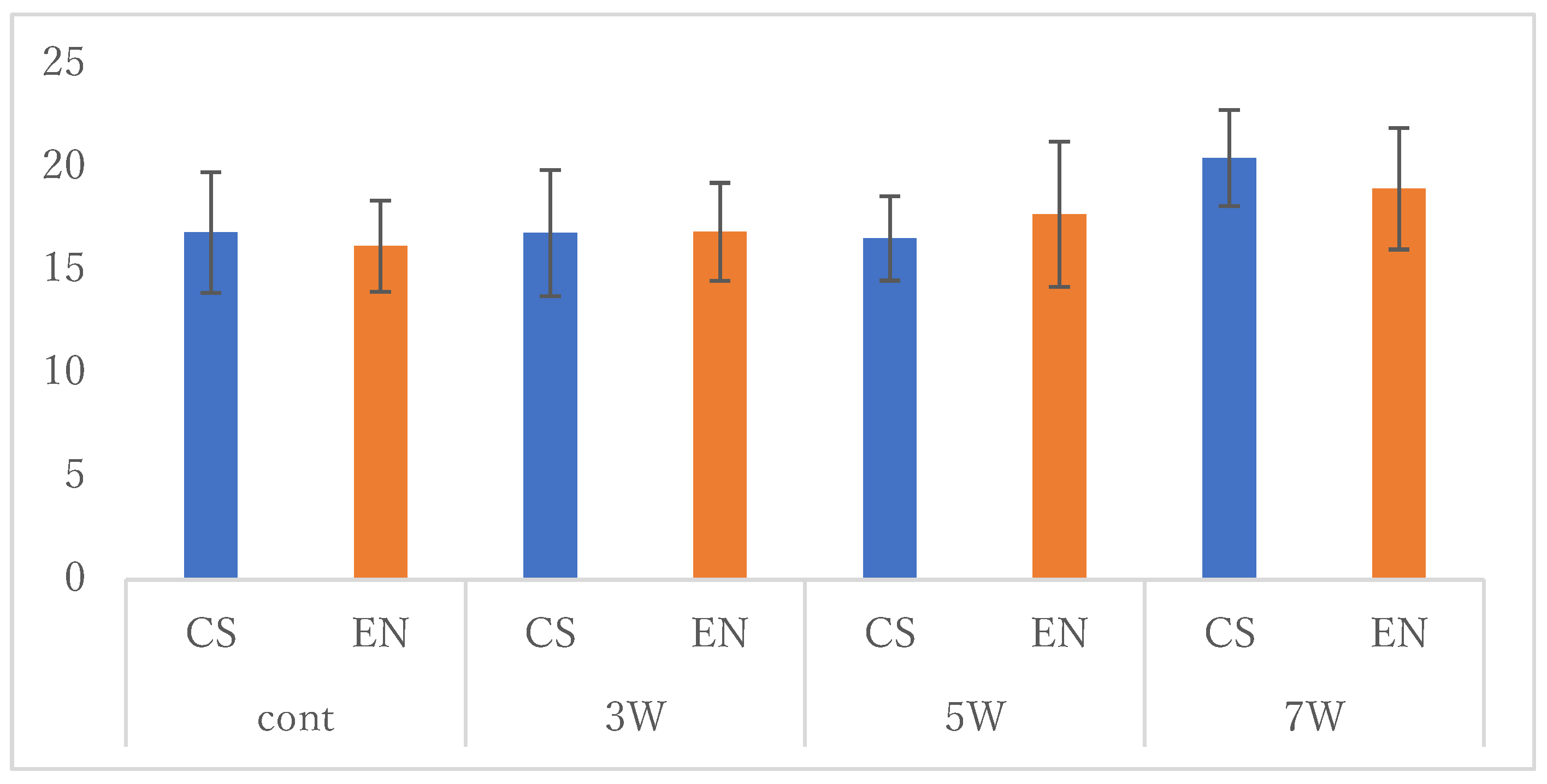
Figure 2.
Shear bond strengths after the thermal cycle loading test.
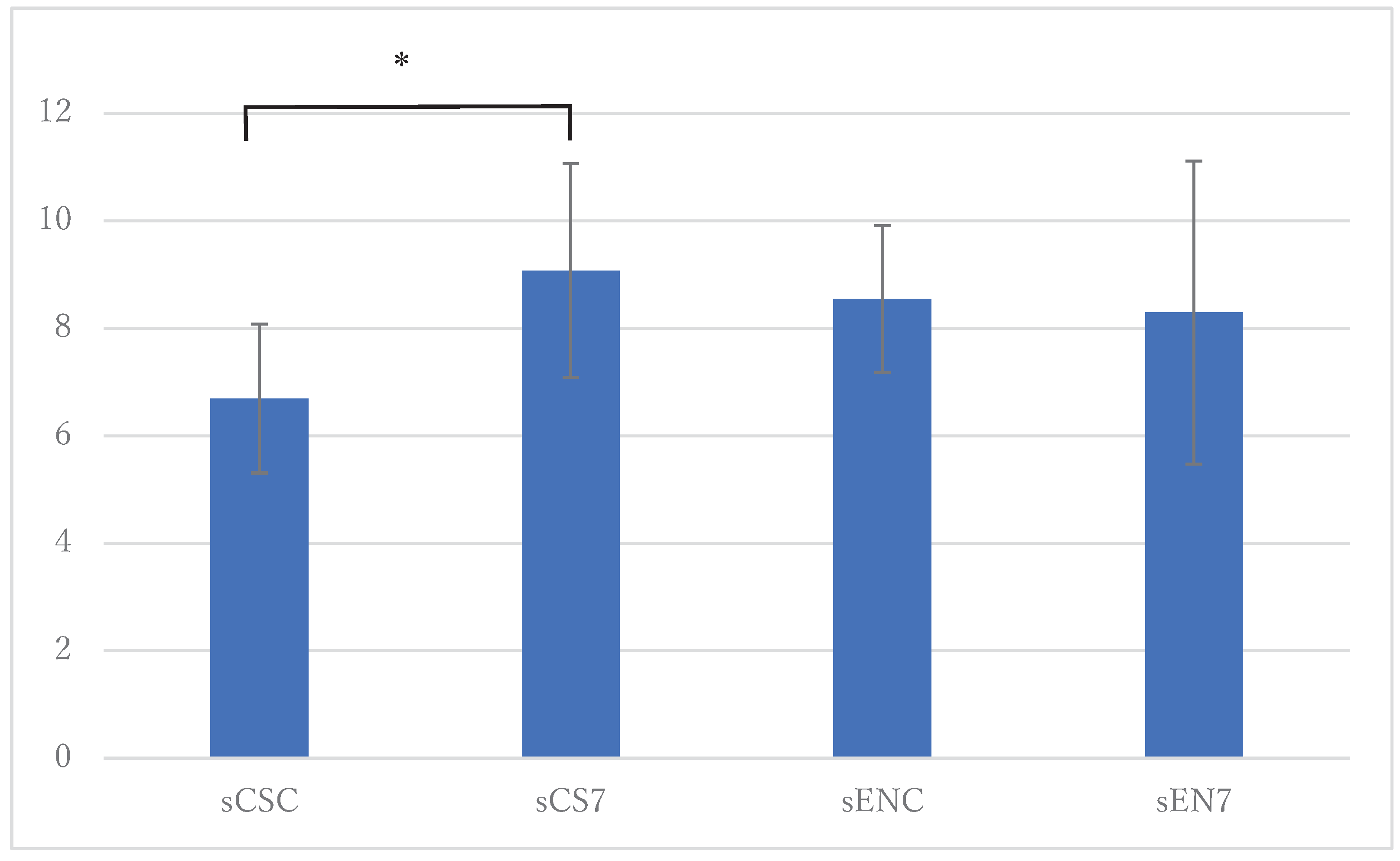
Figure 3.
Results of the failure mode analysis of specimens after 24 h of storage.
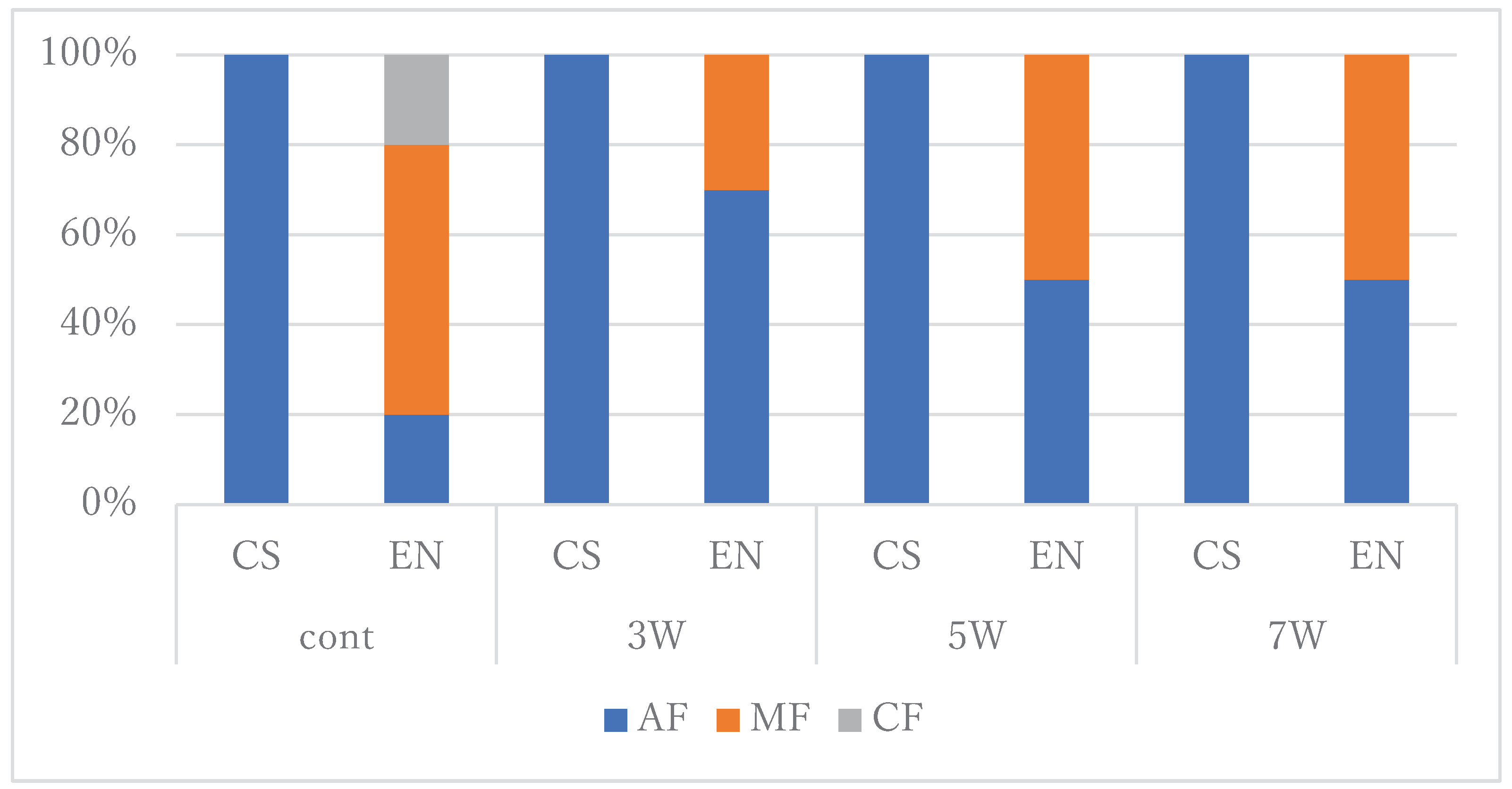
Figure 4.
SEM images of representative specimens judged as AF (a), MF (b), and CF (c).
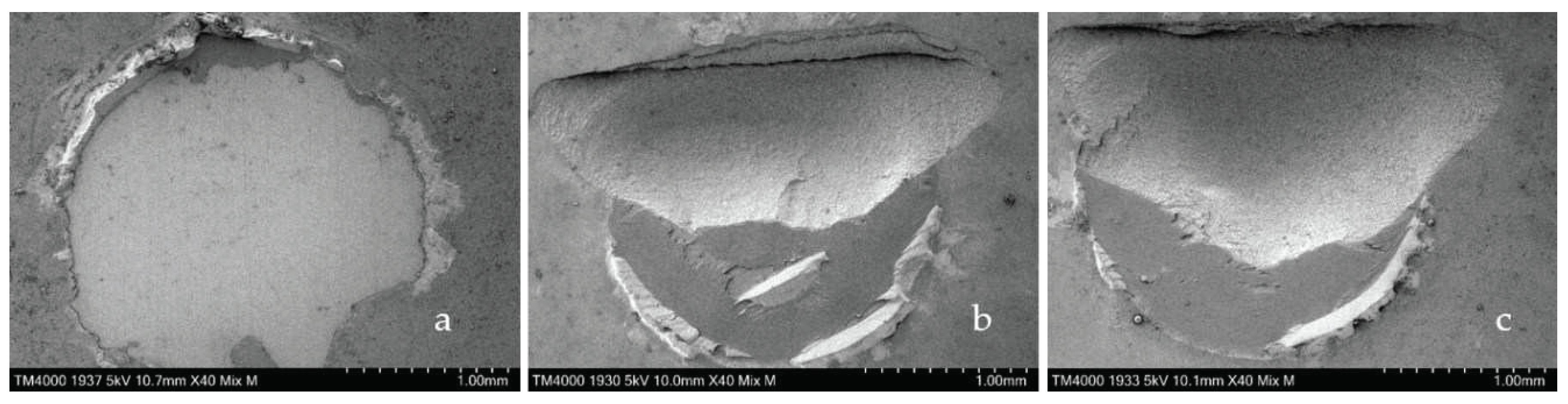

Table 1.
Experimental materials used in this study.
| Material | Code | Lot# | Composition | Manufacturer |
|---|---|---|---|---|
| Cerasmart 300 | CS | 2302206 | BisMEPP, UDMA, DMA (29wt%), SiO₂ and B₂O₃ glass nanofillers (71wt%) | GC |
| Vita Enamic | EN | 97110 | Bis-GMA, UDMA, Bis-EMA, TEGDMA, polymer network (14wt%), SiO₂, Al₂O₃, Na₂O, K₂O, B₂O₃, ZrO₂, CaO ceramic network (86wt%) | Vita |
| ClearfilMajestyES Flow | – | A30347 | Surface-treated barium glass, surface-treated silica fillers, monomer (TEGDMA and methacrylic acid monomer), photopolymerization catalyst, stabilizing agent, coloring agent | Kuraray Noritake Dental |
| ClearfilCeramicPrimer Plus | – | B10087 | Silane coupling agents, monomer (MDP), and ethanol | Kuraray Noritake Dental |
| Clearfil Universal Bond Quick ER | – | 4J0349 | Monomer (Bis-GMA, phosphate ester monomer: MDP, HEMA, hydrophilic amide monomer), filler (silica-based microfiller), ethanol, photopolymerization catalyst, scientific polymerization accelerators, purified water, and NaF | Kuraray Noritake Dental |
Table 2.
Experimental group codes.
| Group Code | Laser Irradiation Power | Thermal Cycling Load Test |
|---|---|---|
| CSC | without irradiation | no loading |
| CS3 | 3 W | |
| CS5 | 5 W | |
| CS7 | 7 W | |
| ENC | without irradiation | |
| EN3 | 3 W | |
| EN5 | 5 W | |
| EN7 | 7 W | |
| sCSC | without irradiation | 10,000 cycles |
| sCS7 | 7 W | |
| sENC | without irradiation | |
| sEN7 | 7 W |
Table 3.
Results of the two-way analysis of variance of shear bond strength values in the groups after 24 h of storage.
Table 3.
Results of the two-way analysis of variance of shear bond strength values in the groups after 24 h of storage.
| Factor | Type III Sum of Squares | Degrees of Freedom | Mean Square | F Value | P Value |
|---|---|---|---|---|---|
| Material Type | 1.044 | 1 | 1.04 | 0.12 | 0.72 |
| Laser Power | 128.44 | 3 | 42.81 | 5.19 | 0.003 |
| Material Type * Laser Power | 19.04 | 3 | 6.34 | 0.77 | 0.51 |
| Error | 592.91 | 72 | 8.23 | ||
| Overall | 741.44 | 79 |
Table 4.
Results of the two-way ANOVA of block surface temperatures assessed immediately after laser irradiation.
Table 4.
Results of the two-way ANOVA of block surface temperatures assessed immediately after laser irradiation.
| Factor | Type III Sum of squares | Degrees of freedom | Mean Square | F value | P value |
|---|---|---|---|---|---|
| Material Type | 440.10 | 1 | 440.10 | 1279.44 | < 0.001 |
| Laser Power | 1069.43 | 2 | 534.71 | 1554.49 | < 0.001 |
| Material Type * Laser Power | 57.63 | 2 | 28.81 | 83.77 | < 0.001 |
| Error | 18.57 | 54 | 0.34 | ||
| Overall | 1585.74 | 59 |
Disclaimer/Publisher’s Note: The statements, opinions and data contained in all publications are solely those of the individual author(s) and contributor(s) and not of MDPI and/or the editor(s). MDPI and/or the editor(s) disclaim responsibility for any injury to people or property resulting from any ideas, methods, instructions or products referred to in the content. |
© 2023 by the authors. Licensee MDPI, Basel, Switzerland. This article is an open access article distributed under the terms and conditions of the Creative Commons Attribution (CC BY) license (http://creativecommons.org/licenses/by/4.0/).
Copyright: This open access article is published under a Creative Commons CC BY 4.0 license, which permit the free download, distribution, and reuse, provided that the author and preprint are cited in any reuse.


