
Submitted:
17 October 2023
Posted:
17 October 2023
You are already at the latest version
Abstract
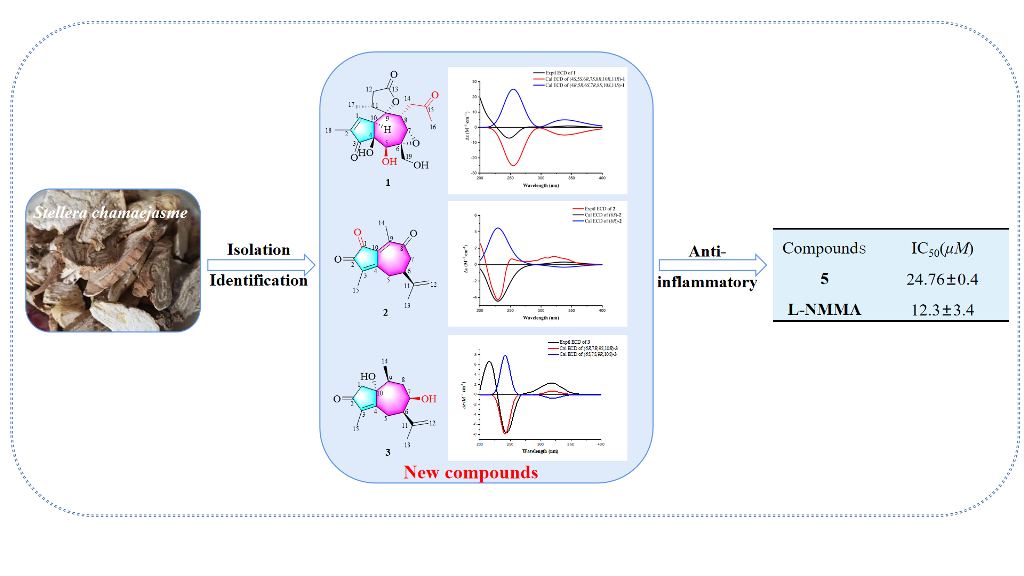
An undescribed diterpene, stellerterpenoid A (1) and two undescribed sesquiterpenoids, stellerterpenoids B and C (2-3), together with six known compounds, were isolated from the roots of Stellera chamaejasme L. Their structures were elucidated by extensive spectroscopic data (1D, 2D NMR, IR, UV and HR-ESI-MS). The absolute configuration of 1-3 were elucidated based on ECD calculation. Among of them, stellerterpenoid A was a rare 13, 14 - seco nortigliane diterpenoid and stellerterpenoid B was a guaiacane type sesquiterpenoid with an unusual 1, 2-diketone moiety. The known stelleraguaianone B (5) exhibited moderate activity to suppress NO production in LPS - simulated macrophages with an IC50 value of 24.76 ± 0.4 μM. None of the compounds showed inhibitory influenza virus and tumor activity.
Keywords:
Stellera chamaejasme L
; stellerterpenoids A–C
; ECD calculation
; NO inhibition
Introduction
Stellera chamaejasme L (Thymelaeaceae) is a toxic plant that is widely distributed in north and southwest China and used to treat skin diseases, psoriasis, chronic tracheitis, and tuberculosis [1,2,3,4]. The spread of S. chamaejasme in degraded grassland is increasingly serious, which affects the sustainable development and ecological security of grassland animal husbandry in China [3]. S. chamaejasme originally recorded in the Shen Nong Ben Cao Jing and has the effects of clearing heat and detoxifying, detumescence, reducing inflammation, stopping ulcers, and removing saprophytic muscle [5,6,7,8,9]. Many studies have been conducted on its chemical composition and pharmacological activities in recent decades. A series of compounds have been reported, including highly oxidized daphnane-type diterpenes [10,11], guaiane-type sesquiterpenoids [12,13,14,15,16], and unusual C-3/C-3''-biflavanones [17,18,19,20]. Some compounds from S. chamaejasme have been shown to demonstrate many different and interesting biological activities. For example, gnidimacrin, a 1-alkyldaphnane-type diterpene was found to have strong anti-cancer activity and broad anticancer spectrum [21]. Daphnane diterpenes, stelleralides C-E, exhibited more potent anti-HIV activity (EC50 = 0.73~0.98 nM) than zidovudine (positive controls, EC50 = 32 nM) [22]. Chamechromone can significantly inhibit the expression of proinflammatory cytokines in RAW 264.7 cells [23].
In our continuous research work, methanol extract of S. chamaejasme were phytochmically investigated. As a result, nine terpenoids, including one new diterpene and two new sesquiterpenoids named stellerterpenoids A–C (1-3) and six known terpenoids (4-9) were identified from the ethyl acetate extract (Figure 1). In addition, the anti-inflammatory, anti-influenza virus and anti-tumor activity of the nine compounds was tested. Herein, the isolation, identification, structural characterization, and biological assessment of these compounds are reported.
Results and Discussion
2.1. Structural Elucidation of Three New Compounds (1, 2, and 3)
Stellerterpenoid A (1), yellow oil, had a molecular formula of C19H24O8 deduced from the quasi-molecular ion peak at m/z 403.1344 [M + Na] + (calcd 403.1363) in the HRESIMS, with eight degrees of unsaturation. The 1H NMR spectrum (Table 1) of 1 displayed the presence of three methyls at δH 2.19 (s, H-16), 1.78 (s, H-18) and 1.18 (d, J = 7.0 Hz, H-17), an oxymethines at δH 3.85 (s, H-19), a suite of methines including an olefinic proton at δH 7.48 (d, J = 1.8 Hz, H-1), and four methines at δH 4.31 (s, H-5), 3.57 (ddd, J = 10.6, 5.4, 2.4 Hz, H-8), 3.24 (d, J = 6.0 Hz, H-7), and 2.74 (m, H-11). Its 13C NMR and DEPT spectra (Table 2) revealed 19 carbon signals, including three methyls [δc 30.2 (C-16), 18.0 (C-17), and 10.0 (C-18)], three methylenes [δc 63.6 (C-19), 42.6 (C-14), and 38.9 (C-12)], six methines [δc 158.3 (C-1), 75.9 (C-5), 58.8 (C-7), 51.0 (C-10) and 40.3 (C-8)], and seven quaternary carbons consisting of two carbonyl [δC 209.8 (C-3), 209.2 (C-15)], one ester carbonyl group at δC 177.9 (C-13), one olefinic at δC 137.7 (C-2) and three oxygenated ones at δC 91.8 (C-9), 76.2 (C-4) and 66.0 (C-6).
The 1H and 13C-NMR spectral data of 1 were similar to those of crotonianoid A [24] except for the occurrence of signals due to a methylene group (δC 42.6, C-14) and a ketone carbonyl (δC 209.2, C-15) in 1 instead of the ∆14,15 double bond (δC 123.0, 136.5) in crotonianoid A. The phenomena suggested that the ∆14,15 double bond in crotonianoid A was oxygenated, thus interpreting the presence of the methylene and ketone carbonyl in 1. In addition, the methylene of C-5 [δC 38.8, δH 2.41 (d, J = 18.6 Hz), 2.66 (d, J =18.6 Hz)] in crotonianoid A was replaced by one oxy methine [δC 75.9, δH 4.31 (s)] and the double bond was replaced with one epoxy structure at C-6 and C-7. The C-9 and C-13 via an oxygen atom to generate a five-membered lactone ring was demonstrated by signal offset are similar to crotonianoid A [24]. The HMBC cross-peaks from H-8 (δH 3.57) to C-14 (δC 42.6) and C-15 (δC 209.2) and from H-16 (δH 2.19) to C-14 (δC 42.6) and C-15 (δC 209.2) supported the location of the acetone unit at C-8. In addition, the HMBC correlations from H-11 (δH 2.74) to C-8 (δC 40.3), C-9 (δC 91.8), C-10 (δC 51.0), C-12 (δC 38.9) and C-13 (δC 177.9).
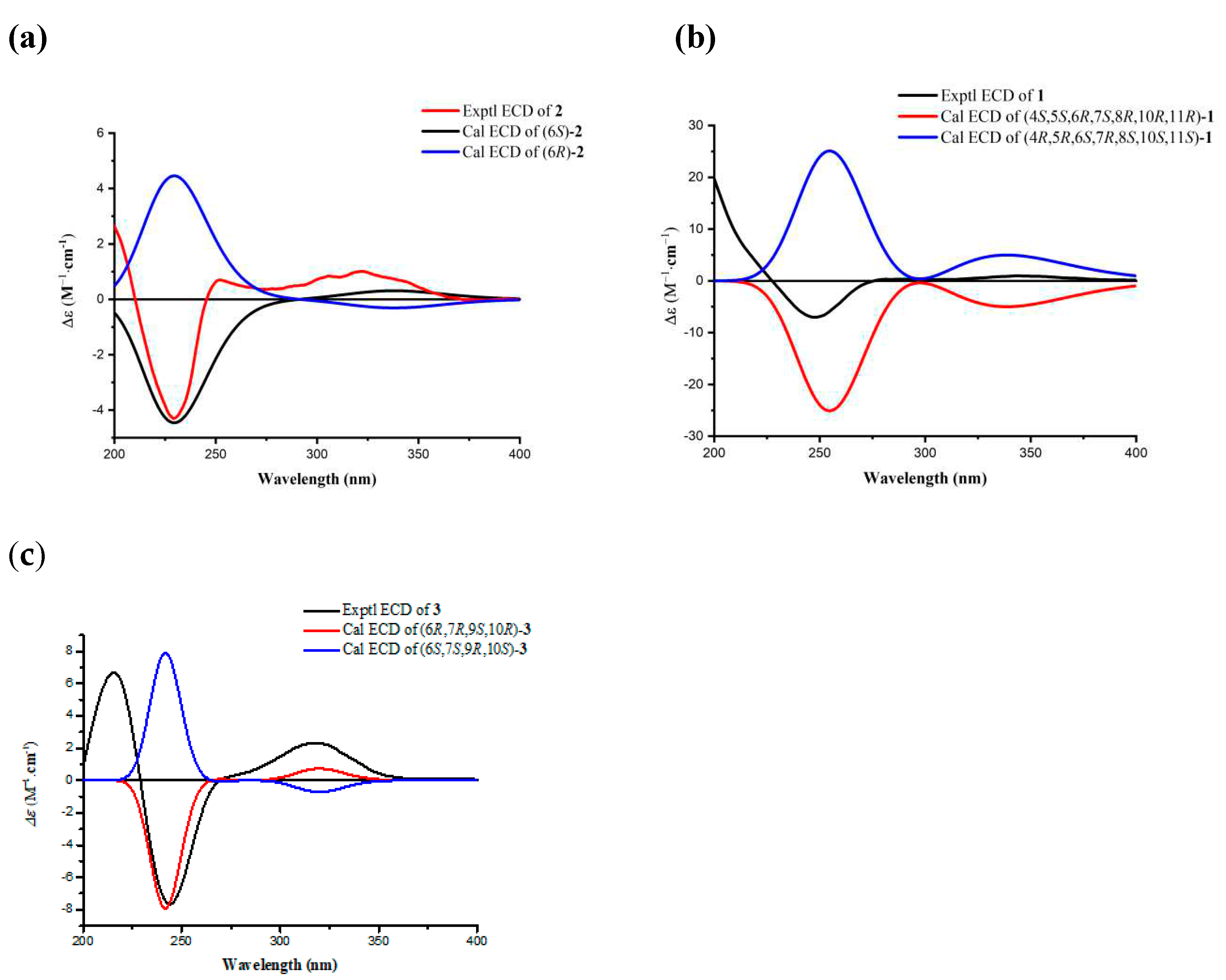
The relative configuration of 1 was established by the analysis of NOESY spectrum. The correlations of H-7/H-11, H-8/H-11and H-12β (Figure 3) allowed H-7, H-8, H-11, and C-9−C-11 bond were assigned β-directed, while the NOESY cross-peaks H-10/H-5 and H-17, and H-12α/H-17 indicated that H-5, H-10, and Me-17 were α-oriented, and H-10 and 4-OH were trans-oriented. The comparison of the calculated and experimental ECD spectra of 1 assigned its absolute configuration to be 4S, 5S, 6R, 7S, 8R, 10R, 11R (Figure 4a). Therefore, the structure of 1 was fully elucidated to be a rare 13, 14-seco nortigliane and named stellerterpenoid A. To be the best our knowledge, it is the second report of 13, 14-seco nortigliane diterpenoid besides crotonianoid A.
Stellerterpenoid B (2) was obtained as yellow oil with a molecular formula of C15H16O3 according to its HRESIMS at m/z 267.0981 [M + Na] + (calcd 267.0992), suggesting eight degrees of unsaturation. The 1H NMR spectrum (Table 1) of 2 exhibited the presence of a one double bond at δH 4.81 (s, H-12b) and 4.80 (s, H-12a) and three methyl peaks at δH 1.95 (s, H-14), 1.85 (s, H-15), and 1.80 (s, H-13). The 13C NMR spectrum (Table 2) in combination with the DEPT spectrum showed 15 carbon signals, including three methyls in the high magnetic field at δc 20.4 (C-13), 17.3(C-14), and 8.8 (C-15), an olefinic carbons at δc 111.3 (C-12), two methylene at δc 50.6 (C-7) and 36.3 (C-5), one methine at δc 40.3 (C-6) and eight quaternary carbons δc 204.3 (C-2), 202.6 (C-1,8), 165.1 (C-4), 148.9 (C-11), 146.1 (C-3), 145.9 (C-10) and 132.6 (C-9). The NMR feature indicated that 2 was a guaiacane type sesquiterpene.
The NMR spectral data of 2 were very similar to those of oleodaphnone [25] except for the replacement of one ketone carbonyl in 2 by one methylene in oleodaphnone. This observation suggested that one methylene in oleodaphnone was oxygeanted into one ketone carbonyl in 2. The HMBC correlation from H-14 (δH 1.95) to C-1 (δC 202.6) verified that the ketone was located at C-1. The absolute configuration of 2 was determined by the ECD data. The calculated ECD spectrum agreed well with the experimental ECD spectrum of (6S)-2 (Figure 4b). Therefore, the structure of 2 was elucidated to be a guaiacane sesquiterpene with a unusual 1,2-diketone moiety and named as stellerterpenoid B.
Since 1,2-diketone fragment is rare in natural compounds, the biosynthetic pathway of 2 were proposed based on a biosynthetic precursor oleodaphnone (Scheme 1). The C-1 of oleodaphnone is oxidized by P450 enzyme to form hydroxyl intermediate i, which is further oxidized to form 2 [26].
Stellerterpenoid C (3) was obtained as white oil. Its HRESIMS exhibited a quasi-molecular ion peak at m/z 273.1454 [M + Na] + (calcd 273.1461), suggesting a molecular formula of C15H22O3 with five degrees of unsaturation. The 1H NMR spectroscopic data (Table 1) show the presence of three methyls at δH 1.80 (s, H-13), 1.64 (s, H-15) and 0.85 (d, J = 7.2 Hz, H-14), four methylenes at δH 4.79 (s, H-12a), δH 4.76 (s, H-12b), 2.57 (d, J =18.2 Hz, H-1a), 2.34 (d, J =18.2 Hz, H-1b) and 2.20 (ddd, J =13.8, 10.0, 3.5 Hz, H-8), 1.75 (ddd, J =13.8, 5.4, 3.5 Hz, H-8), and threes methines at δH 3.69 (m, H-7), 3.00 (m, H-6) and 2.29 (m, H-9).The 13C NMR spectrum showed 15 signals, which were ascribed to three methyls at δC 19.9 (C-13), 15.6 (C-14), and 7.9 (C-15), four methylenes at δC 112.8 (C-12), 50.3 (C-1), 32.2 (C-5), and 40.8 (C-8), three methylates at δC 70.5 (C-7), 51.3 (C-6), and 37.9 (C-9), and five quaternary carbons at δC 208.3 (C-2), 138.9 (C-3), 173.8 (C-4), 82.2 (C-10), and 149.0 (C-11) (Table 2).
The NMR spectra of 3 were extremely similar to those of known wikstronone C [27], except that the signals of one methylene in the referenced compound were replaced by one oxy methine in 3. The HMBC correlations from H-7 (δH 3.69) to C-8 (δC 40.8) and C-6 (δC 51.3), together with the 1H-1H COSY spin system of H-6/H-7/H-8/H-9, indicated that a hydroxy was connected with C-7 in 3 to allow for the presence of oxymethine (Figure 2). In the NOESY spectrum, δH 0.85 (H3-14) correlated with δH 2.57 (H-1β) suggested that CH3-14 is β-oriented. The NOESY correlations of H-7/H-9 and H-6/H-9 suggested the α-orientation of H-6 and H-7 (Figure 3). The 10-OH is defined as β configuration because signal of C-10 (δC 82.2) is similar to C-10 (δC 83.2) in wikstronone C. The comparison of the calculated and experimental ECD spectra of 3 (Figure 4c) assigned its stereochemistry to be 6R, 7R, 9S, 10R. Hence, the structure of 3 was characterized and named stellerterpenoid C.
2.2. Biological Studies
Compounds 1-9 were evaluated for their inhibition on nitric oxide (NO) production induced by lipopolysaccharide (LPS) in RAW 264.7 macrophages. The research results shows that compound 5 displayed the mild activity to inhibit NO production (IC50 = 24.76 ± 0.4 μM) (Table 3).
The inhibitory rate of HepG2, A549 and HeLa cells growth of compounds 1–9 was measured by the MTT assay. Unfortunately, none of these nine compounds is active.
Furthermore, compounds 1–9 were also tested for anti-influenza virus activity against A/Puerto Rico/8/1934 (H1N1) virus, and nucleozin. However, none of the compounds showed inhibitory activity.
Materials and Methods
1.1. General Experimental Procedures
Optical rotations were recorded on a Jasco P-1020 polarimeter (JASCO Corporation, Tokyo, Japan). CD spectra were obtained on a Jasco J715 spectropo- larimeter. UV spectra were measured using a UV-8000 spectrophotometer (Shanghai Metash instruments Co.,Ltd, Shanghai, China). IR spectra were recorded on Bio-Rad FTS-135 spectrophotometer (Bio-rad Company, California, USA). NMR data were determined by Bruker Avance III HD-600 (Bruker BioSpin Group, Rheinstetten, Germany). ESI-MS and HR-ESI-MS were recorded on an APIQ star-Pulsar spectrometer (Applied Biosystems Corporation, Canada). The rotary evaporator is n-1300V-W type (Tokyo Physicochemical Co., LTD, Kyoto, Japan). Semipreparative HPLC was used Agilent 1260 (ZORABAX SB-C18, 4.6 mm × 250 mm, 1 ml/min; 9.4 mm × 250 mm, 3 ml/min.) (Agilent Technology Co., Ltd, California, USA) and NP7005-10C (CC: Nucifera C8M, 4.6 mm × 250 mm, 1 ml/min; 20× 250 mm,10 ml/min) (Hanbon Sci.& Tech, Jiangsu, China). Preparative HPLC used methanol and acetonitrile (pure reagents) were purchased from Merk Company (Merck, Darmstadt, Germany). Sephadex LH-20 (25-100 μm; Amersham Biosciences AB, Uppsala, Sweden), Thin layer silica gel plate (GF254) was purchased from Qingdao Marine Chemical Plant (Qingdao, China) and spots were visualized by heating silica gel plates sprayed with 5% H2SO4-EtOH.
1.1. Plant Material
The dried roots of Stellera chamaejasme L were collected in Dali city, Yunnan Province. People's Republic of China, and identified by Dr Zhijun Zhang, Kunming University of Science and Technology. A voucher specimen (KUMST20211007) has been deposited at the Key Laboratory of Phytochemistry, Kunming University of Science and Technology.
3.3. Extraction and Isolation
Dried roots of Stellera chamaejasme (11.0 kg) was crushed and extracted with 70% acetone/H2O three times (3 × 50 L) at room temperature to give a crude extract (10.1 kg) under reduced pressure distillation. The extract was mixed with water (15.0 L), and followed by successive partition with petroleum ether (3 × 15 L) and EtOAc (3 × 15 L). The EtOAc extract (3.35 kg) was separated by silica gel (2.5 × 160 cm) using a gradient of petroleum ether/EtOAc (5:1-1:1, v/v) and CHCl3/MeOH (3:1–1:1, v/v) to give eight fractions (Fr. A~H).
Fr. C (45.75 g) was separated by silica gel (8 × 160 cm) using a gradient solvent petroleum ether/EtOAc (5:1–1:1, v/v) to afford six fractions (Fr. C1~C6). Fr. C3 (3.3 g) was repeatedly separated by silica gel (6 × 70 cm, CH2Cl2/MeOH, 10:1-1:1, v/v) to afford four fractions (Fr. C3-1~C3-4). Fr. C3-1 (198.4 mg) was purified by Sephadex LH-20 (MeOH) to yield 2 (8.3 mg), 5 (13.3 mg), 6 (3.7 mg), 7 (6.2 mg), and 8 (12.4 mg). Fr. C3-2 (1.2 g) was applied to a silica gel column (2 × 60 cm) washed with petroleum ether-acetone (15:1–1:1, v/v) to provide fractions C3-2-2 (63.7 mg), which was further separated by semi-preparative HPLC (MeOH/H2O, 57:43, v/v) to afford 3 (3.7 mg) and 9 (3.8 mg). Fr. C4 (7.5 g) was subjected to silica gel (10 × 160 cm) using CHCl3/MeOH (20:1–1:1, v/v) to give six fractions (Fr. C4-1~ C4-6). Fr. C4-2 (840 mg) was separated by silica gel column chromatography (1 × 60 cm, petroleum ether/CH2Cl2, 1:10-1:1, v/v) to afford fractions C4-2-2 (355.8 mg). Fr.C4-2-2 (355.8 mg) was purified by Sephadex LH-20 eluted with CHCl3-MeOH (1:1, v/v) and then was used to silica gel (CHCl3 / MeOH, 15:1, v/v, 2 × 70 cm) to yield 1 (39.3 mg) and 4 (105.3 mg).
3.4. Details of New Compounds
3.4.1. Stellerterpenoid A (1)
Yellow oil; [α−37.1 (c 0.24, MeOH); UV (MeOH) λmax (log ε) 244 (1.88) nm; IR (KBr) νmax 3449, 2918, 2920, 1769, 1703, 1631, 1424, 1361, 1292, 1220, 1164, 1089, 1040, 966, 930, 834, 800, 724, 676, 585, 530, 418 cm-1; 1H NMR (CD3OD, 600 MHz) and 13C NMR (CD3OD, 150 MHz) data see Table 1 and Table 2; HRESIMS m/z 403.1344 [M + Na] + (calcd 403.1363).
3.4.2. Stellerterpenoid B (2)
Yellow oil; [α−11.0 (c 0.05, MeOH); UV (MeOH) λmax (log ε) 207 (1.09) nm, 230 (1.01) nm and 301 (1.59) nm; IR (KBr) νmax 3444, 2919, 2851, 1702, 1647, 1444, 1383, 1309, 1262, 1179, 1092, 896, 802 cm-1; 1H NMR (CD3OD, 600 MHz) and 13C NMR (CD3OD, 150 MHz) data see Table 1 and Table 2; HRESIMS m/z 267.0981 [M + Na] + (calcd 267.0992).
3.4.3. Stellerterpenoid C (3)
Yellow oil; [α+91.8 (c 0.10, MeOH); UV (MeOH) λmax (log ε) 239 (1.56) nm; IR (KBr) νmax 3458, 3070, 2972, 2928, 2852, 1688, 1629, 1454, 1382, 1319, 1230, 1188, 1164, 1110, 1050, 978, 878, 807, 729, 655, 552, 463 cm-1; 1H NMR (CD3OD, 600 MHz) and 13C NMR (CD3OD, 150 MHz) data see Table 1 and Table 2; HRESIMS m/z 273.1454 [M + Na] + (calcd 273.1461).
3.5. ECD Calculations for 1, 2 and 3
Based on the conformation determined from ROESY spectra and Chem 3D modeling, the low-energy conformers of model compound (4S,5S,6R,7S,8R,10R,11R) -1, (6R)-2, (6R,7R,9R,10R)-3 were generated within 10 kcal/mol energy window under MMFF94S via the software CONFLEX [31]. The selected conformers of each model compound with highest distribution (fuef63, fuef4 and fuef72-1 conformers for compounds 1-3, respectively were further optimized by the density functional theory method at the B3LYP/6-31G (d) level. The ECD calculations were using TD-DFT-B3LYP/6-311G (+, 2d, p) of theory on optimized geometries through the CPCM model (in MeOH) [32]. The calculated ECD curves were generated using SpecDis 1.71 [33] and all the above calculations were carried out with the Gaussian 16 package of programs. All ECD curves were weighted by Boltzmann distribution after UV correction.
3.6. Determination of NO Production
Compounds 1-9 were evaluated for their anti-inflammatory activity using a LPS-induced NO production model. The NO production was calculated by measuring the content of nitrite in the supernatant of the culture by Griess reaction method. Cell viability was measured via MTT assay. The bioassays for NO production and cell viability of 1-9 were determined by a procedure described previously [34].
3.7. Anti-Influenza Virus Assay
Influenza strain A/Puerto Rico/8/1934 (H1N1) was used in this study. For the inhibitory activity assays, compounds 1-9 were dissolved in DMSO and Oseltamivir was used as positive control. MDCK cells (104/well) were inoculated in 96-well plates and cultured for 24 h, compounds of different concentrations (from 1.56 μM to 50 μM) were mixed with influenza virus (100 TCID50) and added into the cells. IC50 (50% virus inhibitory concentration) was calculated using the software CalcuSyn (Biosoft, Cambridge, UK) [35].
3.8. Anti-Tumor Assay
Cytotoxic activity assays against HepG2, A549 and HeLa cell lines were seeded on 96 well microplates and cultured in DMEM medium with 10% fetal bovine serum (FBS) at 37 ℃ and 5% CO2 for 24 h.. Spetra-Max M2 (Molecular Devices, USA) was employed to record the optical density (λ = 490 nm). SPSS 21.0 software was used for data evaluation. IC50 values were calculated based on the mean OD measured three times versus concentration curves of drugs. Adriamycin (10 mM, purity 99%, Solar bio Science&Technology Co. Ltd., Beijing, China) was used as the positive control [36].
Conclusions
In summary, three previously unreported terpenoids including an undescribed diterpene (1), two new guaiacane type sesquiterpenoids (2-3) and six known ones (4-9) were isolated from root of Stellera chamaejasme. The absolute configuration of compounds 1–3 were established by the experimental and calculated ECD. Compound 5 exhibited the moderate activity to inhibit NO production in LPS-induced RAW 264.7 macrophages, presenting the potential of anti-inflammation.
Supplementary Materials
Supplementary material related to this article can be found, in the online version.
Credit author statement
Design the study: Xuanqin Chen; drafting the manuscript: Juan Wu; bioactive assay: Caicen Liao; critical revision of the manuscript: Rongtao Li; assisting the chemical experiment: Zhujun Ye.
Declaration of competing interest
The authors declare that they have no competing financial interests or personal relationships that could have appeared to influence the work reported in this paper.
Acknowledgments
This work was supported by the National Natural Science Foundation of China(22067012, 82073737), the key R&D program of Yunnan Province (202103AC10005), the Open Fund of State Key Laboratory of Tea Plant Biology and Utilization (SKLTOF20190110), and the Innovative Team of Yunan Province (No.2019HCO18).
References
- Li, J.; Zhao, W.; Hu, J. L.; Cao, X.; Yang, J.; Li, X.R. A new C-3/C-3”- biflavanone from the roots of Stellera chamaejasme L. Molecules 2011, 16, 6465–6469. [Google Scholar] [CrossRef]
- Liu, X.N.; Yang, Q.; Zhang, G.L.; Li, Y.J.; Chen, Y.; Weng, X.G.; Wang, Y.J.; Wang, Y.W.; Zhu, X.X. Anti-tumor pharmacological evaluation of extracts from stellera chamaejasme L based on hollow fiber assay. BMC Complem. Altern. M. 2014, 14, 1–8. [Google Scholar] [CrossRef] [PubMed]
- Liu, L.P.; Wang, X.Y.; Wang, H.B. A new lignan from the roots of Stellera chamaejasme. Chem. Nat. Compd. 2012, 48, 559–561. [Google Scholar] [CrossRef]
- Zhang, C.; Zhou, S.S.; Feng, L.Y.; Zhang, D.Y.; Lin, N.M.; Zhang, L.H.; Pan, J.P.; Wang, J.B.; Li, J. In vitro anti-cancer activity of chamaejasmenin B and neochamaejasmin C isolated from the root of Stellera chamaejasme L. Acta Pharmacol. Sin. 2013, 34, 262–270. [Google Scholar] [CrossRef]
- Li, J.; Shen, Q.; Bao, C.H.; Chen, L.T.; Li, X.R. A new dicoumarinyl ether from the roots of Stellera chamaejasme L. Molecules 2014, 19, 1603–1607. [Google Scholar] [CrossRef]
- Guo, L.Z.; Li, J.H.; He, W.; Liu, L.; Huang, D.; Wang, K. High nutrient uptake efficiency and high water use efficiency facilitate the spread of Stellera chamaejasme L in degraded grasslands. BMC Ecol. 2019, 19, 50. [Google Scholar] [CrossRef]
- Wang, Z.X.; Cheng, M.C.; Zhang, X.Z.; Hong, Z.L.; Gao, M.Z.; Kan, X.X.; Li, Q.; Wang, Y.J.; Zhu, X.X.; Xiao, H.B. Cytotoxic biflavones from Stellera chamaejasme. Fitoterapia 2014, 99, 334–340. [Google Scholar] [CrossRef]
- Zhan, J.; Wijeratne, E.M.; Seliga, C.J.; Zhang, J.; Pierson, E.E.; Pierson, L.S., III; VanEtten, H.D.; Gunatilaka, A.A. A new anthraquinone and cytotoxic curvularins of a Penicillium sp. from the rhizosphere of Fallugia paradoxa of the Sonoran desert. J. Antibiot. 2004, 57, 341–344. [Google Scholar] [CrossRef]
- Zhang, C.; Zhou, S.S.; Feng, L.Y.; Zhang, D.Y.; Lin, N.M.; Zhang, L.H.; Pan, J.P.; Wang, J.B.; Li, J. In vitro anti-cancer activity of chamaejasmenin B and neochamaejasmin C isolated from the root of Stellera chamaejasme L. Acta Pharmacol. Sin. 2013, 34, 262–270. [Google Scholar] [CrossRef]
- Yoshida, M.; Feng, W.; Saijo, N.; Ikekawa, T. Antitumor activity of daphnane-type diterpene gnidimacrin isolated from Stellera chamaejasme L, Int. J. Cancer 1996, 66, 268–73. [Google Scholar]
- Asada, Y.; Sukemori, A.; Watanabe, T.; Malla, K.J.; Yoshikawa, T.; Li, W.; Koike, K.Z. Chen, C.H.; Akiyama, T.; Qian, K.D.; Nakagawa-Goto, K.S.; Morris-Natschke, L.; Lee, K.H. Stelleralides A-C, novel potent anti-HIV daphnane-type diterpenoids from Stellera chamaejasme L. Org. Lett. 2011, 13, 2904–2907. [Google Scholar] [CrossRef]
- Jing, C.X.; Guo, J.J.; Yang, B.J.; Fan, S.R.; Wang, Y.T.; Chen, D.Z.; Hao, X.J. Stelleraguaianone B and C, two new sesquiterpenoids from Stellera chamaejasme L. Fitoterapia 2019, 134, 443–446. [Google Scholar] [CrossRef]
- Hu, F.F.; Qi, D.D.; Xu, S.; Mao, W. A new 11, 10-guaiane-type sesquiterpenoid from the roots of Stellera chamaejasme Linn. J. Chem. Res. 2021, 45, 225–227. [Google Scholar] [CrossRef]
- Pan, J.; Su, J.C.; Liu, Y.H.; Deng, B.; Hu, Z.F.; Wu, J.L.; Xia, R. F.; Chen, C.; He, Q.; Chen, J.C.; Wan, L.S. Stelleranoids A-M, guaiane-type sesquiterpenoids based on [5,7] bicyclic system from Stellera chamaejasme and their cytotoxic activity. Bioorg. Chem. 2021, 115, 105251. [Google Scholar] [CrossRef]
- Cheng, Z.Y.; Hou, Z.L.; Ren, J.X.; Zhang, D.D.; Huang, X. X.; Lin, B.; Song, S.J. Guaiane-type sesquiterpenoids from the roots of Stellera chamaejasme L. and their neuroprotective activities. Phytochemistry 2021, 183, 112628. [Google Scholar] [CrossRef]
- Cheng, Z.Y.; Zhang, D.D.; Ren, J.X.; Li, Y.L.; Yao, G.D.; Song, S.J.; Huang, X.X. Stellerasespenes A-E: Sesquiterpenoids from Stellera chamaejasme and their anti-neuroinflammatory effects. Phytochemistry 2022, 201, 113275. [Google Scholar] [CrossRef]
- Asada, Y.; Sukemori, A.; Watanabe, T.; Malla, K.J.; Yoshikawa, T.; Li, W.; Kuang, X.Z.; Koike, K.; Chen, C.H.; Akiyama, T.; Qian, K.D.; Nakagawa-Goto, K.; Morris-Natschke, S.L.; Lu, Y.; Lee, K.H. Isolation, structure determination, and anti-HIV evaluation of tigliane-type diterpenes and biflavonoid from Stellera chamaejasme. J. Nat. Prod. 2013, 76, 852–857. [Google Scholar] [CrossRef]
- Jiang, Z.H.; Tanaka, T.; Sakamoto, T.; Kouno, I.; Duan, J.A.; Zhou, R.H. Biflavanones, diterpenes, and coumarins from the roots of Stellera chamaejasme L. Chem. Pharm. Bull. 2002, 50, 137–139. [Google Scholar] [CrossRef]
- Jo, B.G.; Park, N.J.; Jegal, J.; Choi, S.; Lee, S.W.; Jin, H.; Kim, S.N.; Yang, M.H. A new flavonoid from Stellera chamaejasme L., stechamone, alleviated 2,4-dinitrochlorobenzene-induced atopic dermatitis-like skin lesions in a murine model. Int. Immunopharmacol. 2018, 59, 113–119. [Google Scholar] [CrossRef]
- [Yan, Z.Q.; Guo, H.R.; Yang, J.Y.; Liu, Q.; Jin, H.; Xu, R.; Cui, H.Y.; Qin, B. Phytotoxic flavonoids from roots of Stellera chamaejasme L. (Thymelaeaceae). Phytochemistry 2014, 106, 61–68. [Google Scholar]
- Yoshida, M.; Feng, W. J.; Nishio, K.; Takahashi, M.; Heike, Y. J.; Saijo, N.; Wakasugi, H.; Ikekawa, T. Antitumor action of the PKC activator gnidimacrin through CDK2 inhibition. Int. J. Cancer 2001, 94, 348–352. [Google Scholar] [CrossRef]
- Yan, M.; Lu, Y.; Chen, C.H.; Zhao, Y.; Lee, K.H.; Chen, D.F. Stelleralides D-J and anti-HIV daphnane diterpenes from Stellera chamaejasme, J. Nat. Prod. 2015, 78, 2712–2718. [Google Scholar] [CrossRef]
- Kim, M.; Lee, H.J.; Randy, A.; Yun, J.H.; Oh, S.R.; Nho, C.W. Stellera chamaejasme and its constituents induce cutaneous wound healing and anti-inflammatory activities. Sci. Rep. 2017, 7, 42490. [Google Scholar] [CrossRef]
- Hu, R.; J. Huang, L.; Yuan, F. Y.; Wei, X.; Zou, M. F.; Tang, G. H.; Li, W.; Yin, S. Crotonianoids A-C, three unusual tigliane diterpenoids from the seeds of Croton tiglium and their anti-prostate cancer activity. J. Org. Chem. 2022, 87, 9301–9306. [Google Scholar] [CrossRef]
- Hitomi, T.; Yoshihisa, T.; Gisho, H.; Yasuhiro, I.; Ekrem, S.; Erdem, Y. Terpenoids and aromatic compounds from Daphne oleoides ssp. Oleoides. Phytochemistry 1999, 52, 1525–1529. [Google Scholar]
- Salamanca Karande, D.; Schmid, A.; Dobslaw, D. Novel cyclohexane monooxygenase from Acidovorax sp. CHX100. Appl. Microbiol. Biotechnol. 2015, 99, 6889–6897. [Google Scholar] [CrossRef]
- Liu, Z.H.; Dong, M.Y.; Chang, H.; Han, N.; Yin, J. Guaiane type of sesquiterpene with NO inhibitory activity from the root of Wikstroemia indica. Bioorg. Chem. 2020, 99, 103785. [Google Scholar] [CrossRef]
- Gustafson, K.R.; Cardellina II, J.H.; McMahon, J.B.; Gulakowski, R.J.; Ishitoya, J.; Szallasi, Z.; Lewin, N. E.; Blumberg, P. M.; Weislow, O.S.; Beutler, J. A.; Jr, R.W.B.; Cragg, G.M.; COX, P.A.; Bader, J.P.; Boyd, M.R. A nonpromoting phorbol from the Samoan medicinal plant Homalanthus nutans inhibits cell killing by HIV-1. J. Med. Chem. 1992, 35(11), 1978–86. [Google Scholar] [CrossRef]
- Wu, M.B.; Shao, J.Q.; Zhu, J.X.; Zi, J.C. Chamaej4asnoids A-E, a 2,3 - seco - guaiane sesquiterpenoid with a 5/6/7 bridged ring system and related metabolites from Stellera chamaejasme L. Fitoterapia 2022, 158, 105171. [Google Scholar] [CrossRef]
- Huang, S.Z.; Zhang, X.; Ma, Q.Y.; Zheng, Y.T.; Dai, H.F.; Wang, Q.; Zhou, J.; Zhao,Y. X. Anti-HIV terpenoids from Daphne aurantiaca Diels Stems. RSC Adv. 2015, 5, 80254–80263. [Google Scholar] [CrossRef]
- Fujihara, T.; Obora, Y.; Tokunaga, M.; Sato, H.; Tsuji, Y. Dendrimer N- heterocyclic carbene complexes with rhodium(I) at the core. Chem. Commun. 2005, 36, 4526–4528. [Google Scholar] [CrossRef]
- Pescitelli, G.; Bruhn, T. Good computational practice in the assignment of absolute configuration by TDDET calculations of ECD spectra. Chirality 2016, 28, 466–474. [Google Scholar] [CrossRef]
- Bruhn, T.; Schaumlöffel, A.; Hemberger, Y.; Pescitelli, G. SpecDis, Version 1.71. Berlin, Germany; 2017.
- Cao, L.; Li, R.T.; Chen, X.Q.; Xue, Y.; Liu, D. Neougonin A inhibits lipopoly- saccha-ride-induced inflammatory responses via downregulation of the NFkB signaling pathway in RAW 264.7 macrophages. Inflammation 2016, 39, 1939–1948. [Google Scholar] [CrossRef]
- Jiang, N.; Quan, L.Q.; Zhou, Y.; Cheng, Y.Y.; Li, H.M.; Chen, X. Q.; Li, R.T.; Liu, D. Exploring the anti-influenza virus activity of novel triptolide derivatives targeting nucleoproteins. Bioorg. Chem. 2022, 129, 106118. [Google Scholar] [CrossRef]
- Khiev, P.; Kim, J.W.; Sung, S.J.; Song, H.H.; Choung, D.H.; Chin, Y.W.; Lee, H.K.; Oh, S.R. Ingenane-type diterpenes with a modulatory effect on IFN - γ production from the roots of Euphorbia kansui. Arch Pharm. Res. 2012, 35, 1553–1558. [Google Scholar] [CrossRef]
Figure 1.
Structures of compounds 1–9 isolated from Stellera chamaejasme L.
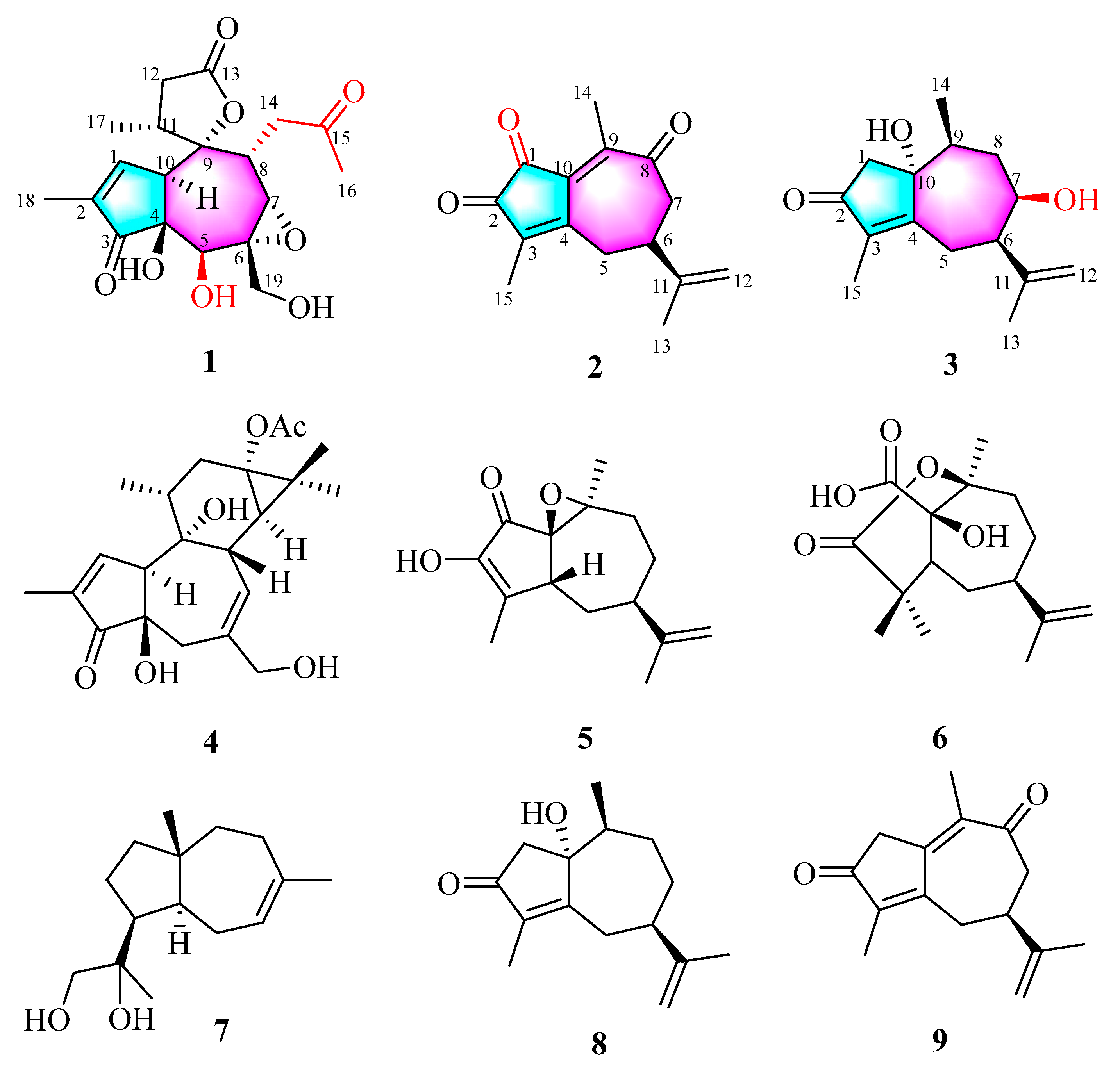
Figure 3.
Key NOESY correlations of compounds 1 and 3.
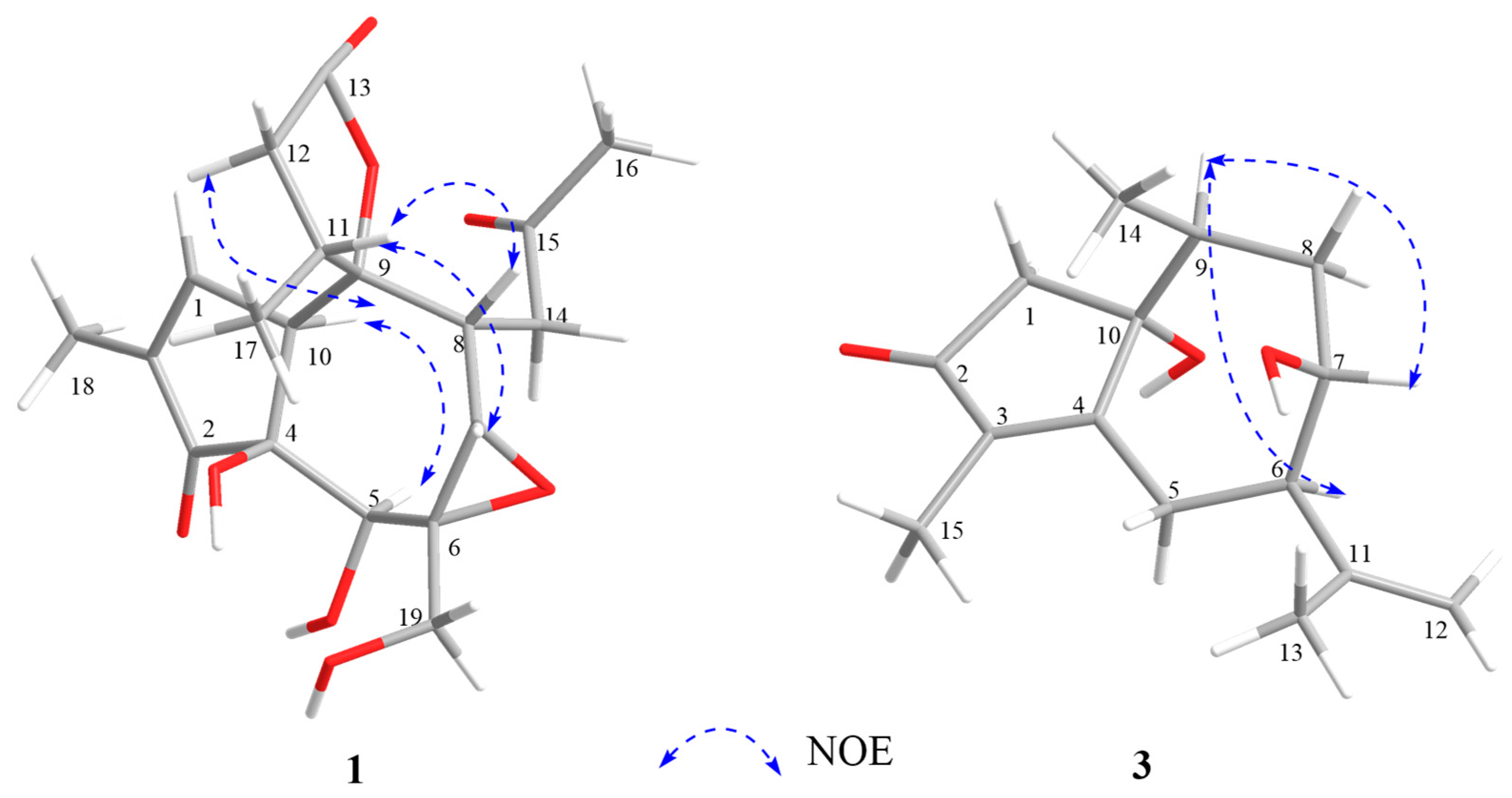
Figure 4.
Calculated and experimental ECD spectra of compounds 1 - 3.
Scheme 1.
Proposed Biosynthetic Pathway for 2.
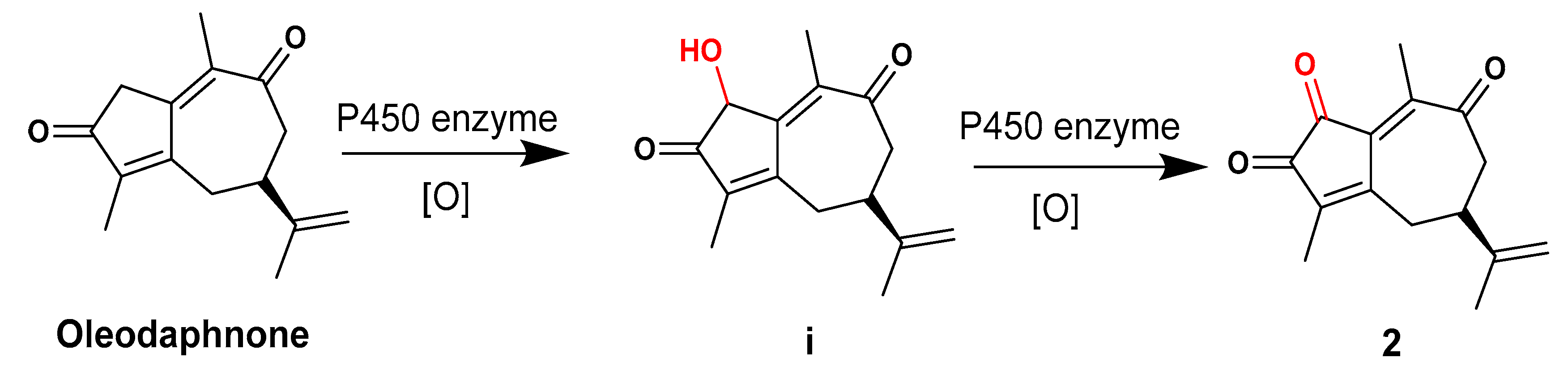
Figure 2.
1 H–1 H COSY and key HMBC correlations of compounds 1–3.
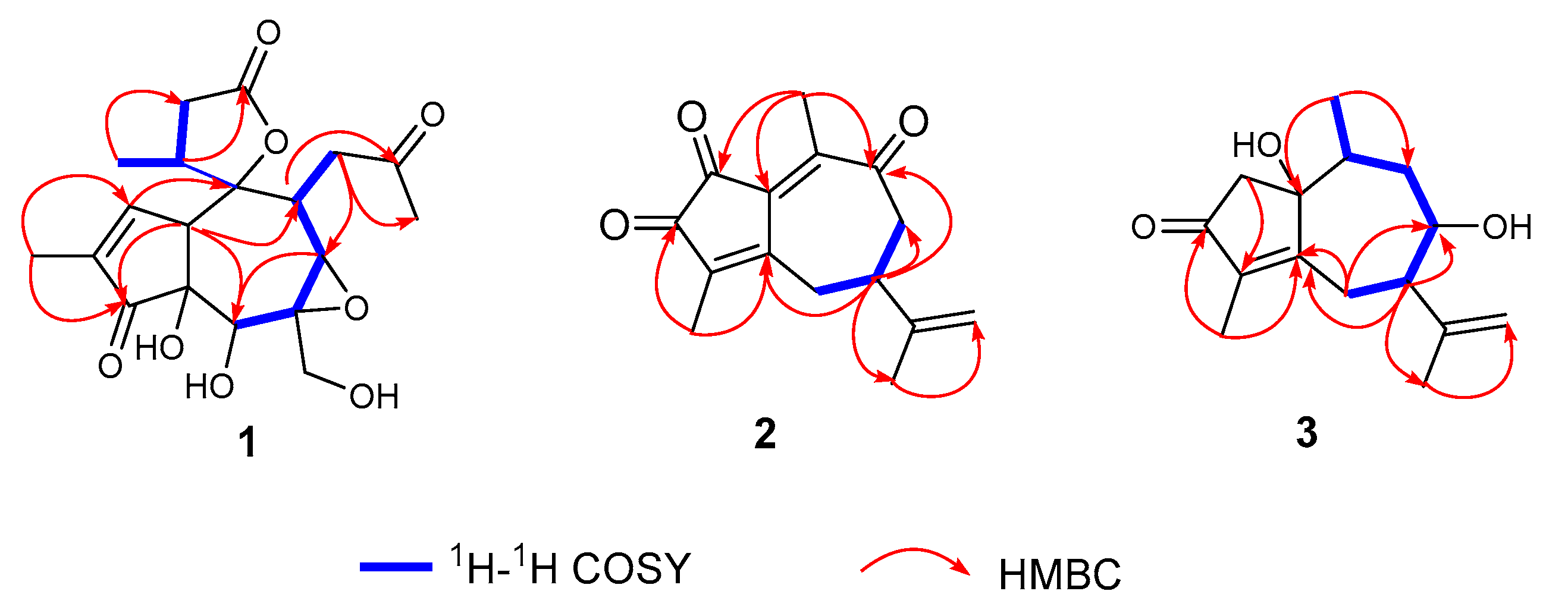

Table 1.
The 1H-NMR data (600 MHz, δH, mult, J in Hz) of 1–3 in CD3OD.
| No. | 1 | 2 | 3 |
|---|---|---|---|
| 1 | 7.48 d (1.8) | 2.57 d (18.2) | |
| 2.34 d (18.2) | |||
| 2 | |||
| 3 | |||
| 4 | |||
| 5 | 4.31 s | 3.03 d (17.2) | 2.69 d (6.7) |
| 2.89 d (6.5) | |||
| 6 | 2.76 m | 3.00 m | |
| 7 | 3.24 d (6.0) | 2.94 m | 3.69 m |
| 2.85 m | |||
| 8 | 3.57 ddd (10.6, 5.4, 2.4) | 2.20 ddd (13.8, 10.0, 3.5) | |
| 1.75 ddd (13.8, 5.4, 3.5) | |||
| 9 | 2.29 m | ||
| 10 | 3.47 d (2.6) | ||
| 11 | 2.74 m | ||
| 12 | 3.09 dd (18.1, 8.1) | 4.81 s | 4.79 s |
| 2.27 dd (18.1, 4.4) | 4.80 s | 4.76 s | |
| 13 | 1.80 s | 1.80 s | |
| 14 | 2.83 dd (18.1, 10.6) | 1.95 s | 0.85 d (7.2) |
| 2.63 dd (18.1, 2.6) | |||
| 15 | 1.85 s | 1.64 s | |
| 16 | 2.19 s | ||
| 17 | 1.18 d (7.0) | ||
| 18 | 1.78 s | ||
| 19 | 3.85 s |
Table 2.
The 13C-NMR data (150 MHz, δC) of 1–3 in CD3OD.
| No. | 1 | 2 | 3 |
|---|---|---|---|
| 1 | 158.3 | 202.6 | 50.3 |
| 2 | 137.7 | 204.3 | 208.3 |
| 3 | 209.8 | 146.1 | 138.9 |
| 4 | 76.2 | 165.1 | 173.8 |
| 5 | 75.9 | 36.3 | 32.2 |
| 6 | 66.0 | 40.3 | 51.3 |
| 7 | 58.8 | 50.6 | 70.5 |
| 8 | 40.3 | 202.6 | 40.8 |
| 9 | 91.8 | 132.6 | 37.9 |
| 10 | 51.0 | 145.9 | 82.2 |
| 11 | 39.2 | 148.9 | 149.0 |
| 12 | 38.9 | 111.3 | 112.8 |
| 13 | 177.9 | 20.4 | 19.9 |
| 14 | 42.6 | 17.3 | 15.6 |
| 15 | 209.2 | 8.8 | 7.9 |
| 16 | 30.2 | ||
| 17 | 18.0 | ||
| 18 | 10.0 | ||
| 19 | 63.6 |
Table 3.
Inhibitory effects of compounds 1-9 on LPS-induced NO production in RAW 264.7 macrophages.
| Compds | aIC50(μM) | bCC50(μM) | Compds | IC50(μM) | CC50(μM) |
|---|---|---|---|---|---|
| 1 | >50 | cNT | 6 | >50 | NT |
| 2 | >50 | NT | 7 | >50 | NT |
| 3 | >50 | NT | 8 | >50 | NT |
| 4 | >50 | NT | 9 | >50 | NT |
| 5 | 24.76±0.4 | >50 | dL-NMMA | 12.30±3.4 | >50 |
a IC50: 50% inhibitory concentration. (Mean ± SD of 3 tests.) b CC50: 50% cytotoxic concentration. (Mean ± SD of 3 tests.) c NT represents compounds were not tested due to insufficient amounts. d L-NMMA was used as positive control.
Disclaimer/Publisher’s Note: The statements, opinions and data contained in all publications are solely those of the individual author(s) and contributor(s) and not of MDPI and/or the editor(s). MDPI and/or the editor(s) disclaim responsibility for any injury to people or property resulting from any ideas, methods, instructions or products referred to in the content. |
© 2023 by the authors. Licensee MDPI, Basel, Switzerland. This article is an open access article distributed under the terms and conditions of the Creative Commons Attribution (CC BY) license (http://creativecommons.org/licenses/by/4.0/).
Copyright: This open access article is published under a Creative Commons CC BY 4.0 license, which permit the free download, distribution, and reuse, provided that the author and preprint are cited in any reuse.


