

Submitted:
01 October 2023
Posted:
16 October 2023
You are already at the latest version
Abstract
This study is grounded on evidence-based decision-making in the implementation of devolved functions in Kenya. Promulgation of the constitution of Kenya 2010 set stage for devolution of functions, power, resources, and representation closer to the people. The researcher applies principles of technology acceptance modelling to investigate the extrinsic factors, Perceived-Ease-Of-Use, Perceived-Usefulness, attitudes, behavioural-intention and actual use of Research findings, Innovations and Technologies. Furthermore, the researcher applies contingent valuation technique to investigate cost-benefit analysis of using research findings, innovations and technologies. Multi-stage cluster sample of 156 managers from ten counties, randomly distributed in the six devolved functions that were randomly selected, including: agriculture, county health service, early childhood education and village polytechnic, natural resources and environment, county administration and governance, and county public works and services, took part in this study. Building on basic statistical analysis, structural equation modelling was employed to explain the adoption process. Results proved that all TAM model constructs were decisive in the adoption process. Furthermore, managers were willing to pay extra to optimize decision making and for accrued benefits on service delivery. Findings from this study are critical for stimulating the uptake of research findings, innovations, and technologies in making informed decisions for improved service delivery.
Keywords:
Decision-Making
; Devolved functions
; Devolved Government
; Technology Acceptance Model
; Technology
; Innovations
Introduction
This study examined evidence-based decision-making in the implementation of devolved functions in Kenya. Since independence, transition from a centralized administration to devolved governments is a critical milestone in Kenya’s history (Cheeseman, Lynch, and Willis 2016). This process inevitably brought out the question of rationalization of different sectors (Finch, Christopher; Omolo 2015). In principle, the constitution has listed a total of 14 government functions that have been devolved to improve service delivery, eliminate wastage of public resources, enhance efficiency and bolster productivity in regard to the roles and performance functions of the government(Finch, Christopher; Omolo 2015; Steeves 2015; Ghai 2008; Cheeseman, Lynch, and Willis 2016; GoK 2013).
Furthermore, decentralization and devolution of governmental functions have become popular in many countries to bring governance closer to the people, making it more responsive and more responsive to local needs. Some sectors like health, agriculture, childhood education, public works, and natural resources are frequently devolved because they have direct implications on daily lives and the immediate environment of citizens. Hence, they are often pronounced in devolved governments and are popular subjects of many studies and subsequently the basis of their selection in the current study. For instance, a) Health has an Immediate Impact on Local health services and directly affect the well-being of the community; Health needs can also vary by region due to environmental, social, or economic factors. Besides, localised solutions like vaccination campaigns, public health initiatives, or disease management can be better organized at a local level; b) Agriculture can lead to regional specialization whereby, different regions might have different agricultural profiles and needs based on climate, soil, and local practices hence, local expertise can present from farmers and agriculturalists can often have region-specific knowledge. Thereby, bridging an important economic gap as the backbone of local economies; c) Childhood Education and village polytechnic can bring cultural and linguistic relevance by streamlining localised information tailored to reflect local languages, histories, and cultures. In essence, this will lead to specialized needs because different regions might have varying educational needs based on socio-economic backgrounds, and devolution allows for addressing these specifics; d) Public Works and services through building local infrastructure, can vary greatly from one region to another e.g., infrastructure needed in a mountainous region might differ from what's required in a coastal area. Hence, local governments can respond to more quickly to infrastructural needs and emergencies specific to the regions; e) Natural Resources and environment stewardship of those living in proximity to natural resources often have a greater stake in their preservation and management and the management of a forested area is different from a mineral-rich region. Therefore, devolving powers allows for specialized management strategies and coverage of a vast majority of the populace thereby leading to economic distribution by having revenue from natural resources be channelled directly to the local communities affected by their extraction or use; f) Administration and governance function overall cut across all sectors and is a critical function based on the magnitude and influences throughout he devolved unit and management of resources.
Therefore the selection of these functions in the study, although randomly, revolved around the following factors: a) these functions are widespread and present high potential during impact assessment which many researchers are interested in when assessing the impact of devolved powers on local outcomes; b) Policy Analysis: Devolution allows for diverse policy experimentation. Researchers can study what works in one region and why it might not in another; c) Societal Implications: Devolution can have socio-political implications, from power dynamics to community mobilization, which makes these areas interesting to sociologists and political scientists; and d) allows ease of comparative studies: Comparing outcomes across regions with different levels of autonomy can shed light on the efficacy of devolution.
These sectors are not only critical to local communities' well-being and economic vitality, but they also offer rich areas of study due to the diversity of approaches and outcomes associated with their devolution.
Therefore, decades of analysing and evaluating performance data have helped devolved governments and businesses alike understand the tools necessary to improve performance and maintain solvency(West and Blackman 2015; Jarrar and Schiuma 2007). However, modern-day decision-making in devolved units still poses specific challenges to new forms of governments (World Bank 2012; Finch, Christopher; Omolo 2015; Steeves 2015). In this regard, decision making is defined as the process of making ultimate choices via identification of a decision, gathering information and assessing available solutions available to address them(de Witte 2016; Babcock, D. L., & Morse 2010). The process describe and analyse rational decisions or bounded rationality models of decision making which subsequently help in making more deliberate, throughout decisions by organizing and defining available alternatives (de Witte 2016; Ekenberg 2015).
Integration of research findings, technologies and innovations in decision-making and subsequent implementation of government functions has strong bearing on operating constraints and the overall performance of devolved functions (Teicher, Hughes, and Dow 2002; Lenk 2018; Ekenberg 2015). Besides decision making is specific in nature and sensitive to overall performance and outcomes of devolved functions(Ekenberg 2015; Nutley, McNabb, and Salentine 2013; Johnston 2010). Furthermore, the cost implication of adopting research findings, technologies and innovations in decision making is critical in ascertaining the performance of devolved functions (Williams and Bryan 2007)
The study analysed the pathways for utilizing research findings, innovations and technologies in decision-making and implementation of devolved functions in Kenya since inception in 2013. Technology acceptance model (TAM) developed by Fred Davis in 1986 (F. Davis 1986), to analyse the process of adopting information and communication technologies was applied in conducting collaborative research involving different behavioural aspects of the devolved functions (Lee, Kozar, and Larsen 2018). The model was applied to analyse the behavioural aspect of stakeholders including policymakers, directors, head of departments and programs, managers, and executives to understand their overall reactions towards research findings, technologies and innovations in decision-making. The model has been consistent in analysing the Perceived-Ease-Of-Use, Perceived-Usefulness, attitudes, behavioural-intentions and overall use of technologies and innovation (Lee, Kozar, and Larsen 2018; F. D. Davis 1993; Marangunić and Granić 2015). Thereby, the application in this study is in tandem with existing literature and applications, albeit with varied levels of precision (King and He 2006; Marangunić and Granić 2015; Brock and Khan 2017). In principle, the study analysed not only the behavioural reactions toward research findings, modern technologies, and innovations for use in decision making, but also the cost implication and actual use of these decision-making alternatives in decision making process. The influence of these aspects in the overall implementation of devolved functions, service delivery and the end goal were evaluated. This information is critical in streamlining decision making process, policy making and implementation as well as service delivery in devolved functions.
The significance of Kenya's current constitutional dispensation is the establishment of devolved government. Although Kenya has implemented a devolved system of government since its establishment in 2013, various challenges and achievements have characterized the desire to make devolution dream a reality. Key decision alternatives among them, Research Findings, Successful Cases from Other Counties, Technologies, and Innovations, is the need to re-examine these choices, describe the decisions that need to be taken and analyse the alternatives to these decisions. However, modern decision-making processes are a function of research findings, modern technologies, and innovations and hence the need to examine the behavioural reactions of decision makers, including the county secretaries, department managers and directors, towards RITs in decision making. Furthermore, a clear understanding of the ultimate use and cost implication of research findings, innovations, and technologies in decision-making process is inevitable.
Consequently, in contemporary governance structures, devolution of power and authority to regional or local authorities has become a preferred mechanism for efficient governance in several countries. While devolution is considered a process of promoting local governance, tailor-make solutions, and enhance civic participation, it also presents unique challenges, particularly in the adoption of research findings, innovations, and technologies. Nevertheless, there is a plethora of research findings, innovations and technologies that can significantly improve service delivery across different sectors of the devolved unit if adopted and implemented. However, the adoption process has been slow or vague over the last decade of devolution system in Kenya. This could be attributed to key issues and challenges faced by devolved governments including, a) Diverse Priorities and Capacities: Devolved units often have different developmental priorities, financial capacities, and socio-economic dynamics. This means that research findings, innovation or technology that is pertinent and successful in one unit might not be in another. Addressing these variations requires customization that can be resource-intensive; b) Lack of Standardization: Without a centralized approach, there can be a lack of standardization in adopting technologies and innovations, leading to inefficiencies and complicating inter-regional coordination; c) Insufficient Infrastructure: Some devolved regions might lack the necessary infrastructure, both in terms of physical resources and human capital, to implement and sustain new technologies or practices; d) Financial Constraints: The cost of introducing new technologies or implementing research findings can be prohibitive, especially for regions with limited financial resources; e) Knowledge and Skill Gaps: Local governments might not always have the required expertise or awareness to understand the potential benefits or implications of a particular innovation; f) Resistance to Change: Cultural, political, or institutional resistance can hinder the adoption of new ideas or technologies, especially if they are perceived as being imposed from the outside or are not well-understood at the local level; g) Policy and Regulatory Hurdles: Decentralized units often have their policy frameworks and regulatory mechanisms. Innovations or technologies that don't align with these can face delays or outright rejection; h) Coordination Challenges: The adoption of research findings or technologies often requires collaboration across different departments or units of a devolved government, which can be hampered by bureaucracy, lack of a unified vision, or political infighting; i) Evaluation Difficulties: Monitoring and evaluating the impact of adopted technologies or practices can be challenging in devolved settings, given the diverse contexts and implementation strategies; j) Dependency on Central Government: In some instances, despite the devolution of powers, significant decisions related to funding or adopting new technologies might still be influenced or controlled by central authorities, leading to potential misalignments with local needs.
Consequently, despite these issues and challenges, acceptance modelling research is inevitable to understand the adoption of process and factors affecting the adoption of research findings, innovations, and technologies across different sectors of devolved units. In addition to robust frameworks, efficient collaboration mechanisms, capacity-building initiatives, and context-specific strategies. But, adopting research findings, innovations, and technologies in devolved governments is not just about the technical aspects which are the focus of this study, but also involves navigating complex socio-political terrains which are a difficult to model.
Research questions were derived from integrated conceptual framework bringing together the Technology Acceptance Model and the Decision-Making Process Model.
Figure 3 show the conceptual framework bringing together two theoretical models. From this figure the study addresses six consolidated research questions: a) Which external factors influence the Perceived Ease and Perceived-Usefulness of Research Findings, Innovation and Technologies in the devolved governments? b) Can Perceived-Ease-Of-Use and Perceived-Usefulness influence attitudes on research Findings, Innovations and Technologies during decision making process? c) Do Perceived-Ease-Of-Use, Perceived-Usefulness and Attitude influence behavioural-intention toward use Research Findings, Innovations and Technologies? d) Do Behavioural intention to use Research Findings, Technologies and Innovations influence the actual use of these elements in decision making? e) Do actual use of Research Findings, Technologies, and Innovations impact on the decision-making process of devolved functions? f) What are the costs and benefits accruing from adoption of Research Findings, Technologies and Innovation in decision making at the devolved units?
There is a plethora of evidence to the effect that new research findings, technologies and innovations influence decision making and subsequence performance of businesses and the public sector(West and Blackman 2015; Zheng and Zheng 2014; Lenk 2018; Ekenberg 2015; Szkuta, Pizzicannella, and Osimo 2014; Johnston 2010). Decision making is a complex process that need well thought-out choices and alternatives to provide critical solutions to different issues. Enactment of the constitution of Kenya 2010 provided for devolved system of government bringing with it complex decision-making system. However, new technologies and innovations generated from different players and documented success stories from other counties, regions, and the world are critical to the decision-making process of the devolved system. Thereby, given the direct proportionality of research findings, technologies, and innovations to decision-making process, analysing, and building literature on the adoption process of these elements in decision making is crucial. Additionally, although there is evidence on the uptake of technology and innovations by different entities to improve performance and service delivery, there, is little or no evidence to support the uptake of research findings, technologies, and innovations to improve decision making at the newly created system of government in Kenya. Hence, complete evaluation of the acceptance of research findings, technologies and innovations in decision making process of the devolved units is inevitable. This will subsequently have a bearing on policy frameworks for different functions at the county level.
Nonetheless, Consistent with studies anchored on TAM there are limitations attached to the sample size and overall internal validity of the constructs. Although these limitations were addressed at the study formulation stage there are other probable limitations generic to the TAM model and therefore inevitable, albeit remedially during data collection and analysis. These include: the study did not measure the actual usage in decision making, affect validity for some constructs due to single item scales, TAM models in some instances present low variance scores. Other limitation could be linked to the side of sample used, duration of exposure to the constructs, cultural factors, self-selection related bias and the leadership style. Nevertheless, effort was put at the research planning and proposal development stage to avoid or minimize the effect of these limitations on the overall findings which were largely effective.
2. Literature review, definition of concepts and theoretical framework
2.1. Literature review
Decades of analysing and evaluating performance data have helped devolved governments and businesses alike understand the tools necessary to improve performance and maintain solvency(West and Blackman 2015; Jarrar and Schiuma 2007). However, modern-day decision-making in devolved functions still poses specific challenges to new forms of governments(World Bank 2012; Finch, Christopher; Omolo 2015; Steeves 2015).in this regard, decision making is defined as the process of making ultimate choices via identification of a decision, gathering information and assessing available solutions available to address them(de Witte 2016; Babcock, D. L., & Morse 2010). The process describe and analyse rational decisions or bounded rationality models of decision making which subsequently help in making more deliberate, throughout decisions by organizing and defining available alternatives(de Witte 2016; Ekenberg 2015).
Integration of research findings, technologies, and innovations in decision-making and subsequent implementation of government functions has strong bearing on operating obstacles and the overall performance of the devolved functions(Teicher, Hughes, and Dow 2002; Lenk 2018; Ekenberg 2015). Besides decision making is specific in nature and sensitive to overall performance and outcomes of devolved functions(Ekenberg 2015; Nutley, McNabb, and Salentine 2013; Johnston 2010). Furthermore, the cost implication of adopting research findings, technologies and innovations in decision making is critical in ascertaining the performance of devolved functions (Williams and Bryan 2007)
Consequently, decision making process in devolved form of government, though a logical one is exceedingly difficult and complex. And decisions are either, rational/classical, administrative/bounded rationality and retrospective decisions(Edwards 1954; Babcock, D. L., & Morse 2010). Adopting specific research findings, technologies and innovations in this decision models has the potential of providing alternatives that have a higher impact on the problem for appropriate results.
To understand the process of adopting these elements in the decision making process of the devolved government, technology acceptance model stand as ideal candidate given its successful application in many other sectors and fields(King and He 2006). Figure 1 below illustrate the decision-making process:
The current study is anchored on Technology Acceptance Modelling tool. This model was proposed by Fred Davis in 1986 and later applied as a tool for predicting an individuals` uptake of innovations and technologies(Marangunić and Granić 2015; F. D. Davis 1989). TAM model traces its origin from Theory of Reasoned Action, a widely applied model proposed by Fishbein and Ajzen in 1975.(Fishbein and Ajzen 1975) TRA postulates that an individual's commitment or action in a particular manner is proportional to the intention to engage in such a behaviour, which is a function of an individual's attitude and subjective norm.
Proponent of the TAM model explained individuals’ behaviour towards information technology using the causal model of rational behaviours including external factors, internal beliefs, attitude, and intention to use. Individuals' perception and use of a technology or new product is a subject of their internal beliefs, which are categorized as: Perceived-Ease-Of-Use and Perceived-Usefulness. The two beliefs then influence the attitude and behaviour towards accepting the new product or technology. These subsequently affect the overall usage or adoption of the new product or technology.
Furthermore, the main purpose and the overall application of this model is to examine factors that affect individuals' perception and uptake of a technology or new product. In this study considering research findings, innovations, and technologies as new products available in devolved system of government the TAM model comes in handy to explain their influence on the decision making. Figure 2 below show the original TAM model developed by Fred Davis, 1986.
The application of research findings, technologies and innovations often has a cost implication in the whole spectrum of decision making at the devolved units(‘Benefit-Cost Analysis’ 2017). Cost Benefit Analysis (CBA) component is presented in this study to estimate the monetary value of benefits over costs of adopting research findings, innovations, and technologies in decision-making. This analysis helps establish whether it is worthwhile applying research findings, innovations and technologies in decision making process of devolved governments(Razzouk 2017a). Cost Benefit Analysis (CBA) is a mathematical approach of evaluating the value accruing from a given project. This technique compares benefits over costs of two or more project levels or options(Razzouk 2017b). This model was first presented in 1848 by a French economist and engineer Jules Dupit as a model of ascertaining the ratio of benefit over costs(Drèze and Stern 1987; Adler and Posner 1999). Jules and many researchers after having extensively analysed this simple technique as a tool of identifying how well, how poorly or feasible a specific project will be when implemented. In the public sector CBA is considered crucial in a) Determining if a project is sound, justifiable, and feasible by verifying that the benefits of an investment or project under consideration are more than the cost of implementation; b) comparing projects and selecting the investment or project that at the baseline present higher benefits over costs ratios or assure higher returns on investments.
The CBA model is included in the study to model the benefits accruing from the complete application of research findings, technologies and innovations visa viz costs of application. In conducting cost benefit analysis in public projects and policy economic and ecological valuation techniques have been applied over the years(Kramer 2012; Farber, Costanza, and Wilson 2002). According to these approaches social impact of any project or policy normally covers both market and non-market impact. Even though it is easier to ascertain the market impact using the changes in prices and quantities the non-market impact is normally complex to ascertain(Fujiwara and Campbell 2011). Different economic valuation techniques have therefore been fronted over time with varying degree of success(Winkler 2006).
Over the years revealed and stated preference methods have been applied to ascertain the monetary values of non-market impacts of projects and policies(Christie et al. 2008; Fujiwara and Campbell 2011). Both procedures have been used estimate benefits over cost of projects and policies, simply conducting cost benefit analysis. Although both methods estimate value of non-market impact, revealed preference method estimate monetary values of non-market impact using behaviours exhibited by an individual in the past while stated preference method estimate non-market impact using future behaviours (Bateman et al. 2013). In this study, future behaviours are applied to estimate the non-market impact of research findings, technologies and innovations in decision making.
Contingent valuation method is a stated preference method that could ideally be feasible in analysing the non-market impact such as cost and benefits of applying research findings, innovations and technologies in decision making process of devolved Units(J. C. Whitehead and Haab 2013). This method apply willingness-to-pay, willingness-to-accept, and voting questions that estimate the cost and benefits of a project or policy(Boyle 2017; McFadden 1994). It is referred as contingent valuation method because it examines how people behave or react when confronted with certain hypothetical situations. Other stated preference procedures include contingent behaviour and conjoint analysis which could not technically fit in the current context of cost benefit analysis. CVM together with the other stated preference method are considered more flexible and applicable in ex-ante type of studies that are predictive or prospective in nature, hence ideal for cost benefit analysis in the current study(John C. Whitehead and Blomquist 2006a; Fujiwara and Campbell 2011).
2.2. Definition of Concepts
Evidence-based decision making refers to decision-making process guided by the best available evidence, typically from rigorous research findings, or empirical studies on innovations and technologies. It originated in the field of medicine as evidence-based medicine, but the principles have been expanded and adopted across various disciplines including business, education, and public policy and administration. The main goal is to improve outcomes by integrating the best available evidence with practitioner expertise and other resources. In this study the concept is used in reference to the adoption of research findings, innovations and technologies in decision making across different devolved functions.
Technology Acceptance Model (TAM): This is a theoretical framework, commonly applied in analysing adoption of information and technology products. The framework was developed to predict how individuals and organizations accept and use IT products. The model was proposed by Fred Davis in 1986, but it has undergone several revisions and adaptations. TAM is applied in this study to analyse the adoption process of research findings, innovations, and technologies in decision-making process of stakeholders in devolved functions. TAM and its extensions have been widely used in research and practice to understand and predict user acceptance of various research findings, innovations, and technologies. It has played a crucial role in informing technology adoption strategies and user interface design to enhance user acceptance and satisfaction.
Devolved functions:The term "devolved functions" refers to the delegation of powers and responsibilities from a central or higher level of government to a local or lower level of government. The purpose of devolution is typically to ensure more localized governance, empower regional or local authorities, and address unique challenges and needs specific to different regions. Devolution is seen to promote democratic governance, enhance efficiency in service delivery, and ensure the equitable distribution of resources and services. The specific functions and responsibilities that get devolved will vary depending on the country and its governance structure.
In this study the concept of devolved functions used in reference to the fact that Kenya underwent a significant transformation with the enactment of the 2010 Constitution, which introduced a devolved system of government. This means that the power and responsibilities of governance are shared with county governments. With total fourteen functions being devolved to the counties.
The devolved system was implemented to promote democratic and accountable governance at the local level, and to ensure that local communities have a greater say in their affairs and the allocation of resources.
Research findings/innovations/ Technology: These three terms—research findings, innovations, and technology—are broad concepts that are deeply interrelated and frequently form the foundation of advancements in various industries. Research Findings: Research findings are conclusions or results obtained after conducting a systematic investigation into a particular subject or problem; Innovations: Innovations refer to the introduction of new ideas, methods, or products that can cause a significant positive shift in the way things are done or perceived; Technology: Technology encompasses the tools, machines, techniques, systems, and methods used to solve problems or create new opportunities. It can range from simple tools used since ancient times to complex modern systems. In this study the concepts are applied in reference to new findings and systems that can be adopted to devolved functions to improve overall decision making. In the modern world, the constructive interaction between research findings, innovations, and technology drives progress. Industries, economies, and societies that effectively harness this constructive interaction tend to experience faster growth, better quality of life, and enhanced global competitiveness.
Uptake/adoption/Use: Intention to research findings, innovations, and technologies: this is an individual’s behavioural intention to accept research findings, innovations and technologies in decision making. This is also considered as the degree to which research findings, innovations and technologies influence the different steps of decision making and subsequently the overall use of this element in making critical decisions at the devolved function.
Cost Benefit analysis/Costs and Benefits: Cost in this context refer to the monetary value attached to research findings, innovations, and technologies. Costs here are not limited to the cost of research findings, technologies, and innovations, but also the cost of other intangible elements included in decision making. Benefits, refer to the advantages and gains accruing from the project when fully implemented. Benefits in this context refer to those gains that will accrue when applying research findings, technologies and innovations in decision making. Cost Benefit Analysis: Cost benefit analysis, is a method applied in analysing decisions, projects, and systems to determine the value of benefits over costs. Cost Benefit analysis model entails the identification of benefits and subtracting associated cost.
Contingent Valuation Technique: this is a survey-based procedure for economic valuation of non-market resources or projects. It is normally applied for resources, goods, and services typically not traded in economic environments. The method is widely applied in sectors that evaluate the economic values as well as cost benefit analysis of systems, actions, or projects.
2.3. Theoretical Framework
The wiry theoretical framework was applied to address gap identified in literature and forms the foundation for analysing the uptake of research finding, innovations and technologies in devolved system of government. This theoretical framework brings together decision making process model as presented by Bruno de Witte (de Witte 2016) and Technology acceptance model, presented by Fred Davis (F. Davis 1986). Bruno de Witte describes individual decision-making, and the entire decision-making process for effective actions.
Bruno distinguishes two decision making models: rational and bounded rationality model. Accordingly, he describes and analyses the seven steps of decision making as: Identification of the problem, collection of information, identification of alternatives, weighing evidence, choosing the alternatives, implementing action, and evidencing the results. Consequently, decision making at the devolved units follows through these steps and provides choices to the most effective decisions. However, appropriate alternatives to choose from to make these decisions is a function of research findings, innovations, and technologies. It is therefore necessary to understand the uptake process and actual use of research findings, technologies and innovations in decision making.
Consequently, according to Fred Davis, uptake and user acceptance processes of information technology systems can correctly be determined by applying technology acceptance model. This model provides a practical way of user acceptance or uptake testing which is consistent with the goal of the current study of analysing the uptake of research findings, innovations and technologies in decision making. The TAM model describes the linkage between several factors including: extrinsic factors, Perceived-Ease-Of-Use, Perceived-Usefulness, attitude, and behavioural intention. Additionally, the costs and benefits accruing from the application of research findings, technologies, and innovations together with overall implication to decision making process modelled through a CBA model. Integrating the three models, TAM model, CBA model and overall decision-making model provides a foundation for understanding the linkage and application of research findings, innovations, and technologies. The resultant model brings together Technology Acceptance Model, CBA model and the Decision-Making Process Model, initialized as TCD model (as presented in Figure 3). All constructs underpinned in the TAM model were analysed, cost and benefit analysis conducted using contingent valuation techniques.
3. Methodology
3.1. Research design
The approach employed focused on analysing the behavioural reactions toward the use of research findings, innovations and technologies in decision making. Consistent with the gap identified in literature, this study applied five constructs in TAM model as a basis for analysing the uptake of research findings, innovations and technologies in decision making. The constructs include external factors, Perceived-Ease-Of-Use, Perceived-Usefulness, attitude, and behavioural intention. At the onset, this chapter discuss the relationship between different constructs in the model. In addition, the chapter establishes the study framework and the hypotheses, operationalizes the gap identified in the literature review followed by clearly defined survey questionnaire items. Subsequently, this chapter outline research objects, sampling, sampling frame, and statistical analysis to be applied.
The proposed study adopts a semi structured questionnaire survey to collect information needed to assess the hypothesis generated in this study. The questions presented were prepared with reference to well-defined theoretical literature as outlined in the conceptual framework in Figure 3. The quality of questionnaire is therefore critical to achieve the objectivity of data and in tandem with the formulated hypothesis. At the onset, the research design involved four major steps: pre-test, study questionnaire, sampling and questionnaire recovery, and actual data collection.
- i.
- Pre-test
This is the initial stage after developing the data collection questionnaire/survey items. At the design stage of the study, pre-testing of the questionnaire is crucial to avoid respondents not understanding the survey items and assuring correct responses. This directly impact on the validity of the questionnaire and subsequently the study findings. In this study a pre-test questionnaire was presented to respondent to assess the validity of the entire aspect of the questionnaire.
- ii.
- Study questionnaire
The study questionnaire adopted Likert’s seven-point scale, ranging from ‘extreme disagree’ to ‘extremely agree, to evaluate the survey items. In this scoring protocol the questionnaire adopted 1 to 7 points to reflect the evaluation level. Higher score in this case, suggest a higher degree of agreement of the respondent for the given description of the questionnaire or survey item. In the current study the survey questionnaire has four parts: The first part (I) of the study questionnaire provide linkage between the interviewer and interviewee. This part is the introduction letter to the interviewee about the interviewer, institution, and objective of the study. It also assures confidentiality of information collected thereof. The second part (II) describe the factors that influence decision makers in practical decision making. This part covers those factors external to the devolved unit and the individual decision maker that directly influence the uptake research findings, technologies and innovations in decision making. From literature, aspects such as trust, risk, costs, perceived quality, compatibility, subjective norm among other external factors have been found to influence the behavioural reactions towards uptake of innovation and technologies; The third part (III) describe the perceived behavioural reactions by the respondent in the uptake of research findings, innovation, and technologies. This part applies constructs generic to the TAM model to measure behavioural reactions towards research findings, innovation, and technologies. The generic TAM constructs constituting part III include Perceived-Ease-Of-Use, Perceived-Usefulness, attitude, intention, and actual use. This part also describes interrelationships of these constructs to one another and to the overall decision-making process model; the fourth part (IV) of the questionnaire describe demographic information, including: age, gender, occupation, income, education, behavioural experience, source of information and management responsibility. These elements, nonetheless, have been found to directly bearing on the acceptance and uptake of technologies and subsequently to the elements identified in this current study.
- iii.
- Sampling and sampling frame
The study describes the population as the decision makers leading the implementation of devolved functions. These decision makers include department managers, director of programmes, county secretaries, and senior officials of the county governments. Nevertheless, since decision makers are distributed in different devolved functions of various counties, the study applied a two-stage cluster sampling procedure to select the decision makers in the most representative manner.
In two-stage and/or multistage cluster sampling, the target population is first divided into clusters from where a list of clusters are randomly selected. The selected clusters are then divided into even smaller units based on the characteristics to be studied, from where subjects are picked, and this could even be divided further to even lower levels.
In this study a list of forty-seven counties was picked as the first stage of sampling from where ten study counties were randomly selected. Each of these counties has a list of fourteen devolved functions according to the fourth schedule of the constitution of Kenya. A list of six devolved functions to be studied were then selected at this level. Then the department of managers of these devolved functions were enumerated as study sample.
- iv.
- Administration and recovery of questionnaires
Before pretesting and finalisation of the survey questionnaire, the reviews and content validation by the supervisor were incorporated to ensure the target content was captured and the questions yielded intended responses.
Cronbach’s alpha was computed to assess the reliability of the study. Cronbach’s alpha describe the reliability test value of each variable and averages 0.7 and a minimum of 0.6.
The survey questionnaire was then administered to the respondents via four channels, namely hard copy document form, through email, Google questionnaire, and online survey and through the link to the survey monkey platform. Contact details for all the target respondents was obtained centrally from the Council of Governor’s office and directly from the County Public Service Boards. To ensure the data is collected in a fleeting period, two study assistants were carefully selected, trained, and deployed to help administer, collect data, and recover questionnaires from the study population. All the questionnaires administered were documented and direct follow-up with the respondent was done for counties where the questionnaire recovery rate was less than 80% of all the questionnaires distributed. The sample size obtained from multistage cluster sampling was used in determining the actual number of questionnaires to be distributed.
3.2. Data entry and analysis
- i.
- Data entry and documentation
All the data collected was keyed using EpiData platform Version 3.1. This software allows cleaning, basic analysis, and documentation of collected data. The software also ensures that all the information collected in the questionnaire was captured. The data was then exported to STATA statistical package for further processing and analysis.
- ii.
- Data analysis
Further analysis of collected information was done using STATA statistical package Version V12-14. STATA provide the most convenient analytical platform particularly for moderate samples. As envisaged the data collected was smaller than five hundred, given the number of counties and devolved functions in consideration, which therefore supported applicability of STATA to the analysis of smaller samples using structural equation modelling. Therefore, STATA software was employed to analyse the measurement mode in terms of reliability and validity, and structural equation modelling to analyse the levels for each construct in response to the hypotheses of the study. The statistical analysis methods conducted were structured as follows:
- Descriptive analysis
In studies involving TAM model, the survey questionnaires are normally measured using calculations of questions in the questionnaire, total constructs, the means, and standard deviations (SD). Questions presenting higher means are suggestive of high number of respondents that agree with the questions presented to them, while standard deviation is a consistent indicator of measuring recovered samples to the questions. Smaller SD of the sample is suggestive of the respondent consistent view on the question presented and vice versa. Four different tests were conducted to address the hypotheses of this study, including: i) Reliability Analysis; ii) Validity Analysis; iii) Structural Equation Modelling, and iv) Cost Benefit Analysis (CBA).
- Reliability analysis-Cronbach’s alpha
Internal validity of each construct is normally presented as the Cronbach`s alpha. This parameter is obtained from research variables, and reflect reliability in regard to the scale of measurement of research questions(Goforth 2015a). Cronbach’s alpha value is the most applied reliability indicator and the higher the value the higher the internal consistency in all the variables used for that construct. In principle, the value should reach 0.6 or higher to underpin acceptable factor levels(Peterson 2013; Goforth 2015b).
- Validity analysis for constructs
In this study validity denote accuracy of the measuring tool and reflect extent to which the measuring tool measure the real problem. There are four types of validity: internal validity, construct validity, statistical conclusion validity and external validity. In this study, construct validity is the most significant given that other types of validity are examined distinctly. There are Convergent validity and discriminant validity are the two forms of construct validity. Factor loadings and Average Variance Extracted (AVE) is the most used indicator of this type of validity and a level greater than 0.5 is considered sufficient for convergent validity.
- Structural Equation Modelling
The main stage of this data analysis is the structural equation modelling (SEM) which is preceded by a reliability and validity analysis. Alpha values more than 0.6 and factor loadings of above 0.5 reflect sufficient level of composite reliability and validity in the study constructs. After ascertaining the reliability and validity, structural modelling is conducted to determine the path coefficients for significant relationships between research constructs linking to uptake of research findings, innovations and technologies in decision making. Besides the path coefficients, the prediction model is also determined using the R-square (R2) indicator for structural model.
- Cost benefit analysis
Cost benefit Analysis was conducted in this study to estimate value of benefits over costs of adopting research findings, innovations and technologies in decision making. This analysis establish whether it is worthwhile applying research findings, innovations and technologies in decision making process of devolved governments. To achieve this, steps generic to the CBA model was applied to determine the ratio of benefits accruing from research findings, innovation, and technologies against the costs of implementing them in decision-making the devolved units. Even though, CBA has been applied in analysing the feasibility and economics of many projects, no standard format exists for performing cost benefit analysis in the public sector(‘Benefit-Cost Analysis’ 2017; Razzouk 2017b). Nonetheless, there are specific elements that are generic across all analyses which were paramount in CBA application in this study. A structure and format that best works for this current study was formulated to conduct cost benefit analysis of applying research finding, technologies and innovations in decision making. In so doing the following generic steps were considered, including : establishment of a framework to outline the parameters of analysis, identifying costs and benefits aligned to type and intent, calculation of costs and benefits in monetary terms, comparing the cost and benefits of applying research findings, technologies and innovations using aggregate information, and analysing results and making informed final recommendation.
In conducting CBA, the above steps/ elements are crucial, however it is important to make a clear distinction between different types of costs and benefits. Cost and benefits normally fall into the following three primary categories: direct, indirect costs and benefits, tangible and intangible costs, and benefits as well as actual cost and benefits. In Direct costs in this case refer to cost of producing a cost object e.g., Cost of conducting research, cost of products like technology and innovation, cost of products, service, clients, project, and activity. Indirect costs on the other hand are fixed in nature may come from overheads or the devolved unit. Consequently, the tangible costs are easy to measure and quantify as they reflect costs of identifiable sources or assets. Intangible costs reflected costs that are normally difficult to identify and measure, such as enhanced productivity and satisfaction. Real cost on the other hand included expenses accruing from the production of an offering or making specific decisions, including labour costs, raw materials and knowledge required.
The cost that was reflected when applying research findings, technology and innovation fell into those categories and was apportioned accordingly. while benefits expected included: more effective adoption of research findings, technologies and innovations in decision making, improved leadership, better employee retention and trust, enhanced productivity of employees, enhanced decision making at all levels, improved workflow efficiencies, enhanced service delivery, higher quality database of knowledge, and improved productivity of the devolved function. After, identifying, categorising, and calculating the cost and benefits in monetary terms a comparison of benefits against cost is done to ascertain the cost benefit ratio. The cost and benefit ratio are then compared within the period with or without the application of research findings, technologies, and innovation.
The most ideal procedure for conducting cost benefit analysis in this context is the contingent valuation technique. Contingent Valuation method is commonly applied in estimating non-market impact using future behaviours(Bateman et al. 2013). In this study, the procedure was applied in estimating the non-market impact of future behaviour of applying research findings, technologies and innovations in decision making of devolved Units. This method was therefore feasible in analysing the non-market impacts such as cost and benefits of applying research findings, technologies and innovations in decision making process of devolved Units(J. C. Whitehead and Haab 2013). CV asks questions on willingness-to-pay, willingness-to-accept and voting, that directly determine the cost and benefits of a product, project or policy(Boyle 2017; McFadden 1994). This method is rereferred as contingent valuation because it analyses the reactions of people when presented with hypothetical situations.
At the end, a further analysis of the results was conducted before making final decision and recommendations.
4. Data analysis, presentation and Discussion
4.1. Descriptive statistics
In this study a semi-structured questionnaire was designed using survey monkey platform and pretested. 180 questionnaires were submitted through official Email and only 162 questionnaires were filled. Of the 162 questionnaires, six questionnaires were incomplete, and they were dropped at this initial stage. Only 156 Reponses were usable and therefore the overall sample size for the study was 156 respondents (N=156) drawn from different counties as shown in Table 1 below. The study response rate was 86.67%. Analysis show that the sample comprised of 75 female respondents (48.08% the respondent) and 81 male respondents (~ 51.92%) of the responses) indicating no significant difference in gender distribution which is consistent with many studies. Most of the respondents, 70 (44.87%) were from the administration function of the county, followed by Agriculture 22 (14.10%); Natural resources and Environment, 18 (11.54%); Pre-primary education, village polytechnic 16 (10.26%); and County public works and services, 16 (10.26%).
According to the findings most respondents were young professionals between 18 and 44 years (over 78.85%), mostly college and University graduates (65.39%) earning mostly above KES.50, 000 (66.67%). Findings indicate that majority of respondents were directly involved in decision making at the respective functions and obtained research, innovation and technologies from different sources and always applied them in decision making.
4.2. Summary statistics of the model constructs
Summary statistics of the items were calculated for each of the constructs, see Table 2 below. The Mean values of the items ranged from 2.67 to 4.21 and a standard deviation of below 1.880 which are well within the acceptable range for further analysis.
TAM model constructs in this current study include extrinsic factors, Perceived-Usefulness, and Perceived-Ease-Of-Use, attitude, behavioural-intention and actual use of research, innovations, and technologies. In total this model comprised a total of twenty-three measurement items as presented in Table 2 below. All the twenty-three items were measured on a seven-point Likert scale. Six items (E1 to E6) measured the influence of extrinsic factors trust, risk, availability, communication, and complexity on the adoption of research, innovations, and technologies by managers in decision making at the devolved units. Perceived-Usefulness and Perceived-Ease-Of-Use of the RIT which are normally the mediating elements in the TAM model architecture and were measured using four and three items, respectively. Attitude and intention to use RIT were determined by four items while actual use of the RIT in decision making was measured using two items. All these measurement items were adapted from various applications of TAM model in ascertaining the adoption and overall acceptance of technology related assessments (cite a TAM review) other items included in analysing the model constructs but extrinsic to the TAM model including age, gender, employment, involvement in decision making, incomes among other were measured separately as shown in Table 1 above.
4.3. Reliability and Validity
In the current study internal consistency and construct validity have been analysed to indicate how well a method, technique or test measures the TAM model items. Reliability in this case is a measure of consistency of items in the construct while validity is accuracy measure of the items. Both provide the extent to which the results obtained measure what they are designed to measure. In this study, internal consistency (internal validity) is analysed using Cronbach’s alpha while construct validity is analysed using factor loading.
For each of the each of the TAM model constructs the measurement items were pooled together to calculate the Cronbach’s alpha value as shown in the Table 2. The alpha values were between 0.779 and 0.994. The alpha values were also calculated for the entire model (Cronbach’s alpha=0.946) as shown in the table. The recommended alpha values range from 0.6 to about 0.9. A maximum alpha value of about 0.95is often recommended since remarkably high alpha values suggest that some items in the model are redundant and could assess the same questions in the model.an overall alpha value of 0.946 obtained for the entire model used in this study is indicative of a possible further analysis.
Factor loading were calculated to ascertain the validity of the items. The factor loadings obtained ranged from 0.582 to 0.897, which is indicative of over 50% variance. Considering the sample size of this current study, the scores obtained are significant at 0.05 levels of significance. In principle the two reliability tests gave room to the overall accuracy and consistency for the study. Therefore, the structural TAM model was used to obtain the simple bivariate relationships between measurement items at the lower level and model constructs at the higher level. To answer the research questions in this study, hypotheses testing was conducted within the context of the structural TAM model, and this simplified the interpretation of the results since at each level the resultant link between two model constructs could be examined holding all other model constructs constant.
4.4. Correlational analysis
Table 3 below show the correlational analysis of all the items in the study. Correlation analysis in this context is a statistical method that is aimed at revealing whether there is a significant correlation between variables in this study. If there is a correlation between the candidates' variable, then there is need to determine the strength of the relationship. Correlation analysis applies Pearson coefficient to express the linear relationship among variables, but in this study Pearson correlation analysis is also applied to analyse the correlation between TAM model constructs before they are subjected to structural equation modelling. Normally letter ‘r’ is used to denote Pearson correlation coefficient and a positive vale of ‘r’ is indicative of positive correlation between two variables and vice versa. The greater the value of Pearson coefficient the higher the correlation between two variables. In the table below the Pearson coefficient between TAM model constructs ranged between 0.83 and 0.91 signifying strong positive relationship between the constructs. However, there was not significant relationship between the other variables in the model. From the table below all the constructs with positive relationship with actual use of RIT were used in structural equation modelling to assess the hypotheses generated for this study.
4.5. SEM modelling and hypothesis testing
Figure 4, show the path estimates of the structurally modelled theoretical TAM mode for ascertaining the adoption of RIT in decision making. As indicated earlier structural equation modelling was used to further analyse the relationship between model constructs included in the TAM model. Hypothesis testing in this case was conducted with the context of structural model because of its unique ability to simplify the interstation of the results as they are examined indifferently while holding constant all other factors in the model. The results of the structural equation modelling are summarized in the figure of the SEM model below. All the coefficients of the model are used to define the strength of the final path from one variable to the other.
A total of eight hypotheses were formulated in this study. The hypotheses formulated were assessed by confirming the statistically significant relationship in the predicted path. SEM coefficients were presented at 0.05 levels of significance. Extrinsic factors included in the model were found to significantly influence Perceived-Usefulness (H1) and Perceived-Ease-Of-Use (H2) of RIT in decision making at the devolved units. Perceived-Usefulness of RIT was also a significant function of Perceived-Ease-Of-Use of RIT in decision making. In terms of the attitude towards using RIT in decision making, Perceived-Usefulness and Perceived-Ease-Of-Use were significant. Regarding the overall behavioural-intention to adopt RIT attitude toward RIT and Perceived-Usefulness were found to be significant. Subsequently the actual adoption and use of research innovations and technologies was a function of overall behavioural intention to use RIT.
The parametric estimates for the hypothesized constructs, their t-values, overall levels of significance and results of hypotheses are summarized in Table 4 below.
From the table several trends are evident from the magnitude coefficients of the bivariate relationships and paths proposed as hypotheses in this model. In the context of actual use, behavioural intention recorded a strong magnitude (Β=0.831, p<0.001). In terms of the behavioural-intention to use RIT and the key endogenous constructs attitude and Perceived-Usefulness, the two relationships were highly significant. The strongest magnitude was between behavioural-intention and Perceived-Usefulness (Β=0.587, p<0.001) followed by attitude (Β=0.328, p<0.001).
In contrast, attitude toward using RIT was significantly influenced by Perceived-Ease-Of-Use (Β=0.268, p<0.01) and Perceived-Usefulness (Β=0.659, p<0.001) of RIT in decision making. In addition, perceived ease of using RIT directly and significantly influenced Perceived-Usefulness (Β=0.949, p<0.001).
According to the direct effect relationship, extrinsic factors had mixed but significant effect toward Perceived-Ease-Of-Use and Perceived-Usefulness. Extrinsic factors negatively and significantly influenced the Perceived-Usefulness (Β=-0.090, p<0.01) in the model, while positively and significantly influencing the Perceived-Ease-Of-Use (Β=0.258, p<0.01) of RIT in decision making. Nevertheless, according to Table 5 below each extrinsic factor (trust, cost, risk, availability, communication, and complexity) strongly and significantly contributed to the magnitude of the bivariate relationship. The magnitude ranged from 0.413 to 0.950 all at p<0.001).
4.6. Cost Benefit Analysis: Willingness to pay for RITs
Cost Benefit analysis was conducted using Contingent Valuation Technique. Contingent valuation method asks willingness to pay, willingness to accept and voting questions that directly estimate the cost and benefits of the project or policy(Boyle 2017; McFadden 1994). This method used information on how people behave or reacted when confronted with hypothetical situations of applying RIT in their decision making.
At the onset respondents were asked to rate their satisfaction level regarding their current job performance in decision making. Kernel Density estimation was applied to explain probability distribution of their satisfaction. KDE is a non-parametric procedure of estimating the probability density function of a random response. The density estimates are demonstrated in the kernel density estimate distribution as shown in the Figure 5. Current job performance distribution had a bandwidth of 0.424 for a satisfaction level ranging from 0 to 7. This is indicating that most people were moderately satisfied with their current job performance.
Table 6 show the distribution of willingness to pay values the respondents are willing to pay to use in order apply RIT and improve their current job performance-decision making. Ninety-one percent of the respondents are willing to pay up to KES 2,000,000 to acquire RIT to improve their work performance and other accrued benefits.
The Table 7, show that the distribution of the maximum amount the respondents are willing to pay for RIT to rip those benefits. In the table 76.92% of the respondents are willing to invest up to a maximum of KES 10,000,000 to acquire RIT to improve their decision making.
According to the table below, the respondent at the devolved unit is motivated to pay more for RIT largely due to their feeling to improve job performance (26.19%), followed by their improvement in decision making and performance of the devolved unit (20.95%,), improvement on quality of services and effectiveness (15.71%) and for optimal utilization of resources (15.71%)
5. Summary DISCUSSION, implications to DEVOLVED functions, conclusions, and recommendations
5.1. Summary Discussion
The aim of this current study was to assess the adoption process of Research, Innovations and Technologies in decision-making at the devolved unit of government using a theoretical framework Technology Acceptance Model (TAM). The Model was used to explore the moderating effect of behavioural intention in decision making. Consistent with previous studies(Hoque, Bao, and Sorwar 2017; Makame, Kang, and Park 2014; Tarhini, Hone, and Liu 2014), this study confirmed TAM to be a useful theoretical model in analysing and explaining the adoption of RIT in decision making in devolved system of government (Tarhini, Hone, and Liu 2013a).
In the first instance, extrinsic factors –trust, cost, risk, availability, communication, and complexity were found to strongly play an important role in influencing Perceived-Usefulness and perceived ease of using RIT in decision making. Consistent with other studies (Alryalat et al. 2012; Tarhini, Hone, and Liu 2013b; Reid and Levy 2008), trust for instance lowers not only the overall adoption of technology and innovation but also the perceived ease of using RIT and the Perceived-Usefulness. Higher trust levels lead to higher chances of adopting RIT. Regarding Cost, higher cost of acquiring and implementing RIT translate to lower chances of adoption and use in decision making process. Further, if the users perceive RIT to comprise certain risk or higher risk levels then adoption in decision making is limited. In addition, readily available RIT is more likely to be adopted and used in decision making. Availability in this context is the possible ease of accessing the RIT for use in the workplace to conduct various functions. Coming side by side with availability is the communication component. Information about the specific RIT is key to stimulate the uptake and subsequent use of RIT in devolved units. Communication about RIP is a function of the media used, the source of information and the specific details communicated. Communication was found to significantly contribute to the extrinsic factors added to the model. Last, but not least, is the complexity of the RIT. This component was found to significantly contribute to the impact of extrinsic factors. Complex RIT will strongly reduce the understand-ability and overall application hence negatively impact on the adoption of these elements in decision making.
In the context of TAM intrinsic or endogenous constructs, both Perceived-Usefulness and Perceived-Ease-Of-Use had a significant direct effect on attitude. According to original TAM only Perceived-Usefulness and Attitude are hypothesized to affect behavioural-intention(F. D. Davis 1989; King and He 2006). All the findings from this study were consistent with previous research that endogenous constructs are decisive in shaping the overall use of a technology or innovation (Haba 2017; Lee, Kozar, and Larsen 2018). As envisaged only one cognitive construct, Perceived-Usefulness, could directly influence the intention to use while the other indirectly affected behavioural-intention through attitude which subsequently affected behavioural-intention. Behavioural intention accordingly affected the actual use of RIT in decision making at the devolved unit. Since all the constructs and hypotheses formulated were supported there is potential for the practical applicability of RIT in devolved units. Firstly, the government and key sources of RIT should set up programmes that address trust, costs, risk, availability, communication, and complexity to ensure smooth uptake at all levels of the devolved units. Second the cognitive constructs of Perceived-Usefulness and Perceived-Ease-Of-Use, are decisive in influencing the attitude and intention to use RIT. Devolved units therefore need to put more emphasis in encouraging the application by respective officers, advertising, incentives and offering short courses to increase perception and stimulate the uptake. One other support to improve the perception is to design user friendly RIT protocol or platform for streamlining use in the respective devolved functions. This platform will add new perception to the previous attitude and thus bring more satisfaction and behavioural intention to use.
In the context of cost benefit analysis, contingent valuation line of questioning confirmed that respondents are willing to pay more for specific benefits accruing from adoption of RIT. The valuation technique shows that 91% of the respondents are willing to pay up to KES 2,000,000 to acquire RIT to improve their work performance and other accrued benefits. Many respondents, 76.92%, are willing to invest up to a maximum of KES 10,000,000 for benefits including: their feeling to improve job performance (26.19%), their improvement in decision making and performance of the devolved unit (20.95%), improvement on quality of services and effectiveness (15.71%), and for optimal utilization of resources (15.71%). This is consistent with previous studies that point to the fact that respondents are always willing to pay more for specific benefits accruing from a specific project being implemented(Hanemann 2018; Báez and Herrero 2012; John C. Whitehead and Blomquist 2006b). Devolved units should therefore communicate the possible benefit both monetary and intangible benefits to stimulate investment by line managers in adopting RIT.
In principle, this type of study needs to be implemented in other devolved units and other devolved system of government to validate results given the diversity of regions. The study was only limited to six devolved functions and only a limited sample of 156 managers at the devolved units. Therefore, further research is inevitable to provide a broader view of the adoption process of RIT in decision making to improve service delivery in all spheres. Again, since little research has been conducted in this specific area and applying this type of approach, it is highly recommended to conduct research employing TAM.
Again, the fact that the current study used self-reported data for actual use in the model is limiting enough because of their reported subjective and unreliable nature(Rosenman, Tennekoon, and Hill 2011). The current study also focuses only on ten devolved units and six devolved functions from where the sample was picked. A larger sample size or even all the devolved units and functions could be captured to generalize the results. Researchers also argue that employee at different levels of government have different motivation other than the service delivery such as salaries, allowances, personal benefits and so on (Miller-Stevens, Taylor, and Morris 2014; Salleh et al. 2011). The study is therefore subject to response biases and no room for treatment for non-responses. Although this was not significant with the current study. The study also used self-reported construct data because the data needed for the study comprised of the perceptions of managers in devolved units. However, longitudinal study could have provided room for more generalized results.
5.2. Practical Implication to devolved functions.
Research Findings, Innovation and Technology on Agriculture
Globally it is projected that the demand for food will rise 70%-fold by the year 2050, in line with rapid population growth, particularly in the developing world. Several findings to date point to a 9.9% hungry population in the world today and thought of feeding the ever-expanding population is a daunting prospect as the population is expected to hit 10 billion-mark. To realise and cope with this potential risk, the Constitution of Kenya 2010 devolved the agriculture function to the lower units. Over the last decade, there are significant strides in improving different facets of agriculture and food security. The current study analysed the uptake RITs in devolved functions including agriculture to understand the adoption process and factors that influence these processes. The findings, point to the influence of trust, risk, availability, complexity, cost, and ease of use as critical pillars in the adoption process. Consequently, managing these elements at the lower units’ research findings, innovations, and technologies can have significant implications for agriculture and agricultural systems including a) Increasing Productivity: Research and technological advancements can lead to higher agricultural productivity. Innovations such as precision agriculture, use of drones for monitoring crop health, genetic modifications, and automation can maximize yields while reducing labour and input costs; b) Facilitating Sustainable Practices: Technological innovations can simplify more sustainable farming practices. For instance, precision farming allows farmers to apply water, fertilizers, and pesticides more efficiently, reducing environmental impact. Additionally, research into regenerative agriculture practices can guide policy towards more sustainable land use; c) Enhancing Data-Driven Decision Making: RITs such as those relating to satellite imagery, remote sensing, and IoT devices can generate vast amounts of data about weather patterns, soil conditions, crop health, and more. This data can be analysed to provide farmers and local governments with insights that drive more effective decision-making; e) Climate Change Mitigation and Adaptation: RITs can inform strategies for mitigating and adapting to climate change. This could involve developing and promoting climate-resistant crop varieties, innovative irrigation systems, or practices for carbon sequestration; f) Improving Infrastructural Development for agricultural sector: The implementation of agricultural technology often requires substantial infrastructure, such as reliable internet access, electricity, and proper roads for transportation. This infrastructure development can be a significant undertaking for local authorities and county governments; g) Boosting Agricultural Education and Training: Local governments must invest in agricultural education and training programs to ensure that farmers can effectively use new technologies. This could involve working with local educational institutions, extension services, or technology providers; h) Improving Policy and Regulation in the sector: Research findings and new technologies can inform and necessitate changes in agricultural policy and regulation. For example, the introduction of genetically modified crops or drone technology may require new regulations or the modification of existing ones; i) RITs in agriculture lead to long term economic Growth: By boosting agricultural productivity and sustainability, research and technology can contribute to economic growth. This could involve creating jobs, increasing farmers' incomes, and reducing food prices; j) Improving the Agricultural Supply Chain: RITs like those related to blockchain can be used to enhance transparency, efficiency, and traceability in the agricultural supply chain. This can help ensure fair prices for farmers, while giving consumers information about the origins and quality of their food.
In principle, research findings, innovations, and technologies have the potential to transform agriculture and agricultural systems, offering opportunities for increased productivity, sustainability, and economic growth. However, the current study demonstrate that their introduction and adoption process is a function of cost, trust, availability, complexity, risk, and ease of use, which subsequently is a consequence of increased need for infrastructural development, agricultural education and training, and careful policymaking.
Research Findings, Innovation and Technology on Administration
The constitution of Kenya 2010, envisage a devolved system of government in which two of the three arms of government i.e., the Legislature and the Executive are devolved to forty-seven counties under Article 6 and specifications provided in the First schedule. The administrative function is a critical component of devolution and to ensure participation and coordination of respective communities in the governance system of the local unit and prudent utilisation of resources and implementation of projects it is important to adopt new approaches that improve service delivery. The current study underpins the importance of research findings, innovations, and technologies as potential drivers of improving performance of administrative systems. Nevertheless, the adoption is a function of appropriate levels of trust of the proposed RITS, the risk levels, availability, ease of use, cost, and visible benefits of adopting RITS.
In principle, the potential of Research findings, Innovations, and Technologies in stimulating significant implications for public administration systems of county governments is multifaceted and include a) Improving Efficiency: RITS have potential to improve efficiency and effectiveness by automating routine tasks. For example, adopting machine learning algorithms can help sort through large volumes of data quickly, freeing up human staff for other duties; b) Better Decision Making: Innovations in data analytics and artificial intelligence can help public administrators make more informed decisions. For instance, predictive analytics can help in forecasting the impact of certain policies, enabling initiative-taking rather than reactive decision-making; c) Increased Transparency and Accountability: Technology can also increase transparency and accountability. Digital platforms that track and publish data on government spending, for example, can allow the public to see where their tax dollars are going, which can lead to improved trust and engagement; d) Improved Public Services: Advances in technology can improve the quality and accessibility of public services. For instance, mobile apps and online portals can make it easier for citizens to access services, pay taxes, register businesses, and communicate with local authorities; e) Challenges in Digital Inclusion: Despite its potential benefits, technological advancements can also create digital divides. Not all citizens may have equal access to digital services due to disparities in internet access and digital literacy. Hence, local governments should consider inclusive strategies to ensure that all citizens can benefit from technological improvements; f) Cybersecurity Risks: With the increased use of technology comes the risk of cybersecurity threats. Local governments will need to invest in robust cybersecurity measures to protect sensitive data and ensure the continuity of services; g) Regulatory Implications: New technologies often outpace the development of regulations, posing challenges for local authorities. There may be a need for updated laws and regulations to address emerging issues related to privacy, and data usage; h) Sustainability: Many new technologies and innovations focus on sustainability. For instance, smart city technologies can help local authorities monitor and manage environmental factors such as air quality, water usage, and waste management; i) Training and Workforce Development: As technology evolves, there is a need for ongoing training and workforce development. Public administrators will need to invest in training to ensure their staff can effectively use new technologies; and k) Cost Implications: Implementing RITS can have significant cost implications. Local governments need to balance the potential benefits of new technologies with their costs and consider how to fund these initiatives.
In summary, while RITS bring about numerous opportunities for improvements in public administration, they also come with challenges that need to be effectively managed. The key is to balance these RITS with regulation, inclusivity, and sustainability.
Research Findings, Innovation and Technology on County Health Services
Regarding county health services, and in particular the health care systems, as devolved to the lower units, the application of both practical and theoretical scientific RITs is extremely limited. Besides, the call to adopt appropriate RITs in this devolved function is growing stronger. However, complementary RITs are at a brink because they tend to challenge existing solutions and systems and therefore find resistance within established health care systems.
The current study point to the potential of RITs in improving county health services, notwithstanding the need to address the risk of the RITs, trust, availability, cost, ease of use and complexity issues of the selected RITs are addressed. Principally, this is because the main problem facing the implementation of county health services is not scarcity of RITs but the adoption and dissemination of these concepts across the devolved units. Thereby, adopting and implementing Research findings, Innovations, and Technologies have substantial implications for county health services and systems including a) Improving Efficiency and Effectiveness: RITs such as electronic health records (EHRs), telemedicine, mobile health (mHealth) applications, and predictive analytics can enhance the efficiency and effectiveness of health services. EHRs can eliminate redundancies, reduce errors, and streamline processes. Telemedicine can expand access to health services in rural or underserved areas. Predictive analytics can help to forecast health trends and allocate resources effectively; b) Quality of Care: Innovative medical devices, procedures, and pharmaceuticals that emerge from research can significantly improve the quality of care that patients receive. These might include advances in imaging technology, minimally invasive surgical techniques, personalized medicine, and targeted drug therapies. The availability of these innovations in county health services can reduce the morbidity and mortality rates and improve the population's overall health status; c) Cost Savings: Implementing technologies and adopting innovative practices can reduce healthcare costs eventually, despite the initial investments required. For example, predictive analytics can help identify high-risk patients, enabling early interventions that can prevent costly complications or hospital admissions. Telemedicine can reduce the need for transportation and allow healthcare professionals to serve more patients; d) Health Equity: Research findings can highlight health disparities and prompt targeted interventions to address them. Innovations such as telemedicine, mobile health apps, and community health worker programs can expand access to health services for underserved populations, improving health equity; e) Public Health Surveillance: Innovations in data collection and analysis can enhance public health surveillance capabilities, making it easier to track and control the spread of infectious diseases. This was demonstrated in the COVID-19 pandemic when digital tools were used for contact tracing and disease surveillance; f) Policy Decisions: Research findings can provide evidence to guide policy decisions by local authorities and county governments. This might involve the introduction of health promotion programs, allocation of resources, or establishment of health regulations and standards; g) Infrastructure Development: The introduction of advanced technologies often requires an upgrade in infrastructure, which can be a challenge for local and county governments. This might involve the construction of data centres, the upgrade of internet services, or the training of health workers in technology use.
In conclusion, research findings, innovations, and technologies are a backbone of significantly improving the performance of county health services and systems, but their introduction requires careful planning, adequate resources, and ongoing evaluation to ensure their effectiveness and equity.
Research Findings, Innovation and Technology on Natural Resources and Environment
Globally there is a growing attention to the relationship between research, innovation and technologies in the natural resources and environment. However, since the implementation of the devolved system of government in Kenya there is little or no attention in the adoption of RITS in the implementation of the natural resources and environment function in the counties. This is critically problematic given the centrality of RITS in growth and development of the devolved governments.
The current study applied technology acceptance modelling (TAM) to analyse the elements that influence the adoption process as well as cost and benefits of RITs in the implementation of the natural resources and environment function in the devolved unit in Kenya. Evidence from these study point to critical influences of trust, cost, risk, availability, communication, and complexity as critical elements that influence Perceived-Ease-Of-Use and Perceived-Usefulness of RITs which subsequently and significantly influence the intention to use and actual use of RITs in natural resources and environment function. Besides, the findings point to higher accruing benefits visa viz cost of adopting and implementing RITs.
From these findings, it is important for devolved units to understand the link between RITs and the natural resources and environment function for growth and development. Careful selection of appropriate RITs and consideration of the factors that influence their adoption process is key in the implementation of this function.
To achieve this it is inevitable for devolved system of government to: firstly, assess the select appropriate RITs from different sources and within the implementing teams for adoption and implementation; Secondly, develop an adoption and implementation process that account to the high level of trust, minimal cost, low risk, ease of adoption, readily available, ease of communicating and understandability, readily reproducible and less complexity; Thirdly, explore and develop policy framework for integrating the specificities in the adoption and implementation of this function, this has the potential of supporting the design and choice of policy instruments and project matrix for the natural resources and environment sector at the devolved government to accelerate development, Lastly, domesticate and document successful systems for natural resources and environment function.
Research Findings, Innovation and Technology on County Public Works and Services
According to a word bank group report, 2015, devolution and increased infrastructural investments in lower units are pivotal pillars that position Kenya’s prospects for growth and shared prosperity. Over the last 10 years of devolution, the country is making progress in the right direction despite fiscal pressure. Therefore, critical investments in infrastructure and well as transformative impact of devolution have been taunted by many players as key factors contributing to broad-based growth in Kenya.
In principle, findings from this research work point to significant impact of adopting research findings, innovations and technologies in public works and services in the counties. For counties to significantly contribute to this growth, these findings demonstrate that they should adapt to the ever-changing environment, maintain a reliable matrix of computing elements and forge ahead with well grounded RITs in public works and services, without disrupting the existing and expected level of this devolved function.
To accomplish this, the devolved units should be able to develops comprehensive and targeted system of implementing RITs in public works and services. This can be achieved by employing any of the following approaches: a) Establishing research, innovations and technology units within public works and services function. This will be tasked with building new knowledge and findings that can be documented to improve service delivery; b) Adopting the experiences of other public institution in the same space for instance- KURA, KERRA, KENHA that have implemented similar systems to achieve this goal; c) Visiting other devolved units, cities and agencies that may be implementing RITs similar to what you are examining and domesticating the findings; and d) Building partnerships with strategic players, including academia, research institutions and international organisations to better adopt viable systems for the devolved unit.
Nevertheless, findings from this research point to the need for devolved units to gather information about pros and cons as well as intrinsic and extrinsic factors that will optimise the adoption and implementation of RITs and satisfaction with the selected system. This invaluable information is critical in developing a robust and targeted public works and services function in the county.
Findings from technology acceptance modelling (TAM) of critical elements that have significant effect in the adoption of RITs in public works and services function include: trust, cost, risk, availability, communication and complexity were found to strongly play an important role in influencing Perceived-Usefulness and perceived ease of using RIT and eventually to the intention to adopt and actual adoption or use of RITs in public works and services functions.
Consequently, to improve the adoption process in public works and service function, the RIT should exhibit high level of trust by the target user, the cost should be manageable because of limitation in budgetary allocation, the devolved unit should be able to manage any risk or a no risk system, RITs being adopted should be readily available and easily communicated and understood by the implementing teams with minimal complexity or need for specialised skills or resources.
However, because of the complexity in the procurement process and the need to engage vendors in the implementation of the public works and services function, the devolved unit can consider a “design-build” concept commonly employed in the construction industry. This will entail a request for proposal process for implementing RITs that involve sharing RITs with potential vendors and engaging in the design and development of a prototype that would highlight the new functionalities in the public works and services based on the RITs under consideration.
Although this is a new and time-consuming process from the already existing process, the findings from a cost benefit analysis of the adoption of RITs in devolved system of government indicate that there are more benefits at the envisaged cost of implementation, and it will ultimately enable a more infirmed decision-making ability to select the right RITs and systems for improved public works and service function.
Thence, it is the implication of these findings and preposition that devolved system of government consider policy shift to ensure adoption of RITs in the public works and service function at all levels of implementation.
Research Findings, Innovation and Technology on Early Childhood (Pre-Primary) Education and Village Polytechnic Function
United nations convention stress on the right of children to quality education, which are also highlighted in the sustainable development goals, albeit with a precondition that the respective governments will domesticate and make it their responsibility for this right to be realised. In the case of Kenya, Early childhood education and village polytechnic function is not only devolved to the counties, but education form part of the development blueprint of the country. In accordance with constitution of Kenya 2010, the pre-primary education and village polytechnic function is devolved so that to reach all corners of the country and bring onboard as many groups as possible. To realise the full potential of these critical function relevant research findings, innovations and technologies are inevitable. The current research disposes the impact of RITS on pre-primary education and village polytechnics, notwithstanding the cost of these RITs, risks, availability, ease of use, and willingness to adopt, actual adoption and accrued benefits of selected RITS.
Notionally, if adopted, Research findings, innovations, and technologies can profoundly impact pre-primary education and village polytechnic services at the county government level. This can result into numerous improvements in the implementation of this critical devolved function including a) Improving Quality of Education: Research can inform pedagogical approaches, leading to better teaching methods and learning outcomes. Innovations like digital learning tools can provide interactive, engaging, and personalized educational experiences that can significantly improve students' understanding and retention of information; b) Snowballing accessibility and Inclusion: Technologies such as online learning platforms and digital classrooms can make education more accessible, especially for students in remote areas. They can also cater to the needs of students with disabilities, ensuring that everyone has equal opportunities to gain experience; c) Augmenting Teacher Training and Support: RITs can provide platforms for ongoing teacher training and professional development to equip educators with knowledge and skills. They can also offer tools for lesson planning, student assessment, and classroom management, reducing teachers' administrative burdens and allowing them to focus more on teaching; d) Enhancing STEM Education: RITS can introduce and reinforce STEM (Science, Technology, Engineering, and Mathematics) concepts in pre-primary education, preparing students for future learning and career opportunities. They can also be implemented in village polytechnics, fostering a culture of innovation and entrepreneurship; e) Boosting Parental Involvement: RITs such as parent-teacher communication apps can enhance parental involvement in children's education, which research shows is crucial for students' success. They can keep parents informed about their children's progress and provide suggestions for supporting learning at home; f) Improving the quality of Early Childhood Development programs: RITs can guide the development and implementation of programs targeting early childhood development. Technological solutions can support these efforts by providing resources for cognitive, social, emotional, and physical development; g) streamlining Infrastructural and Resource Allocation systems: The implementation of technology in education requires a robust infrastructure, including reliable internet access, sufficient digital devices, and technical support. This need can impact county governments' resource allocation and infrastructure development strategies; h) Refining Policy Decisions and reforms: RITs can provide valuable evidence to inform policy decisions regarding pre-primary education and village polytechnic programs. This could involve curriculum development, teacher training, student assessment, and the integration of technology in education; i) Promoting Life-Long Learning: The incorporation of technology can foster a culture of lifelong learning. In village polytechnics, for instance, adult learners can use online resources to acquire new skills or improve existing ones, promoting continuous professional development.
In conclusion, RITs can enhance pre-primary education and village polytechnic services, offering opportunities for improved teaching, learning, and administrative efficiency at the devolved units. Nonetheless, as highlighted by the current study, they present challenges including changes in cost, trust, complexity, and availability which have a bearing on elements such as the need for infrastructure development, teacher training, and careful planning and policy-making dimension that need to be addressed.
5.3. Conclusion and recommendation
The current study is based on the background of devolution and improvement on service delivery which is an integral part of many governments in the world. Due to diversity in many governments and limitation in resources it is necessary to exploit what really works to improve decision making sphere and consequently the overall performance of the devolved units. Several research questions and hypotheses were formulated in the current study and answered by modelling and quantifying the acceptance and overall adoption of research, innovations and technologies based on survey questionnaire data and a technology acceptance model. A research model based on the integration of the TAM model and extrinsic factors-trust, cost, risk, availability, communication, and complexity were proposed and applied in understanding the actual use in decision making process.
Accordingly, all the six hypotheses formulated were supported and the results confirm the impact of extrinsic factors like trust, risk, cost, availability, communication, and complexity as well as cognitive factors, attitude and behavioural-intentional are decisive in influencing the adoption of RIT in decision making process. Therefore, devolved systems need to harness all the facets of these constructs to increase the uptake of research, innovations, and technologies to improve service delivery. Nevertheless, future research is also encouraged to investigate the effect of other factors on the actual use in decision making.
Therefore, the current study not only augments the application of the widely used TAM and offer referential value to future research in this field but also present empirical dimension on the adoption of RIT in decision making to improve service delivery in devolved units. These empirical findings can also provide new insights in advancing the decision-making process of devolved units through improved uptake of research findings, innovations, and technologies.
In recommendation, subsequent studies can highlight more the importance of employee perception regarding RITS in devolved functions in Kenya. Additionally, a consideration of other factors such as employee attitude towards RITS is inevitable. These elements will complement the findings and other successful cases across devolved systems to make a complete view and reference in understanding the decision making and implementation of projects as well as service delivery in devolved governments.
Funding
This research received no external funding.
Institutional Review Board Statement
Not applicable.
Informed Consent Statement
Not applicable.
Data Availability Statement
Not applicable.
Conflicts of Interest
The authors declare no conflict of interest.
References
- Adler, Matthew D., and Eric A. Posner. 1999. ‘Rethinking Cost-Benefit Analysis’. Yale Law Journal.
- Alryalat, Mohammad, Yogesh K. Dwivedi, Michael D. Williams, Nripendra P. Rana, and Banita Lal. 2012. ‘A Systematic Review of E-Gov Research in Developing Countries’. In Proceedings of the European, Mediterranean and Middle Eastern Conference on Information Systems, EMCIS 2012.
- Babcock, D.L.; Morse, L.C. ‘Decision Making’. Managing Engineering and Technology: An Introduction to Management for Engineers. 2010, 74–96. [Google Scholar]
- Báez, Andrea, and Luis César Herrero. 2012. ‘Using Contingent Valuation and Cost-Benefit Analysis to Design a Policy for Restoring Cultural Heritage’. Journal of Cultural Heritage. [CrossRef]
- Bateman, Ian, Richard Carson, Brett Day, Michael Hanemann, Nick Hanley, Tannis Hett, Michael Jones-Lee, and Graham Loomes. 2013. Economic Valuation with Stated Preference Techniques. Economic Valuation with Stated Preference Techniques. [CrossRef]
- ‘Benefit-Cost Analysis’. 2017. In Theory and Practice in Policy Analysis: Including Applications in Science and Technology. [CrossRef]
- Boyle, Kevin J. 2017. ‘Contingent Valuation in Practice’. In. [CrossRef]
- Brock, Vitor, and Habib Ullah Khan. 2017. ‘Big Data Analytics: Does Organizational Factor Matters Impact Technology Acceptance?’ Journal of Big Data. [CrossRef]
- Cheeseman, Nic, Gabrielle Lynch, and Justin Willis. 2016. ‘Decentralisation in Kenya: The Governance of Governors’. Journal of Modern African Studies. [CrossRef]
- Christie, Mike, Rob Cooper, Tony Hyde, and Ioan Fazey. 2008. ‘An Evaluation of Economic and Non-Economic Techniques for Assessing the Importance of Biodiversity to People in Developing Countries.’ Development.
- Davis, Fred. 1986. Feb 0 3 1986. A TECHNOLOGY ACCEPTANCE MODEL FOR EMPIRICALLY TESTING NEW END-USER INFORMATION SYSTEMS: THEORY AND RESULTS. [CrossRef]
- Davis, Fred D. 1989. ‘Perceived Usefulness, Perceived Ease of Use, and User Acceptance of Information Technology’. MIS Quarterly. [CrossRef]
- ———. 1993. ‘User Acceptance of Information Technology: System Characteristics, User Perceptions and Behavioral Impacts’. International Journal of Man-Machine Studies. [CrossRef]
- Drèze, Jean, and Nicholas Stern. 1987. ‘Chapter 14 The Theory of Cost-Benefit Analysis’. Handbook of Public Economics. [CrossRef]
- Edwards, Ward. 1954. ‘The Theory of Decision Making.’ Psychological Bulletin 51 (4): 380–417. [CrossRef]
- Ekenberg, Love. 2015. ‘Public Participatory Decision Making’. In Communications in Computer and Information Science. [CrossRef]
- Farber, S.C.R. Costanza, and M. A. Wilson. 2002. ‘Economic and Ecological Concepts for Valuing Ecosystem Services’. Ecological Economics. [CrossRef]
- Finch, Christopher; Omolo, Annette. 2015. ‘Kenya Devolution’. Building Public Participation in Kenya’s Devolved Government. World Bank Group, Washington, DC.
- Fishbein, Martin, and Icek Ajzen. 1975. ‘An Introduction to Theory and Research’. Belief, Attitude, Intention, and Behavior, An Introduction to Theory and Research. [CrossRef]
- Fujiwara, Daniel, and Ross Campbell. 2011. Valuation Techniques for Social Cost-Benefit Analysis : Valuation Techniques for Social Cost-Benefit Analysis. Current.
- Ghai, Yash. 2008. ‘Devolution: Restructuring the Kenyan State’. Journal of Eastern African StudiesOnline) Journal Yash Ghai Journal of Eastern African Studies 2 (2): 1753–1055. [CrossRef]
- Goforth, Chelsea. 2015a. ‘Using and Interpreting Cronbach’s Alpha’. University of Virginia Library. 2015.
- ———. 2015b. ‘Using and Interpreting Cronbach’s Alpha’. University of Virginia Library. 2015. 2015.
- GoK. 2013. ‘Transforming Kenya: Pathway to Devolution, Socio-Economic Development, Equity and National Unity’. Second Medium Term Plan, 2013 – 2017 1: 194. [CrossRef]
- Haba, Herman Fassou. 2017. ‘Factors Leading to Consumer Perceived Value of Smartphones and Its Impact on Purchase Intention’. Global Business and Management Research: An International Journal.
- Hanemann, W. Michael. 2018. ‘Valuing the Environment through Contingent Valuation’. In The Stated Preference Approach to Environmental Valuation: Volume III: Applications: Benefit-Cost Analysis and Natural Resource Damage Assessment. [CrossRef]
- Hoque, M. Rakibul, Yukun Bao, and Golam Sorwar. 2017. ‘Investigating Factors Influencing the Adoption of E-Health in Developing Countries: A Patient’s Perspective’. Informatics for Health and Social Care. [CrossRef]
- Jarrar, Yasar, and Giovanni Schiuma. 2007. ‘Measuring Performance in the Public Sector: Challenges and Trends’. Measuring Business Excellence. [CrossRef]
- Johnston, Paul. 2010. ‘Transforming Government’s Policy-Making Processes’. JeDEM - EJournal of EDemocracy and Open Government. [CrossRef]
- King, William R., and Jun He. 2006. ‘A Meta-Analysis of the Technology Acceptance Model’. Information and Management. [CrossRef]
- Kramer, Randall A. 2012. ‘Economic Valuation of Ecosystem Services’. In The SAGE Handbook of Environment and Society. [CrossRef]
- Lee, Younghwa, Kenneth A. Kozar, and Kai R.T. Larsen. 2018. ‘The Technology Acceptance Model: Past, Present, and Future’. Communications of the Association for Information Systems. [CrossRef]
- Lenk, Klaus. 2018. ‘Electronic Service Delivery – A Driver of Public Sector Modernisation’. Information Polity. [CrossRef]
- Makame, W. H., J. Kang, and S. Park. 2014. ‘Factors Influencing Electronic Commerce Adoption in Developing Countries: The Case of Tanzania’. South African Journal of Business Management. [CrossRef]
- Marangunić, Nikola, and Andrina Granić. 2015. ‘Technology Acceptance Model: A Literature Review from 1986 to 2013’. Universal Access in the Information Society. [CrossRef]
- McFadden, Daniel. 1994. ‘Contingent Valuation and Social Choice’. American Journal of Agricultural Economics. [CrossRef]
- Miller-Stevens, Katrina, Jennifer A. Taylor, and John C. Morris. 2014. ‘Are We Really on the Same Page? An Empirical Examination of Value Congruence Between Public Sector and Nonprofit Sector Managers’. Voluntas. [CrossRef]
- Nutley, Tara, Sarah McNabb, and Shannon Salentine. 2013. ‘Impact of a Decision-Support Tool on Decision Making at the District Level in Kenya’. Health Research Policy and Systems. [CrossRef]
- Peterson, Robert A. 2013. ‘Meta-Analysis of Alpha Cronbach ’ s Coefficient’. Journal of Consumer Research. [CrossRef]
- Razzouk, Denise. 2017a. ‘Cost-Benefit Analysis’. In Mental Health Economics: The Costs and Benefits of Psychiatric Care. [CrossRef]
- ———. 2017b. ‘Cost-Benefit Analysis’. In Mental Health Economics: The Costs and Benefits of Psychiatric Care. [CrossRef]
- Reid, M, and Y Levy. 2008. ‘Integrating Trust and Computer Self-Efficacy with TAM: An Empirical Assessment of Customers’ Acceptance of Banking Information Systems (BIS) in Jamaica’. Journal of Internet Banking and Commerce.
- Rosenman, Robert, Vidhura Tennekoon, and Laura G. Hill. 2011. ‘Measuring Bias in Self-Reported Data’. International Journal of Behavioural and Healthcare Research. [CrossRef]
- Salleh, Fauzilah, Zaharah Dzulkifli, Amalina Wan Wan Abdullah, and Nur Haizal Mat Yaakob. 2011. ‘The Effect of Motivation on Job Performance of State Government Employees in Malaysia’. International Journal of Humanities and Social Science.
- Steeves, Jeffrey. 2015. ‘Devolution in Kenya: Derailed or on Track?’ Commonwealth and Comparative Politics 53 (4): 457–74. [CrossRef]
- Szkuta, Katarzyna, Roberto Pizzicannella, and David Osimo. 2014. ‘Collaborative Approaches to Public Sector Innovation: A Scoping Study’. Telecommunications Policy. [CrossRef]
- Tarhini, Ali, Kate Hone, and Xiaohui Liu. 2013a. ‘Factors Affecting Students’ Acceptance of e-Learning Environments in Developing Countries:A Structural Equation Modeling Approach’. International Journal of Information and Education Technology. [CrossRef]
- ———. 2013b. ‘Factors Affecting Students’ Acceptance of e-Learning Environments in Developing Countries:A Structural Equation Modeling Approach’. International Journal of Information and Education Technology. [CrossRef]
- ———. 2014. ‘The Effects of Individual Differences on E-Learning Users’ Behaviour in Developing Countries: A Structural Equation Model’. Computers in Human Behavior. [CrossRef]
- Teicher, Julian, Owen Hughes, and Nina Dow. 2002. ‘Egovernment: A New Route to Public Sector Quality’. Managing Service Quality: An International Journal. [CrossRef]
- West, Damian, and Deborah Blackman. 2015. ‘Performance Management in the Public Sector’. Australian Journal of Public Administration. [CrossRef]
- Whitehead, J. C., and T. C. Haab. 2013. ‘Contingent Valuation Method’. In Encyclopedia of Energy, Natural Resource, and Environmental Economics. [CrossRef]
- Whitehead, John C., and Glenn C. Blomquist. 2006a. ‘The Use of Contingent Valuation Inbenefit-Cost Analysis’. In Handbook on Contingent Valuation.
- ———. 2006b. ‘The Use of Contingent Valuation Inbenefit-Cost Analysis’. In Handbook on Contingent Valuation.
- Williams, Iestyn P., and Stirling Bryan. 2007. ‘Cost-Effectiveness Analysis and Formulary Decision Making in England: Findings from Research’. Social Science and Medicine 65 (10): 2116–29. [CrossRef]
- Winkler, Ralph. 2006. ‘Valuation of Ecosystem Goods and Services. Part 1: An Integrated Dynamic Approach’. Ecological Economics. [CrossRef]
- Witte, Bruno de. 2016. ‘The Decision-Making Process’. In A Companion to European Union Law and International Law. [CrossRef]
- World Bank. 2012. ‘Devolution Without Disruption : Pathways to a Successful New Kenya’. Kenya Fiscal Decentralization Knowledge Programme.
- Zheng, Lei, and Tuo Zheng. 2014. ‘Innovation through Social Media in the Public Sector: Information and Interactions’. Government Information Quarterly. [CrossRef]
Figure 1.
Decision making process model.
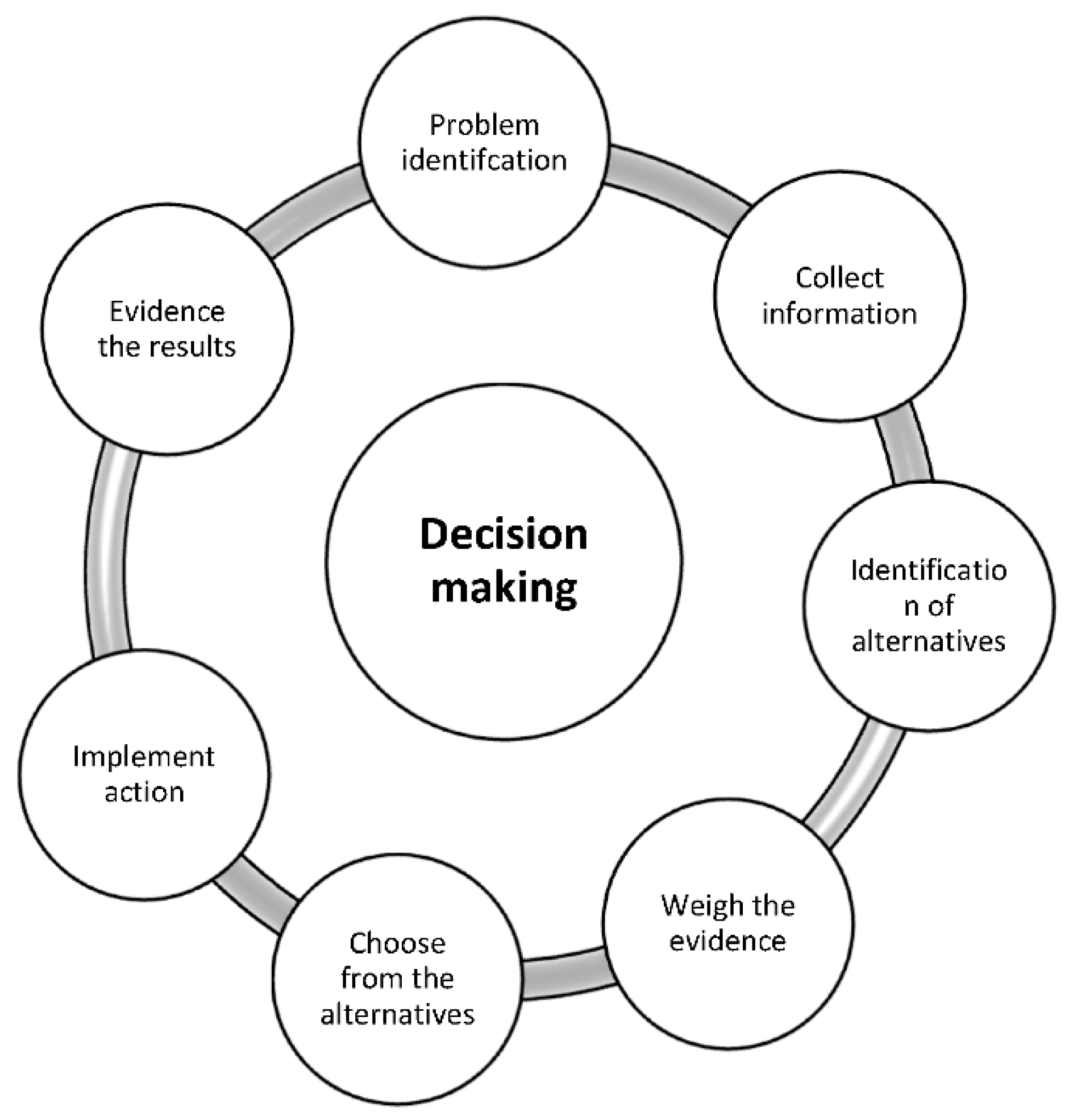
Figure 2.
Technology Acceptance Model. Source: Fred Davis 1986
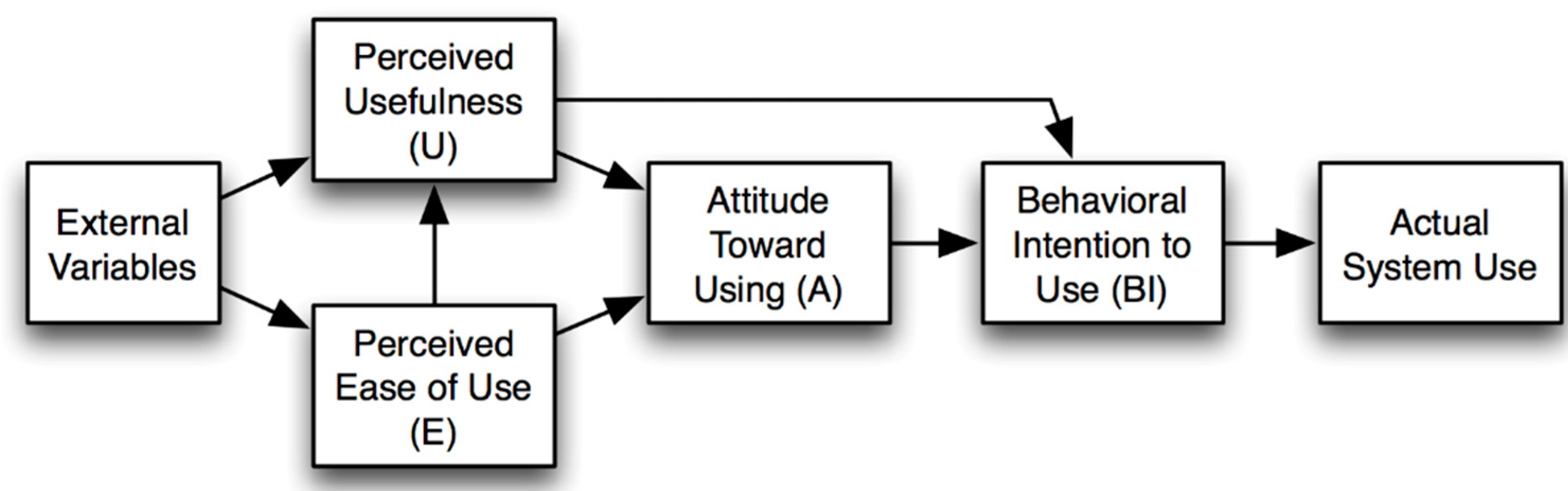
Figure 3.
Resultant Integrated Model (TAM-CBA-DMP Model)-TCD model. Source: Own compilation; Fred Davis 1986
Figure 3.
Resultant Integrated Model (TAM-CBA-DMP Model)-TCD model. Source: Own compilation; Fred Davis 1986
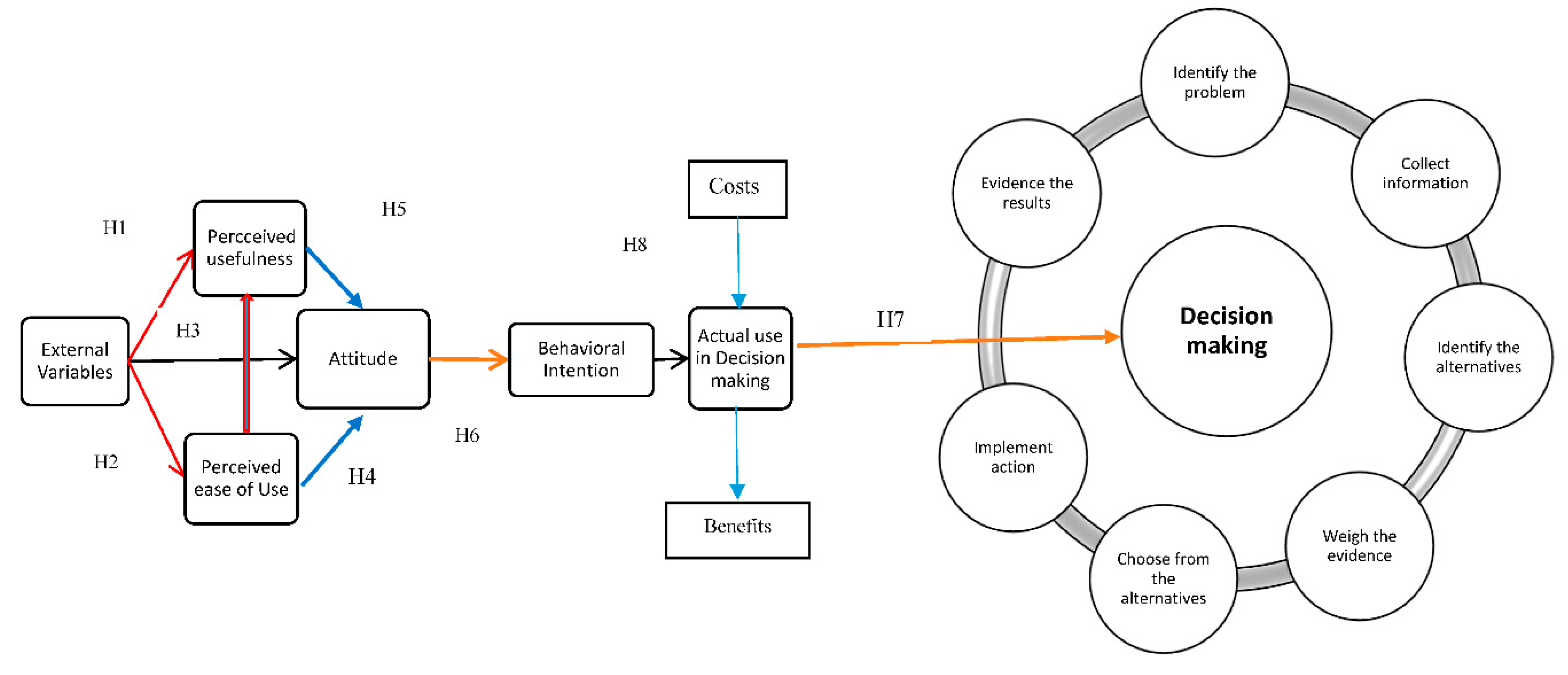
Figure 4.
Resultant SEM results of the theoretical TAM model. Note: The arrows denote the relationship and direction of the path between two model constructs.
Figure 4.
Resultant SEM results of the theoretical TAM model. Note: The arrows denote the relationship and direction of the path between two model constructs.
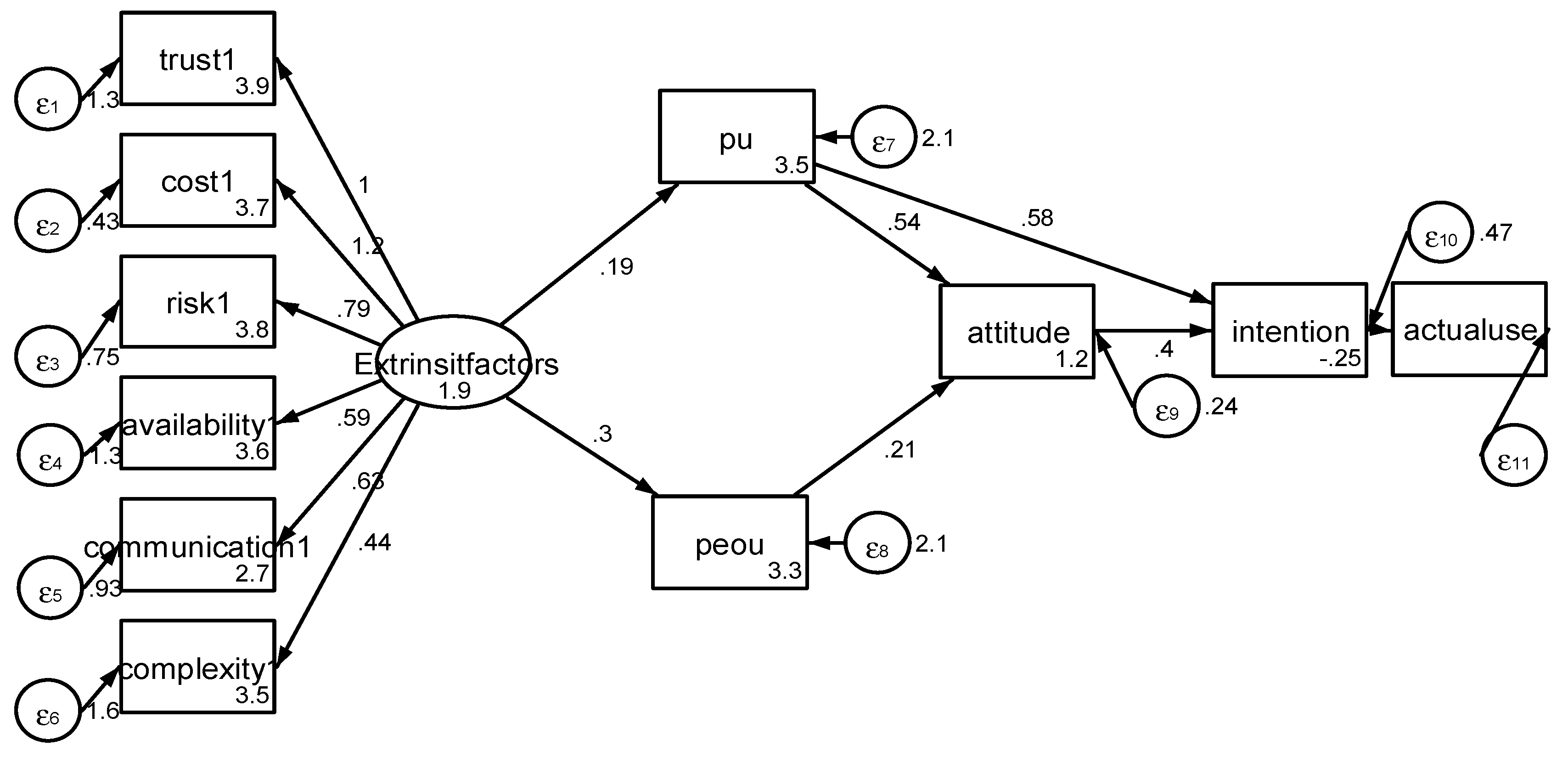
Figure 5.
Kernel Density Estimate- Job Performance Density Estimate
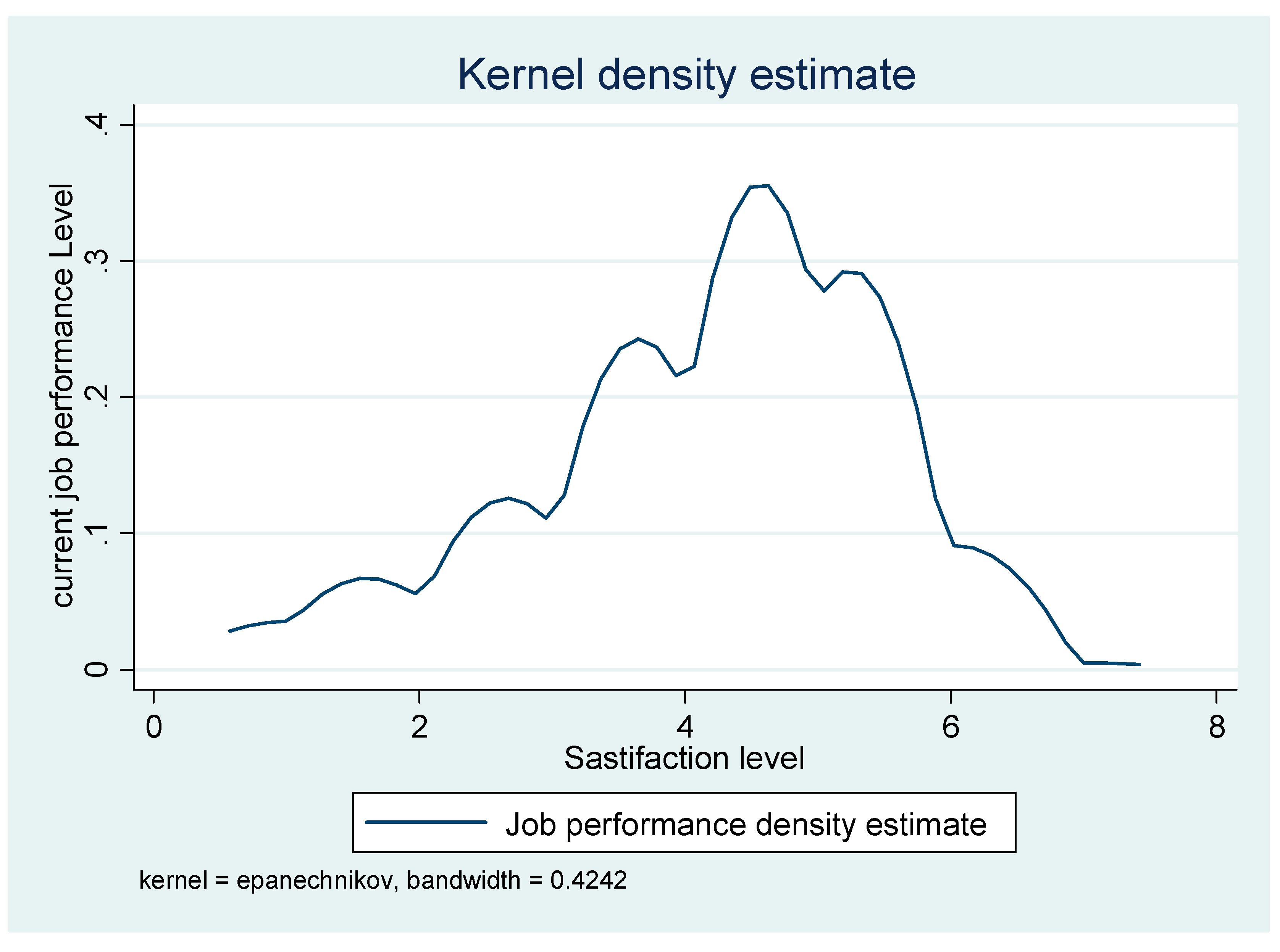

Table 1.
Descriptive statistics
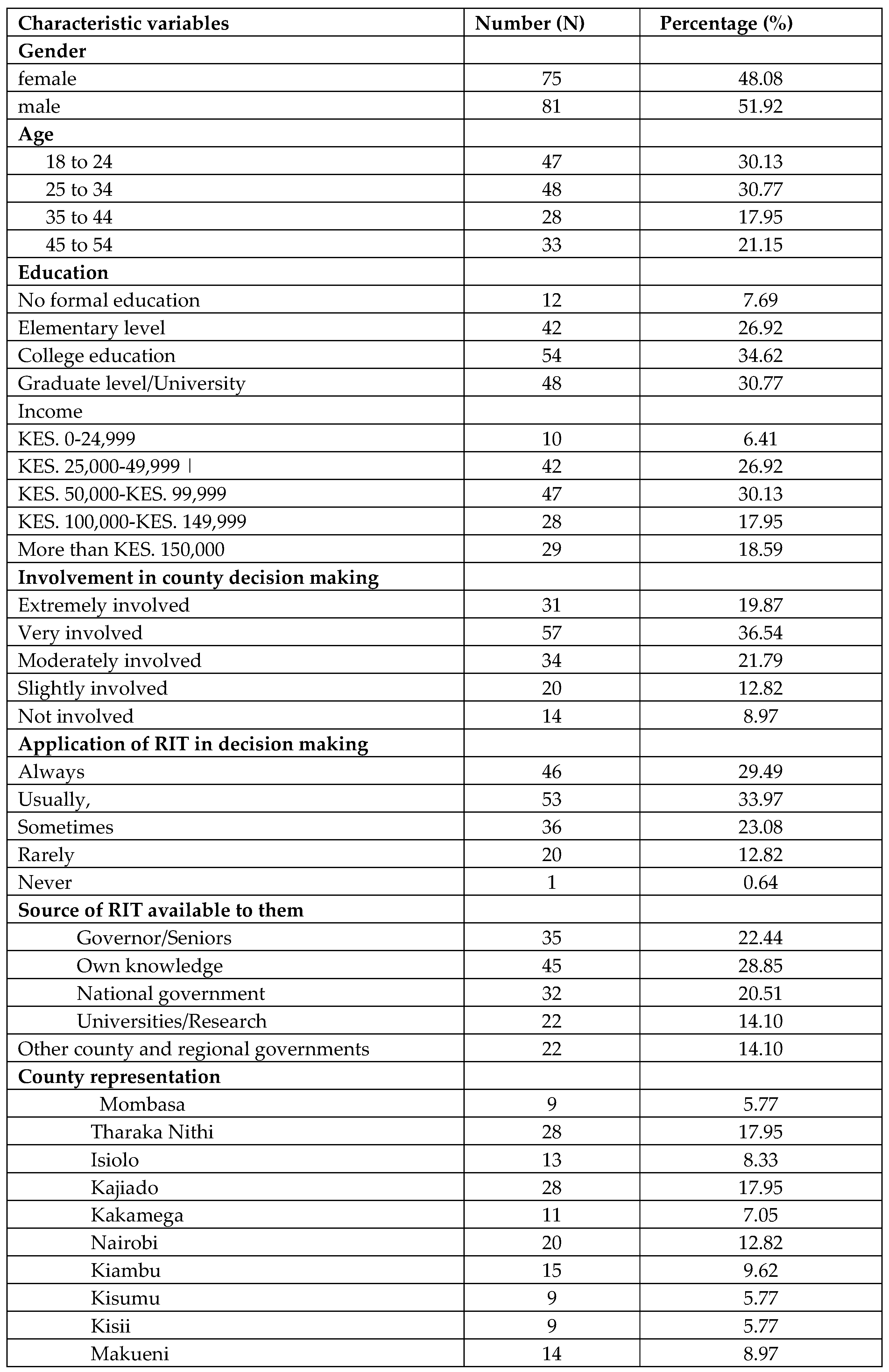 |
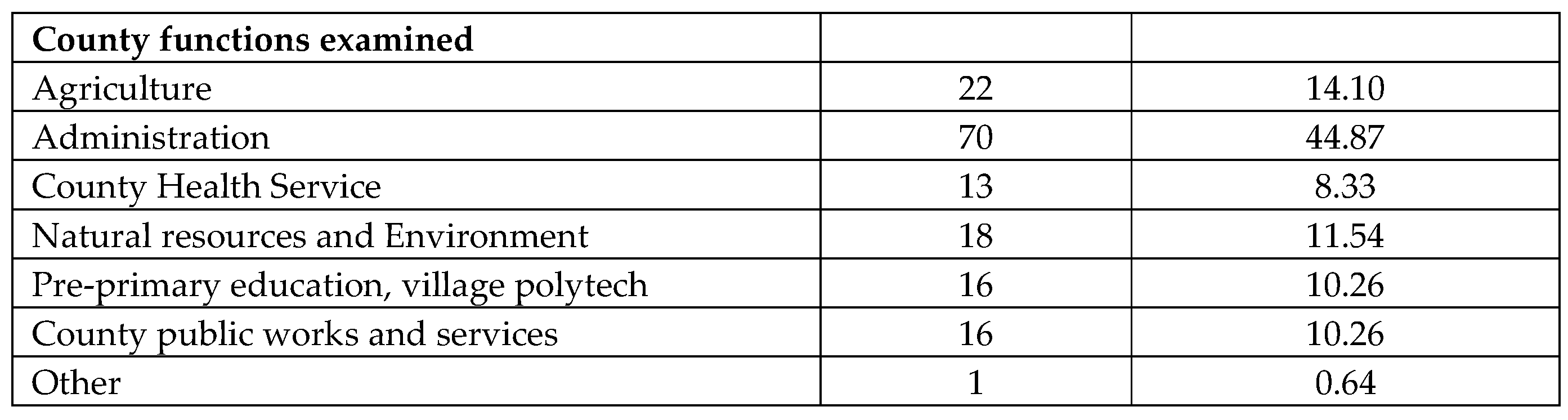 |
Table 2.
Summary statistics and Reliability analysis
 |
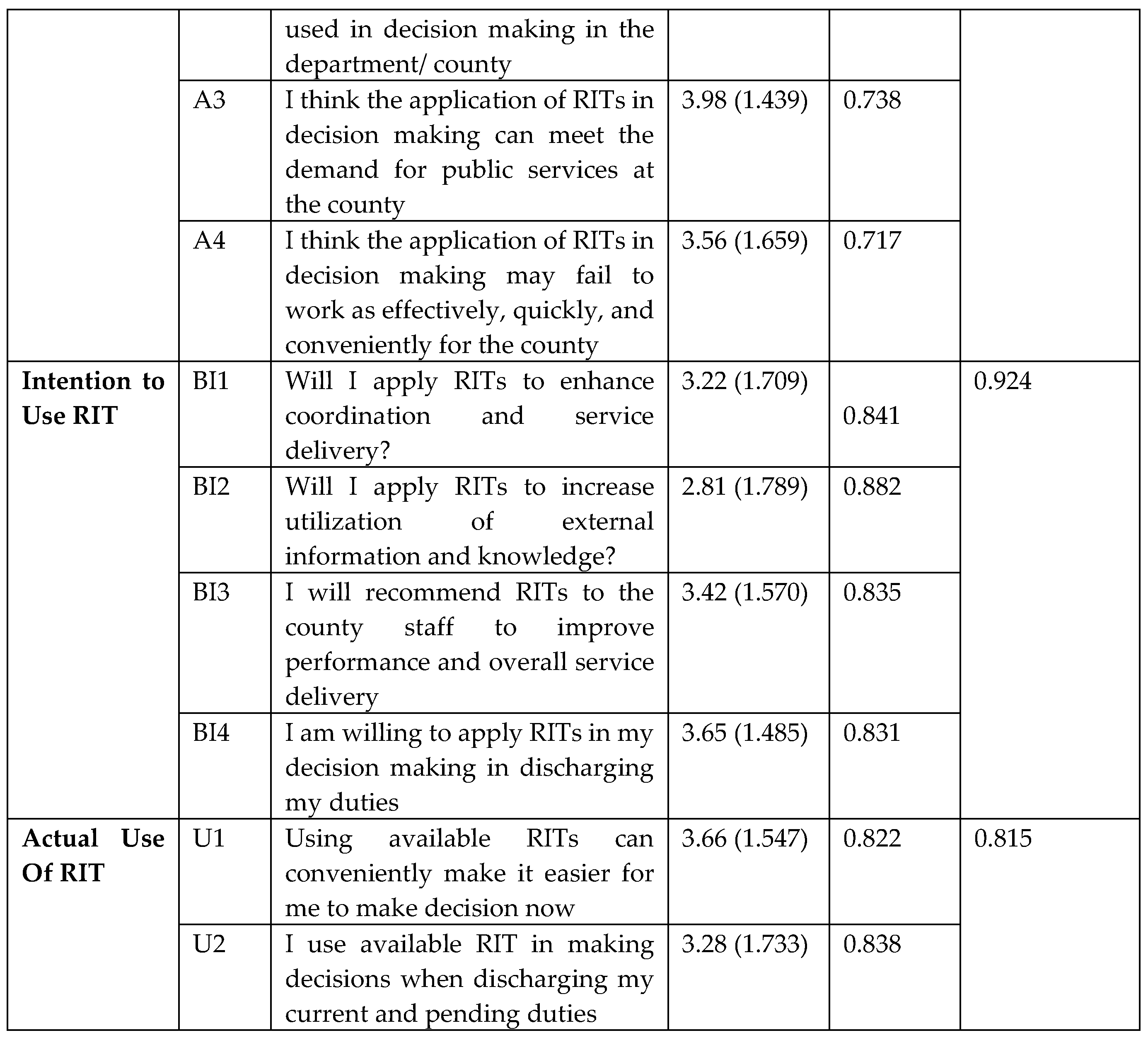 |
Notes: Cronbach’s alpha for entire model 23 items=> 0.946*
Table 3.
Correlational analysis
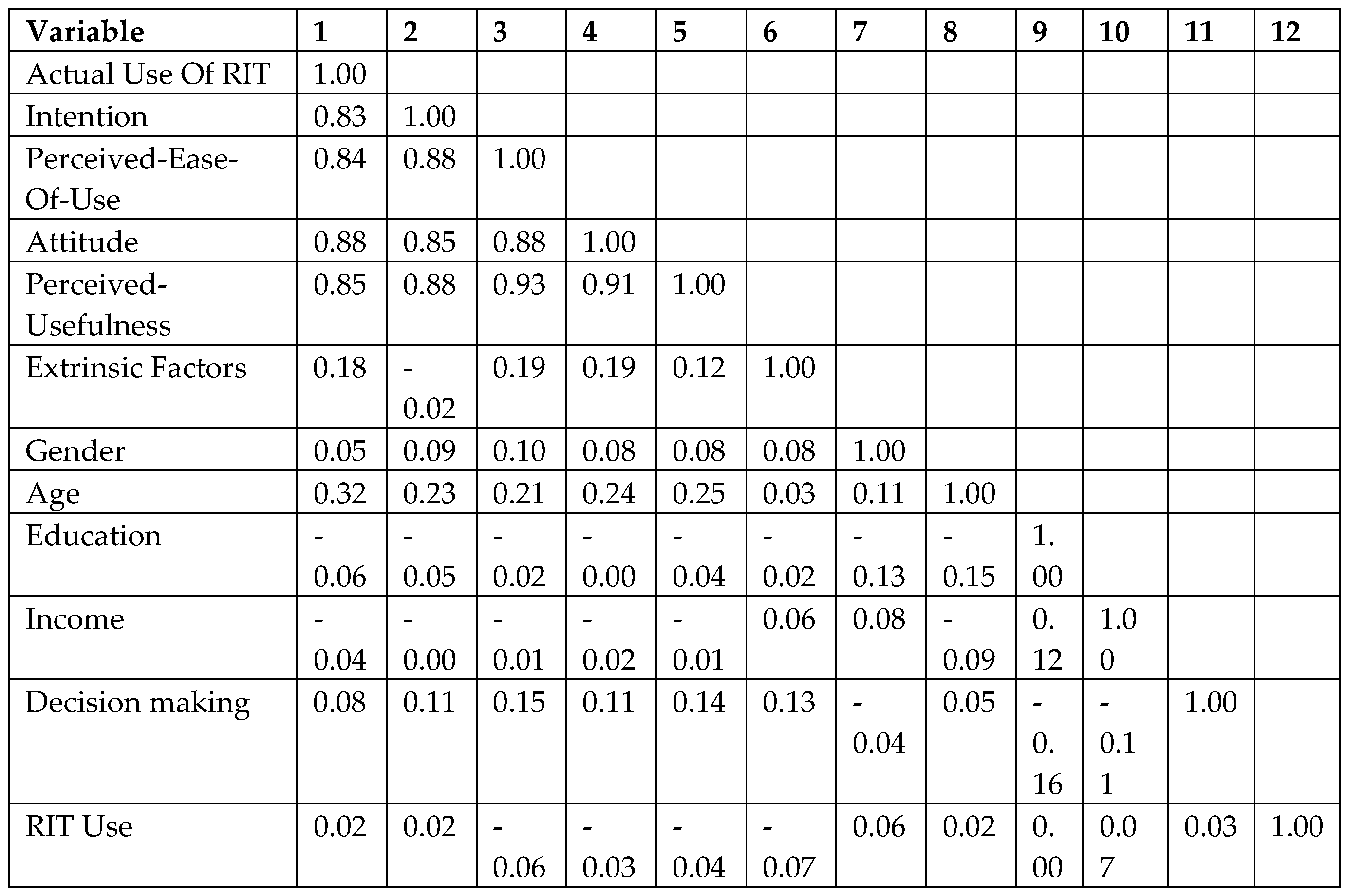 |
Table 4.
Structural Equation Modelling Estimates
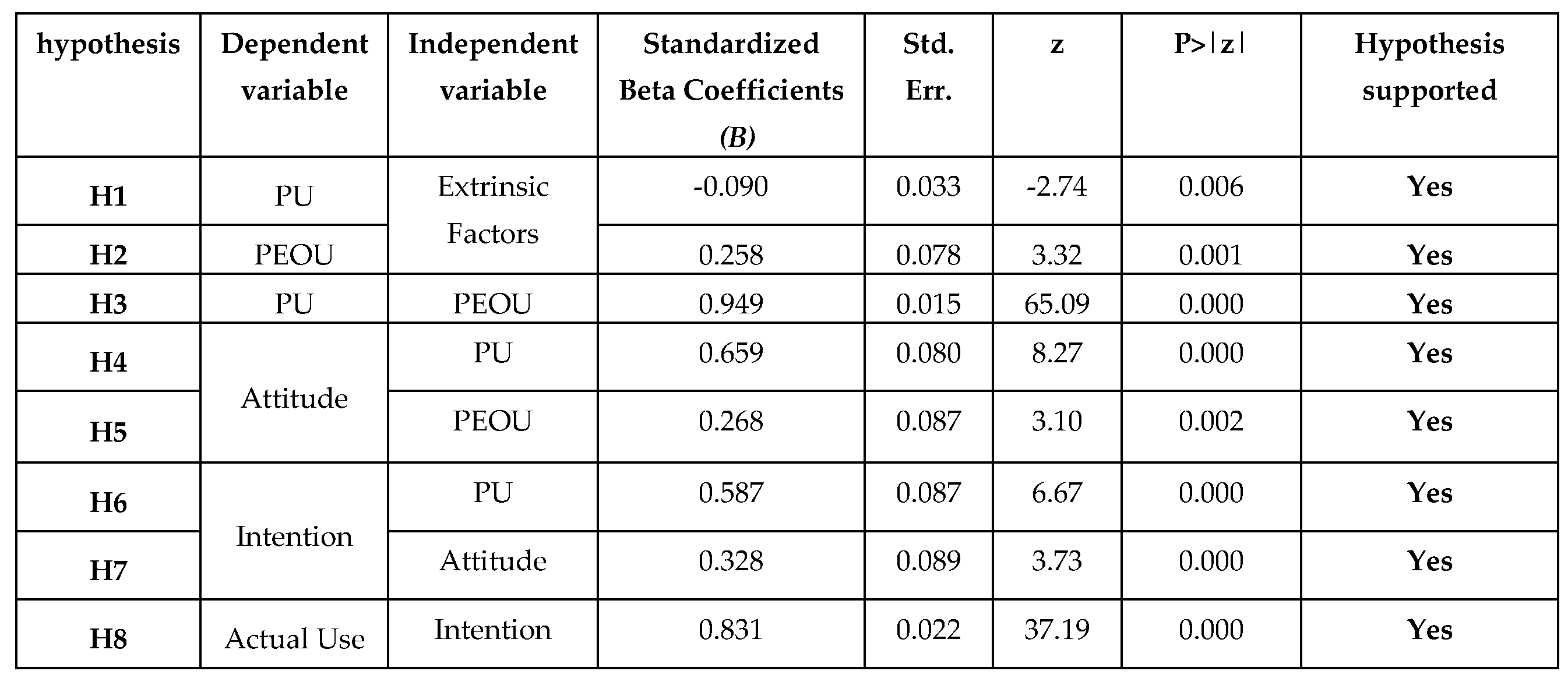 |
LR test of model vs. saturated: Chi2 (7) = 596.63, Prob > chi2 = 0.0000
Table 5.
Extrinsic variables
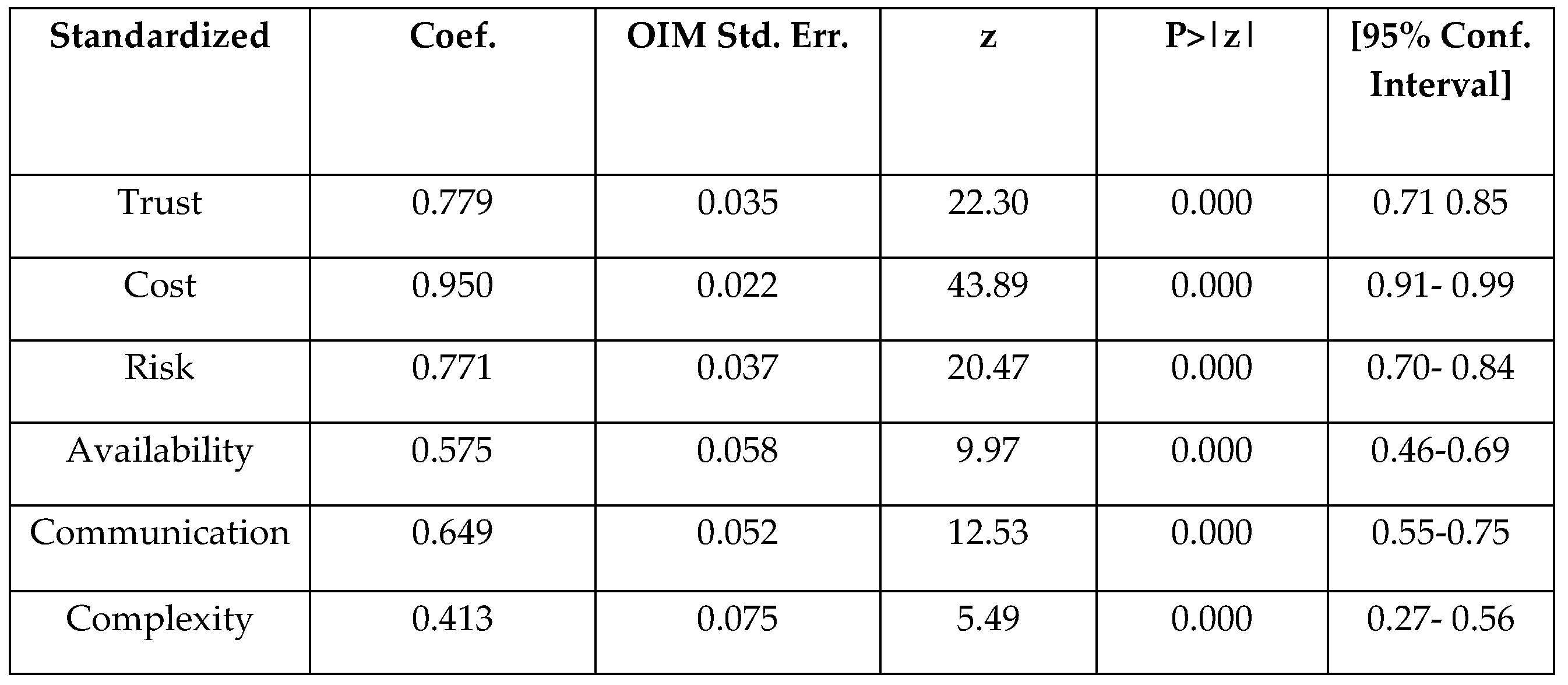 |
LR test of model vs. saturated: chi2 (32) = 303.79, Prob > chi2 = 0.0000
Table 6.
Willingness-to- pay distribution.
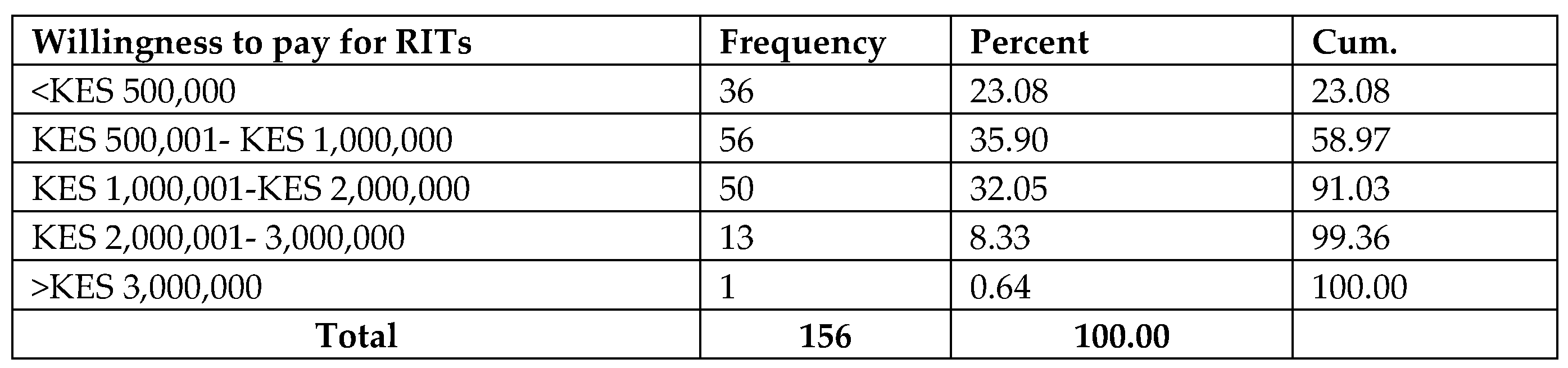 |
Table 7.
Maximum willingness-to-pay distribution
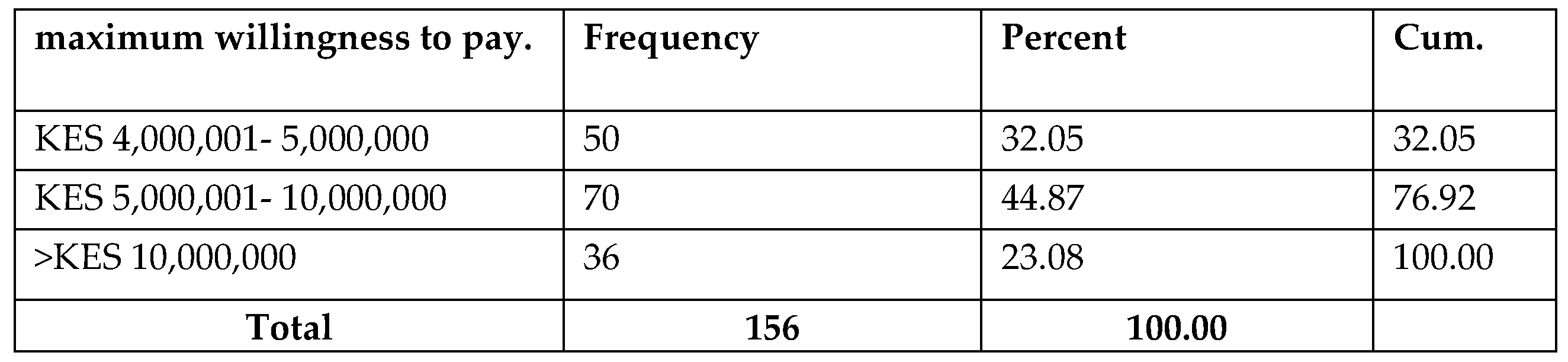 |
Table 8.
Benefit/ Motivations distribution
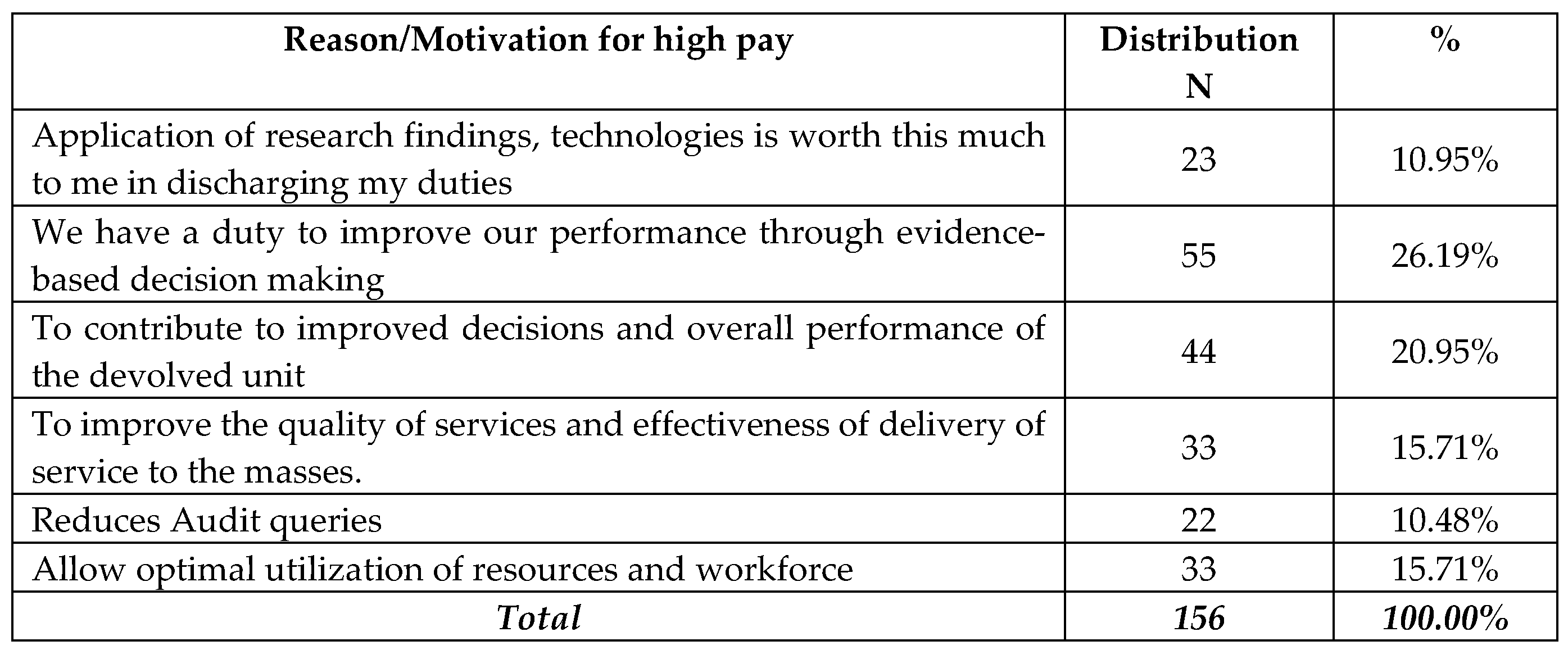 |
Disclaimer/Publisher’s Note: The statements, opinions and data contained in all publications are solely those of the individual author(s) and contributor(s) and not of MDPI and/or the editor(s). MDPI and/or the editor(s) disclaim responsibility for any injury to people or property resulting from any ideas, methods, instructions or products referred to in the content. |
© 2023 by the authors. Licensee MDPI, Basel, Switzerland. This article is an open access article distributed under the terms and conditions of the Creative Commons Attribution (CC BY) license (http://creativecommons.org/licenses/by/4.0/).
Copyright: This open access article is published under a Creative Commons CC BY 4.0 license, which permit the free download, distribution, and reuse, provided that the author and preprint are cited in any reuse.


