

Submitted:
12 October 2023
Posted:
13 October 2023
You are already at the latest version
Abstract
The control of oxidative stress with natural active substances could limit the development of numerous pathologies. Our objective was to study the antiradical effects of resveratrol (RSV), ε-viniferin (VNF) and vitisin B (VB) alone or in a combination, and those of a stilbene-enriched ex-tract (fraction). In the DPPH, FRAP, and NO scavenging assays, RSV present the highest activity with an IC50 of 83.69, 15.38 and 229 µM, respectively. Binary combinations resulted in additive interaction in the DPPH assay, synergic interaction for RSV+VNF and antagonistic for the others in the FRAP assay, and additive interaction for RSV+VNF or RSV+VB and antagonistic for VNF+VB in the NO scavenging assay. There was no significant difference between the antioxi-dant activity of the fraction and the combination RSV+VNF. In conclusion, RSV presented the highest effects, followed by VNF and VB. Interactions revealed additive or synergistic effects, depending on the combination of stilbenes and the assay.
Keywords:
Stilbenes
; resveratrol
; ε-viniferin
; vitisin B
; interactions
; antioxidant
1. Introduction
Reactive oxygen species (ROS) and reactive nitrogen species (RNS) are co-products of normal cellular metabolism. Some of these species play an important role in cell signalling, differentiation, survival and death. These reactive species can exist in radical forms, containing one or more unpaired, non-radical electrons. ROS include superoxide anion (O2°-), hydroxyl radical (°OH), hydrogen peroxide (H2O2), and hypochlorous acid (HClO); RNS include nitric oxide (NO) and peroxynitrite (ONOO-) [1].
When these radicals are produced in excessive quantities, they can lead to oxidative or nitrosative stress. Oxidative stress is a physiological condition that occurs when the body’s antioxidant defence systems (enzymatic or non-enzymatic) lose their ability to neutralize excess of reactive oxygen and nitrogen species, leading to oxidation of biological macromolecules such as nucleic acids, proteins and lipids. Numerous studies have shown that they are involved in the pathophysiology of numerous chronic diseases such as cardiovascular, inflammatory, metabolic, neurodegenerative diseases, and especially cancers [2].
In addition to endogenous antioxidant defence systems, protection against ROS/RNS involves exogenous antioxidants capable of preventing their formation or promoting their elimination. Plant-based foods and beverages are the main sources of antioxidants such as vitamins and phenolic phytochemicals. Dietary polyphenols are the most abundant antioxidants in our diet. The antioxidant activities of dietary polyphenols have been shown in some cases to be as effective or more effective than those of certain essential vitamins such as vitamins C and E [3]. The antioxidant effects of polyphenols are due to their reducing power, by donating a hydrogen atom to a wide range of ROS, or by scavenging them. They also have the ability to chelate transition metals (Fe, Cu), thereby directly reducing the Fenton reaction and preventing oxidation caused by highly reactive hydroxyl radicals [4,5].
Numerous analytical methods exist in order to measure the antioxidant capacity. Those methods are based on the scavenging or reduction of free and stable radicals and are convenient to identify the various antioxidant mechanisms existing from one phenolic compound to another. These assays include the scavenging of NO, the reduction of ABTS, DPPH, or peroxide radicals in the ORAC methods, and the reduction of a ferric derivative to a ferrous iron derivative in the ferric reducing antioxidant power (FRAP) assay. In studies that aimed to understand the nature of the antioxidant activities of natural compounds, it is interesting to use a multi-methods approach to evaluate the different mechanisms of action of antioxidants [6].
In food or nutraceuticals, compounds are present in complex mixtures and can therefore interact with each other. The resulting biological effect may then be the result of additive, synergistic or antagonistic interactions. Antioxidants can interact synergistically through a regenerative mechanism, i.e., one antioxidant regenerates the other. For example, the antioxidant synergy between vitamin C (ascorbic acid) and vitamin E (α-tocopherol) is explained by the fact that α-tocopherol, by scavenging peroxide radicals, is oxidised to a tocopheroxyl radical and this radical is immediately regenerated by ascorbate to α-tocopherol [7]. With regard to polyphenols, Aftab and Vieira highlighted a mechanism involving resveratrol in the regeneration of the reduced form of curcumin. Resveratrol is able to regenerate oxidised curcumin, thereby increasing the antioxidant activity of curcumin [8].
Stilbenes are polyphenols known for their antioxidant activities [9,10,11]. The main compound of this family is resveratrol, whose oligomerisation can produce numerous stilbenes containing up to 8 resveratrol units. In most studies on their biological activities, these compounds are used individually. However, in plants, they are present in mixtures in variable amount and proportions and their interactions are poorly studied. The aim of our study is to measure the antioxidant activities of three natural stilbenes, resveratrol (RSV), ε-viniferin (VNF) and vitisin B (VB) (a dimer and a tetramer of resveratrol obtained from vine extracts, respectively) individually and to compare these activities when these compounds are used in combination (Figure 1). These activities are also compared with those of a stilbene-enriched extract obtained from Vitis vinifera vine shoots, known for its high antioxidant properties [11]. This extract was characterized and contains, in mass, 33.7% RSV and 63.1% VNF, 3.2% VB. The antioxidant activities are measured using the FRAP, NO and DPPH methods and the interactions between these compounds are obtained using the method of Chou and Talalay using CompuSyn software [12].
2. Results
2.1. Determination of antioxidant activities by the DPPH scavenging assay
The DPPH radical-scavenging antioxidant capacity of RSV, VNF and VB individually or in equimolar combinations are illustrated in Figure 2A and Figure 3. All the molecules tested individually and their equimolar mixtures showed antioxidant activities at the concentrations used in a dose-dependent manner. RSV had a DPPH radical scavenging capacity similar to VNF with IC50 of 83.69 µM and 82.61 µM respectively, while VB was the less active molecule with an IC50 of 139.67 µM (Table). With regard to the results obtained with the mixtures of compound, all combinations showed additive effects, since their CI were between 0.9 and 1.1 (Table).
Figure 2.
Antioxidant capacity of individual stilbenes (RSV, resveratrol; VNF, ε-viniferin; VB, vitisin B). A) DPPH assay. B) FRAP assay. C) NO scavenging assay.
Figure 2.
Antioxidant capacity of individual stilbenes (RSV, resveratrol; VNF, ε-viniferin; VB, vitisin B). A) DPPH assay. B) FRAP assay. C) NO scavenging assay.
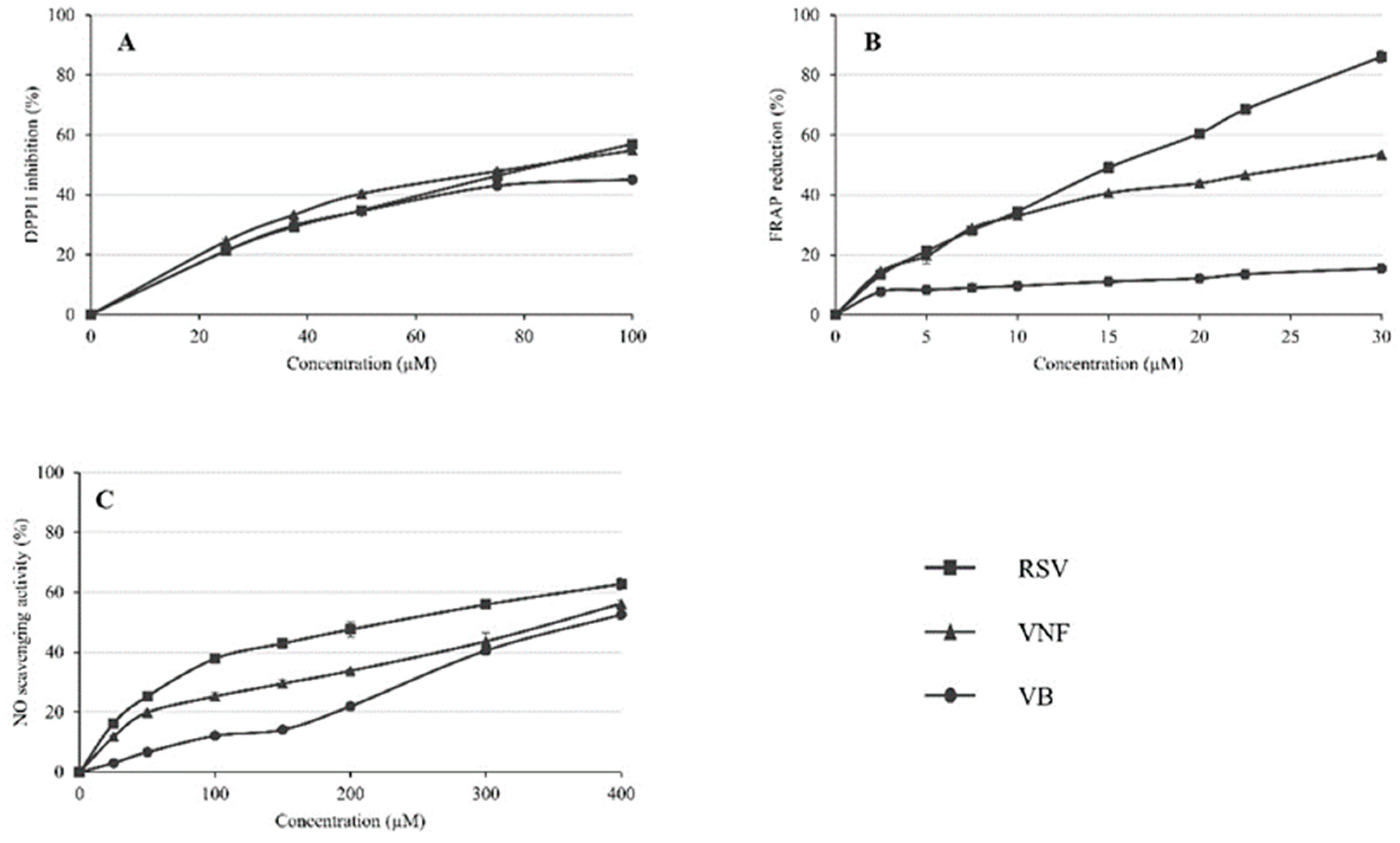
Figure 3.
DPPH radical reduction antioxidant capacity of individual stilbenes (RSV, resveratrol; VNF, ε-viniferin; VB, vitisin B) and their equimolar combinations. The 100% represents the DPPH alone which was used as control. The result of a representative experiment is shown. Values are expressed as mean ± standard deviation (n = 3). Data were analyzed by ANOVA (p < 0.05). Each letter (a, b and c) indicated that the combinations were statistically different from the individual compounds (a for resveratrol, b for VNF and c for VB) according to post-hoc Tukey comparison test at P < 0.05.
Figure 3.
DPPH radical reduction antioxidant capacity of individual stilbenes (RSV, resveratrol; VNF, ε-viniferin; VB, vitisin B) and their equimolar combinations. The 100% represents the DPPH alone which was used as control. The result of a representative experiment is shown. Values are expressed as mean ± standard deviation (n = 3). Data were analyzed by ANOVA (p < 0.05). Each letter (a, b and c) indicated that the combinations were statistically different from the individual compounds (a for resveratrol, b for VNF and c for VB) according to post-hoc Tukey comparison test at P < 0.05.
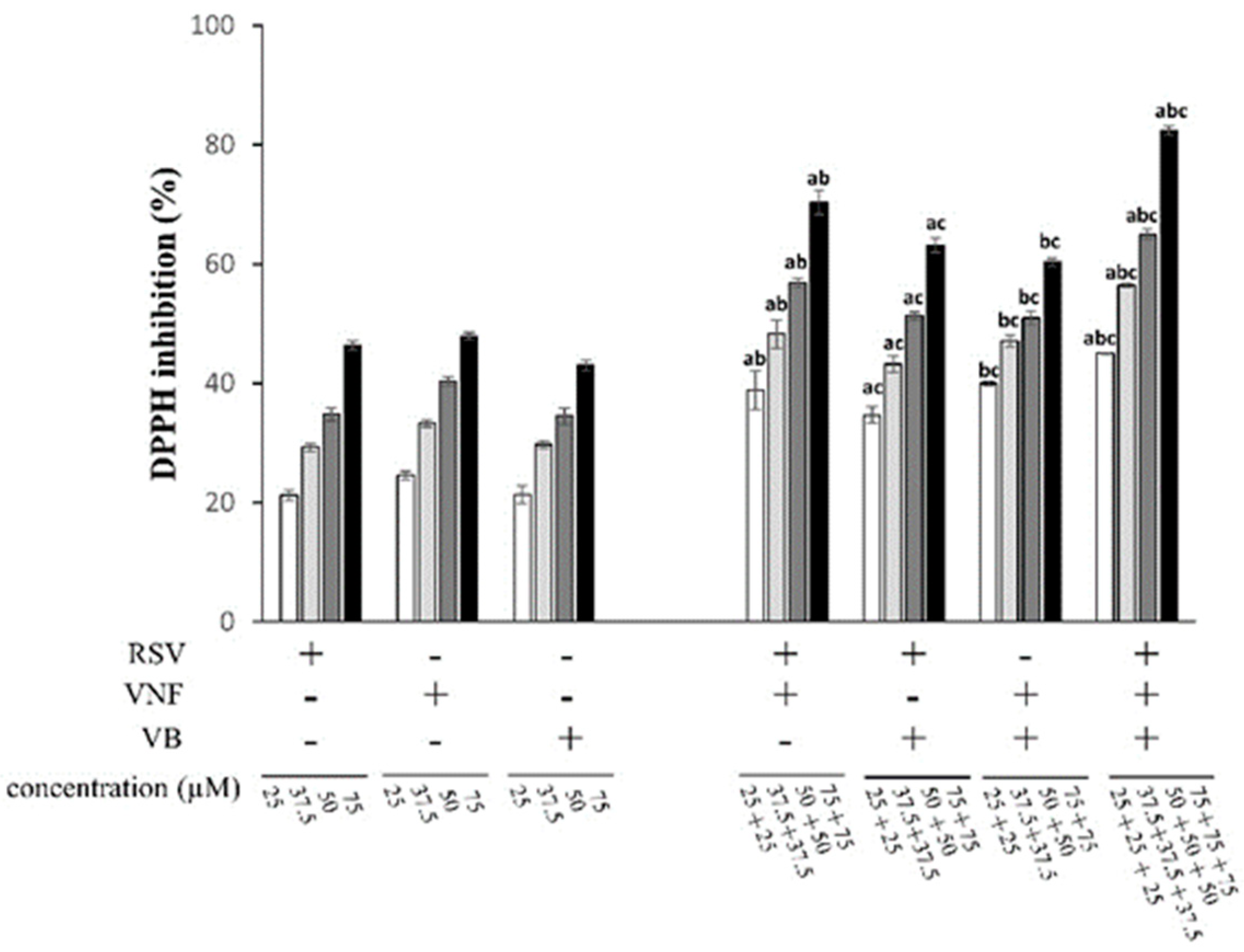

Table 1.
CI of the antioxidant capacities of grapevine stilbenes and their interactions using the DPPH, FRAP and NO scavenging methods.
Table 1.
CI of the antioxidant capacities of grapevine stilbenes and their interactions using the DPPH, FRAP and NO scavenging methods.
| DPPH | FRAP | NO | |||||||
|---|---|---|---|---|---|---|---|---|---|
| IC50 (µM) | CI | Interaction | IC50 (µM) | CI | Interaction | IC50 (µM) | CI | Interaction | |
| RSV | 83.69 | 15.38 | 229 | data | data 1 | ||||
| VNF | 82.61 | 26.19 | 350.84 | ||||||
| VB | 139.67 | ND | 378.84 | ||||||
| RSV+VNF | 79.90 | 0.93 | Additive | 14.72 | 0.78 | Synergy | 285.12 | 1.04 | Additive |
| RSV+VB | 95.81 | 0.93 | Additive | ND | 1.68 | Antagonism | 271.51 | 0.96 | Additive |
| VNF+VB | 93.63 | 0.90 | Additive | ND | 1.18 | Antagonism | ND | 1.11 | Antagonism |
| RSV+VNF+VB | 91.24 | 0.97 | Additive | 25.53 | 0.83 | Synergy | 307.76 | 0.85 | Synergy |
2.2. Determination of antioxidant activities by the FRAP assay
The antioxidant capacity of RSV, VNF and VB individually or in equimolar combinations to reduce Fe3+ to Fe2+ is illustrated in Figure 2B and Figure 4. All the molecules tested individually and their equimolar mixtures showed dose-dependent antioxidant activities at the concentrations used. RSV showed the highest antioxidant capacity, with an IC50 of 15.38 µM, followed by VNF at 26.19 µM, while the IC50 for VB could not be reached at the concentrations tested in this study (Table). With regard to the results obtained with the mixtures of molecules, two combinations RSV+VNF and RSV+VNF+VB showed synergistic effects, whereas all binary combinations containing VB (RSV+VB and VNF+VB) were antagonistic (Table).
2.3. Determination of antioxidant activity by NO scavenging assay
The antioxidant capacity of RSV, VNF and VB individually or in equimolar combinations to scavenge the NO radical is illustrated in Figure 2C and Figure 5. All the molecules reduced the amount of NO in a dose-dependent manner at the concentrations used. RSV had the highest NO scavenging activity, with an IC50 of 229 µM, followed by VNF at 350.84 µM and finally VB at 378.84 µM. With regard to the results obtained with the mixtures of molecules, the RSV+VNF and RSV+VB combination had additive effects, whereas the combination RSV+VNF+VB had synergistic effect. However, the effect of the combination VNF+VB is antagonistic (Table).
2.4. Comparison of the antioxidant activity between the combination RSV+VNF and the fraction
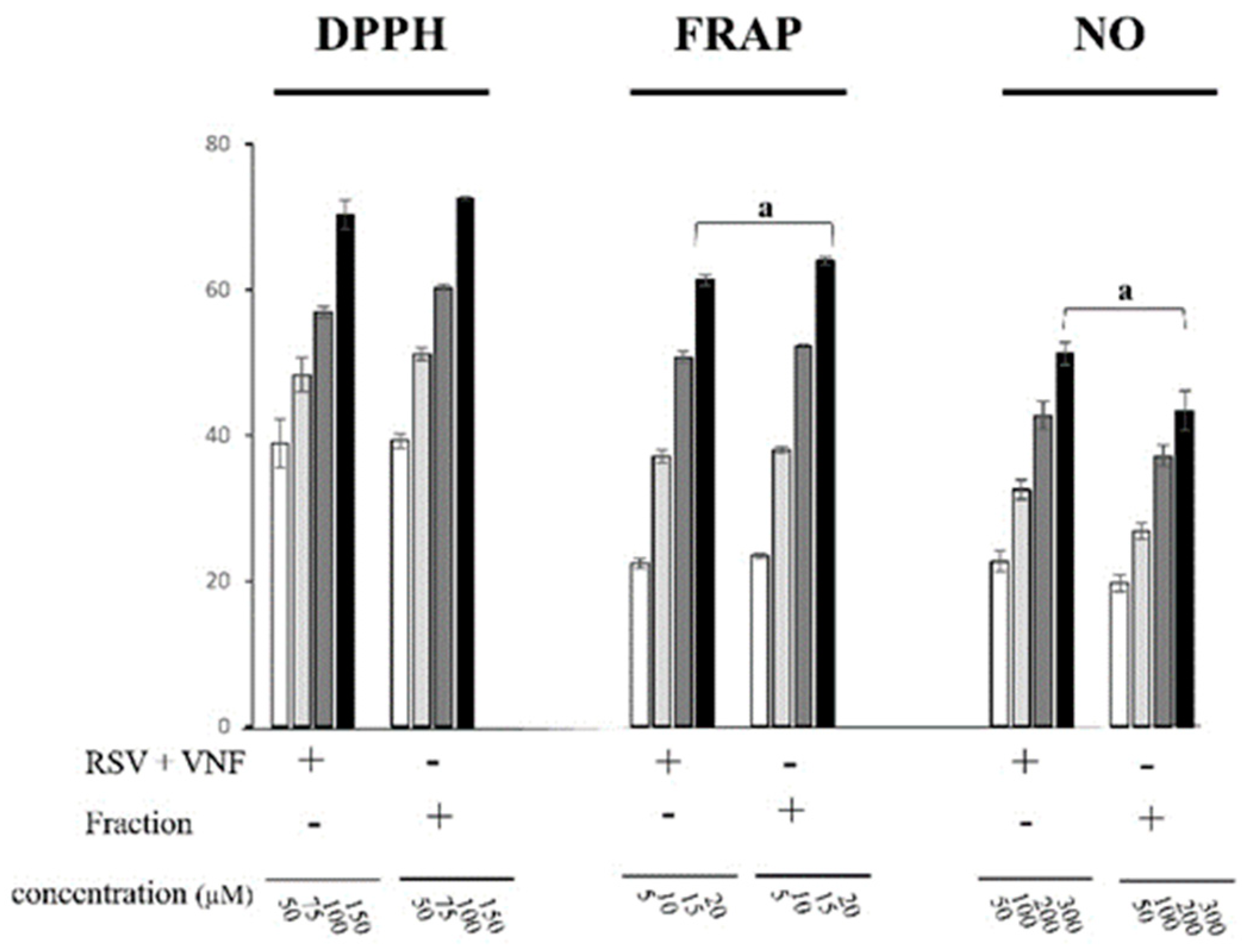
The antioxidant activities of the combination RSV+VNF were compared with those of the fraction in the different assays (DPPH, FRAP, NO scavenging) (Figure 6). The fraction was previously characterized and mainly contains RSV and VNF. The only significant differences were observed at the highest concentrations in the FRAP and NO scavenging assay.
3. Discussion
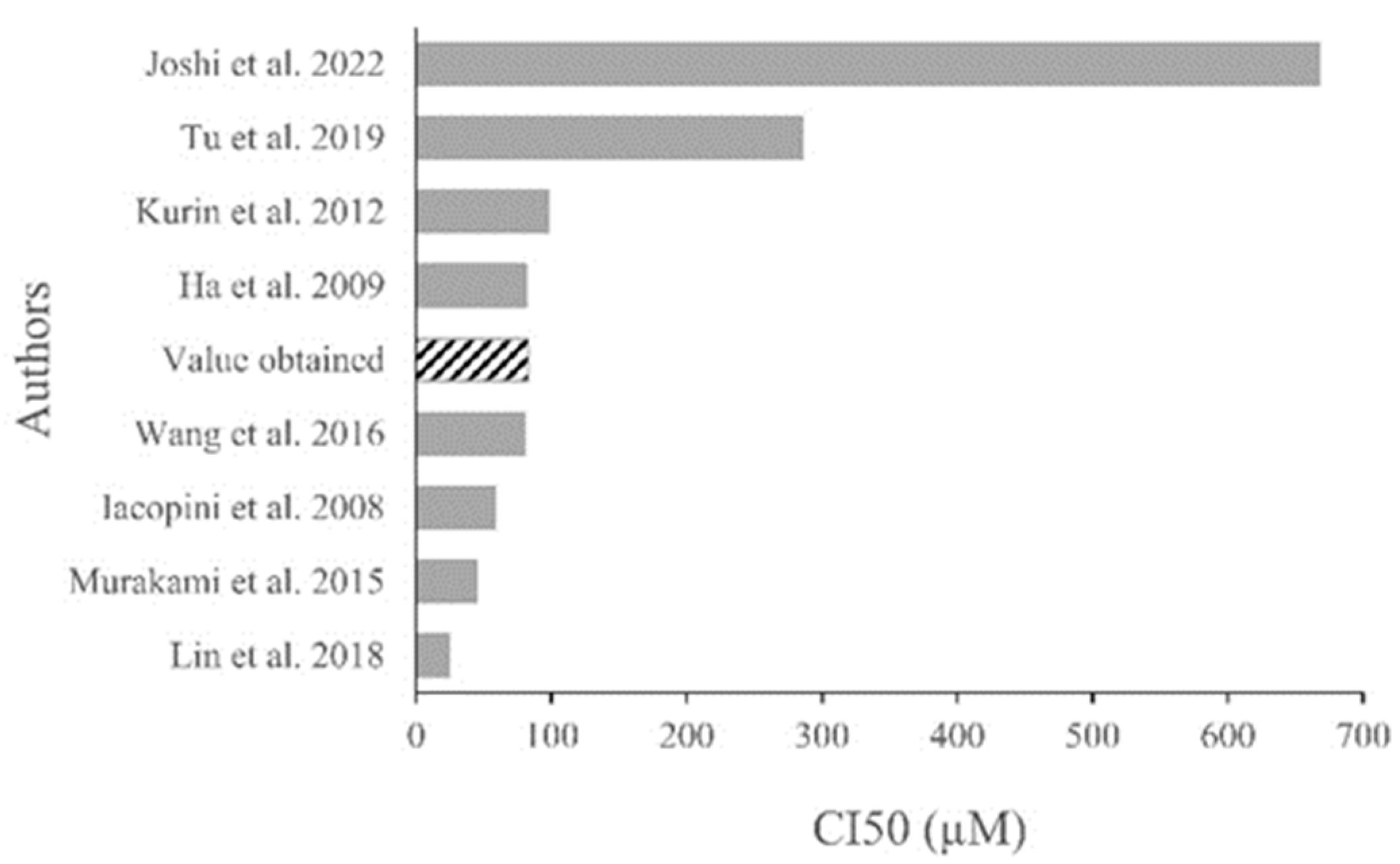
Our results show that the three polyphenols studied had antioxidant activities in the DPPH, FRAP and NO assays. RSV and VNF showed the highest antioxidant activities. In the literature, the antioxidant potential of RSV is well documented by the DPPH, FRAP and NO assays. On the other hand, few studies have evaluated the antioxidant potential of VNF and VB, and no studies using the FRAP and NO assays were reported, despite their in vitro anti-inflammatory and antioxidant activities in cells culture [13]. In the literature, the RSV IC50 values obtained for the DPPH assay (the most widely used method for measuring its antioxidant activity) are highly variable (Figure 7) ranged between 24.3 µM [14], and 667.18 µM [15]. In our study, the RSV IC50 (83.69 µM) is similar to that reported in the study of Ha and the study of Wang who obtain IC50 values of 81.2 and 80.5 µM, respectively [9,16]. Three studies reported VNF IC50 between 52.6 µM and 92 µM, which is comparable to the VNF IC50 of our study (82.61 µM) [9,10,17]. No study is available for VB.
In the FRAP and NO antioxidant assays, RSV is the most active molecule, followed by VNF and then VB, which shows much less activity. With regard to the FRAP assay, it is difficult to compare our results with those in the literature, as they are often expressed in a different manner. Nevertheless, a few studies calculate IC50 for RSV. In particular the studies by Lin et al., who obtained an IC50 of 20.7 µM, which is very close to the IC50 of 15.38 µM we obtained, but very different from the IC50 obtained by Kurin et al. and Skroza et al., which are 162.02 µM and 335.9 µM respectively [5,14,18].
Figure 7.
Summary of IC50 for resveratrol in the DPPH assay according to literature.
Very few studies of NO scavenging capacity have been carried out with RSV. Man-Ying Chan et al. showed that 50 µM RSV in solution in the presence of ethanol inhibited NO by 46.2%, unlike our study where the inhibition was lower (25.3%) [19].
The antioxidant capacity of these three compounds was evaluated in the ORAC test by Biais et al. [11]. The authors concluded that VNF had the greatest antioxidant capacity, three times greater than the one of RSV and 21 times greater than the one of VB. In our study, the antioxidant activity of RSV is higher than VNF in two of the three assays used (FRAP and NO). One reason for this difference could be due to the reaction mechanisms involved. According to Huang et al., two chemical processes, shared by the majority of polyphenols, are responsible for their antioxidant effectiveness, namely hydrogen atom transfer and electron transfer [20]. The ORAC assay is based on hydrogen atom transfer, whereas the DPPH, FRAP and NO assays are based on electron transfer.
It is known that the more hydroxyl groups a molecule has, the stronger its antioxidant activity. In our study, RSV was as effective, if not more so, as compared to its dimer VNF and its tetramer VB, which possess the highest number of hydroxyl groups. This observation could be explained by the fact that RSV, by virtue of its structure, could release its protons more easily than VNF or VB. In the DPPH assay, some authors have stated that the steric accessibility of the DPPH radical is a major determinant of the reaction, so small molecules have better access to the radical site and therefore a higher antioxidant capacity. Conversely, large compounds react slowly, which could explain their lower activity [6,20].
A number of studies have been carried out on the interactions between RSV and other polyphenols. Most of them have shown antagonistic interactions in the DPPH assay. These antagonistic interactions have mainly been shown with polyphenols that belong to the flavonoids and phenolic acids families such as catechin, quercetin, caffeic acid, kaempferol and gallic acid [5,15,18,21]. In our study, the stilbenes were able to interact with each other in an additive manner. Those results suggest that within the same class of polyphenols, they appear to cooperate with each other and potentiate their effects, whereas polyphenols that belong to different classes can sometimes exert antagonistic effects. Concerning the FRAP assay, we observed synergistic effect for the RSV+VNF combination, whereas when VB which was a less active molecule was combined with RSV or VNF, effects were antagonistic. Here it could be assumed that VB interacted negatively with RSV or VNF by reducing their antioxidant activities. In the literature, Abraham et al. have found additive effects between RSV in combination with polyphenols such as chlorogenic acid, pelargonidin, and epigallocatechin gallate [22]. Similarly, Skroza et al. observed synergistic effects when RSV was combined with catechin or caffeic acid [18]. However, when it was combined with gallic acid or quercetin, the interactions led to antagonistic effects. Concerning the NO scavenging assay, combination of RSV with VNF or VB, gave additive effects. Kurin et al. observed that the interaction of RSV with caffeic acid induced synergistic effect and the combination with quercetin induced an additive one [5].
To our knowledge, no study has been carried out to measure the interactions that involve VNF or VB, either between these two oligomers or with compounds belonging to other families. We showed that VNF that presents interesting antioxidant activities produced in combinations with RSV either additive or synergic interactions. Whereas, VB that presents much less antioxidant activities could not produce any synergic interaction but even antagonist ones. In the ternary combination, VB reduced the antioxidant activities of the mixture of RSV+VNF, e.g., the IC50 for the FRAP assay is 23.53 µM (RSV+VNF+VB) versus 14.72 µM (RSV+VNF).
Our results as well as those reported in the literature highlight that the nature of the interactions depends on the mixtures of compounds and also to the assay used to measure the antioxidant capacity. As an example, Skroza et al. have shown that interactions can be highly variable—additive, synergistic or antagonistic—depending on the compound mixed with RSV (gallic acid, caffeic acid, (+)-catechin or quercetin) [18]. In addition, Kurin et al. also showed that the combination of RSV and quercetin produced an antagonistic effect in the SRD, FRAP, DPPH and ABTS assays, an additive effect in the NO scavenging assay, and a synergistic effect in the NRD and RP assays [5].
The fraction, derived from a vine shoots extract, consists mainly of RSV and VNF, with a very small proportion of VB and unknown compounds. Our results have shown that the RSV+VNF combination exhibited similar antioxidant effects compared to the one observed for the fraction in the DPPH, FRAP and NO scavenging assays. However, at the highest concentrations, the fraction showed a statistically greater or less effect than the combination in the FRAP and NO scavenging assay, respectively. These observations show that the presence of some compounds, even in very low concentrations, can modify the nature of the interactions of the major compounds. Therefore, in order to estimate the nature of compound interactions within a mixture, it would appear necessary to characterize all the compounds present in the extract, even those present in very low concentrations.
Some authors have attempted to explain the mechanisms involved in the interactions. In the case of additive interactions, these authors assume that the molecules act independently of each other. Synergistic or antagonistic interactions, on the other hand, could be explained by a regeneration mechanism: either a less effective antioxidant regenerates the more effective one, which in turn exerts antioxidant activities, hence the phenomenon of synergy, or conversely, the more effective antioxidant regenerates the less effective antioxidant, which will in turn exert a weaker antioxidant activity, hence the phenomenon of antagonism [8,23,24]. In our study we could hypothesize that VB could be regenerated by either RSV or VNF when in combination and therefore produce an antagonistic effect.
4. Materials and Methods
4.1. Chemicals
Iron chloride hexahydrate; 2,2-diphenyl 1-picrylhydrazyl (DPPH); sodium nitroprusside (SNP); sodium acetate; 2,4,6-Tri(2-pyridyl)-s-triazine (>=99% (TLC); (TPTZ) and Griess reagent were purchased from Sigma-Aldrich (Saint-Quentin Fallavier, France). (±)-6-Hydroxy-2,5,7,8-tetramethylchromane-2-carboxylic acid (trolox) was purchased from Thermo-Fisher (Illkirch, France). Resveratrol (RSV), ε-viniferin (VNF), vitisin B (VB) and fraction 5 (Vitis vinifera vine shoot extract, named as fraction in the following) were obtained in the laboratory from vine shoots using the method previously described (Biais et al. 2017).
4.2. DPPH Scavenging Assay
The DPPH assay has been slightly modified from that described by Blois [25]. In this test, the purple chromogenic radical DPPH is reduced by antioxidant compounds to a pale-yellow hydrazine compound. The stable DPPH radical (200 µM) was dissolved in methanol. Briefly, RSV, VNF, VB and their equimolar combinations were prepared at different concentrations ranging from 100 to 400 µM. As an example, 100 µM of the combination RSV+VNF contain 50 µM of RSV and 50 µM of VNF. The stilbene enriched fraction mainly contains 1/3 RSV and 2/3 VNF in mass that represent an equimolar quantity of RSV and VNF. Therefore, the fraction was prepared at the same concentration as those used for the different combinations of stilbenes, i.e., 100 µM of the fraction contain 50.9 µM of RSV and 47.9 µM of VNF. The different solutions of stilbenes and their combinations were prepared in a mixture of methanol/water (50/50), and a volume of 50 µL was mixed with 150 µL of DPPH solution in a 96-wells plate in order to obtain the final concentration ranging from 25 to 100 µM for individual compound. The plate was then incubated for 20 min in the dark at 37 °C. Trolox was used as a positive control at concentrations ranging from 50 to 200 µM under the same conditions. DPPH radical scavenging activity was estimated by measuring the absorption at 520 nm with a CLARIOstar spectrophotometer (BMG LABTECH, Champigny-sur-Marne, France), reflecting the quantity of DPPH radicals remaining in the solution. The results were expressed as IC50, which represent the concentration of the sample required to reduce the DPPH radicals amount by 50%.
4.3. FRAP assay
The reducing power of the samples was determined using a FRAP assay described by Benzie & Strain with a few modifications [26]. The FRAP assay, based on the electron transfer mechanism, measures the ability of antioxidants to reduce the ferric complex [Fe (III)-(TPTZ)2]3+ to the blue ferrous complex [Fe (II)-(TPTZ)2]2+ in an acid medium. The FRAP reagent was freshly prepared from acetate buffer (0.3 M, pH = 3.6) and mixed with TPTZ (10 mM in HCL) and iron chloride hexahydrate (20 mM) in a 10:1:1 ratio. The tested samples were dissolved in ethanol/water (50/50). Briefly, RSV, VNF, VB, their equimolar combinations and the fraction were prepared at different concentrations ranging from 50 to 600 µM, as described in the section DPPH scavenging assay. The different solutions of stilbenes and their combinations were prepared in a mixture of methanol/water (50/50), and a volume of 10 µL was mixed with 190 µL of FRAP reagent in a 96-wells plate in order to obtain the final concentration ranging from 2.5 to 30 µM for individual compound. The plate was then incubated for 30 min in the dark at room temperature. Trolox was used at concentrations ranging from 50 to 300 µM as a positive control under the same conditions. The FRAP reducing power was estimated by measuring absorption at 593 nm using a CLARIOstar spectrophotometer (BMG LABTECH, Champigny-sur-Marne, France). The results were expressed as IC50, considering trolox concentration of 300 µM as the 100% of the reduction of the iron complex.
4.4. NO Scavenging Assay
The NO radical was measured using SNP, a compound that spontaneously releases NO in aqueous solution at physiological pH under light irradiation. The NO radical interacts with oxygen to generate nitrites, which are then measured using the Griess reagent. Briefly, RSV, VNF, VB, their equimolar combinations and the fraction were prepared at different concentrations ranging from 50 to 800 µM, as described in the section DPPH scavenging assay. The different solutions of stilbenes and their combinations were prepared in a mixture of methanol/water (50/50), and a volume of 200 µL was mixed with 200 µL of SNP (5 mM) in order to obtain the final concentration ranging from 25 to 400 µM for individual compound. The tubes were then exposed to a controlled light source (5600 lux tungsten lamp) for 20 min. At the end of the exposure, a 60 µL aliquot of the reaction was sampled, to which 60 µL of Griess reagent was added in 96-well plates. Absorbance was measured after 15 min at 540 nm using a CLARIOstar spectrophotometer (BMG LABTECH, Champigny-sur-Marne, France). The results were expressed as IC50, which is the inhibitory concentration of the sample required to scavenge 50% of NO production.
4.5. Statistical analysis and determination of the interactions
All DPPH, FRAP, NO scavenging experiments were repeated at least four times and results are presented as means ± SEM of a representative experiment. Statistical tests were performed using an ANOVA test followed by Tukey’s post hoc multiple comparison test. The significance level was set at p < 0.05. Interactions were determined using the Chou-Talalay combination index method that quantitatively determines the synergism (CI < 0.9), additivity (0.9 ≤ CI ≤ 1.1) and antagonism (CI > 1.1) of a mixture using CompuSyn software [12].
5. Conclusions
This study explored the antioxidant activity of resveratrol, ε-viniferin and vitisin B alone or in combination to highlight their interactions. Resveratrol exerts the greater antioxidant activity, and interactions between resveratrol and its oligomers resulted in synergistic or additive effects. As for one given combination the nature of the interactions depends on the assay, it seems that the antioxidant activity of mixtures depends on the reaction mechanisms involved in the assay used. It is therefore essential to use a multiple approach to characterize the antioxidant capacity of a compound alone or in a mixture. Finally, the results observed with a grapevine extract confirm that the presence of some compounds, even in very low amount, can influence the total activity of a mixture, thus underlining that the prediction of the antioxidant capacity of an extract should be cautious without its exact composition.
Author Contributions
Conceptualization and methodology, S.B., K.S. and C.A.; formal analysis, S.B., K.S. and C.A.; investigation, S.B.; writing—original draft preparation, S.B., K.S. and C.A.; writing—review and editing, R.T.; supervision, K.S., R.T. and C.A.; funding acquisition, R.T. All authors have read and agreed to the published version of the manuscript.
Funding
The work was supported by the Bordeaux Metabolome Facility and MetaboHUB (ANR-11-INBS-0010 project).
Acknowledgments
The authors thank Actichem (Montauban, France) for providing the enriched-stilbene fraction.
Conflicts of Interest
The authors declare no conflict of interest.
References
- Biswas, S.K. Does the Interdependence between Oxidative Stress and Inflammation Explain the Antioxidant Paradox? Oxidative Medicine and Cellular Longevity 2016, 2016, 1–9. [Google Scholar] [CrossRef] [PubMed]
- Prior, R.; Wu, X. Diet Antioxidant Capacity: Relationships to Oxidative Stress and Health. Am J Biomed Sci 2013, 5, 126–139. [Google Scholar] [CrossRef]
- Shen, T.; Wang, X.-N.; Lou, H.-X. Natural Stilbenes: An Overview. Nat Prod Rep 2009, 26, 916–935. [Google Scholar] [CrossRef] [PubMed]
- Tsao, R. Chemistry and Biochemistry of Dietary Polyphenols. Nutrients 2010, 2, 1231–1246. [Google Scholar] [CrossRef] [PubMed]
- Kurin, E.; Mučaji, P.; Nagy, M. In Vitro Antioxidant Activities of Three Red Wine Polyphenols and Their Mixtures: An Interaction Study. Molecules 2012, 17, 14336–14348. [Google Scholar] [CrossRef] [PubMed]
- Magalhães, L.M.; Segundo, M.A.; Reis, S.; Lima, J.L.F.C. Methodological Aspects about in vitro Evaluation of Antioxidant Properties. Anal Chim Acta 2008, 613, 1–19. [Google Scholar] [CrossRef] [PubMed]
- Guilland, J.-C. Les interactions entre les vitamines A, D, E et K: synergie et/ou compétition. OCL 2011, 18, 59–67. [Google Scholar] [CrossRef]
- Aftab, N.; Vieira, A. Antioxidant Activities of Curcumin and Combinations of This Curcuminoid with Other Phytochemicals. Phytother Res 2010, 24, 500–502. [Google Scholar] [CrossRef]
- Ha, D.T.; Kim, H.; Thuong, P.T.; Ngoc, T.M.; Lee, I.; Hung, N.D.; Bae, K. Antioxidant and Lipoxygenase Inhibitory Activity of Oligostilbenes from the Leaf and Stem of Vitis Amurensis. Journal of Ethnopharmacology 2009, 125, 304–309. [Google Scholar] [CrossRef]
- Liu, W.-B.; Hu, L.; Hu, Q.; Chen, N.-N.; Yang, Q.-S.; Wang, F.-F. New Resveratrol Oligomer Derivatives from the Roots of Rheum Lhasaense. Molecules 2013, 18, 7093–7102. [Google Scholar] [CrossRef]
- Biais, B.; Krisa, S.; Cluzet, S.; Da Costa, G.; Waffo-Teguo, P.; Mérillon, J.-M.; Richard, T. Antioxidant and Cytoprotective Activities of Grapevine Stilbenes. J. Agric. Food Chem. 2017, 65, 4952–4960. [Google Scholar] [CrossRef] [PubMed]
- Chou, T.-C. Theoretical Basis, Experimental Design, and Computerized Simulation of Synergism and Antagonism in Drug Combination Studies. Pharmacol Rev 2006, 58, 621–681. [Google Scholar] [CrossRef] [PubMed]
- Nassra, M.; Krisa, S.; Papastamoulis, Y.; Kapche, G.D.; Bisson, J.; André, C.; Konsman, J.-P.; Schmitter, J.-M.; Mérillon, J.-M.; Waffo-Téguo, P. Inhibitory Activity of Plant Stilbenoids against Nitric Oxide Production by Lipopolysaccharide-Activated Microglia. Planta Med. 2013, 79, 966–970. [Google Scholar] [CrossRef] [PubMed]
- Lin, J.; Li, X.; Chen, B.; Wei, G.; Chen, D. E-Configuration Improves Antioxidant and Cytoprotective Capacities of Resveratrols. Molecules 2018, 23, 1790. [Google Scholar] [CrossRef] [PubMed]
- Joshi, T.; Deepa, P.R.; Sharma, P.K. Effect of Different Proportions of Phenolics on Antioxidant Potential: Pointers for Bioactive Synergy/Antagonism in Foods and Nutraceuticals. Proc Natl Acad Sci India Sect B Biol Sci 2022, 92, 939–946. [Google Scholar] [CrossRef] [PubMed]
- Wang, L.; Wu, Y.; Chen, Y.; Zou, J.; Li, X. Biotransformation of Resveratrol: New Prenylated Trans-Resveratrol Synthesized by Aspergillus sp. SCSIOW2. Molecules 2016, 21, 883. [Google Scholar] [CrossRef] [PubMed]
- Agbadua, O.G.; Kúsz, N.; Berkecz, R.; Gáti, T.; Tóth, G.; Hunyadi, A. Oxidized Resveratrol Metabolites as Potent Antioxidants and Xanthine Oxidase Inhibitors. Antioxidants 2022, 11, 1832. [Google Scholar] [CrossRef]
- Skroza, D.; Generalić Mekinić, I.; Svilović, S.; Šimat, V.; Katalinić, V. Investigation of the Potential Synergistic Effect of Resveratrol with Other Phenolic Compounds: A Case of Binary Phenolic Mixtures. Journal of Food Composition and Analysis 2015, 38, 13–18. [Google Scholar] [CrossRef]
- Chan, M.M.Y.; Mattiacci, J.A.; Hwang, H.S.; Shah, A.; Fong, D. Synergy between Ethanol and Grape Polyphenols, Quercetin, and Resveratrol, in the Inhibition of the Inducible Nitric Oxide Synthase Pathway. Biochemical Pharmacology 2000, 60, 1539–1548. [Google Scholar] [CrossRef]
- Huang, D.; Ou, B.; Prior, R.L. The Chemistry behind Antioxidant Capacity Assays. J Agric Food Chem 2005, 53, 1841–1856. [Google Scholar] [CrossRef] [PubMed]
- Iacopini, P.; Baldi, M.; Storchi, P.; Sebastiani, L. Catechin, Epicatechin, Quercetin, Rutin and Resveratrol in Red Grape: Content, in Vitro Antioxidant Activity and Interactions. Journal of Food Composition and Analysis 2008, 21, 589–598. [Google Scholar] [CrossRef]
- Abraham, S.K.; Eckhardt, A.; Oli, R.G.; Stopper, H. Analysis of in Vitro Chemoprevention of Genotoxic Damage by Phytochemicals, as Single Agents or as Combinations. Mutation Research/Genetic Toxicology and Environmental Mutagenesis 2012, 744, 117–124. [Google Scholar] [CrossRef] [PubMed]
- Peyrat-Maillard, M.N.; Cuvelier, M.E.; Berset, C. Antioxidant Activity of Phenolic Compounds in 2,2′-Azobis (2-Amidinopropane) Dihydrochloride (AAPH)-Induced Oxidation: Synergistic and Antagonistic Effects. J Amer Oil Chem Soc 2003, 80, 1007–1012. [Google Scholar] [CrossRef]
- Leopoldini, M.; Marino, T.; Russo, N.; Toscano, M. Antioxidant Properties of Phenolic Compounds: H-Atom versus Electron Transfer Mechanism. J. Phys. Chem. A 2004, 108, 4916–4922. [Google Scholar] [CrossRef]
- Blois, M.S. Antioxidant Determinations by the Use of a Stable Free Radical. Nature 1958, 181, 1199–1200. [Google Scholar] [CrossRef]
- Benzie, I.F.F.; Strain, J.J. The Ferric Reducing Ability of Plasma (FRAP) as a Measure of “Antioxidant Power”: The FRAP Assay. Analytical Biochemistry 1996, 239, 70–76. [Google Scholar] [CrossRef]
Figure 1.
Molecular structures of stilbenes isolated from Vitis vinifera vine shoots. A, resveratrol; B, ε-viniferin; C, vitisin B.
Figure 1.
Molecular structures of stilbenes isolated from Vitis vinifera vine shoots. A, resveratrol; B, ε-viniferin; C, vitisin B.
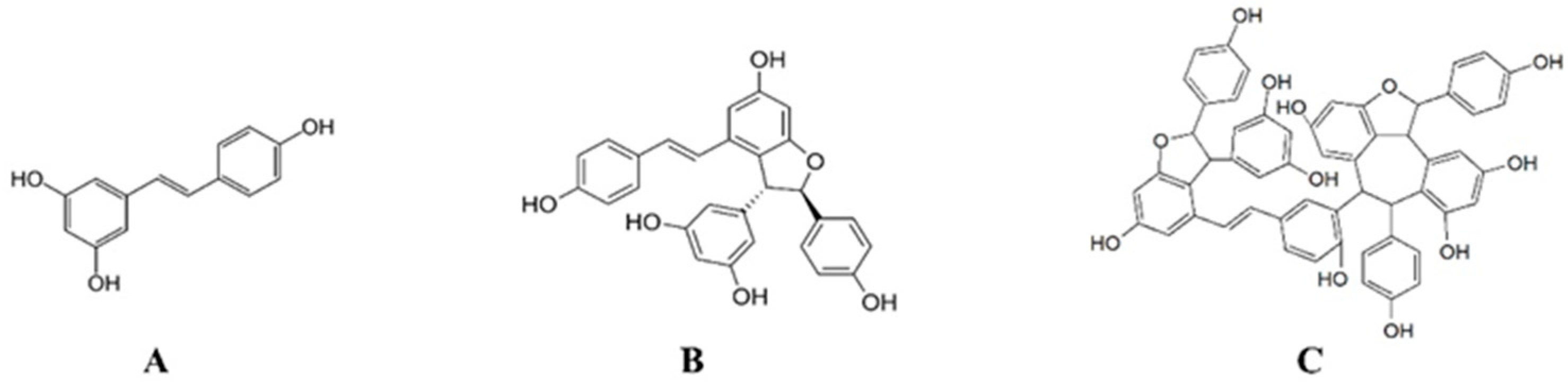
Figure 4.
Ferric iron reduction capacity of individual stilbenes (RSV, resveratrol; VNF, ε-viniferin; VB, vitisin B) and their equimolar combinations. The 100% represents the trolox which was used as a positive control. The result of a representative experiment is shown. Values are expressed as mean ± standard deviation (n = 4). Data were analysed by ANOVA (p < 0.05). Each letter (a, b and c) indicated that the combinations were statistically different from the individual compounds (a for resveratrol, b for VNF and c for VB) according to post-hoc Tukey comparison test at P < 0.05.
Figure 4.
Ferric iron reduction capacity of individual stilbenes (RSV, resveratrol; VNF, ε-viniferin; VB, vitisin B) and their equimolar combinations. The 100% represents the trolox which was used as a positive control. The result of a representative experiment is shown. Values are expressed as mean ± standard deviation (n = 4). Data were analysed by ANOVA (p < 0.05). Each letter (a, b and c) indicated that the combinations were statistically different from the individual compounds (a for resveratrol, b for VNF and c for VB) according to post-hoc Tukey comparison test at P < 0.05.
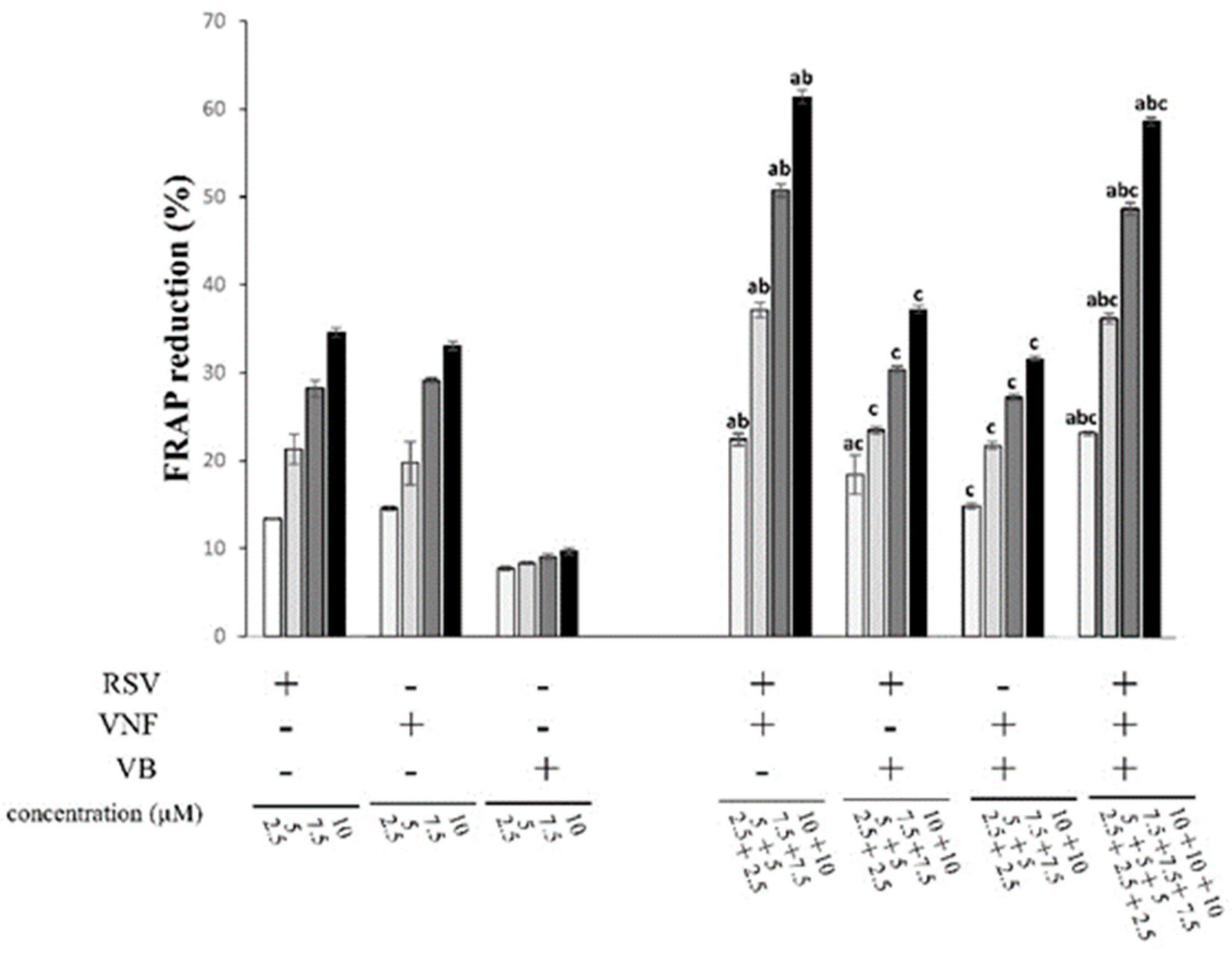
Figure 5.
NO scavenging capacity of individual stilbenes (RSV, resveratrol; VNF, ε-viniferin; VB, vitisin B) and their equimolar combinations. The 100% represents the SNP alone which was used as a positive control. The result of a representative experiment is illustrated. Values are expressed as mean ± standard deviation (n = 4). Data were analysed by ANOVA (p < 0.05). Each letter (a, b and c) indicated that the combinations were statistically different from the individual compounds (a for resveratrol, b for VNF and c for VB) according to post-hoc Tukey comparison test at P < 0.05.
Figure 5.
NO scavenging capacity of individual stilbenes (RSV, resveratrol; VNF, ε-viniferin; VB, vitisin B) and their equimolar combinations. The 100% represents the SNP alone which was used as a positive control. The result of a representative experiment is illustrated. Values are expressed as mean ± standard deviation (n = 4). Data were analysed by ANOVA (p < 0.05). Each letter (a, b and c) indicated that the combinations were statistically different from the individual compounds (a for resveratrol, b for VNF and c for VB) according to post-hoc Tukey comparison test at P < 0.05.
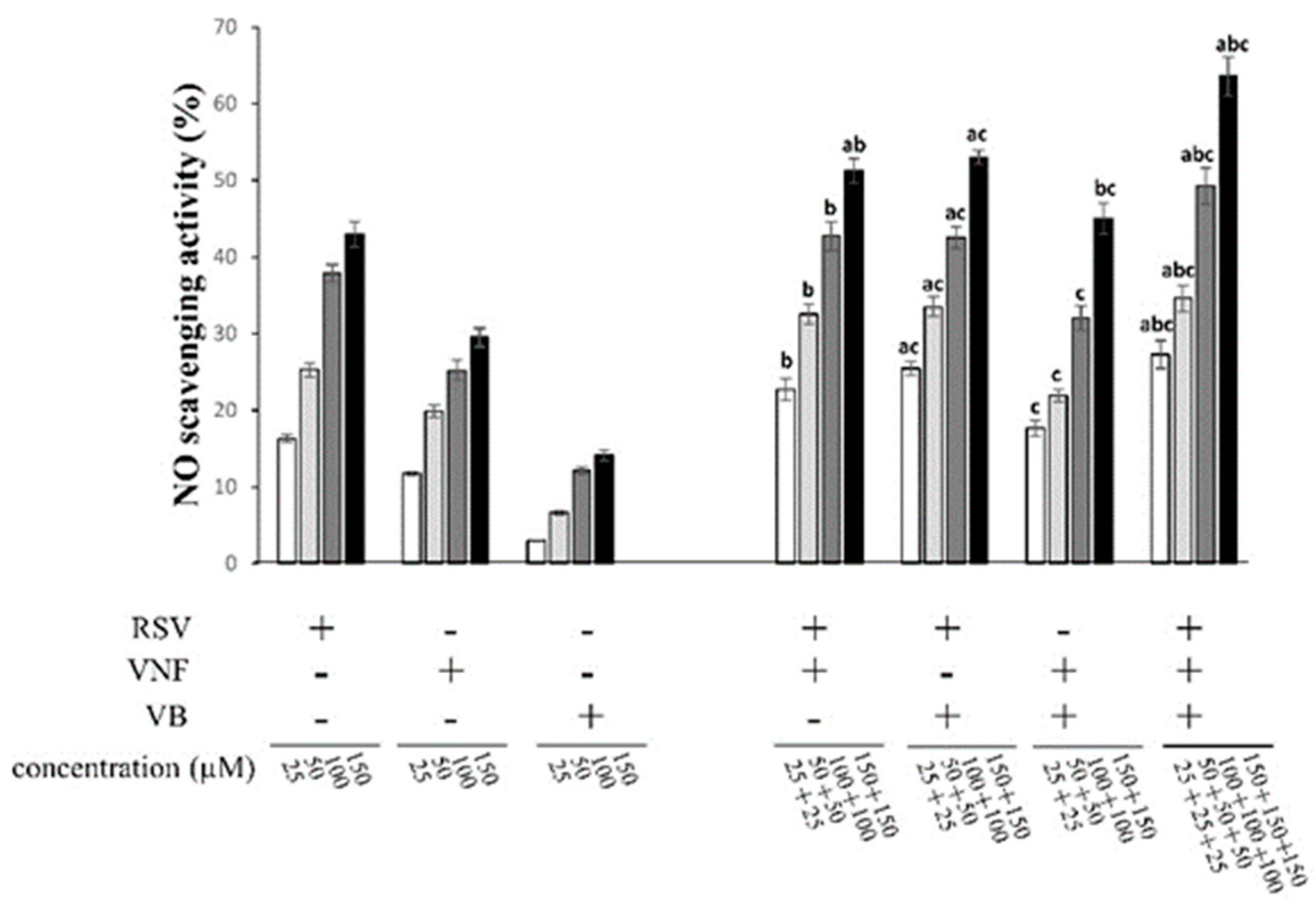
Figure 6.
Comparison of the antioxidant activity between the combination (RSV+VNF) and the fraction. Data were analysed by ANOVA (p < 0.05). a, indicated that the combination was statistically different from the fraction according to post-hoc Tukey comparison test at P < 0.05.
Figure 6.
Comparison of the antioxidant activity between the combination (RSV+VNF) and the fraction. Data were analysed by ANOVA (p < 0.05). a, indicated that the combination was statistically different from the fraction according to post-hoc Tukey comparison test at P < 0.05.
Disclaimer/Publisher’s Note: The statements, opinions and data contained in all publications are solely those of the individual author(s) and contributor(s) and not of MDPI and/or the editor(s). MDPI and/or the editor(s) disclaim responsibility for any injury to people or property resulting from any ideas, methods, instructions or products referred to in the content. |
© 2023 by the authors. Licensee MDPI, Basel, Switzerland. This article is an open access article distributed under the terms and conditions of the Creative Commons Attribution (CC BY) license (http://creativecommons.org/licenses/by/4.0/).
Copyright: This open access article is published under a Creative Commons CC BY 4.0 license, which permit the free download, distribution, and reuse, provided that the author and preprint are cited in any reuse.