
Submitted:
12 October 2023
Posted:
13 October 2023
You are already at the latest version
Abstract
Castanea sativa Mill., an indigenous species of the mountainous Gabala region of Azerbaijan, where its local variety is now facing the danger of extinction. The preservation of this variety of European chestnut requires the development of effective strategies for reliable in vitro regeneration systems as an alternative to traditional methods, which has become the main objective of this study. In solving this problem, the generally accepted technique of micro-multiplication of axillary shoots was mainly used. First, a phased sterilization of was carried out using liquid soap, Previkur fungicide and mercury (II) chloride. DKW (Driver and Kuniyuki Walnut) nutrient medium was used for germination of explants, into which growth stimulants BAP (Benzilamunapurine), IBA (Indole - 3 butyric acid), IAA (Indole Acetic acid), NAA (Naphthalene Acetic Acid) and GA3 (Gibberelic acid) were introduced in various combinations and quantities. The test of the above-mentioned sterilization model revealed significant shortcomings in terms of the acceptability of the results obtained (16-77%). It was also found that the germination of explants takes 14 days and it is better to conduct it in a DKW environment containing hormones BAP (0.6 mg), IBA (0.1 mg) and GA3 (0.1 mg) / 1 L DKW. A mixture of BAP (0.1mg) + IBA (0.35 mg) is more suitable for the reproduction of grown explants + GA3 (0.2 mg) / 1 l DKW (the result is 3 new micro-plants for each explant), and for good root formation (it takes 30 days) – a mixture of IBA 1.0 mg + NAA 0.5 mg + IAA 0.5 mg / l L DKW. After the shoots have acquired a certain length (at least 1.5 cm), it is required to transfer them for 22 days to a DKW medium containing IBA (1 mg), IAA (0.5 mg) and NAA(0.5 mg) / l L DKW so that the root splitting process begins and ends.
Keywords:
Azerbaijani chestnut
; nutrient medium
; hormones
; micro-shoots in vitro
; root induction
1. Introduction
The area of origin of the chestnut is located on the watered reliefs of the northern Mediterranean and the South Caucasus. Its range has been significantly expanded by people in southern and, especially, Western Europe, as well as in North Africa (locally).
There are many, many ancient and modern varieties of chestnut, some of which are the result of natural or artificial hybridization of two species: European chestnut (Castanea sativa) and Japanese chestnut (Castanea crenata). As a rule, they are more tolerant (but not resistant) to diseases than local varieties.
Castanea sativa is a species of chestnut from the family Fagaceae, which grows naturally in the mountain forests of Northern Anatolia. Here it can reach a height of 25-30 m. This plant is preferred in the pharmaceutical and food industries because of the chemicals it contains, as well as in the woodworking industry because of its wood. The leaves of this tree are used by the local population as medicine, and the fruits are used for food. These are beautiful trees that attract attention with their large leaves and attractive yellow flowers [1].
This variety of chestnut leaves are reddish-brown, from lanceolate to oblong-elliptical, have 25 sharp teeth on each edge; fruits are 1.5 cm wide and 3.5 cm high; young shoots are angular, dark reddish-brown [2].
The shape of the calyx, in the formation of which several fused sepals participate, occupies an important place in the taxonomy of the Fagaceae family, since it varies greatly. It was found that different genera within this family have different characteristics of the cupula covering the nuts.
For example, in the genus Genus, it completely surrounds the fruit or fruits of the recurrent type, the number of which ranges from 1-3, and has 2-4 leaves. When the cupula matures, it opens through these flaps [3].
In the northwestern mountainous part of Azerbaijan, one of the main sources of livelihood of the local population is the cultivation of chestnuts. Chestnuts grow here and in the wild along with oak, beech and hornbeam.
Mountain chestnuts of these places are quite small, and it is difficult to peel them off. In the kitchen, they prepare traditional dishes such as pilaf, galya (meat stew) and chestnut soup. In rural areas, chestnuts are eaten simply fried.
These chestnuts have different characteristics that vary from region to region. The most common variety comes from the Gabala district and is used to prepare a traditional dish called "Dosheme Ash" or "Shabalyd pilaf" (which literally translates as "chestnut pilaf").
Climate change and poor forest management play a role in reducing the number of chestnuts in Azerbaijani forests, with fewer rains every year, and periods of drought are becoming more frequent. Therefore, in recent years there has been a decrease in yields and deterioration of the condition of trees. Since 2003, high mortality of chestnuts has been reported, in particular, due to the fungus Cryphonectria parasitica, which is easier to call "chestnut cancer".
Therefore, the demand for seedlings of this variety of edible chestnut is growing all the time.
Usually chestnut is propagated by seeds (as it happens in nature), vaccinations or layering. Vaccination is carried out at the time when the rootstock is in juice - from mid-April to mid-May [1, 2].
Traditional methods are ineffective for large-scale reproduction of this plant for programs for the rapid renewal of natural or production sites or breeding in order to create disease-resistant germplasm [3, 4, 5]. In vitro reproduction is a highly effective tool for rapid and large-scale cloning of healthy germplasm from limited plant material under controlled environmental conditions, as well as for long-term maintenance of germplasm [6, 7].
Currently, the in vitro method is used in Azerbaijan for the propagation of rootstocks and some fruit crops [8, 9, 10], among which there is no local variety of chestnut yet.
In this study, an attempt was made to select the best conditions for the stage of rhizogenesis during the reproduction of Azerbaijani chestnut in vitro (that is, in vitro).
2. Materials and Methods
2.1. Place and conditions of work
The research was carried out in 2021-2022 on the basis of the laboratory of the company Grand Agro Invitro LLC.
The room temperature is 21-22 degrees. In enclosed spaces and laminar cabins, air passed through HEPA filters is used.
The indoor temperature is 21-22 degrees. Indoor and laminar cabins use air that has passed through a hepafilter.
In rhizogenesis experiments, a nutrient medium according to the Driver and Kuniyuki recipe (DKW) was used, supplemented with different combinations of hormones in amounts from 0.01 mg/l DKW to 0.8 mg/L DKW and iron chelate (0.168-2.0 mg/L DKW). In each variant there are five repetitions (three plants per repetition).
The branches of the Azerbaijani chestnut were collected from trees grown on one of the farm plots in the Gabala district (Azerbaijan). In the laboratory, they were first cleaned of leaves, then rinsed for one hour with drinking water continuously coming out of the tap. After that, the source material was taken from these stems (pieces of stems 3 cm long with one fruit bud - “nod”, or otherwise explants), which were then sterilized.
The optimal time of explant sterilization was determined in terms of the best preservation of their original structure. The sterilization protocol was chosen according to the best results in terms of preserving the original structure.
Sterilization by holding pieces of stems in alternating solutions consisting of 1 liter of distilled water and different amounts of liquid soap, Previkur fungicide (Promocarb 600 g/L, product Label &SDS) or mercury (II) chloride lasted 15 - 45 minutes.
Hormones produced by Duchefa (the Netherlands) were added to the DKW nutrient medium intended for germination of the axillary kidney meristem in a laminar cabinet: BAP (to form related plants at the reproduction stage), GA3 (for faster growth of upper shoots), IBA (with the same effect as cytokine and auxin, directed on the formation of a callus plant). These properties of the aforementioned hormones have been widely tested in practice. For example, when micro-multiplying pineapple, it turned out that the introduction of 1.0 mg/l IBA (indole-3-butyric acid) into the substrate increased the thickness and length of the white adventitious roots and led to a significantly larger number of roots (on average 8) and root length (6.15 cm) [11].
At the stage of reproduction of micro-shoots, variants with separate and simultaneous use of hormones IAA (Indoleacetic Acid) and NAA (a-Naphthaleneacetic Acid) in different quantities were also tested. This is due to the fact that IAA belongs to the auxin group and has many different effects, such as stimulation of cell elongation and division with all subsequent results for plant growth and development. NAA is able to increase the activity of enzymes [12].
2.2. Primary data processing
The data were collected during various experiments and analyzed using such a descriptive tool as the average value.
All tests are checked for compliance with the level of statistical significance equal to 0.05 or 5%. Verification of compliance with the significance level of 5% was carried out using the SPSS (Statistical Package for the Social Sciences) software.
3. Theory/calculations
It has been reported in the published literature that micro-multiplication using a semi-solid medium is resource-intensive, labor-intensive and increases the cost of production by 10-20% [13]. The liquid in vitro cultivation system provides uniform and constant access of nutrients to explants, an increase in biomass and rooting to a greater extent than it occurs on a semi-solid medium [14,15]. The use of a temporary immersion system (TIS) is an ideal option for micro-propagation, since it facilitates the reproduction of resistant plants with homogeneous physiology [16]. Plant raw materials in YEW are cultivated in a liquid medium by short-term periodic immersion followed by alternating exposure for gas exchange in order to avoid hyperhidricity, which usually occurs during continuous suspension of tissues in a liquid medium [17]. TIS has been successfully used for micro-propagation of tea [18], apple rootstocks [19], hazelnuts [20]. Micro-propagation by TIS of European chestnut (Castanea sativa) and hybrid chestnuts has also been reported; the duration and frequency of immersion affected the reproduction rate and the quality of Castanea sativa seedlings [21, 22, 23]. The main idea of this study is the idea of intensification of these processes through the use of growth stimulants.
4. Results and discussion
Experiments were carried out to determine the sterilization time of the Azerbaijani chestnut from the point of view of the best preservation of its original structure. The sterilization protocol was chosen according to the best result by creating a difference in the time of these experiences, the features used and the timing.
Experiments were carried out by adding all the materials used to 1 lt of distilled water, respectively.
In total, 3 variants of Azerbaijani chestnut sterilization were tested using this method using different concentrations of the materials used.
Option 1
First, 50 nods were immersed in 1 liter of distilled water, to which 5 ml of liquid soap was added, and kept in a mixer for 30 minutes (stage A). The nods were then separated and immersed for 15 minutes in 1 liter of distilled water, to which 5 ml of Previkure was added (stage B). Finally, the nods were separated and kept for 20 minutes in 1 liter of distilled water, to which 0.5 g of mercury (II) chloride was added (step C).
Option 2
First, 50 nods were immersed in 1 liter of distilled water, to which 10 ml of liquid soap was added, and kept in a mixer for 30 minutes (stage A). The nods were then separated and immersed for 15 minutes in 1 liter of distilled water, to which 10 ml of Previkure was added (stage B). Finally, the nods were separated and kept for 20 minutes in 1 liter of distilled water, to which 1 g of mercury (II) chloride was added (step C).
Option 3
First, 50 nods were immersed in 1 liter of distilled water, to which 15 ml of liquid soap was added, and kept in a mixer for 30 minutes (stage A). The nods were then separated and immersed for 45 minutes in 1 liter of distilled water, to which 10 ml of Previkure was added (stage B). Finally, the nods were separated and kept for 15 minutes in 1 liter of distilled water, to which 1 g of mercury (II) chloride was added (stage C).
As can be seen from the data in Table 1 and Table 2, as a result of the implementation of this method of sterilization, most of the explants were burned, since too much time was chosen during the use of mercury (II) chloride in the last stage of sterilization.
From the data placed in Table 3, it can be seen that the sterilization of chestnut explants was carried out in three stages: first for 30 minutes in 1 liter of distilled water, to which 15 ml of liquid soap was added, then for 45 minutes in 1 liter of distilled water, to which 10 ml of Previkure was added, and another 15 minutes in 1 liter of distilled water, to which 1 g of mercury chloride was added, can provide 76% of the conditioned sterile material from its entire initial amount.
Taking into account the results obtained in the tested variants, it can be argued that an optimal ratio was found between the materials used in the preparation of solutions and the required time for holding explants in these solutions in terms of obtaining the maximum amount of conditioned materials.
At the stage of germination of the meristem of fruit buds of sterilized explants, along with the DKW nutrient medium, hormones BAP, IBA and GA3 were used in various doses, and many experiments were conducted to obtain the best results in accordance with the number of new plants obtained. These hormones were added to 1 liter of DKW nutrient medium in different amounts both individually and together.
Figure 1 concerns the 14th day of the formation of green tissues in explants in the DKW nutrient medium, to which the hormones BAP, IBA and GA3 were added at the rate of 0.6 mg BAP, 0.01 mg IBA and 0.1 mg GA3/ 1 L DKW.
Figure 2 concerns the 14th day of the formation of green tissues when growing the meristem of the axillary buds of Azerbaijani chestnut in a DKW nutrient medium, to which the hormones BAP, IBA and GA3 and iron chelate were added at the rate of 0.6 mg BAP, 0.01 mg IBA, 0.1 mg GA3 and 0.168 mg iron chelate / 1 L DKW.
To propagate the first sprouts, DKW and a mixture of hormones BOP, BA and GA3, as well as iron chelate, were used.
Figure 3 concerns the appearance of 21-day-old plants in the variant with the planting of the first shoots in the DKW nutrient medium, to which the hormones BAP, IBA and GA3 and iron chelate.
Finally, an optimal balance of these hormones was formed and good results were obtained in terms of shoot formation.
Table 4 shows that in the DKW medium, to which the hormones BAP (0.1 mg), + IBA (0.35 mg) and GA3 (0.2 mg) / l DKW were added, each sprout gave three new plants.
Although during the next stage - the rooting stage of new plants, hormones are usually used individually, in our experiments the highest result was obtained in an experiment where three hormones were used together and in the following quantities: IBA 1.0 mg + NAA 0.5 mg + IAA 0.5 mg/ l LDKW (Table 5).
Figure 4 concerns 21 days of root in the DKW nutrient medium, to which the hormones IBA, IAA and NAA were added at the rate of 1 mg IBA, 0.5 mg IAA and 0.5 mg NAA / 1 L DKW; under these conditions, good rooting occurred by the end of 21 days.
After the shoots acquired a certain length in 30 days, they were planted in a nutrient medium prepared by adding 1 mg IBA, 0.5 mg IAA, 0.5 mg NAA to the DKW medium in a volume of 1 L, and the roots of the shoots were split during the next 22 days.
After the shoots acquired a certain length in 30 days, they were planted in a nutrient medium prepared by adding 1 mg IBA, 0.5 mg IAA, 0.5 mg NAA to the DKW medium in a volume of 1 L, and the roots of the shoots were split during the next 22 days.
The results obtained can be summarized in this way.
1. Sterilization of Azerbaijani chestnut explants is carried out in 3 stages. In the first stage - 30 minutes in 1 liter of distilled water, to which 15 ml of liquid soap is added, then another 45 minutes in 1 liter of distilled water containing 10 ml of Previkure fungicide, and finally another 15 minutes in 1 liter of distilled water containing 1 g of mercury chloride. This can provide 76% of the conditioned sterile material.
2. To germinate the meristem of fruit buds, a DKW nutrient medium containing the hormones BAP, IBA and GA3 is used at the rate of 0.6 mg BAP, 0.01 mg IBA, 0.1 mg of hormones GA3 / 1 L DKW; it takes 14 days to germinate the material in this medium.
3. To propagate the first shoots a mixture of BAR 0.1 mg + IBA 0.35 mg + GA3 0.2 mg / 1 L DKW is used, which will give each of them three new plants.
4. For good root formation, an environment is used in which three hormones are introduced - IBA 1.0 mg + NAA 0.5 mg + IAA 0.5 mg / l L DKW; this takes up to 30 days.
5. After the shoots have acquired a certain length (at least 1.5 cm), they must be transplanted for 22 days on a DKW medium containing 1 mg IBA, 0.5 mg IAA, 0.5 mg NAA / L L DKW so that the root splitting process begins and ends.
5. Conclusions
Thus, for the first time, suitable conditions for the propagation of Azerbaijani chestnut by tissue culture were identified, and the regenerative potential of plants in vitro was assessed.
Given the economic and ecological importance of this variety of European chestnut, this study may be useful for its protection, development and prevention of extinction.
References
- Identifying your Chestnut tree. Available online: https://acf.org/ma-ri/the-project/tree-identification (accessed on 15 January 2022).
- Gonçalves, J.C. , Diogo, G. & Amâncio, S. In vitro propagation of chestnut (Castanea sativa × C. crenata): Effects of rooting treatments on plant survival, peroxidase activity and anatomical changes during adventitious root formation. Sci. Hort. 1998, 72, 265–275. [Google Scholar]
- Liu, Z.; Bi, W.-L.; Shukla, M.R.; Saxena, P.K. In Vitro technologies for American Chestnut (Castanea dentata (Marshall) Borkh) conservation. Plants. 2022, 11, 464. [Google Scholar] [CrossRef] [PubMed]
- Pavese, V.; Ruffa, P.; Abbà, S.; Costa, R.L.; Corredoira, E.; Silvestri, C.; Torello Marinoni, D.; Botta, R. An in vitro protocol for propagating Castanea sativa İtalian cultivars. Plants. 2022, 11, 3308. [Google Scholar] [CrossRef] [PubMed]
- Troch, V. , Sapeta, H. , Werbrouck, S., Geelen, D. and Van Labeke, M.-C. IN vitro culture of chestnut (Castanea Sativa Mill.) using temporary immersion bioreactors. Acta Hortic. 2010, 885, 383–389. [Google Scholar] [CrossRef]
- Mullins, K.V. Micropropagation of chestnut (Castanea Sativa Mill. ). Acta Hortic. 1987, 212, 525–530. [Google Scholar] [CrossRef]
- Tafazoli M, Hosseini Nasr S M, Jalilvand H, Tafazoli M. Micropropagation of chestnut (Castanea sativa Mill.) affected by plant growth regulators under In vitro conditions. IFEJ. 2021, 9, 114–122. [CrossRef]
- Garagurbanlı, İ. , Suleymanova S., Hafizov G. Rootstocks GF677, Garnem 15, Maxma 14 and Myrobalan 29C: from introduction to culture in vitro to adaptation of planting material ex vitro. AIP Conference Proceedings 2526, 040008 (2023). [CrossRef]
- Suleymanova S., J. Results of practical application of coconut substrate at the stage of adaptation of microplants. J of Agriculture and Environment. 2022, 5. [Google Scholar] [CrossRef]
- Suleymanova, S.Zh. Technology of obtaining a clone stock of gf 677 and a harem in relation to the Guba-Khachmaz u region. Agricultural science. 2018, 3, 73–75. (In Russian) [Google Scholar]
- Lakho, M.A. , Jatoi, M. A., Solangi, N. et al. Optimizing in vitro nutrient and ex vitro soil mediums-driven responses for multiplication, rooting, and acclimatization of pineapple. Sci Rep. 2023, 13, 1275. [Google Scholar] [CrossRef]
- Chen C, Wu XM, Pan L, Yang YT, Dai HB, Hua B, Miao MM, Zhang ZP. Effects of Exogenous α-Naphthaleneacetic Acid and 24-Epibrassinolide on Fruit Size and Assimilate Metabolism-Related Sugars and Enzyme Activities in Giant Pumpkin. Int J Mol Sci. 2022, 23, 13157. [CrossRef]
- Nagori, R.; Rathore, P.; Vyas, S.; Joshi, N.; Rao, M.S.; Suthar, R.; Mathur, P.; Purohit, S.D. Liquid Culture System Stimulates In Vitro Growth and Shoot Multiplication in Some Medicinally Important Plant Species of Aravallis in Rajasthan; Professor HC Arya Commemoration Volume; IK International Publishers: New Delhi, India, 2009; pp. 395–405. [Google Scholar]
- Mbiyu, M.; Muthoni, J.; Kabira, J.; Muchira, C.; Pwaipwai, P.; Ngaruiya, J.; Onditi, J.; Otieno, S. Comparing liquid and solid media on the growth of plantlets from three Kenyan potato cultivars. J. Exp. Agric. Int. 2012, 2, 81–89. [Google Scholar] [CrossRef]
- Pati, P.K.; Kaur, J.; Singh, P. A Liquid culture system for shoot proliferation and analysis of pharmaceutically active constituents of Catharanthus roseus (L. ) G. Don. Plant Cell Tissue Organ Cult. 2011, 105, 299–307. [Google Scholar] [CrossRef]
- Arencibia, A.D.; Bernal, A.; Yang, L.; Cortegaza, L.; Carmona, E.R.; Pérez, A.; Hu, C.-J.; Li, Y.-R.; Zayas, C.M.; Santana, I. New role of phenylpropanoid compounds during sugarcane micropropagation in temporary immersion bioreactors (TIBs). Plant Sci. 2008, 175, 487–496. [Google Scholar] [CrossRef]
- Georgiev, V.; Schumann, A.; Pavlov, A.; Bley, T. Temporary immersion systems in plant biotechnology. Eng. Life Sci. 2014, 14, 607–621. [Google Scholar] [CrossRef]
- Akula, A.; Becker, D.; Bateson, M. High-yielding repetitive somatic embryogenesis and plant recovery in a selected tea clone,‘TRI-2025’, by temporary immersion. Plant Cell Rep. 2000, 19, 1140–1145. [Google Scholar] [CrossRef] [PubMed]
- Chakrabarty, D.; Dewir, Y.H.; Dewir, E.J.; Hahn, S.K.; Paek, K.Y. The dynamics of nutrient utilization and growth of apple root stock ‘M9 EMLA’ in temporary versus continuous immersion bioreactors. Plant Growth Regul. 2007, 51, 11–19. [Google Scholar] [CrossRef]
- Nicholson, J.; Shukla, M.R.; Saxena, P.K. In vitro rooting of hybrid hazelnuts (Corylus avellana × Corylus americana) in a temporary immersion system. Botany. 2020, 98, 343–352. [Google Scholar] [CrossRef]
- Troch, V.; Sapeta, H.; Werbrouck, S.; Geelen, D.; Van Labeke, M.-C. In vitro culture of chestnut (Castanea sativa Mill. ) using temporary immersion bioreactors. Acta Hortic. 2010, 885, 383–389. [Google Scholar]
- Vidal, N.; Blanco, B.; Cuenca, B. A Temporary immersion system for micropropagation of axillary shoots of hybrid chestnut. Plant Cell, Tissue Organ Cult. 2015, 123, 229–243. [Google Scholar] [CrossRef]
- Vidal, N.; Correa, B.; Rial, E.; Regueira, M.; Sánchez, C.; Cuenca, B. Comparison of temporary and continuous immersion systems for micropropagation of axillary shoots of chestnut and willow. Acta Hortic. 2015, 1083, 227–233. [Google Scholar] [CrossRef]
Figure 1.
The appearance of the first greenery on the 14th day of growing the meristem of the axillary buds of the Azerbaijani chestnut in a nutrient medium DKW, to which the hormones BAP, IBA and GA3 were added at the rate of 0.6 mg BAP, 0.01 mg IBA, 0.1 mg GA3 / 1 L DKW.
Figure 1.
The appearance of the first greenery on the 14th day of growing the meristem of the axillary buds of the Azerbaijani chestnut in a nutrient medium DKW, to which the hormones BAP, IBA and GA3 were added at the rate of 0.6 mg BAP, 0.01 mg IBA, 0.1 mg GA3 / 1 L DKW.
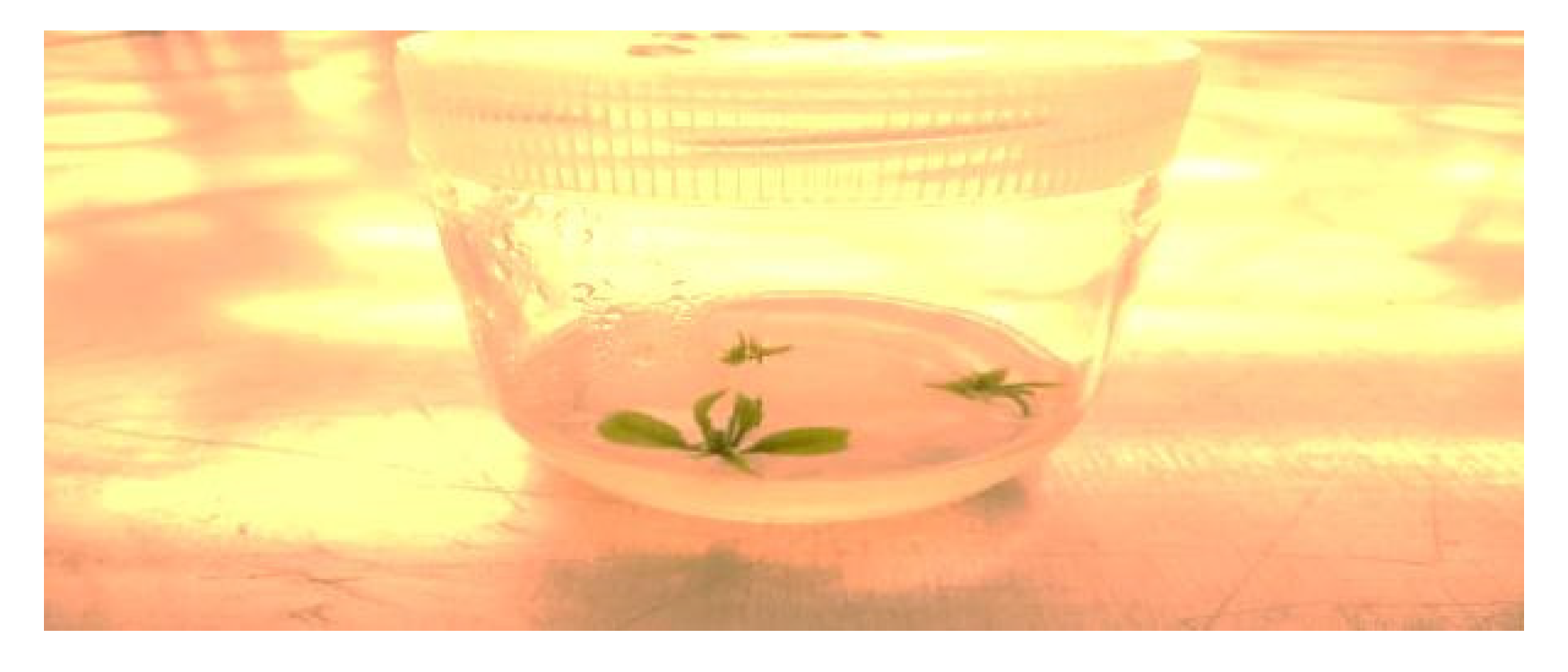
Figure 2.
The appearance of the first greens on the 14th day of growing the meristem of the axillary buds of Azerbaijani chestnut in a nutrient medium DKW, to which the hormones BAP (0.8 mg), IBA (0.1 mg), GA3 (0.1 mg) and iron chelate (0.168 mg) / 1 liter DKW were added.
Figure 2.
The appearance of the first greens on the 14th day of growing the meristem of the axillary buds of Azerbaijani chestnut in a nutrient medium DKW, to which the hormones BAP (0.8 mg), IBA (0.1 mg), GA3 (0.1 mg) and iron chelate (0.168 mg) / 1 liter DKW were added.
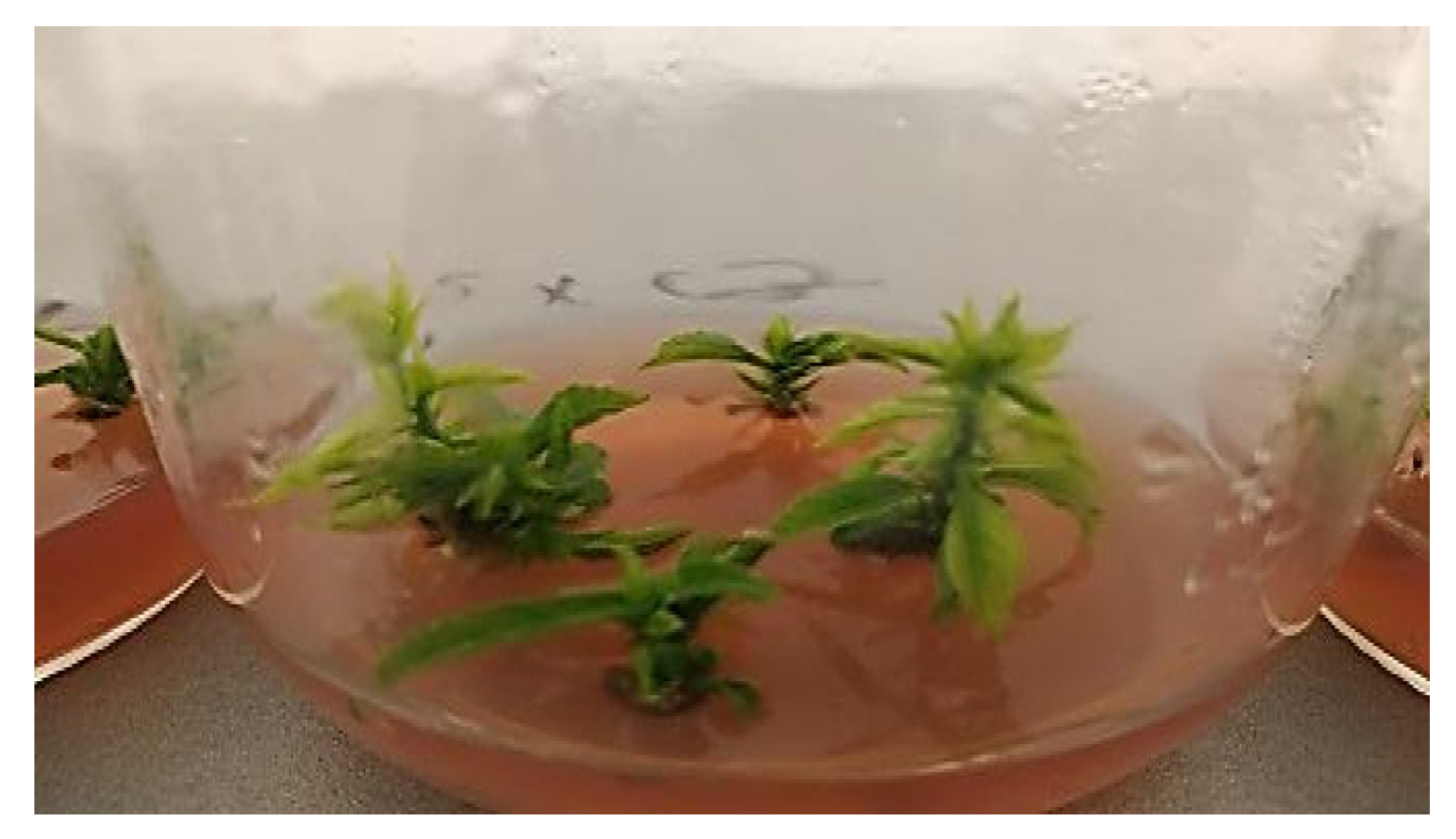
Figure 3.
Appearance of 21-day-old plants in the variant with the planting of the first sprouts in the DKW nutrient medium, to which the hormones BAP, IBA and GA3 and iron chelate were added at the rate of 1 mg BAP, 0.1 mg IBA, 0.35 mg GA3 and 0.2 mg iron chelate / 1 L DKW.
Figure 3.
Appearance of 21-day-old plants in the variant with the planting of the first sprouts in the DKW nutrient medium, to which the hormones BAP, IBA and GA3 and iron chelate were added at the rate of 1 mg BAP, 0.1 mg IBA, 0.35 mg GA3 and 0.2 mg iron chelate / 1 L DKW.
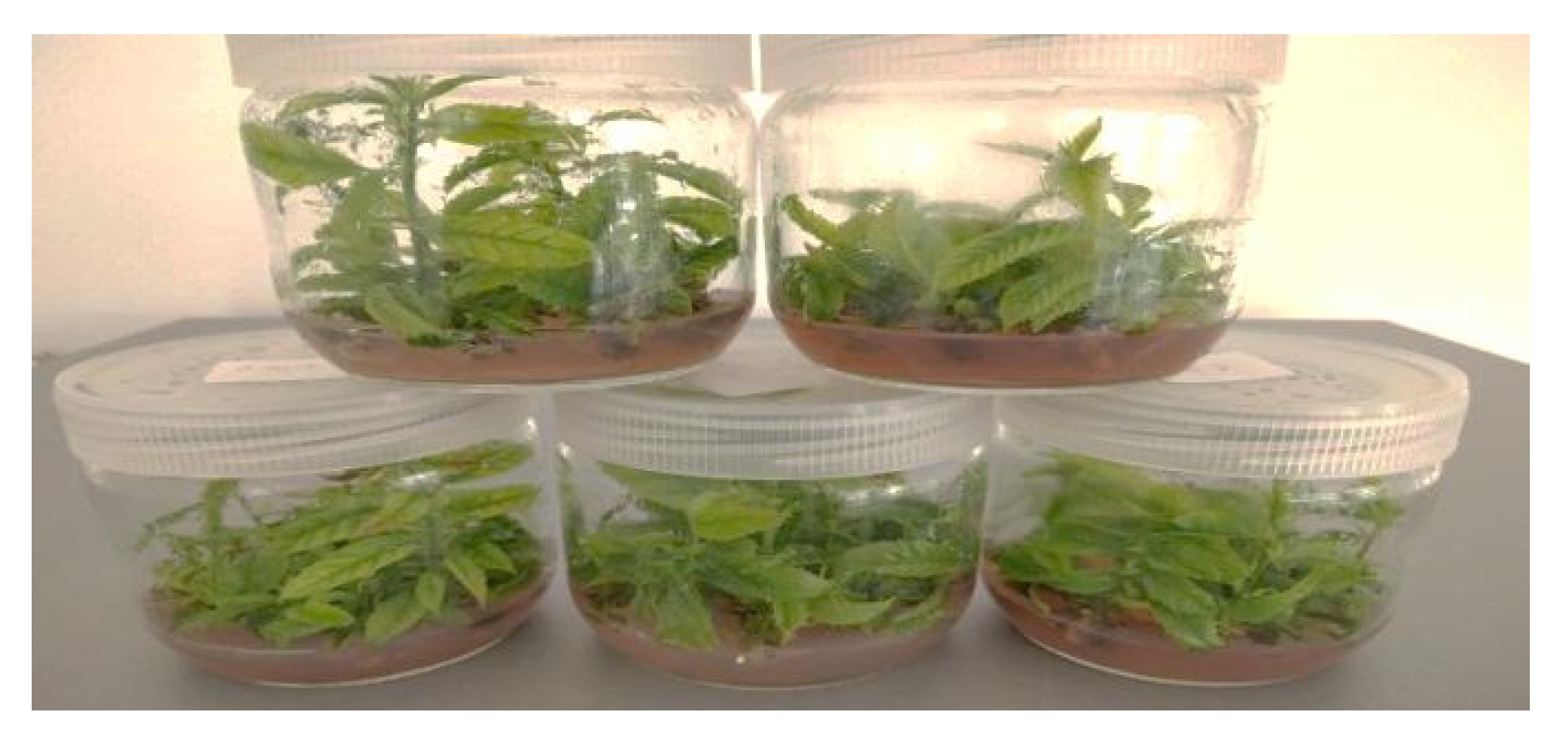
Figure 4.
Root formation in plants on 21 days after their cultivation in a DKW nutrient medium, to which the hormones IBA, IAA and NAA were added at the rate of 1 mg IBA, 0.5 mg IAA and 0.5 mg NAA / 1 L DKW.
Figure 4.
Root formation in plants on 21 days after their cultivation in a DKW nutrient medium, to which the hormones IBA, IAA and NAA were added at the rate of 1 mg IBA, 0.5 mg IAA and 0.5 mg NAA / 1 L DKW.
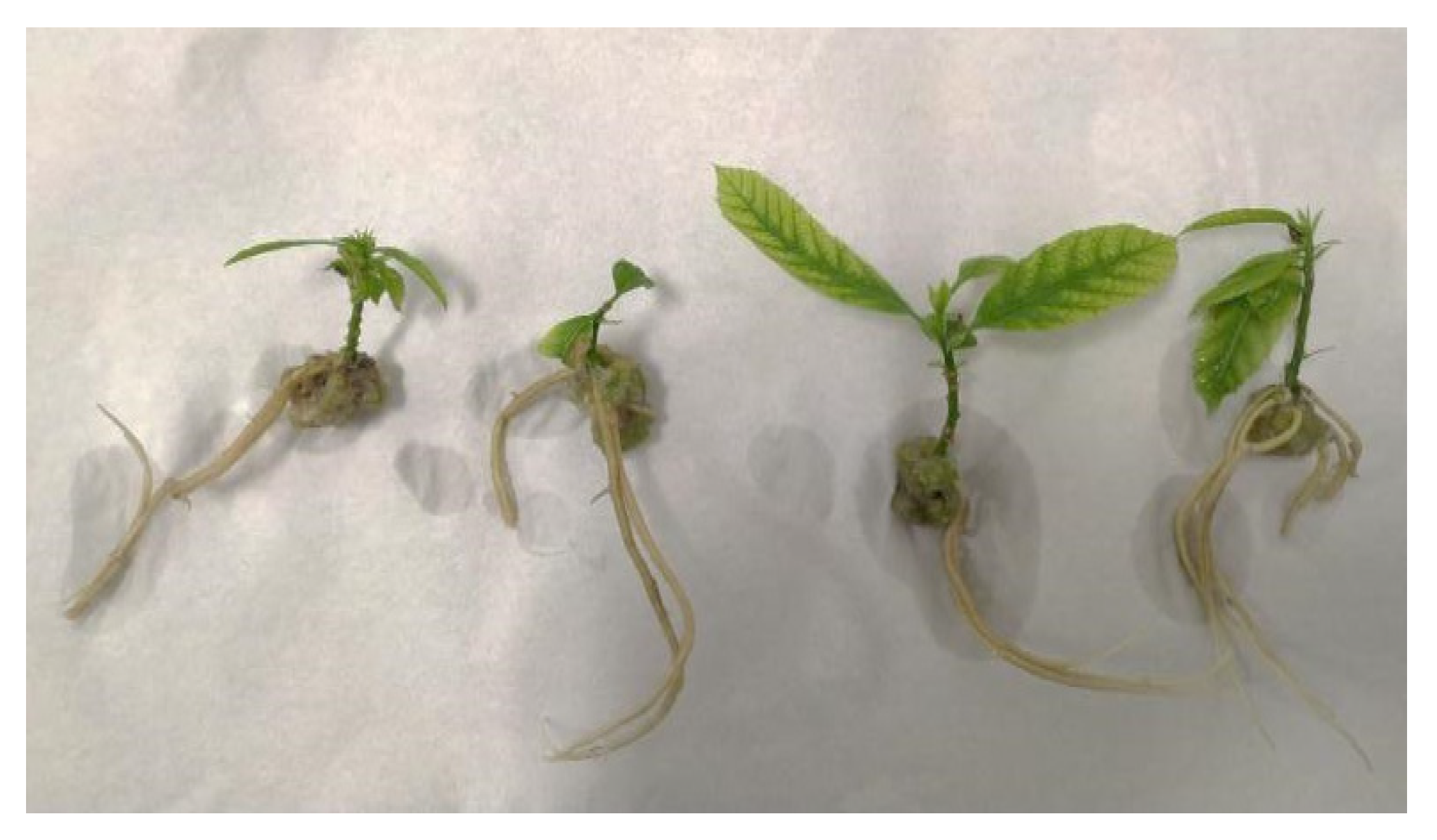

Table 1.
The composition of the prepared solutions and the duration of exposure of the chestnut explants in these solutions at stages A, B and C of sterilization (Option 1).
Table 1.
The composition of the prepared solutions and the duration of exposure of the chestnut explants in these solutions at stages A, B and C of sterilization (Option 1).
| Stage | Material used |
Quantiti / 1 L water |
Time (minute) |
The plants remaining as a result | |
| Pieces | % | ||||
| A | Liquid soap | 5 ml | 30 | 12 | 24 |
| B | Previkure | 5 ml | 15 | ||
| C | Mercure II chloride | 0.5 g | 20 | ||
Table 2.
The composition of the prepared solutions and the duration of exposure of the chestnut explants in these solutions at stages A, B and C of sterilization (Option 2).
Table 2.
The composition of the prepared solutions and the duration of exposure of the chestnut explants in these solutions at stages A, B and C of sterilization (Option 2).
| Pieces | Material used |
Quantiti/ 1 L water |
Time (minute) |
The plants remaining as a result | |
| Pieces | % | ||||
| A | Liquid soap | 10 ml | 30 | 8 | 16 |
| B | Previkure | 10 ml | 15 | ||
| C | Mercure II chloride | 1 g | 20 | ||
Table 3.
The composition of the prepared solutions and the duration of exposure of the chestnut explants these solutions at stages A, B and C of sterilization (Option 3).
Table 3.
The composition of the prepared solutions and the duration of exposure of the chestnut explants these solutions at stages A, B and C of sterilization (Option 3).
| Pieces | Material used |
Quantiti/ 1 L water |
Time (minute) |
The plants remaining as a result | |
| Pieces | % | ||||
| A | Liquid soap | 15 ml | 30 | 38 | 76 |
| B | Previkure | 10 ml | 45 | ||
| C | Mercure II chloride | 1 g | 15 | ||
Table 4.
The formation of new shoots from the first sprouts of Azerbaijani chestnut under the influence of three hormones added to the DKW nutrient medium simultaneously, but in different quantities.
Table 4.
The formation of new shoots from the first sprouts of Azerbaijani chestnut under the influence of three hormones added to the DKW nutrient medium simultaneously, but in different quantities.
| Growth Regulators (l L DKW) | No. of Explants (Axillary Buds) | Average No. Of Shoot Initation |
% of Shoot Initation |
|---|---|---|---|
|
BAP 0.5 mg+İBA 0.5mg+GA3 0.1 mg BAP 0.8 mg+İBA 0.1mg+GA3 0.1mg BAP 0.1mg+İBA 0.35 mg+GA3 0.2 mg |
30 30 30 |
0c 30b 90a |
0 100 300 |
Table 5.
Rooting of new plants under the action of three hormones added to the DKW nutrient medium in different amounts.
Table 5.
Rooting of new plants under the action of three hormones added to the DKW nutrient medium in different amounts.
| Name of the hormone used (l L DKW ) | Rooting result |
|---|---|
| IBA 0.1 mg + NAA 0.1 mg + IAA 0 mg | 0 |
| IBA 0.5 mg + NAA 0.5 mg + IAA 0.1 mg | There was only callus formation |
| IBA 1.0 mg + NAA 0.5 mg + IAA 0.5 mg | Rooting has occurred |
Disclaimer/Publisher’s Note: The statements, opinions and data contained in all publications are solely those of the individual author(s) and contributor(s) and not of MDPI and/or the editor(s). MDPI and/or the editor(s) disclaim responsibility for any injury to people or property resulting from any ideas, methods, instructions or products referred to in the content. |
© 2023 by the authors. Licensee MDPI, Basel, Switzerland. This article is an open access article distributed under the terms and conditions of the Creative Commons Attribution (CC BY) license (http://creativecommons.org/licenses/by/4.0/).
Copyright: This open access article is published under a Creative Commons CC BY 4.0 license, which permit the free download, distribution, and reuse, provided that the author and preprint are cited in any reuse.


