

Submitted:
02 October 2023
Posted:
03 October 2023
You are already at the latest version
Abstract
The paper delves into an extensive exploration of the integration of the circular economy paradigm within the realm of additive manufacturing (AM). The objective is to comprehensively investigate existing methodologies for structuring the symbiotic relationship between circular economy and additive manufacturing, while meticulously analyzing the current research gap concerning the implementation of circular economy principles in additive manufacturing practices. A thorough review focusing on the sustainability of additive manufacturing within the circular economy framework was conducted. This review aims to recognize and delineate pertinent aspects related to post-use material valuation in AM, recyclability of materials, and the environmental footprint associated with these processes. Emphasis was placed on the significance of examining circular economy facets concerning additive manufacturing processes to establish a holistic understanding. The overarching goal of this review is to augment knowledge regarding the potential advantages and benefits derived from the seamless integration of circular economy principles within AM. By elucidating the activities essential to attain compliance with the Sustainable Development Goals, this study endeavors to illuminate the pathway toward promoting sustainable development through the harmonious marriage of additive manufacturing and the circular economy.
Keywords:
sustainability
; circular economy
; additive manufacturing
; recyclability
1. Introduction
As opposed to subtractive engineering techniques, additive manufacturing is "a method of adding materials to make products from 3D CAD data, normally layer by layer," according to ASTM.” [1]. Additive manufacturing is one of the anticipated industrial revolutions of industry 4.0, able to make the paradigm shift of the manufacturing process towards the design and acceptance of sustainability and circular economy [2]. In the literature, AM's contribution to sustainability has been gaining traction recently [3,4]. AM is seen to be promising for long-term manufacturing because of its additive and digital properties, which allow for resource conservation. When compared to subtractive techniques like milling, the additive and digital nature enables on-demand fabrication of spare parts for repair or eliminates material losses [5,6]. These factors may also open new possibilities for circular economy product design.
The Circular Economy (CE) theory and its 3R characteristics, such as “reduce, reuse, recycle”, are entirely coherent to boosting the extension of product useful life in order to combine economic growth and environmental safety which have reached the end of their material substantial and practical usefulness and would otherwise be waste, thus optimizing their potential for consumption and preserving their value [7,8]. Designing a circular economy is a firsthand research subject of broader area of sustainable project that has lately gained attention. Product life extension and total product and material recovery are key components of this method, with a hierarchy of recovery techniques ensuring material reliability, or the degree to which a material stays similar to the initial products [9]. In a novel approach, design for a circular economy emphasizes the relevance of high-value and high-quality material cycles [10]. When a product reaches its usefulness and would otherwise be discarded, the recycling process commences. The size and location of manufacturing facilities have an impact on the performance of recycling systems, and additive manufacturing has the ability to regionalize them, resulting in more overall flexibility, reduced overall expenses and lead time, and reduced environmental consequences [11,12]. The recycling system can be investigated in two distinctive approaches: “distributed recycling system and closed loop supply system and recycling of materials” [13]. The notion of distributed recycling for Additive Manufacturing in terms of Circular Economy is a new technical field with considerable prospective of developing the recycling solutions of plastic waste [14]. Instead of being sent in bulk to the recycling facilities or landfills, AM allows unwanted plastics to be transformed into feedstock for 3D printing [15]. Furthermore, in locations where material availability is low but waste generation and demand for specialized components are considerable [16], distributed recycling has shown to be critical [17]. Closed-loop manufacturing systems are increasingly being viewed as a potential solution for reducing industrial activity's environmental effect. CE, in reality, denotes a system in which resource flows are closed loops [18]: One of the most effective ways for ecologically friendly production is to optimize it [19].
The benefits and challenges of AM for designing CE have received little attention in earlier literature. One of the few studies that specifically addressed this problem was by Despeisse. He proposed a CE research scheme for additive manufacturing [20]. The purpose of the study is to check the options that AM provides for viable design are also relevant to the design of a CE, and what extent to which AM can assist you with this. Desppeisse anticipated the research to be conducted on additional sustainable techniques of fabrication. The author offered six research sections to better comprehend in what way 3D printing helps to enable further sustainable fabrication and use of practices while yet providing benefits in the circular economy.
HA Colorado et al. conducted a bibliographic review on this aspect in September 2019. The search generated 32 papers linked to circular economy searching the keywords "circular economy" AND ("additive manufacturing" OR "3D printing"). There were fifteen research papers, 10 conference papers, and seven literature reviews, with three of them being accepted in publications and four being addressed at seminars. [21]. Four of the studies discovered in this search were about the "Gigabot X," an available industrial additive manufacturing printer. These publications address topics such as evaluating the printer's financial prospective [22], a pelletizing chopper [23], a study of the possibilities for particle material extrusion [24], and a vigorous open-source solution for printing of hefty formats [25].
The study of Giurco et al. is one of the most original research connected to the CE established in this study [26]. The creation of two parallel tendencies known as 3D manufacturing structures is investigated in this paper; one is liable for minerals distribution networks, while the other is for 3-d printing. In a circular economy paradigm, Angioletti et al. [27] shown that product and operations-oriented production, using AM technologies, enhanced production effectiveness in respect of production costings. On the other hand, Leino et al. [28] investigated the application of additive manufacturing in metal product repair, restoration, and remanufacturing procedures.
Angioletti et al. [29] established an approach for quantifying a product's circularity using a simplified life cycle perspective that took into account resource flow between systems. Aimed at selective laser sintering (SLS), Reijonen et al. [30] utilized the circular economy concept to AM. During the remanufacturing planning phase, Alghamdi et al. [31] proposed a theoretical outline to lower the random and circulated type of engineering characteristics.
Voet et al. [32] used a commercial 3D stereolithography printer system to effectively build complicated shape prototypes using nature founded acrylate photopolymer resins. Unruh [33] extended a management framework, Biosphere Rules to the developing field of AM which was influenced by biomimetics for circular economy activities.
Garmulewicz et al. [34], examined that by interrupting the value stream of traditional materials, 3D technology can contribute to a sustainable future. Out of linear economy model, Navarro et al. [35], identified the major measures that fostered a circular economy and, within which, Co2 conversion targets. Clemon and Zodhi [36], suggested a methodology for reducing product manufacturing time and expenses associated with material recycling and 3D filament reuse. In order to generate 3D printing filaments, Santander et al. [37] performed literature research to assess the financial and ecological elements of the collecting process in a closed - loop system supply chain system of regional and localized plastics recycling operations. Sauerwein and Doubrovski [38] investigated the improvement of a structure for connecting locally obtainable parts with additive manufacturing methods, as well as the usage of key purposes to benefit from the CE. Minetola and Eyers [39], highlighted Make-To-Order options for 3D printing; some of which may be taken advantage of now and others which may become more important at some point. Lahrour and Brissaud [40] offered a framework for AM and critical processes for product remanufacturing using 3D printing methods. Baiani and Altamura [41] investigated a study review on the circular economy's function to the built environment, which employs two distinct but complimentary ideas: re-use (super-use) and recycling.
Saboori et al. [42], published an overall explanation of the “directed energy deposition (DED)” technique and DED’s involvement in metal component restoration. Wu and Wu [43] discussed 3D printing design and circular economies, which have a big impact on environmental aspects including waste control and material handling. Sauerwein et al. [44] investigated on the potential provided by 3D printing for sustainable development which may also be applied to the design of methods for CE, and how AM can help with CE design. Nascimento et al. [45] studied on how upcoming Industry 4.0 technology and CE techniques might be coupled to make a production standard which ensures reusability and recyclability of materials like scrap or electrical trash. Turner et al. [46] investigate the potential of a redistributed production standard for industries who use technologies like additive manufacturing or 3D printing to complement sustainability and circular economy and consumption method.
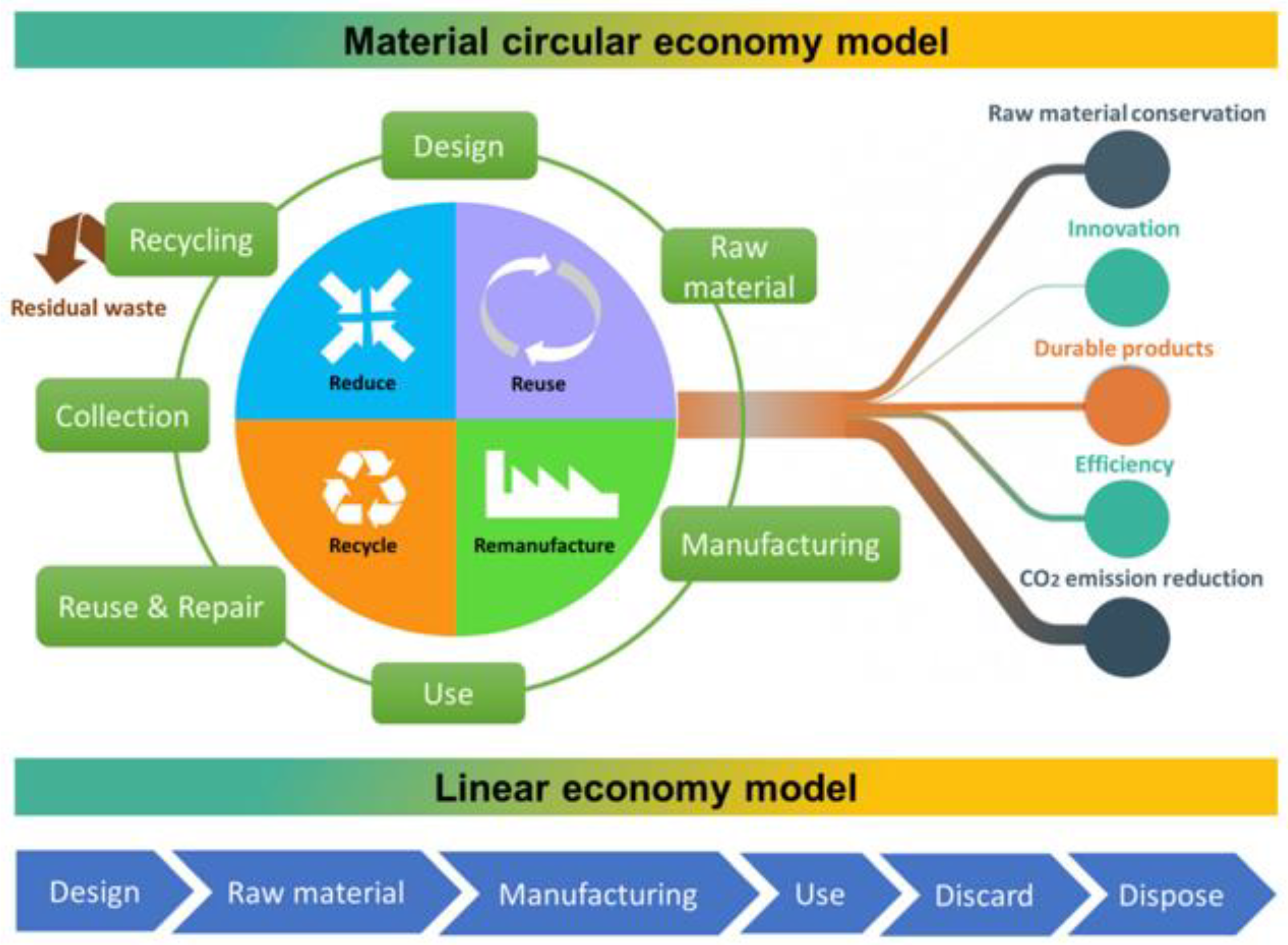
Figure 1.
Circular economy model in comparison with linear economy model [47].
Figure 1.
Circular economy model in comparison with linear economy model [47].
2. Case Study
2.1. Case Study 1: Recycling Plastics in Additive Manufacturing
The rapid advancement of AM technology has opened a new path towards the circular economy aspect. The notion of Distributed Recycling through Additive Manufacturing (DRAM) refers towards the utilization of recycled materials in the additive manufacturing process chain via a mechanical recycling process. This case study gives information on plastic concerns as well as an outline of the relevant environmental challenges in additive manufacturing.
Given the diversity of additive manufacturing processes, a diverse range of potential for developing more sustainable manufacturing methods at various stages of the value chain emerges [48,49,50] . This shift occurs from design and production optimization to the final product's synthesis of upgraded materials [51,52,53]. There are potential consequences in both the upstream and downstream phases [4,52,54]. As shown in Figure 2, Ford and Despeisse [48] provided a methodology for determining AM's sustainability advantages by distinguishing four primary stages.
Regarding the environmental aspects, the evident benefit of AM in design stage (Figure 2) is the ability for generating more optimized and complex components maintaining the reduction of assembly activities. In comparison to traditional production, more flexibility saves product manufacturing cost as well as time while increasing product life cycle and human contact [55,56,57]. Plastics were manufactured in 8300 million metric tons between 1950 and 2015, however the recycling was done for only 500 million metric tons. In Figure 3, Geyer et al. summarized the quantity of plastics production, recycling, and disposal from 1950 to 2015 [58].
Considering the earlier research works on plastic recycling [59], Figure 4 depicts the suggested closed-loop structure for identifying scientific publications at each phase. An extensive literature study was conducted by Sanchez, F.A.C., et al. for mapping developments in plastic recycling for AM. For defining the global value chain of DRAM technique, a framework with six significant steps was suggested [60].
The logistics procedures to consider for gathering plastic trash to be reused in DRAM are covered in the Recovery (I) phase. Steps and techniques for identifying, separating, sorting, sizing, reducing, and cleaning waste plastic to ensure appropriate DRAM quality are included in the Preparation (II) phase. The creation of mono materials and composite materials is the subject of the phase of Compounding (III). The Feedstock (IV) phase describes the steps that must be taken to produce the material that will be utilized in the printing process. For the recycled printed part, the printing (V) step discovers applications and process improvements. Lastly, the phase of Quality (VI) phase identifies recycled material's technical characterization.
However, circular economy differs from industrial ecology in that it places a greater emphasis on the "economy." However, it lacks the same established intellectual history of discussion around the term that industrial ecology has had over the previous two decades. In Figure 5, a generalized representation of the circular economy idea is given [26].
The main goal is to figure out what the present potential and challenges are for the use of waste feedstock of additive manufacturing on the small scale. For this purpose, the existing system circumstances, such as local material flows, technology, and actors were investigated. Figure 6 depicts alternative national material flows and international material flows with the suggested local material flow. The online marketplace was foreseen by the combination of additive manufacturing of things made from local materials digitally through integrating digital product ideas, accessible feedstock, and customer demand. This marketplace connects designers internationally with local suppliers, customers, and manufacturing platforms.
Recycling materials for additive manufacturing isn't a fresh concept. Rapid prototyping expenses are reduced and the environmental effect is reduced when feedstock is made from waste plastic [62]. Numerous initiatives have investigated recycled plastics use in additive manufacturing, and certain commercially accessible waste plastic extruders, as well as recycled filament sold by several organizations [34].
Plastic waste recycling for additive manufacturing is used in both developed and rural areas [63]. Some groups collaborate with local garbage pickers, entrepreneurs, and industry for the manufacture of 3D printer filament from recycled waste.
To make filament out of plastic household garbage, the object must first be cleaned before being broken into smaller pieces and powdered into little flakes. Followed by the heating of the flakes, a screw moves material into a heated barrel. Then it is crushed, molten, combined, and driven over a die to form filament. Because of the available waste stream and established capabilities of printing, polyethylene terephthalate (PET) and high-density polyethylene (HDPE) were examined in the study of Garmulewicz, A., et al [34].
2.1.1. Option 1: Recycled PET as 3D Printing Feedstock
PET bottles are gathered for the purpose of recycling and shipped to the business facility that grinds them into flakes. The yield of this procedure varies between 40% and 75%, based on the level of pollution inside waste stream. The portion of the contamination is due to the product, e.g., adhesive, tags, and bottle tops, as well as any remaining liquid. Impurities from the interaction of further waste products.
The recycling of PET is done mechanically or chemically through a variety of methods [64]. Amorphous PET is produced via mechanical recycling of PET bottles. The preparation of filament directly from amorphous PET would result in a low-quality of additive manufacturing feedstock, that might lead to material crystallization in the nozzle of 3D printer, causing printing blockages and inferior mechanical qualities in filament extrusion.
Chemical recycling procedures enable the production of quality PET material using waste, enabling complete recycling back into major goods. Before being employed as a PET goods’ raw material, recycled PET is depolymerized and filtered to achieve this. Glycolysis is one such chemical technique for depolymerizing PET [34].
2.1.2. Option 2: Recycled HPDE as 3D Printing Feedstock
HDPE is a commonly found plastic in household garbage. Milk jugs and detergent bottles are popular places to find it. Baechler, DeVuono, and Pearce investigated HDPE recycled bottles to additive manufacturing filament and discovered filament of one meter production a took around energy of around 60 Wh, considering heating accounting for about two-thirds with motor energy accounting for remaining third. The amount of energy for the process of shredding was shown to be minimal.
The experiments revealed three flaws. To begin with, filament manufacturing needs some manual help in drawing filament extrusion. The third limitation, namely the heterogeneous nature of waste feedstock, which is linked to the second issue of an uneven rate of extrusion, caused automated filament drawing devices to fail. These problems can be avoided by adopting homogenous waste feedstock or large batch mixing after shredding. Size along with shredded plastic kind has an impact on extrusion. Thin, light bits from milk bottles, for example, did not extrude properly because they were difficult to bring into the extruder's heating portion.
Despite the fact that certain objects were additive manufactured using this recycled filament considering the aforementioned trials. The quality was not similar to products created on the same machine using ABS (acrylonitrile-butadiene-styrene; a typical additive manufacturing material). Differences can be ascribed to HDPE's thermal qualities; printing settings; and filament diameter variance. Commercially accessible filament of HDPE made from the recycled resources is quite difficult to come by [34].
2.2. Case Study 2: Recycling Polymers in Additive Manufacturing
Polymer waste production is increasing all over the world, and it is generally harmful to the environment, generating contamination that hurts aquatic creatures and humans. The global output of plastics and polymers has risen from 1.5 to 359 million metric tons during 1950 to 2018 [65]. Polymers are employed in everyday items for humans due to their mass manufacture and inexpensive cost. The mechanical qualities, forms, sizes, and colors of the polymers employed in diverse goods present challenges in their appropriate disposal. As a result, polymers must be treated and separated based on chemical and physical and characteristics. Polymer disposal technologies in use include recycling process, incineration process, landfill process, and carbonization process [66]. The majority from the aforementioned processes have unanticipated negative repercussions, such as the production of greenhouse gases through incineration. One approach for remanufacturing waste polymers into new valuable products is recycling. It is, however, a lengthy procedure including several processing steps. Polymer life may be extended, though, by recycling and reusing them. Different countries have made significant efforts to recycle polymers [47].
Any production process must be carefully designed to produce minimal waste and low environmental effect. Raw materials utilized in the manufacturing process and waste management, are significant factors for the determination of the environmental effect. In FDM (Fused Deposition Modeling) method, thermoplastics recycling may be employed in terms of raw materials. Any leftover thermoplastic material or waste plastic would be utilized and recycled in additive manufacturing process. Chemical and mechanical recycling are two basic ways for recycling plastics. However, recycled polymers from both procedures may be utilized to make AM feedstock if their properties are optimized and they meet the printing characteristics criteria.
It should be mentioned that the feedstock material for FDM-based additive manufacturing process was the filament created by an extrusion process in which plastic waste was utilized directly and turned into the 3D printing filaments [67,68,69]. As a result, FDM-based additive manufacturing would be used as the circular economy method, converting plastic waste into a valuable feedstock material. Figure 7 depicts the process of converting waste into filament, which is then processed into additively manufactured items.
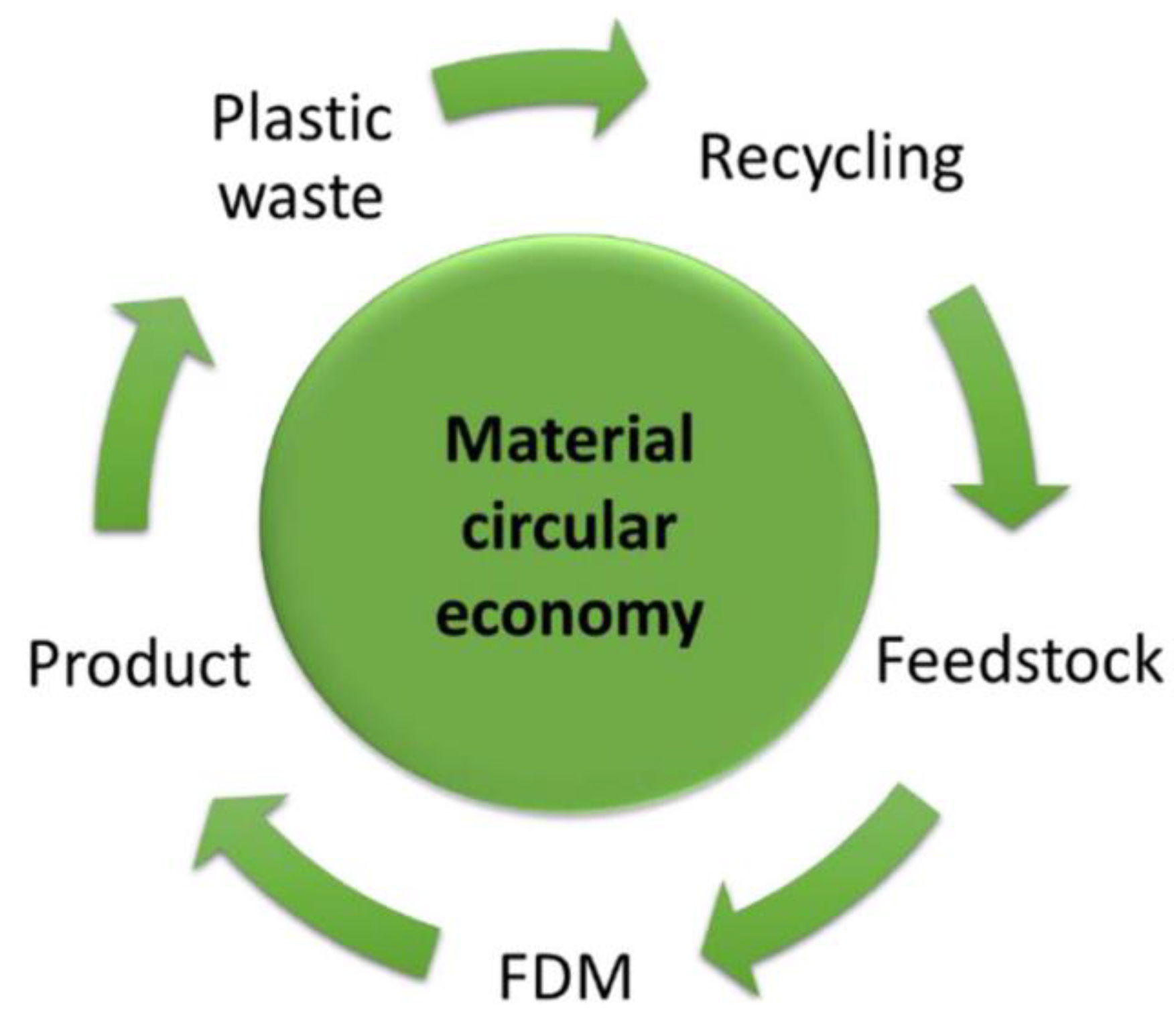
When compared to printed recycled polymer, the synthesis of recycled composites by FDM can result in improved strength. Recycled polymer and recycled reinforcement can both be used to make composites. As reinforcement, recycled materials have been used. The recycled materials usage in FDM were described in a small number of experiments. More study is needed to determine the benefits and drawbacks of using material recycling in FDM. Recycling cycle in order to support circular economy of material is depicted in Figure 8. A systematic approach should be created to ensure the long-term growth of circular economy in additive manufacturing. The polymer should be classified according to its durability, and optimized printing factors should be created to assure printing quality and end product performance [47].
3. Discussion
In the twenty-first century, the growth of additive manufacturing is predicted to be a distinctive aspect of advanced manufacturing. AM refers to a collection of patented technologies for "3D printing" materials to build a wide range of items, from artificial organs to rockets. What began in the 1980s as technological advancements to enable Rapid Prototyping is now increasingly being used for "final" items, notably component manufacture. While it may appear to be a lot of labor at first, recycling filament is a very cost-effective method to print in a long period of time. This is the fundamental advantage of 3D printing over other types of production; if any mistake occurs during the process, the total materials become unusable. The filament, on the other hand, is a different story. The generalized recycling process starts with the segregation of the materials based on the ties. The separated materials are dried before loading into the shredder. The materials are shredded with the help of a shredder, ideally, one type of material is used for shredding at a time to maintain the homogenous material properties of the shredded parts and this will also help to reduce the undesirable printing results. Then the shredded parts are melted with the help of the heater/furnace. The molten materials are then passed through an extruder which is different from the extruder of 3D printer and cooled down when passing through a water bath/cooling chamber. The cooled strip is then passed through a grinder to maintain a uniform diameter of the filament and the filaments are then coiled in a barrel. The recycled filament is used as the next raw material for the extruder of 3D printer. In order to empower populations on better plastic usage, the initiative is constantly developing recycling groups, holding clean-ups, and distributing awareness about the huge plastic pollution problem.
References
- Rahimi, M.; Esfahanian, M.; Moradi, M. Effect of reprocessing on shrinkage and mechanical properties of ABS and investigating the proper blend of virgin and recycled ABS in injection molding. Journal of Materials Processing Technology 2014, 214, 2359–2365. [Google Scholar] [CrossRef]
- Gibson, I.; et al. Additive manufacturing technologies; Springer, 2021; Vol. 17. [Google Scholar]
- Baumers, M.; et al. Charting the environmental dimensions of additive manufacturing and 3D printing. Journal of Industrial Ecology 2017, 21. [Google Scholar] [CrossRef]
- Muthu, S.S.; Savalani, M.M. Handbook of sustainability in additive manufacturing. 2016.
- Matsumoto, M.; et al. Trends and research challenges in remanufacturing. International journal of precision engineering and manufacturing-green technology 2016, 3, 129–142. [Google Scholar] [CrossRef]
- Mani, M.; Lyons, K.W.; Gupta, S. Sustainability characterization for additive manufacturing. Journal of research of the National Institute of Standards and Technology 2014, 119, 419. [Google Scholar] [CrossRef] [PubMed]
- Chowdhury, H.; Asiabanpour, B. A Smart Circular Economy for Integrated Organic Hydroponic-Aquaponic Farming. 2023, Texas State University.
- Commission, E., D.-G.f. Research, and Innovation. Accelerating the transition to the circular economy : improving access to finance for circular economy projects. 2019: Publications Office.
- Den Hollander, M.C.; Bakker, C.A.; Hultink, E.J. Product design in a circular economy: Development of a typology of key concepts and terms. Journal of Industrial Ecology 2017, 21, 517–525. [Google Scholar] [CrossRef]
- Korhonen, J.; Honkasalo, A.; Seppälä, J. Circular economy: the concept and its limitations. Ecological economics 2018, 143, 37–46. [Google Scholar] [CrossRef]
- Giurco, D.; et al. Circular economy: questions for responsible minerals, additive manufacturing and recycling of metals. 2014, 3, 432–453. [Google Scholar] [CrossRef]
- Santander, P.; et al. Closed loop supply chain network for local and distributed plastic recycling for 3D printing: a MILP-based optimization approach. 2020, 154, 104531. [Google Scholar] [CrossRef]
- Ponis, S.; et al. A systematic literature review on additive manufacturing in the context of circular economy. 2021, 13, 6007. [Google Scholar] [CrossRef]
- Dertinger, S.C.; et al. Technical pathways for distributed recycling of polymer composites for distributed manufacturing: Windshield wiper blades. 2020, 157, 104810. [Google Scholar] [CrossRef]
- Sanchez, F.A.C.; et al. Polymer recycling in an open-source additive manufacturing context: Mechanical issues. 2017, 17, 87–105. [Google Scholar] [CrossRef]
- Chowdhury, H.; Islam, M.T. Multiple Charger with Adjustable Voltage Using Solar Panel. in International Conference on Mechanical Engineering and Renewable Energy 2015 (ICMERE2015). 2015. Chittagong University of Engineering and Technology.
- Hart, K.R.; Frketic, J.B.; Brown, J.R.J.A.M. Recycling meal-ready-to-eat (MRE) pouches into polymer filament for material extrusion additive manufacturing. 2018, 21, 536–543. [Google Scholar] [CrossRef]
- Sauerwein, M.; Doubrovski, E.L.J.M.T.C. Local and recyclable materials for additive manufacturing: 3D printing with mussel shells. 2018, 15, 214–217. [Google Scholar] [CrossRef]
- Juraschek, M.; et al. Experiencing closed loop manufacturing in a learning environment. 2017, 9, 57–64. [Google Scholar] [CrossRef]
- Despeisse, M.; et al. Unlocking value for a circular economy through 3D printing: A research agenda. Technological Forecasting and Social Change 2017, 115, 75–84. [Google Scholar] [CrossRef]
- Colorado, H.A.; Velásquez, E.I.G.; Monteiro, S.N. Sustainability of additive manufacturing: the circular economy of materials and environmental perspectives. Journal of Materials Research and Technology 2020, 9, 8221–8234. [Google Scholar] [CrossRef]
- Byard, D.J.; et al. Green fab lab applications of large-area waste polymer-based additive manufacturing. Additive Manufacturing 2019, 27, 515–525. [Google Scholar] [CrossRef]
- Woern, A.L.; Pearce, J.M. 3-D printable polymer pelletizer chopper for fused granular fabrication-based additive manufacturing. Inventions 2018, 3, 78. [Google Scholar] [CrossRef]
- Reich, M.J.; et al. Mechanical properties and applications of recycled polycarbonate particle material extrusion-based additive manufacturing. Materials 2019, 12, 1642. [Google Scholar] [CrossRef]
- Woern, A.L.; et al. Fused particle fabrication 3-D printing: Recycled materials’ optimization and mechanical properties. Materials 2018, 11, 1413. [Google Scholar] [CrossRef]
- Giurco, D.; et al. Circular economy: questions for responsible minerals, additive manufacturing and recycling of metals. Resources 2014, 3, 432–453. [Google Scholar] [CrossRef]
- Angioletti, C.M.; et al. , et al. Additive Manufacturing as an opportunity for supporting sustainability through the implementation of circular economies. in 21st Summer School Francesco Turco 2016. 2016. AIDI-Italian Association of Industrial Operations Professors.
- Leino, M.; Pekkarinen, J.; Soukka, R. The role of laser additive manufacturing methods of metals in repair, refurbishment and remanufacturing–enabling circular economy. Physics Procedia 2016, 83, 752–760. [Google Scholar] [CrossRef]
- Angioletti, C.M.; Despeisse, M.; Rocca, R. Product circularity assessment methodology. in IFIP International Conference on Advances in Production Management Systems. 2017. Springer.
- Reijonen, J.; et al. Circular Economy Concept in Additive Manufacturing. in Euro PM2017 Congress & Exhibition. 2017. European Powder Metallurgy Association (EPMA).
- Alghamdi, A.; Prickett, P.; Setchi, R. A conceptual framework to support decision-making in remanufacturing engineering processes. in International Conference on Sustainable Design and Manufacturing. 2017. Springer.
- Voet, V.S.; et al. Biobased acrylate photocurable resin formulation for stereolithography 3D printing. ACS omega 2018, 3, 1403–1408. [Google Scholar] [CrossRef]
- Unruh, G. Circular economy, 3D printing, and the biosphere rules. California Management Review 2018, 60, 95–111. [Google Scholar] [CrossRef]
- Garmulewicz, A.; et al. Disruptive technology as an enabler of the circular economy: what potential does 3D printing hold? California Management Review 2018, 60, 112–132. [Google Scholar] [CrossRef]
- Navarro, J.C.; et al. Policies and motivations for the CO2 valorization through the Sabatier reaction using structured catalysts. A review of the most recent advances. Catalysts 2018, 8, 578. [Google Scholar]
- Clemon, L.; Zohdi, T. On the tolerable limits of granulated recycled material additives to maintain structural integrity. Construction and Building Materials 2018, 167, 846–852. [Google Scholar] [CrossRef]
- Pavlo, S.; et al. 3D-printing based distributed plastic recycling: a conceptual model for closed-loop supply chain design. in 2018 ieee international conference on engineering, technology and innovation (ice/itmc). 2018. IEEE.
- Sauerwein, M.; Doubrovski, E.L. Local and recyclable materials for additive manufacturing: 3D printing with mussel shells. Materials Today Communications 2018, 15, 214–217. [Google Scholar] [CrossRef]
- Minetola, P.; Eyers, D. Energy and cost assessment of 3D printed mobile case covers. Procedia CIRP 2018, 69, 130–135. [Google Scholar] [CrossRef]
- Lahrour, Y. ; Brissaud, D A technical assessment of product/component re-manufacturability for additive remanufacturing. Procedia Cirp 2018, 69, 142–147. [Google Scholar] [CrossRef]
- Baiani, S.; Altamura, P. Waste materials superuse and upcycling in architecture: design and experimentation. TECHNE-Journal of Technology for Architecture and Environment 2018, 142–151. [Google Scholar]
- Saboori, A.; et al. Application of directed energy deposition-based additive manufacturing in repair. Applied Sciences 2019, 9, 3316. [Google Scholar] [CrossRef]
- Wu, H.; Wu, R. The role of educational action research of recycling process to the green technologies, environment engineering, and circular economies. International Journal of Recent Technology and Engineering (IJRTE) 2019, 8, 1639–1645. [Google Scholar] [CrossRef]
- Sauerwein, M.; et al. Exploring the potential of additive manufacturing for product design in a circular economy. Journal of Cleaner Production 2019, 226, 1138–1149. [Google Scholar] [CrossRef]
- Nascimento, D.L.M.; et al. Exploring Industry 4.0 technologies to enable circular economy practices in a manufacturing context: A business model proposal. Journal of Manufacturing Technology Management 2019. [Google Scholar] [CrossRef]
- Turner, C.; et al. Sustainable production in a circular economy: A business model for re-distributed manufacturing. Sustainability 2019, 11, 4291. [Google Scholar] [CrossRef]
- Shanmugam, V.; et al. Polymer recycling in additive manufacturing: An opportunity for the circular economy. Materials Circular Economy 2020, 2, 1–11. [Google Scholar] [CrossRef]
- Ford, S.; Despeisse, M. Additive manufacturing and sustainability: an exploratory study of the advantages and challenges. Journal of cleaner Production 2016, 137, 1573–1587. [Google Scholar] [CrossRef]
- Niaki, M.K.; et al. Economic sustainability of additive manufacturing: Contextual factors driving its performance in rapid prototyping. Journal of Manufacturing Technology Management 2019. [Google Scholar]
- Omer, L.; et al. Induction Initiated Curing of Additively Manufactured Thermoset Composites. in Solid Freeform Fabrication 2022: Proceedings of the 33rd Annual International Solid Freeform Fabrication Symposium – An Additive Manufacturing Conference. 2022.
- Chen, D.; et al. Direct digital manufacturing: definition, evolution, and sustainability implications. Journal of Cleaner Production 2015, 107, 615–625. [Google Scholar] [CrossRef]
- Drizo, A.; Pegna, J. Environmental impacts of rapid prototyping: an overview of research to date. Rapid prototyping journal 2006. [Google Scholar] [CrossRef]
- Freitas, D.; et al. Sustainability in extrusion-based additive manufacturing technologies. Progress in Additive Manufacturing 2016, 1, 65–78. [Google Scholar] [CrossRef]
- Morrow, W.; et al. Environmental aspects of laser-based and conventional tool and die manufacturing. Journal of Cleaner Production 2007, 15, 932–943. [Google Scholar] [CrossRef]
- Guo, N.; Leu, M.C. Additive manufacturing: technology, applications and research needs. Frontiers of mechanical engineering 2013, 8, 215–243. [Google Scholar] [CrossRef]
- Vaezi, M.; et al. Multiple material additive manufacturing–Part 1: a review: this review paper covers a decade of research on multiple material additive manufacturing technologies which can produce complex geometry parts with different materials. Virtual and Physical Prototyping 2013, 8, 19–50. [Google Scholar] [CrossRef]
- Wong, K.V.; Hernandez, A. A review of additive manufacturing. International scholarly research notices, 2012. 2012. [Google Scholar]
- Geyer, R.; Jambeck, J.R.; Law, K.L. Production, use, and fate of all plastics ever made. Science advances 2017, 3, e1700782. [Google Scholar] [CrossRef]
- Chonga, S.; et al. Cradle to Cradle® design for 3D printing. Chemical Engineering 2015, 45. [Google Scholar]
- Sanchez, F.A.C.; et al. Plastic recycling in additive manufacturing: A systematic literature review and opportunities for the circular economy. Journal of Cleaner Production 2020, 264, 121602. [Google Scholar] [CrossRef]
- Foundation, E.M. Towards the circular economy. 2012: Ellen MacArthur Foundation.
- Pearce, J.; et al. 3-D printing of open source appropriate technologies for self-directed sustainable development. European Journal of Sustainable Development 2010, 3. [Google Scholar] [CrossRef]
- Kreiger, M.; et al. Distributed recycling of post-consumer plastic waste in rural areas. MRS Online Proceedings Library (OPL) 2013, 1492, 91–96. [Google Scholar] [CrossRef]
- Awaja, F.; Pavel, D. Recycling of PET. European polymer journal 2005, 41, 1453–1477. [Google Scholar] [CrossRef]
- Garside, M. Global plastic production 1950-2018. Statista. 2019. Available online: https://www. statista. com/statistics/282732/global-production-ofplastics-since-1950.
- Chen, S.; et al. Carbonization: a feasible route for reutilization of plastic wastes. Science of the Total Environment 2020, 710, 136250. [Google Scholar] [CrossRef] [PubMed]
- Atsani, S.; Mastrisiswadi, H. Recycled polypropylene filament for 3D printer: extrusion process parameter optimization. in IOP Conference Series: Materials Science and Engineering. 2020. IOP Publishing.
- Rahimizadeh, A.; et al. Recycling of fiberglass wind turbine blades into reinforced filaments for use in Additive Manufacturing. Composites Part B: Engineering 2019, 175, 107101. [Google Scholar] [CrossRef]
- Zhao, P.; et al. Close-looped recycling of polylactic acid used in 3D printing: An experimental investigation and life cycle assessment. Journal of Cleaner Production 2018, 197, 1046–1055. [Google Scholar] [CrossRef]
Figure 2.
Life cycle approach for determining sustainability advantages [48].
Figure 2.
Life cycle approach for determining sustainability advantages [48].
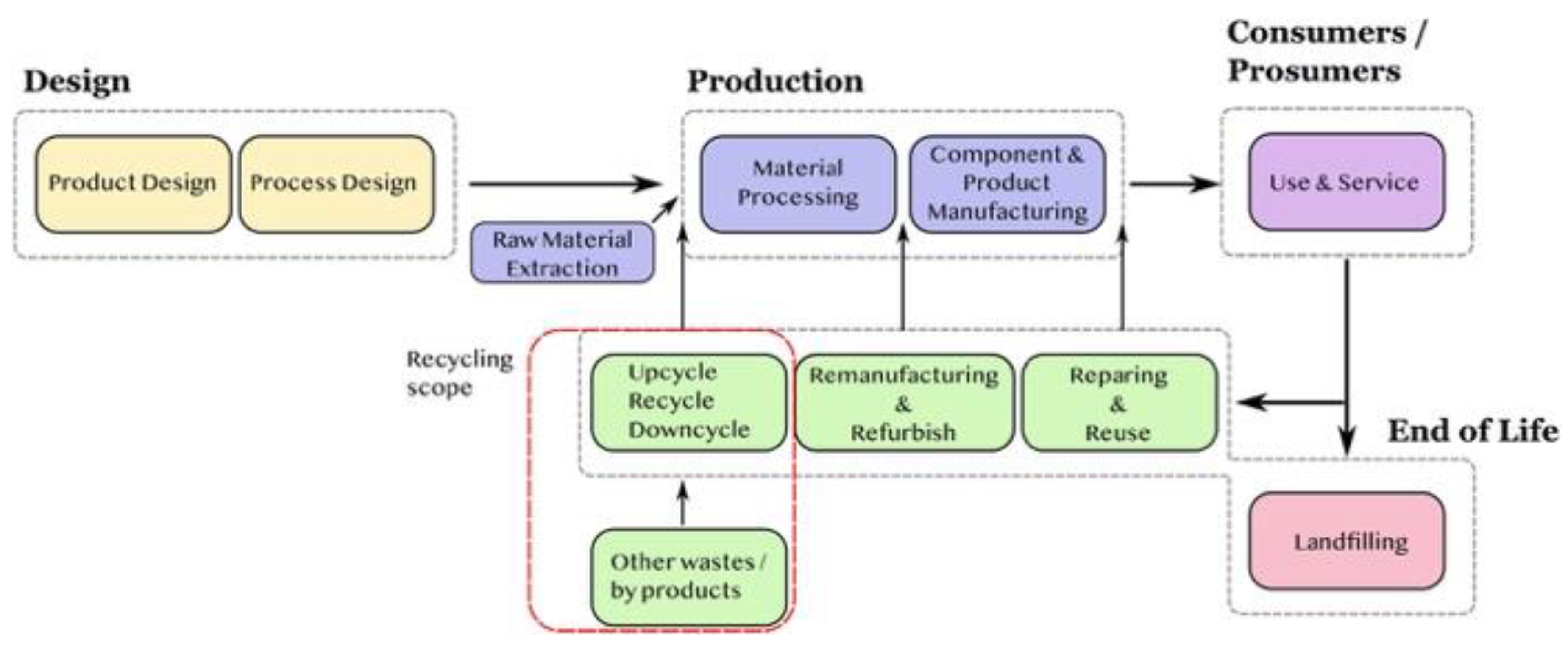
Figure 3.
Plastics production and discard from 1950 to 2015 [47].
Figure 3.
Plastics production and discard from 1950 to 2015 [47].
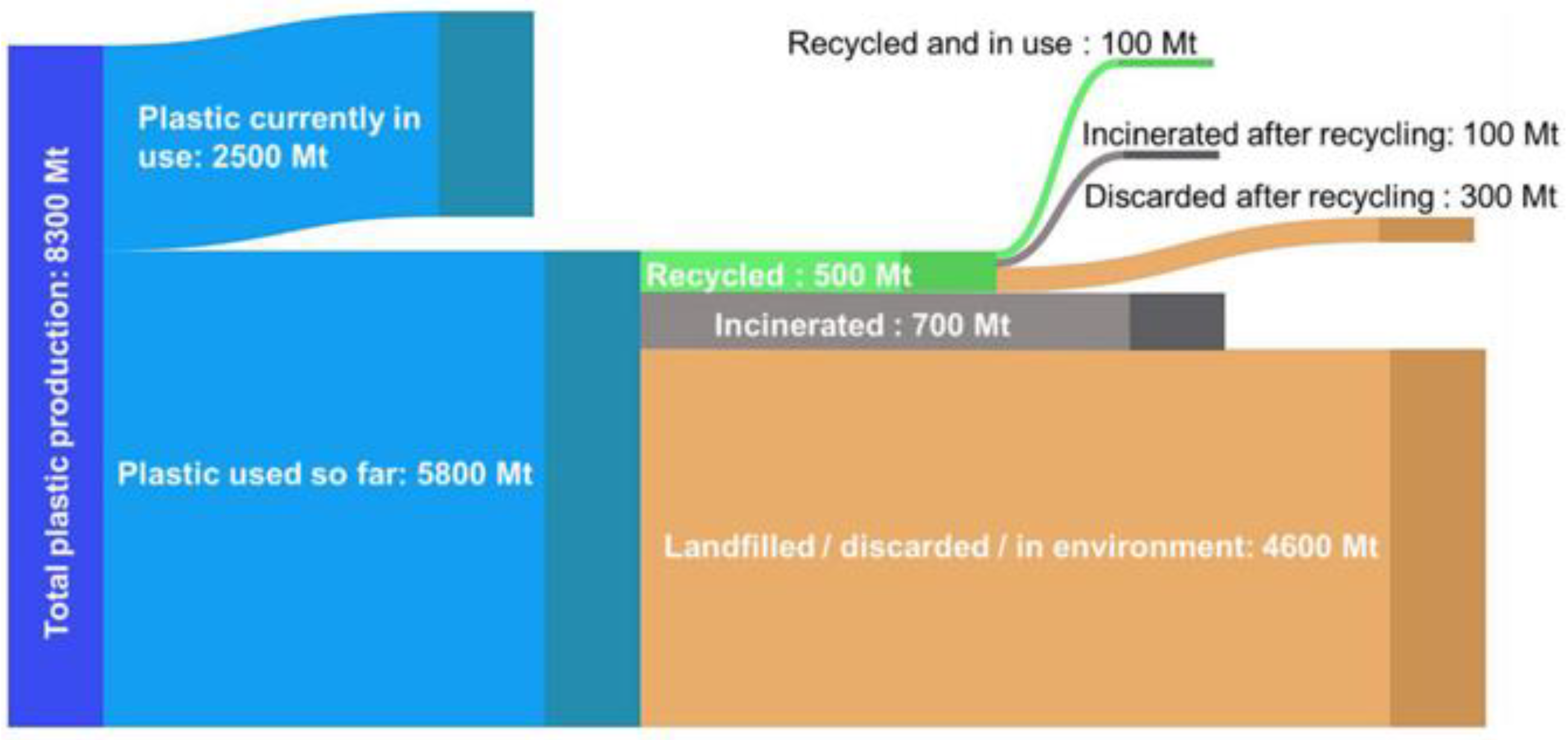
Figure 4.
Closed-loop recycling architecture for distributed recycling using DRAM method [60].
Figure 4.
Closed-loop recycling architecture for distributed recycling using DRAM method [60].
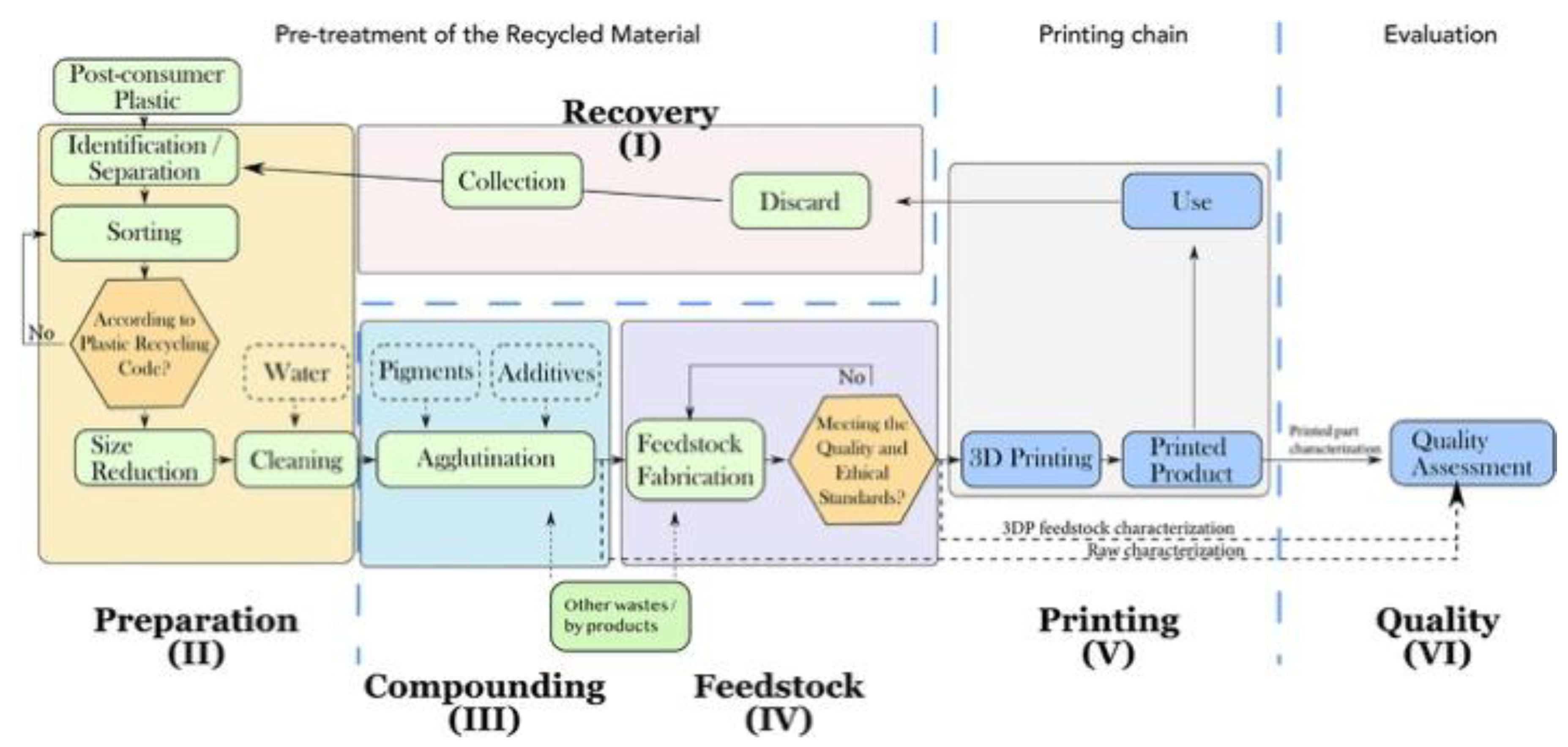
Figure 5.
Circular economy for renewable and non-renewable resources [61].
Figure 5.
Circular economy for renewable and non-renewable resources [61].
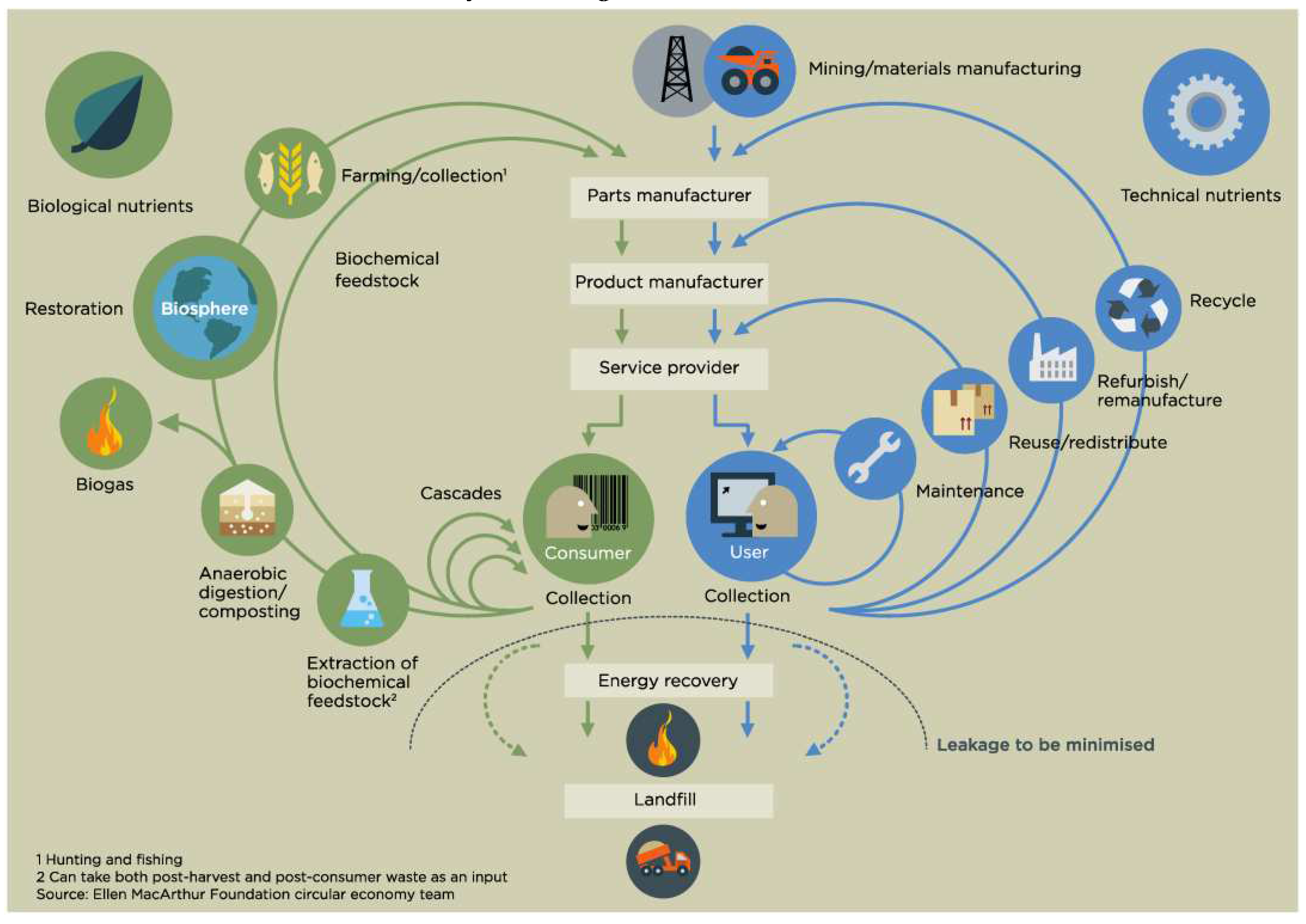
Figure 6.
Schematic depiction of local, national, and international material flows [34].
Figure 6.
Schematic depiction of local, national, and international material flows [34].
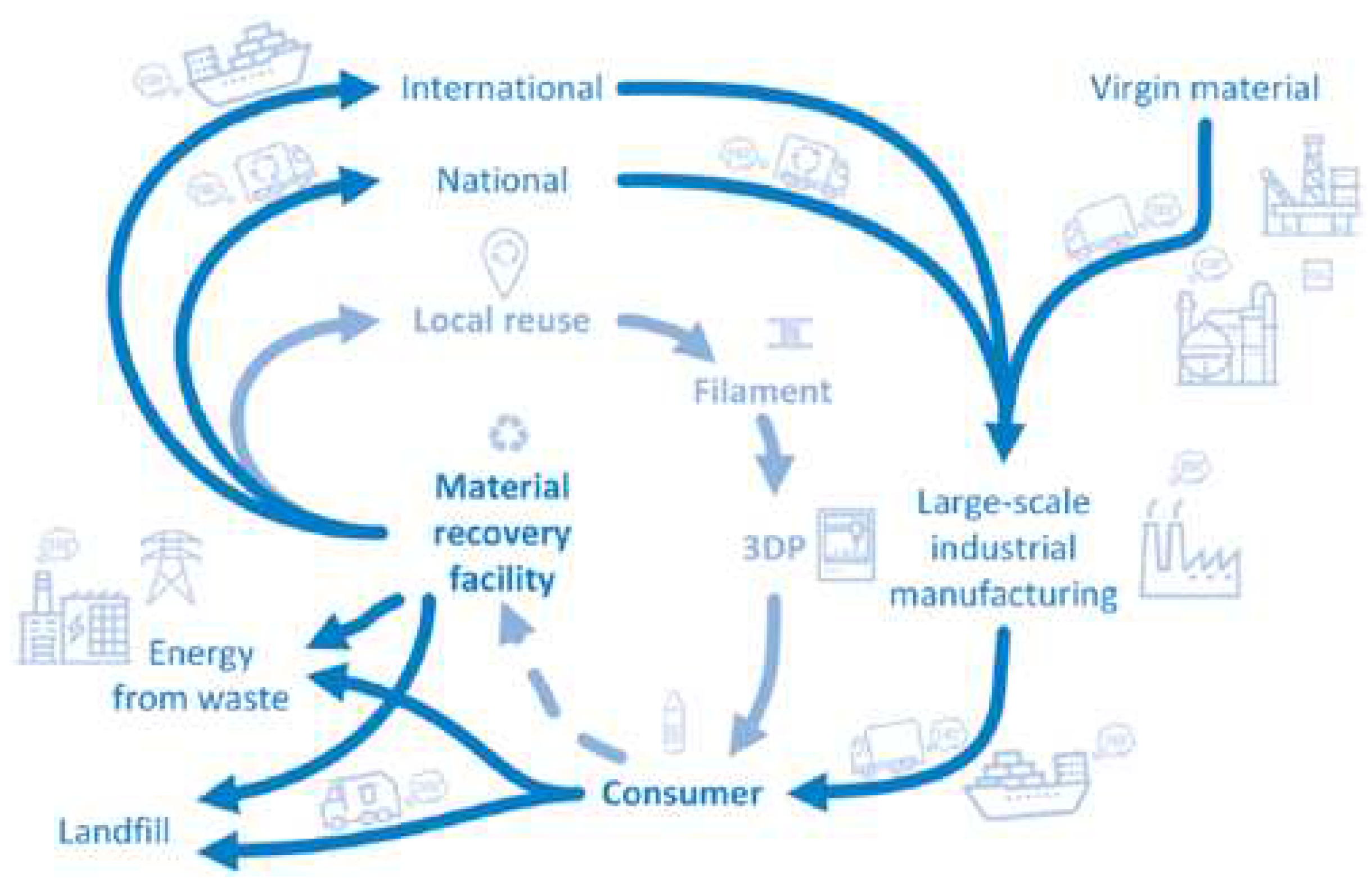
Figure 7.
Waste conversion into 3D printed components [47].
Figure 7.
Waste conversion into 3D printed components [47].
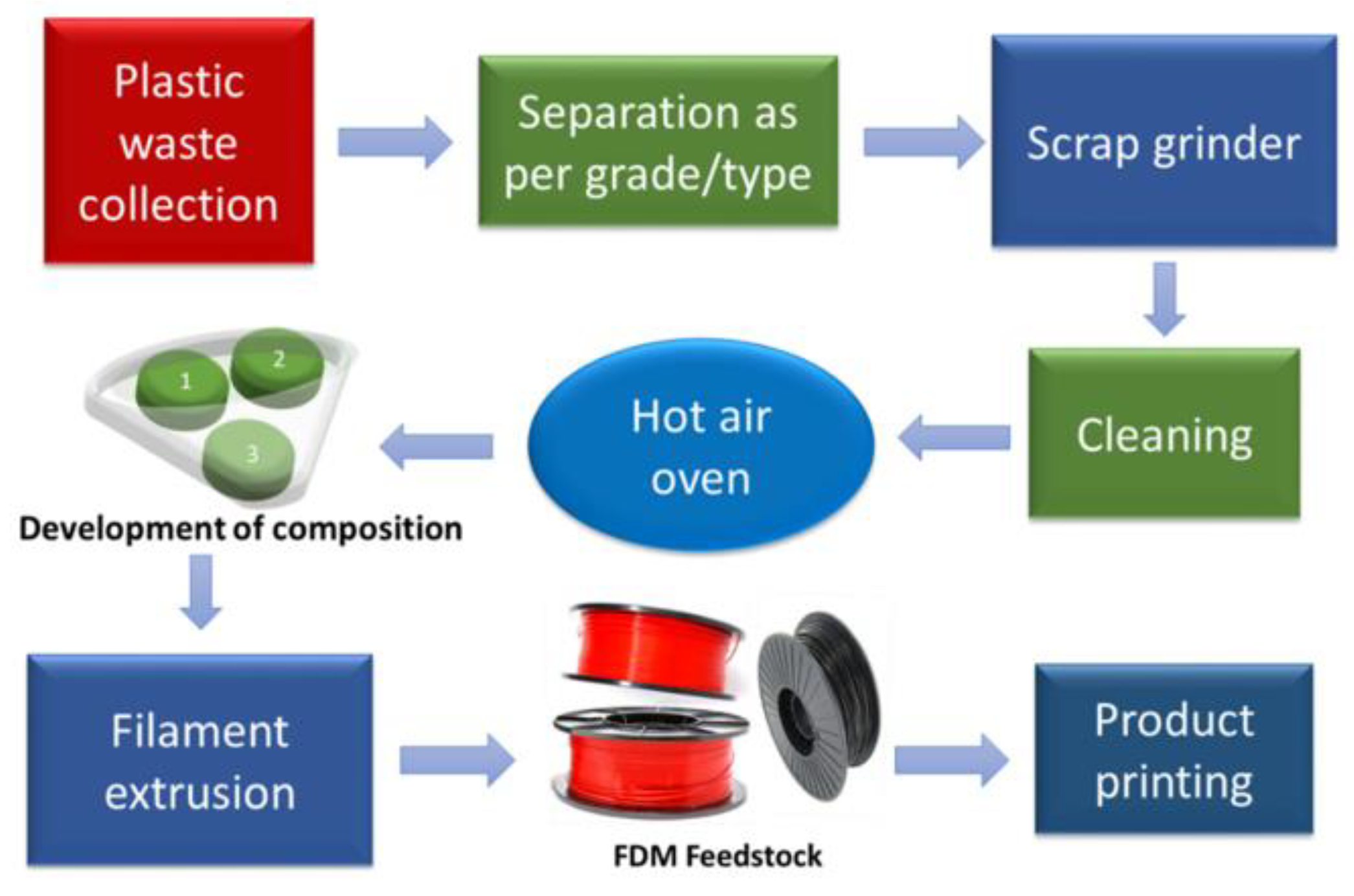
Figure 8.
Material circular economy in FDM process [47].
Figure 8.
Material circular economy in FDM process [47].
Disclaimer/Publisher’s Note: The statements, opinions and data contained in all publications are solely those of the individual author(s) and contributor(s) and not of MDPI and/or the editor(s). MDPI and/or the editor(s) disclaim responsibility for any injury to people or property resulting from any ideas, methods, instructions or products referred to in the content. |
© 2023 by the authors. Licensee MDPI, Basel, Switzerland. This article is an open access article distributed under the terms and conditions of the Creative Commons Attribution (CC BY) license (http://creativecommons.org/licenses/by/4.0/).
Copyright: This open access article is published under a Creative Commons CC BY 4.0 license, which permit the free download, distribution, and reuse, provided that the author and preprint are cited in any reuse.


