

Submitted:
01 October 2023
Posted:
02 October 2023
You are already at the latest version
Abstract
Despite great interest in how dynamic fluctuations in psychological states such as mood, social safety, energy, present-focused attention, and burnout impact stress, well-being, and health, most studies examining these constructs use retrospective assessments. Here, we discuss how ecological momentary assessments (EMAs) address methodological issues associated with retrospective reports, able to reveal dynamic associations between psychological states at small timescales that are often missed in stress and health research. In addition to helping researchers characterize daily and within-day fluctuations and temporal dynamics between different health-relevant processes, EMAs can elucidate mechanisms through which interventions reduce stress and enhance well-being. EMAs can also be used to identify changes that precede critical health events, which can in turn be used to inform the delivery of ecological momentary interventions (EMIs of just-in-time interventions) that prevent such events from occurring. To enable this work, this narrative review provides examples of scales and single-item questions used in EMA studies, makes concrete recommendations for researchers seeking to employ EMAs in their research, and discusses limitations of EMA methods. In doing so, we aim to encourage the use of these methods in research given that, when used carefully, EMA methods are well-poised to greatly advance our understanding of how intrapersonal dynamics affect stress levels, well-being, and human health.
Keywords:
Ecological Momentary Assessment
; Stress
; Well-being
; Health
; Mood
; Social safety
; Energy
; Present-focus
; Burnout
; EMA
Using Ecological Momentary Assessments to Understand How Daily Fluctuations in Psychological States Impact Stress, Well-Being, and Health
Researchers frequently use scales that assess psychological states retrospectively (e.g., “Over the last two weeks, I felt...”) or as a trait (e.g., “In general, I...”), even though many psychological states fluctuate dynamically both between and within days (e.g., [1-5]). In turn, there is strong evidence suggesting that these dynamic fluctuations in psychological states influence how individuals interpret and respond to ambiguous events in their daily lives [6-8]. Imagine a scenario, for example, in which all of your co-workers were invited to a happy hour after work, but you were left off the invitation. If you are in a positive mood, you might perceive this as an oversight; however, if you are in a more negative mood, or in the aftermath of a night of poor sleep, you might perceive this as a purposeful exclusion or a deliberate attack. Because people experience ambiguous events every day—and given that subjective experiences and appraisals of events have been found to be a stronger predictor of psychological and biological impacts than more objective assessments of events [9-10]—it is important to better understand how fluctuations in important psychological states influence not just how individuals experience specific events, but also how these changes relate to biological and clinical states over time.
Historically, it has been challenging to capture dynamic variation in psychological states that influence people’s stress, well-being, and long-term health in controlled laboratory experiments. This is due, in part, to the time restrictions and arbitrary settings that reduce external validity inherent to laboratory research and traditional ways of collecting data. In contrast, ecological momentary assessments (EMAs) involve scheduled data collection to be completed outside of the lab in a participant’s naturalenvironment, enabling researchers to assess daily, ecologically-valid experiences and fluctuations in psychological states in real-time. EMAs can be especially useful when trying to assess associations between psychological states and dynamic outcomes such as stress, well-being, and health, which are hard to adequately assess using infrequent measurements. Here, we will discuss how EMAs are especially useful to those seeking to understand how dynamic fluctuations in psychological states impact stress, well-being, and health. Specifically, we will highlight what is known about how one’s mood, social safety, energy levels, present-focus, and burnout influence stress, well-being, and health, and provide examples of how these constructs have been assessed in past studies. Finally, we will discuss limitations of EMAs, provide recommendations for researchers seeking to employ EMA methods, and discuss future research directions.
EMAs
EMAs have been in use since the 1990’s, although their use has become far more common and effective as they have largely become digital in recent years (see Figure 1 for a visualization of the increase in publications that contain the term “EMA” over time). Today, EMAs are short surveys digitally sent to participants to be completed in real time, as they are experiencing the events they are reporting about in the context of their everyday lives. Participants can be assessed at random intervals or in conjunction with key events of interest. Often, EMAs assess people’s thoughts, feelings, or behaviors, although any variables of interest can be measured. Advantages of EMA survey methods include the reduction of recall bias and erroneous reporting due to forgetfulness, their ecological validity, and the use of repeated assessments over time, the latter of which enables investigations of complex, within-person, temporal interactions between processes such as mood, stressful life events, and health behaviors [11] Further, the use of EMAs also removes concerns associated with between-person confounders, reduces concerns about time-varying confounders, and can reduce the downward bias on effect sizes induced by overly long assessment lags [12].
Many EMAs are sent to participants as notifications on smartphones and thus assess states in real-time. In Figure 2, we show how EMA questions may be presented to participants via smartphone (based on examples from [13-15]). However, other EMA methods are similar to a daily diary method, where participants respond to prompts once per day, reflecting upon their day in general, as opposed to their current state. Finally, EMAs can also be paired with sensing technology using a smartwatch [16], which can enrich these assessments by pairing them with a participant’s physiological state (e.g., heart rate, blood pressure, and galvanic skin responses), objective behaviors (e.g., activity levels, social interactions, and sleep), and location.
Psychological States
Although many psychological states and their daily fluctuations impact stress and well-being, some states have been consistently and strongly related to stress levels, well-being, and health, and are thus particularly important to measure at a high frequency in participant’s daily lives. First, we discuss well-being and stress. Next, we review key studies that have used EMA methods to investigate how one’s dynamic changes in mood, energy levels, social safety, present-focus, and burnout are associated with stress levels, well-being, and health.
Well-Being
Well-being is associated with health-promoting outcomes, including enhanced physical and mental health [17]. Well-being contains both a subjective component, which is often assessed with life satisfaction and affect measures, and a psychological component, which is often conceptualized as thriving and finding meaning in life [18]. Rather than being just the absence of negative factors, well-being is better conceptualized as the presence of positive factors. Well-being predicts health, happiness, and longevity [17]. Although well-being is somewhat more stable than other psychological states (e.g., stress levels) over time, well-being also varies across time and contexts in ways that are overlooked by traditional single time point well-being measures [19].
In studies specifically assessing within-person fluctuations in well-being, well-being is positively associated with being in nature and engaging in physical activity, and negatively associated with being at work (see [14] for review). However, well-being in EMA studies is typically assessed with a brief measure of positive affect or subjective happiness [14, 20], as opposed to a more comprehensive measure of eudemonic well-being that assesses aspects of growth, thriving, or meaning. Further, many past studies have used limited statistical analyses that fail to isolate within-person effects, instead focusing on between-person effects or relations that collapse between and within-person effects. As one of the largest benefits of employing EMA methods is the rich, within-person data collected, it is important to pair EMA data with complementary analytic methods to realize their full potential.
Stress
Stress refers to a person’s subjective experience of being able to manage the tasks in their lives, and not to a specific stressful experience, which is called a stressor. Although some amount of stress is generally considered to be positive in a person’s life [21], high stress levels, especially over long periods of time, take both a physical and mental toll on an individual [22-23] for example, whereas acute stress is a very strong predictor of PTSD and depression, chronic stress dysregulates biological processes that cause or exacerbate a wide variety of disorders, including anxiety disorders, depression, psychosis, asthma, ulcers, diabetes, certain cancers, and autoimmune and neurodegenerative disorders [24-25]. In fact, nine of the top ten causes of death in the United States today are caused or exacerbated by stress [26].
Due to the high prevalence of chronic stress and its negative impact on health, many interventions have been designed to reduce stress levels and improve stress-related health outcomes (e.g., [27-29]). Assessing the success of these interventions is typically done using follow-up surveys administered 1-12 months following the completion of the intervention (e.g., [30]), in which participants indicate their stress levels over the last week or month. However, sparse assessments like these fail to capture the dynamic nature of stress, well-being, and health; moreover, they can be influenced by a person’s current psychological state in ways that can bias participants’ experience over the last month. Infrequent assessments thus limit our understanding of how interventions impact people’s daily fluctuations in psychological states, preventing researchers from obtaining a mechanistic understanding of how interventions influence stress and well-being over time.
Less research has been done within non-clinical populations to assess daily fluctuations in stress levels compared to those assessing well-being, preventing generalized findings about how stress varies in association to time or context, broadly. However, evidence is emerging that stress levels are especially dynamic [2, 31-32], with a large amount of variability day by day, as well as over the course of a day. Further, stress levels are affected both by the number and severity of stressors experienced, along with a wide range of psychological states. Resilience, or how well people manage stressors, is associated with less negative affect in response to stressors (as assessed by EMAs), specifically in individuals who have experienced early life stress [33].
Mood and Affect
Positivity of mood and affect measures are so strongly related to well-being that they are often used as a proxy for assessing well-being itself. In college students, for example, researchers have found that daily levels of positive affect are negatively associated with both daily levels of self-reported stress and the perceived stress scale, and positively associated with flourishing, a measure of well-being [34]. Beyond just levels of positive affect, variability in affect is also associated with well-being. Ong and Ram [1] reviewed how affective variability, instability, inertia, and reactivity influence health outcomes and well-being, above and beyond general levels of positive affect. They suggest that those with fragile high positive affect (i.e., positive affect that, while sometimes high, is also highly variable) might not experience the same good health as those with more stable high positive affect, although this can be missed in traditional research designs. In support of this conclusion, another team of researchers using EMAs found that experiencing decreases in the positivity of one’s mood (i.e., positive affective reactivity) following a stressful life event predicted an increased mortality risk about ten years later, whereas neither negative affective reactivity to stressors nor general levels of positive affect influenced mortality risk [35]. Specifically, a one unit increase in positive affective reactivity predicted a 132% increase in mortality risk. Studies such as these highlight the added value of using EMA methods to assess how daily fluctuations in mood and affect impact stress, well-being, and health.
Social Safety
Humans are inherently social creatures, and our social interactions and their quality influence our stress levels and well-being by influencing perceptions of social safety [36-38]. Whereas social safety, connectedness, and inclusion predict positive life outcomes, loneliness, social ostracism, and social isolation predict negative health outcomes, reduced happiness, and reduced longevity [39-42]. Research using EMA methods and sensing data have revealed that daily social interaction (both conversation frequency and duration) are associated with lower levels of perceived stress, more so than levels of social interaction averaged across days [34], highlighting the advantages of assessing daily levels of social interaction using EMA methods. In a group of older adults living with HIV, researchers found that despite social interaction being associated with higher pain and fatigue ratings later that day, participants were happier when they spent time with others compared to when they spent time alone [43]. Likewise, by assessing participants three times per day for six days, researchers found that people felt more happiness and interest, and less sadness, tiredness, and pain, during assessments taken when they were engaged in a social interaction versus those taken when they were alone [44]. Finally, during COVID-19 lockdowns, [45] used EMA methods to investigate the impact of face-to-face social interactions on mood and stress in real-time and found that having at least one social interaction preceding an assessment predicted more positive mood, more calmness, heightened energetic arousal, and reduced stress compared to assessments when no social interactions were reported. These within-person effects persisted even while controlling for people’s mood and stress levels reported in the previous assessment, indicating that social interaction, and not pre-existing psychological states, were driving these effects. Because social interactions have a large impact on stress, well-being, and health, they are also important to consider in studies assessing health-related outcomes. Further, because social interactions vary in their frequency, duration, and quality across moments and days, EMA methods are especially well-suited to assess social interaction and support in real-time.
Energy and Arousal
Another state which varies considerably from hour-to-hour is one’s energy and arousal levels. In children, researchers have found that high energy levels and low levels of tiredness over 30 minutes predict moderate-to-vigorous physical activity, which, in turn, predicts more positive affect, less negative affect, and increased energy [46]. One strength of using EMA methods to assess these associations is that researchers are able to understand the temporal relations between mental states and behaviors. In this study, for example, energy levels both predicted, and were predicted by, physical activity. Researchers have also used EMA methods to assess associations between exposure to childhood trauma and daily energy levels, finding that the more childhood trauma a person has experienced, the lower their momentary energy levels [47]. Additionally, those with more childhood trauma exposure also reported heightened anxiety, loneliness, perceived daily hassles, and use of maladaptive coping strategies, alongside reduced psychological well-being, life satisfaction, optimism, sense of coherence, self-efficacy, and perceived social support. One unexplored possibility is that daily energy levels may be one factor that mediates associations between childhood trauma exposure and mental health outcomes.
As shown here, the use of EMA methods can help improve our understanding of complex associations between psychological states and stress, well-being, and health by revealing the exact temporal relations between these processes, and by facilitating the discovery of psychological mechanisms that might mediate or moderate associations between things like childhood trauma exposure and mental health outcomes. Further, EMA methods can help investigators determine how interventions impact people’s daily psychological states. For example, [48] found that daily arousal was increased in participants who completed a mediation-based intervention after six months of training, postulating that elevated arousal might be one mechanism through which mediation training can improve people’s quality of life. EMA studies such as these can overcome temporal hurdles inherent to traditional studies which prevent true assessment of mediation of effects, helping to uncover the mechanistic processes through which interventions or events influence later health outcomes.
Present-Focus and Mindfulness
Being focused on the present moment is generally associated with enhanced well-being [49]. Levels of present-focus are positively associated with life-satisfaction [50] and vary dynamically day-by-day in ways which predict daily fluctuations in well-being [51]. Mindfulness interventions are designed to increase present-focus, and have been found to be associated with reduced stress level and greater acceptance and self-regulation [49], along with increased resilience, self-efficacy and well-being [52-53]. Further, researchers have found that increased daily mindful states are related to enhanced coping and reduced appraisals of stress [54].
Other mental health interventions have also been found to increase present-focus. For example, participants who engaged in three different types of meditation-based mental training interventions (Presence-, Affect-, and Perspective-focused interventions) all exhibited elevated levels of present-focus in their daily lives after three months of training, along with an increased ability to cope with everyday stressors [48]. Using EMA methods to assess present-focus may be especially useful in intervention studies, insofar as present-focus might meditate the association between the intervention and positive outcomes in daily life.
Burnout
Burnout, a state of chronic physical and emotional exhaustion resulting from prolonged exposure to stressors, is often characterized by feelings of depersonalization and reduced personal accomplishment [55]. Burnout has become a significant concern within the contemporary workplace, with some studies reporting that more than half of American workers experience at least moderate levels of burnout [56]. Indeed, the demands of fast-paced work environments, long working hours, and increasing expectations have led to a rise in burnout rates among employees, negatively impacting their overall well-being and job performance [57], including reduced productivity, higher absenteeism, and increased turnover rates, leading to economic losses and compromised work culture [58].
Burnout is not only detrimental to an individual's psychological health [59] but also has profound implications for their physical health. For example, persistent stress and emotional exhaustion associated with burnout have been related to weakened immune system function [60] and an increased risk of cardiovascular diseases [61]. Past research in this context has used EMAs to measure burnout by asking participants to identify the extent of their emotional, physical, and mental exhaustion, along with end-of-day job satisfaction and quitting intentions [13]. By collecting real-time data through mobile devices, EMAs provide a dynamic way to track an individual’s stress levels, mood fluctuations, and daily work experiences. This research has helped to identify patterns of stressors and triggers that contribute to burnout, allowing for more targeted interventions and personalized support.
Beyond using EMAs to assess burnout, Ecological Momentary Interventions (EMIs) may be a valuable strategy for preventing burnout before it occurs. EMIs, a term coined in 2005, are treatments provided to participants during their everyday life through a mobile device, either on their own or as a supplement to a different ongoing treatment [62]. EMIs intervene in one’s day and environment, encouraging a certain behavior or providing feedback in real-time [63]. By delivering timely and context-specific support, EMIs provide employees with coping strategies, mindfulness exercises, and stress management techniques precisely when they are most needed. Such interventions can enhance self-awareness, foster resilience, and promote adaptive coping mechanisms [62] to reduce the risk of burnout and promote overall well-being in the workplace.
Because burnout is better conceptualized as the end of a continuum between rewarding and overwhelming work experiences rather than a discrete state [55], just-in-time interventions, or EMIs, might be especially useful in preventing negative outcomes associated with burnout. The integration of EMAs can aid in accurately measuring and understanding burnout dynamics, while EMIs offer a practical and proactive approach to prevent and address burnout effectively. Using these innovative technologies together could ultimately help promote more sustainable and supportive work environments, benefiting both employees and organizations alike.
In Table 1, we present examples of the scales and stand-alone questions that have been utilized for EMAs.
Recommendations, Limitations, and Future Directions
As researchers have become increasingly aware that dynamic psychological states, such as acute stress and mood, and discrete experiences impact well-being and health, it is now clear just how important it is to assess these processes using methods that complement their natural dynamics. EMAs accomplish this by combining the ecological validity of real-time assessments in participant’s natural environments with the flexibility to schedule data collection as frequently as necessary to capture the temporal dynamics of variables of interest (e.g., several times per week to several times per day). This flexibility enables researchers to design well-powered studies with many participants simultaneously experiencing the same event (e.g., the transition to college, the start of an athletic season, a culturally-significant holiday) that would otherwise be logistically impossible to conduct at scale using tradition lab visits. To aid readers in adopting EMAs approach in their own research, we conclude with some general recommendations/future directions and limitations.
First, existing, non-EMA datasets can be leveraged to explore whether higher temporal-resolution is necessary to reflect a process of interest (e.g., if the temporal stability or retest reliability is low, if standard data collection timescales do not reflect optimal time lags between variables of interest; [85]). Second, researchers interested in EMA should explore different EMA-style designs to consider which would be ideal for their specific research questions. Depending on the process of interest, it might be best assessed using multiple assessments per day EMA, daily EMA, daily diary studies, or measurement burst designs, which combine EMA with longer-term follow-up durations. Third, researchers should brainstorm other complementary methodologies to include in their EMA studies, such as wearable technologies, common stressor designs, geolocation, text-message mining, and multi-omics approaches [86]. Fourth, optimal use of high temporal density data requires complementary statistical techniques. Although a full review of analytic options is outside the scope of this review (see [87] for a broad introduction to techniques tailored to EMA data), we would like to particularly emphasize the potential of dynamic structural equation modeling due to its flexibility (see [88-90]). Additionally, data with at least 60 observations per individual is well-suited for group iterative multiple model estimation (GIMME, [91], which provides information on both group-level and individual-level time series. Fifth, future stress research should consider combining “common stressor” designs—in which all participants experience the same stressful, naturally-occurring event (e.g., job interview, major life transition, auditions)— with EMAs to evaluate effects of interest during ecologically-valid (i.e., not laboratory task-induced) stress. Finally, for the health-focused research reviewed above, results observed in non-clinical samples should be replicated in clinical samples and vice-versa.
As the use of EMA methods continue to gain popularity, is important to emphasize several key limitations of EMA data. First, the frequent assessments introduce burden that must be considered during study design (e.g., length of surveys, survey prompt timing, compensation strategies). Second, the repetitive nature of the surveys can plausibly influence data quality; therefore, participant inattention checks such as screening for items that would be incredibly rarely endorsed by the average participant are a critical tool to ensure data quality [92]. Third, given the frequency of assessment, it is important to check participant compliance with an equally high degree of frequency—lest an extended lack of compliance result in a stretch of unusable data that diminishes or negates the value of the rest of a participant’s data. Fourth, given the online nature of many EMA surveys, there are logistical challenges to conducting this research in areas of the world or in populations with limited internet access, which can present a challenge with both collecting EMA data using digital tools as well as with the generalizability of EMA-based research.
Conclusion
In conclusion, EMA methods have the potential to reveal how dynamic fluctuations in psychological states impact stress, well-being, and health. In the present article, we examined their potential by reviewing studies that highlight how assessing aspects of mood, social safety, energy levels, present-focus, and burnout using EMAs can reveal key associations that are missed in more traditional study designs. Assessing these dynamic daily, and within-day fluctuations of these states, can in turn help determine the temporal associations between health-relevant processes, and elucidate the psychological mechanisms through which interventions promote stress-reduction and enhanced well-being. In the future, using EMAs to assess factors that precede health problems will enable EMIs to be delivered in advance of those health issues developing, thus improving health and well-being. By providing examples of scales and single-item questions used in EMA studies, making concrete recommendations for researchers seeking to employ EMAs in their research designs, and discussing the limitations of EMA methods, we hope to encourage the use of these methods by researchers studying stress, well-being, and health. EMA methods are well-poised to dramatically advance our understanding of the human experience and how such experiences impact human health and wellbeing. To fully realize this potential, EMA research will need to be done carefully, and in a manner that maximizes its scalability, and generalizability, and acceptability to participants.
Funding
Preparation of this article was supported by grant #OPR21101 from the California Governor’s Office of Planning and Research/California Initiative to Advance Precision Medicine, by and a National Institutes of Health (NIH) Grant K08 ES028825. Additionally, DPM was supported by National Research Service Award F32 MH130149. These organizations had no role in planning, writing, editing, or reviewing this article, or in deciding to submit this article for publication.
Institutional Review Board Statement
Not applicable.
Informed Consent Statement
Not applicable.
Data Availability Statement
No new data were created or analyzed in this study. Data sharing is not applicable to this article.
Acknowledgments
We thank Kriti Sinha for her help formatting this manuscript for publication.
Conflicts of Interest
MPS is a cofounder and scientific advisor of Personalis, SensOmics, Qbio, January AI, Fodsel, Filtricine, Protos, RTHM, Iollo, Marble Therapeutics, Crosshair Therapeutics, and Mirvie. He is a scientific advisor for Jupiter, Neuvivo, Swaza, and Mitrix. The other authors declare no conflicts of interest with respect to this work.
References
- Ong, A. D.; Ram, N. Fragile and Enduring Positive Affect: Implications for Adaptive Aging. Gerontology. 2017, 63, 263–269. [Google Scholar] [CrossRef] [PubMed]
- Moriarity, D. P.; Slavich, G. M. The Future Is Dynamic: A Call for Intensive Longitudinal Data in Immunopsychiatry. Brain Behav. Immun. 2023, 112, 118–124. [Google Scholar] [CrossRef]
- Sperry, S. H.; Kwapil, T. R. Affective Dynamics in Bipolar Spectrum Psychopathology: Modeling Inertia, Reactivity, Variability, and Instability in Daily Life. J. Affect. Disord. 2019, 251, 195–204. [Google Scholar] [CrossRef] [PubMed]
- Votaw, V. R.; Witkiewitz, K. Motives for Substance Use in Daily Life: A Systematic Review of Studies Using Ecological Momentary Assessment. Clin. Psychol. Sci. 2021, 9, 535–562. [Google Scholar] [CrossRef]
- Wright, A. G. C.; Hopwood, C. J. Advancing the Assessment of Dynamic Psychological Processes. Assessment 2016, 23, 399–403. [Google Scholar] [CrossRef] [PubMed]
- Hemenover, S. H. Self-Reported Processing Bias and Naturally Occurring Mood: Mediators Between Personality and Stress Appraisals. Pers. Soc. Psychol. Bull. 2001, 27, 387–394. [Google Scholar] [CrossRef]
- Hyun, J.; Sliwinski, M. J.; Smyth, J. M. Waking Up on the Wrong Side of the Bed: The Effects of Stress Anticipation on Working Memory in Daily Life. J. Gerontol. B Psychol. Sci. Soc. Sci. 2019, 74, 38–46. [Google Scholar] [CrossRef] [PubMed]
- Rothbard, N. P.; Wilk, S. L. Waking up on the Right or Wrong Side of the Bed: Start-of-Workday Mood, Work Events, Employee Affect, and Performance. Acad. Manag. J. 2011, 54, 959–980. [Google Scholar] [CrossRef]
- Lazarus, R. S.; Folkman, S. Stress, Appraisal, and Coping; Springer Publishing Company, 1984.
- Slavich, G. M.; Cole, S. W. The Emerging Field of Human Social Genomics. Clin. Psychol. Sci. 2013, 1, 331–348. [Google Scholar] [CrossRef] [PubMed]
- Bylsma, L. M.; Rottenberg, J. Uncovering the Dynamics of Emotion Regulation and Dysfunction in Daily Life with Ecological Momentary Assessment. Emot. Regul. Well-Being. [CrossRef]
- Ben-Zeev, D.; Young, M. A.; Madsen, J. W. Retrospective Recall of Affect in Clinically Depressed Individuals and Controls. Cogn. Emot. 2009, 23, 1021–1040. [Google Scholar] [CrossRef]
- Carson, R. L.; Baumgartner, J. J.; Ota, C. L.; Kuhn, A. P.; Durr, A. An Ecological Momentary Assessment of Burnout, Rejuvenation Strategies, Job Satisfaction, and Quitting Intentions in Childcare Teachers. Early Child. Educ. J. November 18, 2016, 1–8. [CrossRef]
- de Vries, L. P.; Baselmans, B. M. L.; Bartels, M. Smartphone-Based Ecological Momentary Assessment of Well-Being: A Systematic Review and Recommendations for Future Studies. J. Happiness Stud. 2021, 22, 2361–2408. [Google Scholar] [CrossRef] [PubMed]
- Hernandez, R.; Pyatak, E. A.; Vigen, C. L. P.; Jin, H.; Schneider, S.; Spruijt-Metz, D.; Roll, S. C. Understanding Worker Well-Being Relative to High-Workload and Recovery Activities Across a Whole Day: Pilot Testing an Ecological Momentary Assessment Technique. Int. J. Environ. Res. Public Health. 2021, 18. [Google Scholar] [CrossRef] [PubMed]
- Intille, S.; Haynes, C.; Maniar, D.; Ponnada, A.; Manjourides, J. ntille, S.; Haynes, C.; Maniar, D.; Ponnada, A.; Manjourides, J. μEMA: Microinteraction-Based Ecological Momentary Assessment (EMA) Using a Smartwatch. In. Proc. ACM Int. Conf. Ubiquitous Comput. Proceedings of the 2016 ACM International Joint Conference on Pervasive and Ubiquitous Computing - UbiComp ’16; ACM Press 2016, 1124–1128. [CrossRef]
- Diener, E. New Findings and Future Directions for Subjective Well-Being Research. Am. Psychol. 2012, 67, 590–597. [Google Scholar] [CrossRef]
- Ryan, R. M.; Deci, E. L. On Happiness and Human Potentials: A Review of Research on Hedonic and Eudaimonic Well-Being. Annu. Rev. Psychol. 2001, 52, 141–166. [Google Scholar] [CrossRef] [PubMed]
- Gadermann, A. M.; Zumbo, B. D. Investigating the Intra-individual Variability and Trajectories of Subjective Well-Being. Soc. Indic. Res. 2007, 81, 1–33. [Google Scholar] [CrossRef]
- Bakolis, I.; Hammoud, R.; Smythe, M.; Gibbons, J.; Davidson, N.; Tognin, S.; Mechelli, A.; Mind, U. Urban Mind: Using Smartphone Technologies to Investigate the Impact of Nature on Mental Well-Being in Real Time. Bioscience. 2018, 68, 134–145. [Google Scholar] [CrossRef] [PubMed]
- Kirby, E. D.; Muroy, S. E.; Sun, W. G.; Covarrubias, D.; Leong, M. J.; Barchas, L. A.; Kaufer, D. Acute Stress Enhances Adult Rat Hippocampal Neurogenesis and Activation of Newborn Neurons via Secreted Astrocytic FGF2. Elife 2013, 2, e00362. [Google Scholar] [CrossRef] [PubMed]
- Shields, G. S.; Slavich, G. M. Lifetime Stress Exposure and Health: A Review of Contemporary Assessment Methods and Biological Mechanisms. Soc. Pers. Psychol. Compass. 2017, 11, e12335. [Google Scholar] [CrossRef] [PubMed]
- Slavich, G. M. Life Stress and Health: A Review of Conceptual Issues and Recent Findings. Teach. Psychol. 2016, 43, 346–355. [Google Scholar] [CrossRef]
- Slavich, G. M.; Irwin, M. R. From Stress to Inflammation and Major Depressive Disorder: A Social Signal Transduction Theory of Depression. Psychol. Bull. 2014, 140, 774–815. [Google Scholar] [CrossRef] [PubMed]
- Slavich, G. M.; Sacher, J. Stress, Sex Hormones, Inflammation, and Major Depressive Disorder: Extending Social Signal Transduction Theory of Depression to Account for Sex Differences in Mood Disorders. Psychopharmacology 2019, 236, 3063–3079. [Google Scholar] [CrossRef] [PubMed]
- Bhushan, D.; Kotz, K.; McCall, J.; Wirtz, S.; Gilgoff, R.; Rishi Dube, S.; Powers, C.; Olson-Morgan, J.; Galeste, M.; Patterson, K.; et al. The Road Map for Resilience: The California Surgeon General’s Report on Adverse Childhood Experiences, Toxic Stress, and Health. Office of the California Surgeon General, 2020.
- Amanvermez, Y.; Zhao, R.; Cuijpers, P.; de Wit, L. M.; Ebert, D. D.; Kessler, R. C.; Bruffaerts, R.; Karyotaki, E. Effects of Self-Guided Stress Management Interventions in College Students: A Systematic Review and Meta-analysis. Internet Interv. 2022, 28, 100503. [Google Scholar] [CrossRef] [PubMed]
- Regehr, C.; Glancy, D.; Pitts, A.; LeBlanc, V. R. Interventions to Reduce the Consequences of Stress in Physicians: A Review and Meta-analysis. J. Nerv. Ment. Dis. 2014, 202, 353–359. [Google Scholar] [CrossRef] [PubMed]
- Yusufov, M.; Nicoloro-SantaBarbara, J.; Grey, N. E.; Moyer, A.; Lobel, M. Meta-analytic Evaluation of Stress Reduction Interventions for Undergraduate and Graduate Students. Int. J. Stress Manag. 2019, 26, 132–145. [Google Scholar] [CrossRef]
- Heber, E.; Ebert, D. D.; Lehr, D.; Cuijpers, P.; Berking, M.; Nobis, S.; Riper, H. The Benefit of Web- and Computer-Based Interventions for Stress: A Systematic Review and Meta-analysis. J. Med. Internet Res. 2017, 19, e32. [Google Scholar] [CrossRef]
- Lazarides, C.; Ward, E. B.; Buss, C.; Chen, W. P.; Voelkle, M. C.; Gillen, D. L.; Wadhwa, P. D.; Entringer, S. Psychological Stress and Cortisol During Pregnancy: An Ecological Momentary Assessment (EMA)-Based Within- and Between-Person Analysis. Psychoneuroendocrinology. 2020, 121, 104848. [Google Scholar] [CrossRef]
- Zawadzki, M. J.; Hussain, M.; Kho, C. Comparing Multidimensional Facets of Stress with Social, Emotional, and Physical Well-Being Using Ecological Momentary Assessment Among a Hispanic Sample. Stress Health. 2022, 38, 375–387. [Google Scholar] [CrossRef]
- Tung, N. Y. C.; Yap, Y.; Bei, B.; Luecken, L. J.; Wiley, J. F. Resilience to Early Family Risk Moderates Stress-Affect Associations: A 14-Day Ecological Momentary Assessment Study. J. Affect. Disord. 2022, 311, 134–142. [Google Scholar] [CrossRef]
- Wang, R.; Chen, F.; Chen, Z.; Li, T.; Harari, G.; Tignor, S.; Zhou, X.; Ben-Zeev, D.; Campbell, A. T. StudentLife: Assessing Mental Health, Academic Performance and Behavioral Trends of College Students Using Smartphones. ACM International Joint Conference on Pervasive and Ubiquitous Computing. 2014, pp 3–14. [CrossRef]
- Mroczek, D. K.; Stawski, R. S.; Turiano, N. A.; Chan, W.; Almeida, D. M.; Neupert, S. D.; Spiro, A., III. Emotional Reactivity and Mortality: Longitudinal Findings from the VA Normative Aging Study. J. Gerontol. B Psychol. Sci. Soc. Sci. 2015, 70, 398–406. [Google Scholar] [CrossRef]
- Slavich, G. M. Social Safety Theory: A Biologically Based Evolutionary Perspective on Life Stress, Health, and Behavior. Annu. Rev. Clin. Psychol. 2020, 16, 265–295. [Google Scholar] [CrossRef]
- Slavich, G. M. Social Safety Theory: Understanding Social Stress, Disease Risk, Resilience, and Behavior During the COVID-19 Pandemic and Beyond. Curr. Opin. Psychol. 2022, 45, 101299. [Google Scholar] [CrossRef] [PubMed]
- Slavich, G. M.; Roos, L. G.; Mengelkoch, S.; Webb, C. A.; Shattuck, E. C.; Moriarity, D. P.; Alley, J. C. Social Safety Theory: Conceptual Foundation, Underlying Mechanisms, and Future Directions. Health Psychol. Rev. 2023, 17, 5–59. [Google Scholar] [CrossRef] [PubMed]
- Hajek, A.; König, H. H. Hajek, A.; König, H. H. Do Loneliness and Perceived Social Isolation Reduce Expected Longevity and Increase the Frequency of Dealing with Death and Dying? Longitudinal Findings Based on a Nationally Representative Sample. J. Am. Med. Dir. Assoc. 2021, 22, 1720–1725.e5. [CrossRef]
- Kreouzi, M.; Theodorakis, N.; Constantinou, C. Lessons Learned from Blue Zones, Lifestyle Medicine Pillars and Beyond: An Update on the Contributions of Behavior and Genetics to Wellbeing and Longevity. Am. J. Lifestyle Med. 2022. [Google Scholar] [CrossRef]
- Lev-Ari, S.; Gepner, Y.; Goldbourt, U. Dissatisfaction with Married Life in Men Is Related to Increased Stroke and All-Cause Mortality. J. Clin. Med. 2021, 10. [Google Scholar] [CrossRef]
- Stressman, J.; Rottenberg, Y.; Shimshilashvili, I.; Ein-Mor, E.; Jacobs, J. M. Loneliness, health, and longevity. J Gerontol A Biol Sci Med Sci. 2014, 69, 744–750. [Google Scholar] [CrossRef] [PubMed]
- Paolillo, E. W.; Tang, B.; Depp, C. A.; Rooney, A. S.; Vaida, F.; Kaufmann, C. N.; Mausbach, B. T.; Moore, D. J.; Moore, R. C. Temporal Associations Between Social Activity and Mood, Fatigue, and Pain in Older Adults with HIV: An Ecological Momentary Assessment Study. J.M.I.R. Ment. Health. 2018, 5, e38. [Google Scholar] [CrossRef]
- Bernstein, M. J.; Zawadzki, M. J.; Juth, V.; Benfield, J. A.; Smyth, J. M. Social Interactions in Daily Life: Within-Person Associations Between Momentary Social Experiences and Psychological and Physical Health Indicators. J. Soc. Personal Relat. 2018, 35, 372–394. [Google Scholar] [CrossRef]
- Forbes, P. A. G.; Pronizius, E.; Feneberg, A. C.; Nater, U. M.; Piperno, G.; Silani, G.; Stijovic, A.; Lamm, C. The Effects of Social Interactions on Momentary Stress and Mood During COVID-19 Lockdowns. Br. J. Health Psychol. 2023, 28, 306–319. [Google Scholar] [CrossRef]
- Dunton, G. F.; Huh, J.; Leventhal, A. M.; Riggs, N.; Hedeker, D.; Spruijt-Metz, D.; Pentz, M. A. Momentary Assessment of Affect, Physical Feeling States, and Physical Activity in Children. Health Psychol. 2014, 33, 255–263. [Google Scholar] [CrossRef]
- Berhe, O.; Moessnang, C.; Reichert, M.; Ma, R.; Höflich, A.; Tesarz, J.; Heim, C. M.; Ebner-Priemer, U.; Meyer-Lindenberg, A.; Tost, H. Dose-Dependent Changes in Real-Life Affective Well-Being in Healthy Community-Based Individuals with Mild to Moderate Childhood Trauma Exposure. Borderline Personal. Disord. Emot. Dysregul. 2023, 10, 14. [Google Scholar] [CrossRef]
- Linz, R.; Puhlmann, L. M. C.; Engert, V.; Singer, T. Investigating the Impact of Distinct Contemplative Mental Trainings on Daily Life Stress, Thoughts and Affect—Evidence from a Nine-Month Longitudinal Ecological Momentary Assessment Study. Psychoneuroendocrinology. 2022, 142, 105800. [Google Scholar] [CrossRef]
- Lomas, T.; Medina, J. C.; Ivtzan, I.; Rupprecht, S.; Eiroa-Orosa, F. J. A Systematic Review of the Impact of Mindfulness on the Well-Being of Healthcare Professionals. J. Clin. Psychol. 2018, 74, 319–355. [Google Scholar] [CrossRef] [PubMed]
- Shipp, A. J.; Aeon, B. Temporal Focus: Thinking about the Past, Present, and Future. Curr. Opin. Psychol. 2019, 26, 37–43. [Google Scholar] [CrossRef] [PubMed]
- Rush, J.; Grouzet, F. M. E. . It Is about Time: Daily Relationships between Temporal Perspective and Well-Being. J. Posit. Psychol. 2012, 7, 427–442. [Google Scholar] [CrossRef]
- Bajaj, B.; Pande, N. Mediating Role of Resilience in the Impact of Mindfulness on Life Satisfaction and Affect as Indices of Subjective Well-Being. Pers. Individ. Dif. 2016, 93, 63–67. [Google Scholar] [CrossRef]
- Keye, M. D.; Pidgeon, A. M. Investigation of the Relationship Between Resilience, Mindfulness, and Academic Self-Efficacy. JSS. 2013, 01, 1–4. [Google Scholar] [CrossRef]
- Weinstein, N.; Brown, K. W.; Ryan, R. M. A Multi-method Examination of the Effects of Mindfulness on Stress Attribution, Coping, and Emotional Well-Being. J. Res. Pers. 2009, 43, 374–385. [Google Scholar] [CrossRef]
- Maslach, C.; Leiter, M. P. Understanding the Burnout Experience: Recent Research and Its Implications for Psychiatry. World Psychiatry. 2016, 15, 103–111. [Google Scholar] [CrossRef]
- 56. Aflac Workforces Report. Workplace Benefits Trends. Employee Well-Being and Mental Health.
- Bernales-Turpo, D.; Quispe-Velasquez, R.; Flores-Ticona, D.; Saintila, J.; Ruiz Mamani, P. G.; Huancahuire-Vega, S.; Morales-García, M.; Morales-García, W. C. Burnout, Professional Self-Efficacy, and Life Satisfaction as Predictors of Job Performance in Health Care Workers: The Mediating Role of Work Engagement. J. Prim. Care Community Health. 2022, 13, 21501319221101845. [Google Scholar] [CrossRef]
- The Impact of Burnout on Wellbeing and the Employee Experience – WTW. 6 August 2022. Available online: https://www.wtwco.com/en-my/insights/2022/03/the-impact-of-burnout-on-wellbeing-and-the-employee-experience (accessed on 6 August 2023).
- Claponea, R. M.; Pop, L. M.; Iorga, M.; Iurcov, R. Symptoms of Burnout Syndrome Among Physicians During the Outbreak of COVID-19 Pandemic-A Systematic Literature Review. Review. Healthcare (Basel). 2022, 10. [Google Scholar] [CrossRef] [PubMed]
- Sullivan, V.; Hughes, V.; Wilson, D. R. Nursing Burnout and Its Impact on Health. Nurs. Clin. North Am. 2022, 57, 153–169. [Google Scholar] [CrossRef]
- Alameri, F.; Aldaheri, N.; Almesmari, S.; Basaloum, M.; Albeshr, N. A.; Simsekler, M. C. E.; Ugwuoke, N. V.; Dalkilinc, M.; Al Qubaisi, M.; Campos, L. A.; Almahmeed, W.; Alefishat, E.; Al Tunaiji, H.; Baltatu, O. C. Burnout and Cardiovascular Risk in Healthcare Professionals During the COVID-19 Pandemic. Front. Psychiatry. 2022, 13, 867233. [Google Scholar] [CrossRef]
- Balaskas, A.; Schueller, S. M.; Cox, A. L.; Doherty, G. Ecological Momentary Interventions for Mental Health: A Scoping Review. PLOS ONE 2021, 16, e0248152. [Google Scholar] [CrossRef] [PubMed]
- Enthoven, C. A.; Derks, I. P. M.; Polling, J. R. Ecological Momentary Interventions-Can More Smartphone Use Result in Less Myopia? JAMA Ophthalmol. 2021, 139, 1172–1173. [Google Scholar] [CrossRef]
- Murray, A. L.; Xiao, Z.; Zhu, X.; Speyer, L. G.; Yang, Y.; Brown, R. H.; Katus, L.; Eisner, M.; Ribeaud, D. Psychometric Evaluation of an Adapted Version of the Perceived Stress Scale for Ecological Momentary Assessment Research. Stress Health. 2023. [Google Scholar] [CrossRef]
- Colombo, D.; Suso-Ribera, C.; Fernández-Álvarez, J.; Cipresso, P.; Garcia-Palacios, A.; Riva, G.; Botella, C. Affect Recall Bias: Being Resilient by Distorting Reality. Cognit. Ther. Res. 2020, 44, 906–918. [Google Scholar] [CrossRef]
- Kim, J.; James, J. D. Vicarious Achievement in Sport and Its Link to Temporal Life Satisfaction: A Case Study with College Students Based on Ecological Momentary Assessment. Manag. Sport Leis. 2022, 1–18. [Google Scholar] [CrossRef]
- Kenny, R.; Dooley, B.; Fitzgerald, A. Ecological Momentary Assessment of Adolescent Problems, Coping Efficacy, and Mood States Using a Mobile Phone App: An Exploratory Study. J.M.I.R. Ment. Health. 2016, 3, e51. [Google Scholar] [CrossRef] [PubMed]
- Merz, E. L.; Roesch, S. C. Modeling Trait and State Variation Using Multilevel Factor Analysis with Panas Daily Diary Data. J. Res. Pers. 2011, 45, 2–9. [Google Scholar] [CrossRef] [PubMed]
- Xie, T.; Cao, M.; Pan, Z. Applying Self-Assessment Manikin (SAM) to Evaluate the Affective Arousal Effects of VR Games. In Proceedings of the 2020 3rd International Conference on Image and Graphics Processing. Acad. Med. 2020, 134–138. [Google Scholar] [CrossRef]
- Lambusch, F.; Weigelt, O.; Fellmann, M.; Siestrup, K. Application of a Pictorial Scale of Human Energy in Ecological Momentary Assessment Research. In International Conference on Human-Computer Interaction; Springer International Publishing, 2020, pp 171–189. [CrossRef]
- Turner, B. J.; Cobb, R. J.; Gratz, K. L.; Chapman, A. L. The Role of Interpersonal Conflict and Perceived Social Support in Nonsuicidal Self-Injury in Daily Life. J. Abnorm. Psychol. 2016, 125, 588–598. [Google Scholar] [CrossRef] [PubMed]
- Fortuna, K. L.; Wright, A. C.; Mois, G.; Myers, A. L.; Kadakia, A.; Collins-Pisano, C. Feasibility, Acceptability, and Potential Utility of Peer-Supported Ecological Momentary Assessment Among People with Serious Mental Illness: A Pilot Study. Psychiatr. Q. 2022, 93, 717–735. [Google Scholar] [CrossRef] [PubMed]
- Buysse, D. J.; Thompson, W.; Scott, J.; Franzen, P. L.; Germain, A.; Hall, M.; Moul, D. E.; Nofzinger, E. A.; Kupfer, D. J. Daytime Symptoms in Primary Insomnia: A Prospective Analysis Using Ecological Momentary Assessment. Sleep Med. 2007, 8, 198–208. [Google Scholar] [CrossRef]
- Raugh, I. M.; Spilka, M.; Luther, L.; Suveg, C. M.; Strauss, G. P. Ecological Momentary Assessment of State Fluctuations in Mindfulness and Symptoms in Psychotic Disorders. J. Contextual Behav. Sci. 2023, 29, 219–229. [Google Scholar] [CrossRef] [PubMed]
- Moore, R. C.; Depp, C. A.; Wetherell, J. L.; Lenze, E. J. Ecological Momentary Assessment Versus Standard Assessment Instruments for Measuring Mindfulness, Depressed Mood, and Anxiety Among Older Adults. J. Psychiatr. Res. 2016, 75, 116–123. [Google Scholar] [CrossRef]
- Spiller, T. R.; Weilenmann, S.; Prakash, K.; Schnyder, U.; von Känel, R.; Pfaltz, M. C. Emotion Network Density in Burnout. B.M.C. Psychol. 2021, 9, 170. [Google Scholar] [CrossRef] [PubMed]
- Basinska, B. A.; Gruszczynska, E. Burnout as a State: Random-Intercept Cross-Lagged Relationship Between Exhaustion and Disengagement in a 10-Day Study. Psychol. Res. Behav. Manag. 2020, 13, 267–278. [Google Scholar] [CrossRef] [PubMed]
- Baumgartner, J.; Ota, C.; DiCarlo, C.; Bauer, R.; Carson, R. Using Ecological Momentary Assessment to Examine the Relationship Between Childcare Teachers’ Stress, Classroom Behaviors, and Afterhours Professionalism Activities. Child Care Pract. 2021, 1–20. [Google Scholar] [CrossRef]
- Chan, L.; Swain, V. D.; Kelley, C.; de Barbaro, K.; Abowd, G. D.; Wilcox, L. Students’ Experiences with Ecological Momentary Assessment Tools to Report on Emotional Well-Being. Proc. ACM Interact. Mob. Wearable Ubiquitous Technol. 2018, 2, 1–20. [Google Scholar] [CrossRef]
- Bourke, M.; Hilland, T. A.; Craike, M. Daily Physical Activity and Satisfaction with Life in Adolescents: An Ecological Momentary Assessment Study Exploring Direct Associations and the Mediating Role of Core Affect. J. Happiness Stud. 2022, 23, 949–968. [Google Scholar] [CrossRef]
- Martin, G.; Portingale, J.; Fuller-Tyszkiewicz, M.; Krug, I. Do Appearance Comparisons Mediate the Effects of Thinspiration and Fitspiration on Body Dissatisfaction, Happiness, and Disordered Eating Urges in Women’s Daily Lives? Body Image. 2023, 46, 108–116. [Google Scholar] [CrossRef]
- Reichenberger, J.; Kuppens, P.; Liedlgruber, M.; Wilhelm, F. H.; Tiefengrabner, M.; Ginzinger, S.; Blechert, J. No Haste, More Taste: An EMA Study of the Effects of Stress, Negative and Positive Emotions on Eating Behavior. Biol. Psychol. 2018, 131, 54–62. [Google Scholar] [CrossRef] [PubMed]
- Hacker, E. D.; Ferrans, C. E. Ecological Momentary Assessment of Fatigue in Patients Receiving Intensive Cancer Therapy. J. Pain Symptom Manag. 2007, 33, 267–275. [Google Scholar] [CrossRef] [PubMed]
- Felsman, P.; Verduyn, P.; Ayduk, O.; Kross, E. Being Present: Focusing on the Present Predicts Improvements in Life Satisfaction but Not Happiness. Emotion. 2017, 17, 1047–1051. [Google Scholar] [CrossRef]
- Dormann, C.; Griffin, M. A. Optimal Time Lags in Panel Studies. Psychol. Method.s 2015, 20, 489–505. [Google Scholar] [CrossRef] [PubMed]
- Mengelkoch, S.; Miryam, S. M.; Lautman, Z.; Alley, J.; Roos, L. G.; Ehlert, B.; Moriarity, D. P.; Lancaster, S.; Snyder, M.; Slavich, G. M. Multi-Omics Approaches in Psychoneuroimmunology and Health Research: Conceptual Considerations and Methodological Recommendations. Brain Behavior and Immunity. 2023, 114, 475–487. [Google Scholar] [CrossRef]
- Trull, T. J.; Ebner-Priemer, U. W. Using Experience Sampling Methods/Ecological Momentary Assessment (ESM/EMA) in Clinical Assessment and Clinical Research: Introduction to the Special Section. Psychol. Assess. 2009, 21, 457–462. [Google Scholar] [CrossRef] [PubMed]
- Hamaker, E. L.; Asparouhov, T.; Muthen, B. Dynamic Structural Equation Modeling as a Combination of Time Series Modeling, Multilevel Modeling, and Structural Equation Modeling. In The Handbook of Structural Equation Modeling, 2nd ed.; Vol. 31; Guilford Press, 2021.
- McNeish, D.; Hamaker, E. L. A Primer on Two-Level Dynamic Structural Equation Models for Intensive Longitudinal Data in Mplus. Psychol. Methods. 2020, 25, 610–635. [Google Scholar] [CrossRef]
- Sadikaj, G.; Wright, A. G.; Dunkley, D. M.; Zuroff, D. C.; Moskowitz, D. Multilevel Structural Equation Modeling for Intensive Longitudinal Data: A Practical Guide for Personality Researchers. In The Handbook of Personality Dynamics and Processes, 2021, pp 855–885.
- Beltz, A. M.; Wright, A. G. C.; Sprague, B. N.; Molenaar, P. C. M. Bridging the Nomothetic and Idiographic Approaches to the Analysis of Clinical Data. Assessment. 2016, 23, 447–458. [Google Scholar] [CrossRef]
- Zorowitz, S.; Solis, J.; Niv, Y.; Bennett, D. Inattentive Responding Can Induce Spurious Associations Between Task Behaviour and Symptom Measures. Nat. Hum. Behav. 2023, 1–15. [Google Scholar] [CrossRef] [PubMed]
Figure 1.
The number of publications containining the term “EMA” has increased over time. Visualization created using Web of Science.
Figure 1.
The number of publications containining the term “EMA” has increased over time. Visualization created using Web of Science.
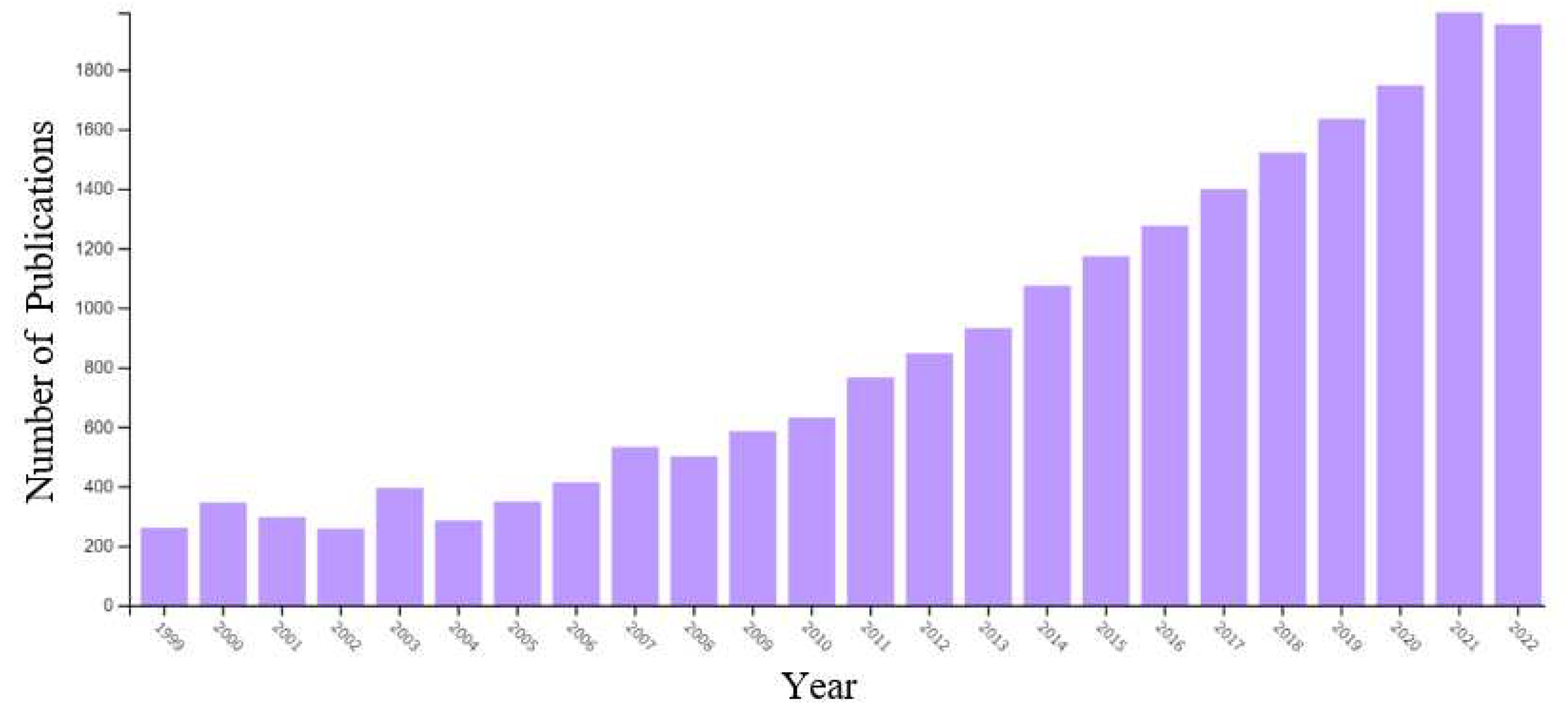
Figure 2.
Examples of Ecological Momentary Assessments conducted using mobile devices.
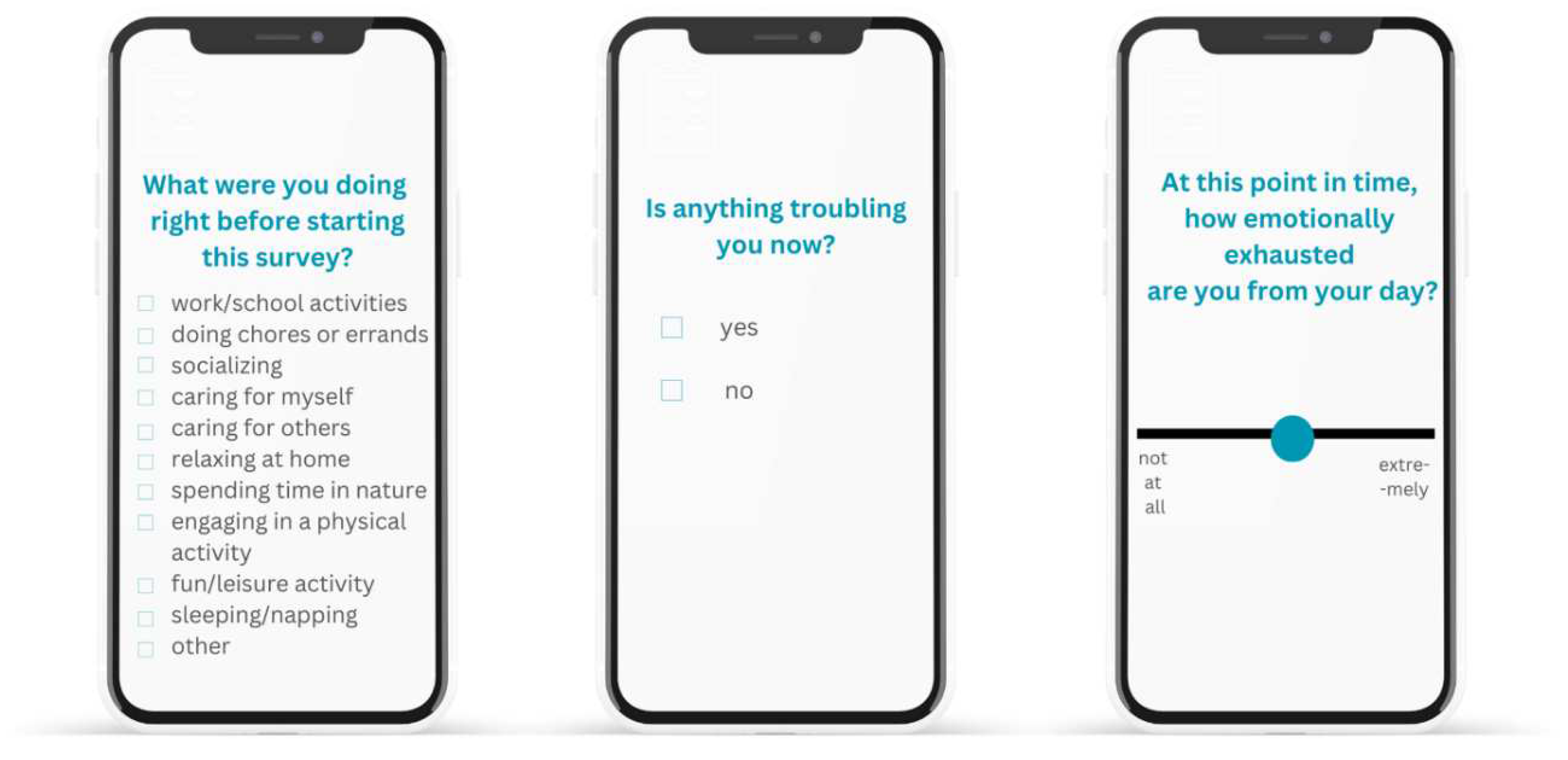

Table 1.
Examples of the scales and stand-alone questions utilized for ecological momentary assessments (EMAs).
Table 1.
Examples of the scales and stand-alone questions utilized for ecological momentary assessments (EMAs).
| Construct | Scales Used | Stand-Alone Questions Used |
|---|---|---|
| Stress & Resilience | ∙ Perceived Stress Scale (PSS; [64]) ∙ Brief Resilience Scale (BRS; [33]) ∙ Connor-Davidson Resilience Scale (CD-RISC-10; [65]) |
∙ Rate your stress levels from 1 (not at all stressed) to 5 (extremely stressed) [78] ∙ How well are you coping with the challenges you're currently facing? [67] ∙ Pick the image that best captures how stressed you feel right now. [79] |
| Well-Being & Happiness | ∙ Satisfaction with Life Scale (SwLS; [66]) ∙ WHO-5 Well-being Index [67] |
∙ All things considered, how satisfied are you with your life as a whole today? [80] ∙ How happy are you right now, on a scale from 0 (not at all) to 10 (completely)? [81] |
| Mood & Affect | ∙ Positive and Negative Affect Schedule (PANAS; [68]) ∙ Self-Assessment Manikin (SAM; [69]) ∙ Profile of Mood States (POMS; [70]) |
∙ Rate your mood from 1 to 5 for the following: happy, angry, sad, stressed, worried. [67] ∙ Pick the image that best captures your mood right now. [79] ∙ How positive do you feel right now (cheerful, enthusiastic, awake, calm, relaxed)? [82] ∙ How negative do you feel right now (irritated, bored, nervous/stressed, distressed, depressed)? [82] |
| Social Safety & Loneliness | ∙ Goldsmith Social Support Scale [71] ∙ UCLA 3-item Loneliness Scale [72] |
∙ “At the time of the prompt, were you having any social interaction?” [44]∙ “Since the last alarm, how many times did you socialize with someone else (e.g., spent more than 5 min talking or communicating with someone else)?” [43] |
| Energy & Arousal | ∙ Multidimensional Fatigue Inventory (MFI; [73]) ∙ Subjective Vitality Scale [70] |
∙ Rate your current energy level from 1 (no fatigue) to 10 (worst fatigue) [83]∙ People often describe how they feel right now referring to the metaphor of a battery ranging from exhausted to full of energy. Please indicate which of the following battery icons describes your current state best. (pictorial scale; [70]) |
| Present-Focus & Mindfulness | ∙ Five Factor Mindfulness Questionnaire- Short Form (FFMQ-SF; [74]) ∙ Cognitive Affective Mindfulness Scale-Revised (CAMS-R; [75]) |
∙ “Which of the following would best characterize these thoughts?” (past-focused, present-focused, future-focused) [84] |
| Burnout | ∙ Maslach Burnout Inventory (MBI; [76]) ∙ Oldenburg Burnout Inventory (OLBI; [77]) |
∙ At this point in time, how emotionally exhausted are you from your day? [13] ∙ How accomplished do you feel in your work at this moment? [13] |
Disclaimer/Publisher’s Note: The statements, opinions and data contained in all publications are solely those of the individual author(s) and contributor(s) and not of MDPI and/or the editor(s). MDPI and/or the editor(s) disclaim responsibility for any injury to people or property resulting from any ideas, methods, instructions or products referred to in the content. |
© 2023 by the authors. Licensee MDPI, Basel, Switzerland. This article is an open access article distributed under the terms and conditions of the Creative Commons Attribution (CC BY) license (http://creativecommons.org/licenses/by/4.0/).
Copyright: This open access article is published under a Creative Commons CC BY 4.0 license, which permit the free download, distribution, and reuse, provided that the author and preprint are cited in any reuse.


