
Submitted:
26 September 2023
Posted:
28 September 2023
You are already at the latest version
Abstract
: This study aims at examining how B Corporations advance Sustainable Development Goals (SDGs) in their practices by analyzing the socioenvironmental problems they address and the solutions they provide to those problems. All Argentinian B corporations, certified by early 2023 (135 companies), were investigated using a mixed approach, combining social network analysis with textual data analysis. The results showed that the environmental practices are primarily linked to waste, water, energy and chemical management, as well as product innovation. In turn, the social practices address the training, education, and well-being of employees and other stakeholders, diversity, equity and inclusion management, and the creation of an inclusive and fair environment, integrating local communities. Thus, in the flow of their sustainability practices, Argentinian B Corporations contribute to SDGs 8, 12, 13, 9, 6, 7, 5, 10, 11, 4, and 17, in line with the SDGs declared by these companies. Our findings contribute to the theoretical knowledge of the B Corp movement and have practical implications by providing inputs to improve the management of B Corporations and to guide public policies encouraging these companies to advance sustainable development dimensions lacking attention.
Keywords:
Sustainable Development Goals
; B Corporations
; sustainable practices
; social problems
; environmental problems
; triple bottom line theory
; sustainable development
1. Introduction
The 2030 Agenda, encompassing 17 Sustainable Development Goals (SDGs) [1], sets forth an ambitious and broad plan for sustainable development (SD). This plan not only requires governmental strategies and actions worldwide but also demands the participation of multiple agents from different fields [2], particularly the private sector [3]. The central role of private companies stems from a paradigm shift in development thinking.
This new development thinking recognizes their relevance for achieving SDGs while simultaneously highlighting that corporate leaders increasingly understand the importance of integrating environmental and social risks and opportunities into the core operations of their companies [4,5]. In line with the above, Apte and Sheth propose that a new business paradigm – sustainability – is “the next major competency that businesses will need to pursue and fully integrate in order to realize consistent, sustainable competitive advantage” [6] (p. 48).
In light of this emerging paradigm, many companies have adopted a sustainability approach, moving away from their traditional approach to business development [7]. This private sector alignment with SDGs has driven innovation, leading to sustainable business models [8]. Based on the framework of these models, companies have redefined their purpose [9] to incorporate the triple impact [10] and to jointly consider the social, economic, and environmental impacts of the company and the interests of all its stakeholders [11].
Among these models, B Corporations stand out as a sustainable hybrid business model [12,13,14]. These for-profit corporations not only pursue the triple impact but also go beyond merely mitigating negative impacts as they move towards creating value for society by generating social and environmental benefits. More specifically, these companies voluntarily undergo a comprehensive evaluation under the standards of B Lab, which is the organization that grants B Corp certification [15]. As of early 2023, 5,644 companies with B Corp certification were registered worldwide, 927 of which were from Latin America, including 135 Argentinian corporations.
These numbers demonstrate that companies recognize the importance of their alignment with SD through new and innovative business models, integrating SDGs into their activities. However, current knowledge on how companies support the achievement of SDGs remains limited, and studies focused on B Corporations are even more scarce. Thus, despite the increasing number of studies analyzing the link of companies to SDGs, most of them examine the information about and commitment to SDGs that companies declare [16,17,18,19,20,21,22]. Few studies go beyond the mission statements of companies to focus on their practices and actions and to analyze, based on them, their links and contributions to SDGs [9,23,24]. In this context, the evidence available for developing countries is particularly sparse, and even more so is the empirical literature on B Corporations and on how they advance the agenda of SD [14,25].
The present study aims at helping to bridge these gaps by furthering the knowledge on B Corporations and on their contribution to achieving SDGs. More specifically, this study aims at examining how Argentinian B Corporations support the achievement of SDGs in their practices by analyzing their commitment to SDGs and their links and specific contributions to SDGs based on the socioenvironmental problems they address and the specific solutions they provide to those problems.
The purpose of the study is to help to answer the following research questions:
- To which SDGs do Argentinian B Corporations commit?
- Which social and environmental problems do these companies focus on? Which practices do they develop to provide solutions to these problems?
- To which SDGs do Argentinian B Corporations effectively contribute through such practices?
To achieve the study goals and to answer the research questions, an exploratory study was conducted using a mixed approach, combining quantitative and qualitative data analysis by applying a concurrent mixed-methods research design [26].
After this introduction, the article is divided into five other main sections. The first section describes the theoretical framework of this study, addressing theoretical and conceptual aspects while reviewing the previous empirical literature. The second section explains the methodology. The third and fourth sections report and discuss the results, respectively, and the final section presents the conclusions and future perspectives.
2. Theoretical Framework and Literature Review
2.1. SDGs and business sustainability
The 2030 Agenda, encompassing 17 SDGs and 169 targets [27], presents a transforming approach to development through SD, conceived as the “development that meets the needs of the present without compromising the ability of future generations to meet their own needs” [28](p. 41). Under this long-term vision, the 17 SDGs (Figure 1) integrate the economic, social and environmental dimensions of development. For this reason, SDGs cover issues ranging from “eradicating poverty and hunger” through “promoting quality education and gender equality” to “fighting climate change”.
The global application of SDGs involves countries with different levels of development and capacity [5] and demands the broad participation of various actors, among which companies play a key role. Companies are regarded by the United Nations (UN) as crucial partners in achieving SDGs because the public sector alone cannot successfully tackle the challenge of SD [19]. Therefore, the innovation and responsiveness, specific skills, and resources of the private sector are required to achieve SDGs [3].
The central role of private companies stems from a paradigm shift in development thinking. This new development thinking recognizes their importance for the SD agenda. Simultaneously, this agenda is starting to take center stage in companies [4]. Accordingly, companies have been increasing their involvement with SD [14] by adopting a sustainability approach to development.
Business sustainability can be understood as “a practical implementation of goals and rules of the concept of sustainable development on a microeconomic level” [29] (p. 3). Business sustainability entails an intentional implementation of social and environmental goals in the economic activity of a company and in its interactions with different stakeholders [31], in line with the widely accepted triple bottom line theory. This accounting framework divides bottom line into three dimensions, namely economic, social, and environmental dimensions [9,30]. In this framework, SDGs emerge as an opportunity for companies to reconsider their approaches [19] and as a business sustainability model [25].
This change in the dominant business ideology shifted the focus from maximizing value for financial capital providers to a new business paradigm. Under this new paradigm, sustainability is the new source of competitive advantage [6]. Consequently, only a commitment to creating value for all stakeholders can enable companies to achieve sustained success amid their global challenges [7].
Considering the above, companies recognize the importance of their alignment with SD through new and innovative business models, integrating SDGs into their activities. In fact, companies are increasingly incorporating business sustainability, which is surpassing their traditional business approach [2]. But contradicting Izzo et al. [19], they do not merely adopt SDGs for “style rather than substance” (p. 4). Evidence shows that sustainability initiatives generate concrete benefits for companies, through increased sales and brand value and through reduced costs and risks [6], improving their performance [32,33] and relationships with various stakeholders [34,35,36].
2.2. Sustainable business models and B Corporations
The adoption of the sustainability approach to business has revealed the limitations of and the need to redesign the traditional business model [9]. For this purpose, companies promote innovation processes for redefining their mission [12]. Their current orientation towards sustainability has given rise to a new perspective: sustainable business models (SBMs) [8].
SBMs emphasize the creation of sustainable value for a wide range of stakeholders [11]. This perspective rejects the narrow focus on profits and incorporates the triple bottom line approach into the mission of the company [10]. In doing so, companies jointly consider their social, economic, and environmental impacts and the interests of all stakeholders, including society and the environment [37]. As such, SBMs transcend profit maximization models and align corporate interests with the need to contribute to SD, adopting a long-term perspective that goes beyond organizational borders [7].
Different types of SBMs have been identified in the literature, highlighting a school of thought focused on sustainability-driven hybrid business models (SHBMs). SHBMs typically have three fundamental objectives, namely promoting positive social and/or environmental change, creating mutually beneficial relationships with stakeholders, and influencing the market, competitors and sector institutions [38,39]. For these purposes, SHBMs use market tactics, not only focusing on maximizing benefits but also defining their mission around social and/or environmental goals and values, internalizing the social and natural contexts [13,39]. Accordingly, Haigh and Hoffman [40] emphasize that SHBMs go beyond reducing negative social and environmental impacts by pivoting towards generating benefits for society or restoring the environment. In doing so, they capture value for business owners and, simultaneously, create value for society through environmental and social benefits [41].
B Corporations are conceptualized as organizations that “take on the commitment to continuously improve and place their socio-environmental business purpose at the center of their business model” [15]. As such, B Corporations have been identified as a paradigmatic example of SHBMs [12,13,14]. These SHBMs are both for-profit and “socially obligated corporate forms of business” [42] because, in addition to generating economic returns, they provide solutions to community problems by creating positive externalities in the environment and society [2,43]. Thus, B Corporations have business characteristics but generate sustainable solutions to social, economic, and environmental problems within their mission [44], thereby pursuing the triple impact. As such, these companies aim at creating value for society through environmental and/or social benefits and are not limited to reducing the negative effects of business activity [12,38].
Tabares [14] classifies B Corporations as “legal hybrid forms” because they are “firms legally and voluntarily committed to social and/or environmental purposes through business activities” (p. 2) that undergo third-party social and environmental audits [45]. More specifically, B Lab, a non-profit organization created in the United States, in 2006, evaluates companies and awards them B Corp certification. B Corp certification also requires the legal commitment of companies to making decisions considering the long-term consequences of their actions in the community and the environment. Such a commitment also implies introducing changes to their bylaws – or even to their legal entity type – to “extend the fiduciary duty of shareholders and managers to include non-financial interests” [15].
Upon deciding to start the path towards becoming a B Corp, a company is subject to an independent assessment, under rigorous qualification standards. More specifically, the B Lab certification system establishes specific indicators to comprehensively assess the sustainability of the company, including certification and recertification stages. To become certified B Corp, companies must complete the “B Impact Assessment” procedure and score a minimum of 80 points. In this procedure, they “measure and analyze the five most relevant areas for their company: Government, Workers, Customers, Community, and Environment, allowing a detailed revision of all of them, with the objective of identifying all the possible improvement points and opportunities to be an agent of change in the economy, protecting the mission and maximizing the triple impact” [15].
Nevertheless, while the certification process is essential in B Corporations, the B model is more than a certification system. As shown by the Stubbs study [13], the B model is a true SBM, derived from “innovation within the business ecosystem” [12] (p. 61). The central element of its identify is the creation of public benefits through a combination of profit motive with the search for positive social and environmental impacts [46]. Thus, this new business model transforms the conception of business success, thereby helping to build “a more inclusive and sustainable economy in line with the Sustainable Development Goals” [47] (p. 109).
2.3. Theories linked to business sustainability
The stakeholder theory and the institutional theory provide the foundation for business sustainability and the adoption of various SBMs. As such, they serve as a suitable framework to explain the decision of companies to innovate towards a B Corp model.
According to the stakeholder theory, a company can be understood as a set of relationships between groups that have a vested interest in its activities and that constantly and dynamically interact with each other [48]. These groups include customers, suppliers, employees, financiers (such as shareholders and banks) and the local community, among others [49]. From this perspective, the relationships of the company with its stakeholders are crucial for its survival and growth; therefore, managers and executives should focus their work on managing and shaping these relationships to create as much value as possible for stakeholders [48].
Adopting a sustainability approach can be regarded as a means to improve company performance and create value for all its stakeholders [50]. Indeed, sustainability is a multidimensional construct, involving all key stakeholders, as well as the environment and society at large [51]. Sustainability is integrated into business models to create and balance economic, social, and environmental values [9]. Accordingly, SBMs, including B Corporations, are in line with the stakeholder theory as they represent the elements that a company uses and its mode of operation to “create, deliver, capture, and exchange sustainable value for, and in collaboration with, a broad range of stakeholders” [11] (p. 1219). The theory is also linked to the emerging paradigm postulated by Apte and Sheth [6] for gaining a sustainable competitive advantage, which requires transitioning from maximizing shareholder wealth to creating value for all stakeholders of the company.
The institutional theory addresses the relationship between organizations and their environment, highlighting the role of culture in shaping their organizational structure [52]. A key aspect of this theory lies in institutions, which represent practices that have attained social permanence [53]. These practices include social rules, norms, and ideologies [54], which are shared and approved socially. According to this theory, these socially accepted parameters affect organizations, which adjust to these parameters to demonstrate their adaptation to society and to gain legitimacy [55]. Thus, as the institutional environment influences organizations, their homogenization occurs through isomorphism: “a constraining process that forces one unit in a population to resemble other units that face the same set of environmental conditions” [56] (p. 108).
This theoretical perspective provides a framework to explain how institutional pressures can influence the sustainability efforts of companies. Thus, the decision of a firm to become a B corporation can be considered a legitimation process, whereby the firm tries to meet its stakeholders’ expectations through a SBM [57]. Accordingly, a company may adopt a B Corp model as a result of the social pressure that leads companies to become similar by adopting models of successful organizations, such as SBMs [50].
The decision to become a B Corp is also an action of corporate social responsibility (CSR) [42]. CSR may be regarded as a norm vying institutionalization in society [58]. Therefore, companies decide to assume CSR by adopting a B Corp model to gain legitimacy, which helps them to stay in the market and to achieve success.
2.4. Review of previous empirical studies
Research interest in understanding the role that companies play in achieving SDGs has been increasing in recent years, yielding various studies. Broadly speaking, these studies have focused on three main questions: how companies disclose information on SDGs, their commitment to SDGs considering the goals that they claim to advance, and their contribution to SDGs through their practices and actions. However, these studies have mainly focused on large corporations in developed countries. Therefore, evidence for developing countries and particularly for B Corporations remains limited.
Since the implementation of the 2030 Agenda, companies have been increasingly disclosing SDGs using different means of communication. A study by Nicoló et al. [21] showed that many of the world’s leading companies that adopt integrated reporting address issues related to SDGs in such reports. Similarly, companies from countries of the Latin American Integrated Market mention SDGs in their integrated, combined, and sustainability reports [16]. Izzo et al. [19] demonstrated that Italian companies mainly disclose SDGs through sustainability reports and non-financial statements. In line with the above, the results from the study by Curtó et al. [17] revealed that Spanish listed companies that publish non-financial reports increasingly report on SDGs, finding a positive link between adopting the Global Reporting Initiative (GRI) reporting standards or being a signatory to the UN Global Compact and disclosing information on SDGs. In their study on Portuguese companies, Fonseca and Carvalho [18] noted that SDGs are primarily communicated by firms that publish sustainability reports on their websites. The study by Erin and Bamigboye [59] revealed very low levels of SDG disclosure by listed companies of eight African countries, except for South Africa.
The level of commitment to 2030 Agenda is uneven among companies, as is their prioritization of SDGs and their alignment [5]. As a case in point, a study of the main listed companies worldwide revealed that the Philippines, Spain, and Portugal are the countries with the highest level of commitment [20] and that companies from all countries prioritize SDGs 8, 13, and 12. Based on a comparison of the Fortune Global 500 corporations, Song et al. [22] stated that companies based in Europe demonstrate the strongest commitment to SDGs, particularly with SDGs 8 and 13. When analyzing the level of commitment to SDGs of Portuguese firms that declare contributing to SDGs, Fonseca and Carvalho [18] detected a higher level of commitment to SDGs 12, 13, 9, 8, and 17, because they were the most reported, at 23.8, 22.1, 21.3, 20.0, and 19.6%, respectively. Izzo et al. [19] identified SDGs 8, 13, and 9 as the SDGs most often mentioned in reports of Italian companies, followed by SDGs 12, 3, 4, and 7.
The literature on the contribution of companies to SDGs through initiatives specifically implemented for this purpose remains more limited. In this context, Bonfanti et al. [9] identified practices of Italian companies that adopted a SBM, analyzing how those practices helped to achieve SDG. Their findings showed that such practices had an impact on 11 of the 17 SDGs, but not on SDGs 1, 2, 11, 14, 15, and 16. Eichler and Schwarz [23] analyzed how entities (including companies) that develop and implement social innovation address social needs and found that they predominantly contribute to SDGs 3, 8, and 17, in developed countries, and to SDGs 1, 3, and 8, in developing countries. In Latin America, Roset [24] examined progress reports of Argentinian companies participating in the UN Global Compact and analyzed the initiatives and programs that they include in those reports on their contribution to SDGs, concluding that the business sector primarily commits and contributes to SDGs 8 , 4, 12, 5, and 17, at 93, 86, 77, 69, and 68% compliance, respectively.
Research by Tabares [14] and by Bandini et al. [25] expanded the scarce literature on the contribution of B Corporations to SDGs. When assessing how Colombian B Corporations contributed to SDGs by analyzing corporate social innovation and solutions to social problems flagged by the UN, Tabares [14] concluded that these companies significantly contribute to SDGs 2, 6, 8, 9, 10, 11, 12, and 16. Bandini et al. [25] quantitatively analyzed the impact of Mexican B Corp actions on the SD Agenda and found that all study companies had a positive effect on SDGs. However, some companies directly advanced SDGs because these goals were included in their priorities, whereas other companies contributed to SDGs only indirectly, as a side effect of achieving their own socioenvironmental goals.
3. Materials and Methods
This exploratory study addressed an emerging research area and aimed at assessing how Argentinian B Corporations help to achieve SDGs. In total, 135 Argentinian companies with B Lab certification were identified based on information provided on the Sistema B website, which was consulted in January 2023.
The research questions were addressed using a mixed approach, in a concurrent mixed-methods research design [26] because quantitative and qualitative data were collected and analyzed concomitantly and separately for complementation.
Two sets of data were collected in this study; on the one hand, data on SDGs reported by B Corporations, and on the other, data on the solutions that these companies provide to social and environmental problems. The former were treated as quantitative data as they were collected considering whether or not each SDG was addressed by each firm, recording the absence or presence as 0 and 1, respectively. This numerical representation required applying a dichotomous approach, widely used in previous literature [60,61]. The second set of data was qualitative because it consisted of textual (narrative) information, involving a story about the social and environmental problems that companies tackle and the ways in which they solve them.
These data were retrieved from institutional reports and from websites, between January and May 2023. The reports included the catalog of Argentinian B Corporations (provided by Sistema B) and 2022 progress and sustainability reports of the companies that prepare these reports. Information on SDGs advanced by the companies was extracted from these reports. Data were also collected from the Sistema B website, which publishes information on all Latin American companies with the corresponding certification. More specifically, information on the solutions that they provide to socioenvironmental problems was retrieved from this source.
Data collected from these sources were analyzed concomitantly and separately, using quantitative and qualitative data analysis procedures, as mentioned above. Data on SDGs declared by the companies were subjected to social network analysis to study structures emerging from relationships between a specific set of social actors [62], that is, companies. In particular, the analysis was developed based on a bimodal sociocentric network involving two sets of nodes: actors (companies) and events (SDG) [63]. Such a two-mode affiliation network was constructed from a 135 x 17 rectangular matrix composed of ones and zeros. This network was analyzed using UCINET (version 6.640) and NetDraw (version 2.61) software.
Concomitantly, information reported by the companies on their solutions to social and environmental problems was qualitatively analyzed by content analysis [64]. This method enables us to analyze data expressed in words [65]. For this purpose, the lexical analysis technique was applied to examine the textual data [66] in IRaMuTeQ software (version 0.7 alpha 2) using word clouds and analysis of similarities (ANOSIM). Word clouds visually represented the most frequently evoked terms. Based on an analysis of similarities, relationships between words were examined based on their co-occurrence and connections in the text, which helped to recognize the content structure of the textual corpus to subsequently analyze the meanings of these co-occurrences and to interpret the textual data.
Lastly, the results and interpretations from quantitative (social network analysis) and qualitative (lexical analysis) analysis were integrated for a better understanding of the results from each analysis and for a more comprehensive view of the phenomenon under study.
4. Results
The results from the data analysis are presented in this section. To answer the research questions separately, the results are presented in the following three subsections: 1) Commitment SDGs, 2) Practices and solutions to socioenvironmental problems, and 3) Contribution to SDGs.
4.1. Commitment to SDG
The commitment of Argentinian B Corporations to SDGs was assessed by social network analysis. The results from this analysis showed the structure of relationships between these companies regarding SDGs to which they declare to contribute. The network of B Corporations and SDGs (Figure 2) is a two-mode network in which circular and red nodes represent companies, and square and blue nodes represent SDGs. The node sizes show the number of SDGs mentioned by each company (red nodes) and the number of times each SDG is referenced by the firms (blue nodes).
First, all 17 SDGs are found in the network. However, the size of the blue nodes clearly shows that Argentinian B Corporations prioritize SDG 8 “Decent work and economic growth” and SDG 12 “Responsible consumption and production”. The results also show a strong commitment to SDG 13 “Climate action”, SDG 9 “Industry, innovation and infrastructure”, SDG 17 “Partnerships for the goals,” and SDG 5 “Gender equality”, followed by SDG 4 “Quality Education” and SDG 11 “Sustainable cities and communities”. The network shows no SDG with a differentiated business strategy because no disconnected blue node is observed in Figure 2.
4.2. Practices and solutions to socioenvironmental problems
To complement the previous analysis and to identify the specific contributions of Argentinian B Corporations to SDGs, the links to SDGs created through their practices were analyzed, specifically those implemented to address socioenvironmental problems and to provide solutions to them. The lexical analysis of the sub-corpus of textual data in which the 135 Argentinian B Corporations report how they solve socioenvironmental problems yielded a word cloud. As shown in Figure 3, the four most oft-mentioned words were impact, environmental, social, and work; nevertheless, other words were also mentioned in several instances, such as development, community, sustainable, person, product, and process.
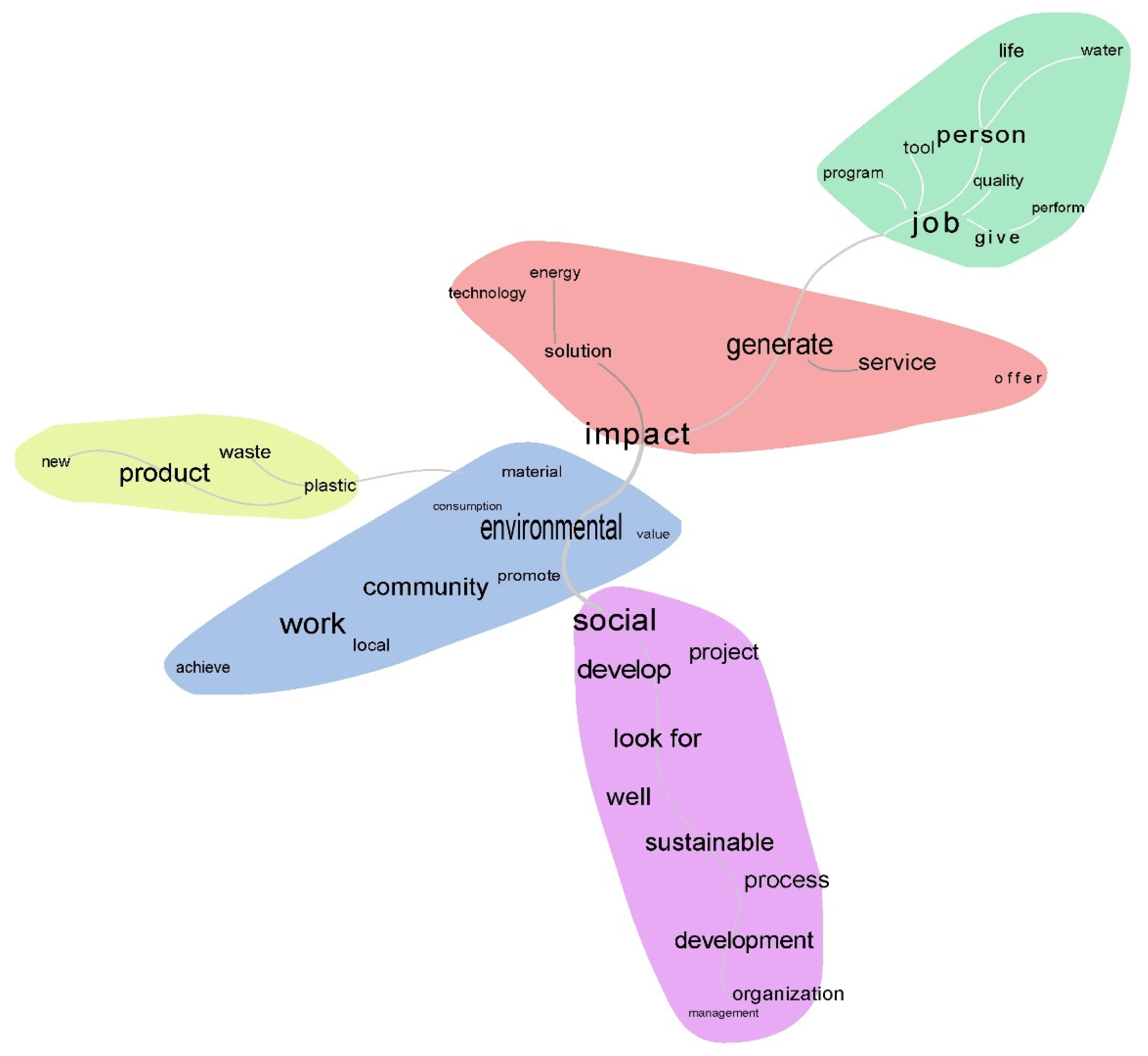
In line with the above, the ANOSIM results (Figure 4) show that Argentinian companies emphasize their positive impacts on the environment in the way they solve environmental problems by developing projects and using new and better production processes. In this framework, they practice and promote materials and waste recycling, use recycled materials as raw materials for their products, and follow practices aimed at responsibly using water and reducing energy and single-use plastic consumption.
The following statements, expressed by the companies, account for the above:
“All projects have a positive impact, reducing carbon dioxide emissions, generating biodiversity and developing rural workers”.
“The company develops plastic products through virtuous industrial processes leaning towards 0% Scrap, recovering their post-industrial waste and converting them into new products”.
“We also [have a positive] impact [on] the environment through our 3R processes and through a sustainable and collaborative value chain”.
“We aim at reducing the use of nonrenewable energy throughout the wine production process, reaching 85% solar energy use (…) Lastly, we aim at reusing treated wastewater”.
“GEA helps and encourages organizations to adequately and responsibly manage their recyclable waste, thus preventing tons of valuable materials from being sent to a landfill and reintegrating them into society”.
“Our material, recycled leather, gives a second life to discards linked to the value chain of the leather industry”.
“Vivero San Nicolas S.A preserves the resources used and reduces the consumption of hazardous substances and raw materials by reusing waste and input materials”.
To solve social problems, companies perform actions primarily aimed at advancing sustainable development. In particular, they promote the development of local communities, as well as personal and professional development to improve quality of life. They also foster decent work, together with inclusion and diversity, providing work to the people with more difficulties in accessing the job market. The following statements reflect the above:
“CARNE focuses not only on respecting sustainable agricultural production but also on working with local communities to strengthen local agricultural development”.
“We participate in the radical change that is needed, helping cities to increase their bio-capacity to sustain life (regeneration), to improve the circularity of resources (circular economy) and to facilitate training and development of local capacities (land development)”.
“Limpiolux includes people who face repeated work barriers, focusing its efforts on providing quality work and promoting personal and professional development of persons so that they can enhance their employability and improve their quality of life”.
“Generating 1,000 opportunities of decent work for the local population (…) by trading organic yerba mate grown by smallholder and family farmers and indigenous communities under the shade of native tree species (…) while empowering local communities by working with them under fair trade standards”.
“Regarding social problems, we work with Inclusion as a premise; Grupo Advance employs persons with different barriers, such as former prisoners, people with disabilities, and transgender people, among others”.
“(..) Santex decided to solve both problems: ensuring that women account for 50% of management positions, adjusting wages to promote equality and, simultaneously, creating a Nursery”.
4.3. Contribution to SDGs
The practices identified above, which reflect socioenvironmental problems addressed by Argentinian B Corporations and how they solve those problems, highlight strong links to SDGs and their specific contributions towards achieving those goals. For example, the attention to environmental aspects of SDGs is evident. In relation to this dimension, the problems that Argentinian B Corporations address and the practices that they implement to solve them are clearly aimed at helping to achieve “Responsible consumption and production” (SDG 12) and “Climate Action” (SDG 13), as shown by their production activities, which tend to reduce environmental degradation and contamination. In addition, practices linked to product innovation for product development under environmentally friendly processes highlight the contribution to SDG 9 “Industry, innovation and infrastructure”, which is strictly related to promoting sustainable industrialization. The results also show, albeit in a less general way, the contribution of the study companies to SDG 6 “Clean water and sanitation” and SDG 7 “Affordable and clean energy”, through good practices linked to the responsible use of two critical resources, namely water and energy.
As for the social dimension of SDGs, companies address problems and perform social practices that contribute to “Decent work and economic growth” (SDG 8), “Gender equality” (SDG 5), and “Reduced Inequalities” (SDG 10) by creating working conditions for dignified and quality work and by opening up opportunities for groups experiencing the highest levels of discrimination in joining the job market through diversity, equity, and inclusion management, thus helping to generate opportunities for entire working-age population. They also contribute to SDG 11: “Sustainable cities and communities”, by fostering the development of their geographical area through actions aimed at integration and joint work with local communities, and to SDG 4: “Quality education”, by focusing on training and educating not only their employees but also other stakeholders in their environment, which are crucial for strengthening local capacities and empowering those communities. These practices, aimed at creating relationships with interested parties in the local environment, highlight the importance of “Partnerships for the goals” (SDG 17) for working together to meet social needs and achieve inclusive and fair land development.
5. Discussion
The results from the social network analysis show that Argentinian B Corporations are committed to all SDGs, albeit to a different extent, as are Mexican B Corporations studied by Bandini et al. [25]. The prioritization of SDG 8 and the relevance of SDGs 12 and 13 are also observed in companies of other countries, especially in Europe, as shown by Fonseca and Carvalho [18], Izzo et al. [19], Monteiro et al. [20], and Song et al. [22]. In those countries, SDGs 9 and 17 are also significant, albeit to a lesser extent, according to Fonseca and Carvalho [18], Eichler and Schwars [23], and Izzo et al. [19]. In Argentina, the study by Roset [24] revealed that companies most often commit to SDGs 8, 4, 12, 5, and 17, in line with the results of this study.
The analysis of practices implemented to address socioenvironmental problems and provide solutions to them shows that Argentinian B Corporations primarily address the following environmental problems: pollution, waste generation, water scarcity, and nonrenewable energy consumption. These problems related to climate change and production systems are also addressed by Colombian B Corporations, as shown by Tabares [14].
To respond to such problems, Argentinian B Corporations develop their production activities using processes and materials that promote the creation of positive externalities in the environment. Accordingly, such environmentally friendly practices have also been recognized by Bonfanti et al. [9] in Italian SBMs. More specifically, we identified practices related to managing waste from the production process, critical resources – including water and energy – and chemical components (polluting gases). Product innovation practices are also highlighted for enabling product development under environmentally friendly procedures. These practices are consistent with the very essence of B Corporations, conceived as business models that promote innovation to achieve sustainability [12,13].
The results also show that Argentinian B Corporations focus on local social problems, particularly on the most vulnerable groups facing the greatest obstacles to inclusion in the job market, such as women, indigenous communities, the disabled, and transgender people, among others, and on work-related and land development problems. These social problems are consistent with four of the problems flagged by Tabares [14], namely lack of education, lack of participation in the community, inequalities, and work-related issues, to which Columbian B Corporations of Colombia also respond.
To address these social problems, Argentinian B Corporations implement practices such as focusing on training, education and the well-being of employees and other stakeholders, managing diversity, equity and inclusion, and creating an inclusive and fair environment. These practices are in line with those described by Bonfanti et al. [9] for Italian sustainable companies which interpret sustainability “as an objective that overcomes the boundaries of the single business and include the local ecosystem of stakeholders in a common struggle to create an inclusive and fair development” (p. 2497). This interpretation materializes in the practices – of Argentinian B Corporations – geared towards integration and joint work with local communities and the creation of a sustainable environment. These practices reveal a new approach to business, under the paradigm postulated by Apte and Sheth [6], a paradigm that aims at creating value for all stakeholders [48] by adopting a long-term perspective that transcends the borders of the company [7].
The above highlights the coherence between the SDGs most often declared by companies and their links to such SDGs through their social and environmental practices. The analysis of their practices clearly showed that Argentinian B Corporations primarily contribute to SDGs 12 and 8 although their contribution to SDGs 13, 9, 6, 7, 5, 10, 11, 4, and 17 is also important. These companies also commit to the remaining six SDGs in their statements and reports, but their commitment is not evident in the analysis of socioenvironmental practices. This discrepancy could indicate that those six SDG (1, 2, 3, 14, 15, and 16) are addressed only by some companies, and not by most companies of the study sample. This explanation is consistent with the results from the social network analysis, wherein the blue nodes corresponding to those goals were the smallest nodes in the network (Figure 2).
These results also corroborate the findings of Bonfanti et al. [9], who also found that the practices of Italian companies adopting SBMs address 11 of the 17 SDGs, matching the 11 SDGs identified in this study. Our findings also match the results reported by Roset [24], who noted that the Argentinian business sector mainly contributed to SDGs 8, 4, 12, 5, and 17, and partly match those by Tabares [14], who found that Colombian B Corporations contribute to SDGs 2, 6, 8, 9, 10, 11, 12, and 16, and those by Eichler and Schwarz [23], who showed that SDG 8 is one of the three goals that companies in developing countries predominantly focus on.
These findings contribute to theories related to sustainability, presented in this study, revealing that the SBMs of B Corporations are underlined by a legitimization process derived from the influence of the institutional environment, which drives them to adjust to socially accepted parameters [52,55], as exemplified by CSR actions [42,58]. Their adaptation highlights their efforts to satisfy the expectations of all their stakeholders [57] and to create economic, social and environmental value for, and in collaboration with, all of them [9,50].
6. Conclusions, Limitations, and Future Perspectives
This study aimed at assessing how Argentinian B corporations mobilize SDGs. To this end, we analyzed both their commitment and links to SDGs and their concrete contributions to achieving those goals by addressing socioenvironmental problems and by providing specific solutions to those problems.
The results from the analysis of SDGs declared in the statements and reports of Argentinian B Corporations showed their commitment to all SDGs, albeit predominantly to SDGs 8 and 12, followed by SDGs 13, 9, 17, 5, 4, and 11.
The social and environmental problems addressed by Argentinian B corporations and their practices aimed at responding to them demonstrate that these companies adopt a sustainability approach, as shown by their innovative business models. This approach translates into a clear sustainable value proposition for a wide range of stakeholders, with solutions implying benefits for the environment and society. Accordingly, environmental value is generated by developing production activities using processes and materials that reduce environmental degradation and contamination, by responsibly using water and energy and by implementing good emissions and waste management practices, which also entail product innovations. Social value is created by fostering conditions for decent and quality work and by opening up opportunities for the groups with the greatest difficulties in accessing the job market through actions geared towards training and educating employees and other stakeholders and through integration and joint work with local communities to promote their capacities and land development.
This value proposition confirms that Argentinian B Corporations help to advance the 2030 Agenda for SD through specific contributions highlighted in their practices aimed at creating social and environmental value, as well as economic value. The analysis of their practices showed that Argentinian B Corporations primarily contribute to SDGs 8 and 12, but also make an important contribution to SDGs 13, 9, 6, 7, 5, 10, 11, 4, and 17, nonetheless. The results showed a clear consistency between SDGs declared by these companies and those to which they effectively create links in their sustainability practices. Thus, in addition to identifying SD dimensions to which Argentinian B Corporations already strongly contribute, this study highlighted other SDGs that these companies could further develop in their business models, namely SDGs 1, 2, 3, 14, 15, and 16, and contribute to their achievement.
These findings provide theoretical contributions and have practical implications. From a theoretical perspective, this study contributes to the knowledge about a novel and incipient phenomenon, the B Corp movement, responding to the call of various authors to further research this topic [16], and especially about the way in which B Corporations contribute to SDGs [2]. In this regard, the present study expands the limited research on this topic [14,25], revealing the concrete contributions of B Corporations to SDGs through their practices for providing solutions to environmental and social problems. This study also contributes to bridge another gap in the literature, providing evidence on sustainable business practices and, thus, also responding to the calls of other authors [9] for further research on the practical operationalization of SBMs and their contribution to SDGs in companies, such as B corporations, not necessarily born of SBMs.
From a practical standpoint, our findings may be highly useful for decision-making in B Corporations by highlighting overlooked SDGs lacking a significant relationship with their practices, thereby providing data on SDGs that can be even further advanced, through practices and actions, to expand social and environmental benefits. Lastly, our findings also have practical governmental implications as inputs that may guide the development of public policies encouraging companies to address overlooked dimensions of SD.
The limitations of this exploratory study may be overcome by conducting further research for a more in-depth analysis of the contribution of B Corporations to SDGs. One of these limitations is linked to the data sources because only information disclosed by companies on their websites and institutional reports was analyzed in this study. Further studies should analyze data from other sources, such as interviews with company founders and executives. In addition, this study only considered the perspective of the companies; therefore, broadening the scope to different groups with interests in their activities, such as employees, suppliers and other community members, may help to assess the impact of these sustainable practices in their living conditions. Considering the lack of studies on B Corporations, larger samples including B Corporations from other countries may also improve the analysis of similarities and differences in contributions to SDGs between companies operating in different economic contexts and sectors.
Author Contributions
Conceptualization, C.F.; methodology, C.F. and C.B.; software, P.B. and C.B.; validation, P.B. and C.B.; formal analysis, P.B. and C.B.; investigation, C.F.; resources, C.F., P.B. and C.B.; data curation, C.F. and P.B.; writing—original draft preparation, C.F. and E.H.; writing—review and editing, C.F., P.B. and E.H.; visualization, C.F. and E.H.; supervision, C.F.; project administration, C.F.; funding acquisition, C.F. and E.H. All authors have read and agreed to the published version of the manuscript.
Funding
The project had the logistical and financial support of the Faculty of Economic Sciences of the National University of Río Cuarto (Universidad Nacional de Río Cuarto – UNRC), within the framework of the research project entitled “Modelo de negocio, capital intelectual e información en empresas sostenibles” (Business model, intellectual capital and information in sustainable companies), within the framework of the call for projects 2022-2023 endorsed by the Secretariat of Science and Technology of the Faculty of Economic Sciences of the UNRC. In addition, this research was made possible thanks to the support of the National Research System (Sistema Nacional de Investigación – SNI) of the National Secretariat of Science, Technology and Innovation (Secretaría Nacional de Ciencia, Tecnología e Innovación – SENACYT; Panamá), and by the University of Panama (Universidad de Panamá – UP) by means of the Office of the Provost for Research and Graduate Studies (Vicerrectoría de Investigación y Postgrado), with the call for research funds.
Institutional Review Board Statement
Not applicable.
Informed Consent Statement
Not applicable.
Data Availability Statement
Data are available from the authors upon reasonable request.
Acknowledgments
The authors thank the Sistema B organization for providing part of the data for this research.
Conflicts of Interest
The authors declare no conflict of interest. The funders had no role in the design of the study; in the collection, analyses, or interpretation of data; in the writing of the manuscript; or in the decision to publish the results.
References
- The 17 Goals. Available online: https://sdgs.un.org/goals (accessed on 25 March 2023).
- Diez-Busto, E.; Sanchez-Ruiz, L.; Fernandez-Laviada, A. The B Corp Movement: A Systematic Literature Review. Sustainability 2021, 13, 2508. [Google Scholar] [CrossRef]
- Scheyvens, R.; Banks, G.; Hughes, E. The Private Sector and the SDGs: The Need to Move beyond ‘Business as Usual. ’ Sustainable Development 2016, 24, 371–382. [Google Scholar] [CrossRef]
- United Nations Global Compact The Role of Business and Finance in Supporting the Post-2015 Agenda. https://www.unglobalcompact.org/docs/news_events/9.6/Post2015_WhitePaper_2July14.pdf, 2014.
- Van Zanten, J.A.; Van Tulder, R. Multinational Enterprises and the Sustainable Development Goals: An Institutional Approach to Corporate Engagement. Journal of International Business Policy 2018, 1, 208–233. [Google Scholar] [CrossRef]
- Apte, S.; Sheth, J. Developing the Sustainable Edge. Leader to Leader 2017, 2017, 48–53. [Google Scholar] [CrossRef]
- Dhanda, U.; Shrotryia, V.K. Corporate Sustainability: The New Organizational Reality. Qualitative Research in Organizations and Management: An International Journal 2021, 16, 464–487. [Google Scholar] [CrossRef]
- Stubbs, W.; Cocklin, C. Conceptualizing a “Sustainability Business Model. ” Organ Environ 2008, 21, 103–127. [Google Scholar] [CrossRef]
- Bonfanti, A.; Mion, G.; Brunetti, F.; Vargas-Sánchez, A. The Contribution of Manufacturing Companies to the Achievement of Sustainable Development Goals: An Empirical Analysis of the Operationalization of Sustainable Business Models. Bus Strategy Environ 2023, 32, 2490–2508. [Google Scholar] [CrossRef]
- Elkington, J. Cannibals with Forks: The Triple Bottom Line of 21st Century Business; Capstone Publishing: Oxford, Reino Unido, 1997. [Google Scholar]
- Geissdoerfer, M.; Morioka, S.N.; de Carvalho, M.M.; Evans, S. Business Models and Supply Chains for the Circular Economy. J Clean Prod 2018, 190, 712–721. [Google Scholar] [CrossRef]
- Correa, P. Innovation in Business Models: B Corps. Responsibility and Sustainability 2022, 7, 55–66. [Google Scholar]
- Stubbs, W. Characterising B Corps as a Sustainable Business Model: An Exploratory Study of B Corps in Australia. J Clean Prod 2017, 144, 299–312. [Google Scholar] [CrossRef]
- Tabares, S. Do Hybrid Organizations Contribute to Sustainable Development Goals? Evidence from B Corps in Colombia. J Clean Prod 2021, 280, 124615. [Google Scholar] [CrossRef]
- Sistema, B. Available online:. Available online: https://www.sistemab.org/ (accessed on 1 January 2023).
- Álvarez Duque, M.; Monsalve Franco, C.; Correa Mejía, L. Caracterización de Los Objetivos de Desarrollo Sostenible Priorizados Por Las Compañías Latinoamericanas. Revista Universidad y Empresa 2022, 24, 1–37. [Google Scholar] [CrossRef]
- Curtó-Pagès, F.; Ortega-Rivera, E.; Castellón-Durán, M.; Jané-Llopis, E. Coming in from the Cold: A Longitudinal Analysis of SDG Reporting Practices by Spanish Listed Companies since the Approval of the 2030 Agenda. Sustainability 2021, 13, 1178. [Google Scholar] [CrossRef]
- Fonseca, L.; Carvalho, F. The Reporting of SDGs by Quality, Environmental, and Occupational Health and Safety-Certified Organizations. Sustainability 2019, 11, 5797. [Google Scholar] [CrossRef]
- Izzo, M.F.; Ciaburri, M.; Tiscini, R. The Challenge of Sustainable Development Goal Reporting: The First Evidence from Italian Listed Companies. Sustainability 2020, 12, 3494. [Google Scholar] [CrossRef]
- Monteiro, S.; Amor-Esteban, V.; Lemos, K.; Ribeiro, V. Are We Doing the Same? A Worldwide Analysis of Business Commitment to the SDGs. AIMS Environ Sci 2023, 10, 446–466. [Google Scholar] [CrossRef]
- Nicolò, G.; Zanellato, G.; Tiron-Tudor, A.; Polcini, P.T. Revealing the Corporate Contribution to Sustainable Development Goals through Integrated Reporting: A Worldwide Perspective. Social Responsibility Journal 2022, 19, 829–857. [Google Scholar] [CrossRef]
- Song, L.; Zhan, X.; Zhang, H.; Xu, M.; Liu, J.; Zheng, C. How Much Is Global Business Sectors Contributing to Sustainable Development Goals? Sustainable Horizons 2022, 1, 100012. [Google Scholar] [CrossRef]
- Eichler, G.M.; Schwarz, E.J. What Sustainable Development Goals Do Social Innovations Address? A Systematic Review and Content Analysis of Social Innovation Literature. Sustainability 2019, 11, 522. [Google Scholar] [CrossRef]
- Roset, N. Informe de Progreso: Contribución de Empresas Argentinas a Los Objetivos de Desarrollo Sostenible. https://pactoglobal.org.ar/wp-content/uploads/2020/12/Contribuciones_ODS_2019-2020-002.pdf, 2020. [Google Scholar]
- Bandini, F.; Boni, L.; Fia, M.; Pellegrini, M.; Toschi, L.; Rivera, I.; De Leon, D.D. Role of Business in Achieving the Sustainable Development Goals in the Global South: Breadth and Depth Strategies of B Corps in Pursuing SDGs Learning from North and South. 2021.
- Hernández Sampieri, R.; Mendoza Torres, C.P. Metodología de La Investigación; Mc. Graw Hill: DF, México, 2018. [Google Scholar]
- 27. United Nations Resolución 70/1 - Transforming Our World: The 2030 Agenda for Sustainable Development. https://www.un.org/sustainabledevelopment/development-agenda/, 2015.
- United Nations Report of the World Commission on Environment and Development: Our Common Future; 1987.
- Gross-Gołacka, E.; Kusterka-Jefmańska, M.; Jefmański, B. Can Elements of Intellectual Capital Improve Business Sustainability?—The Perspective of Managers of SMEs in Poland. Sustainability 2020, 12, 1545. [Google Scholar] [CrossRef]
- Mejía Soto, E.; Montilla Galvis, O.; Montes Salazar, C.A.; Mora Roa, G. Teoría Tridimensional de La Contabilidad T3C (Versión 2.0): Desarrollos, Avances y Temas Propuestos. Revista Libre Empresa 2014, 11, 95–120. [Google Scholar] [CrossRef]
- Ficco, C.R.; Prieto, M.B. El Capital Intelectual: Factor Clave En La Relación Empresa-Sociedad-Sostenibilidad. AECA: Revista de la Asociación Española de Contabilidad y Administración de Empresas 2021, 135, 13–15. [Google Scholar]
- Flammer, C. Does Corporate Social Responsibility Lead to Superior Financial Performance? A Regression Discontinuity Approach. Manage Sci 2015, 61, 2549–2568. [Google Scholar] [CrossRef]
- Lu, J.; Rodenburg, K.; Foti, L.; Pegoraro, A. Are Firms with Better Sustainability Performance More Resilient during Crises? Bus Strategy Environ 2022, 31, 3354–3370. [Google Scholar] [CrossRef]
- Al Mubarak, Z.; Ben Hamed, A.; Al Mubarak, M. Impact of Corporate Social Responsibility on Bank’s Corporate Image. Social Responsibility Journal 2019, 15, 710–722. [Google Scholar] [CrossRef]
- Cheng, B.; Ioannou, I.; Serafeim, G. Corporate Social Responsibility and Access to Finance. Strategic management journal 2014, 35, 1–23. [Google Scholar] [CrossRef]
- Ioannou, I.; Serafeim, G. The Impact of Corporate Social Responsibility on Investment Recommendations: Analysts’ Perceptions and Shifting Institutional Logics. Strategic management journal 2015, 36, 1053–1081. [Google Scholar] [CrossRef]
- Bocken, N.M.P.; Short, S.W.; Rana, P.; Evans, S. A Literature and Practice Review to Develop Sustainable Business Model Archetypes. J Clean Prod 2014, 65, 42–56. [Google Scholar] [CrossRef]
- Haigh, N.; Hoffman, A.J. Hybrid Organizations: The next Chapter in Sustainable Business. Organ Dyn 2012, 41, 126–134. [Google Scholar] [CrossRef]
- Hoffman, A.J.; Badiane, K.K.; Haigh, N. Hybrid Organizations as Agents of Positive Social Change: Bridging the for-Profit & Non-Profit Divide. In Using a positive lens to explore social change and organizations: Building a theoretical and research foundation; Golden-Briddle, K., Dutton, J.E., Eds.; Taylor and Francis: Hoboken, 2012; pp. 152–174. [Google Scholar]
- Haigh, N.; Hoffman, A.J. The New Heretics: Hybrid Organizations and the Challenges They Present to Corporate Sustainability. Organ Environ 2014, 27, 223–241. [Google Scholar] [CrossRef]
- Santos, F.; Pache, A.-C.; Birkholz, C. Making Hybrids Work: Aligning Business Models and Organizational Design for Social Enterprises. Calif Manage Rev 2015, 57, 36–58. [Google Scholar] [CrossRef]
- Hiller, J.S. The Benefit Corporation and Corporate Social Responsibility. Journal of Business Ethics 2013, 118, 287–301. [Google Scholar] [CrossRef]
- Gambaro, E.; García, L.N. Empresas B: Una Gestión Estratégica Apoyada En El Conocimiento. Actualidad Contable Faces 2021, 24, 125–149. [Google Scholar] [CrossRef]
- Harjoto, M.; Laksmana, I.; Yang, Y. Why Do Companies Obtain the B Corporation Certification? Social Responsibility Journal 2019, 15, 621–639. [Google Scholar] [CrossRef]
- Moroz, P.W.; Branzei, O.; Parker, S.C.; Gamble, E.N. Imprinting with Purpose: Prosocial Opportunities and B Corp Certification. J Bus Ventur 2018, 33, 117–129. [Google Scholar] [CrossRef]
- Correa, M.E. Sistema B y Las Empresas B En América Latina: Un Movimiento Social Que Cambia El Sentido Del Éxito Empresarial; CAF Development Bank Of Latinamerica: Colombia, 2019. [Google Scholar]
- Blasi, S.; Sedita, S.R. Mapping the Emergence of a New Organisational Form: An Exploration of the Intellectual Structure of the B Corp Research. Corporate Social Responsibility and environmental mangement 2021, 29, 107–123. [Google Scholar] [CrossRef]
- Freeman, R.E. Strategic Management: A Stokcholder Approach; Pitman Publishing Inc.: Boston, EEUU, 1984. [Google Scholar]
- Dunham, L.; Freeman, R.E.; Liedtka, J. Enhancing Stakeholder Practice: A Particularized Exploration of Community. Business Ethics Quarterly 2006, 16, 23–42. [Google Scholar] [CrossRef]
- Fonseca, L.; Silva, V.; Sá, J.C.; Lima, V.; Santos, G.; Silva, R. B Corp versus ISO 9001 and 14001 Certifications: Aligned, or Alternative Paths, towards Sustainable Development? Corp Soc Responsib Environ Manag 2022, 29, 496–508. [Google Scholar] [CrossRef]
- Parmar, B.L.; Freeman, R.E.; Harrison, J.S.; Wicks, A.C.; Purnell, L.; De Colle, S. Stakeholder Theory: The State of the Art. Academy of Management Annals 2010, 4, 403–445. [Google Scholar] [CrossRef]
- Dimaggio, P.; Powell, W. El Nuevo Institucionalismo En El Análisis Organizacional; Fondo de Cultura Económica: DF, México, 1999. [Google Scholar]
- Zucker, L.G. Institutional Theories of Organization. Annu Rev Sociol 1987, 13, 443–464. [Google Scholar] [CrossRef]
- Meyer, J.W.; Rowan, B. The Structure of Educational Organizations. In Organizational Environments: Ritual and Rationality; Meyer, J.W., Scott, W.R., Eds.; Sage publications: Thousand Oaks, EEUU, 1983. [Google Scholar]
- Cruz-Suárez, A.; Prado-Román, C.; Díez-Martín, F. Por Qué Se Institucionalizan Las Organizaciones. Revista Europea de Dirección y Economía de la Empresa 2014, 23, 22–30. [Google Scholar] [CrossRef]
- Dimaggio, P.; Powell, W. The Iron Cage Revisited: Institutional Isomorphism and Collective Rationality in Organizational Fields. Am Sociol Rev 1983, 48, 147–160. [Google Scholar] [CrossRef]
- Occhipinti, Z. Why Becoming a B Corp? A Discussion and Some Reflections. Journal of Modern Accounting and Auditing 2023, 19, 23–30. [Google Scholar] [CrossRef] [PubMed]
- Martínez, A.M.; Fernández, J.R. La Responsabilidad Social Empresarial Bajo Los Postulados de La Teoría Institucional: Análisis y Evidencias. Espac Abierto 2017, 26, 183–204. [Google Scholar]
- Erin, O.A.; Bamigboye, O.A. Evaluation and Analysis of SDG Reporting: Evidence from Africa. Journal of Accounting & Organizational Change 2022, 18, 369–396. [Google Scholar]
- Cooke, T.E. Voluntary Corporate Disclosure by Swedish Companies. Journal of International Financial Management & Accounting 1989, 1, 171–195. [Google Scholar]
- Ordóñez-Castaño, I.A.; Herrera-Rodríguez, E.E.; Franco Ricaurte, A.M.; Perdomo Mejía, L.E. Voluntary Disclosure of GRI and CSR Environmental Criteria in Colombian Companies. Sustainability 2021, 13, 5405. [Google Scholar] [CrossRef]
- Sanz Menéndez, L. Análisis de Redes Sociales: O Cómo Representar Las Estructuras Subyacentes. Revista Apuntes de Ciencia y Tecnología 2003, 7, 21–29. [Google Scholar]
- Borgatti, S.P.; Everett, M.G.; Johnson, J.C.; Agneessens, F. Analyzing Social Networks Using R; Sage: Londres, Reino Unido, 2022. [Google Scholar]
- Krippendorff, K. Content Analysis: An Introduction to Its Methodology; 2nd ed.; Sage Publications: Thousand Oaks, California, EEUU, 2004. [Google Scholar]
- Bengtsson, M. How to Plan and Perform a Qualitative Study Using Content Analysis. NursingPlus open 2016, 2, 8–14. [Google Scholar] [CrossRef]
- Justo, A.; Camargo, V. Estudos Qualitativos e o Uso de Softwares Para Análises Lexicais. In Caderno de artigos: X SIAT & II Serpro; Novikoff, C., Santos, S.R.M., Mithidieri, O.B., Eds.; UNIGRANRIO: Duque de Caxias, Brasil, 2014; pp. 37–54. [Google Scholar]
Figure 1.
The 17 Sustainable Development Goals.
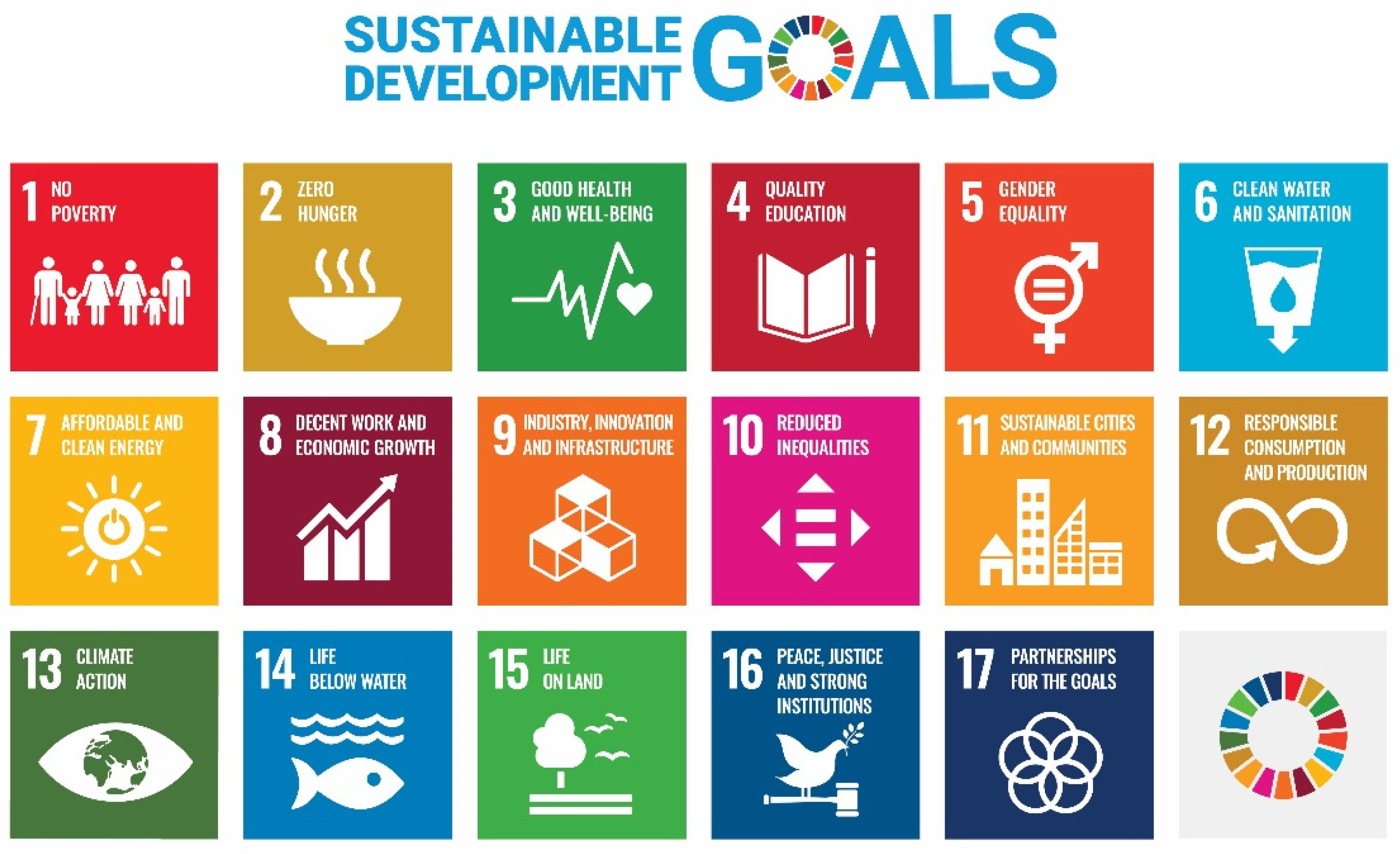
Figure 2.
Network of Argentinian B Corporations and SDGs.
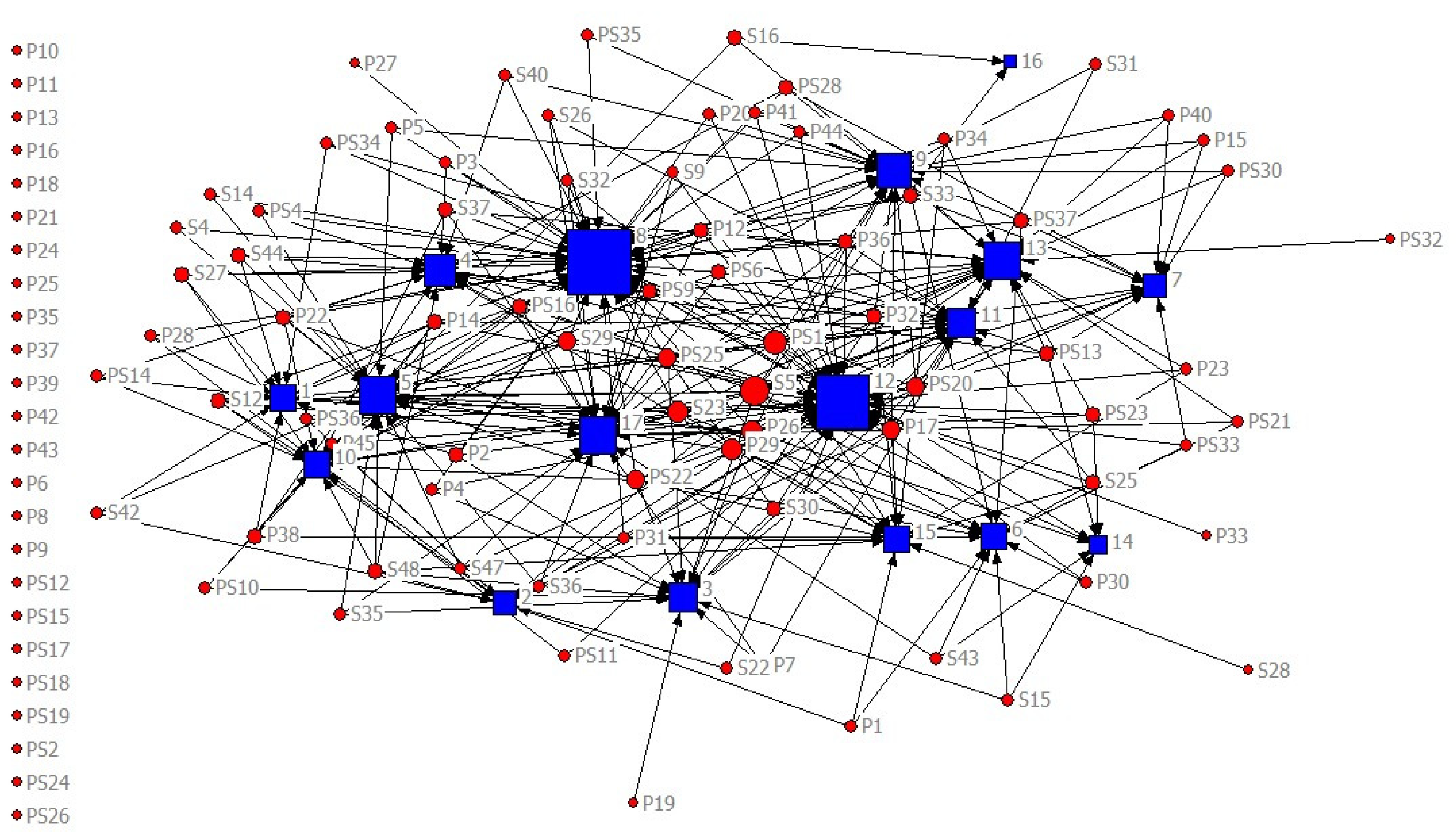
Figure 3.
Word cloud of Argentinian B Corporations’ solutions to socioenvironmental problems.
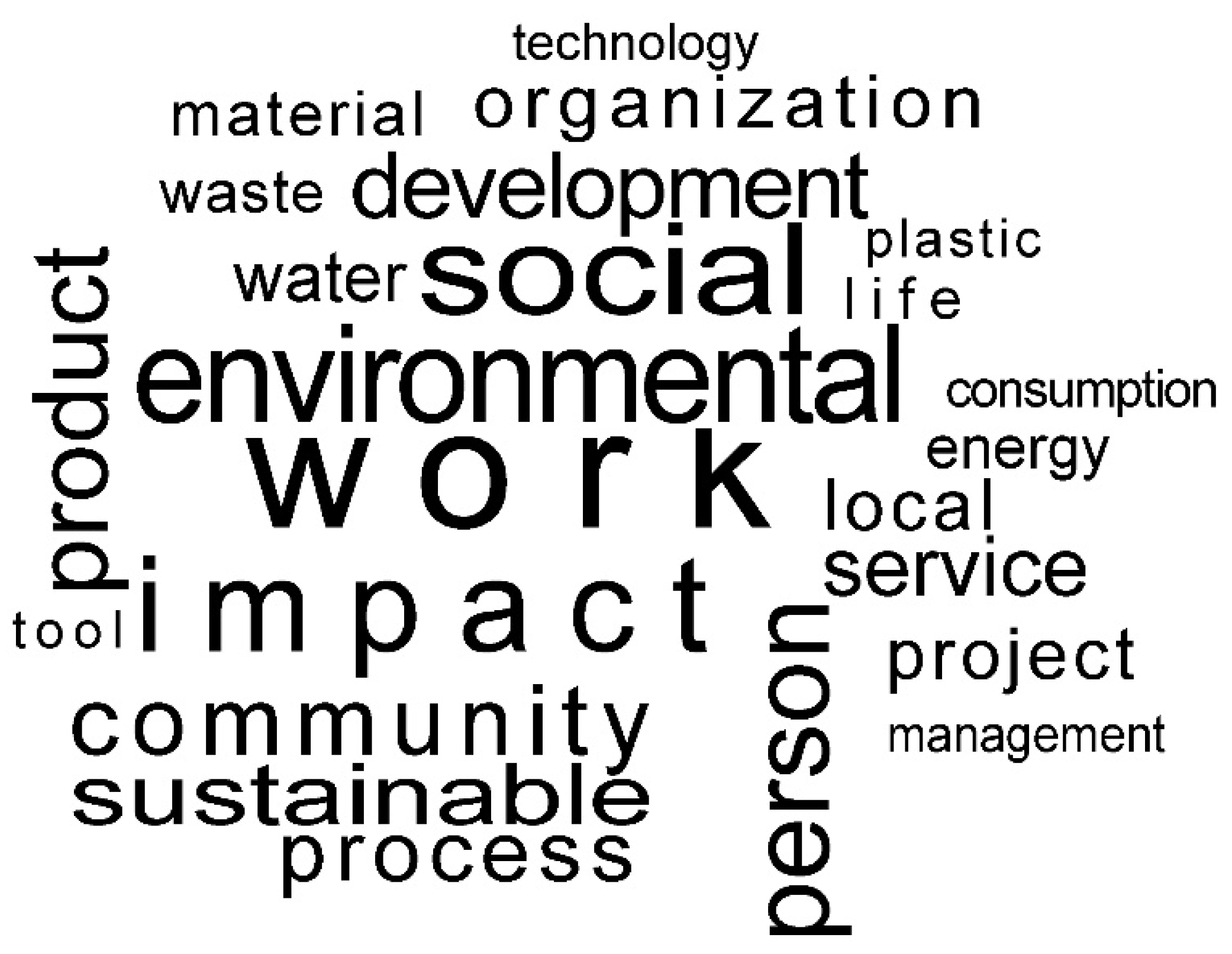
Figure 4.
Analysis of similarities between Argentinian B Corporations’ solutions to socioenvironmental problems.
Figure 4.
Analysis of similarities between Argentinian B Corporations’ solutions to socioenvironmental problems.
Disclaimer/Publisher’s Note: The statements, opinions and data contained in all publications are solely those of the individual author(s) and contributor(s) and not of MDPI and/or the editor(s). MDPI and/or the editor(s) disclaim responsibility for any injury to people or property resulting from any ideas, methods, instructions or products referred to in the content. |
© 2023 by the authors. Licensee MDPI, Basel, Switzerland. This article is an open access article distributed under the terms and conditions of the Creative Commons Attribution (CC BY) license (http://creativecommons.org/licenses/by/4.0/).
Copyright: This open access article is published under a Creative Commons CC BY 4.0 license, which permit the free download, distribution, and reuse, provided that the author and preprint are cited in any reuse.


