
Submitted:
25 September 2023
Posted:
27 September 2023
You are already at the latest version
Preprints on COVID-19 and SARS-CoV-2
Abstract
Discovery and development of effective strategies to treat emerging and often drug resistant strains of viral and microbial pathogens presents one of the greatest challenges of the 21st century. Despite nearly a century of progress in developments in antimicrobial and antiviral therapies, infectious diseases still account for a substantial proportion of deaths worldwide, including over 100 million globally in the recent pandemic to date. In recent decades, the plague of antimicrobial resistance also represents an additional and alarming signal for both human and animal healthcare and signals a renewed sense of urgency in addressing this issue. This has made the search for novel classes of antibiotics, antivirals and therapeutics found to be capable of bypassing the microbial and viral resistance mechanisms necessary to in order to replenish our current arsenal of antimicrobial and antiviral drugs and update our therapeutic regimens. In addition, the tremendous impact exerted by viral infections and related pathologies on our lives during the recent decade has forced scientists to acknowledge the opportunities and challenges associated with tackling infectious diseases by developing effective antiviral agents endowed with novel mechanisms of action. The discovery of new antimicrobial/antiviral agents, as well as the repurposing of existing drugs and therapeutic options will be crucial to fight the ever-increasing resistance of “superbugs”, pathogenic fungi, viruses, and parasites. Proponents of modern biophoton therapy proposed in this paper can trace its origins to the Russian scientist Alexander Gurwitsch, who a century ago observed ultra-weak emissions of light emerging from an onion root and soon found additional living tissues to be emanating similar energetic phenomena, thus energizing research which continues to the present day and projected toward the development of useful applications of the new-found biological photonic phenomena. The purpose of the present paper is to introduce the past experiences, potential applications and highly successful outcomes of biophotonic therapy as an option to treat infectious diseases including HIV, Hepatitis C, MRSA, and others, with emphasis on efficacy of using biophotonic therapies to treat and ameliorate the drug resistant variants of the above infectious agents, including potential applications for the current COVID-19 pandemic and in preparation for the emergence of the next epidemic or pandemic.
Keywords:
SARS
; Covid-19
; HIV
; MRSA
; Biophotonics
; Energy Dynamics
; Electromagnetic therapy
; irradiation
; immunomodulation
; infectious illnesses
; drug resistance
; therapeutic efficacy
1. Introduction
Since the beginning of recorded history, what we now recognize as infectious and communicable diseases have plagued mankind, often resulting in epidemics and pandemics, and in the unfortunate and untimely deaths of many who were to become afflicted with the yet undiscovered origins of the infectious agents of those eras.1 With the gradual progression and modernization of humankind from inhabitants that were residing in culturally and ethnically remote locations from each other now moving into larger and more condensed residential communities, the potential for person to person transmission increased, with the potential to infect many more unsuspecting and unprepared individuals in a shorter time period. In the past century, the discovery and identification of many of the causative organisms followed by the subsequent development and evolution of protective vaccines, antimicrobial and antiviral agents have saved countless lives. However, in the real world, many of the infectious agents soon express internal mechanisms to adapt to the presence of antimicrobial and antiviral actions, thereby developing a chemical resistance that essentially neutralizes the impact of the chemical agents and enabling the invasive agents to continue to flourish in their hosts and creating a need to develop newer and more effective therapies.2 The discovery and progressive redevelopment of photonics during the last century began a new era in the development of non-chemical strategies to treat and control the spread of infectious illnesses of man and animals, often with life-saving impacts.3 In this review, we will discuss the historical perspective, proposed molecular mechanisms and clinical applications of biophotonic therapy to treat drug resistant strains of HIV, Hepatitis C, MRSA and other infectious agents yet to emerge.
The recently emerged coronavirus SARS-COV-2 viral strain that has caused COVID-19 illness is the newest member of the Coronaviridiae family to emerge, and is well known to produce respiratory, gastrointestinal and other illnesses in man and animals.4-6 Although the exact source or origin of the SARS-COV-2 viral strain has not yet been officially acknowledged or confirmed, the coronavirus strain that causes Covid-19 is also genetically related to some common and less invasive zoonotic viruses isolated from other mammalian species, and which have previously been found to cause respiratory and other illnesses in humans although generally of a somewhat lesser overall severity than the current strain.5-7 Thus, while the human infections of COVID-19 likely could have passed from an intermediate animal host via incidental interspecies transmission or other unconfirmed epidemiological origins as is believed to have occurred with the MERS strain and as has also occurred with some microbial and parasitic illnesses, the evidence continues to remain speculative while a search for a direct link continues.8 The Coronavirus SARS 2-COV-19 pandemic first appears to have emerged in Wuhan, China in late 2019 and spread worldwide exponentially during the Spring to Fall of 2020. The newly described viral illness infected millions of people globally by year’s end, some resulting in death or other dire consequences. The pandemic has continued from 2020 to the present, during which interval multiple infectious COVID-19 mutations have evolved, some with an even more highly infectious potential than that of the initial virus. Continuing outbreaks of the viral mutants have emerged, often seemingly evading immunities formed from recently developed immunizations and to earlier variants of the virus. Current estimates place the number of infections globally at close to 680 million since 2020, with over one million deaths.8-12.
Prior to the introduction of antimicrobial and antiviral agents during the mid-20th century, the process of biophotonics had often been employed in various forms as a method to combat infectious illnesses until being replaced by the newer and now conventional pharmacologically based therapies, which have been responsible for the successful treatment of millions of infectious illnesses and lives saved to date.13 Over time however, many infectious organisms may continue to not only survive but to thrive with seeming impunity should they successfully reemerge by developing resistance mechanisms to overcome sensitivity to the chemical agents. Prior to the development and adoption of antimicrobial and antiviral pharmaceutic agents as the now common standard of care in present-day therapies for infectious diseases however, biophotonic treatments had been utilized successfully to treat infectious illnesses in several countries for many years.13 In contrast, the rapid development of microbial and viral resistance cited above has not been observed following biophotonic therapy in our experience, thereby suggesting it as a safer long-term alternative, and more likely to be able to eradicate an infection without side effects. Thus, the purpose of the present brief communication is to propose a re-emergence of biophotonic and bioelectromagnetic applications as an often-effective adjunct in the treatment of potentially life threatening viral and microbial illnesses including the current COVID-19 pandemic, and to summarize our experience in treating HIV, MRSA, and other active infectious illnesses of interest. Because there have not been reports of development of microbial or viral resistance to biophotonic therapy, successful treatments have failed to enable the infectious agents to continue to date, and the subsequent labs suggest that the apparent eradication or amelioration of the infectious agent has been complete.
2. Ancient Origins of Epidemics and Pandemics.
The creation of more closely connected communities began some 10,000 years ago and has given infectious diseases the opportunity to grow into larger clusters of illness and to progress in magnitude to become epidemics and pandemics.1 With the advancement of travel opportunities to neighboring countries and continents in recent centuries, the epidemics now had an opportunity to travel abroad along with their infected travelers and expand into pandemics. Diseases like influenza, smallpox, leprosy, malaria, tuberculosis and others are listed among those that have thrived virtually worldwide since this demographic shift and have now infected unsuspecting and unprotected individuals on every continent.1 As human civilization has evolved and communities have become better connected, the likelihood of epidemics progressing to pandemics have also become better connected and have subsequently risen to the occasion and continued to propagate to the present day. The numerous plagues of old and newly discovered Infectious diseases of viral and microbial origin including the recent coronavirus COVID-19 continue to rank among the most significant causes of morbidity and mortality worldwide.15 This continues to occur despite marked advances in the discovery and development of antimicrobial and antiviral pharmacotherapeutics in efforts to identify efficacious and cost-effective cures. Below, we discuss the history of infectious diseases causing epidemics and pandemics over the past 2500 years and how they will likely continue to affect our modern-day lives. Pandemics can strike with a vengeful force, often leaving few survivors in their wake, and spelling a need for an efficient effective and cost-effective mechanism to deflect their impact on health and survival of only for the ‘fittest’ but for all peoples left in the swath of their infectious influence. Proponents of modern biophoton therapy can trace its origins to the Russian and Soviet scientist Alexander Gurwitsch, who in 1923 observed ultra-weak emissions of light emerging from an onion root preparation.3 Gurwitsch soon identified additional living tissues to be emanating similar bioenergetic phenomena, thus energizing the momentum to further identify and develop useful applications of the newfound scientific finding.
Historically, epidemics and pandemics are known to have occurred intermittently for nearly 2500 years and likely will continue in the future.
From the first known occurrence, Epidemics and Pandemics have changed the course of history, as the infectious agents are typically immune from any specific population group, and can infect individuals of all social, political, religious, economic or cultural identity.1 As early civilizations expanded into empires, their leaders conquered different and more distant parts of the world, which enabled prevalent infectious diseases then of unknown origin to gain more opportunities to spread. The first recorded incident of what may now be considered as a form of biowarfare occurred during the siege of Athens Greece during the Peloponnesian War in 430 B.C., with the infectious agent was passe over the Athenian walls by their conquerors.1 The ensuing plague resulted in a pandemic that would claim approximately two thirds of the affected Grecian population and led their conquerors to victory according to historians. Fast forward another 600 years, and the Antonine Plague of 163 A.D. now believed to have been an early strain of smallpox, began with the Huns, who passed the infection to the Germans, who then diligently passed it to the Romans, who then carried it throughout the expanding Roman empire, causing millions of deaths throughout the empire. Another epidemic followed independently of the Antonine Plague, the Cyprian Plague broke out in Ethiopia around 250 to 550 A.D., during which time it spread throughout Northern Africa and traveled as far North as Rome, also resulting in millions of deaths along the way. Soon thereafter the Justinian plague broke out in Egypt in 541 A.D., and quickly spread across nearby Palestine and the Byzantine Empire, finally reaching the Mediterranean. This illness is now suspected to have been an early entry of the first significant emergence of the bubonic or so called ‘Black’ plague caused by Yersinia pestis (Y. pestis; formerly Pasteurella pestis) and resulted in the deaths of over one quarter of the known world populations of the time. During the 11th Century A.D., what we now identify as leprosy became prevalent in Europe and although now highly treatable still occurs today in sporadic instances. Prior to the development of chemical agents to treat infectious disorders in the past century, most indigenous residents applied various concoctions of natural products in attempts to ameliorate the symptoms of their illness, establishing the groundwork for the field of Natural Medicine as it is known today.14,15.
2.1. The bubonic plague pandemics have an ancient origin.
The infamous Black plague pandemic that ultimately lasted for several centuries, is believed to have first become introduced to Europe and the prevalence of subsequent epidemics during the siege of the Genoese trading port of Kaffa in Crimea by the Golden Horde army of Jani Beg in 1347, and where it may have originated many years previous.1 Once established in Crimea, it was most likely carried by fleas living on the black rats that typically travelled on the trading ships, thereby enabling it to spread throughout the Mediterranean Basin. From those seaports, it gained entry to the surrounding lands of North Africa, Western Asia, and Europe over the next five centuries. The bubonic plague made another grand entrance of major proportions in 14th century Europe, where it is generally believed to have resulted in over half of the European population. The bubonic plague re-emerged again in England in 1665 where it became known as the ‘Great Plague of London,’ and resulting in the deaths of 20% of the population of the city’s population during its deadly reign. Over the centuries, the bubonic plague has resulted in the deaths of over 100 million people. Each year, the World health Organization still reports between one thousand and two thousand cases of the bubonic plague, occurring mostly in Madagascar and Sub-Saharan Africa, where it continues to spread via flea infested rodents and person to person contact. Recent genomic analysis of specimens obtained from ancient skeletal remains have now linked the various strains of Y. pestis that were causative of the numerous epidemics throughout the world and provided confirmation of the origins and continuity of the bacterium over the many centuries.16
2.2. Measles can cause severe illness in the unvaccinated.
The Pacific Island nation of Fiji suffered an epidemic of measles virus in 1875, during which approximately 40,000 of the Island population of 120,000 died as a result of the complications from the virus. Measles is a highly contagious illness that is caused by a strain of Rubeola virus, and spreads readily via droplet infection or person to person contact from an infected human during the infectious phase if the illness. The high rate of infectivity may occur during the early manifestations of the illness during the first week of incubation, and prior to the appearance of the typically diagnostic rash. Highly effective vaccines were developed more than a half century ago, and in the recent decades have prevented the vast majority of measles related illness by initiating the vaccination process during the first year of life, when young children can fall subject to the most severe symptoms of the illness. Despite global vaccination programs that now reach over 90% of the population in most countries, the WHO reports that as recently as 2018 measles infections still claimed the lives of over 140,000 people that year, mostly children under the age of 5 years that died as a result of respiratory and other potentially severe complications of the Rubeola infection.1
2.3. Cholera epidemics have occurred for centuries, causing the 4 Ds characteristic of the infection.
Cholera is a bacterial disease caused by toxigenic strains of Vibrio cholerae and the infection is usually spread via the fecal-oral route through contaminated water sources.17-19 The V. cholerae bacterium is a diverse microbial species comprising over 200 strains and includes both pathogenic and non-pathogenic variants.18-19 Only the toxin-producing (toxigenic) serologic 01 and 0139 strains of V. cholerae are associated with cholera epidemics, however. Cholera causes severe watery diarrhea, dehydration, and loss of electrolytes within the first 2 days of infection. Left untreated, cholera can be fatal within hours or as little as 2 to 3 days, even in previously healthy people.18 Cholera is an acute and often life-threatening diarrheal illness caused by waterborne toxigenic Vibrio cholerae bacteria and represents still another common cause of epidemics which continues to the present decade. The infection is noted for the classic ‘4 Ds’ often associated with the illness: Diarrhea, Dehydration Disorientation and Death. Cholera outbreaks often occur following environmental disasters that disrupt the consumable water supplies of affected regions. Since the first major outbreak of Asiatic cholera in Calcutta in 1817 there have now been seven cholera epidemics of significance during the past two centuries.1 These included reports of cholera outbreaks in the Asia, including the cities of Muscat, Tehran, Baghdad and others. The most recent Cholera epidemic in Haiti followed a massive earthquake in Port au Prince in 2010 and was considered one of the worst outbreaks of cholera in modern history.17 The Haiti epidemic resulted in approximately 820,00 cases and nearly10,000 fatalities during the ensuing decade, with a brief resurgence in over 600 additional confirmed cases in 2022.19 The majority of the cases since 2010 occurred in the greater Port-au-Prince area, the major location of the 2010 earthquake damage, much of it still awaiting recovery although the major water sources are now deemed safe.17 Despite improvement in water quality and safety measures in many counties, Globally, Cholera illness encompasses a broad spectrum of symptoms, especially in endemic areas where many become acclimated to a chronic infection, and therefore active cases remain vastly underreported, as are precise measurements of the morbidity and mortality attributable to V. cholerae infection. However, despite public education and improvements in the quality and safety of potable water supplies there are still an estimated 3 to 4 million cases of diarrheal illness annually, resulting in approximately 100,000 fatalities worldwide caused by toxigenic strains of V. cholerae.18 Globally, Cholera has remained endemic in approximately 50 counties in recent years, occurring mostly in Africa, Asia, the Middle East, Mexico, South and Central America, and the Caribbean and wherever there is an inadequate access to clean water and sanitation. Accordingly, it can cause serious illness in unsuspecting, naïve and nonimmunized visitors to those countries, and vigilant attention to prompt rehydration and restoration of lost electrolytes is essential to prevent the direst of consequences.
2.4. Influenza strains remain a serious threat, despite an abundance of ‘seasonal flu’ vaccination programs.
As the world transcended into the 20th century, the first of the influenza pandemics first materialized with the Russian flu pandemic in 1889, during which it has been estimated that 360,000 people died as a result of that pandemic.1,20 The far more deadly Spanish flu pandemic caused ab a the H1N1 strain of the virus emerged in 1918 and would cost the lives of over 50 million people across the globe before it subsided, followed by the more recent Asian flu pandemic which persisted for several years during the mid-20th century. Nearly forgotten was the ‘Swine Flu’ scare of the mid 1970s, where a strain of influenza with an immunologic footprint that was similar to the 1918 flu emerged briefly and resulted in widespread immunization to the most susceptible sectors of the US population.20 The third influenza pandemic arrived in 2009, also designated the ‘Swine flu’ a variant of the H1N1v strain and persisted through 2010. The recent H1N1v and related variants resulted in over 300 hospitalizations but very few deaths were reported. Of interest, the H1N1 Swine flu was so named because it is a virus that primarily infects swine, with only limited transmissibility to humans of potential Swine flu variants (designated with a ’v’) and milder disease and illness that the earlier 1918 strain. A minor influenza virus with respect to human infection is the Avian flu, Asian HPAI/H5N1 or LPAI/H5N1 virus infections among domestic poultry have become endemic in certain countries of the world.20 As of 2011, the United Nations Food and Agriculture Organization considered six countries to be endemic for Asian HPAI H5N1 virus in poultry (Bangladesh, China, Egypt, India, Indonesia, and Vietnam) and which has now spread to many additional countries, in part via seasonal migration of infected birds. In January 2015, an HPAI H5N1 virus was detected in a wild duck in the United States. This virus is a “reassortant” virus with genes from Asian HPAI H5 viruses and low pathogenic (LP) North American viruses and currently is not known to have spread indiscriminately.
The genetic process of Reassortment” occurs when the genes from two different viruses mix to create a new virus as appears to have occurred with the current SARS-N-CoV-19/COVID-19 virus, and during which process the newly formed virus may gain or lose some properties.21,22 The HPAI H5N1 virus detected in the United States is a new combination of Avian influenza genes never previously seen before. While no human cases associated with this reassortant virus have been reported, it’s possible this virus could infect people and cause serious disease in the future, and the CDC has developed interim guidance on testing and prophylaxis procedures for the Avian flu virus. (REF) Nonetheless, the prevalence of Avian flu transmission to humans is considered rare, with fewer than 1000 nonfatal cases having been reported worldwide. Thus, while it’s possible this virus could infect people and cause potentially serious disease in a susceptible patient, especially in the presence of significant comorbidities, it would seem prudent to review the CDC-developed interim guidance on Avian flu testing, prophylaxis and clinical guidelines.20
2.5. The human immunodeficiency virus remains active despite four decades of presence worldwide.
The final pandemic of the 20th century was the human immunodeficiency virus / acquired immunodeficiency syndrome (the HIV or AIDS virus), discovered in 1981 and still ongoing throughout the world.1 This is generally considered to be a sexually transmitted illness of humans, as the most common form of its transmission is person-to-person contact. Infection with the HIV/AIDS virus has now been attributed to over 30 million lives lost to date. The virus progresses slowly once an individual is infected, often taking months or years to become fully clinically manifest, during which time unsuspecting carriers can easily pass the infection on to additional individuals. Thus, the often-slow progression of the HIV/AIDS illness has enabled this pandemic to continue for a much longer duration and yield more dire consequences than with most typical microbial agents or respiratory viruses. The clinical manifestations of infection progress more slowly than most other infectious diseases, and infected individuals may remain unaware of the infection for weeks or months before any suspicions of illness appear. Four decades of scientific research and discovery has led to several pharmacologic agents that ultimately may slow the progression of the virus and prolong the survival of the infected individual, but sadly a definitive cure is still in the future. Accordingly, the final outcome regardless of the duration of the illness and even in the face of antiviral drugs which may further slow the progression, the impending death of the individual remains the anticipated final outcome. The spread of HIV/AIDS is still considered to be an active pandemic, as more than 32 million lives have been lost worldwide to this disease over the past four decades.1
2.6. The COVID-19 pandemic is the first pandemic of the 21st century.
The COVID-19 pandemic became prevalent throughout most of the world during 2020. In the current decade, the onset of the COVID-19 outbreak was first reported to the WHO from Wuhan, China in late 2019 and soon spread through much of the globe due to the ease of International travel, causing panic and apprehension among all in its fateful path.5-7,9,11 The onset of the pandemic left few effective options for easy containment due to it efficient microdroplet airborne mode of transmission, as no clear treatment or containment protocols had been established in part due to the broad diversity in symptomology.9 In addition, prior to 2020, little was known about the new strain of virus other than it was more highly contagious and caused a more serious respiratory illness than the related strains of coronavirus that had caused MERS and SARS years earlier.9-11,27 The WHO declared it to be a pandemic in early 2020, and as of late February, 2023, the number of COVID-19 cases reported worldwide had reached almost 680 million. In addition, the number of known deaths from COVID-19 was over 6 million.12 As with many infectious diseases, those most severely impacted were individuals over the age of 65 and who presented with one or more comorbidities including obesity, diabetes, cardiovascular and respiratory disorders and those with compromised immunocompetency.23--25 The complete numbers of individuals confirmed to have become infected or died from the virus may never be known for sure, however due to presumed incomplete reporting and inadequate availability of reliable diagnostics in concert with strained economic and medical resources by some countries, in addition to the recognition of prolonged symptoms, now designated as a ‘long covid’ complication of COVID-19.11,25,27 Of interest, multiple vaccines were developed and marketed in less than a year from the outset of their development, marking this the shortest time to develop, test and release a new vaccine in history in any nation.10
2.7. Development of microbial and viral resistance often poses virtually insurmountable barriers to effective treatment.
In the era of developing viral and antimicrobial resistance, to conventional therapies, infectious diseases still continue to be among the most significant causes of morbidity and mortality worldwide, where they are often associated with a lack of appropriate environmental or institutional availability of adequate diagnostic and effective treatment options.2,3 The impact of drug resistant infectious diseases on health and well-being may occur independently of the relative affluence or other factors of the affected community and may result in dire outcomes especially where vigorous antimicrobial and antiviral resistance of the invasive agent has intervened. Infectious organisms often express an innate epigenetic ability to neutralize the effects of administered chemical agents that could otherwise spell their demise particularly when the treatment regimen has been unsuccessful for a variety of reasons including suboptimal dosage regimens. The host capacity for immunocompetence and immune protection normally plays a supportive role to drug therapies delivered by chemical agents but may easily become overcome in the absence of adjunctive treatment factors when exposed to resistant strains of an infectious agent. Scientific research of RNA coronaviruses impacting the current pandemic has been developing for over two decades and of extreme necessity became further intensified with the onset of COVID-19 by early 2020.8-10 These research studies culminated in numerous clinical trials of multiple newly developed COVID-19 vaccines in 2020, some using the recently developed mRNA and other molecular models, and with recommendations for booster shots that encompassed recently evolved epitopes discovered in some of the more prevalent mutant substrains as the pandemic progressed. Episodes of COVID-19 illness later were reported to occur commonly in individuals who had been vaccinated with the newly developed vaccines in addition to many who had contracted the virus and previously experienced live infections early in the pandemic.5-9 Reinfections often occur in part due to an apparent transient nature of the immediate immune responses following vaccination or infection in addition to the immunogenic spike protein mutations that appear to bypass earlier immune protections.8 Those individuals at greatest risk include persons 65 or older and with individuals who may also present with comorbidities including overweight, obesity, hypertension, and adult onset diabetes in addition to numerous other metabolic and respiratory disorders.9,23-27 Those deemed at greater risk typically require additional emphasis for early treatment in an attempt to limit post infection sequelae including the development of long COVID, where a variety of symptoms may persist for a year or more following COVID-19 infection.8-11,27
The most prevalent clinical symptoms of COVID-19 infections often overlap for patients with chronic autoimmune diseases, obesity, and other common comorbidities, therefore supportive attention and appropriate care must be taken to address and identify the specific symptomology as accurately as possible because the pathophysiologic mechanisms associated with COVID-19 illness and other comorbidities may differ.25 Thus, it becomes important to discriminate among the possible therapeutic regimens for COVID-19 and other overlapping conditions that may be prescribed to best effect the success of the therapeutic regimen for each concurrent disease entity. This is of interest because of the many deaths reported worldwide, many succumbed to COVID-19 related complications of preexisting illnesses and where the coexistence of COVID-19 may have been incidental. Numerous common symptoms that have contributed to reported coronavirus patient deaths may complicate an accurate diagnosis in the absence of immunodiagnostics, and among those who have tragically succumbed, some cited COVID-19 as the direct primary cause, while for many others, the pathophysiologic sequela of COVID-19 were additive to a pre-existing comorbidity as contributing factors to the patient’s demise.10-13 Thus laboratory findings that may be common to multiple disorders, including increases in plasma availability of inflammatory cytokines now established to be common pathophysiologic entities in multiple disorders, and when present may complicate or cloud a more accurate or precise diagnosis in the absence of virus-specific serologic analysis.13 The present Brief Communication is based on retrospective analysis and review of patient outcomes using biophotonics and bioelecrromagnetic therapies as a primary treatment regimen for patients with confirmed HIV, antimicrobial resistant Staphylococcus aureus who were unsuccessful with previous therapeutic regimens. The infectious illnesses were treated with biophotonic and bioemectromagnetic therapy outlined in the Einstein Matrix protocol in the Einstein Medical Laboratories Clinic in the Dominican Republic since year 2000.28,29
2.8. Proposed molecular mechanisms of biophotonic actions.
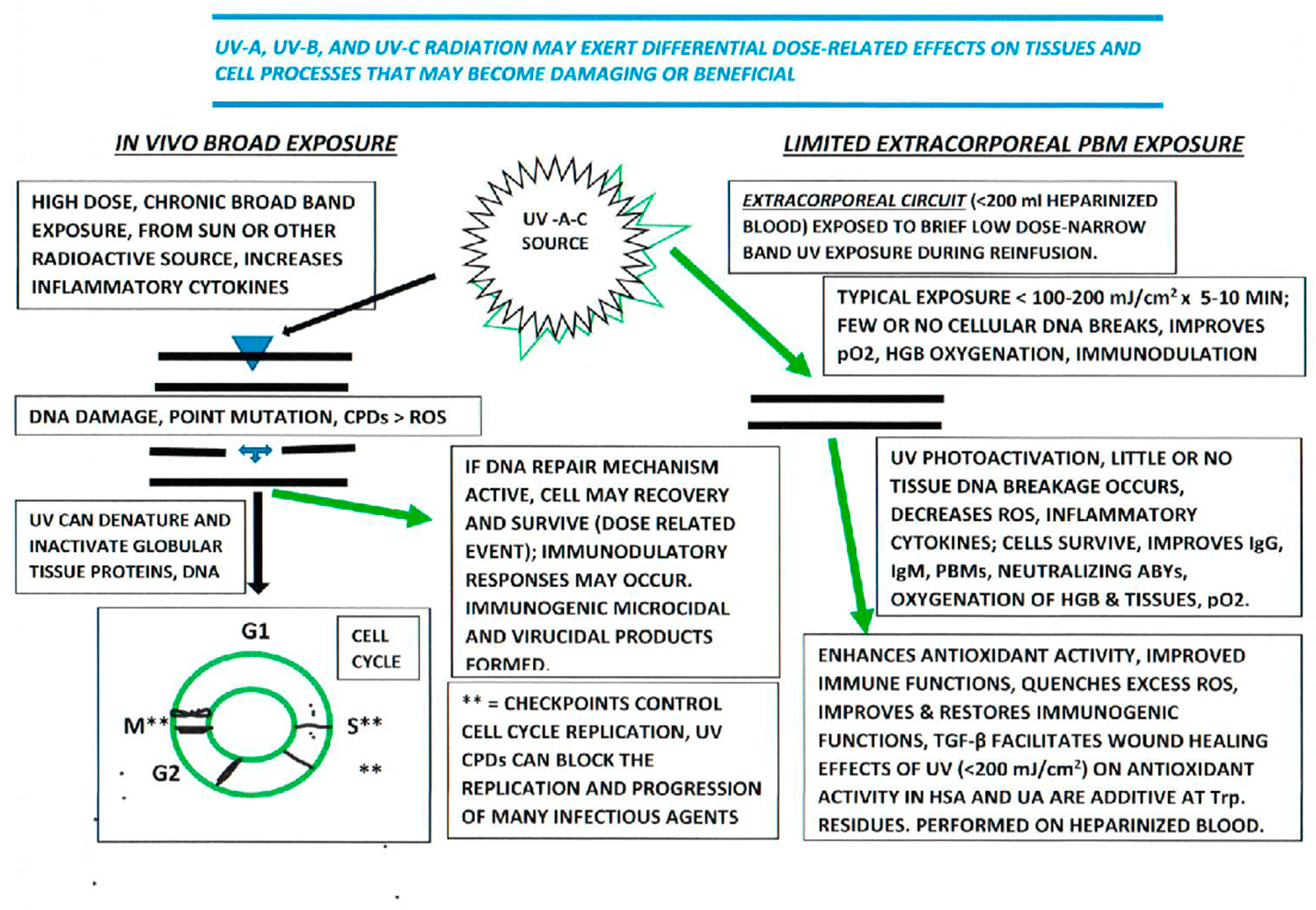
Multiple events connected to UV irradiation may induce both beneficial or damaging effects on tissue viability, depending on the wavelengths encountered, the intensity and duration of the exposure, and the tissues exposed weather in vivo or as an extracorporeal exposure typically of freshly obtained whole blood. A summary of the effects of UV and the biophotonic and biophotomodulatory actions on cells, tissues and infectious agents is depicted in Figure 1 below. The potentially damaging effects of extreme exposure as may be caused by excess solar exposure is summarized on the left side of the diagram, and the effects of extracorporeal biophotonic exposure depicted on the right side of the figure. The blood is typically diluted in sterile, normal saline and re-infused immediately after UV exposure, and within 30 minutes of its initial removal from the subject.
Thus, the contributory biochemical mechanisms resulting from biophotonic exposure to infectious agents differ markedly from the established mechanisms of microcidal and virucidal action that have been advanced for traditional pharmacotherapeutic agents. Biophotonic UV irradiation treatment conducted over a broad range of the ultraviolet spectrum has the capacity to disrupt and denature viral and microbial nucleic acid protein structures respectively, thereby initiating virucidal and microcidal actions and thereby inducing post-exposure prevention of their authentic in vivo replication processes in the host.3,29-30 Quanta of photons derived from light is deemed a prerequisite for health, and as such, humans have always instinctively sought daylight for many sorts of illnesses including infectious illnesses and wound healing.3 It is noteworthy to mention that UV light irradiation following sunlight exposure has empirically been considered nature’s natural cure-all for infectious illness for many generations of humankind, with the oldest reference dating to on or before 1500 B.C.1 Although the molecular mechanisms of these light-derived effects have generally often remained unknown, unconfirmed, or speculative at best, emerging findings now point to a nuclear disruptive element that impedes further local replication of the infectious agent combined with enhancement of immune responses in the UV or sunlight-exposed host. According to the first law of photobiology, light absorption requires the presence of a specific photo acceptor molecule or complex that after photonic excitation could induce the activation of downstream signaling pathways to bring about its desired healthful or other responses. Both ionizing and non-ionizing radiation can cause mutations in DNA of cells, albeit through different molecular mechanisms. Strong ionizing radiation such as high-energy UV-C, X-rays, and gamma rays can cause single- and double-strand breaks in the nucleotide and nucleoside backbones through the formation of hydroxyl radicals and other biochemic events upon irradiation. In contrast, exposure to non-ionizing radiation can induce the formation of dimers between two adjacent pyrimidine bases of RNA, and in both cases of ionizing or nonionizing exposure the usual consequence is the prevention of further replication of the infectious agent. The consensus if that that the denaturation of the viral genetic material occurs, rather than denaturing or damage to the protein and lipid envelopes, is likely to be the primary and more efficacious target for irradiation-induced viral inactivation.23-27.
The overall effectiveness of UV as a non-ionizing disinfectant however is now known to be highly dependent on the wavelength range of the incident photons to which a tissue has been exposed.20-32 These include three primary bands: UVA (320–400 nm), UVB (280–320 nm), and UVC (200–280 nm), where UVC has been determined to contain the strongest UV light with the most potent antiviral and antimicrobial properties. The UVA band is less energetic than that of UVB or UVC but up to 20 times more intense. The greater intensity of the UVC band can induce the formation of cyclobutene pyrimidine dimers (CPDs) in addition to a variety of oxidatively generated lesions including single strand RNA breaks and oxidized bases that effectively impede further replication of the viral or microbial genome by the receptive host cells. Exposure to the UVB band can also lead to the formation of CPDs and other damaged photoproducts including pyrimidine (6–4) pyrimidones (64PPs) that are also inhibitory to in vivo genome replication in host cells and tissues. Exposure to the UVC band also causes photochemical structural damage to both DNA and RNA polymers, disrupts cross-linking events, and generates oxidative damage to the nucleotide bases, also inhibiting further genome replication of the infectious agent. Follow up phototherapy with red light in the wavelength of 660 nm further enhances the biophotonic responses, in that the red light irradiation at the specific wavelength of 660 nm enables the participating entities to absorb energy, which can then be transferred to the oxygen molecules in the virus, making them more highly oxidized and causing irreversible further damage to the membranes and genetic material of several viruses, including hepatitis C virus, HIV-1 and others.29-32
Thus, all UV irradiation bands can deliver immunogenic microcidal and virucidal products, thereby generating immunogenic actions from the immune-stimulating byproducts of UV irradiation and that can now stimulate and enhance immunological events in a responsive host organism. In the case of DNA viruses, two major UV-induced lesions, pyrimidine CPD dimers and 64PPs which arise at the same nucleotide sites, are both lethal and mutagenic. In contrast, the presence of uracil vs thymine nucleotides in RNA gives rise to the formation of several RNA photoproducts including uracil dimers, that block reverse transcriptase activity, thereby preventing host replication and generation of new virions. Although the propagation mechanism of SARS-CoV-2 of the current pandemic is independent of reverse RNA transcription and genome integration that occurs in non-encapsulated viruses, the UV-induced RNA lesions can still lead to the formation of uracil dimers, capsid instability and degradation, and covalent binding of proteins to the viral RNA to contribute to the immunogenic host responses. Imposing UVC irradiation also causes oxidative damage to viral capsid proteins in non-enveloped viruses, further contributing to the UV-mediated virucidal actions. Conventional UV lamps used in biophotonic therapies often use mercury discharge and low-pressure mercury vapor lamps with a strong emission peak at 254 nm, which is close to the RNA absorption maximum at about 260 nm and within the therapeutic range that is capable of delivering virucidal and microcidal actions. In contrast, UV LEDs when used as an alternative source of irradiation are not only environmentally safer than mercury sourced emission lamps but are also more compact, more energy efficient, lower-cost and longer-lasting and will likely largely replace the older technologies in the future.28-31.
2.9. Biophotonic UV treatment stimulates immune function of the host immune system.
The delivery of incident photons from UV sources causes structural damage to proteins and genomes of infectious agents, generating denatured entities that can now stimulate the host immune system as foreign, unrecognized proteins, and to produce antibodies in addition to photoactivation of TGF-β1 that are specific to the infectious agent to which the UV light has impacted. The central role of the TGF-β pathway in embryonic development, immune responses, tissue healing, and malignancies is now well established. Among various biophysical wound management approaches, low dose biophotonics treatments, termed Photobiomodulation (PBM) therapy, has also gained recent attention. One of the PBM molecular mechanisms of PBM treatments involves photoactivation of latent TGF-β1 which plays a key role in promoting wound healing and tissue regeneration. In addition, the irradiation denatured protein entities may stimulate antigenic-specific humeral neutralizing antibody responses resulting in formation of immunoglobulin classes IgG, IgM, and others over the8 course of days or weeks following the UV exposure while the PBM treatments do not usually result in untoward effects.25-32.
2.10. Biophotonic UV treatment improves peripheral blood oxygen saturation and cell survival.
The biostimulation process via low level photonic emission generally promotes cell survival and proliferation both in vitro and in vivo. Emerging evidence supports a low-level laser stimulation action to mediates increases in the generation of “good” reactive oxygen species, that are able to activate redox sensitive signal transduction pathways such as Nrf-2, NF-kB, ERK and which collectively can act as key redox checkpoints in cell survival and replication mechanisms and in proliferation and survival of affected tissues. In addition, the bio-stimulation process also improves peripheral oxygen delivery to tissues via laser-induced photodissosiation of oxygen from oxyhemoglobin in cutaneous blood vessels, increasing blood pO2 saturation concentrations, and further contributing to its role in biomedical processes of tissue healing and regeneration.33-35.
2.11. Inactivation may occur in encapsulated viruses and microorganisms following chemical disruption of the infectious agent.
In brief, the SARS-CoV-2 spike proteins are responsible for the initial ACE2 receptor membrane fusion event, facilitated by lipid-lipid interactions between the coronal and the plasma membrane lipids, which allows the virus to enter the host cell and cause infection.8,9 The outermost corona of Coronaviridiae consists of a lipid -rich bilayer lipoprotein coronal shell of the infectious agent, thereby providing limited protective influences enhancing survival when contained in both in vivo and in vitro environments including aerosol microdroplet migration. The viral shell consists of a lipid bilayer enhanced by multiple immunogenic spike proteins extending from the corona, which facilitate the efficient viral association with receptive ACE2 receptors found on many mammalian tissues. Once bound to a receptor, the coronal lipid can then facilitate entry into lipid rich plasma membranes and further access to cytoplasmic constituents needed to undergo replication in an unsuspecting recipient.36-38 Chemical agents including short chain alcohols are miscible with the coronal lipid composition, and can readily disrupt and dissolve the coronal lipid; chlorine bleaches and other disinfectants can effect disruption and disinfection of both exposed mammalian and inanimate surfaces such as skin and mucosal membranes, countertops, handrails and other items following aerosol mediated microdroplet distribution.38 Because of the aerosol microdroplet convenance potential of infectious particles they may be carried for considerable distances by prevailing airflow, diluted only by the surrounding airspace.8,9 It is generally considered that an infective dose of most organisms may remain for at least 6 feet/~2 meters from its origin and pose an infectious risk for many individuals, particularly for individuals with a compromised immune system.29 Similar chemical disinfection actions also result for most encapsulated and unencapsulated microbial agents, and when combined by controlled irradiation, can effectively decontaminate microbial and viral agents in both airspace impacted surfaces and on inanimate objects.9,38
UV irradiation may induce both beneficial or damaging effects on tissue viability, depending on the wavelengths encountered, the intensity and duration of the exposure. A summary of the effects of UV and the biophotonic and biophotomodulatory actions on cells, tissues and infectious agents is depicted in Figure 1 below. The potentially damaging effects of extreme exposure as may be caused by excess solar exposure is summarized on the left side of the diagram, and the effects of extracorporeal biophotonic exposure depicted on the right side of the figure.
3. Objectives, Method, and Research.
The objectives of this brief communication were to review the overall effectiveness of the Einstein Adjuvant Energy Dynamics/Einstein Matrix method which incorporates application of biophotonics and bioenergetics as the primary key elements in the treatment and symptomatic amelioration of illness for the treatment of refractory viral and microbial infectious illnesses conducted in a clinical research setting. The complexity of the pre-existing physical and physiological biological variables reported becomes evident among most patient histories and symptoms. The Einstein Adjuvant Energy Dynamics/Einstein Matrix method9,38,29 of the present overview includes: 1). Psycho-Video Diagnostic assessment followed by and in concert with Psycho Video Therapy; 2). Biophotonics irradiation therapy via standardized intravenous protocols, and 3). Electromagnetic Alternating Current Dynamic Therapy. The biophotonics procedure involves aseptically removing 100 to 200 ml of the patient’s blood in a sterile heparinized vessel, dispersing it in 200 to 400 ml of intravenous grade neutral saline, and passing the diluted blood through the UV irradiation chamber while reinfusing it over an approximate 30-minute time frame as previously described.28,29 The procedure is always conducted under medical supervision in an appropriate out-patient clinical setting. In the authors experience with hundreds of patient events, no negative side effects have been noted. The effective coherence of Sigma Quanta Energy Dynamics supports the theory of Human Bioenergetics and Natural Homeostasis Systems of Biophysical and Biochemical Therapy and has been applied to treatment of Viral, Bacterial, and Fungal infections.25-27 To apply biophotonics and electromagnetism to defeat coronavirus infections, the physical methods summarized could avoid the often unpredictable pitfalls of the chemical-based therapeutic approaches.28,29 The specific Biophotonics and Electromagnetism therapy was applied for the therapy of HIV/Aids, Hepatitis C and to methicillin-resistant Staphylococcus aureus (MRSA) infections at the Einstein Clinical Laboratories Case Studies Research Laboratories in the Dominican Republic during the years 2001-2003. The specific wavelengths and dosages applied remain privileged, proprietary information of the Einstein Medical Institute. During this research, a highly elevated level of success was attained, and without reports or observation of occurrence of adverse effects after conducting the psycho-diagnostic and irradiation mediated therapeutic evaluations. Treatment sessions were followed up by 4 weeks of additional repeated biophotonic and electromagnetic treatment. The treatments were administered twice-weekly within a one-month timeframe and patients remained asymptomatic with improved health thereafter after an average of 10 treatment sessions.28,29,39,40 The studies conducted adhered to the criterion of the Helsinki guidelines and were approved by the USAT Institutional Review Board and were in compliance with the Helsinki agreements.
4. Results.
The video Psycho-Diagnostic and Therapeutic/Einstein Matrix method has the potential to make an early assessment of patients regardless of their level of advancement and instability of their illness and to better estimate the magnitude and duration of treatments deemed necessary to resolve their illness.39,40 In addition, the proposed approach may effectively address the emotional and intuitive elements of SARS-2-COVID-19 and other infectious illnesses to develop individualized strategies that were observed to improve their overall health and mental well-being during and after recovery of the patient. The effective applications of electromagnetic potential therapies added to the biophotonic therapy for SARS- 2-COVID-19 requires additional research via both in vitro and in vivo methodologies, as was utilized while conducting the earlier case studies on HIV/AIDS, Hepatitis C and methicillin resistant Staphylococcus aureus in the Dominican Republic Einstein clinic during a three year duration of observation years (2001-2003) in the cited clinic.19-23,25,26,39-40 Circulating inflammatory cytokine levels became decreased following the biophotonic treatments, and immunologic functions demonstrated measurable physiologic and clinical improvement as patients recovered from the viral and microbial infections. 25,26
5. Discussion.
According to Einstein Medical Institute of the Dominican Republic and subsequent case studies, the research results demonstrated that the combined impact of bioelectromagnetic and biophotonic therapeutic treatments for RNA-viral and antibiotic resistant Staphylococcus aureus infection therapy were effective in decreasing the viral and bacterial loads, decreased the generation of inflammatory cytokines, and diminished the magnitude of the pathophysiologic sequela of the infections.9,25,26 In addition, because the biophotonic and biomagnetic treatments resulted in enhancement of immunologic parameters indicates that this therapeutic approach may be an efficient, timely and cost-effective clinical option to treat the complexity of COVID-19 infection.41 This therapeutic approach may reduce both the magnitude of acute infection and its consequential longer-term sequela during both active and convalescent periods of microbial and viral infection to include the symptomology of long-covid and antimicrobial resistant Staphylococcus aureus infection. As with prescribing a treatment regimen for any infectious disease, early intervention is highly preferable and is likely to result in not only a more complete recovery but also a decreased magnitude of comorbidity of exacerbations secondary to the presenting viral or microbial induced illness under study.8 In as much as biophotonic and bioelectromagnetic therapy is not substantially reliant on allopathic drugs or chemical medications, it emerges as a most cost-effective approach to manage and treat viral and microbial infectious illnesses globally without the overwhelming financial impact on institutional resources. Moreover, as aside from the initial cost of the UV apparatus, the costs of disposable IV apparatus and supporting expendable supplies to conduct the treatments is relatively minimal.
The detailed molecular or biochemical mechanisms of action through which therapeutic biophotonic and magnetic exposure may ameliorate the infectious load and magnitude of infections remains speculative, although in vitro studies confirmed deleterious genomic effects on viral agents and microorganisms studied following irradiation to date, and which effectively likely prevent further in vitro, and host supported in vivo replication of the infectious agents. Ultraviolent light is known to be viricidal and microcidal27-31 and to exhibit the capacity to impact disabling structural damage to RNA, DNA, and nuclear polymers, thereby likely impairing their regeneration and continued viability. In a recent study, biophotonic therapy was also found to improve hemoglobin oxygen saturation as indicated by increases in blood pO2 within minutes after the onset of the biophotonic treatment and typically with complete symptom resolution within 72 hours, thereby likely impacting on an improved redox potential of the perfused tissues.33-35.
The comorbidities of obesity, along with NIDDM, hypertension, respiratory disease, disordered bioenergetics, and other pathophysiologic complicating processes are significant risk factors in the progression of complications in COVID-19 illness in both vaccinated and unvaccinated individuals.8,23,25 The coronavirus causing COVID-19, SARS-CoV-2 has some similarities to the emergence of earlier reports of other zoonotic coronavirus illnesses including MERS and SARS which also caused respiratory illness in humans.5-7 The origin of SARS-COV-2 remains unclear, but appears to have originated in a Wuhan, China environment in late 2019 as a local epidemic but within a few months had spread throughout the globe and was declared a pandemic by the WHO within three months of its first report to the WHO in December 2019.5,40 Because the virus enters mammalian organ systems via widely distributed ACE2 receptors of receptive tissues of the respiratory, gastrointestinal, cardiovascular, neural and other tissues and organs it can produce a myriad of symptoms easily associated with non-viral origins and which may confuse an initial disgnosis.8,9 Thus, the virus can interact with the infective spike protein domains of the virus in multiple organs and tissues including the visceral, neural, cardiovascular and adipose tissues in addition to the ACE2 endowed respiratory epithelium. Once the adipose tissue becomes infected, it initiates the release of inflammatory cytokines including IL-6, TNF and others which can lead to a serious and an often-fatal cytokine storm.9,24 Since human obesity develops via hyperplasia and hypertrophy of preadipocytes, the adipocytes once differentiated likely retain their cell surface receptor domains and intracellular biosynthetic functions thereafter, similar to the receptive surfaces of tissues of other organs. The increased adipose mass thus formed, especially when combined increasing BMI of > 30, glucose intolerance, and an increased visceral adipose tissue mass and additional comorbidities often including NIDDM, the excess adiposity appears to reflect a proportionately greater risk of cytokine mediated COVID-19 complications.8,9,23.
Once receptive tissues become infected with the virus, the intracellular viral replication occurs rapidly and may spread to other receptive tissues including adipose and other tissues, while normal immune responses tend to lag behind the viral replicative events in both unvaccinated and many vaccinated individuals.8,9,11. In severe cases, death may occur due to a combination of the additive impact of the virus and comorbidities, and the more advanced the individual or multiple comorbidities, the more severe magnitude of illness may occur.8,21 Restoration of a healthy BMI in obesity and overweight conditions is typically a gradual and often unrewarding process, and often only temporary in duration as weight regain occurs easily when therapeutic regimens are relaxed or discontinued. While weight loss toward a normalization of BMI and an otherwise healthy weight is associated with smaller adipocyte size and corresponding adipocyte surface area can decrease the relative risks for other comorbidities over time, the magnitude of risk reduction for COVID-19 following weight loss remains unclear. In non-adipose tissues, the ACE2 receptors remain present and active, likely facilitating reinfection by older and mutated epitopes of the spike proteins only months following active infection or immunization.9, 39,40
6. Conclusions
In conclusion, NIDDM, respiratory illness and overweight and obese conditions that increase visceral fat deposition and ACE2 receptor sites may progressively increase the relative risk for the most severe complications of the COVID-19 illness.9 Early intervention via biophotonic and bioelectromagnetic therapies may provide a useful and cost effective adjunct in the treatment of viral and microbial infections, especially those infections where pharmaceutic or chemical agents may ineffective.35,41Thus, the coherence of Sigma Quanta Biophotonic/Electromagnetic Immuno-stimulation therapy via potentiation of adjuvant energy dynamics in SARS, MERS, COVID-19 and other viral and microbial infections may become a useful strategy to decrease the magnitude of pathophysiologic sequala that may follow the infectious process.26 Future studies are recommended to further evaluate and quantify the clinical benefits that may be obtained by applying biophotonic and bioelectronic therapies, and to determine the minimally and maximally effective ranges of dosages of biophotonic and biomagnetic applications required to treat such illnesses in the most effective, efficacious, and beneficial manner. The many previously undefined therapeutic benefits of sunlight exposure have been practiced in many cultures for thousands of years, long before the discovery of the photon and introduction of countless newly-discovered molecular biological approaches in the treatment of human illness and disease, and when combined with the contributions of modern therapeutic approaches the benefits are likely to continue well into the next millennia.25-27,35,40,41 Investigations as to the origins of COVID-19 are continuing, with no time line yet established.42,43 Biophotonic therapies have been found to be well tolerated in clinical use and human tissues have been observed to tolerate the procedure without incident in recent studies.43-45 Controlled clinical exposure of human tissues in addition to inanimate surroundings to broad ranges of UV irradiation spectra can effectively injure microbial and viral genomes and denature their proteins both in vivo and in vitro, and regardless of their sensitivity or resistance to conventional antimicrobial or antiviral agents.44-46 Thus, by impairing the capacity of invasive infectious agents for continued host-supported parasitic replication at the metabolic and nutritive expense of their benefactor, while enhancing host immune response mechanisms, all without injurious effects on human tissues can enable patients with the most severe and often seemingly intractable infectious illnesses to undergo an uneventful and likely complete recovery.
Acknowledgments
The authors are grateful for the many supportive patients who have voluntarily undergone biophotonic and biomagnetic treatments, and the numerous graduate students and colleagues who have contributed to these studies.
References
- Sakai, T and Morimoto, Y. The history of infectious diseases and medicine. Pathogens 2022. 11(1):1147. [CrossRef]
- Reygaert, W.C. Mechanism of microbial resistance AIMS Microbiol. 2018; 4(3): 482–501. [CrossRef]
- Goda, K. (Ed) Biophotonics and beyond. APL Photonics 4, 050401 (2019). [CrossRef]
- International Committee on taxonomy of viruses. 2017.012.0155 9xlsx), UK: International Committee on taxonomy of viruses (ICTV):2019.
- Cui, J., Li, F., Shi, ZL. Origin and evolution of pathogenic coronaviruses. Nat Rev. Microbiol. 2019. 17(3):181-192.
- Zhu, N., Zhang, D. Weng, W. et al. China novel coronavirus disease. investigation and research team. A novel coronavirus from patients with pneumonia in China, 2019.NEJM.2020.382(8):727-733.
- Chen, N., Zhow, M. Dong, X. et al. Epidemiological and clinical characteristics of 99 cases of 2019 novel coronavirus pneumonia in Wuhan, China: a descriptive study. Lancet.2020395. (10223):507-513.
- Schroeder, S., Mache, C., Kleine-Weber, H., et al. Functional comparison of MERS-coronavirus lineages reveals increased replicative fitness of the recombinant lineage 5. Nature communications (2021)12. 5324. [CrossRef]
- Tulp, O.L, Awan, A R, and Einstein, G P. SARS-CoV-2: respiratory and gastrointestinal pathobiology of the corona virus illness, Covid-19. Gastroenterology & Hepatology: Open Access. 2021.12(3).82-97.
- Noh, JY., Jeong, HW. Shin, EC. SARS-CoV-2 mutations, vaccines, and immunity. Implication of variants of concern. 2021. Nature.com.
- CDC Centers for disease prevention and control. Omicron Variant: What You Need to Know. Updated Dec. 20, 2021.
- Elflein, J. Coronavirus (COVID-19) in the U.S. - Health, Pharma & Medtech Statistics & Facts, Statistica, Feb 28, 2023.
- History biophotonic clinical use Capasso A. Biomedical Applications of Biophotonics. J Biochem Biotech. 2021;4(1):6.
- Rivzi, S A A. Einstein, G P, Tulp, O L, Sainvil, F, and Branly, R.: Role of Traditional Medicine in Treatment and Prevention of Old and Emerging Diseases. Biomolecules 2022;12,1442. 1-30. [CrossRef]
- Rizvi, S A A, Einstein, GP, Tulp, OL et al. Applications of Traditional Medicine in Prevention and Treatment of the Diseases of Humankind In: Research Developments in Pharmaceutical Science, vol 9, 2023, in press.
- Spyrou, M.A., Tukhbatova, R.I., Wang, CC. et al. Analysis of 3800-year-old Yersinia pestis genomes suggests Bronze Age origin for bubonic plague. Nat Commun 9, 2234 (2018). [CrossRef]
- Sanon V, Sainvil F, Awan AR, et al. Haiti’s cholera epidemic: will it return in 2021? Gastroenterol Hepatol Open Access. 2021;12(4):124‒126. [CrossRef]
- Murray, P F, Rosenthal, K S, and Pfaller, M. Medical Microbiology, 8th Ed. Elsevier, 2021.
- Finkelstein, RA. Cholera, Vibrio cholerae O1 and O139, and Other Pathogenic Vibrios. Ch 24, In: Medical Microbiology. 4th edition. UTMB Galveston. 1996.
- CDC, Highly Pathogenic Avian Influenza A(H5N1) in Birds and Other Animals, 2020.
- CDC. H5N1 Genetic Changes Inventory: A Tool for International Surveillance. 2020.
- Li, M-y., Li, L., Zhang, Y and Wang, X-S. Expression of the SARS-CoV-2 cell receptor gene ACE2 in a wide variety of human tissues. Infect. Dis Poverty. 2020; 9:45. [CrossRef]
- Kim, S-Y., Yoo, D-M., Min, C. et al. Analysis of Mortality and Morbidity in COVID-19 Patients with Obesity Using Clinical Epidemiological Data from the Korean Center for Disease Control & Prevention. Int J Environ Res Public Health 2020 Dec 14;17(24):9336. [CrossRef]
- Sanoudou, D., Hill, M A.,Belanger J, Arao, K, and Mantzoros, C S. Editorial: Obesity, metabolic phenotypes and COVID-19. Metabolism. 2022 Mar; 128: 155121. [CrossRef]
- Tulp, OL and Einstein, GP. The evolution and global impact of covid-19 and omicron: the way forward. Int J Family & Comm Med. 2022;6(1):11-13. [CrossRef]
- Tulp, O.L. and Einstein G P. Obesity and its associated inflammatory cytokines pose significant risk factors for COVID-19 outcomes. Advances in Obesity, Weight Management and Control. 2022:12(1):14-20.
- Tulp, O L, Sciranka,A, Sainvil, F and Einstein, G P. Is a long covid syndrome inevitable? The role of adiposity, body mass index, aging and chronic comorbidities on progression of COVID-19 illness. Editorial Overview, Int J of Family and Community Medicine, 6(3), pp 99-104. 2022.
- Einstein, G P., Echavarria, L., and Tulp, O L.; Application of Einstein Matrix Medical Treatment for HIV/HCV therapy; The FASEB Journal, April 2013 (668.4). Faseb J 27(S1).
- Einstein, G. P., Kowalczewska, M., & Tulp, O. L. (2012). Biophotonic and bioenergetic phototherapy for treatment of antimicrobial resistant S aureus infection [ARSI]. The FASEB Journal, 26(1 Supplement), 773-3. [CrossRef]
- Peng, W, and Shaw, B R., Accelerated deamination of cytosine residues in UV-induced cyclobutane pyrimidine dimers leads to CC→ TT transitions. Biochemistry 35, 10172–10181 (1996). [CrossRef]
- A.J. Hume et al., Inactivation of RNA viruses by gamma irradiation: a study on mitigating factors. Viruses 8, 204 (2016). [CrossRef]
- K. Oguma, K. Kanazawa, I. Kasuga, S. Takizawa, Effects of UV irradiation by light emitting diodes on heterotrophic bacteria in tap water. Photochem. Photobiol. 94, 570–576 (2018). [CrossRef]
- Sadraeian, M., Zhang, L., Aavani, F. et al. Viral inactivation by light. eLight 2, 18 (2022). [CrossRef]
- A. Krasnovsky Jr., N. N. Drozdova, Ya. V. Roumbal, A. V. Ivanov, and R. V. Ambartzumian, Biophotonics of molecular oxygen: activation efficiencies upon direct and photosensitized excitation, Chin. Opt. Lett. 3, S1-S4 (2005).
- Asimov, M M et al. Biophotonics of new optical method of regulating oxygen concentration in biological tissue2. 011 11th International Conf. Publisher: IEEE. 2011.
- Masoud, S M, Szasz, O, Stasz, A M, Ejaz, H, Anwar, R A, and Szasz, A. A Potential Bioelectromagnetic Method to Slow Down the Progression and Prevent the Development of Ultimate Pulmonary Fibrosis by COVID-19. Front Immunol. 2020; 11: 556335. [CrossRef]
- 37. Bently, R E. The Mechanism of Increased Tissue Oxygenation via Bio-Photonic Therapy. PhD Thesis, University of Science Arts and Technology, Montserrat, 2015; 110p.
- DiRuzzo, J. and Kerna, N. Coronavirus Now: A Timely and Practical Summary of the Current Epidemiological Information, Clinical Presentation, and Prevention and Treatment of 2019-nCoV (2019 Novel Coronavirus). EC Emergency Medicine and Critical Care 4.4 (2020): 25-31.
- Bassey, G. O., Einstein, G P., and Orien Lee Tulp. Contemporary Treatment of Antimicrobial Resistant S. aureus, HCV, and HIV infection: A Case Study. USAT Montserrat. Abstr R7555, Proceedings, EB 2020, Faseb J 34(S1).
- Einstein, G P, and Tulp, O L. Integrated Sigma Dynamics Quantum Energy Therapy Presented by Mathematical Function and Matrices in Immunologic Stimulation. Proceedings The FASEB Journal, 31(S1). A9324LB., 2017.
- West, B.J. 2006 Where Medicine Went Wrong: Rediscovering the Path to Complexity, World Scientific, London.
- Wikipedia, WHO report of WHO announcements regarding SARS-CoV-2., downloaded Jan 21, 2022.
- WHO investigation. WHO-convened global study of origins of SARS-CoV-2: China Part. Joint WHO-China study: 14 January - 10 February 2021.
- Rahman SU, Mosca RC, Govindool R S, Nunez SC, Andreana S, Mang TS, Arany PR. Learning from clinical phenotypes: Low dose biophotonics therapies in oral diseases. Oral Diseases. 2018 Mar;24(1-2):261-76. [CrossRef]
- Nogueira, MS. Ultraviolet-based biophotonic technologies for control and prevention of COVID-19, SARS, and related disorders. Photodiagnosis and Photodynamic Therapy. 2020 Sep; 31:101890. [CrossRef]
- Stasko, N, Jacob F, Kocher, JF, Annas, A. et al. Visible blue light inhibits infection and replication of SARS-CoV-2 at doses that are well-tolerated by human respiratory tissue. Sci Rep. 2021 Oct 18;11(1):20595. [CrossRef]
Figure 1.
Summary of the effects of in vivo and extracorporeal UV radiation exposure on tissues and cells. UV = ultraviolet light; UV-A = wavelength 320-400 nm; UV-B= 280-320 nm; UV-C = wavelength 200-280 nm; mJ = millijoules; cm = centimeter; in vivo = in the live organism or subject; CPDs = cyclobutene dimes; ROS = reactive oxygen species; DNA = deoxynucleic acid; RNA = ribonucleic acid; G1, S, G2 and M = phases of the cell cycle; PBMs = photobiomodulation products; IgG = immunoglobulin G; IgM = immunoglobulin M; ABYs = antibodies; TGF-β = tissue growth factor- beta; pO2 = percent oxygen saturation in whole blood; USA = human serum albumin; UA = uric acid; Trp = tryptophan.
Figure 1.
Summary of the effects of in vivo and extracorporeal UV radiation exposure on tissues and cells. UV = ultraviolet light; UV-A = wavelength 320-400 nm; UV-B= 280-320 nm; UV-C = wavelength 200-280 nm; mJ = millijoules; cm = centimeter; in vivo = in the live organism or subject; CPDs = cyclobutene dimes; ROS = reactive oxygen species; DNA = deoxynucleic acid; RNA = ribonucleic acid; G1, S, G2 and M = phases of the cell cycle; PBMs = photobiomodulation products; IgG = immunoglobulin G; IgM = immunoglobulin M; ABYs = antibodies; TGF-β = tissue growth factor- beta; pO2 = percent oxygen saturation in whole blood; USA = human serum albumin; UA = uric acid; Trp = tryptophan.
Disclaimer/Publisher’s Note: The statements, opinions and data contained in all publications are solely those of the individual author(s) and contributor(s) and not of MDPI and/or the editor(s). MDPI and/or the editor(s) disclaim responsibility for any injury to people or property resulting from any ideas, methods, instructions or products referred to in the content. |
© 2023 by the authors. Licensee MDPI, Basel, Switzerland. This article is an open access article distributed under the terms and conditions of the Creative Commons Attribution (CC BY) license (http://creativecommons.org/licenses/by/4.0/).
Copyright: This open access article is published under a Creative Commons CC BY 4.0 license, which permit the free download, distribution, and reuse, provided that the author and preprint are cited in any reuse.


