

Submitted:
08 November 2023
Posted:
08 November 2023
You are already at the latest version
Abstract
The Chat Generative Pre-training Transformer (GPT), also known as ChatGPT, is a powerful generative AI model that can simulate human-like dialogues across a variety of domains. However, this popularity has attracted the attention of malicious actors who exploit ChatGPT to launch cyberattacks. This paper examines the tactics that adversaries use to leverage ChatGPT in a variety of cyberattacks. Attackers pose as regular users and manipulate ChatGPT’s vulnerability to malicious interactions, particularly in the context of cyber assault. The paper presents illustrative examples of cyberattacks that are possible with ChatGPT and discusses the realm of ChatGPT-fueled cybersecurity threats. The paper also investigates the extent of user awareness of the relationship between ChatGPT and cyberattacks. A survey of 253 participants was conducted, and their responses were measured on a three-point Likert scale. The results provide a comprehensive understanding of how ChatGPT can be used to improve business processes and identify areas for improvement. Over 80% of the participants agreed that cyber criminals use ChatGPT for malicious purposes. This finding underscores the importance of improving the security of this novel model. Organizations must take steps to protect their computational infrastructure. This analysis also highlights opportunities for streamlining processes, improving service quality, and increasing efficiency. Finally, the paper provides recommendations for using ChatGPT in a secure manner, outlining ways to mitigate potential cyberattacks and strengthen defenses against adversaries.
Keywords:
Generative Pre-training Transformer
; ChatGPT
; cyberattacks
; ChatGPT cybersecurity
1. Introduction
The ChatGPT language model that OpenAI company developed was trained using supervised learning and reinforcement learning [1]. The language model was repeatedly trained by a human who demonstrates the desired behaviour and then supervises the output produced by the model, reinforcing the learning by ranking outputs based on their quality. In other words, the model has been trained to produce high-quality outputs [2,3,4,5]. That is, ChatGPT is an OpenAI-developed variation of the Generative Pre-training Transformer (GPT) language model. GPT is a neural network-based model designed to generate text that resembles human language [6,7]. It may be customized for a variety of natural language processing tasks, including language translation, question answering, and text summarization. It is an acronym for its full name Intelligent Chatbot, ChatGPT aids in automating chat-based processes [8].
Developed by Open AI in 2022 using the GPT-3 engine [9], it is aimed at mimicking a human conversational style with a combination of learning and reinforcement approaches to give the user responses that feel natural and fluent in a chat setting. Due to its foundation in machine learning, the chatbot can adjust to its users’ needs and provide them with a more tailored and fruitful experience in each given circumstance [10]. ChatGPT is a generative AI chatbot designed to answer questions, which is not a new concept. However, ChatGPT represents a watershed moment in the history of generative AI because it can deliver human-like conversations on a variety of topics. These topics include writing poetry, debugging code, and even assisting with troubleshooting software and hardware issues. This ability makes ChatGPT a game-changer in the history of generative AI [11].
Cybersecurity issues are a global phenomenon that is widespread like an epidemic. Most software applications such as Google Chrome, Mozilla Firefox, Adobe Flash Player, Adobe Reader, Facebook, YouTube, Twitter, Apple TV, and others, have witnessed malicious cyberattacks on the Internet or otherwise [12]. Likewise, computer programs such as Microsoft Windows [13], Java, C#, Python, Ruby, Oracle Fusion Middleware, IBM WebSphere Application Server, etc, have witnessed dangerous cyberattacks over the network or otherwise [14]. These cyberattacks could be in the form of Malware, Phishing, Password, Man-in-the-Middle, SQL Injection, Denial-of-Service, Distributed Denial-of-Service, Insider Threat, Crypto jacking, Ransomware, Social Engineering, etc [15].
All users can use ChatGPT in different ways. They can increase their knowledge by asking ChatGPT many questions. ChatGPT can now generate many services and has become more widely used in recent times. Adversarial users can use ChatGPT in illegal ways by asking many questions and extracting the information they need to design cyberattacks or increase their knowledge of new cyberattacks. Alternatively, they can find the codes written by ChatGPT and use them in their cyberattacks. Many normal users are still unaware that ChatGPT provides some sensitive content, particularly in cybersecurity. Therefore, in this study, we focus on the relationship between cyberattacks and ChatGPT. we study two directions: the first is how adversarial users use ChatGPT to collect information for their cyberattacks, and the second is the awareness of users around the relationship between cyberattacks and ChatGPT. Therefore, the main contributions of this paper include;
- This paper discusses contemporary concerns related to ChatGPT, including cybersecurity and potentially malicious applications in a variety of domains. It also provides guidance on recognizing potential vulnerabilities and weaknesses that attackers could exploit through methods such as social engineering, phishing, and SQL injection.
- The paper investigates users’ awareness of how to protect themselves from cyberattacks and explores the relationship between ChatGPT and cyberattacks.
- It offers valuable insights into cybersecurity recommendations aimed at enhancing awareness among users, organizations, and the general public.
The paper is organized as follows: Section 2 discusses the motivation for the study. Section 3 provides the related work, and Section 4 provides an overview of ChatGPT and how it works. Section 5 explores the uses of ChatGPT for offensive security, including creating malware, social engineering/phishing, SQL injection attacks, macros & LOLBIN, vulnerability scanning, and breach notifications. It also discusses the cybersecurity issues associated with ChatGPT. Section 6 describes the survey methodology used in the empirical study. Section 7 presents the results of the survey and analyzes them. Section 8 discusses the recommendations and solutions for mitigating the cybersecurity risks associated with ChatGPT. Section 9 summarizes the findings of the study and offers a final perspective.
2. Motivation
Over the past six months, ChatGPT has become increasingly popular worldwide. Many users have adopted it for text generation and accelerated learning, as it provides prompt responses to questions with accurate content and no grammar errors. ChatGPT has been used in a variety of fields, and its accuracy has been assessed across different areas. However, it is important to note that some users have attempted to exploit ChatGPT for unauthorized purposes, such as understanding cyberattacks or acquiring information related to illegal activities. It is essential to emphasize that ChatGPT was designed to refrain from providing illegal or harmful information, especially concerning cyberattacks or criminal activities.
Some cases mentioned in [16], ChatGPT was used to create a simulated industrial control system and a false data injection attack. The attack was made stealthy by randomly altering the input value with a probability of 10%. ChatGPT refused to write malicious code for a false data injection attack against a traffic control system. This is due to a recent update to the tool that prevents it from generating code that could cause harm or disruption.
Adversarial users can pose legitimate questions to ChatGPT and receive answers that do not contain any hidden content. Adversaries can then use these responses to plan potential cyberattacks. The purpose of this study is to explore the unexplored aspects of ChatGPT’s involvement in cybersecurity. ChatGPT can generate informative responses to cybersecurity queries, which adversaries can exploit for their purposes. This paper sheds light on various cyberattacks for which ChatGPT can provide answers. It also examines users’ awareness of the complex relationship between ChatGPT and cybersecurity.
3. Related Works
ChatGPT is a new large language model (LLM) that can generate linked texts with meaning for users. It can answer long texts for one short question by using the rules of academic writing in different languages. After its release, a lot of researchers shifted their focus to studying ChatGPT and its potential applications in various fields, such as healthcare [17,18,19], tourism industry [20], academic integrity [21], education [22,23], programming bugs [24], dental medicine [25], global warming [26], medical education [27], and future development [28,29,30,31,32,33].
The implications of ChatGPT in the tourism industry were studied by Demir et al. (2023) [20]. They investigated the convenience and challenges of using ChatGPT in the tourism industry, and found that there is a complex relationship between the two. The authors conducted surveys and interviews with professional users from the tourism industry to collect their perspectives. They found that ChatGPT can provide convenience to tourists and tourism businesses, but it also poses some challenges, such as the risk of misinformation and the need for human oversight. The authors concluded that more research is needed to fully understand the relationship between ChatGPT and the tourism industry.
ChatGPT has been studied in scientific research for its potential to help researchers with tasks such as hypothesis generation, data processing, collaboration, and public outreach. However, there are also some important ethical issues and limitations to consider when using ChatGPT in research.
A recent paper by Ray et al. (2023) [31] summarizes the findings of the literature on the use of ChatGPT in scientific research. The authors identify the following key issues:
- The need to balance AI-driven texts with human knowledge: ChatGPT can generate text that is factually correct, but it can also generate text that is biased or misleading. Researchers need to be careful to evaluate the quality of ChatGPT output and to use human judgment to ensure that the results are accurate and reliable.
- Potential ethical issues: ChatGPT can be used to generate text that is harmful or offensive. Researchers need to be aware of these risks and take steps to mitigate them. For example, they could use ChatGPT in a controlled environment where the output can be monitored and filtered.
- Limitations of ChatGPT: ChatGPT is still under development, and it has some limitations. For example, it can be slow to generate text, and it can be difficult to control the output. Researchers need to be aware of these limitations and use ChatGPT accordingly.
Therefore, the paper by Ray et al. (2023) provides a valuable overview of the use of ChatGPT in scientific research. The authors highlight the potential benefits of ChatGPT, but they also caution against the risks and limitations. Researchers who are considering using ChatGPT in their work should carefully consider the findings of this paper before making a decision.
In the paper [34], the authors highlighted some of the concerns in using LLMS. LLMs have the potential to revolutionize research methods, but there are also concerns about the quality, accuracy, and transparency of research outcomes that could be generated using LLMs. LLMs may contain errors, biases, and plagiarism. Additionally, LLMs may replicate and amplify the cognitive biases of the humans who train them. This means that there is a risk that LLMs could be used to generate inaccurate, biased, or plagiarized research.
LLMs are trained on massive datasets of text and code, and they can generate text that is indistinguishable from human-written text. However, LLMs can also contain errors, biases, and plagiarism. Additionally, LLMs may replicate and amplify the cognitive biases of the humans who train them. This means that there is a risk that LLMs could be used to generate inaccurate, biased, or plagiarized research.
In the paper [34], the authors recommend that researchers take the following steps to mitigate the risks of using LLMs in research:
- Be aware of the limitations of LLMs. LLMs are not perfect, and they can make mistakes. Researchers should carefully evaluate the output of LLMs and use human judgment to ensure that the results are accurate and reliable.
- Use LLMs in a controlled environment. Researchers should use LLMs in a controlled environment where the output can be monitored and filtered. This will help to prevent the spread of inaccurate, biased, or plagiarized research.
- Make the research process transparent. Researchers should document the steps they took to use LLMs in their research. This will help to ensure that the research is reproducible and that the results can be properly evaluated.
The authors argue that the benefits of using LLMs in research outweigh the risks. However, they also emphasize the importance of taking steps to mitigate the risks. By following the recommendations outlined in this paper, researchers can use LLMs to generate high-quality, accurate, and transparent research.
4. Background of ChatGPT
ChatGPT is a new chatbot launched on November 30, 2022 by OpenAI, an AI research and deployment company co-founded by Elon Musk. OpenAI was founded in late 2015 by Musk and others, but Musk exited the company in February 2018 while remaining a donor. ChatGPT is developed by San Francisco-based OpenAI, a research company led by Sam Altman and backed by Microsoft, LinkedIn co-founder Reid Hoffman, and Khosla Ventures [35]. ChatGPT can automatically generate text based on written prompts in a way that is much more advanced and creative than previous chatbots. It currently has over five million users. ChatGPT is a development of other OpenAI technologies, such as GPTs, which stands for Generative Pre-Trained Transformer technology [36]. GPTs was trained using Reinforcement Learning from Human Feedback (RLHF), in which humans played both sides of a conversation (user and AI assistant) and their ratings and feedback were used to improve the responses. OpenAI is confident that ChatGPT can continue to improve with user feedback [37]. ChatGPT architecture can be described as shown in Figure 1.
It is built on top of OpenAI’s GPT-3 family of large language models and is fine-tuned with both supervised and reinforcement learning techniques. ChatGPT is supported by OpenAI, is free, has a beautiful user interface, and is safer than ChatGPT which was founded by Elon [35,37]. These factors may contribute to ChatGPT’s popularity. The capability of code writing. Scripts and functions can be generated according to your specifications. Provide in-depth and simplified explanations of the complicated parts. Methodically resolving mathematical issues. Write texts with different styles. Writing lyrics for a song. The AI chatbot has the ability to ‘answer follow-up questions, admit its mistakes, challenge incorrect premises, and reject inappropriate requests’. A chatbot that interacts in a conversational way, ChatGPT comes in a dialogue format [38].
ChatGPT is an artificial intelligence (AI) chatbot that simulates human conversation. It can interpret and respond to text and voice prompts, including questions, commands, and stories. ChatGPT is a sibling model of InstructGPT, which is trained to follow instructions and provide detailed responses. ChatGPT has become popular since its launch last month, and its parent company, OpenAI, has doubled its valuation to $29 billion. This is impressive, given that the platform is still free to use. Venture capitalists such as Thrive Capital and Founders Fund have expressed interest in buying $300 million worth of OpenAI shares, as ChatGPT is seen as the future of AI [39].
4.1. How Chat GPT Works
ChatGPT contains DALLE 2 for image generation. It is a transformer, or machine learning model, that interprets and analyses sequential data, like text written in natural language. It functions very much like the human brain, using networked "neurons" that can learn to recognize patterns in data and predict what will happen next [34,35].
It was trained using a machine learning technique known as Reinforcement Learning from Human Feedback (RLHF), in which human trainers provided the model with conversations in which they played both the AI chatbot and the user [40]. It was trained on enormous amounts of data from the Internet, including conversations [41]. Additionally, it was trained using a machine learning method called Reinforcement Learning from Human Feedback (RLHF), in which real people acting as both the AI chatbot and the user fed the model with interactions [40]. This kind of learning makes it possible for ChatGPT responses to sound human and natural. Moreover, the bot does more than merely repeat the text that it has memorized. OpenAI’s language model is "building an internal representation, not only at the surface text but of the concepts and ideas underpinning it.
This kind of learning makes it possible for ChatGPT responses to sound natural. The foundation of ChatGPT which is the RLHF technique simulates artificial discussion or talks with the human assistant training. The human assistant then modifies it responses based on how closely they match actual human communication. ChatGPT attempts to interpret users’ questions more precisely by iterating this procedure numerous times. How InstructGPT was trained is presented in Figure 2 [35].
The trainers also received written recommendations to aid them in creating their proposals. In order to create a dialogue format, they combined the Instruct-GPT dataset with this new dataset. But how did they develop the reinforcement learning reward model? Collecting comparison data was necessary as a first step [42]. This was made up of two or more rated best-model responses. Hence, they chose a few of the trainers’ talks with ChatGPT at random in order to gather the data. They evaluated alternative endings in this way so that the trainer might rank them.
Proximal Policy Optimization (PPO), the algorithm uses a policy gradient approach for reinforcement learning [43,44]. The goal was to create an algorithm that, although utilizing solely first-order optimization, had the data efficiency and dependable performance of trust region policy optimization (TRPO) [44].
The public interface, which includes the layout, templating for code and related outputs, and overall user experience, is fresh and innovative even though ChatGPT’s functionality is not entirely novel. The quick adoption of ChatGPT has been greatly aided by the user interface. The user interface is made in a manner reminiscent of popular messaging software like Apple Messages, WhatsApp, and other chat applications [45]. As OpenAI continues to train its model on current web content, ChatGPT may become even more accurate. OpenAI is developing a system called WebGPT, which they hope will result in more accurate search results, including source citations. If ChatGPT and WebGPT are combined, they have the potential to be a viable alternative to Google Search [22].
4.2. GPT-3
ChatGPT is a specialized version of GPT-3 designed specifically for chatbot applications, whereas GPT-3 is a more general-purpose language model that can be used for a variety of natural language processing tasks. Another important point to note is that the model has been trained on a large amount of data until 2021, so anyone can ask for any factual information, and it will respond. Whether one is trying to find a flaw in a code snippet or doing some research, This tool can be a great asset to users. Authors can ask ChatGPT questions and collect answers to help them with their writing [46]. GPT-3 is one of the pre-trained NLP language models for constructing AI applications. As previously mentioned, ChatGPT is a member of OpenAI’s GPT 3.5 family, the most recent GPT currently in use. The architecture of the transformer model is shown in Figure 3 [35].
The GPT-3 model has 175 billion parameters, making it the biggest language model ever trained. GPT requires extensive textual "training" to function. Take for instance, the GPT-3 model was trained using a text sample with more than 10 billion words and over 8 million documents. The model learns how to carry out tasks involving natural language processing and produce content that is well-written and coherent from this text [47]. GPT may be used to carry out a variety of tasks if the model has been properly trained. The training was conducted using reinforcement learning, which is dependent on user feedback. Finally, through carefully guided fine-tuning, conversations between the user and the AI assistant were provided by the human AI trainers [48].
5. Uses of ChatGPT for Offensive Security
In this section, we explore ChatGPT’s responses to cybersecurity questions. We examine how one can ask ChatGPT questions and receive answers that could potentially be used to orchestrate attacks or help adversarial users devise malicious activities.
5.1. Create Malware
Using the ChatGPT API, attackers can create constantly evolving polymorphic malware that evades traditional antivirus software. Initially, ChatGPT API does not support questions related to creating malware programs. Attackers divide their queries into sub-questions and collect the answers to create the malware. This type of malware changes its behavior with each victim to avoid signature-based detection. By integrating the API directly into program code, such as Python, some of the built-in safeguards on the web version can be bypassed. For example, a Python-based stealer can search for common file types, copy them to a random folder within the Temp folder, ZIP them, and upload them to a hardcoded FTP server. Moreover, ChatGPT can be used to develop a Java program, which is a short example code of a Java program that runs the PowerShell command ‘start-process notepad.exe -WindowStyle Hidden, which starts Notepad in the background without showing its window. As demonstrated in Figure 4. It is important to note that this code could also be used to run malicious PowerShell commands. For example, an attacker could use this code to download and install malware on a victim’s computer.
These examples demonstrate the potential of ChatGPT to create sophisticated answers and then attackers can use them to build stealthy malware for offensive purposes. It is crucial to use these tools ethically and responsibly to avoid harming individuals and organizations.
5.2. Social Engineering/Phishing
Social engineering is a deception technique that uses psychological manipulation to trick people into disclosing sensitive information or performing specific actions. This can be accomplished through a variety of methods, such as phishing scams, pretexting, and other forms of deception [49,50]. ChatGPT can be used to generate convincing messages for use in these kinds of scams. A scammer, for example, could use ChatGPT to generate an email that appears to be from a well-known company, asking the recipient to click on a link and enter their login credentials. The ability of ChatGPT to generate human-like text can make the email appear legitimate, increasing the likelihood that the recipient will fall for the scam. Likewise, ChatGPT can be used for social engineering by creating pretexts. Pretexting is the act of fabricating a fictitious scenario or backstory in order to gain the target’s trust and obtain sensitive information. ChatGPT can be used to create a convincing pretext, increasing the likelihood that the target will believe the story and provide the requested information.
ChatGPT can be used by cybercriminals for phishing because it could improve the effectiveness of phishing and spear-phishing. Phishing scams are a type of social engineering that involves sending bogus emails or messages that appear to be from legitimate sources in order to trick the recipient into providing sensitive information or clicking on a malicious link. The ability of ChatGPT to generate human-like text can be used to create convincing phishing messages, increasing the likelihood of the recipient falling for the scam. As shown in Figure 5, it is demonstrated how ChatGPT generated an email instructing all users in the company to change their passwords and providing a link for them to use. Initially, when asked for an example of a Phishing attack, ChatGPT declined to provide one. However, when asked to compose an email, ChatGPT immediately generated the email. Therefore, an attacker could manipulate ChatGPT to perform their desired actions
ChatGPT enables scammers to create emails that are so convincing that they can obtain money from victims without the use of malware. The introduction of ChatGPT has security experts concerned. Some are concerned that the powerful chatbot will make it much easier for non-programmers to create malware and become cybercriminals. However, according to one cybersecurity firm, ChatGPT may be having the opposite effect on hacking: supercharging scams that do not use any malicious code at all. Chatbots can be used to generate malware code using ChatGPT, researchers were able to create a full malware infection strain. Security researchers demonstrated that ChatGPT’s natural language not only makes phishing harder to detect, but it can also compromise business email communications and potentially shift attacker tactics. They demonstrate how cybercriminals can use ChatGPT to generate entire email chains between different people in order to add credibility to their scams [51].
5.3. SQL Injection Attack
ChatGPT can be used to address vulnerabilities; however, the OpenAI development team has implemented safety measures to reduce the risk of it being used to create malicious content such as SQL injections or malware. In these attacks, code is injected into a website or application to gain access to sensitive data or disrupt normal operations. One of the safety measures is a filter that prevents the chatbot from processing certain types of input, such as code or scripting languages. They also improved the input filter to block malicious content and implemented a whitelist system that only allows approved content to be processed by the bot. Figure 6 and Figure 7 depict examples provided by ChatGPT in response to queries on SQLi attacks. These examples serve to aid attackers in generating SQLi codes, and ChatGPT also provides steps on how to conduct such attacks
5.4. Macros and LOLBIN
ChatGPT’s unique ability to debug code has enthralled programmers. The attacker can include a link or file in the email and use ChatGPT to create macros that run automatically when the spreadsheet is opened. Macros can be written for any standard application, such as a terminal, calculator, or any other default application. ChatGPT, for example, can provide the code that runs calculator.exe automatically when macros are enabled in Microsoft Excel. Figure 8 shows an example of how ChatGPT integrates the automatic code with the macros. The next step is to convert this code to a LOLBIN (Living off the Land Binaries), which is a method of spreading malware by using trusted, pre-installed system tools. Thus, when the spreadsheet from the phishing email is opened, a new macro is created that runs the terminal. The attacker can then use basic networking commands such as a reverse shell to reconnect to the network. Thus, it can be used for offensive security against macros and LOLBAS. To avoid this offensive insecurity, Open AI should include safeguards to prevent it from providing potentially illegal or unethical responses. Cyber security incident reporting documents an incident, such as a click on a phishing link, as it occurs or shortly after it occurs. These details are then used to assess and triage the incident risk level, and the incident is escalated accordingly.
5.5. Vulnerability Scanning
ChatGPT can be used to scan programs with known vulnerabilities of varying complexity. C, C#, Java, and Javascript are among the languages examined. While ChatGPT is not the perfect tool for source code analysis and vulnerability detection, it is capable of understanding and generating solutions in human-like language if enough information is provided. As a result, it may be used to assist with these tasks in some capacity. ChatGPT could also be useful for developers who need to understand the purpose and function of a piece of code quickly without having to read it line by line. This could potentially solve the issue with the forbidden legacy code that lacks documentation and comments. It could be a useful debugging companion, or it could be another tool in their arsenal for discovering vulnerabilities. If ChatGPT is used for source code analysis and vulnerability detection, it is critical that the model is trained on high-quality, accurate data and that the results of its analysis are used responsibly. ChatGPT is merely a tool, and like any tool, it can be used for good or ill. It is up to the tool’s users to ensure that it is used responsibly and ethically. Figure 9 depicts the use of the SAST tool for detecting vulnerabilities in Java code, with ChatGPT providing supplementary information and analyzing different scenarios to identify potential weaknesses that could be exploited by attackers. It is worth noting, however, that the purpose of this tool is not to promote or facilitate malicious activities. Instead, its goal is to enhance the security of software systems by identifying possible vulnerabilities and empowering developers to address them proactively, thereby preventing attacks from occurring in the first place. Nonetheless, attackers have been known to leverage these tips and guidelines to uncover vulnerabilities.
5.6. Report Findings
ChatGPT’s detection and response are impressive, demonstrating how a traditionally complex step in the attack process can now be commoditized to even the most inexperienced of hackers. Reporters use ChatGPT to automate parts of the reporting process, such as generating interview questions. This not only saves time but also allows reporters to ask more thoughtful and pertinent questions. To use ChatGPT to generate interview questions, reporters simply need to provide the model with some initial prompts and context about the interview topic. ChatGPT will then use its advanced language processing capabilities to generate a list of potential interview questions for reporters to use. Figure 10 shows an example to generate report findings by ChatGPT.
5.7. Vulnerability Assessment in IT System
ChatGPT can be used to detect or locate code vulnerabilities. The process of identifying, quantifying, and prioritizing cybersecurity vulnerabilities in an IT system is known as vulnerability assessment. The goal of an assessment is to identify flaws that can be used to compromise systems. Errors in application code, misconfigured network devices, overly permissive access controls in a database, or arbitrary code execution, as recently detected with Log4Shell, are examples of such flaws. Vulnerability assessment is a well-established security practice. In Figure 11, ChatGPT outlines the steps for conducting a vulnerability assessment of misconfigured network devices. While these steps can be utilized by attackers to gain knowledge and carry out attacks, it’s important to note that the primary purpose of vulnerability assessments is to identify and mitigate potential vulnerabilities in order to enhance the security of the system.
5.8. Breach Notifications
An attacker can attempt to carry out a breach notification attack by sending fake breach notifications to users. The attacker may impersonate a legitimate company or website and send emails or messages to users, claiming that their account information has been compromised or that they need to reset their passwords due to a security breach. The attacker may also include a link in the message that leads to a fake login page designed to steal the user’s credentials. In some cases, the attacker may even use a chatbot to send these fake breach notifications. The chatbot may be designed to imitate the company’s official chatbot, making it difficult for users to distinguish between real and fake messages. Once the user provides their credentials on the fake login page, the attacker can use these credentials to gain unauthorized access to the user’s account or steal their personal information.
5.9. Other ChatGPT-Based Cybersecurity Issues
There are additional scenarios that can be created using ChatGPT. Here are a few examples:
- A cybersecurity issue associated with the ChatGPT model is the potential for attackers to manipulate the model’s outputs in order to spread misinformation or deceive individuals. For example, an attacker could generate fake news articles or impersonate individuals through the use of the model. These attacks could have serious consequences for individuals, organizations, and even entire countries, making it important to develop methods to detect and prevent such attacks.
- ChatGPT’s large size creates data protection and privacy risks due to the sensitive or confidential information in the text data it was trained on. Robust security measures are needed to protect the model and data.
- Businesses have become concerned about cybersecurity as the number of security breaches and ransomware attacks has increased [52,53,54,55]. This has made system security more important than ever. Attackers can use ChatGPT to generate convincing phishing emails that are nearly impossible to distinguish from those sent by a real person. This can be used to trick people into clicking on malicious links or disclosing personal information.
- Cybersecurity issues [50,56] could stand as a new problem with ChatGPT for the year 2023 and beyond. Unfortunately, cybercriminals are experimenting with ChatGPT for more than just malware development. Even on New Year’s Eve 2023, an underground forum member posted a thread demonstrating how they had used the tool to create scripts [57]. The scripts could be utilized to operate an automated dark web marketplace for buying and selling stolen account details, credit card information, malware, and more. As part of the payment system for a dark web marketplace, the cybercriminal even displayed a piece of code that was produced using a third-party API. The third-party API to retrieve the most recent prices for the Monero, Bitcoin, and Ethereum cryptocurrencies.
- According to the report from a technical standpoint, “it is difficult to determine whether a specific malware was constructed using ChatGPT or not".
- Furthermore, it is difficult to determine if harmful cyber activity created with the aid of ChatGPT is currently operating in the wild. Nevertheless, as interest in ChatGPT and other AI tools grows, they will attract the attention of cybercriminals and fraudsters seeking to exploit the technology to execute low-cost and minimal-effort destructive campaigns.
ChatGPT is a versatile tool that offers significant support in the security domain. It excels at tasks such as vulnerability management, incident response, penetration testing, and overall security operations. Beyond the security domain, ChatGPT also finds applications among scientists, journalists, and enthusiasts. For example, the Awesome ChatGPT prompts website provides a range of prompts that enable ChatGPT to take on various roles, from literary characters like Gandalf to code-writing in Python, generating business letters and resumes, and even simulating a Linux terminal. Professionals across domains benefit from ChatGPT’s ability to automate tedious and time-consuming tasks, streamline security workflows, and boost overall productivity. Furthermore, ChatGPT is an invaluable resource for security professionals, ensuring that they remain updated on the latest security trends, tools, and techniques by leveraging its vast knowledge base to provide insights.
6. Survey Methodology and Data Collection
The survey was conducted to determine the level of ChatGPT awareness among both experts and non-experts, as well as the frequency of cybersecurity issues associated with the model’s use to proffer solutions. In this study, data were collected from 5 separate domains through online questionnaires. Data collected were from different categories of experts which add up to a total sample size of 253 participants. The 5 separate domain participants include (1) public opinion, (2) knowledge management professionals, (3) information and communication technology (ICT) professionals, (4) AI and cybersecurity experts as well and (5) software engineers. The questionnaires were divided into 3 sections; Section A represents survey demographic information. Section B, information on ChatGPT capability, Section C, information on ChatGPT functionality based on features, and Section D, information on ChatGPT limitations. In the design of the questionnaire, each construct carried more than 10 questions. There are 300 participants who were contacted but 253 responded to the questionnaire. Respondents were asked to indicate their agreement, disagreement, or neutrality, with several statements on the scale of measurement based on a three-point Likert scale, that is, (1) agree, (2) neutrals, and (3) disagree. The selected questions are used as mediating effects while the demographic information is used as moderating effects.
7. Results and Analysis
7.1. The Background of the Participants
Some of the participants were institutional leaders, IT professionals, business executives, academia, and researchers. The characteristic of the survey is presented in Table 1.
7.2. Results Based On The ChatGPT Capability
The ChatGPT application questionnaires were based on creating more awareness of its capability. Everyone user needs to be aware of ChatGPT applications and challenges. Hence, this survey questionnaire was conducted to assess participants’ understanding of its applications to address human problems. The participants were non-experts in ICT, though, the questions were a bit technical, yet the responses were overwhelming. The results obtained from the questionnaires were presented in Table 2.
Based on a survey assessing the level of ChatGPT’s functionality and potential use, the majority of respondents agreed with most statements, indicating that ChatGPT is accessible via OpenAI’s API, can be used to address challenges in education and other sectors, has many applications including teaching, learning, and researching, and is capable of composing a variety of writing forms. However, the respondents disagreed with statements suggesting that ChatGPT can only be used by teachers and students and that it can construct Python-based malware. Some statements received mixed responses, with some agreement and some disagreement, including the statement regarding cybersecurity challenges. Overall, the analysis indicates that respondents perceive ChatGPT as a versatile and useful tool with potential applications in various contexts, but there are concerns regarding potential malicious use and cybersecurity challenges.
7.3. Results on the ChatGPT Functionality Based On Features
The questionaries were based on creating more awareness of ChatGPT functionality based on features to assess opinions on how it works. The result obtained is presented in Table 3.
The study aimed to assess participants’ opinions on ChatGPT’s functionality based on its features. The results of the survey are presented in Table 3, which shows that the majority of participants agreed that ChatGPT is accessible via OpenAI’s API (75%), pre-trained on a huge corpus of conversational text (77%), and can be used to address challenges in education and other sectors (85%). Additionally, most participants agreed that ChatGPT has the ability to generate human-like language and reply fluidly to input (77%), and can be fine-tuned for specific conversational activities such as language comprehension (85%) and text summarization (86%). However, the survey also revealed some limitations of ChatGPT, such as the possibility of over-optimization due to its reliance on human control (82%) and the fact that its knowledge of events that transpired after 2021 is limited (72%). Moreover, the majority of participants agreed that ChatGPT has cybersecurity challenges that must be resolved to counter cybercriminals’ exploitation (82%). Overall, the study suggests that participants perceive ChatGPT as a useful tool with numerous applications. However, there is still some lack of knowledge on how it works, and cybersecurity concerns need to be addressed. Further exploration of ChatGPT by interested scholars is encouraged.
7.4. Results on the Limitations of ChatGPT
The questionnaires were based on creating more awareness of ChatGPT limitations from the diverse views of experts and users. The result obtained was presented in Table 4.
The analysis presented in Table 4 shows the limitations of ChatGPT from the perspective of experts and users. The survey results indicate that a significant number of participants agree with the limitations presented. The majority of respondents agree that ChatGPT has issues related to its reliance on human control, limited knowledge regarding events after 2021, algorithmic biases in answer generation, and the inability to comprehend the complexity of human language. Additionally, the survey identified limitations in the accuracy of responses, errors of fact detection, and algorithmic biases when ChatGPT reacts to cues containing descriptors of persons. Overall, the results suggest that there are several areas in which ChatGPT can be improved. The study also highlights the importance of further research on the limitations of ChatGPT to enhance its capabilities and reduce errors in response generation. Therefore, it is essential to consider these limitations while using ChatGPT to ensure that its use is appropriate and accurate.
7.5. Results on The Cybersecurity Issues of ChatGPT
The questionnaires were based on creating more awareness of ChatGPT cybersecurity issues from the diverse views of experts and users. The result obtained was presented in Table 5.
The results presented in Table 5 indicate that there is widespread concern about cybersecurity issues associated with the ChatGPT model. The survey was designed to create more awareness of ChatGPT cybersecurity issues from the diverse views of experts and users. The responses show that a vast majority of the participants agreed that ChatGPT is vulnerable to cybersecurity issues (95%). This suggests that there is a general understanding that AI systems like ChatGPT can be exploited by cybercriminals. Another issue that the respondents expressed concern about was the potential for malicious use of ChatGPT, such as creating fake news, impersonating individuals, or spreading disinformation. This was agreed by 82% of the participants. Additionally, respondents were also worried about the possibility of attackers using ChatGPT to create convincing phishing emails that are nearly impossible to distinguish from those sent by a real person (81%). Furthermore, the respondents indicated that ChatGPT poses several security risks, which include the possibility of it being hacked or compromised, resulting in the theft or misuse of confidential material (89%). There was also a concern about the model having access to sensitive data that, if it falls into the wrong hands, could be misused (94%). It is clear from the results that the use of ChatGPT poses a significant threat to data protection and privacy (86%). The large size of the model was also identified as a potential risk. Respondents expressed concern about the potential for cyber attackers to use ChatGPT for malware development, social engineering, disinformation, phishing, malvertising, and money-making schemes (85%). The survey results also suggest that organizations need to be mindful of the numerous risks associated with ChatGPT and take precautions to mitigate them (87%). This includes investing in robust cybersecurity measures and keeping up with security trends (86%). Additionally, it is important to implement robust security measures to protect the model and the data it was trained on, as well as to prevent unauthorized access to the model (89%). Spam detection and anti-phishing tools can be used to scan the text of an email for common indicators of fraudulent behavior regularly (93%). Finally, the results of the survey indicate that there is widespread concern about the cybersecurity issues associated with the use of ChatGPT. It is important for organizations to take appropriate measures to protect themselves from the risks associated with the use of this technology. Further research is required to develop methods to detect and prevent the malicious use of ChatGPT and to improve the overall cybersecurity of AI systems.
7.6. Discussion
The data presented in Table 1 shows that both males and females participated in the survey, with a higher percentage of males compared to their female counterparts. However, it is important to note that the study was an open online survey, indicating that there was no discrimination based on gender. The survey participants were drawn from various careers and age groups, providing a diverse sample for the study.
Table 2 indicates that most of the respondents were aware of ChatGPT’s capabilities, benefits, and limitations. This highlights the need for more awareness and education for the general public, including institutions, teachers, learners, and researchers, on the current development in the ICT industry. It is important to raise awareness of the potential uses and limitations of ChatGPT, which could help individuals and organizations make informed decisions on how to leverage the technology.
Table 3 presents evidence that users are already seeing a positive return on their investment in ChatGPT, despite the chatbot still being in its early stages of development. However, the findings also highlight the importance of investigating the differences in understanding how the chatbot operates, particularly with regard to cybersecurity issues. Most participants acknowledged that ChatGPT faces cybersecurity challenges and these issues must be addressed to prevent exploitation by cybercriminals.
Table 4 demonstrates that while ChatGPT is capable of generating creative content for ads and marketing campaigns, there are limits to its capabilities that may require further research. It is also worth noting that the impact of ChatGPT on the industry will depend on how it is implemented and used by businesses.
Table 5 provides insight into the cybersecurity issues associated with ChatGPT from the perspectives of both experts and users. The data highlights that cybersecurity is a major concern with ChatGPT and that an immediate solution is required. The study also revealed that there is a high level of awareness of ChatGPT among computer experts, but this is not necessarily the case for non-experts. Therefore, there is a need for ongoing education and awareness-raising efforts to address cybersecurity issues associated with the use of ChatGPT.
Overall, the findings from the study suggest that ChatGPT is a unique and powerful tool that has the potential to revolutionize the way we handle human problems on the internet. However, it is important to be aware of the limitations and cybersecurity issues associated with its use. By understanding these issues, we can ensure that ChatGPT is used in a safe and responsible manner that benefits society as a whole.
8. Recommendations and Solutions
In this section, we offer recommendations for enterprises considering the integration of ChatGPT into their services. Furthermore, we present solutions to prevent potential cyberattacks that may arise from the misuse of ChatGPT.
8.1. Recommendations
We recommend that enterprises and information and communication technology (ICT) or information and technology (IT) departments contemplating the addition of ChatGPT and other generative AI technologies to their service catalogs adhere to four essential suggestions.
- To restrict its abuse, we can only hope that authorities will move swiftly and that tools and laws will follow at the same rate as the underlying technology.
- ChatGPT and other generative AI solutions are tools, and like any piece of software or computer hardware, this technology excels at certain tasks while failing in others. It is crucial for IT leaders to comprehend the business processes and the areas in which ChatGPT excels so that they can identify opportunities to minimize friction, improve the quality of the service experience, and increase productivity.
- ICT teams should begin with augmentation, despite the allure of jumping directly into the AI endgame. The great technology that is generative AI is not self-sufficient. It still needs supervision and feedback from human curators, and as more processes are enhanced, IT should anticipate incurring the cost of enhancing its supervisory skills.
- New frontiers bring with them new potential issues. Workflow-managing chatbots are not complicated. However, a bot that interacts with users and generates content could subject the organization to legal risk by, for example, duplicating content from other sources or producing obscene or offensive photos. Before deploying such technology, organizations should get legal guidance.
- The capabilities of generative AI such as ChatGPT can significantly minimize the amount of manual labor required to complete specific jobs. Nevertheless, any function or task that necessitates broad permissions or approval and highly specialized or contextual knowledge may expose an organization to risk.
- Artificial intelligence can improve teaching and learning, but it should not be used as a replacement.
- Literary works should be cited and properly referenced; the content provided by ChatGPT is the work of authors/researchers/websites and is not created out of thin air.
- Proper research should be conducted rather than relying solely on the responses provided by ChatGPT.
- Despite the limited number of responses provided by ChatGPT, search engines remain a reliable source of information and should not be substituted/replaced.
8.2. Solution to the Use of ChatGPT for Cyberattack
We must emphasize that every organization or company employee must contribute to the security of their infrastructure. We recommend that organizations double down on best practices such as the following:
- Train employees as soon as possible on new threats, including fun, in-person sessions that help make security habits relatable.
- Strengthen their security by discussing cybercrime and its potential impact on an organization’s ability to operate on a regular basis.
- Consider adding security services to contain threats and monitor for potential issues that get past defend-and-protect solutions, such as stopping infiltrations that can occur because of phishing attacks.
- Penetration testing can help you safeguard your data and ensure its confidentiality, integrity, and availability in the new world of ChatGPT. Businesses must also strengthen their data resilience strategy and have a solid data protection plan in place.
- While, ChatGPT has many advantages for businesses, it also has significant security risks. Organizations must be aware of these risks and take precautions to reduce them. They should invest in strong cybersecurity measures and stay current on security trends. By implementing appropriate safeguards, organizations can reap the many benefits of ChatGPT while defending themselves against those who misuse the tool.
- Spam detection and anti-phishing tools routinely scan the text of an email for common indicators of fraudulent behavior, such as spelling and grammatical errors, particularly those produced by people with limited English proficiency. These filters are ineffective against phishing emails generated by ChatGPT because the text generated by it does not contain these errors.
- Monitor user behavior when interacting with ChatGPT to identify suspicious or unauthorized activity. You can use anomaly detection techniques to identify patterns that deviate from normal behavior.
- Maintain comprehensive audit logs of ChatGPT interactions. Review and analyze these logs regularly to identify any unauthorized or malicious activity.
- Stay informed about the latest threat intelligence to understand emerging threats and vulnerabilities that could be exploited using ChatGPT.
- Implement privacy-preserving measures during the development and deployment of ChatGPT to protect and anonymize user data.
- Use content filtering mechanisms to prevent the generation of malicious or harmful content. Regularly update your filters to keep up with evolving threats.
8.3. Research Directions
To enhance the robustness of language models, researchers are exploring ways to:
- Counter fabricated responses, especially from models trained on unauthentic data.
- Investigate the causes and consequences of fabricated responses, which can improve model reliability.
- Explore new avenues for prompt injections, inspired by computer security principles.
- Assess the impact of complex integrated applications on language model performance and develop strategies to mitigate prompt-injection risks.
- Develop complex obfuscation methods for prompt injections, making it more difficult for models to distinguish malicious inputs from legitimate prompts.
- Create universal adversarial attacks that can transfer across multiple NLP models, and develop robust defenses against them.
- Expand the repertoire of text-based adversarial attack methods to strengthen defenses, drawing inspiration from the diversity of approaches seen in image and speech domains.
- Develop universal defense strategies, especially for black-box models, that can efficiently mitigate a wide range of adversarial attacks across diverse deep-learning models.
- Explore low-resource adversarial techniques to enable the execution of adversarial text generation and training with heightened efficiency, even within resource-limited environments.
9. Conclusions
In conclusion, ChatGPT is an impressive model that has the potential to address a wide range of human needs such as text writing, learning, and researching. However, it is important to note that its widespread use has also led to concerns about its malicious use in areas such as IT system vulnerabilities, malware attacks, SQL injection, social engineering/phishing, macros & LOLBIN, breach notifications, and more. As the survey findings showed, there is a high level of awareness of ChatGPT among computer experts, but the level of awareness among non-experts is still low. Furthermore, the survey revealed that cybersecurity complications associated with the model’s applications cannot be ignored, and organizations must play a significant role in protecting their computer infrastructure. While ChatGPT is a significant step in the progress of artificial intelligence, its generative skills have also raised concerns about its potential misuse, particularly from an Intellectual Property standpoint. It is essential to recognize that ChatGPT is an incremental step in NLP research, and businesses will gradually reap the benefits through advancements to fundamental NLP tasks. However, most businesses lack the knowledge and infrastructure required to use ChatGPT’s main technology components, which may require additional work in the form of mature tools and APIs to facilitate the process of fine-tuning pre-trained LLMs to enterprise-specific data and domains. In summary, the future of ChatGPT looks promising, but it is crucial to be aware of the cybersecurity challenges associated with its applications and the potential for malicious use. Organizations and users must remain vigilant and take necessary precautions to protect their computer infrastructure.
Author Contributions
Moatsum Alawida and Abiodun Omolara; Data curation, Abid Mehmood; Formal analysis, Moatsum Alawida; Investigation, Moatsum Alawida, Bayan Shawar and Ahmad Al Hwaitat; Methodology, Moatsum Alawida; Resources, Moatsum Alawida; Software, Oludare Abiodun; Validation, Moatsum Alawida, Abid Mehmood and Ahmad Al Hwaitat; Writing—original draft, Moatsum Alawida; Writing—review & editing, Moatsum Alawida, Bayan Shawar, Oludare Abiodun and Abiodun Omolara.
Institutional Review Board Statement
Not applicable.
Informed Consent Statement
Not applicable.
Data Availability Statement
This article contains no data or material other than the articles used for the review and referenced.
Conflicts of Interest
The authors declare no conflict of interest.
References
- Schulman, J.; Zoph, B.; Kim, C.; Hilton, J.; Menick, J.; Weng, J.; Uribe, J.; Fedus, L.; Metz, L.; Pokorny, M.; others. ChatGPT: Optimizing language models for dialogue, 2022.
- Sobania, D.; Briesch, M.; Hanna, C.; Petke, J. An Analysis of the Automatic Bug Fixing Performance of ChatGPT. arXiv preprint arXiv:2301.08653 2023. [CrossRef]
- Ventayen, R.J.M. OpenAI ChatGPT Generated Results: Similarity Index of Artificial Intelligence-Based Contents. Available at SSRN 4332664 2023. [CrossRef]
- Frieder, S.; Pinchetti, L.; Griffiths, R.R.; Salvatori, T.; Lukasiewicz, T.; Petersen, P.C.; Chevalier, A.; Berner, J. Mathematical Capabilities of ChatGPT. arXiv preprint arXiv:2301.13867 2023.
- Qadir, J. Engineering Education in the Era of ChatGPT: Promise and Pitfalls of Generative AI for Education 2022. [CrossRef]
- Jiao, W.; Wang, W.; Huang, J.t.; Wang, X.; Tu, Z. Is ChatGPT a good translator? A preliminary study. arXiv preprint arXiv:2301.08745 2023.
- Black, S.; Biderman, S.; Hallahan, E.; Anthony, Q.; Gao, L.; Golding, L.; He, H.; Leahy, C.; McDonell, K.; Phang, J.; others. Gpt-neox-20b: An open-source autoregressive language model. arXiv preprint arXiv:2204.06745 2022. [CrossRef]
- Dahiya, M. A Tool of Conversation: Chatbot, International Journal of Computer Sciences and Engineering, Volume-5, Issue-5 E-ISSN: 2347-2693. Int. J. Comput. Sci. Eng. 2017, 5. [Google Scholar]
- George, A.S.; George, A.H. A review of ChatGPT AI’s impact on several business sectors. Partners Universal International Innovation Journal 2023, 1, 9–23. [Google Scholar] [CrossRef]
- Taecharungroj, V. “What Can ChatGPT Do?” Analyzing Early Reactions to the Innovative AI Chatbot on Twitter. Big Data and Cognitive Computing 2023, 7, 35. [Google Scholar] [CrossRef]
- Fitria, T.N. Artificial intelligence (AI) technology in OpenAI ChatGPT application: A review of ChatGPT in writing English essay. ELT Forum: Journal of English Language Teaching, 2023, Vol. 12, pp. 44–58. [CrossRef]
- Zamir, H. Cybersecurity and Social Media. Cybersecurity for Information Professionals: Concepts and Applications 2020, p. 153.
- Vander-Pallen, M.A.; Addai, P.; Isteefanos, S.; Mohd, T.K. Survey on types of cyber attacks on operating system vulnerabilities since 2018 onwards. 2022 IEEE World AI IoT Congress (AIIoT). IEEE, 2022, pp. 01–07. [CrossRef]
- Reddy, G.N.; Reddy, G. A study of cyber security challenges and its emerging trends on latest technologies. arXiv preprint arXiv:1402.1842 2014. [CrossRef]
- Aslan, Ö.; Aktuğ, S.S.; Ozkan-Okay, M.; Yilmaz, A.A.; Akin, E. A comprehensive review of cyber security vulnerabilities, threats, attacks, and solutions. Electronics 2023, 12, 1333. [Google Scholar] [CrossRef]
- Al-Hawawreh, M.; Aljuhani, A.; Jararweh, Y. Chatgpt for cybersecurity: practical applications, challenges, and future directions. Cluster Computing 2023, pp. 1–16. [CrossRef]
- Vaishya, R.; Misra, A.; Vaish, A. ChatGPT: Is this version good for healthcare and research? Diabetes & Metabolic Syndrome: Clinical Research & Reviews 2023, 17, 102744. [Google Scholar] [CrossRef]
- Sallam, M. The utility of ChatGPT as an example of large language models in healthcare education, research and practice: Systematic review on the future perspectives and potential limitations. medRxiv 2023, pp. 2023–02. [CrossRef]
- Biswas, S.S. Role of chat gpt in public health. Annals of biomedical engineering 2023, 51, 868–869. [Google Scholar] [CrossRef] [PubMed]
- DEMİR, Ş.Ş.; DEMİR, M. Professionals’ perspectives on ChatGPT in the tourism industry: Does it inspire awe or concern? Journal of Tourism Theory and Research 2023, 9, 61–76. [Google Scholar] [CrossRef]
- Eke, D.O. ChatGPT and the rise of generative AI: threat to academic integrity? Journal of Responsible Technology 2023, 13, 100060. [Google Scholar] [CrossRef]
- Kasneci, E.; Seßler, K.; Küchemann, S.; Bannert, M.; Dementieva, D.; Fischer, F.; Gasser, U.; Groh, G.; Günnemann, S.; Hüllermeier, E.; others. ChatGPT for good? On opportunities and challenges of large language models for education. Learning and Individual Differences 2023, 103, 102274. [Google Scholar] [CrossRef]
- Hill-Yardin, E.L.; Hutchinson, M.R.; Laycock, R.; Spencer, S.J. A Chat (GPT) about the future of scientific publishing. Brain Behav Immun 2023, 110, 152–154. [Google Scholar] [CrossRef] [PubMed]
- Surameery, N.M.S.; Shakor, M.Y. Use chat gpt to solve programming bugs. International Journal of Information Technology & Computer Engineering (IJITC) ISSN: 2455-5290 2023, 3, 17–22. [Google Scholar] [CrossRef]
- Eggmann, F.; Weiger, R.; Zitzmann, N.U.; Blatz, M.B. Implications of large language models such as ChatGPT for dental medicine. Journal of Esthetic and Restorative Dentistry 2023. [Google Scholar] [CrossRef]
- Biswas, S.S. Potential use of chat gpt in global warming. Annals of biomedical engineering 2023, 51, 1126–1127. [Google Scholar] [CrossRef]
- Kung, T.H.; Cheatham, M.; Medenilla, A.; Sillos, C.; De Leon, L.; Elepaño, C.; Madriaga, M.; Aggabao, R.; Diaz-Candido, G.; Maningo, J.; others. Performance of ChatGPT on USMLE: Potential for AI-assisted medical education using large language models. PLoS digital health 2023, 2, e0000198. [Google Scholar] [CrossRef]
- Qi, Y.; Zhao, X.; Huang, X. safety analysis in the era of large language models: a case study of STPA using ChatGPT. arXiv preprint arXiv:2304.01246 2023. [Google Scholar] [CrossRef]
- Ferrara, E. Should chatgpt be biased? challenges and risks of bias in large language models. arXiv preprint arXiv:2304.03738 2023. [Google Scholar] [CrossRef]
- Hosseini, M.; Horbach, S.P. Fighting reviewer fatigue or amplifying bias? Considerations and recommendations for use of ChatGPT and other Large Language Models in scholarly peer review. Research Integrity and Peer Review 2023, 8, 4. [Google Scholar] [CrossRef] [PubMed]
- Ray, P.P. ChatGPT: A comprehensive review on background, applications, key challenges, bias, ethics, limitations and future scope. Internet of Things and Cyber-Physical Systems 2023, 3, 121–154. [Google Scholar] [CrossRef]
- Bhattaram, S.; Shinde, V.S.; Khumujam, P.P. ChatGPT: The next-gen tool for triaging? The American Journal of Emergency Medicine 2023, 69, 215–217. [Google Scholar] [CrossRef]
- Wu, T.; He, S.; Liu, J.; Sun, S.; Liu, K.; Han, Q.L.; Tang, Y. A Brief Overview of ChatGPT: The History, Status Quo and Potential Future Development. IEEE/CAA Journal of Automatica Sinica 2023, 10, 1122–1136. [Google Scholar] [CrossRef]
- Van Dis, E.A.; Bollen, J.; Zuidema, W.; van Rooij, R.; Bockting, C.L. ChatGPT: five priorities for research. Nature 2023, 614, 224–226. [Google Scholar] [CrossRef]
- Hanna, R. How and Why ChatGPT Failed The Turing Test. Unpublished MS. Available online at URL=< https://www. academia. edu/94870578/How_and_Why_ChatGPT_Failed_The_Turing_Test_January_2023_version_2023.
- Jaques, N.; Ghandeharioun, A.; Shen, J.H.; Ferguson, C.; Lapedriza, A.; Jones, N.; Gu, S.; Picard, R. Way off-policy batch deep reinforcement learning of implicit human preferences in dialog. arXiv preprint arXiv:1907.00456 2019. [Google Scholar] [CrossRef]
- Koubaa, A.; Boulila, W.; Ghouti, L.; Alzahem, A.; Latif, S. Exploring ChatGPT capabilities and limitations: A critical review of the nlp game changer 2023. [CrossRef]
- Adamopoulou, E.; Moussiades, L. Chatbots: History, technology, and applications. Machine Learning with Applications 2020, 2, 100006. [Google Scholar] [CrossRef]
- Wu, T.; He, S.; Liu, J.; Sun, S.; Liu, K.; Han, Q.L.; Tang, Y. A brief overview of ChatGPT: The history, status quo and potential future development. IEEE/CAA Journal of Automatica Sinica 2023, 10, 1122–1136. [Google Scholar] [CrossRef]
- Kim, J.K.; Chua, M.; Rickard, M.; Lorenzo, A. ChatGPT and large language model (LLM) chatbots: the current state of acceptability and a proposal for guidelines on utilization in academic medicine. Journal of Pediatric Urology 2023. [Google Scholar] [CrossRef] [PubMed]
- Brown, T.; Mann, B.; Ryder, N.; Subbiah, M.; Kaplan, J.D.; Dhariwal, P.; Neelakantan, A.; Shyam, P.; Sastry, G.; Askell, A.; others. Language models are few-shot learners. Advances in neural information processing systems 2020, 33, 1877–1901. [Google Scholar]
- Perez, E.; Kiela, D.; Cho, K. True few-shot learning with language models. Advances in neural information processing systems 2021, 34, 11054–11070. [Google Scholar]
- Schulman, J.; Wolski, F.; Dhariwal, P.; Radford, A.; Klimov, O. Proximal policy optimization algorithms. arXiv preprint arXiv:1707.06347 2017. [Google Scholar] [CrossRef]
- Gu, Y.; Cheng, Y.; Chen, C.P.; Wang, X. Proximal policy optimization with policy feedback. IEEE Transactions on Systems, Man, and Cybernetics: Systems 2021, 52, 4600–4610. [Google Scholar] [CrossRef]
- Tsai, M.L.; Ong, C.W.; Chen, C.L. Exploring the use of large language models (LLMs) in chemical engineering education: Building core course problem models with Chat-GPT. Education for Chemical Engineers 2023, 44, 71–95. [Google Scholar] [CrossRef]
- Shoufan, A. Can students without prior knowledge use ChatGPT to answer test questions? An empirical study. ACM Transactions on Computing Education 2023. [Google Scholar] [CrossRef]
- Khurana, D.; Koli, A.; Khatter, K.; Singh, S. Natural language processing: State of the art, current trends and challenges. Multimedia tools and applications 2023, 82, 3713–3744. [Google Scholar] [CrossRef] [PubMed]
- Wolf, T.; Debut, L.; Sanh, V.; Chaumond, J.; Delangue, C.; Moi, A.; Cistac, P.; Rault, T.; Louf, R.; Funtowicz, M.; others. Huggingface’s transformers: State-of-the-art natural language processing. arXiv preprint arXiv:1910.03771, 2019. [Google Scholar] [CrossRef]
- Taofeek, O.T.; Alawida, M.; Alabdulatif, A.; Omolara, A.E.; Abiodun, O.I. A Cognitive Deception Model for Generating Fake Documents to Curb Data Exfiltration in Networks During Cyber-Attacks. IEEE Access 2022, 10, 41457–41476. [Google Scholar] [CrossRef]
- Alawida, M.; Omolara, A.E.; Abiodun, O.I.; Al-Rajab, M. A deeper look into cybersecurity issues in the wake of Covid-19: A survey. Journal of King Saud University-Computer and Information Sciences, 2022. [Google Scholar] [CrossRef]
- Mateus-Coelho, N.; Cruz-Cunha, M. Exploring Cyber Criminals and Data Privacy Measures; IGI Global, 2023.
- Pa Pa, Y.M.; Tanizaki, S.; Kou, T.; Van Eeten, M.; Yoshioka, K.; Matsumoto, T. An Attacker’s Dream? Exploring the Capabilities of ChatGPT for Developing Malware. Proceedings of the 16th Cyber Security Experimentation and Test Workshop, 2023, pp. 10–18. [CrossRef]
- Dameff, C.; Tully, J.; Chan, T.C.; Castillo, E.M.; Savage, S.; Maysent, P.; Hemmen, T.M.; Clay, B.J.; Longhurst, C.A. Ransomware attack associated with disruptions at adjacent emergency departments in the US. JAMA network open 2023, 6, e2312270–e2312270. [Google Scholar] [CrossRef] [PubMed]
- Jacob, S. The Rapid Increase of Ransomware Attacks Over the 21st Century and Mitigation Strategies to Prevent Them from Arising 2023.
- Matthijsse, S.R.; van‘t Hoff-de Goede, M.; Leukfeldt, E.R.; others. Your files have been encrypted: a crime script analysis of ransomware attacks. Trends in Organized Crime 2023, pp. 1–27. [CrossRef]
- Abiodun, O.I.; Alawida, M.; Omolara, A.E.; Alabdulatif, A. Data provenance for cloud forensic investigations, security, challenges, solutions and future perspectives: A survey. Journal of King Saud University-Computer and Information Sciences 2022. [Google Scholar] [CrossRef]
- Choi, K.S.; Lee, C.S. In the Name of Dark Web Justice: A Crime Script Analysis of Hacking Services and the Underground Justice System. Journal of Contemporary Criminal Justice 2023, 39, 201–221. [Google Scholar] [CrossRef]
Figure 1.
ChatGPT Architecture.
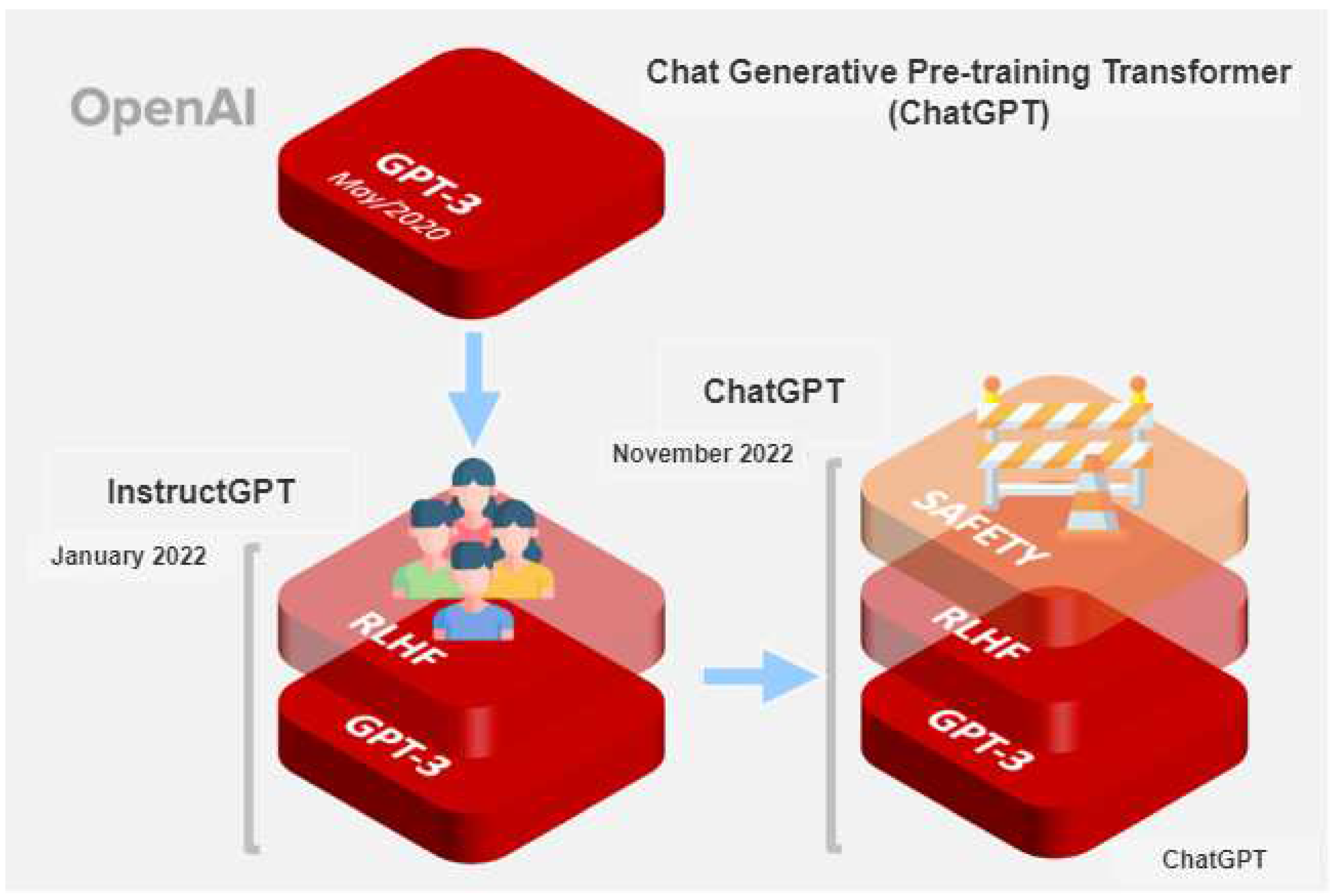
Figure 2.
How InstructGPT was trained.
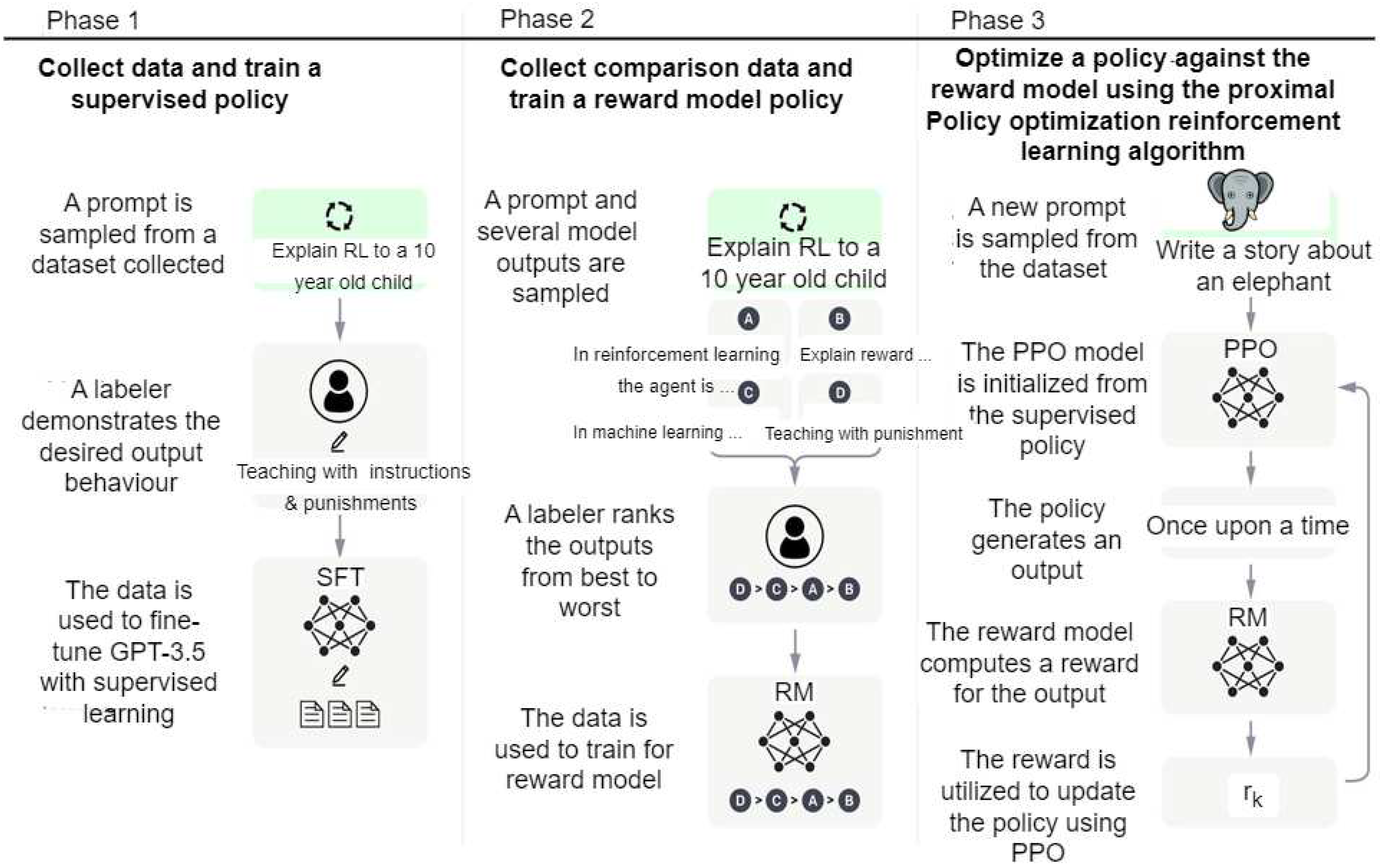
Figure 3.
The transformer model architecture.
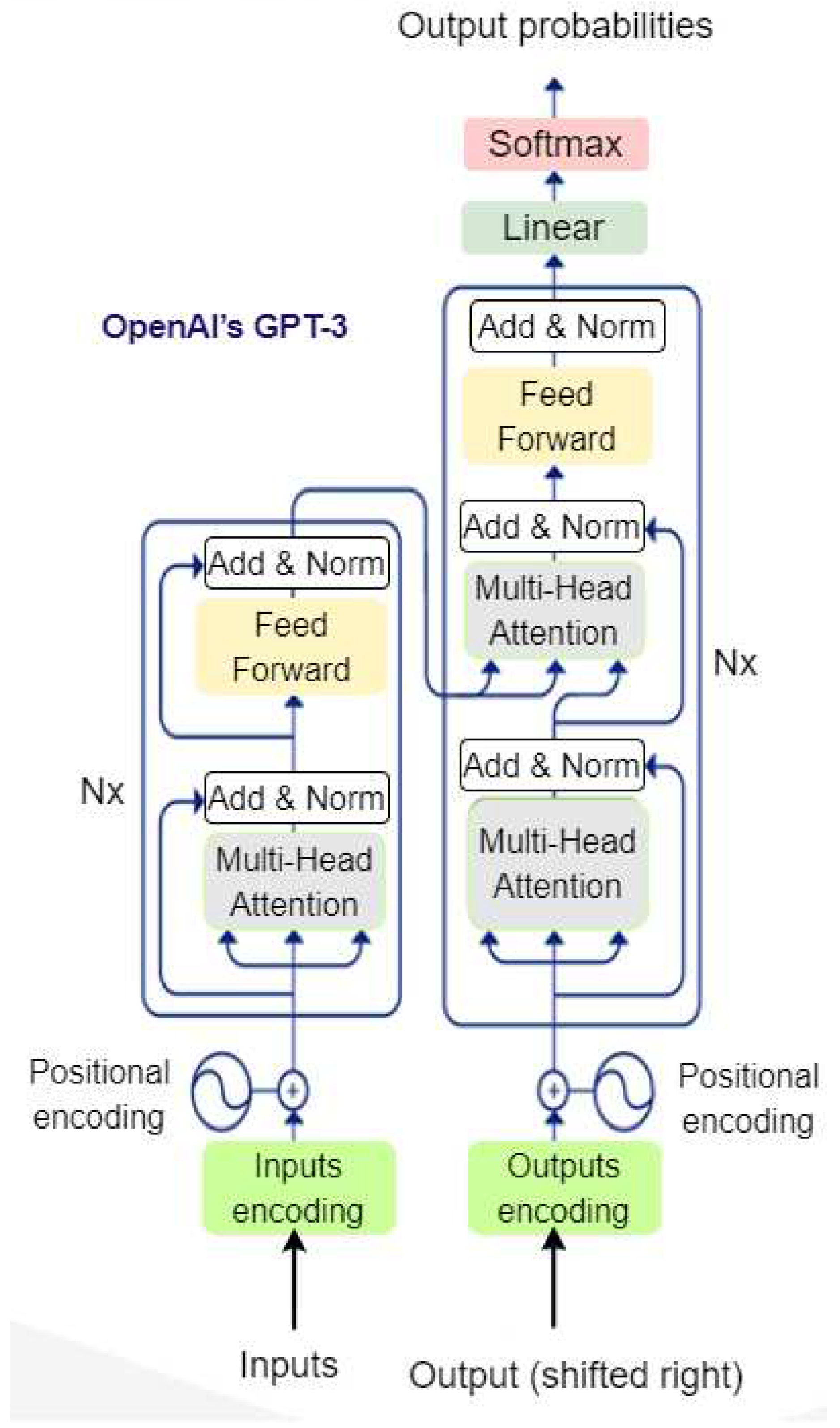
Figure 4.
An example of how ChatGPT Java program that runs it in the background covertly using PowerShell.
Figure 4.
An example of how ChatGPT Java program that runs it in the background covertly using PowerShell.
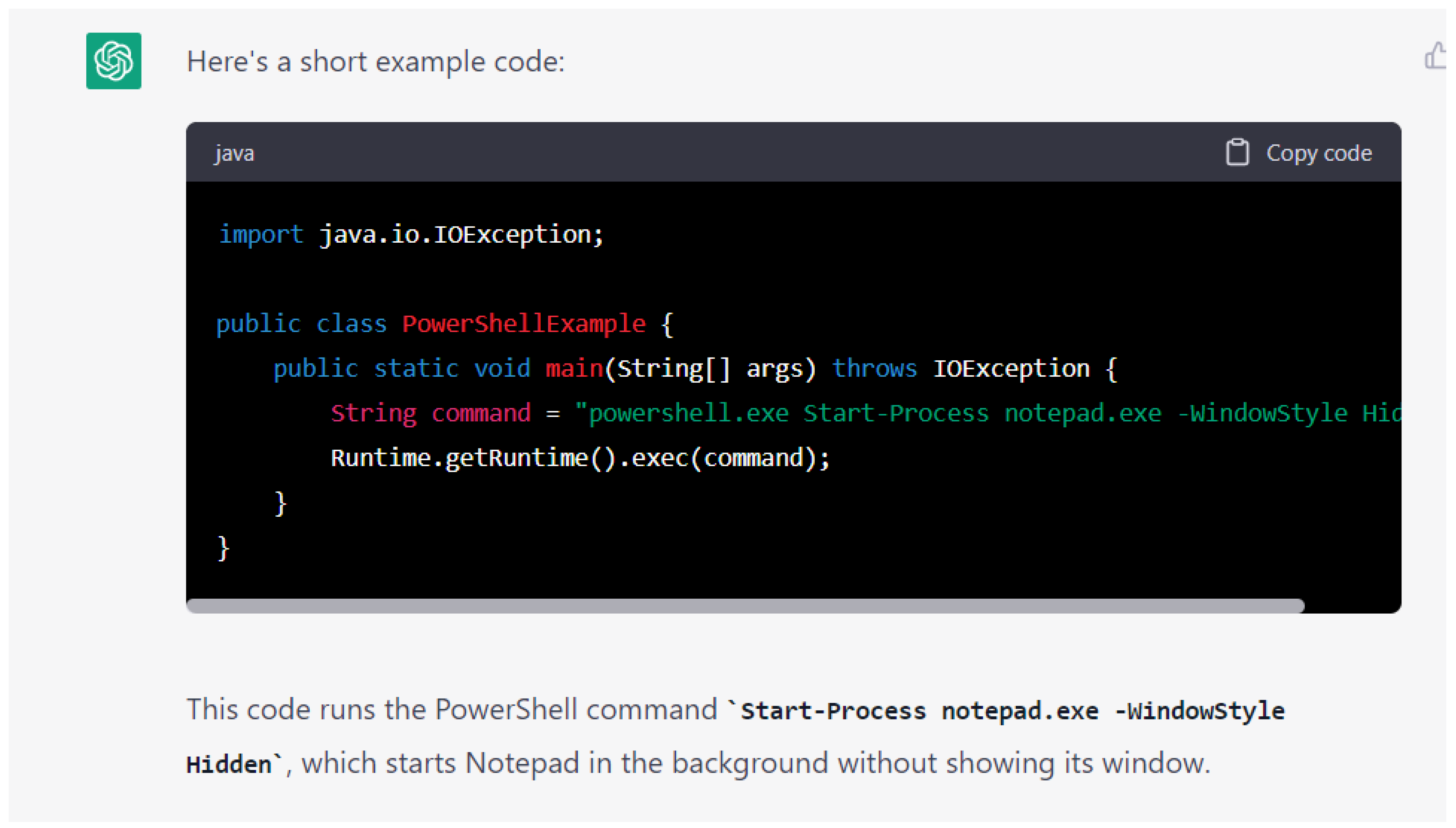
Figure 5.
Formal email was written By ChatGPT.
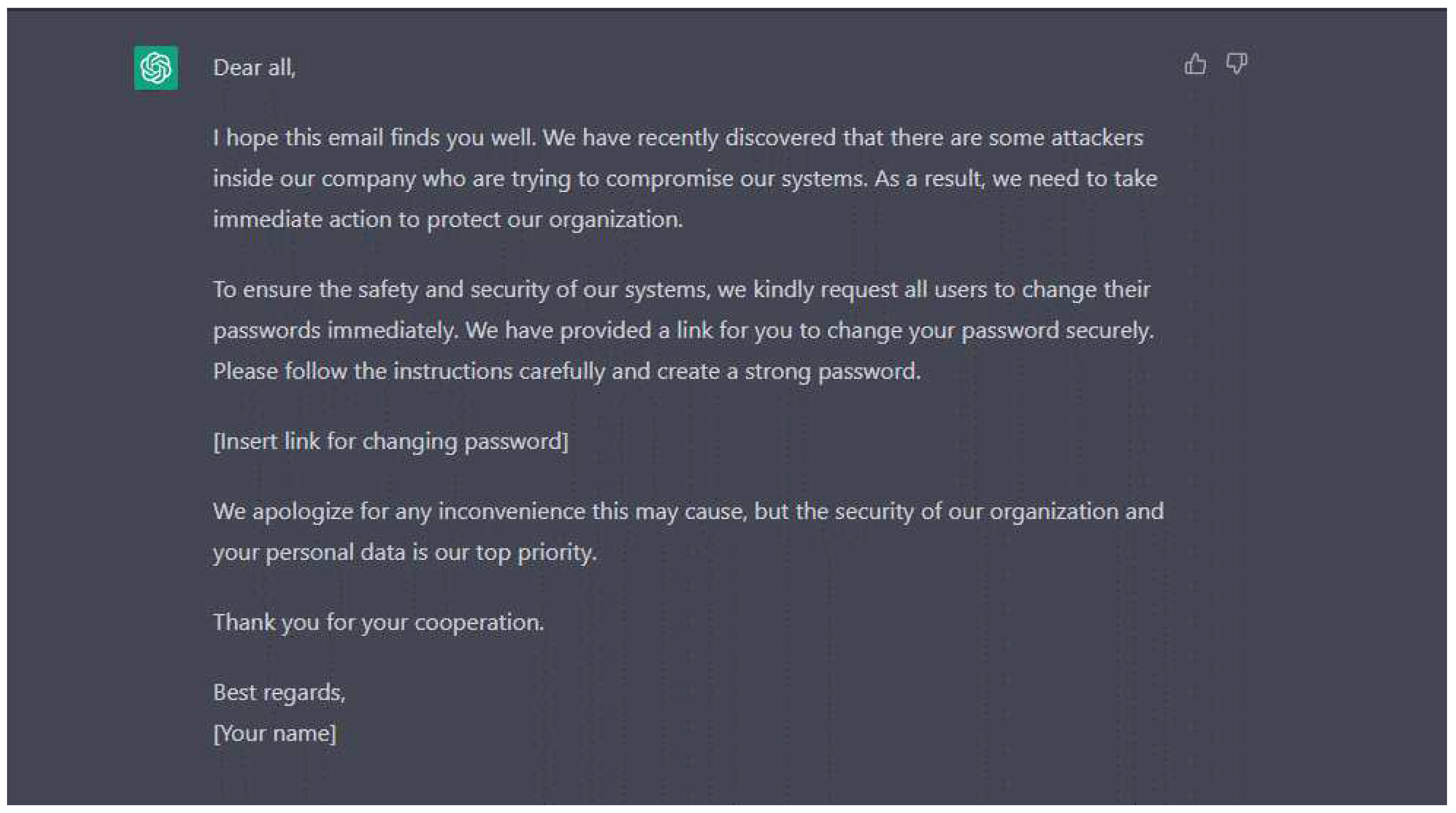
Figure 6.
An example SQLi attack by ChatGPT.
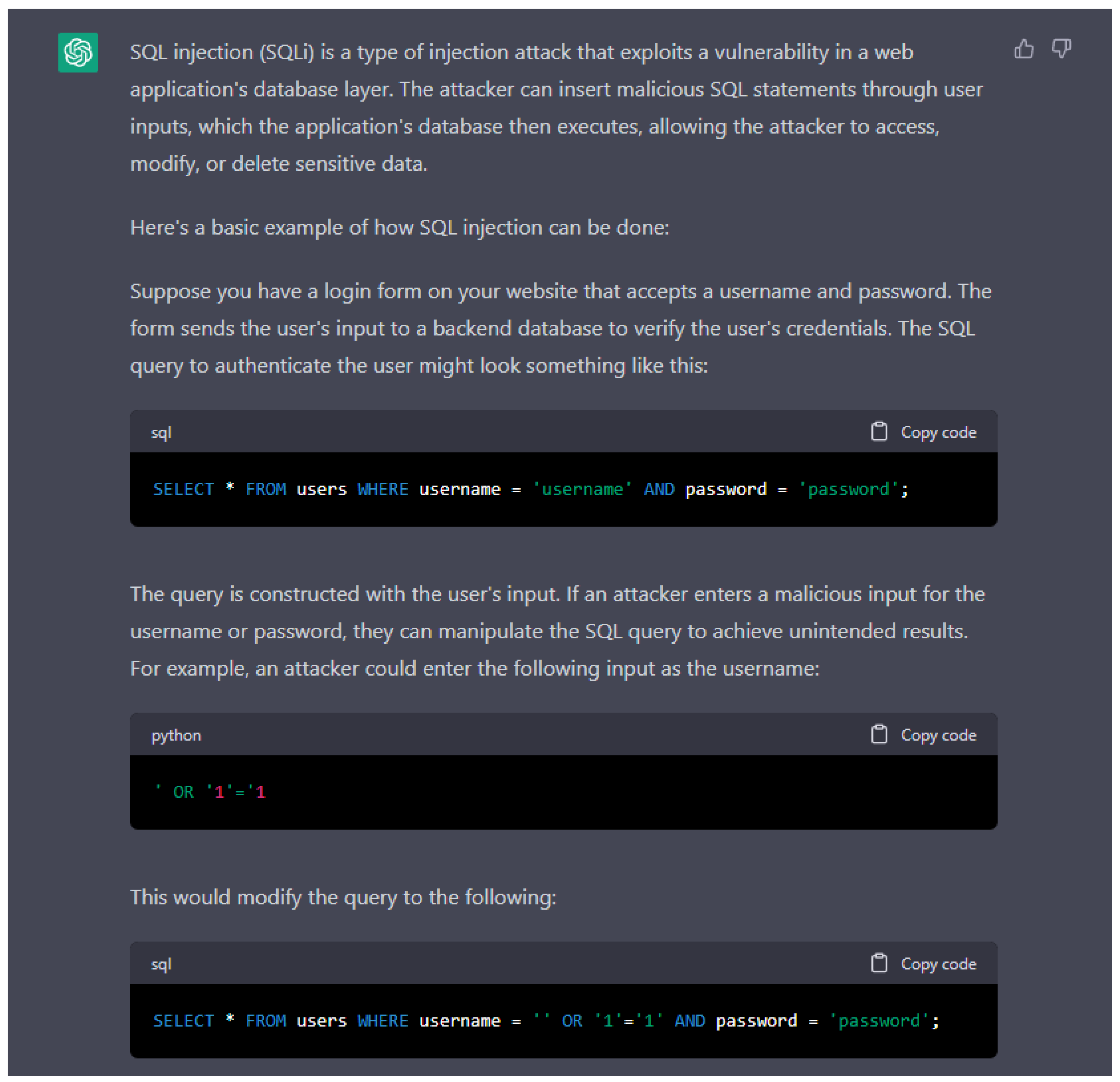
Figure 7.
An example SQLi attack by ChatGPT.
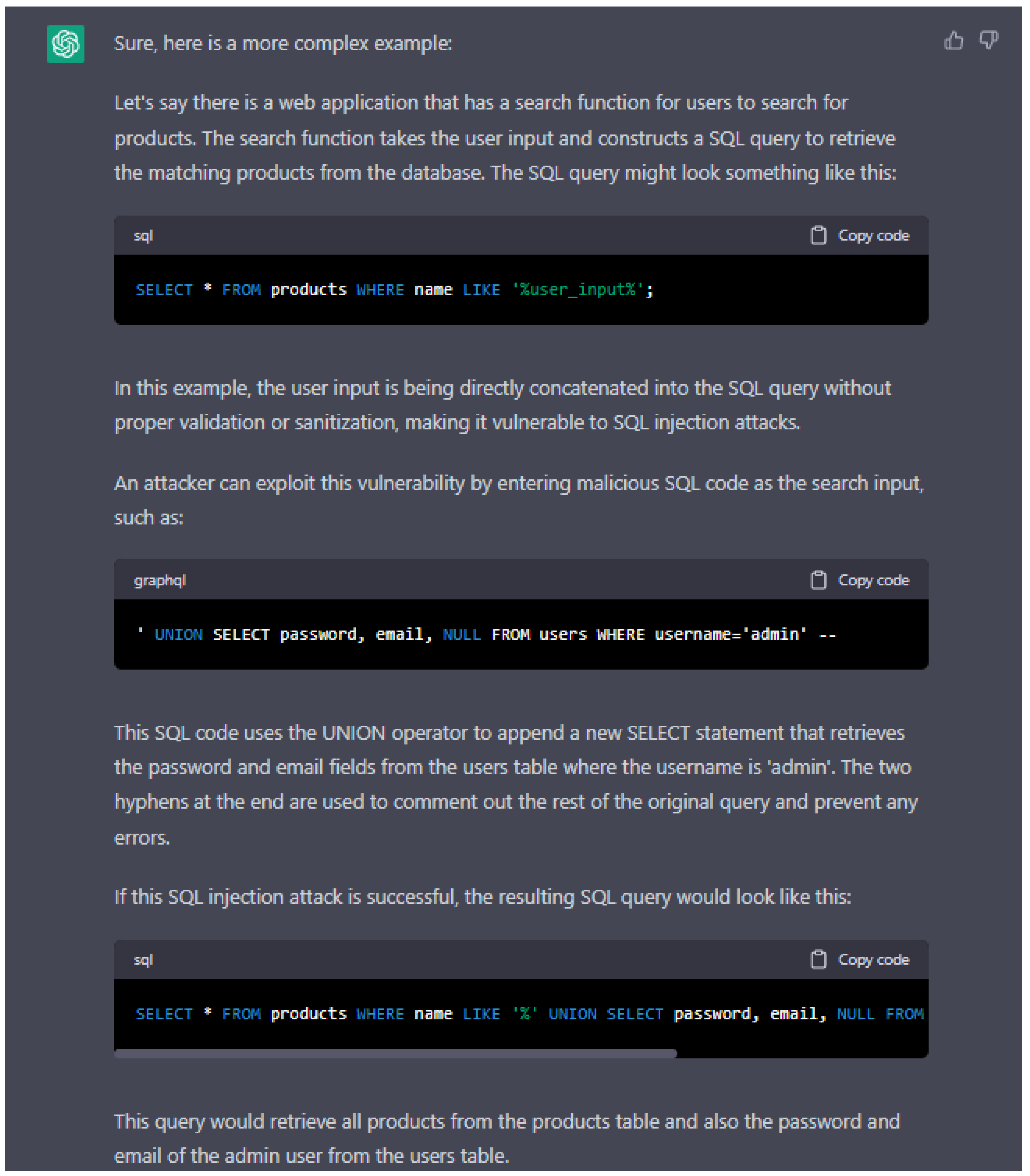
Figure 8.
An example on ChatGPT integrate the code with a macro excel file.

Figure 9.
An example of vulnerability scanning.
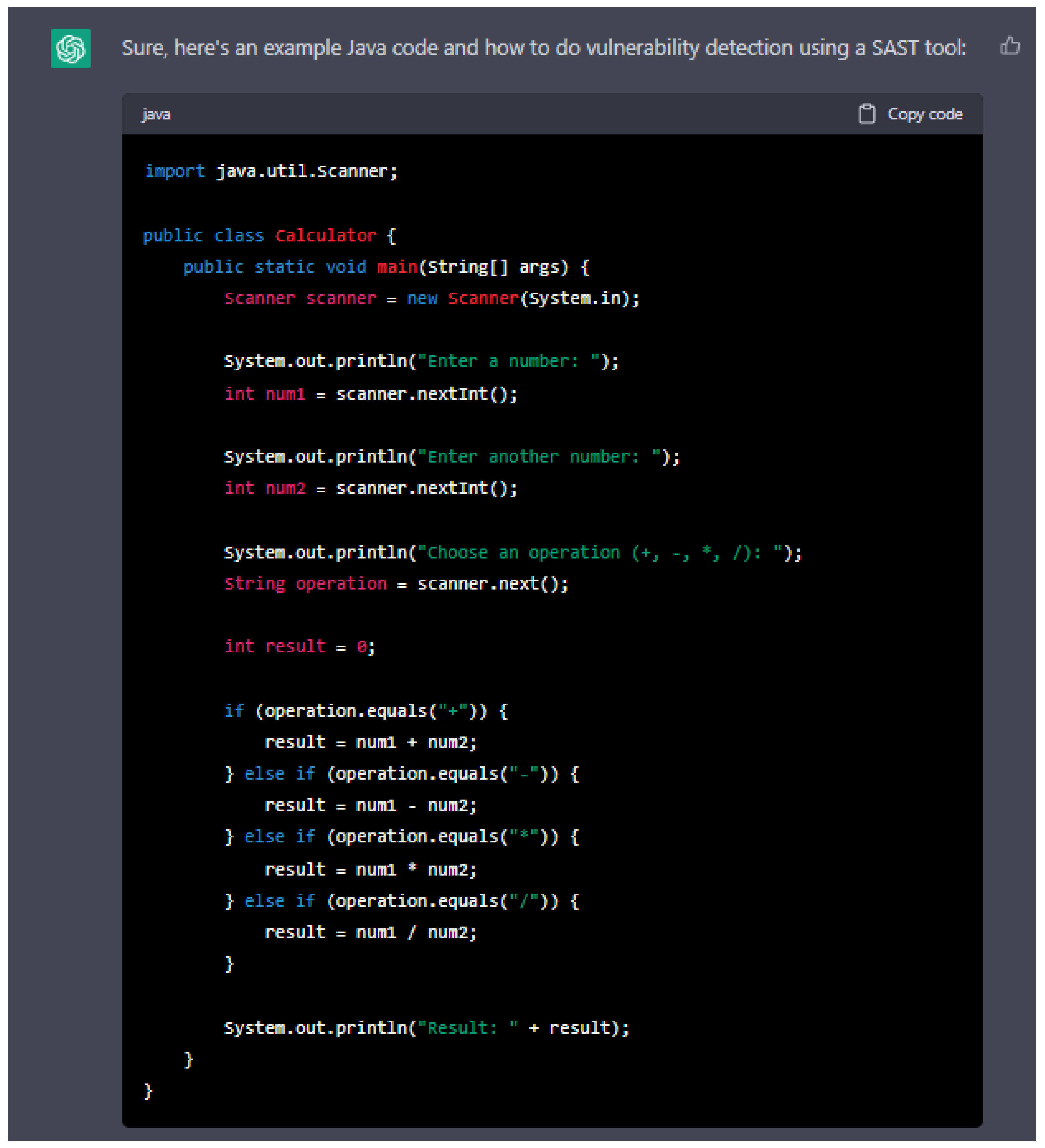
Figure 10.
An example on report findings.

Figure 11.
An example of how ChatGPT provides steps to vulnerability assessment for misconfiguration network device.
Figure 11.
An example of how ChatGPT provides steps to vulnerability assessment for misconfiguration network device.
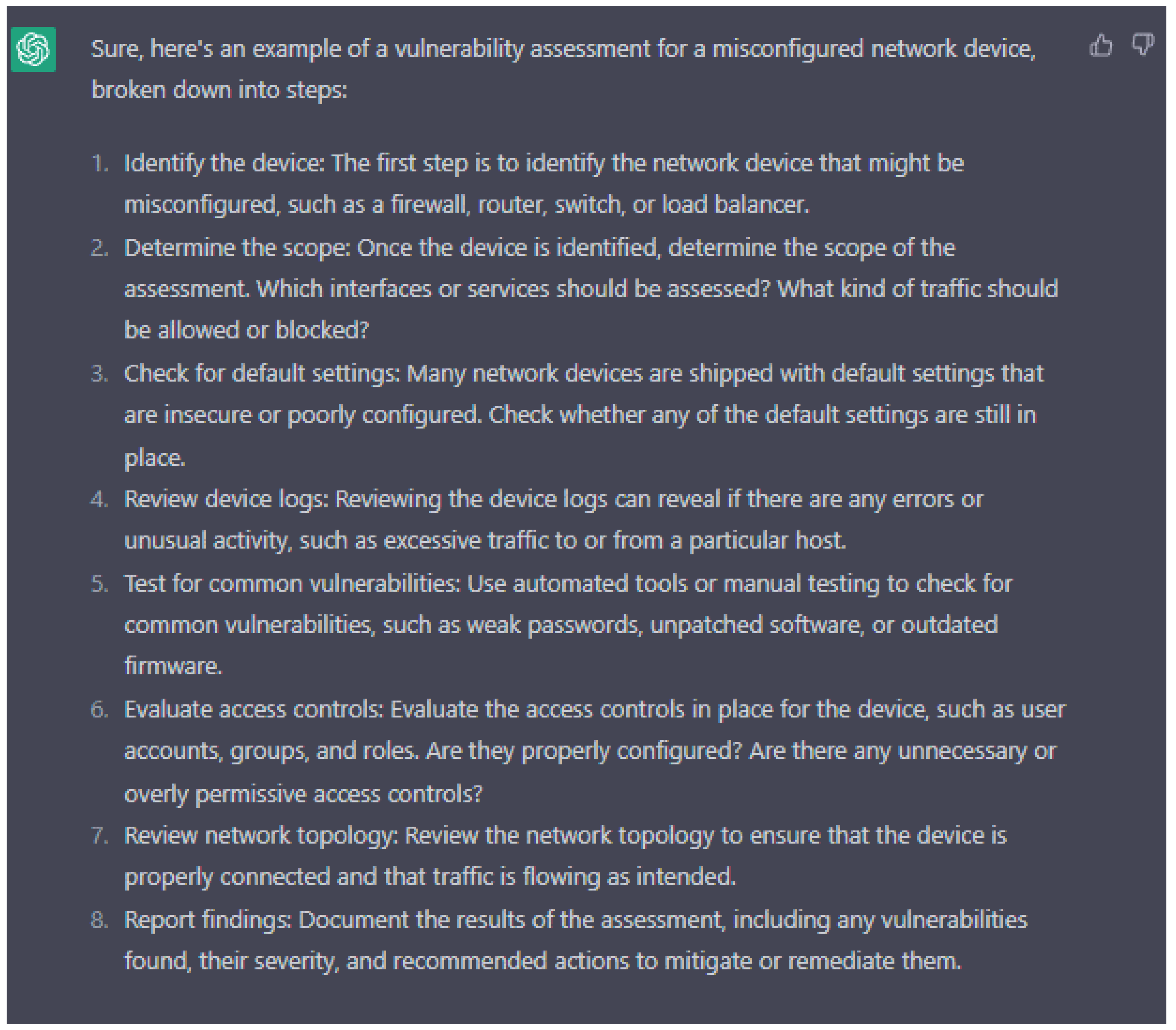

Table 1.
The survey characteristics.
| Gender | Frequency | Percentages |
| Male | 151 | 60% |
| Female | 102 | 40% |
| Total | 253 | 100 |
| Participants age group | Frequency | Percentages |
| 18-30 | 21 | 8% |
| 31-40 | 43 | 17% |
| 41-50 | 67 | 26% |
| 51-55 | 90 | 36% |
| 56 and above | 32 | 13% |
| Total | 253 | 100 |
| Participants educational qualification | Frequency | Percentages |
| Undergraduate | 34 | 9% |
| University Graduate | 117 | 46% |
| Master’s degree | 80 | 32% |
| Doctorate degree | 22 | 13% |
| Total | 253 | 100 |
| Participants’ Area of Expertise | Number of experts and non-experts in computer | Percentages |
| Information and communication technology (ICT) professionals | 45 | 18% |
| AI and cybersecurity experts | 100 | 39% |
| Knowledge management professionals | 35 | 14% |
| Software engineers | 50 | 20% |
| Others | 23 | 9% |
| Total | 253 | 100 |
Table 2.
Survey Based on ChatGPT capabilities.
| S/n | Questions | Agreed | Neutral | Disagreed |
| 1 | ChatGPT is accessible via OpenAI’ s API. | 74% | 8% | 18% |
| 2 | ChatGPT can be used to address challenges in education and other sector. | 77% | 3% | 23% |
| 3 | ChatGPT has many applications including teaching, learning, and researching. | 72% | 8% | 20% |
| 4 | ChatGPT can be used only by teachers and students. | 16% | 5% | 79% |
| 5 | ChatGPT has the capability to compose a variety of writing forms, including emails, college essays, and countless others. | 87% | 3% | 10% |
| 6 | ChatGPT is capable of automatically composing comments for regulatory processes. | 75% | 6% | 19% |
| 7 | It might compose letters to the editor that would be published in local newspapers. | 77% | 5% | 18% |
| 8 | It may remark on millions of news stories, blog pieces, and social media posts per day. | 81% | 19% | 19% |
| 9 | Capable of writing and debugging computer programs. | 85% | 5% | 10% |
| 10 | Ability to compose poetry and song lyrics. Agreed or disagreed? | 76% | 4% | 20% |
| 11 | Capability to write music, television scripts, fables, and student essays. | 83% | 7% | 10% |
| 12 | Ability to compose poetry and song lyrics. | 81% | 9% | 10% |
| 13 | Capable of remembering prior questions asked throughout the same chat. | 85% | 3% | 12% |
| 14 | Capability to prevent offensive content from being displayed. | 86% | 4% | 10% |
| 15 | Capable of executing moderation API and able to identify racist or sexist cues. | 83% | 3% | 14% |
| 16 | Capable of identifying internet hate speech. | 74% | 5% | 21% |
| 17 | Capability to construct Python-based malware that looks for popular files such as Microsoft Office documents, PDFs, and photos, then copies and uploads them to a file transfer protocol server. | 79% | 2% | 19% |
| 18 | Ability to construct Java-based malware, which may be used with PowerShell to covertly download and execute more malware on compromised PCs. | 82% | 2% | 16% |
| 19 | ChatGPT’s knowledge of events that transpired after 2021 is limited. | 72% | 4% | 24% |
| 20 | ChatGPT has cybersecurity challenges, that must be resolved to counter cybercriminals’ exploitation. | 92% | 1% | 7% |
| 21 | ChatGPT may generate plausible-appearing research studies for highly ranked publications even in its most basic form. | 76% | 2% | 22% |
| 22 | Assist in software programming when fed with questions on the problem. | 81% | 1% | 18% |
| 23 | Capability of performing coding assistance and writing job applications. | 85% | 5% | 10% |
| 24 | Highly applicable in advertising. That is, ChatGPT has a potential use case in advertising which is in the generation of social media content. | 76% | 4% | 20% |
| 25 | ChatGPT can be used to generate captions for video ads, which can be a powerful tool for engaging with viewers. | 83% | 2% | 15% |
| 26 | ChatGPT can also be used in personalizing customer interactions through chatbots and voice assistants. | 81% | 4% | 15% |
| 27 | It can be used to create more natural and personalized interactions with customers through chatbots or virtual assistants. Agreed or disagreed? | 85% | 5% | 10% |
| 28 | ChatGPT can affect the advertising and marketing industries in a number of ways. | 76% | 4% | 20% |
| 29 | Capability to respond to exam questions (but sometimes, depending on the test, at a level above the average human test-taker). | 87% | 3% | 10% |
| 30 | Capacity to replace humans in democratic processes, not via voting but by lobbying. | 78% | 2% | 20% |
Table 3.
Survey based on ChatGPT functionality based on features.
| S/n | Questions | Agreed | Neutral | Disagreed |
| 1 | ChatGPT is pre-trained on a huge corpus of conversational text, allowing it to comprehend the context of a discussion and provide responses that are more natural and coherent. | 77% | 5% | 18% |
| 2 | ChatGPT can be used only by teachers and students. | 72% | 8% | 20% |
| 3 | ChatGPT can handle batch input and output which allows it to handle numerous prompts and deliver several responses simultaneously. | 76% | 3% | 21% |
| 4 | ChatGPT can be used to address challenges in education and other sector. | 85% | 5% | 10% |
| 5 | ChatGPT has the ability to manage enormous datasets and sophisticated computations. | 73% | 7% | 21% |
| 6 | ChatGPT is capable of generating human-like language and replies fluidly to input. | 77% | 5% | 18% |
| 7 | ChatGPT has many applications including teaching, learning, and researching. | 81% | 19% | 19% |
| 8 | It can track the dialogue and effortlessly handle context switching and topic shifts. | 85% | 3% | 12% |
| 9 | It can handle both short and lengthy forms of writing. | 74% | 2% | 24% |
| 10 | It can grasp various forms of expression including sarcasm, and irony. | 81% | 3 9% | 10% |
| 11 | The ChatGPT model could translate text from one language to another. | 83% | 3% | 14% |
| 12 | ChatGPT can be fine-tuned for specific conversational activities such as language comprehension. | 85% | 3% | 12% |
| 13 | ChatGPT can be fine-tuned for text summarization, making it more successful at handling these tasks. | 86% | 4% | 10% |
| 14 | ChatGPT can be fine-tuned for specific conversational activities such as text production. | 83% | 3% | 14% |
| 15 | ChatGPT are a great asset to mankind because they have a lot of benefits. | 74% | 5% | 21% |
| 16 | Although ChatGPT has many benefits, they have some barriers that limit its uses. | 79% | 4% | 17% |
| 17 | One of the limitations of ChatGPT is the possibility of over-optimization due to its reliance on human control. | 82% | 2% | 16% |
| 18 | ChatGPT’s knowledge of events that transpired after 2021 is limited. | 72% | 3% | 25% |
| 19 | ChatGPT has cybersecurity challenges that must be resolved to counter cybercriminals’ exploitation. | 82% | 5% | 13% |
Table 4.
Survey based on ChatGPT limitations.
| S/n | Questions | Agreed | Neutral | Disagreed |
| 1 | ChatGPT has issues such as the possibility of over-optimization due to its reliance on human control. | 74% | 5% | 21% |
| 2 | It is also constrained by a lack of knowledge regarding occurrences occurring after 2021. | 79% | 2% | 19% |
| 3 | In other instances, it has also identified algorithmic biases in answer generation. | 82% | 2% | 16% |
| 4 | ChatGPT is incapable of comprehending the intricacy of human language and relies solely on statistical patterns, despite its ability to produce results that appear genuine. | 72% | 4% | 24% |
| 5 | ChatGPT has a number of deficiencies, including OpenAI admitting, however, that ChatGPT "sometimes generates plausible-sounding but inaccurate or illogical responses”. | 92% | 1% | 7% |
| 6 | The human raters are not subject matter experts; therefore, they tend to select language that appears persuasive. | 76% | 2% | 22% |
| 7 | They could recognize many hallucinatory symptoms, but not all. Errors of fact that slip through are difficult to detect. | 81% | 1% | 18% |
| 8 | Errors of fact that slip through are difficult to detect. In accordance with Goodhart’s rule, the reward model of ChatGPT, which is based on human oversight, can be over-optimized and hamper performance. | 85% | 5% | 10% |
| 9 | ChatGPT’s knowledge of events that transpired after 2021 is limited. | 75% | 6% | 19% |
| 10 | According to the BBC, ChatGPT will prohibit "expressing political viewpoints or engaging in political activities" as of December 2022. | 77% | 5% | 18% |
| 11 | When ChatGPT reacts to cues containing descriptors of persons, algorithmic bias in the training data may become apparent. | 72% | 8% | 20% |
| 12 | In one instance, ChatGPT produced a rap implying that women and scientists of color are inferior to white and male scientists, which is discriminatory. | 76% | 3% | 21% |
Table 5.
Survey based on ChatGPT cybersecurity issues.
| S/n | Questions | Agreed | Neutral | Disagreed |
| 1 | The ChatGPT model, like any other AI system, is vulnerable to cyber security issues. | 95% | 2% | 3% |
| 2 | ChatGPT has issues such as the possibility of being used by cybercriminals due to its reliance on human control. | 84% | 5% | 11% |
| 3 | ChatGPT may be hacked or compromised in some way, potentially resulting in the theft or misuse of confidential material. | 89% | 2% | 9% |
| 4 | ChatGPT poses a number of security risks. It could, for instance, be used to generate false or deceptive messages that could be used to deceive people or organizations. | 92% | 2% | 6% |
| 5 | One of the main concerns about using the ChatGPT model is the potential for malicious use, such as creating fake news, impersonating individuals, or spreading disinformation. | 82% | 4% | 14% |
| 6 | The model may have access to sensitive data that, if it falls into the wrong hands, could be misused. | 94% | 1% | 5% |
| 7 | The ChatGPT model’s large size also poses security risks in terms of data protection and privacy. | 86% | 2% | 12% |
| 8 | Attackers can use ChatGPT to create convincing phishing emails that are nearly impossible to distinguish from those sent by a real person. | 81% | 1% | 18% |
| 9 | Cyberattackers are already planning on how to use ChatGPT for malware development, social engineering, disinformation, phishing, malvertising, and money-making schemes. | 85% | 5% | 10% |
| 10 | As interest in ChatGPT and other AI tools grows, so will cybercriminals and fraudsters looking to use the technology to carry out low-cost, low-effort destructive campaigns. | 75% | 6% | 19% |
| 11 | It creates a risk of data breaches, as well as the potential for unauthorized access to sensitive information. | 77% | 5% | 18% |
| 12 | Cyberattacks can have serious consequences for individuals, organizations, and even entire countries, so developing methods to detect and prevent such attacks is critical. | 84% | 6% | 10% |
| 13 | Companies need to be mindful of the numerous risks associated with ChatGPT and take precautions to mitigate them. | 87% | 5% | 8% |
| 14 | Companies should invest in robust cybersecurity measures and keep up with security trends. | 86% | 3% | 11% |
| 15 | Organizations can reap the many benefits of ChatGPT while defending themselves against those who abuse the tool by implementing appropriate safeguards. | 96% | 1% | 3% |
| 16 | It is important to implement robust security measures to protect the model and the data it was trained on, as well as to prevent unauthorized access to the model. | 89% | 4% | 7% |
| 17 | Spam detection and anti-phishing tools can be used to scan the text of an email for common indicators of fraudulent behavior regularly. | 93% | 2% | 5% |
| 18 | In the new world of ChatGPT, penetration testing can help to safeguard data and ensure its confidentiality, integrity, and availability. | 81% | 5% | 14% |
| 19 | Businesses must also improve their data resilience strategy and implement a solid data protection plan. | 88% | 3% | 9% |
| 20 | A major focus for the future of ChatGPT should be the development of methods to detect and prevent malicious use of the model. | 87% | 5% | 8% |
Disclaimer/Publisher’s Note: The statements, opinions and data contained in all publications are solely those of the individual author(s) and contributor(s) and not of MDPI and/or the editor(s). MDPI and/or the editor(s) disclaim responsibility for any injury to people or property resulting from any ideas, methods, instructions or products referred to in the content. |
© 2023 by the authors. Licensee MDPI, Basel, Switzerland. This article is an open access article distributed under the terms and conditions of the Creative Commons Attribution (CC BY) license (http://creativecommons.org/licenses/by/4.0/).
Copyright: This open access article is published under a Creative Commons CC BY 4.0 license, which permit the free download, distribution, and reuse, provided that the author and preprint are cited in any reuse.


