

Submitted:
11 September 2023
Posted:
13 September 2023
You are already at the latest version
Abstract
New advances of nano-enabled weed management: using poly(epsilon-caprolactone)-based nanoherbicides. A review
Keywords:
nanoherbicide
; nanocarrier
; nanoencapsulation
; poly(epsilon-caprolactone)
; weed management
; biocompatible polymer
; polymeric nanoparticles
1. Introduction
Any nation in the globe depends heavily on its agricultural sector since it is the backbone of every economy. Agriculture is threatened by weeds and in the vulnerable agro-ecosystems, they may endanger the entire harvest. Today, most herbicides on the market are designed to eradicate or control the weed plants' above-ground portions. Rhizomes and tubers, which serve as a source for new weeds during the evolving season, are active belowground plant portions that are unaffected by any of these herbicides. Compared to soils where weeds are controlled, soils that are infested with weeds and weed seeds are likely to lower crop yields. Hence, increased crop yield may be the result of increased herbicide efficacy brought about by nanotechnology (Saxena et al., 2018). The use of new technology in several aspects of agriculture, including the development of effective monitoring systems, smart chemicals and gene delivery systems for crops, nano-herbicides, and nano-formulations, among many other applications, will transform the agricultural system. By lessening the effects of environmental contamination, it will boost productivity and decrease agricultural waste that arises indirectly. Therefore, it seems necessary to integrate new approaches such as introducing nanotechnology into all agricultural systems, along with further research and real-world field application (Yadav et al., 2015). Nanotechnology involves manipulation or self-assembly of single atoms, molecules, or molecular clusters into structures to produce materials and products with novel or different features. One of the most exciting areas of science and technology in recent years is the study of the unique features of materials that arise at the nanoscale.
With the aid of nanosized preparations or nanomaterials-based herbicide formulations, nanoherbicides are created. Nanoherbicides are characterized as herbicide formulations based on nanomaterials that make use of the potential for effective chemical delivery in a target site. The widespread concerns of food and environmental contamination have been gradually brought on by the excessive and improper use of chemical herbicide. In comparison to conventional herbicides, formulations based on nanomaterials could increase the herbicide's efficacy, increase its solubility, and decrease its toxicity. To increase bioavailability and improve weed eradication, herbicides are coped with nanomaterials (Table 1). Nanoherbicides are made up of tiny particles containing herbicide's active components and have a high affinity for their target due to their huge specific surface area. The wettability and dispersion of agricultural formulations were improved by nanoherbicides as well. Some of the formulations used in nanoherbicides include nanoemulsions, nanoencapsules, nanocontainers, and nanocages (Khatem et al., 2016)
The necessity to create and develop nano-herbicides that can safeguard the environment and runs as both subsurface and above-ground pretendents of weeds, which truly imitate the agricultural system, making nano herbicides relevant. The development of a target-specific herbicide chemical enclosed in a nanoparticle is directed towards a specific receptor in the roots of the target weeds, where it enters the root system and translocate to areas that block the hydrolysis of food reserves. This can enhance certain weed plant to starve for food and eventually kill them (Saxena et al., 2018). For the first time we have reviewed the new advances of nano-enabled weed management in agricultural systems by the using poly(epsilon-caprolactone)-based nanoherbicides.
2. Weed Control System
Weeds are plants that establish themselves on a plot in addition to the crops. Thus, the term "weed" has no botanical relevance. Any plant, regardless of its economic value, can become a weed if it is growing in cropland against the will of the landowner. There are currently about 2,000 species of weeds in the world. They reduce crop yields, release harmful substances into the soil, create intense competition for light, moisture, nutrients, and water, create shade, and are a breeding ground for most crop diseases and pests. According to Artokhin (2010), the average level of weed infestation in different crops in Russia is about 15% of the crop, and the potential losses due to weeds are estimated at 46 million tons of grain units. Globally, weeds cause a 31.5% reduction in crop production, resulting in economic losses of $32 billion per year (Kubiak et al., 2022). The role of tillage in weed control is particularly important, and its effectiveness depends on the timing and depth of tillage. Delayed deep tillage allows weeds to develop a strong root system and store more plastic substances, making them more difficult to control. Controlling and suppressing weeds by agro-technical methods alone does not always produce the desired results. For this reason, herbicides are used to control many weed species. Herbicides are the most widely used pesticides, accounting for more than 40% of total use, while insecticides and fungicides account for about 30% and 20%, respectively (Rojas et al., 2022).
The violation of hygienic standards in storage, transport, and massive application of herbicides in their translational forms leads to their accumulation in the environment, food raw materials, and food products, which presents a threat to humans and animals, specifically pollinators. Based on their application modalities, between 10% and 75% of pesticides do not reach their targets, resulting in frequent contamination of terrestrial and aquatic environments (Rojas et al., 2022). Even herbicides that act selectively on weeds can cause symptoms in crop plants. In addition, chemical components inhibit the biological component of the soil: the bacteria, fungi, actinomycetes, algae, roots, flagellates, etc. that live in it. They all participate in the formation of humus, and their disappearance inevitably leads to a deterioration of the nutritional quality of the soil.
In addition, with the intensive use of herbicides, it became clear that the effectiveness of these preparations decreased over time due to the appearance of weeds resistant to their effects. The first reports on the development of weed resistance to herbicides (triazines) appeared in 1968. By the early 1990s, 120 weed biotypes were known to be resistant to these and 15 other herbicide groups. Currently, approximately 478 weed biotypes (252 weed species) and herbicide resistances from 136 genera belonging to 30 families have been reported worldwide (Vrbničanin et al., 2017; Heap, 2018). Many of these biotypes are resistant to acetolactate synthase (ALS) inhibitors, PS II inhibitors, ACCase inhibitors, and EPSPS inhibitors (Vrbničanin et al., 2017).
The toxicity of herbicides used in agriculture depends on their chemical stability, photodegradability, solubility, bioavailability, and sorption in soil. There are several possible solutions to minimize toxicity, including the development of carrier systems capable of modifying the properties of a compound and providing controlled release. Controlled release provides a safer environment for pesticide use and minimizes the potential threat to the environment. At the same time, by reducing the amount of pesticide used, its effectiveness is increased. The major interest of these nano-objects lies in the inherent properties (biodegradability, biocompatibility, and better stability) of their morphology and size. Indeed, the reduction of the size of various structures below the micrometer has allowed to highlight new properties not observed at more conventional sizes. Aliphatic polyesters such as poly (lactic acid) (PLA), poly(lactic acid-co-glycolic acid) (PLGA), or poly(-caprolactone) (PCL) are the most commonly used to elaborate active substance carriers. Due to their easily scalable chemical composition, a control of their molar mass distribution as well as a control of their architectures can also be obtained by appropriate macromolecular synthesis methods (Mundargi et al., 2008). Nanoencapsulation has the advantage of safer handling and more efficient use of pesticides with less environmental exposure.
3. Challenges in Weed management
3.1. Herbicide resistance
The high labor scarcity, has led to the crisis of higher wages been paid to agricultural workers, thus has led the producers to adopt to chemical mean of weed management in their crop fields. 47.5% of the 2 mt of overall pesticide use is made up of herbicides (Choudhary, 2020). Although using herbicides to control weeds is popular, there are some drawbacks, such as the inability of a single herbicide to control a variety of weed species, the ability of weeds to survive foliar herbicide applications on underground propagules (such as tubers, rhizomes, etc.), weed shifts, the development of herbicide resistance by weed species, herbicide buildup in soil and damage to succeeding crops, etc., that can once again cause huge problems to the farmers. In addition, these substances are a major contributor to environmental pollution. These issues could be better resolved with the help of nanotechnology, which not only uses less herbicide to control weed, but also makes it more effective.
The number of efficient herbicides available to farmers is steadily declining due to the progress of herbicide resistance. According to Heap recent surveys, 521 distinct cases of herbicide resistance have so far been identified with the most popular herbicides, including 166 cases of herbicidal resistance to acetolactate synthase inhibitors, 74 cases relating to triazines, 53 cases relating to glycines, and 49 cases relating to acetyl-CoA carboxylase inhibitors (ACCaseinhibitors) (Heap, 2021). Herbicide resistance has a significant impact on weed control, especially following the development of weeds that are resistant to numerous herbicides with various modes of action (MOAs). For instance, the prevalence of ACCase-inhibitors resistant grass weeds, such as Lolium spp., in wheat-growing regions of Europe has compelled farmers to switch from the formerly prevalent herbicides to acetolactate synthase inhibitors (ALSinhibitors). After some years of relying on these latter herbicides, resistance has developed against ALS-inhibitors as well, and multiple-resistant weeds are now widespread (Loureiro et al., 2017; Scarabel et al., 2020; Torra et al., 2021). Following the idea of the "pesticide treadmill," growers then adopt other classes of herbicides to supplement or replace those that have decreased in efficacy because of the evolution of herbicide resistance. This has led to the process of continuously use of new herbicides or combining new herbicides, leading to the drive of herbicidal system of more research due to the continuous herbicidal resistance posed by the later herbicides (Foster and Magdoff, 2000). Weeds can adapt to any anthropogenic activity, including herbicides (McElroy, 2014), but if they are subjected to repeated and constant disturbances provoking selection pressure, by the utilization of nanoherbicide weed management practices could have prevented or at least delayed resistance evolution thus, preserving valuable herbicide and transgenic technology.
3.2. Herbicide residues
Herbicides have eased the problem of weed control, but there are still problems, such as herbicide persistence in soil, that have been lowering the quality of soil. Apart from that, the trends among the weeds of developing resistance to herbicides have been a serious issue. Among pollutants, runoff or leaching contamination of soils, air, and water by pesticides and their degraded products worldwide is now evident and demonstrated by many researchers (Beranger et al., 2019; Gunstone et al., 2021). The evolution of pesticides in the environment depends on their physicochemical properties as well as on the pedoclimatic and topographic characteristics of the land. After application, they reach the soil where they can be subjected to retention processes, transfer to groundwater and transfer to the atmosphere by volatilization or erosion. Some pesticides such as organochlorines have a persistence in the soil that can vary from a few hours to several years. 2-Methyl-4-chlorophenoxyacetic acid was detected at 93% of 68 water sites surveyed along the Danube River by Loos et al. (2017). From a dust sampling campaign conducted in 2012 in 239 homes in the Rhône-Alpes Auvergne region, Béranger et al. (2019) detected 125 distinct pesticides at least once, among the 276 searched. In their review of the literature, Mercier et al. (2011) also report frequent contamination of house dust, based on various studies conducted in France or abroad. Similarly, in France, pesticides were detected in 91% of river quality monitoring points, 75% of water body monitoring points and 70% of groundwater monitoring points between 2007 and 2009. The level of contamination was higher in rivers than in groundwater. The total pesticide concentration was higher than 0.5 µg/L in 18% of the river monitoring points and in 3.8% of the groundwater points. The most affected regions were the large-scale cereal and wine-growing areas. The substances most frequently found in both rivers and groundwater were, in almost all cases, herbicides. For rivers, 11% of the sampling points did not comply with the standards for at least one of the 18 substances or groups of substances selected. Two substances, diuron and isoproturon, were responsible for three quarters of the exceedances. In the case of groundwater, nearly 18% of the points monitored did not comply with the quality standards and this situation concerned the whole of Metropolitan France, with the contamination only affecting the base areas. Most of the exceedances of the standards were due to atrazine desethyl, the main metabolite of atrazine and to a lesser extent of atrazine itself. Glyphosate and its metabolite AMPA were the third most common cause of downgrading (Dubois et al., 2010). In India, Mishra et al. reported fairly high average concentrations of total HCH and DDT exceeding 705 ng/g. Several research indicate that glyphosate can adsorb to sediments, constituting a pathway for its dispersion in the aquatic environment (Ronco et al, 2016; Wang et al, 2016). In Argentina, Ronco et al (2016) report an average concentration of 0.6 µg/l of glyphosate in the water of the Paraná River, while the average concentration in sediment is around 742 µg/kg and 521 µg/kg for glyphosate and AMPA respectively.
The resulting toxicological risks for humans are very high (death, endocrine disruption, birth defects, cancer, neurological disorders, immune disorders, etc). The ecotoxicological risks can be alarming (destruction of earthworms, butterflies, frogs, etc.) leading to a decrease in soil fertility and agricultural yields (food insecurity). According to the WHO, pesticides are responsible for nearly three million cases of severe poisoning and 220,000 deaths each year worldwide (WHO, 1992). Moreover, African countries import less than 10% of the pesticides used in the world, but account for half of the accidental poisonings and more than 75% of the fatal cases in a WHO survey (Compaore et al., 2020). Tillitt et al (2010) showed that a 30-day exposure of fathead minnow to 0.5 µg/l atrazine reduced total egg production at spawning by 25%. According to the authors, this decrease is due to an effect of atrazine on the oocyte maturation process in female specimens.
4. Current weed management approaches
Agriculture has been around for over 10,000 years. Weed control has been around for about the same period of time and the problem has not yet been radically solved (Monteiro and Santos, 2022). Weeds are difficult to control: they are extremely simple, grow quickly and reproduce easily, and need only moisture from rainfall to grow successfully. Unlike crops, they put all their energy into surviving. Modern man's arsenal includes several methods: chemical, biological and agro-technical. Crop rotation is an important way to restore and maintain soil fertility and control weeds, pathogens (fungal, bacterial) and pests (Tulkubayeva et al., 2023). Weeds have peculiarities including the ability to remain in the soil for years, a great potential to spread that make many methods less effective including crop rotation (Monteiro and Santos, 2022).
5. Nanotechnology in weed management
From earlier research, only a smaller portion of herbicide is absorbed by the plants. The rest is lost through one or more of the following ways viz., volatilization, adsorption, leaching, photo decomposition, chemical degradation, and microbial breakdown. Continuous use of herbicides results in the development of resistance in weeds towards that herbicide. (Heap, 2020). The science of nanoherbicide technology can be used as a tool to fabricate the slow release nanoencapsulated pre-emergence herbicide for achieving season long weed free condition without hampering the environment. Nanoherbicides are being developed to address the problems in perennial weed management and exhausting weed seed bank. Encapsulation by nanomaterials can protect active ingredients from premature degradation and unnecessary losses.
Studies have shown that nanoencapsulation of herbicides can produce more targeted and less toxic formulations for agricultural applications. Due to enhanced herbicidal activity in comparison with commercial formulation, the use of nano encapsulated herbicide would allow the application of lower dosages of the herbicide. The use of lower doses of herbicides is desirable as it reduces the long-term effects of residues of these herbicides in agricultural areas and their toxicity to the environment. Nanoherbicides can aid in the easy delivery of herbicides to weed plants, reducing residual accumulation in soil (Muchhadiya et al, 2022).
Herbicides are coated with a semi-permeable membrane made of an organic or inorganic polymer during nano-encapsulation. The membrane system-controlled diffusion, ion exchange, and other mechanisms allow for the release of the toxicant. (Wani et al., 2023). Also, with the aid of nanotechnology, water chemicals can travel through the cracks created in weed seeds by the use of nano-carbon tubes, causing them to germinate quickly. As a result, it decreases the weed seed bank and interferes with the weed seed dormancy feature, which allows weeds to develop in wash out. Eliminating naturally occurring germination inhibitors in some weeds also improves germination. For instance, due to the breakdown of phenols and other germination-inhibiting biochemical components, the germination of purple nutsedge tubers is improved when treated with nanoparticles of iron oxide (Viji and Chinnamuthu, 2019) and zinc oxide (Brindha and Chinnamuthu, 2017). When the glycolysis process is inhibited by the herbicide-encapsulated nanoparticles, which include silver nanoparticles in Cyperus rotundus, they target the receptors of weed roots and starve them by lowering their food supply.
The target specific release is also helpful in killing the weeds without even interacting with the crop plants and ultimately results in a higher crop yield. Nanoherbicides are thus an advantage that can be further developed on for the target site inhibition of the biochemical reactions of weed (Muchhadiya et al, 2022). Nano-encapsulations decrease pesticide buildup in soil and prevent the emergence of weeds that are resistant to them. This is because employing herbicides that are encapsulated in nanoparticles or using nanoparticles as herbicide carriers allows the active ingredient of an herbicide to be delivered directly to the target location of weeds. This lessens the likelihood of soil herbicide buildup. The extremely small dimensions of nanoherbicides allow them to blend with soil particles and prevent the growth of weed species that have grown resistant to traditional herbicides. Smart delivery systems reduce the amount of active ingredient needed. Moreover, the highly effective penetration of Nano-herbicides into plant cells and direct transport into the metabolic system of the plant results in abnormalities in the targeted biochemical pathways (Choudhary, 2020); Wani et al., 2023).
6. Types of nanomaterials for assembling nano herbicides
Numerous research has been conducted for the development of nano herbicides, because of their superior effectiveness and environmentally friendly advantages (Pontes et al., 2023; Sousa et la., 2018; Xiang et el., 2019; Oliveira et al., 2015a). Hence, nanomaterials for assembling nanoherbicides can be categorized based on their purpose: They can be put together in a way to make water-insoluble active components more soluble, group them in a way that gradually slows down how quickly they release their active ingredients, complete targeted distribution, and to promote chemical permanence. (Kah et al., 2019).
Based on chemical nature of the materials, nanoherbicides had been grouped into three fundamental categories: (a) Inorganic materials developed from metals, metals oxide, clay minerals etc. (b) Organic materials developed from active ingredients that have been encapsulated in an organic nanocarrier derived from protein, polymers, lipids etc. and (c) Hybrid nanomaterials encompassing both organic and inorganic materials (Forini et al., 2020; Reddy and Chhabra, 2022; Taban et al., 2022). Thus, nanomaterials for assembling nano herbicides can be grouped into three types as discussed below:
6.1. Nanoherbicides based on inorganic nanomaterials
Silica, metal-organic frameworks, mesoporous silica nanoparticles, clay minerals, and other inorganic materials can be used for preparation of nanoherbicides. Some of these nanoherbicides could release ions, though some can enclose organic molecules and release them gradually (Muchhadiya et al., 2022; Cartwright et al., 2020; Wen et al., 2016, Cao et al., 2018 and Ke et al., 2018). For example, inorganic nanomaterials for synthesis of nanoherbicides based on double-layer aluminum hydroxides or zinc (Sherif at al., 2020c), or sepiolite clay linked with magnesium- aluminum, have been extensively used for herbicide alliance since they may reduce herbicide leaching through the soil and hence increase transportation of the functional materials to the plant (Rebitski et al., 2019; Ghazali et al., 2021b). They can also aid the system in encapsulating hydrophobic herbicides among their layers and are used for combating chlamydomonas reinhardtii Dang algae. Clay elements can possibly form nano assembling herbicides since they can be biocompatible, inexpensive, and have a pertinent potential for reduction (Lima et al., 2022). Water-bearing silicates or aluminosilicates, such as kaolinite, montmorillonite, attapulgite, diatomite, hydrotalcite, etc., are the principal types of clay minerals. Clay minerals are often crystalline and capable of being altered by inorganic or organic cations and have a high specific surface area. These modified derivatives work well as adsorbents for a variety of organic chemicals, whose release into the environment can be regulated by their adsorption of active ingredients (Hermosin et al., 2001). According to the Bayat et al. (2022) some of the metallic nanoparticles could imply positive or negative effects on seed germination or seedling growth of the seeds, based on different parameters like kind of species and the metal, concentration of the metal and so on (Bayat et al. 2022). In the cases with negative effect, it seems interesting to study the inhibiting effect of metallic nanoparticles on germination of weed seeds.
Metal-organic frameworks (MOFs) also have been employed to regulate the release of pesticides recently, which has become a research hotspot. Metal-organic structures are continuously repeating periodic systems made of porous crystalline substances with metal ions or clusters as the centre atom and one or more organic ligands. Since MOFs have distinct benefits over other materials, including huge surface areas, customizable apertures, and a variety of structural options, they are widely used in a variety of industries (Li et al., 2019; Cai et al 2019). The types of organic molecules and metal ions utilized and the techniques for connecting them are very specialized, but the composition of MOFs materials defines their flexible diversity of metal ions and ligands. As a result, the structures and properties of MOFs materials are quite varied. Organic ligands that are highly stable carboxylic acids are often employed in the manufacture of MOFs materials. Almost all metal elements, including transitional elements and lanthanide metals, are included in the range of metal centers that are employed. Copper, iron, and zinc are often and extensively used (Yin et al., 2023). Likewise, Mesoporous silica nanoparticles (MSNs) have strong adsorption performance, by large areas of contact, tunable pores, modified interfaces, biocompatible, and environmentally friendly. Research on MSNs preparation has made considerable strides since Kresge published his original findings (Prudnikova et al., 2013). Pesticide-loaded with MSNs have been created, including those having avermectin, pyromamine, hepazole, amino acids, and prochloraz, had been developed. The physical adsorption approach can be used to create pesticide-loaded MSNs, which are best absorbed and transported by plants. To provide MSNs with new performance characteristics, activated groups can be added to the hydroxyl and unsaturated keys on the surface of the MSN through branch aggregation, silicide coupling, etc. Continuous release of modified MSNs into the release medium prevents light-induced degradation of the active components (Zhang et al., 2014; Xu et al., 2020). Furthermore, MSNs are used as herbicide transporters due to their reaction to pH and strong electrostatic connections (Cao et al., 2018; Shan et al., 2019).
6.2. Nanoherbicides based on organic nanomaterials
Organic nanomaterials are exceptional materials for synthesis of nanoherbicides, and they can be built on polymers, synthetic organic materials (Chen and Wang, 2019 and Takeshita et al., 2021), lipids, lignocellulosic materials, proteins, complex macromolecules as dendrimers (de Oliveira et al., 2015; Heydari et al., 2021a; Maes et al., 2021; Lima et al., 2021 and Kumar et al., 2016). Generally, various techniques have been reported to create nanoherbicides, but the nanoemulsion method is the most often used method (Lim et al., 2012; Lim et al., 2013b; Guo et al., 2014a; Zainuddin et al., 2019). Polymers are broadly used in nanoherbicides for preparation because of their biodegradability, affordability, and biocompatibility (Shakiba et al., 2020; Lu et al., 2019).
Chitosan is a type of natural polymer, a natural deacetylation of chitin, that displays good characteristics like biodegradability, biocompatibility, and environmental friendliness. Chitosan can be utilized as a bacteriostatic material to control plant diseases and pests, and they can be formulated with pesticides to prepare nano pesticides (Kashyap et al., 2015; Ayoub et al 2018; Grillo et al; 2015). According to Liang et al. they prepared chitosan nanomaterials and were loaded with avermectin with an ion-crosslinking method; it was seen that these microcapsules showed excellent slow release, which efficiently enhanced the time of retention of avermectin and hence enhanced its photostability (Liang et al 2018). Also, sodium alginate is a conventional anionic polymeric polysaccharide that can be cross-linked with polyvalent metal cations. Sodium alginate was used to create calcium alginate hydrogels that had Lentinus edodes. Good environmental sensitivity was proven in the release from the hydrogels, and L. edodes released more often at higher pH values, temperatures, and Na+ concentrations. This effect can constantly increase plant resistance to most viruses and encourage plant development (Xiang et al., 2019). Synthetic organic materials as compared with natural polymers have a noticeable advantage as herbicide assembling materials, because they have great chemical and physical stability, alkali resistance, erosion resistance and acid resistance. This enables high focused and adaptable applications by allowing the type and quantity of the surface functional groups to be changed (Sun et al., 2020). The use of star cationic polmer (SPc) to form nanoscale pesticides enhanced virulence against aphids’ disease (Yang et a., 2022). The use of SPc nano assemble system to release cyanobenamide, was evaluated and it shows selective toxicity against the pest western flower thrips and predators (Yan et al., 2022). It can be concluded that the use of nanomaterial for assembling nano herbicides can be of greater importance in the Agricultural production system.
6.3. Nanoherbicides based on Organic/inorganic (hybrid) nanomaterials
Herbicides with hybrid nanomaterials for assembling nano herbicides could have the ability to integrate the benefits of two or more materials, such as organic and inorganic materials, into a single structure. These versatile nanomaterials can have a wide range of characteristics, dimensions, morphologies, and chemical make-ups. Additionally, hybrid nanoherbicides can support strong traceability, targetability, and stimulus-responsiveness qualities (Muchhadiya et al., 2022). Due to their biocompatibility, biodegradability, natural abundance, and ease of functionalization, biomass-based hybrids made of lignin, xylan, starch, and cellulose have been investigated for their potential to encapsulate active molecules and be used in the targeted assembling of herbicides (Mahajan et al., 2021). Jiang et al. (2020) found that the fabrication of hybrid xylan-lignin nanoparticles gave nanomaterial amphiphilic characteristics and formed a core-shell structure. Upon the antimicrobial properties of copper salts or copper nanoparticles, lignin-based derivatives can also be teamed with copper to create antibacterial and antifungal compounds (Sinisi et al., 2019; Bayat et al. 2021a). Furthermore, nanohybrids containing copper oxide nanoparticle have strong antibacterial activity besides the potential as weed-controlling substances (Almasi et al., 2018). Up to this day, a large number of biogenic metal-based nanoparticles have been synthesized (Bayat et al. 2021b) which are recommended to be applied in this regard.
7. PCL polymer as a promising nanocarrier for herbicides
Suitable nanocarriers could be chosen from polysaccharides like cellulose and decomposable artificial polymers (e.g., poly ε-caprolactone) with good biocompatibility and low toxicity. A large number of bacteria and fungi are able to decompose these kinds of eco-friendly materials. Poly ε-caprolactone (PCL) (Figure 1) is a synthetic aliphatic polyester and a semicrystalline polymer which is not soluble in water, and harmless for the environment. It is obtained from polymerization of ε-caprolactone cyclic monomer, is a nearly cheap polymer, in absence of catalytic species it is nearly stable, is a very versatile compound and could be synthesized in different forms of micro and nanostructures (Bansal et al., 2017; Bombo et al., 2019).
Since the polymer is biodegradable and biocompatible, it seems ideal to be used in agricultural applications as a sustained release system. It takes about 2 to 3 years for complete hydrolytic degradation of PCL polymer. Degradation process of PCL could be considered as a bulk process in two phases: loss of molecular weight up to 5000 Da as a result of chain scission, and onset of the polymer weight loss. The PCL degradation kinetic patterns are in consistent with autocatalyzed patterns, in which free carboxylic acid (-COOH) end groups are catalyzing the hydrolysis process- scission additional ester groups (Sinha et al. 2004).
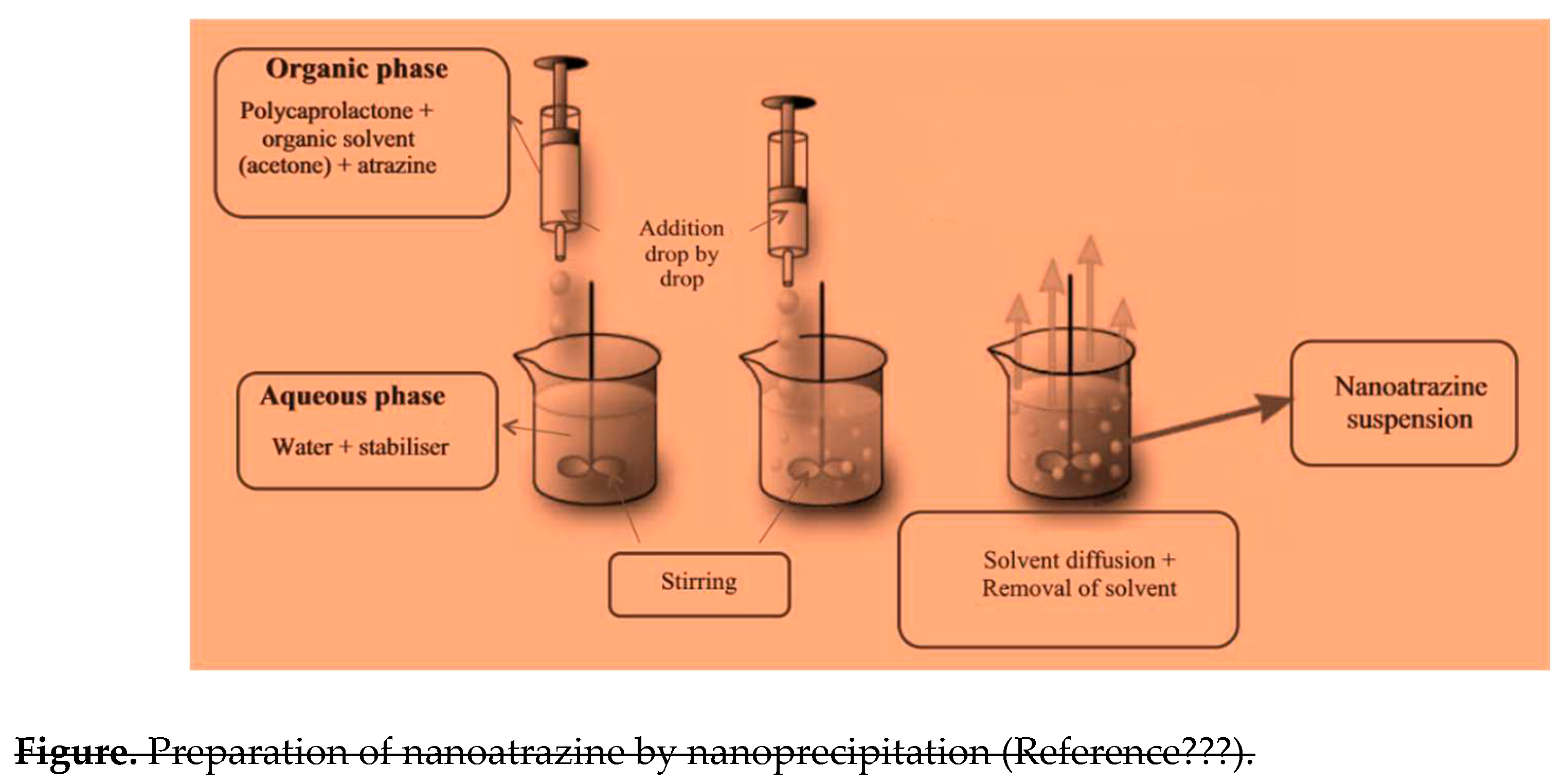
As an example, Takeshita et al. (2021) reported the potential of PCL nanoparticles for encapsulation of atrazine by the nanoprecipitation method. Compared to non-nano atrazine, this nanocarrier system with sustained atrazine release, showed decreased toxic effects on the algae Pseudokirchneriella subcapitata, Allium cepa model, the fish Prochilodus lineatus, and human lymphocyte cell cultures (Takeshita et al., 2021). Due to the fact that PCL polymer does not show phytotoxic activity and does not affect plant’s structure, they have a great potential to be applied for delivering active ingredients to the mesophyll of leaf (Bombo et al., 2019).
8. Classical methods for preparation of PCL-based nanocapsules
Nanoprecipitation (interfacial deposition or solvent displacement): The method developed by Fessi et al. (1988), is one of the most widely used techniques for the fabrication of nanoparticles (Figure 2). Compared to other methods, this method is less expensive, easy to perform, reproducible, does not require a precursor emulsion like other methods, and both nanocapsules and nanospheres could be produced by this method (Pulingam et al., 2022; Lino et al., 2020). Indeed, in the literature, more than 50% of the nanoparticles used for drug delivery are prepared by nanoprecipitation (Salvo et al., 2012). This process occurs in two phases and requires the use of three basic materials: polymer and two miscible solvents (polymer solvent and polymer non-solvent). The first step, or the organic phase, consists of solubilizing the polymer (polycaprolactone) in an organic solvent (notably acetone), possibly containing the active substance to be encapsulated. The second phase is the aqueous phase, or continuous phase, which consists in adding the polymer solution drop by drop and under moderate stirring in a second solvent that is miscible with the first one and the non-solvent of the polymer (most often water). The latter usually contains at least one surfactant, allowing the stabilization of the formed particles. The spontaneous diffusion of the solvent in the aqueous phase leads to a precipitation of the polymer and the formation of solid nanocapsules (Fessi et al., 1988; Lino et al., 2020).
The commonly used polymers in this approach are biodegradable polyesters and PCL is highlighted among them because of its biocompatibility. Another aspect of biodegradable polymers is their capability in controlled release of the active ingredients which arise from their high permeability. Nature and concentration of the compartments affect the physicochemical properties of polymeric nanocapsules and changes in the properties of the nanocapsules can influence its application (Lino et al., 2020).
The emulsion-solvent diffusion technique was developed by Leroux et al (1995) (Figure 3). It differs from the previous processes by the extraction step of the organic solvent, where evaporation is replaced by a diffusion step in a large volume of water. This process will therefore involve an organic solvent that must have a non-zero miscibility with water (Pulingam et al., 2022). The subsequent addition of water after the emulsification step causes the diffusion of the organic solvent into the aqueous phase (because of its partial miscibility with water) and finally the formation of particles by precipitation of the polymer. The residual organic solvent can eventually be removed from the aqueous phase by evaporation at reduced pressure. Nevertheless, the evaporation step has no influence on the particle size because they are already formed as a result of the diffusion of the entire organic phase constituting the emulsion in the large volume of water (Mora-Huertas et al., 2011). Thus, this technique can be particularly interesting, especially since its extrapolation to an industrial scale.
9. PCL-based nanoherbicides
Considering the failure of translational use and alternative herbicides in ecological and weed control, PCL nanoparticles are set up for sustainable use of bioactive compounds, including Triazine class (ametryn, atrazine, and simazine), polycaprolactone, as well as metribuzin (Table 2). In fact, PCL is a is very valuable for encapsulation of herbicides especially atrazine, due to their chemical composition, which is easily modulable, their biodegradable properties, biocompatibility, distribution control, high colloidal stability of their molar masses, and control of their architectures (Abigail & Chidambaram, 2017). Currently, nanoprecipitation and emulsion-solvent diffusion methods have been used for the production of PCL nanoherbicides such as nano PCL-atrazine and nano PCL-metribuzin, which have been discussed below:
1. Metribuzin-PCL nanoherbicide:
Metribuzin is a pre-emergence and post-emergence herbicide used in potatoes, carrots, asparagus, lavender, lavandin, and seed stocks of carrots, alfalfa, wheat, etc., to control broadleaf weeds and grasses. Belonging to the same class as atrazine, metribuzin is also an inhibitor of the photosynthetic pathway, Photosystem II (PSII), by binding to the QB binding site of the D1 protein. Metribuzin is released to the environment through surface runoff after spraying crops (especially within two weeks of a soil application), drainpipe effluent, accidental discharge, or spray drift. It is likely to reach groundwater by leaching or to be carried into surface waters.
However, there is a lack of information about nanoherbicides behavior in environmental matrices. In a study conducted by Takeshita et al. (2022a), PCL-metribuzin nanoherbicide with encapsulation efficiency of 74.8 ± 0.5% was prepared and the stability, its loss in different soils, and the effects on soil enzymatic activity was evaluated over time. The control effects and physiological parameters of nanoherbicide were investigated on Ipomoea grandifolia plants. There were no differences in the half-life of nanoherbicide compared to herbicides commercial formulation. encapsulation efficiency of 74.8 ± 0.5% and any suppressive effects on enzymatic activities of soil were not observed. Nanoherbicide showed a good pre-emergence in weed control even at the lowest dose of 48 g a.i. per ha, reflecting the higher efficiency of nanoherbicide in comparison to the commercial formulation in inhibiting PSII activity and reducing pigment levels. Moreover, the mobility of nanoherbicide was not significantly increased, indicating a low risk of contaminating groundwater (Takeshita et al, 2022a).
Takeshita et al, (2022b) followed they research by tracing PCL- metribuzin nanoformulation in different soils to investigate mobility and retention dynamics of a PCL-metribuzin nanoformulation in comparison with a conventional formulation. Various soil systems and also soils containing fresh organic materials were used in the experiments. For mobility analysis, soil thin layer chromatography was applied and for analysis of sorption–desorption patterns batch method was applied, combined with radiometric methods. The retention was reversible in all soil systems, according to the sorption parameters for both nano and non-nano herbicide formulations (H~1.0). In deep soils containing fresh organic materials, nano PCL-metribuzin was sorbed more than commercial formulation (14.61±1.41% and 9.72±1.81% respectively) (p < 0.05). They suggested that environmental safety relies on maintenance of organic material in a soil system (Takeshita et al, 2022b).
In another relevant research, Diyanat and Saeidian (2019a) had reported synthesis of PCL- metribuzin nanoherbicide with particle size of 150–250 nm and encapsulation efficiency of 83.2%. They applied this nanoformulation for the control of purslane weed (Portulaca oleracea) and evaluated its safety by evaluation of chromosome aberration in onion, Allium cepa, cells for pre-emergence applications in soybean crops. Nanoherbicide was more efficient in weed control in comparison with its commercial formulation, even at doses lower than the recommended ones of commercial formulations. They also reported that encapsulation of metribuzin resulted in a less vertical movement of herbicide in the soil. Finally, they concluded that the nanocapsulation
of metribuzin in PCL decreases negative effects on the environment (Diyanat and Saeidian; 2019a)
2. Atrazine-PCL nanoherbicides
Atrazine is the most widely used herbicide for encapsulation purpose in studies on PCL-based nanoherbicides (Table 2). Atrazine nanoherbicides had weed control efficacy even with lower doses of the active substance. Atrazine is an organochlorine herbicide belonging to the triazine group. It is an organic compound actively used mainly as a weedkiller for corn, but also for other crops such as sorghum or grapes (Heap, 2014). It is still in demand in many countries, because of its high killing power and low cost (Mahé et al., 2020), however, its use has been banned in the European Union and Switzerland because it is a chronic water pollutant and it has low biodegradability (Jablonowski et al., 2011; Mahé et al., 2020). After the ban of atrazine in several areas, weed management in corn has become complex as the cost of alternative methods of this pillar of weed control has increased. In addition, alternative chemical herbicides such as terbuthylazine, metolachlor, and alachlor to replace atrazine are not very effective, were found in high concentrations in water, and did not have better environmental profiles than atrazine (Giupponi, 2001; Mahé et al., 2020; Recker et al., 2015). Over 70 species, including Lolium rigidum, Raphanus raphanistrum, Abutilon theophrastis and Amaranthus palmeri, are estimated to be resistant to triazine (Heap, 2014; Heap, 2020; Ma et al., 2020). Nanoencapsulation of the herbicide may introduce alternatives to reduce their losses to environment and improve their efficiency.
Grillo et al. (2012) showed that PCL polymer nanocapsules containing triazine herbicides (amethrin, atrazine, and simazine) can serve as a useful modified herbicide delivery system (Table 2). The encapsulation efficiency of the herbicidal compounds was greater than 80%. The controlled release of herbicides from nanocapsules was mainly regulated by the relaxation of polymer chains. Nanocapsule formulations containing herbicides were less toxic to onions than free herbicides (Grillo et al., 2012). From the research results, it can be concluded that the use of these nanocapsules can improve the use of herbicides in ecological systems. In summary, the encapsulation by PCL allows a reduction in the dose of applied amethrin, atrazine, and simazine and increases their absorption by the plant, which increases the biological efficiency of these herbicides and reduces their accumulation and mobility in the environment, the emergence of resistant strains, as well as their genotoxicity on non-target organisms, by limiting the leaching, volatilization, and degradation of these active compounds (Grillo et al., 2012).
Grillo et al. (2014) continued their research by coating PCL-atrazine nanocapsules with chitosan in order to modify their surface and investigated the effect of coating on physico-chemical properties of the nanocapsules. According to the herbicide release kinetic profile, the mechanism of release could be explained by combination of both relaxation of polymeric chain and non-Fickian diffusion. Alterations in dynamics of electrostatic interactions between polymeric chains of the PCL-atrazine and chitosan could describe the results. Interestingly, greater size and polydispersion of nanocapsules obtained for nanocapsules coated in low concentration of chitosan. For nanocapsules coated in higher concentrations, size and polydispersion were smaller. Furthermore, with addition of chitosan, the zeta potential of nanocapsules shifted from negative to positive amounts, improving their adhesion to target substrate. The coated nanocapsule had lower association affinity but they may have better interaction with long chain hydrocarbons, acids, alcohols and triterpenes of waxy plant cuticles. It will be resulted in developing the efficiency of absorption by leaf (Grillo et al., 2014).
By using the nanoprecipitation technique, PCL nanoparticles containing the herbicide atrazine were prepared by Pereira et al. (2014) and characterized and evaluated for their herbicidal activity and genotoxicity. The PCL/Atrazine nanoparticles had a diameter of 408.5 ± 2.5 nm and showed high herbicide encapsulation efficiency (92.7 ± 1.2%) as well as good colloidal stability maintained for 90 days. In vitro monitoring showed that the encapsulated herbicide had no effect on non-target organisms (corn) in the medium but was highly effective on Brassica spp. compared to the effect of commercial atrazine. This confirms that encapsulation improves the bioavailability of atrazine while reducing its vertical mobility. Reducing the concentrations and amounts of atrazine applied to the treatment medium helps to reduce the toxic effects examined on Allium cepa (Pereira et al., 2014).
Oliveira et al. (2015a) prepared PCL nanocapsules loaded with atrazine at the average size of 240.7 nm. They applied a concentration of 1mg/ml the nanocapsules in the control of mustard (Brassica juncea) as target plant and after 72h, shoot growth inhibition and severe symptoms were observed due to the reduction of net photosynthesis and PSII maximum quantum yield, and also enhancement of leaf lipid peroxidation. The results demonstrated that PCL-atrazine nanocapsules were10 times more effective than a commercial formulation of atrazine, therefor, as an important result, application of PCL-atrazine nanocapsules lets the use of lower herbicide dosages with no reduction in efficiency, providing environmental advantages (Oliveira et al., 2015a).
As atrazine herbicide is commonly used toward maize, Oliveira et al. (2015b) continued their research by evaluating the side effects of PCL-atrazine nanocapsules to maize crop (as non-target plant). They studied the effect of nanocapsules of PCL-atrazine on some parameters of soil-grown maize (Zea mays L.) such as growth, physiological stress and oxidative stress parameters. After 24 hours from post-emergence treatment of the maize with 1mg/mL PCL-atrazine, they observed a 1.8-fold enhancement in peroxidation of leaf lipid as compared to the water treated control plants. Moreover, maize plants showed a 15% decrease in photosystem II (PSII) maximum quantum yield and also a 21% reduce of assimilation rate of net CO2 in comparison to the control. Interestingly, the analyzed parameters were not affected after 4 and 8 days. They suggested that temporary side effects of the atrazine may be as a result of the plant’s ability in detoxification of the herbicide. Besides, a 10 times diluted PCL-atrazine (0.1mg/mL) dosage was effective in control of weeds with no negative impact on the studied parameters even after a short time of usage. Also, they did not observe any negative effect on shoot growth or macroscopic image of the leaves (Oliveira et al., 2015b). Such a research gives us very useful information about introducing novel nanoformulations in weed management approaches.
Sousa et al. (2018) applied post-emergence herbicidal activity of PCL-atrazine nanocapsules (2000 g/ha) against slender amaranth (Amaranthus viridis) and hairy beggarticks (Bidens pilosa) comparing the results with a commercial atrazine formulation. Results showed that PCL-atrazine nanocapsules were more effective than the commercial atrazine formulation compared to the control (50 % and 40% inhibition in photosystem II activity respectively). A 10 times diluted concentration of nanoherbicide also showed the same results, like commercial one (Sousa et al., 2018).
Sousa et al. (2020) followed their studies by applying PCL-atrazine nanocapsules in post-emergent control of an atrazine-tolerant weed, sourgrass (Digitaria insularis) in greenhouse. Efficiency of atrazine is limited against D. insularis, but nano PCL-atrazine at both developmental stages stimulated a faster and greater inhibition of sourgrass photosystem II activity compared with commercial herbicide. Some of the physiological, growth, and control parameters were measured for plants which had two or four expanded leaves and were treated with nano PCL-atrazine or commercial formulation. Nano PCL-atrazine developed the sourgrass control, especially in two expanded leaves stage. Moreover, in nano PCL-atrazine treated four leaved plants, greater enhancement in dry weight was observed compared to the commercial atrazine. In addition, the use of nano PCL-atrazine at half-dosage showed equally or better results in weed control in comparison with commercial formulation at full dosage (Sousa et al., 2020).
Preisler et al. (2019) reported the improvement of pre-emergence activity of atrazine by nanocapsulation with PCL against Bidens pilosa. Soil treatment with nano PCL-atrazine resulted in higher seedlings mortality than atrazine treated ones, even after a 10-fold dilution. The residual effects of nano PCL-atrazine and conventional atrazine on soybean plants were evaluated after different periods of soil treatment. In a short-term treatment of soil (17 days) with atrazine formulations, an intense toxicity to soybean plants was observed. Considering the growth inhibition parameters, 200 g/ha nano PCL-atrazine and 2000 g/ha had similar inhibitory effects on soybean, suggesting that nano PCL-atrazine enhanced the short-term residual impact of herbicide. In a long-term treatment of soil (60 days), soybean plant’s growth and its physiological parameters similarly affected by nano and non-nano formulations, suggesting that using nano PCL-atrazine did not increase the residual impact of the herbicide. Therefore, if a safe interval is considered from treatment of herbicide to the sowing, this nanoformulation can be used in efficient control of weeds with no more phytotoxicity to non-target crops rather than none-nano formulation of atrazine (Preisler et al., 2019)
Bombo et al. (2019) studied the interaction between nano PCL-atrazine formulation and Brassica juncea plants in structural details. They analyzed structural changes of the leaves based on the foliar uptake of nano PCL-atrazine in a postemergent treatment. Nano PCL-atrazine sticked to the leaf surface, penetrated mesophyll and transported through the vascular tissue into the cells, degraded the chloroplasts causing herbicidal activity. According to the obtained results, controlled release system could enhance accumulation of the active ingredients at intracellular level of target organelles (Bombo et al., 2019).
Wu et al. (2021) compared the effects of nano PCL-atrazine and pure atrazine at different concentrations on defense mechanisms, physiological responses, and nutrient displacement in lettuce (Lactuca sativa) as a non-target plant. The chlorophyll pigments content, ROS production, activities of ROS scavenger enzymes (SOD, APX, CAT, POD, GST, and PPO) and macro- and micronutrients concentrations were determined in short-, medium- and long- term exposure durations. In short-term exposure, the growth inhibition of nano PCL-atrazine was similar to the atrazine, but in long-term exposure, to high concentrations of nano PCL-atrazine implied greater negative effects on the end points of ROS productions, protein content, and alteration of enzyme activities, in comparison with pure atrazine. Nano PCL-atrazine and atrazine differently implied displacement of nutrients, such as, Cu, K and Fe, for growth of the plant growth and disrupted mineral nutrients uptake in the plants, and the differences were based on the plant organ, nutrient element, and exposure time. With nanoparticle modifications there will be a potential to reduce the amount of required herbicides by enhancing the effect time (Wu et al., 2021).
Takeshita et al. (2021) prepared 200-300nm sized nano PCL-atrazine and studied nanoherbicide-leaf relationship in field and greenhouse on mustard plant using radiometric techniques. They explained changes in nanoherbicide’s mode of action for understanding improvement in post-emergence weed control efficiency upon nanocapsulation of atrazine. Nanoatrazine had lower wettability and higher absorption and translocation. The higher inhibition of photosystem II activity was described upon 40% enhancement of herbicides absorption in first 24 hours. They suggested that the increase of nanoherbicides herbicidal activity may be as a result of its stomatal uptake. Interestingly, nanoatrazine was more efficient in field rather than greenhouse and in field experiments, nanoformulation of atrazine showed better herbicidal activity, two times more than conventional atrazine. Higher absorption and mobility in plant, and higher herbicidal activity of nanoformulation in field provides environmental benefits, recommending more investigation for applying such nanocapsulation technique in future (Takeshita et al., 2021)
Considering the fact that atrazine is harmful for human and animal, Moore et al. (2022) prepared nano PCL-atrazine and evaluated its effect on human lung cells as atrazine may reach respiratory units by inhalation. In previous research it was reported that nano PCL-atrazine was safer to human cells than atrazine but according to the results of this investigation, 48 hours after exposure of cells with nano PCL-atrazine with concentrations more than 1ppm, dehydrogenase release of lactate notably enhanced, with a maximum at 5ppm which was three times more than the control cells. Such effects were not observed in cells treated with atrazine or PCL nanocapsules. Therefore, nano PCL-atrazine stimulated more damages to human lung alveolar cells in comparison to atrazine or PCL nanocapsule, however, nanoformulation provides higher herbicidal activity, lower dosage and then lower ecological contaminations (Moore et al., 2022).
3. Pretilachlor-PCL nanoherbicide
PCL nanocapsules containing pretilachlor herbicide, with a high encapsulation efficiency of 99.5±1.3%, were prepared and investigated by Diyanat et al. (2019b). The nanocapsules had irregular shape with the particles size in the range of 70–200 nm. Studies also showed that the nanocapsules were stable in the suspension without any aggregation over 60 days. Barnyard grass was used as a target plant and rice as a non-target plant, for evaluation of herbicide activity in a pre-emergence manner. They reported that the nanoherbicide had no negative effect on rice plant, but a significant effect on barnyard grass. Moreover, upon the genotoxicity experiments (estimation of mitotic index using onion cells), the nanoherbicide was less toxic than the commercial formulation. Based on the obtained results, the authors recommended that nanocapsules of pretilachlor with PCL, could be used effectively in agriculture as an environmentally friendly PCL-herbicide systems (Diyanat et al., 2019b).
10. Behavior of PCL-based nano-enabled herbicides in plant systems
Regarding the design of nanoherbicide formulations, one of the main aspects is delivery of the active ingredient across the surface of leaf, to facilitate reaching the action sites and improve its effectiveness. According to the Takeshita et al. (2021), for atrazine loaded PCL nanoparticles, kinetic assays indicated that the release of atrazine from nanocapsule is by diffusion of active ingredient, accompanied by relaxation of polymer matrix, with a slower rate compared to the conventional atrazine. Therefore, the observed rapid absorption of atrazine by mustard leaf may be due to the carriage of herbicide by PCL nanocapsules through the tissue of plant (Takeshita et al., 2021). They proposed that nanoherbicides stay adsorbed on the surface of leaf, awaiting till the accessible path ways be available. Size, shape, composition, surface charge (zeta potential) and loading of the nanoparticles affects the translocation of them. Penetration of the nanoherbicide into the leaf’s barriers is a key point in designing a nonosystem. For smaller nanoparticles (<5 nm) and for diffusion of the hydrophobic compounds, cuticular pathways are the main access routes but for larger nanoparticles (>40 nm) trichomes, stomata, and aqueous pores are path routes (Takeshita et al., 2021). The size of hydathode water gates always vary from a few micrometers to several micrometers, which facilitate nanocarrier entry. Therefore, the nanoencapsulated herbicide could pass directly through vascular system and then rapidly spread throughout the plant, enhancing the activity of nanoherbicide (Nguyen et al., 2014).
The surface of plant cell walls is negatively charged and PCL nanoparticles also have a negatively charge surface. Negatively charged nanoparticles have a faster foliar penetration compared to the positively charged ones because positively charged nanoparticles due to the electrostatic attraction accumulate and aggregate in the surface of tissue. On the other hand, nanomaterials with negative zeta potential as a result of their poor interaction with cell walls, had a higher distribution in plant tissue (Nguyen et al., 2014). According to the Nguyen et al., penetration of nanocarrier is fast in pepper leaves and the nanoherbicides, just after 60 minutes of application, are able to get to the deepest parts of leaf. Stomata are found on both surfaces of leaf in pepper like in mustard, which helps fast penetration in these species, as ideal pathways for leaf penetration of nanocarriers are stomata and hydathode regions (Nguyen et al., 2014).
According to the Bombo et al. (2019) although herbicide nanocapsules enter the leaf through its natural pores, stomata and water pores, it is probable that translocation beyond leaf also be mediated by symplastic and apoplastic pathways. They reported 36 h after application, nanoparticles were observed inside cell protoplasts and after 48h inside the chloroplasts. It is proposed that the mechanism of penetration may involve endocytosis, wherein nanocapsules cross the cell wall, reach to the cell membrane, resulted in internalization of nanoherbicide in a vesicle in cytoplasm. An important result of the study was that PCL-based nanocarrier did not showed phytotoxic effects and the treatment did not have any structural changes, as the nanoparticles were inside the cells. It could be suggested that they could be applied for delivery of various active ingredients into the leaf mesophyll, especially targeting the chloroplasts (Bombo et al., 2019).
Takeshita et al. (2021) reported that PCL nanocarriers loaded with atrazine had a greater mobility in leaf rather than atrazine’s commercial formulation as due to the surface characteristics of nanocarriers, they follow the water pathway in the vessels and apoplastic path more effectively than atrazine. This results in a higher distribution through the mesophyll and affection by herbicide, which is established by measurement of inhibition of PSII activity. Due to the nanoencapsulation, atrazine showed low translocation via phloem, but a point enhancement in percentage of the 14C-atrazine observed in the other parts of plant in addition to the treated leaf. Moreover, using atrazine nanoherbicide in center of the leaf resulted into PSII inhibition at the other parts of the treated leaf and in an untreated leaf, suggesting that nanoencapsulation may improve translocation via phloem resulting more distribution of the herbicide all over the plant. The site of greater accumulation of atrazine in mustard leaves was in portions of the leaf with more cell membranes and less cell wall volumes, like at the ends of vascular systems. This intermediary permeability of atrazine between phloem and xylem needs more studies for confirming if there is any relevance of the process for atrazine’s herbicidal activity (Takeshita et al., 2021)
11. Conclusions and future outlook
Upon the day by day increasing use of herbicides, applying a controlled release formulation seems helpful considering economic and ecological aspects. A controlled release system is developed for releasing herbicide in a controlled amount within a definite time. Such controlled release formulations reduce drawbacks of herbicides on environment by reducing vaporization, leaching, and degradation. Furthermore, as a result of nanocapsulation, leaching potential and the loss of active ingredients before reaching to the target plant are reduced. Nanocapsulation of herbicides seems to be a useful technique to promote some of the main features such as efficiency development, minimizing herbicides effects on environment and human health. For a better combat with biotic and abiotic stresses (such as drought, heat and salinity), these benefits seems to be essential in such changing climate. Another important aspect for development of novel nanoherbicides is that nanoparticles may increase adsorption of the herbicide by better adhesion to waxy leaf surface and then increasing its biological activity.
Among all of the materials which have been used for this purpose, the most suitable carriers are the biodegradable ones, as they have good biocompatibility and their toxicity is at low levels. As PCL attracted researchers attention in the field of pecticide nanocapsulation as it is not soluble in water, it could be easily degraded by enzymes and fungi, and also it is a relatively cheap polymer. Besides, PCL nanocapsulated herbicides could be easily prepared from inexpensive materials in large scales. Triazine class (ametryn, atrazine, and simazine), metribuzin and polycaprolactone are the herbicides which have been encapsulated with PCL. According to the recent studies, PCL nanocapsulated herbicides that have been used in weed management could produce less toxic formulations, providing more environmentally friendly products for sustainable agriculture.
Future perspectives: With development of innovative controlled release systems for herbicides, it is needed to improve delivery systems which specifically target subcellular compartments using biorecognition motifs to overcome the problem of inability of current nanoformulations to target species precisely. However, for development of smart nanoherbicides, it is necessary to precicely understand the action mechanisms of nanoherbicides on target and non-target organisms. Moreover, there are many biological factors affecting the efficacy of nanocarriers carrying herbicides during crossing the plants cell walls. Therefor it is recommended to improve our knowledge about details of these nanoformulations such as nanoherbicide’s mode of action in future researches. Moreover, many more studies are needed on a vast amount about herbicides impact on soil microorganisms, confirming the clear mechanism of action considering different environmental parameters. Also, further investigations are required for better understanding of the uncertainties related to the adverse effects of studied nanoherbicides.
Altogether, the reports indicate that in comparing nanoherbicides with their commercial analogues, nanoherbicides are potentiated to be more sustainable, efficient, and resilient and have lower adverse impacts for environment. These advantages may improve crop yields, contributing towards food security and sustainable agriculture.
References
- Dubois, L. Lacouture et C. Feuillet, «Les pesticides dans le milieu aquatique, données de 2007,». Environnement 2010, 26, 1–43. [Google Scholar]
- Abigail, E. A. , & Chidambaram, R. (2017). Nanotechnology in Herbicide Resistance. Nanostructured Materials - Fabrication to Applications. [CrossRef]
- Almasi, H. , Jafarzadeh, P., Mehryar, L., 2018. Fabrication of novel nanohybrids by impregnation of CuO nanoparticles into bacterial cellulose and chitosan nanofibers: characterization, antimicrobial and release properties. Carbohydr. Polym. 186, 273–281. [CrossRef]
- Artokhin, K.S. Weeds - 3d edition, revised and upgraded. - M., 2010. - 263 p.
- Asma Chebil. Élaboration de nano- et microparticules pour l’encapsulation et la libération de molécules polyphénoliques ayant des applications dans le traitement de milieux aquatiques. Alimentation et Nutrition. Université de Lorraine, 2016. Français. ffNNT : 2016LORR0054ff. fftel-01752245.
- Ayoub, H. A., Khairy, M., Elsaid, S., Rashwan, F. A., & Abdel-Hafez, H. F. (2018). Pesticidal activity of nanostructured metal oxides for generation of alternative pesticide formulations. Journal of agricultural and food chemistry 66(22), 5491–5498. [CrossRef]
- Bansal, K.; Sasso, L.; Makwana, H.; Awwad, S.; Brocchini, S.; Alexander, C. Pharmaceutical Nanotechnology: Innovation and Production, chapter 10: Nanopharmacy: Exploratory Methods for Polymeric Materials. First Edition. 2017, Wiley-VCH Verlag GmbH & Co. KGaA.
- Bayat, M.; Zargar, M.; Murtazova, K.S; Nakhaev, M.R.; Shkurkin, S.I. Ameliorating Seed Germination and Seedling of Nano-Primed Wheat and Flax Seeds Using Seven Biogenic Metal-Based Nanoparticles. Agronomy 2022, 12, 811, 18. [Google Scholar] [CrossRef]
- aBayat, M.; Zargar, M.; Chudinova, E.; Astarkhanova, T.; Pakina, E. In Vitro Evaluation of Antibacterial and Antifungal Activity of Biogenic Silver and Copper Nanoparticles: The First Report of Applying Biogenic Nanoparticles against Pilidium concavum and Pestalotia sp. Fungi. Molecules 2021, 26, 5402–5413, 11. [Google Scholar] [CrossRef]
- bBayat, M.; Zargar, M.; Astarkhanova, T.; Pakina, E.; Ladan, S.; Lyashko, M.; Shkurkin, S.I. Facile Biogenic Synthesis and Characterization of Seven Metal-Based Nanoparticles Conjugated with Phytochemical Bioactives Using Fragaria ananassa Leaf Extract. Molecules 2021, 26, 10, 3025–3049, 24. [Google Scholar] [CrossRef]
- Béranger, R. , Billoir, E., Nuckols, J.R., Blain, J., Millet, M., Bayle, M.L., Combourieu, B., Philip, T., Schüz, J., Fervers, B., 2019. Agricultural and domestic pesticides in house dust from different agricultural areas in France. Environ. Sci. Pollut. Res. 26, 19632–19645. [CrossRef]
- Bombo, A.B. , Pereira, A.E.S., Lusa, M.G., Oliveira, E.M., Oliveira, J.L., Campos, E.V.R., Jesus, M.B., Oliveira, H.C., Fraceto, L.F., Mayer, J.L.S., 2019, A Mechanistic View of Interactions of a Nanoherbicide with Target Organism. J. Agric. Food Chem. 67, 4453–4462. [CrossRef] [PubMed]
- Brindha, K. and Chinnamuthu, R. 2017. Zinc oxide nanorods to degrade phenolics and stored starch of Cyperus rotundus tubers management. Journal of crop and weed 13(3), 184–188.
- Bryndina, L. , Baklanova O. Restoration of Soil from Herbicide Pollution using Biochar from Sewage Sludge and Sawdust. Ecology and Industry of Russia. 2021;25(6):32-37. (In Russ. [CrossRef]
- Cai, W. , Wang, J., Chu, C., Chen, W., Wu, C., & Liu, G. (2019). Metal–organic framework-based stimuli-responsive systems for drug delivery. Advanced Science, 6(1), 1801526. [CrossRef]
- Cao, L. , Zhou, Z., Niu, S., Cao, C., Li, X., Shan, Y., Huang, Q., 2018. Positive-charge functionalized mesoporous silica nanoparticles as nanocarriers for controlled 2,4- dichlorophenoxy acetic acid sodium salt release. J. Agric. Food Chem. 66, 6594–6603. [CrossRef]
- Cartwright, A. , Jackson, K., Morgan, C., Anderson, A., Britt, D.W., 2020. A review of metal and metal-oxide nanoparticle coating technologies to inhibit agglomeration and increase bioactivity for agricultural applications. Agronomy 10. [CrossRef]
- Chen, X.-. t, Wang, T., 2019. Preparation and characterization of atrazine-loaded biodegradable PLGA nanospheres. J. Integr. Agric. 18, 1035–1041. [CrossRef]
- Chen, X.-. t, Wang, T., 2019. Preparation and characterization of atrazine-loaded biodegradable PLGA nanospheres. J. Integr. Agric. 18, 1035–1041. [CrossRef]
- Choudhary, SK. 2020. Novel nanotechnological tools for weed management–A review. Chemical Science Review andLetter,9(36): 886–894.
- Compaore, H. , Ilboudo, S., Bama Nati, A. D., & Dama-Balima, M. M. 2020. Chapitre 14. Pratiques paysannes de gestion des pesticides dans les bas-fonds rizicoles : Risques sanitaires et environnementaux (Dano, Burkina Faso). In Sultan, B., Bossa, A. Y., Salack, S., & Sanon, M. (Eds.), Risques climatiques et agriculture en Afrique de l’Ouest. IRD Éditions. [CrossRef]
- de Andrade, L. L. , Santo Pereira, A. D. E., Fraceto, L. F., & dos Reis Martinez, C. B. (2019). Can atrazine loaded nanocapsules reduce the toxic effects of this herbicide on the fish Prochilodus lineatus? A multibiomarker approach. Science of the Total Environment, 663, 548-559. [CrossRef]
- de Oliveira, J.L. , Campos Ev Fau, -, Gonçalves da Silva, C.M., Gonçalves da Silva Cm Fau,-, Pasquoto, T., Pasquoto, T., Fau, -, Lima, R., Lima, R., Fau, -, Fraceto, L.F., Fraceto, L.F., 2015. Solid lipid nanoparticles co-loaded with simazine and atrazine: preparation, characterization, and evaluation of herbicidal activity. J. Agric. Food Chem.
- aDiyanat, M. , Saeidian, H. The metribuzin herbicide in polycaprolactone nanocapsules shows less plant chromosome aberration than non-encapsulated metribuzin. Environ Chem Lett 17, 1881–1888 (2019). [CrossRef]
- bDiyanat, M. , Saeidian, H., Baziar, S., Mirjafary, Z. Preparation and characterization of polycaprolactone nanocapsules containing pretilachlor as a herbicide nanocarrier. Environmental Science and Pollution Research, (2019) 26:21579–21588. [CrossRef]
- Fessi, H., J. P. Devissaguet, F. Puisieux, and C. Thies, Procédé de préparation de systèmes colloidaux dispersibles d'une substance, sous forme du nanoparticules. 1988, Patent EP 0275796A1.
- Forini, M.M.L. , Antunes, D.R., Cavalcante, L.A.F., Pontes, M.S., Biscalchim, É.R., Sanches, A.O., Santiago, E.F., Fraceto, L.F., Grillo, R., 2020. Fabrication and characterization of a novel herbicide delivery system with magnetic collectability and its phytotoxic effect on photosystem II of aquatic macrophyte. J. Agric. Food Chem. 68, 11105–11113. [CrossRef]
- Fortunati, E., Mazzaglia, A., & Balestra, G. M. (2019). Sustainable control strategies for plant protection and food packaging sectors by natural substances and novel nanotechnological approaches. Journal of the Science of Food and Agriculture 99(3), 986–1000. [CrossRef]
- Foster JB, Magdoff F, 2000. Liebig, Marx, and the depletion of soil fertility: relevance for today’s agriculture. In: F. Magdoff, J.B. Foster, & F. Buttel (Eds.), Hungry for profit. NYU Press, New York, NY, USA, pp. 43-60.
- Ghazali, S.A.I.S.M. , Sarijo, S.H., Hussein, M.Z., 2021b. New synthesis of binate herbicide interleaved anionic clay material: synthesis, characterization and simultaneous controlled- release properties. J. Porous Mater. 28, 495–505. [CrossRef]
- Giupponi, C. 2001. The substitution of hazardous molecules in production processes: The atrazine case study in italian agriculture. SSRN Electronic Journal, 18. [CrossRef]
- Grillo R, dos Santos NZP, Maruyama CR, Rosa AH, de Lima R, Fraceto LF (2012) Poly(epsilon-caprolactone) nanocapsules as carrier systems for herbicides: physico-chemical characterization and genotoxicity evaluation. J Hazard Mater 231:1–9. [CrossRef]
- Grillo, R. , Clemente, Z., de Oliveira, J. L., Campos, E. V. R., Chalupe, V. C., Jonsson, C. M.,... & Fraceto, L. F. (2015). Chitosan nanoparticles loaded the herbicide paraquat: the influence of the aquatic humic substances on the colloidal stability and toxicity. Journal of Hazardous Materials, 286, 562-572. [CrossRef]
- Gunstone T, Cornelisse T, Klein K, Dubey A and Donley N (2021) Pesticides and Soil Invertebrates: A Hazard Assessment. Front. Environ. Sci. 9:643847. [CrossRef]
- Guo, Y. , Yang, Q., Yan, W., Li, B., Qian, K., Li, T., Xiao, W., He, L., 2014b. Controlled release of acetochlor from poly (butyl methacrylate-diacetone acrylamide) based formulation prepared by nanoemulsion polymerisation method and evaluation of the efficacy. 1001-1012-2014 v.1094 no.1010. Int. J. Environ. Anal. Chem. [CrossRef]
- Heap, I. (2018). International survey of herbicide resistant weeds. www.weedscience.org (accessed 23 January 2019).
- Heap, I. (2014), Global perspective of herbicide-resistant weeds. Pest. Manag. Sci., 70: 1306-1315. [CrossRef]
- Heap, I. (2020). The international survey of herbicide resistant weeds. Weeds resistant to EPSP synthase inhibitors.
- Heap, I. (2021). The International Herbicide-Resistant Weed Database http://www. weedscience. org. Home. aspx.
- Hermosin, M. C. , Calderon, M. J., Aguer, J. P., & Cornejo, J. (2001). Organoclays for controlled release of the herbicide fenuron. Pest Management Science: formerly Pesticide Science, 57(9), 803-809. [CrossRef]
- Heydari, M. , Yousefi, A.R., Nikfarjam, N., Rahdar, A., Kyzas, G.Z., Bilal, M., 2021a. Plantbased nanoparticles prepared from protein containing tribenuron-methyl: fabrication, characterization, and application. Chem. Biol. Technol. Agric. 8, 53.
- . [CrossRef]
- Jablonowski, N.D. , Schäffer, A. & Burauel, P. Still present after all these years: persistence plus potential toxicity raise questions about the use of atrazine. Environ Sci Pollut Res 18, 328–331 (2011). [CrossRef]
- Jiang, Y. , Chen, Y., Tian, D., Shen, F., Wan, X., Xu, L., Chen, Y., Zhang, H., Hu, J., Shen, F., 2020. Fabrication and characterization of lignin–xylan hybrid nanospheres as pesticide carriers with enzyme-mediated release property. Soft Matter 16, 9083–9093. [CrossRef]
- Kah, M. , Tufenkji, N., White, J.C., 2019. Nano-enabled strategies to enhance crop nutrition and protection. Nat. Nanotechnol. 14 (6), 532–540. [CrossRef]
- Kashyap, P. L. , Xiang, X., & Heiden, P. (2015). Chitosan nanoparticle-based delivery systems for sustainable agriculture. International journal of biological macromolecules, 77, 36-51. [CrossRef]
- Ke, M. , Qu, Q., Peijnenburg, W.J.G.M., Li, X., Zhang, M., Zhang, Z., Lu, T., Pan, X., Qian, H., 2018. Phytotoxic effects of silver nanoparticles and silver ions to Arabidopsis thaliana as revealed by analysis of molecular responses and of metabolic pathways. Sci. Total Environ. 644, 1070–1079. [CrossRef]
- Khatem, R. , Bakthi, A., & Hermosín, M. C. (2016). Comparison of the systemic nanoherbicide Imazamox-LDH obtained by direct synthesis and reconstruction: preliminary results.
- Kubiak, A.; Wolna-Maruwka, A.; Niewiadomska, A.; Pilarska, A.A. The Problem of Weed Infestation of Agricultural Plantations vs. the Assumptions of the European Biodiversity Strategy. Agronomy 2022, 12, 1808. [Google Scholar] [CrossRef]
- Kumar N, Kumbhat S. Essentials in Nanoscience and Nanotechnology. Hoboken, NJ, U.S.A.: John Wiley & Sons, Inc.; 2016. Carbon-Based Nanomaterials; pp. 189–236. [CrossRef]
- Leroux, J.C., E. Allemann, E. Doelker, and R. Gurny, New approach for the preparation of nanoparticles by an emulsification-diffusion method. European Journal of Pharmaceutics and Biopharmaceutics, 1995. 41(1): p. 14-18.
- Li, W., Li, Y., Sheng, M., Cui, S., Wang, Z., Zhang, X., ... & Xu, Q. (2019). Enhanced adhesion of carbon nanotubes by dopamine modification. Langmuir 35(13), 4527–4533.
- Liang, W. , Yu, A., Wang, G., Zheng, F., Hu, P., Jia, J., & Xu, H. (2018). A novel water-based chitosan-La pesticide nanocarrier enhancing defense responses in rice (Oryza sativa L) growth. Carbohydrate polymers, 199, 437-444. [CrossRef]
- Lim, C.J. , Basri M Fau - Omar, D., Omar D Fau - Abdul Rahman, M.B., Abdul Rahman Mb Fau - Salleh, A.B., Salleh Ab Fau - Raja Abdul Rahman, R.N.Z., Raja Abdul Rahman, R. N., 2013b. Green nanoemulsion-laden glyphosate isopropylamine formulation in suppressing creeping foxglove (A. gangetica), slender button weed (D. ocimifolia) and buffalo grass (P. conjugatum).
- Lim, C.J. , Basri, M., Omar, D., Abdul Rahman, M.B., Salleh, A.B., Raja Abdul Rahman, R.N.Z., 2012. Physicochemical characterization and formation of glyphosate-laden nano-emulsion for herbicide formulation. Ind. Crop. Prod. 36, 607–613. [CrossRef]
- Lima, P.H.C. , Tavares, A.A., de Lima Silva, S.M., de Moura, M.R., Aouada, F.A., Grillo, R., 2022. Recent advances on nanohybrid systems constituting clay–chitosan with organic molecules–a review. Appl. Clay Sci. 226, 106548.
- Lima, P.H. Cd, Antunes, D.R., Forini, M.Md.L., Pontes, Md.S., Mattos, B.D., Grillo, R., 2021. Recent advances on lignocellulosic-based nanopesticides for agricultural applications. Front. Nanotechnol. 3.
- Lino, R.C.; de Carvalho, S.M.; Noronha, C.M.; Sganzerla, W.G.; da Rosa, C.G.; Nunes, M.R.; Barreto, P.L.M. Development and Characterization of Poly-ε-caprolactone Nanocapsules Containing β-carotene Using the Nanoprecipitation Method and Optimized by Response Surface Methodology. Braz. arch. biol. technol. 63, 2020. [CrossRef]
- Loos, R. , Tavazzi, S., Mariani, G., Suurkuusk, G., Paracchini, B., Umlauf, G., 2017. Analysis of emerging organic contaminants in water, fish and suspended particulate matter (SPM) in the joint Danube survey using solid-phase extraction followed by UHPLC-MS-MS and GC–MS analysis. Sci. Total Environ. 607-608, 1201 -1212. [CrossRef]
- Loureiro I, Escorial C, Hernández Plaza E, González Andújar JL, Chueca MC, 2017. Current status in herbicide resistance in Lolium rigidum in winter cereal fields in Spain: evolution of resistance 12 years after. Crop Prot. 102:10-8. [CrossRef]
- Lu, B. , Lv, X., & Le, Y. (2019). Chitosan-modified PLGA nanoparticles for control-released drug delivery. Polymers, 11(2), 304. [CrossRef]
- Ma, H. , Lu, H., Han, H., Yu, Q. and Powles, S. (2020), Metribuzin resistance via enhanced metabolism in a multiple herbicide resistant Lolium rigidum population. Pest Manag Sci, 76: 3785-3791. [CrossRef]
- Maes, C.A.-O.X. , Brostaux, Y.A.-O., Bouquillon, S., Fauconnier, M.A.-O., 2021. Use of New Glycerol-Based Dendrimers for Essential Oils Encapsulation: Optimization of Stirring Time and Rate Using a Plackett-Burman Design and a Surface Response Methodology. [CrossRef]
- Mahajan, R.A.-O. , Selim, A.A.-O.X., Neethu, K.A.-O., Sharma, S.A.-O., Shanmugam, V.A.- O., Jayamurugan, G.A.-O., 2021. A systematic study to unravel the potential of using polysaccharides based organic-nanoparticles versus hybrid-nanoparticles for pesticide delivery. LID - 10.1088/1361–6528/ac1bdc [doi]. Nanotechnology. [CrossRef]
- Mahé I, Gauvrit C, Angevin F, Chauvel B. 2020. Quels enseignements tirer du retrait de l’atrazine dans le cadre de l’interdiction prévue du glyphosate ? Cah. Agric. 29: 29.
- McElroy JS, 2014. Vavilovian mimicry: Nikolai Vavilov and his little-known impact on weed science. Weed Sci. 62:207-16. [CrossRef]
- Mercier, F. , Glorennec, P., Thomas, O., Bot, B. Le, 2011. Organic contamination of settled house dust, a review for exposure assessment purposes. Environ. Sci. Technol. [CrossRef]
- Mishra, K., Sharma, R. C., & Kumar, S. (2012). Contamination levels and spatial distribution of organochlorine pesticides in soils from India. Ecotoxicology and environmental safety 76, 215–225. [CrossRef]
- Monteiro, A.; Santos, S. Sustainable Approach to Weed Management: The Role of Precision Weed Management. Agronomy 2022, 12(1), 118. [Google Scholar] [CrossRef]
- Moore, A.J.S.; Dean, L.S.N.; Yam, A.N.K.; de Lima, R.; Fraceto, L.F.; Tetley, T.D. Bioreactivity of a novel poly(epsilon-caprolactone) nanocapsule containing atrazine with human lung alveolar epithelial cells. Environ. Sci.: Nano, 2022, 9, 2134. [Google Scholar] [CrossRef]
- Mora-Huertas, C.E., H. Fessi, and A. Elaissari, Influence of process and formulation parameters on the formation of submicron particles by solvent displacement and emulsification-diffusion methods Critical comparison. Advances in Colloid and Interface Science, 2011. 163(2): p. 90-122. [CrossRef]
- Muchhadiya, R. M. , Kumawat, P. D., Sakarvadia, H. L., & Muchhadiya, P. M. (2022). Weed management with the use of nano-encapsulated herbicide formulations: A review.
- Muchhadiya, R. M. , Kumawat, P. D., Sakarvadia, H. L., & Muchhadiya, P. M. (2022). Weed management with the use of nano-encapsulated herbicide formulations: A review.
- Mundargi, R. C. , Babu, V. R., Rangaswamy, V., Patel, P., & Aminabhavi, T. M. (2008). Nano/micro technologies for delivering macromolecular therapeutics using poly(D,L-lactide-co-glycolide) and its derivatives. Journal of controlled release : official journal of the Controlled Release Society, 125(3), 193–209. [CrossRef]
- Nguyen, M. H.; Lee, J. S.; Hwang, I. C.; Park, H. J. ,2014. Evaluation of Penetration of Nanocarriers into Red Pepper Leaf Using Confocal Laser Scanning Microscopy. Crop Prot. 66, 61−66. [CrossRef]
- aOliveira, H. C. , Stolf, M. R., Martinez, C. B., Grillo, R., de Jesus, M. B., and Fraceto, L. F. (2015). Nanoencapsulation enhances the post-emergence herbicidal activity of atrazine against mustard plants. PLoS ONE 10:e0132971. [CrossRef]
- bOliveira, H.C.; Stolf-Moreira, R.; Martinez, C.B.R.; Sousa, G.F.M.; Grillo, R.; de Jesus, M.B.; Fraceto, L.F. (2015) Evaluation of the side effects of poly(epsilon-caprolactone) nanocapsules containing atrazine toward maize plants. Front. Chem.3:61. [CrossRef]
- Pereira, A. E. , Grillo, R., Mello, N. F., Rosa, A. H., & Fraceto, L. F. (2014). Application of poly(epsilon-caprolactone) nanoparticles containing atrazine herbicide as an alternative technique to control weeds and reduce damage to the environment. Journal of hazardous materials, 268, 207–215. [CrossRef]
- Pontes, M. S. , Santos, J. S., da Silva, J. L., Miguel, T. B., Miguel, E. C., Souza Filho, A. G.,... & Felipe Santiago, E. (2023). Assessing the Fate of Superparamagnetic Iron Oxide Nanoparticles Carrying Usnic Acid as Chemical Cargo on the Soil Microbial Community. ACS nano. [CrossRef]
- Prudnikova, S. V., Boyandin, A. N., Kalacheva, G. S., & Sinskey, A. J. (2013). Degradable polyhydroxyalkanoates as herbicide carriers. Journal of Polymers and the Environment 21, 675–682. [CrossRef]
- Pulingam, T.; Foroozandeh, P.; Chuah, J.-A.; Sudesh, K. Exploring Various Techniques for the Chemical and Biological Synthesis of Polymeric Nanoparticles. Nanomaterials 2022, 12, 576. [Google Scholar] [CrossRef]
- Qian H, Lu T, Peng X, Han X, Fu Z, Liu W (2011) Enantioselective Phytotoxicity of the Herbicide Imazethapyr on the Response of the Antioxidant System and Starch Metabolism in Arabidopsis thaliana. PLoS ONE 6(5): e19451. [CrossRef]
- Rebitski, E.A.-O. , Darder, M.A.-O., Aranda, P.A.-O., 2019. Layered double hydroxide/ sepiolite hybrid nanoarchitectures for the controlled release of herbicides. [CrossRef]
- Recker, R. , Mitchell, P., Stoltenberg, D., Lauer, J., & Davis, V. (2015). Late-Season Weed Escape Survey Reveals Discontinued Atrazine Use Associated with Greater Abundance of Broadleaf Weeds. Weed Technology, 29(3), 451-463. [CrossRef]
- Reddy, S.S. , & Chhabra, V. 2022. Nanotechnology: its scope in agriculture. Journal of Physics: Conference Series 2267, 1, 012112). [Google Scholar]
- Rojas, S.; Rodríguez-Diéguez, A.; Horcajada, P. Metal–Organic Frameworks in Agriculture. ACS Appl. Mater. Interfaces 2022, 14, 16983–17007. [Google Scholar] [CrossRef]
- Ronco, A.E.; Marino, D.J.G.; Abelando, M.; Almada, P.; et Apartin, C.D. (2016). Water quality of the main tributaries of the Parana basin: glyphosate and AMPA in surface water and bottom sediments, Environmental Monitoring and Assessment, vol. 188, p. 458-471. [CrossRef]
- Salvo, P., R. Verplancke, F. Bossuyt, D. Latta, B. Vandecasteele, C. Liu, and J. Vanfleteren, Adhesive bonding by SU-8 transfer for assembling microfluidic devices. Microfluidics and Nanofluidics, 2012. 13(6): p. 987-991.]. [CrossRef]
- Saxena, A., Jain, A., Upadhyay, P., & Gauba, P. G. (2018). Applications of nanotechnology in agriculture. J Nanosci Nanoeng Appl 8(1), 20–27.
- Scarabel L, Panozzo S, Loddo D, Mathiassen SK, Kristensen M, Kudsk P, Gitsopoulos T, Travlos I, Tani E, Chachalis D, Sattin M, 2020. Diversified resistance mechanisms in multi-resistant Lolium spp. in three European Countries. Front. Plant Sci. 11:608845. [CrossRef]
- Shakiba, S. , Astete, C.E., Paudel, S., S., S., Sabliov, C.M., Rodrigues, D.F., Louie, S.M., 2020. Emerging investigator series: polymeric nanocarriers for agricultural applications: synthesis, characterization, and environmental and biological interactions. Environ. Sci.: Nano 7, 37–67. [CrossRef]
- Shan, Y. , Cao, L., Xu, C., Zhao, P., Cao, C., Li, F., Xu, B., Huang, Q., 2019. Sulfonate functionalized mesoporous silica nanoparticles as carriers for controlled herbicide diquat dibromide release through electrostatic interaction. Int J. Mol. Sci. 20, 1330. [CrossRef]
- Sharif, S.N.M. , Hashim, N., md isa, I., Mamat, M., Mohd Ali, N., Suriani, A.B., Hussein, M., Mustafar, S., 2020c. The intercalation behaviour and physico-chemical characterization of novel intercalated nanocomposite from zinc/aluminium layered double hydroxides and broadleaf herbicide clopyralid. Chem. Chem. Technol. 14, 38–46.
- Sinha, V.R.; Bansal, K.; Kaushik, R.; Kumria, R.; Trehan, A. Poly-ε-caprolactone microspheres and nanospheres: an overview. International Journal of Pharmaceutics 278 (2004) 1–23.
- Sinisi, V. , Pelagatti, P., Carcelli, M., Migliori, A., Mantovani, L., Righi, L., Leonardi, G., Pietarinen, S., Hubsch, C., Rogolino, D., 2019. A green approach to copper-containing pesticides: antimicrobial and antifungal activity of brochantite supported on lignin for the development of biobased plant protection products. ACS Sustain. Chem. Eng. 7, 3213–3221. [CrossRef]
- Sousa GFM, Gomes DG, Campos EVR, Oliveira JL, Fraceto LF, Stolf-Moreira R and Oliveira HC (2018) Post-Emergence Herbicidal Activity of Nanoatrazine Against Susceptible Weeds. Front. Environ. Sci. 6:12. [CrossRef]
- Sousa, B. T. , Pereira, A. D. E. S., Fraceto, L. F., de Oliveira, H. C., Dalazen, G. (2020). Effectiveness of nanoatrazine in post-emergent control of the tolerant weed Digitaria insularis. Journal of Plant Protection Research, 60(2), 185-192. [CrossRef]
- Sousa, G.F.M.; Gomes, D.G.; Campos, E.V.R.; Oliveira, J.L.; Fraceto, L.F.; Stolf-Moreira, R.; Oliveira, H.C. (2018) Post-Emergence Herbicidal Activity of Nanoatrazine Against Susceptible Weeds. Front. Environ. Sci. 6:12. [CrossRef]
- Spiridonov, Y.Y. , Budynkov,N.I., Strizhkov, N. I. et al. Aftereffect of herbicides and the dynamics of their decomposition in various agricultural landscapes. Agrarian Scientific Journal. 2019. № 2. С. 27-31. (in russian). [CrossRef]
- Sun, C. J., Wang, Y., & Zhao, X. (2020). Progress on categories and synergistic mechanisms of nanopesticides. Chin J Pestic Sci 22(2), 205–213.
- Taban, A. , Rastegar, S., Nasirzadeh, M., & Saharkhiz, M. J. (2022). Essential oil composition and comparative phytotoxic activity of fennel, summer savory, Mexican marigold and feverfew: A potential bioherbicide. Vegetos, 1-9. [CrossRef]
- Takeshita, V. , de Sousa, B. T., Preisler, A. C., Carvalho, L. B., Pereira, A. D. E. S., Tornisielo, V. L., Dalazen, G., Oliveira, H. C., & Fraceto, L. F. (2021). Foliar absorption and field herbicidal studies of atrazine-loaded polymeric nanoparticles. Journal of hazardous materials, 418, 126350. [CrossRef]
- aTakeshita, V.; Carvalho, L.B.; Galhardi, J.A.; Munhoz-Garcia, G.V.; Pimpinato, R.F.; Oliveira, H.C.; Tornisielo, V.L.; Fraceto, L.F. Development of a Preemergent Nanoherbicide: From Efficiency Evaluation to the Assessment of Environmental Fate and Risks to Soil Microorganisms. ACS Nanosci. Au 2022, 2, 307–323. [Google Scholar] [CrossRef]
- bTakeshita, V.; Munhoz-Garcia, G.V.; Werk Pinácio, C.; Cardoso, B.C.; Nalin, D.; Tornisielo, V.L.; Fraceto, L.F. Availability of Metribuzin-Loaded Polymeric Nanoparticles in Different Soil Systems: An Important Study on the Development of Safe Nanoherbicides. Plants 2022, 11, 3366. [Google Scholar] [CrossRef] [PubMed]
- Tillitt, D.E., D. M. Papoulias, J.J. Whyte Et C.A. Richter (2010). “Atrazine reduces reproduction in fathead minnow (Pimephales promelas)”, Aquatic Toxicology, vol. 99, p. 149-159. [CrossRef]
- Torra J, Montull JM, Taberner A, Onkokesung N, Boonham N, Edwards R, 2021. Target-site and non-target-site resistance mechanisms confer multiple and cross-resistance to ALS and ACCase inhibiting herbicides in Lolium rigidum from Spain. Front. Plant Sci. 12:625138. [CrossRef]
- Tulkubayeva S., A. , Tulayev Yu. V., Somova S. V., Vykhodtsev V. A. The infl uence of fi eld crop rotations on the contamination of crops in the conditions of the Kostanay region. Agrarnyy nauchnyy zhurnal = Agrarian Scientifi c Journal. 2023;(2):67–74. (In Russ.). [CrossRef]
- Viji, N. and Chinnamuthu, C.R. 2019. Nanoparticle effect on degradation of vanillic acid, a germination inhibiting dormancy factor present in Cyperus rotundus. Indian Journal of Weed Science 51(1), 98–100. [CrossRef]
- Vrbničanin, S. , Pavlović, D., & Božić, D. (2017). Weed Resistance to Herbicides. Herbicide Resistance in Weeds and Crops. [CrossRef]
- Wang, L., Riaz, M., Song, B., Song, X., Huang, W., Bai, X., & Zhao, X. (2022). Study on phytotoxicity evaluation and physiological properties of nicosulfuron on sugar beet (Beta vulgaris L.). Frontiers in plant science 13, 998867. [CrossRef]
- Wang, S., B. Seiwert, M. Kastner, A. Miltner, A. Schaffer, T. Reemtsma, Q. Yang Et K.M. Nowak (2016). “(Bio)degradation of glyphosate in water-sediment microcosms – A stable isotope co-labeling approach”. Water Research vol. 99, 91–100. [CrossRef]
- Wang, Y.; Lèvre. ; Tran, TT-D. ; Zhang, J.; Kong, L. Techniques de fabrication et ingénierie de surface de nanoparticules à base de polymères pour l'administration ciblée de médicaments contre le cancer. Nanomatériaux 2016, 6, 26. [Google Scholar]
- Wani, S. , & Bhat, S. A. 2023. Nano-Technology Vis-A-Vis Weed Management.
- Wen, Y. , Zhang, L., Chen, Z., Sheng, X., Qiu, J., Xu, D., 2016. Co-exposure of silver nanoparticles and chiral herbicide imazethapyr to Arabidopsis thaliana: Enantioselective effects. Chemosphere 145, 207–214. [CrossRef]
- WHO. «Our Planet, Our Health; Report of the WHO Commission on Health and Environment»; WHO: Geneva, Switzerland, 1992. [Google Scholar]
- Wu, J.; Zhai, Y.; Abdolahpur Monikh, F.; Arenas-Lago, D.; Grillo, R.; Vijver, M.G.; Peijnenburg, W.J.G.M. ; The Differences between the Effects of a Nanoformulation and a Conventional Form of Atrazine to Lettuce: Physiological Responses, Defense Mechanisms, and Nutrient Displacement. J. Agric. Food Chem. 2021, 69, 12527−12540. [Google Scholar] [CrossRef] [PubMed]
- Xiang, S. , Lv, X., He, L., Shi, H., Liao, S., Liu, C.,... & Sun, X. (2019). Dual-action pesticide carrier that continuously induces plant resistance, enhances plant anti-tobacco mosaic virus activity, and promotes plant growth. Journal of agricultural and food chemistry 67(36), 10000–10009. [CrossRef] [PubMed]
- Xiang, S. , Lv, X., He, L., Shi, H., Liao, S., Liu, C.,... & Sun, X. (2019). Dual-action pesticide carrier that continuously induces plant resistance, enhances plant anti-tobacco mosaic virus activity, and promotes plant growth. Journal of agricultural and food chemistry 67(36), 10000–10009. [CrossRef]
- Xu, C., Shan, Y., Bilal, M., Xu, B., Cao, L., & Huang, Q. (2020). Copper ions chelated mesoporous silica nanoparticles via dopamine chemistry for controlled pesticide release regulated by coordination bonding. Chemical Engineering Journal 395, 125093. [CrossRef]
- Yadav, A. S. , & Srivastava, D. S. (2015). Application of nanotechnology in weed management: A Review. Research & Reviews: Journal of Crop Science and Technology 4(4), 21–23.
- Yang, S. , Gu, N., Peng, M., Jiang, Q., Liu, E., Li, Z.,... & Dong, M. (2022). A preparation method of nano-pesticide improves the selective toxicity toward natural enemies. Nanomaterials 12(14), 2419. [CrossRef]
- Yin, J., Su, X., Yan, S., & Shen, J. (2023). Multifunctional Nanoparticles and Nanopesticides in Agricultural Application. Nanomaterials 13(7), 1255. [CrossRef]
- Zainuddin, N.J., Ashari, S.E., Salim, N., Asib, N., Omar, D., Lian, G.E.C., 2019. Optimization and characterization of palm oil-based nanoemulsion loaded with parthenium hysterophorus crude extract for natural herbicide formulation. J. Oleo Sci. [CrossRef]
- Zhang, W., He, S., Liu, Y., Geng, Q., Ding, G., Guo, M.,... & Cao, Y. (2014). Preparation and characterization of novel functionalized prochloraz microcapsules using silica–alginate–elements as controlled release carrier materials. ACS Applied Materials & Interfaces 6(14), 11783–11790. [CrossRef]
Figure 1.
Chemical structure of poly ε-caprolactone (PCL).
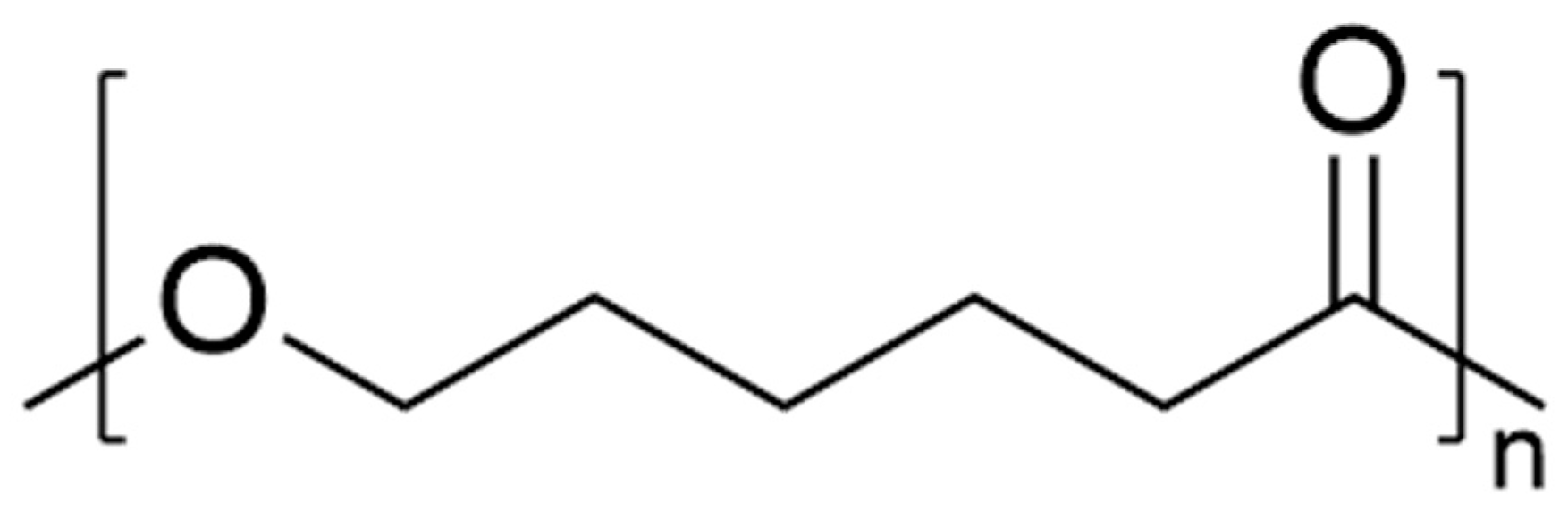
Figure 2.
Preparation of nanocapsules by nanoprecipitation method.
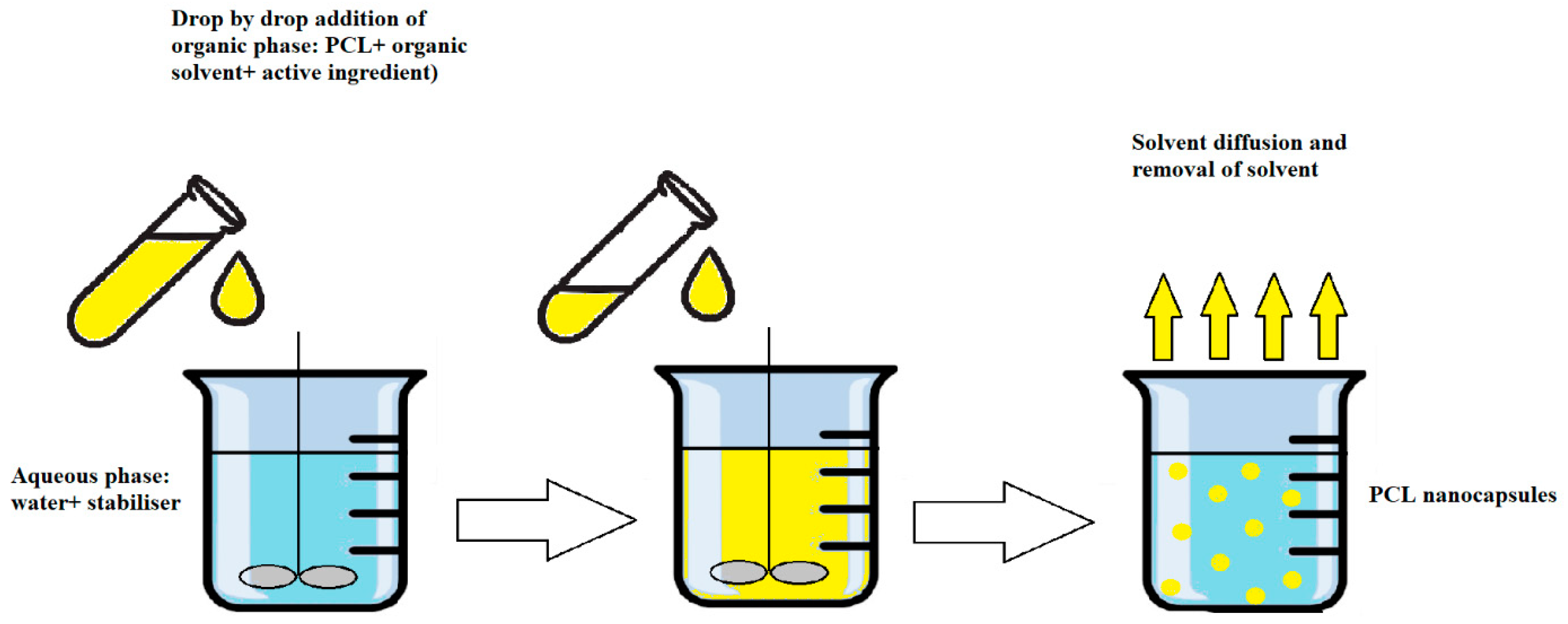
Figure 3.
Diagrammatic representation of the emulsification solvent diffusion method.
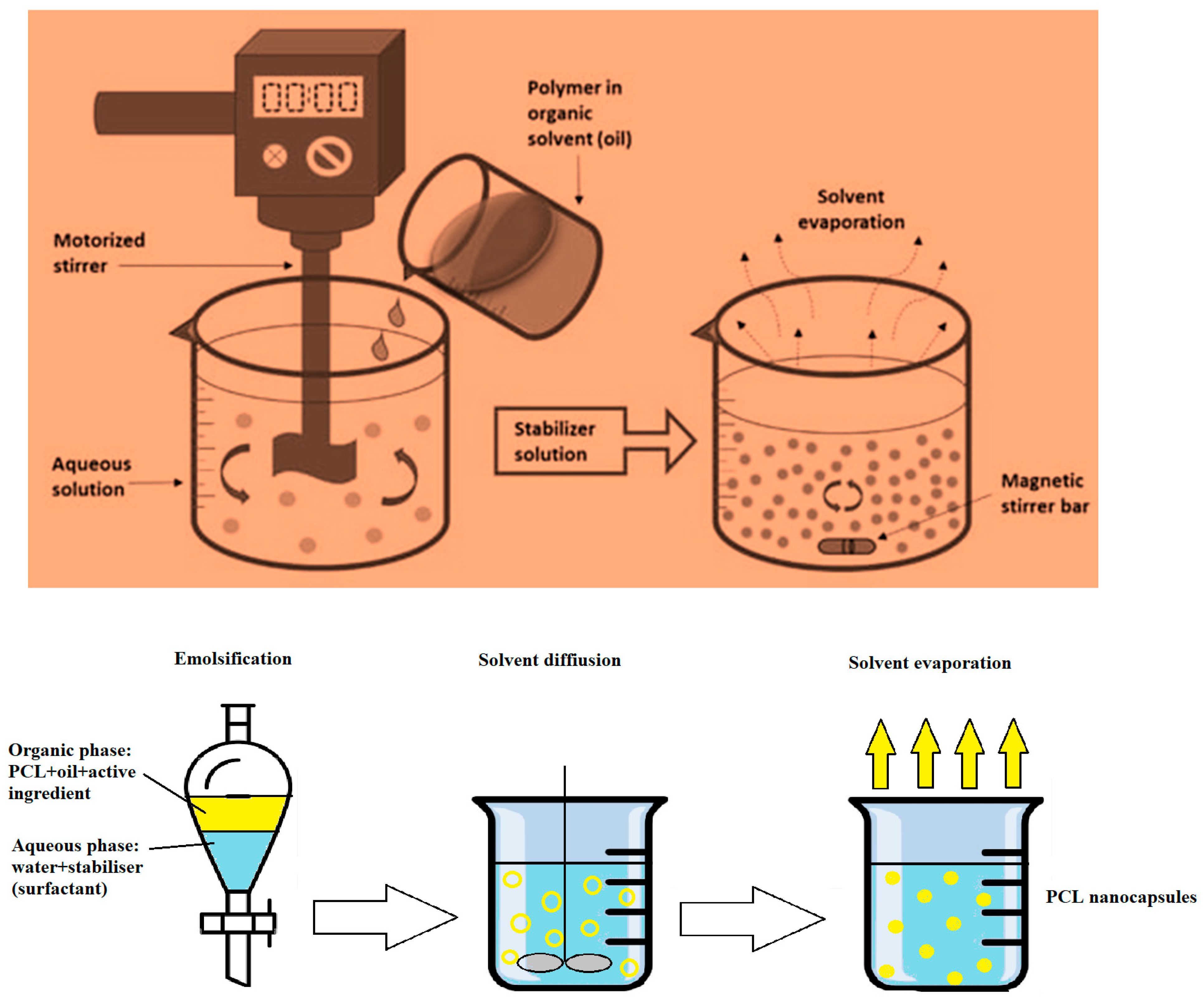

Table 1.
Frequently used nanomaterials used in crop production system.
| No. | Nanomaterials | Used in crop production system |
|---|---|---|
| 1. | Polymeric nanomaterials | -Efficient release of agrochemical -Outstanding biocompatibility -Reduce the effect on nontargeted organisms |
| 2. | Silver nanomaterials | -Boost plant growth -Act as anti-microbial property |
| 3. | Nano alumino silicates | -Improve the effectiveness of pesticides |
| 4. | Titanium dioxide | -Sterilizing agent for water |
| 5 | Carbon nanomaterials (Graphene, Graphene oxide and carbon dots) | -Enhance plant seeds germination |
| 6. | Nano rods | -Carriage auxin growth regulator -Plant physiological changes -Phytotoxicity inhibitor |
Table 2.
Evaluating herbicidal activity of herbicide-loaded PCL nanoformulations.
| Active ingredient | Studied subjects | Main Resultats | Authors |
|---|---|---|---|
| Triazine class (ametryn, atrazine, and simazine) | Preparation and characterization of three nanoherbicides; Stability assessment; In vitro release kinetics studies; Evaluation of genotoxicity on Allium cepa; | Encapsulation efficiency greater than 80%; Stable solutions over 270 days; Reduced genotoxicity of ametryn, atrazine and simazine on Allium cepa; Reduction in the dose of application; Increases their absorption by plant; Controlled release mechanism is relaxation of polymer chains; | Grillo et al., 2012 |
| Atrazine | To modify surface of PCL-atrazine nanocapsuls with chitosan and investigated the effect of coating on physico-chemical properties of the nanocapsules; | With addition of chitosan, the zeta potential of nanocapsules shifted from negative to positive amounts, improving their adhesion to target substrate; | Grillo et al., 2014 |
| Preparaion and characterization of nano PCL-atrazine and evaluating its herbicidal activity on Brassica sp. and its genotoxicity on Allium cepa; | Increased herbicidal activity of atrazine; Reduced mobility of atrazine in the soil; Important root development; Reduced genotoxicity (chromosomal aberration) on Allium cepa; | Pereira et al., 2014 | |
| Preparation and characterization of nano PCL-atrazine and evaluation of herbicidal activity on Brassica juncea; | Average particle size of 240.7 nm; 10-fold increase in efficacy of commercial atrazine in controlling mustard plants; | Oliviera et al., 2015a | |
| Retention and mobility dynamics of a metribuzin nanoformulation in soil, compared to a conventional formulation |
In deep soils containing fresh organic materials, nano PCL-metribuzin was sorbed more than commercial formulation (14.61±1.41% and 9.72±1.81% respectively) (p < 0.05). | Oliviera et al., 2015b | |
| Preparation and application of nano PCL-atrazine and evaluating its herbicidal activity in field against Amaranthus viridis and Bidens pilosa; | Increase of the efficiencies of atrazine (more than 50% for both species compared to control with 40% herbicidal efficiency); 10 times diluted concentration (200g/ha) of nanoherbicide also showed the same results, like commercial one; | Sousa et al., 2018 |
|
| PCL-atrazine nanocapsules in post-emergent control of an atrazine-tolerant weed, sourgrass (D. insularis) in greenhouse; | faster and greater inhibition of sourgrass photosystem II activity and greater enhancement in dry weight for nanoformulation treated plants (compared with commercial herbicide) | Sousa et al., 2020 | |
| pre-emergence activity of atrazine by nanocapsulation with PCL against B. pilosa; residual effects of nano PCL-atrazine and conventional atrazine on soybean plants after different periods of soil treatment; | higher seedlings mortality of B. pilosa in soil treatment with nano PCL-atrazine than atrazine treated ones, even after a 10-fold dilution; greater short term toxicity effects of nano-atrazine than atrazine, but similar intense toxicity of nano and non-nano atrazine in a long-term treatment of soil on soybean; | Preisler et al. (2019) | |
| Morphoanatomical changes of mustard (B. juncea) leaves based on the foliar uptake of nano PCL-atrazine in a postemergent treatment; phytotoxicity and nanoparticle uptake; | Nano PCL-atrazine sticked to the leaf surface, penetrated mesophyll and transported through the vascular tissue into the cells, degraded the chloroplasts causing herbicidal activity | Bombo et al. (2019) | |
| Comparing the effects of nano PCL-atrazine and pure atrazine at different concentrations on defense mechanisms, physiological responses, and nutrient displacement in lettuce (Lactuca sativa) as a non-target plant | In short-term exposure, the growth inhibition of nano PCL-atrazine was similar to the atrazine; in long-term exposure, to high concentrations of nano PCL-atrazine implied greater negative effects on the end points of ROS productions, protein content, and alteration of enzyme activities; Nano PCL-atrazine and atrazine differently implied displacement of nutrients, such as, Cu, K and Fe, for growth of the plant growth; | Wu et al. (2021) | |
| Praparation and characterization of nano PCL-atrazine; To study nanoherbicide-leaf relationship and effects of this system in field and greenhouse on mustard and understanding nanoherbicide’s mode of action using radiometric techniques; | Nanocapsule size about 200-300nm; Increased efficiency of atrazine uptake by mustard leaves (40% increase); A 50% reduction in atrazine rate for post-emergence control of R. raphanistrum plants under greenhouse and field conditions; Increased inhibition of photosystem II (PSII) activity; Improvement of the distribution of the herbicide in the plant; two-fold higher weed control in field compared to conventional formulation; | Takeshita, et al., 2021 | |
| Preparation of nano PCL-atrazine and evaluating its effect on alveolar epithelial human lung cells; | Nano PCL-atrazine was more toxic to human lung cells than atrazine or PCL nanocapsules; | Moore, et al., 2022 | |
| Metribuzin | Synthesis of nano PCL-metribuzin and using it in control of Portulaca oleraceae; Evaluation of its toxicity on Allium cepa for pre-emergence applications in soybean; | Particle size of 150–250 nm; Encapsulation efficiency of 83.2%; Low vertical movement of nanoherbicide in soil (leaching); Increased stability of metribuzin; Increased herbicidal activity on purslane; Nanoherbicide had less plant chromosome aberration than non-encapsulated metribuzin; | Diyanat, Saeidian, 2019 (a) |
| Preparation of nano PCL-metribuzin and application on control of Ipomoea grandifolia; evaluating behavior of nanoherbicide in 3 types of soil; compare the environmental fate of nanoherbicide with commercial metribuzin; | Nanoparticle size of 195±35 nm; Encapsulation efficiency of 74.8 ± 0.5%; higher efficiency of nanoherbicide even at lowest dose of 48 g a.i. per ha; no suppressive effects on soil enzymatic activities; Lower retention in soil than its commercial analogue; No difference was found in the half-life of metribuzin; |
Takeshita, et al., 2022 (a) | |
| Tracing nano PCL-metribuzin in different soils ; to investigate mobility and retention dynamics of a PCL-metribuzin in comparison with conventional formulation; | In deep soils containing fresh organic materials, nano PCL-metribuzin was sorbed more than commercial formulation (14.61±1.41% and 9.72±1.81% respectively); | Takeshita, et al., 2022 (b) | |
| Polycaprolactone | Preparation of nanoformulation and using it on barnyard grass; To study its effects on rice as a non-target plant); Evaluating its genotoxicity effect; |
Particle size 70–200 nm; Encapsulation efficiency of 99.5±1.3%; upon genotoxicity experiments nanoherbicide was less toxic than commercial herbicide; nanoherbicide had no negative effect on rice plant, but a significant effect on barnyard grass; | Dianat, et al., 2019 (b) |
Disclaimer/Publisher’s Note: The statements, opinions and data contained in all publications are solely those of the individual author(s) and contributor(s) and not of MDPI and/or the editor(s). MDPI and/or the editor(s) disclaim responsibility for any injury to people or property resulting from any ideas, methods, instructions or products referred to in the content. |
© 2023 by the authors. Licensee MDPI, Basel, Switzerland. This article is an open access article distributed under the terms and conditions of the Creative Commons Attribution (CC BY) license (http://creativecommons.org/licenses/by/4.0/).
Copyright: This open access article is published under a Creative Commons CC BY 4.0 license, which permit the free download, distribution, and reuse, provided that the author and preprint are cited in any reuse.