

Submitted:
08 September 2023
Posted:
11 September 2023
You are already at the latest version
Abstract
In the food sector, packaging is one of the important steps that ensures the safe, unspoiled, min-imum cost of storing, transporting and delivering the food that goes into production to the con-sumer. Food spoilage caused by foodborne pathogens and microorganisms is a serious problem in the food chain, reducing the shelf life of foods. Therefore, consumers' demands for more natural, disposable, biodegradable and recyclable antibacterial food packaging materials have considera-bly increased. This review covers a comprehensive current literature review of antibacterial food packaging, which includes with titles antibacterial agents, organic acids and other compounds, enzymes, bacteriocins, natural extracts, essential oils, application of encapsulation and antimi-crobial packaging. Research findings on antimicrobial food packaging used to extend the shelf life of foods were collected from online databases such as PubMed/MedLine, Wiley Online Li-brary, Scopus, Web of Science, and Google Scholar. In this review, the activities of different bio-materials and compounds used to extend the shelf life of foods were compared
Keywords:
The active packaging
; the antimicrobial agents
; shelf life of foods
; biomaterials
; and nanocomposites
1. Introduction
The packaging material in traditional packaging systems has a barrier feature that protects food only from physical external factors. The main reason for food spoilage is microbial contamination in general. Traditional food preservation methods include freezing, cooling, fermentation, drying, thermal treatment and addition of antimicrobial agents [1]. In recent years, consumers prefer foods that are healthier, quality, less processed, less naturally damaged, fresh and long shelf life. In this way, active and smart packaging systems developed in line with consumer demands and trends in the food industry. Along with these systems, various components are added to the packaging and various polymers that will extend the shelf life of the food and prevent its spoilage. These components also provide the packaging with functions such as gas barrier properties, thermal stability, mechanical strength, and optical properties [2,3]. With the active packaging, the deterioration rate of the food reduced. The changing packaging conditions are provided to extend shelf life and maintain quality. Unlike traditional packaging, active packaging includes oxygen traps, ethylene traps, retention or release of carbon dioxide, moisture control, antimicrobial and antifungal systems. The antimicrobial packaging, which is a form of active packaging, is carried out by adding antimicrobial agents to the packaging or using antimicrobial polymer. The antimicrobial packaging is aimed at preventing microorganisms that cause food spoilage, ensuring food safety, maintaining food quality and increasing food shelf life [3,4,5]. The bacteria that cause food spoilage and contamination such as; Clostridium botulinum, Campylobacter jejuni, Listeria monocytogenes, Escherichia coli, Staphylococcus aureus, Shigella spp, Salmonella spp., Yersinia enterocolitica, viruses such as; Hepatit A, Norovirüs and parasites such as; Toxoplasma gondii, Trichinella spiralis, Cyclospora cayetanensis are foodborne pathogens and other microorganisms [6]. After antimicrobial functions are provided to the packaging system, the system extends the microorganism lag phase, reducing or completely stopping the microbial load at a certain rate. The first application in the food industry to combat microbial degradation was based on the direct addition of antimicrobial additives to food products as food preservatives. Food additives such as nitrates, nitrites, organic acids such as benzoic, sorbic acetic acid, chitosan, lactoferrin, and nisin are added directly to foods for antimicrobial effect. However, the added antimicrobial agent has limited effects due to rapid diffusion into food, loss of effectiveness, needing excessive amounts of additives to achieve the same antimicrobial effect, and sensory property change. Later, with the development of antimicrobial food packaging technology, antimicrobial substances were added to the food packaging material [7,8,9]. The advantage of this method is that packaged food can be preserved without adding edible preservatives directly to its composition. The antimicrobial packaging can control microbial growth in food by interacting with food (direct contact) or the gap (indirect contact) between packaging and food. In this way, it protects the nutritional and sensory properties of packaged foods and prolongs their shelf life. Today, antimicrobial packaging systems ensure the preservation of foods by releasing antimicrobial-containing sachets or pads to the packaging, coating or immobilizing polymers with antimicrobials and using an antimicrobial polymer.
Generally used antimicrobial agents consist of organic-inorganic nanocomposites, organic acids, organic acid salts, triclosan, antibiotics, alcohols, sulphides, nitrites, ammonium salts, bacteriocins, enzymes, biopolymers, natural extracts, essential oils, phages, metal nanoparticles. The choice of antimicrobials to be used depends on features such as the specific activity against the target microorganism, resistance development, the legal status of its use in foods, the chemical structure of the food, the properties of the packaging material to be included, and its controlled release. Therefore, not all antimicrobials are suitable for every application [10,11]. The antimicrobials such as EDTA or chitosan has also enhanced antibacterial effects in food products such as meat and fish [12]. In the another study, Researchers have synthesized an antimicrobial film by immobilizing nisin on bio-based carboxylated cellulose nanofibers (CNF). They used two methods to use in food packaging, as direct mixing of Nisin and CNF and Nisin grafted CNF [11]. Nisin graft CNF showed antimicrobial effects against various gram positive bacteria (B.subtilis, S.aureus), whereas Nisin mixed CNF only inhibited B. subtili. Mixing Nisin and CNF is better than vaccination, but the antimicrobial activity of the vaccination has a longer effect. Divsalar et al. (2018) have synthesized a composite films containing chitosan, cellulose and nisin and used it as an antimicrobial package of ultra-filtered (UF) cheese [3]. The composite film combined with nisin showed antimicrobial activity against L. monocytogenes, while the pure chitosan-cellulose film did not show to antimicrobial proporties. In addition, UF feta cheese packaged with composite starch film was stored at 4 ° C for 14 days and showed a significant antimicrobial effect of nisin when exposed to L. monocytogenes.
In this review study, antibacterial agents, organic acids and other compounds, enzymes, bacteriocins, natural extracts, essential oils, nanomaterials, biopolymers, which are used to effectively extend the shelf life of foods and ensure healthy consumption of foods, were examined in detail. By comparing the literature research findings, the most effective methods to extend the shelf life of foods were determined. This study also proposes the most effective food packaging methods and parameters that extend the shelf life of foods according to recent research. It aims to provide the components used among these parameters and the methods by which these components reach higher efficiency.
2. Antimicrobial Agents
2.1. Enzyme
The enzymes such as lysozyme, glucose oxidase, lactoferrin or lactoperoxidase are widely used in food packaging systems as antimicrobial. The lactoferrin can be used in combination with lysozyme to improve antimicrobial activity against Gram-negative bacteria. Lactoferrin, a whey protein that binds ferric ions, performs its antimicrobial activity by depriving bacteria from iron cells and interacting with LPS components [13]. Lactoperoxidase enzyme, which is widely used as natural antimicrobial, catalyzes the oxidation of thiocyanate ion (SCNy) producing oxidized products and hypothiocyanous acid (HOSCN) is formed. These oxidized products show antimicrobial function by causing irreversible oxidation of sulfhydryl (SH) groups found in microbial enzymes and other proteins [14]. The glucose oxidase enzyme performs its antimicrobial activity by catalyzing the formation of hydrogen peroxide and gluconic acid by oxidation of β-d glucose. According to the literature, this enzyme has been proven to have antimicrobial effects against various pathogenic foodborne bacteria. This enzyme has been proven to have an effective antimicrobial effect against pathogenic foodborne bacteria such as Staphylococcus aureus, Salmonella infantis, Clostridium perfringens, Campylobacter jejuni, Bacillus cereus and Listeria monocytogens [15] . Table 1 shows to antimicrobial agents used in the food packaging.
2.2. The organic acids and salts
The organic acids such as benzoic acid, propionic acid, sorbic acid, lactic acid and acetic acid and their salts, which are used in antimicrobial packaging and have strong antimicrobial activity, are synthetic antimicrobial agents. For example, lactic acid salts, such as sodium lactate and potassium lactate, have greater inhibitory effects against gram-negative bacteria, while offering antifungal activity against some Aspergillus species. Potassium sorbate prevents bacterial spores from germinating. Lactic acid, sodium benzoate, citric acid or potassium sorbate, which have an active antimicrobial effect against bacteria, are included in food packaging materials or composites [13]. Morey et al. (2014), have shown that the sodium citrate compound inhibits the growth and reproduction of bacteria such as; Listeria spp. and Escherichia coli O157, H7 [66]. The sorbic acid and potassium sorbate show activity against a broad spectrum of bacteria and mold [67]. Alcano et al. (2016) have found that the protective effect of sorbic acid at pH 6.0-6.5 is 5-10 times more durable than that of benzoate [68]. Many studies have shown that bacterial growth can be inhibited by organic acid-based food packaging and extend the shelf life of foods. Hu et al. (2017) have developed antimicrobial ethylene-vinyl alcohol copolymer (EVOH) films using sorbic acid-chitosan microcapsules (S-MPs) and applied them to fish fillets [69].
2.3. Bacteriocins
The bacteriocins and bacteria, the natural antimicrobial peptide produced by Archaea, have positively charged compounds and hydrophobic particles. These positively charged compounds act against the microorganisms by electrostatic interaction with negative charges of phosphate groups on microbial cell membranes. The most common bacteriocins are nisin, pediocin PA-1, bacteriocin 7293, sakacin A, lactikin 3147A and enterocin AS-48 [13]. Weissella hellenica BCC 7293, isolated from Thai fermented pork sausage called Nham, produced two bacteriocin, called bacteriocin 7293A and B. These bacteriocins were stable in organic solvents, high pH and temperature ranges, and showed antimicrobial activity against pathogenic bacteria [70].
The bacteriocins are used in food packaging systems as adding bacteria that produce bacteriocin to food, adding bacteriocin directly to food or as bacteriocin-like substances. The bacteriocins are used in conjunction with other antimicrobials in food packaging as they are more effective against gram-positive bacteria. In recent years, Enterocin AS-48 has produced improved results in the packaging of chilled food products using bacteriocin-like substances or strains producing bacteriocin with modified atmosphere packaging. In addition, the combination of bacteriosine with other.
2.4. Natural extracts
The antimicrobial compounds extracted from various herbal sources such as onion, garlic, radish, mustard, clove, thyme, rosemary kernel and grapefruit seeds are used in packaging systems. Natural extracts and compounds in food packaging; Grapefruit seeds, kombucha and green tea extracts, gallic acid, lignin olive leaf, propolis and other plant extracts can be given as examples [71]. Research have developed multi-component antimicrobial agents, which are lysozyme, nisin, grapefruit seed extract (GFSE) and EDTA, working in different combinations. They found that GFSE-EDTA is a viable antimicrobial agent against pathogenic microorganisms in Na-alginate and K-carrageenan based films. In another study conducted with olive leaf extracts, high antimicrobial activity and antioxidant activity results were obtained. These results indicate that the extracts of food waste are suitable for synthesizing packaging [72].
Tong et al. (2018) have used alginic acid (ALG) particles and grapefruit seed extract (GFSE) as natural antibacterial agents to produce antibacterial food packaging. By incorporating ALG fragments and GFSE extract into Poly-P-caprolactone (PCL), a biodegradable polymer, they obtained a uniform and homogeneously biodegradable composite film. They proved that this film was very effective against Pseudomonas aeruginosa. Figure 1 shows to the natural extract samples.
2.5. Essential oils
The essential oils and their components (EO) are substances with antimicrobial activity obtained from mixtures of volatile compounds from spices and herbs. It consists of a mixture of compounds such as terpenoids, esters, aldehydes, ketones, acids and alcohols, 85% of the basic components of EOs are oil and 15% are trace components. Especially, many packaging materials containing essential oil EO have been developed using bioactive substances, lemon grass, ginger, thyme, chamomile, tea tree, thymol, terpineol, carvacrol, and geraniol [73]. Encapsulating essential oils into nanoparticles and combining these nanoparticles with bio-based film to produce film nanocomposite is an effective strategy to control the release of essential oils [74]. Lee et al. (2016) have added antimicrobial thyme essential oil (TEO) to biodegradable skate skin gelatin (SSG) film [75]. While the tensile strength (TS) of the film decreased, elongation at break (E) increased with the addition of TEO. They found that SSG film containing 1% TEO inhibition of L. monocytogenes and E. coli O157, H7 in packaging of chicken tenderloin samples. Issa et al. (2017) have synthesized potato starch/montmorillonite (MMT) activated with thyme essential oil (TEO) as nanocomposite film [76]. MMT was added to improve the mechanical properties of starch films. E. coli and S. Typhi volumes in spinach packaged with the resulting nanocomposite film decreased to detectable levels within 5 days after the EOs were included. Hager et al. (2019) have stored mixtures of nisin and lemongrass essential oil (LG) (8%), edible corn zein-based coatings and cold smoked smoke, polyvinyl chlorine (PVC) for 14 days and vacuum packaging at 42 days at 4 °C [77]. Samples treated with LG showed an antimicrobial effect in L. monocytogenes cell count by reducing 1.7-log in vacuum-packed samples and 2.5 log in polyvinyl chlorine. Boyacı et al. (2019) have targeted to prevent pathogenic bacterial contamination in fruit peels by covering eugenol (EUG), carvacrol (CAR) and thymol (THY) essential oil (EU) mixtures with zein edible films. By coating melons with zein-2 % EUG mixtures, it resulted in a marked and similar reduction in both L. innocua and E. coli counts on the melon surface during storage at 4 °C for 10 days [78].
2.6. The metal nanoparticles
The metal nanoparticles are used as antimicrobial agents because of their high thermal stability, long life and wide antifungal and antibacterial activity. The most commonly used nanoparticles include metal oxides (zinc oxide, titanium dioxide, aluminum oxide and magnesium oxide), metal ions (silver, gold, copper and platinum) and modified nanoclay [79]. These nanoparticles are used as active agents alone, as well as bacteriocins, essential oils and as a combination of several metal nanoparticles [80,81,82,83]. The safety assessment of the material, such as the migration limits of the nanoparticles in the nanocomposite packaging material, must comply with the legislation on materials in contact with food [84,85]. The antimicrobial effects of some metal nanoparticles in food packaging are shown in Table 2.
Gold et al. (2018) have tested the antimicrobial potential of triple biocomposite film based on hydroxypropyl methylcellulose/beeswax/tragacanth with pre-synthesized silver nanoparticles [80]. The nanocomposite film inhibited the growth of various pathogens such as B. cereus, S. aureus, S. pneumonia, L. monocytogenes, E. coli, S. Typhimurium, P. aeruginosa and K. pneumonia. Ebrahimi et al. (2019) have used silver (Ag), zinc oxide (ZnO) and copper oxide (CuO) metallic nanoparticles in the preparation of carboxymethyl cellulose (CMC) nanobiocomposite film. It was determined that the CMC nanobiocomposite films obtained had a roughness deviation level, the presence of Ag, ZnO and CuO nanoparticles in biopolymer tissue, reduced water vapor permeability (WVP) and increased absorption rate compared to pure CMC film [86]. Also, the addition of nanoparticles increased the tensile strength of the films, and nanobiocomposite films exhibited higher resistance than pure CMC film. Figure 2 shows the mechanisms of antibiotic resistance [87].
Zare et al., (2019) have synthesized zinc oxide-silver (ZnO-Ag) nanocomposite (NCs) by biohydrothermal method using Thymus vulgaris (T. vulgaris) leaf extract [88]. The new degradable biopolymer (BP) nanocomposite was produced by using the solvent casting method to poly (3-hydroxybutyrateco-3-hydroxypyrate) -Citosan (PHBV-CS) without using surfactants or binders. In the analysis, morphology, physical, mechanical, barrier, antibacterial and migration properties of nanocrystals were evaluated. As a result, this bio-based nanocomposite extended food shelf life and maintained the safety and quality of poultry products, limiting the development of foodborne pathogenic bacteria.
Vishnuvarthanan & Rajeswari (2019) have prepared a carrageenan/silver nanoparticle (AgNP)/ Laponite nano composites and coated on an oxygen plasma surface modified polypropylene (PP) film to improve barrier and adhesion properties [89]. The carrageenan nanocomposites containing AgNP showed excellent antimicrobial activity against both Gram negative E. coli and Gram-positive S. aureus.
2.7. Bacteriophages
The phages or the bacteriophages, which are viruses that reproduce in bacteria, are widely found in different types of food. Lytic phages are viruses that can infect and lyse bacterial cells. Since they are specific to each host cell, they do not interact with other microorganisms or eukaryotic cells in the environment and therefore they do not cause disease in either animals or humans. The phages are used to prevent disease in farm animals, to remove fresh products such as fruits and vegetables from bacteria and to extend the shelf life of foods as a natural preservative [90]. Since phages are specific to a particular type of bacteria, their use in food packaging is chosen based on the main food-borne pathogen found in that food. Besides, instead of adding a single phage to the packaging material, phage cocktails are preferred [91]. Packaging materials containing bacteriophage in food packaging have been shown to effectively control pathogens such as L.monocytogenes, S. enterica, and E. coli (Table 1). Due to polymer-antimicrobial chemical incompatibility, and, also antimicrobial instability problems, Bacteriocins, natural extracts, essential oils, phages, and some other antimicrobial agents have some difficulties with their incorporation into packaging films [92]. Figure 3 shows the mechanism of biosynthesis of NPs using algae [93].
Figure 4 shows the mechanisms of NP molecules in the bacteria cell [94]. In a study, the active ingredient of essential thyme oil with tubular clay nanoparticles, halloysite nanotubes (HNTs), was encapsulated for continuous release of carvacrol in packaging [95]. Wu et al. (2019) have used microscopic spherical vesicular phosphatidyl choline and cholesterol liposomes to control the release of laurel essential oil (LEO) and silver nanoparticles (AgNP) in the packaging [96]. The liposomes were mixed with chitosan, covered with polyethylene (PE) film and used to pack pork. Analysis results showed that only 29.30% of LEO and 11.79% of AgNPs were released from the liposome after 7 days at 25 °C. In addition, the liposome EO-AgNP coating showed good antioxidant and antimicrobial properties. According to another research, It was produced pectin films activated by antimicrobial marjoram essential oil charged nanoemulsions (NE) and pickering emulsions (PE). Tween 80's low molecular surfactant, whey protein isolate and inulin mixture were used for stabilization of solid particles in the preparation of emulsions. The obtained nanocarriers were added to the pectin film formulation and the morphological, physical and functional properties of the active films were analyzed. Shin & Lee (2018) encapsulated Phytoncide, a volatile, antibacterial compounds released from plants to the poly (vinyl alcohol) core with the emulsion electrospinning technique, thereby developing an environmentally friendly, antimicrobial nanofiber material with sustained release [97]. The core / sheathed phytoncide / poly (vinyl alcohol) nanofibers exhibited a well-aligned core / sheath structure with fiber diameters of 250-350 nm. They found that phytoncide was released from the core of nanofibers continuously for 14 days. The core/ sheath structured nanofibers were found to provide a 99. 9% bacterial reduction against Staphylococcus aureus, Escherichia coli. Abdou et al. (2018) investigated the extension of the shelf life of chilled chicken fillet using the nanoemulsion coating method [98]. Curcumin-cinnamon essential oil, curcumin-garlic essential oil and curcumin-sunflower oil were prepared as three different nanoemilions and pectin was added to the obtained coatings. Rheological properties of nanoemulsified pectin coatings showed shear thinning behavior. Curcumin nanoemulsion pectin coatings observed that the total number of bacteria in chickens, psychrophilic bacteria, yeast and mold growth decreased. In another research, curcumin, garlic, apple cider vinegar, pollen and chitosan were encapsulated and high antimicrobial and antioxidant activity was detected [99,100,101].
Cui et al. (2018) have encapsulated the tea tree oil (TTO) and beta-cyclodextrin (β-CD) inclusion complex into the poly (ethylene oxide) (PEO) matrix, using the electrospinning method to produce antimicrobial food packages [102]. The encapsulation efficiency of TTO in the inclusion complex reached 73.23% at 60 °C. As a result, they determined TTO antibacterial activity against E. coli at different temperatures for 7 days on beef. They found that TTO achieved an inhibition yield of 99.99% at 4 or 12 ° C, indicating that it can prolong shelf life on beef. Figure 5 shows types of antimicrobial agents used in edible packaging such as organic acids, essential oils, enzymes, and bacteriocins for protection of foods against microbial growth [103]. Table 2 shows to antimicrobial effects of metal nanoparticles in antimicrobial food packaging. Figure 5 shows to Types of antimicrobial agents used in edible packaging such as organic acids, essential oils, enzymes, and bacteriocins for protection of foods against microbial growth.

Table 2.
Antimicrobial effects of metal nanoparticles in antimicrobial food packaging.
| Metal Nanoparticle | Packaging Material | Food product | Antimicrobial Results | References |
|---|---|---|---|---|
|
Silver (Ag) nanoparticle (NP) Ag NP’s |
Poly(acrylic acid) (PAA) nanofibers | Culture media | The PAA-silver nanofibers achieved Zones of growth inhibition of C. albicans fungi and Methicillin-resistant Staphylococcusaureus (MRSA) bacteria indicating their antimicrobial activity against both fungi and bacteria | [104] |
| Agar hydrogel | Latte cheese | Ag-based nanoparticle packaging system inhibited the growth of Pseudomonas spp. | [105] | |
| Polystyrene (PS) matrix | Culture media | The PS/Ag nanocomposites exhibred antimicrobial effect against gram pozitive, gram negative, yeast and fungal test microbe | [106] | |
| Chitosans/montmorillonite nanocomposite films | Culture media | The nanocomposite-AgNPs films inhibited the growth of Escherichia coli and Bacillus subtilis. | [107] | |
| Carboxymethyl Chitosan | Culture media | The prepared antibacterial membranes were effective and killed all bacteria | [108] | |
| Silver (Ag) nanoparticle+ quercetin | PVC-based film | Culture media | PVC based films containing silver nanoparticle and quercetin confirmed to be higly effective in inhibiting bacterial growth of food pathogens (L. monocytogenes, E. coli,S. Typhimurium) | [109] |
| Gold nanoparticles (AuNP’s) | Poly(vinyl) alcohol (PVA) crosslinked composite films | Banana | Banana shelf life has improved with PVA-glyoxal-AuNPs composite film | [110] |
| Silver nanoparticles (Ag-NP) and gold nanoparticles (Au-NP) | Chitosan nanocomposite films (CS) | Culture media | The prepared films were good antibacterial activity against Staphylococcus aureus, Pseudomonas aeruginosa, Aspergillus niger, Candida albicans | [111] |
| Titanium dioxide (TiO2) | Poly(vinylpyrrolidone) (PVP) coated with alumina and titanium dioxide, hollow calcined titanium dioxide nanospheres (CSTiO2) | Culture media | Developed CSTiO2 hollow nanospheres exhibited higher antibacterial capacity against resistant E. coli strains, than S. aureus strains. when compared to commercial TiO2 nanoparticles, CSTiO2 nanospheres exhibited superior performance. In addition, the positive effect of UV irradiation on the antimicrobial activity was demonstrated. | [112] |
| TiO2–ZnO nanoparticle | Low-density polyethylene (LDPE) films | Fresh calf minced meat | ZnO-coated LDPE film and TiO2 coated LDPE film showed an excellent antibacterial effect on E. coli. But Mixed TiO2/ZnO-coatedLDPE films are not suitable option to inhibit E. coligrowth. | [113] |
| Ag + organoclay NPs | Starch from yellow dent corn | Culture media | Bio-nanocomposite films was significantly inhibited the growth of Escherichia coli and Staphylococcus aureus. | [83] |
| Ag+TiO2 + Attapulgite +SiO2 NP’s | Polyethylene (PE) based nanocomposite master batch | Rice | Nano packaging material was exhibrit antimicrobial effects and maintained low O2 and high CO2 content in the packages. The packages inhibited the growth of molds and the production of fatty acids and reduced the oxidation of fats and proteins. | [114] |
| Zinc oxide (ZnO) NPs | Starch-PVA composite films | Culture media | ZnO NPs were showed promising activity against S. typhimurium. | [7] |
| Olive flounder bone gelatin (OBG) | Spinach | OBG–ZnO film was showed antimicrobial activity against L. monocytogenes inoculated on spinach without affecting the quality of spinach, such as vitamin C content and color. | [115] | |
| Polylactic Acid (PLA) | Culture media | decreased in E. coli growth by 3.14 log for 0.5% ZnO loading in the PLA coating layer | [116] | |
| Silver (Ag)-Cupper(Cu ) NP | Polylactide with cinnamon essentiol oil | Chicken meat | PLA composite films showed strong antimicrobial activity againstSalmonella Typhimurium, Campylobacter jejuni and Listeria monocytogenes on contaminated chicken meat samplesduring 21 days at 4 ° | [117] |
| MgO NP’s | Carboxymethyl (CM)-Chitosan CS | Culture media | CM-CS/MgO nanocomposite films exhibited antimicrobialactivity against L. monocytogenes and Shewanella baltica | [118] |
| Selenium nanoparticles (SeNPs) | Potato starch film | Culture media | The SeNPs/potato starch nanofilm inhibited growth of Salmonella Typhimurium and E. coli,slightly inhibited B. cereus, but no inhibition occurred with L. innocua. | [119] |
| Silica nanoparticles (SiO2) | Poly (3-hydroxybutyrate-co-3-hydroxyvalerate) (PHBV) | Culture media | The antibacterial activity of PHBV/SiO2 (2.0%) nanocomposites,94.7% growth inhibition for E. coli and 92% for S. aureus | [120] |
| Aluminu+ doped zincoxide (AZO) | Polylactic Acid (PLA) | Culture media | Great antibacterial activity against E. coli | [121] |
| Zinc oxide−silver nanocomposites (ZnO−Ag NCs). | Poly(3-hydroxybutyrate-co-3-hydroxyvalerate)-chitosan (PHBV-CS) | Culture media | The nanocomposites PHBV/Ag–ZnO (10%) showed great antimicrobial activity potent against S. aureus and E. coli if compared with nanocomposites Ag-ZnO 5%, 3% and 1% | [122] |
3. The Antimicrobial Packaging Methods
The homogeneous distribution of the antimicrobial agent into the film or coating, improving the mechanical and barrier properties of the films, and the good antimicrobial activity of the film are the main features expected from the packaging films. Today, as antimicrobial packaging methods, systems such as adding pouches or pads containing antimicrobial agents into the packaging, coating or adsorbing of volatile / non-volatile antimicrobial agents to the polymers, coating or adsorbing antimicrobials to the polymer surface, and using polymers with antimicrobial properties are used.
3.1. Adding sachets or pads containing antimicrobial agents to packages
The oxygen absorbers, moisture absorbers and ethanol vapor generating vesicles or pads are most commonly used commercially in antimicrobial packaging. Antimicrobial sac or pads can be loosely or closedly attached to the packaging [123]. In the packaging of freshly cut tomatoes; Antimicrobial vesicles were successfully applied by adding different types of essential oils to vesicles to prevent deterioration and growth of pathogenic bacteria [124]. In the study of Agrimonti et al., (2019), they examined the antimicrobial effects of cellulosic pads prepared with emulsions containing thyme and oregano essential oils and the effect of packaged meat on shelf life [125]. Marques et al. (2019) aimed to obtain antimicrobial vesicles that can be used as preservatives for foods. Basil (BEO) and Pimenta dioica (PDEO) essential oils (EO) and food-borne pathogen S. aureus, E. coli, L. monocytogenes, P. aeruginosa, S. Enteritidis bacteria and degrading agent were tested against B. nivea [126].
3.2. Addition of antimicrobial agents directly into the polymer
The antimicrobial agents are used directly or by adsorbing with different solvents and by incorporating into edible film, polyethlene or polymers such as various polyolefins. It is used with polymers such as 1-3% silver-added zeolites that disrupt the enzymatic activity of microbial cells, polypropylene, polyethylene, butadiene styrene and nylon. The antimicrobial enzymes such as lactoferrin and lactoperoxidase, magainins, kropin natural phenols, antioxidants, metals such as copper and antimicrobial peptides have a wide application in polymer application. Edible films combined with niacin or lysozyme cause inhibition of E. coli when combined with chelating agents such as EDTA [127]. Yu et al. (2018) have synthesized a biodegradable composite film containing polyvinyl alcohol (PVA) / chitosan (CS) in their study. However, this film has poor mechanical properties and new film has been developed by adding sodium metasilicate to the solution of silicon oxide (SiO2), PVA and CS [128].
3.3. The coating of antimicrobial agent on polymer surface
If the antimicrobial substance is heat sensitive, the polymer may lose its activity at high temperature in shaping. Therefore, the antimicrobial agent is incorporated by coating the previously shaped polymer surface [129]. The edible coating is a thin layer of edible material that is applied to the surface of food to control the exchange of food, gas, moisture, and dissolved substances with the environment [130]. High antimicrobial activity of chitosan nanoparticle coatings against mold, yeast, mesophilic and psychotrophic bacteria in the apple slice was observed. Nabifarkhani et al. (2015) have found that the development of mushrooms was delayed in sweet cherries coated with thyme oil and nano composite coatings [131]. Vishnuvarthanan and Rajeswari (2019) have prepared carrageenan/silver nanoparticle (AgNP) / Laponite nano composites and coated on oxygen plasma surface modified polypropylene (PP) film to improve barrier and adhesion properties [88]. Mechanical, barrier, adhesion and antimicrobial properties were also investigated for use in food packaging applications. The carrageenan nanocomposites with AgNP showed excellent antimicrobial activity against both Gram negative E. coli and Gram-positive S. aureus bacteria. In another study, In vitro cytotoxicity analysis and synthesis of biocidal Allen/Mt/Mma/Peg/Poss Nanocomposites for food packaging was performed and high surface activity results against bacteria were obtained [82].
3.4. Addition of the antimicrobial agent to the polymers
In order for the antimicrobial agents to be immobilized to the packaging polymer, both antimicrobial and polymer must have functional groups. Antimicrobial agents that have functional groups are peptides, some enzymes, organic acids and polyamines. The polymers with functional groups are ethylene methyl acrylate, ethylene vinyl acetate, ethylene acrylic acid, nylon, polystyrene, ionomer, etc. These materials do not migrate to antimicrobial food by immobilization of antimicrobial and their activity is limited only by the food contact surface. It is suitable for the packaging of liquid foods, as packaging with the food provides good contact [132]. Conte et al. (2008) have incorporated the antimicrobial enzyme lysozyme into a plasma-treated polyethlene (PE) film by chemical immobilization [133]. The films treated with lysozyme-loaded plasma exhibited antimicrobial action against Micrococcus lysodeikticus. Figure 6 shows the schematic to Show antimicrobial mechanism of action according to the literature [134].
3.5. The natural antimicrobial polymer
The polymers such as chitosan and poly-L-lysine cationic polymers that are naturally antimicrobials are used in films and coatings. The antimicrobial effect, on the other hand, cationic charges in chitosan compete with calcium in the electronegative regions on the cell membrane surface of the bacteria and inhibit the bacterial cell. The calcium alginate films show antimicrobial activity due to the calcium chloride in its structure. It also has antimicrobial properties of polyelectrolytes (polycations and polyanions), which are some bio-based polymers [135,136,137]. Electrospinning chitosan in the form of nanofibers is a promising process that has been widely researched. Arkoun et al. (2017) have produced chitosan and poly (ethelen oxide) based nanofibers by electrospinning to prevent spoilage of meat and growth of pathogenic bacteria such as E. coli, S. enterica serovar Typhimurium, S. aureus and L. innocua [138]. Yadav et al., (2020) developed chitosan-gelatin (Ch-ge) biocomposite films (Ch-ge-Q) containing Quercetin-starch (Q) according to the solution casting method [139]. Pavoni et al. (2019) determined the effect of the acid type used for chitosan solubility and the starch: chitosan ratio on the properties of corn starch-chitosan based films. In another study, zataria multiflora essential oil (ZEO) enriched propolis extract (PE) was coated with chitosan (CH) to determine the effect on the chemical, microbial and organoleptic properties of poultry meat [140].
4. Conclusions
Nowadays, consumers prefer healthier, fresh and minimally processed, high-quality, safe and long-lasting foods. The purpose of antimicrobial packaging, which has emerged as an active packaging technology, is to achieve controlled release of the antimicrobial substance added to the packaging material or atmosphere into the foods. Thus, it will be possible to ensure food safety by inhibiting microorganisms that affect food deterioration, and to protect food longer and more actively by preserving quality and sensory properties. In antimicrobial food packaging, methods such as adding vesicles / pads containing antimicrobial agents into the packaging, adding antimicrobial agents to packaging films and coatings, and using antimicrobial polymers are used. In recent years, great efforts have been made to develop more efficient, long-lasting and environmentally friendly antimicrobial packaging materials by increasing the performance of antimicrobial agents. For this purpose, more effective antimicrobial compounds of natural origin such as essential oils, natural extracts, bacteriocins and biopolymers are preferred instead of chemical antimicrobials such as organic acids, nitrates, sulfites. The current studies such as the antimicrobial agents are resolutely incorporated into the packaging materials, providing continuous antimicrobial effect to the food with a more controlled release and protecting these antimicrobials from deterioration or evaporation. This review includes current research on the different types of antimicrobial agents that can be included in food packaging systems and their antimicrobial effects in foods and antimicrobial packaging methods. According to the literature research findings, one of the most effective methods used to extend the shelf life of foods is that bioactive components, metals and other active ingredients show higher antimicrobial and antioxidant effects on nanosurfaces by encapsulation methods. The techniques used in this sense have a very important place in extending the shelf life of foods and synthesizing antimicrobial food packaging. It is observed that there is a significant increase in the in vitro, biocompatibility and antimicrobial effects of packaging films. However, as it is known, there are many encapsulation techniques. Among these methods, electrospinning methods are considered to be quite efficient. This review shows that the biomaterials used in packaging can extend the shelf life of foods and offer healthier foods to the consumer. In particular, packaging films synthesized as a result of encapsulation of biodegradable polymers and biomaterials give the consumer the chance to consume much healthier food. This review offers many suggestions to improve the awareness of consumers. The most important of these suggestions is to be more selective in consumer perception, which affects health in the packaging as well as the consumed foods.
Author Contributions
G.B: Conceptualization, Methodology, Investigation and writing—original draft, resources and data curation, Review & Editing, Supervision. K. A: Investigation and Writing. A.A: Editing and review. H. O: writing—review and editing
Funding
This research received no external funding.
Data Availability Statement
Not applicable.
Acknowledgments
This study was carried out in Istanbul Aydin University.
Conflicts of Interest
The authors declare no conflict of interest.
Abbreviations
EDTA:Ethylenediaminetetraacetic acid; CNF: cellulose nanofibers; UF: ultra-filtered; LPS: Lipopolysaccharides; HOSCN: hypothiocyanous acid; SH: sulfhydryl; PE: poly ethylene; LDPE: low density poly ethylene; HDPE: high density poly ethylene; PVOH: polyvinylalcohol; PLA: Polylactic acid; EVOH: ethylene-vinyl alcohol; S-MPs: sorbic acid-chitosan microcapsules; GFSE: grapefruit seed extract; ALG: alginic acid; PLC: Poly-P-caprolactone; EO: essential oils; TEO: thyme essential oil; SSG: skate skin gelatin; LG: lemongrass; MMT: montmorillonite; TS: tensile strength; EUG: eugenol; CAR: carvacrol; THY: thymol; CMC: carboxymethyl cellulose; ZnO-Ag: zinc oxide-silver; NC: nanocomposite; PHBV-CS: poly (3-hydroxybutyrateco-3-hydroxypyrate) –Citosan; HNTs: halloysite nanotubes; PEO: poly (ethylene oxide) ;TTO: tea tree oil; β-CD: beta-cyclodextrin; PAA: poly(acrylic acid); MRSA: Methicillin-resistant; CSTiO2: calcined titanium dioxide nanospheres; OBG: Olive flounder bone gelatin; PDEO: Pimenta dioica
References
- Dainelli, D.; Gontard, N.; Spyropoulos, D.; Zondervan-van den Beuken, E.; Tobback, P. Active and intelligent food packaging: legal aspects and safety concerns. Trends Food Sci Technol. 2008, 19, S103–S112. [Google Scholar] [CrossRef]
- Prasad, P.; Kochhar, A. Active packaging in food ındustry: A review. IOSR J. Environ. Sci., Toxicol. Food Technol. 2014, 8, 01–07. [Google Scholar] [CrossRef]
- Divsalar, E.; Tajik, H.; Moradi, M.; Forough, M.; Lotfi, M.; Kuswandi, B. Characterization of cellulosic paper coated with chitosan-zinc oxide nanocomposite containing nisin and its application in packaging of UF cheese. Int J Biol Macromol. 2018, 109, 1311–1318. [Google Scholar] [CrossRef]
- Hajizadeh, H.; Peighambardoust, S.J.; Peighambardoust, S.H.; Peressini, D. Physical, mechanical, and antibacterial characteristics of bio-nanocomposite films loaded with Ag-modified SiO2 and TiO2 nanoparticles. J Food Sci. 2020, 85, 1193–1202. [Google Scholar] [CrossRef] [PubMed]
- Huang, C.; Zhang, B.; Wang, S.; Zhang, L.; Wang, J.; Huang, X.; Zhao, Y.; Huang, L. Moisture-triggered release of self-produced ClO2 gas from microcapsule antibacterial film system. J Mater Sci. 2018, 53, 12704–12717. [Google Scholar] [CrossRef]
- Bintsis, T. Foodborne pathogens. AIMS Microbiol. 2017, 3, 529–563. [Google Scholar] [CrossRef] [PubMed]
- Jayakumar, A.; Heera, K.V.; Sumi, T.S.; Joseph, M.; Mathew, S.; Praveen, G.; Nair, I.C.; Krishnankutty, R.E. Starch-PVA composite films with zinc-oxide nanoparticles and phytochemicals as intelligent pH sensing wraps for food packaging application. Int J Biol Macromol. 2019, 136, 395–403. [Google Scholar] [CrossRef] [PubMed]
- Baysal, G.; Demirci, C.; Özpınar, H. Proporties and synthesis of biosilver nanofilms for antimicrobial food packaging. Polymers. 2023, 15, 689. [Google Scholar] [CrossRef]
- Baysal, G.; Çelik, B.Y. Synthesis and characterization of antibacterial bio-nano films for food packaging. J. Environ. Sci. Health B. 2019, 54, 79–88. [Google Scholar] [CrossRef]
- Dobrucka, R. Antimicrobial packaging with natural compunds: A review. Logforum. 2016, 12, 193–202. [Google Scholar] [CrossRef]
- Saini, S.; Sillard, C.; Naceur Belgacem, M.; Bras, J. Nisin anchored cellulose nanofibers for long term antimicrobial active food packaging. RSC Adv. 2016, 6, 12422–12430. [Google Scholar] [CrossRef]
- Becerril, R.; Nerín, C.; Silva, F. Encapsulation systems for antimicrobial food packaging components: An update. Molecules. 2020, 25, 1134. [Google Scholar] [CrossRef] [PubMed]
- Khaneghah, A.M.; Hashemi, S.M.B.; Es, I.; Fracassetti, D.; Limbo, S. Efficacy of antimicrobial agents for food contact applications: Biological activity, incorporation into packaging, and assessment methods: A review. J Food Prot. 2018, 81, 1142–1156. [Google Scholar] [CrossRef] [PubMed]
- Jasour, M.S.; Ehsani, A.; Mehryar, L.; Naghibi, S.S. Chitosan coating incorporated with the lactoperoxidase system: An active edible coating for fish preservation. J Sci Food Agric. 2015, 95, 1373–1378. [Google Scholar] [CrossRef] [PubMed]
- Murillo-Martínez, M.M.; Tello-Solís, S.R.; García-Sánchez, M.A.; Ponce-Alquicira, E. Antimicrobial activity and hydrophobicity of edible whey protein ısolate films formulated with nisin and/or glucose oxidase. J Food Sci. 2013, 78, M560–M566. [Google Scholar] [CrossRef]
- Sangsuwan, J.; Rattanapanone, N.; Pongsirikul, I. Development of active chitosan films incorporating potassium sorbate or vanillin to extend the shelf life of butter cake. Int J Food Sci Technol. 2014, 50, 323–330. [Google Scholar] [CrossRef]
- Gama, J.U. Design of bio-based materials derived from food industry wastes. Intern doctorate thesis. Chem Engin and Envir Engin. Univ Basque Country (Spain). 2020.
- Birck, C.; Degoutin, S.; Maton, M.; Neut, C.; Bria, M.; Moreau, M.; Fricoteaux, F.; Miri, V.; Bacquet, M. Antimicrobial citric acid/poly (vinyl alcohol) crosslinked films: Effect of cyclodextrin and sodium benzoate on the antimicrobial activity. LWT Food Sci Technol. 2016, 68, 27–35. [Google Scholar] [CrossRef]
- Liang, X.; Feng, S.; Ahmed, S.; Qin, W.; Liu, Y. Effect of potassium sorbate and ultrasonic treatment on the properties of fish scale collagen /polyvinyl alcohol composite. Molecules. 2019, 24, 2363. [Google Scholar] [CrossRef]
- Treviño-Garza, M.Z.; García, S.; del Socorro Flores-González, M.; Arévalo-Niño, K. Edible active coatings based on pectin,pullulan, and chitosan increase quality and shelf life of strawberries (Fragaria ananassa). J. Food Sci. 2015, 80, M1823–M1830. [Google Scholar] [CrossRef]
- Peighambardoust, S.H.; Fasihnia, S.H.; Peighambardoust, S.J.; Pateiro, M.; Domínguez, R.; Lorenzo, J.M. Active Polypropylene-Based Films Incorporating Combined Antioxidants and Antimicrobials: Preparation and Characterization. Foods 2021, 10, 722. [Google Scholar] [CrossRef] [PubMed]
- Zhang, M.; Gao, X.; Zhang, H.; Liu, H.; Jin, J.; Yang, W.; Xie, Y. Development and antilisterial activity of PE-based biological preservative films incorporating plantaricin BM-1. FEMS Microbiol Lett. 2017, 364. [Google Scholar] [CrossRef]
- Zimet, P.; Mombrú, Á.W.; Mombrú, D.; Castro, A.; Villanueva, J.P.; Pardo, H.; Rufo, C. Physico-chemical and antilisterial properties of nisin-incorporated chitosan/carboxymethyl chitosan films. Carbohyd Polym. 2019, 219, 334–343. [Google Scholar] [CrossRef] [PubMed]
- Jin, T. Inactivation of Listeria monocytogenes in skim milk and liquid egg white by antimicrobial bottle coating with polylactic acid and nisin. J. Food Sci. 2010, 75, M83–M88. [Google Scholar] [CrossRef] [PubMed]
- Meira, S.M.M.; Zehetmeyer, G.; Scheibel, J.M.; Werner, J.O.; Brandelli, A. Starch-halloysite nanocomposites containing nisin: Characterization and inhibition of Listeria monocytogenes in soft cheese. LWT 2016, 68, 226–234. [Google Scholar] [CrossRef]
- Malheiros, P.S.; Sant’Anna, V.; Barbosa, M.S.; Brandelli, A.; Franco, B.D.G.M. Effect of liposome-encapsulated nisin and bacteriocinlike substance P34 on Listeria monocytogenes growth in Minas frescal cheese. Int. J. Food Microbiol. 2012, 156, 272–277. [Google Scholar] [CrossRef]
- Lee, N.-K.; Han, E.J.; Han, K.J.; Paik, H.-D. Antimicrobial effect of Bacteriocin KU24 produced by Lactococcus lactis KU24 against Methicillin-Resistant Staphylococcus aureus. J. Food. Sci. 2013, 78, M465–M469. [Google Scholar] [CrossRef]
- Iseppi, A.; Pilati, F.; Marini, M.; Toselli, M.; de Niederhäusern, S.; Guerrieri, E.; Messi, P.; Sabia, C.; Manicardi, G.; Anacarso, I.; et al. Anti-listerial activity of a polymeric film coated with hybrid coatings doped with Enterocin 416K1 for use as bioactive food packaging. Int. J. Food Microbiol. 2008, 123, 281–287. [Google Scholar] [CrossRef]
- Marques, J.; De, L.; Funck, G.D.; Dannenberg, G.S.; Cruxen, C.E.S.; Halal, S.L.M.E.; Dias, A.R.G.; Fiorentini, Â.M.; Silva, W.P.D. Bacteriocin-like substances of Lactobacillus curvatus P99, Characterization and application in biodegradable films for control of Listeria monocytogenes in cheese. Food Microbiol. 2017, 63, 159–163. [Google Scholar] [CrossRef]
- Degli Esposti, M.; Toselli, M.; Sabia, C.; Messi, P.; De Niederhäusern, S.; Bondi, M.; Iseppi, R. Effectiveness of polymeric coated films containing bacteriocin-producer living bacteria for Listeria monocytogenes control under simulated cold chain break. Food Microbiol. 2018, 76, 173–179. [Google Scholar] [CrossRef]
- Yang, W.; Xie, Y.; Jin, J.; Liu, H.; Zhang, H. Development and application of an active plastic multilayer film by coating a plantaricin bm-1 for chilled meat preservation. J. Food Sci. 2019, 84, 1864–1870. [Google Scholar] [CrossRef]
- Blanco Massani, M.; Fernandez, M.R.; Ariosti, A.; Eisenberg, P.; Vignolo, G. Development and characterization of an active polyethylene film containing Lactobacillus curvatus CRL705 bacteriocins. Food Addit. Contam. Part A. 2008, 25, 1424–1430. [Google Scholar] [CrossRef] [PubMed]
- Jasour, M.S.; Ehsani, A.; Mehryar, L.; Naghibi, S.S. Chitosan coating incorporated with the lactoperoxidase system: An active edible coating for fish preservation. J Sci Food Agric. 2015, 95, 1373–1378. [Google Scholar] [CrossRef] [PubMed]
- Liu, Y.; Wang, S.; Lan, W. Fabrication of antibacterial chitosan-PVA blended film using electrospray technique for food packaging applications. Int J Biol Macromol. 2018, 107, 848–854. [Google Scholar] [CrossRef] [PubMed]
- Bugatti, V.; Vertuccio, L.; Viscusi, G.; Gorrasi, G. Antimicrobial membranes of bio-based pa 11 and hnts filled with lysozyme obtained by an electrospinning process. J Nanomater. 2018, 8, 139. [Google Scholar] [CrossRef] [PubMed]
- Huang, W.; Xu, H.; Xue, Y.; Huang, R.; Deng, H.; Pan, S. Layer-by-layer immobilization of lysozyme–chitosan–organic rectorite composites on electrospun nanofibrous mats for pork preservation. Food Res. Int. 2012, 48, 784–791. [Google Scholar] [CrossRef]
- Kumar, D.; Kumar, P.; Pandey, J. Binary grafted chitosan film: Synthesis, characterization, antibacterial activity and prospects for food packaging. Int J Biol Macromol. 2018, 115, 341–348. [Google Scholar] [CrossRef]
- Şen, F.; Kahraman, M.V. Preparation and characterization of hybrid cationic hydroxyethyl cellulose/sodium alginate polyelectrolyte antimicrobial films. Polym Adv Technol. 2018, 29, 1895–1901. [Google Scholar] [CrossRef]
- Gasti, T.; Dixit, S.; Hiremani, V.D.; Chougale, R.B.; Masti, S.P.; Vootla, S.K.; Mudigoudra, B.S. Chitosan/pullulan-based films incorporated with clove essential oil loaded chitosan-ZnO hybrid nanoparticles for active food packaging. Carbohydr. Polym. 2022, 277, 118866. [Google Scholar] [CrossRef]
- Yadav, S.; Mehrotra, G.K.; Dutta, P.K. Chitosan based ZnO nanoparticles loaded gallic-acid films for active food packaging. Food Chem. 2021, 334, 127605. [Google Scholar] [CrossRef]
- Alves, D.; Marques, A.; Milho, C.; Costa, M.J.; Pastrana, L.M.; Cerqueira, M.A.; Sillankorva, S.M. Bacteriophage ϕIBB-PF7A loaded on sodium alginate-based films to prevent microbial meat spoilage. Int J Food Microbiol. 2019, 291, 121–127. [Google Scholar] [CrossRef] [PubMed]
- Amarillas, L.; Lightbourn-Rojas, L.; Angulo-Gaxiola, A.K.; Basilio Heredia, J.; González-Robles, A.; León-Félix, J. The antibacterial effect of chitosan-based edible coating incorporated with a lytic bacteriophage against Escherichia coli O157, H7 on the surface of tomatoes. J Food Saf. 2018, 38, 1–10. [Google Scholar] [CrossRef]
- Amjadi, S.; Emaminia, S.; Heyat Davudian, S.; Pourmohammad, S.; Hamishehkar, H.; Roufegarinejad, L. Preparation and characterization of gelatin-based nanocomposite containing chitosan nanofiber and ZnO nanoparticles. Carbohydr Polym. 2019, 216, 376–384. [Google Scholar] [CrossRef] [PubMed]
- Li, W.; Zhang, C.; Chi, H.; Lin, L.; Lan, T.; Han, P.; Chen, H.; Qin, Y. Development of antimicrobial packaging film made from poly (lactic acid) incorporating titanium dioxide and silver nanoparticles. Molecules. 2017, 22, 1170. [Google Scholar] [CrossRef] [PubMed]
- Shankar, S.; Wang, L.F.; Rhim, J.W. Preparation and properties of carbohydrate-based composite films incorporated with CuO nanoparticles. Carbohydr Polym. 2017, 169, 264–271. [Google Scholar] [CrossRef]
- Rodríguez, A.; Nerín, C.; Batlle, R. New cinnamon-based active paper packaging against Rhizopusstolonifer food spoilage. J Agric Food Chem. 2008, 56, 6364–6369. [Google Scholar] [CrossRef]
- Lin, L.; Liao, X.; Cui, H. Cold plasma treated thyme essential oil/silk fibroin nanofibers against Salmonella Typhimurium in poultry meat. Food Packag Shelf Life. 2019, 21, 100337. [Google Scholar] [CrossRef]
- Pleva, P.; Bartošová, L.; Mácalová, D.; Zálešáková, L.; Sedlaríková, J.; Janalíková, M. biofilm formation reduction by eugenol and thymol on biodegradable food packaging material. Foods 2022, 11, 2. [Google Scholar] [CrossRef]
- Xiong, Y.; Li, S.; Warner, R.D.; Fang, Z. Effect of oregano essential oil and resveratrol nanoemulsion loaded pectin edible coating on the preservation of pork loin in modified atmosphere packaging. Food Control 2020, 114, 107226. [Google Scholar] [CrossRef]
- Motelica, L.; Ficai, D.; Ficai, A.; Trusca, R.-D.; Ilie, C.-I.; Oprea, O.-C.; Andronescu, E. Innovative antimicrobial chitosan/ ZnO/AgNPs/Citronella essential oil nanocomposite-Potential coating for grapes. Foods 2020, 9, 1801. [Google Scholar] [CrossRef]
- Ardjoum, N.; Chibani, N.; Shankar, S.; Fadhel, Y.B.; Djidjelli, H.; Lacroix, M. Development of antimicrobial films based on poly(lactic acid) incorporated with Thymus vulgaris essential oil and ethanolic extract of Mediterranean propolis. Int. J. Biol. Macromol. 2021, 185, 535–542. [Google Scholar] [CrossRef] [PubMed]
- Wang, L.F.; Rhim, J.W. Preparation and application of agar/alginate/collagen ternary blend functional food packaging films. Int J Biol Macromol. 2015, 80, 460–468. [Google Scholar] [CrossRef] [PubMed]
- Liu, J.; Liu, S.; Zhang, X.; Kan, J.; Jin, C. Effect of gallic acid grafted chitosan film packaging on the postharvest quality of white button mushroom (Agaricus bisporus). Postharvest Biol Technol. 2019, 147, 39–47. [Google Scholar] [CrossRef]
- Zhang, Y.; Zhang, M.; Yang, H. Postharvest chitosan-g-salicylic acid application alleviates chilling injury and preserves cucumber fruit quality during cold storage. Food Chem. 2015, 174, 558–563. [Google Scholar] [CrossRef]
- Saucedo-Pompa, S.; Rojas-Molina, R.; Aguilera-Carbó, A.F.; Saenz-Galindo, A.; de La Garza, H.; Jasso-Cantú, D.; Aguilar, C.N. Edible film based on candelilla wax to improve the shelf life and quality of avocado. Food Res. Int. 2009, 42, 511–515. [Google Scholar] [CrossRef]
- Wang, G.; Liu, Y.; Yong, H.; Zong, S.; Jin, C.; Liu, J. Effect of ferulic acid-grafted-chitosan coating on the quality of pork during refrigerated storage. Foods 2021, 10, 1374. [Google Scholar] [CrossRef]
- Roy, S.; Rhim, J.-W. Curcumin incorporated poly(butyleneadipate-co-terephthalate) film with improved water vapor barrier and antioxidant properties. Materials 2020, 13, 4369. [Google Scholar] [CrossRef]
- Muller, J.; Quesada, A.C.; González-Martínez, C.; Chiralt, A. Antimicrobial properties and release of cinnamaldehyde in bilayer films based on polylactic acid (PLA) and starch. Eur. Polym. J. 2017, 73, 316–325. [Google Scholar] [CrossRef]
- Aminzare, M.; Moniri, R.; Azar, H.H.; Mehrasbi, M.R. Evaluation of antioxidant and antibacterial interactions between resveratrol and eugenol in carboxymethyl cellulose biodegradable film. Food Sci. Nutr. 2022, 10, 155–168. [Google Scholar] [CrossRef]
- Santos, A.R.; da Silva, A.F.; Amaral, V.C.; Ribeiro, A.B.; de Abreu Filho, B.A.; Mikcha, J.M. Application of edible coating with starch and carvacrol in minimally processed pumpkin. J. Food Sci. Technol. 2016, 53, 1975–1983. [Google Scholar] [CrossRef]
- Amankwaah, C.; Li, J.; Lee, J.; Pascall, M.A. Antimicrobial activity of chitosan-based films enriched with green tea extracts on murine norovirus, Escherichia coli, and Listeria innocua. Int. J. Food Sci. 2020, 2020, 3941924. [Google Scholar] [CrossRef] [PubMed]
- Amankwaah, C.; Li, J.; Lee, J.; Pascall, M.A. Development of antiviral and bacteriostatic chitosan-based food packaging material with grape seed extract for murine norovirus, Escherichia coli and Listeria innocua control. Food Sci. Nutr. 2020, 8, 6174–6181. [Google Scholar] [CrossRef] [PubMed]
- Pagliarulo, C.; Sansone, F.; Moccia, S.; Russo, G.L.; Aquino, R.P.; Salvatore, P.; Di Stasio, M.; Volpe, M.G. Preservation of strawberries with an antifungal edible coating using peony extracts in chitosan. Food Bioproc. Tech. 2016, 9, 1951–1960. [Google Scholar] [CrossRef]
- Yang, G.; Yue, J.; Gong, X.; Qian, B.; Wang, H.; Deng, Y.; Zhao, Y. Blueberry leaf extracts incorporated chitosan coatings for preserving postharvest quality of fresh blueberries. Postharvest Biol. Technol. 2014, 92, 46–53. [Google Scholar] [CrossRef]
- Ramírez-Guerra, H.E.; Castillo-Yañez, F.J.; Montaño-Cota, E.A.; Ruíz-Cruz, S.; Márquez-Ríos, E.; Canizales-Rodríguez, F.; Torres-Arreola, W.; Montoya-Camacho, N.; Ocaño-Higuera, V.M. Protective effect of an edible tomato plant extract/chitosan coating on the quality and shelf life of Sierra fish fillets. J. Chem. 2018, 2018, 2436045. [Google Scholar] [CrossRef]
- Morey, A.; Bowers, J.W.J.; Bauermeister, L.J.; Singh, M.; Huang, T.S.; Mckee, S.R. Effect of salts of organic acids on Listeria monocytogenes, shelf life, meat quality, and consumer acceptability of beef frankfurters. J Food Sci. 2014, 79, 54–60. [Google Scholar] [CrossRef]
- Jideani, V.A.; Vogt, K. Antimicrobial packaging for extending the shelf life of bread: A Review. Crit Rev Food Sci Nutr. 2016, 56, 1313–1324. [Google Scholar] [CrossRef]
- Alcano, M.; De, J.; Jahn, R.C.; Scherer, C.D.; Wigmann, É.F.; Moraes, V.M.; Garcia, M.V.; Mallmann, C.A.; Copetti, M.V. Susceptibility of Aspergillus spp. to acetic and sorbic acids based on pH and effect of sub-inhibitory doses of sorbic acid on ochratoxin A production. Food Res Int. 2016, 81, 25–30. [Google Scholar] [CrossRef]
- Hu, S.; Yu, J.; Wang, Z.; Li, L.; Du, Y.; Wang, L.; Liu, Y. Effects of sorbic acid-chitosan microcapsules as antimicrobial agent on the properties of ethylene vinyl alcohol copolymer film for food packaging. J Food Sci. 2017, 82, 1451–1460. [Google Scholar] [CrossRef]
- Woraprayote, W.; Pumpuang, L.; Tosukhowong, A.; Roytrakul, S.; Perez, R.H.; Zendo, T.; Sonomoto, K.; Benjakul, S.; Visessanguan, W. Two putatively novel bacteriocins active against Gram-negative food borne pathogens produced by Weissella hellenica BCC 7293. Food Control. 2015, 55, 176–184. [Google Scholar] [CrossRef]
- Saeed, F.; Afzaal, M.; Tufail, T.; Ahmad, A. Use of natural antimicrobial agents: A safe preservation approach. Active Antimicrobial Food Packaging. 2019, 1–18. [Google Scholar]
- Baysal, G.; Kasapbası, E.E.; Yavuz, N.; Hür, Z.; Genç, K.; Genç, M. Determination of theoretical calculations by DFT method and investigation of antioxidant, antimicrobial properties of olive leaf extracts from different regions. J Food Sci Technol. 2021, 58, 1909–1917. [Google Scholar] [CrossRef] [PubMed]
- Manso, S.; Becerril, R.; Nerín, C.; Gómez-Lus, R. Influence of pH and temperature variations on vapor phase action of an antifungal food packaging against five mold strains. Food Control. 2015, 47, 20–26. [Google Scholar] [CrossRef]
- Liu, X.; Jia, J.; Duan, S.; Zhou, X.; Xiang, A.; Lian, Z.; Ge, F. Zein/MCM-41 nanocomposite film incorporated with cinnamon essential oil loaded by modified supercritical CO2 impregnation for long-term antibacterial packaging. Pharmaceutics. 2020, 12, 169. [Google Scholar] [CrossRef] [PubMed]
- Lee, K.Y.; Lee, J.H.; Yang, H.J.; Song, K. Bin. Production and characterisation of skate skin gelatin films incorporated with thyme essential oil and their application in chicken tenderloin packaging. Int J Food Sci. 2016, 51, 1465–1472. [Google Scholar] [CrossRef]
- Issa, A.; Ibrahim, S.A.; Tahergorabi, R. Impact of sweet potato starch-based nanocomposite films activated with thyme essential oil on the shelf-life of baby spinach leaves. Foods. 2017, 6, 43. [Google Scholar] [CrossRef] [PubMed]
- Hager, J.V.; Rawles, S.D.; Xiong, Y.L.; Newman, M.C.; Thompson, K.R.; Webster, C.D. Listeria monocytogenes is inhibited on fillets of cold-smoked sunshine bass, Morone chrysops × Morone saxatilis, with an edible corn zein-based coating incorporated with lemongrass essential oil or nisin. J World Aquac Soc. 2019, 50, 575–592. [Google Scholar] [CrossRef]
- Boyacı, D.; Iorio, G.; Sozbilen, G.S.; Alkan, D.; Trabattoni, S.; Pucillo, F.; Farris, S.; Yemenicioğlu, A. Development of flexible antimicrobial zein coatings with essential oils for the inhibition of critical pathogens on the surface of whole fruits: Test of coatings on inoculated melons. Food Packag Shelf Life. 2019, 20, 100316. [Google Scholar] [CrossRef]
- Baysal, G.; Olcay, H.S.; Günneç, Ç. Encapsulation and antibacterial studies of goji berry and garlic extract in the biodegradable chitosan. J Bioact Compat Polym. 2023. [CrossRef]
- Gold, K.; Slay, B.; Knackstedt, M.; Gaharwar, A.K. Antimicrobial activity of metal and metal-oxide based nanoparticles. Adv Ther. 2018, 1, 1700033. [Google Scholar] [CrossRef]
- Baysal, G.; Aydın, H.; Uzan, S.; Hoşgören, H. Investigation of Antimicrobial Properties of QASs+ (Novel Synthesis). Russ. J. Phys. Chem. B. 2018, 12, 695–700. [Google Scholar] [CrossRef]
- Baysal, G. In Vıtro Cytotoxıcıty Analysıs And Synthesıs Of Bıocıdal Allıcın/Mt/Mma/Peg/Poss Nanocomposıtes For The Food Packagıng. Journal of Food. 2020, 45, 600–611. [Google Scholar] [CrossRef]
- Baysal, G.; Doğan, F. Investigation and preparation of biodegradable starch-based nanofilms for potential use of curcumin and garlic in food packaging applications. J. Biomater. Sci. Polym. Ed. 2020, 31, 1127–1143. [Google Scholar] [CrossRef] [PubMed]
- Espitia, P.J.P.; Soares, N.; De, F. F.; Teófilo, R.F.; Coimbra, J.S.; Dos, R.; Vitor, D.M.; Batista, R.A.; Ferreira, S.O.; De Andrade, N.J.; et al. Physical-mechanical and antimicrobial properties of nanocomposite films with pediocin and ZnO nanoparticles. Carbohydr Polym. 2013, 94, 199–208. [Google Scholar] [CrossRef] [PubMed]
- Al-Tayyar, N.A.; Youssef, A.M.; Al-hindi, R. Antimicrobial food packaging based on sustainable bio-based materials for reducing foodborne pathogens: A review. Food Chem. 2020, 310, 125915. [Google Scholar] [CrossRef]
- Ebrahimi, Y.; Peighambardoust, S.J.; Peighambardoust, S.H.; Karkaj, S.Z. Development of antibacterial carboxymethyl cellulose-based nanobiocomposite films containing various metallic nanoparticles for food packaging applications. J Food Sci. 2019, 84, 2537–2548. [Google Scholar] [CrossRef]
- Bbosa, G.; Mwebaza, N.; Odda, J.; Kyegombe, D.B. Antibiotics/antibacterial drug use, their marketing and promotion during the post-antibiotic golden age and their role in emergence of bacterial resistance. Health 2014, 6, 410–425. [Google Scholar] [CrossRef]
- Zare, M.; Namratha, K.; Ilyas, S.; Hezam, A.; Mathur, S.; Byrappa, K. Smart fortified PHBV-CS biopolymer with ZnO-Ag nanocomposites for enhanced shelf life of food packaging. ACS Appl Mater Interfaces. 2019, 11, 48309–48320. [Google Scholar] [CrossRef]
- Vishnuvarthanan, M.; Rajeswari, N. Preparation and characterization of carrageenan/silver nanoparticles/Laponite nanocomposite coating on oxygen plasma surface modified polypropylene for food packaging. J Food Sci Technol. 2019, 56, 2545–2552. [Google Scholar] [CrossRef]
- Lone, A.; Anany, H.; Hakeem, M.; Aguis, L.; Avdjian, A.C.; Bouget, M.; Atashi, A.; Brovko, L.; Rochefort, D.; Griffiths, M.W. Development of prototypes of bioactive packaging materials based on immobilized bacteriophages for control of growth of bacterial pathogens in foods. Int J Food Microbiol. 2016, 217, 49–58. [Google Scholar] [CrossRef]
- Zhang, X.; Niu, Y.D.; Nan, Y.; Stanford, K.; Holley, R.; McAllister, T.; Narváez-Bravo, C. SalmoFreshTM effectiveness in controlling Salmonella on romaine lettuce, mung bean sprouts and seeds. Int J Food Microbiol. 2019, 305, 108250. [Google Scholar] [CrossRef] [PubMed]
- Nerin, C.; Silva, F.; Manso, S.; Becerril, R. The downside of antimicrobial packaging: Migration of packaging elements into food. Antimicrobial Food Packaging. 2016, 81–93. [Google Scholar] [CrossRef]
- Sharma, D.; Kanchi, S.; Bisetty, K. Biogenic synthesis of nanoparticles: A review. Arab J Chem. 2015, 12. [Google Scholar] [CrossRef]
- Wang, L.; Hu, C.; Shao, L. The antimicrobial activity of nanoparticles: Present situation and prospects for the future. Int J Nanomed. 2017, 12, 1227–124. [Google Scholar] [CrossRef] [PubMed]
- Alkan Tas, B.; Sehit, E.; Erdinc Tas, C.; Unal, S.; Cebeci, F.C.; Menceloglu, Y.Z.; Unal, H. Carvacrol loaded halloysite coatings for antimicrobial food packaging applications. Food Packag Shelf Life. 2018, 20, 100300. [Google Scholar] [CrossRef]
- Wu, Z.; Zhou, W.; Pang, C.; Deng, W.; Xu, C.; Wang, X. Multifunctional chitosan-based coating with liposomes containing laurel essential oils and nanosilver for pork preservation. Food Chem. 2019, 295, 16–25. [Google Scholar] [CrossRef]
- Shin, J.; Lee, S. Encapsulation of phytoncide in nanofibers by emulsion electrospinning and their antimicrobial assessment. Fibers Polym. 2018, 19, 627–634. [Google Scholar] [CrossRef]
- Abdou, E.S.; Galhoum, G.F.; Mohamed, E.N. Curcumin loaded nanoemulsions/pectin coatings for refrigerated chicken fillets. Food Hydrocoll. 2018, 83, 445–453. [Google Scholar] [CrossRef]
- Baysal, G.; Olcay, H.S.; Keresteci, B.; Özpınar, H. The antioxidant and antibacterial properties of chitosan encapsulated with the bee pollen and the apple cider vinegar. J. Biomater. Sci. Polym. Ed. 2022, 33, 995–1011. [Google Scholar] [CrossRef]
- Baysal, G.; Olcay, H.S.; Günneç, Ç. Encapsulation and antibacterial studies of goji berry and garlic extract in the biodegradable chitosan. J Bioact Compat Polym. 2023. [CrossRef]
- Gürbüz, E.; Keresteci, B.; Günneç, C.; Baysal, G. Encapsulation applications and production techniques in the food industry. J. Nutr. Health Sci. 2020, 7, 106. [Google Scholar]
- Cui, H.; Bai, M.; Lin, L. Plasma-treated poly (ethylene oxide) nanofibers containing tea tree oil/beta-cyclodextrin inclusion complex for antibacterial packaging. Carbohydr Polym. 2018, 179, 360–369. [Google Scholar] [CrossRef]
- Kumar, L.; Ramakanth, D.; Akhila, K.; Gaikwad, K.K. Edible films and coatings for food packaging applications: A review. Environ Chem Lett. 2022, 20, 875–900. [Google Scholar] [CrossRef]
- Mofidfar, M.; Kim, E.S.; Larkin, E.L.; Long, L.; Jennings, W.D.; Ahadian, S.; Ghannoum, M.A.; Wnek, G.E. Antimicrobial activity of silver containing crosslinked poly(acrylic acid) fibers. Micromachines. 2019, 10, 829. [Google Scholar] [CrossRef]
- Incoronato, A.L.; Conte, A.; Buonocore, G.G.; Del Nobile, M.A. Agar hydrogel with silver nanoparticles to prolong the shelf life of Fior di Latte cheese. J. Dairy Sci. 2011, 94, 1697–1704. [Google Scholar] [CrossRef] [PubMed]
- Youssef, A.M.; Abdel-Aziz, M.S. preparation of polystyrene nanocomposites based on silver nanoparticles using marine bacterium for packaging. Polym. Plast. Technol. Eng. 2013, 52, 607–613. [Google Scholar] [CrossRef]
- Gabriel, J.S.; Gonzaga, V.A.M.; Poli, A.L.; Schmitt, C.C. Photochemical synthesis of silver nanoparticles on chitosans/montmorillonite nanocomposite films and antibacterial activity. Carbohydr. Polym. 2017, 171, 202–210. [Google Scholar] [CrossRef]
- Li, Q.; Jiang, S.; Jia, W.; Wang, F.; Wang, Z.; Cao, X.; Shen, X.; Yao, Z. Novel silver-modified carboxymethyl chitosan antibacterial membranes using environment-friendly polymers. Chemosphere 2022, 307, 136059. [Google Scholar] [CrossRef]
- Braga, L.R.; Pérezb, L.M.; del, V.; Soazo, M.; Machado, F. Evaluation of the antimicrobial, antioxidant and physicochemical properties of Poly(Vinyl chloride) films containing quercetin and silver nanoparticles. LWT 2019, 101, 491–498. [Google Scholar] [CrossRef]
- Chowdhury, S.; Teoh, Y.L.; Ong, K.M.; Rafflisman Zaidi, N.S.; Mah, S.-K. Poly(vinyl) alcohol crosslinked composite packaging film containing gold nanoparticles on shelf life extension of banana. Food Packag. Shelf Life 2020, 24, 100463. [Google Scholar] [CrossRef]
- Youssef, A.M.; Abdel-Aziz, M.S.; El-Sayed, S.M. Chitosan nanocomposite films based on Ag-NP and Au-NP biosynthesis by Bacillus subtilis as packaging materials. Int. J. Biol. Macromol. 2014, 69, 185–191. [Google Scholar] [CrossRef] [PubMed]
- De Dicastillo, C.L.; Patiño, C.; Galotto, M.J.; Vásquez-Martínez, Y.; Torrent, C.; Alburquenque, D.; Pereira, A.; Escrig, J. Novel hollow titanium dioxide nanospheres with antimicrobial activity against resistant bacteria. Beilstein J Nanotechnol. 2019, 10, 1716–1725. [Google Scholar] [CrossRef] [PubMed]
- Marcous, A.; Rasouli, S.; Ardestani, F. Low-density polyethylene films loaded by titanium dioxide and zinc oxide nanoparticles as a new active packaging system against Escherichia coli O157, H7 in fresh calf minced meat. Packag Technol Sci. 2017, 30, 693–701. [Google Scholar] [CrossRef]
- Wang, F.; Hu, Q.; Mugambi Mariga, A.; Cao, C.; Yang, W. Effect of nano packaging on preservation quality of Nanjing 9108 rice variety at high temperature and humidity. Food Chem. 2018, 239, 23–31. [Google Scholar] [CrossRef] [PubMed]
- Beak, S.; Kim, H.; Song, K.B. Characterization of an olive flounder bone gelatin-zinc oxide nanocomposite film and evaluation of ıts potential application in spinach packaging. J Food Sci. 2017, 82, 2643–2649. [Google Scholar] [CrossRef]
- Zhang, H.; Hortal, M.; Jordá-Beneyto, M.; Rosa, E.; Lara-Lledo, M.; Lorente, I. ZnO-PLA nanocomposite coated paper for antimicrobial packaging application. LWT 2017, 78, 250–257. [Google Scholar] [CrossRef]
- Ahmed, J.; Arfat, Y.A.; Bher, A.; Mulla, M.; Jacob, H.; Auras, R. Active chicken meat packaging based on polylactide films and bimetallic Ag–Cu nanoparticles and essential oil. J Food Sci. 2018, 83, 1299. [Google Scholar] [CrossRef]
- Wang, Y.; Cen, C.; Chen, J.; Fu, L. MgO/Carboxymethyl chitosan nanocomposite improves thermal stability, waterproof and antibacterial performance for food packaging. Carbohydr. Polym. 2020, 236, 116078. [Google Scholar] [CrossRef]
- Ndwandwe, B.K.; Malinga, S.P.; Kayitesi, E.; Dlamini, B.C. Selenium nanoparticles–enhanced potato starch film for active food packaging application. Int. J. Food Sci. 2022, 57, 6512–6521. [Google Scholar] [CrossRef]
- Ojha, N.; Das, N. Fabrication and characterization of biodegradable PHBV/SiO2 nanocomposite for thermo-mechanical and antibacterial applications in food packaging. IET Nanobiotechnol. 2020, 14, 785–795. [Google Scholar] [CrossRef]
- Valerini, D.; Tammaro, L.; Di Benedetto, F.; Vigliotta, G.; Capodieci, L.; Terzi, R.; Rizzo, A. Aluminum-doped zinc oxide coatings on polylactic acid films for antimicrobial food packaging. Thin Solid Film. 2018, 645, 187–192. [Google Scholar] [CrossRef]
- Zare, M.; Namratha, K.; Ilyas, S.; Hezam, A.; Mathur, S.; Byrappa, K. Smart fortified PHB-CS biopolymer with ZnO-Ag nanocomposites for enhanced shelf life of food packaging. ACS Appl. Mater. Interfaces 2019, 11, 48309–48320. [Google Scholar] [CrossRef] [PubMed]
- Ayana, B.; Turhan, K.N. Gida AmbalajlamasinAnti̇mi̇krobi̇yel MaddeİçerYeni̇lebi̇li̇rFi̇lmler/ Kaplamalar Ve Uygulamalari Edible Films/Coatings Containing Antimicrobial Agent and Their Applications in Food Packaging. Review. 2010, 35, 151–158. [Google Scholar]
- Seo, H.S.; Bang, J.; Kim, H.; Beuchat, L.R.; Cho, S.Y.; Ryu, J.H. Development of an antimicrobial sachet containing encapsulated allyl isothiocyanate to inactivate Escherichia coli O157, H7 on spinach leaves. Int J Food Microbiol. 2012, 159, 136–143. [Google Scholar] [CrossRef]
- Agrimonti, C.; White, J.C.; Tonetti, S.; Marmiroli, N. Antimicrobial activity of cellulosic pads amended with emulsions of essential oils of oregano, thyme and cinnamon against microorganisms in minced beef meat. Int J Food Microbiol. 2019, 305, 108246. [Google Scholar] [CrossRef]
- Marques, C.S.; Carvalho, S.G.; Bertoli, L.D.; Villanova, J.C.O.; Pinheiro, P.F.; Dos Santos, D.C.M.; Yoshida, M.I.; De Freitas, J.C.C.; Cipriano, D.F.; Bernardes, P.C. β-Cyclodextrin inclusion complexes with essential oils: Obtention, characterization, antimicrobial activity and potential application for food preservative sachets. Food Res Int. 2019, 119, 499–509. [Google Scholar] [CrossRef]
- Suppakul, P.; Miltz, J.; Sonneveld, K.; Bigger, S.W. Active packaging technologies with an emphasis on antimicrobial packaging and its applications. J Food Sci. 2003, 68, 408–420. [Google Scholar] [CrossRef]
- Yu, Z.; Li, B.; Chu, J.; Zhang, P. Silica in situ enhanced PVA/chitosan biodegradable films for food packages. Carbohydr Polym. 2018, 184, 214–220. [Google Scholar] [CrossRef]
- Sofi, S.A.; Singh, J.; Rafiq, S.; Ashraf, U.; Dar, B.N.; Nayik, G.A. A comprehensive review on antimicrobial packaging and its use in food packaging. Curr Nutr Food Sci. 2018, 14, 305–312. [Google Scholar] [CrossRef]
- Pilon, L.; Spricigo, P.C.; Miranda, M.; De Moura, M.R.; Assis, O.B.G.; Mattoso, L.H.C.; Ferreira, M.D. Chitosan nanoparticle coatings reduce microbial growth on fresh-cut apples while not affecting quality attributes. Int J Food Sci. Technol. 2015, 50, 440–448. [Google Scholar] [CrossRef]
- Nabifarkhani, N.; Sharifani, M.; Garmakhany, A.D.; Moghadam, E.G.; Shakeri, A. Effect of nano-composite and thyme oil (tymus vulgaris L) coating on fruit quality of sweet cherry (Takdaneh Cv) during storage period. Food Sci Nutr. 2015, 3, 349–354. [Google Scholar] [CrossRef] [PubMed]
- Surwade, S.A.; Chand, K. Antimicrobial food packaging : An overview. European J Biotechnol Biosci. 2017, 2, 85–90. [Google Scholar]
- Conte, A.; Buonocore, G.G.; Sinigaglia, M.; Lopez, L.C.; Favia, P.; D’Agostino, R.; Del Nobile, M.A. Antimicrobial activity of immobilized lysozyme on plasma-treated polyethylene films. J Food Prot. 2008, 1, 119–125. [Google Scholar] [CrossRef] [PubMed]
- Chandrasekaran, M.; Kim, K.D.; Chun, S.C. Antibacterial activity of chitosan nanoparticles: A review. Processes. 2020, 8, 1173. [Google Scholar] [CrossRef]
- Reesha, K.V.; Satyen Kumar, P.; Bindu, J.; Varghese, T.O. Development and characterization of an LDPE/chitosan composite antimicrobial film for chilled fish storage. Int J Biol Macromol. 2015, 79, 934–942. [Google Scholar] [CrossRef]
- Liu, Y.; Vincent, E. J.; Prevost, N.; Huang, Y.; Chen, J.Y. Physico- and bio-activities of nanoscale regenerated cellulose nonwoven immobilized with lysozyme. Mater Sci Eng. 2018, 91, 389–394. [Google Scholar] [CrossRef]
- Arkoun, M.; Daigle, F.; Heuzey, M.C.; Ajji, A. Mechanism of action of electrospun chitosan-based nanofibers against meat spoilage and pathogenic bacteria. Molecules. 2017, 22, 585. [Google Scholar] [CrossRef]
- Yadav, S.; Mehrotra, G.K.; Bhartiya, P.; Singh, A.; Dutta, P.K. Preparation, physicochemical and biological evaluation of quercetin based chitosan-gelatin film for food packaging. Carbohydr Polym. 2020, 227, 115348. [Google Scholar] [CrossRef]
- Pavoni, J.M.F.; Luchese, C.L.; Tessaro, I.C. Impact of acid type for chitosan dissolution on the characteristics and biodegradability of cornstarch/chitosan based films. Int J Biol Macromol. 2019, 138, 693–703. [Google Scholar] [CrossRef]
- Mehdizadeh, T.; Langroodi, A.M. Chitosan coatings incorporated with propolis extract and Zataria multiflora Boiss oil for active packaging of chicken breast meat. Int J Biol Macromol. 2019, 141, 401–409. [Google Scholar] [CrossRef]
Figure 1.
The natural extract samples.

Figure 2.
The mechanisms of antibiotic resistance.
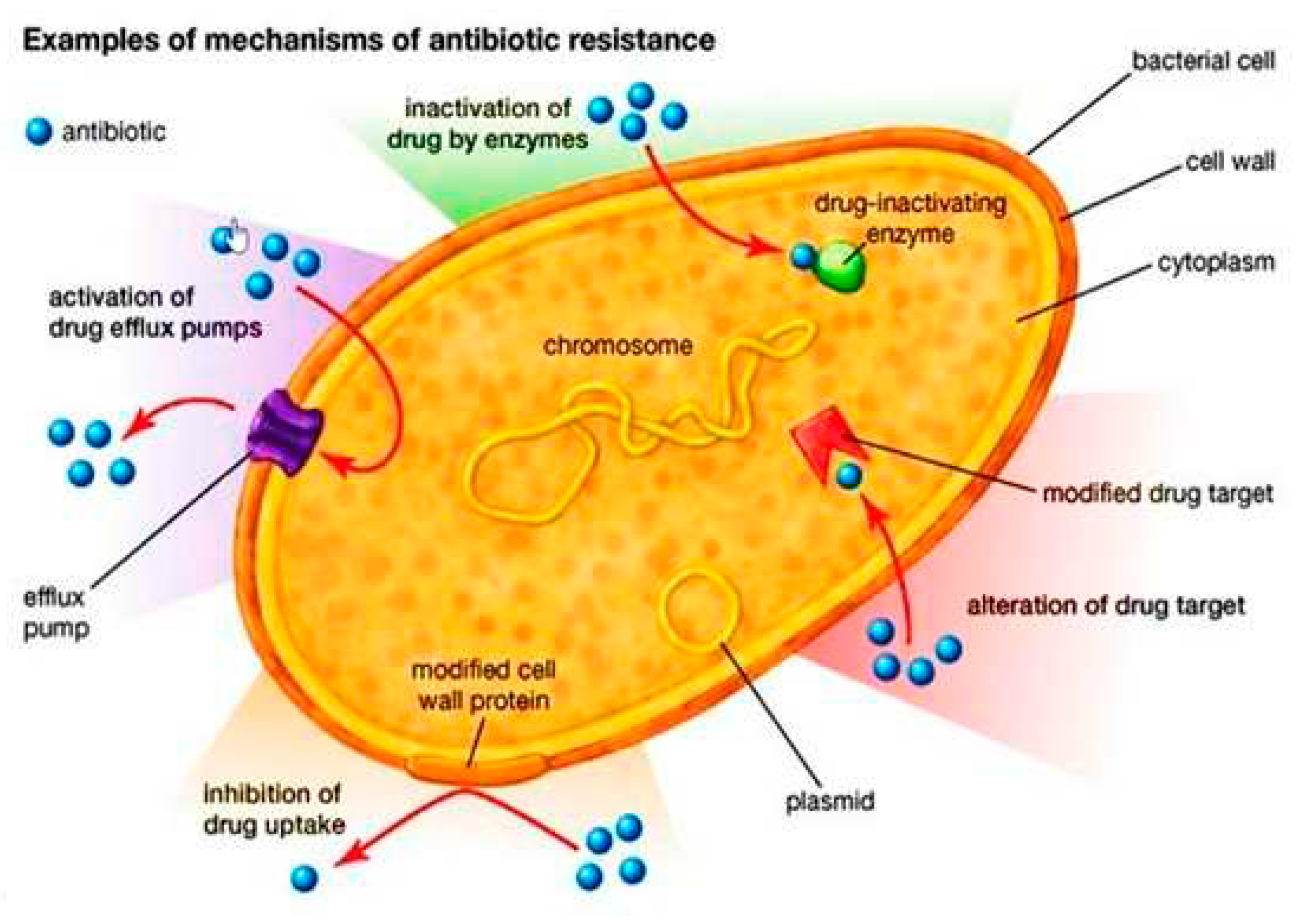
Figure 3.
The mechanism of biosynthesis of NPs using algae.
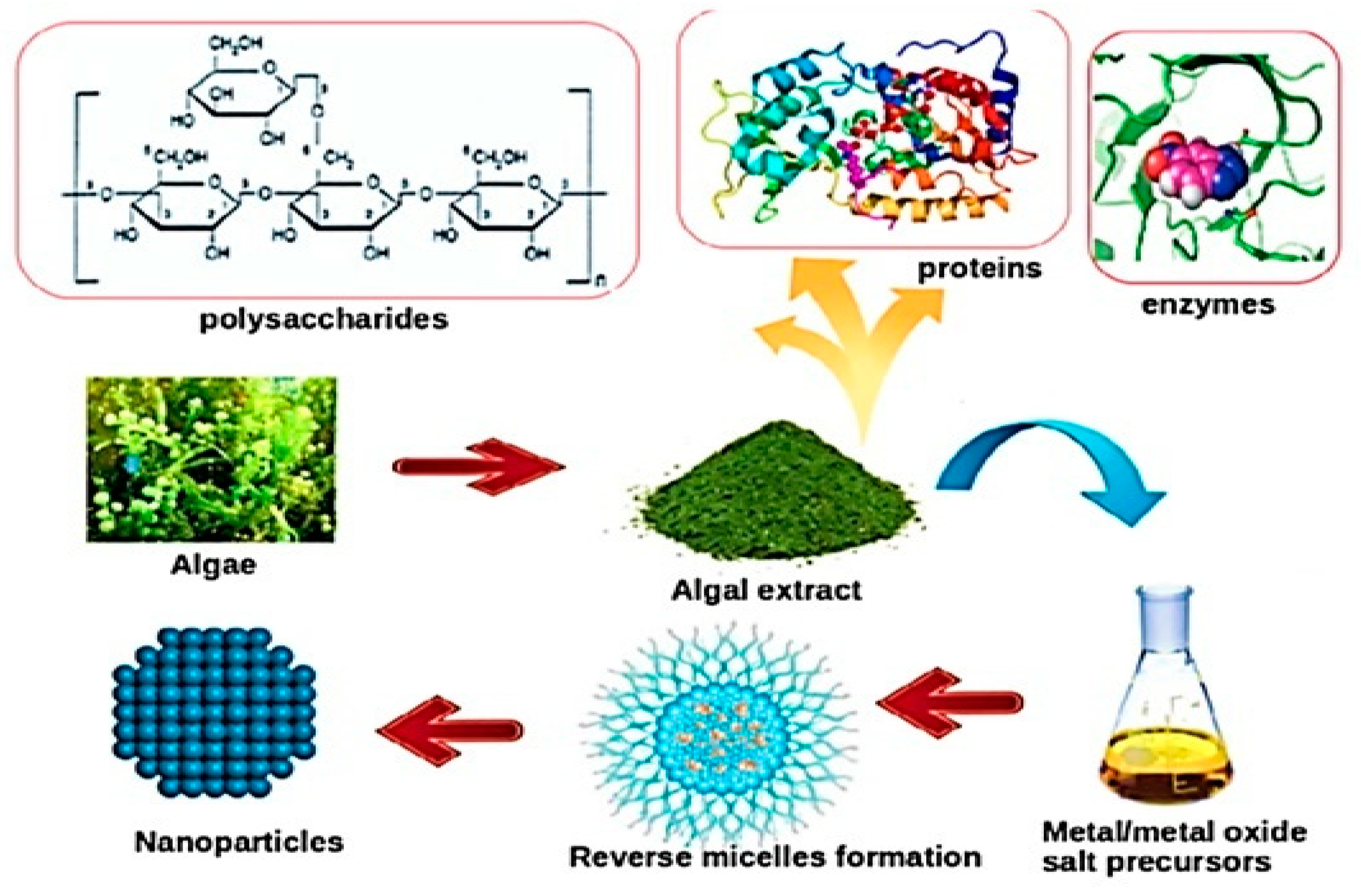
Figure 4.
The mechanisms of NP molecules in the bacteria cell.
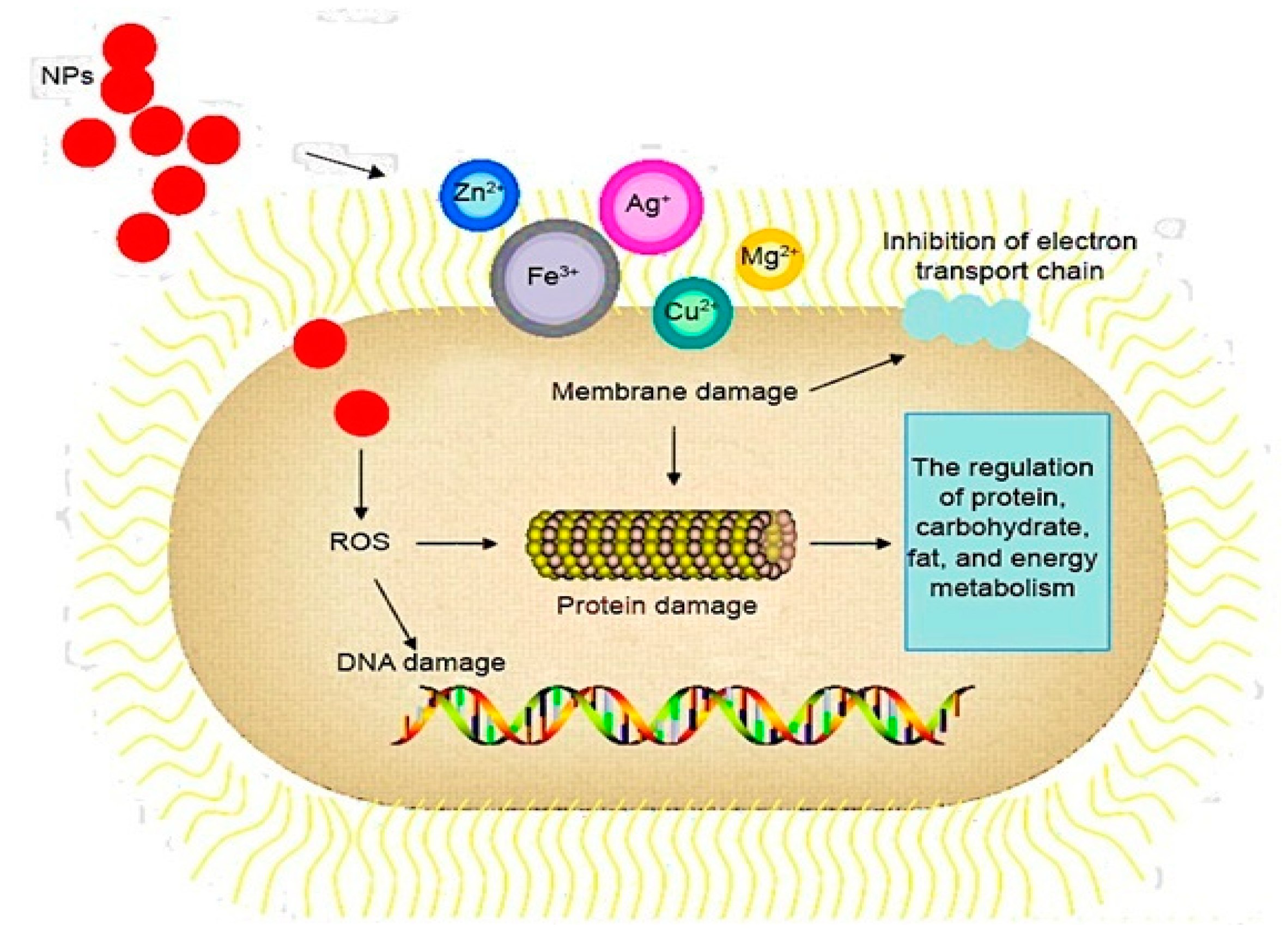
Figure 5.
Types of antimicrobial agents used in edible packaging such as organic acids, essential oils, enzymes, and bacteriocins for protection of foods against microbial growth.
Figure 5.
Types of antimicrobial agents used in edible packaging such as organic acids, essential oils, enzymes, and bacteriocins for protection of foods against microbial growth.
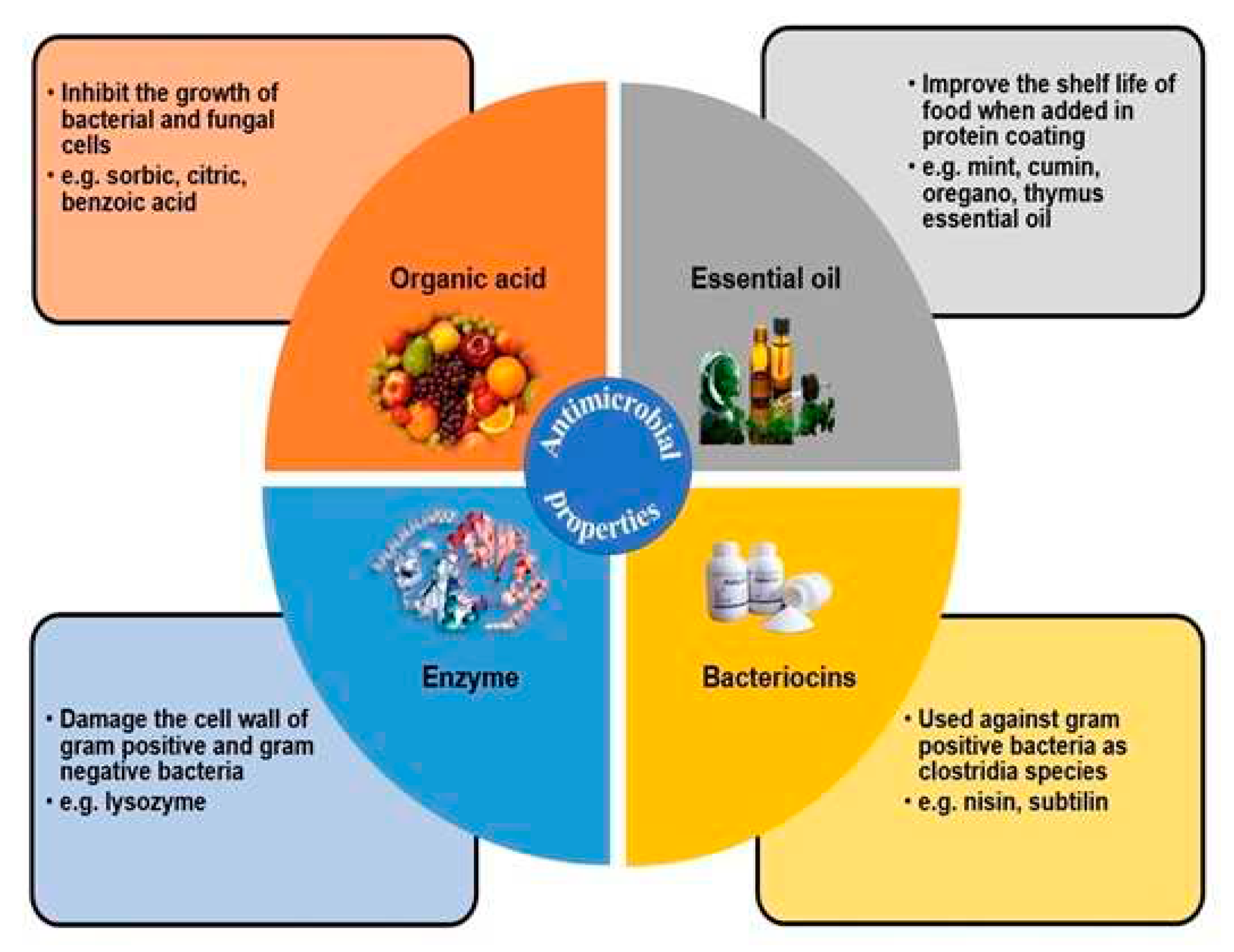
Figure 6.
The schematic to show antimicrobial mechanism of action.
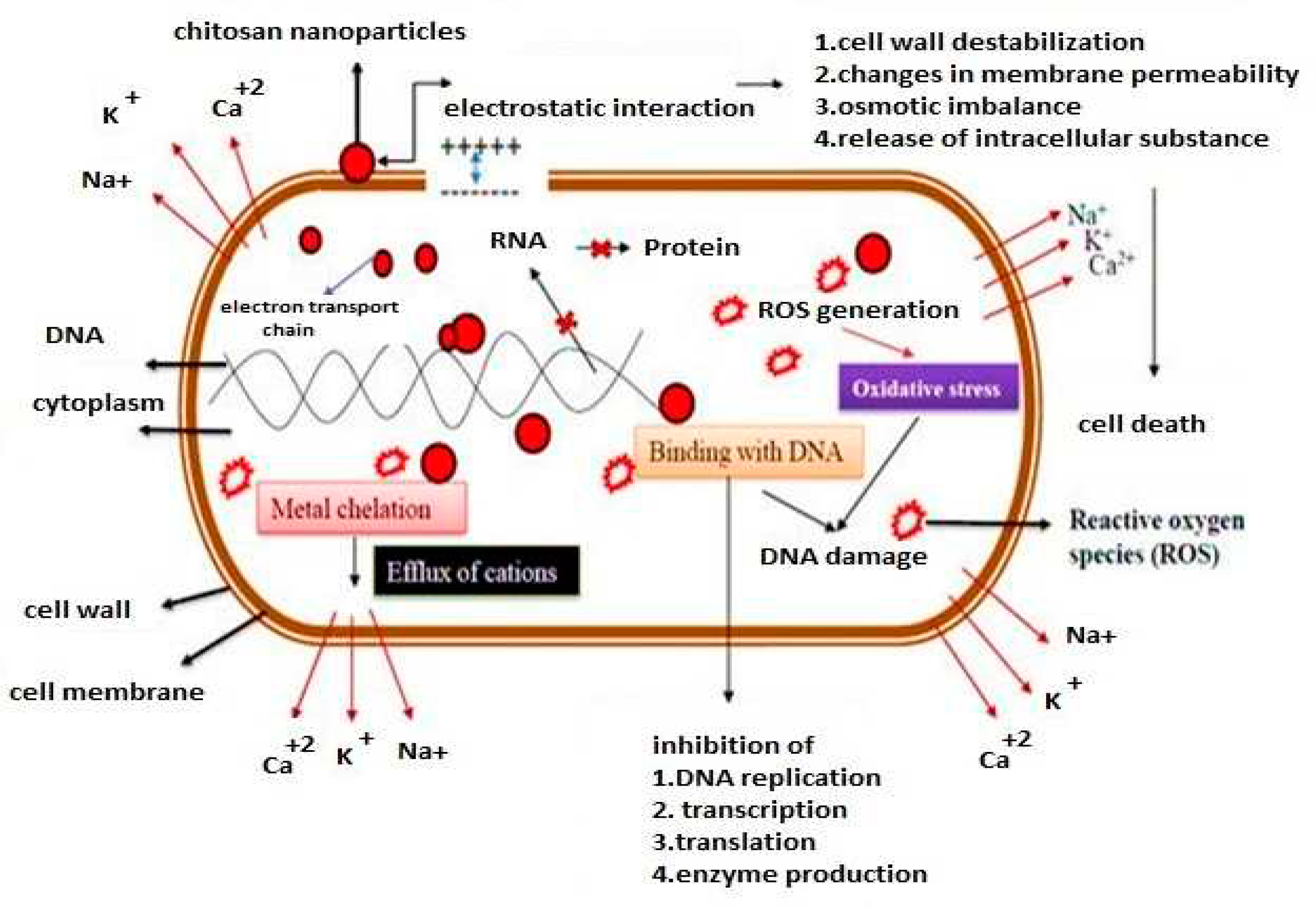
Table 1.
Antimicrobial agents used in the food packaging.
| Antimicrobial Class | Antimicrobial Agent | Packaging Material | Main Microorganisms | Food | References |
|---|---|---|---|---|---|
| Organic acid | Potassium sorbate -vanillin | Chitosan films | mould | Butter cake | [16] |
| Citric acid and chitosan | Fish gelatin/chitosan | Escherichia coli | / | [17] | |
| SodiumbenzoateCitric acid | Poly(vinylalcohol) | S. aureus, E. coli, Candida albicans | / | [18] | |
| Potassium sorbate | Fish collagen- polyvinil alchol | E. coli, S. aureus | / | [19] | |
| Sodium benzoate andpotassium sorbate | Edible active coatings (EACs) | microbial growth (total aerobic counts, molds, yeasts) | Strawberry | [20] | |
| Sorbic acid butylated hydroxyanisole and butylated hydroxytoluene | polypropylene (PP) films | inhibited gram-negative and gram-positive bacteria growth. | / | [21] | |
| Bacteriocin | Plantaricin BM-1 | PE, LDPE, HDPE | L.monocytogenes | / | [22] |
| Nisin | Chitosan-carboxymethylchitosan | L.monocytogenes | / | [23] | |
| Nisin | PLA | L.monocytogenes | Skim milk and liquid egg white | [24] | |
| Nisin | Starch/halloysite nanocomposite films | L.monocytogenes | Minas frescal cheese | [25] | |
| Nisin and bacteriocin-likesubstance (BLS) P34 | Encapsulated in soybean phosphatidylcholine (PC-1) and PC-1-cholesterol (7, 3) liposomes | L.monocytogenes | Minas frescal cheese | [26] | |
| Bacteriocin KU24 | S.aureus | / | [27] | ||
| Enterocin 416K1 | Low-density polyethylene) (LDPE) film | significant decrease in L.monocytogenes | Frankfurters | [28] | |
| Bacteriocin-likesubstances | Starch | L. monocytogene | Cheese | [29] | |
| Bacteriocin-producerliving bacteria | Poly(ethyleneterephthalate) -polyvinylalcohol (PVOH) | L. monocytogenes | Precooked chicken fillets | [30] | |
| Plantaricin BM-1 | polyethylene terephthalate/polyvinylidene chloride, polypropylene (PPR) film | L.monocytogenes | meat | [31] | |
| Lactocin 705 and lactocin AL705 | Polyethylene-based film | L, plantarum CRL691 L, innocua 7 | / | [32] | |
| Enzymes | Lactoperoxidase | Chitosan | Shewanella putrefaciensPseudomonas fluorescensPsychrotrophs | Rainbow trout | [33] |
| Lysozyme | Nonwovencellulose+ graphene oxide | Micrococcus lysodeikticus | / | [34] | |
| Lysozyme | Polyamide11+halloysitenanotubes | Pseudomonas spp. | Chicken slices | [35] | |
| Lysozyme-chitosan-organic rectorite- sodium alginate | Electrospun Cellulose Acetate | Escherichia coli and Staphylococcus aureus | Pork | [36] | |
| Biopolymers | Chitosan | Acrylonitrile-acrylamidegrafted chitosan | E. coli, S.aureus, P. aeruginosa | Apple andguava | [37] |
| Chitosan | Hydroxyethylcellulose+sodium alginate | E. coli, S. aureus | / | [38] | |
| Chitosan-ZnO hybrid nanoparticles with clove essential oil | Chitosan/pullulan (CS/PL) nanocomposite films | Pseudomonas aeruginosa,S. aureus, E. coli | Checken meat | [39] | |
| Chitosan (Ch) + zinc oxide nanoparticles | Gallic acid films | B. subtilis E. coli | / | [40] | |
| Bacteriophage | Bacteriophage (φIBB-PF7A) | Alginate | P. fluorescens | Chicken fillets | [41] |
| Bacteriophage (vB_EcoMH2W) | Chitosan | E. coli | Tomatoes | [42] | |
| Metal Nanoparticle (NP) | Zinc oxide (ZnO) | Gelatin-chitosan | S. aureus and E. coli | ChickenCheese | [43] |
| Titanyum oxide (TiO2) +Ag | Polylactic acid (PLA) | E. coli,Listeria monocytogenes. | / | [44] | |
| Cupper oxide (CuO) | Carbohydrate biopolymer | Escherichia coli and Listeria monocytogenes | / | [45] | |
| Essansial oil and natural extracts | Cinnamon essential oil | Active paper | Rhizopusstolonifer | Sliced bread | [46] |
| Thyme | Silk fibroin electrospun fibres | Salmonella Typhimurium | chicken meat | [47] | |
| Thymol and eugenol | Biodegradable polymer films: poly (lactic acid), poly (butylene adipate-co-terephthalate) and poly (butylene succinate) | E. coli, S. aureus,Bacillus tequilensis, B, subtilis and B. pumilis, | / | [48] | |
| Oregano essential oil (OEO) | Resveratrol (RES) nanoemulsion loaded edible pectin coating | inhibiting microbial growth | fresh pork loin | [49] | |
| Citronella essential oil (CEO) | Chitosan + with ZnO and Ag nanoparticles | S. aureus, E. coliC. albicans | / | [50] | |
| Thymus vulgaris essential oil+ ethanolic extractMediterranean propolis | Polylactic acid (PLA) film | S. aureus andPenicillium spCandida E. coli | / | [51] | |
| Grape fruit seedextract | Agar/alginate/collagenhydrogel films | L. monocytogenes, E coli. | Potatoes | [52] | |
| Gallic acid, chitosan | Gallicacid/graftedchitosan films | / | Agaricusbisporus | [53] | |
| Salicylic acid (SA) | Chitosan films | CS-SA coating inhibited chilling injury and increased the antioxidant enzyme activities | Cucumber | [54] | |
| Ellagic acid | Candelilla wax matrix | significant reduction of C.gloesporioides and extended shlef life | Avocado | [55] | |
| Ferulic acid | Chitosan films | lower total counts, antioxidant and antimicrobial activities, | Pork | [56] | |
| Curcumin | Poly(butylene adipate-co-terephthalate) (PBAT) films | E. coliL.monocytogenes | / | [57] | |
| Cinnamaldehyde | Polylactic acid and starch films | E. coli and L. inocua | / | [58] | |
| Resveratrol and eugenol | Carboxymethyl cellulose films | L.monocytogenesS. aureus, E. coliS.Enteritidis, | / | [59] | |
| Carvacrol | Cassava starch | E. coli, S.Typhimurium Aeromonas, S. aureus | Pumpkin | [60] | |
| Green tea extract | Chitosan film | L. inocua andE. coli K12 | / | [61] | |
| Grape seed extract | Edible coatings and films based on Chitosan film | L. inocua E. coli K12 | / | [62] | |
| Peonyextracts (Paeonia rockii) dispersed in chitosan | Polysaccharide gels | Antifungal activity and extended shelflife,16 days | Strawberries | [63] | |
| Blueberry(Vaccinium spp.) fruit and leaf extracts | Chitosan coatings | S. aureus,L.monocytogenes S. Typhimurium E. coli, | fresh blueberries | [64] | |
| Tomato plant extract | Edible Chitosan coatings | reduced the mesophyll count during 15 days | Sierra fishfillets | [65] | |
| Others | Sulphurnanoparticles | Chitosan film | L.monocytogenes, E. coli | / | [66] |
| Chlorine dioxide | Polylactic acid (PLA) films | S. aureus, E. coli | / | [5] |
Disclaimer/Publisher’s Note: The statements, opinions and data contained in all publications are solely those of the individual author(s) and contributor(s) and not of MDPI and/or the editor(s). MDPI and/or the editor(s) disclaim responsibility for any injury to people or property resulting from any ideas, methods, instructions or products referred to in the content. |
© 2023 by the authors. Licensee MDPI, Basel, Switzerland. This article is an open access article distributed under the terms and conditions of the Creative Commons Attribution (CC BY) license (http://creativecommons.org/licenses/by/4.0/).
Copyright: This open access article is published under a Creative Commons CC BY 4.0 license, which permit the free download, distribution, and reuse, provided that the author and preprint are cited in any reuse.


