

Submitted:
05 September 2023
Posted:
11 September 2023
You are already at the latest version
Abstract
Introduction: Research studies have shown that workplace stress and physical immobility can have a multi-layered effect on the human body. It causes degrade our physical functioning, and also having negative effect on our performance. Yoga techniques have proved to be effective at various levels, including physical, mental, and emotional health. Objective: This study aimed to determine the efficacy of a short-term Yoga protocol – Y break, for improved well-being and resilience to stress. It is intended to working population at work to de-stress, refresh, and refocus. Methods: This study was conducted as a single-arm, multi-centric, experimental pilot trial. Prominent yoga institutes in six metropolitan cities were engaged in this study. Participants practised specific yoga techniques for 5 minutes, twice a day, for 15 days. Pre & post-intervention data was collected along with feedback about the protocol. A self-report questionnaire, based on the Pancha kosha parameters, was used to record pre- and post-data. Results: The Statistical data analysis shown significant improvement in every parameter selected for the study. Conclusion: A five-minute yoga break can do wonders for the health-related parameters of the working population; therefore, it should be introduced in all organizations to improve the quality of life and work.
Keywords:
Yoga
; Occupational health
; Yoga Break
; Pancha Kosha
; De-Stress
Introduction
Yoga is an ancient science that strengthens the human being at different levels, including the physical, mental, emotional, spiritual, and social1,2. Yoga acts as a tool for self-development and has great potential to evolve a person into a healthy and holistic personality. Its ‘therapeutic’ approach has a preventive, curative, and promotive role in health management3. According to WHO, health is defined as a state of complete physical, mental, and social well-being and not merely the absence of disease or infirmity4,5. The World Health Organization (WHO) defines work-related stress as “the response people may have when presented with work demands and pressures that are not matched to their knowledge and abilities and which challenge their ability to cope”6.
Health, according to yoga, is a state of integration, harmony, and balance between the body, mind, and soul. According to the yoga philosophy, a human being is made up of three bodies, which are further identified as five sheaths, the pancha kosha: annamaya kosha, pranamaya kosha, manomaya kosha, vijnanamaya kosha, and anandamaya kosha7.To be in the state of perfect health, a human being should be free from any ailments, and in a state of equilibrium. From the yogic point of view, health is a state of the well-being for all the bodies: the causal, the astral, and the physical8. The causal body is said to be the innermost body of a person. It relates to the anandamay akosha, which is the source for both physical and astral bodies. The astral body has three sheaths: pranamaya kosha, manomaya kosha, and vijnanamaya kosha. It is made up of the intellect, the mind, and prana (vital force). The physical body is the annamaya kosha, which includes the flesh, blood, muscles, nerves, and so on.
The impact of yoga occurs at the different levels: 9Annamaya kosha, the physical level: Asana practices strengthen the muscles, improve circulation and reduce excessive cortisol production. Manomaya kosha, the psychological level: mediation and relaxation practices reduce negative emotions such as, anger and depression and improve positive emotions. Thus balances endocrine system and improves immunity and reduces stress. Vijnanamaya kosha, the intellectual and social levels: Yoga practice improves the power of discrimination. The Y Break Yoga protocol is devised to work on all the aspects of panch koshas in working population. The yoga practices are planned within a five-minute time frame to make the participants aware of the concept of health and its various dimensions, to make them understand the various facets of yoga and to encourage them to adopt yoga as a way of life. This study aimed to add Y break protocol in their day to day life and throw light on the possible role of Y break protocol in health and well-being of working professionals.
Materials & Methods
Objectives: This pilot study was conducted with the following objectives: (1) to assess the efficacy of the Y-break, a short Yoga protocol, on various parameters of the pancha kosha for working professionals using a self-report questionnaire. (2) to determine whether the Y-break is a viable option for working professionals to de-stress, refresh, and refocus at work.
Study Setting: The participants were screened and enrolled with the help of six institutes of yoga across six metropolitan cities, based on the availability and willingness of a reputed partner organization in that state: the six institutes are (1) Morarji Desai National Institute of Yoga, New Delhi(MDNIY),(2) Krishnamacharya Yoga Mandiram, Chennai, (KYM) (3) Ramakrishna Mission Vivekananda Educational and Research Institute, Kolkata (RKMVERI), (4)National Institute of Mental Health and Neurosciences, Bengaluru (NIMHANS), (5) Kaivalyadhama, the Health and Yoga Research Centre, Lonavala, Mumbai (Kaivalyadhama), (6)Heartfulness Institute and Meditation Centre, Hyderabad (Heartfulness). 5 minutes Y Break protocol was practised at the workplaces under the supervision of certified Yoga instructors.
Study design and assessment: This study was conducted as a single arm, multi-centric, experimental pilot trial. A total of 717 participants were enrolled for the trial of 15 days. The participants were professionals working at corporate offices and government institutions across the six metropolitan cities. The criteria that were set to include in this study were: age of 18 years or above, currently working professionals, working at least 8 hours or more hours per day, those who are having work related stress and its consequences, and healthy individuals voluntarily wanted to attend yoga sessions to maintain their health and well-being. Participants exclusion criteria were: Unwilling to practise yoga, any major illness or restrictive disability that did not permit the practice of yoga. A self-report questionnaire was filled by the participants on 1st day and 15th day. Y-Break yoga protocol was practiced twice a day, for 15 days. After 15 days, the outcome was assessed with the post-intervention self-report questionnaire. The CONSORT flow diagram presents participant selection and study design details in Figure 1.
Questionnaire on Pachakosha
A self-reported questionnaire was used for screening as well as for noting the outcome. The participants were assessed at the beginning and end of the trial. The pre-intervention questionnaire consisted of 22 items with multiple-choice questions covering various parameters of the pancha kosha. There are eight items in the annamaya kosha, Two items in the pranamaya kosha, Two items in the manomaya kosha, Two items in the vijnanamaya kosha, Three items in anandamaya kosha, Five under personal history. The participants’ responses, ranging from none to mild, moderate, and severe, facilitated their selection. Participants’ feedback with three open questions and one scaling question about yoga techniques used in the trial and their personal experience.
Intervention- Y break protocol
The Yoga Break at Work: The protocol consists of various sets of yoga techniques such as Asana (postures), Pranayama (breathing techniques), and Dhyana (meditation). All the techniques followed a specific rhythmic breathing pattern. This protocol was taught by certified professional yoga instructors. In the five-minute schedule, each minute had a rhythmic flow of techniques with intermittent rest. The detailed Yoga break protocol is provided in Table 1.The protocol can be watched at YouTube link: https://www.youtube.com/watch?v=66_yPWMfEwk .
Data extraction and analysis
The study consisted of administering Y break protocol to working population and data collection before and after intervention (1st day and 15th day) using self-report questionnaire as mentioned earlier. The scale responses ranging from: None to Mild, Moderate, and Uncomfortable (Annamaya kosha). In other koshas are Excellent, Good, Low, Very Low. The collected data were analysed using SPSS software (IBM SPSS Statistics for Windows, Version 17. Armonk, NY: IBM Corp.). The statistical significance was fixed at P < 0.05.
Results
Annamaya kosha: Pre and post comparison of the intervention using paired sampled ‘t’ test suggested that an overall improvement of 12.1 percent was achieved, and the improvement in each parameter of the annamaya kosha ranged from 4.9 to 23.9 per cent. A noticeable 12.1 percent change was observed just by practicing the five-minute protocol twice a day, for two weeks. Significant improvements were observed in the annamaya kosha parameters as shown in Figure 2 and Table 2. The statistical analyses show statistically significant changes with a p value of less than 0.05 shown in Table 3.
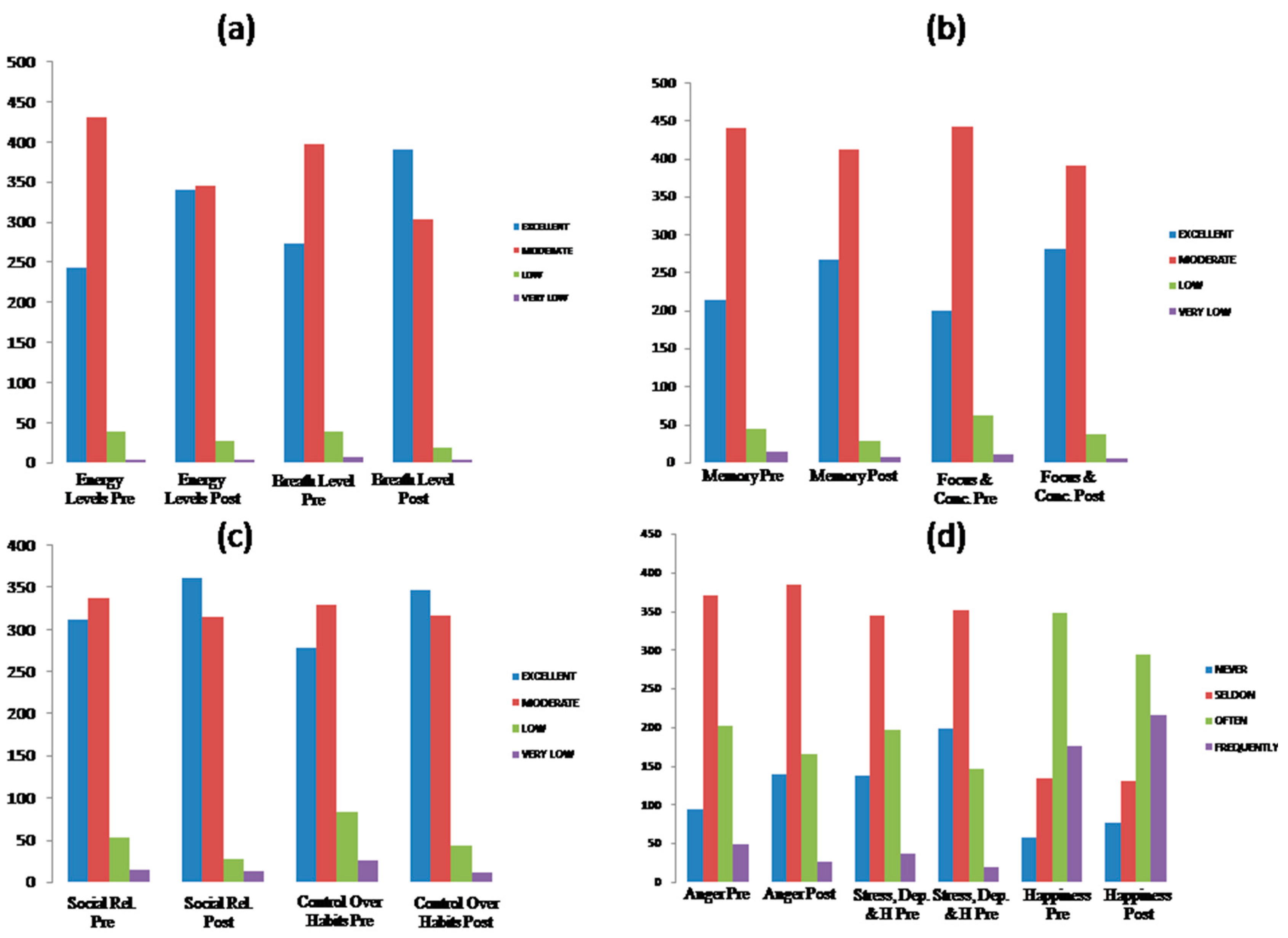
Pranamaya kosha: An overall improvement of 41.3 percent was achieved, with improvements in each of the kosha’s parameters. Significant improvements were observed in the pranamaya kosha, as shown in Figure 3 (a) and Table 2. The changes observed in pranamaya kosha by using the comparative method were also statistically proved using a t-test with the help of an Excel sheet. Here again, the mean (M), standard deviation (SD), and t-test were used. The statistical findings revealed that the p-value was clearly less than 0.05, so the difference was significant shown in Table 3.

Table 2.
Overall Changes in parameters of Pancha Koshas& Personal History.
| Kosha | Parameters | Changes (in %) | Overall Change (in %) |
|---|---|---|---|
| Annamaya kosha | 12.10% | ||
| Neck Pain | 18.60% | ||
| Lower back Pain | 23.60% | ||
| Headache | 13.80% | ||
| Stomach Ache | 10.40% | ||
| Joint Pain | 9.90% | ||
| Feet swelling | 4.90% | ||
| Stiffness | 13.60% | ||
| Appetite Issue | 7.80% | ||
| Pranamaya kosha | 41.30% | ||
| Energy Level | 39.80% | ||
| Breath level | 42.70% | ||
| Manomaya kosha | 32.50% | ||
| Memory | 24.70% | ||
| Focus and Concentration | 41% | ||
| Vijñānamaya kosha | 20% | ||
| My Social Relationship | 16% | ||
| Control over Habits | 24.40% | ||
| Ānandamaya kosha | 43.40% | ||
| Anger | 48.90% | ||
| Stress, Depression & | |||
| Hopelessness | 44.20% | ||
| Happiness | 22% | ||
| Personal History | |||
| Appetite | 17.10% | ||
| Sleep | 16.30% | ||
| Thirst | 13.70% | ||
| Bowel Movements | 6.30% | ||
| Urination | 3.20% | ||
Manomaya kosha: Manomaya kosha, showed a noticeable overall change of 32.5 per cent, in each parameter, after practising the five-minute protocol twice a day for two weeks. Significant improvements were observed in this kosha, as shown in Figure 3 (b)and Table 2. The changes observed in the manomaya kosha. The statistical findings revealed that the value of p was clearly less than 0.05, so the difference was significant shown in Table 3.
Table 3.
Overall Comparative statistical analysis of Pancha Koshas.
| Kosha | Parameters | Mean ± SD | p-value | |
|---|---|---|---|---|
| Pre (Baseline) | Post (15 days) | |||
| Annamaya kosha | ||||
| Neck Pain | 1.5±0.75 | 1.32±0.59 | 0.0001 | |
| Lower back Pain | 1.5±0.88 | 1.45±0.69 | 0.0001 | |
| Headache | 1.4±0.79 | 1.30±0.59 | 0.0001 | |
| Stomach Ache | 1.2±0.64 | 1.14±0.43 | 0.0001 | |
| Joint Pain | 1.4±0.76 | 1.34±0.62 | 0.0001 | |
| Feet swelling | 1.21±0.56 | 1.14±0.44 | 0.0005 | |
| Stiffness | 1.6±0.81 | 1.45±0.67 | 0.0001 | |
| Appetite Issue | 1.3±0.68 | 1.26±0.57 | 0.0001 | |
| Pranamaya kosha | ||||
| Energy Level | 1.7±0.5 | 1.5±0.5 | 0.0001 | |
| Breath level | 1.6±0.6 | 1.4±0.5 | 0.0001 | |
| Manomaya kosha | ||||
| Memory | 1.80±0.63 | 1.68±0.59 | 0.0001 | |
| Focus and Concentration | 1.83±0.63 | 1.67±0.61 | 0.0001 | |
| Vijñānamaya kosha | ||||
| My Social Relationship | 1.67±0.69 | 1.55±0.59 | 0.0001 | |
| Control over Habits | 1.79±0.77 | 1.60±0.67 | 0.0001 | |
| Ānandamaya kosha | ||||
| Anger | 2.28±0.7 | 2.1±0.7 | 0.0001 | |
| Stress, Depression & | ||||
| Hopelessness | 2.18±0.8 | 1.9±0.7 | 0.0001 | |
| Happiness | 2.8±0.8 | 2.9±0.9 | 0.8516 | |
Vijnanamaya kosha: Overall improvement of 20 per cent was achieved, as was the positive change in the individual parameters of the vijnanamaya kosha. All such changes were seen after following the five-minute protocol twice a day for two weeks. Significant improvements were observed in the vijnanamaya kosha, as shown in Figure 3 (c) and Table 2. The changes observed in the vijnanamaya kosha by the comparative method were also statistically proved using a t-test. The statistical findings reveal that the value of p is clearly less than 0.05, so the difference is significant shown in Table 3.
Anandamaya kosha: There was overall improvement of 43.4 percent along with the individual parameters of the anandamaya kosha. Significant improvements were observed in theanandamaya kosha as shown in Figure 3 (d) and Table 2. The changes observed in the anandamaya kosha by the comparative method were also statistically tested using a t-test as per the calculations shown in an Excel sheet. The statistical findings reveal that the value of p is clearly less than 0.05 in the negative categories, and so the difference is significant shown in Table 3.
Figure 3.
a) Pre and Post intervention changes in Pranamaya Kosha, (b) Pre and Post intervention changes in Manomaya Kosha, (c) Pre and Post intervention changes in Vijnanamayakosh Kosha, (d) Pre and Post intervention changes in Anandamaya Kosha.
Figure 3.
a) Pre and Post intervention changes in Pranamaya Kosha, (b) Pre and Post intervention changes in Manomaya Kosha, (c) Pre and Post intervention changes in Vijnanamayakosh Kosha, (d) Pre and Post intervention changes in Anandamaya Kosha.
Personal History: The overall analysis of the personal history showed significant improvement as shown in Figure 4&5 and Table 4. The changes observed in the in the personal history by the comparative method were also statistically proved using a t-test with the help of an Excel sheet. The statistical findings reveal that the value of p is clearly less than 0.05, so the difference is significant shown in Table 3.
Discussion
Discussing the impact of Y break protocol as a part of short yoga module for working population in private and Government sector, It could be done by anyone and everyone, from professionals to intellectuals in any field, during their hectic workday, providing them with relief from neck pain, lower back pain, appetite issue, headaches, joint pain, stiffness of the body, stomach-ache, and foot swelling (Annamaya kosha). This noticeable improvement was seen in parameters of energy levels and breath levels. Improvement in breath levels enhanced the energy levels to produce the best in the employees (pranamaya kosha). Without concentration and a good memory, we cannot progress in life. An agile mind and memory are incredibly and vitally valuable as we progress through our careers (Manomaya kosha). The five-minute yoga protocol helps in cultivating selflessness and a sense of community as it makes the employees part of the system in terms of togetherness and in boosting employee morale (Vijnanamaya kosha). The five-minute yoga protocol contributed to improving the health of the employees by minimizing health-care expenses as the participants felt greater joy with reduced stress levels, anger and sense of hopelessness (Anandamaya kosha).
All the participating institutes reported that the five-minute yoga break at work protocol was effective, with encouraging results. The protocol enabled the participants to relax completely and it promoted sound sleep. It also improved the digestion and stimulated circulation. The practitioners felt physically and mentally ‘free’, often heightening their intuition and creativity. It is a well-known fact that a person’s well-being influences the quality of work and, that in turn, enhances the productivity of the organization. Any workplace policy or programme should take measures to maintain employees’ well-being and address the factors that can undermine it. The overall well-being includes a person’s physiological, psychological, intellectual, social, and spiritual health.
Feedback
The feedback was very positive and many participants felt the beneficial effect that a simple five-minute break with the proper selection of movements could create. This intervention had a dual impact: the awareness of the efficacy of yoga for all, with a desire to do more from now on, after realizing that even a five-minute break can make a difference. We feel that the simple trial has already achieved the objectives that were put forward for this protocol. Overall comments from the volunteers are ample evidence of the success of the five-minute yoga protocol.
Limitations
In this study, volunteers with severe pain could not be included. This could have been possible if it had been conducted under medical supervision. The validity of using the self-reporting questionnaire was based on the assumption that the subjects answered all questions truthfully. It is also concluded that Yoga Break on Chair may be a good option for offices with more participants, especially if space is limited.
Conclusion
It is well acknowledged that a person’s well-being positively influences the quality and output of work and, in turn, improves the productivity of the organization. Any workplace policy or programme should take measures to enhance employees’ well-being and address all factors that can undermine it. The well-being of a person includes physiological, psychological, intellectual, social, and spiritual health. This study shows that a yoga break at work can do wonders for the health of the working population and should therefore be introduced in all organizations to ensure a healthy and positive work environment. The encouraging results of this protocol indicate that yoga, which is an ancient Indian science and way of life, can definitely reduce, if not control, the general health issues that majority of people face due to their hectic and busy lifestyle. Yoga has been proved to be an effective therapeutic tool for physical, psychological, and psychosomatic disorders. This five-minute protocol is unique as it uses yoga as a science of self-development and it has great potential to evolve a healthy and holistic personality. Its therapeutic effect plays a preventive, curative, and promotive role in maintaining and sustaining good health. Yoga enhances emotional and intellectual health and gives an impetus to the transformation of society. This study is subjective in nature; it may be a pavement for further studies using the Y Break protocol.
Acknowledgments
The authors express deep gratitude to the Secretary Vaidya Rajesh Kotecha and, Former Joint Secretary Shri. P. N Ranjith Kumar for their guidance & Support in Y Break Protocol trial.The authors also express their deep gratitude to Late Dr. Mukund Vinayak Bhole for his contribution in devising Y break Protocol and in the Manuscript preparation. The authors extend their gratitude to the Heads and Coordinators of the leading organization for their cooperation to successfully complete the Y Break trial. (1) Krishnamacharya Yoga Mandiram, Chennai, (KYM) (2) Ramakrishna Mission Vivekananda Educational and Research Institute, Kolkata (RKMVERI), (3)National Institute of Mental Health and Neurosciences, Bengaluru (NIMHANS), (4) Kaivalyadhama, the Health and Yoga Research Centre, Lonavala, Mumbai (Kaivalyadhama), (5) Heartfulness Institute and Meditation Centre, Hyderabad (Heartfulness). Authors are thankful to the Yoga Therapists Ms, Neetu Sharma, Mr. Lalit Madaan and Yoga Instructors Ms. Neetu, for their contribution in the Y break Yoga protocol Video Preparation and Mr. Rahul Chauhan, Yoga Instructor for coordinating the study in Delhi- NCR From MDNIY. Volunteers are also acknowledged for their support.
Financial support and sponsorship
This study was primarily funded by Ministry of Ayush, Government of India.
Conflicts of Interest
There are no conflicts of interest.
References
- Nilsson H. A four-dimensional model of mindfulness and its implications for health. Psychology of Religion and Spirituality. 2014 May;6(2):162. [CrossRef]
- Bhavanani AB. Diverse dimensions of Yoga. Yoga Mimamsa 2014 Jan 1;46(1):3. https://journals.lww.com/yomi/Fulltext/2014/46010/Diverse_dimensions_of_Yoga.2.aspx. [CrossRef]
- Vaidya AD, Vaidya R. A century of ‘The science of yoga’(1921–2021): Revival, renewal and renaissance. Journal of Ayurveda and Integrative Medicine. 2022 Aug 5:100613. [CrossRef]
- Andrea AC. Historical evolution of the concept of health in Western medicine. Acta Bio Medica: AteneiParmensis. 2018;89(3):352. [CrossRef]
- Leonardi F. The definition of health: towards new perspectives. International Journal of Health Services. 2018 Oct;48(4):735-48. [CrossRef]
- World Health Organization [ www.who.int ]. Stress at the workplace 2020 [updated 2020 June 14; cited 2020 July 16]. Available from: https://www.who.int/occupational health/topics/stressatwp/en/.
- Raina MK. The levels of human consciousness and creative functioning: Insights from the theory of Pancha Kosha (Five sheaths of Consciousness). Journal of Transpersonal Psychology. 2016 Jul 1;48(2). https://www.indigenouspsych.org/Resources/Journal%20of%20TPPsy.pdf.
- Moane FM. The effect of yoga, in comparison to aerobic exercise, on anxiety and mood in a workplace setting. The Chicago School of Professional Psychology; 2003. https://www.proquest.com/openview/fd96a05abf8b0108336bca85de19c47d/1?pq-origsite=gscholar&cbl=18750&diss=y.
- Cheema BS, Marshall PW, Chang D, Colagiuri B, Machliss B. Effect of an office worksite-based Yoga program on heart rate variability: A randomized controlled trial. BMC Public Health. 2011 Dec;11(1):1-5. https://bmcpublichealth.biomedcentral.com/articles/10.1186/1471-2458-11-578#citeas . [CrossRef]
Figure 1.
Study Design (CONSORT DIAGRAM).
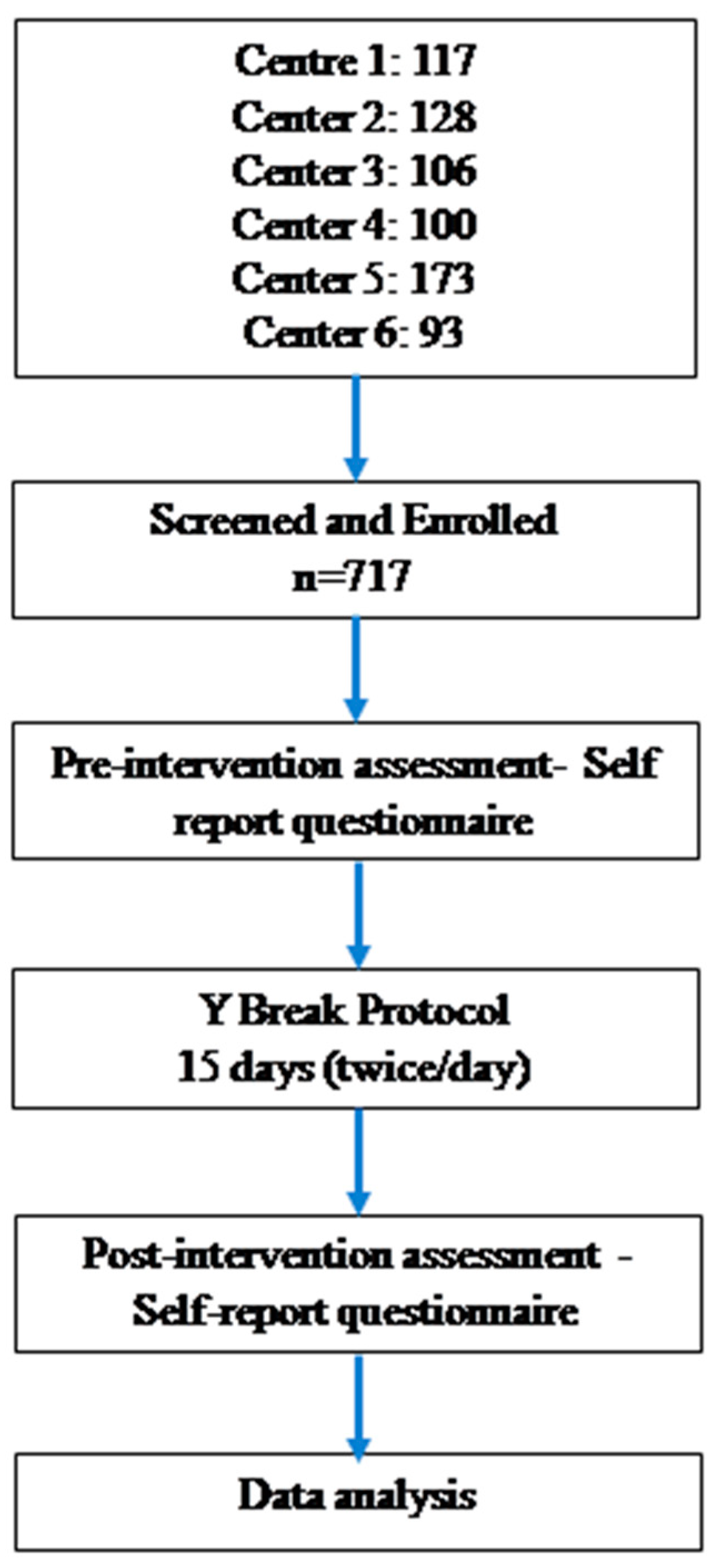
Figure 2.
Pre and Post intervention changes in Annamaya Kosha.
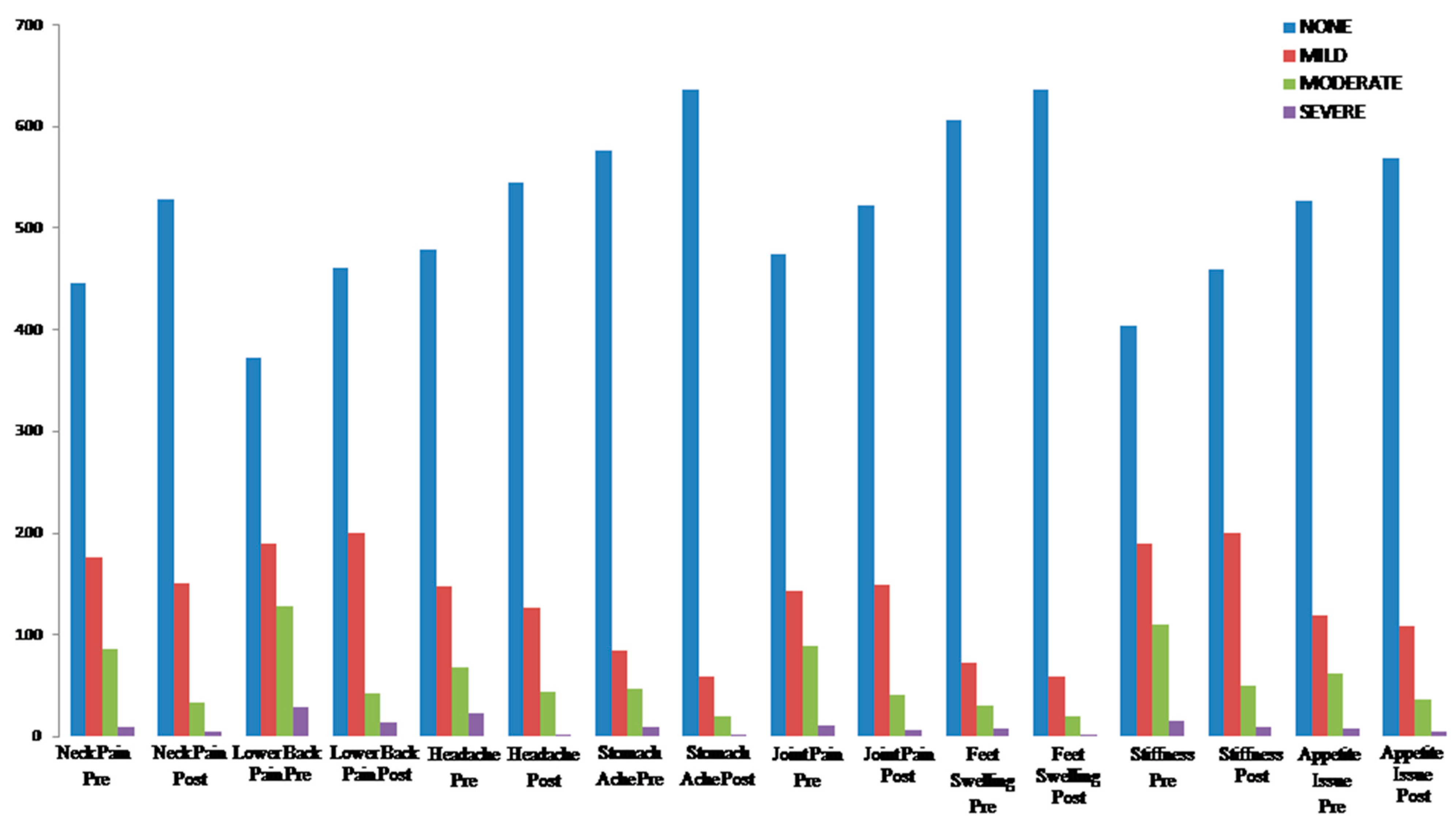
Figure 4.
Pre and Post intervention changes in Personal History (Appetite, Sleep & Thirst).
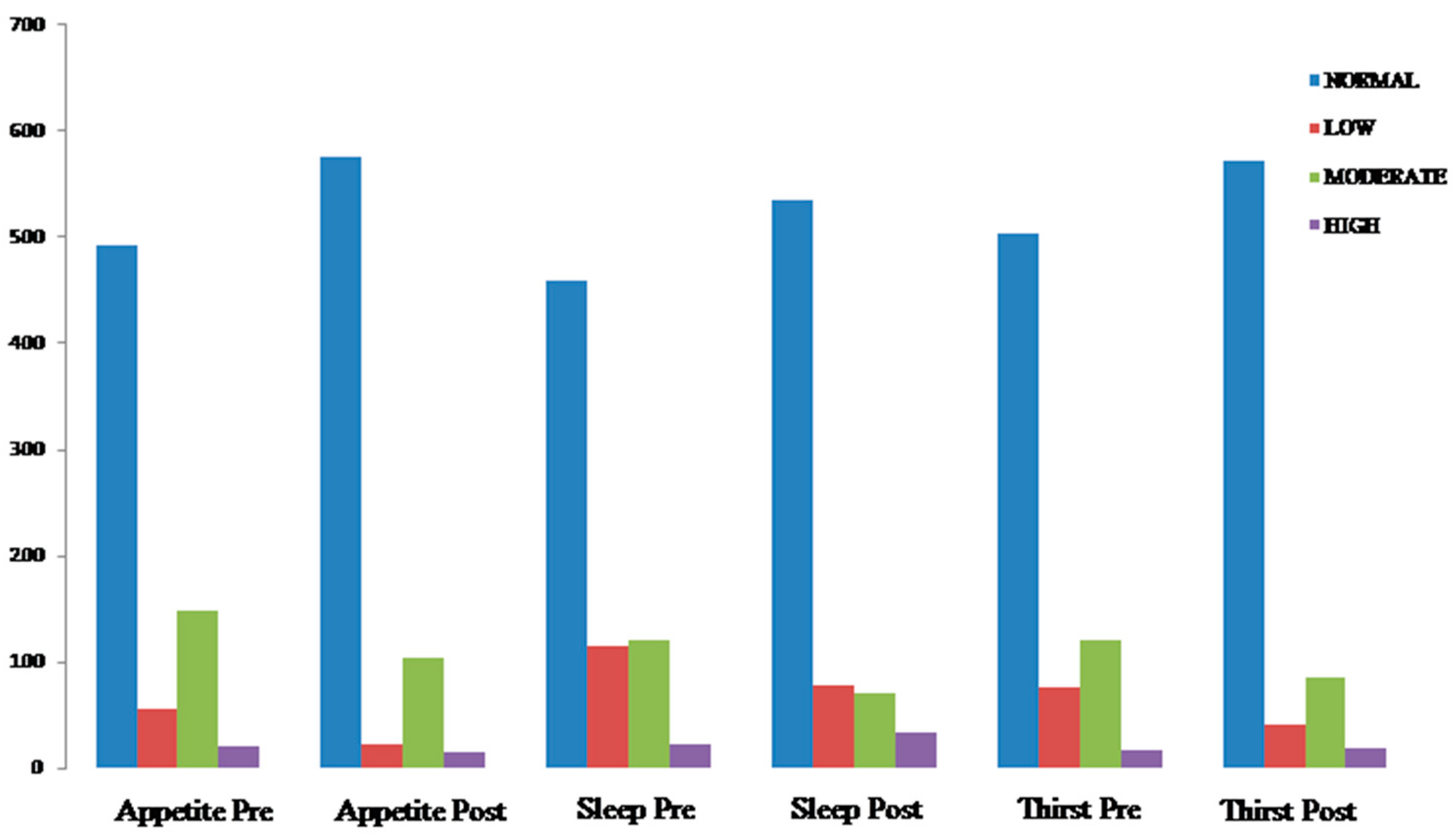
Figure 5.
Pre and Post intervention changes in Personal History (a) Bowel Movements, (b) Urination.
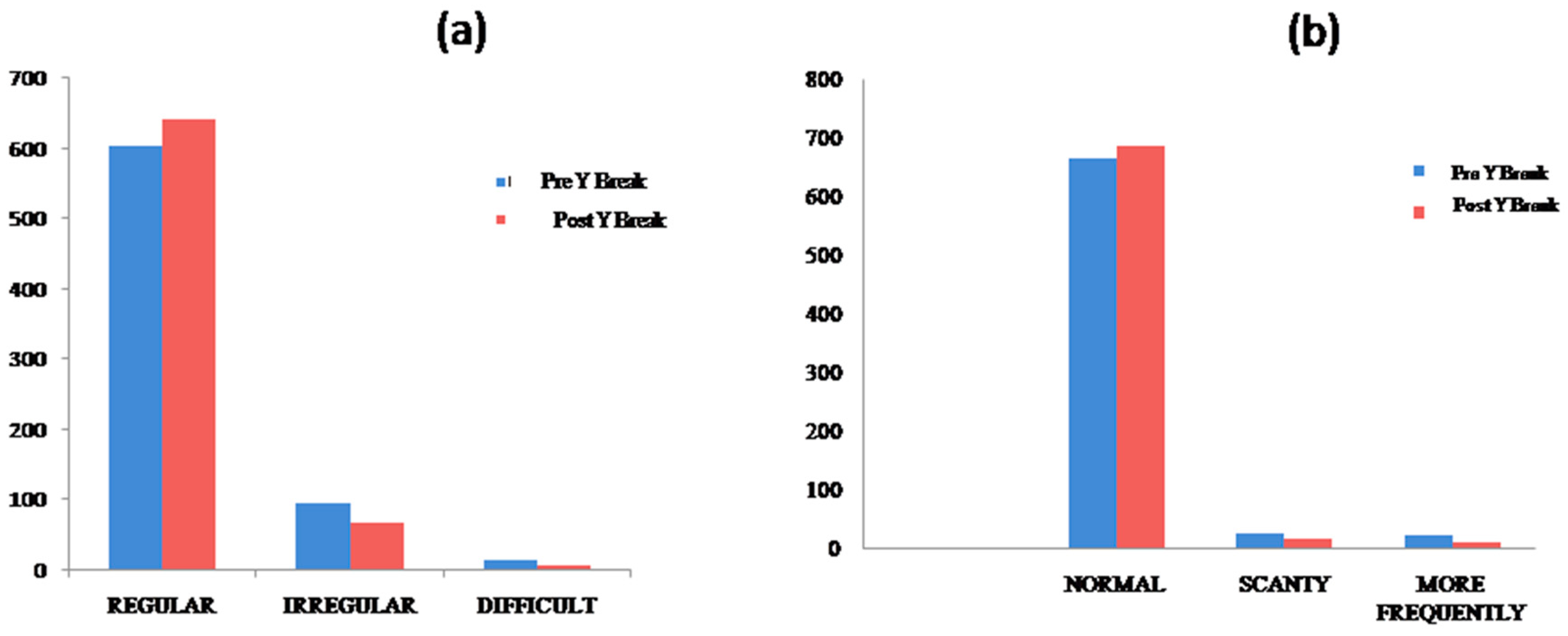
Table 1.
Five minutes Y Break Yoga protocol.
| S. No. | Technique/Practice | Duration |
|---|---|---|
| 1 | Urdhvahastottanasana and Tadasana | 1 minute |
| 2 | Skandhachalana and Uttanamandukasana | 1 minute |
| 3 | Ardhachakrasana and Padottanasana | 1 minute |
| 4 | Nadi Shodhana Pranayama | 1 minute |
| 5 | Bhramari Pranayama and Dhyana | 1 minute |
Table 4.
Overall Comparative Statistical Analysis of Personal History.
| Personal History | Parameters | Mean ± SD | p-value | |
|---|---|---|---|---|
| Pre (Baseline) | Post (15 days) | |||
| Appetite | 1.5±0.9 | 1.3±0.8 | 0.0057 | |
| Sleep | 1.5±0.8 | 1.4±0.8 | 0.0056 | |
| Thirst | 1.5±0.8 | 1.3±0.7 | 0.0002 | |
| Bowel | ||||
| Movements | 1.1±0.4 | 1.1±0.3 | 0.0001 | |
| Urination | 1.1±0.4 | 1.0±0.2 | 0.002 | |
Disclaimer/Publisher’s Note: The statements, opinions and data contained in all publications are solely those of the individual author(s) and contributor(s) and not of MDPI and/or the editor(s). MDPI and/or the editor(s) disclaim responsibility for any injury to people or property resulting from any ideas, methods, instructions or products referred to in the content. |
© 2023 by the authors. Licensee MDPI, Basel, Switzerland. This article is an open access article distributed under the terms and conditions of the Creative Commons Attribution (CC BY) license (http://creativecommons.org/licenses/by/4.0/).
Copyright: This open access article is published under a Creative Commons CC BY 4.0 license, which permit the free download, distribution, and reuse, provided that the author and preprint are cited in any reuse.


