

Submitted:
03 September 2023
Posted:
05 September 2023
You are already at the latest version
Abstract
The objective of this research is to analyze metal elements like Na (sodium), Mg (magnesium), Al (aluminum), Si (silicon), Pb (lead), K (potassium), Ca (calcium), and Fe (iron) found in dust particles within two distinct areas from which the sampling has been done. First sampling was taken from the road verge of a highly trafficked road section, while the second sampling was done in a residential garden area 90 m away from the road. Several metal elements have been detected, with a high difference for Silicon Si, which present higher concentrations in the dust sampled from the road verge area. Pb has only been detected in the samples taken from the road verge, which could be explained by residual remnants from old lead gasoline, and wheel weights. Additionally, airborne particulate matter (PM) concentrations have been measured, during the same episode, in comparison between the road verge and the garden area, presenting a substantial difference in the concentration levels, deducing that dense vegetation is protecting and blocking a majority of airborne PM. A literature highlight of health effects of different metal elements and PM concentrations is presented.
Keywords:
Metals in PM
; Dynamic Light Scattering measurement
; microscopic analysis
; PM concentrations
; inhalable-
; thoracic-
; and alveolar-sized particles
1. Introduction
The objective of this article is to analyze particulate matter (PM) in an area with frequent high traffic from two perspectives: dust deposits and airborne particles. The primary focus is on metal concentrations within dust samples, while the secondary analysis aims to explain the origins of these metals by visualizing PM concentrations generated primarily by vehicular traffic. The samples have been taken from the road verge and in a high vegetation area, displaced from the road section by 90m, in a residential garden.
Urban PM is significantly influenced by road traffic, which is identified as a substantial contributor. The particulates emitted by vehicles primarily originate from exhaust emissions, although they can also stem from non-exhaust sources unrelated to the exhaust process [1,2]. The well-established repercussions of air pollution on human health are widely recognized. Moreover, the Volkswagen emissions scandal that came to light recently underscored the imperative for implementing rigorous engineering measures to attain enhanced air quality [2,3]. The installation of catalytic converters on gasoline-powered vehicles has resulted in significant decreases in urban concentrations of carbon monoxide and benzene globally. However, even though their proven detrimental impact on human health is well-documented, effective control measures are still required for particulate matter and nitrogen dioxide [4,5].
The initial particles, denoted as exhaust particles, originate from the combustion of fuel. Conversely, the final particles, categorized as non-emission particles, result from various sources, including the wear of brake pads and disks, the abrasion of tires against the road surface, and the re-suspension of dust particles from the road [6].
Dust particles comprise natural substances that accumulate on road surfaces and can be lifted again due to wind and traffic movement. Despite the implementation of certain regulations and significant technological advancements in the automotive sector, which have successfully mitigated emissions from vehicle exhaust gases, these measures do not influence the emissions of particulate matter (PM).
While there is a prevailing agreement highlighting the role of vehicle exhaust emissions in generating fine particles [2,3], it’s important to note that non-exhaust emissions contribute to both fine and coarse particles within the PM10 category, with the latter even exhibiting prominence [3,4].
Hence, there has been a significant rise in the quantity of particulate matter (PM) emissions stemming from non-exhaust sources in recent years, which has given rise to a progressively alarming health concern [3,4]. Numerous health-related impacts can be attributed to inhalable PM, particularly due to their elevated metal content.
Continued contact with different-sized particulate matter (PM2.5 and PM10) has shown a consistent association with increased mortality rates stemming from non-accidental causes. Comprehensive studies have uncovered elevated mortality risks associated with long-term exposure to indicators of both vehicle exhaust emissions (like PM2.5 absorbance) and emissions from sources other than vehicles (particularly zinc and copper). Furthermore, components such as nickel, vanadium, and silicon, which are part of PM10, have also been linked to heightened mortality risks. [7]. Despite their low presence compared to other species, the evidence discovered so far suggests that metals have higher toxicity compared to other chemical compounds [8,9].
The accumulation of wear particles depends on their size, and these tiny fragments can either settle near the road, get partially drawn towards passing vehicles, or get airborne again due to wind. Estimates indicate that approximately 40-50% of these particles come from brake wear, while an additional 0.1-10% stem from tire wear. [10]. Particle size distribution of residues from light vehicle brake wear is reported with increased attention in order to avoid sampling biases [11].
Examination using energy dispersive X-ray (EDX) analysis revealed the presence of wear debris particles characterized by significant levels of carbon, silicon, aluminum, iron, oxygen, molybdenum, and sulfur. It was also observed that the presence or absence of uninterrupted sliding contact had an impact on the size distribution of these wear particles. In cases of intermittent motion, such as repeated braking, smaller wear particles tended to be generated [12,13]. Upon engaging the brakes, the interaction between the pads and the rotating components invariably leads to the liberation of wear particles. The nature of these released wear fragments can be influenced by various factors. While some of the dislodged wear debris might exhibit an affinity towards the vehicle itself under specific circumstances, a substantial portion is released into the atmosphere as airborne particles [14,15].
Nanoparticles present in the atmosphere, particularly those with diameters below 300 nm, hold significant implications for both air quality control efforts and the scientific community, as they are associated with detrimental impacts on public health. Notably, a specific category of nanoparticles found in the emissions of diesel fuel engines, which a considerable portion of the population encounters on a daily basis, has been newly designated as a human carcinogen [16].
Based on the accumulated knowledge, an accurate assessment of the total particulate matter (PM) emissions arising from both internal combustion engine vehicles (ICEVs) and electric vehicles (EVs) has yet to be achieved through empirical analysis. Therefore, in the research [17], a comprehensive evaluation was undertaken involving gasoline-powered ICEV, a diesel-powered ICEV, and an EV, all sharing identical body structures.
Emission factors (EFs) for exhaust PM were derived from three different vehicles and were classified into primary and secondary PM. Secondary PM refers to particles generated in the atmosphere through a sequence of physical and chemical reactions involving gases such as nitrogen oxides (NOx), sulphur dioxide (SO2), and ammonia (NH3), often catalysed by sunlight [18,19]. EFs were computed both directly as PM and through key secondary PM gravimetric methods. These methods utilized conversion factors to translate precursor gases like NOx, SO2, and NH3 into PM.
On the non-exhaust emissions front, resulting EFs were established and quantified through experimental methods, categorized based on their origins, such as brake wear, tire wear, road wear, or the resuspension of road dust. By amalgamating these diverse experimental findings, a comparison of PM emissions among the three vehicle types was made possible.
Numerous research investigations have consistently indicated that, up to the present time, particles originating from tire wear, coupled with those emerging from road surfaces, constitute some of the principal origins or contributors to the prevalence of microplastic pollution within the environment. Emissions at a localized level, arising from the dispersion of tire wear particles through transportation, accentuate a pressing and noteworthy imperative to gather comprehensive data pertaining to the quantities and movement patterns of these particulates [20,21].
Microplastics encompass a spectrum of particle sizes ranging from 1 to 1,000 μm, with particular emphasis and consideration placed on particles within the range of 1 to 5 mm. In a theoretical context, the microplastics category comprises solely two divisions: thermoplastic and thermoset. However, within the scope of this study, elastomers are also taken into consideration, since polymer particles can indeed form using these materials as well [22].
The release of microplastics into the environment has emerged as a subject of paramount significance, sparking discussions not only within the scientific realm but also resonating among the general populace. Over the past few decades, a multitude of researchers have directed their efforts toward computing and approximating the discharge of microplastic particles into the environment. These endeavors involve thorough analyses of potential repercussions for ecosystems, organisms, and human health [23,24]. Tire particles (TP) stand as a significant contributor to the prevalence of microplastic pollution on land, and their chemical makeup carries the potential to pose a risk to terrestrial ecosystems [25]. Among the array of microplastics, tire microplastics (TMP) hold a distinctive position due to their abundant presence, primarily sourced from tires. The comprehension of TMPs has largely centred on tire wear particles (TWP), while the understanding of TMPs originating from alternative potential sources like recycled tire crumb (RTC) and tire repair polished debris (TRD) remains relatively limited. Instances of elevated levels of TMP, along with their accompanying additives, have been documented within the environment [26]. Contemporary viewpoints underscore the necessity for investigations into transportation mechanisms that interlink the production of microplastics (MP) with their eventual entry into the marine environment. Plastic materials, existing as micro- (0.001–5 mm) and nano-sized (0.001 mm) entities, are of considerable importance in both aquatic and terrestrial ecosystems, carrying potential implications for biodiversity and human well-being. Among these materials, wear particles originating from tires and road surfaces (TRWP) hold particular significance. TRWP, a byproduct of tire-road friction, consists of polymer-laden treads adorned with encrustations of pavement minerals and binders. These particles have been observed to disseminate within freshwater systems and are acknowledged by certain experts as a noteworthy contributor of environmental particulate matter [27,28]. Recent research has unveiled that microplastics (MP) have been detected across a multitude of freshwater ecosystems spanning Europe, North America, Africa, and Asia. These observations span not only densely populated regions but also extend to remote and less inhabited areas. Unlike the comprehensive documentation of MP in freshwater, their presence in soil remains less extensively studied. This can be attributed to the ongoing development of precise techniques for gauging soil MP concentrations. Nonetheless, initial approximations indicate the potential significance of soil microplastic content, suggesting that it could be substantial [29].
Release patterns have been developed at many geographic scales, e.g., on a regional basis as for Switzerland, or on a global scale where the amounts of plastic reaching the oceans have been estimated [30].
Urban road dust and surface soils can serve as carriers of heavy metals that possess the capacity to infiltrate the human body through diverse pathways like ingestion, direct inhalation, and skin contact. Such exposure to heavy metals has been linked to a spectrum of adverse health consequences. Notably, the issue of lead contamination stands out, with a recent global assessment attributing over 674,000 deaths to lead exposure in 2010 alone.
Excessive interaction with heavy metals can precipitate a range of detrimental health effects, encompassing impacts on the nervous, skeletal, circulatory, enzymatic, endocrine, and immune systems. A case in point, the inhalation of soil dust enriched with cadmium (Cd) is associated with chronic health outcomes including lung cancer, chronic obstructive pulmonary disease, and compromised lung function [31].
Human exposure to particulate matter emitted by road vehicles includes complex mixtures of metals from tires, brakes, wear parts and resuspended road dust [32].
2. Materials and methods
Soil samples were obtained through measurement sampling in an area characterized by substantial vehicular activity [33], and within a region densely covered with vegetation from a residential garden. This investigation was conducted near the city of Timisoara, Romania, on the DN691 road, in a residential peri-urban town called Dumbravita, which serves as a crucial connector linking the A1 highway to Timisoara. This road experiences heavy traffic flows due to a combination of factors. Its location on the outskirts of Timisoara, a prominent Romanian city, makes it a critical route. Additionally, it serves as the primary access road to highway A1 and is in close proximity to various production facilities and logistics hubs.
The samples were taken on 29 July 2023 from a traffic lane (3.50 meters in width) with only one direction of travel on each of the two sides. Sampling was done with the help of a laboratory spoon and the amount of PM was collected in sealed bags. Sampling from the road verge was done meter by meter from the edge of the road to its exterior, a total of 7 meters from the street, and 2 sets of samples were taken at each meter. The section and the sampling locations are presented in Figure 1. Subsequently, sampling from the garden area was done in the same manner, each sample taken meter by meter from the garden.
The soil samples have been analyzed with an electron microscope which uses energy-dispersive X-Ray (EDS) technology.
Additionally, measurements have been taken using a spectrometer which uses light scattering to determine the concentration of particulate matter allowing a measurement interval of one second. The manufacturer of the equipment is GRIMM Aerosol Technik, part of the Durag Group with its headquarters in Hamburg, Germany.
Assessing the variations in the intensity of light scattered from a suspension or solution provides a means to ascertain particle size. This technique is commonly referred to as dynamic light scattering (DLS), with its primary utility centered on the analysis of nanoparticles [34].
The spectrometer was placed in two positions, one next to the road verge and the other, 90 meters away in a garden area of a residential home. The exact position is referred to in Figure 2. The duration of each measurement is approximately 2.5h taken during the middle of the day, 13:00-18:00 interval.
By placing the test equipment and measuring in two different areas should normally indicate a difference in the concentration levels of PM due to the second measurement being performed in an area with dense vegetation, which should block a certain number of particles reaching this area.
3. Results and discussions
The results split in two sub-sections, one representing the chemical concentration analysis of dust samples, while the other is showing the airborne concentration levels of PM.
3.1. Determination of metal concentrations from dust samples
Metals have been found in the dust samples with a different concentration level between the two areas of sampling.
Analysis on the dust samples, taken from the road verge, has detected Na (sodium), Mg (magnesium), Al (aluminum), Si (silicon), Pb (lead), K (potassium), Ca (calcium), and Fe (iron) chemical elements in different concentrations as shown in Figure 3.
Sample no. 1 from the road verge is located immediately next to the pavement, while sample no. 7 is 7 meters away. The same sampling method was used in the garden area as well, with Sample no. 8 being closer to the main road and sample no. 14, located 7 meters further into the garden area.
Not all chemical elements are present in each sample, Pb detected only in one, and K present in six samples out of the total seven samples.
Out of the chemical elements present in different concentration across all samples, the highest concentration is of Si ranging from 6% to 13% composition (detailed in Figure 3), while the other metal elements present concentrations between 0% and 4%, as shown in Figure 4.
Figure 4.
Percentage of metals present in the analyzed dust samples from the road verge.
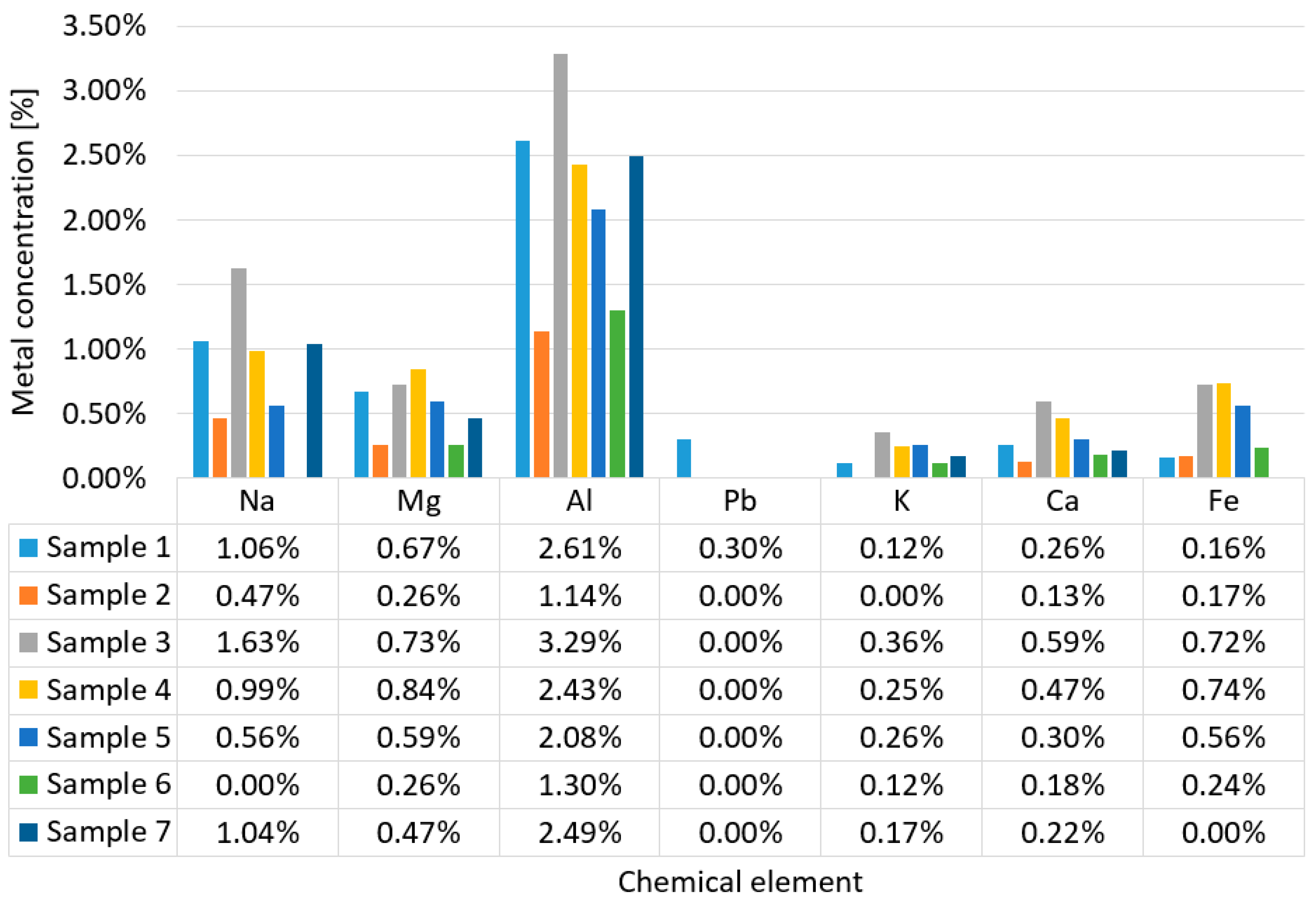
Looking to the dust sample taken from the garden area with dense vegetation, metal concentrations are varied, without any presence of Pb. The rest of metals have varied concentrations like shown in Figure 4, but with a reduced concentration.
Figure 4.
Percentage of metals present in the analyzed dust samples from the garden section.
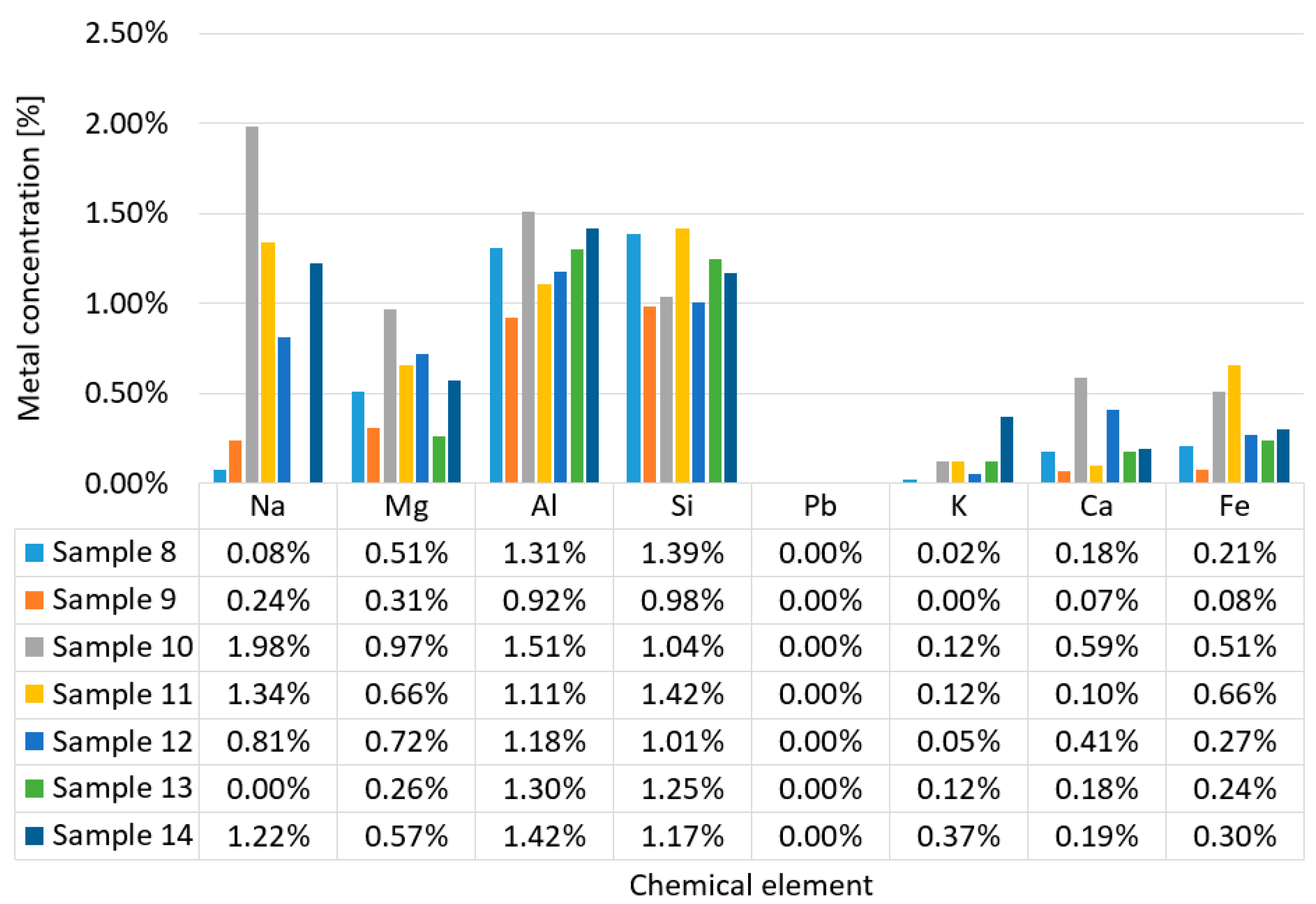
In one of the samples obtained from the vicinity of the road, lead (Pb) was detected, possibly attributable to residual soil deposits. A research study identified that, across all cities studied, the most significant contribution to potential ecological risk stemmed from lead (Pb) [35]. Pb may also poses a potential health risk, particularly to children. It’s imperative to continue efforts towards identifying the primary sources of Pb within urban areas and devising strategies to mitigate the potential adverse effects associated with this metal.
In Slovakia, historical records show that prior to the 1970s, each liter of gasoline contained roughly 0.6 grams of lead. This resulted in the emission of approximately 120,000 tons of toxic lead into the atmosphere from vehicle exhaust. However, with the introduction of unleaded petrol in 1985, lead content in vehicular emissions was reduced substantially to approximately 20,000 tons per year. The enduring presence of lead in these emissions can be predominantly attributed to unleaded gasoline, which still retains up to 0.005 grams of Pb [36]. Another lead contamination comes from the corrosion of Pb wheel balance weights. Its residence time in the environment is long [37]. Lead compounds have been incorporated into tire materials since 1839 when Charles Goodyear, in his pioneering work, heated a blend of natural rubber, sulfur, and white lead, giving birth to the world’s first heat-resistant rubber compound. The utilization of lead oxide persisted in tire vulcanization until relatively recently. Additionally, during their lifespan, tires can accumulate lead content from sources such as discarded wheel balance weights and lead oxide pigments employed in road striping. [38].
All metals present in the garden area samples are naturally found in soil, with an increased concentrations for Al and Si, due to usage as fertilizer compounds in the garden.
An explanation of why Si is found in higher concentrations in the road verge could be due to trucks and construction vehicles passing through the area. The residential area is growing and developing with new residential homes in the last period constantly; therefore, a lot of construction site are present. Silicon is usually found in dust particles around construction. Silicon-containing dust is brought by the tires of vehicles that were in areas with construction materials, such as cement. Cement dust can be easily transported and spread in different areas. The levels of silica exposure in occupational settings are comprehensively documented and globally estimated. Silica dust is responsible for causing debilitating conditions such as silicosis and lethal lung diseases. Consequently, numerous countries across the globe have established air quality standards tailored to occupational environments, which are centered on regulating the percentage of silica present in the ambient air. A multitude of operations, such as drilling, blasting, crushing, screening, transportation, pulverization, galvanizing, and various metalworking processes, generate significant dust emissions, including the presence of silica in the air [39].
Silica has been designated as a potent carcinogen by authoritative organizations such as the National Institute for Occupational Safety and Health [40], the International Agency for Research on Cancer [41], and the U.S. National Toxicology Program [42]. Among various groups, construction sites, building maintenance activities, and agricultural work are identified as having the greatest susceptibility to silica exposure. Studies have revealed that silica is present in cement dust, making individuals in these sectors particularly vulnerable. This dust exposure has been associated with a range of health concerns, including chronic lung diseases, morbidity, premature birth, endocrine disorders, and infertility. The severity of these effects is contingent on factors such as the duration of exposure, concentration levels, and the individual’s susceptibility to silica-related health risks [43].
3.2. Determination of PM concentrations using DLS spectrometer
Measurements have been taken in the same way comparing the road verge with the garden. The duration of each measurement was approximately 2h. Each measurement is taken at an interval of 6 sec, determining the concentration levels for PM1, PM2.5 and PM10.
The sizes of PM pose a threat to human health, being able to pass through the several safety mechanisms of the human respiratory system. PM10 particles are inhalable-sized, able to pass through the nose hair, PM2.5 are thoracic-sized, passing through the throat mucus and the lungs, and finally PM1 are alveolar-sized, with the ability of reaching and passing the alveoli into the blood stream.
Temperatures recorded on 29 July 2023, during that measurement episode, were at a maximum of 37 °C and an average of 28 °C. Wind speed were at an average of 10 km/h [44].
Road verge measurement have determined different concentrations of PM as shown in Table 1.
The logarithmic dispersion of PM concentrations on the entire measurement episode from the road verge is shown in Figure 5.
The garden section concentrations of PM are shown in Table 2.
The logarithmic dispersion of PM concentrations on the entire measurement episode in the garden area is shown in Figure 6.
Looking at the maximum concentration levels detected, it is evident that along the road verge, concentrations of PM are considerably higher than in the garden area with dense vegetation. The biggest difference could be recognized for PM10 which shows values of 889.8 µg/m3 for the road side, versus 52.3 µg/m3 for the garden.
Out of these differences, it can be deduced that a dense vegetation area is helpful to block quite a high amount of PM concentrations.
In accordance with Romanian legislation, the permissible threshold for PM10 concentration is established at 40 µg/m3 annually, accompanied by a daily threshold of 50 µg/m3. This daily limit must not be surpassed for a duration exceeding 35 days in any given year [45]. On the other hand, concerning PM2.5, the regulations outlined in European Union Directive 2008/50/EC dictate an annual average of 20 µg/m3 [46], a standard to which Romanian Law does not presently provide corresponding limitations. It’s worth noting that neither Romanian Law nor the directives within the European Union framework impose any specific restrictions on PM1.
4. Conclusions
This research concludes the presence of several metals taken from dust samples from the road verge and from a garden area with dense vegetation. Based on the results, a high concentration of Si can be recognized in the dust samples from the road verge, which is usually accounted for due to construction site activity. Pb is also found in one of the samples from road verge.
Measurements have been taken also using a DLS spectrometer to determine the concentrations of airborne PM, which resulted significant difference between the two-measurement position, the road verge, versus in the garden. Dense vegetation can block a high amount of airborne PM. The advantages of using DLS spectrometer measurement technique is the ability to capture, in a very small time frame (every 6 seconds), PM concentrations of different sizes, which pose a threat to human health (inhalable-, alveolar-, and thoracic-sized particles). The disadvantage of using DLS is the inability to physically store PM samples, therefore usage of complementary measurement methods and equipment are needed (i.e., electron microscopes).
Health effects of various metals elements found in PM have been detailed with specific literature references.
Nevertheless, in both measurement positions the limit for PM exceeded the law binding values given by EU and Romanian laws and norms.
Author Contributions
Conceptualization, D.M. Mustata; methodology, D.M. Mustata; software, R.M. Balogh; validation, D.M. Mustata; formal analysis, I. Ionel; investigation, R.M. Popa; resources, UPT LACIEDIN laboratories (www.mediu.ro); writing—original draft preparation, R.M. Popa; writing—review and editing, D.M. Mustata; All authors have read and agreed to the published version of the manuscript.”
Conflicts of Interest
The authors declare no conflict of interest. The funders had no role in the design of the study; in the collection, analyses, or interpretation of data; in the writing of the manuscript; or in the decision to publish the results.
References
- Thorpe A., Harrison R. M., Sources and proprieties of non-exhaust particulate matter from road traffic: a review – 2008 The Science of the total environment 08/2008, 400, 270-282. https://doi.org/10.1016/j.scitotenv.2208.06.007. [CrossRef]
- Harrison R. M., Beddows D., Efficacy of Recent Emissions Controls on Road Vehicles in Europe and Implications for Public Health, Scientific Reports 7, 12/2017, 1152. https://doi.org/10.1038/s41598-017-01135-2. [CrossRef]
- Harrison R. M., Pant P., Estimation of the contribution of road traffic emissions to particulate matter concentrations from field measurements: A review – 2013, Atmospheric Environment 2013, 77, 78-97, https://doi.org/10.1016/j.atmosenv.2013.04.028. [CrossRef]
- “OECD-iLibrary,” [Online]. Available: https://www.oecd.org/environment/non-exhaust-particulate-emissions-from-road-transport-4a4dc6ca-en.htm [Accesed 20.05.2023].
- Harrison R. M., Allan J. D., Carruthers D., Williams A., Heal M. R., Alastair C, Lewis, Marner B., Murells P., Non-Exhaust Vehicle Emissions of Particulate Matter and VOC froam Road Traffic: A review – 2021 Atmospheric Environment 2021, 262. https://doi.org/10.1016/j.atmosenv.2021.118592. [CrossRef]
- Celo V., Yassine M. Y.,Dabek E. – Insights into Elemental Composition and Sources of Fine and Coarse Particulate Matter in Dense Traffic Areas in Toronto and Vancouver, Canada 10/2021, 9(10), 264. https://doi.org/10.3390/toxics9100264. [CrossRef]
- Badaloni C., Cesaroni G., Cerza F., Davoli M., Brunekreef B., Forastiere F. - Effects of long-term exposure to particulate matter and metal components on mortality in the Rome longitudinal study – 07/2017 Environmental International, 109, 146-154. https://doi.org/10.1016/j.envint.2017.09.005. [CrossRef]
- Eeftens M., Hoek G., Gruzieva O., Moelter A., Agius R., Beelen R., Brunekreef B., Custovic A., Cyrys J., Fuertes E., – Elemental Composition of Particulate Matter and the Association with Lung Function – 07/2014 Epidemiology, 25, 648-657. https://doi.org/10.1097/EDE.0000000000000136. [CrossRef]
- Thomson E.M., Breznan D., Karthikeyan S., MacKinnon-Roy C., Charland J-P., Zlotorzynska E. D., Celo V., Kumarathasan P., Brook J.R., and Vincent R.- Cytotoxic and inflammatory potential of size-fractionated particulate matter collected repeatedly within a small urban area – Particle and fibre toxicology – 2015, 12:24. https://doi.org/10.1186/s12989-015-0099-z. [CrossRef]
- Garg B., Cadle S. H., Mulawa P. A., Groblicki P. - Brake Wear Particulate Matter Emissions - Environmental Science and Technology 2000, 34, 21, 4463–4469. https://doi.org/10.1021/es001108h. [CrossRef]
- Sanders P., Xu N., Dalka T., Maricq M. - Airborne brake wear debris: size distributions, composition, and a comparison of dynamometer and vehicle tests – Environmental science and technology – 2003, 37, 18, 4060–4069. https://doi.org/10.1021/es034145s. [CrossRef]
- Mosleh M., Blau P. J., Dumitrescu D.- Characteristics and morphology of wear particles from laboratory testing of disk brake materials – WEAR – 2004, 256, 1128-1134. https://doi.org/10.1016/j.wear.2003.07.007. [CrossRef]
- Rødland E. S., Lind O. C., Reid M. J., Heier L., Okoffo E., Rauert C., Thomas K., Meland S. - Occurrence of tire and road wear particles in urban and peri-urban snowbanks, and their potential environmental implications - Science of The Total Environment – 06/2022, 824. https://doi.org/10.1016/j.scitotenv.2022.153785. [CrossRef]
- Kukutschová J., Moravec P., Tomášek V., Matějka V., Smolík J., Schwarz J., Seidlerová J., Safářová K., Filip F.- On airborne nano/micro-sized wear particles released from low-metallic automotive brakes – Environmental Pollution – 2011, 159, 998-1006. https://doi.org/10.1016/j.envpol.2010.11.036. [CrossRef]
- Harrison R. M., Jones A. M., Gietl J., Yin J., Green D. - Estimation of the contributions of brake dust, tire wear, and resuspension to nonexhaust traffic particles derived from atmospheric measurements – Environmental Science and technology – 2012, 46(12), 6523-6529. https://doi.org/10.1021/es300894r. [CrossRef]
- Kumar P., Pirjola L., Ketzel M., Harrison R.M.- Nanoparticle emissions from 11 non-vehicle exhaust sources – A review – Atmospheric Environment – 2013, 67, 252-277, https://doi.org/10.1016/j.atmosenv.2012.11.011. [CrossRef]
- Woo S-H.,Jang H., Lee S-B., Lee S. - Comparison of total PM emissions emitted from electric and internal combustion engine vehicles: An experimental analysis – Science of The Total Environment, 2022, 842. https://doi.org/10.1016/j.scitotenv.2022.156961. [CrossRef]
- Liu T., Wang X., Deng W., Zhang Y. - Role of ammonia in forming secondary aerosols from gasoline vehicle exhaust – Science China-Chemistry – 05/2015, 58, 1377–1384. https://doi.org/10.1007/s11426-015-5414-x. [CrossRef]
- Wu D., Ding X., Li Q., Sun J., Huang C., Yao L., Wang X., Ye X., Chen Y., He H., Chen J-M. - Pollutants emitted from typical Chinese vessels: Potential contributions to ozone and secondary organic aerosols - Journal of Cleaner Production – 2019, 238. https://doi.org/10.1016/j.jclepro.2019.117862. [CrossRef]
- Boucher J., Billard G., Simeone E. and Sousa J. - The marine plastic footprint - IUCN, Global Marine and Polar Program , 2020.
- Ulrike B., Stein U., Hannes S. - Analysis of Microplastics - Sampling, preparation and detection methods - Status Report within the framework program Plastics in the Environment, 2021.
- Baensch-Baltruschat B., Kocher B., Kochleus C., Stock F., Reifferscheid G. - Tyre and road wear particles - A calculation of generation, transport and release to water and soil with special regard to German roads - The Science of The Total Environment, 2021, 752. https://doi.org/10.1016/j.scitotenv.2020.141939. [CrossRef]
- Baensch-Baltruschat B., Kocher B., Kochleus C., Stock F., Reifferscheid G - Tyre and road wear particles (TRWP) - A review of generation, properties, emissions, human health risk, ecotoxicity, and fate in the environment - The Science of The Total Environment, 2020, 733. https://doi.org/10.1016/j.scitotenv.2020.137823. [CrossRef]
- Hillenbrand T., Toussaint D., Böhm E. - Discharges of copper, zinc and lead to water and soil -analysis of the emission pathways and possible emission reduction measures - ENVIRONMENTAL RESEARCH OF THE FEDERAL MINISTRY OF THE ENVIRONMENT, NATURE CONSERVATION AND NUCLEAR SAFETY, 2018, 202 242 20/02.
- Leifheit E. F., Kissener H. L., Faltin E., Ryo M., Rillig M. C. - Tire abrasion particles negatively affect plant growth even at low concentrations and alter soil biogeochemical cycling - Soil Ecology Letters, 2022, 4, 409-415. https://doi.org/10.1007/s42832-021-0114-2. [CrossRef]
- Luo Z., Zhou X., Su Y., Wang H., Yu R., Zhou S., Xu E. G., Xing B. - Environmental occurrence, fate, impact, and potential solution of tire microplastics: Similarities and differences with tire wear particles - The Science of The Total Environment, 2021, 795. https://doi.org/10.1016/j.scitotenv.2021.148902. [CrossRef]
- Unice K. M., Weeber M. P., Abramson M. M., Reid R. C. D., van Gils J. A. G., Markus A. A., Vethaak A. D., Panko J. M. - Characterizing export of land-based microplastics to the estuary - Part I: Application of integrated geospatial microplastic transport models to assess tire and road wear particles in the Seine watershed - The Science of The Total Environment, 2019, 646, 1639-1649. https://doi.org/10.1016/j.scitotenv.2018.07.368. [CrossRef]
- Unice, K. M.; Weeber, M. P.; Abramson, M. M.; Reid, R. C.D.; van Gils, J. A.G.; Markus,A. A.; Vethaak, A. D.; Panko, J. M. - Characterizing export of land-based microplastics to the estuary - Part II Sensitivity analysis of an integrated geospatial microplastic transport modeling assessment of tire and road wear particles - The Science of The Total Environment, 2019, 646, 1650-1659. https://doi.org/10.1016/j.scitotenv.2018.08.301. [CrossRef]
- Kawecki D. and Nowack B. - Polymer-Specific Modeling of the Environmental Emissions of Seven Commodity Plastics As Macro- and Microplastics – Environmental Science & Technology, 2019, 53, 9664-9676, https://doi.org/10.1021/acs.est.9b02900. [CrossRef]
- Lebreton L., van der Zwet J., Damsteeg J., Slat B., Andrady A., Reisser J. - River plastic emissions to the world’s oceans – Nature communications, 2017, 8, 15611. https://doi.org/10.1038/ncomms15611. [CrossRef]
- Denny M., Baskaran M., Burdick S., Tummala C., Dittrich T. - Investigation of pollutant metals in road dust in a post-industrial city: Case study from Detroit, Michigan – Environmental Scientific, 2022, 10. https://doi.org/10.3389/fenvs.2022.974237. [CrossRef]
- Apeagyei E., Bank M., Spengler J. - Distribution of heavy metals in road dust along an urban-rural gradient in Massachusetts - Atmospheric Environment, 2011, 45, 2310-2323, https://doi.org/10.1016/j.atmosenv.2010.11.015. [CrossRef]
- Mustata D. M., Popa R. M., Ionel I., Dughir C., Bisorca D. - A study on particulate matter from an area with high traffic intensity – Applied Sciences, 13(15), 8824 https://doi.org/10.3390/app13158824. [CrossRef]
- Horiba. Available online: https://www.horiba.com/gbr/scientific/technologies/dynamic-light-scattering-dls-particle-size-distribution-analysis/dynamic-light-scattering-dls-particle-size-distribution-analysis/#:~:text=Particle%20size%20can%20be%20determined,elastic%20light%20scattering%20(QELS) (accessed on 30 August 2023).
- Aguilera A., Cortes J. L., Delgado C., Aguilar Y., Aguilar D., Cejudo R., Quintana P., Goguitchaichvili A., Bautista F. - Heavy Metal Contamination (Cu, Pb, Zn, Fe, and Mn) in Urban Dust and its Possible Ecological and Human Health Risk in Mexican Cities - Sec. Toxicology, Pollution and the Environment, 14.03.2022, 10, https://doi.org/10.3389/fenvs.2022.854460. [CrossRef]
- 362/2010 Coll Decree of the Ministry of Agriculture, Environment and Regional Development of the Slovak Republic, Which Lays Down Requirements for Fuel Quality and Keeping Operational Records on Fuels. [(accessed on 16 August 2023)]. Available online: https://www.slov-lex.sk/pravne-predpisy/SK/ZZ/2010/362/vyhlasene_znenie.html.
- Shi G., Chen Z., Xu S., Zhang J., Wang L., Bi C., Teng J. - Potentially toxic metal contamination of urban soils and roadside dust in Shanghai, China. Environ. Pollution. 2008; 156:251–260. https://doi.org/10.1016/j.envpol.2008.02.027. [CrossRef]
- American Chemical Society. “U.S. Synthetic Rubber Program - National Historic Chemical Landmark,” accessed on 16 August 2023. https://www.acs.org/content/acs/en/education/whatischemistry/landmarks/syntheticrubber.html.
- Shailendra K., Ranjeet K., Krishnakant K., Siddarth S. - Concentration, sources and health efects of silica in ambient respirable dust of Jharia Coalfelds Region, India – Environmental Sciences Europe, 2022, 34:68, https://doi.org/10.1186/s12302-022-00651-x. [CrossRef]
- NIOSH, National Institute of Occupational Safety and Health (1994) Manual of analytical methods; method 7602, silica crystalline by IR. 4th (ed) Atlanta: Centers for Disease Control and Prevention.
- Steenland K, Mannetje A, Bofetta P, Stayner L, International Agency for Research on Cancer et al (2001) Pooled exposure response analyses and risk assessment for lung cancer in 10 cohorts of silica-exposed workers: an IARC multicentre study. Cancer Causes Control 12:773–784, https://doi.org/10.1023/a:1012214102061. [CrossRef]
- Background document for silica, crystalline (respirable size) (1998) Report on carcinogens. U.S. Department of Health and Human Services, Public Health Services, National Toxicology Program Research Triangle Park, North Carolina 27709, USA. https://ntp.niehs.nih.gov/ntp/newhomeroc/other_background/silica_no_app_508.pdf. Accessed 17 August 2023.
- Adeyanju E., Okeke C. A. - Exposure effect to cement dust pollution: a mini review, Springer Nature Switzerland AG 2019, 1:1572 | https://doi.org/10.1007/s42452-019-1583-0. [CrossRef]
- Meteo blue. Available online: https://www.meteoblue.com/ro/vreme/archive/export/dumbr%c4%83vi%c8%9ba_rom%c3%a2nia_678688?fcstlength=1m&year=2023&month=7 (accessed on 30 August 2023).
- Romanian Law no. 104 from 15 June 2011 in Relation to Air Quality (Original in Romanian: LEGE nr. 104 Din 15 Iunie 2011 Privind Calitatea Aerului Înconjurător) Parliament of Romania. Available online: http://legislatie.just.ro/Public/DetaliiDocument/129642 (accessed on 30 August 2023).
- European Union Directive Directive 2008/50/EC of the European Parliament and of the Council of 21 May 2008 on Ambient Air Quality and Cleaner Air for EUROPE.
Figure 1.
View of the sampling locations for dust particles from the road verge.
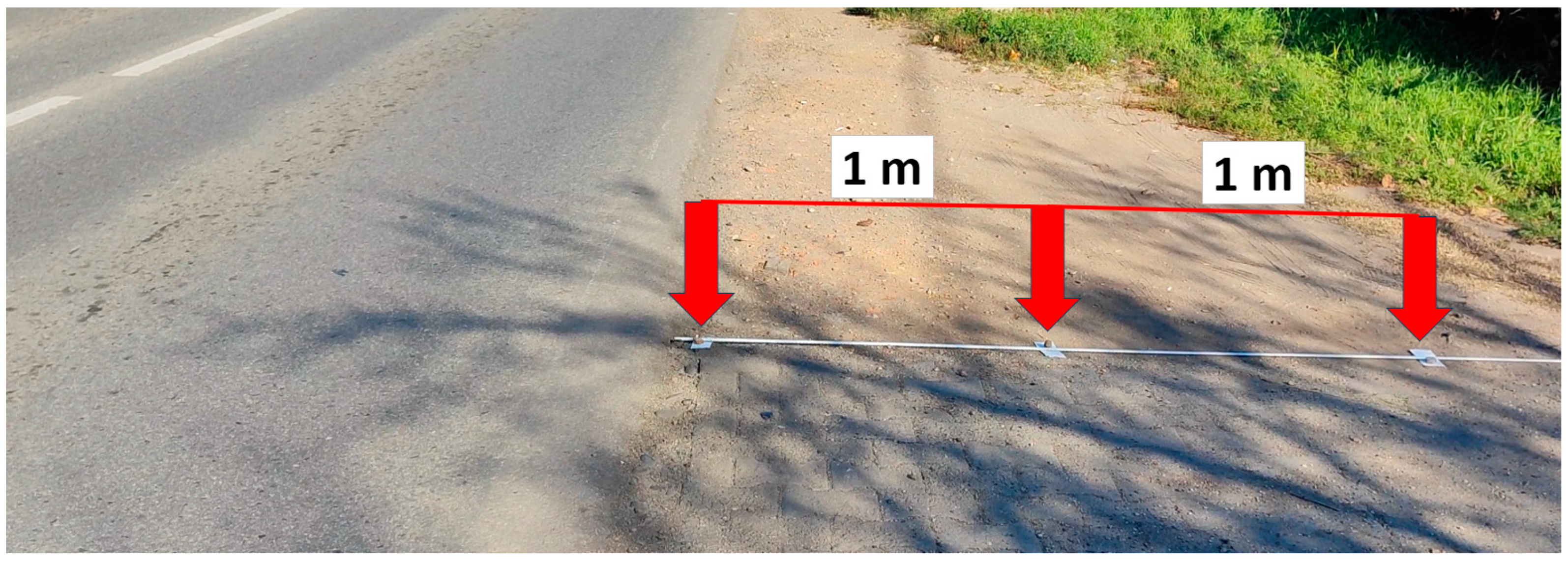
Figure 2.
Placement of the spectrometer for sampling within the two measurement episodes.
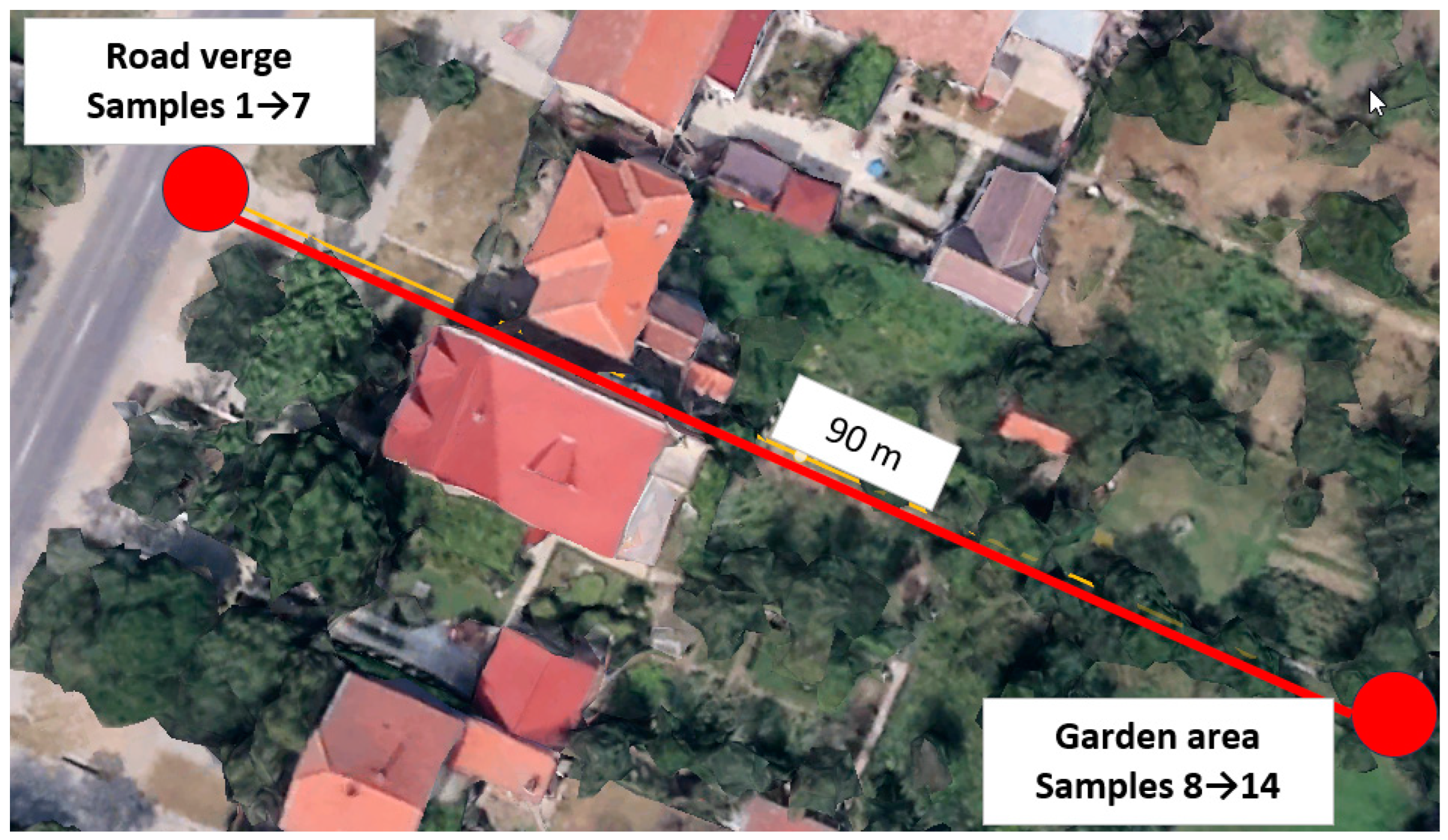
Figure 3.
Percentage of Si found in the road verge samples.
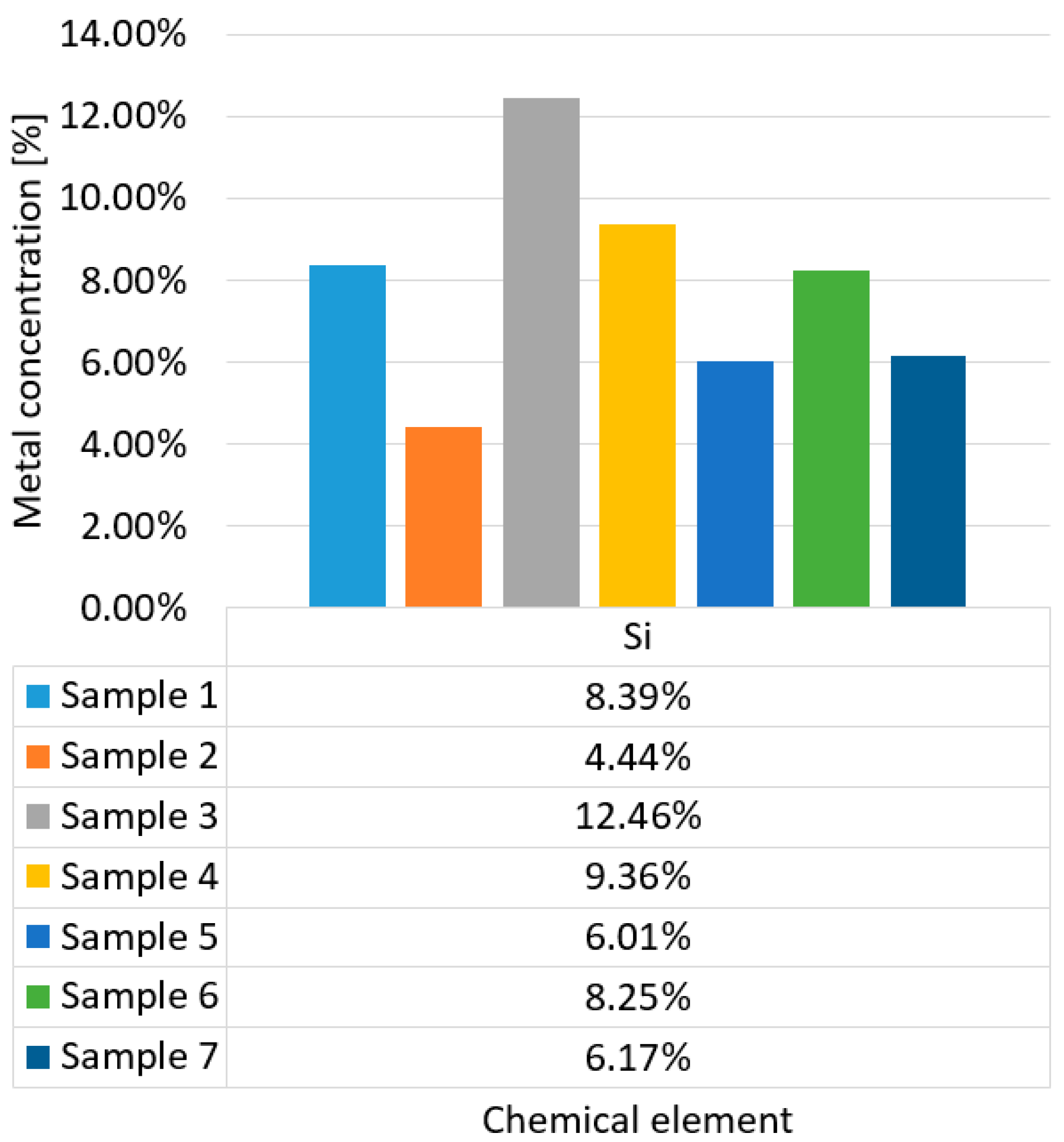
Figure 5.
Logarithmic dispersion of PM concentrations taken from the road verge.
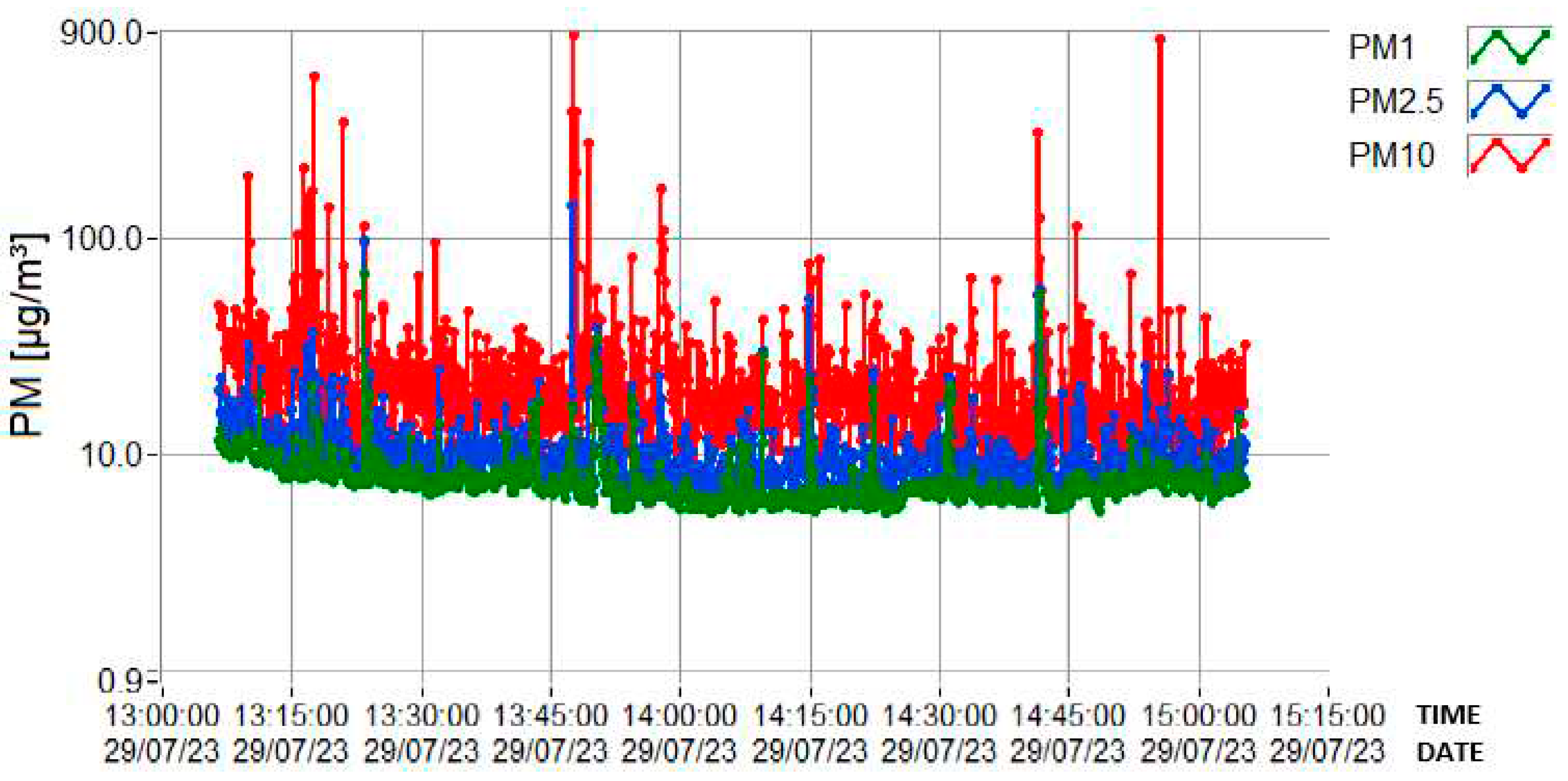
Figure 6.
Logarithmic dispersion of PM concentrations taken from the garden.
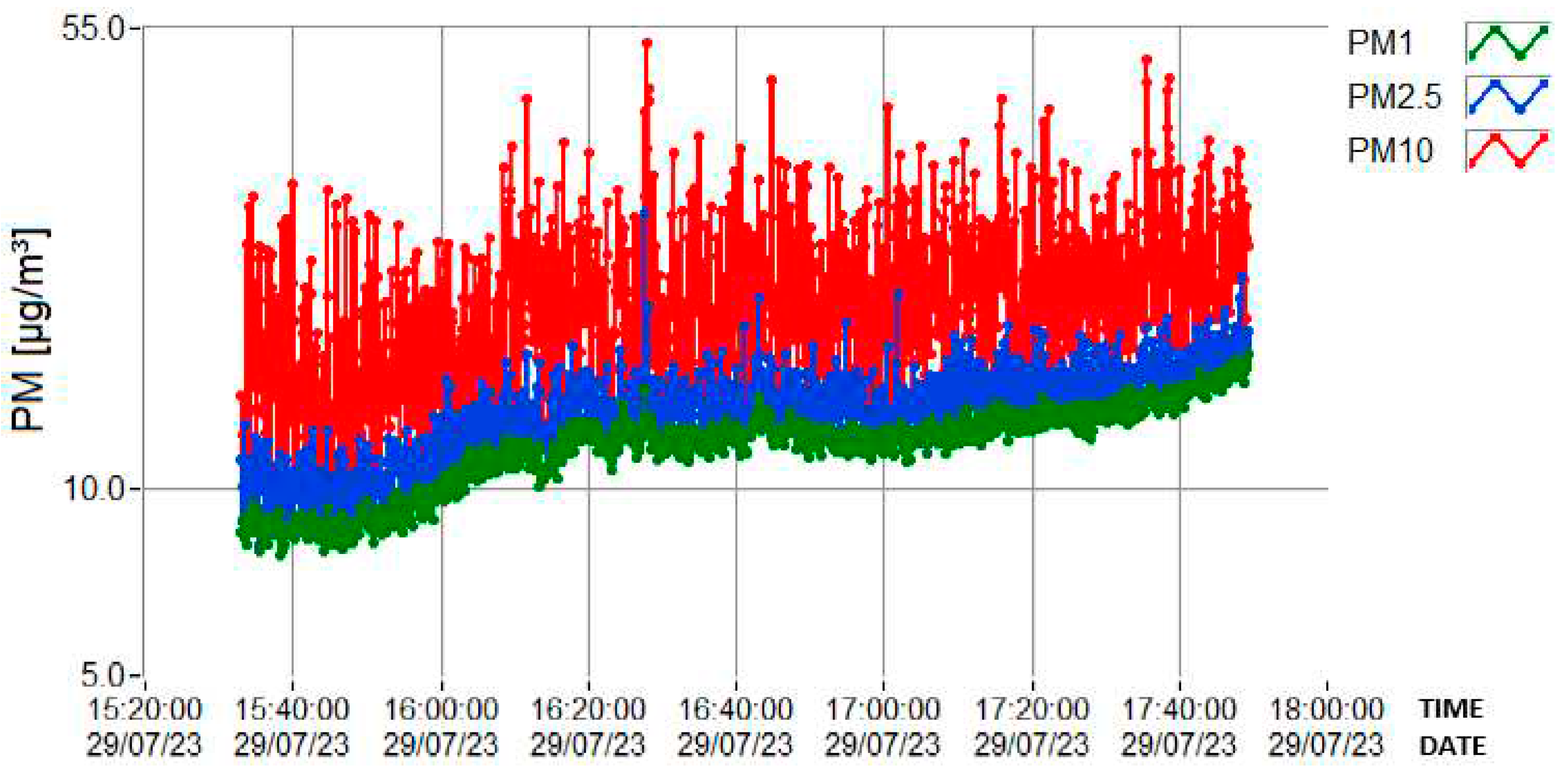

Table 1.
Values of PM1, PM2.5, and PM10 concentrations measured using the DLS spectrometer taken from the road verge.
Table 1.
Values of PM1, PM2.5, and PM10 concentrations measured using the DLS spectrometer taken from the road verge.
| Variable | PM1 (µg/m3) | PM2.5 (µg/m3) | PM10 (µg/m3) |
|---|---|---|---|
| Minimum | 5.4 | 6.1 | 6.1 |
| Maximum | 68.6 | 143 | 889.8 |
| Mean | 7.9 | 10.7 | 27.1 |
Table 2.
Values of PM1, PM2.5, and PM10 concentrations measured using the DLS spectrometer taken from the garden.
Table 2.
Values of PM1, PM2.5, and PM10 concentrations measured using the DLS spectrometer taken from the garden.
| Variable | PM1 (µg/m3) | PM2.5 (µg/m3) | PM10 (µg/m3) |
|---|---|---|---|
| Minimum | 7.8 | 8.1 | 8.4 |
| Maximum | 16.4 | 27.7 | 52.3 |
| Mean | 11.7 | 13.3 | 20.1 |
Disclaimer/Publisher’s Note: The statements, opinions and data contained in all publications are solely those of the individual author(s) and contributor(s) and not of MDPI and/or the editor(s). MDPI and/or the editor(s) disclaim responsibility for any injury to people or property resulting from any ideas, methods, instructions or products referred to in the content. |
© 2023 by the authors. Licensee MDPI, Basel, Switzerland. This article is an open access article distributed under the terms and conditions of the Creative Commons Attribution (CC BY) license (http://creativecommons.org/licenses/by/4.0/).
Copyright: This open access article is published under a Creative Commons CC BY 4.0 license, which permit the free download, distribution, and reuse, provided that the author and preprint are cited in any reuse.


