
Submitted:
29 August 2023
Posted:
29 August 2023
You are already at the latest version
Abstract
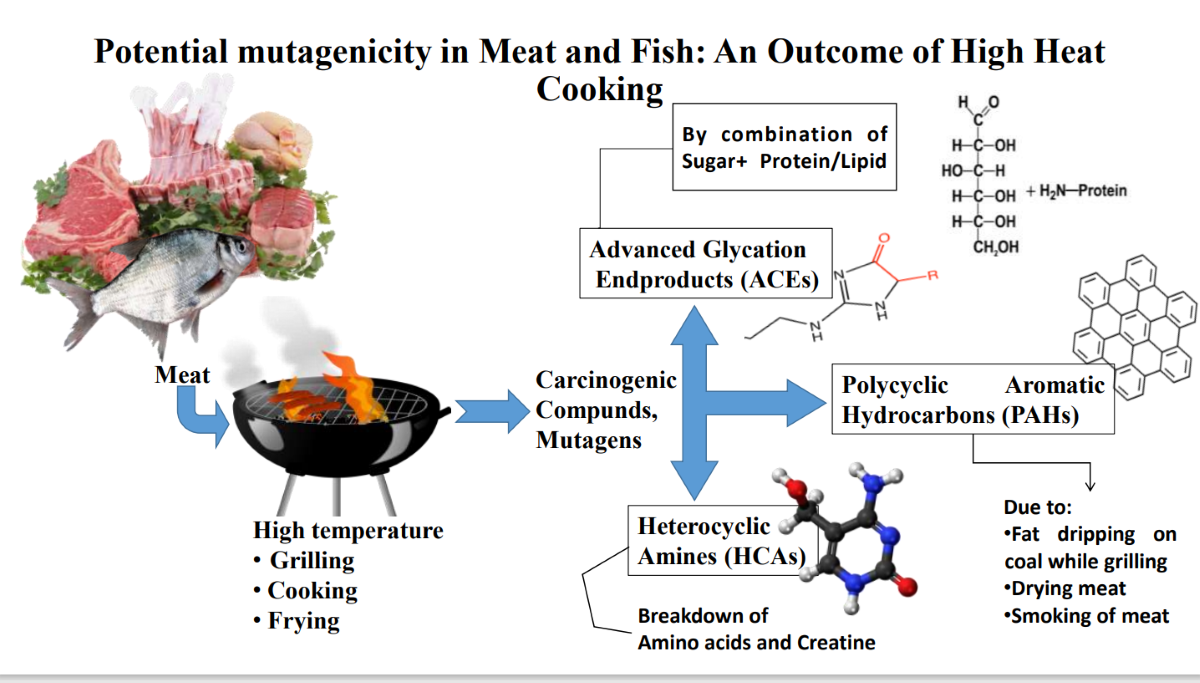
Being a great source of protein, B-vitamins and minerals, meat and fish are staple foods in many cultures. However, cooking at high temperatures can produce chemicals associated with an increased risk of developing cancer. This review investigates the possible carcinogenic activity of chemicals formed during the cooking of meat and fish including heterocyclic amines (HCAs), polycyclic aromatic hydrocarbons (PAHs), and advanced glycation end products (AGEs). High-temperature cooking methods for meat, including grilling or frying, result in the formation of HCAs. Meat that has been smoked, grilled, or cooked over an open flame produces PAHs whereas, dry heat methods including roasting, grilling, and frying results in formation of AGEs. In vitro studies have shown that these compounds can damage DNA, cause mutations, and promote the growth of cancer cells. Research shows that thoroughly cooked meat increases the risk of cancer, particularly colorectal, pancreatic, and prostate cancer. Alternative cooking techniques, marinades, and incorporating fruits and vegetables can help to mitigate this risk. For determining the efficacy of these measures, additional studies are required. For the purpose of lowering the potential carcinogenic activity of chemicals formed during the cooking of meat and fish, mitigation techniques must be understood and put into practice. Cancer can be avoided by informing people about the dangers of eating meat and fish that have been cooked at high temperatures and by encouraging better diets and cooking styles. In order to lessen the possible health concerns related to the eating of meat and fish, further studies are required.
Keywords:
meat
; fish
; carcinogens
; mitigation
; epidemiology
1. Introduction
Meat and fish serve major protein and nutritional sources in the human diet. Grilling, frying, and roasting, on the other hand, might create potentially carcinogenic substances such as heterocyclic amines (HCAs), polycyclic aromatic hydrocarbons (PAHs), and advanced glycation end products (AGEs) [1]. AGEs are a diverse category of chemicals [2] which occur spontaneously or under hyperglycemia and oxidative stress, are linked to chronic diseases like diabetes, cardiovascular disease, and Alzheimer’s disease [3].
The chemical structures of AGEs are complex and can vary depending on the reactants involved. For example, the interaction between glucose and lysine produces N(epsilon)-carboxymethyllysine (CML) [4]. It has a carboxymethyl group linked to the epsilon amino group of lysine. Pentosidine is another example of an AGE, which is formed from the reaction between glucose and arginine [5]. Its structure includes a cross-linking between two lysine residues. Methylglyoxal-derived AGEs are also common and are formed from a reactive intermediate called methylglyoxal, which can react with a variety of biomolecules, including proteins and DNA [6]. A variety of methods, including mass spectrometry and nuclear magnetic resonance spectroscopy, can be used to investigate the structures of AGEs [7]. By understanding the chemical structures of AGEs, researchers can better understand their biological effects and develop strategies for preventing or mitigating their formation [8]. This review analyzes HCAs, PAHs, and AGEs in meat and fish, focusing on their formation, properties, and sources. It also suggests potential mitigation strategies to reduce their carcinogenic activity. These strategies may include modifying cooking methods, such as reducing cooking time or temperature, marinating meat in antioxidant-rich substances, and incorporating herbs and spices known to have anti-glycation properties [9,10]. This review also explores the benefits of consuming antioxidant-rich foods like fruits, vegetables, and whole grains to reduce health risks from meat and fish consumption. It provides a comprehensive overview of these risks and potential mitigation strategies, aiming to inform public health policies and dietary recommendations for healthy, safe food consumption.
Carcinogens and their effects on human health
Carcinogens are substances or agents that can cause cancer in living tissues, found in natural or synthetic sources like tobacco smoke, air pollutants, and certain foods [11]. Carcinogens damage DNA and disrupt cellular processes, causing uncontrolled cell growth and division, leading to tumor formation while, their health effects vary based on exposure, genetics, and lifestyle [12]. The types of cancer that can be caused by carcinogens also vary, with some agents being more strongly associated with certain types of cancer than others [13]. Carcinogens cause immediate and long-term health effects, increasing cancer risk and chronic health conditions like heart disease, lung disease, and neurological disorders [14]. Carcinogens cause environmental and food contamination, posing long-lasting public health concerns due to their indirect impact [15]. Toxic compounds known as carcinogens can result in cancer even after brief exposure [16]. Tobacco smoke, containing carcinogens, is the leading cause of lung cancer and other types, and can indirectly impact human health through environmental contamination [17]. Exposure to PCBs, synthetic chemicals banned in the 1970s, can occur from contaminated fish consumption, affecting electrical equipment and industrial applications [18]. Along with other health issues including immune system malfunction and developmental delays, PCBs have been linked to an elevated risk of cancer. It is essential to remember that not all carcinogens are created by humans or are artificial [19]. Many naturally occurring substances, such as ultraviolet radiation from the sun and certain chemicals found in plants in addition to some lifestyle choices, such as a poor diet and inactivity, might raise the possibility of cancer by carcinogens building in the body [20]. Carcinogens’ impacts on human health are complicated and multifaceted. While total avoidance of these drugs is not always practicable, there are several methods that people and communities may take to lower their chance of cancer along with other health concerns [21]. These include practicing safe sun exposure, quitting smoking, eating a healthy and balanced diet, and taking steps to reduce exposure to environmental toxins.
Meat and fish based carcinogens
Meat and fish are both major sources of protein and key elements in the human diet. However, research has revealed that some molecules created during cooking procedures may be carcinogenic, or cancer-causing [22]. Concerns have arisen about the safety of meat and fish consumption, especially when cooked using high-temperature methods like grilling, frying, and broiling. Heterocyclic amines (HCAs) are implicated in potential carcinogenic activity [23]. High-heat exposure to amino acids and creatine in meat and fish creates HCAs, which can damage DNA and cause cancer-causing mutations. Additionally, polycyclic aromatic hydrocarbons (PAHs) are another potentially carcinogenic compound found in cooked meat and fish [24]. PAHs, formed from high heat and open flames, are found in meat and fish fats and juices. Other compounds with carcinogenic activity include acrylamide, nitrosamines, and advanced glycation end products (AGEs) [22]. Acrylamide is a chemical compound produced during high-temperature cooking of carbohydrates-rich foods [25]. It was first discovered in 2002, and since then, extensive research has been conducted to understand its formation, distribution, and potential health effects [26]. Acrylamide is formed through the Maillard reaction, where carbohydrates are heated with amino acids, peptides, or proteins in moisture [27].
Several variables influence acrylamide generation, including food type, cooking temperature, and duration. Potato items such as French fries and potato chips, as well as bread, crackers, and some types of coffee, are typically connected with high amounts of acrylamide [28]. High cooking temperatures, such as those used for frying or baking, have been shown to increase the formation of acrylamide. Additionally, longer cooking times and extended storage periods can also lead to higher levels of acrylamide in foods [29]. Research on acrylamide’s health effects has led to debates, with studies showing exposure to high levels in animals causing neurological and reproductive damage, and increasing cancer risk [29]. While various epidemiological studies have revealed a probable relationship between acrylamide intake and cancer, the data is not solid, and additional study is required to establish a clear association [30,31].
Nitrosamines are chemical compounds formed when nitrites are exposed to high heat, like in meat processing and cooking [32]. Nitrites are used as preservatives in processed meats like bacon, ham, and hot dogs to prevent bacterial growth and spoilage. High temperatures cause nitrites to react with amino acids, forming nitrosamines [33]. The formation of nitrosamines is highly dependent on several factors, including the type of meat, cooking method, and the presence of other chemicals. Certain meats, such as bacon and sausage, are particularly high in nitrites and are therefore more likely to form nitrosamines during cooking [34]. Cooking methods that involve high heat, such as frying and grilling, have also been shown to increase the formation of nitrosamines. In addition, the existence of certain chemicals, like ascorbic acid, can aid in the inhibition of nitrosamine production [35]. Excessive nitrosamine exposure has been demonstrated in experimental animals to induce cancer, notably in the liver, bladder, particularly the gastrointestinal system [36]. However, the true harm presented by nitrosamines in human diets is unknown. While various epidemiological studies have revealed a probable relationship between nitrosamine intake and cancer, the data is inconclusive, and additional study is required to establish a clear association [37].
Laboratory research has proven carcinogenic activity in chemicals, but the actual danger from eating cooked meat and fish is less apparent. Individual metabolism, heredity, and meat or fish type can affect the amount and type of carcinogenic chemicals produced [38]. Limiting high-temperature cooked fish and meat intake may reduce cancer risk, including colon cancer, by promoting healthier eating habits [39]. To reduce exposure to carcinogenic compounds, cook meat and fish at lower temperatures, marinate meat before cooking, and incorporate plant-based protein sources. These strategies minimize the risks associated with consuming cooked meat and fish, ensuring a healthy diet [40].
A. Heterocyclic Amines (HCAs)
Formation and properties
Heterocyclic amines (HCAs) are formed in meat and fish through pyrolysis, a process where high temperatures cause the breakdown of amino acids and creatine, which are naturally present in these foods [41]. They are heat-stable and resistant to cooking and food processing methods [42]. HCAs are present in cooked meat and fish products, including grilled, broiled, and fried options, as well as processed meat products like bacon, ham, and sausages [43].
HCAs’ properties vary depending on their type, with some being more potent and carcinogenic than others. For example, PhIP (2-Amino-1-methyl-6-phenylimidazo[4,5-b] pyridine), a potent HCA, has been linked to increased cancer risk in various types, including breast, prostate, and colon cancer, according to studies [44]. Other HCAs, such as 2-Amino-3,8-dimethylimidazo[4,5-f] quinoxaline (MeIQ) and 2-Amino-3,4,8-trimethylimidazo[4,5-f] quinoxaline (MeIQx), are also potent and have been linked to cancer in animal studies. They form when amino acids and creatine in meat and fish are exposed to high heat during cooking processes like grilling, frying, and broiling. [45]. HCAs’ potential carcinogenic activity remains unclear, as their exact mechanisms for cancer remain unexplored [46]. Studies suggest HCAs can damage DNA, interfere with cellular processes, and promote cancer growth, potentially reducing immune system effectiveness and causing cancer [47].
Cooking at lower temperatures and for shorter periods can reduce HCA exposure by preventing HCA generation in meat and fish [48]. Avoid charring meat or fish to minimize HCA formation, and marinate meat before cooking to reduce HCA formation with marinade-based ingredients [49]. Understanding HCAs’ formation and properties is crucial for informed dietary choices and reducing health risks from meat and fish consumption [50]. Moreover, it is crucial to note that the properties and carcinogenicity of HCAs can vary depending on the specific type of HCA. Therefore, it is important to be aware of the types of HCAs that are most abundant and potent, such as PhIP, and to take steps to minimize exposure to these compounds [51].
Types of HCAs and their carcinogenicity
There are different types of heterocyclic amines (HCAs), each with varying levels of carcinogenicity. Here are some of the most common HCAs and their potential impact on human health:
- PhIP: a potent HCA found in cooked meat products, has been linked to increased cancer risk in breast, prostate, and colon cancer.[52].
- MeIQ: a potent HCA, has been linked to cancer in animal studies, including breast, colon, and prostate cancer [53].
- 2-Amino-3,4,8-trimethylimidazo[4,5-f]quinoxaline (DiMeIQx): Although less effective than PhIP or MeIQ, it has been proven in animal tests to raise the risk of cancer [54].
- 2-Amino-9H-pyrido[2,3-b]indole (AαC): This HCA is produced during the cooking of meat, poultry, and fish. It has been demonstrated in animal experiments to be carcinogenic, although its potential impact on human health is currently being investigated [55].
- 2-Amino-1,6-dimethylfuro[3,2-e]imidazo[4,5-b]pyridine (IFP): This HCA is generated during the cooking of beef and has been proven in animal experiments to be mutagenic and potentially carcinogenic [56].
Over 20 types of hydrogen peroxide (HCAs) have been identified in cooked meat and fish, with properties varying based on factors like meat or fish type, cooking method, and cooking degree. Table 1 summarizes these types and their potential carcinogenicity based on previous studies.
Potential Carcinogenicity:
Table 1 displays HCAs’ potency and carcinogenicity, with PhIP being the most abundant and potentially increasing cancer risk in breast, prostate, and colon cancer [59]. Potent HCAs like MeIQ and MeIQx cause cancer in animal studies, while moderate HCAs like IQ and MeIQx are linked to colon and liver cancer [60].
Mechanisms of Carcinogenicity:
HCAs cause cancer through DNA damage, interference with cellular processes, and cancer cell growth, potentially reducing immune system effectiveness. The exact mechanisms remain unclear [61]. PhIP is the most potent and carcinogenic HCA, followed by MeIQ and DiMeIQx. Carcinogenicity varies based on dose, exposure time, and individual susceptibility [62].
Sources of HCAs in meat and fish
High concentrations of heterocyclic amines (HCAs) are found in meat and fish cooked at high temperatures. These levels are influenced by cooking time, temperature, and cut [63]. For example, well-done or charred meat tends to have higher levels of HCAs than meat that is cooked to rare or medium-rare. Similarly, fatty cuts of meat may produce more HCAs than lean cuts [64]. HCAs are present in processed meat products like bacon, ham, and sausages, often treated with preservatives that interact with amino acids and creatine. Other factors include marinades with sugar or other ingredients, and high-heat cooking methods like deep-frying [65].
B. Polycyclic Aromatic Hydrocarbons (PAHs)
PAHs are compounds produced during high-temperature cooking of meat and fish. They form when fat and juices from meat or fish drip onto hot coals or grill grates, creating smoke that sticks to the food. PAHs can also be formed during smoking and drying processes, like in smoked fish production [66].
Formation and properties:
PAHs are organic compounds with multiple carbon atom rings formed when organic matter is burned or heated to high temperatures without enough oxygen. They are stable, persistent, and can accumulate in the environment and body, making them a significant concern for environmental and human health [67].
Types of PAHs and their carcinogenicity:
PAHs have varying carcinogenicity, with some highly carcinogenic like benzo[a]pyrene linked to lung, liver, and skin cancer, while others, like naphthalene and anthracene, are less potent but still have negative effects on human health [68].
Sources of PAHs in meat and fish:
High-temperature cooking methods like grilling, frying, and smoking produce PAHs in meat and fish, with fuel type affecting levels [69]. Charcoal grilling produces more PAHs than gas grilling, and meat and fish types affect their production. Fatty meats and oily fish, like salmon and trout, produce more PAHs than lean and non-oily fish [70].
Research shows high-temperature cooking methods like grilling, frying, and smoking are the main sources of PAHs in meat and fish [71]. A study published in Food Chemistry found significantly higher PAH levels in grilled meats and smoked fish as compared to uncooked meats, while a study published in Food Additives & Contaminants found higher levels of it in smoked fish [72]. Fuel type significantly impacts cooking process and PAH levels as charcoal grilling produce more PAHs than gas grilling [73]. Deng et al. in the Journal of Agricultural and Food Chemistry found significantly higher levels of polyunsaturated fatty acids (PAHs) in beef patties cooked on charcoal grills compared to gas grills [74]. The type of meat or fish cooked also affects the production of PAHs. Fatty meats like beef and pork and oily fish like salmon and trout produce more PAHs than lean meats and non-oily fish. This is because fat from meat or fish drips onto hot coals or grill grates, creating smoke containing PAHs [75]. A study in Food and Chemical Toxicology found that PAH levels were significantly higher in oily fish like salmon and trout compared to non-oily fish like cod and haddock [76]. Research shows that cooking time, temperature, and distance from heat sources affect PAH levels in meat and fish. A study found that beef patties cooked on charcoal grills had higher levels [77]. When grilled chicken breasts are put away from the heat source, PAH levels are shown to be lower [78]. PAHs are formed in meat and fish when fat and fluids contact heat, releasing volatile chemicals. These chemicals react with each other to form PAHs [79].

Table 2.
Examples of Polycyclic Aromatic Hydrocarbons (PAHs) Found in Cooked Meat and Fish.
| Polycyclic Aromatic Hydrocarbon | Chemical Name | Carcinogenicity | References |
|---|---|---|---|
| Benzo[a]pyrene | Benzo[a]pyrene | Carcinogenic | [2] |
| Dibenzo[a,h]anthracene | Dibenzo[a,h]anthracene | Carcinogenic | [4] |
| Benzo[b]fluoranthene | Benzo[b]fluoranthene | Possibly carcinogenic | [6] |
| Benzo[k]fluoranthene | Benzo[k]fluoranthene | Possibly carcinogenic | [80] |
| Benzo[j]fluoranthene | Benzo[j]fluoranthene | Possibly carcinogenic | [21] |
| Benzo[e]pyrene | Benzo[e]pyrene | Possibly carcinogenic | [25] |
| Indeno[1,2,3-cd]pyrene | Indeno[1,2,3-cd]pyrene | Possibly carcinogenic | [28] |
High-temperature cooking methods like grilling, frying, and smoking produce PAHs in meat and fish. These procedures break down lipids, releasing volatile substances that can create PAHs [81]. The fuel used in cooking affects PAH levels, with charcoal grilling producing more PAHs than gas grilling due to its release of hydrocarbons during combustion [82]. The cooking type affects the production of PAHs. Fatty meats like beef and pork and oily fish like salmon and trout produce more PAHs than lean meats and non-oily fish due to their higher fat content and increased risk of breaking down and releasing volatile compounds [83]. PAHs can cause mutagenic and carcinogenic effects on human health, damaging DNA and causing cancer mutations. They also cause respiratory problems and skin irritation [84]. PAHs cause cancer through DNA disruption and interference with normal cellular processes, potentially leading to cancer formation, although precise methods remain unknown [85]. Minimize PAH exposure by using low-temperature, shorter cooking methods, and avoiding charring or burning meat or fish to reduce formation [86]. Use leaner cuts of meat and non-oily fish to reduce fat breakdown and volatile chemicals during cooking [87]. Marinating meat before cooking reduces PAH formation by preventing harmful compounds formation through specific marinade ingredients [88].
C. Advanced Glycation End Products (AGEs)
Advanced Glycation End Products (AGEs) are chemicals produced when sugars combine with proteins or lipids during glycation. They can be created naturally in the body or through high-temperature cooking methods like grilling, frying, and broiling, especially in meat and fish. AGEs are heat-stable and can build in the body over time [89].
Formation and properties:
AGEs form during cooking due to chemical reactions between protein amino acids and food sugars. These reactions create reactive compounds like glyoxal, methylglyoxal, and 3-deoxyglucosone, which can cause protein stiffness and reduced functionality [90]. AGEs accumulate in the body over time, contributing to chronic illnesses like diabetes, heart disease, and cancer [91]. AGEs produced during cooking are influenced by factors like processing method, temperature, duration, and food type. Dry heat cooking methods like grilling and broiling generate more AGEs than wet heat methods like boiling or steaming. The longer cooking time and higher temperature result in higher AGEs [92].
Types of AGEs and their carcinogenicity:
Some of the most prevalent forms of AGEs detected in high-temperature-cooked meat and fish are:
| Type of AGEs | Detail | Potential Health Risk | Refrence |
| Nε-carboxymethyllysine (CML) | Highly reactive and toxic AGE that is formed through the reaction of lysine with reducing sugars or carbonyls | Causes oxidative stress, inflammation, DNA damage, and cancer development in animal models, highlighting its potential health risks | [93] |
| Methylglyoxal (MGO) | A reactive dicarbonyl compound formed during the Maillard reaction. It is capable of cross-linking proteins and nucleic acids, resulting in the creation of complex lipoxidation end-products (ALEs). | Linked to the development of several cancers, including breast cancer and stomach cancer | [34] |
| Glyoxal (GO) | Di-carbonyl compound formed during the Millard reaction and may also cross-link nucleic acids and proteins and has been found in tests to cause oxidative stress including DNA damage | In animal studies, GO has been related to the formation of cancer | [94] |
AGE carcinogenicity depends on factors like AGE type, concentration, and individual vulnerability to oxidative stress and inflammation. High AGE intake from cooked meat and fish has been linked to an increased cancer risk in studies [95].
Sources of AGEs in meat and fish
AGEs are naturally produced in the body through aging, but they are also generated in food through high-temperature cooking techniques like grilling, frying, and roasting. Meat and fish are high in AGEs due to their amino acids and carbohydrates [96]. AGE production in meat and fish is influenced by cooking temperature, duration, and water presence. Higher temperatures and longer periods increase AGE development, while water presence can limit formation [97].
AGEs are primarily found in processed meat products like sausages, bacon, and gammon, which are often made from lower-quality cuts and cooked high-heat. Fish, on the other hand, have lower AGE levels but can still be significant. The production of AGEs in fish is influenced by factors like type, cooking method, and lipid content. Fatty fish, like salmon and tuna, have higher AGE levels than lean fish like cod and haddock [98]. AGEs in meat and fish are regulated by various factors. To reduce exposure to these chemicals, reduce processed meat intake and choose lean cuts cooked at lower temperatures and for shorter periods. Grilled chicken breasts with lower PAH levels are also beneficial [99].
In vitro studies
Exposure to meat and fish chemicals created during cooking techniques has been found in vitro to be carcinogenic [100]. Research presented in the journal Food and Chemical Toxicology, for example, discovered that HCA exposure caused DNA damage and enhanced cell proliferation within human colon cells, indicating their possibility to generate carcinogenic activity. Another study submitted in the same journal found that PAHs in smoked fish caused damage to DNA in human lung cells, indicating a possible relationship to lung cancer [101]. Furthermore, AGEs in grilled chicken caused DNA damage and alterations in human breast cells, indicating a possible involvement in breast cancer formation, according to a research published in the International Journal of Cancer. This shows that AGEs may play a role in cancer development and progression by inducing DNA damage and mutations in breast cells [102]. Kumar et al. [103] found that specific HCAs, like 2-amino-3,8-dimethylimidazo[4,5-f]quinoxaline (MeIQx), are more carcinogenic than others. This indicates that chemical structure and characteristics can determine the carcinogenicity of certain HCAs. In addition, a research published in the Journal of Chromatography B discovered that HCAs in cooked beef caused the development of reactive oxygen species (ROS), which can damage DNA and other biological components. This shows that HCAs’ carcinogenic activity may be mediated by their potential to cause oxidative stress and damage to cellular components [104]. Cooked beef PAHs were reported to produce oxidative stress and DNA damage in human liver cells, potentially affecting their carcinogenic activity [105]. Furthermore, an in vitro study published in the same journal found that HCAs in cooked meat induced DNA damage in human breast cells and led to increased expression of genes associated with cancer development. This shows that HCAs, through inducing DNA damage and abnormalities in gene expression, may contribute to the beginning as well as growth of breast cancer [106]. A research published in the journal Food Chemistry, on the other hand, discovered that marinating meat in antioxidant-rich spices decreased the development of HCAs and their carcinogenic activity in human colon cells. This suggests that the carcinogenic activity of HCAs can be reduced by using antioxidant-rich marinades to inhibit their formation and limit their harmful effects [107].
Finally, AGEs in cooked beef caused oxidative stress including DNA damage within human lung cells, revealing a potential role in lung cancer formation, according to an article released in the journal Toxicology in Vitro [108]. In-vitro investigations revealed potential mechanisms of action for meat and fish chemicals during cooking, potentially causing DNA damage, oxidative stress, and cellular alterations linked to carcinogenic activity [109].
Animal Studies
Aside from the above stated in vitro investigations, various animal experiments have been undertaken to evaluate the carcinogenic potential of meat and fish chemicals created during cooking techniques. These studies involve feeding animals with diets containing various levels of HCAs, PAHs, and AGEs and observing their effects on the animals’ health [110]. One such study involved feeding rats a diet containing a high level of HCAs for 26 weeks found that the rats had an increased incidence of colon and liver tumors compared to control. Similarly, mice fed a diet containing high levels of PAHs had an increased incidence of lung tumors in another study. In a study involving the feeding of AGEs to rats, it was found that the rats had an increased incidence of colon tumors [111]. Increased risk of colorectal cancer in the US has been seen due to increased consumption of red and processed meat, according to a prospective cohort study [112]. Japanese study links increased risk of stomach cancer to grilled and barbecued meat consumption. However, these studies did not specifically investigate the effects of HCAs, PAHs, and AGEs produced through cooking procedures [113]. Overall, the available evidence suggests that meat and fish compounds produced through cooking procedures have the potential to increase the chances of cancer. Further research is needed to understand the mechanisms and develop effective measures to minimize chemical creation during cooking [114].
Epidemiological studies
Epidemiological studies examine the link between factors and disease development in a population. They investigate the relationship between meat and fish consumption and cancer risk due to potential carcinogenic activity from cooking [115]. Epidemiological studies have investigated the potential link between meat and fish consumption and cancer risk, including colorectal, breast, prostate, and pancreatic cancer. Some studies show an increased risk, while others find no significant link or preventive benefit [116]. Epidemiological studies have linked higher consumption of red and processed meat to an increased risk of colorectal cancer and colon cancer. A European prospective cohort study found that excessive processed meat consumption increased the risk of colon cancer in both men and women. A meta-analysis of 29 studies also found a link between red and processed meat consumption and colon cancer [117]. However, several epidemiological studies have shown no link between meat eating and cancer risk. A major prospective cohort research undertaken in the United States, for example, discovered no connection between red meat intake and overall cancer risk, but a positive association between processed meat consumption and colon cancer risk. Epidemiological research on fish have shown conflicting findings. Some studies have linked increased fish consumption to a decreased risk of some forms of cancer, such as breast and prostate cancer. A major prospective cohort research undertaken in the United States, for example, discovered that a higher diet of fish was connected with a decreased risk of breast cancer. Other studies, however, have shown no substantial link between fish diet and cancer risk [118]. Overall, epidemiological studies have shown some evidence for a possible relationship between meat and fish chemicals created during cooking and the risk of acquiring cancer. However, the findings of these studies are not totally consistent, and further study is needed to better understand the association between these items’ dietary consumption and cancer risk [119].
V. Mitigation strategies
Mitigation strategies for reducing carcinogenic activity in meat and fish include alternative cooking methods, marinades, spices, increased fruit and vegetable consumption, and genetic factors.
Alternative cooking methods:
Alternative cooking methods like boiling, stewing, poaching, and steaming reduce HCAs and PAHs formation by cooking at lower temperatures and with moisture that reduces formation of such compounds. Microwaves also produce less HCAs and PHAs and are considered as a safer option as compare to traditional cooking methods [120]. Minimizing maillard reactions and fat pyrolysis by avoiding direct contact of hot metal surfaces with meat or fish products also reduces formation of these compounds [121].
Use of marinades and spices:
Marinades and spices can reduce harmful compounds in cooking by marinating meat and fish in acidic ingredients like vinegar and citrus juices, and adding herbs like rosemary and turmeric [122]. Acidic marinade, with lemon juice addition, significantly reduces PAHs concentrations. Significant reduction of 70% PAH was found in beef samples treated with acidic marinade containing 1.2% lemon juice [123]. Spices’ antioxidant capacity is crucial for inhibitory efficiency in reducing total HCA formation, with a strong negative correlation between total HCAs and antioxidants like TEAC and ORAC. Meatballs with no spices had the highest HCA content compared to spice-added meatballs. Spice powder reduced total HCA formation, with ginger powder showing the highest inhibition efficiency in a study by Lu et al. [124].
Consumption of fruits and vegetables:
Consuming fruits and vegetables alongside meat and fish reduces carcinogenic effects by providing antioxidants, reducing harmful compounds formation during cooking [119]. Vegetable additives not only enhance the taste but also can decrease xenobiotic content, as they contain antioxidants and modify free radical mechanisms in food. They can also modify HCA and PAH synthesis [125]. Vegetables, fruits, and vegetables are rich in antioxidants and detoxifying properties, which can protect against cancer and improve overall health through a diet rich in natural products [126]
Genetic and individual factors:
Genetics and lifestyle factors, like smoking and alcohol consumption, increase the risk of cancer. It’s crucial to consider these factors when reducing the carcinogenic activity of meat and fish compounds [127]. Eating salted meat may be linked to alcohol and smoking, making quitting smoking and alcohol essential. Limiting salted meat consumption may help control and prevent esophageal cancer (ESCC), especially among alcoholics and smokers [128]. Dietary analyses show a higher risk of pancreatic cancer mortality with increased meat consumption, with men in the highest quartile having three times the risk. Cigarette smoking is an important risk factor for pancreatic cancer, and elevated alcohol and meat intake may increase the risk [129].
Figure 1.
A depiction of consuming meat high in carcinogens on human health.
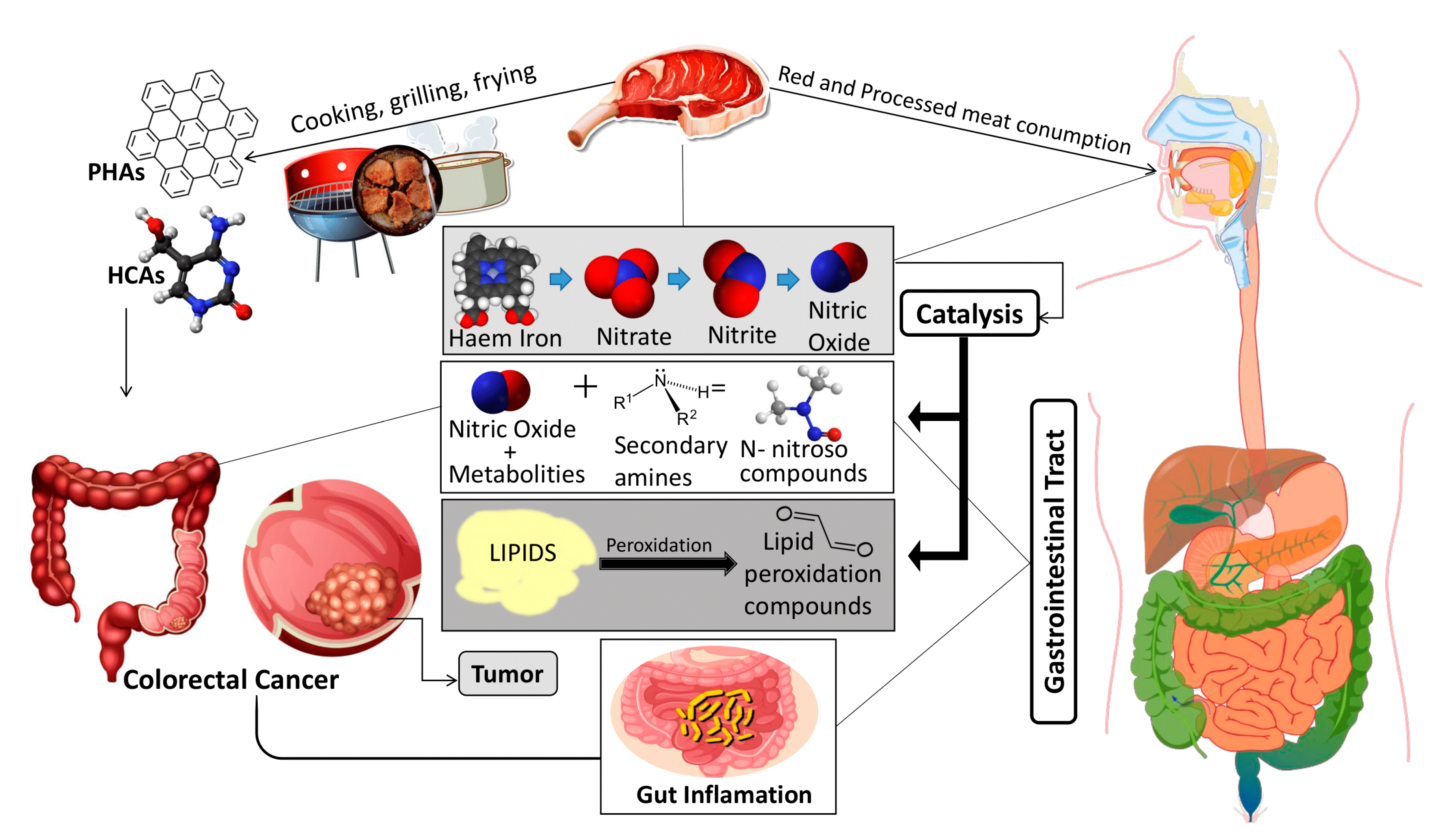
Table 3.
Effect of different mitigation strategies on formation of carcinogens in meat.
| Type of Meat |
Type of Compounds |
Subclass | Cooking Method | Mitigation Strategy | Amount found before mitigation | Amount found after mitigation Strategy | Active Ingredient | Reference |
|---|---|---|---|---|---|---|---|---|
| Pork Belly | HCA | IQx, IQ, MeIQx, 7,8-DiMeIQx, DiMeIQx, PhIP | BBQ | Natural Spice | 50.33 (ng/g) | 21.45 (ng/g) | Antioxidant Particularly Vitamin C | [120] |
| Black Current | 12.03 (ng/g) | |||||||
| Beef Patties | HCA | IQ, PhIP | Oven | Red Chilli (0.5%, 1% and 1.5%) |
10.08 (ng/g) | 5.49, 6.53, 7.62 (ng/g) | Capsaicin | [119] |
| Capsaicin (2mg, 4mg, 6 mg) | 2.03, 3.26, 5.99 (ng/g) | |||||||
| Pork Patties | HCA | IQx, IQ, MeIQx, 7,8-DiMeIQx, DiMeIQx, PhIP | High Temperature (180 to 220˚C) | Fat Replacement with Olive oil, sunflower oil and grapeseed oil (40%) | 67.56±17.29 (180˚C) 140.57±22.03 (220˚C) (ng/g) |
93.90 and 85.75% reduction at 180˚C and 220 ˚C with 40% olive oil. 91.15 and 83.01% reduction at 180˚C and 220 ˚C with 40% sunflower oil. 100 and 98.64% reduction at 180˚C and 220 ˚C with 40% grapeseed oil. |
Antioxidant in oil (vitamin E, ß-carotenes and phenolic compounds) | [131] |
| beef samples | HAAs | IQx, IQ, MeIQx, 7,8-DiMeIQx, DiMeIQx, PhIP | Oven Roasting | Artichoke | 48.00 ± 1.44 ng/g at 250˚C | 35.65 ± 0.55 ng/g (25.73% Inhibition) with 0.5% and 0.98 ± 0.08 ng/g (97.96% Inhibition) with 1% artichoke level | cafinulin and feoylquinic acid derivatives | [132] |
| Chicken breast | HAAs | IQx, IQ, MeIQx, 7,8-DiMeIQx, DiMeIQx, PhIP | Grilling | Brown sugar and Honey | 16.4±0.85 (MeIQ) 29.2±0.68 (PhIP) 46.4±0.62 (DiMeIQx) 18.9±.56 (MeIQx) 18.6±0.61 (IQ) 10.1±0.78 (IQx) ng/g |
Brown sugar reduced level of MeIQ, PIP, DiMeIQx, MeIQx, IQ and IQx to 6.14±0.52, 6.74±0.88, 25.4±2.0, 6.24±0.97, 8.85±0.60 and 6.99 ± 0.61 ng/g, respectively. Honey reduced level of MeIQ, PIP, DiMeIQx, MeIQx, IQ and IQx to 4.98±0.51, 9.87±0.35, 10.2±0.50, 8.05±0.59, 4.09±0.96 and 5.48 ± 0.81 ng/g, respectively. |
- | [133] |
| Chicken Breast | HAAs | IQx, IQ, MeIQx, 7,8-DiMeIQx, DiMeIQx, PhIP | Grilling | Tamarind, Lemon and Lime | 6.99±0.61, 6.24±0.97, 8.85±0.60, 25.4±2.0, 4.14±0.52 and 6.74±0.88 ng/g of IQx, MeIQx, IQ, DiMeIQx, MeIQ and PhIP, respectively. | Tamarind reduced level of IQx, MeIQx, IQ, DiMeIQx, MeIQ and PhIP to 2.27±0.89, 8.17±2.73, 29.3±2.31, 35.3±3.78, 2.79±1.21, 1.20±0.80 ng/g, respectively. Lemon reduced level of IQx, MeIQx, IQ, DiMeIQx, MeIQ and PhIP to 3.41±1.05, 2.38±1.09, 3.81±0.98, 16.2±1.59, 1.26±0.98, 3.63±1.60 ng/g, respectively. Lime reduced level of IQx, MeIQx, IQ, DiMeIQx, MeIQ and PhIP to 2.36±1.02, 2.39±0.97, 4.50±1.09, 29.6±3.84, 2.37±0.98, 3.36±0.97 ng/g, respectively. |
[134] | |
| Chicken wings | HCAs | Deep Frying | Sugarcane Molasses | 4.51-8.04 ng/g after 2.5 mint frying. 26.2-37.4 ng/g after 5 mint frying. |
32.5-43.9% inhibition after 2.5 minutes. 18.5-29.9% after 5 minutes frying. | Phenolic compounds | [135] |
VI. Conclusion
In summary, meat and fish compounds produced through cooking procedures have the potential to exhibit carcinogenic activity. Cooking temperature, duration, and method all influence the synthesis of Heterocyclic Amines (HCAs), Polycyclic Aromatic Hydrocarbons (PAHs), and Advanced Glycation End Products (AGEs). In animal experiments and in vitro models, these chemicals have been proven to produce tumours. Epidemiological studies have also revealed a link between eating well-done beef and an increased risk of cancer in people. Mitigation methods, on the other hand, can be used to limit the development of these carcinogenic chemicals. Cooking procedures like steaming and poaching can reduce the development of hydrogen peroxide (HCAs) and phenolic compounds (PAHs). Marinades and spices can also lower HCA and AGE development. Consuming antioxidant-rich fruits and vegetables can minimize oxidative stress and AGEs. Genetic and individual characteristics may impact sensitivity to carcinogenic effects. Understanding these variables and implementing mitigation actions can reduce cancer risks associated with cooked meat and fish consumption.
Importance of awareness and implementation of mitigation strategies
Mitigation strategies are crucial to reduce health risks associated with meat and fish consumption, as they may increase the risk of developing cancers like colon, stomach, and breast. Public education and promotion of mitigation strategies are essential. Alternative cooking methods, like baking, boiling, and steaming, can help reduce the formation of HCAs and PAHs [136]. Marinades and spices can reduce the formation of these compounds by inhibiting free radical formation. Consuming fruits and vegetables provides antioxidants, neutralizing free radicals. It’s crucial to consider genetic and individual factors affecting compound formation and metabolism. Genetic variations can increase individuals’ susceptibility to harmful effects of meat and fish compounds. Mitigation strategies and public awareness promotion are crucial for reducing health risks associated with these consumption. By reducing compound formation, public health can improve and cancer risk can be reduced.
Future research directions
Further research should explore the carcinogenic activity of meat and fish chemicals produced during cooking, focusing on the processes involved in HCAs, PAHs, and AGEs generation. Strategies should be developed to reduce the creation of these chemicals while maintaining sensory and nutritional integrity. Investigations should also examine the role of individual genetic and metabolic variables in the synthesis and detoxification of these chemicals, as well as the effects of cooking techniques on their bioavailability and absorption in the human body. In addition the future research should examine health concerns related to chemicals’ used in different populations, considering food habits, lifestyle, and environmental exposure. This can influence public health guidelines and dietary advice to reduce risks from eating cooked meat and fish.
Author Contributions
N.T.: Conceptualization; Writing review and editing. N.K.: Conceptualization, Resources, Writing. H.R..: Resources, revision and editing. A.R.: Review and editing. S.R.: Validation, Supervision. S.M.: Review and editing. All authors have read and agreed to the published version of the manuscript.
Funding
This research received no external funding.
Institutional Review Board Statement
This study did not require any ethical approval.
Informed Consent Statement
Not applicable.
Data Availability Statement
Not applicable.
Conflicts of Interest
The authors have declared no conflict of interest for this article.
References
- Lee, S.Y.; Yim, D.G.; Lee, D.Y.; Kim, O.Y.; Kang, H.J.; Kim, H.S.; Jang, A.; Park, T.S.; Jin, S.K.; Hur, S.J. Overview of the effect of natural products on reduction of potential carcinogenic substances in meat products. Trends Food Sci. Technol. 2020, 99, 568–579. [Google Scholar] [CrossRef]
- Dong, H.; Xian, Y.; Li, H.; Bai, W.; Zeng, X. Potential carcinogenic heterocyclic aromatic amines (HAAs) in foodstuffs: Formation, extraction, analytical methods, and mitigation strategies. Compr. Rev. Food Sci. Food Saf. 2020, 19, 365–404. [Google Scholar] [CrossRef]
- Ma, Y.; Yang, W.; Li, T.; Liu, Y.; Simon, T.G.; Sui, J.; Wu, K.; Giovannucci, E.L.; Chan, A.T.; Zhang, X. Meat intake and risk of hepatocellular carcinoma in two large US prospective cohorts of women and men. Leuk. Res. 2019, 48, 1863–1871. [Google Scholar] [CrossRef] [PubMed]
- Dutta, K.; Shityakov, S.; Zhu, W.; Khalifa, I. High-risk meat and fish cooking methods of polycyclic aromatic hydrocarbons formation and its avoidance strategies. Food Control. 2022, 142. [Google Scholar] [CrossRef]
- González, N.; Marquès, M.; Nadal, M.; Domingo, J.L. Meat consumption: Which are the current global risks? A review of recent (2010–2020) evidences. Food Res. Int. 2020, 137, 109341. [Google Scholar] [CrossRef]
- Aendo, P.; Thongyuan, S.; Songserm, T.; Tulayakul, P. Carcinogenic and non-carcinogenic risk assessment of heavy metals contamination in duck eggs and meat as a warning scenario in Thailand. Sci. Total. Environ. 2019, 689, 215–222. [Google Scholar] [CrossRef]
- Racovita, R.C.; Secuianu, C.; Israel-Roming, F. Quantification and risk assessment of carcinogenic polycyclic aromatic hydrocarbons in retail smoked fish and smoked cheeses. Food Control. 2020, 121, 107586. [Google Scholar] [CrossRef]
- Libera, J.; Iłowiecka, K.; Stasiak, D. Consumption of processed red meat and its impact on human health: A review. Int. J. Food Sci. Technol. 2021, 56, 6115–6123. [Google Scholar] [CrossRef]
- Dianatinasab, M.; Wesselius, A.; de Loeij, T.; Salehi-Abargouei, A.; Yu, E.Y.W.; Fararouei, M.; Brinkman, M.; Brandt, P.v.D.; White, E.; Weiderpass, E.; et al. The association between meat and fish consumption and bladder cancer risk: a pooled analysis of 11 cohort studies. Eur. J. Epidemiology 2021, 36, 781–792. [Google Scholar] [CrossRef]
- Nadeem, H.R.; Akhtar, S.; Ismail, T.; Sestili, P.; Lorenzo, J.M.; Ranjha, M.M.A.N.; Jooste, L.; Hano, C.; Aadil, R.M. Heterocyclic Aromatic Amines in Meat: Formation, Isolation, Risk Assessment, and Inhibitory Effect of Plant Extracts. Foods 2021, 10, 1466. [Google Scholar] [CrossRef]
- Negahdari, S.; Sabaghan, M.; Pirhadi, M.; Alikord, M.; Sadighara, P.; Darvishi, M.; Nazer, M. Potential Harmful Effects of Heavy Metals as a toxic and carcinogenic agent in Marine Food-An Overview. Egypt. J. Veter- Sci. 2021, 52, 379–385. [Google Scholar] [CrossRef]
- Khan, M.R.; Busquets, R.; Azam, M. Blueberry, raspberry, and strawberry extracts reduce the formation of carcinogenic heterocyclic amines in fried camel, beef and chicken meats. Food Control. 2020, 123, 107852. [Google Scholar] [CrossRef]
- Asamoah, E.K.; Nunoo, F.K.E.; Addo, S.; Nyarko, J.O.; Hyldig, G. Polycyclic aromatic hydrocarbons (PAHs) in fish smoked using traditional and improved kilns: Levels and human health risk implications through dietary exposure in Ghana. Food Control. 2020, 121, 107576. [Google Scholar] [CrossRef]
- Adeyeye, S.A.O.; Ashaolu, T.J. Heterocyclic Amine Formation and Mitigation in Processed Meat and Meat Products: A Mini-Review. J. Food Prot. 2021, 84, 1868–1877. [Google Scholar] [CrossRef]
- Sampaio, G.R.; Guizellini, G.M.; da Silva, S.A.; de Almeida, A.P.; Pinaffi-Langley, A.C.C.; Rogero, M.M.; et al. Polycyclic aromatic hydrocarbons in foods: Biological effects, legislation, occurrence, analytical methods, and strategies to reduce their formation. International Journal of Molecular Sciences 2021, 22, 6010. [Google Scholar] [CrossRef]
- Deeduah, F.; Iwuoha, G. Genotoxicity and carcinogenicity of traditionally roasted meat using indicator polycyclic aromatic hydrocarbons (PAHs), Port Harcourt, Nigeria. DF Mene and GN Iwuoha Genotoxicity and Carcinogenicity of Traditionally Roasted Meat Using Indicator Polycyclic Aromatic Hydrocarbons (PAHs), Port Harcourt. Nigeria Chemistry International. 2021, 7, 217–23. [Google Scholar]
- Iwasaki, M.; Tsugane, S. Dietary heterocyclic aromatic amine intake and cancer risk: epidemiological evidence from Japanese studies. Genes Environ. 2021, 43, 1–10. [Google Scholar] [CrossRef] [PubMed]
- Khanverdiluo, S.; Talebi-Ghane, E.; Heshmati, A.; Mehri, F. The concentration of polycyclic aromatic hydrocarbons (PAHs) in mother milk: A global systematic review, meta-analysis and health risk assessment of infants. Saudi J. Biol. Sci. 2021, 28, 6869–6875. [Google Scholar] [CrossRef] [PubMed]
- Kossenas, K.; Constantinou, C. Epidemiology, Molecular Mechanisms, and Clinical Trials: an Update on Research on the Association Between Red Meat Consumption and Colorectal Cancer. Curr. Nutr. Rep. 2021, 10, 435–467. [Google Scholar] [CrossRef]
- Oz, E. Author response for "The impact of fat content and charcoal types on quality and the development of carcinogenic polycyclic aromatic hydrocarbons and heterocyclic aromatic amines formation of barbecued fish". 2020. [Google Scholar] [CrossRef]
- Fakhri, Y.; Nematollahi, A.; Abdi-Moghadam, Z.; Daraei, H.; Ghasemi, S.M.; Thai, V.N. Concentration of Potentially Harmful Elements (PHEs) in Trout Fillet (Rainbow and Brown) Fish: a Global Systematic Review and Meta-analysis and Health Risk Assessment. Biol. Trace Element Res. 2020, 199, 3089–3101. [Google Scholar] [CrossRef]
- Wang, X.; Gao, M.; Wang, B.; Tan, Y.; Guo, Y.; Li, Q.; Ge, S.; Lan, C.; Chen, J.; Jiangtulu, B.; et al. Risk of dietary intake of organochlorine pesticides among the childbearing-age women: A multiple follow-up study in North China. Ecotoxicol. Environ. Saf. 2021, 224, 112607. [Google Scholar] [CrossRef] [PubMed]
- Fathabad, A.E.; Tajik, H.; Najafi, M.L.; Jafari, K.; Khaneghah, A.M.; Fakhri, Y.; Thai, V.N.; Conti, G.O.; Miri, M. The concentration of the potentially toxic elements (PTEs) in the muscle of fishes collected from Caspian Sea: A health risk assessment study. Food Chem. Toxicol. 2021, 154, 112349. [Google Scholar] [CrossRef] [PubMed]
- Vernia, F.; Longo, S.; Stefanelli, G.; Viscido, A.; Latella, G. Dietary Factors Modulating Colorectal Carcinogenesis. Nutrients 2021, 13, 143. [Google Scholar] [CrossRef]
- Li, Y.; Guo, N.; Zou, X.; Li, P.; Zou, S.; Luo, J.; Yang, Y. Pollution level and health risk assessment of polycyclic aromatic hydrocarbons in marine fish from two coastal regions, the South China Sea. Mar. Pollut. Bull. 2021, 168, 112376. [Google Scholar] [CrossRef]
- Maruf MA-h Punom, N.J.; Saha, B.; Moniruzzaman, M.; Suchi, P.D.; Eshik, M.M.E.; et al. Assessment of human health risks associated with heavy metals accumulation in the freshwater fish Pangasianodon hypophthalmus in Bangladesh. Exposure and Health. 2021, 13, 337–59. [Google Scholar] [CrossRef]
- Shimomura, Y.; Sobue, T.; Zha, L.; Kitamura, T.; Iwasaki, M.; Inoue, M.; Yamaji, T.; Tsugane, S.; Sawada, N. Association between meat, fish, and fatty acid intake and incidence of acute myeloid leukemia and myelodysplastic syndrome: the Japan Public Health Center-based Prospective Study. Environ. Heal. Prev. Med. 2023, 28, 19–19. [Google Scholar] [CrossRef] [PubMed]
- Fong, F.L.Y.; El-Nezami, H.; Sze, E.T.P. Biogenic amines – Precursors of carcinogens in traditional Chinese fermented food. NFS J. 2021, 23, 52–57. [Google Scholar] [CrossRef]
- Jalandra, R.; Dalal, N.; Yadav, A.K.; Verma, D.; Sharma, M.; Singh, R.; Khosla, A.; Kumar, A.; Solanki, P.R. Emerging role of trimethylamine-N-oxide (TMAO) in colorectal cancer. Appl. Microbiol. Biotechnol. 2021, 105, 7651–7660. [Google Scholar] [CrossRef]
- Malik, S.; Prasad, S.; Kishore, S.; Kumar, A.; Upadhyay, V. A perspective review on impact and molecular mechanism of environmental carcinogens on human health. Biotechnol. Genet. Eng. Rev. 2021, 37, 178–207. [Google Scholar] [CrossRef]
- Bulanda, S.; Janoszka, B. Consumption of Thermally Processed Meat Containing Carcinogenic Compounds (Polycyclic Aromatic Hydrocarbons and Heterocyclic Aromatic Amines) versus a Risk of Some Cancers in Humans and the Possibility of Reducing Their Formation by Natural Food Additives—A Literature Review. Int. J. Environ. Res. Public Heal. 2022, 19, 4781. [Google Scholar] [CrossRef]
- Huang, S.; Fu, W.; Fang, Q.; Ni, L.; Zheng, R.; Yong, L.; Huang, Z.; Pang, J.; Lin, Z.; Lin, H.; et al. Occurrence and carcinogenic risk assessment of N-nitrosamines in some dried aquatic products in China. Food Control. 2023, 152. [Google Scholar] [CrossRef]
- Moradi, S.; Shariatifar, N.; Akbari-Adergani, B.; Aghaee, E.M.; Arbameri, M. Analysis and health risk assessment of nitrosamines in meat products collected from markets, Iran: with the approach of chemometric. J. Environ. Heal. Sci. Eng. 2021, 19, 1361–1371. [Google Scholar] [CrossRef] [PubMed]
- Li, D.; Zhang, W. Biogenic amines and volatile N-nitrosamines in Chinese smoked-cured bacon (Larou) from industrial and artisanal origins. Food Addit. Contam. Part B 2023, 16, 143–160. [Google Scholar] [CrossRef]
- Wang, Y.; Liu, Y.; Huang, X.; Xiao, Z.; Yang, Y.; Yu, Q.; Chen, S.; He, L.; Liu, A.; Liu, S.; et al. A Review on Mechanistic Overview on the Formation of Toxic Substances during the Traditional Fermented Food Processing. Food Rev. Int. 2021, 39, 1275–1292. [Google Scholar] [CrossRef]
- Afé, O.H.I.; Kpoclou, Y.E.; Douny, C.; Anihouvi, V.B.; Igout, A.; Mahillon, J.; Hounhouigan, D.J.; Scippo, M. Chemical hazards in smoked meat and fish. Food Sci. Nutr. 2021, 9, 6903–6922. [Google Scholar] [CrossRef]
- Seo Je Park Je Lee, Y.; Do, B.; Lee Jy Kwon, H. Effect of cooking method on the concentrations of volatile N-nitrosamines in various food products. Journal of Food Processing and Preservation. 2022, 46, 16590. [Google Scholar]
- Jung, J.-W.; Kim, U.-J.; Yu, W.-J.; Park, J.-W.; Jeong, E.J. Probabilistic cancer risk assessment for dietary intake of seven nitrosamine chemicals in Korea. Hum. Ecol. Risk Assessment: Int. J. 2020, 27, 626–637. [Google Scholar] [CrossRef]
- Niklas, A.A.; Pedersen, M.; Christensen, T.; Duedahl-Olesen, L. Simultaneous determination of heterocyclic aromatic amines and N-nitrosamines in fried bacon cubes and slices using LC-(ESI/APCI)-MS/MS. Food Addit. Contam. Part A 2023, 40, 493–507. [Google Scholar] [CrossRef]
- Özbay, S.; Şireli, U.T. The effect of ascorbic acid, storage period and packaging material on the formation of volatile N-nitrosamine in sausages. J. Food Sci. Technol. 2021, 59, 1823–1830. [Google Scholar] [CrossRef]
- Wu, Y.; Qin, L.; Chen, J.; Wang, H.; Liao, E. Nitrite, biogenic amines and volatile N-nitrosamines in commercial Chinese traditional fermented fish products. Food Addit. Contam. Part B 2021, 15, 10–19. [Google Scholar] [CrossRef]
- Afé, O.H.I.; Kpoclou, Y.E.; Douny, C.; Anihouvi, V.B.; Igout, A.; Mahillon, J.; Hounhouigan, D.J.; Scippo, M. Chemical hazards in smoked meat and fish. Food Sci. Nutr. 2021, 9, 6903–6922. [Google Scholar] [CrossRef] [PubMed]
- Rudneva, I.I.; Omel’chenko, S.O. Nitrosamines in Aquatic Ecosystems: Sources, Formation, Toxicity, Environmental Risk (Review). 2. Content In Aquatic Biota, Biological Effects and Risk Assessment. Water Resour. 2021, 48, 291–299. [Google Scholar] [CrossRef]
- Omer, A.K.; Mohammed, R.R.; Ameen, P.S.M.; Abas, Z.A.; Ekici, K. Presence of Biogenic Amines in Food and Their Public Health Implications: A Review. J. Food Prot. 2021, 84, 1539–1548. [Google Scholar] [CrossRef] [PubMed]
- Sallan, S.; Oral, Z.F.Y.; Kaya, M. A Review on the Role of Lactic Acid Bacteria in the Formation and Reduction of Volatile Nitrosamines in Fermented Sausages. Foods 2023, 12, 702. [Google Scholar] [CrossRef]
- Paglialunga, S.; van Haarst, A. The impact of N-nitrosamine impurities on clinical drug development. Journal of Pharmaceutical Sciences. 2023, 112, 1183–1191. [Google Scholar] [CrossRef]
- Zahra, N.; Saeed, M.K.; Raza, M.H. Nitrosamines: Incredibly unsafe contaminants in different food commodities. Chemistry International. 2023, 1, 27–36. [Google Scholar]
- Bercu, J.P.; Masuda-Herrera, M.; Johnson, G.; Czich, A.; Glowienke, S.; Kenyon, M.; Thomas, R.; Ponting, D.J.; White, A.; Cross, K.; et al. Use of less-than-lifetime (LTL) durational limits for nitrosamines: Case study of N-Nitrosodiethylamine (NDEA). Regul. Toxicol. Pharmacol. 2021, 123, 104926. [Google Scholar] [CrossRef]
- Ejike, U.D.I.; Liman, M.L. Role of Dietary Antioxidants in Chemoprevention of Nitrosamines-Induced Carcinogenesis. 2021; 23. [Google Scholar] [CrossRef]
- James, M.; Edge, T. Low-Level Determination of Mutagenic Nitrosamine Impurities in Drug Substances by LC–MS/MS. 34. [CrossRef]
- Chen, L.; Liu, R.; Wu, M.; Yu, H.; Ge, Q.; Zhang, W. Nitrosamines and Polycyclic Aromatic Hydrocarbons in Smoke-Cured Bacon (Larou) of Artisanal and Industrial Origin. Foods 2021, 10, 2830. [Google Scholar] [CrossRef]
- Nguyen, L.C.; Nguyen, B.T.; Le, N.T. A Prospective Pooled Analysis of Meat Mutagens and Colorectal Adenoma and Cancer in the US and EPIC Studies: Findings with an Emphasis on Improving Exposure Measurements. Asian Pac. J. Cancer Prev. 2022, 23, 2215–2224. [Google Scholar] [CrossRef]
- Erdoğan, B.; Özdestan-Ocak. Inhibitory effects of carob and propolis extracts on the formation of heterocyclic aromatic amines in beef meatballs cooked with different methods. J. Food Process. Preserv. 2022, 46. [Google Scholar] [CrossRef]
- Khan, I.A.; Khan, A.; Zou, Y.; Zongshuai, Z.; Xu, W.; Wang, D.; Huang, M. Heterocyclic amines in cooked meat products, shortcomings during evaluation, factors influencing formation, risk assessment and mitigation strategies. Meat Sci. 2021, 184, 108693. [Google Scholar] [CrossRef] [PubMed]
- Onjia, A.; Huang, X.; González, J.M.T.; Egbueri, J.C. Editorial: Chemometric approach to distribution, source apportionment, ecological and health risk of trace pollutants. Front. Environ. Sci. 2022, 10. [Google Scholar] [CrossRef]
- Arisekar, U.; Shakila, R.J.; Shalini, R.; Jeyasekaran, G.; Padmavathy, P. Effect of household culinary processes on organochlorine pesticide residues (OCPs) in the seafood (Penaeus vannamei) and its associated human health risk assessment: Our vision and future scope. Chemosphere 2022, 297, 134075. [Google Scholar] [CrossRef] [PubMed]
- Macit, A.; Kizil, M. The effect of olive leaf extract containing natural antioxidant on the formation of heterocyclic aromatic amines in oil free pan-cooked salmon. Clin. Nutr. ESPEN 2021, 46, S635–S636. [Google Scholar] [CrossRef]
- Yeh, G.; Ebeler, J.D.; Ebeler, S.E. Analysis of nitrosamines in foods and beverages. In Chromatographic Analysis of Environmental and Food Toxicants; CRC Press, 2021; pp. 77–91. [Google Scholar]
- Saleem, A.; Sahar, A.; Pasha, I.; Shahid, M. Determination of Adulteration of Chicken Meat into Minced Beef Mixtures using Front Face Fluorescence Spectroscopy Coupled with Chemometric. Korean J. Food Sci. Anim. Resour. 2022, 42, 672–688. [Google Scholar] [CrossRef]
- Nie, W.; Chen, Y.; Zhang, H.; Liu, J.; Peng, Z.; Li, Y. A novel colorimetric sensor array for real-time and on-site monitoring of meat freshness. Anal. Bioanal. Chem. 2022, 414, 6017–6027. [Google Scholar] [CrossRef]
- Windarsih, A.; Rohman, A.; Riswanto, F.D.O.; Dachriyanus; Yuliana, N. D.; Abu Bakar, N.K. The Metabolomics Approaches Based on LC-MS/MS for Analysis of Non-Halal Meats in Food Products: A Review. Agriculture 2022, 12, 984. [Google Scholar] [CrossRef]
- Marques, C.; Toazza, C.E.B.; Lise, C.C.; de Lima, V.A.; Mitterer-Daltoé, M.L. Prediction of food quality parameters in fish burgers by partial least square models using RGB pattern of digital images. J. Food Sci. Technol. 2022, 59, 3312–3317. [Google Scholar] [CrossRef]
- Principato, L.; Secondi, L.; Cicatiello, C.; Mattia, G. Caring more about food: The unexpected positive effect of the Covid-19 lockdown on household food management and waste. Socio-Economic Plan. Sci. 2022, 82, 100953–100953. [Google Scholar] [CrossRef]
- Omofuma, O.O.; Steck, S.E.; Olshan, A.F.; Troester, M.A. The association between meat and fish intake by preparation methods and breast cancer in the Carolina Breast Cancer Study (CBCS). Breast Cancer Res. Treat. 2022, 193, 187–201. [Google Scholar] [CrossRef]
- Saeed, R.; Feng, H.; Wang, X.; Zhang, X.; Fu, Z. Fish quality evaluation by sensor and machine learning: A mechanistic review. Food Control. 2022, 137. [Google Scholar] [CrossRef]
- Cirne, F.; Kappel, C.; Zhou, S.; Mukherjee, S.D.; Dehghan, M.; Petropoulos, J.-A.; Leong, D.P. Modifiable risk factors for prostate cancer in low- and lower-middle-income countries: a systematic review and meta-analysis. Prostate Cancer Prostatic Dis. 2022, 25, 453–462. [Google Scholar] [CrossRef] [PubMed]
- Zaukuu, J.-L.Z.; Benes, E.; Bázár, G.; Kovács, Z.; Fodor, M. Agricultural Potentials of Molecular Spectroscopy and Advances for Food Authentication: An Overview. Processes 2022, 10, 214. [Google Scholar] [CrossRef]
- Reščič, N.; Mayora, O.; Eccher, C.; Luštrek, M. Food Frequency Questionnaire Personalisation Using Multi-Target Regression. Nutrients 2022, 14, 3943. [Google Scholar] [CrossRef]
- Fomena Temgoua, N.S.; Sun, Z.; Okoye, C.O.; Pan, H. Fatty acid profile, physicochemical composition, and sensory properties of atlantic salmon fish (salmo salar) during different culinary treatments. Journal of Food Quality. 2022, 2022, 1–16. [Google Scholar] [CrossRef]
- Kalla, A.; Loucif, L.; Yahia, M. Miscarriage Risk Factors for Pregnant Women: A Cohort Study in Eastern Algeria’s Population. J. Obstet. Gynecol. India 2021, 72, 109–120. [Google Scholar] [CrossRef]
- Mannino, G.; Cirlincione, F.; Gaglio, R.; Franciosi, E.; Francesca, N.; Moschetti, G.; Asteggiano, A.; Medana, C.; Gentile, C.; Settanni, L. Preliminary Investigation of Biogenic Amines in Type I Sourdoughs Produced at Home and Bakery Level. Toxins 2022, 14, 293. [Google Scholar] [CrossRef]
- Ben Akacha, B.; Švarc-Gajić, J.; Elhadef, K.; Ben Saad, R.; Brini, F.; Mnif, W.; Smaoui, S.; Ben Hsouna, A. The Essential Oil of Tunisian Halophyte Lobularia maritima: A Natural Food Preservative Agent of Ground Beef Meat. Life 2022, 12, 1571. [Google Scholar] [CrossRef]
- Hossain, M.B.; Miazie, R.; Nur, A.-A.U.; Paul, S.K.; Abu Bakar, M.; Paray, B.A.; Arai, T. Assessment of Metal Contamination in Water of Freshwater Aquaculture Farms from a South Asian Tropical Coastal Area. Toxics 2022, 10, 536. [Google Scholar] [CrossRef]
- Deng, H.; He, Y.; Cao, H.; Chen, L.; Teng, H. New insight into the effect of hydroxyl substituted flavonoids on the cytotoxicity of 2-amino-3-methylimidazo [4, 5-f] quinoline. Food Frontiers. 2023, 4, 289–296. [Google Scholar] [CrossRef]
- Ye, H.; Yang, J.; Xiao, G.; Zhao, Y.; Li, Z.; Bai, W.; Zeng, X.; Dong, H. A comprehensive overview of emerging techniques and chemometrics for authenticity and traceability of animal-derived food. Food Chem. 2023, 402, 134216. [Google Scholar] [CrossRef] [PubMed]
- Mutz, Y.S.; Rosario, D.K.A.; Bernardo, Y.A.d.A.; Vieira, C.P.; Moreira, R.V.P.; Bernardes, P.C.; Conte-Junior, C.A. Unravelling the relation between natural microbiota and biogenic amines in Brazilian dry-cured loin: a chemometric approach. Int. J. Food Sci. Technol. 2021, 57, 1621–1629. [Google Scholar] [CrossRef]
- Mercado-Molares, C. Seasonal differences in mercury accumulation in Acanthopleura granulata (Gmelin, 1791) (Polyplacophora: Mollusca) in relation to length and weight in Cartagena Bay (Bolívar-Colombia). Abstracts/Toxicology Letters 368S1. 2022, 284, S310. [Google Scholar] [CrossRef]
- Prado-Silva, L.D.; Brancini, G.T.; Braga, G. .; Liao, X.; Ding, T.; Sant’ana, A.S. Antimicrobial photodynamic treatment (aPDT) as an innovative technology to control spoilage and pathogenic microorganisms in agri-food products: An updated review. Food Control. 2021, 132, 108527. [Google Scholar] [CrossRef]
- Bangar, S.P.; Siroha, A.K. Biopolymer-based Films and Coatings: Trends and Challenges; CRC Press: Boca Raton, 2023; pp. 116–139. [Google Scholar]
- Libera, J.; Iłowiecka, K.; Stasiak, D. Consumption of processed red meat and its impact on human health: A review. Int. J. Food Sci. Technol. 2021, 56, 6115–6123. [Google Scholar] [CrossRef]
- Afé, O.H.I.; Douny, C.; Kpoclou, Y.E.; Igout, A.; Mahillon, J.; Anihouvi, V.; Hounhouigan, D.J.; Scippo, M.-L. Insight about methods used for polycyclic aromatic hydrocarbons reduction in smoked or grilled fishery and meat products for future re-engineering: A systematic review. Food Chem. Toxicol. 2020, 141, 111372. [Google Scholar] [CrossRef]
- Rascón, A.J.; Azzouz, A.; Ballesteros, E. Trace level determination of polycyclic aromatic hydrocarbons in raw and processed meat and fish products from European markets by GC-MS. Food Control. 2019, 101, 198–208. [Google Scholar] [CrossRef]
- Khalili, F.; Shariatifar, N.; Dehghani, M.H.; Yaghmaeian, K.; Nodehi, R.N.; Yaseri, M.; Moazzen, M. Polycyclic aromatic hydrocarbons (PAHs) in meat, poultry, fish and related product samples of Iran: a risk assessment study. J. Environ. Heal. Sci. Eng. 2023, 21, 215–224. [Google Scholar] [CrossRef]
- Sahin, S.; Ulusoy, H.I.; Alemdar, S.; Erdogan, S.; Agaoglu, S. The Presence of Polycyclic Aromatic Hydrocarbons (PAHs) in Grilled Beef, Chicken and Fish by Considering Dietary Exposure and Risk Assessment. Korean J. Food Sci. Anim. Resour. 2020, 40, 675–688. [Google Scholar] [CrossRef]
- Onopiuk, A.; Kołodziejczak, K.; Marcinkowska-Lesiak, M.; Poltorak, A. Determination of polycyclic aromatic hydrocarbons using different extraction methods and HPLC-FLD detection in smoked and grilled meat products. Food Chem. 2021, 373, 131506. [Google Scholar] [CrossRef]
- Aveta, A.; Cacciapuoti, C.; Barone, B.; Di Zazzo, E.; Del Giudice, F.; Maggi, M.; Ferro, M.; Terracciano, D.; Busetto, G.M.; Lucarelli, G.; et al. The Impact of Meat Intake on Bladder Cancer Incidence: Is It Really a Relevant Risk? Cancers 2022, 14, 4775. [Google Scholar] [CrossRef] [PubMed]
- Zachara, A.; Gałkowska, D.; Juszczak, L. Contamination of smoked meat and fish products from Polish market with polycyclic aromatic hydrocarbons. Food Control. 2017, 80, 45–51. [Google Scholar] [CrossRef]
- Kafouris, D.; Koukkidou, A.; Christou, E.; Hadjigeorgiou, M.; Yiannopoulos, S. Determination of polycyclic aromatic hydrocarbons in traditionally smoked meat products and charcoal grilled meat in Cyprus. Meat Sci. 2020, 164, 108088. [Google Scholar] [CrossRef] [PubMed]
- Fadnes, L.T.; Økland, J.-M.; Haaland, Ø.A.; Johansson, K.A. Estimating impact of food choices on life expectancy: A modeling study. PLoS Medicine. 2022, 19, e1003889. [Google Scholar]
- Kassis, A.; Chokor, F.A.Z.; Nasreddine, L.; Hwalla, N.; O’neill, L. Food Sources of Fiber and Micronutrients of Concern in Infants and Children in the United Arab Emirates: Findings from the Feeding Infants and Toddlers Study (FITS) and the Kids Nutrition and Health Survey (KNHS) 2020. Nutrients 2022, 14, 2819. [Google Scholar] [CrossRef]
- Liu, T.; Broverman, S.; Puffer, E.S.; Zaltz, D.A.; Thorne-Lyman, A.L.; Benjamin-Neelon, S.E. Dietary Diversity and Dietary Patterns in School-Aged Children in Western Kenya: A Latent Class Analysis. Int. J. Environ. Res. Public Heal. 2022, 19, 9130. [Google Scholar] [CrossRef]
- Shen, Q.; Song, G.; Zhao, Q.; Wang, P.; Yang, H.; Xue, J.; Wang, H.; Cui, Y.; Wang, H. Detection of lipidomics characterization of tuna meat during different wet-aging stages using iKnife rapid evaporative ionization mass spectrometry. Food Res. Int. 2022, 156, 111307. [Google Scholar] [CrossRef]
- Ylilauri, M.P.T.; Hantunen, S.; Lönnroos, E.; Salonen, J.T.; Tuomainen, T.-P.; Virtanen, J.K. Associations of dairy, meat, and fish intakes with risk of incident dementia and with cognitive performance: the Kuopio Ischaemic Heart Disease Risk Factor Study (KIHD). Eur. J. Nutr. 2022, 61, 2531–2542. [Google Scholar] [CrossRef]
- Kim, Y.-Y.; Patra, J.-K.; Shin, H.-S. Evaluation of analytical method and risk assessment of polycyclic aromatic hydrocarbons for fishery products in Korea. Food Control. 2021, 131, 108421. [Google Scholar] [CrossRef]
- Hwang, J.; Shin, D.; Kim, H.; Kwon, O. Association of maternal dietary patterns during pregnancy with small-for-gestational-age infants: Korean Mothers and Children’s Environmental Health (MOCEH) study. Am. J. Clin. Nutr. 2021, 115, 471–481. [Google Scholar] [CrossRef]
- Han, B.; Sun, Z.; Chong, J.; Lyu, N.; Rao, H.; Yang, Y. Lipid residue analysis of ceramic vessels from the Liujiawa site of the Rui State (early Iron Age, north China). J. Quat. Sci. 2021, 37, 114–122. [Google Scholar] [CrossRef]
- Pincinato, R.B.M.; Oglend, A.; Bertolini, R.M.B.; Muñoz, A.E.P. The São Paulo wholesale seafood market: A study of fish prices in Brazil. Aquac. Econ. Manag. 2022, 26, 259–282. [Google Scholar] [CrossRef]
- Louis, L.M.; Quirós-Alcalá, L.; Kuiper, J.R.; Diette, G.; Hansel, N.N.; McCormack, M.C.; et al. Variability and predictors of urinary organophosphate ester concentrations among school-aged children. Environmental research. 2022, 212, 113–192. [Google Scholar] [CrossRef] [PubMed]
- Wise, L.A.; Wesselink, A.K.; Schildroth, S.; Calafat, A.M.; Bethea, T.N.; Geller, R.J.; Coleman, C.M.; Fruh, V.; Henn, B.C.; Botelho, J.C.; et al. Correlates of plasma concentrations of per- and poly-fluoroalkyl substances among reproductive-aged Black women. Environ. Res. 2022, 203, 111860. [Google Scholar] [CrossRef] [PubMed]
- Silva, J.A.; Cardoso, R.; Vieira, R.; Almeida, J.C.; Gomes, M.J.; Venâncio, C.; Patarata, L. The Effect of Weaning and Slaughter Age on the Physicochemical and Sensory Characteristics of Arouquesa Beef—A PDO Portuguese Meat. Foods 2022, 11, 2505. [Google Scholar] [CrossRef]
- Xu, X.; Xue, T.; Jiang, Q.; Fan, D.; Wang, M.; Zhao, Y. Inhibitory effects of some hydrocolloids on the formation of NƐ-(carboxymethyl) lysine and NƐ-(carboxyethyl) lysine in chemical models and fish patties. LWT 2022, 162, 113431. [Google Scholar] [CrossRef]
- Johnson, J.J.; A Shaw, P.; Wooller, M.J.; A Venti, C.; Krakoff, J.; Votruba, S.B.; O’brien, D.M. Amino Acid Nitrogen Isotope Ratios Respond to Fish and Meat Intake in a 12-Week Inpatient Feeding Study of Men. J. Nutr. 2022, 152, 2031–2038. [Google Scholar] [CrossRef]
- Kumar, E.; Koponen, J.; Rantakokko, P.; Airaksinen, R.; Ruokojärvi, P.; Kiviranta, H.; Vuorinen, P.J.; Myllylä, T.; Keinänen, M.; Raitaniemi, J.; et al. Distribution of perfluoroalkyl acids in fish species from the Baltic Sea and freshwaters in Finland. Chemosphere 2021, 291, 132688. [Google Scholar] [CrossRef]
- Munsch, S.H.; Greene, C.M.; Mantua, N.J.; Satterthwaite, W.H. One hundred-seventy years of stressors erode salmon fishery climate resilience in California’s warming landscape. Glob. Chang. Biol. 2022, 28, 2183–2201. [Google Scholar] [CrossRef]
- Lewtas, J. Air pollution combustion emissions: Characterization of causative agents and mechanisms associated with cancer, reproductive, and cardiovascular effects. Mutat. Res. Mol. Mech. Mutagen. 2007, 636, 95–133. [Google Scholar] [CrossRef]
- Muroya, S.; Zhang, Y.; Otomaru, K.; Oshima, K.; Oshima, I.; Sano, M.; Roh, S.; Ojima, K.; Gotoh, T. Maternal Nutrient Restriction Disrupts Gene Expression and Metabolites Associated with Urea Cycle, Steroid Synthesis, Glucose Homeostasis, and Glucuronidation in Fetal Calf Liver. Metabolites 2022, 12, 203. [Google Scholar] [CrossRef] [PubMed]
- Yuan, C.; Shilan, L.; Yan, Y.; Xinran, L.; Xinli, L. Daytime restricted feeding promotes circadian desynchrony and metabolic disruption with changes in bile acids profiles and gut microbiota in C57BL/6 Male Mice. The Journal of Nutritional Biochemistry. 2022, 109, 109121. [Google Scholar]
- Fox, S.B.; Zahariadis, E.N.; McDevitt, R.; Grigorova, Y.; Wei, W.; Zernetkina, V.; dos Santos, C.R.; Cezayirli, D.; Juhasz, O.; Shearon, J.; et al. Bioactive Steroid Marinobufagenin in a Mouse Model of Early-Stage Alzheimer's Disease. FASEB J. 2022, 36. [Google Scholar] [CrossRef]
- Hanley, K.L.; Liang, Y.; Wang, G.; Lin, X.; Yang, M.; Karin, M.; et al. Concurrent disruption of the Ras/MAPK and NF-κB pathways induces circadian deregulation and hepatocarcinogenesis. Molecular Cancer Research. 2022, 20, 337–49. [Google Scholar] [CrossRef] [PubMed]
- Caini, S.; Chioccioli, S.; Pastore, E.; Fontana, M.; Tortora, K.; Caderni, G.; Masala, G. Fish Consumption and Colorectal Cancer Risk: Meta-Analysis of Prospective Epidemiological Studies and Review of Evidence from Animal Studies. Cancers 2022, 14, 640. [Google Scholar] [CrossRef]
- Tsuruwaka, Y.; Shimada, E. Reprocessing seafood waste: challenge to develop aquatic clean meat from fish cells. npj Sci. Food 2022, 6, 1–7. [Google Scholar] [CrossRef]
- Reyed, R.M. Simulate the Dynamic Interactions Across Nutritional Supplements, the Polybiome, and the Biochemical Approach Dependent on Patient-Derived Gastrointestinal Knowledge. Journal of Clinical Epidemiology & Toxicology SRC/JCET-153 2023, 133, 2–15. [Google Scholar]
- Dixon, K.A.; Michelsen, M.K.; Carpenter, C.L. Modern Diets and the Health of Our Planet: An Investigation into the Environmental Impacts of Food Choices. Nutrients 2023, 15, 692. [Google Scholar] [CrossRef]
- Zhong, C.; Feng, Y.; Xu, Y. Production of Fish Analogues from Plant Proteins: Potential Strategies, Challenges, and Outlook. Foods 2023, 12, 614. [Google Scholar] [CrossRef]
- Makokha, M.P.; Muliro, P.S.; Ngoda, P.N.; Ghemoh, C.J.; Xavier, C.; Tanga, C.M. Nutritional quality of meat from hen fed diet with full-fat black soldier fly (Hermetia illucens) larvae meal as a substitute to fish meal. J. Funct. Foods 2023, 101. [Google Scholar] [CrossRef]
- Markoulli, M.; Ahmad, S.; Arcot, J.; Arita, R.; Benitez-Del-Castillo, J.; Caffery, B.; Downie, L.E.; Edwards, K.; Flanagan, J.; Labetoulle, M.; et al. TFOS Lifestyle: Impact of nutrition on the ocular surface. Ocul. Surf. 2023, 29, 226–271. [Google Scholar] [CrossRef]
- Mahgoub, S.; Alagawany, M.; Nader, M.; Omar, S.M.; El-Hack, M.E.A.; Swelum, A.; Elnesr, S.S.; Khafaga, A.F.; Taha, A.E.; Farag, M.R.; et al. Recent Development in Bioactive Peptides from Plant and Animal Products and Their Impact on the Human Health. Food Rev. Int. 2021, 1–26. [Google Scholar] [CrossRef]
- Kido, S.; Chosa, E.; Tanaka, R. The effect of six dried and UV-C-irradiated mushrooms powder on lipid oxidation and vitamin D contents of fish meat. Food Chem. 2023, 398, 133917. [Google Scholar] [CrossRef] [PubMed]
- Zhang, Y.; Zhang, Y.; Jia, J.; Peng, H.; Qian, Q.; Pan, Z.; Liu, D. Nitrite and nitrate in meat processing: Functions and alternatives. Curr. Res. Food Sci. 2023, 6, 100470. [Google Scholar] [CrossRef] [PubMed]
- Teng, H.; Deng, H.; Zhang, C.; Cao, H.; Huang, Q.; Chen, L. The role of flavonoids in mitigating food originated heterocyclic aromatic amines that concerns human wellness. Food Sci. Hum. Wellness 2023, 12, 975–985. [Google Scholar] [CrossRef]
- Adeyeye, S.A.O. Heterocyclic Amines and Polycyclic Aromatic Hydrocarbons in Cooked Meat Products: A Review. Polycycl. Aromat. Compd. 2018, 40, 1557–1567. [Google Scholar] [CrossRef]
- Zhao, D.; Wang, P.; Zhao, F.-J. Dietary cadmium exposure, risks to human health and mitigation strategies. Critical Reviews in Environmental Science and Technology. 2023, 53, 939–63. [Google Scholar] [CrossRef]
- Farhadian, A.; Jinap, S.; Faridah, A.; Zaidul, I.S. Effects of marinating on the formation of polycyclic aromatic hydrocarbons (benzo [a] pyrene, benzo [b] fluoranthene and fluoranthene) in grilled beef meat. Food Control. 2012, 28, 420–5. [Google Scholar] [CrossRef]
- Xu, Y.; Cheng, Y.; Zhu, Z.; Guo, H.; Bassey, A.P.; Huang, T.; Huang, Y.; Huang, M. Inhibitory effect of mulberry leaf (Morus alba L.) extract on the formation of free and bound heterocyclic amines in pan-fried muscovy duck (Cairina moschata) patties. Food Control. 2023, 144. [Google Scholar] [CrossRef]
- Bulanda, S.; Janoszka, B. Consumption of Thermally Processed Meat Containing Carcinogenic Compounds (Polycyclic Aromatic Hydrocarbons and Heterocyclic Aromatic Amines) versus a Risk of Some Cancers in Humans and the Possibility of Reducing Their Formation by Natural Food Additives—A Literature Review. Int. J. Environ. Res. Public Heal. 2022, 19, 4781. [Google Scholar] [CrossRef]
- Buja, A.; Pierbon, M.; Lago, L.; Grotto, G.; Baldo, V. Breast cancer primary prevention and diet: an umbrella review. International journal of environmental research and public health. 2020, 17, 4731. [Google Scholar] [CrossRef] [PubMed]
- Meurillon, M.; Anderson, C.; Angénieux, M.; Mercier, F.; Kondjoyan, N.; Engel, E. Sensory acceptability of antioxidant-based formulations dedicated to mitigate heterocyclic aromatic amines in cooked meat. Meat Sci. 2023, 198, 109088. [Google Scholar] [CrossRef] [PubMed]
- Lin, S.; Wang, X.; Huang, C.; Liu, X.; Zhao, J.; Yu, I.T.; Christiani, D.C. Consumption of salted meat and its interactions with alcohol drinking and tobacco smoking on esophageal squamous-cell carcinoma. Int. J. Cancer 2015, 137, 582–589. [Google Scholar] [CrossRef]
- Zheng, W.; McLaughlin, J.K.; Gridley, G.; Bjelke, E.; Schuman, L.M.; Silverman, D.T.; Wacholder, S.; Co-Chien, H.T.; Blot, W.J.; Fraumeni, J.F., Jr. A cohort study of smoking, alcohol consumption, and dietary factors for pancreatic cancer (United States). Cancer Causes Control 1993, 4, 477–482. [Google Scholar] [CrossRef] [PubMed]
- Zeng, M.; Zhang, M.; He, Z.; Qin, F.; Tao, G.; Zhang, S.; Gao, Y.; Chen, J. Inhibitory profiles of chilli pepper and capsaicin on heterocyclic amine formation in roast beef patties. Food Chem. 2017, 221, 404–411. [Google Scholar] [CrossRef]
- Lu, F.; Kuhnle, G.K.; Cheng, Q. Vegetable oil as fat replacer inhibits formation of heterocyclic amines and polycyclic aromatic hydrocarbons in reduced fat pork patties. Food Control. 2017, 81, 113–125. [Google Scholar] [CrossRef]
- Tengilimoglu-Metin, M.M.; Kizil, M. Reducing effect of artichoke extract on heterocyclic aromatic amine formation in beef and chicken breast meat. Meat Sci. 2017, 134, 68–75. [Google Scholar] [CrossRef]
- Hasnol, N.; Jinap, S.; Sanny, M. Effect of different types of sugars in a marinating formulation on the formation of heterocyclic amines in grilled chicken. Food Chem. 2014, 145, 514–521. [Google Scholar] [CrossRef]
- Jinap, S.; Hasnol, N.; Sanny, M.; Jahurul, M. Effect of organic acid ingredients in marinades containing different types of sugar on the formation of heterocyclic amines in grilled chicken. Food Control. 2018, 84, 478–484. [Google Scholar] [CrossRef]
- Cheng, Y.; Yu, Y.; Wang, C.; Zhu, Z.; Huang, M. Inhibitory effect of sugarcane (Saccharum officinarum L.) molasses extract on the formation of heterocyclic amines in deep-fried chicken wings. Food Control. 2021, 119. [Google Scholar] [CrossRef]
- Mendoza, L.C.; Nolos, R.C.; Villaflores, O.B.; Apostol, E.M.D.; Senoro, D.B. Detection of Heavy Metals, Their Distribution in Tilapia spp., and Health Risks Assessment. Toxics 2023, 11, 286. [Google Scholar] [CrossRef] [PubMed]
Table 1.
Types of HCAs and their potential carcinogenicity.
| HCA Type | Potential Carcinogenicity | References |
|---|---|---|
| 2-Amino-1-methyl-6-phenylimidazo[4,5-b]pyridine (PhIP) | Most abundant and potent HCA; linked to breast, prostate, and colon cancer | [57] |
| 2-Amino-3,8-dimethylimidazo[4,5-f]quinoxaline (MeIQx) | Potent HCA; linked to colon, liver, and lung cancer | [58] |
| 2-Amino-3,4,8-trimethylimidazo[4,5-f]quinoxaline (DiMeIQx) | Potent HCA; linked to colon and liver cancer | [59] |
| 2-Amino-9H-pyrido[2,3-b]indole (AαC) | Potent HCA; linked to colon and lung cancer | [42] |
| 2-Amino-6-methyldipyrido[1,2-a:3’,2’-d]imidazole (Glu-P-1) | Potent HCA; linked to colon and liver cancer | [58] |
| 2-Amino-3-methylimidazo[4,5-f]quinoline (IQ) | Moderate HCA; linked to colon and liver cancer | [50] |
| 2-Amino-3,7,8-trimethylimidazo[4,5-f]quinoxaline (MeIQx) | Moderate HCA; linked to colon and liver cancer | [33] |
| 2-Amino-6-heterocyclic-4-alkylamino-3-methylimidazo[4,5-f]quinolines (IHLNs) | Moderate HCA; linked to colon cancer | [41] |
Disclaimer/Publisher’s Note: The statements, opinions and data contained in all publications are solely those of the individual author(s) and contributor(s) and not of MDPI and/or the editor(s). MDPI and/or the editor(s) disclaim responsibility for any injury to people or property resulting from any ideas, methods, instructions or products referred to in the content. |
© 2023 by the authors. Licensee MDPI, Basel, Switzerland. This article is an open access article distributed under the terms and conditions of the Creative Commons Attribution (CC BY) license (http://creativecommons.org/licenses/by/4.0/).
Copyright: This open access article is published under a Creative Commons CC BY 4.0 license, which permit the free download, distribution, and reuse, provided that the author and preprint are cited in any reuse.


