

Submitted:
25 August 2023
Posted:
29 August 2023
You are already at the latest version
Abstract
The search for more efficacy and fewer toxic effects in cancer treatments is the main objective of research into new therapies. Vincristine (VCR) is a chemotherapeutic used in different types of tumors. Epigallocatechin gallate (EGCG) is a green tea metabolite that has shown an antineoplastic effect in different investigations, so the objective of this work was to evaluate the antitumor effect of the EGCG/VCR combination on tumor volume and survival. To achieve this objective, the solid model of lymphoma L5178Y was used in BALB/c mice with different doses of VCR, EGCG and their combination; Tumor grow and survival time were recorded. Once the tumors were obtained, they were measured and immunohistochemistry was performed for p53, Bcl2 and CD1. The results showed that the EGCG/vincristine combination had a greater antitumor effect that vincristine and EGCG. This can be partly attributed to the fact that the greatest Bcl2 inhibition was present in the combination of EGCG with vincristine. Therefore, it can be concluded that the combination of EGCG with vincristine has a better antineoplastic effect by inhibiting tumor development and increasing survival than both substances independently.
Keywords:
EGCG
; Cancer
; Vincristine
; p53
; Bcl2
1. Introduction
Cancer is a group of diseases caused by various alterations in oncogenes and suppressor genes, causing tumors associated with oncogenic signaling pathways [1], its high morbidity and mortality impact socially and economically in the world. It is known that there is a wide range of existing therapies, however, their relative efficiency and their various adverse reactions cause the search for alternatives to treat this pathology to continue.
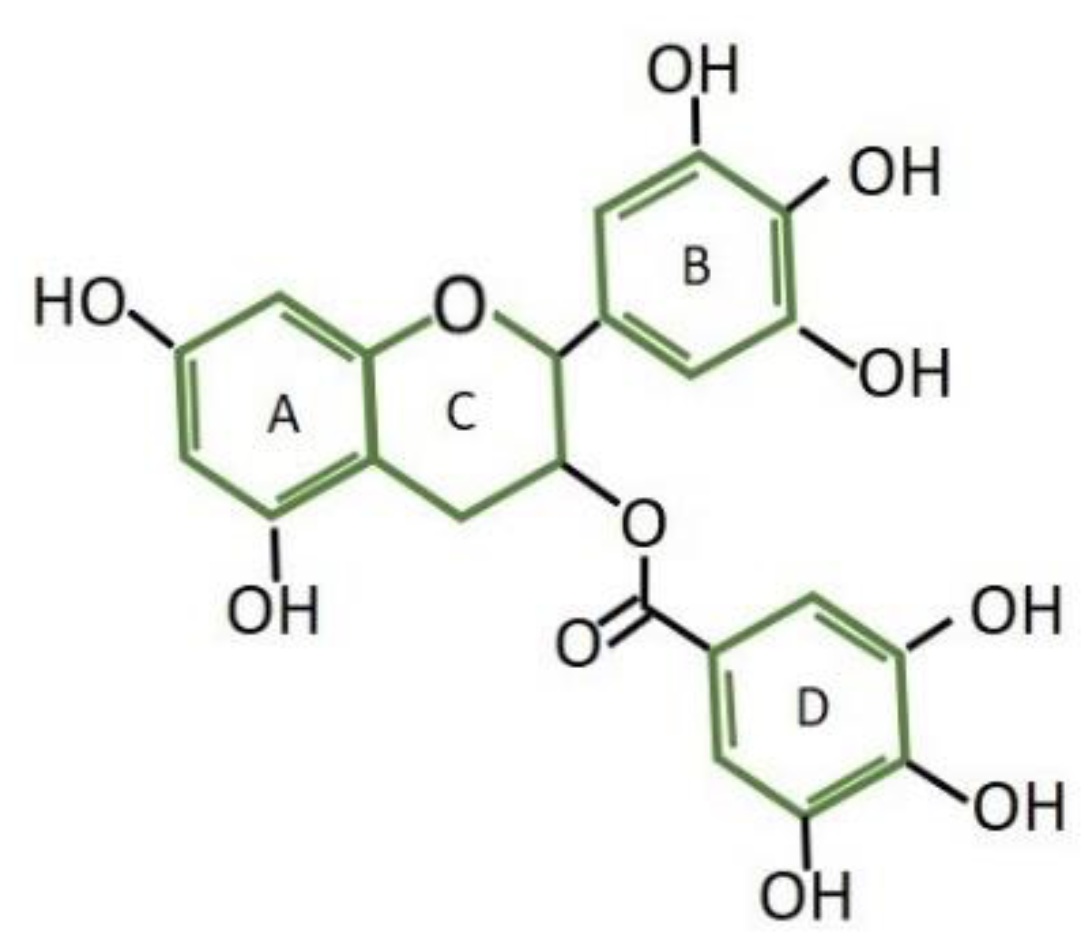
Some plants have antitumor active ingredients that can create a window of opportunity for cancer patients whose economic conditions do not allow them to obtain affordable treatments, patients in whom existing treatments are not effective or generate too many adverse reactions and in general to improve the quality of life during the disease-therapy process. Within phytotherapy, green tea has attracted worldwide attention, its production and consumption have increased each year, it is estimated that the production of green tea will increase by 7.5% per year to reach 3.6 million tons in 2027. One of the reasons for this increase are the attributed therapeutic qualities [2]. Among its secondary metabolites are polyphenols such as flavan-3-ols, which represent up to 30% of the dry weight. (─)- Epigallocatechin gallate (EGCG)
Its structure is made up of four aromatic rings joined by the C ring, which is a pyran, giving the molecule a concave shape.
Figure 1.
EGCG structure. Made up of four rings joined by the C pyran ring. Based on Du, G.-J., et al. 2012 [3].
Figure 1.
EGCG structure. Made up of four rings joined by the C pyran ring. Based on Du, G.-J., et al. 2012 [3].
It is considered responsible for a large part of the benefits provided by green tea, this metabolite is also found in strawberries, apples, cocoa, among others, however, it is highly commercialized of green tea which makes EGCG a very important, highly consumed and affordable phytochemical worldwide. It has been shown that among its most striking properties are antioxidants, cardiovascular protection, antimutagenic, antiviral and anticancer [3], to validate this last effect as an antineoplastic, in vitro and in vivo investigations have been carried out in different cancer models, for example that of the pancreas [5], lung [6], breast [7,8], bladder [9] and ovary [10].
The antineoplastic action mechanisms attributed to it are inhibition of initiation, development, proliferation and apoptosis through various oncogenic pathways that continue to be explored [11].
The problem so far for its use in prevention or treatment at the clinical level is that the data obtained in humans and in vivo models have a lot of variability and are inconsistent and incompatible with the in vitro results [12], which has led to a conflict to advance towards clinical trials [13].
It is necessary to provide more evidence of the in vivo antitumor effect of EGCG alone or in combination to obtain better efficacy in treatments, reduce adverse reactions or resistance to chemotherapy. This work team is aware of the importance of investigating the antitumor effect of EGCG alone or in combination, observing its effect in vivo alone and combined with vincristine sulfate in a solid murine lymphoma model.
2. Results
2.1. Effect of different treatments on the inhibition of tumor growth
The tumor volume was quantified to determine the effect of EGCG and its combination with vincristine in the inhibition of tumor growth.
2.1.1. Effect of (–)-EGCG on the inhibition of tumor growth
The comparison of the effect of the control group against the increasing doses of EGCG used 5, 25 and 50 mg/kg, showed that the reduction in tumor size was significant with the lowest dose used of catechin with 1099 mm3 in relation to vehicle 1932.15 mm3 (P < 0.05). This effect represents a growth inhibition of 43.08% in relation to the vehicle, without finding significance in the effect of the other doses used. Figure 2.
2.1.2. Effect of vincristine and its combination with EGCG in the inhibition of tumor growth
In the results with vincristine (VCR) it was found that when using 0.05, 0.15 and 0.30 mg/kg only in the highest dose, less tumor growth was observed compared to the control group, obtaining a mean of 931.45 mm3 (P = 0.001). The values obtained with the VCR doses with 0.15 and 0.05 mg/kg were 1290 and 1516 mm3 respectively, as observed in Figure 3.
Subsequently, the effect of concomitantly administering the different doses of VCR with 5 mg/kg EGCG was compared, this dose was selected because it was the one with which tumor inhibition was observed, the results showed a lower tumor volume when administering concomitantly the doses of 0.05 of VCR with 5.0 mg/kg of EGCG, in relation to the control and the alkaloid, representing only 31.99% of the average volume of the vehicle group (618 mm3 against 1932 mm3 of the vehicle group) and 40.76% the average size in the vincristine group at this dose. However, with the other doses of vincristine used, the same effect was not observed, that is, the combination with higher doses of vincristine had no better effect than when using the chemotherapy alone, observing the same inhibition produced by any of them separately (Figure 3). On the other hand, it is important to point out that when comparing the effect in the groups with vincristine 30 mg/kg and catechin EGCG 5 mg/kg/day, similarity was observed in the inhibition of tumor growth, so it can be said that EGCG exerted the same effect as VCR at this dose. The comparison of the effect of the control group against the increasing doses of EGCG used 5, 25 and 50 mg/kg, showed that the reduction in tumor.
2.2. Effect of Effect of EGCG, VCR and their concomitant administration on survival
To determine the risk of death between the different groups, the survival curves were compared, which is observed in Figure 4. In 4A, the results of the vehicle and EGCG (5mg/kg) groups are graphed. The curves show medians of 12 and 17 days respectively, with a shift to the right with the treated group, the ratio is 0.70 with 95% CI from 0.20 to 2.43, being different between them with a P = 0.003 the above allows us to say that in this model the group with EGCG at this dose has a 30% greater chance of survival; Figure 4B plots the vehicle group against VCR 0.05 mg/kg, at this dose the curves and medians are similar (12 and 13 respectively) and intersect at different points, the Ratio being 0.92 is very close to 1 , so no difference is observed between the two (P = 0.13), the 95% CI ranges from 0.26 to 3.18. These results can be interpreted as giving this dose of VCR or the vehicle provides the same chance of death occurring in both groups in the same period of time; 4C. When comparing the VCR curve (0.05 mg/kg) with the curve made with the VCR / EGCG combination, it was found that the medians were 13 days for VCR versus 18 for the combination and the radius was 0.72 with 95% CI of 0.19 to 2.69 showing a P = 0.0038, which can be interpreted as a 28% greater chance of survival for the combination than for VCR alone; 4D. When comparing the EGCG curves against the alkaloid and catechin combination, it can be seen that the medians were 17 and 18 respectively, the curves intersect at different points and are similar by Log-rank (P = 0.45), with a ratio of 0.94 with a 95% CI of 0.25 to 3.5. These results show that the probability of survival is not different in both groups [14, 15].
2.3. Effect of EGCG, VCR and VCR / EGCG on the determination of p53, CD1 and Bcl2 in murine lymphoma
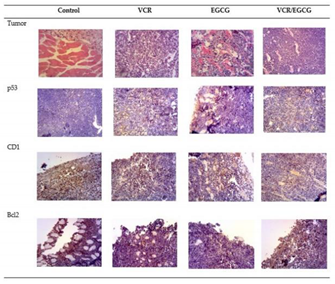
The inhibition in tumor growth and the increase in survival prognosis led to the evaluation of some proteins involved in tumor development, for which the presence of p53, CD1 and Bcl2 was analyzed by immunohistochemistry Table 1.
For p53, the control group showed the lowest value 3.69%, while the different treatments increased their presence, obtaining that with VCR 6.92% was observed and with EGCG 5.99%, the co-administration of both treatments presented 6.18%, being similar between all of them and different from the control (P = < 0.05). Figure 5.
The results obtained with the Cyclin D1 (CD1) protein showed that the effect between the different treatments and the control were not significant P = ≥ 0.05. Figure 6.
Regarding the immunopositivity present in the different treatments with Bcl2, it was observed that the control group was the one that presented the highest percentage of labeling to the protein, in the other groups a significant decrease was observed in relation to the control in decreasing order VCR >EGCG> VCR/EGCG, with a significant difference between all treatments Figure 7.
3. Discussion
Despite the research and efforts made, until now the treatments used in cancer have a very narrow therapeutic index and resistance. Among these drugs, vincristine is commonly used as an important clinical agent for lymphomas, leukemias, and testicular cancer.
To achieve less aggressive and more effective treatments, more alternatives must be explored. Considering the above, in this work the effect of EGCG alone or combined with vincristine sulfate was observed in a solid murine lymphoma model. The results in general showed that when EGCG or VCR/EGCG was administered, the tumor volume was smaller and the life time was longer with a better life prognosis than the control group, interestingly the greatest inhibition in tumor development was with the VCR/EGCG group, significantly both VCR and EGCG and the combination presented an increase in p53 and a decrease in the expression of the antiapoptotic protein Bcl2, observing a greater decrease with concomitant treatment than with independent treatments.
To obtain these results, an aggressive murine lymphoma was used, which caused the death of 100% of the animals within 15 days. Among the antineoplastics to which it responds is vincristine sulfate [16].
It has been seen that this alkaloid acts in a dose-dependent manner [17]. In this study, only 0.30 mg/kg of vincristine presented smaller tumors and a better life expectancy in relation to the control group, while 0.05 and 0.15 mg/kg showed no difference with said group. It has already been reported that at a dose of 0.15 mg/kg no effect of vincristine was observed on survival [18]. And although in antitumor therapy the ideal is to use the highest possible dose to obtain the best result, with this alkaloid the problem is that increasing the dose in a patient does not provide sufficient benefits in the benefit/toxicity balance, in fact to the doses normally used, the patient must accept some adverse reactions that do not justify the reduction of the dose, such as the first sensory changes [19] and it is even accepted that the treatment can lead to axonal degeneration [20], so it is important to find substances that can increase the effect of this drug, to reduce the doses achieving the antitumor effect with fewer adverse reactions.
It is interesting that in a positive way within natural products it has been reported that the consumption of polyphenols contained in Camellia sinensis provides an antineoplastic benefit, among these phytochemicals there is an abundance of Epigallocatechin gallate (EGCG), which has an effect on different types of tumors in vitro and in vivo, however importantly there is controversy in the results reported in vivo, which could be due to the model used, dose, and the low availability of EGCG in tumors [12].
In this model, EGCG showed a significant antineoplastic effect by negatively modulating the development of tumor volume and increasing survival in BALB/c mice with solid L5178Y tumor; among the different doses used, only the 5 mg/kg dose was significantly different from the control, obtaining 43 % in size reduction, this is probably due to the fact that the results showed a high variability. Notably, the inhibition of tumor development by EGCG was similar to the effect obtained with the highest dose of vincristine used in this work (0.30 mg/kg). The lowest dose used in this work (0.05 mg/kg) was selected to test the adjuvant effect of EGCG. In this sense, when using both substances concomitantly, the antineoplastic effect was favorably different from the control and VCR alone, which did not happen when using only the alkaloid at this dose and in relation to survival, it was also higher, however, when comparing these data with the result provided by EGCG in survival, the effect of the combination was similar to that provided by catechin alone, so it can be deduced that this is given by catechin and that vincristine does not interfere with said effect. The EGCG result with this dose coincides with that reported in a 4T1 study with breast cancer, who used 5, 10 and 20 mg/kg, with an inhibition of tumor growth in all administered doses of 20, 31 and 34% respectively [21].
Unfortunately, there is a very wide range of doses reported in the literature, for example, a delay in tumor development in a mouse lung cancer model is mentioned with 10 mg/kg [22]; with 25 mg/kg in breast cancer positive to Estrogen Receptors [23] and in leukemia [24], with 30 mg in osteosarcoma [25], 50 mg in triple negative breast [26], 57 mg in prostate carcinoma [ 27] and ovarian [10], an effect has even been observed with doses as high as 100 mg/kg, as happened in bladder cancer where the tumor was reduced by 63% [28].
Therefore, it can be said that the results so far are variable in terms of doses and the presence of the effect, which is not always observed as in the case of the investigation carried out with a xenograft of squamous cell carcinoma of the tongue in mouse [29], nor when using lung cancer A549 with 20 mg/kg EGCG [30].
In vitro results have also been controversial, which have been attributed to the concentration, cell type, and aging of the cell culture [31].
The importance of finding the effect at a small dose (5 mg/kg) was that this dose is well below the tolerable oral dose of EGCG, which is 67.8 mg/kg daily for 14 days [32]. And that this dose also coincides with the administration in patients with breast cancer and radiotherapy (400 mg / day / 8 weeks) where inhibition of the PI3K/Akt pathway was observed and arrest in G1 with reduction of metastatic cells [33].
Inhibiting tumor growth with EGCG in this model results in the fact that tumor size is one of the main prognostic factors in cancer, therefore volume reduction is one of the therapeutic strategies used, which may have an impact on longer life. As was observed in this study, the groups with EGCG that reduced the volume had a higher probability of survival. These effects led to the belief that EGCG could be used as an adjuvant in order to improve the antineoplastic effect of vincristine. Various natural products have already given favorable results when used concomitantly with other chemotherapeutics [34], in the case of EGCG an increase in the sensitivity to cisplatin was observed in ovarian cancer cells [38] and administered with taxanes has contributed to inhibit the growth of prostate tumor cells favoring their apoptosis through increasing p53, among other proteins [36], among other antineoplastics such as capecitabine [37], 5-fluorouracil and doxorubicin [38].
In this sense, coinciding with this work, it is reported that the combination with vincristine had a favorable effect by inhibiting tumor growth in squamous cell carcinoma with VCR at doses of 0.46 mg/kg and EGCG 10, 20 and 40 mg/kg [29].
These results could be partially attributed to an increase in p53, since in this work it was observed that while the control group maintained low p53 positivity, this increased in the treated groups, with vincristine being the group that presented the highest immunopositivity to this protein and is that although VCR has been mainly related to the intervention in the mitotic process by binding to tubulin, preventing the assembly of microtubules and therefore the separation of chromosomes in metaphase, it has also been observed that it blocks cell proliferation by drive the cell to apoptosis, importantly VCR treatment has been reported to express p53 [39, 40].
Therefore, the effect observed in this work could be partly due to the increase in the expression of p53. The increase of this protein was also present in EGCG, in relation to this, it has been suggested that EGCG causes cell cycle arrest and induces apoptosis by different mechanisms, including inhibiting angiogenesis, proliferation, migration and metastasis. Among the different proposed pathways is the increase in the tumor suppressor p53, which is partly attributed to the inhibition of MDM2, the main negative regulator of p53, thus preventing its ubiquitination. [41, 42].
This increase in p53 was also observed in the group with the EGCG/VCR combination, without being different from the treatments independently, however it is important that despite not being a summative effect, it continues to be present in the same proportion which means that the presence of p53 is not decreased by using both treatments concomitantly.
And it is that the presence of said tumor suppressor is very important, several actions have been attributed to it, including as a transcription factor that expresses several genes, is an inducer of apoptosis, favors genomic stability and regulates the cell cycle in relation to this it is mentioned that it can stop the cycle in the G2 phase, but its main effect is in the G1 phase, in which it occurs mainly by the transcriptional activation of p21, with a decrease in Cyclin D1 and CDk4 and kinases. CDk6 and inducing senescence in the cell and if the damage is not corrected, it causes apoptosis as a consequence [43].
Cyclin D1, is produced by a proto-oncogene, mainly phosphorylates and inactivates the retinoblastoma (RB) protein, it is known as an oncogenic protein because it is commonly overexpressed in cancer due to defective regulation at the post-translational level, increasing its presence and favoring the proliferation. Its importance has made it a target of therapeutic interest [44]. It is mentioned that vincristine has a slight effect on decreasing CD1 but it is not enough to stop the cycle in the G1-S phase [45].
While EGCG presents cell arrest mainly in G1 caused, among other ways, by an increase in p21 and a decrease in CD1 by destabilizing the protein, causing its ubiquitination [46]. Therefore, in this work the effect of the different treatments in the presence of CD1 was observed. The results showed that contrary to what is mentioned in the bibliography, said decrease of CD1 in the tissues was not observed with any of the treatments used in this model, this leads to suppose that the effect observed in the inhibition of tumor development was given by another way than CD1, such as an increase in apoptosis.
Due to the results obtained previously, in this work the effect of the different treatments on the Bcl2 protein was also observed, since p53, in addition to delaying the cell cycle, leads cells with damaged DNA to apoptosis, this process is normally regulated by an equilibrium between proapoptotic and antiapoptotic factors, however, by inhibiting antiapoptotic factors, the balance may tip to cell death. Among the proteins that are antiapoptotic, Bcl2 is distinguished, the results show that both VCR and EGCG decreased the presence of said protein, but interestingly, the effect was greater in the VCR / EGCG combination, this was possibly because both substances decrease Bcl2. It is mentioned that to prevent apoptosis, Bcl2 binds to Bax, preventing the permeabilization of the outer mitochondrial membrane and the release of cytochrome C, inhibiting apoptosis. This effect has already been described for VCR in breast cancer cells, where Bcl2 hyperphosphorylation prevents its binding to Bax [47]. It has also been reported for EGCG to downregulate the expression of Bcl2 mRNA [48], another mechanism described is due to an allosteric effect, it has been observed that to prevent the function of Bcl2 the gallate group binds with high affinity to the Bcl2 hydrophobic grooves selectively [49]. Therefore, different mechanisms are reflected for Bcl2, one most likely induced through p53, which acts in various stages of mitochondrial membrane permeabilization [50] and could be given by both VCR and catechin and the second provided only by EGCG, which can explain the decrease in tumor volume and the increase in the survival prognosis observed.
4. Materials and Methods
4.1. Determination of tumor volume and survival with (−)- EGCG, VCR and their combination.
To carry out this work, the principle of the three R's in animal experimentation was followed, for this reason the fewest possible number of animals were used in the procedure (5 for each group, this supported by the experience of previous studies [16]). Only healthy 10 wee-old male were included in this study. These were acquired and maintained in the animal husbandry of the Autonomous University of the State of Hidalgo in an isolated room with an average temperature of 22° C, humidity controlled and light cycles of 12 hours in polycarbonate boxes with a bed of sterilized and sieved sawdust, both food (Purina 308) and water were ad libitum. The tumor used in this work was murine lymphoma L5178Y TK+/- which was acquired in ATCC® CRL-9518. This tumor is an ascitic fluid and was maintained by passages of 1x10⁶ intraperitoneal (IP) cells, every seven days [16]. The model used was solid phase, for which after an adaptation period of 7 days, 1x10⁶ tumor cells were inoculated in the right gastrocnemius muscle in order to obtain a solid tumor [51]. The groups were made at random, occupying the boxes simultaneously.
Three days after this, the administration of the different treatments was carried out always in the morning, for which, 10 groups with 10 mice each, five individuals from each group were used to determine tumor volume and five for the determination survival evaluation. For avoid confusion, during the administration and results analysis stages, the groups were identified by colors: group 1. Vehicle with distilled water received 0.1 mL intragastric route (IG), three groups with vincristine sulfate (Nefixol Ulsa Tech laboratory) with doses 0.05, 0.15 and 0.30 mg /kg IP, every 7 days; three groups with EGCG [(─)-Epigallocatechin gallate from Sigma – Aldrich ≥ 95%; reference number E4143-50 mg] (COO MFCD00075940), with doses of 5, 25 and 50 mg/kg/24 hours, (IG), dilution with distilled water was carried out every day; three groups with the combination of the above treatments: VCR 0.05 /EGCG 5 mg/kg; VCR 0.15 / EGCG 5 mg/kg and VCR 0.30 /EGCG 5 mg/kg. The 5 mg/kg dose was selected based on previous results. To assess tumor volume, on day 11 post-inoculation, tumors were excised in 5 animals from each group. For this, the mice were anesthetized using the preanesthetic xylazine (24mg/kg IM) and the dissociative anesthetic ketamine (80mg/kg IP), after extraction they were euthanized with sodium pentobarbital (150mg/kg IP) in the mice. different batches. Because the tumor developed in the gastrocnemius muscle, the tumor morphology showed a cone shape, so the volume was calculated using the formula (1), for determining the volume of a cone, the measurements in each of the tumors were performed ex vivo with a digital Vernier. Subsequently, the tumors were fixed with 4% formaldehyde. Survival was determined by recording the day of death of each individual in the different groups.
Cone = 1 / 3 pi*r2*h,
4.2. Determination of proteins by Immunohistochemistry in L5178Y tumor with (−)- EGCG, VCR and their combination.
The already fixed tissues were dehydrated and impregnated in paraffin. 4 µm cuts were made. In performing immunohistochemistry for CD1, Bcl2, and P53. The sections were exposed to the antibodies cyclin D1 sc-8396, Bcl2 sc-7382; P53 sc-8396 from Santa Cruz Biotechnology, INC. Contrast was performed with hematoxylin. For quantification of the immunopositive area, microphotographs of 10 fields of two tumors for each group were obtained: Control, VCR, EGCG, and the combination of VCR (0.05 mg/kg) and EGCG (5 mg/kg) with the 10X objective. A Carl Zeiss microscope was used and photographs were taken with a Celestron digital microscope camera. To quantify the percentage of positivity of the different proteins in the tissue, the images were analyzed with the ImagenJ software 1.52p, the results were expressed as micrometers (μm) [52, 53].
The handling and care of the animals was carried out by trained veterinarians and in accordance with the Guide for the care and use of laboratory animals of the Committee of the National Research Council (USA - US) as well as the Mexican NOM Standards. -062-ZOO-1999, the project was approved by the Internal Ethics Committee for the Care and Use of Laboratory Animals (CIECUAL) of the UAEH with the number CIECUAL/007/2019.
4.3. Statistical analysis
The results are expressed with descriptive statistics as the mean ± SEM. The data were analyzed by the statistical test of analysis of variance (ANOVA), followed by the Tukey multiple comparison test. For survival, the data was processed through the Kaplan–Meier, Log-Rank survival analysis. All analyzes were performed with GraphPad Prism 7.0. Values of P < 0.05 were considered statistically significant.
5. Conclusions
In this work, the antitumor activity was observed with EGCG and the adjuvant treatment of VCR / EGCG, this by inhibiting tumor growth and increasing survival, possibly through increasing p53 and decreasing Bcl2, observing a greater effect in the concomitant treatment VCR / EGCG for Bcl2. The VCR/EGCG combination was more effective in inhibiting tumor development in relation to the independent treatments.
Author Contributions
Conceptualizatión, G.A., G.A.V. and R.M; Methodology, G.A., G.A.V., B.M., E.M. and R.M.; Validation, G.A.V., M.E.M., O.M., A.H. and A.F.; Formal analysis, O.M. and E.M.; Investigation, G.A., E.M.M., M.B.F., B.M., A.F., E.M. and R.M.; Resources, G.A., G.A.V., R.M.: Data curation, G.A. and G.A.V; writing—original draft preparation, M.B.F., A.H. and A.F.; Writing—review and editing, G.A., G.A.V., E.M.M., M.B.F., B.M., O.M., A.H., A.F., E.M. and R.M.; Visualization, G.A. and O.M Supervision, G.A. and R.M.; Project administration, A.H.
Funding
All authors have read and agreed to the published version of the manuscript. This research received no external funding
Data Availability Statement
The data generated in this work will be made available to those interested when requested
Conflicts of Interest
The authors declare no conflict of interest and not be under any circumstances or interest which may improperly influence the interpretation of the results reported.
References
- Garraway, LA.; Lander, ES. ; Lessons from the cancer genome. Cell. 2013, 28, 153, 17–37. [Google Scholar] [CrossRef]
- FAO Intergovernmental Goup on tea World tea production and trade Currente and future develoment Kaison Chang- Secretary. A subsidiary body of the Organization of the United Nations (FAO). Committee on commodity problems (CCP) Rome 2015. https://www.fao.org/3/i4480e/i4480e.pdf Accessed on 02 august 2023.
- Du, Guang-Jian. ; Zhiyu Zhang.; Xiao-Dong Wen.; Chunhao Yu.; Tyler Calway.; Chun,-Su Yuan.; Chong,-Zhi Wang. Epigallocatechin Gallate (EGCG) Is the Most Effective Cancer Chemopreventive Polyphenol in Green Tea. Nutrients 4. 2012, 11, 1679–1691. [CrossRef]
- Chen, Y.; Wang, X. Q.; Zhang, Q.; Zhu, J. Y.; Li, Y.; Xie, C. F.; Li, X. T.; Wu, J. S.; Geng, S. S.; Zhong, C. Y.; Han, H. Y. Epigallocatechin-3-Gallate Inhibits Colorectal Cancer Stem Cells by Suppressing Wnt/β-Catenin Pathway. Nutrients. 2017, 9, 6, 572 doiorg/103390/nu9060572. [Google Scholar] [CrossRef]
- Wei; Pens; Hackman; Wang; & Mackenzie. Epigallocatechin-3-Gallate (EGCG) Suppresses Pancreatic Cancer Cell Growth, Invasion and Migration partly through the Inhibition of Akt Pathway and Epithelial–Mesenchymal Transition: Enhanced Efficacy when Combined with Gemcitabine. Nutrients. 2019, 11, 8, 1856 MDPI AG. [CrossRef]
- Gu j, J.; Qiao, KS.; Sun, P.; Chen, P.; Li, Q. ; Study of EGCG induced apoptosis in lung cancer cells by inhibiting PI3K/Akt signaling pathway. Europan Rev Med Pharmaco Sci. 2018, 22, 4557–4563. [Google Scholar]
- Thangapazham, R L.; Singh, AK.; Sharma, A.; Warren, J.; Gaddipati, JP.; Maheshwari, RK. Green tea polyphenols and its constituent epigallocatechin gallate inhibits proliferation of human breast cancer cells in vitro and in vivo. Cancer letters. 245, 1-2, 232–241. [CrossRef]
- Braicu, C.; Gherman, CD.; Irimie, A. ; Berindan,NI. Epigallocatechin-3-Gallate (EGCG) inhibits cell proliferation and migratory behaviour of triple negative breast cancer cells. Journal of nanoscience and nanotechnology. 2013, 13, 1, 632–637. [Google Scholar] [CrossRef]
- Luo, K W. ; Lung, WY.; Chun-Xie, L XL.; Huang, WR. EGCG inhibited bladder cancer T24 and 5637 cell proliferation and migration via PI3K/AKT pathway. Oncotarget. 2018, 9, 15, 12261–12272. [CrossRef]
- Qin, J.; Fu, M.; Wang, J.; Huang, F.; Liu, H.; Huangfu, M.; Chen, X. PTEN/AKT/mTOR signaling mediates anticancer effects of epigallocatechin 3 gallate in ovarian cancer. Oncology Reports. 2020, 43, 1885–1896. [Google Scholar] [CrossRef] [PubMed]
- Almatroodi, SA.; Almatroudi, A. ; Khan, AAV. ; Alhumaydhi, FA.; Alsahli, M A.; Rahmani, A H. Potential Therapeutic Targets of Epigallocatechin Gallate (EGCG), the Most Abundant Catechin in Green Tea, and Its Role in the Therapy of Various Types of Cancer. Molecules (Basel, Switzerland). 2020, 25, 14, 3146. [Google Scholar] [CrossRef]
- Chen, BH.; Hsieh, CH.; Tsai, SY. et al. Anticancer effects of epigallocatechin-3-gallate nanoemulsion in lung cancer cells through activation of the AMP-activated protein kinase signaling pathway. Sci Rep. 2020, 10, 5163. [Google Scholar] [CrossRef] [PubMed]
- Bimonte, S.; Cascella, M.; Barbieri, A.; Arra, C. , Cuomo, A. Current shreds of evidence on the anticancer role of EGCG in triple negative breast cancer: an update of the current state of knowledge. Infectious agents and cancer. 2020, 15, 2. [Google Scholar] [CrossRef] [PubMed]
- Arribalzaga. ; Gramatges.; Bland JM.; Altman, DG. The logrank test. BMJ. 2004, 1, 328, 7447, 1073. [CrossRef]
- Molina, A M.; Ortega, P E.; Ochoa S C. Estudios de supervivencia. Método de Kaplan-Meier. Evid Pediatr. 2022, 18:20.
- Almaguer, VG.; Resendiz, EE. ; Galnares NML. ; Montejano, ABV.; Becerril FMA.; Imbert, PH.; Molina TEM.; Balderas DC.; Bautista AM.; Montejano RJR.; Antitumor activity in lymphoma 5178Y in mice, acute toxicity and phytochemical of Decatropis bicolor Zucc. Radlk. Pharmacologyonline. 2019, 3, 224–235. [Google Scholar]
- Jackson, DV Jr. ; Bender, RA. Cytotoxic thresholds of vincristine in a murine and a human leukemia cell line in vitro. Cancer Res. 1979, 39, 11, 4346, 9 PMID: 291476. [PubMed]
- Bender, RA. ; Nichols. AP.; Norton L.; Simon RM. Lack of therapeutic synergism between vincristine and 504 methotrexate in L1210 murine leukemia in vivo. Cancer Treat Rep. 1978. 62, 7 997–1003.
- Brunton LL, Chabner BA, Knollmann BC. Brunton L.L., & Chabner B.A., & Knollmann B.C. Las Bases Farmacológicas de la terapéutica; Fármacos citotóxicos Sección VIII Tratamiento farmacológico de las enfermedades neoplásicas III, Productos naturales Vincristina; Goodman & Gilman., 12nd ed.; Chabner BA.; Bertino J.; Cleary J.; Ortiz Tv.; Lane A.; Supko J G. Ryan D.2012, 61.
- Silva, A.; Wang, Q.; Wang, M.; Ravula, SK.; Glass, JD. Evidence of direct axonal toxicity in vincristine neuropathy. J Peripheral Nerve Syst. 2006, 11, 3, 211–216. [Google Scholar] [CrossRef] [PubMed]
- Wei, R.; Mao, L.; Xu, P.; Zheng, X.; Hackman, R. M.; Mackenzie, G. G.; Wang, Y. Suppressing glucose metabolism with epigallocatechin-3-gallate (EGCG) reduces breast cancer cell growth in preclinical models. Food & function. 2018, 9, 11, 5682–5696. [Google Scholar] [CrossRef]
- Zhang, L.; Chen, W.; Tu, G.; Chen, X.; Lu, Y.; Wu, L.; Zheng, D. Enhanced Chemotherapeutic Efficacy of PLGA-Encapsulated Epigallocatechin Gallate (EGCG) Against Human Lung Cancer. International journal of nanomedicine. 2020, 15, 4417–4429. [Google Scholar] [CrossRef] [PubMed]
- Tiffany, J.; Somers, E.; Marissa, J. ; Scandlyn. ; Emma, C.; Stuart.; Martin, J.; Le, N.; Sophie, P. Valentine. The combination of epigallocatechin gallate and curcumin suppresses ERa-breast cancer cell growth in vitro and in vivo Int. J. Cancer. 2008, 122, 1966–1971. [Google Scholar]
- Della, VFI. ; Shiraishi, R.N.; Santos, I. et al. Epigallocatechin-3-gallate induces apoptosis and differentiation in leukaemia by targeting reactive oxygen species and PIN1. Sci Rep. 2021, 11, 9103. [CrossRef]
- Zhu, K.; Wang, W. Green tea polyphenol EGCG suppresses osteosarcoma cell growth through upregulating miR-1. Tumor Biol. 2016, 37, 4373–4382. [Google Scholar] [CrossRef]
- Lee, WJ.; Cheng, TC.; Yen, Y.; Fang, CL.; Liao, YC.; Kuo, CC. ; Tu, SH; Lin, LC. ; Chang, HW.; Chen, LC.; Ho, YS. "Tea Polyphenol Epigallocatechin-3-Gallate Inhibits Cell Proliferation In a Patient-Derived Triple-Negative Breast Cancer Xenograft Mouse Model Via Inhibition of Proline-Dehydrogenase-Induced Effects. Journal of Food and Drug Analysis. 2021, 29, 1. [Google Scholar] [CrossRef]
- Stearns, ME. ; Amatangelo, M D. ; Varma D.; Sell, C.; Goodyear, S M. Combination therapy with epigallocatechin-3-gallate and doxorubicin in human prostate tumor modeling studies: inhibition of metastatic tumor growth in severe combined immunodeficiency mice. The American journal of pathology. 2010, 177, 6, 3169–3179. [Google Scholar] [CrossRef]
- Luo, K.; Lung, W. ; C.; Luo X.; Huang W. EGCG inhibited bladder cancer T24 and 5637 cell proliferation and migration PI3K/AKT pathway. Oncotarget. 2018; 9: 12261-12272. Retrieved from https://www.oncotarget. 2430. [Google Scholar]
- Chen, L.; Guo, X.; Hu, Y.; Li, L.; Liang, G.; Zhang, G. Epigallocatechin-3-gallate sensitises multidrug resistant oral carcinoma xenografts to vincristine sulfate. FEBS Open Bio. 2020, 107, 1403–1413. [Google Scholar] [CrossRef]
- 30. Zhou, DH.; Wang, X.; Yang, M.; Shi, X.; Huang, W.; Feng, Q. Combination of Low Concentration of Epigallocatechin Gallate (EGCG) and Curcumin Strongly Suppresses the Growth of Non-Small Cell Lung Cancer in vitro and in vivo through Causing Cell Cycle Arrest. International Journal of Molecular Sciences. 2013, 14, 6, 12023–12036. [CrossRef]
- D'Archivio, M.; Santangelo, C.; Scazzocchio, B.; Varì, R.; Filesi, C.; Masella, R.; Giovannini, C. Modulatory Effects of Polyphenols on Apoptosis Induction: Relevance for Cancer Prevention Int J Mol Sci. PMID: 19325744; PMCID: PMC2635670. 2008, 9, 3, 213–228 MDPI AG. [Google Scholar] [CrossRef]
- Ramachandran, B.; Jayavelu, S.; Murhekar, K.; Rajkumar, T. Repeated dose studies with pure Epigallocatechin-3-gallate demonstrated dose and route dependant hepatotoxicity with associated dyslipidemia. Toxicology reports. 2016, 3, 336–345. [Google Scholar] [CrossRef]
- Zhang, G.; Wang, Y.; Zhang, Y.; Wan, X.; Li, J.; Liu, K.; Wang, F.; Liu, K.; Liu, Q.; Yang, C.; Yu, P.; Huang, Y.; Wang, S.; Jiang, P.; Qu, Z.; Luan, J.; Duan, H.; Zhang, L.; Hou, A.; Jin, S.; Hsieh, TC.; Wu, E. Anti-cancer activities of tea epigallocatechin-3-gallate in breast cancer patients under radiotherapy. Curr Mol Med. 2012, 12, 2:163–76. [Google Scholar] [CrossRef]
- Mohan, L. Plant-Based Drugs as an Adjuvant to Cancer Chemotherapy. IntechOpen.; 2021. [CrossRef]
- Wang, X.; Jiang, P.; Wang, P.; Yang, CS.; Wang, X.; Feng, Q. EGCG Enhances Cisplatin Sensitivity by Regulating Expression of the Copper and Cisplatin Influx Transporter CTR1 in Ovary Cancer. PLoS ONE. 2015, 10, 4, e0125402. [Google Scholar] [CrossRef]
- Mark E., S.; Min, W. Synergistic Effects of the Green Tea Extract Epigallocatechin-3-gallate and Taxane in Eradication of Malignant Human Prostate Tumors. Translational Oncology, 2011, 4, 3, 147–156, ISSN 1936. [Google Scholar] [CrossRef]
- Wu, H.; Xin, Y.; Xu, C.; Xiao, Y. Capecitabine combined with epigallocatechin-3-gallate inhibits angiogenesis and tumor growth in nude mice with gastric cancer xenografts. Exp Ther Med. 2012, 3, 4, 650–654. [Google Scholar] [CrossRef]
- Wang, L.; Li, P.; Feng, K. EGCG adjuvant chemotherapy: Current status and future perspectives. Eur J Med Chem. 2023, 15; 250:115197. [CrossRef] [PubMed]
- Vayssade, LF.; Laurens, JB.; Jean, CA. Expression of p53-family members and associated target molecules in breast cancer cell lines in response to vincristine treatment, Biochemical Pharmacology. 2002., 63, 9, 1609-1617, ISSN 0006-2952. [CrossRef]
- Zhou, C.; Zhu, Y.; Lu, B.; Zhao, W.; & Zhao, X. Survivin expression modulates the sensitivity of A549 lung cancer cells resistance to vincristine. Oncology Letters. 2018, 16, 5466–5472. [CrossRef]
- Jin, L.; Li, C.; Xu, Y.; Wang, L.; Liu, J.; Wang, D.; Hong, C.; Jiang, Z.; Ma, Y.; Chen, Q.; Yu, F. Epigallocatechin gallate promotes p53 accumulation and activity via the inhibition of MDM2-mediated p53 ubiquitination in human lung cancer cells. Oncol Rep. 2013, 29, 5, 1983–90. [Google Scholar] [CrossRef]
- Zhao, J.; Blayney, A.; Liu, XV.; Gandy, LV.; Jin, WV.; Yan, L.; Ha, JH.; Canning, AJ.; Connelly, M.; Yang, C.; Liu, X.; Xiao, Y.; Cosgrove, MS.; Solmaz, SR.; Zhang, Y.; Ban, D.; Chen, J.; Loh, SN.; Wang, C. EGCG binds intrinsically disordered N-terminal domain of p53 and disrupts p53-MDM2 interaction. Nat Commun. 2021, 12; 12, 1,986. [CrossRef]
- Wang, H.; Guo, M.; Wei, H. et al. Targeting p53 pathways: mechanisms, structures, and advances in therapy. Sig Transduct Target Ther. 2023, 8, 92. [Google Scholar] [CrossRef]
- Alao, JP. The regulation of cyclin D1 degradation: roles in cancer development and the potential for therapeutic invention. Mol Cancer. 2007, 6, 24. [Google Scholar] [CrossRef]
- Tu, Y.; Cheng, S.; Zhang, S.; Sun, H.; Xu, Z. Vincristine induces cell cycle arrest and apoptosis in SH-SY5Y human neuroblastoma cells. International Journal of Molecular Medicine. 2013, 31, 113–119. [Google Scholar] [CrossRef]
- Zhang, X.; Min, KW.; Wimalasena, J.; Baek, SJ. Cyclin D1 degradation and p21 induction contribute to growth inhibition of colorectal cancer cells induced by epigallocatechin-3-gallate. J Cancer Res Clin Oncol. 2012, 138, 12, 2051–60. [Google Scholar] [CrossRef]
- Srivastava, RK.; Srivastava, AR.; Korsmeyer, SJ.; Nesterova, M. ; Cho, C YS. ; Longo DL. Involvement of microtubules in the regulation of Bcl2 phosphorylation and apoptosis through cyclic AMP-dependent protein kinase. Mol Cell Biol. 1998, 18, 6, 3509–17. [Google Scholar] [CrossRef]
- Wang, J.; Xie, Y.; Feng, Y.; Zhang, L.; Huang, X.; Shen, X.; Luo, X. Epigallocatechingallate induces apoptosis in B lymphoma cells via caspase-dependent pathway and Bcl-2 family protein modulation. Int J Oncol. 2015, 46, 4, 1507–15. [Google Scholar] [CrossRef]
- Olotu, FA.; Agoni, C.; Adeniji, E.; Abdullahi, M.; Soliman, ME. Probing Gallate-Mediated Selectivity and High-Affinity Binding of Epigallocatechin Gallate: a Way-Forward in the Design of Selective Inhibitors for Anti-apoptotic Bcl-2 Proteins. Appl Biochem Biotechnol. 2019, 187, 3,1061–1080. [Google Scholar] [CrossRef]
- Chen, J. The Cell-Cycle Arrest and Apoptotic Functions of p53 in Tumor Initiation and Progression. Cold Spring Harb Perspect Med. 2016,1; 6, 3, a026104. [CrossRef]
- Orozco,B, A.;Peregrina SJ.; Velázquez MS.; Modelo de linfoma murino L5178Y en fase sólida. Revista de ciencias de la salud. 2017, 4-10: 23-53.
- Miranda, RN. , Briggs, RC., Kinney, MC., Veno, PA., Hammer, RD., Cousar, JB. Immunohistochemical detection of cyclin D1 using optimized conditions is highly specific for mantle cell lymphoma and hairy cell leukemia. Mod Pathol. 2000 13(12):1308-14.
- Rodriguez, CJD.; Fuchs E.; Perez, CC. Evidence of Tau Hyperphosphorylation and Dystrophic Microglia in the Common Marmoset.Frontiers in Aging Neuroscience. 2016, 8 https://www.frontiersin.org/articles/10.3389/fnagi.2016.00315. [CrossRef]
Figure 2.
Effect of EGCG on L5178Y solid tumor volume. The figure shows the tumor volume of the vehicle group and different doses of EGCG (5, 25, 50 mg/kg). The tumors of the EGCG (5mg/kg) groups showed an inhibition in tumor growth compared to the control group (P < 0.01), while the groups with the 25 and 50 mg/kg doses of the flavonoid were not different from the group control. Each bar represents the mean ± SE. n=5. The analysis was carried out by the statistical test of analysis of variance (ANOVA), for the multiple comparison Tukey was used. Values of P < 0.05 were considered statistically significant.
Figure 2.
Effect of EGCG on L5178Y solid tumor volume. The figure shows the tumor volume of the vehicle group and different doses of EGCG (5, 25, 50 mg/kg). The tumors of the EGCG (5mg/kg) groups showed an inhibition in tumor growth compared to the control group (P < 0.01), while the groups with the 25 and 50 mg/kg doses of the flavonoid were not different from the group control. Each bar represents the mean ± SE. n=5. The analysis was carried out by the statistical test of analysis of variance (ANOVA), for the multiple comparison Tukey was used. Values of P < 0.05 were considered statistically significant.
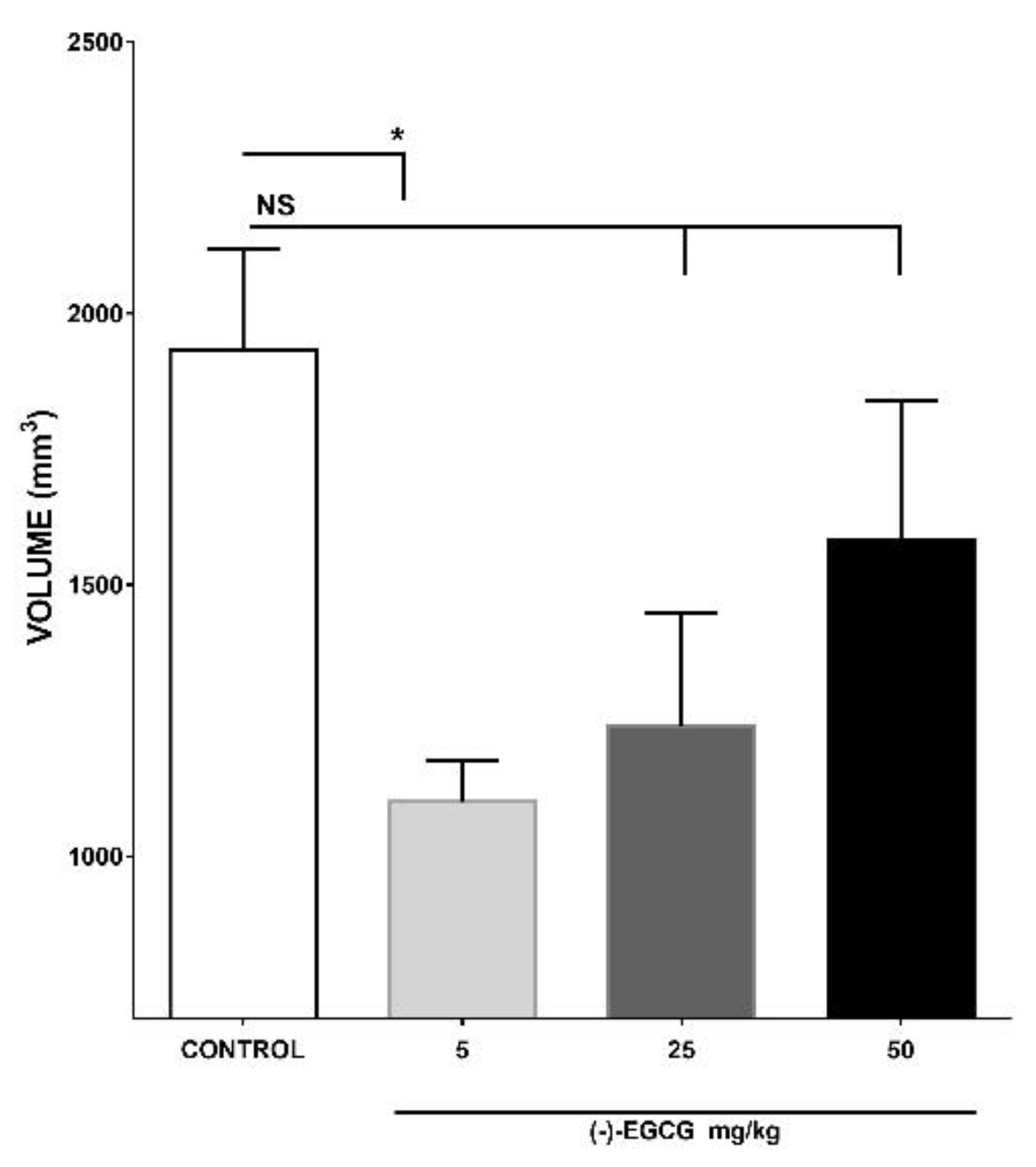
Figure 3.
Tumor volume with vincristine and its combination with EGCG. The tumor volume (mm3) obtained 11 days after IM administration of 1x10⁶ L5178Y cells in BALB/c mice treated with VCR, showed a difference between the control group and the dose of 0.30 mg/kg/c7 days (p < 0.01), this was contrary to what was observed with the doses of 0.05 and 0.15 which were similar to the control. When administered concomitantly with VCR 0.05 / EGCG 5.0 (mg/kg) there was a significant reduction in tumor volume against the control group (P < 0.01) and with VCR 0.05 (P = < 0.05), without observing the same effect with the other doses used. Each bar represents the mean ± SE with n=5. The data were analyzed by the statistical analysis of variance test (ANOVA) followed by the Tukey multiple comparison test. Values of P<0.05 were considered statistically significant.
Figure 3.
Tumor volume with vincristine and its combination with EGCG. The tumor volume (mm3) obtained 11 days after IM administration of 1x10⁶ L5178Y cells in BALB/c mice treated with VCR, showed a difference between the control group and the dose of 0.30 mg/kg/c7 days (p < 0.01), this was contrary to what was observed with the doses of 0.05 and 0.15 which were similar to the control. When administered concomitantly with VCR 0.05 / EGCG 5.0 (mg/kg) there was a significant reduction in tumor volume against the control group (P < 0.01) and with VCR 0.05 (P = < 0.05), without observing the same effect with the other doses used. Each bar represents the mean ± SE with n=5. The data were analyzed by the statistical analysis of variance test (ANOVA) followed by the Tukey multiple comparison test. Values of P<0.05 were considered statistically significant.
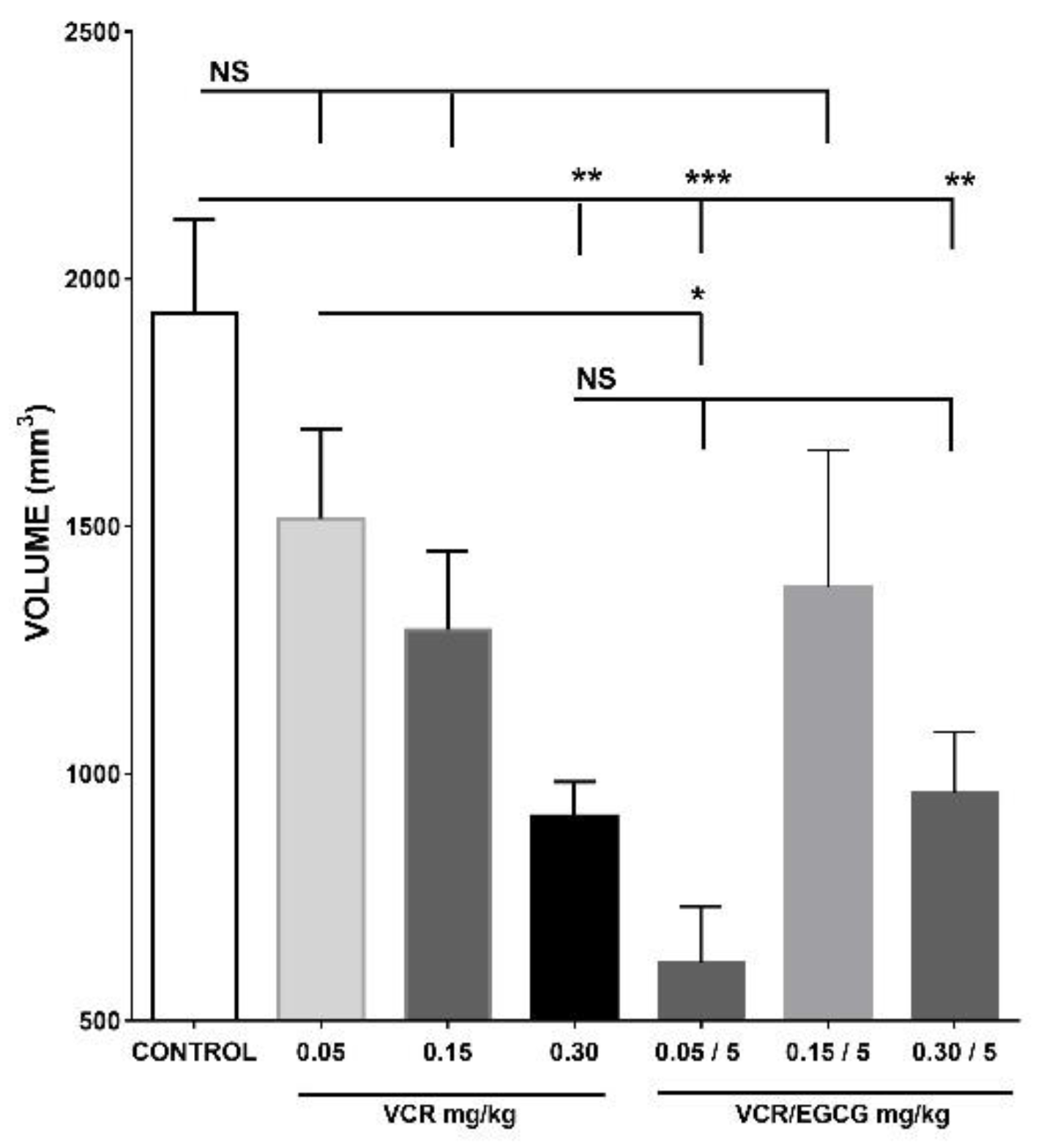
Figure 4.
Survival curves with EGCG, VCR and VCR / EGCG in L5178Y tumor. The survival curves of mice inoculated with L5178Y cells in the gastrocnemius muscle are show: 4A) The curves of the vehicle group and EGCG 5mg/kg are compared with medians of 12 and 17 days, showed a difference significant of P = 0.003; 4B) Vehicle and VCR 0.05 mg/kg. The continuous line corresponds to the control group with a median of 12 days and vincristine 0.05 mg/kg represented by the dotted line, this obtained a median of 13 days, which is similar to the control group. No significant difference was observed between the two groups. (P = 0.195); 4C) Shows VCR and the combination of VCR/EGCG with a higher probability of survival in the group with the combination of VCR / EGCG than with vincristine alone (P = 0.0038; 4D) The EGCG curves and the VCR/EGCG combination are compared, this last group represented by a dotted line, the curves present a median of 17 and 18 days respectively, no significant difference is observed between both (P = 0.45). Kaplan-Meier curves. (Log-rank). n ≥ 5. Values of P<0.05 were considered statistically significant.
Figure 4.
Survival curves with EGCG, VCR and VCR / EGCG in L5178Y tumor. The survival curves of mice inoculated with L5178Y cells in the gastrocnemius muscle are show: 4A) The curves of the vehicle group and EGCG 5mg/kg are compared with medians of 12 and 17 days, showed a difference significant of P = 0.003; 4B) Vehicle and VCR 0.05 mg/kg. The continuous line corresponds to the control group with a median of 12 days and vincristine 0.05 mg/kg represented by the dotted line, this obtained a median of 13 days, which is similar to the control group. No significant difference was observed between the two groups. (P = 0.195); 4C) Shows VCR and the combination of VCR/EGCG with a higher probability of survival in the group with the combination of VCR / EGCG than with vincristine alone (P = 0.0038; 4D) The EGCG curves and the VCR/EGCG combination are compared, this last group represented by a dotted line, the curves present a median of 17 and 18 days respectively, no significant difference is observed between both (P = 0.45). Kaplan-Meier curves. (Log-rank). n ≥ 5. Values of P<0.05 were considered statistically significant.
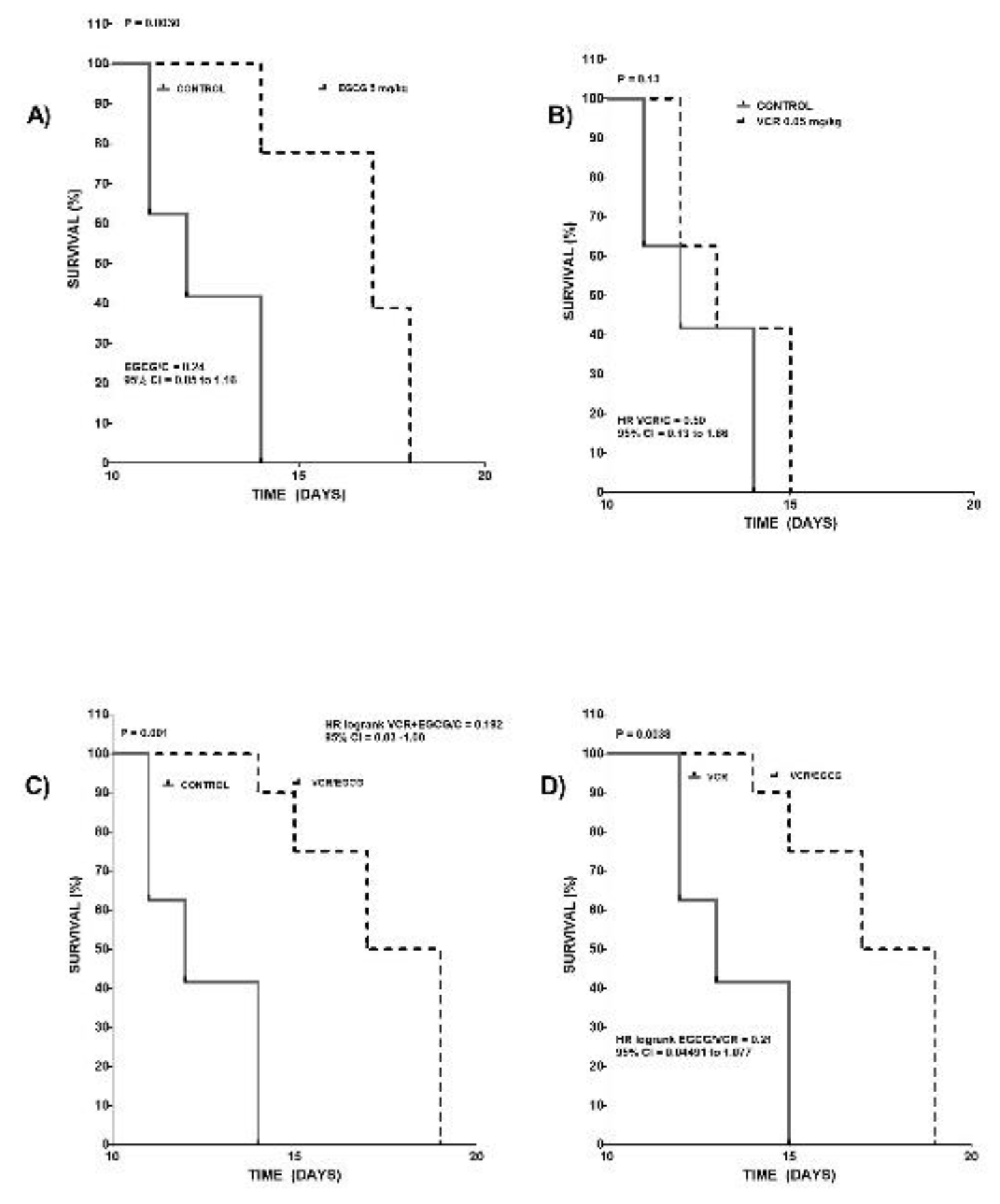
Figure 5.
Determination of p53 with VCR, EGCG and their adjuvant treatment in murine lymphoma.
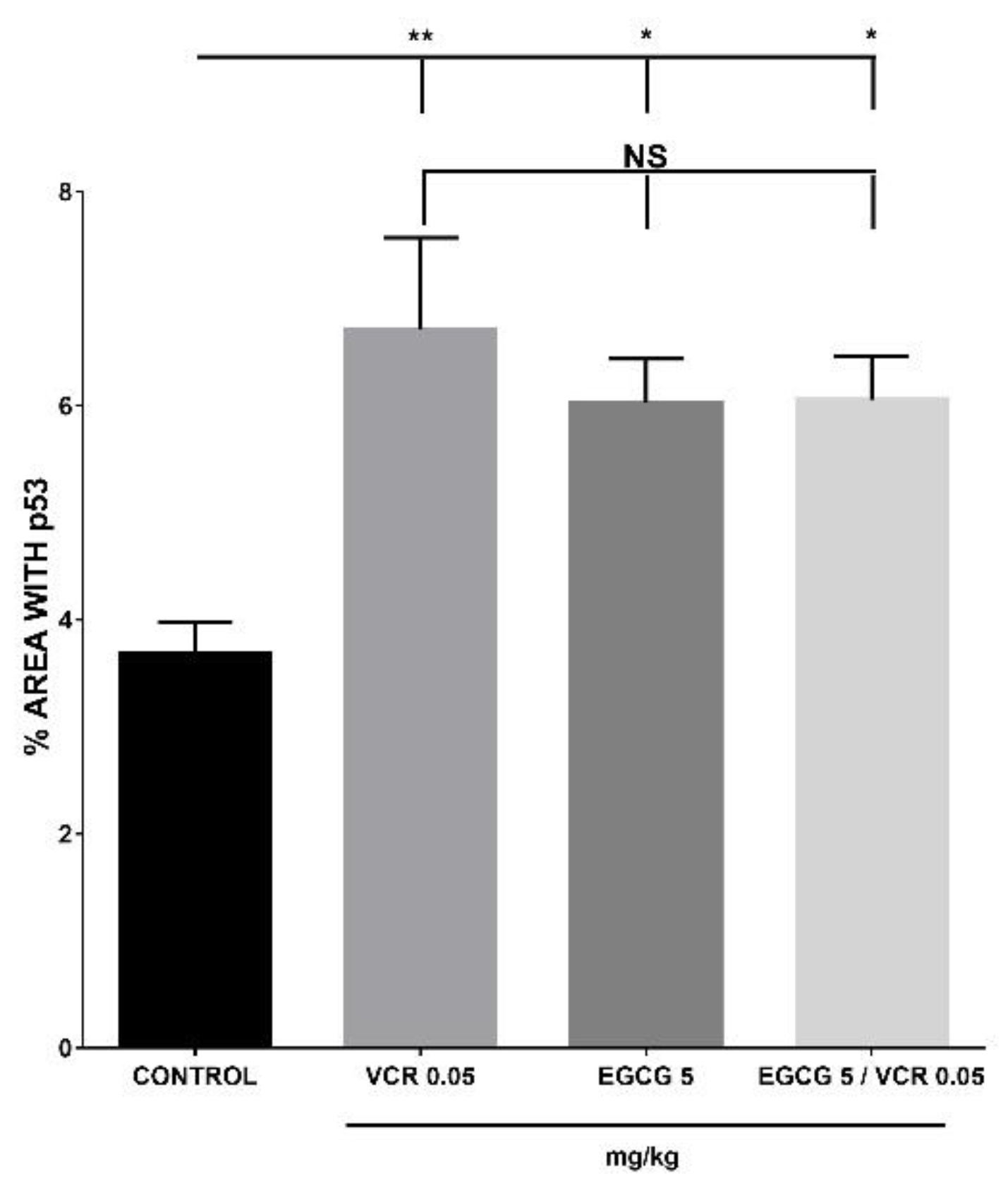
Figure 6.
Determination of CD1 protein in lymphoma murine with EGCG, VCR and VCR/ EGCG.
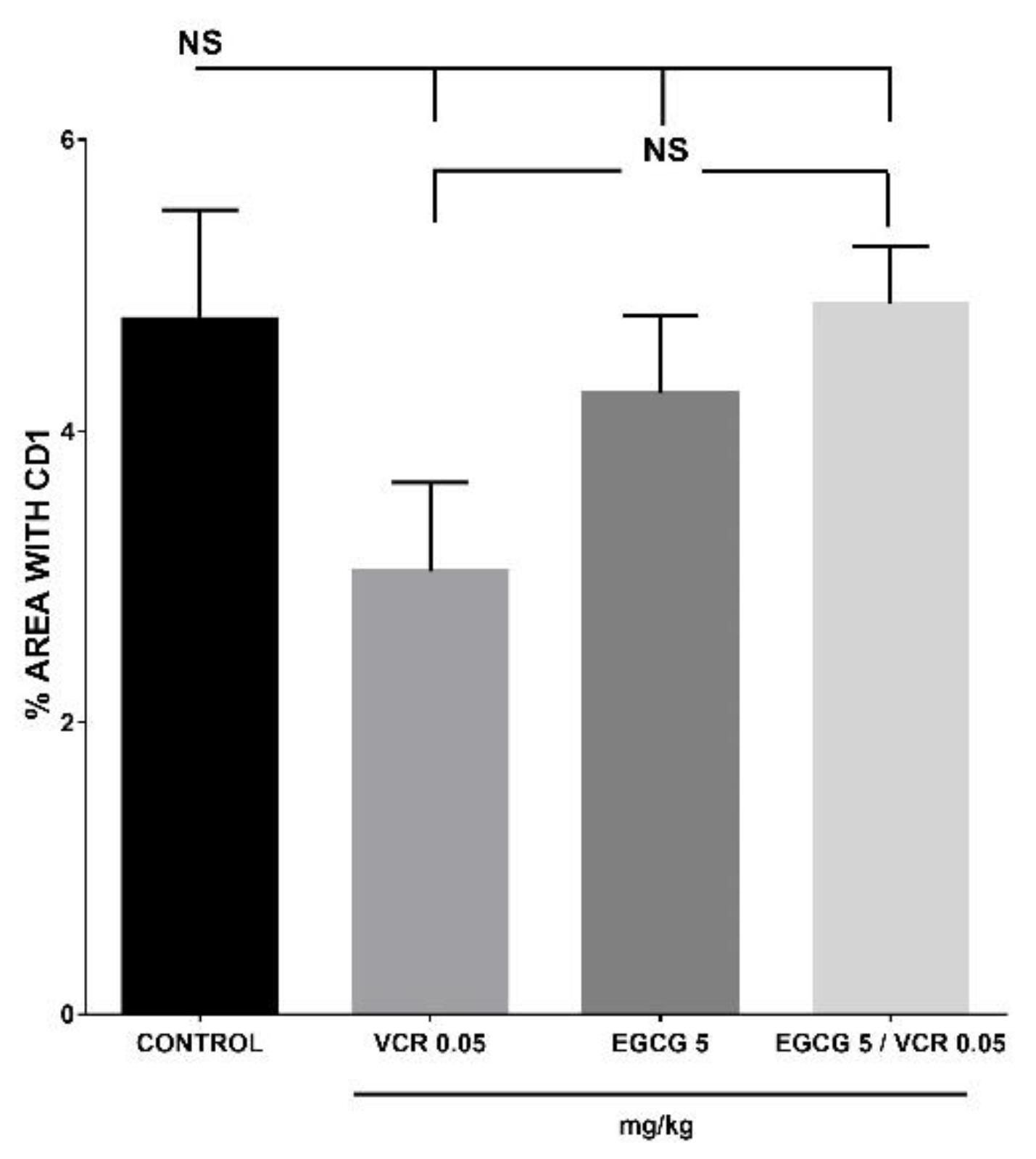
Figure 7.
Effect of VCR, EGCG and VCR/EGCG on the presence of Bcl2 in murine lymphoma.
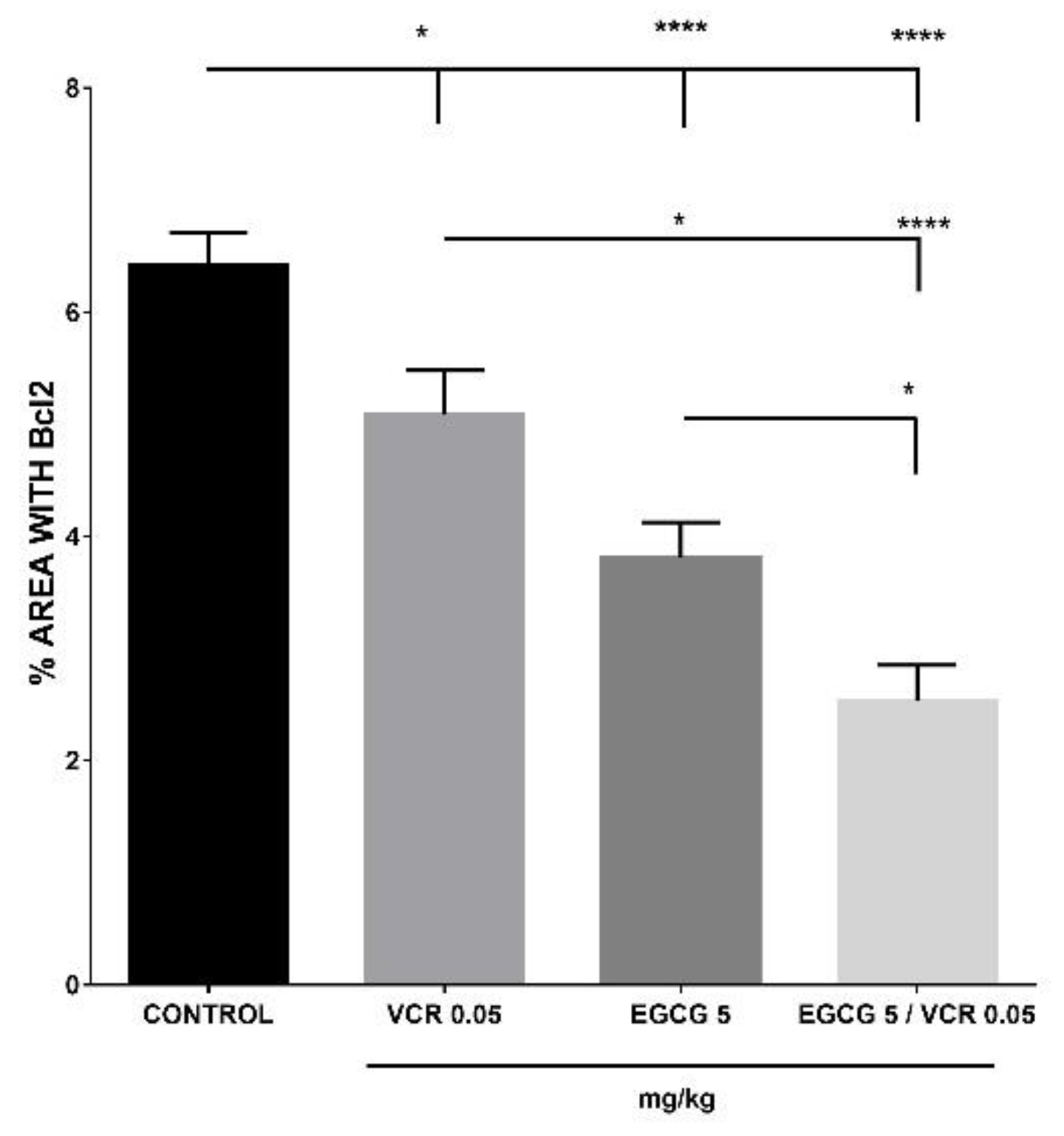

Table 1.
The table presents microphotographs of the histology of the tumor with eosin-hematoxylin staining and with the immunohistochemistry of the different p53, CD1 and Bcl2 proteins of the groups treated with EGCG, VCR and concomitant treatment.
Table 1.
The table presents microphotographs of the histology of the tumor with eosin-hematoxylin staining and with the immunohistochemistry of the different p53, CD1 and Bcl2 proteins of the groups treated with EGCG, VCR and concomitant treatment.
Disclaimer/Publisher’s Note: The statements, opinions and data contained in all publications are solely those of the individual author(s) and contributor(s) and not of MDPI and/or the editor(s). MDPI and/or the editor(s) disclaim responsibility for any injury to people or property resulting from any ideas, methods, instructions or products referred to in the content. |
© 2023 by the authors. Licensee MDPI, Basel, Switzerland. This article is an open access article distributed under the terms and conditions of the Creative Commons Attribution (CC BY) license (https://creativecommons.org/licenses/by/4.0/).
Copyright: This open access article is published under a Creative Commons CC BY 4.0 license, which permit the free download, distribution, and reuse, provided that the author and preprint are cited in any reuse.


