

Submitted:
21 August 2023
Posted:
22 August 2023
You are already at the latest version
Abstract
Modern agriculture requires technology to give precise measures about relevant parameters such as pest control. Here, we developed an algorithm model as base for bait spray intervention, by monitoring the olive fruit fly, Bactrocera oleae (Rossi), with conventional traps, in 24.3 Hectares of non-irrigated Baladi olive cultivars, in Hassbaya region. We installed 49 yellow sticky traps with ammonium bicarbonate. The adults, males and females were monitored, on weekly basis. The traps and the trees were georeferenced, and the parameters such as temperature, relative humidity, tree phenology (BBCH), and fruit load rate were compiled. The results showed that the infested fruits were correlated as much with the fruit load rate as with the number of adults captures which were correlated more to the temperature than the relative humidity. The number of the males captured was higher than the females all over the cultivation period. The first symptoms of the fruits were observed from 22 September when the BBCH was equal to 85%, with an average of adult captures lesser than 5 adults by trap by 7 days.
Keywords:
olive fruit fly
; conventional traps
; pest monitoring
; algorithm for intervention
1. Introduction
The olive fruit fly, Bactrocera oleae Rossi (1790) (Diptera; Tephritidae), is the primary insect pest in all olive growing regions worldwide including Lebanon where this tree is considered one of the most important cultivated crops [1], and causing economic losses [1,2,3,4]. The adult females deposit its eggs (50-400eggs in her lifetime) under the skin of the fruit [5]. The Larvae develop and feed on the pulp of the fruit. Infested fruit sometimes dropped prematurely. Secondary infestation of bacteria and fungi accumulated in the tunnels made by the larva inside the fruit decreases oil quality [6,7]. Thus, in years with high fly population damaged fruit cannot be processed as olive table, and in the case of olive oil production, B. oleae directly affects the amount and the quality of the oil by increasing of the acidity degree [6,7]. The flies are very mobile and have the ability to seek out cooler areas of the orchard and urban trees. Its mobility and the fact that generations overlap, make the treatment of this insect complicated task [8,9,10]. Therefore, the activity of B. oleae is influenced by several factors including latitude, altitude, tree load, irrigation [11], temperature [12], relative humidity [13], variety [14], physicochemical characteristics of drupe [15] and parasite activity [16]. In Lebanon, coverage chemical spraying is the main option used to control B. oleae [4]. Compare to its aggression mode, the control of the olive fruit fly is highly complex as conventional chemical control remains ineffective having negative impact on the environment and human health, with associated problems of resistance, side effects on beneficial insects [17,18]. There are alternative control measures for this important pest which are more environmentally friendly, such as Spinosad under bait spraying based on the monitoring of the pest population through several kind of traps especially, yellow sticky Traps [19,20,21,22]. Thus, the objectives of this study were to evaluate the critical parameters for taking decision to know when, where and how to spray, especially the number of the adults captured by yellow sticky traps added with the attractant Ammonium bicarbonate, the observations of the infested fruits coupled with climatic data (temperature, relative humidity, etc…), the phenological characteristics of the tree, especially the fruit load rate.
2. Material and Methods
2.1. Experimental Site
The Site was located in south Lebanon at Hassbaya Region. The coordinates were: Latitude 33°23'53.00"N and Longitude 35°41'5.70"E, with an elevation between 525 to 600 meters a.s.l (Goto: location : 33.382030, 35.718210) (Figure 1).
2.2. Trees and practices
The site was not flat and very heterogeneous in term of topography: It represented a lot of variation in altitude (almost 75 m of difference at max.) showing many hills and valleys. Owned by 26 farmers with a total area of 24.3 Ha, the site was composed by non-irrigated Baladi cultivar with different clones. This cultivar is characterized by a high tolerance to the drought and moderate tolerance to the OFF. The same agricultural practices were registered despite the variation in tree age, 20-70 years old, and in tree distances, 5 to 8 m giving a density of 250 to 350 trees by ha, or 5353 Trees as total number in 24.3 ha. Tree height is ranging between 3 and 7 m, with canopy diameter between 3×3 m and 7×7.5 m. The fruit load rate of the trees was achieved on 13 August (Figure 2). Pruning was not severe, weeding was almost absent, spraying was not registered from years. An addition of the animal manure by the farmers in late September was registered.
2.3. Trap Installation
The Trap Installation was realized on 22 July 2022, and the Trap ID added to the Tree ID was registered (Figure 3).
We installed 49 Yellow Sticky Traps (2 Traps / ha) added with ammonium bicarbonate in small bag (10g) (Figure 4).
The Traps numbered from T1+ to T49+). The distance between two Traps was 100m. The size of the yellow panel was 14 x 20cm; and we used only one side. Traps were placed in the same way, at 1.8 m high, to the south part of the canopy. The Traps were renewed weekly.
2.4. Meteorological Data Monitoring
The sensors weren’t applicable. The climatic data was registered from the LARI Weather Station installed far 3 km from the Site (Figure 5).
The Hasbaya AWS of DIAM at LARI is Evapotranspiration iMETOS 3.3 by Pessl Instruments (https://metos.at/), located at latitude 33.4009732°, longitude 35.6772606° and altitude 873 m. It started recording data since mid-December 2013. This iMETOS 3.3 powered by rechargeable battery and a solar panel. It is versatile, with the possibility to configure and connect many different sensors – over 600 sensors could be hooked through the intelligent sensor bus system. The data logger has a built-in UMTS/CDMA modem for direct communication (GPRS) with the Field Climate Web Platform. The system may store up to 8 MB of logged data. Data is regularly uploaded to Field Climate Web Platform with the possibility of 15 minutes recording frequency. Reference Evapotranspiration is a daily calculated parameter. The Hasbaya AWS is equipped with the following sensors: - Precipitation (mm) - Air Temperature (°C) (Dew Point temperature is then estimated) - Relative Humidity (%) - Wind Speed (m/s) - Solar Radiation (W/m2) - Wind direction (degrees) - Atmospheric Pressure (kPa) - Reference Evapotranspiration (ETo mm by day) (Calculated through FAO Penman-Monteith Equation). Thus, meteorological data was recorded during the whole experiment, at an interval of 15 min. The major parameters registered are: the temperature (average, Maximum, Minimum), the relative humidity (average, Maximum, Minimum), the speed wind, and the precipitation were registered from the beginning, 22 July till the end of the experiment, 10 November.
2.5. Parameters Studied to Take Decision for Spraying
2.5.1. Pest Captures
Bactrocera olea is the pest target in this experiment. Counting of the adults, males and females, were carried out at weekly basis. We marked the females by a red circle, and the males by a blue circle. The observations were began on 29 July and achieved on 10 November.
2.5.2. BBCH Value
The Phenological Stage Events of the olive were observed and followed in BBCH centesimal scale adopted by the PHENAGRI [23,24,25]. Thus, we reported when we obtained a BBCH A= 75 (50% of its Final Size), or B = 80-85% (fruit becoming light Green or yellowish), or C > 85-89% (harvest Maturity). The BBCH was observed and registered from 29 July till 10 November. Dimensions (W×L, Size) of the olive fruits were taken from 5 August till 15 September (examination of 6 fruits per zone Trap; total of 250 fruits) (Figure 6). Then, another dimension registration was realized on 3 November (12 fruits per zone Trap; total of 588 fruits).
2.5.3. Rate of Fruit Infestation, RFI
We collected, randomly, and examine 6 fruits per zone Trap till September 22 (total of 250 fruits) ; after this date, we had collected 12 fruits per zone Trap (total of 588 fruits) to have more representative samplings knowing that the rate of infestation would be increased, and the fruits were collected in three separate bags related to the Three Fruit Load Rate obtained and numbered with three zone Traps: 1= 50-75%, 2 = 25-50% and 3= 0-25%; the calculation of these rates was in relation with the scale of the fruit production [26,27,28,29,30].
Each fruit was examined at LARI Laboratory at Tel Amara and if needed under Stereoscope, to count the infested fruit. A fruit infestation was considered if there is one of these symptoms: presence of 1) Egg cone or plenty egg, 2) larva at the first second or third stage, 3) pupa (empty or present), or 4) empty hole (Figure 6).
2.6. Statistical Data Analysis
All the data collected weekly related to the Dimensions of the Fruits, the BBCH of the fruits, the Rate of the Fruit Infestation, the Adults (Females and Males) Captures, were treated statistically, by the multiple comparison of the mean by date and by trap zones, by following ANNOVA tests (Tukey Tests, p < 0.05) if the data represented a normal distribution, or Kruskall-Wallis Tests (p < 0.05) if the data wasn’t follow a normal distribution. Linear regression tests (Pearson Correlation) were realized between the flies captures and the temperature and the relative humidity registered, respectively. All these analysis were treated, by using SigmaStat plot software [31].
3. Results
3.1. Monitoring of the Adults
The means followed by the high values of the standard deviations were observed during the whole period of the experiment, and underline the high variation values in the total number of adults (females marked by red circle, and males by blue circle – Figure 7) from trap to trap per date (Figure 8, Figure 9 and Figure 10). This would be related to the age of the trees, or to the variation in the fruit load rate, or the heterogeneous topography of the site where the climatic conditions (T and RH) must be registered close to each trap by sensors and not from the weather station which located far from the trees. Therefore, we have to mention that the farmers began their fruit harvesting on 10 October and lasted one month.
3.2. Adult Abundance
The average number of the Adults remained low until 22 September where it reached 4.19 Adults/Trap/Week; then it increased progressively from 7 October till 10 November with an average of 12 and 18.4 Adults/Trap/Week, respectively (Figure 8).
The captures were registered in GIS system. Some map Samples extracted from the Geodatabase system (Figure 11-a, 11-b, and 11-c) showed the variation, by date, of the flies’ numbers, Adults, females or males, respectively.
Thus, examples of the interpolated maps of adult’s captures (Figure 12) registered on the traps weekly and extracted from the geodatabase, showed also the huge variation in the captures from trap to trap at the same date.
These high variations observed in the Adults (Females and males) captures were also reported in other Mediterranean regions and even in Subhumid climate (Essaouira–Maroc, and Mezghenna–Algeria and Egypt). In fact, it was observed that the olive fruit fly populations fluctuate over time and from trap to trap and from one period to another [32,33,34,35,36].
3.3. Spatial and Temporal Distribution of Bactrocera oleae Adults
Temperature and Relative Humidity were recorded on a daily basis by the LARI weather station installed at 873m. a s l. On the other hand, the min, average, and max values, for either the registered daily temperatures or the relative humidity, were very close to each other, which didn’t reflect necessarily the real situation, near the Trap. Therefore, the season was practically dried without almost rain all the time. We noticed two critical period where the Relative Humidity was very low (30 - 40%). In fact, the first was between 15 and 31 August, with an average of temperature between 27 and 30 °C; and the second was between 27 September and 2 October, with an average of temperature between 23 and 29 °C (Figure 13). Therefore, in El Fayoum – Egypt (dry region), they indicated that the relative humidity had a positive effect on the numbers of the olive fruit fly during 2017 cultivation periods using McPhail Traps and Yellow Traps [36], while many studies showed the effect of the temperature on the number of flies captures [37,38].
Thus, the density of the fly captures increased from the first week of October. Thereafter, the temperature decreased progressively from the first week of October (from 23 till 13 °C on 10 November), while the Relative Humidity was fluctuating between 40% till 80% (Figure 13). Our Statistical analysis showed that the captures were negatively correlated to the temperature with y=-3.36x + 88.96; r = 0.785 (Pearson Correlation) (Figure 14).
3.4. Sex Ratio
3.5. BBCH and fruit Dimensions
The Olive Fruits reached half their size on the beginning of August, and still green till the first week of September, the beginning date of the colour turning (BBCH: 80-81%) (Figure 16).
Progressively from September 15th, some of the olive fruits turned to the purple colour. It is important to notice that even at the end of the experiment (10 November), the fruits represented four Colour: green oily, green brown, purple, and black- purple. The Olive fruits lose size during the drought period, 22 August till the first of September; and from the first week of September they have gained size again (Figure 17).
3.6. Fruit Infestation
From 5 August to 15 September, the olive fruits showed only unfertile punctures or “white punctures” (less than 0.1 mm); Thus, these fruits maintained in the laboratory for one week, they didn’t register any hatching larva neither any egg or any other symptom. Eggs, larvae, pupae and empty holes of the OFF attacks started to show up from 22 September (Figure 18). Thus, our observations showed that the rate of the fruit infestation, RFI, remained equal to zero till 15 September; Then, the first symptoms were registered on 22 September with RFI 0.4% and 1.5%, in the tree zones with 25-50% and 0-25% fruit load rate, respectively. The RFI remained below 2% until 3 November where the tree zones with 0-25% fruit load rate, it reached 2.27%. At the end of the experiment (10 November), the RFI reached 4.4% and 3.7%, in the tree zones with 25-50% and 0-25% fruit load rate, respectively; these two RFI values registered in this date were biased by the decreased number of the olives due to the end of the fruit harvest. On the other hand, it is important to mention that the OFF attacks were absent in the tree zones with a fruit load rate between 50 and 75%. Field evaluation of the susceptibility of mill and table olive varieties to egg-laying of olive fly was studied in Sicily and Spain and the results showed that the percentages of fruit infestation increased as the olive fruit increased in diameter [43,44].
4. Discussion
Trap captures constitute the major data source for olive fruit fly population analyses. The attractiveness of yellow sticky traps to olive fruit flies was significant but varied over the cultivation period with higher attraction effects on the males than the females. Many studies showed this kind of variation with different effects on the two sexes of wild populations [42,45,46,47,48,49]. The first symptoms were registered on 22 September where the BBCH was close to the harvest period (85-87%) and the mean captures of adults equal to 4.19 adults (1.84 and 2.35 female’s and male’s captures, respectively - Figure 15). In fact, the RFI was more pronounced in the tree zones with 0-25% fruit load rate (RFI = 1.5%). We have to mention that the tolerable fruit damage threshold for table fruits is 1% and it is 10% for olive oil production in Europe [50]. The increasing number of the adult captures observed from the first week of October, would be related to the decreasing of the temperature values (below than 25°C). The relative humidity was registered severe fluctuations in their values (from almost 40% to 65% and more) one every two weeks. Many studies described the preference of the olive fruit fly to the high humidity, above 50% [37,38,51,52,53], and the moderate temperature on the number of flies captures below than 25°C [32,33,34,35,37,38]. The rate of the infested fruits observed was significantly higher in the tree zones with 0-25% fruit load rate than that of the other tree zones.
These results highlighted the importance of the fruit load rate in relation to the OFF attack. Thus, the infested fruits were correlated as much with the fruit load rate or the size of the fruit as with the number of adults captures. Then our observations allow us to set an algorithm model for bait spraying intervention, when we have the first symptoms, taking into consideration the threshold of the BBCH equal at least 85%, that of the fruit load lesser than 25%, with an average of adult captures lesser than 5 adults by trap by 7 days.
5. Conclusions
These results obtained with conventional traps, georeferenced trees, and compiled parameters such as temperature, relative humidity, tree phenology, and fruit load rate, could be the database to an automated or semi-automated system based on electronic traps, then, to implement a decision support system, DSS, to help in decision making for managing Bactrocera oleae, and to reduce the frequency and the volume of insecticide.
Author Contributions
L.K. and A. E. B.: conceived and designed experiment; S. E. R.: Conceived geodatabase; L. K., A. C., E. C., A. Y., G. F., I. J. and A. E. B.: performed field; L.K.: analyzed data; L.K.: wrote the paper; M. A., A. C., E. C., A. Y., G. F., and A. E. B.; revised the manuscript.
Acknowledgments
We are grateful to the [FruitFlyNet-ii: STR_B_A.2.1_0043/2020-2023 project, MEDITERRANEAN SEA BASIN PROGRAMME 2014-2020] for providing financial support for this research. Without their support, it would not have been possible for us to complete this project.
References
- Abdel Kader El-hajj, Nabil Nemer, SamerHajj Chhadeh, Faten Dandashi, Hiyam Yosef, Mouhammed Nasrallah, Mayssaa Houssein,Vera Talj, Mahmoud Haris, Zinnet Moussa. Status, Distribution and Parasitism Rate of Olive Fruit Fly (Bactrocera oleae.Rossi) Natural Enemies in Lebanon. Journal of Agricultural Studies 2018, ISNN 2166-0379, Vol. 6, No1. [CrossRef]
- F. Nardi, A. Carapelli, R. Dallai, G.K. Roderick, F. Frati. Population structure and colonization history of the olive fly, Bactrocera oleae (Diptera, Tephritidae). Mol. Ecol., 2005, 14, pp. 2729-2738.
- L. Ponti, Q.A. Cossu, A.P. Gutierrez. Climate warming effects on the Olea europaea - Bactrocera oleae system in Mediterranean islands: sardinia as an example. Glob. Chang. Biol., 2009, 15, pp. 2874 – 2884.
- N.E. Zygouridis, A.A. Augustinos, F.G. Zalom, K.D. Mathiopoulos. Analysis of olive fly invasion in California based on microsatellite markers. Heredity (Edinb), 2009, 102, pp. 402-412.
- Daniela MARCHINI, Ruggero PETACCHI, Susanna MARCHI. Bactrocera oleae reproductive biology: new evidence on wintering wild populations in olive groves of Tuscany (Italy), Bulletin of Insectology 2017, 70 (1): 121-128, ISSN 1721-8861. 1.
- Zalom F., G. , Van Steenwyk R. A., and Burrack H. J. Olive fruit fly. Pest Notes, University of California, publication, 2009, 74112, 4 p.
- G. Caruso, A. Loni, A. Raspi, R. Gucci, B. Bagnoli. Olive fruit fly effects on free acidity and peroxides value of olive oil. Acta Hortic. 1057, 281-286. In VII International Symposium on Olive Growing. Ed., F. Vita Serman, P. Searles, M. Torres, 2014. ISBN 978-94-62610-47-7. [CrossRef]
- Manousis Thanasis and Moore N. F. Control of Dacus oleae, a major pest of olives. International Journal of Tropical Insect Science, 1987, 8 (01). [CrossRef]
- Mazomenos, B. E. , Pantazi-Mazomenou, A., & Stefanou, D. Attract and kill of the olive fruit fly Bactrocera oleae in Greece as a part of an integrated control system. IOBC/WPRS Bulletin, 2002, 25. [Google Scholar]
- Montiel Bueno, A. and Jones, 0. Alternative methods for controlling the olive fly, Bactrocera oleae, involving semiochemicals. Bulletin OILB/SROP, 2002, Vol. 25, No9, 147-155pp.
- Neuenschwander, P., Michelakis, S. Determination of the lower thermal thresholds and day-degree requirements for eggs and larvae of Dacus oleae (Gmel.) (Diptera: Tephritidae) under field conditions in Crete, Greece. Bul.Soc. Ent. Suisse, 1979-a, 52: 57-74pp.
- Raspi, A., Canale, A., Loni, A. Presence of mature eggs in olive fruit fly, Bactrocera oleae (Diptera Tephritidae), at different constant photoperiods and at two temperatures. Bulletin of Insectology, 2005, 58 (2): 125.
- Broufas, G. D., Pappas, M. L., Koveos, D. S. Effect of relative humidity on longevity, ovarian maturation, and egg production in the olive fruit fly (Diptera: Tephritidae). Annals of the Entomological Society of America, 2009, 102 (1): 70-75pp.
- Rizzo, R., Caleca, V. Resistance to the attack of Bactrocera oleae (Gmelin) of some Sicilian olive cultivars. In Proceedings of Olivebioteq 2006, Second International Seminar “Biotechnology and quality of olive tree products around the Mediterranean Basin” November 5th–10th, Mazara del Vallo, Marsala, Italy, 2006, 2: 291-298pp.
- Mraicha, F., Ksantini, M., Zouch, O., Ayadi, M., Sayadi, S., Bouaziz, M. Effect of olive fruit fly infestation on the quality of olive oil from Chemlali cultivar during ripening. Food and Chemical Toxicology, 2010, 48 (11): 3235-3241pp.
- Kapaun, T., Nadel, H., Headrick, D., Vredevoe, L. Biology and parasitism rates of Pteromalus nr. myopitae (Hymenoptera: Pteromalidae), a newly discovered parasitoid of olive fruit fly Bactrocera oleae (Diptera: Tephritidae) in coastal California. Biological control, 2010, 53 (1): 76-85.
- Cardenas, M.; Ruano, F.; Garcia, P.; Pascual, F.; Campos, M. Impact of agricultural management on spider populations in the canopy of olive trees. Biol. Control, 2006, 38, 188–195.
- Nobre, T.; Gomes, L.; Rei, F.T. A Re-Evaluation of Olive Fruit Fly Organophosphate-Resistant Ace Alleles in Iberia, and Field Testing Population Effects after in-Practice Dimethoate Use. Insects, 2019, 10, 232.
- Petacchi, R.; Rizzi, I.; Guidotti, D. The ‘lure and kill’ technique in Bactrocera oleae (Gmel.) control: Effectiveness indices and suitability of the technique in area-wide experimental trials. Int. J. Pest Manag., 2003, 49, 305–311.
- Iannotta,N., Belfiore,T., Noce M.E., Scalercio,S.,&Vizzarri,V. Comparison between attract and kill devices for B.oleae in an organic olive orchard: preliminary data. ISHS Acta horticulturae, 2010, 873.
- Abdul-Jalil Hamdan, Mohammad I. Al qurna. The Seasonal Flight Activity of the Olive Fruit Fly Bactrocera oleae (Gmelin) (Diptera: Tephritidae) in the Central Highlands of West-Bank, Palestine. Journal of Agricultural Sciences, 2017, Volume 13, No.2, 457-464pp.
- Rizzo, R.; Lo Verde, G.; Sinacori, M.; Maggi, F.; Cappellacci, L.; Petrelli, R.; Vittori, S.; Morshedloo, M.R.; Fofie, N.; Benelli, G. Developing green insecticides to manage olive fruit flies? Ingestion toxicity of four essential oils in protein baits on Bactrocera oleae. Ind. Crop. Prod., 2020, 143, 111884.
- Meier, U. BBCH-Monograph. Growth Stages of Plants—Entwicklungsstadien von Pflanzen—Estadios de las Plantas—Développement des Plantes. Blackwell Wissenschafts-Verlag: Berlin, Germany, 1997, pp. 94–95.
- Sanz-Cortes, F.; Martinez-Calvo, J.; Badenes, M.L.; Bleiholder, H.; Hack, H.; Llacer, G.; Meier, U. Phenological growth stages of olive trees (Olea europaea). Ann. Appl. Biol., 2002, 140, 151–157.
- Arianna Di Paola, Maria Vincenza Chiriaco, Francesco Di Paola, and Giovanni Nieddu. A Phenological Model for Olive (Olea europaea L. var europaea) Growing in Italy. Plants, 2021, 10, 1115. https://doi.org/10.3390/plants10061115, 15 p.
- Kyriaki VARIKOU, Nikos GARANTONAKIS, Athanasia BIROURAKI, 2014. Response of olive fruit fly Bactrocera oleae to various attractant combinations, in orchards of Crete. Bulletin of Insectology, 2014, 67 (1): 109-114, 2014. ISSN 1721-8861.
- Lavee, S. Alternate bearing in olive initiated by abiotic induction leading to biotic responses. Adv. Hort. Sci., 2015, 29(4): 213-219.
- Víctor Beyá-Marshall and Thomas Fichet, 2017. Effect of crop load on the phenological, vegetative and reproductive behavior of the ‘Frantoio’ olive tree (Olea europaea L.). In Cien. Inv. Agr. 2017, 44(1):43-53.
- Wecchsler Tahel, Bakhshian Ortal, Engelen C. Dag Arnon, Ben-Ari Giora and Samach Alon. Determining Reproductive Parameters, which Contribute to Variation in Yield of Olive Trees from Different Cultivars, Irrigation Regimes, Age and Location. Plants, 2022, 11 (18), 2414 . [CrossRef]
- Miguel Ángel Miranda, Carlos Barceló, Ferran Valdés, José Francisco Feliu, David Nestel, Nikolaos Papadopoulos, Andrea Sciarretta, Maurici Ruiz and Bartomeu Alorda. Developing and Implementation of Decision Support System (DSS) for the Control of Olive Fruit Fly, Bactrocera oleae, in Mediterranean Olive Orchards. Agronomy, 2019, 9, pp. 620-643. [CrossRef]
- SigmaPlot 12.3 (Systat Software, San Jose, CA, USA). SigmaPlot graphing software from Systat Software.
- Ordano, M.; Engelhard, I.; Rempoulakis, P.; Nemny-Lavy, E.; Blum, M.; Yasin, S.; Lensky, I.; Papadopoulos, N. and Nestel, D. Olive Fruit Fly (Bactrocera oleae) Population Dynamics in the Eastern Mediterranean: Influence of Exogenous Uncertainty on a Monophagous Frugivorous Insect. Plos one, 2015, 10(5): 1-18.
- Murat HELVACI, Mehmet AKTAŞ, Özge ÖZDEN. Occurrence, damage, and population dynamics of the olive fruit fly (Bactrocera oleae Gmelin) in the Turkish Republic of Northern Cyprus. Turkish Journal of Agriculture and Forestry, 2018, 42: 453-458. [CrossRef]
- Mansour, A.; Kahime, K.; Chemseddine, M. and Boumezzough, A. Study of the Population Dynamics of the Olive Fly, Bactrocera oleae Rossi. (Diptera, Tephritidae) in the Region of Essaouira. Open Journal of Ecology, 2015, 5: 174-186. 1: 5.
- Achouche A., Abbassi F., Benzahra A., Djazouli Z. Study of population dynamics of the olive fruit fly Bactrocera oleae (Diptera, Tephritidae); (rossi, 1790) in the Mezghenna area. Ukrainian Journal of Ecology, 2019, 9 (3) pp. 309-314.
- Abd El-Salam, A.M.E.; Salem, S.A.; El-Kholy, M.Y.; Abdel-Rahman, R.S. and Abdel-Raheem, M. A. Role of the olive fly, Bactrocera oleae (rossi) traps in integrated pest management on olive trees under climatic change conditions in egypt. Plant Archives, 2019, Vol. 19, Supplement 2, pp. 457-461.
- Gonçalves, F. M. , Rodrigues, M. C., Pereira, J. A., Thistlewood, H., & Torres, L. M. Natural mortality of immature stages of Bactrocera oleae (Diptera: Tephritidae) in traditional olive groves from north-eastern Portugal. Biocontrol Science and Technology, 2012, 22, 837–854. [Google Scholar] [CrossRef]
- Marchi, S. , Guidotti, D., Ricciolini, M., & Petacchi, R. Towards understanding temporal and spatial dynamics of Bactrocera oleae (Rossi) infestations using decade-long agrometeorological time series. International Journal of Biometeorology, 2016, 60, 1681–1694. [Google Scholar] [PubMed]
- Ant, T. , Koukidou, M., Rempoulakis, P., Gong, H.-F., Economopoulos, A., Vontas, J., & Alphey, L. Control of the olive fruit fly using genetics-enhanced sterile insect technique. BMC Biology, 2012, 10, 51. [Google Scholar] [CrossRef]
- Speranza, S. , Bellocchi, G., & Pucci, C. IPM trials on attract-and-kill mixtures against the olive fly Bactrocera oleae (Diptera Tephritidae). Bulletin of Insectology, 2004, 57, 111–115. [Google Scholar]
- Zervas, G. Reproductive physiology of Dacus oleae (GMELIN) Diptera Tephritidae. Comparison of wild and laboratory reared flies. In Geoponika, 1982. https://agris.fao.org.
- Katsoyannos, B. I. , & Kouloussis, N. A. Captures of the olive fruit fly Bactrocera oleae on spheres of different colours. Entomologia Experimentalis et Applicata 2001, 100, 165–172. [Google Scholar] [CrossRef]
- Rizzo, R., Virgilio, C., & Alberto, L. Relation of fruit color, elongation, hardness, and volume to the infestation of olive cultivars by the olive fruit fly, Bactrocera oleae. Entomologia Experimentalis et Applicata, 2012, 145, 15–22. [CrossRef]
- Enrique Quesada-Moraga, Cándido Santiago-Álvarez, Salvador Cubero-González, Germán Casado-Mármol, Alfonso Ariza-Fernández, Meelad Yousef. Field evaluation of the susceptibility of mill and table olive varieties to egg-laying of olive fly. Journal of Applied Entomology, 2018, 142, pp.765–774.
- Zouros, E., & Krimbas, C. B. Frequency of female digamy in a natural population of the olive fruit fly Dacus oleae as found using enzyme polymorphism. Entomologia Experimentalis et Applicata, 1970, 13, 1–9. [CrossRef]
- Merle Preu, Johannes L. Frieß, Broder Breckling and Winfried Schröder. Chapter: Case Study 1: Olive Fruit Fly (Bactrocera oleae). In Book: Gene Drives at tipping points. Precautionary technology assessement and governance of new approaches to genetically modify animal and plant populations. Ed., A. Von Gleich and W. Schroder; Publisher: Springer Open, Gewerbestrasse 11, 6330 Cham, Switzerland, 2019, pp. 79-102. [CrossRef]
- Dominici, M. , Pucci, C., & Montanan, G. E. Dacus oleae (Gmel.) ovipositing in olive drupes (Diptera, Tephrytidae). Journal of Applied Entomology 1986, 101, 111–120. [Google Scholar] [CrossRef]
- Gümusay, B. , Ozilbey, U., Ertem, G., & Oktar, V. Studies on the susceptibility of some important table and oil olive cultivars of Aegean Region to olive fly (Dacus oleae Gmel.) in Turkey. Acta Horticulturae 1990, 286, 359–361. [Google Scholar] [CrossRef]
- Neuenschwander, P. , Michelakis, S., Holloway, P., & Berchtol, W. Factors affecting the susceptibility of fruits of different olive varieties to attack by Dacus oleae (Gmel.) (Dipt., Tephritidae). Journal of Applied Entomology 2009, 100, 174–188. [Google Scholar] [CrossRef]
- Kicenik Devarenne A, Vossen PM. Monitoring and organic control of olive fruit fly. In: Vossen PM (ed.). Organic Olive Production Manual, 2007, UC ANR Pub 3505. Oakland, CA. p 47–51.
- Fletcher, B. S. , & Economopoulos, A. P. Dispersal of normal and irradiated laboratory strains and wild strains of the olive fly Dacus oleae in an olive grove. Entomologia Experimentalis et Applicata, 1976, 20, 183–194. [Google Scholar]
- Broumas, T. , Haniotakis, G., Liaropoulos, C., Tomazou, T., & Ragoussis, N. The efficacy of an improved form of the mass-trapping method, for the control of the olive fruit fly, Bactrocera oleae (Gmelin) (Dipt., Tephritidae): Pilot-scale feasibility studies. Journal of Applied Entomology, 2002, 126, 217–223. [Google Scholar] [CrossRef]
- Bueno, A. M. , & Jones, O. T. Alternative methods for controlling the olive fly Bactrocera oleae involving semiochemicals. IOBC/WPRS Bulletin, 2002, 25, 1–11. [Google Scholar]
Figure 1.
(a) Area of the experimental Site owned by 26 farmers; (b) Protected zones in the Site composed by cement manufactory.
Figure 1.
(a) Area of the experimental Site owned by 26 farmers; (b) Protected zones in the Site composed by cement manufactory.
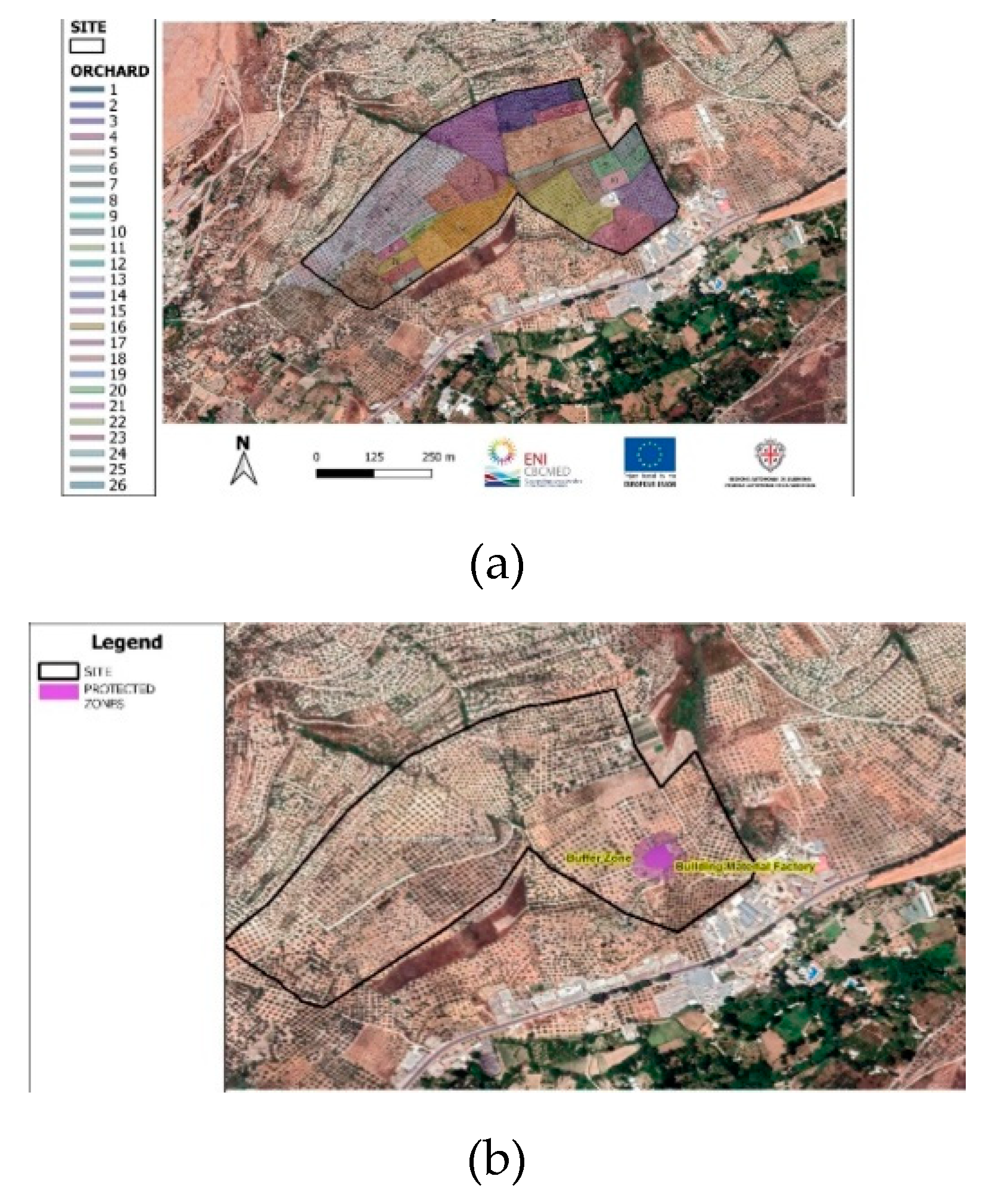
Figure 2.
(a) output of the OliveFlyNet applications interface showing details about information
stored in the geodatabase system; (b) Tree Location Map; (c) Verronoï polygons of the Trap zones; (d)
Tree Picture.
Figure 2.
(a) output of the OliveFlyNet applications interface showing details about information
stored in the geodatabase system; (b) Tree Location Map; (c) Verronoï polygons of the Trap zones; (d)
Tree Picture.
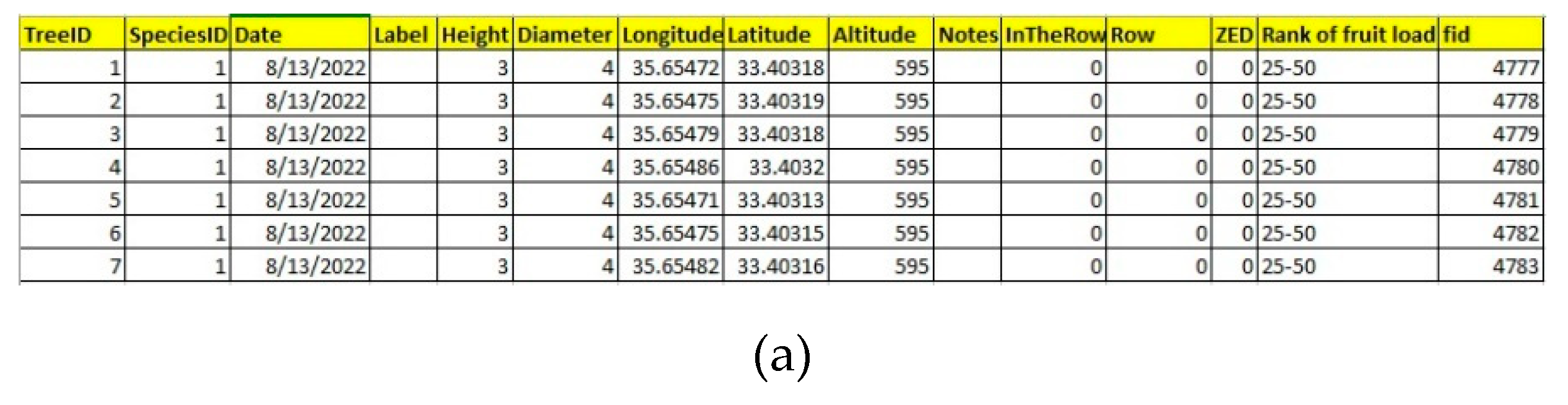
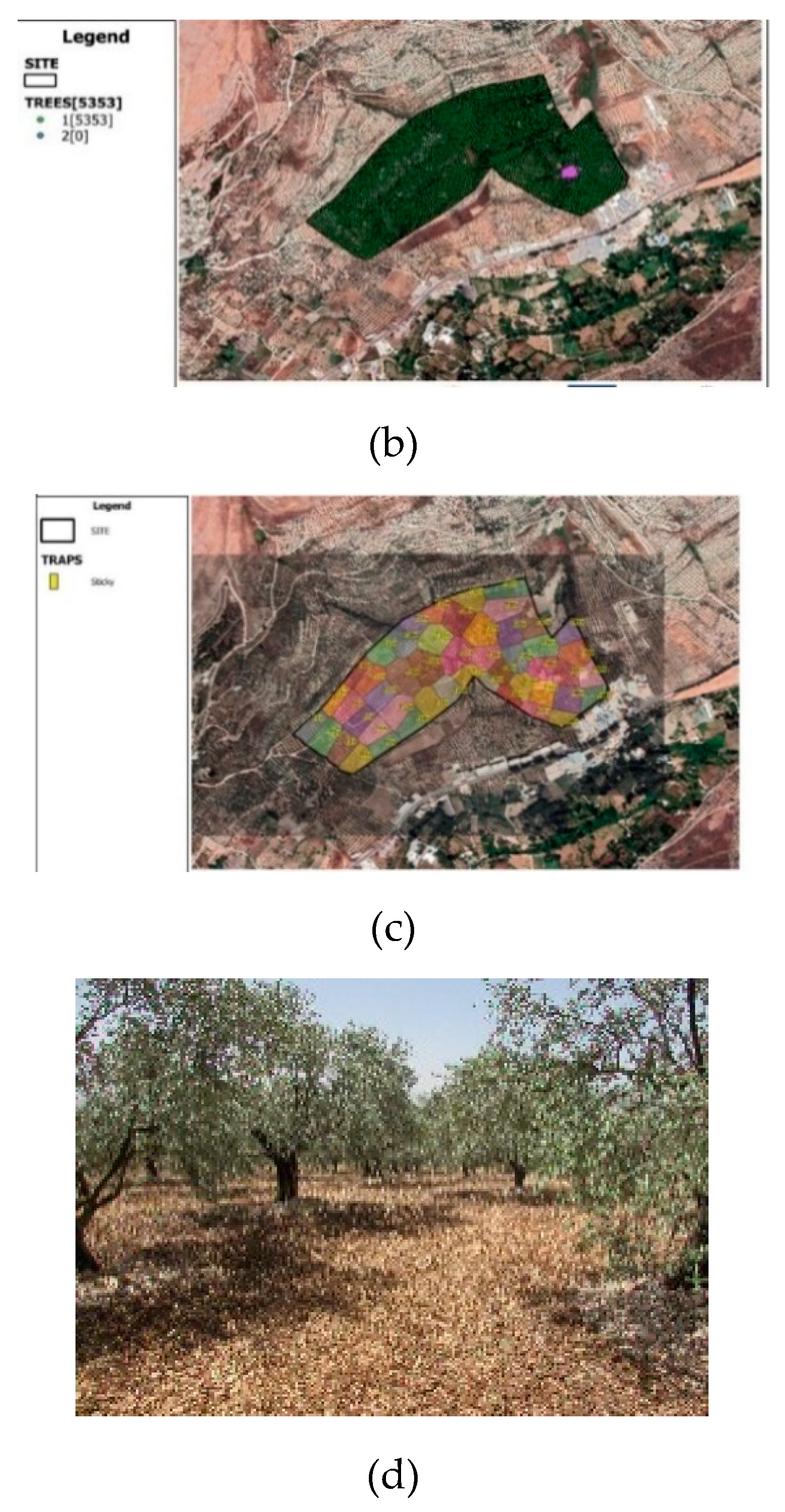
Figure 3.
Output of the OliveFlyNet applications interface showing details about information stored in the geodatabase system.
Figure 3.
Output of the OliveFlyNet applications interface showing details about information stored in the geodatabase system.
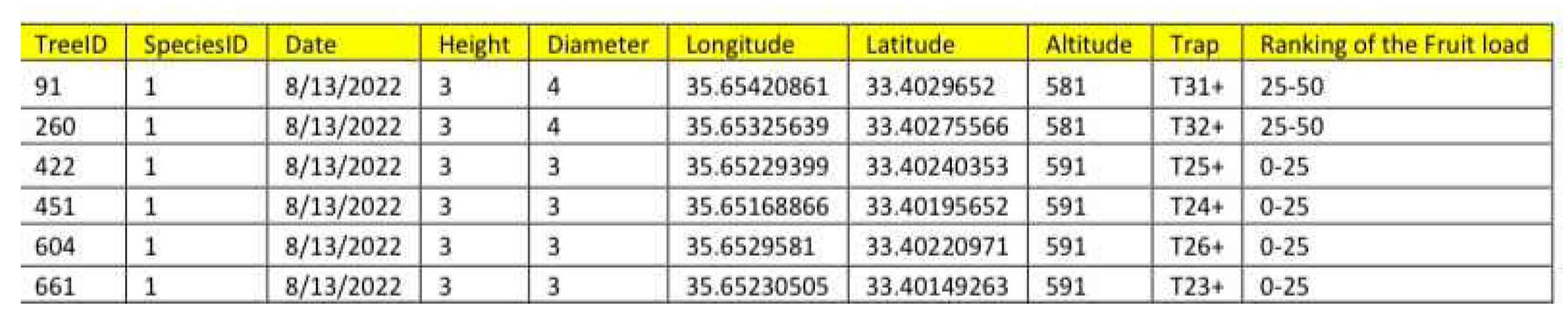
Figure 4.
Yellow Sticky Traps (2 Traps / ha) added with ammonium bicarbonate in small bag (10g).
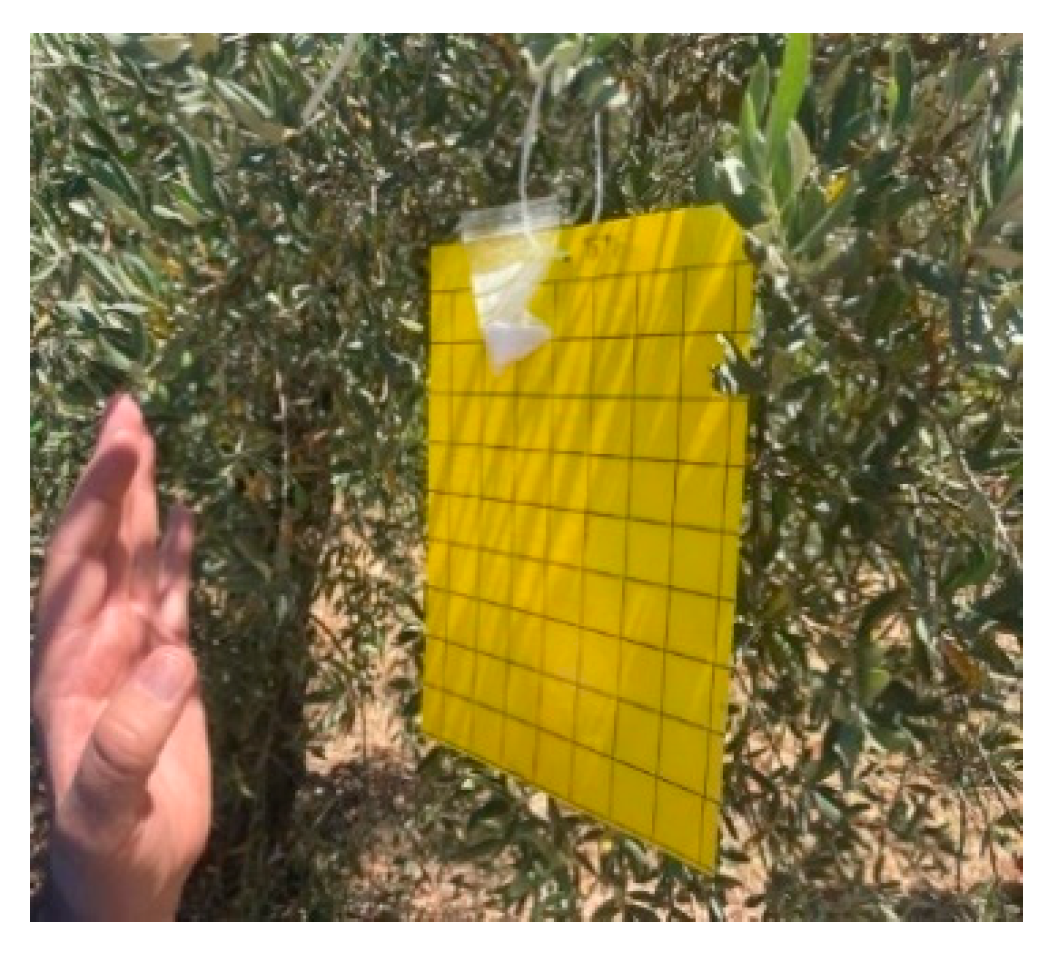
Figure 5.
LARI Weather Station at Hassbaya Region.
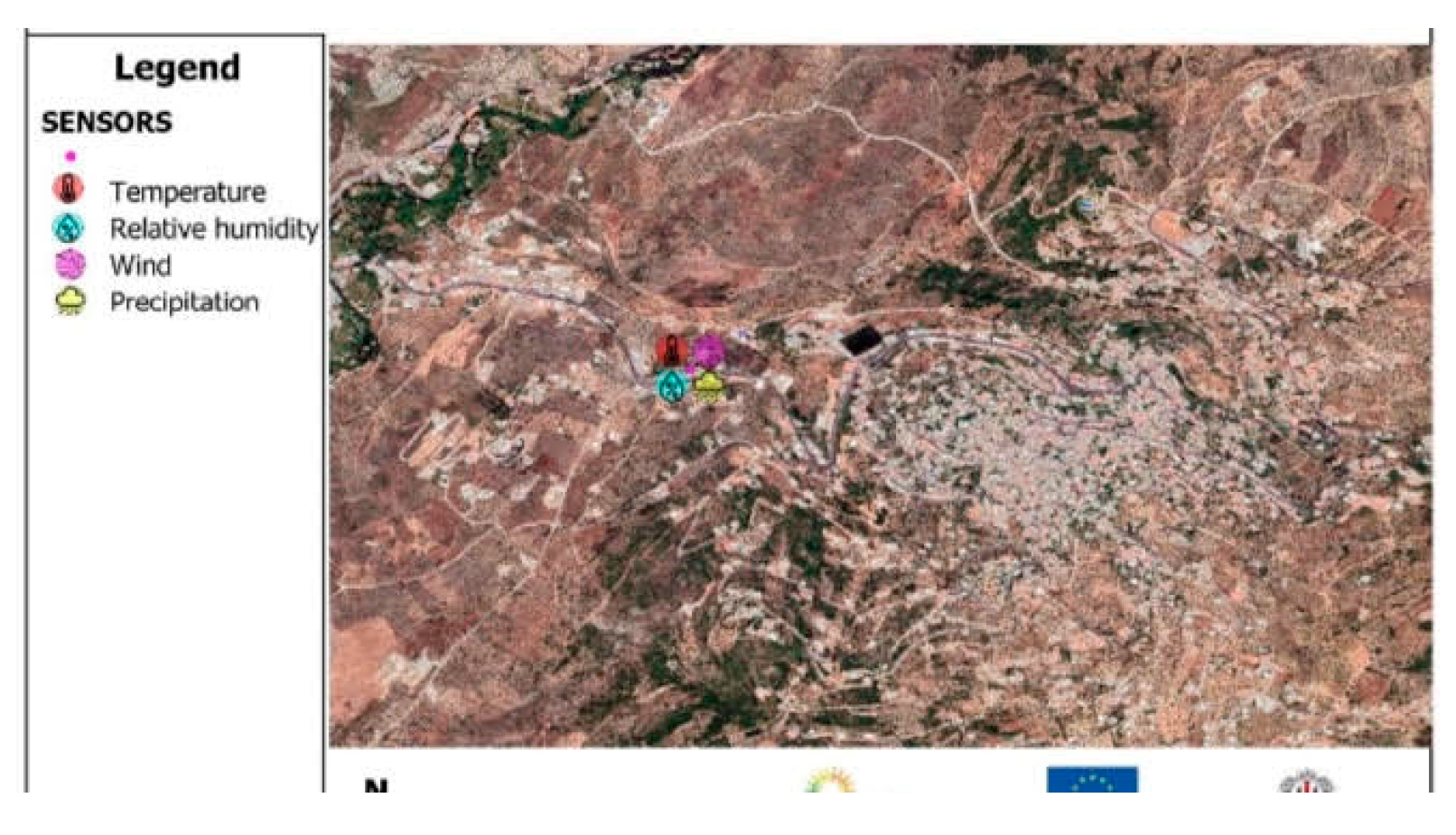
Figure 6.
Fruit Observation and Dimensions (W × L; Size), and Rate of the Fruit Infestation Registrations.
Figure 6.
Fruit Observation and Dimensions (W × L; Size), and Rate of the Fruit Infestation Registrations.
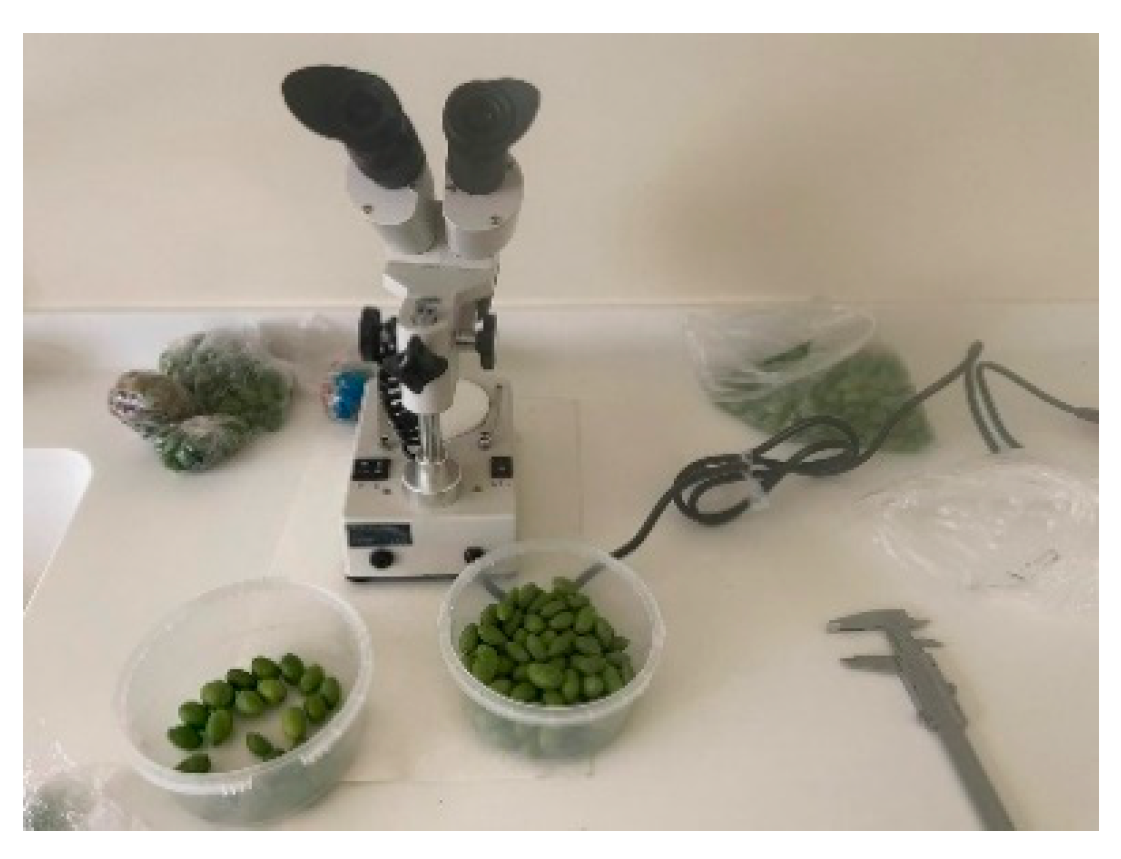
Figure 7.
Sample of Yellow Sticky Traps added with Ammonium Bicarbonate in plastic bag (10g).
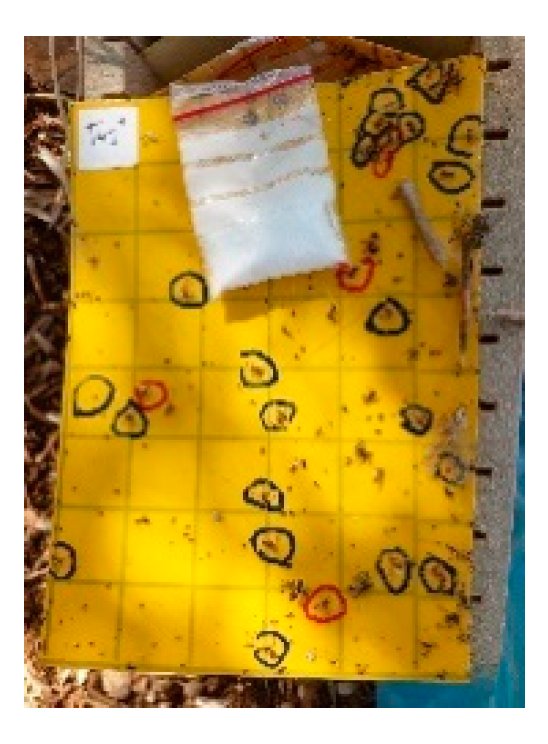
Figure 8.
Means and Standard Deviation of the Adult’s Captures by Trap by date (49 Yellow Sticky Traps with Ammonium Bicarbonate in 24.3 ha).
Figure 8.
Means and Standard Deviation of the Adult’s Captures by Trap by date (49 Yellow Sticky Traps with Ammonium Bicarbonate in 24.3 ha).
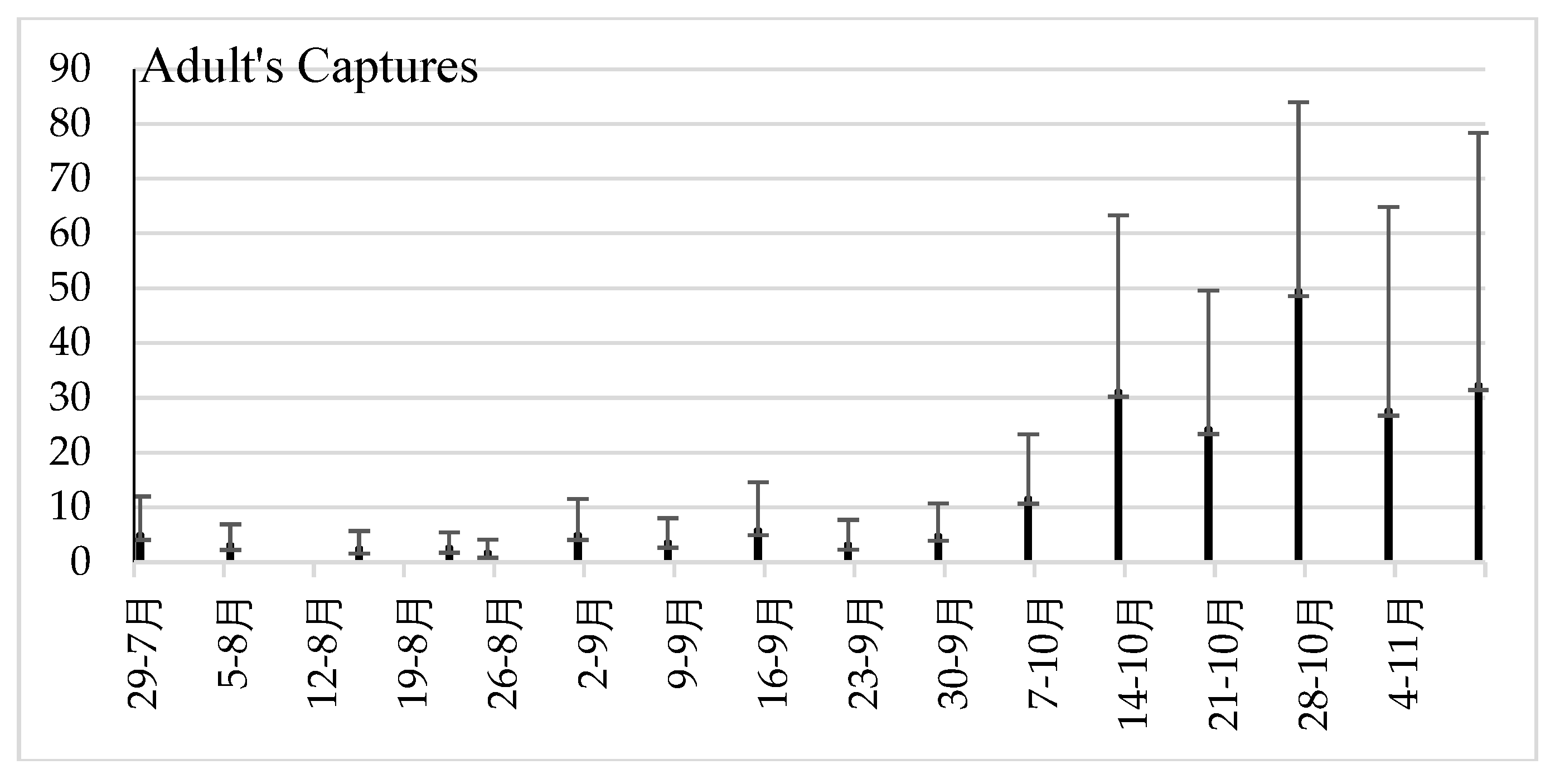
Figure 9.
Means and Standard Deviation of the Female’s Captures by Trap by date (49 Yellow Sticky Traps with Ammonium Bicarbonate in 24.3 ha).
Figure 9.
Means and Standard Deviation of the Female’s Captures by Trap by date (49 Yellow Sticky Traps with Ammonium Bicarbonate in 24.3 ha).
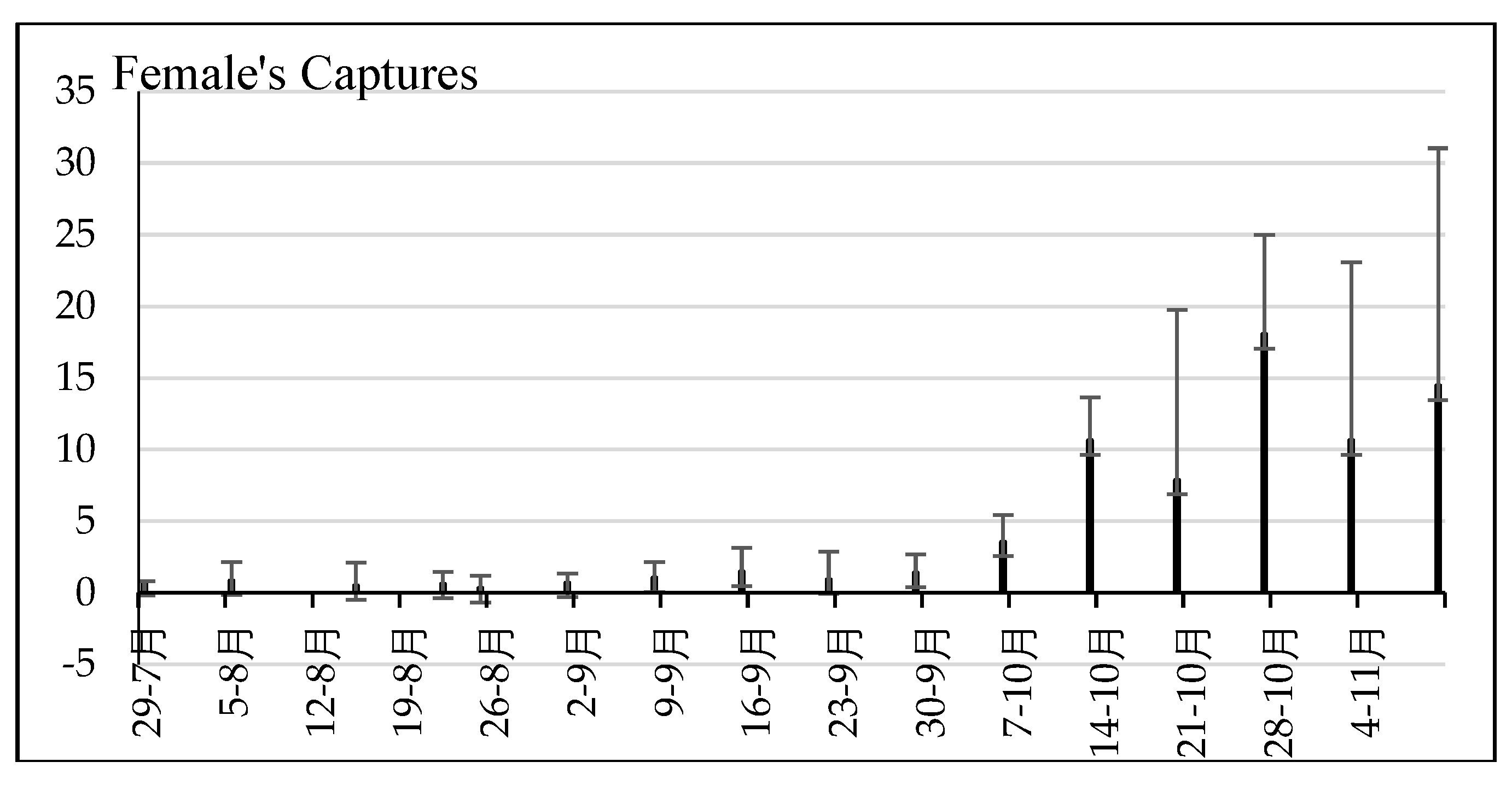
Figure 10.
Means and Standard Deviation of the Male’s Captures by Trap by date (49 Yellow Sticky Traps with Ammonium Bicarbonate in 24.3 ha).
Figure 10.
Means and Standard Deviation of the Male’s Captures by Trap by date (49 Yellow Sticky Traps with Ammonium Bicarbonate in 24.3 ha).
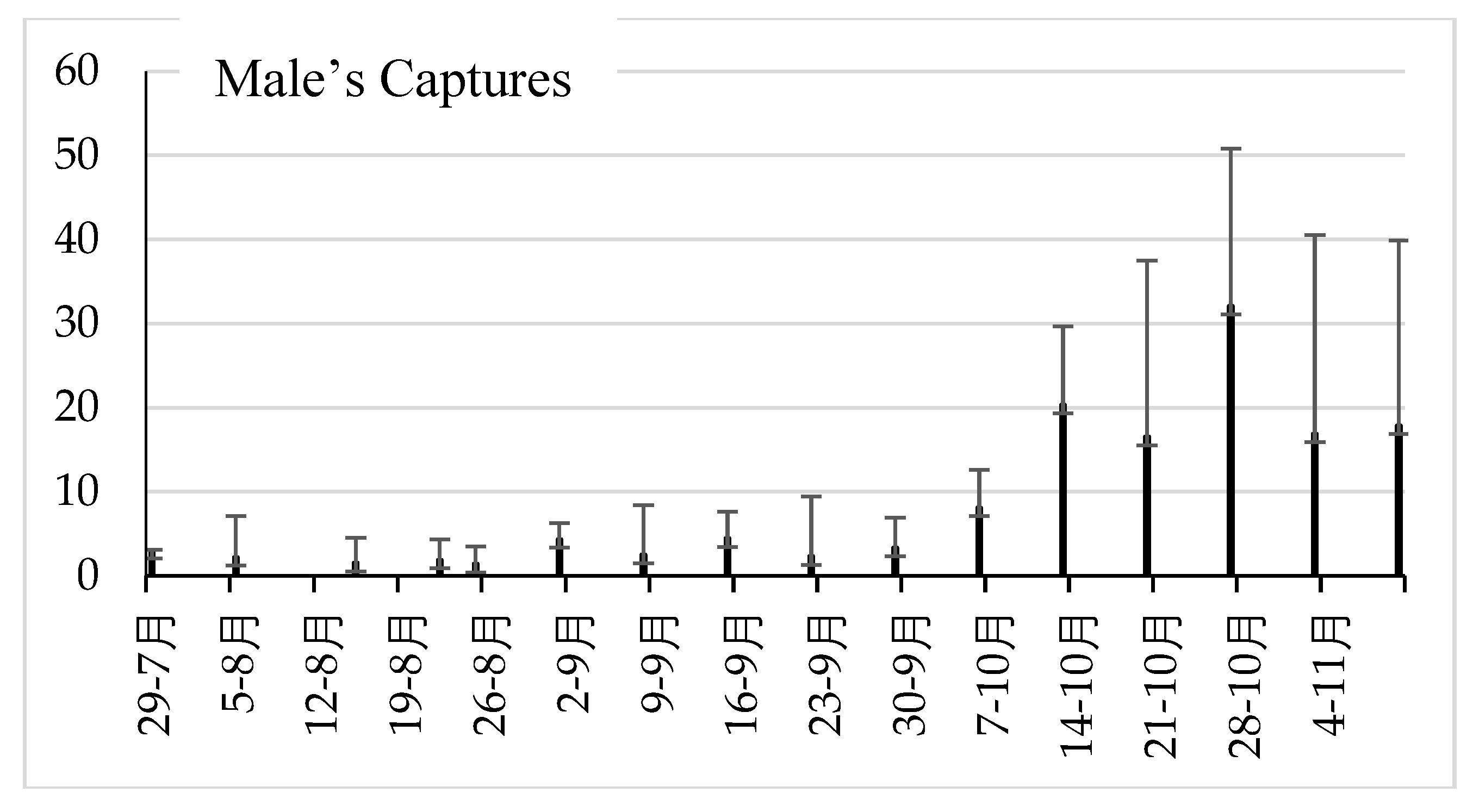
Figure 11.
Bactrocera oleae’s Captures by Trap by date in the Developing of Decision Support System Site (49 Yellow Sticky Traps with Ammonium Bicarbonate in 24 Ha); (a) Males captures on 5 Aug.; (b) Females Captures on 22 Sep.; (c) Adults captures on 6 Oct.
Figure 11.
Bactrocera oleae’s Captures by Trap by date in the Developing of Decision Support System Site (49 Yellow Sticky Traps with Ammonium Bicarbonate in 24 Ha); (a) Males captures on 5 Aug.; (b) Females Captures on 22 Sep.; (c) Adults captures on 6 Oct.
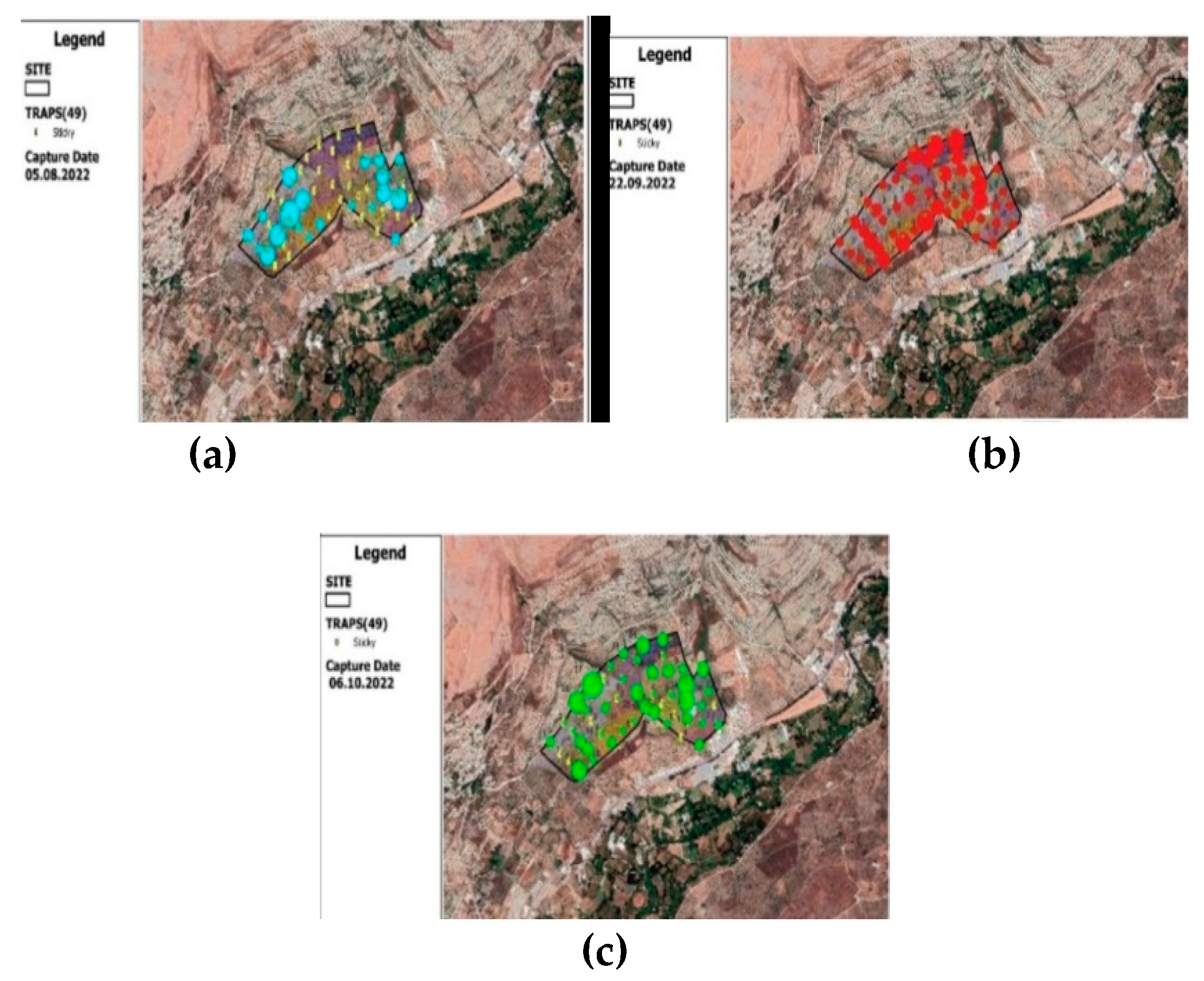
Figure 12.
Interpolated maps of B. oleae Adult’s captures on yellow sticky traps with ammonium bicarbonate, from 29 July till 10 November 2022: (a) 27 Jul.; (b) 5 Aug.; (c) 15 Aug.; (d) 22 Aug.; (e) 25 Aug.; (f) 01 Sep.; (g) 08 Sep.; (h) 15 Sep.; (i) 22 Sep.; (j) 29 Sep.; (k) 6 Oct.; (l) 13 Oct.; (m) 20 Oct.; (n) 27 Oct.; (o) 3 Nov. ; (p) 10 Nov.
Figure 12.
Interpolated maps of B. oleae Adult’s captures on yellow sticky traps with ammonium bicarbonate, from 29 July till 10 November 2022: (a) 27 Jul.; (b) 5 Aug.; (c) 15 Aug.; (d) 22 Aug.; (e) 25 Aug.; (f) 01 Sep.; (g) 08 Sep.; (h) 15 Sep.; (i) 22 Sep.; (j) 29 Sep.; (k) 6 Oct.; (l) 13 Oct.; (m) 20 Oct.; (n) 27 Oct.; (o) 3 Nov. ; (p) 10 Nov.
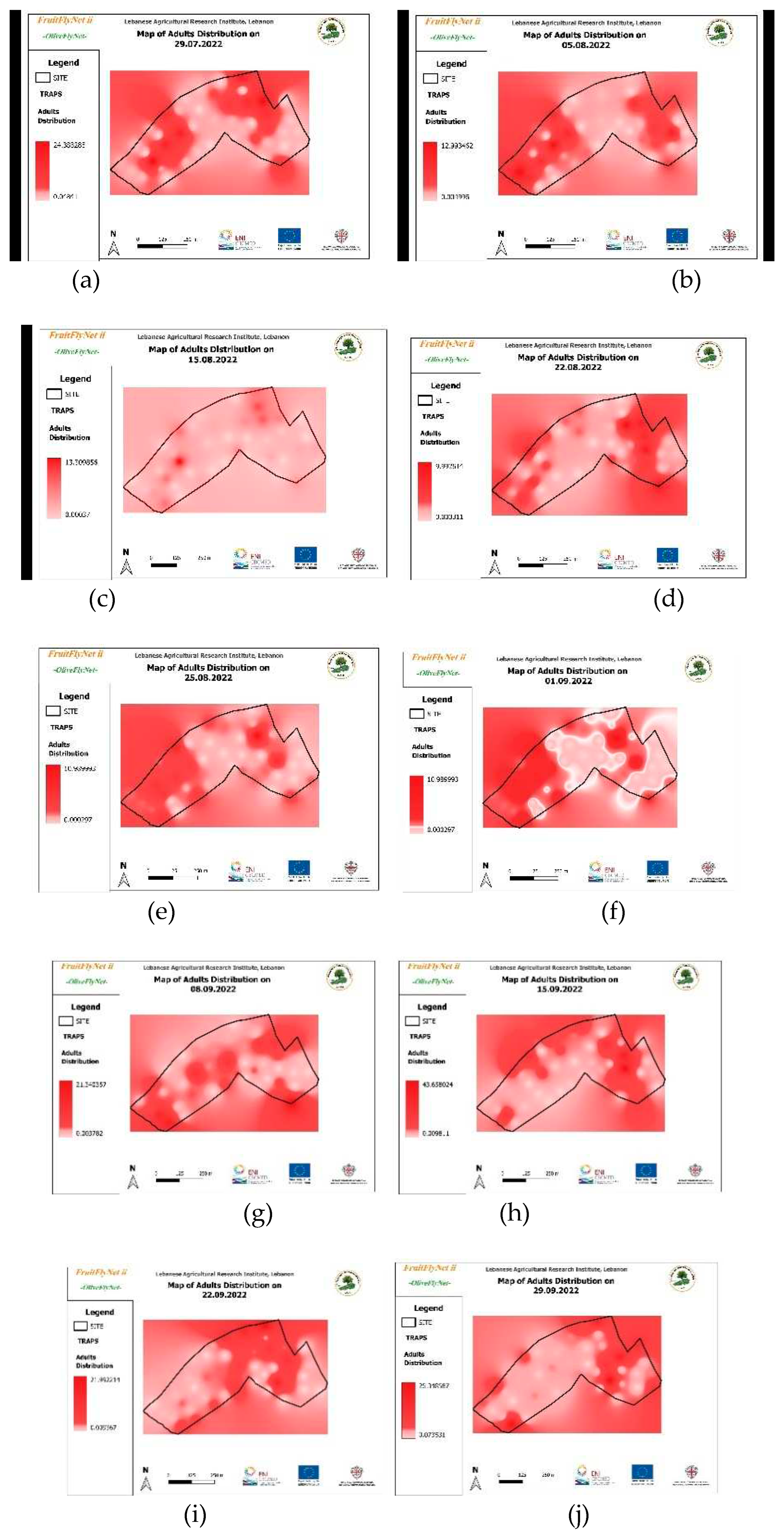
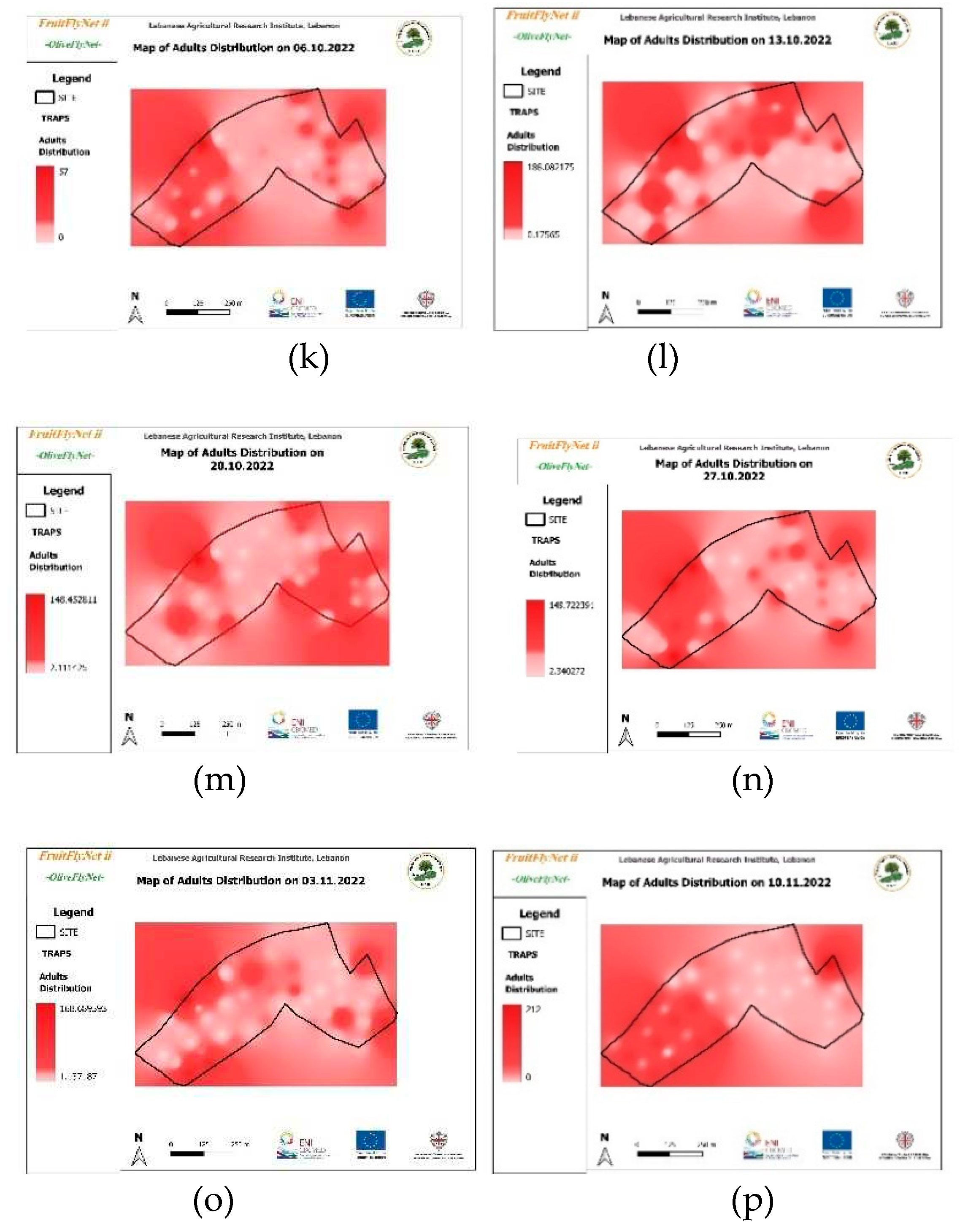
Figure 13.
Average Temperature (°C) and Relative Humidity (%) on a daily basis.
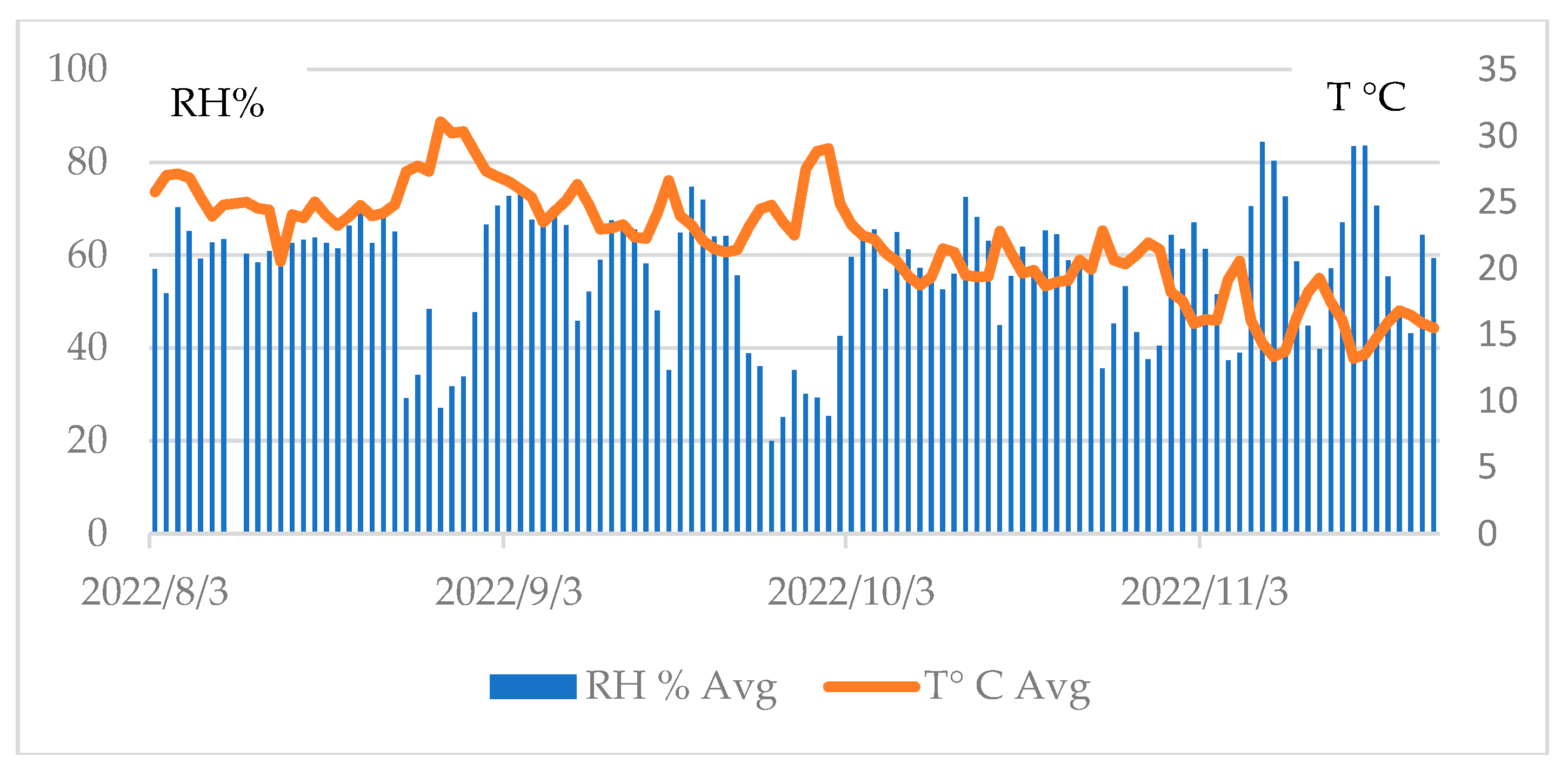
Figure 14.
Linear regression between Temperatures registered and the adult’s captures.
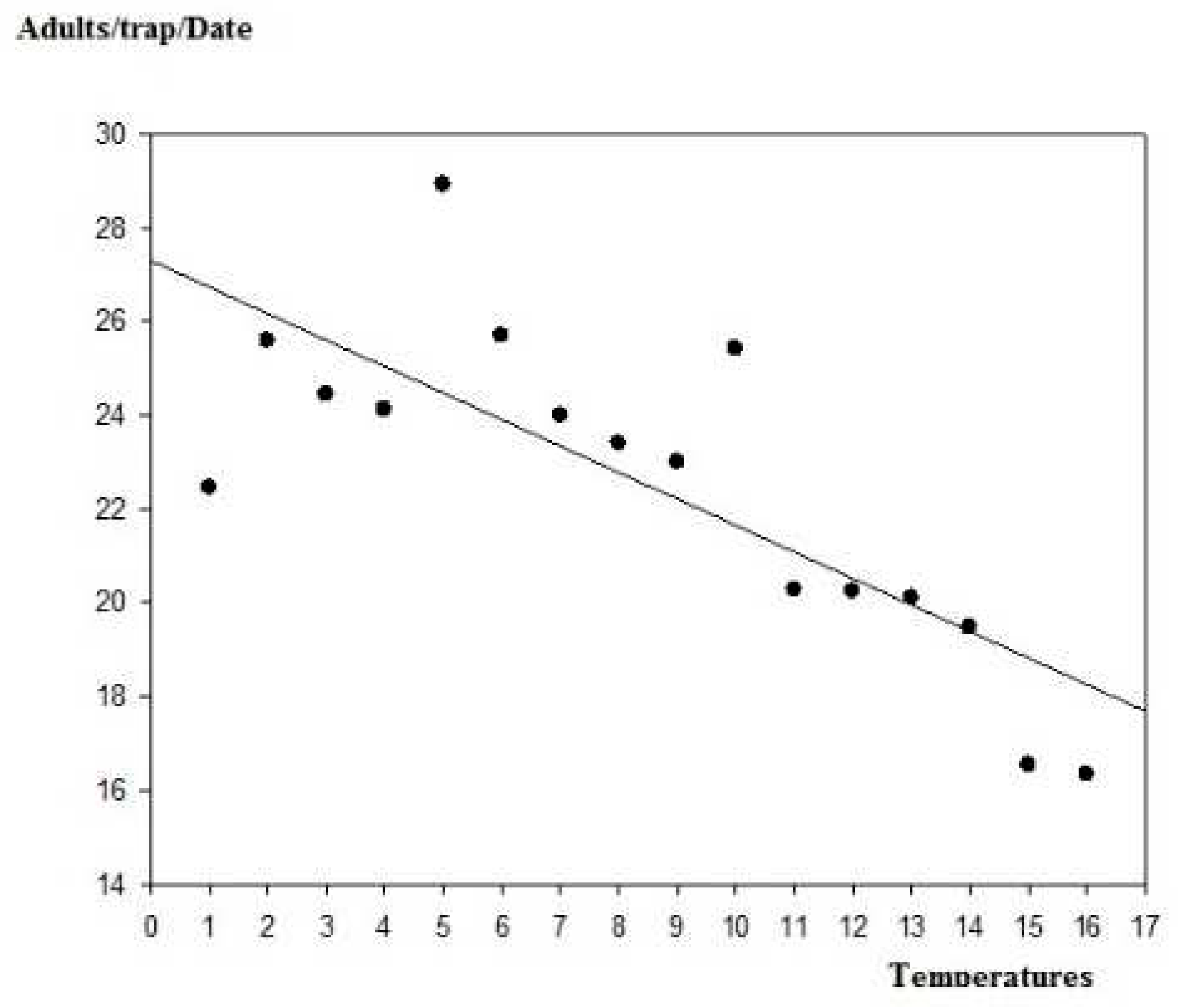
Figure 15.
Repartition of the females and males in the whole area (24.3 ha).
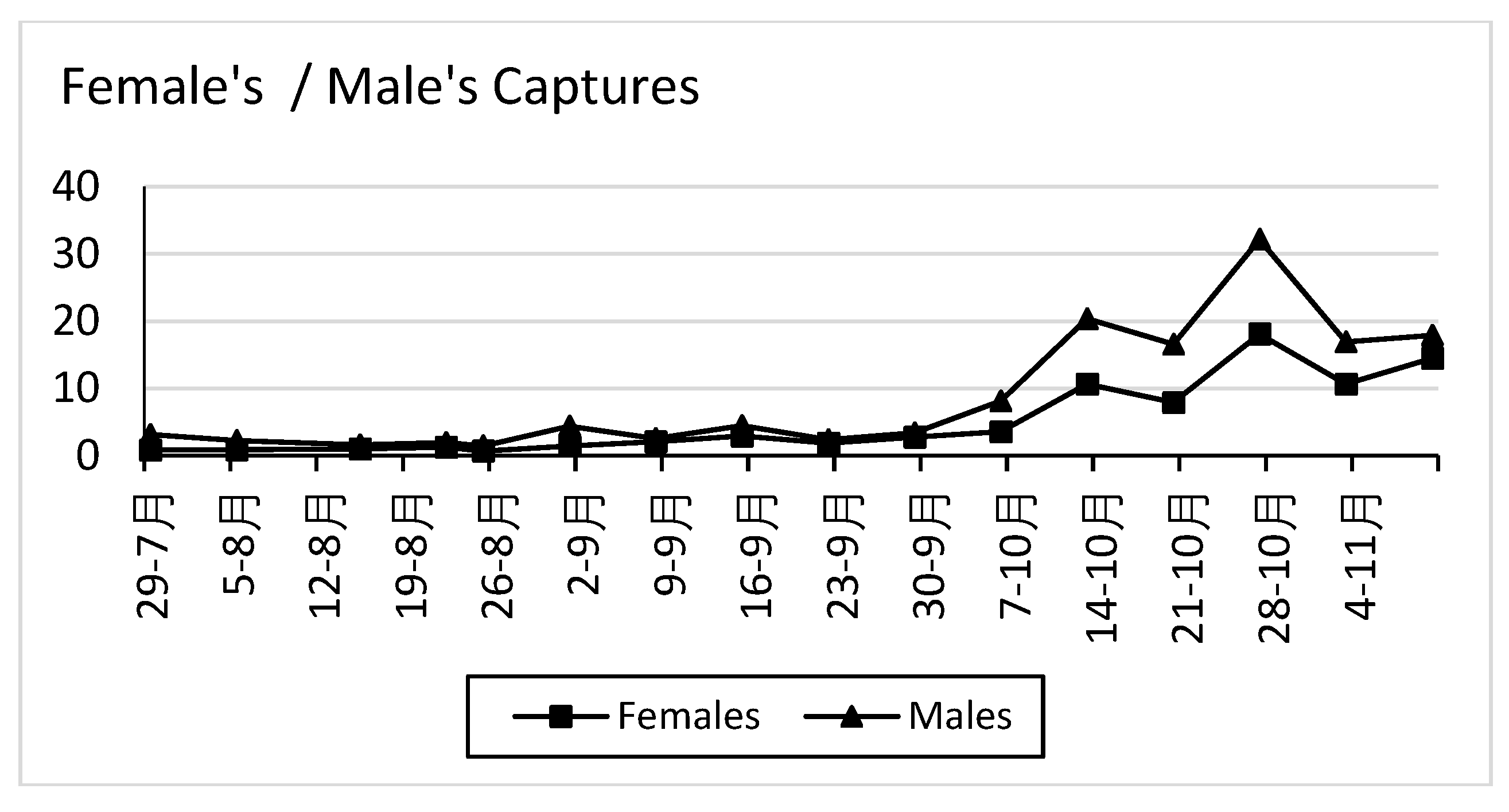
Figure 16.
BBCH scale indicating the Phenology of the olive trees.
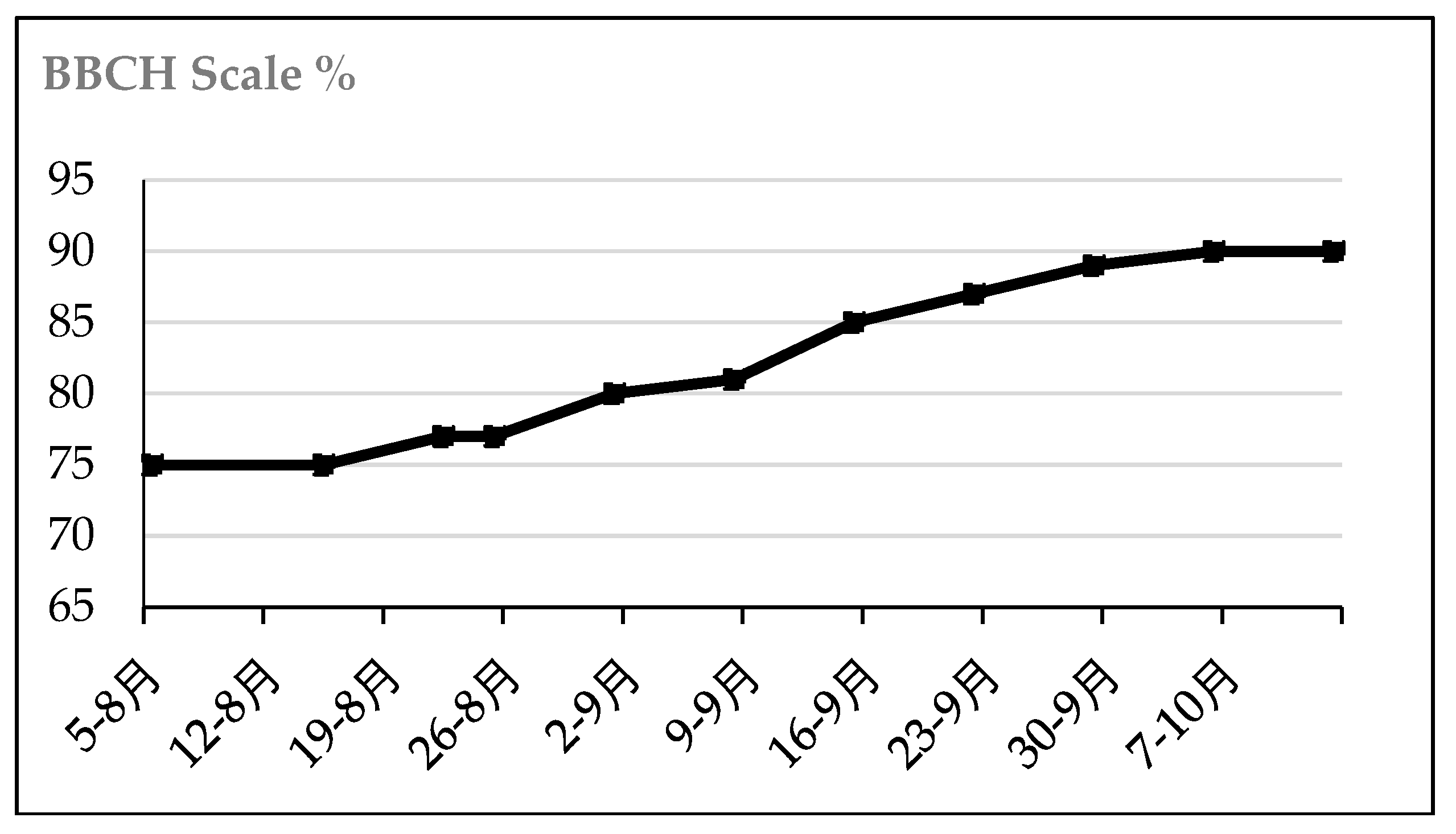
Figure 17.
Size of the olive fruit during the experiment.
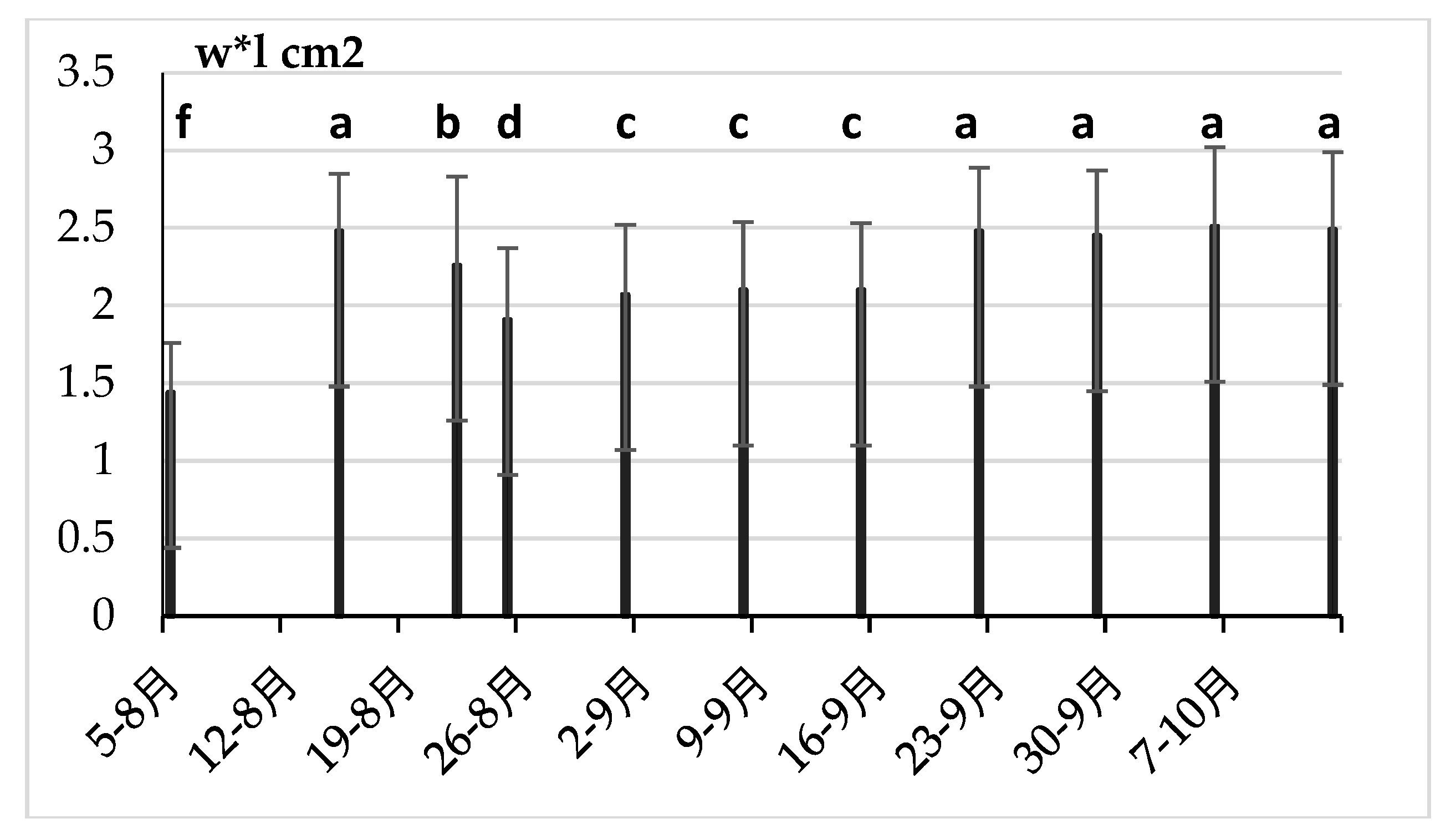
Figure 18.
The Rate of the Fruit Infestation RFI % observed during the experiment in relationship with the Rate of the Fruit Load registered (50-75%, 25-50%, or 0-25%).
Figure 18.
The Rate of the Fruit Infestation RFI % observed during the experiment in relationship with the Rate of the Fruit Load registered (50-75%, 25-50%, or 0-25%).
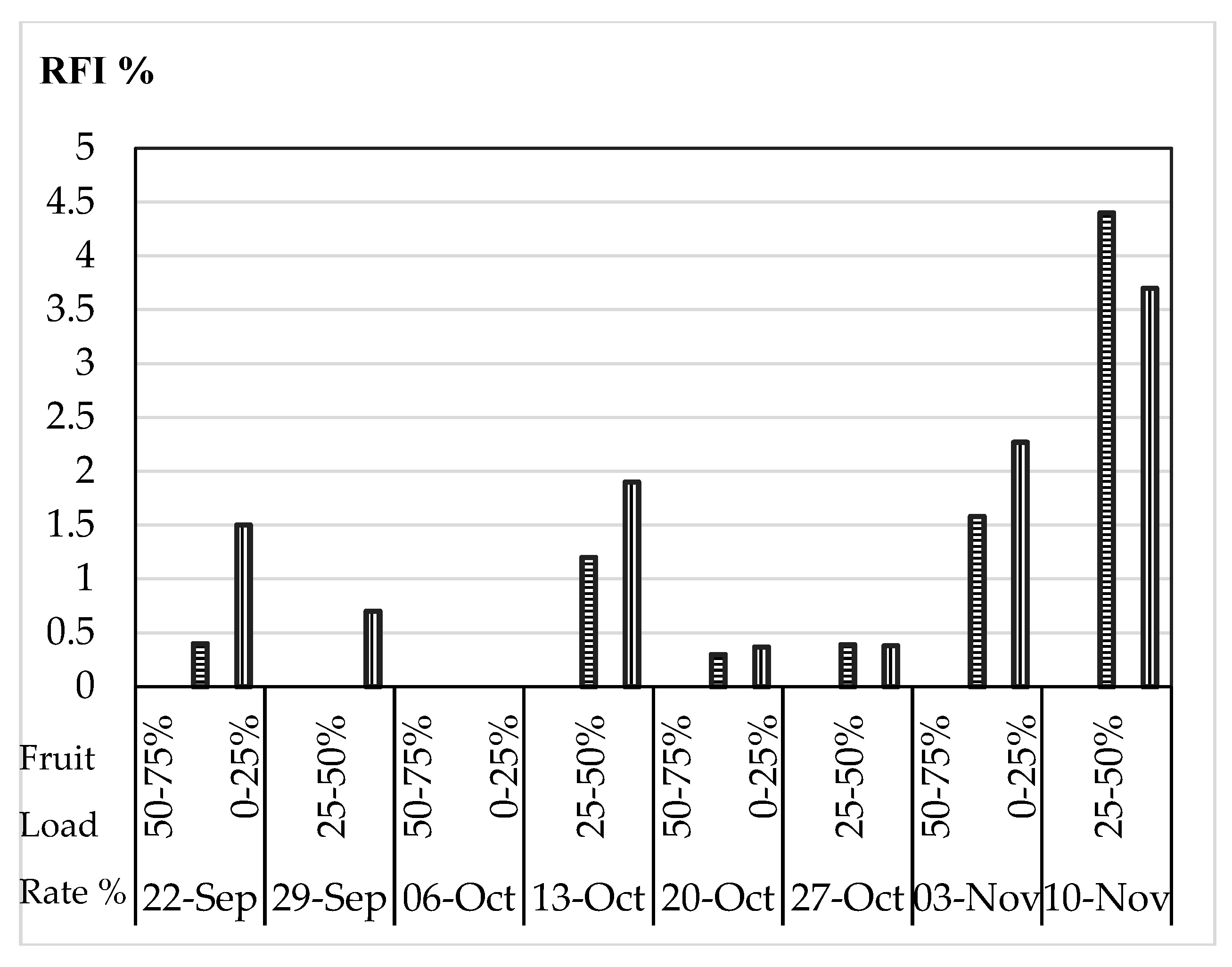

Table 1.
Sex Ratio of B. oleae during the experiment period (F:M).
| Dates | 29-Jul | 5-Aug | 15-Aug | 22-Aug | 25-Aug | 1-Sep | 8-Sep | 15-Sep |
| Sex Ratio | 0.2:1 | 0.41:1 | 0.64:1 | 0.42:1 | 0.47:1 | 0.32:1 | 0.89:1 | 0.65:1 |
| Dates | 22-Sep | 29-Sep | 6-Oct | 13-Oct | 20-Oct | 27-Oct | 3-Nov | 10-Nov |
| Sex Ratio | 0.78:1 | 0.82:1 | 0.44:1 | 0.53:1 | 0.48:1 | 0.56:1 | 0.64:1 | 0.83:1 |
Table 2.
The size of the olive Fruit registered by the rate of the fruit load.
| Fruit Load Rate | Width | Length | Size |
| 50-75% | 1.11±0.11 | 1.78±0.24 | 1.98±0.36 b |
| 25-50% | 1.21±0.17 | 1.98±0.21 | 2.4±0.52 a |
| 0-25% | 1.18±0.2 | 1.97±0.24 | 2.34±0.57 a |
Disclaimer/Publisher’s Note: The statements, opinions and data contained in all publications are solely those of the individual author(s) and contributor(s) and not of MDPI and/or the editor(s). MDPI and/or the editor(s) disclaim responsibility for any injury to people or property resulting from any ideas, methods, instructions or products referred to in the content. |
© 2023 by the authors. Licensee MDPI, Basel, Switzerland. This article is an open access article distributed under the terms and conditions of the Creative Commons Attribution (CC BY) license (http://creativecommons.org/licenses/by/4.0/).
Copyright: This open access article is published under a Creative Commons CC BY 4.0 license, which permit the free download, distribution, and reuse, provided that the author and preprint are cited in any reuse.


