

Submitted:
20 August 2023
Posted:
23 August 2023
Read the latest preprint version here
Abstract
Zoonotic abortive diseases represent a significant health and economic risk for national public health. This cross-sectional survey was conducted from April to October 2021 among 200 selected small ruminant farmers in the three northern regions of Cameroon. Data collection was done through questionnaires administered by exchange with the herder and responses were coded and recorded on an Excel spreadsheet. The data were then analyzed with R software, version 2.13.0. An ANOVA test was used to assess significant differences in mean of Knowledge, Attitudes, Practices and Perception of zoonotic risks (KAPP) scores between regions. Pearson correlations were used to calculate the association between KAPP scores within regions. Small ruminant farmers surveyed had low mean scores for knowledge of abortive Toxoplasmosis and Chla-mydophilosis (0.1 ± 0.2), desirable attitude (0.32 ± 0.07), appropriate practice (0.36 ± 0.13) in managing abortion, and positive perception of zoonotic risks of Toxoplasmosis and Chlamydo-philosis in small ruminants (0.12 ± 0.33), respectively. KAPP was significantly (p<0.01) and posi-tively associated with knowledge (r=0.98) and risk perception (r=0.99). However, attitudes (r=0.06), practices (r=0.05) and risk perception of toxoplasmosis (r=0.07) and Chlamydophilosis (r=0.08) were not associated with farmers' knowledge. This study revealed significant knowledge gaps, low levels of desired attitudes, and high-risk behavioral practices. These results therefore call for capacity building of health professionals and farmers to better integrate the One Health concept in the management of neglected zoonotic diseases.
Keywords:
knowledge
; attitude
; practice
; risk perception
; abortion
; small ruminant farmers
; Cameroon
1. Introduction
Toxoplasmosis and chlamydophilosis are widespread diseases worldwide, particularly in tropical areas and are currently the leading causes of infectious abortion in small ruminant livestock [1]. The importance of these diseases in terms of frequency, economic losses and direct and indirect consequences on human health is well documented [2,3,4,5]. They are difficult to control on farms and are a complex problem in Cameroon because on the one hand, breeders don't declare abortion cases to the public services, and on the other, aborted females usually sell to other breeders or slaughtered for human consumption. Added to this is the management of runts and embryonic annexes, most of which are discarded in the wild and/or consumed by domestic or wild carnivores [2,6,7]. In addition, the small ruminant production system in Cameroon is mostly integrated with cattle breeding, which means that some farmers have to transhumance with their small ruminants, making it difficult to control these diseases [8,9,10,11]. High prevalence’s of toxoplasmosis have been reported in small ruminants, up to 30% in sheep and 60% in goats. For sheep, they are below 30% of all dry countries in tropical Africa (Senegal 11.5%, Djibouti 12.5%, Niger 19.5%, Burkina Faso 23%, Ethiopia 25.6%) but reach 68% in Côte d'Ivoire and 35.9% in Cameroon [2,6,12]. That through Chlamydophilosis, prevalences are below 30% in both sheep and goats (11.1% and 10.6% respectively, in sheep and goats in Eastern Saudi Arabia, 4.6% and 3.8% respectively, in sheep and goats in Cameroon) [6,13,14]. These studies indicate the multiplicity and complexity of these diseases, both at the individual and herd level. The clinical manifestations and epidemiological characteristics of abortions are not specific. At best, these elements can lead to a suspicion, hence the need for laboratory analysis. These diseases are poorly understood by the general population, and are highly prevalent in human hospital structures in Cameroon. Toxoplasmosis seroprevalences of up to 82.7% have been obtained among pregnant women in some hospitals, and the risk factors identified are: owning a cat in the home or having one in the neighborhood, eating undercooked or uncooked meat, and a history of blood transfusions [15,16]. Moreover, the actual incidence of Chlamydophila abortus in humans is unknown in Cameroon. However, positive cases have been described in the literature of pregnant women who developed a severe Chlamydophila abortus infection after direct or indirect contact with infected goats, resulting in premature stillbirth [17,18]. Breeders and pregnant women, especially those living in rural areas, generally need to be made aware of the risks of abortifacient zoonotic diseases and how to avoid them. In Cameroon, more than 3/4 of the national small ruminant livestock population comes from the northern regions [19] and Chlamydophila abortus and Toxoplasma gondii represent the two main causes of abortion in livestock [6,20]. Therefore, this study was conducted to assess the knowledge, attitudes, practices and perception (KAPP) of the zoonotic risk related to toxoplasmosis and chlamydophilosis among small ruminant livestock farmers in Cameroon.
2. Materials and Methods
2.1. Study area and data collection
A descriptive cross-sectional survey of small ruminant farms was conducted from April to October 2021 in the northern regions of Cameroon (Adamawa, North, Far North) (Figure 1) [6]. These regions account for more than 75% of the small ruminant population in Cameroon and are experiencing strong growth in livestock of various species. The surveys were conducted in small ruminant farms that had experienced abortions in the two years preceding the survey. The questionnaire was administered in French and in the vernacular language for a more fluid survey and to allow the populations of the said regions to feel concerned by the study. Demographic characteristics of small ruminant breeders (sex, age, education, marital status, duration of training in small ruminant breeding and experience) as farm and animal characteristics (species, sex, breeds, age groups, farm size, number of animals and level of hygiene) were collected. In addition, the knowledge, attitudes, and practices of small ruminant farmers regarding Toxoplasmosis, Chlamydophilosis, and risk perception were collected. The questionnaire was tested for (comprehension/validity/reliability/ language/ease of use?) on a subset of 10 small ruminant farmers randomly selected from the study regions and adapted accordingly.
2.2. Sampling procedures
The minimum size of 99 farmers was calculated according to the formula proposed by Musallam et al. (2015)[21]. This formula proposes to calculate the minimum sample size of the herds and then to calculate the minimum sample size of the animals in the selected herds. Firstly, it takes into account the surface area (1- α) of the normal curve (Z) (Z=1.65), the known or attributed prevalence of the two pathologies and the sensitivity and specificity of the ELISA test used within the herd (HSe and HSp =1) with an absolute precision of 10%. Secondly, it integrates the probability of detecting at least one positive animal and the expected number of infected animals, taking into account the number of herds selected. This minimum size was estimated based on a sero-epidemiological survey of Chlamydophilosis and toxoplasmosis in small ruminants in Mali [2]. Small ruminant farms with abortions in the last two years were included in the study. This inclusion criterion resulted in a sample size of 200 small ruminant farmers. The sample was stratified according to the number of farmers in each study region, to ensure a representative geographical coverage. During the survey, the investigator(s), through technical observations of the farms, characterized the hygiene level of the farms studied on a scale of 1 to 4 [22]. The observations were based on the average score of the different hygiene levels (4=Very clean, 3=Clean, 2=Dirty, 1=Very dirty).
2.3. Data analysis
Once the data collection was done, an Excel template was developed to code the completed questionnaires in the study regions and the interpretation was done according to the KAPP survey evaluation grid developed by Essi et Njoya in 2013 [23]. The evaluation of KAPP was done first by totaling the number of points obtained correspondingly in each item of the questionnaire. Each correct answer was worth 1 point for the "knowledge" item, 2 points for the "attitude-practice" item, and 1 point for the "risk perception" item. However, wrong answers were worth 0 points. For questions with several choices, the number of points was obtained by dividing the point corresponding to the question by the number of choices. The results were then converted into a percentage for an overall assessment as presented in the Essi et al. assessment grid. Descriptive statistics using R software were used to indicate the demographic distribution of farmers and farm characteristics. ANOVA was used to assess significant differences in mean KAPP scores between regions. For dichotomous variables, an independent t-test was used for comparison. The mean of the scores ± standard deviation was used to represent the level of knowledge, desirable attitudes, appropriate practices, and positive risk perception of Toxoplasmosis and Chlamydophilosis. Pearson correlations were used to assess the relationship between mean KAPP scores between and within regions.
3. Results
3.1. Demographic characteristics of small ruminant farmers in Cameroon
A total of 200 questionnaires were completed during the survey. Most of the respondents included in the study were male (80%), aged 21-50 years (56.5%). About 96.5% of the farms had no animal health staff and 36.5% of the respondents had no education. Most of these farmers were married monogamously (54.5%), and small ruminant rearing was the main activity for 62.6% of them, most of whom (52.5%) had been doing it for 10 to 20 years. Financial income was the main objective for 94.5% of farmers; only 2% practiced this activity for self-consumption and 3.5% for pleasure. The workforce was mainly family-based (98%), with a minority of farms (2%) employing mainly salaried workers.
3.2. Characteristics of small ruminant farms studied in Cameroon
37.50% of small ruminant flocks in the northern regions were made up of sheep and goats, most of which were between 10 and 20 heads (50%). Reproduction has been very often uncontrolled, using natural mating (100%). Feeding was mainly pasture-based (89.5%), with watering mainly from streams (90.5%). Infections of the digestive system (33.7%) and parasitism (20.4%) are frequently encountered on these farms. Less than 1% of farmers used laboratory tests to identify diseases on their farms. As far as abortions were concerned, the farmers interviewed had regularly (96.50%) reported cases of abortion on their farms. The causes of abortion were not investigated for most of those questioned (98.50%), and the stage of gestation at the time of abortion was unknown for 97% of them. However, 91% of those surveyed had not carried out post-abortion treatment, and not all had applied prophylactic measures. The majority of abortions recorded on farms were concentrated in one period of the year (48.5%), generally between March and August (84.55%).
3.3. Knowledge of small ruminant farmers on Toxoplasmosis and Abortive Chlamydophilosis
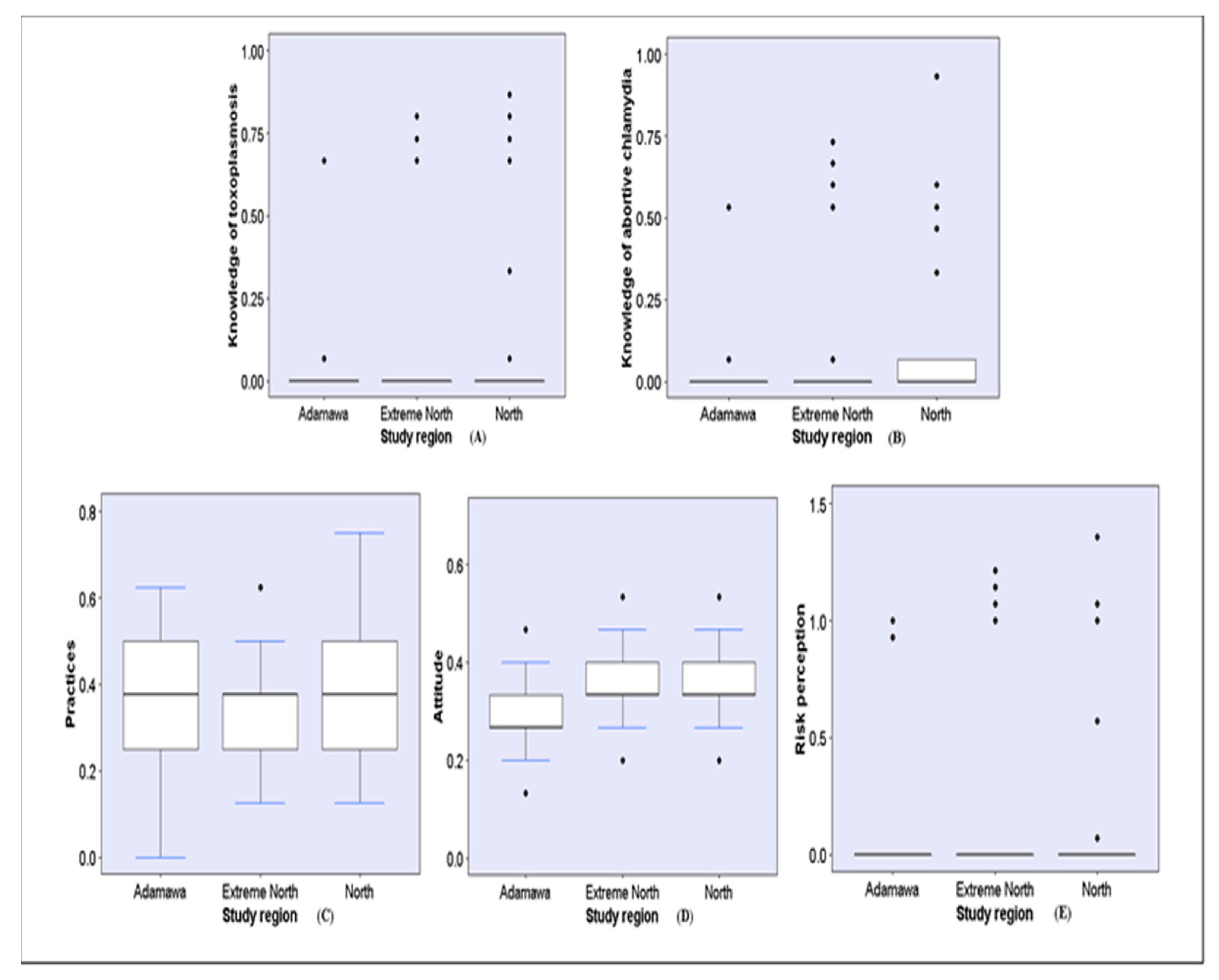
The distribution of small ruminant farmers' knowledge of Toxoplasmosis and Chlamydophilosis in the surveyed areas was presented in Table 1. Overall, the mean knowledge scores of Toxoplasmosis and Chlamydophilosis of small ruminant farmers in the study regions were 0.1 ± 0.2. Region, age, marital status, level of education, occupation, purpose of farming, level of hygiene and feeding method were the main factors influencing knowledge scores. The study also showed that, the mean knowledge scores on toxoplasmosis and Chlamydophilosis were significantly (P < 0.05) higher in the North [(0.12 ± 0.27) and (0.10 ± 0.21)] and Far North regions [(0.07 ± 0. 21) and (0.06 ± 0.17)], respectively, then in the Adamawa region (0.03± 0.14), (0.03± 0.10) (Figure 4A, B). The criteria for assessing the level of knowledge of small ruminant farmers revealed that 10% have heard of these diseases, 8% know which animals can be affected by toxoplasmosis and Chlamydophilosis, 10% know the symptoms in animals and can describe them, and 5% know that humans can be infected by these diseases. Associated with this, very few know the different routes of transmission (1%), but 11% say that it is possible to contract these diseases by various means, including: living with an infected animal, contact with an infected animal, eating meat from an infected animal, and contact with the fetus and fetal membrane of an infected animal (Figure 2 and Figure 3).
3.4. Farmers' practices and attitudes towards small ruminant abortions
Measure criteria such as separation of aborted ewes and/or goats from others, slaughter of the aborted animal for consumption, sale of the aborted animal on the market, treatment of the aborted animal, declaration of the abortion to the veterinary service and vaccination of aborted animals, had been used to assess the practices and attitudes of small ruminant breeders in relation to the management of abortions on the farm (Figure 5). Half of those surveyed had adopted appropriate practices (0.36 ± 0.13), particularly in the Adamawa (0.38 ± 0.14) and Northern (0.36 ± 0.14) regions of Cameroon (Figure 4C). Regarding farmers' attitudes to abortion, respondents in the Far North (0.33 ± 0.08) and North (0.33 ± 0.07) regions had more appropriate attitudes than those in the Adamawa region (0.29 ± 0.07) (P = 0.01) (Figure 4D). The distribution of mean scores for abortion practices and attitudes of small ruminant breeders on surveyed farms is presented in Table 2.
3.5. Perception of risks on Toxoplasmosis and Chlamydophilosis by small ruminants farmers in Cameroon.
As for the perception of risks by the interviewed farmers, a mean score of 0.13 ± 0.38 for Toxoplasmosis and 0.10 ± 0.30 for Chlamydophilosis was observed. Small ruminant farmers in the Adamawa region showing a mean score of 0.04 ± 0.21 for Toxoplasmosis and 0.04 ± 0.18 for Chlamydophilosis were less sensitized than those in other regions (Figure 4E). When asked specifically about farmers' perception of the risks of Toxoplasmosis and Chlamydophilosis, 11% of farmers stated that these diseases were a threat to public health, but 10% were aware that they were a problem for animal health. Farmers in the Adamawa region (p=0.04) and respondents aged under 20 with primary education (0.04 ± 0.23) did not perceive toxoplasmosis and chlamydophilosis as a significant risk compared with other categories. (Figure 6). However, the level of education (p=0.02), occupation (p=0.0001), purpose of farming (p=0.05) and feeding method (p=0.004) significantly influenced the risk perception of small ruminant farmers in the said localities (Table 2).
Figure 6.
Distribution of risk perception of Toxoplasmosis and Chlamydophilosis by small ruminant farmers (N = 200) in the Adamawa, North and Far North regions of Cameroon.
Figure 6.
Distribution of risk perception of Toxoplasmosis and Chlamydophilosis by small ruminant farmers (N = 200) in the Adamawa, North and Far North regions of Cameroon.
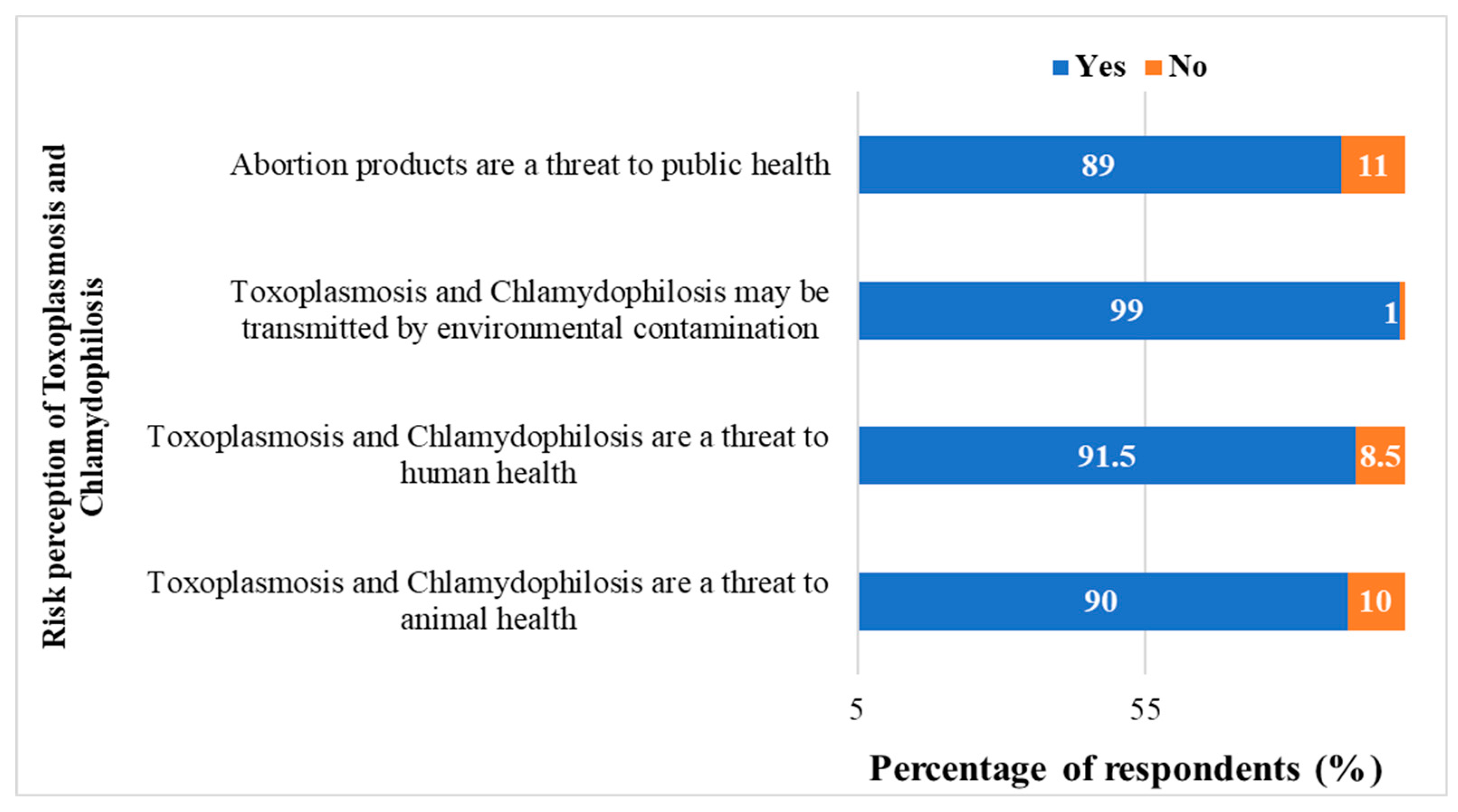
Figure 4.
Distribution of mean scores of knowledges of Toxoplasmosis (A) and Chlamydia (B), Practices (C), Attitudes (D) towards abortions in small ruminants and risk Perception (D) of Toxoplasmosis and Chlamydia of Small ruminant farmers (N = 200) in the Adamawa, North, and Far-North of Cameroon.
Figure 4.
Distribution of mean scores of knowledges of Toxoplasmosis (A) and Chlamydia (B), Practices (C), Attitudes (D) towards abortions in small ruminants and risk Perception (D) of Toxoplasmosis and Chlamydia of Small ruminant farmers (N = 200) in the Adamawa, North, and Far-North of Cameroon.
3.6. Association between KAPP scores determined for small ruminant breeders in the different study regions.
Person's correlation was used to highlight the level of association between KAPPs by region. The associations showed that the KAPP scales of small ruminant farmers in the study regions were significantly (p<0.01) and positively correlated between knowledge about Toxoplasmosis and Chlamydophilosis (r=0.98) and risk perception (r=0.99). Strong significant correlations were also observed between KAPP scales within the same region, ranging up to 0.99 between regions for Toxoplasmosis knowledge, Chlamydophilosis knowledge (r=0.99) and risk perception (r=0.99) (Table 3).
4. Discussion
The present study was conducted to assess the Knowledge, Attitudes, Practices and Perception of zoonotic risks of Toxoplasmosis and Chlamydophilosis among small ruminant farmers in Cameroon. The study revealed low overall knowledge of Toxoplasmosis and Chlamydophilosis, inadequate attitudes and inappropriate practices towards abortion management and negative risk perception of the farmers. Although the majority of farmers interviewed (96.5%) had reported abortions in sheep and goats in the two years prior to the interview, the causes of abortions, their modes of transmission, preventive actions, and their risk to public health are rarely known and understood by these small ruminant farmers. The level of knowledge of Toxoplasmosis and Chlamydophilosis observed in the present study is lower than recorded previously in Ethiopia (22.4, ± 33.6%) [24] and Zimbabwe (21.6%) [25] but similar to the knowledge scores obtained in northeastern China [26] although the latter surveyed poultry farmers. The lower knowledge score of the farmers in this study is associated with a higher proportion of respondents without education and lack of support from animal health professionals (96.7%). However, most of the respondents live in fairly remote rural areas under a high workload and therefore do not have access to information. Human behavior, education level, and communication between veterinarians and farmers play a major role in the control of Toxoplasmosis and Chlamydophilosis on farms [27]. Hence, the low level of knowledge among farmers about these diseases may also be the result of a lack of awareness among farmers and a lack of trained health education personnel [25,28]. In the process of participatory animal disease control, a good knowledge of all links in the chain for better communication is important [29]. Based on the positive association between knowledge of Chlamydophilosis and Toxoplasmosis, training in agriculture and livestock is important for knowledge on abortive diseases, hygiene and biosecurity measures in livestock. However, it is important to awareness of farmers by improving their knowledge on how to manage these diseases on the farm. The consumption of aborted animals by some farmers or the contamination of the environment by abortion products or cadavers demonstrates the lack of knowledge among Cameroonian farmers about the risks associated to improper management of abortion in livestock. However, an improvement in the legislation and regulations against clandestine breeding by certain breeders would improve the efficiency of breeding and access to veterinary services for this category of breeder. In this way, breeding constraints will be sought for better productivity but also to reduce the risk of transmission to humans of zoonotic pathologies located within the breeding farms. It is clear that poor livestock management creates a breeding ground for the expansion of these diseases and therefore responsible for human and animal infections in Cameroon [13,15,16,30].
The undesirable attitudes towards the prevention of Toxoplasmosis and Chlamydophilosis from small ruminant birth products, such as assisting in the delivery and treatment of aborted animals with bare hands and improper disposal of aborted products (fetuses and placenta), confirm the need for appropriate health education to induce a change in attitude among small ruminant farmers towards the management of abortions and abortion products on their farms. It is important to sensitize farmers on the potential risk of zoonotic disease transmission by handling these abortion products. The undesirable attitude observed in the present study is lower than the proportions recorded in Ethiopia (37.3 ± 28.92%) [24]. A lack of correlation was noted between farmers' attitude, knowledge, practice, and perception of risk, which justifies the risky action of farmers in managing abortions on their farms. Farmers under 20 years of age whose main occupation is "rancher" and whose herd is greater than 30 heads behaved better than the other categories. In conclusion, education and behavioral change of farmers are of great importance in this participatory control.
The level of inappropriate practices in the present study was comparable to those obtained in Ethiopia. [24,31], Pakistan [32], and Tajikistan [33], although these studies focused on brucellosis. This practice among farmers in Cameroon was associated with marital status, occupation, presence of health personnel on the farm, and farms with more than 30 animals. With the objective of the farm being to generate financial income, farmers place less importance on their practice as long as they consider it profitable. Even though the majority (95%) of respondents has livestock as their primary occupation, it remains that education campaigns or increased support from veterinarians could enable farmers to be more efficient and vigilant about their actions on the farm. This is confirmed in this study by the fact that farmers who are monitored by animal health staff develop better behavioral practices in managing abortions on their farms. Rural veterinarians, who are closest to the farms in remote areas, are better positioned to expand community-based public health education and promotion activities to influence behavior change among farmers [24,25,34,35,36,37]. It would therefore be important to set up a vigilance unit to give veterinarians in the field the means to make the right decisions. It is also important to involve farmers in this fight and to gain their confidence, an improvement of the efficiency of their farms is necessary. To do this, biosecurity measures must be improved to prevent the entry of pathogens or their dissemination within the farms.
Despite the fact that the majority of the respondents had undesirable attitudes and inappropriate practices towards the prevention of Toxoplasmosis and Chlamydophilosis, nearly 12% of them, especially farmers with higher education level, aged over 71 years whose main function was financial livestock rearing and practicing zero grazing as a feeding method, significantly (p<0.05) perceived these diseases as a risk to public health. This observation further demonstrates the importance of continuous education and awareness among farmers of all ages and education levels on the importance of improving their knowledge, adopting good attitude and practices in livestock farming in order to improve the profitability of this speculation [38].
5. Conclusion
This study assessed the knowledge, attitudes, practices, and risk perception of small ruminant farmers regarding Toxoplasmosis and Chlamydophilosis in Cameroon. The KAPP tool used revealed low overall knowledge of Toxoplasmosis and Chlamydophilosis, inadequate attitudes with inappropriate practices, and negative perceptions of risks related to abortion management on small ruminant farms. There is a need for targeted community health education programs to minimize the transmission of zoonotic pathogens from abortion products on small ruminant farms in Cameroon.
Author Contributions
J.K and F.G designed, structured and coordinated the study. R.N.C coordinated the fieldwork but also collected data with M.A.S.K, B.B. R.N.C and J.S. extracted and analyzed the data. R.N.C and R.C.D prepared the first draft of the manuscript. J.K, F.G, R.N.G.N, and J.S critically reviewed the manuscript. All authors read and approved the final version of the manuscript.
Funding
This research did not receive any specific grant from funding agencies in the public, commercial or not-for-profit sectors.
Institutional Review Board Statement
The animal study protocol was approved by the Institutional Review Board (or Ethics Committee) of Universite des Montagnes (N◦ UdM-BUR-CPR-2021/006) for studies involving animals. The regional delegations in charge of animal health allowed the survey in the three northern regions of Cameroon Adamawa (N◦ 0020/21/RA/DREPIA/SRSV), North (N◦ 0025/21/RN/DREPIA/SRSV) and Far North (N◦ 0017/21/MINEPIA/SG/DREN). Small ruminant farmers were informed of the purpose of the study and the approximate duration of the interview, and their informed consent was sought prior to their participation in the survey.
Informed Consent Statement
Informed consent was obtained from all subjects involved in the study.
Data Availability Statement
Data are contained within the article.
Acknowledgments
The authors would like to thank the agronomic and veterinary department of the Université des Montagnes, Mohamed Moctar Mouiche Mouliom and Félicité F. Djuikwo Teukeng for their technical and logistical support.
Conflicts of Interest
The authors declare no conflict of interest.
References
- Elandalousi, R.B.; Ghram, A.; Maaroufi, A.; Mnif, W. Séroprévalence des maladies abortives zoonotiques chez les ruminants au nord de la Tunisie. Research. 2015. [Google Scholar] [CrossRef]
- Sidibe, S.; Coulibaly, K.; Sery, A.; Fofana, M.; Sidibe, S.; Kanoute, M. Prévalence de la brucellose, chlamydiose et toxoplasmose chez les petits ruminants au Mali : résultats d’une enquête séro-épidemiologique. Rev Mali Infect Microbiol 2019, 1313, 1–9. [Google Scholar] [CrossRef]
- Saida, E.L.; Bouslikhane, M.; Hamzi, A.; Idrissi, E.L. Suivi épidémiologique des avortements de petits ruminants dans les zones pastorales du Maroc. 2003, 23, 95–100. [Google Scholar]
- Cremoux, R.; Pouget, C.; Lacz, C. Diagnostic différentiel des avortements chez les petits ruminants en Midi-Pyrénées. Bull DES GTV- n°85 2017, 73–82. [Google Scholar]
- Russo, P.S.; Pepin, M.; Rodolakis, A.; Hammami, S. Enquête sérologique sur les principales causes d ’ avortements infectieux chez les petits ruminants en Tunisie. Rev Med Vet, 2005, 156, 395–401. [Google Scholar]
- Nankam, R.C.; Kouamo, J.; Kouengoua, K.P.A.; Tchinze, T.J.G.; Dzousse, M.F.; Gapgueu, S.V.; Nguena, R.N.G.; Ngoula, F. Seroprevalence and Risk Factors Associated with Toxoplasma gondii and Chlamydophila abortus Infection in Domestic Small Ruminants in Cameroon. Parasitologia 2022, 2, 198–205. [Google Scholar] [CrossRef]
- Khammassi-Khabou MHammami, S.; Cherif, A.; Majok, A. Séroprévalence des majeures maladies infectieuses causant l’avortement chez les petits ruminants. In: Durabilité des systèmes d’élevage des petits ruminants en Tunisie une Approch. santé Anim. Mark 2009, 5–29. [Google Scholar]
- Dedieu, B.; Aubin, J.; Duteurtre, G.; Alexandre, G.; Vayssieres, J.; Bommel, P.; Faye, B. Conception et évaluation de systèmes d’élevage durables en régions chaudes. 2011. [Google Scholar]
- Duteurtre, G.; Faye, B.; Dutilly-diane, C.; Alary, V. Elevage et dynamique de la pauvreté : L ’ approche micro-économique. Mémento l’agronome CIRAD, GRET, Fr Montpellier CIRAD 2002, 5, 1–10. [Google Scholar]
- Iñiguez, L. The challenges of research and development of small ruminant production in dry areas. Small Rumin Res 2011, 98, 12–20. [Google Scholar] [CrossRef]
- Orskov, E.R. Goat production on a global basis. Small Rumin Res 2011, 98, 9–11. [Google Scholar] [CrossRef]
- Deconinck, P.; Pangui, L.J.; Akakpo, J.; Garrouste, A.; Ouattara, L.; Roger, F.; Tibayrenc, R.; Dorchies, P. Prévalence de la toxoplasmose chez les petits ruminants en Afrique tropicale: Résultats d’une enquête séro-épidémiologique sur 1042 animaux. Rev Med Vet (Toulouse) 2021, 147, 377–378. [Google Scholar]
- Fayez, M.; Elmoslemany, A.; Alorabi, M.; Alkafafy, M.; Qasim, I.; Al-Marri, T.; Elsohaby, I. Seroprevalence and risk factors associated with chlamydia abortus infection in sheep and goats in eastern Saudi Arabia. Pathogens 2021, 10, 1–15. [Google Scholar] [CrossRef] [PubMed]
- Al-Qudah, K.M.; Sharif, L.A.; Raouf, R.Y.; Hailat, N.Q.; Al-Domy, F.M. Seroprevalence of antibodies to Chlamydophila abortus shown in Awassi sheep and local goats in Jordan. Vet Med (Praha) 2004, 49, 460–466. [Google Scholar] [CrossRef]
- Guemgne, T.; Makou, T.; Gamago, G.A.; Vignoles, P.; Wabo Pone, J.; Djuikwo Teukeng, F.F. Seroprevalence of Toxoplasmosis and associated risk factors in pregnant women at the Protestant Hospital, Mbouo-Bandjoun, Cameroon. African J Clin Exp Microbiol 2019, 20, 221. [Google Scholar] [CrossRef]
- Ndassi, D.V.; Kamga, H.L. The seroprevalence of toxoplasmosis and contributing factors among pregnant women attending antenatal consultation in the Limbe Health District, Cameroon. Afr J Integr Heal 2014, 4, 31–36. [Google Scholar]
- Pospischil, A.; Thoma, R.; Hilbe, M.; Grest, P.; Gebbers, F.O. Abortion in woman caused by caprine Chlamydophila abortus (Chlamydia psittaci serovar 1). Swiss Med Wkly 2002, 132, 64–66. [Google Scholar] [CrossRef] [PubMed]
- Meijer, A.; Brandenburg, A.; De Vries, J.; Beentjes, J.; Roholl, P.; Dercksen, D. Chlamydophila abortus infection in a pregnant woman associated with indirect contact with infected goats. Eur J Clin Microbiol Infect Dis 2004, 23, 487–490. [Google Scholar] [CrossRef]
- MINEPIA. DOCUMENT DE STRATEGIE DU SOUS-SECTEUR DE L’ELEVAGE, DES PÊCHES ET DES INDUSTRIES ANIMALES. 2019. [Google Scholar]
- Bend, R.L. Enquête coprologique sur la toxoplasmose dans la population des chats de la ville de dakar. 2006; 98. [Google Scholar]
- Musallam, I.; Shehadam, A.; Omar, M.; Guitian, J. Cross-sectional study of brucellosis in Jordan: prevalence, risk factors and spatial distribution in small ruminants and cattle. Prev Vet Med 2015, 118, 387–396. [Google Scholar] [CrossRef]
- Laanen, M.; Beek, J.; Ribbens Vangroenweghe, F.; Macs, D.; Dewulf, J. Biosecurity on pig herds: Development of an on-line scoring system and the results of the first 99 participating herds. Vlaams Diergeneeskd Tijdschr 2010, 79, 302–306. [Google Scholar]
- Essi, M.J.; Njoya, O. Point de vue L’Enquête CAP (Connaissances, Attitudes, Pratiques) en Recherche Médicale. Heal Sci Dis 2013, 14, 1–3. [Google Scholar]
- Alemayehu, G.; Mamo, G.; Desta, H.; Alemu, B.; Wieland, B. Knowledge, attitude, and practices to zoonotic disease risks from livestock birth products among smallholder communities in Ethiopia. One Heal 2021, 12, 100–223. [Google Scholar] [CrossRef] [PubMed]
- Ndengu, M.; De Garine-Wichatitsky, M.; Pfukenyi, D.; Tivapasi, M.; Mukamuri, B.; Matope, G. Assessment of community awareness and risk perceptions ofzoonotic causes of abortion in cattle at three selectedlivestock–wildlife interface areas of Zimbabwe. Epidemiol Infect. 2017. [CrossRef]
- Li, M.H.; Yang, B.T.; Yin, Z.W.; Wang, W.; Zhao, Q.; Jiang, J.A. Seroepidemiological Survey of Toxoplasma gondii and Chlamydia Infection in Chickens, Ducks, and Geese in Jilin Province, Northeastern China. Vector Borne Zoonotic Dis 2020, 20, 825–830. [Google Scholar] [CrossRef] [PubMed]
- Tebug, S.F.; Kamga-Waladjo, A.R.; Ema, P.J.N.; Muyeneza, C.; Kane, O.; Seck, A.; Ly, M.T.; Lo, M. Cattle farmer awareness and behavior regarding prevention of zoonotic disease transmission in Senegal. J Agromedicine 2015, 20, 217–224. [Google Scholar] [CrossRef] [PubMed]
- Schelling, E.; Wyss, K.; Bechir, M.; Moto, D.D.; Zinsstag, J. Synergy between public health and veterinary services to deliver human and animal health interventions in rural low income settings. BMJ 2005, 331, 1264–1267. [Google Scholar] [CrossRef]
- WHO. Research Priorities for Zoonoses and Marginalized Infections; World Heal Organ, 2012; p. 1. [Google Scholar]
- Njunda, A.L.; Assob, J.C.N.; Nsagha, D.S.; Kamga, H.L.; Nde, P.F.; Yugah, V.C. Seroprevalence of toxoplasma gondii infection among pregnant women in Cameroon. J Public Health Africa 2011, 2, 98–101. [Google Scholar] [CrossRef]
- Kenea, T.; Megersa, B. Bovine brucellosis: Seroepidemiology and herder’s knowledge, attitude and practices in Bench Maji zone, southern Ethiopia. Ethiop Vet J 2021, 25, 23–42. [Google Scholar] [CrossRef]
- Arif, S.; Thomson, P.C.; Hernandez-Jover, M.; McGill, D.M.; Warriach, H.M.; Heller, J. Knowledge, attitudes and practices (KAP) relating to brucellosis in smallholder dairy farmers in two provinces in Pakistan. PLoS One 2017, 12, e0173365. [Google Scholar] [CrossRef]
- Lindahl, E.; Sattorov, N.; Boqvist, S.; Magnusson, U. A Study of Knowledge, Attitudes and Practices Relating to Brucellosis among Small-Scale Dairy Farmers in an Urban and Peri-Urban Area of Tajikistan. PLoS One 2015, 10, e0117318. [Google Scholar] [CrossRef]
- Olalekan, A.; Adebukola, A. Effects of Training on Knowledge, Attitude and Practices of Malaria Prevention and Control among Community Role Model Care Givers in South Western Nigeria. Ethiop J Health Sci 2015, 25, 329. [Google Scholar] [CrossRef]
- Gustafson, C.R.; VanWormer, E.; Kazwala, R.; Makweta, A.; Paul, G.; Smith, W.; Mazet, J.A.K. Educating pastoralists and extension officers on diverse livestock diseases in a changing environment in Tanzania. Pastoralism. 2015. [CrossRef]
- Ab Rahman, M.H.A.; Hairon, S.M.; Hamat, R.A.; et al. Leptospirosis Health Intervention Module Effect on Knowledge, Attitude, Belief, and Practice among Wet Market Workers in Northeastern Malaysia: An Intervention Study. Int J Environ Res Public Health 2018, 15, 1396. [Google Scholar] [CrossRef] [PubMed]
- WHO (2012) Research Priorities for Zoonoses and Marginalized Infections. In: WHO Tech. Rep. Ser. https://doi.org/who.int/tdr/capacity/global_report. Accessed 7 Dec 2021.
- MacPhillamy, I.; Olmo, L.; Young, J.; Nampanya, S.; Suon, S.; Khounsy, S.; Windsor, P.; Toribio, J.A.; Bush, R. Changes in farmer animal health and biosecurity knowledge, attitudes and practices: Insights from Cambodia and Laos. Transbound Emerg Dis 2021, 2, 17. [Google Scholar] [CrossRef] [PubMed]
Figure 1.
Map showing the study regions (Adamawa, North, Far North) in Cameroon.
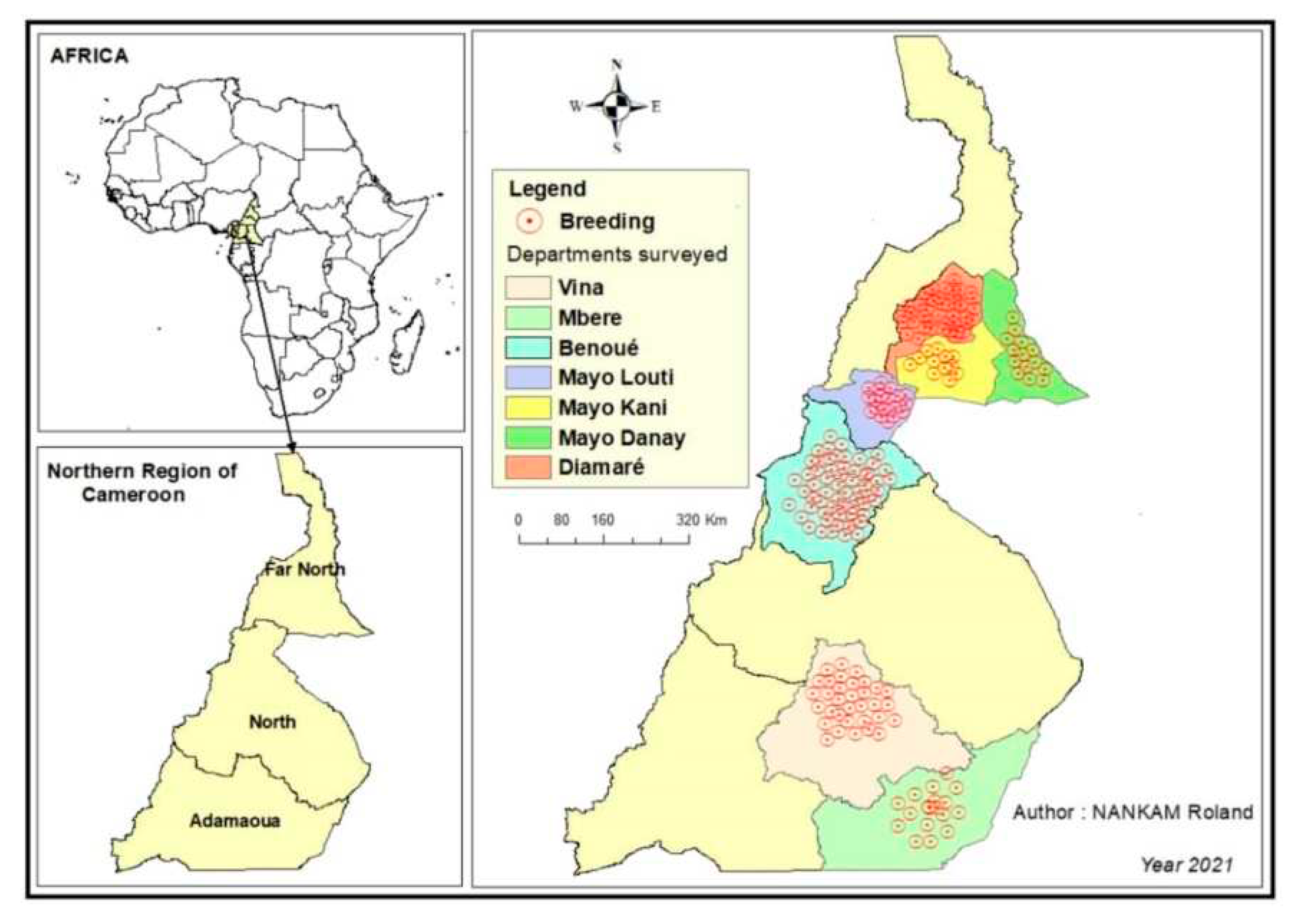
Figure 2.
Distribution of small ruminant farmers' knowledge of Toxoplasmosis in the Adamawa, North, and Far North regions of Cameroon (N = 200).
Figure 2.
Distribution of small ruminant farmers' knowledge of Toxoplasmosis in the Adamawa, North, and Far North regions of Cameroon (N = 200).
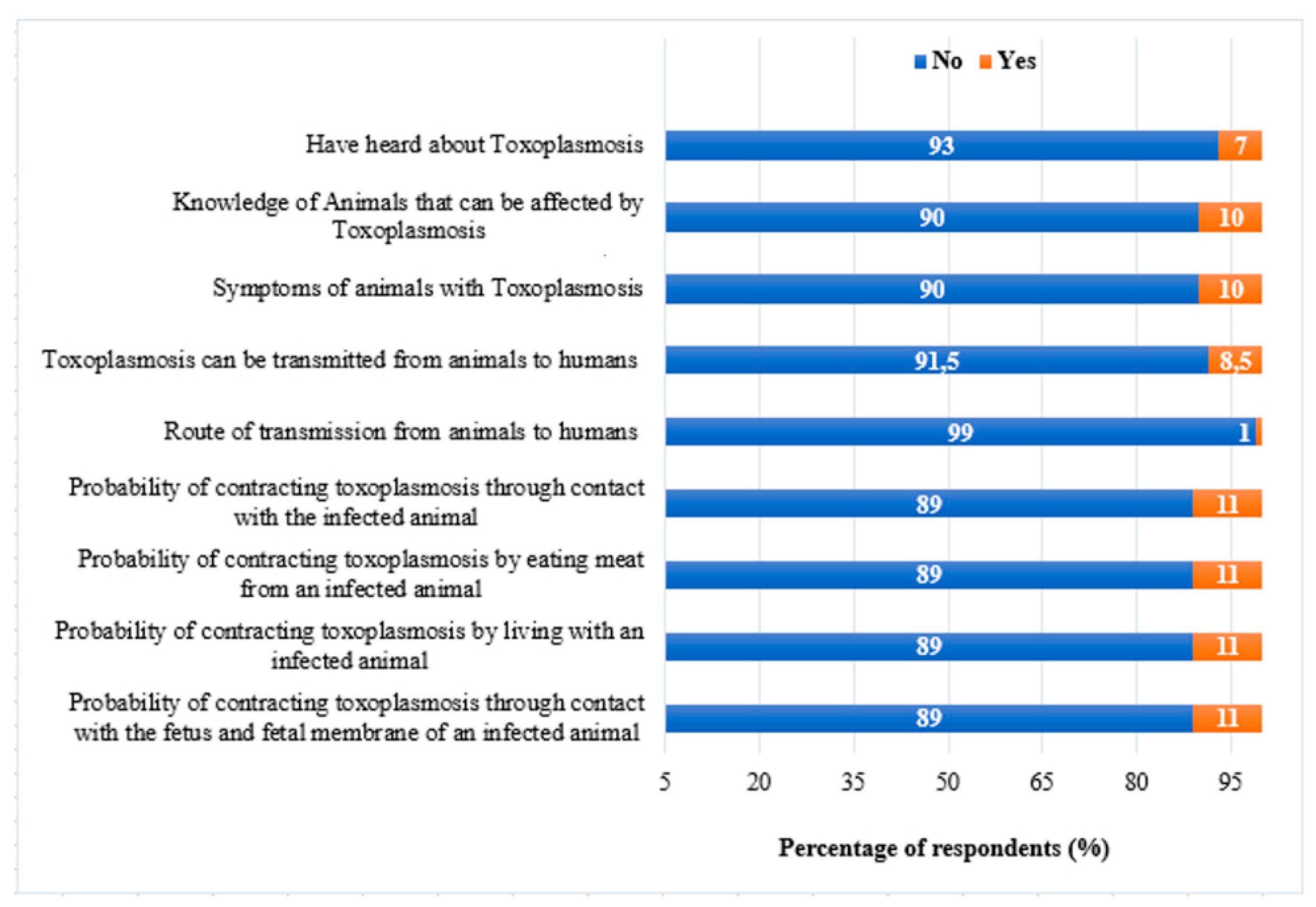
Figure 3.
Distribution of small ruminant farmers' knowledge on Chlamydophilosis in Adamawa, North and Far North regions of Cameroon (N = 200).
Figure 3.
Distribution of small ruminant farmers' knowledge on Chlamydophilosis in Adamawa, North and Far North regions of Cameroon (N = 200).
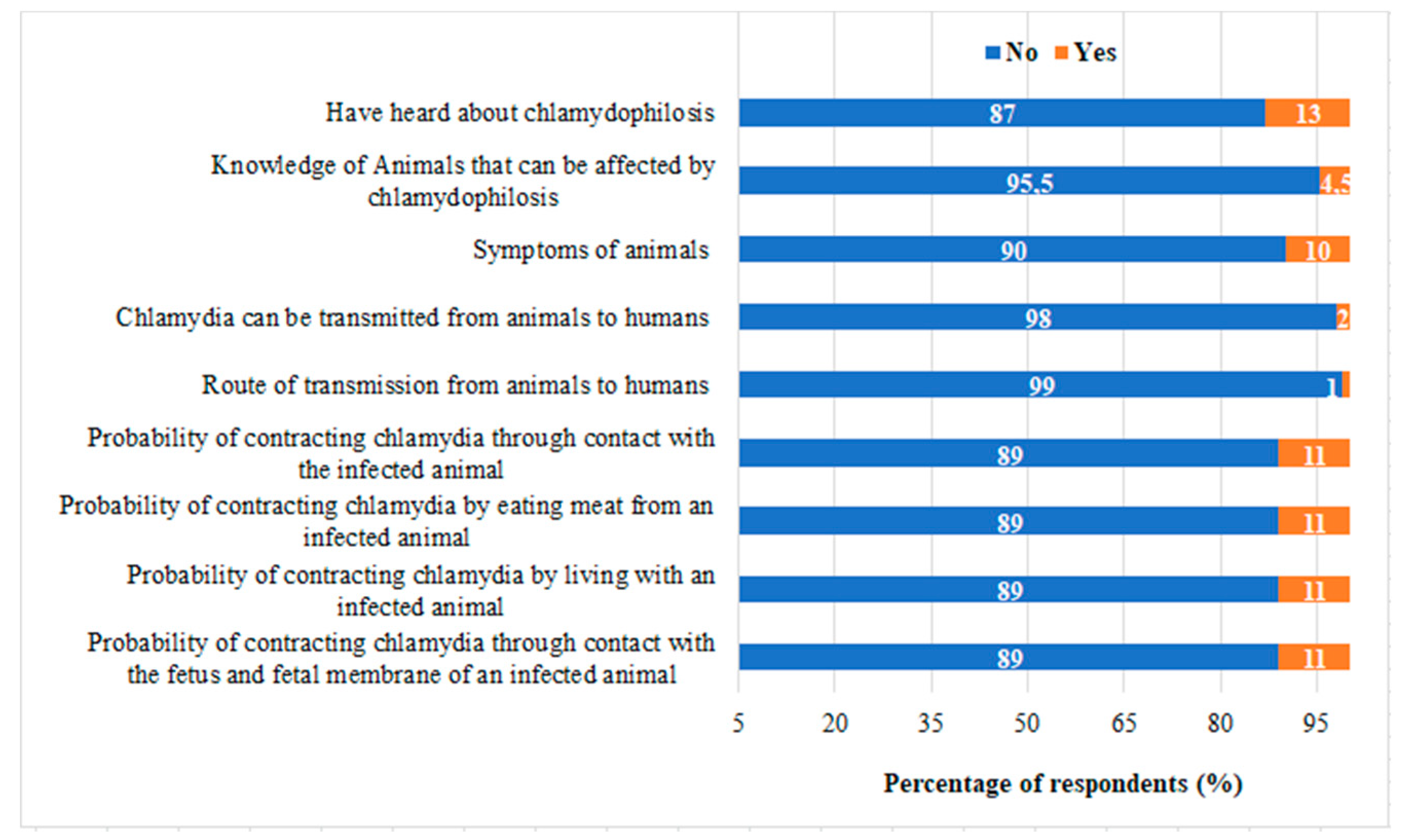
Figure 5.
Distribution of abortion management practice and attitude by small ruminant farmers in Adamawa, North and Far North regions of Cameroon (N = 200).
Figure 5.
Distribution of abortion management practice and attitude by small ruminant farmers in Adamawa, North and Far North regions of Cameroon (N = 200).
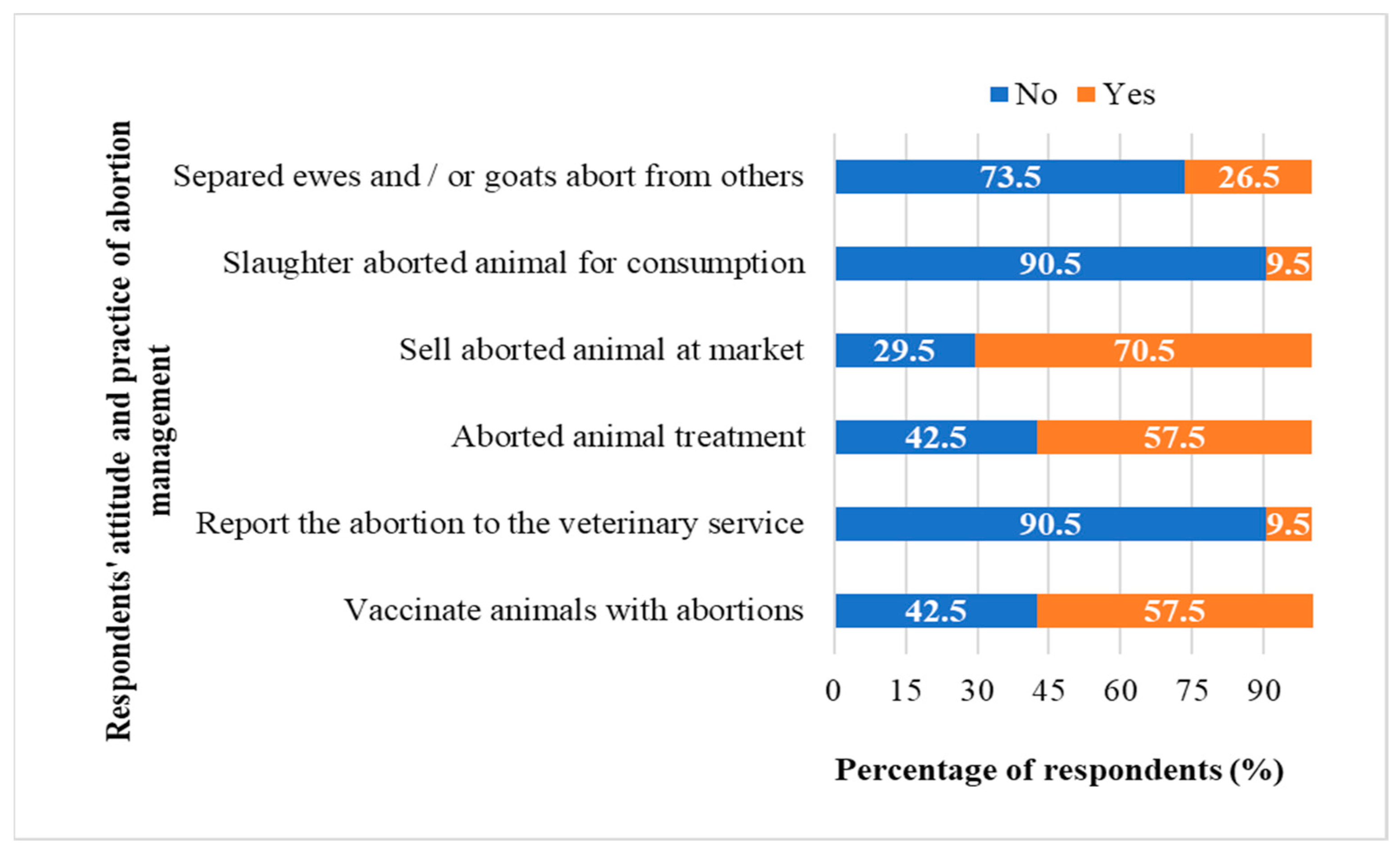

Table 1.
Distribution of mean knowledge scores on Toxoplasmosis and Chlamydophilosis according to demographic and farm characteristics of small ruminant farmers (N = 200) in the Adamawa, North and Far North regions of Cameroon.
Table 1.
Distribution of mean knowledge scores on Toxoplasmosis and Chlamydophilosis according to demographic and farm characteristics of small ruminant farmers (N = 200) in the Adamawa, North and Far North regions of Cameroon.
| Factors | Variables | N | ToxoplasmosisMean ± SD | P-value | Chlamydophilosis Mean ± SD | P-value |
|---|---|---|---|---|---|---|
| Global knowledge | 200 | 0,08 ± 0,23 | 0.07 ± 0.18 | |||
| Study regions | Adamawa | 50 | 0.03 ± 0.14 | 0.05* | 0.03 ± 0.10 | 0.03* |
| North | 81 | 0.12 ± 0.27 | 0.10 ± 0.21 | |||
| Far-North | 69 | 0.07 ± 0.21 | 0.17 ± 0.10 | |||
| Sex | Male | 160 | 0.07± 0.21 | 0.27 | 0.06 ± 0.16 | 0.23 |
| Female | 40 | 0.12± 0.28 | 0.10 ± 0.23 | |||
| Age (year) | < 20 | 4 | 0 | 0.00* | 0 | 0.00* |
| 21-50 | 113 | 0.08 ± 0.22 | 0.07 ± 0.18 | |||
| 51-70 | 74 | 0.08 ± 0.23 | 0.06 ± 0.16 | |||
| >71 | 9 | 0.17 ± 0.33 | 0.26 ± 0.26 | |||
| Level of education | No | 73 | 0.11 ± 0.27 | 0.02* | 0.09 ± 0.21 | 0.27 |
| Primary | 55 | 0.03 ± 0.13 | 0.03 ± 0.13 | |||
| Secondary | 55 | 0.07 ± 0.21 | 0.06 ± 0.15 | |||
| Higher | 17 | 0.14 ± 0.30 | 0.11 ± 0.22 | |||
| Marital status | Single | 28 | 0.05 ± 0.20 | 0.00* | 0.05 ± 0.15 | 0.00* |
| Monogame | 109 | 0.08 ± 0.22 | 0.07 ± 0.18 | |||
| Polygamist | 61 | 0.08 ± 0.22 | 0.06 ± 0.16 | |||
| Widow | 2 | 0.75 ± 0.07 | 0.60 ± 0.00 | |||
| Duration in the breeding (year) | < 10 | 53 | 0.07 ± 0.22 | 0.81 | 0.06 ± 0.16 | 0.82 |
| 11-30 | 127 | 0.08 ± 0.23 | 0.07 ± 0.18 | |||
| > 30 | 20 | 0.11 ± 0.27 | 0.09 ± 0.19 | |||
| Primary occupation | Village chief | 2 | 0 | 0.05* | 0 | 0.05* |
| Trader | 3 | 0 | 0 | |||
| Student | 4 | 0 | 0 | |||
| Breeder | 190 | 0.08 ± 0.23 | 0.07± 0.18 | |||
| Public servant | 1 | 0 | 0 | |||
| Breeding objectives | Financial | 139 | 0.07 ± 0.22 | 0.05* | 0.06 ± 0.17 | 0.13 |
| Consumption | 51 | 0.17 ± 0.31 | 0.13 ± 0.23 | |||
| Pleasure | 10 | 0.16 ± 0.34 | 0.12 ± 0.26 | |||
| Number of small ruminants in farms | < 10 | 45 | 0.11 ± 0.25 | 0.63 | 0.08 ± 0.19 | 0.76 |
| 10-30 | 131 | 0.07 ± 0.22 | 0.06 ± 0.17 | |||
| > 30 | 24 | 0.09 ± 024 | 0.07± 0.18 | |||
| Health personnel | Yes | 7 | 0.30 ± 0.24 | 0.89 | 0.26 ± 0.22 | 0.91 |
| No | 193 | 0.29 ± 0.24 | 0.26 ± 0.23 | |||
| Hygiene level | Clean | 48 | 0.16 ± 0.32 | 0.03* | 0.14 ± 0.25 | 0.02* |
| Very clean | 8 | 0.09 ± 0.25 | 0.06 ± 0.18 | |||
| Dirty | 134 | 0.06 ± 0.19 | 0.05 ± 0.14 | |||
| Very dirty | 10 | 0.01 ± 0.03 | 0.02 ± 0.04 | |||
| Power supply mode | Grazing | 180 | 0.06 ± 0.21 | 0.00* | 0.06 ± 0.16 | 0.01* |
| Zero grazing | 20 | 0.22 ± 0.33 | 0.16 ± 0.24 | |||
Values in a column with "*" differ significantly at P < 0.05; ANOVA results comparing mean factor scores by category while the independent t-test was used to compare factor scores of dichotomous variables; N= Number of respondents; SD: standard deviation.
Table 2.
Distribution of mean scores of practices, attitudes towards abortion management in small ruminants and risk perception of Toxoplasmosis and Chlamydophilosis according to demographic and herder characteristics (N = 200) in Adamawa, North and Far North Regions of Cameroon.
Table 2.
Distribution of mean scores of practices, attitudes towards abortion management in small ruminants and risk perception of Toxoplasmosis and Chlamydophilosis according to demographic and herder characteristics (N = 200) in Adamawa, North and Far North Regions of Cameroon.
| Factor | Variables | N | Practices | Attitude | Perception of risk of Toxoplasmosis and Chlamydophilosis | |||
|---|---|---|---|---|---|---|---|---|
| Mean ± SD | P-value | Mean ± SD | P-value | Mean ± SD | P -value | |||
| Study regions | Adamawa | 50 | 0.38 ± 0.14 | 0.57 | 0.29 ± 0.07 | 0.01* | 0.04 ± 0.19 | 0.04* |
| North | 81 | 0.36 ± 0.14 | 0.33 ± 0.07 | 0.18 ± 0.31 | ||||
| Extreme-North | 69 | 0.36 ± 0.11 | 0.33 ± 0.08 | 0.10 ± 0.31 | ||||
| Sex | Male | 160 | 0.36 ± 0.13 | 0.71 | 0.32 ± 0.07 | 0.85 | 0.10 ± 0.32 | 0.34 |
| Female | 40 | 0.37 ± 0.14 | 0.32 ± 0.08 | 0.16 ± 0.39 | ||||
| Age in years | < 20 | 4 | 0.44 ± 0.24 | 0.68 | 0.38 ± 0.05 | 0.05* | 0 | 0.05* |
| 21-50 | 113 | 0.37 ± 0.14 | 0.32 ± 0.08 | 0.11 ± 0.33 | ||||
| 51-70 | 74 | 0.36 ± 0.12 | 0.32 ± 0.07 | 0.11 ± 0.33 | ||||
| >71 | 9 | 0.31 ± 0.11 | 0.36 ± 0.09 | 0.25 ± 0.50 | ||||
| Level of education | No | 73 | 0.36 ± 0.12 | 0.28 | 0.32 ± 0.07 | 0.20 | 0.16 ± 0.39 | 0.02* |
| Primary | 55 | 0.39 ± 0.14 | 0.34 ± 0.08 | 0.04 ± 0.22 | ||||
| Secondary | 55 | 0.35 ± 0.14 | 0.32 ± 0.08 | 0.10 ± 0.31 | ||||
| Higher | 17 | 0.33 ± 0.33 | 0.30 ± 0.06 | 0.19 ± 0.43 | ||||
| Marital status | Single | 28 | 0.34 ± 0.13 | 0.05* | 0.33 ± 0.06 | 0.89 | 0.08 ± 0.28 | 0.0001* |
| Monogame | 109 | 0.36 ± 0.14 | 0.32 ± 0.08 | 0.11 ± 0.33 | ||||
| Polygamist | 61 | 0.39 ± 0.11 | 0.32 ± 0.07 | 0.11 ± 0.32 | ||||
| Widow | 2 | 0.25 ± 0.00 | 0.30 ± 0.14 | 1 ± 0.00 | ||||
| Duration in the breeding (year) | < 10 | 53 | 0.36 ± 0.15 | 0.91 | 0.32 ±0.07 | 0.70 | 0.10 ± 0.31 | 0.79 |
| 11-30 | 127 | 0.37 ± 0.12 | 0.32 ± 0.08 | 0.12 ± 0.34 | ||||
| > 30 | 20 | 0.35 ± 0.13 | 0.31 ± 0.08 | 0.16 ± 0.38 | ||||
| Primary occupation | Village chief | 2 | 0.56 ± 0.09 | 0.05* | 0.35 ± 0.21 | 0.05* | 0 | 0.0001* |
| Trader | 3 | 0.29 ± 0.08 | 0.30 ± 0.10 | 0 | ||||
| Student | 4 | 0.41 ± 0.26 | 0.38 ± 0.05 | 0 | ||||
| Breeder | 190 | 0.36 ± 0.13 | 0.32 ± 0.07 | 0.12 ± 0.34 | ||||
| Public servant | 1 | 0.38 ± 0.00 | 0.20 ± 0.00 | 0 | ||||
| Breeding objectives | Financial income | 139 | 0.34 ± 0.10 | 0.45 | 0.34 ± 0.07 | 0.46 | 0.30 ± 0.51 | 0.05* |
| Consumption | 51 | 0.31 ± 0.12 | 0.33 ± 0.08 | 0.25 ± 0.45 | ||||
| Pleasure | 10 | 0.35 ± 0.10 | 0.35 ± 0.08 | 0.23 ± 0.48 | ||||
| Number of small ruminants in farms | < 10 | 45 | 0.41 ± 0.13 | 0.02* | 0.33 ± 0.07 | 0.05* | 0.15 ± 0.36 | 0.70 |
| 10-30 | 131 | 0.35 ± 0.12 | 0.31 ± 0.07 | 0.10 ± 0.32 | ||||
| > 30 | 24 | 0.36 ± 0.14 | 0.35 ± 0.08 | 0.13 ± 0.35 | ||||
| Health personnel | Yes | 7 | 0.59 ± 0.17 | 0.04* | 0.29 ± 0.30 | 0.68 | 0.37 ± 0.20 | 0.92 |
| No | 193 | 0.55 ± 0.19 | 0.28 ± 0.30 | 0.37 ± 0.22 | ||||
| Hygiene level | Own | 48 | 0.35 ± 0.12 | 0.33 | 0.33 ± 0.09 | 0.57 | 0.23 ± 0.46 | 0.03 |
| Very clean | 8 | 0.37 ± 0.13 | 0.33 ± 0.07 | 0.08 ± 0.28 | ||||
| Dirty | 134 | 0.33 ± 0.15 | 0.32 ± 0.07 | 0 | ||||
| Very dirty | 10 | 0.42 ± 0.11 | 0.35 ± 0.08 | 0.13 ± 0.35 | ||||
| Power supply mode | Grazing | 180 | 0.37 ± 0.13 | 0.52 | 0.32 ± 0.07 | 0.05* | 0.09 ± 0.30 | 0.004* |
| Zero grazing | 20 | 0.35 ± 0.13 | 0.35 ± 0.08 | 0.32 ± 0.33 | ||||
Values in a column with "*" differ significantly at P < 0.05; N= Number of respondents; SD: standard deviation.
Table 3.
Pearson correlation measures of Small Ruminant Herders (N = 200) in the Adamawa, North, and Far North Regions of Cameroon.
Table 3.
Pearson correlation measures of Small Ruminant Herders (N = 200) in the Adamawa, North, and Far North Regions of Cameroon.
| Parameters | Variable | Knowledge of Chlamydophilosis | Knowledge of Toxoplasmosis | Practices | Attitudes | N |
|---|---|---|---|---|---|---|
| Pooled | Knowledge of Toxoplasmosis | 0.98** | 200 | |||
| Practices | -0.09 | -0.08 | ||||
| Attitudes | 0.07 | 0.06 | 0.07 | |||
| Risk Perception | 0.99** | 0.99** | -0.08 | 0.07 | ||
| Adamawa | Knowledge of Toxoplasmosis | 0.99** | 50 | |||
| Practices | -0.15 | -0.09 | ||||
| Attitudes | -0.06 | -0.04 | 0.19 | |||
| Risk Perception | 0.99** | 0.99** | -0.10 | -0.05 | ||
| North | Knowledge of Toxoplasmosis | 0.96** | 81 | |||
| Practices | -0.02 | -0.04 | ||||
| Attitudes | 0.13 | 0.14 | 0.14 | |||
| Risk Perception | 0.99** | 0.99** | -0.03 | 0.15 | ||
| Far North | Knowledge of Toxoplasmosis | 0.98 | 69 | |||
| Practices | -0.16 | -0.13 | ||||
| Attitudes | -0.08 | -0.14 | -0.01 | |||
| Risk Perception | 0.99** | 0.99** | -0.13 | -0.11 |
Values in a column with "**" differ significantly at P < 0.001; N = total number of respondents.
Disclaimer/Publisher’s Note: The statements, opinions and data contained in all publications are solely those of the individual author(s) and contributor(s) and not of MDPI and/or the editor(s). MDPI and/or the editor(s) disclaim responsibility for any injury to people or property resulting from any ideas, methods, instructions or products referred to in the content. |
© 2023 by the authors. Licensee MDPI, Basel, Switzerland. This article is an open access article distributed under the terms and conditions of the Creative Commons Attribution (CC BY) license (http://creativecommons.org/licenses/by/4.0/).
Copyright: This open access article is published under a Creative Commons CC BY 4.0 license, which permit the free download, distribution, and reuse, provided that the author and preprint are cited in any reuse.


