

Submitted:
16 August 2023
Posted:
18 August 2023
You are already at the latest version
Abstract
This paper evaluates norms and assesses the level of knowledge in air conditioning project management within the construction industry. A total of 25 questions were distributed to multiple candidates, who were filtered based on pre-established inclusion and exclusion criteria. Thirty-nine candidates were ultimately approved to participate in the survey. The questions were designed to address five hypotheses, with each set of five questions corresponding to one hypothesis. The results were obtained after pre-processing the data using Matlab software. The data was pre-processed using Matlab software, and the results were analyzed using the Delphi method. The analysis revealed that only two hypotheses were approved: No matter whether there are nationalized safety rules or not, the impact of data sciences and smart technologies, including air conditioning management systems, is critical for human life in the building business.
Keywords:
Intelligent Data Analyzing
; energy consumption
; thermal comfort
; inclusion
; exclusion criteria
; Delphi method
1. Introduction
Construction, encompassing residential, commercial, and industrial buildings, is responsible for 25% of global energy consumption. In rare instances, this percentage might escalate to 40%. This energy is primarily utilised for heating, ventilation, air conditioning, and cooling (HVAC) systems [1]. Heat is a significant energy resource consumed, playing a crucial role in achieving equilibrium in the energy equation. Both excessive heat gain and heat loss present are challenges. Heat exchange primarily occurs at building surfaces such as walls (in direct contact with sunlight) and rooftops. The main factor influencing thermal comfort in residential buildings is an individual's income. However, [2] advises municipal governments to implement vulnerability measures composed of guidelines and responsibilities. These measures should outline specific air conditioning, cooling, and heating system requirements. Although individual wealth is significant, other variables should be considered in the balance between energy expenses and thermal comfort. Age, location, and access to alternative energy sources such as solar panels and wind turbines may influence this trade-off. Innovations in multi-evaporator research cooling have suggested a cutting-edge, freestanding advanced dehumidification air conditioning (EDAC) system. [3] provides the results of a test study detailing the development of the EDAC system and the control method to maintain a consistent indoor humidity level year-round. The document first outlines the control technique and the precise abrasive process of the EDAC system.
In [4], a study was conducted on a system combining both indirect and direct evaporative coolers to form a completely open-air structure. The system included a dehumidifier and used carbon dioxide (CO) as a tracer gas to evaluate the ventilation efficiency of the LD-IDECOAS. After liquid-desiccant dehumidification, measurements were also taken of two volatile organic compounds (VOCs), namely toluene and formaldehyde. Furthermore, the study examined the varying particle sizes and the colony-forming units (CFUs) of microorganisms such as bacteria and parasites in the preparation room. In [5], the sounds of ceiling-mounted air conditioners were recorded in different classroom, office, and library environments. The study explored the impact of altering the unpleasant envelope of the noises on acoustic comfort by controlling sound quality. Using original recordings, tonal components were removed, and sound pressure levels in the 250–630 Hz frequency range were altered to produce experimental sounds. People responded more positively to sounds with enhanced liveliness in the 250–630 Hz range, regardless of the presence of tonal components. Statistical analysis showed that tone and variance quality significantly influenced sound quality measurements, reflecting individuals' acoustic comfort. In [6], the focus is on the conditioning frameworks of HVAC systems, which must be carefully considered due to the widespread nature of the coronavirus (COVID-19) worldwide. Within these conditioning frameworks, the discussion is centered around heating and cooling. The environment contains pollutants, diseases, and microorganisms that can affect and endanger human lives. The discussion highlights the importance of the talk channel, a crucial component within the conditioning frameworks. Efforts have been made to enhance the comfort levels of small and medium-sized buildings in hot and humid climates using direct expansion (DX) air conditioning (A/C) systems. However, these methods had certain shortcomings. To address these, a novel DX-based A/C design called the Twin-Stage DX Air Conditioner (TS-DXAC) has been introduced in [7]. A control method for the TS-DXAC system has been proposed, allowing for precise indoor climate regulation under extreme conditions. The TS-DXAC system’s point-to-point configurations and control process are first explained, and the developed method includes two separate control computations to cater to both hot-humid and hot-dry indoor scenarios. In [8], the modeling and prediction methods for indoor temperature lag response characteristics are explored using time-delay neural networks (TDNN) and Elman network neural (ENN). The variable air volume (VAV) discussion conditioning framework is used as a reference to evaluate the suitability and effectiveness of these proposed methods through game-based analysis data and real-time operational data. The results indicate that ENN, with its less complex organizational structure, reduced storage space, and higher forecast accuracy, was a superior modeling technique for predicting indoor temperature. A working methodology for air-conditioning frameworks based on the indoor habitation rate (R) was proposed in [9], where the start-stop is balanced in accordance with R while still meeting requirements for indoor environmental quality (IEQ). In addition to being used to support fresh discussion, the dedicated open-air discuss framework (DOAS) is integrated with indoor fan coil units to autonomously control humidity and temperature. With the advanced working approach attached, a framework for office building air conditioning was tested. According to the test results, the cooling plant's energy efficiency ratio (EER) is 4.2%, up 7.2% from when the same system was operating under previous conditions. Simulating a hack at the "Bambino Gesù" Vatican State Children's Healing Clinic using Computational Fluid Dynamic software (CFD) was studied in [10]. The study showed that, it was able to model the role that HVAC frameworks play in the spread of the disease. Rooms in detention facilities and treatment facilities were also depicted as indoor scenarios. Each display's intake of contaminated air during the reenacted indoor settings was measured using a specific Infection-Index metric. Additionally, the potential value of depleted air ventilation frameworks placed over the mouth of the hacking patient was examined. [11] reported that a conditioned research facility was evaluated for improvements in Indoor Air Quality (IAQ) through intermittent cleansing of pre-cooled air. The default scenario makes no changes to the current process, assuming a continuation of existing conditions. Sixty percent of occupants reported feeling discomfort within the facility, and 58% noticed unpleasant odors when discussing quality-of-life concerns. The air was cooled to 28 ± 0.3 °C before entering the facility, thanks to a Pre-Cooling Unit (PCU) that efficiently uses AC condensate released at 16-17 °C. The outdoor air temperature was reduced by 3-3.5 °C using the PCU's intelligent and passive cooling frameworks. Study of [12] shows that both a subjective survey and an objective field experiment were conducted. Various topics, including occupant behavior, the indoor environment, and operational features, were extensively explored in the subjective survey. Based on these findings, field tests were performed, combining indoor environmental conditions with energy performance testing. The results revealed significant differences between the cooling and heating modes, with both modes substantially reducing the overall room temperature. A study in [13] examines the influence of Vertical Greening Systems (VGSs) and Green Roofs (GRs) on the indoor temperature of an air-conditioned space, a factor representing human thermal comfort. The research focuses on the effects of VGS and GR on indoor temperatures. Two climatically controlled test rooms in the Chinese city of Xiangtan were used, one with VGS and GR and the other without. Both rooms maintained consistent indoor temperature settings. During the summer of 2018, the thermal indoor and outdoor conditions were monitored and recorded in real-time. In [14], the solar cooling load (SCL) of an air conditioning system is significantly reduced, leading to a minimal decrease in solar energy usage (SEU). The study simulated the SCL in a large-space building with varying airflow distributions and compared the SEU between using a single cooling source and multiple low-grade cooling sources for handling air circulation. This comparison aimed to maximize the energy-saving potential of efficient airflow delivery and minimize the SEU. Stratum ventilation (SV), an advanced indoor air distribution technique, has been utilized in various building locations, as described in [15]. The clear advantage of SV over conventional mixing ventilation (MV) is its potential to provide indoor thermal comfort while reducing energy consumption for cooling. High-temperature cooling can further enhance the energy performance of solar-powered air conditioning. Consequently, the compatibility of SV with solar-based air conditioning systems was assessed. The solar-powered air-conditioning systems examined in this study included the solar-powered absorption cooling system (SAbCS) and the solar-powered adsorption cooling system (SAdCS).
Previous research activities on energy consumption control and efficiency enhancement of Heating, Ventilation, and Air Conditioning (HVAC) systems have mainly focused on active and passive approaches for maintaining a thermal environment. Passive technologies have been identified as a potential solution for achieving a balance between thermal comfort and energy consumption. The trade-off between thermal comfort and energy is a persistent problem with HVAC systems designed to regulate human comfort. In the northern Iraqi state of Mosul, energy utilisation and management are crucial, but construction projects often lack a robust strategy for energy-thermal comfort regulation. Deploying highly powered HVAC systems without concern for energy problems and emissions suggests a lack of awareness about globalised standards. In the previous work, the trade-off between thermal comfort and energy consumption is not considered in designing HVAC systems to regulate human comfort and improve air-conditioning systems. To the best author's knowledge, there is a limitation that need to be adressed, and thus this work was conducted. The contribution of the proposed work can be summarised as follow:
- In this paper, a compreheansive survey was conducted in the North of Iraq, Mosul city, where forty management experts, comprising engineers, technical personnel, and labourers, were considered.
- The questions were designed to address five hypotheses, with each set of five questions corresponding to one hypothesis. The results were obtained after pre-processing the data using Matlab software.
- The purpose of this paper is to investigate how the Delphi method has been used and its methodological considerations tradeoff between thermal comfort and energy consumption.
- Results were analysed using the Delphi method. The analysis revealed that only two hypotheses were approved: No matter whether there are nationalised safety rules, the impact of data sciences and smart technologies, including air conditioning management systems, is critical for human life in the building business.
2. Research Questions
A careful understanding of global air conditioning, cooling and heating systems problems reveals that energy is the major dispute due to the limitation of energy resources and the hefty cost of energy generation/renting in most counties across the globe. For this reason, globalized-based organisations such as the international standard organisation (ISO) are established to set up the necessary roles and regulations while adopting any technology, including air conditioning, cooling and heating. Thus, in regard to the selected study sample, i.e. (the Mosul constructions community), the following questions are set and expected to be answered while proceeding with the research work.
- Q1: How familiar are apartment owners, business owners, and employees with the expenses associated with achieving thermal comfort?
- Q2: What technical strategies are mechanical engineers and air-conditioning professionals implementing to balance thermal comfort and energy consumption in various indoor air-conditioning projects?
- Q3: Are any precautions taken by urban planners and building civil workers, such as site engineers, designers, and contractors, to prevent thermal losses and optimise the performance of air-conditioning systems?
- Q4: What are the minimum energy efficiency standards (MEES) used in the state's buildings?
- Q5: Is it possible to retrofit the thermal configurations of old buildings to meet the required energy preservation standards?
3. Delphi Method: Statistical Approach Analysis
To manage the uncertainties of future development, scenarios are used to envision alternative futures. Scenarios describe future developments within a specific field, often in a predetermined geographical area. A scenario is a description of a possible, probable, desirable or undesirable future [16] , and scenario development is an important tool as the future is uncertain, and we should prepare for multiple plausible futures [17].
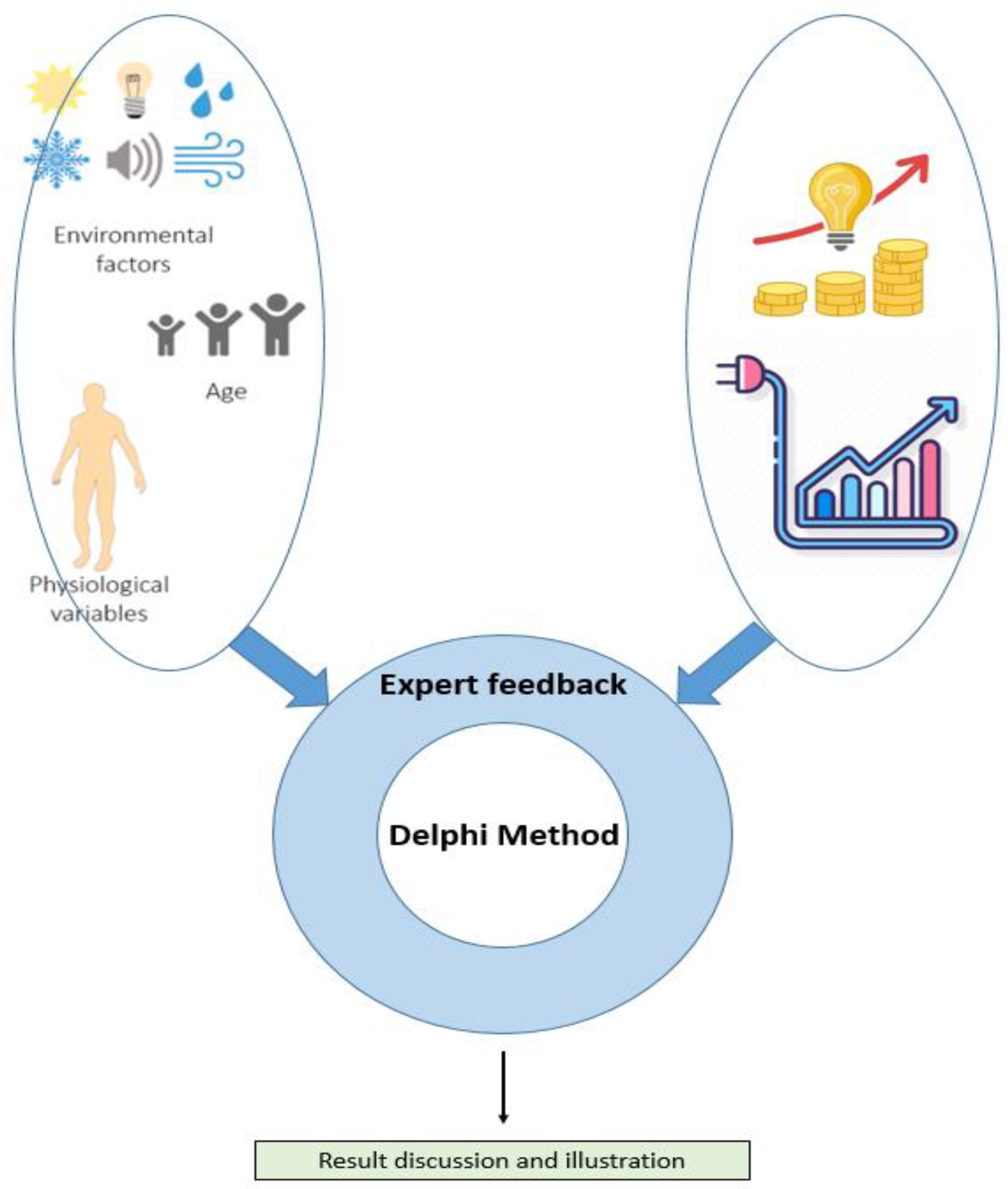
Figure 1.
Graphical abstract of the proposed scenario.
Delphi studies are often used to develop future scenarios [18] by academia, industry and governments. It is suggested that it is important to gather experts’ opinions and reach a consensus when faced with an uncertain future. It has gained ground in social science and business to solicit expert opinions. The method's basic principles are anonymity, repetition, controlled feedback, and group response. Typically, the goal is to achieve the most reliable consensus among experts on a given topic. The study is usually carried out in the form of a questionnaire conducted on a panel of experts in the field. The method has been used in many ways and is often combined with other methods [19]. The Delphi method is a structured communication strategy that was initially established as a methodical, interactive method for forecasting that depends on an expert panel. In the context of energy usage and thermal comfort, this strategy may be very helpful for reaching an agreement on the optimal methods for optimising both [20].Complex variables such as building design, materials, climate, user behaviour, and technology advancements impact energy use in the industrial and commercial sectors. On the other hand, thermal comfort is a state of mind that conveys happiness with the thermal environment and is impacted by variables such as temperature, humidity, air velocity, clothing, and metabolic rate [21]. In this use of the Delphi technique, a panel of experts replies to surveys independently in at least two rounds. After each round, a facilitator provides an anonymised overview of the forecasts and arguments provided by the experts in the preceding round. Therefore, experts are encouraged to revise their prior comments in light of those of other panel members [22]. The process will continue until a resolution is reached. This iterative method is advantageous for handling the complexity of energy consumption and thermal comfort. Using the pooled expertise of diverse professions, such as engineers, architects, energy analyzers, and human comfort specialists, the Delphi method may develop innovative ideas and methods. These may include the design of energy-efficient buildings, the creation of new insulating materials, the development of intelligent HVAC systems, and the formulation of guidelines for achieving thermal comfort with minimal energy use [23]. Since it allows for the integration of quantitative and qualitative data (such as energy consumption measurements), the Delphi method is particularly effective in these circumstances (such as occupant comfort perceptions). Through repeated rounds of structured inquiry and feedback, it is feasible to develop a more thorough and well-rounded understanding of the complex relationship between energy use and thermal comfort [24].
3. Methodology
Forty construction management experts, comprising engineers, technical personnel, and labourers, were given questionnaires totalling 25 questions divided into five categories. To preserve certain criteria for the purpose of making decisions about which individuals should be included and which should be excluded, we filtered the candidates based on their educational qualifications.
Inclusion criteria based on candidates must fit into the permitted age range according to the options given in the biometric section of the survey. The permitted educational level according to the options provided in the biometric section of the survey, the permitted level of field experience according to the options given in the biometric section of the survey, and the applicants must be a mix of male and female petroleum employees and research scholars.
After that, any candidates who did not meet the inclusion criteria outlined in the preceding section were eliminated to maintain our exclusion criterion. However, a deadline of 14 days was set for each candidate (who was interested in participating) to respond with his comments on the aforementioned survey. Google Forms broadcasts the questions, and coworkers who are interning share the link with their community organizations. Only experts with relevant job experience in the research area were allowed to participate; thus, each applicant had to email the thesis author their resume and other pertinent information.
3.1. Delphi Method Procedures
The Delphi method is a type of statistical methodology that uses surveys to gather data from participants and aims to create an agreement over specific facts. Data must be generated appropriately and used in the analysis after being given the information from the field exports. This procedure is carried out in the following steps: Establishing the survey involves creating questionnaires that address the controversy or research subject. The survey's question count will vary based on the size of the issue and the range of potential solutions. Survey questions may target knowledge inquiries and are becoming more common with some ambiguous or hidden facts. Study candidates are individuals or groups who voluntarily participate in a survey study by sharing their knowledge and opinions. The number of applicants must be carefully chosen in accordance with specific parameters and needs. Feedback/ Responses: It refers to the collection of responses that the survey candidates gave to the survey's questions. The formats listed in Table 1 may be used for responses. Qualifications: Candidates chosen should have sufficient field research experience in addition to suitable academic credentials. Each candidate's age should fall within the acceptable range to maintain the poll's validity. Figure 2 illustrates the Delphi model. The Delphi technique includes a step called "sharing the survey," in which the survey questions are distributed to the applicants by fax, email, post, personal (face-to-face) interviews, telephone interviews, web forms (with links that may be shared), social media, etc. Their replies are anticipated to reflect their unique ground-level experiences in exports. The questions may be carefully crafted to achieve more accurate responses so that the applicants (exports) are to provide feedback after blending their professional experience and their educational (academic) qualification.
Coding: the applicants' responses are often provided as text data or an alphabetic-numerical combination. Any analysis must first go through pre-processing; during this phase, data may be converted into a numerical format compatible with analysis tools.
Approach to scoring: Most surveys that employ the Delphi technique allow score-based data analysis to be performed on the information to comprehend the influence of each question on the hypothesis. Most surveys using the Delphi technique use standardized feedback or answers like neutral, strongly agree, strongly disagree, agree, and disagree. When an answer of the sort specified in point (g) is given a score, a number is assigned to it; these scores are expressed as numerical values in Table 1. The mean of each question response must be calculated as points are given for each response (feedback).
3.2. Gender Distribution, Educational Qualifications and Experience Level
Gender Distribution: pre-processing is done to change the responses into numerical representation to match the results for all candidates. However, the number of male candidates who responded to the aforementioned survey within the specified time frame and met the inclusion requirements was calculated in order to ascertain the gender distribution. A total of 39 individuals were ultimately selected for the survey. There are twenty-seven men and twelve women among them. The same is seen in the figure below.
Educational Qualifications: Candidates were subjected to a thorough inquiry to determine their suitability for the survey by examining their educational requirements in accordance with the inclusion standards. There are three categories: diploma, bachelor's degree, and master's degree. But in the poll, the phrase "Master and higher" was used to refer to higher education such as master's, doctorate, and post-doctoral programs. The distribution of the total survey respondents across the various educational groups is shown in the results from this stage in the form of a figure. Results indicated that most of the applicants were engineers and other technical experts. Finally, about 15% of all workers are considered to have higher education, including research scholars, consulting engineers, and designers. The second largest group is believed to have a diploma degree, consisting largely of workers and professional labor. The candidate's further training or education in relation to skill enhancement is the second stage of verification that falls within the inclusion criteria. This step, though, is only supportive and not necessary to rule out a certain candidate. The figure below shows the outcomes of this step. Results indicate that most candidates did not get any forced training or skill improvement. Only about 20% of them are given those specific courses.
On the other hand, in this case, we mimicked the survey to determine where all the candidates are employed as construction management employees. According to our research, about 12% of them are not physically employed in the construction management industry. The figure below demonstrates why those people were chosen for the survey: they are primarily researchers and project designers with an interest in building construction.
Experience Level: Four categories, one to five years, six to ten years, eleven to twenty years, and twenty-one to thirty years, are used to categorise the experience being gathered. It was believed that thirty years old was the cutoff age for the service and that one year of experience was the absolute minimum. Results revealed that most of the included applicants are between eleven and twenty. The illustration below shows the same. The survey was designed to include various experts in the fields of energy management, architecture, engineering, and human comfort. Each question aimed to probe different facets of energy consumption and thermal comfort. The respondents were given the option to answer on a 5-point Likert scale ranging from Strongly Agree to Strongly Disagree, with Neutral as a central point.
3.2. Response Analysis
Understanding the viewpoints of stakeholders is vital in the dynamic and intricate subject of energy consumption and thermal comfort. This section adress the utilisation of a structured questionnaire to examine if there is agreement or disagreement on energy efficiency and thermal comfort. According to Table 2, answers to the survey's 25 items were grouped as follows: Neutral, Strongly Agree, Strongly Disagree, Agree, and Disagree. As given in the Table, the summarised replies reflect a wide and fascinating pattern of viewpoints. Certain issues drew a strong consensus, but others aroused substantial disagreement or neutral attitudes. Questions like as 3 and 16 indicate an inclination toward great agreement. For example, 26 people highly agreed with question 3, whereas just 1 strongly disagreed. This may denote a prevalent expert view or a generally regarded best practise on the issue at hand. In contrast, replies to questions such as 5, 6, and 19 revealed substantial disagreement or polarisation. Such divergence may provide insight on difficult or intricate situations where perspectives differ considerably. More qualitative study is necessary to comprehend the underlying causes of these disparities. Neutral replies were more prevalent for several items, including 1, 7, 9, and 10. This trend might indicate either a lack of adequate knowledge to develop a definite view, or that the questions addressed topics with intrinsically ambiguous or complex elements. Questions like as 2, 4, and 25 had a more even distribution among the categories, with no discernible preference for a particular answer. This may indicate complex challenges that are regarded differently by different specialists, necessitating an interdisciplinary approach. This study's varied replies provide a useful overview of the complicated terrain of attitudes about energy usage and thermal comfort. They emphasise the need for thorough examination of multiple viewpoints, the significance of encouraging conversation among diverse specialists, and the need for more study to deconstruct the underlying causes of agreement or disagreement. Such results aid policymakers, academics, and industry experts in their decision-making by giving a deeper grasp of the conventional wisdom, prevalent norms, and contentious regions within these crucial sectors.
3.3. Neutral Responses
According to the data, neutral is present in virtually all the questions, as shown in the Figure below. The overall value of the neutral responses is 247 out of 975 (the total scores, for example, 25 x 29). Questions 1, 7, and 24 receive the most evenly distributed responses, whereas questions 3, 21, and 11 receive the least.
3.3.1. Strongly Agree Responses
According to the results, the questions where Strongly Agree is present are shown in Figure below. The total value of the Strongly Agree responses is 112 out of 975 (the total scores, for example, 25 x 29) for the questions. The questions with the highest percentage of "Strongly Agree" responses are Questions 3, Question 4, and Question 26, whereas the lowest three are Questions 1, Question 2, and Question 6.
3.3.2. Strongly Disagree Responses
According to the data, Strongly Disagree responses can be found in virtually all questions, as shown in Figure below. The overall value of these responses is 62 out of 975 (the total scores, for example, are 25 x 29). The questions with the highest percentage of Strongly Disagree responses are Questions 21, Question 19, and Question 5, whereas the lowest three are Questions 1, Question 3, and Question 4.
3.3.3. Agree Responses
According to the results, Agree can be found in virtually all of the questions, as shown in Figure below. The Agree responses have a total value of 407 out of 975 points (the total scores, for example, are 25 x 29). The questions with the most "Agreed" answers are Questions 7, Question 14, and Question 23, whereas the least agreed-upon questions are Questions 5, Question 21, and Question 1.
3.3.4. Disagree Responses
According to the results, disagreement can be discovered in practically all of the questions. As shown in the Figure below, the overall value of disagreement responses is 137 out of 975 (the total scores, for example, 25 x 29). The questions with the most disagreeable responses are Questions 21, Question 6, and Question 2, while the least disagreeable responses are Questions 3, Question 12, and Question 15. Responses can be summarized by calculating their impact with reference to the total impact as in Table 3.
4. Results and Discussions
The aforementioned hypotheses are examined using the Delphi method, with the replies provided as examples. Table 4 displays the score for each question along with the question's labelled hypothesis. Between -28.21 and 78.21, the findings for Hypothesis H1 vary considerably. In some instances, negative ratings may imply significant disagreement or rejection of the idea, while high numbers indicate agreement or validation. The inconclusive findings may show that the validity of H1 is affected by subtle or complicated circumstances, and the lack of agreement may indicate that H1 deserves additional examination and explanation. Also, Hypothesis H2 yields mixed findings, with negative scores ranging from -42.87 to 34.555 and positive values ranging from 0 to 34.555. Negative numbers may indicate settings in which the hypothesis was not supported, while positive ones reflect its validation. The disparate findings for H2 again highlight the need for a more nuanced investigation by decomposing the hypothesis into more precise components or evaluating other variables that may impact the results. Consistently positive, the findings for Hypothesis H3 range from 22.22 to 42.333 [23]. This suggests that the theory is generally supported or validated across all issues or situations investigated. The consistency in the positive direction may indicate that H3 is a robust and well-supported hypothesis, but it may still benefit from an investigation into why the scores vary and whether individual elements contribute to its acceptance. All associated questions provide affirmative results for Hypothesis H4, with values ranging from 21.00 to 78.99. This constancy in positive ratings may be seen as a solid endorsement of H4, yet the range of results reflects varied degrees of agreement or confidence in the hypothesis[23]. Different interpretations of the hypothesis or varying degrees of evidence supporting it in different situations may account for this discrepancy. Lastly, the findings for Hypothesis H5 range from -50.21 to 55.32 and are both negative and positive. This large range, including the unusually low negative score, shows significant disagreement or contradiction with this concept. Such diverse findings need a thorough investigation of the underlying variables that lead to different outcomes, which may necessitate a reevaluation or reformulation of H5. The results presented in Figure 3 provide a complicated picture of the investigated hypotheses. Some hypotheses (such as H3 and H4) seem to get consistent support, while others (H1, H2, and H5) provide more contradictory findings. These results give important information on the validity and applicability of the hypothesis.
The findings and scores for each hypothesis are shown in Table 5. Table 5 displays the choices that resulted from the selection of 110 as the test process cutoff. In the modern global scene, uniform safety standards and technological innovation have emerged as of the utmost importance for all sectors. The first hypothesis emphasises the need for international safety standards, notwithstanding the existence of national rules. This urge for consistency is not only an operational issue; it also resonates strongly with globalisation of commerce, consumer safety, and the complicated network of supply chains that characterises contemporary economies. The benefits of a simplified, generally applicable set of criteria cannot be overstated, notwithstanding the criticism that global standards may miss regional variations. Concurrently, the second hypothesis focuses on a business that is often marginalised in safety discourse: the air conditioning industry. The combination of data sciences and intelligent technology provides a diverse approach to safety in this context[21]. Predictive analytics and real-time monitoring are reactive procedures that grow into preventative ones to avert possible dangers. In addition, these technologies contribute to energy efficiency, which is consistent with larger environmental sustainability objectives. The objections to cost and data privacy are significant but do not lessen the overall good effect on human safety and well-being. These ideas provide a comprehensive perspective on contemporary safety procedures and technology integration. The ramifications extend beyond individual industries and hint at a paradigm change in which international cooperation and the sensible use of technology generate a safer, more interconnected society. Recognizing the multilayered complexity of safety in a globalised society, the discourse calls for more thorough study and strategic planning to completely realise these principles [21].
The assessment of safety standards and cost-cutting techniques in the air conditioning business has produced results that contradict two theories first suggested. The first hypothesis proposed that the placement of air conditioning projects would substantially influence the safety of employees or professionals. Contrary to predictions, the study finds that site-specific risks are often minimised by adherence to conventional safety measures, constant professional training, and high-quality materials and equipment. This highlights the universality of safety standards and lessens the significance of location as a distinguishing element in worker safety. The refuted second hypothesis said that the cost-cutting formula might be improved by exceeding international safety requirements, such as ISO 50001. Although intuitively tempting, actual evidence demonstrates that the association between exceeding these requirements and cost savings is not linear. Conformity to these standards often improves quality and safety, but exceeding them does not always result in equal cost savings. Excessive measures that exceed accepted norms may result in the allocation of resources without evident gains in safety or productivity. In addition, it might lead to a divergence between best practises and internationally recognised safety standards. The denial of these assumptions provides vital insight into the complex dynamics of safety and cost-effectiveness in the air conditioning business. It challenges frequently held ideas and gives a clearer route for future study, emphasising adherence to established worldwide standards and holistic safety management as opposed to location-specific or unnecessary precautions. This viewpoint promotes a more balanced approach to industrial processes, in line with global tendencies and technology advances.
6. Conclusion and Recommendation
This research was designed and eveloped to analyse industry standards and assess knowledge of managing air conditioning projects in the construction trades and provide valuable insights that connect theory and practise. The design of the research includes 39 applicants who were rigorously chosen based on previously set inclusion and exclusion criteria to guarantee a varied but concentrated participant pool. This method of participant selection increases the validity of the results by offering a picture of current industry practises and views. The format of the survey, which consists of 25 questions separated into five groups, each of which serves one of the five hypotheses, demonstrates the methodical and exhaustive nature of the inquiry. This well-considered layout allows for a multidimensional examination of complicated issues, such as air conditioning management systems and international safety laws. It sheds light on particular areas of interest and gives a wider view of the interaction between the many elements that influence the sector. The use of Matlab for data preprocessing demonstrates that the porposed method was found to be resonably accurante and roubust. By using sophisticated tools and methodologies, the study guarantees that the data was handled with the utmost care and precision, removing any possible biases or mistakes that may influence the results. In addition, the use of the Delphi method to examine the data provides another dimension to the research. Engaging experts in recurrent rounds of analysis improves the validity of the results and taps into the collective intelligence. This method, guided by expert opinion and improved by consensus, concludes that just two of the submitted hypotheses were supported. These pertain to the substantial influence of air conditioning management systems on human life in the building industry and the critical function of worldwide safety rules, even in the presence of national safety codes. In conclusion, this research makes a significant addition to the area by shedding light on critical issues of safety regulations, project management, and technology integration within the air conditioning business of the building trades. The meticulously developed approach, comprehensive analysis, and nuanced conclusions provide a road map for future study and policy development. Innovative use of data sciences and smart technologies in the air conditioning industry contributes to safety and energy efficiency. The research promotes adherence to universal standards and technology integration, challenging commonly held views and suggesting a paradigm shift towards a safer, more interconnected society. The denial of specific assumptions highlights the complexity of balancing safety and cost-effectiveness, guiding future research towards holistic safety management in line with global trends.
References
- SolanoeOlivares K. and al. et. Life cycle assessment of a solar absorption air-conditioning system [Journal] // Journal of Cleaner Production . - 2019. - Vol. 240. [CrossRef]
- Goldsworthy Mark and al. et. Air-conditioning in low income households; a comparison of ownership, use, energy consumption and indoor comfort in Australia [Journal] // Energy & Buildings . - 2019. - Vol. 203. [CrossRef]
- Che Wen Wei and al. et. Energy consumption, indoor thermal comfort and air quality in a commercial office with retrofitted heat, ventilation and air conditioning (HVAC) system [Journal] // Energy & Buildings. - 2019. - Vol. 201. [CrossRef]
- Wenjing Chen et al. A direct expansion based enhanced dehumidification air conditioning system for improved year-round indoor humidity control in hot and humid climates [Journal]. - [s.l.] : Building and Environment, 2018. - Vol. 139. [CrossRef]
- Joon-Young Park et al. Empirical analysis of indoor air quality enhancement potential in a liquid-desiccant assisted air conditioning system [Journal]. - [s.l.] : Building and Environment, 2017. - Vol. 121. [CrossRef]
- Jin Yong Jeon et al. Varying the spectral envelope of air-conditioning sounds to enhance indoor acoustic comfort [Journal]. - [s.l.] : Building and Environment, 2011. - Vol. 46. [CrossRef]
- Ashraf Mimi Elsaid M. Salem Ahmed Indoor Air Quality Strategies for Air-Conditioning and Ventilation Systems with the Spread of the Global Coronavirus (COVID-19) Epidemic: Improvements and Recommendations [Journal]. - [s.l.] : Environmental Research, 2021. - Vol. 199. [CrossRef]
- Liu Yang Shiming Deng, Guanyu Fang Improved indoor air temperature and humidity control using a novel direct-expansion-based air conditioning system [Journal]. - [s.l.] : Journal of Building Engineering, 2021. - Vol. 43. [CrossRef]
- Xiuming Li Zongwei Han Modeling for indoor temperature prediction based on time-delay and Elman neural network in air conditioning system [Journal]. - [s.l.] : Journal of Building Engineering, 2021. - Vol. 33. [CrossRef]
- Yucong Xue Kang Zhao Improved operating strategy for air-conditioning systems based on the indoor occupancy rate [Journal]. - [s.l.] : Journal of Building Engineering, 2020. - Vol. 29. [CrossRef]
- Luca Borro Lorenzo Mazzei The role of air conditioning in the diffusion of Sars-CoV-2 in indoor environments: A first computational fluid dynamic model, based on investigations performed at the Vatican State Children's hospital [Journal]. - [s.l.] : Environmental Research. - 2021 : Vol. 193. [CrossRef]
- Dhamodharan Palanisamy Bakthavatsalam Kannappan Ayalur Impact of condensate cooled air purging on indoor air quality in an air conditioned laboratory [Journal]. - [s.l.] : Building and Environment, 2021. - Vol. 188. [CrossRef]
- Zixu YANG Hansong XIAO Performance Analysis of Room Air Conditioners via Questionnaire and Integrated Field Test [Journal]. - [s.l.] : Applied Thermal Engineering, 2021. [CrossRef]
- Xiaoli Hao Qingwei Xing Influence of vertical greenery systems and green roofs on the indoor operative temperature of air-conditioned rooms [Journal]. - [s.l.] : Journal of Building Engineering, 2020. - Vol. 31. [CrossRef]
- Chao Liang Xianting Li Numerical analysis of the methods for reducing the energy use of air-conditioning systems in non-uniform indoor environments [Journal]. - [s.l.] : Building and Environment, 2020. - Vol. 167. [CrossRef]
- Weier Tang Guogeng He The experimental study of R290 mass distribution and indoor leakage of 2 HP and 3 HP split type household air conditioner [Journal]. - [s.l.] : International Journal of Refrigeration, 2019. - Vol. 100. [CrossRef]
- Jiang, Ruth, Robin Kleer, and Frank T. Piller. "Predicting the future of additive manufacturing: A Delphi study on economic and societal implications of 3D printing for 2030." Technological Forecasting and Social Change 117 (2017): 84-97. [CrossRef]
- Melander, Lisa. "Scenario development in transport studies: Methodological considerations and reflections on delphi studies." Futures 96 (2018): 68-78. [CrossRef]
- Egfjord, Kathrine Friis-Holm, and Kristian J. Sund. "A modified Delphi method to elicit and compare perceptions of industry trends." MethodsX 7 (2020): 101081. [CrossRef]
- Al Hazza, M. H., Abdelwahed, A., Ali, M. Y., & Sidek, A. B. A. (2022). An integrated approach for supplier evaluation and selection using the Delphi method and analytic hierarchy process (AHP): A new framework. Int. J. Technol, 13(1), 16-25. [CrossRef]
- Bhutto, Z., Abbasi, S. A., Jamali, S. Z., Masroor, S., Shah, J., Shaikh, M. H., & Hussain, A. (2022). Evaluation of drivers and barriers of wind power generation in Pakistan: SWOT-Delphi Method. International Journal of Energy Economics and Policy, 12(2), 342-348. [CrossRef]
- Tseng, M. L., Li, S. X., Lin, C. W. R., & Chiu, A. S. (2023). Validating green building social sustainability indicators in China using the fuzzy Delphi method. Journal of Industrial and Production Engineering, 40(1), 35-53. [CrossRef]
- Islam, S. M. S., Nourse, R., Uddin, R., Rawstorn, J. C., & Maddison, R. (2022). Consensus on Recommended Functions of a Smart Home System to Improve Self-Management Behaviors in People With Heart Failure: A Modified Delphi Approach. Frontiers in Cardiovascular Medicine, 9, 896249. [CrossRef]
Figure 2.
Stepwise methodology of Delphi method of proposed system.
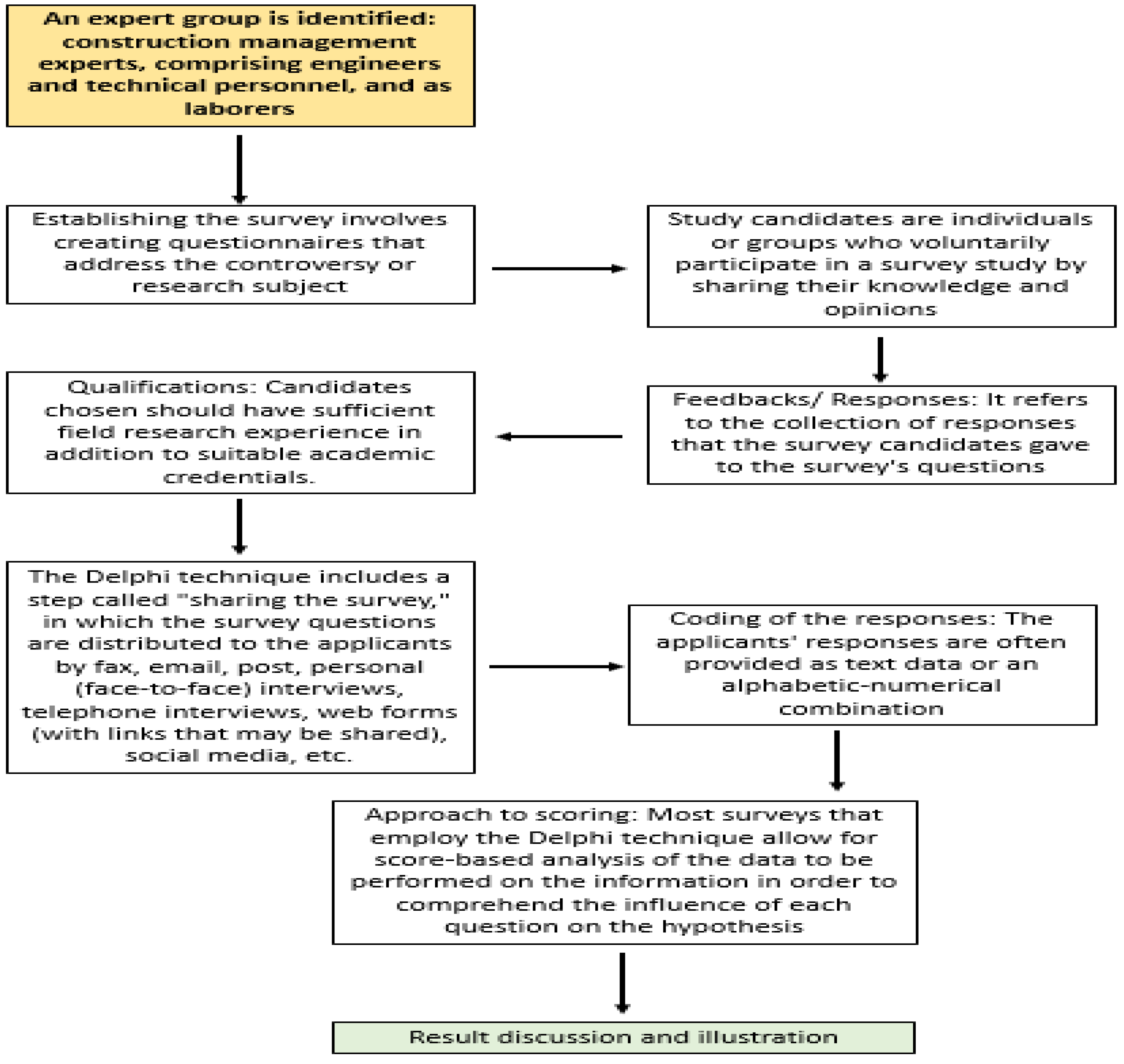
Figure 3.
Score level (percentage) for each question.
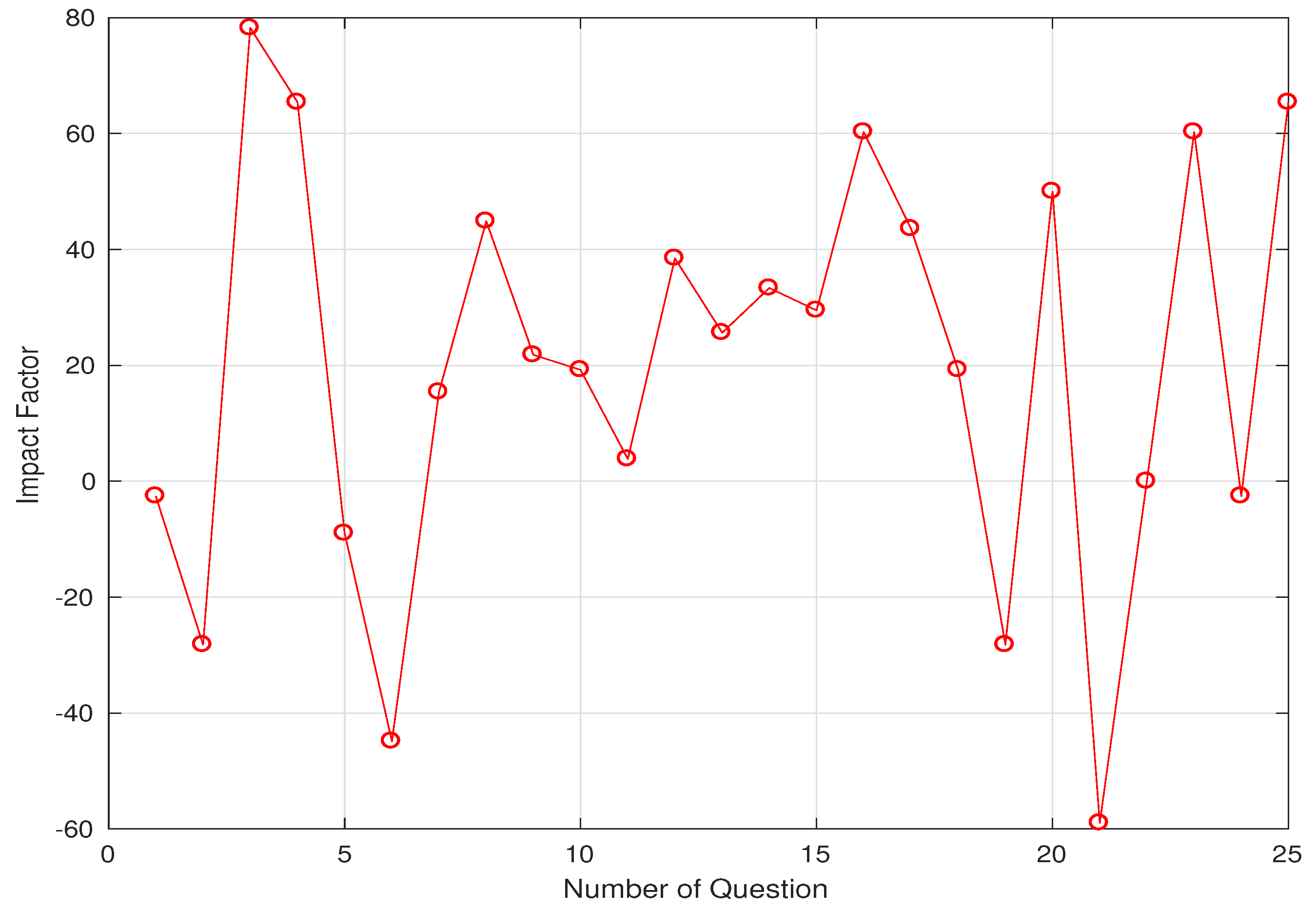

Table 1.
Reply Coding with respect to the Delphi method.
| Sl. No. | Answers/ Feedbacks | Values (weights) |
|---|---|---|
| 1 | when reply “male” | 2 |
| 2 | when reply “female” | 1 |
| 3 | when reply when reply when reply “less than 25” | 2 |
| 4 | when reply “25-34” | 3 |
| 5 | when reply “35-44” | 4 |
| 6 | when reply “above 45” | 3 |
| 7 | when reply “Dip” | 2 |
| 8 | when reply “Br” | 3 |
| 9 | when reply “Mr” | 4 |
| 10 | when reply “environmental sciences/engineering ” | 2 |
| 11 | when reply “air conditioning” | 3 |
| 12 | when reply “Project Management” | 4 |
| 13 | when reply “Maintenance” | 3 |
| 14 | when reply “Computer programming” | 6 |
| 15 | when reply “>21” | 5 |
| 16 | when reply “13 to 20” | 2 |
| 17 | when reply “7 to 12” | 3 |
| 18 | when reply “<6” | 2 |
| 19 | when reply “nothing” | -1 |
| 20 | when reply “neutral” | 2 |
| 21 | when reply “strongly agree” | 1 |
| 22 | when reply “strongly disagree” | -4 |
| 23 | when reply “agree” | 2 |
| 24 | when reply “disagree” | -4 |
Table 2.
The number of responses categorized by their respective categories.
| Ques. No. | Neutral | Strongly-Agree | Strongly-disagree | Agree | Disagree |
|---|---|---|---|---|---|
| 1 | 22 | 2 | 1 | 7 | 5 |
| 2 | 9 | 2 | 13 | 13 | 15 |
| 3 | 1 | 26 | 12 | 15 | 1 |
| 4 | 2 | 14 | 1 | 19 | 2 |
| 5 | 3 | 6 | 15 | 13 | 10 |
| 6 | 8 | 1 | 12 | 5 | 15 |
| 7 | 19 | 0 | 3 | 18 | 5 |
| 8 | 6 | 3 | 3 | 29 | 1 |
| 9 | 18 | 1 | 2 | 15 | 5 |
| 10 | 14 | 1 | 3 | 25 | 7 |
| 11 | 3 | 6 | 3 | 18 | 8 |
| 12 | 13 | 9 | 2 | 18 | 2 |
| 13 | 11 | 2 | 2 | 23 | 7 |
| 14 | 14 | 2 | 2 | 23 | 7 |
| 15 | 12 | 2 | 2 | 27 | 1 |
| 16 | 8 | 16 | 2 | 29 | 1 |
| 17 | 16 | 7 | 4 | 14 | 1 |
| 18 | 11 | 6 | 5 | 12 | 8 |
| 19 | 9 | 6 | 10 | 8 | 12 |
| 20 | 11 | 12 | 1 | 18 | 3 |
| 21 | 2 | 14 | 9 | 5 | 29 |
| 22 | 8 | 14 | 1 | 13 | 12 |
| 23 | 8 | 10 | 2 | 13 | 1 |
| 24 | 23 | 4 | 2 | 13 | 13 |
| 25 | 6 | 12 | 3 | 21 | 1 |
Table 3.
Total count of each response (comparison).
| Responses | Number of responses |
|---|---|
| Neutral | 274 |
| Strongly-Agree | 122 |
| Strongly-disagree | 62 |
| Agree | 407 |
| Disagree | 137 |
Table 4.
The findings of the hypothesis testing.
| Ques. No. | Hypothesis Linked | Results |
|---|---|---|
| 1 | H1 | -2.56 |
| 2 | H1 | -28.21 |
| 3 | H1 | 78.21 |
| 4 | H1 | 65.38 |
| 5 | H1 | -8.97 |
| 6 | H2 | -42.87 |
| 7 | H2 | 12.3 |
| 8 | H2 | 22.33 |
| 9 | H2 | 34.555 |
| 10 | H2 | 21.888 |
| 11 | H3 | 26.66 |
| 12 | H3 | 42.333 |
| 13 | H3 | 24.88 |
| 14 | H3 | 22.22 |
| 15 | H3 | 23.77 |
| 16 | H4 | 78.99 |
| 17 | H4 | 44.532 |
| 18 | H4 | 21.00 |
| 19 | H4 | 21.763 |
| 20 | H4 | 44.32 |
| 21 | H5 | -50.21 |
| 22 | H5 | 1.33 |
| 23 | H5 | 55.32 |
| 24 | H5 | -2.87567 |
| 25 | H5 | 53.876 |
Table 5.
Testing hypotheses and making decisions based on the results.
| Label | Statement | Decision | Score |
|---|---|---|---|
| H1 | The safety of workers/professionals is significantly impacted by the location where air conditioning projects are implemented. | Rejected | 103.83 |
| H2 | The cost reduction formula is improved by surpassing international safety standards, such as ISO 50001, that have a global reach. | Rejected | 56.41 |
| H3 | Even if there are national safety codes in place, it is crucial to have global safety standards. | Approved | 130.76 |
| H4 | The significance of data sciences and smart technologies, such as safety management systems, cannot be overstated when it comes to human life in the air conditioning industry. | Approved | 144.87 |
| H5 | Ignoring environmental constraints is necessary for breaking even on any air conditioning projects. | Rejected | 64.102 |
Disclaimer/Publisher’s Note: The statements, opinions and data contained in all publications are solely those of the individual author(s) and contributor(s) and not of MDPI and/or the editor(s). MDPI and/or the editor(s) disclaim responsibility for any injury to people or property resulting from any ideas, methods, instructions or products referred to in the content. |
© 2023 by the authors. Licensee MDPI, Basel, Switzerland. This article is an open access article distributed under the terms and conditions of the Creative Commons Attribution (CC BY) license (http://creativecommons.org/licenses/by/4.0/).
Copyright: This open access article is published under a Creative Commons CC BY 4.0 license, which permit the free download, distribution, and reuse, provided that the author and preprint are cited in any reuse.


