

Submitted:
15 April 2024
Posted:
16 April 2024
You are already at the latest version
Abstract
Approximately 20% of the world's population resides in coastal areas at risk of rising sea levels due to climate change. This could lead to severe weather events and ecological impact on critical infrastructure. To combat the effects of water-based environmental forces on the land, hard engineering methods such as seawalls have been utilized. However, a more sustainable solution is emerging in nature-based engineering, which involves growing vegetation. This approach can help extend the lifespan of existing technology and provide climate change adaptation and resilience for coastal and riverine communities. The following paper will review seaweed farms as an advanced nature-based mitigation approach. The paper also outlines the findings of experiments at RWTH Aachen University's hydraulic laboratory. These tests involved using seaweed as a natural solution to dampen waves in a model system to test a hypothesis. One result involving a system with two lines of seaweed revealed 15 percent wave damping. Using seaweed as a nature-based solution, a gentle engineering approach to designing future vegetated protection systems can extend the design life of existing coastal infrastructure. This can also provide protection against climate-induced sea level rise, promote coastal risk mitigation, restore ecosystems, and foster blue bio-economic development.
Keywords:
Nature-based solution
; seaweed
; seagrass
; platform
; coastal protection
1. Introduction
Extreme events such as tsunamis, flooding, and erosion have significantly increased in recent times. These events have caused massive economic losses globally, especially in the EU's coastal regions. One such event was Hurricane Nadine, which caused severe flooding and erosion, affecting communities and critical infrastructure along hundreds of miles of shoreline. Experts predict that climate change will cause a rise in extreme coastal events, and the resulting increase in sea levels may worsen their effects. [1]. The quality of coastal water is deteriorating because of microbial pathogens, fertilizers, pesticides, and heavy metal contamination. Coastal events cause these and threaten the ecosystem and human health. In nearshore regions, various processes such as physical, biological, and chemical activities can affect human and ecosystem health. These regions are also impacted by disruptive economic activities like recreation, tourism, habitat, and ecosystem services, which need to be maintained for the well-being of future generations [2]. By exploring this research theme, we can enhance our comprehension of the physical mechanisms involved in extreme events. This, in turn, can lead to the development of more effective models for managing flooding, erosion, and recovery through natural means. Solutions require collaboration between scientists and engineers, nearshore communities, academicians, governments, and the coordinated development of nearshore coastal process observational and modeling research infrastructure to create novel nature-based solutions. By studying nearshore processes and exploring green mitigation solutions, we can gain new insights and develop better models for understanding this vital area. Collaborative transfer research involves stakeholders from knowledge institutes, communities, industries, and governments, using resources like a flume lab for testing and a scale-up to living lab sites that will provide the needed solutions to develop the best nature and soft engineering technology to protect future coasts.
Traditional hard engineering to protect the coast using concrete did not account for climate impact during the design. It is more likely that most structures will not live through their lifetime design year [3]. Therefore, there is a need to develop a system for climate change adaptation that will provide solutions to climate-induced risk. Growing seaweed to dampen incoming waves to the coast is one way to address and mitigate this risk [112].
This review focuses on technology to plant seaweed as a nature-based solution that leverages efforts, avoids redundancy, and moves science and engineering rapidly forward, improving technology while protecting the natural ecosystem. A model test experiment followed the review, and the finding was published in [112]. Seaweed and seagrass green eco-engineering eco-technology systems will be designed for future deployment and tested in selected troubled coasts to assess mitigation that a natural-base and ecological approach can provide coastal protection and ensure environmental conservation. Research on nearshore processes involving societal needs and scientific challenges has been categorized into three main themes. These themes involve the interplay and exchange between hydrodynamics, morphodynamics, anthropogenic interactions, and geological, meteorological, hydrological, and biological processes [3].
To develop the nature-based infrastructure that addresses current climate-induced coastal and nearshore challenges, the paper proposes building a sustained integrated nature-based solution system. Our approach to tackling the issues of climate and ocean challenges involves researching nearshore processes. This will aid in understanding and predicting long-term coastal change, flooding, erosion from extreme storm events, nearshore pollution, and water quality evolution. We will achieve this by developing innovative nature-based infrastructure, including observations and modeling. Incorporating community participation and awareness will help foster and sustain the operation of the novel system and technology [4]. Besides using sea space for transportation and natural gas exploration, farming the sea and the ocean for other nature-based products is necessary. Cultivating seaweed and seagrass protects the coast from erosion, mitigates climate change, and provides bioremediation [5]. There are many seaweed species, and distinct species grow in different waters, so cultivation is essential.
This paper explores the cultivation of macroalgae that can provide ecosystem services, including eco-hydraulic coastal protection and bioremediation for coastal cities and islands and circular use of the harvested plants for bio-based raw materials (i.e., bioplastics and bio-textiles). [6,7,8]. This paper explores how seaweed farms can be an effective nature-based solution for mitigating environmental issues. This method offers more farming areas, which helps to meet the growing need for seaweed and seagrass as a natural resource. Wave impact damping by seaweed types and farming structures in controlled laboratory experiments was conducted [112].
2. Methodology
The study comprised a thorough, methodical search of academic, peer-reviewed literature on the state-of-the-art in climate change adaptation, terminology, publication classification, and empirical and non-empirical investigations. To find relevant publications, a preliminary search was done using the Scopus and Google Scholar citations, Springer, Taylor & Francis, JSTORE, IEEE, MDPI, and Emerald databases. The publications found in the search were then narrowed down by reading each article's entire text after studying its abstract. After being thoroughly reviewed, irrelevant materials were eliminated using scholarly judgment. The articles were reviewed, improved, and filtered to establish breadth and width coverage as well as to capture key components of the overall picture of the literature on climate change adaptation and nature-based solutions (Figure 1).
3. Extreme Events, Climate Stressors, and Nearshore Problems
The UN Atlas of the Oceans reports that over 40% of people worldwide live within a 150 km distance from a coastline. Coastal regions, both inland and at sea, are experiencing rapid population growth and increasing tourism [9]. Nearly one billion people across the globe reside at elevations that are within 10 meters of the current sea level. Communities, infrastructure, ecosystems, and habitats are at risk due to long-term erosion. Additionally, extreme storms can lead to billions of dollars in damage and degraded water quality, negatively impacting the ecosystem and human health [10,11]. Nearshore processes refer to the intricate interactions among water, sediment, biota, and humans. Understanding the nearshore processes helps to predict and manage the vulnerable nearshore environment. This includes the causes of additional hazards leading to flooding inland. Coastal flooding and sea level rise are expected to accelerate due to the warming climate [12,13]. Over the last five decades, observing nearshore processes and different solutions has provided insight into improved methods. As coastal urbanization continues to rise and threats of future climate change loom, the demands of society are increasing. However, significant scientific obstacles still need to be overcome [14]. Climate change can result in more frequent coastal extreme events, rising sea levels, and a corresponding increase in the impact of these events [1,15]. The challenges of today are increased pressure on biodiversity due to environmental pollution, climatic change, and coastal squeeze, while the growing population needs higher productivity and protection from disasters. The ability of both land and water ecosystems to provide necessary services to humans is at risk due to the impact of climate change, which is a natural response [16,17]. This can negatively affect the integrity of these ecosystems [10].
Therefore, it is imperative to assess the risk and vulnerability of coastal hazards and biodiversity losses, including current and future typhoons, monsoons, tsunamis, sea level rise scenarios, associated impact and damage to critical infrastructure, and analysis in terms of the damage that are detrimental to the economy and disruptive to the local community.
This statement holds particularly true when considering worldwide climate change and rising sea levels. To limit warming to 1.5° C and consequential sea level rise, several intergovernmental organizations and governments have agreed to restrict global greenhouse gas (GHG) emissions [18]. Nonetheless, annual greenhouse gas (GHG) emissions are continuously rising [19]. Emanating climate change and coastal changes are an increased damage potential on critical infrastructure and detrimental effects on biodiversity, as well as socioeconomic effects and the disruption of local community activities. Some challenges facing today’s society include risk and resilience of coastal communities, species biodiversity and inclusiveness, growing population, an increasing need for biomaterial, and damages detrimental to the economy and disruptive to the local community. Additionally, estuarine and coastal waters are highly vulnerable to pollution from non-point and point sources, which are often carried by rivers and streams [20,21]. Riverine transport is the primary mechanism for the direct impact of terrestrial human activities on the nearshore marine environment [22,23]. Pollutants such as excess nutrients and sediments carried by rivers pose a severe threat to the coastal and marine ecosystems [24,25]. Changes in wastewater discharge, modification of physiographic features, and fluctuation in the amount and distribution of freshwater inflow are essential factors to consider [26,27]. Figure 2 shows the IPCC report warns about rising sea levels and coastal ecosystem threats.
4. Threat of Climate Change, SLR, and Threat to Sustainable Development
Recently time has seen environmental calamity and abnormal environmental behavior where the consensus of scientists has agreed to be linked to human activities. The connectivity and interdependency of the planetary system revealed uncertainty in the dynamics of air, water, and soil [28]. Especially the wave setup from the middle of the ocean involves a combination of temperature and wind, which in one way or another, imposes more energy on waves propagating inland. Global warming has various effects, such as rising sea levels, alteration of precipitation patterns, and growth of deserts in subtropical regions. Rising temperatures also have the potential to increase societal stress caused by natural disasters such as earthquakes and floods. Climate change involves climate variability and the statistical distribution of weather over a long time. The increase of greenhouse gases in the atmosphere, including water vapor, carbon dioxide (CO2), methane, and nitrous oxide, is caused by human activities that contribute to climate change. Ozone GHG emissions have increased over the years; however, the accuracy of the increase is limited because of the environmental differences associated with all places. [29], reported the potential of seaweed and seagrass carbon sequestration.
The causes of climate change are atmospheric composition, including concentrations of greenhouse gases. The movement of tectonic plates leads to alterations in the position and quantity of continental and oceanic crust on the Earth's surface. This impacts wind and ocean currents, changes in solar output, the orbital dynamics of the Earth-Moon system, and volcanic activity such as eruptions of impact volcanoes [30]. Oral traditions and climate proxies such as ice cores, tree rings, sub-fossil pollen, boreholes, corals, and lake and ocean sediments report climate changes over shorter periods [31]. The increasing amount of greenhouse gas emissions is resulting in the warming of the ocean, leading to coral bleaching, loss of ecosystems, extreme weather events, and a constant rise in sea levels. The ocean's increasing temperature has led to the melting of glaciers and a reduction in snow cover. This has caused warm-adapted plant and animal species to move higher up the slope, while cold and snow-adapted species face a higher risk of extinction. The melting of the cryosphere is anticipated to impact leisure pursuits, tourism, and cultural resources. As the ocean warms, the mixing between water layers decreases, which results in a reduced supply of oxygen and nutrients for marine life.
The impact of climate change can be felt by individuals, ecosystems, and livelihoods, emphasizing the importance of implementing measures to limit global warming to 1.5° C instead of 2° C. Seagrass meadows and kelp forests, among other coastal ecosystems, are at a moderate to high risk at this temperature. Since the era before industrialization, human activities have been responsible for about 1.0° C of global warming. As a result, there have been adverse effects on people, nature, and livelihoods [32]. Due to climate change, the ocean has absorbed over 90% of the excess heat in the atmosphere. As a result, there has been a rise in ocean acidity. The oceans have absorbed the emissions to 20 to 30%, and this ongoing absorption will further worsen the situation. The occurrence of marine heat waves can cause significant damage to warm-water corals, kelp forests, and the distribution of marine life. The expected impacts on the ecosystem include the reduction of habitats and biodiversity, as well as the deterioration of the functions of the ecosystem. Currently, coral reefs are facing significant threats due to increasing water temperatures. The heated water also evaporates from oceans into the atmosphere leading to heavy rainfall and flooding inland; alternatively, in other locations, the heat has caused dry land, heatwaves, drought, and wildfires. In this mechanism, oceans control the temperature, humidity, and weather [31,33].
The rise in sea level results from elevated ocean temperatures, which in turn are caused by the emissions of greenhouse gases. This phenomenon has a reciprocal impact on marine life. In the 20th century, the average sea level worldwide increased, resulting in a rise of approximately 15cm in the global mean sea level. The rate of sea level rise has experienced more than a twofold increase, and in the absence of substantial emissions reductions, the phenomenon is expected to accelerate further. Projections indicate that by the year 2100, the sea level will attain a height of 1.10m. It is infrequent for extreme sea level events to occur during high tides; however, there is an anticipated increase in the frequency of intense storms. By the year 2050, many coastal cities and small islands situated at low elevations will face the risk of annual flooding and land loss, particularly if they lack effective adaptation measures. This poses a serious threat to these areas and highlights the pressing need for comprehensive and sustainable solutions to minimize the impact of climate change on vulnerable communities [18]. These events resulted in creating of an Intergovernmental Panel on Climate, which aims to offer an unbiased scientific perspective on climate change and its effects on politics and the economy. The climate tipping point is the change from a stable state to an irreversible condition. The aim of the United Nations Climate Change Conference (COP) is to prevent climate tipping points. Figure 3 shows that sea level rise risk outpaces current technology.
Natural variability has an impact and strong connectivity on the water cycle. To design effective climate change mitigation and adaptation strategies, it is crucial to have a comprehensive understanding of uncertainty. This knowledge can help determine the most efficient path forward. Forests and other vegetated lands can capture and store carbon in their biomass and the soil [34]. Within the marine environment, various vegetated systems, such as salt marshes, mangroves, and seagrass meadows, function similarly to land-based flora by sequestering and storing carbon [35]. Adopting the blue-green future approach is increasingly gaining traction as a viable option for adaptation. The ocean, which covers 70% of our planet, plays a crucial role in mitigating the impacts of climate change. It serves as a buffer and provides us with essential resources such as food, energy, medicine, and employment. Moreover, it is responsible for the production of oxygen, which is vital for our survival. The world’s ocean and cryosphere have been absorbing climate change for decades, and this has been causing high consequences to nature and society. Taking care of ecosystems and managing natural resources can lower risks and benefit the community. It's essential to protect and restore these resources.
An instance of this would be the discernible pattern in the statistical analysis of flash flood events, which implies that they occur with increasing frequency [36,41]; (Figure 4). Between 2012 and 2016, there was a discernible increase in the frequency of flash floods caused by extreme weather events. This trend exhibited an annual rise of 100%, which is statistically significant and noteworthy [37,38]. Only two years have hurricanes exceeded the standard labeling system of 21. 2020 is one of those years, with 30 hurricane occurrences [39,40]. Besides the frequency of storms and connected flash flood events, their impact on coastal areas is expected to increase with a rising sea level, regarding damage to critical infrastructure and ecological injuries like salinization [41,42]. Anthropogenic interferences can increase local risks if shorelines, river regulations, or extended land use alterations can influence natural floodplains or the nearshore hydrodynamic behavior of waves [43,44]. The need for alternative methods is increasing. Utilizing nature-based techniques such as tree belts, mangrove forests, and seaweed can offer protection against high-energy wave events and flash floods. Additionally, these methods can regulate local biodiversity and create habitats for fish, thus maintaining the health of local ecosystems [17,45,46]. In Figure 5, we can observe how close we are to the ocean and how we deal with coastal events. We also see an upward trend in coastal flooding and a heightened risk of damage in these areas due to population growth, climate change, and the inadequacies of traditional mitigation tactics [45,46].
5. Ecosystem and Biodiversity Degradation
Since 1970, humanity’s ecological footprint has been higher than the world’s biocapacity, i.e., more environmental resources and services are in demand that can be regenerated by natural systems [47]. Coastal ecosystems have endured significant seagrass losses over a prolonged period. The principal causes of these losses encompass eutrophication, turbidity from industrial activities, dredging, catchment run-off, and natural disturbances[48]. Seagrass loss has been estimated at 12,000 km2 between the mid-1980s and mid-1990s. This loss devastates marine ecosystems, including habitat loss and reduced water quality[49]. Protecting seagrass ecosystems is crucial. Many replanting restoration programs have been initiated due to the decline of seagrass [49,50]. According to traditional restoration principles, it is crucial to carefully choose the location for habitat transplantation and perfect the transplantation methods to reverse habitat degradation effectively [51,52]. Thus, they lack recommendations for ecosystem services for native species. New research has highlighted the significance of ecosystem engineering in enhancing seagrass beds. Studies have recommended utilizing native species' ecosystem services to boost efficiency, as described by [53], [54], and [55]. As a result, these findings should be considered a new guideline for future restoration projects [56]. Other issues related to ecosystems and biodiversity are presented in Table 1.
6. Coastal Process and Wave Impact
Nearshore water levels exhibit dynamic characteristics, such as wave setup, run-up, and overtopping of sandy beaches and natural or constructed barriers. These characteristics vary based on meteorological conditions like wind, air pressure, sea, and swell. Periodic deformations of the air-sea and internal interface are called waves. Water waves are created when the wind blows over large bodies of open water, transferring energy to the water's surface. The amount of energy transferred from wind to water is significant and increases exponentially with the fourth wind speed power.
Because of a tsunami's long wavelength, which can be hundreds of miles, it is barely noticeable in the deep ocean and is rarely more than three feet (one meter) high; however, when it enters shallow water close to land, most tsunamis slow down. Tsunamis are created by earthquakes and can be shallow or long waves. Tides caused by astronomical forces can take the form of shallow water or long waves. [78,79]. Wave energy and dynamic frequency range are presented in Figure 6.
The coastal process represents the feedback response to energy-driven waves to the shore. Wave setup propagation and run-up contribute to severe wave forces and damage potential along the coast. To promote sustainability in nearshore areas, it is essential to create predictive models to monitor water and sediment-based pollutants in real time. We must enhance our understanding of the physics, chemistry, and biology involved in the nearshore wave dynamics and processes to achieve this. They need to be more resilient coastal communities. We can reap numerous benefits by implementing the best solutions, such as enhanced beach safety, healthier ecosystems, and better mitigation and regulatory policies. [80] Assessing the long-term evolution of coastal regions is crucial. This involves examining the impact of both natural and manufactured processes, including global climate change, sea level fluctuations, storm patterns, and the rise of coastal urbanization. Enhancing our understanding of long-term morphological, ecological, and societal processes and how they interact is crucial. By utilizing modeling and simulation, we can evaluate the need for improving coastal stability and develop proactive approaches to increase resilience. This will provide better guidance for reducing coastal vulnerability. [81].
Based on Figure 5, it is evident that the energy within the wave is contained between the wave's peak and a depth of roughly half the wavelength. Once the water depth reaches half the wavelength, the wave transforms into a shallow-water wave. When the depth of the water decreases, the wave increases in height as its potential energy is converted into kinetic energy, resulting in a breaking wave. The energy of the wave moves, but the water remains in place. As the waves pass, the water particles move in small circular motions. As we go further beneath the wave, the circular motion reduces in size and eventually stops at a depth equivalent to half the wavelength [82]. Wind waves are waves that travel across the surface of the ocean. As they move, every point on the surface goes up and down in a regular pattern and also moves horizontally. When a progressive wave encounters a barrier, it creates a second wave that moves in the opposite direction with the same amplitude. When two waves come together, they create a standing wave. Tide is standing waves in deep water; they involve oscillatory movement that does not create horizontal displacement [83].
7. Coastal System Breaking Wave and Impact
The coastal regions are essential to the nation's economic, security, and commercial well-being. Engaging in recreational activities affected by natural and artificial stressors, such as high population density, can increase the risks posed by sea level rise, erosion over time, severe storms, and human influences. [12,85]. Wave action in sandy areas or Long Strand can lose up to 10 m of the dune in a single storm and have short-term damage because accretion allows soft sediments to be replenished. Rocky, hard soil areas are subject to long-term effects of coastal erosion [86]. Figure 7 shows the wave-breaking Iribarren number [87].
Inshore waves are affected by shoaling and breaking, creating steady and dynamic conditions. Various parameters influence these processes, including the sea's steepness and the bathymetry's slope. To consider all critical factors, a set of graphs was presented by [87] to identify the most significant and most crucial wave heights (Hmax and Hs) for sloping bathymetries at ratios of 1:10, 1:20, 1:30, and 1:100 [46]. To calculate the breaker parameter, surf similarity, or Iribarren number, use the formula Jm-1,0 = tanA/(Hm0/Lm-1,0)^(1/2). In the equation, A represents the slope of the structure's front face, and Lm-1,0 is the deep-water wavelength, which can be calculated using the formula gT2m-1,0/2π. The structure slope and wave steepness combination determine the type of wave breaking.
Coastal problems can lead to the disruption of economic activities near the coast, and this includes recreation, commerce, and safety. Over the years, numerous coastal communities have faced challenges coping with natural fluctuations and related risks. The dynamics of waves and wave-driven hydrodynamics on a sloping beach and the response of an erodible bottom to those motions have been defined using the predictive system and physics of the coastal system. Researchers studying coastal areas typically concentrate on fluid dynamics and how sediments respond to natural motions. The critical processes arise from the dynamic energy of waves that move across the beach's profile and topology [88].
Improving the modeling of nature-based infrastructure involves enhancing process representation, coupling bio-physics models more effectively, integrating data assimilation techniques, and testing real-time models. Recently, we have witnessed failures of cliffs in the North Sea predominantly happening in the winter because the trees cannot withdraw soil water during that season, causing the ground to become wetter. According to the study, there are significant impacts on the environment due to summers that are wetter or drier than average. In 2017, there were 65 incidents recorded despite an increase of 126% in the usual amount of rainfall. During the summer of 2018, a severe drought resulted in only 51% of the average rainfall. As a result, there were only 11 cliff failure events in the subsequent winter [89]. Figure 8 shows the erosion impact in the South China Sea and North Seas.
8. Hard Coastal Structures vs. Nature-Based Solutions
Hard coastal structures, such as sea dikes and seawalls, build a barrier between sea and land, thus protecting the hinterland against flooding. Hard building materials, such as concrete or stone revetments or grass covers, provide surface protection of the coastal structures against the prevailing hydraulic loads: wave impacts, run-up, overtopping, and currents [91,92]. Coastal dunes provide a similar flood protection function but are more prone to the loads from the sea because the building materials (sand, often vegetated) are less erosion resistant. They are regularly nourished before and after storm surges to restore the coastal protection function. Coastal dunes are considered a (managed) natural coastal protection solution. Sea dikes and seawalls are classified as “grey” infrastructure. While incorporating nature-based solutions, grey infrastructure can be ecologically enhanced or integrated into a hybrid system, i.e., a combination of grey and natural structures [93]. However, there is little experience in establishing and managing coastal ecosystems and uncertainties concerning the constant, long-term coastal protection function, as shown in Figure 9 [94,95].
As waves move closer to the shore and reach shallow water, their wavelength decreases, causing their speed to slow down—however, the wave energy and height increase [96]. When water particles come into contact with the seabed, friction causes energy loss. When there is a meadow of vegetation close to the surface, it weakens the energy of the waves and causes them to break. In cases where there exist areas of mud accumulation, large quantities of seaweed, clusters of debris, or submerged trees, the resulting disruption of wave motion can lead to turbulence and an energy reduction. Studies have been conducted to determine how effectively coastal vegetation reduces wave intensity. These studies have examined the internal wave attenuation caused by coastal kelp stands [97], the wave damping resulting from local energy losses due to a cluster of cylinders (which represents a dense stand of giant kelp) [98], the velocity and turbulence intensity profiles observed in eelgrass beds in a large seawater flume, and water flow in a Spartina maritime salt-marsh in southern Portugal [99,100], and researched how to decrease turbulence and reduce the speed of orbiting in a Spartina Anglica salt marsh located in the eastern part of England. [101] Experiments in the laboratory to measure how synthetic and almost emergent wetland plants affected wave attenuation under various wave conditions and stem densities. A study in a large-scale flume facility investigated the impact of submergence ratio on wave attenuation, transmission, and energy dissipation using a model of seagrass known as Posidonia Oceanica. [102]. According to a meta-analysis conducted by [103], it was found that salt marshes and coral reefs experience an average reduction of 72% and 70% in wave height, respectively. On the other hand, seagrass and mangroves experience an average decrease of 36% and 31% in wave height. The wave-damping capacities of coastal ecosystems depend, amongst others, on the wave conditions (wave height and length) and the ecosystem properties (width, height, and habitat density). Additional analyses for extreme events are necessary to fully consider design cases, as the study only used average values for water depths and wave heights.
Wave damping is highest when the plants occupy the entire water column. Seagrass grows shallow so that the relative height (ratio of vegetation height/water level) is relatively low. It is expected that the wave-damping capacities of seagrass are low during extreme events with increased water levels and high waves. However, seagrass can also affect morphodynamics and thus contributes to coastal protection. Seagrasses increase sediment deposition by flow reduction, trap particles, and stabilize sediments [104,105]. The presence of kelp beds can have multiple benefits. They can decrease the strength of longshore currents and wave energy while generating onshore currents that help move sediment toward the shore. [106]. Figure 10A shows the concept of seaweed and seagrass, and Figure 9B shows the seaweed bed system for coastal protection.
Sea dikes, seawalls, coastal dunes, and associated coastal protection structures present the main coastal protection structures along the North Sea. With increasing design conditions due to climate change [107] and the aging of the infrastructure [108], a continuous costly adaptation of the structures is required. Recently, rising environmental awareness among the population has led to a reassessment of the typical coastal protection approaches towards more nature-based solutions, including hybrid solutions, i.e., a combination of natural and built infrastructure [93].
Foreshore ecosystems provide ecosystem services with coastal protection functions, such as wave damping [103], and thus can reduce the wave loads on coastal structures and the maintenance required [109]. Risk and economic analyses for future climate scenarios reveal the necessity and costs for prospective coastal adaptations at the investigated site. The influence of the foreshore structures on the hydraulic loads at the coastal structure is analyzed, providing innovative design guidance for coastal structures regarding foreshore ecosystem services. Cost-benefit analyses can give important information on the cost-effectiveness of hybrid coastal protection systems and provide a planning tool for design processes.
Climate change calls for sustainable adaptation strategies for coastal protection. Using nature-based solutions presents an innovative measure that integrates the three pillars of sustainability (society, economy, ecology) into coastal engineering [45]. At this, foreshore ecosystems provide ecosystem services that lead to ecological and socio-economic effects by strengthening existing coastal protection and thus reducing flood risk [110]. Yet, using foreshore ecosystems for coastal protection is limited to small-scale projects. With the current project, the basics for the design and upscaling of foreshore seagrass, seaweed, and an offshore aquaculture platform shall be obtained to promote the large-scale implementation of nature-based solutions for coastal adaptation with positive effects on the environment and humankind.
The coastal protection function and effects of foreshore seagrass, seaweed, and an offshore aquaculture platform on hydrodynamics and, thus, on the design and maintenance of coastal structures are investigated in physical, numerical, and in situ experiments with natural and artificial structures. The results are the input for elaborating design guidance for hybrid coastal structures. Wave damping capacities of the foreshore ecosystems and the effect on the hydraulic loads at the structure are analyzed and processed to provide planning instructions for engineers. The tasks are completed with standard design manuals [46] and in consultation with the site authorities to ensure practical handling and implementation. Figure 10A and Figure 10B show the concept of coastal protection by integrating hard and soft engineering. Attenuating hydraulic loads on the coastal structure from foreshore ecosystems reduces the stress on the infrastructure and thus reduces maintenance requirements and prolongs lifetime. The effects on maintenance efforts and the structure's lifetime are quantified in cooperation with the accountable site authorities. Furthermore, considering the coastal protection function of the investigated foreshore structures, the costs for future adaptation of the coastal structure are determined and compared to those without ecosystem-based foreshore engineering using cost-benefit analyses. The findings provide a new decision-making tool for planning processes and facilitate the broader use of nature-based solutions under consideration of socio-economic factors.
Coastal engineers are facing new challenges regarding nature-based solutions for coastal protection as design guidance still needs to be provided, and knowledge gaps exist [95]. The long-term, continuous coastal protection function of ecosystems and the effect on adjacent infrastructure is mainly unexplored. The review provides a new understanding of the interaction of ecosystem engineers, the environment, and coastal structures. It offers coastal engineers’ quantifiable information on the coastal protection services of the investigated foreshore ecosystems as a base for the design process of coastal structures and a decision-making tool for future planning processes.
Seaweed is a water plant with many applications. Growing seaweed can provide a natural way for adaptation that can help curb the increasing sea level rise and associated risk. Another benefit of seaweed aquaculture is its ability to reduce emissions from agriculture. By improving soil quality and minimizing methane emissions from feed, seaweed aquaculture can play a role in mitigating greenhouse gas emissions [96,97]). Seaweed farming can aid in adapting to climate change by reducing the energy of waves near shorelines and increasing pH levels and oxygen supply in the surrounding waters. This localized effect can help mitigate the impacts of ocean acidification and deoxygenation. Seaweed aquaculture encounters various challenges, including finding appropriate sites, designing engineering systems that can endure harsh offshore conditions, and dealing with the growing demand for seaweed products in the market [98,99]. The ongoing climate change and extensive anthropogenic interferences in the ecosystems of coastal areas will further amplify the risk and damage of high-energy wave events, e.g., due to sea level rise and increased frequency of extreme weather events like cyclones.
9. Result - Hydrodynamic Model Test of Storm Surge Mitigation using Seaweed
Tests are conducted on models to gather important information about a system's behavior. This information determines the hydrodynamic coefficient that will be used in designing a functional system. The model test is conducted at the IWW Flume lab to examine the damping effect of seaweed. Samples of seaweed obtained from the North Sea (Figure 11) are attached to the flume, and the fluid pump at different speeds is imposed on the model.
The hydrodynamic force exerted on the seaweed is defined as the sum of drag and inertia forces and can be described by the Morison equation.
Where variable ‘F’ represents the overall force on the vegetation, CD is the drag coefficient, ρ is the water density, Av is the area of the vegetation that is normal to the streamwise flow direction, u is the flow velocity, CM is the inertia coefficient, and Vv is the volume of the vegetation element. The first part of the equation refers to the drag force; the second part describes the inertia force. Usually, the second part, inertia force, is generally smaller than the drag force and is, therefore, often neglected in studies.
Figure 11.
Experimental setup for wave mitigation at IWW; RWTH Aachen, IWW Lab (A) Hydrodynamic experiment (11B) Experiment setup.
Figure 11.
Experimental setup for wave mitigation at IWW; RWTH Aachen, IWW Lab (A) Hydrodynamic experiment (11B) Experiment setup.
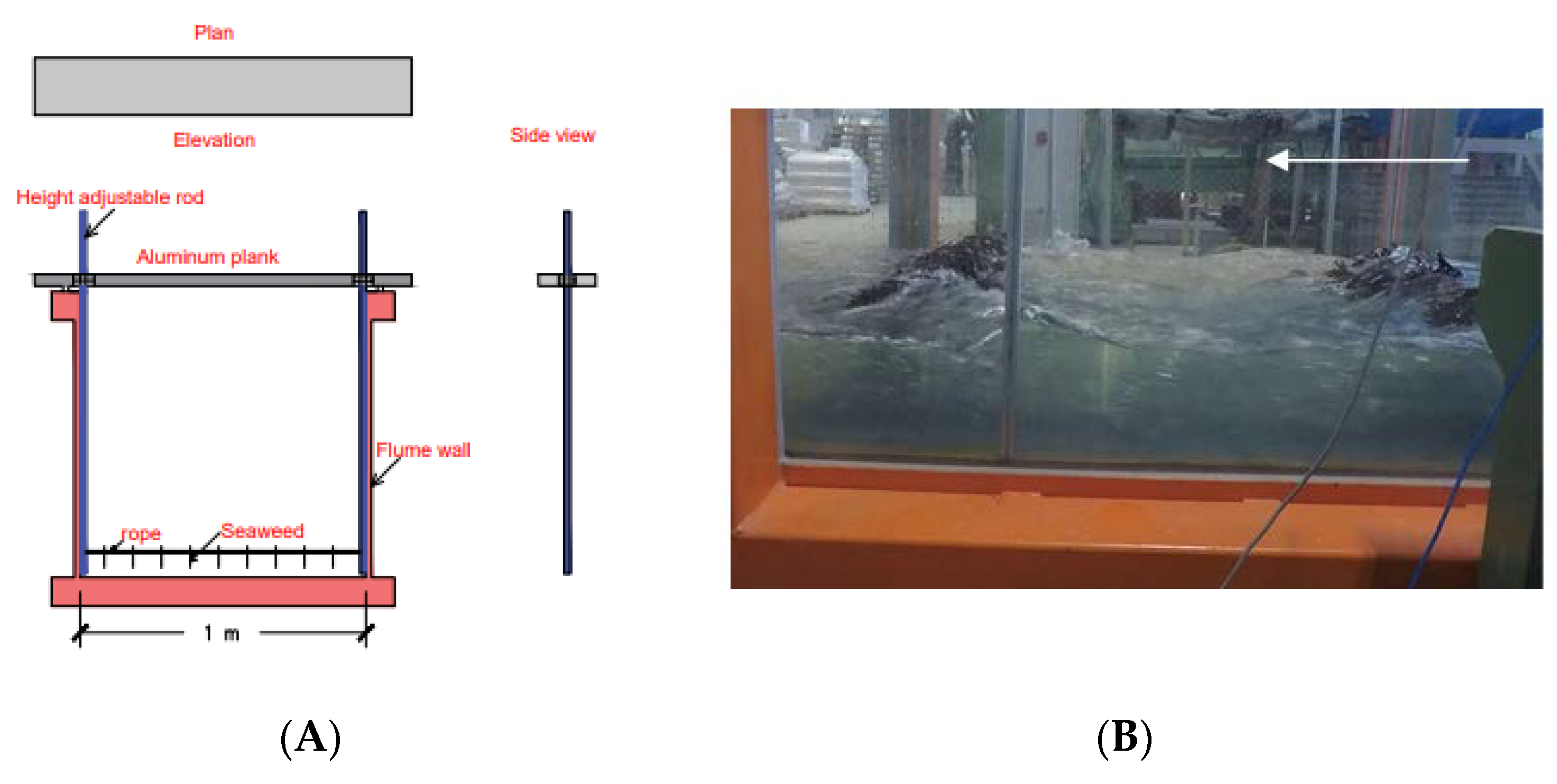
Figure 12 shows a sample of seaweed used for the investigation. The seaweed model imitates the Froude-scaled properties indicated by the number (Fr).
Where v is the velocity [m/s], g is the gravitational acceleration [m/s2], and l is the length [m]. Models scaled with Froude scaling law keep inertial and gravity forces similar.
Figure 12.
Clumps of wet seaweed species from the North Sea species (a: Ascophyllum nodosum, b: Codium fragile).
Figure 12.
Clumps of wet seaweed species from the North Sea species (a: Ascophyllum nodosum, b: Codium fragile).
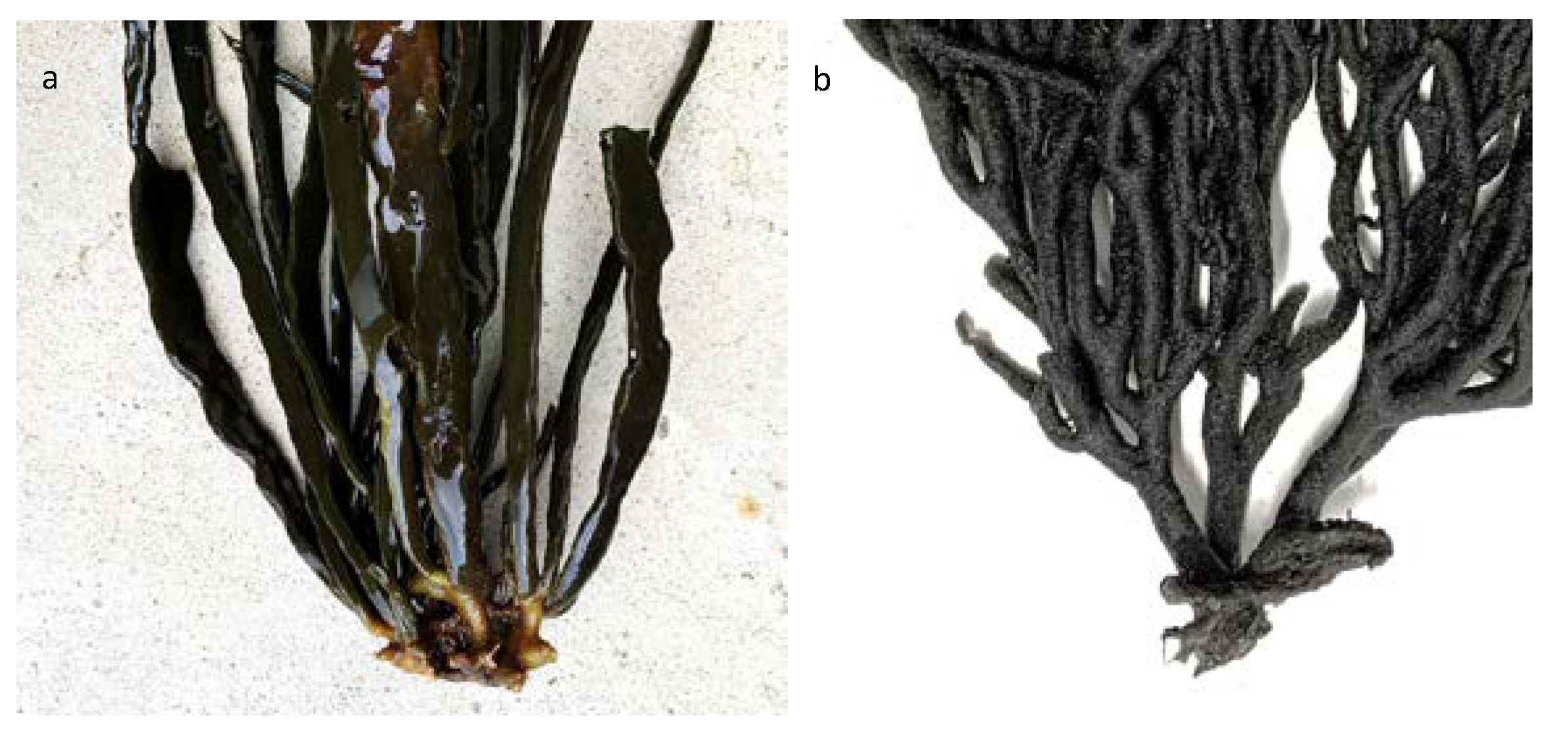
Figure 13 shows the experiment finding involving a model of 2 lines of seaweed plantation. Local operating environment based on the North Sea site conditions that consider Metaocean and hydrodynamic interaction of the sites. Metaocean data include historical data (tidal elevation, velocity, velocity, current speed, current direction, temperature, and salinity). Figure 14 shows the equivalent sensitivity force ratio.
10. Discussion
The hydrodynamic model test measures the hydrodynamic forces caused by waves and currents on the seaweed platform. It also assesses the wave-damping effects of the macroalgae system, which serves as an obstacle to the direction of the waves. Currently, more data on hydrodynamic loading for designing seaweed platforms must be available. The most efficient method to acquire this data promptly is by conducting model tests. To achieve this goal, collect samples of seaweed cultures and conduct dynamic tests to determine seaweed's hydrodynamic force and damping characteristics. Based on the model's size, it is possible to hang up to five clusters of seaweed on a one-meter line rope. The material used for the model can be wood instead to reduce the noise and vibration that can disturb the reading measurements. Two pumps are used to generate a bore that resembles a tsunami. Each pump is capable of generating a discharge of 400 litres/s. The varying strengths of the bore were produced by adjusting the positions of the opening valves on the two pumps. The current experimental facility controls the period of bore generation. Imposed environmental condition includes bore celebrity - 1.5 to 2.2 m/s and wave height - 0.1 to 0.2 m. The wave period is interpolated from changing the period of bore generation in the experimental flume (See Figure 10).
During the hydrodynamic model test, samples (clumps) of fresh, fully grown seaweed (see Figure 12) were collected from the North Sea weighing about 1.5 kg in air. The scaling method known as Froude's law is being introduced. For free and floating structure tests, Froude's law is the most suitable scaling law. [112]. Although seaweed is lightweight in water due to its natural buoyancy, it plays a significant role in driving the system's dynamics through its movement. Several tests are conducted on the samples to calculate the hydrodynamic loading coefficients in various configurations. Suitable materials such as plastic ribbons and rubber tubing can be utilized to construct an adequate amount of scaled seaweed. The model with seaweed and without seaweed is compared, and it is observed that the model with seaweed damped the wave and had a lower force amplitude (Figured 13). The bore is generated for 25 s to 30 s. 15% wave damping is achieved in Figure (14). A higher percentage can be achieved by adding more rows and increasing the density of seaweed; this can create shielded patterns for better wave damping.
11. Conclusion and Recommendation
The study reviews topics related to climate change vulnerability, required adaptation, and the use of seaweed as a nature-based solution. Using natural vegetation for coastal protection continues to develop in coastal and risky communities. Thus, only a few experiments and minimal data have been accomplished in this area, especially the use of seaweed for wave damping and coastal adaptation. The study also involves the conduct of experiments to validate the need to use seaweed as a nature-based solution for coastal adaptation. In this paper, we review the latest advances and share experimental findings on the importance of developing a future seaweed-based protection system for vegetation. This adds value to the spectrum of the ecosystem and coastal infrastructure protection and adaptation.
The review refers to problems associated with existing hard engineering coastal protection, the fact that most of them are designed without consideration for climate change impact, which exposed them to the risk of sustaining them through their design lifetime. Implementing vegetated soft engineering techniques can aid in the longevity of coastal infrastructure and fortify it against the effects of climate-induced sea level rise. Seaweed growth has the potential to provide a solution to major contemporary challenges facing the coast. The natural ecosystem and critical infrastructure on land face threats from climate change SLR-induced events. Growing seaweed can help open up new space for farming to meet the growing need for bio-based food and non-food material. In the future, collaborative work will make sharing results and predictive tools easier with stakeholders. This will help them make informed decisions and improve various aspects of coastal management. One limitation of the experiment is that the model only tests the immediate impact of a system change and doesn't consider the longer-term effects—dynamic analysis of how the system responds to the change and environmental load. The model test is used to derive the coefficient for the system's modeling. The test provides insight into vegetation's performance as a natural-based coastal protection solution. Material deterioration over time is essential to consider in the holistic study. The study recommends incorporating holistic risk and comprehensive modeling of robust design of vegetated floating structures as nature-based solutions aimed at dampening waves and providing sustainable adaptation for coastal structure and biodiversity.
Acknowledgments
Theodore von Karman Fellowship funded the research through the support for the development of multidiscipline science and engineering for technology development. The paper benefits from conversations with the Institute of Hydraulic and Water Resources Management staff and the Institute of Neo-technogenic and Georisk.
References
- EASAC. Trends in extreme weather events in Europe: implications for national and European Union adaptation strategies. 2013. Policy report 22.
- UNISDR. Annual Report, Geneva, Switzerland. 2017. 2016. 17. Biennium Work Programme. Final Report.
- Devlin, A.T., Jay, D.A., Talke, S.A. et al. Coupling of sea level and tidal range changes, with implications for future water levels. Sci Rep. 2017. 7, 17021. [CrossRef]
- Rebecca, Andreucci, R., & Aktas, C. B. Vulnerability of coastal Connecticut to sea level rise: land inundation and impacts to residential property. Civil Engineering and Environmental Systems, 2017 34(2), 89-103.
- Mark Denny and Brian Gaylord. The mechanics of wave-swept algae. Journal of Experimental Biology. 2002. [CrossRef]
- Sondak, C.F., Ang, P.O., Beardall, J., Bellgrove, A., Boo, S.M., Gerung, G.S., Hepburn, C.D., Hong, D.D., Hu, Z., and Kawai, H. (2017). Carbon dioxide mitigation potential of seaweed aquaculture beds (SABs). J. Appl. Phycol. 2017. Vol. 29, pg. 2363–2373. [CrossRef]
- Oladokun S. O. Study of Macro Algae as Marine Biomass Energy Source, Journal of Aquaculture & Marine Biology, 2015. Volume 2. Issue 1.
- Mortensen L.M. Remediation of nutrient-rich, brackish fjord water through the production of protein-rich kelp S. latissima and L. digitata. Journal of Applied Phycology. 2017. Vol. 28: Pg.3089–3096. [CrossRef]
- UNEP. Marine and coastal ecosystems and human well-being: A syn1269 thesis report based on the findings of the Millennium Ecosystem Assessment. UNEP. 2006. (p. 76). URL: https://www.millenniumassessment.org/ 1271 documents/Document.799.aspx.pdf.
- UNISDR. Technical guidance for monitoring and reporting progress in achieving the global targets of the Sendai framework for disaster risk reduction (New ed.). 2017a. Geneva: United Nations.
- UNISDR.). Terminology. United Nations Office for Disaster Risk Reduction, 2017b Geneva. Retrieved from https://www.unisdr. org/we/inform/terminology.
- Klaus Reicherter and Gösta Hoffmann.Geohazards: Coastal Disasters, Springer reference. 2015.
- Slangen, A. B. A. et al. A review of recent updates of sea level projections at global and regional scales. Surveys in Geophysics. 2016.
- Holthuijsen, L. Linear wave theory (coastal waters). In Waves in Oceanic and Coastal Waters. Cambridge: Cambridge University Press. 2007. pp. 197-243. [CrossRef]
- Church JA, et al. Climate change: The Physical Science Basis. Contribution of Working Group I to the Fifth Assessment Report of the Intergovernmental Panel on Climate Change. Cambridge University Press. 2013. New York.
- SOER. Knowledge for transition to a sustainable Europe. The European environment, state, and outlook 2020, Copenhagen, Denmark.
- IPBES. Global assessment report on biodiversity and ecosystem services of the Intergovernmental Science-Policy Platform on Biodiversity and Ecosystem Services. E. S. Brondizio, J. Settele, S. Díaz, and H. T. Ngo (editors). IPBES secretariat, Bonn, Germany. 2019 1148 pages. [CrossRef]
- IPCC (Intergovernmental Panel on Climate Change). (2 The European environment, state, and outlook, IPCC, Fifth Assessment Report (AR4). 2020.
- Robbie Andrew et al. Global CO2 emissions from cement production (Version 220516) [Data set]. Zenodo. 2022. [CrossRef]
- Clark. R. J. Designing Information Strategies for Coastal Zone Management, CRC Press, USA. 1995.
- Alizadeh et al. Effect of river flow on the quality of estuarine and coastal waters using machine learning models. Engineering Applications of Computational Fluid Mechanics. 2018. Vol. 12. [CrossRef]
- Halpern BS, et al. Spatial and temporal changes in cumulative human impacts on the world's ocean. Nat Commun. 2015. J Vol 6 pg7615. PMID: 26172980; PMCID: PMC4510691. [CrossRef]
- Fredston-Hermann et al., Where Does River Runoff Matter for Coastal Marine Conservation? Sec. Marine Affairs and Policy, 2016. [CrossRef]
- Rabelais et al., Global Change and Eutrophication of Coastal Waters. – ICES Journal of Marine Science. 2002. 66. 0-0. [CrossRef]
- Katharina E. Fabricius. Effects of terrestrial runoff on the ecology of corals and coral reefs: review and synthesis. Marine Pollution Bulletin. 2005. Volume 50, Issue 2, Pages 125-146, ISSN 0025-326X. (https://www.sciencedirect.com/science/article/pii/S0025326X04004497). [CrossRef]
- Espey, W.H. & Ward G.H. Estuarine Water Quality Models, Water Research, 1972. Volume 6, Issue 10, Pages 1117-1131. ISSN 0043-1354. [CrossRef]
- Adriano Madonna, Agostino Balzano, Dea Rabbito, Mustapha Hasnaoui, Abdelraouf A. Moustafa, Nourredine Guezgouz, Alessia Vittorioso, Fatima-Zara Majdoubi, Oladokun Sulaiman Olanrewaju, Giulia Guerriero. Assessment of the biological effects of biofouling and anti-biofouling EDCs: Gaeta Harbor (South Italy) benthic communities Analysis by biodiversity indices and quantitative gpx4 expression. Proceedings of the Zoological Society. 74, 591? 604. [CrossRef]
- Edwards, C. A.; Arancon, N. Q.; Sherman, R. Vermiculture technology: earthworms, organic wastes, and environmental management. CRC Press, Taylor & Francis Group, Boca Raton, FL, USA, 2011.
- Macready, P.I., Anton, A., Raven, J.A., et al. The future of Blue Carbon science. Nat Commun 2019. 10, 3998. [CrossRef]
- IPCC (Intergovernmental Panel on Climate Change. IPCC, 2017 Fourth Assessment Report (AR4).
- Morris A Bender, Thomas R Knutson, Robert E. Tuleya, Modelled Impact of Anthropogenic Warming on the Frequency of Intense Atlantic Hurricanes, Science. 2010 Vol. 327, Issue 5964, pp. 454-458. [CrossRef]
- Piñeiro-Corbeira, C., Barreiro, R., Cremades, J. et al. Seaweed assemblages under a climate change scenario: Functional responses to temperature of eight intertidal seaweeds match recent abundance shifts. Sci Rep 2018. 12978. [CrossRef]
- Porter-Smith, R., McKinlay, J., Fraser, A. D., and Massom, R. A. Coastal complexity of the Antarctic continent, Earth Syst. Sci. Data. 2021. 13, 3103–3114. [CrossRef]
- Gretchen Grebe, Adam St. Gelais, and Carrie J. Byron. An Ecosystem Approach to the Culture of Seaweed, Northeast Fisheries Science Center. 2019.
- Roy Haines-Young and Marion Potschin. The links between biodiversity, ecosystem services, and human well-being. Ecosystem Ecology. 2010.
- Michael Y. Roleda, &Catriona L. Hurd, (2019), Seaweed nutrient physiology: application of concepts to aquaculture and bioremediation. 2019. P552-562.
- Iona Campbell, Adrian Macleod, Christian Sahlmann, Luiza Neves, Jon Funderud, Margareth Øverland, Adam D. Hughes, and Michele Stanley. The Environmental Risks Associated with the Development of Seaweed Farming in Europe - Prioritizing Key Knowledge Gaps, Blue Economy. The Scottish Association for Marine Science, Oban, United Kingdom. 2019.
- Carlos M. Duarte, Jiaping Wu, Xi Xiao, Annette Bruhn, and Dorte Krause-Jensen. (2017). Can Seaweed Farming Play a Role in Climate Change Mitigation and Adaptation? Frontier Development. 2017.
- Chung, I. K. & Oak, Jung Hyun & Lee, Jin & Shin, Jong & Kim, Jong & Park, Kwang-Seok. (2013). Installing kelp forests/seaweed beds for mitigation and adaptation against global warming: Korean Project Overview. ICES Journal of Marine Science. 2013. 70. 1038-1044. [CrossRef]
- IPCC (Intergovernmental Panel on Climate Change), ICCP. The Physical Science Basis. Working Group, I Contribution to the Fifth Assessment Report of the Intergovernmental Panel on Climate Change-Abstract for decision-makers. Stocker, T.F., Qin, D., Plattner, G.K., Tignor, M., Allen, S.K., Boschung, J., Nauels, A., Xia, Y., Bex, V., Midgley, P.M., & Wuebbles, D. (eds.). 2013.
- MunichRE NatCatService. NatCatSERVICE-Tool – Service – Methodology. http://natcatservice.munichre.com. 2019.
- Gornitz, V. (1991). Global coastal hazards from future sea level rise. Global and Planetary Change. 1991. 3(4), 379-398. [CrossRef]
- Talbot, C.J., Bennett, E.M., Cassell, K., et al. The impact of flooding on aquatic ecosystem services. Biogeochemistry. 2018. 141, 439–461. [CrossRef]
- Moreno-Mateos D, Power ME, Comin FA, Yockteng R. Structural and functional loss in restored wetland ecosystems. PLoS Biol. 2012. 10(1): e1001247. [CrossRef]
- IUCN Global Standard for Nature-based Solutions: A user-friendly framework for the verification, design, and scaling up of NbS. First edition. Gland, Switzerland: International Union for Conservation of Nature (IUCN). 2020. [CrossRef]
- EurOtop. Manual on wave overtopping of sea defenses and related structures. An overtopping manual largely based on European research but for worldwide application. van der Meer, J. W.; Allsop, N. 2018.
- Global Footprint Network, Global Footprint Network. The business case for one-planet prosperity, Oklahoma. 2019.
- Cambridge et al., (1986), Cambridge ML, Chiffings AW, Brittan C, Moore L, McComb AJ, (1986) The loss of seagrass in Cockburn Sound, Western Australia. II. Possible causes of seagrass decline. Aquat Bot. 1986. 24:269–285. [CrossRef]
- Short and Wyllie-Echeverria, Global seagrass declines and effects of climate change. C. Sheppard (Ed.), Seas at the Millennium: An Environmental Evaluation, vol. 3, Elsevier Science, Amsterdam 2000, pp. 10-11.
- Paling, E.I., van Keulen, M., Wheeler, K., Walker, C., 2000. Effects of depth on manual transplantation of the seagrass, Western Australia. Pacific Conservation Biology 2000. 5, 314–320. [CrossRef]
- Hobbs R. J. & Norton D. A. (1996) Toward a conceptual framework for restoration ecology. Restoration Ecology 1996. 4: 93–110. [CrossRef]
- Eijgenraam, Carel, Jarl Kind, Carlijn Bak, Ruud Brekelmans, Dick den Hertog, Matthijs Duits, Kees Roos, Pieter Vermeer, and Wim Kuijken. “Economically Efficient Standards to Protect the Netherlands Against Flooding.” Interfaces. 2014. 44, no. 1. 7–21. http://www.jstor.org/stable/43699372.
- Bouma, T. J., M. B. De Vries, and P. M. J. Herman. “Comparing Ecosystem Engineering Efficiency of Two Plant Species with Contrasting Growth Strategies.” Ecology 2010. 91, no. 9. 2696–2704. http://www.jstor.org/stable/27860846.
- Bos, IJ. Architecture and facies distribution of organic-clastic lake fills in the fluvio-deltaic Rhine–Meuse system, the Netherlands. Journal of Sedimentary Research 2010. 80: 339–356. [CrossRef]
- Van der Heide, T., E. H. van Nes, G. W. Geerling, A. J. P.Smolders, T. J. Bouma, and M. M. van Katwijk.. Positive feedback in seagrass ecosystems: implications for success in conservation and restoration. Ecosystems. 2010 10:1311–1322.
- Byers JE, Cuddington K, Jones CG, Talley TS, Hastings A, Lambrinos JG, Crooks JA, Wilson WG. (2006) Using ecosystem engineers to restore ecological systems. Trends Ecol Evol. 2006. 21(9):493-500. Epub 2006 Jun 30. PMID: 16806576. [CrossRef]
- Shanley, P., and C. López, (2009): Out of the loop: Why research rarely reaches policymakers and the public and what can be done. Biotropica, 2009. 41, 535–544. [CrossRef]
- P.G. King, A.R. McGregor, J.D. Whittet. Can California coastal managers plan for sea level rise in a cost-effective way? J. Environ. Plan. Manag.. 2016. 59, pp. 98-119.
- S. Díaz, J. et. al... Summary for Policymakers of the Global Assessment Report on Biodiversity and Ecosystem Services of the Intergovernmental Science-policy Platform on Biodiversity and Ecosystem Services. Secretariat of the Intergovernmental Science-Policy Platform on Biodiversity and Ecosystem Services, Bonn, Germany. 2019.
- Cumming, G., D. Cumming, and C. Redman. Scale mismatches in social-ecological systems: causes, consequences, and solutions. Ecology and Society. 2006. 11(1): 14. [online] URL: http://www.ecologyandsociety.org/vol11/iss1/art14/.
- William E. Rees (2020), Ecological economics for humanity’s plague phase. University of British Columbia, School of Community and Regional Planning, 6333 Memorial Rd, Vancouver, BC, V6T 1Z2, Canada. 2020.
- S. Levin (1999) Fragile Dominion: Complexity and the Commons. S. Levin (1999). Journal of Ecology. 2019. 88.1. 181-181. Pp. xii+250. Perseus Books, Massachusetts. ISBN 0-7382-0111-1.
- Selby, K. A. and Smith, D. E. Late Devensian and Holocene relative sea level changes on the Isle of Skye, Scotland, UK. J. Quaternary Sci., 2006. Vol. 22 pp. 119–139. ISSN 0267–8179. [CrossRef]
- Brand, R., & Karvonen, A. The ecosystem of expertise: complementary knowledge for sustainable development. Sustainability: Science, Practice, & Policy. 2007. 3(1), 21. [CrossRef]
- Van Bavel, B, Berrang Ford, L, Harper, SL et al. (4 more authors). Contributions of scale: What we stand to gain from Indigenous and local inclusion in climate-health monitoring and surveillance systems. Environmental Research Letters. ISSN 1748-9326.2020.
- Kushans, K. A., Okamoto, D. K., Rassweiler, A., Novak, M., Bolton, J. J., Cavanaugh, K. C., ... Byrnes, J. E. K. (2016). Global patterns of kelp forest change over the past half-century. Proceedings of the National Academy of Sciences of the United States of America, 113, 13785–13790. 2016.
- M. Waycott, C.M. Duarte, T.J.B. Carruthers, R.J. Orth, W.C. Dennison, S. Olyarnik, A. Calladine, J.W. Fourqurean, K.L. Heck, A.R. Hughes, G.A. Kendrick, W.J. Kenworthy, F.T. Short, S.L. Williams. Accelerating loss of seagrasses across the globe threatens coastal ecosystems, Proc. Natl. Acad. Sci. USA, 106. 2009. pp. 12377-12381. [CrossRef]
- Christensen V, Walters CJ. Ecopath with Ecosim: methods, capabilities, and limitations. Ecol Model. 2004. 172:109–139. [CrossRef]
- Frieler, K., Meinshausen, M., Golly, A., Mengel, M., Lebek, K., Donner, S.D., HoeghGuldberg, O., Limiting global warming to 2 °C is unlikely to save most coral reefs. Nat. Clim. Change. 2013. 3, 165–170. [CrossRef]
- Erb, K.-H. et al. Biomass turnover time in terrestrial ecosystems is halved by land use. Nat. Geosci. .2014. 9, 674–678 (2016). [CrossRef]
- Davidson, N. Loss of intertidal habitat through land claim in Asia. In ‘The State of the World’s Birds. 2013. p 14. (BirdLife International: Cambridge, UK).
- Oladokun S. O., A. Saman. A. Kader, Allan Magee. Risk Analysis of Offshore Aquaculture Ocean Plantation System, Australian Journal of Basic and Applied Sciences.2013. 7(14). Pages: 380-395.
- WWF (2020) Living Planet Report. Bending the curve of biodiversity loss. Almond, R.E.A., Grooten M. and Petersen, T. (Eds). WWF, Gland, Switzerland. 2020.
- Bar-On, Y.M., Phillips, R., and Milo, R. The biomass distribution on Earth. Proc. Natl. Acad. Sci... 2018. 115, 6506–6511. USA. [CrossRef]
- Antonelli et. al…State of the World’s Plants and Fungi. Royal Botanic Gardens, Kew. 2020. [CrossRef]
- Mora C, Tittensor DP, Adl S, Simpson AGB, Worm B (2011) How Many Species Are There on Earth and in the Ocean? PLoS Biol. 2011. 9(8): e1001127. [CrossRef]
- Alleway, H. K., Gillies, C. L., Bishop, M. J., Gentry, R. R., & Theuerkauf, S. J. The ecosystem services of marine aquaculture: valuing benefits to people and nature. BioScience, 69(1). 2019. 59-68. [CrossRef]
- A. Tan, A. Chilvery, M. Dokhanian, and S. Crutcher, "Tsunami Propagation Models Based on First Principles," in Tsunami - Analysis of a Hazard - From Physical Interpretation to Human Impact. London, United Kingdom: IntechOpen, 2012 [Online]. Available: https://www.intechopen.com/chapters/41064. [CrossRef]
- Santos, N. Fonseca, J. L. Zêzere. Tsunami risk assessment at Figueira da Foz, Portugal. Tsunami risk assessment at Figueira da Foz, Portugal. 2012.
- Julian, P., Gerber, S., Bhomia, R.K. et al. Understanding stoichiometric mechanisms of nutrient retention in wetland macrophytes: stoichiometric homeostasis along a nutrient gradient in a subtropical wetland. Oecologia. 2020. 193, 969–980. [CrossRef]
- Theide Wöffler, Holger Schüttrumpf, Arne Arns, Malte Schindler. Development of Coastal Protection Measures for Small Islands in The Wadden Sea Using a Risk-Based Approach, Coastal Engineering. 2012. [CrossRef]
- Masselink, G., and M.G. Hughes. Introduction to Coastal Processes and Geomorphology. Routledge. 2003. 354pp.
- Wright, L.D., and A.D. Short. Morphodynamic variability of surf zones and beaches: a synthesis. Marine Geology. 1984. 56(1), 93-118. Coasts Form, Process, and Evolution. Cambridge University Press, Cambridge.
- Nobuko Fukui, Adi Prasetyo, Nobuhito, Mori. Numerical Modelling of Tsunami Inundation Using Subgrid Scale Urban Roughness Parameterization, Coastal Engineering. 2018. 1(36):86. [CrossRef]
- Blumberg, A., & Bruno, M. Coastal Extreme Events: The Risks and the Responses. In the Urban Ocean: The Interaction of Cities with Water. 2018. pp. 147-166. Cambridge: Cambridge University Press. [CrossRef]
- Thom, B.G. and Hall, W. The behaviour of beach profiles during accretion and erosion-dominated periods. Earth Surface Processes and Landforms. 1991. 16(2).. pp.113-127. [CrossRef]
- GODA. The Coast, 73 Eurotop (2007), 1-178; https://izw.baw.de › die-kueste .1980.
- Ashton, A., A.B. Murray, and O. Arnault. Formation of coastline features by large-scale instabilities induced by high-angle waves. Nature. 2001. 414(6861) 296-300. [CrossRef]
- Dietze, M., Cook, K.L., Illien, L., Rach, O., Puffpaff, S., Stodian, I., Hovius, N. Impact of nested moisture cycles on coastal chalk cliff failure revealed by multi-seasonal seismic and topographic surveys. Journal of Geophysical Research: Earth Surface. 2020. [CrossRef]
- M. Dietze et al., Impact of Nested Moisture Cycles on Coastal Chalk Cliff Failure Revealed by Multiseasonal Seismic and Topographic Surveys, Journal of Geophysical Research: Earth Surface (2020).
- CIRIA. The International Levee Handbook. CIRIA: C731. London, UK: Construction Industry Research and Information Association (CIRIA). 2013.
- USACE. Coastal Engineering Manual. Washington, DC, USA. 2002.
- Schoonees, T., Gijón Mancheño, A., Scheres, B., Bouma, T. J., Silva, R., Schlurmann, T., & Schüttrumpf, H. Hard structures for coastal protection, towards greener designs. Estuaries and Coasts. 2019. 42(7), 1709–1729. [CrossRef]
- Bouma, T. J., van Belzen, J., Balke, T., Zhu, Z., Airoldi, L., Blight, A. J., Davies, A. J., Galvan, C., Hawkins, S. J., Hoggart, S. P.G., Lara, J. L., Losada, I. J., Maza, M., Ondiviela, B., Skov, M. W., Strain, E. M., Thompson, R. C., Yang, S., Zanuttigh, B., Zhang, L., & Herman, P. M.J. Identifying knowledge gaps hampering application of intertidal habitats in coastal protection: Opportunities & steps to take. Coastal Engineering. 2014. 87. 147–157. [CrossRef]
- Scheres, B., & Schüttrumpf, H. Nature-Based Solutions in Coastal Research – A New Challenge for Coastal Engineers? In N. Trung Viet, D. Xiping, & T. Thanh Tung (Eds.). APAC. Springer Singapore. 2019. Vol. 76, pp. 1383–1389. [CrossRef]
- Mahy M., Ameen, Abdelraouf A. Moustafa, Jelan Mofeed, Mustapha Hasnaoui, Oladokun S. Olanrewaju, Umberto Lazzaro, and Giulia Guerriero. Factors Affecting Efficiency of Biosorption of Fe (III) and Zn (II) by Ulva lactuca and Corallina officinalis and Their Activated Carbons. Water, 13, 3421. 2021. [CrossRef]
- Tramice, Annabella, Marco Trifuoggi, Mohammad F. Ahmad, Su S. Lam, Carmine Iodice, Gennaro Velotto, Antonella Giarra, Sara Inglese, Adelaide Cupo, Giulia Guerriero*, and Giuseppina Tommonaro*. Comparative fatty acid profiling of edible fishes in Kuala Terengganu, Malaysia. Foods, 10 (10), 2456. 2021. [CrossRef]
- Oladokun Sulaiman Olanrewaju, Giuseppina Tommonaro, Giulia Guerriero, Chiara Fogliano, Carmine Iodice, Gennaro Velotto, Annabella Tramice. New Insight into Marine Biotechnology: Carrageenans Chemical Features and Acetylcholinesterase (AChE) Inhibition Activity of Two Edible Seaweeds of the Genus Kappaphycus. In: Ksibi M. et al. (eds) Recent Advances in Environmental Science from the Euro-Mediterranean and Surrounding Regions (2nd Edition). EMCEI 2019. Environmental Science and Engineering. pp 2203-2207. Springer, Cham. 2021. [CrossRef]
- Oladokun Sulaiman Olanrewaju, Anna De Maio, Eva Lionetti, Anna Rita Bianchi, Dea Rabbito, Andrea Ariano, Fatima-Zahra Majdoubi, and Giulia Guerriero. Sea Farms as a Safe and Sustainable Food Source: An Investigation on Use of Seaweeds for Liver Detoxification and Reduced DNA Damage in Lates Calcarifer (Bloch, 1790). In: Ksibi M. et al. (eds) Recent Advances in Environmental Science from the Euro-Mediterranean and Surrounding Regions (2nd Edition). EMCEI 2019. Environmental Science and Engineering. pp 671-675. Springer, Cham. 2021. [CrossRef]
- Neumeier, Urs, and Carl L. Amos. “Turbulence Reduction by the Canopy of Coastal Spartina Salt-Marshes.” Journal of Coastal Research, 2006, 433–39. http://www.jstor.org/stable/25741611.
- Augustin, Lauren & Irish, Jennifer & Lynett, Patrick. (2009). Laboratory and numerical studies of wave damping by emergent and near-emergent wetland vegetation. Coastal Engineering. 332-340. [CrossRef]
- Prinos, Panayotis & Stratigaki, Vasiliki & Manca, Eleonora & Losada, I.J. & Lara, Javier & Sclavo, Mauro & Caceres, Ivan & Sánchez-Arcilla, Agustín. (2014). Wave propagation over Posidonia oceanica: large scale experiments. 57-60.
- Narayan, S., Beck, M. W., Reguero, B. G., Losada, I. J., van Wesenbeeck, B., Pontee, N., Sanchirico, J. N., Ingram, J. C., Lange, G.-M., & Burks-Copes, K. A. (2016). The effectiveness, costs, and coastal protection benefits of natural and nature-based defenses. PloS One, 11(5), e0154735. [CrossRef]
- Gutiérrez, Jorge & Dietz, Maurine & Masero, José & Gill, Jr, Robert & Dekinga, Anne & Battley, Phil & Sanchez-Guzmán, Juan & Piersma, Theunis. (2014). Gutierrez et al 2011 Functional Ecology 26.
- Barbier, Edward B., S D Hacker, C Kennedy (2011), The value of estuarine and coastal ecosystem services, ecological monograph, 2011, 169. [CrossRef]
- Morris Rebecca, Teresa Maree, Konlechner Marco, Ghisalberti Stephen, Swearer E Swearer, 2018, From grey to green: Efficacy of eco-engineering solutions for nature-based coastal defense, Global Change Biology 24(5). [CrossRef]
- Arns, A., Dangendorf, S., Jensen, J., Talke, S., Bender, J., & Pattiaratchi, C. (2017). Sea level rise induced amplification of coastal protection design heights. Scientific Reports, 7, 40171. [CrossRef]
- Sutton-Grier, A. E., Gittman, R. K., Arkema, K. K., Bennett, R. O., Benoit, J., Blitch, S., Burks-Copes, K. A., Colden, A., Dausman, A., DeAngelis, B. M., Hughes, A. R., Scyphers, S. B., & Grabowski, J. H. (2018). Investing in natural and nature-based infrastructure: building better along our coasts. Sustainability, 10(2), 523. [CrossRef]
- Van Wesenbeeck et al., (2016) B. K., van der Meulen, M. D., Pesch, C., de Vriend, H., & de Vries, M. B. (2016). Nature-Based Approaches in Coastal Flood Risk Management: Physical Restrictions and Engineering Challenges. In F. G. Renaud, K. Sudmeier-Rieux, M. Estrella, & U. Nehren (Eds.), Ecosystem-Based Disaster Risk Reduction and Adaptation in Practice (pp. 181–198). Cham, Switzerland: Springer International Publishing.
- Mehvar, S., Filatova, T., Dastgheib, A., van Ruyter Steveninck, E. de, & Ranasinghe, R. (2018). Quantifying Economic Value of Coastal Ecosystem Services: A Review. Journal of Marine Science and Engineering, 6(1), 5. [CrossRef]
- Safari Ghaleh, R.; Aminoroayaie Yamini, O.; Mousavi, S.H.; Kavianpour, M.R. Numerical Modelling of Failure Mechanisms in Articulated Concrete Block Mattress as a Sustainable Coastal Protection Structure. Sustainability 2021, 13, 12794. [CrossRef]
- Oladokun, O.S. Hydrodynamic Model Tests for Seaweed as a Source of Energy Reduction during Extreme Events. Aquac. J. 2023, 3, 181–195. [CrossRef]
- Jesica Rodríguez-Martín, Noelia Cruz-Pérez, Juan C. Santamarta. Maritime Climate in the Canary Islands and its Implications for the Construction of Coastal Infrastructures. Vol 8, No 1, Journal of Civil Engineering. 2022. [CrossRef]
- Idawarni Asmal, Edward Syarif, Samsuddin Amin, Muhammad A. Walenna. The Impact of the Environment and People’s Attitudes on Greywater Management in Slum Coastal Settlements. Vol 8, No 12 Journal of Civil Engineering. 2022. [CrossRef]
- Sulaiman Olanrewaju Oladokun (2023) Hydrodynamic Model Test and Simulation for the Design of Offshore Aquaculture System for Macro Algae Farming. Journal of Aquaculture & Livestock Production. SRC/JALP-129. [CrossRef]
Figure 1.
Methodology flowchart.
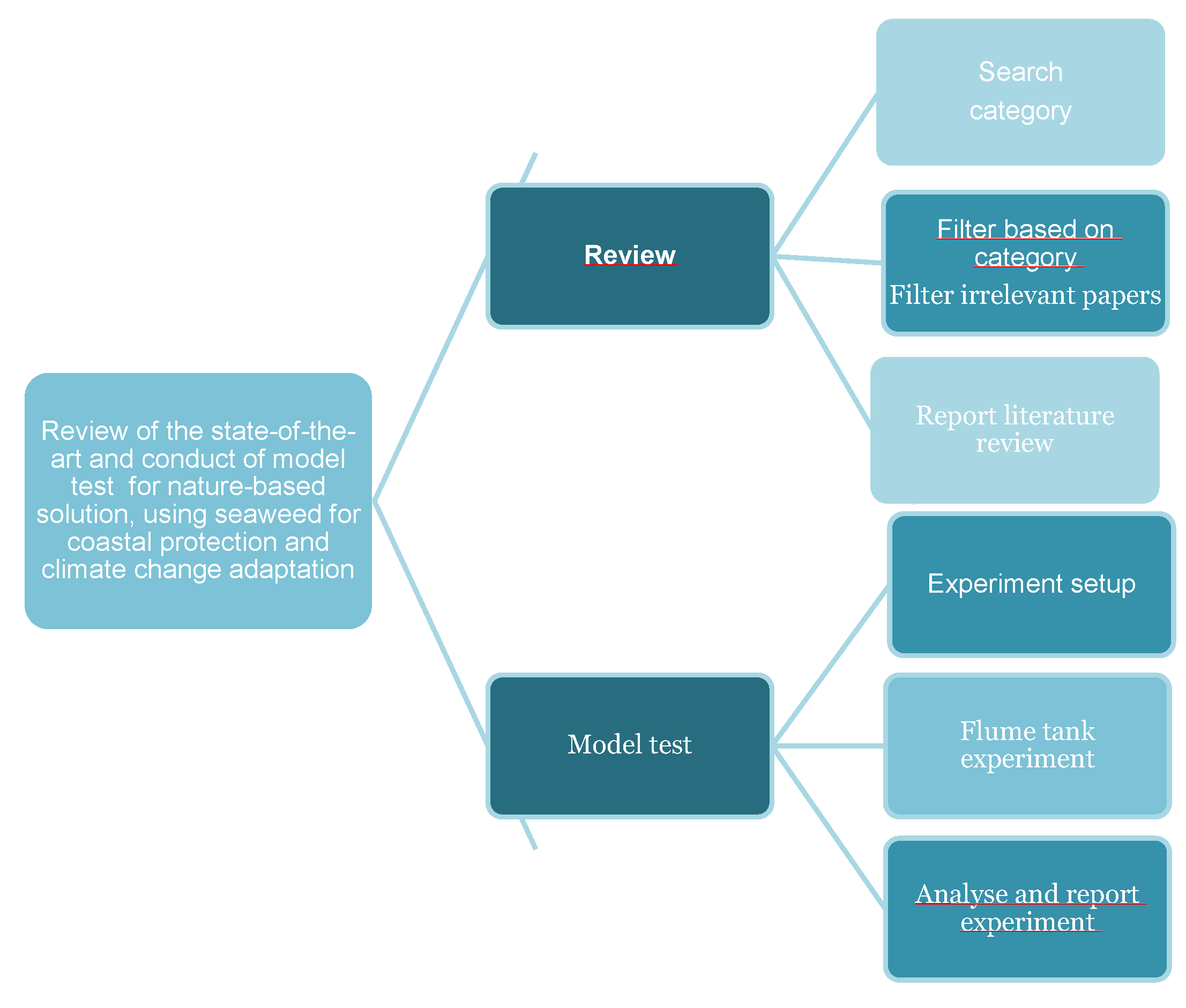
Figure 2.
Climate-related challenges [18].
Figure 2.
Climate-related challenges [18].
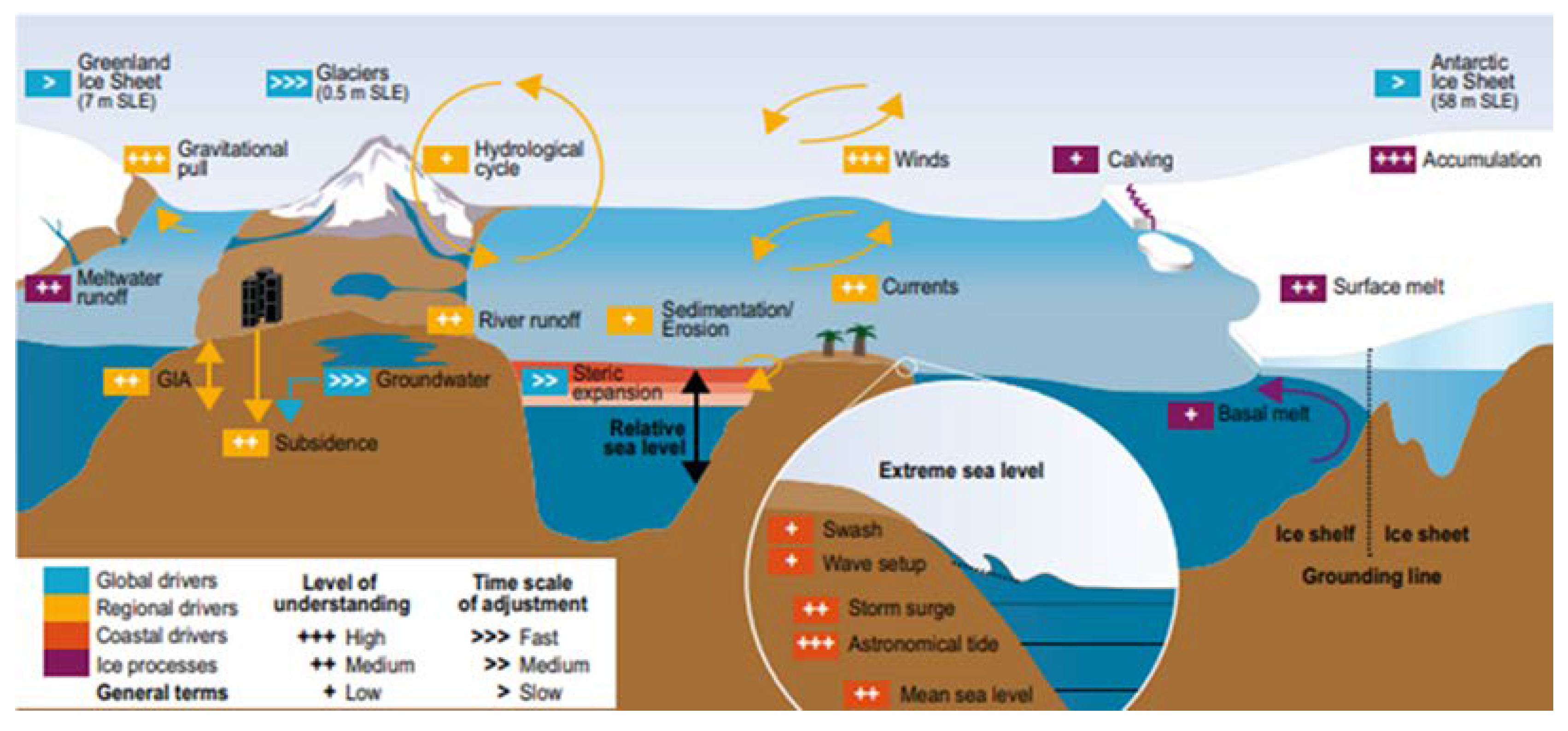
Figure 3.
Projected sea level rise (SLR) until 2300. The chart evaluates the expected Sea Level Rise
projections for RCP2.6 and RCP8.5 until 2100 (with moderate confidence), as depicted in the inset [18].
Figure 3.
Projected sea level rise (SLR) until 2300. The chart evaluates the expected Sea Level Rise
projections for RCP2.6 and RCP8.5 until 2100 (with moderate confidence), as depicted in the inset [18].
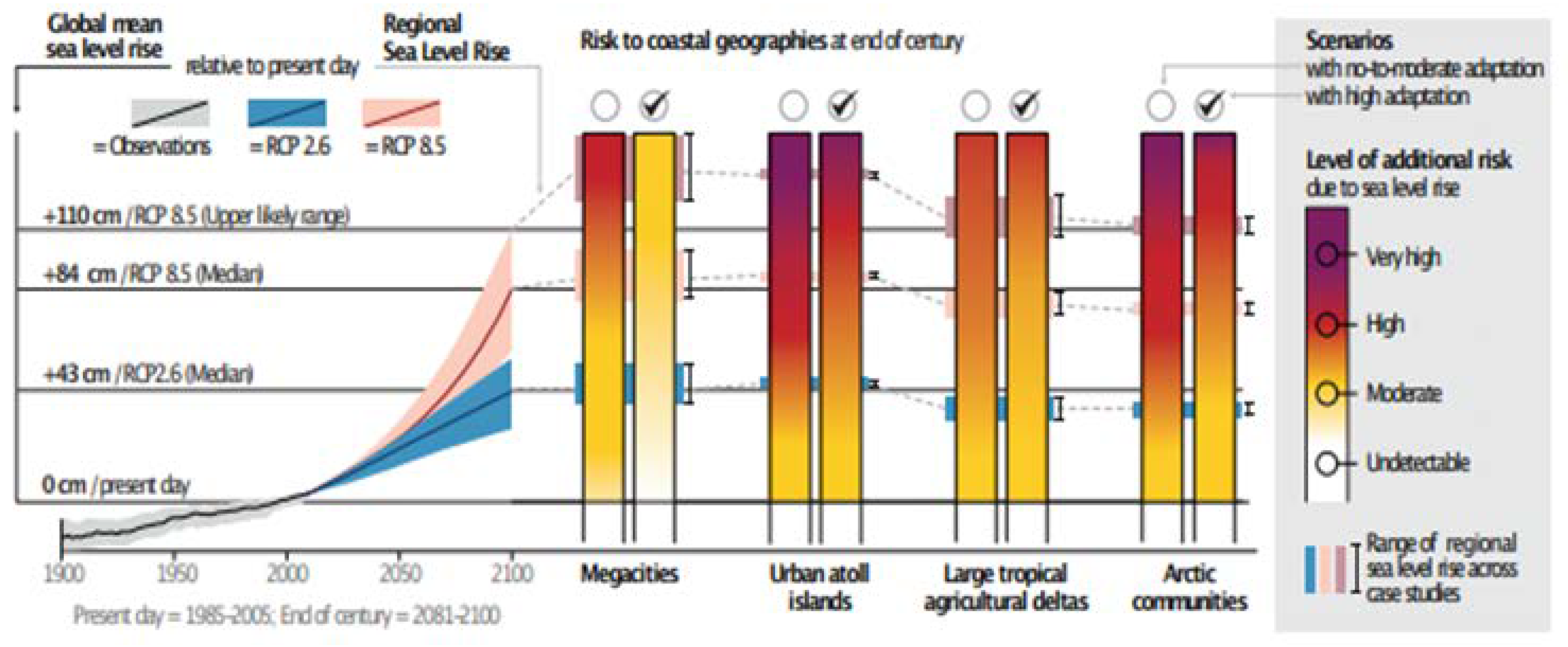
Figure 4.
Global increase in natural hazards since 1980. Hydrological events, such as floods, are the disaster type with the most significant increase globally. Modified after MunichRE NatCatService (2019) [41].
Figure 4.
Global increase in natural hazards since 1980. Hydrological events, such as floods, are the disaster type with the most significant increase globally. Modified after MunichRE NatCatService (2019) [41].
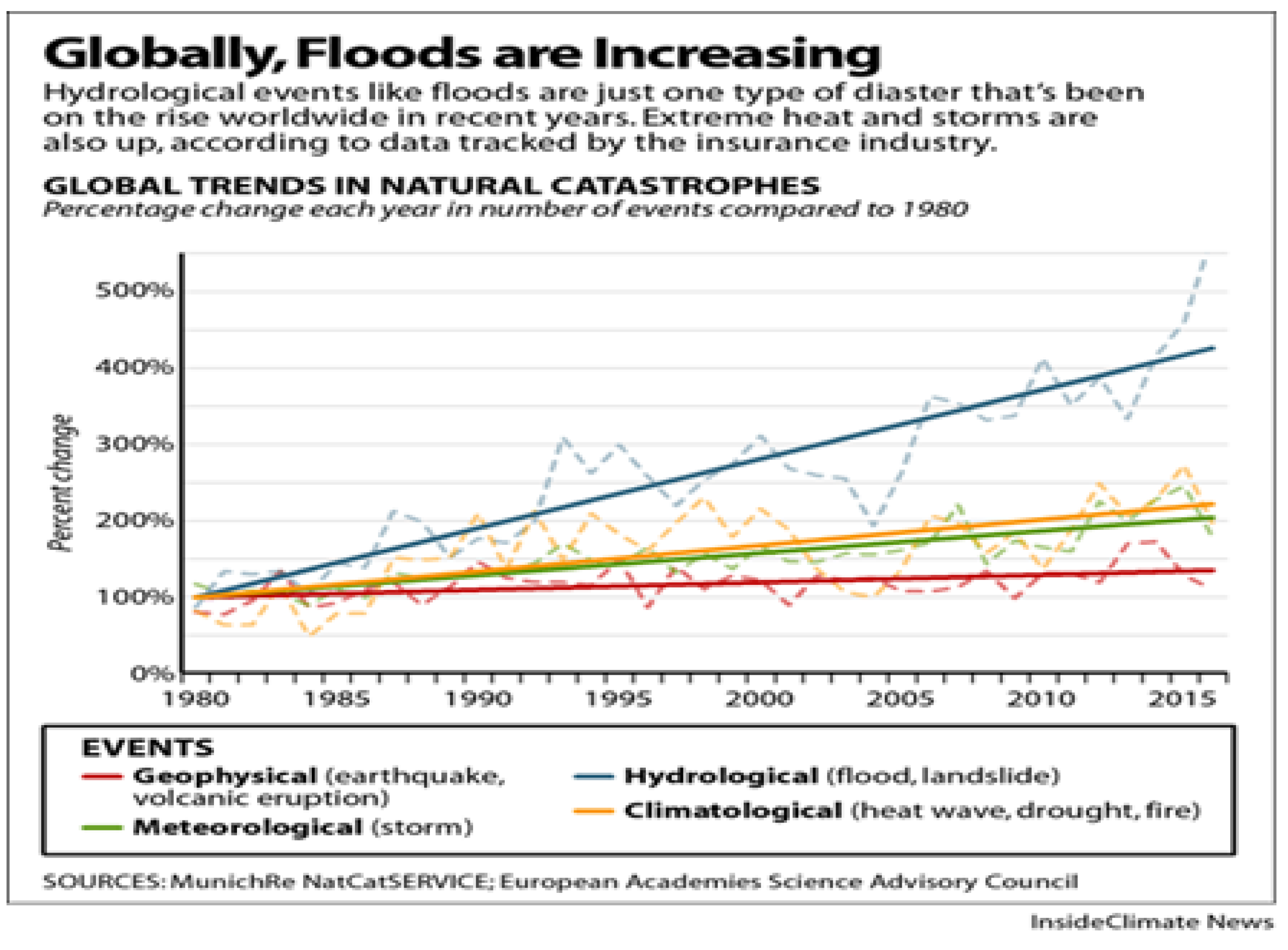
Figure 5.
Level of threat to population and ecosystem near the coast.
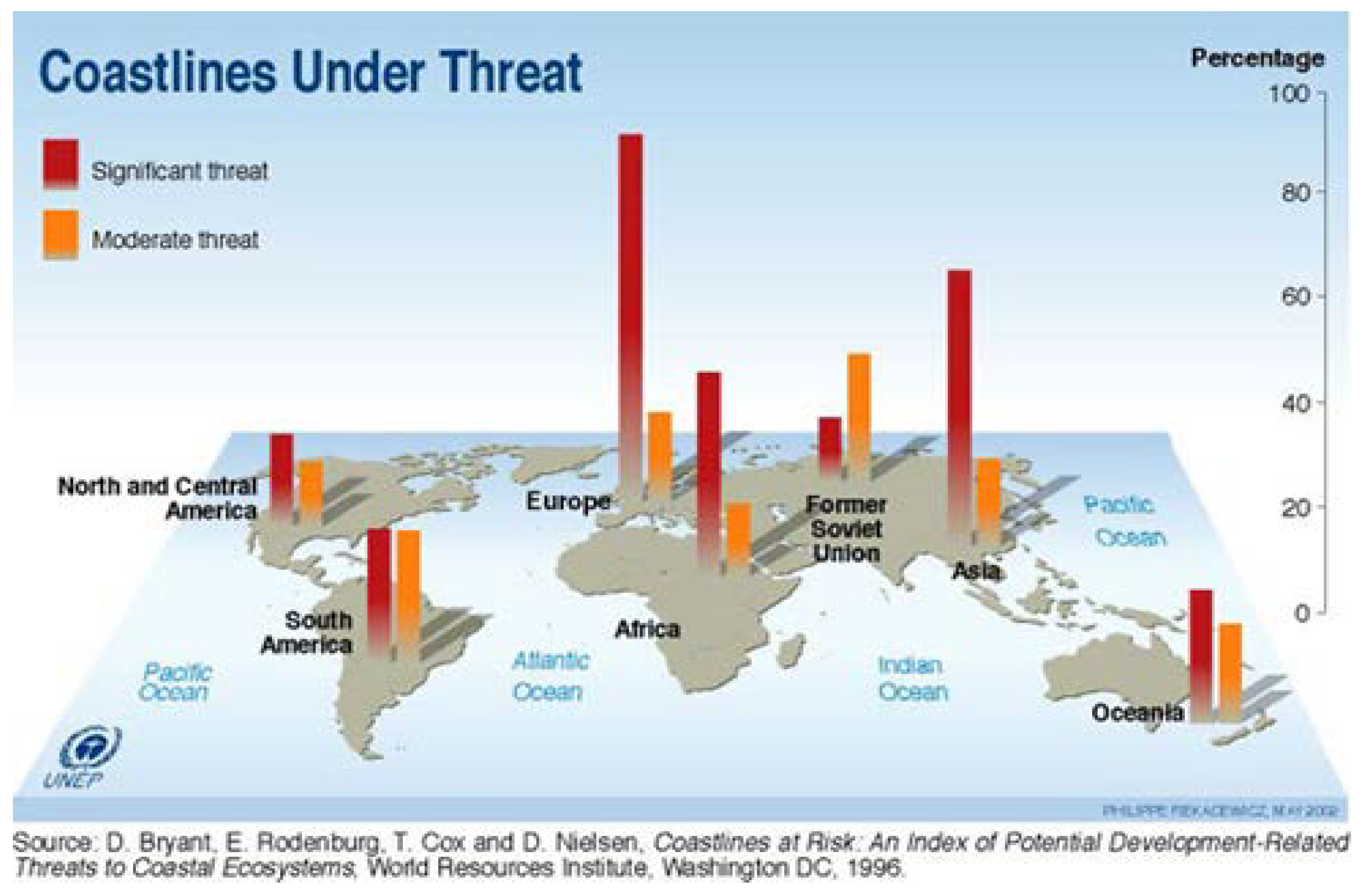
Figure 6.
Wave Energy Dynamic.
Figure 7.
Wave breaking Iribarren number. [87].
Figure 7.
Wave breaking Iribarren number. [87].
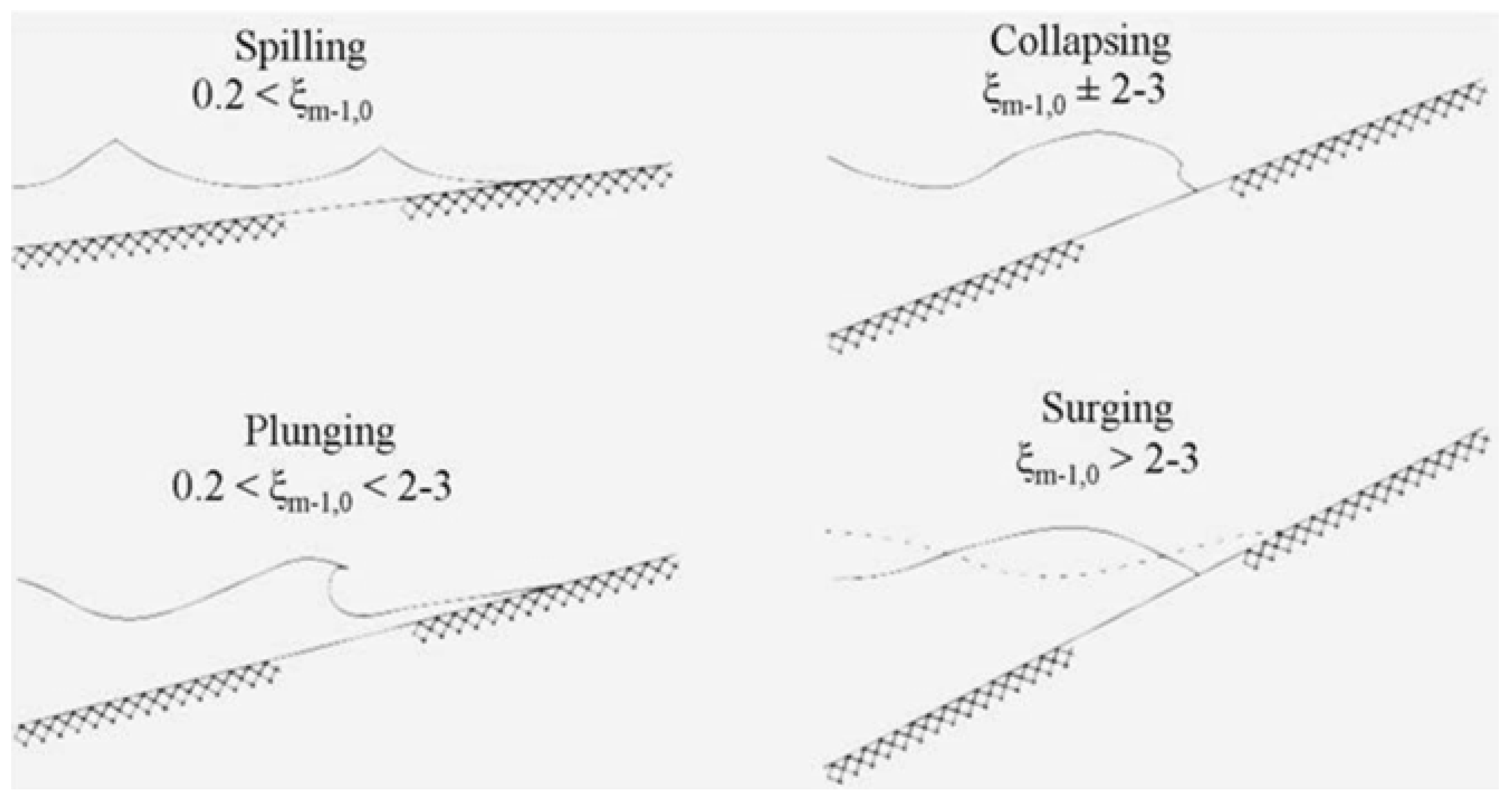
Figure 8.
A. Erosion impact in Kuala Terengganu, Source: NST; Figure 8B: The sea is slowly encroaching on the land between the man-made dwelling mounds in the North Sea, as observed by the Helmholtz Association of German Research Centres. The Jasmund chalk cliff is located on the coast of Rügen. [90].
Figure 8.
A. Erosion impact in Kuala Terengganu, Source: NST; Figure 8B: The sea is slowly encroaching on the land between the man-made dwelling mounds in the North Sea, as observed by the Helmholtz Association of German Research Centres. The Jasmund chalk cliff is located on the coast of Rügen. [90].
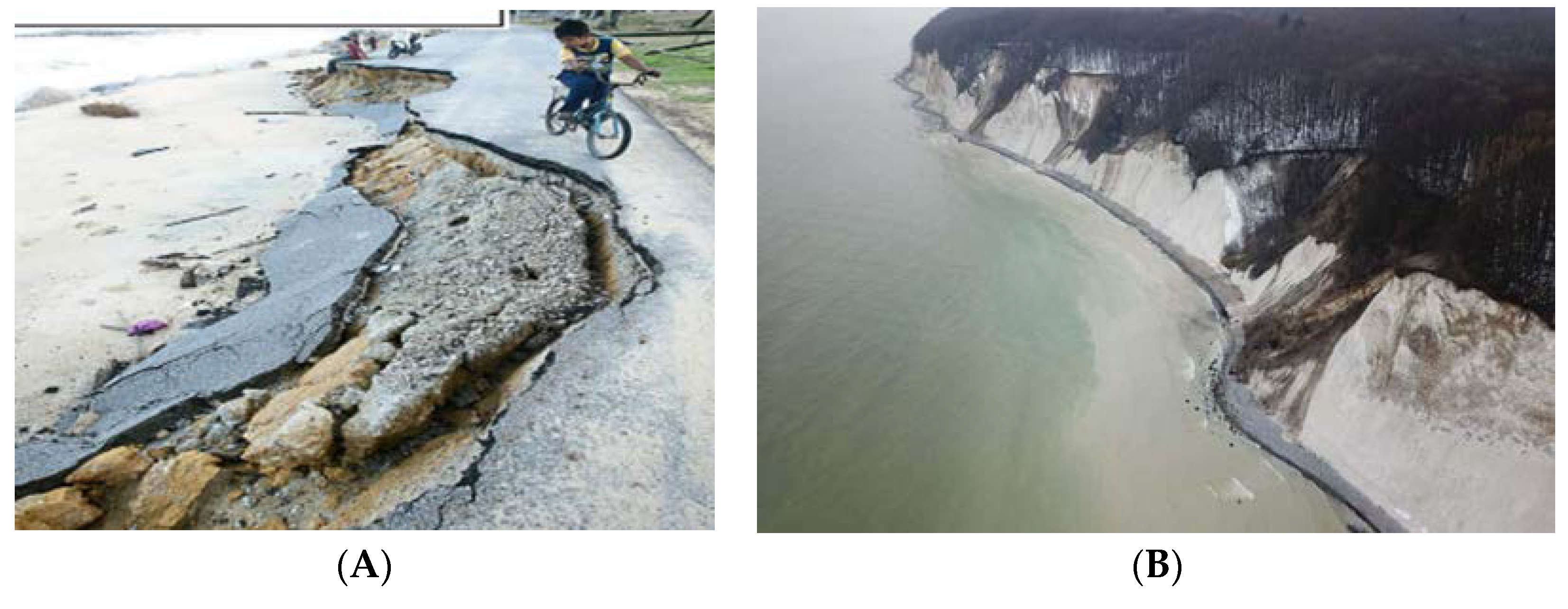
Figure 9.
The concept of integrated coastal protection using green and hard engineering [95].
Figure 9.
The concept of integrated coastal protection using green and hard engineering [95].
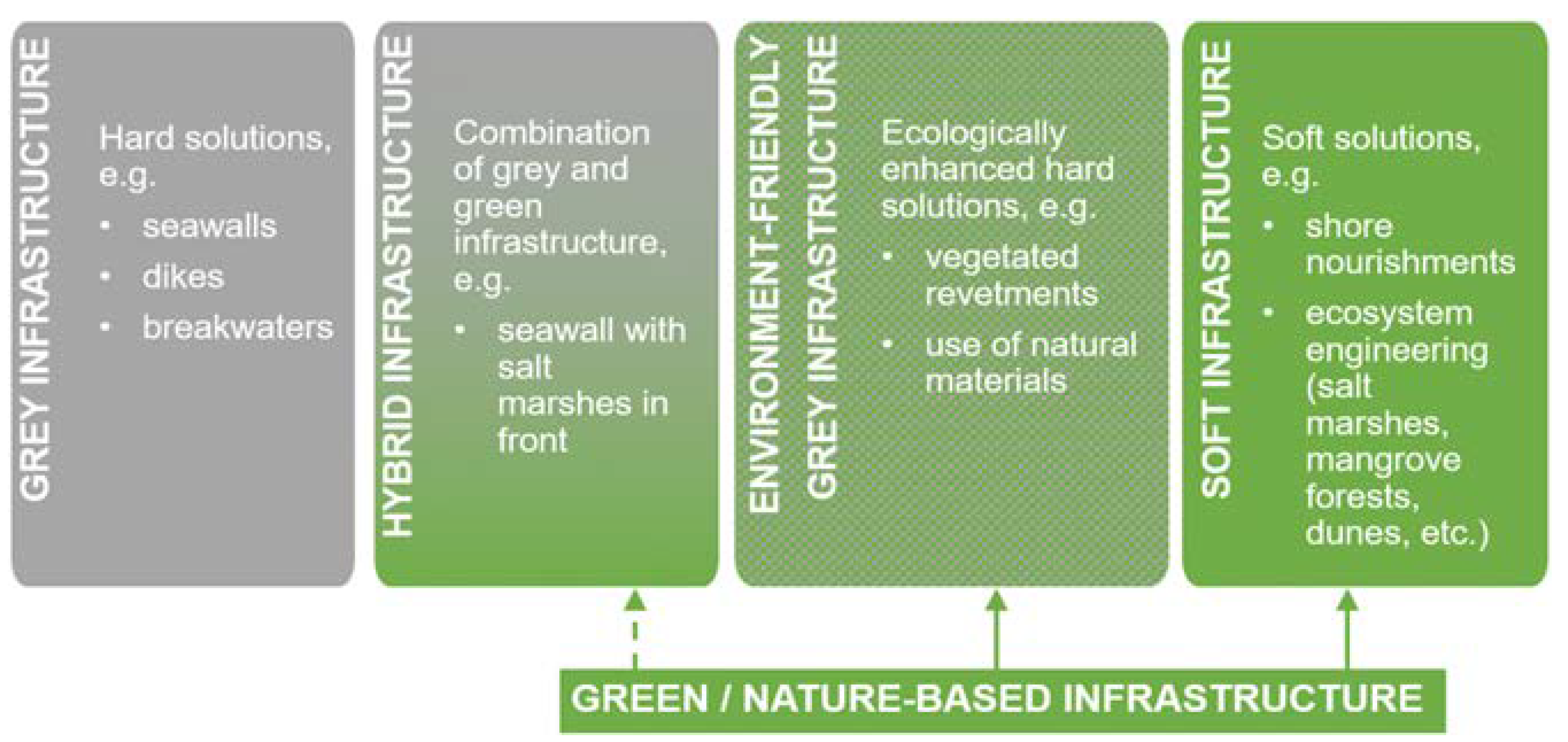
Figure 10.
A: The concept of integrated coastal protection using Seaweed and Seagrass Figure 10B. Concept of Seaweed Farming system for wave damping.
Figure 10.
A: The concept of integrated coastal protection using Seaweed and Seagrass Figure 10B. Concept of Seaweed Farming system for wave damping.
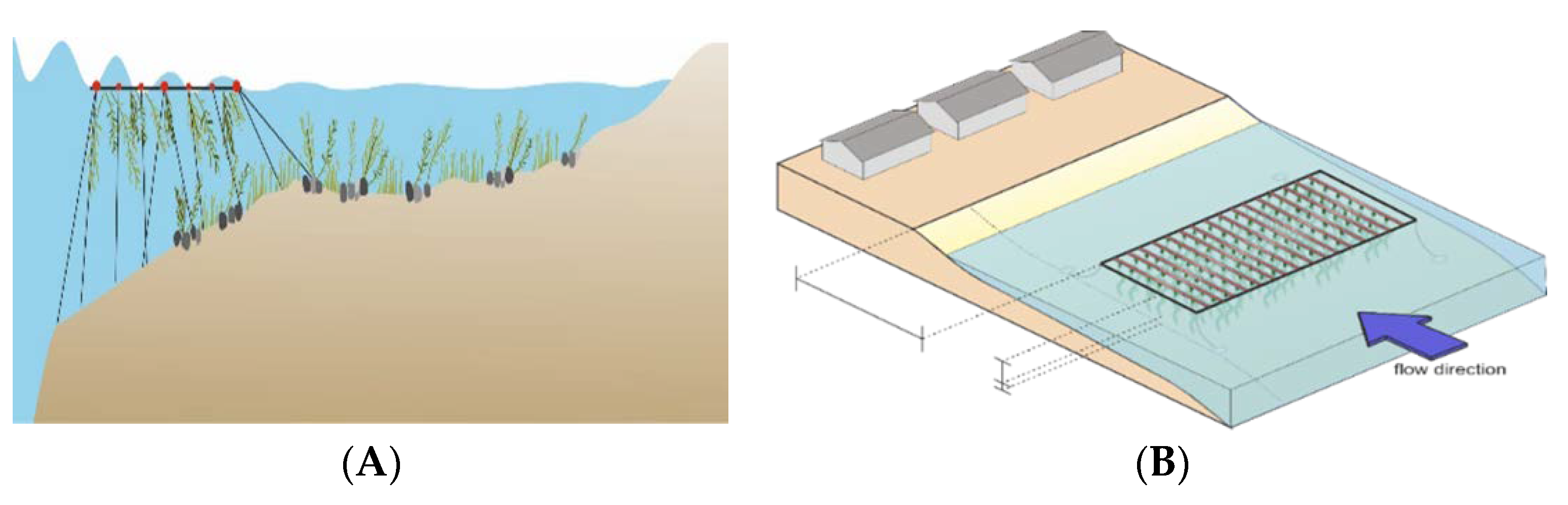
Figure 13.
Model test experiment of wave reduction Case 1- without seaweed, Case 2- with seaweed [112].
Figure 13.
Model test experiment of wave reduction Case 1- without seaweed, Case 2- with seaweed [112].
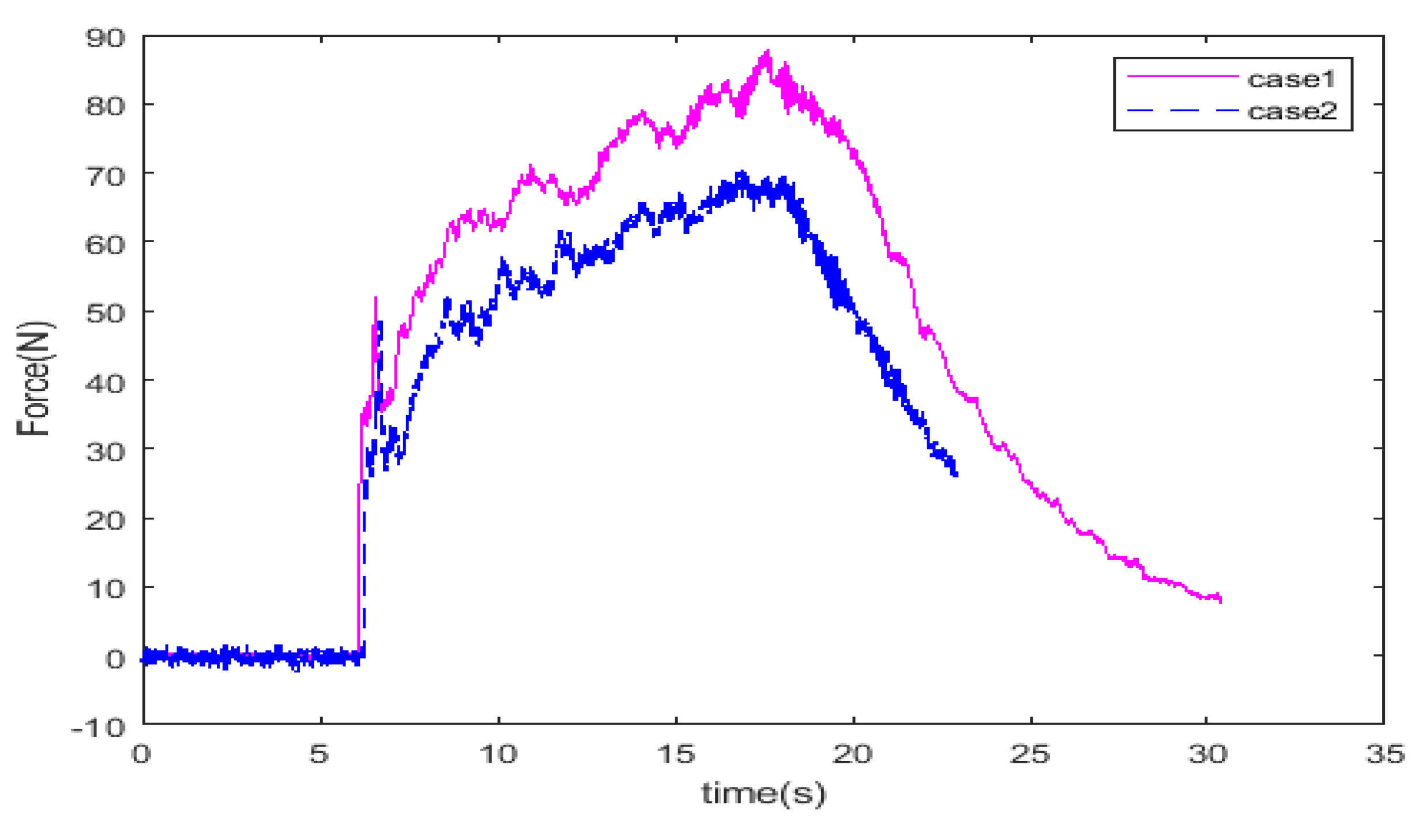
Figure 14.
Force ratio of model test experiment of wave reduction Case 1- without seaweed, Case 2- with seaweed [112].
Figure 14.
Force ratio of model test experiment of wave reduction Case 1- without seaweed, Case 2- with seaweed [112].
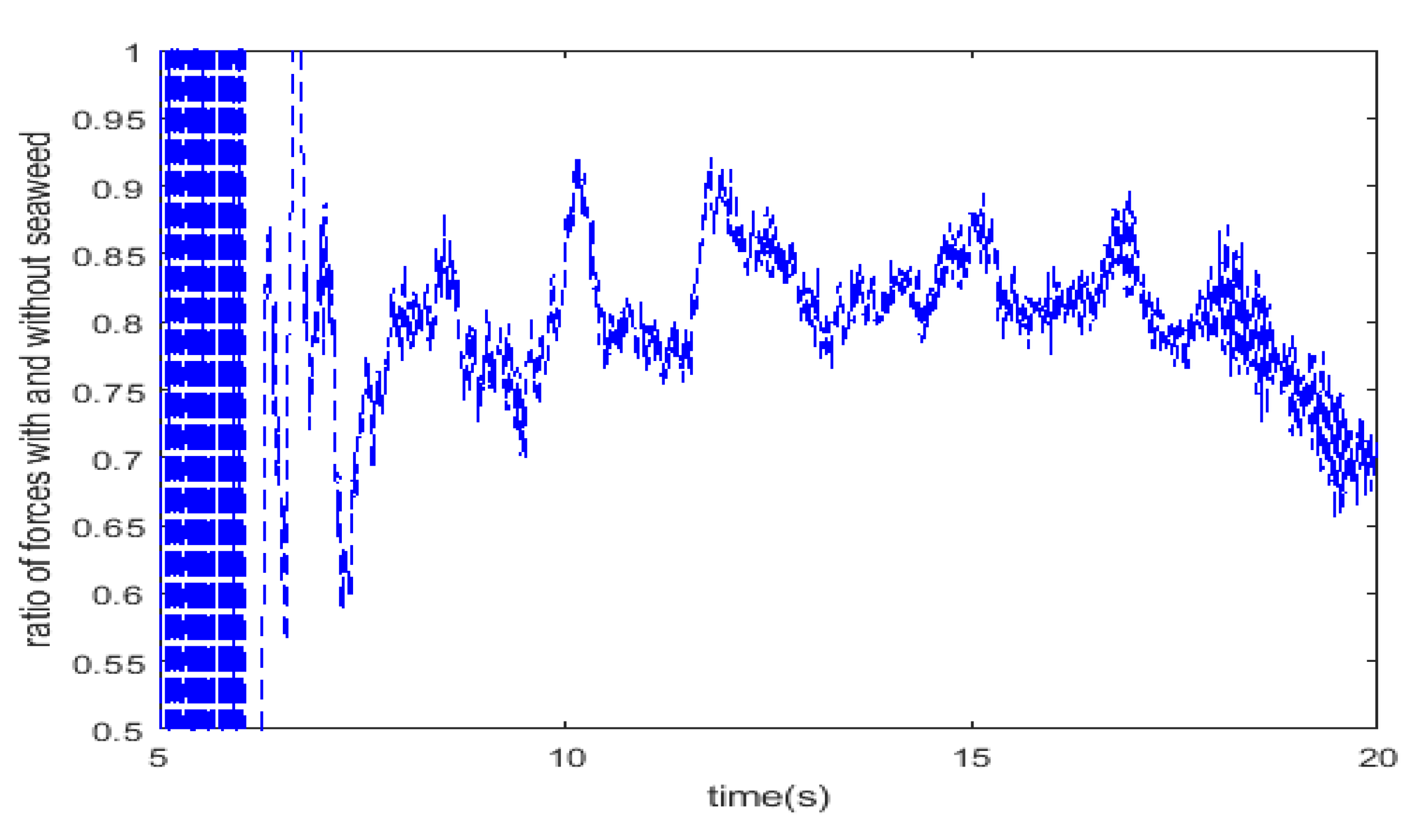

Table 1.
Ecosystem issues.
| Author | Issues |
| [57,58,122] | The current socio-political processes are delaying effective action. |
| [59] | There are many solutions |
| [60] | The rate at which solutions are being implemented needs to be revised to keep up with the pace of biodiversity loss. |
| [61] | The expansion of enterprise development is associated with other existential threats. |
| [18] | The delay in time between ecological degradation and socio-economic climate disruption makes it difficult to grasp the extent of the problem entirely. |
| [62] | Disciplinary specialization and insularity encourage unfamiliarity with complex adaptive systems. |
| [63,64] | The issues and their possible resolutions are intertwined. |
| [65] | There needs to be a greater understanding of human behavior. |
| [17,22] | Earth's surface and ocean |
| [66,67] | Kelp and seagrass, corals, |
| [59,68,69] | Fish and terrestrial biodiversity |
| [70,71,72] | Terrestrial vegetation, wetland, rivers |
| [73,74,75,76] | Vertebrate population, wild animals, endangered plants, threatened species. |
| [77] | Marine aquaculture provides various ecosystem services: Valuing benefits to people and nature. Bioscience |
Disclaimer/Publisher’s Note: The statements, opinions and data contained in all publications are solely those of the individual author(s) and contributor(s) and not of MDPI and/or the editor(s). MDPI and/or the editor(s) disclaim responsibility for any injury to people or property resulting from any ideas, methods, instructions or products referred to in the content. |
© 2024 by the authors. Licensee MDPI, Basel, Switzerland. This article is an open access article distributed under the terms and conditions of the Creative Commons Attribution (CC BY) license (http://creativecommons.org/licenses/by/4.0/).
Copyright: This open access article is published under a Creative Commons CC BY 4.0 license, which permit the free download, distribution, and reuse, provided that the author and preprint are cited in any reuse.


