

Submitted:
09 August 2023
Posted:
10 August 2023
You are already at the latest version
Abstract
Jabulile Ndlovu1 and Kebogile Mokwena1, 2
1 Department of Public Health, Sefako Makgatho Health Sciences University, Pretoria, South Africa
2 Research Chair in Substance abuse and population Mental Health, Sefako Makgatho Health Sciences University, Pretoria, South Africa
Corresponding author: jabulilendlovu5@gmail.com
Abstract
An estimated 6% of the world population has serious mental illness, with one in four families having a member with some form of psychiatric disorder, who are mostly cared for by their relatives within a family setting. Although caregiving in a home setting is reported to be associated with significant mental distress, the burden of such distress is rarely measured. The purpose of this study was to quantify the burden of care among family caregivers of relatives with serious mental disorders, as well as to explore possible association between the caregiver burden of care and a range of caregiver and Mental Health Care User (MHCU) variables in a rural district in Kwa-Zulu Natal, South Africa. The Zarit Burden Interview (ZBI) scale was used to collect data from 357 caregivers, and STATA 14 was used to analyze data. The ages of the sample ranged from 18 to 65, with a mean of 50.29, and the majority (86%) were female and unemployed (83%). The ZBI scores ranged from 8 to 85, with a mean of 41.59. The majority (91%) tested positive for caregiver burden of care, which ranged from mild to severe. Using the Pearson Chi-square test of association (p=0.05), variables that were significantly associated with the burden of care were clinically related (caregiver self-reported depression, MHCU diagnosis, recent relapse of the MHCU), socio-economic (caregiver family monthly income, MHCU disability grant status and MHCU employment status) and socio-demographic (MHCU gender and MHCU level of education). The prevalence of burden of care is high and severe, and scarcity of resources in families and communities contribute to the high burden of care in these rural communities.
Keywords:
Zarit Burden Interview scale
; burden of care
; home care giving
; severe mental illness
; rural setting
Introduction
Mental disorders contribute to an estimated 14% of the global burden of diseases with the highest burden in developing countries [1]. The burden continues to impact negatively on the economic profile of affected countries, with resultant decline in productivity at both the national and individual levels, which is why they need national attention. While psychiatric conditions are responsible for little more than one percent of deaths globally, they account for almost 11% of the burden of disease [2]. Evidence of negative impact of mental disorders on the health and wellbeing of the caregivers continues to emerge, which is often reported to be worse in cases of depressive disorders or embarrassing behavior [3,4].
Among many African societies, caring for a family member who needs constant support, such as one who has chronic mental disorder, has been traditionally shared with other members, including extended families [5], which has been beneficial for both the caregivers and the person with chronic mental illness. However, changes in the social structures continue to shrink the extended family as it evolves towards the smaller nuclear families [6]. The relatively small nuclear families are left without financial and/or social support, thus becoming more vulnerable to unmanageable burden of care. This results in many caregivers carrying their physical, emotional, spiritual, and financial needs in solitude [7], as they miss out on the traditional family support networks.
The COVID-19 pandemic has worsened the experiences of both the patients with mental illness and their caregivers. The pandemic has not only increased the global burden of communicable diseases, but has also presented long-term economic and social consequences, which has increased the prevalence of both depression and anxiety disorders. The COVID-19 impact indicators and shifting priorities of governments worldwide have substantially impacted on the mental health status of the world population, including the ability to care for family members at the household level. In particular, decreased social interactions, lockdowns, stay-at-home orders, decreased public transport, school and business closures, as well as subsequent loss of livelihood, loss of jobs and decreases in economic activity, have all negatively affected mental health of the world population. The pandemic has thus created an environment in which many determinants of mental health play out, which includes the caring of the mentally ill by their relatives at home, which remains a great concern [8].
South African legislation and policies that are intended to reduce psychosocial disability and promote mental health include the Mental Health Care Act no. 17 of 2002 (MHCA), the International Covenant on Economic, Social and Cultural Rights (ICESCR), as well as the African Charter on Human and People’s Rights on the Rights of Persons with Disability in Africa. In South Africa, a significant portion of the budget for mental health services is traditionally used for in-patient care, leaving community or family-based care structures not funded [9]. Thus, the majority of people with mental illness who do not need in-patient care are being cared for in families and communities, but without the necessary financial support.
Although many families continue to provide care for their family members who have chronic mental illness, there is dearth of studies on quantifying the burden of care for such family members, as well as the impact of such burden on the carer’s physical, psychological and social health. This is especially true in rural communities, where caring for the sick is commonly left to the family members [10,11,12]. The purpose of this study was to quantify the burden of care among family members who provide care for their relatives with chronic mental disorders in rural UMkhanyakude District of Kwa Zulu Natal, South Africa.
Research Methodology
The Study Design
The study used a quantitative survey to determine the burden of care among family caregivers of people who were diagnosed with Psychotic (Schizophrenia Spectrum Disorders) and Mood (Major Depression and Bipolar) disorders.
Study Setting
The study was conducted in rural UMkhanyakude Health District, the second largest District in the Province of Kwa- Zulu Natal, with an estimated population of 625846. The District has 53 Primary Health Care facilities and a population of about 4 400 mental health care users in the patient registers of these Primary Health Care facilities. Because of this District’s rural setting, many people walk long distances to access basic health services, including mental health care services. The study was conducted in 30 health facilities which were identified by their various hospital managers as having a high number of mental health care users who collect medication for mental illness on monthly basis.
Study Population
The study population consisted of primary caregivers of patients who live within the uMkhanyakudeHealth District, and receive care from health facilities on an outpatient basis.
Recruitment
The recruitment of the potential participants was done from identified health facilities, and individuals who were accompanying their relatives with mental disorders who came for health reviews and to collect their medication were recruited for the study. The inclusion criteria for the mental health care users were diagnosed with Schizophrenia, Major Depression or Bipolar Mood Disorder, and have been attending treatment in the district facilities for at least a year. The inclusion criteria for the family member or study participant was that they be 18 years or older, have been the primary caregiver for their mentally ill relative for at least a year, and be able and willing to provide informed consent.
Sampling Techniques
A purposeful and convenience sampling technique was used because all the participants were linked to their mentally ill relatives who were accessing services.
Sample Size
Using the Raosoft sample size calculator for a population of 4400 mental health care users registered in the health facilities of the district, a 5% margin of error, a confidence level of 95%, and aresponse rate of 50%, a minimum sample size of 354 was calculated. The final sample size was 357.
Data Collection Tools
- The Zarit Burden Interview (ZBI) Scale was used to measure the burden of care among the participants. The ZBI is a globally validated tool which is designed for measuring caregiver’s perceived burden of care while providing family care for a relative. The tool has been widely used in both developed and developing countries, and has been confirmed to be both reliable and valid [13,14,15].
- A quantitative questionnaire was used to collect socio-demographic data of the participants, as well as data on their relatives with mental disorders.
Data Collection
Data were collected by the researcher and a research assistant, who was trained in the methodology of data collection, ethics and protocols to adhere to prevention of the spread of the SARS virus.
Data collection occurred in an interview room of each facility. The purpose of the study was explained to the group of potential participants, and they were given the opportunity of asking questions or seeking clarifications. This was followed by the administration of the informed consent, which was followed by the administration of the socio demographic questionnaire, and lastly the ZBI scale.
To accommodate the limited literacy and numeracy skills of many of the participants, match-sticks were used to demonstrate the concept of the Likert Scale of the ZBI. A table of five columns was drawn, with each column representing how the participant felt with regards to the item displayed by their mental health care user relative, during their home caring process. The first column did not have a match stick (representing never or none), one match-stick represented rarely, two match sticks represented sometimes, three matches represented quite a bit, and four match sticks represented extremely.
The candidates were thanked and given a lunch pack as compensation for their time and participating in the study.
Ethical Considerations
The proposal received ethical approval from both the Sefako Makgatho Health Sciences University Research Ethics Committee, (SMUREC/H/111/2021: PG), and the KZN Provincial DOH Research Committee (KZ_202109-022). Permission to conduct the study was obtained from the UMkhanyakude Health District Research Committee, the sub-District Hospital Management Executive Officers, and the health facility Operation Managers of each participating facility. The individual participants provided informed consent.
Data Analysis
The raw data was captured into the excel spreadsheet and uploaded into STATA version 14. The data of the caregivers and the patients were analysed separately. Socio-demographic data was descriptively analysed. The burden of care was determined by the scores of the ZBI scale, which has a maximum score of 88, with higher scores indicating heavier burden of care. The scores of the Zarit Burden Interview scale were used to categorize the total score of each participant as little or no burden (0-20), mild to moderate burden (21-40), moderate to severe burden (41-60) and extremely severe burden (61-88).The Pearson Chi-square test was used to explore the association between a range of socio-demographic variables and burden of care as measured by the ZBI; (p-value=0.05). Multivariate logistic regression was used to explore the association between the socio-demographic variables which were significantly associated with burden of care at chi-square test.
Characteristics of Caregivers
The mean age of the participants was 50.3, with the youngest being 18 years of age and the oldest caregiver at 65. The greatest proportion of the sample were female (n=306, 85.71%), single (n=192, 53.78%) and unemployed (n=301, 84.31 %). Almost all of the participants had daily contact (n=356, 99.72%) with the patient but only 15.97 % (n=57) reported receiving help with their caregiving duties. The average household monthly income of the participants was R3803.70. Further details are provided on Table 1 below:
Socio-Demographic Information of MHCUs
The largest proportion of the patients were between the ages of 26-40 years (n=157, 43.98 %), male (n=245, 68.63 %) and were suffering from Schizophrenia (n=213, 59.66 %). Nearly all of the patients were unemployed (n=356, 99.72 %), with 77.31 % (n=276) of them receiving a disability grant. Table 2 below highlights further details of the socio-demographic variables.
Quantification of Caregiver Burden
The results showed that 89.37 % (n=320) of the caregivers were experiencing caregiver burden, with a mean ZBI score of 41.60 when a cut-off point of <21 was utlized. A majority of the participants were experiencing mild/moderate levels of burden (n=141, 39.50 %), followed by 35.01 %( n=125) that reported moderate/severe levels and 15.13% (n=54) experienced severe levels of caregiver burden. Figure 1 below show the prevalence of the caregiver burden and further illustrate the findings.
The heaviness of the burden of care ranged between little to severe, as shown in Figure 2 below
Factors Associated with Caregiving Burden
The Pearson chi-square test of association showed that there were seven main factors that were associated to caregiving burden. Three of those factors were directly related to demographic variables of the caregiver, i.e. age, help received with caregiving role and self-reported depression (p-value=0.05). The other three factors were related to employment status, gender and the relapsed admission history of the mental health patient (p=0.05). The remaining factor was related to the monthly household income (p-value=0.05).
At multivariate logistic regression, only monthly family income and relapsed after admission remained statistically significant, as shown on Table 4 below:
Discussion
The finding that most family caregivers were female was previously reported in other studies, where caregiving responsibilities were assumed mostly by females [5,14], and that the burden of care was higher among females [22]. This suggests that female caregivers need additional resources to support their mental health, such as social support as well as psycho-educational support.
The current study found that males were more affected by psychotic and mood disorders, which are aligned with other studies which reported that Major Depression and Schizophrenia Spectrum Disorders were more prevalent among males [19], and they were the ones mostly looked after by females. These findings concur with some Sub-Saran studies done on the burden of care in general and mental health care specifically, which reported that males were mostly affected by serious mental illness, especially in the Psychotic Spectrum range [20,21]. This suggests that a focus on screening for these disorders among men should be strategically integrated into men’s health services.
Of interest to this research was the “cohabiting group” of the caregivers; n=76 (21%), whose roles are supposed to be the same as the married group because they live with their partners permanently although not officially married, which suggests limited commitment. This group formed a fourth of the sample and its marital status, under trying circumstances, can jeopardize the quality of care and dedication, to be given to the supposedly mental health care user spouses or partners. This cohabiting concept had no literature support and its subsequent impact on home caring of mental health care users. Noticeably, the significant majority (88%, n=313) of the mental health care users were found to be single, which is similar to other studies which reported the same, i.e. most people with mental disorders are single [22,23]. This can be explained by the difficult social situations experienced by people with mental disorders, which render them unable to form and maintain social relationships, as well as the stigma perpetrated against mental illness and people so affected [24]. In the current study, marital status for either caregivers or their mental health care user relatives was perceived by caregivers as not contributing significantly to their burden of care.
The majority (83%, n=301) of the caregivers in the current study were unemployed, which confirms the high unemployment rates in South Africa [25,26], especially among Black Africans [27], who live in rural areas [28]. Some caregivers had to quit their jobs in order to fully take care of their mentally ill relatives. This concurs with findings from both developed and developing world, which reported that family caregivers were often compelled by circumstances and demands to care for their mentally ill relatives, to the extent that they often have to quit their jobs in order to offer full time care, despite the poverty this decision could expose them to [29,30,31],. Moreover, it helps to improve the morale of the caregiver if the mental health care user is employed because relatives believe that if the mentally ill person has a job, it suggests that he/she is being cured of his mental condition, as well as improving his/her dignity and self-esteem [1]. In this study, most of the unemployed mental health care users (77%, n=276) depended on Government disability grant. These social grants contribute significantly towards the family monthly income, thus improving the socio-economic status of the family [5].
Only a few participants, (4%, n=14) reported that they were depressed because of caring for their mental health care user relatives, which proved to be statistically significant and therefore contributing a great deal towards their burden of care. This finding concurs with the Asian study [32], which reported that depression could affect caregivers of their mental health care user relatives in two ways, i.e. either easing their burden of care or the burden increasing depressive symptoms they already exhibit during the caring process.
The results of the current study showed that almost half the sample had been primary caregivers for long periods of between eleven and thirty years during which time they were living with the family member being cared for, almost every day. This situation statistically proved not to be significant as far as family member caregiver burden was concerned. Literature acknowledges the family support impacting positively on the quality of care given to the mental health care user relative, within the family context [33,34].
With the context of the family dynamics of the Zulu culture, the relationship between carer and MHCU does not mean much because it is not only the close family member but also the extended family member, who comes to the party of caring if the worse comes to the worst. These family dynamics differ from those from developed countries, where the nuclear family does not necessarily embrace the extended family members [22,35].
The sample had fewer MHCU who were diagnosed with Major Depression, which contrasts with global trends. This may be explained by previous findings that in comparison with data from other countries, South Africa has lower rates of Major Depression [36]. But it may also be explained by under diagnosis and under reporting of depression, which was reported to be up to 87% in developing countries [37]. Either way, the need for financial and human resources for diagnosing, treating and managing depression remains high, with the ratio of psychiatrist to a given population being unfavourable [38,39]. Moreover, major depression is not readily diagnosed because it is mostly limited to the experience of the patient, whereas the destruction and dramatic acts displayed by patients with Schizophrenia and Bipolar Mood Disorder with Manic episode, add more burden to the attention of society and is apparent to the burden of the caregiver [40]. Although most of the MHCUs had not experienced recent relapses, relapse had more negative impact on the mental health of the caregiver, and was therefore statistically associated
Conclusions
Although the difficulties experienced by family caregivers of MHCUs have been reported [41], this study specifically quantified the burden of care, which integrated not only the mental aspects, but a comprehensive burden that includes other aspects like finances, access to additional assistive resources, and other responsibilities that are on the shoulders of the caregivers. The study findings therefore conclude that the mental distress of the caregivers is acknowledged and what all studies agree with is that MHCUs need additional resources to adequately attend to their needs, and so reduce the burden of the caregivers.
Funding
This work was jointly supported by the National Research Foundation of South Africa (Grant Number 115449), as well as the South African Medical Research Council (M052).
Acknowledgments
The caregivers of MHCUs are acknowledged for participating in the study, and Miss Nondumiso Ntuli, the research assistant, is acknowledged collecting the data.
Recommendations
In the context of high burden of care for the family caregivers, it is recommended that mental health professionals at primary health care level must align their service delivery plans with identification of the needs of the family caregivers, and refer these to social services, which can benefit the MHCU. It is further recommended that screening for mental disorders, especially the psychotic spectrum range, should be integrated into health services at primary health care level. Without attending to this important aspect of community-based care, the treatment outcomes of MHCUs will remain negative. Acknowledging the extensive mental health impact of the Covid-19 pandemic on society, there is a need to incorporate the mental health impacts thereof in the broader health care services.
References
- Ae-Ngibise K, Victor Christian Korley Doku, Kwaku Poku Asante & Seth Owusu-Agyei (2015) The experience of caregivers of people living with serious mental disorders: a study from rural Ghana, Global Health Action, 8:1, 26957 10.3402/gha.v8.26957. [CrossRef]
- GBD 2019 Disease and Injuries Collaborators. Global burden of 369 diseases and injuries in 204 countries and territories, 1990–2019: a systematic analysis for the Global Burden of Disease Study 2019. Lancet 2020; 396: 1204–22.
- Zwane, F.L., 2012, ‘Family caregivers’ lived experiences of violence at the hands of their mentally ill relatives in Swaziland’, M.Cur dissertation (Psychiatric nursing), University of Johannesburg, Johannesburg.
- Gupta S, Isherwood G, Jones K, Impe KV. Assessing health status in informal schizophrenia caregivers compared with health status in non-caregivers and caregivers of other conditions. BMC Psychiatry. 2015;15:162.
- Makhosazane Ntuli and Sphiwe Madiba. 2019.The Burden of Caring: An Exploratory Study of the Older Persons Caring for Adult Children with AIDS-Related Illnesses in Rural Communities in South Africa. Department of Public Health, Sefako Makgatho Health Sciences University, Pretoria 0001, South Africa.
- Kartalova-O'Doherty, Y and D TedstoneDoherty , 2008 . Coping strategies and styles of family carers of persons with enduring mental Illness: a mixed methods analysis; Scand J Caring Sci . March 2008 ; 22(1): 19–28. [CrossRef]
- Dussel V, Bona K, Heath JA, Hilden JM, Weeks JC, Wolfe J. Unmeasured Costs of a Child’s Death: Perceived Financial Burden, Work Disruptions, and Economic Coping Strategies Used by American and Australian Families Who Lost Children to Cancer. J Clin Oncol. 2011; 29(8): 1007-1013.
- Santomauro D & COVID-19 Mental Disorders Collaborators, 2021. Global Prevalence and Burden of Depressive and Anxiety Disorders in 204 countries and territories in 2020 due to the COVID-19 pandemic. Queensland Centre for Mental Health Research. The Park Centre for Mental Health, Locked Bag, 500. Archerfield, 4108, Australia.
- Ndetei D, Pizzo M, Khasakhala L, Maru H, Mutiso V, Ongecha-Owuor F. Perceived economic and behavioural effects of the mentally ill on their relatives in Kenya: A case study of Mathari hospital. Afr J Psychiatr 2009;12:293-99.
- Jack-Ide, I.O., Uys, L.R. & Middleton, L.E., 2012, ‘Caregiving experiences of families of persons with serious mental health problems in the Niger Delta region of Nigeria’, International Journal of Mental Health Nursing 22(2), 170–179.
- Mamabolo, L. M. (2013). Exploring community based interventions for mentally ill patients to improve quality of care. Potchefstroom Campus, North West University, South Africa.
- Monyaluoe, M., Mvandaba, M., Du Plessis, E.D. & Koen, M.P., 2014, ‘Experiences of families living with a mentally ill family member’, Journal of Psychiatry 17(5), 131. [CrossRef]
- Hagell, P., Alvariza, A., Westergren, A., &Årestedt, K. (2017). Assessment of burden among family caregivers of people with Parkinson's disease using the Zarit Burden Interview. Journal of pain and symptom management, 53(2), 272-278.
- Galindo-Vazquez, O., Benjet, C., Cruz-Nieto, M. H., Rojas-Castillo, E., Riveros-Rosas, A., Meneses-Garcia, A., & Alvarado-Aguilar, S. (2015). Psychometric properties of the Zarit Burden Interview in Mexican caregivers of cancer patients. Psycho-oncology, 24(5), 612-615.
- Pinyopornpanish, K., Pinyopornpanish, M., Wongpakaran, N., Wongpakaran, T., Soontornpun, A., &Kuntawong, P. (2020). Investigating psychometric properties of the Thai version of the Zarit Burden Interview using rasch model and confirmatory factor analysis. BMC research notes, 13(1), 1-7.
- Powell, R. A., & Hunt, J. (2013). Family care giving in the context of HIV/AIDS in Africa. Progress in Palliative Care, 21(1), 13-21.
- Cabral, L., Duarte, J., Ferreira, M., & dos Santos, C. (2014). Anxiety, stress and depression in family caregivers of the mentally ill. AtenciónPrimaria, 46, 176-179.
- Xiong, C., Biscardi, M., Astell, A., Nalder, E., Cameron, J. I., Mihailidis, A., &Colantonio, A. (2020). Sex and gender differences in caregiving burden experienced by family caregivers of persons with dementia: A systematic review. PLoS One, 15(4), e0231848.
- Van Rooijen, G., Isvoranu, A. M., Kruijt, O. H., van Borkulo, C. D., Meijer, C. J., Wigman, J. T. & Bartels-Velthuis, A. A. (2018). A state-independent network of depressive, negative and positive symptoms in male patients with schizophrenia spectrum disorders. Schizophrenia Research, 193, 232-239.
- Adeosun II. Correlates of caregiver burden among family members of patients with schizophrenia in Lagos, Nigeria. Schizophr ResTreatment 2013;2013:1–7.
- Ntsayagae, E.I., Poggenpoel, M. &Myburgh, C., 2019, ‘Experiences of family caregivers of persons living with mental illness: A meta-synthesis’, Curationis 42(1), a1900. [CrossRef]
- Souza Ana LúciaRezende , Rafael Alves Guimarães, Daisy de Araújo Vilela, Renata Machado de Assis, LizeteMalagoni de Almeida Cavalcante Oliveira, Mariana Rezende Souza, Douglas José Nogueira and Maria Alves Barbosa. Factors associated with the burden of family caregivers of patients with mental disorders: a cross-sectional study. 2017. BMC Psychiatry 17:353. [CrossRef]
- Rahmani, F., Ranjbar, F., Hosseinzadeh, M., Razavi, S. S., Dickens, G. L., & Vahidi, M. (2019). Coping strategies of family caregivers of patients with schizophrenia in Iran: A cross-sectional survey. International journal of nursing sciences, 6(2), 148-153.
- Niedzwied, C.L. (2019). How does mental health stigma get under the skin? : Cross-sectional analysis using Health Survey for England. Institute of Health and Wellbeing. University of Glasgow, 1 Lilybank Gardens, Glasgow, G12 8RZ, United Kingdom.
- Mulaudzi, R., & Ajoodha, R. (2020), November). An exploration of machine learning models to forecast the unemployment rate of South Africa: a univariate approach. In 2020 2nd International Multidisciplinary Information Technology and Engineering Conference (IMITEC) (pp. 1-7). IEEE.
- Alenda-Demoutiez, J., &Mügge, D. (2020). The lure of ill-fitting unemployment statistics: How South Africa’s discouraged work seekers disappeared from the unemployment rate. New Political Economy, 25(4), 590-606.
- Mamabolo, M. A. (2015). Drivers of community xenophobic attacks in South Africa: poverty and unemployment. TD: The Journal for Transdisciplinary Research in Southern Africa, 11(4), 143-150.
- Weir-Smith, G. (2016). Changing boundaries: Overcoming modifiable areal unit problems related to unemployment data in South Africa. South African Journal of Science, 112(3-4), 1-8.
- Mavundla, T.R., Toth, F. &Mphelane, M.L., (2009). ‘Caregiver experience in mental illness: A perspective from a rural community in South Africa’, International Journal of Mental Health Nursing 18(5), 357–367. [CrossRef]
- Chang H-Y, Chiou C-J, Chen N-S. Impact of mental health and caregiver burden on family caregivers’ physical health. Arch GerontolGeriatr. 2010; 50(3):267–71.
- Lund C, Myer L, Stein DJ, William DR, Flisher AJ. Mental illness and lost income among adult South Africans. Soc Psychiatry PsychiatrEpidemiol. 2013; 48 (5):845-51.
- Zendjidjian, X., Richieri, R., Adida, M., Limousin, S., Gaubert, N., Parola, N., Lançon, C. and Boyer, L., 2012. Quality of life among caregivers of individuals with affective disorders. Journal of affective disorders, 136(3), pp.660-665.
- Kate N, Grover S, Kulhara P, Nehra R. Relationship of caregiver burden with coping strategies, social support, psychological morbidity, and quality of life in the caregivers of schizophrenia. Asian J Psychiatr. 2013;6(5):388.
- Chang S, Zhang Y, Jeyagurunathan A, Lau YW, Sagayadevan V, Chong SA, Subramaniam M. Providing care to relatives with mental illness: reactions and distress among primary informal caregivers. BMC Psychiatry. 2016;16:80.
- Ostacher MJ, Nierenberg AA, Iosifescu DV, Eidelman P, Lund HG, Ametrano RM, Kaczynski R, Calabrese J, Miklowitz DJ, Sachs GS,. Correlates of subjective and objective burden among caregivers of patients with bipolar disorder. Acta Psychiatr Scand. 2008;118(1):49–56.
- Tomlinson, M., Grimsrud, A.T., Stein, D.J., Williams, D.R. and Myer, L., 2009. The epidemiology of major depression in South Africa: results from the South African Stress and Health study: mental health. South African Medical Journal, 99(5), pp.368-373.
- Lotfaliany, M., Bowe, S.J., Kowal, P., Orellana, L., Berk, M. and Mohebbi, M., 2018. Depression and chronic diseases: Co-occurrence and communality of risk factors. Journal of affective disorders, 241, pp.461-468.
- Burns JK & Tomita A. (2015). Traditional and religious healers in the pathway to care for people with mental disorders in Africa: a systematic review and meta-analysis. Social psychiatry and Psychiatric epidemiology, 50, 6, 867.
- Nhlapo Z. (2017). Being Poor and Mentally Ill In South Africa Equals Being Pretty Much Screwed. http://www. huffingtonpost.co.za/2017/07/31/being-poor-and-mentally-ill-in-south-africa-equals-being-pretty_a_23057607/.
- Olawale KO, Mosaku KS, Fatoye O, Mapayi BM, Oginni OA. Caregiver burden in families of patients with depression attending Obafemi Awolowo university teaching hospitals complex Ile-Ife Nigeria. Gen Hosp Psychiatry. 2014;36(6):743–.
- Mokwena, K. E., & Ngoveni, A. (2020). Challenges of Providing Home Care for a Family Member with Serious Chronic Mental Illness: A Qualitative Enquiry. International Journal of Environmental Research and Public Health, 17(22), 8440.
Figure 1.
Prevalence of caregiver burden.
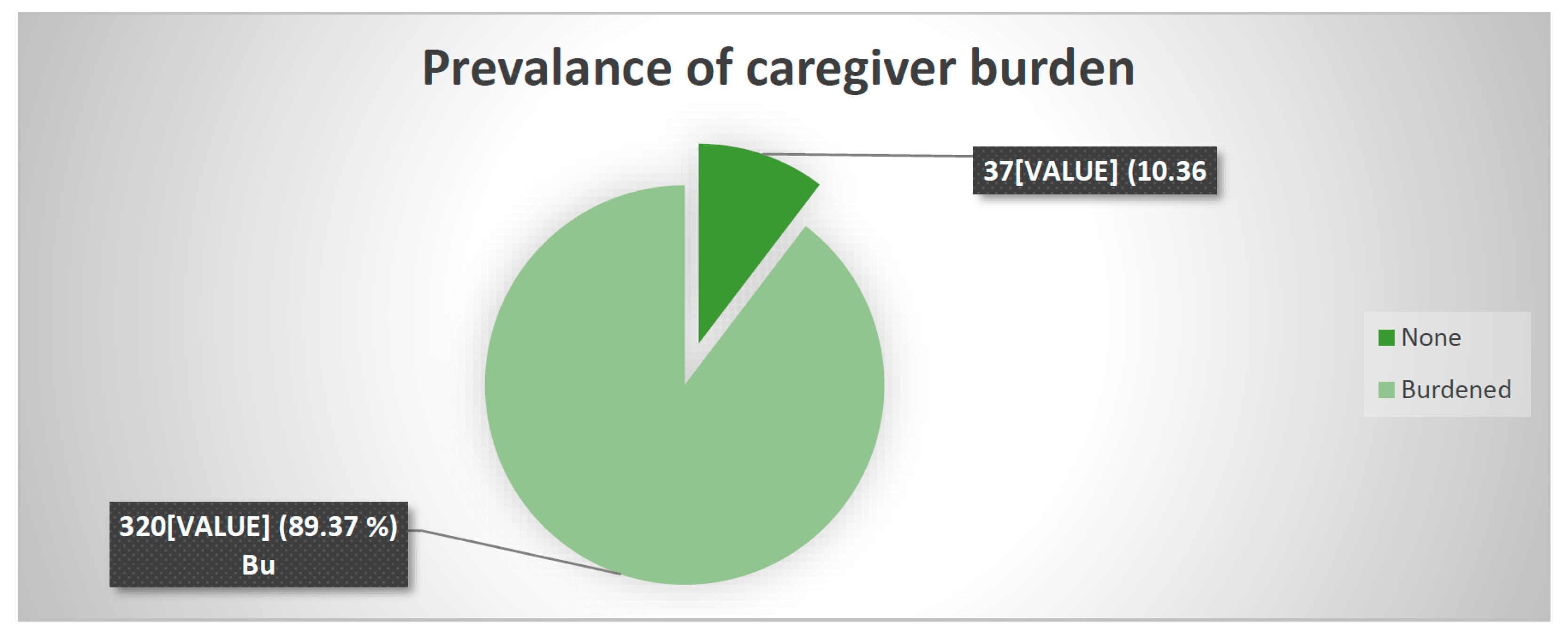
Figure 2.
The levels of burden of care.
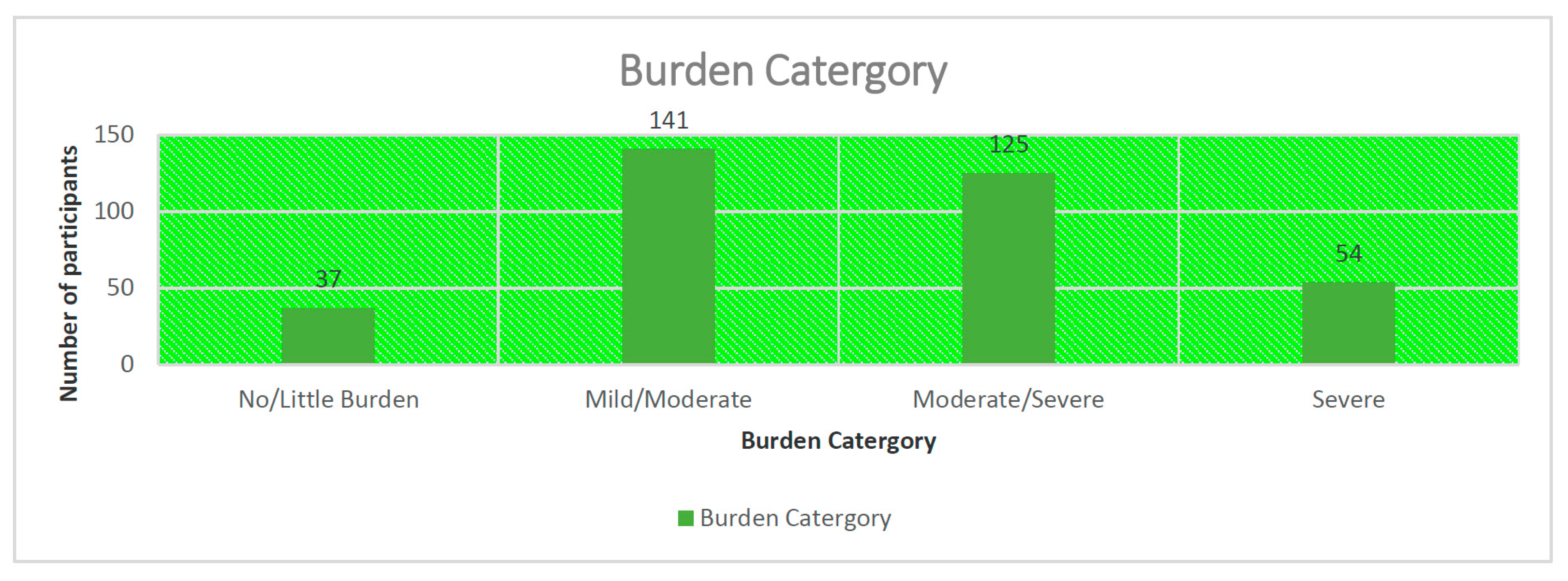

Table 1.
Characteristics of caregivers.
| Variable | Frequency(n) | Percentage (%) |
|---|---|---|
| Age (n=357) | ||
| ≤40 years | 77 | 21.57 |
| 41-60 years | 185 | 51.82 |
| ≥61 years | 95 | 26.61 |
| Age (Mean 50.3; SD 12.2; Min 18; Max 65) | ||
| Gender (n=357) | ||
| Female | 306 | 85.71 |
| Male | 51 | 14.29 |
| Level of Education(n=357) | ||
| No formal education. | 99 | 27.73 |
| Primary | 110 | 30.81 |
| Secondary | 127 | 35.57 |
| Tertiary | 21 | 5.88 |
| Marital status(n=357) | ||
| Co-habiting | 76 | 21.29 |
| Married | 80 | 22.41 |
| Single | 192 | 53.78 |
| Widowed | 9 | 2.52 |
| Employment status(n=357) | ||
| Employed | 56 | 15.69 |
| Unemployed | 301 | 84.31 |
| Religion (n=357) | ||
| Christian | 323 | 90.48 |
| Nazareth | 25 | 7.00 |
| None | 3 | 0.84 |
| Other | 6 | 1.68 |
| Other Chronic Diseases (n=357) | ||
| No | 153 | 42.86 |
| Yes | 204 | 57.14 |
| Self-reported depression (n=357) | ||
| No | 343 | 96.08 |
| Yes | 14 | 3.92 |
| Number of children | ||
| None | 14 | 3.92 |
| 1-4 children | 264 | 73.95 |
| More than 5 children | 79 | 22.13 |
| Monthly family income | ||
| Below 2000 | 146 | 40.90 |
| R2001-R4000 | 147 | 41.18 |
| R4000-R10 000 | 48 | 13.45 |
| Above R10 000 | 16 | 4.48 |
| Income (Mean R3803.70; SD 4217.45; Min R0; Max R39000 ) | ||
| Relationship to patient | ||
| Child | 135 | 37.82 |
| Parent | 23 | 6.44 |
| Sibling | 85 | 23.81 |
| Spouse | 39 | 10.92 |
| Other | 75 | 21.01 |
| Receiving help with caregiving (n=357) | ||
| No | 300 | 84.03 |
| Yes | 57 | 15.97 |
| Living with patient (n=357) | ||
| No | 16 | 4.48 |
| Yes | 341 | 95.52 |
| Other family members needing help (n=357) | ||
| No | 216 | 60.50 |
| Yes | 141 | 39.50 |
| Number of days in contact with patient (n=357) | ||
| Everyday | 356 | 99.72 |
| Occasional | 1 | 0.28 |
| Number of years as a caregiver | ||
| Less than 5 years | 83 | 23.25 |
| 6-10 years | 91 | 25.49 |
| More than 10 years | 183 | 51.26 |
| Caregiving years (Mean 14; SD 9.04; Min 1; Max 54) | ||
Table 2.
Socio-demographic information of participants.
| Variable | Frequency | Percentage (%) |
|---|---|---|
| Age (n=357) | ||
| Below 25 years | 39 | 10.92 |
| 26-40 years | 157 | 43.98 |
| 41-60 years | 131 | 36.69 |
| Above 60 years | 30 | 8.40 |
| Age (Mean 40.5; SD 12.6; Min 19; Max 76) | ||
| Gender (n=357) | ||
| Female | 112 | 31.37 |
| Male | 245 | 68.63 |
| Level of Education (n=357) | ||
| No Education | 62 | 17.37 |
| Primary | 130 | 36.41 |
| Secondary | 152 | 42.58 |
| Tertiary | 13 | 3.64 |
| Marital status (n=357) | ||
| Co-habiting | 28 | 7.84 |
| Married | 16 | 4.48 |
| Single | 313 | 87.68 |
| Diagnosis (n=357) | ||
| Bipolar Mood Disorder | 103 | 28.85 |
| Major Depressive Disorder | 41 | 11.48 |
| Schizophrenia | 213 | 59.66 |
| Duration of illness (n=357) | ||
| Less than 5 years | 74 | 20.73 |
| 5-10 years | 93 | 26.05 |
| 11-20 years | 126 | 35.29 |
| More than 20 years | 64 | 17.93 |
| Relapsed admission (n=357) | ||
| No | 299 | 83.75 |
| Yes | 58 | 16.25 |
| Disability grant | ||
| No | 81 | 22.69 |
| Yes | 276 | 77.31 |
| Employment status (n=357) | ||
| Employed | 1 | 0.28 |
| Unemployed | 356 | 99.72 |
| Relationship to caregiver (n=357) | ||
| Child | 24 | 6.72 |
| Other | 75 | 21.01 |
| Parent | 135 | 37.82 |
| Sibling | 86 | 24.09 |
| Spouse | 37 | 10.36 |
Table 3.
Factors associated to caregiving burden.
| Factors | Frequency (%) | Burdened (%) | Not Burdened (%) | Chi² | p-value |
|---|---|---|---|---|---|
| Age of Caregiver | 10.1653 | 0.006 | |||
| ≤40 years | 77 (21.57) | 65 (20.31) | 12 (32.43) | ||
| 41-60 years | 185 (51.82) | 175 (54.69) | 10 (27.03) | ||
| ≥61 years | 95 (26.61) | 80(25.00) | 15 (40.54) | ||
| Monthly family income | 20.6410 | 0.000 | |||
| Below 2000 | 146 (40.90) | 139(43.44) | 7 (18.92) | ||
| R2001-R4000 | 147 (41.18) | 133 (41.56) | 14 (37.84) | ||
| R4000-R10 000 | 48 (13.45) | 35 (10.94) | 13 (35.14) | ||
| Above R10 000 | 16 (4.48) | 13 (4.06) | 3 (8.11) | ||
| Self-reported depression of caregiver | 5.1997 | 0.023 | |||
| No | 343 (96.08) | 310 (96.88) | 10 (3.13) | ||
| Yes | 14 (3.92 ) | 33 (89.19) | 4 (10.81) | ||
| Receiving help with caregiving role | 5.8278 | 0.016 | |||
| No | 300 (84.03) | 274 (85.63) | 46 (14.37) | ||
| Yes | 57 (15.97) | 26 (70.27) | 11 (29.73) | ||
| Gender of the patient | 4.0719 | 0.044 | |||
| Female | 112 (31.37) | 95 (29.69) | 17 (45.95) | ||
| Male | 245 (68.63) | 225 (70.31) | 20 (54.05) | ||
| History of relapsed after admission | 5.5647 | 0.018 | |||
| No | 299 (83.75) | 263 (82.19) | 36 (97.30) | ||
| Yes | 58 (16.25) | 57 (17.81) | 1 (2.70) | ||
| Employment status of MHCU | 8.6729 | 0.003 | |||
| Employed | 1 (0.28) | 0 (0.00) | 1 (2.70) | ||
| Unemployed | 356 (99.72) | 320 (100.00) | 36 (97.30) |
Table 4.
Multivariate analysis .
| Factors | Coef. | Std. Err. | P>|z| | [95% Conf. Interval] |
|---|---|---|---|---|
| Age of Caregiver | .0204188 | .2593118 | 0.937 | -.487823 .5286606 |
| Monthly family income | -.7151498 | .2243773 | 0.001 | -1.154921 -.2753784 |
| Self-reported depression of caregiver | -1.225815 | .6799649 | 0.071 | -2.558521 .106892 |
| Receiving help with caregiving role | -.2534951 | .4568942 | 0.579 | -1.148991 .6420011 |
| Gender of the patient | .5283181 | .3777569 | 0.162 | -.2120719 1.268708 |
| Relapsed admission patient history | 2.248435 | 1.056517 | 0.033 | .1776989 4.31917 |
Disclaimer/Publisher’s Note: The statements, opinions and data contained in all publications are solely those of the individual author(s) and contributor(s) and not of MDPI and/or the editor(s). MDPI and/or the editor(s) disclaim responsibility for any injury to people or property resulting from any ideas, methods, instructions or products referred to in the content. |
© 2023 by the authors. Licensee MDPI, Basel, Switzerland. This article is an open access article distributed under the terms and conditions of the Creative Commons Attribution (CC BY) license (https://creativecommons.org/licenses/by/4.0/).
Copyright: This open access article is published under a Creative Commons CC BY 4.0 license, which permit the free download, distribution, and reuse, provided that the author and preprint are cited in any reuse.


