

Submitted:
08 August 2023
Posted:
09 August 2023
You are already at the latest version
Abstract
Among the main elements that contribute to climate change are degradation processes and the ecological level of the landscape. These two topics have been discussed and researched for many years and many studies have been conducted. The idea of the article is to determine the correlation between the ecological stability of the territory and the intensity of degradation processes and find out how the ecological stability affects the intensity of soil erosion and vice versa. The ecological stability was calculated based on various methods during the years analyzed, i.e., 1990, 2006, 2012, and 2018. The soil water erosion was performed for the same period in order to identify the relationship between the ecological stability and intensity of soil erosion. The investigated area is located in the Slovak Republic while each year reflects different management of the territory reflecting the current situation in the catchment according to the year evaluated. The intensity of the erosion process was conducted using a phycially-based EROSION-3D model and based on the precipitation derived using Community Land Model (the CLM model). In addition to identifying the relationship between the level of ecological stability and the intensity of erosion, this study also describes the development the ecological stability during the evaluated period together with changes in soil erosion processes.
Keywords:
ecological stability
; landscape
; climate change
; soil erosion
; ecological coefficient
; physically-based model
1. Introduction
The relationship between ecological stability and the degradation processes of landscapes is very close, and these two elements mutually influence each other. Areas in which there is a lower degree of ecological stability due to the action of various elements, i.e., inappropriate anthropogenic activity, natural threats, natural disasters, and the construction of buildings opposed to the environment's natural elements are susceptible to various types of degradation processes. Individual scientific concepts, i.e., ecological stability and soil erosion, have been examined on a relatively large scale, but their interconnection and effects on each other are still insufficiently clarified. On the other hand, knowing the relation between a low degree of ecological stability and an increasing degree of degradation could be beneficial for the successful identification of the areas affected and the subsequent institution of conservation measures. Ecological stability is the ability of ecological systems (ecosystems) to resist negative external elements (natural and anthropogenic) by self-regulatory processes and the ability to return to their original state when the negative effects are finished. External factors are considered to be a stress or stressor in a region, that affect the natural evolution of the landscape's ecosystem in a negative way and can often cause irreversible changes. It is about acting on the living organisms that create an ecosystem [1]. Ecological stability is also defined by the coefficient of ecological stability (CES), which is characterized by a numerical value and the corresponding interpretation of individual elements [2].
The following types of ecological stability have been distinguished [3]:
Constancy, which means a minimal change in an ecological system or no change in an ecological system
Repetition in cycles defines changes in an ecological system that occur in regular cycles,
Resistance of the ecological system characterizes the resilience of the ecological system to external influences or minimal changes due to external factors and the preservation of the structure to a certain limit,
Resiliency means a change in an ecological system by the action of an external factor and a return to the original state, thanks to self-regulatory mechanisms,
The dynamic balance of a landscape ensures the balance of fluctuations due to changing conditions, which result in a certain stability of the ecological system, and which is manifested in its resistance to external disturbances. The opposite of this element is ecological lability,
Ecological lability is a component without the ability to resist external factors and consequently does not have the power to return to the original initial state of the ecological system.
The most often used principle for the assessment of ecological stability is based on two fundamental approaches:
1. The ecological stability coefficient is the ratio of the relatively stable and relatively unstable elements,
2. The ecological stability coefficient is determined on the basis of the acreage of the landscape elements, taking into account the ecological significance of the landscape [4]: The connection between the ecological stability and soil water erosion differences was defined based on the determination of soil water erosion processes during the years, i.e., 1990, 2006, 2012, and 2018. The idea of the study was to identify if changes in ecological stability correlate to soil water erosion changes and how the intensity of erosion processes will affect the ecological stability and the landscape and as well. Both terms used (ecological stability and soil water erosion) are one of the most frequently analyzed terms in the scientific world also because they are directly related to climate change. Sensitivity of soil water erosion can be declared in the sense of land use and climate and belongs to one of the most serious environmental degradation risks negatively affecting the soil attributes and its functions as well. When we talk about "degradation" of the soil, we generally mean a process that decreases the current or potential capacity of the soil to provide a healthy basis for crop production through human activities. Soil degradation is not only caused by a harsh climate; it can also be caused by poor land management practices and policies. According to [5] deforestation, low level of landscape management and overgrazing are the main reasons for development flood, wind or water erosion. On the other hand [6] claim that inappropriate agricultural processes are the main reason for generation of soil or environmental disruption and also represent the major source of greenhouse gas emissions.
Long-term investigations of soil erosion necessitate knowledge of how climate change affects the geo-sustainability of ecosystems and stability. The general relationship between climate and erosion is well known, and quite a few researchers have used it to make predictions about the likely correlation between the climate change and soil erosion. As the temporal scale of interest changes, parameters of soil erosion models that have had fixed values for years have become unpredictable. Thresholds and discontinuities have emerged over longer time scales because of vegetation–soil interactions, human behavior, and the adaptive evolution of the environment under investigation. This means that as the research on a temporal or spatial scale expands, new mechanisms can arise to dominate soil erosion (e.g., an ecosystem disturbed by a wildfire) [7].
The relationship between biological diversity and ecological stability has inspired the interest of ecologists, but a growing understanding of the magnitude of human-caused climate change has prompted researchers to investigate whether and how ecological systems are able to withstand and recover from environmental stresses [8].
Modeling attempts (worldwide) to forecast the effects of climate and land use changes on soil are evolving, but they are constrained. Land use and, theoretically, climate change, through a more extreme hydrological cycle are the two most important anthropogenic causes of erosion [6].
When analyzing landscape changes over time, specific land features, including their spatial representation, spatial configuration, and dynamics, are monitored. Research on territorial use covering ancient times till the present is critical for ecological studies that contribute to strategies for sustainable land use. Climate change, urbanization, deforestation, loss of water quality, natural disasters, habitat destruction, and biodiversity loss all play a part [9].
The variety of the stability of forms that have been tested in theoretical and methodological research conflicts with its comparatively basic intuitive sense. Understanding the equilibrium of ecological processes necessitates investigating the interdependencies and relative importance of these numerous facets of stability, i.e., various metrics, organizational scales and perturbations. Indeed, what can be assessed in order to test the integrity of dynamic ecological systems? What is the scale? How does the stability scale across various organizational levels work? – are questions that remain largely unanswered [8].
The study reflects the evolution of ecological stability together with changes in the intensity of soil water erosion during the period covering the years 1990, 2006, 2012, 2018, and 2020. In each year, analyses of the ecological stability according to several methods were made.
In this research, the following phenomena are discussed:
- -
- Analyses of ecological stability were performed for the period covering the years 1990, 2006, 2012 and 2018,
- -
- The analyses were done based on several different methods to reflect the soil's specific state in the individual years,
- -
- The intensity of the soil water erosion, together with the ecological stability, was evaluated in order to reflect the dependence between changes in ecological stability and the water erosion of soil,
- -
- A determination of the impact of changes in the ecological stability on the intensity of the water soil erosion,
- -
- Reflections as to how the landscape changed during the selected years, i.e., 1990-2018, while these changes are projected in the degree of ecological stability of the landscape as well as in the values of the erosion processes.
2. Materials and Methods
2.1. Study area
The catchment under research is situated in the western part of Slovakia close to the border with the Czech Republic (Figure 1). The area is a part of three protected landscape areas, i.e., the White Carpathians, the Little Carpathians, and Záhorie [10]. The geological conditions of the catchment are represented by sandstone and sandy claystone in the upper part of the Teplica catchment area (in the White Carpathians, i.e., the Paleogene of the Carpathians). The lower part of the catchment is filled with calcareous siltstone, claystone, sandstone, tuffs, variegated and coal clay, coal, conglomerates, and organodetritic limestone. Fine-grained conglomerates and red claystone occurred in the lower part of the Teplica river catchment area as well [11]. The average annual amount of precipitation reaches a value of 600 mm. Most of the Teplica river catchment belongs to a zone of mildly warm and warm climates. On average the moderately warm area has less than 50 summer days a year with a maximum daily temperature above 25 °C and an average July temperature above 16°C.
2.2. Characteristics of the input data
The soil water erosion and the coefficients of the ecological stability were conducted for the years 1990-2018. For this purpose, a diagram describing the methodological procedures of the research was created and is visible on Figure 2. The rainfall data were derived using the Community Land Model (CLM), which is described in subsection 2.4. A graphic interpretation of the rainfall amounts received are displayed in Figure 3. The determination of soil erosion was done using the physically-based EROSION-3D model with the input data described above. The characteristics of the EROSION-3D model are described in subsection 2.5. Since land use management plays an important role (if not the most important) in the processes of soil erosion and other soil processes associated with it, the modelling of water erosion was performed for the years selected with the land-use structure composition (Corine land cover) shown in Figs. 6A-9A. Detailed identification of the individual landscape elements with their percentual representation is contained in Figure 4. It is obvious that more than 50% of the territory is covered by agricultural land every year. The Community Land Model (CLM) was used to estimate the real total precipitation for the river basins analysed, as here, where no real observed rain gauge data are available. Ten-minute step precipitation was used for the selected periods, i.e., 1990, 2006, 2012 and 2018. Figure 3 shows the monthly precipitation totals to indicate the precipitation rate of the individual months.
2.3. Analyses of ecological stability
The following qualitative coefficients of ecological stability were developed for the conditions of Slovakia and used to determine the coefficient of ecological stability:
- -
- coefficient of ecological stability according to [12]:
S is an area of relatively stable land (forests, non-forest woody vegetation, meadows, pastures), and L is an area of relatively unstable land (arable land, built-up land)
KES < 0.10 territory with a maximum disturbance of the natural structures; the basic ecological functions must be intensively and permanently replaced by technical interventions,
KES 0.10 – 0.30 territory with intensive use featuring a clear disruption of natural structures,
KES 0.30 – 1.00 territory intensively used mainly for agricultural production, increasing self-regulatory processes causes their ecological lability,
KES > 1.00 an almost balanced landscape in which the technical objects are relatively in harmony with the natural structures
- -
- coefficient of ecological stability according to [13]:
CES < 0.30 the poorest landscape structure
CES 0.31 – 0.40 poor landscape structure
CES 0.41 – 0.50 low quality landscape structure
CES 0.51 – 0.60 moderately high-quality landscape structure
CES 0.61 – 0.70 medium-quality landscape structure
CES 0.71 – 0.80 significantly high-quality landscape structure
CES > 0.81 the best landscape structure
- -
- coefficient of ecological stability according to [14]
CES < 1.00 predominant natural landscape elements
CES = 1.00 balanced landscape
CES > 1.00 predominant anthropogenic landscape elements
- coefficient of ecological stability according to [4]:
CES 1.00-1.49 landscape with very low ecological stability
CES 1.50-2.49 landscape with low ecological stability
CES 2.50-3.49 landscape with medium ecological stability
CES 3.50-4.49 landscape with high ecological stability
CES 4.50-5.00 landscape with very high ecological stability
2.4. CLM model
The Community Land Model (CLM) is a part of the Community Earth System Model (CESM) and the model describes ideas of ecological climatology. The major aim of the model is to determine the impact of natural and human factors on the climate. The model contains submodels related to land biogeophysics, the hydrologic cycle, biogeochemistry, human dimensions, and ecosystem dynamics and components of land surface containing surface heterogeneity [15]. The model was developed with the idea of research the physical, chemical, and biological processes by which terrestrial ecosystems impact and are impacted by climate on spatial and temporal scales [15].
2.5. EROSION-3D model
The physically-based EROSION-3D model is an event-based method with the main goal of determination the amount of surface runoff, the soil loss and sediment generation and the deposition processes involved by intensive rainfall events. The model is mainly used for agricultural land and describe the erosion process in a complex way. That is why it is composed of two submodels, i.e., the infiltration and the erosion model. The erosion submodel describes the soil erosion processes in three steps, i.e., the detachment of soil particles from the impact of raindrops and their transport and deposition. The submodel includes the generation of surface runoff and the detachment of soil particles through the kinetic energy of raindrops and surface runoff. The mathematical expression of the erosion submodule is based on the momentum flux approach defined by the following equation [16]:
where φqD is the momentum of the flux exerted by an overland flow; q is the flow [m3/(m*s)]; ρq is the fluid density [kg/m3]; vq is the mean velocity of the flow according to Manning [m/s]; and Δx is the length of a specified slope segment [m].
The infiltration submodel uses the Green-Ampt approach to define the process of infiltration and considers the soil as a rigid and homogeneous soil matrix (vertical changes in the physical soil properties, dynamic processes, or changes in soil structure due to biological activity are not considered).
A mathematical description of the infiltration process includes the gravitational component i1 and the dynamic component of the matrix i2.
The gravitational potential is defined as a function of the gravitational component (i1):
where i1 is the infiltration rate of the gravitational component [kg/(m2.s)]; k is the hydraulic conductivity of the transport zone [(kg.s)/m3]; is the gravitational potential [(N.m)/kg]; xf1 is the depth of the wetting front of the gravitational component [m]; and g is the gravitational constant [m/s2].
The matrix potential ψm is described by the matrix component i2:
where i2 is the infiltration rate of the matrix component [kg/(m2.s)]; k is the hydraulic conductivity of the transport zone [(kg.s)/m3]; is the matrix potential [(N.m)/kg]; and xf2(t) is the depth of the wetting front of the gravitational component [m] in time t.
The saturated hydraulic conductivity is defined by an empirical equation according to [17] and depends on the soil structure, soil texture, and the presence of macrospores.
As mentioned previously, the EROSION-3D model was predominantly established as an event-based model but, thanks to the long-term simulation, the sub-model can perform long-term simulations. In this contribution the long-term simulation is based on a continuous rainfall series consisting of a series of single rainfall events that occurred within the period evaluated. Each rainfall event requires its own soil data set, the parameters of which account for the individual soil conditions and the stages of crop growth as of that date.
The EROSION-3D model can be used for the calculation of soil loss, the detachment of soil particles, the transport and deposition of detached soil particles, and natural or artificial rainfall events. The model is physically based, which means that it was primarily established on physical principles and mathematical equations. The basis of the model’s principles is built on the momentum flux approach evolved by [16]. Since the model was developed to predominantly simulate single rainfall events (an event-based model), a long-term simulation submodule was constituted in order to perform long-term simulations. The arrows show the individual parameters that are entered into the equations, and which participate in the model processes.
3. Results
The idea of the article is evaluated the relationship (connection) between the ecological stability and intensity of soil water erosion during the period established. The goal of the study was to find out the correlation between the intensity of soil water erosion processes and the ecological stability of the research area. The study includes several models and methods that have been chosen and applied, i.e., the physically-based EROSION-3D model, the Community Land Model (the CLM model), and methods for assessing the coefficient of ecological stability. The purpose of the study lies in finding and analyzing the relationship between the ecological stability and intensity of the soil water erosion within the same years selected.
The results summarize the achievement of the following objectives:
- (a)
- Development of the ecological stability for the years selected, i.e., 1990, 2006, 2012, and 2018,
- (b)
- Changes in the landscape in terms of the distribution of individual landscape elements and the extent to which these changes have affected ecological stability and erosion intensity,
- (c)
- Estimation of the relationship between the ecological stability and erosion processes, i.e., defining the connection and determining its dependence.
The development of ecological stability was analyzed using ecological stability coefficients according to different methodologies. Four methodical principles for assessing ecological stability were used. The methods selected are based on different approaches developed by various authors. The ecological evaluation of the landscape of the Teplica river catchment took place where the gradual development of the territory and changing areas of the landscape elements were monitored. The positive ecological elements have had an increase of 7% since 1990 compared to the negative units. The positive elements include the following landscape elements: deciduous and mixed forests, meadows and tall grass, orchards, and plantations, pastures and low grasses, transitional forest cover, vineyards, and water areas in the area analyzed. The forests represent 29% of the land. The negative (unstable) ecological components include agricultural and urbanized areas. From 2006 to 2018, we did not observe any percentual changes in the elements. The least favourable condition of the area was monitored during 1990; since then; the positive element values have started to increase. The positive elements have reached 43%, but the negative elements still prevail. Nowadays, agricultural landfills the majority of the landscape (more than half of the land). A summary of the landscape elements with information about the area is contained in Table 2. The graphic and percentual representation of the individual elements (positive and negative) is displayed in Figure 6. The summary of the assessment of ecological stability by different methods can be found in Table 1. Figure 7 displays the relationship between the intensity of the erosion and the ecological stability coefficient according to various authors [12], [13], [14], [4]. The graphic interpretation of the development of ecological stability is shown in Figure 8. The land use situation that occurred during the years 1990, 2006, 2012 and 2018 is shown in Figs. 7A-9A together with the intensity of erosion related to that land use composition and years as well. The significant manifestations of soil water erosion were determined in most years but the most intense was found in 1990. The reason is the amount of arable land covering the territory in the year 1990 (59% of arable land). The relationship between the development of the intensity of the soil erosion the rainfall events is displayed in Figure 9. According to ecological stability coefficients, a low ecological coefficient of ecological stability was calculated for all methods used and thus the area is considered as an intensively used territory with poor quality and with a dominance of anthropogenic landscape elements. Regarding the relationship between the ecological stability coefficients and erosion processes, in most cases, the connection was found. As the rate of erosion increased, the ecological stability of the territory decreased simultaneously and vice versa. When investigating the Erosion-3D model, the significance of precipitation was identified as the biggest factor determining the model result.
Many studies address the importance of the amount of rainfall as an important element involved in the generation of erosion processes with an upward trend due to climate change [18], [19], [20], [21]. In some cases, the intensity of soil erosion may differ independently of the ecological stability values because the ecological stability coefficient does not consider precipitation. In the study, diversity of this character can be found in the year 2018, when the [4] method was used, and where, with the increase in the ecological stability indicator, the intensity of the erosion also increases. The connection between the intensity of the soil erosion and ecological stability is evolving in the sense of an indirect ratio, which means that by increasing the values of ecological stability, the intensity of erosion is reduced. According to this trend, an assumption of the impact and the link between ecological stability and erosion intensity can be confirmed. This fact may be particularly useful in areas that are already affected by some degree of soil erosion. In the case of such regions, it is necessary to carry out remediation, which will help prevent ongoing erosion processes and minimize their impact.
According to Figure 7, the intensity of the erosion reaches its highest peak in 2006 in comparison with the year 2012, where the lowest intensity of the erosion was modeled. This phenomenon can be explained by the precipitation rate of the year 2006, when the highest volume of precipitation was recorded. When comparing the intensity of erosion and the coefficient of ecological stability in 2012, a decreasing trend in erosion can be observed with an increase in ecological stability compared to 2018, where the intensity of erosion declined with the decreasing coefficient of ecological stability. On the contrary, in 1990 and 2006, there were no significant relationships observed between the erosion intensity and correlation coefficients.
4. Discussion
We live in a time when we are witnessing the massive construction of buildings and the reshaping of the landscape according to our needs, whether it is for recreational purposes, or for residential or industrial purposes. Although it is not always negative interventions, e.g. in the case of the modification of parks, where the goal is primarily to create a harmonious environment, even so, it will always affect its original state in a certain way (e.g. in the case of animals that will have to adapt to new living conditions).
Every inappropriate intervention in the landscape can contribute to the extension of climate change and to changes in a landscape´s pattern, hydrological cycle, or ecological principles due to the effects of climate change. With the growing human population and developmental and technological progress, the landscape is exposed to constant changes and pressure. These changes can have a positive as well as a negative character, depending on the purpose for which they are made. For instance, land consolidation can optimize and increase soil conditions (through the construction of anti-erosion and water management facilities, fields, and forest roads) and upgrade agricultural management practices as well [22]. On the other hand, activities such as urbanization, rock removal, deforestation, uncontrolled quarrying, unsuitable land-use management practices, and the massive construction of human residences and factories contribute to climate change and to changes that man cannot even estimate. Predicting the future development of water erosion of the soil caused by climate change or landscape change is a very difficult and time-demanding process and there are still not enough methodologies or research that would deal with this topic. Although many studies were conducted to consider landscape transformations [23], [24] the works with examining the impacts of both elements, i.e., climate change and land-use transformations are inadequate.
However, it is important to mention that there are some environments that are unstable in themselves without the influence of any external distractions [28]. The causes of this instability may lie in internal factors such as trophic behavior and demographic stochasticity [29]. The connection between ecological stability and soil water erosion is mutual, i.e., there are about 75 billion tons of soil eroded from the world's terrestrial ecosystems. The losing soil rate from agricultural land ranges from 3 tons/ha/year to 40 tons/ha/year. Since the rate of soil renewal is much slower, the soil is being lost 13–40 times faster than is being formed [30]. We cannot ignore the fact that erosion worsens the quality of the land as a significant element to the people, environment, wildlife, industry, and economy [31].
Many studies have been performed that reflect the consequences of inappropriate anthropogenic activities and their effects on the landscape [32], [33], [34], [35], [36], [37], [38]. One of the consequences caused by unsuitable anthropogenic activities is land degradation (in various forms), which is a major problem worldwide. Among all the degradation processes, the water erosion of soil has the most serious position. In many parts of the world irreversible soil losses have occurred that represent a significant environmental threat to sustainability with a direct impact on climate change and food production. The connection between soil water erosion and climate change is well known, especially due to climate-warming carbon dioxide, the emission of greenhouse gases (GHGs), and an increased amount of carbon uptake, where it is not possible to grow plants on degraded soil. According to [39] the best technical measurement to prevent soil erosion consists of suitable agricultural practices, support for land management, and recovery of places that are already affected by soil erosion. Lastly, it is desirable to mention that by increasing the ecological stability of an already damaged territory, land degradation processes tend to decrease. Because land degradation directly impacts climate change, by increasing the overall prosperity of a landscape´s ecological stability, a potential reduction of the adverse effects of soil degradation on climate change may be achieved.
5. Conclusions
The idea of this article is to identify the correlations between the ecological stability of a territory and the soil erosion intensity in the years 1990, 2006, 2012 and 2018. The study was done for land use related to the specific period.
The mutual relationship between the elements described above was determined to be that by increasing the coefficient of ecological stability, the intensity of erosion processes decreases. This trend was confirmed in 88% of the cases of the years analyzed, which can be concluded as showing a relatively high dependence and connection between the ecological stability of the area and the intensity of the soil erosion. The article delineates the impact of changes on the land use and ecological stability of the territory and an ecological evaluation of the landscape and climate change. The link between the ecological stability of the territory and the intensity of soil erosion was observed and analyzed. Based on the range of years selected, changes in the ecological stability and the intensity of the soil water erosion were observed. The physically-based EROSION-3D model was used to simulate the intensity of the soil erosion processes. The model was developed in Germany and is mainly used to analyze and simulate erosion processes in various land use management activities. The individual coefficients of ecological stability differ minimally from each other, and the area evaluated is considered to be intensively used with a poor quality of landscape management and low ecological stability. The intensity of erosion processes was defined as beyond the permissible limit in all years evaluated. This means that a reduced rate of ecological stability is correlated with an increased rate of erosion which was the main message of the article.
Acknowledgements
The investigation has been conducted thanks to VEGA 1/0632/19. The authors are grateful for the support of their research.
References
- Izakovičová, Z., 2014. Territorial system of stress factors. In: Environment, vol. 48, no. 4, pp. 204-208.
- Ivan, P., Príklad aplikácie vybraných metodických postupov hodnotenia ekologickej stability krajiny na Slovensku, (2013), In: Acta Environmentalica Universitatis Comenianae (Bratislava), Vol. 21, No. 2, pp. 13-18, ISSN 1335-0285.
- Vrábliková, J, Vráblik, P., Zoubková, L., 2014. Landscape creation and protection. Ústí n. Labem: J. E. Purkyně University in Ústí nad. Labem, Faculty of the Environment, pp. 150. ISBN 978-80-7414-844-6.
- Reháčková, T., Pauditšová, E., 2007. Methodical procedure for determining the coefficient of ecological stability of the landscape. In: Acta Environmentalica Universitatis Comenianae (Bratislava), ISSN 1335-0285, 2007, vol.15, no.1, pp. 26-38.
- Jankauskas, B., Jankauskiene, G. 2003. Erosion-preventive crop rotations for landscape ecological stability in upland regions of Lithuania“, Agriculture, Ecosystems and Environment, vol. 95, pp. 129-142.
- Borrelli, P., Robinson, D. A., Panagos, P., Lugato, E., Yang, J. E., Alewell, CH., Wuepper, D., Montanarella, L., Ballabio, C., 2020. Land use and climate change impacts on global soil erosion by water (2015-2070), PNAS, vol. 117, no. 36, pp. 21994-22001.
- Imeson, A. C., Lavee, H. 1998. Soil erosion and climate change: the transect approach and the influence of scale, Geomorphology, vol. 23, pp. 2019-227.
- Kéfy, S., Domínguez-garcía, V., Donohue, I., Fontaine, C., Thébault, E. Dakos, V., 2019. Advancing our understanding of ecological stability, Ecology Letters, vol. 22, pp. 1349-1356.
- Muchová, Z., Tárniková, M., 2018. Land cover change and its influence on the assessment of the ecological stability. Applied Ecology and Environmental research, vol. 16, no. 3, pp. 2169-2182.
- Hanušin, J., Huba, M., Ira, V., 2008. Land use, land management and issues related to sustainability and quality of life in the Myjava river basin. In: Geographia Slovaca, vol. 25, pp. 123-143. ISSN 1210-3519.
- L. Miklós, Atlas krajiny Slovenskej republiky. 1. vyd. Bratislava: Ministerstvo životného prostredia SR, 2002. pp. 342, ISBN 80-88833-27-2.
- I. Míchal, “Principles of landscape evaluation of the territory (in Slovak)”, Architecture and urbanism. XVI/Z, Bratislava: VEDA SAV, 1982, pp. 65–87.
- I. Miklós, Landscape stability in the ecological general SSR, (“in slovak”). Environment, Vol. 20, No. 2, ÚKE SAV Bratislava, pp. 87–93, 1986.
- L. Kupková, “Landscape data yesterday and today”, GEOinfo Vol. 1, pp. 16–19, 2001.
- Lawrence, D. M., Fisher, R. A., Koven, C. D., Oleson, K. W., Swenson, S. C., Bonan, G., et al. (2019). The Community Land Model version 5: Description of new features, benchmarking, and impact of forcing uncertainty. Journal of Advances in Modeling Earth Systems, 4287.
- Schmidt, J. , 1991. A mathematical model to simulate rainfall erosion. Catena, 19, pp. 101–109.
- Campbell, G.S. Soil physics with basic: Transport models for soil-plant systems. Developments in Soil Science 1985, vol. 14, pp. 252-254.
- Michael, A., 2000. Anwendung des physikalisch begründeten Erosionsprognosemodells EROSION 2D/3D-Empirische Ansätze zur Ableitung der Modellparameter. Dissertation Thesis, Technische Universität Bergakademie Freiberg, Freiberg, Germany.
- Uhrová, J., Štěpánková, P., Osičkovám, K., 2016. Complex system of natural water retention measures against erosion and flash floods. VTEI, 4, pp. 13-19.
- Zolina, O., Simmer, C., Kapala, A., Shabanov, P., Becker, P., Mächel, H., Gulev, S. Groisman, P. Precipitation Variability and Extremes in Central Europe: New View from STAMMEX Results. Bull. of Am. Met. Soc. 2014, 99, pp. 995–1002. [CrossRef]
- Dolák, L., Řezníčková, L., Dobrovolný, P., Štěpánek, P., Zahradníček, P., 2017. Extreme precipitation totals under present and future climatic conditions according to regional climate models, In Climate change adaptation pathways from molecules to society, 1st ed.; Vačkář, D. Eds.; Global Change Research Institute, Czech Academy of Sciences: Brno, Czech Republic, 1, pp. 27–37.
- Pašakarnis, G., Maliene, V., 2010. Towards sustainable rural development in Central and Eastern Europe: Applying land consolidation. In Land Use Policy. vol. 27, pp. 545-549.
- Nearing, M.A., Pruski, F.F., O´neal, M.R., 2004. Expected climate change impacts on soil erosion rates: A review. J. Soil Water Conserv. 59, pp. 43-50.
- Zhang, Y., Hernandez, M., Anson, E., Nearing, M.A., Wei, H., Stone, J.J., Heilman, P., 2012. Modeling climate change effects on runoff and soil erosion in southeastern Arizona rangelands and implication for mitigation with conservation practices. J. Soil Water Conserv. 67, pp. 390-405.
- Serpa, D., Nunes, J.P., Santos, J., Sampaio, E., Jacinto, R., Veiga, S., Lima, J.C., Moreira, M., Corte-real, J., Keizer, J.J., et al., 2015. Impacts of climate and land use changes on the hydrological and erosion processes of two contrasting Mediterranean catchments. Sci. Total Enivon. 538, pp. 64-77.
- Molina-Navarro, E., Trolle, D., Martínez-pérez, S., Sastre-merlín, A., Jeppesen, E., 2014. Hydrological and water quality impact assessment of a Mediterranean limno-reservoir under climate change and land use management scenarios. J. Hydrol. 509, pp. 354–366.
- Routschek, A. ; Schmidt, J. ; Kreienkamp, F., 2014. Impact of climate change on soil erosion - A high-resolution projection on catchment scale until 2100 in Saxony/Germany. Catena, 121, pp. 99–109.
- Ives, Anthony, R., Carpenter, Stephen, R., 2007. Stability and Diversity of Ecosystems. Publisher: American Association for the Advancement of Science. vol. 317. no. 5834. pp. 58-62. [CrossRef]
- Mccann, K., Hastings, A.G., Huxel, G., 1998. Weak Trophic Interactions and the Balance of Nature. Nature 395. pp. 794-798. [CrossRef]
- Pimentel, D., Kounang, N. Ecology of Soil Erosion in Ecosystems. Ecosystems 1, 416–426 (1998). [CrossRef]
- X. Deng, J. Du, Land Quality: Environmental and Human Health Effects, Editor(s): Jerome Nriagu, Encyclopedia of Environmental Health (Second Edition), Elsevier, 2011, Pages 9-12, ISBN 9780444639523. [CrossRef]
- Sauro, U. (2006) Changes in the use of natural resources and human impact in the karst environment of the Venetian Prealps (Italy). Acta Carsologica. Vol. 35, No. 2, pp. 57–63.
- M. T. Bogan; K. S. Boersma; D. A. Lytle: (2015) Resistance and resilience of invertebrate communities toseasonal and supraseasonal drought in arid-land headwaterstreams, In: Freshwater Biology, Vol. 60, pp. 2547–2558. [CrossRef]
- M. Parise, J. Gunn, “Natural and Anthropogenic Hazards in Karst Areas: Recognition, Analysis and Mitigation, Geological Society, London, Special Publications, 2007, 279, pp. 1–3. [CrossRef]
- Geri, F., Amici, V., Rocchini, D., 2010. Human activity impact on the heterogeneity of a Mediterranean landscape, Applied Geography, vol. 30, no. 3, pp. 370-379. ISSN 0143-6228. [CrossRef]
- Guofu, L., Shengyan, D., 2004. Impacts of human activity and natural change on the wetland landscape pattern along the Yellow River in Henan Province. J. Geogr. Sci. 14, pp. 339–348. [CrossRef]
- Fuentes, A., Baynes-rock, M., 2017. Anthropogenic Landscapes, Human Action and the Process of Co-Construction with Other Species: Making Anthromes in the Anthropocene. Land, vol. 6, no. 1, ISSN 2073-445X.
- Andriani, G. F., Walsh, N., 2009. An example of the effects of anthropogenic changes on natural environment in the Apulian karst (southern Italy). Environmetal Geology, vol. 58, pp. 313–325. [CrossRef]
- Sulaeman, D., Westhoff, T., 2020. The Causes and Effects of Soil Erosion, and How to Prevent It. World Resources Institute. p. 4. https://www.wri.org/insights/causes-and-effects-soil-erosion-and-how-prevent-it.
Figure 1.
Slope representation and situation of the Teplica River catchment.
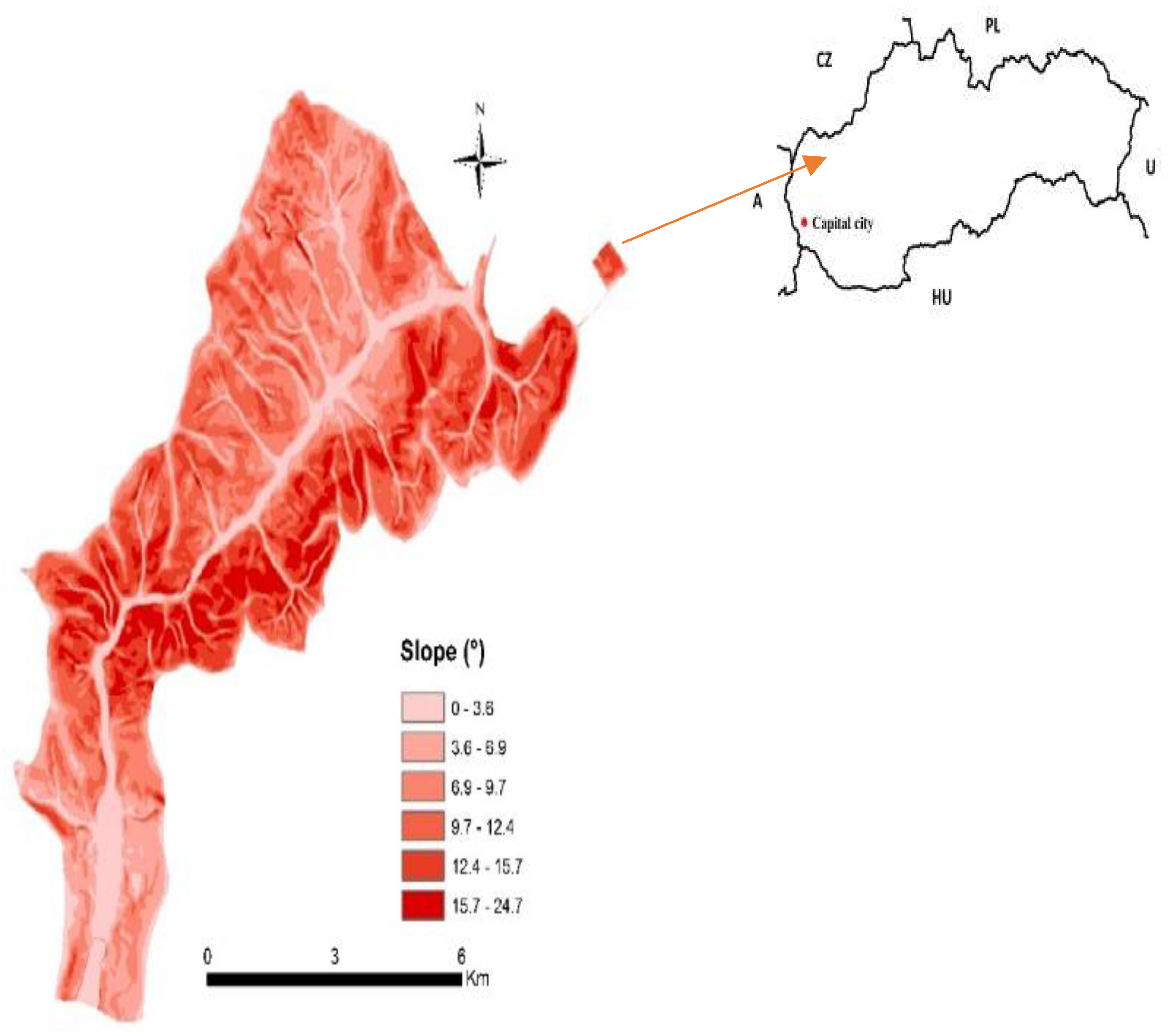
Figure 2.
The scheme of the procedure and continuity of the assessment of the ecological and soil erosion intensity within the study.
Figure 2.
The scheme of the procedure and continuity of the assessment of the ecological and soil erosion intensity within the study.
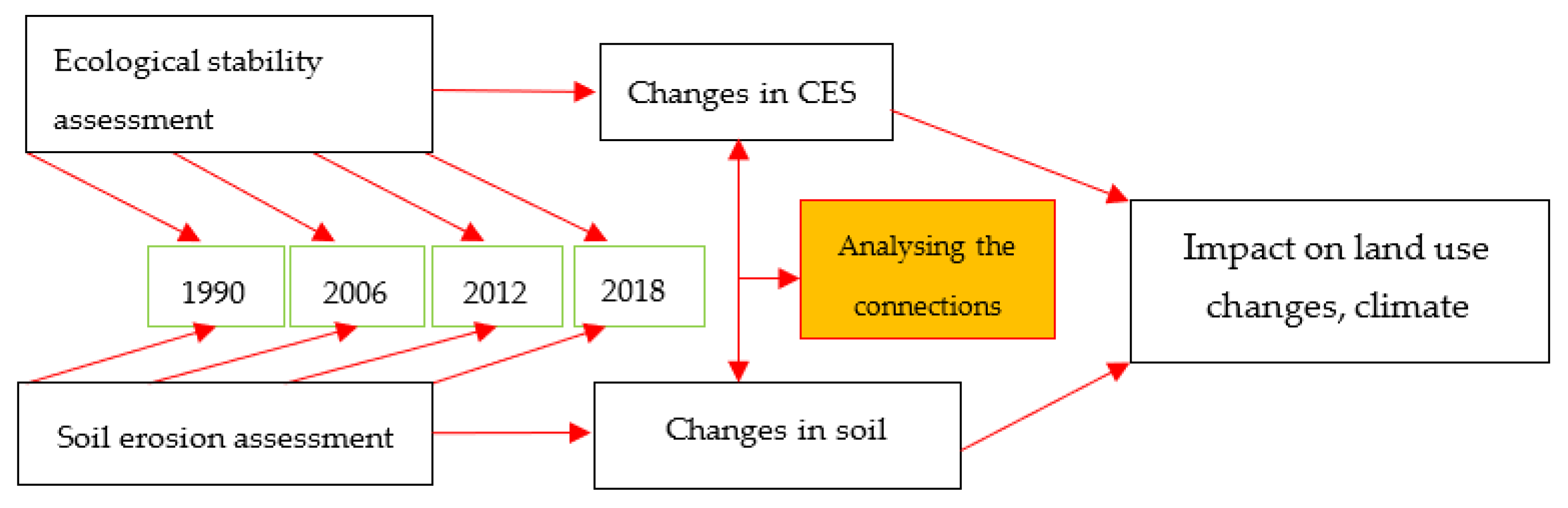
Figure 3.
Monthly amounts of precipitation events derived by Community Land Model (CLM model); A)1990, B) 2006, C) 2012, D) 2018.
Figure 3.
Monthly amounts of precipitation events derived by Community Land Model (CLM model); A)1990, B) 2006, C) 2012, D) 2018.
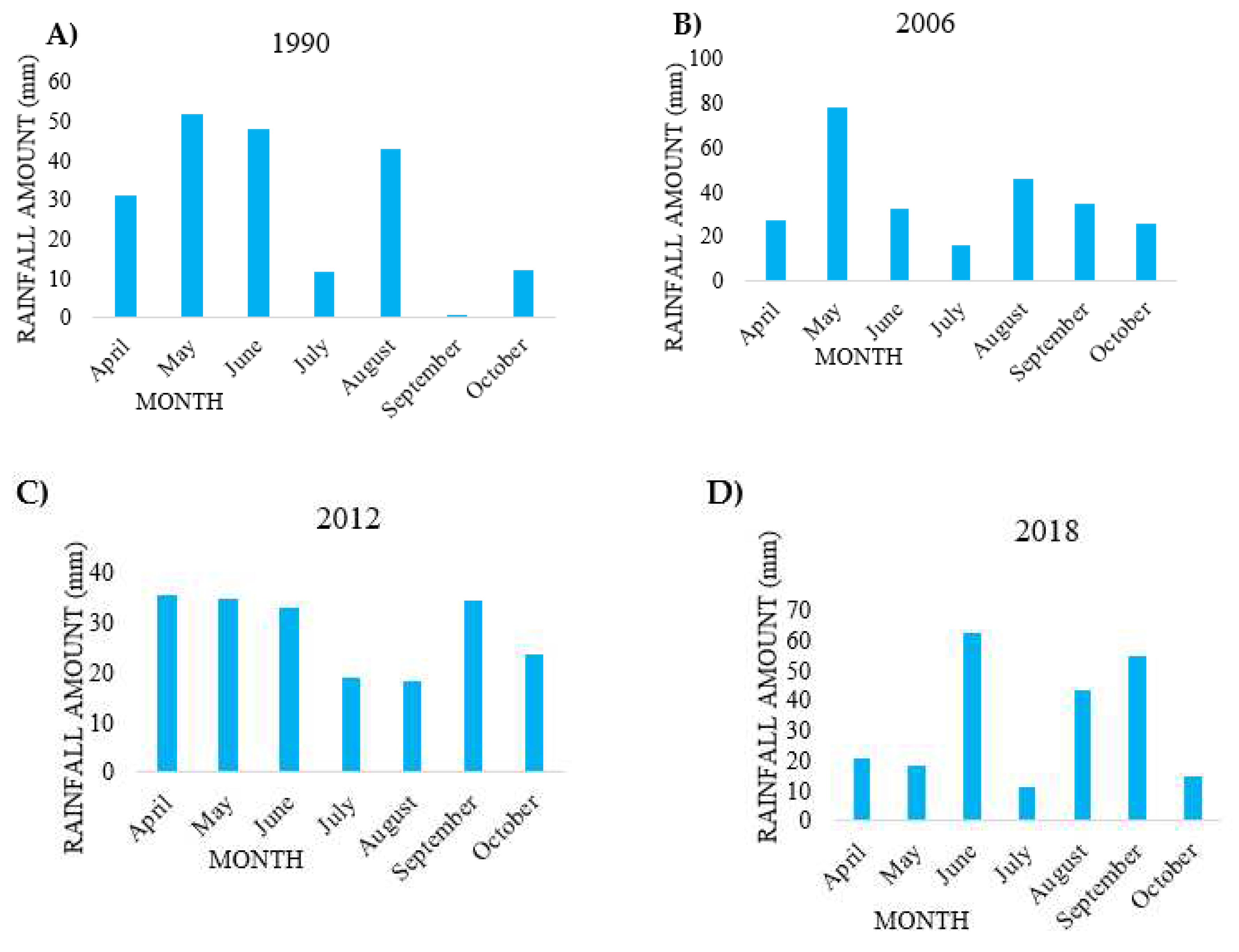
Figure 4.
Percentual and graphic representation of individual elements of the land use structure for the selected years; A) 1990, B) 2006, C) 2012, D) 2018.
Figure 4.
Percentual and graphic representation of individual elements of the land use structure for the selected years; A) 1990, B) 2006, C) 2012, D) 2018.
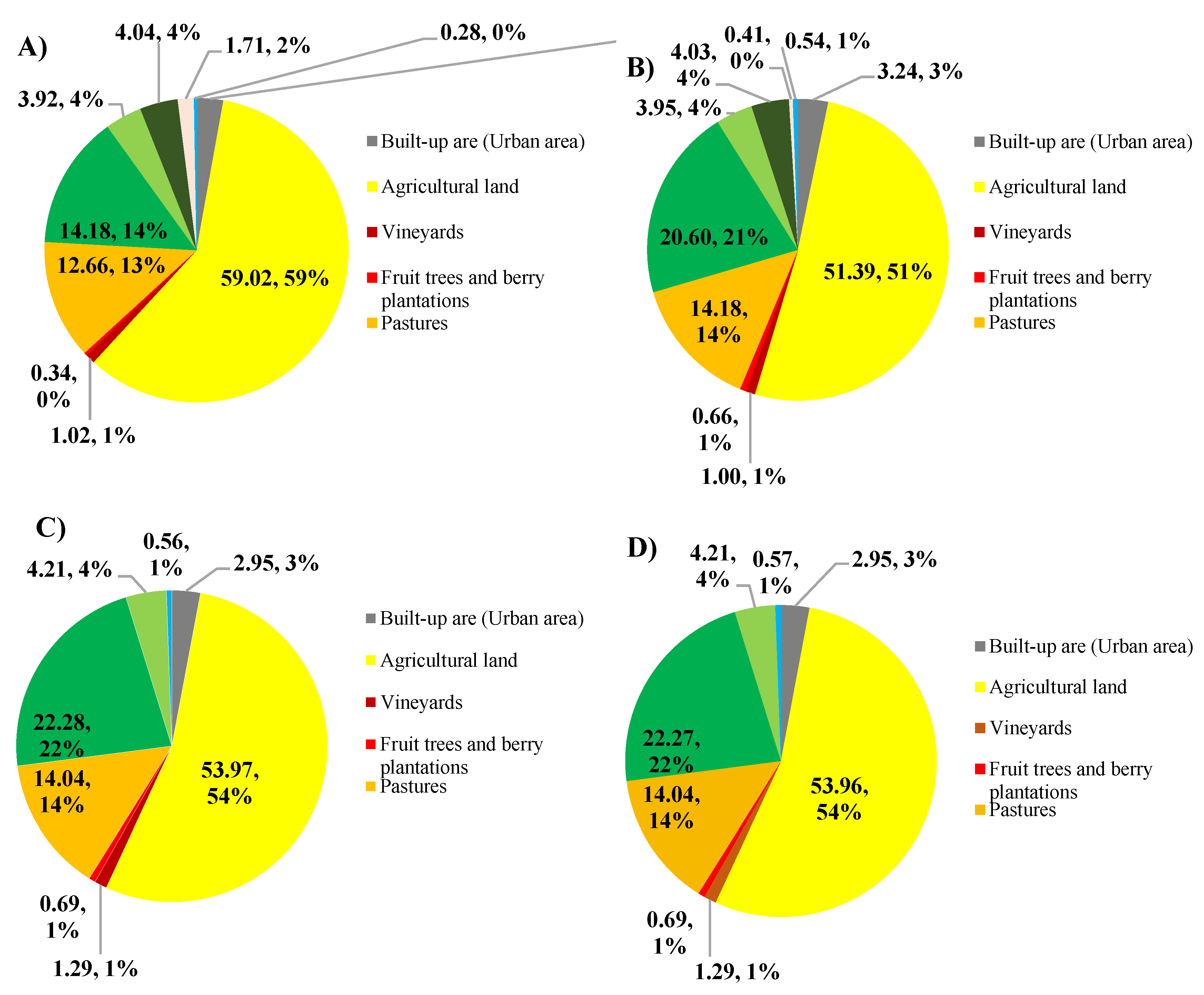
Figure 5.
Land-use structure and net-erosion, scenario C.


Figure 6.
Summary of the graphic interpretation of the positive and negative elements of the Teplice catchment (1990, 2006, 2012, and 2018).
Figure 6.
Summary of the graphic interpretation of the positive and negative elements of the Teplice catchment (1990, 2006, 2012, and 2018).
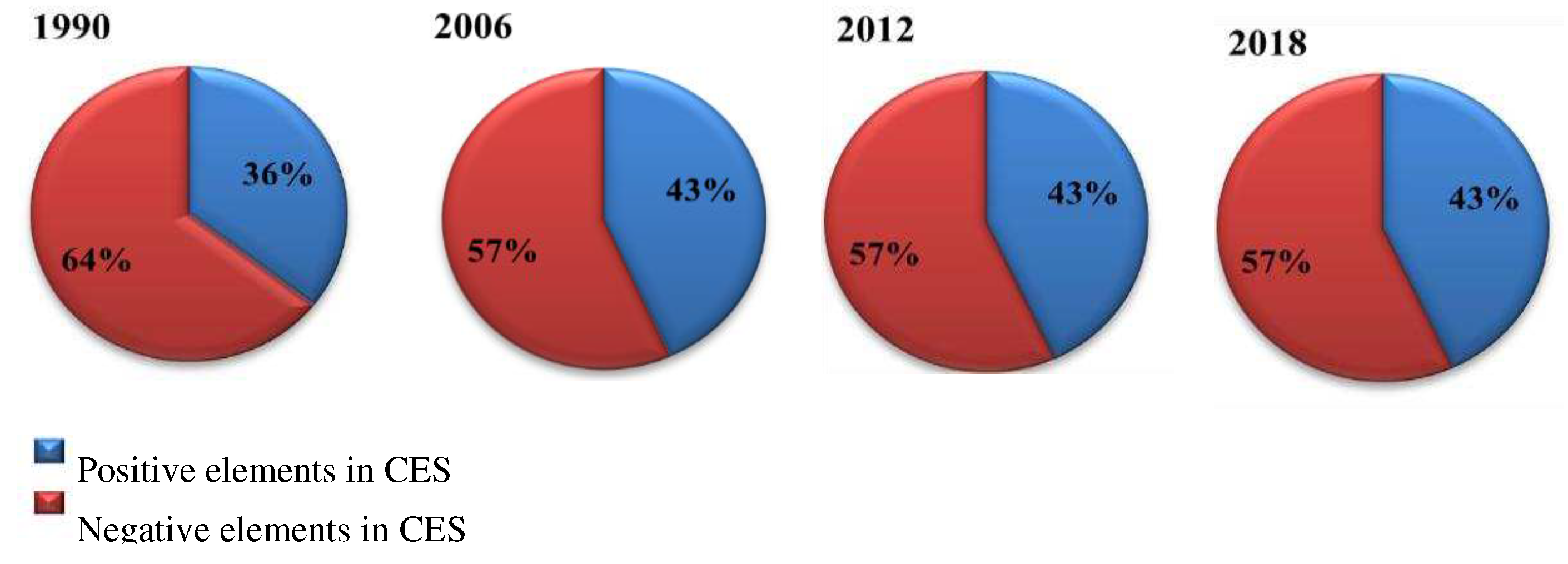
Figure 7.
The relationship between the intensity of the erosion and the ecological stability coefficient according to various authors: A) Míchal (1982), B) Miklós (1986), C) Kupková (2001), D) Reháčková, and Pauditšová (2007).
Figure 7.
The relationship between the intensity of the erosion and the ecological stability coefficient according to various authors: A) Míchal (1982), B) Miklós (1986), C) Kupková (2001), D) Reháčková, and Pauditšová (2007).

Figure 8.
The summary of the assessment of the ecological stability in the selected period (1990-2020) according to the methodologies used.
Figure 8.
The summary of the assessment of the ecological stability in the selected period (1990-2020) according to the methodologies used.
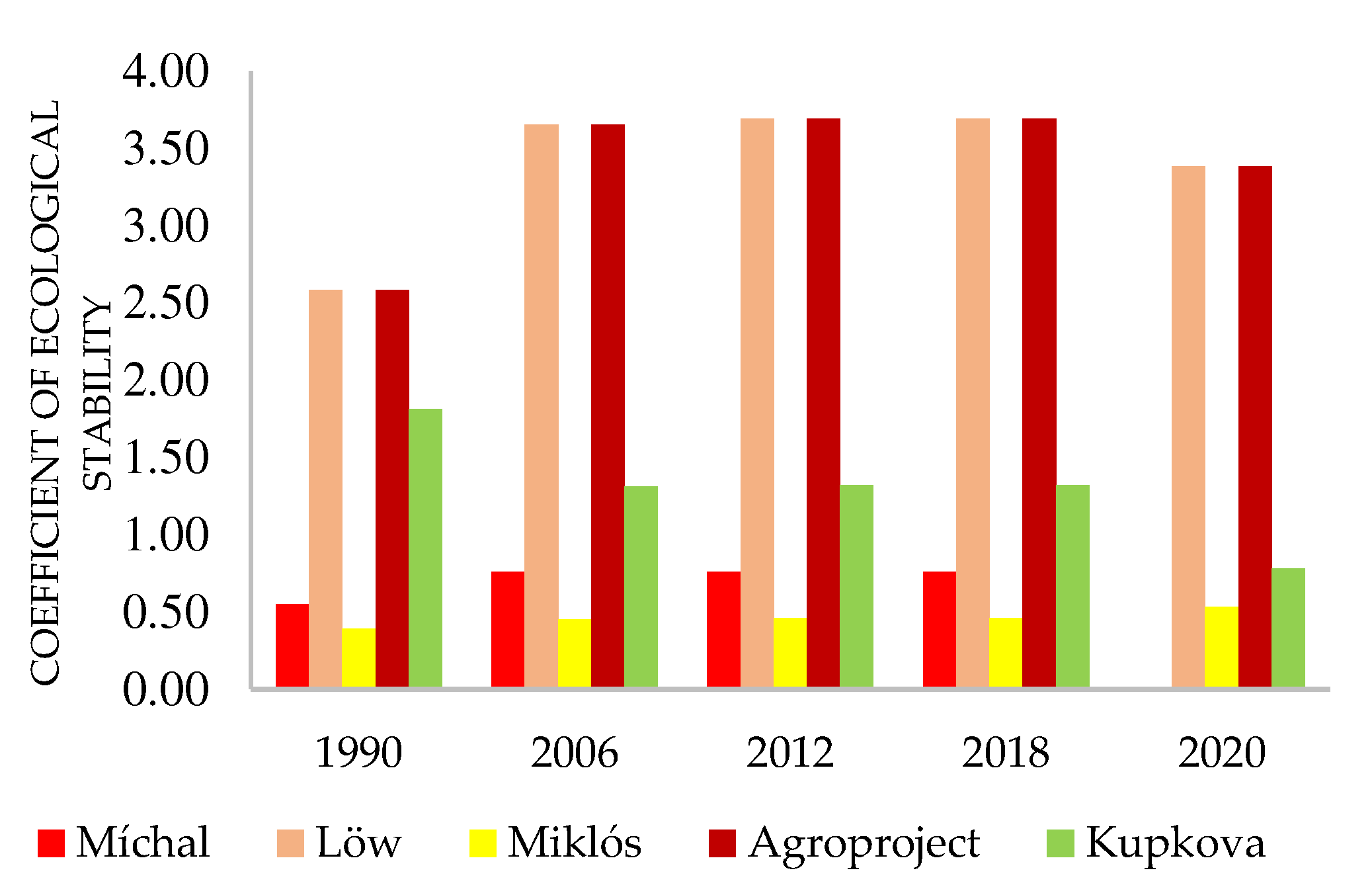
Figure 9.
The relationship between the rainfall amount (mm) and intensity of erosion (t/ha/year).
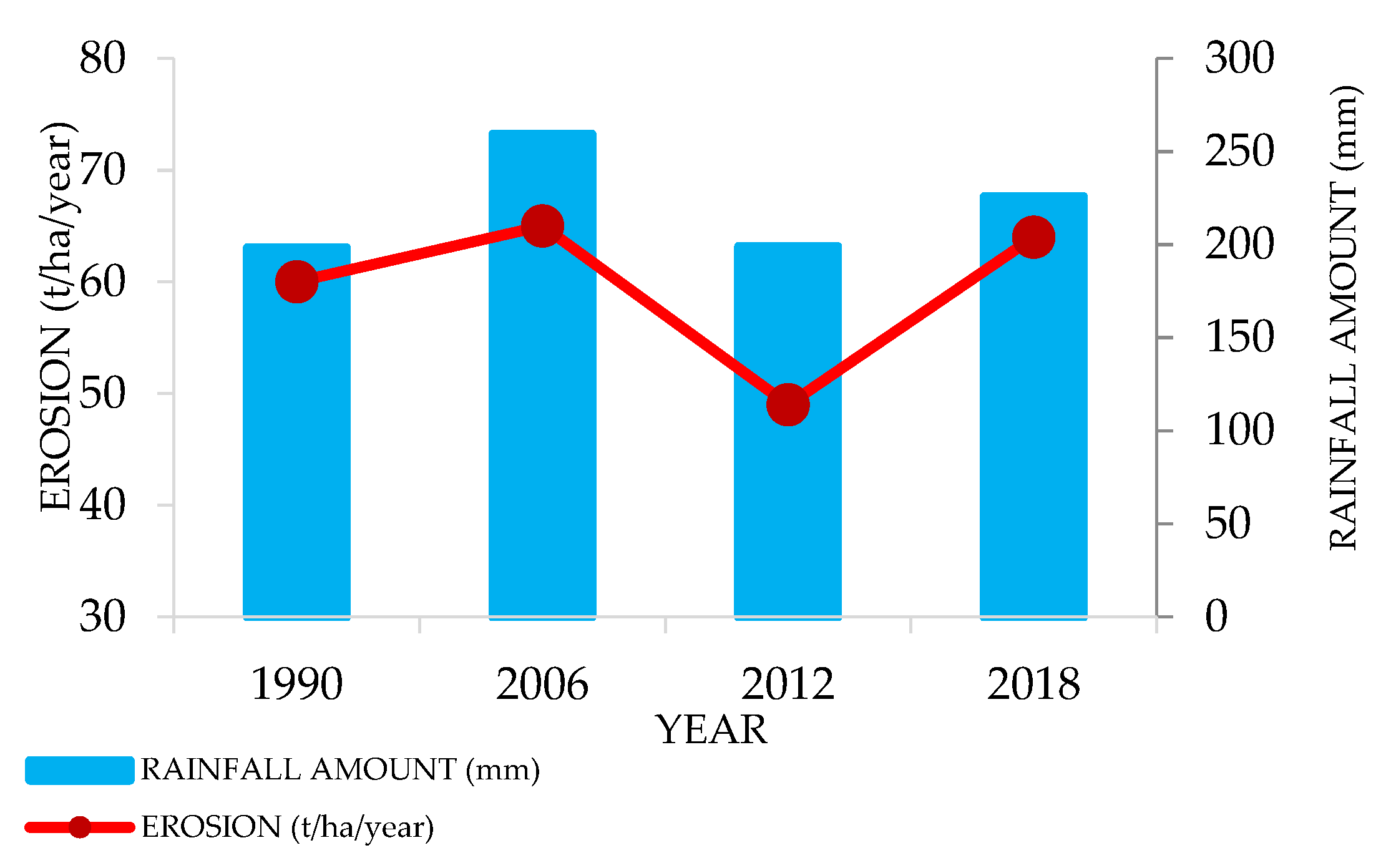

Table 1.
A summary of the assessment of ecological stability by different methods and according to the intensity of the soil erosion.
Table 1.
A summary of the assessment of ecological stability by different methods and according to the intensity of the soil erosion.
| Methods of CES assessment by authors |
Time period | CES (coefficient of ecological stability) | Evaluation of landscape management according to CES |
Intensity of erosion* (t/ha/year) (EROSION-3D model) |
|---|---|---|---|---|
| Míchal [12] | 1990 | 0.55 | Intensively used territory | 60.77 |
| 2006 | 0.63 | 65.30 | ||
| 2012 | 0.76 | 49.43 | ||
| 2018 | 0.66 | 64.71 | ||
| Miklós [13] | 1990 | 0.39 | Poor quality | 60.77 |
| 2006 | 0.42 | 65.30 | ||
| 2012 | 0.56 | 49.43 | ||
| 2018 | 0.46 | 64.71 | ||
| Kupková [14] | 1990 | 1.11 | Predominance of anthropogenic landscape elements | 60.77 |
| 2006 | 1.31 | 65.30 | ||
| 2012 | 1.52 | 49.43 | ||
| 2018 | 1.14 | 64.71 | ||
| Reháčková, Pauditšová [4] | 1990 | 1.86 | Landscape with low ecological stability | 60.77 |
| 2006 | 1.98 | 65.30 | ||
| 2012 | 2.08 | 49.43 | ||
| 2018 | 2.01 | 64.71 |
*The values represent the results for the model´s output called “net erosion”.
Table 2.
Summary of the ecological evaluation of the landscape of the Teplice territory.
| Landscape elements | Year | |||
| 1990 | 2006 | 2012 | 2018 | |
| Area [ha] | ||||
| Deciduous forests | 1130.33 | 1647.80 | 1704.04 | 1704.04 |
| Meadows, tall grass | 0.03 | - | - | - |
| Orchards and plantations | 27.32 | 52.87 | 52.87 | 52.87 |
| Pastures, low grass | 1009.54 | 1133.71 | 1074.18 | 1074.18 |
| Agricultural land | 4704.58 | 4109.57 | 4129.12 | 4129.12 |
| Transitional forest cover | 136.42 | 33.32 | - | - |
| Urbanized area | 225.98 | 233.13 | 226.35 | 226.35 |
| Vineyards | 81.03 | 80.46 | 98.55 | 98.55 |
| Water areas | 22.37 | 43.42 | 43.14 | 43.14 |
| Mixed forests | 312.94 | 316.25 | 322.27 | 322.27 |
Disclaimer/Publisher’s Note: The statements, opinions and data contained in all publications are solely those of the individual author(s) and contributor(s) and not of MDPI and/or the editor(s). MDPI and/or the editor(s) disclaim responsibility for any injury to people or property resulting from any ideas, methods, instructions or products referred to in the content. |
© 2023 by the authors. Licensee MDPI, Basel, Switzerland. This article is an open access article distributed under the terms and conditions of the Creative Commons Attribution (CC BY) license (http://creativecommons.org/licenses/by/4.0/).
Copyright: This open access article is published under a Creative Commons CC BY 4.0 license, which permit the free download, distribution, and reuse, provided that the author and preprint are cited in any reuse.


