
Submitted:
07 August 2023
Posted:
08 August 2023
You are already at the latest version
Abstract
The aim of this study was to assess the effect of added cultures of probiotic lactic acid bacteria on physicochemical, textural, and sensory characteristics of fresh cheese as well as their viability. Probiotic strains Lactobacillus acidophilus and L. rhamnosus were evaluated at two inoculation times (before the renneting and salting processes) following a factorial treatment arrangement. The bacterial count (log CFU g-1), acidity determination (% lactic acid), pH and percentage of syneresis were evaluated at 0, 1, 7, 14 and 21 days of refrigerated storage (4–5 °C). The texture profile analysis and an extended preference test were carried out at 21 days of storage. At the end of storage, fresh cheeses containing L. rhamnosus, added prior to the renneting process, had similar acidity values (0.18% lactic acid), pH (5.36) and percentage of syneresis (4.71%) compared to those for the cheeses without probiotics or control. Excluding adhesiveness, no differences were observed in texture profile parameters among the assessed cheeses. The fresh cheese supplemented with L. rhamnosus before the renneting process had a microorganism count greater than 6 logarithmic cycle/g, and the highest preference among treatments. The results from this study suggest that fresh cheese can be an excellent matrix for probiotic microorganisms, in particular L. rhamnosus.
Keywords:
Fresh cheese
; Lactobacillus acidophilus
; Lactobacillus rhamnosus
; probiotics
1. Introduction
The demand for functional probiotic foods is consistently growing due to increasing consumer awareness about the positive effect of these food products on health [1]. For this reason, companies seek to create innovative probiotic goods that confer health benefits to those who consume them. In addition to offering nutrition, functional foods can provide health benefits to the immune system, digestive tract, and general health, reducing the risks of some diseases in people [2].
Cheese is the fresh or matured, solid or semi-solid product obtained by the coagulation of whole, skimmed or semi-skimmed milk and partial or total elimination of the whey that is separated from the coagulation. This coagulation can be triggered by the action of rennet or other coagulating agents, with or without the addition of bacteria or fungi or both [3]. Cheese can be an excellent medium to transport probiotic microorganisms and convert the product into a functional food; they have an excellent matrix for the development of probiotic bacteria. Indeed, cheese has a solid protein structure, fat, calcium, moisture, and adequate water activity, as well as a pH close to neutrality that favors the development of microorganisms, maintaining their viability throughout the dairy product shelf-life [4]. Various studies have shown that the probiotic viability in a food product not only depends on storage conditions, but also on strains of probiotic bacteria, food matrix and physicochemical properties such as pH, organic acids, fat, and moisture content [5,6,7]. Fresh cheeses are very representative of Latin America and are closely linked to the gastronomy of each country. Peruvian Fresh cheese has typically high moisture levels (> 55%), 25% of fat, pH close to neutrality, low salt content, and soft but firm texture, which could also be a great alternative to transport probiotics in benefit of consumers.
It has been widely studied the incorporation of probiotic bacteria, especially of the genus Lactobacillus, into different types of cheeses such as Cheddar cheese [8], Wagashi cheese [9], Ricotta cheese [10], Tulum cheese [11], cream cheese [7] among other types of cheeses. There are studies in which Lactobacillus acidophilus was applied in different types of fresh cheeses with contrasting results. Buriti et al. [12] reported that Minas fresh cheese containing L. acidophilus was a suitable food system for the delivery of this probiotic microorganism with a viability greater than or equal to 6 CFU g-1 during storage for up to 21 days. Nevertheless, the viability of L. acidophilus incorporated into cream cheese showed an accentuated decrease, registering counts around 3 CFU g-1 at the end of refrigerated storage [13]. It is important to emphasize that there is a universal consensus that probiotics must remain viable in food products above a threshold level (at least, 106 CFU g-1) until the time of consumption in order to be considered to offer probiotic health benefits [5,6]. On the other hand, Lactobacillus rhamnosus, is a commonly studied probiotic due to its multiple beneficial properties such as greater resistance to bile, potential to influence the immune response as well as the prevention and treatment of allergic inflammation [14]. This microorganism is also one of those with the greatest ability to colonize and exist more stably in dairy products [15]. In fact, it has been proven that it remained viable (6.6> log CFU g-1) after 5 weeks of storage in reduced-fat cream cheese, both encapsulated and non-encapsulated [7]. In this sense, this study was focused on the incorporation of L. acidophilus La3 and L. rhamnosus R into the Peruvian fresh cheese as probiotic microorganisms. However, the addition of probiotic microorganisms in fresh pasta cheeses faces many challenges such as the preservation of their sensory and textural characteristics, as well as the retention of a high number of viable counts throughout the product storage [5]. Certainly, probiotic bacteria may cause modifications derived from their metabolism, causing destabilization in the cheese structure during storage. Quality attributes of probiotic cheeses can also be affected when a high level of supplementation is used [6]. Gomes et al. [16] reported lower pH values and a greater production of organic acids in probiotic Minas fresh cheese when high counts of L. acidophilus (>9 log CFU g-1) were present throughout shelf-life, which resulted in alterations in its appearance, aroma, and texture. Therefore, the objective of this work was to add probiotic microorganisms in fresh cheese and evaluate their effect on physicochemical, textural, and sensory characteristics of this dairy product as well as the viability of lactic acid bacteria (LAB) during refrigerated storage.
2. Materials and Methods
2.1. Materials
Raw cow milk was supplied by the Department of Animal Science at La Molina National Agrarian University (Lima, Peru). Samples of raw milk were collected and transported to the laboratory for routine testing. Two lyophilized commercial probiotic strains [L. acidophilus (Lyofast LA 3) and L. rhamnosus (Lyofast LR B) obtained from Sacco System (Cadorago, Italy)] were used in this study.
2.2. Probiotic Fresh Cheese Production
Peruvian fresh cheese production was carried out according to the process described in Figure 1. Four treatments (T1 through T4) and a control of fresh cheeses were performed in triplicate (three repetitions of each trial were produced at different days). Note that this fresh cheese production procedure did not consider the addition of any starter culture. For each treatment and the control, twelve liters of whole milk (fat milk standardized to 3%) was pasteurized at 72 °C for 15 s and cooled to 37 °C. Then calcium chloride (0.2 g/L milk) was added, and at this stage activated probiotic microorganisms were separately incorporated into treatments T1 (L. acidophilus) and T3 (L. rhamnosus) at a minimum of 107 CFU/mL milk in accordance with the supplier's instructions (Sacco s.r.l., Cadorago, Italy) as well as the universal recommendation on the minimum viable quantities of probiotic cultures present in a cheese to be recognized as probiotic [5,6]. Subsequently, chymosin (CHY–MAX®, Chr. Hansen, Spain), having a coagulation average strength of 2235 IMCU/g, was added at the rate of 2 g/100 L for milk coagulation for 45 min. When coagulated, the curd was cut into 1-cm cubes and left to stand for 5 min. The curd cubes were agitated for 5 min followed by a first draining in which a third of the volume of whey was removed. Following this procedure, water at 70 °C was added until a temperature of 38 °C was reached and a second stronger stirring was performed for 20 min, followed by a second draining until the level of the grains. Before salting and as described previously, activated probiotic bacteria were incorporated into the corresponding treatments T2 (L. acidophilus) and T4 (L. rhamnosus). Subsequently, a dry salting was carried out at a proportion of 0.4 g salt/100 g followed by a thorough agitation and resting for an additional 5 min. Dry-salted curds were placed into molds to drain off the whey and allowed to cool. Thereafter, cheeses were packed in polyethylene bags and stored at refrigeration temperature (4–5 °C) for 21 days. Analyses were carried out in triplicate during this storage period at 0, 1, 7, 14, and 21 days. For comparison purposes, a control batch was prepared following the same process without probiotic addition.
2.3. Physicochemical Analysis of Milk
2.4. Physicochemical Analysis of Cheese
Cheese samples were submitted to the following assays: acidity (AOAC, 16.267) [17], pH and syneresis (%), which was carried out according to Pearse and Mackinlay [22] methodology that is based on weight loss by whey released during storage. All the analysis were performed in triplicate at 0, 1, 7, 14 and 21 days of refrigerated storage (4–5 °C).
2.5. Texture Profile Analysis (TPA)
Cheese samples were analyzed for five TPA parameters: hardness (N), springiness, gumminess (N), cohesiveness and adhesiveness (N-mm). These textural traits were determined according to the methodology described by Tunick and Van Hekken [23] using the QTS-25 texture analyzer (Brooksfield Viscometer, Massachusetts, USA). Test samples of 15 mm thickness were taken from cheeses, then compressed to 75% of its initial height, at a constant speed of 100 mm/min. This analysis was performed in triplicate after 21 days of storage (4–5 °C).
2.6. Lactic Acid Bacteria Count
2.6.1. Media Preparation
Man-Rogosa-Sharpe (MRS) agar (Sigma-Aldrich) media was prepared according to APHA [24]. The pH was adjusted to a value of 5.7 with 1N HCl. Then, sorbic acid dissolved in NaOH was added until reaching a concentration of 0.1% (v/v). Additionally, 0.1% (w/v) cysteine hydrochloride was added. The mixture was sterilized in a Fravill AV DA 030 autoclave (Equipamientos Ciencia S.A.C, Lima, Peru) at 121 °C for 15 min.
2.6.2. Sample Preparation and Dilutions
A 10 grams of cheese sample was taken under aseptic conditions and homogenized with 90 mL of sterile peptone saline solution. Serial decimal dilutions of homogenates were then made using the same solution and plated on MRS agar (Sigma-Aldrich), 1 mL in each case and incubated (Incucell V-MMM Group, Munich, Germany) at 37 °C for 48 hours [1,2]. All microbiological analyses were performed in triplicate at days 0, 1, 7, 14 and 21 of storage. Blanks were made in each test as a sterility control. Results were expressed as log CFU g-1 of cheese.
2.7. Sensory Analysis
To gather consumer feedback on probiotic fresh cheese samples (4 treatments and the control), a preference test was carried out at 21 days of storage. A total of 50 consumers were randomly recruited from the Faculty of Food Industry at La Molina National Agrarian University (Lima, Peru), who rated the cheeses on a 1–5 scale (being 5 the highest preference and 1 the least preferred sample). Refrigerated cheese samples were cut into about 1.5 × 1.5 × 1.5 cm cube pieces and placed on white plates marked with random 3-digit code numbers. The evaluation was carried out at room temperature (24 °C), and the participants were requested to eat a piece of cracker and drink some water between tasting each cheese sample. Overall, after completing this sensory test, participants were asked why they preferred the sample they selected, based on quality attributes such as appearance, flavor, and texture.
2.8. Statistical Analysis
A completely randomized design with factorial arrangement was used. The factors were type of probiotic bacteria (L. acidophilus and L. rhamnosus), time of application (before the renneting and salting processes) and day of storage (0, 1, 7, 14 and 21), and the response variables were microbiological and physicochemical parameter values. Based on the result obtained from the analysis of variance, the multiple comparison of treatment means was carried out using the Tukey’s test with a confidence level of 95%. The results obtained from the sensory evaluation were analyzed with Friedman’s statistical test to assess differences between groups. The statistical analysis was achieved using Statgraphics software (Version 19).
3. Results and Discussion
3.1. Physicochemical Characterization of Milk
Table 1 shows the physicochemical results from raw fresh milk lots that were used across cheese production batches and replications. All evaluated parameters met the requirements established in the Peruvian Technical Standards [25]. The fat was normalized to 3% and the acidity level of the milk was expressed as percentage of lactic acid. The average data of physicochemical assays carried out on raw milk used for cheese-making in this study were comparable to those reported by other researchers [26] for milk obtained from Holstein-Friesian cows in terms of density (1.03 g/mL, 20 °C), acidity (0.15% lactic acid), pH (6.6), fat (3.5 g/100 g), and protein (3.3 g/100 g).
3.2. Viability of Lactic acid Bacteria (LAB) during Storage
Table 2 displays the viability of lactic acid bacteria in fresh cheeses during storage at 4 °C. There was an interaction (P < 0.05) between the time of application and the type of probiotic bacteria added. The average LAB counts in T2 and T4 achieved 4.65 log CFU g-1, which was lower than that obtained in T1 and T3, i.e., 5.46 log CFU g-1 throughout the storage period. In this line, similar results were found by Blaiotta et al. [1] when adding 7 log CFU g-1 of L. acidophilus and L. rhamnosus during the conditioning stage of Italian cheese production. They found an increase of 0.51–0.86 logarithmic cycles during the first days of storage. The difference could be attributed to the application time. Probiotic microorganisms in fresh cheese treatments T1 and T3 had a longer time to adapt to the medium in comparison with the time for the probiotic bacteria in T2 and T4. This adaptation allows the microorganism to synthesize the enzymes necessary for metabolic activities that they must carry out later to develop or survive. In addition, the probiotic cultures of treatments 1 and 3, not only experienced a longer adaptation time to the medium, but also the bacteria found a salt-free growth medium, which can influence microbial growth and the activity of various enzymes [5]. Another factor that should be noted is the presence of a layer of glycoproteins in the extracellular matrix of bacteria, which confer hydrophobicity to the cell in addition to being responsible for adhesion to external structures [27]. This hydrophobic layer is a physicochemical characteristic that promotes adhesion to the cheese grains, providing a competitive advantage over treatments with microorganisms added before salting. As the cell layer has a longer contact time with the cheese coagulum, it may have caused a greater number of lactic acid bacteria to adhere.
The treatment with L. rhamnosus incorporated before rennet addition or T3 had the highest count with 6.25 log CFU g-1 compared to the other treatments, including the control. These results suggest that L. rhamnosus had a better adaptation to the food matrix than L. acidophilus. Indeed, Phillips et al. [28] reported that L. rhamnosus was found to be more stable than L. acidophilus in cheddar cheese at levels above the suggested minimum limit of 106–107 log CFU g-1 after 32 weeks. The heterofermentative nature of L. rhamnosus is an indicator of better adaptation to the environment, whereas L. acidophilus is very sensitive to increased acidity [2]. When comparing the population of T1 and T2 (L. acidophilus) versus T3 and T4 (L. rhamnosus), it was observed evident differences (P < 0.05) between these microorganisms when they were added prior to the addition of rennet. However, there were no differences when they were added before salting. On the other hand, when comparing all the treatments versus the control, differences were also observed between them, obtaining a smaller population for the control. This was expected since lactic cultures were not added to the control samples.
All treatments reached the maximum microbial population on the 7th day and the control at 14th day of storage. In subsequent weeks, a slight decrease in the number of lactic acid bacteria was observed. Similar behavior was found throughout the storage of probiotic fresh white cheeses in which the L. rhamnosus microorganism reached a maximum growth on the 7th day of storage with a population of 9.37 log CFU g-1, and thereafter there was a decrease, which remained above 8 log CFU g-1 during 28 days of cold storage [2]. Nonetheless, in the same fresh white cheeses, the viable counts of L. acidophilus bacteria consistently decreased from 10.23 log CFU g-1 (day 1) to 7.24 log CFU g-1 (day 28) during storage period; these results suggested that L. rhamnosus was more stable than L. acidophilus, behavior that was also observed in the present study. On the other hand, Gardiner et al. [29], using a strain of L. paracasei as a probiotic culture in Cheddar cheese, noted that the probiotic population survived the cheese-manufacture process and grew in this dairy product from an initial count of 2×10⁷ CFU g-1 to 7.7×10⁷ CFU g-1 after 3 months of ripening, without negatively affecting the finished product quality.
The cheese containing L. rhamnosus added before renneting or T3 maintained a microbial population above 6 log CFU g-1. This behavior was sustained from day 1 to the end of storage day 21, showing best counts compared to the other treatments. Certainly, most current national legislations establish a threshold of at least 106 CFU g-1 required for probiotic activity [2,5,6], which was met in this Peruvian fresh cheese containing L. rhamnosus microorganisms because it had a population greater than 6 log CFU g-1 concentration of viable probiotic bacteria at the end of its useful life. This behavior could be associated with the fact that L. rhamnosus is an anerobic facultative (it can survive in the presence of oxygen) and heterofermentative bacterium, which it is not as demanding in its nutritional requirements as the other bacteria of the genus. Indeed, Ningtyas et al. [7] concluded that the L. rhamnosus microorganism added to functional reduced-fat cream cheese, in non-encapsulated or encapsulated form, remained viable (106–108 CFU g-1) after 5 weeks of refrigerated storage.
3.3. Acidity Evaluation
Titratable acidity and pH are among the main factors that could affect the stability of probiotic bacteria, being desirable high pH and low acidity values, which are common characteristics in cheeses; however, the use of probiotics could alter this [5]. Figure 2 illustrates the acidity of fresh cheeses during storage for 21 days at 4 °C. There were no interactions (P > 0.05) between type of LAB, time of addition and day of evaluation, that is, one factor did not influence the result of another factor at the time of evaluating the acidity. The cheese treatments with microorganisms had a higher acidity level than the control, with the highest acidity in T1 and T3. The LAB added before the addition of rennet had a longer action time than those added before salting, which is the penultimate operation of the cheese-making process. When evaluating whether the variable type of microorganism influenced the acidity values in fresh cheese, it was noticed that the control was significantly different (P < 0.05) from L. acidophilus (T1 and T2) and L. rhamnosus (T3 and T4). The lowest acidity (0.08% lactic acid) was observed in the control compared to the probiotic cheese treatments at day 0. On day 21 of storage, the highest acidity was observed in T1 and T3 treatments with an average value of 0.18% lactic acid, while the control had the lowest acidity (0.16% lactic acid). L. rhamnosus is a bacterium with high fermentative activity on lactose in the first hours of storage. In this line, the lactic acid profile of Wagashi cheese, containing L. rhamnosus, increased progressively from 0.09% to 0.30% after 30 days of storage at 4 °C [9]. The components of cheeses may not be affected by probiotic microorganisms; nevertheless, these bacteria could generate differences in acidity due to their metabolism in this dairy product in comparison with cheeses without lactic ferment [2]. In this study, all samples, including the control, had a progressive increase in acidity during storage. Similar outcomes were reported by Buriti et al. [12], who asserted that titratable acidity in Minas fresh cheeses with L. acidophilus bacteria increased during 21 days of storage at 5 °C. This behavior can be linked to the action of bacteria on simple carbohydrates such as glucose and lactose, which by fermentation produce an increase in the concentration of lactic acid [26].
3.4. pH Evaluation
Figure 3 shows the pH values of fresh cheeses during storage at 4 °C. The pH values for all treatments, including the control tended to decrease during storage. Nevertheless, cheeses containing probiotic microorganisms (T1 through T4) had considerably lower pH values compared to the control after the 7th day of storage. Indeed, differences in pH values between the control and probiotic cheeses could be explained by the action of the added probiotic bacteria. In this regard, Buriti et al. [12] also reported that Minas fresh cheese containing L. acidophilus progressively presented a pH reduction (from 6.72 to 5.37 at day 1 and day 21, respectively) and titratable acidity increase (from 0.12% to 0.89% at day 1 and day 21, respectively) during storage at 5 °C. The treatments that had higher LAB counts (T1 and T3) presented lower pH values (5.40 and 5.37, respectively), which may be attributed to the metabolic activity of these microorganisms [5,6]. Among probiotic Peruvian fresh cheeses, T3 treatment presented pH values that were consistently lower than those for the other treatments after the 7th day of storage. Indeed, L. rhamnosus has a great acidifying activity against other lactic acid bacteria by using metabolic pathways such as glycolysis and the lactose 6-phosphate pathway for glucose and galactose, respectively [26]. These routes do not cause a rapid decrease in pH; however, they achieve a decrease in accordance with the fermentation activity in the medium, which can generate the pH reduction.
3.5. Syneresis
There was a significant interaction (P < 0.05) between all the factors regarding the percentage of syneresis. Figure 4 shows that the percentage of syneresis obtained by the control was lower than those presented by all treatments during storage. The percentage of syneresis when the microorganism was inoculated before the addition of rennet (i.e., T1 and T3) was higher (P < 0.05) compared to that obtained when probiotic bacterium was inoculated before the addition of salt (i.e., T2 and T4). At the end of the storage period (day 21), it was observed that the control had the lowest percentage of syneresis (3.55%). The highest values were those obtained by T1 and T3 (4.72 and 4.71%, respectively). Both treatments were the ones with the highest acidity (0.19% and 0.18% lactic acid, respectively).
Syneresis is affected by various factors, which can produce variations in the draining, such as the presence of microorganisms and the influence of acidity in the medium, thus producing these higher percentages of syneresis. In this line, various studies have also reported that probiotic fresh cheeses presented progressive whey drainage throughout refrigerated storage with consequent increase in syneresis levels [12,30]. Nevertheless, Rubel et al. [10] found that the incorporation of probiotic bacteria in spreadable ricotta cheese did not affect the stability of this dairy product during storage (i.e., there was no differences in the syneresis values compared to the control).
3.6. TPA
Table 3 shows texture profile parameters of fresh cheeses at 21 days of storage at 4 °C. Excluding adhesiveness, there were no differences (P > 0.05) in texture profile parameters between treatments and the control. These textural results suggest that the metabolism of added microorganisms did not affect textural traits of Peruvian fresh cheeses. Although some cheeses with LAB may present a softer texture, there are studies that report stability of texture profile parameters during storage of fresh and ripened cheeses containing probiotic cultures [11,12]. In general, the impact of quality factors such as pH on cheese texture might depend on the extent of pH modification during manufacturing process or storage [23,31]. In this study, even though cheeses containing probiotics had lower pH values than control at the end of storage; this pH difference did not affect hardness, cohesiveness, springiness and gumminess of cheeses.
Higher adhesiveness values were noted for cheeses T2 and T4 (185.32 and 108.48 N-mm, respectively) compared to cheeses T1 and T3 (56.94 y 69.36 N-mm, respectively). In this case, the addition of microorganisms before salting may have caused a greater stickiness in the cheeses. On the other hand, although no differences (P > 0.05) were observed in cohesiveness values among samples, the control had the highest cohesiveness (0.24) and the cheese T4 showed the lowest (0.21). The control cheese might have maintained a better protein structure, maintaining the shape of the product for longer period which could be linked to a greater interaction between the intact proteins of cheese (producing greater firmness) [31]. Indeed, the cohesiveness value obtained from control cheese (0.24) was comparable to those reported by other authors who conducted texture profile analysis in fresh cheeses [11,23]. Although there was no significant difference among treatments, the cheeses containing probiotic microorganisms showed lower trends in cohesiveness, potentially due to the relationship among texture, moisture content and syneresis [12,31]. All treatments presented a certain degree of syneresis that could be attributed to a lower force exerted by the internal bonds of the cheese, which may help to explain why some probiotic cheeses can present lower cohesiveness values [11].
The control cheese had a springiness and gumminess of 0.82 and 6.36 N respectively, which was comparable to other fresh cheeses with commercial starter culture [30], while the probiotic cheese treatments had on average 0.77 and 4.08 N, respectively. The elasticity is positively correlated with the structure of the cheese protein, whereas the decrease in elasticity is due to the hydrolysis of calcium paracaseinates, responsible for the elasticity in the cheese [11,31]. Overall, the higher acidity and lower pH, due to the presence of a higher number of bacteria, could impact the dynamic equilibrium between the concentrations of calcium and inorganic phosphate in the paracasein network, producing soluble calcium in the cheese structure [31]. However, there was no evidence of changes in instrumental texture characteristics of cheeses containing probiotic cultures compared to the control at the end of refrigerated storage, which suggest that the Peruvian fresh cheese would be a suitable food matrix to manufacture new functional fresh cheeses.
3.7. Sensory Analysis
The sensory evaluation was carried out through a preference test on day 21 of storage. According to the results shown in Table 4, the control cheese obtained the highest preference with 212 points out of a maximum of 250 points, followed by the T3 cheese, with a score of 199; nevertheless, there was no difference (P > 0.05) between the control and T3 treatment. The other treatments obtained lower scores, which indicates that only the T3 treatment was comparable to the control in terms of consumer preference. Certainly, favorable opinions were obtained for the cheese containing probiotic microorganism L. rhamnosus or T3 regarding its smooth and firm texture, and pleasant flavor, which coincides with an investigation in a short-ripened cheese with L. rhamnosus added [1] in which researchers highlighted that this cheese was creamy and soft, obtaining the highest preference scores after 21 days at 4 °C. Yerlikaya and Ozer [2] obtained a similar positive effect by adding probiotic bacteria to a fresh white cheese, which improved its perception among panelists for characteristics such as texture, aroma, and overall acceptance. L. rhamnosus, being a heterofermentative bacterium, could be used to produce flavor-producing compounds such as diacetyl and acetoin [32]. On the other hand, consumers noticed a higher degree of acidity and unwanted texture characteristics in T1 cheeses. Indeed, this treatment, had the highest acidity at the end of storage (Figure 2), which may be related to the fact that the L. acidophilus bacterium has a homolactic fermentation with lactic acid being its only product, while L. rhamnosus, in addition of lactic acid, generates acetic acid and ethanol [33].
The cheeses in which microorganisms were added before salting presented the lowest scores in the preference test. It is well-known that a very acid cheese can present undesirable rheological characteristics such as grainy with little hardness [23,31]. Indeed, consumers noted a greater acidity in addition to a grainy and chewy texture in fresh cheeses with probiotics added before salting. These samples had the lowest values of cohesiveness, which facilitates the disintegration of the food, and the highest values of adhesiveness, which makes more difficult to separate the food from the palate. These texture characteristics could have generated unfavorable opinions presented by these cheeses compared to the other treatments. Likewise, these low scores may also be attributed to development of undesirable off-flavors contributed by LAB that do not correspond to regular fresh cheeses [34].
4. Conclusions
In summary, the results from the present study demonstrated that the Peruvian fresh cheese can be a good food matrix for the survival of probiotic microorganisms during storage for 21 days at temperatures between 4 and 5 °C. However, this finding depended on the probiotic strain and time of application, as only L. rhamnosus added before renneting presented acceptable survival during refrigerated storage. Excluding adhesiveness, the results from the texture profile analysis were homogeneous among treatments, being the cheese with L. rhamnosus added prior to renneting the sample with characteristics comparable to conventional fresh cheeses. Indeed, at the end of storage, this sample had similar acidity values (0.18% lactic acid), pH (5.36) and percentage of syneresis (4.71%) compared to those for the cheeses without probiotics. These fresh cheeses containing L. rhamnosus, added before the renneting process, also had the best sensory scores with a microorganism count greater than 6 logarithmic cycle/g. Further research could lead to optimize the incorporation of these probiotics into fresh cheese formulations for industrial applications.
Author Contributions
Conceptualization, K.A.G.C., S.M.G.T and F.E.L.U; Formal analysis, K.A.G.C.; Funding acquisition, K.A.G.C., S.M.G.T. and F.E.L.U.; Investigation, K.A.G.C., S.M.G.T. and F.E.L.U; Methodology, K.A.G.C., S.M.G.T. and F.E.L.U.; Resources, K.A.G.C., F.E.L.U. and S.M.G.T; Supervision, S.M.G.T. and F.E.L.U.; Writing—original draft preparation, K.A.G.C.; Writing—review and editing, J.P.C.C., F.E.L.U and R.G.C.M. All authors have read and agreed to the published version of the manuscript.
Informed Consent Statement
Not applicable.
Data Availability Statement
Not applicable.
Acknowledgments
Vicerrectorado de Investigación, Universidad Nacional Agraria La Molina.
Conflicts of Interest
The authors declare no conflict of interest.
References
- Blaiotta, G.; Murru, N.; Di Cerbo, A.; Succi, M.; Coppola, R.; Aponte, M. Commercially standardized process for probiotic “Itálico” cheese production. LWT Food Sci. Technol. 2017, 79, 601–608. [Google Scholar] [CrossRef]
- Yerlikaya, O.; Ozer, E. Production of probiotic fresh White cheese using co-culture with Streptococcus thermophilus. Food Sci. Technol. 2014, 34, 471–477. [Google Scholar] [CrossRef]
- Codex Alimentarius, General standard for cheese CXS 283–1978, FAO, Rome, Italy, 2021. Available online: https://www.fao.org/fao-who-codexalimentarius/sh-proxy/en/?lnk=1&url=https%253A%252F%252Fworkspace.fao.org%252Fsites%252Fcodex%252FStandards%252FCXS%2B283-1978%252FCXS_283e.pdf (accessed on 22 May 2023).
- de Andrade, D.P. , Bastos, S.C., Ramos, C.L., Simões, L.A., Fernandes, N.D.A.T., Botrel, D.A., Magnani, M., Schwan, R.F. and Dias, D.R. Microencapsulation of presumptive probiotic bacteria Lactiplantibacillus plantarum CCMA 0359: Technology and potential application in cream cheese. Int. Dairy J. 2023, 143, 105669. [Google Scholar]
- Karimi, R.; Mortazavian, A.M.; Da Cruz, A.G. Viability of probiotic microorganisms in cheese during production and storage: a review. Dairy Sci. Technol. 2011, 91, 283–308. [Google Scholar] [CrossRef]
- Castro, J.M.; Tornadijo, M.E.; Fresno, J.M.; Sandoval, H. Biocheese: a food probiotic carrier. Biomed Res. Int. 2015, 2015, 723056. [Google Scholar] [CrossRef]
- Ningtyas, D.W.; Bhandari, B.; Bansal, N.; Prakash, S. The viability of probiotic Lactobacillus rhamnosus (non-encapsulated and encapsulated) in functional reduced-fat cream cheese and its textural properties during storage. Food Control 2019, 100, 8–16. [Google Scholar] [CrossRef]
- Hao, X.; Xia, Y.; Wang, Y.; Zhang, X.; Liu, L. The addition of probiotic promotes the release of ACE-I peptide of Cheddar cheese: Peptide profile and molecular docking. Int. Dairy J. 2023, 137, 105507. [Google Scholar] [CrossRef]
- Anihouvi, E.S.; Kesenkaş, H. Wagashi cheese: Probiotic bacteria incorporation and significance on microbiological, physicochemical, functional and sensory properties during storage. LWT 2022, 155, 112933. [Google Scholar] [CrossRef]
- Rubel, I.A.; Iraporda, C.; Manrique, G.D.; Genovese, D.B. Jerusalem Artichoke (Helianthus tuberosus L.) inulin as a suitable bioactive ingredient to incorporate into spreadable ricotta cheese for the delivery of probiotic. Bioact. Carbohydr. Diet. Fibre 2022, 28, 100325. [Google Scholar] [CrossRef]
- Tomar, O. The effects of probiotic cultures on the organic acid content, texture profile and sensory attributes of Tulum cheese. Int. J. Dairy Technol. 2019, 72, 218–228. [Google Scholar] [CrossRef]
- Buriti, F.C.; Da Rocha, J.S.; Saad, S.M. Incorporation of Lactobacillus acidophilus in Minas fresh cheese and its implications for textural and sensorial properties during storage. Int. Dairy J. 2005, 15, 1279–1288. [Google Scholar] [CrossRef]
- Alves, L.L.; Richards, N.S.; Mattanna, P.; Andrade, D.F.; S Rezer, A.P.; Milani, L.I.; Cruz, A.G.; Faria, J.A. Cream cheese as a symbiotic food carrier using Bifidobacterium animalis Bb-12 and Lactobacillus acidophilus La-5 and inulin. Int. J. Dairy Technol. 2013, 66, 63–69. [Google Scholar] [CrossRef]
- Basturk, A.; Isik, İ.; Atalay, A.; Yılmaz, A. Investigation of the efficacy of Lactobacillus rhamnosus GG in infants with cow’s milk protein allergy: a randomised double-blind placebo-controlled trial. Probiotics Antimicrob. Proteins 2020, 12, 138–143. [Google Scholar] [CrossRef] [PubMed]
- Niu, Z.; Zou, M.; Bei, T.; Zhang, N.; Li, D.; Wang, M.; Li, C.; Tian, H. Effect of fructooligosaccharides on the colonization of Lactobacillus rhamnosus AS 1.2466 T in the gut of mice. Food Sci. Hum. Wellness 2023, 12, 607–613. [Google Scholar] [CrossRef]
- Gomes, A.A.; Braga, S.P.; Cruz, A.G.; Cadena, R.S.; Lollo, P.C.B.; Carvalho, C.; Amaya-Farfán, J.; Faria, J.A.F.; Bolini, H.M.A. Effect of the inoculation level of Lactobacillus acidophilus in probiotic cheese on the physicochemical features and sensory performance compared with commercial cheeses. J. Dairy Sci. 2011, 94, 4777–4786. [Google Scholar] [CrossRef]
- Association of Official Analytical Chemists (AOAC). Official Methods of Analysis, 20th ed.; AOAC Intl.: Washington, DC, USA, 2016. [Google Scholar]
- International Dairy Federation (IDF 150); International Organization for Standardization (ISO). Yogurt - determination of titratable acidity; ISO: Geneva, Switzerland; IDF: Brussels, Belgium, 1991. [Google Scholar]
- International Dairy Federation (IDF 13C). Evaporated milk and sweetened condensed milk - determination of fat content - Röse Gottlieb. Reference method; IDF: Brussels, Belgium, 1987. [Google Scholar]
- International Dairy Federation (IDF standard 20B); International Organization for Standardization (ISO). Determination of the nitrogen (Kjeldahl method) and calculation of the crude protein content; ISO: Geneva, Switzerland; IDF: Brussels, Belgium, 1993. [Google Scholar]
- International Dairy Federation (IDF 21B). Milk, cream and evaporated milk - determination of total solids content. Reference method; IDF: Brussels, Belgium, 1987. [Google Scholar]
- Pearse, M.J.; Mackinlay, A.G. Biochemical aspects of syneresis: a review. J. Dairy Sci. 1989, 72, 1401–1407. [Google Scholar] [CrossRef]
- Tunick, M.H.; Van Hekken, D.L. Rheology and texture of commercial queso fresco cheeses made from raw and pasteurized milk. J. Food. Qual. 2010, 33, 204–215. [Google Scholar] [CrossRef]
- American Public Health Association (APHA). Compendium of Methods for the Microbiological Examination of Foods; Salfinger, Y., Tortorello, M.L., Eds.; American Public Health Association: Washington, DC, USA, 2015. [Google Scholar]
- 25. Instituto Nacional de Calidad (INACAL); Norma Técnica Peruana (NTP 202.001). Milk and milk products - Raw milk - Requirements, INACAL: Lima, Peru, 2016.
- Brisson, G.; Singh, H. Milk Composition, Physical and Processing Characteristics. In Manufacturing Yogurt and Fermented Milks, 2nd ed.; Chandan, R.C., Kilara, A., Eds.; John Wiley & Sons, Inc.: Chichester, UK, 2013; pp. 21–48. [Google Scholar]
- Muñoz-Provencio, D.; Llopis, M.; Antolín, M.; De Torres, I.; Guarner, F.; Pérez-Martínez, G.; Monedero, V. Adhesion properties of Lactobacillus casei strains to resected intestinal fragments and components of the extracellular matrix. Arch. Microbiol. 2009, 191, 153–161. [Google Scholar] [CrossRef]
- Phillips, M.; Kailasapathy, K.; Tran, L. Viability of commercial probiotic cultures (L. acidophilus, Bifidobacterium spp., L. casei, L. paracasei and L. rhamnosus) in cheddar cheese. Int. J. Food Microbiol. 2006, 108, 276–280. [Google Scholar] [CrossRef]
- Gardiner, G.E.; Bouchier, P.; O’Sullivan, E.; Kelly, J.; Collins, J.K.; Fitzgerald, G.; Ross, R.P.; Stanton, C. A spray-dried culture for probiotic Cheddar cheese manufacture. Int. Dairy J. 2002, 12, 749–756. [Google Scholar] [CrossRef]
- de Oliveira, C.M.S.; Grisi, C.V.B.; de Souza Silva, G.; Neto, J.H.P.L.; de Medeiros, L.L.; dos Santos, K.M.O.; Cardarelli, H.R. Use of Lactiplantibacillus plantarum CNPC 003 for the manufacture of functional skimmed fresh cheese. Int. Dairy J. 2023, 141, 105628. [Google Scholar] [CrossRef]
- Pastorino, A.J.; Hansen, C.L.; McMahon, D.J. Effect of pH on the chemical composition and structure-function relationships of Cheddar cheese. J. Dairy Sci. 2003, 86, 2751–2760. [Google Scholar] [CrossRef] [PubMed]
- Jyoti, B.D.; Suresh, A.K.; Venkatesh, K.V. Diacetyl production and growth of Lactobacillus rhamnosus on multiple substrates. World J. Microbiol. Biotechnol. 2003, 19, 509–514. [Google Scholar] [CrossRef]
- Parra Huertas, R.A. Review lactic acid bacteria: functional role in the foods. Rev. Bio. Agro. 2010, 8, 93–105. [Google Scholar]
- Coelho, M.C.; Malcata, F.X.; Silva, C.C.G. Lactic acid bacteria in raw-milk cheeses: From starter cultures to probiotic functions. Foods 2022, 11, 2276. [Google Scholar] [CrossRef]
Figure 1.
Schematic diagram of fresh cheese production (T1: L. acidophilus inoculated before renneting; T2: L. acidophilus inoculated before salting; T3: L. rhamnosus inoculated before renneting; T4: L. rhamnosus inoculated before salting).
Figure 1.
Schematic diagram of fresh cheese production (T1: L. acidophilus inoculated before renneting; T2: L. acidophilus inoculated before salting; T3: L. rhamnosus inoculated before renneting; T4: L. rhamnosus inoculated before salting).
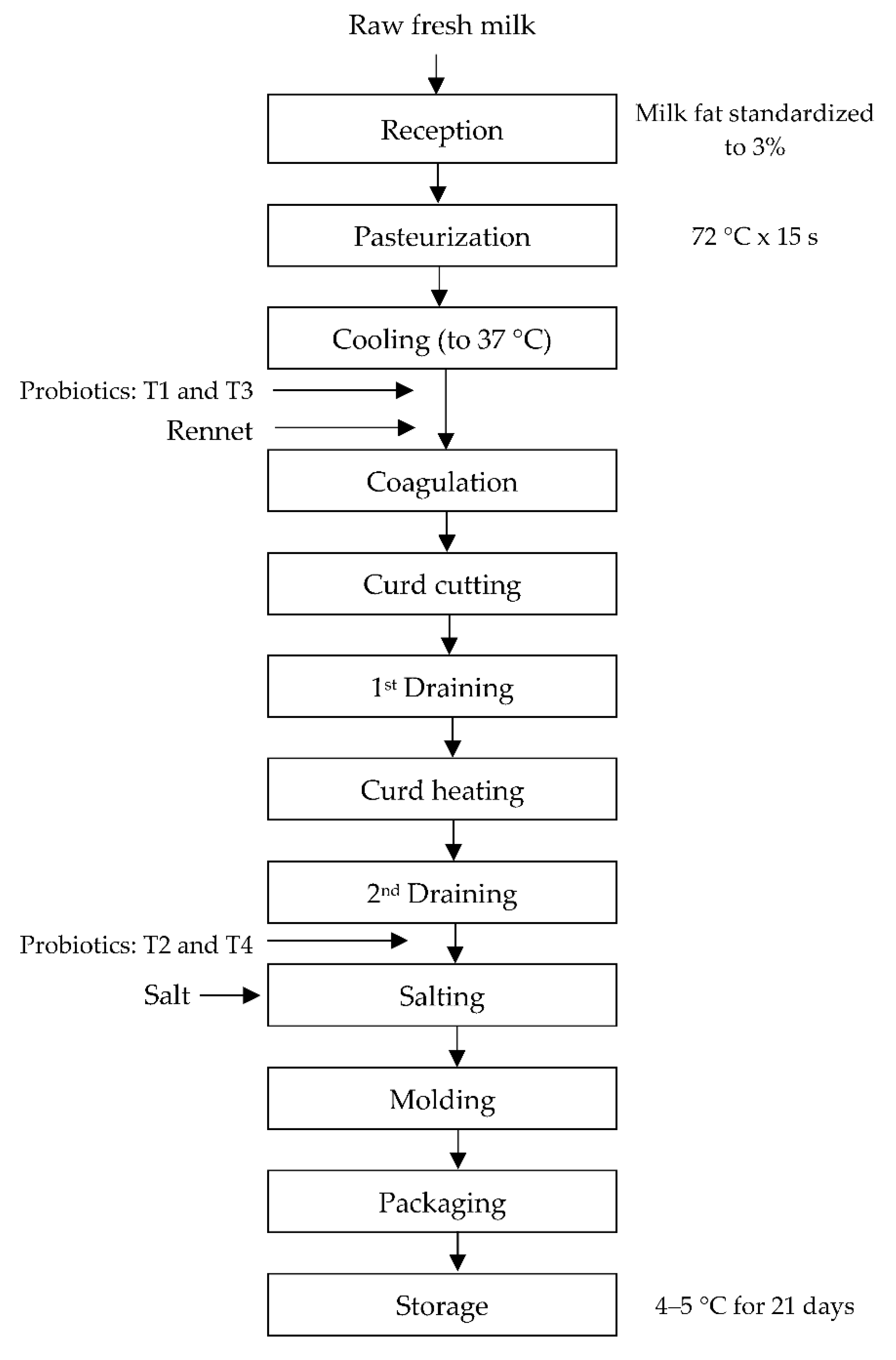
Figure 2.
Acidity (lactic acid, %) of fresh cheeses during storage at 4°C. T1: Added before renneting; T2: Added before salting; T3: Added before renneting; T4: Added before salting.
Figure 2.
Acidity (lactic acid, %) of fresh cheeses during storage at 4°C. T1: Added before renneting; T2: Added before salting; T3: Added before renneting; T4: Added before salting.
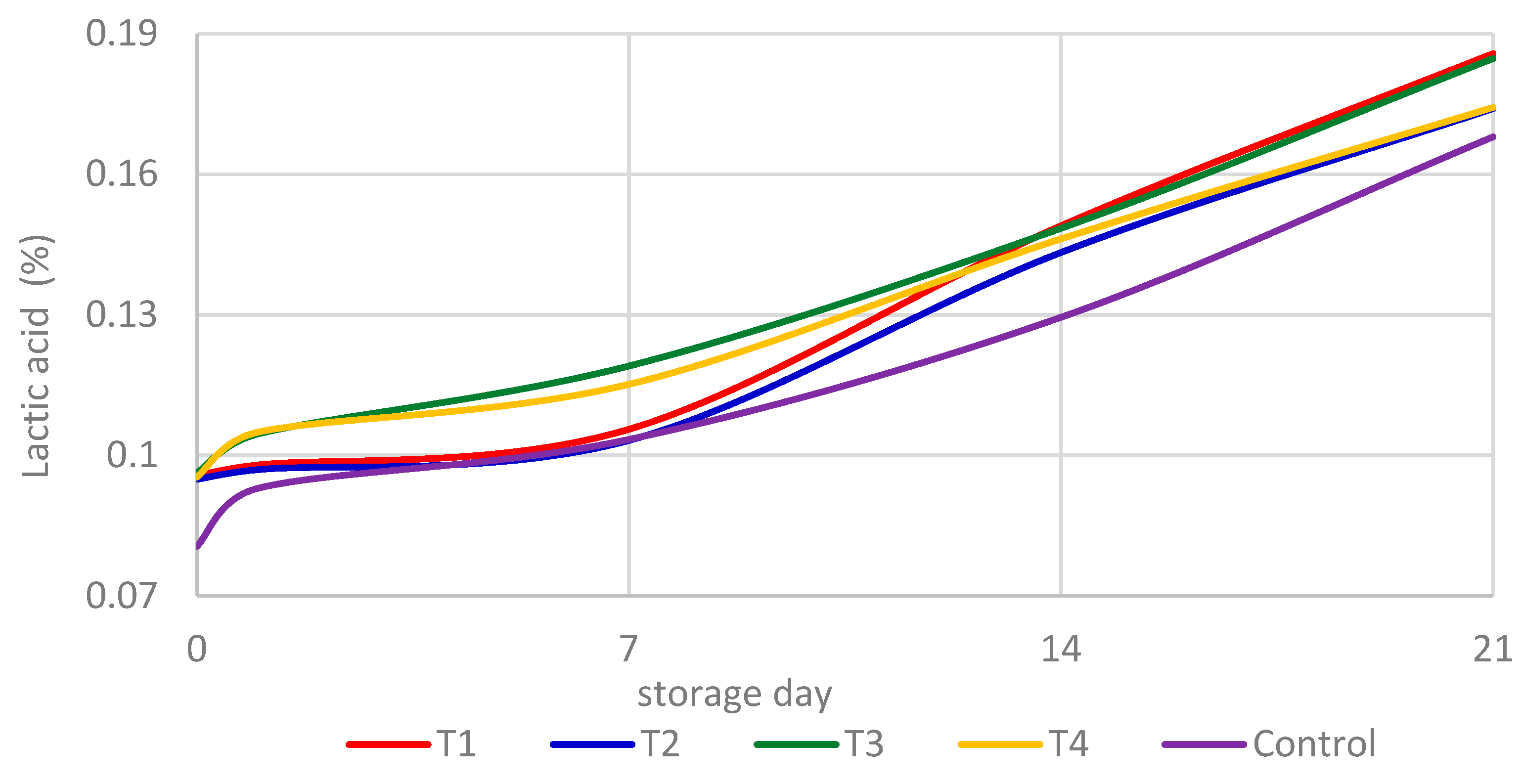
Figure 3.
pH of fresh cheeses during storage at 4 °C. T1: Added before renneting; T2: Added before salting; T3: Added before renneting; T4: Added before salting.
Figure 3.
pH of fresh cheeses during storage at 4 °C. T1: Added before renneting; T2: Added before salting; T3: Added before renneting; T4: Added before salting.
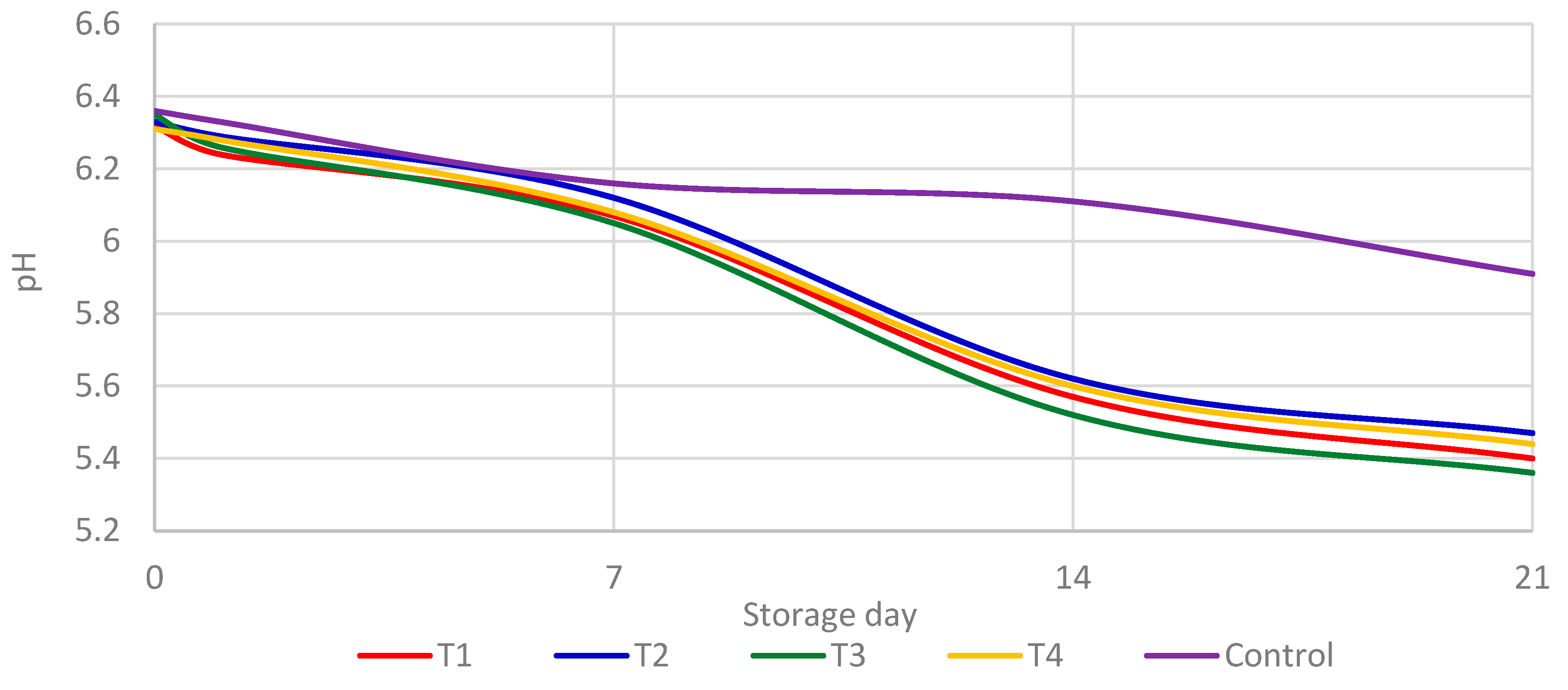
Figure 4.
Syneresis (%) of fresh cheeses during storage (21 days) at 4 °C. T1: Added before renneting; T2: Added before salting; T3: Added before renneting; T4: Added before salting.
Figure 4.
Syneresis (%) of fresh cheeses during storage (21 days) at 4 °C. T1: Added before renneting; T2: Added before salting; T3: Added before renneting; T4: Added before salting.
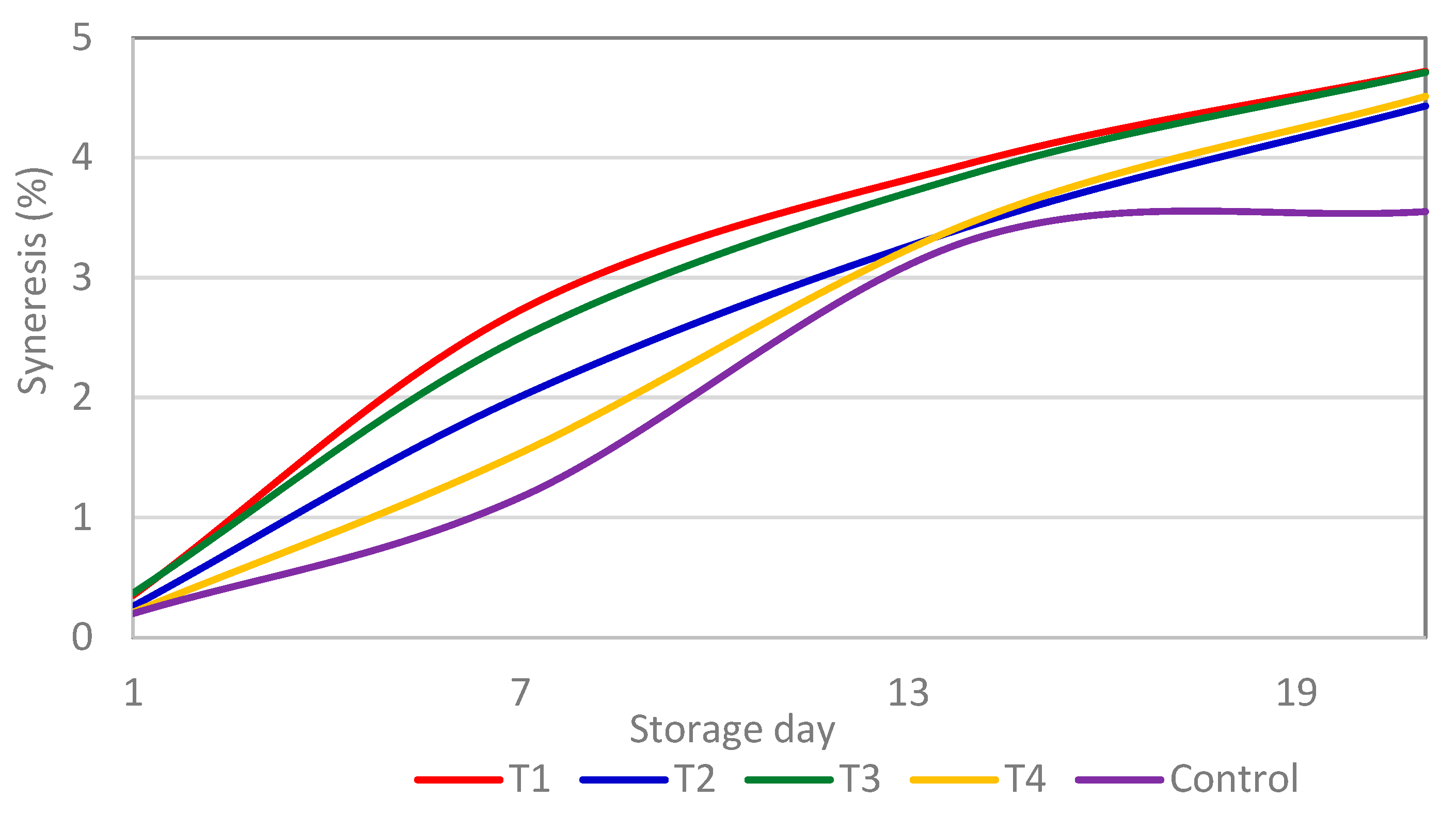

Table 1.
Physicochemical characteristics of raw fresh milk used for production of probiotic Peruvian fresh cheese*.
Table 1.
Physicochemical characteristics of raw fresh milk used for production of probiotic Peruvian fresh cheese*.
| Density (g/mL) | 1.03 ± 0.01 |
| Acidity (% lactic acid) | 0.15 ± 0.01 |
| pH | 6.71 ± 0.08 |
| Total solids (%) | 12.06 ± 0.03 |
| Alcohol test (74% v/v) | Negative |
| Fat content (g/100g) | 3.02 ± 0.02 |
| Protein content (g/100g) | 3.54 ± 0.01 |
(*) Measurements are expressed as the mean ± SD.
Table 2.
Viability of lactic acid bacteria in fresh cheeses during storage at 4 °C (log10 CFU g-1).
| Storage (d) |
L. acidophilus | L. rhamnosus | Control | |||
|---|---|---|---|---|---|---|
| T1 | T2 | T3 | T4 | |||
| 0 | 4.66 ± 0.09b | 4.56 ± 0.18b | 5.63 ± 0.07a | 4.48 ± 0.41b | 3.26 ± 0.17c | |
| 1 | 4.79 ± 0.01b | 4.40 ± 0.26b | 6.01 ± 0.26a | 4.41 ± 0.35b | 2.86 ± 0.13c | |
| 7 | 4.93 ± 0.05b | 4.86 ± 0.27b | 6.63 ± 0.20a | 5.08 ± 0.28b | 3.31 ± 0.51c | |
| 14 | 4.73 ± 0.12b | 4.75 ± 0.20b | 6.63 ± 0.04a | 4.78 ± 0.22b | 3.96 ± 0.88c | |
| 21 | 4.38 ± 0.04b | 4.63 ± 0.34b | 6.25 ± 0.07a | 4.50 ± 0.05b | 3.47 ± 1.09c | |
a, b, c Means within a row followed by different superscripts differ significantly (P < 0.05). T1: Added before renneting; T2: Added before salting; T3: Added before renneting; T4: Added before salting.
Table 3.
Texture profile parameters of fresh cheeses at 21 day of storage (4 °C).
| Treatment | Hardness (N) |
Adhesiveness (N-mm) | Cohesiveness | Springiness | Gumminess (N) |
|---|---|---|---|---|---|
| T1 | 14.02 ± 2.06 | 56.94 ± 0.07a | 0.23 ± 0.09 | 0.78 ± 0.09 | 3.31 ± 1.12 |
| T2 | 13.46 ± 1.82 | 185.32 ± 0.07e | 0.22 ± 0.12 | 0.77 ± 0.06 | 4.52 ± 1.84 |
| T3 | 12.48 ± 3.19 | 69.36 ± 0.08b | 0.24 ± 0.07 | 0.77 ± 0.07 | 4.26 ± 1.03 |
| T4 | 13.33 ± 1.29 | 108.48 ± 0.08d | 0.21 ± 0.03 | 0.77 ± 0.10 | 4.24 ± 1.52 |
| Control | 16.62 ± 1.45 | 80.51 ± 0.05c | 0.24 ± 0.05 | 0.82 ± 0.04 | 6.36 ± 0.70 |
a, b, c, d, e Means ± SD within a column followed by different superscripts differ significantly (P < 0.05). T1: Added before renneting; T2: Added before salting; T3: Added before renneting; T4: Added before salting.
Table 4.
Total scores for sensory evaluation (preference test) of fresh cheeses at 21 day of storage (4 °C).
Table 4.
Total scores for sensory evaluation (preference test) of fresh cheeses at 21 day of storage (4 °C).
| Treatment | Score |
|---|---|
| L. acidophilus inoculated before renneting (T1) | 171 |
| L. acidophilus inoculated before salting (T2) | 93 |
| L. rhamnosus inoculated before renneting (T3) | 199 |
| L. rhamnosus inoculated before salting (T4) | 78 |
| Control | 212 |
Disclaimer/Publisher’s Note: The statements, opinions and data contained in all publications are solely those of the individual author(s) and contributor(s) and not of MDPI and/or the editor(s). MDPI and/or the editor(s) disclaim responsibility for any injury to people or property resulting from any ideas, methods, instructions or products referred to in the content. |
© 2023 by the authors. Licensee MDPI, Basel, Switzerland. This article is an open access article distributed under the terms and conditions of the Creative Commons Attribution (CC BY) license (http://creativecommons.org/licenses/by/4.0/).
Copyright: This open access article is published under a Creative Commons CC BY 4.0 license, which permit the free download, distribution, and reuse, provided that the author and preprint are cited in any reuse.


