

Submitted:
02 August 2023
Posted:
03 August 2023
You are already at the latest version
Abstract
Commiphora molmol myrrh resin extracts, which have different physical properties such as polarity and dielectric constant, were prepared by immersion in extraction solvents (hot water, DMSO, hexane, ethanol, and methanol). Methanolic myrrh resin extracts showed broad antibacterial activity against isolated airborne bacteria. Furanoeudesma-1,3-diene and curzerene, as the main terpenoids in the methanolic myrrh resin extract, were analyzed using GC-MS, and the methanolic myrrh resin extracts were found to have antiviral activity (81.2% viral RNA inhibition) against H1N1 influenza virus. Biochars (wood powder-and rice husk-derived) coated with myrrh resin extracts also showed antiviral activity (22.6% and 24.3% viral RNA inhibition), due to the adsorption of terpenoids onto biochar. Myrrh resin extract using methanol as the extraction solvent is a promising agent with antibacterial and antiviral efficacy, and it can be utilized as a novel material via adsorption onto biochar for air filtration processes, cosmetics, fertilizers, drug delivery, and corrosion inhibition.
Keywords:
myrrh
; Antivirus
; furanoeudesma-1
; 3-diene
; curzerene
; biochar
1. Introduction
Naturally derived compounds extracted from natural sources (e.g., plants, marine organisms, microorganisms, and animals) are of growing interest because of their non-toxic properties and high biocompatibility compared with chemically synthesized compounds (e.g., β-lactams such as penicillin and cephalosporins) [1,2]. Natural compounds (e.g., phytochemicals), including flavonoids, phenolic compounds, terpenes, terpenoids, saponins, iridoids, essential oils, bacteriocins, and enzymes, are known to have various biological activities, including antioxidant, antimicrobial, antiviral, and anti-inflammatory [3,4,5,6,7]. Several researchers have studied these natural compounds to analyze their physicochemical and biological properties. Eucalyptus camaldulensis extracts, with terpenes, terpenoids, and secondary metabolites as the major compounds, showed antimicrobial activity against bacteria, fungi, viruses, and protozoa [8]. Extracts of Pimpinella species have been found to contain anethole, which has antioxidant, antimicrobial, and anticancer effects, and with low cytotoxicity [6]. Borges et al. reported the antioxidant efficiency of Acacia dealbata and Olea europaea extracts and analyzed their antimicrobial activities against Staphylococcus aureus and Escherichia coli [9].
In recent years, microorganisms such as viruses and bacteria have become a crucial issue in both animal diseases and life-threatening diseases affecting humans (e.g., COVID-19). Humans are routinely exposed to airborne pathogenic microorganisms; therefore, prevention strategies are necessary. According to studies, extracts derived from natural sources (e.g., plants, marine origin exhibit resistance to microorganisms, such as gram-positive and gram-negative bacteria, fungi, and viruses [10,11,12,13,14]. Thus, naturally derived compounds may be potential materials for solving microbial threats.
In previous studies, supercritical CO2, enzyme-, ultrasonic-, and microwave-assisted extractions have been introduced as alternatives to conventional solvent extraction processes for more effective extraction of bioactive molecules from natural materials [8,15,16,17]. Although these extraction techniques have some advantages, they are limited by various factors (e.g., high cost, high energy requirements, and complicated processes) [18]. Consequently, numerous studies have employed the solvent extraction method to acquire naturally derived compounds. Investigating the most optimal extraction solvent is necessary because variations in the performance of the extraction solvents and raw materials (e.g., plants, microalgae) lead to differences in outcomes [9,19,20,21,22,23,24]. Carica papaya extracts using water and organic solvents showed differences in extraction yield, antioxidant capacity, and antibacterial activity depending on the type of solvent used [19]. The results from Eugenia pyriformis and Sargassum serratifolium extractions showed that the content of extracted polyphenols, such as phenolic acids and flavonoids, is affected by the polarity of the solvent [20,21]. Similarly, several authors have reported that the amount of extracted polyphenols and the antibacterial ability of the extracts are altered according to the polarity of the extraction solvent [12,22,24].
Myrrh resin produced from Commiphora genus (most C. myrrha and C. molmol of 150 species in Africa, Arabia, and India) has been used for various therapeutic applications (e.g., embalming ointment, antiseptic, and pain reliever) due to the prevention and treatment performance of several components, such as terpenes, steroids, and sterols [17,23]. Therefore, myrrh resin is beneficial as a medicinal agent for infection prevention and wound treatment [25]. In addition, myrrh resin shows antimicrobial activity against bacteria such as Staphylococcus aureus, Bacillus cereus, Bacillus subtilis, Escherichia coli, Klebsiella pneumoniae, Fusobacterium nucleatum [26,27,28,29,30]. Madia et al. analyzed the antiviral activity of myrrh extracts obtained using a supercritical fluid extraction process against influenza A virus [17]. Extracts containing alpha-tocopherol acetate (ATA) decrease viral replication and nucleoprotein expression. However, a few studies have investigated the viral resistance of myrrh resins.
Researchers have attempted to study antimicrobial materials and synthesize them using phytochemicals for potential applications. Modern technologies include bionanoparticles (for therapy and drug delivery), Ag nanoparticle composites (for antimicrobial and antiviral purposes), and biochar (for environmental remediation) [31,32,33]. Strasakova et al. reported that caraway essential oils, including aromatic compounds such as terpinene, cymene, and limonene, need to be immobilized and incorporated into a matrix (e.g., polypropylene) owing to their inherent volatility [34]. Overcoming these problems can reduce the loss of compounds and maintain desired compounds. Therefore, biochar has attracted considerable attention because of its advantages such as cost-effectiveness, eco-friendliness (e.g., usage of waste biomass and CO2 storage), adsorption potential, and easy functionalization compared to other carbonaceous materials (e.g., activated carbon and graphene) [35,36]. Currently, biochar produced from various biomass wastes (e.g., rice husk, wood, sludge, grass, and microalgae) under O2 limitation has been used as a soil amendment and adsorbent for remediation [37,38,39,40,41,42]. However, the utilization of biochar has been steadily increasing across various fields (e.g., cosmetics, air filtration, fertilizers) in recent years, with the potential for further expansion. However, to the best of our knowledge, the potential of biochar coated with naturally derived compounds as an antiviral agent has rarely been evaluated. Thus, the myrrh resin extract-coated biochar is a promising material with antiviral and antibacterial activities.
Therefore, this study focused on the evaluation of the antibacterial activity of myrrh resin extracts against isolated airborne bacteria and the antiviral activity against the H1N1 influenza virus. First, the optimal extraction solvent for myrrh resin extracts was investigated through an antibacterial activity test using the disk-diffusion method. Second, antiviral activity, cytotoxicity, and anti-inflammatory tests were conducted using the myrrh resin extracts with the chosen optimal extraction solvent. Furthermore, this study assessed the properties of myrrh resin extract-coated biochar (e.g., surface changes of biochar using FTIR) as a promising application and identified possible compounds (e.g., terpenoids) with antiviral activity.
2. Materials and Methods
2.1. Materials
Commiphora molmol myrrh resin was obtained from the KT&I Trade Industry (Myrrh Gum, Addis Ababa, Ethiopia) and powdered using a mortar. Pure water (HPLC grade), ethanol (99%), methanol (99%), and DMSO (dimethyl sulfoxide; 99%) as solvents for extraction were purchased from Sigma-Aldrich (Seoul, Republic of Korea). Tryptic soy agar, tryptic soy broth, and nutrient broth used as media for bacterial cultures were purchased from Difco (Seoul, Republic of Korea). Rice husk and wood powder were used as waste biomass for biochar production. The rice husk and wood powders were oven-dried at 100 oC for 24 h and ground to particle sizes ranging from 100 to 200 μm. For biochar production, pyrolysis of rice husk and wood powder were conducted at the temperature of 550 oC for 2 h under N2 gas. Rice husk-derived biochar (RH-BC) and wood powder-derived biochar (WD-BC) were washed several times with distilled water to remove impurities.
2.2. Preparation of myrrh resin extracts
Dried myrrh resin (2.5 g) was weighed into a vial, and 10 mL of solvents (e.g., pure water, ethanol, methanol, and DMSO) were added for extraction. For the hot water extraction, the mixtures of myrrh resin powder and pure water were shaken at 180 rpm for 3 h at 80 oC. For the extraction of myrrh resin using ethanol, methanol, and DMSO, mixtures of myrrh resin powder and each solvent were vigorously shaken at 180 rpm for 24 h at room temperature. Each solution was centrifuged at 3500 rpm and filtered through a 0.2 μm PVDF syringe filter. The vials containing the extracts were subsequently stored at 4 °C for subsequent experiments.
2.3. Isolation and identification of airborne bacterial strains
Airborne bacterial strains were isolated for the antibacterial experiments. The airborne bacterial strains were collected and cultured on tryptic soy agar plates. Airborne bacterial strains were selected based on differences in colony morphology and color. All bacterial strains were subcultured on nutrient agar for identification and tryptic soy broth for antibacterial experiments were placed at 30 oC for 24 h. The isolated bacterial strains were identified using 16S rRNA sequencing by Macrogen (Seoul, Republic of Korea). Two oligonucleotide primers (forward:27F and reverse:1492R) were used as universal prokaryotic primers for amplifying the bacterial 16S rRNA gene. The isolated bacterial strains were identified using BLAST Basic Local Alignment Search Tool (BLAST).
2.4. Antibacterial activities evaluation of myrrh resin extracts
The antibacterial activity of myrrh resin extracts was evaluated using the disk diffusion method described by Kang et al. [43]. For the antibacterial activity evaluation, the isolated strains were cultivated in sterile tryptic soy broth 30 oC for 24 h. Cultures were spread on the surfaces of tryptic soy agar plates. Disks loaded with the myrrh resin extract were placed on agar plates. All plates were incubated at 30 oC for 24 h, and the inhibition zone diameter was measured.
2.5. Evaluation of cytotoxicity and anti-inflammatory of myrrh resin extracts
For In vitro cytotoxicity of myrrh resin extracts, the murine macrophage-like cell line RAW 264.7 were obtained from the Korean Cell Line Bank (Seoul, Korea). The cells were cultured in Dulbecco’s modified Eagle’s medium (DMEM; WelGENE Inc., Daegu, Korea) supplemented with 10% fetal bovine serum (FBS; Gibco Laboratories, NY, USA) and antibiotics. Cell suspensions were seeded in 96-well flat-bottomed plates with 200 μL per well to culture 3×10⁴ cells per well for 24 h. The cells were incubated with myrrh extract at a concentration of 0.078–10% (v/v) for 48 h at 37 °C in a CO2 incubator. Cell viability was measured using the NR assay (Neutral Red). The cells were treated with a Neutral Red (NR; Sigma Aldrich Corporation, MO, USA) solution containing DMEM for 3 h to dye the lysosomes of the living cells. After exposure to the NR solution, the supernatant was completely removed and treated with a desorption solution to extract the dye from the cells. The desorbed solution was made with a 49% ethanol solution (v/v) containing 1% acetic acid (v/v). Absorbance was measured at 540 nm using a microplate spectrophotometer (µ2 Micro Digital, MOBI, Seoul, Korea).
The anti-inflammatory activity of the myrrh resin extracts was evaluated by measuring the amount of nitric oxide produced by Raw 264.7 cells within the ranges of low cytotoxicity. RAW 264.7 cell suspensions were seeded in 96-well flat-bottomed plates with 200 μL per well to culture 3×10⁴ cells per well for 24 h. The cells were incubated with myrrh extract at a concentration of 0.078–10% (v/v) for 48 h at 37 °C in a CO2 incubator. The myrrh extract was diluted with DMEM media with no phenol red, supplemented with 10% fetal bovine serum, antibiotics, and 1 μg/mL lipopolysaccharide from Escherichia coli (LPS; Sigma Aldrich Corporation, MO, USA). Nitrite release in the culture medium was determined by transferring the supernatant (100 μL) to a new 96-well flat-bottomed plate and adding 100 μL of the Griess reaction to each well. The plates were incubated at room temperature for 15 min. Absorbance was measured at 540 nm using a microplate spectrophotometer (MOBI). NO levels were estimated to assess the anti-inflammatory effect of myrrh extract by determining the decrease in NO concentration in the media that was provoked by LPS.
2.6. Antiviral activities by myrrh resin extracts and myrrh resin extracts coated biochar
The H1N1 influenza virus (Influenza A/Human/Korea/KUMC-33/2005, obtained from the Korea Bank for Pathogenic Viruses (Seoul, Republic of Korea) ) used in this study was tested for antiviral activity. First, the antiviral activity of methanol as a control and myrrh resin extract was evaluated against the H1N1 influenza virus. The concentration of H1N1 influenza virus was adjusted to 5.0 x 10⁷ plaque-forming units (PFU)/mL in 1.5 mL of aqueous solution with 100 µL of methanol and myrrh resin extracts in methanol. In addition, concentrations of the standard samples (e.g., furanoeudesma-1,3-diene and curzerene) ranging from 10–90 µL/mL were investigated for their antiviral activity. To evaluate the antiviral activity of myrrh resin extract-coated biochar, 5 mg of myrrh resin extract-coated biochar was added to a vial containing water (3 mL) with virus (5.0 x 10⁷ plaque-forming units (PFU)/mL). The mixture was shaken at 120 rpm and 25 oC for 48 h. Subsequently, the mixture was centrifuged at 13000 rpm for 5 min and filtrated through a 0.2 µm PVDF syringe filter. After the reaction, the residual virus concentration and viral RNA inhibition were measured using qRT-PCR after RNA extraction from the harvested mixture solution (Song et al., 2023). The residual virus concentration and viral RNA inhibition were compared with those of biochar without myrrh resin extract coating.
2.7. Adsorption myrrh resin extracts onto biochar
To adsorb the myrrh resin extracts onto biochars (RH-BC and WD-BC), 50 mg of biochar was mixed with 1 mL of the extract solution in a vial. The mixtures were then placed in a shaking incubator at 25 oC for 24 h at 120 rpm. The myrrh resin extract-coated biochar and the residue solution were separated by centrifugation at 3500 rpm for 20 min. The separated biochar was dried at 60 oC for 24 h to remove methanol. The functional groups of the separated biochars were investigated using Fourier-transform infrared (FTIR) spectroscopy (FT/IR-4600 spectrometer; Jasco, Japan). The FTIR spectra were subsequently compared with those of the biochar without extract adsorption. The changes in polyphenols and terpenoids in the initial (with extract adsorption) and final solutions (without extract adsorption) were determined using HPLC and GC-MS.
To identify the thermal stability for various compounds in myrrh resin extracts on the surface of biochar, myrrh resin extracts coated RH-BC neglected in oven under different temperatures (25 oC, 50 oC, 100 oC, and 200 oC) for 1 h. Changes on the surface of the biochar were observed using X-ray photoelectron spectroscopy (XPS, K-Alpha, Thermo Scientific, U.S.).
2.8. Natural compounds analysis of myrrh resin extracts
Various natural compounds in the myrrh resin extract were analyzed using HPLC and GC-MS for polyphenols and terpenoids. Centrifugation and filtration were performed to separate soluble compounds and insoluble materials. Polyphenols were detected using HPLC (YL 9100 system, Younglin, Republic of Korea) with a UV detector. The chromatograms were determined at 254 nm with YMC-Triart C18 column (250 mm x 4.6 × 5 μm) (YMC, Republic of Korea) at 25 oC under gradient condition of mobile phase A (4% acetic acid in water) and mobile phase B (Methanol) with the flow rate of 0.5 mL/min. The gradient program was begun with 100% of A solution and was held for the first 5 min. The concentration of A solution was followed by 50% eluent B for the next 7 min. This was followed by 80% eluent B for the next 10 min. Subsequently, this was returned to by 50% and 100% for 6 min and 7 min. Finally, the mixtures were incubated for 5 min. The detection of terpenoids was investigated using GC-MS (Perkin Elmer, Waltham, MA, USA) with a fused silica capillary column (Elite-5 ms, 30 m × 0.25 mm i.d. × 0.25 µm). The analytical conditions were as follows: 250 oC (inlet temperature), increased from 40 oC for 1 min to 120 oC for 2 min at 15 oC for 1 min, and then increased to 3000 oC for 5 min at 10 oC /min.
3. Results and Discussion
3.1. Identification of test microorganisms
To obtain bacterial strains for analysis of the antibacterial activity of the myrrh resin extracts, airborne bacteria were collected and isolated. The isolated bacterial strains showed high homology to Paenibacillus pasadenensis NBRC 161214 (98% homology), Micrococcus yunnanensis YIM 65004 (99% homology), Pseudemonas azotoformans NBRC 12693 (99% homology), Rhodococcus qingshengii dj1-6-2 (99% homology), Staphylococcus capitis JCM 2420 (99% homology), Staphylococcus epidermidis NBRC 100911 (98% homology), and Deinococcus radiodurans R1 (99% homology). The isolated strains were mostly Gram-positive, except for Pseudemonas azotoformans NBRC12693. These strains, which are found in soil, water, sewage, and human skin, have various characteristics (e.g., pollutant-degrading, infecting cereal grains, carbendazim-degrading, and radiation-resistant) (Table 1) [44,45,46,47,48,49]. Hence, these airborne bacterial strains could be used as potential samples for testing antibacterial activity.
3.2. Screening of optimal solvent for antibacterial activity of myrrh resin extracts on airborne bacterium
The different extraction yields, antioxidant activities, and antibacterial activities depend on the type of solvent, because the characteristics of the extraction solvent influence the sorting and activity of the compounds extracted from the raw materials. Extracts of C. papaya, A. dealbata, O. europaea, and P. betle Linn. using various solvents such as ethanol, methanol, hexane, and ethyl acetate, showed different antibacterial activities depending on the physical properties of the extraction solvent [9,19,22].
Thus, the antibacterial effects of myrrh resin extracts using various solvents (hot water, hexane, DMSO, methanol, and ethanol) were evaluated, to determine the optimal solvent for acquiring the extract with effective antibacterial properties. The extracts were tested against isolated airborne bacteria assayed in agar plates using the disk diffusion method. Myrrh resin extracted by methanol and ethanol exerted antibacterial effects against Paenibacillus pasadenensis NBRC 161214, Micrococcus yunnanensis YIM 65004, and Deinococcus radiodurans R1 (Table 2). Additionally, the antibacterial effect of myrrh resin extracts only by methanol was observed against Rhodococcus qingshengii dj1-6-2. However, no antibacterial effects were observed in myrrh resin extracted by hot water, DMSO (except Micrococcus yunnanensis YIM65004), and hexane. Hence, the various extraction solvents used in obtaining myrrh resin extracts are likely to influence their antibacterial effects due to differences in their effective components. In general, the antibacterial effect may be related to the cell wall structure. However, no correlation between the antibacterial effect and the cell wall structure (e.g., gram-positive and gram-negative strains) were observed in this study. These phenomena may be due to the action and resistance mechanisms (e.g., cell wall synthesis, nucleic acid synthesis, protein synthesis, and folic acid metabolism) of the effective components in myrrh resin extracts [50]. Therefore, selecting an effective extraction solvent is an important parameter.
The polarity indices of the solvents used for extraction were in the following order: water (10.2) > DMSO (7.2) > ethanol (5.2) > methanol (5.1) > hexane (0.1), whereas the dielectric constants of the solvents were in the following order: water (78.54) > DMSO (47) > methanol (32.6) > ethanol (24.3) > hexane (1.89). The polarity index and dielectric constant of solvents are associated with the extraction of hydrophobic or hydrophilic compounds from raw materials (e.g., plants and fruits). According to previous studies, the solvent polarity index and dielectric constant are correlated with the efficiency, extraction yield, and solubility of the compounds [20,51,52,53]. Adam and Selim and Al-Madi et al. measured the antibacterial efficiency of a myrrh resin extract using ethanol and methanol as extraction solvents, respectively, and found that only the ethanolic extract exhibited antibacterial activity against Enterococcus faecalis [26,54]. Moreover, Mohamed et al. and Abdallah et al. also reported that the antibacterial effect of myrrh resin extract was dependent on the polarity of the extraction solvent [30,55,56]. These results may be due to differences in solvent properties (polarity and dielectric constant) that affect the type of compound being extracted. When myrrh resin was extracted using hot water and ethanol, the quantity of extracted effective compounds containing carbohydrates, proteins, lipids, polyphenols, and alkaloids changed, which affected the antibacterial activity [56,57]. These results imply that the quantity of some compounds (e.g., tannic acid, rutin, and quercetin as polyphenols) in the myrrh resin extracts obtained using methanol may be higher than those obtained using other solvents. Therefore, in the following experiments, methanol was used as the extraction solvent for myrrh resin because it yielded active compounds with the most potent antibacterial activity against the isolated airborne bacteria. Various polyphenols and tannic acid, rutin, and quercetin were observed as three major polyphenols in the myrrh resin extracts treated with methanol (Figure 1). Mandal et al. reported that tannic acid, rutin, and quercetin is effective against Staphylococcus epidermidis and Pseudomonas aeruginosa [58]. In particular, tannic acid, a major compound of methanolic myrrh resin extract, inhibits the adhesion of bacteria to the surface of cells, thereby preventing microbial infection and hindering bacterial growth by reducing nutrient uptake [59,60]. Previous studies reported that tannic acid extracted from green tea, Anthemis praecox Link, Quercus infectoria galls, and Neolamarckia cadamba fruits showed antibacterial activity against Staphylococcus aureus, Escherichia coli, Streptococcus pyogenes, Enterococcus faecalis, Pseudomonas aeruginosa, Yersinia enterocolitica, Listeria innocua, Bacillus cereus. Moreover, it is more sensitive to gram-positive bacteria compared to gram-negative bacteria [1,59,60,61,62]. These results are consistent with our study. Based on the results of previous studies, three polyphenols (e.g., tannic acid, rutin, and quercetin) are potential antibacterial substances against the airborne bacteria examined in the present study.
3.3. Evaluation of antibacterial activities of myrrh resin extracts
Methanol was chosen as the optimal extraction solvent in the preceding experiments. The myrrh resin extracted in methanol exhibited antibacterial activity against gram-positive bacteria, including Paenibacillus pasadenensis NBRC 161214, Micrococcus yunnanensis YIM 65004, Rhodococcus qingshengii dj1-6-2, and Deinococcus radiodurans R1, with inhibition zones measuring 14, 10, 10, and 12 mm, respectively (Table 3). Although Staphylococcus capitis JCM 2420 and Staphylococcus epidermidis NBRC 100911 are Gram-positive bacteria, the myrrh resin extract did not show any antibacterial effects against them, and Pseudemonas azotoformans NBRC 12693, a Gram-negative bacterium, showed resistance to the myrrh resin extract. This is because the bacteria may possess different cell walls, chemically and structurally, depending on the strain (e.g., peptidoglycan layer, membrane composition, lipopolysaccharides, etc.) [63].
3.4. Evaluation of cytotoxicity and anti-inflammatory of myrrh resin extracts
To evaluate the potential of myrrh resin extracts as commercial products, the cytotoxicity and anti-inflammatory activity of the methanolic extracts were measured using RAW 264.7 cell line. The cell viability significantly decreased with the addition of myrrh resin extracts exceeding more than 0.31% (Figure 2A. Therefore, we focused on the extracts within a non-cytotoxic concentration range for further investigation of their anti-inflammatory effect on RAW 264.7 cells by monitoring NO formation. In comparison to the control, when 0.08% and 0.16% of myrrh resin extracts were added, the produced NO was 83.5% and 66.9%, respectively (Figure 2B). The NO yield decreased with increasing extract content. These results indicate that the myrrh resin extracted using methanol has anti-inflammatory properties in vitro. Cheng et al. reported the anti-inflammatory effects of a myrrh resin extract prepared by immersing in methanol on RAW 264.7 macrophages. The extract inhibited NO synthase and cyclooxygenase-2 induction, leading to reduced production of NO, prostaglandin E2, interleukin-1beta, and tumor necrosis factor-alpha [64].
3.5. Evaluation of antiviral activities of myrrh resin extracts
The antiviral activity of methanol as control and myrrh resin extracted by s by methanol was evaluated against the H1N1 influenza virus. Methanol and myrrh resin extract showed 2.8% and 81.2% virus RNA inhibition (from qRT-PCR results), respectively (Figure 3). These results implied that methanol did not inhibit viral RNA. In contrast, myrrh resin extracts prepared using methanol can be associated with higher viral RNA inhibition due to the antiviral compounds of the extract.
Based on the viral RNA inhibition results of the myrrh resin extracts in methanol, RH-BC and WD-BC were coated with the myrrh resin extracts to determine their antiviral activity. The remaining H1N1 influenza virus had decreased about 22.6% and 24.3% in aqueous solutions with the myrrh resin extracts coated RH-BC and WD-BC compared to the of initial virus containing aqueous solution (Table 4). In particular, the remaining viruses (96.5% and 96.7) after the reaction with RH-BC and WD-BC (without myrrh resin extract coating) were higher than those (77.4% and 75.6) after the reaction with myrrh resin extracts coated RH-BC- and WD-BC (Table 4). Therefore, myrrh resin extracts bound to the surfaces of RH-BC and WD-BC may exhibit antiviral activity. These results suggest that there are some antiviral compounds (e.g., terpenoids) in myrrh resin extracts, and that some antiviral compounds can be successfully coated onto biochar. For instance, curzerene, a type of terpenoid found in myrrh oil, is a possible antiviral compound [17]. Similarly, furanoeudesma-1,3-diene and curzerene, the major terpenoids, were observed in the present study, as reported by Madia et al. (Figure S1) [17]. The detailed quantities of furanoeudesma-1,3-diene and curzerene are described in section 3-6.
3.6. Potential mechanisms for antibacterial and antiviral activities of myrrh resin extracts
Various bioactive compounds with antibacterial and antiviral activities need to be investigated because of the useful phytochemicals (e.g., polyphenols and terpenoids) present in plants and/or plant-based extracts. According to the results of HPLC and GC-MS analysis, polyphenols (i.e., tannic acid, rutin, quercetin, ferulic acid, caffeic acid, naringenin, and ellagic acid) and terpenoids (i.e., furanoeudesma-1,3-diene, curzerene, lindestrene, gazaniolide,-elemene,-elemene) were detected in the myrrh resin extracts in this study (Figure 1, Figure S1 and Figure 4).
As shown in Figure 1, tannic acid, rutin, and quercetin were the major polyphenols (above 20 g/mL) in the myrrh resin extracts. As mentioned, the three major polyphenols (tannic acid, rutin, and quercetin) had significant antibacterial effects. In particular, tannic acid may lead to improved antibacterial activity by disturbing the uptake of sugars and amino acids, restricting bacterial growth. According to Wang et al., tannic acid inhibits the growth of Clostridioides difficile strains at concentrations above 16 g/mL [65]. Qi et al. and Gullon et al. reported that rutin and quercetin possess antimicrobial efficacy [66,67]. Polyphenols have been proposed to disrupt bacterial cell wall homeostasis, nucleic acid synthesis, and energy metabolism.
As shown in Figure S1, various terpenoids such as furanoeudesma-1,3-diene, curzerene, lindestrene, gazaniolide, β-elemene, γ-elemene, etc. were observed. Based on the results from previous literature regarding myrrh resin extracts, furanoeudesma-1,3-diene and curzerene were measured as major compounds [17,68]. According to the antiviral activity test, the viral RNA inhibition effects (81.2%) of myrrh resin extracts by methanol were revealed (Figure 3). In contrast, there were negligible effect of the virus RNA inhibition (2.8%) by methanol. The quantities of furanoeudesma-1,3-diene and curzerene in the terpenoids used in the antiviral activity experiment were 74.5 µg/mL and 12.4 µg/mL. Consequently, this finding may originate from terpenoids (i.e., furanoeudesma-1,3-diene and curzerene as the major compounds). The mechanisms of these terpenoids for antiviral activity were deduced to involve the interference of factors on the plasma membrane, viral attachment, antioxidant activity, and cell penetration [17].
Additionally, furanoeudesma-1,3-diene (1118.42 µg/mL) and curzerene (185.34 µg/mL ) were found in myrrh resin extracts by methanol (Figure 4). After the precipitation of RH-BC in myrrh resin extracts, the concentration of these terpenoids (e.g., furanoeudesma-1,3-diene and curzerene) had decreased about 49% (553.36 µg/mL) and 36% (66.89 µg/mL), respectively (Figure 4). These results suggested that these terpenoids were bound to the surface of RH-BC. The remaining H1N1 influenza virus had decreased by approximately 22.6% in aqueous solution with the myrrh resin extracts coated with RH-BC (Table 4). Possibly, this is due to the coated quantity of terpenoids (i.e., furanoeudesma-1,3-diene (18.4 µg/mL) and curzerene (2.2 µg/mL) onto RH-BC).
As illustrated in Figure 5, over 50% of the virus RNA inhibition revealed in 50 µg/mL of furanoeudesma-1,3-diene and 70 µg/mL of curzerene. Low concentrations of furanoeudesma-1,3-diene (2.5-30 µg/mL) and curzerene (over 60 µg/mL) only affects up to 50% of virus inhibition [17]. The results of the present study are consistent with those of the previous studies [17]. The effects of viral RNA inhibition in the aqueous solution with the myrrh resin extracts coated with biochar were lower than those in only myrrh resin extracts. This may be attributed to the low binding concentration of terpenoids into biochar and the lower concentration of terpenoids compared to only myrrh resin extracts. These effects of viral RNA inhibition through biochar can be easily solved by increasing the amount of biochar added and enhancing terpenoid quantity binding by the activation and functionalization of biochar. Therefore, myrrh resin extract-coated biochar has the potential to be used in various applications such as cosmetics, air filtration, fertilizers, drug delivery, and corrosion inhibition.
In addition, myrrh resin extracts coated biochars (e.g., RH-BC and WD-BC) with different properties (feedstock (e.g., RH-BC; rice husk and WD-BC; wood powder), BET surface area (i.e., RH-BC; 205.6 m2/g and WD-BC; 211.1 m2/g), and functional groups on the surface) were evaluated for their antiviral activity (Table S1 and Figure S2). The Brunauer-Emmett-Teller (BET) surface areas of RH-BC and WD-BC were similar; however, their functional groups were different (Figure S2). Accordingly, we deduced the differences in the adsorption capacity of terpenoids onto the biochar. To confirm terpenoid binding, changes in the functional groups on the surface of the RH-BC were analyzed before and after precipitation (e.g., adsorption) using FTIR. As shown in Figure 6, 875 cm-1, 1049 cm-1, 1375 cm-1, 1430 cm-1, 1740 cm-1, 2930 cm-1, and 3200-3400 cm-1 peaks, indicating CO32--, C-O stretching, C=O carboxylate ion stretching, C-H bending, C=O group, -CH group, and OH group in RH-BC and myrrh resin extracts coated RH-BC appeared [35,69]. Among them, the peaks at 875 cm-1, 1049 cm-1 peak, indicating CO32--, and C-O stretching had decreased and 1740 cm-1 indicated an increase in the C =O group. Hence, these results (e.g., the increase of C=O group) imply that the terpenoids such as furanoeudesma-1,3-diene and curzerene bind with the functional groups (e.g., CO32-, and C-O stretching) on the surface of RH-BC or π-π interaction by surface area.
As shown in the XPS results, C1s, O1s, Si2s, and Si2p peaks appeared in the survey scans of the RH-BC and myrrh resin extract-coated RH-BC (Figure 7). In the comparison between RH-BC and myrrh resin extract-coated RH-BC, the C1s, O1s, Si2s, and Si2p peaks decreased after coating, indicating that various compounds in the myrrh resin extracts were bound to the surface of RH-BC. These peak intensities (e.g., C1s, O1s, Si2s, and Si2p) were similar at 25, 50, and 100 oC, although they slightly decreased at 200 oC. These phenomena can be attributed to the volatility of various compounds in the myrrh resin extracts at high temperatures (200 oC). Nevertheless, the C1s, O1s, Si2s, and Si2p peaks were still present. These results demonstrate that various compounds in myrrh resin extracts are strongly incorporated onto the surface of the biochar. Therefore, biochar is a promising material for reducing the loss of desired compounds. In addition, myrrh resin extract-coated RH-BC can be applied as a potential material for antibacterial and antiviral activity via the successful binding of phytochemicals (e.g., terpenoids) to the surface of the biochar. Further evaluation of the binding correlation between the properties of biochar and terpenoids, and more detailed binding mechanisms are necessary.
4. Conclusions
To extract effective compounds from myrrh resin, various solvents with different polarities and dielectric constants were used as extraction solvent. Among the myrrh resin extracts prepared, the methanolic extract showed significant antibacterial activity against gram-positive bacteria. This may be due to the distinct solvent properties, which lead to the extraction of different effective compounds. Particularly, the extract prepared by soaking in methanol exhibited anti-inflammatory activity at non-cytotoxic concentrations. According to the results of the component analysis using HPLC and GC-MS, the extracts contained various polyphenols (e.g., tannic acid, rutin, and quercetin) and terpenoids (e.g., furanoeudesma-1,3-diene and curzerene), which are known to have antibacterial, anti-inflammatory, and antiviral effects. Furthermore, novel biochar-based materials that introduced the functionality of myrrh resin extracts for antiviral activity were fabricated using a simple adsorption process. The myrrh resin extract-coated biochars, which adsorbed terpenoids, showed antiviral activity against the H1N1 influenza virus, along with extracts that existed in the liquid state. Therefore, biochar coated with methanolic myrrh resin extracts suggests the possibility of using natural-derived substances in various fields (e.g., purification, agriculture, pharmaceuticals, cosmetics, and food packaging), as they are fabricated as novel materials via the adsorption of effective compounds.
Supplementary Materials
Table S1: Brunauer-Emmett-Teller (BET) surface areas of the RH-BC and WD-BC; Figure S1. GC-MS spectra of myrrh resin extracts for terpenes analysis.; Figure S2: FTIR spectra of RH-BC and WD-BC before myrrh resin extract adsorption.
Author Contributions
J.W.K.; Methodology, formal analysis, writing—original draft preparation, S.P.; Formal analysis, writing—original draft preparation, Y.W.S.; Resources, data curation, H.J.S.; Methodology, data curation, S.W.Y.; Methodology, J.H.; Data curation, J.W.J.; Formal analysis, I-S.L.; Data curation, S.H.L.; writing—review and editing, Y.-K.C.; Conceptualization, writing—original draft preparation, supervision, H.J.K.; Conceptualization, writing—original draft preparation, supervision. All authors have read and agreed to the published version of the manuscript.
Funding
This research was supported by the Korea Water Cluster as a 2023 Demand-based Carbon-neutrality Water-tech Demonstration Supporting Project (Project No. B0080612001292) and the Korea Forest Service as an R&D Program for Forest Science Technology (Project No. 2023431B10-2324-0802).
Conflicts of Interest
The authors declare no conflict of interest.
References
- Kaczmarek, B. Tannic acid with antiviral and antibacterial activity as a promising component of biomaterials-A minireview. Materials 2020, 13, 3224. [CrossRef]
- Von Nussbaum, F.; Brands, M., Hinzen, B.; Weigand, S.; Häbich, D. Antibacterial natural products in medicinal chemistry - Exodus or revival?. Angewandte Chemie - International Edition 2006, 45, 5072-5129. [CrossRef]
- Burlacu, E.; Nisca, A.; Tanase, C. A comprehensive review of phytochemistry and biological activities of Quercus species. Forests 2020, 11, 904. [CrossRef]
- Efenberger-Szmechtyk, M.; Nowak, A.; Czyzowska, A. Plant extracts rich in polyphenols: antibacterial agents and natural preservatives for meat and meat products. Critical Reviews in Food Science and Nutrition 2021, 61, 149–178. [CrossRef]
- Kim, T.; Song, B.; Cho, K. S.; Lee, I. S. Therapeutic potential of volatile terpenes and terpenoids from forests for inflammatory diseases. International Journal of Molecular Sciences 2020, 21, 2187. [CrossRef]
- Nasır, A.; Yabalak, E. Investigation of antioxidant, antibacterial, antiviral, chemical composition, and traditional medicinal properties of the extracts and essential oils of the Pimpinella species from a broad perspective: a review. Journal of Essential Oil Research 2021, 33, 411-426. [CrossRef]
- Sasidharan, S.; Chen, Y.; Saravanan, D.; Sundram, K. M.; Latha, L. Y. Extraction, Isolation And Characterization Of Bioactive Compounds From Plants’ Extracts. Afr J Tradit Complement Altern Med 2011, 8, 1-10. [CrossRef]
- Aleksic Sabo, V.; Knezevic, P. Antimicrobial activity of Eucalyptus camaldulensis Dehn. plant extracts and essential oils: A review. Industrial Crops and Products 2019, 132, 413–429. [CrossRef]
- Borges, A.; José, H.; Homem, V.; Simões, M. Comparison of techniques and solvents on the antimicrobial and antioxidant potential of extracts from acacia dealbata and olea europaea. Antibiotics 2020, 9, 48. [CrossRef]
- Ahmadi, A.; Shahidi, S. A.; Safari, R.; Motamedzadegan, A.; Ghorbani-HasanSaraei, A. Evaluation of stability and antibacterial properties of extracted chlorophyll from alfalfa (Medicago sativa L.). Food and Chemical Toxicology 2022, 163, 112980. [CrossRef]
- Alboofetileh, M.; Rezaei, M.; Tabarsa, M.; Rittà, M.; Donalisio, M.; Mariatti, F.; You, S. G.; Lembo, D.; Cravotto, G. Effect of different non-conventional extraction methods on the antibacterial and antiviral activity of fucoidans extracted from Nizamuddinia zanardinii. International Journal of Biological Macromolecules 2019, 124, . [CrossRef]
- Mukherjee, C., Suryawanshi, P. G., Kalita, M. C., Deka, D., Aranda, D. A. G., & Goud, V. V. (2022). Polarity-wise successive solvent extraction of Scenedesmus obliquus biomass and characterization of the crude extracts for broad-spectrum antibacterial activity. Biomass Convers Biorefin. [CrossRef]
- Thawabteh, A. M., Swaileh, Z., Ammar, M., Jaghama, W., Yousef, M., Karaman, R., A. Bufo, S., & Scrano, L. (2023). Antifungal and antibacterial activities of isolated marine compounds. Toxins, 15(2). [CrossRef]
- Zhang, H., Wang, X., He, D., Zou, D., Zhao, R., Wang, H., Li, S., Xu, Y., & Abudureheman, B. (2022). Optimization of flavonoid extraction from Xanthoceras sorbifolia bunge flowers, and the antioxidant and antibacterial capacity of the extract. Molecules, 27(1). [CrossRef]
- Abubakar, A. R., & Haque, M. (2020). Preparation of medicinal plants: Basic extraction and fractionation procedures for experimental purposes. J Pharm Bioallied Sci, 12(1). [CrossRef]
- Hardouin, K., Bedoux, G., Burlot, A. S., Donnay-Moreno, C., Bergé, J. P., Nyvall-Collén, P., & Bourgougnon, N. (2016). Enzyme-assisted extraction (EAE) for the production of antiviral and antioxidant extracts from the green seaweed Ulva armoricana (Ulvales, Ulvophyceae). Algal Res, 16. [CrossRef]
- Madia, V. N., De Angelis, M., De Vita, D., Messore, A., De Leo, A., Ialongo, D., Tudino, V., Saccoliti, F., De Chiara, G., Garzoli, S., Scipione, L., Palamara, A. T., Di Santo, R., Nencioni, L., & Costi, R. (2021). Investigation of Commiphora myrrha (Nees) Engl. oil and its main components for antiviral activity. Pharm, 14(3). [CrossRef]
- Alara, O. R., Abdurahman, N. H., & Ukaegbu, C. I. (2021). Extraction of phenolic compounds: A review. Curr Res Food Sci, 4. [CrossRef]
- Asghar, N., Naqvi, S. A. R., Hussain, Z., Rasool, N., Khan, Z. A., Shahzad, S. A., Sherazi, T. A., Janjua, M. R. S. A., Nagra, S. A., Zia-Ul-Haq, M., & Jaafar, H. Z. (2016). Compositional difference in antioxidant and antibacterial activity of all parts of the Carica papaya using different solvents. Chem Cent J, 10(1). [CrossRef]
- Haminiuk, C. W. I., Plata-Oviedo, M. S. V., de Mattos, G., Carpes, S. T., & Branco, I. G. (2014). Extraction and quantification of phenolic acids and flavonols from Eugenia pyriformis using different solvents. J Food Sci Technol, 51(10). [CrossRef]
- Lim, S., Choi, A. H., Kwon, M., Joung, E. J., Shin, T., Lee, S. G., Kim, N. G., & Kim, H. R. (2019). Evaluation of antioxidant activities of various solvent extract from Sargassum serratifolium and its major antioxidant components. Food Chem, 278, 178–184. [CrossRef]
- Nguyen, L. T. T., Nguyen, T. T., Nguyen, H. N., & Bui, Q. T. P. (2020). Simultaneous determination of active compounds in Piper betle Linn. leaf extract and effect of extracting solvents on bioactivity. Eng Rep, 2(10). [CrossRef]
- Rahmani, A. H., Anwar, S., Raut, R., Almatroudi, A., Babiker, A. Y., Khan, A. A., Alsahli, M. A., & Almatroodi, S. A. (2022). Therapeutic potential of myrrh, a natural resin, in health management through modulation of oxidative stress, inflammation, and advanced glycation end products formation using in Vitro and in Silico analysis. Appl Sci, 12(18). [CrossRef]
- Rezaei, M., & Ghasemi Pirbalouti, A. (2019). Phytochemical, antioxidant and antibacterial properties of extracts from two spice herbs under different extraction solvents. J Food Meas Charact, 13(3), 2470–2480. [CrossRef]
- Termentzi, A., Fokialakis, N., & Leandros Skaltsounis, A. (2012). Natural resins and bioactive natural products thereof as potential anitimicrobial agents. Curr Pharm Des, 17(13). [CrossRef]
- Adam, M. E., & Selim, S. A. (2013). Antimicrobial activity of essential oil and methanol extract from Commiphora molmol (Engl.) resin. Int J Curr Microbiol, App Sci, 2(12). http://www.ijcmas.com.
- Bhattacharjee, M. K., & Alenezi, T. (2020). Antibiotic in myrrh from Commiphora molmol preferentially kills nongrowing bacteria. Future Sci, 6(4). [CrossRef]
- Hana, D. B., Kadhim, H. M., Jasim, G. A., & Latif, Q. N. (2016). Antibacterial activity of Commiphora molmol extracts on some bacterial species in Iraq. Sch Acad J Pharm, 5(12), 406–412. [CrossRef]
- Mahboubi, M., & Kazempour, N. (2016). The antimicrobial and antioxidant activities of Commiphora molmol extracts. Biharean Biol, 10(2).
- Mohamed, A., Shahid, S. M. A., Alkhamaiseh, S. I., Ahmed, M. Q., Albalwi, F. O., Al-Gholaigah, H., Alqhtani, M., & Alshammari, G. (2017). Antibacterial activity of Commiphora molmol in wound infections. J Diagn Pathol Oncol, 2(2).
- Das, R., & Panda, S. N. (2022). Preparation and applications of biochar based nanocomposite: A review. J Anal Appl Pyrolysis, 167. [CrossRef]
- Nguyen, D. T. C., Tran, T. Van, Nguyen, T. T. T., Nguyen, D. H., Alhassan, M., & Lee, T. (2023). New frontiers of invasive plants for biosynthesis of nanoparticles towards biomedical applications: A review. Sci Total Environ, 857. [CrossRef]
- Pirtarighat, S., Ghannadnia, M., & Baghshahi, S. (2019). Green synthesis of silver nanoparticles using the plant extract of Salvia spinosa grown in vitro and their antibacterial activity assessment. Journal of Nanostructure in Chemistry, 9, 1-9. [CrossRef]
- Strasakova, M., Pummerova, M., Filatova, K., Sedlarik, V., & Fernández-García, M. (2021). Immobilization of caraway essential oil in a polypropylene matrix for antimicrobial modification of a polymeric surface. Polymers, 13(6), 906. [CrossRef]
- Choi, Y. K., Choi, T. R., Gurav, R., Bhatia, S. K., Park, Y. L., Kim, H. J., Kan, E., & Yang, Y. H. (2020). Adsorption behavior of tetracycline onto Spirulina sp. (microalgae)-derived biochars produced at different temperatures. Sci Total Environ, 710. [CrossRef]
- Kim, J. E., Bhatia, S. K., Song, H. J., Yoo, E., Jeon, H. J., Yoon, J. Y., Yang, Y., Gurav, R., Yang, Y. H., Kim, H. J., & Choi, Y. K. (2020). Adsorptive removal of tetracycline from aqueous solution by maple leaf-derived biochar. Bioresour Technol, 306. [CrossRef]
- Adhikari, S., Timms, W., & Mahmud, M. A. P. (2022). Optimising water holding capacity and hydrophobicity of biochar for soil amendment – A review. Sci Total Environ, 851. [CrossRef]
- Choi, Y. K., & Kan, E. (2019). Effects of pyrolysis temperature on the physicochemical properties of alfalfa-derived biochar for the adsorption of bisphenol A and sulfamethoxazole in water. Chemosphere, 218. [CrossRef]
- Das, R., & Panda, S. N. (2022). Preparation and applications of biochar based nanocomposite: A review. J Anal Appl Pyrolysis, 167. [CrossRef]
- Liu, M., Ke, X., Liu, X., Fan, X., Xu, Y., Li, L., Solaiman, Z. M., & Pan, G. (2022). The effects of biochar soil amendment on rice growth may vary greatly with rice genotypes. Sci Total Environ, 810. [CrossRef]
- Liu, Z., Zhu, M., Wang, J., Liu, X., Guo, W., Zheng, J., Bian, R., Wang, G., Zhang, X., Cheng, K., Liu, X., Li, L., & Pan, G. (2019). The responses of soil organic carbon mineralization and microbial communities to fresh and aged biochar soil amendments. Glob Change Biol Bioenergy, 11(12). [CrossRef]
- Song, H. J., Gurav, R., Bhatia, S. K., Lee, E. Bin, Kim, H. J., Yang, Y. H., Kan, E., Kim, H. H., Lee, S. H., & Choi, Y. K. (2021). Treatment of microcystin-LR cyanotoxin contaminated water using Kentucky bluegrass-derived biochar. J Water Process Eng, 41. [CrossRef]
- Kang, Y., Choi, Y. K., Kim, H. J., Song, Y., & Kim, H. (2015). Preparation of anti-bacterial cellulose fiber via electrospinning and crosslinking with β-cyclodextrin. Fash Text, 2(1). [CrossRef]
- Chuang, S., Yang, H., Wang, X., Xue, C., Jiang, J., & Hong, Q. (2021). Potential effects of Rhodococcus qingshengii strain djl-6 on the bioremediation of carbendazim-contaminated soil and the assembly of its microbiome. J Hazard Mater, 414. [CrossRef]
- Fang, Y., Wu, L., Chen, G., & Feng, G. (2016). Complete genome sequence of Pseudomonas azotoformans S4, a potential biocontrol bacterium. J Biotechnol, 227. [CrossRef]
- Langlois, B. E., Harmon, R. J., & Akers, K. (1983). Identification of Staphylococcus species of bovine origin with the API staph-ident system. J Clin Microbiol, 18(5). [CrossRef]
- Osman, S., Satomi, M., & Venkateswaran, K. (2006). Paenibacillus pasadenensis sp. nov. and Paenibacillus barengoltzii sp. nov., isolated from a spacecraft assembly facility. Int J Syst Evol Microbiol, 56(7). [CrossRef]
- White, O., Eisen, J. A., Heidelberg, J. F., Hickey, E. K., Peterson, J. D., Dodson, R. J., Haft, D. H., Gwinn, M. L., Nelson, W. C., Richardson, D. L., Moffat, K. S., Qin, H., Jiang, L., Pamphile, W., Crosby, M., Shen, M., Vamathevan, J. J., Lam, P., McDonald, L., Fraser, C. M. (1999). Genome sequence of the radioresistant bacterium Deinococcus radiodurans R1. Sci, 286(5444). [CrossRef]
- Zhao, G. Z., Li, J., Qin, S., Zhang, Y. Q., Zhu, W. Y., Jiang, C. L., Xu, L. H., & Li, W. J. (2009). Micrococcus yunnanensis sp. nov., a novel actinobacterium isolated from surface-sterilized Polyspora axillaris roots. Int J Syst Evol Microbiol, 59(10). [CrossRef]
- Kapoor, G., Saigal, S., & Elongavan, A. (2017). Action and resistance mechanisms of antibiotics : A guide for clinicians basic anatomy of bacterial cell. J Anaesthesiol Clin Pharmacol, 33(3). [CrossRef]
- Markom, M., Hasan, M., Daud, W. R. W., Singh, H., & Jahim, J. M. (2007). Extraction of hydrolysable tannins from Phyllanthus niruri Linn.: Effects of solvents and extraction methods. Sep Purif Technol, 52(3). [CrossRef]
- Ng, Z. X., Samsuri, S. N., & Yong, P. H. (2020). The antioxidant index and chemometric analysis of tannin, flavonoid, and total phenolic extracted from medicinal plant foods with the solvents of different polarities. J Food Process Preserv, 44(9). [CrossRef]
- Ouyang, J., Ding, J., Lefebvre, J., Li, Z., Guo, C., Kell, A. J., & Malenfant, P. R. L. (2018). Sorting of semiconducting single-walled carbon nanotubes in polar solvents with an amphiphilic conjugated polymer provides general guidelines for enrichment. ACS Nano, 12(2). [CrossRef]
- Al-Madi, E. M., Almohaimede, A. A., Al-Obaida, M. I., & Awaad, A. S. (2019). Comparison of the antibacterial efficacy of Commiphora molmol and sodium hypochlorite as root canal irrigants against Enterococcus faecalis and Fusobacterium nucleatum. Evid Based Complement Alternat Med, 2019. [CrossRef]
- Abdallah, E., & Khalid, A. (2012). A preliminary evaluation of the antibacterial effects of Commiphora molmol and Boswellia papyrifera oleo-gum resins vapor. Int J Chem Biochem Res, 1.
- Abdallah, E. M., Khalid, A. S., & Ibrahim, N. (2009). Antibacterial activity of oleo-gum resins of Commiphora molmol and Boswellia papyrifera against methicillin resistant Staphylococcus aureus (MRSA). Sci Res Essays, 4(4).
- Mahboubi, M., & Kazempour, N. (2016). The antimicrobial and antioxidant activities of Commiphora molmol extracts. Biharean Biol, 10(2).
- Mandal, S. M., Dias, R. O., & Franco, O. L. (2017). Phenolic compounds in antimicrobial therapy. J Med Food, 20(10). [CrossRef]
- Belhaoues, S., Amri, S., & Bensouilah, M. (2020). Major phenolic compounds, antioxidant and antibacterial activities of Anthemis praecox Link aerial parts. S Afr J Bot, 131. [CrossRef]
- Pandey, A., & Negi, P. S. (2018). Phytochemical composition, in vitro antioxidant activity and antibacterial mechanisms of Neolamarckia cadamba fruits extracts. Nat Prod Res, 32(10). [CrossRef]
- Suzilla, W. Y., Izzati, A., Isha, I., Zalina, A., & Rajaletchumy, V. K. (2020). Formulation and evaluation of antimicrobial herbosomal gel from Quercus infectoria extract. IOP Conference Series: Mater Sci Eng, 736(2). [CrossRef]
- Vance, S. H., Tucci, M., & Benghuzzi, H. (2011). Evaluation of the antimicrobial efficacy of green tea extract (EGCG) against Streptococcus pyogenes in vitro. Biomed Sci Instrum, 47.
- Roberts, I. S. (1996). The biochemistry and genetics of capsular polysaccharide production in bacteria. Annu Rev Microbiol, 50. [CrossRef]
- Cheng, Y. W., Cheah, K. P., Lin, C. W., Li, J. S., Yu, W. Y., Chang, M. L., Yeh, G. C., Chen, S. H., Choy, C. S., & Hu, C. M. (2011). Myrrh mediates haem oxygenase-1 expression to suppress the lipopolysaccharide-induced inflammatory response in RAW264.7 macrophages. J Pharm Pharmacol, 63(9). [CrossRef]
- Wang, W., Cao, J., Yang, J., Niu, X., Liu, X., Zhai, Y., Qiang, C., Niu, Y., Li, Z., Dong, N., Wen, B., Ouyang, Z., Zhang, Y., Li, J., Zhao, M., & Zhao, J. (2023). Antimicrobial activity of tannic acid in Vitro and its protective effect on mice against Clostridioides difficile. Microbiol Spectr, 11(1). [CrossRef]
- Gullón, B., Lú-Chau, T. A., Moreira, M. T., Lema, J. M., & Eibes, G. (2017). Rutin: A review on extraction, identification and purification methods, biological activities and approaches to enhance its bioavailability. Trends Food Sci Technol, 67. [CrossRef]
- Qi, W., Qi, W., Xiong, D., & Long, M. (2022). Quercetin: its antioxidant mechanism, antibacterial properties and potential application in prevention and control of toxipathy. Molecules, 27(19). [CrossRef]
- Dinku, W., Isaksson, J., Rylandsholm, F. G., Bouř, P., Brichtová, E., Choi, S. U., Lee, S. H., Jung, Y. S., No, Z. S., Svendsen, J. S. M., Aasen, A. J., & Dekebo, A. (2020). Anti-proliferative activity of a novel tricyclic triterpenoid acid from Commiphora africana resin against four human cancer cell lines. Appl Biol Chem, 63(1). [CrossRef]
- Al-Nami, S. Y., & Fouda, A. E. A. S. (2020). Corrosion inhibition effect and adsorption activities of methanolic myrrh extract for cu in 2 M HNO3. International Journal of Electrochemical Science, 15(2), 1187–1205. [CrossRef]
Figure 1.
Polyphenol concentrations in myrrh resin extracts.
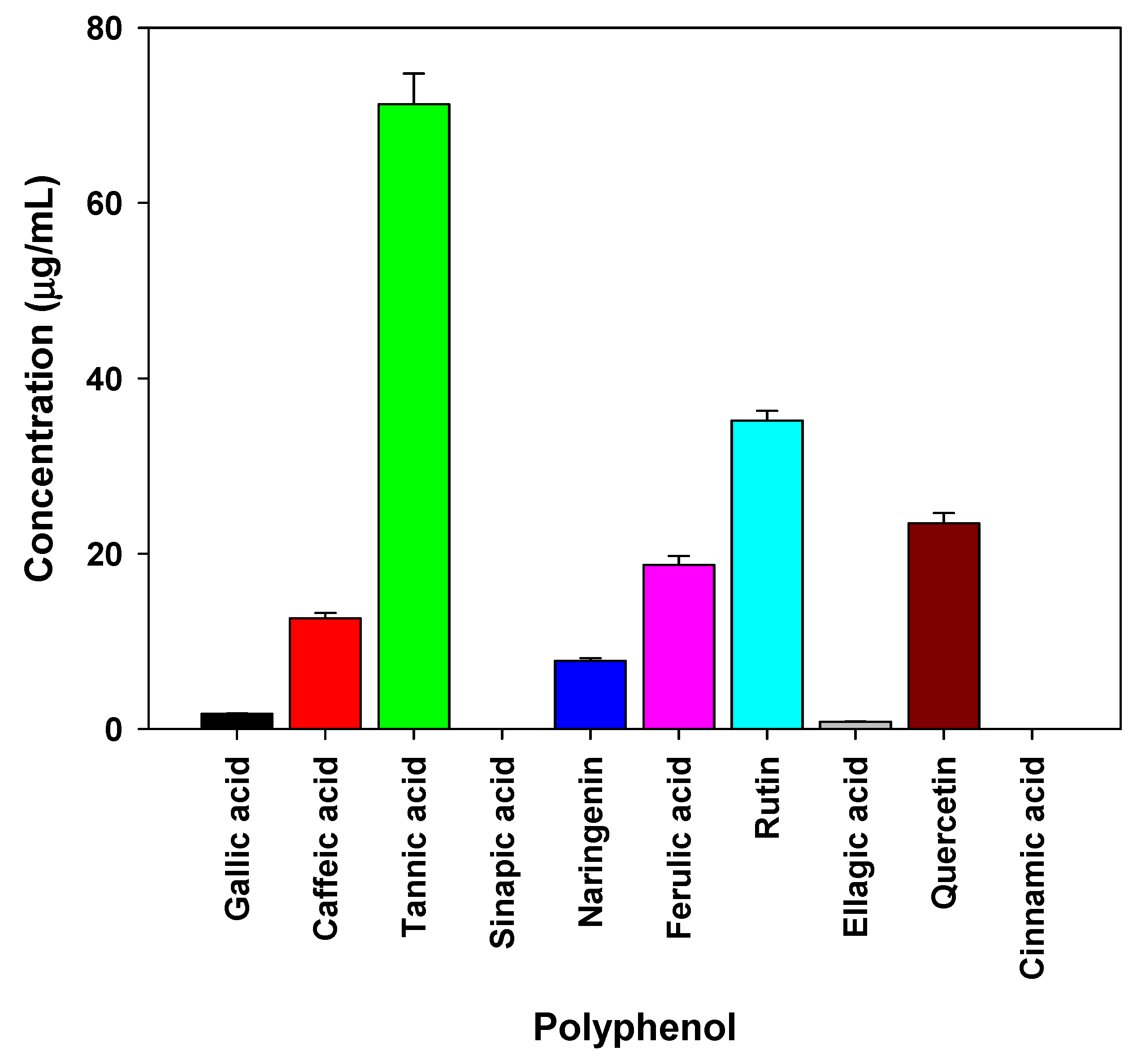
Figure 2.
Cytotoxic (A) and anti-inflammatory (B) effects of myrrh resin extracts in methanol.
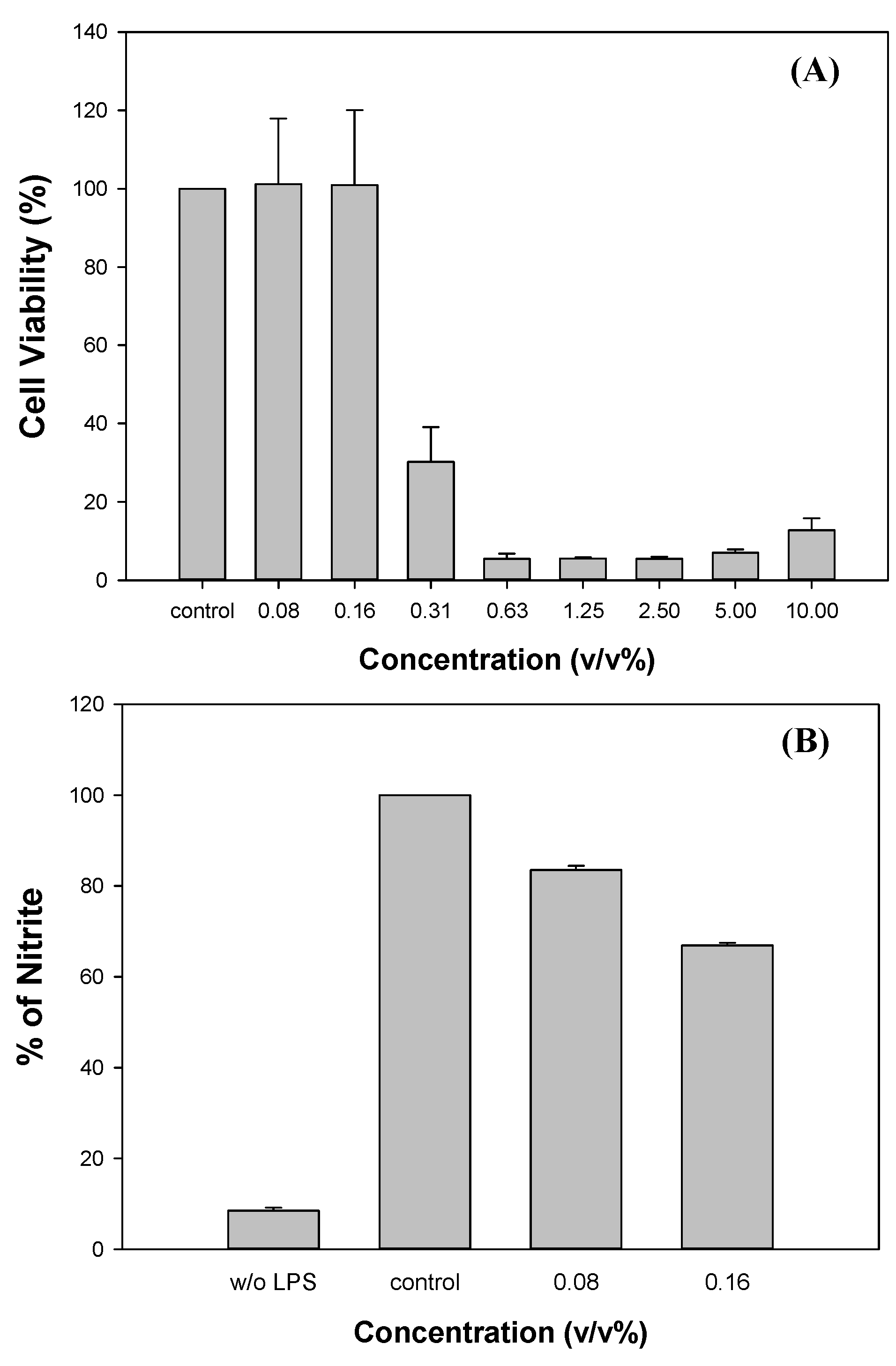
Figure 3.
Antiviral activity of methanol as a control and myrrh resin extract using methanol against the H1N1 influenza virus.
Figure 3.
Antiviral activity of methanol as a control and myrrh resin extract using methanol against the H1N1 influenza virus.
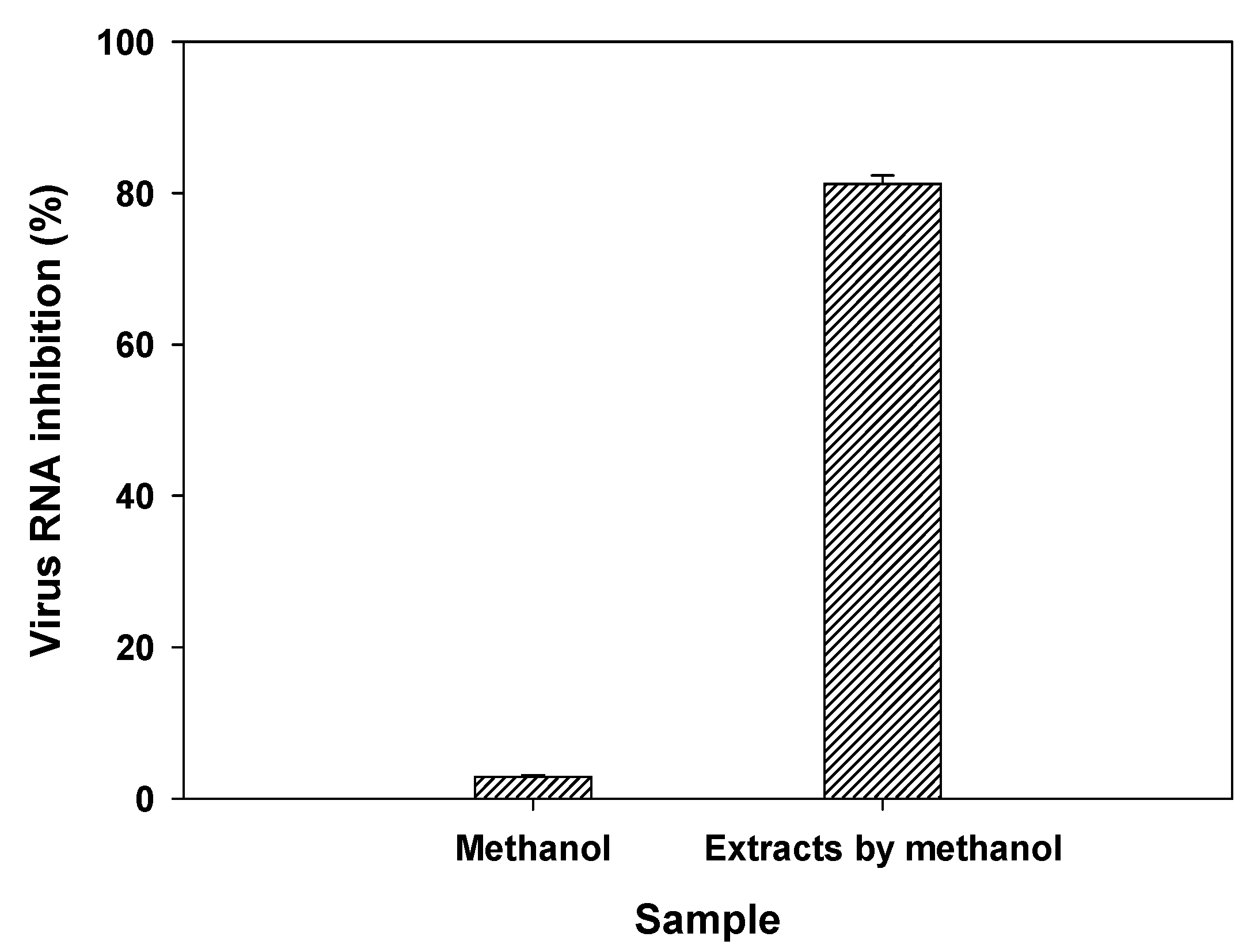
Figure 4.
Concentration of terpenes (i.e., furanoeudesma-1,3-diene and curzerene) in solution before and after adsorption of myrrh resin extracts onto RH-BC.
Figure 4.
Concentration of terpenes (i.e., furanoeudesma-1,3-diene and curzerene) in solution before and after adsorption of myrrh resin extracts onto RH-BC.
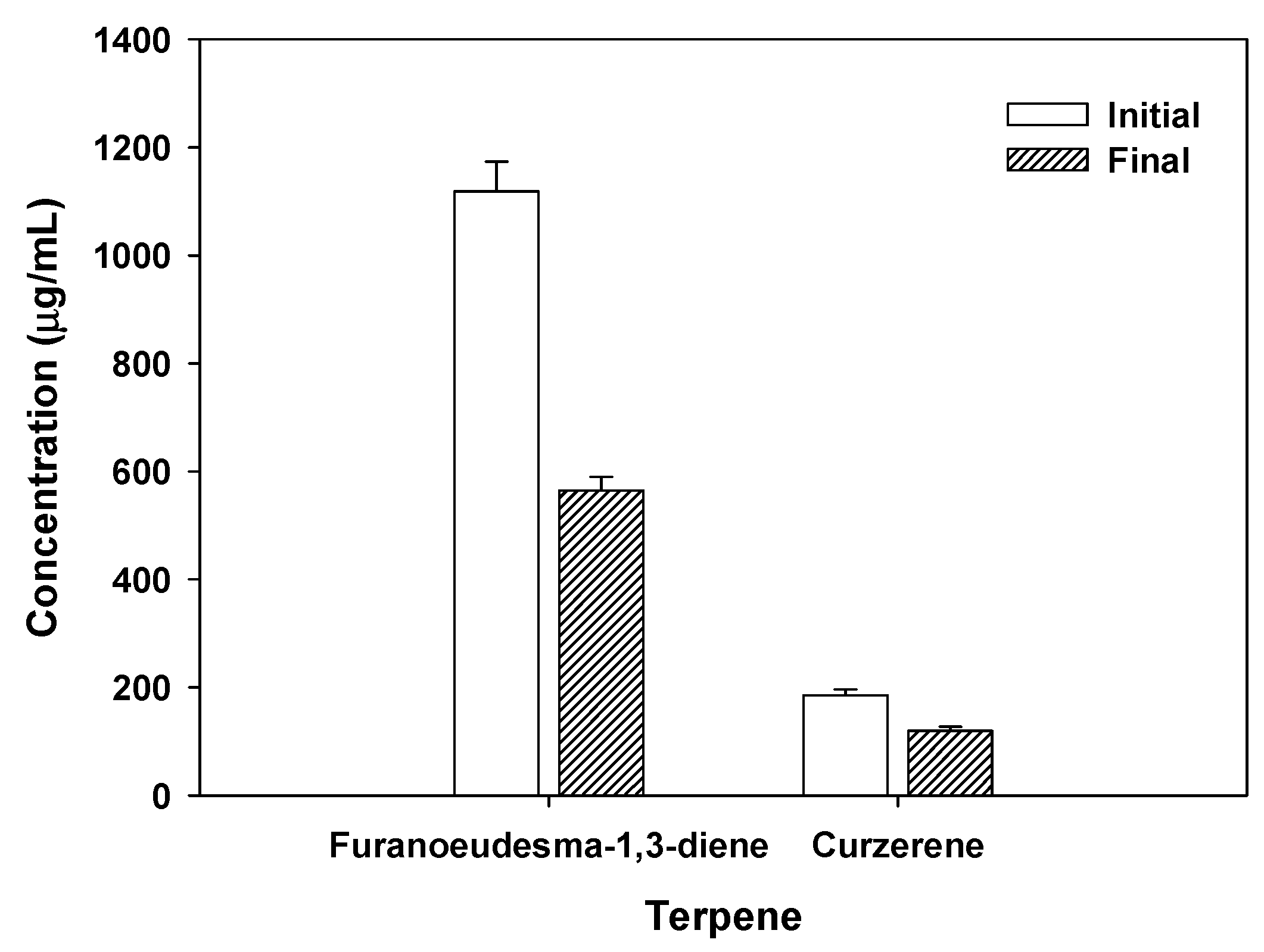
Figure 5.
Antiviral activity of concentration dependence of terpenes ( furanoeudesma-1,3-diene and curzerene) against the H1N1 influenza virus.
Figure 5.
Antiviral activity of concentration dependence of terpenes ( furanoeudesma-1,3-diene and curzerene) against the H1N1 influenza virus.
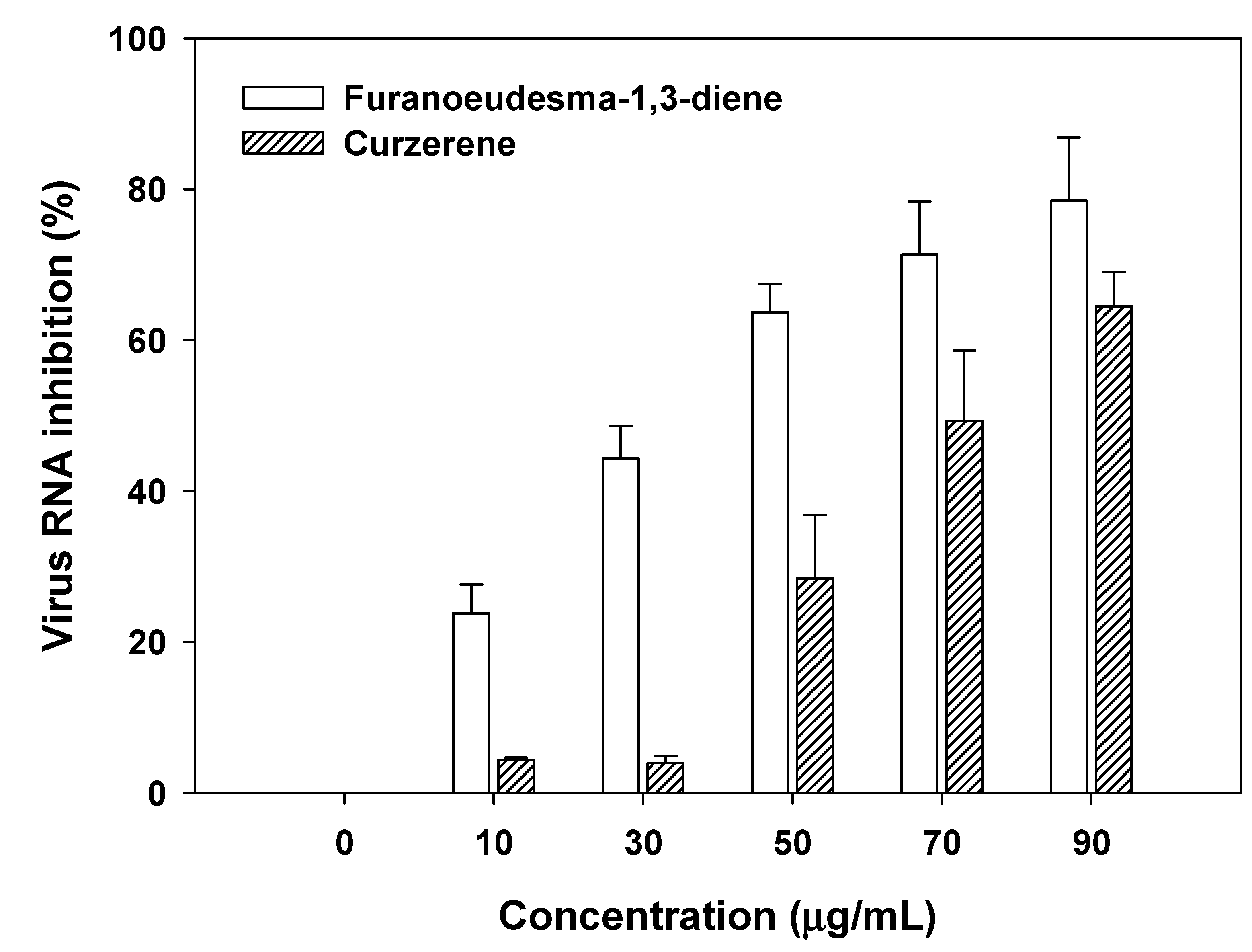
Figure 6.
FTIR spectra of the RH-BCs before and after myrrh resin extract adsorption.
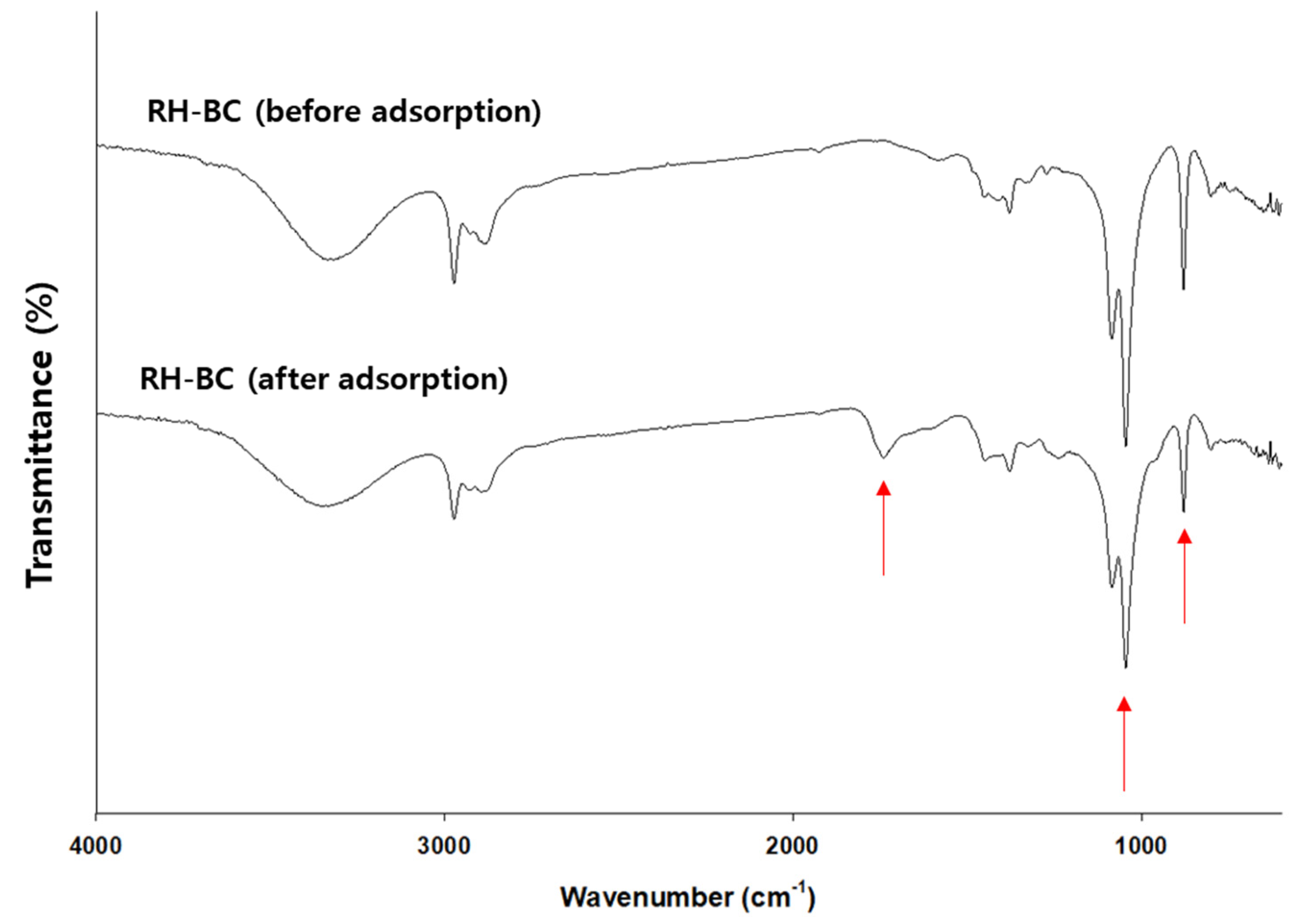
Figure 7.
XPS spectra of raw RH-BC (not coated) and myrrh resin extracts coated RH-BC (coated) at various temperatures (25oC, 50oC, 100oC, and 200oC) for adsorption stability evaluation.
Figure 7.
XPS spectra of raw RH-BC (not coated) and myrrh resin extracts coated RH-BC (coated) at various temperatures (25oC, 50oC, 100oC, and 200oC) for adsorption stability evaluation.
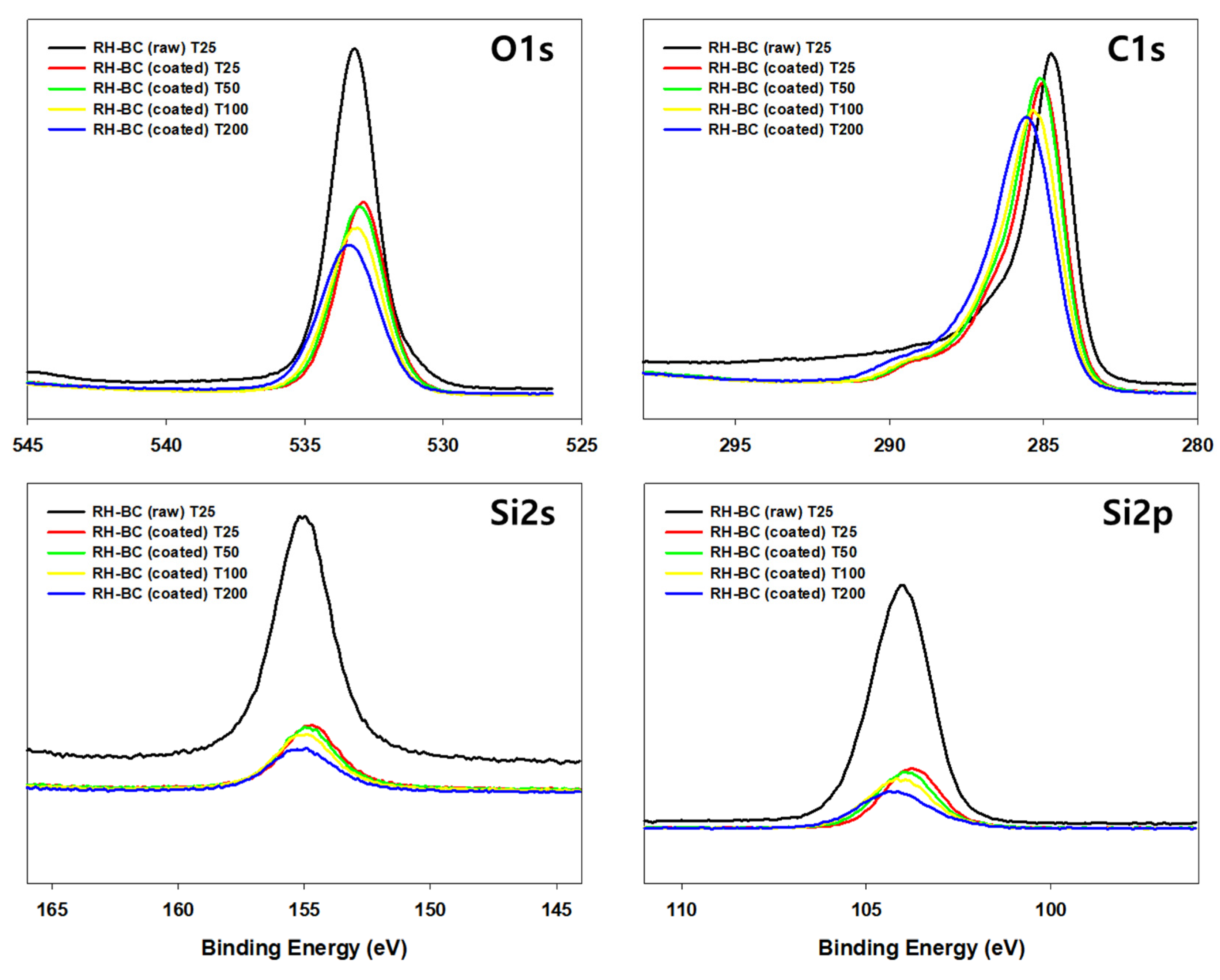

Table 1.
Isolated airborne bacterium and its characteristics.
| Name of strains | Homology (%) | Morphology | Gram staining | Remark | Ref. |
|---|---|---|---|---|---|
| Paenibacillus pasadenensis NBRC 161214 | 98 | Rods | Positive | Soil, Water, Sewage, etc. | [47] |
| Micrococcus yunnanensis YIM 65004 | 99 | Cocci | Positive | Pollutants-degrading | [49] |
| Pseudomonas azotoformans NBRC 12693 | 99 | Rods | Negative | Infecting cereal grains | [45] |
| Rhodococcus qingshengii dj1-6-2 | 99 | Ovoid | Positive | Carbendazim-degrading | [44] |
| Staphylococcus capitis JCM 2420 | 99 | Cocci | Positive | Human skin | [46] |
| Staphylococcus epidermidis NBRC 100911 | 98 | Cocci | Positive | Human skin | [46] |
| Deinococcus radiodurans R1 | 99 | Cocci | Positive | Radiation-resistant | [48] |
Table 2.
Screening of optimal solvent for antibacterial activity of myrrh resin extracts on the isolated airborne bacterium.
Table 2.
Screening of optimal solvent for antibacterial activity of myrrh resin extracts on the isolated airborne bacterium.
| No. | Name of strains | Antibacterial activity | ||||
|---|---|---|---|---|---|---|
| Hot water | DMSO | Hexane | Ethanol | Methanol | ||
| 1 | Paenibacillus pasadenensis NBRC 161214 | - | - | - | + | + |
| 2 | Micrococcus yunnanensis YIM 65004 | - | + | - | + | + |
| 3 | Pseudomonas azotoformans NBRC 12693 | - | - | - | - | - |
| 4 | Rhodococcus qingshengii dj1-6-2 | - | - | - | - | + |
| 5 | Staphylococcus capitis JCM 2420 | - | - | - | - | - |
| 6 | Staphylococcus epidermidis NBRC 100911 | - | - | - | - | - |
| 7 | Deinococcus radiodurans R1 | - | - | - | + | + |
+: positive effect, -: negative effect.
Table 3.
The antibacterial activity of myrrh resin extracts using methanol against airborne bacterium.
Table 3.
The antibacterial activity of myrrh resin extracts using methanol against airborne bacterium.
| No. | Name of strains | Inhibition zone diameter (mm) |
|---|---|---|
| 1 | Paenibacillus pasadenensis NBRC 161214 | 14 ± 2.8 |
| 2 | Micrococcus yunnanensis YIM 65004 | 10 ± 0.0 |
| 3 | Pseudomonas azotoformans NBRC 12693 | ND |
| 4 | Rhodococcus qingshengii dj1-6-2 | 10 ± 1.4 |
| 5 | Staphylococcus capitis JCM 2420 | ND |
| 6 | Staphylococcus epidermidis NBRC 100911 | ND |
| 7 | Deinococcus radiodurans R1 | 12 ± 4.2 |
ND: not detected.
Table 4.
Remained virus in water (without virus), initial (virus in water), RH-BC and WD-BC without myrrh resin extracts (final after reaction), and myrrh resin extracts coated RH-BC and WD-BC (final after reaction) after reaction.
Table 4.
Remained virus in water (without virus), initial (virus in water), RH-BC and WD-BC without myrrh resin extracts (final after reaction), and myrrh resin extracts coated RH-BC and WD-BC (final after reaction) after reaction.
| Sample | Ct value | Remained virus (%) |
|---|---|---|
| Water (without virus) | 0 | - |
| Virus (Initial) | 24.809 | 100.00 |
| WD-BC (Final) | 25.121 | 96.69 |
| Extracts coated WD-BC (Final) | 27.105 | 75.66 |
| RH-BC (Final) | 25.137 | 96.52 |
| Extracts coated RH-BC (Final) | 26.941 | 77.40 |
Disclaimer/Publisher’s Note: The statements, opinions and data contained in all publications are solely those of the individual author(s) and contributor(s) and not of MDPI and/or the editor(s). MDPI and/or the editor(s) disclaim responsibility for any injury to people or property resulting from any ideas, methods, instructions or products referred to in the content. |
© 2023 by the authors. Licensee MDPI, Basel, Switzerland. This article is an open access article distributed under the terms and conditions of the Creative Commons Attribution (CC BY) license (http://creativecommons.org/licenses/by/4.0/).
Copyright: This open access article is published under a Creative Commons CC BY 4.0 license, which permit the free download, distribution, and reuse, provided that the author and preprint are cited in any reuse.


