

Submitted:
29 July 2023
Posted:
31 July 2023
You are already at the latest version
Abstract
The multifactorial nature of some diseases, and in particular neurodegenerative diseases such as Alzheimer’s disease, frequently requires the use of several drugs. These drug cocktails are not without drawbacks in terms of increased adverse effects, drug-drug interactions or adherence to treatment. The concept of pleiotropic drugs, which combine, within a single molecule, several activities directed against distinct therapeutic targets, makes it possible to overcome some of these problems. In addition, these pleiotropic drugs, generally, lead to the expression of a synergy of effects, sometimes greater than that observed with a combination of drugs. This article will review, through recent examples, the different kinds of pleiotropic drugs being studied or already present on the market of medicines.
Keywords:
Drug
; Pleiotropic
; Neurodegeneration
; Alzheimer
1. The concept of pleiotropic active drugs
Since Paracelsus and the laborious beginning of the extraction of active ingredients from materia medica, which finally occured only three centuries later with the extraction of morphine, people, in order to explain the therapeutic efficacy of medicines, have gradually imagined the notion of biological target.
Theorised by Paul Ehrlich and his famous “magic bullet” at the beginning of the 20th century [1], this concept has been progressively enriched by the notion of selectivity of the active principle with regard to a single target, in order to avoid possible deleterious side effects as much as possible. Although this selectivity has been sought for a long time, it has only recently and rarely been achieved, and most of today's active therapeutic compounds still aim a main target, responsible for the desired effect, and unfortunately also modulate secondary targets (off-targets), responsible for side effects (A, Figure 1). The notable exception to this lack of selectivity is the therapeutic use of antibodies, whether naked or armed with an active principle, a radioelement or even a toxin, which show absolute selectivity towards their target specifically designated by the antigen towards which they are directed.However, this notion of selectivity is evolving [2] and, in particular, it is being dissociated from targeted therapy, which should nowadays be described as personalised therapy. The effectiveness of selective therapies sometimes comes up against certain diseases of multifactorial origin for which the use of drug combinations is recommended. This is particularly the case in oncology, where multi-drug therapy is the rule, but it is also the case in virology, where the famous triple therapy has considerably improved the management of AIDS patients. The benefit sought in this case is both to obtain greater efficacy than that of a single drug, thanks to a synergistic effect, and also to combat resistance phenomena. However, the combination of several pharmaceutical forms is not without disadvantages, particularly in terms of increased side effects, drug-drug interactions and also compliance with treatment. These disadvantages have led to the development of so-called "combo" drugs, which combine several active ingredients in a single pharmaceutical form. This is the case for many antihypertensive, antiretroviral or anti-Alzheimer's drugs. However, these combos do not solve the problems of toxicity and interactions.
In order to answer these questions, the concept so called of pleiotropic drugs has been submitted [3]. A pleiotropic compound (Multi-Target Directed Ligand) has been specifically designed to express effects on several targets, but all of therapeutic interest. This plural action should allow it to exert a synergy of desired effects "squared" leading, in theory, to a clinical efficacy superior to that obtained with an ordinary drug and even with a combination of ordinary drugs (B, Figure 1). Such a pleiotropic compound is the result of a rigorous design and should not be confused with a ubiquitous or promiscuous drug, whose lack of selectivity has not been reasoned out and which generally only leads to undesirable effects in the clinic. In short, according to the concept of pleiotropic compound, the undesirable side effects of ordinary active ingredients have become therapeutic, and indeed these agents of plural effects are often more devoid of deleterious effects than ordinary active ingredients. There are two reasons for this: on the one hand, the fact that the synergy obtained makes it possible to reduce the active concentration administered and thus to minimise the adverse effects and, on the other hand, the concept of saturability of the ligands. Each biologically active molecule can statistically only show a high affinity towards a limited number of therapeutic proteins. If all these targets are of therapeutic interest, this could reduce the risk of unwanted effects caused by interaction with undesirable targets. In addition to this increased efficacy and reduction in adverse effects, pleiotropic substances can also be credited with avoiding the problems of interactions and compliance encountered with multiple-medication therapy.
Pleiotropic compounds have already begun to take over our pharmacopoeia, particularly the class of anticancer drugs, among which many kinase inhibitors have multiple effects by targeting several enzymes, some of which are even described as pan-inhibitors, such as pazopanib, prescribed for metastatic breast cancer. However, its pleiotropic nature does not prevent it from remaining a targeted or rather personalised therapy drug, given the possibility of selecting, in order to benefit from it, patients whose tumour status corresponds to the kinases targeted by the drug. Neurodegenerative diseases are another area where a pleiotropic therapeutic intervention seems necessary.
2. The application of the concept of pleiotropic active compounds to the therapeutic management of Alzheimer’s disease
Given the multifactorial nature of their pathogenicity, neurodegenerative diseases, such as Alzheimer's disease, appear to be able to respond positively to treatment with pleiotropic compounds, and some researches have recently focused on this approach [4,5,6]. Overall, the literature reports four types of pleiotropic agents designed for the potential management of Alzheimer's disease (Figure 2).
2.1. Conjugates with immolable chemical bond
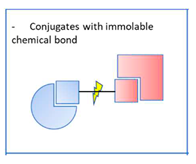
Also known as mutual prodrugs [7], these are molecules wearing two structural units, each of which may have a different therapeutic target. The link between them is immolable and cleaved by various mechanisms: exposure to hydrogen peroxide, cleavage by a cysteine-dependent mechanism, hydrolysis of amide groups, etc. These entities do not have all the advantages of pleiotropic agents, since they release two active ingredients, each of which may be responsible for undesirable effects or interact with each other. Nevertheless, they make it possible to reduce the number of pharmaceutical doses and, above all, their character as prodrugs confers on them an improved pharmacokinetic behaviour, such as the crossing of the blood-brain barrier, compared to that of the active substances they combine, or avoid a toxicity which would otherwise be expressed by the latter. Examples include boronates releasing a derivative of tacrine, an acetylcholinesterase inhibitor, and ibuprofen, an anti-inflammatory drug [8], thio-isocyanates releasing memantine, an antagonist of N-Methyl-D-Aspartate and hydrogen sulphide receptors with anti-inflammatory and anti-apoptotic properties [9], benzamides cleaved into tacrine and the neuroprotective probenecid... [10] (Figure 3). Some of these dissociable conjugates combine two identical structural units. In this case, they are not pleiotropic agents, unless the single drug released is itself an agent of plural action. This is the case, for example, of chalcones, antioxidant and inhibitor of acetylcholinesterase and lipoxygenase, linked by ether bridges that can be cleaved by the enzymes of cytochromes P1A1 and 1A2 [11] (Figure 3).
2.2. Non-dissociable conjugates
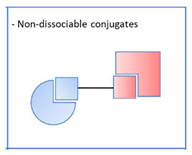
Again, these entities are made of two structural moieties, each designed to recognise a different target [12,13,14,15,16,17,18]. However, this time, the chemical link between these elements is not cleavable. It is generally made up of aliphatic chains, of variable length. These conjugates, often also called hybrids, should, in theory, be aimed at spatially close targets or at two distinct sites within the same protein. In this case, the length of the chemical bond considers the distance separating the two therapeutic targets or the two aimed sites within a single target. This is the case, for example, with dual-site inhibitors of acetylcholinesterase (AChE), which interact with both the catalytic site of the enzyme and its peripheral site, which is described as anionic. These two sites are located on either side of an aromatic gorge within the enzyme, which is approximately 20 Å deep. For this reason, the number of atoms in the chemical bond in the structure of these dual interaction inhibitors is calculated to separate each of the two motifs by an adequate distance [19]. An example is donepezil, one of the anti-Alzheimer's drugs currently on the market, which inhibits the catalytic site of AChE and thus temporarily alleviates the cholinergic deficiency that marks the disease, and also interacts with the peripheral anion site of the enzyme, preventing it from aggregating with the beta-amyloid peptide (Figure 4). Other non-dissociable conjugates do not target close locations. They are then to be considered as structural compromises recognised indifferently by several targets (vide infra) with the disadvantage, compared to most of them, of generally having a high molecular weight, which is conferred to them in particular by the chemical linkage they carry, and which risks, according to Lipinski's rule of five, to affect their bioavailability.
2.3. Pleiotropic prodrugs
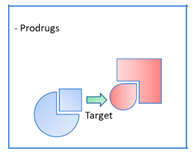
Some multi-acting agents need to be administered in the form of prodrugs in order to overcome bioavailability problems or to mask a toxic profile. In this sense, they are not different from plural conjugated agents, whether dissociable or not (see above), or from pleiotropic molecules making structural compromises (see below). These prodrugs are, in this case, activated by different mechanisms such as, for example, the cleavage of sulphenamide or disulphide groups by thiol groups, such as those of glutathion [20] or the acid cleavage of Mannich bases [21] (Figure 5). These mechanisms do not involve proteins that could themselves be therapeutic targets. Pleiotropic prodrugs, on the other hand, are activated by a first therapeutic target that releases a second principle, active towards a second target. This concept is relatively recent and has particular application in the treatment of neurodegenerative diseases such as Alzheimer's disease.
Among the proteins of therapeutic interest in Alzheimer's disease and capable of activating a pleiotropic prodrug into an active ingredient, AChE and butyrylcholinesterase (BChE) are prime targets. These acetylcholine-degrading enzymes can be competitively inhibited, by some anti-Alzheimer drugs, such as donepezil or galanthamine, which AChE selectively inhibit (Figure 5). These cholinesterases can also be inhibited in a pseudo-irreversible manner, through a covalent bond between the inhibitor and the enzymes, as is the case with rivastigmine, which is currently also used against Alzheimer's disease. Rivastigmine is a synthetic derivative of physostigmine, an alkaloid isolated from the Calabar bean. Chemically it is a carbamate that exchanges this chemical group with the two types of cholinesterases, which are temporarily inhibited, with a moderate and limited therapeutic benefit in terms of the symptoms of the disease. This mechanism leads to the release of an inactive metabolite that could be replaced by a substance active towards a second target of therapeutic interest in this disease, according to an approach using the prodrug concept.
The most advanced pleiotropic prodrug in this context is ladostigil, a hydroxy-rasagiline carbamate [22,23]. This prodrug has been shown to inhibit both AChE and BuChE, which, by decarbamylating this molecule, releasing a derivative of rasagiline, a monoamine oxidase B inhibitor (MAO-B), which is also used in Parkinson's disease for its neuroprotective effect. Ladostigil has been involved in clinical trials against Alzheimer's disease and has led to the synthesis of numerous analogues [24,25,26]. Furthermore, based on the same principle, other pleiotropic prodrugs have been designed by exploiting cholinesterase inhibition to release various active ingredients, such as, for example, ligands of serotonin receptors 5-HT4R [27] and 5-HT6R [28], melatonin derivatives [29] or amphetamine [30], all of which are of therapeutic interest in neurodegenerative diseases. These candidates are currently in the pre-clinical evaluation phase.
2.4. Pleiotropic structural compromises
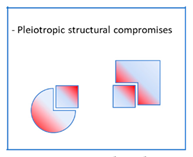
A pleiotropic structural compromise is a molecule specifically designed to have structural elements that respond to several pharmacophores with distinct biological effects. As a result, this multi-acting entity must be able to bind indifferently several targets and interact with each of them in such a way as to determine a synergistic therapeutic effect. The first condition for this approach to be successful is the necessary structural homology that must exist between the intended targets, so that the same drug can bind both of them. This homology, illustrated for example by the phylogenetic tree of kinases, explains why it is possible to design pleiotropic agents specially designed to "selectively" inhibit several kinases of therapeutic interest in oncology [31].
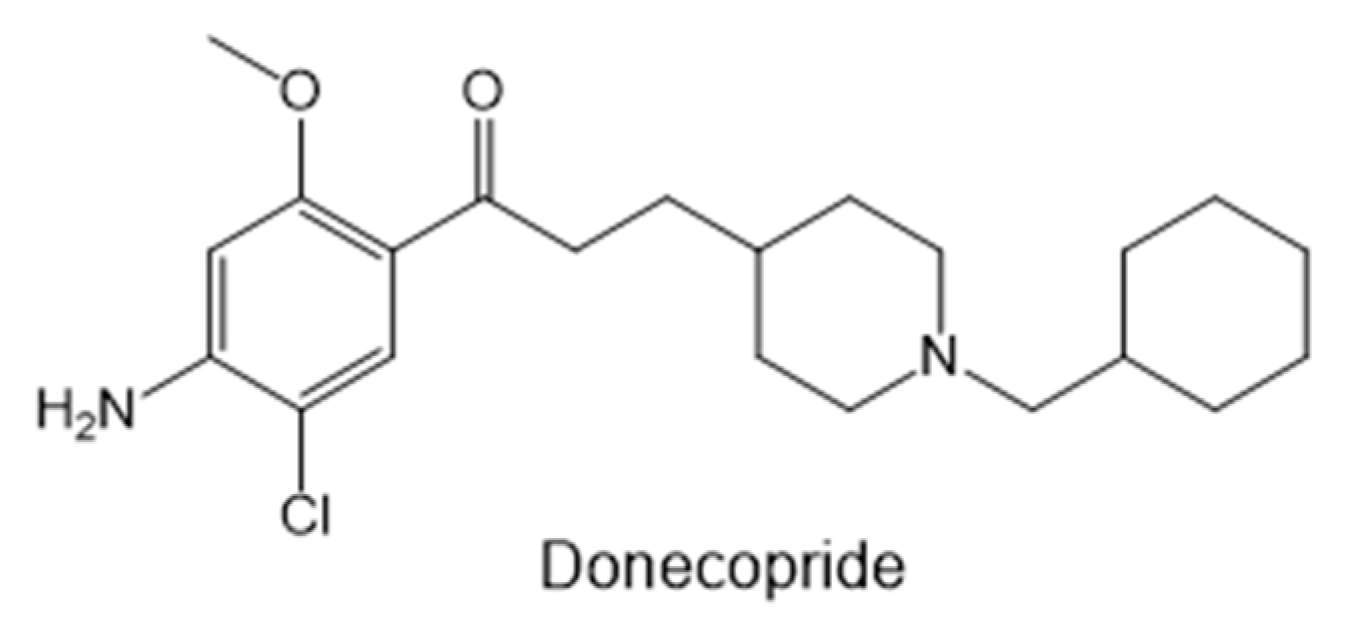
Numerous chimeric molecules, targeting neurodegenerative diseases, have also been designed on this concept. Many of them also target cholinesterases, but this time generally in a non-covalent manner. Indeed, these enzymes, which, along with the NMDA glutamate receptor, are the main targets of current anti-Alzheimer's drugs, lose their interest as the disease progresses and neuronal death makes their enzymatic inhibitory activity ineffective. However, maintaining the integrity and functionality of cholinergic neurons longer, by means of neuroprotective or even neurotrophic agents, would theoretically make it possible to exert a symptomatic effect that would be more long-lasting over time and would be associated with an effect that would delay the progression of the disease to its severe forms. This is what is provided, for example, by donecopride, which has been specially designed to both inhibit AChE and activate the 5-HT4 receptor [32]. This receptor is in fact constitutively linked to a α-secretase capable of non-amyloidogenic cleavage of a neuronal membrane protein APP into various fragments, including a soluble protein known as sAPPα [33]. The latter is neurotrophic and plays an important role in neuroplasticity phenomena. This mechanism is predominant in young adults, whereas with age this cleavage pathway is progressively abandoned in favour of an amyloidogenic pathway, involving other secretases, and leading in particular to the β-amyloid peptide. If the latter is not correctly eliminated, it will aggregate into fibrils which have proved to be particularly neurotoxic, and then into so-called senile plaques which will constitute reservoirs and will be one of the first biomarkers of Alzheimer's disease. It has been shown that activating the 5-HT4 receptor with an agonist induces the non-amyloidogenic pathway and exerts a therapeutic benefit in animal models of Alzheimer's disease [34]. Donecopride (Figure 6) was the first pleiotropic agent with dual activity targeting both AChE and the 5-HT4 receptor at nanomolar concentrations, whose active sites have a certain structural homology, which allows them to be recognised indifferently by the latter [35]. This effect, which is both plural and selective compared to other targets of no therapeutic interest, is reflected in an in cellulo model of Alzheimer's disease, consisting of hippocampal neurons intoxicated by β-amyloid peptides, by various activities. The latter target amyloid aggregation resulting in neuroprotection, but also hyperphosphorylation of the TAU protein, the second major biomarker of Alzheimer's disease, and express a neurotrophic action leading to synaptogenesis [36]. Based on this profile, donecopride has also been investigated in vivo in various animal models of Alzheimer's disease, where it has been shown to have procognitive and antiamnestic effects and to reduce amyloid biomarkers and neuronal inflammation from an immunohistological point of view. Donecopride and its derivatives are currently in regulatory preclinical development.
Certain other activities have been associated with the competitive inhibition of cholinesterases within the same pleiotropic molecule for therapeutic purposes in Alzheimer's disease, such as the inhibition of sigma-1 receptors [37] or that of MAO-B [38]. Ligands with triple activity have even been obtained. In addition to AChE and the 5-HT4 receptor, some target the 5-HT6 receptor, achieving the challenge of activating the former while antagonising the latter [39,40]. Beyond this, combining several activities within pleiotropic structural compromises has been successfully achieved in many other examples, when the intended targets have sufficient homology between them to be recognised by a single molecule [41,42,43,44,45,46].
3. Conclusion
The concept of pleiotropic compounds is considered today as particularly attractive by pharmacochemists who have a better and better knowledge of structure-activity relationships to enable them to design "tailor-made" molecules, designed to selectively reach several targets contributing to a synergistic therapeutic effect. This approach is often difficult, however, because it requires verification of three prerequisites that cannot be avoided. First of all, the synergistic interest of combining several drugs must be demonstrated, each of which targeting a distinct protein. To do this, it is necessary to conduct in vivo tests, proving the activity of each of the agents in relation to a given behaviour. Then to determine the concentrations of each of these compounds that cause them to lose their activity. Finally, it is necessary to check whether the co-administration of these molecules in sub-active doses allows them to recover their efficiency by synergy [47]. The second prerequisite consists of verifying, with chemoinformatics tools, the possibility of reaching the two selected targets by means of a single molecule, either a dissociable or non-dissociable conjugate, or a prodrug, or even a structural compromise [48]. The third prerequisite will consist, finally, in verifying the possibility of chemically constructing these entities according to the structural requirements defined by the objectives to be reached in terms of ligand-target interactions [49]. These preliminary steps are therefore delicate and will not allow all the possibilities of pleiotropic interactions of a single ligand with several targets. However, when this is possible, the continuation of preclinical and then clinical studies of drug candidates obtained in this way should be facilitated by the advantages, in terms of efficacy, reduction of adverse effects, absence of interactions or compliance with treatment, as previously mentioned [50]. The much higher cost of these late stages in the life cycle of a drug, compared with the much more modest cost of the early drug design stage, explains the current interest in the development of pleiotropic drugs in medicinal chemistry.
Funding
The funders had no role in the design of the study; in the collection, analyses, or interpretation of data; in the writing of the manuscript; or in the decision to publish this review.
Declaration of Interest Statement
The authors declare no conflict of interest.
References
- Ehrlich P. Experimental researches on specific therapy. Pergamon Press Ltd, Ed. The collected papers of Paul Ehrlich. London: Himmelweit; 1960: 106–117.
- Lalut J., Rochais C., Dallemagne P. Multiple ligands in neurodegenerative diseases. Wiley-VCH Verlag GmbH & Co. Drug selectivity: An evolving concept in medicinal chemistry. Hoboken: Handler and Bushmann; 2017: 477-508.
- Cavalli A., Bolognesi M.L., Minarini A., et al. Multi-Target Directed Ligands to combat neurodegenerative diseases. J. Med. Chem. 2008; 51(3): 347-372. [CrossRef]
- Parvin N., Jozwiak K. Effects of linkers and substitutions on Multi-Target Directed Ligands for Alzheimer’s diseases: Emerging paradigms and strategies. Int. J. Mol. Sci. 2022;23: 6085.
- De Simone A., Tumiatti V., Andrisano V., et al. Glycogen Synthase Kinase 3β: A New Gold Rush in Anti-Alzheimer’s Disease Multitarget Drug Discovery? J. Med. Chem. 2021;64: 26−41.
- Kumar N., Kumar V., Anand P., et al. Advancements in the development of multi-target directed ligands for the treatment of Alzheimer’s disease. Bioorg. Med. Chem. 2022;61: 116742. [CrossRef]
- Travers--Lesage V., Mignani S., Dallemagne P., Rochais C. Advances in prodrug design for Alzheimer’s disease: the state of the art. Expert. Opin. Drug. Discov. 2022;17(4): 325-41. [CrossRef]
- Liu Z., Zhang B., Xia S., et al. ROS-responsive and multifunctional anti-alzheimer prodrugs: tacrine-ibuprofen hybrids via a phenylboronate linker. Eur. J. Med. Chem. 2021;212: 112997.
- Sestito S., Daniele S., Pietrobono D., et al. Memantine prodrug as a new agent for Alzheimer’s disease. Sci. Rep. 2019;9(1): 4612. [CrossRef]
- Gong T., Huang Y., Zhang Z-R., et al. Synthesis and characterization of 9-[P-(N,N-dipropylsulfamide)] benzoylamino-1,2,3,4-4H-acridine- A potential prodrug for the CNS delivery of tacrine. J. Drug. Target. 2004;12(3): 177-182.
- Liargkova T., Hadjipavlou-Litina D.J., Koukoulitsa C., et al. Simple chalcones and bis-chalcones ethers as possible pleiotropic agents. J. Enzyme Inhib. Med. Chem. 2016;31(2): 302-301. [CrossRef]
- Gody J., Zareba P., Lazewska D., et al. Cyanobiphenyls: Novel H3 receptor ligands with cholinesterase and MAO B inhibitory activity as multitarget compounds for potential treatment of Alzheimer’s disease. Bioorg. Chem. 2021;114: 105129. [CrossRef]
- George N., Akhtar M.J., Al Balushi K.A., et al. Rational drug design strategies for the development of promising multi-target directed indole hybrids as Anti-Alzheimer agents. Bioorg. Chem. 2022;127: 105941. [CrossRef]
- Rossi M., Freschi M., de Camargo Nascente L., et al. Sustainable drug discovery of multi-target-directed ligands for Alzheimer’s disease. J. Med. Chem. 2021;64: 4972−4990. [CrossRef]
- Ismaili L., Monnin J., Etievant A., et al. (±)-BIGI-3h: Pentatarget-directed ligand combining cholinesterase, monoamine oxidase, and glycogen synthase kinase 3β inhibition with calcium channel antagonism and antiaggregating properties for Alzheimer’s disease. ACS. Chem. Neurosci. 2021;12: 1328-1342.
- Javed M.A., Ashraf N., Jan M.S., et al. Structural modification, in vitro, in vivo, ex vivo, and in silico exploration of pyrimidine and pyrrolidine cores for targeting enzymes associated with neuroinflammation and cholinergic deficit in Alzheimer’s disease. ACS. Chem. Neurosci. 2021;12: 4123−4143.
- Nozal V., Garcia-Rubia A., Cuevas E.P., et al. From kinase inhibitors to multitarget ligands as powerful drug leads for Alzheimer’s disease using protein-templated synthesis. Angew. Chem. Int. Ed. 2021;60: 19344–19354. [CrossRef]
- Mazej T., Knez D., Meden A., et al. 4-Phenethyl-1-propargylpiperidine-derived dual inhibitors of butyrylcholinesterase and monoamine oxidase B. Molecules 2021;26: 4118. [CrossRef]
- Zhang P., Wang Z., Mou C., et al. Design and synthesis of novel tacrine-dipicolylamine dimers that are multiple-target-directed ligands with potential to treat Alzheimer’s disease. Bioorg. Chem. 2021;116: 105387.
- Markowicz-Piasecka M., Sikora J., Mateusiak L., et al. Metformin and its sulfenamide prodrugs inhibit human cholinesterase activity. Oxid. Med. Cell. Longev. 2017;2017: 1–11. [CrossRef]
- Purgatorio R., Candia M., Catto M., et al. Evaluation of water-soluble Mannich base prodrugs of 2,3,4,5-tetrahydroazepino[4,3-b]indol-1(6H)-one as multitarget-directed agents for Alzheimer’s disease. ChemMedChem. 2021;16(3): 589–598.
- Weinstock M., Goren T., Youdim M.B.H. Development of a novel neuroprotective drug (TV3326) for the treatment of Alzheimer’s disease, with cholinesterase and monoamine oxidase inhibitory activities. Drug. Dev. Res. 2000;50(3–4): 216–222.
- Youdim M.B., Weinstock M. Molecular basis of neuroprotective activities of rasagiline and the anti-Alzheimer drug TV3326 [(N-propargyl-(3R)aminoindan-5-yl)-ethyl methyl carbamate]. Cell. Mol. Neurobiol. 2001;21(6): 555–573. [CrossRef]
- Zheng H., Youdim M.B.H., Fridkin M. Site-activated chelators targeting acetylcholinesterase and monoamine oxidase for Alzheimer’s therapy. ACS. Chem. Biol. 2010;5(6): 603–610. [CrossRef]
- Huang W., Liang M., Li Q., et al. Development of the “hidden” multifunctional agents for Alzheimer’s disease. Eur. J. Med. Chem. 2019;177: 247–258.
- Zheng H., Youdim M.B.H., Fridkin M. Site-activated multifunctional chelator with acetylcholinesterase and neuroprotective−neurorestorative moieties for Alzheimer’s therapy. J. Med. Chem. 2009;52(14): 4095–4098. [CrossRef]
- Toublet F-X., Lecoutey C., Lalut J., et al. Inhibiting acetylcholinesterase to activate pleiotropic prodrugs with therapeutic interest in Alzheimer’s disease. Molecules. 2019;24(15): 2786. [CrossRef]
- Toublet F-X., Lalut J., Hatat B., et al. Pleiotropic prodrugs: Design of a dual butyrylcholinesterase inhibitor and 5-HT6 receptor antagonist with therapeutic interest in Alzheimer’s disease. Eur. J. Med. Chem. 2021;210: 113059. [CrossRef]
- Scheiner M., Hoffmann M., He F., et al. Selective pseudo-irreversible butyrylcholinesterase inhibitors transferring antioxidant moieties to the enzyme show pronounced neuroprotective efficacy in vitro and in vivo in an Alzheimer’s disease mouse model. J. Med. Chem. 2021;64(13): 9302–9320. [CrossRef]
- Verheijen J.C., Wiig K.A., Du S., et al. Novel carbamate cholinesterase inhibitors that release biologically active amines following enzyme inhibition. Bioorg. Med. Chem. Lett. 2009;19(12): 3243–3246.
- Iancu G., Serban D., Badiu C.D., et al. Tyrosine kinase inhibitors in breast cancer. Exp. Ther. Med. 2022; 23(2): 114. [CrossRef]
- Lecoutey C., Hedou D., Freret T., et al. Design of Donecopride, a Dual Serotonin Subtype 4 Receptor Agonist/Acetylcholinesterase Inhibitor with Potential Interest for Alzheimer’s Disease Treatment. Proc. Natl. Acad. Sci. 2014;111(36): E3825–E3830. [CrossRef]
- Giannoni P., Gaven F., de Bundel D., et al. Early administration of RS 67333, a specific 5-HT4 receptor agonist, prevents amyloidogenesis and behavioral deficits in the 5XFAD mouse model of Alzheimer’s disease. Front. Aging. Neurosci. 2013; 5:96.
- Baranger K., Giannoni P., Girard S.D., et al. Chronic treatments with a 5-HT4 receptor agonist decrease amyloid pathology in the entorhinal cortex and learning and memory deficits in the 5xFAD mouse model of Alzheimer's disease. Neuropharmacol. 2017;126: 128-141.
- Rochais C., Lecoutey C., Gaven F., et al. Novel Multitarget-Directed Ligands (MTDLs) with acetylcholinesterase (AChE) inhibitory and serotonergic subtype 4 receptor (5-HT4R) agonist activities as potential agents against Alzheimer’s disease: The design of Donecopride. J. Med. Chem. 2015; 58(7): 3172–3187. [CrossRef]
- Rochais C., Lecoutey C., Hamidouche K., et al. Donecopride, a Swiss army knife with potential against Alzheimer’s disease. Br. J. Pharmacol. 2020; 177(9): 1988–2005.
- Lalut J., Santoni G., Karila D., et al. Novel Multitarget-Directed Ligands targeting Acetylcholinesterase and σ1 receptors as lead compounds for treatment of Alzheimer’s disease: Synthesis, evaluation, and structural characterization of their complexes with acetylcholinesterase. Eur. J. Med. Chem. 2018;162 : 234–248.
- Guieu B., Lecoutey C., Legay R., et al. First Synthesis of Racemic Trans Propargylamino-Donepezil, a Pleiotrope Agent Able to Both Inhibit AChE and MAO-B, with Potential Interest against Alzheimer’s Disease. Molecules. 2021;26(1): 80.
- Hatat B., Yahiaoui S., Lecoutey C., et al. A novel in vivo anti-amnesic agent, specially designed to express both acetylcholinesterase (AChE) inhibitory, serotonergic subtype 4 receptor (5-HT4R) agonist and serotonergic subtype 6 receptor (5-HT6R) inverse agonist activities, with a potential interest against Alzheimer’s disease. Front. Aging. Neurosci. 2019;11: 148. [CrossRef]
- Lecoutey C., Legay R., Davis A., et al. Development of novel potential pleiotropic compounds of interest in Alzheimer ’s disease treatment through rigidification strategy. Molecules. 2021;26: 2536. [CrossRef]
- Jourdan J-P., Since M., El Kihel L., et al. Novel benzylidenephenylpyrrolizinones with pleiotropic activities potentially useful in Alzheimer’s disease treatment. Eur. J. Med. Chem. 2016;114: 365–379. [CrossRef]
- Yahiaoui S., Hamidouche K., Ballandonne C., et al. Design, synthesis, and pharmacological evaluation of Multitarget-Directed Ligands with both serotonergic subtype 4 receptor (5-HT4R) partial agonist and 5-HT6R antagonist activities, as potential treatment of Alzheimer’s disease. Eur. J. Med. Chem. 2016;121: 283–293. [CrossRef]
- Lalut J., Karila D., Dallemagne P., et al. Modulating 5-HT4 and 5-HT6 receptors in Alzheimer’s disease treatment. Future Med. Chem. 2017;9(8): 781–795.
- Jourdan J-P., Since M.; El Kihel L., et al. Benzylphenylpyrrolizinones with anti-amyloid and radical scavenging effects, potentially useful in Alzheimer’s disease treatment. ChemMedChem. 2017;12(12): 913–916. [CrossRef]
- Lanthier C., Payan H., Liparulo I., et al. Novel Multi Target-Directed Ligands targeting 5-HT4 Receptors with in cellulo antioxidant properties as promising leads in Alzheimer’s disease. Eur. J. Med. Chem. 2019;182: 111596. [CrossRef]
- Sergeant N., Vingtdeux V., Eddarkaoui S., et al. New piperazine multi-effect drugs prevent neurofibrillary degeneration and amyloid deposition, and preserve memory in animal models of Alzheimer’s disease. Neurobiol. Dis. 2019;129: 217–233. [CrossRef]
- Freret T., Bouet V., Quiedeville A., et al. Synergistic effect of acetylcholinesterase inhibition (Donepezil) and 5-HT4 receptor activation (RS67333) on object recognition in mice. Behav. Brain. Res. 2012;230(1): 304–308. [CrossRef]
- Sopkova-de Oliveira Santos J., Lesnard A., Agondanou J.H., et al. Virtual screening discovery of new acetylcholinesterase inhibitors issued from CERMN chemical library. J. Chem. Inf. Model. 2010;50(3): 422–428. [CrossRef]
- Lecoutey C., Rochais C., Genest D., et al. Synthesis of dual AChE/5-HT4 receptors Multi-Target Directed Ligands. MedChemCom. 2012;3: 627–634. [CrossRef]
- Dallemagne P., Rochais C.. Facing the Complexity of Alzheimer’s Disease. Future Med. Chem. 2020;12(3): 175–177. [CrossRef]
Figure 1.
Differences between ordinary active ingredient (A) and pleiotropic (B).
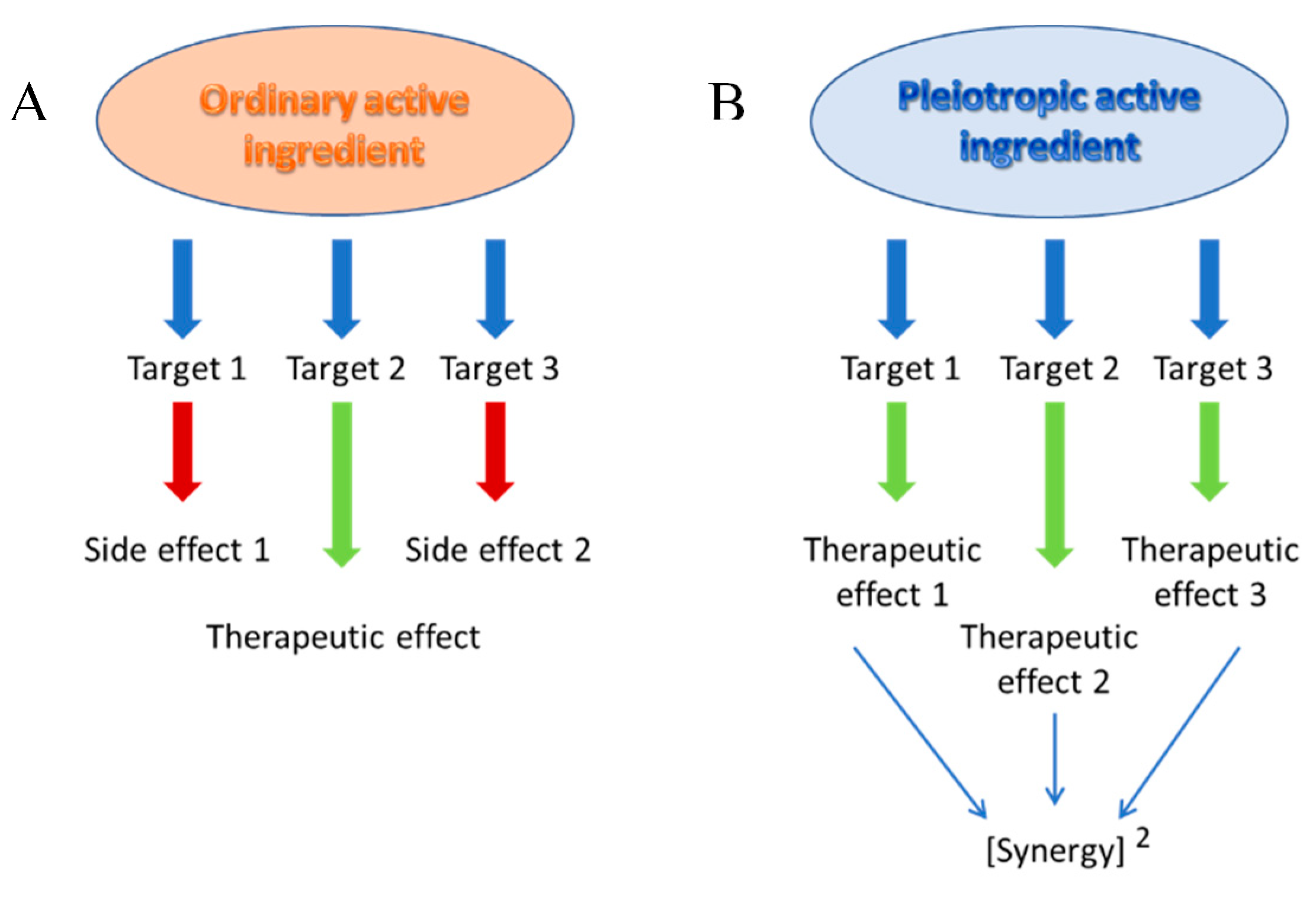
Figure 2.
Different categories of pleiotropic compounds.
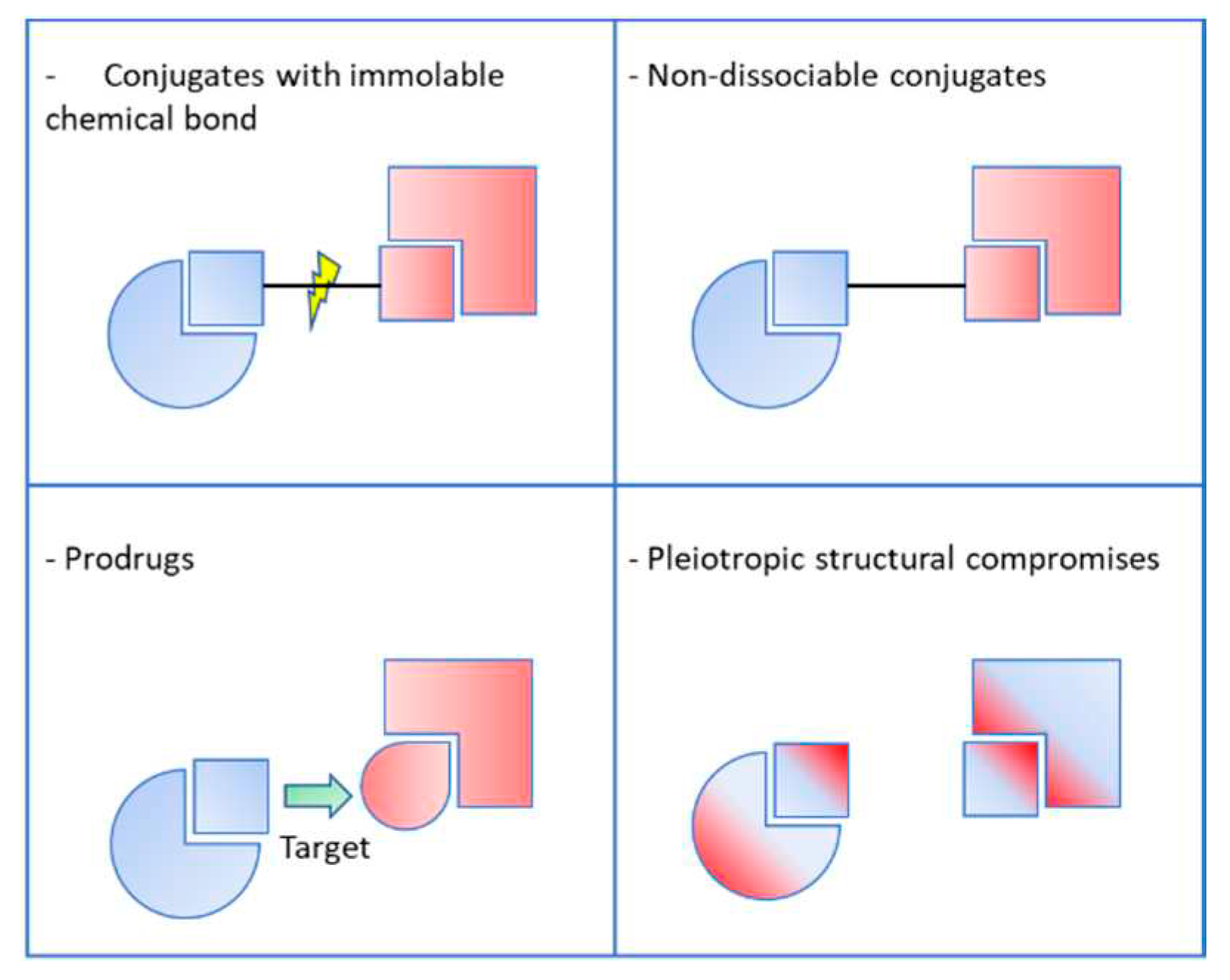
Figure 3.
Structures of different conjugates with immolable chemical bond.
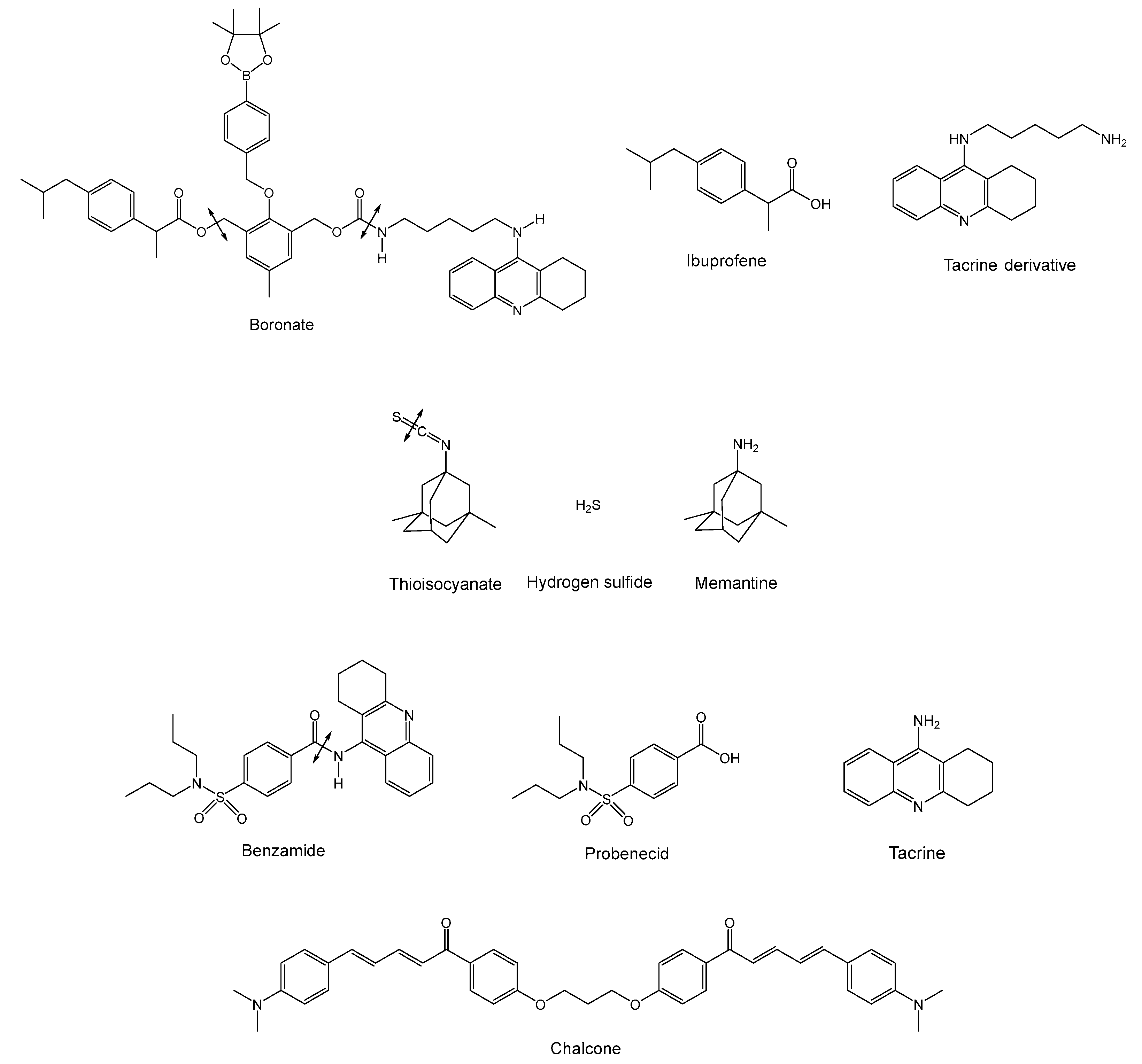
Figure 4.
Donepezil interacts with the catalytic and peripheral anionic sites of AChE. PDB code: 1EVE The compound and the side chains of the binding site residues are represented by the stick-like shapes. This figure was made with PYMOL (DeLano Scientific, 2002, San Carlo, U.S.A.).
Figure 4.
Donepezil interacts with the catalytic and peripheral anionic sites of AChE. PDB code: 1EVE The compound and the side chains of the binding site residues are represented by the stick-like shapes. This figure was made with PYMOL (DeLano Scientific, 2002, San Carlo, U.S.A.).
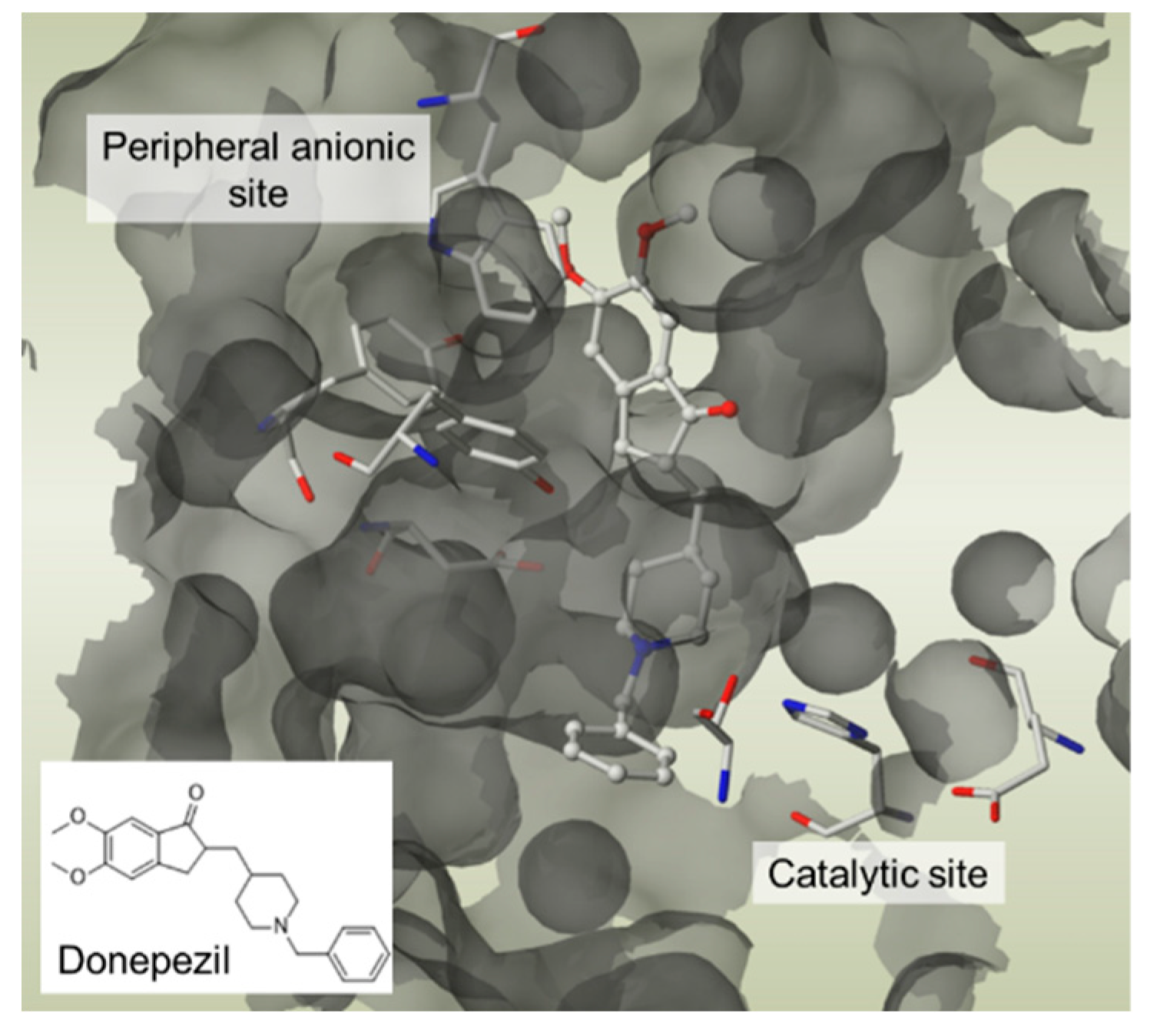
Figure 5.
Prodrugs of pleiotropic agents.
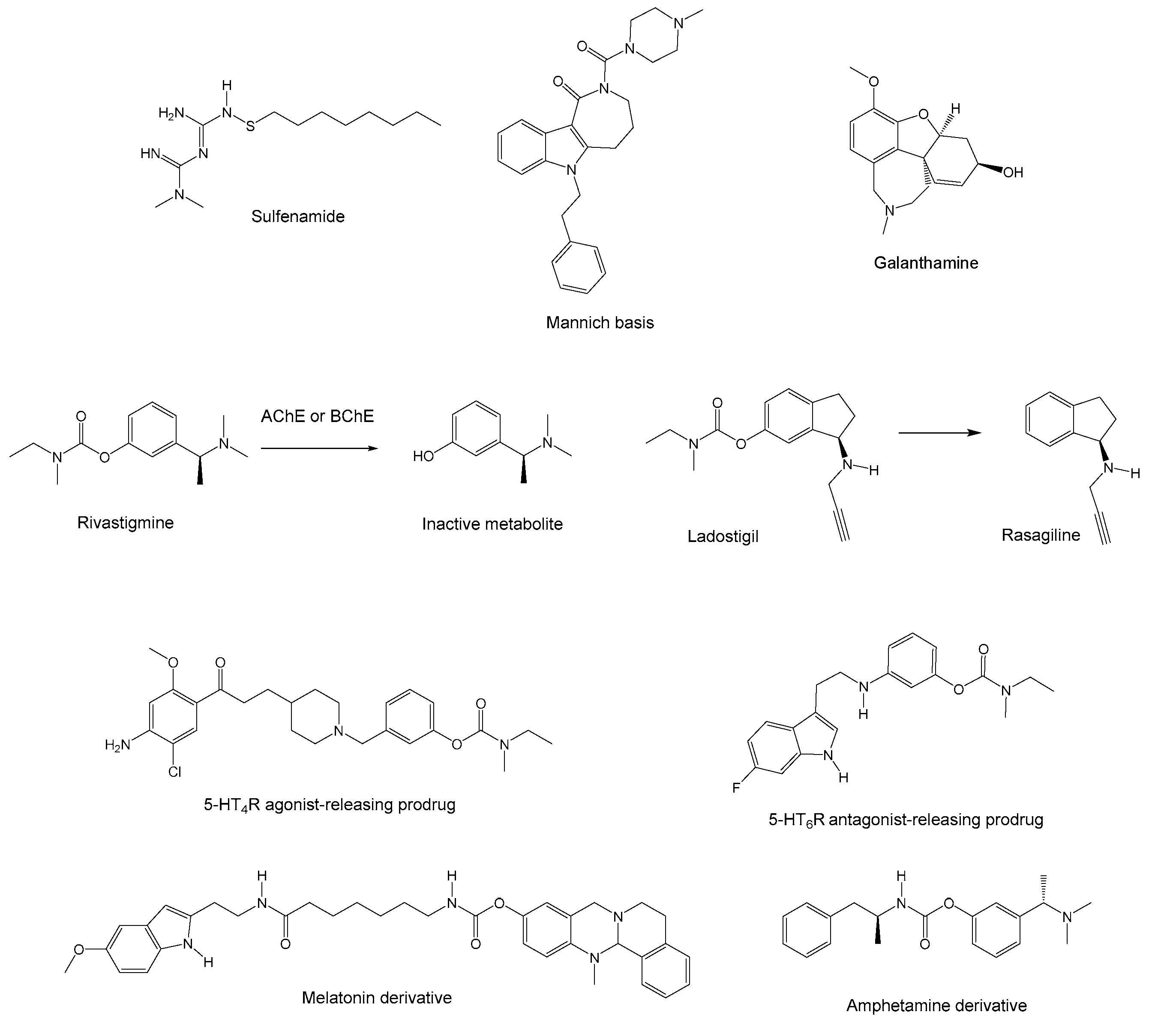
Figure 6.
Structure of Donecopride.
Disclaimer/Publisher’s Note: The statements, opinions and data contained in all publications are solely those of the individual author(s) and contributor(s) and not of MDPI and/or the editor(s). MDPI and/or the editor(s) disclaim responsibility for any injury to people or property resulting from any ideas, methods, instructions or products referred to in the content. |
© 2023 by the authors. Licensee MDPI, Basel, Switzerland. This article is an open access article distributed under the terms and conditions of the Creative Commons Attribution (CC BY) license (https://creativecommons.org/licenses/by/4.0/).
Copyright: This open access article is published under a Creative Commons CC BY 4.0 license, which permit the free download, distribution, and reuse, provided that the author and preprint are cited in any reuse.


