
Submitted:
21 July 2023
Posted:
31 July 2023
You are already at the latest version
Abstract
Objective: To explore the application effect of predictive psychological nursing in the nursing of outpatients with indwelling needle intravenous infusion .Methods: Select 80 patients who received intravenous indwelling needle infusion therapy in the outpatient department of our hospital from January 2022 to December 2022 as the research objects , and divided them into observation group and experimental group according to the different nursing plans received by the patients . 40 cases in each group. The observation group received routine nursing intervention, and the experimental group received predictive psychological nursing intervention. The puncture situation, psychological state level, self-care ability, adverse reactions and nursing satisfaction were compared between the two groups of patients .Results: The puncture success rate of the observation group was 72.5% (29/40), and that of the experimental group was 95.0% (38/40). The puncture success rate of the experimental group was significantly higher than that of the observation group (P<0.05) ; The SAS scores and SDS scores of the treatment group after nursing were significantly lower than those of the observation group (all, P<0.05) ; the self-care skills, self-concept, self-responsibility, health knowledge and ESCA total scores of the experimental group after nursing were significantly higher than those of the observation group. group (all, P<0.05); the incidence of adverse reactions in the observation group was 25.0% (10/40), the incidence of adverse reactions in the experimental group was 7.5% (3/40), and the incidence of adverse reactions in the experimental group was significantly lower than that in the observation group group (P<0.05); the nursing satisfaction of the observation group was 80.0% (32/40), and the nursing satisfaction of the experimental group was 100.0% (40/40), and the nursing satisfaction of the experimental group was significantly higher than that of the observation group (P<0.05 ).Conclusion: The application effect of the predictive psychological nursing intervention model in the outpatient department for intravenous indwelling needle infusion therapy is significant. The implementation of this model can effectively improve the success rate of puncture, improve the patient's psychological state, improve the self-care ability of patients, and reduce the adverse effects of patients. Risk of reaction, so as to further obtain the satisfaction and recognition of patients and their families.
Keywords:
predictive psychological nursing
; outpatient service
; indwelling needle intravenous infusion
; nursing application
Introduction
Intravenous infusion is one of the commonly used methods in clinical treatment [1] , but during the implementation of infusion therapy, due to the influence of factors such as poor tolerance, some patients often appear in disorder , scratching , etc. , which not only It will lead to leakage of infusion , and may increase the risk of adverse reactions such as detachment, bleeding, pain, etc., and repeated punctures will also bring greater pain to patients [2] , therefore, intravenous indwelling needles are given for infusion therapy It is of great significance to reduce the adverse reactions of patients and improve the overall treatment experience of patients. Intravenous indwelling needle is a commonly used clinical injection technique [3] . The implementation of this technique can effectively avoid the pain caused by repeated punctures, thereby improving patients' psychological conflicts such as anxiety, fear, and avoidance, and improving patient acceptance. Treatment compliance [4] .
Widely used in infusion in many clinical departments [5,6] . However, some studies [7] found that the effect of intravenous indwelling needle infusion therapy is closely related to the quality of nursing care received by patients. If the quality of nursing care received by patients is poor, it will still lead to the occurrence of many adverse reactions. In order to reduce the risk of adverse reactions during the period and improve the treatment effect of patients, it is still necessary to find efficient and safe nursing intervention in clinical practice. Predictive psychological nursing is one of the new clinical nursing models [8] , which advocates scientific and effective preventive measures to improve the emotional state of patients and improve the therapeutic effect of patients. Up to now, the predictive psychological nursing model has been applied in many clinical disease studies [9,10] , and all of them have achieved ideal results. Based on this, this study will analyze the application value of predictive psychological nursing in patients with indwelling needle intravenous infusion, and report the experience as follows.
2. Objects and Methods
2.1. Research object
Patients who received intravenous indwelling needle infusion therapy in the outpatient department of our hospital during January 2022 -December 2022 as the research objects, collect basic information such as gender, age, and indwelling time of the patients, and according to the nursing plan received by the patients, They were equally divided into observation group and experimental group, with 40 cases in each group. This study has been approved by the Ethics Committee of our hospital , and all patients and their families are informed about this study and signed relevant consent forms .
2.2. Inclusion and Exclusion Criteria
Inclusion criteria: 1) All patients received indwelling needle intravenous infusion therapy in our hospital; 2) All patients had indications for indwelling needle infusion; 3) Patients were ≥18 years old; 4) The clinical data of patients were complete.
Exclusion criteria: 1) Exclude patients with mental disorders, cognitive impairment, and behavioral disorders; 2) Exclude patients with concomitant infectious diseases; 3) Exclude patients who cannot perform intravenous indwelling needle operations due to skin damage and other reasons; 4) Exclude patients with clinical symptoms Those with incomplete information; 5) Excluding those who cannot fully cooperate with this researcher due to various reasons.
2.3. Method
(1) The observation group received routine nursing intervention, as follows: before the venous indwelling needle puncture treatment, the nursing staff should take corresponding disinfection measures, and after the venous indwelling needle puncture is successful, the nursing staff should change the dressing and infusion for the patient in time Afterwards, the nursing staff should tell the patient not to run around, and at the same time, use simple and easy-to-understand language to educate the patient about relevant knowledge (disease-related knowledge, punctured skin protection knowledge, complication care knowledge, etc.).
(2) The experimental group received predictive psychological nursing model intervention, specifically as follows: ① Evaluation before puncture: Nurses should evaluate the patient's knowledge of indwelling needle care and self-care ability before puncture, and then issue a health certificate to the patient. Education manuals, and inform patients about the relevant knowledge and prevention content of indwelling needles, and at the same time emphasize the advantages and related precautions of indwelling needles, so as to help patients establish preliminary cognition of indwelling needles; ②Psychological care: when patients are sick, they will inevitably Feel anxious and worried about your own condition. At the same time, the physical and mental damage of the disease will further aggravate the negative emotions such as fear and anxiety. Therefore, the nursing staff should stand in the patient's perspective to understand their mood, and the nursing staff can explain the success of the treatment to them. In this case, to enhance their confidence in treatment and alleviate their negative emotions, nurses can also strengthen the psychological comfort of patients through encouragement and comfort; ③ Improve self-care ability: after a patient's intravenous infusion treatment, the nurses should issue indwelling needles to the patient Relevant nursing and prevention knowledge manuals, and through explanations, inform them of the nursing-related skills of indwelling needles, the prevention of adverse events and the implementation of related problems. The nurses can first demonstrate the operation, and then guide the patient to repeat the operation. To clarify the patient's mastery of the knowledge and operation of indwelling needles. In addition, the outpatient department can also organize regular exchanges and discussions with patients to improve the self-care ability of patients, thereby further improving the treatment effect and experience of patients.
2.4. Observation indicators
(1) Puncture status: judging criteria for venous indwelling needle puncture: ①Success: After the patient underwent indwelling needle puncture, the fluid was unblocked and there was no fluid leakage during the intravenous infusion, and no adverse phenomena such as redness, swelling, and purple were found at the puncture site after 30 minutes of observation; ②Failure: After the indwelling needle puncture, the patient's bleeding phenomenon or obvious redness, swelling and bruising at the puncture site, and the patient's fluid blockage during the infusion process are all considered failures.
(2) Mental state level: before and after nursing, the anxiety level of patients was evaluated by using the self-rating anxiety scale (SAS). The scale has 100 points in total, and the cut-off value is 50 points. The lower the level of anxiety in the patient's heart; the self-rating depression scale (SDS) was used to evaluate the degree of depression in the patient. The scale has a total of 100 points, and the cut-off value is 53 points. Low.
(3) Self-care ability: Self-efficacy nursing ability scale (ESCA) was used to evaluate patients' self-care ability before and after nursing. The ESCA scale includes four aspects: self-care skills, self-concept, self-responsibility, and health knowledge. The total score is 170 points. The higher the score of the patient, the stronger the self-care ability.
(4) Adverse reactions: The adverse reactions included in this study include: fluid leakage, skin redness, swelling and purple, bleeding at the puncture site, catheter blockage, detachment, infection, and phlebitis.
(5) Nursing satisfaction: The patient and his family members will be scored using the "Nursing Satisfaction Survey Scale" made by our hospital. The scale contains 20 questions in total. Self-satisfaction is scored, with 5 points for each question, with a total score of <70 as dissatisfied, 70-89 as satisfied, and ≥90 as very satisfied. Satisfaction = (very satisfied + satisfied) / total number of cases × 100%.
2.5. Statistical methods
The graphics software was GraphPad Prism 8; SPSS 25.0 was used to analyze the data; measurement data were compared by t test, expressed as (±s); count data were compared by x² test, expressed as n (%). P<0.05 means the comparison is statistically significant.
3. Result
3.1. Basic data comparison
The 40 patients in the observation group, there were 18 males and 22 females; the age was 28-90 years old, with an average age of (56.08±16.40) years; the indwelling time was 3-10 days, with an average time of (4.32±1.46) days. Among the 40 patients in the experimental group, there were 17 males and 23 females; the age was 14-82 years old, with an average age of (57.98±16.64) years; the indwelling time was 3-10 days, with an average time of (4.37±1.42) days. The basic data of the two groups of children were comparable, and there was no significant difference in the comparison (P>0.05). See Table 1 for details.
3.2. Puncture comparison
As shown in Figure 1, the puncture success rate of the observation group was 72.5% (29/40), and that of the experimental group was 95.0% (38/40), and the puncture success rate of the experimental group was significantly higher than that of the observation group (P< 0.05).
3.3. Mental state level comparison
As shown in Figure 2, the SAS scores of the observation group before and after nursing were (67.65±2.31, 58.32±2.45), and the SDS scores were (65.45±3.12, 53.98±5.76); the SAS scores of the experimental group before and after nursing They were (68.72±2.37, 48.39±2.68), and the SDS scores were (65.53±3.24, 47.45±5.43). The SAS scores and SDS scores of the two groups of patients before nursing were compared (all, P>0.05); the SAS scores and SDS scores of the experimental group after nursing were significantly lower than those of the observation group (all, P<0.05).
3.4. Comparison of self-care abilities
As shown in Figure 3, the self-care skills of the observation group before and after nursing were (14.32±4.86, 27.21±4.65), the self-concept were (13.05±3.62, 18.23±3.47), and the sense of self-responsibility were (11.96±2.43 , 17.59±3.86), health knowledge were (20.79±4.36, 33.57±4.98), ESCA total scores were (60.12±15.27, 96.6±16.96); the self-care skills of the experimental group before and after nursing were (14.35± 4.79, 32.27±5.42), self-concept (12.87±3.35, 23.26±3.68), self-responsibility (12.21±2.39, 20.34±4.37), health knowledge (20.84±4.32, 37.35±5.49), ESCA The total scores were (60.27±14.85, 113.22±18.96), respectively. Comparison of self-care skills, self-concept, self-responsibility, health knowledge and ESCA total score levels of the two groups of patients before nursing (all, P>0.05); self-care skills, self-concept, self-responsibility, health knowledge and The ESCA total scores were significantly higher than those in the observation group (all, P<0.05).
3.5. Comparison of adverse reactions
The incidence of adverse reactions in the observation group was 25.0% (10/40), and the incidence of adverse reactions in the experimental group was 7.5% (3/40). The incidence of adverse reactions in the experimental group was significantly lower than that in the observation group (P<0.05). See the Table for details 2.
3.6. Comparison of Nursing Satisfaction
The nursing satisfaction of the observation group was 80.0% (32/40), and that of the experimental group was 100.0% (40/40). The nursing satisfaction of the experimental group was significantly higher than that of the observation group (P<0.05) . See Table 3 for details.
4. Discuss
Based on long-term clinical application experience, the author summarizes the following advantages of venous indwelling needles : ①The application of venous indwelling needles can establish a long-term venous access for patients , which can significantly reduce the pain suffered by patients due to repeated punctures and ensure the patient 's medication to the greatest extent. Utilization rate [11] ; ②The venous indwelling needle can be reused after being repaired after extubation , which to a certain extent reduces the damage and damage to the patient's blood vessels by puncture [12] ; ③The venous indwelling needle can significantly reduce the clinical nursing work It can effectively improve the patient 's overall treatment comfort [13] .
Intravenous indwelling catheters have many advantages, they also put forward higher requirements for patients' compliance and cooperation in application, which emphasizes the importance of nursing work from the side [14] . Predictive nursing is one of the most commonly used clinical nursing concepts at present . This nursing concept aims to emphasize that clinical practice should be based on the actual situation and past experience of the patient , so as to influence the various risks that may occur during the treatment and rehabilitation of the patient. Factors to intervene to ensure the treatment effect of patients [15] . Psychological nursing is one of the commonly used clinical nursing models, which aims to improve patients' negative emotions through communication and comfort, so as to improve patients' enthusiasm for treatment and cooperation [16] . The study [17] pointed out that, compared with the conventional clinical nursing model intervention , the implementation of the predictive psychological nursing model can significantly improve the patient's awareness and compliance, thereby effectively improving the patient's treatment effect and safety. Intravenous indwelling needles are commonly used in clinical treatment. However, due to the weak self-management ability and lack of self-management awareness of some patients, patients are prone to resist and other behaviors during the operation, which will significantly increase the difficulty of treatment. Affect the overall treatment effect of patients [18] . Based on the above reasons, this study attempted to apply predictive psychological nursing to patients who underwent indwelling needle intravenous infusion therapy, aiming to explore the application effect of predictive psychological nursing in outpatient care of patients with indwelling needle intravenous infusion.
The results of this study showed that the puncture success rate of the observation group was 72.5% (29/40), and the puncture success rate of the experimental group was 95.0% (38/40). The puncture success rate of the experimental group was significantly higher than that of the observation group (P< 0.05); the incidence of adverse reactions in the observation group was 25.0% (10/40), the incidence of adverse reactions in the experimental group was 7.5% (3/40), and the incidence of adverse reactions in the experimental group was significantly lower than that in the observation group (P<0.05) , the above results are consistent with the results of previous studies [19]. The results of these studies have confirmed that predictive psychological nursing can effectively improve the success rate of puncture and reduce the risk of adverse reactions in patients undergoing IV infusion therapy with indwelling needles. The reasons may be related to The appropriate teaching of health knowledge can significantly improve patients' awareness of their own disease-related knowledge, thereby improving their treatment enthusiasm and cooperation. The improvement of the patient 's mental state is the key to evaluating the effect of psychological nursing , and the long stay time of the indwelling needle will have a certain impact on the patient's physical activities and inner emotions [20] . The results of this study show that the experimental group nursing After nursing, the SAS scores and SDS scores were significantly lower than those of the observation group (all, P<0.05); the self-care skills, self-concept, self-responsibility, health knowledge and ESCA total scores of the experimental group were significantly higher than those of the observation group ( all, P<0.05), the above results confirmed that predictive psychological nursing can effectively improve patients’ psychological state and self-care ability . It can also mobilize the subjective enthusiasm of patients, thereby further promoting the recovery of the body and mental state. Satisfaction is the core indicator for evaluating a specific nursing policy. The implementation of predictive psychological nursing not only improves patients' awareness of related disease knowledge , but also enables patients to more clearly understand the good intentions of medical staff. The results of this study showed that the nursing satisfaction of the observation group was 80.0% (32/40), and the nursing satisfaction of the experimental group was 100.0% (40/40). The nursing satisfaction of the experimental group was significantly higher than that of the observation group (P<0.05) , this result is consistent with the results of previous studies [21] , these results have confirmed that the implementation of predictive psychological care can effectively improve patient satisfaction. The reason may be related to factors such as predictive psychological nursing can effectively improve patients' negative emotions and reduce the risk of various adverse events in patients.
In summary, the application effect of the predictive psychological nursing intervention model in the outpatient department for intravenous indwelling needle infusion therapy is significant. The implementation of this model can effectively improve the success rate of puncture, improve the patient's psychological state, improve the self-care ability of patients, and reduce the adverse effects of patients. Risk of reaction, so as to further obtain the satisfaction and recognition of patients and their families.
References
- Nickel, B., Peripheral Intravenous Access: Applying Infusion Therapy Standards of Practice to Improve Patient Safety. Crit Care Nurse, 2019. 39 (1): p. 61-71. [CrossRef]
- Makaryus, R., TE Miller, and TJ Gan, Current concepts of fluid management in enhanced recovery pathways. Br J Anaesth, 2018. 120 (2): p. 376-383. [CrossRef]
- Dong, L., et al., Clinical application effect of disposable venous retractive indwelling needle and its influence on the improvement of nursing service quality. Minerva Surg, 2022. 77(2): p. 191-193. [CrossRef]
- Liu, Y., et al., Potential of modified puncture method to decrease intravenous indwelling needle-related complications in inpatients with cardiovascular disease. J Int Med Res, 2019. 47(7): p. 3133-3139. [CrossRef]
- Niu, Q., et al., Evaluation of the Quality and Effect of 360° Safe Indwelling Infusion of Peripheral Venous Indwelling Needle in Pediatric Clinic. J Healthc Eng, 2022. 2022: p. 1499927. [CrossRef]
- Deng, Y., et al., Clinical Application of a Safe Blood Sampling Device with an Indwelling Needle. Appl Bionics Biomech, 2022. 2022: p. 6362905. [CrossRef]
- Ding, J. and X. Chen, Study on the Relationship between Different Body Mass Indexes and Puncture Pain and Image Quality in Patients Undergoing Coronary Angiography with Intravenous Indwelling Needle. Emerg Med Int, 2022. 2022: p. 4105875. [CrossRef]
- Huang, X. and H. Wu, Effect of Predictive Nursing Combined with Emotional Therapy on Rehabilitation Effect and Psychological State of Patients with Brain Injury after the Operation. Appl Bionics Biomech, 2022. 2022: p. 4159085. [CrossRef]
- Li, G., et al., The Predictive Effect of Negative Psychological Emotions of Anxiety and Depression on the Poor Prognosis of CHD Patients with Stent Implantation and the Improvement of Clinical Intervention Measures. Comput Math Methods Med, 2022. 2022: p. 2534277. [CrossRef]
- Chukwuorji, J.C., L.O. Amazue, and O.H. Ekeh, Loneliness and psychological health of orthopaedic patients' caregivers: does gender make a difference? Psychol Health Med, 2017. 22(4): p. 501-506.
- Tanaka, K., et al., Minimally invasive and inexpensive percutaneous abscess drainage using an indwelling needle cannula. Am J Otolaryngol, 2020. 41(6): p. 102664. [CrossRef]
- Liu, W., Y. Zhang, and L. Zhang, Multislice Spiral CT Imaging Localization and Nursing Care of Catheter Fracture of Scalp Vein Indwelling Needle. Contrast Media Mol Imaging, 2021. 2021: p. 9092836. [CrossRef]
- Sun, L. and Y. Yang, Comparisons of venous indwelling needles and intravenous infusion with steel needles in pediatric outpatient care. Wien Klin Wochenschr, 2020. 132(7-8): p. 205-209. [CrossRef]
- Li, W. and Q. Liu, The Effect of Needle Tract Nursing Methods to Reduce Needle Tract Infection in Patients with Indwelling Percutaneous Bone Puncture. J Healthc Eng, 2021. 2021: p. 5812562. [CrossRef]
- de Oliveira Lopes, M.V., V.M. da Silva, and T.H. Herdman, Causation and Validation of Nursing Diagnoses: A Middle Range Theory. Int J Nurs Knowl, 2017. 28(1): p. 53-59. [CrossRef]
- Tan H, Ma X, Wang M. Effect of Targeted Nursing Combined with Psychological Intervention on Perioperative Anxiety and Postoperative Complications in Elderly Cataract Patients. J Mod Nurs Pract Res, 2021; 1(2): 7. [CrossRef]
- Choi, K.R., Complex Psychological Trauma and Self-Dysregulation: A Theory Synthesis for Nursing. Res Theory Nurs Pract, 2016. 30(1): p. 10-25. [CrossRef]
- Ma, W.B. and X.D. Yao, [A case of neonatal intravenous indwelling needle puncture site infection caused ulnar osteomyelitis]. Zhonghua Er Ke Za Zhi, 2022. 60(10): p. 1079-1080. [CrossRef]
- Kinlin, L.M., et al., Choice of maintenance intravenous fluids among paediatric residents in Canada. Paediatr Child Health, 2020. 25(8): p. 518-524. [CrossRef]
- Santos, E.O.D., et al., Nursing practices in a psychological care center. Rev Bras Enferm, 2020. 73(1): p. e20180175.
- Anufriyeva, V., et al., Patient satisfaction and patient experience are not interchangeable concepts-authors' reply. Int J Qual Health Care, 2021. 33(1). [CrossRef]
Figure 1.
Comparison of puncture conditions.
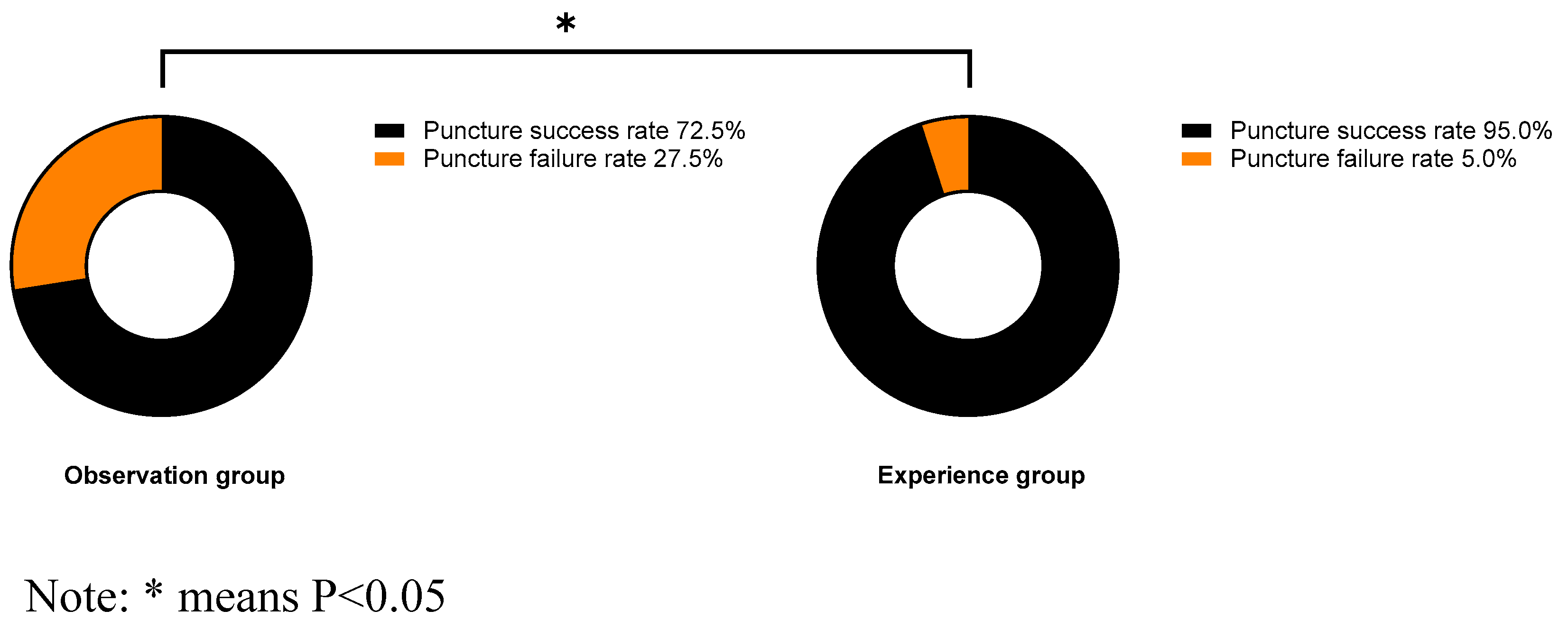
Figure 2.
Mental state level comparison.
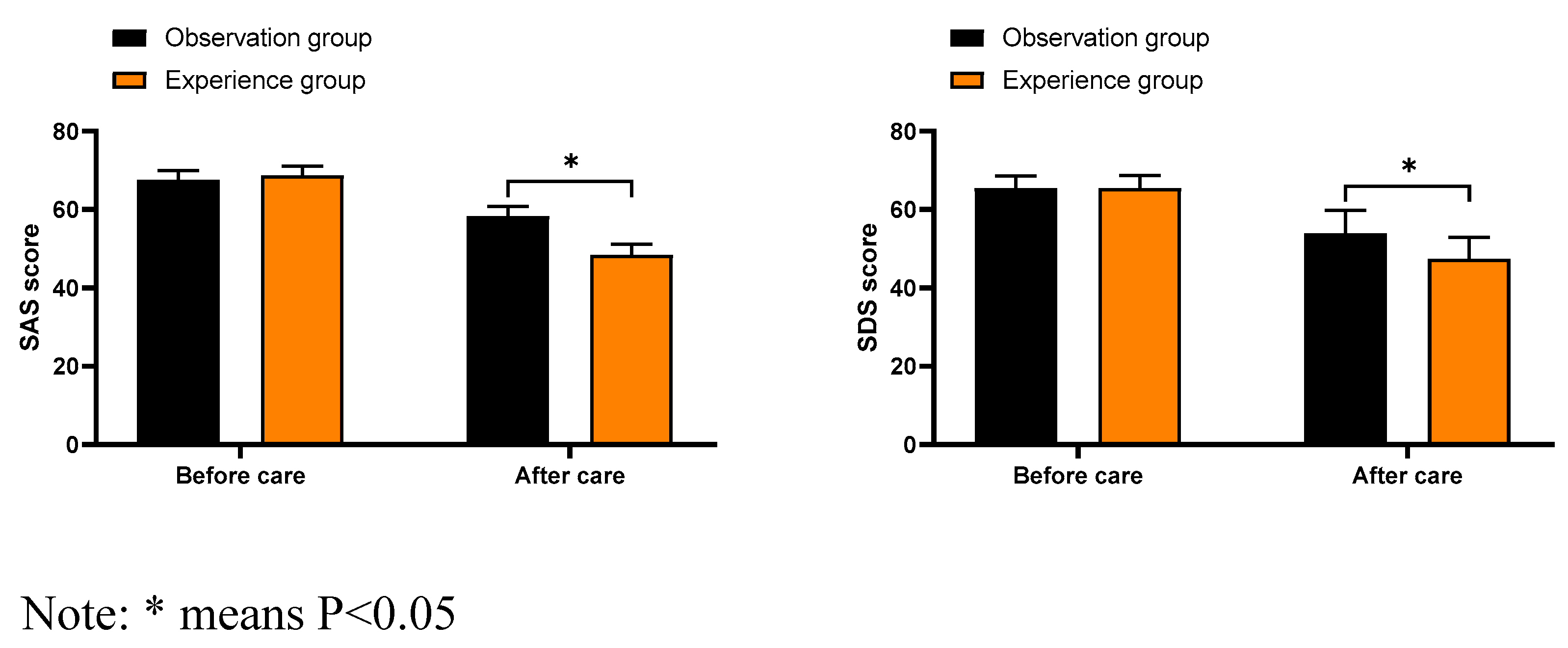
Figure 3.
Comparison of self-care abilities.
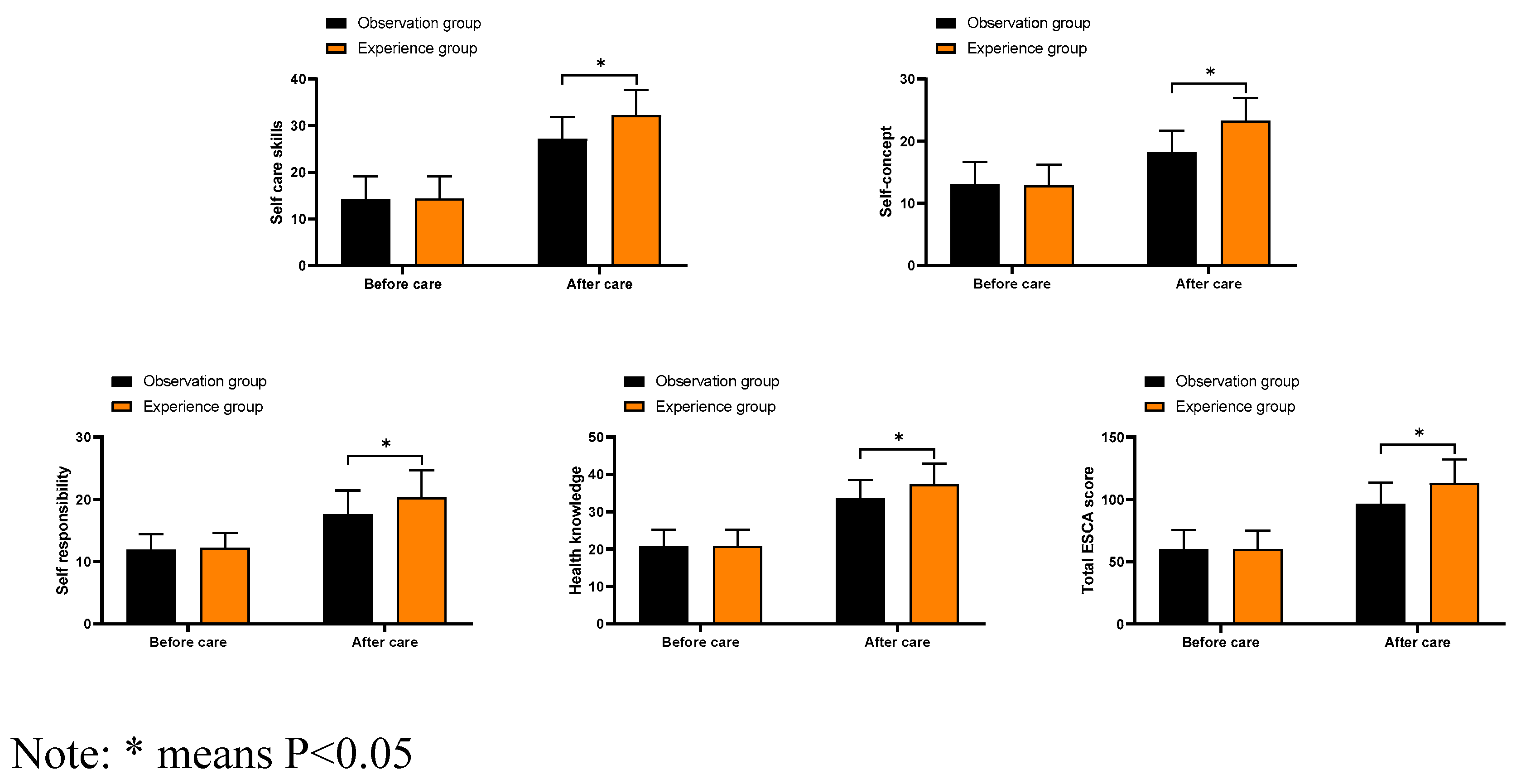

Table 1.
Comparison of basic data.
| Observation group (n=40) | Experimental group (n=40) | t/x² | P | |
|---|---|---|---|---|
| gender | 0.051 | 0.822 | ||
| male | 18 | 17 | ||
| Female | 22 | 23 | ||
| age (years) | 28-90 | 14-82 | ||
| Average age (years) | 56.08±16.40 | 57.98±16.64 | -0.514 | 0.610 |
| retention time (d) | 3-10 | 3-10 | ||
| Average residence time (d) | 4.32±1.46 | 4.37±1.42 | -0.155 | 0.877 |
Table 2.
Comparison of adverse reactions.
| Adverse reactions | Observation group (n=40) | Experimental group (n=40) | x² | P |
|---|---|---|---|---|
| liquid leakage | 1 | 0 | - | - |
| Red, swollen and purple skin | 3 | 2 | - | - |
| Puncture site bleeding | 2 | 1 | - | - |
| catheter blockage | 1 | 0 | - | - |
| out of tube | 1 | 0 | - | - |
| Infect | 1 | 0 | - | - |
| Phlebitis | 1 | 0 | - | - |
| Total incidence (%) | 25.0% (10/40) | 7.5% (3/40) | 4.501 | 0.034 |
Table 3.
Comparison of Nursing Satisfaction.
| group | Number of cases | Very satisfied | satisfy | dissatisfied | Total Satisfaction (%) |
|---|---|---|---|---|---|
| observation group | 40 | 7 | 25 | 8 | 80.0% (32/40) |
| Experimental group | 40 | 18 | 22 | 0 | 100.0% (40/40) |
| x² | - | - | - | - | 8.889 |
| P | - | - | - | - | 0.003 |
Disclaimer/Publisher’s Note: The statements, opinions and data contained in all publications are solely those of the individual author(s) and contributor(s) and not of MDPI and/or the editor(s). MDPI and/or the editor(s) disclaim responsibility for any injury to people or property resulting from any ideas, methods, instructions or products referred to in the content. |
© 2023 by the authors. Licensee MDPI, Basel, Switzerland. This article is an open access article distributed under the terms and conditions of the Creative Commons Attribution (CC BY) license (http://creativecommons.org/licenses/by/4.0/).
Copyright: This open access article is published under a Creative Commons CC BY 4.0 license, which permit the free download, distribution, and reuse, provided that the author and preprint are cited in any reuse.


