
Submitted:
19 July 2023
Posted:
19 July 2023
You are already at the latest version
Abstract
Currently, major e-commerce platforms are competing to improve their return services, while merchants are experiencing abuse of return policies by consumers. The effectiveness of lenient return policies is examined in helping e-commerce platforms gain a competitive advantage in this paper. A dual oligopoly model is established consisting of one platform that offers a lenient return policy with services like Instant Refunds and the other does not provide similar ones. The scenario where consumers are single-homing, while merchants are partial multi-homing is analyzed. In the scenario, many factors are examined to assess their impact on the scale of the bilateral user base and the profits for both platforms, including the proportion of consumer abusing return policies, the benefits derived from abusive returns, penalties. and costs. The findings indicate that: (1) With an increasing proportion of consumer abusing return policies, the multi-homing merchants on platform that offer lenient return service will choose to be exclusively affiliated with rival platform, accounting for a decrease in consumer base and lower platform profits compared to competitors. (2) Platform that provides lenient return policies should restrict the amount of returns to mitigate the impact of consumer abusing return policies on its profits. (3) When the proportion of consumers abusing return policies is relatively low, platform should choose moderate levels of penalty to increase the scale of both sides of users without excessively increasing costs. However. when this proportion is high, platforms should cease to offer lenient return and refund services.
Keywords:
abuse of return policy
; network effect
; return policy
; platform operation strategy
1. Introduction
To reduce the risk of online shopping and promote consumption, more and more e-commerce platforms have adopted lenient return policies, such as extending the deadline for “seven-day unconditional return of products purchased online” and offering Instant Refunds. For example, JD.com refund service guarantees that consumer refunds are processed immediately upon acceptance of the return request and uploading of the return tracking number. Tmall has introduced its “Express Refund” service, where the refund is credited to the account as soon as the returned items are shipped. And Vipshop initiates the refund process without delay after the courier collects the item for return. However, the implementation of lenient return policies is typically based on the assumption that consumers will not misuse their privileges and will reasonably return unsatisfactory products according to their own needs [1]. However, in reality, some consumers do misuse return policies and even resort to fraudulent return practices. For instance, some consumers deliberately “rent” products for temporary use within the return period and subsequently return them. This can be seen in the cases such as a shop owner receiving a substantial amount of returned costumes following Children’s Day or students collectively returning items after a university event. And some individuals exploit the time difference between platform’s instant refund process and the inspection of returned items to carry out activities like returning counterfeit products or sending empty packages. The former is commonly referred as Opportunistic Returns, while the latter is known as Fraudulent Returns. These consumers make purchases with the intention of returning items, resulting in inflated return rates, increased costs for reverse logistics management and inventory [2], and lost sales opportunities for businesses. In 2007, opportunistic returns accounted for 11% of all product returns in the U.S, prompting retailers to seek strategies to address the adverse impact on revenue and costs [3]. For platforms, while lenient return policies increase consumers’ perceived value and thus attracts them to purchase, high return rate and difficulties in recovering fraudulent gains also raise operational costs. Therefore, platforms also need to improve their return policies to guard against these abusive return practices. Hence, when confronted with consumer abuse of return policies, it is worth investigating whether e-commerce platforms should provide lenient return policies and what kind of return policies to adopt.
In view of this, considering consumer abusing return policies, a duopoly competition model based on the Hotelling model was established. One platform offered lenient return services, including instant refunds, while the other one did not. And by analyzing the impact of factors such as the proportion of consumers who abuse return policies, benefits gained from abusive returns and platform regulatory penalties and costs, the problem of what return service for e-commerce platforms should choose was researched to provide theoretical support for them to adopt optimal ones.
This paper is structured as follows. In section 2, relevant literatures are reviewed. Section 3 establishes the basic model and gives its solution. Section 4 assesses main factors’ impacts on the scale of the bilateral user base and the profits for both platforms. Then, section 5 give the conclusions and management insights.
2. Literature Review
2.1. Research on Cross-network Externality
Cross-network externality is the important feature of two-sided platforms, that is, the utility of users on one side of the platform is affected by the user scale of the other side [4]. Therefore, researches on two-sided platforms mainly focus on platform pricing decisions and competition strategies under consideration of cross-network externality. Armstrong [5] was the first to utilize the Hotelling model to discover that the platform optimal pricing is determined by cross-network externalities, user ownership structure and charging models. And subsequent researches have revealed that various factors, including user time sensitivity [6], user quality [7], user travel cost [8] and platform service quality [9], can also impact platform pricing strategies. With the growing body of researches on platform competition, there has been an increasing number of studies investigating the influence of user characteristics on platform operation. However, there is a relatively limited amount of research focused on the phenomenon of user misconduct in exploiting return policies, particularly when such behavior can lead to negative cross-network externality. With the increasing prevalence of online transactions, occurrences of consumer abusing return policies have become more frequent. Therefore, it is essential to investigate the impact of this behavior on platform operations.
2.2. Research on Return Policies
Research on return policies has largely focused on their impact and options. Most studies have showed that lenient return policies, such as offering full refunds or implementing no-questions-ask returns, could mitigate consumers’ perceived risk and enhance their willingness to make purchases. Consequently, this leads to a surge in produce sales. Wood [10] suggested that lenient return policies served as quality signals, reducing the time consumer spend contemplating their purchase decisions and encouraging them to proceed with the purchase. Chen J and Chen B [11] argued that return policies played a crucial role in influencing consumer buying choices. Huang [12] examined the impact of produce quality on competitive retailers’ selection of refund guarantee strategies, considering consumer bounded rationality. Chen J et al. [13] utilized a Stackelberg model to analyze how new entrants choose among full refunds, partial refunds, or no refunds when faced with an incumbent retailer's full refund policy. In the research by Li and Li [14], they established an online retail model comprising a monopolistic manufacturer and consumers with varying preferences. They concluded that offering no-questions-asked returns is the optimal strategy for online retailers with moderate quality levels. In addition to the aforementioned product attributes, consumer characteristics, and competitive environment, researchers have also investigated the impact of consumer behavior on retailers' choice of return policies. Wang, Tian, et al. [15] developed a pre-sale return model under three different capacity constraints to explore how sellers offering pre-sales should determine their return policies when consumers engage in strategic waiting behavior. Yuan and Shi [16], considering strategic consumer valuation heterogeneity and product durability, developed a two-stage decision model to examine retailers' pricing and order return decisions. Wang, Zhou, et al. [17] investigated the pre-sale and return policies of retailers, taking into account consumer loss aversion. However, with the current dominance of online platforms in e-commerce transactions, platforms tend to introduce more lenient and expedited return policies to attract consumers, leaving retailers with limited options but to follow suit. Consequently, the decision-making authority regarding the return service policy lies with the platform.
2.3. Research on Consumer Abuse of Return Policies
Consumer abuse of return policies involves two types of behavior: opportunistic returns and fraudulent returns. Opportunistic returns occur when consumers intentionally rent or use products for a short period and then return them [18]. On the other hand, fraudulent returns refer to illegal returns of second-hand or damaged products [1]. Harris [18], through empirical analysis of service personnel and fraudulent returners, identified eight factors that contribute to consumers' inclination towards fraudulent returns. These factors include consumers’ prior fraud experiences, awareness of company’s legal return policies, and social norms that support fraudulent returns. Chang [1] examined the influence of online retailers’ ethical efforts and consumer personalities on fraudulent returns. Altug, et al. [3] conducted a comparative analysis using the newsvendor model to examine the optimal decision-making and profitability of a retailer-led classification return policy versus a consumer-driven menu-based refund policy. They considered scenarios with and without tenants (opportunistic returns) and found that the menu-based refund policy demonstrated superior robustness. In a separate study, Ülkü et al. [2] developed an opportunistic consumer newsvendor model to determine the optimal order quantity that maximizes retailer profits in the face of demand and valuation uncertainties. Shang et al. [19] termed consumers behavior of returning items for short-term consumption as wardrobing and investigated how wardrobing could be filtered through the price/refund menu to increase merchant profits. Khouja [20] established a newsvendor model to investigated retailers' optimal return policies in the presence of wardrobing, and they found when refunds are store credit or gift cards. it can reduce the wardrobing percentage thus making the merchant profitable. The aforementioned research reveals that scholars have been actively investigating consumer abusive return behavior and unanimously agree that it can affect business inventory and pricing strategies. Consequently, from a platform perspective, while a lenient return policy can enhance consumer service, it can also lead to financial losses for merchants, potentially undermining their motivation to engage on the platform. Therefore, it is crucial to assess the return policies implemented by the platform in terms of ecological impact.
In conclusion, the research highlights that consumer abusive return behavior is more prevalent when e-commerce platforms offer lenient return services like "Instant Refunds". However, there is a lack of extensive research on how platforms should formulate their return service strategies to address this issue. Therefore, this paper aims to bridge this gap by integrating the two-sided market theory and the Hotelling model to investigate the selection of return service strategies for e-commerce platforms.
3. Basic Model
3.1. Problem Descriptions
Consider a market with two competing e-commerce platforms, Platform 1 and Platform 2. Each platform provides services such as trading venues and social interaction for consumers and merchants. Platform 1 offers a lenient and high-quality return service, such as instant refunds. While platform 2 adopts a strict and low-quality return service, where the merchant decides whether to refund or not after testing the returned items. Platform 1’s return service reduces logistics waiting time for consumers, promoting repurchases and creating more trading opportunities for merchants. However, the lack of risk supervision in the return process makes it challenging to ensure the authenticity and integrity of returned items, leading to consumer behaviors such as opportunistic returns, fraudulent returns and incomplete returns. Comparatively, in Platform 2, refunds are less likely to succeed for consumers who exploit the return policy opportunistically, as the returned items are inspected before that. Therefore, it can be assumed that there are no consumers on Platform 2 who abuse the return policy.
Based on the Hotelling model, it is assumed that Platform 1 and Platform 2 are situated at opposite ends of the linear market [0,1], offering transaction services for merchants and consumer, and charging a certain registration fee [21]. Assuming that the total market size of merchants () and consumers () is 1, each follows a uniform distribution on line segment [0,1]. Due to the restriction that consumers () can only return items to the platform from which they make their original purchase, for simplicity, in this study, we assume that each consumer is exclusively associated with a single platform. Set the scale of consumers exclusively associated with platform 1 to be and the scale of consumers exclusively associated with platform 2 to be .Therefore, we have , and it is true that . For merchants, they can choose to join either a single platform or multiple platforms, leading to single- or multi-homing merchants. In this study, we assume that a portion of them are multi-homing merchants. Let denote the scale of multi-homing merchants, denote the scale of merchants exclusively affiliated with platform 1, and denote the scale of merchants exclusively affiliated with platform 2. Thus, we have , and it holds true that . Platform 1 charges a registration fee, , for consumer and a registration fee, , for merchant. Platform 2 charges a registration fee, , for consumer and a registration fee, , for merchant. The model is illustrated in Figure 1.
The services provided by platforms to consumers can be categorized into basic services and after-sales return services, including returns and refunds. Since only Platform 1 offers a flexible return policy, this study assumes that the basic services provided to consumers by Platform 1 and Platform 2 are the same, resulting in the same utility, . This utility is assumed to be high enough for both platforms to cater to the entire consumer market. The level of return service on Platform 1 is denoted by , and the consumer service perception coefficient is denoted by . The utility derived from this service for the consumer is given by . Similarly, it is assumed that both platforms provide the same services to merchants, resulting in the same utility, . It is assumed that this utility is sufficiently high for both platforms to cover the entire merchant market. It is also specified that .
Due to the cross-network externalities in e-commerce platforms, where the scale of one user group can affect the utility of the other user group, the coefficient of cross-network externalities caused by merchants on consumers is denoted as , and the coefficient of cross-network externalities caused by consumers on merchants is denoted as . Under lenient return policies, consumers are prone to abusive return practices. Therefore, this study assumes that a proportion of consumers in the market engage in abusive return behavior, such as opportunistic or fraudulent returns, to obtain benefits denoted as . Without loss of generality, we assume that the losses incurred by merchants due to abusive return policies are represented as and a negative externality coefficient is .The cost coefficient of lenient return service on Platform 1 is denoted as , and the service cost is represented as [22]. The penalty imposed on consumers abusing return policies by platform 1 is denoted as , the penalty cost coefficient is denoted as , and the incurred penalty cost is denoted as .
Consumers and merchants each choose to join Platform 1 or Platform 2 based on their individual utilities. Within the consumers, the utilities of honest consumers ,who engage in regular returns and do not abusing return policies, joining Platform 1 and Platform 2 are denoted as and , respectively, with corresponding scales of and , where . The utilities of consumers who abusing return policies joining Platform 1 and Platform 2 are denoted as and , with scales of and , where . The distance of the honest consumer to platform 1 is denoted by , and the distance to platform 2 is denoted by . Similarly, the distance to platform 1 for consumers abusing return policies is denoted by , and the distance to platform 2 is denoted by . For merchants, the utility of being exclusively affiliated with Platform 1 is denoted as , the utility of being exclusively affiliated with Platform 2 is denoted as , and the utility of multi-homing merchants is denoted as . For merchants exclusively affiliated with Platform 1, the distance to Platform 1 is denoted by. And for merchants exclusively affiliated with Platform 2, the distance to Platform 2 is denoted by . The parameters mentioned above satisfy . Since we do not focus on the transportation costs for both merchants and consumers between the two platforms, they are assumed to be 1. The profits obtained by platforms 1 and 2 are denoted as and , respectively.
3.2. Model Construction
Construct utility functions for consumers and merchants, as well as profit functions for both platforms, based on given parameters. For honest consumers in the market, the utility of joining Platform 1 includes the utility of basic platform services, the utility of lenient return services, the utility of network externalities due to the scale of merchants, platform registration fees, and transportation costs. Utility of joining Platform 2 includes utility of basic platform services, utility of network externalities due to the scale of merchants, platform registration fees, and transportation costs. Thus, we have:
For consumers abusing return policies in the market, the utility of joining Platform 1 includes the utility of basic platform services, the utility of lenient return services, the utility of network externalities due to the scale of merchants, the benefits obtained from abusing return policies, platform penalties, registration fees, and transportation costs. Thus, we have:
For merchants in the market, the utility of exclusively affiliated with Platform 1 includes the utility of platform services, the utility of network externalities due to the scale of honest consumers, the losses incurred due to the scale of consumers abusing return policies and negative network externalities, registration fees, and transportation costs. Utilities exclusively affiliated with Platform 2 include the utility of platform services, the utility of network externalities due to the scale of consumers, registration fees, and transportation costs. The utility of multi-homing merchants includes the utility of services from both platforms, the utility of network externalities due to the scale of honest consumers, losses due to the scale of consumers abusing return policies and negative network externalities, registration fees, and transportation costs. Thus, we have:
Platform 1's profit includes registration fees received from consumers and merchants, revenue from penalties imposed on consumers who abusing return policies, the cost of those penalties, and the cost of the return service. As for Platform 2, its profit includes registration fees obtained from consumers and merchants. Thus, we have:
The decision sequence in this paper is as follows. First, each platform independently determines the price for consumers and merchants, i.e., the registration fee charged, where platform 1 also needs to determine the level of return service for consumers. Second, given the price set by Platform 1 and Platform 2, the merchant decides which platform to join for the transaction. Finally, different types of consumers decide to join Platform 1 or Platform 2 for consumption based on their own utility. We adopt the inverse solution method, where the sizes of consumers and merchants in platforms 1 and 2 are first determined and then substituted into the profit functions of the platforms to solve for equilibrium prices that maximizes profit. The specific solving process is as follows:
For honest consumers, the indifference point in terms of utility between the two platforms is determined by the condition . If is larger than , they choose to join Platform 1, and if is smaller than , they choose to join Platform 2. The utility indifference point is:
Considering that the scale of honest consumers on Platform 1 is given by , we can deduce the following:
For consumers abusing return policies, they choose to join Platform 1 when , and they choose to join Platform 2 when . Therefore, the indifference point for abusive return consumers in terms of utility between the two platforms is:
Considering that the scale of consumers abusing return policies on Platform 1 is , we can deduce that:
Given that the proportion of consumers abusing return policies is denoted as , we can determine the scale of the consumers in Platform 1, , and the scale of the consumers in Platform 2, , as follows:
For merchants, when and , they choose to be multi-homing. Setting yields , and setting yields . Taking into account that the scale of exclusively affiliated merchants in Platform 1 is denoted as , the scale of exclusively affiliated merchants in Platform 2 is denoted as and the scale of multi-homing merchants is denoted as , we have:
By solving the simultaneous equations for the scale of consumers and merchants in both platforms 1 and 2, and substituting the respective user scale into the profit function of each platform, we obtain the profit functions for platforms 1 and 2 as follows:
The expression for ,,,,,,,,, can be found in the Appendix A. From the profit function, we obtain the Hessian matrix of Platform 1 with respect to and as follows,
When and , the Hessian matrix of the profit function indicates that it is negative definite, ensuring that the function has a maximum value. The Hessian matrix of Platform 2 with respect to and is as follows,
When and , the matrix is negative definite, and the function profit has a maximum value.
Under the given conditions, the profit functions of Platform 1 and 2 are differentiated with respect to the pricing of their respective merchants and consumers. The optimal prices for both platforms are obtained by setting the partial derivatives to zero. The optimal prices for Platform 1 are for consumers and for merchants, while the optimal prices for Platform 2 are for consumers and for merchants. The specific values of,,, and can be found in the Appendix A.
By substituting the equilibrium pricing into the expression for the equilibrium size, we obtain the equilibrium scale of bilateral users for both platforms as follows,,,,,. By substituting the above equilibrium pricing and equilibrium scale into the profit expressions for both platforms, we can obtain the optimal profit for Platform 1 and Platform 2, respectively. And the platform profit expressions are showed in the appendix A.
Given the complexity of the expressions obtained from the above model for equilibrium pricing, user size, and profit for both platforms, it becomes challenging to perform a theoretical analysis of the impact of abusive consumer returns on platform service strategies. Therefore, this study employs MATLAB 2019b software to perform numerical simulation analysis on the obtained results, specifically considering the scenario of multi-homing merchants ,and explore the impact of parameter variation on the outcome of competition between platforms.
4. Results and Simulation Analysis
From section 3, when the Hessian matrix of the profit function for each platform is negative definite, there exists a maximum value for its profit. Therefore, referring to Li [23] and Zhang [24], as well as to satisfy the assumptions of the model, we take , , and assume . Specifically, we also assume that the perceptual coefficient of the consumer return service in Platform 1 is 0.4. The benefit obtained by consumers abusing return policies during the transaction, which also results in loss to the merchant, is denoted by . The penalty imposed by Platform 1 for consumers abusing return policies is set at 0.3. Both platforms offer merchants transaction services with a utility of 0.9. And the cost coefficient for lenient return services in Platform 1 and the penalty cost coefficient for consumers abusing return policies are both set to 0.5. The specific parameter settings are as follows: ,,,,,. The proportion of consumers abusing return policies in the market ranges from 0 to 1.
4.1. The impact of proportion
on the equilibrium of platform competition
4.1.1. The impact of proportion
on the scale of platform users
In Figure 2a, when the proportion of consumers abusing return policies is relatively small, that is less than 0.4, the scale of consumers in Platform 1 is larger than that of its competitor Platform 2. However, the trend in consumer scale changes reverses as the proportion increases, but the difference between the two platforms remains small. In Figure 2b, the scale of merchants exclusively affiliated with Platform 1 starts to be lower than that with Platform 2 when the proportion is around 0.1. And as the proportion increases, the scale of merchants exclusively affiliated with Platform 1 decreases slightly, while the scale of multiple affiliated merchants shows a significant downward trend. On the other hand, the scale of merchants exclusively affiliated with Platform 2 increases monotonically. This suggests that the rising proportion of consumers abusing return policies will result in merchants leaving platforms that offer excellent return services. The conclusion drawn from the analysis of Figure 2 is the following:
Conclusion 1: When the proportion of consumers abusing return policies in the market is relatively small, providing lenient and high-quality return services will help the platform increase its consumer base and reduce the number of multiple affiliated merchants. Thereby, this will enhance the competitiveness of the platform. However, when this proportion increases, providing such return services will lead to a decline in the platform’s user base. And as it crosses a certain threshold, the platform's user base will drop to a level below that of its competitors that do not offer the service due to network effects. Therefore, improving the return services while controlling the proportion of consumers abusing return policies will enhance consumer utility and attract bilateral users to join the platform.
4.1.2. The impact of proportion
on the pricing and profit
In Figure 3 and Figure 4, we present the pricing and profit curves for both platforms. In Figure 3a, as the proportion of consumers abusing return policies increases in the market, Platform 1 will reduce its pricing for merchants, while Platform 2 keeps its pricing unchanged. Comparing Figure 2 and Figure 3, as the proportion increases, merchants will gradually exit Platform 1. As a result, Platform 1 will continuously lower its pricing to retain the remaining merchants. Meanwhile, Platform 2 can gain a competitive advantage by keeping its pricing unchanged for merchants. In Figure 3b, Platform 1 continuously raises its pricing for consumers due to its lenient and high-quality return service. However, despite not offering such services, Platform 2 has raised its pricing for consumers as it attracts more merchants and benefits from cross-network effects. Eventually, the pricing on Platform 2 surpass that on Platform 1. As shown in Figure 4a, this leads to a decrease in the profit of Platform 1, gradually making it weaker than Platform 2 and causing it to lose out in competition. The following conclusions may be drawn:
Conclusion 2: Failure to control the proportion of consumers abusing return policies and keep it within a reasonable range, lenient and high-quality return services will cause platforms to lose out in the competition.
4.2. The impact of benefit
on the equilibrium of platform competition
The benefit obtained by consumers abusing return policies is also a loss to merchants during the transaction in Platform 1. While keeping the value of other parameters unchanged, we investigate the influence of proportion and benefit on platforms by altering the value of benefit . Specifically, we examine different values of such as 0.1, 0.3, 0.6, 0.9, and 1.2. And the results are depicted in Figure 5, Figure 6 and Figure 7.
Comparing Figure 5, Figure 6 and Figure 7, it can be seen that when the proportion of consumers abusing return policies in the market is relatively low, the impact of consumers benefiting from abusing return policies on the platform's consumer and merchant scale is weak. However, as the proportion exceeds a certain threshold, platforms that offer lenient and high-quality return services experience an increase in the number of consumers, while platform 2 experiences a decrease in its consumer base. Additionally, the increasing benefits from abusing return policies and the proportion of consumers abusing return policies inevitably lead to merchant attrition. To retain merchants, Platform 1 is forced to lower its entry fee, making it an attractive option for risk-takers. In reality, some e-commerce platforms implement measures to mitigate the impact of consumer abuse of return policies on their revenue systems. They control the potential range of losses for merchants by setting limits on instant refunds offered to consumers. For example, platforms like JD.com offer "lightning refund" services, where consumers are categorized based on their creditworthiness, and different refund limits are set according to their credit levels. This approach ensures high-quality services for consumers while safeguarding the rights of merchants. In addition, some platforms have established different return and refund policies based on the value of the goods, with lenient return policies limited to lower-value items. Consumers who purchase these items can benefit from the platform's high-quality return and refund services. Then, we can conclude the following:
Conclusion 3: When the benefit and the proportion of consumers abusing return policies is relatively low, platforms will benefit from providing lenient and high-quality return services. However, when the proportion and benefits reach a moderate level, providing such services leads to a disadvantageous position for the platform. In contrast, when the benefits and the proportion of consumers abusing return policies is high, providing lenient and high-quality returns makes the platform an attractive option for risk-takers and becomes beneficial for the platform.
4.3. The impact of penalty
on the equilibrium of platform competition
Keeping the other parameters’ value unchanged, with sets at 0.3, we examine the effects of penalty imposed by Platform 1 on consumers who abusing return policies. We consider different values of, specifically 0, 0.2, 0.4, 0.6 and 0.8, representing different levels of penalty imposed by Platform 1 and analyze how these penalty levels affect the outcome of the competition. The simulation results are illustrated in Figure 8, Figure 9 and Figure 10.
From Figure 8, when the proportion of consumers abusing return policies in the market is fixed and the losses incurred by merchants are minimal, both the consumer and merchant scales on Platform 1 increase as the penalty imposed by Platform 1 increases. Moreover, the rate of decline in scale decreases as the penalty increases. This suggests that stronger penalties can help Platform 1 mitigate user attrition when encountering consumers abusing return policies. It underscores the importance for Platform 1, which offers lenient return services, to monitor and penalize consumers engaging in abusive return behavior to prevent significant user losses. For instance, JD.com implements monitoring measures for consumer returns and reduces the customer's level, permanently denying access to lightning refunds and other premium after-sales services for dishonest return behaviors. Similarly, Taobao lowers the credit rating and Sesame Credit score of consumers with a history of poor after-sales records and revokes their rights to instant refunds.
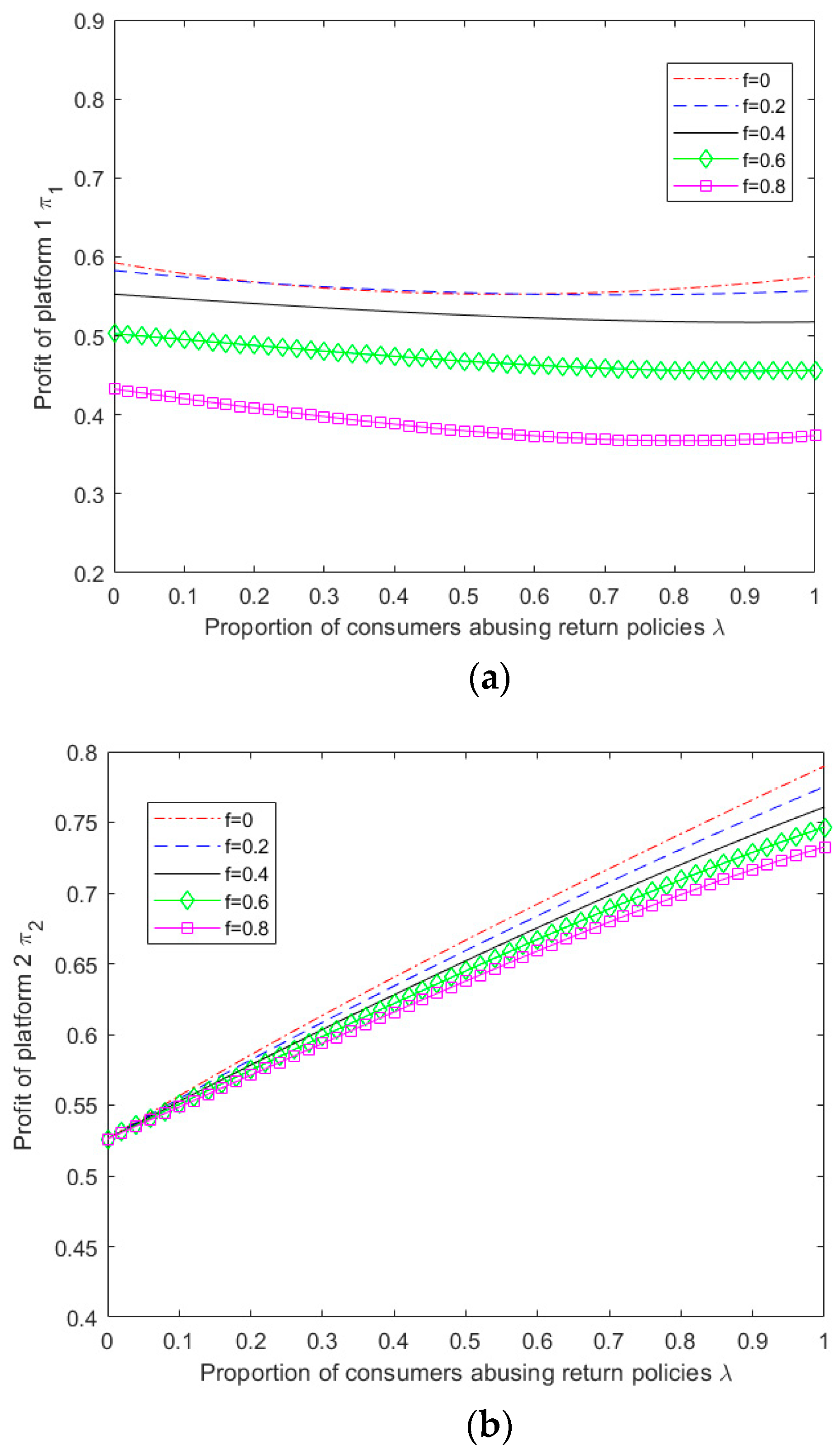
Figure 9 and Figure 10 demonstrate that as the penalty for consumers abusing return policies increases, pricing for consumer will decrease while for merchant will increase. As a result, platform penalties can only partially mitigate the decline in user scale resulting from the increasing proportion of consumers abusing return policies, without reversing the overall trend of declining merchant scale. Moreover, the implementation of stringent penalty measures by Platform 1 incurs excessive costs, resulting in a competitive disadvantage. Thus, we can conclude the following:
Conclusion 4: When consumers abusing policies exist in the market, Platform 1 should opt for a moderate level of penalty when the proportion is relatively low. This approach strikes a balance between deterring abusive returns by consumers and controlling the cost of monitoring and penalizing. However, when the proportion of consumers abusing return policies is high, platform regulation and penalties cannot alter the trend in user scale. In such cases, it is advisable for Platform 1 to refrain from providing lenient and high-quality return services.
5. Conclusions and Managements Insights
5.1. Platform Strategy
User scale plays a crucial role in the growth of e-commerce platforms. And providing lenient and high-quality return service has emerged as a key strategy to attract users. This study established a duopoly platform competition model to investigate the effectiveness of lenient return services in gaining a competitive advantage in the presence of consumers engaging in abusive return behavior. By formulating and solving the profit functions of a platform that offers lenient return policies and a platform that does not provide similar services, we examine the impact of various factors including the proportion of consumers abusing return policies, benefits from abusive returns, platform regulation and penalty, and costs on the user scale and profits of both platforms. The following conclusions managements insights were drawn:
(1) As the proportion of consumers abusing return policies in the market increases, multi-homing merchants tend to withdraw from the platform offering lenient return services and become single-homing on the rival platform. This leads to a reduction in the scale of the platform's consumer base and lower profits compared to its competitors.
(2) Platforms providing lenient return services should impose limits on the extent to which consumers can enjoy these services. This helps mitigate the impact of abusive returns on platform profits.
(3) Platforms should adopt a moderate level of penalty, considering the scale of consumers abusing return policies in the market and taking into account associated costs. However, when the proportion is high, platforms should refrain from providing lenient and high-quality return services.
5.2. Research Limitations and Recommendations
(1) Since this study assumes that consumers independently decide whether to abuse the platform's return policy and does not consider the impact of platform punishment, future research should incorporate the influence of platform punishment on the proportion of consumers abusing return policies into the model and examine its implications for platform service selection.
(2) Moreover, the current model solution does not account for dynamic game theory. Future research could explore the derivation of the model from the perspective of dynamic game theory.
Author Contributions
Conceptualization, H.L.; Funding acquisition, H.L.; Project administration, H.L.; Supervision, H.L.; Validation, H.L.; Formal analysis, F.D.; Investigation, F.D.; Methodology, F.D.; Resources, F.D.; Writing—original draft, F.D.; Writing—review & editing, F.D.; Data curation, F.D. All authors have read and agreed to the published version of the manuscript.
Funding
This research received no external funding.
Institutional Review Board Statement
Not applicable.
Informed Consent Statement
Not applicable.
Data Availability Statement
Not applicable.
Conflicts of Interest
The authors declare no conflict of interest.
Appendix A
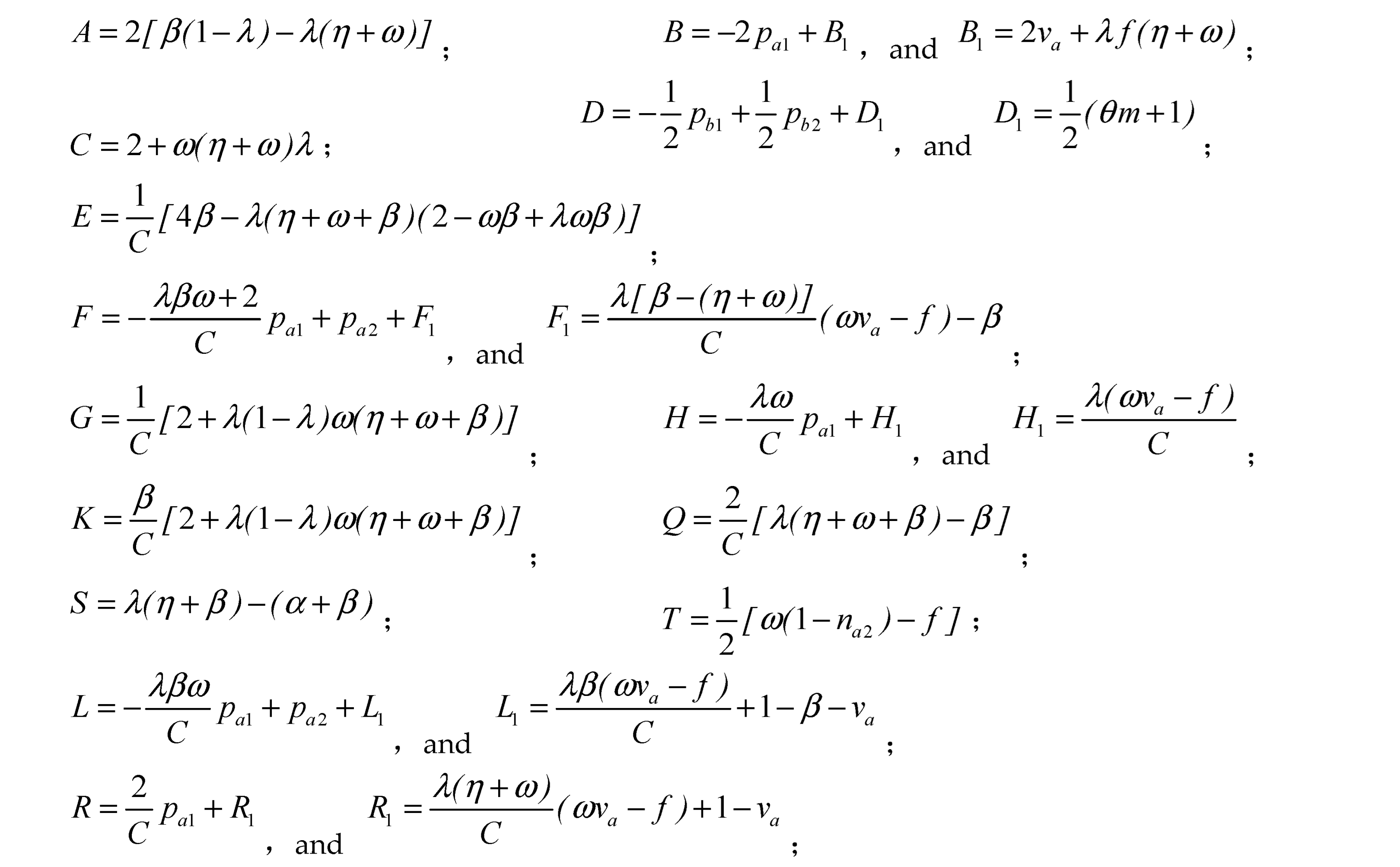 From and ,that ,then and
  Profit
Let,

Then, 、、、 will be: 
Then, 
.
References
- Hsiu, H. C; Yi, Y.G. Online fraudulent returns in Taiwan: The impacts of e-retailers’ transaction ethics and consumer personality. Journal of Retailing and Consumer Services, 2021, 61, 102529. [Google Scholar] [CrossRef]
- lkü, M. A; Ülkü, G. The impact of abusing return policies: A newsvendor model with opportunistic consumers. International Journal of Production Economics, 2018, 203, 124–133. [Google Scholar] [CrossRef]
- Altug, M.S.; Aydinliyim, T.; Jain, A. Managing Opportunistic Consumer Returns in Retail Operations. Manag. Sci. 2021, 67, 5660–5678. [Google Scholar] [CrossRef]
- Michael, L. K, Carl, S. Network Externalities, Competition, and Compatibility. The American Economic Review,1985, 75.
- Armstrong, M. Competition in two-sided markets. RAND J. Econ. 2006, 37, 668–691. [Google Scholar] [CrossRef]
- Dao, Z. Z; Man, M. C. Research on pricing strategy of cloud manufacturing platform considering time-sensitive customers. Chinese Journal of Management,2021,18(02):262-269.
- Zhi, W. L; E, J; Qiang, X. Impact of users quality on the platform pricing strategy. Soft Science, 2017, 31, 115–119. [Google Scholar]
- Yu, C; Xiang, L; Song, Q. L. The integration strategy selection of ride-hailing platform under the two-sided market. Chinese Journal of Management Science, 2022, 1-17.
- Fang, C. T; Huan, G. Pricing strategy of platform competition considering cross-network externality. Chinese Journal of Management Science, 2021, 1-20.
- Wood, S.L.; Jeng, S.-P.; Gelbrich, K.; Gäthke, J.; Hübner, A.; Shang, G.; Pekgün, P.; Ferguson, M.; Galbreth, M.; Taleizadeh, A.A.; et al. Remote Purchase Environments: The Influence of Return Policy Leniency on Two-Stage Decision Processes. J. Mark. Res. 2001, 38, 157–169. [Google Scholar] [CrossRef]
- Jing, C. ; Bintong, C. Competing with customer returns policies. International Journal of Production Research, 2016, 54, 2093–2107. [CrossRef]
- Zong, S. H; Jia, J. N; Ying, X. Z. Money-back guarantee in the presence of bounded rational consumers. Chinese Journal of Management Science, 2016, 24, 116–123. [Google Scholar]
- Jing, C; Ravneet, G. Competing in a supply chain via full-refund and no-refund customer returns policies. International Journal of Production Economics, 2013, 146, 246–258. [CrossRef]
- Jian, B. L; Yun. L. Optimal online pricing and compensation strategy in MBG returns policy. Systems Engineering-Theory & Practice, 2016, 36, 2811–2819. [Google Scholar]
- Ye, F. W; Zhong, J. T; Jia, P. X. Research on the advance selling and return policy based on strategic consumer. Journal of Industrial Engineering and Engineering Management, 2020, 34, 79–85. [Google Scholar]
- Yi, C. Y; Kui, R. S. The retailer’s decision problem considering heterogeneous strategic consumers’ non-defective returns. Chinese Journal of Management Science, 2020, 28, 83–93. [Google Scholar] [CrossRef]
- Xuan, T. W; Guo, L. Z; Yu, L. Z. Advance selling and return policy for new products considering strategic consumers loss aversion. Systems Engineering-Theory & Practice, 2019, 39, 1479–1486. [Google Scholar]
- Lloyd, C. H. Fraudulent Return Proclivity: An Empirical Analysis. Journal of Retailing, 2008, 84, 461–476. [Google Scholar] [CrossRef]
- Shang, G.; Ghosh, B.P.; Galbreth, M.R. Optimal Retail Return Policies with Wardrobing. Prod. Oper. Manag. 2017, 26, 1315–1332. [Google Scholar] [CrossRef]
- Khouja, M.; Hammami, R. Optimizing Price, Order Quantity, and Return Policy in the Presence of Consumer Opportunistic Behavior for Online Retailers. Eur. J. Oper. Res. 2023. [Google Scholar] [CrossRef]
- Qiong, W. Y; Wei, Y. K. Research on pricing strategies of social E-business platform. Nankai Business Review, 2021, 1-25.
- Yun, M. G; Hui, H. Z; Ben, G. G. Investment decision of value-added services of logistic platform under incomplete user information. Journal of Systems Science and Mathematical Sciences, 2022, 42, 3273–3287. [Google Scholar]
- Jing, L; Yu, L. Z. Pricing strategy of the platform considering network effects and business expansion. Systems Engineering-Theory & Practice, 2020, 40, 593–604.
- Chuan, Z; Yu, X. T; Min, X. Value-added service investing and pricing strategies of multilateral distribution platform with consideration of cross-network externalities. Systems Engineering-Theory & Practice, 2019, 39, 3084–309.
Figure 1.
Dual oligopoly platform competition model.
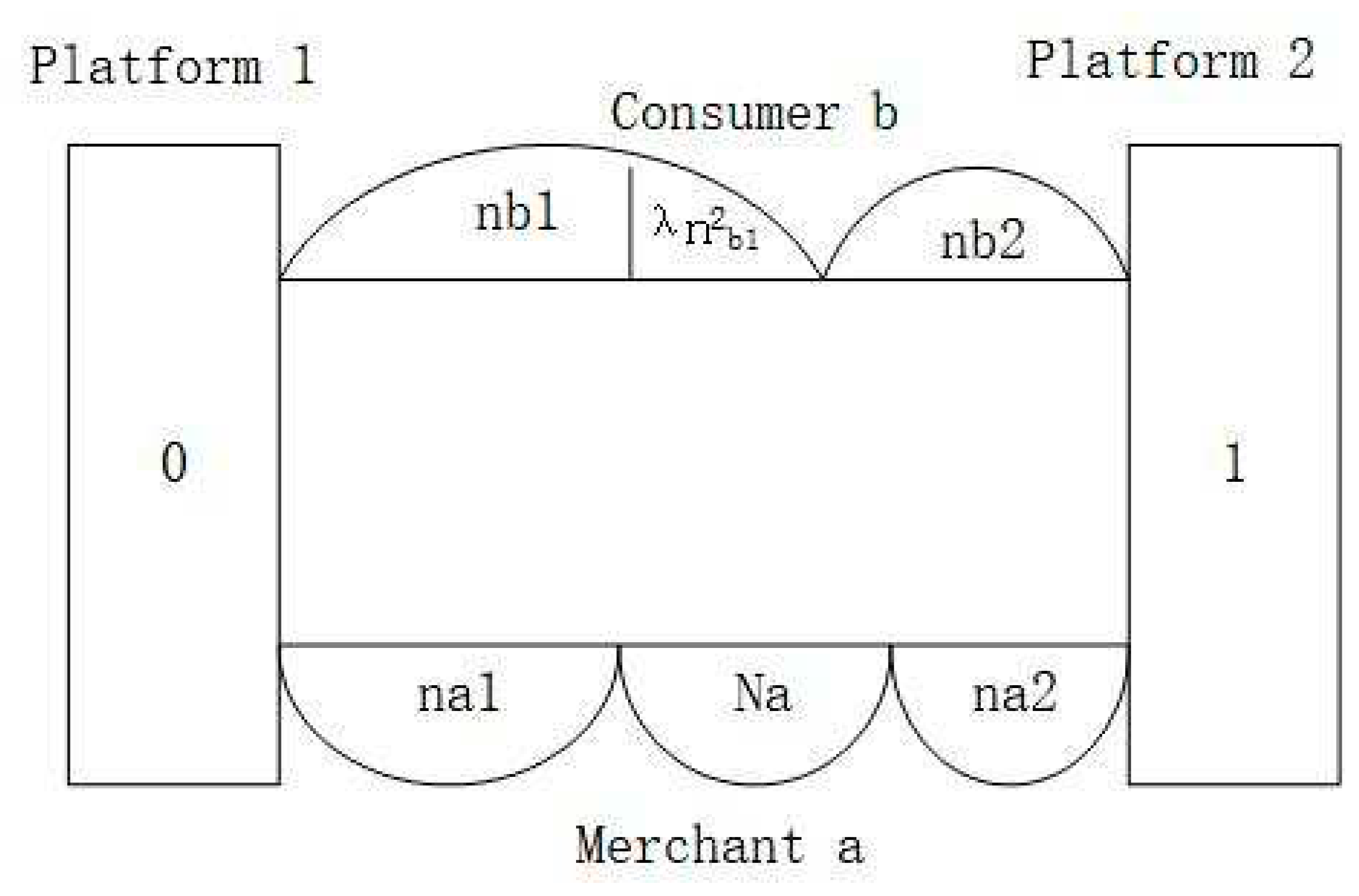
Figure 2.
Impact of proportion on bilateral user scale (a, b are changes in the scale of different users on platforms).
Figure 2.
Impact of proportion on bilateral user scale (a, b are changes in the scale of different users on platforms).
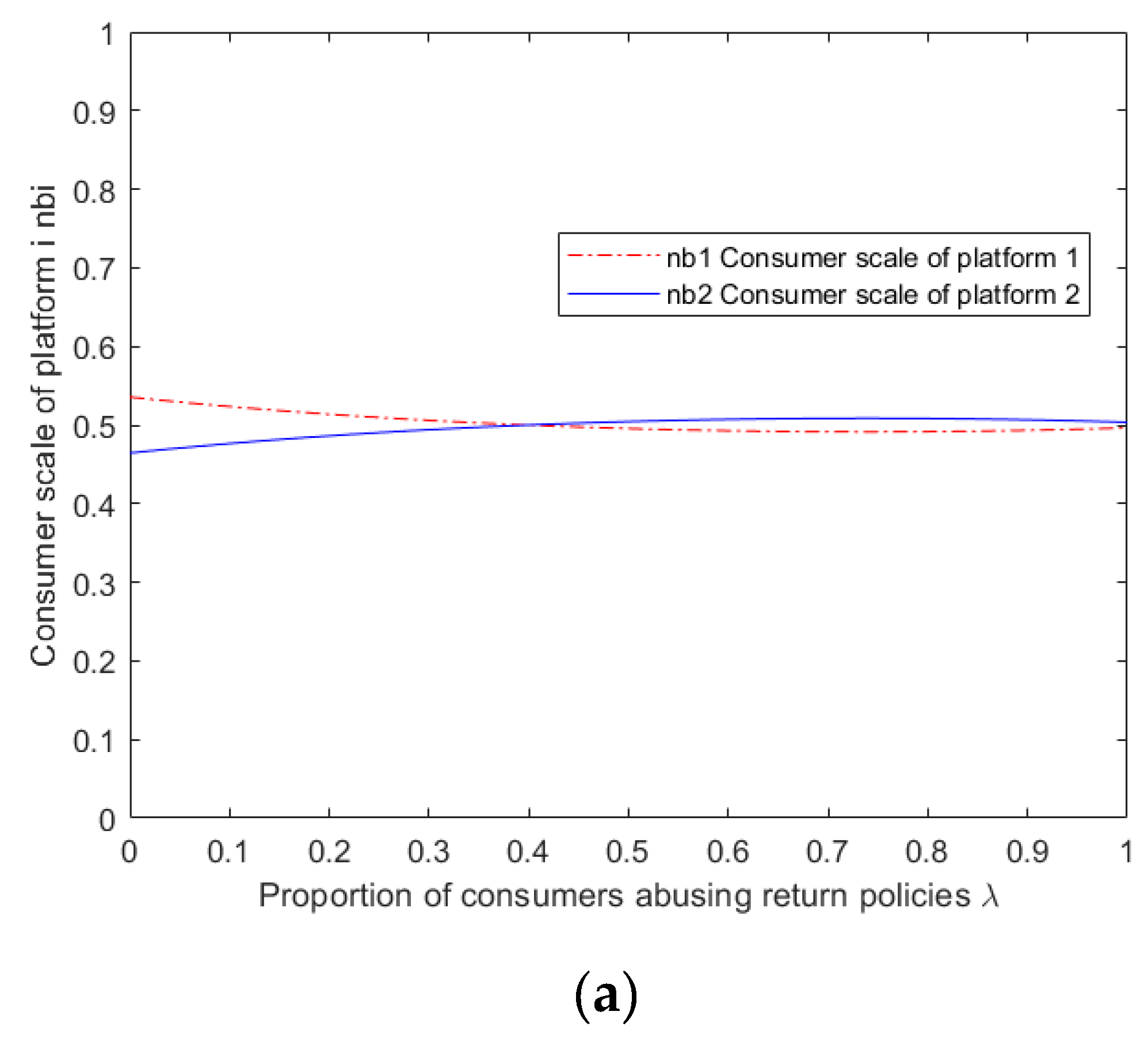
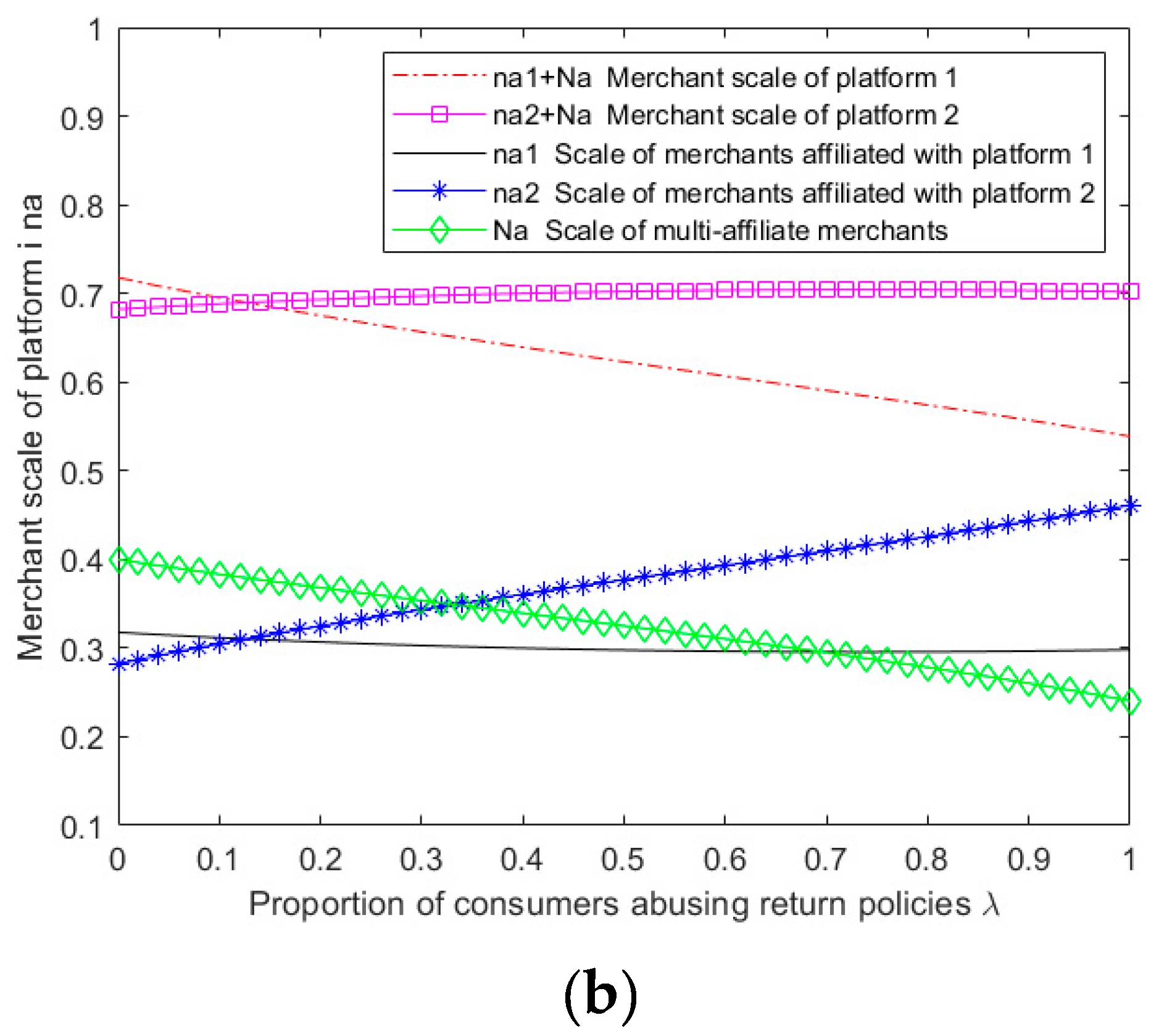
Figure 3.
Impact of proportion on platform pricing (a, b are changes in platform pricing for different users).
Figure 3.
Impact of proportion on platform pricing (a, b are changes in platform pricing for different users).
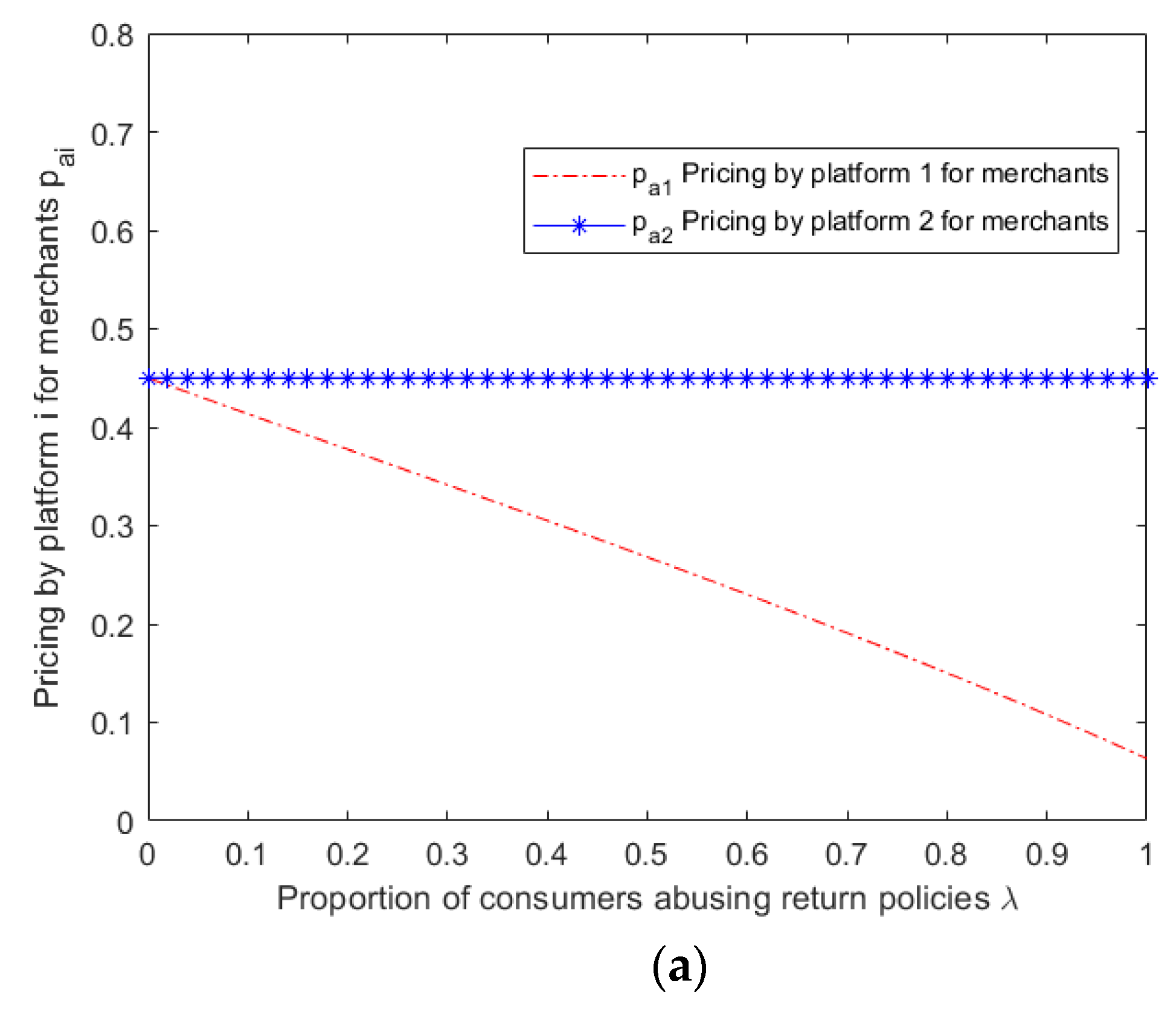
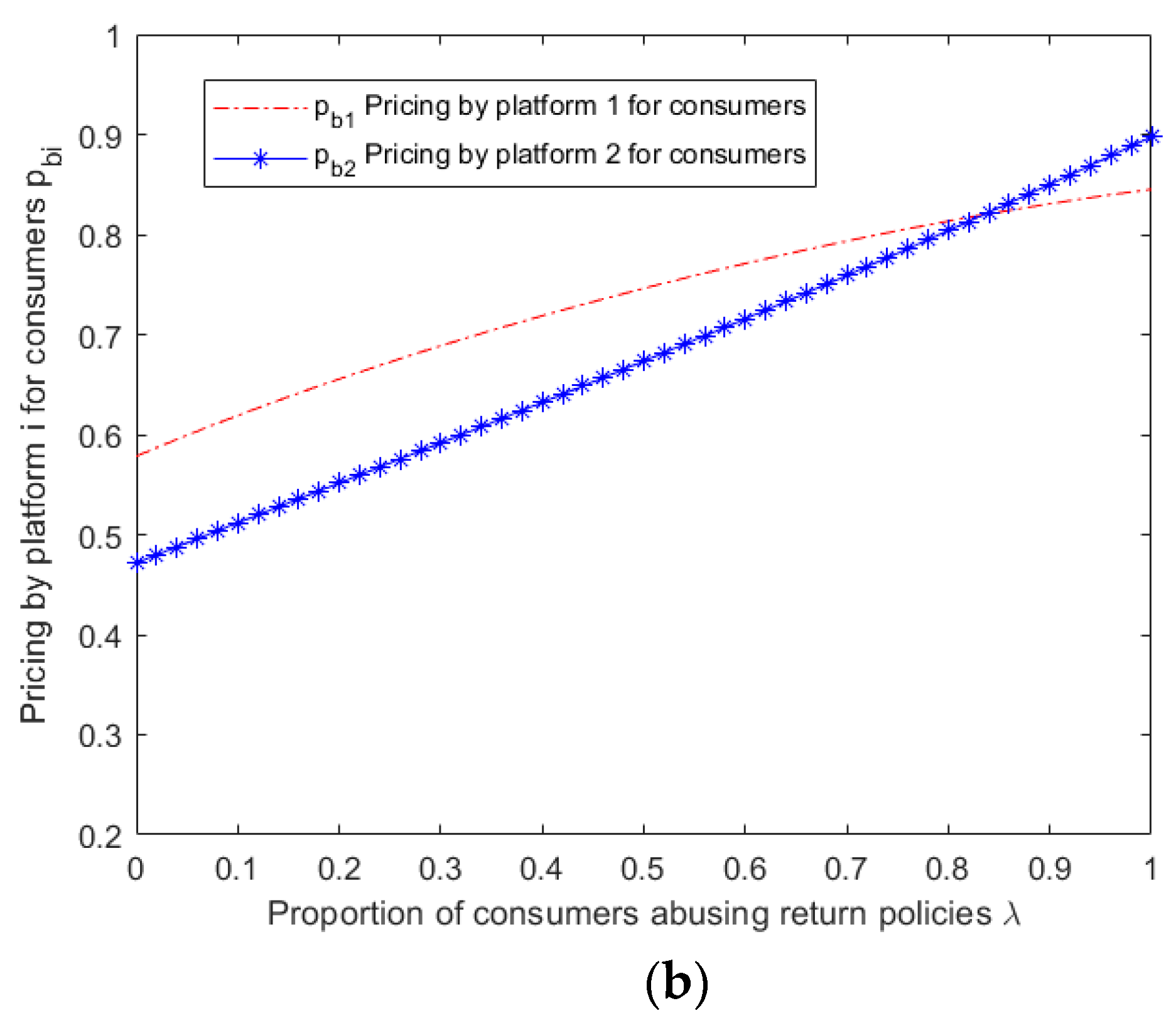
Figure 4.
Impact of proportion on platform profit (a, b are changes in platform profit and its sources, respectively).
Figure 4.
Impact of proportion on platform profit (a, b are changes in platform profit and its sources, respectively).
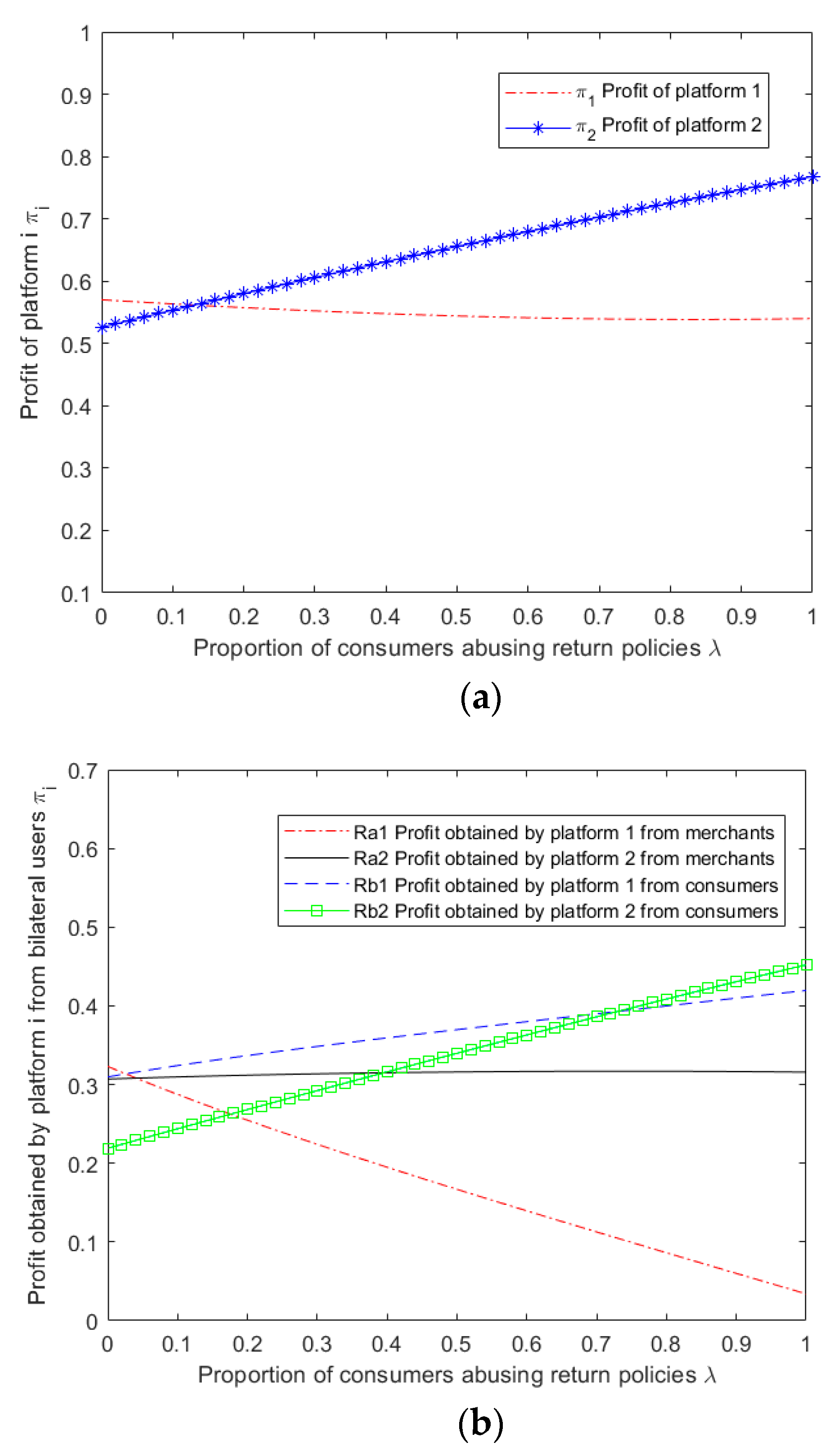
Figure 5.
Impact of benefit on the user scale of platform 1 (a, b are changes in the scale of consumer and merchant, respectively).
Figure 5.
Impact of benefit on the user scale of platform 1 (a, b are changes in the scale of consumer and merchant, respectively).
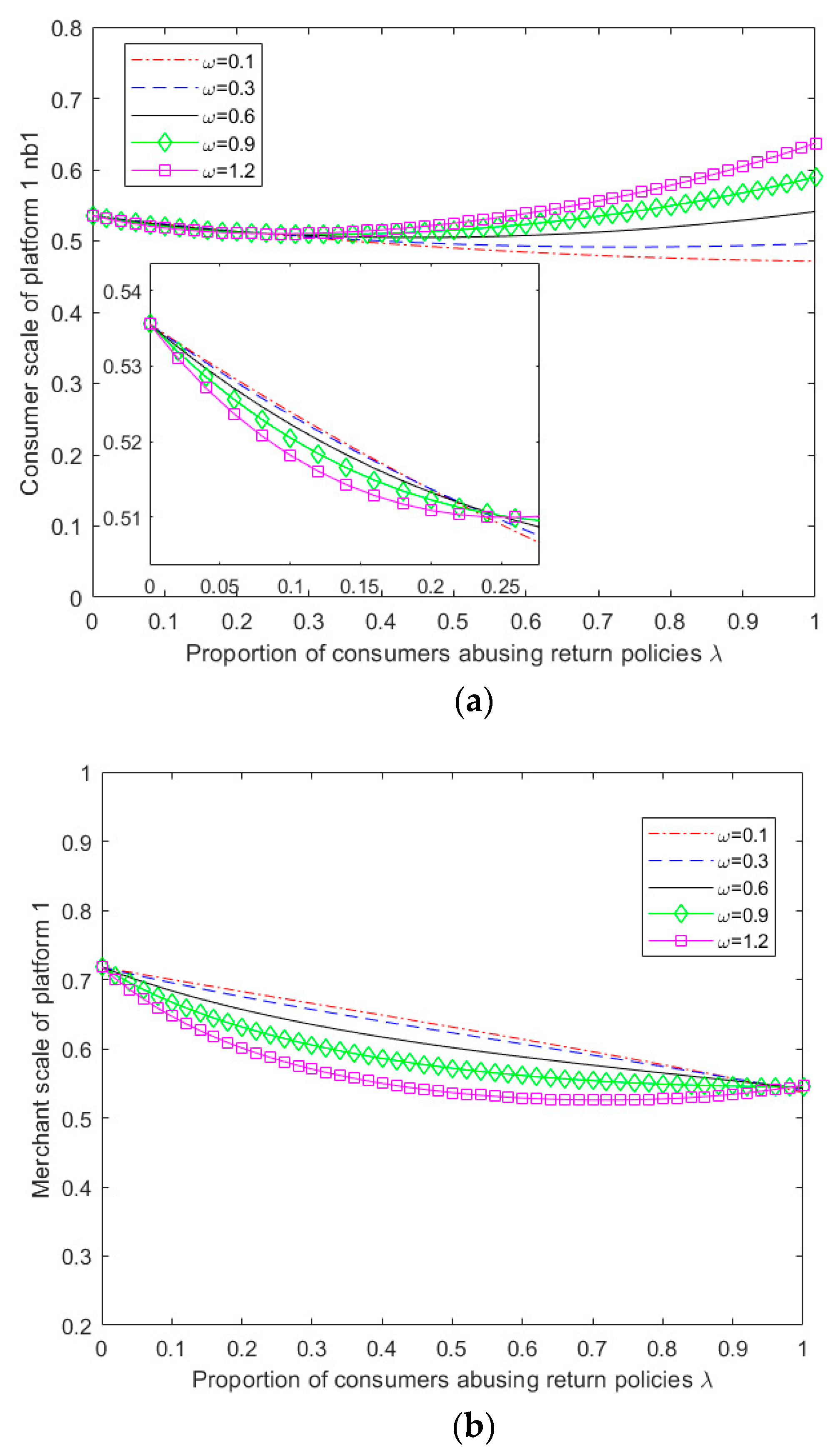
Figure 6.
Impact of benefit on the user scale of platform 2 (a, b are changes in the scale of consumer and merchant, respectively).
Figure 6.
Impact of benefit on the user scale of platform 2 (a, b are changes in the scale of consumer and merchant, respectively).
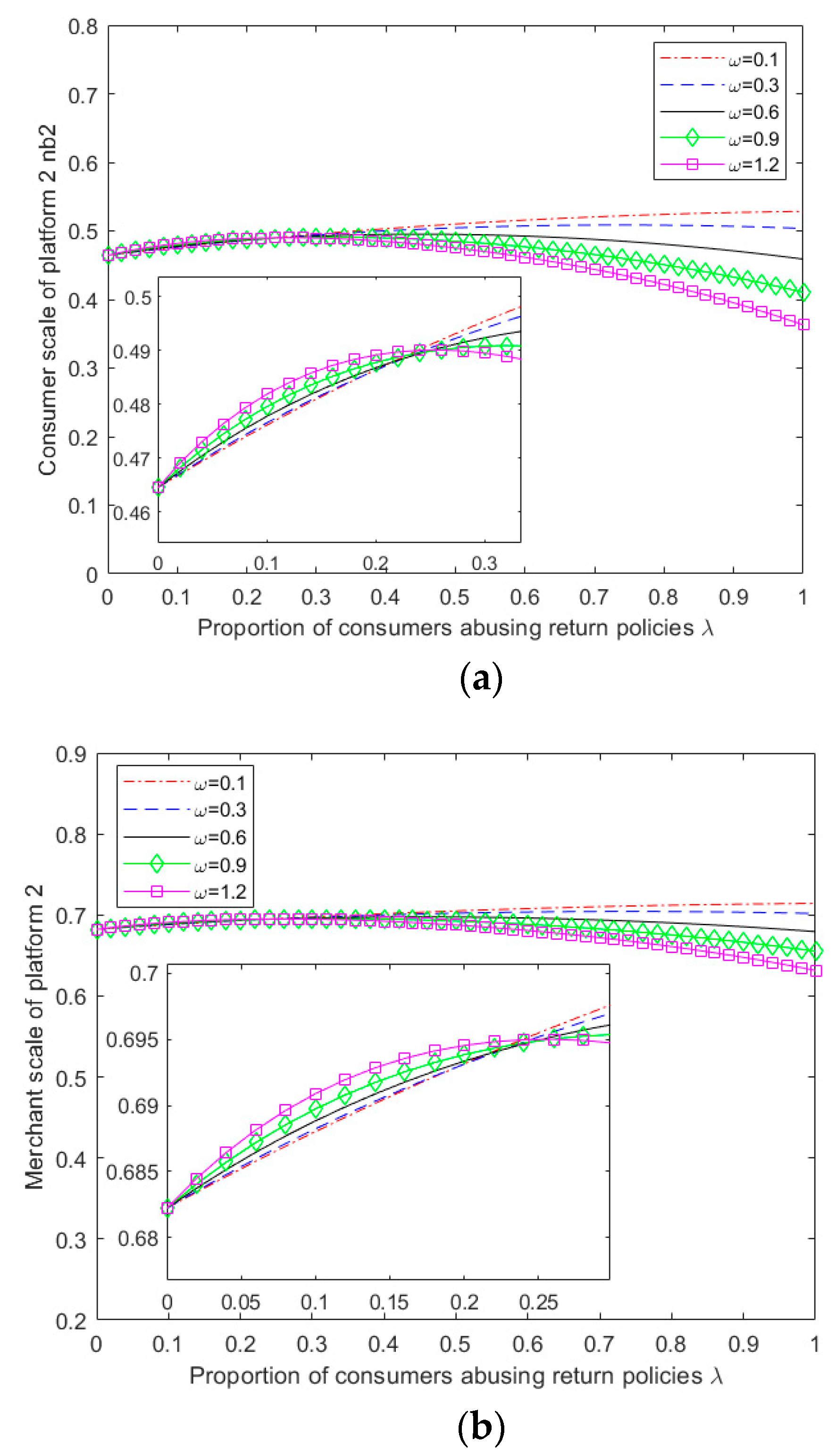
Figure 7.
Impact of benefit on platform profit (a, b are changes in the profit of platform 1 and 2, respectively).
Figure 7.
Impact of benefit on platform profit (a, b are changes in the profit of platform 1 and 2, respectively).
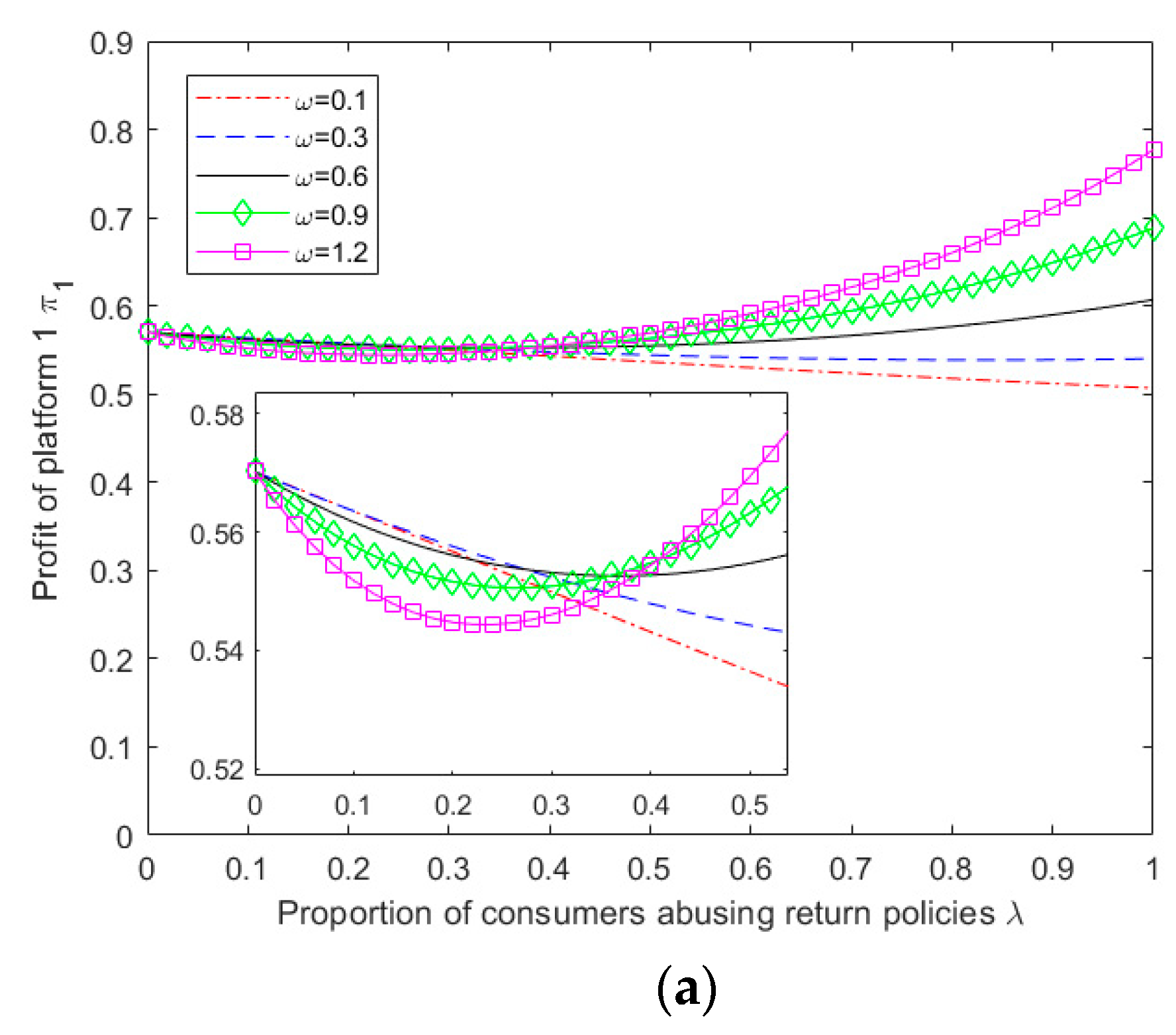
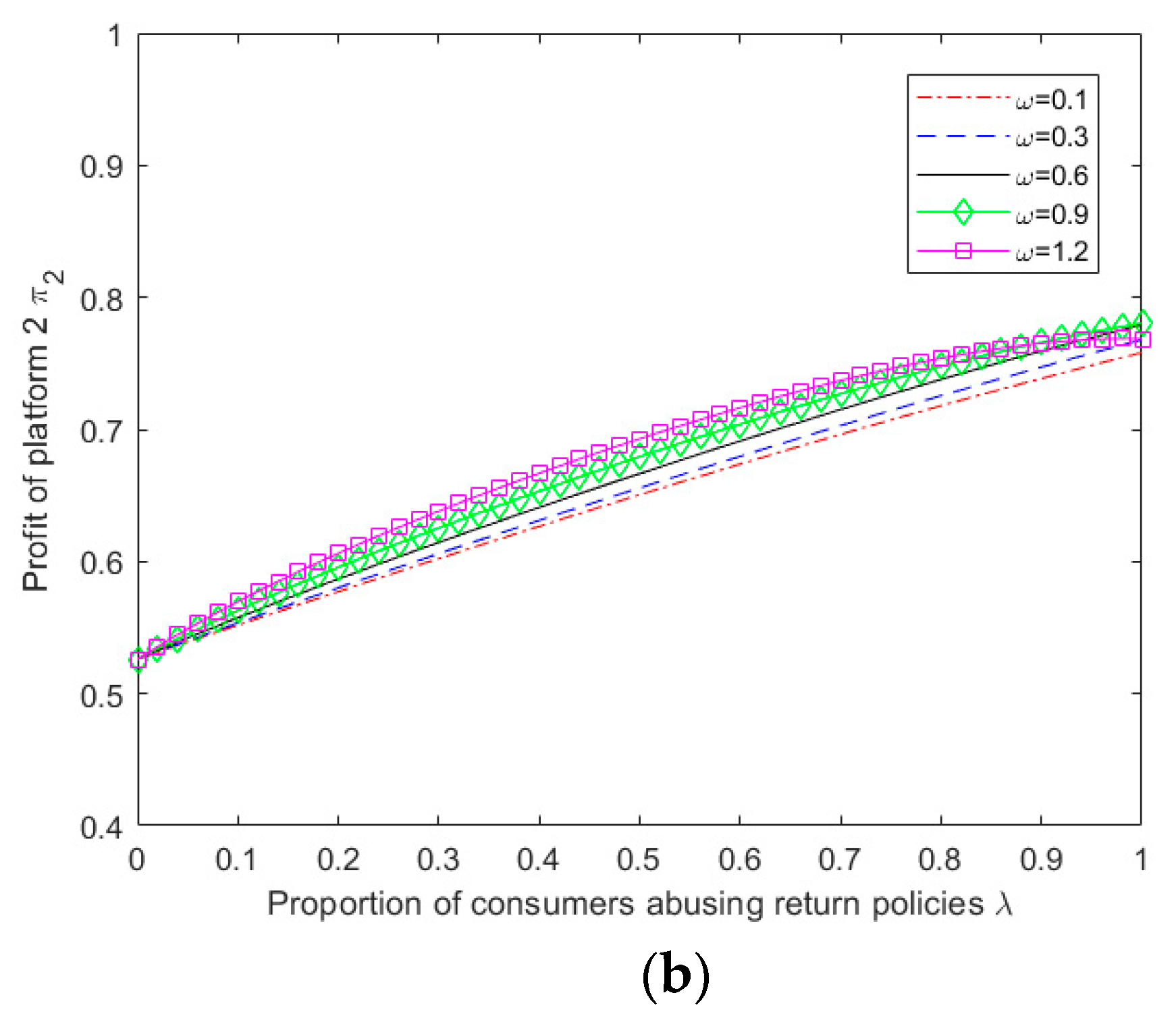
Figure 8.
Impact of penalty on user scale of platforms (a, b are changes in the scale of consumer and merchant, respectively).
Figure 8.
Impact of penalty on user scale of platforms (a, b are changes in the scale of consumer and merchant, respectively).
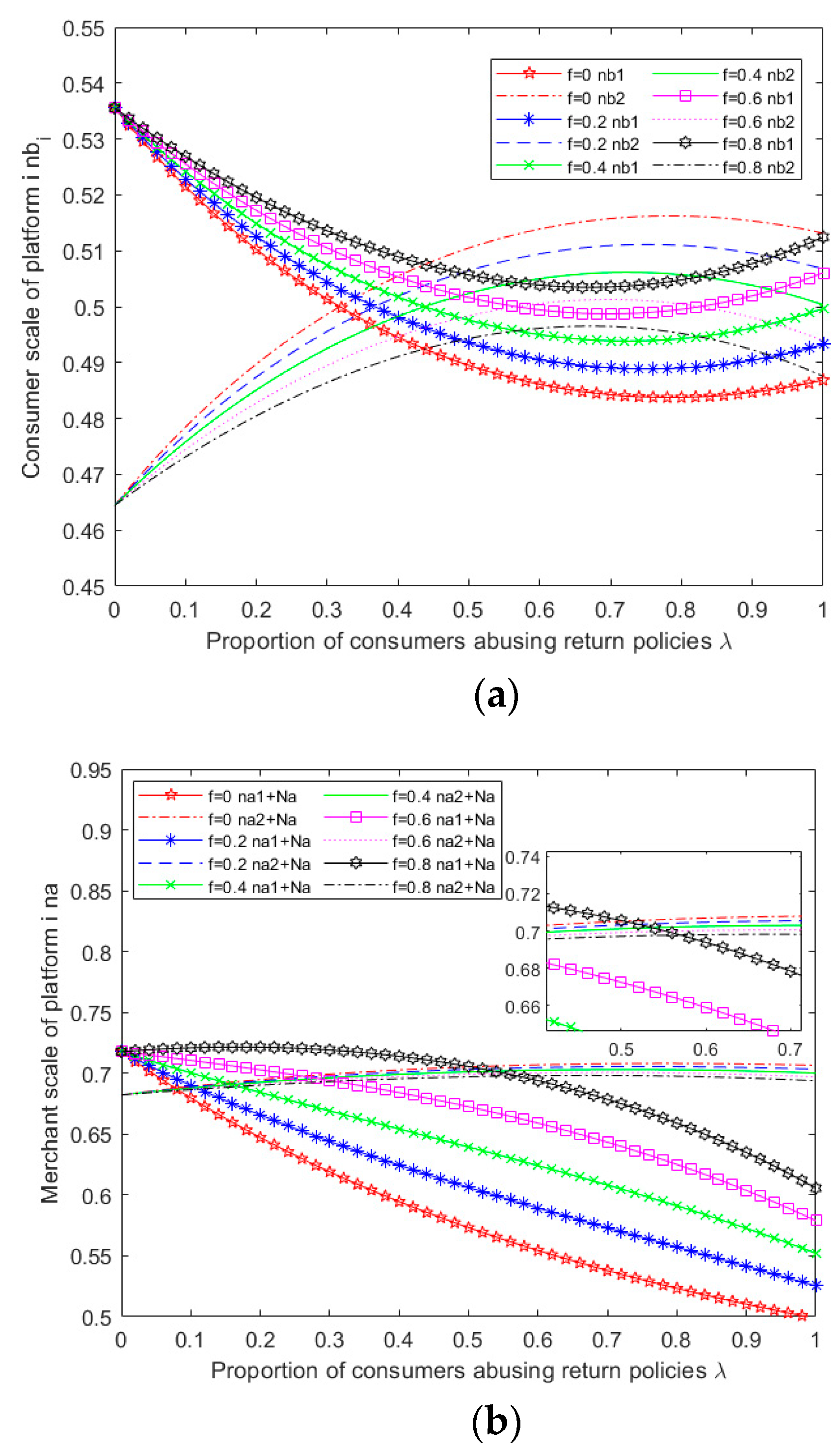
Figure 9.
Impact of penalty on platform pricing (a, b are changes in platform pricing for different users).
Figure 9.
Impact of penalty on platform pricing (a, b are changes in platform pricing for different users).
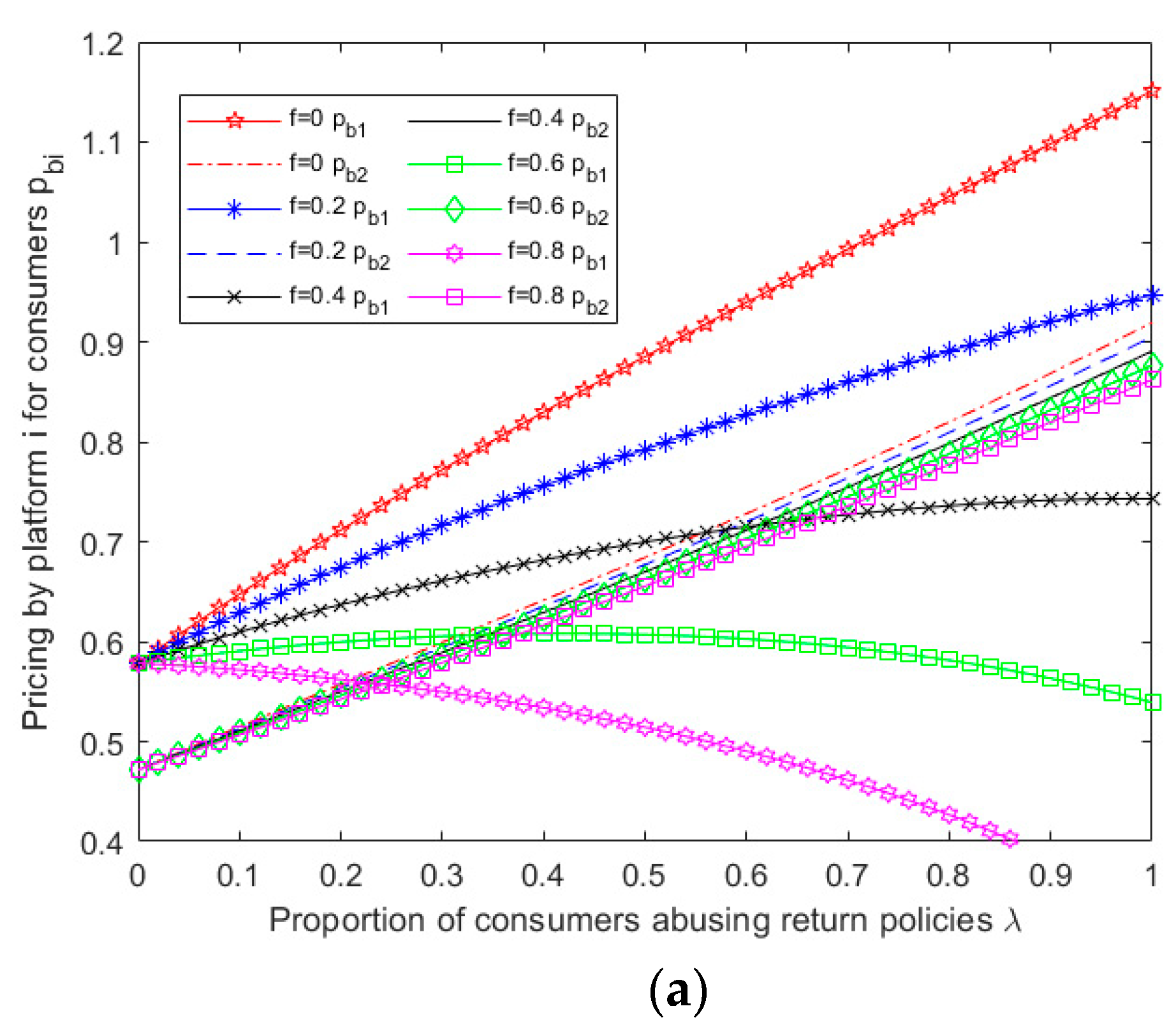
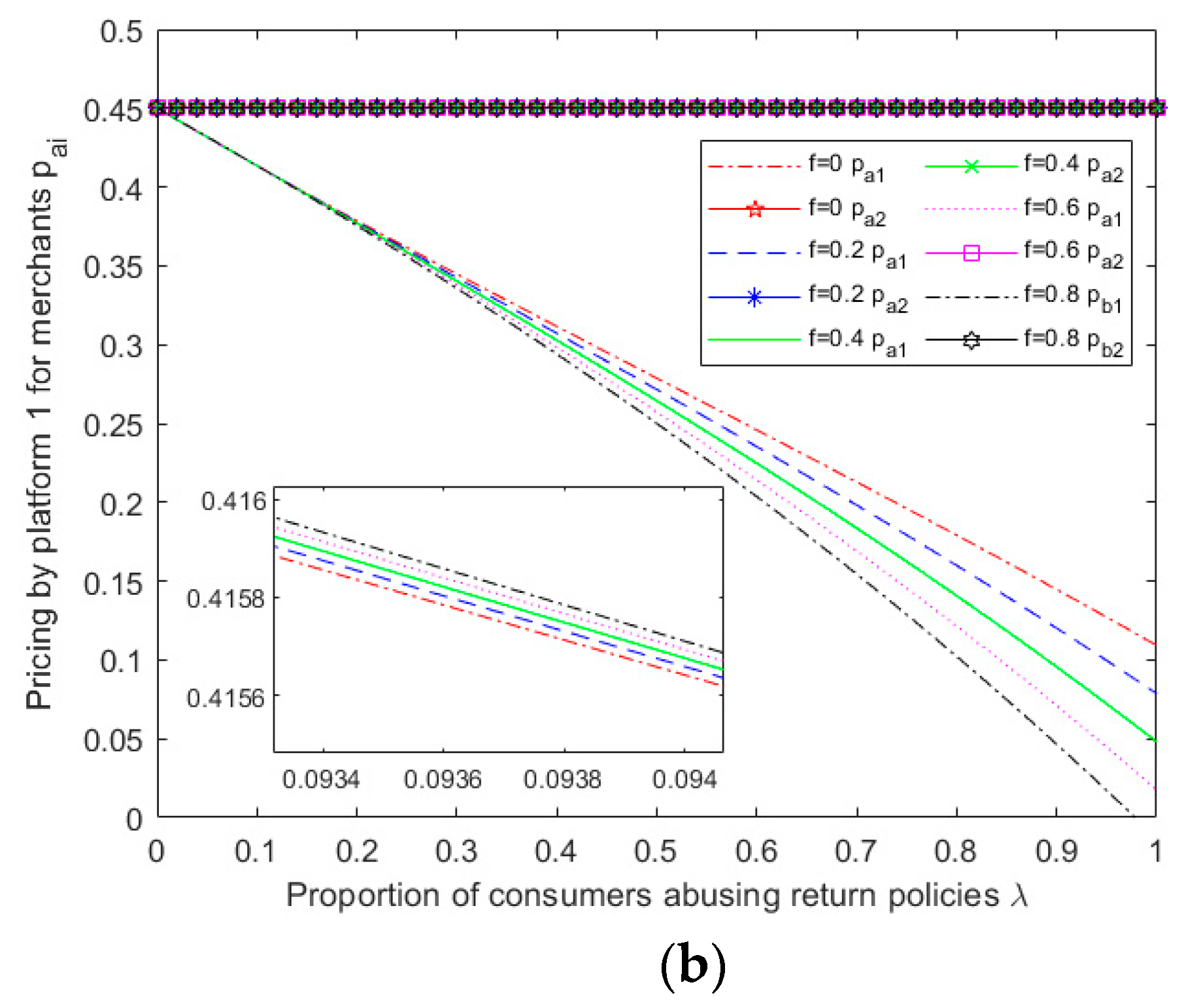
Figure 10.
Impact of penalty on platform profit (a, b are changes in the profit of platform 1 and 2, respectively).
Figure 10.
Impact of penalty on platform profit (a, b are changes in the profit of platform 1 and 2, respectively).
Disclaimer/Publisher’s Note: The statements, opinions and data contained in all publications are solely those of the individual author(s) and contributor(s) and not of MDPI and/or the editor(s). MDPI and/or the editor(s) disclaim responsibility for any injury to people or property resulting from any ideas, methods, instructions or products referred to in the content. |
© 2023 by the authors. Licensee MDPI, Basel, Switzerland. This article is an open access article distributed under the terms and conditions of the Creative Commons Attribution (CC BY) license (https://creativecommons.org/licenses/by/4.0/).
Copyright: This open access article is published under a Creative Commons CC BY 4.0 license, which permit the free download, distribution, and reuse, provided that the author and preprint are cited in any reuse.


