
Submitted:
18 July 2023
Posted:
19 July 2023
You are already at the latest version
Abstract
Advances in technology and information systems have had a major impact on people's lives and activities. Smartphone use plays an important role in many areas, including housing governance. One of the problems faced by housing administrators is administrative management, which is still manual. To overcome this, it is proposed to use a web-based application. A literature study was conducted to support the development of this application. Data collection through interviews and observations was carried out to obtain system requirements. The Agile Scrum method is used in making applications. These applications have non-functional requirements such as security, availability, performance, usability, and compatibility. Implementation using PHP and MySQL. Testing is done to ensure the application functions properly. This application allows administrators to manage citizen data, payment of contributions, billing, and print financial reports. Residents can upload proof of transfer and print proof of payment. It is hoped that this application will facilitate housing administration, improve the quality of life in the community, and create a better housing environment.
Keywords:
Web-based Housing Management
; Agile Scrum
; SDLC
; PHP
; MySQL
1. Introduction
The advancements in technology and information systems have had a significant impact on people’s lives and activities today. Individuals can easily engage in various activities such as seeking information and managing data through mobile devices such as smartphones and laptops. Information systems continue to evolve alongside technological progress, enabling faster and more efficient data processing and access [1]. The use of smartphones plays a crucial role in supporting various societal activities, including business, banking, education, and governance. The same applies to governance at a lower level, such as residential management. Residential areas consist of houses functioning as living environments equipped with various facilities and infrastructure. Housing is a fundamental human need and must be built and developed to improve the quality of life and livelihood of the community. Residential settlements should not be viewed merely as places to live but should be seen as a way for individuals to create their living environment and demonstrate their identity in community life [2].
The use of technology for housing information systems will provide convenience for residents in managing various administrative needs and requirements related to residential environments. The management of Villa Indah Ciwidey Housing RT 02-RW 03 aspires to make changes and innovations in its administrative system to become more user-friendly and effective. The planning takes into consideration the primary needs of the housing community. One of the main issues faced by the management of Villa Indah Ciwidey Housing is the outdated and unorganized administration process, where residents come directly to the RT house to make payments. This has caused difficulties for the RT management in managing data and resident administration, such as environmental management fees, security fees, facility management, and resident information.
Therefore, to address the aforementioned housing issues, it is proposed to develop a web-based application that utilizes technology. The aim is to assist residents and the RT in managing the housing community more easily.
2. Related Work
Previous studies related to information system management, especially in the context of housing, have largely used the Waterfall SDLC approach. Software Development Life Cycle (SDLC) is the process of changing and creating systems, models, and methodologies for software development. The stages in the SDLC using the waterfall method include system requirements, analysis, design, implementation, and testing, which are carried out one by one. Once the first stage is completed, the next stage is continued [1]. The reason for using this method is that it is easy to use and in the early stages, it is clear what the system needs [2].
Programming or coding is the most essential aspect of developing an application. The programming language that is suitable for web-based applications is PHP with its framework, CodeIgniter. [3]. In application development, a database is essential for storing data. Simply put, a database is a complex collection of data or information. The data is organized into several groups with similar data types. called tables/entities, Each data can stand alone or be related to one another. The commonly used database is MySQL [4]. Several aspects need to be further developed in the future. One of them is the flexibility to modify the software’s features [5].
3. Methodology
This research belongs to the category of applied or implementation research that can be used by the community. The research consists of several stages:
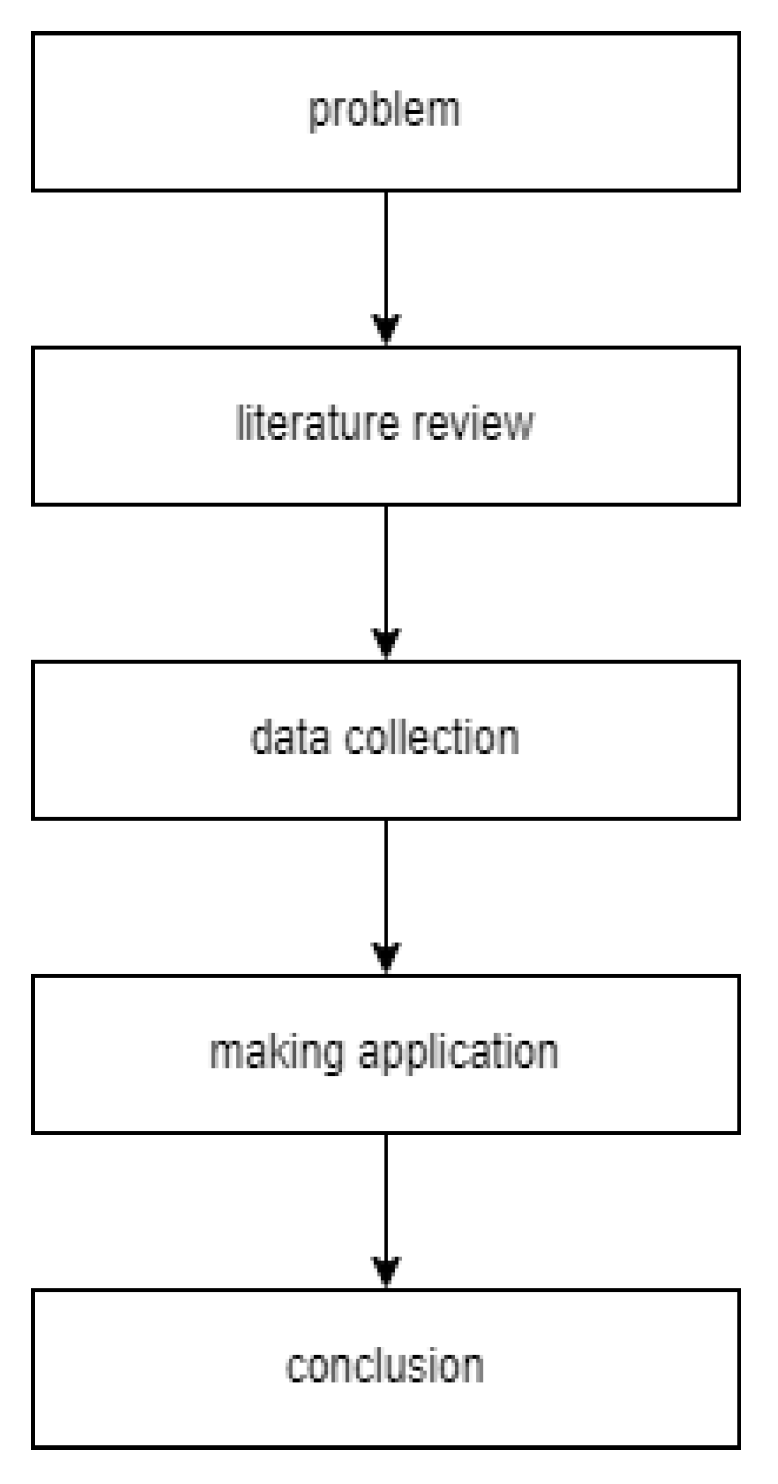
Figure 1.
Frame work.
- 1.
-
Literature ReviewA literature review is a stage to obtain theories that support the web-based Housing Information System. It is a series of activities related to data collection methods, reading and note-taking, and processing research materials. A literature review is obtained from various sources such as books, journals, articles, and others.
- 2.
-
Data CollectionData Collection in this research utilizes several techniques, namely interviews with neighborhood representatives (RT) and observation. The purpose of observation and interviews is to gather information necessary for the development of a housing information system. Once the data is collected, it is processed and stored in a database to be managed by the system being developed.
- 3.
-
Making ApplicationThe method used in the development of this application is the Agile Scrum method because it can adapt to changes in the development of the web-based E-housing application. The stages of this method are as follows:
- (a)
-
PlanningPrior to development, it is crucial to understand the scope of a system. The planning stage is the beginning of application development where user problems and needs are analyzed. In this stage, developers and users create a plan for desired features, goals, limitations, and development schedules.
- (b)
-
DesignIn this stage, system design is carried out by creating system modeling, architectural modeling using UML (Unified Modeling Language), and database modeling using ERD (Entity-Relationship Diagram). System modeling is used to illustrate the system as a whole, including its functionalities and the relationships between system elements. Architectural modeling is used to design the system structure, such as page layout, navigation, and interactions between the system and users. Database modeling is used to design the database.
- (c)
-
ImplementationIn the implementation stage, developers start writing code and implementing the designs created in the previous stage. The programming language PHP is used for coding, and MySQL is used as the database.
- (d)
-
TestingIn the testing stage, developers perform tests on the application to ensure that it functions according to user requirements. Various types of tests can be conducted, such as functional testing, to minimize errors and ensure that the output aligns with expectations. The housing information system for Villa Indah Ciwidey utilizes black box testing. The results from the tests are used to improve and enhance the application’s quality before it is launched for users.
4. Result and Discussion
4.1. Result
- 1.
-
Planning
- (a)
-
Problem IdentificationBased on the data collected through observations and interviews, several problems can be identified :
- i.
- Manual management of waste, water, and security fees.
- ii.
- Ineffective resident data management.
- iii.
- Monthly fee reports are manually summarized from resident payment data.
- iv.
- Lack of transparency in fee utilization for residents.
- (b)
-
Requirement Analysis Based on these problems, there are several requirements needed for the system. These requirements are divided into functional and non-functional categories.
- i.
-
Functional Requirement
-
Admin
- -
- Admin can add, edit, and delete resident data, manage fee payments, generate fee invoices, and generate financial reports.
- -
- Admin can approve payment from the residents.
-
Recidents
- -
- Residents can upload proof of fee payment for verification by the admin.
- -
- Residents can print approved fee payment receipts for specific periods.
-
User permissions
- -
- Admin has full access to add, edit, and delete resident data, manage fee payments, generate fee invoices, and generate financial reports to communicate with residents.
- -
- Residents have limited access and can only upload payment proof and print approved fee payment receipts.
-
- ii.
-
Non-functional Requirement
- Security: The application must be secure from attacks that can damage residents’ data.
- Availability: The application must be available and accessible by admins and residents at any time.
- Performance: The application must be able to handle many users and have fast response times
- Usability: The application must be user-friendly for both admins and residents.
- Compatibility: The application must be able to run on various platforms such as Microsoft Edge, Google Chrome, and Mozilla Firefox, and on various devices such as desktop and mobile.
- 2.
-
Design
- (a)
-
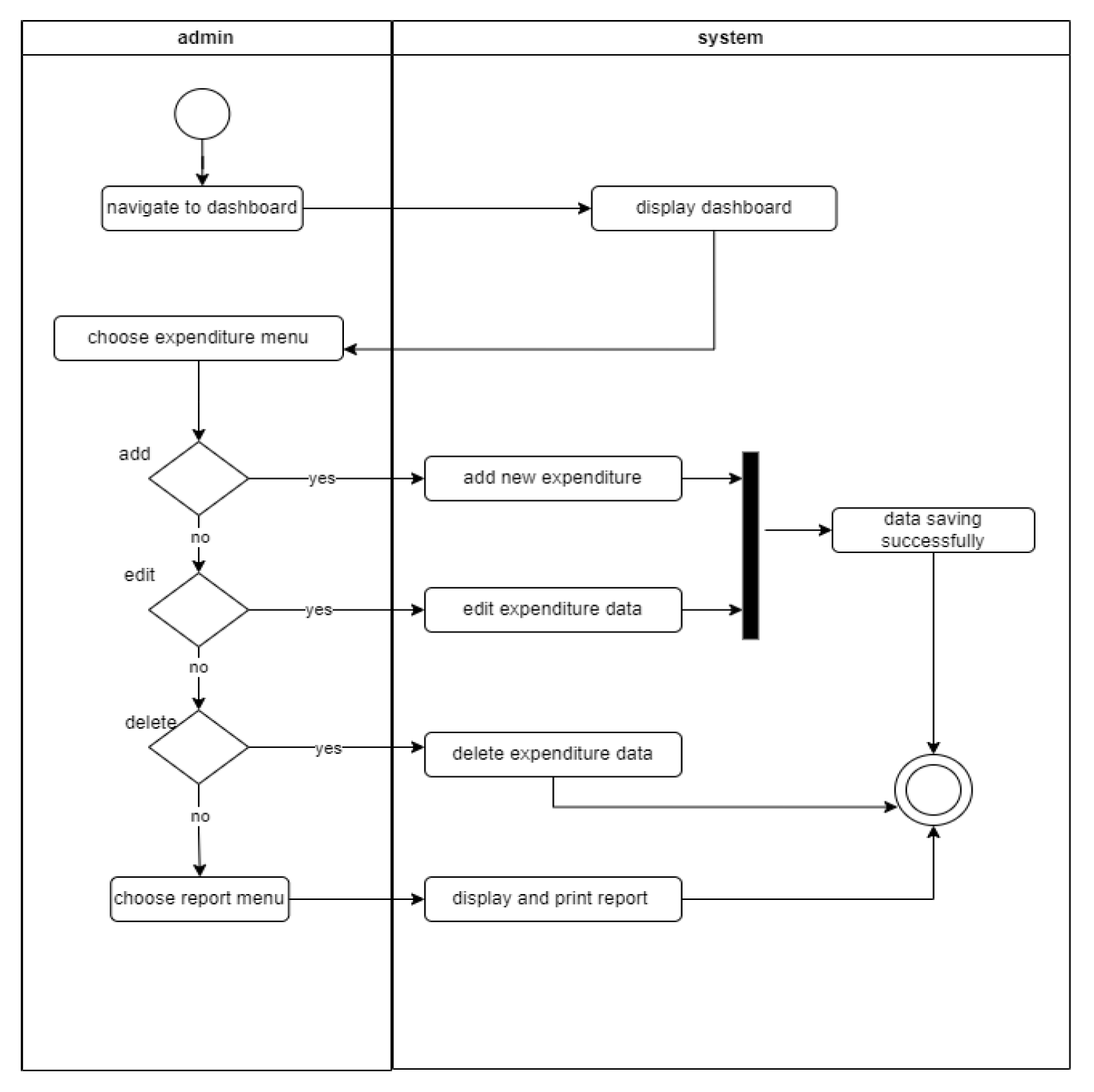
System ModelingIn the development of this application, system modeling is conducted using use case diagrams and activity diagrams.In Figure 2, it illustrates the flow of a process depicting how the admin and residents interact within a system.In Figure 3, it explains the flow of how the admin performs the login process.In Figure 4, it illustrates the flow of how the admin and residents perform the billing and payment process.In Figure 5, it explains the flow of the expenditure and reporting process.
- (b)
-
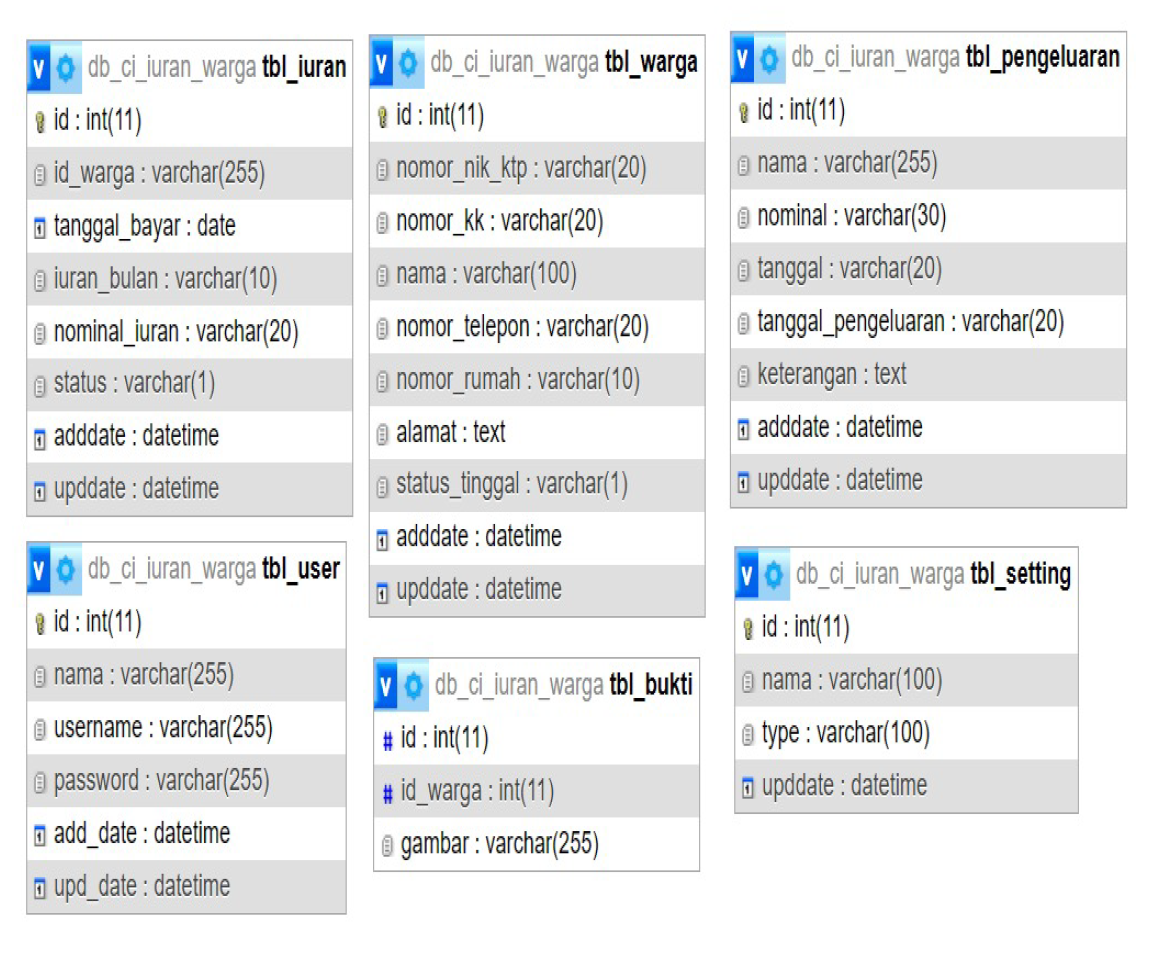
Database architecture modeling
- 3.
-
ImplementationAt this stage, the e-housing application is designed using PHP, CodeIgniter 3, and MySQL as the database.Figure 7. Home page.
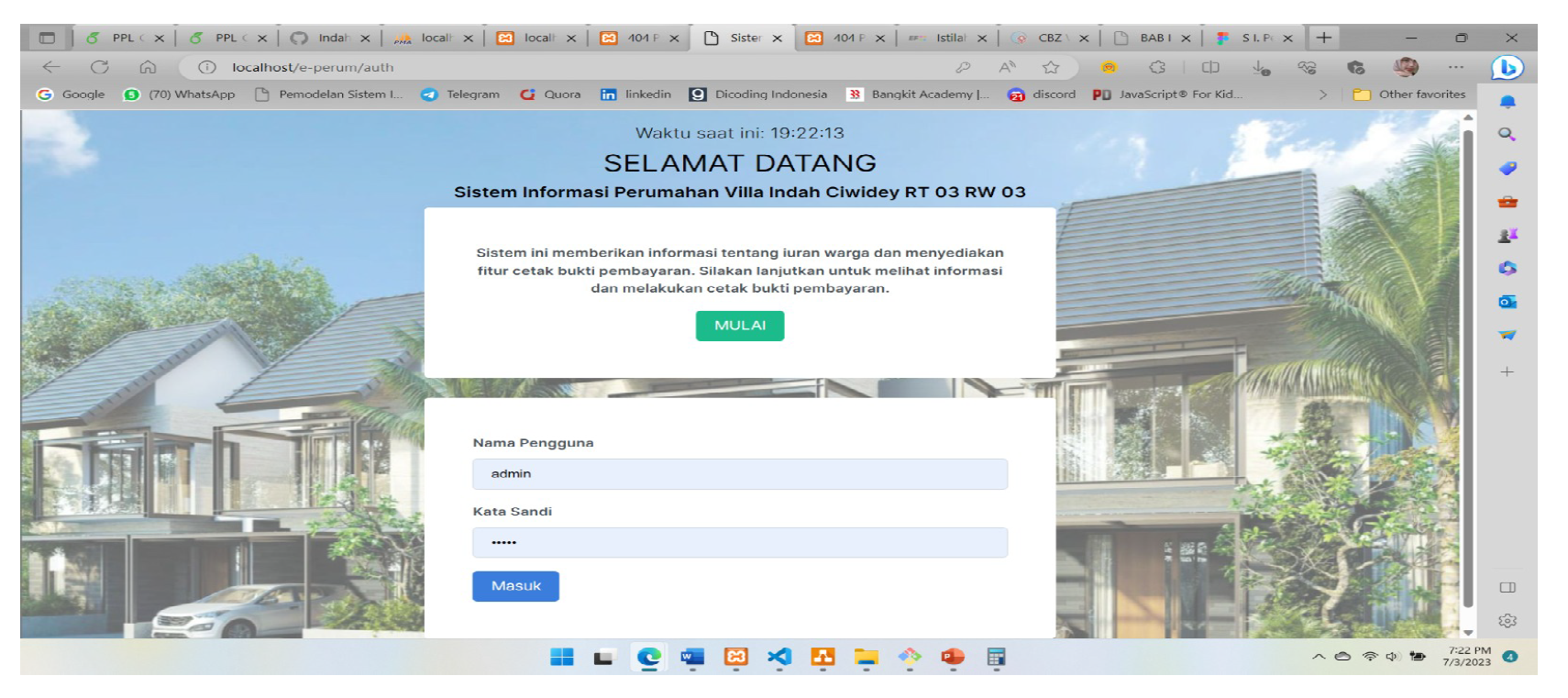 Figure 8. The login page is designed to be accessible only to admins who have a valid username and password. This ensures that only authorized users can access the admin functionalities of the application.Figure 8. Login.
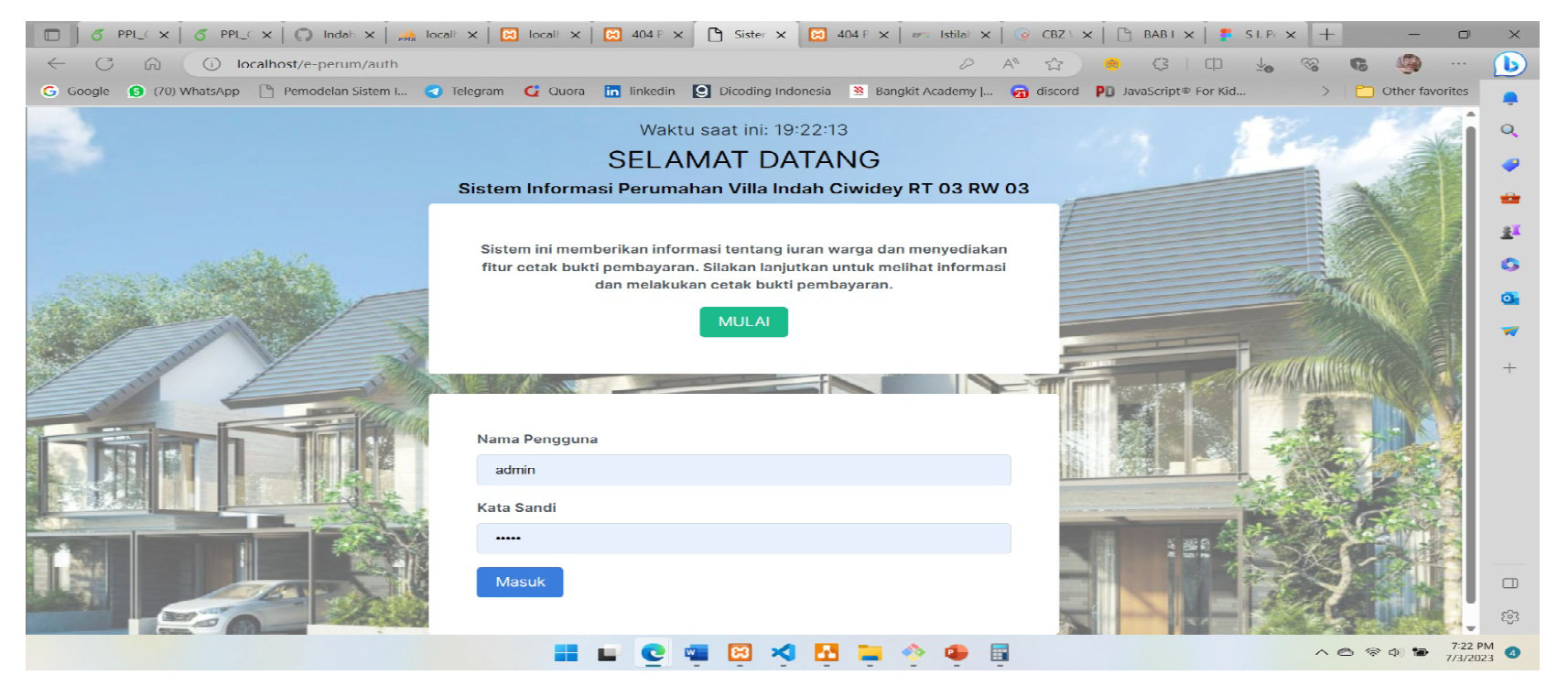 Figure 9. The data page for residents is designed to allow admins to add, edit, and delete resident data.Figure 9. Recident data.
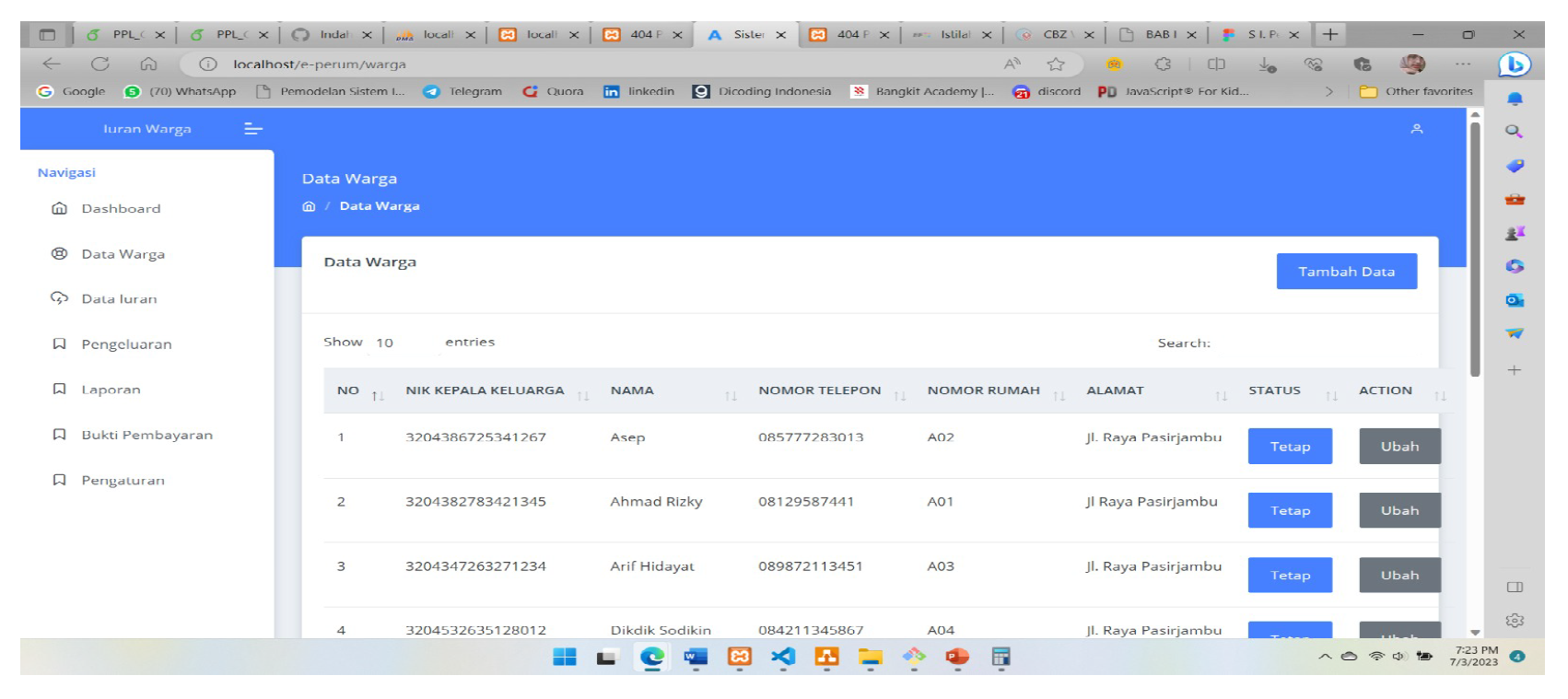 Figure 10. The interface of the fee data page that allows for billing residents who have not paid and printing payment data.Figure 10. data pembayaran iuran
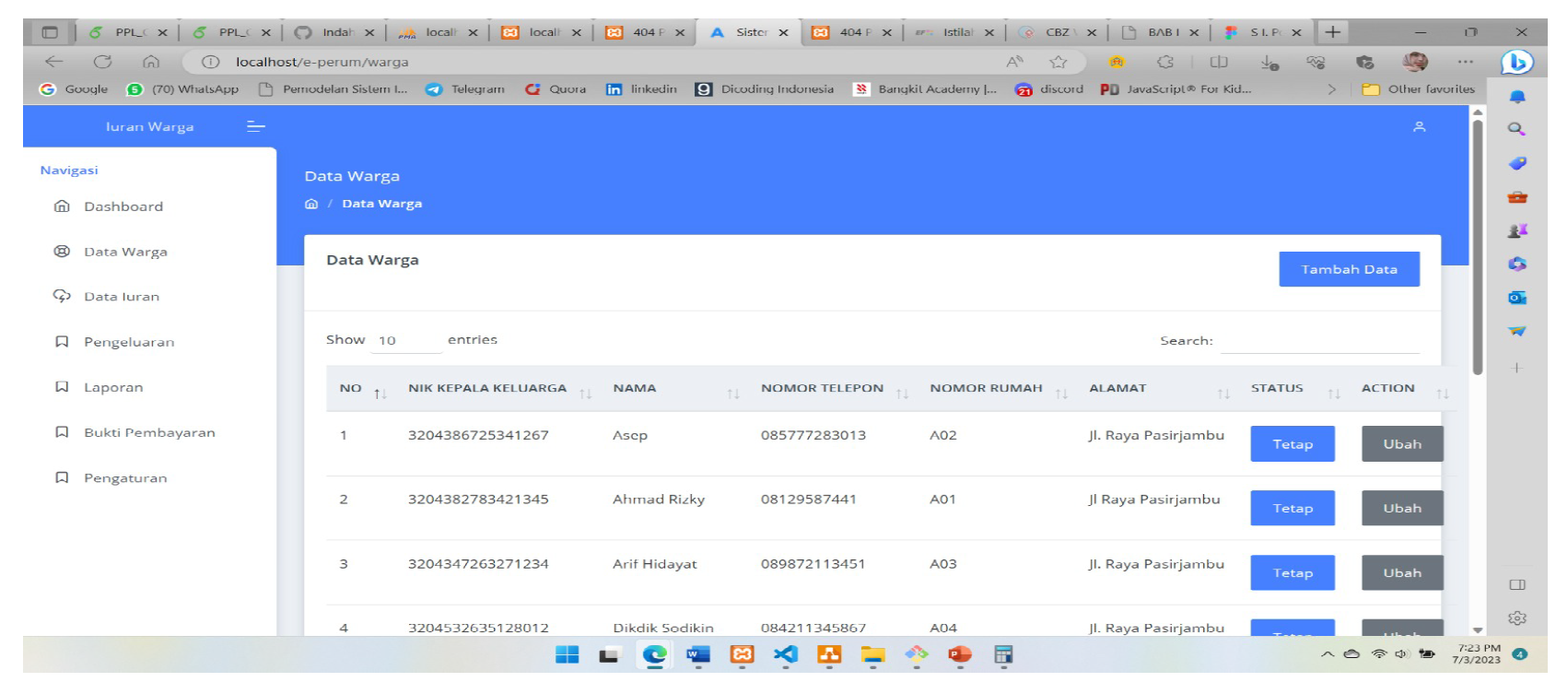 Figure 11. The expenditure page to facilitate the addition, editing, and deletion of housing expensesFigure 11. Expenditure.
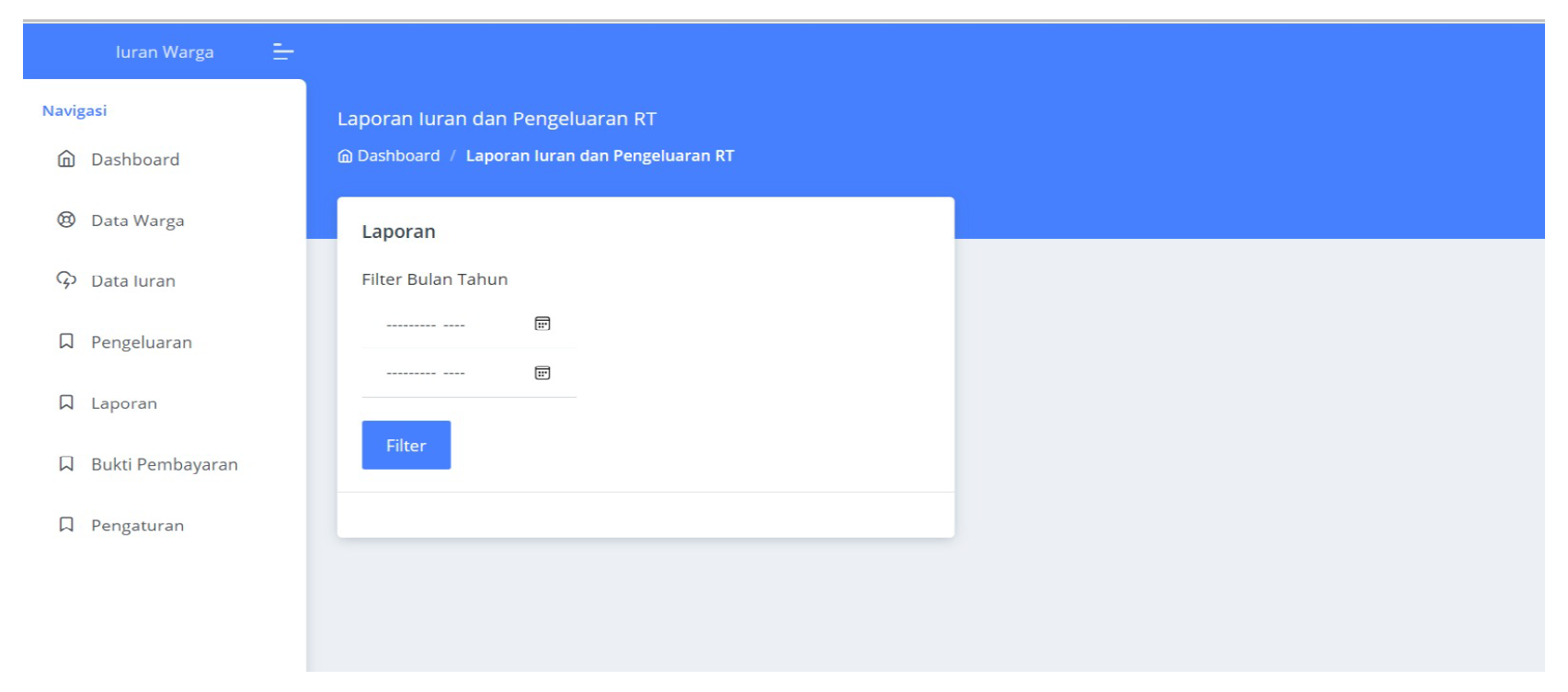 Figure 12. The report page to view reports for specific periods and print them for distribution to housing residents, enabling them to understand how the collected fees are being utilized.Figure 12. Report.
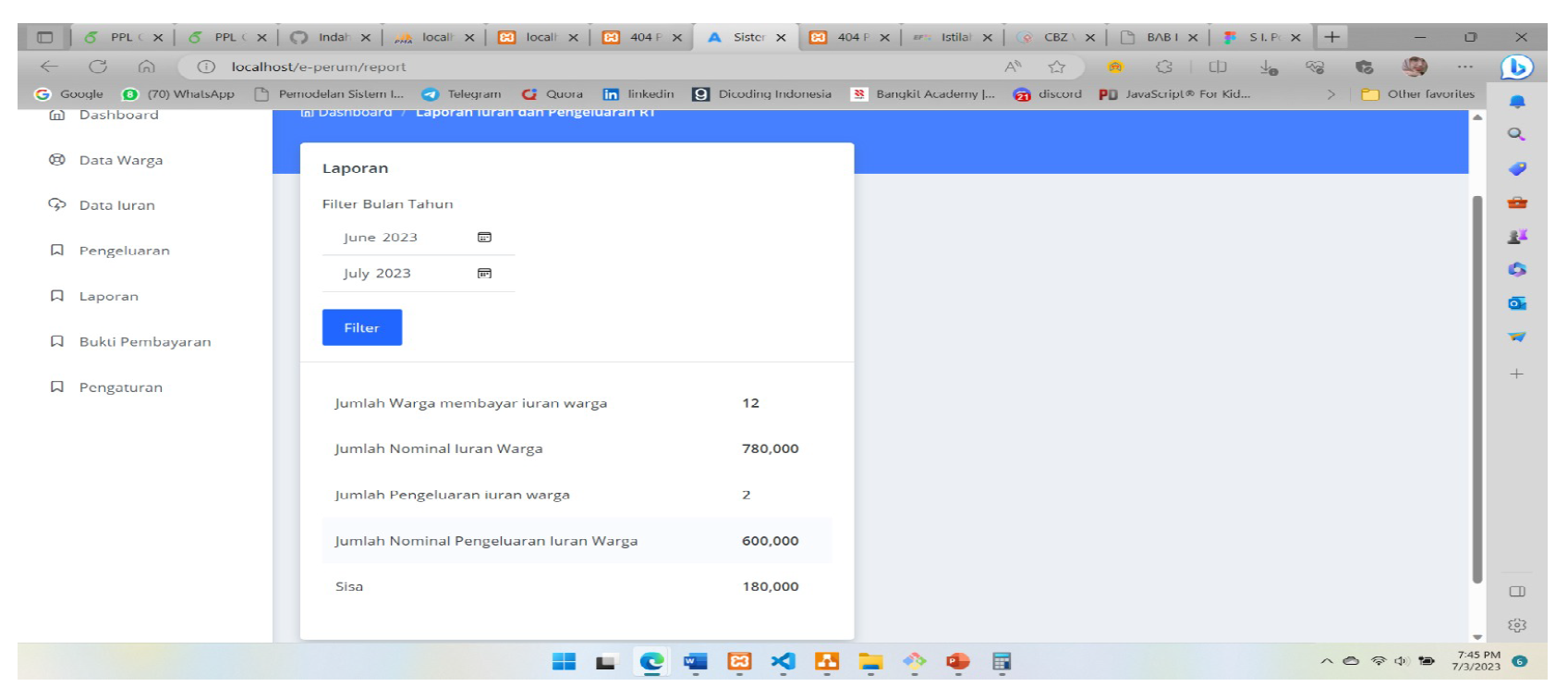 Figure 13. The interface of the payment proof upload page allows residents to submit proof of their fee payment, serving as evidence that they have made the payment. The uploaded proof will be reviewed by the admin. Additionally, there is a feature to print the payment receipt, which residents can access to verify that their payment data has been received by the admin.Figure 13. Upload proof of payment.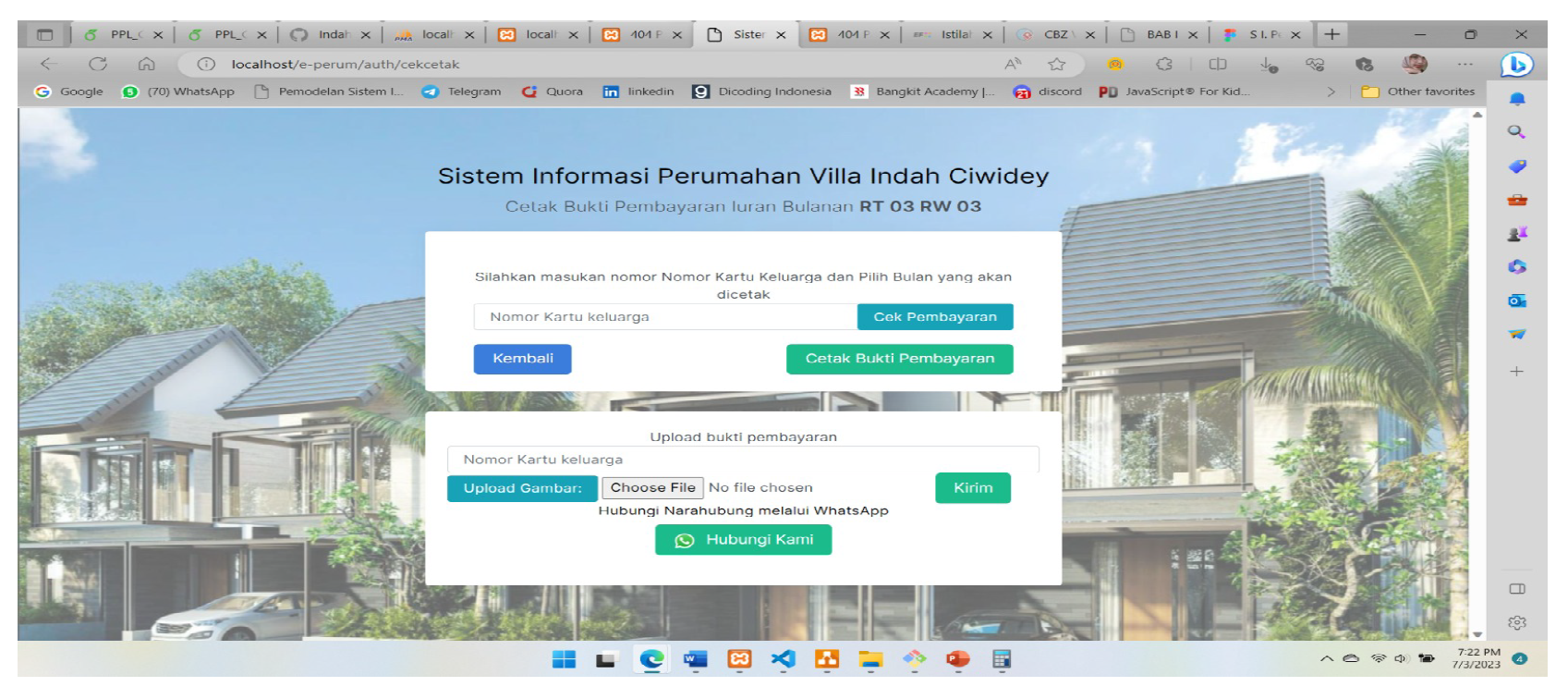
- 4.
-
TestingSystem testing is conducted by performing black-box testing on all application functions. The test results are as follows:Table 1. Testing.
Testing Activity Expected Realization Test Result Conclusion Access home page successfully without any errors Display the expected features Valid Login admin can enter a valid username and password, click login, and be redirected to the dashboard page Login feature with entering the correct email and password functions properly Valid Invalid username or password User enters an invalid username or password, clicks login, and an error message Unable to access the dashboard Valid upload proof of payment recident can upload proof of payment the system functions as expected Valid Click the "recident data" on the dashboard page Display a list of recident and form to add data The button functions as expected and the data is successfully saved Valid Click the "payment" Display a list of status payment from recident The button functions as expected and the data is successfully saved Valid Click the "expenditure" Display a list of expenditure and form to add data The button functions as expected and the data is successfully saved Valid Click the "report" Display payment and expenditure, report can be printed The button functions as expected Valid

4.2. Discussion
During the design phase of an application, data collection methods such as observations and interviews should be used to identify and solve various problems. System administrators must be able to add, edit, or delete apartment member information, billing information, messages, or apartment information. Additionally, system administrators must be able to accept payments from tenants. Residents, on the other hand, can log in using details entered by the system administrator, edit their own details (including adding family members), and view recent messages and bills entered by the system administrator. Must be able to view and pay dues. In addition to functional requirements, non-functional requirements are also identified to ensure application effectiveness and usability. These requirements include security measures to protect host data from attack, 24x7 application availability for administrators and hosts, high performance to handle multiple users with fast response times, and host-friendly interface, and compatibility with multiple platforms. During the design phase, the system is modeled using use case diagrams and activity diagrams. A use case diagram visually represents the interactions between administrators, users, and systems to describe the flow of processes and interactions within an application. Activity diagrams are created to show specific processes such as admin registration, login, billing and payment management, message management, and updating user information. The Figma website serves as an architectural design guide for creating the visual interface and user experience of a web-based electronic home application. The tables consist of Users, Admins, Tenants, Billing, Payments, Messages, and Families, providing a structured approach to information management within the program. Separate areas have been created for administrators and users where they can view relevant information and perform necessary actions.
5. Conclusion
Based on the conducted research, the researcher has successfully developed a housing information system that includes fee payments and data management with important features. This system is capable of displaying resident data, payment data, payment history, printing payment receipts, sending messages to residents, and providing payment reports. One of the advantages of this system is the digital storage of fee payment data with data backups, eliminating the need for paper-based payment processes. This not only improves efficiency but also helps reduce paper usage, making it environmentally friendly.
The application of the agile Scrum method in the development of this system has also proven successful. This approach involves intensive collaboration among development team members. With good collaboration, the team can work together to address issues and produce effective solutions. This method also provides flexibility and adaptability in responding to user needs and the environment.
This application is expected to improve the quality of service in the fee payment process. Users will have easier and faster access to make payments, making the process more efficient.
Therefore, this security and cleanliness fee payment information system has the potential to provide benefits in improving service quality and efficiency in resident and fee data management.
Acknowledgments
The author wishes to acknowledge the Informatics Department UIN Sunan Gunung Djati Bandung, which partially supports this research work.
References
- D. A. Ananda, M. B. Sanjaya et al., “Aplikasi manajemen penghuni perumahan berbasis web studi kasus batu indah regency,” eProceedings of Applied Science, vol. 4, no. 3, 2018.
- J. E. F. Sitanggang, H. Hendri, and N. Nurhadi, “Perancangan sistem informasi perumahan di kota jambi berbasis web (studi kasus: Meranti estate),” Jurnal Ilmiah Media Sisfo, vol. 12, no. 1, pp. 1026–1035, 2018.
- P. G. Ariastita, I. D. M. F. Septanaya, A. Y. Koswara, K. P. Tucunan, A. B. Raharjo, and P. K. Stefanugroho, “Pengembangan sistem e-lapor untuk meningkatkan kualitas pengelolaan data perumahan, prasarana, sarana dan utilitas (psu) di kabupaten sidoarjo,” Sewagati, vol. 7, no. 3, 2023.
- P. A. OMOSEBI, “Web based housing management system.”.
- T. Shah, “Cloud based housing society management system,” International Journal of Computer Applications, vol. 179, no. 47, pp. 35–41, 2018.
Figure 2.
Use case.
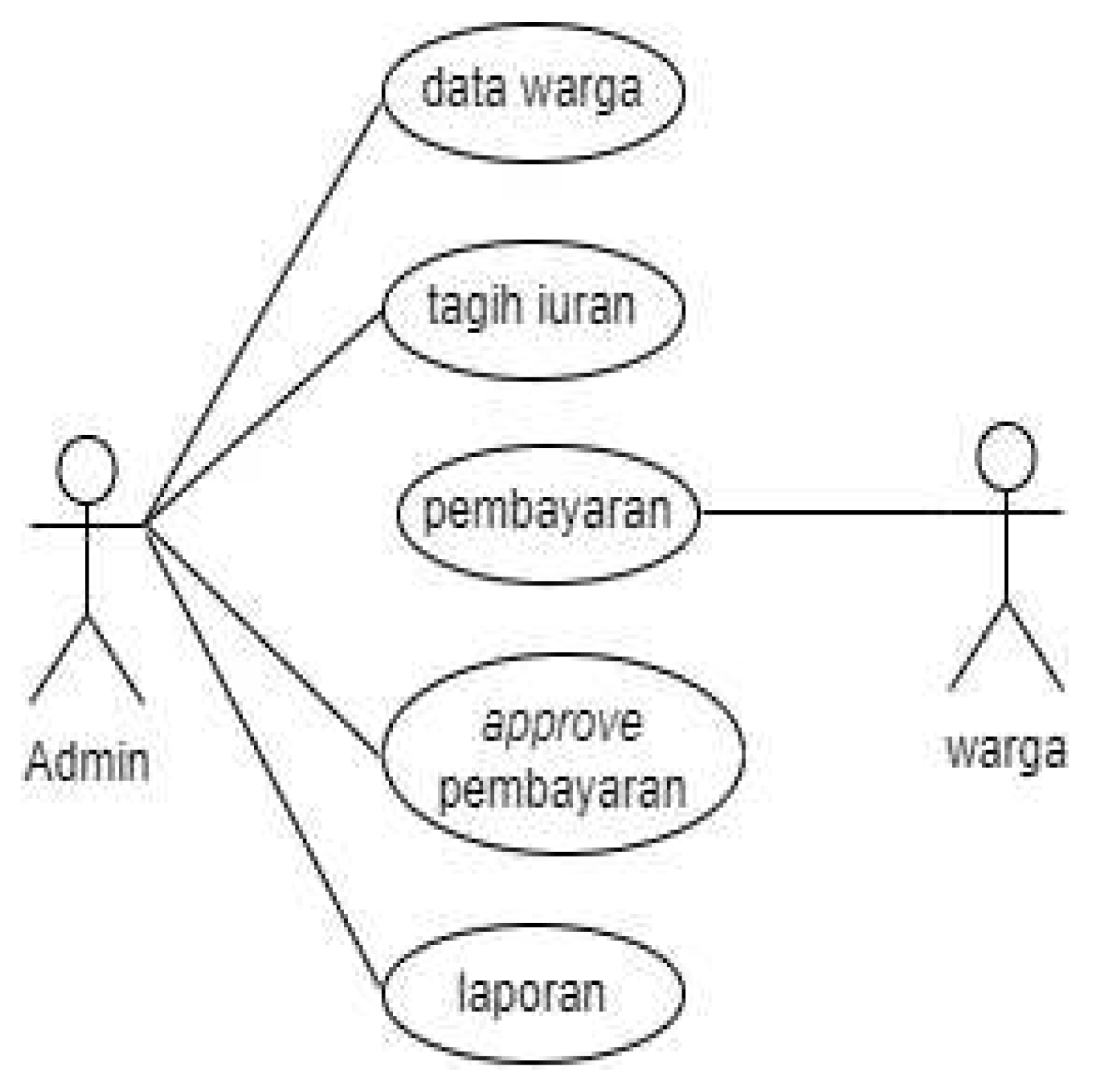
Figure 3.
activity diagram - login
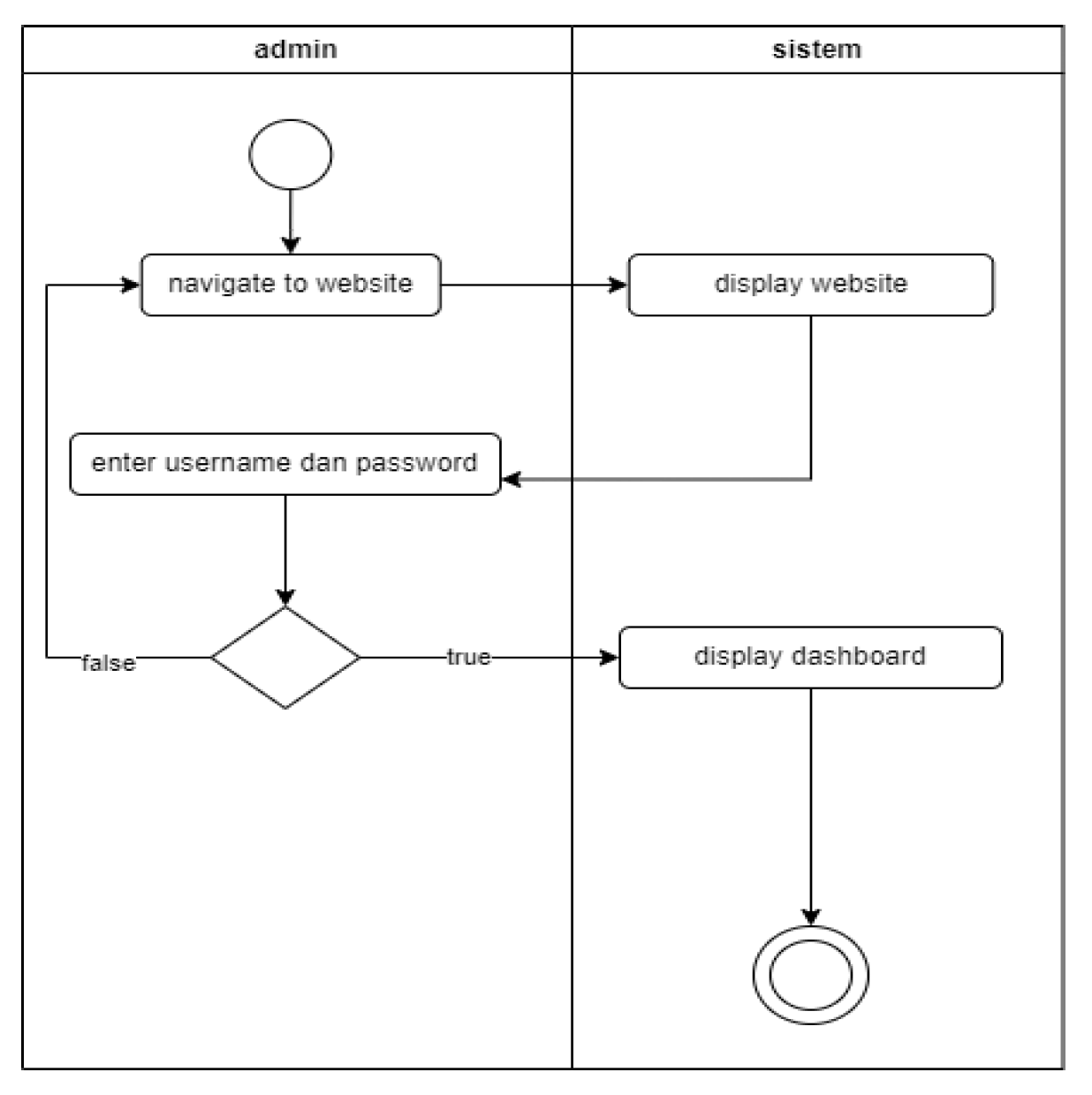
Figure 4.
activity diagram - billing and payment
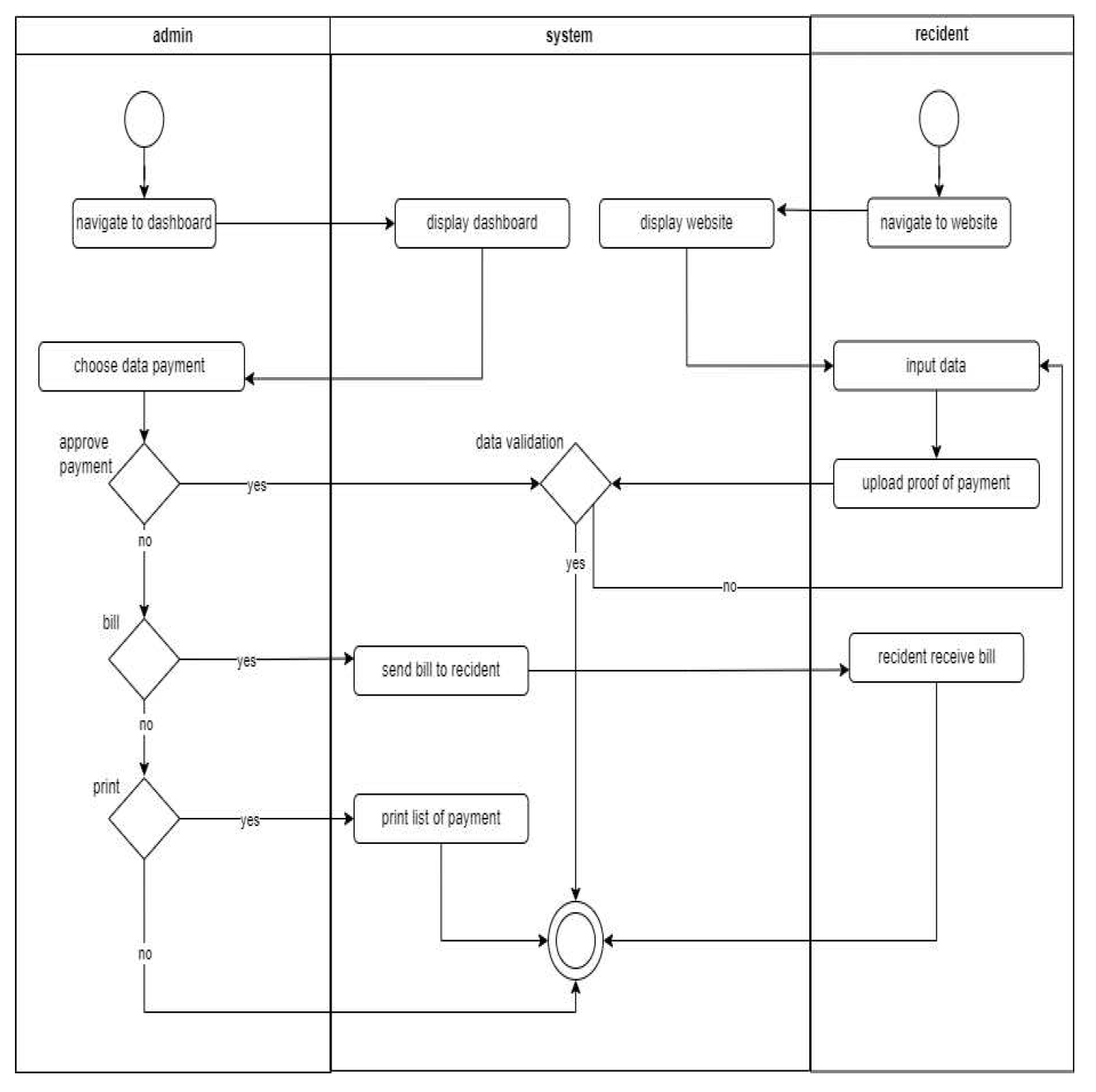
Figure 5.
activity diagram - expenditure and report.
Disclaimer/Publisher’s Note: The statements, opinions and data contained in all publications are solely those of the individual author(s) and contributor(s) and not of MDPI and/or the editor(s). MDPI and/or the editor(s) disclaim responsibility for any injury to people or property resulting from any ideas, methods, instructions or products referred to in the content. |
© 2023 by the authors. Licensee MDPI, Basel, Switzerland. This article is an open access article distributed under the terms and conditions of the Creative Commons Attribution (CC BY) license (http://creativecommons.org/licenses/by/4.0/).
Copyright: This open access article is published under a Creative Commons CC BY 4.0 license, which permit the free download, distribution, and reuse, provided that the author and preprint are cited in any reuse.


