

Submitted:
05 July 2023
Posted:
06 July 2023
You are already at the latest version
Abstract
Although the contribution of the Indonesian batik industry is quite significant, its activities also lead to environmental damage. There is thus a need to develop procedures and tools to achieve sustainability and Green Industry Standards. Before doing so, it is important to conduct a systematic literature review regarding this topic. This study investigates the existing research and debates relevant to sustainability in the batik sector. Therefore, this study provides an understanding of responsible batik consumption and production activities. After reviewing 42 papers from 593 generated results, the batik production aspect is the most dominant aspect analysed by the papers, with production waste being the most-discussed topic. There are opportunities to update the research on the batik production aspect, enrich the discussion about the organisation and marketing aspects, and begin to examine the finance-related aspect regarding the sustainable batik theme.
Keywords:
sustainability
; batik
; Green Industry Standards
1. Introduction
The United Nations has emphasized the concept of sustainable development. This includes SDG 12 (Sustainable Development Goal 12), which focuses on responsible consumption and production activities. SDG 12 can help business owners and consumers manufacture clean, efficient products, and be responsible for the waste generated after production or consumption [1]. The implementation of SDG 12 is aligned with the notion of green entrepreneurship. These are both important to implement to avoid more severe environmental damage, whose recovery takes longer than prevention. Unfortunately, the implementation of SDG 12 in developing countries, including Indonesia, is still very slow and not yet comprehensive. This can be seen from the lack of information on the implementation of SDG 12, specifically in the batik industry.
The batik industry, as part of the creative economy, contributes significantly to the Indonesian economy by employing 200 thousand people in 47 thousand registered business units. The batik industry also recorded exports of USD 532.7 million in 2020 [2]. As a world cultural heritage recognized by UNESCO (United Nations Educational, Scientific, and Cultural Organization) since 2019 [3], batik is a symbol of the life of the Indonesian people and contains very strong cultural and artistic values [4]. Batik skills are learned from generation to generation and become a source of income [5]. Up until now, the Indonesian batik industry has been dominated by small and medium enterprises (SMEs). However, batik also contributes to environmental damage, especially water and air pollution, due to inefficient production processes and resource utilisation [6,7]. One kilogram of batik can produce up to 125 litres of wastewater containing cancer-causing chemicals because it is disposed of directly into rivers without being treated first [8]. This endangers the health of the surrounding community that uses the river water [7,9] and indicates the absence of environmental, social, and economic sustainability. Therefore, research to make the batik industry more sustainable is urgently needed at this time.
Although the Centre for Handicrafts and Batik has established the "Green Industry Standard" for the batik industry, as stated in [10], not a single batik SME has been able to fulfil this standard and obtain certification. To answer this problem, there is a need to develop procedures to achieve the Green Industry Standard for the batik industry. To apply the procedures, the authors also consider creating an online application so that batik SMEs become more competitive and sustainable from the environmental, social, and economic aspects. This application is intended to assist batik SMEs in obtaining certification under the Green Industry Standard for the batik industry. Another benefit of this application is that it can evaluate the use of raw materials so that they are not overexploited and monitor the impact of the production process on the environment, as suggested by the UN [1]. Notably, no research has been carried out on this matter thus far.
Before designing the online application, it is necessary to know the extent of the awareness, understanding, interest, and attitude of stakeholders in the batik industry, such as consumers, craftsmen, batik SMEs’ owners, and the government, towards the concept of sustainability. However, before conducting the study to know the extent of awareness, understanding, interest, and attitude of stakeholders in the batik industry, it is important to conduct a literature review on the topic. Hence, this study investigates the existing research and debates relevant to sustainability in the batik sector. This study provides an understanding of responsible batik consumption and production activities.
2. Materials and Methods
Green entrepreneurship is one way to answer the challenge of environmental sustainability [11] and is an initiative taken by an entrepreneur to reduce the negative impact on the environment resulting from his or her business activities [11,12,13]. "Clean production" is strategic environmental management in the production process done to reduce risks to humans and the environment [14]. The processes in batik production are presented in Figure 1.
To encourage green entrepreneurship, it should be noted that the more positive one's attitudes, subjective norms, and behavioural control are, the stronger one’s intention to perform the behaviour is. For example, if the owner of a company perceives sustainability as a positive behaviour and believes that the people around him will feel a positive impact, and he also has the ability to carry out this behaviour, the stronger his intention to carry out the sustainable activities will be, as will his chances of doing so [15,16]. The negative perception of increasing production costs is often seen as an obstacle to green entrepreneurship [16], and this affects the implementation of green entrepreneurship [16,17].
Factors supporting green entrepreneurship are complex [18]. For green business owners, strong ethical values underlie their adoption of green entrepreneurship [19]. Previous researchers have categorized green entrepreneurial factors into two categories: internal and external [20,21,22]. Internal factors come from within humans and organizations [20], such as personal values [22,23]. The intersection of one's identity, such as gender, religion, and ethnicity, affects one's motivational values in adopting green entrepreneurship [23]. This study shows that the motivational values that appear in environmentally friendly batik SMEs are related to self-actualization, personal ability improvement, and concern for preserving culture as well as for humans and the surrounding environment.
There are also internal organizational factors, including the commitment from the highest management, technology, organizational resources, and incentives, cost savings, and competitive value [25]. On the other hand, external factors include factors such as regulation, supply chain pressures, consumer demand, stakeholders, such as families, and the environment [20,22,25]. According to some researchers, internal factors are very influential in the implementation of green entrepreneurship [20,21] because external factors need to be translated into internal motivation before they can bring about change in the organization.
Moreover, the green industry is one of the objectives of industrial operations, as stipulated in Article 3 of Indonesian Law No. 3 in 2014 concerning industry [26]. In order to balance industrial expansion with the maintenance of environmental functions and to benefit the community, the green industry places a high priority on efficiency and effectiveness in the sustainable use of resources. The Ministry of Industry offers green industry certification services to businesses that have benefited society, the economy, and the environment by using resources wisely and employing environmentally friendly manufacturing techniques in an effort to promote the development of the green industry. The certification facilitation intends to inspire the sector to intensify efforts in the direction of the green industry. Of course, the requirements outlined in the Green Industry Standards must be met by the industries that want green industry standards (GIS). For several industry groups, the Ministry of Industry is creating GIS. Regulation of the Minister of Industry Number 39 for 2019 mandates GIS for the batik sector [10].
A systematic literature review was conducted for this study, which includes a "snapshot" of the state of knowledge over a specific period. As it offers fresh perspectives, it enhances narrative reviews [27]. This study uses scientific articles from 2017 to 2022 (August 25, 2022). It is hereby considered an extension of the [28] conducted study, which performed a 10-year search from 2008 to 2017, discovering 82 articles on sustainable batik manufacturing issues. Systematic reviews are intended to be updated frequently to look for new evidence and have the goal of monitoring and capturing emerging knowledge within a particular research topic [27]. Clarity, internal validity, research transparency and governance are all improved by a comprehensive literature review. It also increases communication among academics about the theoretical underpinnings of a study (auditability). The current study employs Boolean logic to select pertinent material for this study by properly combining search phrases. The AND, OR, and NOT Boolean operators were utilized.
The initial step of the systematic review was locating academic papers using the keywords "sustainable" AND "batik." The literature search was done on an electronic database, and this review chose ProQuest. Business information can be found on ProQuest in a variety of formats, including scholarly journals, dissertations, company profiles, industry profiles, and market-specific trade news. The database offers access to around 11,000 full-text scientific articles from top publishers worldwide. ProQuest is used by more than 26,000 libraries in more than 150 countries, 98 percent of the top 400 colleges in the world rely on it, more than 130 million students and researchers can use it, and it partners with more than 9,000 publishers and content suppliers [29].
The types of sources selected were scholarly journals and conference papers and proceedings. These were chosen because of their nature, i.e. they were reviewed, either via single-blind peer review or double-blind peer review. The publishing dates of the article ranged from 1 January 2017 to 25 August 2022. After setting these search limitations, 593 results were generated, which were then sorted by relevance. To make sure that prospectively relevant articles were selected, the authors manually screened all the 30 pages available. After manual screening that focused on the title and abstract, 46 prospective articles were found. Following that, each article was examined to ensure content relevance.
3. Results
After a careful reading of the 46 articles, four articles were unable to go to the next process. The relevant articles left included 42 results. The first of these four articles discusses the preservation, standardization, and information technology 4.0 in the context of batik to ensure marketing competitiveness during the COVID-19 era [30]. The sole production-related topic covered in this article is the methods used for melting and drying colours to expedite production. The second article compares Champa and Batik Lasem from the 15th to the 19th century [31]. This study mostly analyses motif creation, and the author creates four acculturation motifs. The third one examines how to sustain batik SMEs’ businesses [32]. This study shows that business scale, market access capacity, and financial capacity influence the competitiveness level of batik SMEs. The last article excluded from the further review is a study about rural batik tourism in Banyuwangi [33]. This study examines the use of the community-based tourism (CBT) approach to develop a tourism village.
Based on the type of source among the 42 results, there are more conference papers and proceedings (27) than scholarly journals (15). The sources were published between 2017 and 2022. Year after year, the number of papers on the sustainability of batik production fluctuated. For the year 2017, this review found only one paper. There are five papers from the year 2018, two papers from the year 2019, 10 papers from the year 2020, 20 papers from the year 2021, and four papers from the year 2022, until August when this review was written. It can be observed that 2021 is the year with the greatest number of papers, followed by 2020 and 2018. Figure 2 presents the distribution of the papers based on the publication year.
Analyzing the types of papers across the publishing timespan reveals that 2021 was the year with the most conference and journal papers, with 14 conference papers and 6, respectively. The detailed distribution of paper types across the period under consideration can be seen in Table 1.
The authors classified the 42 articles that were further examined into four management aspects: production, organization, marketing, and finance. More specifically, the production aspect was divided into four categories: materials, dyeing, waste, and the full process. This produced seven categories in total. In the materials sub-category of the production aspect, there are four studies [34,35,36,37]. There are eight studies included in the dyeing sub-category [38,39,40,41,42,43,44,45]. Moreover, 15 studies are included in the waste sub-category [46,47,48,49,50,51,52,53,54,55,56,57,58,59,60]. This sub-category has the most papers among all the categories. The last sub-category of the production aspect is the full process, and it consists of six studies, which were conducted by [24,61–65].
Furthermore, the organisation category consists of seven studies [66,67,68,69,70,71,72]. Lastly, the category that has the fewest articles is the marketing category. It consists of only two studies [73,74]. Unfortunately, there is no study in the finance-related category. To summarise the distribution of the papers based on the analysis category, Table 2 presents the details. It can be observed that the majority of the papers discuss the production aspect. In particular, batik production waste is the most discussed topic, with 15 papers, followed by dyeing with eight papers, the full production process with six papers, and materials with four papers.
When the papers’ categories are compared across the time the papers were published, the studies of production-related aspects show an increasing trend from 2019 to 2021. Since 2022 is still ongoing, it is expected that the increasing trend will be achieved at the end of 2022 and beyond. The detailed distribution of the papers’ categories across the period of publication can be seen in Table 3.
In these 42 papers, only two countries are examined: Indonesia and Malaysia. This is understandable since batik is popular in both of these countries. However, the studies predominantly focus on the Indonesian context. There are 35 papers whose study locations are in Indonesia, while only 7 studies focus on the Malaysian context. The detailed distribution of the locations of the study in Indonesia can be seen in Table 4.
It can be seen that the province that is most often the setting of the research in these papers is Central Java, with 13 studies, whereby the two areas that are the most discussed are Pekalongan and Surakarta. However, research on the sustainability of batik is still being conducted in the western part of Indonesia, particularly in Java.
4. Discussion
In the materials sub-category of the production aspect, it was found that the current materials used to manufacture batik are more environmentally friendly. For example, in 2014, the use of copper stamps began to be replaced by wastepaper stamps [36]. Besides complying with the GIS (Green Industry Standard), this innovation also lowers the cost. Another action is discussed by [37], who gives ideas for producing block batik using bamboo. The usage of water as a material for batik production that complies with the GIS is highlighted by [35]. Lastly, [34] investigate the use of tamarind paste, or gutta, as a sustainable resource that serves as wax during the creation of batik. Although some studies have shown the utilisation of materials that align with the GIS, the composition ratio for this utilisation should also be explored.
In the dyeing sub-category of the production aspect, it was found that most of the papers analyse the alternative materials for dyes rather than discussing GIS-compliant dyeing processes. There are five papers focusing on the dyeing material. The first is [38], who mentions wood waste as a source of batik dyes that can produce safer and more eco-friendly dyes than synthetic ones. [43] analyses the waste of some local plants for use as natural dyes. [44] investigate the use of Bayat clay to save money and reduce production waste. [42] investigate the enormous potential of coconut fibre as a source of natural dyes for batik. Lastly, the study by [45] finds that biomass wood waste can be utilised as batik dyes. There are three more papers that focus on the dyeing process. [40] place a strong emphasis on the use of natural dyes to promote eco-friendly dyeing, increase knowledge of it, and expose people to the practice. [39] investigate how the batik technique affects the colour and durability of the dyed materials. Lastly, [41] discovers that the use of environmental catalysts in the natural dyeing process encourages the use of eco-friendly chain processes for regional textile production.
In the waste sub-category of the production aspect, the 15 papers are divided into four major issues, namely adding material to the wastewater, conducting processes for the wastewater process, the importance of wastewater management, and the condition of the wastewater. Adding material to wastewater is the most discussed issue and is described in seven papers. The adding material to wastewater issue is analysed by [50], who explored the addition of bacteria to the wastewater. [56] measures the Tyndall effect after using papaya seeds in the wastewater. [53] applies cationic surfactant-modified Mengkuang leaves to batik wastewater. [55] uses phytoremediation to treat wastewater. Kenaf is used in wastewater [49]. [58] uses immobilized Trichoderma viride in wastewater. Lastly, [57] uses rice husks and Canna indica plants in the batik wastewater treatment process.
Furthermore, conducting processes for the wastewater process is the second-most discussed issue and is covered in five papers. The issue of the conducting process in the batik wastewater process is discussed by [48], who analyses the visible light irradiation, [52] focuses on the right wastewater treatment system, while [51] proposes electrocoagulation as a method in the first step of the wastewater process. [54] analyses the decrease in the external resistor value of the wastewater process, and [46] proposes a photodegradation process to treat wastewater.
Only two papers study the importance of wastewater management. First, [47] examines the need for batik wastewater treatment and the roles of government, society, and batik industry players. Second, [60] analyses the priorities in wastewater management. The last issue is the condition of wastewater. This issue is only addressed in a study [59] which shows that the flow of batik waste affects water quality.
Moving to the next sub-category, six papers are included in the full process sub-category of the production aspect. [63] looks at how batik is made and how batik businesspeople see the environment. [65] captures the process of Mega Mendung batik as well as its eco-promotion. [62] demonstrates how green business practices may be implemented at all stages of the batik production process. A useful approach for locating non-value-added operations in the manufacture of natural dye batik utilizing a lean manufacturing system is provided by [24]. [64] assesses that cleaner production uptake could significantly reduce the environmental impact. Lastly, [61] proposes alternatives to increase the energy efficiency of the production of stamped batik.
In addition, seven papers address the organizational aspect. First, [66] identifies the barriers faced by batik SMEs that hamper more sustainable batik. [72] investigates how environmental commitment affects the small batik industry's adoption of the circular economy in a favourable and important way. [67] explores sustainability-oriented innovation (SOI) in a batik cultural village. [71] discusses the implementation of open innovation by some batik SMEs. [68] creates a brand-new evaluation method with four main components: company characterization, business model description, analytic input and output, and readiness area for the batik company. [70] discovers that economic sustainability has a significant and positive impact on the environmental sustainability of batik SMEs. Lastly, [69] suggests a dynamic evaluation strategy for the batik industry's sustainable supply chain management. Moreover, there are only two papers on the marketing-related aspect. First, [74] discovers that natural colour batik artisans or ecopreneurs need strong green values to succeed in their line of work. Second, [73] discovers that knowledge and attitudes about green products have a beneficial impact on the intention to buy green batik products created from natural substances.
Although this study is considered an extension of [28] in terms of the publication year of the papers reviewed, this study does not solely focus on the production process of batik but also spotlights other aspects of management, such as organization and marketing. This study also enhances the results by analysing the papers based on the location of their respective studies. This will help to map the level of concentration during the research. Besides their differences, the first and second-most discussed topics in this study and [28] paper are the same, namely the batik production waste and the dyeing process.
5. Conclusions
A search for the theme of sustainable batik returned 42 papers. Based on the type of source, conference papers, and proceedings are more dominant than journals. There is a fluctuating amount of research on the sustainability of batik production year by year. It can be observed that 2021 is the year with the greatest number of papers, although the number of papers in 2022 can still increase.
The majority of the papers analyse the batik production aspect, with production waste being the most discussed topic. While the marketing-related aspect is the least discussed, no paper discusses the finance-related aspect. The location of the research is still primarily in Indonesia. This is especially significant in light of UNESCO's designation of Indonesian batik as a World Cultural Heritage in 2019. Specifically, the most discussed location is Central Java, a province that has been analysed in 13 papers. For further study, there are opportunities to update the progress of the research on the aspects of batik production, enrich the discussion about the organisation and marketing aspects, and initiate an examination of the finance-related aspect regarding the sustainable batik theme. It is anticipated that the study will be carried out outside the province of Central Java based on its location. Therefore, the data for the comprehensive sustainable batik study will be gathered from different areas in Indonesia.
Author Contributions
Conceptualization, J.H.; methodology, J.H.; validation, J.H.; formal analysis, J.H. and A.A.G; resources, J.H.; writing—review and editing, J.H. All authors have read and agreed to the published version of the manuscript.
Funding
This research received no external funding.
Institutional Review Board Statement
Not applicable.
Informed Consent Statement
Not applicable.
Data Availability Statement
3rd Party Data. Data was obtained from Proquest and are available at https://proquest.com (accessed on 25 August 2022).
Acknowledgments
Authors would like to gratitude Telkom University for supporting the research and publication of this study.
Conflicts of Interest
The authors declare no conflict of interest.
References
- The sustainable development goals report. Available online: https://unstats.un.org/sdgs/report/2019/The-Sustainable-Development-Goals-Report-2019.pdf (accessed on 14 April 2022).
- Menperin: Kontribusi industri batik signifikan bagi perekonomian nasional (Industry Minister: Batik industry contribution is significant to national economy). Available online: https://www.alinea.id/bisnis/menperin-kontribusi-industri-batik-signifikan-bagi-perekonomian-nasional-b2cBY97i0 (accessed on 14 April 2022).
- EKONID. Clean Batik Initiative: Second year achievement report. EKONID, Indonesia, 2012.
- Budiono, G.; Vincent, A. Batik Industry of Indonesia: The Rise, Fall and Prospects. Studies in Business & Economics. 2010, 5, 156–170. [Google Scholar]
- Kemenperin dorong pertumbuhan start-up kerajinan dan batik (The Ministry of Industry encourages the growth of handicraft and batik start-ups). Available online: https://investor.id/business/kemenperin-dorong-pertumbuhan-startup-kerajinan-dan-batik (accessed on 20 May 2022).
- EKONID. Clean batik initiative: Third year achievement report. EKONID, Indonesia, 2013.
- Handayani, W.; Kristijanto, A. I.; Hunga, A. I. R. Behind the eco-friendliness of “batik warna alam”: Discovering the motives behind the production of batik in Jarum village, Klaten. Wacana. 2018, 19, 235–256. [Google Scholar] [CrossRef]
- Apriyani, N. Industri batik: Kandungan limbah cair dan metode pengolahannya (Batik industry: Liquid waste content and processing methods). Media Ilmiah Teknik Linkungan (MITL). 2018, 3, 21–29. [Google Scholar] [CrossRef]
- Romadhon, Y. Kebijakan pengelolaan air limbah dalam penanganan limbah batik di Kota Pekalongan (Wastewater management policy in handling batik waste in Pekalongan City). Journal of International Relations. 2017, 4, 49–64. [Google Scholar]
- The Minister of Industry, Decree No. 39 Year 2019 concerning Green Industry Standards (GIS) for batik industry. Available online: http://jdih.kemenperin.go.id/site/template3/2575 (accessed on 1 June 2022).
- Pastakia, A. Grassroots ecopreneurs: Change agents for a sustainable society. Journal of Organizational Change Management. 1998, 11, 157–173. [Google Scholar] [CrossRef]
- Schaper, M. The essence of ecopreneurship. Greener Management International. 2002, 38, 26–30. [Google Scholar] [CrossRef]
- Schuyler, G. Merging Economic and Environmental Concerns through Ecopreneurship. Digest. 1998, 8, 98–99. [Google Scholar]
- Indrayani, L. Upaya strategis pengelolaan limbah industri batik dalam mewujudkan batik ramah lingkungan (Strategic efforts of batik industry waste management in realizing environmentally friendly batik). Proceedings of Seminar Nasional Industri Kerajinan Dan Batik 2019, Jogjakarta, Indonesia, 8 October 2019. [Google Scholar]
- Félonneau, M.L.; Becker, M. Pro-environmental attitudes and behavior: Revealing perceived social desirability. Revue internationale de psychologie sociale. 2008, 21, 25–53. [Google Scholar]
- Revell, A.; Stokes, D.; Chen, H. Small businesses and the environment: turning over a new leaf? Business Strategy and the Environment. 2010, 19, 273–288. [Google Scholar]
- Gifford, R.; Sussman, R. Environmental attitudes. In The Oxford handbook of environmental and conservation psychology; Clayton, S.D., Ed.; Oxford University Press: Oxford, UK. 2012. [Google Scholar]
- Kirkwood, J.; Walton, S. What motivates ecopreneurs to start businesses? International Journal of Entrepreneurial Behavior & Research. 2010, 16, 204–228. [Google Scholar]
- Linnanen, L. An Insider’s Experiences with Environmental Entrepreneurship. Greener Management International. 2002, 2002, 71–80. [Google Scholar] [CrossRef]
- Pastakia, A. Assessing ecopreneurship in the context of a developing country: the case of India. Greener Management International. 2002, 38, 93–108. [Google Scholar] [CrossRef]
- Hessels, J.; Bouman, N.; Vijfvinkel, S. Environmental sustainability and financial performance of SMEs. EIM Business and Policy Research. 2011, Scales Research Reports H201101.
- Williams, S.; Schaefer, A. Small and Medium-Sized Enterprises and Sustainability: Managers’ Values and Engagement with Environmental and Climate Change Issues. Business Strategy and the Environment. 2013, 22, 173–186. [Google Scholar] [CrossRef]
- Gunawan, A. A.; Essers, C.; van Riel, A. C. R. The adoption of ecopreneurship practices in Indonesian craft SMEs: value-based motivations and intersections of identities. International Journal of Entrepreneurial Behavior & Research. 2021, 27, 730–752. [Google Scholar]
- Hartini, S.; Manurung, J.; Rumita, R. Sustainable-value stream mapping to improve manufacturing sustainability performance: Case study in a natural dye batik SME’s. IOP Conference Series: Materials Science and Engineering. 2021, 1072, 12066. [Google Scholar] [CrossRef]
- Mittal, V. K.; Sangwan, K. S. Modeling drivers for successful adoption of environmentally conscious manufacturing. Journal of Modelling in Management. 2014, 9, 127–140. [Google Scholar] [CrossRef]
- The Ministry of Industry of Republic of Indonesia: Green Industry Concept and Implementation. Available online: https://kemenperin.go.id/download/6297/Efisiensi-dan-Efektivitas-dalam-Implementasi-Industri-Hijau (accessed on 15 April 2022).
- Booth, A.; Sutton, A.; Papaioannou, D. Systematic Approaches to a Successful Literature Review, 2nd ed.; SAGE: London, UK, 2016.
- Indarti, I. A. T.R.; Peng, L. H. 2020. Sustainable Batik Production: Review and Research Framework. In Proceedings of the International Conference on Research and Academic Community Services (ICRACOS), Surabaya, Indonesia, 7 September 2019. Surabaya, Indonesia, 7 September 2019.
- Empower researchers to take on today’s global challenges. Available online: https://about.proquest.com/ (accessed on 7 July 2022).
- Karsam, K.; Widiana, M. E.; Widyastuty, A. A. S. A.; & Hidayati, K.; & Hidayati, K. Preservation, Standardization and Information Technology 4.0 of Traditional Gedog Tuban Batik to be Competitive in Marketing During Covid-19. Theoretical and Practical Research in the Economic Fields. 2022, 13, 72–85. [Google Scholar] [CrossRef]
- Basiroen, V. J. Creating Batik Lasem through a comparative study of Batik Lasem and Champa in the 15th to 19th century”. IOP Conference Series: Earth and Environmental Science, 2021, 729, 12064. [Google Scholar] [CrossRef]
- Kurniati, E. D.; Susilowati, I. Sustainable Competitive Advantage of SMEs through Resource and Institutional-Based Management: An Empirical Study of Batik SMEs in Central Java, Indonesia. Tržište/Market. 2019, 31, 61–82. [Google Scholar] [CrossRef]
- Yunikawati, N. A.; Istiqomah, N.; Jabbar, M. A.; Sidi, F. Model of Development Rural Tourism Batik in Banyuwangi: A sustainable Development Approach. E3S Web of Conferences, 2020, 208, 5001. [Google Scholar] [CrossRef]
- Ariani, A.; Pandanwangi, A. Eco-friendly batik painting wax made from tamarind seed powder (Tamarindus indica L). IOP Conference Series: Earth and Environmental Science. 2021, 737. [Google Scholar] [CrossRef]
- Handayani, W.; Widianarko, B.; Pratiwi, A. R. The water use for batik production by batik SMEs in Jarum Village, Klaten Regency, Indonesia: What are the key factors? IOP Conference Series: Earth and Environmental Science. 2021, 716. [Google Scholar] [CrossRef]
- Hidayat, S. R.; Affanti, T. B.; Josef, A. I.; Nurcahyanti, D. Batik stamp canting made of wastepaper material as a frugal innovation in batik. IOP Conference Series: Earth and Environmental Science. 2021, 905, 12125. [Google Scholar]
- Lias, H.; Ismail, A. R.; Abd Hamid, H. Malaysia textile craft industry: Innovation inspired by bamboo for batik block contemporary design. IOP Conference Series: Earth and Environmental Science, 2020, 549, 12087. [Google Scholar] [CrossRef]
- Dartono, F. A.; Fitriani, F. Batik Grajen: Eco-friendly batik utilizing wood waste for batik dye. IOP Conference Series: Earth and Environmental Science, 2021, 905, 12146. [Google Scholar]
- Failisnur, F.; Sofyan, S.; Silfia, S. Colorimetric properties of batik fabrics colored using gambier liquid waste. Journal of Physics: Conference Series. 2021, 1940, 12092. [Google Scholar] [CrossRef]
- Hussin, N. S. M.; Ismail, A. R.; Hasbullah, S. W.; Kadir, N. A. A review on sustainable development and heritage preservation and its conceal detrimental in batik dyeing. IOP Conference Series: Earth and Environmental Science 2020, 549, 1208. [Google Scholar] [CrossRef]
- Hussin, N. S. M.; Ismail, A. R.; Kadir, N. A.; Hasbullah, S. W.; Hassan, H.; Jusoh, N. Resurgence the Local Knowledge: Environmental Catalysis Practiced in Local Textile Dyeing. IOP Conference Series: Earth and Environmental Science 2020, 12043–616. [Google Scholar]
- Kusumawati, N.; Muslim, S. Exploration and Standarization of Coconut Fiber Waste Utilization in Batik Dyeing Process. IOP Conference Series: Earth and Environmental Science. 2021, 709, 12034. [Google Scholar] [CrossRef]
- Mataram, S. Natural batik dyes from Terminalia bellirica, Ceriop condolleana, Cudrania javanensis and Pelthopherum pterocarpum. IOP Conference Series: Earth and Environmental Science. 2021, 905, 12019. [Google Scholar]
- Nurcahyanti, D.; Wahyuningsih, N.; Amboro, J. L. Natural clay dye to develop eco-friendly products based on regional potential in Batik Crafts Center of Jarum Village, Bayat Subdistrict, Klaten Regency. IOP Conference Series: Earth and Environmental Science. 2021, 905, 12076. [Google Scholar] [CrossRef]
- Saefudin. (2020). Prospects of biomass wood wastes as natural dye stuffs for batik clothes and other woven fabrics. IOP Conference Series: Earth and Environmental Science. 2021, 415, 12020. [Google Scholar]
- Arifan, F.; Nugraheni, F. S.; Devara, H. R.; Lianandya, N. E. Wastewater treatment from batik industries using TiO2 nanoparticles. IOP Conference Series: Earth and Environmental Science. 2018, 116, 12046. [Google Scholar] [CrossRef]
- Budiyanto, S.; Purnaweni, H.; Sunoko, H. R. Environmental analysis of the impacts of batik waste water polution on the quality of dug well water in the batik industrial center of Jenggot Pekalongan City. E3S Web of Conferences. 2018, 31, 9008. [Google Scholar] [CrossRef]
- Firdharini, C.; Setyaningtyas, T.; Riyani, K. Comparative study of Fe2+/H2O2/CuO/Vis and Fe2+/H2O2/CuO for phenol removal in batik wastewater under visible light irradiation. Journal of Physics: Conference Series. 2021, 1918, 32004. [Google Scholar] [CrossRef]
- Fitria, F. L.; Dhokhikah, Y. Removal of chromium from batik wastewater by using kenaf (Hibiscus cannabinus L.) with bed evapotranspiration. IOP Conference Series: Earth and Environmental Science, 2019, 243, 12011. [Google Scholar] [CrossRef]
- Gunawan, M.; Wikaningrum, T. The Bacteria Addition Study to Batik Wastewater Industries In pH Performance, and Removal of Ammonia and COD. IOP Conference Series: Earth and Environmental Science. 2022, 995, 2027. [Google Scholar] [CrossRef]
- Gusa, R. F.; Sari, D. N.; Afriani, F.; Sunanda, W.; Tiandho, Y. Effect of electrode numbers in electrocoagulation of Batik Cual wastewater: analysis on water quality and energy used. IOP Conference Series: Earth and Environmental Science, 2022, 599, 12061. [Google Scholar] [CrossRef]
- Ham, C.; Tomasowa, R.; Hiemmayani, V. Natural dyes batik gallery with waste management in Kampung Palbatu Tebet. IOP Conference Series: Earth and Environmental Science. 2021, 794, 12187. [Google Scholar] [CrossRef]
- Hanafiah, M. A. K. M.; Ibrahim, S.; Subberi, N. I. F. M.; Kantasamy, N.; Fatimah, I. Application of Cationic Surfactant Modified Mengkuang Leaves (Pandanus atrocapus) for the Removal of Reactive Orange 16 from Batik Wastewater: A Column Study. Nature Environment and Pollution Technology. 2021, 20, 1703–1708. [Google Scholar]
- Khalik, W. F.; Ho, L.-N.; Ong, S.-A.; Voon, C.-H.; Wong, Y.-S.; Yusuf, S. Y.; Yusoff, N. A; Lee, S.-L. Enhancement of simultaneous batik wastewater treatment and electricity generation in photocatalytic fuel cell. Environmental Science and Pollution Research. 2018, 25, 35164–35175. [Google Scholar] [CrossRef] [PubMed]
- Muchtasjar, B.; Hadiyanto, H.; Izzati, M.; Vincēviča–Gaile, Z.; Setyobudi, R. H. The Ability of Water Hyacinth (Eichhornia crasipes Mart.) and Water Lettuce (Pistia stratiotes Linn.) for Reducing Pollutants in Batik Wastewater. E3S Web of Conferences. 2021, 226, 10. [Google Scholar] [CrossRef]
- Putra, R. S.; Airun, N. H. The effect of particle size and dosage on the performance of Papaya seeds (Carica papaya) as biocoagulant on wastewater treatment of batik industry. IOP Conference Series: Materials Science and Engineering. 2021, 1087, 12045. [Google Scholar] [CrossRef]
- Rahmadyanti, E.; Wiyono, A. Constructed Wetland with Rice Husk Substrate as Phytotechnology Treatment for Sustainable Batik Industry in Indonesia. Journal of Physics: Conference Series. 2020, 1569, 42018. [Google Scholar] [CrossRef]
- Rahmaniah, G.; Mahdi, C.; Safitri, A. Biosorption of Synthetic Dye from Batik Wastewater Using Trichoderma viride Immobilized on Ca-Alginate. Journal of Physics: Conference Series. 2019, 1374, 12007. [Google Scholar] [CrossRef]
- Rezagama, A.; Sutrisno, E.; Handayani, D. S. Pollution Model of Batik and Domestic Wastewater on River Water Quality. IOP Conference Series: Earth and Environmental Science. 2020, 448, 12074. [Google Scholar] [CrossRef]
- Sulthonuddin, I.; Herdiansyah, H. Sustainability of Batik wastewater quality management strategies: analytical hierarchy process. Applied Water Science. 2021, 11, 1–12. [Google Scholar] [CrossRef]
- Djunaidi, M.; Setyaningsih, E. Pemilihan Alternatif Penghematan Energi pada Proses Produksi Batik Cap dengan Menggunakan Metode Mcdm-Promethee. Spektrum Industri, 2017, 15, 223. [Google Scholar] [CrossRef]
- Indrayani, L.; riwiswara, M. The implementation of green industry standard batik industry to develop eco-friendly. IOP Conference Series: Materials Science and Engineering 2020, 12081–980. [Google Scholar] [CrossRef]
- Phang, F. A.; Roslan, A. N.; Zakaria, Z. A.; Zaini, M. A. A.; Pusppanathan, J.; Talib, C. A. Environmental Awareness in Batik Making Process. Sustainability. 2022, 14, 6094. [Google Scholar] [CrossRef]
- Sirait, M. Cleaner production options for reducing industrial waste: the case of batik industry in Malang, East Java-Indonesia. IOP Conference Series: Earth and Environmental Science. 2018, 106, 12069. [Google Scholar] [CrossRef]
- Trihanondo, D.; Endriawan, D.; Haryotedjo, T; Putra, G. M.; Machfiroh, R. Redefining Cirebon batik into an environmentally friendly icon of West Java. IOP Conference Series: Materials Science and Engineering. 2021, 1098, 52011. [Google Scholar] [CrossRef]
- Gunawan, A. A.; Bloemer, J.; van Riel, A. C. R.; Essers, C. Institutional Barriers and Facilitators of Sustainability for Indonesian Batik SMEs: A Policy Agenda. Sustainability. 2022, 14, 8772. [Google Scholar] [CrossRef]
- Harsanto, B.; Permana, C. T. Sustainability-oriented innovation (SOI) in the cultural village: an actor-network perspective in the case of Laweyan Batik Village. Journal of Cultural Heritage Management and Sustainable Development. 2020, 11, 297–311. [Google Scholar] [CrossRef]
- Kusumawardani, S. D. A.; Kurnani, T. B. A. Assessment tool to understand the readiness of Batik SMEs for Green Industry. E3S Web of Conferences. 2021, 249, 2008. [Google Scholar] [CrossRef]
- Mubiena, G. F.; Ma’ruf, A. Development of an Assessment Model for Sustainable Supply Chain Management in Batik Industry. IOP Conference Series: Materials Science and Engineering. 2018, 319. [Google Scholar] [CrossRef]
- Nawi, N. C.; Al Mamun, A.; Daud, R. R. R.; Nasir, N. A. M. Strategic orientations and absorptive capacity on economic and environmental sustainability: A study among the batik small and medium enterprises in Malaysia. Sustainability. 2020, 12. [Google Scholar] [CrossRef]
- Raya, A. B.; Andiani, R.; Siregar, A. P.; Prasada, I. Y.; Indana, F.; Simbolon, T. G. Y.; Kinasih, A. T.; Nugroho, A. D. Challenges, open innovation, and engagement theory at craft SMEs: Evidence from Indonesian batik. Journal of Open Innovation: Technology, Market, and Complexity. 2021, 7, 121. [Google Scholar] [CrossRef]
- Widhiastuti, A.; Muafi, M. The effect of environmental commitment on circular economy implementation: A study on Small Batik Industry in Sleman Regency. International Journal of Business Ecosystem & Strategy. 2022, 4, 13–19. [Google Scholar]
- Sunarjo, W.A.; Manalu, V.G.; Adawiyah, W.R. Nurturing Consumers’ Green Purchase Intention on Natural Dyes Batik During Craft Shopping Tour in The Batik City of Pekalongan Indonesia. Geoj. Tour. Geosites. 2021, 34, 186–192. [Google Scholar] [CrossRef]
- Untari, R. How do Batik Natural Dyes Crafter Spread Their Green Value (Case Studies on Batik Gemawang and Batik Warna Alam Si Putri). IOP Conference Series: Earth and Environmental Science. 2021, 940, 12073. [Google Scholar] [CrossRef]
Figure 1.
Batik Production Process. Source: [24].
Figure 1.
Batik Production Process. Source: [24].
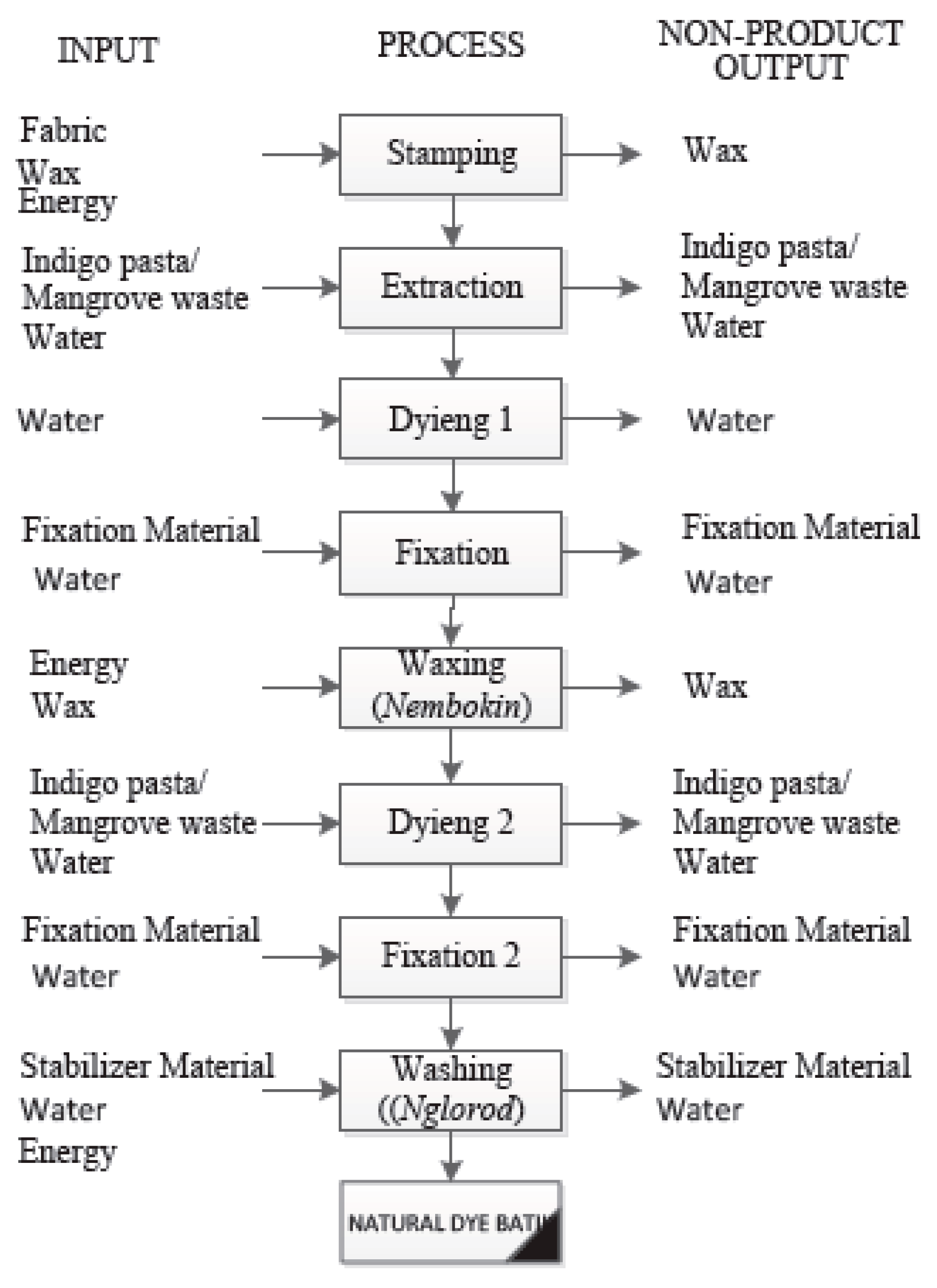
Figure 2.
Distribution of Papers Per Year.
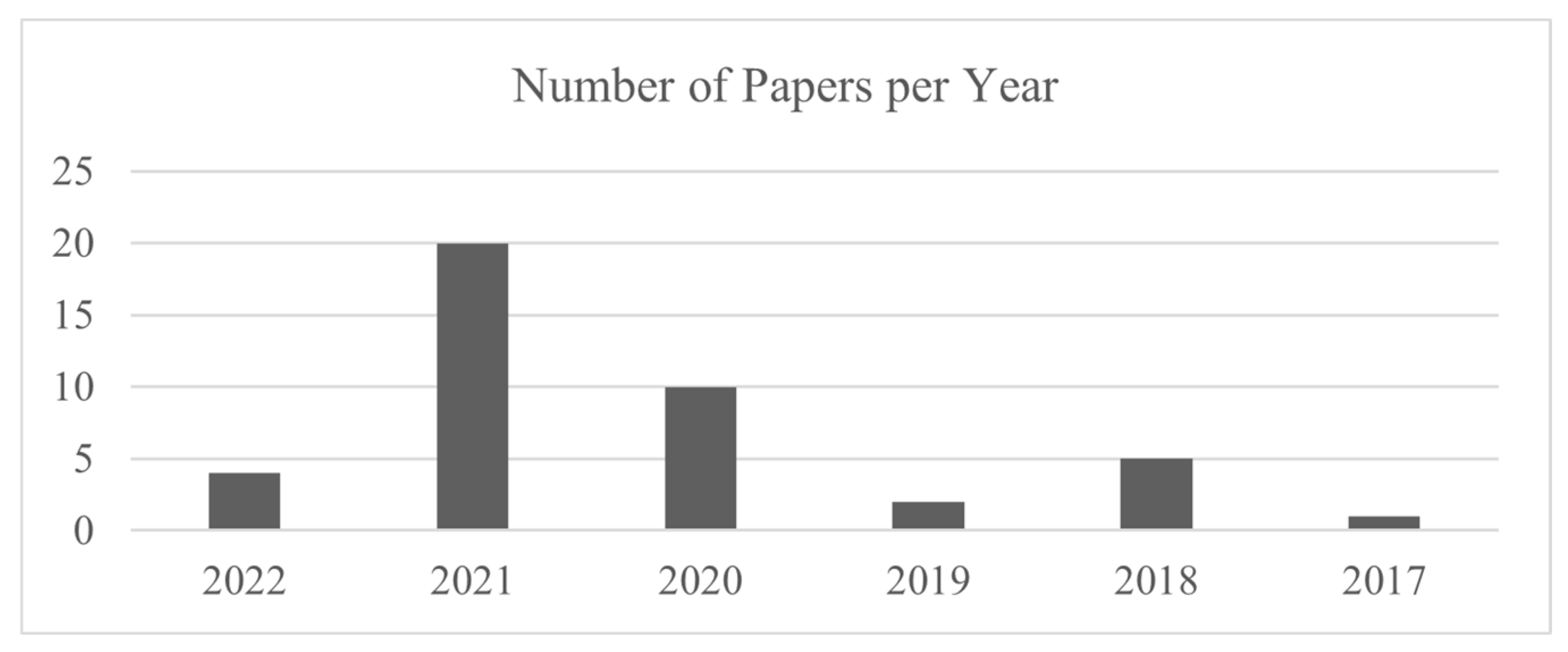

Table 1.
Distribution of Paper Types Per Year.
| Year | Conference | Journal |
|---|---|---|
| 2022 | 1 | 3 |
| 2021 | 14 | 6 |
| 2020 | 7 | 3 |
| 2019 | 1 | 1 |
| 2018 | 4 | 1 |
| 2017 | - | 1 |
Table 2.
Distribution of Papers Per Category.
| Production: Materials | Production: Dyeing | Production: Waste | Production: Full Process | Organisa-tion | Marketing | Finance |
| 4 | 8 | 15 | 6 | 7 | 2 | 0 |
Table 3.
Distribution of Paper’s Category Per Year.
| Year | Producti-on: Materials | Producti-on: Dyeing | Producti-on: Waste | Producti-on: Full process | Organisa-tion | Marketing |
| 2022 | - | - | 1 | 1 | 2 | - |
| 2021 | 3 | 5 | 6 | 2 | 2 | 2 |
| 2020 | 1 | 3 | 3 | 1 | 2 | - |
| 2019 | - | - | 2 | - | - | - |
| 2018 | - | - | 3 | 1 | 1 | - |
| 2017 | - | - | - | 1 | - | - |
Table 4.
Distribution of Locations of The Study in Indonesia.
| Province | Area | Paper |
| DKI Jakarta | 1 | |
| West Java |
Jababeka | 1 |
| Cirebon | 1 | |
| Indramayu | 1 | |
| Central Java |
Pekalongan | 3 |
| Sukoharjo | 2 | |
| Semarang | 1 | |
| Klaten | 2 | |
| Surakarta | 3 | |
| Banyumas | 2 | |
| Yogyakarta |
Sleman | 1 |
| Yogyakarta | 1 | |
| East Java |
Surabaya | 1 |
| Jember | 2 | |
| Malang | 2 | |
| Not specified | 1 | |
| Bangka Belitung | 1 | |
| West Sumatera | 1 | |
| Not specified | 8 | |
| Total | 35 | |
Disclaimer/Publisher’s Note: The statements, opinions and data contained in all publications are solely those of the individual author(s) and contributor(s) and not of MDPI and/or the editor(s). MDPI and/or the editor(s) disclaim responsibility for any injury to people or property resulting from any ideas, methods, instructions or products referred to in the content. |
© 2023 by the authors. Licensee MDPI, Basel, Switzerland. This article is an open access article distributed under the terms and conditions of the Creative Commons Attribution (CC BY) license (https://creativecommons.org/licenses/by/4.0/).
Copyright: This open access article is published under a Creative Commons CC BY 4.0 license, which permit the free download, distribution, and reuse, provided that the author and preprint are cited in any reuse.


