

Submitted:
05 July 2023
Posted:
06 July 2023
You are already at the latest version
Abstract
The use of botanical extracts of the plant Jatropha curcas (Euphorbiaceae) represents a valuable alternative to control insect pests and avoid the detrimental effects on the environment and health that arise due to synthetic chemical insecticides. Thus, we conducted a systematic review to summarize the published evidence on the bioactivity of J. curcas against insect pests. Electronic databases were searched to identify studies that assessed J. curcas extracts against insect pests in various types of crops. We included 39 articles that reported the insecticidal and insectistatic activity of several botanical extracts from J. curcas against insects of eight different taxonomic orders. The evidence demonstrates that aqueous and methanolic extracts from seeds and leaves, seed oil, and petroleum ether seed extracts were effective against insect pests of stored grains, aphids of cabbage, sorghum, fruit flies, and desert locusts. The extracts caused high mortality, controlled the populations, reduced oviposition, diminished hatchability, and increased the antifeedant effect. However, the type of solvent used to obtain the botanical extract and the method of application (contact or food) are fundamental to increase its bioactivity. Therefore, botanical extracts from seeds and leaves of J. curcas should be considered as an alternative against insect pests and may be incorporated into integrative and sustainable management for insect control.
Keywords:
botanical extracts
; sustainable management of pests
; insecticide activity
; insectistatic activity
; insect pests
1. Introduction
Insecticides of synthetic origin are intended to control and eliminate insect pests that cause damage in agriculture and livestock, as well as those organisms that function as disease vectors, and against insects that cause damage to ornamental plants and animals. Their mechanisms of action are varied, but most commercial products contain neurotoxic active ingredients [1]. This is why the excessive use of synthetic chemical insecticides in recent decades has been partly responsible for various health and environmental problems, contamination of surface and groundwater and increased cost of production [2,3].
The presence of chemical insecticide residues in food generates serious consequences on human health that include blindness, cancer, liver and nervous system diseases, as well as long-term effects that reduce fertility, increase cholesterol levels, produce high infant mortality rates and various metabolic/genetic disorders [4]. Consequently, there is a global growing demand for food produced without the use of synthetic chemicals and the adoption of organic, agroecological, or environmentally sustainable agriculture [5]. For these reasons, more effective strategies for the control of insect pests are continually being sought. In addition, new compounds are not only intended to be more efficient but also to be implemented in an integrated pest management strategy and to have a favorable ecotoxicological profile that includes a short persistence in the environment [6].
Botanical extracts used as an alternative in the control of insect pests may have different effects, among which the most important are repellence, anti-feeding, oviposition deterrence, suppression of reproductive behavior, reduction of fecundity and fertility, and growth regulation. Additionally, botanical extracts stand out for their rapid degradation in the environment, lower production cost, and reduced toxicity, as well as more selective action mechanisms than synthetic chemical insecticides [7]. In this regard, several studies have demonstrated the insecticidal and deterrent potential of the plant Jatropha curcas L. (Euphorbiaceae) on pest insects through the use of its extracts, oils or compounds isolated from different parts of the plant, including its seeds, whose toxicity on insects is attributed to several components, including saponins, lectins, curcine, phytates, protease inhibitors, curcalonic acid and phorbol esters, among others [8,9]. Therefore, botanical extracts of J. curcas represent an alternative to achieve sustainable management in pest control, as they have nematicidal, fungicidal and antifeedant effects [10], as well as molluskicidal, insecticidal and acaricidal activities [11].
Although there is evidence on the potential use of the plant J. curcas in the control of insect pests, to date, there has been no systematic and orderly summary of the bioactivity of its botanical extracts against the groups of insects on which these extracts are effective and thus prevent damage in the main crops affected by such insects. Consequently, in the present study, a systematic review was carried out to synthesize the global evidence published regarding the use of botanical extracts of J. curcas on plague insects. The objectives of the present systematic review were 1) to identify and map the body of scientific evidence published on the use of botanical extracts of J. curcas against insect pests in different crops, 2) to summarize the body of evidence, and 3) to identify the main chemical compounds with insecticidal and insectistatic bioactivity extracted from the plant. The information generated from this study will be useful in guiding evidence-based decisions for any actor seeking alternatives for sustainable pest management control.
2. Materials and Methods
2.1. Protocol and guidelines followed
The topic addressed in this systematic review was established using an a priori protocol following the methodology proposed in the Preferred Reporting Items for Systematic Reviews and Meta-analysis protocol (PRISMA-P) statement [12], which is available upon request by contacting the corresponding author. In addition, the study was prepared and reported according to the Cochrane [13] and PRISMA [14] guidelines.
2.2. Inclusion criteria
In this systematic review, we included studies that reported results on the use of botanical extracts from the plant J. curcas in which their bioactivity was assessed either as insecticidal or insectistatic against insect pests of different crops. The insecticidal activity was considered the primary outcome and was defined as the control of the number of insects or colonies reported as the absolute value or percentage of mortality or larval and pupal viability reduction after exposure to the botanical extracts. Insectistatic activity was considered the secondary outcome and was defined as an effect on the growth or reproduction of the insect, anti-feeding effect, including a reduction in larval and pupal weight, lower fecundity and fertility, anti-oviposition effect, reduced hatching and hatchability of eggs, altered development, morphological malformations, and altered physiology. We included studies that assessed any type of botanical extract (including hexanoic, acetonic, methanolic, aqueous, ethanolic, or petroleum ether, among others) or secondary metabolite extracts from the plant J. curcas under in vitro, field, or greenhouse conditions. With respect to the type of studies included in our systematic review, only primary experimental studies published during the last 10 years as full text articles in English, Spanish, or Portuguese in peer-reviewed journals were considered.
2.3. Information sources and search strategy
The search for studies was carried out exhaustively from September to November 2022 using different databases included in the Digital Library System of the Metropolitan Autonomous University (BIDI-UAM) and included the main search engines Scopus, ScienceDirect, Web of Science, SCiELO, and CAB Direct. To perform the specific electronic searches, we defined and used the following search terms in conjunction with Boolean operators (AND, OR, and NOT): (jatropa curcas OR j. curcas OR physic nut) AND (extracts OR botanical extracts OR hexanic OR acetonic OR methanolic OR aqueous OR ethanolic OR petroleum ether OR secondary metabolites) AND (crop pest insects OR insect control OR insecticide OR insectistatic OR bioactivity). All the records found through the search in the different databases were compiled and downloaded into EndNote 20 to manage the bibliographic records by a single reviewer.
In SCOPUS, we used the following search command: ( jatropha AND curcas OR j AND curcas OR physic AND nut ) AND ( extracts OR botanical AND extracts OR hexanoic OR acetonic OR methanolic OR aqueous OR ethanolic OR petroleum AND ether OR secondary AND metabolites ) AND ( crop AND pest AND insects OR insect AND control OR insecticide OR antistatic OR bioactivity ) AND ( LIMIT-TO ( SUBJAREA , "AGRI" ) ) AND ( LIMIT-TO ( DOCTYPE , "ar" ) ). In Web of Science, the following search command was used: ALL=((jatropa curcas OR j. curcas OR physic nut) AND (extracts OR botanical extracts OR hexanic OR acetonic OR methanolic OR aqueous OR ethanolic OR petroleum ether OR secondary metabolites) AND (crop pest insects OR insect control OR insecticide OR insectistatic OR bioactivity)) NOT Document types: Review Article.
2.4. Study selection process and data extraction
Study selection was performed as previously reported [15]. Briefly, a single reviewer removed duplicates both automatically and manually from the EndNote library. Next, the same reviewer conducted the selection process, removing studies based on title and abstract screening. After this step, the studies were retrieved in full text to assess final eligibility using a standardized format based on the inclusion criteria. The studies included in the narrative synthesis were extracted using a standardized format to find the main characteristics per study for data charting in an Excel spreadsheet. The data extracted included author, year of publication, objective and methodology of the study, geographical region where the study was conducted, parts of the plant used and type of extract obtained, type of insect pests and agricultural crops assessed, type of sample evaluated (eggs, larvae, pupae, or adult insects), and identification of secondary metabolites.
2.5. Risk of bias assessment
One reviewer assessed the risk of bias in individual studies using a previous modification of the Cochrane Collaboration's risk of bias tool [16]. Accordingly, each study was assessed for having a low, high, or unclear risk of bias in each of the following criteria: 1) adequate description of the botanical extract assessed in the study, 2) clear specification of the method used in bioassays, 3) consistency of report, 4) adequate analysis of the insecticidal and insectistatic activity, 5) clear description of the method used for obtaining extracts, and 6) selective presentation of results. The results from this evaluation are presented as the percentage of studies in each category of bias per criterion.
2.6. Summary of evidence
Similar to a previous study [17], data charting was used to obtain numerical counts of the frequency of each extracted characteristic from the studies and create contingency tables grouping different categories of information. Graphs were constructed with Prisma 10, whereas the Sankey diagram was obtained online at https://sankeymatic.com.
3. Results
3.1. Studies included in the evidence synthesis
The initial search yielded a total of 320 documents, with ScienceDirect and CAB abstracts being the electronic databases that contributed 71.8% of the records, while SCOPUS only contributed 2.5%. Additionally, 10 more records were added by cross-referencing to generate a total of 330 identified records, of which 16 duplicates were removed. Of the 314 remaining records, 212 were excluded after reviewing the title, and 59 more documents were excluded after reading the abstract. Thus, 43 documents passed the eligibility process and were retrieved in full text. Of these, after applying the inclusion criteria, four studies were eliminated for the reasons presented in the flow diagram depicted in Figure 1. In total, 39 publications were included in the narrative synthesis.
3.2. Main characteristics of the studies included in the systematic review
Among the 39 studies included in our review, 24 were published in English, followed by 3 and 2 studies published in Portuguese and Spanish, respectively. The studies were from 14 different countries distributed across three continents, with Africa contributing the highest number of publications (18), followed by the Americas (11) and Asia (10) (Figure 2a). In conjunction, Nigeria (9), India (7), Brazil (7), Sudan (4), and Mexico (3) provided 78.94% of the studies, whereas the remaining nine countries contributed one study each (Appendix Table A1). According to Figure 2b, 52.63% of the studies (20) were published from 2015 to 2021, thus indicating a high interest in the topic in recent years.
As summarized in Appendix Table A1, the 39 studies included in the systematic review assessed the insecticidal and insectistatic activity of a variety of botanical extracts from J. curcas against different insect pests. These studies reported mortality, population number, anti-feeding activity, anti-oviposition, hatchability of eggs, morphological/developmental effects, repellency, and physiological effects as the main outcomes. The studies assessed the bioactivity of botanical extracts of J. curcas on eight different taxonomic orders of insect pests that included 44 individual bioassay results for different insect pest species from these orders (Figure 2d). Lepidoptera, Coleoptera, and Hemiptera were the main taxonomic orders, as these included 36/44 bioassays.
3.3. Risk of bias within the studies
As summarized in Figure 2c, among the 39 studies assessed for risk of bias, 23.07% showed a high risk of bias in the selective presentation of results. However, 15.38 and 17.94% of the studies were rated as having an unclear risk of bias for not presenting a clear description of the method used for obtaining the botanical extract and the selective reporting of results, respectively. In the remaining criteria, between 94.87 and 100% of the studies were rated as having a low risk of bias.
3.4. Summary of evidence by order of plague insects
3.4.1. Lepidoptera
- 1.
- Plutella xylostella
Amoabeng, et al. [18] evaluated the aqueous extract of J. curcas leaves sprayed on cabbage (Brassica oleracea (L.)) plants at a concentration of 3% (w/v) under open field conditions. The plants contained third instar larvae of Plutella xylostella (L.) (Lepidoptera: Plutellinae), which were reduced by 66% with the treatment. Ingle, et al. [19] evaluated methanolic extracts of leaves, seeds, seed hulls, bark, and root of J. curcas at a concentration of 5% (w/v) against third instar larvae of P. xylostella in bioassays of ingestion in cabbage leaf discs. After 72 hours, the methanolic extract of seed husk was more effective, causing 100% mortality. In another study, the aqueous latex extract obtained from J. curcas stems was evaluated at concentrations of 25 and 50% (v/v) sprayed on experimental plots of cabbage crops for controlling P. xylostella larvae infestation. The treatment showed a minimal reduction of 11% in the number of larvae at the higher concentration [20].
- 2.
- Spodoptera frugiperda
Devappa, et al. [21] assessed phorbol ester-enriched fractions of J. curcas seed oil against Spodoptera frugiperda (J.E. Smith) (Lepidoptera: Noctuidae), the main pest of the maize crop. Two bioassays were performed against third instar larvae of the insect, one of topical toxicity (0.0313, 0.0625, 0.125, 0.25, 0.5, 1, and 20 mg/ml-1) and the other by ingestion (0.0625, 0.125, and 0.25 mg/ml-1). The treatment induced toxicity by contact with an LC50 of 0.83 mg/ml-1, and the treated corn leaves (0.25 mg/ml-1) showed decreased feed consumption by 33% and reduced growth by 42% and feed conversion efficiency by 38%. Ribeiro, et al. [22] assessed seven methanolic leaf extracts of different accessions (PM-2, PM-7, PM-10, PM-11, PM-12, PM-14 and EMB) of J. curcas against neonate larvae of S. frugiperda in an ingestion bioassay (1,000 mg/kg-1). The EMB accession extract showed the best result for larval mortality (range 56.67-60%). Ingle, et al. [23] examined methanolic extracts of leaves, bark, seeds, and seed hulls of J. curcas against third instar larvae of S. litura in ingestion bioassays at 5% (w/v). After 72 hours, the methanolic extract from the leaves showed 60% mortality of the larvae compared to the other extracts.
- 3.
- Helicoverpa armigera
Diabaté, et al. [24] used an aqueous extract of J. curcas seeds sprayed at 50 and 80 g/L on tomato plots to control Helicoverpa armigera (H.) (Lepidoptera; Noctuidae) larvae in field trials and reported a similar reduction in the number of larvae in comparison to chemical pesticides. One study reported the effect of methanolic extracts from different parts of J. curcas used in an ingestion bioassay of cotton leaves at 5, 10, and 15% (w/v) against third instar larvae of H. armigera. The extracts showed antifeedant activity and reduced the weight of larvae by 42% after 48 hours, whereas 15% of the extract caused the highest mortality (60%) of larvae [19]. Jagdish, et al. [25] included J. curcas oil alone or in combination with Neem to control H. armigera and Thysanoplusia orichalcea (I.) (Lepidoptera: Noctuidae) in chickpea-cilantro intercropping system. Two treatments that included J. curcas oil were the most effective in reducing the larval population of both insect pests.
- 4.
- Copitarsia decolora
Figueroa-Brito, et al. [26] used an aqueous extract of J. curcas seed powder in bioassays of ingestion at 1 and 5% (v/v) against Copitarsia decolora (G.) (Lepidoptera: Noctuidae) and reported a 46% reduction in larval viability when 5% of the aqueous extract was used. Additionally, Figueroa-Brito, et al. [27] assessed the use of J. curcas acetone seed extracts (shell, kernel, and almond nut) against neonate larvae of C. decolora in experimental bioassays (250, 500, 1,000, 1,500 and 2,000 ppm) and greenhouse tests (250, 500 and 1,000 ppm) on B. oleracea plants. The acetonic extracts from almond nut and kernel plus shell at 500 and 1,500 ppm, respectively, caused the highest percentage of deformations in pupae and adults and induced a 50% mortality of larvae. In greenhouse tests, 250 ppm almond nut showed the highest reduction (33.8%) in damage to the plant.
- 5.
- Other species
Guerra-Arévalo, et al. [28] evaluated five concentrations (10, 20, 30, and 40% (v/v)) of J. curcas resin on leaf discs of Swietenia macrophylla (K.) mahogany (Meliaceae) to control the third instar larvae of Hypsipyla grandella (Z.) (Lepidoptera: Pyralidae). At a 40% concentration, the resin caused 67% larval mortality and 30% larval activity. Ishag and Osman [29] reported the effect of aqueous and oily extracts of J. curcas seeds on the hatchability of Erias insulana (B.) (Lepidoptera: Noctuidae) eggs in a contact bioassay at 5, 10, 15, and 20% (v/v) concentrations, in which the highest concentration reduced the hatchability of the eggs by 64%.
Sharma [30] assessed the effect of an acetone extract (0.0, 0.625, 1.25, 2.5, 5.0, and 10.0 (v/v)) obtained from leaves of J. curcas on the growth and development of Spilarctia oblicua (R.) (Lepidoptera: Noctuidae) larvae. The concentration of 5.0% produced the highest larval mortality (33.3%) and the largest reduction in pupation (36.6%). Kona, et al. [31] investigated the effect of petroleum ether extract of J. curcas seeds against eggs and larvae of the tomato leafminer Tuta absoluta (M.) (Lepidoptera: Gelechiidae) in contact bioassays at 62.5, 125, 250, 500, and 1,000 mg/L for freshly laid eggs and 2,000, 4,000, 6,000, and 8,000 mg/L for larvae. The highest mortality of eggs (25%) was found at 125 mg/L of the plant extract, whereas larval mortality was 85 and 100% at 4,000 and 8,000 mg/L, respectively.
Ugwu [32] evaluated a petroleum ether extract of J. curcas seeds against the legume pod borer Maruca vitrata (F.) (Lepidoptera: Crambidae). The extract was sprayed at 10 mL/L water on cowpea (Vigna unguiculata (L.)) seedlings in which the treatment reduced the larval population by 59.12%. de Oliveira, et al. [33] reported the effect of a 3% aqueous extract of J. curcas oil on the hatching of Diatraea saccharalis (F.) (Lepidoptera: Pyralidae) caterpillars in a contact toxicity bioassay. After applying the treatment, only 60% hatching was observed in conjunction with an increase in the embryonic period. Khani, et al. [34] examined the efficacy of a petroleum ether extract of J. curcas seeds against third instar larvae and eggs of the rice moth larvae Corcyra cephalonica (S.) (Lepidoptera: Pyralidae). The extract was tested at 2, 4, 6, 8, and 10% (w/v) in contact bioassays in which an LC50 of 13.22 µL/ml was found, with 12 and 20 µL/ml of the extract causing a mortality of 66.5 and 98%, respectively, whereas 10 µL/ml reduced hatchability by 92% and inhibited adult emergence.
3.4.2. Coleoptera
- 1.
- Sitophilus zeamais
Silva, et al. [35] conducted two bioassays against adult insects of Sitophilus zeamais (M.) (Coleoptera: Curculionidae) and Rhyzorpertha dominica (S.) (Coleoptera: Bostrychidae) using 5 and 10% (w/v) aqueous extracts and powders from seeds and pericarps from J. curcas. The higher concentration induced the highest mortality of S. zeamais and R. dominica insects by 75 and 100%, respectively. Babarinde, et al. [36] evaluated oils from J. curcas seeds pretreated with different extraction methods (roasting, cooking, and crude extract) against adult insects of the corn weevil S. zeamais. After fumigation (50, 100, 150 and 200 µl/L) and contact toxicity (0.30, 0.60, 0.90, 1.20, and 1.50 µl/cm2) bioassays, 200 μl/L of the oil from roasted seeds increased mortality by 84.68%, which was the highest among the treatments. Jide-Ojo [37] assessed aqueous leaf extract and seed oil from J. curcas on S. zeamais at 0, 5, 10, 50, and 100 ppm concentrations. Seed oil at 100 ppm increased protection against grain damage by 93%, inhibited oviposition by 90%, decreased adult hatching by 92.3%, and caused 90% mortality. Finally, seed powders from J. curcas were used for controlling adult insects of S. zeamais at 0.0, 2.5, 5.0, 7.5, and 10.0 g through an ingestion bioassay. Treatment with 10 g of seed powder caused an increase in the number of dead insects in comparison to the control group, which showed no mortality [38].
- 2.
- Callosobruchus maculatus
Opuba, et al. [39] exposed adult insects of the stored cowpea seed beetle Callosobruchus maculatus (F.) (Coleoptera; Chrysomeloidea) to an aqueous extract of J. curcas leaves in an ingestion bioassay. The extract was sprayed at 1.0, 2.0, and 3.0% (w/v) on cowpea seeds containing adult insects, and the results showed that all the treatments induced high mortality (range 94-98%) and that 1% of the extract reduced the oviposition rate by 81.04%. Uddin Ii and Abdulazeez [40] used powder and aqueous extract of J. curcas seeds in the control of C. maculatus. The treatments were applied by contact at different filtrations (1.5, 2.0, and 2.5% (w/v)) on cowpea seeds containing newly emerged adult insects. The extract at 2.5% for 48 hours increased mortality, reduced oviposition, and decreased adult emergence. Finally, Kolawole and Kolawole [41] performed an ingestion bioassay using cowpea seeds infected with adult insects of C. maculatus to assess the effect of an ethanolic extract of J. curcas seeds at 0, 5,000, 10,000, 15,000, and 20,000 ppm. The highest concentration of the extract increased oxidative stress by 22.42% and lipid peroxidation, which are indicative of damage to the vital organs of the insects.
- 3.
- Triboleum castaneum
Pant, et al. [42] examined a combined aqueous extract of J. curcas and Pongamia glabra (L.) (Fabaceae) for the control of Triboleum castaneum, an insect pest of stored grains. The extract was mixed with eucalyptus oil to obtain a nanoemulsion that was used in direct contact bioassays at 300, 600, 900, 1,200, and 1,500 ppm. The LC50 was 0.1646 mg/l, with 300 and 1,500 ppm causing an insect mortality between 88 and 100%. Another study assessed methanolic, chloroformic, petroleum ether, and n-hexane extracts of J. curcas leaves in toxicity bioassays at 5, 10, and 15% (v/v) against adult insects of T. castaneum and R. dominica. At 72 hours posttreatment, 15% of the methanolic extract induced the highest mortality in T. castaneum and R. dominica (37.32 and 49.17%, respectively) [43].
- 4.
- Podagrica uniforma
Onunkun [44] reported the effect of an aqueous extract of J. curcas seeds on adult insects of Podagrica uniforma (Jac.) and P. sjostedti (Jac.) (Coleoptera: Chrysomeloidea), which are two species of flea beetles that infest okra crops (Abelmoschus esculentus (L.)) (Malvaceae). An ingestion bioassay using 10% (w/v) of the extract showed a reduction in beetle populations by 64%.
3.4.3. Hemiptera
- 1.
- Brevicoryne brassicae
Botti, et al. [45] evaluated an aqueous seed oil extract of J. curcas at different concentrations (0, 0.5, 1.0, 1.5, 2.0, 2.5, and 3.0% (v/v)) for the management of a major cabbage pest, the aphid Brevicoryne brassicae (L.) (Hemiptera: Aphididade). The extract was sprayed on cabbage leaf discs containing adult aphids of B. brassicae, with 40 and 60% mortality of aphids in the first 24-48 hours after application at a concentration of 3.0%. Another study used an aqueous latex extract from J. curcas extracts against B. brassicae. The extract was evaluated at 25 and 50% (v/v) and sprayed on experimental plots of B. oleracea cabbage crops, where a moderate reduction was observed at the 50% concentration [20]. Finally, another study reported the effect of a 3% (w/v) aqueous extract of J. curcas leaves against adult aphids of B. brassicae in mesh cages containing B. oleracea cabbage plants, where the extract showed a reduction in aphid infestation [18].
- 2.
- Other species
Orozco-Santos, et al. [46] used different types of oils and plant extracts of J. curcas to control Diaphorina citri (K.) (Hemiptera: Liviidae) nymphs on lime trees Citrus aurantifolia (L.) (Rutaceaer). The extract and seed oil were evaluated in an ingestion bioassay at 1 and 4% (v/v). At 2-6 days posttreatment, the seed oil reduced the nymph number between 76.3 and 92.5%. Sumantri, et al. [47] assessed an aqueous extract of J. curcas seeds on adult insects of Nezara viridula (L.) (Hemiptera: Pentatomidae), the main insect pest of soybean Glycine max (L.) (Fabaceae). Using an ingestion bioassay with 0.25 and 0.5% (v/v) of the extract, the LC50 was 0.026% with an insect mortality of 80 and 100% per treatment.
Holtz, et al. [48] reported the insecticidal potential of different parts and seed oil of J. curcas against nymphs and adult insects of Planococcus citri (R.) (Hemiptera; Pseudococcidae). In contact and ingestion bioassays with 0.0, 0.5, 1.0, 1.5, 2.0, 2.5, and 3.0% (w/v) of the extracts, there was a high mortality (>90%) at 1.5, 2.0, and 3.0% concentrations. Yadav, et al. [49] investigated the effect of a methanolic extract of J. curcas leaves on aphids of Melanaphis sacchari (Z.) (Hemiptera: Aphididade) in an ingestion bioassays using sorghum leaves. The extract showed a mortality rate of 68.35% and a control efficiency of 56.57%. Ugwu [50] used crude and aqueous extracts of J. curcas against Phytolyma fusca (A.) (Hemiptera: Homotomidae) under laboratory and field conditions. Using a bioassay of residual action and contact toxicity with 75 and 100% (w/v) of the extract, the treatment had a residual effect of 3.33 and 4.33 at 40 min and a 1.67 contact effect on P. fusca.
3.4.4. Diptera
Silva, et al. [51] evaluated the toxicity of a 10% (w/v) aqueous extract of J. curcas leaves on larvae of the fruit fly Ceratitis capitata (W.) (Diptera: Tephritidae) using an ingestion bioassay and found that the treatment was toxic and effective because it caused a high larval mortality of 95.6%. Rampadarath, et al. [52] tested the larvicidal activity of ethyl acetate extract with methanol from bark, roots, leaves, and seeds of J. curcas against Bactrocera zonata (S.) and B. cucurbitae (C.) larvae (Diptera: Tephritidae). Ingestion bioassays using 200, 400, and 800 mg/l (w/v) of the extract were performed on larvae, and the results showed a significant effect because larval mortality ranged between 66.67 and 70%.
3.4.5. Homoptera
Diabaté, Gnago, Koffi and Tano [24] assessed an aqueous extract of J. curcas seeds sprayed at 50 and 80 g/L on tomato plots for the control of adult insects of Bemisia tabaci (G.) (Homoptera: Aleyrodidae) in field trials. The treatment at 80 g/L reduced the number of insects between 0.13 and 2.26 among the experimental conditions. Another study reported the effect of green fruit seed extracts and seed oils from fresh and dry fruits of J. curcas on adult green aphids Myzus persicae (S.) (Homoptera: Aphididae). Cabbage leaves (B. oleracea (L.) treated with 0.0, 0.5, 1.0, 1.5, 2.0, 2.5, and 3.0% (w/v) of the extract in an ingestion bioassay were tested, with 61 and 71% mortality after 48-72 h at 2.5% [53].
3.4.6. Isoptera
Addisu, et al. [54] reported the use of an aqueous seed extract of J. curcas for controlling the worker termite Macrotermes spp. (H.) (Isoptera: Termitidae), an insect pest that attacks timber tree crops. A topical application bioassay using 10, 20, 30, and 35% (w/v) of the extract showed a total mortality of 100% 72 hours after treatment with 20 and 35%.
3.4.7. Othoptera
Bashir and El Shafie [55] evaluated the insecticidal and antifeedant efficacy of J. curcas oil against third instar nymphs of the desert locust Schistocerca gregaria (F.) (Orthoptera: Acrididae), a phytophagous insect of great economic importance. The seed oil at 5, 10, 15, and 20% (v/v) concentrations was tested in bioassays in which all the concentrations caused nymph mortality ranging from 22.4 to 59.2%. In addition, 10% of the extract delayed the development time and reduced the percentage of egg hatching, whereas 5% of the extract caused an antifeeding effect of 50%. Bashir and El Shafie [56] reported the effect of 10% (v/v) J. curcas seed oil against third instar nymphs and adult development of S. gregaria in a contact bioassay, whereas 5% (v/v) of the extract was assessed for its phage-deterrent effect. The 5% extract produced an antifeedant effect of 78.92%, with a nymphal mortality of 43.39% and 42.2% reduction of female fecundity found at 10% of the extract.
3.4.7. Thysanoptera
Ugwu [32] examined the insecticidal efficacy of petroleum ether extracts of J. curcas seeds against legume flower thrips Megalurothrips sjostedti (T.) (Thysanoptera: Tripidae). The extract was sprayed at a concentration of 10 ml/L on cowpea seedlings in experimental plots at one-week intervals for six weeks. After this period, the treatment produced a 52.07% reduction in the percentage of M. sjostedti thrips.
3.5. Chemical compounds identified in the botanical parts of Jatropha curcas
In total, six studies reported the main chemical compounds identified in the botanical extracts of J. curcas. Two studies using gas chromatography and mass spectrometry found fatty acids such as palmitic acid, palmitoleic acid, oleic acid, linoleic acid, stearic acid, octadecenal, and vaccenic acid as the main compounds in seeds of the plant [27,36]. Another study identified sterols, diterpenic alcohol, and hydrocarbons in fractions of aqueous extracts from fresh and dried leaves of J. curcas through gas chromatography‒mass spectrometry and nuclear magnetic resonance spectroscopy (H1 y C13) [22]. In one study, fractions enriched with phorbol esters from seed oil of J. curcas were obtained and purified using ultrafast chromatography and high-performance liquid chromatography [21]. Another two studies used phytochemical screening on seeds and leaves of J. curcas to identify secondary metabolites that included alcaolids, tanins, saponins, flavonoids, terpenoids, steroids, and fenols in leaves and seeds from the plant [37,38].
4. Discussion
The summary of evidence presented in our systematic review allowed us to achieve our three objectives. First, we identified 39 studies that described the bioactivity of botanical extracts from different parts of J. curcas for controlling insect pests. These studies were conducted in different parts of the world, with East and West Africa accounting for 46% of the studies, followed by Latin America with 28% and South Asia with 25%. Second, the studies included in this review reported the effect of botanical extracts against insect pest species distributed across eight taxonomic orders, with Lepidoptera species accounting for most of the individual bioassays reported in the studies (18/44), mainly in the Noctuidae genus, followed by Coleoptera (10/44) and Hemiptera (8/44). In contrast, Isoptera and Thysanoptera were less frequently included in the bioassays. Third, the aqueous and methanolic extracts from seeds and leaves and the seed oil of J. curcas showed the greatest insecticidal and insectistatic activity against polyphagous pests, insect pests of stored grains, grain flea beetles, aphids of cabbage and sorghum, citrus crops, and fruit flies, among others.
J. curcas is a small drought-resistant tree that thrives in many parts of tropical and subtropical regions [57]; thus, we found no studies from Europe, North America, and North Asia. The studies that included stored grain pest insects from Coleoptera were found mainly in East and West Africa, where people make their living from agriculture, which is largely traditional, and grains constitute the major part of their diet, such as sorghum, maize, rice, wheat, millet, cowpea, beans, chickpea, and groundnut [58]. Therefore, the introduction and dissemination of exotic pest insects into new habitats where they inflict damage to stored agricultural products represents a serious burden [59]. Consequently, producers are looking for new low-cost alternatives for controlling insect pests of stored grains. This growing interest in exploring botanical extracts from plants with insecticidal and insectistatic activity, such as J. curcas, helps explain the fact that 20/39 studies included in our review were published during a six-year period (2015-2021).
In Table 1, we present a summary of the significant results of the insecticidal and insectistatic activity of J. curcas extracts on insect pests and the main crops in which the bioassays were conducted. This information may be used to guide evidence-based decisions on the use of botanical extracts from J. curcas as an alternative for sustainable pest management control. Accordingly, seed oil and the aqueous and methanolic extracts from seeds and leaves of J. curcas showed both effective insecticidal and insectistatic activity against postharvest pests such as C. maculatus and S. zeamais, polyphagous pests such as E. insulana, S. frugiperda, H. armiguera, C. decolora, C. cephalonica, and D. saccharalis, and the desert locust S. gregaria (Table 1).
The insecticidal bioactivity of the botanical extracts from J. curcas induced a higher mortality and a greater reduction in the colonies or number of insect pests, whereas the insectistatic bioactivity was characterized by an increased antifeedant activity, decreased oviposition, reduced hatching of eggs, low hatchability, higher percentage of malformation of adult insects, and developmental defects of larvae and pupae (Table 1). These results coincide with previous reports that concluded that seed oil, petroleum ether, and cethonic extracts from J. curcas seeds and leaves presented biocidal activity, including insecticidal effects against different species of insects, mainly from the orders Lepidoptera, Homoptera, and Coleoptera [60,61,62].
Additionally, our systematic review showed that both the type of solvent used to obtain the botanical extract of J. curcas and the method of application (contact or food) are fundamental to increase the insecticidal and insectistatic bioactivity on different species of insect pests. In a previous review by Muniz, et al. [63], the authors concluded that although all organs of the J. curcas plant are toxic, the degree of toxicity varies according to the formulation of the extract, the nature of the active substance, the administration procedure, and the individual sensitivity of the insect pest. On the other hand, it is of vital importance to know how secondary metabolites affect the behavior, development and reproduction of pest insects [64].
The identification of the major chemical compounds present in the different extracts obtained from the botanical parts of the J. curcas plant is an important first step in understanding the effect they have on insect life at the molecular level. Other studies have reported that aqueous extracts of seeds and leaves obtained from plants belonging to the Euphorbiaceae family are also effective against plague insects of the orders summarized in this review. In one study, R. comunis (Euphorbiaceae) at a concentration of 20% (w/v) caused 67% mortality in P. xylostella larvae [65]. An aqueous extract of Euphorbia thymifolia (Euphorbiaceae) showed a 100% antifeedant effect at a concentration of 10% (w/v) on the stored grain pest insect R. dominica [66]. Our results and those from other studies that show a higher efficacy of the aqueous extracts of seeds and leaves of plants from the Euphorbiaceae family suggest that these botanical extracts should be used as a new alternative for the control and agroecological management of insect pests by producers from different parts of the world. Additionally, as leaves and seeds are more abundant for collection and obtaining aqueous extracts, they tend to benefit producers because of their easy method for obtaining them, without requiring the purchase of other chemical solvents that could cause toxic problems for producers, which makes them a new alternative in an integrated pest management program that is easy to apply, environmentally friendly, sustainable, and low-cost [67].
5. Conclusions
Our systematic review allowed us to obtain a body of evidence and thus evaluate the scope and nature of the scientific publications reporting the use of botanical extracts obtained from different parts of J. curcas, which present bioactivity in the control of insect pests of different taxonomic orders. In addition, our summary of evidence allowed us to analyze, synthesize and disseminate the main characteristics and findings of these studies. The evidence from our study demonstrates the growing interest in controlling insect pests in an effective, economically profitable, and environmentally friendly manner. We found that aqueous and methanolic extracts obtained from leaves, seeds, and seed oil of J. curcas provide an alternative in the control of insect pests, showing increased insecticidal activity in the different taxonomic orders of insect pest species. The results summarized in this review can support future experimental work and inform evidence-based technical decision-making by agricultural producers. However, future research is needed to evaluate the bioactivity of the main secondary metabolites of J. curcas and their main mechanisms of action (humoral, metabolic, and molecular) that regulate the control of insect pests of different taxonomic orders worldwide.
Author Contributions
Conceptualization, AVR and AFM; methodology, AVF, RFB, and METH; software and visualization, AVR, MARL, and DD; writing—original draft preparation, AVR, AFM, and RFB; investigation and writing—review and editing, AVR, MARL, SABO, DMBC, and DD; data curation, AVR; project administration, AFM. All authors have read and agreed to the published version of the manuscript.
Funding
This research received no external funding.
Data Availability Statement
All data used to perform the present study are available from the corresponding author upon reasonable request.
Acknowledgments
The first author gratefully acknowledges the Scholarship provided by Consejo Nacional de Humanidades Ciencias y Tecnología (CONAHCYT) and Universidad Autónoma Metropolitana, Unidad Xochimilco for performing this systematic review.
Conflicts of Interest
The authors declare no conflict of interest.
Appendix A

Table A1.
Individual characteristics and results of the 39 studies included in the systematic review.
Table A1.
Individual characteristics and results of the 39 studies included in the systematic review.
| Study/Country | Botanical extract | Methods | Bioactivity |
|---|---|---|---|
| Addisu, et al. (2014)/Ethiopia | Aqueous extract of J. curcas seeds | The extract was evaluated at four concentrations (10, 20, 30, and 35% (w/v)) on Macrotermes ssp worker termites by topical application. The percentage of mortality and repellency was evaluated | The aqueous extract caused 100% mortality on worker termites at a concentration of 20 to 35% 72 hours after application |
| Amoabeng, et al. (2013)/Ghana | Aqueous extract of J. curcas leaves | The extract was sprayed (3% (w/v)) on cabbage plants containing P. xylostella larvae in open field. In a mesh cage experiment, adult aphids of B. brassicae were transferred. The percentage mortality rate was calculated | The 3% aqueous extract showed a 66% larval mortality of P. xylostella. While the infestation reduction score of B. brassicae was 0 (colonies absent) |
| Babarinde, et al. (2019)/Nigeria | Seed oil from toxic varieties of J. curcas | The seed oil was obtained by roasting one portion, cooking in distilled water, and the last was used raw. Two bioassays of fumigation (50, 100, 150, and 200 µl/L) and contact toxicity (0.30, 0.60, 0.90, 1.20, and 1.50 µl/cm2) evaluated the percentage of mortality on adult insects of S. zeamais | Exposure of S. zeamais to 200 μl/L of roasted seed oil showed a mortality of 84.68% at 24 hours, compared to 40.28 and 47.80% observed in cooked and raw seed oil |
| Bashir, et al. (2013)/Sudan | Hexanic extract of J. curcas seed oil | Concentrations of J. curcas seed oil (5, 10, 15, and 20% (v/v)) were tested through a contact and ingestion toxicity bioassay on S. gregaria nymphs. Effects on development, mortality, antifeedant activity and hatchability of eggs were evaluated | All concentrations caused nymph mortality (range 22.4 to 59.2%). The 10% concentration delayed development time and reduced the percentage of egg hatching. The 5% concentration caused an anti-feeding effect of 50% |
| Bashir, et al. (2014)/Sudan | Hexanic extract of J. curcas seed oil | The extract was evaluated in a contact bioassay, sprayed at 10% (v/v) on S. gregaria nymphs. The outcomes included mortality, percentage of deformed adults, affectations in development, effect on fecundity, and hatchability of eggs. The phagodisuasive effect was recorded at a concentration of 5% (v/v) | The 5% extract produced an anti-feeding effect of 78.92%, a nymphal mortality of 43.39% at the 10% concentration and significantly reduced female fecundity by 42.2% |
| Botti, et al. (2015)/Brazil | J. curcas seed oil | 0, 0.5, 1.0, 1.5, 2.0, 2.5, and 3.0% (v/v) of J. curcas seed oil were sprayed on cabbage leaf discs containing green aphids B. brassicae and mortality was evaluated at 24, 48, and 72 hours | The oil caused a mortality between 40 and 60% of the aphids in the first 24 and 48 hours after application at 3.0% |
| de Oliveira, et al. (2013) / Brazil | Aqueous extract of J. curcas seed oil | A 3% aqueous seed oil extract was applied in a contact toxicity bioassay on D. saccharalis eggs. Its effect on egg hatching was evaluated | With the treatment, only 60% hatched and an increase in the embryonic period of 7 days was observed |
| Diabaté, et al. (2014)/Ivory Coast | Aqueous extract of J. curcas seed | The extract was sprayed at different concentrations (50 and 80 g/L) on rural, randomized and experimental plots of tomato for the control of adult insects of B. tabaci and larvae of H. armiguera in field efficiency trials. Evaluating their presence or absence | The extract at 80 g/L reduced the number of B. tabaci insects between 0.13 and 2.26 among the plots. A moderate reduction in the number of H. armiguera larvae was observed (range 0.0 to 0.03) |
| Devappa, et al. (2012)/India | Phorbol ester fractions of J. curcas seed oil | The phorbol ester fractions and the phorbol ester-rich extract were applied topically (0.0313, 0.0625, 0.125, 0.25, 0.5, 1, and 20 mg/ml-1) and by ingestion (0.0625, 0.125 and 0.25 mg/ml-1) on third instar larvae of S. frugiperda per treatment. Calculating the percentage of mortality, consumption, and weight | The enriched fraction showed contact toxicity with a LC50 of 0.83 mg ml-1. The extract decreased feed consumption 33%, relative growth 42%, and feed conversion efficiency 38% at 0.25 mg ml-1. Feed intake reduction was the highest (39 and 45%) with 0.0625 and 0.125 mg |
| Figueroa-Brito, et al. (2019)/Mexico | Aqueous extract of J. curcas seed powder | The aqueous extract of seed powder was tested at 1 and 5% (v/v) in artificial diet on C. decolora larvae through an ingestion bioassay in a completely randomized design. Evaluating the percentage of mortality and insectatic activity | Aqueous seed extract at 5% ppm reduced larval viability of C. decolora by 46% |
| Figueroa-Brito, et al. (2021)/Mexico | Acetone extract of shell, kernel, and almond nut from J. curcas seeds | Acetone extracts of shell, kernell, and almond nut were obtained from the seeds. Ingestion bioassays were performed under laboratory (250, 500, 1,000, 1,500, and 2,000 ppm) and greenhouse (250, 500 and 1,000 ppm) conditions against C. decolora in cabbage plants. Insecticidal and insecticidal activity was evaluated | The extracts of almond nut and shell plus kernell at 500 and 1,500 ppm caused the highest percentage of deformations in pupae and adults, causing a mortality of 50% in larvae. Almond nut was active in greenhouse test (250-1,000 ppm) |
| Guerra-Arevalo, et al. (2018)/Peru | Resin of J. curcas | Five resin treatments (10, 20, 30, and 40% (v/v)) were evaluated in H. grandella larvae on S. macrophylla leaf discs. Disc consumption, survival, mortality and larval activity were measured. | The resin at a concentration of 40% caused a mortality of 67% and a larval activity < 30% in H. grandella larvae |
| Habib-ur-Rehman, et al. (2018)/Pakistan | Methanolic, chloroformic, petroleum ether, and n-hexane of J. curcas leaves | The extracts were evaluated at different concentrations (5, 10, and 15% (v/v)) through a toxicity bioassay on adult insects of T. castaneum and R. dominica. The percentage of mortality was evaluated 24, 48 and 72 hours after application of the treatments | Methanolic extract at a concentration of 15% caused 37.32% mortality on T. castaneum after 72 hours of application, as well as 49.17% mortality on R. dominica |
| Holtz, et al. (2016)/Brazil | Green fruit seed and green and dried fruit seed oil of J. curcas | The extracts were applied in ingestion bioassays (0.0, 0.5, 1.0, 1.5, 2.0, 2.5 and 3.0% (w/v)) on cabbage leaves with green aphids M. persicae. Evaluating mortality over time periods of 24, 48 and 72 hours | The best results were obtained 48 hours after the application of nut oil at 2.5% and 72 hours with a mortality between 61 and 71% on M. persicae |
| Holtz, et al. (2021)/Brazil | Leaves, stem with or without bark, fruit and seeds of J. curcas | Aqueous extract and seed oil were evaluated on nymphs and adult insects of P. citri through contact and ingestion bioassays on coffee leaf discs at different concentrations (0.0, 0.5, 1.0, 1.5, 2.0, 2.5 and 3.0% (w/v)) | All aqueous extracts in contact application showed satisfactory insecticidal activity, reaching 91.6% mortality at the concentrations (1.5, 2.0 and 3.0% (w/v)) |
| Ingle, et al. (2017)/India | Leaves, bark, seeds, and seed hulls of J. curcas | The crude methanolic extracts were evaluated through an ingestion bioassay on S. litura larvae at a concentration of 5% (w/v). Evaluating the insecticidal activity by counting dead insects in a period of 72 hours after application | The leaf extract showed a 60% mortality compared to the other parts of the plant 72 hours after application |
| Ingle, et al. (2017)/India | Leaves, bark, seeds, seed hulls, and root of J. curcas | Methanolic extracts were evaluated at 5% (w/v) on P. xylostella larvae and 5, 10 and 15% (w/v) was used on H. armigera larvae by means of bioassays of ingestion by immersion of cabbage leaf discs. Larval mortality at 72 hours and antifeedant activity were determined on treated cotton leaves | The 15% leaf extract showed antifeedant activity against H. armigera by reducing larval weight by 42% and causing 60% mortality. Seed husk extract caused 100% mortality at 5% against P. xylostella |
| Ishag, et al. (2020)/Sudan | Aqueous extract and oil of J. curcas seeds | The extract was evaluated at 5, 10, 15 and 20% (v/v) through a contact toxicity bioassay on E. insulana eggs | The aqueous extract reduced the percentage of egg hatching, with the 10% concentration being the most effective |
| Jagdish, et al. (2017) / India | J. curcas seed oil | Different combinations of biopesticide and J. curcas seed oil treatments were applied in experimental plots over a period of three years for the control of H. armiguera and T. orichalcea. Evaluating the percentage of damage on ear | Treatments that included J. curcas seed oil were the most effective in reducing the number of larval populations of both pest insects |
| Jide-Ojo, et al. (2013) / Nigeria | Aqueous extract of leaves, oil and juice of J. curcas seeds | The oviposition deterrent activity and corn grain protective activity of the different treatments (0, 5, 10, 50, and 100 ppm) of the extracts against S. zeamais were evaluated | Seed oil at 100 ppm produced 93% protection against grain damage, inhibited oviposition by 90%, decreased adult hatching by 92.3% and caused 90% mortality |
| Khani, et al. (2013) / Malasya | Pretoleum ether extract of J. curcas seeds | The extract was tested at different concentrations (2, 4, 6, 8, and 10% (w/v)) through food and contact bioassays on third instar larvae and eggs of C. cephalonica. The percentage of mortality, the anti-feeding activity and its effect on egg hatchability were evaluated | The extract produced larval susceptibility, with a LC50 of 13.22 µL/ml. While at 12 and 20 µL/ml it caused a mortality of 66.5 and 98%, respectively, with an anti-feeding action of 48.08% at 6 µL/g and hatchability of 58% at 2 µL/ml |
| Kolawole, et al. (2014) / Nigeria | Ethanolic extract of J. curcas seeds | The extract was used at 0, 5,000, 10,000, 15,000, and 20,000 ppm in an ingestion bioassay with cowpea seeds infested with adult C. maculatus insects. Oxidative stress, lipid peroxidation and antioxidant glutathione enzymes were evaluated | The extract at 20,000 ppm increased oxidative stress, lipid peroxidation. While at 5,000 ppm increased glutathione reductase, indicating the extent of damage to vital organs |
| Kona, et al. (2014)/Sudan | Petroleum ether extract from J. curcas seeds | The extract was applied in contact bioassay on tomato leaf miner T. absoluta eggs at 62.5, 125, 250, 250, 500, and 1,000 mg/L. The larvae were exposed to 2,000, 4,000, 6,000, and 8,000 mg/L. Mortality of eggs and larvae was recorded | The concentration of 125 mg/L showed the highest mortality (25%) in eggs and a higher larval mortality of 85 to 100% was observed at 4000 and 8000 mg/L, respectively |
| Mwine, et al. (2013)/Uganda | Latex from J. curcas stems | Aqueous latex extract obtained from stems was evaluated at 50 and 25% (v/v) and sprayed on experimental plots of cabbage crops, evaluating the efficiency in controlling infestation numbers of P. xylostella larvae and colonies of B. brassicae aphids | The 50% extract showed a moderate reduction in B. brassicae infestation, while the same concentration produced a slight 11% reduction in the number of P. xylostella larvae |
| Onunkun, et al. (2012)/Nigeria | Aqueous extract of J. curcas seeds | The extract was tested in a 10% (w/v) ingestion bioassay on okra plants infested with adult insects of P. uniforma and P. sjostedti. The reduction in the number of insects was determined | The extract at 10% concentration reduced flea beetle populations of P. uniforma and P. sjostedti by 64% |
| Opuba, et al. (2018)/Nigeria | Aqueous extract of J. curcas leavess | The aqueous extract was evaluated through an ingestion bioassay by spraying 1.0, 2.0, and 3.0% (w/v) on cowpea seeds containing adult C. maculatus insects | All concentrations showed insecticidal activity. The lowest concentration produced 94-98% mortality and reduced the oviposition by 81.04% |
| Orozco-Santos, et al. (2016)/Mexico | J. curcas seed oil | The extract was evaluated in a 1 and 4% (v/v) ingestion bioassay on the Asian citrus psyllid D. citri. The population of live immatures before and after treatment was quantified. | The treatment was effective in reducing the number of nymphs between 76.3 and 92.5% in relation to the initial population |
| Pant, et al. (2014)/India | J. curcas seed oil with or without eucalyptus and P. glabra | The evaluation of the insecticidal activity was carried out in direct contact bioassays (300, 600, 900, 1,200, and 1,500 ppm) of the nanoemulsion of eucalyptus alone and with aqueous filtrate of P. glabra and J. curcas on Tribolium spp | The 300 and 1500 ppm nanoemulsion produced 88-100% mortality against insects with LC50 for the nanoemulsions with and without the aqueous filtrate were 0.1646 and 5.4872 mg l-1 |
| Rampadarath, et al. (2016)/Mauritius | Bark, leaves, roots, and seeds J. curcas seeds | Crude ethyl acetate extracts were tested by ingestion bioassays (200, 400, and 800 mg/l (w/v)) on larvae of two insects, B. zonata and B. cucurbitae. Larval mortality was determined | The bark extract after 24 h produced a mortality ranging between 66.67 and 70% for both larvae of B. cucurbitae and B. zonata, respectively |
| Ribeiro, et al. (2012)/Brazil | Methanolic extract of J. curcas fresh and dry leaves | Fractions of methanolic extracts of seven accessions were evaluated. The extracts were evaluated through a bioassay of ingestion of fresh and dried leaves (1,000 mg/kg-1) on S. frugiperda larvae. Insecticidal and insecticidal activity was evaluated | Extracts of EMB accessions of fresh and dried leaves showed the best result for larval mortality of S. frugiperda with (range 60 and 56.67%). |
| Sharma, et al. (2012) / India | Acetonic extract of J. curcas seeds | Dilutions were made with water of the extract at 0.00, 0.625, 1.25, 2.50, 5.00 and 10.00% (v/v). Treatments were tested in an ingestion bioassay against S. oblicua larvae fed on treated resin leaves. Larval and pupal weight, percentage mortality, pupation and adult emergence were evaluated | The 5.0% concentration increased the percentage of larval mortality by 33.3%, as well as a decrease in pupation from 26.66% to 1.25%. |
| Silva, et al. (2012)/Brazil | Aqueous extract and powder of J. curcas seeds | Two bioassays were used, the first with plant seeds and the second with aqueous extracts and seed and pericarp powder at 5 and 10% (w/v) on adults of S. zeamais, R. dominica, T. castaneum, and O. surinamensis | The aqueous extracts were active at 10%, causing 75, 100, 60, and 90% mortality on S. zeamais, R. dominica, T. castaneum, and O. surimanensis, respectively |
| Silva, et al. (2015)/Brazil | Aqueous extract of J. curcas leaves | The aqueous extract was evaluated through an ingestion bioassay (10% (w/v)) on neonate larvae of C. capitata. Larval mortality and control efficiency were evaluated | The aqueous extract was toxic and effective in the control of C. capitata larvae causing 95.6% mortality at 10% |
| Sumatri, et al. (2019)/Indonesia | Aqueous extract of J. curcas seeds | The experiment was conducted using residual toxicity, by applying 0.5 and 0.25% (v/v) aqueous extract solution on adults of N. viridula per treatment. The mortality rate was recorded daily | The extracts showed 80 to 100% mortality on N. viridula, and were highly toxic with an LC50 of 0.026% |
| Uddin li, et al. (2013) / Nigeria | Aqueous extract of J. curcas seeds | The extract was applied by contact at 1.5, 2.0, and 2.5% (w/v) on cowpea seeds infested with newly adult insects of C. maculatus. Evaluating mortality, oviposition and emergence of the progeny | The 2.5% treatment increased mortality by 2.25 times, decreased oviposition and decreased adult emergence by 0.75 times |
| Ugwu, et al. (2020) / Nigeria | J. curcas seed oil | Petroleum ether extract of seeds was sprayed at 10 mL/L on cowpea seedlings. The number of M. sjostedti thrips and M. vitrata larvae, as well as damage to cowpea pods, was evaluated | The treatment reduced the population of thrips of M. sjostedti by 52.07% and 59.12% for the pod borer M. vitrata |
| Ugwu, et al. (2021) / Nigeria | Aqueous and ethanolic extract of J. curcas seeds | The aqueous and ethanolic seed extract were evaluated at concentrations of 75 and 100% (w/v) through a bioassay of residual action and contact toxicity on adult insects of P. fusca. Mortality was evaluated for 24 hours | Aqueous and ethanolic extracts of seeds at 75% and 100% concentrations had a residual effect of 3.33 and 4.33 at 40 min and 1.67 contact effect on P. fusca |
| Ukpai, et al. (2017)/Nigeria | Seed powder of J. curcas | Seed powders were evaluated at different doses (2.5, 5.0, 7.5 and 10.0 g) through an ingestion bioassay on adult S. zeamais insects. The number of insects killed per treatment was evaluated | Treatment with 10 g of seed powder caused significant mortality of adult S. zeamais insects. |
| Yadav, et al. (2016)/India | Methanolic extract of J. curcas leaves | The extract was tested in nine concentrations in combination with different plants through an ingestion bioassay, using sorghum leaves with M. sacchari aphids. Mortality and reproductive rates were measured | The methanolic extract formulation that included J. curcas showed a mortality rate of 68.35% and 56.57% efficiency in controlling aphids of M. sacchari |
References
- Gupta, R.C.; Miller Mukherjee, I.R.; Malik, J.K.; Doss, R.B.; Dettbarn, W.-D.; Milatovic, D. Insecticides. In Biomarkers in Toxicology; Gupta, R.C., Ed.; Academic Press, 2019; pp. 455–475. [Google Scholar]
- Ferdous, Z.; Datta, A.; Anwar, M. Synthetic pheromone lure and apical clipping affects productivity and profitability of eggplant and cucumber. International Journal of Vegetable Science 2018, 24, 180–192. [Google Scholar] [CrossRef]
- Timprasert, S.; Datta, A.; Ranamukhaarachchi, S. Factors determining adoption of integrated pest management by vegetable growers in Nakhon Ratchasima Province, Thailand. Crop protection 2014, 62, 32–39. [Google Scholar] [CrossRef]
- Gupta, A. Pesticide residue in food commodities: Advances in Analysis. Evaluation, and Management, With Particular Reference to India, Agrobios (India), Jodhpur,[Internet],[citirano: 1.6. 2021.] 2006.
- Abouziena, H.F.; Omar, A.A.; Sharma, S.D.; Singh, M. Efficacy comparison of some new natural-product herbicides for weed control at two growth stages. Weed Technology 2009, 23, 431–437. [Google Scholar] [CrossRef]
- Senthil-Nathan, S. A review of biopesticides and their mode of action against insect pests. Environmental sustainability: Role of green technologies 2014, 49–63. [Google Scholar] [CrossRef]
- Lokesh, K.; Kanmani, S.; Adline, J.; Raveen, R.; Samuel, T.; Arivoli, S.; Jayakumar, M. Adulticidal activity of Nicotiana tabacum Linnaeus (Solanaceae) leaf extracts against the sweet potato weevil Cylas formicarius Fabricius 1798 (Coleoptera: Brentidae). Journal of Entomology and Zoology Studies 2017, 5, 518–524. [Google Scholar]
- Maghuly, F.; Laimer, M. Jatropha curcas, a biofuel crop: functional genomics for understanding metabolic pathways and genetic improvement. Biotechnol J 2013, 8, 1172–1182. [Google Scholar] [CrossRef]
- Kumar, V.; Singh, S.; Shukla, A.; Chaudhary, J. Evaluation of subacute toxicity of Jatropha curcas seeds and seed oil toxicity in rats. 2014.
- Widiyastuti, T.; Sutardi, T.R. Amino acid and mineral supplementation in fermentation process of concentrate protein of jatropha seed cake (Jatropha curcas L.). Animal Production 2016, 18, 141–148. [Google Scholar] [CrossRef]
- Roy, S.; Handique, G.; Barua, A.; Bora, F.R.; Rahman, A.; Muraleedharan, N. Comparative performances of jatropha oil and garlic oil with synthetic acaricides against red spider mite infesting tea. Proceedings of the National Academy of Sciences, India Section B: Biological Sciences 2018, 88, 85–91. [Google Scholar] [CrossRef]
- Moher, D.; Shamseer, L.; Clarke, M.; Ghersi, D.; Liberati, A.; Petticrew, M.; Shekelle, P.; Stewart, L.A.; Group, P.-P. Preferred reporting items for systematic review and meta-analysis protocols (PRISMA-P) 2015 statement. Syst Rev 2015, 4, 1. [Google Scholar] [CrossRef]
- Higgins, J.P.; Thomas, J.; Chandler, J.; Cumpston, M.; Li, T.; Page, M.J.; Welch, V.A. Cochrane handbook for systematic reviews of interventions; John Wiley & Sons, 2019. [Google Scholar]
- Liberati, A.; Altman, D.G.; Tetzlaff, J.; Mulrow, C.; Gotzsche, P.C.; Ioannidis, J.P.; Clarke, M.; Devereaux, P.J.; Kleijnen, J.; Moher, D. The PRISMA statement for reporting systematic reviews and meta-analyses of studies that evaluate health care interventions: explanation and elaboration. PLoS Med 2009, 6, e1000100. [Google Scholar] [CrossRef]
- Diaz, D.; Hernandez-Carreno, P.E.; Velazquez, D.Z.; Chaidez-Ibarra, M.A.; Montero-Pardo, A.; Martinez-Villa, F.A.; Canizalez-Roman, A.; Ortiz-Navarrete, V.F.; Rosiles, R.; Gaxiola, S.M.; et al. Prevalence, main serovars and anti-microbial resistance profiles of non-typhoidal Salmonella in poultry samples from the Americas: A systematic review and meta-analysis. Transbound Emerg Dis 2022, 69, 2544–2558. [Google Scholar] [CrossRef] [PubMed]
- Chaidez-Ibarra, M.A.; Velazquez, D.Z.; Enriquez-Verdugo, I.; Castro Del Campo, N.; Rodriguez-Gaxiola, M.A.; Montero-Pardo, A.; Diaz, D.; Gaxiola, S.M. Pooled molecular occurrence of Mycoplasma gallisepticum and Mycoplasma synoviae in poultry: A systematic review and meta-analysis. Transbound Emerg Dis 2022, 69, 2499–2511. [Google Scholar] [CrossRef]
- Diaz, D.; Lopez-Orrantia, A.M.; Camacho, A.N.; Rosiles, R.J.; Rodriguez-Gaxiola, M.A.; Romo-Rubio, J.A.; Portillo-Loera, J.J.; Gaxiola, S.M.; Montero-Pardo, A. A scoping review and systematic map of primary studies assessing heat stress on reproductive, physiological, and productive parameters of farm animals. Veterinaria México OA 2022, 9. [Google Scholar] [CrossRef]
- Amoabeng, B.W.; Gurr, G.M.; Gitau, C.W.; Nicol, H.I.; Munyakazi, L.; Stevenson, P.C. Tri-trophic insecticidal effects of African plants against cabbage pests. PLoS One 2013, 8, e78651. [Google Scholar] [CrossRef]
- Ingle, K.P.; Deshmukh, A.G.; Padole, D.A.; Dudhare, M.S. Screening of insecticidal activity of Jatropha curcas (L.) against diamond back moth and Helicoverpa armigera. Seed 2017, 5, 20. [Google Scholar]
- Mwine, J.; Ssekyewa, C.; Kalanzi, K.; Van Damme, P. Evaluation of selected pesticidal plant extracts against major cabbage insect pests in the field. Journal of Medicinal Plants Research 2013, 7, 1580–1586. [Google Scholar]
- Devappa, R.K.; Angulo-Escalante, M.A.; Makkar, H.P.S.; Becker, K. Potential of using phorbol esters as an insecticide against Spodoptera frugiperda. Industrial Crops and Products 2012, 38, 50–53. [Google Scholar] [CrossRef]
- Ribeiro, S.S.; Silva, T.B.d.; Moraes, V.R.d.S.; Nogueira, P.C.d.L.; Costa, E.V.; Bernardo, A.R.; Matos, A.P.; Fernandes, B.; Silva, M.F.d.G.F.d.; Pessoa, Â.M.d.S. Chemical constituents of methanolic extracts of Jatropha curcas L and effects on spodoptera frugiperda (JE Smith)(Lepidoptera: Noctuidae). Química Nova 2012, 35, 2218–2221. [Google Scholar] [CrossRef]
- Ingle, K.P.; Deshmukh, A.G.; Padole, D.A.; Dudhare, M.S. Bioefficacy of crude extracts from Jatropha curcas against Spodoptera litura. Seed 2017, 5, 0. [Google Scholar]
- Diabaté, D.; Gnago, J.A.; Koffi, K.; Tano, Y. The effect of pesticides and aqueous extracts of Azadirachta indica (A. Juss) and Jatropha carcus L. on Bemisia tabaci (Gennadius) (Homoptera: Aleyrididae) and Helicoverpa armigera (Hübner)(Lepidoptera: Noctuidae) found on tomato plants in Côte d’Ivoire. Journal of Applied Biosciences 2014, 80. [Google Scholar] [CrossRef]
- Jagdish, J.; Pillai, A.; Agnihotri, M. Field Efficacy of Jatropha Oil, NPV and NSKE against Helicoverpa armigera and Thysanoplusia orichalcea in Chickpea. Biopesticides International 2017, 13, 35–42. [Google Scholar]
- Figueroa-Brito, R.; Hernandez-Miranda, E.; Castrejon-Gomez, V. Biological Activity of Trichilia americana (Meliaceae) on Copitarsia decolora Guenée (Lepidoptera: Noctuidae). Journal of Entomological Science 2019, 54, 19–37. [Google Scholar] [CrossRef]
- Figueroa-Brito, R.; Tabarez-Parra, A.S.; Avilés-Montes, D.; Rivas-González, J.M.; Ramos-López, M.Á.; Sotelo-Leyva, C.; Salinas-Sánchez, D.O. Chemical Composition of Jatropha curcas1 Seed Extracts and Its Bioactivity Against Copitarsia decolora2 under Laboratory and Greenhouse Conditions. Southwestern Entomologist 2021, 46. [Google Scholar] [CrossRef]
- Guerra-Arévalo, H.; Pérez-Díaz, E.B.; Vásquez Vela, A.L.; Cerna-Mendoza, A.; Doria-Bolaños, M.S.; Arévalo-López, L.; Lopes Monteiro Neto, J.L.; Guerra-Arévalo, W.F.; Moreira-Sobral, S.T.; Abanto-Rodríguez, C. Control de larvas de Hypsipyla grandella Zéller utilizando resina de Jatropha curcas L. Acta Agronómica 2018, 67, 446–454. [Google Scholar] [CrossRef]
- Ishag, A.; Osman, S.E.M. The Ovicidal Effect of Jatropha (Jatropha curcas) and Argel (Solenostemma argel) On Eggs of the Spiny Bollworm [Earias insulana (Lepidoptera: Noctuidae)]. International Journal of Scientific Research and Engineering Development 2020, 3, 7. [Google Scholar]
- Sharma, K. Effect of leaf extract of Jatropha curcas on growth and development of Bihar hairy caterpillar, Spilarctia obliqua, Walker. International Journal of Plant Protection 2012, 5, 183–184. [Google Scholar]
- Kona, N.E.M.; Taha, A.K.; Mahmoud, M.E. Effects of botanical extracts of Neem (Azadirachta indica) and jatropha (Jatropha curcus) on eggs and larvae of tomato leaf miner, Tuta absoluta (Meyrick)(Lepidoptera: Gelechiidae). Persian Gulf Crop Protection 2014, 3, 41–46. [Google Scholar]
- Ugwu, J.A. Insecticidal activity of some botanical extracts against legume flower thrips and legume pod borer on cowpea Vigna unguiculata L. Walp. The Journal of Basic and Applied Zoology 2020, 81. [Google Scholar] [CrossRef]
- de Oliveira, H.; Santana, A.; Antigo, M. Insecticide activity of physic nut (Jatropha curcas L.) oil and neem (Azadirachta indica a. Juss.) oil on eggs of Diatraea saccharalis (Fabr.)(Lepidoptera: Crambidae). Arquivos do Instituto Biológico 2013, 80, 229–232. [Google Scholar] [CrossRef]
- Khani, M.; Awang, R.M.; Omar, D.; Rahmani, M. Toxicity, antifeedant, egg hatchability and adult emergence effect of Piper nigrum L. and Jatropha curcas L. extracts against rice moth, Corcyra cephalonica (Stainton). Journal of Medicinal Plants Research 2013, 7, 1255–1262. [Google Scholar]
- Silva, G.N.; Faroni, L.R.A.; Sousa, A.H.; Freitas, R.S. Bioactivity of Jatropha curcas L. to insect pests of stored products. Journal of Stored Products Research 2012, 48, 111–113. [Google Scholar] [CrossRef]
- Babarinde, G.O.; Babarinde, S.A.; Ojediran, T.K.; Odewole, A.F.; Odetunde, D.A.; Bamido, T.S. Chemical composition and toxicity of Jatropha curcas seed oil against Sitophilus zeamais Motschulsky as affected by pre-extraction treatment of seeds. Biocatalysis and Agricultural Biotechnology 2019, 21. [Google Scholar] [CrossRef]
- Jide-Ojo, C. Extracts of Jatropha curcas L. exhibit significant insecticidal and grain protectant effects against maize weevil, Sitophilus zeamais (Coleoptera: Curculionidae). Journal of Stored Products and Postharvest Research 2013, 4, 44–50. [Google Scholar] [CrossRef]
- Ukpai, O.M.; Ibediungha, B.N.; Ehisianya, C.N. Potential of seed dusts of Jatropha curcas L., Thevetia peruviana (Pers.), and Piper guineense Schumach. against the maize weevil, Sitophilus zeamais (Motschulsky, 1855) (Coleoptera: Curculionidae) in storage of corn grain. Polish Journal of Entomology 2017, 86, 237–250. [Google Scholar] [CrossRef]
- Opuba, S.K.; Adetimehin, A.D.; Iloba, B.N.; Uyi, O.O. Insecticidal and anti-ovipositional activities of the leaf powder of Jatropha curcas (L.)(euphorbiaceae) against Callosobruchus maculates (F.)(Coleoptera: Chrysomelidae). Animal Research International 2018, 15, 2971–2978. [Google Scholar]
- Uddin Ii, R.O.; Abdulazeez, R.W. Comparative Efficacy of Neem, False Sesame and the Physic Nut in the Protection of Stored Cowpea against the Seed Beetle <i>Callosobruchus maculatus</i> (F.). Ethiopian Journal of Environmental Studies and Management 2013, 6. [Google Scholar] [CrossRef]
- Kolawole, A.O.; Kolawole, A.N. Insecticides and Bio-insecticides Modulate the Glutathione-related Antioxidant Defense System of Cowpea Storage Bruchid (Callosobruchus maculatus). Int J Insect Sci 2014, 6. [Google Scholar] [CrossRef]
- Pant, M.; Dubey, S.; Patanjali, P.K.; Naik, S.N.; Sharma, S. Insecticidal activity of eucalyptus oil nanoemulsion with karanja and jatropha aqueous filtrates. International Biodeterioration & Biodegradation 2014, 91, 119–127. [Google Scholar] [CrossRef]
- Habib-ur-Rehman; Mansoor-ul-Hasan; Ali, Q. ; Yasir, M.; Saleem, S.; Mirza, S.; Shakir, H.; Alvi, A.; Ahmed, H. Potential of three indigenous plants extracts for the control of Tribolium castaneum (Herbst) and Rhyzopertha dominica (Fab.). Pakistan Entomologist 2018, 40, 31–37. [Google Scholar]
- Onunkun, O. Evaluation of aqueous extracts of five plants in the control of flea beetles on okra (Abelmoschus esculentus (L.) Moench). Journal of Biopesticides 2012, 5. [Google Scholar]
- Botti, J.M.C.; Holtz, A.M.; de Paulo, H.H.; Franzin, M.L.; Pratissoli, D.; Pires, A.A. Controle alternativo do Brevicoryne brassicae (Hemiptera: Aphididae) com extratos de diferentes espécies de plantas. Revista Brasileira de Ciências Agrárias 2015, 10, 178–183. [Google Scholar] [CrossRef]
- Orozco-Santos, M.; Robles-González, M.; Hernández-Fuentes, L.M.; Velázquez-Monreal, J.J.; Bermudez-Guzmán, M.d.J.; Manzanilla-Ramírez, M.; Manzo-Sánchez, G.; Nieto-Ángel, D. Uso de Aceites y Extractos Vegetales para el Control deDiaphorina citriKuwayama en Lima Mexicana en el Trópico Seco de México. Southwestern Entomologist 2016, 41, 1051–1066. [Google Scholar] [CrossRef]
- Sumantri, E.; Ratna, M.L.; Siregar, D.; Maimunah, F. Evaluation of potential plant crude extracts against green stink bug Nezara viridula Linn.(Hemiptera: Pentatomidae). Serangga 2019, 24, 15–24. [Google Scholar]
- Holtz, A.M.; Franzin, M.L.; Paulo, H.H.d.; Botti, J.M.C.; Marchiori, J.J.d.P.; Pacheco, É.G. Alternative control Planococcus citri (Risso, 1813) with aqueous extracts of Jatropha. 2016.
- Yadav, R.; Prasad, S.; Singh, S.K.; Vijay, V.; Sabu, T.; Lama, S.; Kumar, P.; Sandesh, J.; Thakur, A.; Ramawat, N. Bio-management of sugarcane aphid Melanaphis sacchari (Z.) in sorghum. Plant Archives 2016, 16, 559–562. [Google Scholar]
- Ugwu, J.A. Prospects of botanical pesticides in management of Iroko gall bug, Phytolyma fusca (Hemiptera, Psylloidea) under laboratory and field conditions. The Journal of Basic and Applied Zoology 2021, 82. [Google Scholar] [CrossRef]
- Silva, H.D.d.; Souza, M.d.D.d.C.; Giustolin, T.A.; Alvarenga, C.D.; Fonseca, E.D.; Damasceno, A.S. Bioatividade dos extratos aquosos de plantas às larvas da mosca-das-frutas, Ceratitis capitata (Wied.). Arquivos do Instituto Biológico 2015, 82. [Google Scholar] [CrossRef]
- Rampadarath, S.; Puchooa, D.; Jeewon, R. Jatropha curcas L: Phytochemical, antimicrobial and larvicidal properties. Asian Pacific Journal of Tropical Biomedicine 2016, 6, 858–865. [Google Scholar] [CrossRef]
- Holtz, A.M.; Marinho-Prado, J.S.; Cofler, T.P.; Piffer, A.B.M.; GOMES, M.d.S.; Borghi Neto, V. Insecticidal potential of physic nut fruits of different stages of maturation on Myzus persicae (Hemiptera: Aphididae). 2021.
- Addisu, S.; Mohamed, D.; Woktole, S. Efficacy of botanical extracts against termites, Macrotermes spp.,(Isoptera: Termitidae) under laboratory conditions. International Journal of Agricultural Research 2014, 9, 60–73. [Google Scholar] [CrossRef]
- Bashir, E.; El Shafie, H. Insecticidal and Antifeedant Efficacy of Jatropha oil extract against the Desert Locust, Schistocerca gregaria (Forskal) (Orthoptera: Acrididae). Agriculture and Biology Journal of North America 2013, 4, 260–267. [Google Scholar] [CrossRef]
- Bashir, E.M.; El Shafie, H.A. Toxicity, antifeedant and growth regulating potential of three plant extracts against the Desert Locust Schistocerca gregaria Forskal (Orthoptera: Acrididae). American Journal of Experimental Agriculture 2014, 4, 959. [Google Scholar] [CrossRef]
- Gübitz, G.M.; Mittelbach, M.; Trabi, M. Exploitation of the tropical oil seed plant Jatropha curcas L. Bioresource technology 1999, 67, 73–82. [Google Scholar] [CrossRef]
- Nukenine, E. Stored product protection in Africa: Past, present and future. Julius-Kühn-Archiv.
- Hikal, W.M.; Baeshen, R.S.; Said-Al Ahl, H.A. Botanical insecticide as simple extractives for pest control. Cogent Biology 2017, 3, 1404274. [Google Scholar] [CrossRef]
- Habou, Z.A.; Haubruge, É.; Adam, T.; Verheggen, F.J. Insect pests and biocidal properties of Jatropha curcas L.(Euphorbiaceae). A review. Biotechnologie, Agronomie, Société et Environnement 2013, 17, 604–612. [Google Scholar]
- Wongphalung, S.; Chongrattanameteekul, W.; Nhuiad, T. Helicoverpa armigera (Hübner)(Lepidoptera: Noctuidae) efficacy of crude extracts from physic nut, Jatropha curcas L. against the cotton bollworm, Helicoverpa armigera (Hübner)(Lepidoptera: Noctuidae). In Proceedings of the Proceedings of the 47th Kasetsart University Annual Conference, Kasetsart, 17-20 March, 2009. Subject: Plants, 2009; pp. 562-570.
- Devanand, P.; Rani, P.U. Biological potency of certain plant extracts in management of two lepidopteran pests of Ricinus communis L. Journal of Biopesticides 2008, 1, 170–176. [Google Scholar]
- Muniz, D.; Zaidan, I.; Dias, L.d.S.; Leite, J.; Diniz, J. Biocide potential of Jatropha curcas L. extracts. Journal of Biology and Life Science 2020, 11, 138–154. [Google Scholar] [CrossRef]
- Kubo, I. New concept to search for alternate insect control agents from plants. Advances in phytomedicine 2006, 3, 61–80. [Google Scholar] [CrossRef]
- Kodjo, T.A.; Gbénonchi, M.; Sadate, A.; Komi, A.; Yaovi, G.; Dieudonné, M.; Komla, S. Bio-insecticidal effects of plant extracts and oil emulsions of Ricinus communis L.(Malpighiales: Euphorbiaceae) on the diamondback, Plutella xylostella L.(Lepidoptera: Plutellidae) under laboratory and semi-field conditions. J. Appl. Biosci 2011, 43, 2899–2914. [Google Scholar]
- Sisodiya, D.; Shrivastava, P. Repellent and antifeedant activities of Euphorbia thymifolia (Linn.) and Manilkara hexandra (Roxb.) against Rhyzopertha dominica (Fab.). International Journal of Research and Analytical Reviews 2018, 5. [Google Scholar]
- Kavallieratos, N.G.; Athanassiou, C.G.; Arthur, F.H. Effectiveness of insecticide-incorporated bags to control stored-product beetles. Journal of Stored Products Research 2017, 70, 18–24. [Google Scholar] [CrossRef]
Figure 1.
PRISMA flow diagram for the selection of the studies included in the synthesis.
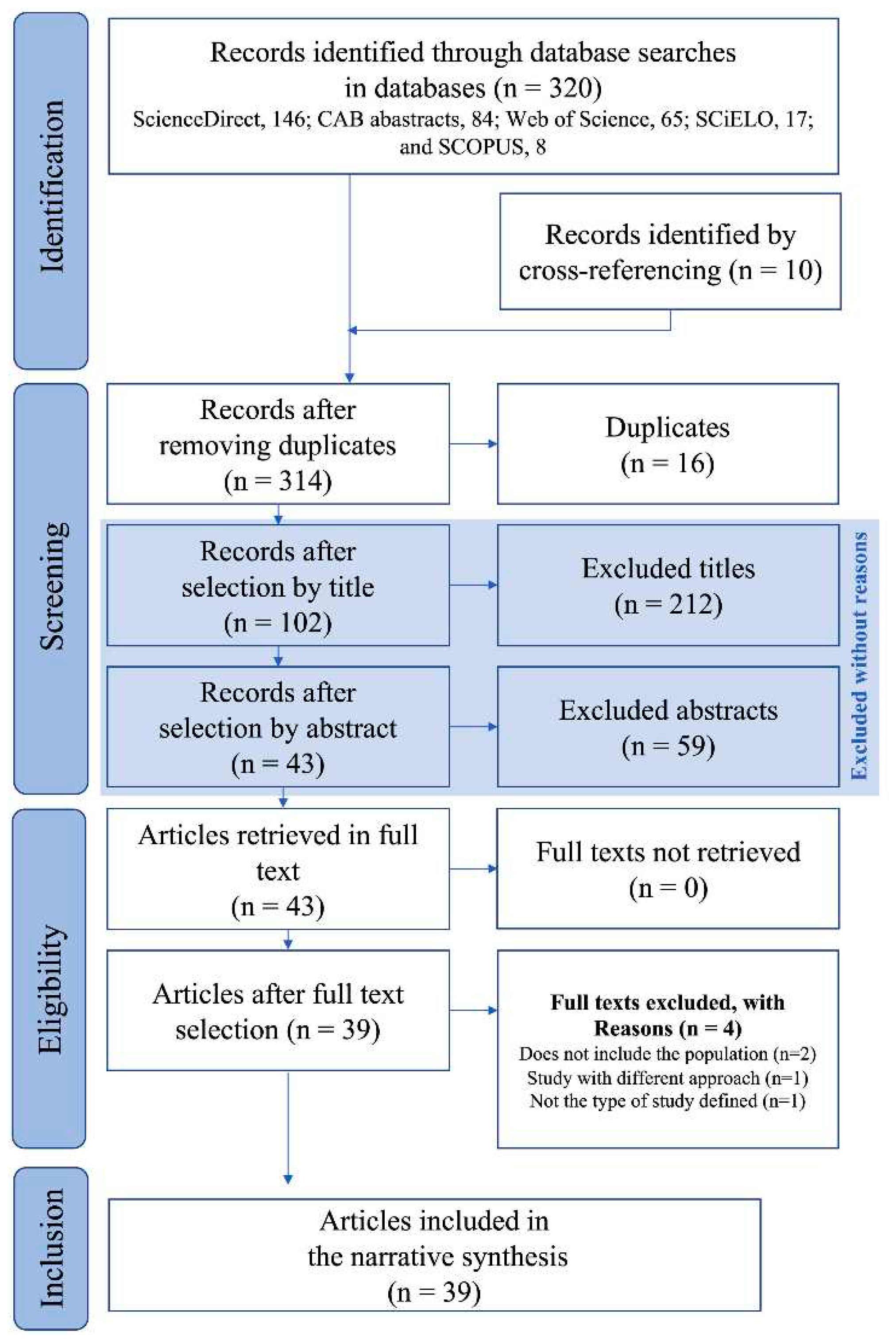
Figure 2.
a) Geographical region where the study was published, b) publications per year, c) risk of bias assessment, and d) distribution of individual bioassays per taxonomic order. C1, Adequate description of the extract; C2, Clear specification of the bioassays; C3, Consistency of the report; C4, Adequate analysis of the bioactivity; C5, Clear description of the method used for obtaining extracts; and C6, Selective presentation of results.
Figure 2.
a) Geographical region where the study was published, b) publications per year, c) risk of bias assessment, and d) distribution of individual bioassays per taxonomic order. C1, Adequate description of the extract; C2, Clear specification of the bioassays; C3, Consistency of the report; C4, Adequate analysis of the bioactivity; C5, Clear description of the method used for obtaining extracts; and C6, Selective presentation of results.
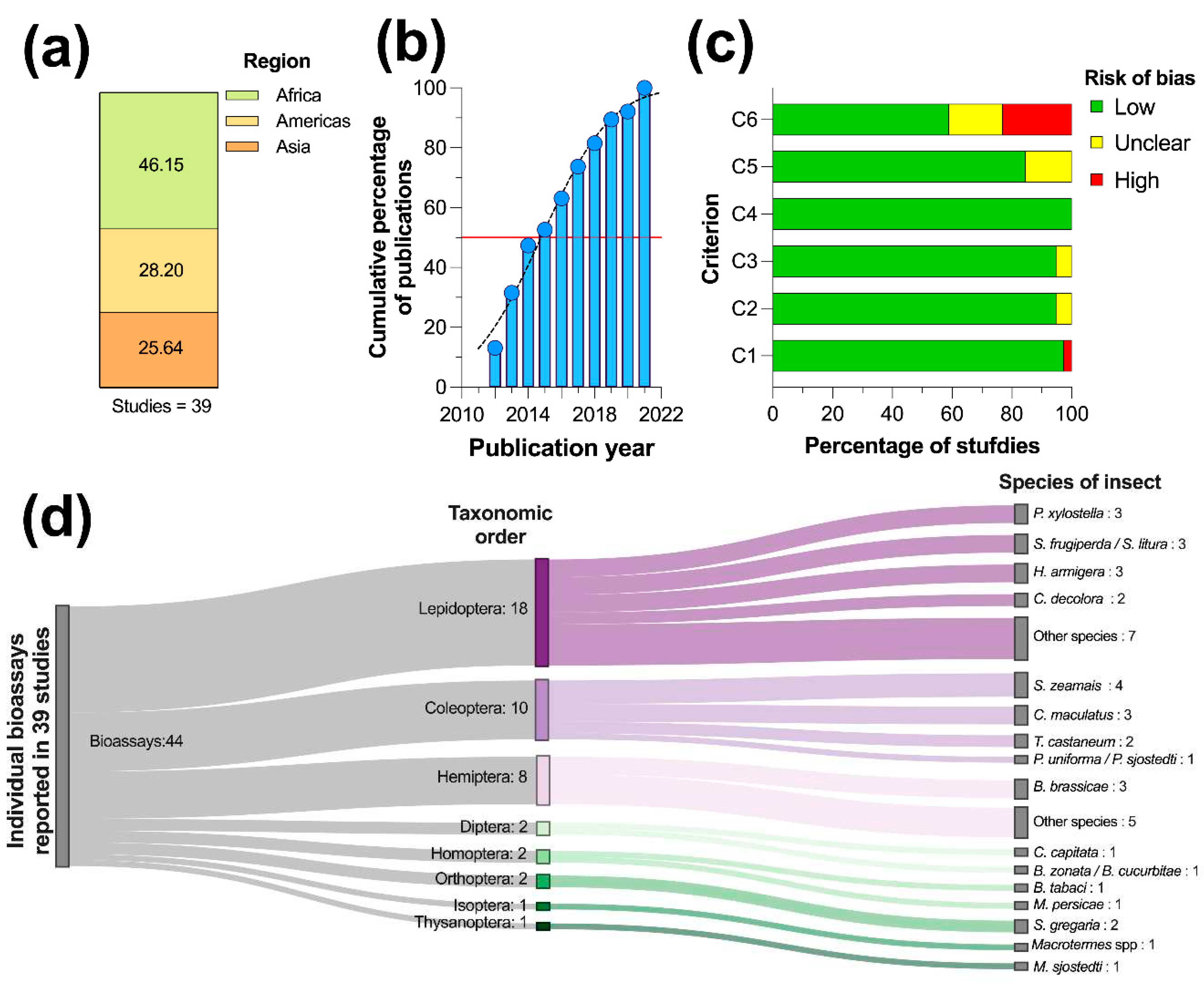
Table 1.
Summary of the studies that reported significant bioactivity of the J. curcas botanical extracts.
Table 1.
Summary of the studies that reported significant bioactivity of the J. curcas botanical extracts.
| Activity/Botanical extract | Affected crop or grain | Treatment | Main finding |
|---|---|---|---|
| Insecticidal activity | |||
| 1) Aqueous seed extract | Stored grains | 10% (w/v) | 60-100% mortality of S. zeamais, R. dominica, and T. castaneum |
| Eucalyptus | 20 to 35% (w/v) | 100% mortality of Macrotermes spp. | |
| Stored grains | 300 and 1500 ppm | 88-100% mortality of T. castaneum | |
| Soybeans | 0.25% (v/v) | 100% mortality of N. viridula | |
| Okra | 10% (w/v) | 64% reduction in the populations of P. uniforma and P. sjostedti | |
| 2) Seed oil | Corn | 20 mg/ml-1 phorbol esters | 80% mortality of S. frugiperda |
| Coffee | 1 and 4% (v/v) | 76.3 and 92.5% reduction of the nymphal number of D. citri | |
| Stored grains | 200 μl/L | 84% mortality of S. zeamais | |
| Cabbage | 2.5% (v/v) | 61-71% mortality of M. persicae | |
| Cabbage | 3% (v/v) | 60% mortality of B. brassicae | |
| 3) Methanolic seed extract | Cabbage | 5% (w/v) | 100% mortality of P. xylostella |
| 4) Petroleum ether seed extract | Rice, corn, cocoa, and coffee | 20 µL/ml | 98% mortality of C. cephalonica |
| 5) Methanolic leaf extract | Sorghum | Amla+Drumstick+Jatropha +Neem+Water (1:1:1:1:1) | 68% mortality of M. sacchari |
| Cotton, rice, tobacco | 5% (w/v) | 60% mortality of S. litura | |
| Corn | 1,000 mg/kg-1 fresh and dried leaves | 60 and 56.67% larval mortality of S. frugiperda | |
| 6) Aqueous leaf extract | Cabbage | 3% (w/v) | 66% mortality of P. xylostella and reduced infestation of B. brassicae |
| Cowpea | 1% (w/v) | 98% mortality of C. maculatus | |
| Fruit | 10% (w/v) | 95.6% mortality of C. capitata | |
| Insectistatical activity | |||
| A. Development | |||
| 1) Seed oil | Gramineae and legumes | 10% (v/v) | Delayed nymphal instar development by 5 days in S. gregaria |
| B. Eggs | |||
| 1) Aqueous leaf extract | Cowpea | 1% (w/v) | 81.04% reduction of oviposition rate in C. maculatus |
| 2) Aqueous seed extract | Okra | 20% (w/v) | 64% decrease in hatchability of eggs in E. insulana |
| 3) Seed oil | Stored grains | 100 ppm | Inhibited 90% oviposition and reduced 92.3% hatching in S. zeamais |
| Gramineae and legumes | 10% (v/v) | 42.2% reduction of female fecundity in S. gregaria | |
| Sugar cane | 3% (v/v) | 40% decrease in egg hatching in D. saccharalis | |
| 4) Petroleum ether seed extract | Rice, corn, cocoa, and coffee | 2 µL/ml | 58% decrease in hatchability in C. cephalonica |
| C. Anti-feeding | |||
| 1) Seed oil | Corn | 0.125 mg/ml-1 phorbol ester enriched fractions | 45% reduction in relative consumption rate in S. frugiperda |
| Corn | 0.25 mg/ml-1 phorbol ester enriched fractions | 42% decrease in relative growth in S. frugiperda | |
| Gramineae and legumes | 5% (v/v) | 50-78.92% anti-feedant effect on S. gregaria | |
| 2) Methanolic leaf extract | Cotton,chickpea | 15% (w/v) | 42% reduction of larval weight in H. armiguera |
| 3) Petroleum ether seed extract | Rice, corn, cocoa, and coffee | 6 µL/g | 48.08% anti-feedant effect on C. cephalonica |
| D. Malformations in adult insects | |||
| 1) Acetonic seed extract | Cabbage | 500 ppm | 60% deformed insects of C. decolora |
Disclaimer/Publisher’s Note: The statements, opinions and data contained in all publications are solely those of the individual author(s) and contributor(s) and not of MDPI and/or the editor(s). The MDPI and/or the editor(s) disclaim responsibility for any injury to people or property resulting from any ideas, methods, instructions or products referred to in the content. |
© 2023 by the authors. Licensee MDPI, Basel, Switzerland. This article is an open access article distributed under the terms and conditions of the Creative Commons Attribution (CC BY) license (http://creativecommons.org/licenses/by/4.0/).
Copyright: This open access article is published under a Creative Commons CC BY 4.0 license, which permit the free download, distribution, and reuse, provided that the author and preprint are cited in any reuse.


