

Submitted:
03 July 2023
Posted:
03 July 2023
You are already at the latest version
Abstract
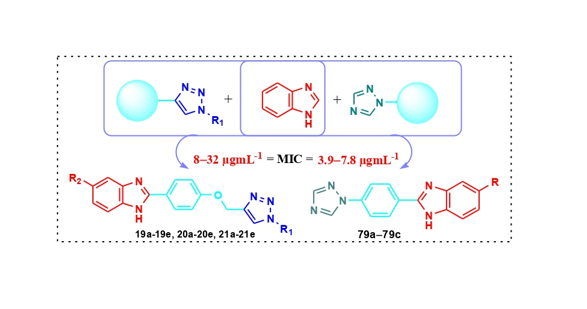
Bacterial infections have attracted the attention of researchers in recent decades, especially due to the special problems they have faced, such as their increasing diversity and resistance to antibiotic treatment. The emergence and development of the SARS-CoV-2 infection stimulated even more research, to find new structures with antimicrobial and antiviral properties. Among the heterocyclic compounds with remarkable therapeutic properties, benzimidazoles and triazoles stand out, possessing antimicrobial, antiviral, antitumor, anti-Alzheimer, anti-inflammatory, analgesic, antidiabetic, or anti-ulcer activities. In addition, the literature of the last decade reports benzimidazole-triazole hybrids with improved biological properties compared to the properties of simple mono-heterocyclic compounds. This review aims to provide an update on the synthesis methods of these hybrids, along with their antimicrobial and antiviral activities, as well as the structure–activity relationship reported in literature.
Keywords:
benzimidazole
; triazole
; hybrids
; antimicrobial
; antiviral
; pharmaceutical properties
1. Introduction
Heterocyclic compounds have a central place in medicinal chemistry, being used as therapeutic agents to treat most diseases [1–3]. Among these heterocycles, benzimidazole stands out, as a purine-analog pharmacophore, with a wide biological activity, such as antimicrobial [4–8], antiviral [9,10], antihistamine [11,12], anticonvulsant [3,13], antitumor [14–16], proton pump inhibitors [17], antiparasitic [16,18,19], anti-inflammatory [20–22], or antihypertensive [23,24]. Some benzimidazoles are efficient agents in Diabetes mellitus [25–27], while astemizole compounds possess anti-prion activity to treat Creutzfeldt-Jakob disease [5,28]. The literature also reports anti-Alzheimer [29,30], psychoactive, anxiolytic, analgesic [31,32], and anticoagulant properties [33,34] of benzimidazole derivatives. Also, for triazole compounds, the literature mentions a series of therapeutic activities, such as antimicrobial [35–38], antitubercular [39,40], potential inhibitors of SARS CoV-2 [41–43], antiviral [43,44] anti-inflammatory [45,46] antitumor [47–50], antihypertensive [50], antioxidant [47,51,52] and antiepileptic [53,54]. Pharmacological applications of triazoles refer to their activity as α-glucosidase inhibitors [55,56], analgesic [50,57], anticonvulsant [53,58], and antimalarial agents [57,59]. Triazole derivatives are efficient in the treatment of Alzheimer's disease [60,61] and are very effective neuroprotective agents [62,63].
The successive events happened from the spring of 2020 up to and including the present, regarding the emergence and development of the COVID-19 pandemic, have led the scientific world to investigate more closely the possibility of treating this infectious disease with various antiviral [64–66], antimicrobial [67], immunomodulatory [68] or anti-inflammatory drugs [69], therefore, the discovery of new molecules with simple or hybrid structures, with biological properties that satisfy the requirements of the treatment of this condition it is absolutely necessary and constitutes the engine of the development of new effective therapeutic agents.
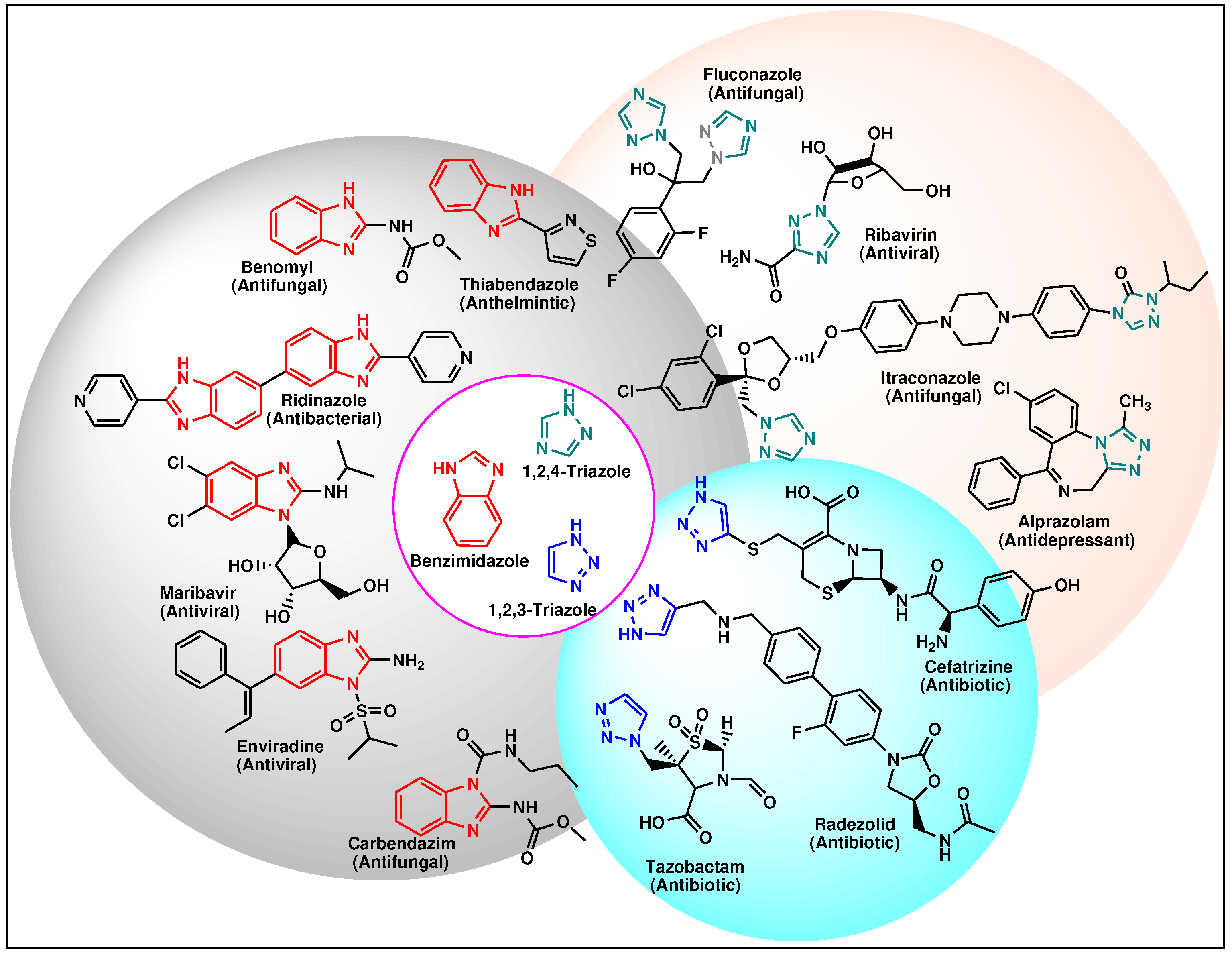
Classical drugs containing benzimidazole and triazole rings recommend these heterocycles as essential in building new target compounds with antimicrobial, antiviral, antiparasitic, etc. properties (Figure 1). In addition, the literature mentions a series of benzimidazole-triazole hybrids with remarkable antimicrobial properties, antiviral activities, including new anti-SARS-COV-2 agents [70–74], with particular importance in the context of the recent pandemic, which led to the study of synthesis methods, antimicrobial properties, structure-property relationships and their biological activities. As expected, the study refers to both 1,2,3-triazole-benzimidazole hybrids and 1,2,4-triazole-benzimidazole hybrids, even if it seems that the literature is richer in the second category, in terms of antimicrobial activity.
In order to highlight the structures of the heterocycles in the discussed compounds, we colored benzimidazole nucleus with red, 1,2,3-triazole with blue and 1,2,4-triazole with green.
Figure 1.
Figure 1. Chemical structures of some benzimidazole, 1,2,3-triazole and 1,2,4-triazole-based marketed drugs
Figure 1.
Figure 1. Chemical structures of some benzimidazole, 1,2,3-triazole and 1,2,4-triazole-based marketed drugs
The recent literature marks several strategies for the synthesis of 1,2,3-triazoles, like click reaction [75], Bouiton-Katritzky rearrangement [76], oxidative cyclization of hydrazones [77], post-cycloaddition functionalization [78], alkylation or arylation of triazoles [79]. Also, for benzimidazoles, the literature mentions several methods of synthesis, such as reaction of o-phenenediamine with aldehydes or ketones (Phillips-Ladenburg reaction) [3,80,81,82], with acids or their derivatives (Weidenhagen reaction) [81], or green methods of classic syntheses [80, 83–86].
In the following, we will present syntheses of benzimidazole-triazole hybrids with antimicrobial and antiviral properties.
2. Synthesis and antimicrobial activities of benzimidazole-1,2,3-triazoles
2.1. 2-Benzimidazole-R(Ar)-1,4-disubstituted-1,2,3-triazole hybrids
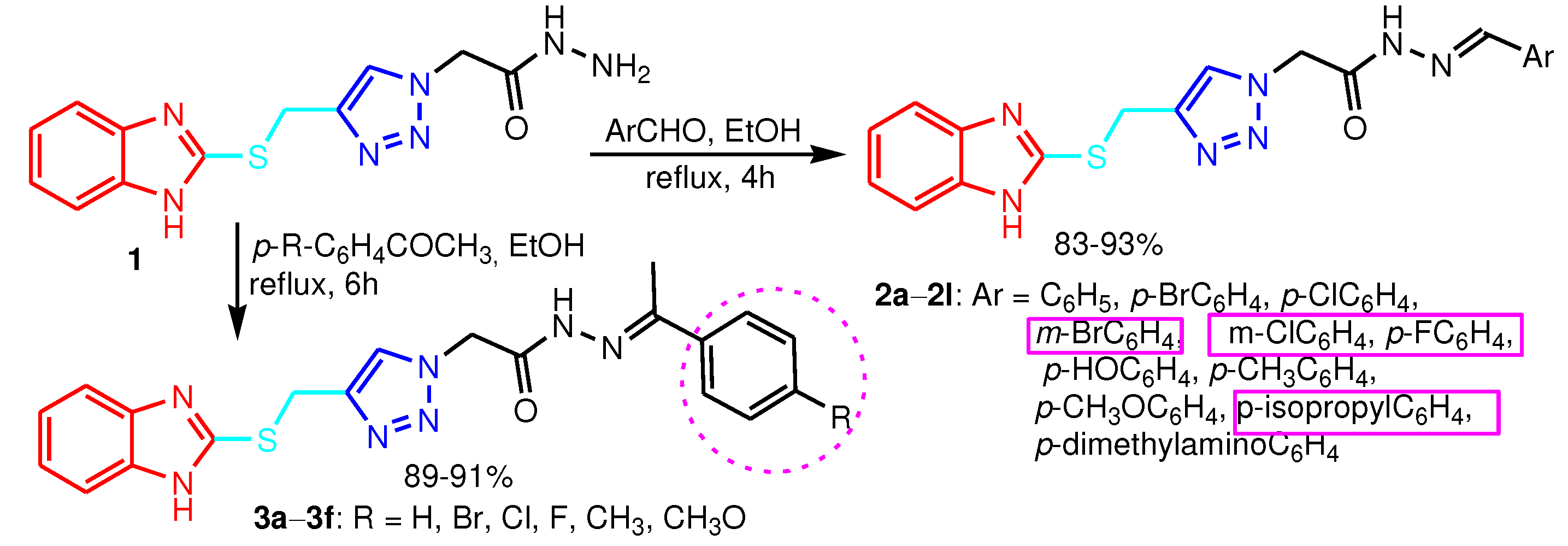
Two series of new hybrids, 2-[4-((1H-benzimidazol-2-ylthio)methyl)-1H-1,2,3-triazol -1-yl]N`-(arylmethylidene)acetohydrazides (2a-2l) and 2-[4-((1H-benzimidazol-2-ylthio) methyl)-1H-1,2,3-triazol-1-yl]N-(α-arylethylidene)acetohydrazides (3a-3f) were prepared by Youssif et al. in two steps starting from 2-[4-((1H-benzimidazol-2-ylthio) methyl)-1H-1,2,3-triazol-1-yl] acetohydrazide 1 (Scheme 1). Compounds 2a-2l exhibited pronounced antibacterial activity which ranged from 35–75% that of standard drug against Staphylococcus aureus and 50–80% that of Ciprofloxacin against E. Coli (MIC values of 3.125–12.5 μmol mL-1). Compound 2k showed the highest activity against S. aureus (75% activity, MIC = 12.5 μmol mL-1), while compound 2d was the most active derivative against E. Coli (80% activity, MIC = 3.125 μmol mL-1). All the synthesized compounds were tested as potential antifungal agents against Candida albicans using Fluconazole as a reference drug. Compound 1 showed the activity of 48% of that of Fluconazole (MIC = 12.5 μmol mL-1). Compounds 2e and 2k displayed the higher antifungal activity among the other derivatives as they showed 75% activity of that of Fluconazole (MIC = 3.125 μmol mL-1). Compounds 3a-3f exhibited moderate to good activity against E. Coli and their activity was 50–70% of that of Ciprofloxacin (MIC values of 6.25–12.5 μmol mL-1), and that compounds 3a and 3f were the most active compounds against E. coli as they showed 70% of that of Fluconazole (MIC = 6.25 μmol mL-1) while compound 3b showed the highest activity against Staphylococcus aureus (65% of that of Ciprofloxacin, MIC = 18 μmol mL-1) [87].
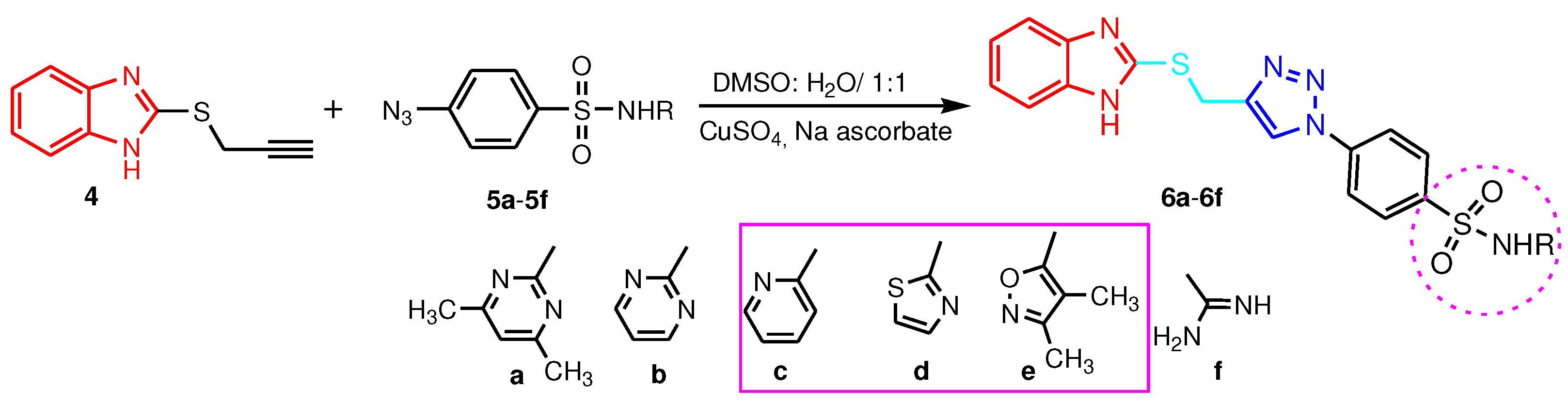
Al-blewi et al. used an azide–alkyne Huisgen cycloaddition reaction carried out by simultaneously mixing thiopropargylated benzimidazole 4 with the appropriate sulfa drug azides 5a–5f, copper sulfate and sodium ascorbate in DMSO/ H2O to regioselectively furnish target mono-1,4-disubstituted-1,2,3-triazole tethered benzimidazole-sulfonamide conjugates 6a–6f with 85–90% yields after 6–8 h of heating at 80 °C (Scheme 2). All compounds were evaluated for their antimicrobial activity (Table 1) against four pathogenic bacterial strains (Gram-positive: Bacillus cereus ATTC 10876, Staphylococcus aureus ATTC 25923 and Gram-negative: Escherichia coli ATTC 25922, Pseudomonas aeruginosa ATTC 27853 and two fungal strains, Candida albicans ATTC 50193, Aspergillus brasiliensis ATTC 16404). As can be seen in Table 1, compound 6a shown the best antibacterial activity against Bacillus cereus and Staphylococcus aureus (64 μgmL-1) and compounds 6c, 6d and 6e the best antibacterial activity against against Escherichia coli (64 μgmL-1) [88].
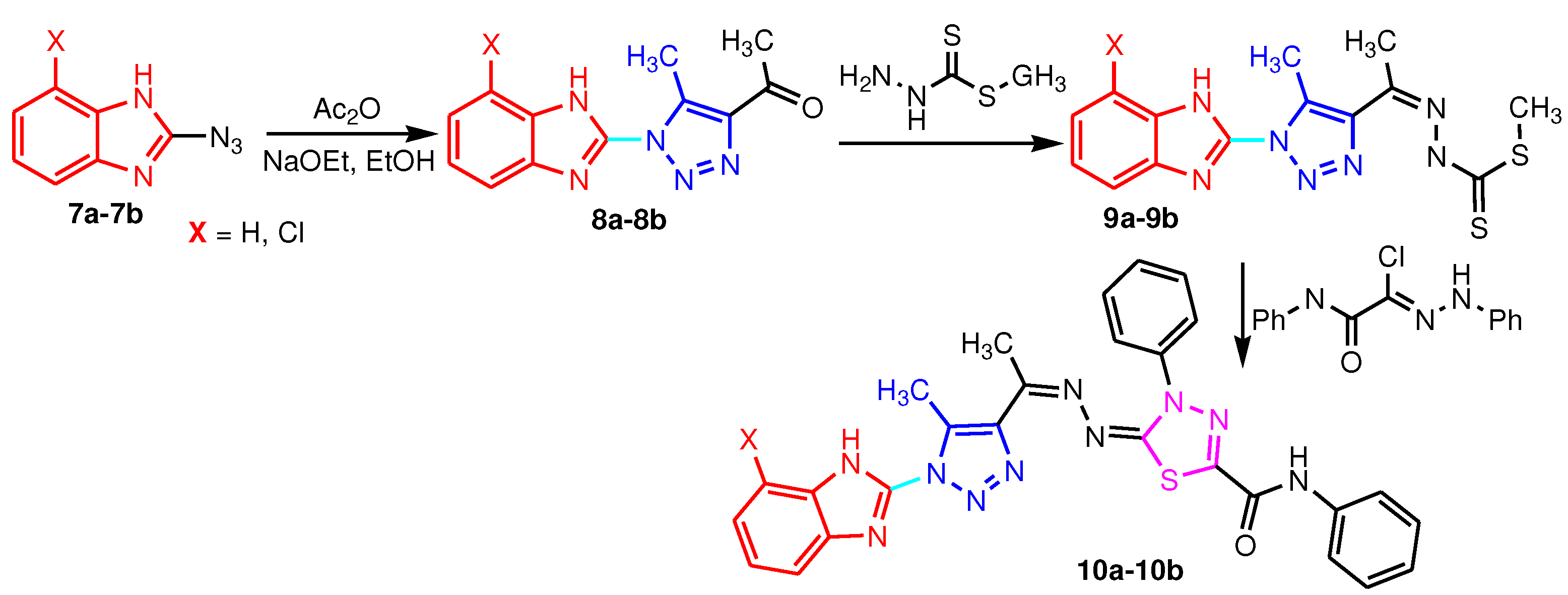
Rashdan et al. synthesized hybrids 10 starting from 2-azido-1H-benzo[d]imidazole derivatives 7a–7b which reacted with acetylacetone in the presence of sodium ethoxide to obtain hybrids molecules 8a–8b. The latter acted as a key molecules for the synthesis of new carbazone derivatives 9a–9b that were submitted to react with 2-oxo-N-phenyl-2 (phenylamino)acetohydrazonoyl chloride to obtain the target hybrid derivatives 10a–10b (Scheme 3). All compounds were screened for their in vitro antimicrobial activity against pathogenic microorganisms Staphylococcus aureus, E. coli, Pseudomonas aeruginosa, Aspergillus niger, and Candida albicans. The results showed that compounds 10a and 10b had strong activity against all the tested pathogenic microbes. Compounds 8a and 9a only showed effects against the Gram-negative and Gram-positive bacteria and had no effect on the tested fungi. In addition, in silico and in vitro findings showed that compounds 10a and 10b were the most active against bacterial strains, and could serve as potential antimicrobial agents (Table 2). The hybrids 8–10 were subjected to molecular docking studies with DNA gyrase B and exhibited binding energy that extended from -9.8 to -6.4 kcal/mol, which confirmed their excellent potency. The compounds 10a and 10b were found to be with the minimum binding energy (-9.8 and -9.7 kcal/mol) as compared to the standard drug Ciprofloxacin (-7.4 kcal/mol) against the target enzyme DNA gyrase B [89].

| Hybrids | Inhibition zone diameters using the agar diffusion method (mm) | ||||
|---|---|---|---|---|---|
| S. aureus | E. coli | P. aeruginosa | A. niger | C. albicans | |
| 8a | 15 ± 0.14 | 12 ± 1.08 | 22 ± 1.01 | - | - |
| 8b | - | 5 ± 0.2 | - | 30 ± 1.16 | 27 ± 1.1 |
| 9a | 23 ± 0.8 | - | 13 ± 0.65 | - | - |
| 9b | - | - | 12 ± 0.8 | 14 ± 0.15 | 19 ± 1.04 |
| 10a | 24 ± 0.6 | 25 ± 0.9 | 17 ± 0.75 | 20 ± 0.9 | 16 ± 0.89 |
| 10b | 29 ± 1.2 | 21 ± 1.14 | 19 ± 0.79 | 18 ± 0.12 | 14 ± 0.58 |
| Ciprofloxacin | 20 ± 0.9 | 23 ± 1.02 | 21 ± 0.9 | - | - |
| Nystatin | - | - | - | 22 ± 0.18 | 23 ± 1.15 |
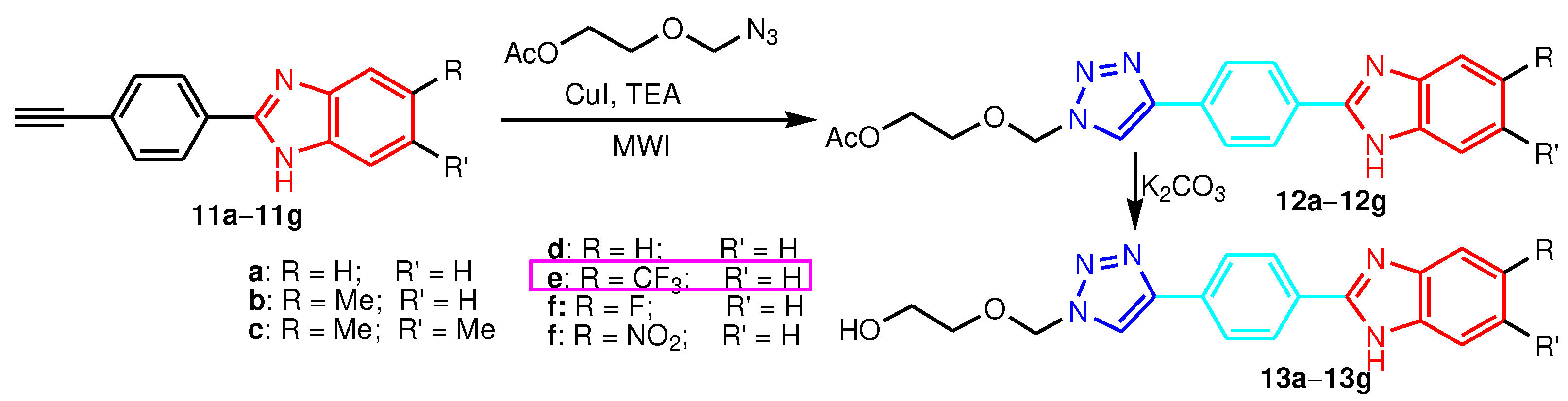
Compounds 11a–11g with terminal acetylene and 2-(azidomethoxy)ethyl acetate were condensed using CuI as catalyst and triethylamine (TEA) under microwave irradiation, to achieve hybrids 1,2,3-triazole connected via benzene to the benzimidazole nucleus 12a–12g with excellent yields (70–90%)(Scheme 2). The cleavage of the acetyl group using potassium carbonate (K2CO3) in methanol liberated the hydroxy group of the corresponding hybrid triazoles 13a–13g in almost quantitative yields. Compounds 6a–6g were screened for in vitro antifungal activities against two phytopathogenic fungi Verticillium dahliae Kleb and Fusarium oxysporum f. sp. albedinis. The result of the mycelia linear growth rate indicates that some of the compounds show a weak inhibition against the two fungi, the only compound that shows a significantly increased rate is compound 6e with rate of 29.76% against Verticillium dahliae [90].
Bistrović et al. synthesized in two steps hybrids 19a–19e, 20a–20e and 21a–21e starting from 4-(prop-2-ynyloxy)benzaldehyde 14 (Scheme 5). All compounds were evaluated for their in vitro antibacterial activity against Gram-positive bacteria: S. aureus ATCC 25923, methicillin-sensitive S. aureus, E. faecalis, vancomycin-resistant E. faecium, and Gram-negative bacteria: E. coli ATCC 25925, P. aeruginosa ATCC 27853, A. baumannii ATCC 19606 and ESBL-producing K. pneumoniae ATCC 27736. Generally, compounds showed better activities against Gram-positive than Gram-negative bacteria. Compounds 20a–20e with better binding affinity relative to other amidines, were the most active against S. aureus (MIC = 8–32 µgmL-1). Compound 19a was the most promising candidate because of its higher potency (MIC = 4 µgmL-1) against ESBL-producing E. coli [91].
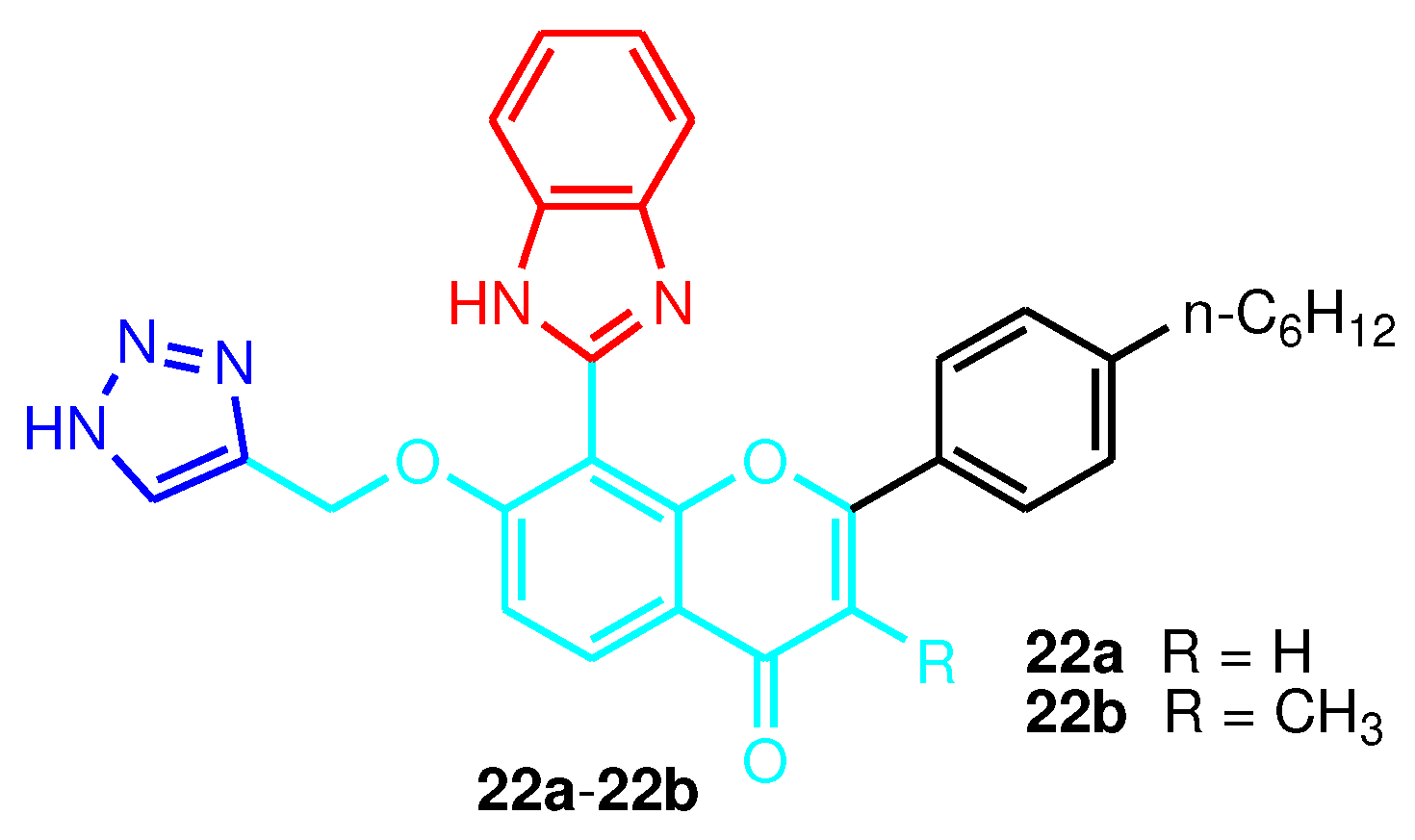
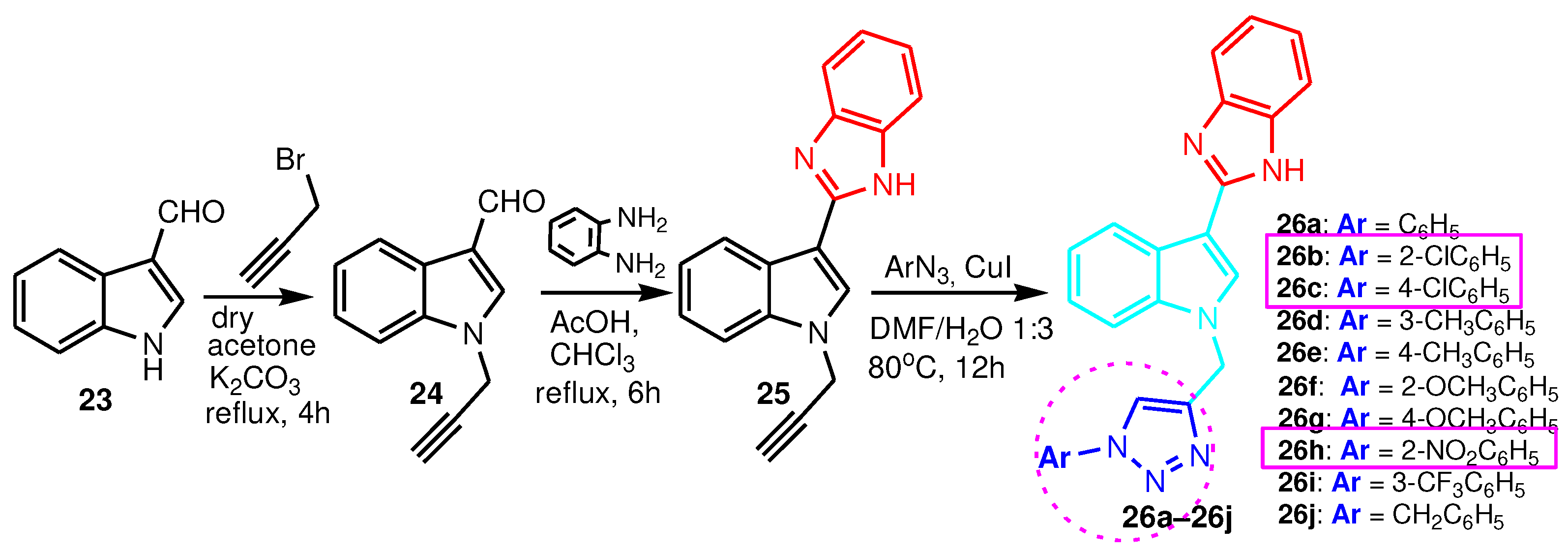
Rao et al. synthesized hybrids 22a–22b (Fig. 1), using click chemistry approach. Compounds had weak activity against Mycobacterium bovis strain (BCG values % inhibition = 27.3 and 26.2 respectively) [92]. Ashok et al. synthesized in three steps hybrids 26a–26j, starting from 1H-indole-3-carbaldehyde 7 (Scheme 6). The compounds were evaluated for their antimicrobial activity against gram-positive Staphylococcus aureus ATCC 6538, Bacillus subtilis ATCC 6633 and gram-negative Proteus vulgaris ATCC 29213, Escherichia coli ATCC 11229 bacteria using Gentamicin as standard. Antifungal activity was tested against Candida albicans ATCC 10231 and Aspergillus niger ATCC 9029 strains with standard drug Fluconazole. Compounds 26b, 26c and 26h with with MIC of
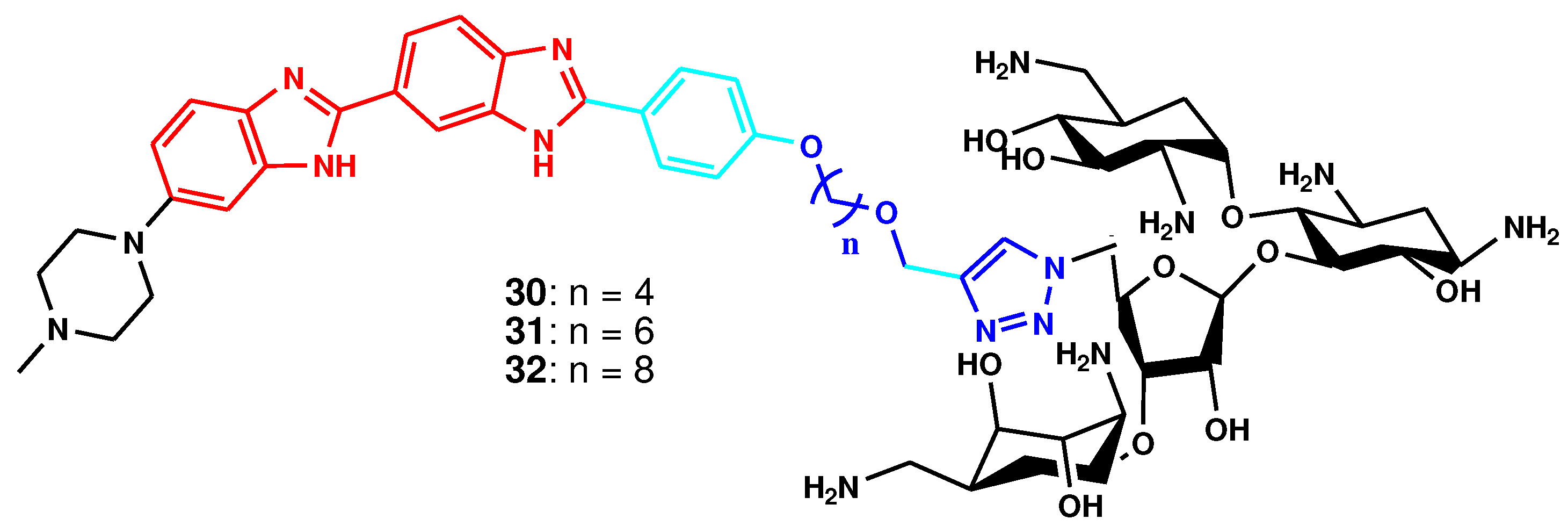
3.125–6.25 μgmL-1 were found to be the most promising potential antimicrobial molecules [93]. Mallikanti et al. synthesized novel benzimidazole-conjugated 1,2,3-triazole analogues 29a–29l in two steps: 1. formation of benzimidazole intermediate by reaction between 3',5'-difluorobiphenyl-3,4-diamine 27 and 2-hydroxy-4-(prop-2-ynyloxy) benzaldehyde 28, and 2. microwave-assisted copper-catalyzed click reaction (Scheme 7). Compounds 29a-29l have shown minimal inhibition zones against all gram positive (S. aureus, B. subtilis) and gram-negative (E. coli, P. aeruginosa) strains using Ampicillin as standard drug. Among all tested compounds, the 29i and 29k have showed greater activity against P. aeruginosa, S. aureus and B. subtilis than standard reference. Compounds 29a, 29b, 29c, 29d, 29e, 29f, 29g, 29h, 29j and 29l demonstrated moderate antibacterial activity against the same. Also, compounds 29i, 29j and 29k established potent activity against both fungal strains, C. albicans MTCC 183 and A. niger MTCC 9652 stains compared to standard drug Griseofulvin [70]. Chandrika et al. reported hybrids 30–32 with broad spectrum antifungal activity (0.975–3.9 µgmL-1 against C. albicans; 0.12–0.48 µgmL-1 against C. parapsilosis) (Figure 2). These compounds also displayed good activity against C. albicans biofilms [94].
2.2. 1-Benzimidazole-R(Ar)-1,4-disubstituted-1,2,3-triazole hybrids
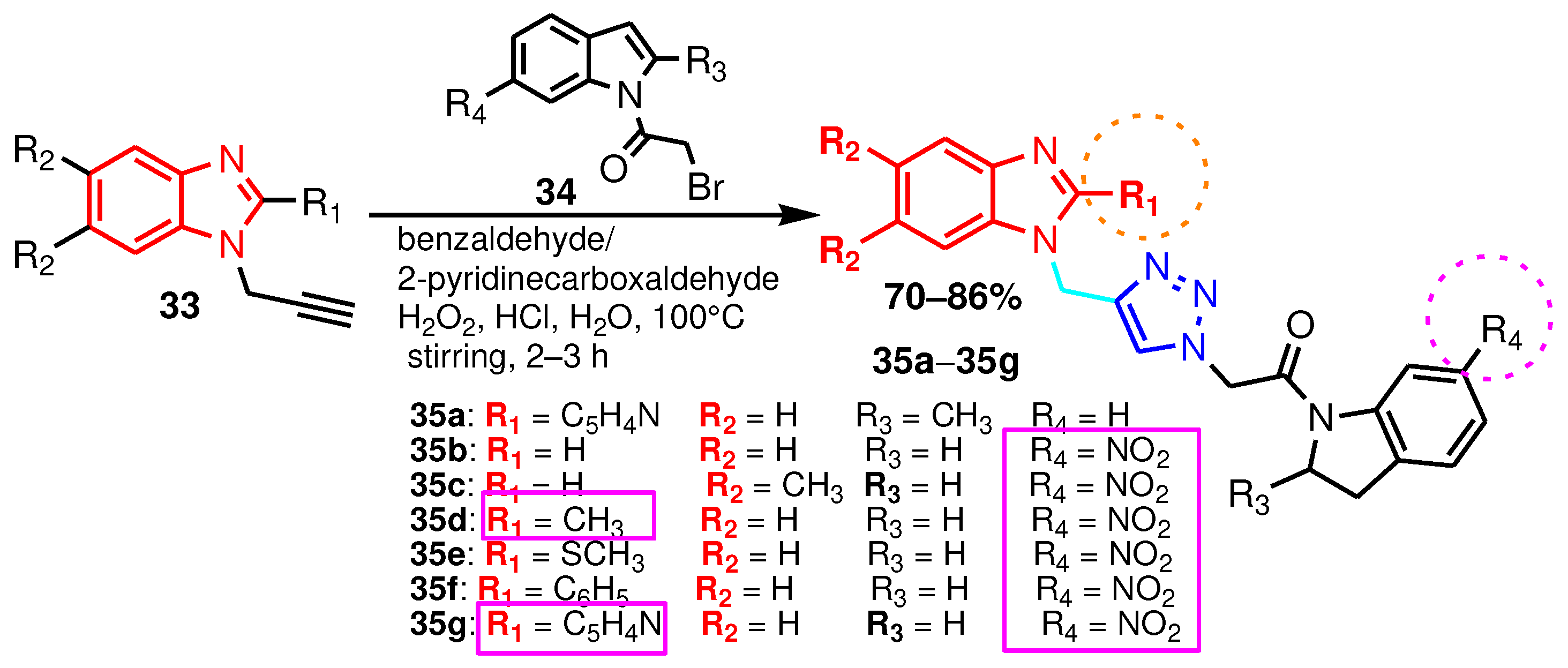
Deswal et al. synthesized a new series of benzimidazole-1,2,3-triazole-indoline derivatives 35 by employing click reaction between substituted N-propargylated benzimidazole derivatives 33 and in situ formed substituted 2-azido-1-(indolin-1-yl) ethanone derivatives 34 in moderate to good yields (Scheme 8). The obtained results indicate stronger inhibitory effect of compound 35d against E. coli, while compound 35g showed good inhibition against all the tested strains except B. subtilis (Table 3). The good antimicrobial activity of the compounds was correlated with the presence of the pyridine ring in position ''2'' of the benzimidazole and the NO2 group on the indole ring [6].
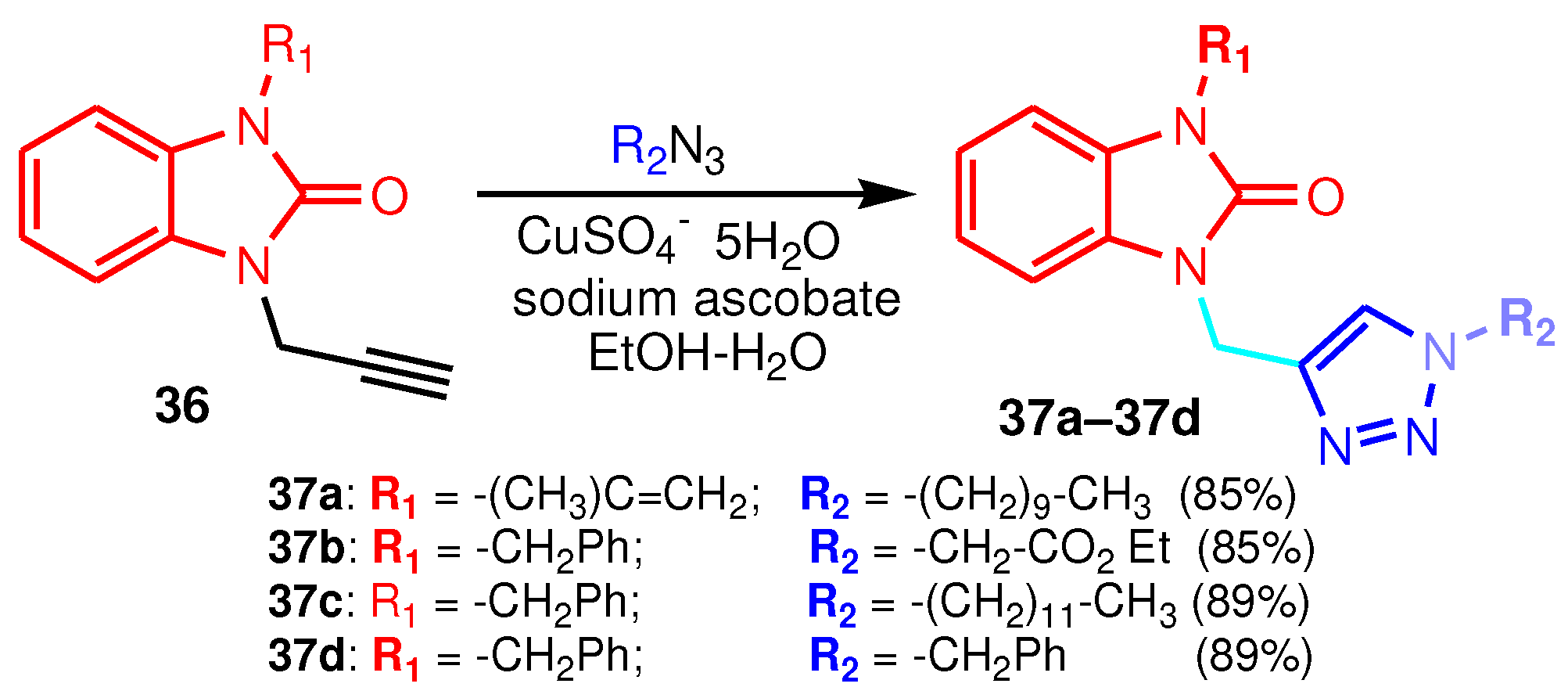
Saber et al. synthesized new 1,4-disubstituted-1,2,3-triazole containing benzimidazolone derivatives 37a–37d exclusively using click chemistry (Scheme 9). All derivatives exhibited antibacterial activity against tested strains, Staphylococcus aureus, Escherichia coli and Pseudomonas aeruginosa, but compounds 37b and 37d are more effective against Gram-positive bacterium S. aureus (MIC = 3.125 µgmL-1) and 37b has better activity against Gram-negative bacterium E. coli (MIC = 3.125 µgmL-1) with Chloramphenicol as standard drug [95]. Mohsen et al. synthesized hybrids 41a–41e in three steps starting from benzimidazole 38, namely two alkylation reactions and a click reaction (Scheme 10). New derivatives exhibited good zone inhibition of 6.8, 5.4, 5.2, 4.5, 5.3 mm for S. aureus and 5.4, 3.8, 4.2, 3.3, 4.9 mm for E. coli strain, indicating that the 1,2,3-triazole core contributed significantly to bacterial growth suppression (Ciprofloxacin showed 10.2 mm for S. aureus and 10.4 mm for E. coli) [96].
2.3. 1,2-. bis-substitutedBenzimidazoles-R(Ar)-1,4-disubstituted-1,2,3-triazole
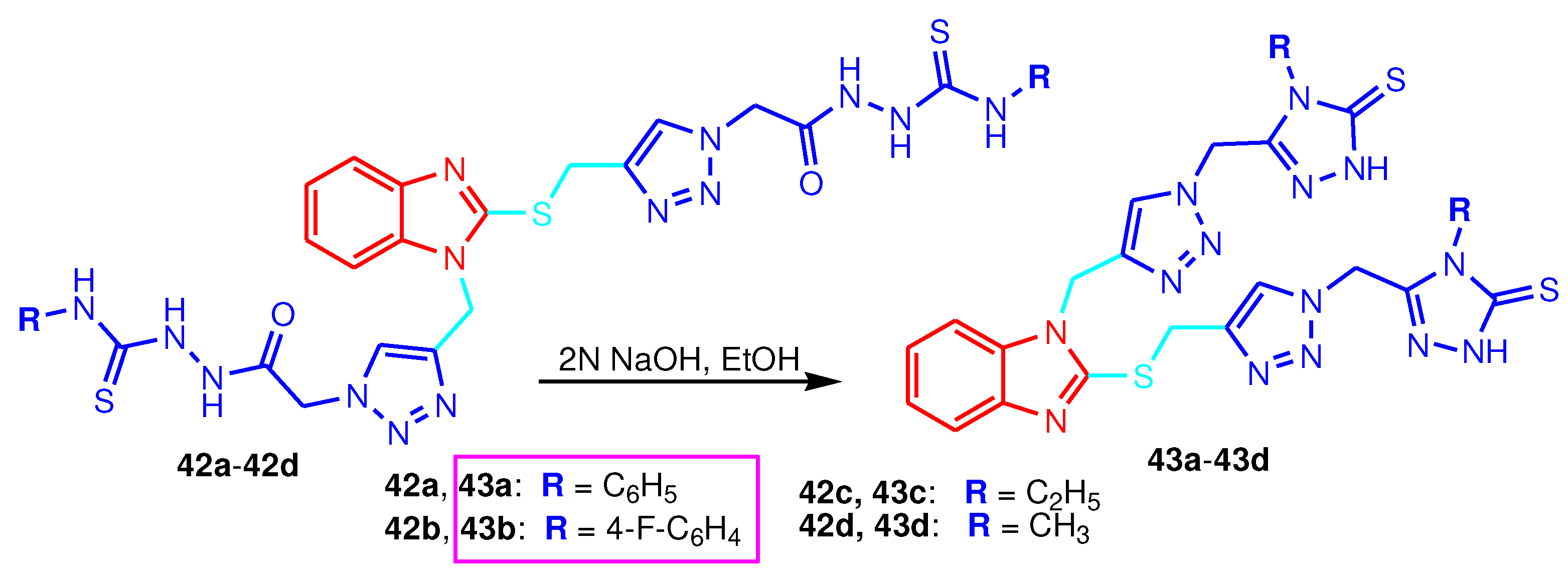
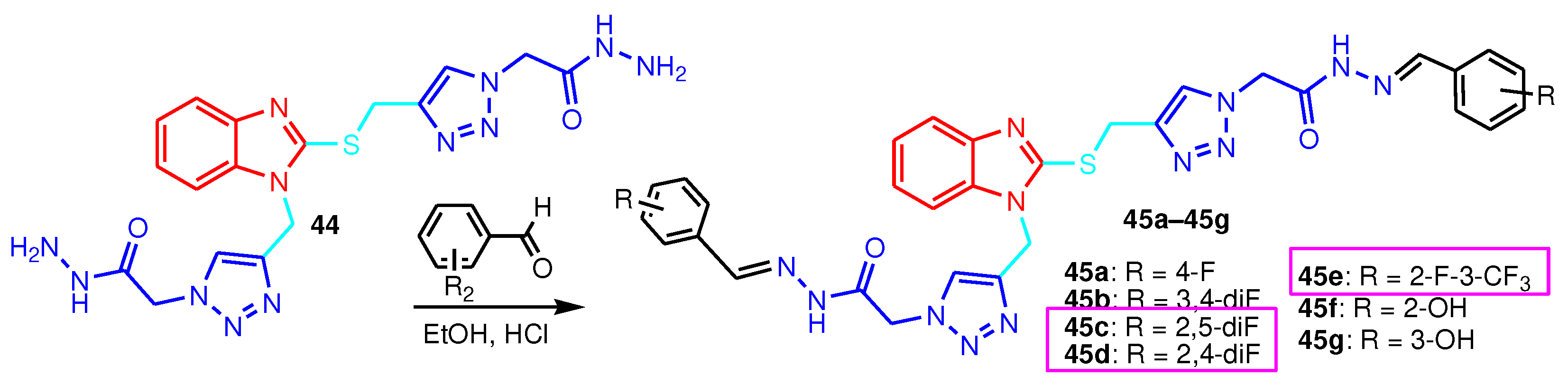
Rezki reported the intramolecular cyclization of thiosemicarbazides 42a–42d in refluxing aqueous sodium hydroxide (2N) for 6 h with the formation of hybrids 43a–43d with yields of 82–86% (Scheme 11). Among all the 1,2,4-triazole derivatives, N4-phenyl and N4-(4-fluorophenyl) derivatives 43a and 43b were found the most potent with MIC values of 4–8 µg mL-1. Also, triazoles 43a and 43b exerted the best inhibition against both tested fungal strains, A. brasiliensis and Candida albicans, with MIC values ranging from 0.5–4 µg mL-1, more potent than the reference drug Fluconazole. Condensation of compound 44 with several benzaldehydes in refluxing ethanol for 4–6 h with a catalytic amount of HCl produced a new class of hybrid Schiff bases 45a–45g with yields of 84–86% (Scheme 12). The antimicrobial bioassay results for the synthesized Schiff bases 45a–45g revealed that all of the tested compounds were more effective towards all of the organisms, with MIC values of 1–16 µg mL-1. Among them, Schiff bases 45c, 45d and 145e with a fluorine atom at position "2" exhibited the highest antibacterial inhibition potency at MIC 1–8 µg mL-1. The Schiff base 45e containing a CF3 group exerted the highest antifungal inhibition activity with MIC of 1 µg mL-1 [97].
Al-blewi et al. synthesized triazoles 47a–47f in two steps: i. regioselective alkylation of 4 with two equivalents of propargyl bromide in the presence of two equivalents of potassium carbonate as a base catalyst to afford benzimidazole 46 with 91% yield after stirring at room temperature overnight; ii. Copper-mediated Huisgen 1,3-dipolar cycloaddition reaction on compound 46 in good yields (82–88%) (Scheme 13). In general, bis-1,2,3-triazoles 47a–47f exhibited more potent antimicrobial activities than their mono-1,2,3-triazole derivatives 6a-6f. This was attributed to the synergistic effect of the sulfonamoyl and tethered heterocyclic components in addition to the improved
lipophilicity of the bis-substituted derivatives. Among the synthesized compounds, compound 47a was the most potent antimicrobial agent with MIC values ranging between 32 and 64 μgmL-1 against all tested strains B. cereus, S. aureus, E. coli P. aeruginosa, C. albicans, and A. brasiliensis [88].
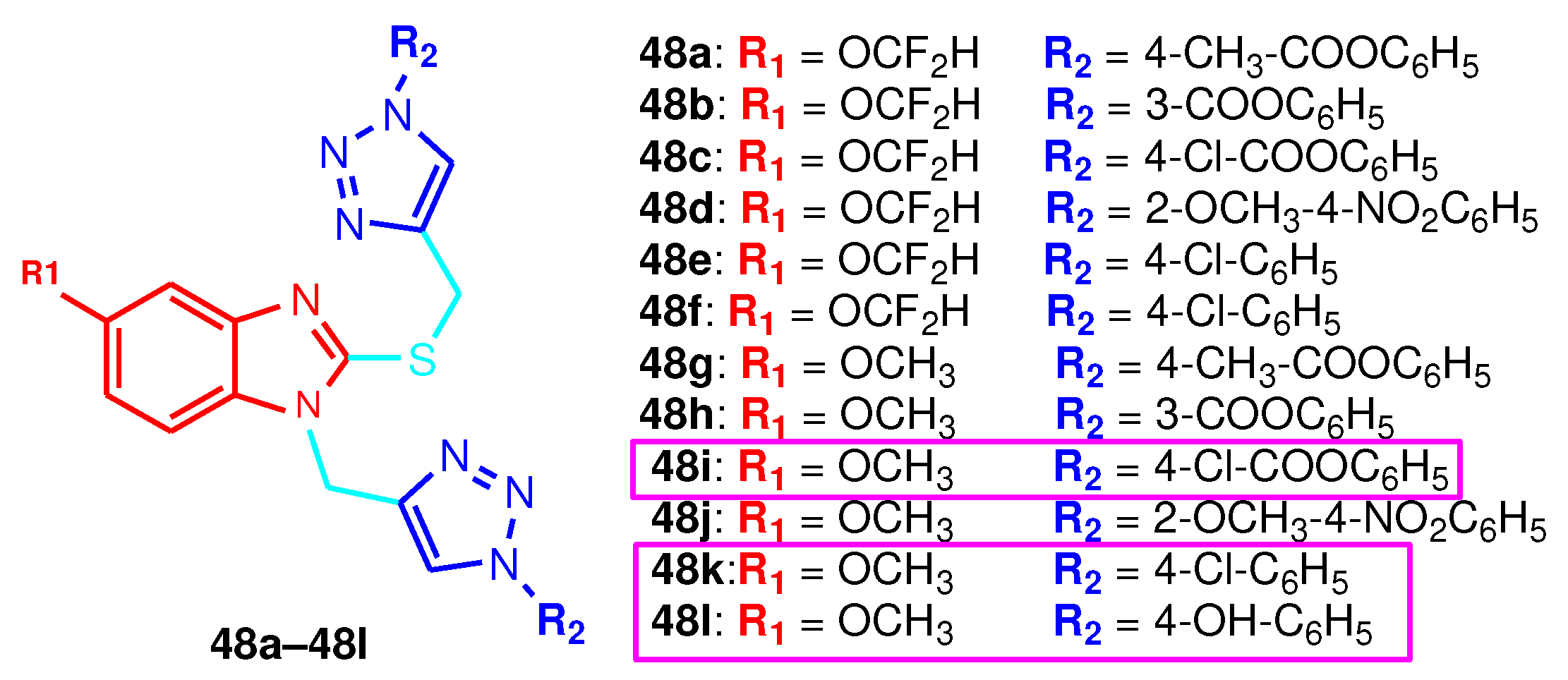
Aparna et al. used a similar strategy for obtaining nine new bis-1,2,3-triazol-1H- 4-yl-substituted arylbenzimidazole-2-thiol derivatives 48a-48l (Figure 3). Antibacterial activity of triazole derivatives 48 demonstrates moderate to good activity against gram negative (E. coli, S. typhy, P. aeruginosa) and gram positive (S. aureus) bacterial strains. The products 48i, 48k, and 48l characterized by a broad spectrum of antibacterial activity at concentration of 10 μgmL-1. The derivative 48l displays the highest dock score of –7.69 kcal/mol and the least dock score of –0.942 kcal/mol is obtained for 48h [98].
2.4. Benzimidazole-R(Ar)-1,2,3-triazole hybrids as antitubecular agents
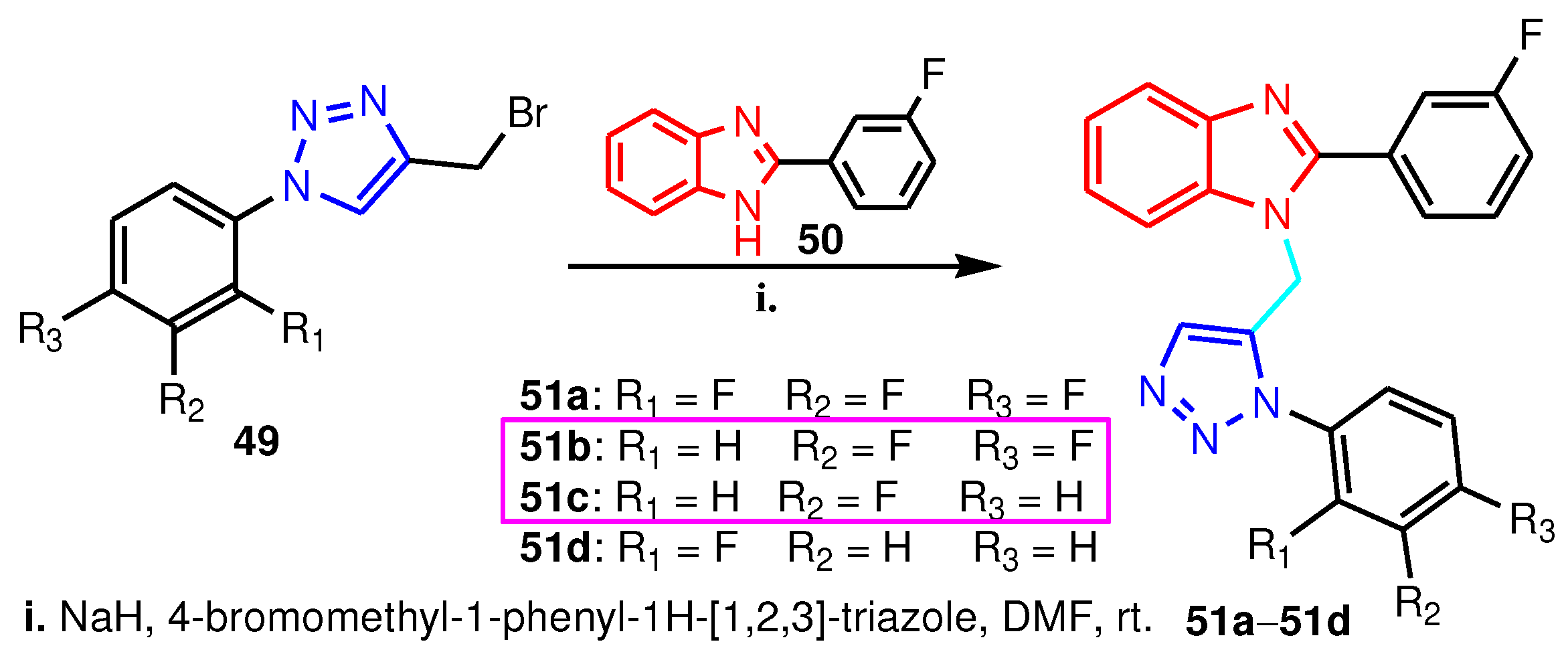
Ashok reported compound 26h as best antitubercular drug candidate by inhibiting the growth of the MTB (Mycobacterium tuberculosis) strain with MIC = 3.125μ mL-1 (7.1 μM) (control Rifampicin MIC = 0.04μgmL-1 and isoniazid MIC = 0.38μgmL-1). The best antitubercular activity of 26h may be attributed to the presence of nitro group on phenyl ring at ortho position. Compound 26b (MIC = 6.25 μg mL-1 (14.7μM)) with chlorine substituent, compound 26i (MIC = 6.25 μgmL-1(14.2 μM)) with trifluoromethyl substituent and compound 26j (MIC = 12.5 μgmL-1 (28.4μM)) with benzyl substituent exhibited moderate antitubercular activity. Therefore, incorporation of the electron-withdrawing nitro group, electronegative chlorine and trifluoromethyl groups on the phenyl ring was highly favored for antitubercular activity [93]. Gill et al. reported synthesis of hybrids 51a–51d by reaction between 2-(3-fluorophenyl)-1H-benzo[d]imidazole 50 and phenyl-substituted 4-(bromomethyl)-1-phenyl-1H-1,2,3-triazole 49 in DMF at room temperature (Scheme 14). Trifluorosubstituted-compound 51a possessed enhanced anti-mycobacterial activity, > 96% of inhibition at 6.25 µg concentration. Also, compounds 51b and 51c, which had antimicrobial activities superior to the other compounds, were reported as the best choice for the preparation of new derivatives in order to improve effectiveness on intracellular mycobacteria (macrophage) or in infected animal [99]. Anand et al. reported one pot reaction between 2-propargylthiobenzimidazole 4, 4-bromomethyl coumarins/1-aza-coumarins 52/53 and sodium azide under click chemistry conditions to give exclusively 1,4-disubstituted triazoles 54a–54n. Anti-tubercular assays against M. tuberculosis (H37Rv) coupled with in silico molecular docking studies indicated that dimethyl substituents 54c and 54d showed promising activity
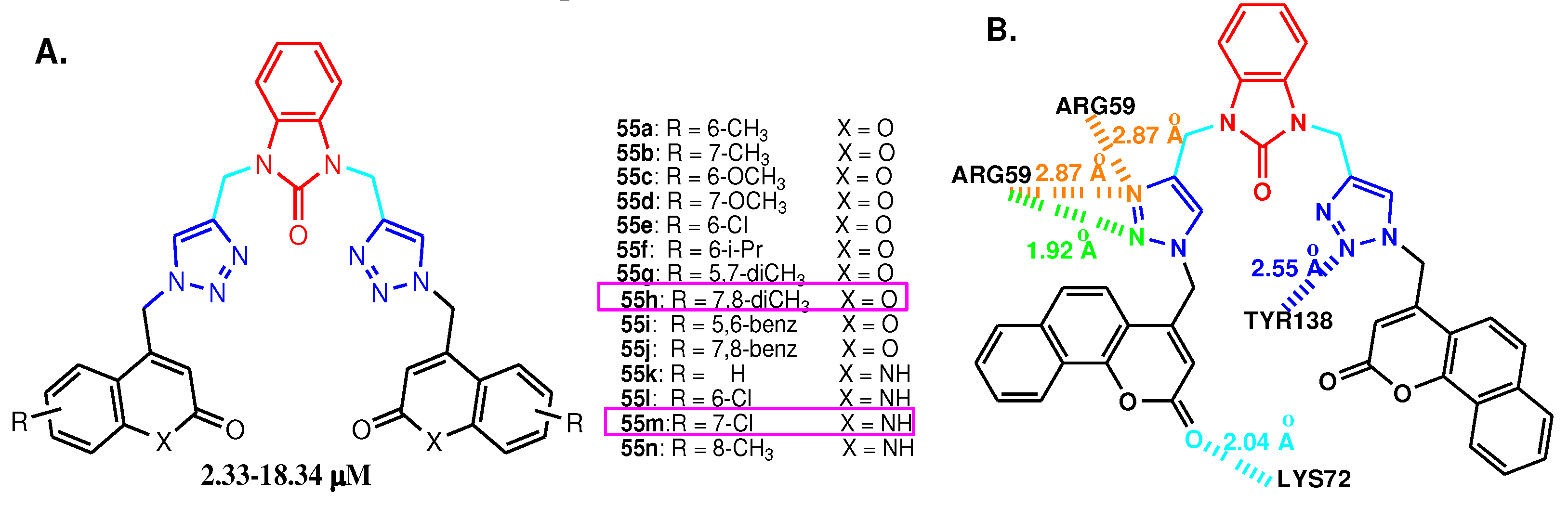
(MIC = 3.8 µMol L-1) with higher C-score values [100]. Khanapurmath et al. synthesized triazoles 55 by click reaction (Figure 4A). Benzimidazolone bis-triazoles 55a–55n showed better activity with MIC in the range 2.33–18.34 μM and most active compounds were 55h and 55m. All compounds exhibited moderate to low levels of cytotoxicity with IC50 values of the human embryonic kidney cells in the range of 943–12294 μM, and none of 14 compounds exhibited any significant cytotoxic effects, suggesting huge potential for their in vivo use as antitubercular agents. Docking studies revealed an additional interaction of benzimidazolone oxygen in these compounds (Figure 4B) [101]. Also, Sharma et al. summarizes 1,2,3-triazoles as antitubercular compounds, and various hybrids with benzimidazole, coumarin, isoniazid, quinolines, etc [39].
3. Synthesis and antimicrobial activities of benzimidazole-1,2,4-triazoles
3.1. 2-Benzimidazole-R(Ar)-1-(1,2,4-triazole)
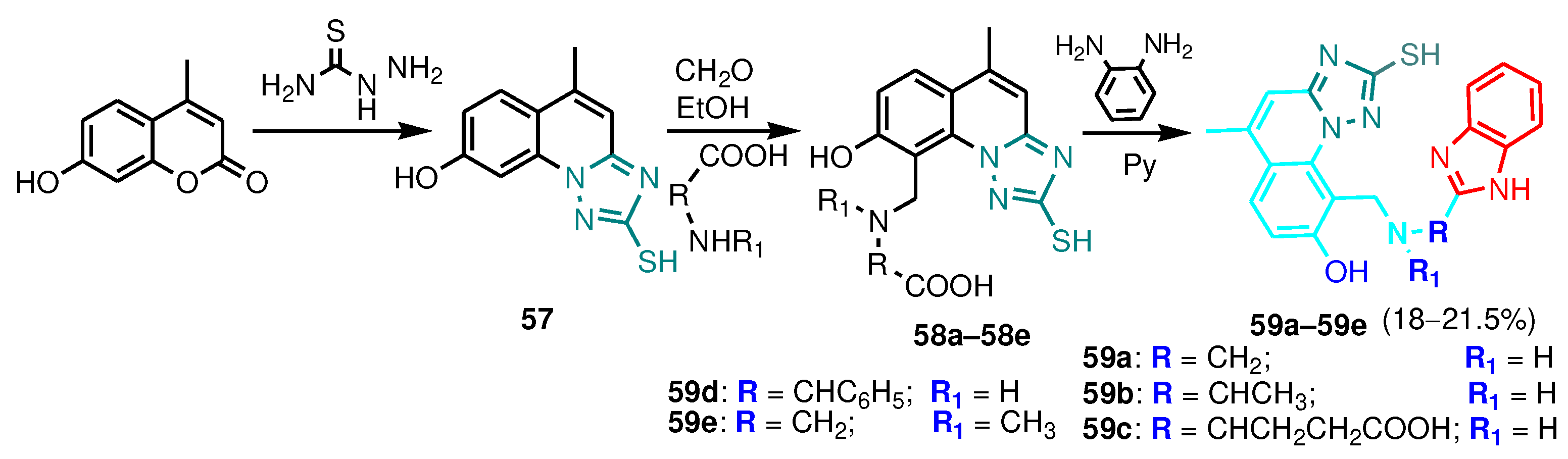
Pandey et al. synthesized hybrids 59a–59e in three steps: reaction of 7-hydroxy-4-methyl coumarin with thiosemicarbazide to form triazole intermediate571, which underwent Mannich reaction with formaldehyde, and an amino acid to form intermediates 58a–58e, which gave benzimidazolo-1,2,4-triazole hybrids in poor yields by reaction with o-phenylenediamine in pyridine (Scheme 16). Compound 59a displayed promising antifungal activity against Candida albicans and Cryptococcus himalayensis, since the MIC value in each case was found to be 3.5 μg mL–1. Compound 59b showed low to moderate antifungal activity against all the five fungi, Candida albicans, Cryptococcus himalayensis, Sporotrichum schenkii, Trichophyton rubrum and Aspergillus fumigatus [102].
Jadhav et al. synthesed a series of hybrids 1,2,4-triazolyl-fluorobenzimidazoles in two steps: i. synthesis of 2-(4-(1H-1,2,4-triazol-1-yl)phenyl)-4,6-difluoro-1H-benzo [d]imidazole 62 by reaction between 3,5-difluorobenzene-1,2-diamine 60 and 4-(1H-1,2,4- triazol-1-yl)benzaldehyde 61 in toluene at 110°C, and ii. alkylation of compound 62 in DMF at room temperature, with the formation of the final hybrids 63a-63o (Scheme 17). All compounds were screened for the antimicrobial activity against different gram positive organisms S. aureus, P. aeruginosa and gram negative organisms E. coli and S. typhosa using Gentamycin as a reference standard. The data generated from preliminary screening showed that compounds displayed moderate to better antimicrobial activity. Compounds 63a, 63e, 63f, 63h, 63i, and 63l displayed maximum activity (Table 4)[103].
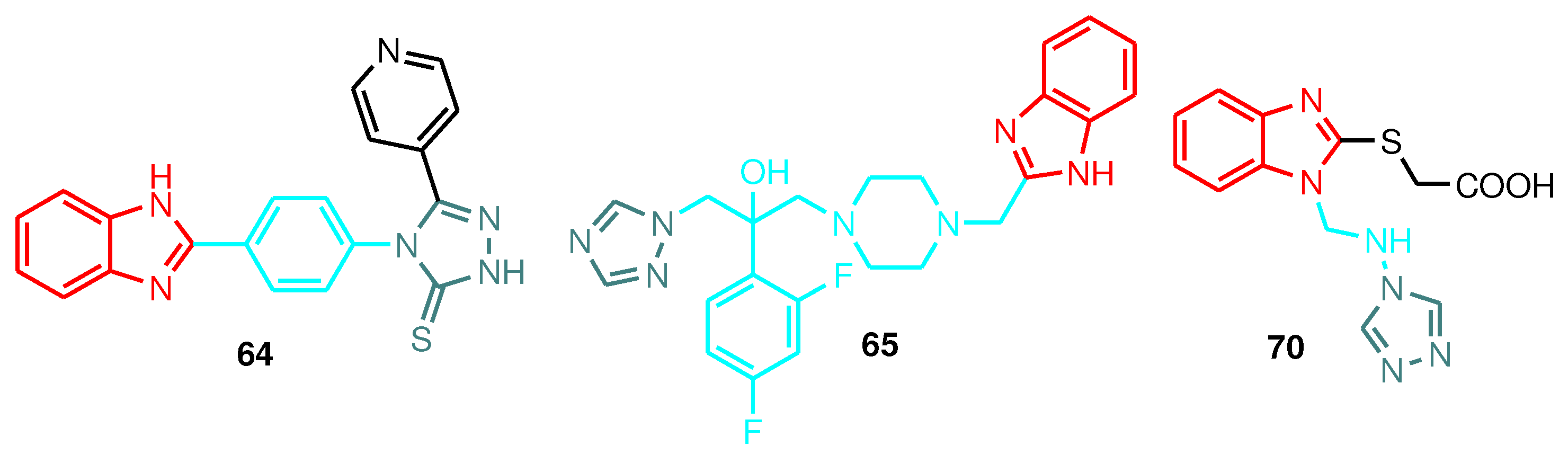
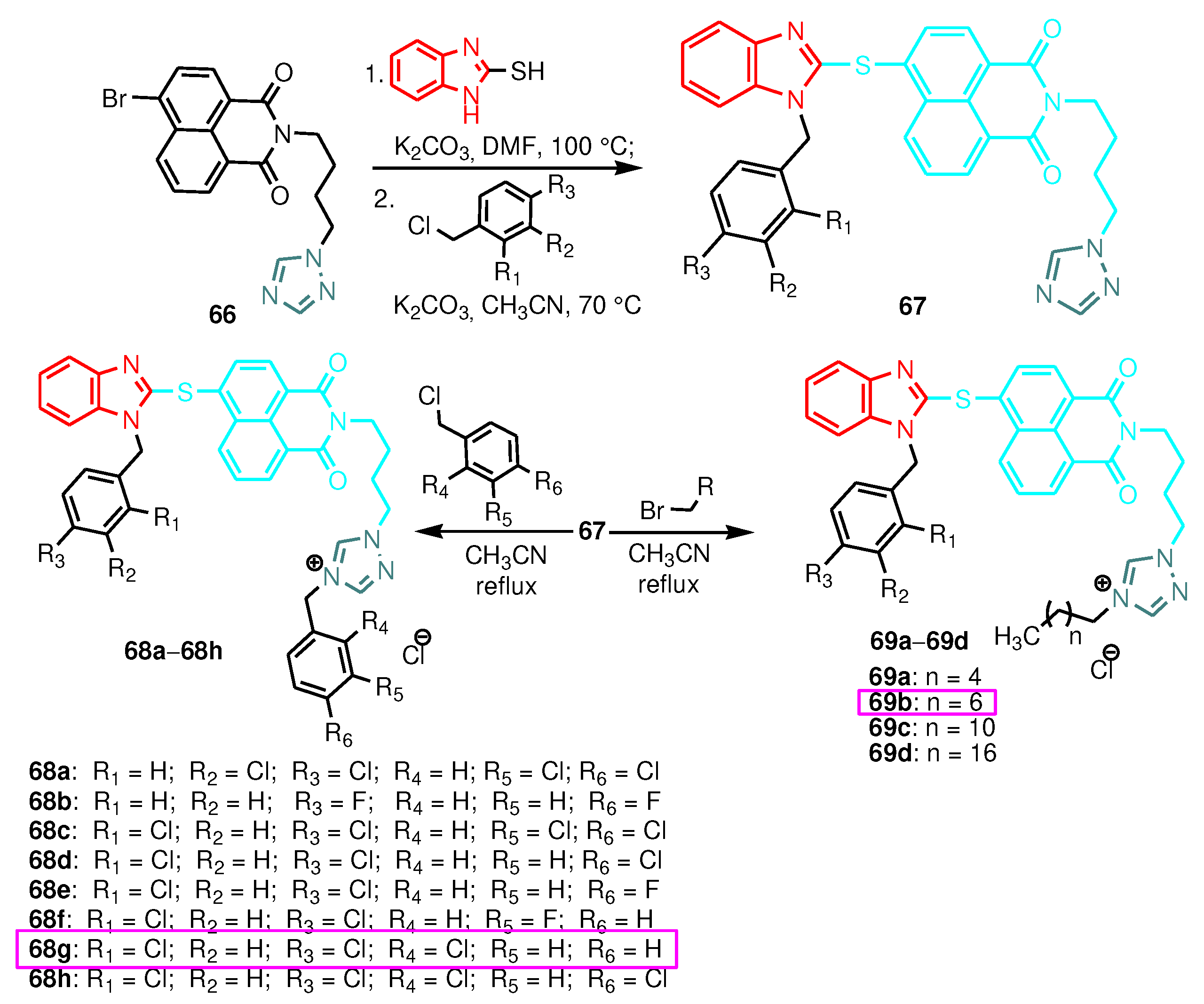
Barot et al. synthesized hybrid 64 and determined its antimicrobial activity against Bacillus cereus MTCC-430, Enterococcus faecalis MTCC-493, S. aureus MTCC-737, Escherichia coli MTCC-1687, Pseudomonas aeruginosa MTCC-2642, Klebsiella pneumonia MTCC-109, Candida albicans MTCC-3017, Aspergillus niger MTCC-1344 and Fusarium oxyspora MTCC-1755, of MIC = 13–18 µg ml-1, with Ofloxacine and Fluconazole as standard drugs [104]. Also, Jiang et al. reported antifungal activity for hybrid 65 against Candida albicans, Candida tropicalis, Cryptococcus neoformans, Trichophyton rubrum, and Aspergillus fumigatus, of MIC80 = 1–64 µg mL-1 considering Fluconazole as standard drug (Figure 5) [105]. Luo et al. reported a series of naphthalimide benzimidazole-1,2,4-triazole hybrids 68a–68h and the corresponding triazoliums salts 69a–69d prepared by convenient and efficient procedures starting from naphthalimide triazole 66 (Scheme 18). 2-Chlorobenzyl triazolium 68g and compound 69b with octyl group exhibited the best antibacterial activities among all the tested compounds, especially against S. aureus with inhibitory concentration of 2 μgmL-1 which was equipotent potency to Norfloxacin (MIC=2 μgmL-1) and more active than Chloromycin (MIC= 7 μgmL-1). Triazoliums 68g and 68f bearing 3-fluorobenzyl moiety displayed the best antifungal activities (MIC=2–19 μgmL-1) against all the tested fungal strains, C. albicans ATCC 76615, A. fumigatus ATCC 96918, C. utilis, S. cerevisia and A. flavus, without being toxic to PC12 cell line within concentration of 128 μg mL-1. Further investigations showed that compound 68g could intercalate into calf thymus DNA to
form the 68g-DNA complex which could block DNA replication, exerting powerful antimicrobial activities. [106]. Benzimidazole-1,2,4-triazole Mannich base 70 was active against Bacillus subtilis and Bacillus pumilus (inhibition zone diameters being 19 and 17 mm, respectively, compared to Ciprofloxacin with 28 and 30 mm, respectively) [107]. Kankate et al. reported synthesis of the hybrids 73a–73l (Scheme 19). Antifungal activity of compounds 73a was tested against Candida albicans spores in vitro (turbidimetric
method) and in vivo (kidney burden test). Compound 73i had a good antifungal activity as compared with the other twelve compounds at 0.0075 µmole ml-1 which is equivalent to Fluconazole activity both in vitro and in vivo [108]. Ahuja et al. reported antifungal activity of compounds 74a–74c against F. verticillioides, D. oryzae, C. lunata and F. fujikuroi (Figure 6). All compounds had increased potency than the standard commercial benzimidazole fungicide, carbendazim (Table 5). Compound 74c exhibited ED50 values lower than triazole fungicide, propiconazole. The results reinforced the synergistic effects of benzimidazole and 1,2,4-triazole combination supported by computational approach [109]. Evren et al. reported synthesis of the compounds 79a–79c in two steps: i. reaction of 1,2,4-triazole 75 with 4-fluorobenzaldehyde 76 in DMF with the formation of 4-(1H-1,2,4-triazol-1-yl)benzaldehyde 77; ii. reaction of aldehyde 77 with 1,2-phenylene diamines 78 (Scheme 20). Although the antibacterial activities of compounds 79a–79c against Escherichia coli ATCC 35218, E. coli ATCC 25922, Klebsiella pneumoniae NCTC 9633, Pseudomonas aeruginosa ATCC 27853, Salmonella typhimurium ATCC 13311, and Staphylococcus aureus ATCC 25923, were weak, the antifungal activities against C. albicans were found promising, with MIC values of 3.9, 7.8, and 3.9 μg mL-1 respectively, using as reference drug Ketokonazole (MIC = 7.8 μgmL -1). Theoretical ADME calculations of the 79a, 79b, and 79c were made, and the compounds were found to have good lipophilicity, moderate water solubility, and within the limiting rules of Lipinski, Ghose, Veber, Egan, and Muegge [110]. Ghobadi et al. reported synthesis of compounds 85a-85e, in two different ways, from 3,4-diaminobenzophenone 80, i. formation of 2-mercapto benzimidazole derivatives 82, 83, and ii. nucleophilic ring opening of various oxiranes 84a-84e with benzimidazoles 82 and 83 using NaHCO3 in ethanol at room temperature (Scheme 21). Compounds 85a-85e, containing 5-benzoylbenzimidazole scaffold showed better antifungal activity against Candida spp. and Cryptococcus neoformans than related benzimidazole and benzothiazole derivatives. The better results were obtained with the 4-chloro-derivative 85b displaying MICs < 0.063–1 μgmL-1.. Also, compound 86c, synthesized analogously, is as potent as compound 85b. In vitro and in silico ADMET evaluations of the most promising compounds 85b indicated that the selected compounds have desirable ADMET properties in comparison to standard drug Fluconazole. Docking simulation study demonstrated that the benzimidazol-2-yl-thio moiety is responsible for the potent antifungal activity of these compounds [72].
3.2. 1-Benzimidazole-R(Ar)-2-1,2,3-triazole
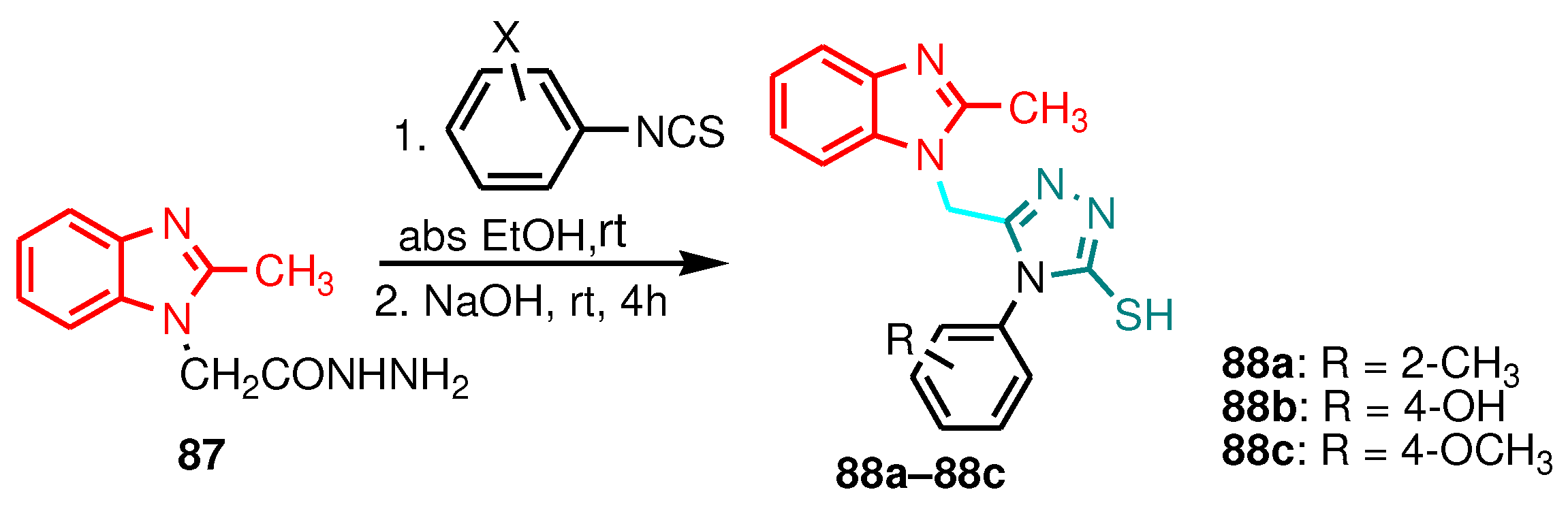
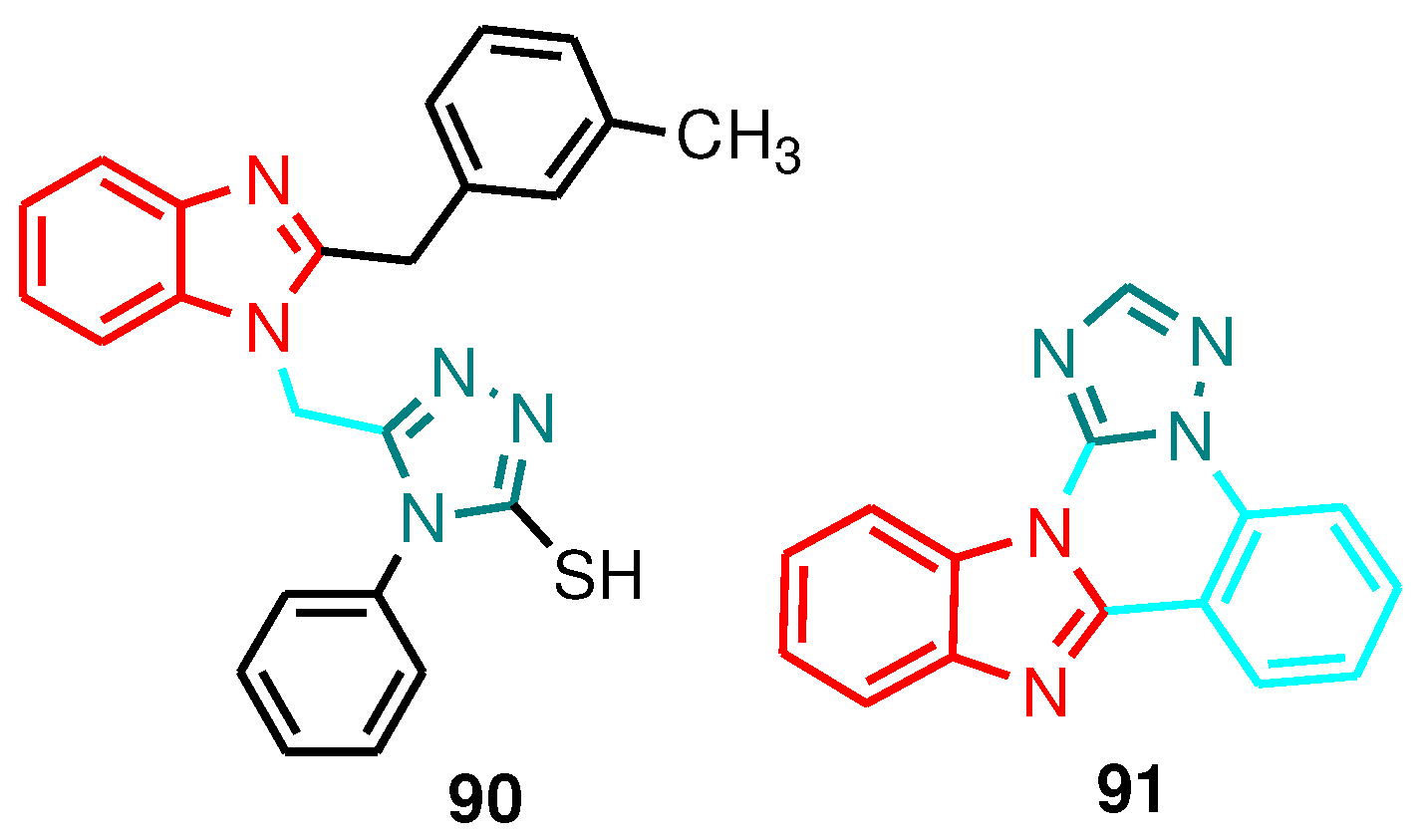
Ansari et al. synthesized hybrids 88a–88c in two steps from 2-(2-methyl-1H-benzo [d]imidazol-1-yl)acetohydrazide 87 (Scheme 22). Generally, all benzimidazole-triazole hybrids showed low antimicrobial activity (Table 6) [111]. Tien et al. synthesized hybrids 89a–89d in three steps from 2-(2-methyl-1H-benzo[d]imidazol-1-yl)acetohydrazide 87b (Scheme 23). All compounds exhibited antifugal activity against A. niger (MIC = 50 µg mL-1). Only compound 89b exhibited activity against F. oxysporum (Table 7) [112]. Kantar et al. reported antimicrobial activity of hybrid 90 (Figure 7) against four Gram-positive, Bacillus cereus 702 Roma (62.5 µg mL-1), B. megaterium DSM-32 (125 µg mL-1), B. subtilis ATCC 6633 (62.5 µg mL-1), Staphylococcus aureus ATCC 25923 (250 µg mL-1), and four
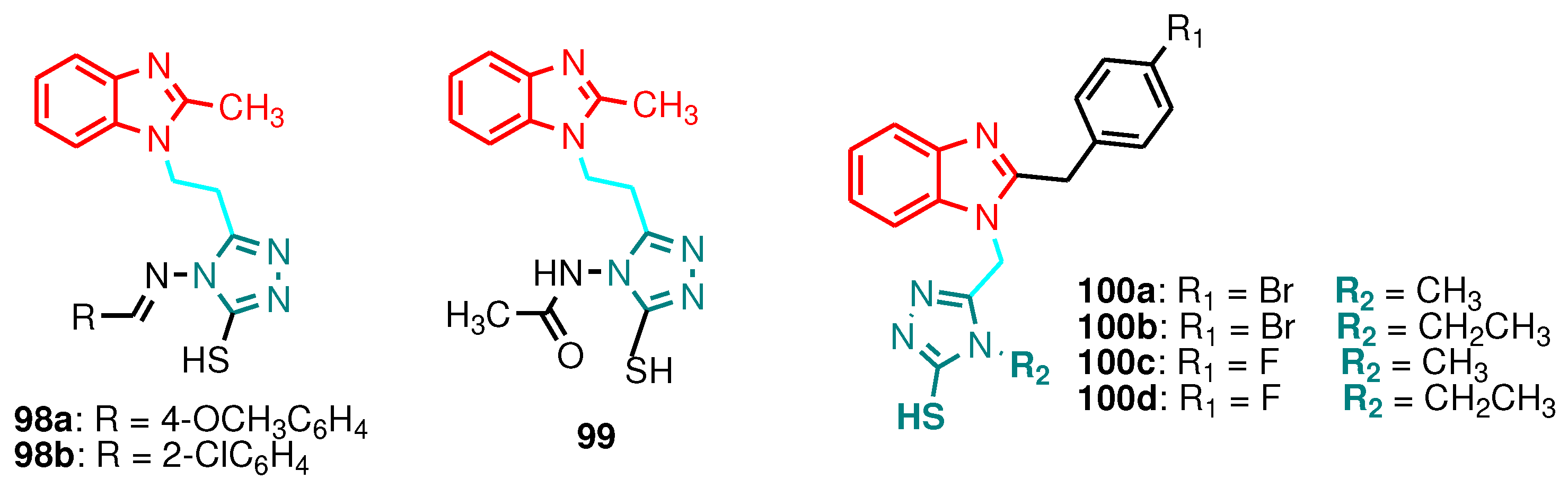
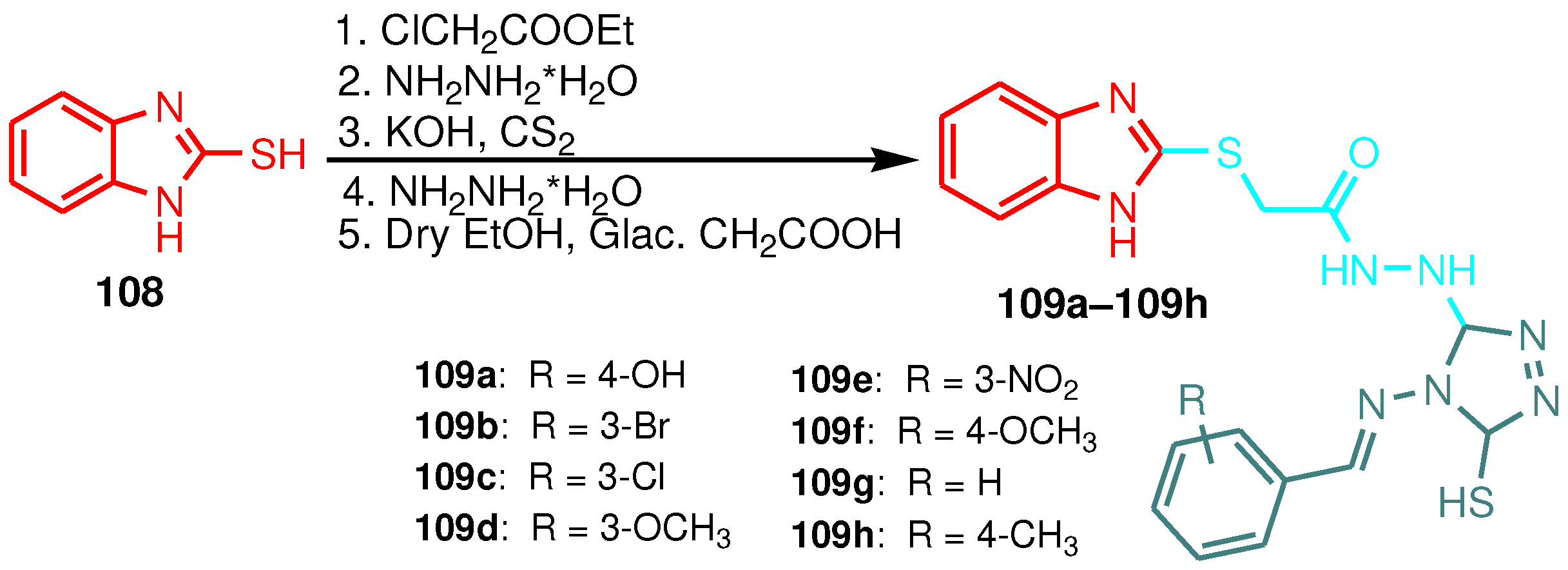
Gram-negative bacteria, Escherichia coli ATCC 25922 (250 µg mL-1), Enterobacter cloaceae ATCC13047 (125 µg mL-1), Pseudomonas aeruginosa ATCC 27853 (250 µg mL-1), and Yersinia pseudotuberculosis ATCC 911 (125 µg mL-1) bacteria [113]. Nandwana et al. reported compound 91 synthesized in good yield (70%) with promising antibacterial activity, with minimum inhibitory concentration (MIC) values of 4−8 μg mL-1 for all bacterial tested strains (Escherichia coli, Pseudomonas putida, Salmonella typhi, Bacillus subtilis, Staphylococcus aureus), as compared to the positive control Ciprofloxacin, and also with pronounced antifungal activity against both tested strains, Aspergillus niger and Candida albicans (MIC = 8−16 μg mL-1) as compared with Amphotericin B [114]. Al-Majidi et al. synthesized 2-mercaptobenzimidazole derivatives 95, 96 and 97 by cyclization of intermediate precursors 93, 94 and 95 under reflux with 2N NaOH (Scheme 24). The compounds generally showed a moderate antimicrobial activity against all tested strains, as can be seen in Table 8 [115]. El-masry et al. synthesized compounds 98 and 99 and found that they did not exhibit antimicrobial activity (Figure 8) [116]. Menteşe et al. synthesized compounds 100a–100d, for which they found no antimicrobial activity on the ten strains tested [117]. Karale et al. synthesized bis-benzimidazole-1,2,4-triazole hybrids 102a-102e in four steps, from 7-methyl-2-propyl-3H-benzo[d]imidazole-5-carboxylic acid. All compounds 102 did not show antimicrobial activity against the strains tested, C. albicans, A. fumigatus, S. aureus and E. coli [118,119].
3.3. 2-Benzimidazole-R(Ar)-2-1,2,4-triazole
Eisa et al. synthesized compounds 105a and 105b by the reaction between 2-(chloromethyl)-1H-benzo[d]imidazole 103 and 4-phenyl-5-(pyridin-3-yl)-4H-1,2,4-triazole-3-thiol 103 and 4-phenyl-5-(pyridin-3-yl)-4H-1,2,4-triazole-3-thiol 104a or 4-phenyl -5-(thiophen-2-yl)-4H- 1,2,4-triazole-3-thiol 104b, at reflux in absolute ethanol, for 12 hours. Also, they reported synthesis of the compounds 107a and 107b from 2-(2-(phenylthiomethyl)-1H-benzo[d]imidazol-1-yl) acetohydrazide in two steps (Scheme 27). All compounds showed antimicrobial activity against Escherichia coli superior to that of standard Gentamicin. Compound 107a exhibited only a moderate activity against Staphylococcus aureus [120].
Scheme 26.
Synthesis of benzimidazole-1,2,4-triazoles 105a-105b

Nevade et al. synthesized compounds 109a–109h in five steps from 1H-benzo[d]imidazole-2-thiol 108 (Scheme 28). The antimicrobial screening results presented in Table 10 reveal that compounds 109a, 109c, 109e exhibited satisfactory effect against S.aureus and E.coli, while the compounds 109b, 109f, 109g have shown the moderate activity against the same microbes. Also antifungal activity of these compounds was screened against Candida albicans. Compounds 109a and 109d showed highest degree of inhibition against C.albicans when compared with the Standard drug Ketoconazole [121]. Can et al. synthesized hybrids 111a–111h in four steps from methyl 4-(5-methyl-1H-benzo[d]imidazol-2-yl)benzoate 110 (Scheme 29). All compounds were screened for antifungal activity against Candida albicans ATCC 24433, Candida glabrata ATCC 90030, Candida krusei ATCC 6258 and Candida parapsilosis ATCC 22019 (Table 11). Compounds 111i and 111s exhibited significant inhibitory activity against Candida strains with MIC50 values ranging from 0.78 to 1.56 𝜇g mL-1 [122]. Gencer et al. synthesized compounds 112 in good yields (77–88%) using a similar strategy (Figure 9). Microbiological studies revealed that compounds 112a, 112b, 112c, 112e, 112f, 112g and 112h possess a good antifungal profile against all tested strains, C. albicans, C. glabrata, C. krusei, C. parapsilopsis, with MIC50 = 0.78–1.56 µg mL-1. Compound 112i was the most active derivative and showed comparable antifungal activity to those of reference drugs Ketoconazole and Fluconazole [123]. The SAR (Structure–activity relationship) on the synthesized benzimidazole-triazole compounds are summarized in Figure 10. It is observed that the presence of chlorine or fluorine in the "5" position of benzimidazole, as well as the presence of fluorine in the "4" position of phenyl increase the antibacterial activity, while the presence of fluorine in the "2" position of phenyl does not change the activity, and the presence of groups CH3 or C2H5 in position "4" in the triazole nucleus does not bring any change in the antibacterial activity of the compounds. Güzel et al. synthesized a new series of benzimidazole-1,2,4-triazole derivatives 113a–113l using the same procedure described in Scheme 29 as potential antifungal agents. All the compounds were screened for their in vitro antifungal activity against four fungal strains, namely, C. albicans, C. glabrata, C. krusei, and C. parapsilopsis and were found to exhibit excellent activity against C. glabrata. Especially, compounds 113b, 113i, and 113j were found to be the most effective
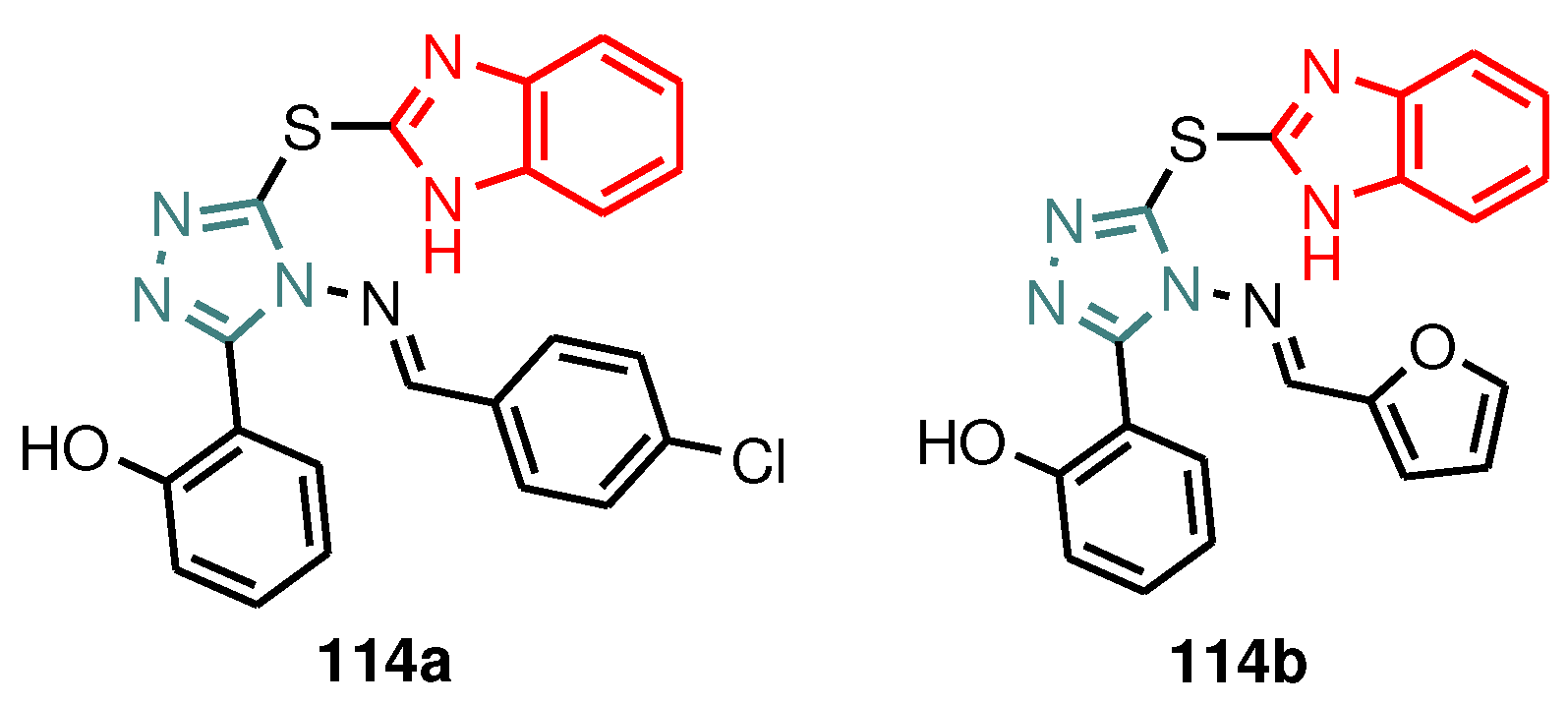
compounds in the series with an MIC value of 0.97 μg mL-1 [71]. Aryal et al. reported synthesis of new 2-substituted benzimidazole containing 1,2,4-triazoles 114a and 114b (Figure 12). The compounds did not show antimicrobial activity against the tested strains Staphylococcus aureus ATCC 6538P and Staphylococcus epidermidis ATCC 1228 [124]. Kazeminejad et al. did a study on 1,2,4-triazoles as well as structure-activity relationships (SAR) [125].
3.4. 6-substituted-Benzimidazole-R(Ar)-1-1,2,4-triazole
Nandha et al. reported synthesis of 6-substituted-benzimidazoles with 1-(1,2,4-triazole) 115a--115d in three steps from 5-chloro-4-fluoro-2-nitrobenzenamine (Scheme 30). All compounds were screened against M. tuberculosis and four fungal strains, C. albicans, C. glabrata, C. krusei and C. tropicalis. Compound 115c was the most active against M. tuberculosis and all tested fungal strains (MIC = 25 μg mL-1) [126].
4. Synthesis and antiviral activities of benzimidazole-triazoles
Youssif et al. reported synyhesis of benzimidazole-1,2,3-triazole hybrids 2-{4-[(1-benzoylbenzimidazol-2-ylthio)methyl]-1H-1,2,3-triazol-1-yl}-N-(p-nitro--phenyl)-acetamide 116 and 2-(4-{[1-(p-chlorobenzoyl)-benzimidazol-2-ylthio)methyl]-1H-1,2,3-triazol -1-yl}-N-(p-nitrophenyl)-acetamide 117 which showed significant activity against hepatitis C virus (HCV) (Figure 13). Thus, fifty percent effective concentrations (EC50) of HCV inhibition for compounds 116 and 117 were 7.8 and 7.6 μmol L–1, respectively, and the 50 % cytotoxic concentrations (CC50) were 16.9 and 21.1 μmol L–1.The results gave an insight into the importance of the substituent at position 2 of benzimidazole for the inhibition of HCV [73].
Antiviral activity of compounds 59a–59e was tested against two viruses, viz., Japanese encephalitis virus (JEV) (P20778), a RNA virus of higher pathogenicity, and Herpes simplex virus type-I (HSV-I) (753166), the most common virus present in the environment. The antiviral activity of the compounds data are given in Table 12. All but one of the five compounds were found active against JEV. Compound 59b displayed 90% CPE (cytopathic effect) in vitro with an effective concentration of 8 µg mL–1 while its in vivo activity was less significant (16% protection with a MST of 4 days). The authors sugested that that these compounds are better anti-JEV agents than anti-HSV agents, since two such compounds, namely 59b and 59e, also displayed a measurable degree of anti-JEV activity in vivo. Compound 59c was found antivirally inactive against both viruses. The anti HSV-I activity was found to be in the order of 33, 46, 53 and 64% for compounds 59a, 59b, 59d and 59e, respectively. Since among compounds 59a to 59e only compound 59e contains a methyl group instead of H as R1, it follows that R1 does not seem to be responsible for the biological activity [87].
Tonelli et al. synthesized a series of 1-substituted 2-[(benzotriazol-1/2-yl)methyl] benzimidazoles 118–137 and tested for antiviral activity against a large panel of RNA and DNA viruses (Figure 14). Twelve compounds exhibited high activity against RSV (Respiratory Syncytial Virus), with EC50 values in most cases below 1 µM, comparing favorably with the reference drug 6-azauridine, which, moreover, exhibited a high toxicity against both the MT-4 and Vero-76 cell lines (S.I. =16.7). The observed activity against BVDV, YFV, and CVB2 is moderate, with EC50 values in the range of 6 – 55 µM for the best compounds (Table 13) [127].
SARS-CoV-2 and its variants, especially the Omicron variant, remain a great threat to human health. Al-Humaidi et al. reported synthesis a series of benzimidazole-1,2,3-triazoles 138–140 (Figure 15). Molecular docking studies and in vitro enzyme activity revealed that most of the investigated compounds demonstrated promising binding scores against the SARS-CoV-2 and Omicron spike proteins, in comparison to the reference drugs (Table 14).
Three-dimensional binding mode of compound 140 is shown in Figure 16 [74]. Benzimidazole-1,2,3-triazole hybrids can be potent anti-HSV (Herpes simplex virus) agents. These compounds were screened against flaviviruses and pestiviruses. Compound 141 showed excellent activity against respiratory syncytial virus (RSV) with an EC50 value of 0.02 mM (Figure 17) [128].
5. Conclusions
This review summarizes the syntheses of benzimidazole–triazole compounds with antimicrobial an antiviral properties mentioned in the literature. The presence of certain groups grafted on the benzimidazole and trizole nuclei, such as -F, -Cl, -Br, -CF3, -NO2, -CN, -NHCO, -CHO, -OH, OCH3, -N(CH3)2, COOCH3, as well as other heterocycles in the molecule (pyridine, pyrimidine, thiazole, indole, isoxazole, thiadiazole, coumarine), increases the antimicrobial activity of the compounds [4,5,83,84,129,130,131]. From the presented literature data, we can highlight some aspects related to the correlation structure - antimicrobial properties.
- The presence of substituents in the "4" or "5" positions of the benzimidazole nucleus can increase the antimicrobial activity of the benzimidazole-triazole hybrids (compounds 12, 13, 19, 20, 35).
- The presence of the ortho or para substituted phenyl substituent in the "1" position of 1,2,3-triazoles in benzimidazole-triazole hybrids can increase their antimicrobial activity.
- In the case of benzimidazoles substituted in the "1" position with triazoles, the presence of an aliphatic or aromatic radical substituent increases the antimicrobial activity of the hybrids.
- The presence of the oxygen atom in the bridge that connects the benzimidazole and triazole rings is favorable to the antimicrobial activity of the hybrids (compounds 19, 20, 21, 29, 30)
- The presence of the sulfur atom in the bridge that connects the benzimidazole and triazole rings is favorable to the antimicrobial activity of the hybrids, and even to the antitubercular activity (95–97, 105, 107).
- The presence of a supplementary triazole ring in benzimidazole-triazole hybrids improves their antimicrobial activity (compounds 43, 45, 47).
- The presence of the benzoyl substituent in the "5" position of the benzimidazole in the benzimidazole-1,2,4-triazole hybrids clearly improves their antimicrobial activity (compounds 85a-85e).
- The phenyl nucleus as a spacer between the "1" position of 1,2,4-triazole and the "2" position of benzimidazole favors the formation of antimicrobial compounds, and the substituents in the "5" position of the benzimidazole nucleus increase the antimicrobial activity (compounds 79, 111, 112, 113).
- Only benzimidazole-1,2,3-triazole hybrids are mentioned in the literature as having antiviral properties.
- 2-Substituted or 1,2-disubstituted benzimidazoles with 1,2,3-triazoles are mentioned as antiviral compounds and the presence of an additional triazole ring improves the antiviral activity (compound 140).
We hope that this review will be useful for the design and synthesis of new benzimidazole-triazole hybrids with antimicrobial and antiviral properties in the context of exacerbation of microbial and viral infections and of resistance to treatments with drugs known on the market.
Author Contributions
Conceptualization, M.M.; methodology, M.M.; software, M.M.; validation, M.M. and C.-V.P.; resources, C.-V.P.; data curation, M.M.; writing—review and editing original draft preparation M.M. and C.-V.P., visualization, M.M.; supervision, M.M. All authors have read and agreed to the published version of the manuscript.
Funding
Please add: This research received no external funding.
Institutional Review Board Statement
Not applicable.
Informed Consent Statement
Not applicable.
Data Availability Statement
Not applicable.
Acknowledgments
The author is thankful to Department of Organic Chemistry, Biochemistry and Catalysis, for providing necessary facilities to carry out this research work.
Conflicts of Interest
The authors declare no conflict of interest.
References
- Kabir, E.; Uzzaman,M. A review on biological and medicinal impact of heterocyclic compounds. Results in Chemistry 2022, 100606. [Google Scholar] [CrossRef]
- Nishanth Rao, R.; Jena, S.; Mukherjee, M.; Maiti, B; Chanda, K. Green synthesis of biologically active heterocycles of medicinal importance: a review. Environ. Chem. Lett. 2021, 19, 3315–3358. [Google Scholar] [CrossRef]
- Ebenezer, O.; Oyetunde-Joshua, F.; Omotoso, O.D.; Shapi, M. Benzimidazole and its derivatives: Recent Advances (2020–2022). Results in Chemistry 2023, 5, 100925. [Google Scholar] [CrossRef]
- Bansal, Y.; Kaur, M.; Bansal, G. Antimicrobial Potential of Benzimidazole Derived Molecules. Mini. Rev. Med. Chem. 2019, 19(8), 624–646. [Google Scholar] [CrossRef] [PubMed]
- Marinescu, M. Synthesis of Antimicrobial Benzimidazole–Pyrazole Compounds and Their Biological Activities. Antibiotics 2021, 10, 1002. [Google Scholar] [CrossRef]
- Deswal, L.; Verma, V.; Kumar, D.; Deswal, Y.; Kumar, A. ; Kumar, R; Parshad, M., Ed.; Bhatia, M. Synthesis, antimicrobial and α-glucosidase inhibition of new benzimidazole-1,2,3-triazole-indoline derivatives: a combined experimental and computational venture. Chem. Pap. 2022, 76, 7607–7622. [Google Scholar] [CrossRef]
- Raducka, A.; Świątkowski, M.; Korona-Głowniak, I.; Kaproń, B.; Plech, T.; Szczesio, M.; Gobis, K.; Szynkowska-Jóźwik, M.I.; Czylkowska, A. Zinc Coordination Compounds with Benzimidazole Derivatives: Synthesis, Structure, Antimicrobial Activity and Potential Anticancer Application. Int. J. Mol. Sci. 2022, 23, 6595. [Google Scholar] [CrossRef]
- Zalaru, C.; Dumitrascu, F.; Draghici, C.; Tarcomnicu, I.; Marinescu, M.; Nitulescu, G.M.; Tatia, R.; Moldovan, L.; Popa, M.; Chifiriuc, M.C. New Pyrazolo-Benzimidazole Mannich Bases with Antimicrobial and Antibiofilm Activities. Antibiotics 2022, 11, 1094. [Google Scholar] [CrossRef] [PubMed]
- Chen, M.; Su, S.; Zhou, Q.; Tang, X.; Liu, T. , Peng, F.; He, M.; Luo, H.; Xue, W. Antibacterial and antiviral activities and action mechanism of flavonoid derivatives with a benzimidazole moiety. J. Saudi Chem. Soc. 2021, 25, 101194. [Google Scholar] [CrossRef]
- Kanwal, A.; Ahmad, M.; Aslam, S.; Naqvi, S.A.R.; Jawwad Saif, M.J. Molecular-biological prolems of drug design and mehanism of drug action. Recent advances n antiviral benyimidayole derivatives: a mini review. Pharm. Chem. J. 2019, 53 (3), 179-187. [CrossRef]
- Brishty, S.R.; Hossain, Md. J.; Khandaker, M.U.; Faruque, M.R.I.; Osman, H.; Rahman, S.M.A. A Comprehensive Account on Recent Progress in Pharmacological Activities of Benzimidazole Derivatives. Front. Pharmacol. 2021, 12, 762807. [Google Scholar] [CrossRef]
- Yhou, S.; Huang, G. Synthesis of anti-allergic drugs. RSC Adv. 2020, 10, 5874. [Google Scholar] [CrossRef]
- Vasil’ev, P. M.; Kalitin, K. Yu.; Spasov, A. A.; Grechko, O. Yu.; Poroikov, V. V.; Filimonov, D. A.; Anisimova, V. A. Search for new dugs prediction and study of anticonvulsant properties of benzimidazole derivatives. Pharm. Chem. J. 2017, 50(12), 775–780. [Google Scholar] [CrossRef]
- Lee, Y.T.; Tan, YJ.; OOn, C.E. Benzimidazole and its derivatives as cancer therapeutics: The potential role from traditional to precision medicine. Acta Pharmaceutica Sinica B 2023, 13(2), 478–497. [Google Scholar] [CrossRef] [PubMed]
- Satija, G.; Sharma, B.; Madan,A.; Iqubal, A; Shaquiquzzaman, M.; Akhter, M.; Parvez, S.; Khan, M.A.; Alam, M.M. Benzimidazole based derivatives as anticancer agents: Structure activity relationship analysis for various targets. J. Heterocyclic. Chem. 2021, 59 (1), 22-66. [CrossRef]
- Song, B.; Park, E.Y.; Kim, K.J.; Ki, S.H. Repurposing of Benzimidazole Anthelmintic Drugs as Cancer Therapeutics. Cancers 2022, 14, 4601. [Google Scholar] [CrossRef] [PubMed]
- Chen, W.L.; Li, D.D.; Chen, X.; Wang, Y.Z.; Xu, J.-J.; Jiang, Z.-Y.; You, Q.-D.; Guo, X.-K. Proton pump inhibitors selectively suppress MLL rearranged leukemia cells via disrupting MLL1-WDR5 protein-protein interaction. Eur. J. Med. Chem. 2020, 188, 112027. [Google Scholar] [CrossRef]
- Argirova,M.A.; Georgieva, M.K.; Hristova-Avakumova, N.G.; Vuchev, D.I.; Popova-Daskalova, G.V.; Anichina, K.K.; Yancheva, D.Y. New 1H-benzimidazole-2-yl hydrazones with combined antiparasitic and antioxidant activity. RSC Adv. 2021, 11, 39848–39868. [CrossRef]
- Valderas-García, E.; Häberli, C.; Álvarez-Bardón, M.; Escala, N.; Castilla-Gómez de Agüero, V.; de la Vega, J.; del Olmo, E.; Balaña-Fouce, R.; Keiser, J.; Martínez-Valladares, M. Benzimidazole and aminoalcohol derivatives show in vitro anthelmintic activity against Trichuris muris and Heligmosomoides polygyrus. Parasites & Vectors. [CrossRef]
- Kamat, V.; Yallur, B.C.; Poojary, B.; Patil, V.B.; Nayak, S.P.; Krishna, P.M.; Joshi, S.D. Synthesis, molecular docking, antibacterial, and anti-inflammatory activities of benzimidazole-containing tricyclic systems. J. Chin. Chem. Soc. 2021, 68(6), 1055–1066. [Google Scholar] [CrossRef]
- Moharana, A.K.; Dash, R.N.; Mahanandia, N.C.; Subudhi, B.B. Synthesis and anti-inflammatory activity evaluation of some benzimidazoled erivatives. Pharm. Chem. J. 2022, 56, 1070–1074. [Google Scholar] [CrossRef]
- Veerasamy, R.; Roy, A.; Karunakaran, R.; Rajak, H. Structure–Activity Relationship Analysis of Benzimidazoles as Emerging Anti-Inflammatory Agents: An Overview. Pharmaceuticals 2021, 14, 663. [Google Scholar] [CrossRef]
- Iqbal, H.; Verma, A.K.; Yadav, P.; Alam, S.; Shafiq, M.; Mishra, D.; Khan, F.; Hanif, K.; Negi, A.S.; Chanda, D. Antihypertensive Effect of a Novel Angiotensin II Receptor Blocker Fluorophenyl Benzimidazole: Contribution of cGMP, Voltage-dependent Calcium Channels, and BKCa Channels to Vasorelaxant Mechanisms. Front. Pharmacol. 2021, 30. [Google Scholar] [CrossRef]
- Tajane, P. S. , Sawant, R. L. An updated review on benzimidazole derivatives as potential antihypertensive agents. Int. J. Health Sci. 2022, 6( S1), 7169–7179. [Google Scholar] [CrossRef]
- Aboul-Enein, H.Y.; El Rashedy, A.A. Benzimidazole Derivatives as Antidiabetic Agents. Med. Chem. 2015, 5, 318–325. [Google Scholar] [CrossRef]
- Dik, B.; Coşkun, D.; Bahcivan, E.; Unez, K. Potential antidiabetic activity of benzimidazole derivative albendazole and lansoprazole drugs in different doses in experimental type 2 diabetic rats. Turk. J. Med. Sci. 2021, 51, 1578–1585. [Google Scholar] [CrossRef]
- Farid, S.M.: Noori, M.; Montazer, M.N.; Ghomi, M.K.; Mollazadeh, M.; Dastyafteh, N.; Irajie C.; Zomorodian, K.; Mirfazli, S.S.; Mojtabavi, S.; Faramarzi, M.A.; Larijani, B.; Iraji, A.; Mahdavi, M. Synthesis and structure–activity relationship studies of benzimidazole-thioquinoline derivatives as α-glucosidase inhibitors. Sci. Rep. 2023, 13, 4392. [CrossRef]
- Stanton, J.B.; Schneider, D.A.; Dinkel, K.D.; Balmer, B.F.; Baszler, T.V.; Mathison, B.A.; Boykin, D.W.; Kumar, A. Discovery of a Novel, Monocationic, Small-Molecule Inhibitor of Scrapie Prion Accumulation in Cultured Sheep Microglia and Rov Cells. Plos One 2012, 7 (11), | e51173. [CrossRef]
- Dinparast, L.; Zengin, G.; Bahadori, M.B. Cholinesterases Inhibitory Activity of 1H-benzimidazole Derivatives. Biointerface Res in Appl. Chem. 2021, 11. [Google Scholar] [CrossRef]
- Adalat, B.; Rahim, F.; Taha, M.; Alshamrani, F.J.; Anouar, E.H.; Uddin, N.; Shah, S.A.A.; Ali, Z.; Zakaria, Z.A. Synthesis of Benzimidazole–Based Analogs as Anti Alzheimer’s Disease Compounds and Their Molecular Docking Studies. Molecules 2020, 25, 4828. [Google Scholar] [CrossRef]
- Cheretaev, I. V.; Korenyuk, I. I.; Nozdrachev, A.D. Neurotropic, Psychoactive, and Analgesic Properties of Benzimidazole and Its Derivatives: Physiological Mechanisms. Neurosci. Behav. Physiol. 2018, 48(7), 848–853. [Google Scholar] [CrossRef]
- Maltsev, D.V.; Spasov, A.A.; Vassiliev, P.M.; Skripka, M.O.; Miroshnikov, M.V.; Kochetkov, A.N.; Eliseeva, N.V.; Lifanova, Y.V.; Kuzmenko, T.A.; Divaeva, L.N.; Morkovnik, A.S. Synthesis and Pharmacological Evaluation of Novel 2,3,4,5-tetrahydro[1,3]diazepino[1,2-a]benzimidazole Derivatives as Promising Anxiolytic and Analgesic Agents. Molecules 2021, 26, 6049. [Google Scholar] [CrossRef]
- Yen, T.L.; Wu, .P.; Chng, C.L.; Yang, W.B.; Jayakumar, T.; Geraldine, P.; Chou, C.M.; Chang, C.Y.; Lu, W.J.; Sheu, J.R. Novel synthetic benzimidazole-derived oligosaccharide, M3BIM, prevents ex vivo platelet aggregation and in vivo thromboembolism. J. Biomed. Sci. 2016, 23, 26. [CrossRef]
- Zhang, T.; Liu, Q.; Ren, Y. Design, synthesis and biological activity evaluation of novel methyl substituted benzimidazole derivatives. Tetrahedron 2020, 76. [Google Scholar] [CrossRef]
- Zhang, B. Comprehensive review on the anti-bacterial activity of 1,2,3-triazole hybrids. Eur. J. Med. Chem. 2019, 168, 357–372. [Google Scholar] [CrossRef]
- Strzelecka, M.; Świątek, P. 1,2,4-Triazoles as Important Antibacterial Agents. Pharmaceuticals 2021, 14, 224. [Google Scholar] [CrossRef] [PubMed]
- Patil, S.A.; Nesaragi, A.R.; Rodríguez-Berrios, R.R.; Hampton, S.M.; Bugarin, A.; Patil, S.A. Coumarin Triazoles as Potential Antimicrobial Agents. Antibiotics 2023, 12, 160. [Google Scholar] [CrossRef]
- Kazeminejad, Z.; Marzi, M.; Shiroudi, A.; Kouhpayeh, S.A.; Farjam, M.; Zarenezhad, E. Novel 1, 2, 4-Triazoles as Antifungal Agents. Review. BioMed Res. Int. 2022, 4584846, 1–39. [Google Scholar] [CrossRef]
- Sharma, A.; Agrahari, A.K.; Rajkhowa, S.; Tiwari, V.K. Emerging impact of triazoles as anti-tubercular agent. Eur. J. Med.Chem. 2022, 238, 114454. [Google Scholar] [CrossRef] [PubMed]
- El-Shoukrofy, M.S.; Atta, A.; Fahmy, S.; Sriram, D.; Mahran, M.A.; Labouta, I.M. New tetrahydropyrimidine-1,2,3-triazole clubbed compounds: Antitubercular activity and Thymidine Monophosphate Kinase (TMPKmt) inhibition. Bioorg. Chem. 2023, 131, 106312. [Google Scholar] [CrossRef] [PubMed]
- Ravisankar, N.; Sarathi, N.; Maruthavanan, T.; Ramasundaram, S.; Ramesh, M.; Sankar, C.; Umamatheswari, S.; Kanthimathi, G.; Oh, T.H. Synthesis, antimycobacterial screening, molecular docking, ADMET prediction and pharmacological evaluation on novel pyran-4-one bearing hydrazone, triazole and isoxazole moieties: Potential inhibitors of SARS CoV-2. Synthesis, antimycobacterial screening, molecular docking, ADMET prediction and pharmacological evaluation on novel pyran-4-one bearing hydrazone, triazole and isoxazole moieties: Potential inhibitors of SARS CoV-2. J. Mol. Struct. 2023, 1285, 135461. [Google Scholar] [CrossRef]
- Musa, A.; Abulkhair, H.S.; Aljuhani, A.; Rezki, N.; Abdelgawad, M.A.; Shalaby, K.; El-Ghorab, A.H.; Aouad, M.R. Phenylpyrazolone-1,2,3-triazole Hybrids as Potent Antiviral Agents with Promising SARS-CoV-2 Main Protease Inhibition Potential. Pharmaceuticals 2023, 16, 463. [Google Scholar] [CrossRef]
- Seliem, I.A.; Panda, S.S.; Girgis, A.S.; Moatasim, Y.; Kandeil, A.; Mostafa, A.; Ali, M.A.; Nossier, E.S.; Rasslan, F.; Srour, A.M.; Sakhuja, R.; Ibrahim, T.S.; Abdel-samii, Z.K.M.; Al-Mahmoudy, A.M.M. New quinoline-triazole conjugates: Synthesis, and antiviral properties against SARS-CoV-2. Bioorg. Chem. 2021, 114, 105117. [Google Scholar] [CrossRef] [PubMed]
- Venkatesham, P.; Schols, D.; Persoons, L.; Claes, S.; Sangolkar, A.A.; Chedupaka, R.; Vedula, R.R. Synthesis of novel thioalkylated triazolothiazoles and their promising in-vitro antiviral activity. J. Mol. Struct. 2023, 1286, 135573. [Google Scholar] [CrossRef]
- Pinheiro, N.G.; Gonzaga, D.T.G.; da Silva, A.R.; Fuly, A.C.; von Ranke, N.L.; Rodrigues, C.R.; Magalhães, B.Q.; Pereira, J.S.; Pacheco, P.A.F.; Silva, A.C.; Ferreira, V.F.; de Carvalho da Silva, F.; Faria, R.X. Triazoles with inhibitory action on P2X7R impaired the acute inflammatory response in vivo and modulated the hemostatic balance in vitro and ex vivo. Inflamm. Res. 2023, 72, 237–250. [Google Scholar] [CrossRef]
- Demchenko, S.; Lesyk, R.; Yadlovskyi, O.; Holota, S.; Yarmoluk, S.; Tsyhankov, S.; Demchenko, A. Fused Triazole-Azepine Hybrids as Potential Non-Steroidal Antiinflammatory Agents. Sci. Pharm. 2023, 91, 26. [Google Scholar] [CrossRef]
- Bozorov, K.; Zhao, J.; Aisa, H.A. 1,2,3-Triazole-containing hybrids as leads in medicinal chemistry: A recent overview. Bioorg. Med. Chem. 2019, 27, 3511–3531. [Google Scholar] [CrossRef]
- Hashem, H.E.; Amr, A. E-G.E.; Nossier, E.S.; Anwar,, M.M.; Azmy, E.M. New Benzimidazole-1,2,4-Triazole-, and 1,3,5-Triazine-Based Derivatives as Potential EGFRWT and EGFRT790M Inhibitors: Microwave-Assisted Synthesis, Anticancer Evaluation, and Molecular Docking Study. ACS Omega 2022, 7, 7155–7171. [Google Scholar] [CrossRef]
- Othman, D.I.A.; Hamdi, A.; Tawfik, S.S.; Elgazar, A.A.; Mostafa, A.S. Identification of new benzimidazole-triazole hybrids as anticancer agents: multi-target recognition, in vitro and in silico studies. J. Enzyme Inhib. Med. Chem. 2023, 38. [Google Scholar] [CrossRef]
- Gupta, O.; Pradhan, G, T. Chawla, G. An updated review on diverse range of biological activities of 1,2,4-triazole derivatives: Insight into structure activity relationship. J. Mol. Struct. 2023, 1274, Part 2, 134487. [CrossRef]
- Abu-Melha, S.; Azher, O.A.; Alaysuy, O.; Alnoman, R.B.; Abualnaja, M.M.; Althagafi, I.; El-Metwaly, N.M. Synthesis, molecular modeling and antioxidant activity of new thiadiazolyl-triazole analogues. J. Saudi. Chem. Soc. 2023, 27(2), 101596. [Google Scholar] [CrossRef]
- Dawbaa, S.; Nuha, D.; Evren, A.E.; Cankiliç, M.Y.; Yurttaş, L.; Turan, G. New oxadiazole/triazole derivatives with antimicrobial and antioxidant properties. J. Mol. Struct. 2023, 1282, 135213. [Google Scholar] [CrossRef]
- Zhao, W.; Song, M.; Hua, Y.; Zhu, Y.; Liu, W.; Xia, Q.; Deng, X.; Huang, Y. Design, Synthesis, and Pharmacology of New Triazole-Containing Quinolinones as CNS Active Agents. Molecules 2023, 28, 1987. [Google Scholar] [CrossRef]
- Dixit, D.; Verma, P.K.; Marwaha, R.K. A review on ‘triazoles’: their chemistry, synthesis and pharmacological potentials. J. Iran. Chem. Soc. 2021, 18, 2535–2565. [Google Scholar] [CrossRef]
- Fallah, Z.; Tajbakhsh, M.; Alikhani, M.; Larijani, B.; Faramarzi, M.A.; Hamedifar, H.; Mohammadi-Khanaposhtani, M.; Mahdavi, M. A review on synthesis, mechanism of action, and structure-activity relationships of 1,2,3-triazole-based α-glucosidase inhibitors as promising anti-diabetic agents. J. Mol. Struct. 2022, 1255, 132469. [Google Scholar] [CrossRef]
- Rahim, F.; Ullah, H.; Hussain, R.; Taha, M.; Khan, S.; Nawaz, M.; Nawaz, F.; Gilani, S.J.; Bin Jumah, M.N. Thiadiazole based triazole/hydrazone derivatives: Synthesis, in vitro α-glucosidase inhibitory activity and in silico molecular docking study. J. Mol. Struct. 2023, 1287, 135619. [Google Scholar] [CrossRef]
- Kumar, S.; Khokra, S.L.; Yadav, A. Triazole analogues as potential pharmacological agents: a brief review. Future J. Pharm. Sci. 2021, 7, 106. [Google Scholar] [CrossRef]
- Kaproń, B.; Łuszczki, J.J.; Siwek, A.; Karcz, T.; Nowak, G.; Zagaja, M.; Andres-Mach, M.; Stasiłowicz, A.; Cielecka-Piontek, J.; Kocki, J.; Plech, T. Preclinical evaluation of 1,2,4-triazole-based compounds targeting voltage-gated sodium channels (VGSCs) as promising anticonvulsant drug candidates. Bioorg. Chem. 2020, 94, 103355. [Google Scholar] [CrossRef]
- Chu, X.M.; Wang, C.; Wang, W.-L.; Liang, L.L.; Liu, W.; Gong, K.K.; Sun, K.L. Triazole derivatives and their antiplasmodial and antimalarial activities. Eur. J. Med. Chem. 2019, 166, 206–223. [Google Scholar] [CrossRef] [PubMed]
- Xu, M.; Peng, Y.; Zhu, L.; Wang, S.; Ji, J.; Rakesh, K.P. Triazole derivatives as inhibitors of Alzheimer's disease: Current developments and structure-activity relationships. Eur. J. Med. Chem. 2019, 180, 656–672. [Google Scholar] [CrossRef]
- Khan, S.A.; Akhtar, M.J.; Gogoi, U.; Meenakshi, D.U.; Das, A. An Overview of 1,2,3-triazole-Containing Hybrids and Their Potential Anticholinesterase Activities. Pharmaceuticals 2023, 16, 179. [Google Scholar] [CrossRef] [PubMed]
- Sooknual, P.; Pingaew, R.; Phopin, K.; Ruankham, W.; Prachayasittikul, S.; Ruchirawat, S.; Prachayasittikul, V. Synthesis and neuroprotective effects of novel chalcone-triazole hybrids. Bioorg. Chem. 2020, 105, 104384. [Google Scholar] [CrossRef] [PubMed]
- Manzoor, S.; Almarghalani, D.A.; James, A.W.; Raza, Md K.; Kausar, T.; Nayeem, S.M.; Hoda, N.; Shah, Z.A. Synthesis and Pharmacological Evaluation of Novel Triazole-Pyrimidine Hybrids as Potential Neuroprotective and Anti-neuroinflammatory Agents. Pharm. Res. 2023, 40,167–185. [CrossRef]
- Li, G.; Hilgenfeld, R.; Whitley, R; De Clercq, E. Therapeutic strategies for COVID-19: progress and lessons learned. Nat. Rev. Drug. Discov. 2023, 1-27. [CrossRef]
- Panahi, Y.; Gorabi, A.M.; Talaei, S.; Beiraghdar, F.; Akbarzadeh, A.; Tarhriz, V.; Mellatyar, H. An overview on the treatments and prevention against COVID-19. Virol. J. 2023, 20, 23. [Google Scholar] [CrossRef] [PubMed]
- Uematsu, T.; Takano, T.; Matsui, H.; Kobayashi, N.; Ōmura, S.; Hanaki, H. Prophylactic administration of ivermectin attenuates SARS-CoV-2 induced disease in a Syrian Hamster Model. The Journal of Antibiotics 2023, 1–8. [Google Scholar] [CrossRef] [PubMed]
- Shukla, A.K.; Misra, S. Antimicrobials in COVID-19: strategies for treating a COVID-19 pandemic. J. Basic Clin. Physiol. Pharmacol. 2022, 1–16. [Google Scholar] [CrossRef] [PubMed]
- McCarthy, M.W. Current and emerging immunomodulators for treatment of SARS-CoV2 infection (COVID-19). Expert Opin. Pharmacother. 2022, 1–6. [Google Scholar] [CrossRef]
- Fazio, S.; Bellavite, P. Early Multi-Target Treatment of Mild-to-Moderate COVID-19, Particularly in Terms of Non-Steroidal Anti-Inflammatory Drugs and Indomethacin. BioMed 2023, 3, 177–194. [Google Scholar] [CrossRef]
- Mallikanti, V.; Thumma, V.; Matta, R.; Valluru, K.R.; Sharma Konidena, L.N.; Boddu, L.S.; Pochampally, J. Chem. Data Collections . 2023, 45, 101034. [Google Scholar] [CrossRef]
- Güzel, E.; Çevik, U.A.; Evren, A.E.; Bostancı, H.E.; Gül, U.D.; Kayış, U.; Özkay, Y.; Kaplancıklı, Z.A. Synthesis of Benzimidazole-1,2,4-triazole Derivatives as Potential Antifungal Agents Targeting 14α-Demethylase. ACS Omega 2023, 8, 4369–4384. [Google Scholar] [CrossRef] [PubMed]
- Ghobadi, E.; Hashemi, S.M.; Fakhim, H.; Hosseini-khah, Z.; Badali, H.; Emami, S. Design, synthesis and biological activity of hybrid antifungals derived from fluconazole and mebendazole. Eur. J. Med. Chem. 2023, 249, 115146. [Google Scholar] [CrossRef] [PubMed]
- Youssif, B.G.M.; Mohamed, Y.A.M.; Salim, M.T.A.; Inagaki, F.; Mukai, C.; Abdu-Allah, H.H.M. Synthesis of some benzimidazole derivatives endowed with 1,2,3-triazole as potential inhibitors of hepatitis C virus. Acta Pharm. 2016, 66, 219–231. [Google Scholar] [CrossRef] [PubMed]
- Al-Humaidi, J.Y.; Shaaban, M.M.; Rezki, N.; Aouad, M.R.; Zakaria, M.; Jaremko, M.; Hagar, M.; Elwakil, B.H. 1,2,3-Triazole-Benzofused Molecular Conjugates as Potential Antiviral Agents against SARS-CoV-2 Virus Variants. Life 2022, 12, 1341. [Google Scholar] [CrossRef] [PubMed]
- Kondengadan, S.M.; Bansal, S.; Yang, C.; Liu, D.; Fultz, Z.; Wang, B. Click chemistry and drug delivery: A bird's-eye view. Acta Pharm. Sin. B. 2023, 13, 1990–2016. [Google Scholar] [CrossRef] [PubMed]
- de Souza, R.O.M.A.; de Mariz Miranda, L.S. Strategies Towards the Synthesis of N2-Substituted 1,2,3-Triazoles. An. Acad. Bras. Ciênc. 2019, 91(Suppl. 1), e20180751. [CrossRef]
- Dai, J. : Tian, S; Yang, X.; Liu, Z. Synthesis methods of 1,2,3-/1,2,4-triazoles: A review. Front. Chem. 2022, 10, 891484. [Google Scholar] [CrossRef]
- De Nino, A.; Maiuolo, L.; Costanzo, P.; Algieri, V.; Jiritano, A.; Olivito, F.; Tallarida, M.A. Recent Progress in Catalytic Synthesis of 1,2,3-Triazoles. Catalysts 2021, 11, 1120. [Google Scholar] [CrossRef]
- Koranne, A; Kurrey, K. ; Kumar, P.; Gupta, S.; Jha, K.V.; Ravi, R.; Sahu, K.P.; Anamika; Jha, A.K. Metal catalyzed C–H functionalization on triazole rings. RSC Adv. 2022, 12, 27534. [CrossRef]
- Marinescu, M. Chemistry and Applications of Benzimidazole and its Derivatives; Publisher: IntechOpen London, GB, 2019; pp. 1–213. [Google Scholar]
- Marinescu, M. Chiral benzimidazoles in medicinal chemistry: syntheses and applications. In Benzimidazole: Preparation and Applications; Vestergaard, A.A., Ed.; Publisher: New York, NY, USA, 2020; pp. 87–112. [Google Scholar]
- Zalaru, C.-M.; Marinescu, M. Zalaru, C.-M.; Marinescu, M. Benzimidazole compounds with anti-tumor and antibacterial activities. In Benzimidazole: Preparation and Applications. Vestergaard, A.A. Ed. Publisher: New York, USA, 2020; pp. 221-250.
- Marinescu, M.; Tudorache, D.G.; Marton, G.I.; Zalaru, C.M.; Popa, M.; Chifiriuc, M.C.; Stavarache, C.E.; Constantinescu, C. Density functional theory molecular modeling, chemical synthesis, and antimicrobial behaviour of selected benzimidazole derivatives. J. Mol. Struct. 2017, 463–471. [Google Scholar] [CrossRef]
- Marinescu, M.; Cinteza, L.O.; Marton, G.I.; Chifiriuc, M.C.; Popa, M.; Stanculescu, I.; Zalaru, C.M.; Stavarache, C.E. Synthesis, density functional theory study and in vitro antimicrobial evaluation of new benzimidazole Mannich bases. BMC Chemistry 2020, 14(1), 45. [Google Scholar] [CrossRef]
- Marinescu, M. Nitrogen-containing heterocycles as corrosion inhibitors. In Corrosion Inhibitors: An Overview; Wilkerson, R., Ed.; Publisher: New York, NY, USA, 2020; pp. 161–201. [Google Scholar]
- Qiu, J.; Zou, Y.; Li, S.; Yang, L.; Qiu, Z.; Kong, F.; Gu, X. Discovery of benzimidazole substituted 1, 2, 4-oxadiazole compounds as novel anti-HBV agents with TLR8-agonistic activities. Eur. J. Med. Chem. 2022, 244, 114833. [Google Scholar] [CrossRef]
- Youssif, B.G.M.; Abdel-Moty, S.G.; Sayed, Y.B. Synthesis and biologicalevaluation of some novel 1,2,3-triazol-N-arylidene acetohydrazide incorporating benzimidazole ring moiety as potential antimicrobial agents. J. Curr. Chem. Pharm. Sc. 2014, 4(2), 54–64. [Google Scholar]
- Al-blewi, F.F.; Almehmadi, M.A.; Aouad, M.R.; Bardaweel, S.K.; Sahu, P.K.; Messali, M.; Rezki, N.; El Ashry, L.S.H. Design, synthesis, ADME prediction and pharmacological evaluation of novel benzimidazole-1,2,3-triazole-sulfonamide hybrids as antimicrobial and antiproliferative agents. Chem. Cent. J. 2018, 12, 110. [Google Scholar] [CrossRef]
- Rashdan, H.R.M.; Abdelmonsef, A.H.; Abou-Krisha, M.M.; Yousef, T.A. Synthesis, Identification, Computer-Aided Docking Studies, and ADMET Prediction of Novel Benzimidazo-1,2,3-triazole Based Molecules as Potential Antimicrobial Agents. Molecules 2021, 26, 7119. [Google Scholar] [CrossRef]
- Ouahrouch, A.; Ighachane, H.; Taourirte, M.; Engels, J.W.; Sedra, M.H.; Lazrek, H.B. Benzimidazole-1,2,3-triazole Hybrid Molecules: Synthesis and Evaluation for Antibacterial/Antifungal Activity. Arch. Pharm. Chem. Life Sci. 2014, 347, 748–755. [Google Scholar] [CrossRef]
- Bistrović, A.; Krstulović, L.; Stolić, I.; Drenjancević, D.; Talapko, J.; Taylor, M.C.; Kelly, J.M.; Bajić, M.; Raic-Malić, S. Synthesis, anti-bacterial and anti-protozoal activities of amidinobenzimidazole derivatives and their interactions with DNA and RNA. J. Enzyme Inhib. Med. Chem. 2018, 33, 1323–1334. [Google Scholar] [CrossRef] [PubMed]
- Rao, Y.J.; Sowjanya, T.; Thirupathi, G.; Murthy, N.Y.S.; Kotapalli, S.S. Synthesis and biological evaluation of novel flavone/triazole/ benzimidazole hybrids and flavone/isoxazole-annulated heterocycles as antiproliferative and antimycobacterial agents. Mol. Div. 2018, 22, 803–814. [Google Scholar] [CrossRef] [PubMed]
- Ashok, D; Gundu, S. ; Aamate, V.K.; Devulapally, M.G. Conventional andmicrowave-assisted synthesis of new indole-tethered benzimidazole-based 1,2,3-triazoles and evaluation of their antimycobacterial, antioxidant and antimicrobial activities. Mol. Div. 2018, 22, 769–778. [Google Scholar] [CrossRef] [PubMed]
- Chandrika, N.T.; Shrestha, S.K.; Ranjan, N.; Sharma, A.; Arya, D.P.; Garneau-Tsodikova, S. New Application of Neomycin B−Bisbenzimidazole Hybrids as Antifungal Agents. ACS Infect. Dis. 2018, 4, 196–207. [Google Scholar] [CrossRef] [PubMed]
- Saber, A.; Anouar, E.H.; Sebbar, G.; El Ibrahimi, B.; Srhir, M.; Hökelek, T.; Mague, J.T.; El Ghayati, L.; Sebbar, N.K.; Essassi, E.M. New 1,2,3-triazole containing benzimidazolone derivatives: Syntheses, crystal structures, spectroscopic characterizations, Hirshfeld surface analyses, DFT calculations, anti-corrosion property anticipation, and antibacterial activities. J. Mol. Struct. 2021, 1242, 130719. [Google Scholar] [CrossRef]
- Mohsen, D.H.; Radhi, A.J.; Shaheed, D.Q.; Abbas, H.K. Synthesis New Benzimidazole Derivatives as Antibacterial. J. Pharm. Negative Results 2022, 13(3), 893–898. [Google Scholar] [CrossRef]
- Rezki, N. Green Microwave Synthesis and Antimicrobial Evaluation of Novel Triazoles. Org. Prep. Proc. Int. 2017, 49, 525–541. [Google Scholar] [CrossRef]
- Aparna, Y.; Nirmala, G.; Subhashini, N.J.P.; Sharada, L.N.; Sreekanth, S. Synthesis and Antimicrobial Activity of Novel Bis-1,2,3-triazol-1H-4-yl-substituted Aryl Benzimidazole-2-thiol Derivatives. Russ. J. Gen. Chem. 2020, 90, 1501–1506. [Google Scholar] [CrossRef]
- Gill, C.; Jadhav, G.; Shaikh, M.; Kale, R.; Ghawalkar, A.; Nagargoje, D.; Shiradkar, M. Clubbed [1,2,3] triazoles by fluorine benzimidazole: A novel approach to H37Rv inhibitors as a potential treatment for tuberculosis. Bioorg. Med. Chem. Lett. 2008, 18, 6244–6247. [Google Scholar] [CrossRef]
- Anand, A.; Kulkarni, M.V.; Joshi, S.D.; Dixit, S.R. One pot Click chemistry: A three component reaction for the synthesis of 2-mercaptobenzimidazole linked coumarinyl triazoles as anti-tubercular agents. Bioorg. Med. Chem. Lett. 2016, 4709–4713. [Google Scholar] [CrossRef]
- Khanapurmath, N. Kulkarni, M.V.; Joshi, S.D.; Kumar, G.N.A. A click chemistry approach for the synthesis of cyclic ureido tethered coumarinyl and 1-aza coumarinyl 1,2,3-triazoles as inhibitors of Mycobacterium tuberculosis H37Rv and their in silico studies. Biorg. Med. Chem. 2019, 115054. [CrossRef]
- Pandey, V.K.; Upadhyay, M.; Upadhyay, M.; Gupta, V.D.; Tandon, M. Benzimidazolyl quinolinyl mercaptotriazoles as potential antimicrobial and antiviral agents. Acta Pharm. 2005, 55, 47–56. [Google Scholar]
- Jadhav, G.R.; Shaikh, M.U.; Kale, R.P.; Shiradkar, M.R.; Gill, C.H. SAR study of clubbed [1,2,4]-triazolyl with fluorobenzimidazoles as antimicrobial and antituberculosis agents. Eur. J. Med. Chem. 2009, 44, 2930–2935. [Google Scholar] [CrossRef]
- Barot, K.P.; Manna, K.S.; Ghate, M.D. Design, synthesis and antimicrobial activities of some novel 1,3,4-thiadiazole, 1,2,4-triazole-5-thione and 1,3-thiazolan-4-one derivatives of benzimidazole. J. Saudi Chem. Soc. 2017, 21, S35–S43. [Google Scholar] [CrossRef]
- Jiang, Z.; Wang, Y.; Wang, W.; Wang, S.; Xu, B.; Fan, G.; Dong, G.; Liu, Y.; Yao, J.; Miao, Z.; Zhang, W. Discovery of highly potent triazole antifungal derivatives by heterocycle-benzene bioisosteric replacement. Eur. J. Med. Chem. 2013, 64, 16–22. [Google Scholar] [CrossRef]
- Luo, Y.-L; Baathulaa, K.; Kannekanti, V.K.; Zhou, C.-H.; Cai, G.-X. Novel benzimidazole derived naphthalimide triazoles: synthesis, antimicrobial activity and interactions with calf thymus DNA. Science China Chem. 2015, 58, 483–494. [Google Scholar] [CrossRef]
- Ahmadi, A. Synthesis an antibacterial evaluation of ome novel Mannich bases of benzimidazole derivatives. Bull. Chem. Soc. Ethiop. 2016, 30(3), 421–425. [Google Scholar] [CrossRef]
- Kankate, R.S.; Gide, P.S.; Belsare, D.P. Design, synthesis and antifungal evaluation of novel benzimidazole tertiary amine type of fluconazole analogues. Arab. J. Chem. 2019, 12, 2224–2235. [Google Scholar] [CrossRef]
- Ahuja, R.; Sidhu, A.; Bala, A.; Arora, D.; Sharma, P. Structure based approach for twin-enzyme targeted benzimidazolyl-1,2,4-triazole molecular hybrids as antifungal agents. Arab. J. Chem. 2020, 13, 5832–5848. [Google Scholar] [CrossRef]
- Evren, A.E.; Celik, I.; Akar Cevik, U. Synthesis, molecular docking, in silico ADME and antimicrobial activity studies of some new benzimidazole-triazole derivatives. Cumhuriyet Sci. J. 2021, 42(4), 795–805. [Google Scholar] [CrossRef]
- Ansari, K.F.; Lal, C.; Khitoliya, R.K. Synthesis and biological activity of some triazole-bearing benzimidazole derivatives. J. Serb. Chem. Soc. 2011, 76 (3) 341–352. [CrossRef]
- Tien, C.N.; Cam, D.T.T.; Manh, H.B.; Dang, D.N. Synthesis and Antibacterial Activity of Some Derivatives of 2-Methylbenzimidazole Containing 1,3,4-Oxadiazole or 1,2,4-Triazole Heterocycle. J. Chem. 2016, 2016, 1507049. [Google Scholar] [CrossRef]
- Kantar, G.K.; Mentese, E.; Beris, F.S.; Şasmaz, S.; Kahveci, B. Synthesis and antimicrobial activity of some new triazole bridged benzimidazole substituted phthalonitrile and phthalocyanines. Rev. Roum. Chim. 2018, 63, 59–65. [Google Scholar]
- Nandwana, N.K.; Singh, R.P.; Patel, O.P.S.; Dhiman, S.; Saini, H.K.; Jha, P.N.; Kumar, A. Design and Synthesis of Imidazo/Benzimidazo[1,2-c] quinazoline Derivatives and Evaluation of Their Antimicrobial Activity. ACS Omega 2018, 3, 16338–16346. [Google Scholar] [CrossRef] [PubMed]
- Al-Majidi, S.M.H.; Ibrahim, H.A.R.; AL-issa, A.H. Synthesis and Identification of Some New Derivatives of ([Benzyl Thio) Benzimidazole N-(Methylene-5-Yl)]-4,5-Di Substituted 1,2,4-Triazole and Evaluation of Their Activity as Antimicrobial and Anti-Inflammatory Agents. Iraqi J. Sci. 2021, 62(4), 1054–1065. [Google Scholar] [CrossRef]
- El-masry, A.H.; Fahmy, H.H.; Ali Abdelwahed, S.H. Synthesis and Antimicrobial Activity of Some New Benzimidazole Derivatives. Molecules 2000, 5, 1429–1438. [Google Scholar] [CrossRef]
- Menteşe, E.; Ülker, S.; Kahveci, B. Synthesis and study of α-glucosidase inhibitory, antimicrobial and antioxidant activities of some benzimidazole derivatives containing triazole, thiadiazole, oxaiazole and morpholine rings. Chem. Heterocycl. Comp. 2015, 50(12), 1671–1682. [Google Scholar] [CrossRef]
- Karale, B.K.; Nirmal, P.R.; Akolkar, H.N. Synthesis and in vitro biological screening of some benzimidazolyl anchored azoles. Ind. J. Chem. 2015, 54B, 399–405. [Google Scholar]
- Madawali, I.M.; Gaviraj, E.N; Kalyane, N.V.; Shivakumar, B. A Review On Substituted Benzimidazoles: Biologically Active Compounds. Am. J. Pharm. Tech. Res. 2019, 9, 256–274. [Google Scholar] [CrossRef]
- Eisa, H.M.; Barghash, A.-e.M.; Badr, S.M.; Farahat, A.A. Synthesis and antimicrobial activity of certain benzimidazole and fused benzimidazole derivatives. Ind. J. Chem. 2010, 49B, 1515–1525. [Google Scholar]
- Nevade, S.A.; Lokapure, S.G.; Kalyane, N.V. Synthesis and Pharmacological Evaluation of Some Novel 2-Mercapto Benzimidazole Derivatives. Kor. Che. Soc. 2013, 57, 755–760. [Google Scholar] [CrossRef]
- Can N.O.; Çevik, U.A.; Saglik, B.N.; Levent, S.; Korkut, B.; Özkay, Y.; Kaplancikli, Z.A.; Koparal, A.S. J. Chem. 2017, 9387102. [CrossRef]
- Karaca Gençer, H.; Acar Çevik, U.; Levent, S.; Sağlık, B.N.; Korkut, B.; Özkay, Y.; Ilgın, S.; Öztürk, Y. New Benzimidazole-1,2,4-Triazole Hybrid Compounds: Synthesis, Anticandidal Activity and Cytotoxicity Evaluation. Molecules 2017, 22, 507. [Google Scholar] [CrossRef]
- Aryal, P.; Shakya, B. J. Synthesis, Cytotoxicity, Antibacterial and Antioxidant Activity of New 2-Substituted Benzimidazole Containing 1,2,4-Triazoles. Nepal Chem. Soc. 2023, 43, 34–45. [Google Scholar] [CrossRef]
- Kazeminejad, Z.; Marzi, M.; Shiroudi, A.; Kouhpayeh, S.A.; Farjam, M.; Zarenezhad, E. Novel 1,2,4-Triazoles as Antifungal Agents. BioMed Res. Int. 2022, 4584846. [Google Scholar] [CrossRef]
- Nandha, B.; Nargund, L.V.G.; Nargund, S.L. Design and synthesis of some new imidazole and 1,2,4-triazole substituted fluorobenzimidazoles for antitubercular and antifungal activity. Der Pharma Chem. 2013, 5(6), 317–327. [Google Scholar]
- Tonelli, M.; Paglietti, G.; Boido. V.; Sparatore, F.; Marongiu, F.; Marongiu, E.; La Colla, P.; Loddo, R. Antiviral Activity of Benzimidazole Derivatives. I. Antiviral Activity of1-Substituted-2-[(Benzotriazol-1/2-yl)methyl]benzimidazoles). Chem. Biodivers. 2008, 5, 2386-2401. [CrossRef]
- Kanwal, A.; Ahmad, M.; Aslam, S.; Raza Naqvi, S.A.; Saif, M.J. Recent advances in antiviral benzimidazole derivatives: a mini review. Pharm. Chem. J. 2019, 15(3), 179–187. [Google Scholar] [CrossRef]
- Ion, V.; Matei, A.; Constantinescu, C.; Ionita, I.; Marinescu, M.; Dinescu, M.; Emandi, A. Octahydroacridine thin films grown by matrix-assisted pulsed laser evaporation for non linear optical applications. Mater. Science Semicond. Process. 2015, 36, 78–83. [Google Scholar] [CrossRef]
- Zalaru, C.; Dumitrascu,F.; Draghici, C.; Tarcomnicu, I.; Tatia, R.; Moldovan, L.; Chifiriuc, M.C.; Lazar, V.; Marinescu, M.; Nitulescu, M.G.; Ferbinteanu, M. Synthesis, spectroscopic characterization, DFT study and antimicrobial activity of novel alkylaminopyrazole derivatives, J. Mol. Struct. 2018, 1156,12-21. [CrossRef]
- Zalaru, C.; Dumitrascu, F.; Draghici, C.; Iovu, M.; Marinescu, M.; Tarcomnicu, I.; Nitulescu, G.M. Synthesis and biological screening of some novel 2-(1H-pyrazol-1-yl)-acetamides as lidocaine analogue, Ind. J. Chem. B 2014, 53 B (06), 733–739. [Google Scholar]
Scheme 1.
Synthesis of benzimidazole-1,2,3-triazole hybrids 2a-2l and 3a-3f
Scheme 2.
Synthesis of benzimidazole-1,2,3-triazole hybrids 6a-6f
Scheme 3.
Synthesis of benzimidazole-1,2,3-triazole hybrids 8a-8b, 9a-9b and 10a-10b
Scheme 4.
Synthesis of benzimidazole-1,2,3-triazole hybrids 6a–6g
Scheme 5.
Synthesis of benzimidazole-1,2,3-triazole hybrids 19a–19e, 20a–20e and 21a–21e
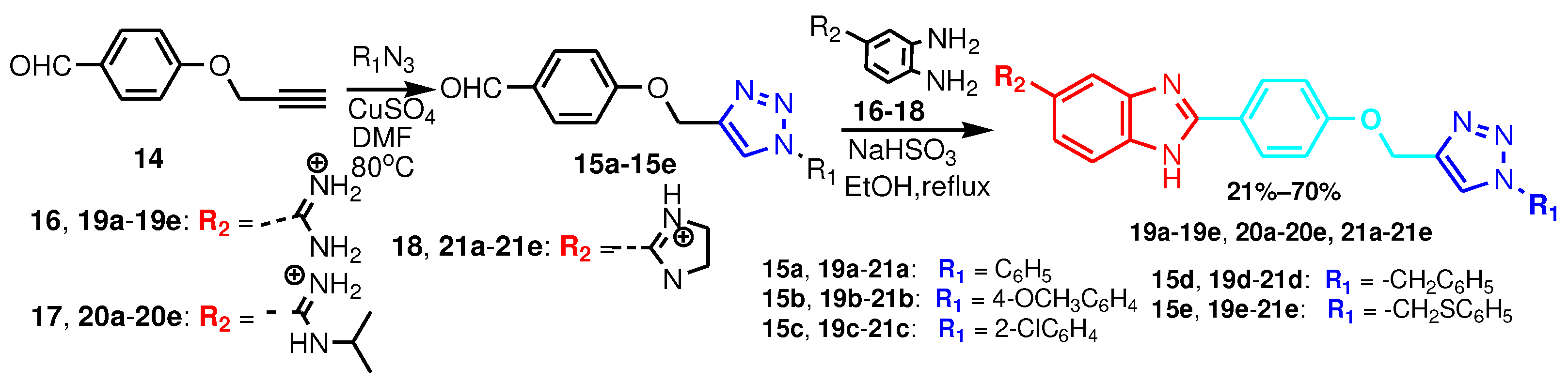
Figure 1.
Figure 1. Structure of benzimidazole-1,2,3-triazole hybrids 22a–22b
Scheme 6.
Synthesis of benzimidazole-1,2,3-triazole hybrids 26a–26j
Scheme 7.
Synthesis of benzimidazole-1,2,3-triazole hybrids 29a–29l
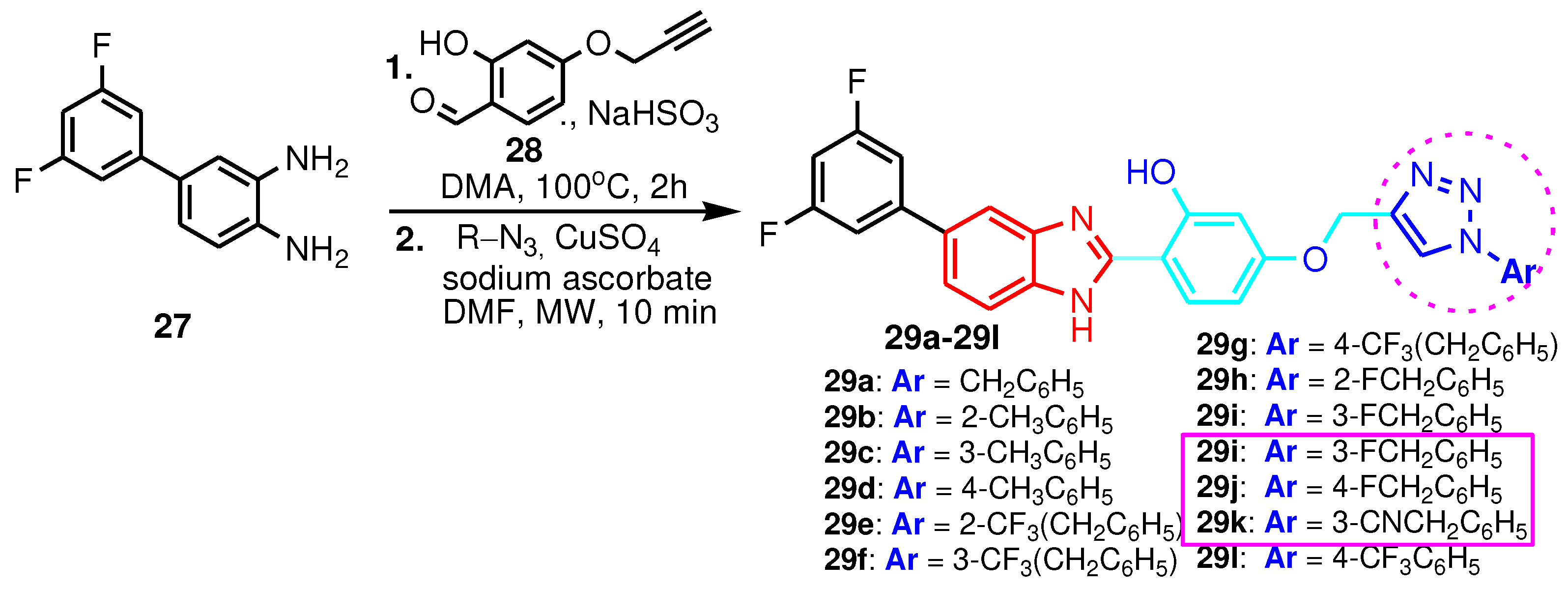
Figure 2.
Structure of benzimidazole-1,2,3- hybrids 30–32
Scheme 8.
Synthesis of benzimidazole-1,2,3-triazole hybrids 35a–35g
Scheme 9.
Synthesis of benzimidazole-1,2,3-triazole hybrids 37a–37d
Scheme 10.
Synthesis of benzimidazole-1,2,3-triazole hybrids 41a–41e

Scheme 11.
Synthesis of benzimidazole-1,2,3-triazoles 43a-43d
Scheme 12.
Synthesis of benzimidazole-1,2,3-triazoles 45a-45g
Scheme 13.
Synthesis of benzimidazole-1,2,3-triazoles 47a-47f
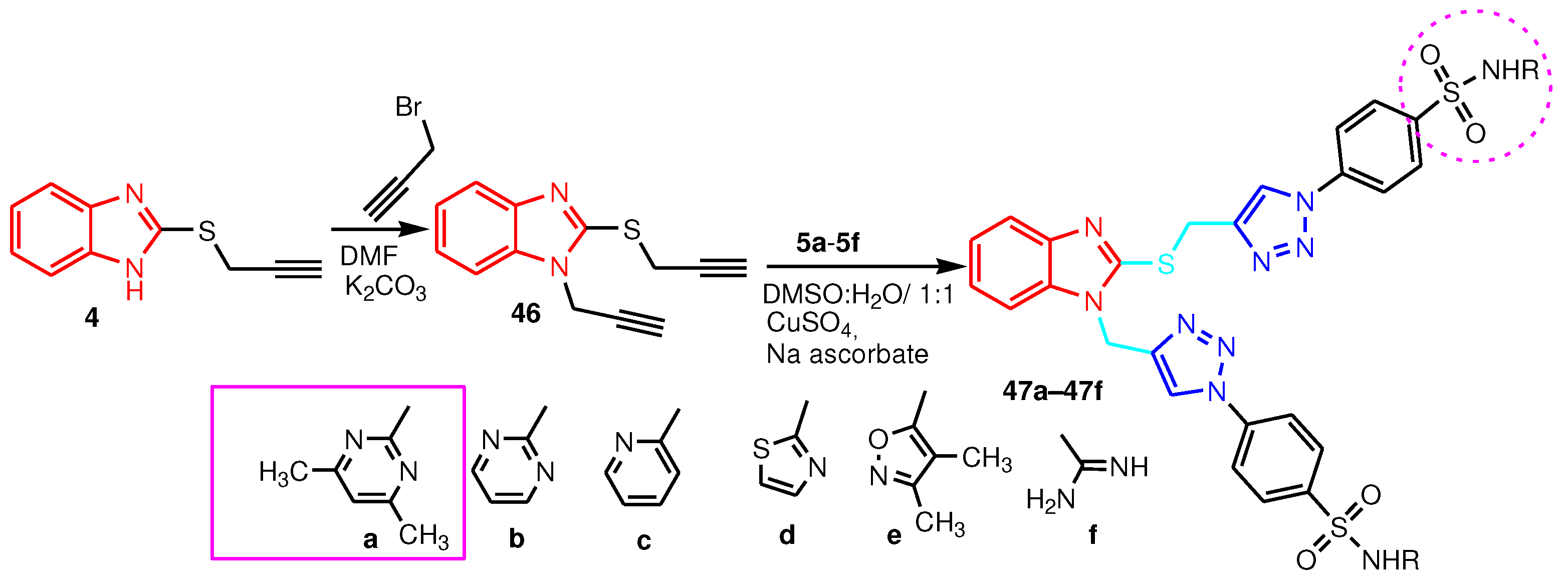
Figure 3.
Structure of benzimidazole-1,2,3-triazole hybrids 48a–48l
Scheme 14.
Synthesis of benzimidazole-1,2,3-triazoles 51a-51d
Scheme 15.
Synthesis of benzimidazole-1,2,3-triazoles 54a-54n
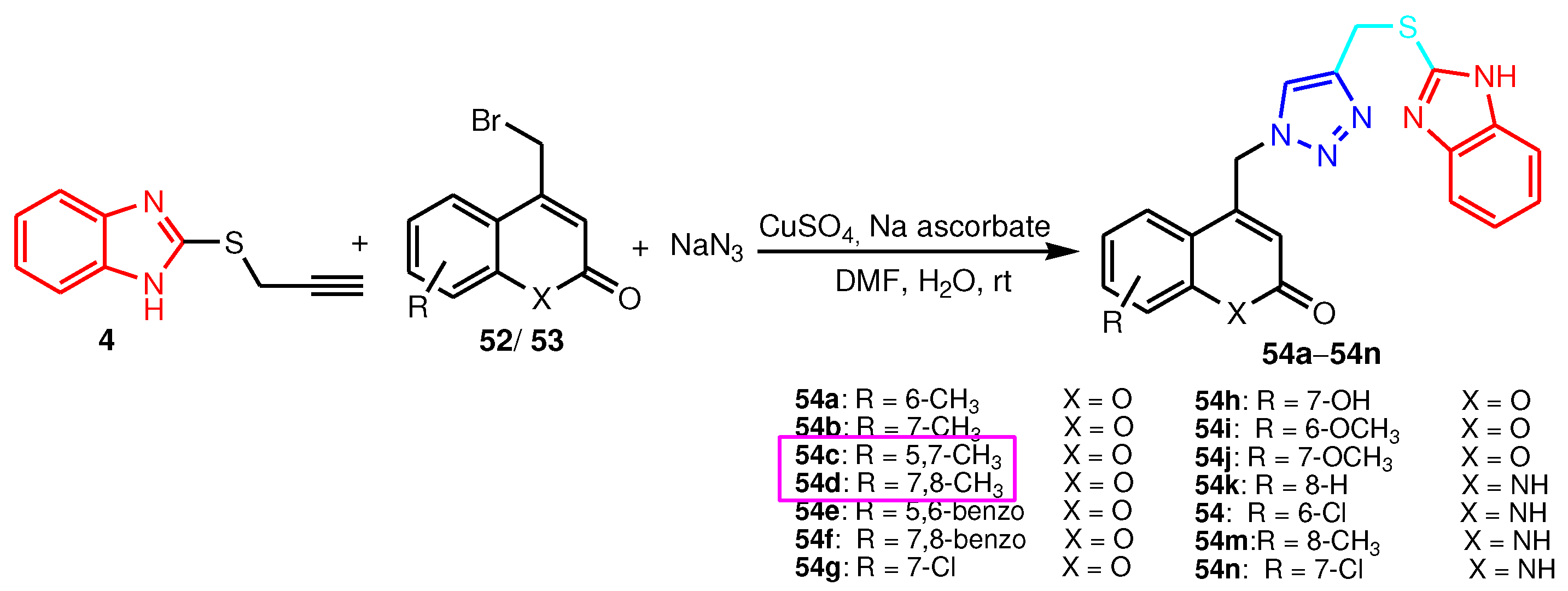
Figure 4.
A. Structure of benzimidazolone bis-1,2,3-triazoles 55a–55n. B. Representation of docked view of compound 55j at the active site of RmlC.
Figure 4.
A. Structure of benzimidazolone bis-1,2,3-triazoles 55a–55n. B. Representation of docked view of compound 55j at the active site of RmlC.
Scheme 16.
Synthesis of benzimidazole-1,2,4-triazoles 59a-59e
Scheme 17.
Synthesis of benzimidazole-1,2,4-triazoles 63a-63e
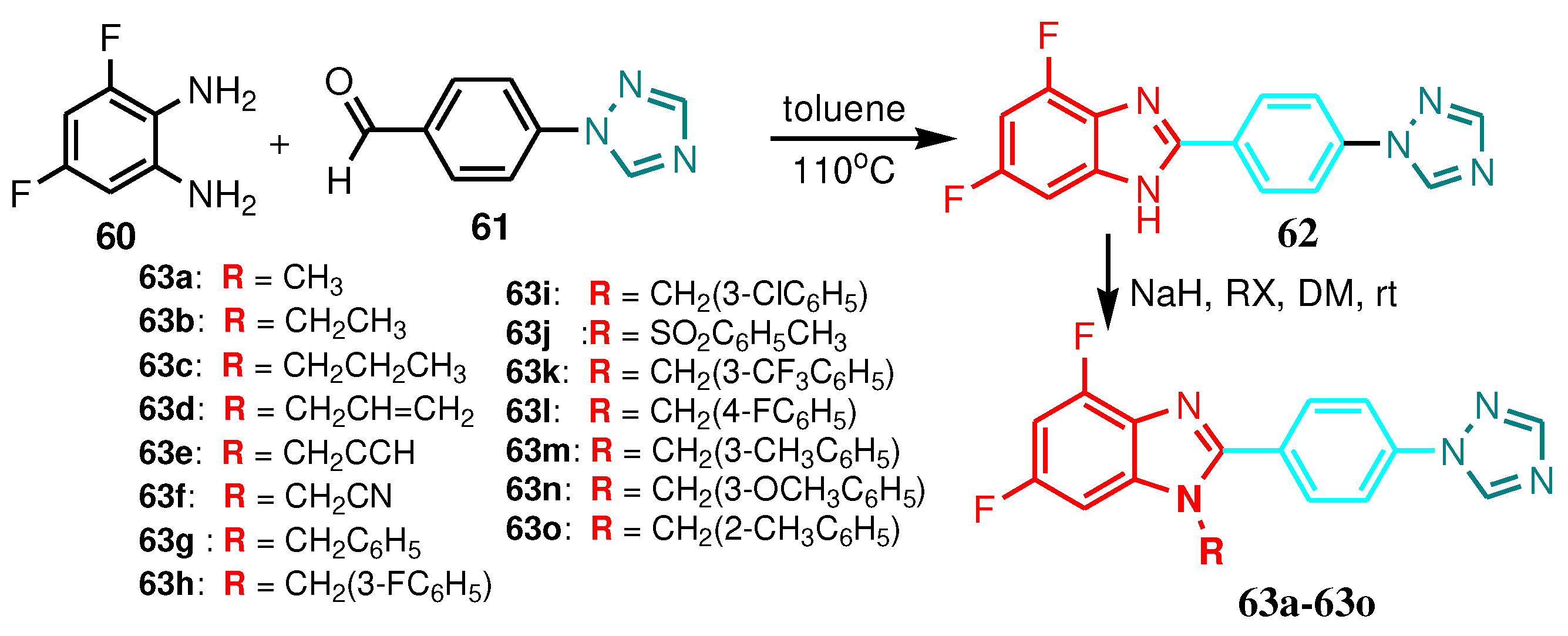
Figure 5.
Structure of benzimidazole hybrids 64, 65 and 70
Scheme 18.
Synthesis of benzimidazole-1,2,4-triazoles 68 and 69
Scheme 19.
Synthesis of benzimidazole-1,2,4-triazoles 73a–73l
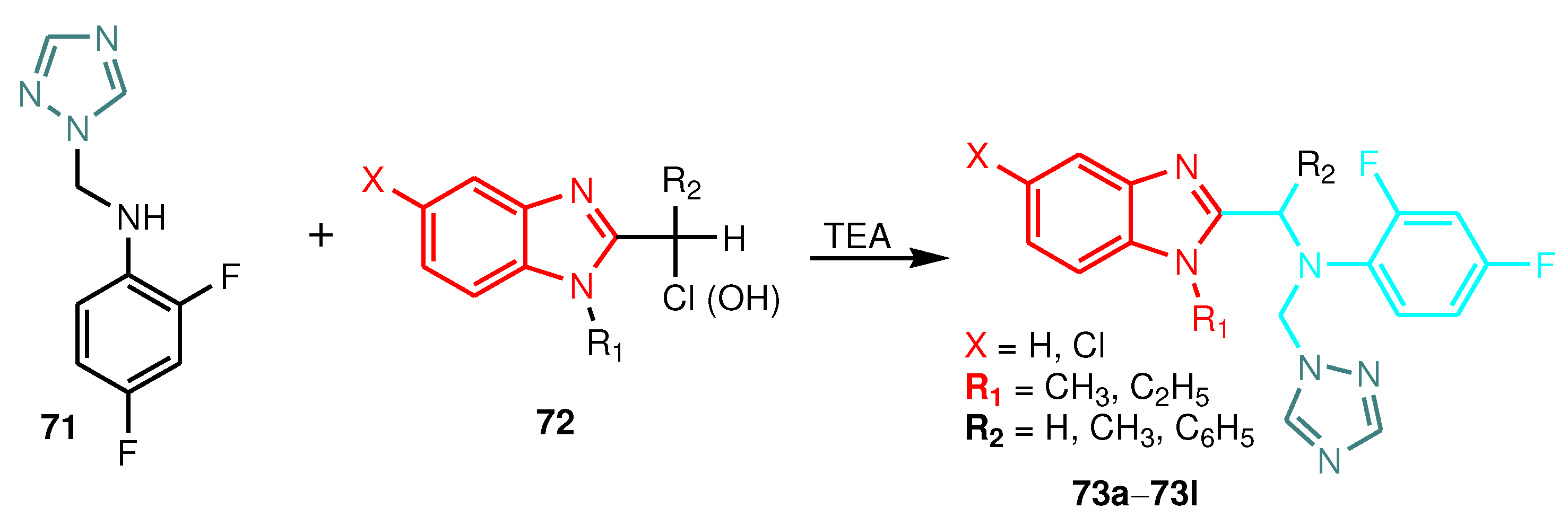
Figure 6.
Structure of benzimidazole-1,2,4-triazole hybrids 74a–74c
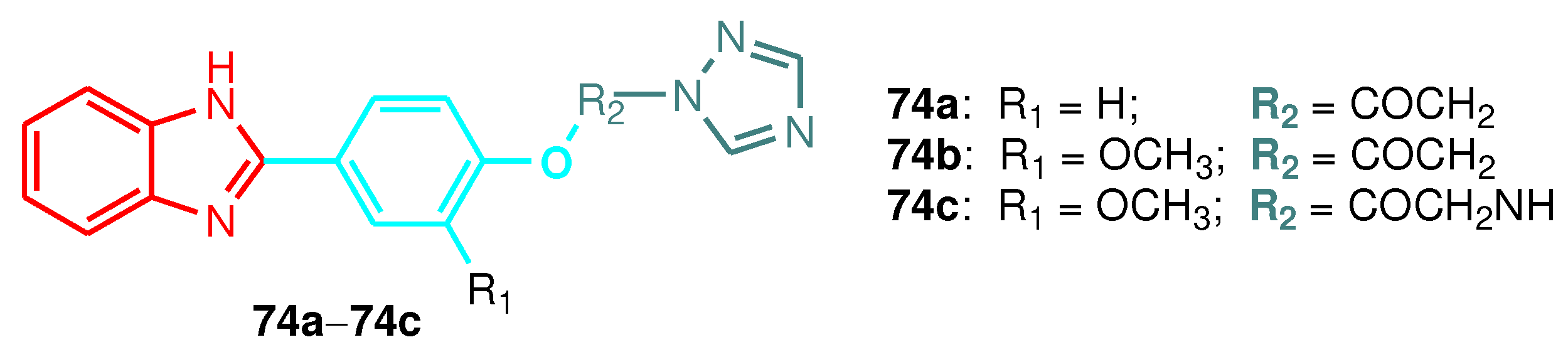
Scheme 20.
Synthesis of benzimidazole-1,2,4-triazoles 79a–79c
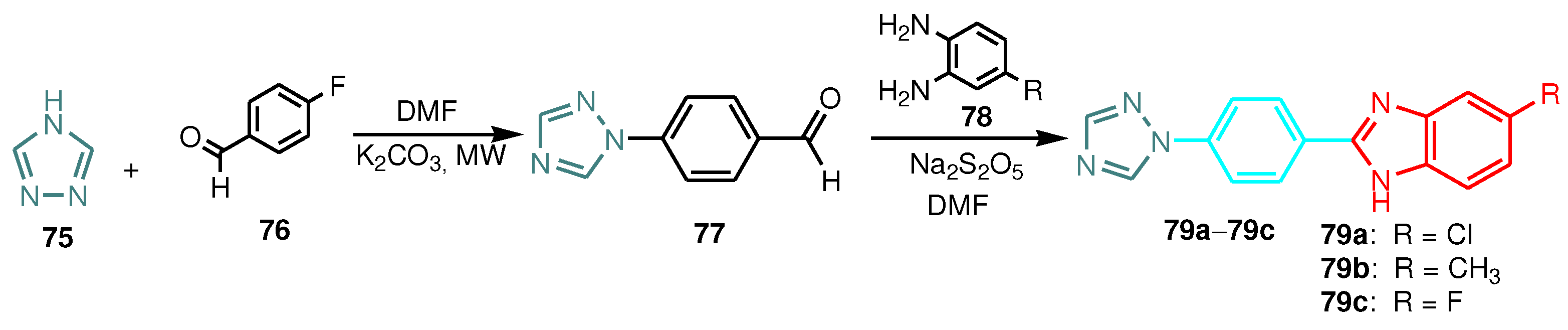
Scheme 21.
Synthesis of benzimidazole-1,2,4-triazoles 85a–85e and compound 86c
Scheme 22.
Synthesis of benzimidazole-1,2,4-triazoles 88a–88c
Scheme 23.
Synthesis of benzimidazole-1,2,4-triazoles 89a–89c
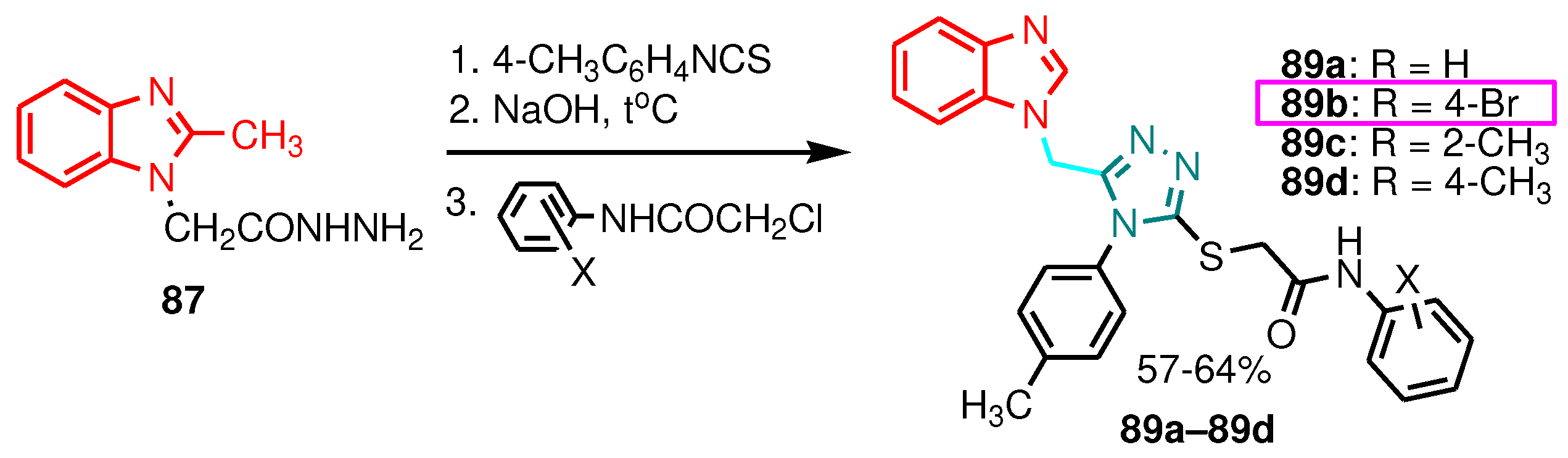
Figure 7.
Structure of benzimidazole-1,2,4-triazole hybrids 90 and 91
Scheme 24.
Synthesis of benzimidazole-1,2,4-triazoles 95–97
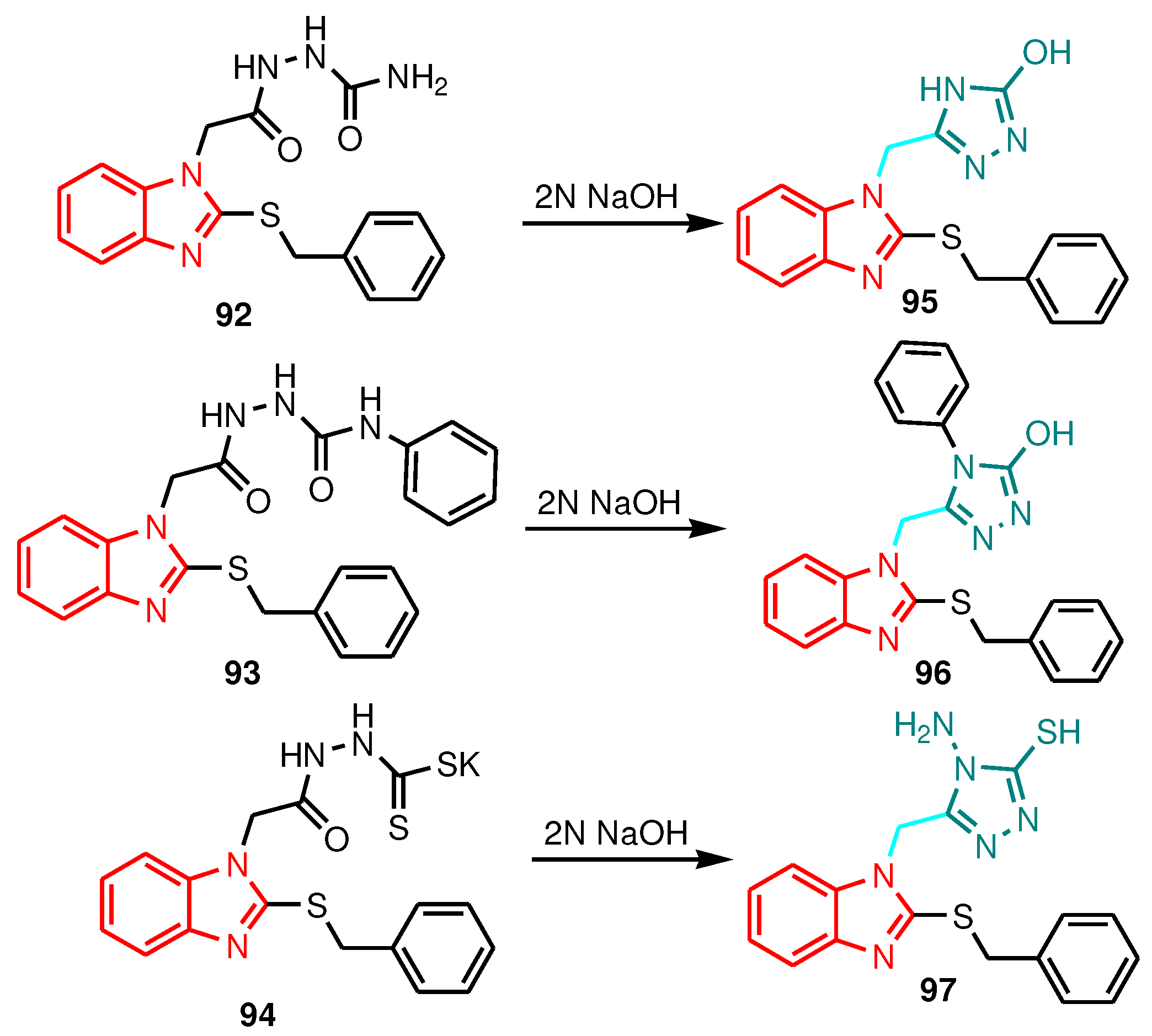
Figure 8.
Structure of benzimidazole-1,2,4-triazole hybrids 98–100
Scheme 25.
Synthesis of bis-benzimidazole-1,2,4-triazoles 102a-102e
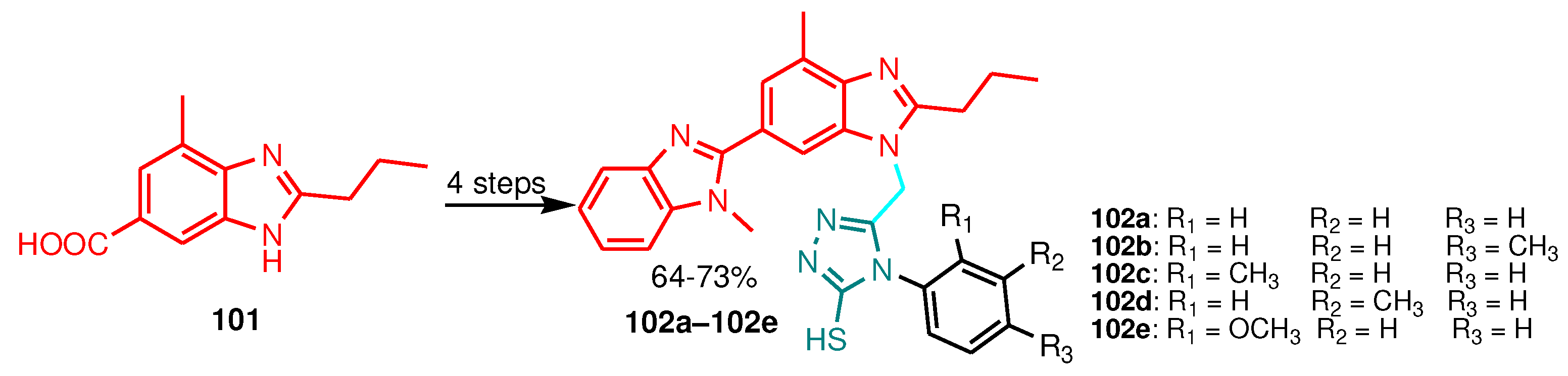
Scheme 27.
Synthesis of benzimidazole-1,2,4-triazoles 107a-107b
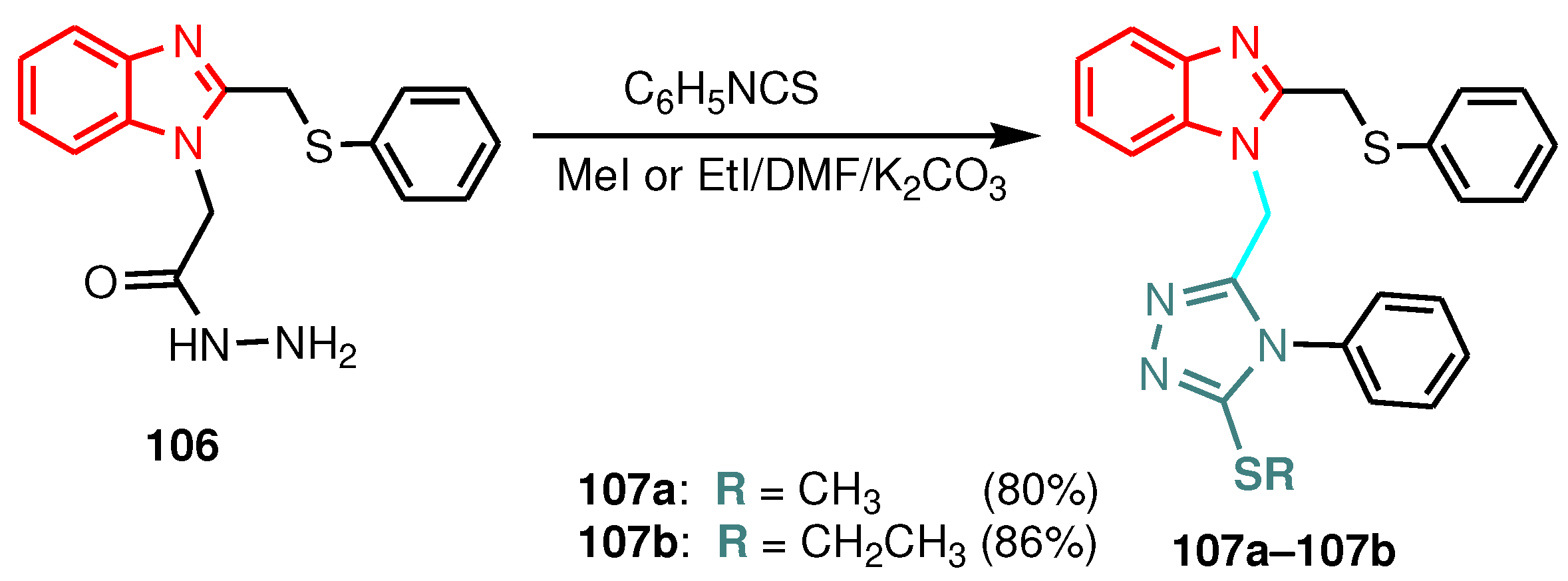
Scheme 28.
Synthesis of benzimidazole-1,2,4-triazoles 109a-109h
Scheme 29.
Synthesis of benzimidazole-1,2,4-triazoles 111a-111s
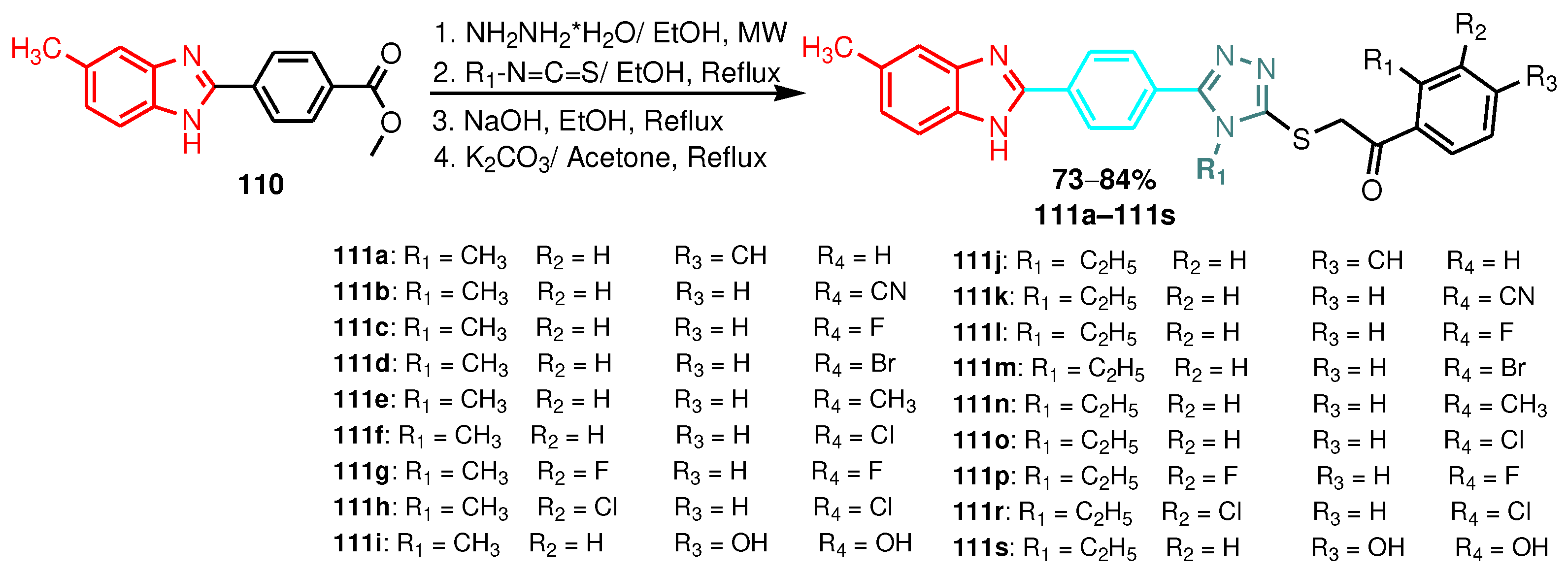
Figure 9.
Structure of benzimidazole-1,2,4-triazole hybrids 112a–112i
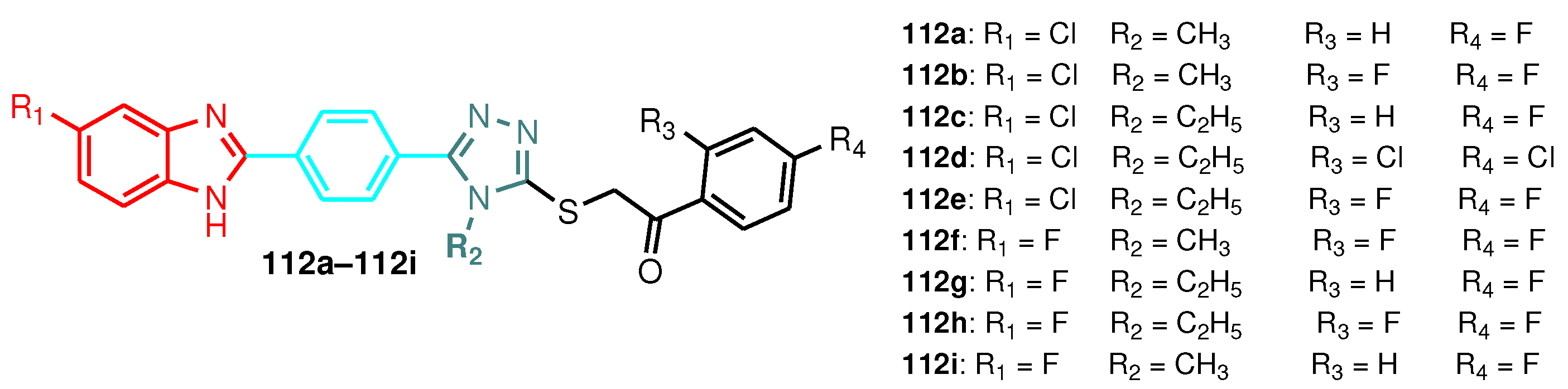
Figure 10.
SAR outline of the benzimidazole-1,2,4-triazole hybrids 112a–112i
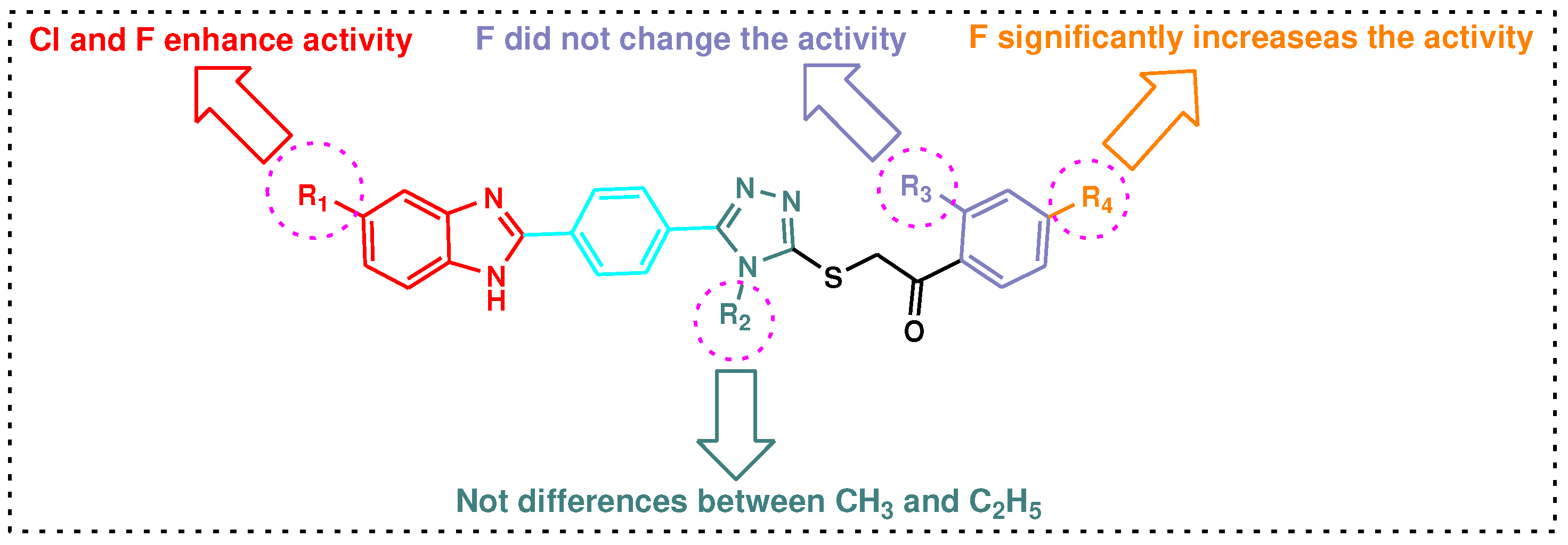
Figure 11.
Structure of benzimidazole-1,2,4-triazole hybrids 113a–113l
Figure 12.
Structure of benzimidazole-1,2,4-triazole hybrids 114a–114l
Scheme 30.
Synthesis of benzimidazole-triazoles 115a-115d
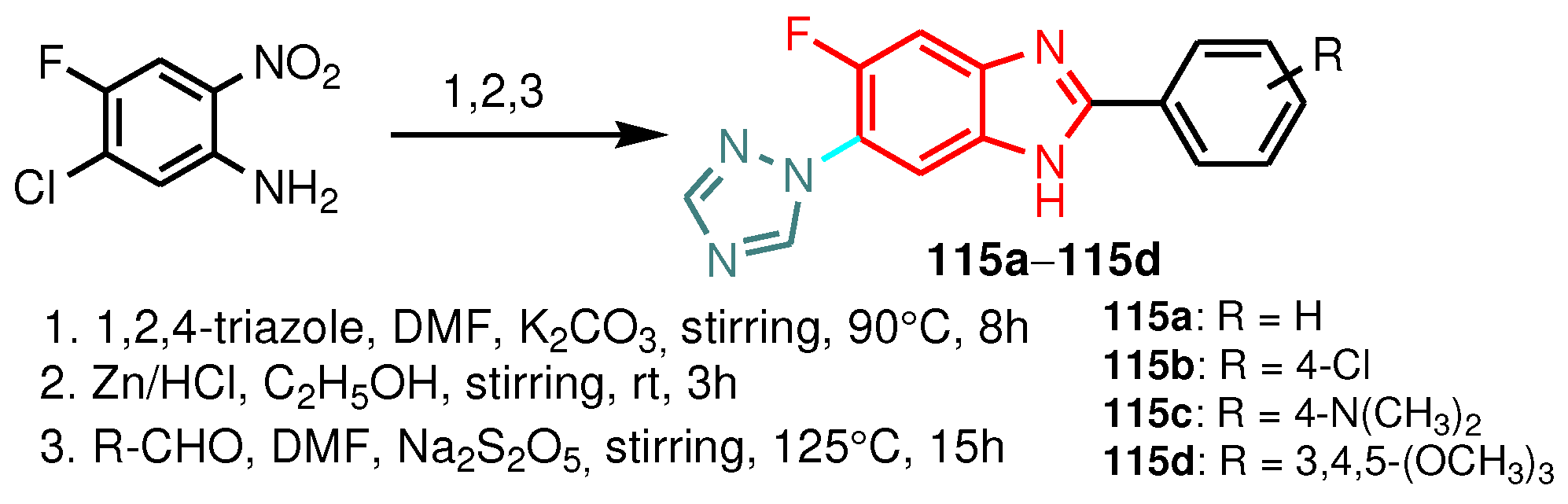
Figure 13.
Structure of antiviral benzimidazole-1,2,3-triazole hybrids 116 and 117

Figure 14.
Structure of antiviral benzimidazole-1,2,3-triazole hybrids 118–137
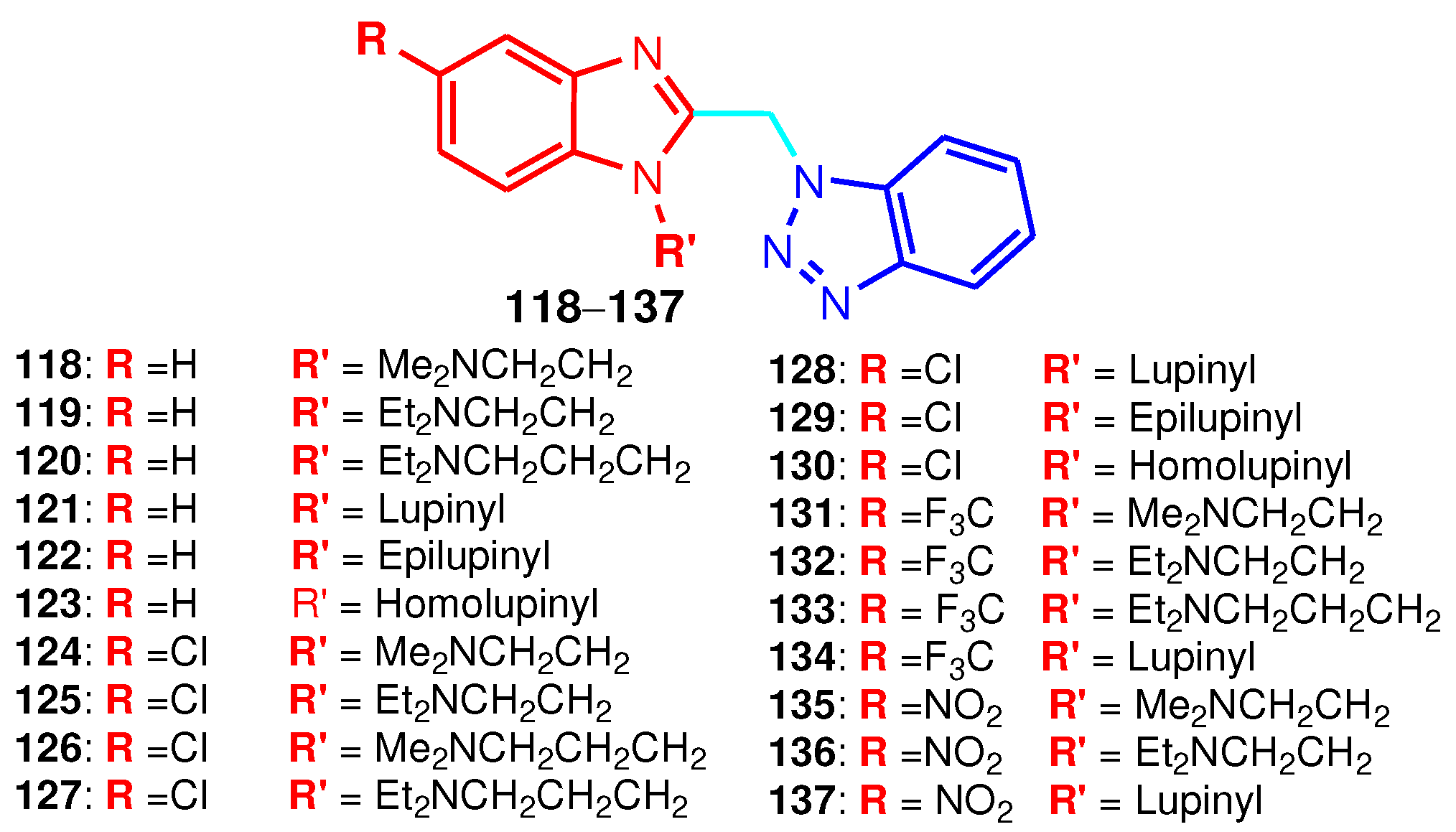
Figure 15.
Structure of antiviral benzimidazole-1,2,3-triazole hybrids 138–140
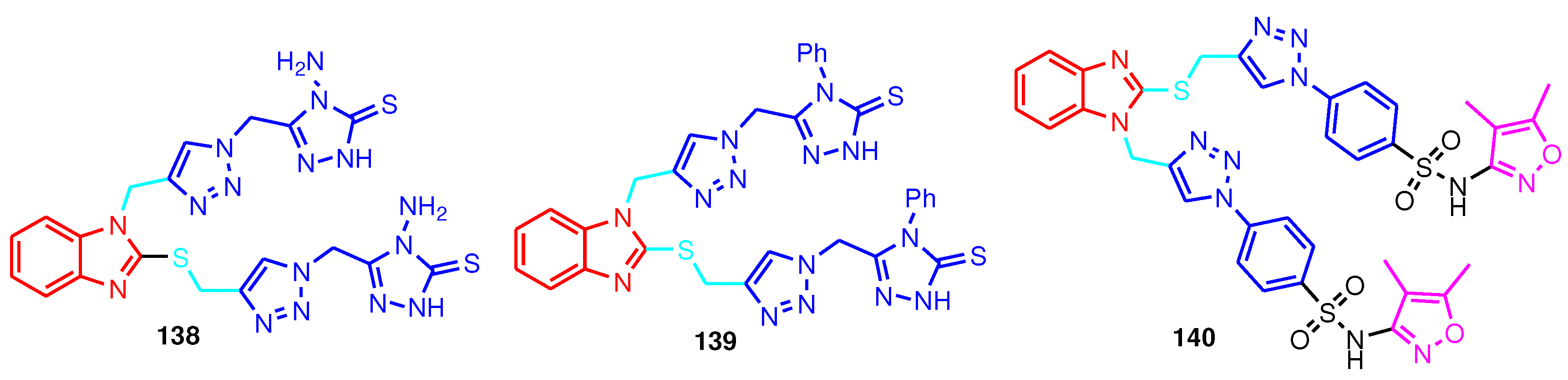
Figure 16.
Three-dimensional binding mode of compound 140 (green) at the binding interface between the Omicron S-RBD (red) and human ACE2 (blue)
Figure 16.
Three-dimensional binding mode of compound 140 (green) at the binding interface between the Omicron S-RBD (red) and human ACE2 (blue)
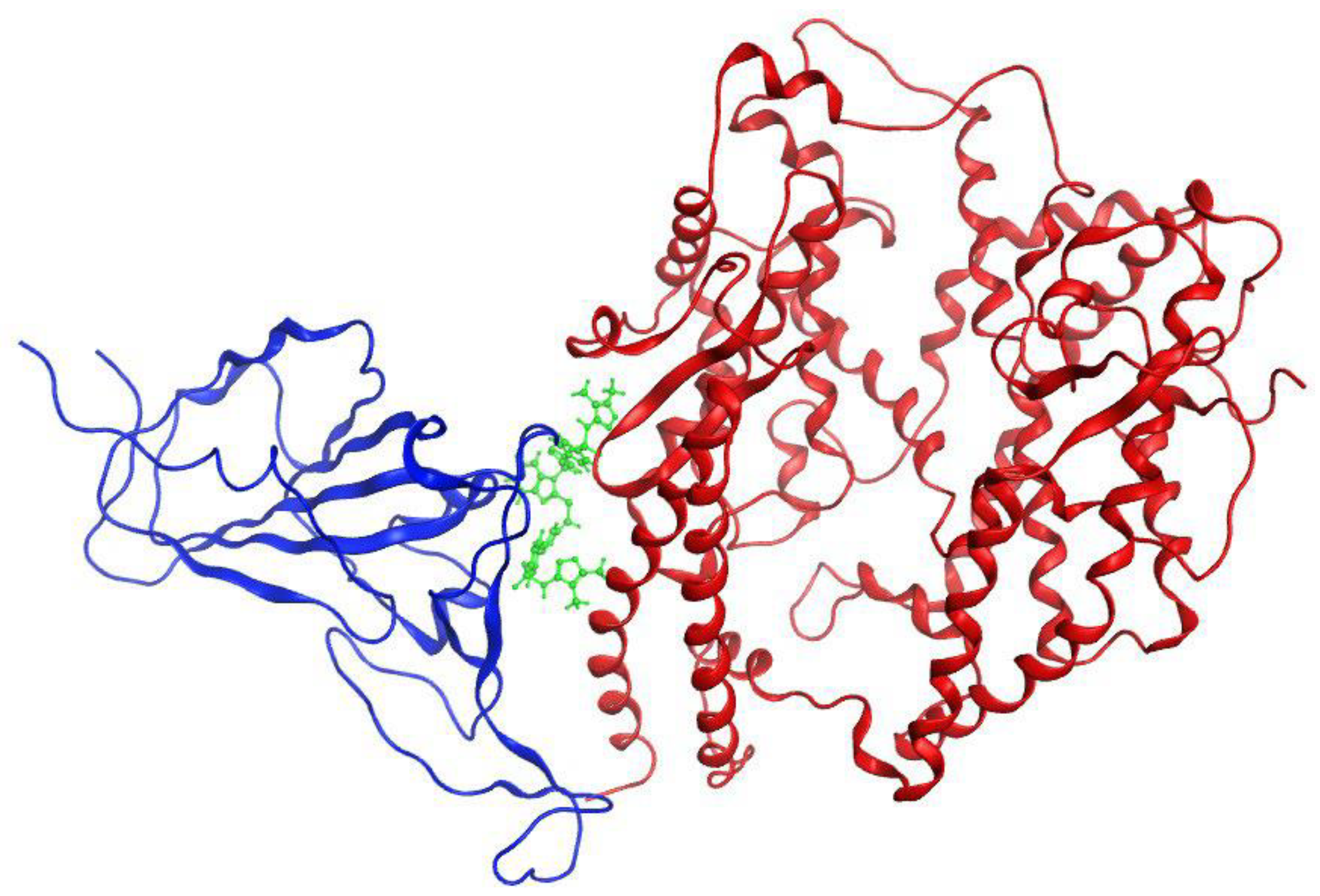
Figure 17.
Structure of antiviral benzimidazole-1,2,3-triazole hybrid 141
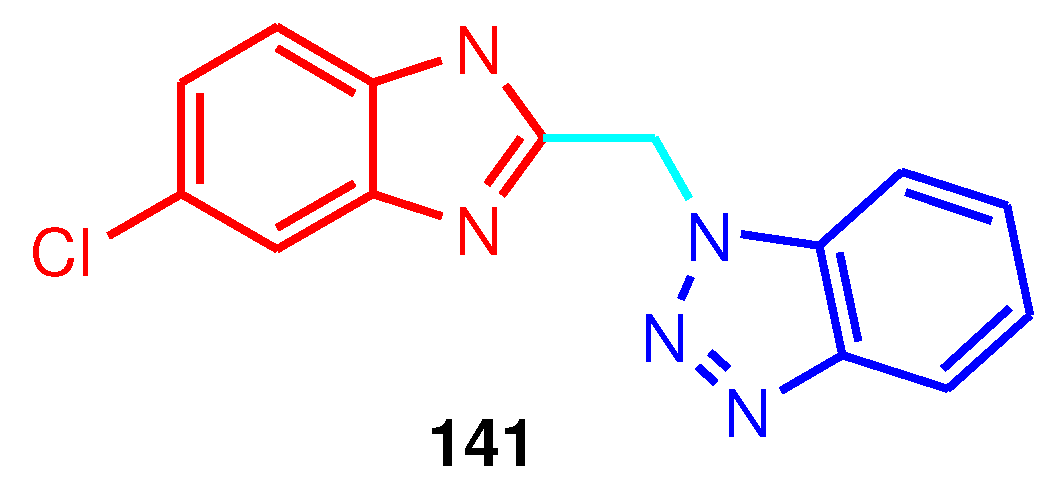
Table 1.
Antimicrobial screening results of compounds 6a–6f presented as MIC (μgmL-1).
| Compound | Gram-positive organisms | Gram-negative organisms | Fungi organisms | |||
|---|---|---|---|---|---|---|
| B.c. | S.a. | P.a. | E.c. | A.b. | C.a. | |
| 6a | 64 | 64 | 256 | 128 | 128 | 128 |
| 6b | 128 | 128 | 128 | 128 | 256 | 256 |
| 6c | 256 | 128 | 256 | 64 | 256 | 156 |
| 6d | 256 | 128 | 256 | 64 | 256 | 256 |
| 6e | 256 | 128 | 256 | 64 | 256 | 256 |
| 6f | 512 | 512 | 256 | 256 | 512 | 512 |
| Ciprofloxacin | 8 | 4 | 8 | 4 | - | - |
Table 3.
Antimicrobial activity of the compounds 35 in terms of MIC (µmol mL-1).
| Compound | S. aureus | E. coli | B. subtilis | S. epidermitis | A. niger | C. albicans |
|---|---|---|---|---|---|---|
| 35a | 0.028 | 0.056 | 0.056 | 0.056 | 0.056 | 0.056 |
| 35b | 0.031 | 0.062 | 0.062 | 0.062 | 0.062 | 0.062 |
| 35c | 0.029 | 0.058 | 0.058 | 0.058 | 0.058 | 0.058 |
| 35d | 0.060 | 0.030 | 0.060 | 0.030 | 0.060 | 0.060 |
| 35e | 0.029 | 0.056 | 0.056 | 0.056 | 0.056 | 0.056 |
| 35f | 0.026 | 0.052 | 0.052 | 0.052 | 0.052 | 0.052 |
| 35g | 0.031 | 0.026 | 0.052 | 0.026 | 0.026 | 0.026 |
| Norfloxacin | 0.020 | 0.039 | 0.039 | 0.039 | - | - |
| Fluconazole | - | - | - | - | 0.04 | 0.020 |
Table 4.
Antimicrobial activity of the compounds 63a-63o using the agar diffusion method
| Compound | Inhibition zone diameters using the agar diffusion method (mm) | |||
|---|---|---|---|---|
| S. aureus | P. aeruginosa | E. coli | S. typhosa | |
| 63a | 28 | 26 | 21 | 19 |
| 63b | 23 | 18 | 16 | 14 |
| 63c | 21 | 23 | 18 | 19 |
| 63d | 20 | 22 | 23 | 23 |
| 63e | 25 | 23 | 21 | 24 |
| 63f | 27 | 26 | 24 | 20 |
| 63g | 19 | 20 | 15 | 13 |
| 63h | 29 | 26 | 22 | 24 |
| 63i | 26 | 22 | 19 | 18 |
| 63j | 14 | 12 | 16 | 16 |
| 63k | 22 | 21 | 20 | 18 |
| 63l | 25 | 23 | 19 | 21 |
| 63m | 21 | 18 | 18 | 16 |
| 63n | 24 | 22 | 22 | 21 |
| 63o | 19 | 21 | 18 | 14 |
| Gentamycin | 34 | 35 | 31 | 30 |
Table 5.
ED50 values (µg mL-1) of compounds against test fungi.
| Compound | F. verticillioides | D. oryzae | C. lunata | F. fujikuroi |
|---|---|---|---|---|
| 74a | 35 | 50 | 28 | 45 |
| 74b | 30 | 25 | 18 | 30 |
| 74c | 16 | 12 | 10 | 15 |
| Carbendazim | 230 | - | - | 150 |
| Propiconazole | 20 | 25 | 22 | 21 |
Table 6.
Antimicrobial activity of compounds 88a–88c expressed as MIC in μg mL-1
| Compound | S. aureus, | B. subtilis | S. mutans | P. aeruginosa | C. albicans |
|---|---|---|---|---|---|
| 88a | NT | NT | 16 | 16 | 32 |
| 88b | 8 | 16 | 16 | 16 | NT |
| 88c | 8 | 16 | 32 | 32 | 32 |
| Ampicillin | 2 | 2 | < 1 | 4 | NT |
| Kanamycin | 2 | < 1 | 4 | 2 | NT |
NT = not tested
Table 7.
The minimum inhibitory concentrations (µg mL-1)) of the compounds against fungi.
| Compound | Concentration (µg mL-1) | Aspergillus niger | Fusarium oxysporum |
|---|---|---|---|
| 89a | 50 | 50 | - |
| 89b | 50 | 50 | 50 |
| 89c | 50 | 50 | - |
| 89d | 50 | 50 | - |
Table 8.
Antimicrobial activity of compounds 89a–89c
| Compound (800 µg mL-1) | S. aureus | P. aerugnosa | B. subtilis | A. baumannii | C. albicans |
|---|---|---|---|---|---|
| 95 | 18 | 14 | 15 | - | 10 |
| 96 | 19 | 11 | 12 | - | 11 |
| 97 | 17 | 15 | 14 | 12 | - |
| Amoxicillin | 33 | 32 | 33 | - | - |
| Fluconazole | - | - | - | - | 25 |
Table 9.
Antimicrobial activity of compounds 105a–105b and 107a–107b
| Compound | Minimum inhibitory concentrations (μgmL-1) | |||
|---|---|---|---|---|
| Gram-positive bacteria | Gram-negative bacteria | |||
| B. subtilis | S. aureus | E. coli | P. aeruginosa | |
| 105a | 98 | - | 52 | - |
| 105b | - | - | 65 | - |
| 107a | 75 | 105 | 62 | - |
| 107b | 79 | - | 72 | - |
| Gentamycin* | 64 | 56 | 72 | 48 |
* Concentration of Gentamycin = 30 μg mL-1
Table 10.
Antibacterial activity of compounds s 109a-109h
| No | Compound | Zone of inhibition (mm) | ||
|---|---|---|---|---|
| E. coli | S. aureus | C. albicans | ||
| 1 | 109a | 15 | 13 | 18 |
| 2 | 109b | 13 | 11 | 12 |
| 3 | 109c | 17 | 16 | 14 |
| 4 | 109d | 12 | 13 | 16 |
| 5 | 109e | 13 | 17 | 9 |
| 6 | 109f | 10 | 8 | 11 |
| 7 | 109g | 8 | 11 | 12 |
| 8 | 109h | 12 | 7 | 10 |
| 9 | Ampicilline | 24 | 25 | - |
| 10 | Ketokonazole | - | - | 20 |
Table 11.
MIC50 (𝜇g mL-1) values of compounds 111a–111s.
| Compound | C. albicans | G. glabrata | C. krusei | C. parapsilosis |
|---|---|---|---|---|
| 111a | 12.5 | 6.25 | 6.25 | 12.5 |
| 111b | 6.25 | 3.12 | 6.25 | 6.25 |
| 111c | 12.5 | 6.25 | 6.25 | 12.5 |
| 111d | 6.25 | 12.5 | 6.25 | 6.25 |
| 111e | 12.5 | 6.25 | 12.5 | 12.5 |
| 111f | 6.25 | 3.12 | 3.12 | 6.25 |
| 111g | 3.12 | 6.25 | 6.25 | 6.25 |
| 111h | 12.5 | 6.25 | 12.5 | 6.25 |
| 111i | 0.78 | 1.56 | 1.56 | 0.78 |
| 111j | 12.5 | 6.25 | 12.5 | 12.5 |
| 111k | 12.5 | 6.25 | 12.5 | 12.5 |
| 111l | 6.25 | 12.5 | 6.25 | 12.5 |
| 111m | 3.12 | 3.12 | 3.12 | 6.25 |
| 111n | 3.12 | 3.12 | 1.56 | 3.12 |
| 111o | 3.12 | 3.12 | 6.25 | 6.25 |
| 111p | 12.5 | 12.52 | 6.25 | 6.25 |
| 111r | 6.25 | 3.12 | 3.12 | 3.12 |
| 111s | 0.78 | 1.56 | 1.56 | 0.78 |
| Ketokonazole | 0.78 | 1.56 | 1.56 | 1.56 |
| Floconazole | 0.78 | 1.56 | 1.56 | 0.78 |
Table 12.
Anti-JEV and anti-HSV activity of compounds 59a–59e.
| Compd. | In vitro | In vivo | |||||
|---|---|---|---|---|---|---|---|
| CT50 (µg mL–1) |
EC50 (µg mL–1) |
TI | CPE Inhibition (%) |
Dose (µg per mouse per day) | MST (days) |
Protection (%) |
|
| Anti-JEV | |||||||
| 59a | 125 | 4 | 31 | 30 | 200 | - | - |
| 59b | 125 | 8 | 16 | 90 | 200 | 4 | 16 |
| 59c | - | - | - | - | - | - | - |
| 59d | 125 | 4 | 31 | 30 | 200 | - | - |
| 59e | 250 | 62.5 | 4 | 50 | 200 | 2 | 10 |
| Anti-HSV | |||||||
| 59a | 125 | 62.5 | 2 | 33 | - | - | - |
| 59b | 125 | 62.5 | 2 | 46 | - | - | - |
| 59c | - | - | - | - | - | - | - |
| 59d | 125 | 31.25 | 4 | 53 | 200 | - | - |
| 59e | 250 | 7.8 | 32 | 64 | 200 | - | - |
|
CT50 – 50% cytotoxic concentration, EC50 – 50% effective concentration, TI –therapeutic index (TI= CT50/ EC50) CPE - cytopathic effect, MST – mean survival time | |||||||
Table 13.
RSV, BVDV, YFV, and CVB2 Inhibitory Activity of hybrids 118–137 expressed as EC50 (µM)
| Compound | Anti-RSV activity | Anti-BVDV activity | Anti-YFV activity | Anti-CVB2 activity |
|---|---|---|---|---|
| 118 | 0.7 | - | - | - |
| 119 | 2.3 | - | - | - |
| 120 | 0.7 | > 100 | 80 | > 100 |
| 121 | 0.7 | 63 | > 90 | > 100 |
| 122 | 0.3 | 53 | > 70 | > 100 |
| 123 | 0.15 | 51 | > 60 | > 100 |
| 124 | 0.03 | - | - | - |
| 125 | 0.7 | - | - | - |
| 126 | 0.06 | 90 | > 100 | > 100 |
| 127 | 0.1 | 72 | > 54 | > 100 |
| 128 | 0.9 | 15 | 6 | 40 |
| 129 | 0.05 | 19 | > 21 | > 88 |
| 130 | 0.02 | 14 | > 20 | 26 |
| 131 | 10.0 | - | - | - |
| 132 | 7.0 | - | - | - |
| 133 | 1.9 | 67 | > 36 | > 100 |
| 134 | > 36 | 15 | > 18 | > 36 |
| 135 | 9 | - | - | - |
| 136 | 11 | 80 | > 45 | > 100 |
| 137 | 23.0 | 80 | 27 | > 83 |
| 6-Azaurine | 1.2 | > 100 | 26 | > 100 |
Table 14.
Antiviral activity of benzimidazole-1,2,3-triazole hybrids 138–140
| Compound | CC50 (mg mL-1) | EC50 (mg mL-1) | Selectivity Index (SI) |
|---|---|---|---|
| Ceftazidime | 1045.53 | 85.07 | 12.29 |
| 138 | 1065.51 | 155.05 | 6.87 |
| 139 | 1530.5 | 306.1 | 5.0 |
| 140 | 1028.28 | 80.4 | 12.78 |
Disclaimer/Publisher’s Note: The statements, opinions and data contained in all publications are solely those of the individual author(s) and contributor(s) and not of MDPI and/or the editor(s). MDPI and/or the editor(s) disclaim responsibility for any injury to people or property resulting from any ideas, methods, instructions or products referred to in the content. |
© 2023 by the author. Licensee MDPI, Basel, Switzerland. This article is an open access article distributed under the terms and conditions of the Creative Commons Attribution (CC BY) license (https://creativecommons.org/licenses/by/4.0/).
Copyright: This open access article is published under a Creative Commons CC BY 4.0 license, which permit the free download, distribution, and reuse, provided that the author and preprint are cited in any reuse.


