
Submitted:
25 June 2023
Posted:
26 June 2023
You are already at the latest version
Abstract
Due to the special terrain of Urumqi (in the valley area), which often triggers strong foehn weather, and causes huge losses to local people's lives and social economy. This study uses in-situ surface meteorological variables (including the hourly temperature, pressure, humidity, wind, etc.) from the Urumqi Meteorological Station (downstream station, DS) and the Dabancheng Meteorological Station (upstream station, US) in the Middle Tianshan Valley and NCEP/NCAR reanalysis data from 2008 to 2022. A dataset of the foehn weather process at DS in the past 15 years is established and the variation patterns of each meteorological variable during the process of foehn is analyzed. Based on the physical mechanism of the occurrence of foehn, a three-element identification standard for foehn in Urumqi is established by comparing and analyzing the variation of wind direction (WD), wind speed (WS), and the difference of potential temperature (Δθ) between DS and US during the period of foehn and non-foehn from 2013 to 2022, namely: 94°≤ 2-minute average WD ≤168°, 2-minute average WS ≥2.0 m/s, and Δθ between DS and US ≥ 0.29 K. According to the test and evaluation, the three-element identification standard has an accuracy of 82.96%, and a hit rate of 89.50% for the occurrence of foehn in Urumqi from 2008 to 2012. Moreover, the hit rate of foehn identification is 100% for strong wind or above (i.e., 2-minute average WS ≥10.8 m/s) WS. In addition, combined with two predictors of sea-level pressure difference (ΔP) and Δθ between DS and US, forecasting foehn can be more accurately predicted than a single forecasting factor. When ΔP ≤ -12 hPa and Δθ≥5 K, the probability of the occurrence of foehn is more than 90%. This study provides certain reference and application value for the weather forecasting operation of foehn.
Keywords:
Foehn
; Wind direction and speed
; Potential temperature difference
; Identification standard
1. Introduction
Foehn is a type of strong downhill wind with high temperature and low humidity that occurs on the lee slope of mountain ranges due to terrain forcing when airflow passes through a valley or mountain pass [1]. Foehn is often very strong, accompanied by significant increase in temperature and decrease in humidity, which seriously affects the local weather and climate [2,3,4]. Foehn is closely related to local people's daily life, transportation, agriculture, and air pollution, etc. In addition, the hot and dry foehn can also affect people's physical and mental health, which has attracted widespread attention [5,6,7,8,9,10,11,12]. Foehn occurs in many mountainous areas of the world, such as the Alps in Europe, the Rockies in America, and the Caucasus Mountains in the former Soviet Union are the most famous Valley. Between Bogda Mountain and Tianger Mountain on the northern slope of Tianshan Mountains in China (i.e., in the Valley area near Urumqi), due to the large topographical difference, the area has experienced foehn (southeast winds). Especially, the foehn from Dabancheng to Urumqi is the most famous [13,14,15].
The research on foehn has a history more than 150 years [17,18,19,20,21,22]. Over the years, the most basic research on foehn (such as the identification method), has been explored. Scholars from around the world have proposed different methods to identify foehn. The most common method for foehn is that the temperature and relative humidity change suddenly at the same time, and the wind direction (WD) needs to come from the direction of the mountain ranges [19]. However, this identification method has certain shortcomings. Generally, when the temperature is high, which maybe misidentify the local winds caused by other weather phenomena as foehn [18]; Atkinson used two-element identification method to analyze the foehn occurred in the east of the Rocky Mountains in America: one is that the upper-level wind must have a component perpendicular to the mountains; the other is, the windward side of the mountain shows a high pressure ridge and the lee side has a low pressure trough in the surface weather map [17]; Schuetz et al. only used potential temperature as the identification standard, ignoring the element of wind, and resulting in various WD [19]. Therefore, considering potential temperature alone has significant difference to identify the foehn; In addition, many scholars have trained machine learning models to predict and identify the foehn, but it is difficult to select effective predictors [23,24].
The most common method to identify foehn in China is to consider the changes in temperature, humidity, and wind over time. Zhao et al. [25] considered the criterion that the airflow is perpendicular to the mountain range when studying the foehn in the Taihang Mountains region. They defined the foehn as: the airflow is perpendicular to the mountain range, with a wind speed (WS) ≥2.0 m/s, and the temperature rises by 3℃ in 10 minutes or 5℃ in 30 minutes, which ignored the weak foehn process. Wang and Li used the four-element criterion method (temperature, humidity, WD, and WS) to statistically analyze the characteristics of foehn in the eastern foothills of the Taihang Mountains and Xingtai City. Zhao et al. [28] analyzed the foehn in the Taihang Mountains and the screening criteria were: WD ranged from 225° to 315°, WS ≥ 2 m/s, relative humidity decrease value ≥ 20% at two adjacent moments, or relative humidity value ≤ 35% at the next moment. Xiong et al. statistically compared hourly temperature changes and monthly average temperature for the foehn process in the middle of the Taihang Mountains [29]. Some scholars only consider WD and WS and select the foehn weather process above strong wind levels (average WS ≥ 10.8 m/s or instantaneous WS ≥17.2 m/s) when diagnosing and analyzing the case of foehn in Urumqi [30,31,32,33,34]. The above manual identification methods based on different parameters are not only the heavy workload for the study of long-term climate activity patterns of foehn, but also be affected by subjective evaluation, which contribute to the certain errors.
In the Mesoscale Alpine Programme (MAP) experiment, an objective identification method based on the physical mechanism of the foehn occurrence was established, mainly considering three meteorological factors: temperature difference between downstream mountain pass stations and upstream Valley stations, WD and WS. Compared to temperature, potential temperature is a stable tracer, which is convenient for tracing of the source and evolution characteristics of gas blocks or airflow [35,36,37,38]. Vergeiner et al. confirmed that this method has a low false positive rate and greatly reduces the workload [36].
For the northern slope of the Middle Tianshan Mountains, the foehn starts from the southern suburbs of Urumqi, and can sweep across the urban area, even spread to the downstream area of northwest. The WS is often high, and the maximum record exceeding 40 m/s [14]. Foehn weather has caused huge losses to people's lives and social economy. Foehn occurred in Urumqi on November 24, 2004, the instantaneous WS reached 46 m/s, blowing off the transmission line towers in the southern suburbs, overturning the roofs of the factories, breaking trees and blowing down the billboards on the roofs of buildings in urban area. The city suffered heavy losses [19]. On March 30, 2012, foehn in Urumqi lasted for nearly 20 hours, with an average wind force of 8–9 levels in the urban area and an instantaneous force of 10–12 levels. Strong winds blew off walls and billboards, knocked down power poles, diverted and delayed flights, and congested urban roads. Three people were killed by falling objects, and more than 80 people were injured, causing huge economic losses. On December 22–26 of the same year, the foehn in the southern suburbs of Urumqi reached levels of 8–11, and dozens of cars were buried by the wind and snow. On the meantime, foehn occurs in spring and summer, the strong winds can also carry soil and dust particles along the Valley and transport them to the downstream of Urumqi, forming a sandstorm weather. For example, on April 3rd, 2014, the observational records showed that the ten-minute average WS in the urban area of the Urumqi and its southern suburbs reached 14.6 m/s from 15:00 to 16:00 (Beijing time, same below),and the concentration of PM10 in the southern part of the urban area reached as high as 3720 μg/m3 at 15:00 on that day. Studies have shown that 71% of heavy pollution events in Urumqi are related to foehn [6,7,8]. In summary, foehn originated from the northern slope of the Middle Tianshan Mountains has brought huge disasters to the social and economic development of Urumqi, and foehn forecasting has always been the difficulty and focus of weather forecasting. In order to gain a deeper understanding of the climate activity patterns of the foehn in Urumqi, it is necessary to construct a three-elements method (considering potential temperature) to identify the foehn.
2. Study area, data and Methods
2.1. Study area
The Tianshan Mountains are located in the central part of Xinjiang, China, with an average elevation of over 4000 m and stretching for more than 2000 km from east to west. Xinjiang is divided into two different climatic zones: Northern Xinjiang and Southern Xinjiang. The Middle Tianshan Valley from Dabancheng to Urumqi runs through the Tianshan Mountains in a southeast-northwest direction. The narrowest part of the Valley is about 15 km wide, and both ends are very prone to mountain pass winds or downhill storms. Urumqi is located at the opening of the northern end of the Middle Tianshan Valley. The urban area is surrounded by mountains with a height of 1300–5000 m on three sides, and the northern opening faces the Junggar Basin, which is roughly in the shape of a “bell mouth” (see Figure 1). The terrain of urban area slopes from southeast to northwest, with an average elevation of 800 m and a drop of 300–400 m. When the cold air mass around the Mongolian high-pressure system flows back to the southern slope of the Tianshan Mountains, a pressure gradient across the Tianshan Mountains is easily formed at both ends of the Middle Tianshan Valley, which in turn leads to airflow passing through the Middle Tianshan Valley, invading Urumqi and its downstream areas, and generating a foehn. The geographical location and altitude information of the meteorological station are presented in Figure 1 and Table 1.
2.2. Data
This study selected meteorological elements data such as hourly 2-minute average WS and direction, 10-minute average WS and direction, atmospheric pressure, sea level pressure, temperature, relative humidity, etc. from the DS (Urumqi, downstream station) and US (Dabancheng, upstream station) in the valley from 2008 to 2022. Meanwhile, due to the lack of data of maximum and instantaneous WS and WD before 2016,the maximum and instantaneous WS and WD data only from 2016 to 2022 were selected.
The NCEP/NCAR reanalysis data set was produced by National Centers for Environmental Prediction (NCEP) and the National Center for Atmospheric Research (NCAR). In this study, when analyzing the upper-level and surface weather conditions during the foehn period, NCEP/NCAR reanalysis data of temperature, pressure, WS and other data were used, which has the time resolution of four times a day and the spatial resolution of 2.5°× 2.5°.
2.3. Artificial screening method for foehn weather processes
Using the hourly data of WD, WS, temperature, pressure, relative humidity., etc. from 2008 to 2022 at upper-level and surface, based on the occurrence of the foehn in Urumqi, combined with the upper-level situation during the foehn period and the surface situation of "high in the south and low in the north", as well as the characteristics of sudden rise/drop in temperature/humidity, the distribution of various meteorological elements over time is plotted, and the start and end time of foehn in Urumqi was further determined. In addition, we have collected the dataset of foehn weather process in Urumqi for the past 15 years.
When selecting cases of foehn in Urumqi, the upper-level and surface conditions of each case were analyzed. For example, on March 30, 2017, a strong foehn weather occurred at DS (Urumqi). The 500 hPa circulation pattern at 14:00 on that day showed that Xinjiang was in a strong high-pressure ridge area and the weather condition was relatively stable (Figure 2a). Meanwhile, the 850 hPa circulation pattern was controlled by a warm high-pressure, and there was a warm tongue near Urumqi in the temperature field (Figure 2b). On the surface weather map, the north of Ural Mountains to West Siberia are low-pressure areas, and the Mongolian high-pressure in the south is strong and stable, forming a pressure field pattern of "high in the south and low in the north" (Figure 2c); Urumqi is located in the southwestern part of the Mongolian high-pressure system, and the foehn occurred in the Valley area from Dabancheng to Urumqi. The above is a typical upper-level and surface weather pattern during the foehn period in Urumqi.
Figure 3 shows the changes of various meteorological elements during the foehn weather process. The WD changed to the southeast at 08:00 on the March 30th. At 09:00, it was affected by the northeast airflow and then turned to southeast again at 10:00, and various meteorological elements rapidly changed, and the WS gradually increased. At 14:00 on the 30th, the average WS reached 10.9 m/s, and the maximum WS reached 18.5 m/s. In addition, the relative humidity dropped sharply (from 82% to 29%) from 9:00 to 10:00, and maintained around 20% from 10:00 to 16:00 on the 30th. The temperature rose sharply (from 6.2 ℃ to 14.8 ℃), with an hourly temperature change of 8.6 ℃ from 9:00 to 10:00 on the 30th. At 16:00, the temperature reached its highest value (20.3 ℃) on that day. Fig. 3 also showed that the temperature increase caused by the foehn is much greater than that caused by the corresponding radiation heating in the previous day. The atmospheric pressure at this station in Urumqi is in a downward trend during the foehn period. At 17:00 on the 30th, the WD changed to the northwest, and the average WS decreased to 1.6 m/s. Subsequently, the temperature dropped and humidity increased, the pressure gradually increased, and the foehn process is ended. In summary, it is determined that the duration of the foehn weather is from 10:00 to 16:00 (6 hours) on March 30th. According to this method, a total of 3110 hours of foehn weather were selected from 2008 to 2022.
2.4. Selection of three-element threshold Method
In the Alps, Drechsel et al. [18] utilized the law that the potential temperature satisfies the dry adiabatic conservation during the sinking motion of air mass on leeward slopes, and used the potential temperature as a tracer. The airflow flows over a mountain and sinks on the lee slope, and when the potential temperature of the downstream meteorological station is equal to or higher than that of the upstream meteorological station, a foehn will appear downstream. In addition to potential temperature, it is also necessary to define the range of WD and the minimum WS of the foehn. This identification method utilizes the physical mechanism of the occurrence of foehn, and its applicability has been recognized [36]. This study selects Urumqi Station as the downstream station (DS) and Dabancheng Station as the upstream reference station (US). In addition, the comparative analysis of ΔP and Δθ between DS and US during the period of foehn and non-foehn weather was conducted. Based on this, the occurrence probability of the foehn under different ΔP and Δθ were obtained statistically.
Potential temperature:
Potential temperature difference (Δθ):
Sea level pressure difference (ΔP):
where, T is the temperature; is the atmospheric pressure of the station; is the standard air pressure, i.e. =1000 hPa; is the specific heat at constant pressure, is the gas constant for dry air, /=0.286; P is the sea level pressure.
2.5. Inspection methods
To test the reliability of the identification criteria of the foehn weather in Urumqi from 2008 to 2012, the quality is evaluated by various statistical definitions, including accuracy, hit rate, false-alarm rate, and missing rate. Based on the comprehensive judgment, we select the best three-element identification standard for the foehn in Urumqi.
Accuracy:
Hit rate:
False-alarm rate:
Missing rate:
where, NA is correct observations of the foehn in Urumqi; NB is the false-alarm observations; NC is the missing observations. If the accuracy and hit rate are higher, and the false-alarm rate and missing rate are lower, representing the probability of successful identification is higher.
3. Results
3.1. Climatic characteristics of foehn in Urumqi
Using the hourly 2-minute average WS and WD of DS in the past 15 years and the hourly maximum WS and WD in the past 5 years, the wind rose diagram was drawn in Figure 4 . It can be seen that most of the strong winds in Urumqi are from the southeast direction. The maximum average WS in the past 15 years occurred at 06:00 on November 22, 2007, with a WS of 20.1 m/s and WD of 120°. The maximum WS in the past 5 years occurred at 12:00 on March 21, 2021, reaching 28.2 m/s with a WD of 94°. The occurrence frequency and the magnititude (WS) northwest foehn is much smaller than that of southeast WS. The above firmly proves that foehn is one of the disastrous weather events in Urumqi that cannot be ignored.
3.1.1. Time characteristics of foehn weather processes
In the past 15 years, a total of 3110 hours of foehn weather occurred in Urumqi, in which 1816 hours during the daytime and 1294 hours at nighttime. The frequency of foehn weather in Urumqi during the day is about 1.4 times that of at night, mainly due to the favorable thermal conditions provided by the solar radiation during the day. The occurrence of foehn are different in four seasons, with the peak in spring at 1527 hours, followed by 1020 hours in autumn, 411 hours in summer, and the lowestin winter at 152 hours. Affected by the atmospheric circulation, there are periodic strong winds in the northern and southern Xinjiang during the spring and autumn every year. Moreover, The cold air activities are more frequent, and the basic temperature is relatively high in the spring and autumn seasons. That leads to the pressure difference of "high in the south and low in the north" when the cold and warm alternate. Therefore, there are more foehn in the spring and autumn seasons, due to the better thermal conditions and special terrain effect [34]. In addition, in the past 15 years, there are 182 hours of strong foehn with the 2-minute average WS more than 10.8 m/s in Urumqi, accounting for 5.85% of the total time.
As shown in Figure 5, the occurrence times of foehn present the seasonal variation. Generanlly, the number of hours of foehn in spring at each time are greater than other seasons. foehn often occurs between 10:00 and 12:00, with the highest frequency at 11:00 in spring. For Autumn/Summer/Winter, foehn often occurs during the period 13:00–15:00/11:00–14:00/11:00–13:00, with the highest frequency occurring at 14:00/12:00/13:00. foehn mostly occurs in the morning in spring, and in other seasons are at noon or afternoon. Compared with the other two seasons, foehn occurs more frequent in the early morning in spring and autumn. The lowest occurrences of foehn are 21:00 (spring), 19:00 (autumn), 1:00 (summer), and 5:00 (winter), respectively.
From the distribution of the WS spectrum of the foehn (see Figure 6), the average WS of the foehn in spring, autumn, and summer is mainly distributed between 2–8 m/s. In winter, it is mostly distributed between 0–6 m/s, and the WS of the foehn is relatively weak. In the four seasons, the strongest WS is found in spring, with an average WS greater than 4 m/s, and accounting for 74.82%. Among them, the frequency of WS greater than 10 m/s is higher than other seasons, with a rate of 6.99%.
3.2. Establishment of three-element identification standard for foehn in Urumqi
3.2.1. Characteristics of WD and WS during the foehn and non-foehn
Figure 7 shows the distribution of the 2-minute average WD and WS during the foehn and non-foehn periods in Urumqi. In Fig. 7a, the WD is mostly concentrated around 90°–170°during the foehn period, and the westerly airflow occasionally could interrupt the foehn process. However, due to the relatively weak and transient westward airflow, the temperature and humidity are not affected, and the surface weather pattern of "high in the south and low in the north" remains unchanged. Therefore, that has not been excluded from the foehn weather process. In addition, the WD of foehn at night is more chaotic than that during the daytime, mainly due to the presence of mixed airflow of mountain wind and foehn wind, resulting in a wider distribution of WD. During the foehn period, the WS is significant, and the average WS mostly distributed between 4–8 m/s. The WS of foehn at night is smaller than that during the day, and at night is mostly around 2–4 m/s.
Figure 7b illustrates that during non-foehn periods, the WD is widely distributed. However, between 180° and 225°, the WD dominates southwest, which is mountain wind with a WS of around 2 m/s, and mostly occurs from 22:00 to 10:00 the next day. During non-foehn periods, the WS distribution is significantly smaller than the WS of the foehn, mostly concentrated at 0–4 m/s.
3.2.2. Characteristics of Δθ and ΔP between DS and US during foehn and non-foehn periods
Figure 8 shows the Δθ and ΔP between Urumqi Station (Downstream Station, DS) and Dabancheng Station (Upstream Station, US) during the period of foehn and non-foehn. During the foehn period, the Δθ (ΔP) is mostly positive (negative), which is concentrated between 0 and 15 K (between -10hPa and 0hPa). However, the Δθ is mostly negative ranged from -5 to 5 K, and the ΔP has both positive and negative values (-5–5hPa) during the non-foehn period. Overall, there are some differences in the distribution of Δθ and ΔP between DS and US during foehn and non-foehn periods.
Figure 9 reveals the variation of Δθ and ΔP over time during the foehn and non-foehn periods at DS. During the foehn, the Δθ in the daytime (between 08:00 and 20:00) are mostly around 0–5K, which is smaller than the difference (between 5 K and 15 K) at night (from 20:00 to 08:00 the next day). The Δθ during the day (night) is mainly concentrated between -5 K and 0 K (between -5 K and 5 K) during non-foehn period. There is also positive value for the Δθ during non-foehn at night, but the WD of mountain winds is different from that of the foehn. Consequently, by defining the range of WD, WS, and Δθ, the foehn can be distinguished from other wind types. Besides, during the foehn period, the ΔP is mostly distributed between -10 and 0 hPa, while the difference also has negative value (between -5 and 5 hPa) during non-foehn. Meng et al. [16] pointed out that before the occurrence of foehn in Urumqi, “the pressure was decreased first in northern Xinjiang, and later in southern Xinjiang”. The pressure is reduced in DS, which is more than twice as fast as that in US, forming a "high in the south and low in the north" pressure difference, and the foehn weather occurs. When the foehn blows in Urumqi, the pressure in northern and southern Xinjiang are decreased. Once the pressure in Urumqi rises, even if which is slowly rise, and the pressure in south of US continues to decrease, the foehn will stop in a very short period of time. Therefore, when the sea level pressure in US is greater than that in Urumqi, the foehn may not necessarily occur in Urumqi. In summary, the magnitude of Δθ between foehn and non-foehn periods are larger than ΔP.
3.3. Establishment of identification standard for foehn in Urumqi
In this study, based on the 2-minute average WD and WS, Δθ between DS and US, and threshold of ΔP of foehn data from 2013 to 2022, the three-element identification standard for different scheme were established. The values of WD, WS, Δθ and ΔP are sorted in ascending order, and the 5th (95th) percentile is used as the minimum (maximum) value for the selection of WD threshold. For the WS, Δθ and ΔP, the threshold of WS and Δθ only are seleted that the values greater than or equal to the 5th quantile, and the ΔP is less than or equal to the 95th quantile, due to their values theoretically could be infinite. The optimal identification standard is obtained by testing and evaluating the different three-element identification standards (see Table 2) on 5-year time sequence of foehn from 2008 to 2012.
The three-element identification standard for the 2-minute average WD and WS, and ΔP (94°≤ WD ≤ 168°, WS ≥ 2.0 m/s, ΔP ≤-2.8 K) was established, and the accuracy rate, hit rate, false-alarm rate and missing rate of the identification standard are 67.97%, 69.44%, 3.03%, and 30.56%, respectively. That demonstrates the accuracy and hit rate of the identification standard considering WD, WS, and ΔP are relatively low.
Considering the before mentioned analysis (the characteristics of WD, WS, and Δθ between daytime and nighttime during the period of foehn and non-foehn), and using the threshold values of WD, WS, and Δθ under different identification schemes are different (see Table 2), the three-element identification standard for all day, daytime, and nighttime were established. The results showed the identification standard of all day (94°≤ WD ≤168°, WS ≥2.0 m/s, Δθ ≥0.29 K and daytime (91°≤ WD ≤157°, WS ≥2.2 m/s, Δθ ≥0.05 K) have the highest accuracy of 82.96% and 83.63%, respectively, and their hit rate, false-alarm rate, and missing rate are 89.50% and 85.51%, 8.09% and 2.56%, and 10.50% and 14.49%, respectively. Owing to the more concentrated WD and significant WS during the foehn (see section 4.1), the accuracy of identification is relatively high during the daytime. Besides, the identification standard during the nighttime (101°≤ WD ≤176°, WS ≥2.0 m/s, Δθ ≥ 2.29 K) presents an accuracy rate of 73.27%, hit rate of 73.53%, false-alarm rate of 9.71%, and missing rate of 20.47%. The WD between 180° and 220° maybe also cause significant temperature increase and humidity decrease based on the false-alarm and missing events, likely due to the mixture of night-time foehn wind and mountain wind, with the relatively chaotic WS ; In addition, when the foehn process lasts from daytime to nighttime, the different WD maybe exist, and leading to false-alarm results. Moreover, when the WD at night is around 100° and meets the three-element identification standard, the relative humidity does not decrease but increases, which violates the characteristics of the foehn and leads to the missing results. Accordingly, when the existence of mixed airflow between foehn wind and mountain wind at night, it is easy to cause false-alarm and missing results, resulting in the low accuracy of identification at night.
Comparing different identification standard of all day, day and night, it was found that if the identification standard during the daytime and nighttime were established separately, the accuracy of identification at night will be lower. In addition, although the accuracy rate of identification during the daytime is higher, the hit rate is lower than that all day (89.50%). In summary, we adopt the uniform identification standard (no distinguishing the daytime and nighttime) for foehn in Urumqi, no longer separate daytime and namely: 94°≤ 2-minute average WD ≤ 168°, 2-minute average WS ≥ 2.0 m/s, and Δθ ≥ 0.29 K between US and DS (see Table 3). The standard has a 100% hit rate for the strong foehn identification with a 2-minute average WS ≥10.8 m/s.
3.4. Construction of probability predictors for foehn in Urumqi
During the foehn period, the ΔP and Δθ between DS and US are different from other wind types. Based on this, the probablity of foehn occurrence in Urumqi was calculated by combining two predicors of ΔP and Δθ (in Figure 10). Generally, the probability of foehn occurrence is positvely related to the magnitude of ΔP (decrease) and Δθ (increase).When one predictor is fixed, and the second predictor is changed, the prediction probability of foehn will greatly change correspondingly . For example, when ΔP = -7.5 hPa, the probability of foehn occurrence varies from less than 40% (Δθ = 0 K) to more than 80% (Δθ = 10 K). When Δθ = 7.5 K, the probability also varies from less than 20% (ΔP = -2.5 hPa) to more than 80% (ΔP = -10 hPa). In addition, when ΔP ≤-12 hPa and Δθ ≥5 K, the probability of foehn occurrence is as high as 90%. Therefore, considering the two predictors of ΔP and Δθ can greatly improve the accuracy of the foehn forecast in Urumqi.
4. Conclusions
In this study, we use the in-situ hourly surface meteorological data and reanalysis data to establish a time series of foehn in Urumqi over the past 15 years, and analyze the characteristics of WD, WS, ΔP between DS and US, Δθ between DS and US during the foehn and non-foehn periods in Urumqi. Based on the 10-year data of foehn from 2013 to 2022, the three-element identification standard with different thresholds for the whole day, daytime, and nighttime was established. By analyzing and discussing the statistic index of accuracy, hit rate, false-alarm rate and missing rate of the different identification standard of foehn from 2008 to 2012, the three-element identification standard for foehn in Urumqi was further selected and established. We also briefly statistic the probability of foehn occurrence in Urumqi under different ΔP and Δθ, and the specific conclusions are as follows:
- The strong wind weather dominates in Urumqi, especially the wind in southeast direction, and the WS is much greater than the northwest WD,WS. The maximum of 2 -minutes average WS reached 20.1 m/s in the past 15 years, and the maximum of the maximum WS reached 28.2 m/s WS in the past 5 years, which are the WD of southeast. In the past 15 years, there were a total of 3110 hours of foehn in Urumqi, and the frequency of foehn during the daytime is about 1.4 times that nighttime (1816/1294 hours at day/night). There were 182-hour foehn with the 2-minutes average WS more than 10.8 m/s. In addition, the 24-hour (a day) numbers of foehn in spring are larger than that other seasons, and the WS of foehn is stronger (weaker) in spring (Winter).
- During the foehn period, the WD is mostly concentrated between 90° and 170°, and the average WS is dominantly distributed between 4–8 m/s. The WD of the foehn is concentrated (scattering) and the WS is relatively high (low) during the daytime (nighttime). During non-foehn period, there are significant mountain winds between 180° and 225°, with the WS of around 2–4 m/s, mostly occurring from 22:00 to 10:00 the next day. The ΔP between DS and US is mainly positive (negative) value during the foehn (non-foehn), and there is also a certain probability of a positive value at night, which is mainly caused by the moutain winds during the non-foehn. Therefore, the foehn can be distinguished from the non-foehn by setting the additional threhold of Δθ, except for WD and WS.
- The three-element identification standard for foehn in Urumqi are: 94 °≤ 2-minute average WD ≤168°, 2-minute average WS ≥ 2.0 m/s, and Δθ ≥ 0.29 K between DS and US. This identification accuracy is 82.96% (hit rate is 89.50%) for 5-year time sequence of foehn in Urumqi from 2008 to 2012, and the hit rate is 100% for the strong wind (i.e., 2-minute average WS ≥10.8 m/s). The test results indicate that this method has a better capability on the identification of foehn in Urumqi.
- The ΔP and Δθ between DS and US present certain significance on predicting foehn. The joint probability of ΔP and Δθ can diagnose foehn more accurate than single predictor. When Δ P ≤ -12 hPa and Δθ ≥ 5 K, the probability of foehn occurrence is more than 90%.
Author Contributions
Conceptualization, M.A., X.L. and Q.H.; methodology, M.A. and X.L.; software, M.A. and Y.M. validation,X.L., H.T. and M.A.; formal analysis, M.A., X.L. and Q.H.; investigation, M.A., S.L. and Y.Z.; resources, M.A., X.L. and G.R.; data curation, M.A., S.L. and Y.M.; writing—original draft preparation, M.A., X.L. and H.T; writing—review and editing, M.A. and X.L.; visualization, M.A., X.L., H.T., Y.M. and Q.H..; supervision, X.L. and Q.H; project administration, M.A.; funding acquisition, S.L and Y.Z.. All authors have read and agreed to the published version of the manuscript.
Funding
This research was funded by the National Natural Science Foundation of China (Grant No. 42205101, Grant No.42165002) , Xinjiang Meteorological Bureau Science and Technology Innovation Development Fund Project (MS202303).
Data Availability Statement
The data used in this paper can be provided by M.A. (271768198@qq.com) upon request.
Conflicts of Interest
The authors declare no conflict of interest.
References
- Brinkmann, W., 1971: What is a foehn? Weather, 26, 230 – 239. [CrossRef]
- Seibert, R. . South foehn studies since the ALPEX experiment. Meteorol. Atmos. Phys, 1990; 43, 91–103. [Google Scholar]
- Nishi, A. , & Kusaka, H. Future changes of the extreme high-temperature events influenced by foehns in Niigata, Japan. Atmospheric Science Letters, 2023; 24, e1137. [Google Scholar] [CrossRef]
- KONG Fanchao, LIAN Zhiluan. Statistical Characteristics and Formation Mechanisms of Night Warming Events at Yunding Winter Olympic Stadium in Chongli [J]. Chinese Journal of Atmospheric Sciences (in Chinese), 2022; 46, 191–205. [CrossRef]
- Luo R,Zheng Y G,Chen M.Mechanism of a rare night sudden intense warming event in Beijing and surrounding area. Meteor Mon, 2020; 46, 478–489, (in chinese). [CrossRef]
- LI Xia, ZHAO Keming, ZHONG Shiyuan, YU Xiaojing, FENG Zhimin, ZHONG Yuting, MAULEN Ayitken, and LI Shuting.Evolution of Meteorological Conditions during a Heavy Air Pollution Event under the Influence of Shallow Foehn in Urumqi, China. ADVANCES IN ATMOSPHERIC SCIENCES, 2023; 40, 29–43. [CrossRef]
- LI Xia, XIA Xiangao, ZHONG Shiyuan. Shallow foehn on the northern leeside of Tianshan Mountains and its influence on atmospheric boundary layer over Urumqi, China — A climatological study. Atmospheric Research, 2020; 240, 1–17.
- LI Xia, XIA Xiang’ao, WANG Lei, et al. The role of foehn in the formation of heavy air pollution events in Urumqi, China. J. Geophys. Res. Atmos. 2015; 120, 5371–5384. [CrossRef]
- DOU Xinying, BIN Jianhua, JIANG Jun. The Meteorological Causes of the Collapse of Iron tower in Urumqi Electronic Network. Xinjiang Meteorology, 2005; 28, 32–34. [CrossRef]
- WANG Nan, YANG Hongru, ZHOU Jianjun. Quantitative Study on Impact of Severe Weather on Flight Delay at Urumqi Airport. Journal of Arid Meteorology, 2018, 36(4): 684-693. DOI: CNKI:SUN:GSQX.0.2018-04-019.
- ZHANG Guangxing, ZHANG Dalin, SUN Shufang. On the Orographically Generated Low-Level Easterly Jet and Severe DownslopeStorms of March 2006 over the Tacheng Basin of Northwest China. Monthly Weather Review, 2018; 146, 1667–1682. [CrossRef]
- ZHANG Keying, MA Youxin, LIU Yuhong, et al. Agricultural Significance of Incineration Effect in Ailao Mountain ( Southwest Monsoon Mountain ), China.Mountain Research,1993, 11(2):81-87. http://ir.xtbg.org.cn/handle/353005/2284.
- Mikutta, C.A. ,Pervilhac, C.;Znoj, H.,Federspiel, A., Müller, T.J.The Impact of FoehnWind on Mental Distress among Patients in a Swiss Psychiatric Hospital. Int. J. Environ.Res. Public Health, 2022; 19, 10831. [Google Scholar] [CrossRef]
- ZHANG Jiabao, SU Qiyuan, SUN Shenqing, et al. Xinjiang short-term weather forecast guidebook.Urumqi, Xinjiang People's Publishing House, 1986: 341-347.
- DIAO Ping. The statistical characteristics and forecast of southeast gale in Urumqi in spring. Xinjiang Meteorology, 1991, 14(10): 16-18. DOI: CNKI:SUN:XJQX.0.1991-10-003.
- MENG Qihui, LYU Bin, DIAO Ping. Research on the Distribution Law of Southeast Gale in Urumqi Area. Xinjiang Meteorology, 1995, 18(1): 6-10. DOI: CNKI:SUN:XJQX.0.1995-01-001.
- B. W. Atkinson, J. Wu Zhang.Mesoscale shallow convection in the atmosphere, Reviews of Geophysics,1996.34(4):403-431. [CrossRef]
- Drechsel.S;Mayr.G.J. Objective Forecasting of Foehns for a Subgrid-Scale Alpine Valley[J]. Weather and Forecasting, 2008; 23, 205–218. [CrossRef]
- Schultz, D. M. , and Doswell.C. A. Analyzing and forecasting Rocky Mountain lee cyclogenesis often associated with strong winds[J]. Wea. Forecasting, 2000; 15, 152–173. [Google Scholar]
- Lentink.H.S.Extremefoehn in Switzerland:a climatology and the relation to large scale flow.[D]. University Utrecht,Switzerland, 2012:1-65. https://studenttheses.uu.nl/handle/20.500.12932/15889.
- Richner, H. and Th. Gutermann. Statistical analysis of foehn in Altdorf, Switzerland.,Int. Conf. AlpineMeteorol., 2007, Chamb´ery, France,457–460.
- Richner H., P. Hächler. Understanding and Forecasting Alpine Foehn.Mountain Weather Research and Forecasting, Springer Atmospheric Sciences,2013, 219-260.
- Tobias Milz, Marte Hofsteenge, Marwan Katurji, and Varvara Vetrova. Foehn Analysis using Unsupervised Deep Anomaly Detection. EGU General Assembly, 2023. [CrossRef]
- MICHAEL, S., SEBASTIAN S., ROGER O., JOHANNES J..Nowcasting Foehn Events Using the AdaBoost Machine Learning Algorithm. WEATHER AND FORECASTING. 2017, 32, 1079–1099. [CrossRef]
- ZHAO Shilin, WANG Rongke, GUO Yanbo, et al.The Foehn in the Middle Rang of Taihang Mountain. Meteor Mon, 1993; 19, 3–6.
- WANG Zongming, DING Yihui, ZHANG Yingxin, et al. Statistical Characteristics and Mechanism Analysis of Foehn Weather in the Eastern Foothills of Taihang MountainⅡ:Case analysis of the influence of leeward wave on the generation and propagation of Foehn. Plateau Meteorology, 2012; 31, 555–561.
- LI Di,ZHANG Qiaoyu,HE Kai,SUN Jing,ZHAO Zhinan.Analysis of Temporal and Spatial Characteristics of Foehn in Xingtai City. Journal of Agricultural Catastrophology, 2022; 12, 122–124. [CrossRef]
- ZHAO Zhanhong,MA Hongqing,DING Zhengzhen,XU Yiguo.The Influence of the Foehn on the Temperature of Baoding Area. SHANXI SCIENCE AND TECHNOLOGY, 2016; 31, 88–91. [CrossRef]
- XIONG Xianping,WANG Shuyun,ZHANG Wei.Analysis of Foehn Characteristics in Middle Section of Taihang Mountains Based on Background Method. METEOROLOGICAL SCIENCE AND TECHNOLOGY, 2020; 48, 433–437. [CrossRef]
- WAN Yu, CAO Xing, DOU Xinying, et al. The Application of ECMWF Refined Net Numerical Forecast Data in the Southeast Gale in Urumqi. Desert and Oasis Meteorology, 2014; 8, 32–38. [CrossRef]
- TANG Hao, WANG Xu, CHU Changjiang, et al. Formation mechanism of a southeast gale event in Urumqi urban area: The coupling of gravity wave and ultra-low level jet. Arid Land Geography, 2019; 42, 1229–1238.
- SUN Mingjing, LI Ruqi, LIU Junzhe, et al. Analysis of Comparison Between the Two Kinds of the Southeasterly Gale Cases in Spring in Urumqi. Desert and Oasis Meteorology, 2017, 11(5): 38-45. DOI: CNKI:SUN:XJQX.0.2017-05-007.
- DIAO Xiaoyun, FENG Lihua, FAN Ruirui, et al. Diagnostic analysis of southeast gale in Urumqi in March 2017. Xinjiang Farm Research of Science and Technology, 2018, (02): 44-45. DOI: CNKI:SUN:XJLK.0.2018-02-028.
- AYITKEN Maulen,LI Xia,MUSA Yusuf,LI Shuting,ZHONG Yuting.Temporal and Spatial Characteristics of Foehn on the North Slope of the Tianshan Mountains of China and Prediction Ability of European Fine Grid Numerical Products. Mountain Research, 2022; 40, 823–834. [CrossRef]
- Bougeault, P., P. Binder, and J. Kuettner, Eds., 1998: MAP science plan. MeteoSwiss,64 pp. [Available from MAP Programme Office, MeteoSwiss, CH-8044, Zurich, Switzerland].
- Vergeiner, J. South foehn studies and a new foehn classification scheme in the Wipp and Inn valley.[D]. University of Innsbruck, Innsbruck, Austria, 2004:1-111.
- Mayr, G. J. , and Coauthors. Gap flow measurements during the Mesoscale Alpine Programme[J]. Meteor. Atmos. Phys. 2004; 86, 99–119. [Google Scholar] [CrossRef]
- Lentink.H.S.Extreme foehn in Switzerland:a climatology and the relation to large scale flow.[D]. University Utrecht, Switzerland, 2012:1-65.
Figure 1.
Topographic distribution around Urumqi.
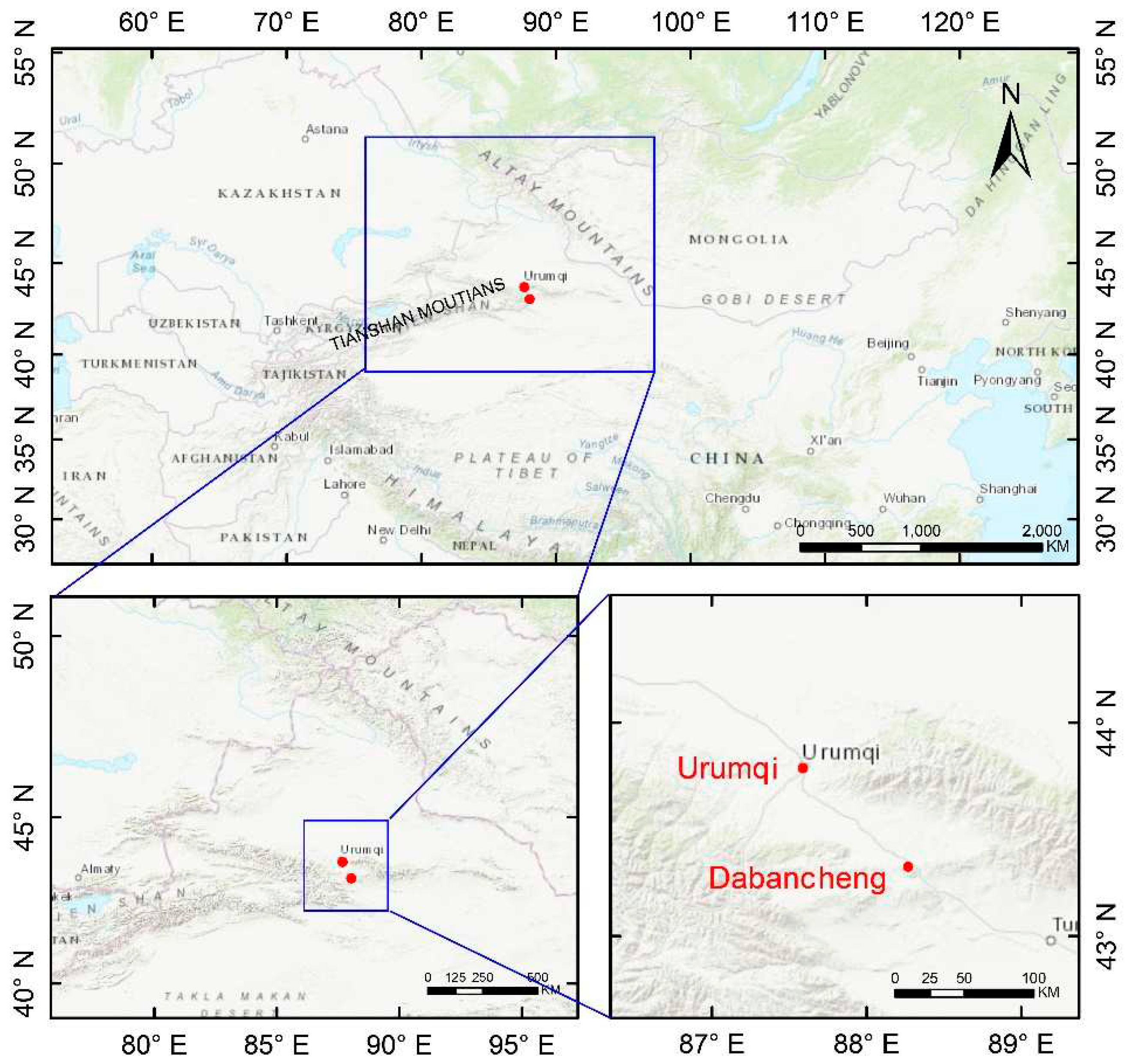
Figure 2.
Upper-level and surface weatherpattern on March 30th, 2017 at 14:00 (where the 500 hPa and 850 hPa black solid line represent the geopotential height field with an interval of 40 dagpm; the red dashed line represents the temperature field with an interval of 4℃; the black solid line represents the sea level pressure field with an interval of 2 hPa, the blue wind rod represents the surface wind field in surface (the long rod represents 4 m/s, the half rod represents 2 m/s); and the red dot represents the Urumqi station (DS).
Figure 2.
Upper-level and surface weatherpattern on March 30th, 2017 at 14:00 (where the 500 hPa and 850 hPa black solid line represent the geopotential height field with an interval of 40 dagpm; the red dashed line represents the temperature field with an interval of 4℃; the black solid line represents the sea level pressure field with an interval of 2 hPa, the blue wind rod represents the surface wind field in surface (the long rod represents 4 m/s, the half rod represents 2 m/s); and the red dot represents the Urumqi station (DS).
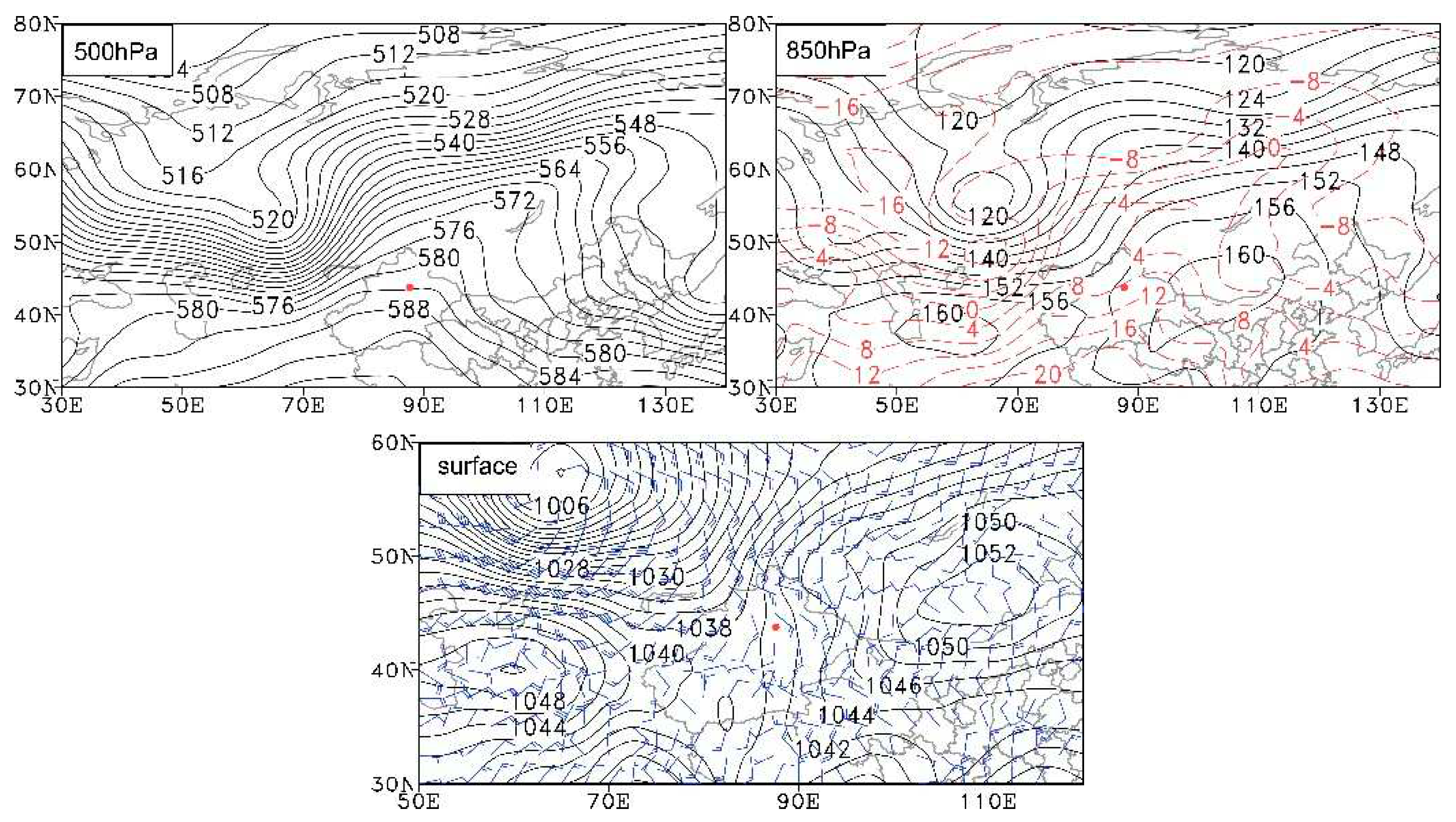
Figure 3.
Changes in surface meteorological elements in Urumqi from 15:00 on March 29th to 03:00 on March 31st, 2017 (Yellow shaded area represents the foehn period).
Figure 3.
Changes in surface meteorological elements in Urumqi from 15:00 on March 29th to 03:00 on March 31st, 2017 (Yellow shaded area represents the foehn period).
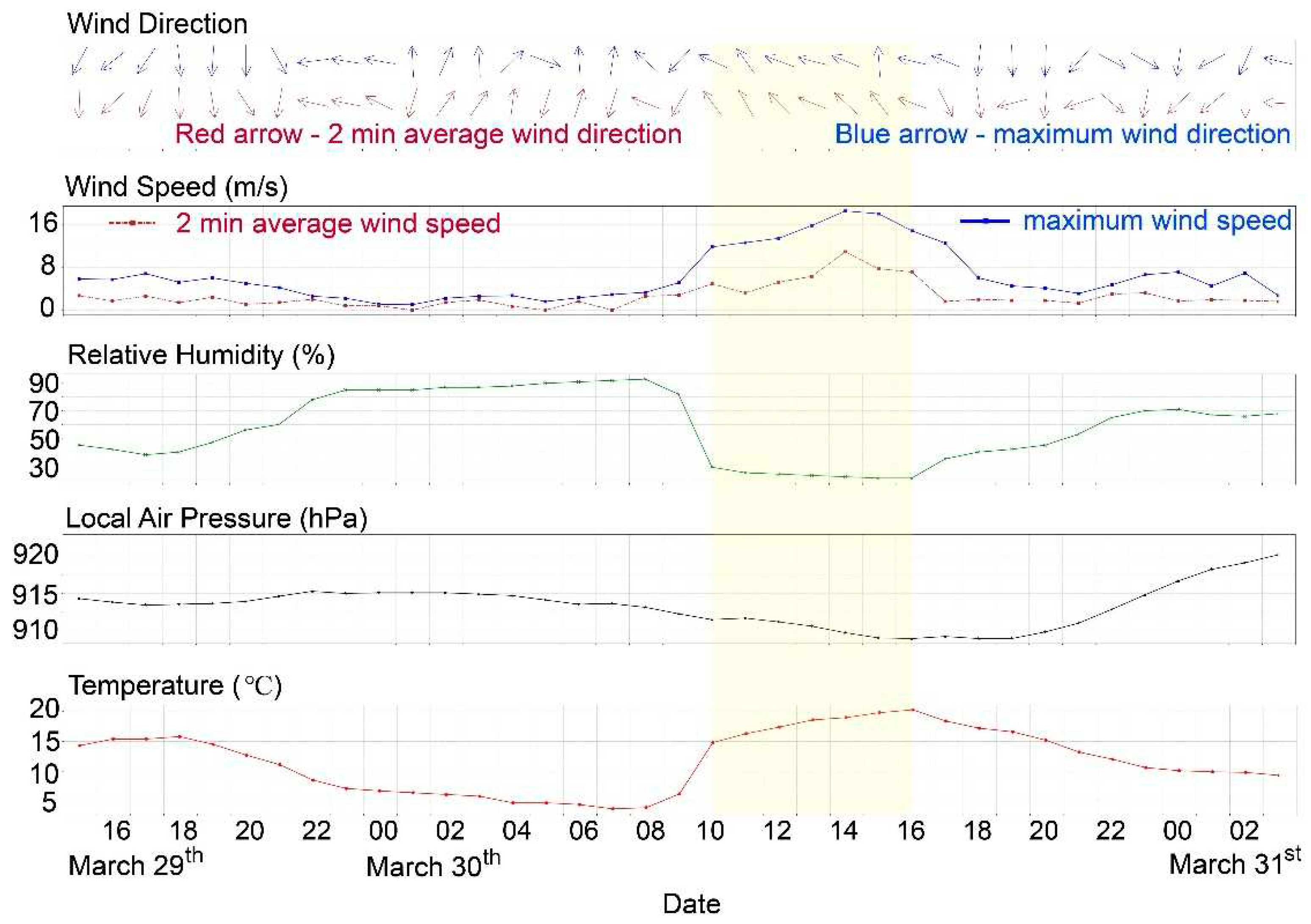
Figure 4.
Wind rose chart in Urumqi (a. the 2-minutes average WD and WS in the past 15 years, b. the maximum WS and WD in the past 5 years).
Figure 4.
Wind rose chart in Urumqi (a. the 2-minutes average WD and WS in the past 15 years, b. the maximum WS and WD in the past 5 years).
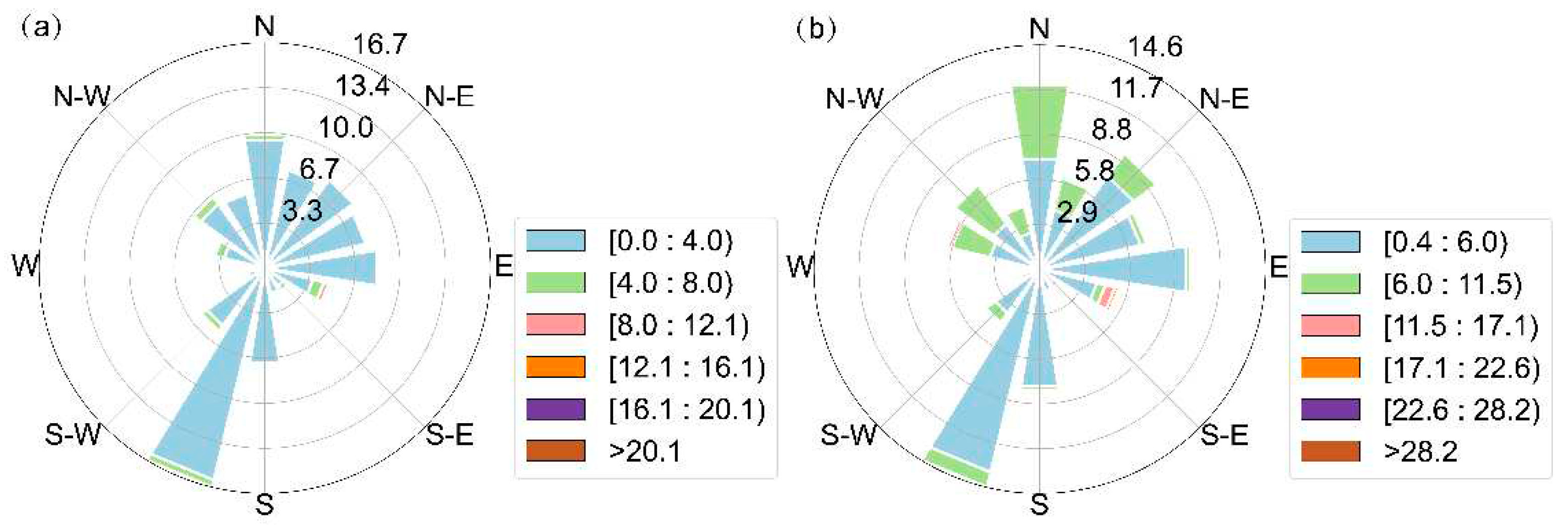
Figure 5.
Time distribution of the occurrence time of foehn in the four seasons.
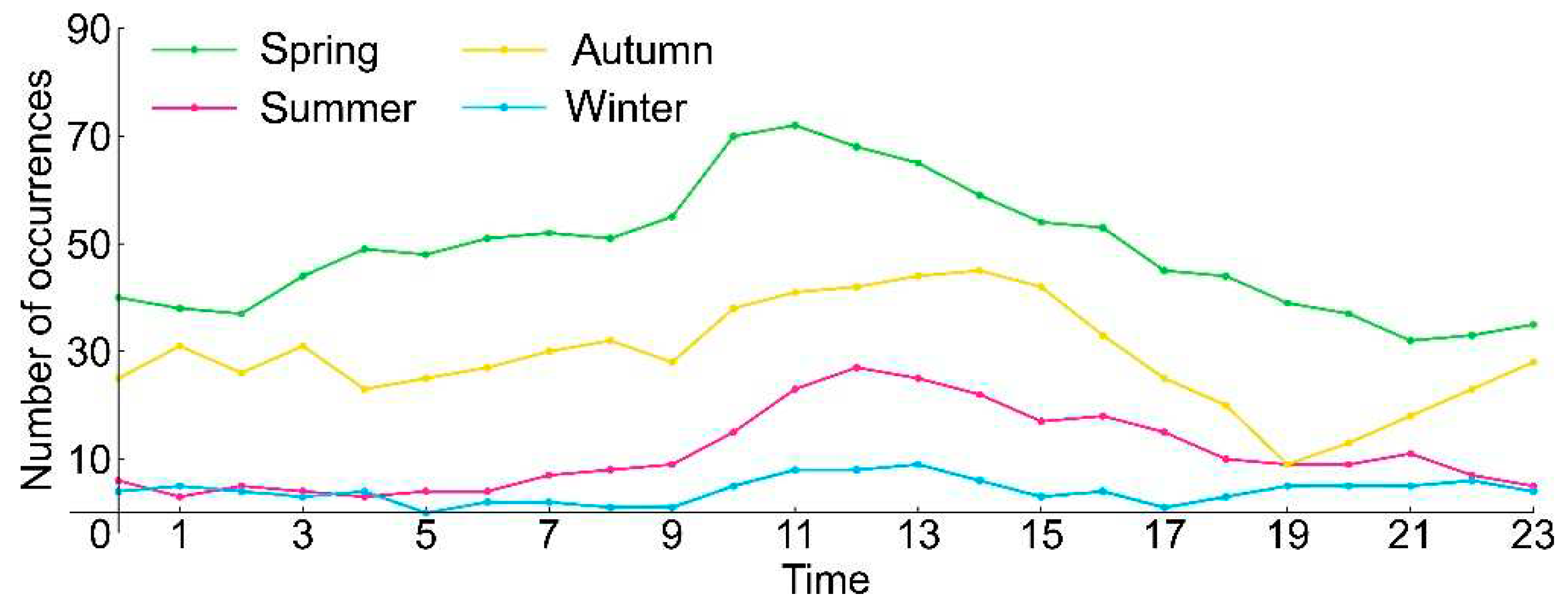
Figure 6.
Spectral distribution of WS of foehn in the four seasons.
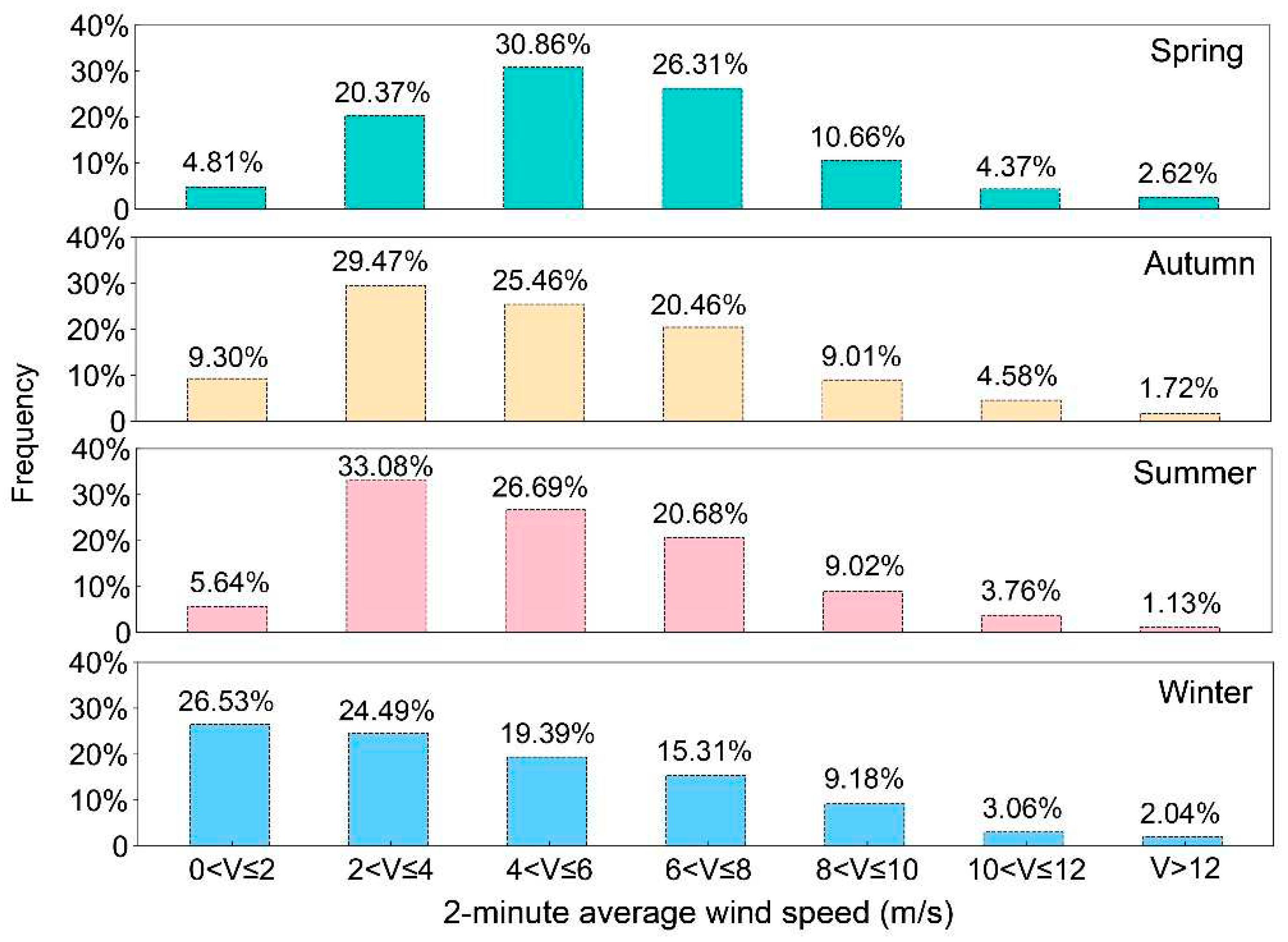
Figure 7.
Distribution of WD and WS during foehn and non-foehn periods in Urumqi (a. foehn, b. non-foehn).
Figure 7.
Distribution of WD and WS during foehn and non-foehn periods in Urumqi (a. foehn, b. non-foehn).
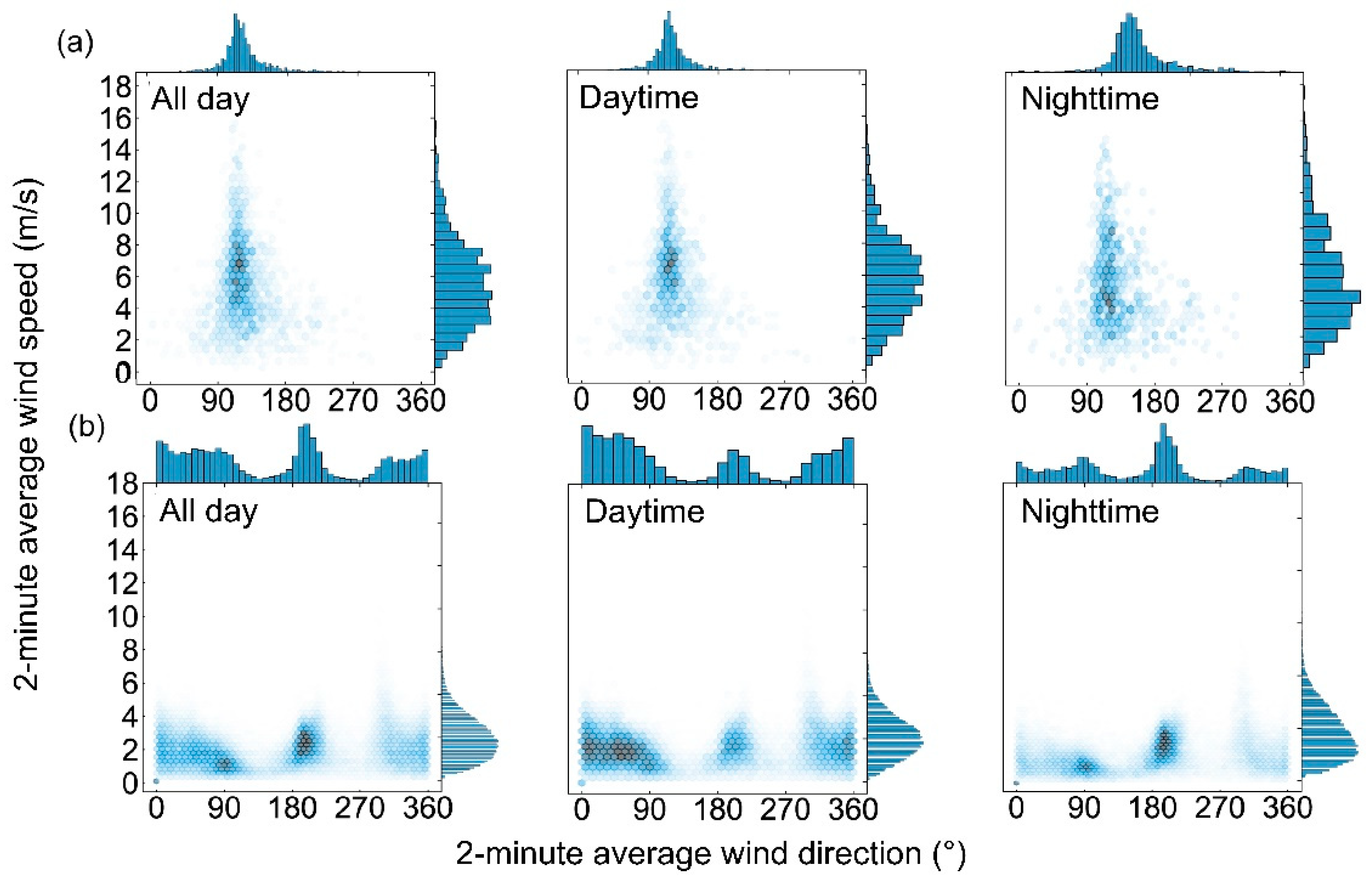
Figure 8.
Probability density frequency of Δθ and ΔP during foehn and non-foehn in Urumqi (a. Δθ ; b. ΔP).
Figure 8.
Probability density frequency of Δθ and ΔP during foehn and non-foehn in Urumqi (a. Δθ ; b. ΔP).
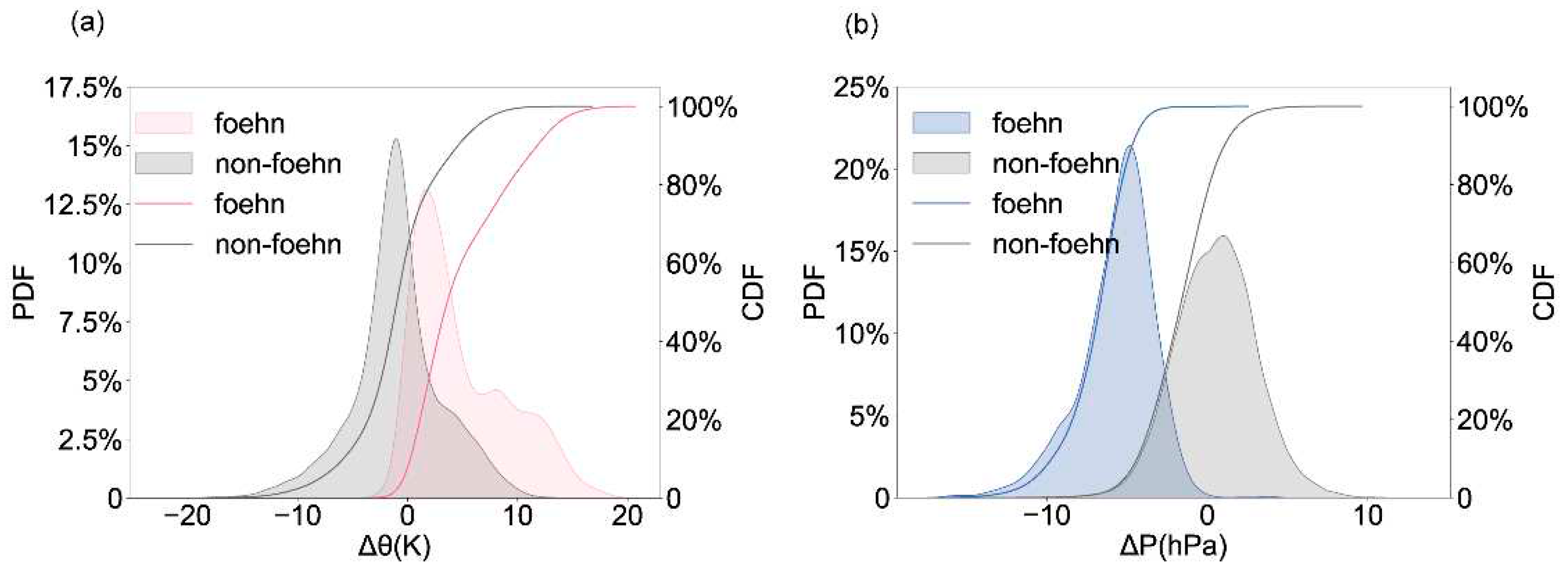
Figure 9.
Distribution of Δθ and ΔP over time during the occurrence of foehn and non-foehn in Urumqi (a. Δθ ; b. ΔP).
Figure 9.
Distribution of Δθ and ΔP over time during the occurrence of foehn and non-foehn in Urumqi (a. Δθ ; b. ΔP).
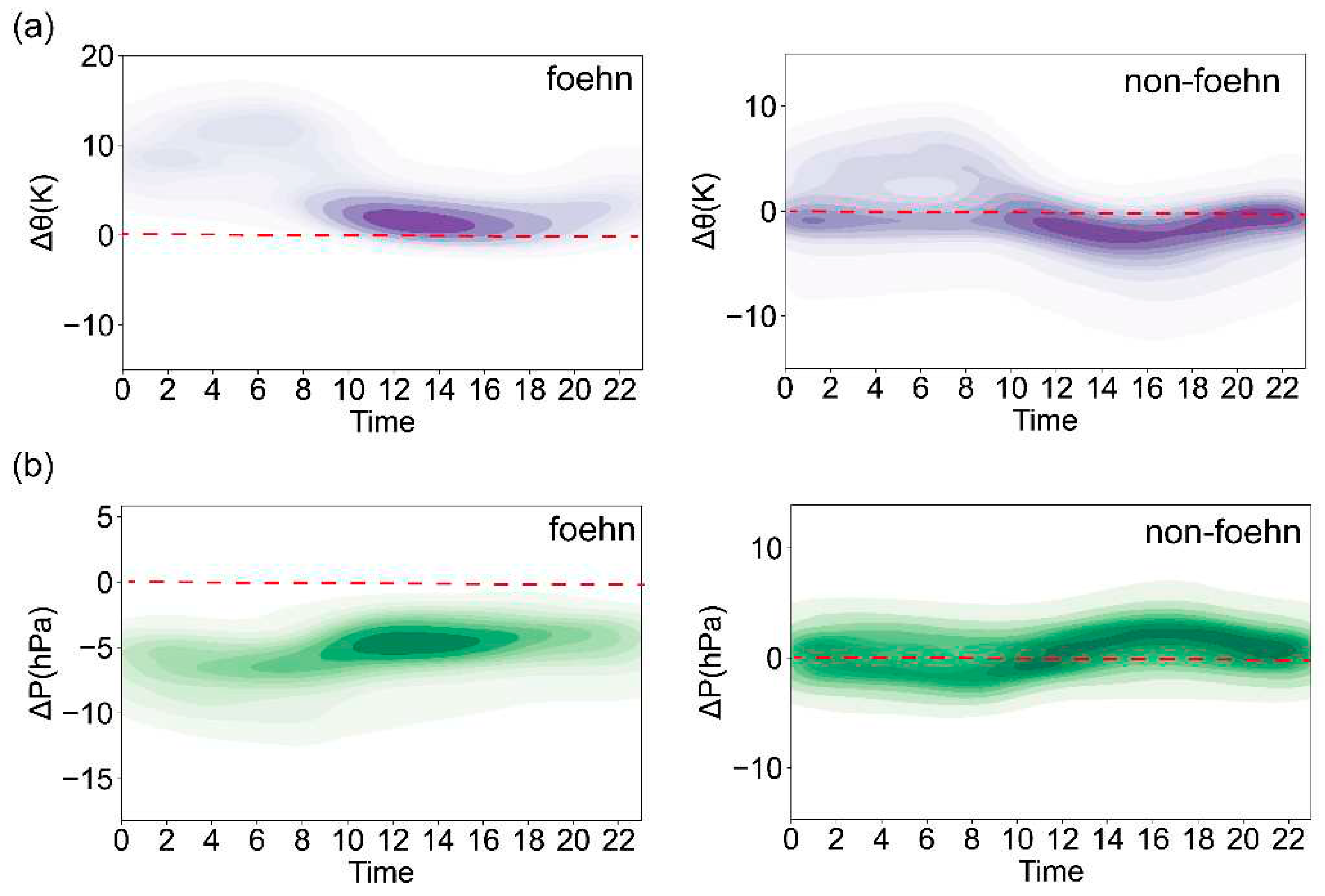
Figure 10.
Probability of foehn occurrence in Urumqi under different ΔP and Δθ.
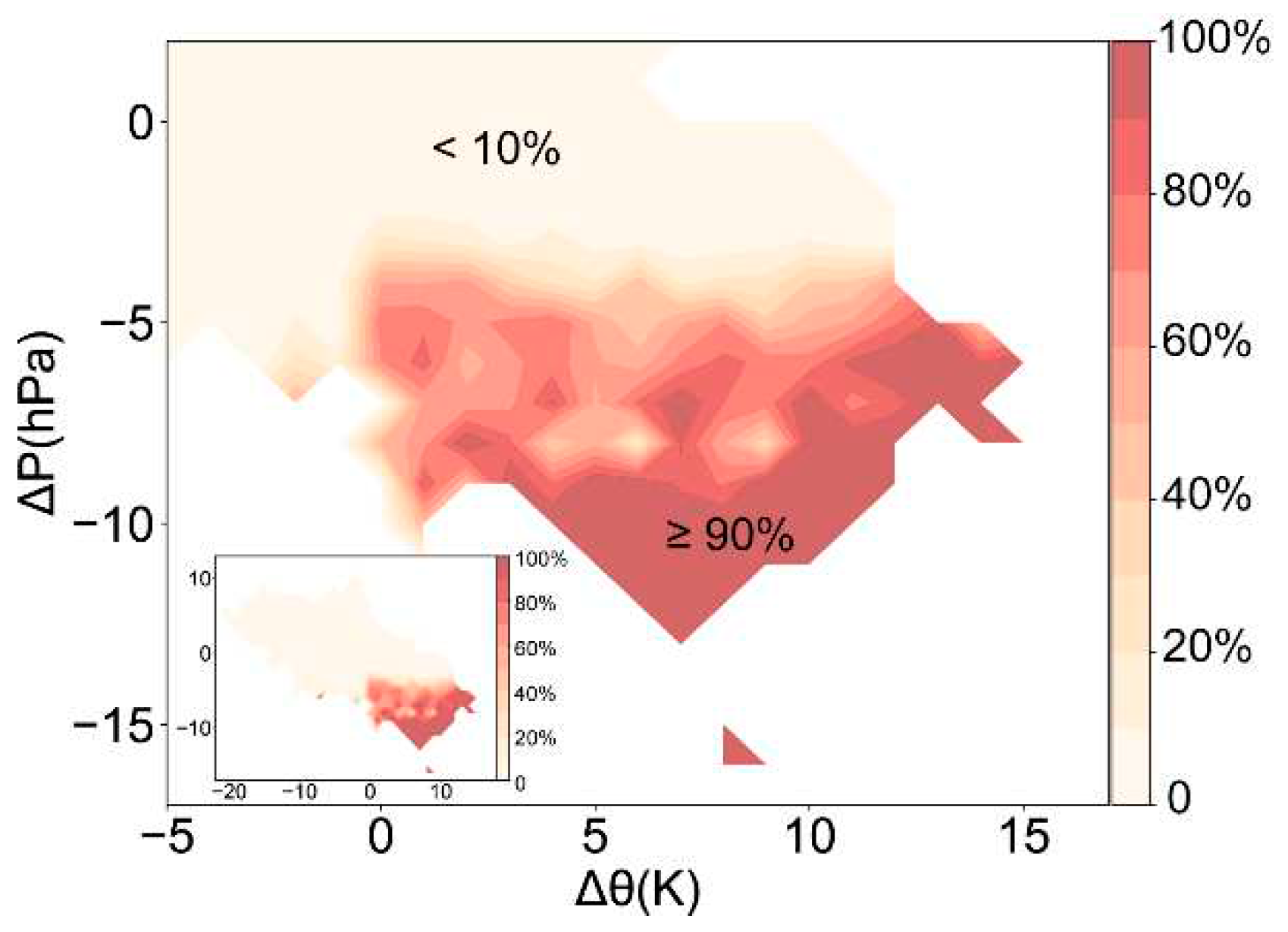

Table 1.
Height information (above sea level) of Urumqi and Dabancheng.
| Site | longitude /° | latitude /° | height above sea level /m |
|---|---|---|---|
| Dabancheng Station (upstream station, US) |
88.32 | 43.35 | 1105.3 |
| Urumqi Station (downstream station, DS) |
87.65 | 43.78 | 935.9 |
Table 2.
Accuracy, hit rate, false-alarm rate, and missing rate of the three-element identification standard for different schemes (WD, WS, ΔP, and Δθ are the WD, WS, sea level pressure difference, potential temperature difference, respectively).
Table 2.
Accuracy, hit rate, false-alarm rate, and missing rate of the three-element identification standard for different schemes (WD, WS, ΔP, and Δθ are the WD, WS, sea level pressure difference, potential temperature difference, respectively).
| Three- element threshold | Accuracy | Hit rate | False-alarm rate | Missing rate | |
|---|---|---|---|---|---|
| All day All day Daytime Nighttime |
94°≤WD≤168°, WS≥2.0 m/s, ΔP≤-0.28 hPa 94°≤WD≤168°, WS≥2.0 m/s, Δθ≥0.29 K 91°≤WD≤157°, WS≥2.2 m/s, Δθ≥0.05 K 101°≤WD≤176°, WS≥2.0 m/s, Δθ≥2.29 K |
67.97% 82.96% 83.63% 73.27% |
69.44% 89.50% 85.51% 73.53% |
3.03% 8.09% 2.56% 9.71% |
30.56% 10.50% 14.49% 20.47% |
Table 3.
Three-element identification standard for foehn in Urumqi.
| 2-minute average WD (°) | 2-minute average WS (m/s) | Δθ (K) | |
|---|---|---|---|
| foehn | 94≤WD≤168 | WS≥2.0 | Δθ≥0.29 |
Disclaimer/Publisher’s Note: The statements, opinions and data contained in all publications are solely those of the individual author(s) and contributor(s) and not of MDPI and/or the editor(s). MDPI and/or the editor(s) disclaim responsibility for any injury to people or property resulting from any ideas, methods, instructions or products referred to in the content. |
© 2023 by the authors. Licensee MDPI, Basel, Switzerland. This article is an open access article distributed under the terms and conditions of the Creative Commons Attribution (CC BY) license (http://creativecommons.org/licenses/by/4.0/).
Copyright: This open access article is published under a Creative Commons CC BY 4.0 license, which permit the free download, distribution, and reuse, provided that the author and preprint are cited in any reuse.


