

Submitted:
20 June 2023
Posted:
21 June 2023
You are already at the latest version
Abstract
This paper presents an in-depth contextualized tutorial on Agricultural IoT (Agri-IoT), covering the fundamental concepts, assessment of routing architectures and protocols, and performance optimization techniques via systematic survey and synthesis of related literature. The negative impacts of climate change and the increasing global population on food security and unemployment threats have motivated the adoption of the wireless sensor network (WSN)-based Agri-IoT as an indispensable underlying technology in precision agriculture and greenhouses to improve food production capacities and quality. However, most related Agri-IoT testbed solutions have failed to achieve their performance expectations due to the lack of an in-depth and contextualized reference tutorial that provides a holistic overview of communication technologies, routing architectures, and performance optimization modalities based on users’ expectations. Thus, although IoT applications are founded on a common idea, each use case (e.g., Agri-IoT) varies based on specific performance and users expectations as well as its technological, architectural, and deployment requirements. Likewise, the agricultural setting is a unique and hostile area where conventional IoT technologies do not apply, hence the need for this tutorial. Consequently, this tutorial addresses these via the following contributions: (1) a systematic overview of the fundamental concepts, technologies, and architectural standards of WSN-based Agri-IoT, (2) an evaluation of the technical design requirements of a robust, location-independent, and affordable Agri-IoT, (3) a comprehensive survey of the benchmarking fault tolerance techniques, communication standards, routing and medium access control (MAC) protocols, and WSN-based Agri-IoT testbed solutions, and (4) an in-depth case study on how to design a self-healing, energy-efficient, affordable, adaptive, stable, autonomous, and cluster-based WSN-specific Agri-IoT from a proposed taxonomy of multi-objective optimization (MOO) metrics that can guarantee an optimized network performance. Furthermore, this tutorial established new taxonomies of faults, architectural layers, and MOO metrics for cluster-based Agri-IoT (CA-IoT) networks and a 3-tier objective framework with remedial measures for designing an efficient associated supervisory protocol for cluster-based Agri-IoT networks.
Keywords:
Bluetooth Low Energy (BLE)
; Cluster-based Agricultural IoT (CA-IoT)
; Fault Management (FM)
; Multi-Objective Optimization (MOO)
; Wireless Sensor Network-based Agricultural IoT (WSN-based Agri-IoT)
1. Introduction and Tutorial Contributions
The emerging socio-economic impacts of climate change and increasing global population on agriculture production are threats to both global security and food security since over one-third of the economically active global population obtains its livelihood from agriculture [1]. This erratic change in weather and rainfall patterns due to climate change is a critical risk factor to crop productivity. Currently, the extent of climate-change-induced drought, according to Figure 1, makes traditional rainfall-dependent farming in Africa, the global food basket, no longer reliable for minimizing the skyrocketing food insecurity and the associated unemployment risks. For instance, in Africa, the focus of this research, over 70% of the economically active population who rely on agriculture for their livelihoods can face severe unemployment threats [1,2] if this challenge persists any longer. In addition, over 60% of economic development supports are obtained from agriculture in Africa. These call for a paradigm shift in farming techniques, and the most promising game-changer is a robust, affordable, autonomous, and optimized, innovative WSN-based Agri-IoT technology. Precision farming and greenhouses with an underlying technology of WSN-based Agri-IoT are expected to replace traditional rainfall-dependent agriculture in the next decade in order to address food insecurity, reduced crop quality, and the alarming unemployment threats created by severe climate change-induced droughts and the increasing global population [3]. These call for a paradigm shift in farming techniques, and the most promising game-changer is a robust, affordable, autonomous, and optimized, innovative WSN-based Agri-IoT technology that satisfies the critical design expectations presented in Figure 2.
Although few surveys and tutorials have been authored on this subject, they present mere classifications of communications trends on classical IoT [2,5,6,7,8] without any context-specific technical considerations of the critical design expectations in Figure 2. For instance, the authors in [2,6,7] examined IoT’s communication infrastructure, platforms, standards, development trends, and possible network solutions in agriculture. Similarly, the roles of industrial IoT (thus, identification-based IoT (example, RFID [6], WSN[9], QR codes [5], barcodes) and communication-based IoT (example, ZigBee [5], Z-wave [6], MQTT [5,6], LoRa [10], SigFox [11], BLE [12], Li-Fi [5], Wi-Fi [13], Near Field Communication-NFC [5], and Power line area network) were reviewed in terms of current research trends, key technological applications, and main challenges in [5]. Although RFID tags and WSNs have similar data acquisition capacities, the authors concluded that WSN technology is more energy-efficient and suitable for Agri-IoT than the costly RFID technologies [5]. Consequently, to date, Agri-IoT technology has not brought about its intended paradigm transformation in the agricultural sector due to several technical challenges that have not received adequate contextual research considerations [14]:
- The agricultural setting is a unique area where conventional IoT technologies do not apply. Existing Agri-IoT solutions are location-restricted because they are mostly based on Wi-Fi or cellular communication technologies and electricity grids with constrained coverages in Africa. A typical African agricultural setting lacks access to reliable electricity and the Internet, and the intended users (farmers) of Agri-IoT technology are low-income earners with limited technological expertise. They are also based on LoRa, SigFox, cellular-based, and Wi-Fi-based technologies that require either licensing or reliable electricity/Internet access in the farm, which is unrealistic in Africa. Common IoT applications mainly utilize architecture-restricted, high-resource-demanding routing techniques (e.g., Routing over low-power and lossy networks protocol (RPL)), and communication standards (e.g., 4G, 5G, ZigBee, LoRa, Wi-FI, and long term evolution (LTE)) [15], which are difficult to access in typical African farms. Consequently, Agri-IoT users in Africa expect a new solution that is affordable, simple to deploy and operate by non-experts, location-unrestricted, supportive of large-scale farm management, and based on freely available technologies that do not require licensing. Additionally, unlike popular IoT use cases such as medical, vehicular, and industrial IoT, whose designs are mainly affected by critical factors including security, stable connectivity, and interference, respectively, Agri-IoT is compelled to drive on affordable battery-powered SNs, which make architecture, low-power communication technology, power optimization, cost, fault-tolerance, multihop routing, scalability, and environmental impact critical design factors in order to address its resource or deployment-induced challenges [12,16,17].
- High susceptibility to faults and failures: Agri-IoT networks are vulnerable to faults and failures since the resource-constrained SNs are densely deployed in hostile environments to autonomously operate via a network supervisory protocol with limited post-deployment maintenance services. By implication, this supervisory protocol must incorporate sufficient power optimization, auto-fault management (FM), and self-adaptability techniques in order to achieve the desired performance expectation. Due to the lack of an in-depth and contextualized tutorial with such a capacity to bridge the gap between theoretical taxonomies and real-world designs, most canon Agri-IoT testbed solutions, such as authored in [1,10,11,17,18,19,20], suffered abrupt failures during outdoor deployments.
- Agri-IoT technology lacks comprehensive context-based synthesis from SN design to field deployment. The power- and resource-constrained SNs that form the WSN-based Agri-IoT system have limited data transmission rate, computational capabilities, memory capacities, communication distance, and operational stability. Consequently, the associated routing protocol [9,12,17,21], communication technology, and routing architecture [22,23,24] must support mechanisms that ensure packet size and communication distance moderation [16], efficient channel access management (CAM), and SN’s tasks management. It is not a mere application of conventional IoT to a farm as many authors attempted [1,10,11,17,18,19,20]. Consequently, the WSN-based Agri-IoT technology requires contextualized overview. Because it extends classic IoT’s goals with additional application-specific requirements such as dense network inter-connectivity, higher information perceptibility, comprehensive intelligence services, remote monitoring, smart decision making, and the execution of precise control/actuation actions on the farm [12,23,25,26].
- superficial consideration of desired communication technologies of Agri-IoT without considering the cluster-based architecture: To date, Agri-IoT-related surveys and tutorials focused on high-power-demanding communication technologies (Wi-Fi and cellular-based technologies), the centralized architecture-constrained ZigBee standard, and the operation principles of conventional IoT as authored in [1,10,11,14,18,19] without an in-depth consideration of the unique case of Agri-IoT. It is well established that the cluster-based architecture is the best candidate for Agri-IoT application [12,16,17,24]; however, there are no systematic evaluations to cement this fact. For instance, most benchmarking WSN-based IoT testbed solutions are founded on the topology-restricted ZigBee IEEE 802.15.4 communication standard and high-resource-demanding Wi-Fi, cellular-based, and 6LoWPAN/IPv6 routing standards. This standard also thrives on wired or fixed IP-based infrastructural backbones, total Internet/electricity coverage, and highly complex graph-based and centralized routing protocols [1,10,11,14,18,19]. As a result, these solutions are very complex and require full electricity and internet coverage. However, Africa, which is the focus of this study, has less than 50% electricity/Internet coverage [27]. Hence, these location-restricted solutions lack global significance. Also, ZigBee, Wi-Fi and cellular-based communication technologies with centralized or flooding-based routing architecture [1,10,11,14,18,19] are capital-intensive, complex to manage, location-restricted, energy-inefficient, and over-reliant on fixed supporting infrastructure. Therefore, an in-depth contextual assessment of how low-power communication standards such as LoRa, SigFox, and Bluetooth Low-Energy (BLE) evolve in cluster-based Agri-IoT (CA-IoT) networks can be of immeasurable benefits to the IoT community and farmers.
- The role of Agri-IoT in eliminating food insecurity, improving crop quality, alleviating global poverty, and increasing agricultural production volumes has been underestimated [2,7,8,10,16,28,29]. The agricultural sector, which has been hindered by climate change, is the largest global employer [3]. To revitalize this sector, CA-IoT has emerged with the most promising opportunities to address food and employment insecurity issues and improve crop quality and economic conditions for the farmers. However, these benefits have not been fully realized due to insufficient research publicity.
In essence, an Agri-IoT system is useless if it does not perform to expectation and the users do not realize its full potential to fit the perfect needs of the farmers. Although IoT applications are founded on a common idea, each use case (e.g., Agri-IoT) varies based on specific performance and users’ expectations as well as its technological, architectural, environmental, and deployment requirements [1,18]. Thus, an IoT ecosystem is a complex concept that cannot be easily classified because its characteristics evolve, adapt, or vary from deployment to deployment [30]. Consequently, each use case requires an in-depth contextual evaluation of all vital aspects in order to realize its full potential.
To the best of our knowledge, no survey or tutorial articles have sufficiently considered these technical issues and provided sufficient technical guidelines for the designers of Agri-IoT systems to make well-informed decisions in order to achieve satisfactory network performance. Additional realistic research is needed regarding the contextual evaluation of SN design and deployment factors, fundamental network design concepts and requirements, multi-objective optimization (MOO) analysis of the parameters for designing the associated routing protocol, and efficient operational metrics of the WSN sublayer of the Agri-IoT using the cluster-based architecture. In addition, the assessment of the possibility of using low-power and accessible wireless communication technologies such as BLE via cluster-based architecture to achieve a complete infrastructure-less, cheaper, energy-efficient, self-healing, adaptive, and robust Agri-IoT network is imperative. Furthermore, a broader contextual overview covering all vital aspects such as the fundamental concepts of Agri-IoT, technical design requirements of SNs and WSN-based Agri-IoT, surveys of the benchmarking communication standards, routing protocols, and testbed solutions, and an in-depth case study on how to design a self-healing, energy-efficient, adaptive, and CA-IoT based on the performance and users expectations are illustrated in Figure 2. Such a reference document can help support researchers when they attempt to accurately model and optimize the performance of Agri-IoT [14] so that the performance gap between the simulated networks and the realized Agri-IoT testbed solutions [1] can be addressed. By way of addressing these technical challenges, this tutorial presents the following contributions:
- Perform an in-depth synthesis and review (1)the basic concepts of Agri-IoT, (2) the comprehensive design considerations of these networks, (3) the technical design requirements of Agri-IoT, and (4) the up-to-date research progress on routing techniques, communication standards, and testbed solutions of WSN-based Agri-IoT.
- Systematically surveys the benchmarking of WSN-based IoT networks’ communication standards, FM techniques, routing and MAC protocols, and realization testbeds to respectively uncover the appropriate communication requirements for Agri-IoT, unveil the root faults and possible remedies in the WSN sublayer, derive a generalized taxonomy of routing architectures, and define appropriate routing paradigms for WSN-based Agri-IoT using the core PHY layer design metrics: affordability, self-healing capacity, energy-efficiency, location-independence, and network adaptability.
- Systematic synthesis of canon cluster-based routing protocols to uncover the plethora of possible research gaps, derive a realistic taxonomy of MOO metrics and propose possible MOO remedies that can be implemented using CA-IoT routing architecture freely available low-power communication standards.
- Proposition of MOO-induced guidelines in the form of open issues that can help Agri-IoT designers to build adaptive, robust, fault-tolerant, energy-efficient, affordable, and optimized CA-IoT networks in both simulation and real-world implementations.
Overall, this tutorial is motivated to provide a contextualized, in-depth understanding of this technology and assist the reader in designing robust, affordable, and optimized Agri-IoT networks that can act as reliable game-changer to avert the stipulated challenges. Also, the critical design, deployment, and QoS requirements of WSN-based Agri-IoT networks from theoretical modeling to real-world deployment are unveiled in order to bridge the existing gap between the theory and practice of this technology [1,14].
The remainder of this paper is organized into the following sections: Section II provides a brief background comparative overview of WSN, IoT, and Agri-IoT technologies, while Section III focuses on their components, protocols, architectural layers, and proposed architectural layers for WSN-based Agri-IoT technology. Section IV presents the detailed contextual design and implementation requirements of Agri-IoT networks, while Section V deduces the unique characteristics, challenges, and proposed performance expectations of the associated routing protocols for the WSN sub-layer of Agri-IoT. Sections VI, VII, and VIII present systematic surveys on routing protocols, FM techniques, and the canon real-world testbed implementations of WSN-based Agri-IoT solutions. Section IX examines how the above discussions have evolved using a case study of cluster-based Agri-IoT (CA-IoT) for precision irrigation, while Section X presents a sample design of a WSN-specific CA-IoT routing protocol. Section XI unveils open issues and future works, while Section XII concludes the chapter.
As presented in Figure 3, the WSN-based Agri-IoT is an information- and knowledge-intensive intelligent feedback control system for farm monitoring, data sampling/computing, resource optimization, automation of farm operation (e.g., precision irrigation, chemical application, livestock monitoring, and disease management [16]), and actionable decision making via a variety of battery-powered and wirelessly-connected SNs with sensing, processing, and communication capacities [2,29,31]. The SNs that form the WSN sublayer are spatially distributed and self-configured to achieve myriad remote sensing, surveillance/monitoring, and control applications via automated sensing, wireless communication, computing, making informed decisions, and actuation control [32] using precise, accurate, and timely sampled information about a real-world phenomenon [33].
The main hardware components of an Agri-IoT framework, as presented in Figure 4 and Table 1, include the WSN (i.e., comprising of the field-deployed SNs or IoT devices), a base station (BS) or gateway or actuator controller, cloud servers, and the user’s monitoring/control devices. As aforementioned, the field participants (e.g., SNs and BS) in Agri-IoT are mostly battery-powered and must be equipped with sensing, computing, and communication abilities to form infrastructure-less, robust, self-healing, and self-configured WSNs for data collection and event management [34]. The core units of the SNs in Figure 4c and the BS are compared and contrasted in Table 1. As the framework in Figure 4a depicts, the IoT devices can sense, process, and transmit their sampled data directly to the Internet or IoT cloud without a gateway. In contrast, the field-deployed SNs that form the WSN perform likewise via a BS. The BS interfaces between the IoT cloud/user and the WSN or actuator control system. Additionally, the BS is mostly resource-sufficient. It can process the received data and locally execute actionable decisions via the actuator of the farm event being monitored. The received data can also be relayed to the analytical data engines in the IoT cloud via a wired and wireless medium for further processing and actions [13]. The resource-constrained WSN sublayer mainly uses data-centric protocols due to the SNs’ high deployment densities, high network dynamics, and limited power supply of SNs. Although data-centric protocols are fragile and not standardized, they are more suitable than the high resource-demanding ID-based IPv4 or IPv6 protocols in the addressing space of the WSN-based Agri-IoT.
1.1. Comparative Overview of WSN, IoT, And Agri-IoT Technologies
A comparative overview of the underlying technologies (i.e., WSN, IoT, and Agri-IoT) forming the WSN-based Agri-IoT is required to help readers understand how the desired design expectations evolve in this ecosystem. A detailed comparison summary of these technologies in terms of architectural variations, users’ expectations, and design and implementational differences are presented in Table 2.
As depicted in Figure 4, WSNs are formed by spatially distributed, autonomous, resource-constrained SNs that wirelessly interconnect to communicate their sampled data to a BS for further monitoring or event tracking purposes without necessarily requiring the Internet. The main components of the WSN are the SNs, the BS/gateway, and the event sampling/routing software that supervises the entire network process. A node may route data directly or via relay SNs to the BS based on its location and assigned tasks. The BS locally performs the actionable decisions and execution of the actuation actions. Although the WSNs are resource-constrained and fault-vulnerable, they constitute the inevitable part of this technology [2] and the underlying innovation of the WSN-based Agri-IoT framework.
In contrast, classic IoT consists of IoT devices that sense and transmit their sampled information directly or via telemetry to the internet for monitoring or event tracking purposes, mostly via the centralized routing architecture. Similar to the SNs in WSNs in Figure 4, IoT devices are specialized and dedicated devices fitted with sensing, processing, communication, and power components that do not require centralized BS (gateway). Like BS in WSNs, IoT devices can connect to the internet/IoT cloud via fixed-line (thus, for a factory), 5G/4G/LTE cellular/mobile networks, or Wi-Fi for further processing, storage, and decisions/actions. Essentially, any stand-alone internet-connected device that can be monitored and controlled from a remote location can constitute an IoT network, which implies that a single-gateway WSN is a subset of IoT (Figure 4).
Agri-IoT or WSN-based technology combines WSN and IoT technologies into contextualized intelligent farm management systems to achieve higher event data quality and offer remote monitoring and control. WSN-based Agri-IoT consists of the WSN sublayer, the gateways, the cloud servers, and the remote interface application, as illustrated in Figure 4a and Figure 8. Uniquely, the current trends of Agri-IoT mandate that both intra-SN and BS–cloud communication are based on low-power, ubiquitous, and freely available wireless standards [2]. Also, most Agri-IoT solutions support bidirectional communications between the BS/gateway and the cloud/users, whereby the BS updates the cloud/user database and receives actionable/control remote messages from the user or cloud analytical decision results for actuation purposes. The WSN-based Agri-IoT is the most dominant technology in the global smart farming use cases in the agricultural sector. The core tasks of SNs in a WSN-based Agri-IoT application, which are frequently supervised by the associated routing protocol include, network construction/management, data sensing, data processing/aggregation, fault tolerance, and communication [9,12]. Also, the routing architecture must be supported by the associated communication platform and the application-specific requirements of the network.
Unlike IoT and WSN whose design expectations are application-specific, WSN-based Agri-IoT requires holistic integrations of the expectations in Figure 2.
1.2. Classifications of IoT Applications and Specific Roles of Agri-IoT
Generally, IoT technology is application-specific. However, it has limitless applications and roles in the smart world agenda. Based on their intended purpose, WSN-based IoT systems can be broadly classified into condition monitoring and event tracking categories [35], as illustrated in Figure 5.
The monitoring-based applications involve real-time event data collection and analysis, supervision, and operational control of systems. In contrast, tracking-based applications track changes in the phenomenon of interest, such as the locations of objects, persons, transported goods, animals, and vehicles. Both application domains can be subdivided into industrial, environmental, and societal IoT applications in Figure 5, where specific examples are provided for each application domain. For instance, monitoring-based applications may include indoor/outdoor environmental monitoring [6], industrial process monitoring [5,29], process control [2], greenhouse automation [7], precision agriculture (e.g., irrigation management, crop disease prediction, prediction of production quality, and pest and disease control) [2,8], biomedical or health monitoring [8], electrical grid network monitoring/control [12,29], military location monitoring [9], and so forth. Conversely, specific examples of tracking-based applications may include habitat tracking, traffic tracking, plant/animal condition tracking, and military target tracking, as outlined in Figure 5.
1.3. Agri-IoT Roles and Use-Cases
The concept of intelligent farming involves data acquisition, data processing/planning, and smart control using the WSN and IoT technologies, big data, and cloud computing techniques to provide profitable solutions, presented in Figure 6. These principal roles in Figure 6 define their use cases. For instance, monitoring the state of crops or the climate of the field using Agri-IoT technology can allow farmers to know precisely the amount of pesticides, water, and fertilizers required to attain optimal crop quality and production volume. However, the QoS requirements, the routing techniques, architectural requirements, and the operational dynamics differ from one use case to another. This tutorial focused on the critical and unique design requirements of WSN-based Agri-IoT, which is the backbone of the smart agricultural initiative [36]. The resulting use-cases in Figure 6 can be explained as follows:
- Agri-IoT for Climate Condition or Agronomical Monitoring: This Agri-IoT system mostly comprises BS (i.e. weather stations) and a deployed WSN. The analytical data engines mine the sampled climate or crop condition data in the cloud to predict future climate conditions and farm automation plans. The most suitable crop and precise farming practices can then be predefined to improve agriculture production capacity and quality.
- Agri-IoT for Precision Farming: This is the most famous application of Agri-IoT, whereby farming practices (e.g. irrigation, fertilizer application, etc.) are precisely and accurately controlled to optimize these resources. Here, the SNs are mostly fitted with soil sensors to collect a vast array of microclimatic data (e.g. soil moisture, temperature, and salinity) that can enable farmers to estimate optimal amounts of water, fertilizers, and pesticides needed by the crops to minimize resources’ costs and produce healthier crops. Additionally, the BS controls the event actuation system via accurate data-driven real-time decisions on the crops using climate data, crop growth data, and disease infection data.
- Agri-IoT for Greenhouse Automation: The Agri-IoT-based approach provides more accurate real-time information on greenhouse conditions, such as lighting, temperature, soil condition, and humidity, unlike manual greenhouse management. This allows precise remote monitoring and control or automation of all farming practices.
- Agri-IoT for Livestock Monitoring and Management: In this system, SNs are attached to livestock to monitor their real-time health, track their physical location, and log their performance. This helps the farmer identify and isolate sick animals to avoid contamination and reduce staffing expenses.
- Agri-IoT for Predictive Analytics: This Agri-IoT system provides highly relevant real-time data that can be analyzed to make essential predictions, such as crop harvesting time, the risk of disease infection, yield volume, yield quality, and yield vulnerability, for proper planning.
- Agricultural Drones (Agri-Drones): Agri-Drones, such as DroneSeed, are fitted with mobile SNs and farming tools to collect agricultural data or perform activities such as field surveillance, crop planting, pest control, farm spraying, crop monitoring, etc. For example, For Agri-Drones, all the above use cases utilize the WSN-based Agri-IoT framework.
2. The Agri-IoT Ecosystem
The authors in [1,14] established that the existing real-world attempts of Agri-IoT could not meet both performance and user users’ expectations because they are founded on the fundamental concepts and the operational principles of classic IoT and WSN technologies. To effectively achieve the expectations in Figure 2, it is imperative to conduct a systematic assessment of the related architectural layers in classic IoT and propose a suitable option for the WSN-based Agri-IoT ecosystem. Generally, the conventional IoT ecosystem consists of the network architectural layers and the data management platforms [2,7,8], which are further grouped into devices (sensors, actuators, and gateways/BS), network (BS to cloud), platforms/applications’ cloud, and agents/users. Due to domain-specific requirements of IoT applications and the incorporation of numerous heterogeneous devices with application-specific requirements, there are generally no unified or standardized IoT architectural layers. Therefore, most application-defined layers are frequently adapted from the canon architectural layers, which include the 3-layer [5], the cloud-based [7], the service-oriented architecture (SOA) [2,7], and the fog-based [2,7,29], as illustrated in Figure 7.
The fog-based architecture was adapted from the 3-layer parent architecture to include cloud computing by offering computing, storage, and network information between the clients and the cloud services [29] in a decentralized manner. Here, cloud computing and fog/edge computing architectures only differ in where data computing occurs. These layers are not unified because the respective network layers do not cover all underlying technologies that transfer data to all IoT platforms [5]. Additionally, they are based on complicated centralized and flooding-based routing architectures, high-resource-demanding and capital-intensive Wi-Fi/cellular-based communication technologies. As well, they require wired infrastructural support in the farm, which is too complex, location-restricted, and capital-intensive for most low-income and non-expert farmers to implement and manage. Consequently, they are unsuitable candidates for the resource-constrained SNs in WSN-based Agri-IoT. By implication, there are no reference guidelines for designing Agri-IoT participants and supervisory protocols, controlling the speed of packet delivery, smoothing out SN’s integration, unifying technology, and creating standardized Agri-IoT reference models, among other considerations. In contrast, an Agri-IoT ecosystem, depicted in Figure 4, consists of:
- Agri-IoT network architectural layers: This shows how the physical network elements, network operation principles, and operational techniques interact throughout the entire ecosystem.
- Network supervisory software/routing protocol and routing architectures: This contains the virtual arrangement of multiple network elements [8] and the event sampling/routing protocol that constructs the routing architecture, supervises sampling and moderates all communications in the PHY layer.
- Data management platform: It hosts all high-resource-demanding data analytic engines, event databases, and remote control algorithms in a cloud model.
2.1. Proposed Architectural Layers for WSN-based Agri-IoT
In designing an efficient Agri-IoT system of global significance, it is imperative to propose suitable architectural layers and evaluate how the various components interact in these layers. With the emerging advances in low-power, freely available, and boundless communication standards (e.g., BLE) and unfulfilled potentials of CA-IoT network [12,16], a new framework of cluster-based architectural layers for the WSN-based Agri-IoT ecosystem is proposed in the left side of Figure 8. The center portion of Figure 8 presents the key components/technologies required in each layer, while the Things taxonomies of hardware components from related literature [4,8,29] are depicted on the right portion of Figure 8. The underlying layers in our 4-tier layers in Figure 8 can be elaborated on as follows:
- Integrated Application and Management Layer: This operates all agriculture-related applications that interface between the user (for example, farmer) and the Agri-IoT system to make decisions and execute remote actions to keep their crops or animals healthy. This layer manages the entire Agri-IoT system and its application-specific functionality, high-resource-demanding applications, and core business model in the cloud. This layer’s security requirements are crucial to the next sublayer; however, these are beyond the scope of this research. The Business or management sublayer maintains end-to-end data integrity and security by ensuring that data is transferred to the correct user. It also ensures that the correct user executes the actuation.
- Information Management Layer: This handles data processing, storage, and other specialized cloud services and functionality that make precise, actionable decisions. In Agri-IoT, the sensory data is preprocessed locally to optimize communication power, but can be further processed using analytic engines in the cloud for better decision making and remote monitoring and control. This layer can be embedded in the above application layers and hosted in the cloud in a typical Agri-IoT ecosystem.
- Network Management Layer: This discovers, connects, and translates devices over a network, and coordinates with the above application layers. This layer contains the BS, which interfaces the resource-constrained WSN and cloud information network. By convention, the WSN sublayer must utilize low-power communication standards such as Zigbee, SigFox, LoRa, BLE, Z-Wave, SigFox, and IEEE P802.11ah (low-power Wi-Fi), while the BS-to-Cloud connectivity can be achieved via the traditional cellular networks, satellite networks, Wi-Fi, LAN, and WAN, LoRa, among others. Unlike classic IoT, Agri-IoT requires that the BS-to-Cloud connectivity utilize low-power communication standards. Also, since every communication standard for the resource-limited WSN sublayer comes with unique resource specifications and design tradeoffs between power consumption, routing architectural constraints, and bandwidth [4,14,17], the best connectivity option must be selected to achieve the desired application goals. Consequently, the stated WSN-based connectivity technologies can be classified using several distinct parameters, such as energy consumption rates, uplink/downlink data rates, packet size, SN-count per BS (gateway), network routing topology, the SNs’ sensing range, the SNs’ transmitter/receiver power, frequency bandwidth, channel width, etc. (refer to the right portion of Figure 8).
- Physical/Perception/Things Layer: This layer refers to the field and all devices such as SNs, actuators, RFID tags, sensors, and edge devices that interact with the environment. This layer senses and collects the necessary information from the connected devices in the WSN sublayer to the BS. In Agri-IoT networks, the sampled microclimatic data can be processed and stored on the local BS, the cloud, or both. The activities in the cloud or application layers are beyond the scope of this tutorial.
2.2. Associated Hardware Components and Technologies Required in the Proposed Architectural Layers
To precisely model and design an Agri-IoT network of desired expectations (refer to Figure 2) using the proposed architectural layers shown in Figure 8, the knowledge of the principal components and technologies used in each of these layers, and how they interact and adapt for their intended functions is imperative. As depicted in the middle of Figure 8, the Agri-IoT ecosystem is composed of the following core components/technologies:
- Things: Things unit is the physical interface between the tracked/monitored asset and the BS or actuator controller, which aligns with the physical or perception layer. It comprises the monitored/tracked asset (for example, field, crop, or animal), the SNs, or the entire IoT devices making up the WSN (for example, SNs, actuators, IoT-enabled devices, WSNs, and other smart devices), the event sampling, and routing technology in the WSN. Since the SNs constituting this unit are resource-constrained, freely available communication standards such as Zigbee, BLE, Z-Wave, and IEEE P802.11ah (low-power Wi-Fi), are the most suitable for both SN–SN and SN–BS communications. The Things unit accesses the cloud/Internet via gateways (BS).
- Gateway (BS): The BS interfaces the WSN out in the field and the applications situated in the cloud servers. This unit aligns with the network management and actuator control layer shown in the middle of Figure 8. The WSN sublayer may have more than one BS(s), each with the capacity to handle most resource-demanding computational tasks besides actuation execution, network construction, scheduling of event sampling, and network supervision services. They may also allow bidirectional communication with the cloud/user and WSN. Similar to standalone IoT devices, the BS can be equipped with 4G/5G/LTE/NB-IoT, cellular-based, Wi-Fi, LoRaWAN, or wired ethernet communication technologies to interact with the cloud, and low-power communication standards such as LoRa, low-power Wi-Fi, SIGFOX, UMTS, BLE, and Zigbee (Figure 8) to communicate with the sensor field. However, Agri-IoT networks require that both upper-layer and lower-layer communication technologies of the BS should be low-power, freely available, easy to deploy and manage, and platform-independent. The BS may preprocess or relay the raw data to the cloud for remote data processing. The BS(s) locations are strategically chosen to optimize network communication costs.
- IoT Cloud: The Cloud unit aligns with the applications layer. It consists of an on-premises or remote server farm that hosts the applications layer, event data analytic engines, security protocols, robust IoT applications, user interface, and event database. The high resource-demanding data processing tasks are mostly executed by well-equipped cloud-hosted applications to manage and store huge amounts of data, provide monitoring and data analytical services, enable communication with devices, and manage information access. The merits of Edge computing can be exploited to ensure that large amounts of data are post-processed off-device to reduce the response times of the cloud.
- User Interface: With the aid of a web or mobile app, the user or farmer can live-monitor the farm’s conditions and execute control actions. Additionally, a presentation or business intelligence layer may be added to coordinate the activities of non-technical business users through dashboards and reports rather than with the application layer itself.
2.3. Quality Expectations of Agri-IoT’s Architectural Layers
Although there is no unified, certified, and flexible Agri-IoT architecture layer, any suitable options deduced from the benchmarking architectures in Figure 7 must satisfy certain quality requirements, including:
- Simultaneous data acquisition, analysis, and control from many sensors or actuators.
- Minimization of huge raw data transmissions via data aggregation techniques to maximize actionable information quality.
- Provision of reliable network architecture that supports energy-efficient routing, stable connectivity, self-adaptability, fault-tolerance, operational simplicity/flexibility, platform independence, affordability, and location independence of Agri-IoT designs.
- Support for automated/remote device management and updates.
- Easy integration of each layer with existing applications and other IoT solutions via specified APIs.
3. Design and Implementation of Agri-IoT Networks
Despite the technical challenges associated with the WSN-based Agri-IoT, its potential contributions in the Agricultural sector largely surpass the least complex, capital-intensive, pure IoT-based solutions as illustrated in Figure 4b and Figure 6. Due to the broader applicability and higher significance of the WSN-based Agri-IoT networks relative to the classic IoT networks, this study focuses on the former technology whose design and implementation involve four crucial phases, namely:
- Custom-building of robust, affordable, energy-efficient, location-independent, and adaptive SNs and a BS that can form an infrastructure-less and easily manageable WSN. The SNs and the BS must consist of cost-effective, architecture-defined, and context-defined components so that the system operates stably and efficiently, becomes affordable to farmers, and easily integrates to any real-world scenario without any expensive, fixed/wired backbone connections. The low-power capabilities of the SNs help to easily integrate them into any precision farms and greenhouses to operate over the entire crop season without many technical hindrances.
- Physical deployment of the SNs in the field, selection WSN’s communication technology, and design of a suitable supervisory protocol to coordinate the construction of appropriate event routing architecture, the duty cycle schedule of event sampling to the BS, fault management, data management, and network maintenance. Additionally, a range of techniques such as network participant mobility, cross-layer design, MAC techniques, data aggregation, self-healing techniques, nodes’ duty-cycle schedule, security measures, localization, and communication specifications of the SNs can also be exploited in the associated routing protocols.
- Selection of appropriate BS/gateway communication technology and design of a suitable higher protocol to update the cloud database and execute the actuation actions based on users’ requests or decisions on processed event data.
- Design of data analytical engines and applications in the cloud and users’ remote monitoring and control interface app, which is beyond the scope of this tutorial.
These call for a systematic application-specific assessment of the hardware components selected for every use case.
3.1. Sensor Nodes Design Considerations
As illustrated at the bottom of Figure 4, a node for the WSN-based Agri-IoT network consists of four main units, which include:
- The Sensing Unit: This unit interfaces with the physical environment and records the physical phenomenon of interest. The type of sensor is application-specific and can be contact-based or non-contact-based. For instance, the STEMMA soil moisture sensor and the DHT22 sensor can be used to sample environmental temperature and humidity (refer to Figure 4c).
- The Controller Unit: This unit hosts the processor, storage, and connection pins for the other units and all auxiliary peripherals. The suitable controllers for building Agri-IoT SNs are Arduino-based and Raspberry-Pi-based (refer to the bottom of Figure 4), due to their ability to withstand extreme weather conditions. However, other off-the-shelf, application-specific controllers such as ProPlant Seed Rate Controller, John Deere GreenStar Rate Controller, Viper Pro multi-function field computer, Radion 8140, Trimble Field-IQ, etc. are also available.
- Communication Unit: This unit is the principal determinant of the node’s power consumption, operational stability, and affordability, as well as the routing architecture in the associated supervisory protocol. The bottom of Figure 4 shows the available communication technologies, but an Agri-IoT-based SN demands an energy-efficient, affordable, freely available, simple, and reliable communication standard. Consequently, LoRa, BLE, ZigBee, LoRaWan, and SigFox are the best candidates based on the support of the routing architecture of the resulting WSN, but the selection must be justified from the technology requirement metrics via a decision matrix.
- Power Unit: Since the SNs are mostly battery-powered, the appropriate battery size and probable energy-harvesting techniques must be determined during the SNs’ design according to the intended network lifespan and stability requirements. Modern trends in battery power banks with integrated solar-based energy-harvesting systems and power ratings above 30000Amp-Hours are available.
When selecting hardware components, adequate caution should be taken to avoid unit incompatibility, high operational complexities, unsuitable operational thresholds, and high energy consumption, among others. This implies that high component survivability and operational stability under different environmental conditions and the application specificities are vital to monitor.
3.2. Wireless Spectrum and Core Communication Platforms of WSN-based Agri-IoT
The wireless electromagnetic (EM) spectrum, which has invisible, finite radio frequencies for wireless communication, can be licensed and sold exclusively by specific providers or unlicensed for free usage. For instance, the Industrial, Scientific, and Medical (ISM) frequency band (e.g., Bluetooth classic, BLE, Wi-Fi, ZigBee, and LoRaWAN) is an unlicensed microwave frequency band clustered around 2.4GHz and globally reserved for applications such as Agri-IoT. Table 3 presents the various bands and their applications. A suitable candidate for a given Agri-IoT application is based on several factors, such as communication and the route architectural requirements, power consumption, cost, and environmental adaptability impacts.
3.3. Factors to Consider When Deploying SNs and Designing the Supervisory Sampling/Routing Protocol
After custom-building or selecting off-the-shelf SNs, the next activity is to deploy the SNs on the field and design a contextualized supervisory protocol to coordinate the aforementioned network’s activities. The SNs’ deployment in the field can be either random or deterministic. Both options require different methods to optimize the resulting network’s performance. For instance, under the deterministic approach, the optimal parameters such as node uniformity and density must be predefined based on the distance thresholds of the associated communication technology (i.e., connectivity/distance range), the SNs’ resource optimization mechanisms, the type of routing architecture, and the sensing range of the physical parameter to be measured. Since communication is the principal power consumer, the best ways to conserve power are to minimize communication distance and data sizes, and to operate the SNs in the appropriate sleep-active duty cycles using a cluster-based routing architecture [9,24,26].
Beyond the physical installation of the SNs at their most suitable in-range locations, the remaining activities, such as network construction, event sensing, data management, FM, network maintenance, sleep-active duty-cycle scheduling of SNs for sampling, network adaptability to turbulent and scalable conditions, power-optimization mechanisms, and network reconfiguration, among others, are controlled by the associated routing protocol [12,16,17,26,37]. This places crucial merits on the physical locations of the SNs in the field, thorough synthesis of network design factors, and assessment of available routing architectures/techniques, since this protocol manages all post-deployment tasks. This can be summarized into the core objectives of the routing protocol and its architecture, which include power optimization, self-healing of any faults without the obstruction of its normal operation, and self-adaptability to all turbulent and scalable conditions. From the analysis above, we can derive the critical primary factors to consider when designing a routing protocol for Agri-IoT networks, which are presented in Figure 9 and grouped into the following categories: SNs specifications, security issues, application-specific factors, communication standard compatibility and capacities, and other auxiliary factors. At the PHY layer level, which is the focus of this tutorial, these critical factors can translate into the stipulated core design objectives, which can be addressed via phase-based multi-objective optimization (MOO) formulation frameworks [12,23,24,38].
Hardware Specifications of SNs and BS Agri-IoT Device: The functional and resource capacities of participants’ hardware units must be considered before their respective tasks in the protocol are assigned. For instance, the selected sensors’ quality must suit the type of event information and its accuracy, the available communication platforms, and the general purpose of the Agri-IoT solution. Also, the communication standard must support the routing architecture and SNs’ resource- and deployment-induced limitations. The crucial communication-based parameters of the SNs are illustrated in Table 4.
Cost or Affordability of the Resulting Agri-IoT System: Besides being infrastructure-less, flexible, self-healing, adaptive, and energy-efficient, a WSN-based Agri-IoT must consist of cost-effective hardware and software components so that the system is affordable for farmers since existing real-world solutions are too expensive and complicated [1,14]. Additionally, the installation, operational, and maintenance costs of the resulting WSN-based Agri-IoT network must be kept to a minimum so that it can be easily acquired.
Security Issues in Agri-IoT: Security is still a challenge in classic IoT systems that handle sensitive information, especially during cloud communications. Although Agri-IoT networks lack the requisite resource capacities in most large-scale, broadcast-based, distributed, and infrastructure-less WSN systems to achieve adequate data confidentiality, authenticity, integrity, and other security requirements, the security of the agricultural data is seldomly a priority [2,4]. Nevertheless, the associated routing architecture, such as the clustering architecture, has an embedded capacity to resolve on-site security issues. In addition, both on-site and remote information access types (e.g., via a smartphone or desktop computer) must be selected based on solid internal infrastructure and security precautions to secure unwanted access to sensitive information.
The Application-Specific Factors: As indicated in Figure 9, the application-defined factors vary based on the Agri-IoT application, the field settings, network maintenance practices, intended event routing architecture, and network participants’ mobility, among other factors. However, the routing protocol must incorporate all relevant operational efficiency factors of the routing software design objectives. Since the collected field data itself cannot make sense without using analytic data engines and predictive algorithms in machine learning, the BS or the application layer in the cloud should define appropriate data processing frameworks to obtain accurate, actionable decisions from the collected data.
Communication Standards of Agri-IoT Devices: The power-constrained WSN sublayer of Agri-IoT network places hard restrictions on operational states of SNs’ radio transceivers, code space, and processing cycles, as well as memory capacities of SNs to enhance power savings [9,12,23]. The type of communication technology selected for a typical Agri-IoT is the principal predictor of its routing architecture, affordability, simplicity, adaptability, power-saving capacity, location-independence, self-healing capacity, and event data quality [12,16]. Consequently, power and routing architectural limitations constrain the network design requirements. Despite the aforementioned technical challenges on the network’s operational efficiency, interconnected SNs that form the WSN are expected to withstand extra operational disruptions caused by unfavorable weather conditions in the field [2,4]. Consequently, the de facto PHY-layer communication standards for this low-power, low bandwidth, and distance-limited communication Agri-IoT devices/SNs have been the energy-efficient platforms such as BLE, LoRa, Sigfox, and NB-IoT. Also, a suitable MAC technique is imperative in the routing architecture to curb all channel access challenges. For instance, the ZigBee/IEEE 802.15.4 standard focuses on the physical and the MAC layer specifications for WSNs, and also supports sleep-active or duty-scheduled operation modes of SNs to enhance energy savings in centralized or mesh-based architectures. BLE does likewise in the highly endowed cluster-based routing architecture. Consequently, Agri-IoT network designers must make the most appropriate and critical decisions regarding the network’s communication requirements when designing the routing protocol. Using Table 4, WSN-based Agri-IoT designers can make realistic design decisions regarding energy-efficient multihop routing, architectural requirements of routing protocol, bandwidth, routing table capacities, total communication cost, and the desired MAC technique. Additionally, the physical conditions within the agricultural environment such as atmospheric dust concentration, physical obstruction to wireless signal transmissions, and the terrain, need to be considered.
Auxiliary Factors and Available Software Tool: Finally, the auxiliary factors can be non-exhaustive depending on the designer’s financial capacity, user interface, information requisition model, cloud activities, operational expectations, and the available software tools. Additionally, an assortment of PHY-Layer design software tools for Agri-IoT experiments (thus, in both simulations and real-world testbed deployments) that can be used include NS-3 [9,39], OMNeT++, MATLAB/Simulink [9,12,40], Python [16], PAWiS [40], GloMoSim/QualNet [40,41], OPNET [12,40], SENSE [38,40], J-Sim [40], Ptolemy II [40], Shawn [9,40], and PiccSIM [12,40,42], among others. The key features that are frequently considered when selecting any of these software platforms include Python or MATLAB/Simulink compatibility for software model and hardware prototype integration during real-world operation, compatibility with low-power communication standards (e.g., BLE, LoRa, ZigBee, and SIGFOX), operating system support, programming language implementation, the density of simultaneously simulated or field-deployed SNs, co-simulation with other hardware, documentation, easy access to upgraded versions, and installation challenges [40]. MATLAB/Simulink and Python are the most commonly used experimental tools, since these software tools are well-equipped with the stipulated features.
4. Unique Characteristics and Challenges of WSN Sublayer of Agri-IoT
Unlike the traditional IoT, which generally rely on fixed hardware to route network traffic, a WSN sublayer of Agri-IoT combines automated sensing, computation, actuation, and wireless communication tasks into the SNs that are spatially distributed across the farm to autonomously form an infrastructure-less WSN [32]. A node may perform additional tasks such as local data processing (data aggregation), network construction, data redundancy, error control, data routing (e.g., in multihop networks), and network maintenance practices based on the network size, application specificity, and the associated routing techniques. Also, the WSN can be equipped to observe heterogeneous conditions such as temperature, humidity, sound, color, location, light, vibration, and motion, using a wide variety of sensors contained within a task-scalable SN. Therefore, assuming that the accuracy and precision of event data in upper layers are preserved, the Agri-IoT’s lifespan and its operational efficiency are rooted in the WSN’s robustness. Thus a deeper contextual exegesis into the design and maintenance of this sublayer is imperative. As opposed to conventional IoT and wireless ad-hoc communication networks, the operational efficiency of the WSN sublayer, as well as Agri-IoT, hinge upon some application-specific characteristics and resource-constrained factors such as:
- Higher SN Deployment Densities: Generally, SNs are densely deployed in either a deterministic or random manner to provide the desired redundancies, spatial variability of soil, topography, distributed monitoring and processing, accurate and precise event reporting, and fault tolerance. However, this mostly leads to undesirable transmission overlaps, data redundancies from simultaneous reporting of the same data, routing interferences, and packet collisions due to connectivity issues and coexistence of common standards in the ISM band [43].
- Limited Power Supply: The SNs are frequently battery-powered, which does not only constrain their data transmission rate, computational capabilities, and communication distance but also subjects Agri-IoT to possible SN-out-of-service and data outlier faults due to rapid power depletion beyond certain thresholds [26,44]. Consequently, network power management through data-management-related, architectural-related, and communication-related parameters has been one of the principal research focuses in WSN-based IoT applications to improve network lifetime.
- Fault Management (FM) (i.e., fault detection, fault tolerance, or fault avoidance): The resource-constrained WSN is highly vulnerable to faults and failures due to high deployment densities and lack of post-deployment maintenance services [25]. Although faults are inevitable in Agri-IoT for the stipulated reasons, their occurrence rates and effects on the network’s functionality can be minimized, avoided, or tolerated without hindering the normal functionality of the network if the associated WSN’s routing protocol is well-equipped with efficient self-healing and fault-avoidance (power-saving) mechanisms [12].
- Self-Adaptability and Scalability: Though WSNs are application-specific, the topological dynamism is inevitable due to node failures, node mobility, and scalable conditions. Therefore, the associated routing protocol and network architecture must adapt to these dynamic conditions using apt auto-reconfiguration and reactive multihop event routing techniques [45,46].
- Network Architecture: The underlying routing protocol of the WSN sublayer constructs a network architecture that can be flat, hierarchical (e.g., clustering, chain-based, and tree architectures) or location-based. This routing architecture prescribes the possible measures to achieve efficient local data processing, network maintenance, scalability, minimized communication overhead, prolonged network lifespan, and reduced network management complexities [25,37]. Therefore, a suitable network topology indirectly determines the resulting network’s flexibility, scalability, reliability, communication strategy/costs, and the quality of the reported event data [12].
- Mostly Requires On-site Actuation: Regardless of where data is managed in a typical WSN-based Agri-IoT, the actionable decision signal must be sent for execute on-farm actuation.
Proposed Design Objectives of WSN-based Routing Protocols for Agri-IoT and Realization Mechanisms
From the systematic evaluation of the unique characteristics and challenges of WSN Sublayer, a 3-tier cluster-based framework that constitutes the condensed expected core design objectives and their corresponding remedial strategies of WSN-based Routing Protocols for Agri-IoT applications, as demonstrated in Figure 10. Suppose the corresponding remedies in Figure 10 are implemented in the associated routing protocol. In that case, the desired power optimization, self-healing, and auto-adaptability expectations can transitively yield the desired event data quality and operational stability requirements or the global performance expectations of the resulting network.
The importance of this 3-tier framework can be expanded on as follows:
- An adaptive and scalable WSN-based routing protocol, as proposed in Figure 10, normally constructs a routing architecture that supports multihop routing, self-reconfiguration, self-healing, and local network administration at a minimal routing table size, communication cost, and and control message complexity requirement. since communication is the principal power consumer, the operation of the routing protocol must invlove less control messages. Also, it must adapt to network turbulence due to SN failures. The cluster-based architecture exhibits the highest potential compared to related architectures [9,16,17,26]. The cluster heads (CHs) efficiently coordinate these activities by registering and tolerating all dynamism resulting from SN-out-of-service faults, increasing network size, and SN density.
- Due to the high vulnerability of SNs to faults and failures, it is imperative to deploy suitable FM techniques that can detect, tolerate, or avoid possible root faults such as SN-out-of-service and data outliers [25]. The adaptive clustering approach can effectively resolve SN-out-of-service faults while the threshold-based decision theory at the local nodes and global levels can be suitable candidates for event data outlier detection and correction in the PHY layer. Since power mismanagement is the root cause of most faults and failures, the best fault-avoidance techniques optimize the nodes’ power consumption rates.
- Figure 10 also outlines the suitable measures for power optimization in the WSN sublayer of Agri-IoT. In clustering approaches, power consumption in the constrained WSN can be managed via message complexity control, connectivity-related metrics, and communication-related parameters by exploiting the clustering architecture [47]. Besides local data processing (data aggregation, data redundancy, and error checks) and local network administration (FM, adaptability to network dynamics), suitable MOO and multihop routing frameworks can be derived using the clustering architecture, total communication cost, and optimal cluster quality metrics to serve as a design optimization guide for simulation and real-world implementations of the WSN phase of Agri-IoT.
To achieve the expectations in Figure 10, there is a need for an architecture-specific multi-objective assessment of the WSN’s design cycle; from this, the associated parameters and theoretical models can be derived, and then theoretically optimized and validated experimentally. A novel holistic MOO framework can help realize these expected goals in both simulation and real-world Agri-IoT implementations. Consequently, there exists the need to carry out a systematic survey and assessment on existing routing architectures, FM schemes, and routing protocols, and how these evolved in existing real-world realization testbeds of Agri-IoT. Such an in-depth literature synthesis can help assess these qualitative performance indicators constituting the root QoS metrics in Figure 10, as well as, deduce application-specific guidelines for improving CA-IoT networks using a precision irrigation system as a case study.
5. State-of-the-Art on Routing Protocols for WSN-based Agri-IoT Applications
In Agri-IoT, it is not simply a matter of applying IoT to a farm; contextual due diligence on architecture, communication standard, cost, actuator, performance stability, control, and environmental impacts augment the routing protocol requirements. This section presents a systematic synthesis of WSN-applicable routing protocols under network architecture, the route discovery process, and protocol operation as illustrated in Figure 11. To help Agri-IoT designers make well-informed decisions concerning architectural selection, we classified the canon protocols based on routing architecture, route-discovery process, and operations in order to uncover their strengths, weaknesses, and contextual reasons why they can be adopted for Agri-IoT applications. Generally, event routing in every protocol can either be source-initiated or destination-initiated, and the optimal path selection from the constructed routing architecture can also be broadcast-based, probabilistic, cluster-based, or parameter-determined using location-related, weight-based, and content-based metrics [13]. Also, routing protocols must commonly resist link failures using mechanisms that ensure balanced network-wide power depletion rates, energy-efficient multihop routing, and effective implementation of the indispensable QoS metrics presented in Figure 10. The related routing protocols can be classified as illustrated in Figure 11.
5.1. Architectural-based Routing Protocols
This class of protocols presented in Figure 11 and Figure 12 can be sub-grouped into flat-based centralized or direct communication and decentralized [48] (e.g., flooding/peer-to-peer/graphical/mesh-like architectures), hierarchical/cluster-based/tree architectures, and the location-based protocols [38].
The centralized protocols route data to the BS via single-hop while the flooding and graph-based protocols flood data through multihop routing. The graph-based routing protocols construct a reactive or proactive graphical routing architecture with where a node and path represent the vertex and edges, respectively. This method relies on resource-intensive routing techniques from graph theory used in classic IoT and ad-hoc networks to transmit event data to the BS. In contrast, the clustering/tree topology depicted in Figure 12 groups the SNs into either static or dynamic clusters, each with an optimally selected CH to minimize communication distances of the cluster’s member nodes (MN). The CH is then tasked with aggregating the received readings from its MNs, executing error and measurement redundancy checks, and communicating directly (single-hop routing) or via a relay CH (RCH) using a multihop routing technique to the sink node or BS. However, the RCHs must be assigned lesser MNs to balance the network’s power depletion rates since aggregated packet forwarding inflicts extra energy burden on the RCHs [38]. Additionally, the CH can be equipped to perform extra roles such as FM, coordination of the reclustering process, network maintenance, relaying of aggregated packets in large-scale networks, and management of network dynamism [12]. In general, cluster-based routing protocols differ in terms of CH selection methods and coincide in terms of intra-cluster and inter-cluster multihop routing, local data processing by the CHs, and CH role rotation [48], which ensure balanced network-wide power depletion, prevent abrupt power exhaustion, and exponential energy savings [38].
Though the flat-based architectures, such as centralized and flooding (see Figure 12) can be easily implemented in real-world small-scale Agri-IoT networks, they suffer severe packet collisions, communication bottlenecking at the BS, and high inaptness for scalable or turbulent large-scale WSNs where energy efficiency is a priority. Again, an optimized clustering approach can provide an ideal topology for addressing the proposed expectations in Figure 10, and offer extra benefits such as minimized communication cost, stabilized network topology, efficient load management, improved network maintenance, and improved network traffic and channel access management [38,49]. The main challenge of the clustering method is how to achieve the desired cluster quality (e.g., optimal cluster count and cluster size) so that computational, bandwidth, memory, and routing table capacities of the resource-constrained CHs are not exceeded. Typical examples of clustering protocols are the LEACH family of protocols, which include RCEEFT, ESAA, DEEC, SEP, and PEGASIS in [12].
In location-based routing architectures, routing decisions are made either reactively (e.g., Ad-hoc On-demand Distance Vector- AODV) or proactively (e.g., RPL- Routing over Low Power and Lossy Networks protocol), using the SNs’ location information. This normally results in a decentralized, graphical architecture. Since the SNs that form the WSN are spatially deployed in the field without any IP-addressing schemes, location information is needed in order to establish communication between the nodes in a location-based architecture. The location information helps eliminate unwanted transmissions by collecting data from a specific region of interest. This architecture suffers from routing delays, high infrastructural cost, extreme difficulties in deployment and management, and high energy waste due to SNs’ long idling durations. However, they are the most commonly used protocol in existing ZigBee-based Agri-IoT testbed solutions [1,10,14,17]. Since this approach yields non-energy-aware architectures, it is not suitable for Agri-IoT applications [12].
It is evident from the above discussions that Agri-IoT-based network architectures must be defined by the associated routing protocol using the design requirements in Figure 9, as well as the application-defined requirements [50] in order to enhance the performance expectations in Figure 10. In addition, the routing architecture must not compromise on the quality, precision, and accuracy of the event information. It must be in unison with the application-specific requirements to address possible deployments- and network-induced challenges, such as network turbulence and SN mobility.
5.2. Route Discovery-based Protocols
As shown in Figure 11, route discovery-based protocols focus on when the route for data transmission is built and can be grouped into proactive, reactive, and hybrid protocols.
In proactive routing protocols, the routes are pre-created before they are needed. These protocols are table-driven since every node stores a large routing table containing a list of all possible destinations, next-hop neighbors to those destinations, and the associated costs of all next-hop options. Proactive protocols such as the RPL and the APTEEN family of protocols [15] make local routing decisions using the routing table’s content. For instance, the RPL operates as a distant-vector protocol for IPv6 low-power devices utilizes the ZigBee/IEEE 802.15.4 standard on established IP infrastructure and also supports the 6LoWPAN adaptation layer. RPL creates a multi-hop tree routing hierarchy of SNs, such that nodes can send data through their respective parent nodes to the BS/sink node in a flooded manner (Figure 12). Similarly, the BS or sink node can send a unicast message to a specific SN in order to complete a bidirectional operational framework of RPL. The optimal communication costs and routes are estimated by ranking the associated objective function (OF) metrics, which can be single-objective optimization, SOO metrics, or MOO metrics. This routing over LLNs (RoLL) restricts densely deployed and resource-limited SNs to communicate using peer-to-peer or extended star network topologies [13]. Technically, RPL builds a directed acyclic graph (DAG) with no outgoing edges from the root element (e.g., BS) to eliminate loops. RPL is the primary underlying routing protocol in most failed Agri-IoT test-bed attempts. Although the proactive or RPL-based family of protocols are robust, reliable, scalable, and can relatively operate at minimized control messages with the help of timers, they are not suitable for Agri-IoT networks due to these technical challenges:
- The core of RPL/proactive protocols still suffers from key challenges such as energy wastage, a lack of adaptability/scalability, reliability, congestion, and security issues. Specifically, the energy expended by RPL-inherited protocols to create routes (e.g., establish and maintain routing tables) and transmit data can be too high for resource-constrained SNs in recent Agri-IoT applications.
- The underlying technology of RPL (e.g., ZigBee, 6LoWPAN, or IPv6) was designed for energy-sufficient devices with high processing and memory capacities. Therefore, RPL is inapt for typical resourced-constrained Agri-IoT networks (refer to Table 5).
- They require costly fixed IP infrastructural supports and utilize the centralized routing architecture, which becomes practically impossible to manage as the network scales.
Conversely, the source-initiated reactive or on-demand routing protocols only create the routes on-demand by a source to send data to a receiver. Reactive protocols (e.g., Ad-hoc On-demand Distance Vector, AODV Protocol [13]) have no specific procedures for creating and updating routing tables with route information at regular intervals. For instance, the AODV is a loop-free, self-starting, and reactive routing protocol meant for LLNs (e.g., WSN-based IoT) that are characterized by node mobility, link failures, and packet losses. AODV mainly consists of the route discovery process (RREQ and RREP messages) and route maintenance (RERR and HELLO messages). Although reactive or AODV-based protocols can adapt to network dynamics and eliminate periodic updates, the associated flooding-based route-search process incurs severe overheads resulting in high control message complexity, high route acquisition latency, and high energy wastages due to longer SN idling periods. Consequently, these protocols are unsuitable for power-constrained WSN-based Agri-IoT applications.
The hybrid-based routing protocols merge the features of both reactive and proactive routing processes. However, hybrid protocols such as APTEEN [13] also require expensive fixed infrastructural support, which renders them unsuitable for Agri-IoT, even if the combined merits of reactive and proactive protocols are exploited.
A comparative assessment of the strengths and weaknesses of the parent WSN-based routing protocols for Agri-IoT applications is illustrated in Table 5.
5.3. Operation-based Routing Protocols
Finally, routing protocols can be classified based on the operation or communication model employed, which may include:
- Negotiation-based Protocols: These protocols exchange negotiation messages or use meta-data negotiations between neighboring SNs before the actual data transfers to reduce redundant transmissions in the network. A typical example is the SPIN family of protocols [13].
- Multipath-based Protocols: These use multiple routes simultaneously to accomplish higher resilience to route failure (i.e. fault tolerance) and load balancing.
- Query-based Routing Protocols: These are receiver-initiated protocols whereby a destination node broadcasts a query to initiate a data-sensing task from a node through the network. A node having the data being queried sends it in response to the query.
- Coherent and Non-coherent Protocols: The coherent routing method forwards data for aggregation after a minimum local pre-processing. However, in non-coherent routing, the nodes locally process the raw data before routing to the BS for further processing.
- QoS-based Routing Protocols: These protocols’ purpose is to satisfy a specific QoS metric or multiple QoS metrics such as low latency, energy efficiency, or low packet loss. These protocols ensure a balance between energy consumption and data quality in every event reporting task.
Besides route architectural construction and data transmission, efficient MAC must be embedded in the routing protocol to manage the wireless medium access and the duty-cycle/sampling schedules of the deployed SNs in Agri-IoT networks. As opposed to classic IoT, the MAC techniques in Agri-IoT are architecture-defined by the associated routing protocol to meet the energy efficiency requirements of the network via channel access management (CAM) and the moderation of the active-sleep duty-cycles of the deployed SNs to save extra energy. The next subsection presents a concise overview of MAC techniques and their roles in WSN-based Agri-IoT networks.
5.4. MAC Techniques and Requirements for Agri-IoT
Next to node deployment, the routing protocol defines the network architecture and selects a suitable MAC technique and a communication pattern for the routing architecture. Unlike classic IoT, a low control message complexity and low latency MAC technique that moderates sampling schedules, access to a shared medium, transceiver operation modes, (e.g., packet transmission and reception, retransmission, collision, over-hearing, overhead handling, and idle listening) active-sleep duty-cycles of the deployed SNs, and transceiver channels are required for Agri-IoT applications. Thus, a MAC protocol for WSN-based Agri-IoT applications must be architecture-specific and adaptive to network dynamics such as data transmission errors, interferences/packet collisions, and regular interfacing of the active-sleep duty-cycled schedules of the SNs’ transceiver states (e.g., transmitting state, receiving state, idle state, and sleep state [53]) during packet transmission and reception, in order to improve network throughput, energy efficiency, latency, and other QoS metrics.
Unlike MAC protocols for classic IoT, an efficient MAC technique for Agri-IoT must ensure exponential energy savings via channel assignment management (CAM) and active-sleep duty-cycle coordination in both time and channel perspectives. Based on these common dual tasks of Agri-IoT-based MAC (thus, duty-cycle optimization-DCO and channel access management-CAM), existing IoT-based MAC techniques can be classified as illustrated in Figure 13 and the state-of-the-art in Table 6.
The CAM role eliminates packet collisions, overhearing, and over-emitting to ensure the desired functional balance, while the DCO task minimizes idle listening. A comparative assessment of related MAC methods used in recent WSN-based Agri-IoT applications in Table 6 affirms the need for further research on functionality balance between DCO and CAM as well as a context-based MMAC approach for the LEACH family of protocols used in Agri-IoT applications.
5.5. Overall Perspective
This section systematically surveyed core Agri-IoT-based routing protocols and evaluated the parent protocols (i.e., RPL, AODV, and LEACH/cluster-based families of protocols) for classic WSN-based IoT networks, of which LEACH-based methods are the best candidates for the resource-limited WSN-based Agri-IoT. However, the RPL and AODV have received more research considerations in terms of realizations in both simulations and practice [9,12,21]. Although the cluster-based architecture has unique endowments for realizing the proposed expectations in Figure 10 and Figure 2, it lacks an in-depth design synthesis in the current state-of-the-art that can uncover its contextualized performance optimization modalities for real-world Agri-IoT applications. In addition, the deployment requirements with trending technologies such BLE, LoRaWAN, SigFox, 5G, LoRa via Satellite, and NB-IoT under both simulation and real-world operational conditions is imperative. Consequently, the following sections present in-depth overviews on FM, the benchmarking of WSN-based Agri-IoT testbed solutions, clustering methods in the existing state-of-the-art, and how the possible deductions from these syntheses can evolve in a typical case-study such as a WSN-specific Agri-IoT routing protocol for precision irrigation.
6. State-of-the-Art on FM Techniques for Classic WSN sublayer of IoT
Since faults and failures are inevitable in the WSN sublayer of Agri-IoT networks (refer to Figure 10, it is imperative to reevaluate the faults, causes, types, strengths/weaknesses of existing FM (i.e., fault detection-FD, fault tolerance-FT, and fault-avoidance-FA) schemes, their founding assumptions [72], and make appropriate recommendations for Agri-IoT network designers. In this section, we establish the root source/cause(s) of faults in the WSN sublayer by assessing the behaviors of the different fault types, examining the extent to which the existing FM schemes address these root faults, and exploring how these schemes will evolve in realistic WSN-based Agri-IoT networks based on their core assumptions, control message overheads/complexities, and energy-saving capacities. From this thorough assessment, this section proposes practical fault-avoidance-based FM techniques for the next generation of WSN-based Agri-IoT.
6.1. Systematic Overview of Faults, Sources, and Taxonomy of Faults in Agri-IoT
According to the Fault-Error-Failure Cycle depicted in Figure 14, a fault can be defined as any impairment that causes a system to produce erroneous results or leads to the failure of the entire system or specific components [73]. The prevalence of faults in WSN-based Agri-IoT is primarily due to SN component malfunction, lack of post-deployment maintenance, or resource exhaustion [74], which can lead to either impaired event data quality (thus, sensory data error/outlier) or SN-out-of-service (thus, the shortened lifespan of SNs) [25].
Due to the high susceptibility of WSNs to faults, the supervisory routing protocol is expected to incorporate efficient FM mechanisms that can guarantee optimum event data quality and network availability. By implication, FM algorithms for WSNs must not be stand-alone as currently seen in the state-of-the-art [74], instead, they must be an integral aspect of the routing protocol that agrees with the core participants of the PHY layer, such as the SN, wireless communication medium, and the BS. As illustrated on the left of Figure 15, the WSN sublayer is the most prevalent source of faults in the Agri-IoT ecosystem, in which the SNs are the central origin of faults that can propagate to the upper layers [25,44,74]. This is because the BS is resource-sufficient mainly, and the link’s reliability also hinges upon the SNs’ availability, as indicated in Figure 15. At the local SN’s level, each unit depicted at the bottom of Figure 4 is a potential source of fault/failure, but the degree of prevalence is frequently accelerated whenever power consumption is mismanaged through the disregard of any of the network design requirements and deployment conditions presented in later sections.
The different taxonomies of faults in the state-of-the-art of the WSN sublayer [45,72,75,76,77,78,79], as illustrated on the left side of Figure 16, can be compared as follows:
- The authors in [75] classified faults into software and hardware faults based on software and hardware impairments, respectively.
- According to [72], faults can be either time-based, due to the depreciation of hardware components with time, or behavioral-based, due to SNs’ inability to cope with harsh environmental and operating conditions.
From the above definitions and the fault taxonomies on the left side of Figure 16, it can be deduced that hard, permanent, and static faults are practically manifested as SN-out-of-service, while soft, dynamic, and data inconsistency faults can be observed as data outliers. Both SN-out-of-service and data outliers are consequences of unit malfunction or resource exhaustion and can be permanent or intermittent in behavior. Both conditions can impair the quality of event data and the global actionable decisions of the network. Therefore, the quality of FM schemes can be evaluated based on their capacities to effectively detect, tolerate, or avoid SN-out-of-service and data outlier faults. In summary, most FM schemes in the state-of-the-art focus on their effects, instead of the root faults, which are the flaws in existing FM schemes [25]. Additionally, since the SN is the sole network device responsible for event sensing, data computation, packet forwarding, and communication in the WSN sublayer of Agri-IoT, it is the principal source of faults in Agri-IoT networks. A new fault classification framework shown in Figure 16 can be deduced from the above analysis.
Secondly, it is discernible that SNs’ power mismanagement is the most prevalent origin of faults [44,82,83], which then propagate to the backend or application level (refer to the right side of Figure 15). For instance, communication, sensing, and computational accuracies of a node can be impaired when the battery energy falls below certain thresholds [44]. Also, network faults can be traced to power exhaustion and node failures, which create holes in the topology that divide the network into multiple disjointed segments [44]. On that account, faults can be avoided in WSN-based Agri-IoT if the energy-saving strategies presented in Figure 10 and Figure 9 are effectively implemented.
Additionally, any FM scheme or fault monitoring mechanism, be it proactive, reactive, passive, or active, must incorporate the following underlying qualities: thresholds that represent the probable fault conditions without false alarms, fault discovery, minimized message/time complexities, and self-healing and self-reconfiguration to neutralize the effects of the faults [44].
FM Framework and Architectures in WSN Sublayer of Agri-IoT
As illustrated in Figure 17, every FM scheme consists of three main steps, which include fault detection (FD), fault diagnosis, and fault recovery/tolerance (FT) [84,85], which always require input information. These steps are implemented in a decision-making framework that involves four major processes: data/information collection, FD model formulation, FD decision and fault classification, and tolerance of its effects using any of the FT mechanisms shown in Figure 17. Thus, the FD model detects the fault, the fault discovery technique distinguishes that fault from false alarms, while the FT mechanism helps to auto-heal and recover from the faults or failures [86]. Mainly, SN-out-of-service faults are detected and tolerated using self-reconfiguration techniques, whereas data outlier faults must strictly follow Figure 17.
In Addition, FM schemes can be implemented using either a centralized or distributed architecture [87,88,89]. In a centralized scheme, the FD/FT protocol is hosted and managed on the BS, whereas the distributed scheme hosts and manages this algorithm on the local SNs [90,91] (see Figure 17). The centralized approach is simpler for small-scaled networks but suffers many technical challenges, such as common point failure due to heavy message traffic at the BS, and high SN energy waste. In contrast, the distributed approach saves power and controls message traffic on the BS because it allows local decision and self-FD/FT with or without neighboring. According to Figure 17, the distributed architecture can be implemented in three major ways [44,92,93,94], which include self-detection, neighbor coordination, and clustering approach. Since the basic design requirement of a WSN-based Agri-IoT is to maintain healthy functionality and longevity of the SNs and the BS, any post-deployment impairments that cannot be self-fixed must be tolerated to not interfere with the core function of the network. Therefore, any automated FT mechanism that can be achieved through self-reconfiguration and self-management for enhanced network availability, reliability, and dependability is encouraged in the WSN sublayer [95]. According to Figure 17, an efficient WSN-based Agri-IoT, therefore, requires a calculated mix of FT mechanisms based on the intended application.
6.2. Systematic Survey of Fault Management Schemes in WSN-based IoT
FM in Agri-IoT networks has not received adequate conceptualized research considerations. As a result, existing Agri-IoT solutions inherit the FM propositions from the traditional WSN-based IoT networks, which have proven to be unsuitable [14]. This subsection presents a concise overview of these FM schemes, including their strengths, weaknesses, and underlying theories/concepts. It then proposes a more suitable remedy for WSN-based Agri-IoT technology. In canon centralized FM schemes (see references in [96,97,98,99,100]), the underlying FM algorithm is hosted and managed on the BS, while the local SNs host and manage the FM algorithm in distributed architectures [90,91]. Though the centralized approach is simpler for small-scale networks, it suffers many technical challenges, such as common point failure due to heavy message traffic at the BS, management difficulties, and high energy wastages on distant routing. This clearly explains why most outdoor Agri-IoT testbed experiments in [1,10,11,14,18,19] experienced severe FM complications to the extent that the networks became infeasible to operate or manage at higher scalability levels. However, the distributed approach (see references in [76,78,79,101,102,103,104,105,106,107]) saves power and controls message traffic and workload on the BS because it allows local decision, as well as local-FD/FT with or without neighboring node. The distributed FD/FT scheme can also be self-executed, neighbor-coordinated, or clustering-aided [92,93,94]. Although the clustering-based FM architecture has promising potential to improve energy conservation, network adaptability, and ease of implementation, it has not been extensively researched and exploited.
Again, distributed FD schemes are mainly established on the assumption that the failure of SNs is spatially uncorrelated, while event information is spatially correlated. Therefore, the FD’s decision framework is frequently modeled using sensory data or statistical properties of the spatial or temporally correlated SNs [81,108,109,110] from the immediate neighborhood of a node [76,107] or data from farther SNs [111]. To date, the applicability of these solutions to the Agri-IoT context has attracted several technical challenges. Consequently, the strengths and weaknesses of the main results of the benchmarking FM schemes, their underlying assumptions, and how they addressed the critical fault-affinity factors such as energy conservation, FT/FA, control message complexity, and processor burden of the SNs, are presented in the comparative evaluation summary of Table 7.
6.3. Theories/Concepts of Benchmarking FM Schemes and Their Shortcomings
The conceptual models/theories of the canon FD decision frameworks and the associated shortcomings can be expressed as follows:
- Statistical approaches such as Neyman-Pearson formulation [120], Bayesian statistics [79,107], and normal distribution test types (e.g., Thompson Tau statistical test [109]) are high-resource-demanding techniques that may apply to classic IoT. Still, they are unsuitable for power-constrained Agri-IoT devices or SNs. Besides being stand-alone and without application specificity, these methods operate at high computational and control message complexities. Their operational efficiencies increase with increasing data dimensionality and also require a priori knowledge of data distribution, which is not possible in many real-life applications of Agri-IoT networks. Additionally, they rely on predefined thresholds to make local and global FD decisions. Therefore, regardless of the extensive research considerations of these methods, they are generally not suitable for low-power IoT applications, of which Agri-IoT is no exception.
- Graph-based FM techniques lack precise criteria for outlier detections [85,113], suffer higher computational complexities, and also make unrealistic assumptions about the data distribution. In addition, these approaches (e.g., De Bruijn graph-theory [113] and depth-based techniques) are unsuitable for multidimensional and huge datasets.
- Machine learning decision concepts such as the k-out-of-n and majority decision rule concepts [96], Naive Bayes, iterative algorithms [111], neural network-based techniques, among others, are susceptible to high dimensional datasets, suffer high computational cost, and rely on sensitive model parameters.
Besides the stipulated shortcomings, these benchmarking FM methods usually ignore the sensory data correlation (i.e., attribute correlation, spatial correlation, and temporal correlation) properties of SNs, require high communication overhead with high FD delays [85], and normally operate in an offline manner, which is inconsistent with the modus operandi of typical Agri-IoT. Hence, they are unsuitable for the recent low-power Agri-IoT applications.
6.4. Open Issues on Existing FM Solutions for Classic WSN-Based IoT Networks and Recommended Design Guidelines for Achieving Efficient FM in WSN-based Agri-IoT
A fault in the WSN sublayer of Agri-IoT networks can be manifested as a data outlier and SN-out-of-service or node failure, both of which must be detected and resolved locally or globally using the spatially correlated event information and efficient threshold-based decision frameworks. Although there has been extensive research concerning FM schemes for the WSN sublayer, several technical challenges that require urgent contextual research considerations exist. They include the following:
- Most faults in the PHY layer of Agri-IoT originate from the SNs’ power exhaustion, which implies that the best fault-avoidance techniques are those that optimize power consumption. However, most FM schemes waste more energy and prone the network to more faults/failures via high control messages and computational complexities.
- Most FM schemes exist as stand-alone frameworks without architectural considerations and are founded on unrealistic assumptions, which make them difficult to incorporate into existing routing protocols.
- The cluster-based routing architecture is endowed with many untapped local/global FM potentials and fault-avoidance capacities for the next-generation Agri-IoT. However, these promising potentials have received the least contextualized research considerations.
Existing FM solutions are meant for resource-sufficient and expensive classic WSN-based IoT, not resource-constrained, context-specific use cases like Agri-IoT networks. Regarding these technical challenges, this tutorial presents the following design guidelines for building efficient and realistic FM schemes for WSN-based Agri-IoT:
- FM schemes must rely on realistic and contextual assumptions in order to detect and auto-tolerate sensory data outliers and SN-out-of-service faults in real-time routing protocols at minimal message, computational, and memory complexities. Such FM schemes will be suitable for all power-constrained WSN-based Agri-IoT applications.
- Future works on FM schemes must be embedded into specific routing protocols so that their adaptability to topological dynamism and scalability in terms of network sizes and node densities can be assessed in an unsupervised manner. Therefore, fault detection and fault-tolerance schemes based on simple threshold-based theories are the best candidates for this context, since the threshold boundaries of agronomical metrics can be accurately computed from historical data of the location.
- FM schemes must incorporate redundancy check mechanisms by exploiting spatial and temporal correlations among sensory data.
- FM schemes should maintain a good balance between local and global FDs, as well as a reasonable detection rate and false alarm rate.
7. State-of-the-Art on Real-World, Canon WSN-based Agri-IoT Testbed Solutions
It is well documented that WSN-based Agri-IoT is the most reliable remedy for mitigating the negative impacts climate change has had on agricultural production, for which many architectural designs and testbed prototypes have been proposed [12,37]. In addition, since the autonomous, resource-constrained SNs in Agri-IoT are expected to operate without post-deployment maintenance checks, the issues of FM, power optimization, and self-organization during SN design and network deployment cannot be ignored in existing testbed solutions [12,121]. Essentially, the results from most research projects on Agri-IoT relied on simulation experiments [1,10,14], which have retained the gap between the philosophy of this technology and the comprehension of its real-world behavior for a more accurate performance assessment. This section presents a systematic performance assessment of the few real-world WSN-based Agri-IoT testbed solutions currently based on the classic WSN-based IoT principles. To understand how the benchmarking realization testbeds of Agri-IoT in [1,10,11,14,18,19] fared in real-world operational conditions, the results from their respective performances are systematically evaluated and summarized in Table 8. It was discovered that the current benchmarking testbed solutions in [1,10,11,14,18,19] are capital-intensive because they are reliant on fixed/location-restricted backbone infrastructures (see the middle of Figure 4), too complicated to deploy and manage by even expert users, based on unrealistic indoor conditions which do not commensurate real-world environmental conditions, and based on the high- power-demanding centralized or flooding architectures which further complicate network manageability when up-scaled. A concise and systematic survey of these benchmarking real-world Agri-IoT networks and their flaws in the state of the art is summarized in Table 8.
Additionally, it can be established from the comparative assessment of the benchmarking Agri-IoT testbeds in Table 8 ([10,11,18,19]) that the embedded communication technology, event routing architecture, and the SNs’ power management are the core factors that made them capital-intensive and complicated to both experts and low-income farmers. Additionally, self-healing, reconfigurability, and adaptability mechanisms to faults were not deployed [1,14,17], hence faulty and turbulent conditions could not be tolerated. Furthermore, since the battery-powered SNs rely on expensive Wi-Fi and cellular communication technologies that are not freely accessible at all locations, the SNs exhausted their battery supply a few days after deployment. Similarly, those that relied on ZigBee/ IEEE 802.15. 4 communication technologies with power-intensive 6LoWPAN or IPv6 protocols restricted the resulting network to drive on the problematic centralized or flooding architectures without any efficient FM techniques. As a result, these solutions used costly fixed IP infrastructural supports and the centralized routing architecture, making them practically impossible to manage as the networks scaled. This is why the SNs unstably exhausted their battery power and abruptly abridged network lifespans [1,10,11,14,18,19,1].
Therefore, the freely available low-power wireless technologies (e.g., LoRa, BLE, 5G, Z-wave, NB-IoT, and SigFox) that are founded on a suitable routing topology are the best candidates for making this ubiquitous application [1,16] cheap [1,20] and simple for all users. Thus, the cluster-based topology is more pivotal to addressing the above challenges of Agri-IoT [10,17] than the traditional cellular and WiFi technologies that are inaccessible in many farms, depending on their locations [10,20]. However, besides distance-power constraints, architectural support, and network manageability challenges, these freely accessible wireless communication technologies have specific limitations, which include:
- ZigBee technology achieves the desired power-savings only when deployed in star or centralized topology [14], and operates at its low-power distance range (10–100 meters) in line-of-sight mode depending on the environmental characteristics.
- LoRa is limited to low density and fixed network sizes (non-scalable), low data rate, and low message capacity [14]. It may require registration and expensive antennae, depending on its operation location.
- SigFox supports a very low data rate and requires registration. LoRa and SigFox possess complex implementations because they both require specific modules to function and gateways.
- WiFi, GPRS, cellular technologies, and NB-IoT are high power consumption standards and location-/architecture-restricted.
- BLE has a short communication range but supports clustering architecture, which is the most optimal architecture for ensuring the best operational efficiency of WSN-based Agri-IoT deployments since this architecture allows cluster isolation and management.
Therefore, a research opportunity exists for a flexible, ubiquitous, realistic, energy-efficient, self-healing, simple, low-cost, cluster-based, and wireless outdoor-based testbed that consists of infrastructure-less, task-scalable, and wirelessly configurable experimental SNs and a BS. It should also be deployed, re-deployed, monitored, controlled, and managed by non-experts to operate stably throughout the entire crop-growing season.
8. Case Study: Cluster-Based Agri-IoT (CA-IoT) for Precision Irrigation
As earlier established in Figure 2, the design and implementation of Agri-IoT networks are driven by unique critical factors, which are mainly determined by the associated routing architecture, communication technology, actuation management mechanisms, and environmental impacts. In the operation phase, these factors constitute the specific objectives in (Figure 10, which the supervisory routing protocol must address in order to optimize performance efficiency and stability. As systematically established above, the LEACH-inherited cluster-based architecture has the most promising potential to address these technical challenges. It helps to attain high power optimization via communication distance and packet minimization, efficient network administration/adaptability, high event data quality through auto-FM, and local data quality management, as indicated in Figure 10. So, this section presents a systematic analysis of how the merits of this architecture evolve in CA-IoT for precision irrigation use cases. Using the framework in Figure 12, the cluster-based architecture was pre-examined to uncover how the fundamental Agri-IoT design requirements and goals presented in the reference frameworks in Figure 9, Figure 10, and Figure 2 can unfold into realistic multi-parametric optimization metrics.
The conceptual architectural framework of the proposed network, as illustrated in Figure 18, can be implemented using Arduino-based or Raspberry Pi(RPi)-based microcontrollers, BLE and LoRa for intra-cluster inter-cluster and BS–Cloud communications respectively, and DHT22/STEMMA soil moisture sensors for measuring the respective ambient and soil microclimatic parameters. Also, a unit cluster from Figure 18 detailing the key network components of MNs, CH, BS, and the field-deployed precision irrigation system is shown in Figure 19. It is assumed that the core units constituting the MNs, CH, and BS, as illustrated in Figure 19, are optimally selected and designed after Figure 2. Using Figure 18 and Figure 19 as the reference architectural frameworks for achieving our contextualized objectives, this section presents an in-depth systematic assessment and characterization of the scores of canon cluster-based routing protocols of conventional WSN-based IoT applications so that the desired MOO metrics can be appropriately deduced and adapted for the design of the associated routing for our case study.
8.1. Characterization of Canon Clustering-based Routing Protocols and Deduction of MOO Metrics
A systematic survey (refer to Table 9) and characterization of LEACH-based routing protocols were conducted using the clustering process, CH features, and cluster features, as indicated in Figure 20, in order to conceive the core MOO metrics for the proposed CA-IoT network framework. The clustering process, CH features, and cluster features define the performance optimalities and the quality of the sampled data of the resulting architecture.
As depicted in Figure 20a, the cluster features define the underlying connectivity issues, such as cluster quality indices (thus, cluster count, cluster size) and intra-cluster, and inter-cluster communication types (thus, single-hop or multihop or both) [23,24]. From the network design viewpoint, the cluster quality depends on the optimality of the CH count and cluster sizes, which in turn rely on the core design parameters, such as the spatial density and uniformity of the deployed nodes, the specification of the wireless communication standard, the routing architecture, and the size of the network [48]. Since the deployment of SNs in a typical Agri-IoT can be controlled, the stipulated cluster quality properties can be optimized to resolve connectivity issues in Figure 20b. In a randomly deployed field, these cluster quality parameters can be optimized using pairing-based SN duty-scheduling mechanisms [9,12].
Secondly, the CH features can be static, mobile, or role-rotated in both homogeneous or heterogeneous networks [9,12] based on the SNs’ resource hierarchy. Additionally, the CHs can be assigned different tasks, such as data aggregation, FM, coordinating network reconfiguration or duty-cycling, and network maintenance, depending on their resource capacities and network requirements. This case study is based on static SNs and the distributed network construction approach (see references in [9,12,34,122,123,124,125,126,127,128]), where the SNs locally manage the entire clustering process, and a CH is elected without the entire network’s information.
As shown in Figure 20a, the clustering process can be characterized by the clustering method/network type (thus, centralized or distributed), the CH selection method, reclustering or network adaptability to topological or scalable conditions, and the complexities (thus, control message and computational complexities) of the entire network operation cycle. Unlike the static approach with fixed CH, the adaptive clustering approach selects CH based on the current network conditions and rotates this role. However, both approaches can incorporate self-reclustering techniques to self-heal SN-out-of-service faults. Data outlier faults can be best detected and corrected using threshold-based decision theory or spatial correlation methods with the least complexities. Due to the large-scale and high deployment densities of WSN-based Agri-IoT, the distributed clustering process is more suitable for enhancing local FM, scalability, network management, and power optimization than the centralized approaches [38,48].
Generally, CA-IoT network can be optimized by formulating the deduced optimal decision metrics in Figure 20a into a MOO framework and multihop routing model in order to provide the guidelines for the design of the WSN sublayer of Agri-IoT. From the comparative evaluations of Figure 10 and Figure 20a, a taxonomy of MOO metrics for designing an efficient WSN-based CA-IoT network is proposed in Figure 20b. To enhance the clarity of the state-of-the-art on cluster-based protocols and justify the need for the proposed MOO metrics, a comparative summary based on the characterization parameters is presented in Table 9.
8.2. CH Election Techniques
A CH selection process is very critical to the resulting network’s performance efficiency. Besides centralized networks and the computationally expensive fuzzy-based clustering approaches [137,138], the efficiencies of all LEACH-inherited protocols are mainly dependent on their CH selection techniques [48,50]. Therefore, the correct estimation of the cluster quality metrics (i.e., CHs count, and cluster size) is pivotal in attaining the objectives in Figure 10. With the aid of nodes’ residual energy and location metrics, the optimal CH-count and cluster size can be preset before network deployment. Currently, these metrics are randomly selected using a probabilistic approach in LEACH-inherited protocol [9,21] or derived using a deterministic or an attribute-based method [48,139]. However, the probabilistic clustering, such as the LEACH-inherited protocols, is expected to perform better in terms of network lifespan, minimal clustering overhead, improved connectivity, network/coverage stability, low latency, collision-free routing, load balancing, high network stability span, and algorithmic simplicity if the optimal CH-count predefined correctly [140]. However, the CH-count is randomly predefined in these protocols [9,21], which underminds CHs stability and the resulting architecture’s optimality. This challenge can be addressed via common CH selection metrics including Euclidean distance, intra-cluster/inter-cluster communication costs, energy harvesting capacities, and probabilistic factors. To date, the related attempts in [50,122,141,142,143] only relied on SNs’ residual energy and location information to re-elect CHs after the initial CH-count is defined, which cannot be ideal for WSN-based Agri-IoT.
For instance, an active SN in a particular round decides whether or not to become a CH by choosing a random number () ranging between 0 and 1 and comparing the number with a specified threshold . A node, therefore, becomes a CH for that round if , where is expressed as:
where is the desired percentage of CHs or CH count per round, and G is the SNs that have not been a CH in the previous rounds.
The authors in [130] proposed a three-layered LEACH (TL-LEACH) that operates in three functional phases: CH election, MN recruitment, and data transfer to enhance the energy efficiency of LEACH. Their first-level CH election approach modified Eq. (1) into an enhanced threshold , which is expressed as:
where p is the CH count, r is the current round number, and G is the SNs that have not been a CH in the previous rounds. The second-level CHs are selected from the first-level CHs based on the shortest distance to the BS to function as aggregated packet forwarders or relay CHs (RCHs).
The authors in [131] introduced energy () and distance () attributes into Eq. (1) to improve the load-balancing merit of LEACH. The resulting is expressed as:
Multihop routing via relay CHs (RCHs) was recommended for distant-CHs in the future scope of [131].
In the LEACH presented with a distance-based thresholds (LEACH-DT) algorithm in [132], the probability of becoming a CH depends on the relative distance between a node and the BS. This algorithm differs from the LEACH algorithm because the desired percentage of CHs () is pre-defined using Eq. (5), while the threshold is expressed as:
Note that the terms retain their usual definitions, namely:
where
The variable depicts the distance between node i and the BS, and and are the average residual energies in CHs and non-CHs, respectively. The authors further established the need for a multihop routing approach in simulations and real-world WSNs to validate the countless theoretical propositions and benefits.
In the decentralized energy-efficient hierarchical cluster-based routing algorithm (DHCR) [134], SNs compete to become CHs. First, the BS broadcasts a trigger message at a specific range. The receiving nodes then compete to become a CH by disseminating a new message containing their residual energies and distances from the BS. Using this information, a neighboring node i within the target range receives the message and calculates its as:
where and are the residual and initial energy levels of node i, respectively; is the distance between node i and the BS and a and b are real random values between 0 and 1 such that . The value of of node i and its neighbors are compared, and the node with the highest value is selected as the CH. A first-level CH broadcasts its residual energy, neighboring node count, and distance from the BS via a specific route. The next-level CHs receive the information and similarly repeat the procedure to ensure that every node determines a redistributor CH to the BS at the same time. A redistributor CH has more energy and fewer neighbors (neighboring degrees).
However, the Hamilton energy-efficient routing protocol (HEER) [135] creates an entire cluster of nodes, aggregates data, and transmits them to the BS via a Hamiltonian path that has been created by the entire cluster of nodes and controls the cluster size by selecting one node as the CH using the probability function p, which can be expressed as:
where is the size of every node, and is the maximum size of a frame. The HEER protocol creates the clusters only once in the first round based on LEACH, and role-rotates the CHs per the energy on the Hamiltonian path after a determined period.
Similarly, the two-phased EAMR protocol [136] randomly preselects the CH. A CH also selects its closest CH as its redistributor CH. The clusters are static over the entire network lifetime, and the CH role rotates randomly within the clusters according to a cluster replacement threshold. The new CH inherits the redistributor role if the old CH had one. Overall, since node location, residual energy, and sleep schedule are indispensable in the CH selection process, the CH selection methods proposed by the authors in [9,12,37,131,144] are recommended WSN-based Agri-IoT applications.
8.3. Challenges of Existing MOO Frameworks and Recommended Future Works
As Figure 9 and Figure 10 illustrate, the performance efficiency of an infrastructure-less WSN-based Agri-IoT mainly depends on the embedded MOO remedies in the associated supervisory routing protocol [12]. Several MOO frameworks have been researched since Agri-IoT networks are subjected to multiple design and operational constraints. A MOO framework is expected to formulate multiple objective functions from a set of MOO metrics to simultaneously optimize these multiple objectives, such as the maximal energy savings, highest connectivity, best latency, highest reliability, and balanced SN power depletion rates across the network. Although the MOO methods are the best candidates for Agri-IoT, the existing MOO solutions used in Agri-IoT are adopted from traditional WSN-based IoT without any contextual evaluation [12,16,26]. Consequently, they have not fulfilled their intended purposes due to several technical challenges, including the following:
- They are frequently implemented in the operational phase of the network, which makes it challenging to find global optimal solutions with a balanced tradeoff among conflicting objective functions. The performance optimality of the Agri-IoT network starts from the SN design.
- They rely on high-resource-demanding algorithms, such as mathematical programming-based scalarization methods, multi-objective genetic algorithms (MOGAs), heuristics/metaheuristics-based optimization algorithms, and other advanced optimization techniques [23,26,49], making them unsuitable for the battery-powered SNs in Agri-IoT.
Therefore, there is an urgent demand for a realistic low-power MOO framework for CA-IoT networks that is founded on the core WSN design metrics and MOO taxonomy metrics in Figure 10 and the top of Figure 20, respectively. The following section assesses how evaluations and deductions evolve in a typical event sampling and routing protocol in a CA-IoT network for precision irrigation system management.
9. Design of WSN-Specific CA-IoT Routing Protocol
This section proposes a CA-IoT-based supervisory routing protocol that supports static SNs, rotatable/fixed CH roles, and enhanced SN resource management under the deterministic deployment approach. This can improve energy savings, connectivity, distance moderation, and multihop inter-cluster communication in the resulting network. The operational cycle and the embedded activities of our WSN-based CA-IoT protocol for precision irrigation application, as illustrated in Figure 21, include:
- Network Construction or Setup Phase: This phase involves network modeling, CH election, and cluster formation, which is explained in Figure 21. The active-sleep duty-cycle scheduling ensures the SNs only switch to active mode during their scheduled sampling durations. In randomly deployed WSNs, redundant event reporting can be avoided using a correlated pairing-based active-sleep duty-cycle scheduling approach in [12]. The optimal CH count and cluster size must be predefined from the resource capacities of the SNs. After the initial CH election, the MNs are recruited and assigned their respective sampling and intra-cluster communication timeslots.
- Sampling, Data Management, and Transmission Phase: The tasks executed in this phase include event sampling, intra-cluster and inter-cluster data transmissions, data outlier FM, and event data redundancy management. Since microclimatic soil parameters do not change swiftly [1,14], sampling can only be scheduled during the day at 3-hourly time intervals. Besides power optimization, the clustering approach provides superb potential for both local and global FM using threshold-based FM theory and spatial correlation techniques. Based on the architecture in Figure 19 and the resource limitations of the SNs, it is recommended that the communication beyond the BS or gateway can utilize LoRa or Wi-Fi AirBox, whereas the intra-cluster and inter-cluster communications must be the freely available low-power BLE technology since it is the most suitable for the clustering architecture.
- Network Maintenance and Reclustering Phase: This phase resolves all unforeseen topological dynamics caused by the SNs’ failures, network scalability, node mobility, and unexpected operational flaws, without interfering with the normal network functionality via adaptive reclustering, self-healing, and multihop routing techniques [12,23,24]. Here, a parent CH coordinates the election of child CHs (CCHs). While all non-CCHs switch to sleep mode, the CCHs recruit new MNs using location and residual energy parameters, assign them their respective sampling timeslots, and repeat Phase 2 afterward, as shown in Figure 21. SN-out-of-service faults are auto-detected and tolerated in this phase.
Additionally, Figure 21 uniquely incorporates correlated pairing-based duty-cycling, constant control message complexity FM/data redundancy scheme, network construction/maintenance, and cluster quality measures that can ensure unprecedented energy-savings and event data quality. This clustering approach can further minimize energy wastage via a suitable MAC method, a low-power wireless communication standard, data aggregation with data redundancy checks, CH role rotation, among other factors. Although the various sections of the deduced MOO metrics have been implemented in our CA-IoT operational cycle, the most desired performance can be optimally attained when the MOO metrics are modeled into their respective objective functions, and their optimal values are determined and implemented in both simulation and testbed experiments in future works. Also, a realistic multihop routing framework can also be inculcated into this protocol for large-scale applications.
10. Open Issues and Future Works: Cluster-based WSN-Specific Agri-IoT Networks
This tutorial has firmly established that the WSN-based Agri-IoT is an indispensable component of smart or precision farming and greenhouses, despite its resource- and deployment-induced challenges [12,26,145]. Unlike the conventional IoT, Agri-IoT is compelled to drive on batteries and affordable task-scalable SNs. However, it must meet the expectations in Figure 2 to guarantee a stable performance. The cluster-based routing technique has emerged with promising potential to mitigate these challenges. However, results from existing testbed solutions in this study show otherwise due to the absence of a contextualized in-depth overview of Agri-IoT, as well as the following open issues which have not received extensive contextual research considerations in Agri-IoT applications:
- The cluster-based routing architecture for WSN-based Agri-IoT has not received holistic and practical research considerations as far as FM, power optimization, and network adaptability are concerned. Therefore, there is a demand for multi-parametric optimization frameworks and guidelines for designing and implementing the WSN sublayer.
- Concerning FM, most proposed schemes in the canon state-of-the-art are stand-alone, have high control message and computational complexities (energy-inefficient), and are mostly incompatible with the clustering architecture [25,53]. The desired FM schemes for CA-IoT applications should be equipped with fault-avoidance mechanisms and the capacity to detect and self-heal root faults (SN-out-of-service and sensory data outliers [25]), not their effects.
- Multihop routing, which is a requirement to attain the desired energy-savings and network adaptability in large-scale CA-IoT networks, is asserted to be more energy-efficient only in simulation experiments [34,124,125,126,131,132,134,135,136] but not in real-world implementation [22,23,24]. This imbalance is due to a lack of a comprehensive and reliable theoretical multihop routing framework that is based on the total communication costs of multihop routing.
- There is a demand for a more realistic and holistic MOO framework that can optimize the operational efficiency metrics such as cluster size, cluster counts, density/uniformity of nodes, communication distance, and activity schedule/duration, right from the network design phase to the operational phase of Agri-IoT networks.
- Although the current literature supports adaptive clustering with CH role rotation ideology, there exists the need for an optimal initial CH-count estimator in order to improve the stability of CH elections and the architecture. Thus, the cluster quality indices (e.g., optimal cluster count and size) must be predetermined before defining them in the associated CH election method, since CH stability is compromised in most clustering methods [9,21,130,131,132,134,135].
- Most protocols in the state-of-the-art rely on perfect homogeneous networks, which is unrealistic due to variations in modular specifications and resource utilization, and the fact that different SNs may have different communication and data computational roles. Therefore, a more realistic, contextualized, and adaptive clustering approach that leverages the gap between the philosophy and practice of Agri-IoT applications is needed.
- Besides the parent LEACH protocol [21,62] which is a complete suite application comprising of routing, MAC, and physical characteristics for wireless communication in WSNs, most benchmarking MAC protocols purposed for traditional IoT applications are shelved since they are developed in solitude without application specificity and network architectural considerations. A custom-built and holistic protocol suite for Agri-IoT remains a research opportunity.
11. Conclusion and Future Works
This tutorial presented: (1) a systematic overview of the fundamental concepts, technologies, and architectural standards of WSN-based Agri-IoT; (2) an evaluation of the technical design requirements of a robust, ubiquitous, self-healing, energy-efficient, adaptive, and affordable Agri-IoT; (3) a comprehensive survey of the benchmarking FM techniques, communication standards, routing protocols, MMAC protocols, and WSN-based testbed solutions; and (4) an in-depth case study on how to design a self-healing, energy-efficient, affordable, adaptive, stable, and cluster-based WSN-specific Agri-IoT from a proposed taxonomy of MOO metrics that can guarantee optimized network performance. Furthermore, this tutorial established new taxonomies of faults, architectural layers, and MOO metrics for CA-IoT networks. Using the open technical issues, it recommended application-specific requirements of Agri-IoT, general design expectations, remedial measures, and evaluated them in CA-IoT for precision irrigation in order to optimally exploit the proposed MOO metrics in a typical CA-IoT’s design in both simulation and real-world deployment scenarios. Overall, this tutorial can serve as a new reference document for the IoT community and Agri-IoT designers, since it adequately examined all critical aspects of WSN-based Agri-IoT networks from theoretical modeling to real-world implementation.
References
- Kumar, Pawan and Reddy, S R N. Lessons Learned From the Deployment of Test-Bed for Precision Agriculture. January 26-28, 2019, pp. 25686–25697. [CrossRef]
- Abbasi, M.; Yaghmaee, M.H.; Rahnama, F. Internet of Things in agriculture: A survey. In Proceedings of the 2019 3rd International Conference on Internet of Things and Applications (IoT), 2019, pp. 1–12.
- Gennari, P.; Moncayo, J.R. World Food and Agriculture Statistical Pocketbook. FAO of the UN 2018, 1, 1–248.
- Shiferaw, B.; et al. Managing vulnerability to drought and enhancing livelihood resilience in Sub-Saharan Africa: Technological, institutional and policy options. Weather and Climate Extremes 2014, 3, Fourthquarter 2015. [CrossRef]
- Devi, K.H.; M.V, G. IoT Application, A Survey. International Journal of Engineering and Technology 2018, 7(2), 891–896. [CrossRef]
- Stoces, M.; et al. Internet of Things (IoT) in Agriculture - Selected Aspects. AGRIS on-line Papers in Economics and Informatics March 2016, pp. 83–88. [CrossRef]
- Lova, R.; Vijayaraghavan, V. IoT Technologies in Agricultural Environment: A Survey. Wireless Pers Commun 2020, 113, 2415–2446. [CrossRef]
- Farooq, M.S.; et al. A Survey on the Role of IoT in Agriculture for the Implementation of Smart Farming. IEEE Access 2019, 7, 56237–156271. [CrossRef]
- S. Tauseef, J. Nadeem and Q. Talha. Energy Efficient Sleep Awake Aware (EESAA) intelligent Sensor Network routing protocol. International Multitopic Conference (INMIC) 2012, p. 317 – 322. [CrossRef]
- R. Hartung and others. On the Experiences with Testbeds and Applications in Precision Farming. November 2017, p. 54–61.
- K. Langendoen, A. Baggio and O. Visser. Murphy loves potatoes: experiences from a pilot sensor network deployment in precision agriculture. 2006, Vol. 51, Issue 17, pp. 8–13. [CrossRef]
- Effah, E.; Thiare, O. Realistic Cluster-Based Energy-Efficient and Fault-Tolerant (RCEEFT) Routing Protocol for Wireless Sensor Networks (WSNs). Advances in Information and Communication, Springer Cham, 2020, pp. 320–337.
- Nasser, N.; et al. Routing in the Internet of Things. In Proceedings of the GLOBECOM 2017 - 2017 IEEE Global Communications Conference, 2017, pp. 1–6.
- Jawad, H.; et al. Energy-Efficient Wireless Sensor Networks for Precision Agriculture: A Review. Sensors 2017, pp. 1–17. [CrossRef]
- T. Clausen, U.H.; Philipp, M. A critical evaluation of the IPv6 Routing Protocol for Low Power and Lossy Networks (RPL). In Proceedings of the 2011 IEEE 7th International Conference on Wireless and Mobile Computing, Networking and Communications (WiMob), 2011, pp. 365–372.
- E. Effah, O. Thiare, and A. M. Wyglinski. Multi-Objective Modeling of Clustering-Based Agricultural Internet of Things. October 2020, pp. 1–5. [CrossRef]
- E. Effah, O. Thiare and A. M. Wyglinski. Energy-Efficient Multihop Routing Framework for Cluster-Based Agricultural Internet of Things (CA-IoT). October 2020, pp. 1–5. [CrossRef]
- R. Khan and others. Technology-Assisted Decision Support System for Efficient Water Utilization: A Real-Time Testbed for Irrigation Using Wireless Sensor Networks. November 2018, Vol. 6, pp. 25686–25697. [CrossRef]
- N. Ahmed, D.D.; Hussain, I. Internet of Things (IoT) for Smart Precision Agriculture and Farming in Rural Areas. IEEE Internet of Things Journal Dec. 2018,, 5, no. 6, 4890–4899. [CrossRef]
- Effah, E.; Dorgloh, W. GSM-Controlled Irrigation System (GSMCIS) for Vegetable Farmers in Ghana. Ghana Journal of Technology 2016, 1, Issue 1, 21–24.
- A. Mehmood, J.L. Mauri, M. Noman, and H. Song. Improvement of the Wireless Sensor Network Lifetime Using LEACH with Vice-Cluster Head. Ad Hoc Sens. Wirel. Netw. 2015, 28, pp. 1–17.
- Haenggi, M.; Puccinelli, D. Routing in Ad Hoc Networks: A Case for Long Hops. IEEE Communications Magazine October 2005, pp. 1–16.
- Uros, P.; et al. Single-hop vs. multi-hop - energy efficiency analysis in wireless sensor networks. Novembar 23-25, 2010, pp. 471–474.
- Haenggi, M. Twelve Reasons not to Route over Many Short Hops. IEEE Vehicular Technology Conference 2004, pp. 1–4.
- Effah, E.; O., T. Survey: Faults, Fault Detection and Fault Tolerance Techniques in Wireless Sensor Networks. International Journal of Computer Science and Information Security, IJCSIS) Vol. 16, No. 10, ISSN 1947-5500, October 2018, pp. 1–14.
- Ferentinos, K.; Tsiligiridis, T. Adaptive design optimization of wireless sensor networks using genetic algorithms. Comput. Netw. 2007, 51, 1031–1051.
- Bank, W. Access to electricity (% of population) - Sub-Saharan Africa. The World Bank and UN Data on SSA 2021, pp. 1–3.
- Elleuchi, M.; et al. Tree based routing protocol in WSNs: A comparative performance study of the routing protocols DEEC and RPL. Future Technology Publications 2016, 5, No. 1, 7–16.
- Al-Fuqaha, A.; et al. Internet of Things: A Survey on Enabling Technologies, Protocols and Applications. IEEE Communications Surveys and amp Tutorials Nov. 2015, 17, Fourthquarter 2015. [CrossRef]
- Guptha, M. Internet of Things and its Applications. Lecture Notes, Malla Reddy College of Engineering and Technology, India 2015, 1, 1–146.
- Loukatos, D.; et al. Experimental Testbed for Monitoring the Energy Requirements of LPWAN Equipped Sensor Nodes. IFAC-PapersOnLine 2018, 51, Issue 17, 309–313,ISSN 2405–8963.
- I. F. Akyildiz, W. Su, Y. Sankarasubramaniam, and E. Cayirci. A survey on sensor networks. IEEE Communications Magazine, 40(8) 2002, p. 102–114.
- M. D. Jovanovic, G. L. Djordjevic, G. S. Nikolic, and B. D. Petrovic. Multichannel Media Access Control for Wireless Sensor Networks: A survey. 2011, pp. 741–744. [CrossRef]
- Xu, L. O’Hare, G.; Collier, R. A Smart and Balanced Energy-Efficient Multihop Clustering Algorithm (Smart-BEEM) for MIMO IoT Systems in Future Networks. Sensors 2017, 17, 1574.
- Fei, Z.; et al. A Survey of Multi-Objective Optimization in Wireless Sensor Networks: Metrics, Algorithms, and Open Problems. IEEE Communications Surveys Tutorials 2017, 19, 550–586.
- McBratney, A.o. Future Directions of Precision Agriculture. Precision Agric 2005, 6, 7–23. [CrossRef]
- Effah, E. and Thiare, O.. Estimation of Optimal Number of Clusters: A New Approach to Minimizing Intra-Cluster Communication Cost in WSNs. 24th-25th August 2018, GRIET, Hyderabad – India, pp. 1–4.
- Asim Zeb, A.K.M.; et al. Clustering Analysis in Wireless Sensor Networks: The Ambit of Performance Metrics and Schemes Taxonomy. International Journal of Distributed Sensor Networks 2016, 12, issue 7, 1–24.
- O. Younis, S. Fahmy. HEED: A hybrid, energy-efficient, distributed clustering approach for ad hoc sensor networks. IEEE Transactions on Mobile Computing 2004, 3 (4), 660–669.
- Rajaram, M.; et al. Wireless Sensor Network Simulation Frameworks: A Tutorial Review: MATLAB/Simulink bests the rest. IEEE Consumer Electronics Magazine 2016, 5, 63–69. [CrossRef]
- Gurpreet, K.; Sukhpreet, K. Enhanced M-Gear Protocol for Lifetime Enhancement in Wireless Clustering System. International Journal of Computer Applications 2016, 147(14), 30–34.
- Yen, H. Optimization-based channel constrained data aggregation routing algorithms in multi-radio wireless sensor networks. Sensors 2009, 9, 4766–4788.
- T. T. T.Le, and S. Moh. Link Scheduling Algorithm with Interference Prediction for Multiple Mobile WBANs. Sensors (Basel, Switzerland) 2017, pp. 17(10), 22–31. [CrossRef]
- I.M. Darwish, and S.M. Elqafas. Enhanced Algorithms for Fault Nodes Recovery in Wireless Sensors Network. International Journal of Sensor Networks and Data Communications, vol. 6(1) 2016, pp. 1– 9. [CrossRef]
- Manisha and Deepak Nandal. Fault Detection in Wireless Sensor Networks. IPASJ International Journal of Computer Science (IIJCS) 2015, Vol. 3, Issue 3, 6–10.
- I. Banerjee, P Chanak, H. Rahaman, and T. Samanta . Effective fault detection and routing scheme for wireless sensor networks. Computer Electr Eng, 40(2) 2014, pp. 291–306.
- Sharma, P.; Kaur, I. A Comparative Study on Energy Efficient Routing Protocols in Wireless Sensor Networks. International Journal of Computer Science Issues. July 2015, 8, Issue 4, ISSN (Online): 1694–0784).
- Faniana, F.; Rafsanjanibc, M. Cluster-based routing protocols in wireless sensor networks: A survey based on methodology. Elsevier: Journal of Network and Computer Applications 2019, 142, 111–142.
- Iqbal, M.; et al. Wireless Sensor Network Optimization: Multi-Objective Paradigm. Sensors 2015, 15(7), 17572–17620.
- B. Mamalis, D. Gavalas, C. Konstantopoulos, and G. Pantziou. Clustering in Wireless Sensor Networks. Zhang/RFID and Sensor Networks 2009, pp. 324–364.
- H. Kalkha, K.S.; H.Satori. Performance Evaluation of AODV and LEACH Routing Protocol. Advances in Information Technology : Theory and Application 2016, 1, issue 1, ISSN 2489-1703, 113–118.
- Dwivedi, A.K.; et al. Performance of Routing Protocols for Mobile Adhoc and Wireless Sensor Networks: A Comparative Study. International Journal of Recent Trends in Engineering 2009, 2, No. 4, 101–105.
- J. E. Fjellin. Medium Access Control (MAC) in WSN. Unpublished Lecture Notes October 12, 2018, pp. 1–27. https://www.uio.no/studier/emner/matnat/ifi/nedlagte-emner/INF5910CPS/h11/undervisningsmateriale/20111101_mac_in_wsn.pdf.
- W. Ye, J. Heidemann, and D. Estrin. Medium access control with coordinated adaptive sleeping for wireless sensor networks. IEEE/ACM Transactions on Networking vol. 12, no. 3, 2004, p. 493–506.
- J. Kabara, and M. Calle. MAC Protocols Used by Wireless Sensor Networks and a General Method of Performance Evaluation. International Journal of Distributed Sensor Networks Vol. 2012, 2012, pp. 1–11. [CrossRef]
- M. Buettner, G. V. Yee, E. Anderson, and R. Han. X-MAC: a Short Preamble MAC Protocol for Duty-Cycled Wireless Sensor Networks. 2006, p. 307–320. Available: http://portal.acm.org/citation.cfm?id=1182807.1182838.
- R. Kuntz, A. Gallais, and T. Noel. Auto-adaptive MAC for energy efficient burst transmissions in wireless sensor networks. March, 2011, p. 233 –238.
- J. Polastre, J. Hill, and D. Culler. Versatile low power media access for wireless sensor networks. in Proceedings of the Second International Conference on Embedded Networked Sensor Systems(SenSys’04), ACMPress November2004, p. 95–107.
- S. C. Ergen, and P. Varaiya. PEDAMACS: power efficient and delay aware medium access protocol for sensor networks. IEEE Transactions on Mobile Computing vol. 5, no. 7, 2006, Article ID 1637439, p. 920–930.
- L. Tang, Y. Sun, O. Gurewitz, and D. B. Johnson. PWMAC: an energy-efficient predictive-wakeup MAC protocol for wireless sensor networks. 2011, p. 1305–1313.
- G.C. Gautam, and N. Chand. A Novel Cluster Based Time Synchronization Technique for Wireless Sensor Networks. Wireless Sensor Network vol. 9, 2017, pp. 145–165. [CrossRef]
- W. B. Heinzelman, A. P. Chandrakasan, and H. Balakrishnan. An application-specific protocol architecture for wireless microsensor networks. vol. 1, no. 4, 2002, p. 660–670.
- J. Ben-Othman, L. Mokdad, and B. Yahya. An energy efficient priority-based QoS MAC protocol for wireless sensor networks. 2011, pp. 1–6.
- A. Kumar. WiseMAC Protocol for Wireless Sensor Network-An Energy-Efficient Protocol; 2014; pp. 1–63.
- V. S. Karki, G.R.Udupi, and A. Gadgil. Advanced WiseMAC Protocol for Wireless Sensor Network. International Research Journal of Engineering and Technology (IRJET) Vol. 2 Issue: 02, 2015, pp. 771–778. ISSN: 2395 -0056.
- W. Pak. Ultra-low-power media access control protocol based on clock drift characteristics in wireless sensor networks. International Journal of Distributed Sensor Networks 13(7), 2017, pp. 1–5. [CrossRef]
- L. Tang, Y. Sun, O. Gurewitz, and D. B. Johnson. EM-MAC: a dynamic multichannel energy-efficient MAC protocol for wireless sensor networks. 2011, p. 23.
- J.B. Lim, B. Jang, and M. L. Sichitiu. MCAS-MAC: A Multichannel asynchronous scheduled MAC protocol for Wireless Sensor Networks. Computer Communications, Vol.56 2014, pp. 98–107.
- M. Irandegani, and M. Bagherizadeh. Designing an asynchronous multi-channel media access control protocol based on service quality for wireless sensor networks. International Journal of Advanced Computer Research Vol 7(32), ISSN (Online): 2277-7970, 2017, pp. 190–199.
- L. F. W. van Hoesel, and P. J. M Havinga. A Lightweight Medium Access Protocol (LMAC) for Wireless Sensor Networks: Reducing Preamble Transmissions and Transceiver State Switches. June, 2004.
- O. D. Incel. Multi-Channel Wireless Sensor Networks: Protocols, Design And Evaluation. PhD Dissertation, University of Twente 2009, pp. 1–162.
- Z. Zhang, A. Mehmood, L. Shu, Z. Huo, Y. Zhang, and M. Mukherjee. A Survey on Fault Diagnosis in Wireless Sensor Networks. IEEE Access 2018, pp. 1–15. [CrossRef]
- B. Parhami. Fault-Tolerant Computing. Lecture Notes, Electrical and Computer Engineering Department, University of California, Santa Barbara Retrieved: June 2018, pp. 1–2.
- K.M. Karthick Raghunath, and N Rengarajan. Investigation of Faults, Errors and Failures in Wireless Sensor Network: A Systematical Survey. International Journal of Advanced Computer Research, Vol. 3, No. 3, Issue 12 2013, pp. 2249–7277.
- K. M. Karthick Raghunath, and N. Rengarajan. Investigation of Faults, Errors and Failures in Wireless Sensor Network: A Systematical Survey. International Journal of Advanced Computer Research, Vol. 3, No. 3, Issue 2013, pp. 2249–7277.
- P. Jiang,. A New Method for Node Fault Detection in Wireless Sensor Networks. Sensors, vol 9 2009, pp. 1282–1294.
- K. Koushanfar, M. Potkonjak, and A. Sangiovanni-Vincentell,. Fault tolerance techniques for wireless ad hoc sensor networks. Proceedings of the IEEE Sensors 2002, pp. 1491–1496.
- O. S. Oyiza. Implementation of New Fault Tolerance Solution in Wireless Sensor Networks in A Multi-Channel Context. Masters Thesis, Department of Computer Science, African University of Science and Technology 2016, pp. 1–36.
- R. Bhattacharya, and R. Chhanda. Wireless sensor networks – a study of fault detection and recovery based on OSI layers. International Journal of Conceptions on Computing and Information Technology Vol. 1, Issue. 1, ISSN: 2345 – 9808 2013, pp. 7–14.
- M. Yu, H. Mokhtar, and M. Merabti. Self-Managed Fault Management in Wireless Sensor Networks. Proceedings of the The Second International Conference on Mobile Ubiquitous Computing, Systems, Services and Technologies (UBICOMM ’08) 2008, pp. 13–18.
- M. Panda, and P. M. Khilar. Distributed Byzantine Fault detection technique in wireless sensor networks based on hypothesis testing. Elsevier: Computers and Electrical Engineering 48 2015, pp. 270–285.
- L. Paradis, and Q. Han. A Survey of Fault Management in Wireless Sensor Networks. Journal of Network and System Management, Springer Science + Business Media, LLC, vol. 15 June 2007, pp. 171–190.
- M. Ding, D. Chen, K. Xing, X Cheng. Localized fault-tolerant event boundary detection in sensor networks. in Proc. of 24th Annual Joint Conference of the IEEE Computer and Communications Societies. vol. 2 2005, pp. 902–913.
- W.L. Lee, A. Datta, and R. Cardell-Oliver. Network Management in Wireless Sensor Networks. published in Handbook of Mobile Ad Hoc and Pervasive Communication 2006, pp. 1–201.
- Y. Zhang, N. Dragoni, and J. Wang. A framework and classification for fault detection approaches in Wireless Sensor Networks with an energy efficiency perspective. International Journal of Distributed Sensor Networks vol 2, 2015, pp. 1–17.
- M. Asim, H Mokhtar, and M. Merabti. self-managing fault management mechanism for wireless sensor network. International Journal of Wireless and Mobile Networks (IJWMN), Vol.2, No.4 2010, pp. 184–197.
- M. Manesh and D. Nandal. Fault Detection in wireless sensor networks. IPASJ International Journal of Computer Science, Volume 2, Issue 3 March 2015, pp. 6–10.
- H. Heena, and S. Kapoor. Survey of Fault Detection Algorithm in WSN. SSRG International Journal of Computer Science and Engineering, ISSN 2348-8387 April 2015, pp. 78–81.
- Er.J. Kaur, and Er.P. Kaur. A Survey on Fault Detection and Recovery Techniques in Wireless Sensor Networks. International Journal of Engineering Research and General Science Volume 3, Issue 2, Part 2, ISSN 2091-2730 March-April, 2015, pp. 638–642.
- Z. Zhang, et al. Detection performance in balanced binary relay trees with node and link failures. IEEE Trans. Signal Process., vol. 61, no. 9 May 2013, p. 2165–2177.
- J. Ho, et al. Robust decentralized detection and social learning in tandem networks. IEEE Trans. Signal Process., vol. 63, no. 19 Oct.1, 2015, pp. 5019–5032.
- P. H. J. Nardelli, et al. Throughput analysis of cognitive wireless networks with Poisson distributed nodes based on location information. Ad Hoc Netw., vol. 33, Online at http://www.sciencedirect.com/ science/article/pii/S1570870515000748, Accessed: May 20 2018 2015, pp. 1–18.
- K. Umebayashi, et al. Efficient Decision fusion for cooperative spectrum sensing based on OR-rule. IEEE Trans. Wireless Commun., vol. 11, no. 7 Jul. 2012, p. 2585–2595.
- X. Luo, M. Dong, and Y. Huang. On distributed fault-tolerant detection in wireless sensor networks. IEEE Transactions on Computers, vol.55, no.1 2006, p. 58–70.
- G. Kakamanshadi, S. Gupta and S. Singh. A survey on fault tolerance techniques in Wireless Sensor Networks. 2015 International Conference on Green Computing and Internet of Things (ICGCIoT), Noida 2015, pp. 168–173. [CrossRef]
- H. Pedro, J. Nardelli, I. Ramezanipour, H. Alves, H. M. Carlos de Lima, and M. Latva-aho. Average Error Probability in Wireless Sensor Networks With Imperfect Sensing and Communication for Different Decision Rules. arXiv:1508.02253v2 [cs.IT] 16 Feb 2016, pp. 130–137.
- B.C. Lau, E.W. Ma, T.W. Chow. Probabilistic fault detector for wireless sensor network. Expert Systems with Applications, vol. 41, no. 8 2014, p. 3703–3711.
- P. Tang, and T.W. Chow. Wireless sensor-networks conditions monitoring and fault diagnosis using neighborhood hidden conditional random field. IEEE Transactions on Industrial Informatics, vol. 12, no. 3 2016, p. 933–940.
- R. Dhal, J.A. Torres, and S. Roy. Detecting link failures in complex network processes using remote monitoring. Physica A: Statistical Mechanics and its Applications, vol. 437 2015, p. 36–54.
- C. Titouna, A.A.A. Ari, and H. Moumen. FDRA: Fault Detection and Recovery Algorithm for Wireless Sensor Networks. International Conference on Mobile Web and Intelligent Information Systems, Springer, Cham 2018, pp. 72–85.
- B. Krishnamachari, and S. Iyengar. Distributed Bayesian algorithms for fault-tolerant event region detection in wireless sensor networks. IEEE Transactions on Computers, Vol.53, No.3 March 2004, p. 1.
- Q. Chen, K.-Y. Lam, and P. Fan. Comments on ”Distributed Bayesian algorithms for fault-tolerant event region detection in wireless sensor networks. IEEE Transactions on Computers, Vol.54, No.9 September 2005, p. 1.
- X. Luo, M. Dong, and Y. Huang. On distributed fault-tolerant detection in wireless sensor networks. IEEE Transactions on Neural Networks 2005.
- E. Ould-Ahmed-Vall, B. H. Ferri, and G. F. Riley. Distributed Fault-Tolerance for Event Detection Using Heterogeneous Wireless Sensor Networks. IEEE Transactions on Mobile Computing, vol. 11, no. 12 2012, pp. 1994–2007.
- M. Lee, and Y. Choi. Fault detection of wireless sensor networks. Elsevier Computer Communications 31 2008, pp. 3469 – 3475.
- A. Akbari,A. Dana Arash, A. Khademzadeh, and N. Beikmahdavi. Fault Detection and Recovery in wireless Sensor Network Using Clustering. Proceedings of International Journal of Wireless and Mobile Network, Vol. 3, No. 1 February 2011, pp. 130–137.
- J. Chen, S. Kher, and A. Somani. Distributed Fault Detection of Wireless Sensor Networks. Dependable Computing and Networking Lab, SN 2006, pp. 1–11.
- M. Nandi, A. Dewanji, B. Roy, and S. Sarkar. Model Selection Approach for Distributed Fault Detection in Wireless Sensor Networks. IEEE Transactions on Computers, vol.55, no.1 2014, pp. 1–12.
- S.O. Guclua, T. Ozcelebia, and J. Lukkiena. Distributed Fault Detection in Smart Spaces Based on Trust Management. The 7th International Conference on Ambient Systems, Networks and Technologies (ANT 2016), Elsevier 2016, pp. 66–73.
- S. Ji, Y. Shen-fang, T. Ma, and C. Tan. Distributed Fault Detection for Wireless Sensor Based on Weighted Average. 2010, pp. 57–60.
- A. DePaola, S. Gaglio, G. Re, F. Milazzo, and M. Ortolani. Adaptive distributed outlier detection for wsns. Cybernetics, IEEE Transactions on, vol. 45, no. 5 May 2015, p. 888–899.
- W. Li, F. Bassi, D. Dardari, M. Kieffer, and G. Pasolini. Low-complexity distributed fault detection for wireless sensor networks. 2015, pp. 3469–3475.
- A. A. Taleb, J. Mathew, T. Kocak, and D. K. Pradhan. A Novel Fault Diagnosis Technique in Wireless Sensor Networks. International Journal on Advances in Networks and Services, Vol. 2 No. 4 2009, p. 230 – 240.
- J.F. Myoupo, B.P. Nana, and V.K. Tchendji. Fault-tolerant and energy-efficient routing protocols for a virtual three-dimensional wireless sensor network. Elsevier: Computers and Electrical Engineering 2018, pp. 1–16.
- C. Titouna, M. Gueroui, M. Aliouat, A.A.A. Ari, and A. Adouane. Distributed fault-tolerant algorithm for wireless sensor networks. International Journal of Communication Networks and Information Security (IJCNIS), 9(2) 2017, pp. 241–246.
- G. Furquim, R. Jalali, G. Pessin, R.W. Pazzi, and J. Ueyama. How to improve fault tolerance in disaster predictions: a case study about flash floods using IoT, ML and real data. Sensors, 18(3), 907 2018, pp. 1–20.
- C. Titouna, M. Aliouat, M. Gueroui. FDS: Fault Detection Scheme for Wireless Sensor Networks. Wireless Personal Communication, Vol. 86, No. 2 2016, pp. 549–562.
- T. Tosic, N. Thomos, and P. Frossard. Distributed sensor failure detection in sensor networks. Signal Process., vol. 93, no. 2 2017, p. 399–410.
- W. Li, F. Bassi, D. Dardari, M. Kieffer, and G. Pasolini. Defective Sensor Identification for WSNs Involving Generic Local Outlier Detection Tests. IEEE Transactions on Signal and Information Processing over Networks, vol. 2, no. 1 March 2016, pp. 29–48.
- R. Viswanathan, and P. K. Varshney. Distributed detection with multiple sensors – Part I: Fundamentals. Proc. IEEE, vol. 85, no. 1 1997, p. 54–63.
- J. Bredin, E. Demaine, M. Hajiaghayi and D. Rus. Deploying sensor networks with guaranteed capacity and fault tolerance. MobiHoc’05 2005, pp. 309–319.
- P. Sasikumar , and Sibaram Khara. K-Means Clustering In Wireless Sensor Networks. 978-07695-4850-0/12 2012 IEEE 2012, pp. 1–2. [CrossRef]
- Hassana, M.E.; Ziedanb, N.I. A Mobile BS and Multi-Hop LEACH-C Extension for WSNs. American Scientific Research Journal for Engineering, Technology, and Sciences (ASRJETS) 2017, 36, No 1, 198–210.
- Farooq, M.; et al. MR-LEACH: multi-hop routing with low energy adaptive clustering hierarchy. Proc. 4th Int. Conf. Sens. Technol. Appl. (SENSORCOMM) (IEEE Computer Society) July 2010, pp. 1–7.
- Al-Sodairi, S.; Ounia, K. Reliable and energy-efficient multi-hop LEACH-based clustering protocol for WSNs. Sustainable Computing: Informatics and Systems December 2018, 20, 1–13.
- Amiri, A. EXTENDING NETWORK LIFETIME OF WIRELESS SENSOR NETWORKS. International Journal of Computer Networks and Communications (IJCNC) 2015, 8, Issue 2, 1–5. [CrossRef]
- Shanthi, G.; Sundarambal, M. Investigation of Multi Hop Sensor Node Data Aggregation in Building Management System. Res. J. Biotech 2017, pp. 324–330.
- Akbar, M.; et al. A multi-hop angular routing protocol for wireless sensor networks. International Journal of Distributed Sensor Networks 2016, 12(9), 1–7. [CrossRef]
- Smaragdakis, G.; Matta, I.; Bestavros, A. SEP: A Stable Election Protocol for clustered heterogeneous wireless sensor networks. OpenBU, 2004.
- Zhixiang, D.; Bensheng, Q. Three-layered routing protocol for WSN based on LEACH algorithm. Dec.12-14, 2007, pp. 72–75, 10.1049/cp:20070086.
- Liu, T. abd Li, F. Power-efficient clustering routing protocol based on applications in wireless sensor network. Sept. 24-26, 2009, pp. 1–6.
- Kang, S.; Nguyen, T. Distance based thresholds for cluster head selection in wireless sensor networks. IEEE Commun. Lett. 2012, 16(9), 1396–1399.
- Rajeev, K.; Rajdeep, K. Evaluating the Performance of DEEC variants. 2014, Vol. 97, No. 7, pp. 9–16.
- Sabet, M.; Naji, H. A decentralized energy-efficient hierarchical cluster-based routing algorithm for WSNs. AEU-International Journal of Electronics and Communications 2015, 69(5), 790–799.
- Yi, D.; Yang, H. HEER–A delay-aware and energy-efficient routing protocol for WSNs. Comput. Network. 2016, 104, 155–173.
- Cengiz, K.; Dag, T. Energy aware multi-hop routing protocol for WSNs. IEEE Access 2018, 6, 2622–2633.
- S. A. Sert, A. Alchihabi and A. Yazici. A Two-Tier Distributed Fuzzy Logic Based Protocol for Efficient Data Aggregation in Multihop WSNs. IEEE Transactions on Fuzzy Systems 2018, 26, no. 6, 3615–3629. [CrossRef]
- S. A. Sert and A. Yazici. Optimizing the performance of rule-based fuzzy routing algorithms in WSNs. In 2019 IEEE International Conference on Fuzzy Systems (FUZZ-IEEE) 2019, pp. 1–6.
- Mohrehkesh, S. Weigle, M. Optimizing Communication Energy Consumption in Perpetual Wireless Nanosensor Networks. In Proceedings of the IEEE Globecom, Atlanta, GA, USA 9–13 December 2013, p. 545–550.
- Basagni, S. Distributed clustering for ad hoc networks. 1999, pp. 310–315.
- G.Y. Durga Devi. Clustering Algorithms In Wireless Sensor Networks-A Survey. ISSN (Online): 2347-2820, Issue-2 2013, 1, 1–9.
- R. Tandon, B. Dey and S. Nandi. Weight Based Clustering In Wireless Sensor Networks. 2013 National Conference on Communications (NCC), New Delhi, India 2013, pp. 1–5.
- T. Ducrocq, N. Mitton, and M. Hauspie. Energy-based Clustering for Wireless Sensor Network Lifetime Optimization. In Proceedings of the WCNC - Wireless Communications and Networking Conference - 2013.
- R. Wan, N. Xiong and N.T Loc. An energy-efficient sleep scheduling mechanism with similarity measure for WSNs. Hum. Cent. Comput. Inf. Sci. 2018, 8, 18, 1–6. [CrossRef]
- Nanda, S.; Panda, G. Automatic clustering algorithm based on multi-objective Immunized PSO to classify actions of 3D human models. Eng. Appl. Artif. Intell. 2013, 26, 1429–1441.
Figure 1.
Season Failure Probability-2014 [4] Depicting the Extent of Climate Change Impact on Africa’s Farmlands.
Figure 1.
Season Failure Probability-2014 [4] Depicting the Extent of Climate Change Impact on Africa’s Farmlands.
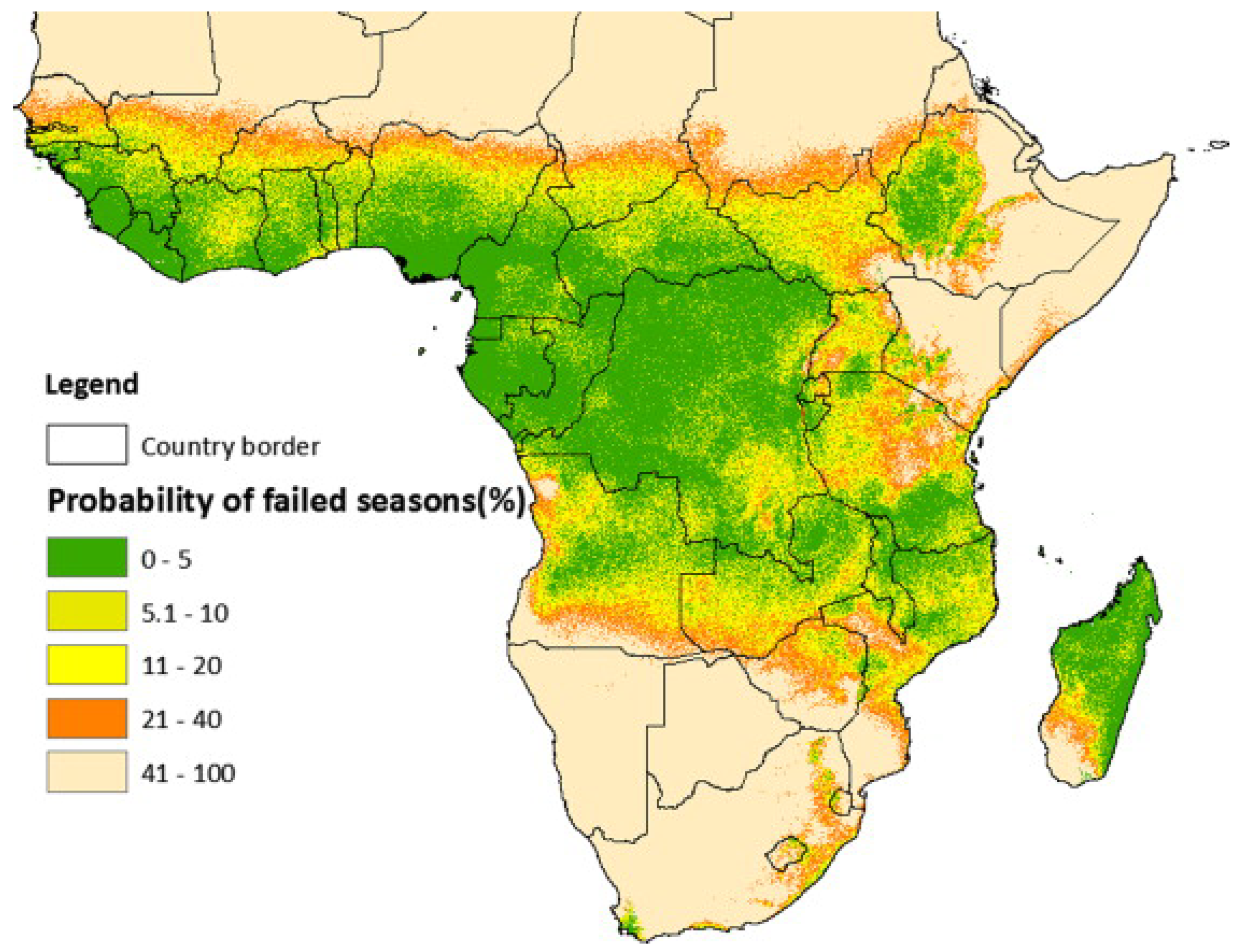
Figure 2.
Generalized Design Expectations of WSN-based Agri-IoT Technology.
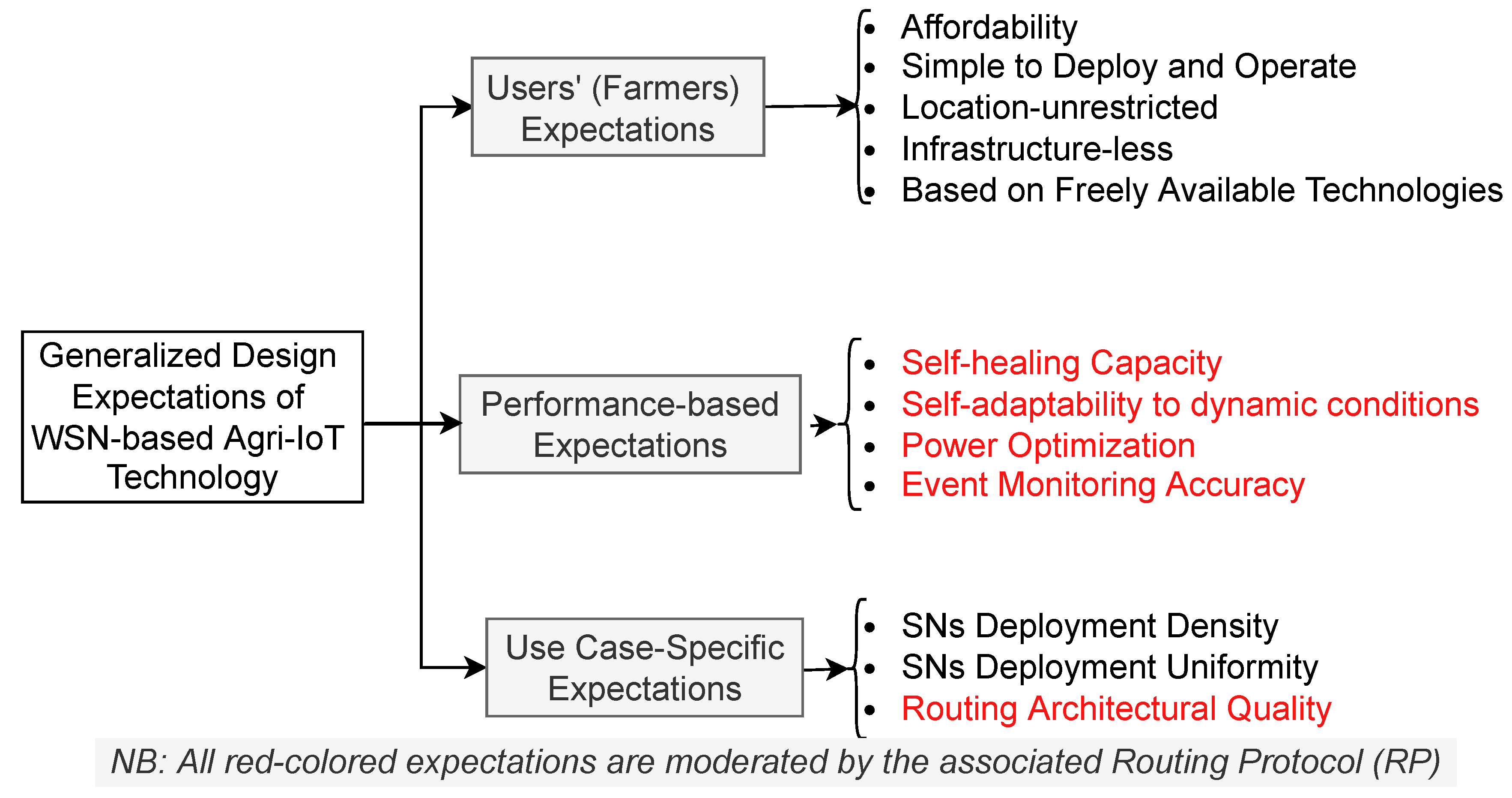
Figure 3.
Conceptual Framework: Agri-IoT-Based Farm Monitoring and Control Cycle.
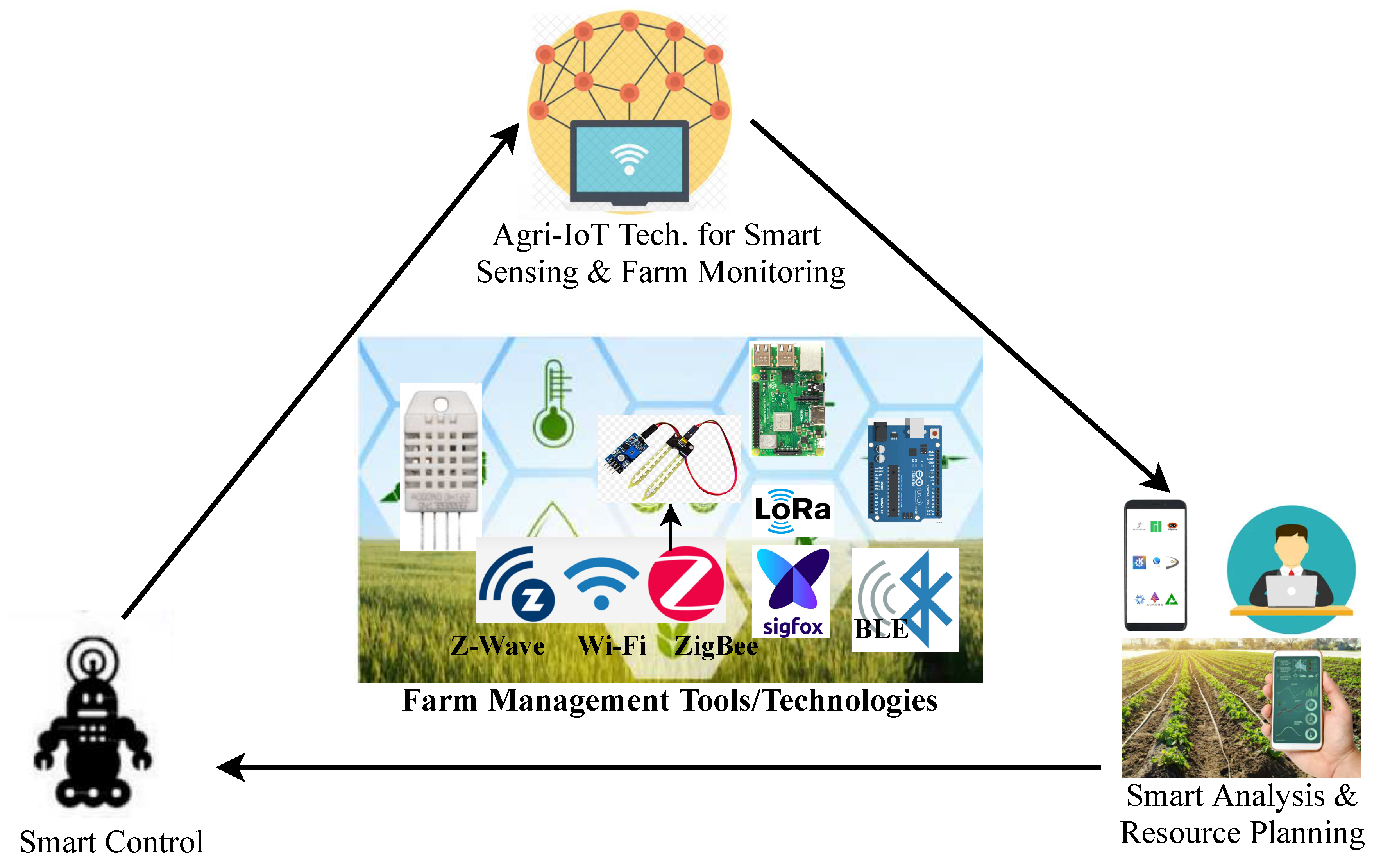
Figure 4.
Generalized Agri-IoT Framework Consisting of: Field Layout Overview of Agri-IoT Framework (a), Sample of Classic Agri-IoT in the State-of-the-Art (b), and Key Components of a SN or a BS (c).
Figure 4.
Generalized Agri-IoT Framework Consisting of: Field Layout Overview of Agri-IoT Framework (a), Sample of Classic Agri-IoT in the State-of-the-Art (b), and Key Components of a SN or a BS (c).
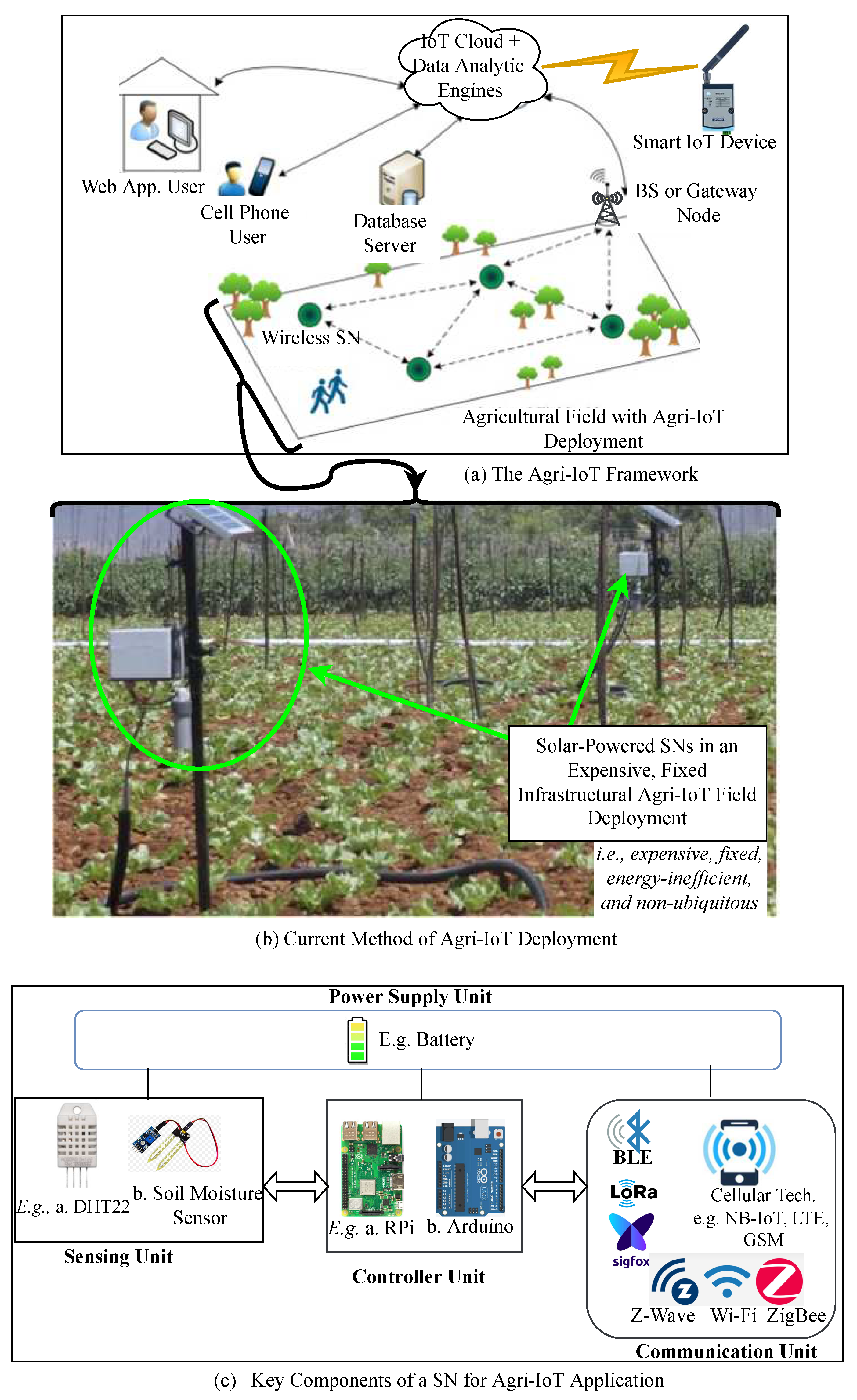
Figure 5.
Generalized Taxonomy of IoT Applications.
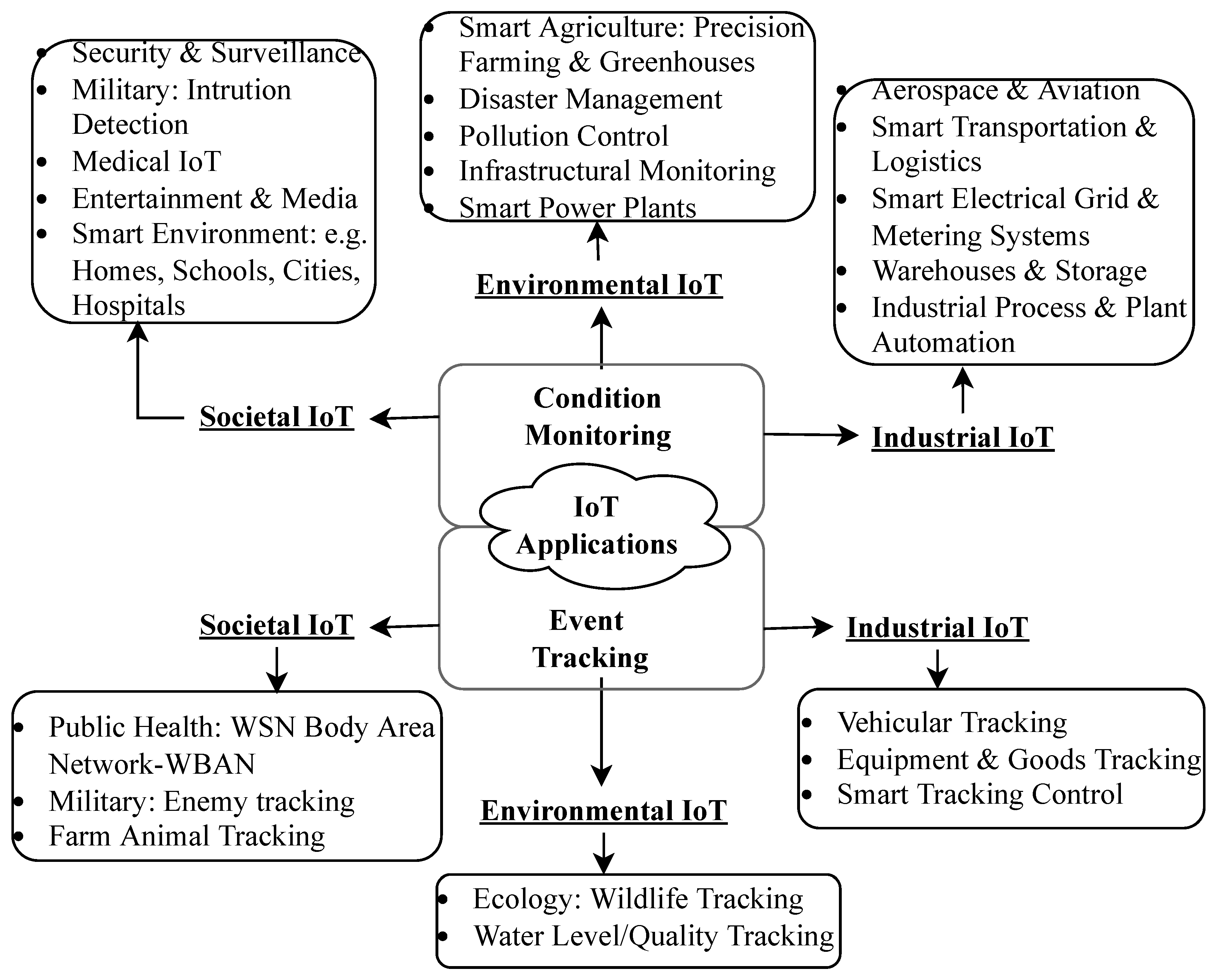
Figure 6.
The Roles of Agri-IoT in Smart Farming with Specific Use-Cases.
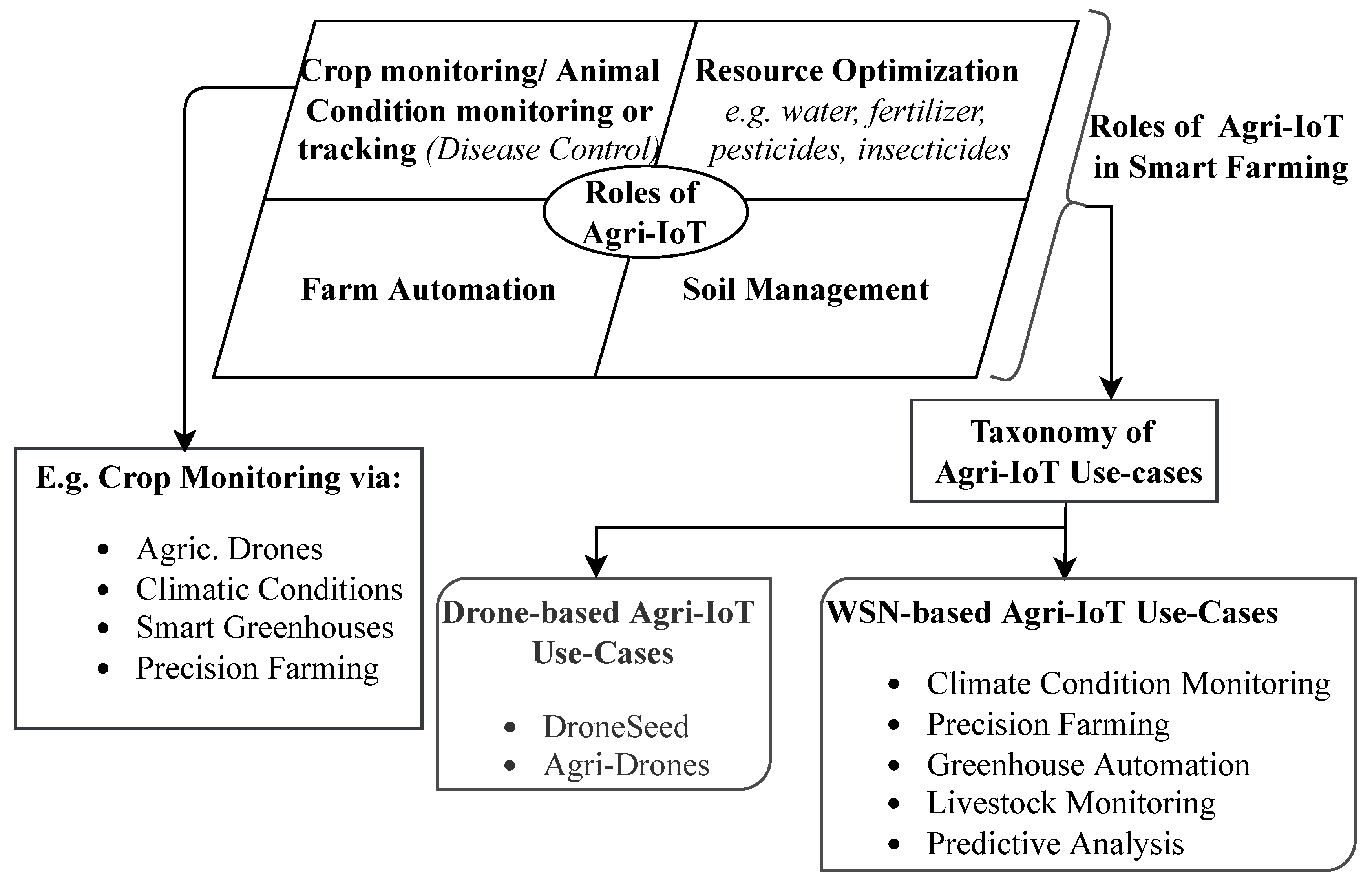
Figure 7.
Different Architectural Layers in the State-of-the-Art of IoT Ecosystem.
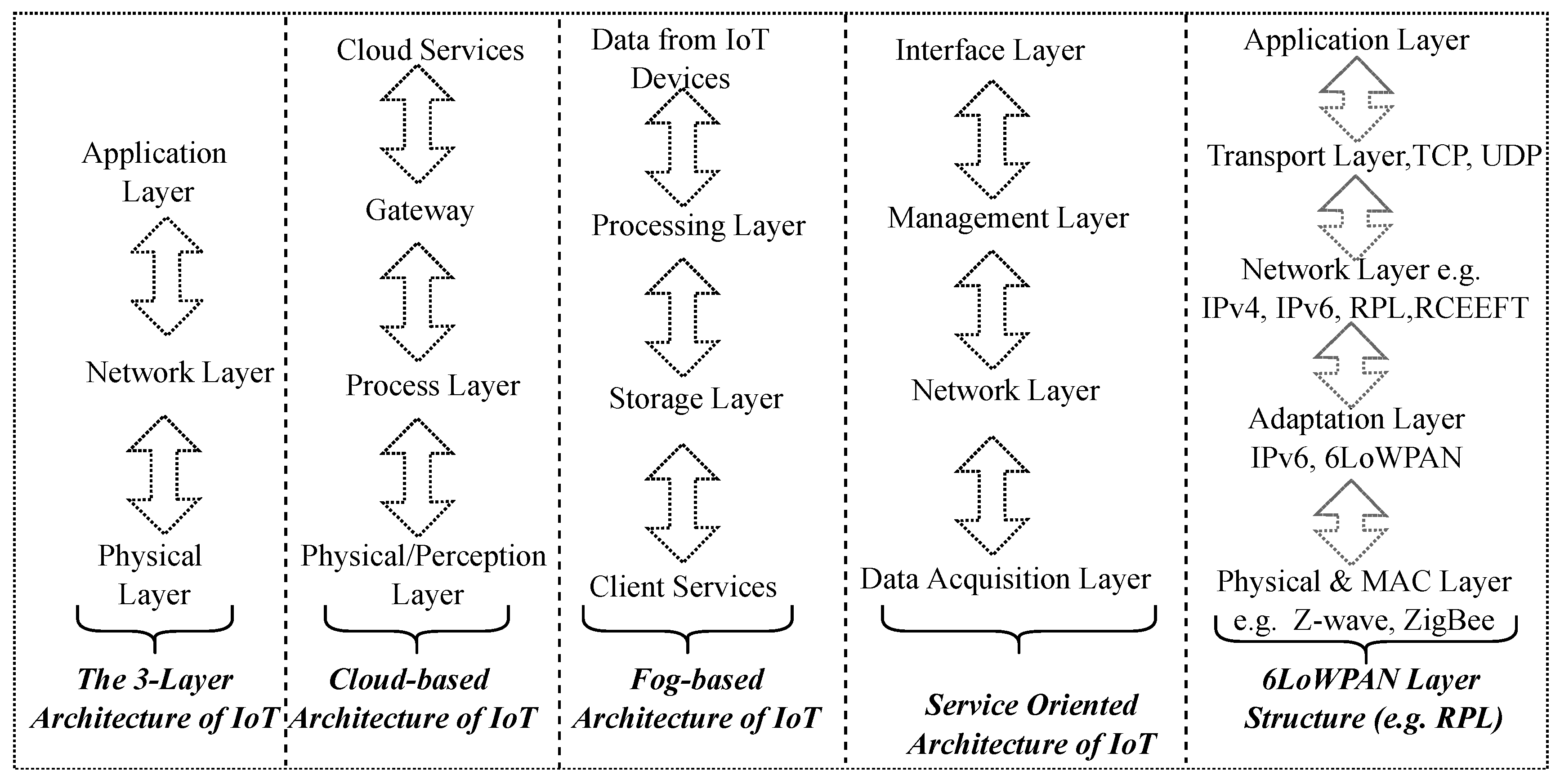
Figure 8.
Proposed Agri-IoT Architectural Layers with Core Components of Agri-IoT Ecosystem, and the "Things" Taxonomy.
Figure 8.
Proposed Agri-IoT Architectural Layers with Core Components of Agri-IoT Ecosystem, and the "Things" Taxonomy.
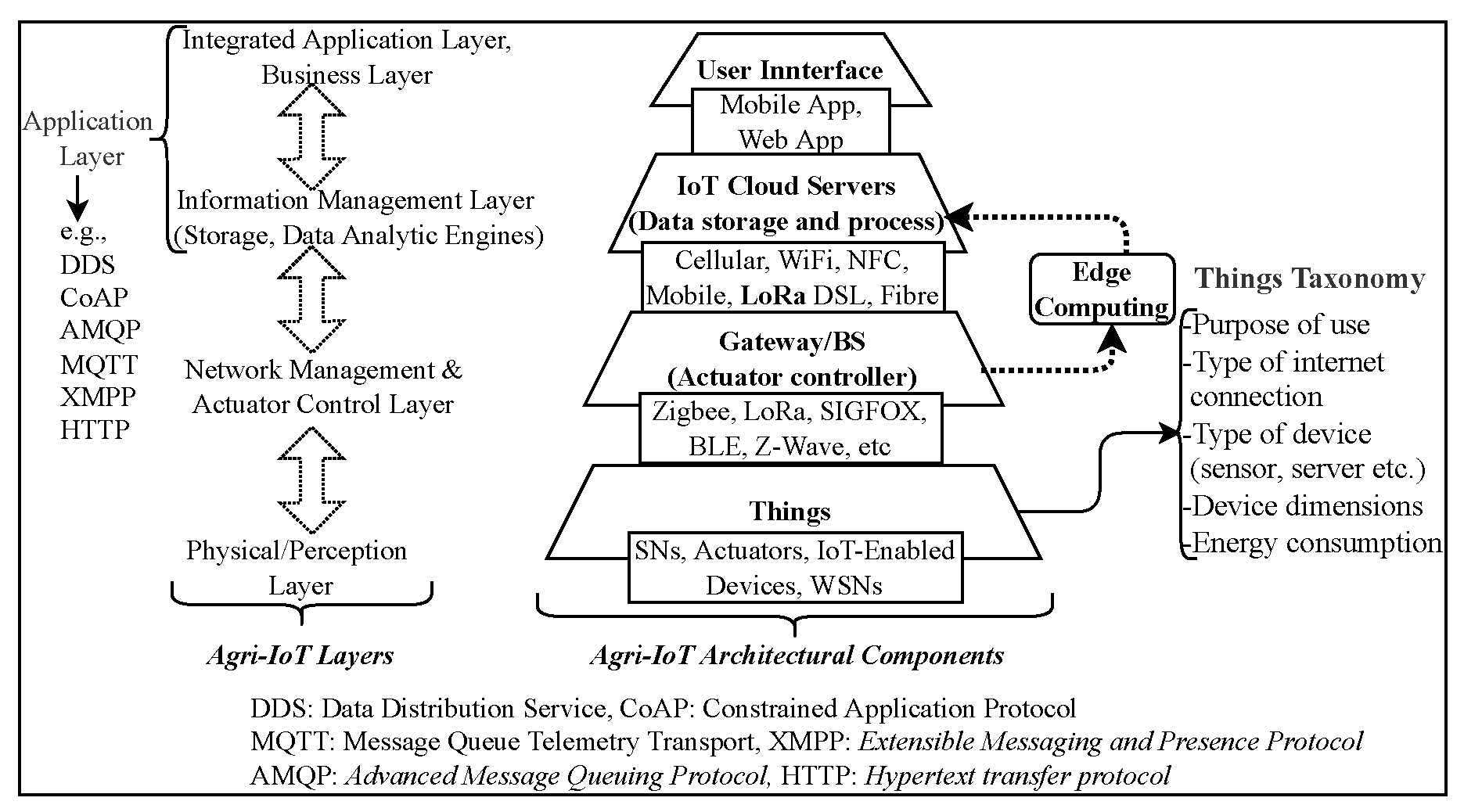
Figure 9.
Principal Design Factors for Agri-IoT Networks.
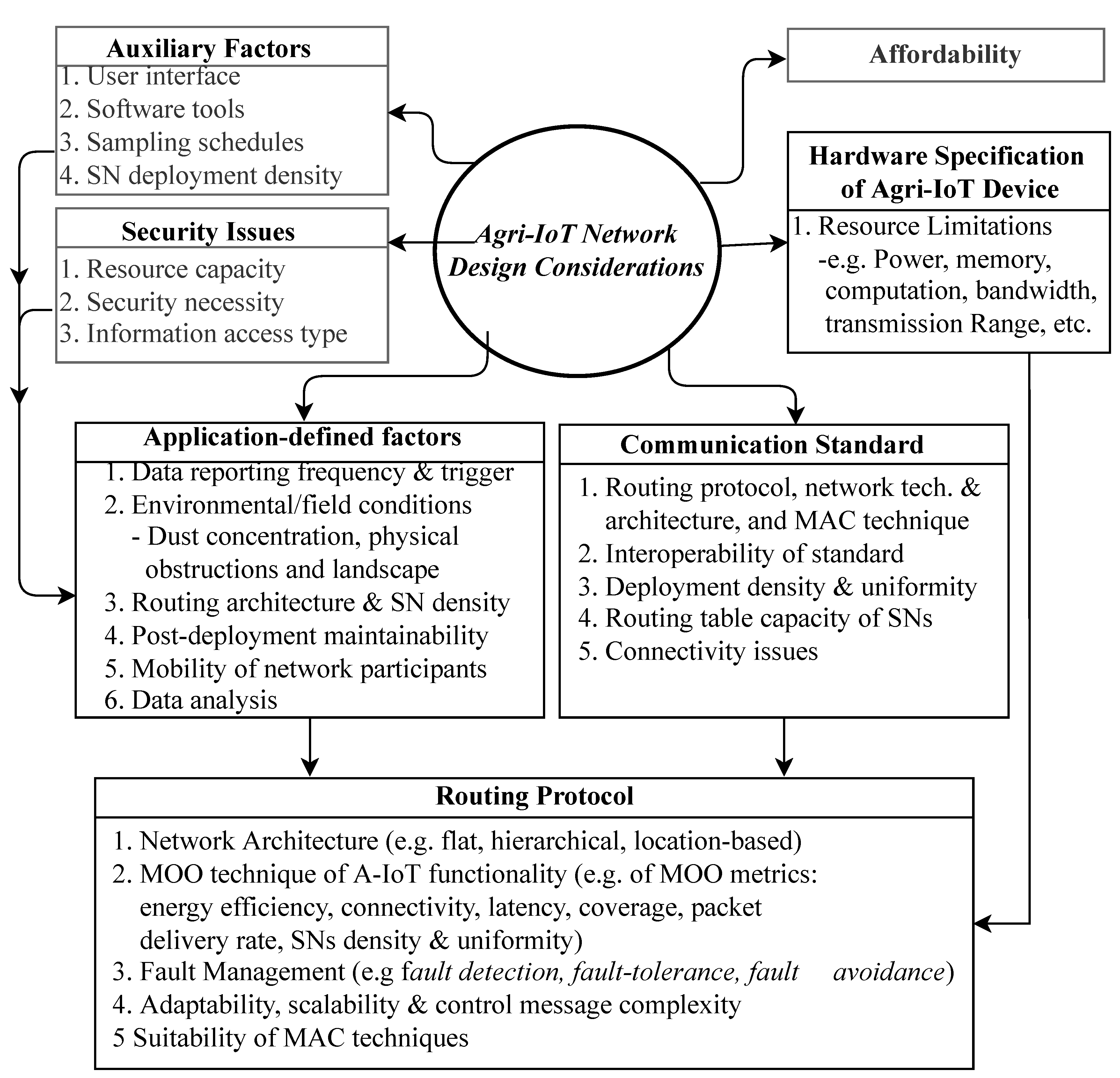
Figure 10.
Expected Design Objectives and Strategies of WSN-based Agri-IoT Routing Protocols.
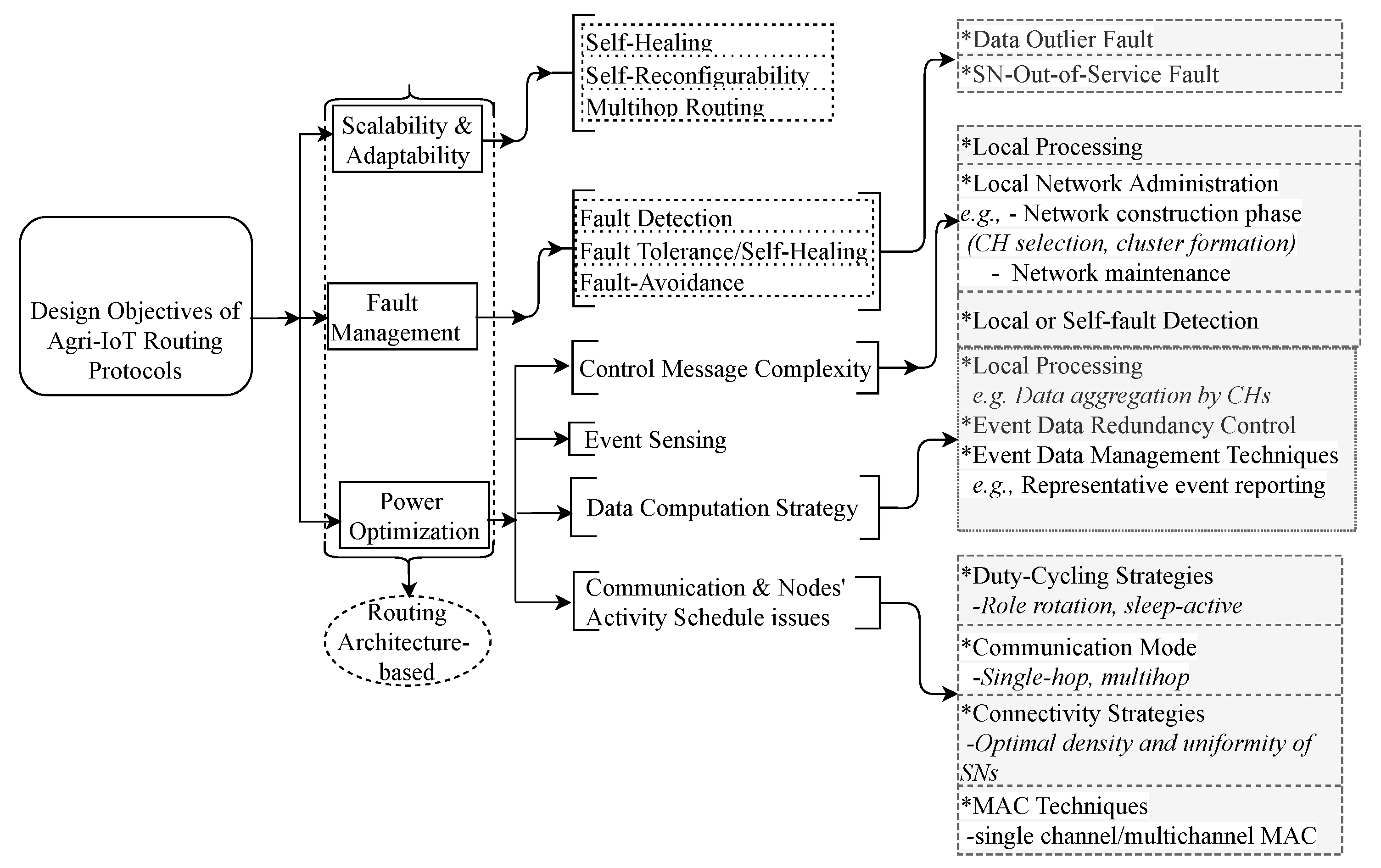
Figure 11.
Taxonomy of WSN-based Routing Protocols of Agri-IoT.
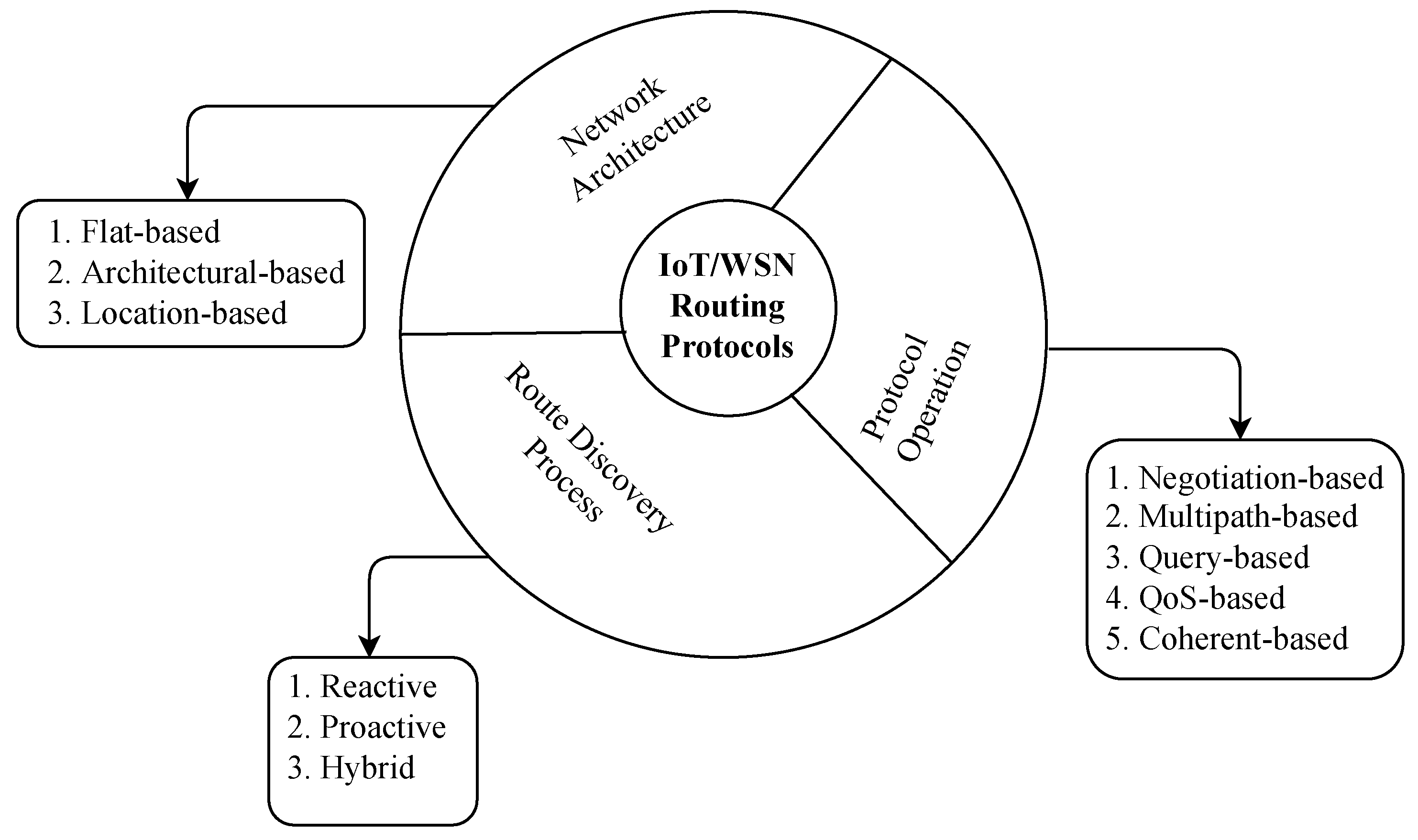
Figure 12.
Sample Network Architectures: Centralized-Data-Centric, Cluster-based, and Graph/Flooding-based Architectural Frameworks of WSN sublayer.
Figure 12.
Sample Network Architectures: Centralized-Data-Centric, Cluster-based, and Graph/Flooding-based Architectural Frameworks of WSN sublayer.
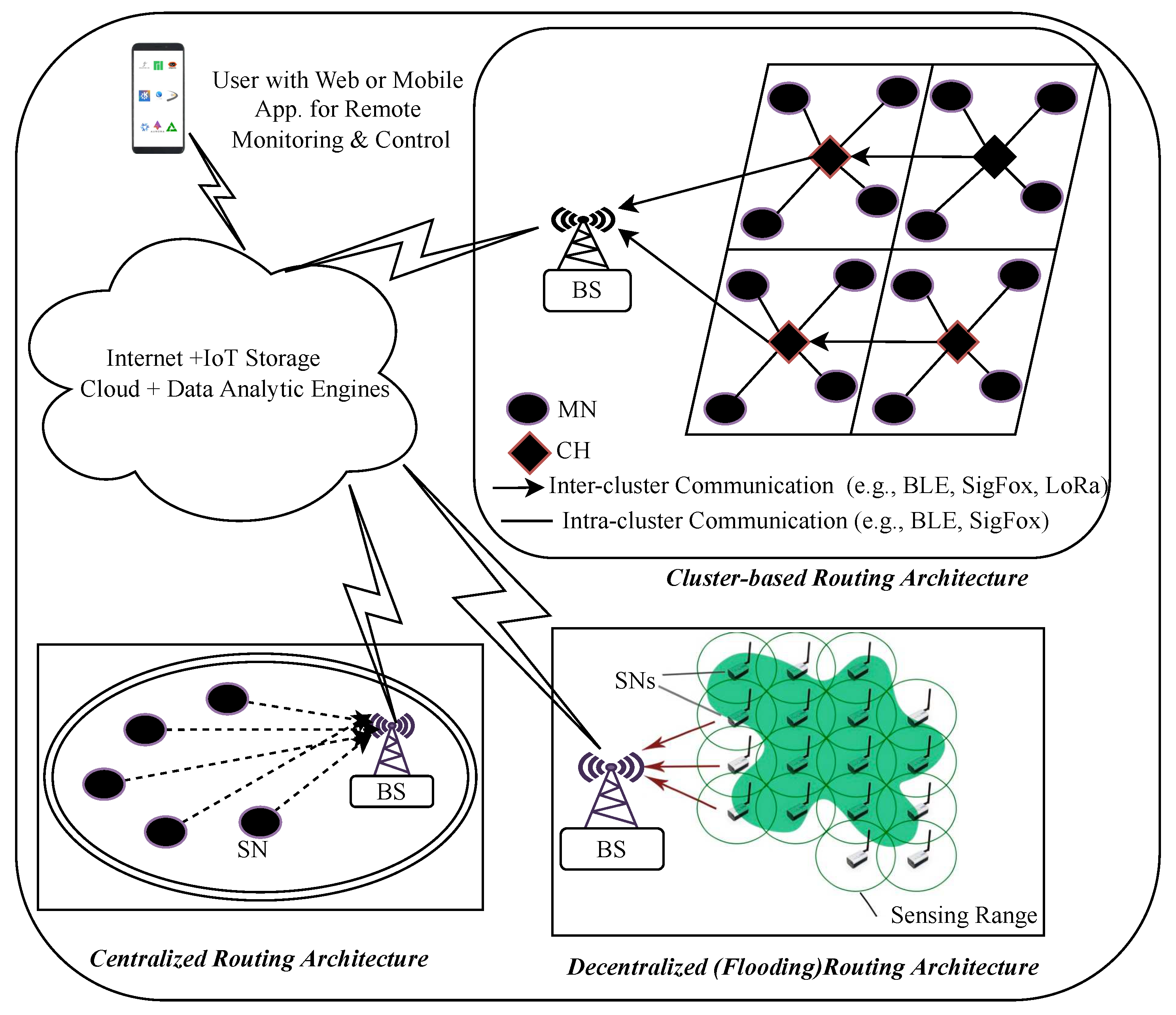
Figure 13.
Proposed Functionality-based MAC Classification Framework.
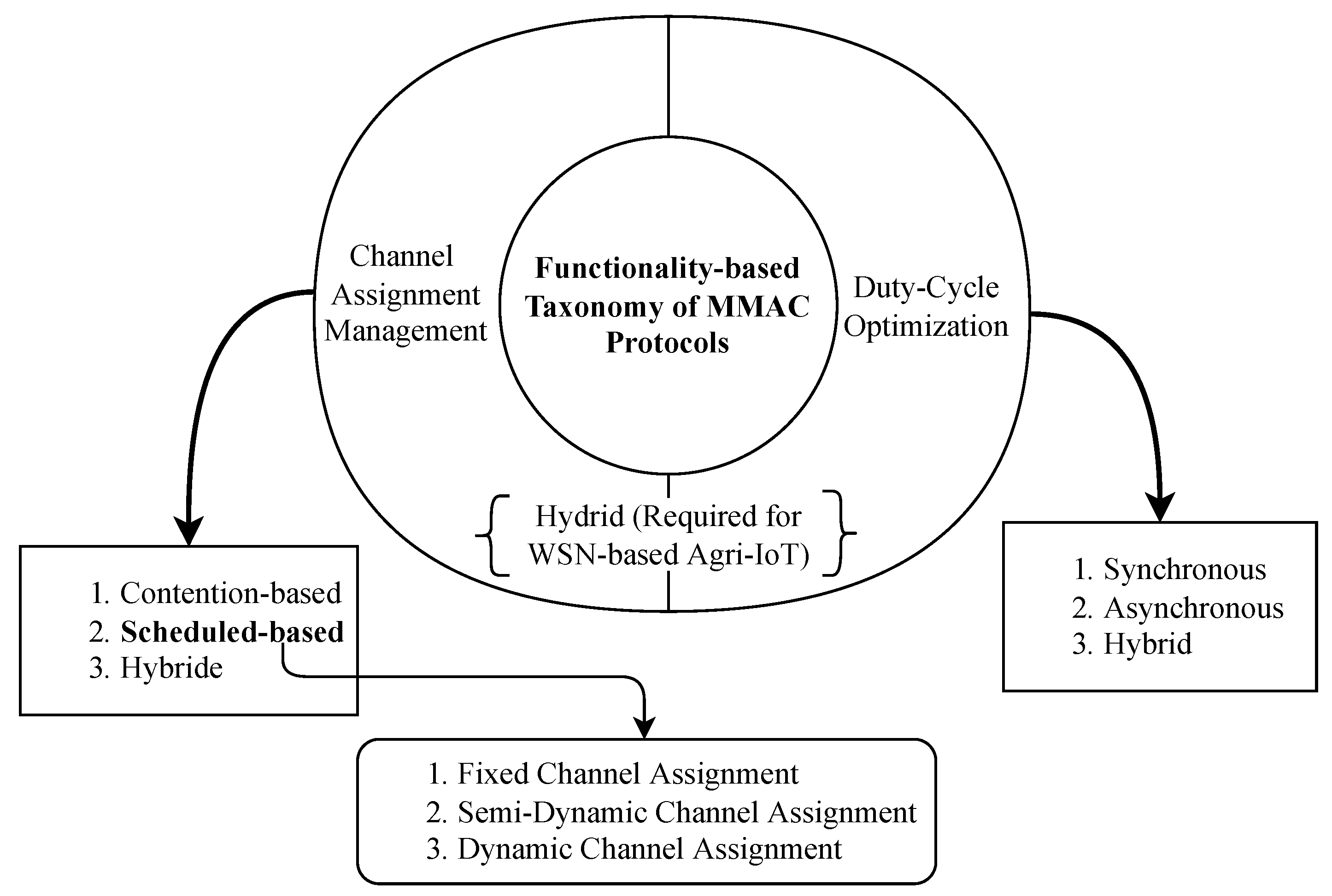
Figure 14.
Fault-Error-Failure Cycle [73].
Figure 14.
Fault-Error-Failure Cycle [73].
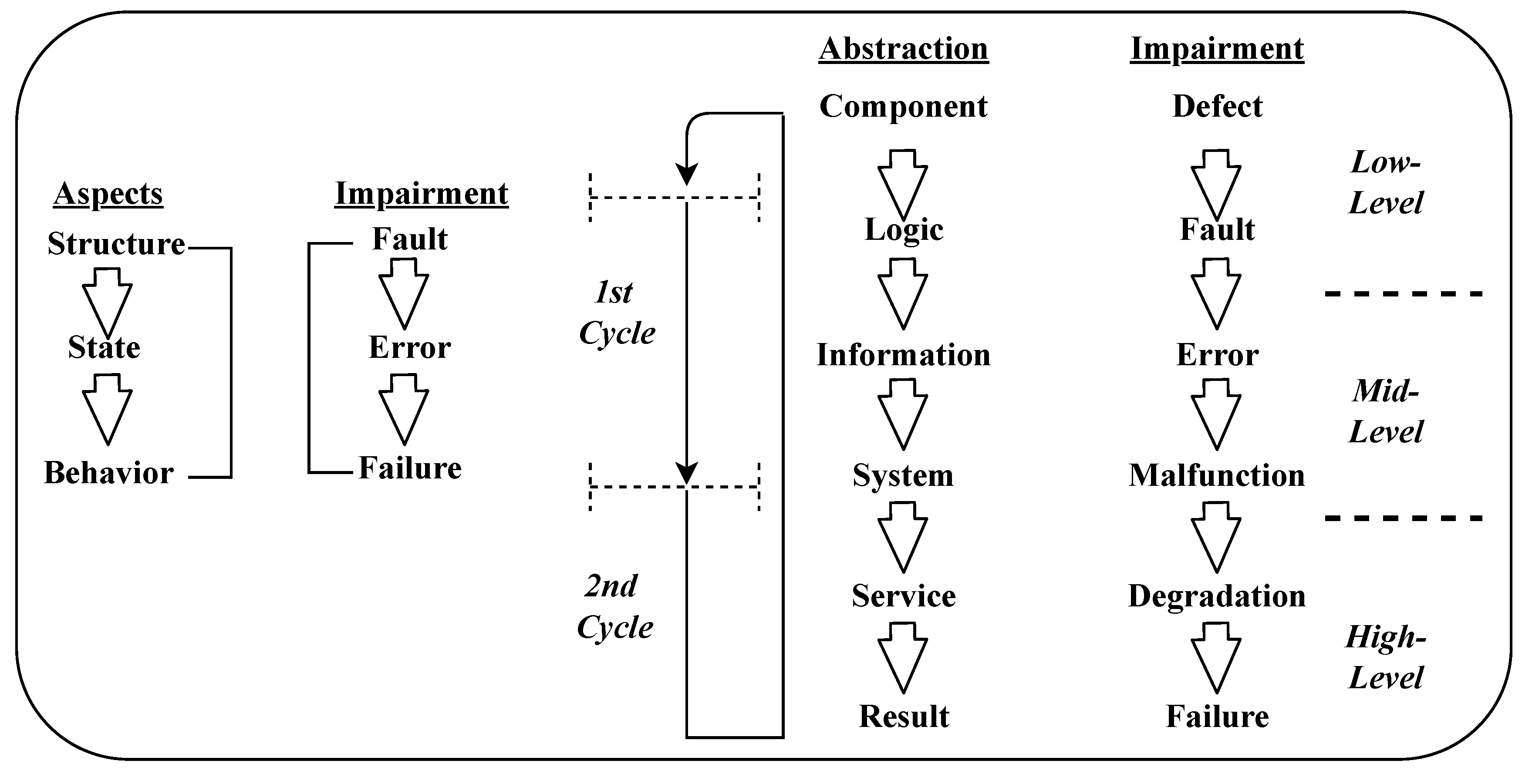
Figure 15.
Faults in the WSN sublayer of Agri-IoT: Sources and Fault Propagation Model.
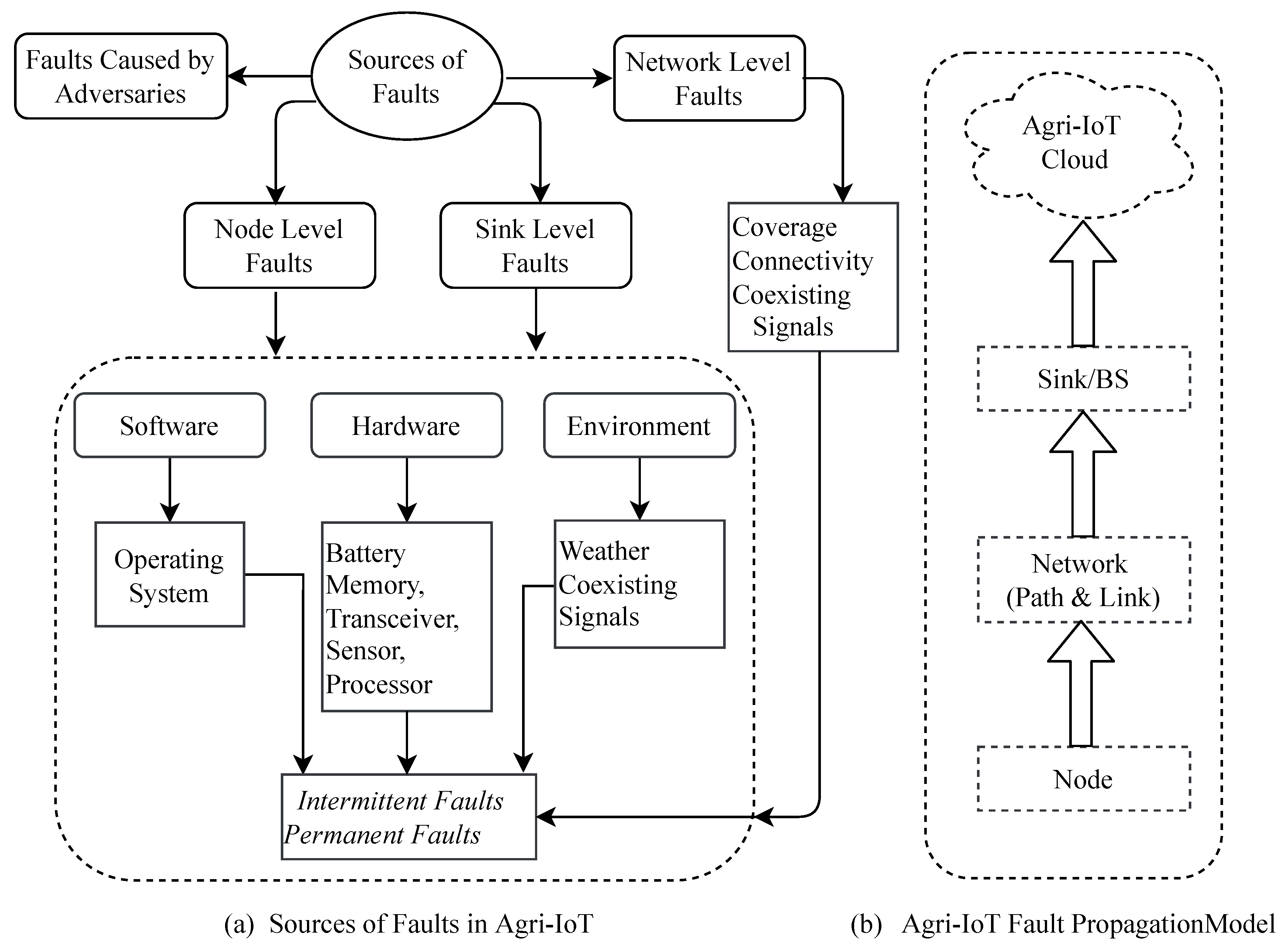
Figure 16.
Classification of Faults in the State-of-the-Art and Proposed Fault Taxonomies for WSN-based Agri-IoT.
Figure 16.
Classification of Faults in the State-of-the-Art and Proposed Fault Taxonomies for WSN-based Agri-IoT.
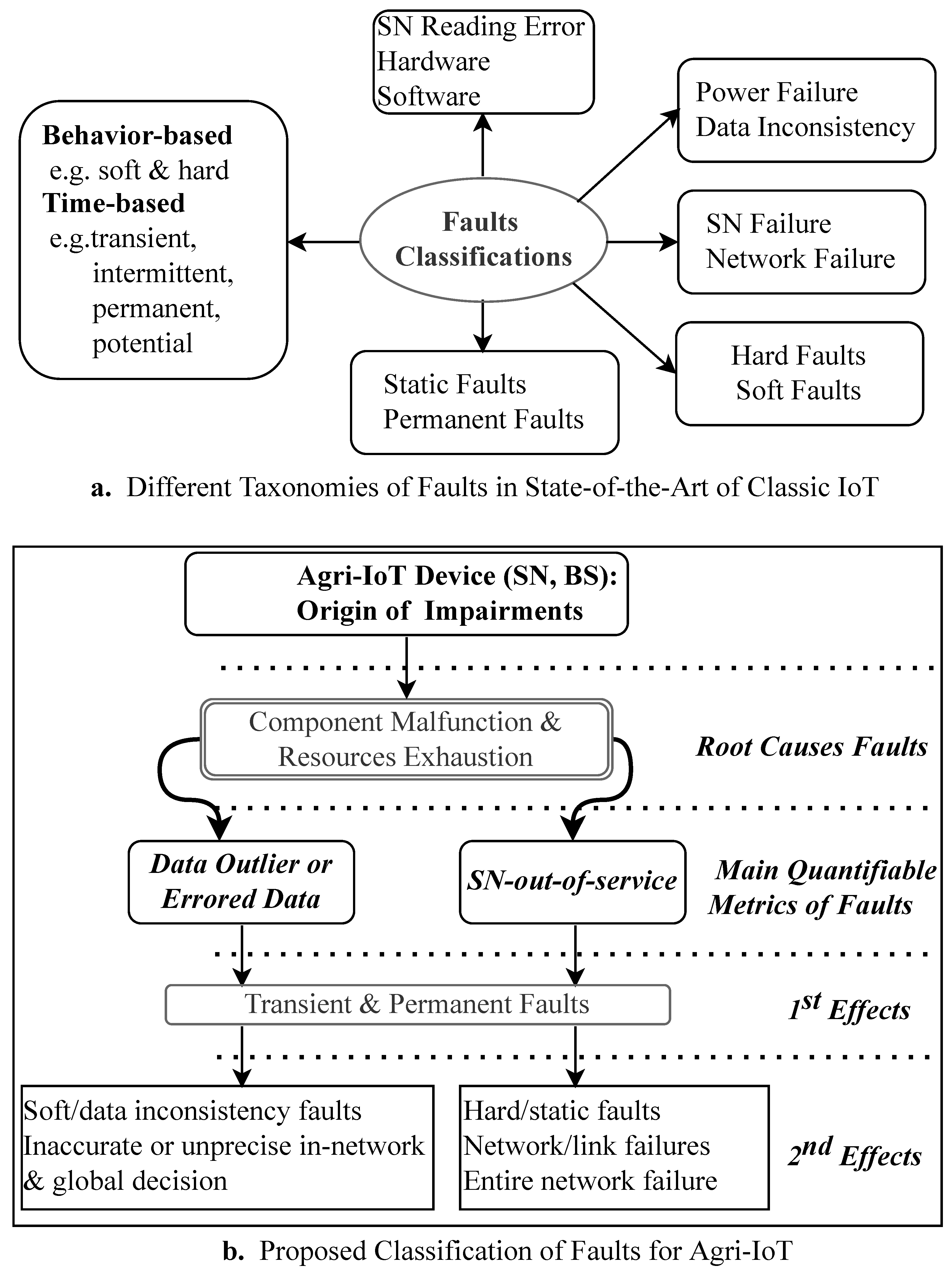
Figure 17.
FM Framework in WSN Sublayer of Agri-IoT.
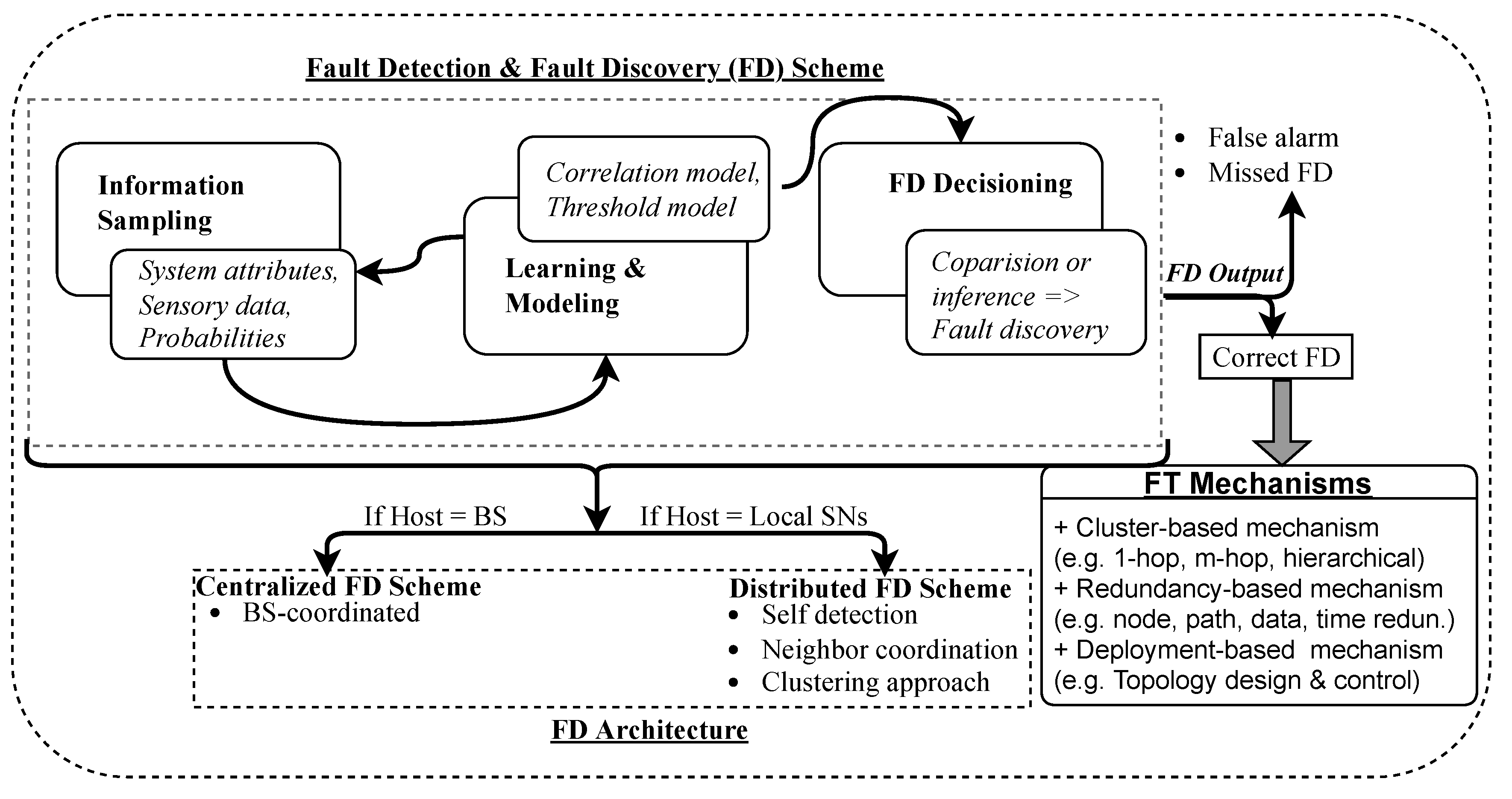
Figure 18.
Conceptual Architectural Framework of the Proposed CA-IoT for Precision Irrigation Management.
Figure 18.
Conceptual Architectural Framework of the Proposed CA-IoT for Precision Irrigation Management.
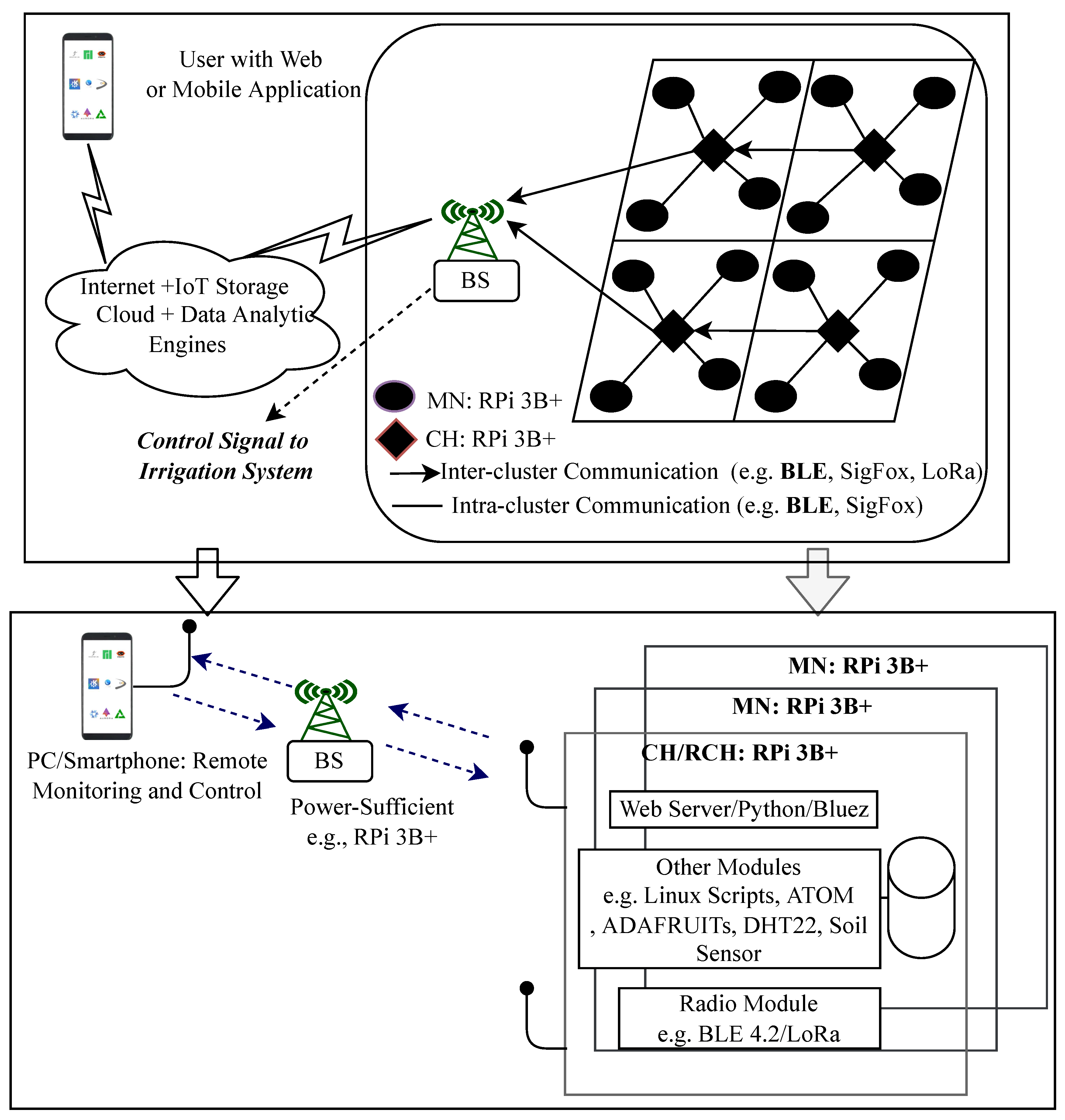
Figure 19.
CA-IoT Use Case Cluster Illustrating the Key Network Components: MNs, CH, and BS.
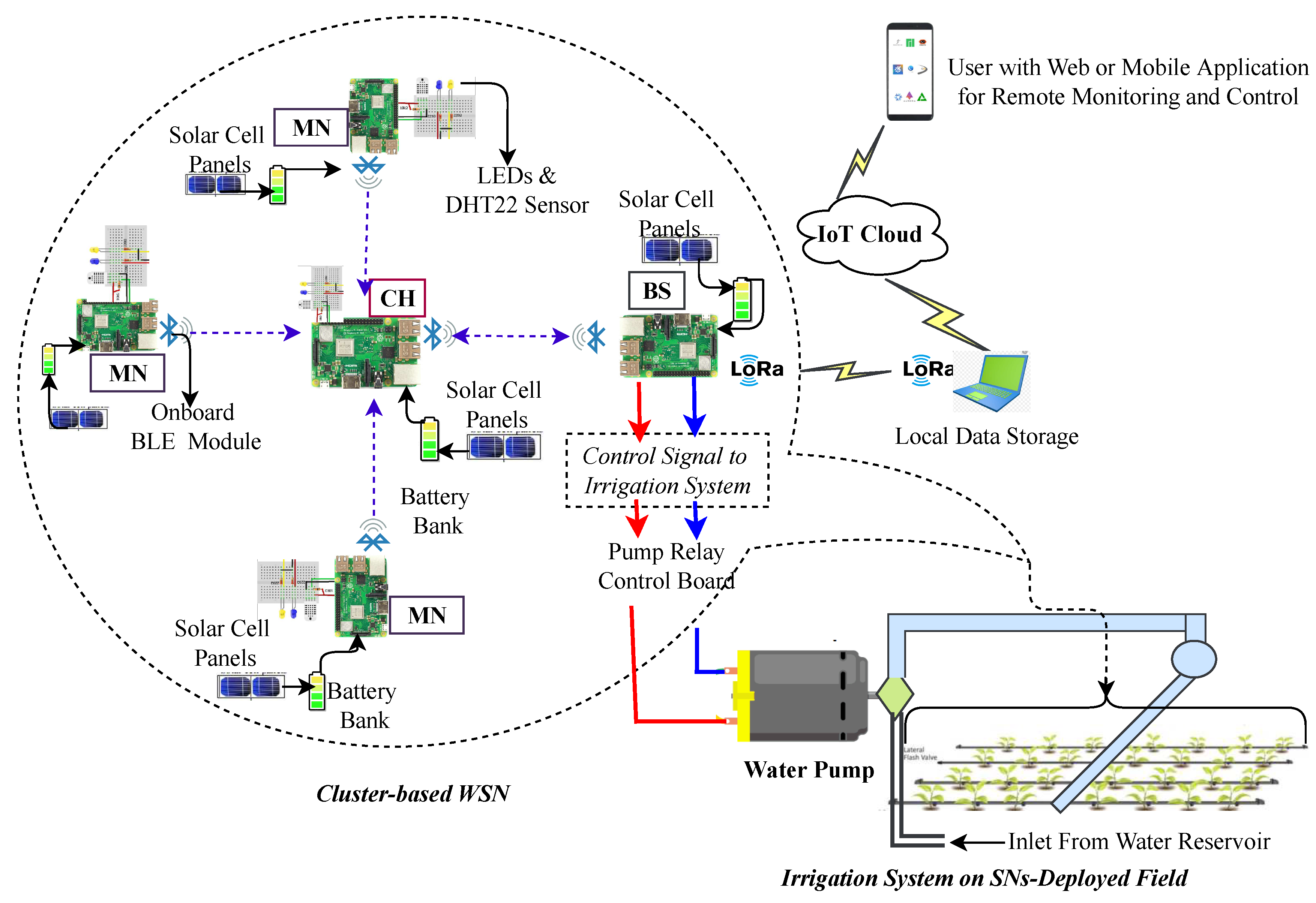
Figure 20.
Characterization of Cluster-based Networks and Deduced Taxonomy of MOO Metrics for Optimizing Agri-IoT Networks.
Figure 20.
Characterization of Cluster-based Networks and Deduced Taxonomy of MOO Metrics for Optimizing Agri-IoT Networks.
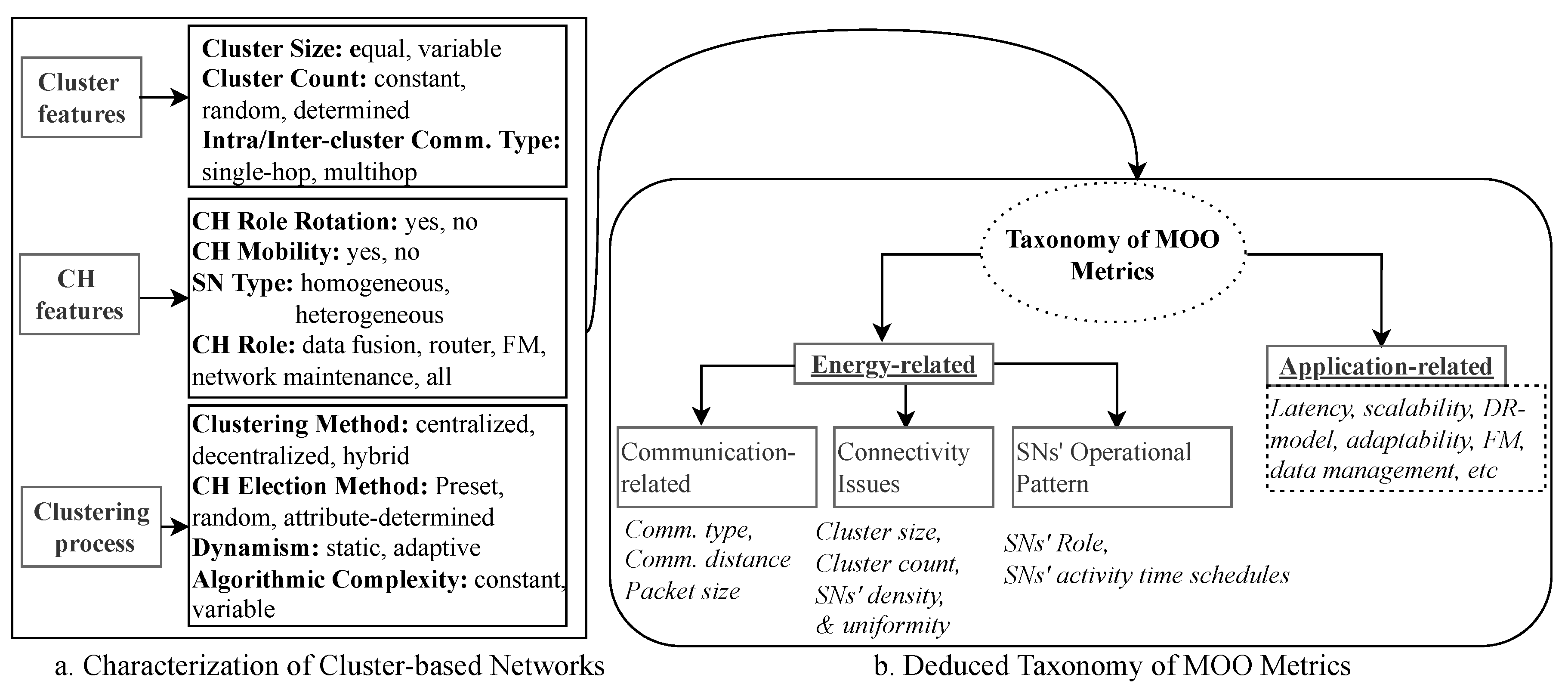
Figure 21.
Proposed Operation Cycle for Designing our CA-IoT Network’s Routing Protocol.
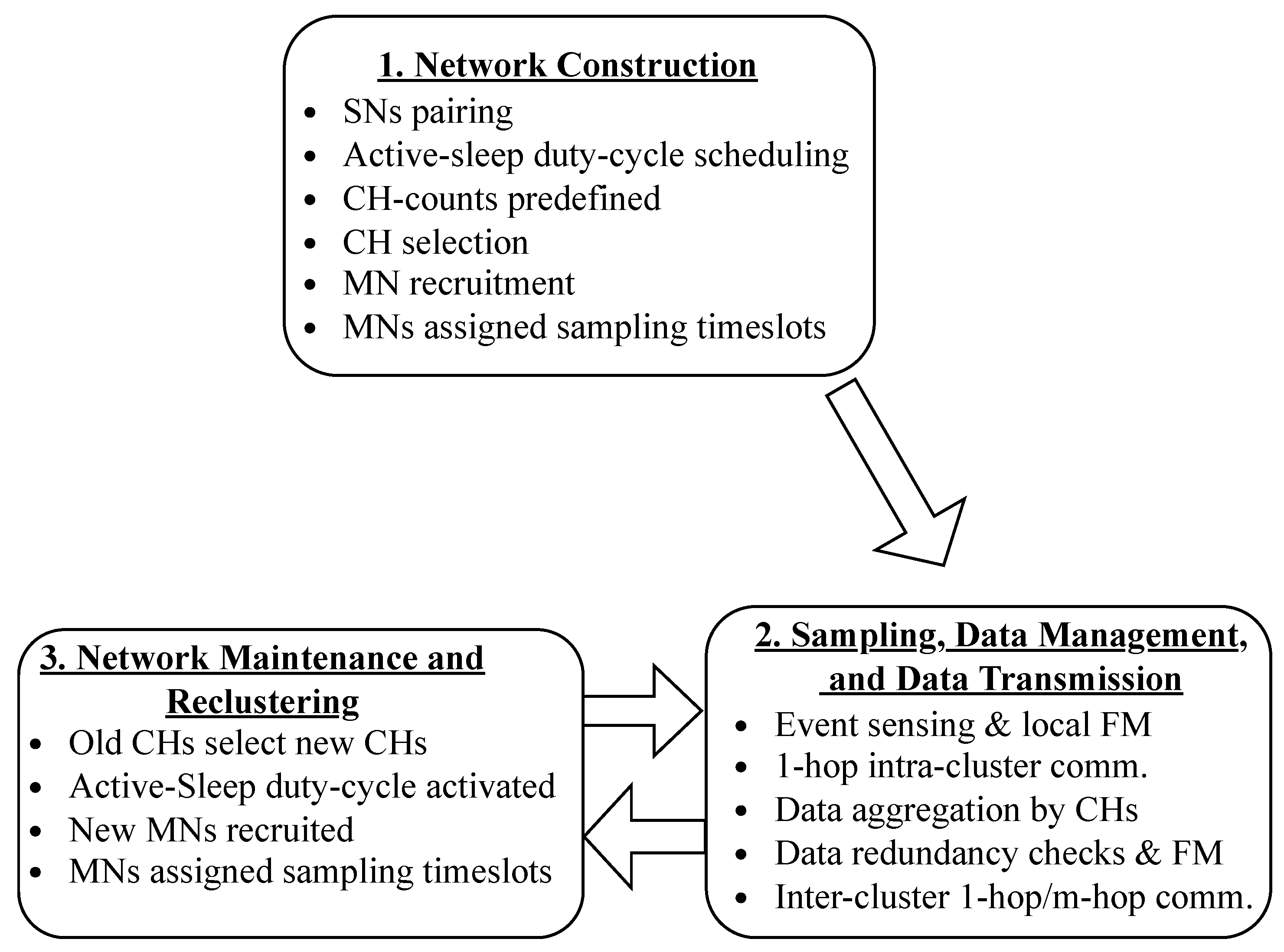

Table 1.
Comparison of SN and BS.
| Network Participant | Power Source | Communication Technologies | Controller Type | Processor/Memory Requirements | Requires Sensors |
|---|---|---|---|---|---|
| SN | Mostly battery-powered | Mostly relies on low-power, short ranged standards such as BLE, LoRa, SigFox, and ZigBee for on-field communication | Can be Arduino-based, or Raspberry Pi (RPi)-based, etc. | Low processing and storage powers but based on SN roles | Yes |
| BS | Can be battery-powered but mostly use a more reliable power supply | Mostly communicate with IoT cloud via fixed line, Wi-Fi, cellular technologies, and the WSN via the low-power standards, e.g., BLE, LoRa, SigFox, ZigBee, LoRa-based Satellite, etc. | Can be RPi or Arduino-based or a PC. | Requires high memory and processing powers | No |
Table 2.
Comparison of WSN, IoT, and Agri-IoT Technologies.
| Characteristics | WSN Technology | IoT Technology | Agri-IoT Technology |
|---|---|---|---|
| Internet Connectivity | SNs have no direct connection to the Internet, always via a BS/router/gateway if necessary | Nodes directly send sampled data to the Internet | SNs’ Internet connectivity can be either direct or via a BS |
| Critical Design factors/ Expectations | Application-specific | Security, Interference, linking fleet | Power optimization, routing architectural support, fault tolerance, on-site auto-actuation demand, and self-adaptability to network dynamisms |
| Deployment Density | Application-specific | Moderate | High |
| Power Supply Constraints | Application-dependent | Application-specific | Compelled to drive on battery power |
| On-site Electricity and Internet Coverage | May be possible | Required | Mostly inaccessible |
| Implementational Routing Architecture | centralized or flooded | Mostly centralized | Contextualized cluster-based but inadequately researched |
| Communication Technology | Application-specific | May use high-power standards such as Wi-Fi, cellular-based, Satelite, fixed-line, etc. | Requires low-cost low-power standards such as BLE, LoRa, SigFox, ZigBee, etc. that support cluster-based architecture |
| Users’ Expectations | Performance stability | Performance stability | Affordability, autonomous performance stability, location-independence, simple to deploy and operate by non-experts, supportive of large-scale farm management, and based on freely available communication technologies that do not require licensing. |
| Network Type | Data-centric | Use information network directly | Mostly data-centric |
| Basic Components | Resource-constrained SNs, BS or Sink Node | May include smartphones, PCs, WSN, BS, Internet, IoT Cloud with data analytic tools, and the user interface app. | WSN, BS, IoT-cloud with application-defined user apps and data analytical engines |
| Security and Privacy | Medium | High | low |
| On-site Actuation Required? | Not always | No | Yes |
| Network Participant mobility during Operation | Usually static | Mobile | Application-specific |
Table 3.
Wireless Spectrum with the Core Communication Platforms/Applications.
| Frequency Band | Applications |
|---|---|
| Licensed Band | |
| 0-20 MHz | AM Radio |
| 86MHz-108MHz | FM Radio |
| 470MHz-800MHz | TV band |
| 850MHz-1900MHz | Cellular-based: GSM/3G/4G/5G/LTE |
| Around 3.5GHz | Satelite Comm. |
| Unlicensed Band | |
| 863MHz-928MHz | LoRa, LoRaWAN, SigFox |
| Legality location-dependent: e.g., | |
| 915MHz (Australia & North America), | |
| 865MHz to 867MHz (India), 923MHz (Asia) | |
| Around 2.4GHz | Wi-Fi, BLE, ZigBee,Classic Bluetooth |
| Around 5GHz | Wi-Fi |
Table 4.
Comparison of Common Communication Platforms of the WSN Sublayer of Agri-IoT.
| Platform/ | Network | Transmission | Frequency | DataRate/ | Network | Energy | Topology | ||
|---|---|---|---|---|---|---|---|---|---|
| Standard | Size | Range(Outdoor) | Band | latency | Type | Consumption | |||
| BLE/ IEEE 802.15.1 [6] | Application- | 3-10 | 10-50m | 2.4GHz | 1Mbps/6ms | PAN,WSN | Very Low | Star, mesh | |
| -defined | |||||||||
| Bluetooth Classic/ IEEE 802.15.1 [5] | 7 | 215 | 10-100m | 2.4GHz | 1-3Mbps/100ms | PAN | High | Scatternet | |
| WiFi/ IEEE 802.11 a/c/b/d/g/n [7] | 255 | 800-835 | 162 | 5-60GHz | 1Mb/s -7Gbps/50ms | LAN | High | Point-to-hub | |
| LoRaWAN/LoRaWAN R1.0 [6,8] | 25-100 | 868/900MHz | 0.4-100Kbps/NA | WAN | Very Low | Star-stars | |||
| Sigfox [2,6] | Undefined | 122 | 200kHz | 100-600bps/NA | PAN | Low | Star | ||
| ZigBee/IEEE 802.15.4 [2,23] | 64000+ | 36.9-100 | 77 | 10-20m | 2.4GHz | 20-250Kbps/(20-30)ms | PAN, WSN | Low | P2P,tree,star,mesh |
| NB-IoT,LTE/2G-GSM,4G-LTE [2,4] | 1000 | 200-560 | 80 | 2.4GHz | 200Kb/s-1Gbps/1s | WAN | Medium | Cellular system | |
| //IEEE 802.15.4 [23] | 64000+ | 8.9-36.9 | 35.28 | 2.4GHz | 20-250Kbps/40ms | PAN | Low | P2P,tree,star,mesh | |
| XBee PRO [24] | 64000+ | 36.9-63 | 900MHz | 20-250Kbps/40ms | PAN, WSN | Low | P2P,tree,star,mesh | ||
| Jennic JN5121/IEEE 802.15.4 | 64000+ | 100 | 2.4GHz | 20-250Kbps/30ms | PAN, WSN | Low | P2P,tree,star,mesh | ||
| RFID/ISO 18000-6C [4,29] | Undefined | 3000 | unspecified | 860-960MHz | 40-160Kbps/45ms | PAN | Low | Star |
Table 5.
Comparison of Some Cardinal Hierarchical WSN-based Routing Protocols for Agri-IoT in State-of-the-Art.
Table 5.
Comparison of Some Cardinal Hierarchical WSN-based Routing Protocols for Agri-IoT in State-of-the-Art.
| Protocol | Topology | Strength | Weakness | Suitability: Low-power |
|---|---|---|---|---|
| WSN sublayer of Agri-IoT | ||||
| LEACH and LEACH-inherited [9,12,21] | Tree or Cluster-based |
|
|
Suitable (optimal cluster quality yet required) |
| RPL and RPL-Inherited [15] | Graphical |
|
|
Unsuitable (high resource-demanding underlying technology,6LoWPAN, and routing tables) |
| AODV and AODV-inherited [13] | Mostly graphical |
|
|
Unsuitable (extremely high control message complexities during route construction and maintenance) |
Table 6.
Summary of State of the Art on Duty-cycle and CAM MMAC-Protocols.
| Name | Main Task | Application | Weakness | Approach | Overhead | Sync/ Async |
|---|---|---|---|---|---|---|
| S-MAC, T-MAC, DS-MAC[54,55] | DCO | Event-driven with long idle listening times, collision-prone. | High PC, complexity, latency | Contention-based, distributed MAC | RTS, CTS, ACK, SYNC | Sync |
| X-MAC [56] | DCO | High energy savings, throughput, collisions, delays | high complexity, higher PC, High collisions | Contention-based, distributed MAC | Preamble | Async. |
| LA-MAC [57] Inherits X-MAC [56] | DCO | More energy savings than X-MAC, throughput, scalability collisions, low delays | High complexity, weak collision control measures | Contention-based, distributed MAC | Preamble | Async. |
| B-MAC [58] | DCO | Delay-tolerant, high energy savings, throughput, DDR more than S-MAC, | High complexity, weak collision control measures, low throughput | Contention-based, distributed MAC (CSMA) | Preamble length | Async. |
| (PEDAMACS) [59] | DCO with collision avoidance | Event-driven, energy-saving | High computational complexity, impracticable | Schedule-based, centralised MAC | RTS, CTS, ACK, SYNC, learning | Tight Sync. |
| PW-MAC [60] | DCO | Low delay, long idle time | High complexity | Contention-based, distributed MAC | Beacon | Async. |
| cluster-based time synchronization [61] | DCO | High energy savings | High computational complexity | Schedule-based, cluster-based, distributed MAC | Schedule, CHs’ formation | Tight Sync. |
| LEACH [62] | DCO and CAM | Periodic sampling surveillance, energy balance, savings | High complexity, weak collision control measures | Schedule-based, cluster-based, distributed MAC | Schedule, CHs’ selection | Tight Sync. |
| PRIMA [63] | DCO and CAM | Periodic sampling/ surveillance, balanced energy-savings | High complexity, weak collision control measures | Schedule-based, cluster-based, distributed MAC | Schedule, CHs’ selection | Tight Sync. |
| WiseMAC [64] | DCO | High energy-savings, collision, hidden terminal problem, poor duty schedule | high complexity, weak collision control measures, high PC | Hybrid, distributed MAC | Long wake-up preamble | Sync. |
| Advanced WiseMAC [65] | DCO | Higher energy savings than WiseMAC, collision, hidden terminal problem | high complexity, weak collision control measures, poor duty schedule | Hybrid, distributed MAC | Shorter wake-up preamble than WiseMAC | Sync. |
| WideMAC [66] | DCO | wider duty-cycle ranges, aperiodic or periodic Tx, higher energy savings, low memory requirements | Weak collision control measures | Hybrid, distributed MAC | Preamble but short | Sync. |
| EM-MAC [67] | CAM | Heavy traffic, delay-tolerant, hidden terminal problem | Prediction accuracy depends on the accuracy pseudorandom function | Schedule-based, predictive-based, dynamic CAM, distributive MAC | Initial preamble | Async. |
| MCAS-MAC [68] | CAM | High energy savings, latency, low idle listening | Energy efficiency decreases with high traffic densities (high DDR) | Schedule-based, distributed MAC | Preamble | Async. |
| AMMAC [69] | CAM and DCO | High energy savings, DDR | Time drift will affect accuracy | Contention-based, distributed MAC | Requires asynchronous modifications of duty-cycles | Async. |
| LL-MCLMAC [70] | CAM | Improved end-to-end delay and throughput, low traffic with two time-slots | Data Tx on same control channel, Susceptible to co-channel or adjacent channel interference | Semi-dynamic schedule-based, distributed MAC | Common control channel notification | Async. |
| MC-LMAC [71] | CAM | Scalable WSNs, collision avoidance | High delays due to dynamic channel switching | Dedicated channel control, dynamic channels switching, schedule-based, distribute d MAC | Common control channel notification | Async. |
Table 7.
Comparative Summary of FM Schemes for WSN-based IoT Networks.
| Author/Year | Root Faults? (i.e., Data Outliers & SN-Out-of-Service) | FM Architecture | Unrealistic Assumptions | Energy-saving (FA)? | FT? | High Control Message Complexity | Stand-alone? |
|---|---|---|---|---|---|---|---|
| [79] (2013) | Yes, both | Cluster-based | All SNs have the same lifetime, SNs record the same sensory data regardless of location | × | ✓ | High | × |
| [96] (2016) | Partial: data outliers | Centralized | SNs have binary sensing outputs | ✓ | × | Low | ✓ |
| [81] (2015) | Partial: data outliers | Distributed | All fault-free sensors measure the same physical value at any instant of time, while the faulty sensors measure different physical values | ✓ | × | Moderate | ✓ |
| [107] (2006) | Partial: SN-out-of-service | Distributed | All SNs must have enough Neighbors | × | ✓ | High | ✓ |
| [76] (2009) | Partial: SN-out-of-service | Distributed | SNs must have unvarying detected initial status | × | ✓ | High | ✓ |
| [78] 2016 | Partial: SN-out-of-service | Distributed | SNs must have the same initial status and a predefined number of neighbors | × | ✓ | High | ✓ |
| [101,102,103] (2004, 2005, 2005) | Partial: SN-out-of-service | Distributed | All SNs have the same error detection probability, all neighboring nodes of a SN have identical levels of accuracy regardless of distance | × | × | High | ✓ |
| [104] (2009) | Partial: data outliers | Distributed | SNs have binary sensing outputs. | × | ✓ | High | ✓ |
| [108] (2014) | Partial: data outliers & SN-out-of-service | Centralised | Silent on assumptions | × | No | Low | ✓ |
| [105] (2008) | Yes: transient faults | Distributed | All neighboring nodes have same transmission range and reading values. | × | × | High | ✓ |
| [109] (2016) | Partial: SN-out-of-service | Distributed | Silent on assumptions | × | × | Moderate | ✓ |
| [112] (2015) | Partial: data outliers | Distributed | Silent on assumptions | ✓ | ✓ | Low | ✓ |
| [113] (2009) | Partial: SN-out-of-service | Distributed | All nodes must have identical measurements, a quadrant must have the same number of SNs | × | ✓ | High | ✓ |
| [97] 2014 | Partial: SN-out-of-service | Centralised | Based on historical network data: assumes all SNs are healthy initially to get training data. | × | × | Moderate | ✓ |
| [98] 2016 | Partial: SN-out-of-service | Centralised | Based on historical network data: assumes all SNs are healthy initially to get training data. | × | × | Moderate | ✓ |
| [99] 2015 | Partial: SN-out-of-service | Centralised | Silent on assumptions | × | × | Moderate | ✓ |
| [114] 2018 | FT protocol | Distributed | Assumed centralised BS | ✓ | ✓ | High | ✓ |
| [115] 2017 | Effects: network failure | Distributed | All SNs are homogeneous in terms of energy, communication, and processing capabilities | × | × | High | ✓ |
| [100] 2018 | Partial: SN-out-of-service | Centralised | All faulty SNs must have at least a sleeping node in its proximity | × | ✓ | Moderate | ✓ |
| [116] 2018 | Partial: SN-out-of-service | Distributed | Silent on assumptions | ✓ | ✓ | High | ✓ |
| [117] 2016 | Partial: SN-out-of-service | Distributed | All faulty SNs must have at least a sleeping node in its proximity | × | ✓ | Moderate | ✓ |
| [118] 2013 | Partial: SN-out-of-service | Distributed | Silent on assumptions | × | × | Moderate | ✓ |
| [119] 2016 | Partial: data outliers | Distributed | Silent on assumptions | ✓ | ✓ | Moderate | ✓ |
Table 8.
Comparative Analysis of WSN-based Agri-IoT Testbed Solutions.
| Author/Deployment Type | Testbed Objective | Comm. Tech& Architecture | Weaknesses |
|---|---|---|---|
| [10] (Outdoor) | Disease control | IEEE 802.15.4 /centralized, flooding | Relied on a fixed support system, expensive, power-inefficient, location-restricted |
| [11] (Outdoor) | Precision farming, to gather real-world experiences | ZigBee, Mica2 clones hardware and TinyOS software /centralized, flooding | Relied on a fixed support system, expensive, power-inefficient, location-restricted, no single measurement was achieved due to high network complexity |
| [18] (Indoor) | Data outlier detection and decision support system for precision irrigation testbeds | ZigBee/flooding-based | Results based on 3 SNs under unrealistic indoor conditions |
| [19] (Indoor) | Latency improvement | Fog computing, 6LoWPAN, 6LBR, and WiFi-based /centralized, flooding | Capital-intensive, energy-inefficient, high complexity, location-restricted |
| [1] (Indoor and Outdoor) | Gather real-world deployment experiences | ZigBee /centralized, flooding | Result focused on mere observation, not real-world deployment scenarios. |
Table 9.
Comparative Summary of Agri-IoT- Applicable Clustering-based Routing Protocols using Characterization Parameters.
Table 9.
Comparative Summary of Agri-IoT- Applicable Clustering-based Routing Protocols using Characterization Parameters.
| Protocol/Year | Hierarchy | DR-model | Clustering | Comm. type | Objective | CH Selection | Cluster | SN Mobility | SN Type | CH Role | Constant Time |
|---|---|---|---|---|---|---|---|---|---|---|---|
| Method | Method | Size | Rotation | Complexity | |||||||
| LEACH,2002 [21,48] | 2-level | Time-driven | Decentralized | Intra: Single-hop | Max. WSN lifespan | random | uncontrolled | Static | Homogeneous | ✓ | × |
| Inter: single-hop | |||||||||||
| SEP,2004 [129] | 2-level | Time-driven | Decentralized | Intra: single-hop | WSN stability pan | Random | uncontrolled | Static | Heterogeneous | ✓ | × |
| Inter: single-hop | |||||||||||
| TL-LEACH,2007 [130] | 3-level | Time-driven | Decentralized | Intra: Single-hop | Data Aggregation | Attribute-based | uncontrolled | Static | Homogeneous | ✓ | × |
| Inter: Multihop | |||||||||||
| PECRP,2009 [131] | multilevel | Time-driven | Hybrid | Intra: Single-hop | Max. WSN lifespan | Random | controlled | Static | Homogeneous | ✓ | × |
| Inter: Multihop | Attribute-based | ||||||||||
| LEACH-DT,2012 [132] | 3-level | Time-driven | Decentralized | Intra: single-hop | Max. WSN lifespan | Random | uncontrolled | Static | Homogeneous | ✓ | × |
| Inter: single-hop | Attribute-based | ||||||||||
| EESAA,2012 [9] | 2-level | Time-driven | Decentralized | Intra: Single-hop | Max. WSN lifespan | Random | uncontrolled | Static | Homogeneous | ✓ | ✓ |
| Inter: single-hop | Attribute-based | ||||||||||
| DEEC,2014 [133] | 2-level | Time-driven | Decentralized | Intra: single-hop | WSN stability pan | Random | uncontrolled | Static | Heterogeneous | ✓ | × |
| Inter: single-hop | |||||||||||
| DHCR,2015 [134] | multilevel | Time-driven | Decentralized | Intra: Single-hop | Min. Control messages | Random | controlled | Static | Homogeneous | ✓ | ✓ |
| Inter: Multihop | Max. WSN lifespan | Attribute-based | |||||||||
| HEER,2016 [135] | multilevel | Time-driven | Decentralized | Intra: Multihop | Max. WSN lifespan | Random | controlled | Static | Homogeneous | × | × |
| Inter: single-hop | Attribute-based | ||||||||||
| S-BEEM,2017 [34] | 2-level | Time-driven | Decentralized | Intra: Single-hop | load balancing | Random | controlled | Mobile BS | Homogeneous | ✓ | ✓ |
| Inter: Multihop | |||||||||||
| EAMR,2018 [136] | multilevel | Time-driven | Decentralized | Intra: Single-hop | Min. Control messages | Random | controlled | Static | Homogeneous | ✓ | ✓ |
| Inter: Multihop | max. WSN Lifespan | Attribute-based |
Disclaimer/Publisher’s Note: The statements, opinions and data contained in all publications are solely those of the individual author(s) and contributor(s) and not of MDPI and/or the editor(s). MDPI and/or the editor(s) disclaim responsibility for any injury to people or property resulting from any ideas, methods, instructions or products referred to in the content. |
© 2023 by the authors. Licensee MDPI, Basel, Switzerland. This article is an open access article distributed under the terms and conditions of the Creative Commons Attribution (CC BY) license (http://creativecommons.org/licenses/by/4.0/).
Copyright: This open access article is published under a Creative Commons CC BY 4.0 license, which permit the free download, distribution, and reuse, provided that the author and preprint are cited in any reuse.


