
Submitted:
15 June 2023
Posted:
15 June 2023
You are already at the latest version
Abstract
Because of hyper complexity, difficulty to define, multiple stakeholders with conflicting perspectives, and lack of clear-cut solutions, wicked problems necessitate innovative and adaptive strategies. Operations Research has been a valuable tool for managers to make informed decisions for years. However, as we face increasingly complex and messy problems, it has become apparent that relying solely on either hard or soft OR approaches is no longer sufficient. We need to explore more innovative methodologies to address these wicked problems effectively. This study has bridged the research gap by proposing a structured process encompassing a subdivision-based problem structuring method for defining the wicked problem, a multi-attribute decision-making (MADM) for prioritizing sub-problems, and a hard OR technique, data envelopment analysis (DEA) for tackling one of the most critical sub-divisions. The proposed methodology, implemented in a case study, focuses on a higher education institution experiencing a decline in student admissions and involves five steps. First, a diverse group of stakeholders is formed to ensure comprehensive consideration of perspectives. Second, the wicked problem is defined, considering long-term consequences, multiple stakeholders, and qualitative stakeholder opinions. Third, a hierarchical structure is created to break down the wicked problem into manageable sub-problems. Fourth, a multi-criteria decision-making (MCDM) method prioritizes sub-problems. Finally, the sub-problems are addressed one by one using a combination of soft and hard OR tools. The findings highlight the benefits of integrating hard and soft OR approaches. The article concludes with reflections on the implications of using a combined OR approach to tackle wicked problems in higher education and beyond.
Keywords:
Problem solving
; Wicked problem
; Hard OR
; Soft OR
; Problem Structuring Methods
; Decision-Making
; Subdivision-based PSM
1. Introduction
Managers, especially private sector ones, must make the proper decisions to solve organizational problems and preserve their survival in the contemporary turbulent and competitive environment governing businesses [1]. Making decisions is a complex mental process to determine a desirable outcome while considering various factors [2]. Decision problems related to economic and social systems are becoming more complicated as they become more complex [3]. Decision-making may be impacted by many factors, including the qualitative opinions of stakeholders, situation complexity, and a decision’s long-term consequences [4]. Group conflicts occur when system members must make or delegate collective decisions with conflicting preferences or positions. Every decision in these situations will somewhat affect all members [5]. Ambiguity or disagreements over a situation interpretation can make it difficult for individuals to determine whether a case is problematic, if there is a problem, or how to address it [6]. In such a situation, we require appropriate science, methods, and tools to respond to rapid change and complexity, making long-term reforms urgent [7]. For more than seven decades, Operations or Operational Research (OR) is a knowledge that has been of interest to academics and practitioners to help managers and decision-makers achieve the above goal [8].
OR is referred to by the Global Fund as the "science of better" as it helps solve systems’ problems [9]. OR applies advanced analytical techniques to make better decisions, allows managers to make more informed decisions, and build more efficient systems [10]. OR is a distinct academic discipline based on classical mathematics and statistics. By emphasizing the strong relationship between OR and computer science, information systems, and mathematics, OR assists decision-makers in business, industry, government, and academia in solving complex economic, business, engineering, public administration problems, etc. [11]. Growing rapidly, distinct methods involving OR can support a wide range of decision-making processes [12]. In decision support, a system is designed to compute or assist in computing recommendations (Hard OR approach), or direct client-analyst interaction is used to elaborate recommendations (Soft OR approach) [13]. So to speak, it is possible to consider OR techniques either quantitatively (hard) or qualitatively (soft) or by combining both, and stakeholders may be involved in different degrees [14]. In practice, considering the characteristics of the problem under investigation, OR specialists and consultants exploit one or a combination of the above two approaches for decision support.
Since the beginning (the 1950s), many organizational problems have been solved using Hard OR (HOR) techniques, primarily optimizing determined objectives. As a leading player in solving optimization problems, HOR faces challenges in incorporating uncontrollable factors into decision-making and exploiting big data more effectively [15]. Traditionally, mainstream OR methods neglect the importance of properly structuring problems in practice [13]. Hard OR techniques did not sufficiently address many practical problems encountered in social and political science due to their mathematical sophistication but naive contextualization [16]. Furthermore, according to reviews, another substantial consideration is that HOR contributions are plentiful in some operational domains but minimal in strategic areas [17]. Strategic decisions need more investigation due to the long-term impacts, different involved stakeholders, the decisive role in systems’ success and failure, etc. It is necessary to go through the decision-making process in a structured and scientific way to solve strategic and complex problems (wicked problems). This type of ’messy’ and ’wicked’ organizational problem led to the development of Soft [18].
It was after the 1970s that Soft OR (SOR) began to emerge, focusing on structuring and defining complicated organizational problems and addressing future uncertainty [19]. Contrary to HOR, soft techniques emphasize that defining and framing a problem is a significant part of problem-solving [20]. Hence, a SOR method is less mathematically based, encourages stakeholder participation more, and is less mathematically grounded [21]. Quoted from Rosenhead [22], SOR approaches include Problem Structuring Methods (PSM) to address messy and wicked problems. The definition of PSMs varies depending on what the PSM typically aims to accomplish and how they perform it [23]. PSM refers to several methods addressing uncertainty, conflict, and complexity in various situations. Modeling is used, typically in a group setting, to structure a problem and understand it better rather than directly solving it [24]. Towards achieving this goal, PSMs enable the integration of many alternatives into the problem-solution process, allow stakeholders with different perspectives and knowledge to visualize the problems cognitively, adjust the representation as the stakeholder group’s discussion progresses, and vice versa, and allow partial or local improvements to be made rather than global solutions marginalizing many interests [25]. Through carefully structuring (or defining and redefining) a problem, PSMs seek to deliver a rational framework to resolve mess problems formerly solved by applying Hard OR techniques [26]. Many PSMs have been formed in the last 50 years, including Soft Systems Methodology (SSM), Strategic Options Development and Analysis (SODA), Robustness Analysis (RA), Strategic Choice Approach (SCA), etc. [27]. Participants in PSM workshops develop procedures jointly by participating in interactive conversations as part of a workshop setting. These approaches ensure that decision-making and negotiation processes are informed about the problem’s nature, potential solutions, and actions that can be taken to solve it [28]; Meanwhile, they will most likely not produce exact quantitative solutions [29]. Accordingly, in many cases, PSMs have been criticized [30].
An outline of the problem frame, or system boundaries, reveals what matters, solutions, and participants should be considered during decision-making [31]. Addressing each approach’s disadvantages, researchers have favorably recommended combining classical operations research (Hard OR) and problem structuring methods (Soft OR) in the decision-making literature as multiple paradigmatic practices [32]. By combining hard and soft OR approaches and taking advantage of two ways that are fundamentally opposed, their strengths can be exploited [14]. Combining two decision-aid techniques can reduce complexity and deal with uncertainty [33]. Integrating quantitative indicators with qualitative context descriptions is an apparent demand from many decision-makers since it links theoretical and practical approaches to problem-solving [34]. Practitioners do not have to follow a single procedure but can adapt it to circumstances or combine it with other methods to meet their objectives [35]. Researchers examined the effectiveness of PSMs in practice over the last thirty years, emphasizing renewed scholarly and practitioners’ interest in integrating soft and hard OR techniques for addressing complex problems and enhancing decision-making [36]. In practice, the benefits of adding some form of rational structure to discussions, and helping people give some shape to a problematic situation, are all emphasized [37]. Nevertheless, review findings indicate little explicit recognition of the hierarchical nature of decision problems in the extant literature [17].
Mixing hard and soft OR has opened the door for many studies with full stakeholders’ cooperation [38] and solved the much-reported absence of documentation of successful OR project implementations [39]. Nevertheless, as we will realize in Section 2, researchers mostly combine soft and hard approaches to solve operational and tactical problems and focus less on the topic investigated in this research (structuring a strategic issue and providing feasible solutions). Therefore, in this study, we intend to demonstrate how a complex strategic problem can be converted into solvable sub-problems using the proposed PSM and answer them using HOR techniques. For this purpose, we introduce our proposed method, which we have named the Subdivision-based Problem Structuring Method (SPSM), in Section 3 (methodology). Then, in Section 4, we implement SPSM in a case study. Finally, we describe the results and make suggestions for future research.
2. Literature Review
According to [40], traditional approaches to problem-solving overlook the importance of some factors because of high levels of competition. To overcome this weakness, researchers should conduct relevant procedures from soft systems thinking perspective. Due to the structural complexity of managerial problems and the diverse points of view of many stakeholders, a methodological approach centered on soft systems can provide solutions. This viewpoint has received more attention in recent years. A study using the systems thinking and modeling methodology structured a complex problem situation based on determining and investigating stakeholders. The solution was developed by utilizing a participatory approach to build a model that captures the underlying structure responsible for the problem. The authors argued that efforts to reduce delays in transportation infrastructure projects could be achieved through effective multi-stakeholder participation, which may lead to a multi-stakeholder partnership; This framework can help conflicting stakeholders reach an accommodation [41]. By December 2021, a systematic review of soft OR in healthcare was conducted. These methods were employed in various healthcare fields, e.g., healthcare management, e-health, health informatics, etc. Researchers concluded that most reviewed articles applied the soft systems methodology (SSM) to structure diverse problems. They argued that soft OR approaches could identify and understand stakeholders’ needs in health systems, but they have received little attention [21]. In a paper, a substantial background for a deeper exploration of the study’s multidimensional, complex research questions and context was provided by PSM techniques, including cognitive mapping, SODA, and nominal group techniques. Through the investigation, stakeholders’ expertise and experiences were shared and aggregated, enabling a more realistic analysis framework and the cause-and-effect relationships among factors related to the subject matter. Regional stakeholders creating age-friendly smart living environments could use the proposed holistic analysis framework to analyze and share their knowledge and expertise about identified conditions and practices [42]. A study proposed combining Value Focused-thinking (VFT) and Strategic Options Development and Analysis (SODA) techniques to structure a hierarchy of key objectives to solve a workstation problem in the footwear industry. Furthermore, the Flexible and Interactive Tradeoff Method (FITradeoff) was utilized to obtain decision-makers’ preferences. Researchers concluded combining the structuring methods, and FITradeoff facilitates decision-making [43]. Emphasizing that according to evidence from risk management, a deep understanding of the massive problems should be integrated with stakeholders’ proficiency and risk perception, researchers proposed a combination of PSMs for the exploration of stakeholders’ risk perceptions through individual Fuzzy Cognitive Maps and Ambiguity Analysis for the examination of distinctions in risk perceptions and problem structure [44]. A case study using a problem structuring methodology was introduced to illustrate the difficulty of entangling involved and affected stakeholders in the dialogical process. Viable System Diagnosis (VSD) was presented using the systemic problem structuring approach. This case showed how such a systemic approach to problem structuring could benefit running a hospital service for present and future generations [45]. Stating that previous research on digital creative ecosystems has primarily utilized the hard OR approaches that fail to address problems involving multiple stakeholders leading to formulating incorrect explanations or strategies, a study examined how stakeholders perceive their positions and interactions to create a model. This study’s contribution was customizing the SODA technique to cope with the Indonesian stakeholders’ communication style, tending to emphasize hierarchy [22]. Despite all the efforts made, as stated in the introduction, the most critical weakness of these tools is that they only deal with the knowledge and understanding of the problem and do not necessarily lead to an answer to the problem.
Some researchers have tried to provide answers to the problem under investigation by combining soft and hard approaches. Seeking to create a potential comprehensive methodology to help health decision-makers, a study designed a mixed framework to aid the medical training planning under the complexity of medical school vacancies and residency programs affected by multiple stakeholders with diverse attitudes and medical training specificities. It combined structuring the purposes and particularities of the problem with a Soft Systems Methodology (SSM) through the Customer, Actor, Transformation, Weltanschauung, Owner, Environment (CATWOE) method and formulating a Mixed Integer Linear Programming (MOLP) model evaluating the entire relevant characteristics. As a result of observing the specificities of each country, a multi-objective planning model evolved, which laid out how multiple vacancies ought to be filled and closed in medical schools and each specialty each year [46]. Researchers developed a streamlined procedure to address the complexity of the private partner selection problems, including several indicators, inaccurate human judgments, and the environment’s inherent uncertainty. They employed single-valued neutrosophic sets to accumulate decision-makers’ opinions. Following, utilizing the similarity measure, they determined the options ranks. Besides, they used the robustness analysis to examine the alternatives’ effectiveness in various potential scenarios [47]. Researchers combined hard and soft OR techniques to solve a problem related to coordination and conflict in the supply chain. As a result of Delphi-Fuzzy methods and Interpretive Structural Modeling, quantitative variables were identified for measuring social responsibility. By modeling each player’s payoff functions based on their bargaining power, the problem was modeled and optimized [48]. In an investigation, the authors applied a PSM technique, Cognitive Mapping (CM), to establish a Fuzzy Inference System (FIS). A framework for extracting and organizing aviation specialists’ information was developed in this paper using CM, with levels of risk assessment defined for each State and each Aviation Safety Branch; using Fuzzy Inference Systems (FIS), ICAO’s Big Data was converted into Risk Levels for each State and audit area by using Fuzzy Inference Systems (FIS) [49]. Researchers argued that multi-objective optimization literature typically focuses on problem-solving, assuming that problems have been formulated correctly. They contributed a systematic framework for structuring MOO problems using PSMs. According to them, in addition to objective functions, decision variables, and constraint functions should also be elicited from expert knowledge to construct a MOO problem appropriately [50]. Applying a combination of Soft and Hard OR methods, Strategic Choice Approach, and ELETCRE 3-B, a study demonstrated decision models that links problem structuring to strategic organizational objectives to operate with the process uncertainties, enabling decision-makers to explore for information and address decision-making, allowing players a comprehensive and systemic vision connected to corporate purposes [51]. Researchers applied soft and hard OR techniques to assess and rate schools using quantitative and qualitative criteria and the system stakeholders’ perspectives. Operating a soft method, they excluded the insignificant sub-criteria. Then, utilizing AHP and TOPSIS, they computed the sub-criteria significance and the rating according to the experts’ ideas. The sensitivity analysis findings indicated that ignoring the system’s opinions from other stakeholders can distort the results [52]. As seen, wicked problems have been less considered in such hybrid methodologies.
In the past few decades, some other researchers have combined soft techniques with Multi-Criteria Decision-Making (MCDM) methods to solve wicked problems. A study analyzed a problem by proposing some detailed instruction PSM tools. The framework included Critical Systems Heuristics (CSH) from Emancipatory OR, Robust Analysis (RA) and Strategic Choice Approach (SCA) from Soft OR, and BWM from quantitative and MADM procedures. The authors named their proposed methodology SYRCS [4]. A study applied cognitive mapping and the best-worst method (BWM) to identify essential evaluation criteria within urban digitalization to assess municipalities’ degree of digitalization and improve city officials’ understanding of intervention areas. By defining the most pertinent criteria for evaluating urban digitalization, researchers conducted Strategic Options Development and Analysis (SODA) [53]. Research highlights the complementary nature of decision-making approaches by using the Strategic Choice Approach (SCA) to structure the decision problem and the ELECTRE technique to describe the action space. Examples of how alternative policies, enhancement activities, and projects can be analyzed and evaluated to be ranked or selected are given [33]. Using Value-Focused Thinking (VFT) for problem structuring, authors have developed a method to support group decision-making. The problem was structured using Rich Picture and VFT, and the rating was executed using the Analytic Hierarchy Process (AHP). In this approach, values were the focus, and a process was defined to incorporate those values into a multi-criteria tool [25]. In a paper, as part of the decision-making process of policy-making, an analysis network approach (ANP) and a strategic choice approach (SCA) were proposed as a multi-methodological approach. The researchers used Latour’s concept of the "collective" as a conceptual framework to describe the decision-making process, with its conflict and negotiation, openings, and closings [54]. To generate purposes for sustainable wastewater management through a game-based intervention, researchers designed a card game to aid participatory decision-making processes. Using an MCDA approach, they employed complementary data to assess the game-based intervention, including qualitative data, self-reported assessments, and empirical performance measures [55]. A study aimed to structure the characteristics influencing the interests of container terminals. The study examined the library and interviewed experts to identify CT-related factors. After identifying the elements, each influence degree was quantified by questioning CT experts. A fuzzy cognitive map was drawn utilizing the matrix obtained from Fcmapper software after the feedback loop was calculated operating the fuzzy DEMATEL technique [56]. Researchers applied soft and hard OR techniques to estimate the relative importance of factors influencing financial reporting reliability. They determined the cause-and-effect relationship between factors by utilizing the DEMATEL approach and identified variable weights by operating the fuzzy analytic hierarchy process [57]. Overall, it can be seen that despite the rising consideration paid by practitioners to the above hybrid approach, not enough attention has been paid to the problem discussed in this work.
3. Methodology
The algorithm proposed in this study utilizes soft methodology to address complex problems effectively. The approach involves five steps, as illustrated in Figure 1. It’s important to note that the number of steps can be adjusted based on the situation (problem characteristics) as long as they lead to a more accurate and precise understanding of the situation. However, based on our experience, we recommend following the algorithm in the suggested order.
Step 1 involves forming a group of contributors, including representatives from all stakeholders involved in the problem. This group should aim to consider the views and opinions of all key stakeholders, especially in turbulent problems. We suggest using the input of 5 to 15 contributors to examine the situation and consider various perspectives effectively.
In Step 2, the wicked problem is defined, considering its long-term consequences, multiple stakeholders, group conflicts, future uncertainty, and qualitative stakeholder opinions. The operations research specialist, acting as a facilitator, plays a significant role in defining the problem.
Step 3 involves identifying the main dimensions of the wicked problem, which can be further examined as separate problems. This hierarchical structure can be formed based on the group’s decision and ultimately leads to the most prior sub-problem that needs to be solved. An example of this structure is shown in Figure 2.
When creating a hierarchical structure, the aim is to tackle lower-level issues to resolve higher-level problems. For example, a wicked problem at level 1, like improving product quality in a production system, can be broken down into sub-problems at level 2. These sub-problems may include low-quality raw materials, outdated equipment, and inefficient personnel. At level 3, each sub-problem is further investigated. For instance, the problem of inefficient production personnel, caused by factors such as low wages, long hours, and inflexible schedules, can be tackled by modifying wages, hours, and schedules. Addressing these sub-problems at level 3 can significantly reduce or eliminate the higher-level problem of inefficient personnel. Similarly, resolving level 2 sub-problems, such as personnel shortages, outdated equipment, and poor materials, can help solve the level 1 wicked problem.
As we move forward, it’s crucial to establish agreement among all participants, which is a key objective of PSMs. Depending on the unique circumstances of the issue at hand, various techniques, like group meetings, Delphi, and SSM, can be utilized to achieve consensus. It is advisable to have a Soft OR specialist serve as a facilitator. The facilitator should consider various factors, such as the diverse interests of stakeholders, participants’ familiarity with the issue and its various aspects, interpersonal dynamics, time constraints, and urgency when selecting the ideal method for reaching a consensus. Ultimately, this phase will result in a hierarchical structure that outlines the system’s problems, from the most complex to the most specific.
Multi-Criteria Decision-Making (MCDM) methods are designed to assist decision-makers in choosing a preferred variant among many possible alternatives while considering a variety of variables [58]. Research on MCDM has been conducted since the 1960s, leading to many theoretical and applied publications. In the context of conflicting criteria, MCDM is a generic term for all methods that help people decide based on their preferences [59]. Problem owners can apply MCDMs to deal with the complexity of decision problems [60]. The advantages of these methods are that they can handle conflicting goals and multiple stakeholders at the same time [61]. Over the last few decades, many authors have developed and improved MCDM methods. Different methodologies, weighting procedures, ways of expressing preferences, uncertain data, and data aggregation mechanisms are the main differences between these methods [62]. Despite some placing it in the soft paradigm [9,63] and others in the hard paradigm [64], the multi-criteria decision-making method is the boundary between the soft and hard OR approaches [65]. Regardless of which category MCDMs fall into, a detailed evaluation of multi-criteria should be carried out after determining the structure of the problem [59].
In the fifth step, we solve the sub-problem given the highest priority in the previous step. As previously mentioned, most soft approaches may not be able to solve the problem. Therefore, it is likely that hard OR tools will be necessary to solve it. Once we have addressed the first priority problem, we move on to the second priority problem and continue the process until all sub-problems are solved.
4. Case Study
In Iran, higher education institutions provide fee-based bachelor’s, master’s, and sometimes doctorate programs. The number of students seeking admission to these institutions has significantly decreased in recent years due to various factors, such as increased admission capacity in public universities offering free education, expanding the number of private institutions, and a decreasing young population. The institution under study in this research has also faced this challenge. To address this complex issue, we have applied the proposed approach.
In the first step, a meeting was held with key stakeholders, including the President, educational, research, and administrative vice presidents, the public relations director, two faculty members, and two student representatives. This step aimed to engage all the stakeholders involved in the problem-solving process. It became apparent that the challenge of reducing the favor of the local community towards the institution was a complex issue that could have significant implications for the organization’s sustainability. Participants were invited to share their recommendations for addressing the issue. As expected, the diverse viewpoints expressed by group members revealed a lack of agreement and shared understanding on how best to tackle the problem.
During the next step, we requested input from participants on the most critical controllable factors causing the wicked problem. After discussion and exchanging viewpoints, three main factors were identified low-quality output, lack of organizational differentiation, and ineffective advertising. These factors were then defined as the main issues at the second level of the hierarchy. Moving forward to step three, it was agreed upon that each group member would present the most critical factors causing level two problems in the next meeting. During the second meeting, the group members shared their perspectives and eventually agreed on the most vital factors driving each problem at level two, as shown in Figure 3.
During this stage, certain uncontrollable factors introduced by members, including the not updated university course titles and those not agreed upon by other members in terms of their importance, like planning end-of-semester exams, were excluded from further investigations. Finally, nine sub-problems were defined at the third level of the hierarchy: students’ low motivation, professors’ low motivation, theory-based training, retaining qualified personnel, insufficient equipment, uncollaborative management, low-efficiency units, and internal and external ineffective advertising.
During the fourth step, we utilized TOPSIS, one of the most commonly used MADM methods, to prioritize sub-problems. As stated in the literature, various ways exist to combine participants’ perspectives in group decision-making. Based on their input, we have decided that the members will collaborate to create a decision matrix during our next meeting.
During the third session, the group evaluated and ranked sub-problems based on effectiveness, time consumption, ease of implementation, and financial burden indicators. It is imperative to allocate weights to each indicator while utilizing the TOPSIS method. After discussion and agreement, the group decided on weights of 0.4 for effectiveness, 0.3 for time consumption, 0.2 for ease of implementation, and 0.1 for financial burden. The group then created a decision matrix shown in Table 1, using qualitative measurements for all four indicators on Saaty’s scale (ranging from 1, very low, to 9, very high).
The prioritization of sub-problems was determined by implementing the TOPSIS method and based on the relative closeness measure Ci.
According to Table 2, among the problems of the third hierarchy level, the sub-problem of low-efficiency units has been given the highest priority.
After determining the priority of the various sub-problems, the next crucial step is tackling them effectively. As this article aims to highlight the advantages of employing soft and hard approaches when resolving a wicked problem, in this report, we will only focus on the sub-problem identified as the most critical and elaborate on its solution.
During the fifth phase, we focused on enhancing the institution’s distinctiveness by identifying and addressing inefficient units. To accomplish this, we carried out a thorough evaluation of fifteen different units by utilizing the data envelopment analysis technique. The participating group opted to employ two indicators, namely the number of personnel and referrals, as inputs and three indicators, namely quality of responsiveness, availability level, and the number of complaints, as outputs. The responsiveness and availability levels were assessed on a scale of 0 to 10, with 0 indicating poor performance and 10 indicating excellent performance. The normalized data obtained during this critical stage of the institution assessment is presented in Table 3 for further analysis.
Consequently, applying the CCR, input-oriented BCC, output-oriented BCC, and additive DEA models, the efficiency of the institution’s fifteen units was calculated, as shown in Figure 4.
According to Figure 4, units 2, 3, 5, 9, 10, 13, and 15 are not functioning efficiently. Our next step is to pinpoint the specific areas of inefficiency and develop a plan to improve them. It’s worth noting that since this article focuses on demonstrating the practicality of combining hard and soft approaches, we will refrain from discussing the subsequent actions taken to address the problem in this particular case.
5. Conclusions
OR looks for better ways to conduct organizational operations using mathematical, computer-based, or other analytical methods [66]. OR has been divided into two branches, Hard OR and Soft OR. HOR continually has failed to address the many practical problems in political, social, and management sciences; This disadvantage and the increasing uncertainty and unpredictability existing in structuring managerial problems are directed to the supremacy of the SOR perspective [67]. For academics, SOR, also known as problem structuring methods, is a legitimate branch of OR [68]. PSMs are widely used in OR to address wicked problems, messes, and swamps in plural/complex contexts [69]. Problem Structuring Methods seek to generate a shared understanding of complex problems from the perception of the involved actors, aiming at structuring them before solving them [70]. Based on the literature, PSMs facilitate transparent and participatory ways of formulating and modeling problems [71]. It has been demonstrated in the review of these techniques that when applied by academics and other actors, Soft OR methods have consistently produced beneficial policy results [35]. Over the last 20 years, some have acknowledged the importance of problem structuring and PSMs for Decision Analysis, moving beyond the idea that DA begins with a well-structured problem. Even though PSMs can bring significant advantages to decision-making, little engagement appears to have been paid to this point of view in the literature [54].
In this research, we proposed a hierarchy-based PSM approach that helps problem owners better understand a system’s wicked problem. To solve an unstructured problem, according to the proposed approach, decision-makers must first identify the most critical factors causing the wicked problem. The factors identified in this stage are considered next-level problems. Keeping in mind that PSM approaches cannot provide a specific solution for the problem, those responsible for addressing the problem should deconstruct it to the most granular level in the hierarchy, where a feasible solution can be executed. The main idea of this research is that by solving the subdivisions of each hierarchy level, the higher level problem is solved either entirely or to a significant extent. In the next step, after identifying and defining the subdivisions at the lowest level of the hierarchy, it is time to rank them and determine their importance or priority. At this stage, decision-makers can use different MADM techniques to determine the priority of subdivisions. Finally, problem owners should consider solving subdivisions with the help of hard OR approaches or other practical tools.
In a case study, we implemented our proposed approach to solving the problem of declining student enrollment in a higher education institution. We first formed the participating group consisting of the system’s main stakeholders. Then we asked them to introduce the most critical factors causing the wicked problem. After the discussion, we identified three main elements, namely low-quality output, lack of organizational differentiation, and ineffective advertising, causing the situation. Each of these factors was considered a new problem in the second level of the hierarchy, and in the same way, the third level of the hierarchy was formed by defining nine solvable sub-problems. Next, we asked the participating group to prioritize the sub-problems based on their importance. After determining the indicators, the ranking of sub-problems was done using the TOPSIS method, and it was found that the problem of low-efficiency units has the highest priority. In the next step, we used the DEA technique to evaluate the units and identify inefficient ones, which showed that seven units of the institution do not have the necessary efficiency. The next step, which we did not cover in this report, was to identify the reasons for the low efficiency of the units and plan to eliminate them.
There are multiple ways to enhance the proposed approach in this research. For instance, in the fourth step (sub-problem prioritization), we utilized the TOPSIS method, which treats the alternatives as separate entities and disregards the internal connections between the indicators. To improve the dependability of the findings, we can employ different hard and soft techniques like [72], ANP [73], Interpretive Structural Modeling (ISM) [74], and System Dynamics [75], which have more realistic assumptions. Additionally, the experts’ judgments’ uncertainty was not accounted for in this stage. Various fuzzy and fuzzy extension sets, like intuitionistic fuzzy [76], neutrosophic [77], plithogenic [78], etc., can address this shortcoming.
Author Contributions
Author 1 was responsible for formal analysis and methodology in the Hard section. Author 2 oversaw resources, supervision, and validation. Author 3 handled conceptualization and methodology in the Soft section, as well as writing & editing. All authors have read and agreed to the published version of the manuscript.
Funding
This research received no external funding.
Data Availability Statement
All data are included in the article.
Conflicts of Interest
This is the original work of the authors, and all authors have seen and approved the final version of the submitted manuscript. The authors declare no conflict of interest.
References
- Imeni, M.; Edalatpanah, S.A. Resilience: Business Sustainability Based on Risk Management. In; 2023; pp. 199–213.
- Taherdoost, H.; Madanchian, M. Multi-Criteria Decision Making (MCDM) Methods and Concepts. Encyclopedia 2023, 3, 77–87. [Google Scholar] [CrossRef]
- Wątróbski, J.; Jankowski, J.; Ziemba, P.; Karczmarczyk, A.; Zioło, M. Generalised Framework for Multi-Criteria Method Selection. Omega (Westport) 2019, 86, 107–124. [Google Scholar] [CrossRef]
- Khazaei, M.; Ramezani, M.; Padash, A.; DeTombe, D. The Quantification Role of BWM in Problem Structuring Methods: SYRCS Methodology BT - Advances in Best-Worst Method.; Rezaei, J., Brunelli, M., Mohammadi, M., Eds.; Springer International Publishing: Cham, 2022; pp. 252–271. [Google Scholar]
- Horita, M.; Maemura, Y. Supporting Community Decisions BT - Handbook of Group Decision and Negotiation. In; Kilgour, D.M., Eden, C., Eds.; Springer International Publishing: Cham, 2021; ISBN 978-3-030-49629-6. [Google Scholar]
- Pluchinotta, I.; Salvia, G.; Zimmermann, N. The Importance of Eliciting Stakeholders’ System Boundary Perceptions for Problem Structuring and Decision-Making. Eur J Oper Res 2022, 302, 280–293. [Google Scholar] [CrossRef]
- Laouris, Y. Managing Large-Scale Societal Change. In; Márquez, F.P.G., Ed.; IntechOpen: Rijeka, 2022; ISBN 978-1-80355-981-0. [Google Scholar]
- Skolfield, J.K.; Escobedo, A.R. Operations Research in Optimal Power Flow: A Guide to Recent and Emerging Methodologies and Applications. Eur J Oper Res 2022, 300, 387–404. [Google Scholar] [CrossRef]
- Silal, S.P. Operational Research: A Multidisciplinary Approach for the Management of Infectious Disease in a Global Context. Eur J Oper Res 2021, 291, 929–934. [Google Scholar] [CrossRef] [PubMed]
- Weber, G.-W.; Thomas, J.J.; Saucedo, J.A.M.; Fiore, U.; Litvinchev, I.; Vasant, P. Preface: Special Issue on Modeling, Simulation, and Optimization in Operational Research. Journal of the Operations Research Society of China 2022, 10, 685–688. [Google Scholar] [CrossRef]
- Sinuany-Stern, Z. Foundations of Operations Research: From Linear Programming to Data Envelopment Analysis. Eur J Oper Res 2023, 306, 1069–1080. [Google Scholar] [CrossRef]
- Doumpos, M.; Zopounidis, C.; Gounopoulos, D.; Platanakis, E.; Zhang, W. Operational Research and Artificial Intelligence Methods in Banking. Eur J Oper Res 2023, 306, 1–16. [Google Scholar] [CrossRef]
- Bellenguez, O.; Brauner, N.; Tsoukiàs, A. Is There an Ethical Operational Research Practice? And What This Implies for Our Research? EURO Journal on Decision Processes 2023, 11, 100029. [Google Scholar] [CrossRef]
- Conlon, M.; Molloy, O. Modelling a Computed Tomography Service Using Mixed Operational Research Methods. Journal of Simulation 2023, 1–13. [Google Scholar] [CrossRef]
- Raeesi, R.; Sahebjamnia, N.; Mansouri, S.A. The Synergistic Effect of Operational Research and Big Data Analytics in Greening Container Terminal Operations: A Review and Future Directions. Eur J Oper Res 2022. [Google Scholar] [CrossRef]
- Azar, A.; Sorourkhah, A. Designing a Model for Three-Dimensional Robustness Analysis: A Case Study of Iran Khodro Machine Tools Industries Company. Indian J Sci Technol 2015, 8. [Google Scholar] [CrossRef]
- Grieco, L.; Utley, M.; Crowe, S. Operational Research Applied to Decisions in Home Health Care: A Systematic Literature Review. Journal of the Operational Research Society 2021, 72, 1960–1991. [Google Scholar] [CrossRef]
- Howlett, M. Dealing with the Dark Side of Policy-Making: Managing Behavioural Risk and Volatility in Policy Designs. Journal of Comparative Policy Analysis: Research and Practice 2020, 22, 612–625. [Google Scholar] [CrossRef]
- Fathi, M.R.; Maleki, M.H.; Sobhani, S.M.; Koksal, C.D. Future Study of Operations Research Based on Scenario Planning and Soft Systems Methodology. foresight 2020, 22, 223–249. [Google Scholar] [CrossRef]
- Kogetsidis, H. Dealing with Complexity – the Contribution of Problem Structuring Methods to Management Science. International Journal of Organizational Analysis 2023. [Google Scholar] [CrossRef]
- Shafaghsorkh, O.; Ayough, A. Application of Soft Operations Research Methods in Healthcare: A Systematic Review. Journal of Industrial Engineering and Management Studies 2022, 9, 136–147. [Google Scholar] [CrossRef]
- Novani, S.; Cyntiawati, C.; Kijima, K.; Hasyimi, V.; Trianto, A.S.; Mayangsari, L.; Alamanda, D.T.; Anggadwita, G. Empowering Digital Creative Ecosystem Using Problem Structuring Method and a Service Science Perspective: A Case Study in Cimahi and Bandung, Indonesia. Asia Pacific Management Review 2022. [Google Scholar] [CrossRef]
- Smith, C.M.; Shaw, D. The Characteristics of Problem Structuring Methods: A Literature Review. Eur J Oper Res 2019, 274, 403–416. [Google Scholar] [CrossRef]
- Morrill, N. O.R. Support for Planning under Uncertainty. Impact 2021, 2021, 13–15. [Google Scholar] [CrossRef]
- Logullo, Y.; Bigogno-Costa, V.; da Silva, A.C.S.; Belderrain, M.C. A Prioritization Approach Based on VFT and AHP for Group Decision Making: A Case Study in the Military Operations. Production 2022, 32. [Google Scholar] [CrossRef]
- Lami, I.M.; Todella, E. A Multi-Methodological Combination of the Strategic Choice Approach and the Analytic Network Process: From Facts to Values and Vice Versa. Eur J Oper Res 2023, 307, 802–812. [Google Scholar] [CrossRef]
- Françozo, R.V.; Belderrain, M.C.N. A Problem Structuring Method Framework for Value-Focused Thinking. EURO Journal on Decision Processes 2022, 10, 100014. [Google Scholar] [CrossRef]
- Lami, I.M.; Tavella, E. On the Usefulness of Soft OR Models in Decision Making: A Comparison of Problem Structuring Methods Supported and Self-Organized Workshops. Eur J Oper Res 2019, 275, 1020–1036. [Google Scholar] [CrossRef]
- Carter, M.W.; Busby, C.R. How Can Operational Research Make a Real Difference in Healthcare? Challenges of Implementation. Eur J Oper Res 2023, 306, 1059–1068. [Google Scholar] [CrossRef]
- Franco, L.A.; Rouwette, E.A.J.A. Problem Structuring Methods: Taking Stock and Looking Ahead BT - The Palgrave Handbook of Operations Research. In; Salhi, S., Boylan, J., Eds.; Springer International Publishing: Cham, 2022; ISBN 978-3-030-96935-6. [Google Scholar]
- Bérard, C.; Cloutier, L.M.; Cassivi, L. The Effects of Using System Dynamics-Based Decision Support Models: Testing Policy-Makers’ Boundaries in a Complex Situation. J Decis Syst 2017, 26, 45–63. [Google Scholar] [CrossRef]
- Castellini, M.A.; Paucar-Caceres, A. A Conceptual Framework for Integrating Methodologies in Management: Partial Results of a Systemic Intervention in a Textile SME in Argentina. Syst Res Behav Sci 2019, 36, 20–35. [Google Scholar] [CrossRef]
- Curto, R.; Norese, M.F.; Rolando, D. A Multi-criteria Decision Aid Perspective That Guides an Incremental Development of Knowledge and Fosters Relationships and Decisions. EURO Journal on Decision Processes 2022, 10, 100023. [Google Scholar] [CrossRef]
- Estellita Lins, M.P.; Netto, S.O.A.; de Castro Lobo, M.S. Multimethodology Applied to the Evaluation of Healthcare in Brazilian Municipalities. Health Care Manag Sci 2019, 22, 197–214. [Google Scholar] [CrossRef]
- Leong, C.; Soon, D.W.X.; Ong, C.; Howlett, M. Problems in Applying Soft OR Methods to Climate Actions: Lessons from Two Cases of Governmental Use. npj Climate Action 2023, 2, 1. [Google Scholar] [CrossRef]
- Christie, J.S.; Mingers, J.; Kotiadis, K. Using Problem Structuring Methods with Quantitative OR: Six Methodological Designs. In Proceedings of the 64th Annual Conference of the Operational Research Society (OR64); University of Warwick, Coventry, UK; 2022. [Google Scholar]
- Lane, D.C. Fons et Origo: Reflections on the 60th Anniversary of Industrial Dynamics. Syst Dyn Rev 2022, 38, 292–324. [Google Scholar] [CrossRef]
- Pessôa, L.A.M.; Lins, M.P.E.; da Silva, A.C.M.; Fiszman, R. Integrating Soft and Hard Operational Research to Improve Surgical Centre Management at a University Hospital. Eur J Oper Res 2015, 245, 851–861. [Google Scholar] [CrossRef]
- Lamé, G.; Jouini, O.; Stal-Le Cardinal, J. Combining Soft Systems Methodology, Ethnographic Observation, and Discrete-Event Simulation: A Case Study in Cancer Care. Journal of the Operational Research Society 2020, 71, 1545–1562. [Google Scholar] [CrossRef]
- Valafar, M.-A.; Hamidi, N.; Alborzi, M.; Iranban, S. Systematic Structuring of the Business Domain of Local Mobile Apps Stores Using Soft Systems Methodology (SSM). Journal of System Management 2020, 6, 135–154. [Google Scholar] [CrossRef]
- Elias, A.A. Multi-Stakeholder Participation for Achieving Sustainable Development Goals: A Systems Thinking Approach. In Environmental Sustainability and Agenda 2030; Tauringana, V., Moses, O., Eds.; Advances in Environmental Accounting & Management; Emerald Publishing Limited, 2022; Vol. 10, pp. 45–65 ISBN 978-1-80262-879-1, 978-1-80262-880-7.
- Weck, M.; Humala, I.; Tamminen, P.; Ferreira, F.A.F. Supporting Sustainable Development Using Multiple Criteria Decision Aid: Towards an Age-Friendly Smart Living Environment BT - Multiple Criteria Decision Making for Sustainable Development: Pursuing Economic Growth, Environmental Protection and Social Co. In; Doumpos, M., Ferreira, F.A.F., Zopounidis, C., Eds.; Springer International Publishing: Cham, 2021; ISBN 978-3-030-89277-7. [Google Scholar]
- de Morais Correia, L.M.A.; da Silva, J.M.N.; dos Santos Leite, W.K.; Lucas, R.E.C.; Colaço, G.A. A Multi-criteria Decision Model to Rank Workstations in a Footwear Industry Based on a FITradeoff-Ranking Method for Ergonomics Interventions. Operational Research 2022, 22, 3335–3371. [Google Scholar] [CrossRef]
- Santoro, S.; Pluchinotta, I.; Pagano, A.; Pengal, P.; Cokan, B.; Giordano, R. Assessing Stakeholders’ Risk Perception to Promote Nature Based Solutions as Flood Protection Strategies: The Case of the Glinščica River (Slovenia). Science of The Total Environment 2019, 655, 188–201. [Google Scholar] [CrossRef]
- Vik, M.B.; Finnestrand, H.; Flood, R.L. Systemic Problem Structuring in a Complex Hospital Environment Using Viable System Diagnosis – Keeping the Blood Flowing. Syst Pract Action Res 2022, 35, 203–226. [Google Scholar] [CrossRef] [PubMed]
- Cardoso-Grilo, T.; Monteiro, M.; Oliveira, M.D.; Amorim-Lopes, M.; Barbosa-Póvoa, A. From Problem Structuring to Optimization: A Multi-Methodological Framework to Assist the Planning of Medical Training. Eur J Oper Res 2019, 273, 662–683. [Google Scholar] [CrossRef]
- Qiu, P.; Sorourkhah, A.; Kausar, N.; Cagin, T.; Edalatpanah, S.A. Simplifying the Complexity in the Problem of Choosing the Best Private-Sector Partner. Systems 2023, 11. [Google Scholar] [CrossRef]
- Amoozad Mahdiraji, H.; Turskis, Z.; Jafarnejad, A.; Rezayar, A. Non-Cooperative Two-Echelon Supply Chains with a Focus on Social Responsibility. Technological and Economic Development of Economy 2019, 25, 1162–1187. [Google Scholar] [CrossRef]
- Junior, A. de L.C.; Belderrain, M.C.N.; Junior, M.M.C. State Aviation Risk Assessment Level Determination Using Hierarchical Fuzzy Inference System Based on Cognitive Maps. Journal of Artificial Intelligence and Systems 2021, 3, 1–15. [Google Scholar] [CrossRef]
- Afsar, B.; Silvennoinen, J.; Miettinen, K. A Systematic Way of Structuring Real-World Multi-objective Optimization Problems BT - Evolutionary Multi-Criterion Optimization.; Emmerich, M., Deutz, A., Wang, H., Kononova, A. V, Naujoks, Li, K., Miettinen, K., Yevseyeva, I., Eds.; Springer Nature Switzerland: Cham, 2023; pp. 593–605. [Google Scholar]
- Schotten, P.C.; Morais, D.C. Problem Structuring and Strategic Sorting Model for Financial Organizations. European Journal of Business and Management Research 2023, 8, 100–111. [Google Scholar] [CrossRef]
- Li, P.; Edalatpanah, S.A.; Sorourkhah, A.; Yaman, S.; Kausar, N. An Integrated Fuzzy Structured Methodology for Performance Evaluation of High Schools in a Group Decision-Making Problem. Systems 2023, 11. [Google Scholar] [CrossRef]
- Vieira, F.C.; Ferreira, F.A.F.; Govindan, K.; Ferreira, N.C.M.Q.F.; Banaitis, A. Measuring Urban Digitalization Using Cognitive Mapping and the Best Worst Method (BWM). Technol Soc 2022, 71, 102131. [Google Scholar] [CrossRef]
- Lami, I.M.; Todella, E. A Multi-Methodological Combination of the Strategic Choice Approach and the Analytic Network Process: From Facts to Values and Vice Versa. Eur J Oper Res 2023, 307, 802–812. [Google Scholar] [CrossRef]
- Aubert, A.H.; McConville, J.; Schmid, S.; Lienert, J. Gamifying and Evaluating Problem Structuring: A Card Game Workshop for Generating Decision Objectives. EURO Journal on Decision Processes 2022, 10, 100021. [Google Scholar] [CrossRef]
- Khajeh, F.; Shahbandarzadeh, H. Modeling Factors Affecting the Interests of the Container Terminal Using Fuzzy Cognitive Map and Fuzzy DEMATEL. Journal of Modelling in Management ahead-of-print. 2022. [Google Scholar] [CrossRef]
- Eghbali Amooghin, A.; Mohammadzadeh Salteh, H.; Salehi, M.; Nonahal nahr, A. akbar Determining the Importance of the Variables Influencing Financial Reporting Quality Using the Fuzzy Analytic Hierarchy Process. International Journal of Nonlinear Analysis and Applications 2023, 14, 1683–1696. [Google Scholar] [CrossRef]
- Jing, D.; Imeni, M.; Edalatpanah, S.A.; Alburaikan, A.; Khalifa, H.A. Optimal Selection of Stock Portfolios Using Multi-Criteria Decision-Making Methods. Mathematics 2023, 11. [Google Scholar] [CrossRef]
- Mardani, A.; Jusoh, A.; MD Nor, K.; Khalifah, Z.; Zakwan, N.; Valipour, A. Multiple Criteria Decision-Making Techniques and Their Applications – a Review of the Literature from 2000 to 2014. Economic Research-Ekonomska Istraživanja 2015, 28, 516–571. [Google Scholar] [CrossRef]
- Cubukcu, C.; Cantekin, C. Using a Combined Fuzzy-AHP and Topsis Decision Model for Selecting the Best Firewall Alternative. Journal of Fuzzy Extension and Applications 2022, 3, 192–200. [Google Scholar] [CrossRef]
- Duc, D.A.; Hang, D.T.; Tam, P.M.; Hue, T.T.; Van Loi, T.; Lien, L.T.; Dat, L.Q. Lecturers’ Research Capacity Assessment Using an Extension of Generalized Fuzzy Multi-Criteria Decision-Making Approach. International Journal of Fuzzy Systems 2020, 22, 2652–2663. [Google Scholar] [CrossRef]
- El-Morsy, S. Stock Portfolio Optimization Using Pythagorean Fuzzy Numbers. Journal of Operational and Strategic Analytics 2023, 1, 8–13. [Google Scholar] [CrossRef]
- Mingers, J. Soft OR Comes of Age—but Not Everywhere! Omega (Westport) 2011, 39, 729–741. [Google Scholar] [CrossRef]
- Ebrahimi, E.; Fathi, M.R.; Sobhani, S.M. A Modification of Technique for Order Preference by Similarity to Ideal Solution (TOPSIS) through Fuzzy Similarity Method (A Numerical Example of the Personnel Selection). Journal of Applied Research on Industrial Engineering 2022. [Google Scholar] [CrossRef]
- Dhurkari, R.K. MCDM Methods: Practical Difficulties and Future Directions for Improvement. RAIRO - Operations Research 2022, 56, 2221–2233. [Google Scholar] [CrossRef]
- Cock, J.; Jiménez, D.; Dorado, H.; Oberthür, T. Operations Research and Machine Learning to Manage Risk and Optimize Production Practices in Agriculture: Good and Bad Experience. Curr Opin Environ Sustain 2023, 62, 101278. [Google Scholar] [CrossRef]
- Leong, C.; Howlett, M. Soft OR as a Response to Inherent Vices: Problem Structuring to Offset Policy Volatility. EURO Journal on Decision Processes 2022, 10, 100019. [Google Scholar] [CrossRef]
- Yearworth, M. Problem Structuring in OR Practice. In Proceedings of the Paper presented at the 64 th Annual Conference of the OR Society (OR64); Warwick, UK; 2022. [Google Scholar]
- Yearworth, M.; White, L. The Construction of Wicked Problems. In Proceedings of the 22nd Conference of the International Federation of Operational Research Societies (IFORS 2021); Seoul, Korea; 2021. [Google Scholar]
- Gomes Júnior, A. de A.; Schramm, V.B.; Schramm, F. Problem Structuring Methods in Social-Ecological Systems. Syst Pract Action Res 2022. [Google Scholar] [CrossRef]
- Laouris, Y.; Romm, N.R.A. Structured Dialogical Design as a Problem Structuring Method Illustrated in a Re-Invent Democracy Project. Eur J Oper Res 2022, 301, 1072–1087. [Google Scholar] [CrossRef]
- Venugopal, R.; Veeramani, C.; Edalatpanah, S.A. Analysis of Fuzzy DEMATEL Approach for Financial Ratio Performance Evaluation of NASDAQ Exchange. In; 2022; pp. 637–648.
- Ocampo, L.A.; Himang, C.M.; Kumar, A.; Brezocnik, M. A Novel Multiple Criteria Decision-Making Approach Based on Fuzzy DEMATEL, Fuzzy ANP and Fuzzy AHP for Mapping Collection and Distribution Centers in Reverse Logistics. Advances in Production Engineering & Management 2019, 14, 297–322. [Google Scholar] [CrossRef]
- Sarkar, M.R.; Masud, S.R.; Hossen, M.I.; Goh, M. A Comprehensive Study on the Emerging Effect of Artificial Intelligence in Agriculture Automation. In Proceedings of the 2022 IEEE 18th International Colloquium on Signal Processing and Applications, CSPA 2022 - Proceeding; 2022; pp. 419–424. [Google Scholar]
- Li, Y.; Liang, C.; Ye, F.; Zhao, X. Designing Government Subsidy Schemes to Promote the Electric Vehicle Industry: A System Dynamics Model Perspective. Transp Res Part A Policy Pract 2023, 167, 103558. [Google Scholar] [CrossRef]
- Sadeghi, M.E.; Nozari, H.; Khajezadeh Dezfoli, H.; Khajezadeh, M. Ranking of Different of Investment Risk in High-Tech Projects Using TOPSIS Method in Fuzzy Environment Based on Linguistic Variables. Journal of Fuzzy Extension and Applications 2021, 2, 226–238. [Google Scholar] [CrossRef]
- Duran, V.; Topal, S.; Smarandache, F. An Application of Neutrosophic Logic in the Confirmatory Data Analysis of the Satisfaction with Life Scale. Journal of Fuzzy Extension and Applications 2021, 2, 262–282. [Google Scholar] [CrossRef]
- Tayal, D.K.; Yadav, S.K.; Arora, D. Personalized Ranking of Products Using Aspect-Based Sentiment Analysis and Plithogenic Sets. Multimed Tools Appl 2023, 82, 1261–1287. [Google Scholar] [CrossRef]
Figure 1.
The proposed algorithm.
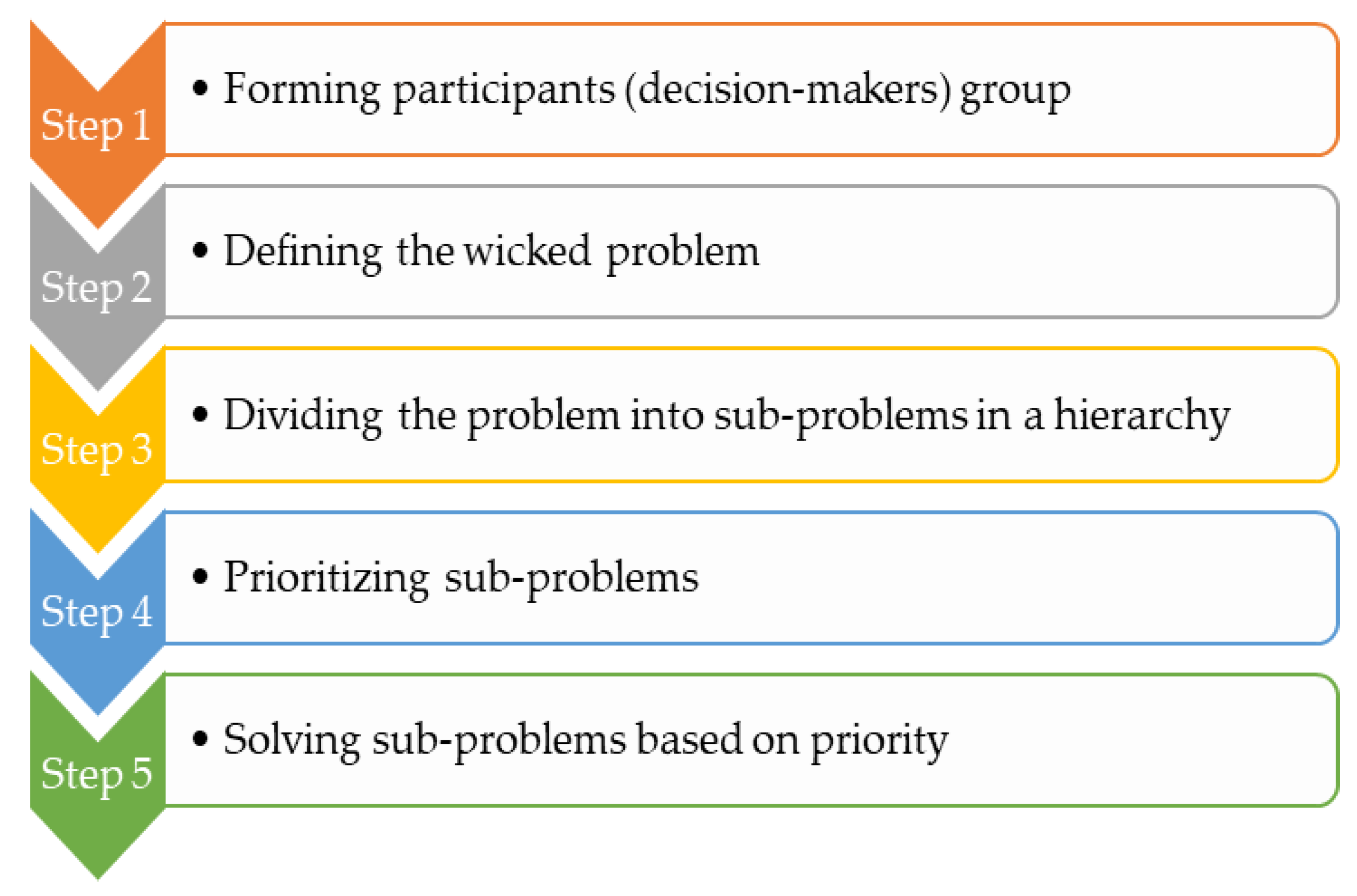
Figure 2.
The hierarchy of a presumptive problem.
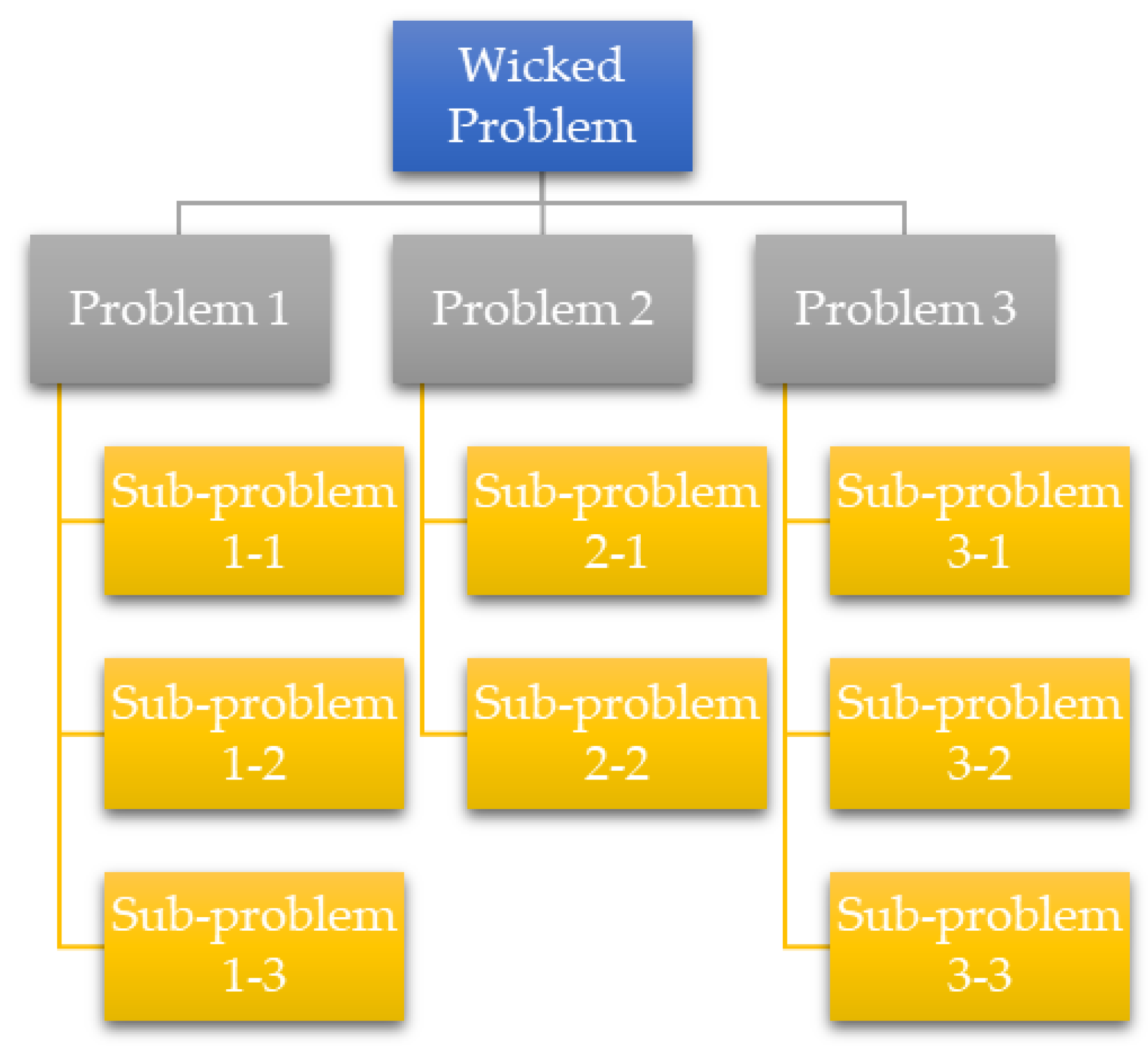
Figure 3.
The wicked problem hierarchy.
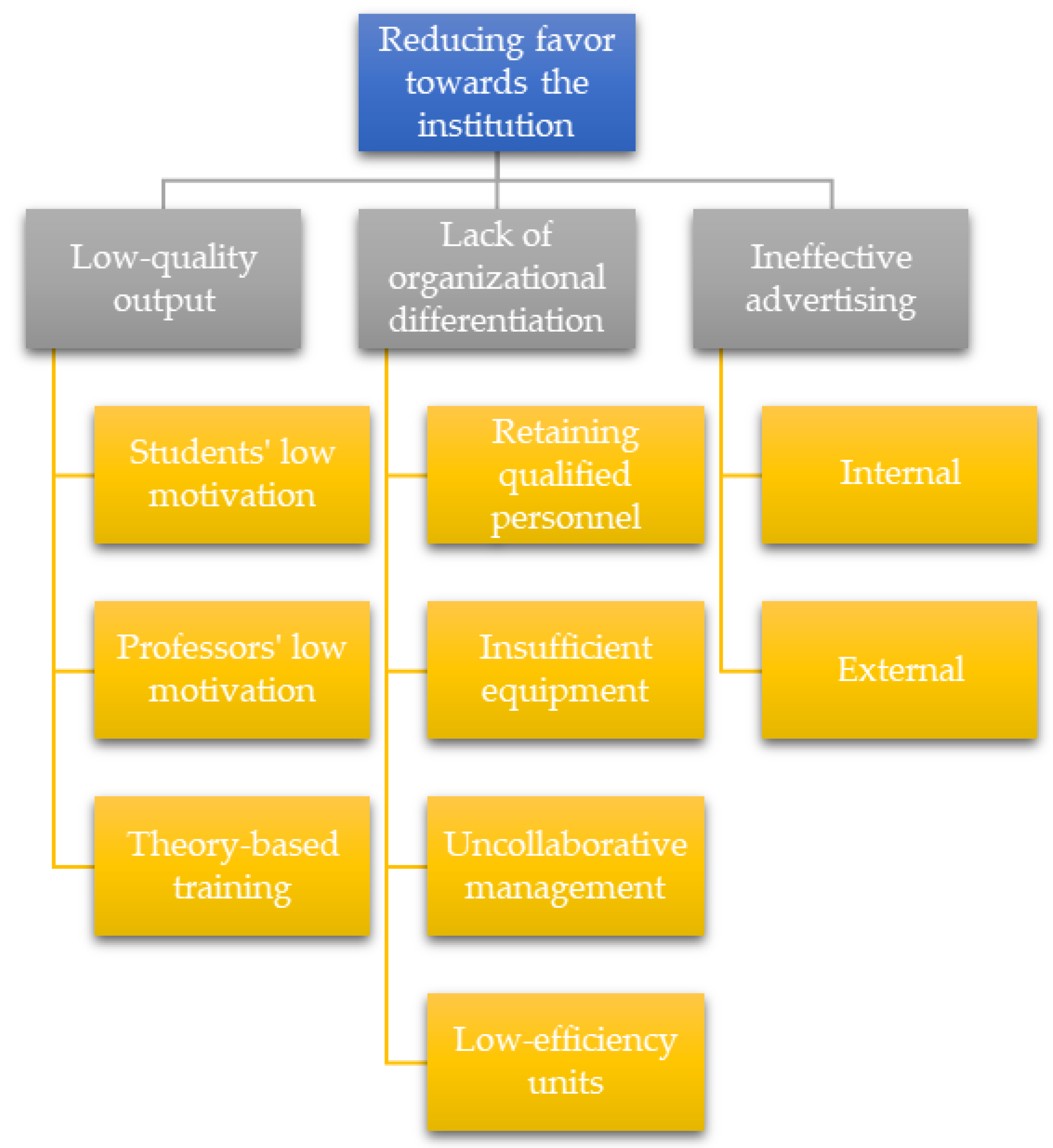
Figure 4.
Units’ efficiency.
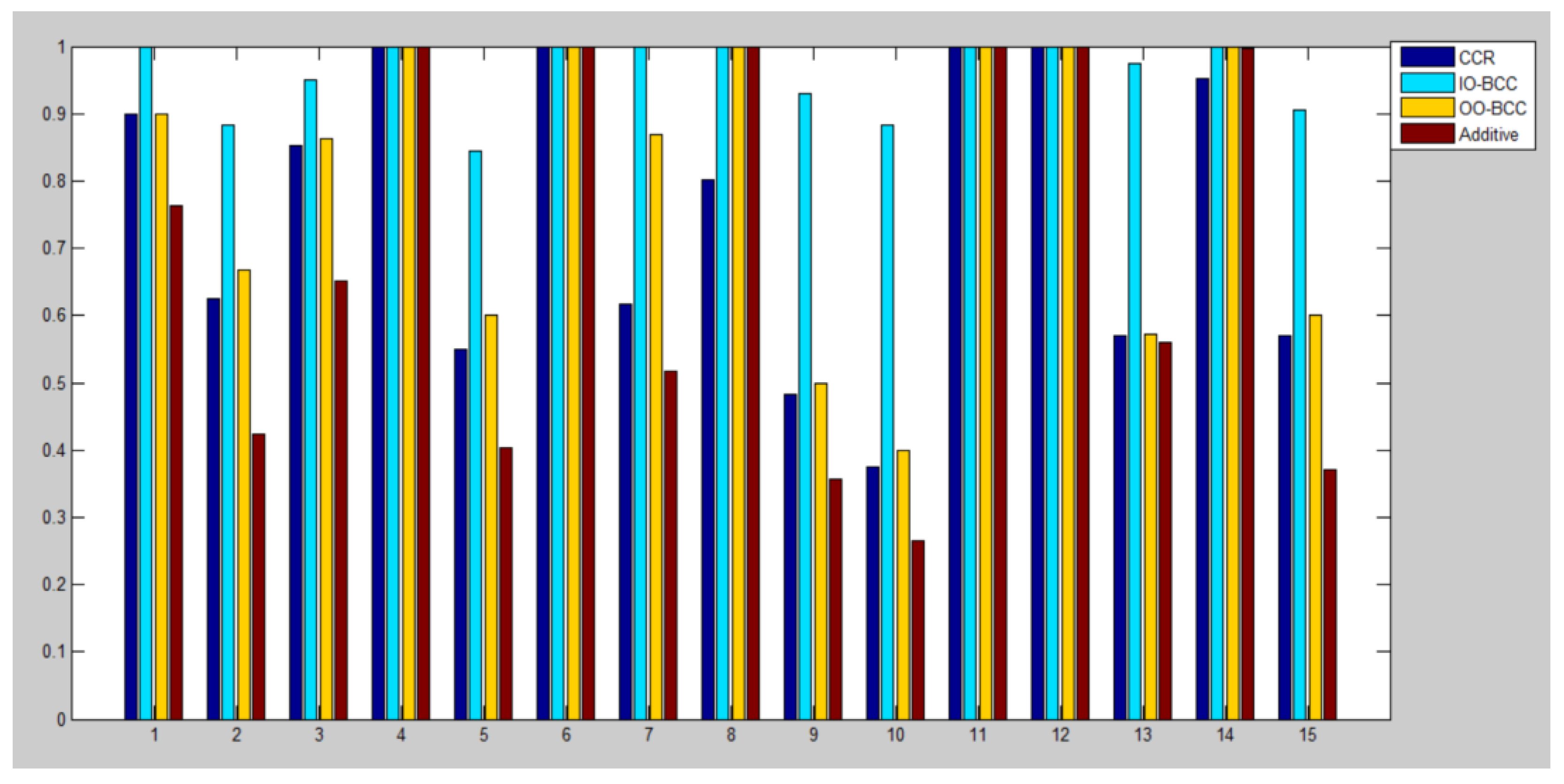

Table 1.
The decision matrix.
| Sub-Problems | Effectiveness | Time Consumption | Ease of Implementation | Financial Burden |
|---|---|---|---|---|
| Students’ low motivation | 7 | 1 | 9 | 9 |
| Professors’ low motivation | 8 | 3 | 7 | 9 |
| Theory-based training | 9 | 5 | 7 | 8 |
| Retaining qualified personnel | 7 | 6 | 6 | 5 |
| Insufficient equipment | 8 | 5 | 5 | 7 |
| Uncollaborative management | 2 | 6 | 6 | 3 |
| Low-efficiency units | 3 | 8 | 3 | 6 |
| Internal advertising | 3 | 9 | 2 | 4 |
| External advertising | 8 | 8 | 4 | 5 |
Table 2.
The sub-problems’ priority.
| Sub-Problems | Ci | Ranks |
|---|---|---|
| Students’ low motivation | 7 | 7 |
| Professors’ low motivation | 8 | 5 |
| Theory-based training | 9 | 6 |
| Retaining qualified personnel | 7 | 8 |
| Insufficient equipment | 8 | 3 |
| Uncollaborative management | 2 | 9 |
| Low-efficiency units | 3 | 1 |
| Internal advertising | 3 | 2 |
| External advertising | 8 | 4 |
Table 3.
The DEA data.
| Units | Input 1 | Input 2 | Output 1 | Output 2 | Output 3 |
|---|---|---|---|---|---|
| 1 | 0/500 | 0/900 | 0/889 | 0/185 | 1/000 |
| 2 | 0/143 | 0/500 | 0/667 | 0/282 | 1/000 |
| 3 | 0/050 | 0/700 | 0/333 | 0/580 | 0/500 |
| 4 | 1/000 | 1/000 | 1/000 | 0/185 | 1/000 |
| 5 | 0/111 | 0/600 | 0/556 | 0/321 | 1/000 |
| 6 | 0/125 | 0/700 | 0/778 | 0/496 | 0/500 |
| 7 | 0/043 | 0/400 | 0/333 | 1/000 | 0/333 |
| 8 | 0/083 | 0/600 | 0/444 | 0/461 | 0/500 |
| 9 | 0/143 | 0/500 | 0/444 | 0/241 | 1/000 |
| 10 | 0/091 | 0/400 | 0/333 | 0/282 | 1/000 |
| 11 | 0/083 | 0/800 | 0/667 | 0/539 | 0/500 |
| 12 | 0/050 | 0/800 | 0/556 | 0/901 | 0/333 |
| 13 | 0/059 | 0/400 | 0/444 | 0/509 | 0/500 |
| 14 | 0/500 | 0/800 | 1/000 | 0/259 | 1/000 |
| 15 | 0/100 | 0/600 | 0/444 | 0/262 | 1/000 |
Disclaimer/Publisher’s Note: The statements, opinions and data contained in all publications are solely those of the individual author(s) and contributor(s) and not of MDPI and/or the editor(s). MDPI and/or the editor(s) disclaim responsibility for any injury to people or property resulting from any ideas, methods, instructions or products referred to in the content. |
© 2024 by the authors. Licensee MDPI, Basel, Switzerland. This article is an open access article distributed under the terms and conditions of the Creative Commons Attribution (CC BY) license (https://creativecommons.org/licenses/by/4.0/).
Copyright: This open access article is published under a Creative Commons CC BY 4.0 license, which permit the free download, distribution, and reuse, provided that the author and preprint are cited in any reuse.


