
Submitted:
05 June 2023
Posted:
06 June 2023
You are already at the latest version
Abstract
Volunteer scuba divers have become indispensable stakeholders in marine environmental protection, as their educational knowledge and environmental awareness create environmentally responsible attitudes and behaviors, which are the key elements to promote the sustainable development of marine environments. This study used the C-A-B model to examine the relationship between environmental knowledge, environmental sensitivity, destination social responsibility, and environmentally responsible behaviors of volunteer scuba divers. It also explored the mediating effects of destination social responsibility and first-time and repeat volunteers. In order to achieve the research purpose, this study adopted quantitative research to verify the research structure, proposed the hypotheses and prepared a questionnaire with reference to relevant previous studies. A total of 238 Taiwan marine volunteer scuba divers were selected as the subjects by intentional sampling, and the effective questionnaire recovery rate is 92.9%. Structural equation was used to verify the model of environmentally responsible behaviors of volunteer scuba divers, as based on the C-A-B model. This study found that environmental knowledge had a significant impact on destination social responsibility, and destination social responsibility had a significant impact on environmentally responsible behaviors. Destination social responsibility also had the effect of complete mediation on the model. In addition, the first-time and repeat volunteers had a significant mediating effect on the causal relationship between environmental knowledge and environmentally responsible behaviors, as well as between environmental sensitivity and environmentally responsible behaviors. The explanatory power of the overall model on the environmentally responsible behaviors of volunteer scuba divers is 69.0%, and their knowledge, sense of responsibility, experience, and level of involvement can be regarded as the determinants of their environmentally responsible behaviors.
Keywords:
scuba diving
; volunteers
; marine environmental protection
; mediating effects
; environmentally responsible behavior
1. Introduction
Due to people’s lack of environmental awareness and the slow decomposition rate of waste, marine debris has been increasing every year since 1950, and especially plastic products, with an estimated 15 million tons of plastics entering the ocean every year [1,2]. Marine debris has multiple negative effects on the marine ecosystem, which not only threatens the survival of marine mammals, fish, and seabirds but also endangers human health. For example, after microplastics and nano-plastic particles are eaten by marine organisms and enter into their body tissues, they are then captured and eaten by human beings, causing great harm to human health [3]. Marine debris even accelerates the impact of climate change on the global environment [2]. According to the survey results of Dripfina [4], a non-profit organization dedicated to marine conservation, in 2022, the ocean has contained more than 45,000 individual plastic pieces per square mile. They further estimated that there will be 937 million tons of plastic in the ocean by 2050, when there will be more plastic waste than fish in the ocean.
In order to protect the marine environment, in addition to enhancing the advocacy that wastes should not fall into the sea and active recycling should be implemented, volunteer scuba divers are also regarded as fighters for marine environmental protection. At present, there are several programs of volunteer scuba divers globally that clean up marine debris, such as the Volunteer Scuba Diving Project [5], Marine Conservation Volunteering & Scuba Diving in the Caribbean Sea [6]. Volunteers at Clean Up the Lake, a California-based non-profit organization, have removed 25,281 pounds of rubbish from 72 miles of coastline since the beginning of 2022 [7]. Taiwan is no exception. In 2021, the non-profit organization Greenpeace began recruiting volunteer scuba divers to clean up marine debris, in order to protect marine ecological diversity and improve the impact of climate change and the depletion of fishery resources [8]. Volunteer scuba divers have become extremely important stakeholders in marine environmental protection, as their efforts to provide environmental education and awareness of environmental protection have created worldwide environmentally responsible attitudes and behaviors, which has helped to reduce the destruction of marine habitats and strengthen the management of marine protection [9]. Inducing environmentally responsible behaviors is an important element to encourage more scuba divers to join the ranks of volunteers. Environmentally responsible behaviors are an important concept of marine environmental protection and have very important contributions to reducing negative impacts [10]. The concept of environmentally responsible behavior enables people to take practical action to prevent or solve environmental problems, which contributes positively to the sustainable development of the environment [11].
Environmental knowledge is the source of the environmentally responsible behaviors of volunteer scuba divers and reflects the extent to which volunteers are concerned about the physical marine environment [12]. Environmental knowledge is associated with an understanding of the natural environment and encourages a strong sense of responsibility for environmental protection [13]. A study by Townsend (2000) found that enriching divers' environmental knowledge can help improve their diving skills and encourage them to demonstrate environmentally responsible behaviors, thereby contributing to marine environmental protection [14]. In other words, continually enhancing the environmental knowledge of environmental volunteer scuba divers will help to sustain their appreciation, care, and compassion for the marine environment. Thus, increasing the development of environmental knowledge for volunteer scuba divers may further enhance their environmentally responsible behaviors for the ocean, as well as their sense of destination social responsibility.
Another factor that influences environmentally responsible behaviors is environmental sensitivity, which is the perception of the environment in terms of empathy as a personal emotional trait [12]. Environmental sensitivity is based on formative experiences that make individuals interested in the environment, and then, care for it and act to protect it [15]. The more sensitive the volunteer scuba divers are to the marine environment, the more empathetic they are to its destruction, and the stronger their intention to have environmentally responsible behaviors.
Furthermore, destination social responsibility is another antecedent of environmentally responsible behaviors. It refers to the responsibility of relevant stakeholders at their destination to create economic benefits and increase the well-being of the local population, and to reduce negative economic, environmental, and social impacts [16]. From the viewpoint of the social exchange theory, the parties involved in a transaction exchange benefits and costs, and the exchange can be realized only if both parties perceive that the benefits from the transaction exceed the costs [17]. Therefore, the perceived social responsibility of volunteer scuba divers may start by reducing the impact of trash on the marine environment and leaving sustainable marine resources (benefits) for later generations, and then, adopting environmentally responsible behaviors (costs). However, there is a lack of empirical studies on environmental knowledge, environmental sensitivity, destination social responsibility, and environmentally responsible behaviors among volunteer scuba divers. Accordingly, verification of the causal relationship between the variables is the focus of this study.
Moreover, the experience of volunteer scuba divers is an important variable influencing environmental knowledge, environmental sensitivity, destination social responsibility, and environmentally responsible behaviors. The attitudes, motivations, and behaviors regarding participation differ significantly between first-time and repeat volunteers [18,19]. Clerkin and Swiss [19] suggested that first-time volunteers may not be as active as repeat participants in terms of overall performance due to lack of experience and uncertainty about the content of the activity; while repeat volunteers may repeat the activity because they have experience and are certain that they enjoy the content. Therefore, the environmentally responsible behaviors of volunteer scuba divers may vary depending on their experience. However, it is important to understand the environmentally responsible behaviors that influence repeat volunteers, as they indirectly determine whether they will continue to volunteer in the future. Accordingly, this study examined the mediating effects of first-time and repeat volunteer scuba divers on environmental knowledge, environmental sensitivity, destination social responsibility, and environmentally responsible behaviors. It is expected that the findings can provide concrete suggestions for strategies to retain volunteer scuba divers.
The cognition-affect-behavior model (C-A-B model) is an important model to explore the influence of consumer behaviors, as it emphasizes that the process by which consumers' cognition affects their emotions and will determine whether or not they engage in consumer behaviors [20]. Due to its broad conceptual applicability, the C-A-B model has been used to explore the processes that generate different behaviors, including those related to the protection of the environment, such as pro-environmental behaviors [21,22] and green purchase intentions [23]. According to the C-A-B model, the more knowledgeable and environmentally sensitive volunteers are, the more social responsibility they will have for their destination, meaning they will display environmentally responsible behaviors. However, as the environmentally responsible behaviors of volunteer scuba divers have not been explored in past studies, there is no direct empirical research on the relationship between the variables. Accordingly, this study used the C-A-B model to develop environmental knowledge, environmental sensitivity, destination social responsibility, and environmentally responsible behaviors. It explored the mediating effects of destination social responsibility, as well as the moderating effects of first-time and repeat volunteers.
2. Literature Review
2.1. Subsection Cognition-Affect-Behavior Model
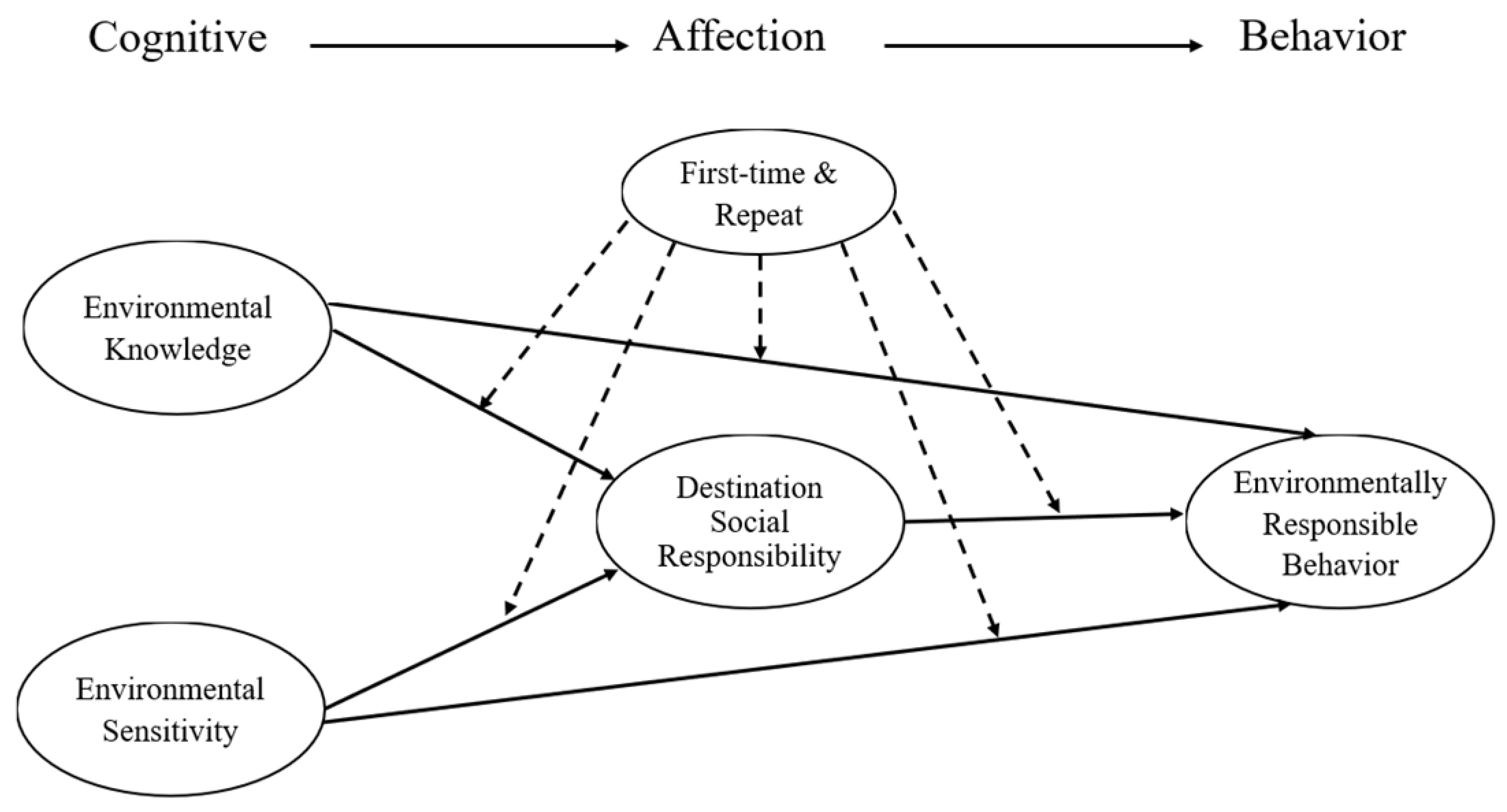
The cognition-affect-behavior model (C-A-B model) is a hierarchical system model for understanding consumers’ purchase behaviors [24], which consists of three elements: cognition, affect, and behaviors. The C-A-B model assumes that consumers' perceptions of a product affect their emotions, which in turn affect their purchase behaviors[25]. Cognition refers to beliefs, motivations, and other perceptions regarding a product; affect refers to the psychological feelings that consumers have after receiving product perceptions; behaviors refer to the intention or action that consumers take towards a product [26]. However, although the C-A-B model is hierarchical, cognition and affect may influence behaviors simultaneously or individually [27]. Furthermore, the C-A-B model has been used to understand the behavioral processes that occur when individuals interact with their environment [28], how such environmental perceptions affect individuals, and the behaviors that result from such influence. Based on the concept of the C-A-B model, the environmental knowledge and environmental sensitivity (cognition) of volunteer scuba divers may lead to their destination social responsibility (affect), which in turn may lead to environmentally responsible behaviors (behaviors), and such environmental knowledge and sensitivity may also have a direct effect on environmentally responsible behaviors.
2.2. Cognition: Environmental Knowledge and Environmental Sensitivity
Environmental knowledge refers to an understanding of environmental issues, including one's familiarity with environmental impacts, appreciation, and responsibility [29]. Environmental knowledge can lead to a high level of personal awareness for environmental protection, which in turn promotes positive attitudes toward nature and ultimately demonstrates behaviors that protect the natural environment [30]. Previous studies have found a significant causal relationship between environmental knowledge and environmentally responsible behaviors [31]. Through environmental education and policies, people can gain a better understanding of the environment and its relevance to their daily lives, and they will naturally develop a sense of responsibility for the environment and take concrete actions to protect it [32]. Therefore, environmental knowledge can be considered as a basis for people to trigger destination social responsibility and environmentally responsible behaviors. The marine environmental knowledge of volunteer scuba divers will generate a sense of responsibility to protect the marine environment, as well as voluntary actions to clean up marine debris (environmentally responsible behaviors). Accordingly, this study proposed the following hypotheses:H1: The marine environmental knowledge of volunteer scuba divers has a significant effect on social responsibility at a destination. H2: The marine environmental knowledge of volunteer scuba divers has a significant effect on environmentally responsible behaviors.
Environmental sensitivity is an affective attribute of individuals who view environmental issues from an empathic perspective, which consists of both "personal favorable feelings toward the natural environment" and "intentions to act in harmony with the natural environment" [12]. While people with high environmental sensitivity have the ability to appreciate and show concern for the natural environment, such appreciation and concern may not be strong enough to motivate people to change their behaviors to protect the environment. Hungerford and Volk [33] suggested that environmental sensitivity is a "sympathetic view of the environment", and although it has been identified as one of the important variables that give rise to environmentally responsible behaviors and attitudes, in order to exhibit environmentally responsible behaviors, individuals must convert their perception of the environment into their own responsibility. Therefore, whether the environmental sensitivity of volunteer scuba divers induces their destination social responsibility and environmentally responsible behaviors is the focus of this study. Thus, this study proposed the following hypotheses: H3: The marine environmental sensitivity of volunteer scuba divers has a significant effect on destination social responsibility. H4: The marine environmental sensitivity of volunteer scuba divers has a significant effect on environmentally responsible behaviors.
2.3. Affect: Destination Social Responsibility
Destination social responsibility is an initiative decided by destination stakeholders to improve the well-being of the local community [34]. As volunteer scuba divers are important stakeholders in marine destinations, and work to improve the marine environment, they are involved in solving the problems of climate change, ecological havoc, and declining fish populations [9]. Previous studies on destination social responsibility and environmentally responsible behaviors have mostly been conducted from the perspective of residents [34,35]; for example, Su, Huang, and Pearce [35] showed that residents' destination social responsibility had a significant effect on environmentally responsible behaviors, as residents can develop environmentally responsible behaviors only if they benefit from destination social responsibility. However, it is not only residents who are the stakeholders of a destination. This study aims to prove whether environmental volunteers also benefit from destination social responsibility, such as a sense of achievement and self-fulfillment, and demonstrate the causal relationship with environmentally responsible behaviors. Therefore, this study proposed the following hypothesis: H5: The destination social responsibility of volunteer scuba divers has a significant effect on environmentally responsible behaviors.
Furthermore, past studies have taken destination social responsibility as an independent variable when investigating relationships with outcome variables, such as environmentally responsible behaviors [36], tourist satisfaction [37], and pro-tourism behaviors [34], while few studies have examined whether DSR has a mediating effect. Khan, Khan, Lim, Tan, and Ahmed [38] found that destination social responsibility had a significant partial mediating effect on the relationship between sustainable tourism policy, destination, and sustainable tourism development. Destination social responsibility is an affective expression of stakeholders' commitment to the interaction of their perception, knowledge, and personal vision of the destination, and its affect in the C-A-B model is the emotion generated by an individual's perception of a specific product and past experience, which induces a specific behavior [25]. Therefore, the environmental knowledge and sensitivity of volunteer scuba divers may trigger destination social responsibility (mediating effect), which in turn leads to environmentally responsible behaviors. Thus, this study proposed the following hypothesis: H6: The destination social responsibility of volunteer scuba divers has a significant mediating effect between environmental knowledge, environmental sensitivity, and environmentally responsible behaviors.
2.4. Affect: Destination Social Responsibility Behavior: Environmentally Responsible Behaviors
Environmentally responsible behaviors are the expression of behaviors that prevent and solve environmental problems. When individuals have the knowledge, attitudes, and skills, they will begin to think and take action to solve environmental problems, and this is called environmentally responsible behavior [39]. Environmentally responsible behavior refers to a mechanism of environmental protection, meaning the behaviors of individuals to reduce or avoid damaging environmental resources [12,35,40], as well as a set of behaviors that individuals adopt in their tourism activities to reduce negative impacts on the environment and promote environmental protection [12]. Thus, environmentally responsible behaviors have become an important indicator of destination development [11,41], and the same is true for marine environmental protection. When volunteer scuba divers have the knowledge, attitude, and skills to protect the marine environment, they start to have a sense of responsibility and take a series of actions to protect the environment. Therefore, environmentally responsible behaviors can be considered as one of the indicators of the sustainable development of marine resources.
2.5. Moderating Variable: First-time vs. Repeat Volunteers
While the attitudes and behaviors of first-time and repeat volunteers differ from each other, there is no definitive answer to the question of whether first-time volunteers have better or worse attitudes and behaviors than repeat volunteers. For example, Clerkin and Swiss [19] suggested that first-time volunteers' lack of experience and uncertainty about the content of the activity resulted in lower overall performance than repeat volunteers. On the contrary, Ferreira, Proença, and Rocha [18] found that first-time volunteers showed better career motivation values than repeat volunteers because the experience of first-time participation was the most profound and had a significant impact on their career choice. However, in terms of the perception of identity, repeat volunteers performed better than first-time volunteers. Therefore, the relationship between first-time and repeat volunteers in environmental knowledge, environmental sensitivity, destination social responsibility, and environmentally responsible behaviors should be significantly different and have mediating effect. Accordingly, this study proposed the following hypotheses: H6a: First-time and repeat volunteer scuba divers have a significant moderating effect on the relationship between environmental knowledge and environmentally responsible behaviors. H6b: First-time and repeat volunteer scuba divers have a significant moderating effect on the relationship between environmental knowledge and destination social responsibility. H6c: First-time and repeat volunteer scuba divers have a significant moderating effect on the relationship between environmental sensitivity and environmentally responsible behaviors. H6d: First-time and repeat volunteer scuba divers have a significant moderating effect on the relationship between environmental sensitivity and destination social responsibility. H6e: First-time and repeat volunteer scuba divers have a significant moderating effect on the relationship between destination social responsibility and environmentally responsible behaviors.
Based on the above literature review, this study applied the C-A-B model to examine the relationship between environmental knowledge, environmental sensitivity, destination social responsibility, and environmentally responsible behaviors among volunteer scuba divers, and explored the mediating effect of destination social responsibility and moderating effect of first-time and repeat volunteers. The structure of this study is shown in Figure 2.
Figure 2.
Research Structure.
3. Method
3.1. Research Design
This study explored the environmentally responsible behaviors of volunteer scuba divers using the C-A-B model, conducted a quantitative study to validate the proposed research structure and hypotheses, and developed a questionnaire with reference to previous studies. A pre-test was administered to check the surface validity of the questionnaire before distribution of the formal questionnaire. This study took Taiwan's marine volunteer scuba divers as the research subjects and a web-based questionnaire was used to collect the data from the subjects. After invalid questionnaires were removed, the valid questionnaires were used to examine the reliability and validity of the scale, and the results of the model were tested by structural equation modeling.
3.2. Research Subjects
This study conducted an intentional sampling of marine volunteer scuba divers in Taiwan who had participated as a volunteer in at least one marine debris clean-up activity. Those who participated in marine debris clean-up activities that were paid or received personal benefits were not included in this study. The data were collected via a web-based questionnaire. Google Forms was used as the platform to collect the questionnaire data, and the URL of the questionnaire was converted into a QR code. Teachers of the Deep Dive Marine Debris Fighters were invited to forward the questionnaire to the volunteers’ Line community to which the organization belongs. Before the questionnaire was officially distributed, the researchers obtained the consent of the teachers in charge of the organization and the volunteers. Prior to the distribution of the questionnaire, through the Line community, the researchers explained the purpose of this study, the content of the questionnaire, and the rights of the respondents. In addition, a statement was included on the first page of the questionnaire that informed the respondents they were answering the questionnaire of their own free will, that they had the right to not complete the questionnaire or could withdraw from the questionnaire survey at any time, and volunteer benefits in the organization would not be impaired by not participating in the questionnaire survey. This statement ensured that the respondents had given their informed consent in compliance with the norms of academic ethics. Finally, a total of 256 questionnaires were collected, and 18 invalid questionnaires were excluded, including those that were completely consistent and those that were extremely incomplete. There were 238 valid questionnaires, for a valid questionnaire rate of 92.9%.
3.3. Research Tools
The questionnaire was divided into two parts. The first part of the questionnaire contained a scale of potential variables (Table 1), including environmental knowledge, environmental sensitivity, destination social responsibility, and environmentally responsible behaviors. The Environmental Knowledge Scale, with eight items, was developed based on the definition and items of Boeve-de Pauw and Van Petegem [29]; the Environmental Sensitivity Scale, with four items, was developed based on the definition and items of Cheng and Wu [12]; the Destination Social Responsibility Scale, with four items, was developed based on the definition and items of Hu, Tuou, and Liu [34]; the Environmentally Responsible Behavior Scale, with eight items, was developed based on the definition and items of Hines, Hungerford, and Tomera [39]. A seven-point Likert scale was applied in this study, ranging from "Strongly agree" to "Strongly disagree" scored 7 to 1, respectively. The second part contained the demographic background variables of the volunteers, including gender, marital status, age, education, occupation, average monthly income, residence, and number of volunteer activities. The number of volunteer activities was the mediating variable in this study.
3.4. Data Analysis Methods
The descriptive statistics of the Chinese version of SPSS 18.0 was used to analyze the demographic background data of the samples. AMOS 18.0 was used to conduct validation of the measurement model and test scale reliability and validity. Structural modeling was adopted to test the C-A-B model, based on the environmentally responsible behaviors of volunteer scuba divers.
4. Results
4.1. Sample Demographic Background
The demographic characteristics of the sample show that there were more male volunteers (59.3%) than female volunteers (40.7%). Most of the volunteers were unmarried (70.0%). The majority of volunteers were 31-40 years old (30.0%), followed by 21-30 years old (28.0%). Students (19.3%), service industry (17.0%), and business (16.7%) were the most common occupations. The largest number of volunteers lived in the northern region (51.0%), and 46.7% of the volunteers were first-time participants in marine environmental clean-up activities, while 53.3% were repeat volunteers.
4.2. Measurement Model
Although the Likelihood ratio χ2 of 195.83* reached the significant level for the measurement model, the standard values of the model fit were achieved for GFI (0.96), AGFI (0.94), CFI (0.98), NFI (0.96), and RMSEA (0.06), which indicates that the observation matrix and model estimation matrix of the measurement model had a good fit. Therefore, the measurement results of the reliability and validity analysis were further explored.
This study used internal consistency analysis, construct reliability, and average variance extracted to test the reliability of the scale. Cronbach's α coefficient, which is an index to judge the internal consistency of the scale for environmental knowledge, environmental sensitivity, destination social responsibility, and environmentally responsible behaviors, ranged from 0.90 to 0.93, indicating good internal consistency [42]. The construct reliability of the four potential variables ranged from 0.91 to 0.93, indicating the presence of a high degree of intercorrelation among the variables [42]. The values of the average variance extracted for environmental knowledge (0.71), environmental sensitivity (0.78), destination social responsibility (0.78), and environmentally responsible behaviors (0.73) were all higher than 0.50, indicating that more than 50% of the variance explained by each variable came from the variable itself [42]. Moreover, convergent validity and discriminant validity are the bases for testing the validity of the scale. Hwang [42] suggested that the factor loadings of the observed variables should be used to determine convergent validity, and that factor loadings above 0.50 and reaching significant levels indicate that the observed variables are effective in reflecting the potential variables. In this study, the factor loadings (0.71-0.95) for all observed variables of environmental knowledge, environmental sensitivity, destination social responsibility, and environmentally responsible behaviors were above 0.50 (Table 2), which is significant, and indicates good convergent validity. Overall, the scale had good reliability, as shown in Table 3.
4.3. Structural Model Analysis
A large number of samples in this study led to the expansion of the model chi-square, which affected the model fit; therefore, Bollen-Stine p-value correction was applied to correct and modify the chi-square value of the model [43]. Finally, except for the Likelihood ratio χ2 (195.83*) of the indicator of the overall model fit of this study, GFI (0.96,0.94), CFI (0.98,0.96), NFI (0.96), and RMSEA (0.06) all reached the standard of model fit.
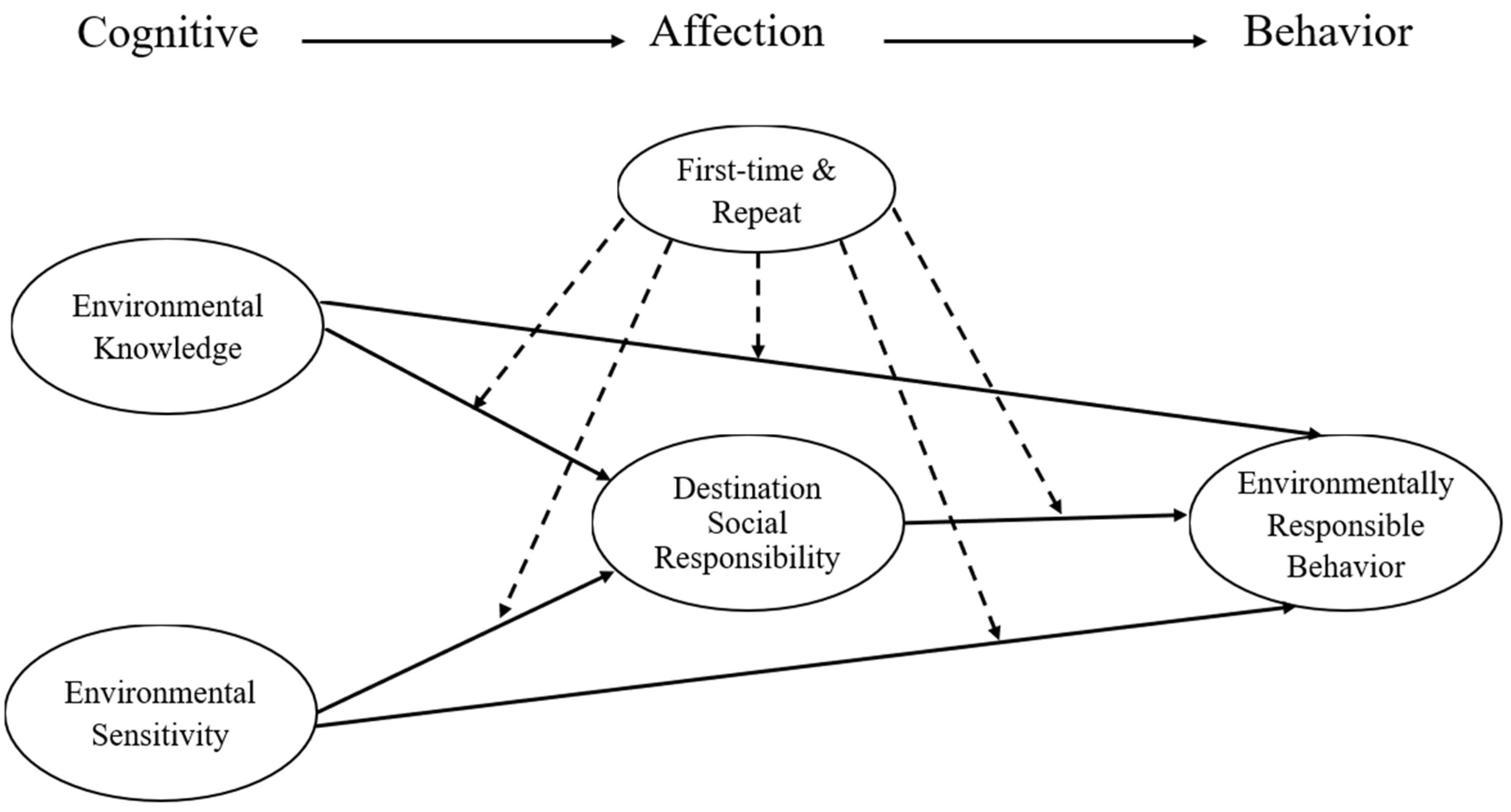
The results of the structural model analysis show that C-A-B MODEL can effectively explain the relationship between environmental knowledge, destination social responsibility, and environmentally responsible behaviors of volunteer scuba divers. Environmental knowledge had a significant impact on destination social responsibility (β=0.86*;*p<0.05). Destination social responsibility had a significant effect on environmentally responsible behaviors (β=0.56*;*p<0.05). However, environmental knowledge had no significant effect on environmentally responsible behaviors (β=0.25; p>0.05). Furthermore, environmental knowledge had a significant indirect effect on environmentally responsible behaviors through destination social responsibility (β=0.48; *p<0.05). While destination social responsibility had complete mediation; unexpectedly, environmental sensitivity had no significant effect on destination social responsibility (β=0.19; p>0.05) or environmentally responsible behaviors (β=0.19; p>0.05). The overall model can explain 69.0% of the environmentally responsible behaviors of volunteer scuba divers.
4.4. Mediating Effect
In order to analyze the mediating effect of the first-time and repeat volunteers in this study model, volunteers who participated only once were set as first-time volunteers (n=140), while volunteers who participated two or three times and more were set as repeat volunteers (=160). The results of the mediating analysis (Table 4) show that first-time and repeat volunteers had a significant mediating effect in the causal relationship between environmental knowledge and environmentally responsible behaviors (z-score=-1.88*; p>0.05), and environmental sensitivity and environmentally responsible behaviors (z-score=-2.59*; p>0.05). While first-time volunteers reached a significant level in the relationship between environmental knowledge and environmentally responsible behaviors, there was no significant relationship for repeat volunteers. There was a significant causal relationship between environmental sensitivity and environmentally responsible behaviors of repeat volunteers, while no significant causal relationship was found for the first-time volunteers.
Figure 2.
Results of Environmentally Responsible Behavior Analysis for Volunteer Scuba Divers.
5. Discussion and Conclusions
5.1. Discussion
This study applied the C-A-B model to validate the relationship between environmental knowledge, environmental sensitivity, destination social responsibility, and environmentally responsible behaviors among volunteer scuba divers, and explored the moderating effects of first-time and repeat volunteers. Despite the rigorous quantitative research design, this study had several research limitations. First, this study was conducted on Taiwan's volunteer scuba divers; other types of volunteers and volunteers from other countries were not included in the scope of this study, thus, the inferences from this study are only applicable to the status quo of Taiwan's volunteer scuba divers. It is suggested that future studies should be conducted on different types of volunteers, such as land-based environmental volunteers, and volunteers from different countries, such as Western countries and Southeast Asian countries, to examine the results and validity of the model. Second, the variance explained by the overall model in this study was 69.0%, and environmental sensitivity showed no significant relationship with destination social responsibility or environmentally responsible behaviors. Therefore, future studies should include other potentially important unidentified influences, in order to add other potential variables for validation. Third, this study was a quantitative study design, which can only statistically examine the causal relationships in the model but cannot further explain the reasons behind the causal relationships. Thus, it is suggested that a qualitative approach can be used in the future to render the results more comprehensive and complete.
This study found that the rich environmental knowledge of volunteer scuba divers would help to increase their destination sense of responsibility, and thus, induce environmentally responsible behaviors. According to the concept of the C-A-B model, volunteers' environment knowledge leads to feelings of destination responsibility and behaviors that protect the marine environment [25]. Thus, the results of this study are consistent with the results of other studies related to environmental knowledge and environmentally responsible behaviors [31]. Environmental protection is an important part of environmental knowledge. Thus, when volunteers are educated about the environment, this education tends to put environmental protection awareness into their minds, which gives them a sense of mission and responsibility to protect the marine environment and eventually leads to behaviors that protect the natural environment [30]. Environmental education is an important tool to promote awareness of the environment and a catalyst for environmentally responsible behaviors. When volunteers understand that environmental protection is more than maintaining the environment and ecology, meaning it is relevant to the environments in their daily lives, the sense of responsibility for environmental protection will grow and turn into practical actions [32]. Therefore, in addition to diving skills and safety advocacy, environmental education is an essential part of the training for volunteer scuba divers. A wealth of environmental knowledge helps volunteers evoke destination social responsibility, which in turn leads to environmentally responsible behaviors.
Surprisingly, the environmental sensitivity of volunteer scuba divers exhibited no significant effect toward destination social responsibility or environmentally responsible behaviors, which is different from the findings of related studies [12,44]. However, the results of this study do not mean a lack of empathy and concern for the marine environment among volunteer scuba divers, or a lack of marine destination responsibility and environmentally responsible behaviors, instead, other factors contribute to this causal outcome. The mediating analysis of first-time and repeat volunteers clearly showed that environmental sensitivity had a significant effect on environmentally responsible behaviors for repeat volunteers, but no significant effect for first-time volunteers, which is because first-time volunteers have less experience and involvement in activities than repeat volunteers, thus, it is difficult for them to empathize with the unfamiliar marine environment and develop a sense of responsibility and positive behaviors [19]. Furthermore, environmental sensitivity is based on formative experiences [12], and because first-time volunteers are significantly less experienced than repeat volunteers, it is difficult for them to perceive the marine environment with empathy. Therefore, the level of experience and commitment of first-time volunteers is what determines whether their environmental sensitivity will induce environmentally responsible behaviors. Thus, how to transform the role of first-time volunteers into repeat volunteers is an important issue for organizational managers. Self-fulfillment and achievement are two important intrinsic motivators for volunteers [45,46]. While recruiting volunteer scuba divers, managers may also develop intrinsic rewards, such as volunteer of the month, quarter, and year, to keep them engaged in volunteer activities and increase their concern for the environment.
Furthermore, there was a significant mediating effect of first-time and repeat volunteers on environmental knowledge and environmentally responsible behaviors. First-time volunteers' environmental knowledge had a significant effect on environmentally responsible behaviors, while repeat volunteers did not, and this result is the opposite of the causal relationship between environmental sensitivity and environmentally responsible behaviors. The pre-trip education and experiences of first-time volunteers in environmental activities are the most profound [18] and provide them with a deep knowledge of the mission of marine environmental protection, which strengthens the possibility of performing environmentally responsible behaviors. However, as environmental knowledge has become part of repeat volunteers’ daily lives, and they even consider environmentally responsible behaviors toward the ocean as their own mission, their determination to protect marine environments is stronger than that of first-time volunteers. Therefore, strengthening the pre-trip education training for first-time volunteers, especially the part about environmental education, will help them to commit to environmentally responsible behaviors to the ocean.
5.2. Conclusion
This study confirmed that the C-A-B model can effectively explain some of the environmentally responsible behaviors of volunteer scuba divers. In terms of the overall model, environmental knowledge and destination social responsibility were important variables that influenced environmentally responsible behaviors, and destination social responsibility was a fully mediating variable between environmental knowledge and environmentally responsible behaviors. Surprisingly, environmental sensitivity had no significant effect on destination social responsibility or environmentally responsible behaviors. Furthermore, first-time and repeat volunteers had a significant mediating effect on the causal relationship between environmental knowledge and environmentally responsible behaviors, as well as between environmental sensitivity and environmentally responsible behaviors. Therefore, the level of experience and commitment of volunteer scuba divers can be considered as the determinants of environmentally responsible behaviors.
References
- Forrest, A.; Giacovazzi, L.; Dunlop, S.; Reisser, J.; Tickler, D.; Jamieson, A.; Meeuwig, J.J. Eliminating plastic pollution: How a voluntary contribution from industry will drive the circular plastics economy. Frontiers in Marine Science. 2019, 6, 627. [Google Scholar] [CrossRef]
- Chassignet EP, Xu X, Zavala-Romero O. Tracking marine litter with a global ocean model: Where does it go? Where does it come from? Frontiers in Marine Science. 2021, 8, 667591. [Google Scholar] [CrossRef]
- Landrigan, P.J.; Stegeman, J.J.; Fleming, L.E.; Allemand, D.; Anderson, D.M.; Backer, L.C.; Brucker-Davis, F.; Chevalier, N.; Corra, L.; Czerucka, D. Human health and ocean pollution. Annals of global health. 2020, 86, 151. [Google Scholar] [CrossRef]
- Dripfina. 100+ Frightening Plastic in The Ocean Statistics And Facts 2021-2022. 2022 01 August. Available from: https://dripfina.com/plastic-in-the-ocean-statistics/.
- Volunteer World. Volunteer Scuba Diving Projects. 2022 01 August. Available from: https://www.volunteerworld.com/en/volunteer-abroad/diving.
- Overseas. Marine Conservation Volunteering & Scuba Diving in Caribbean Sea. 2022 01 Auguest. Available from: https://www.gooverseas.com/volunteer-abroad/grenada/program/257154.
- Clean Up the Lake The 72 Mile Clean, Up. 2022 22 August. Available from: https://cleanupthelake.org/.
- Greenpeace. Stay together with our ocean. 2022 2022 Auguest. Available from: https://www.greenpeace.org/taiwan/.
- Cerrano, C.; Milanese, M.; Ponti, M. Diving for science-science for diving: volunteer scuba divers support science and conservation in the Mediterranean Sea. Aquatic Conservation: Marine and Freshwater Ecosystems. 2017, 27, 303–323. [Google Scholar] [CrossRef]
- Thapa, B.; Graefe, A.R.; Meyer, L.A. Specialization and marine based environmental behaviors among SCUBA divers. Journal of Leisure Research. 2006, 38, 601–615. [Google Scholar] [CrossRef]
- Steg, L.; Vlek, C. Encouraging pro-environmental behaviour: An integrative review and research agenda. J Environ Psychol. 2009, 29, 309–317. [Google Scholar] [CrossRef]
- Cheng, T.-M.; Wu, H.C. How do environmental knowledge, environmental sensitivity, and place attachment affect environmentally responsible behavior? An integrated approach for sustainable island tourism. Journal of Sustainable tourism. 2015, 23, 557–576. [Google Scholar] [CrossRef]
- Huang, P.-S.; Shih, L.-H. Effective environmental management through environmental knowledge management. Int J Environ Sci Technol (Tehran). 2009, 6, 35–50. [Google Scholar] [CrossRef]
- Townsend, C. The effects of environmental education on the behavior of divers: A case study from the British Virgin Island. London: The University of Greenwich; 2000. Master.
- Chawla, L. Significant life experiences revisited: A review of research on sources of environmental sensitivity. The Journal of environmental education. 1998, 29, 11–21. [Google Scholar] [CrossRef]
- Su, L.; Huang, S.; Huang, J. Effects of destination social responsibility and tourism impacts on residents’ support for tourism and perceived quality of life. Journal of Hospitality & Tourism Research. 2016, 42, 1039–1057. [Google Scholar] [CrossRef]
- Cropanzano, R.; Mitchell, M.S. Social exchange theory: An interdisciplinary review. Journal of management. 2005, 31, 874–900. [Google Scholar] [CrossRef]
- Ferreira MR, Proença JF, Rocha M. Do occasional volunteers repeat their experience? Journal of Human Values. 2016, 22, 75–92. [Google Scholar] [CrossRef]
- Clerkin, R.M.; Swiss, J.E. Religious motivations and social service volunteers: The interaction of differing religious motivations, satisfaction, and repeat volunteering. Interdisciplinary Journal of Research on Religion. 2013, 9, 1–19. [Google Scholar]
- Holbrook, M.B.; Batra, R. Assessing the role of emotions as mediators of consumer responses to advertising. J Cons Res. 1987, 14, 404–420. [Google Scholar] [CrossRef]
- Zheng, W.; Qiu, H.; Morrison, A.M.; Wei, W.; Zhang, X. Landscape and unique fascination: a dual-case study on the antecedents of tourist pro-environmental behavioral intentions. Land. 2022, 11, 479. [Google Scholar] [CrossRef]
- Morrison, A.M. Land Issues and Their Impact on Tourism Development. MDPI; 2022. p. 658.
- Nguyen, T.T.H.; Yang, Z.; Nguyen, N.; Johnson, L.W.; Cao, T.K. Greenwash and green purchase intention: The mediating role of green skepticism. Sustainability. 2019, 11, 2653. [Google Scholar] [CrossRef]
- Huang, G.-H.; Korfiatis, N.; Chang, C.-T. Mobile shopping cart abandonment: The roles of confli cts, ambivalence, and hesitation. J Bus Res. 2018, 85, 165–174. [Google Scholar] [CrossRef]
- Yoo, C.Y.; Kim, K.; Stout, P.A. Assessing the effects of animation in online banner advertising: Hierarchy of effects model. Journal of interactive advertising. 2004, 4, 49–60. [Google Scholar] [CrossRef]
- Lee, H.-J.; Goudeau, C. Consumers’ beliefs, attitudes, and loyalty in purchasing organic foods: The standard learning hierarchy approach. Br Food J. 2014, 116. [Google Scholar] [CrossRef]
- Pachankis, J.E. The psychological implications of concealing a stigma: a cognitive-affective-behavioral model. Psychological bulletin. 2007, 133, 328. [Google Scholar] [CrossRef]
- Ribeiro, M.A.; Prayag, G. Perceived quality and service experience: Mediating effects of positive and negative emotions. Journal of Hospitality Marketing & Management. 2019, 28, 285–305. [Google Scholar] [CrossRef]
- Boeve-de Pauw, J.; Van Petegem, P. The effect of Flemish eco-schools on student environmental knowledge, attitudes, and affect. IJSEd. 2011, 33, 1513–1538. [Google Scholar] [CrossRef]
- Kim, M.-S.; Kim, J.; Thapa, B. Influence of environmental knowledge on affect, nature affiliation and pro-environmental behaviors among tourists. Sustainability. 2018, 10, 3109. [Google Scholar] [CrossRef]
- Fielding, K.S.; Head, B.W. Determinants of young Australians’ environmental actions: The role of responsibility attributions, locus of control, knowledge and attitudes. Environmental Education Research. 2012, 18, 171–186. [Google Scholar] [CrossRef]
- Worsley, A.; Skrzypiec, G. Environmental attitudes of senior secondary school students in South Australia. Global Environ Change. 1998, 8, 209–225. [Google Scholar] [CrossRef]
- Hungerford, H.R.; Volk, T.L. Changing learner behavior through environmental education. The journal of environmental education. 1990, 21, 8–21. [Google Scholar] [CrossRef]
- Hu, B.; Tuou, Y.; Liu, J. How does destination social responsibility impact residents’ pro-tourism behaviors? The mediating role of place attachment. Sustainability. 2019, 11, 3373. [Google Scholar] [CrossRef]
- Su, L.; Huang, S.S.; Pearce, J. How does destination social responsibility contribute to environmentally responsible behaviour? A destination resident perspective. J Bus Res. 2018, 86, 179–189. [Google Scholar] [CrossRef]
- Su, L.; Swanson, S.R. The effect of destination social responsibility on tourist environmentally responsible behavior: Compared analysis of first-time & repeat tourists. Tourism Management. 2017, 60, 308–321. [Google Scholar] [CrossRef]
- Tran, H.A.T.; Hwang, Y.S.; Yu, C.; Yoo, S.J. The effect of destination social responsibility on tourists’ satisfaction: The mediating role of emotions. Sustainability. 2018, 10, 3044. [Google Scholar] [CrossRef]
- Khan, M.R.; Khan, H.U.R.; Lim, C.K.; Tan, K.L.; Ahmed, M.F. Sustainable Tourism Policy, Destination Management and Sustainable Tourism Development: A Moderated-Mediation Model. Sustainability. 2021, 13, 12156. [Google Scholar] [CrossRef]
- Hines, J.M.; Hungerford, H.R.; Tomera, A.N. Analysis and synthesis of research on responsible environmental behavior: A meta-analysis. The Journal of environmental education. 1987, 18, 1–8. [Google Scholar] [CrossRef]
- Su, L.; Hsu, M.K.; Boostrom Jr, R.E. From recreation to responsibility: Increasing environmentally responsible behavior in tourism. J Bus Res. 2020, 109, 557–573. [Google Scholar] [CrossRef]
- Moeller T, Dolnicar S, Leisch F. The sustainability–profitability trade-off in tourism: can it be overcome? Journal of Sustainable Tourism. 2011, 19, 155–169. [Google Scholar] [CrossRef]
- Hwang, F.M. Structural Equation Modeling. Taipei, Taiwan: Wu-Nan Book Inc; 2009.
- Kim, H.; Millsap, R. Using the Bollen-Stine bootstrapping method for evaluating approximate fit indices. Multivariate behavioral research. 2014, 49, 581–596. [Google Scholar] [CrossRef] [PubMed]
- Saputra, F.E.; Putra, W.H. An Implication of Destination Attractiveness, Environmental Sensitivity, and Satisfaction with Interpretive Service on Place Attachment and Environmental Responsible Behavior. International Journal of Social Science and Business. 2020, 4, 453–459. [Google Scholar] [CrossRef]
- Hustinx, L. I quit, therefore I am? Volunteer turnover and the politics of self-actualization. Nonprofit and Voluntary Sector Quarterly. 2010, 39, 236–255. [Google Scholar] [CrossRef]
- Wolford, M.; Cox, K.; Culp, I.I.I.K. Effective Motivators for Master Volunteer Program Development. Journal of extension. 2001, 39, n2. [Google Scholar]

Table 1.
Scale of Volunteer Scuba Divers.
| Variable | Item |
|---|---|
| Environmental knowledge | 1. Maintaining ecological balance contributes to sustainable marine development (EK1). 2. It is for the next generation that we must protect marine natural resources (EK2). 3. Maintaining species diversity contributes to marine ecological balance (EK3). 4. Excessive use of natural resources will destroy the sustainable development of the ocean (EK4). 5. Excessive diving activities will cause damage to the marine environment (EK5). 6. Carbon dioxide emitted by vehicles will increase the temperature of the seawater (EK6). 7. Excessive development of marine tourism will erode marine natural resources (EK7). 8. The use of disposable products can cause harm to the marine environment (EK8). |
| Environmental sensitivity | 1.I like the natural marine environment (ES9). 2.I am concerned about the development of marine environmental conservation (ES10). 3.I appreciate the natural marine environment (ES11). 4.I care about the impact of my living habits on the marine environment (ES12). |
| Destination social responsibility | 1.I think it is my duty to maintain the marine environment (DSR13). 2.I think maintaining the marine environment is an important mission (DSR14). 3.I am willing to maintain the marine environment to promote local community development (DSR15). 4.I am willing to maintain the marine environment to promote the development of the local marine economy (DSR16). 5.I am willing to maintain the marine environment to promote the sustainable development of the destination (DSR17). |
| Environmentally responsible behavior | 10. I will learn how to solve marine environmental problems (ERB18). 11. I will read national ocean reports, publicity, or books (ERB19). 12. I will discuss with others issues related to marine environmental protection (ERB20). 13. I will try to persuade my fellow travelers to take actions that are beneficial to the marine natural environment (ERB21). 14. When I see others destroying the marine environment, I will report it to the relevant authorities (ERB22). 15. I will follow the legal approach to stop the destruction of the marine environment (ERB23). 16. Usually, when I see litter in the ocean, I will pick it up on my own initiative (ERB24). 17. I will participate if there are activities related to cleaning up marine waste (ERB25). |
Note: EK= environmental knowledge; ES= environmental sensitivity; DSR= destination social responsibility; ERB= environmentally responsible behavior.
Table 2.
Sample Demographic Background Analysis (n=238).
| Variable | Item | Q’ty of samples | Percentage (%) | Accumulative percentage (%) |
|---|---|---|---|---|
| Gender | Male | 178 | 59.3 | 59.3 |
| Female | 122 | 40.7 | 100.0 | |
| Marital status | Unmarried | 210 | 70.0 | 70.0 |
| Married | 90 | 30.0 | 100.0 | |
| Age | 20 years old (including) and below | 23 | 7.7 | 7.7 |
| 21-30 years old | 84 | 28.0 | 35.7 | |
| 31-40 years old | 90 | 30.0 | 65.7 | |
| 41-50 years old | 75 | 25.0 | 90.7 | |
| 51 years old (including) and above | 28 | 9.3 | 100.0 | |
| Senior and vocational high school (including) and below | 36 | 12.0 | 12.0 | |
| University/junior college | 208 | 69.3 | 81.3 | |
| Graduate school (including) and above | 56 | 18.7 | 100.0 | |
| Occupation | Students | 58 | 19.3 | 19.3 |
| Military personnel, police personnel, civil servants, and teachers | 39 | 13.0 | 32.3 | |
| Business | 50 | 16.7 | 49.0 | |
| Freelance | 21 | 7.0 | 56.0 | |
| Agriculture, forestry, fisheries, and animal husbandry | 36 | 12.0 | 68.0 | |
| Homemaker | 35 | 11.7 | 79.7 | |
| Service industry | 51 | 17.0 | 96.7 | |
| None (including retired) | 10 | 3.3 | 100.0 | |
| Current residence | Northern Taiwan | 153 | 51.0 | 51.0 |
| Central Taiwan | 39 | 13.0 | 64.0 | |
| Southern Taiwan | 62 | 20.7 | 84.7 | |
| Eastern Taiwan | 25 | 8.3 | 93.0 | |
| Offshore islands | 21 | 7.0 | 100.0 | |
| Frequency of participation | 1 time | 140 | 46.7 | 46.7 |
| 2 times | 64 | 21.3 | 68.0 | |
| 3 times (including) and more | 96 | 32.0 | 100.0 |
Table 3.
Reliability and Validity Analysis of the Measurement Model.
| Potential variables | Observed variables | Factor loadings | Cronbach‘s alpha | Construct reliability | Average variance extracted |
|---|---|---|---|---|---|
| Environmental knowledge | EK 1 | 0.91 | 0.91 | 0.92 | 0.71 |
| EK 2 | 0.85 | ||||
| EK 3 | 0.92 | ||||
| EK 4 | 0.81 | ||||
| EK 8 | 0.71 | ||||
| Environmental sensitivity | ES 1 | 0.94 | 0.90 | 0.91 | 0.78 |
| ES 2 | 0.77 | ||||
| ES 3 | 0.94 | ||||
| Destination social responsibility | DSR1 | 0.90 | 0.93 | 0.93 | 0.78 |
| DSR2 | 0.92 | ||||
| DSR3 | 0.86 | ||||
| DSR5 | 0.86 | ||||
| Environmentally responsible behavior | ERB1 | 0.95 | 0.91 | 0.91 | 0.73 |
| ERB3 | 0.88 | ||||
| ERB4 | 0.84 | ||||
| ERB7 | 0.74 |
*p<0.05; EK= environmental knowledge; ES= environmental sensitivity; DSR= destination social responsibility; ERB= environmentally responsible behaviour.
Table 4.
Mediating Effect Analysis.
| Mediating variable | Causal relationship | First-time (β value) | Repeat (β value) | z-score |
|---|---|---|---|---|
| First-time & repeat volunteers | Environmental knowledge-> Destination social responsibility | 0.78* | 0.92* | 0.86 |
| Environmental sensitivity-> Destination social responsibility | 0.25* | 0.17 | -0.55 | |
| Environmental knowledge-> Environmentally responsible behaviors | 0.45* | -0.04 | -1.88* | |
| Environmental sensitivity-> Environmentally responsible behaviors | 0.01 | 0.43* | 2.59* | |
| Destination social responsibility-> Environmentally responsible behaviors | 0.67* | 0.58* | -0.42 |
*p<0.05.
Disclaimer/Publisher’s Note: The statements, opinions and data contained in all publications are solely those of the individual author(s) and contributor(s) and not of MDPI and/or the editor(s). MDPI and/or the editor(s) disclaim responsibility for any injury to people or property resulting from any ideas, methods, instructions or products referred to in the content. |
© 2024 by the authors. Licensee MDPI, Basel, Switzerland. This article is an open access article distributed under the terms and conditions of the Creative Commons Attribution (CC BY) license (https://creativecommons.org/licenses/by/4.0/).
Copyright: This open access article is published under a Creative Commons CC BY 4.0 license, which permit the free download, distribution, and reuse, provided that the author and preprint are cited in any reuse.


