

Submitted:
31 May 2023
Posted:
31 May 2023
You are already at the latest version
Abstract
Coffee is one of the most popular beverages in the world. Annual coffee consumption continues to increase, but at the same time, it generates a large amount of spent coffee grounds from the brewing process, that arises environmental problems. An appropriate solution to manage these spent coffee grounds becomes crucial. Our project aims to discuss the feasibility of utilizing the spent coffee ground to synthesize polylactic acid as a recycling application for spent coffee ground. This paper will discuss the properties and potential recycling applications of spent coffee grounds, the brief production process of polylactic acid, and the potential process for converting spent coffee ground to lactic acid. From our review, it is feasible to utilize spend coffee ground as the primary sources for lactic acid production by bacteria fermentation, and further produce bioplastics, polylactic acids by ring-opening polymerization. Possible ways to improve the yield and corresponding cost analysis are also discussed.
Keywords:
recycling of spent coffee grounds
; lactic acid production
; polylactic acid
1. Introduction
Coffee is one of the most-consumed popular beverages in the world, Arabica and Robusta are two main popular coffee species globally. In 2020, around 10.2 million tons of coffee were produced worldwide, while the world coffee consumption in 2020/2021 was 9.98 million tons . The significance of the worldwide coffee industry could be seen in the fact that it employs over 100 million individuals in 80 nations [3]. With the influence of globalization, the coffee drinking culture is not only popular in Western countries, but Asia is also gradually transformed to a major coffee drinking region. Coffee consumption in Asian countries is fast-growing over the years. The International Coffee Organization (ICO) predicted that coffee consumption would rise from 1.24 to 169.34 million bags between 2019 and 2020 [4]. According to British Coffee Association [5], around 2 billion cups of coffee are consumed every day. Coffee has become an essential drink in our daily life. With such massive consumption of coffee, a large amount of associated waste products is inevitably generated. Spent coffee grounds (SCG) are the wastes generated from the coffee brewing process. Researchers have found that 1 gram of ground coffee would generate 0.91 grams of spent coffee ground, while 550 to 670 grams of residue coffee ground are generated from 1 kilogram of coffee beans . In the case of instant coffee, 1 kilogram of coffee powder creates 2 kilograms of wet SCG [8]. Without proper management of the disposal of SCGs, they are generally disposed to the landfill.
In Malaysia, over 28,000 tons of residues from coffee beans, including parchment husks, coffee pulp, coffee husks, and SCGs, are produced annually, with the majority disposed of in landfills as mixed municipal waste, posing a threat to the environment due to their toxicity to plants and aquatic life [9]. As an alternative approach to reduce these consequences, SCGs can be converted into valuable products such as biodiesel, biogas, and fuel pellets through microbial degradation or recycling, in keeping with a zero-waste approach [10]. However, SCGs contain caffeine and other phytochemicals with high levels of eco-toxicity, making them unsuitable as soil amendments or fodder, as they may reduce ruminant acceptance and palatability. Environmental issues also arise from the disposal of SCGs in landfills, including the emission of greenhouse gases such as methane and soil pollution due to the release of organic residuals like caffeine, tannin, and polyphenols, as well as hazardous pathogens that can contaminate surface and groundwater [11,12,13,14]. Proper solutions to manage the ongoing production of waste coffee grounds are therefore crucial to mitigating potential environmental problems [12].
Polylactic acid (PLA) is one of the biodegradable plastics, which are synthesized by the polycondensation process of lactic acid. Lactic acids are produced by bacterial fermentation of carbohydrates, such as corns, beets, even from agricultural wastes [15]. Our project aims to discuss the feasibility of utilizing the SCG to synthesize PLA as a recycling application for SCG. This paper discusses the properties and potential recycling applications of SCGs, the brief production process of polylactic acid, and the potential process for converting spent coffee ground to lactic acid. In the following sections, we will provide a comprehensive overview of the potential for producing PLA from SCGs. We will begin by exploring the properties of SCGs and highlighting the drawbacks of disposing of them in Section 2. In Section 3, we will examine the current recycling applications of SCGs. Given the abundance of polysaccharides in SCGs, we propose using them as a feedstock for PLA production. In Section 4, we will review three main synthetic processes for producing PLA from lactic acid. In Section 5, we will discuss the production of lactic acid from SCGs and present our proposed process for producing PLA from SCGs. Section 6 will focus on potential strategies for improving the yield of PLA production and the corresponding cost analysis. Finally, a conclusion is given in Section 7.
2. Hazardous Ingredients of Spent Coffee Grounds
Coffee is a highly popular beverage consumed around the world, second only to water in terms of consumption. It is also one of the most traded commodities globally, with oil being the only commodity traded more extensively. Coffee beans come in four main species, which include Arabica (Coffea arabica), Robusta (Coffea canephora), Liberica (Coffea liberica), and Excelsa (Coffea liberica var. dewevrei). Arabica is the most widely produced species, accounting for 75% of the world's production and originating from Ethiopia, Sudan, and Kenya [15]. It is highly valued for its superior taste and aroma. Notable brands like Starbucks use 100% Arabica beans due to their superior taste and aroma [26]. Robusta, on the other hand, is smaller in both quality and quantity and is primarily found in west and central Africa, Indonesia, and Brazil [24]. It is commonly used in instant coffee and espresso blends due to its strong and bitter taste, and it is easier to grow in various environments. Liberica is a less common species, making up only 2% of the world's coffee supply, and is primarily grown in the Philippines and Malaysia [11]. Lastly, Excelsa is primarily grown in parts of Asia, such as Vietnam and Cambodia, and is limited in other regions [25]. With the production of coffee beverages comes the creation of a significant number of coffee-derived materials (CDMs), which include coffee husk, parchment, chaff, and spent coffee ground (SCG) wastes, have diverse physical properties and chemical compositions determined by the cultivation practices and processing technologies used [54]. Unlike other agricultural waste products, CDMs contain numerous highly hydrophobic compounds and macromolecules due to the inherent properties of coffee beans, i.e., Arabica, Robusta, Liberica, and Excelsa. SCGs, which represent a significant portion of CDMs, are non-biodegradable and produced in large volumes. They consist of approximately 38% cellulose, 7% protein, as well as carbohydrates, fats, minerals, and other ingredients. Despite their potential value, SCGs are often discarded as waste and contribute to environmental hazards when they accumulate in landfills or sewage systems [53,56].
The properties of SCGs have been studied as potential soil substrates. Results have shown that the pH is slightly acidic, with an average value of 4.3, and the electrical conductivity is 0.6 dS m-1, indicating low salinity [59]. However, organic matter, total nitrogen, carbon fractionation, and cation exchange capacity data suggest that adding SCG waste to soil may pose a risk of groundwater pollution due to high nitrogen content [56]. The physicochemical properties of SCG, particularly total nitrogen, have significant impacts on enzymatic activities and microbial growth, which in turn influence soil fertility parameters such as microbial biomass carbon and nitrogen [60]. High concentrations of SCG have been shown to have adverse effects on germination, seedling growth, and nitrogenase activity [61]. Therefore, it is crucial to treat or detoxify SCG agricultural waste before adding it to soil to prevent potential harm.
SCGs are a promising resource to produce bio-based poly(3-hydroxybutyrate) (P(3HB)). However, the presence of hazardous heavy metals in spent grounds, including chromium (Cr), nickel (Ni), lead (Pb), mercury (Hg), and cadmium (Cd), raises concerns for human health and the environment [57]. The mobility of these heavy metals in SCGs poses a risk for potential contamination. SCGs cannot be disposed in a treatment plant or landfill due to their chemical properties, which makes such disposal methods impractical and cost ineffective. Moreover, improper disposal of SCGs can cause harm to the environment and human health. The following paragraphs (Section 2.1) provide more details on the potential harm caused by improper disposal of SCGs. The alternative options for SCGs utilization to minimize such harm and protect the environment will be discussed in Section 3.
2.1. Environmental Problems of Disposing Spent Coffee Grounds
Improper management of spent coffee grounds (SCG) can have significant negative impacts on the environment and human health. Moreover, it can result in the depletion of natural resources such as land, water, and energy. When SCG is disposed in landfills, it can release methane, a potent greenhouse gas, and leachate, a liquid waste that can pollute soil and water with heavy metals and organic compounds [66,67]. Incinerating SCGs is not an ideal solution either, as it can emit pollutants such as carbon monoxide, nitrogen oxides, and particulate matter, contributing to air pollution and respiratory problems [68]. Disposal of SCG in water bodies can also have harmful effects. The release of nutrients from SCG can contribute to eutrophication, harmful algal blooms, and the presence of toxic organic compounds such as caffeine and phenols, which can harm aquatic organisms [57,69,70]. When SCG is not adequately managed and decomposes, it can release methane and carbon dioxide, both of which are greenhouse gases that contribute to climate change [57]. They are further detailed in the following paragraphs.
When spent coffee is disposed of in landfills, the organic matter in the waste breaks down and releases methane gas. Methane is a potent greenhouse gas, with a global warming potential 20 times greater than carbon dioxide. SCGs have a high moisture and oil content, which can lead to increased methane emissions during their biodegradation [12,63]. Although methane itself is odorless and difficult for us to detect, it can contribute significantly to climate change and environmental damage. The chemical formula for methane is CH4, consisting of one carbon atom and four hydrogen atoms. While carbon dioxide is the primary greenhouse gas of concern in terms of trapping heat inside our atmosphere, methane also plays a significant role by creating a barrier between the earth's surface and atmosphere. This barrier prevents energy from escaping into space, which contributes to the warming of the planet.
The coffee industry currently relies heavily on landfills for its waste disposal, but significant amounts of coffee waste can also be found in other areas such as streets, pavements, and riverbeds. Despite being a common waste disposal option, landfills have significant drawbacks, including the potential for leaching from coffee waste and negative impacts on underground water sources [64]. Additionally, caterers and cleaning staff often dispose of spent coffee grounds by pouring them down drains after brewing. This discharge contains high levels of nitrogen and phosphorus, which act as pollutants and can contribute to an increase in algae growth [56]. As algae consume oxygen that is critical for the survival of other aquatic plants and animals, this can result in an imbalance in the oxygen content of the water. Rotting algae also produces organic matter that limits light penetration and depletes the water of dissolved oxygen, posing a risk to other aquatic life.
Traditional coffee processing methods typically generate significant amounts of solid waste. Alternatively, the wet processing of coffee cherries offers a promising solution for managing coffee waste, as it generates substantial amounts of organic compounds such as fatty acids, lignin, cellulose, hemicellulose, and other polysaccharides [60]. Nevertheless, this process also generates a considerable quantity of coffee processing wastewater (CPW), which is high in suspended organic matter, organic and inorganic chemicals [56]. This wastewater has the potential to be highly polluting and must be treated before being released into the environment to prevent contamination of underground water systems [65]. Direct discharge of untreated wastewater from coffee factories into surface waterways can also result in high levels of organic contaminants, posing risks to nearby water bodies, human health, and the aquatic ecosystem [57,60].
To minimize the adverse environmental effects of SCG, proper waste management practices are necessary. These practices include composting, anaerobic digestion, and conversion to value-added products such as biogas, biofuels, and bioplastics. These approaches can help reduce greenhouse gas emissions, prevent water pollution, and promote a more circular economy [71].
3. Properties and Potential Recycling Applications of Spent Coffee Grounds
Spent coffee grounds (SCG) are a rich source of polysaccharides, primarily in the form of hemicellulose and cellulose, which make up almost half of its weight [27,33]. Hemicellulose is the dominant component and is composed of mannose, galactose, and arabinose, while glucose is the primary component of cellulose. Hemicellulose is a heterogeneous polymer that contains hexoses, pentoses, and sugar acids, and has potential applications in the production of biofuels and chemicals [28]. Additionally, SCG contains a significant amount of lipids, ranging from 2 to 20 wt% [29,30], with linoleic, palmitic, oleic, and stearic acids being the predominant fatty acids in SCG oil [30,31]. SCG also contains protein, caffeine, melanoidins, minerals, and polyphenols [29].
Figure 1 provides a summary of the potential recycling usages for SCG [35]. To enhance clarity, we have reoriented the original figure (originally presented from top to bottom) from [33] into a left-to-right version, as depicted in Figure 1. Due to the adverse environmental impact of discarding SCG in landfills (see the discussion in Section 2.1), it is imperative to explore alternative ways of utilizing this waste material. Figure 1 illustrates ten potential applications for recycling SCG, which can be broadly categorized into areas such as environmental remediation, renewable energy, healthcare, food production, construction industries, and agriculture. Rather than a detailed enumeration of each application, the following paragraphs provide a more in-depth discussion of the various ways in which SCG can be recycled.
Studies conducted by Colantoni et al. and Silva et al. have demonstrated that SCGs possess a high calorific value, exceeding 5000 kJ/kg [8,37]. Furthermore, SCGs have a low ash content, which makes them a promising alternative energy source [8,33]. SCGs can be utilized in the extraction of oil to produce biodiesel, which could potentially offer a sustainable source of fuel.
SCGs are a potential source of fertilizer due to their high nitrogen content. However, SCG also contains phytotoxic compounds, such as caffeine, tannins, and polyphenols, which can have adverse effects on soil fertility and plant growth when used as a raw material. To mitigate these effects, studies have suggested using SCG as an organic amendment by combining it with other organic materials. This can reduce the phytotoxic effect and enhance soil biology and functioning [35,36]. SCG is also rich in protein, potassium, magnesium, and phosphorus, making it a suitable material for composting and as a substrate for fermentation processes [33,35]. Additionally, SCG has good antioxidant potential, which makes it a potential source for extracting antioxidant compounds for use in food production, cosmetics, and the pharmaceutical industry [33].
SCGs possess excellent absorbent properties, making them well-suited for use as filters to remove heavy metals such as cadmium, copper (II), and zinc. Additionally, SCGs have a high water and oil holding capacity, which makes them suitable for conversion into biochar through the process of pyrolysis [35]. SCG biochar has been shown to be effective in absorbing heavy metals, metal ions, and pharmaceutical compounds, making it a promising material for environmental remediation [35,38]. However, it should be noted that the conversion of SCGs into absorbents may not be economically feasible for large-scale industrial applications.
SCGs have shown promise as a sustainable material for use in green construction. Traditional building brick manufacturing processes generate large amounts of greenhouse gases, leading to increased interest in incorporating SCGs into bricks. Muñoz Velasco et al. found that adding SCGs to clay bricks can improve building insulation in a sustainable way, with the thermal conductivity of eco-fired clay bricks reduced by 25.7% with the addition of 11% SCG [39]. Another method of incorporating SCGs into bricks is through alkali-activation. Chung et al. discovered that adding a small amount (1-2.5%) of SCG as an additive to unfired clay bricks can achieve the lowest compressive strength requirement of building bricks [40]. However, excessive amounts of SCGs can induce microorganism growth and hinder the strengthening effect. Other studies have investigated the use of a novel geopolymer formed by SCGs and bagasse as a green construction material for pavement, with promising results [41]. However, large-scale implementation of these recycling methods is still limited. In addition to use in construction, SCGs can also be incorporated into polymer materials. Stylianou et al. found that adding SCGs to poly(butylene adipate-co-terephthalate) has a bio-reinforcing effect, making it suitable for food packaging and manufacturing industries [35]. The polymeric composite made of SCGs, and polyethylene has good stability against thermal and photo-oxidative degradation, making it suitable for use in healthcare industries.
The melting point of SCG has been measured to be around 77℃, and it undergoes decomposition and depolymerization of oil and polysaccharides at temperatures above 200℃ [33]. Ballesteros et al. have also observed that SCGs have a crystalline structure, with the cellulose component contributing to the crystalline structure and providing high tensile strength. In Japan, Starbucks has developed a method of using special lactic acid bacteria and SCGs to produce cattle feed, with the aim of improving milking efficiency [42]. Another Japanese company, SOI, has successfully turned SCGs into coffee bars called COLEHA1 by fermenting and pasteurizing the coffee paste [43]. In England, Bio-bean has upcycled coffee grounds into high calorific value coffee logs or pellets, which can reduce greenhouse gas emissions by up to 80% compared to sending them to landfills [44]. Despite these successes, large-scale implementation of these recycling methods is still limited.
The chemical composition of spent coffee grounds (SCG) makes it a valuable resource for various processes, including the production of bioplastics, lactic acids, and other materials, regardless of the type or origin of the coffee (Arabica, Robusta, Liberica, and Excelsa) [32], as shown in Figure 1 (the last recycling application). SCG contains significant amounts of cellulose and hemicellulose, making it a promising feedstock to produce cellulose-type polymers. Cellulose-type polymers that can be produced from SCG include cellulose nanocrystals (CNCs), cellulose acetate (CA), cellulose esters, and cellulose-based hydrogels.
CNCs are nanomaterials with unique properties such as high strength, stiffness, and biodegradability, making them suitable for diverse applications such as packaging, coatings, and biomedical devices [45,46,47]. CA is a thermoplastic polymer that has high transparency, good mechanical strength, and biodegradability, making it suitable for various applications such as films, fibers, and membranes [46,48,49]. Cellulose esters, such as cellulose acetate propionate (CAP) and cellulose acetate butyrate (CAB), have good solubility, low toxicity, and biodegradability, making them suitable for different applications such as coatings, adhesives, and inks [45,50]. Cellulose-based hydrogels can be produced from SCG by crosslinking with different crosslinking agents [51]. These hydrogels have high water absorption capacity, good mechanical strength, and biodegradability, making them suitable for various applications such as wound dressings, drug delivery, and tissue engineering [52]. While cellulose-type polymers have many potential applications, extracting cellulose and hemicellulose from SCG can be complex and may require harsh chemicals. The yield of cellulose can be low, and some polymers may require additional processing. Moreover, biodegradation rates for these polymers can vary, which may lead to waste accumulation.
Polylactic acid (PLA) is a versatile and environmentally friendly polymer that has gained popularity as a sustainable alternative to traditional petroleum-based plastics. Currently, PLA is mainly produced from cornstarch or sugarcane, which has raised concerns about competition for food resources and land use. Fortunately, the successful production of lactic acid from SCG through fermentation has opened new possibilities for generating PLA from this promising feedstock. In the upcoming sections, we will present a brief explanation of the three main synthetic processes utilized to produce PLA from lactic acid in Section 4. Afterwards, in Section 5, we will investigate the feasibility of generating PLA from SCG.
4. Production Processes of Polylactic Acid
The primary feedstock for polylactic acid (PLA) production is lactic acid, which is typically produced via fermentation of carbohydrates [15,72,73]. There are three main synthetic processes used for PLA production. The first is direct polycondensation, which involves the direct condensation of lactic acid molecules to form the polymer. The second is a two-step polymerization process, which involves first converting lactic acid into a lactide monomer, which is then polymerized to form polylactic acid. The third and most widely used process is ring-opening polymerization (ROP), which involves the polymerization of lactide monomers in the presence of a catalyst [15,72,73]. Figure 2 provides an overview of the polylactic acid production processes, highlighting the different steps involved in each process.
Polycondensation is a process used in polymer production where monomers are combined to form a polymer while removing byproducts such as water and alcohols. In direct polycondensation, carboxyl and hydroxyl groups are joined together, producing water molecules as a byproduct. However, it is difficult to remove these byproducts during the process, and the resulting PLA is typically of low molecular weight, which makes it weak and brittle in nature [72,73].
Two-step polymerization involves the production of prepolymers, or oligomers, from melted lactic acid. The prepolymers are then polymerized at a temperature between the glass transition point and melting point to produce a higher molecular weight of PLA [72]. Two-step polymerization for PLA production can be time-consuming and energy-intensive, and the use of a catalyst like tin octoate can have potential toxicity and environmental impact. Impurities like lactide and water can also form during the process and negatively affect the properties of the final product.
The highest molecular weight of PLA can be achieved through ring-opening polymerization (ROP), which is widely used due to its flexibility in producing a wide range of molecular weights suitable for different purposes [72]. In this process, lactic acid undergoes oligomerization and condensation to form lactide monomers [15,72]. Different initiators can be used in ROP, resulting in different reaction mechanisms, such as anionic polymerization and cationic polymerization [15]. Common catalysts used in ROP include aluminum and tin alkoxides [15]. Lactide monomers can exist in different diastereomeric forms, including L-lactide, D-lactide, and DL-lactide [15]. Most properties of PLA made from various forms of lactide are similar, except for DL-lactide, which results in an amorphous polymer [15]. At the final step of ROP, the lactide monomers link up to form a long chain of polylactic acid by condensation, with water molecules produced as a byproduct. In general, ROP is more sensitive to impurities compared to two-step polymerization but has the feature of less negative environmental impact.
5. Method, Equipment, and Bacteria Required for Lactic Acid Production from Spent Coffee Ground
The disposal of spent coffee grounds (SCG) has become a serious problem, particularly in densely populated areas and large-scale consumption. However, bio-active compounds present in SCG can be recovered for various industrial uses, such as in food or beverage products. As polylactic acid (PLA) is commonly used as a sustainable alternative to traditional petroleum-based plastics, it could be a suitable choice for utilizing SCG as a renewable resource. Lactic acid is the primary feedstock for PLA production and is utilized in various industries, including food, pharmaceuticals, cosmetics, and chemicals. As described in Section 4, there are three main synthetic processes used for PLA production from lactic acid. PLA has been successfully produced from food waste, as demonstrated by Hu et al. in a recommended process for PLA synthesis from food waste [72]. Figure 3 illustrates the suggested routes of PLA formation from food waste, which involves the hydrolysis of food waste to a hydrolysate with nutrients, followed by bacterial fermentation to produce lactic acids. The lactic acids are then used for ring-opening polymerization to produce PLAs (see the discussion in Section 4), which can be fabricated into biodegradable plastics that are capable of degrading in the natural environment. The successful production of PLA from food waste suggests that it may also be feasible to produce PLA from spent coffee grounds (SCGs) if the generation of lactic acids from SCGs is feasible. This possibility will be discussed in the following paragraphs.
Lactic acid is made biosynthetically by fermenting carbohydrates like glucose in the presence of pure cultures of lactic acid-producing microorganisms. According to Breton-Toral, Trejo-Estrada, and McDonald, the acid is a natural hydroxyacid that is widely utilized as an acidulant, seasoning, or preservation agent in the food sector [77]. Furthermore, the acid is utilized as a pH controller in the pharmaceutical business, as well as PLA. Microbial fermentation is the most common method for industrial lactic acid production, but high substrate prices remain a challenge for large-scale manufacturing. Additionally, the use of refined sugars and starches as substrates can compete with food and feed supplies, making low-cost alternatives such as lignocellulosic biomass more attractive for long-term lactic acid manufacturing. SCGs are a potential low-cost substrate for lactic acid fermentation, as they are produced in large quantities and could provide an alternative feedstock for PLA production [74].
Lactic acid can be produced from SCGs, which is a solid waste produced by coffee shops. SCG is known for its high content of carbohydrates, lipids, proteins, and minerals, and the extraction and utilization of its individual fractions have garnered a lot of interest. Carbohydrates constitute about half of the weight of the coffee bean, with hemicellulose polysaccharides such as mannans, galactans, and arabinans (30-40 wt. percent) and cellulose (8-15 wt. percent) making up the remaining portion. These polysaccharides can be hydrolyzed to produce fermentable sugars like glucose, mannose, galactose, and arabinose. Microbial fermentation of these sugars can lead to the production of lactic acid, acetic acid, succinic acid, polyhydroxyalkanoate (PHA), and other compounds of interest. In the laboratory, the production of lactic acid from SCG takes place through a slurry process. Potential bacteria for digesting spent coffee ground have been investigated in El-Sheshtawy et al. study [76]. They have found that Kosakonia cowanii could be digesting bacteria as biological production of lactic acid at laboratory level, while coffee waste hydrolysate could be the carbon source [76]. Another study employed five species of lactic acid bacteria, namely Lactobacillus plantarum, L. rhamnosus, L. delbrueckii subsp. bulgaricus, S. thermophilus and B. coagulans [74]. L. rhamnosus was found to have highest lactic acid productivity [74]. Highest lactic acid concentrations were obtained after 48 hours inoculation at pH 7 with L. rhamnosus [74].
From the demonstration of El-Sheshtawy et al. study [76], the SCG waste are first pre-heated with distilled water and the filtered resultant solution was added to the cultivation medium, namely M17. This medium contained tryptone, soya peptone, meat digest, yeast extract, ascorbic acid, magnesium sulfate, Di-sodium-glycerophosphate and distilled water. The pH of the medium was set to be 6.9+/- 0.2. The medium was incubated at 30°C for 48 hours on a rotary shaker at 150 RPM. The medium further underwent several dilutions, 1mL of diluted solution was added to the agar plate for bacteria cultivation. The agar plates were incubated in aerobic environment at 30°C for 24 hours. The chemical hydrolysis of coffee ground was performed using 5% hydrochloric acid, that give the highest total reducing sugar content [45,46,47]. The coffee waste hydrolysate was then used in lactic acid production by bacterial fermentation. The optimal conditions for lactic acid fermentation from coffee wastes are at pH 7, 25-30°C, 150 RPM and for 72 hours incubation using Kosakonia cowanii.
In our current study, we investigated the potential SCG incorporated in PLA as reinforcing agent. Figure 4 shows the purposed process to produce PLA from SCG. Apart from those highlighted in Figure 4, the oil extracted from SCG may also act as plasticizer or lubricant in PLA composite fabrication. During this process, extra SCG could be converted to lactic acid by bacterial fermentation and eventually transformed to PLA, which gives a circular usage life cycle for the coffee waste and reduces the production cost of PLA. From literature study, there is a high feasibility to utilize SCG to produce biodegradable thermoplastics - PLA. The challenges for our research are how to perform the bacterial lactic acid fermentation and ring-opening polymerization in laboratory scale.
6. Discussions
6.1. Possible Ways to Improve the Yield of Polylactic Acid Production from Spent Coffee Grounds
The production of polylactic acid (PLA) from spent coffee grounds (SCG) faces challenges due to the low concentration of glucose and impurities like caffeine and tannins, which can inhibit the fermentation process [79]. However, controversy exists on the feasibility of PLA production from SCG, as some argue that other sources of feedstock like corn starch and sugarcane may be more efficient and economical. On the other hand, several approaches can be employed to improve the yield of PLA from SCG [80]. Next, pretreatment of SCG can improve the accessibility of cellulose and hemicellulose to enzymes during hydrolysis, increasing the yield of PLA [45,46,47]. Furthermore, enzymatic hydrolysis is a crucial step in converting SCG to PLA, and optimizing the conditions for enzymatic hydrolysis can improve the yield of glucose and xylose from SCG [45,46,47]. Additionally, selecting appropriate microorganisms for fermentation, such as bacteria and yeast with high tolerance to inhibitors, can also improve the yield of lactic acid and PLA from SCG [45,46,47]. Moreover, co-culture fermentation and integration of processes like extraction, hydrolysis, fermentation, and polymerization can improve efficiency, yield, and cost-effectiveness [45,46,47,84,86,87].
6.2. Cost Analysis of Polylactic Acid Production from Spent Coffee Grounds
At the moment, it is hard to have a convincing cost analysis of producing polylactic acid (PLA) from spent coffee grounds (SCG). Surely, the cost analysis should involve various cost factors, such as the yield of PLA, the cost of SCG, enzymes, fermentation, and downstream processing [88,89,90,91,92]. The cost of producing PLA includes stages of extracting raw materials, using resources like seeds, fertilizers, and fuel, glucose extraction, fermentation, and polymerization [88,89,90,91,92]. Electricity, heat, process water, acids, lime, nutrients, and other chemical materials are required in these stages [88,89,90,91,92]. Additionally, there are costs associated with additive and waste disposal, for instance, chemicals, nutrients, and gypsum waste [90]. Furthermore, process yields, capital costs, labor costs, operating costs, and utility expenses are influencing the cost of PLA production [92]. Energy use during the process steps also plays a significant role in the cost of PLA production, especially in the refining process [88,89,90,91,92]. The costs associated with additives and waste disposal also depend on the choice of feedstock and the subsequent technological process steps [88,89,90,91,92]. Due to the use of innovative raw materials such as SCG and the current state of technology development, it may not be possible to provide a precise estimation of the costs mentioned above. There have been cost analyses conducted for producing PLA from corn and agricultural waste. Table 1 provides a summary of results from these cost analyses. Note that the cost estimations presented in Table 1 can vary significantly. By examining the various perspectives and approaches taken in the cost analyses, it is possible to better understand the potential economic viability and feasibility of PLA production from SCGs. We therefore discuss these cost analyses one by one in the upcoming paragraphs.
Manandhar and Shah (2020) found that producing PLA from potatoes and wood chips in Maine is economically viable, using local biomass feedstocks and advanced fermentation technology [88]. This suggests that using alternative feedstocks such as SCG for PLA production could also be cost-effective. As SCG are readily available and abundant, using them for PLA production aligns with circular bio-economy principles. Future research on the cost analysis of PLA production from SCG could provide insights into the economic viability of this technology and its potential as a sustainable solution for reducing waste and producing bioplastics.
Sanaei and Stuart (2018) employed a techno-economic analysis approach, combined with a multi-criteria decision-making (MCDM) approach to identify investment opportunities in triticale-based biorefineries [89]. By systematically identifying promising biorefinery strategies, their study considered both business strategy-oriented and profitability-oriented criteria. Evaluating sustainability using internal rate of return, downside internal rate of return, and resistance to supply market uncertainty, these criteria could also be applied to assess the economic feasibility and sustainability of PLA production from SCG.
Wellenreuther et al. (2022) used a Monte Carlo analysis model to demonstrate the competitiveness of PLA production from second-generation feedstocks, such as corn stover, compared to established large-scale corn grain-based production [90]. The use of nascent technology for incorporating innovative raw materials in PLA production can lead to high energy intensity and increased costs. However, as production processes advance and technology matures, the learning curve effect results in significant energy cost reductions, with an assumed average annual decrease of 2% in their research. This cost reduction is achieved through increased experience, knowledge, and improved processes, enabling producers to achieve economies of scale and optimize energy resource use.
Chiarakorn et al. (2014) used cost-benefit analysis to evaluate the net social benefits of producing PLA from cassava root, finding that it generated positive net benefits, with integrated PLA production further benefiting from by-product sales and carbon credits [91]. This suggests that PLA production from alternative feedstocks like SCG may yield similar positive results, indicating the potential of SCG as a PLA production feedstock.
Kwan et al. (2018) proposed a techno-economic analysis to model the food waste valorization process for producing lactic acid, lactide, and poly (lactic acid), highlighting the potential of utilizing food waste in sustainable and economically viable bioplastic production [92]. This approach aligns with the principles of the circular bio-economy, which aims to minimize waste and maximize resource efficiency. By valorizing SCG, waste generation can be reduced while producing valuable bio-based products. Similarly, a cost analysis of PLA production from SCG could provide valuable insights into the economic viability and potential sustainability of this technology for waste reduction and bioplastic production.
7. Conclusions
This paper has summarized the properties of spent coffee grounds (SCGs), from their composition to their possible recycling application. We discovered there is a high feasibility of employing SCGs as alternative raw material for lactic acid production. Through lactic acid bacteria fermentation, researchers have found that the two potential bacteria species namely Kosakonia cowanii and L. rhamnosus. By ring-opening polymerization process, the lactic acid produced can be then converted to a green biodegradable polymer, polylactic acid (PLA). We have also discussed the possible ways of improving the yield of PLA production from SCGs and the corresponding cost analysis.
Author Contributions
Conceptualization, S.L.M. and W.Y.C.; methodology, S.L.M. and W.Y.C.; validation, W.Y.C.,W.K.K. and M.Y.T.W.; formal analysis, S.L.M. andW.Y.C.; investigation,W.Y.C.,W.K.K. and M.Y.T.W.; resources, W.F.T. and C.H.L.; data curation, W.Y.C. and C.Y.L.; writing—original draft preparation, S.L.M. andW.Y.C.; writing—review and editing, S.L.M.,W.Y.C. and C.Y.L.; visualization, S.L.M.,W.Y.C. and C.Y.L.; supervision, S.L.M. and C.C.L.; project administration, S.L.M. andW.F.T.; funding acquisition, S.L.M. and C.H.L. All authors have read and agreed to the published version of the manuscript.
Funding
The work described in this paper was substantially supported by a grant from the Research Grants Council of the Hong Kong Special Administrative Region, China (UGC/FDS16/E01/20).
Conflicts of Interest
No conflict of interest is declared by authors.
References
- International Coffee Organization ICO - World Coffee Production; International Coffee Organization. 2021.
- International Coffee Organization ICO-World Coffee Consumption; International Coffee Organization. 2021.
- Coffee Farmers. Available online: https://www.fairtrade.org.uk/farmers-and-workers/coffee/ (accessed on 13 April 2023).
- Cerino-Córdova, F.J.; Dávila-Guzmán, N.E.; León, A.M.G.; Salazar-Rabago, J.J.; Soto-Regalado, E. Revalorization of Coffee Waste. In Coffee - Production and Research; 2020.
- British Coffee Association Coffee Consumption. Coffee Consumption. 2021.
- Santos, C.; Fonseca, J.; Aires, A.; Coutinho, J.; Trindade, H. Effect of Different Rates of Spent Coffee Grounds (SCG) on Composting Process, Gaseous Emissions and Quality of End-Product. Waste Management 2017, 59, 37–47. [Google Scholar] [CrossRef] [PubMed]
- Blinová, L.; Sirotiak, M.; Pastierova, A.; Soldán, M. Review: Utilization of Waste From Coffee Production. Research Papers Faculty of Materials Science and Technology Slovak University of Technology 2017, 25. [Google Scholar] [CrossRef]
- Colantoni, A.; Paris, E.; Bianchini, L.; Ferri, S.; Marcantonio, V.; Carnevale, M.; Palma, A.; Civitarese, V.; Gallucci, F. Spent Coffee Ground Characterization, Pelletization Test and Emissions Assessment in the Combustion Process. Sci Rep 2021, 11, 5119. [Google Scholar] [CrossRef] [PubMed]
- Chai, W.Y.; Krishnan, U.G.; Sabaratnam, V.; Tan, J.B.L. Assessment of Coffee Waste in Formulation of Substrate for Oyster Mushrooms Pleurotus Pulmonarius and Pleurotus Floridanus. Future Foods 2021, 4, 100075. [Google Scholar] [CrossRef]
- Sarno, M.; Iuliano, M. Active Biocatalyst for Biodiesel Production from Spent Coffee Ground. Bioresource Technology 2018, 266. [Google Scholar] [CrossRef] [PubMed]
- Bomfim, A.S.C. de; de Oliveira, D.M.; Walling, E.; Babin, A.; Hersant, G.; Vaneeckhaute, C.; Dumont, M.-J.; Rodrigue, D. Spent Coffee Grounds Characterization and Reuse in Composting and Soil Amendment. Waste 2023, 1, 2–20. [Google Scholar] [CrossRef]
- Atelge, M.R.; Atabani, A.E.; Abut, S.; Kaya, M.; Eskicioglu, C.; Semaan, G.; Lee, C.; Yildiz, Y.Ş.; Unalan, S.; Mohanasundaram, R.; et al. Anaerobic Co-Digestion of Oil-Extracted Spent Coffee Grounds with Various Wastes: Experimental and Kinetic Modeling Studies. Bioresource Technology 2021, 322, 124470. [Google Scholar] [CrossRef] [PubMed]
- Kanniah, J.C. What Happens To Coffee Grounds After They’re Used? Perfect Daily Grind 2020.
- Planet Ark Coffee Grounds. Available online: https://businessrecycling.com.au/pages/coffee-grounds.cfm? (accessed on 22 April 2022).
- Ahmed, J.; Varshney, S.K. Polylactides—Chemistry, Properties and Green Packaging Technology: A Review. International Journal of Food Properties 2011, 14, 37–58. [Google Scholar] [CrossRef]
- Davis, A.P.; Chadburn, H.; Moat, J.; O’Sullivan, R.; Hargreaves, S.; Nic Lughadha, E. High Extinction Risk for Wild Coffee Species and Implications for Coffee Sector Sustainability. Sci Adv 2019, 5, eaav3473. [Google Scholar] [CrossRef] [PubMed]
- Alharbi, W.; Azmat, A.; Ahmed, M. Comparative Effect of Coffee Robusta and Coffee Arabica (Qahwa) on Memory and Attention. Metabolic Brain Disease 2018, 33. [Google Scholar] [CrossRef]
- Ahmed, S.; Brinkley, S.; Smith, E.; Sela, A.; Theisen, M.; Thibodeau, C.; Warne, T.; Anderson, E.; Van Dusen, N.; Giuliano, P.; et al. Climate Change and Coffee Quality: Systematic Review on the Effects of Environmental and Management Variation on Secondary Metabolites and Sensory Attributes of Coffea Arabica and Coffea Canephora. Frontiers in Plant Science 2021, 12. [Google Scholar] [CrossRef]
- Volsi, B.; Telles, T.S.; Caldarelli, C.E.; da Camara, M.R.G. The Dynamics of Coffee Production in Brazil. PLoS One 2019, 14, e0219742. [Google Scholar] [CrossRef]
- Weyesa, G.W.; Tilahun, R. Documentation of Traditional Knowledge on “Coffee” (Coffea Arabica) in Jimma, Ilubabor and Wollega Zones. European Journal of Biophysics 2021, 9, 1–8. [Google Scholar] [CrossRef]
- Starbucks at Home Why Arabica Coffee? Available online: https://www.starbucksathome.com/hk/en-hk/story/why-arabica-coffee (accessed on 29 March 2022).
- Dimitrakaki, I. STRATEGIC GROWTH CASE STUDY: STARBUCKS. Journal of Economics 2021, 2, 342–356. [Google Scholar]
- Pacific Coffee Our Coffee Beans. Available online: https://www.pacificcoffee.com/en/coffee-culture/our-bean/ (accessed on 29 March 2022).
- Planet Ark Coffee Grounds. Available online: https://businessrecycling.com.au/pages/coffee-grounds.cfm? (accessed on 22 April 2022).
- Ahmed, J.; Varshney, S.K. Polylactides—Chemistry, Properties and Green Packaging Technology: A Review. International Journal of Food Properties 2011, 14, 37–58. [Google Scholar] [CrossRef]
- Davis, A.P.; Chadburn, H.; Moat, J.; O’Sullivan, R.; Hargreaves, S.; Nic Lughadha, E. High Extinction Risk for Wild Coffee Species and Implications for Coffee Sector Sustainability. Sci Adv 2019, 5, eaav3473. [Google Scholar] [CrossRef]
- Obruca, S.; Benesova, P.; Kucera, D.; Petrik, S.; Marova, I. Biotechnological Conversion of Spent Coffee Grounds into Polyhydroxyalkanoates and Carotenoids. New Biotechnology 2015, 32, 569–574. [Google Scholar] [CrossRef]
- Mussatto, S.I.; Carneiro, L.M.; Silva, J.P.A.; Roberto, I.C.; Teixeira, J.A. A Study on Chemical Constituents and Sugars Extraction from Spent Coffee Grounds. Carbohydrate Polymers 2011, 83, 368–374. [Google Scholar] [CrossRef]
- Campos-Vega, R.; Loarca-Piña, G.; Vergara-Castañeda, H.A.; Oomah, B.D. Spent Coffee Grounds: A Review on Current Research and Future Prospects. Trends in Food Science & Technology 2015, 45, 24–36. [Google Scholar] [CrossRef]
- Ballesteros, L.F.; Teixeira, J.A.; Mussatto, S.I. Chemical, Functional, and Structural Properties of Spent Coffee Grounds and Coffee Silverskin. Food Bioprocess Technol 2014, 7, 3493–3503. [Google Scholar] [CrossRef]
- Obruca, S.; Petrik, S.; Benesova, P.; Svoboda, Z.; Eremka, L.; Marova, I. Utilization of Oil Extracted from Spent Coffee Grounds for Sustainable Production of Polyhydroxyalkanoates. Appl Microbiol Biotechnol 2014, 98, 5883–5890. [Google Scholar] [CrossRef] [PubMed]
- Garcia, C.V.; Kim, Y.-T. Spent Coffee Grounds and Coffee Silverskin as Potential Materials for Packaging: A Review. J Polym Environ 2021, 29, 2372–2384. [Google Scholar] [CrossRef]
- Ballesteros, L.F.; Teixeira, J.A.; Mussatto, S.I. Chemical, Functional, and Structural Properties of Spent Coffee Grounds and Coffee Silverskin. Food Bioprocess Technol 2014, 7, 3493–3503. [Google Scholar] [CrossRef]
- Mussatto, S.I.; Carneiro, L.M.; Silva, J.P.A.; Roberto, I.C.; Teixeira, J.A. A Study on Chemical Constituents and Sugars Extraction from Spent Coffee Grounds. Carbohydrate Polymers 2011, 83, 368–374. [Google Scholar] [CrossRef]
- Stylianou, M.; Agapiou, A.; Omirou, M.; Vyrides, I.; Ioannides, I.M.; Maratheftis, G.; Fasoula, D. Converting Environmental Risks to Benefits by Using Spent Coffee Grounds (SCG) as a Valuable Resource. Environ Sci Pollut Res 2018, 25, 35776–35790. [Google Scholar] [CrossRef] [PubMed]
- Yamane, K.; Kono, M.; Fukunaga, T.; Iwai, K.; Sekine, R.; Watanabe, Y.; Iijima, M. Field Evaluation of Coffee Grounds Application for Crop Growth Enhancement, Weed Control, and Soil Improvement. Plant Production Science 2014, 17, 93–102. [Google Scholar] [CrossRef]
- Silva, M.A.; Nebra, S.A.; Silva, M.J.M.; Sanchez, C.G. THE USE OF BIOMASS RESIDUES IN THE BRAZILIAN SOLUBLE COFFEE INDUSTRY. Biomass & Bioenergy 1998, 14, 457–467. [Google Scholar]
- Block, I.; Günter, C.; Duarte Rodrigues, A.; Paasch, S.; Hesemann, P.; Taubert, A. Carbon Adsorbents from Spent Coffee for Removal of Methylene Blue and Methyl Orange from Water. Materials 2021, 14, 3996. [Google Scholar] [CrossRef]
- Muñoz Velasco, P.; Mendívil, M.A.; Morales, M.P.; Muñoz, L. Eco-Fired Clay Bricks Made by Adding Spent Coffee Grounds: A Sustainable Way to Improve Buildings Insulation. Mater Struct 2016, 49, 641–650. [Google Scholar] [CrossRef]
- Chung, L.L.P.; Wong, Y.C.; Arulrajah, A. The Application of Spent Coffee Grounds and Tea Wastes as Additives in Alkali-Activated Bricks. Waste Biomass Valor 2021, 12, 6273–6291. [Google Scholar] [CrossRef]
- Arulrajah, A.; Kua, T.-A.; Suksiripattanapong, C.; Horpibulsuk, S.; Shen, J.S. Compressive Strength and Microstructural Properties of Spent Coffee Grounds-Bagasse Ash Based Geopolymers with Slag Supplements. Journal of Cleaner Production 2017, 162, 1491–1501. [Google Scholar] [CrossRef]
- Starbucks Japan Finds New Ways to Recycle Coffee Grounds. Available online: https://stories.starbucks.com/stories/2016/starbucks-japan-coffee-grounds/ (accessed on 20 April 2023).
- Katayama, A. Recycle Coffee Grounds With Zero Impact: Japanese Koji Turns Waste Into Coffee Bars At Low Cost. Available online: https://www.forbes.com/sites/akikokatayama/2022/03/28/recycle-coffee-grounds-with-zero-impact-japanese-koji-turns-the-waste-into-delicious-coffee-bars-at-low-cost/ (accessed on 20 April 2023).
- UCL Business Founded by UCL Graduate Is Now World’s Largest Recycler of Coffee Grounds. Available online: https://www.ucl.ac.uk/enterprise/case-studies/2020/sep/business-founded-ucl-graduate-now-worlds-largest-recycler-coffee-grounds (accessed on 20 April 2023).
- Ihnen, A.C.; Petrock, A.M.; Chou, T.; Samuels, P.J.; Fuchs, B.E.; Lee, W.Y. Crystal Morphology Variation in Inkjet-Printed Organic Materials. Applied Surface Science 2011, 258, 827–833. [Google Scholar] [CrossRef]
- Fischer, S.; Thümmler, K.; Volkert, B.; Hettrich, K.; Schmidt, I.; Fischer, K. Properties and Applications of Cellulose Acetate. Macromolecular Symposia 2008, 262, 89–96. [Google Scholar] [CrossRef]
- Elida, F.; Azizah; Wiyono, H.; Muzakhar, K. Efficiency of Cellulase Production Using Coffee Pulp Waste under Solid State Fermentation by Aspergillus Sp. VT12.; November 16 2020; Vol. 2296, p. 020020. 16 November.
- Efficiency of Cellulase Production Using Coffee Pulp Waste under Solid State Fermentation by Aspergillus Sp. Available online: https://aip.scitation.org/doi/epdf/10.1063/5.0030482?src=getftr (accessed on 12 April 2023).
- Cellulose Nanofibers from Coffee Grounds Could Be Used to Make Bioplastics. Available online: https://www.azonano.com/news.aspx?newsID=37223 (accessed on 12 April 2023).
- Battista, F.; Zuliani, L.; Rizzioli, F.; Fusco, S.; Bolzonella, D. Biodiesel, Biogas and Fermentable Sugars Production from Spent Coffee Grounds: A Cascade Biorefinery Approach. Bioresource Technology 2021, 342, 125952. [Google Scholar] [CrossRef]
- Nasution, H.; Harahap, H.; Dalimunthe, N.F.; Ginting, M.H.S.; Jaafar, M.; Tan, O.O.H.; Aruan, H.K.; Herfananda, A.L. Hydrogel and Effects of Crosslinking Agent on Cellulose-Based Hydrogels: A Review. Gels 2022, 8, 568. [Google Scholar] [CrossRef]
- Chen, C.; Xi, Y.; Weng, Y. Recent Advances in Cellulose-Based Hydrogels for Tissue Engineering Applications. Polymers 2022, 14, 3335. [Google Scholar] [CrossRef]
- Kueh, A.B.H. Spent Ground Coffee – Awaking the Sustainability Prospects. Environmental and Toxicology Management 2021, 1, 1–6. [Google Scholar] [CrossRef]
- Ciesielczuk, T.; Rosik-Dulewska, C.; Poluszyńska, J.; Miłek, D.; Szewczyk, A.; Sławińska, I. Acute Toxicity of Experimental Fertilizers Made of Spent Coffee Grounds. Waste Biomass Valor 2018, 9, 2157–2164. [Google Scholar] [CrossRef]
- International Coffee Organization - What’s New. Available online: https://www.ico.org/ (accessed on 13 April 2023).
- Beyene, A.; Kebede, Y.; Addis, T.; Assefa, F.; Amsalu, A.; Mulat, W.; Kloos, H.; Triest, L. The Impact of Traditional Coffee Processing on River Water Quality in Ethiopia and the Urgency of Adopting Sound Environmental Practices. Environmental monitoring and assessment 2011, 184, 7053–7063. [Google Scholar] [CrossRef] [PubMed]
- Blinová, L.; Sirotiak, M. Utilization of Spent Coffee Grounds for Removal of Hazardous Substances from Water: A Review. Research Papers Faculty of Materials Science and Technology Slovak University of Technology 2019, 27, 145–152. [Google Scholar] [CrossRef]
- Sarghini, F.; Marra, F.; De Vivo, A.; Vitaglione, P.; Mauriello, G.; Maresca, D.; Troise, A.D.; Echeverria-Jaramillo, E. Acid Hydrolysis of Spent Coffee Grounds: Effects on Possible Prebiotic Activity of Oligosaccharides. Chemical and Biological Technologies in Agriculture 2021, 8, 67. [Google Scholar] [CrossRef]
- Herpin, U.; Gloaguen, T.V.; da Fonseca, A.F.; Montes, C.R.; Mendonça, F.C.; Piveli, R.P.; Breulmann, G.; Forti, M.C.; Melfi, A.J. Chemical Effects on the Soil–Plant System in a Secondary Treated Wastewater Irrigated Coffee Plantation—A Pilot Field Study in Brazil. Agricultural Water Management 2007, 89, 105–115. [Google Scholar] [CrossRef]
- Cervera-Mata, A.; Delgado, G.; Fernández-Arteaga, A.; Fornasier, F.; Mondini, C. Spent Coffee Grounds By-Products and Their Influence on Soil C–N Dynamics. Journal of Environmental Management 2022, 302, 114075. [Google Scholar] [CrossRef] [PubMed]
- Lirio-Paredes, J.; Ogata-Gutiérrez, K.; Zúñiga-Dávila, D. Effects of Rhizobia Isolated from Coffee Fields in the High Jungle Peruvian Region, Tested on Phaseolus Vulgaris L. Var. Red Kidney. Microorganisms 2022, 10, 823. [Google Scholar] [CrossRef] [PubMed]
- Gollapalli, M.; Kota, S.H. Methane Emissions from a Landfill in North-East India: Performance of Various Landfill Gas Emission Models. Environmental Pollution 2018, 234, 174–180. [Google Scholar] [CrossRef]
- Mahmoud, E.; Atabani, A.E.; Badruddin, I.A. Valorization of Spent Coffee Grounds for Biogas Production: A Circular Bioeconomy Approach for a Biorefinery. Fuel 2022, 328, 125296. [Google Scholar] [CrossRef]
- Talalaj, I.A.; Biedka, P. Use of the Landfill Water Pollution Index (LWPI) for Groundwater Quality Assessment near the Landfill Sites. Environ Sci Pollut Res 2016, 23, 24601–24613. [Google Scholar] [CrossRef]
- Thenepalli, T.; Chilakala, R.; Ahn, J.-W. Environmental Effect of the Coffee Waste and Anti-Microbial Property of Oyster Shell Waste Treatment. Journal of Energy Engineering 2017, 26, 39–49. [Google Scholar] [CrossRef]
- Methane and Other Gases: A Range of Greenhouse Gases Contribute to Climate Change - Document - Gale OneFile: High School Edition. Available online: https://go-gale-com.ezproxy.lib.hkmu.edu.hk/ps/retrieve.do?tabID=T003&resultListType=RESULT_LIST&searchResultsType=SingleTab&retrievalId=f45e87da-bed2-4a15-8161-86c40dc4b3f4&hitCount=1&searchType=AdvancedSearchForm¤tPosition=1&docId=GALE%7CA172597067&docType=Article&sort=RELEVANCE&contentSegment=ZTSF-198501P&prodId=STOM&pageNum=1&contentSet=GALE%7CA172597067&searchId=R1&userGroupName=hkmu&inPS=true (accessed on 12 April 2023).
- Schmidt Rivera, X.C.; Gallego-Schmid, A.; Najdanovic-Visak, V.; Azapagic, A. Life Cycle Environmental Sustainability of Valorisation Routes for Spent Coffee Grounds: From Waste to Resources. Resources, Conservation and Recycling 2020, 157, 104751. [Google Scholar] [CrossRef]
- Forcina, A.; Petrillo, A.; Travaglioni, M.; di Chiara, S.; De Felice, F. A Comparative Life Cycle Assessment of Different Spent Coffee Ground Reuse Strategies and a Sensitivity Analysis for Verifying the Environmental Convenience Based on the Location of Sites. Journal of Cleaner Production 2023, 385, 135727. [Google Scholar] [CrossRef]
- Vítězová, M.; Jančiková, S.; Dordević, D.; Vítěz, T.; Elbl, J.; Hanišáková, N.; Jampílek, J.; Kushkevych, I. The Possibility of Using Spent Coffee Grounds to Improve Wastewater Treatment Due to Respiration Activity of Microorganisms. Applied Sciences 2019, 9, 3155. [Google Scholar] [CrossRef]
- Solomakou, N.; Tsafrakidou, P.; Goula, A.M. Valorization of SCG through Extraction of Phenolic Compounds and Synthesis of New Biosorbent. Sustainability 2022, 14, 9358. [Google Scholar] [CrossRef]
- Campos-Vega, R.; Loarca-Piña, G.; Vergara-Castañeda, H.A.; Oomah, B.D. Spent Coffee Grounds: A Review on Current Research and Future Prospects. Trends in Food Science & Technology 2015, 45, 24–36. [Google Scholar] [CrossRef]
- Hu, Y.; Daoud, W.A.; Cheuk, K.K.L.; Lin, C.S.K. Newly Developed Techniques on Polycondensation, Ring-Opening Polymerization and Polymer Modification: Focus on Poly(Lactic Acid). 2016, 14.
- Sin, L.T.; Rahmat, A.R.; Rahman, W.A.W.A. 2 - Synthesis and Production of Poly(Lactic Acid). In Polylactic Acid; Sin, L.T., Rahmat, A.R., Rahman, W.A.W.A., Eds.; Plastics Design Library; William Andrew Publishing: Oxford, 2013; pp. 71–107. ISBN 978-1-4377-4459-0. [Google Scholar]
- Hudeckova, H.; Neureiter, M.; Obruca, S.; Frühauf, S.; Marova, I. Biotechnological Conversion of Spent Coffee Grounds into Lactic Acid. Lett Appl Microbiol 2018, 66, 306–312. [Google Scholar] [CrossRef]
- Bomfim, A.S.C. de; Oliveira, D.M. de; Voorwald, H.J.C.; Benini, K.C.C. de C.; Dumont, M.-J.; Rodrigue, D. Valorization of Spent Coffee Grounds as Precursors for Biopolymers and Composite Production. Polymers 2022, 14, 437. [Google Scholar] [CrossRef]
- El-Sheshtawy, H.S.; Fahim, I.; Hosny, M.; El-Badry, M.A. Optimization of Lactic Acid Production from Agro-Industrial Wastes Produced by Kosakonia Cowanii. Current Research in Green and Sustainable Chemistry 2022, 5, 100228. [Google Scholar] [CrossRef]
- Breton Toral, A.; Trejo Estrada, S.R.; McDonald, A.G. Lactic Acid Production from Potato Peel Waste, Spent Coffee Grounds and Almond Shells with Undefined Mixed Cultures Isolated from Coffee Mucilage from Coatepec Mexico. Ferment Technol 2016, 06. [Google Scholar] [CrossRef]
- Al-Hamamre, Z.; Foerster, S.; Hartmann, F.; Kröger, M.; Kaltschmitt, M. Oil Extracted from Spent Coffee Grounds as a Renewable Source for Fatty Acid Methyl Ester Manufacturing. Fuel 2012, 96, 70–76. [Google Scholar] [CrossRef]
- Bomfim, A.S.C. de; Oliveira, D.M. de; Voorwald, H.J.C.; Benini, K.C.C. de C.; Dumont, M.-J.; Rodrigue, D. Valorization of Spent Coffee Grounds as Precursors for Biopolymers and Composite Production. Polymers 2022, 14, 437. [Google Scholar] [CrossRef] [PubMed]
- Chiyanzy, I.; Brienzo, M.; García-Aparicio, M.; Agudelo, R.; Görgens, J. Spent Coffee Ground Mass Solubilisation by Steam Explosion and Enzymatic Hydrolysis. Journal of Chemical Technology & Biotechnology 2015, 90, 449–458. [Google Scholar] [CrossRef]
- Kasai, N.; Konishi, A.; Iwai, K.; Maeda, G. Efficient Digestion and Structural Characteristics of Cell Walls of Coffee Beans. J. Agric. Food Chem. 2006, 54, 6336–6342. [Google Scholar] [CrossRef]
- Silver, R.S.; Whalen-Pedersen, E.; Perkins, D.E.; Plumb, S.; Ceriali, S.; Wragg, A. Enzyme-Assisted Soluble Coffee Production 2007.
- Method of Producing Coffee Extract 1973.
- Evangelista, S.R.; Silva, C.F.; Miguel, M.G.P. da C.; Cordeiro, C. de S.; Pinheiro, A.C.M.; Duarte, W.F.; Schwan, R.F. Improvement of Coffee Beverage Quality by Using Selected Yeasts Strains during the Fermentation in Dry Process. Food Research International 2014, 61, 183–195. [Google Scholar] [CrossRef]
- Ruta, L.L.; Farcasanu, I.C. Coffee and Yeasts: From Flavor to Biotechnology. Fermentation 2021, 7, 9. [Google Scholar] [CrossRef]
- Burniol-Figols, A.; Cenian, K.; Skiadas, I.; Gavala, H. Integration of Chlorogenic Acid Recovery and Bioethanol Production from Spent Coffee Grounds. Biochemical Engineering Journal 2016, 116. [Google Scholar] [CrossRef]
- Lee, J.W.; In, J.H.; Park, J.-B.; Shin, J.; Park, J.H.; Sung, B.H.; Sohn, J.-H.; Seo, J.-H.; Park, J.-B.; Kim, S.R.; et al. Co-Expression of Two Heterologous Lactate Dehydrogenases Genes in Kluyveromyces Marxianus for l-Lactic Acid Production. J Biotechnol 2017, 241, 81–86. [Google Scholar] [CrossRef]
- Manandhar, A. ; Shah Techno-Economic Analysis of Bio-Based Lactic Acid Production Utilizing Corn Grain as Feedstock. Processes 2020, 8, 199. [Google Scholar] [CrossRef]
- Sanaei, S.; Stuart, P.R. Systematic Assessment of Triticale-Based Biorefinery Strategies: Techno-Economic Analysis to Identify Investment Opportunities. Biofuels, Bioproducts and Biorefining 2018, 12, S46–S59. [Google Scholar] [CrossRef]
- Wellenreuther, C.; Wolf, A.; Zander, N. Cost Competitiveness of Sustainable Bioplastic Feedstocks – A Monte Carlo Analysis for Polylactic Acid. Cleaner Engineering and Technology 2022, 6, 100411. [Google Scholar] [CrossRef]
- Chiarakorn, S.; Permpoonwiwat, C.K.; Nanthachatchavankul, P. Cost Benefit Analysis of Bioplastic Production in Thailand Workplaces as Learning Spaces-Conceptual and Empirical Insights View Project Sustainable Transport Policy in ASEAN View Project COST BENEFIT ANALYSIS OF BIOPLASTIC PRODUCTION IN THAILAND 1 57 COST BENEFIT ANALYSIS OF BIOPLASTIC PRODUCTION IN THAILAND. 2011.
- Kwan, T.H.; Hu, Y.; Lin, C.S.K. Techno-Economic Analysis of a Food Waste Valorisation Process for Lactic Acid, Lactide and Poly(Lactic Acid) Production. Journal of Cleaner Production 2018, 181, 72–87. [Google Scholar] [CrossRef]
- British Coffee Association Coffee Consumption. Coffee Consumption 2021.
- International Coffee Organization - What’s New. Available online: https://www.ico.org/ (accessed on 13 April 2023).
- Jim &associates, L.; Center, T.C.H.S. The Business Case for Commercial Production of Bioplastics in Maine Sustainable Bioplastics Council of Maine. 2010.
Figure 1.
Potential usages of spent coffee grounds [35].
Figure 1.
Potential usages of spent coffee grounds [35].
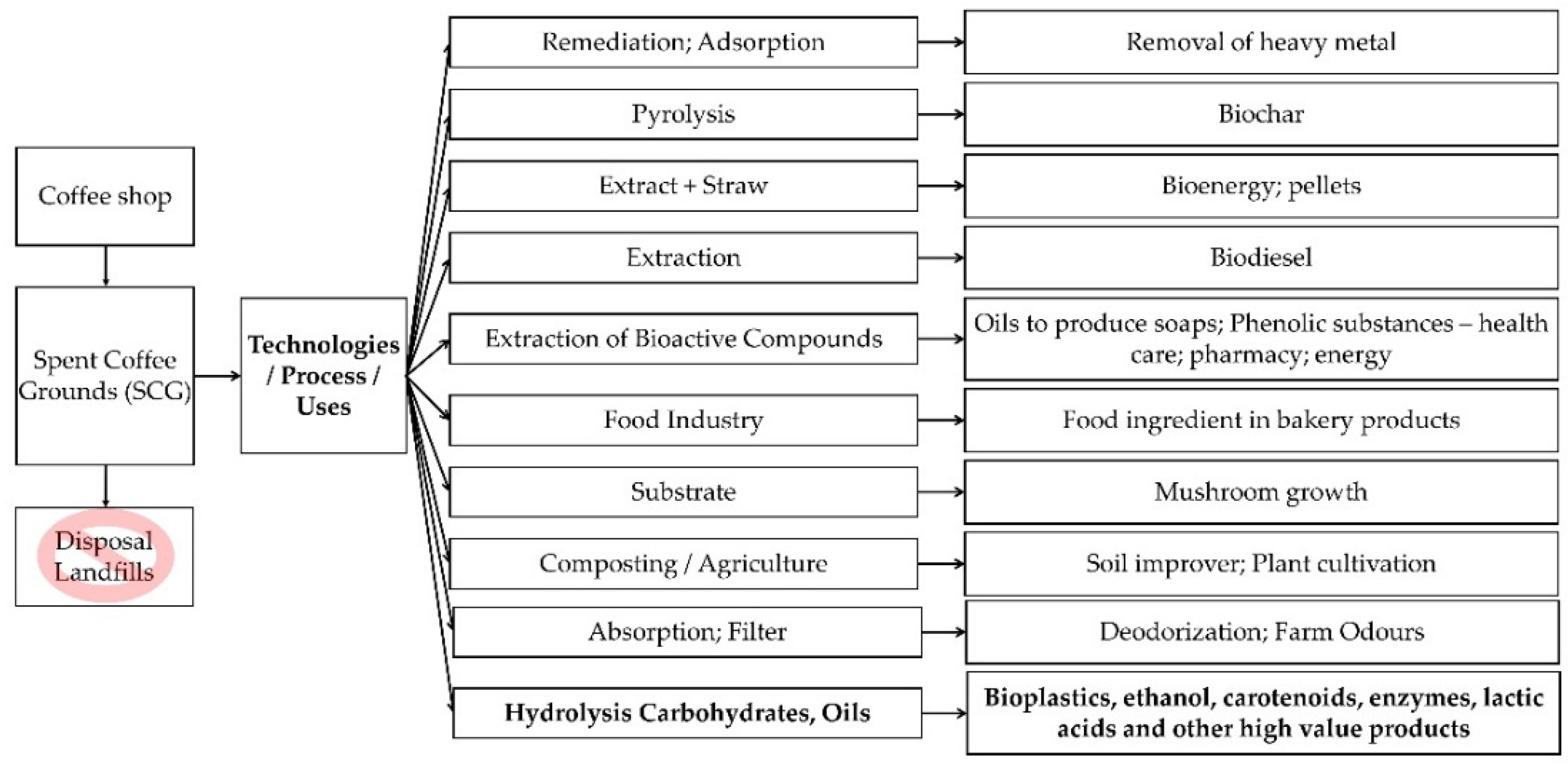
Figure 2.
Routes of PLA formation from lactic acid [72].
Figure 2.
Routes of PLA formation from lactic acid [72].
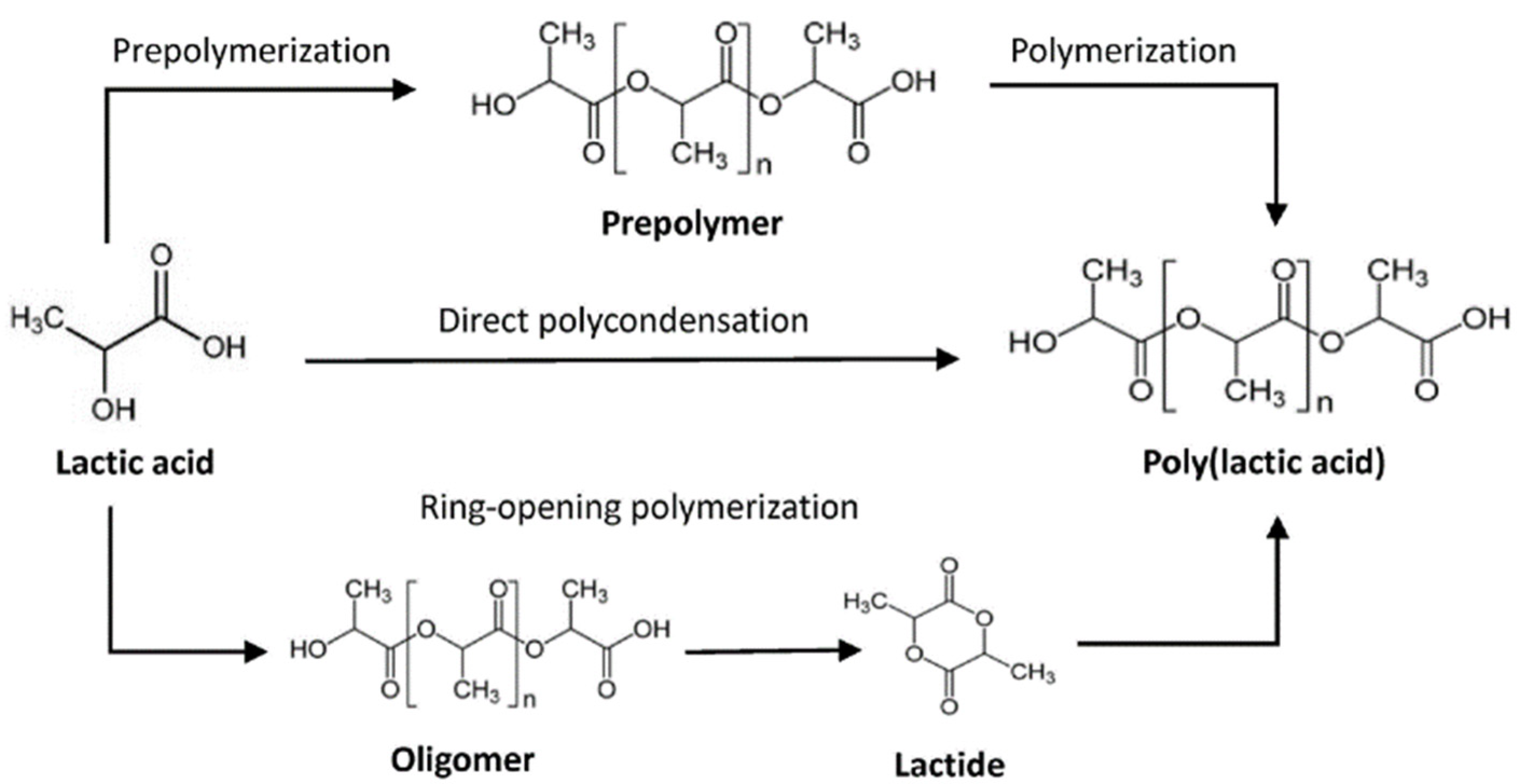
Figure 3.
Routes of PLA formation from food waste [72].
Figure 3.
Routes of PLA formation from food waste [72].
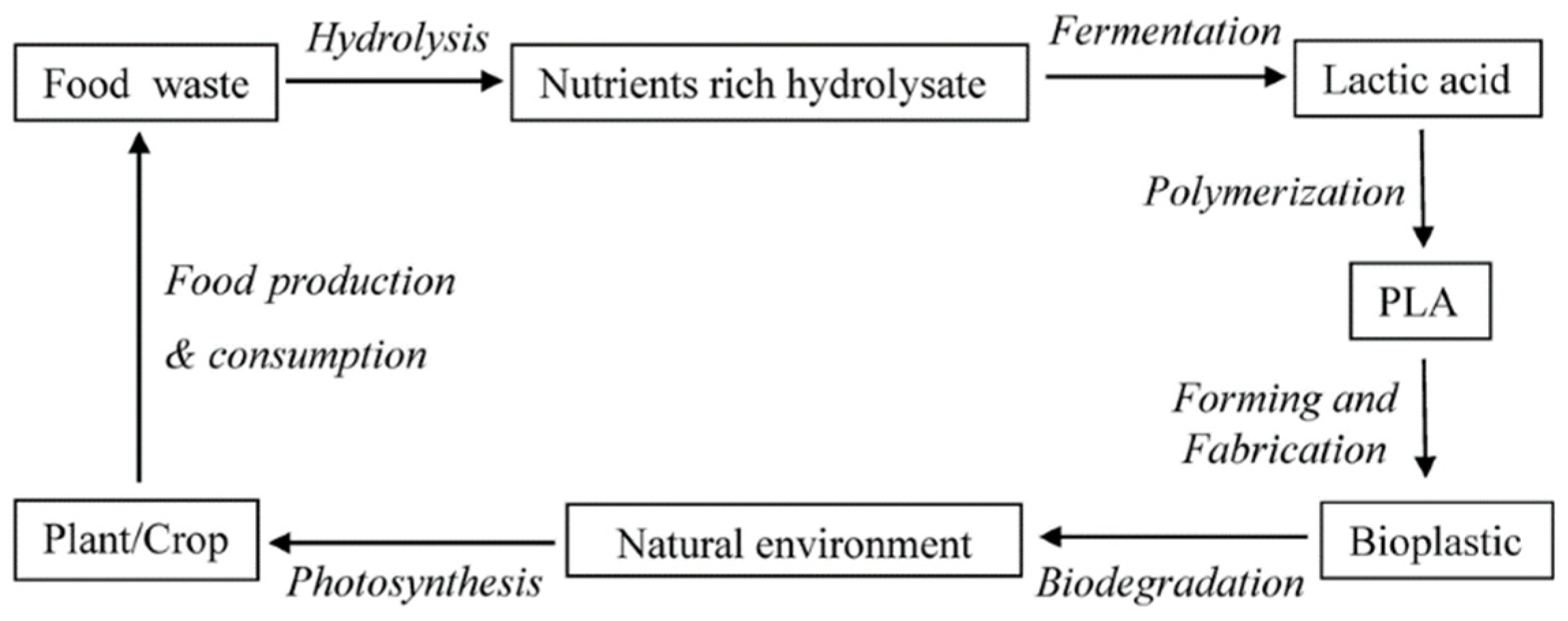
Figure 4.
Purposed process to produce polylactic acid (PLA) from spent coffee ground (SCG).
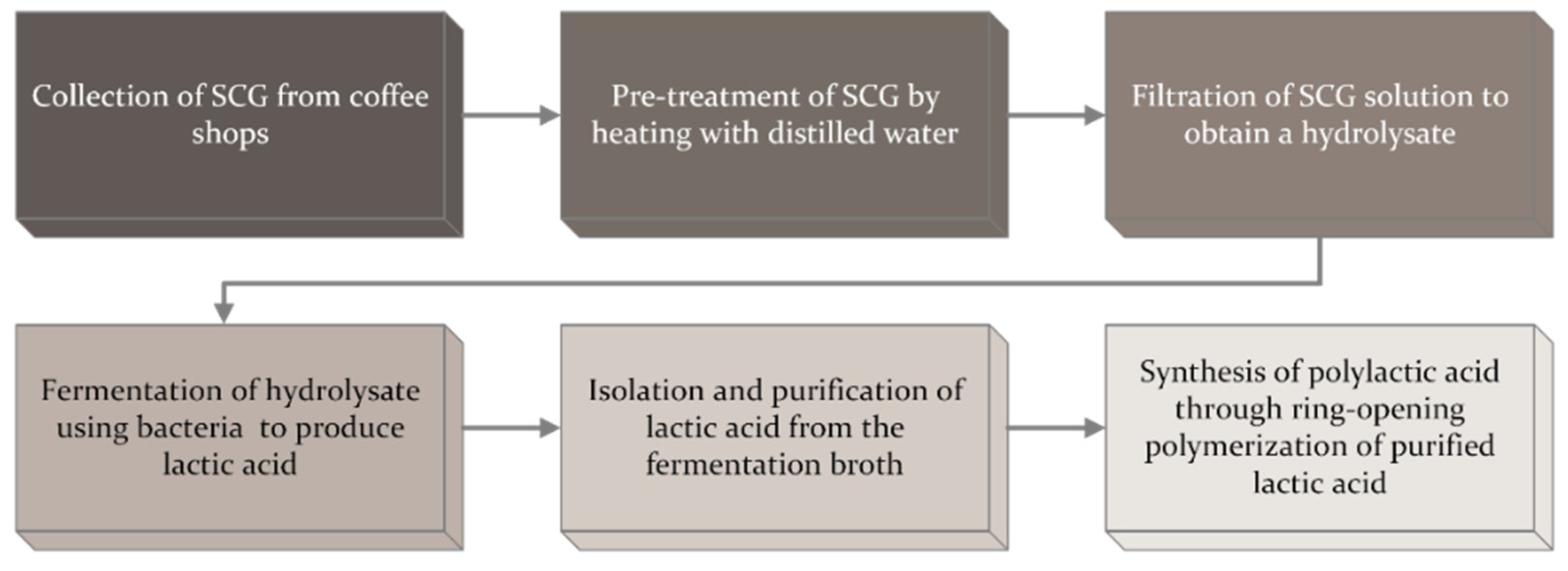

Table 1.
A summary of results from the cost analyses of different projects.
| Project | Feedstock | Min cost per ton (USD) | Max cost per ton (USD) |
| Manandhar & Shah (2020) | Cron grains | 844 | 1,251 |
| Sanaei & Stuart (2018) | Triticale | 911 | 1,496 |
| Wellenreuther et al, (2022) | Corn grain & stover | 1,004 | 1,374 |
| Chiarakorn et al., (2014) | Cassava roots | 2,410 | 2,620 |
| Kwan et al., (2018) | Food waste powder | 3558 | 3558 |
Disclaimer/Publisher’s Note: The statements, opinions and data contained in all publications are solely those of the individual author(s) and contributor(s) and not of MDPI and/or the editor(s). MDPI and/or the editor(s) disclaim responsibility for any injury to people or property resulting from any ideas, methods, instructions or products referred to in the content. |
© 2024 by the authors. Licensee MDPI, Basel, Switzerland. This article is an open access article distributed under the terms and conditions of the Creative Commons Attribution (CC BY) license (https://creativecommons.org/licenses/by/4.0/).
Copyright: This open access article is published under a Creative Commons CC BY 4.0 license, which permit the free download, distribution, and reuse, provided that the author and preprint are cited in any reuse.


